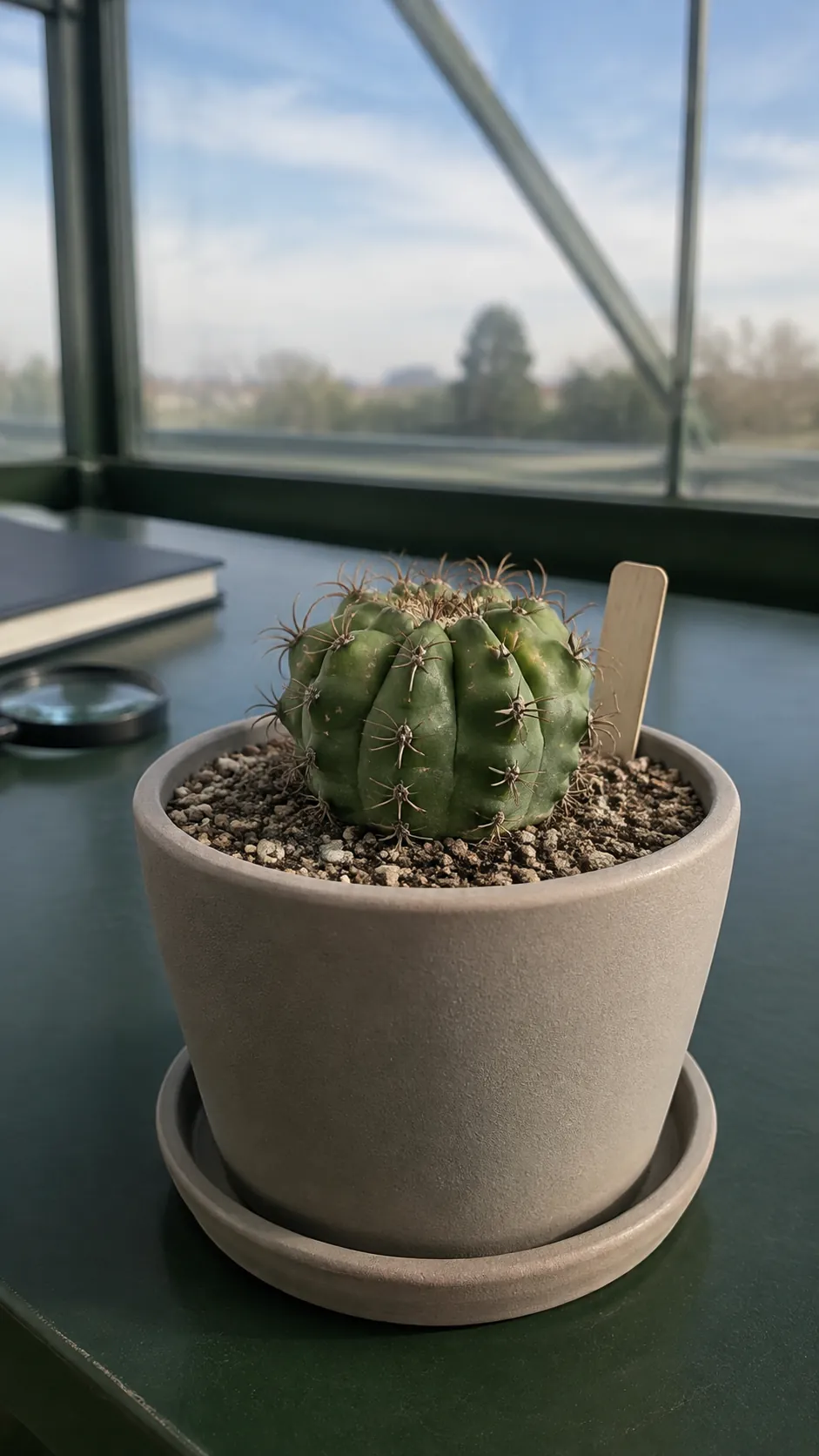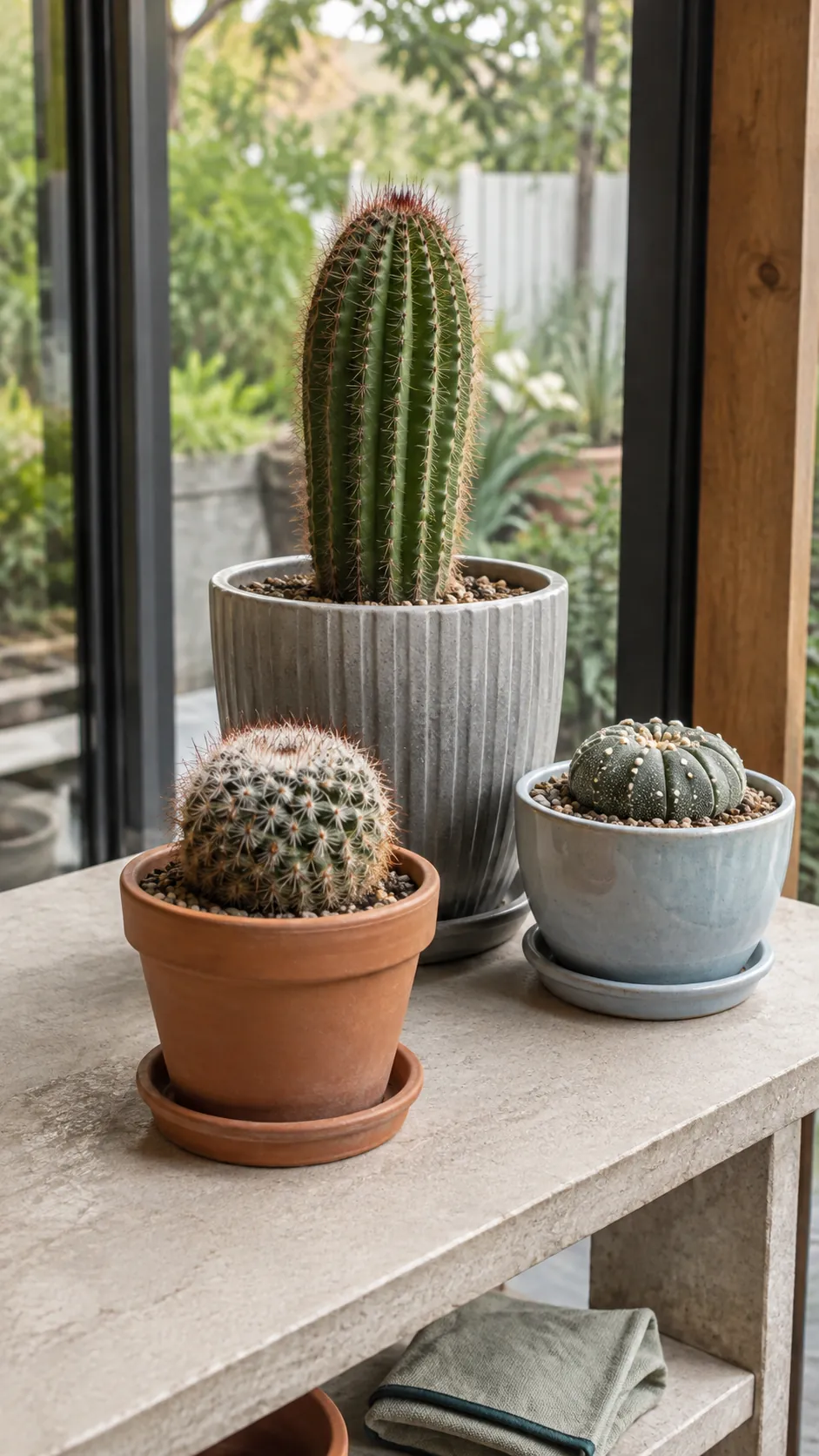
A cactus can outgrow its balance before it outgrows its roots. The right container has to support the plant, release excess water, and fit the place where you can provide suitable light. Start with those decisions, then let color and shape do the decorating.
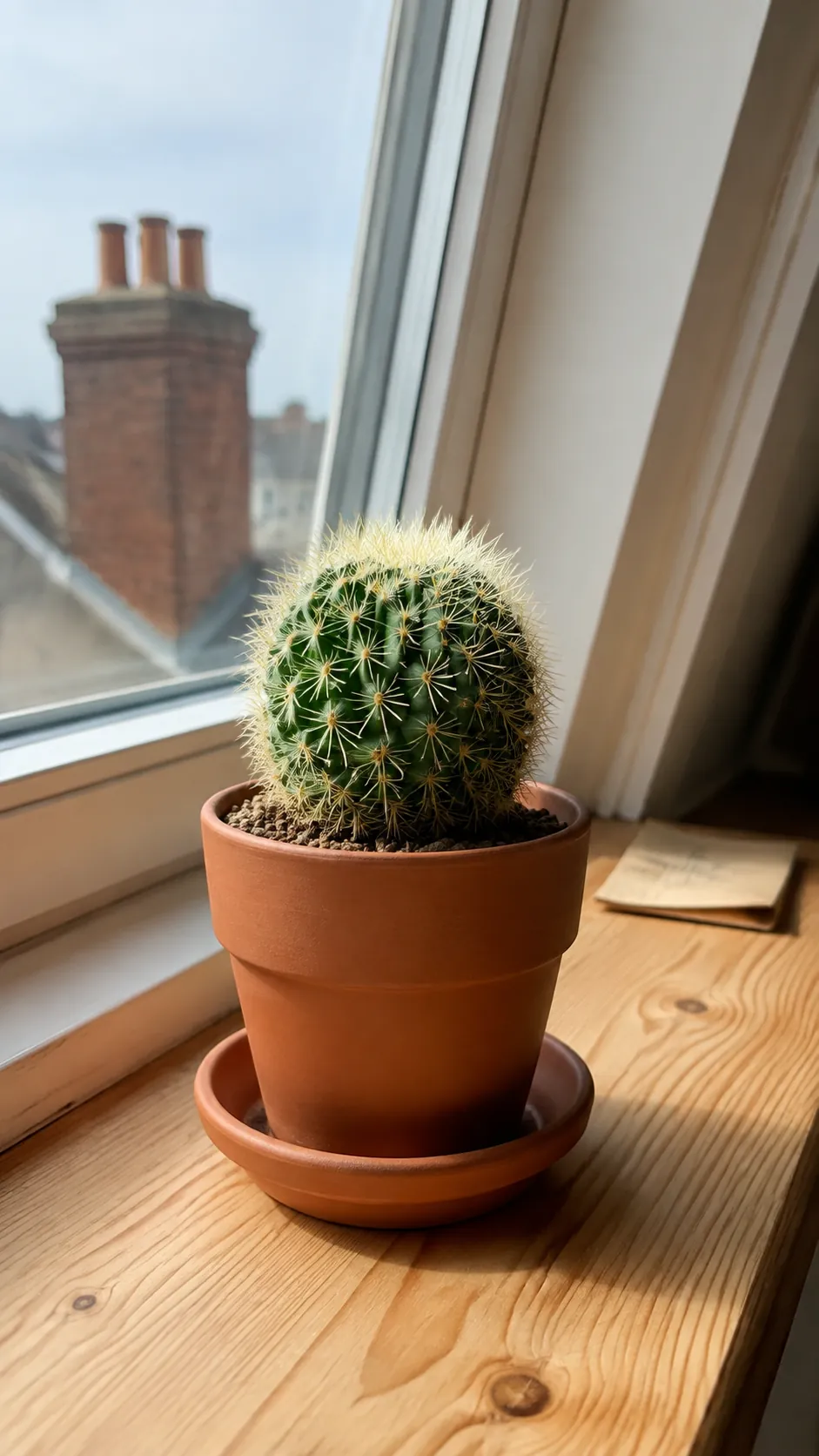
A snug clay pot for a small globe cactus
A small globe cactus can look lost in a container bought for its imagined future size. Start with a pot that accommodates the existing roots and leaves a modest working margin around them. Excess mix can stay wet long after the root ball has used the moisture nearby. Plain unglazed clay gives you a useful starting point when you are still learning how quickly your conditions dry a pot.
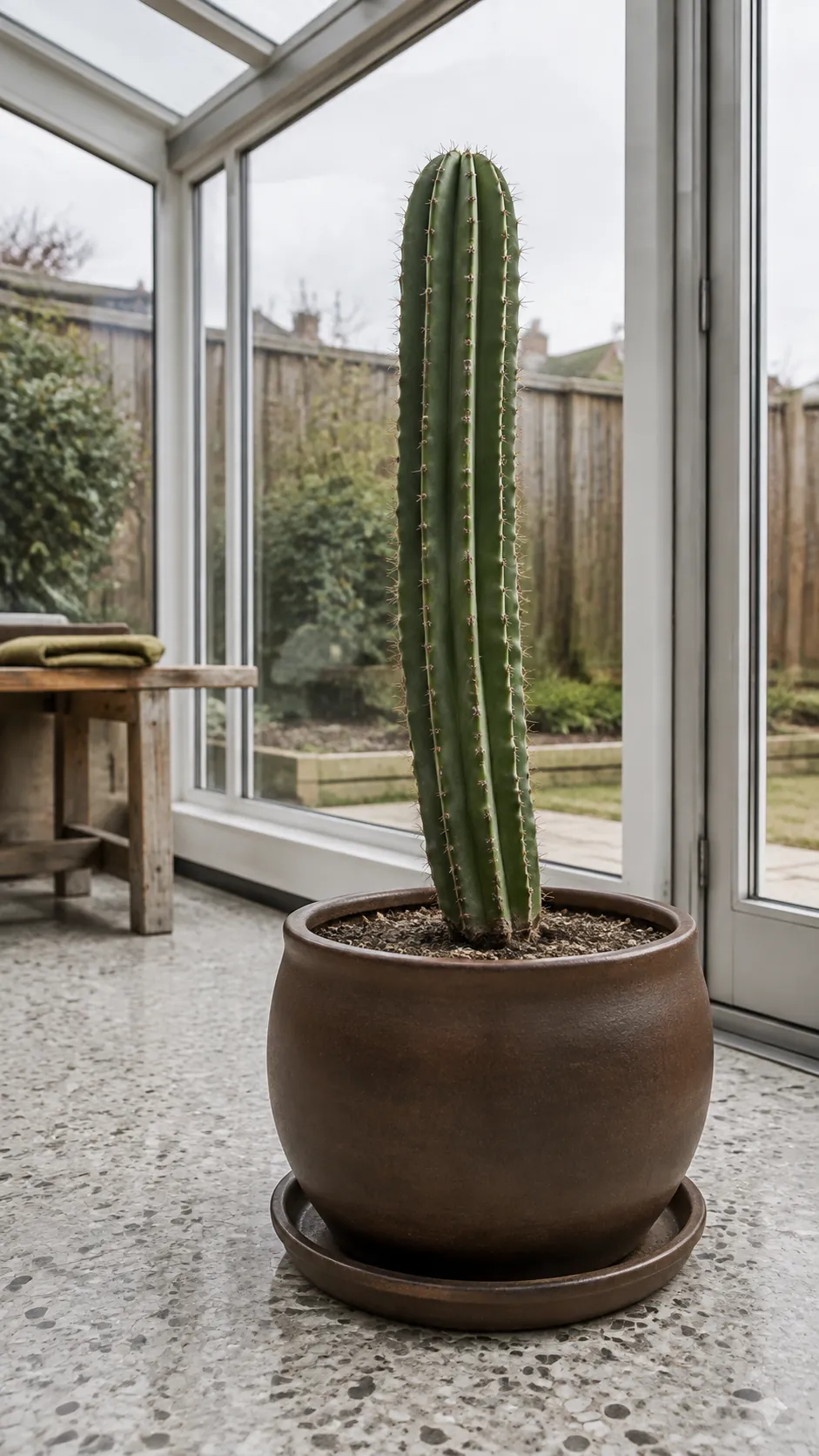
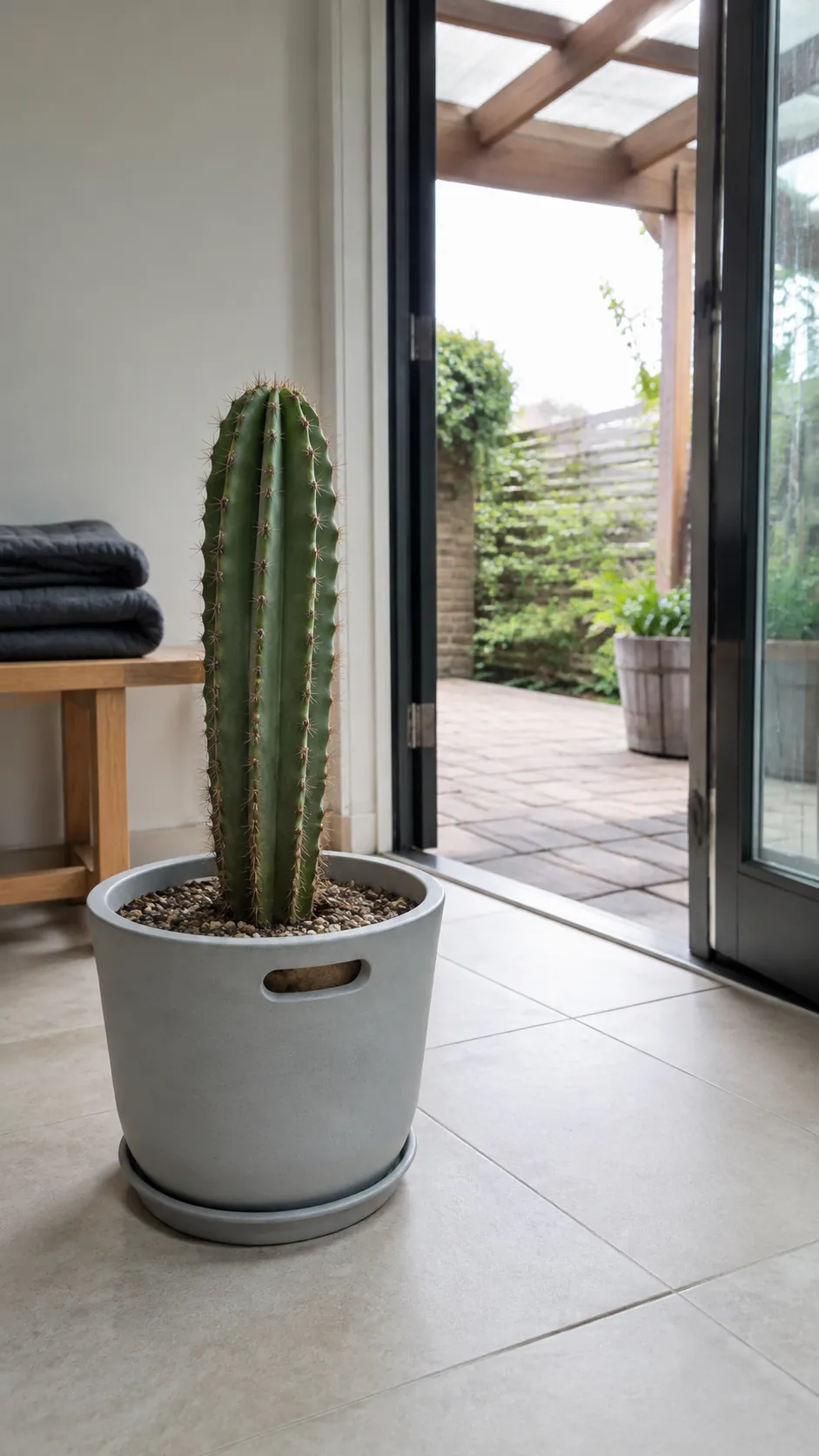
A broad stoneware base for a columnar cactus
An upright cactus needs a stable footprint as well as root space. Choose a substantial broad based planter instead of a narrow decorative tower that magnifies every lean. Keep the trunk at its previous planting depth rather than burying it to force stability. If the specimen is too heavy to handle safely, arrange help before repotting rather than trying to catch it after it tips.
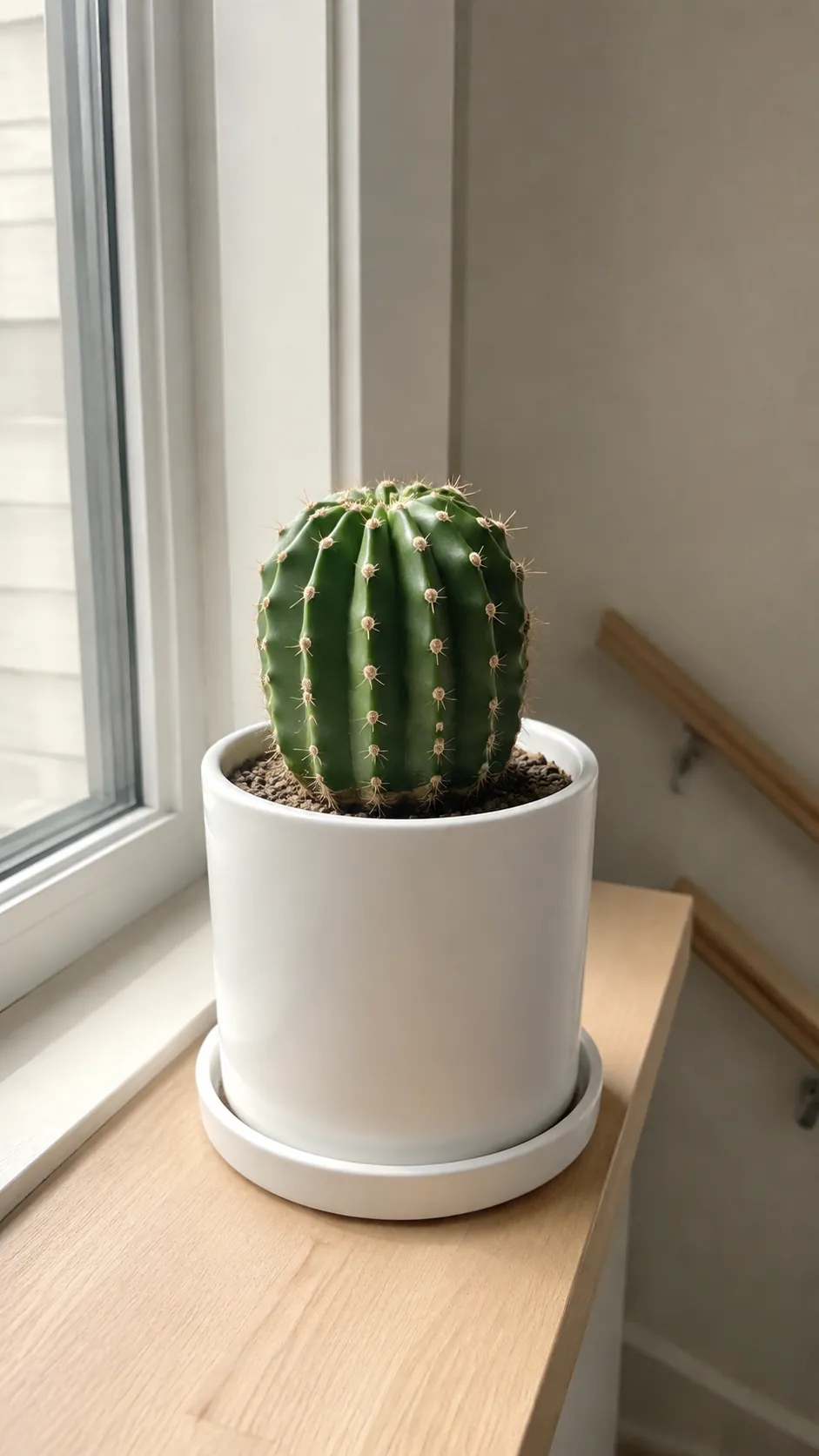
A white cylinder that reveals rib shadows
A white cylindrical pot keeps attention on the ribs of a single cactus. Its calm outline works especially well when the plant has a strong upright silhouette. Check the actual drainage opening before buying, because decorative cylinders often arrive without one. A separate saucer lets you protect the surface below and see runoff instead of guessing where it went.
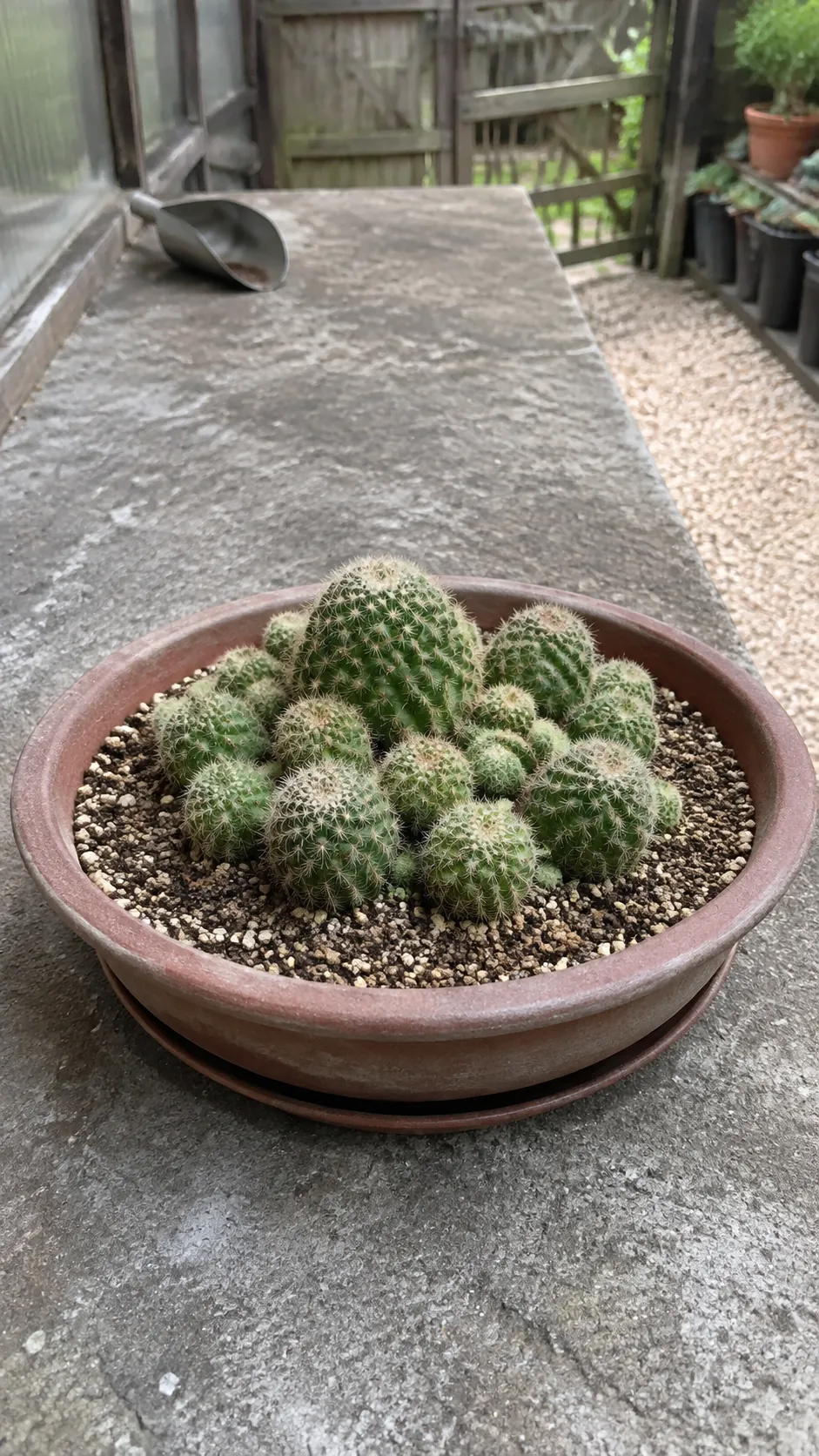
A low bowl for a spreading clump
Some clustering cacti need more width as offsets spread around the parent. A low broad pot can accommodate that growth without adding unnecessary depth beneath a shallow root system. Leave room between the outer stems and the rim so later removal does not become a battle with spines. Select the bowl around the species and roots, not the assumption that every cactus belongs in a shallow dish.
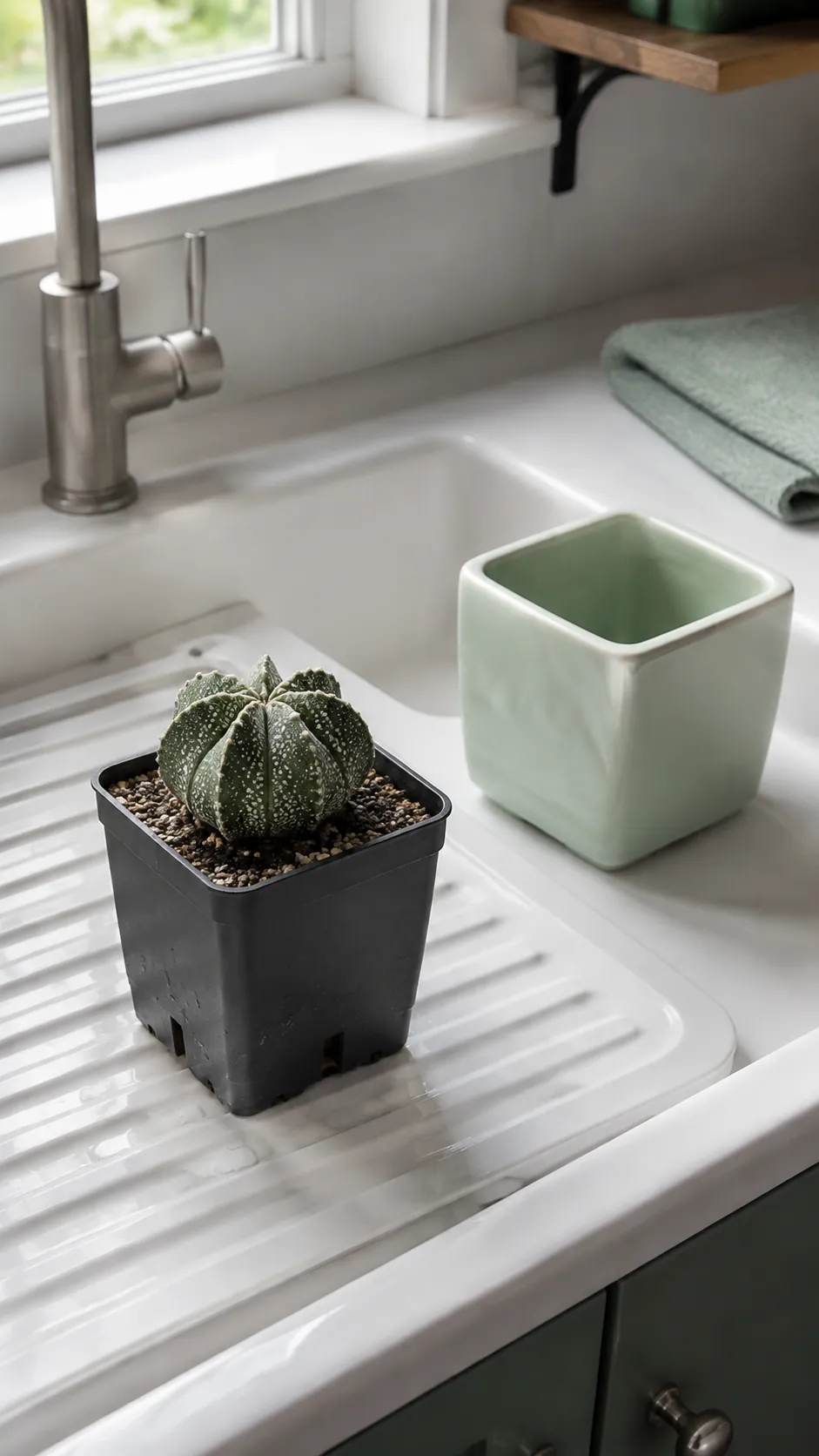
A square nursery pot in a display sleeve
A square nursery pot can make a decorative container easier to use without committing the plant to it permanently. Find a sleeve wide enough that the insert lifts out without dragging spines against the edge. Water the inner pot separately and let it drain fully before replacing it. This is a useful approach to cactus planter ideas when the outer vessel is beautiful but has no outlet.
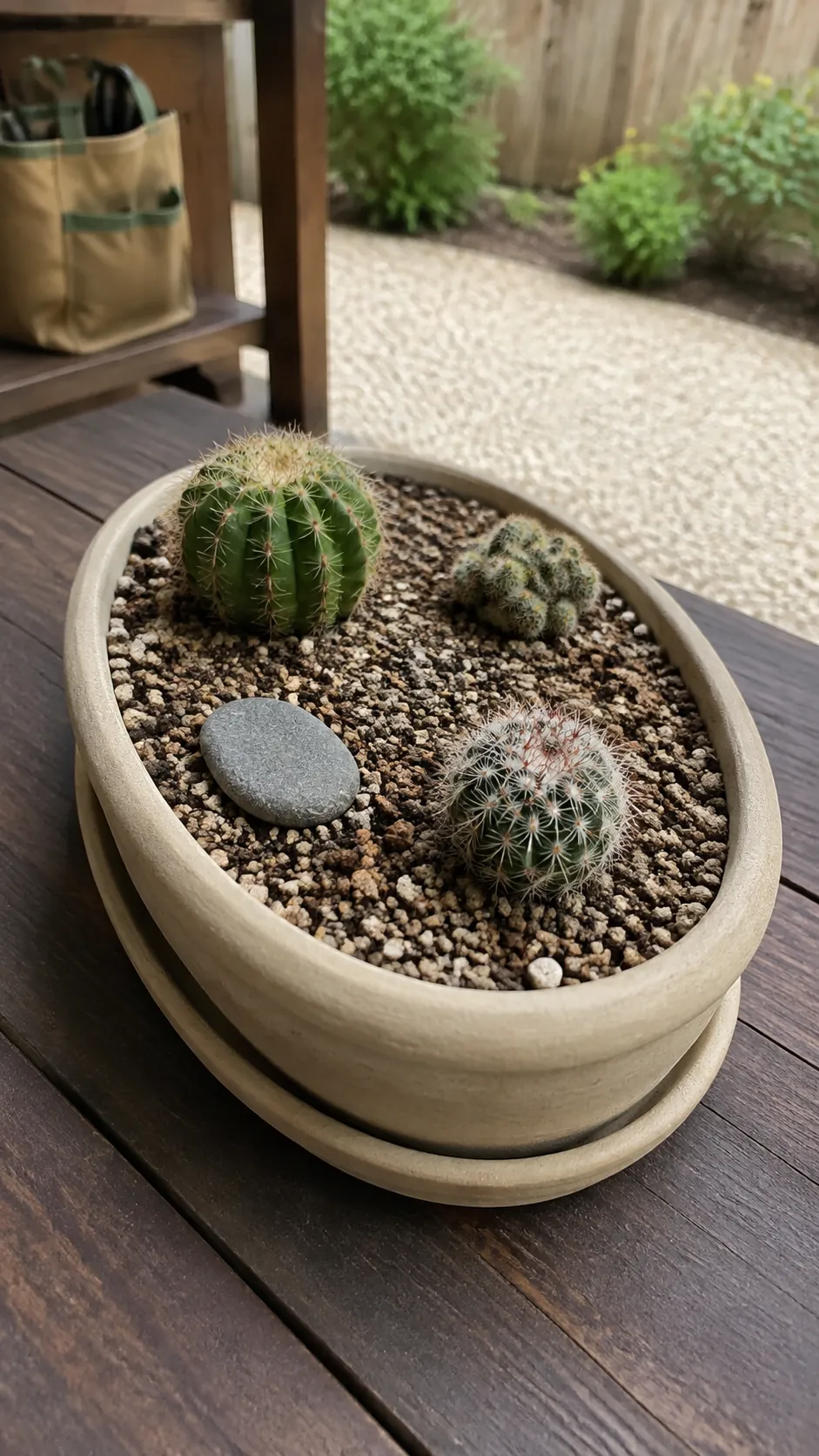
An oval planter for a restrained desert grouping
A few compatible cacti can share an oval container if their light and watering requirements align. Keep space around the stems rather than building a miniature desert so crowded that you cannot reach the mix. A surface stone may add visual weight, but a buried rock layer does not replace a drainage hole. Leave the planting sparse enough that an individual problem can be spotted early.
A hanging pot for a trailing forest cactus
A trailing forest cactus changes the look of an indoor cactus garden completely. Its arching stems suit a hanging container, but its care may differ from that of desert species. Choose a removable pot in a secure hanger so watering does not require reaching blindly above your head. Give the stems space to hang without rubbing glass, furniture, or a busy doorway.
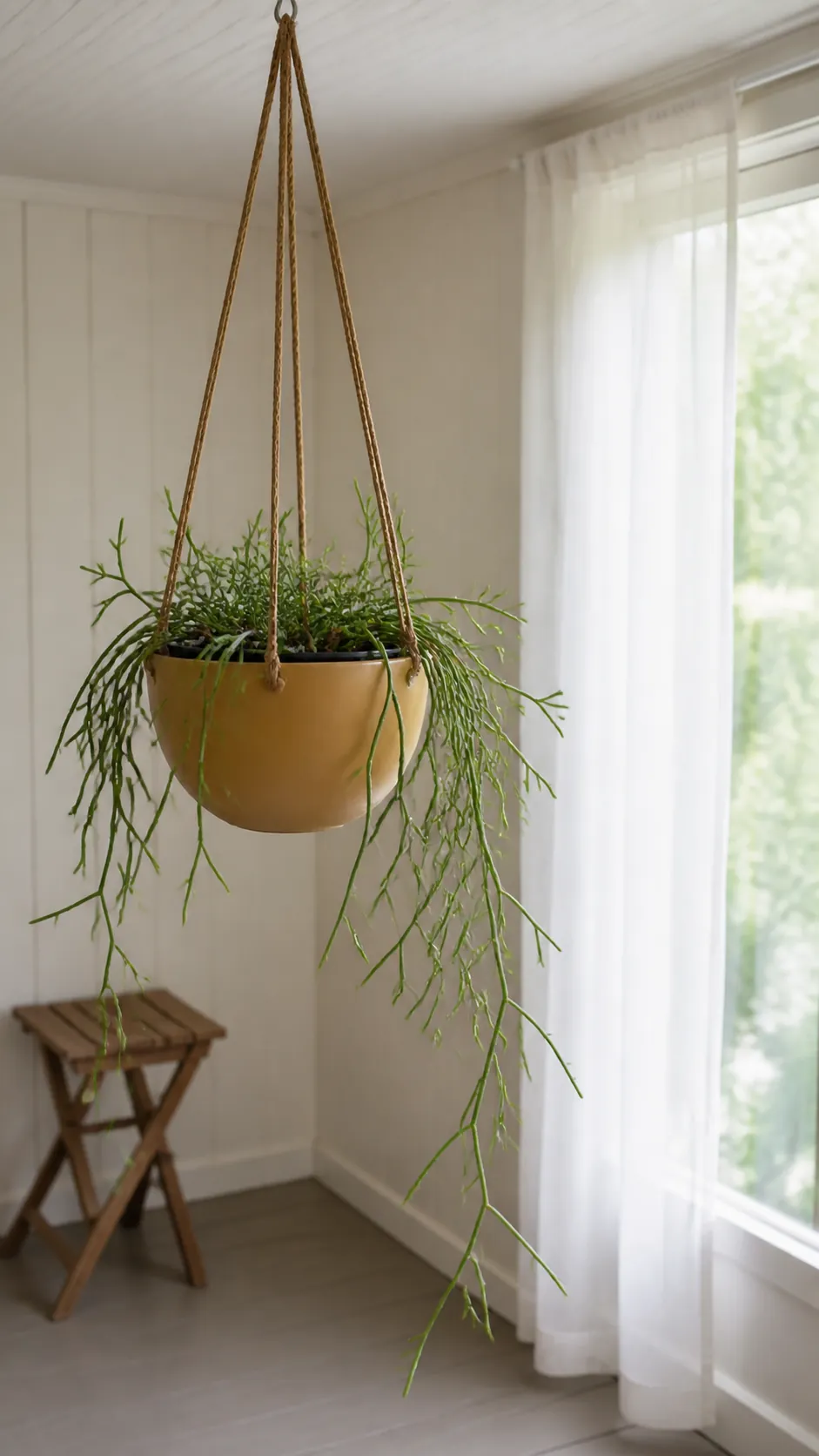
A deep pot chosen for an actual taproot
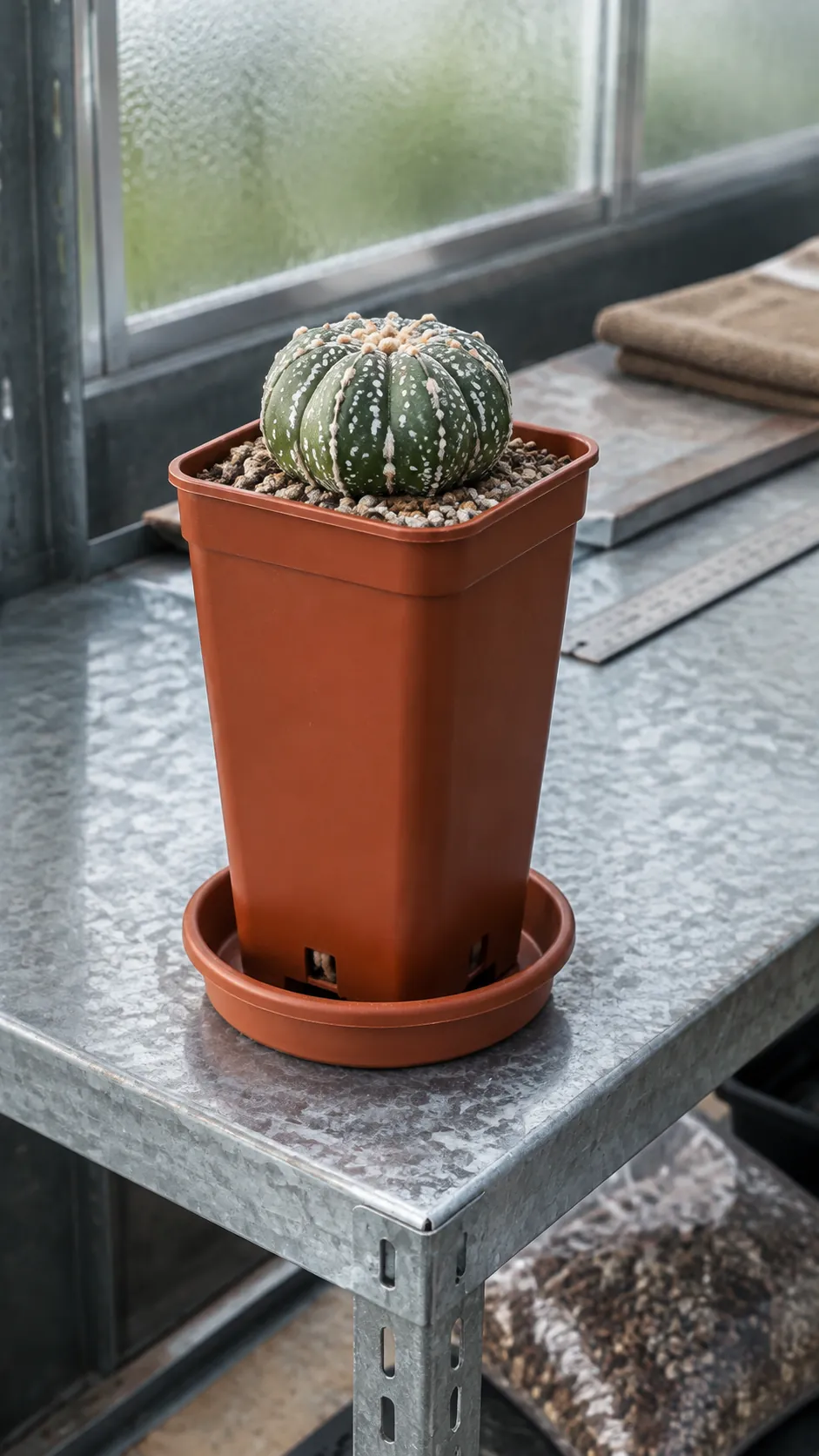
A deep container makes sense when the particular cactus develops a substantial taproot. Ask about the identified species and inspect the root shape during an appropriate repotting instead of guessing from the plant's height. The goal is room for the root to sit naturally, not a reservoir of unused damp mix. A plain deep nursery pot can be more useful here than an attractive but cramped bowl.
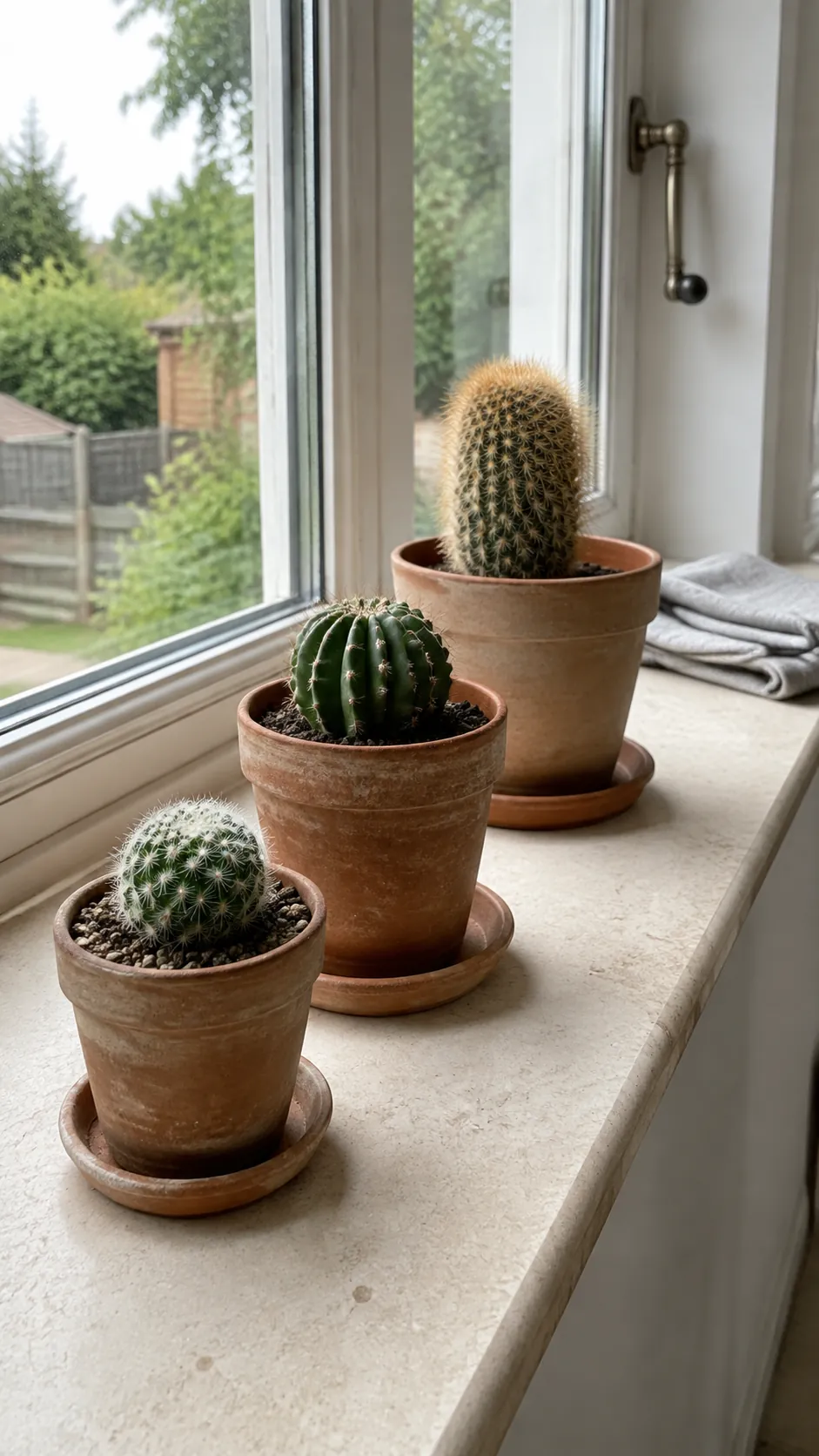
A terracotta trio on separate saucers
Three clay pots can make a collection look coordinated without sharing soil. Give each cactus the size it needs, even if the diameters differ. Separate saucers make it easier to notice which plant drains slowly or has been watered recently. Arrange the pots with enough gaps that spines do not catch when you remove one.
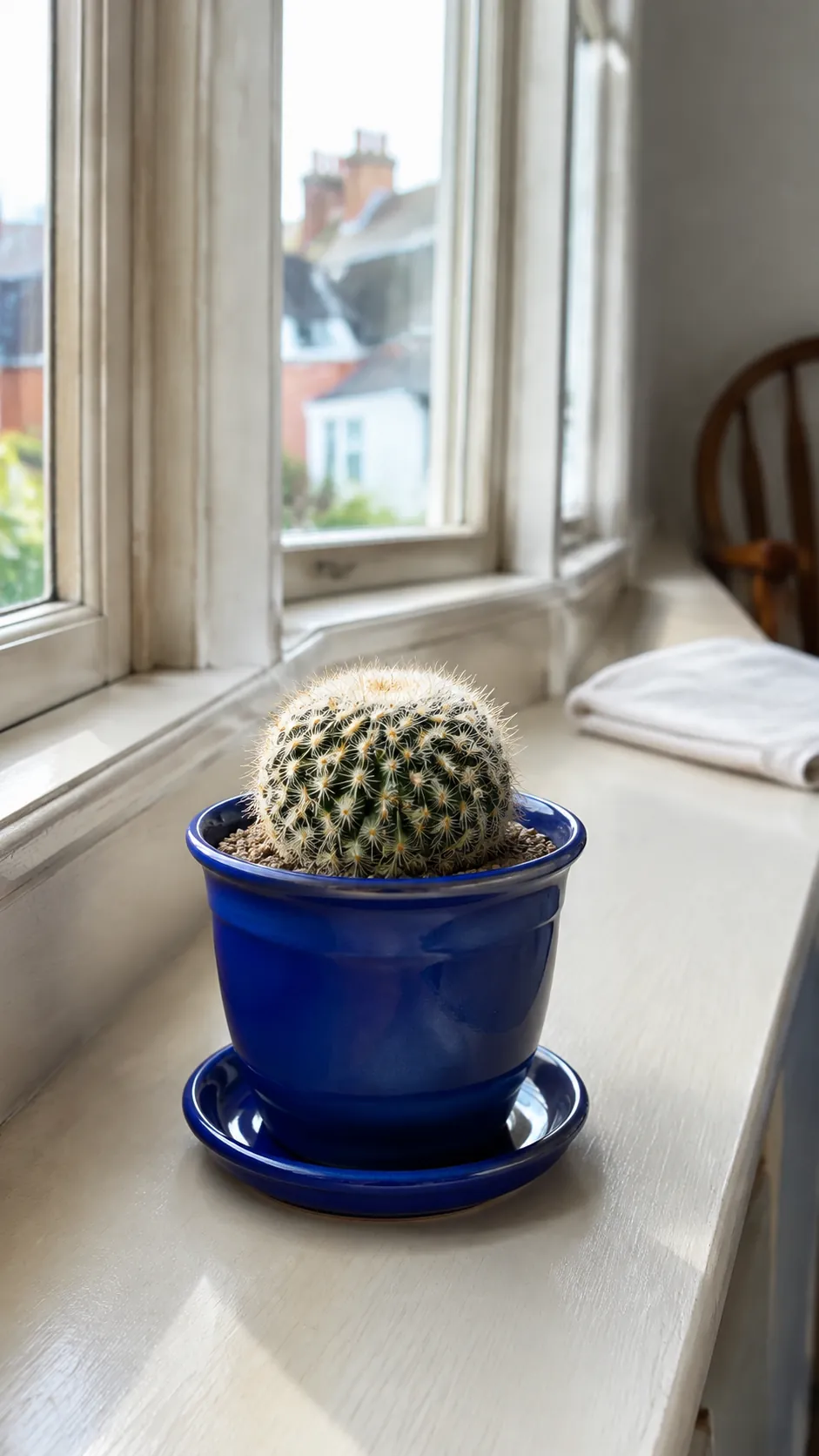
A glazed cobalt pot for a pale spined specimen
Deep blue glaze gives pale spines a clear visual background. Use a simple vessel shape so the color supports the cactus rather than competing with an elaborate silhouette. Glazed walls generally lose less moisture than porous clay, so reassess drying time after changing containers. Keep the opening wide enough to remove the root ball later without breaking the pot or damaging the plant.
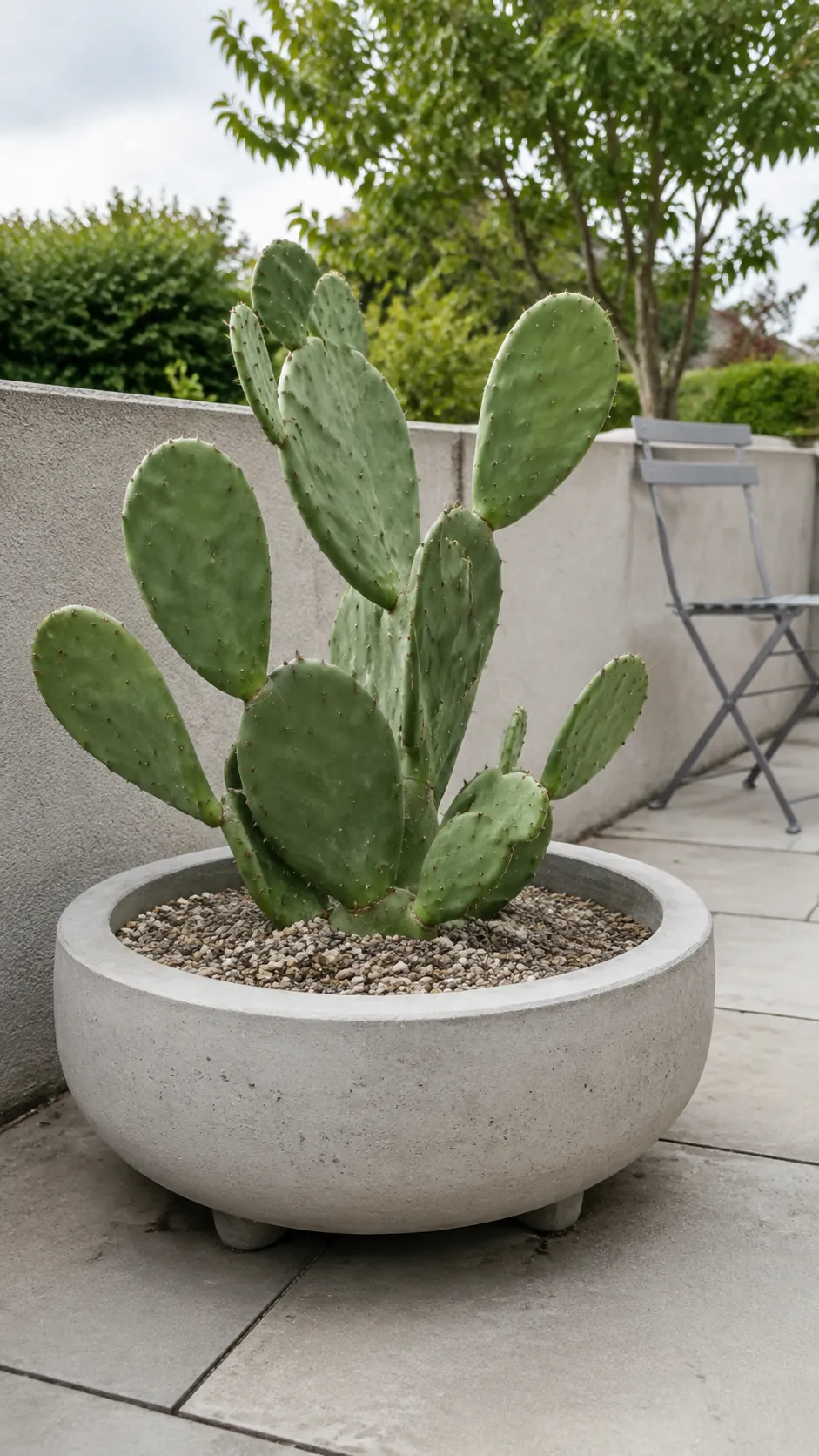
A squat concrete planter for a breezy patio
A squat concrete planter brings useful weight to a sheltered outdoor display. Its stability is most helpful when the cactus has an uneven or spreading form that catches movement. Check the filled weight before placing it on a raised shelf or balcony surface. Climate and species still determine whether the cactus can stay outdoors, regardless of how rugged the pot looks.
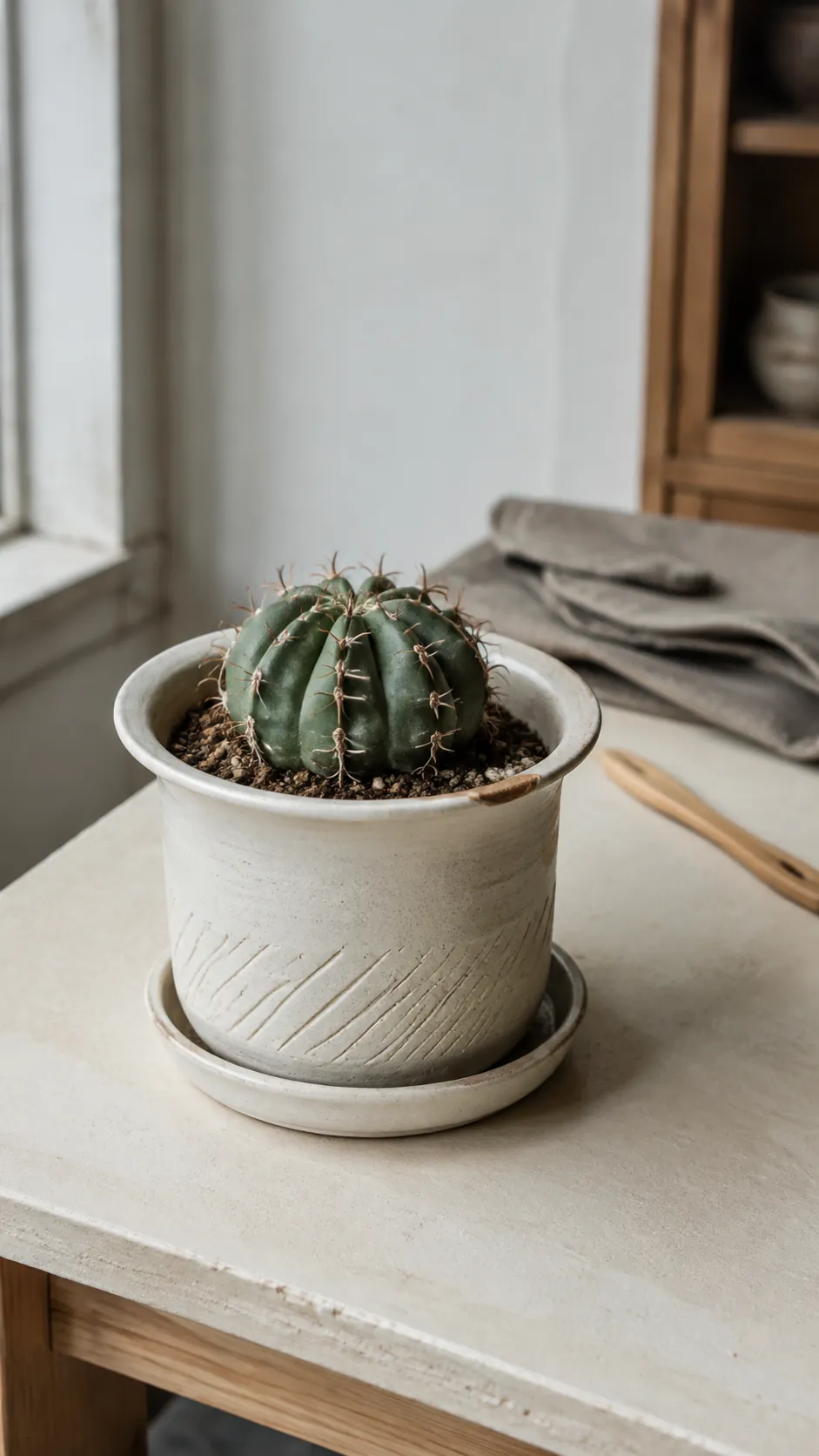
A small handmade pot with a flared mouth
A gently flared opening makes a handmade pot easier to repot than one that pinches inward at the top. The root ball can slide out more readily when the upper diameter is not narrower than the body. Choose fired ceramic with a functional drain if you are making a DIY cactus container. Keep decorative carving shallow enough that the base remains sound and stable.
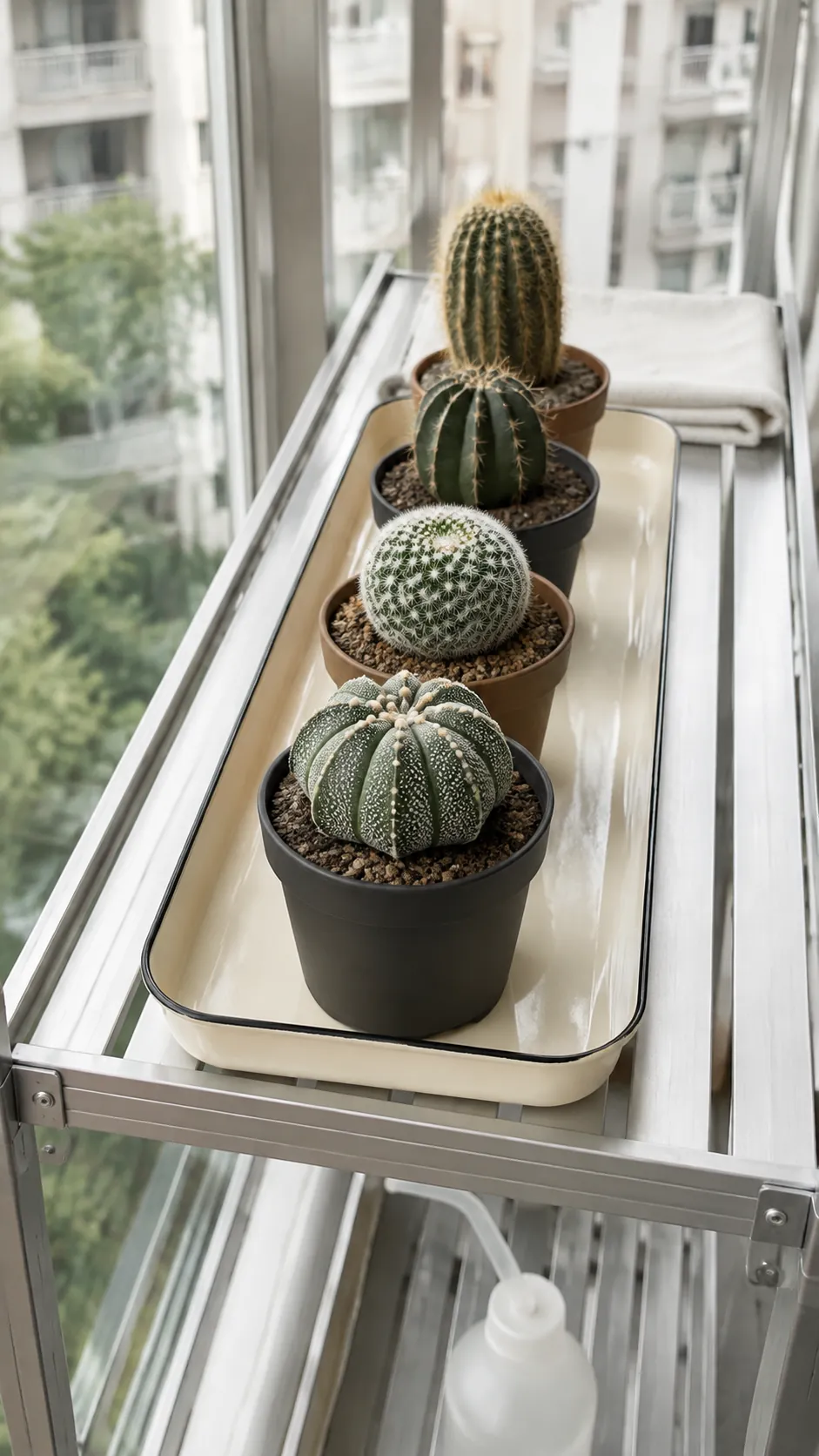
A long tray holding individual cactus pots
A long tray gives a windowside collection a single visual boundary. Keep the plants in separate pots within it so a slow growing specimen does not dictate care for its neighbors. The tray should catch drips temporarily, not become a permanent pool beneath the roots. Leave enough room at the sides to lift pots without gripping the spines.
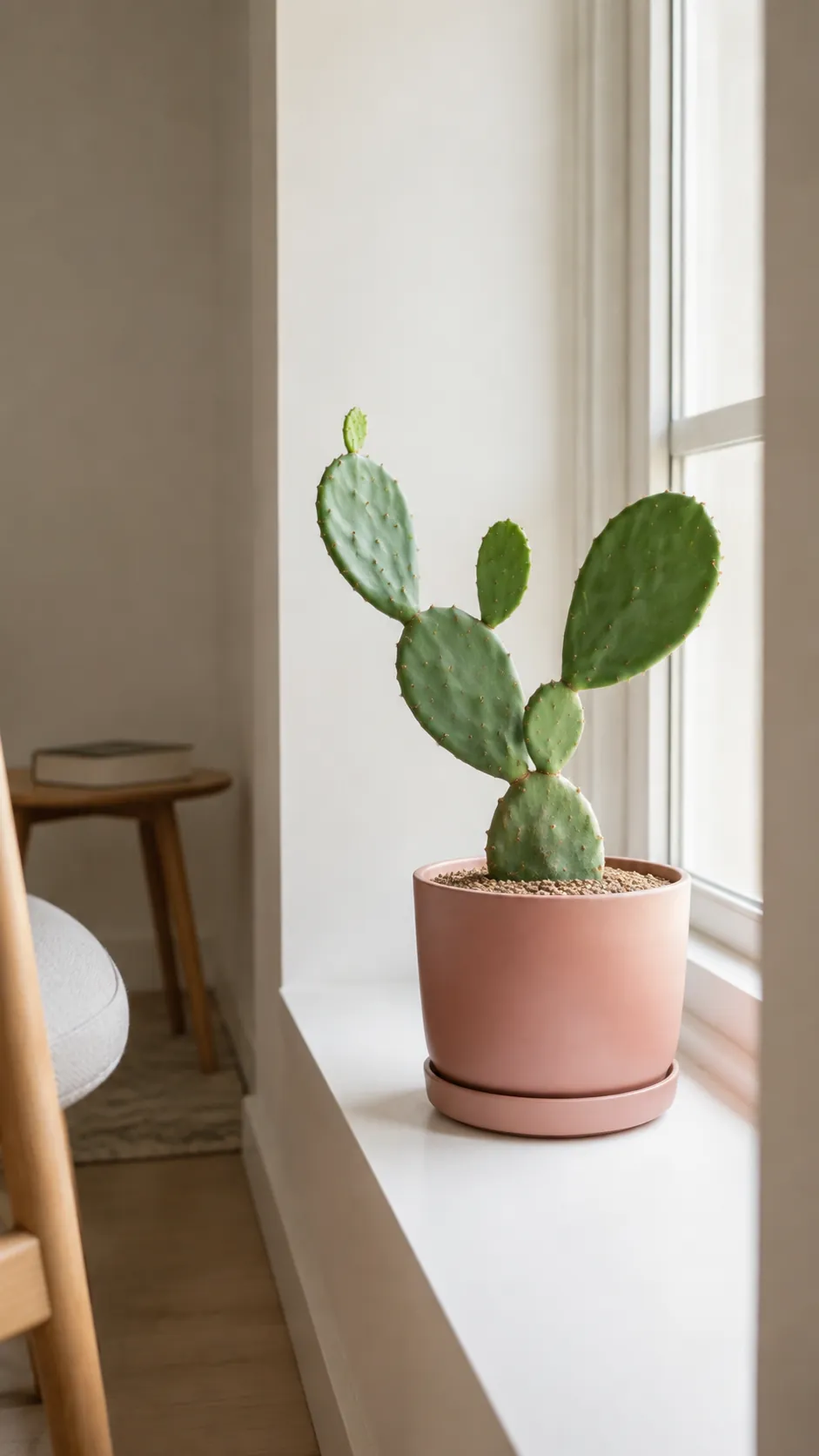
A muted pink pot for a green paddle cactus
A soft pink container can make the green pads of an opuntia look particularly crisp. Place the display where nobody will brush against it, because tiny glochids can be troublesome even when the pads look friendly. A stable base matters as new pads make the plant wider. The pot's color can be playful while the placement remains thoughtful.
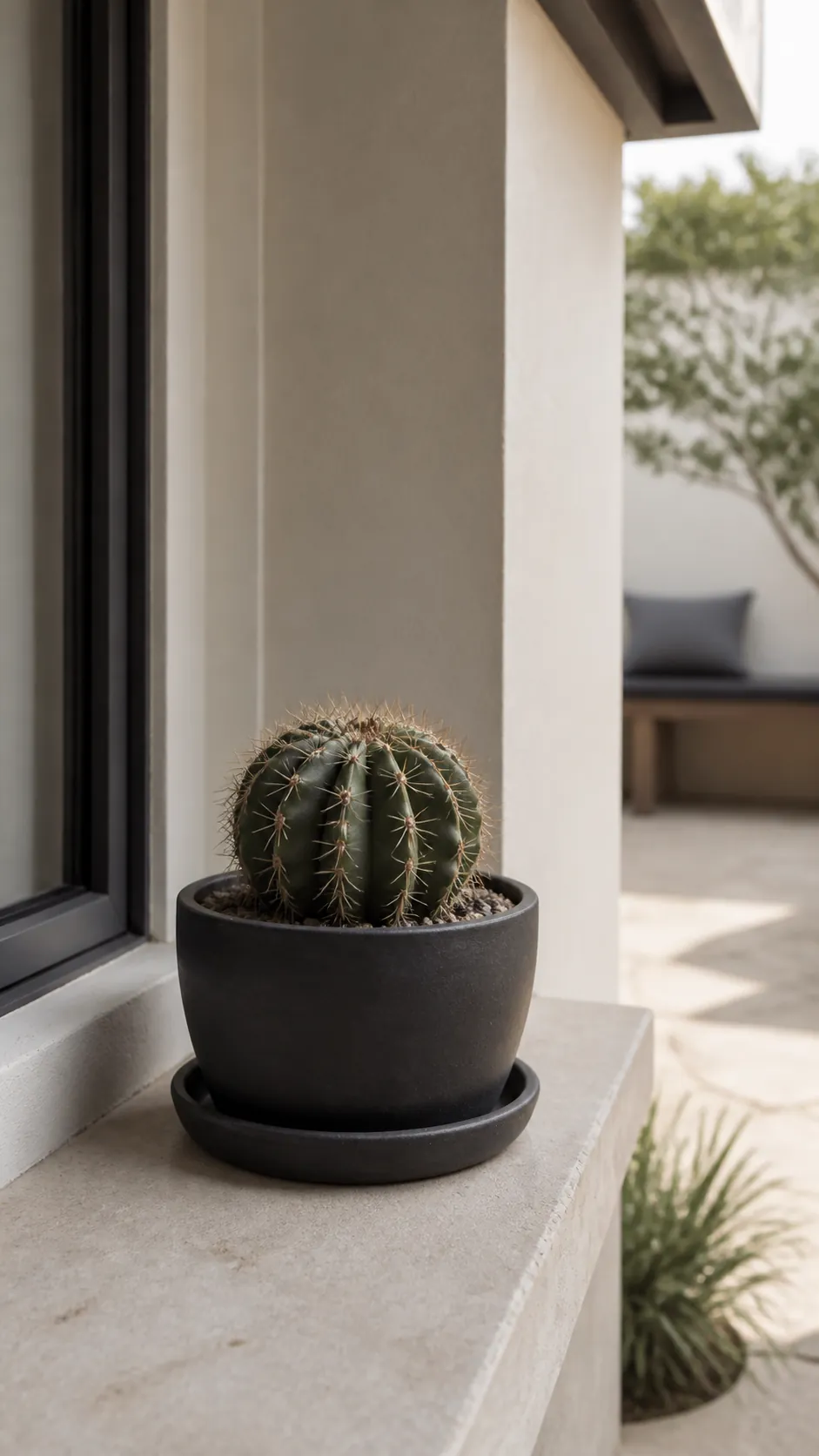
A black pot used away from scorching paving
Black ceramic can produce striking contrast around a small cactus. On an exposed hot surface, however, a dark container may heat far more than its quiet appearance suggests. Choose a position after checking the actual heat and light the plant will experience. Treat the color as one part of the setup rather than assuming a desert plant welcomes any temperature at its roots.
A light resin pot for seasonal moves
A resin planter reduces the weight you carry when tender cacti need to come inside. A broad shape is preferable to a tall narrow form if the plant is likely to become unbalanced. Verify that molded drainage marks have been opened according to the manufacturer's directions. Plan a clear carrying route before the cactus grows too large for its usual doorway.
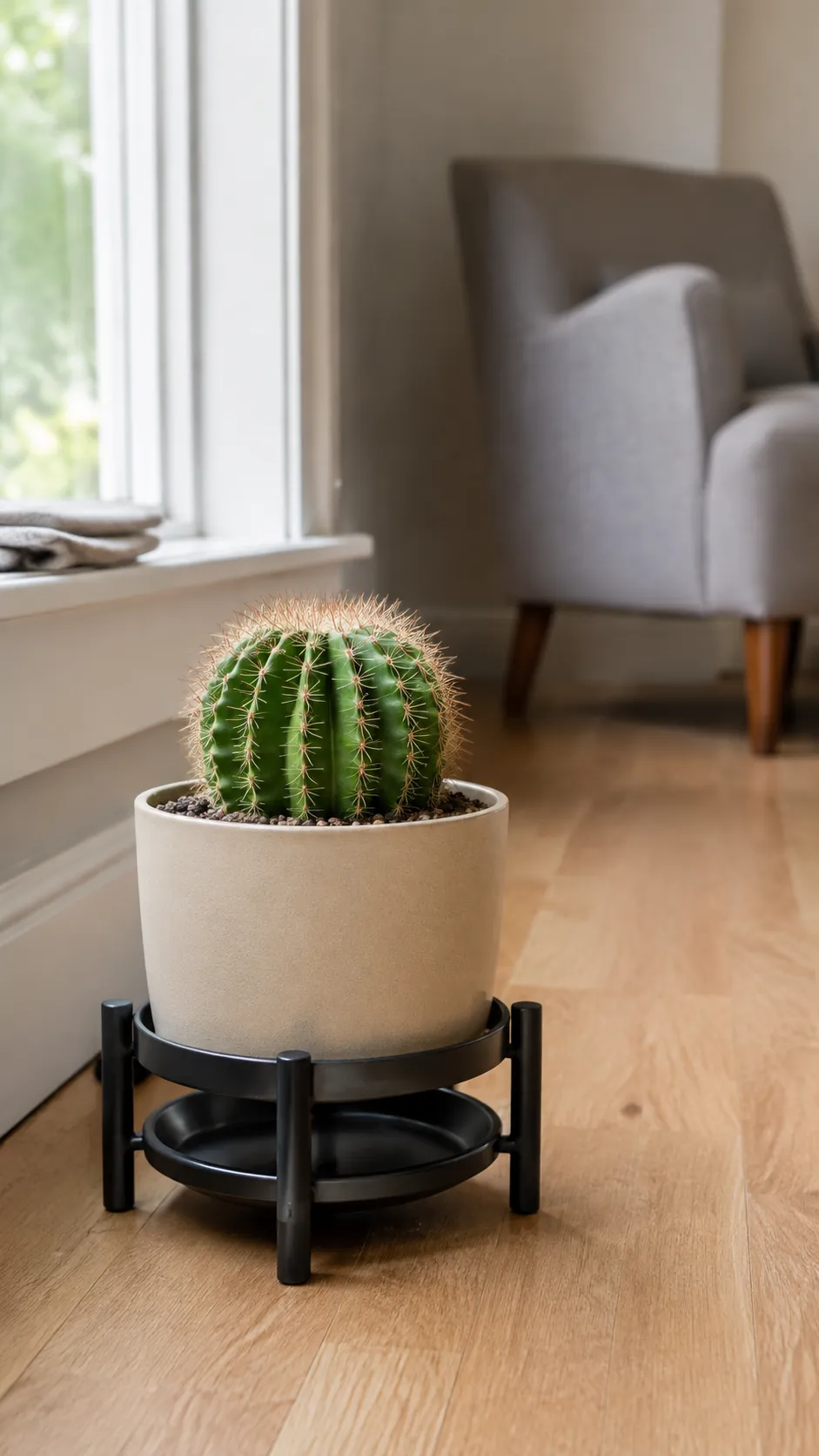
A raised pot with a reachable drainage tray
A low stand can bring a small cactus into view without turning it into an overhead hazard. Choose a stand that holds the pot securely and leaves the drainage tray accessible. Avoid narrow supports that wobble when you lift the plant for inspection. This works best where the cactus receives appropriate light and remains away from passing sleeves.
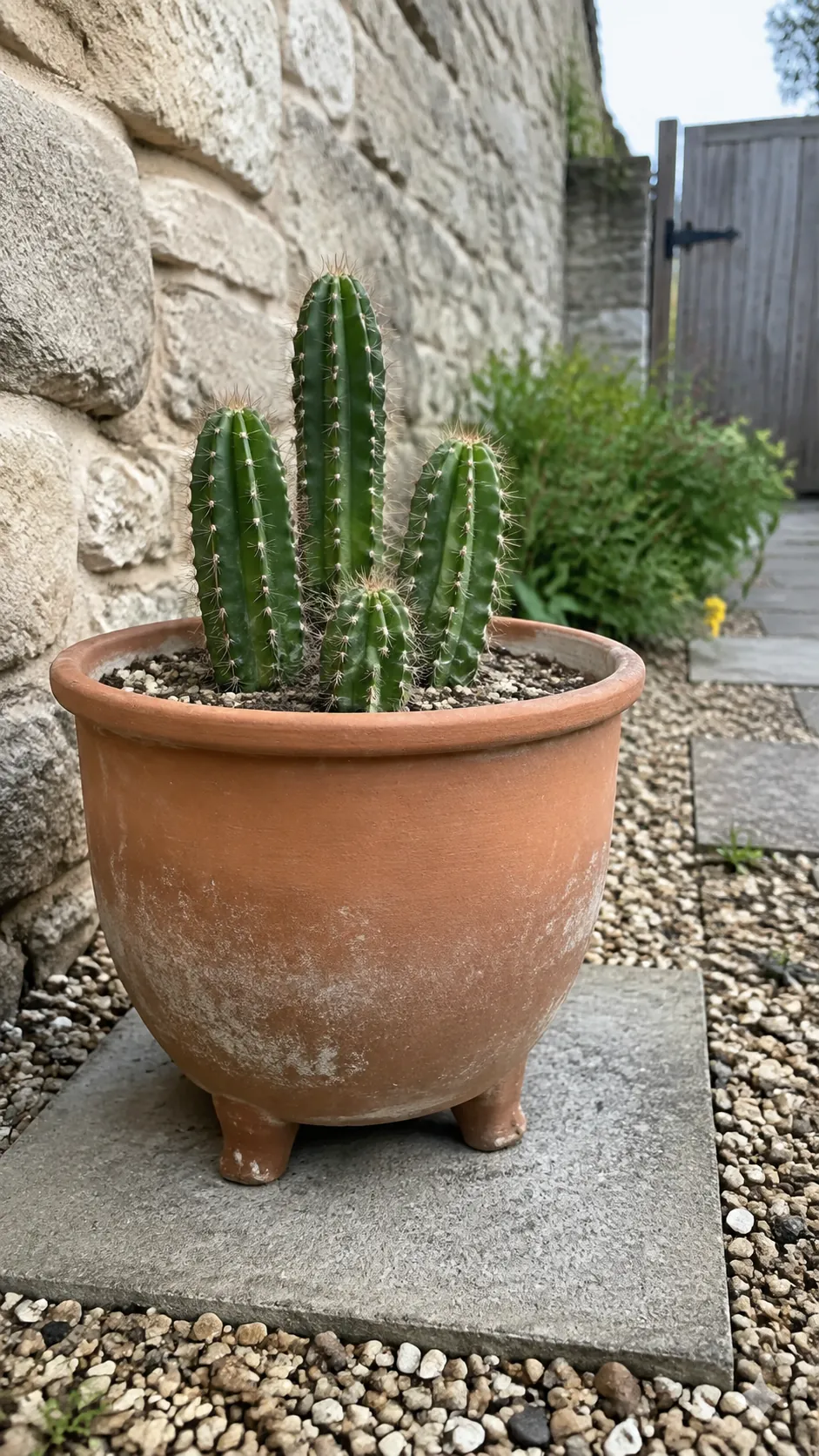
A weathered pot set on discreet feet
A weathered clay vessel fits naturally into an established cacti garden. Small pot feet can keep its outlet from pressing directly against paving or compacted ground. Check that all supports rest on firm level material rather than loose stones that shift under weight. The aged appearance should come from a sound pot, not a structural crack you are hoping will hold.
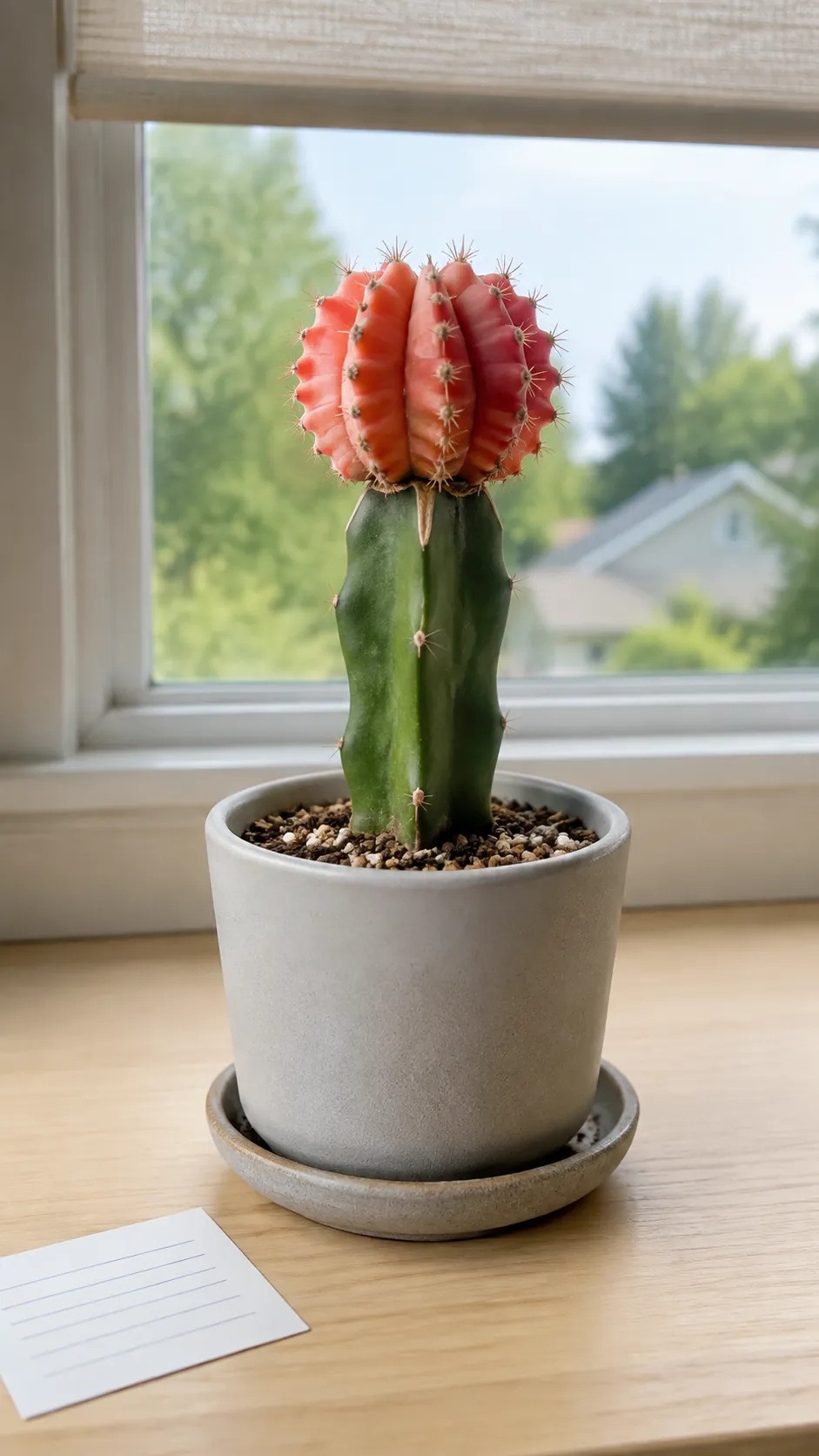
A compact pot reserved for a grafted cactus
A grafted cactus asks you to consider both the colorful top and the living rootstock below. Choose the container around the root system and use care appropriate to the actual graft combination. Avoid burying the join or treating a brightly colored top as an artificial ornament. A restrained small pot makes the unusual plant visible without adding more visual noise.
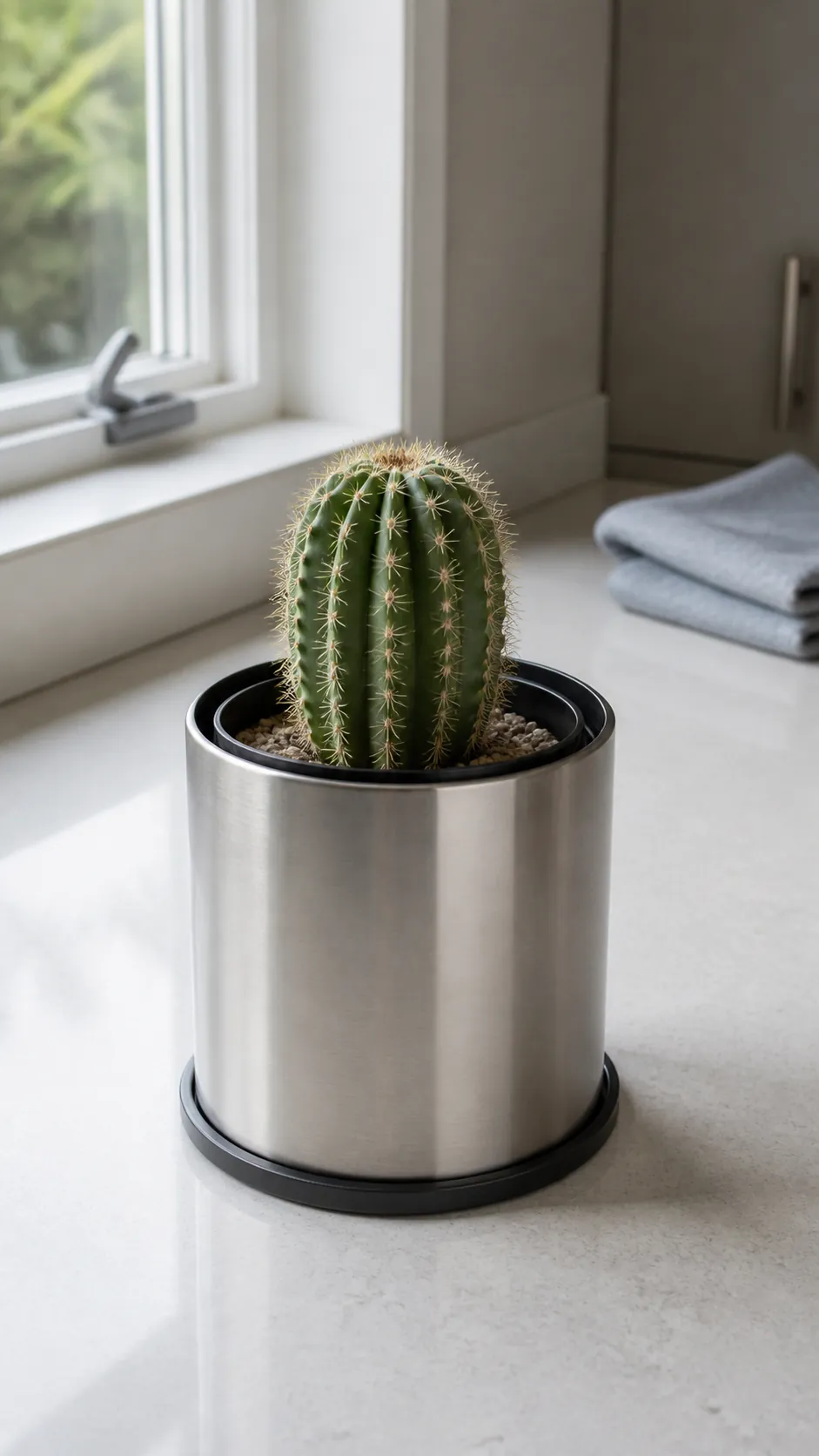
A smooth metal cover with an inner liner
A brushed metal cover can give a cactus collection a crisp finish. Keep a separate draining pot inside, with enough clearance to remove it and inspect the empty cover. Protect the setup from intense heat and avoid leaving runoff trapped where it cannot be seen. Smooth sides are also easier to wipe than deeply textured metal when mineral marks develop.
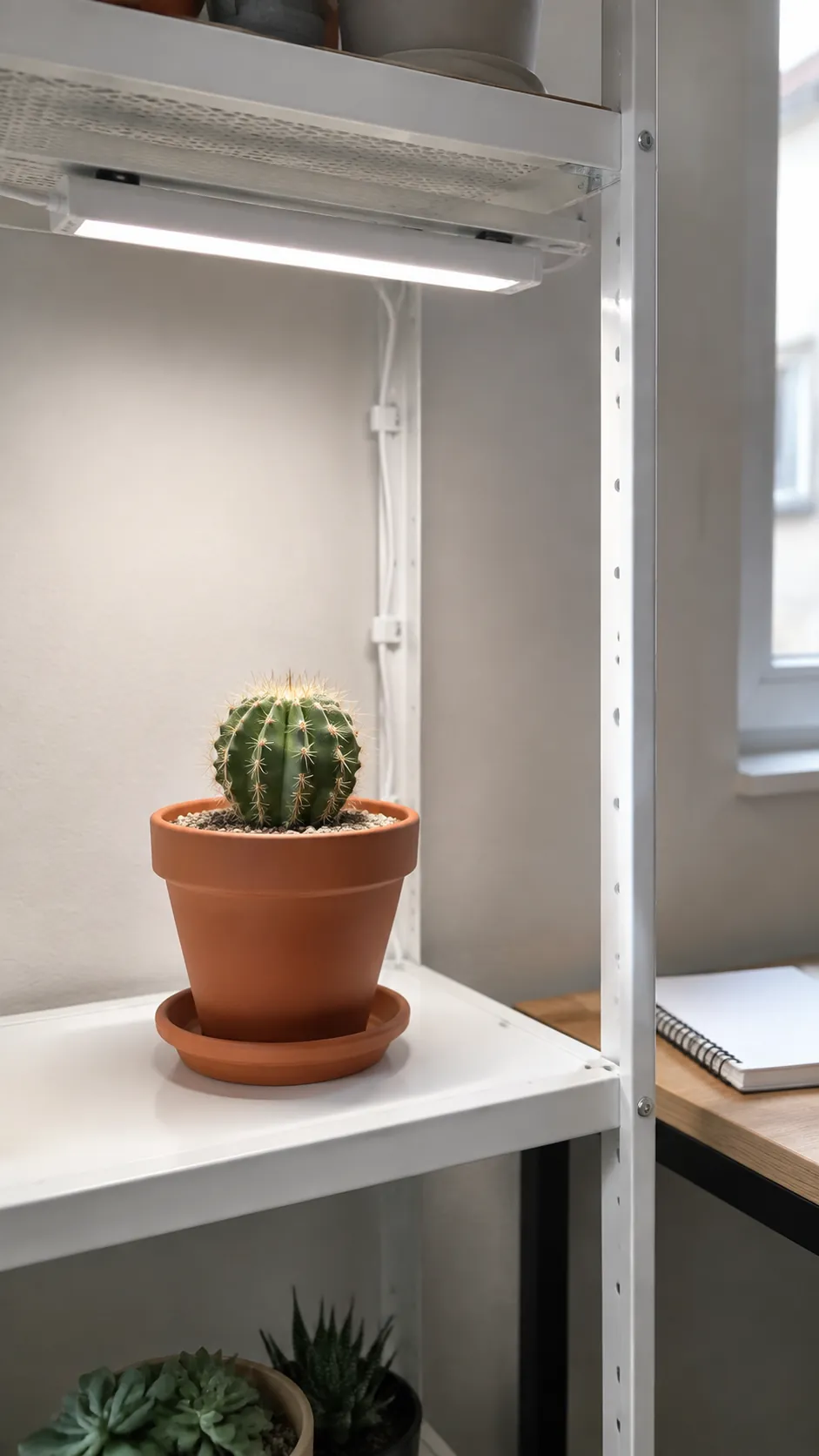
A small grow pot beneath a suitable light
If the attractive shelf is too dim, a simple pot under suitable supplemental lighting may serve the cactus better. Position the light according to the fixture and plant requirements, watching for stretching or stress as the setup settles. Keep the pot removable so drainage does not happen over electrical equipment. A tidy growing station can be appealing without disguising its practical purpose.
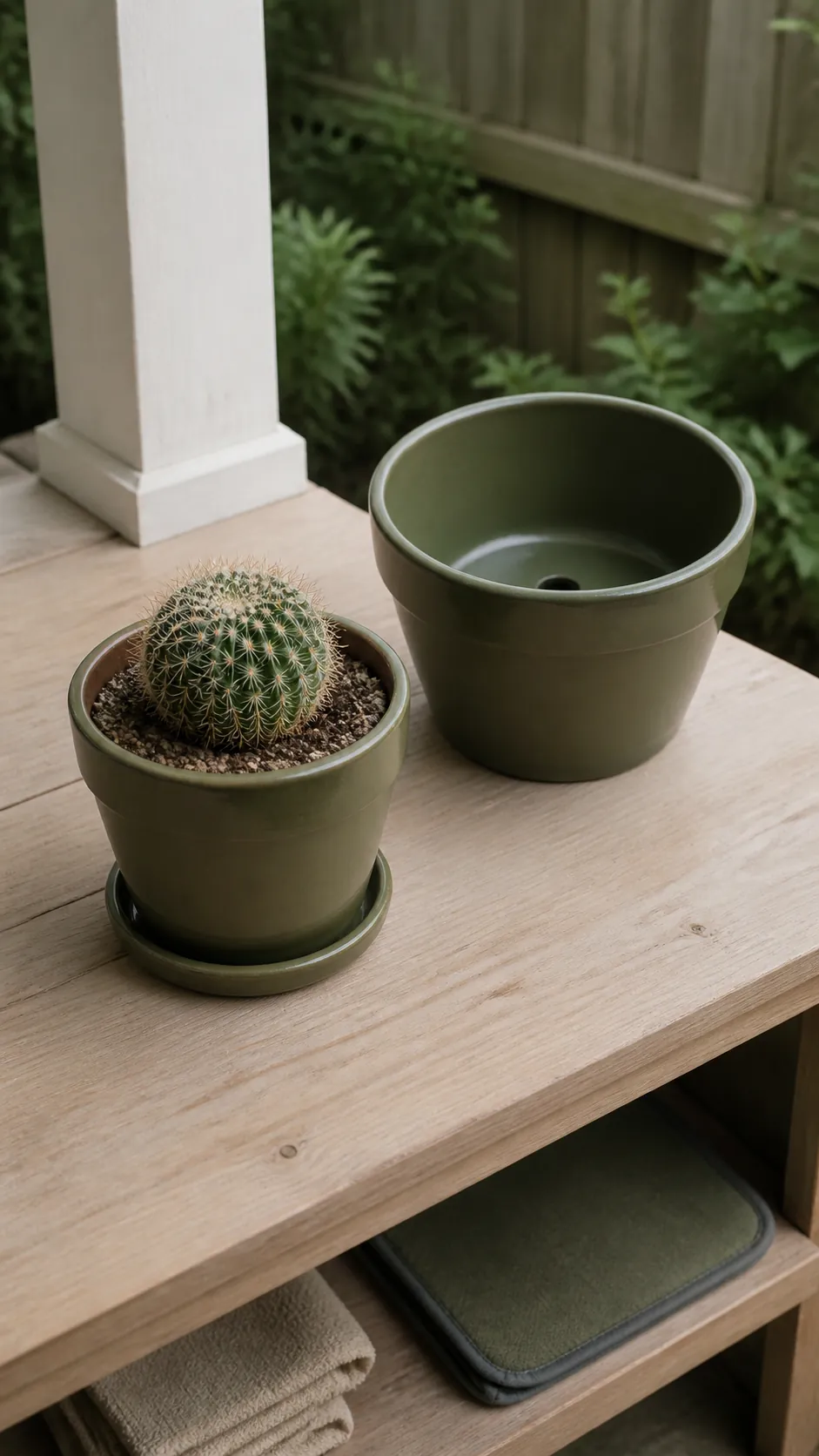
A spare matching pot for the next size up
Buying a coordinated second size can make future repotting less disruptive to a display. Store the spare empty until the cactus actually needs the room rather than moving it early for appearance. Check the new pot's opening, depth, and drainage against the root ball when the time comes. This turns a matching set into a useful plan instead of an excuse to overpot.
A plain specimen pot with room to inspect
The most satisfying cactus garden ideas often leave the plant easy to observe. A plain specimen pot with accessible soil and clear space around its base lets you notice changes before they become serious. Keep notes on the identified plant and your actual conditions rather than copying a universal watering schedule. Before choosing a dramatic vessel, make sure you can still lift, inspect, and drain the one you already have.