
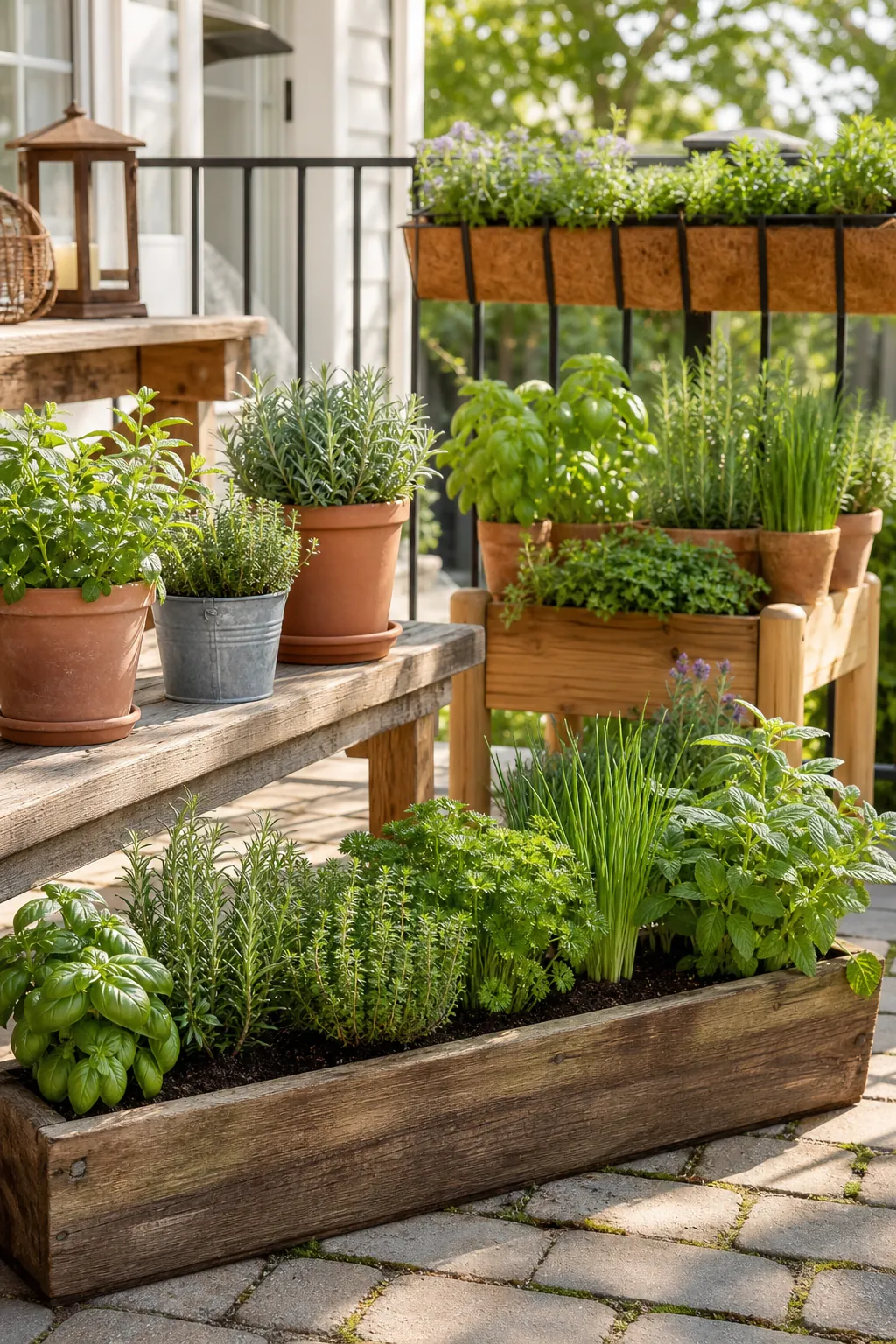
A good herb planter is not just a cute container with basil in it. It solves four small problems at the same time: drainage, sun, harvesting access, and herb compatibility. Most failed patio herb gardens come from skipping one of those basics, then wondering why the rosemary sulks, the basil bolts, or the mint takes over everything.
Use these herb planter ideas as design starting points, but choose the final layout by how you cook and how your space behaves. Sunny patios can handle Mediterranean herbs in dry, airy planters. A porch herb garden may need movable pots that chase the light. Indoor herb garden ideas need a stronger light plan than a pretty windowsill. And if mint is involved, give it its own container every time.
Start With The Planter Rules That Matter
Every planter in this list should have drainage holes, a loose potting mix, and enough depth for roots. Group herbs by water needs: rosemary, thyme, oregano, sage, and lavender prefer leaner, drier conditions; basil, parsley, cilantro, chives, and dill usually want steadier moisture. Keep fast spreaders like mint, lemon balm, and oregano contained unless you want them to dominate the whole herb garden bed.
1. Tiered Terra-Cotta Herb Ladder
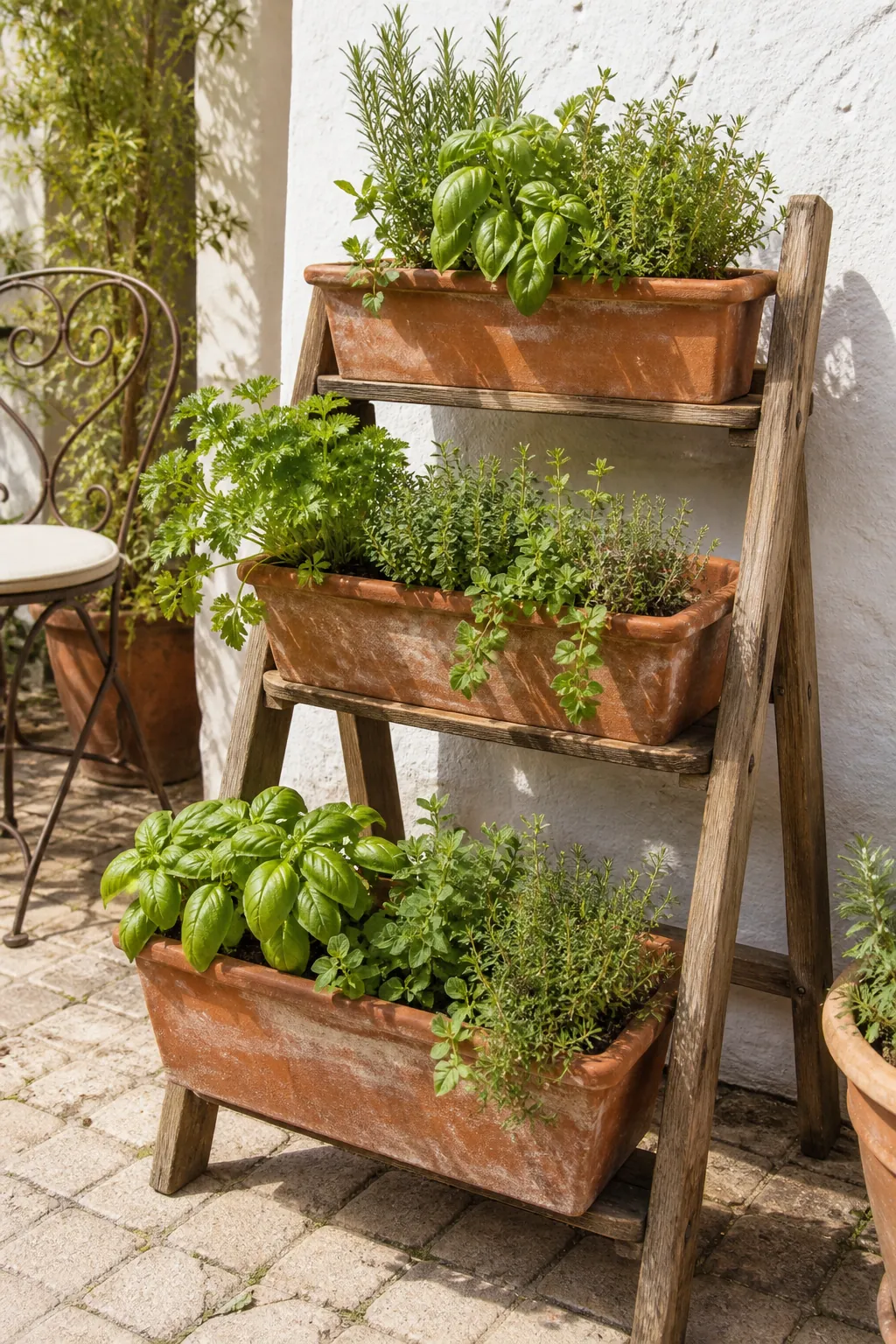
A tiered ladder planter gives a small patio the feeling of a full herb garden without taking over the floor. Put trailing thyme or oregano on the lower rung, bushy basil and parsley in the middle, and upright rosemary or sage near the top where air can move around the stems.
This is one of the easiest patio herb garden ideas to keep organized because every level can have its own pot. That matters when one herb needs more water than its neighbor. Use saucers only where you can empty them after watering.
2. Balcony Railing Herb Box
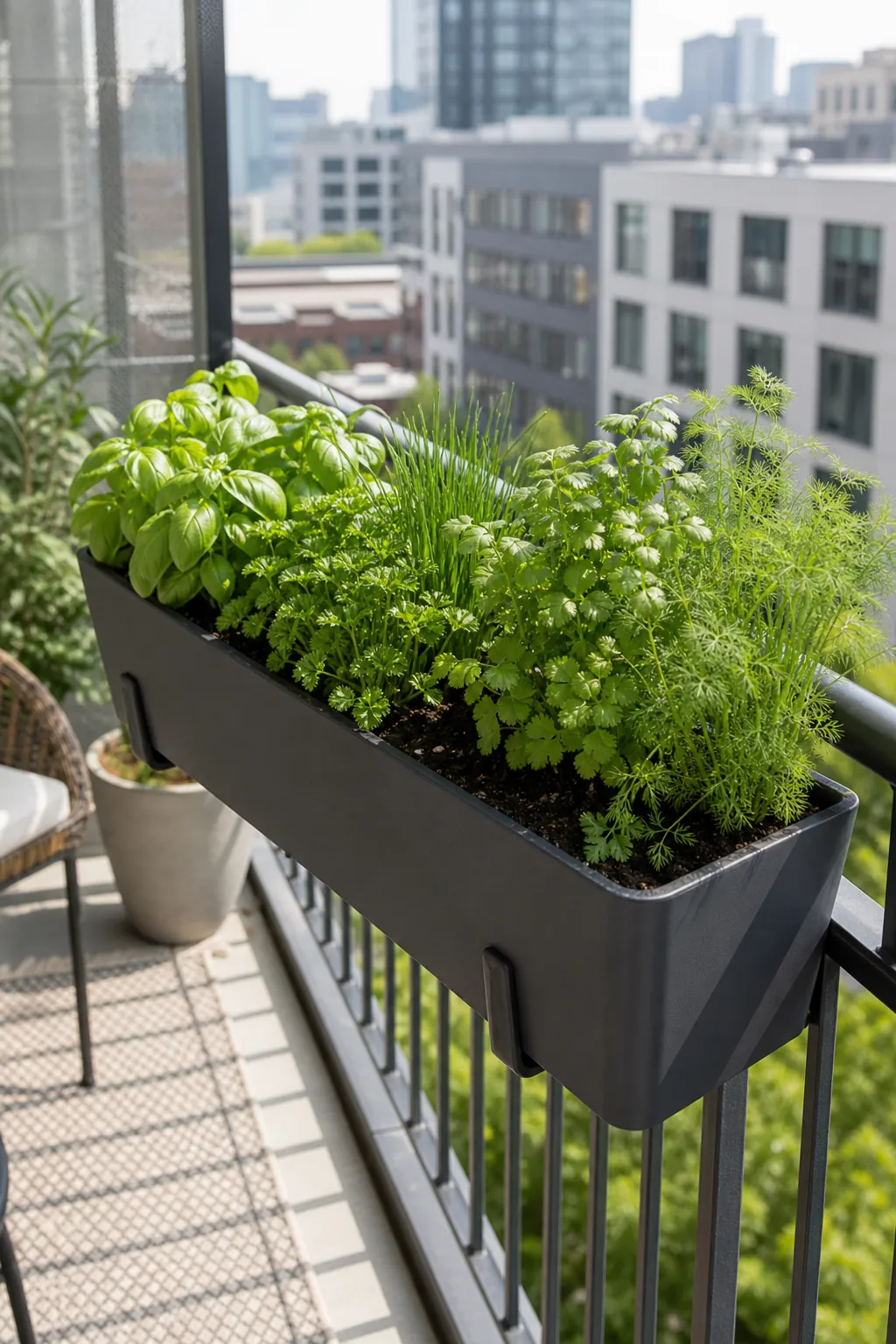
A long railing box turns the sunniest edge of a balcony into a useful herb strip. Choose compact herbs you harvest often, such as basil, parsley, chives, cilantro, and dill. Keep taller rosemary or lavender out of windy railing boxes unless the planter is heavy and secure.
The trick is root space. A shallow decorative box dries out quickly, so pick the deepest railing planter your rail can safely hold. If the balcony gets hot afternoon sun, mulch the surface lightly with fine bark or straw to slow moisture loss.
3. Bamboo Trough Herb Planter
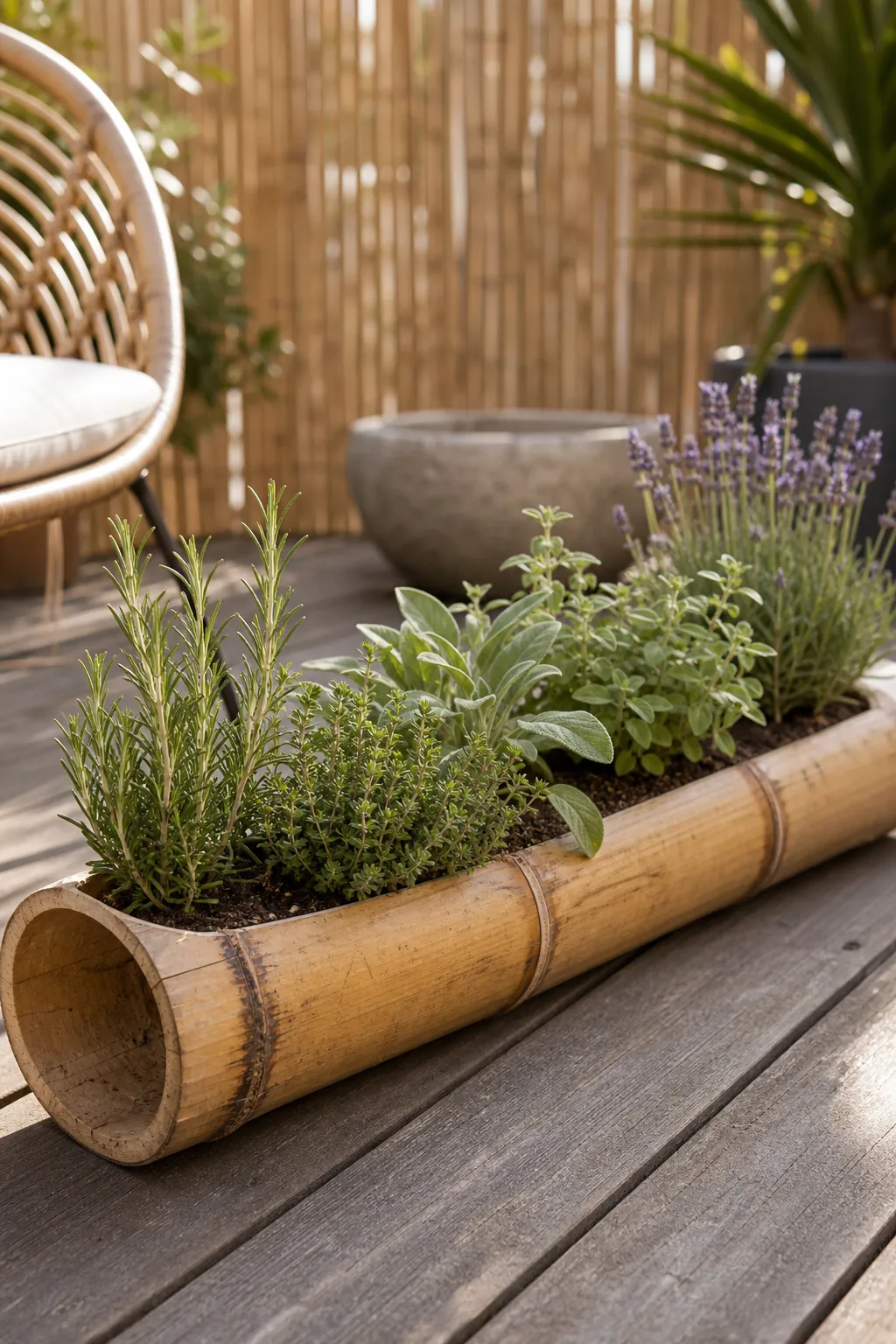
A bamboo trough planter fits a natural outdoor living space better than a plastic bin, especially beside woven chairs, stone pavers, or a timber deck. Line the inside with a breathable landscape fabric, make sure water can escape, and keep the trough slightly raised off the surface below.
This style works best for a dry herb mix: rosemary, thyme, sage, oregano, and lavender. Those herbs like the same bright, well-drained conditions, so the whole planter can be watered with one rhythm.
4. Separate Mint Pot Beside The Main Planter
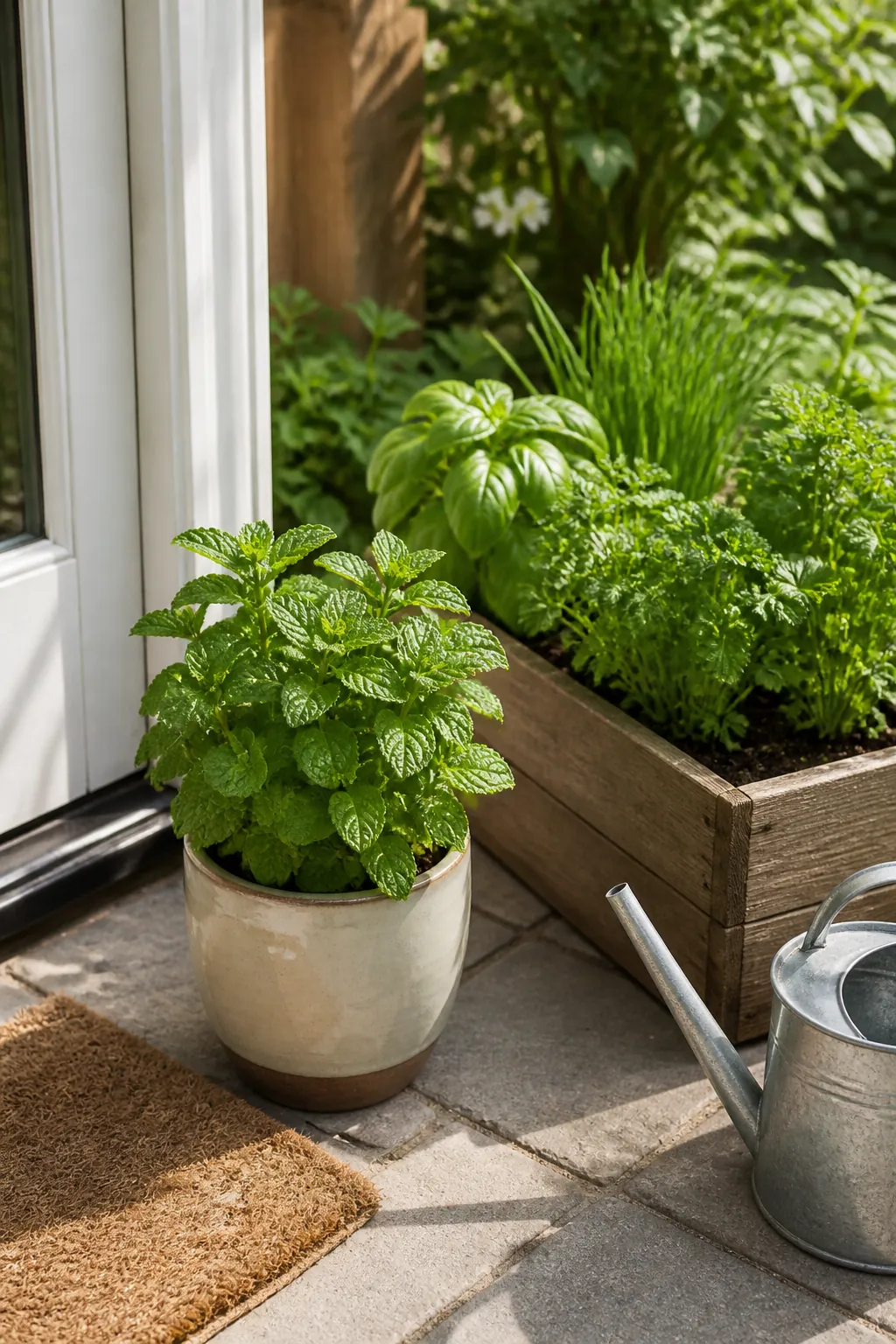
Mint looks innocent in a mixed DIY herb planter, but it is the herb most likely to bully the rest. Give it a dedicated pot and set that pot near the main arrangement so the design still feels intentional.
A separate mint pot also makes harvesting easier. Put it near outdoor seating, a drink station, or the kitchen door, and you will actually use it for tea, lemonade, and summer meals.
5. Kitchen Windowsill Herb Trough
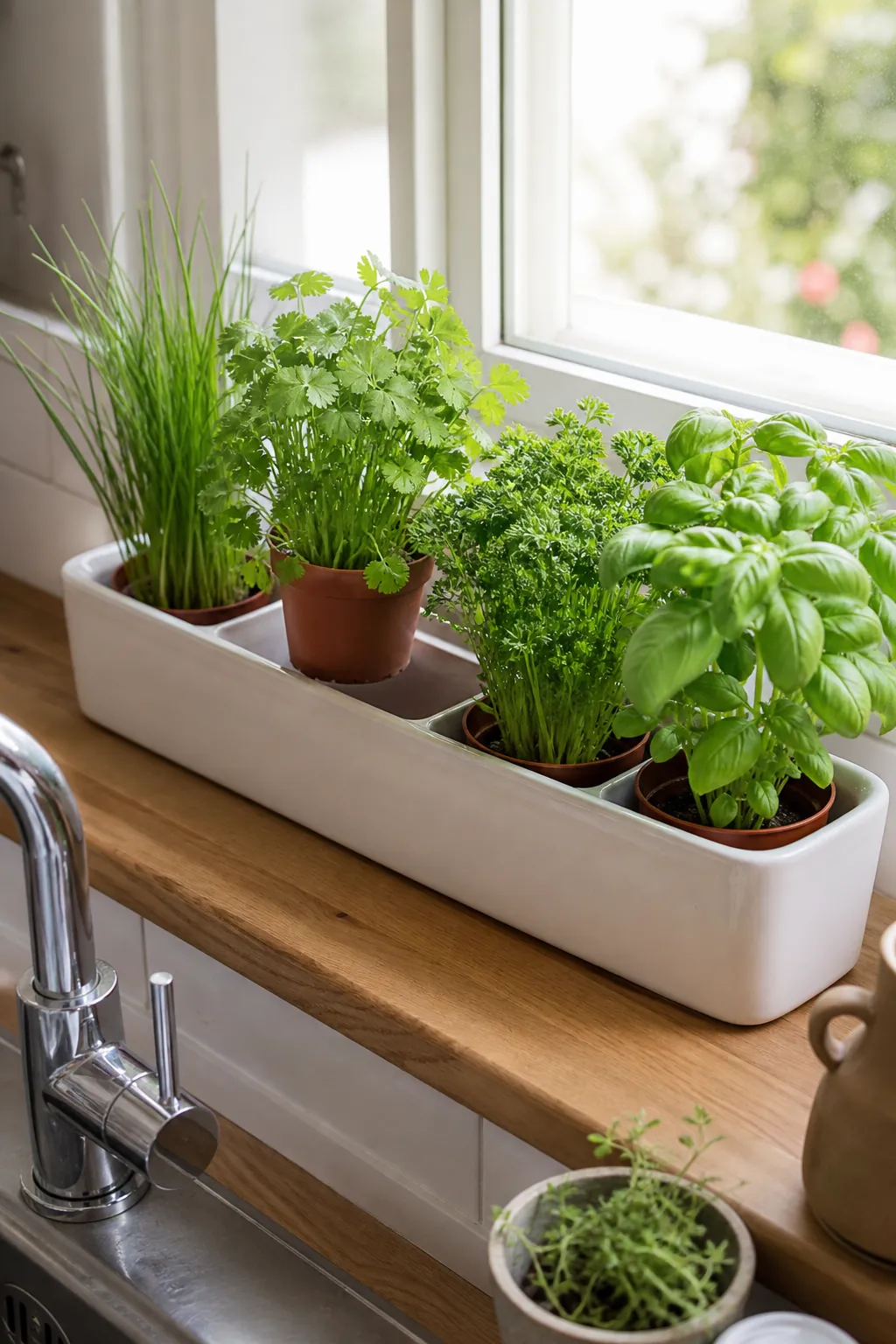
A windowsill trough is useful when you want indoor herb garden ideas that stay close to the cutting board. Instead of planting directly into one shared box, hide small nursery pots inside a longer outer trough. You can rotate weak plants, water each one correctly, and remove a pot before it declines.
Use this for short-lived or frequently harvested herbs: basil, parsley, cilantro, chives, and dill. If the window gets less than strong sun, add a small grow light rather than expecting herbs to thrive on looks alone.
6. Raised Herb Garden Bed With Compartments
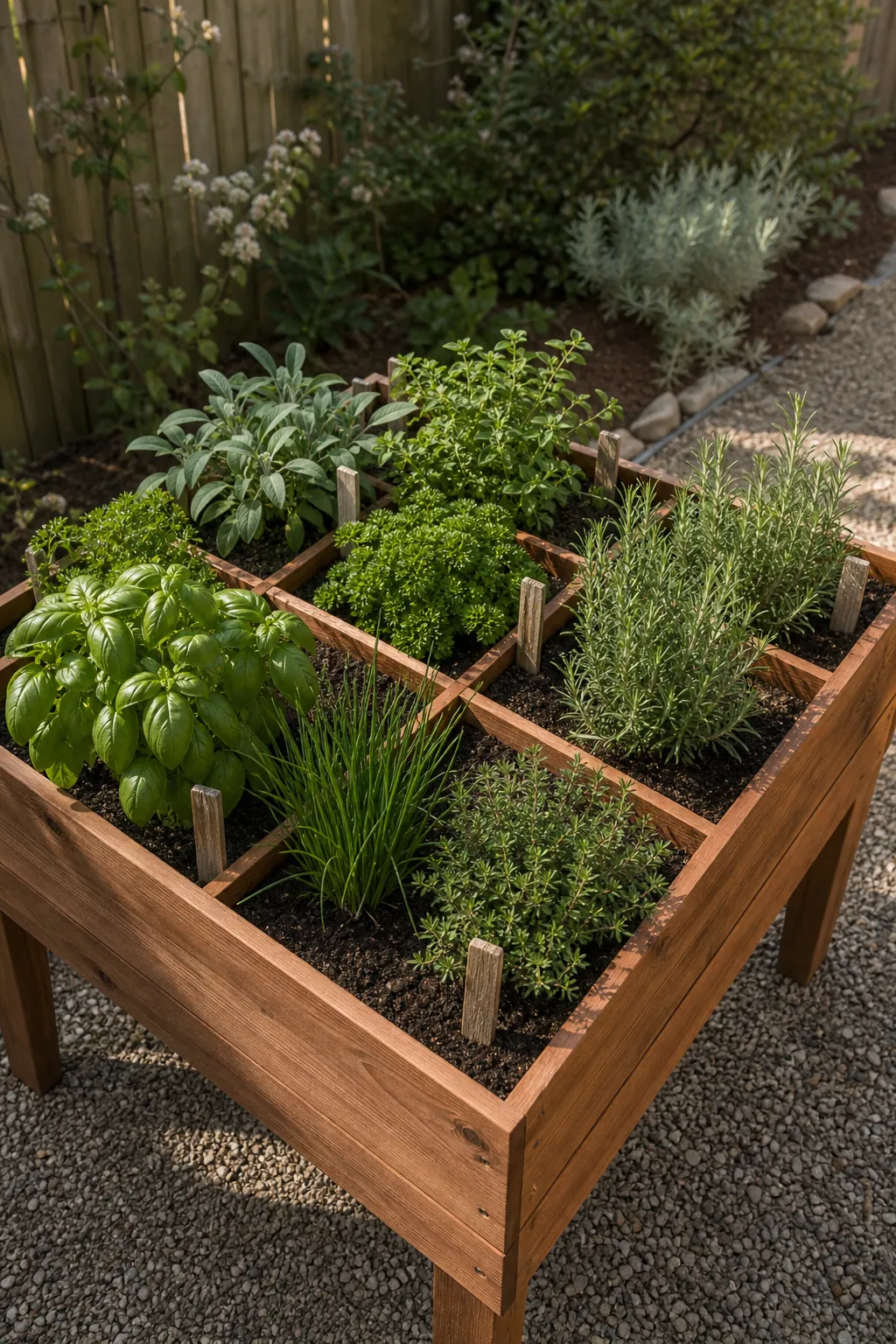
Raised herb garden ideas are ideal when you want a proper garden bed but still need control. Dividers keep small starts visible, make labels easier, and stop vigorous herbs from sprawling into slower ones.
Place tall herbs toward the back or center so they do not shade basil and parsley. Leave stepping room around at least two sides of the bed. A raised herb garden bed should be easy to snip from, not something you have to lean across.
7. Pallet Herb Garden Wall
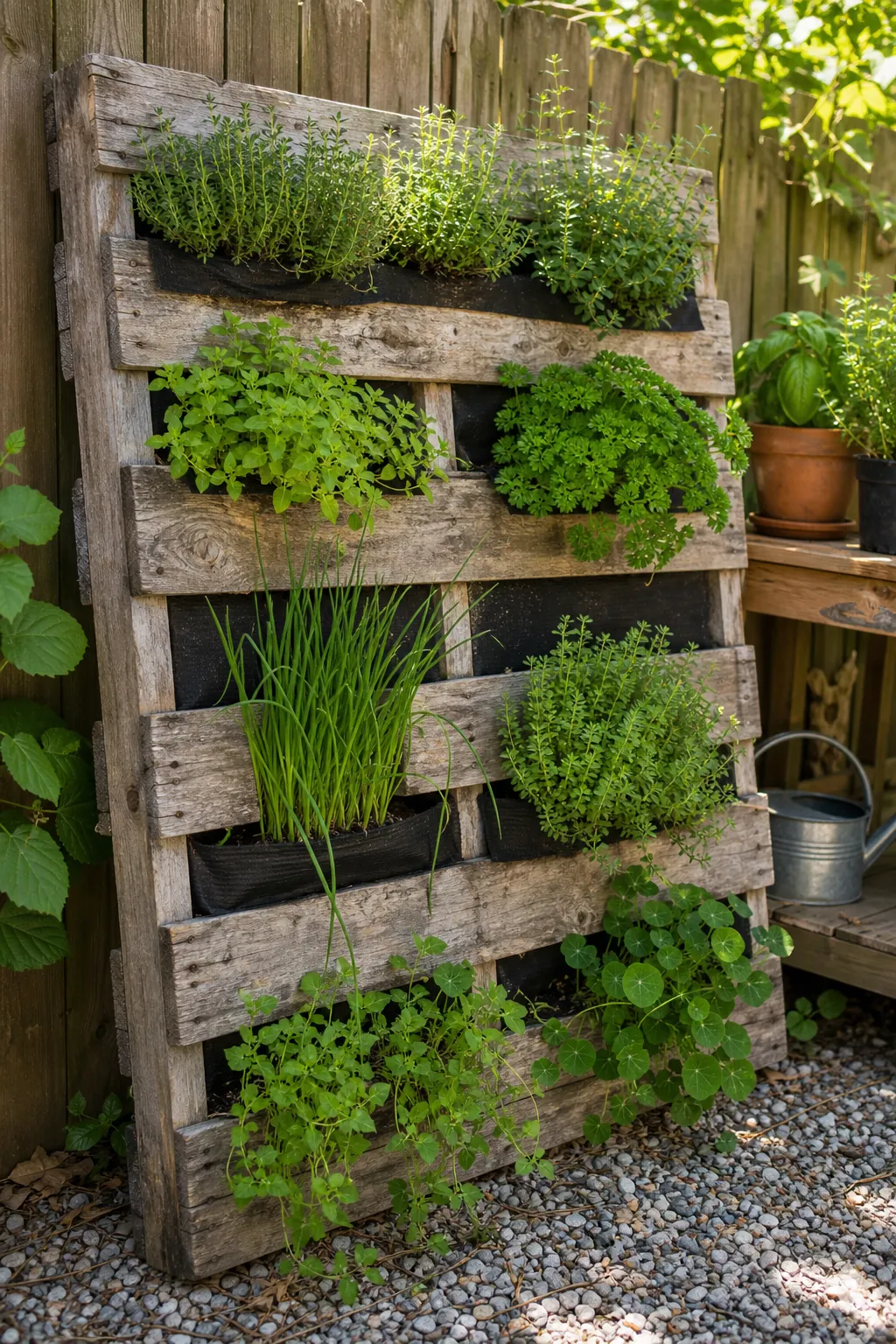
A pallet herb garden is best when floor space is tight and the wall gets good light. Use individual pots or lined pockets rather than filling the whole pallet with soil; it keeps the structure lighter and lets you replace tired herbs without rebuilding the planter.
This idea suits thyme, oregano, parsley, chives, and trailing nasturtiums. Avoid overpacking every slot. Airflow matters more than a perfectly full photo on the first day.
8. Porch Step Herb Pots
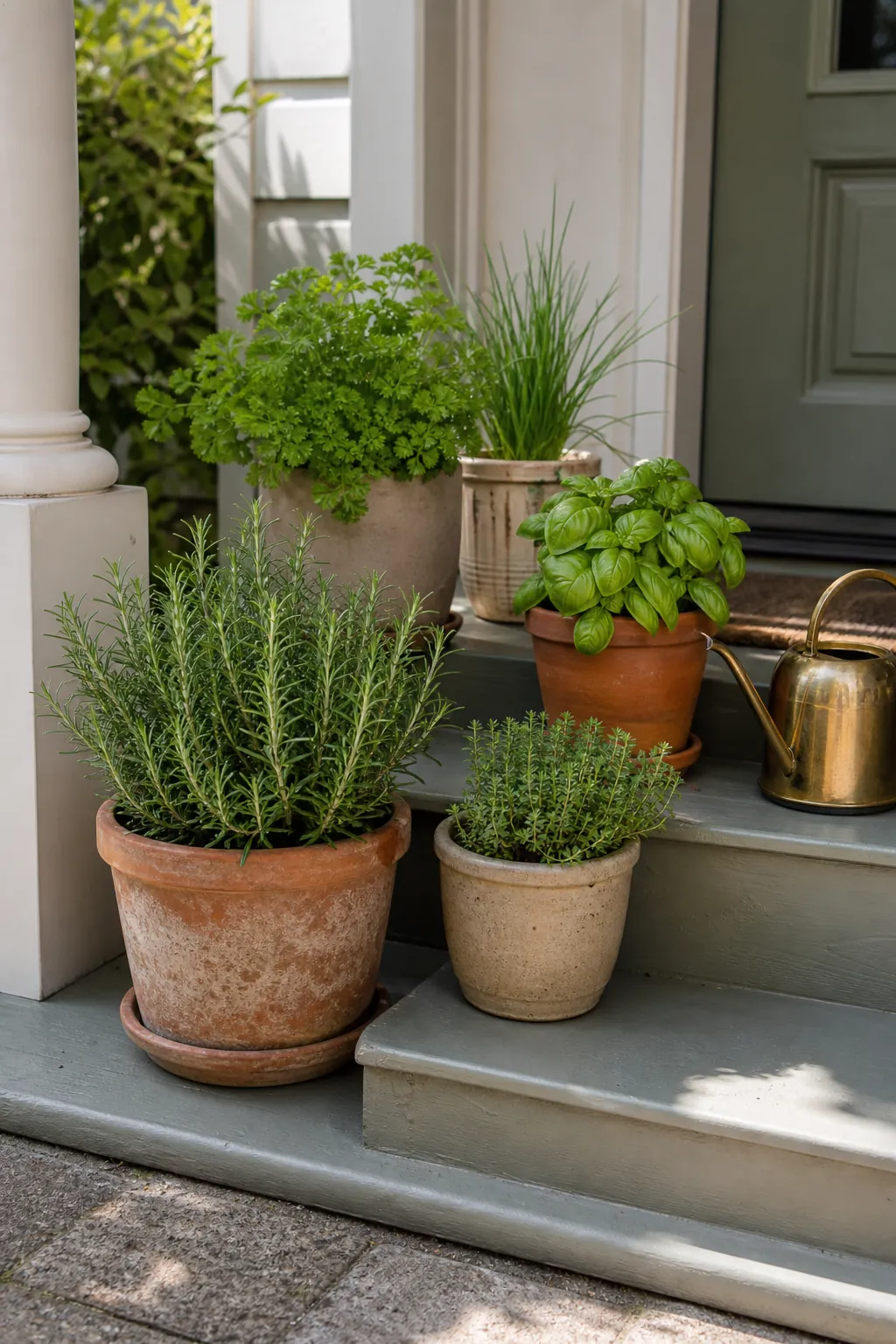
Porch herb garden pots work because they are visible. If the herbs sit on the route between the door and the kitchen, you remember to water and harvest them. Stagger pot sizes so the arrangement looks designed instead of accidental.
Keep the walkway clear and use heavier pots on lower steps. Basil, parsley, and chives belong in the easiest-to-reach spots. Rosemary and thyme can sit slightly farther away because they need less frequent cutting.
9. Rolling Herb Cart
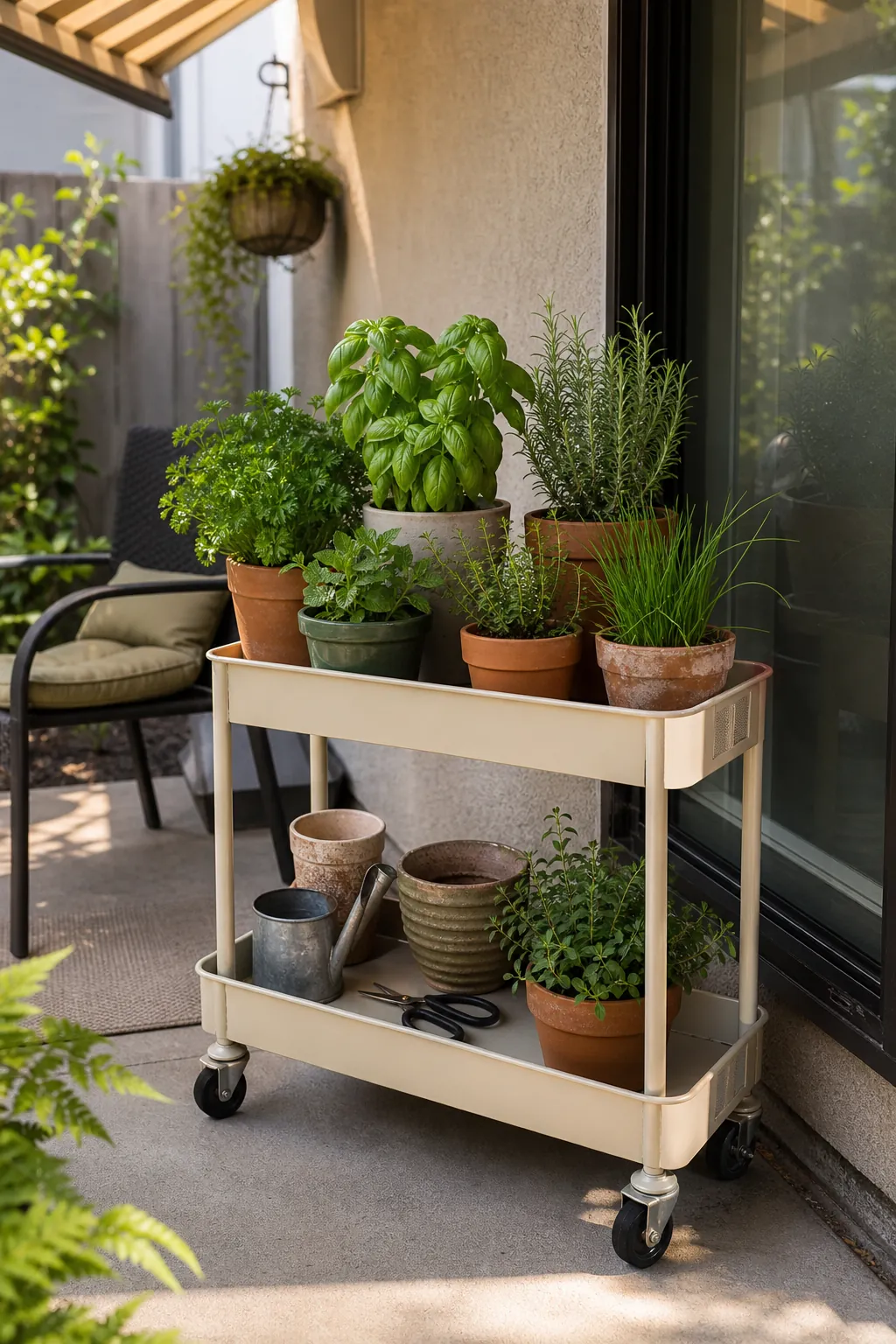
A rolling cart is the practical answer for renters, shifting sun, and heat waves. Move the cart toward morning sun, roll it into partial shade during brutal afternoons, or tuck it closer to the kitchen when you are cooking outside.
Use separate pots on each shelf and place the thirstiest herbs on the top where you will see them first. The lower shelf is good for extra potting mix, snips, labels, and a small watering can.
10. Galvanized Tub Herb Planter
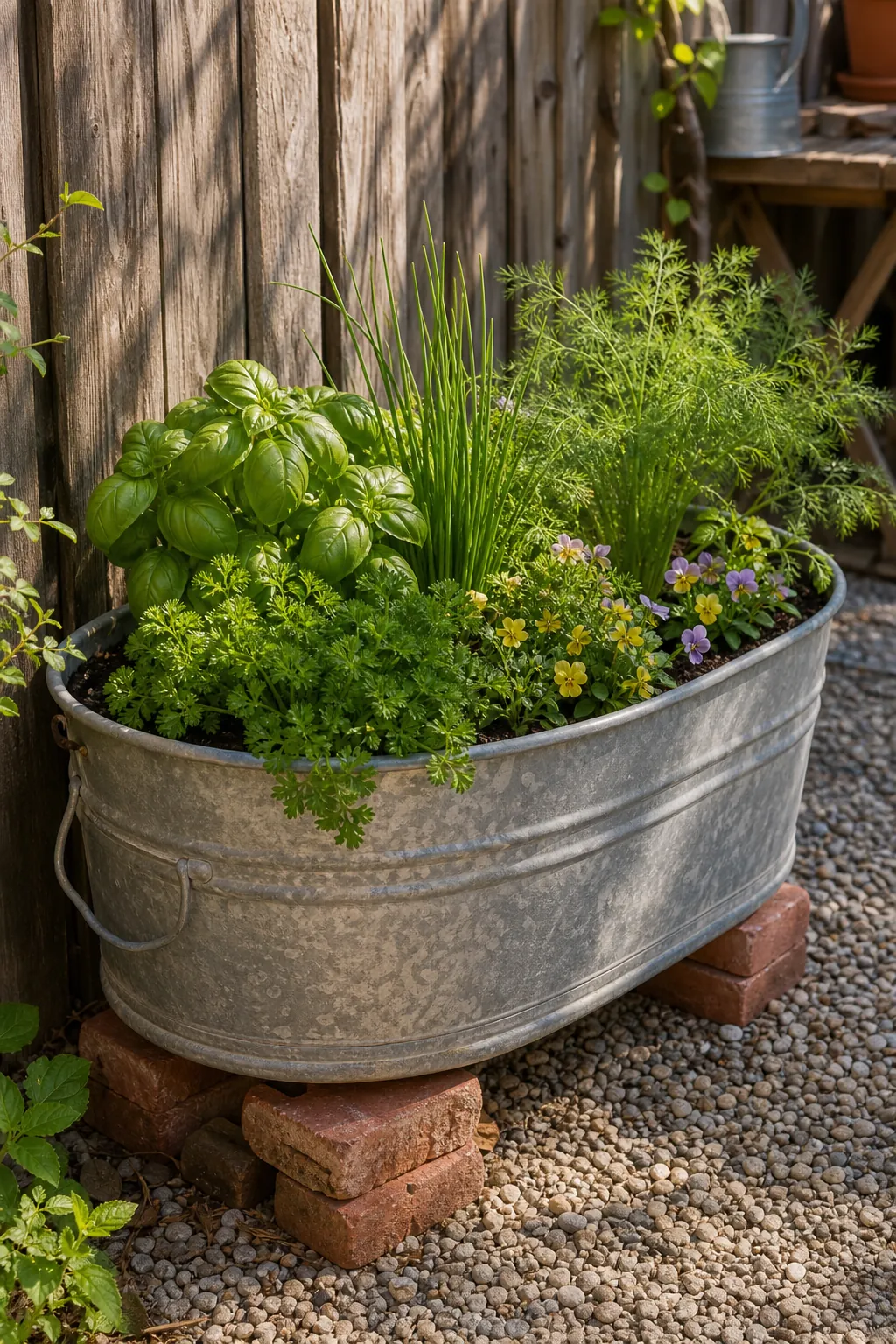
A galvanized tub gives a farmhouse herb garden bed look in a single container. Drill several drainage holes before planting, then raise the tub on feet or bricks so water can leave freely.
Because metal heats up, this planter is better for a spot with morning sun and afternoon protection. Fill it with herbs that can handle a shared watering schedule, such as basil, parsley, chives, and dill, or make it a dry Mediterranean tub with rosemary, thyme, sage, and oregano.
11. Strawberry Pot Herb Tower
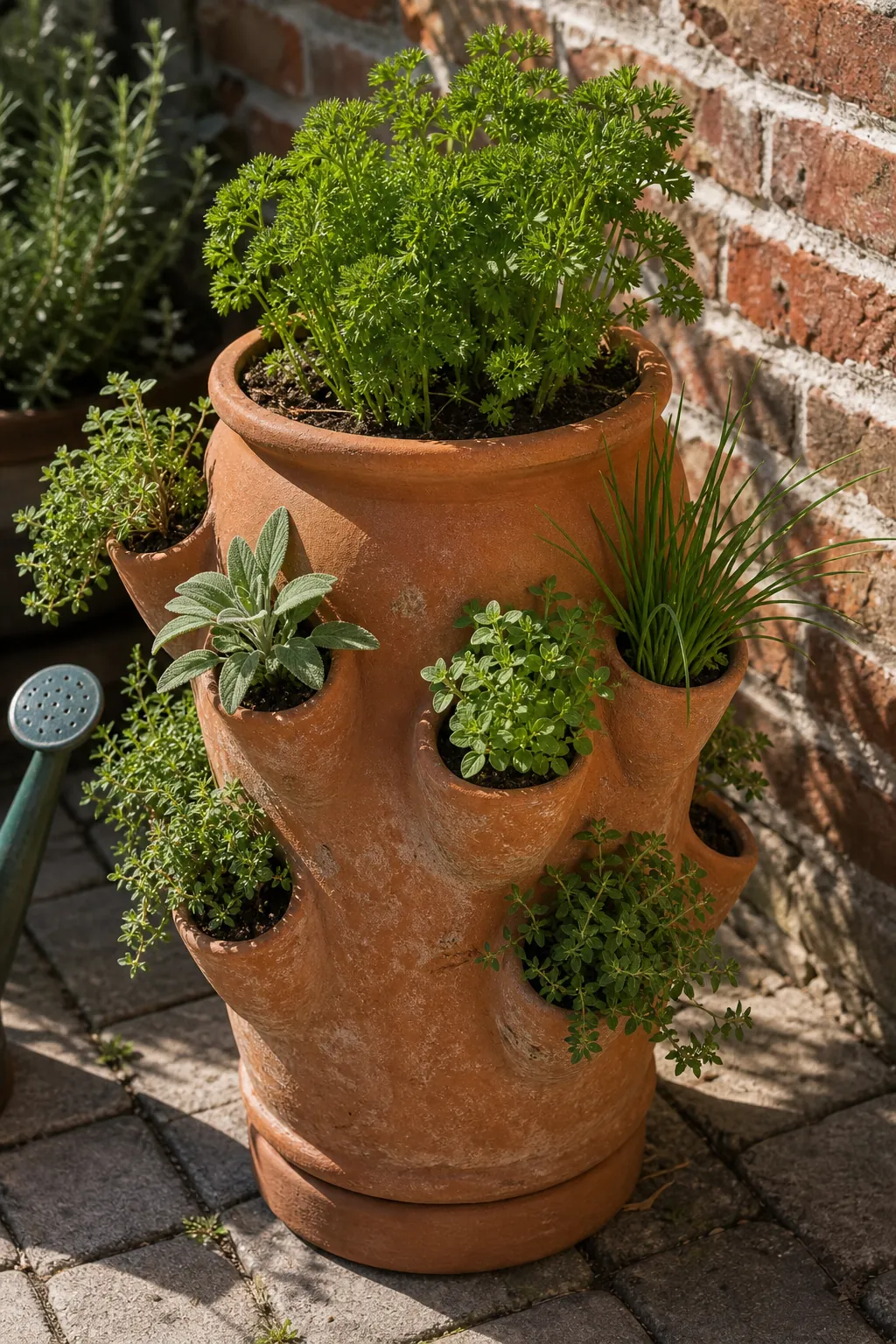
A strawberry pot becomes a sculptural herb planter when each side pocket gets a small herb. The top can hold basil or parsley, while the pockets work for thyme, oregano, chives, and compact sage.
Water slowly from the top and check the side pockets by touch. These towers dry unevenly, so they are better for herbs that forgive a little dryness than for cilantro or dill.
12. Hanging Basket Herb Planter
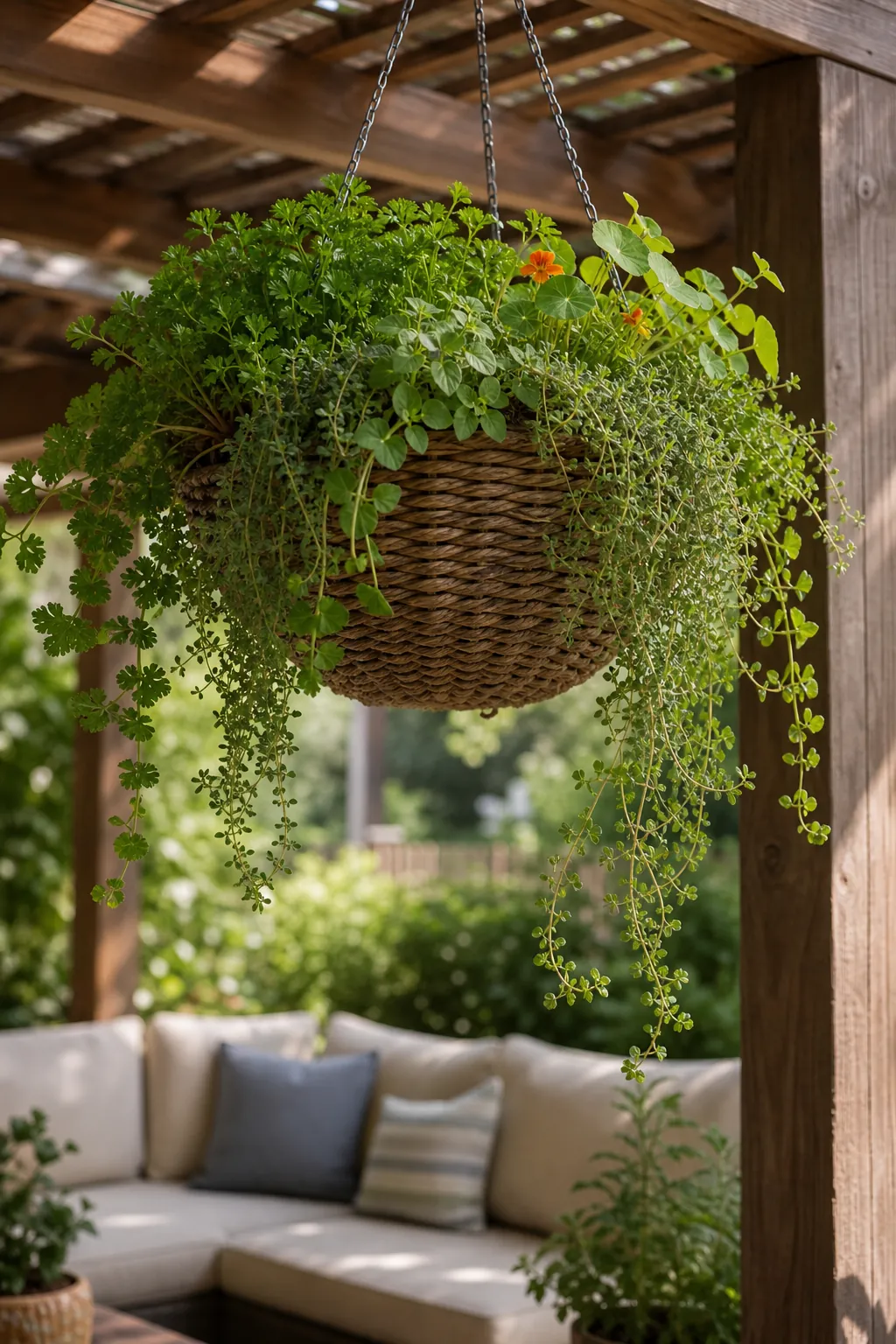
A hanging basket keeps herbs away from pets, frees up the tabletop, and softens a porch or pergola. Choose a basket large enough that the soil does not dry out by noon.
Trailing thyme, oregano, parsley, and nasturtiums look good over the edge. Skip heavy woody herbs unless the basket is very sturdy. Hanging planters need more frequent water checks than ground-level pots.
13. Vertical Pocket Herb Planter
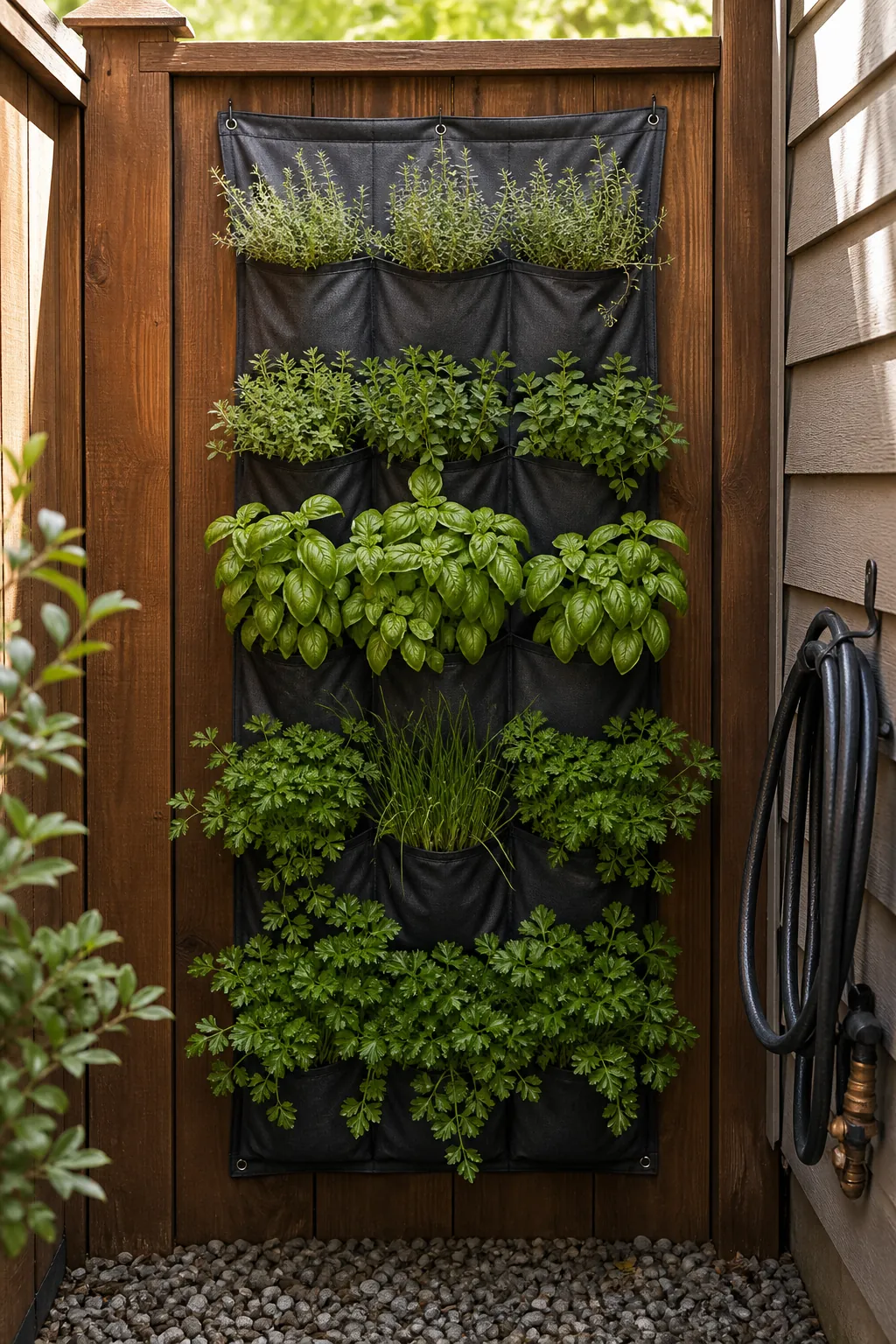
A vertical pocket planter is a smart choice for narrow yards and apartment patios. It turns a blank fence into a living herb wall without needing a full raised bed.
The risk is uneven water. The top pockets dry first and the bottom pockets stay wetter, so plant drought-tolerant herbs high and moisture-loving herbs lower. Check that the wall behind it can handle dampness.
14. Counter-Height Herb Table
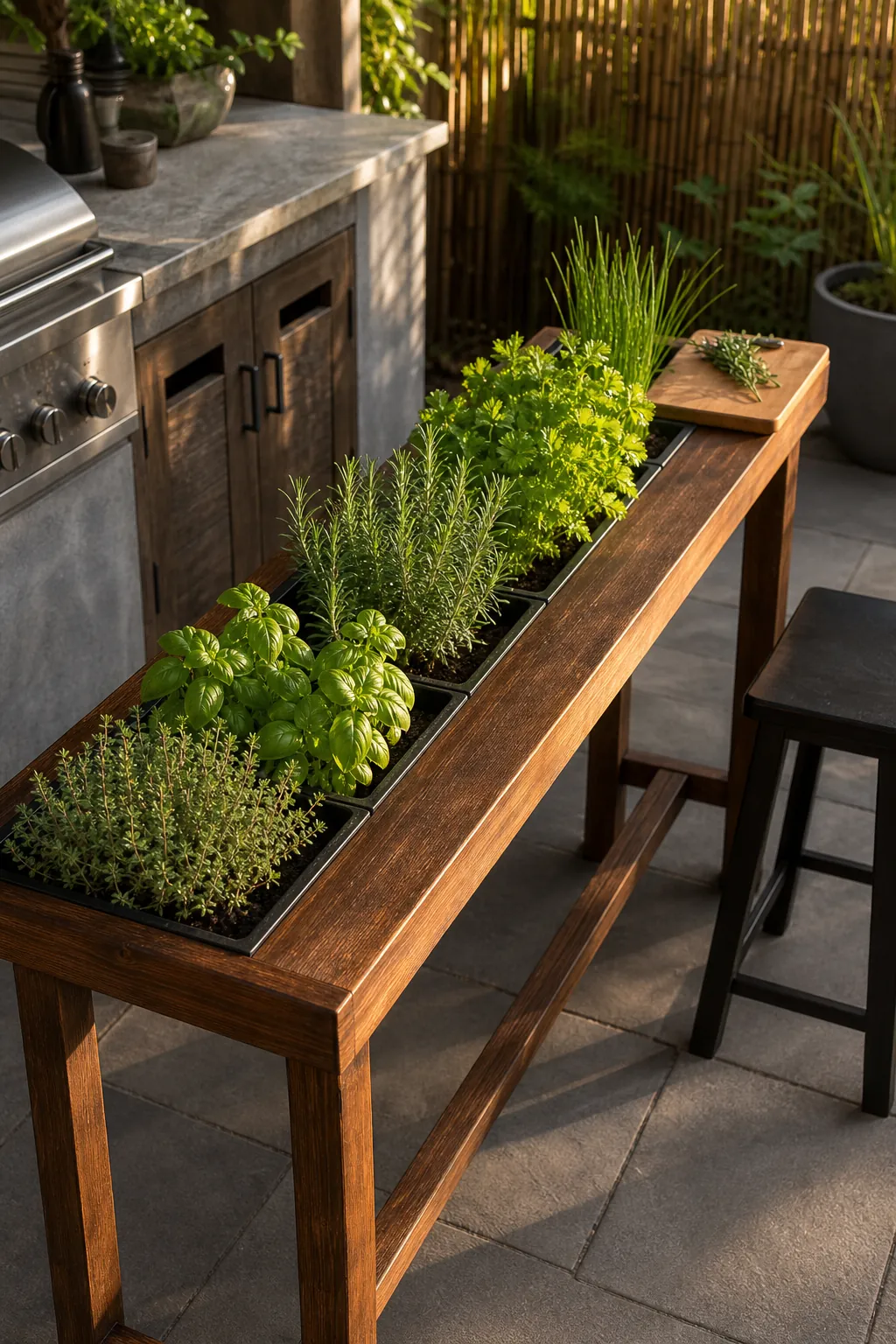
A counter-height herb table is made for people who actually cook from the garden. It brings herbs up to a comfortable cutting height, which is especially useful on decks, patios, and small outdoor kitchens.
Use a divided insert or several rectangular pots inside the table frame. Keep the surface narrow enough that you can reach the back without pressing your body into the plants.
15. Tomato And Basil Companion Planter
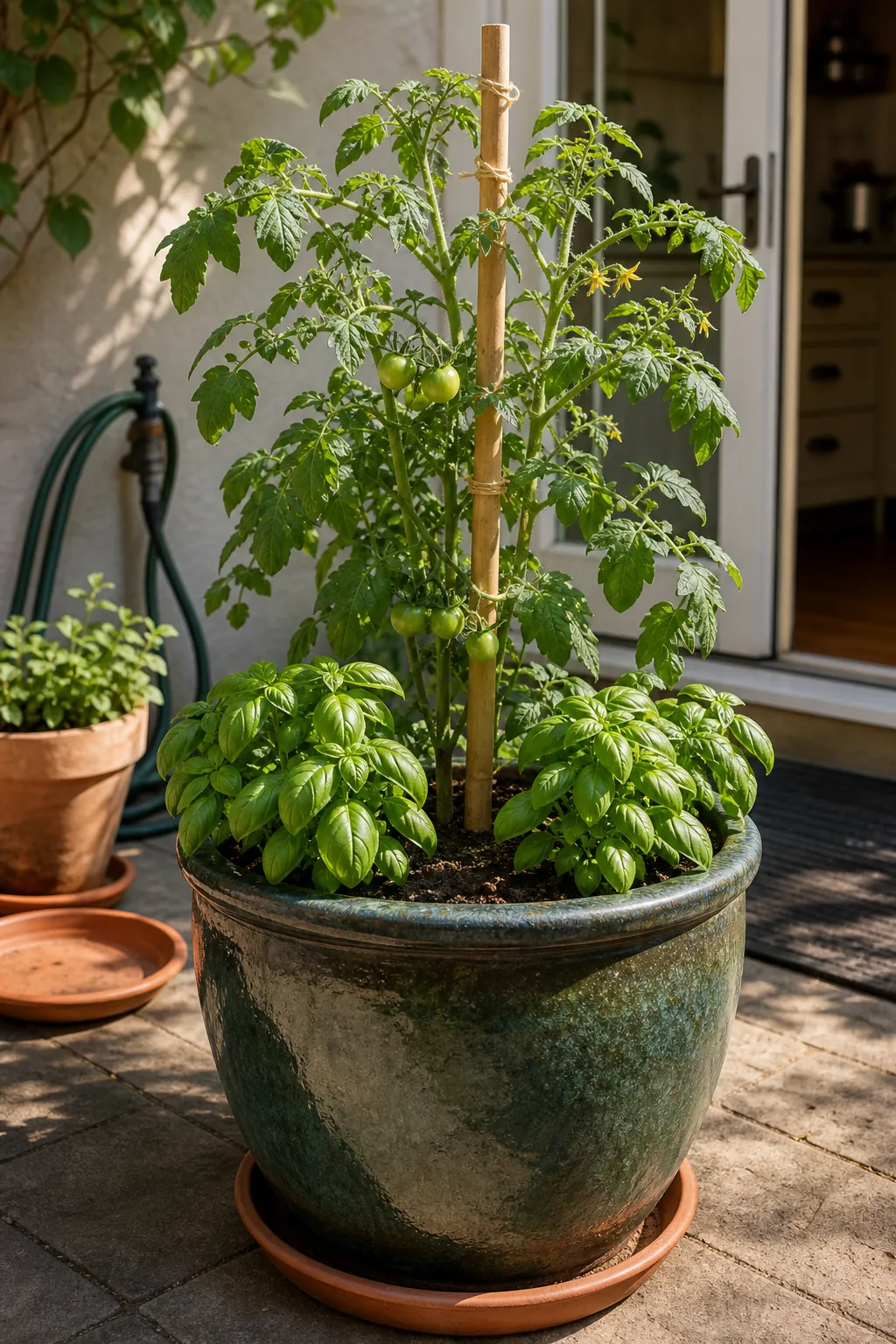
A tomato and basil planter is simple, useful, and satisfying. Give the tomato a large pot and a strong support, then tuck basil around the edge where it can get sun without being crushed.
This is not the place for a crowded herb mix. Tomatoes drink heavily and need feeding, so pair them with basil and maybe parsley, not rosemary or thyme. The best DIY herb garden outdoor setups respect those different needs.
16. Dry Mediterranean Herb Bowl
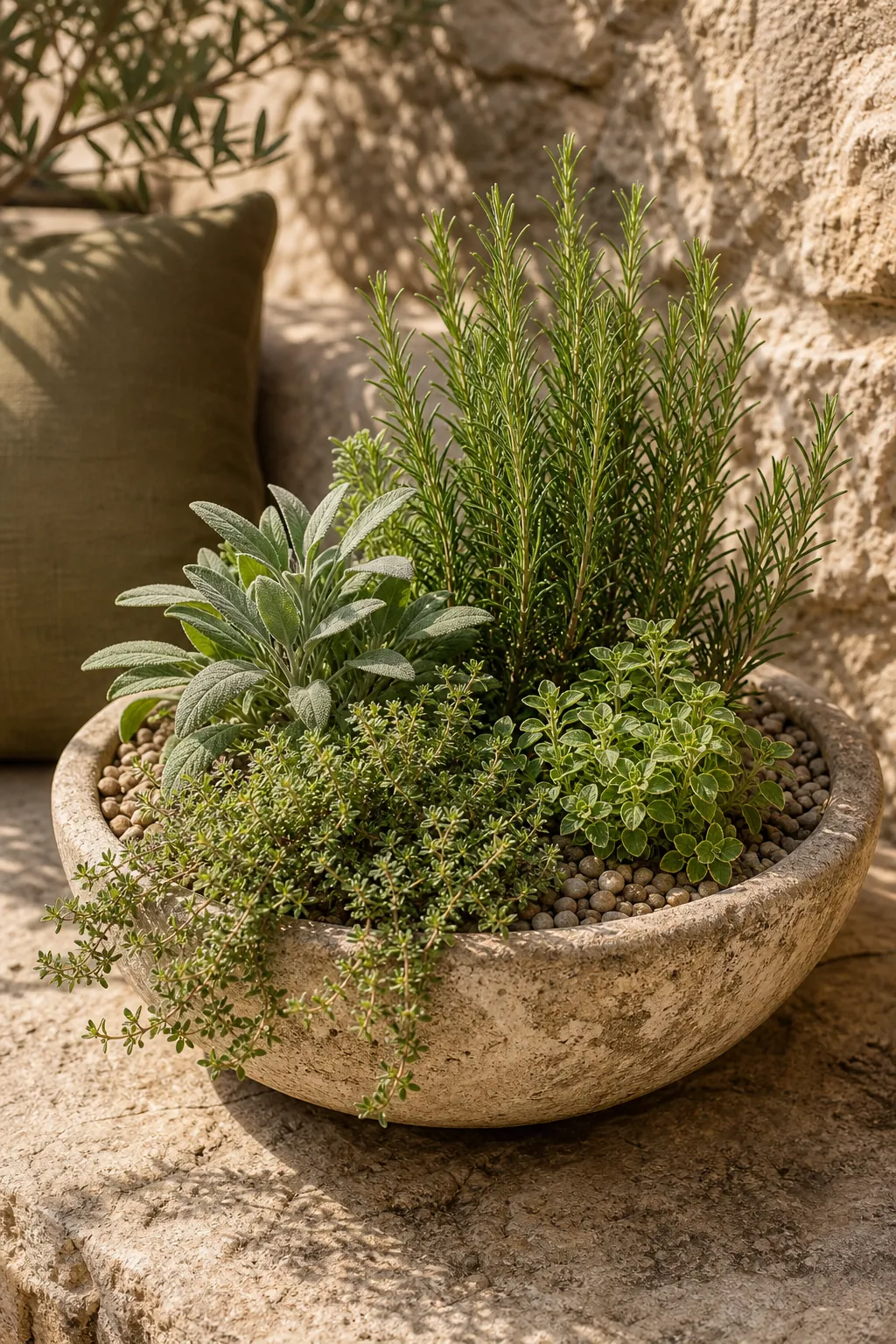
A wide bowl planted with rosemary, sage, thyme, and oregano is one of the cleanest herb gardens outdoor design ideas. The herbs share a preference for sun, airflow, and soil that drains fast.
Use a gritty potting mix and resist the urge to water on a fixed calendar. Check the soil instead. This planter often looks best with gravel mulch and a rough clay or stone container.
17. Moisture-Loving Herb Planter
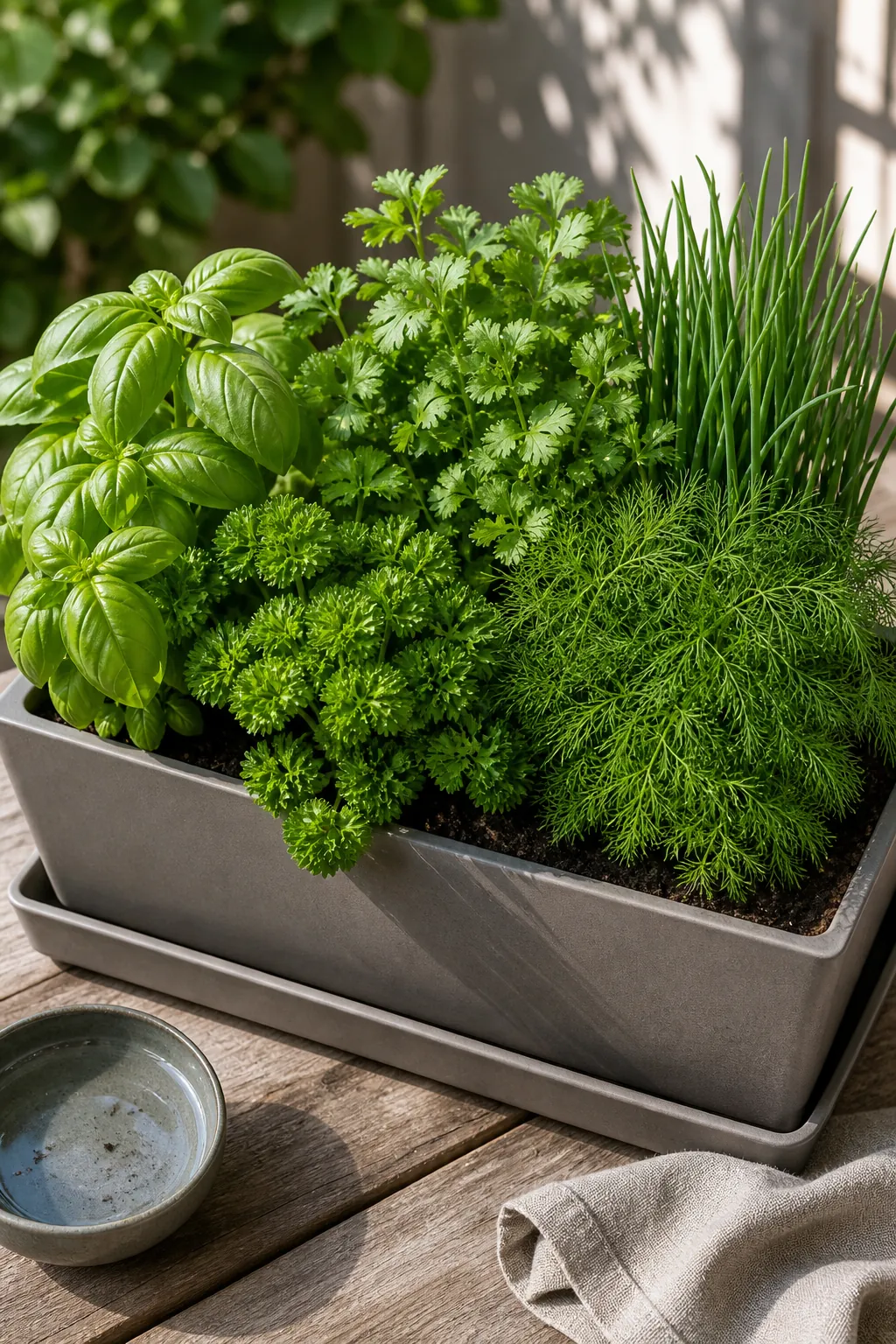
If your cooking leans fresh and leafy, make one planter just for basil, parsley, cilantro, chives, and dill. These herbs want steadier moisture than rosemary and thyme, so they are happier together.
Plant basil where it gets the best light and give cilantro a cooler edge if possible. Harvest often so the planter stays bushy instead of leggy.
18. Indoor Grow-Light Herb Shelf
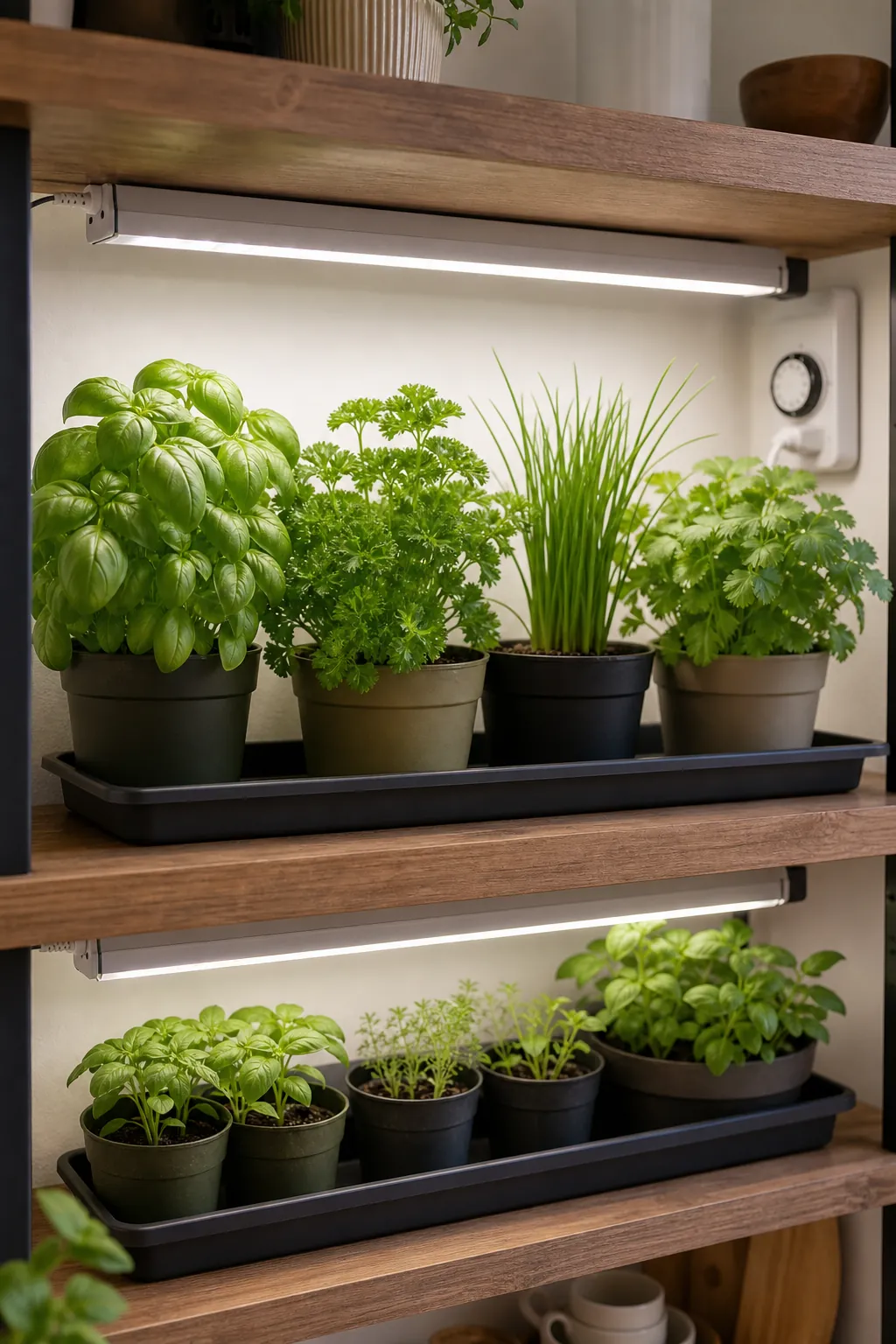
An indoor herb shelf works better than a dim windowsill because the light is controlled. Use shallow trays under the pots, keep the leaves close enough to the light source, and rotate pots as they grow.
This setup is good for basil, parsley, chives, and cilantro in cooler months. It is also useful for starting herbs before moving them into outdoor planters.
19. Concrete Planter With Drop-In Herb Pots
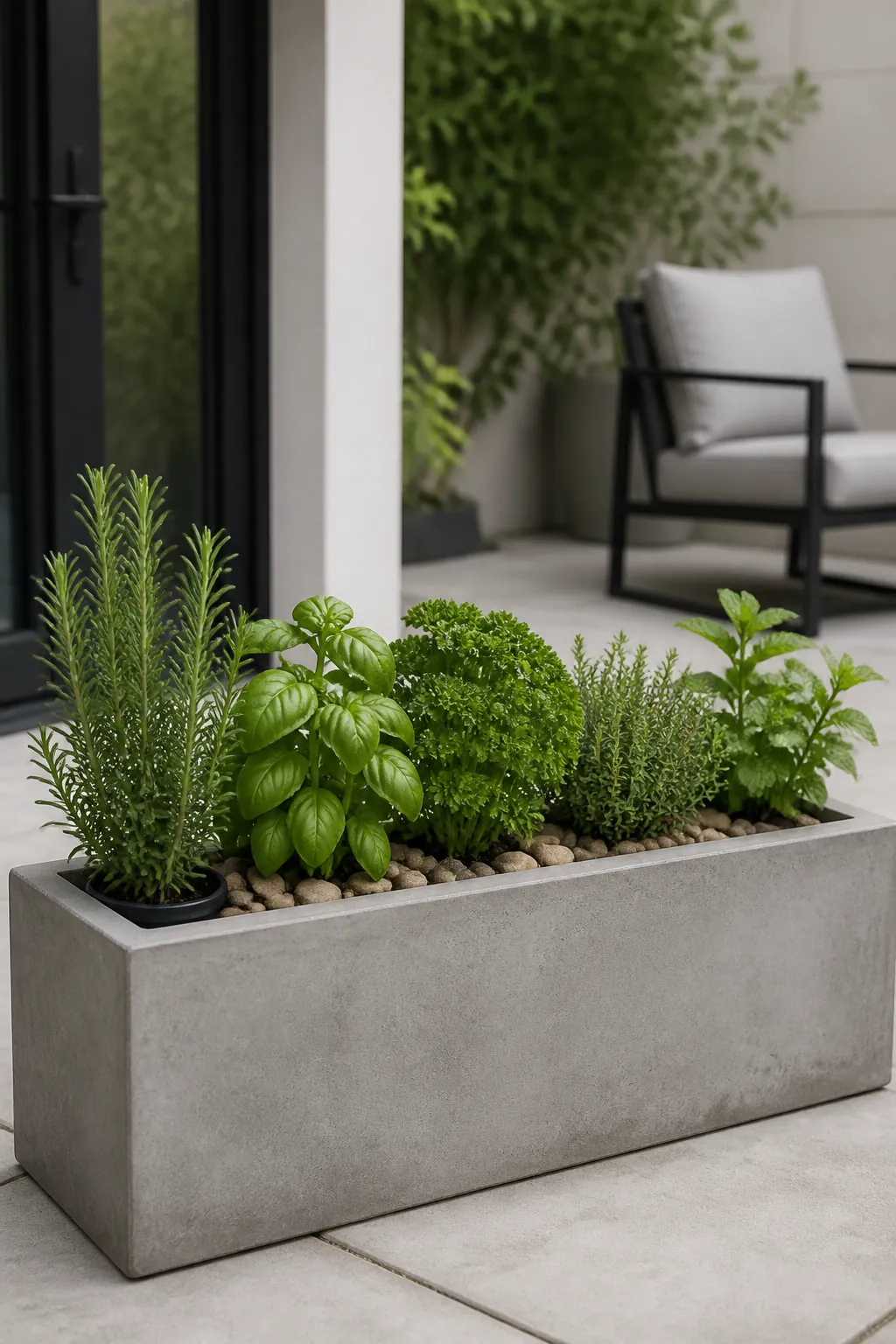
A concrete planter can look polished, but it is heavy and not always easy to adjust. Drop individual herb pots inside it instead of filling the whole container with soil. The outer planter becomes the design piece, while each herb keeps its own drainage and root zone.
This method is especially good for modern patios and balconies where you want clean lines. Hide the pot rims with moss, bark, or small pebbles, but keep the pots removable.
20. Recycled Wooden Crate Herb Box
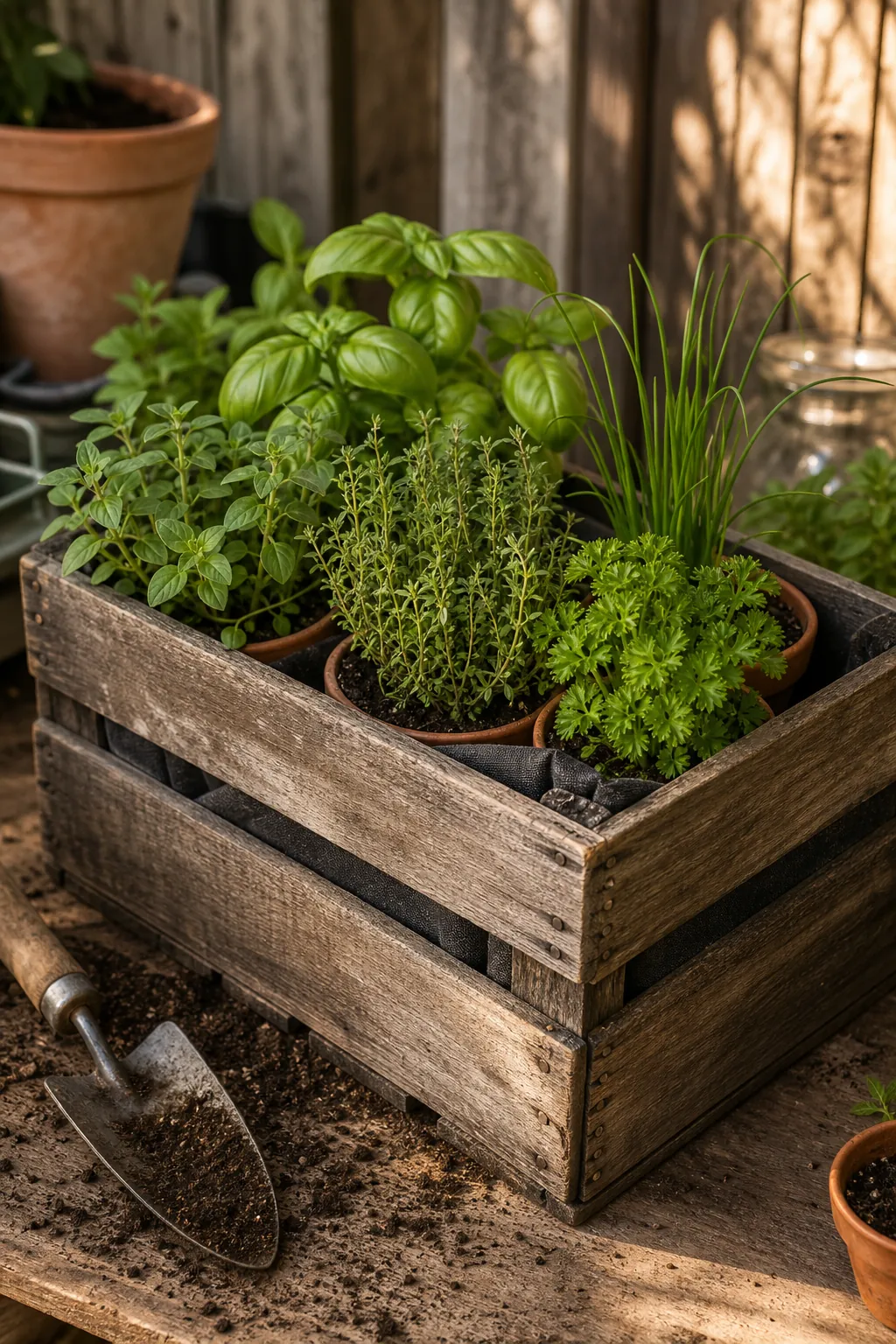
A recycled crate makes a relaxed DIY herb planter for a porch, potting bench, or sunny side yard. Line it, drill drainage, and use small pots inside if the crate wood is old or uneven.
The rustic look pairs well with handwritten labels, twine, and terra-cotta. Just keep the design honest: herbs need airflow, not a crate packed so tightly that every stem stays damp.
21. Cocktail Herb Planter
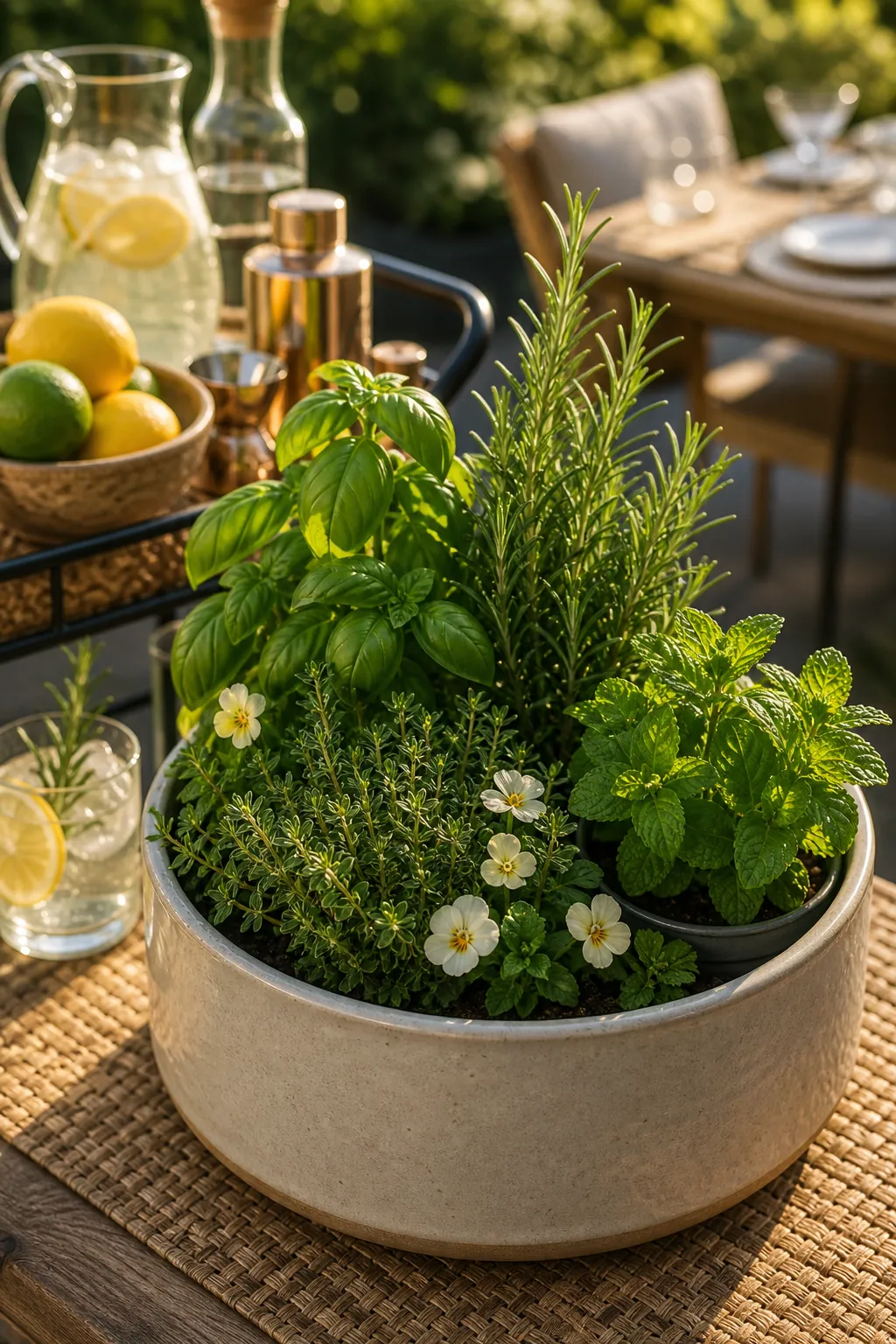
A cocktail herb planter is built around entertaining: mint, basil, rosemary, thyme, and edible flowers near an outdoor bar or patio table. Keep mint in a separate insert pot so it stays useful without taking over.
This planter should be easy to snip from while guests are outside. Add a small tray for scissors and plant labels, but leave enough open soil surface that watering is simple.
22. Path-Edge Herb Garden Bed
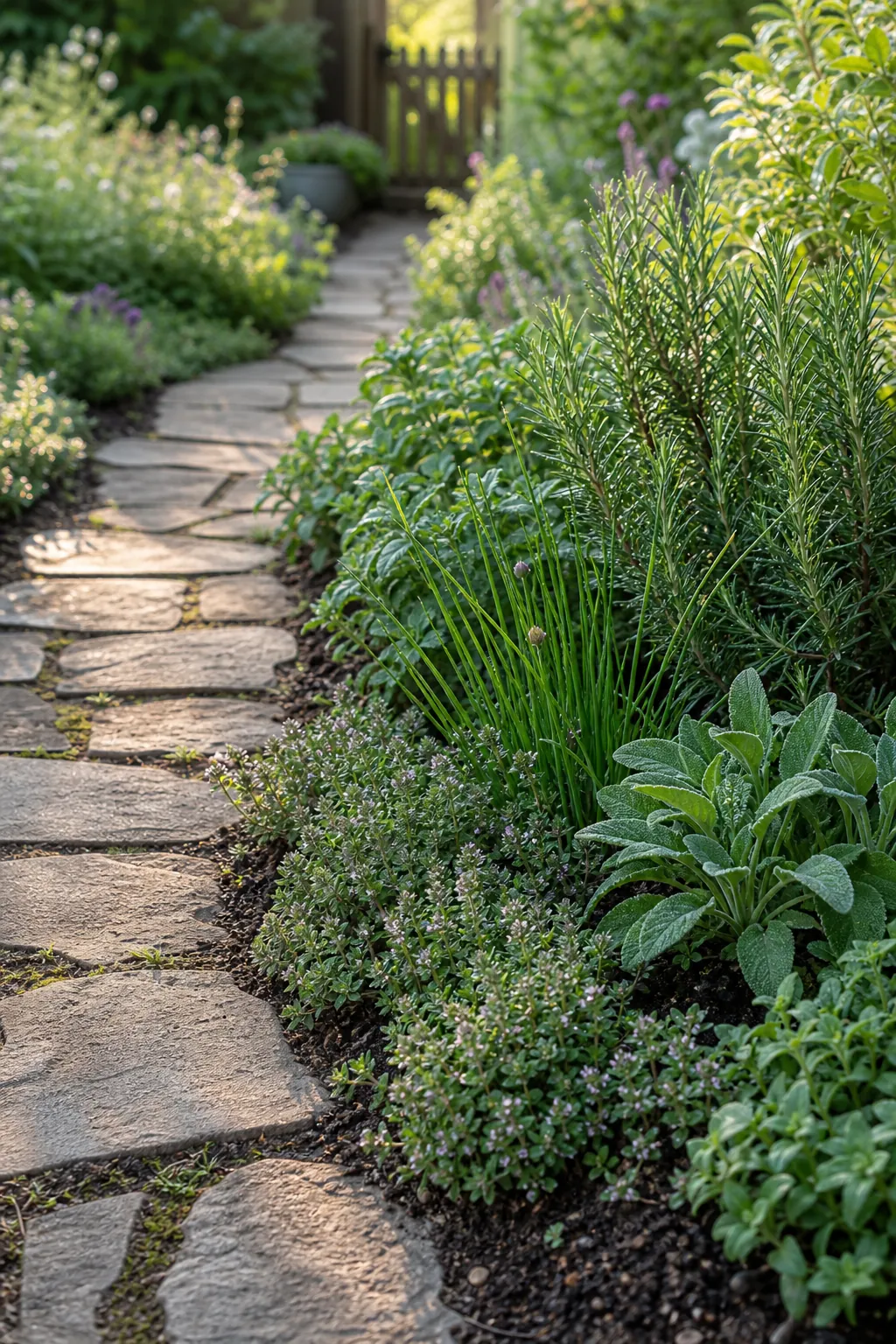
A narrow herb garden bed along a path makes herbs part of the landscape instead of a separate chore. Thyme, chives, oregano, sage, and compact rosemary can soften hard edges and release fragrance when you brush past.
Keep aggressive herbs contained and leave enough path width for real use. The best herb garden bed is one you can harvest without stepping into the soil.
23. Seedling-To-Planter Herb Station
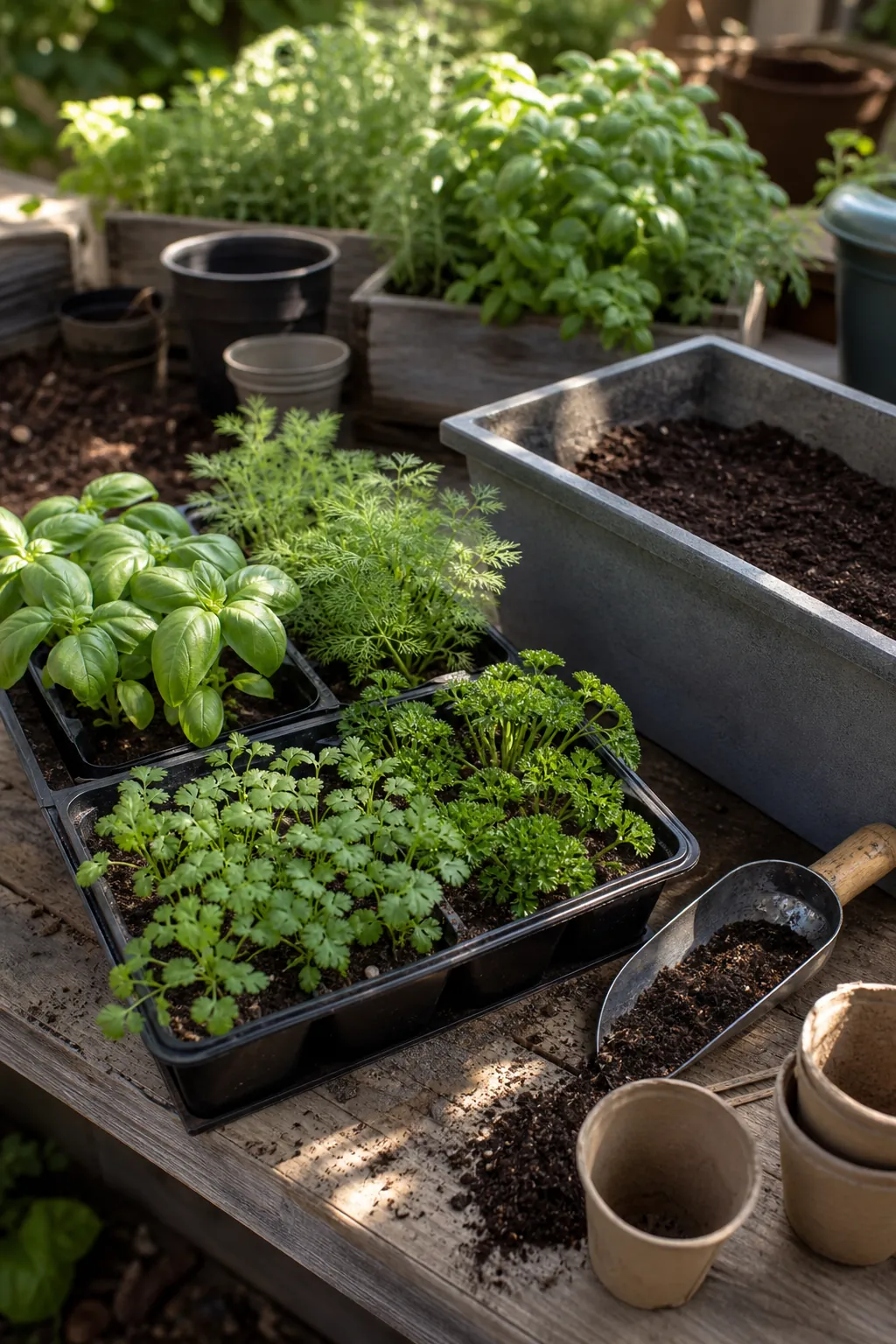
A seedling station is the smartest herb planter idea if you like succession planting. Keep small basil, cilantro, dill, and parsley starts growing in trays, then move them into the main planters as older plants fade.
This keeps the garden productive instead of perfect for two weeks and empty by midsummer. It also lets you test which herbs your space supports before committing to a larger layout.
How To Choose The Right Herb Planter
For a sunny patio, start with a tiered ladder, bamboo trough, galvanized tub, or Mediterranean herb bowl. For a balcony, choose railing boxes, vertical pockets, or a rolling cart. For a porch, use step pots, hanging baskets, or a crate herb box that keeps the plants close to daily traffic.
If you want one simple rule, build planters around water needs rather than looks. Dry herbs together, leafy herbs together, mint alone. Once that structure is right, the design choices become much easier.