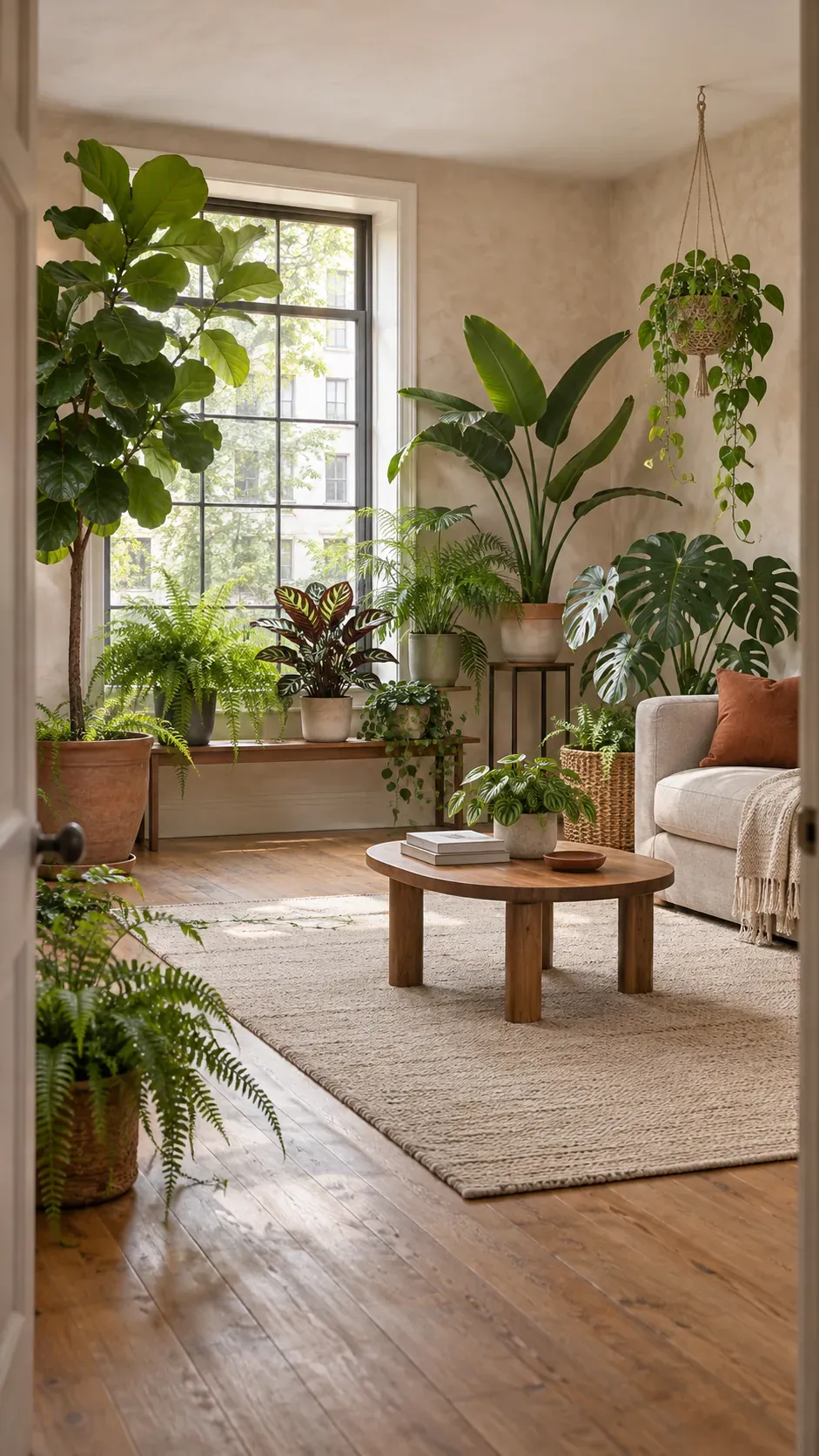
A plant collection feels like a garden when your eye can travel through leaves at several heights. The strongest displays also respect light, watering access, and the way people move through the room. Start with the window conditions, then choose a structure that gives every pot a clear role.
Layer a Sunny Window Ledge
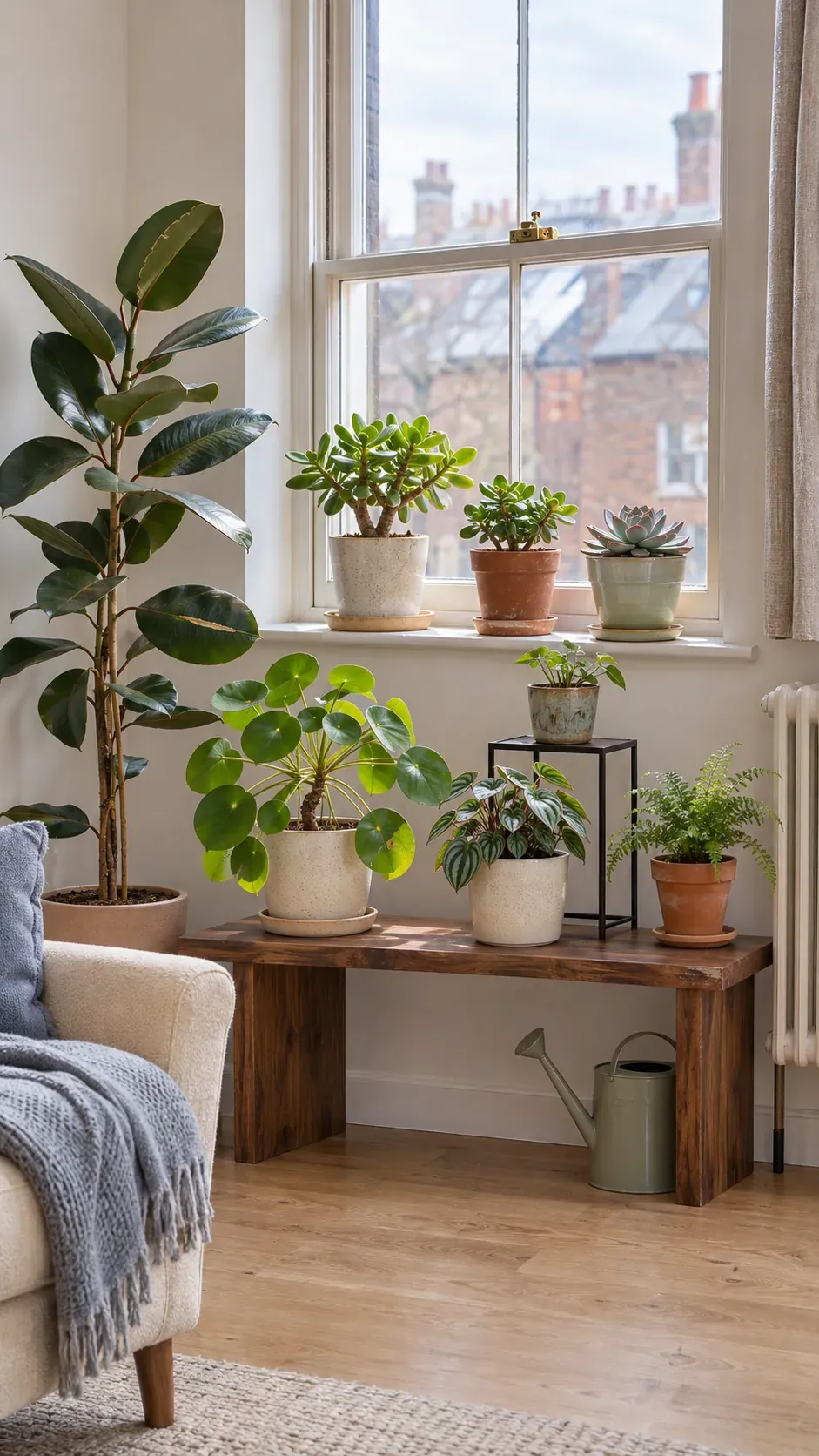
Turn one generous window into a compact indoor garden by combining the ledge with a narrow bench and one raised stand. Place sun loving plants closest to the glass and shade tolerant foliage on the lower outer edges. Keep a hand width between leaves and the pane so air can move and winter glass does not chill tender growth.
Build Height With a Tiered Stand
A tiered stand lets several plants share a small footprint without hiding one another. Put the broadest pots on the stable lower level, then use the upper shelves for compact plants and trailing stems. Rotate each pot during routine watering so the display stays balanced as leaves reach toward the light.
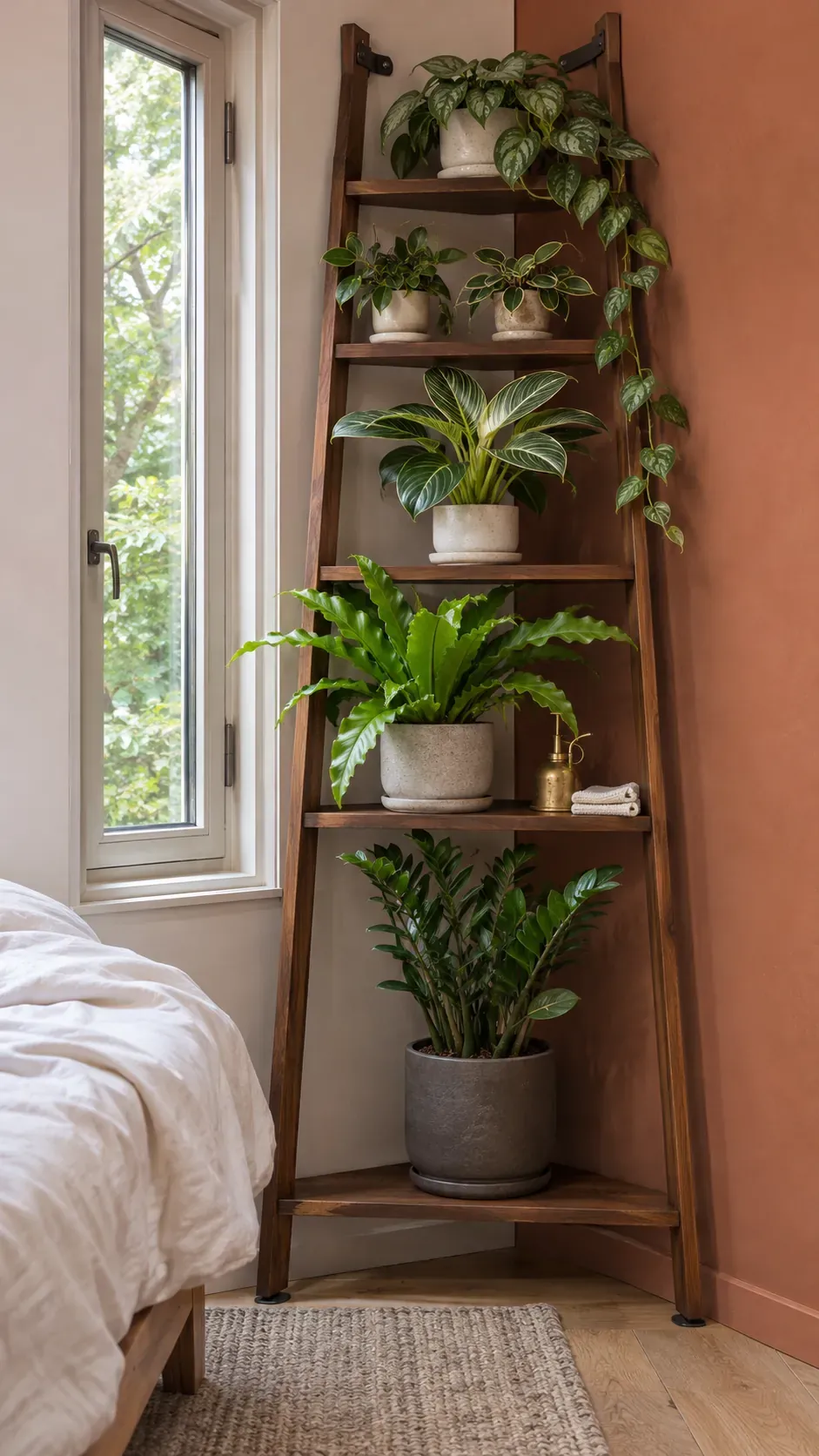
Lean a Plant Ladder Into an Empty Corner
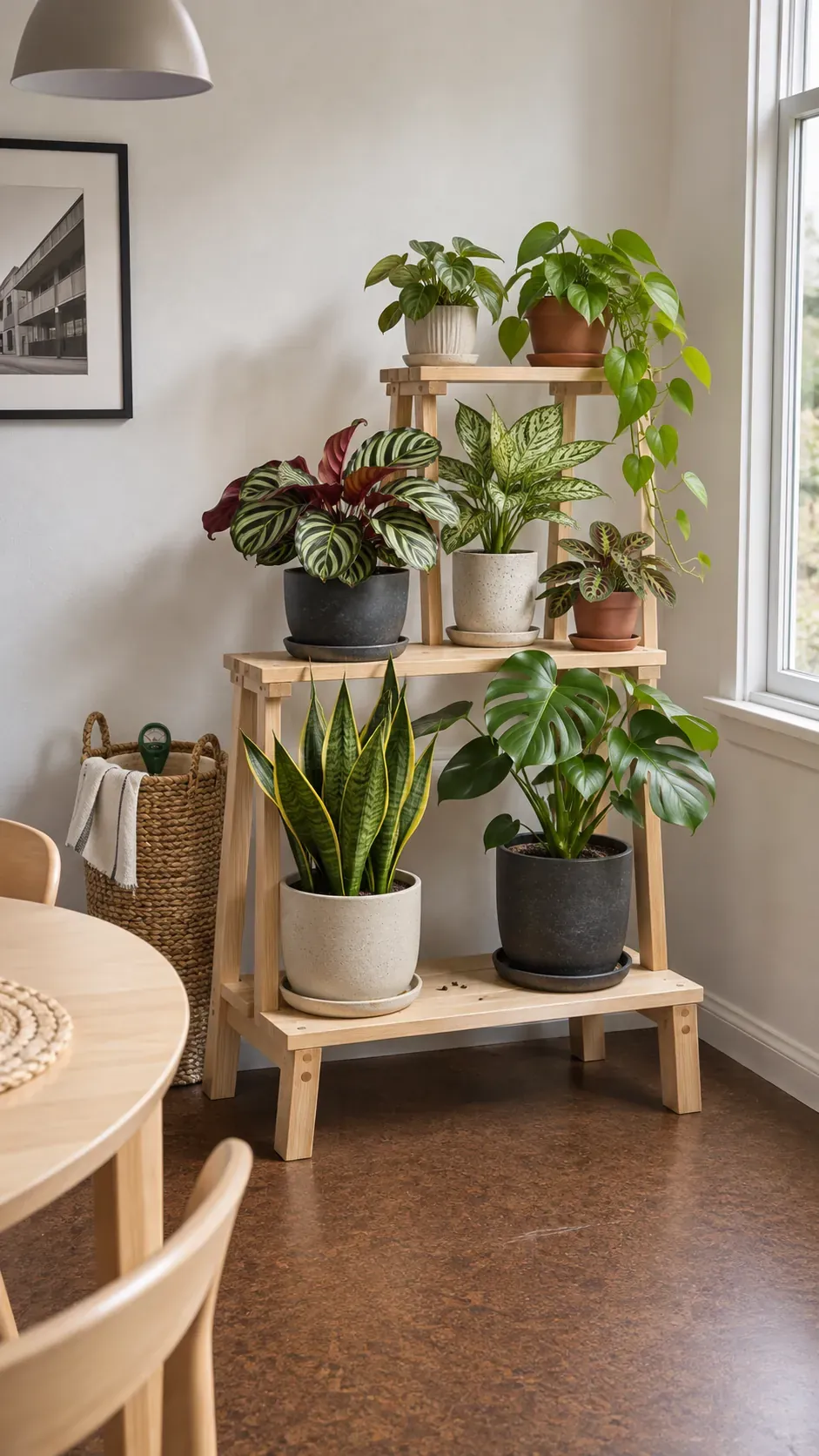
A ladder shelf turns a narrow corner into a tall green composition. Use upright plants near the bottom, rounded foliage in the middle, and one trailing vine near the top to soften the frame. Secure the shelf to the wall and leave enough clearance to lift every pot out for watering.
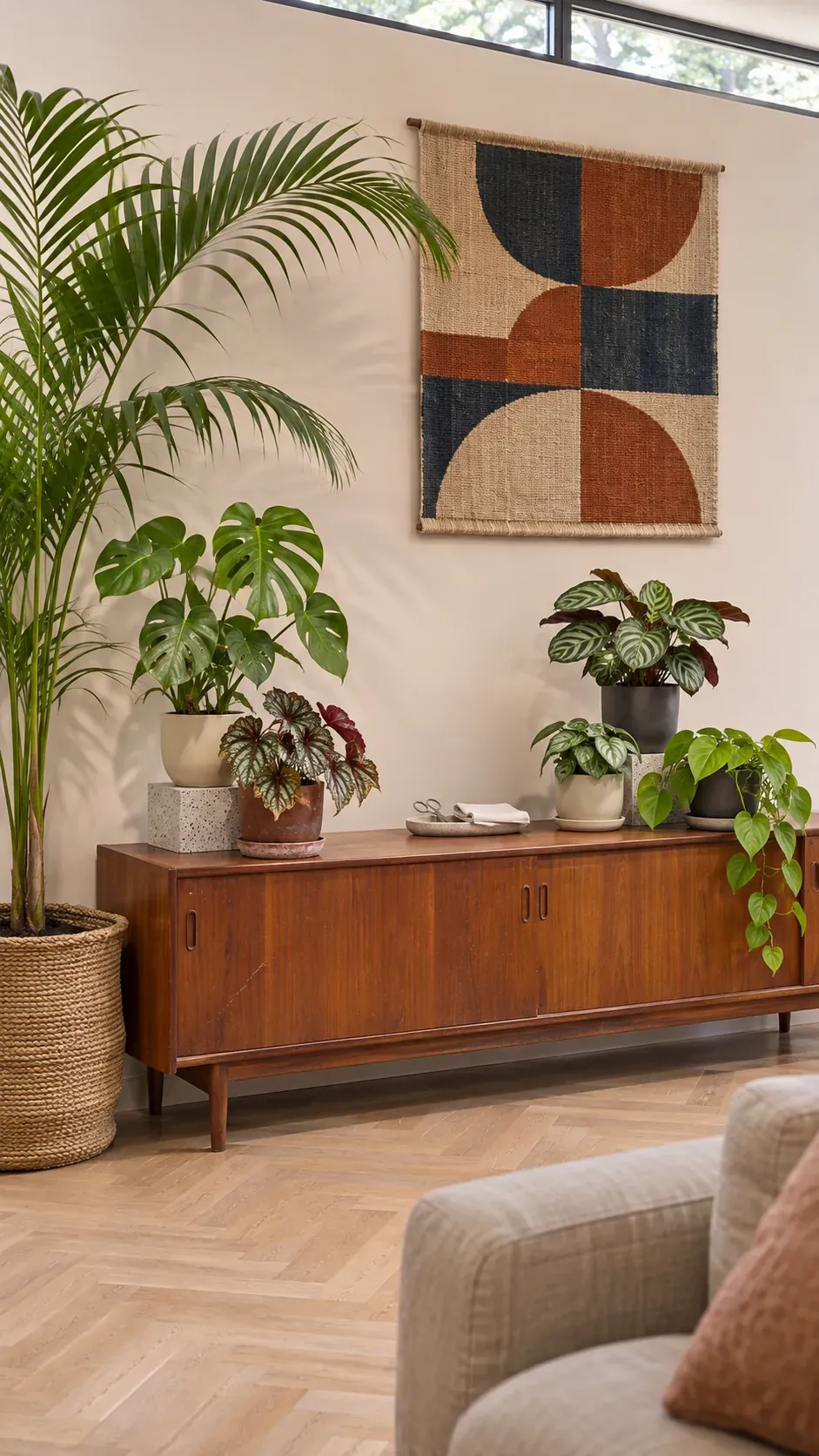
Group Plants Across a Low Console
A long console can carry a convincing canopy when pot heights and leaf shapes vary. Raise two smaller pots on sturdy books or ceramic blocks, then anchor the group with one generous floor plant beside the furniture. Leave visible wood between clusters so the arrangement reads as collected rather than crowded.
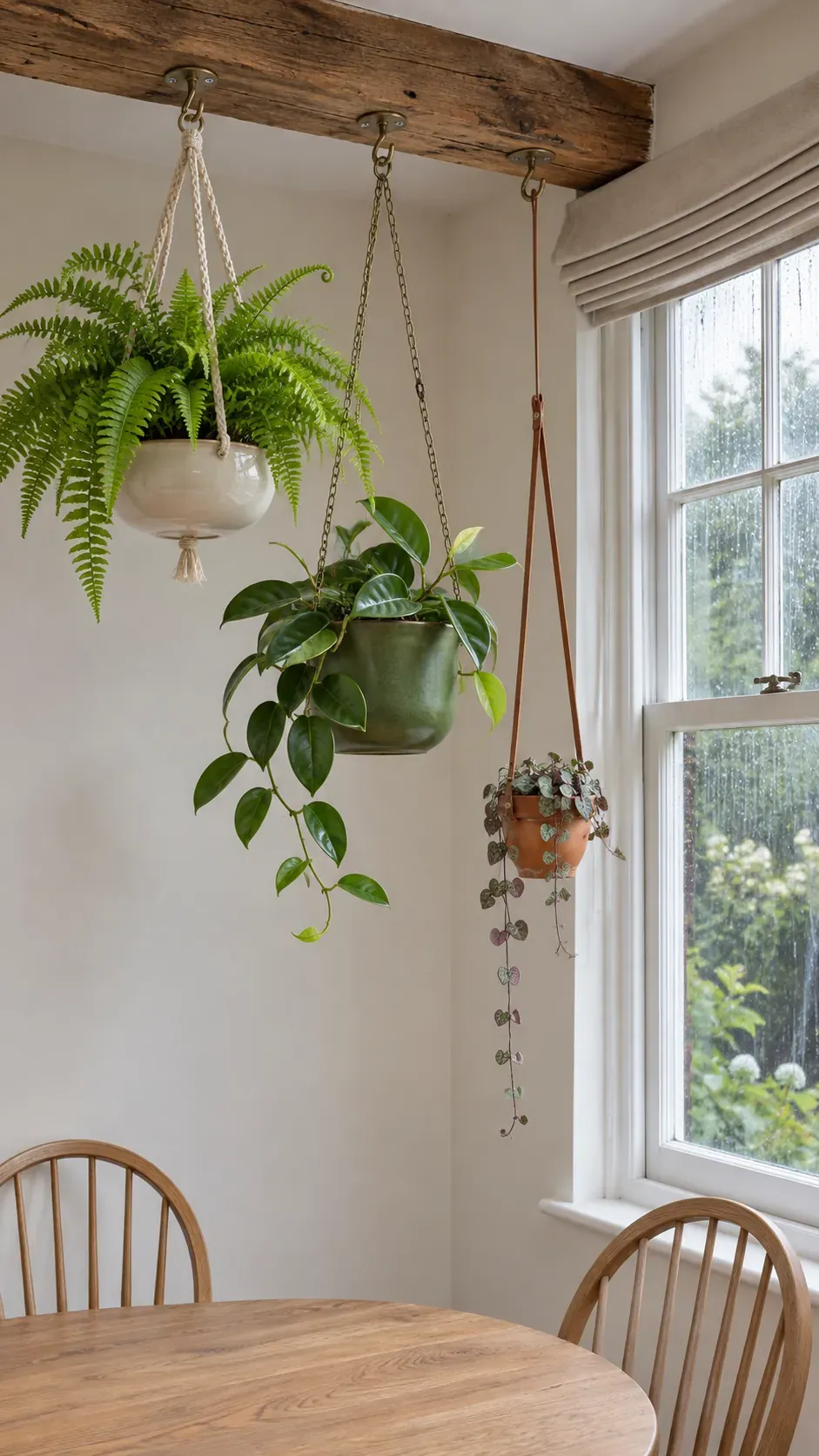
Suspend a Cluster Near the Window
Three hanging plants can create depth without taking over a table or floor. Hang them at different levels and offset the pots so the leaves do not merge into one heavy mass. Fix every hook into a suitable support and place drip free cachepots where watering is easy.
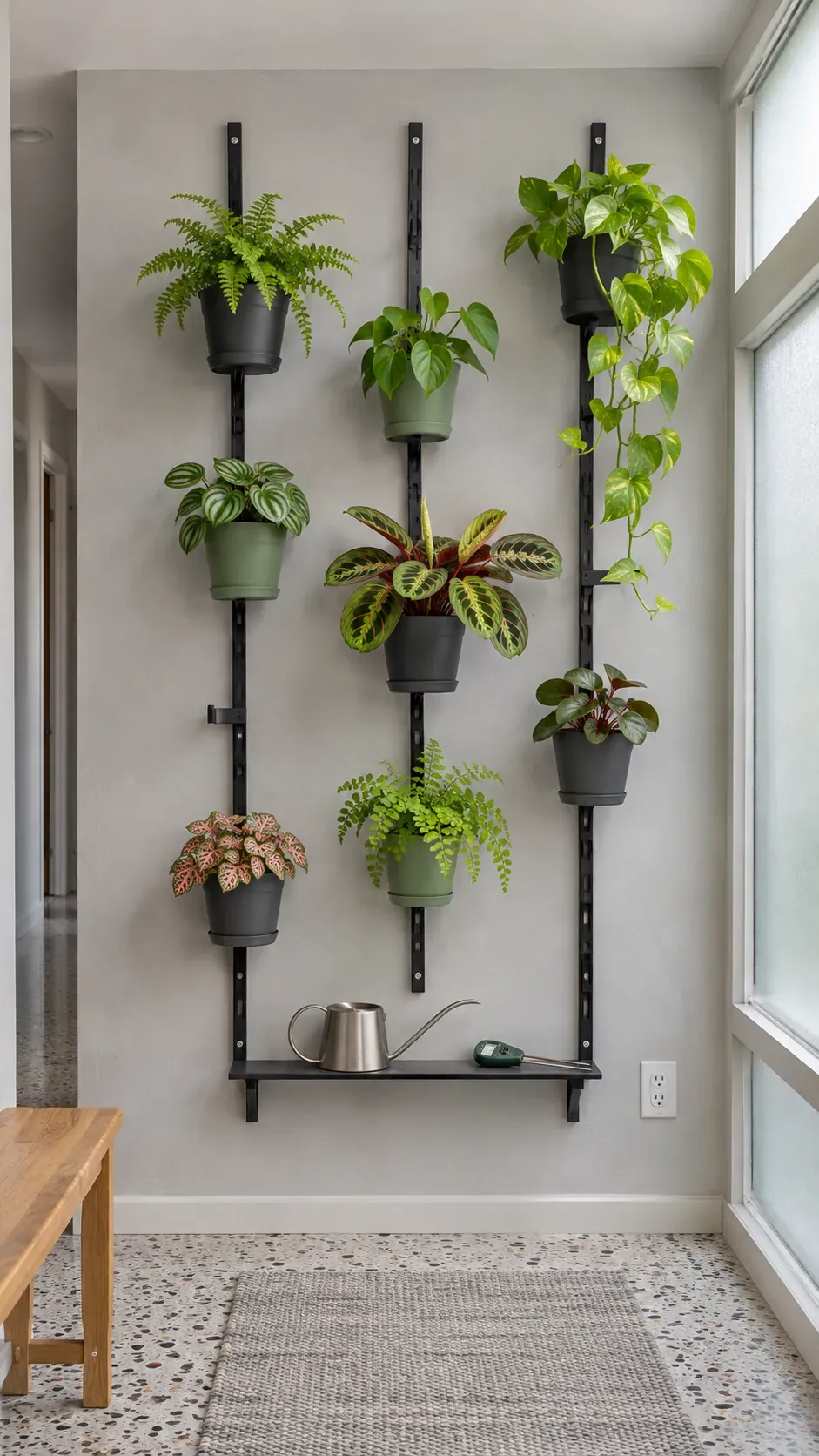
Create a Living Wall With Planter Rails
Wall rails with removable planters provide vertical greenery while keeping the floor clear. Arrange pots in an irregular rhythm and reserve empty sections so every plant has room to mature. Choose species with similar light needs, and protect the wall with sealed containers and careful watering.
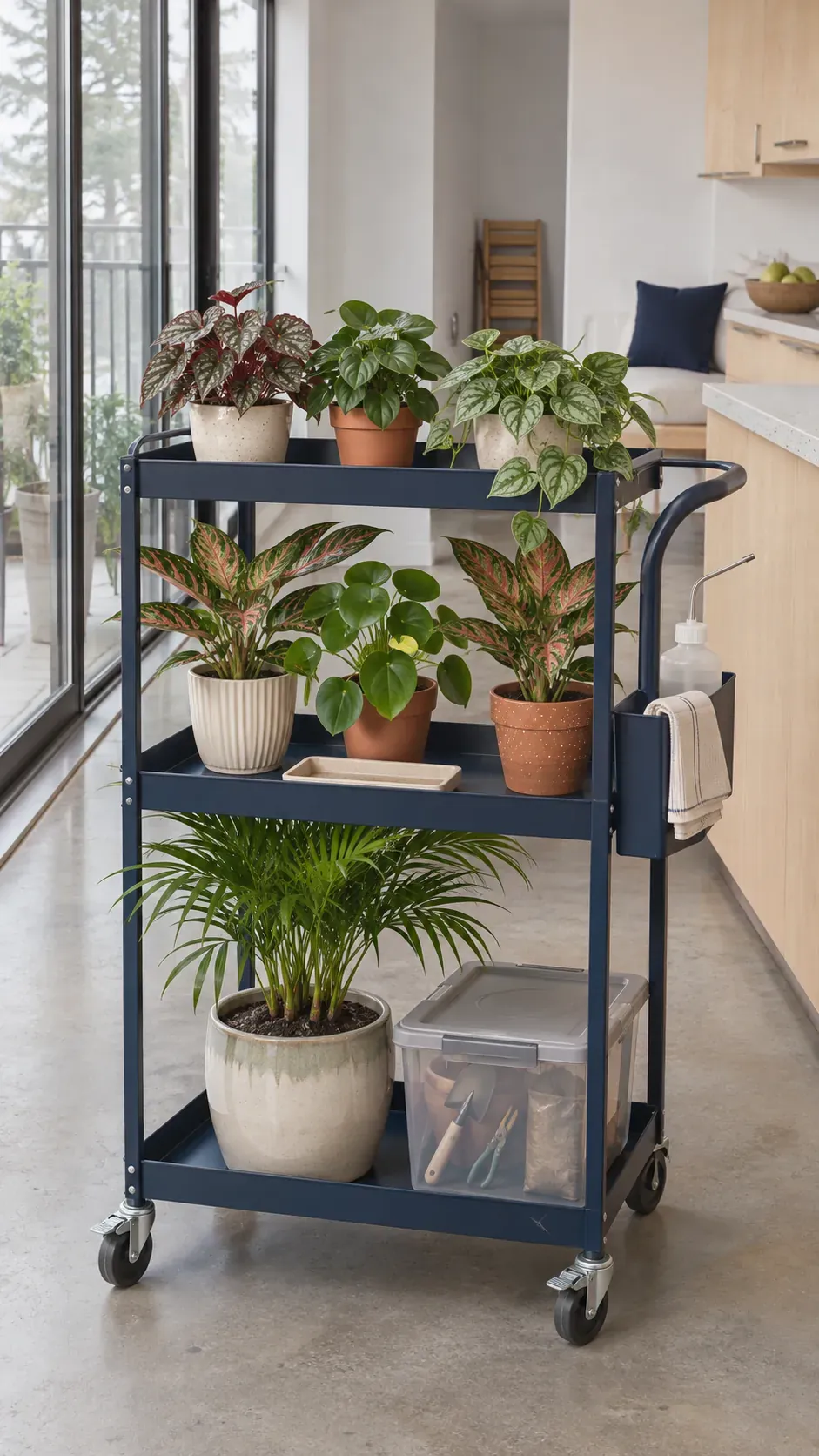
Turn a Rolling Cart Into a Mobile Garden
A compact rolling cart helps plants follow seasonal light and clears quickly when the room needs more space. Keep heavy pots on the bottom shelf, daily care supplies in one small bin, and lighter foliage above. Lock the wheels after moving the cart so watering and pruning remain stable.
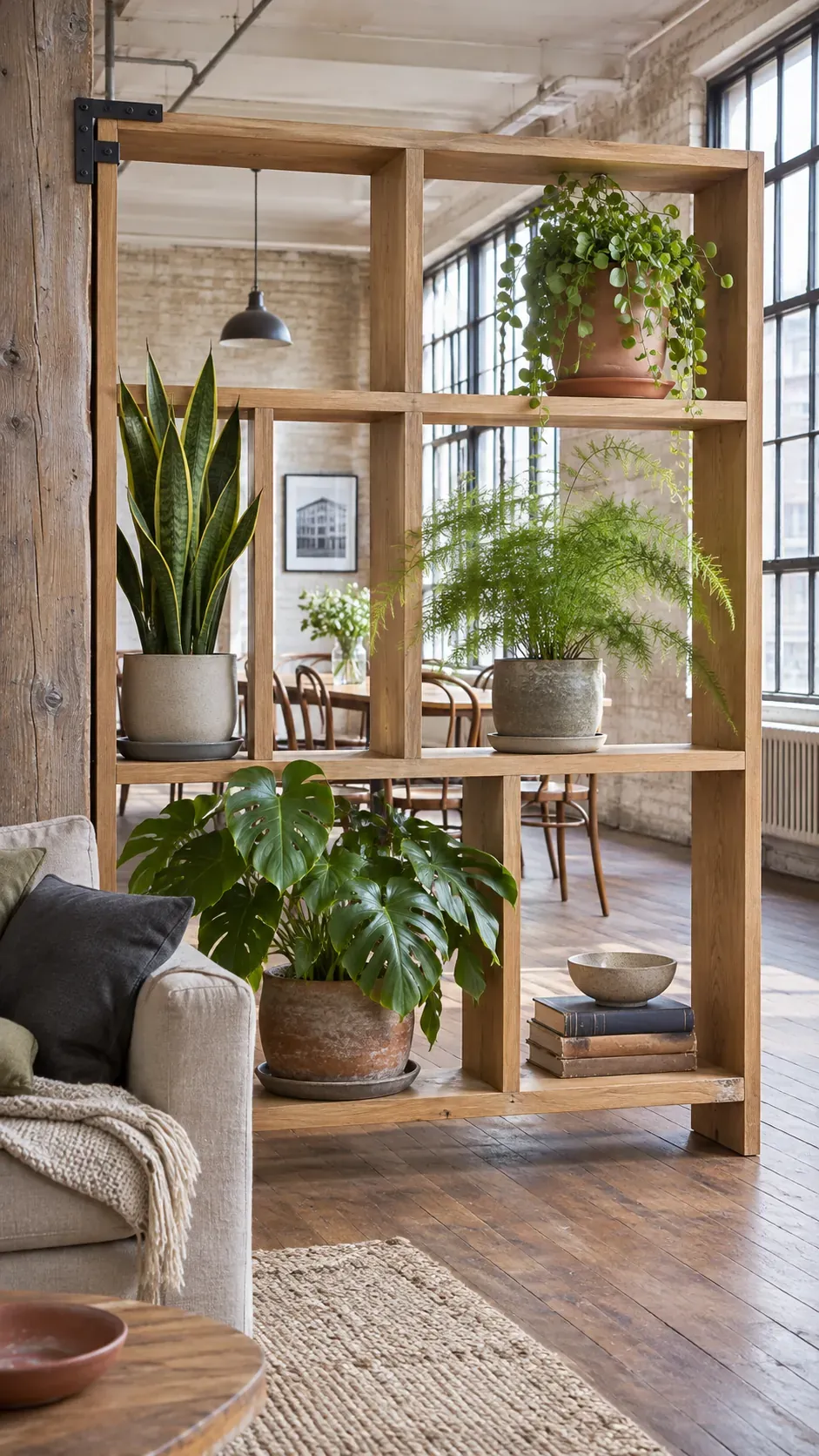
Use Open Shelves as a Green Room Divider
An open shelving unit can define a seating area while allowing light and sightlines to pass through. Alternate plants with empty openings rather than filling every cube, and place foliage that looks good from both sides near the center. Anchor tall furniture properly and keep trailing vines away from the main walkway.
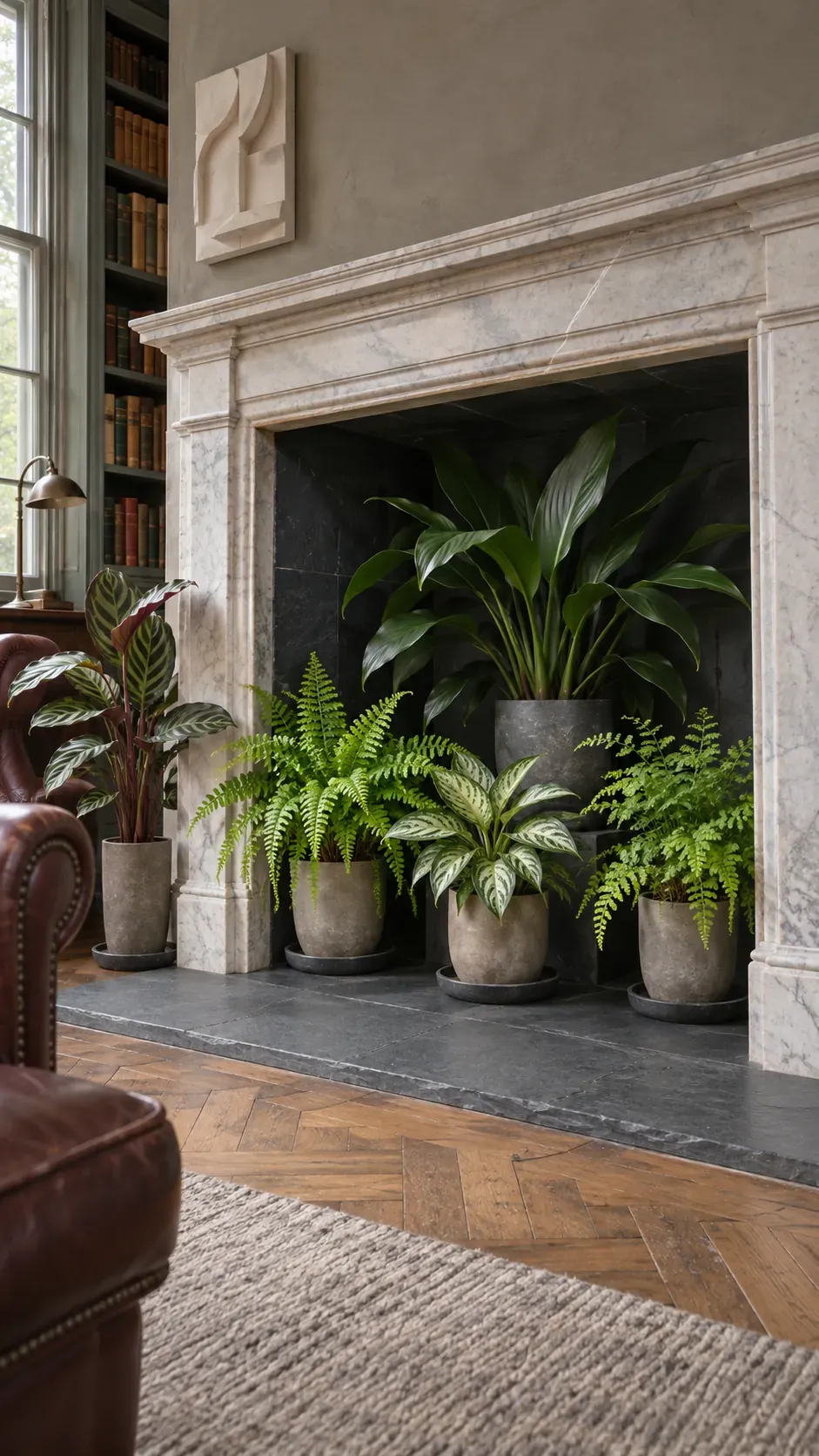
Fill a Nonworking Fireplace With Foliage
A clean nonworking fireplace offers a deep frame for shade tolerant plants. Set one large pot toward the back and layer smaller plants near the front on stone or sealed trays. Confirm that the fireplace is permanently inactive, dry, and free from soot before using it as a display.
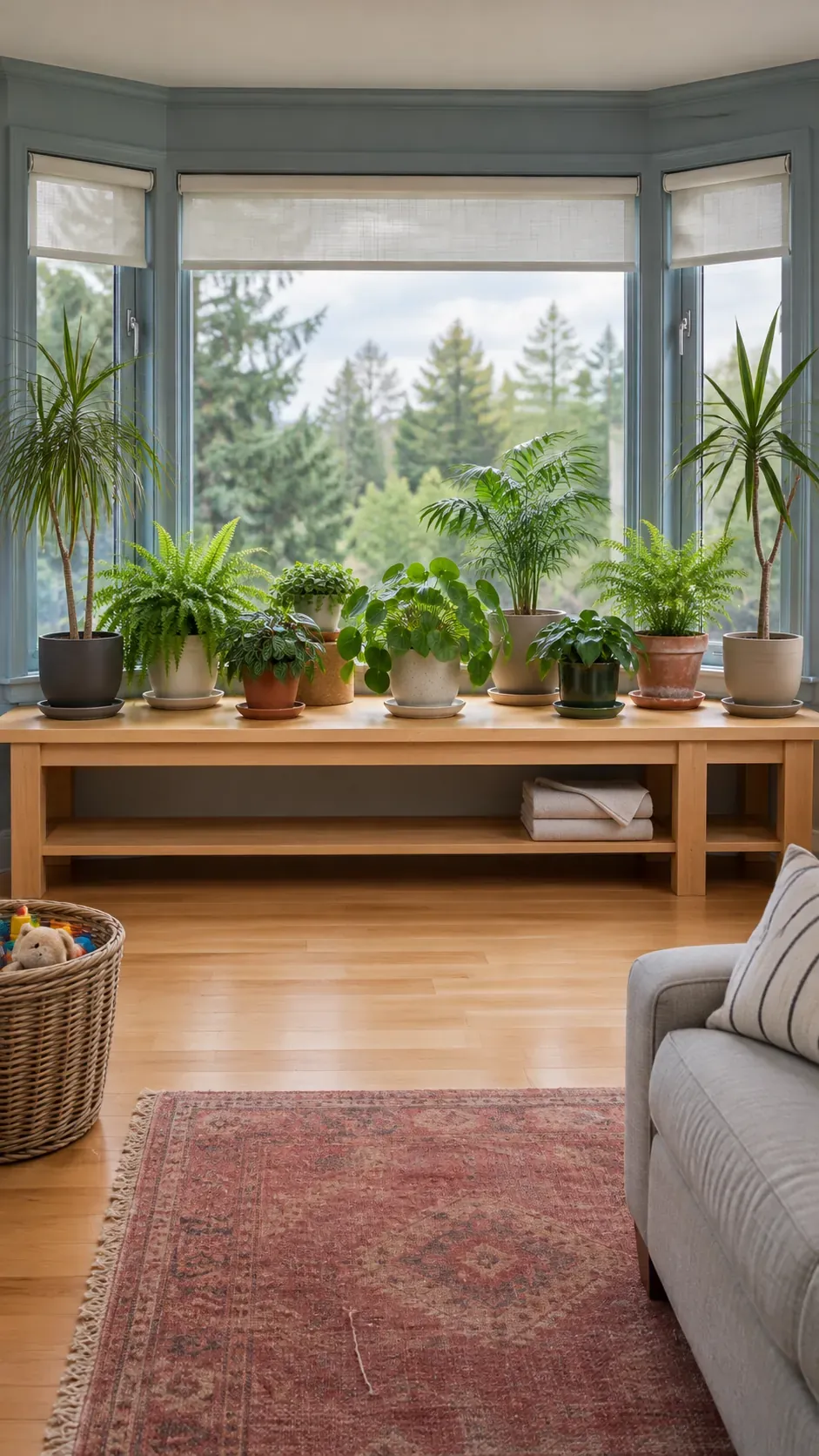
Place a Plant Bench Beneath the Window
A simple bench creates a continuous garden bed effect beneath a window. Combine tall narrow plants at the ends with lower rounded plants in the middle so the room still receives daylight. Use waterproof saucers and leave enough open bench space to inspect leaves and wipe spills.
Weave Greenery Through a Bookcase
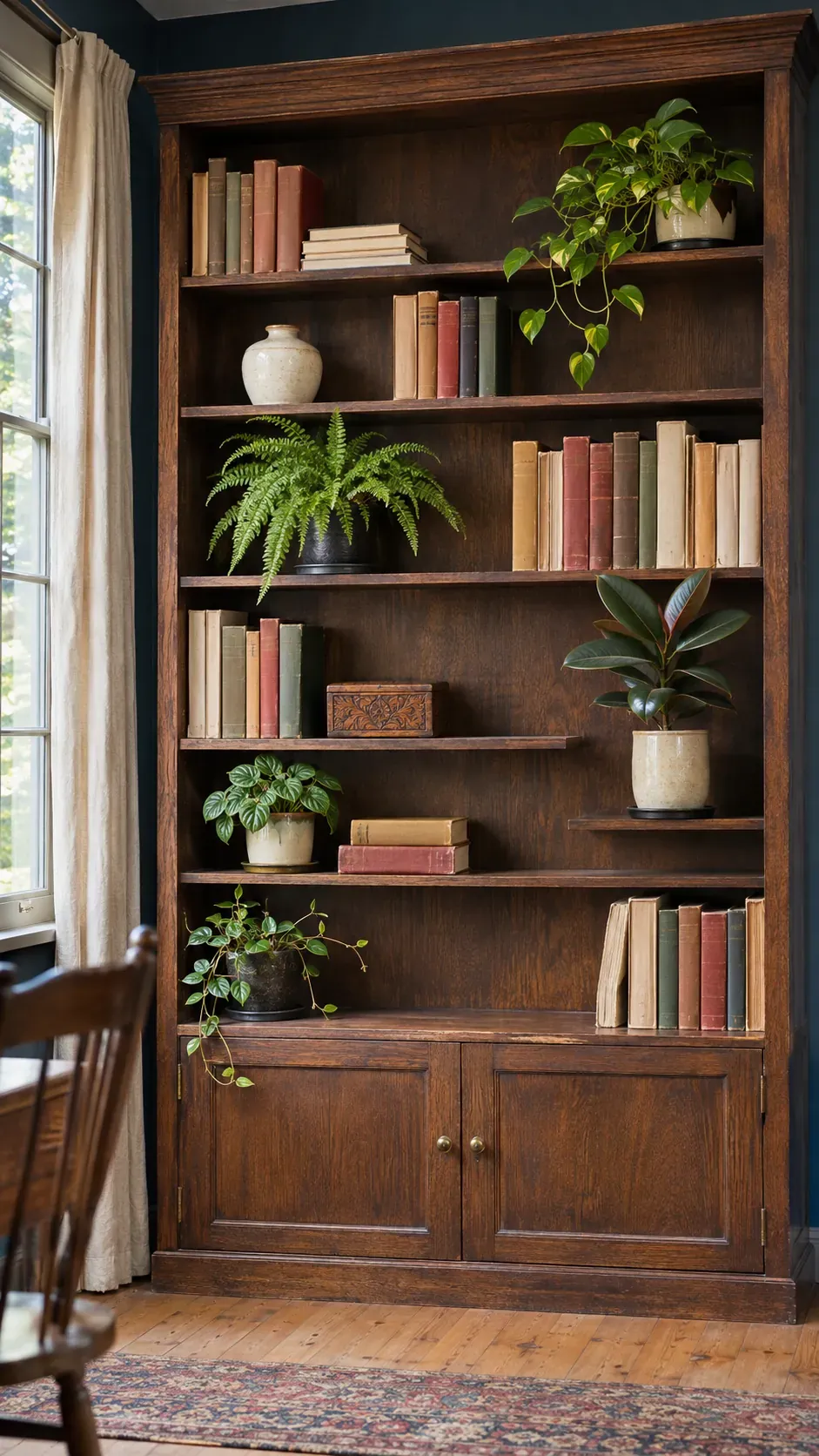
Plants give a bookcase natural rhythm when they share shelves with useful objects and open space. Keep moisture away from books by using sealed cachepots and dedicated trays, then place trailing foliage where it will not cover titles. Repeat one pot material across several shelves to connect the varied leaf shapes.
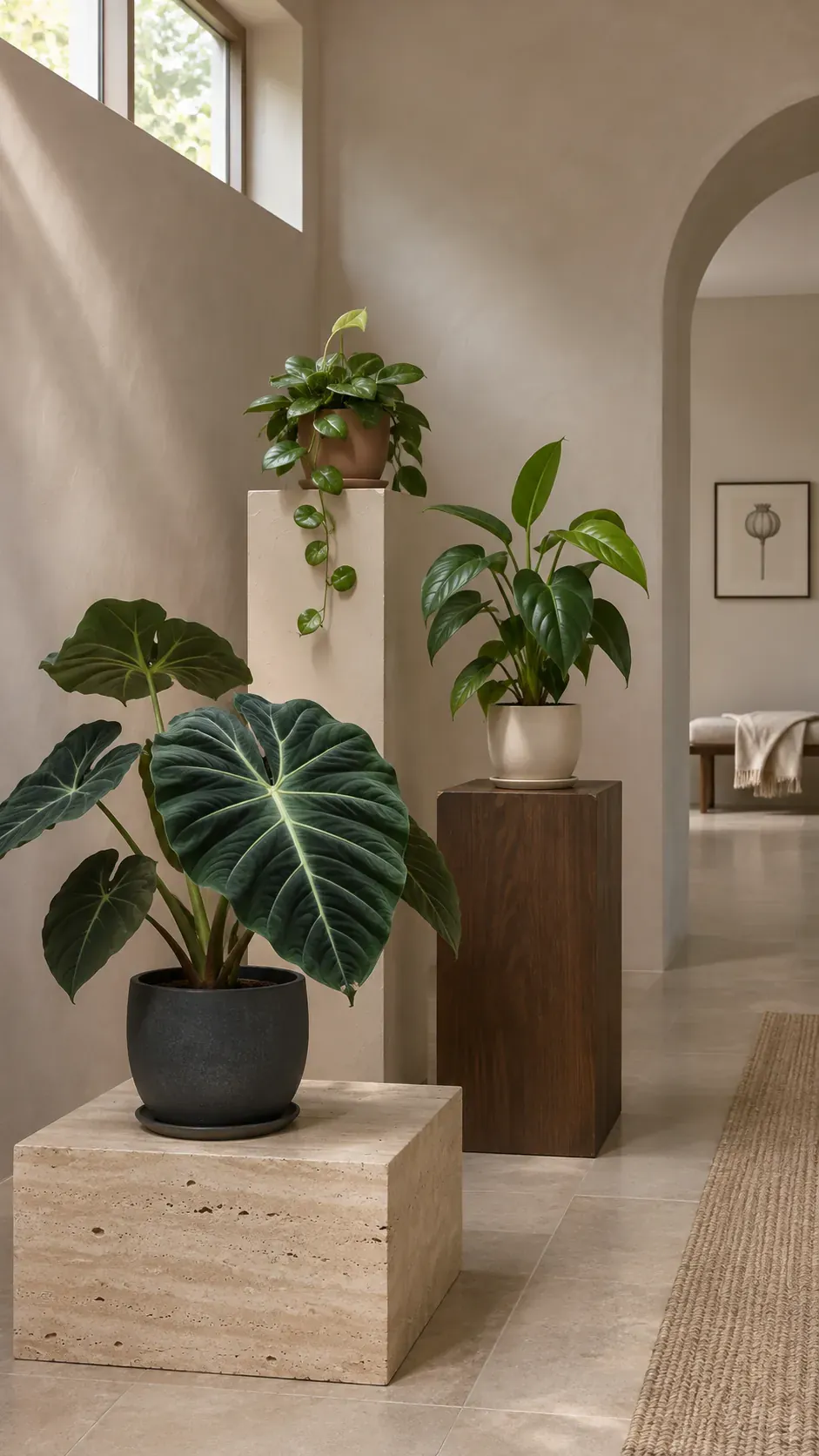
Set Three Pedestals at Different Heights
Three individual pedestals can make ordinary pots feel like a small botanical exhibit. Vary their heights and place them in a loose triangle, with the largest leaf mass on the lowest base. This arrangement works well when you need flexibility because each stand can move without disturbing the others.
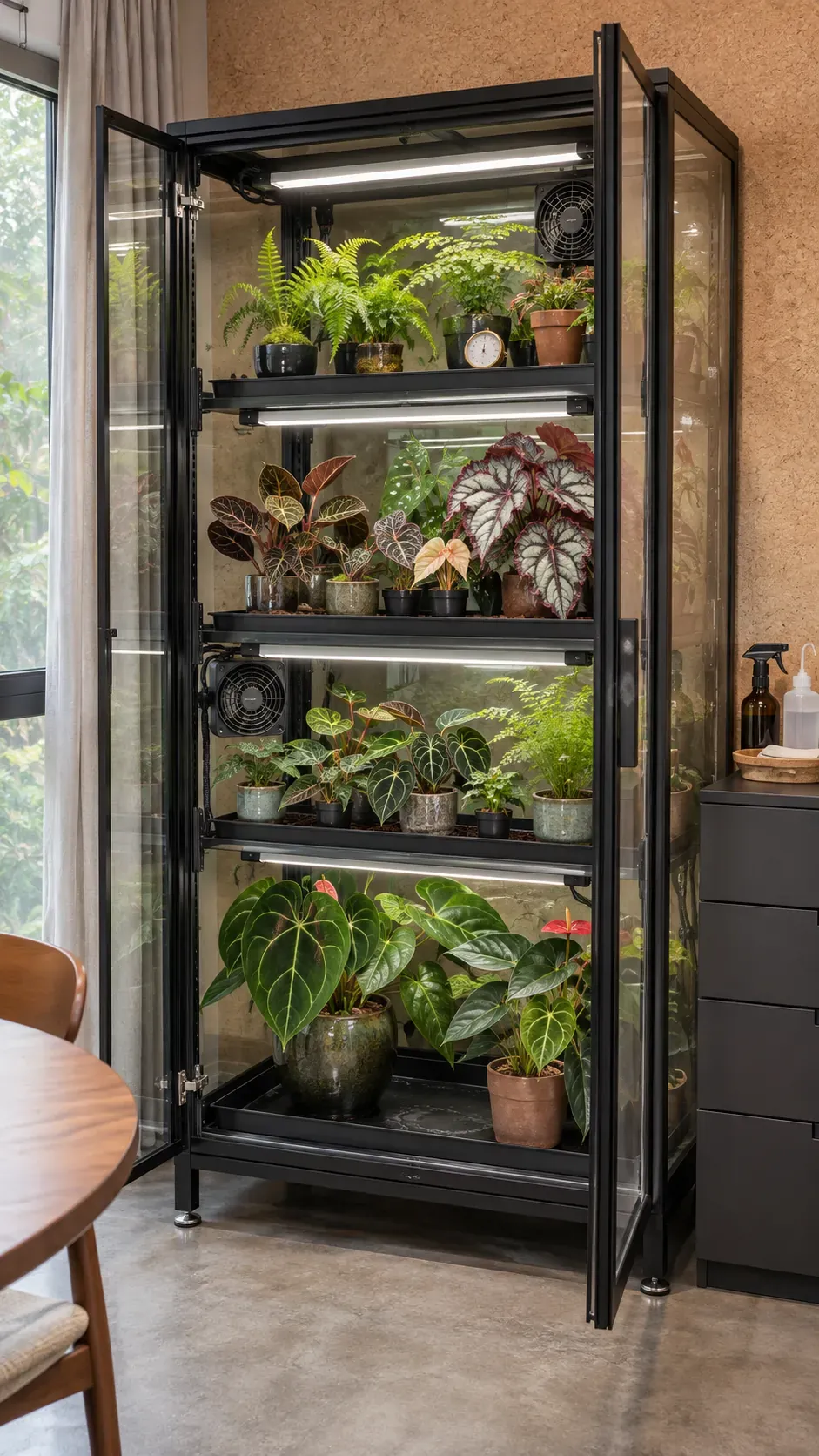
Convert a Glass Cabinet Into a Greenhouse
A glass cabinet can protect humidity loving plants while presenting them as one lush collection. Add suitable lights, quiet airflow, and waterproof trays, then leave room between leaves and electrical fittings. Monitor heat and humidity instead of assuming that a closed cabinet automatically creates healthy conditions.
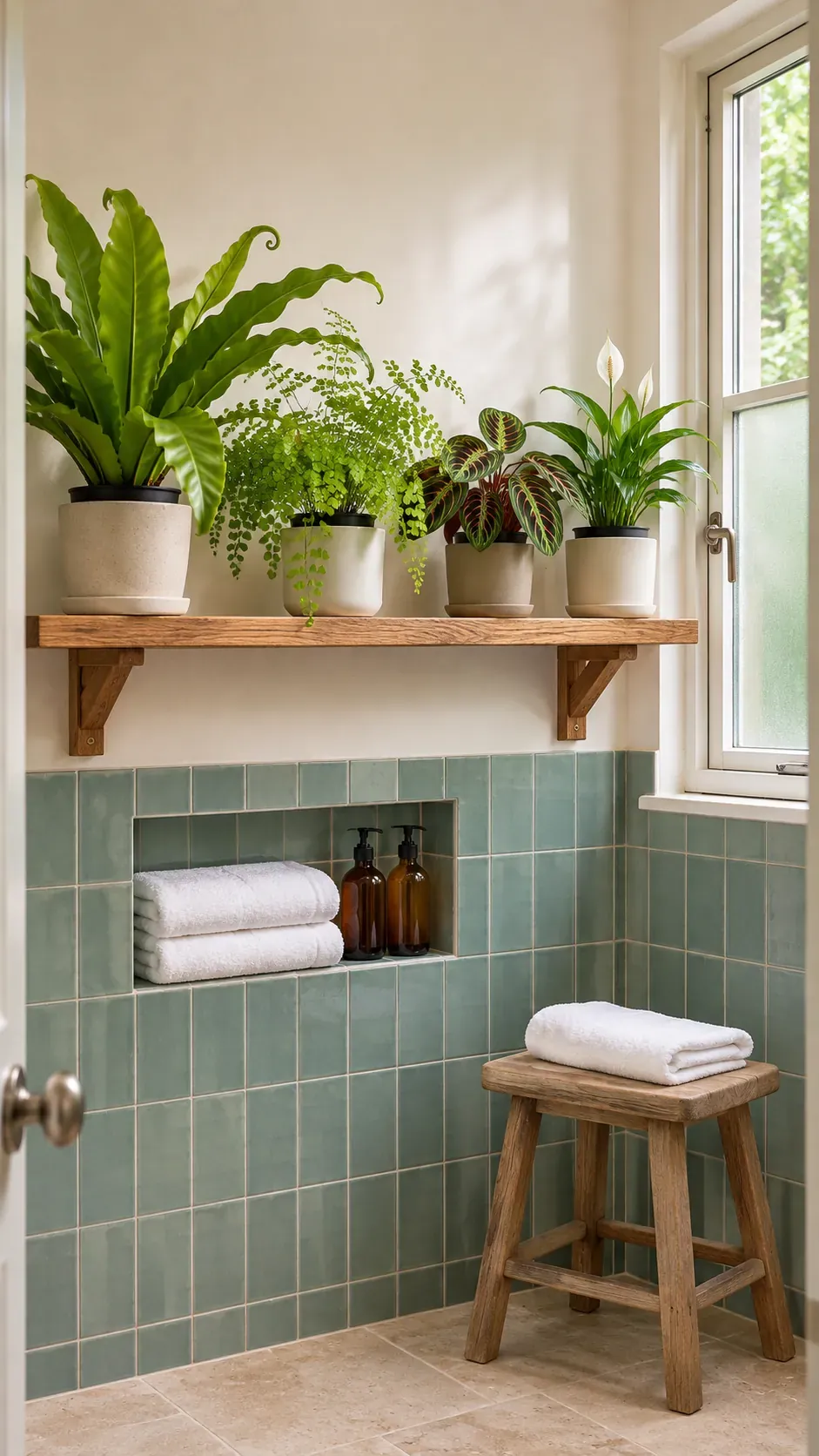
Add Humidity Loving Plants to a Bathroom Shelf
A bathroom with useful natural light can support ferns and other plants that appreciate steadier humidity. Place them on an open shelf away from direct spray, hot fixtures, and frequently used toiletries. Keep the arrangement sparse enough for air movement because humidity does not replace ventilation.
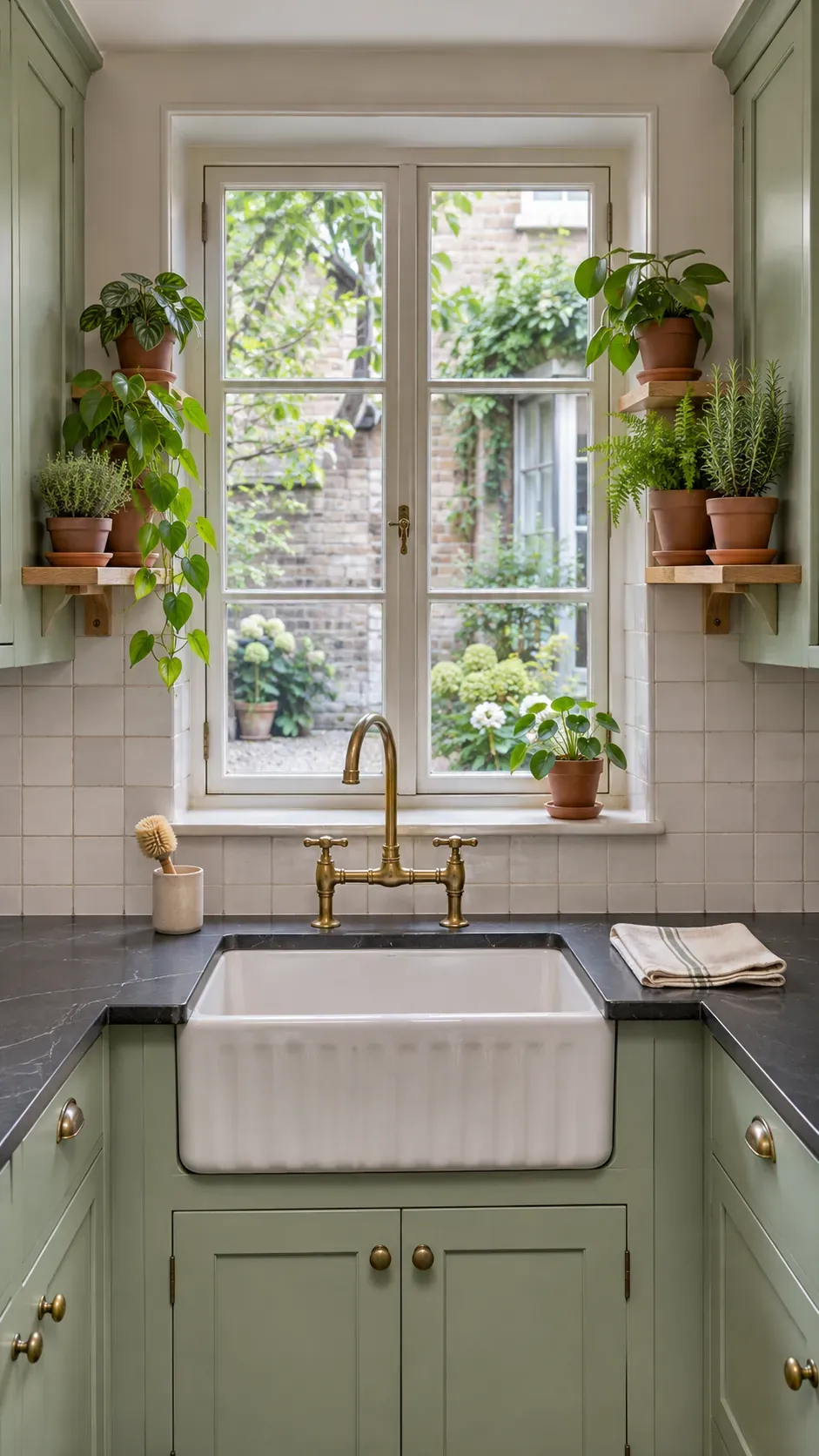
Frame a Kitchen Window With Greenery
Small leafy plants can turn a kitchen window into a productive garden view without crowding the counter. Use a narrow shelf above the splash zone and keep herbs or compact foliage within easy reach. Leave clear space around taps, cooking heat, and any window hardware that must operate.
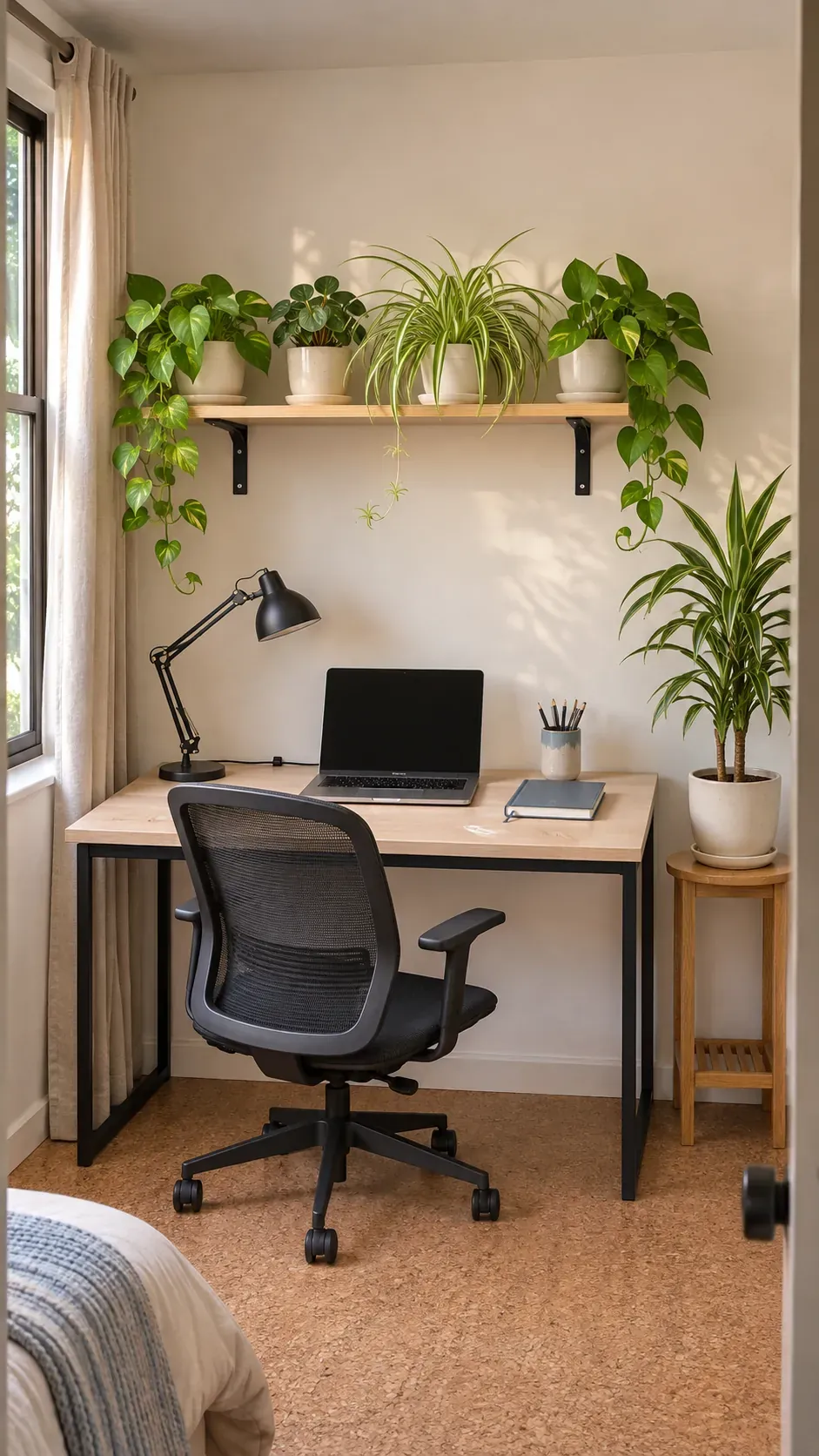
Give a Desk a Small Leaf Canopy
A slim shelf above a desk can hold a few trailing plants and create a soft canopy without using the work surface. Keep leaves away from the screen, task light, and chair path, then route watering carefully. Choose compact pots so the shelf remains visually light and securely within its load rating.
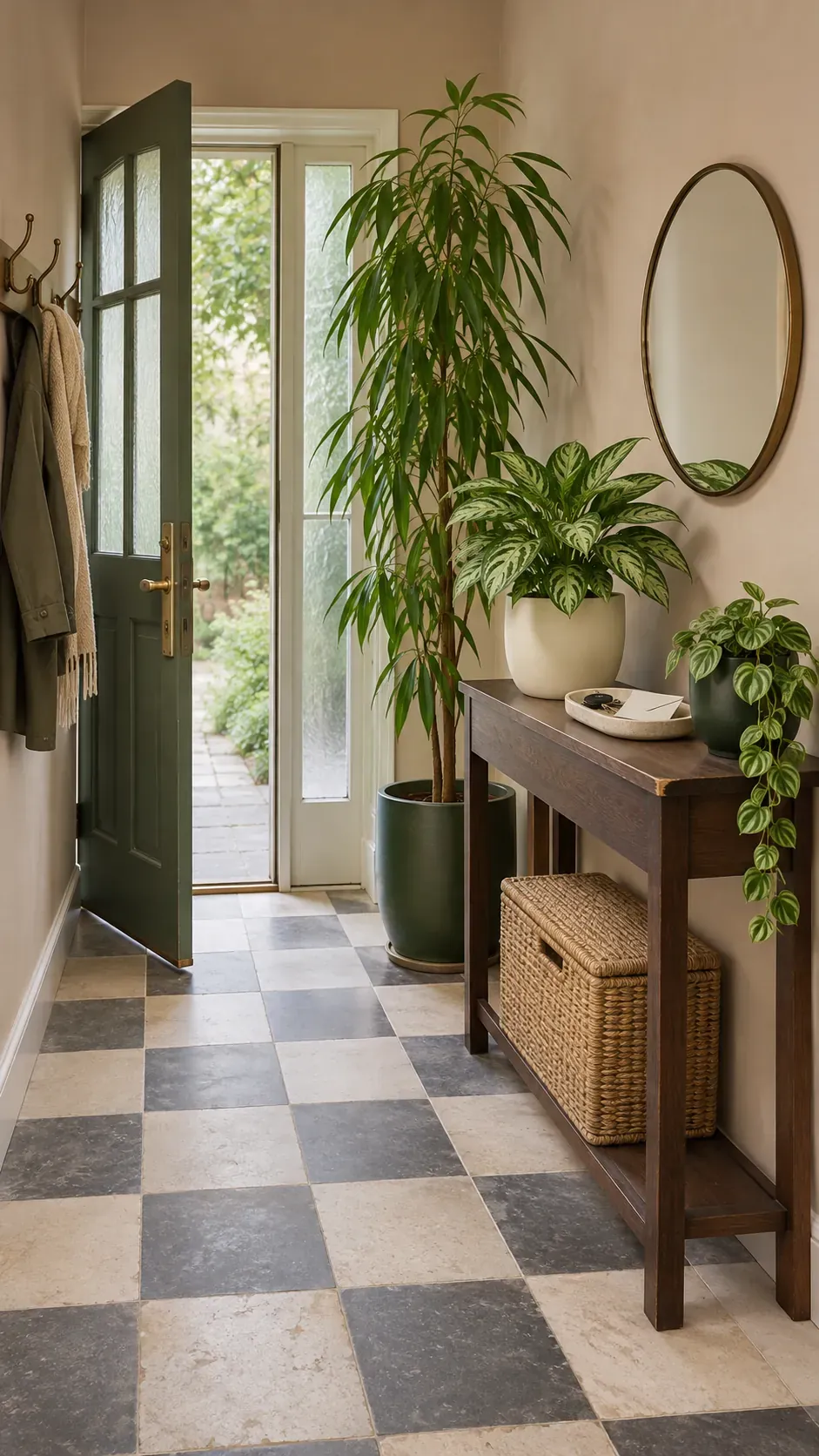
Welcome Guests With an Entryway Plant Group
An entryway display works best when it stays outside the door swing and walking route. Pair one upright plant on the floor with two smaller pots on a narrow console for a clear stepped silhouette. Select species that match the actual light near the entrance rather than choosing only for appearance.
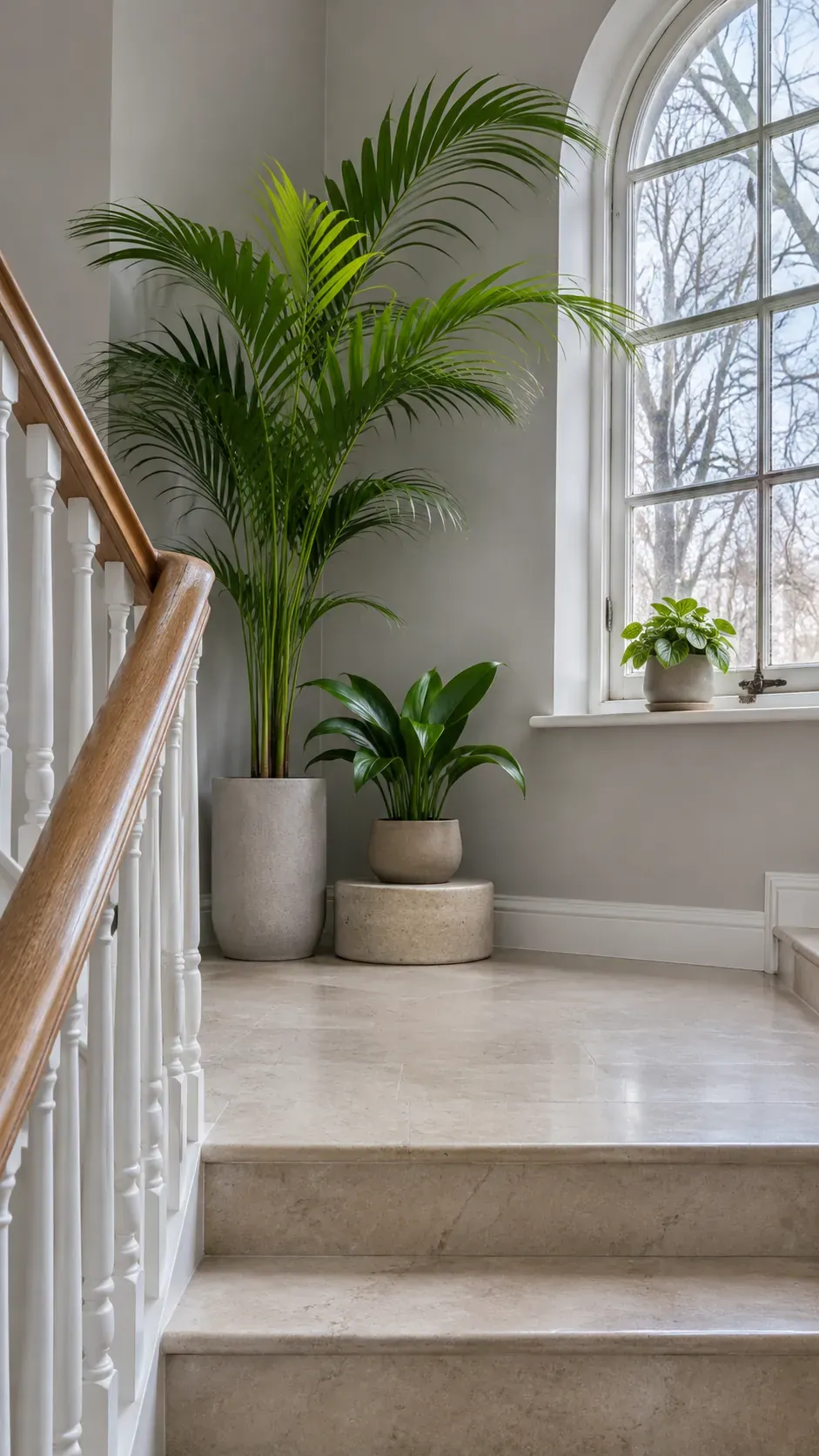
Green a Bright Stair Landing
A generous stair landing can become a garden pause when plants remain completely outside the required walking width. Use a tall narrow plant in the corner and a compact pot on a low stand to create depth. Avoid trailing stems, loose saucers, or anything that could reach a tread or handrail.
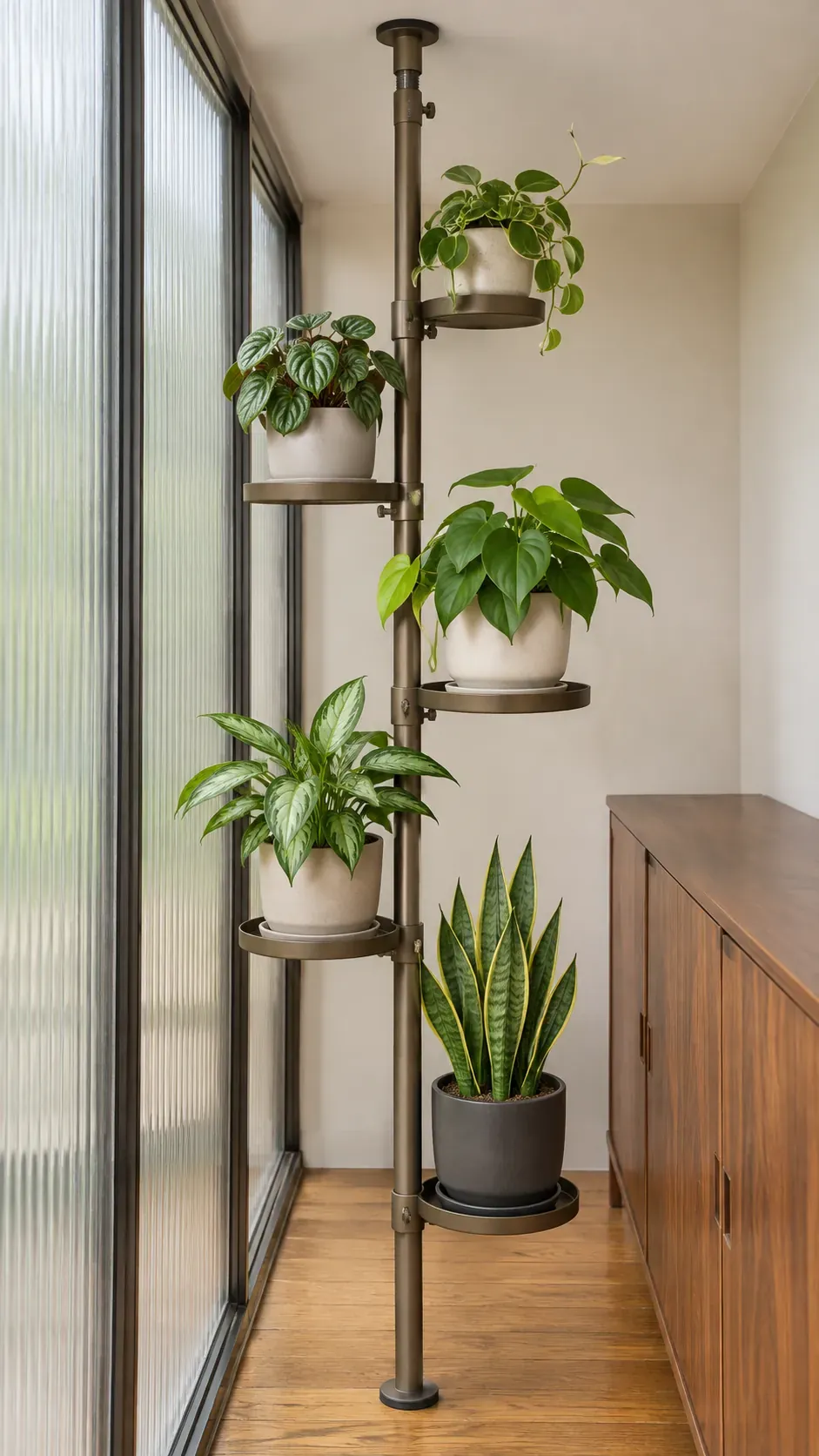
Stack Plants on a Floor to Ceiling Pole
A tension pole with secure plant trays builds height in a very small area. Space the trays so leaves do not shade one another, and keep the heaviest pot near the bottom. Follow the mounting instructions precisely and place the pole where routine watering does not require leaning over furniture.
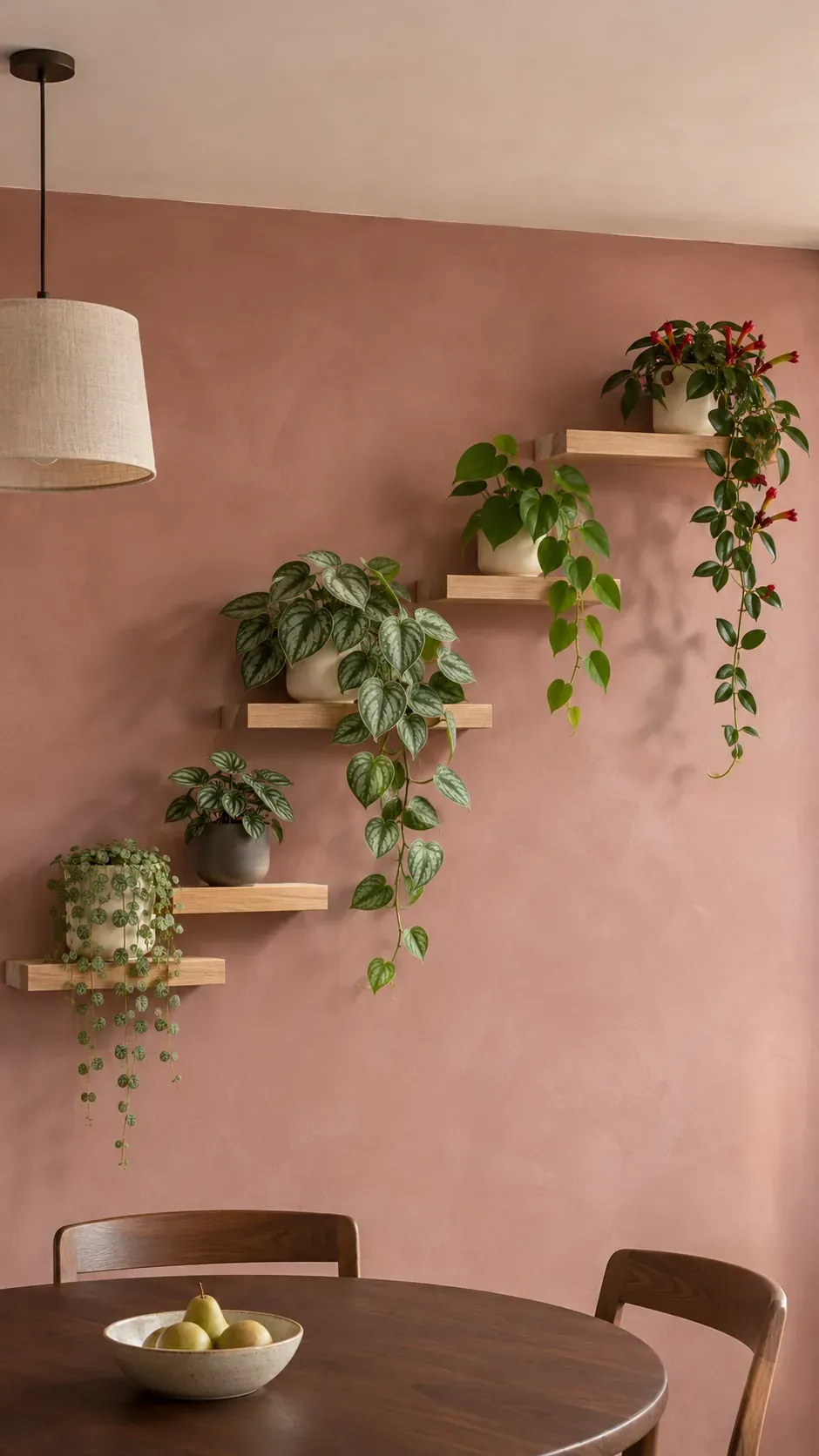
Trail Vines From Floating Shelves
Floating shelves can draw greenery across a blank wall while keeping the arrangement airy. Place only light pots on properly fixed shelves and guide vines in loose curves rather than forcing a rigid pattern. Leave some wall visible between plants so each cascade has a distinct outline.
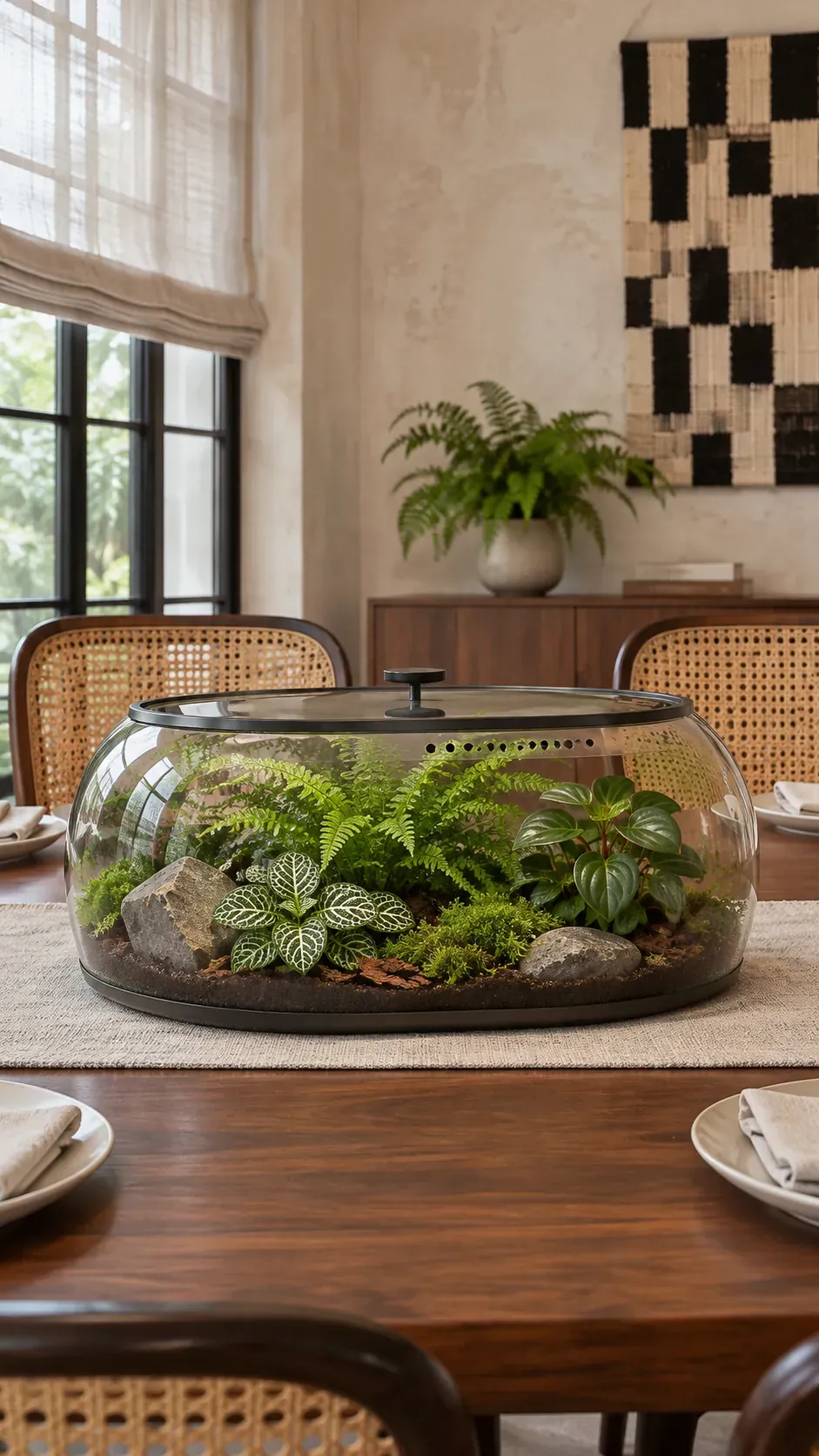
Center the Table With a Terrarium Garden
A wide terrarium can supply concentrated greenery without scattering many pots across a dining table. Keep the planting low enough for conversation and choose species that suit the same enclosed conditions. Give the glass vessel breathing room, then repeat one leaf color in a nearby plant to connect it with the room.
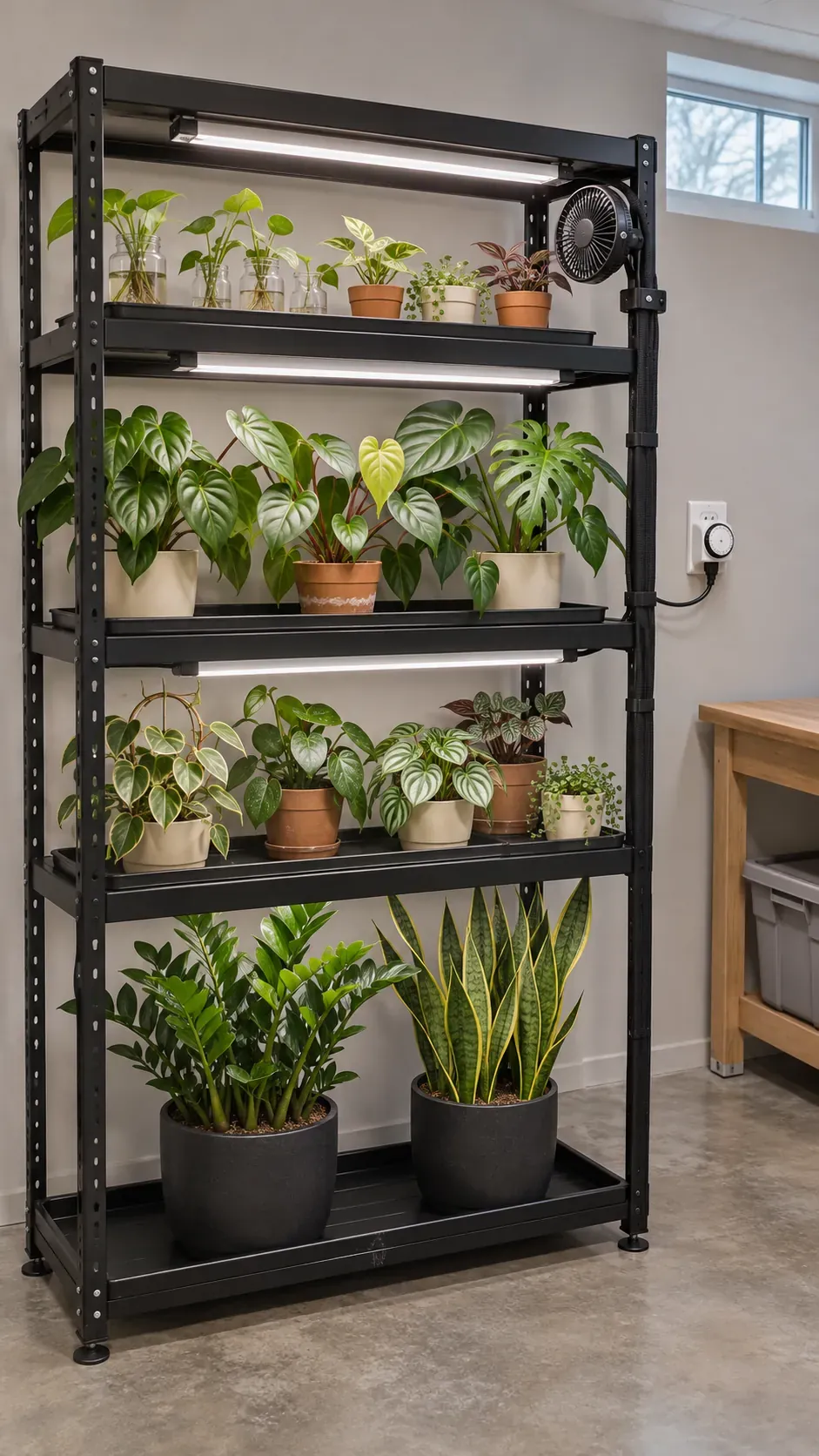
Organize a Grow Light Plant Rack
A dedicated rack with discreet grow lights can make a dim room support a real collection. Group plants by light and watering needs, hide cables in a ventilated route, and use trays that protect the shelves. A consistent row of simple pots keeps the practical equipment from making the display feel chaotic.
Wrap a Reading Nook in Leaves
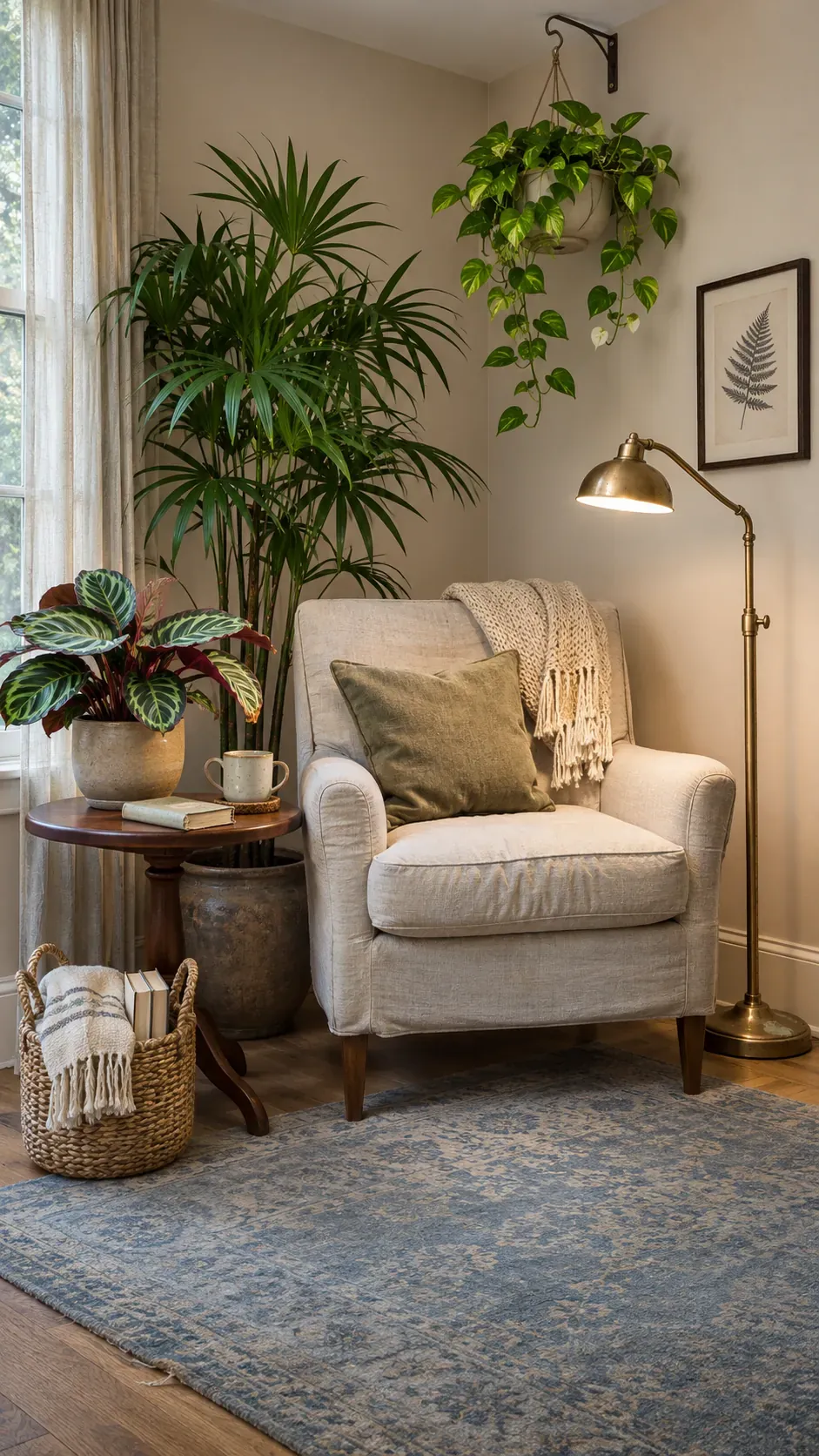
Make a reading chair feel sheltered by placing one tall floor plant behind it, a rounded plant on a side table, and a trailing plant above the outer corner. Keep the lamp, book surface, and path to the seat completely usable. This three level arrangement creates a garden feeling with only a few well placed plants.