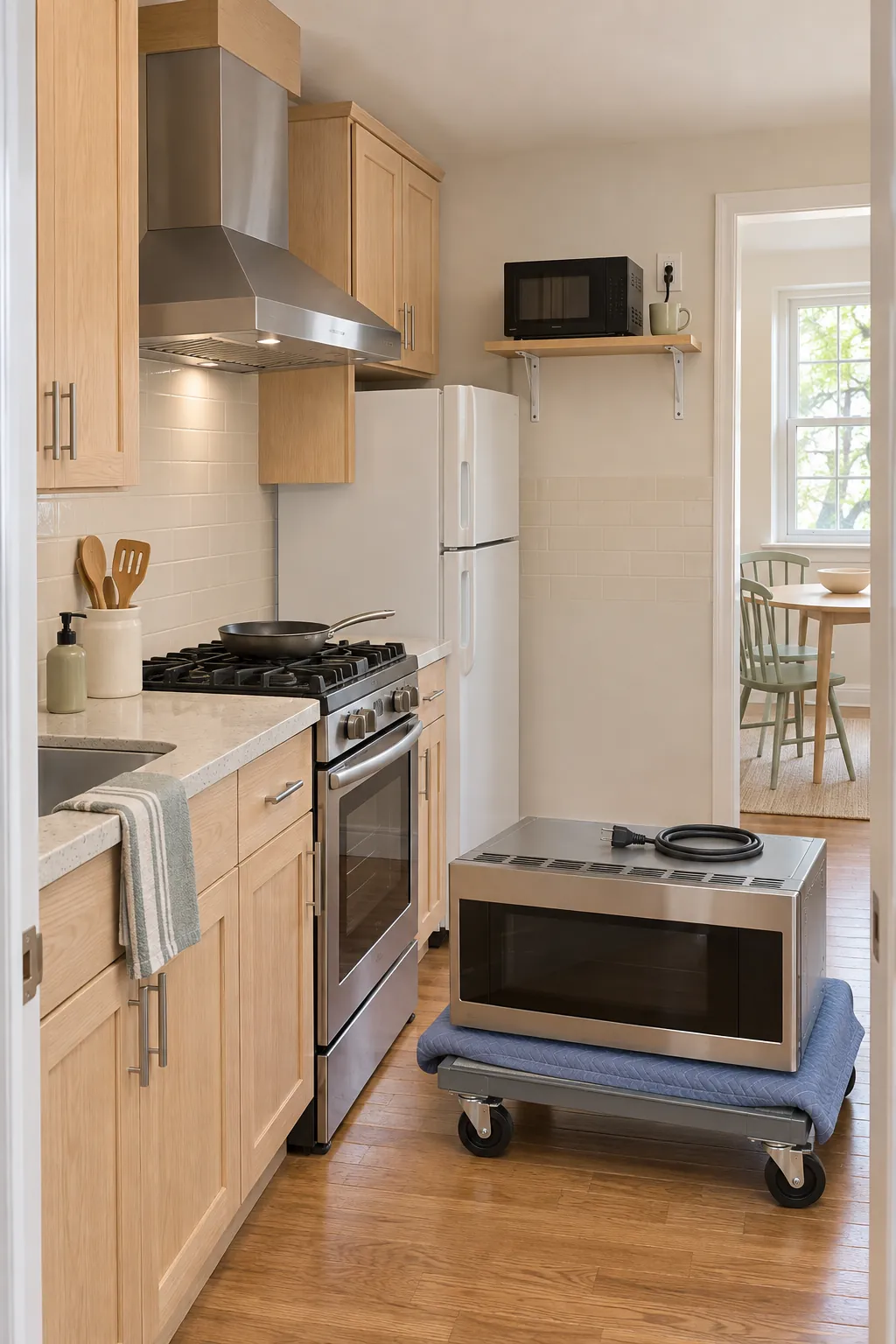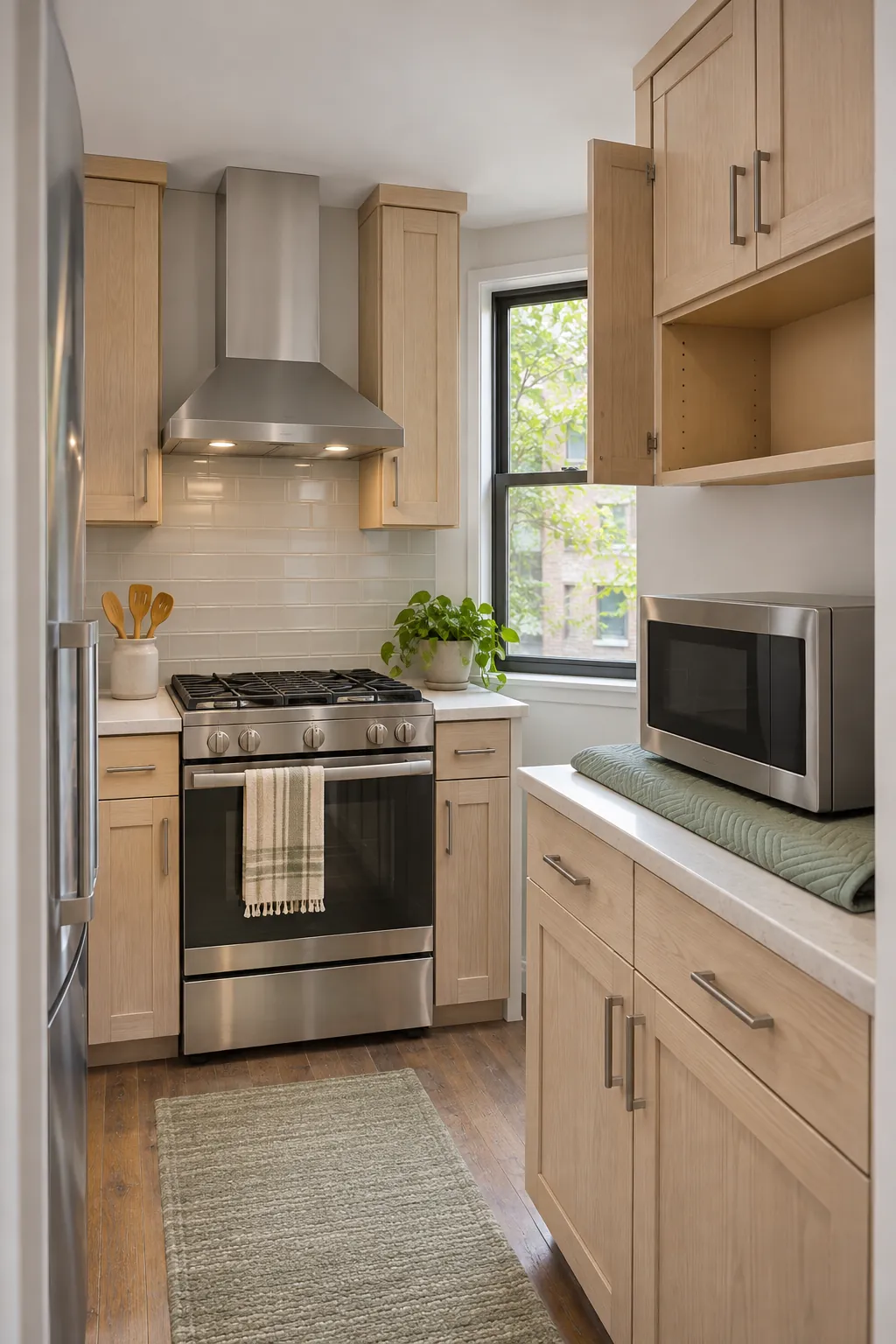
The appliance above a range has two jobs competing for one tight location. A low profile microwave saves another shelf or counter position, while a separate hood can devote its shape and capture area to ventilation. The better choice depends on safe clearance, the duct path, cooking habits, and where a separate microwave could go.
Start With the Required Clearances
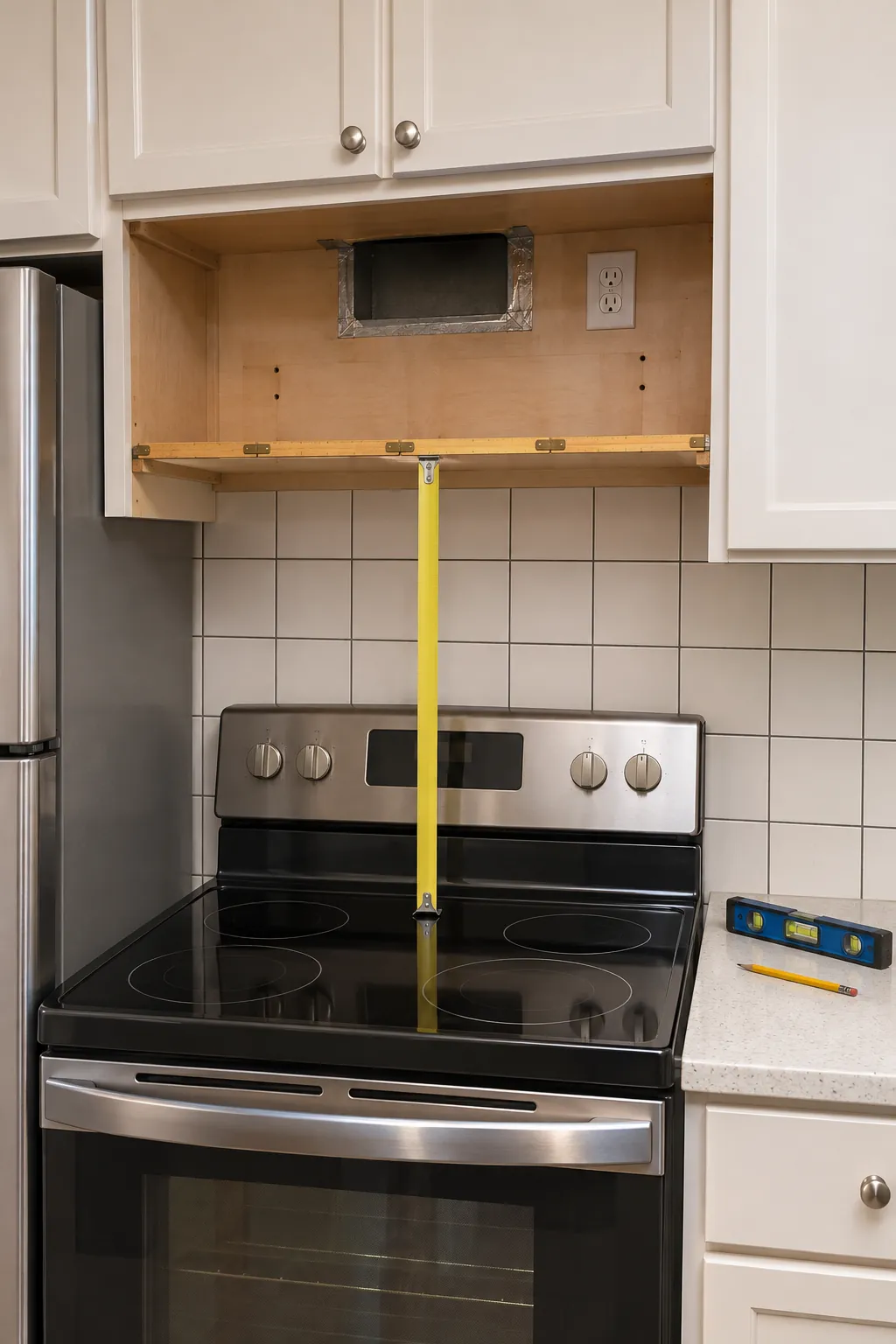
Measure from the cooking surface to the cabinet above, then compare that space with the installation instructions for the exact range and the exact appliance. Local rules, cabinet materials, and appliance types can change the required dimensions. A product described as low profile is not automatically safe or approved for every opening.
Also measure width, depth, door swing, handle reach, and the space needed for mounting hardware and duct transitions. Confirm wall support and electrical requirements with a qualified installer. Do not solve a low cabinet problem by guessing at a smaller gap over hot burners.
Trace the Air Path Before Comparing Fans
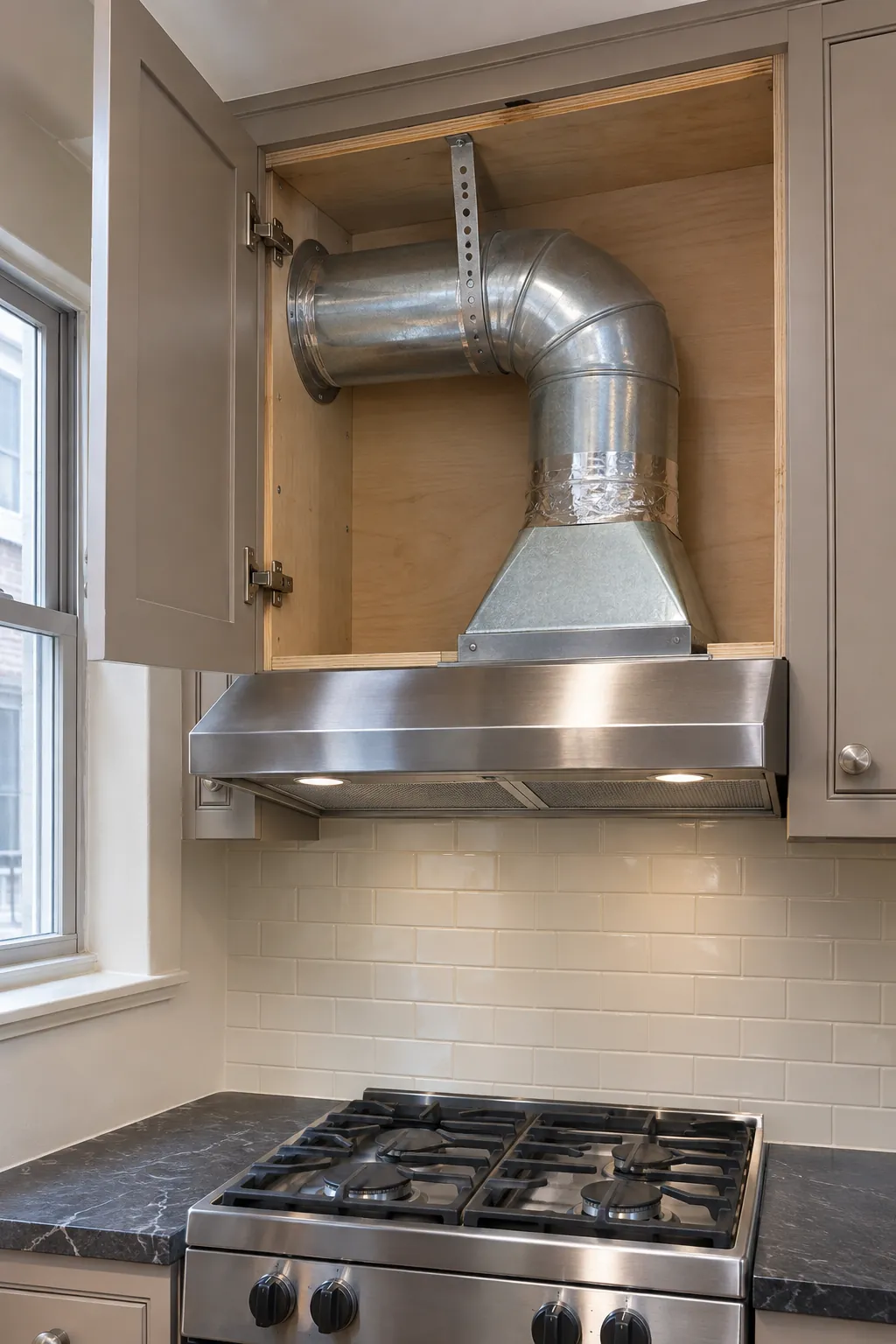
Ventilation works best when cooking air travels through a suitable duct to the outdoors. A short, smooth, correctly sized route with few turns usually creates less resistance than a long route with several bends. Check whether the existing cabinet and exterior wall can support the outlet direction allowed by the appliance.
Recirculating models pass air through filters and return it to the room. They can reduce some grease and odors, but they do not send heat and moisture outdoors. If both options would recirculate, compare their filters and capture design honestly rather than treating the fan rating as the whole result.
Compare Capture Area Over the Burners
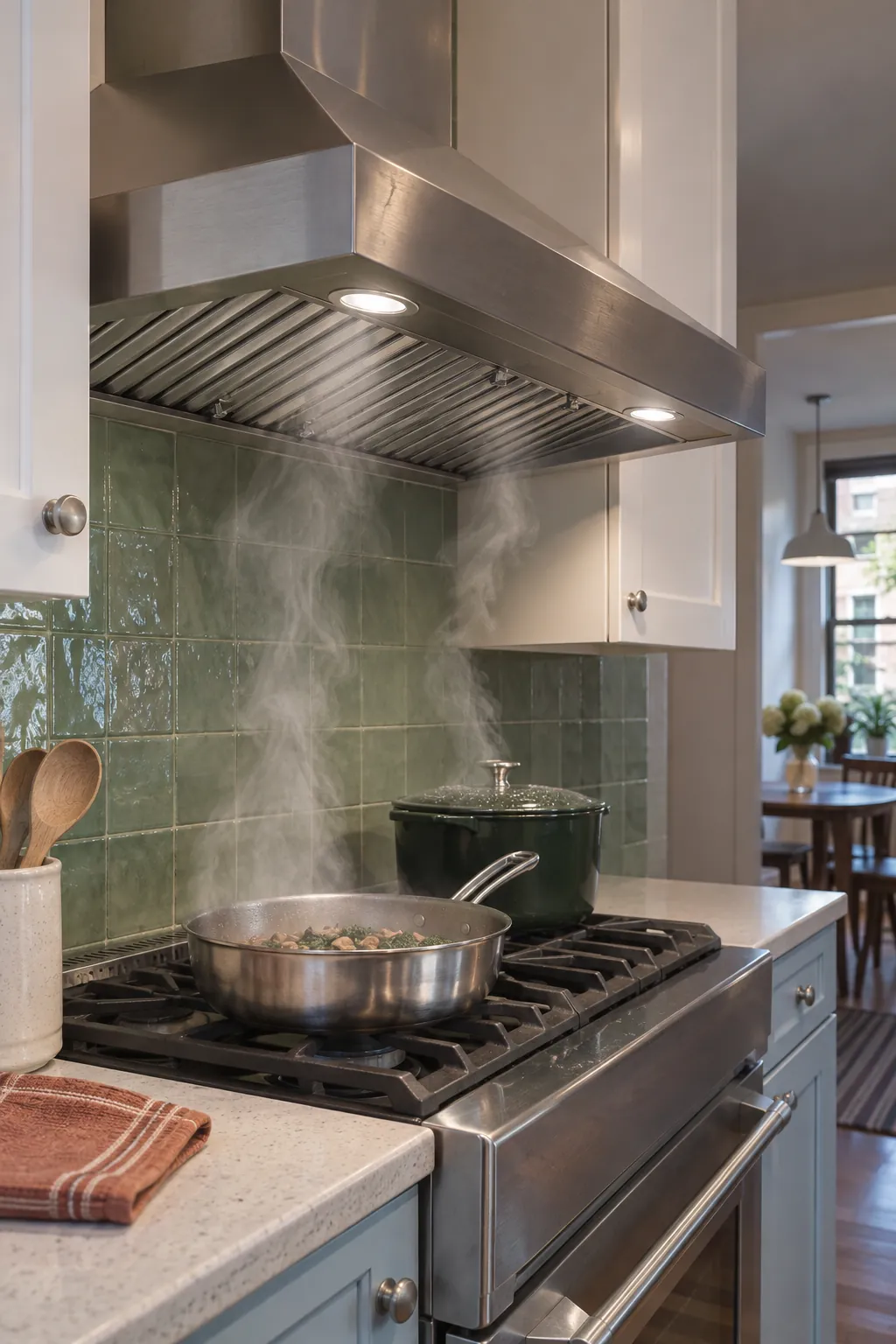
A dedicated hood can offer a deeper canopy that reaches farther over the front burners. That geometry helps collect the plume before it spreads into a small room. This matters when cooking produces frequent steam, smoke, grease, or strong aromas.
A low profile microwave may provide useful ventilation while freeing vertical room above the cooktop, but its intake position and depth still matter. Compare the actual bottom intake with the burner layout. A powerful fan cannot capture air that has already escaped around a shallow appliance.
Plan Where the Microwave Function Will Go
The combination unit keeps reheating above the range and preserves another work surface. Check the interior height against the dishes you use, and check whether the door and controls are comfortable to reach. A shallow exterior does not guarantee that every tall bowl or covered container will fit.
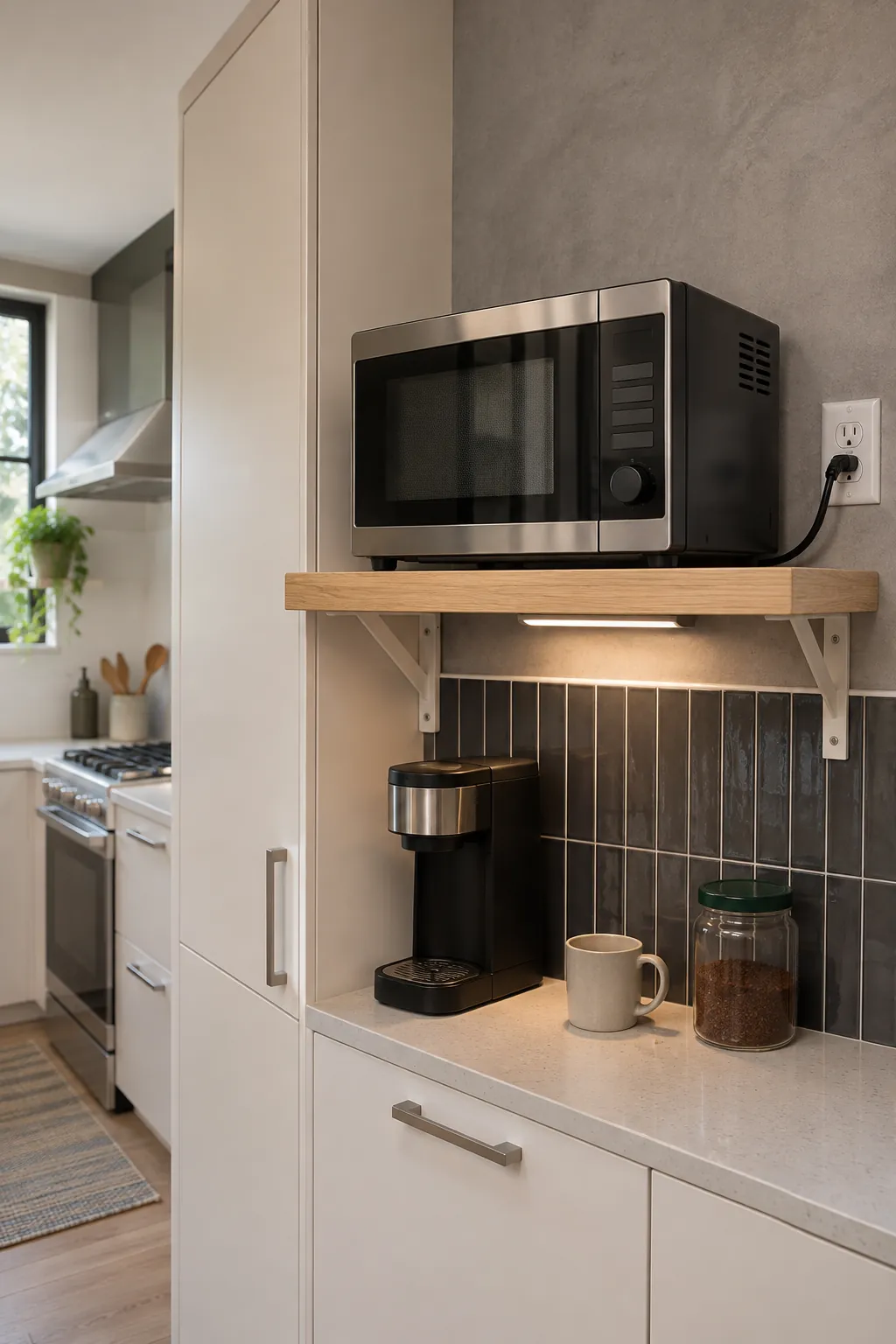
Choosing a separate hood means finding another safe microwave location. A counter model uses valuable preparation space, while a shelf or built in position needs ventilation, support, and clearances specified by its maker. Include that second location in the comparison before declaring the hood the space saving option.
Include Noise, Filters, and Replacement Flexibility
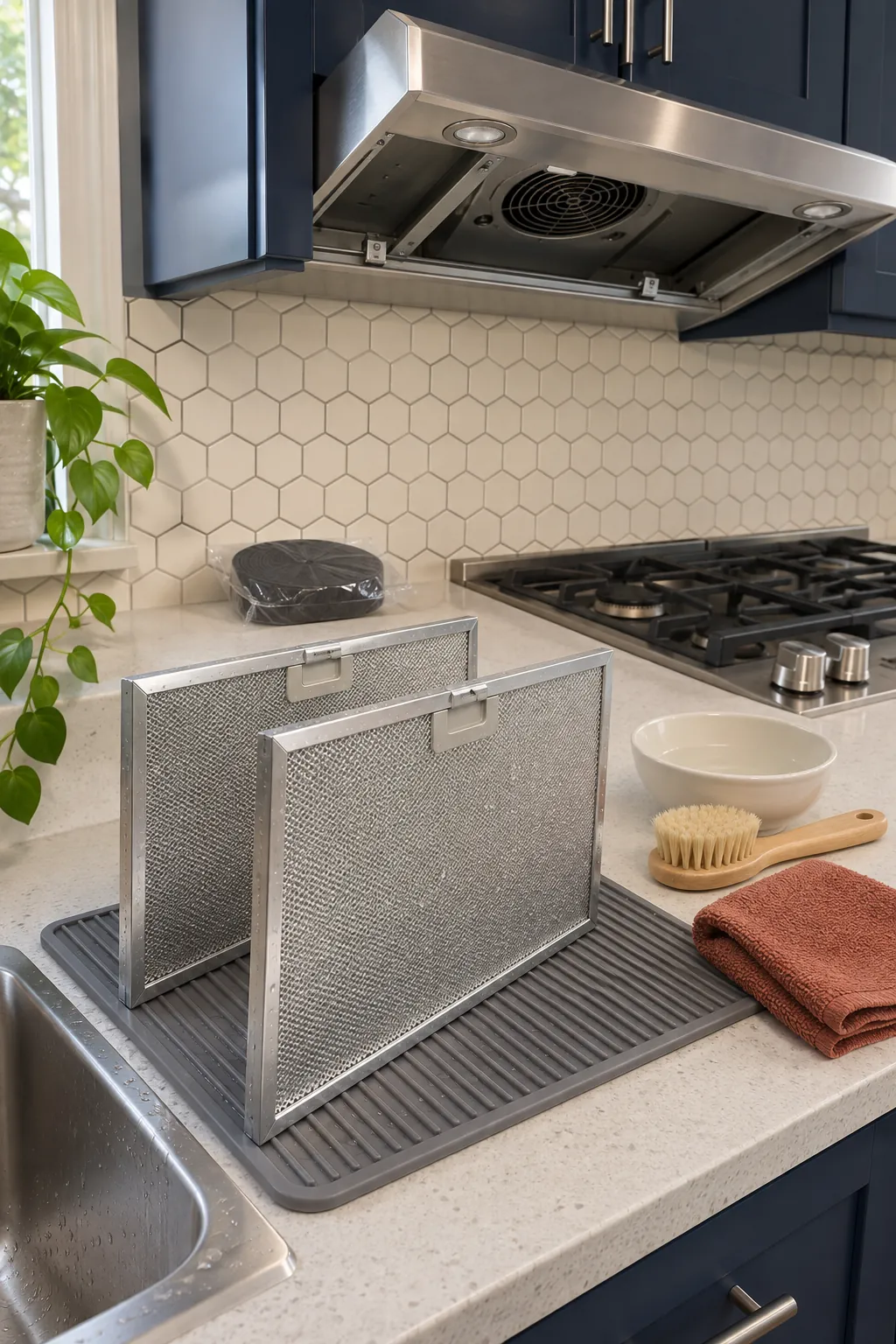
Small kitchens place the fan close to conversation and dining areas, so usable sound at normal cooking speed matters. Compare controls, task lighting, grease filter access, and the cost of replacement filters. A system that is unpleasant to run or awkward to clean will not deliver its rated performance in daily use.
A separate hood and microwave can be replaced independently when one fails. A combination unit saves a location but ties both functions to one installation and opening. Consider service access and future cabinet fit as part of the purchase, especially when the kitchen cannot absorb another appliance during a replacement.
Choose Ventilation or Consolidation
Choose a low profile microwave when the verified opening is safe, the duct route works, microwave capacity suits your dishes, and consolidating two functions protects an important counter or cabinet zone. This is often the practical answer for lighter cooking in a kitchen with no good second microwave location.
Choose a separate range hood when stronger capture over the burners is the priority and another compliant microwave location is available. It is usually easier to optimize for frequent high steam or high grease cooking and to replace each appliance independently. The winning layout is the one that manages cooking air safely without creating a new space problem elsewhere.