
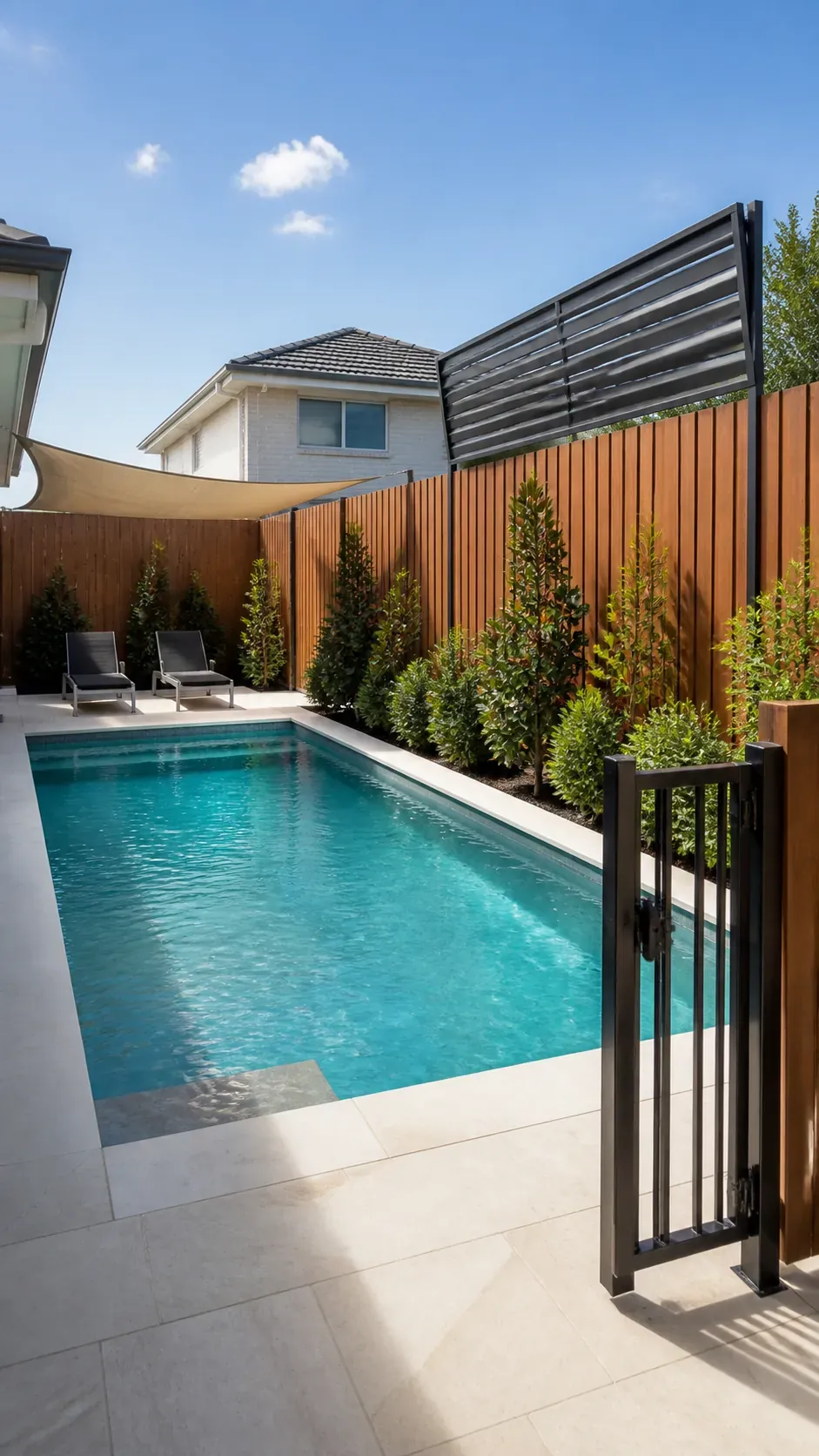
Pool privacy is not always a simple question of fence height. A nearby upstairs window, a raised deck, a narrow side yard, or a camera angle can look over a perfectly solid boundary. The best pool privacy ideas block the specific view that bothers you while protecting light, airflow, maintenance access, and the safety function of the pool barrier.
Map the Unwanted Sightlines First
Stand or sit in every place you use around the pool, then identify exactly which doors, windows, balconies, or public routes can see that spot. Ask another person to move along the neighboring sightline while you mark the smallest area that needs coverage. A targeted screen is often more effective than surrounding the entire yard with an oppressive wall.
Check the view from the water, lounge chairs, outdoor shower, and dining area at different heights. Block the line of sight, not the sky, whenever possible. Confirm property lines, easements, homeowner-association rules, utilities, and local height limits before buying materials.
Raise One Strategic Fence Section
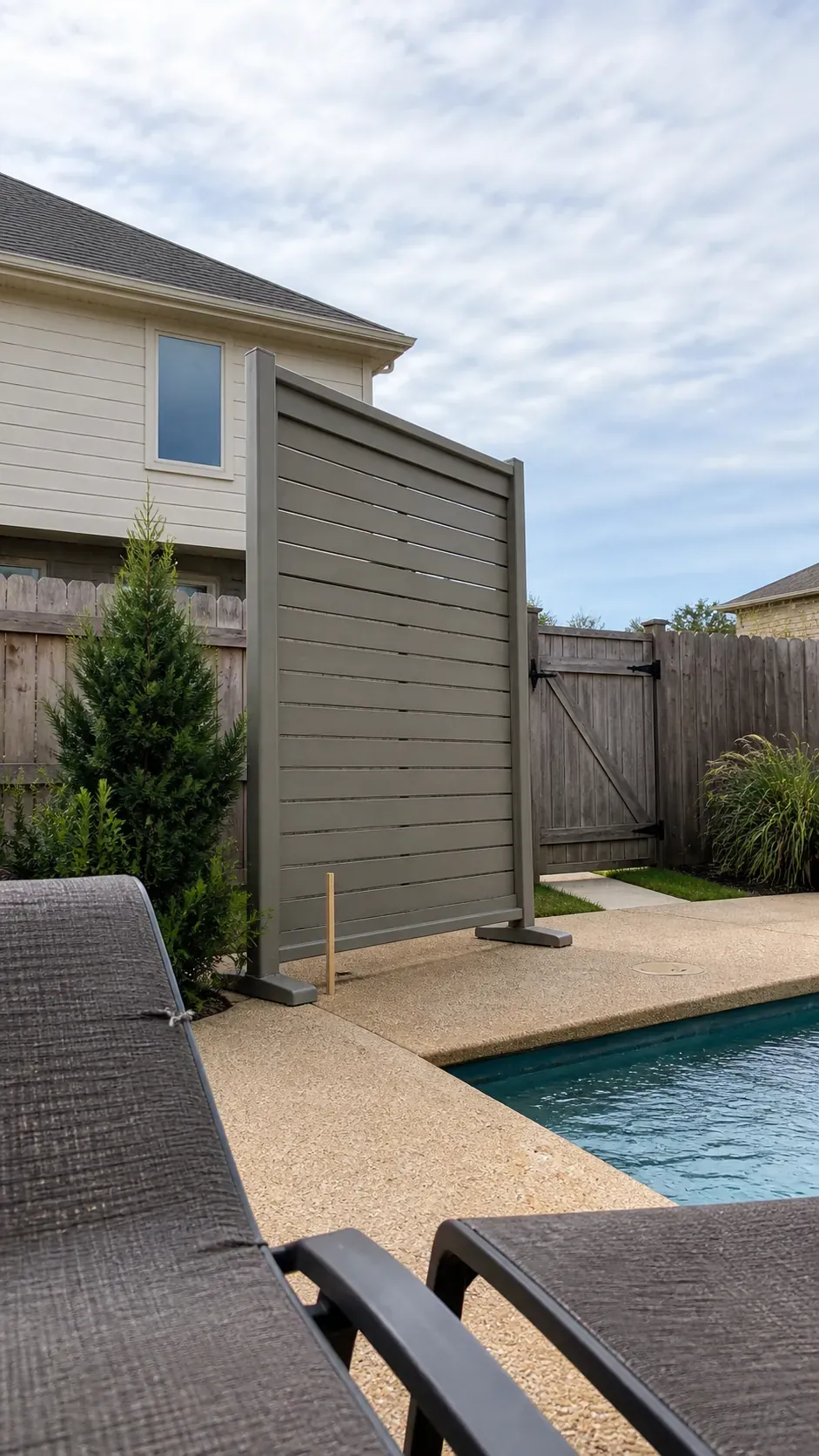
If one lowered panel or corner creates the unwanted view, correcting that section may solve the problem without rebuilding the boundary. Match the existing post rhythm and finish so the addition looks deliberate. A stepped top can transition between heights more gracefully than an abrupt tower.
Have the post foundations checked for the added wind load, because a taller panel acts like a sail. Keep required openings, setbacks, and climb-resistance rules in mind if the fence is also the pool barrier. Do not attach an extension to a shared fence until ownership and permission are clear.
Choose a Warm Horizontal Slat Fence
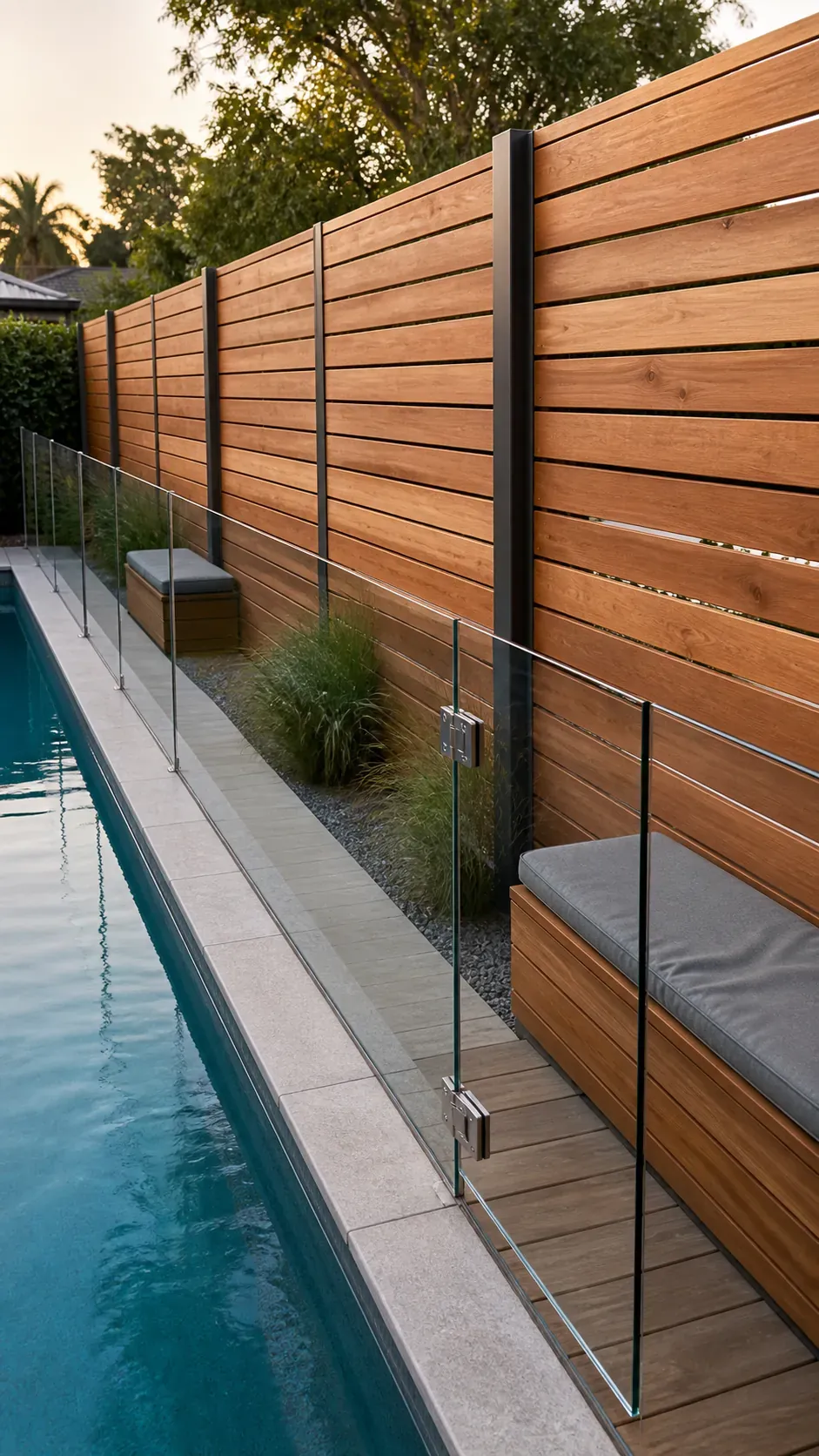
Horizontal timber or composite slats bring a relaxed architectural backdrop to a pool and can make a short yard feel wider. Consistent narrow gaps preserve a little airflow while obscuring direct views. Use posts and rails engineered for the span instead of relying on thin decorative boards.
Dark or medium wood tones usually create less glare than brilliant white vinyl beside reflective water. Seal cut ends and select corrosion-resistant fasteners for a humid, chemically exposed setting. Where horizontal members create footholds, add a compliant inner barrier or revise the design with local code guidance.
Use Vertical Boards for a Safer Rhythm
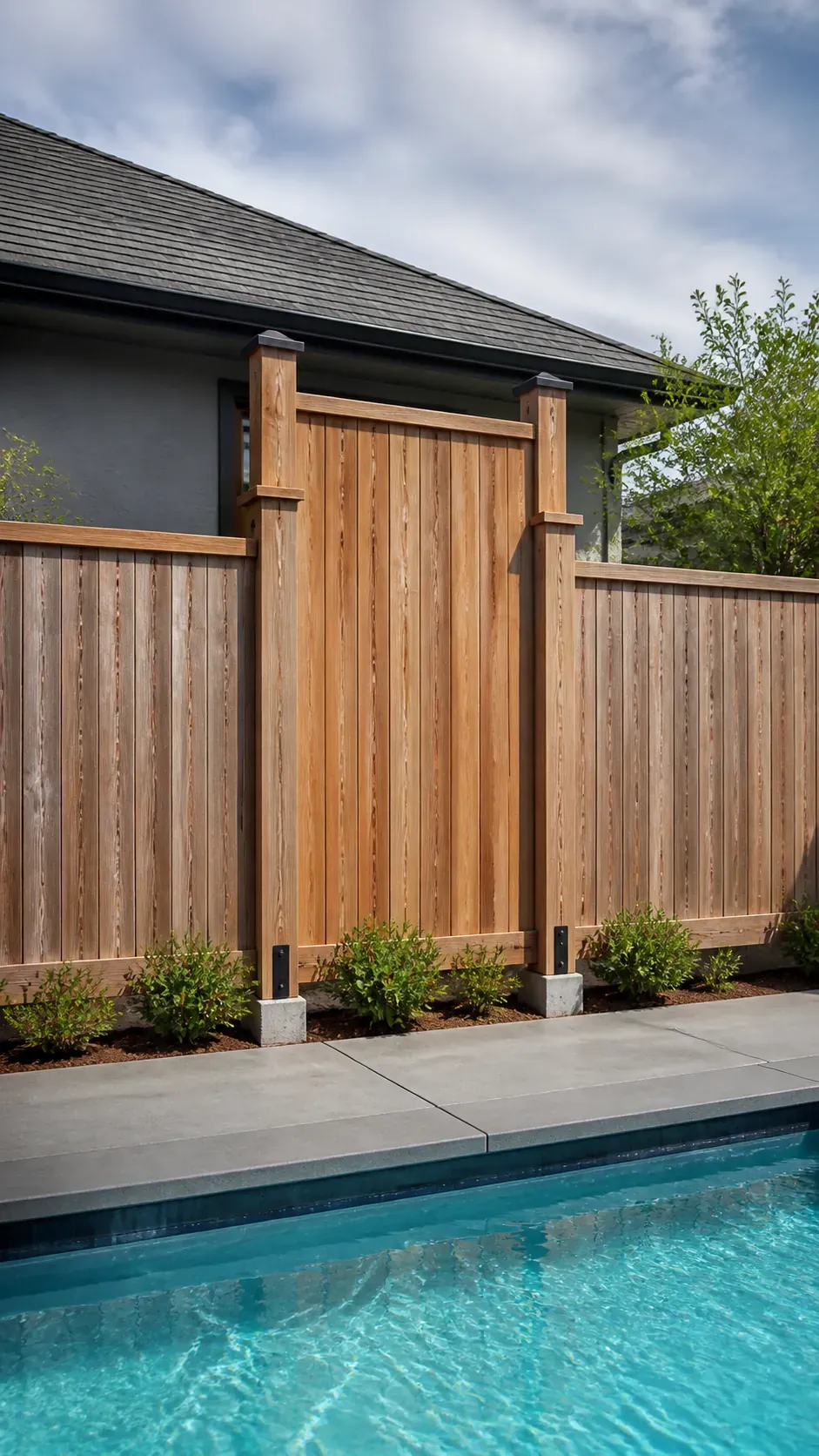
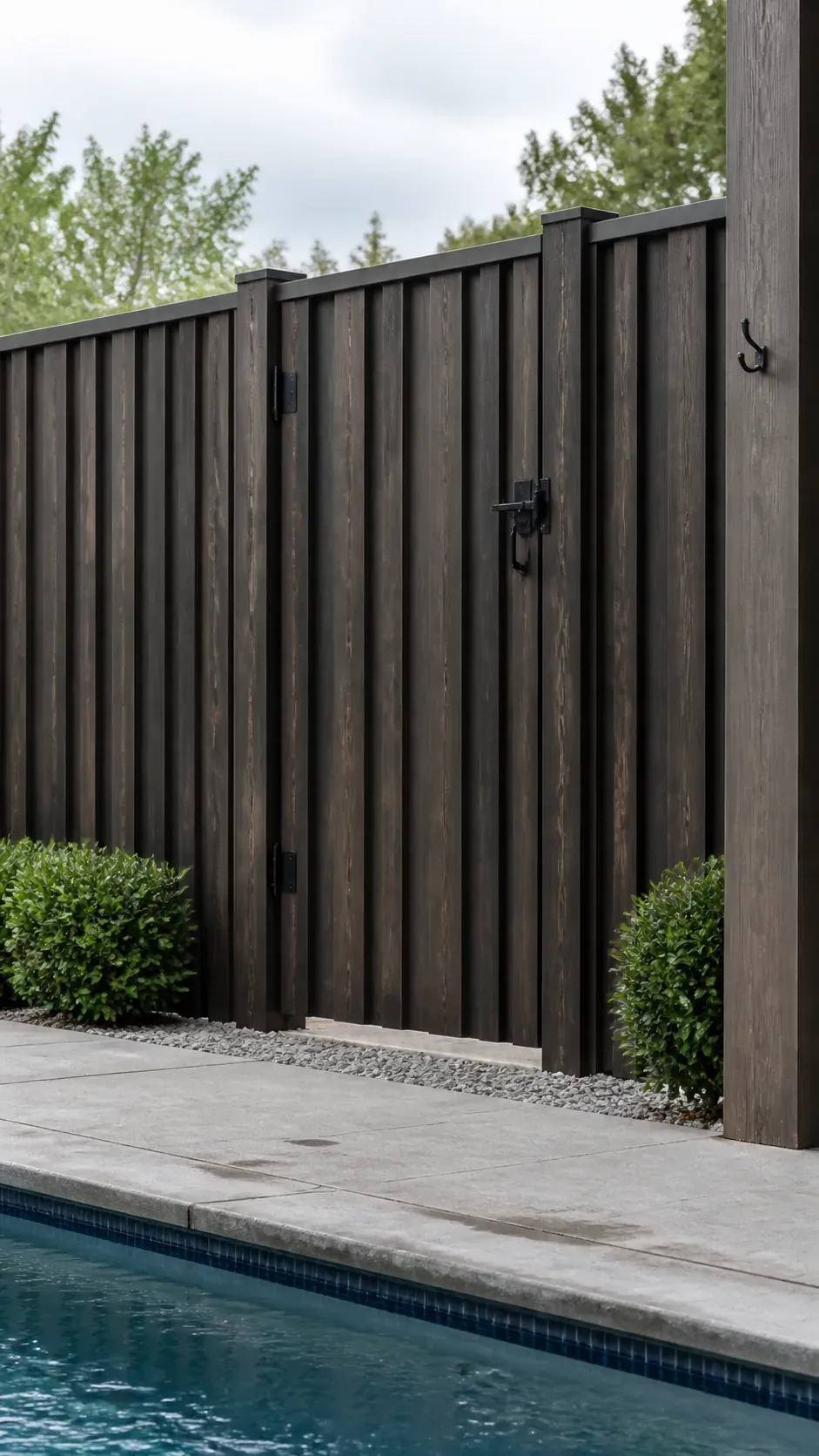
Vertical boards can deliver full visual coverage without the ladder-like effect of horizontal rails on the pool side. Alternating board depths create shadow and texture while keeping the design restrained. A narrow cap protects end grain and gives the top line a finished look.
Leave only the gaps permitted by local barrier rules and account for seasonal wood movement. Specify self-closing, self-latching gates with hardware at the required location. The fence should remain inspectable from both sides rather than disappearing behind dense planting.
Pair a Perforated Metal Screen With Greenery
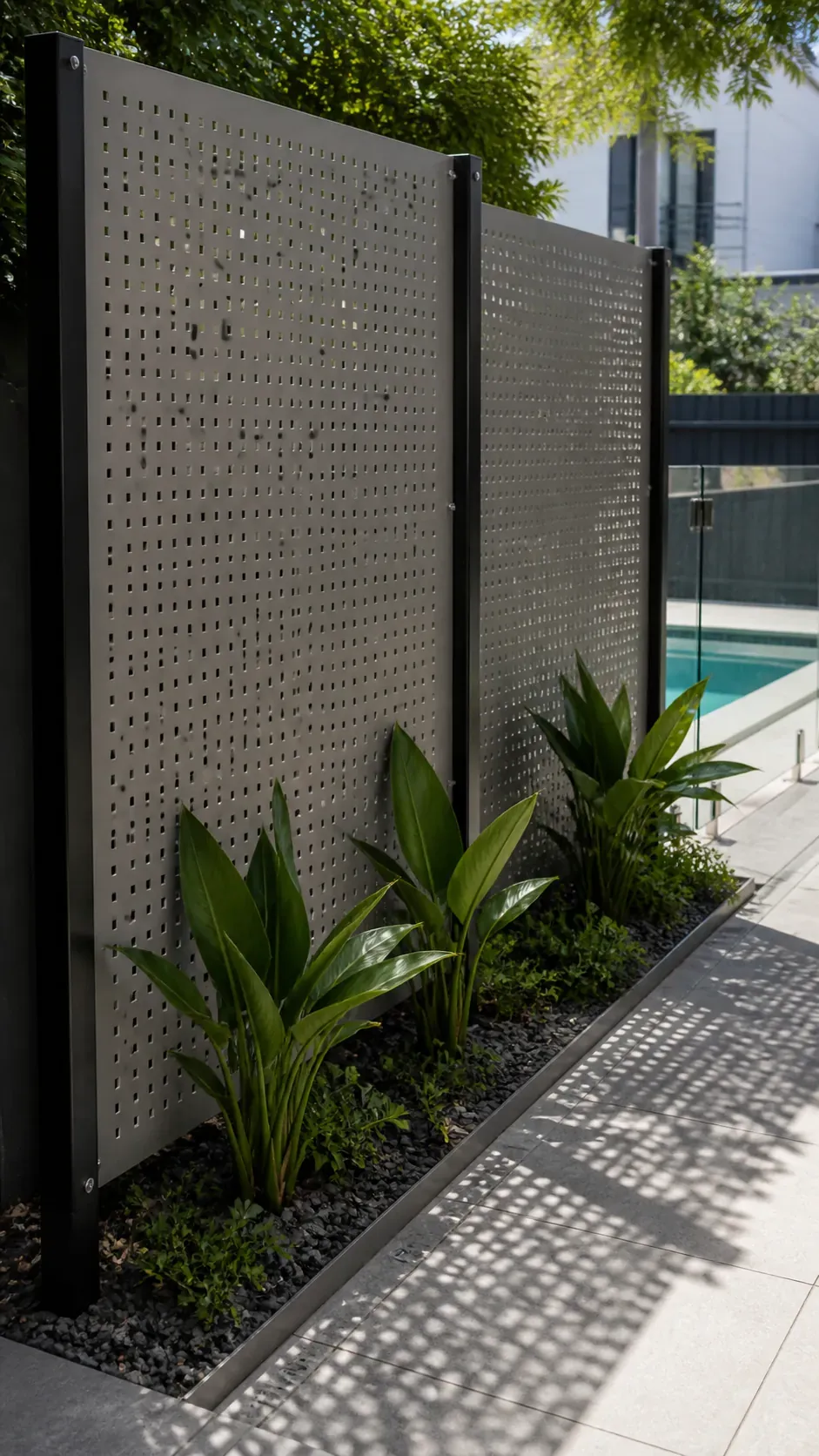
Laser-cut or perforated metal panels filter a view while allowing light and air through a tight side yard. Choose a simple pattern with enough solid area to provide privacy from the relevant angle. Powder-coated aluminum resists corrosion and usually needs less upkeep than intricate timber lattice.
Place one restrained row of foliage in front to soften the panel without hiding its drainage or fixings. Avoid busy scenic motifs that compete with rippling water. Check that openings and nearby furniture do not make a barrier climbable.
Angle Louvers Toward the Problem View
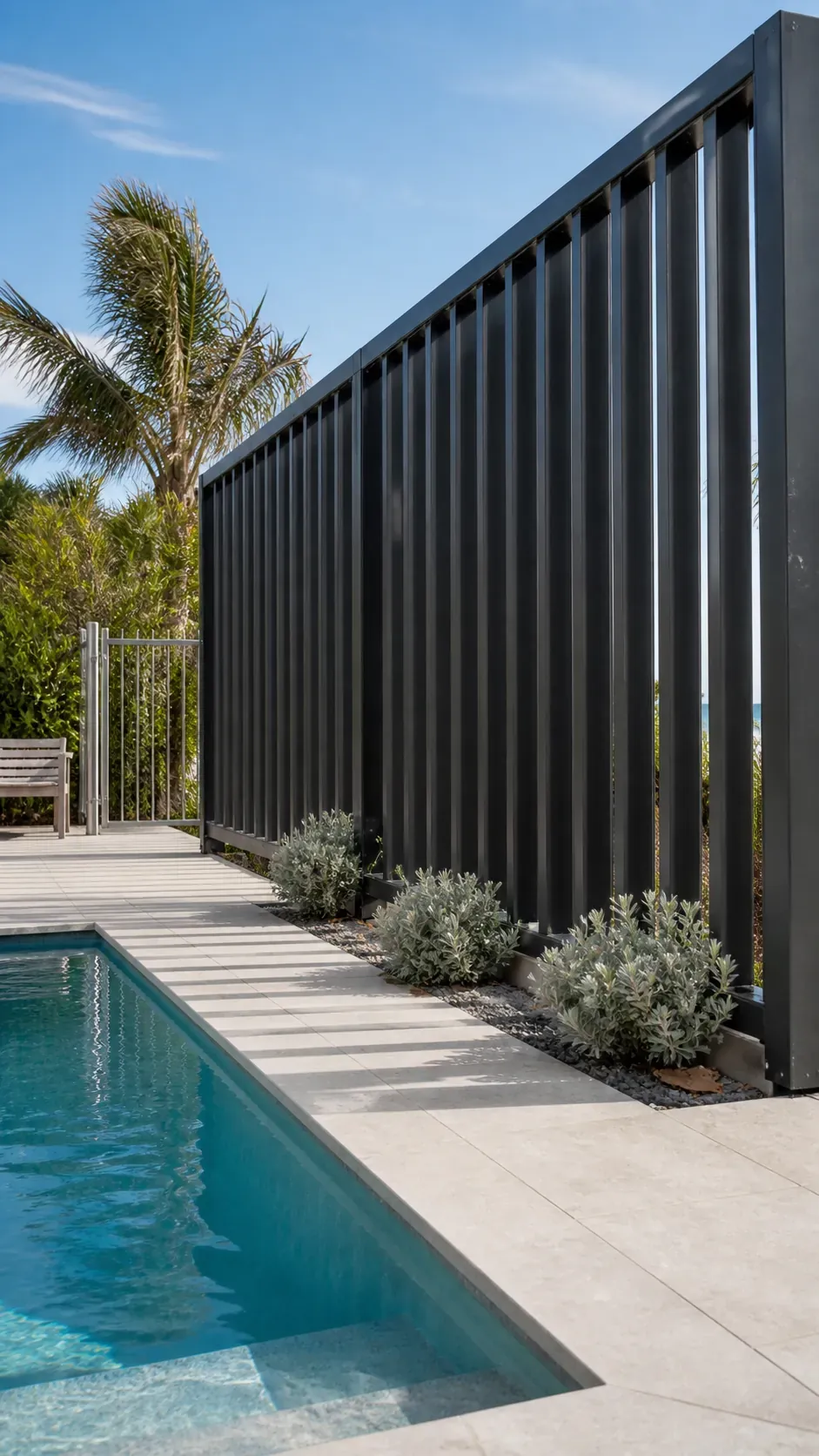
Fixed louvers can block a neighbor or street while preserving breezes from another direction. The blade angle matters more than sheer height, so test it with a temporary mockup from both sides. Deep louvers also cast changing shadows that make a plain boundary feel dimensional.
Use an outdoor-rated system with concealed corrosion-resistant hardware and a frame sized for wind. Keep the bottom clear of wet soil and leaf buildup. Louvers beside a pool barrier still need an official compliance check, especially where they could become handholds.
Add a Pergola With Retractable Side Shade
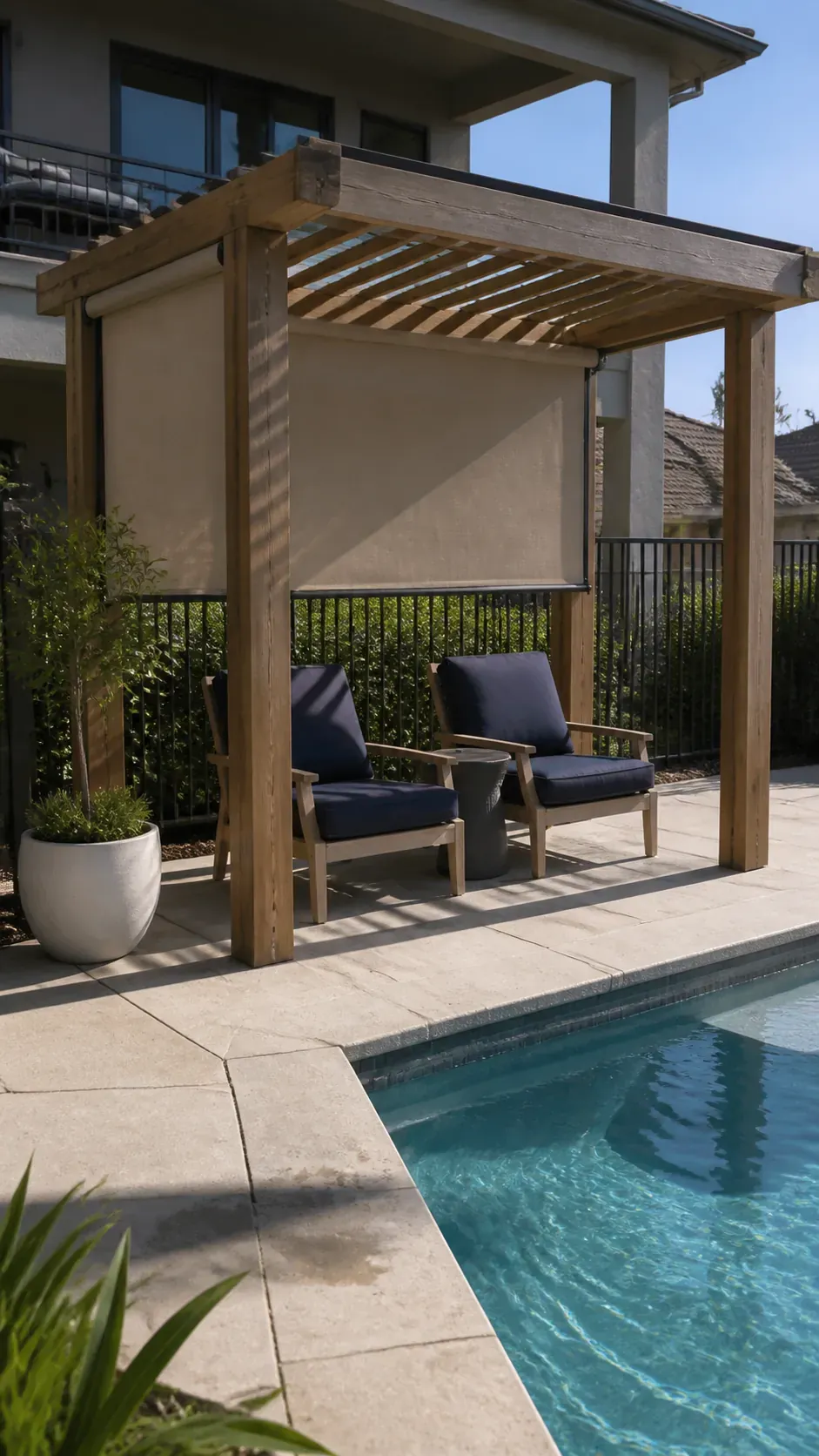
A pergola over the lounge zone can interrupt downward views from upper stories while also making the seating area more comfortable. A retractable side shade handles low-angle views only when needed. This keeps the yard open on quiet days and private when the pool is in use.
Anchor the structure for local wind conditions and use exterior fabric that drains and dries quickly. Keep posts outside circulation paths and preserve supervision across the water. The roof and side panel should never interfere with a required gate or emergency route.
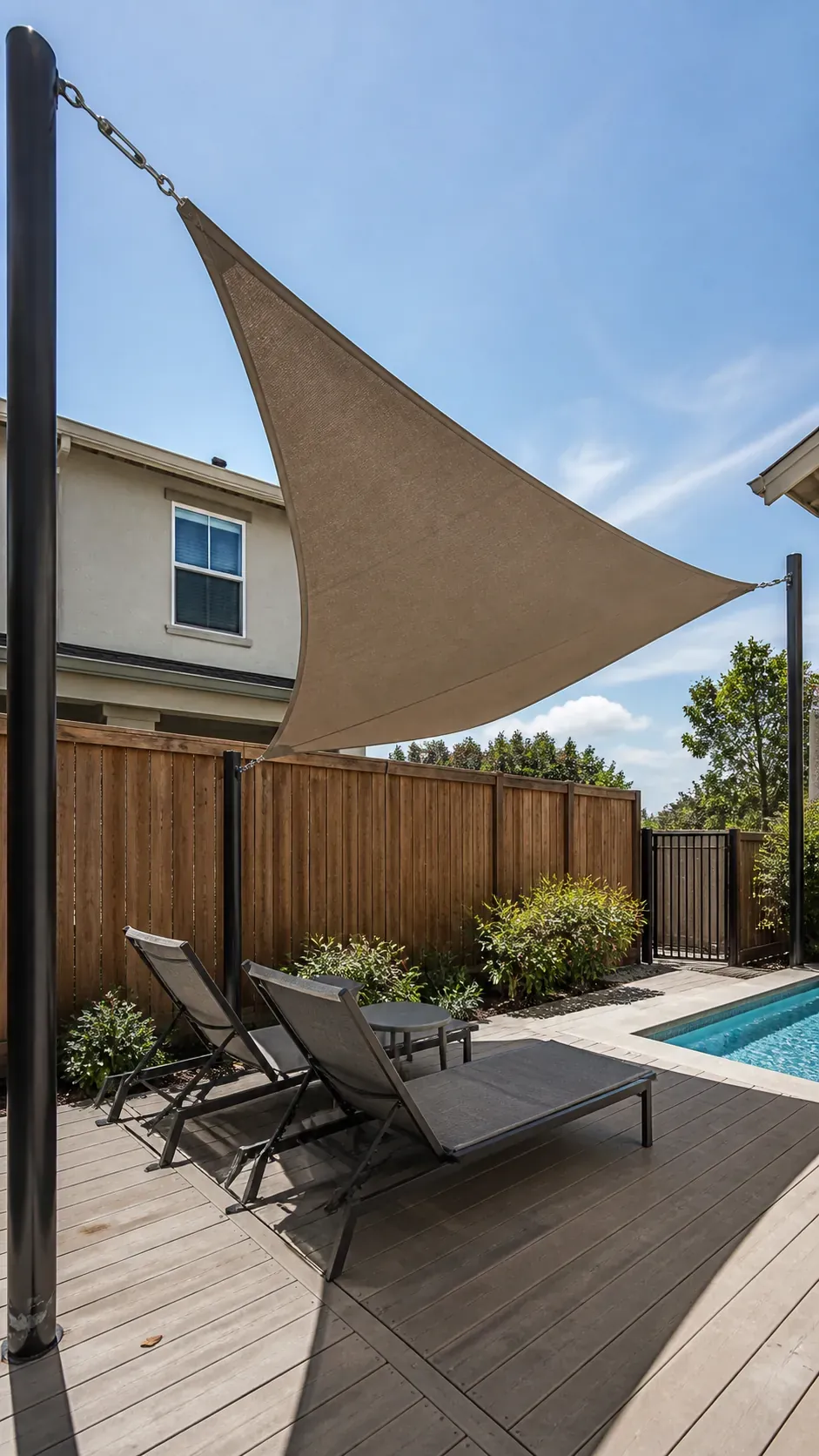
Tilt a Shade Sail Across an Upper View
A carefully angled shade sail can block an elevated balcony or window that a normal fence cannot reach. It is often faster and less bulky than planting tall trees in a narrow strip. The sail also protects a sitting zone from harsh afternoon sun.
Use a purpose-built tensioned membrane, engineered anchors, and a slope that sheds rain. Test the sightline before fixing posts because a small change in angle can make the difference. Remove or secure the sail as required for severe weather in your region.
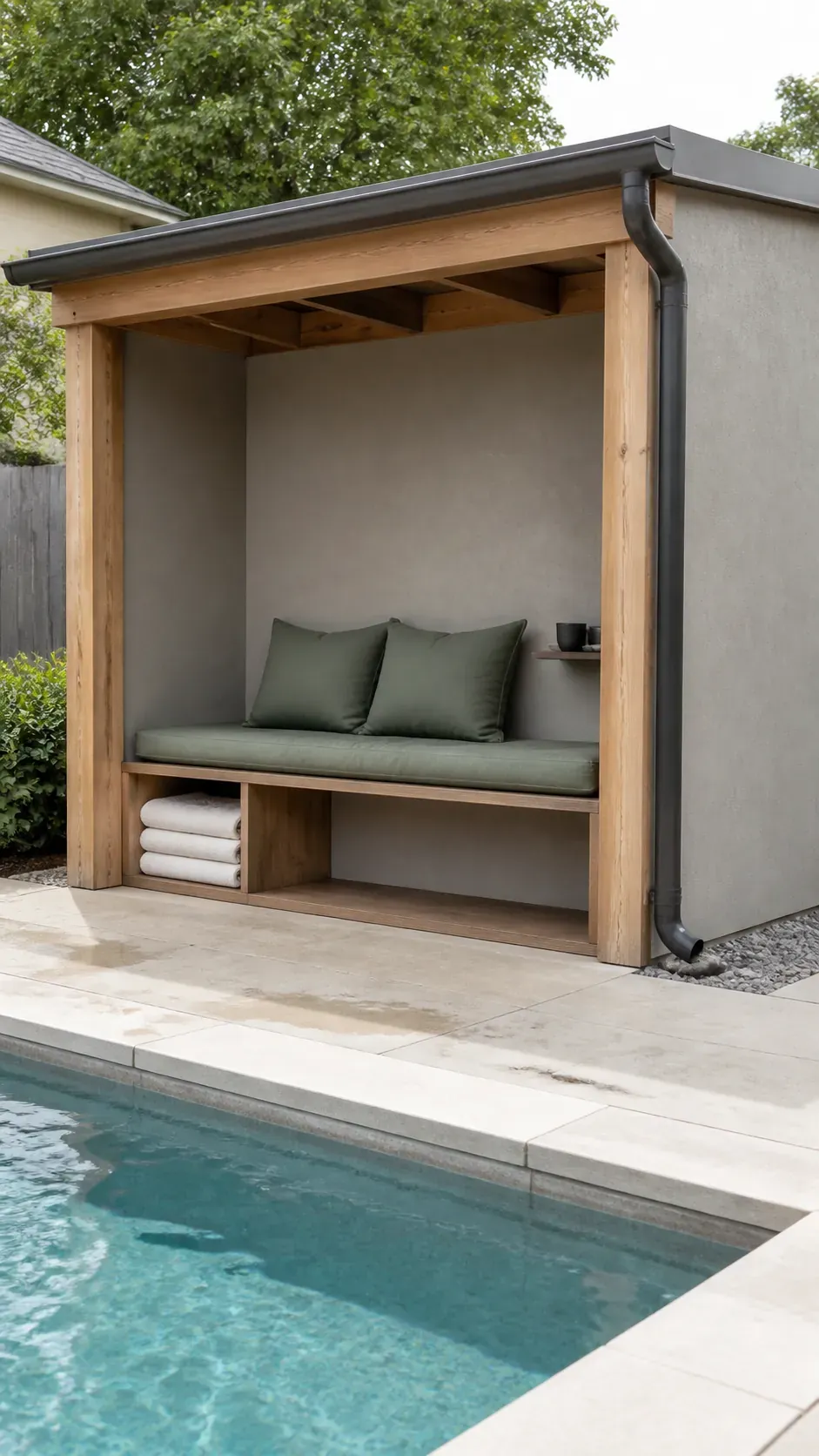
Turn a Small Cabana Into a Visual Shield
A compact cabana can screen the most exposed side of the pool while adding a dry place for towels and drinks. One solid back wall and an open front often provide more useful privacy than four partially enclosed sides. Orient it toward the view you want to keep, not simply parallel to the fence.
Maintain setbacks, drainage, electrical clearances, and permitted lot coverage. Keep the structure low enough to respect neighbors while tall enough to intercept the sightline. Simple built-in seating reduces loose furniture around the deck.
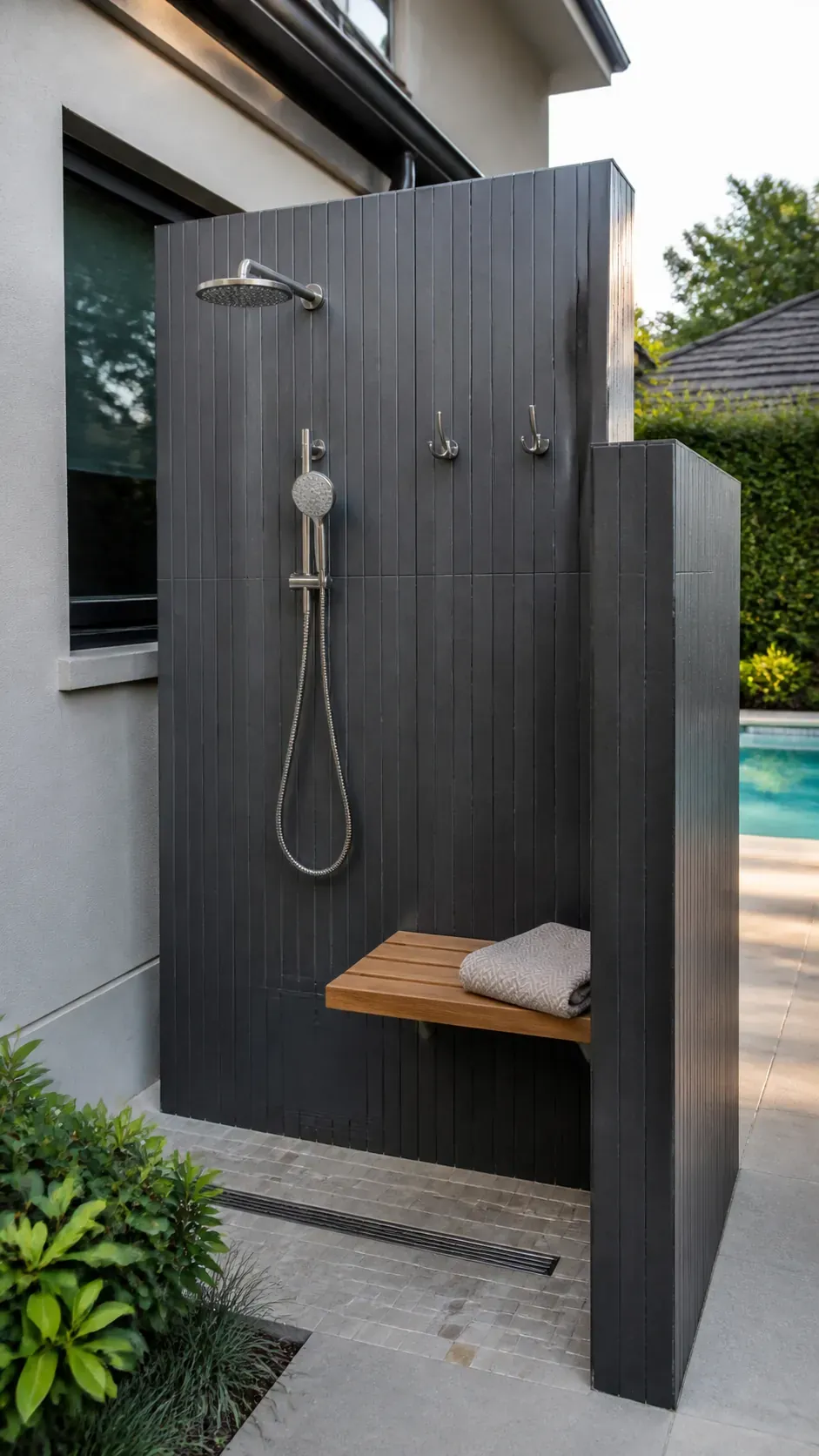
Use an Outdoor Shower Wall as Double-Duty Privacy
A well-placed shower wall can hide a vulnerable changing corner and screen a direct side view at the same time. Choose a surface that tolerates constant moisture and is easy to rinse. Hooks, a small shelf, and a bench can make the zone functional without filling it with furniture.
Direct drainage to an approved location away from the pool and foundations. Keep plumbing serviceable and use slip-resistant paving. Position the wall so it adds privacy without creating a hidden, unsupervised pocket beside the water.
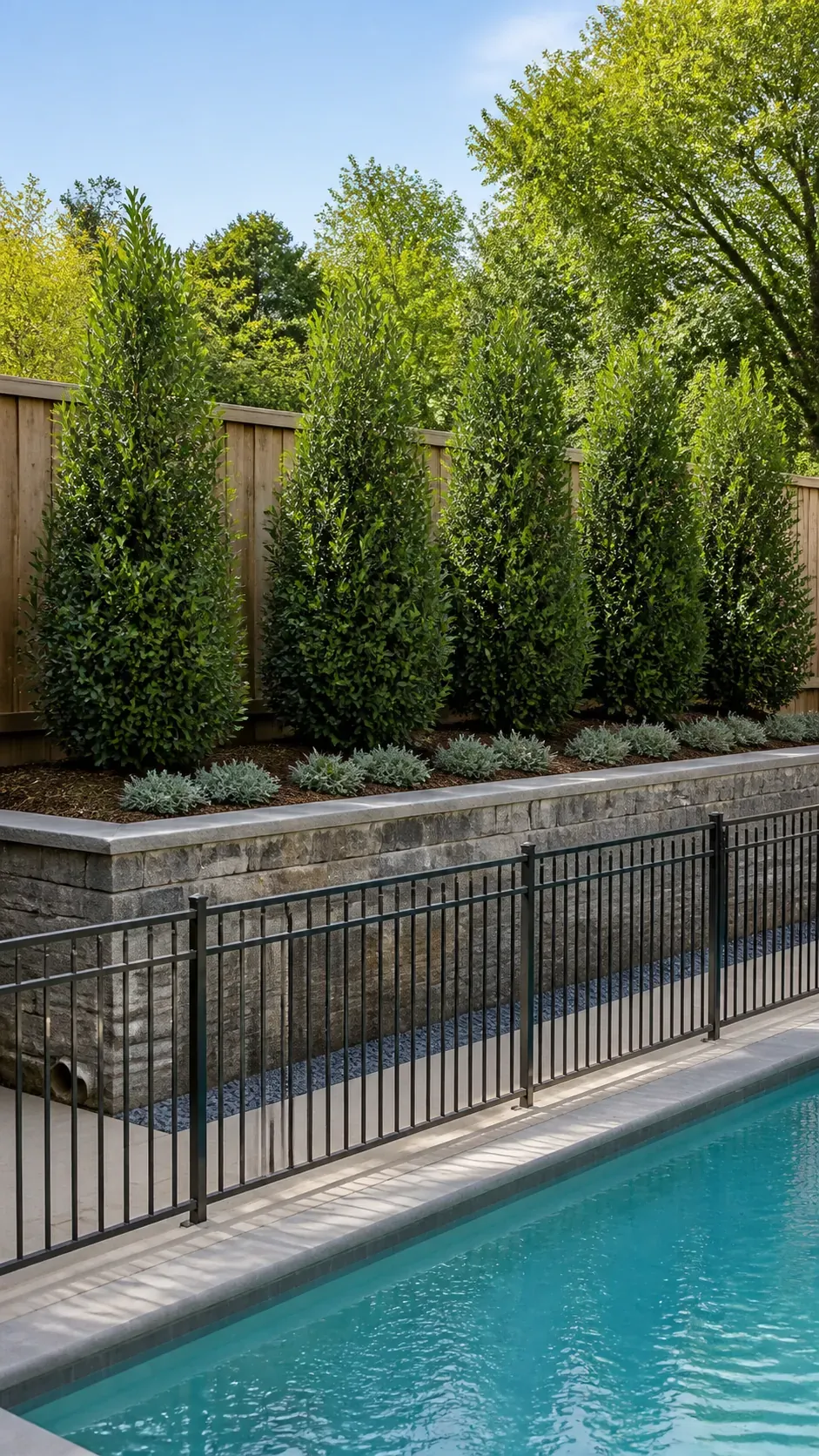
Lift Screening Plants in a Raised Bed
A raised planter gives shrubs an immediate height advantage without waiting for them to become trees. The planter wall also contains soil and irrigation away from the deck. This works especially well where the relevant view begins just above an existing fence.
Size the bed for the plants’ mature roots and include reliable drainage away from pool construction. Avoid making the planter wall climbable if it sits near a required barrier. Select shrubs that reach the needed height naturally instead of demanding constant topping.
Use Oversized Planters for Flexible Coverage
Large containers can close a temporary sightline without excavation, which helps renters and owners working over an existing slab. Group two or three pots rather than lining up many small containers. Their weight and soil volume make them more stable and slower to dry.
Choose nonaggressive, wind-tolerant plants and add drip irrigation. Keep pots off coping, gate routes, and narrow walking bands. Casters are useful only when rated for the filled weight and locked on a perfectly level surface.
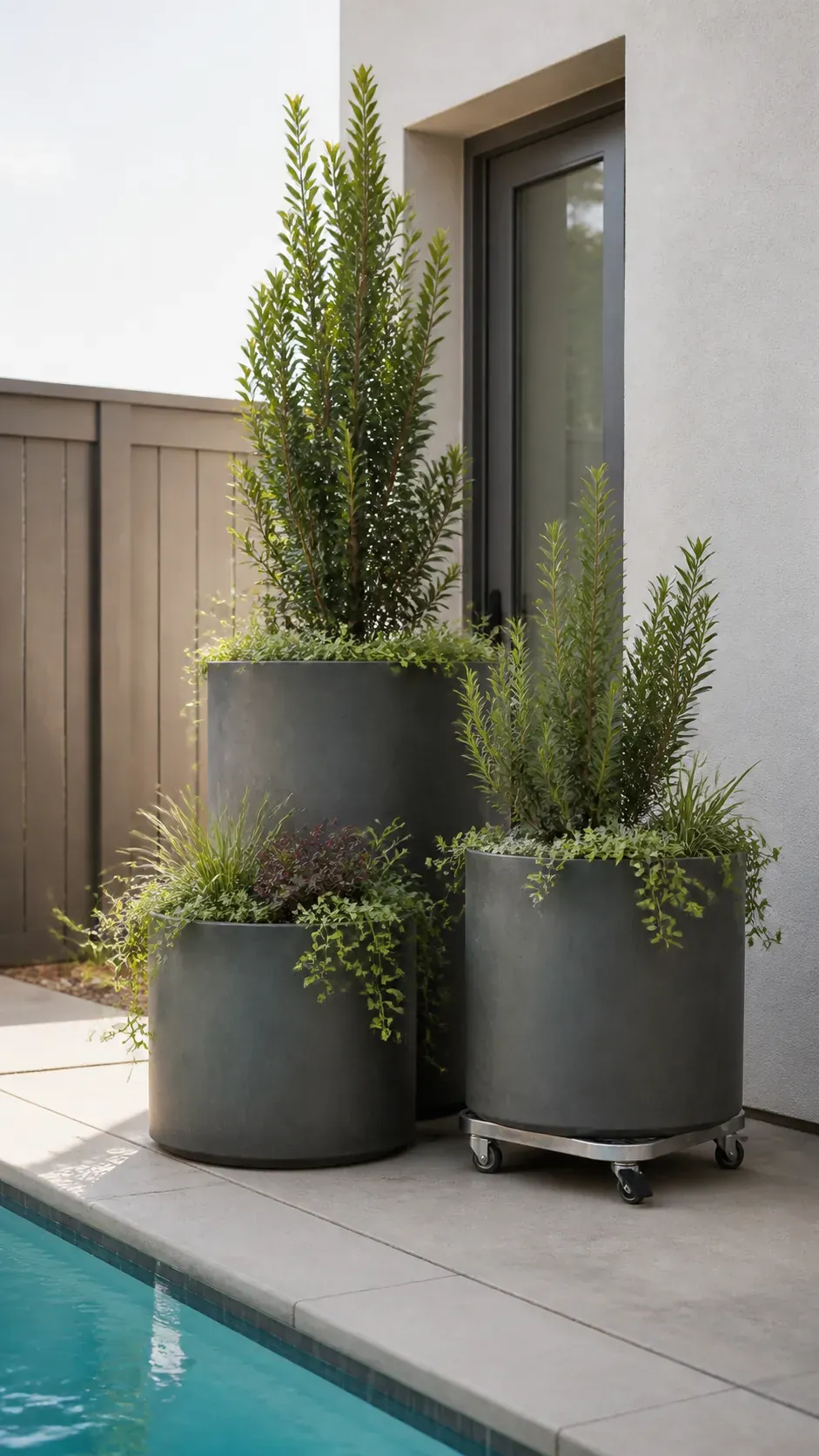
Grow a Resilient Mixed Evergreen Screen
A mixed screen is less likely than a single-species hedge to fail all at once from one pest, disease, or weather event. Combine compatible evergreen trees and shrubs with different textures but similar site needs. Staggering them in depth creates coverage without a rigid green wall.
Research mature height, width, roots, litter, toxicity, and local invasiveness before buying. Place the largest plants far enough from pool plumbing and paving. Plant for mature dimensions, not instant nursery fullness.
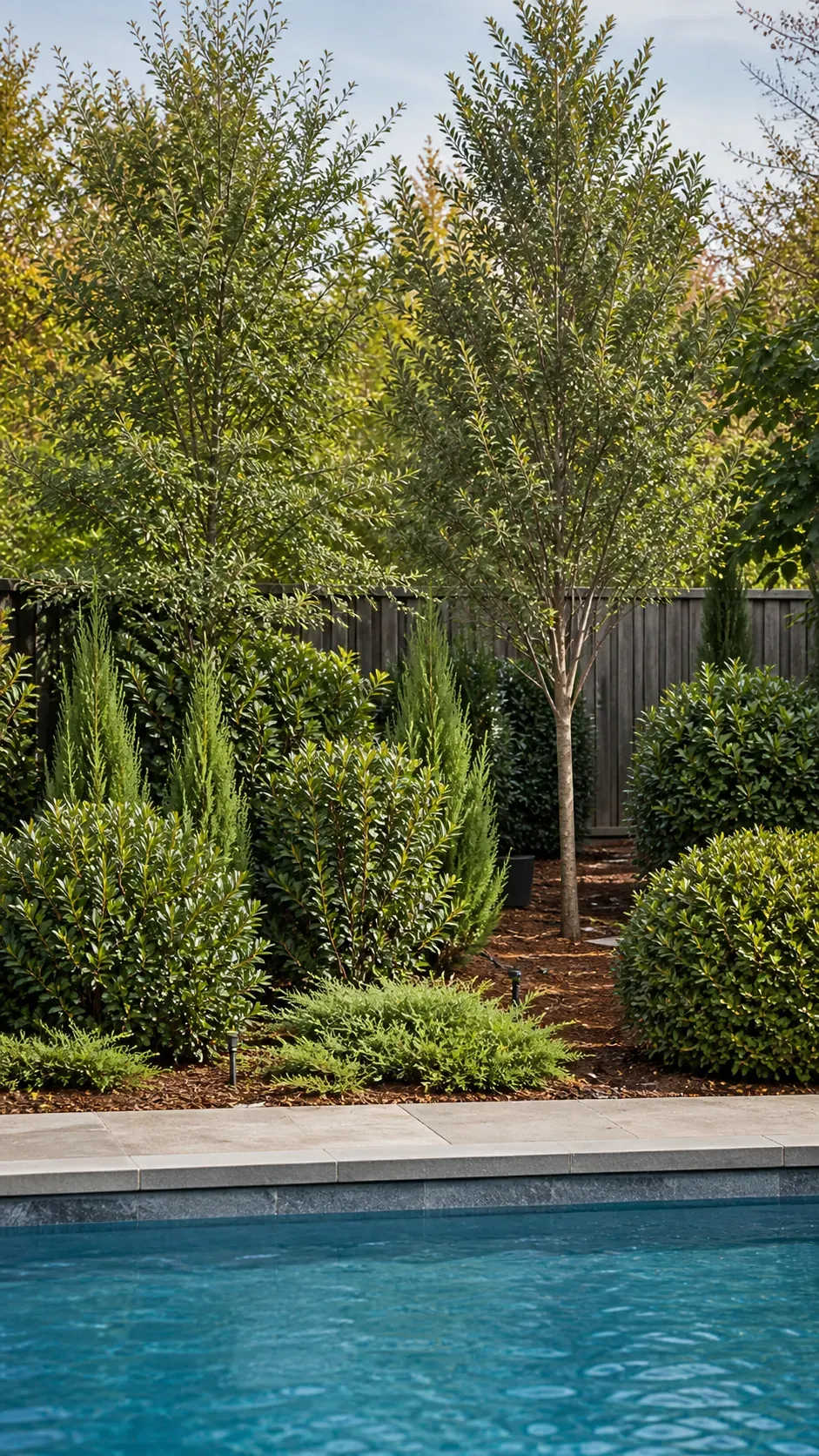
Fit Columnar Shrubs Into a Narrow Side Yard
Columnar cultivars can provide height where there is not enough width for a broad hedge. Their naturally upright habit reduces the amount of shearing needed to keep a path open. Use several with slight spacing so air and light still reach the lower foliage.
Verify the actual mature width, since “narrow” plants can still outgrow a two-foot bed. Keep roots, irrigation, and foliage clear of pool pipes, drains, and fence foundations. A local nursery or extension office can help identify suitable choices for your climate.
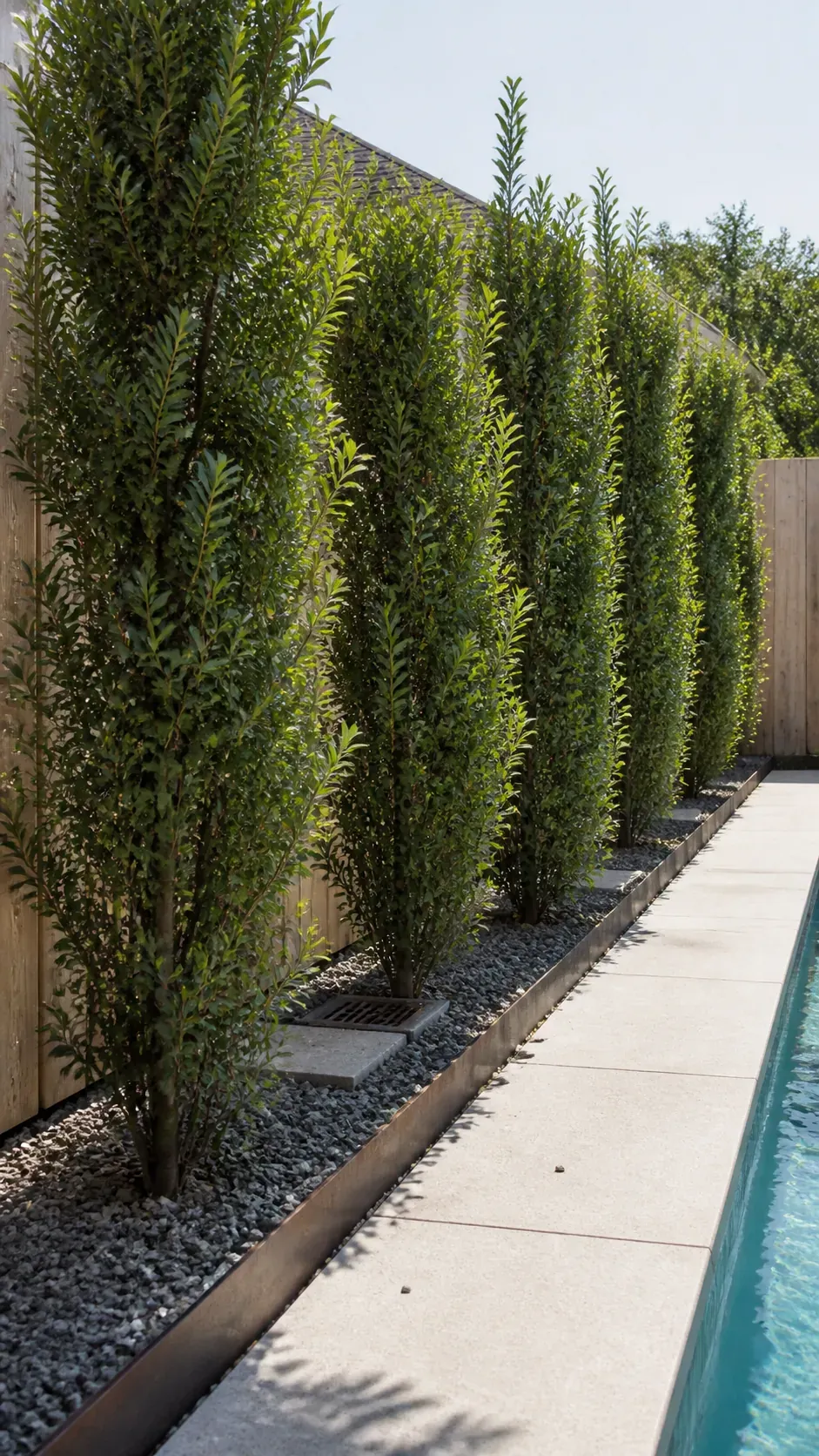
Set Small-Canopy Trees Beyond the Deck
Small-canopy trees can interrupt upper-story views that shrubs cannot reach, but they need thoughtful siting. Place trunks beyond the deck and aim the canopy between the pool and the problem window. Choose low-litter species with roots appropriate for the available soil volume.
Account for branches, flowers, fruit, bark, and seasonal leaves, not only the tree’s height. Keep the mature canopy from overhanging water whenever possible. An arborist should review tight sites near plumbing, retaining walls, or overhead lines.
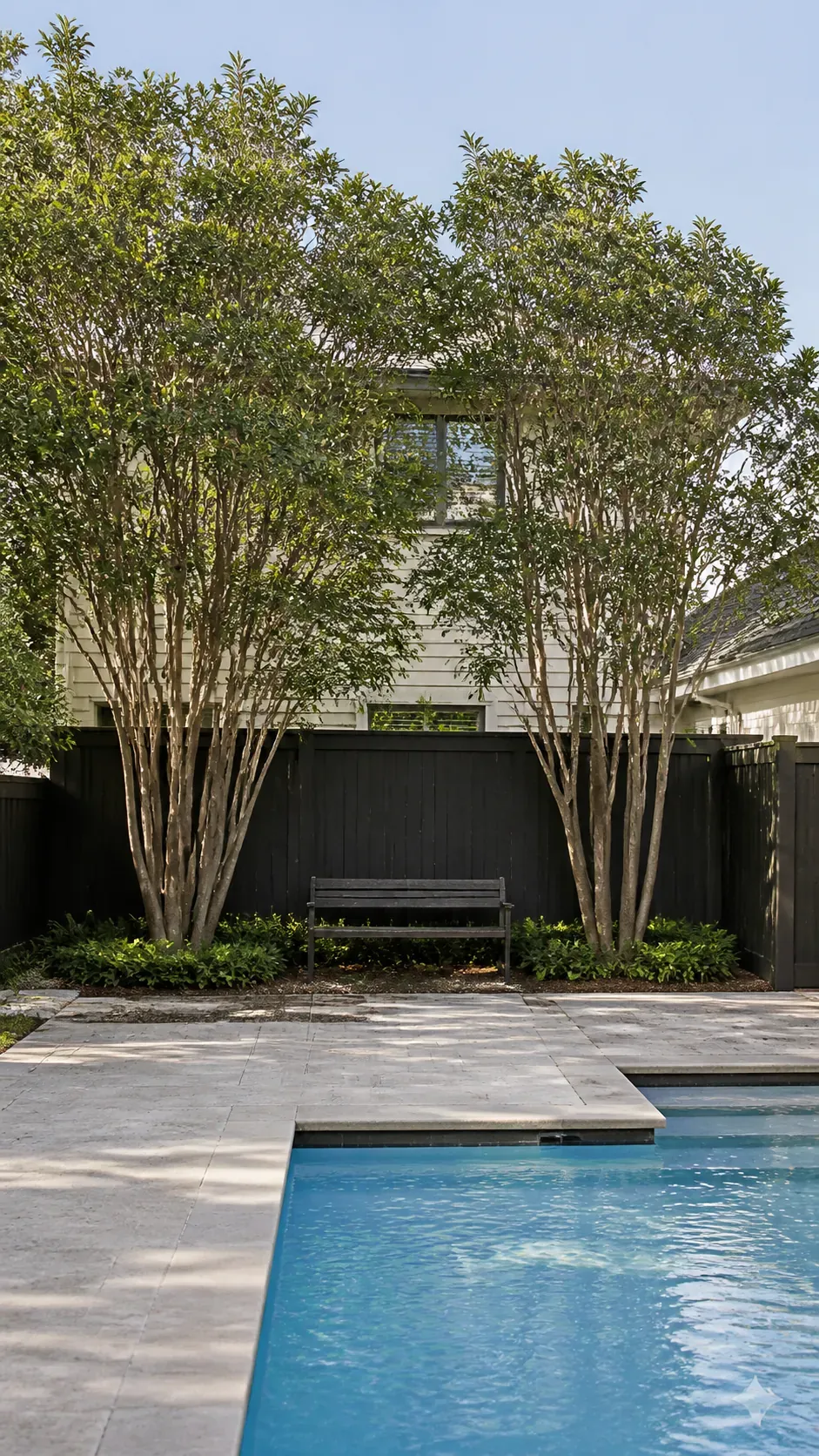
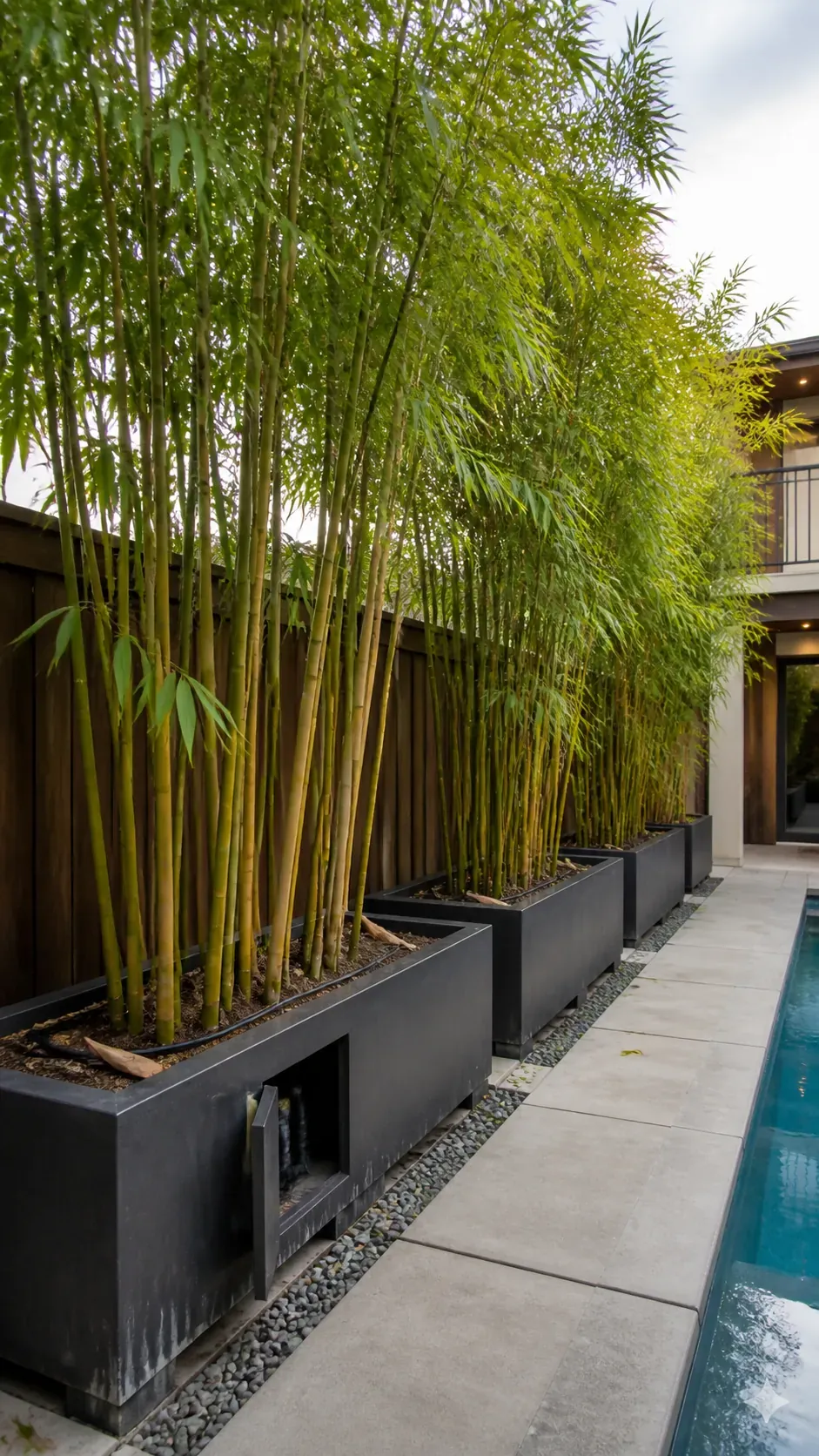
Contain Clumping Bamboo in Large Troughs
Clumping bamboo can create a tall, narrow screen, but it is not a plant-and-forget solution. Large reinforced troughs make its root area visible and easier to manage while raising the foliage. Confirm that the species is truly clumping, noninvasive locally, and suited to the container.
Plan for irrigation, drainage, annual thinning, and eventual division. Site troughs on a slab engineered for their filled weight and outside the safety path. Never plant running bamboo near a pool without a professionally designed containment strategy and ongoing inspection.
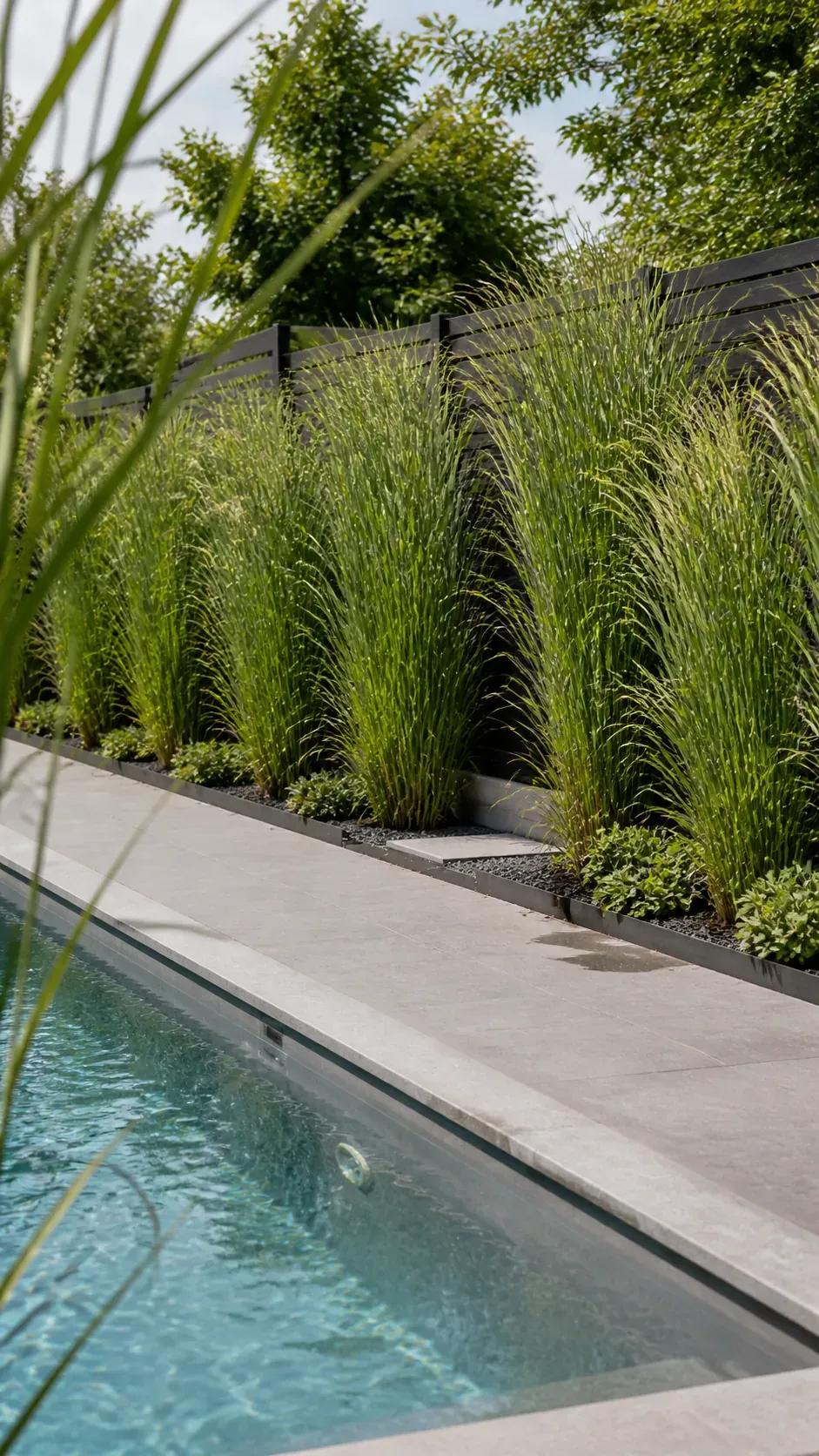
Layer Tall Grasses for Seasonal Privacy
Tall clumping grasses provide quick summer screening with a lighter feel than a solid hedge. Their movement suits a pool setting and their narrow crowns fit many boundary beds. Choose sterile or noninvasive cultivars that hold an upright form.
Remember that grasses lose height when cut back, so they are not year-round privacy in every climate. Schedule the annual trim before swimming season and keep debris out of the water. Combine them with a fixed screen if winter coverage matters.
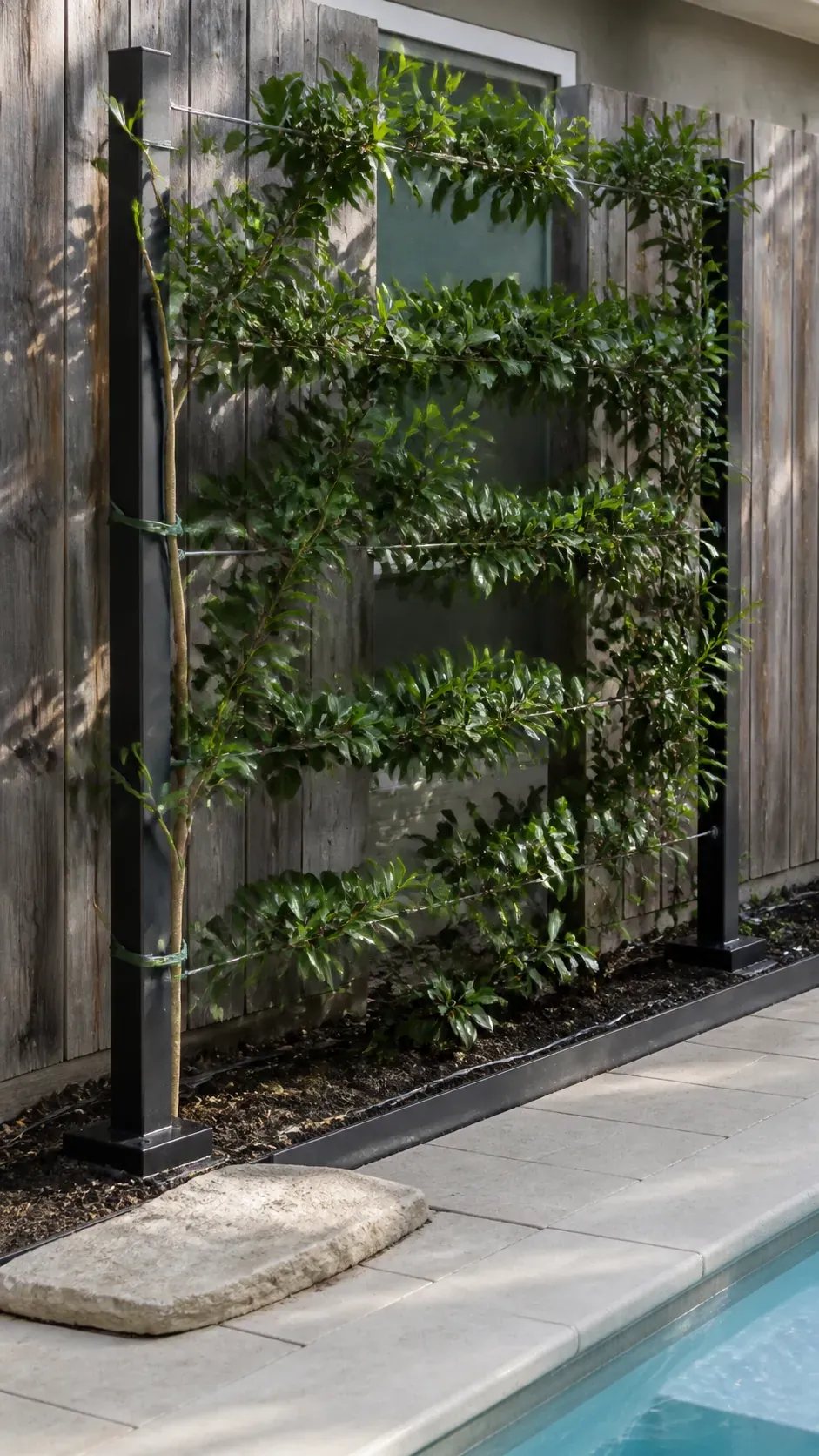
Train an Evergreen Vine on a Freestanding Trellis
A freestanding trellis can place foliage exactly where a side view crosses the deck. Choose a well-behaved evergreen vine for your climate and provide a frame strong enough for mature weight and wind. Training the growth horizontally creates coverage faster than letting it climb in one narrow column.
Keep the trellis separate from shared fences and serviceable from both sides. Avoid plants with heavy flower drop, aggressive attachment roots, thorns, or toxic fruit near the pool. Regular light tying is easier than rescuing an overgrown vine from gutters and gates.
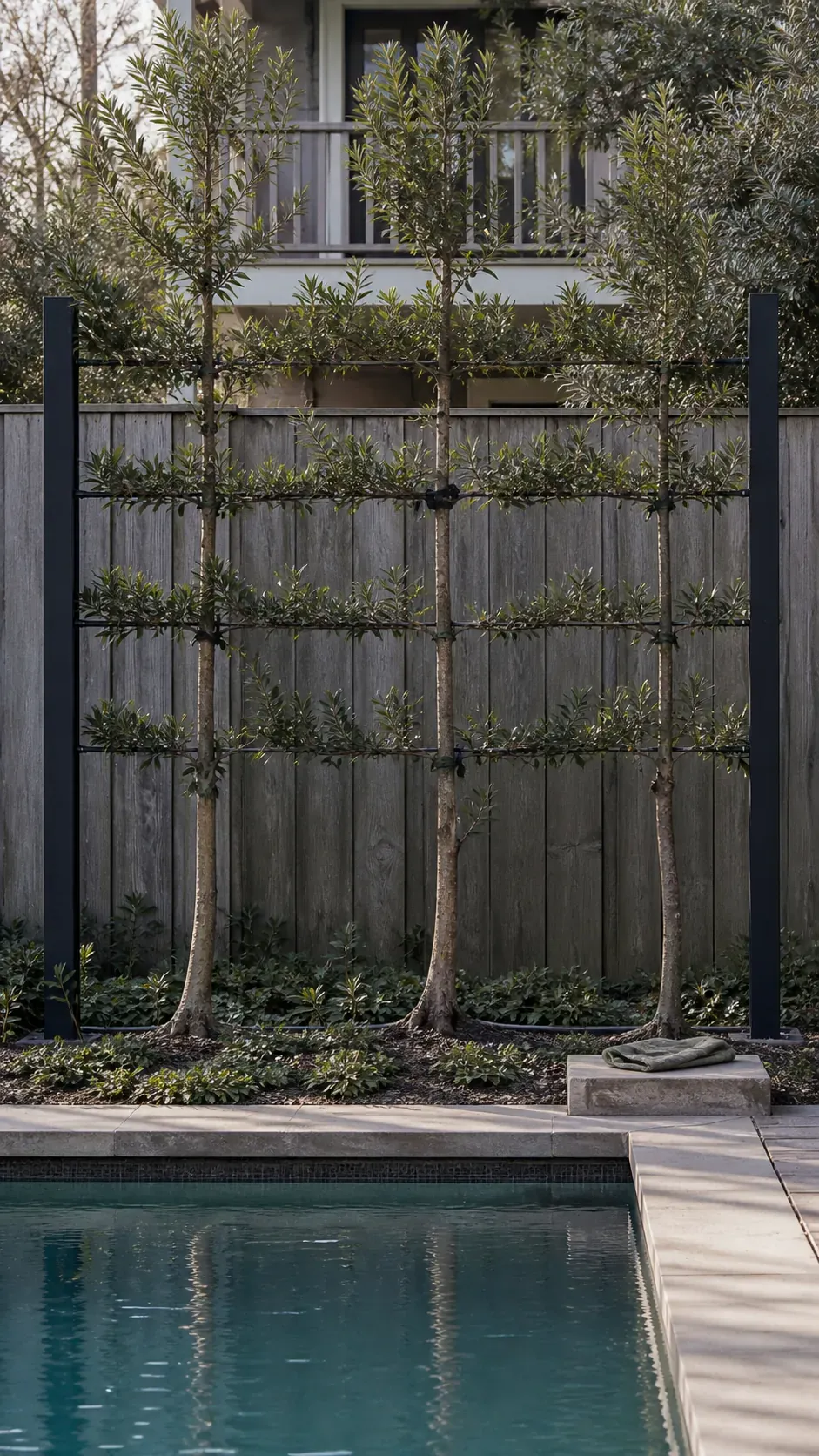
Espalier Small Trees on a Sturdy Frame
Espalier creates a thin living screen where a conventional tree canopy would consume too much deck. Horizontal tiers can target a window while leaving the trunk zone open and inspectable. Evergreen or low-litter species reduce cleanup, but climate fit remains essential.
The technique requires patient training and scheduled pruning, so it suits owners who enjoy precise seasonal care. Use a freestanding structural frame rather than weak fence boards. Keep branches from reaching gates, drains, or electrical fixtures.
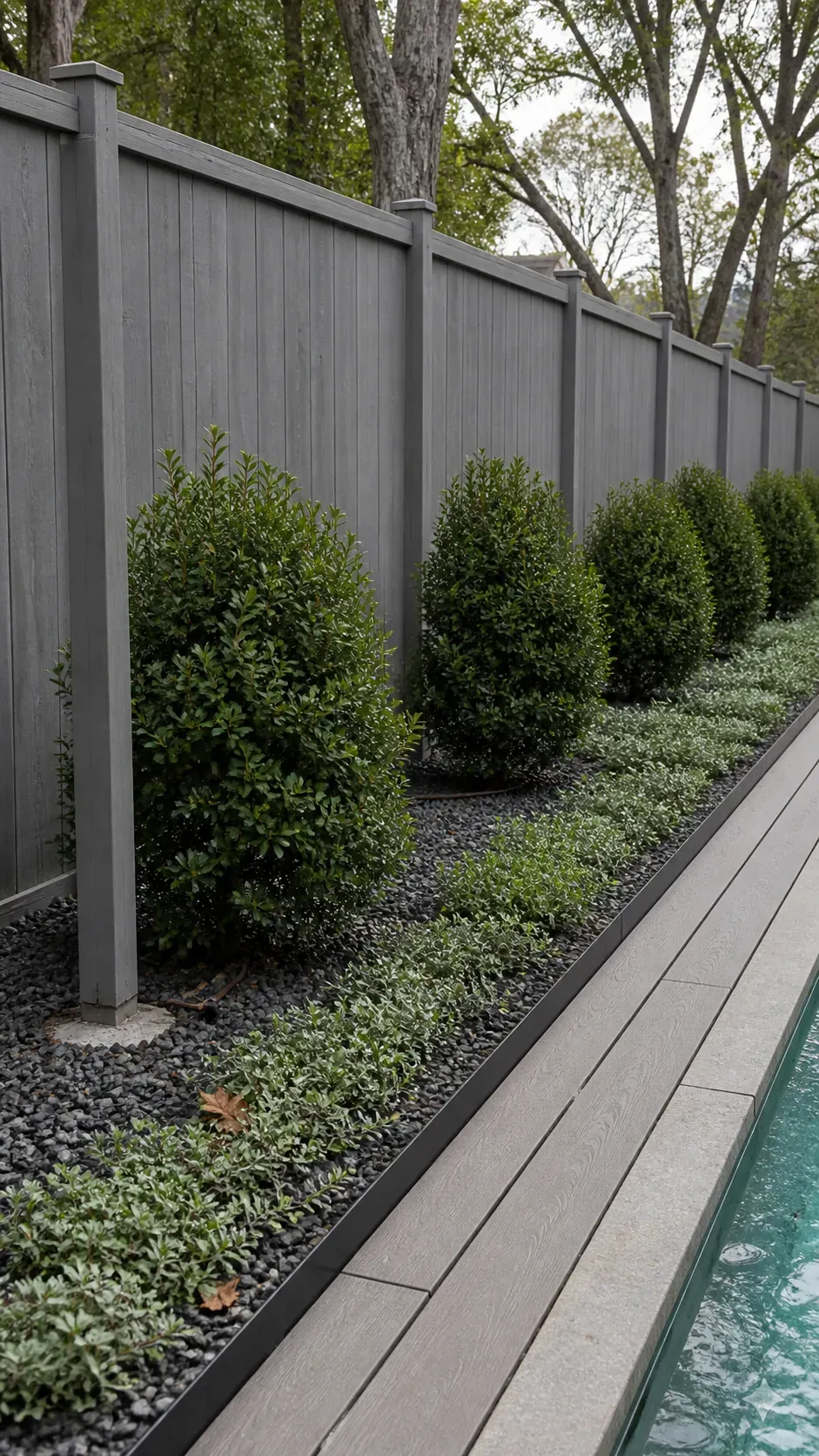
Layer Fence, Shrubs, and Groundcover
A fence solves immediate coverage, shrubs soften the middle, and groundcover finishes the base. This three-level composition feels greener than a bare wall without requiring several rows of tall plants. Repeat a limited palette so the boundary remains calm beside the water.
Leave inspection room at fence posts and keep mulch below the deck edge. Match all plants to the same exposure and irrigation zone. Staggered spacing should reveal some fence rather than packing foliage into a damp, disease-prone mass.
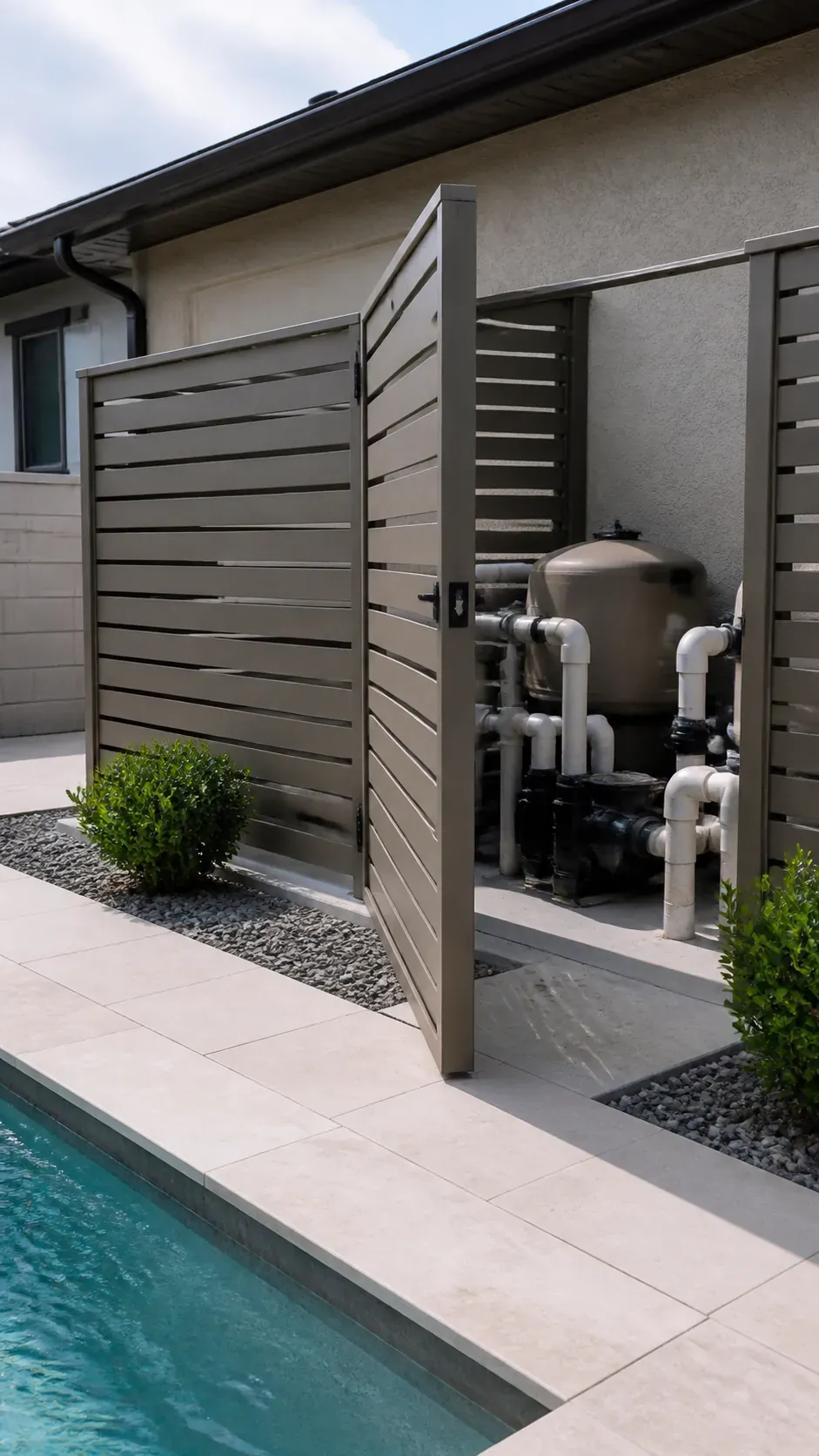
Let an Equipment Screen Block a Second View
A screen already needed to hide pumps can be extended or rotated to interrupt a neighboring sightline. This combines two problems into one clean element and avoids another hedge. Slats preserve ventilation while a full-width access panel keeps equipment repairable.
Respect manufacturer clearances, airflow, drainage, and electrical access. The screen should never force a technician to work from the pool deck or squeeze behind pipes. Confirm that its height and location do not interfere with barrier visibility or gates.
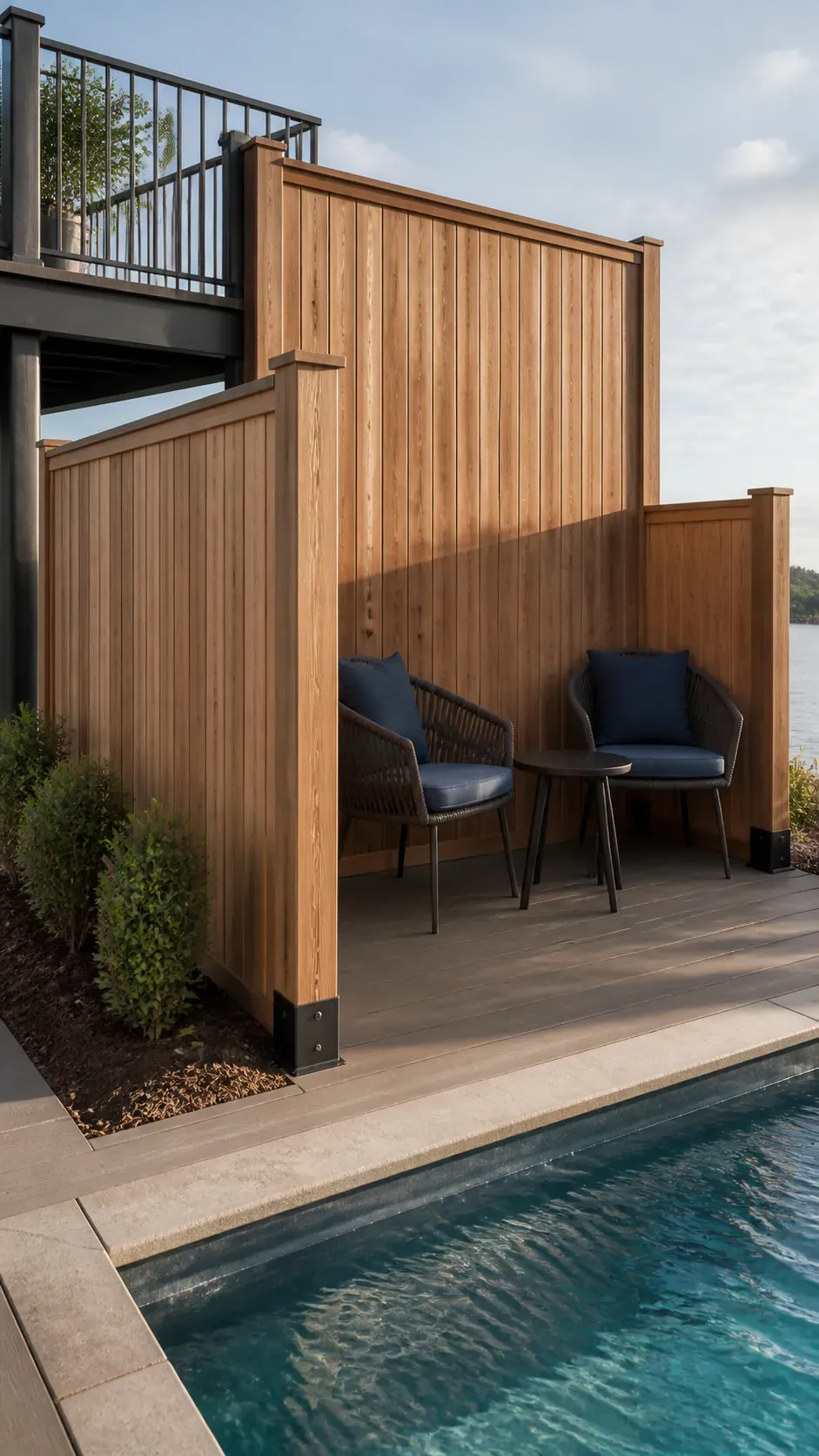
Wrap an Exposed Lounge Corner With an L-Screen
Two connected panels can protect a seating corner from both a side yard and an angled rear view. An L-shaped screen feels more intimate than a single floating panel and needs less length than screening the whole boundary. Varying the panel heights can preserve light above the chairs.
Anchor the corner against wind and keep the inside large enough that furniture does not become a climbing aid near a barrier. Use one open side toward the pool to preserve supervision. A slim planted strip outside the screen can soften its public-facing side.
Protect the Safety Barrier While Adding Privacy
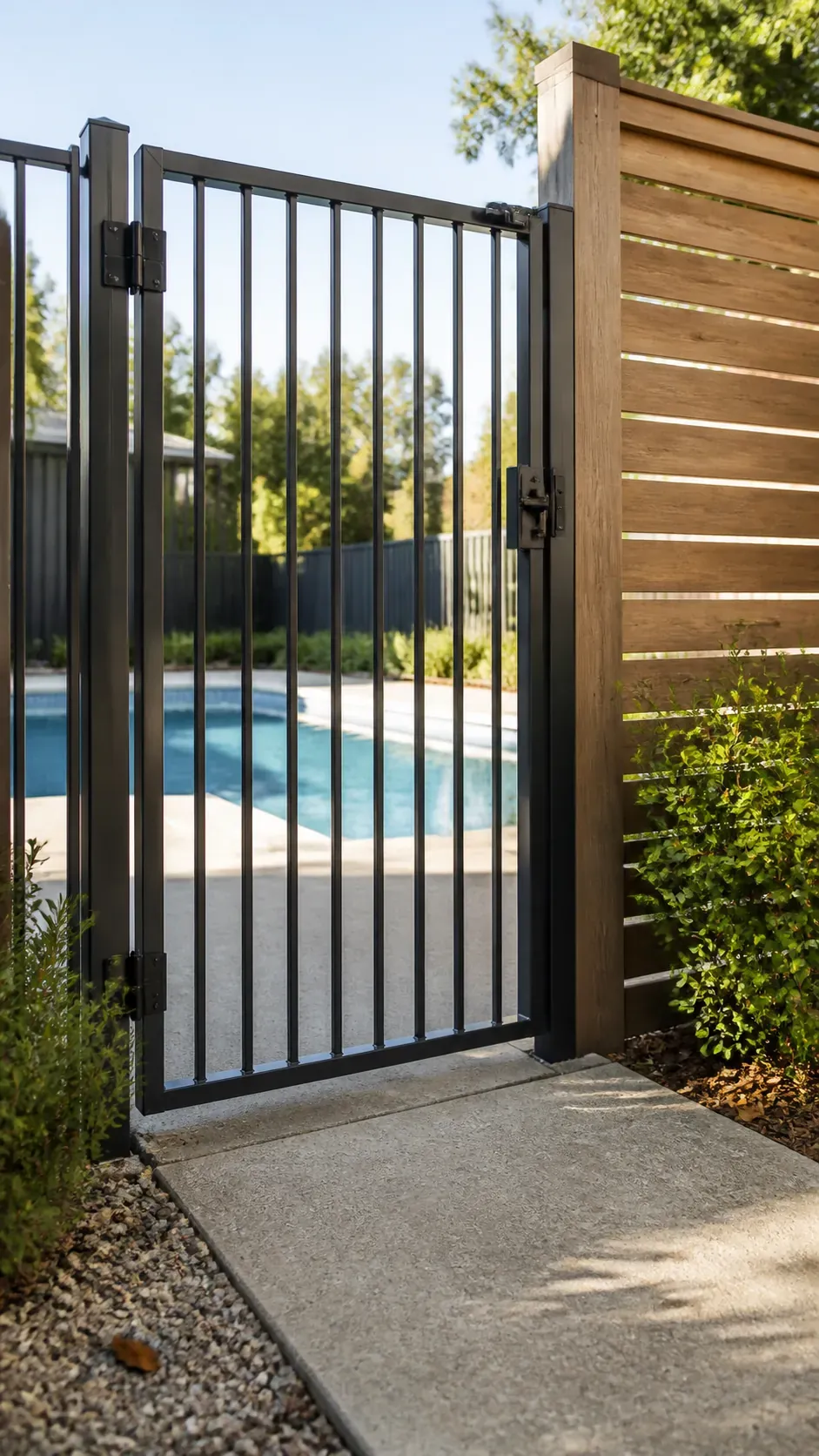
A privacy upgrade must never weaken the fence, make it climbable, hide the latch, block a self-closing gate, or create an unsupervised corner. Pool-barrier rules vary by location and can govern height, gaps, footholds, gate direction, latch placement, and nearby objects. Ask the local building authority to review the concept before construction, particularly when screens attach to the existing barrier.
Keep furniture, planters, trellises, and raised beds away from the exterior side where a child could use them to climb. Test the gate after every landscaping change and trim plants before they interfere with closing or visibility. Privacy should make the pool feel more comfortable without making access less controlled.