Streaky glass is rarely fixed by spraying more cleaner. Product residue, hot glass, dirty cloths, dusty frames, and a worn squeegee blade can all put marks back as quickly as you remove them.
Cleaning discussions repeat the same frustrations: the window looks perfect until sunlight hits it, lint appears after buffing, or a mark seems to move between the inside and outside. A dependable method separates washing from removal and cleans the parts around the pane first.
These window cleaning hacks cover the full opening—glass, frames, tracks, blinds, and screens—while keeping specialty coatings and safe access in mind.
Choose Cool Glass and Safe Access
Direct sun heats glass and dries solution before a cloth or squeegee can remove it, leaving the dissolved soil behind as streaks. Work on a cloudy day, in shade, or when the window is cool to the touch.
Plan access before opening a bottle. Clear the sill and floor, protect moisture-sensitive finishes, lock pets and children away from the work zone, and keep both feet on a stable indoor surface.
For exterior glass above a comfortable ground-level reach, use a suitable extension tool from the ground or hire a professional. Do not lean out, improvise a platform, or stretch from a ladder.
Check whether the glass has film, a special coating, tempered construction, or manufacturer-specific care requirements. Abrasives, ammonia, blades, and aggressive chemicals can damage surfaces that ordinary clear glass may tolerate.

Clean Frames, Tracks, Blinds, and Screens First
Dust from a blind, screen, frame, or track will migrate straight onto freshly cleaned glass. Start dry with a soft brush and vacuum crevice tool so loose grit does not become muddy paste.
Support removable screens on a flat surface and follow their care instructions. A soft brush and mild wash are safer than bending the mesh or blasting it with high pressure.
For tracks, loosen packed debris with a narrow detailing brush, vacuum it out, then use a lightly damp cloth in the corners. Avoid flooding drainage channels or pushing dirty water into the wall assembly.
Wipe frames and sills with a product compatible with their paint, timber, vinyl, aluminum, seals, and hardware. Dry them before moving to the pane.

Use Less Solution Than You Think
Many streak complaints come from repeatedly adding glass cleaner to residue that is already on the pane. A small amount of compatible detergent in clean water is often enough to release ordinary dust and fingerprints.
Use a clean applicator reserved for windows. Laundry softener, furniture polish, grease, or old detergent trapped in a cloth can transfer a film that no amount of buffing seems to remove.
Wet the glass evenly rather than misting isolated droplets across a hot pane. Work one manageable section at a time so the solution stays fluid until it is removed.
Never combine cleaners. If the window has tint, film, coating, wood trim, or specialty glass, follow its maker’s approved chemistry instead of relying on a universal window cleaner recipe.

Squeegee With a Clean, Overlapping Edge
A squeegee removes dirty solution instead of asking a cloth to absorb and redistribute it. Start with a dry edge along the top, set the rubber blade flat against the glass, and make slow controlled strokes.
Overlap each pass slightly so no wet line remains between strokes. Wipe the blade after every pass with a clean lint-free cloth; a grain of dirt on the rubber can draw a streak across the entire pane.
Keep the metal holder and blade corners from striking the glass or frame. Replace hardened, nicked, or wavy rubber because a damaged edge leaves repeating lines no technique can correct.
Catch drips at the sill as you work and finish the perimeter with a separate dry detailing cloth. Do not reuse the wet wash cloth for the final edge.

Use Opposite Directions to Find the Streak
When both sides are accessible, finish the interior with vertical strokes and the exterior with horizontal strokes, or reverse the pattern. The direction of a remaining mark then tells you which side needs attention.
Inspect from several angles after the pane dries instead of spraying the whole window again. A single missed edge, drip, or blade line can be corrected with a clean dry cloth or one controlled pass.
If haze remains everywhere, stop adding product. Wash the applicator and cloths without softener, replace dirty water, and consider whether old cleaner film or a damaged coating is responsible.
A mark trapped between double-glazed panes is not surface dirt. Fogging or residue inside a sealed unit calls for window assessment, not more scrubbing.
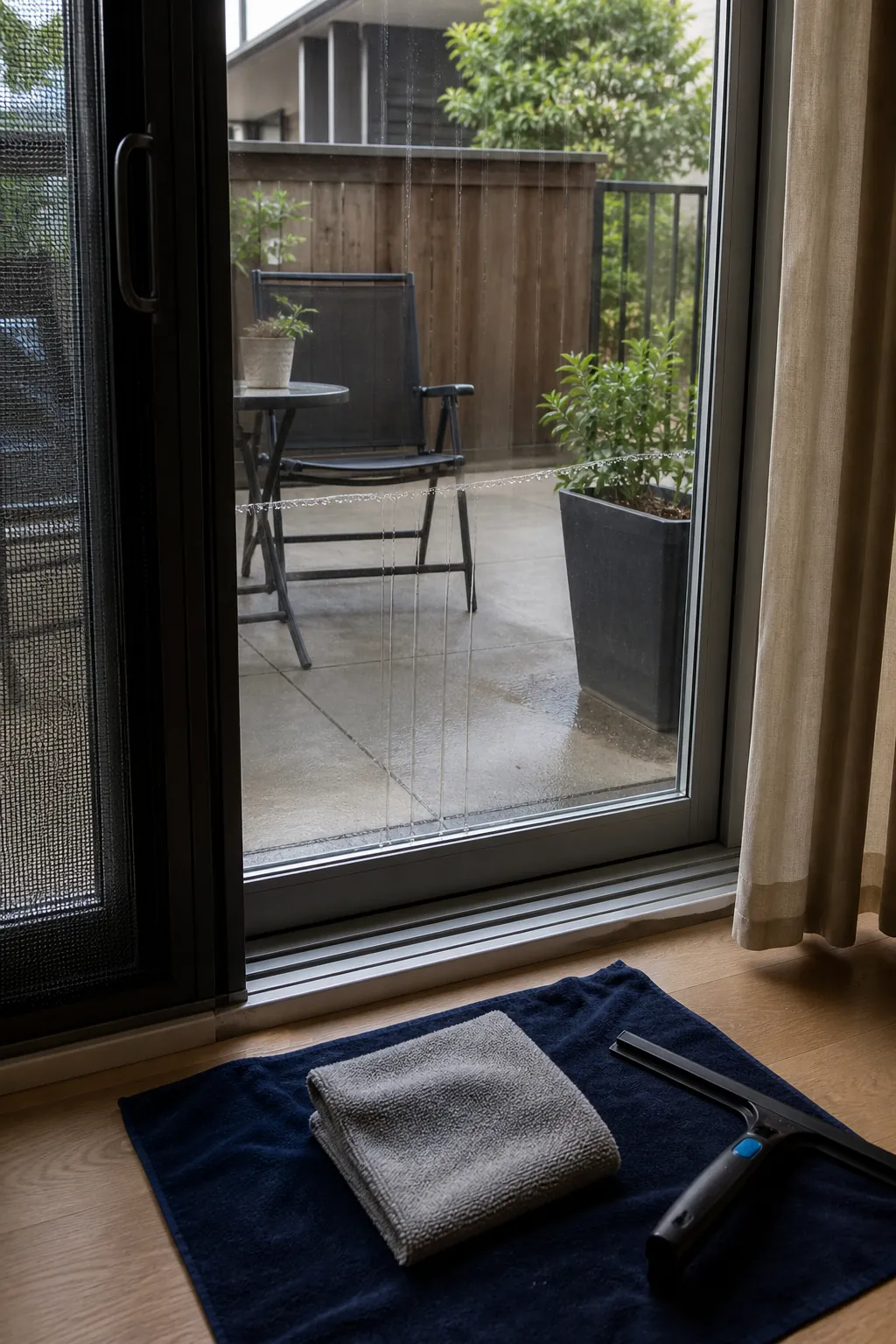
Keep Clear Glass Clean Longer
A quick dry dusting of sills, tracks, and blinds prevents much of the debris that later lands on the pane. Clean screens when seasonal dust, pollen, smoke, or road grime begins to block airflow and light.
Handle windows by their hardware rather than pressing fingers against the glass. Deal with cooking film, pet nose marks, and splashes before they combine with general dust into a tougher layer.
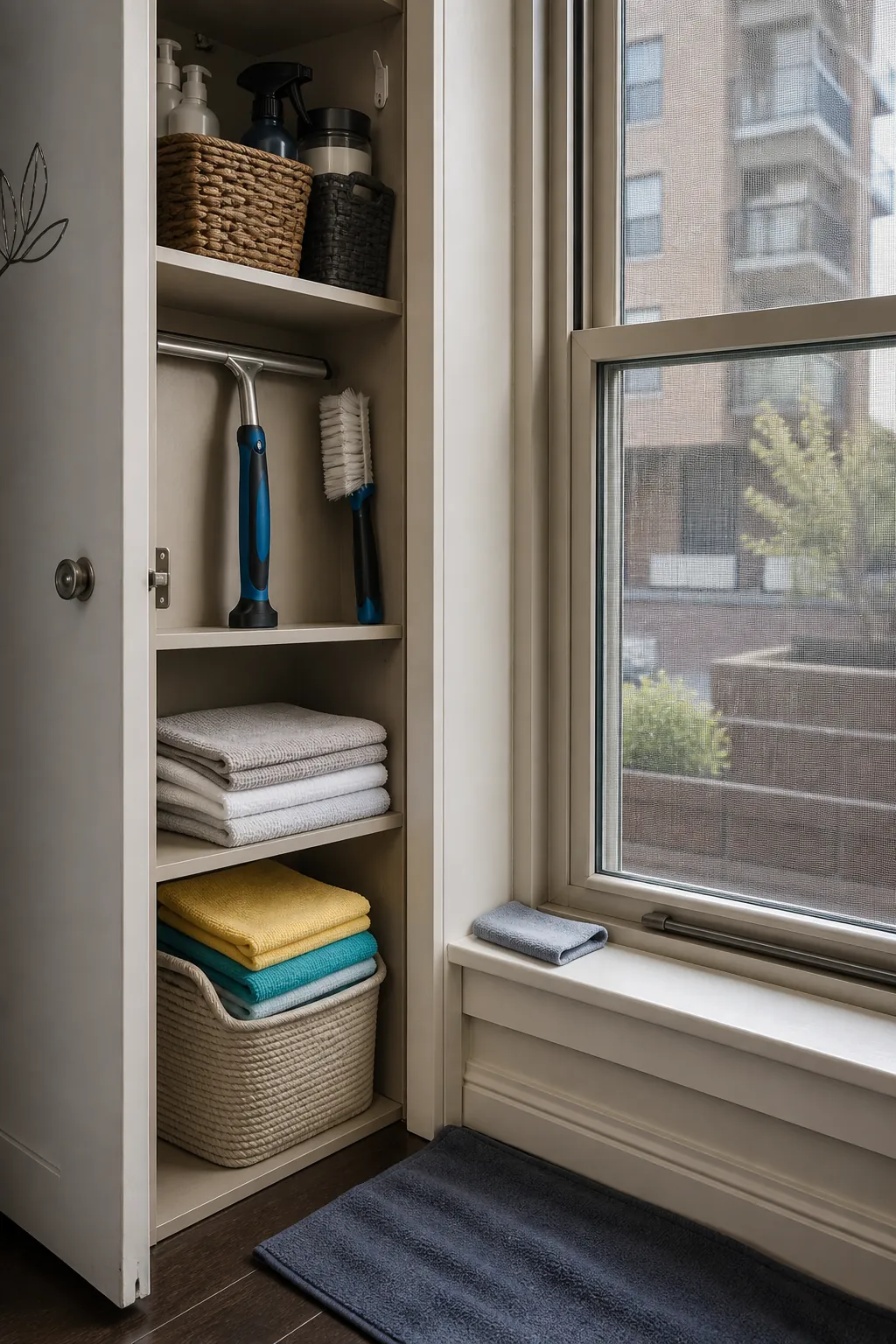
Store the squeegee with its rubber edge straight and uncompressed, keep the glass cloths separate from softener-treated laundry, and wash the applicator after use. Clean tools are the real shortcut.
Schedule whole-window cleaning for cool conditions rather than waiting for bright sun to expose every streak. The reliable sequence is frames first, light solution, complete removal, dry edges, and safe access every time.