The counter may already be crowded while the wall above it feels unfinished. Adding more objects is not always the answer: the useful choice depends on splashes, passing shoulders, and how much visual activity the kitchen already has. Start with one dry wall and decide whether it needs color, texture, or something that earns its place every day.
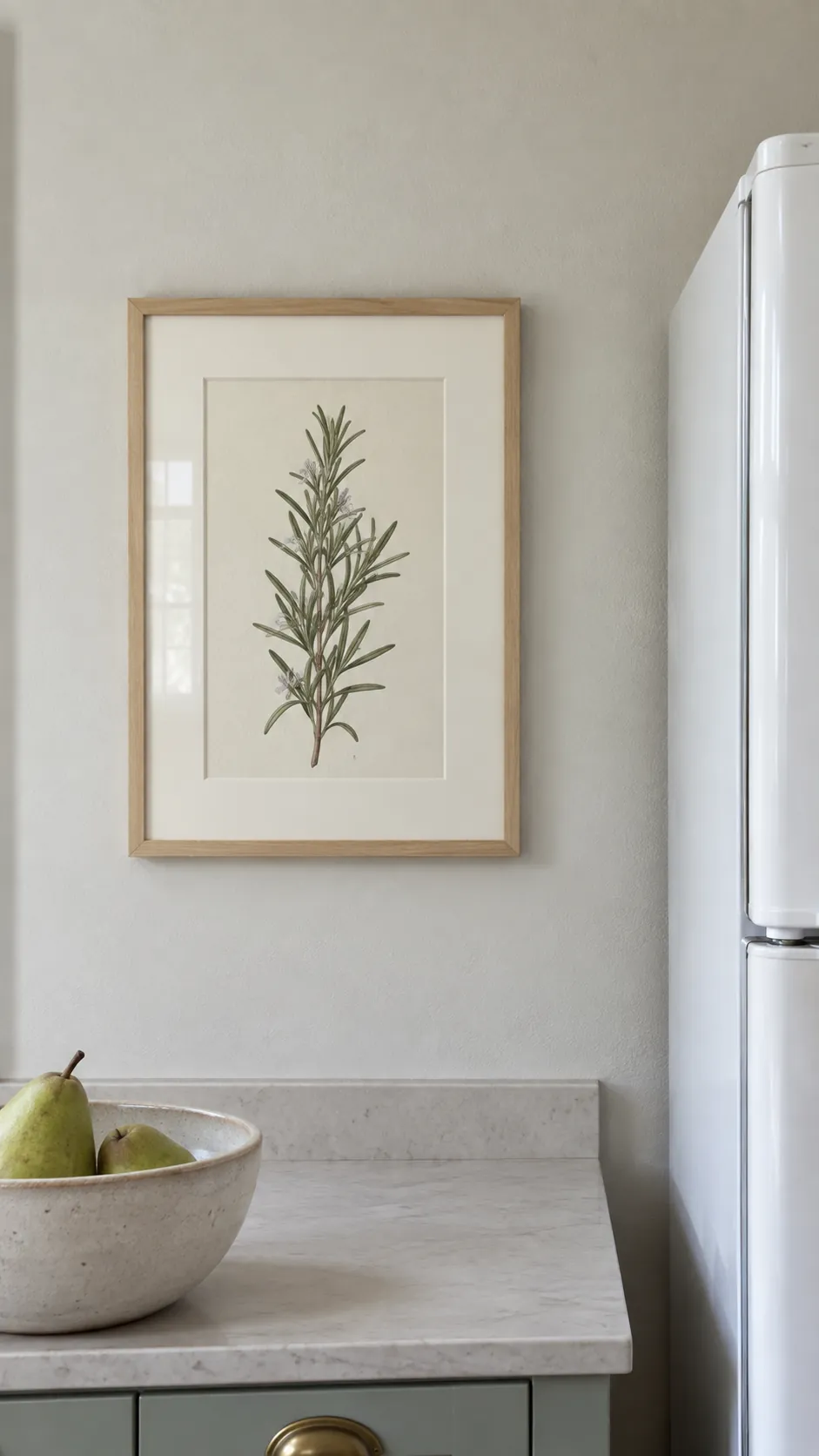
A single botanical print
A generous mount around a small herb illustration gives a blank wall a finished edge without covering every inch. Choose one plant that relates to the room, such as rosemary, rather than a random bundle of mismatched prints. A glazed frame is easier to wipe than exposed paper, but hang it away from cooking splashes. Hold a paper rectangle against the wall first to check the size from the doorway.
A slim picture ledge
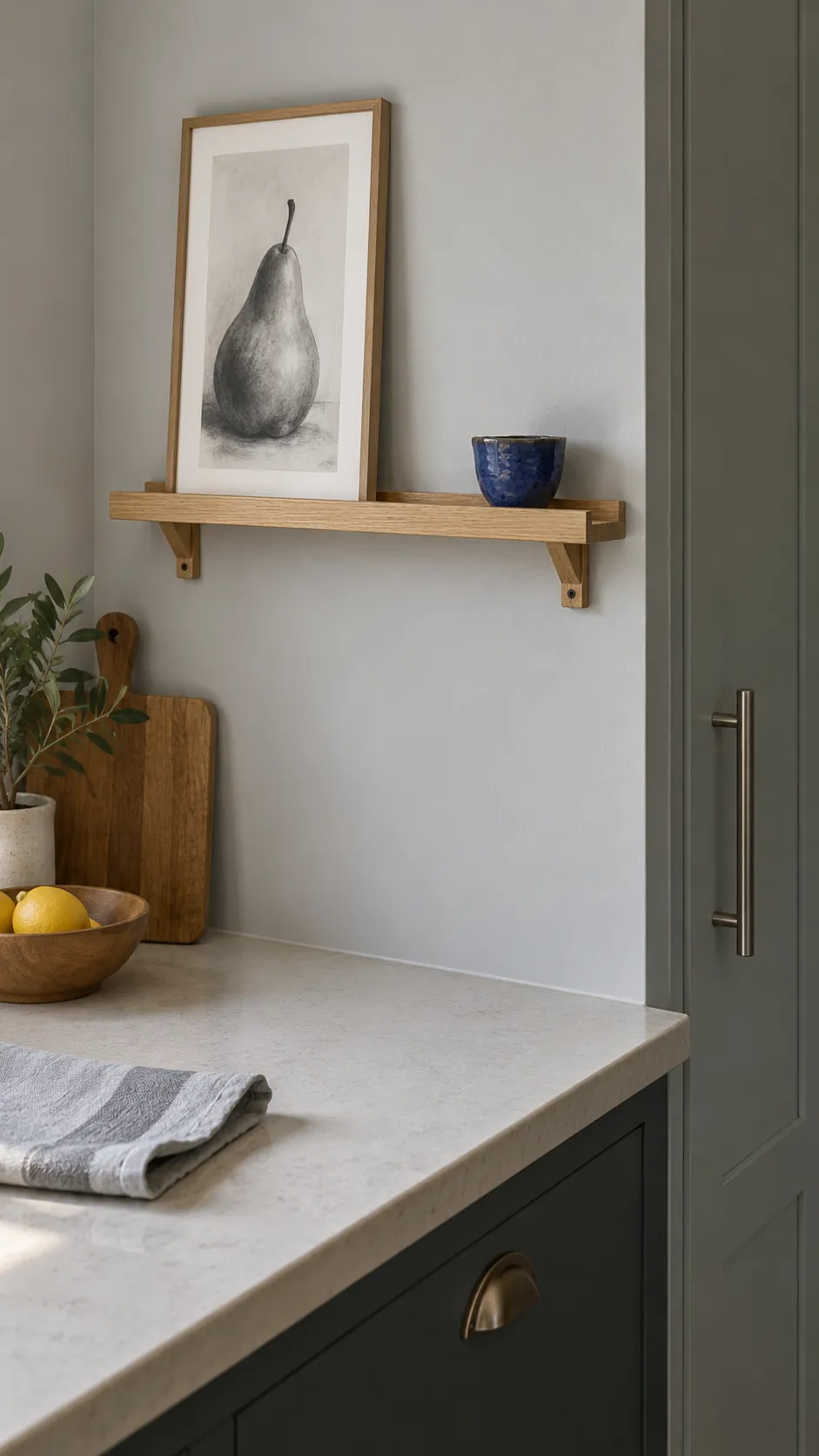
A shallow ledge lets you change small pictures without making new holes each time. Keep its depth modest where chairs or shoulders pass beneath it, and follow the fixing instructions for your wall type. Lean one tall print beside a smaller object instead of filling the entire shelf. For kitchen empty wall ideas above a counter, leave enough space to move appliances safely.
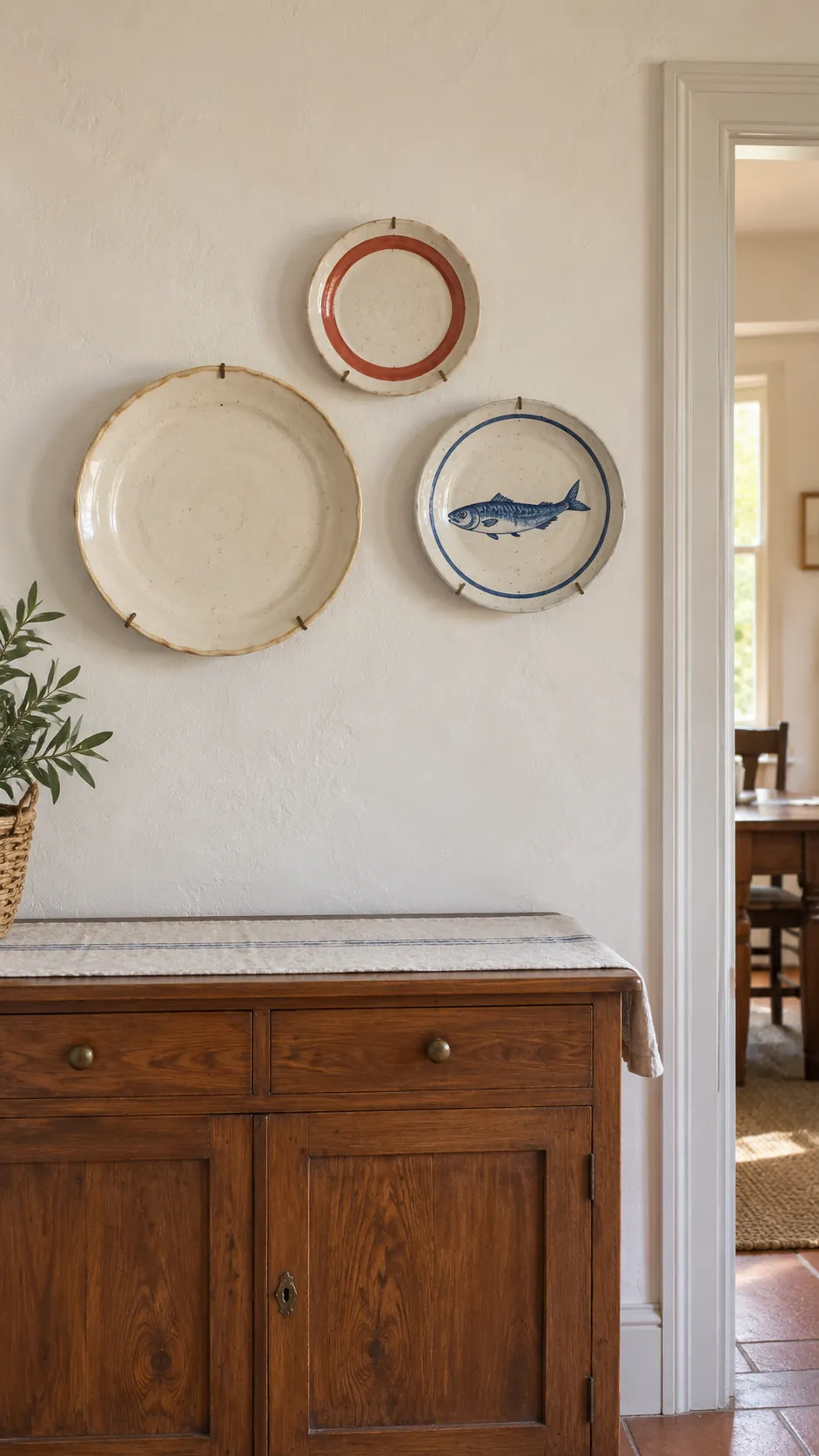
Decorative plates in a loose cluster
Plates bring color and shape to an otherwise flat surface. Use purpose made plate hangers that fit each piece and keep fragile ceramics out of busy door swings. Three differently sized plates can feel more relaxed than a rigid row of identical circles. Repeat one glaze color from your mugs so the arrangement belongs to the kitchen.
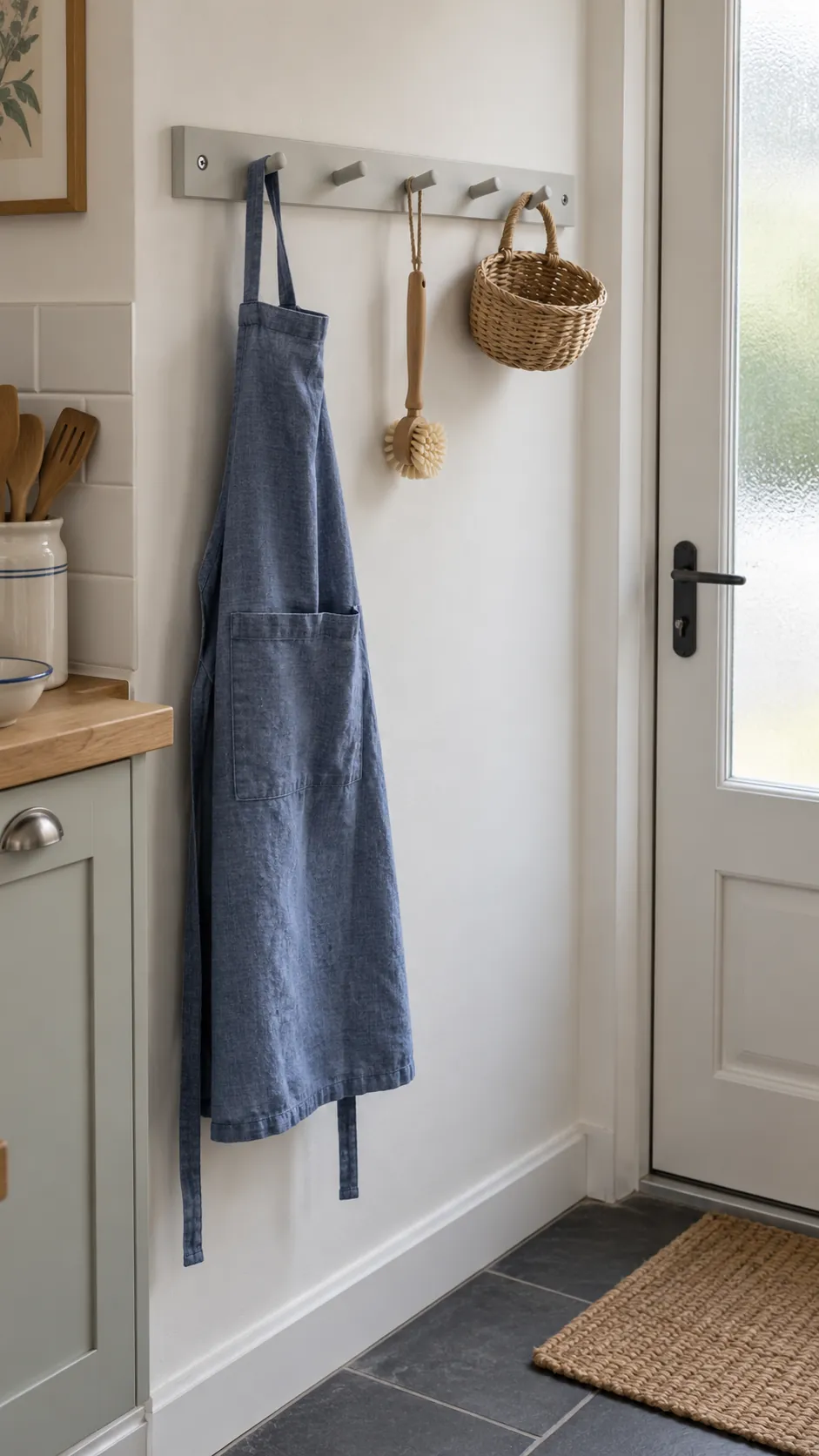
A peg rail for useful objects
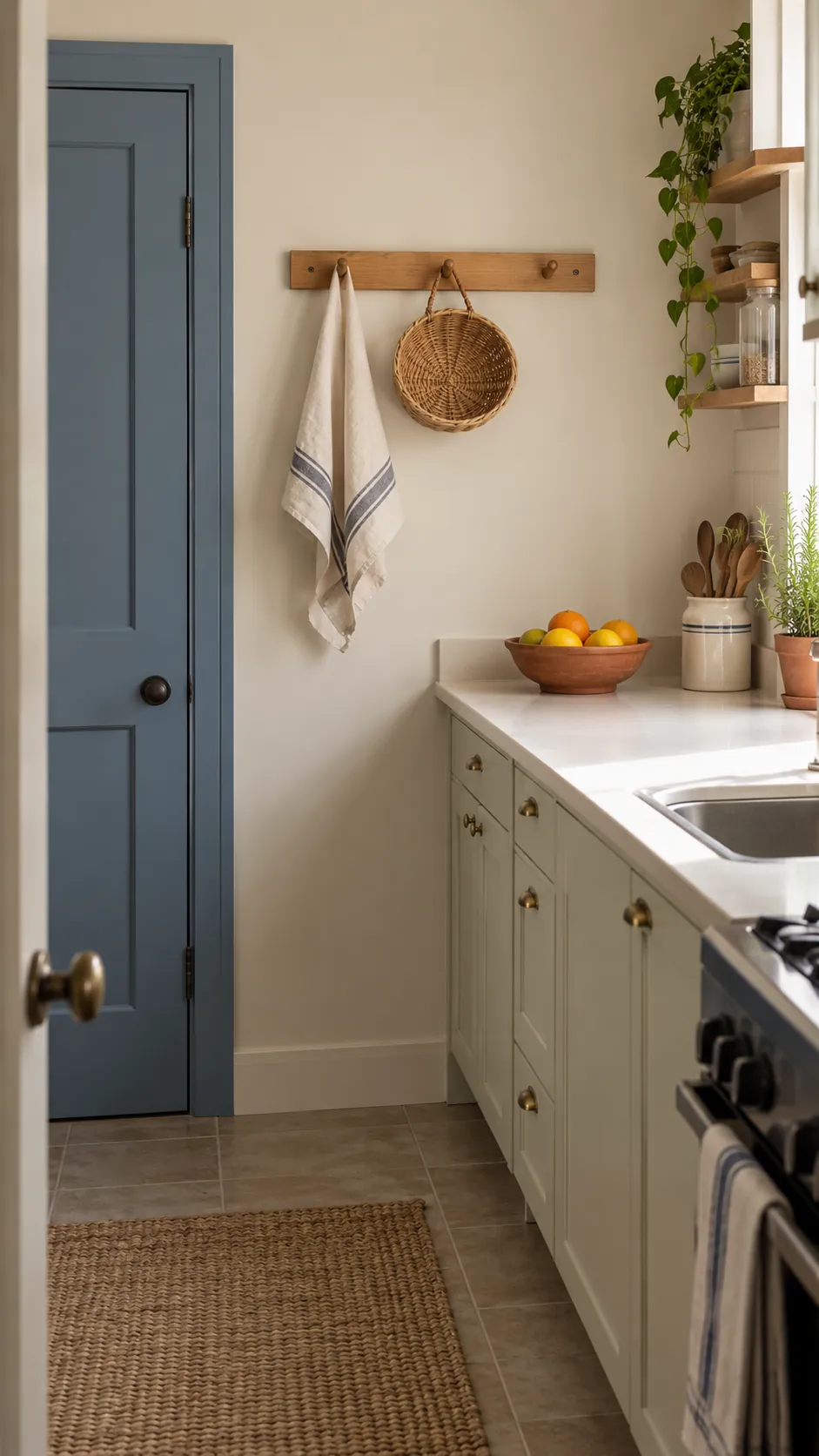
A peg rail makes everyday objects part of the decoration. Hang a clean apron, a small brush, and one lightweight basket while leaving spare pegs visible. Fix the rail securely for its intended load rather than relying on a decorative adhesive strip. Place it outside the immediate cooking area so textiles stay clear of heat and grease.
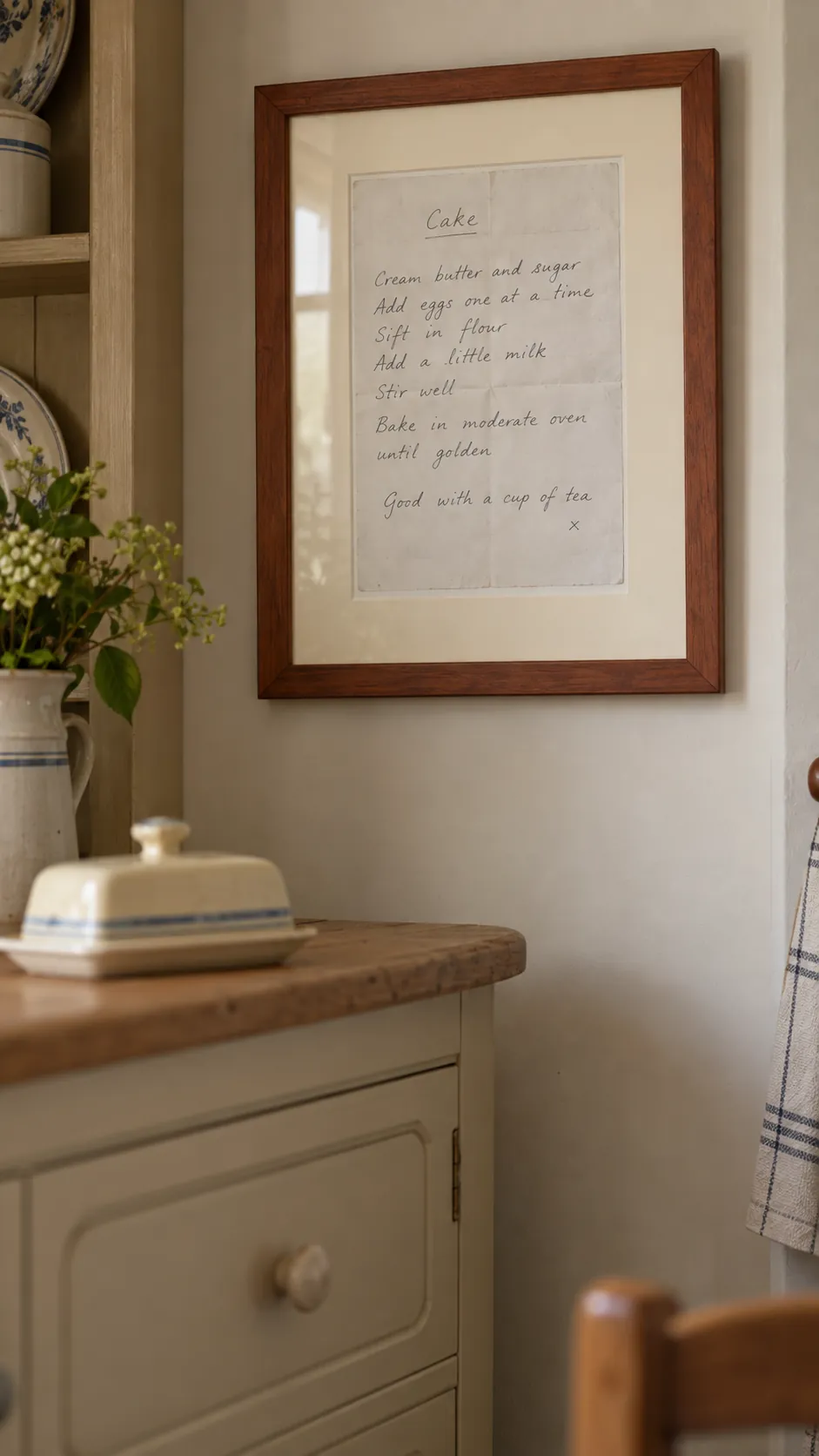
A framed handwritten recipe
A recipe from someone you love creates a focal point with a reason to be there. Frame a copy and protect the original from sunlight, steam, and accidental spills. A broad plain mount makes even a small sheet feel intentional. Keep other pieces nearby quiet so the handwriting remains the interesting detail.
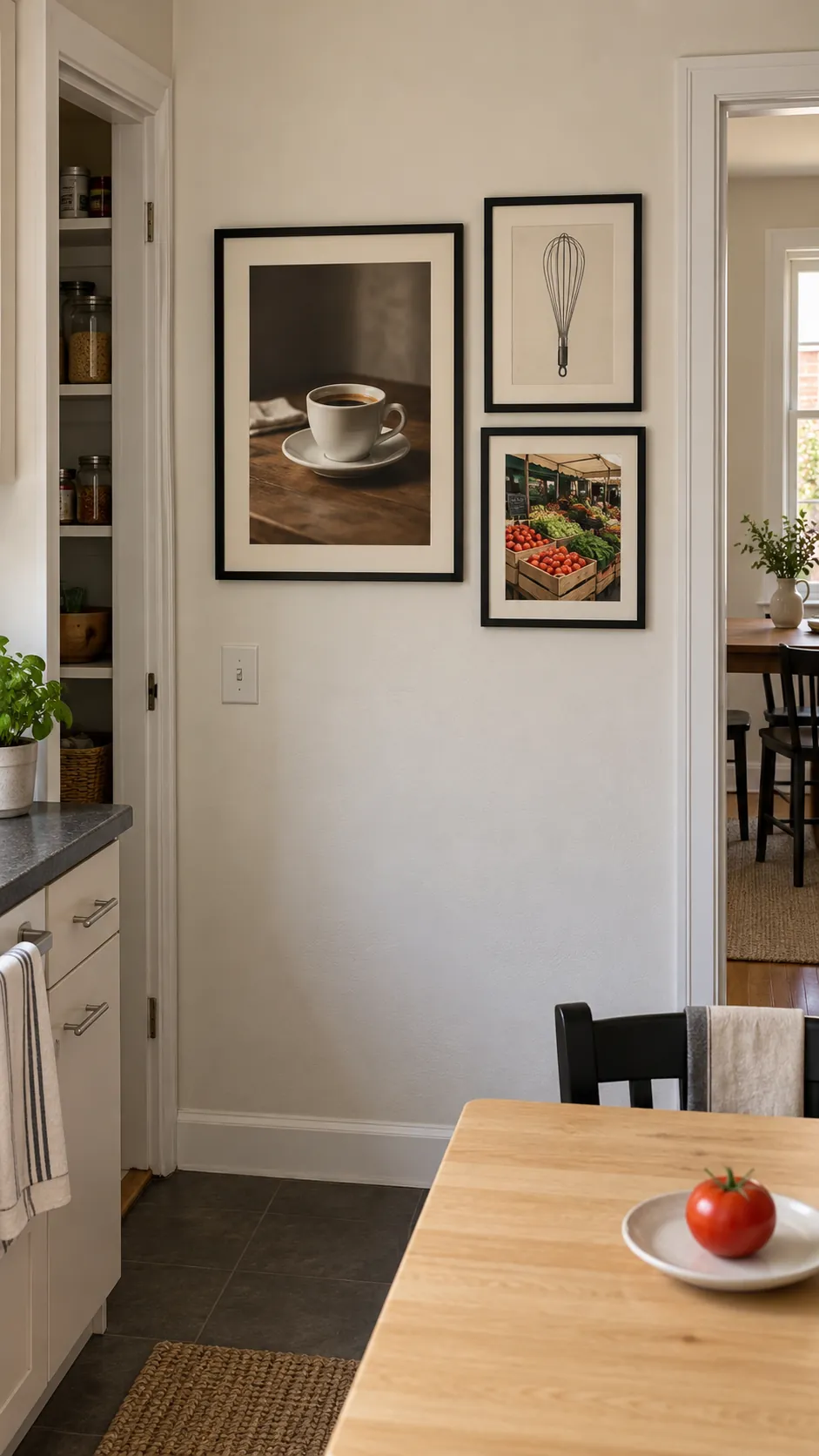
A small kitchen gallery wall
A kitchen gallery wall works best when its pieces share one clear connection. Try black frames around a coffee still life, a line drawing of a whisk, and a photograph of a market stall. Arrange the shapes on the floor before testing paper outlines on the wall. In a narrow room, keep the group together rather than scattering pictures across separate gaps.
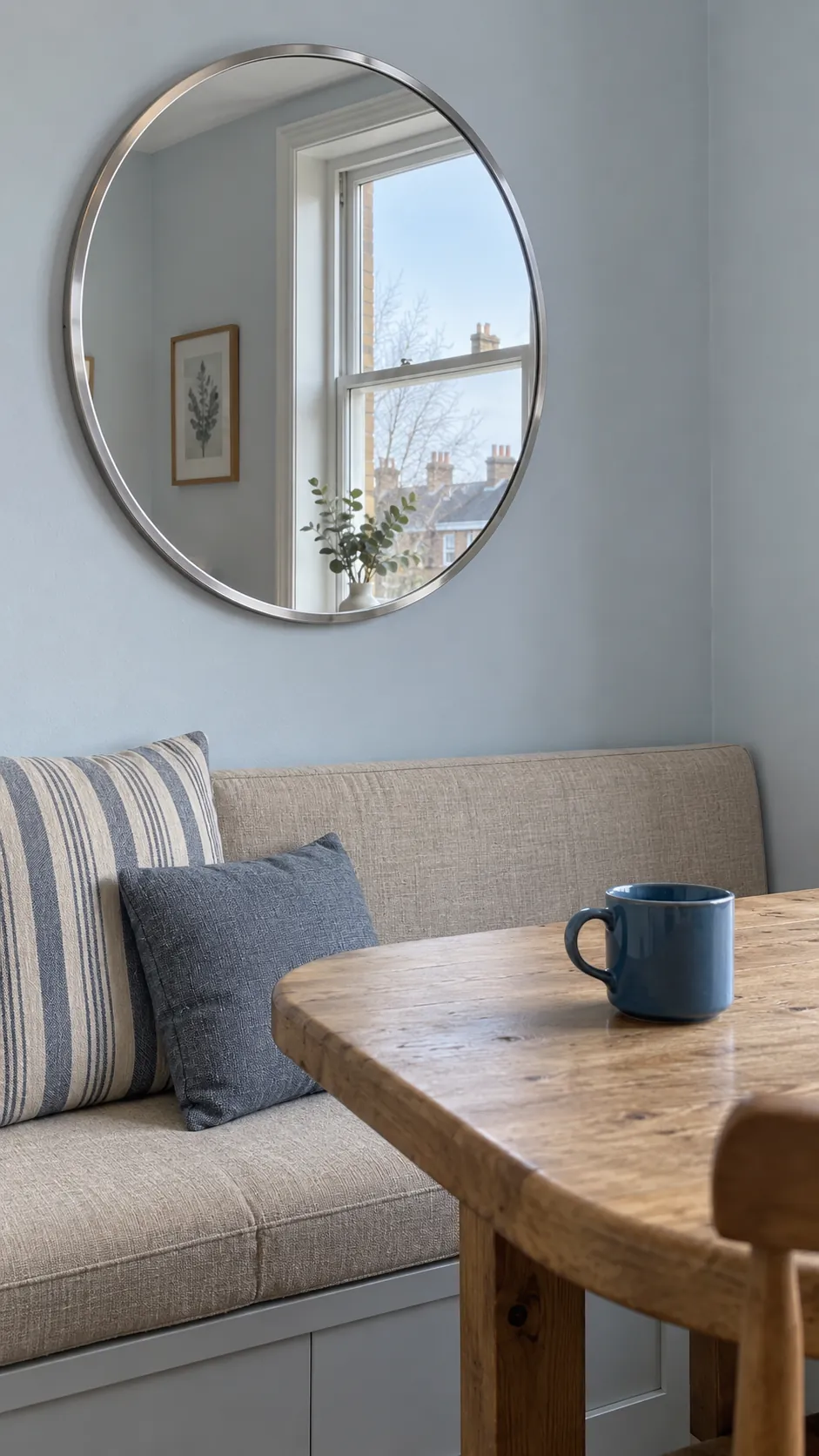
A round mirror near the dining nook
A round mirror softens the straight lines of cabinets and doorframes. Check what it reflects before choosing the position, because a cluttered counter will appear twice. Hang a glass mirror with fixings suited to its weight and keep it beyond likely chair impacts. This can be a useful small dining room wall decor idea when the reflected view includes a window.
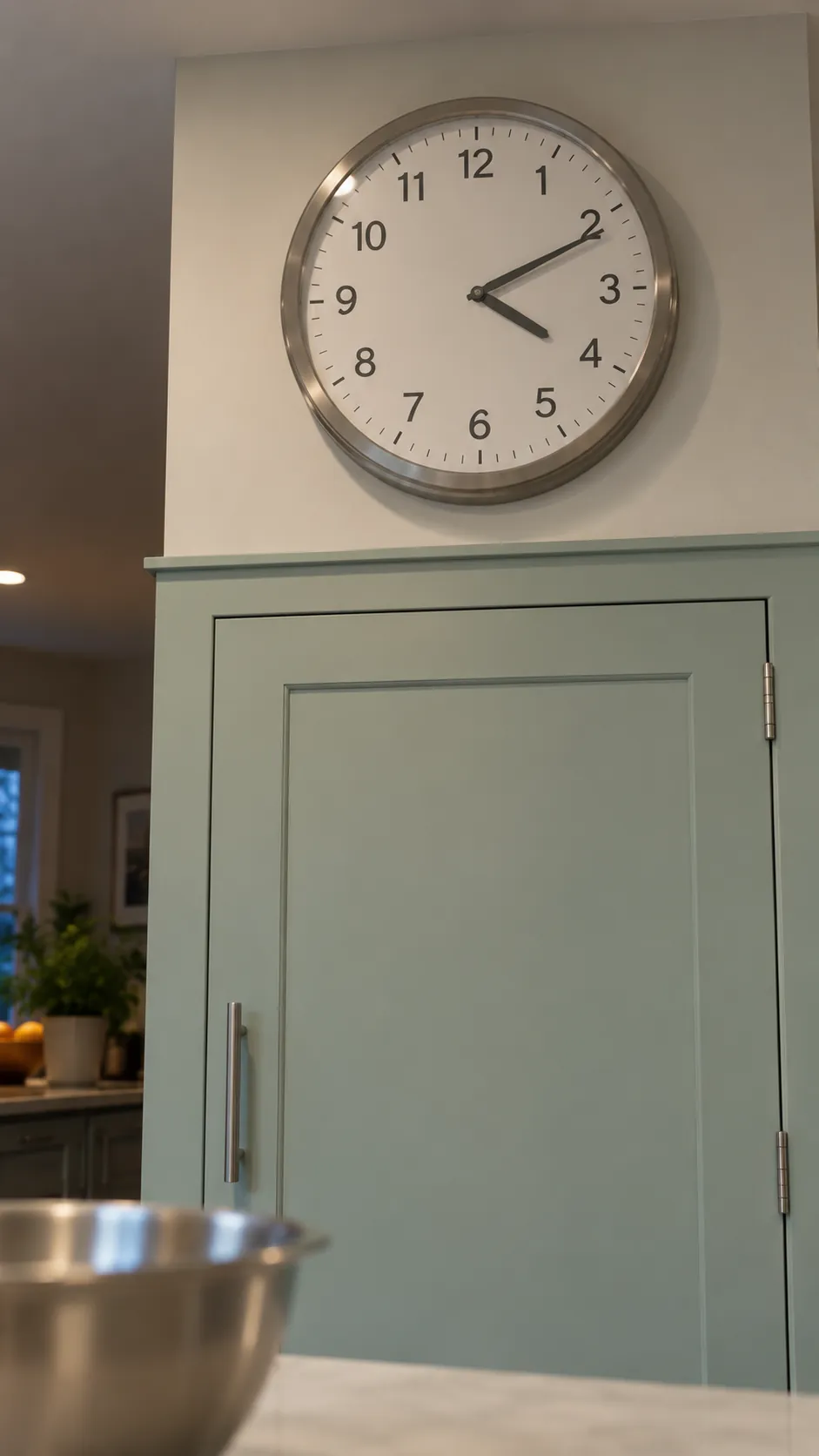
One oversized clock
A clock can fill a wall while earning its space during cooking. Choose a readable face and a quiet mechanism if the kitchen opens into a living area. A simple dial often sits more comfortably beside busy shelves than an elaborate decorative case. Check that you can read it from the place where you actually prepare food.
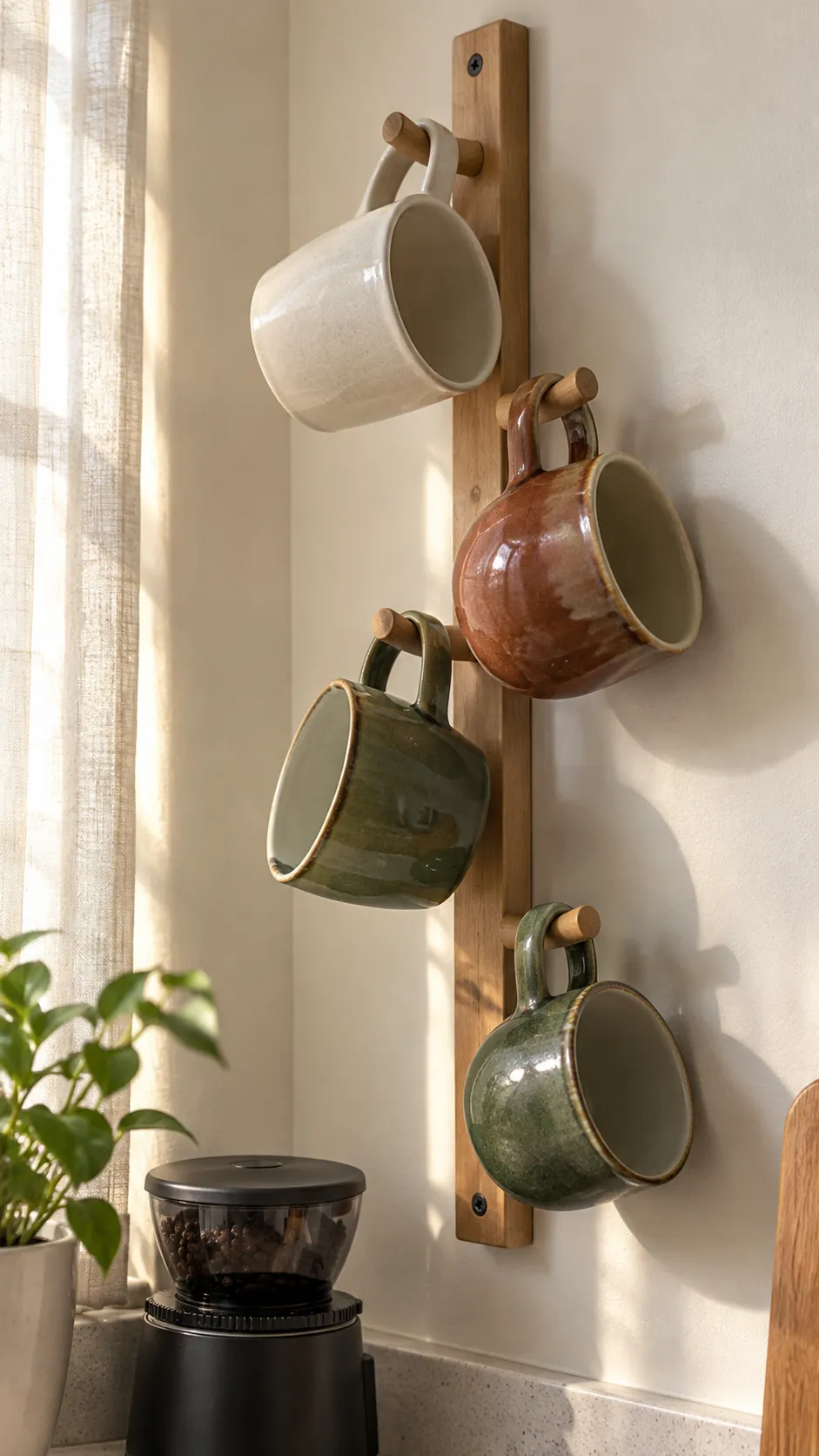
A narrow rack of favorite mugs
A mug rack adds repeated shapes without requiring a separate art purchase. Display only the mugs you enjoy looking at and keep handles easy to reach. Test the rack capacity against the weight of a full collection before loading it. Give the lowest cups clearance from the counter so they do not knock against jars or appliances.
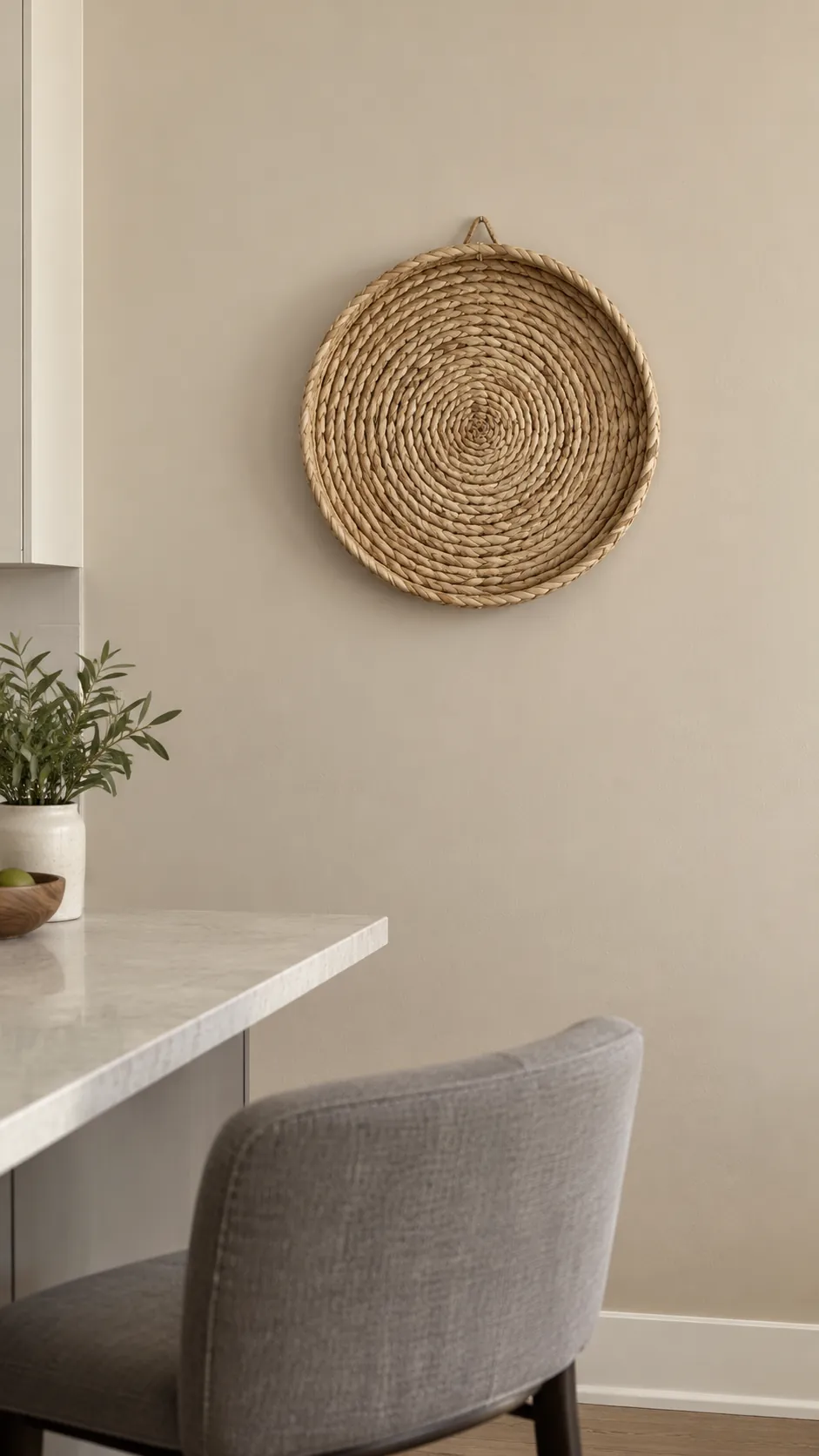
A woven basket as a wall accent
A flat woven basket introduces texture to a plain painted wall. It suits a dining side of the kitchen better than a splash zone, where open fibers can collect residue. Choose a shallow piece that will not stick into a walking route. Let its circular outline stand alone instead of surrounding it with several unrelated objects.
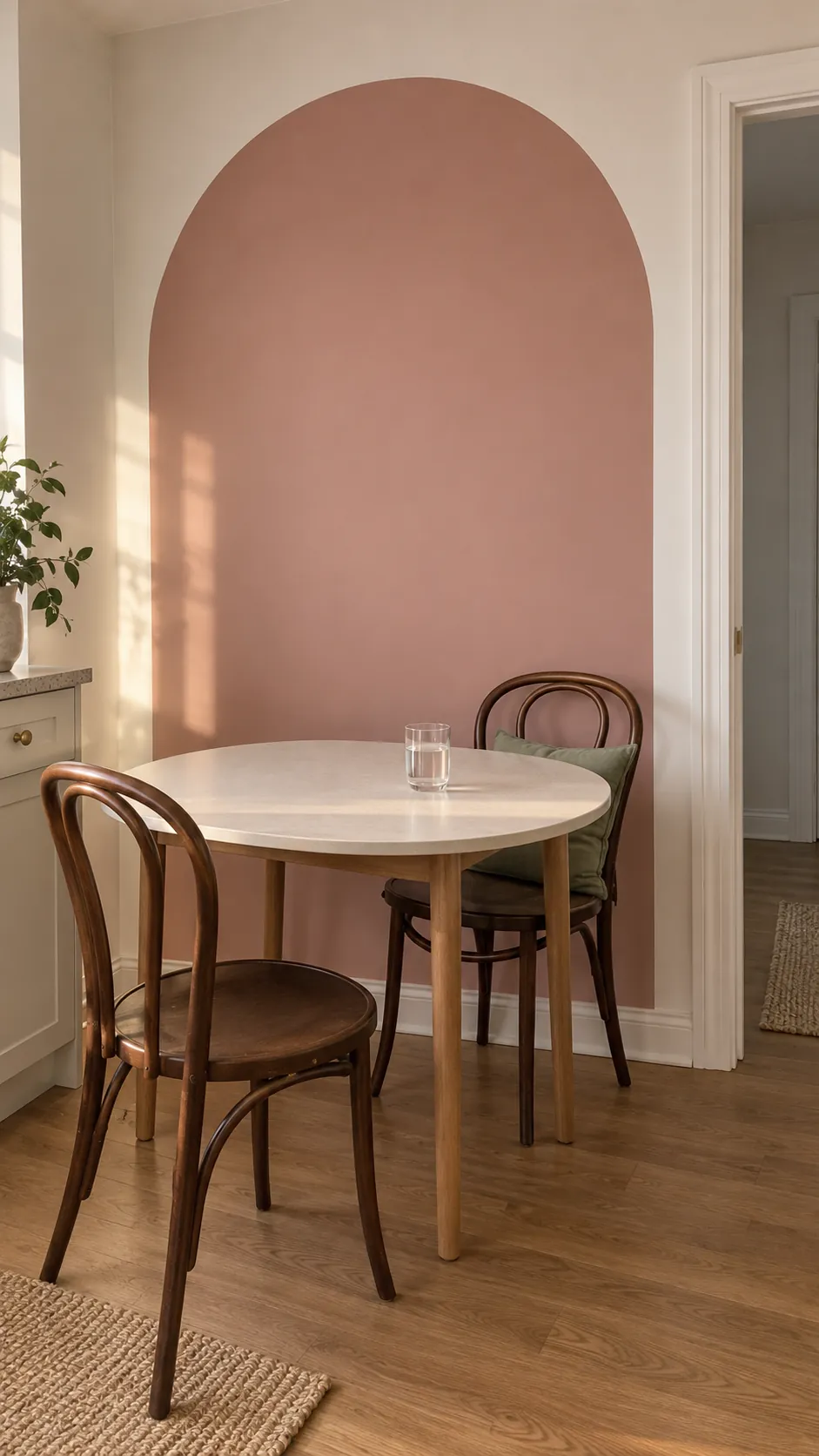
A painted arch behind the table
A painted arch gives the dining area a boundary without adding furniture. Its width should relate to the table or bench below, with enough painted space visible on both sides. Test a sample in morning and evening light before committing to a strong color. If you rent, obtain permission and check restoration expectations before painting.
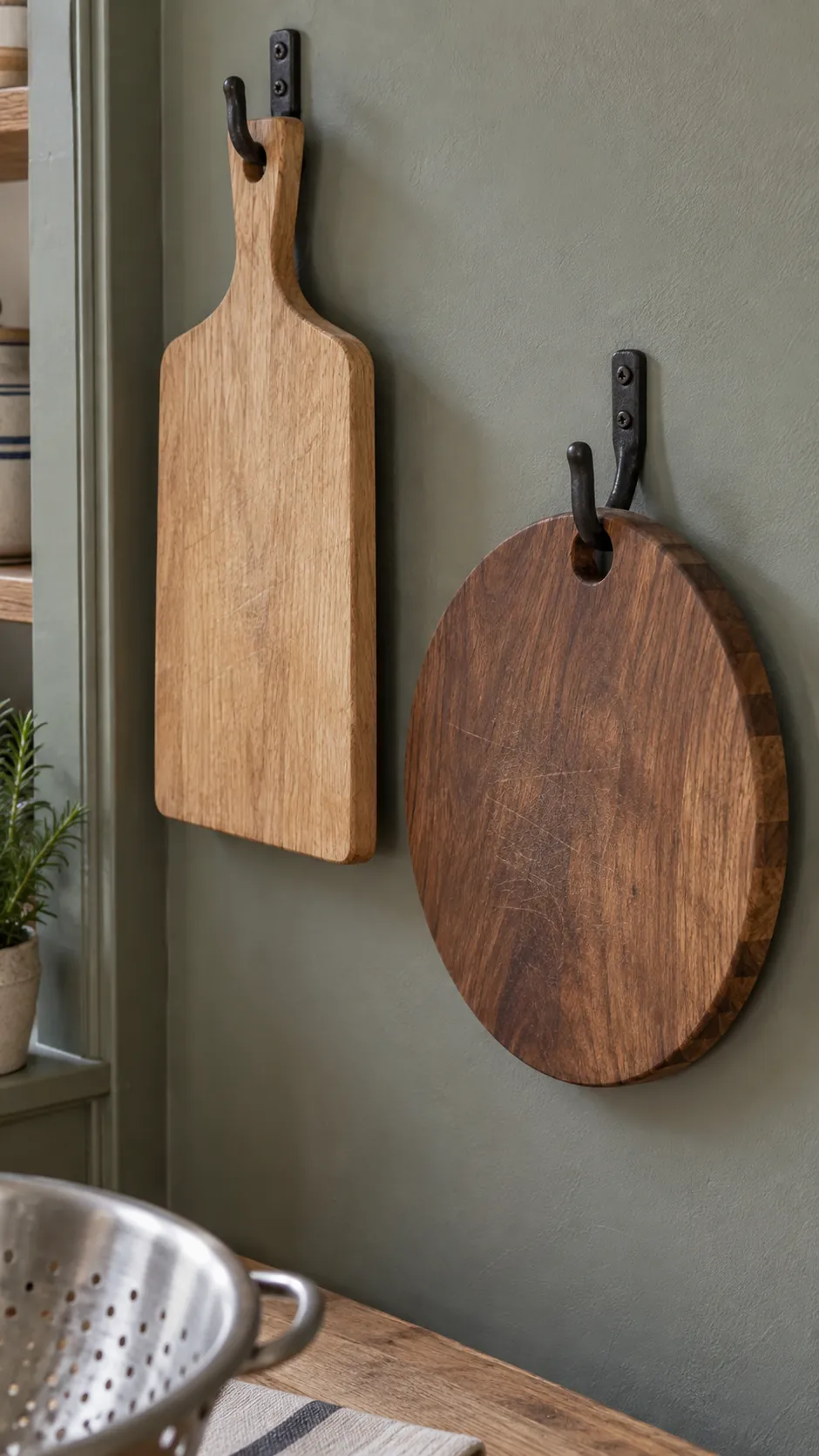
A short row of cutting boards
Beautiful boards can decorate a wall when you have a dry spot to store them. Hang boards only after they have dried completely and use hooks strong enough for their weight. Mix two shapes with similar wood tones instead of building a dense wall of utensils. Keep boards used for food accessible and clean rather than treating them as permanent dusty ornaments.
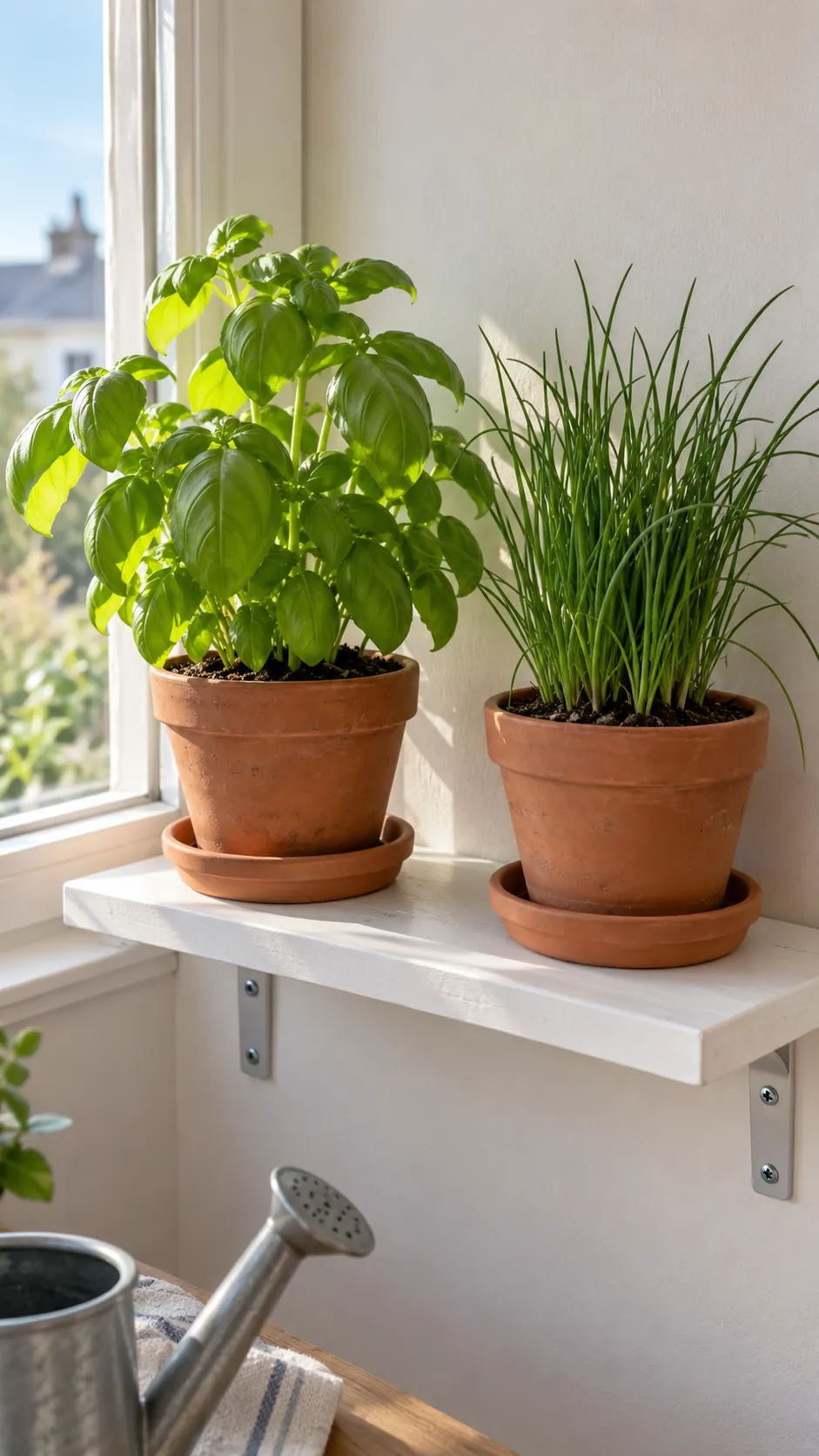
A small herb shelf by a bright window
Living herbs add movement and a practical reason to look at the wall. Match the plants to the available light rather than assuming any sunny looking corner will keep them healthy. Place pots in trays and leave room to water them without spilling onto furniture. A small shelf beside a window is usually more workable than a high arrangement you cannot reach.
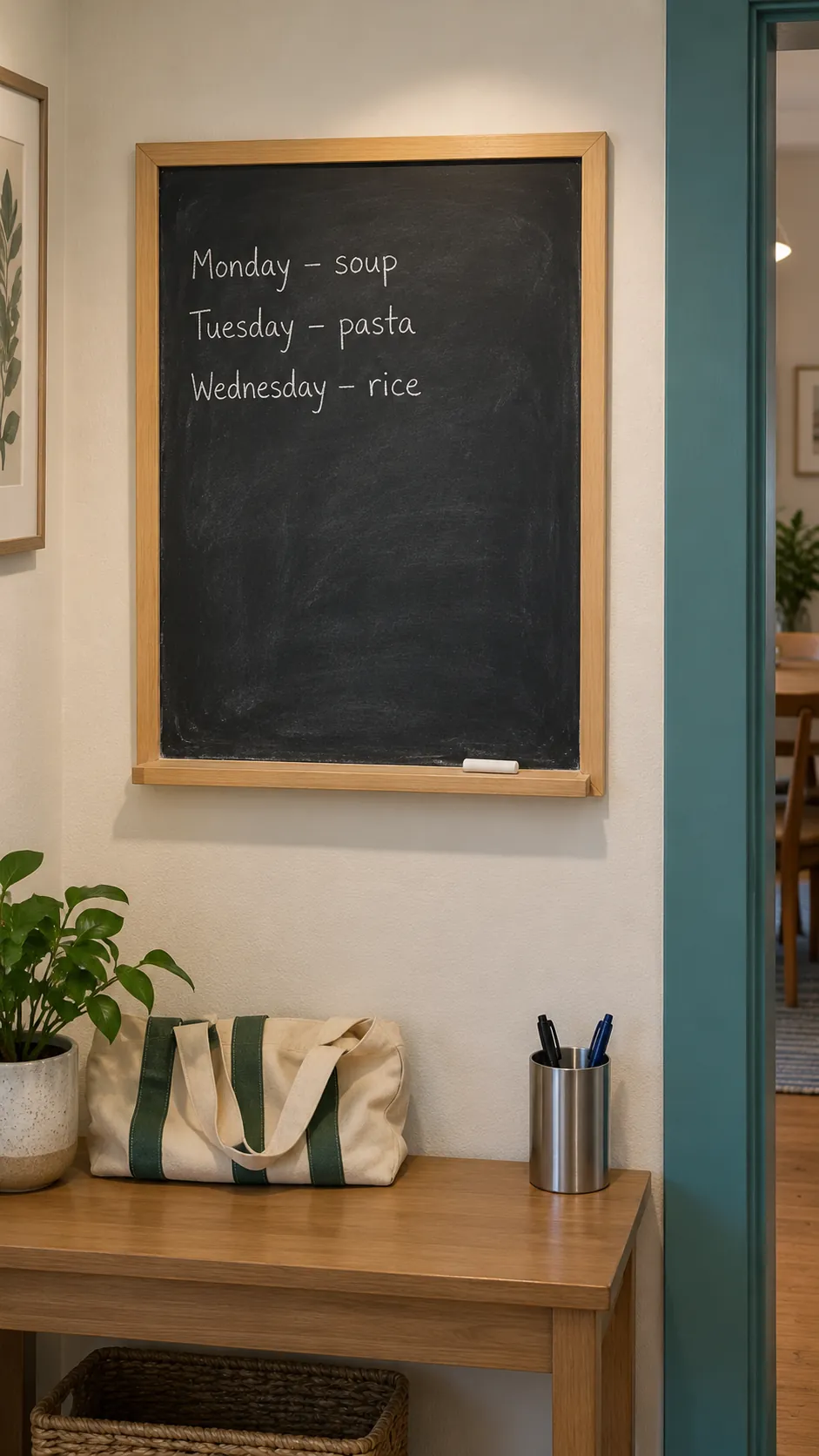
A compact chalkboard for the weekly plan
A chalkboard can organize meals and shopping while giving the wall a strong dark shape. Position it where you can write comfortably and where chalk dust will not fall onto food preparation. Leave generous space between entries so it remains readable from the table. Erase outdated notes regularly so the board stays useful rather than becoming visual clutter.
A restrained strip of patterned wallpaper
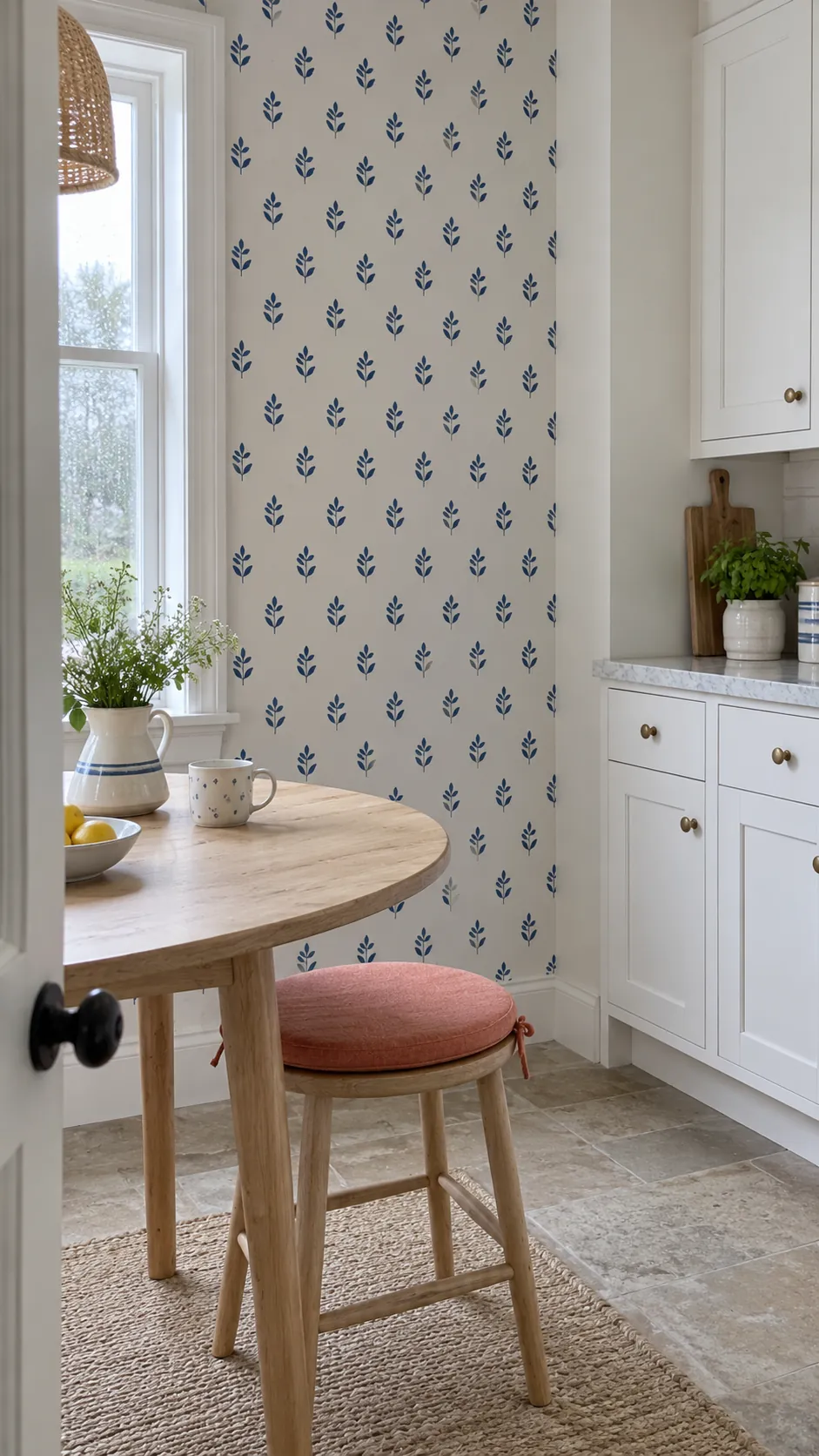
A short wallpapered wall can make a kitchen feel considered without covering the whole room. Choose a clearly defined pattern, such as small blue block printed leaves, and check that the product suits the location. Avoid placing ordinary wallpaper beside a hob or where repeated splashes will damage it. Removable products still need a surface test and landlord approval where required.
A wall mounted wire basket
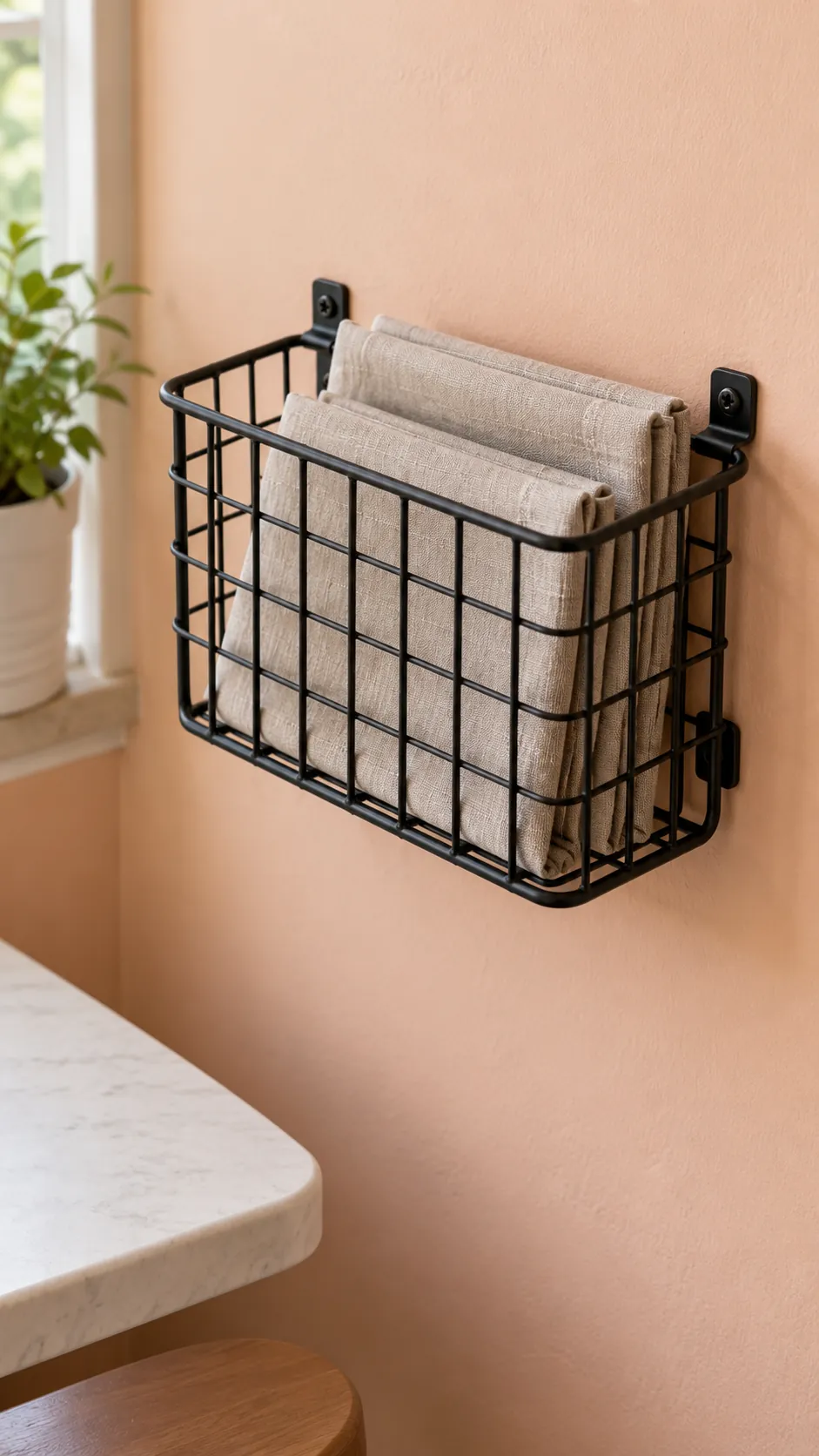
A wire basket keeps a few light essentials off the worktop. Choose a location that does not narrow a busy passage or force you to reach over hot appliances. Store napkins or a folded cloth rather than loose heavy jars. The open construction lets the wall color show through, making it feel lighter than a solid cabinet.
A pair of sculptural hooks
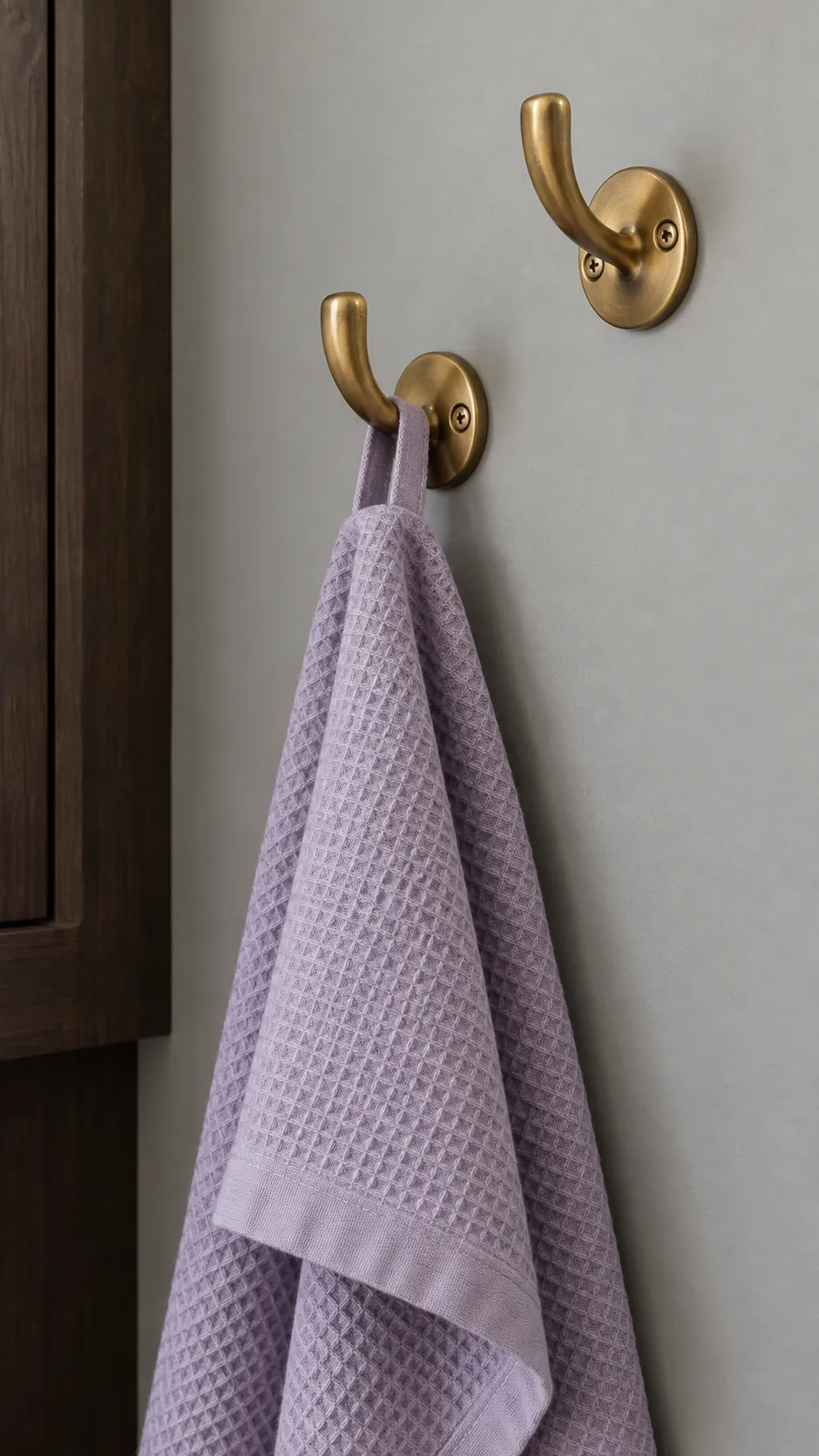
Two well shaped hooks can give a tiny wall enough interest. Brass curves or painted wooden knobs work particularly well when the nearby cabinetry is simple. Hang one tea towel and leave the second hook clear so the forms stay visible. Use suitable anchors and keep hanging fabric well away from cooking heat.
A small ceramic wall pocket
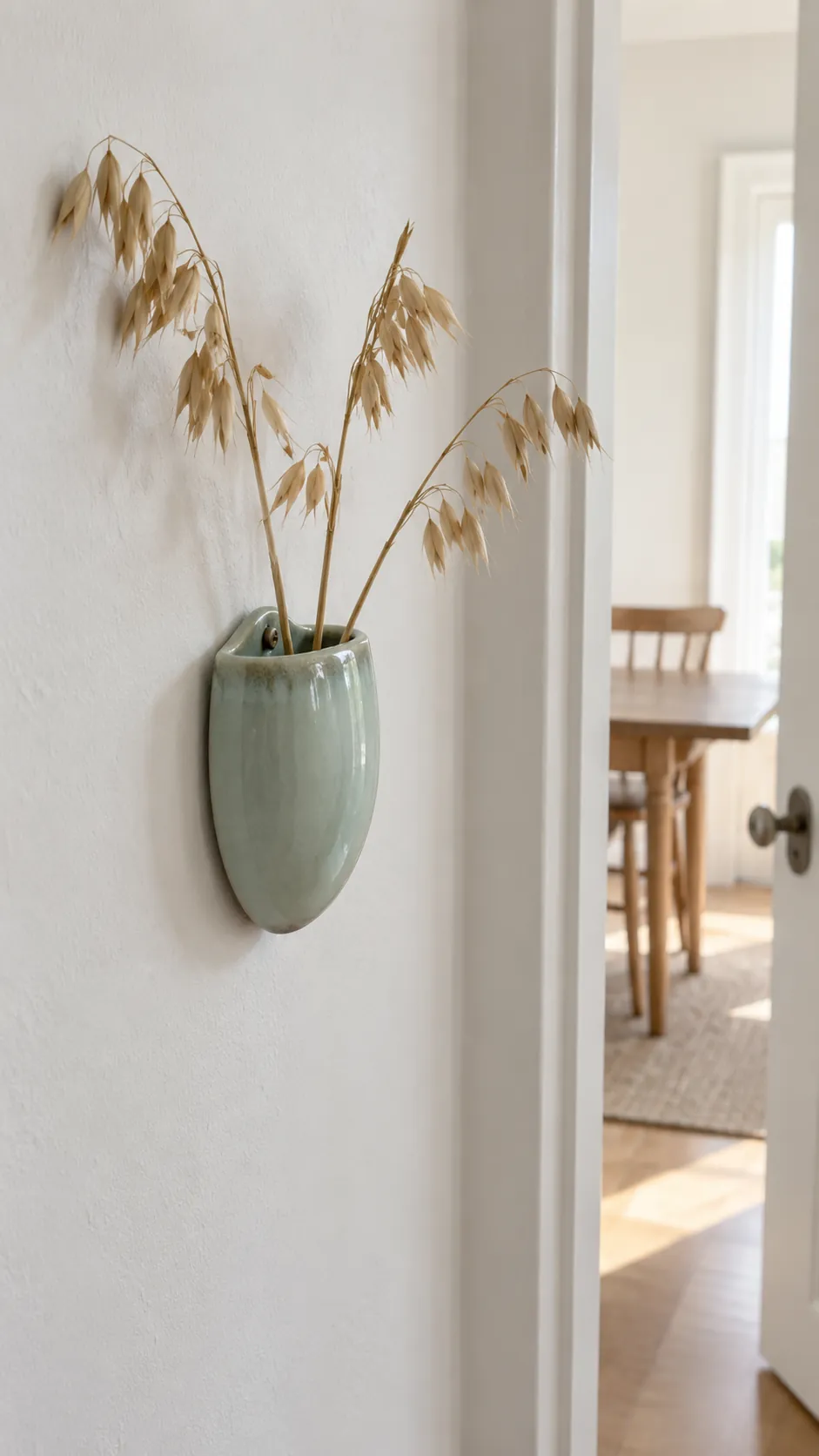
A ceramic wall pocket adds depth without needing a shelf. Fill it with a few dried stems only in a dry location outside the cooking zone. A glazed body with a simple opening is easier to keep tidy than an intricate vessel. Check how far it projects before placing it beside a doorway.
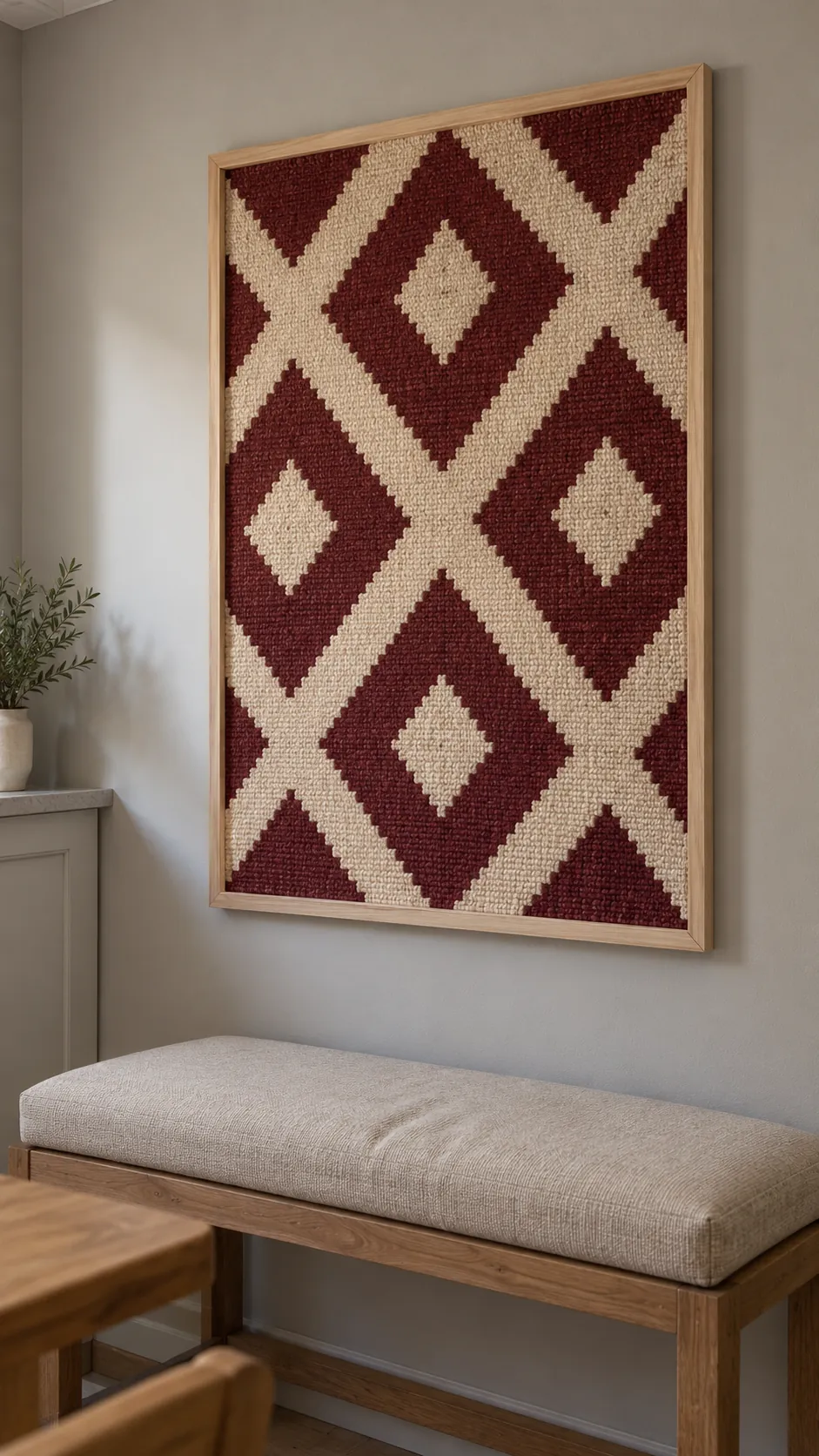
A fabric panel in the breakfast corner
A framed piece of fabric brings pattern without the permanence of wallpaper. Stretch it evenly and choose a geometric motif that relates to a cushion or table linen. The breakfast corner is a better location than the wall behind a sink, where moisture could affect the textile. Keep the frame simple so the pattern does the decorative work.
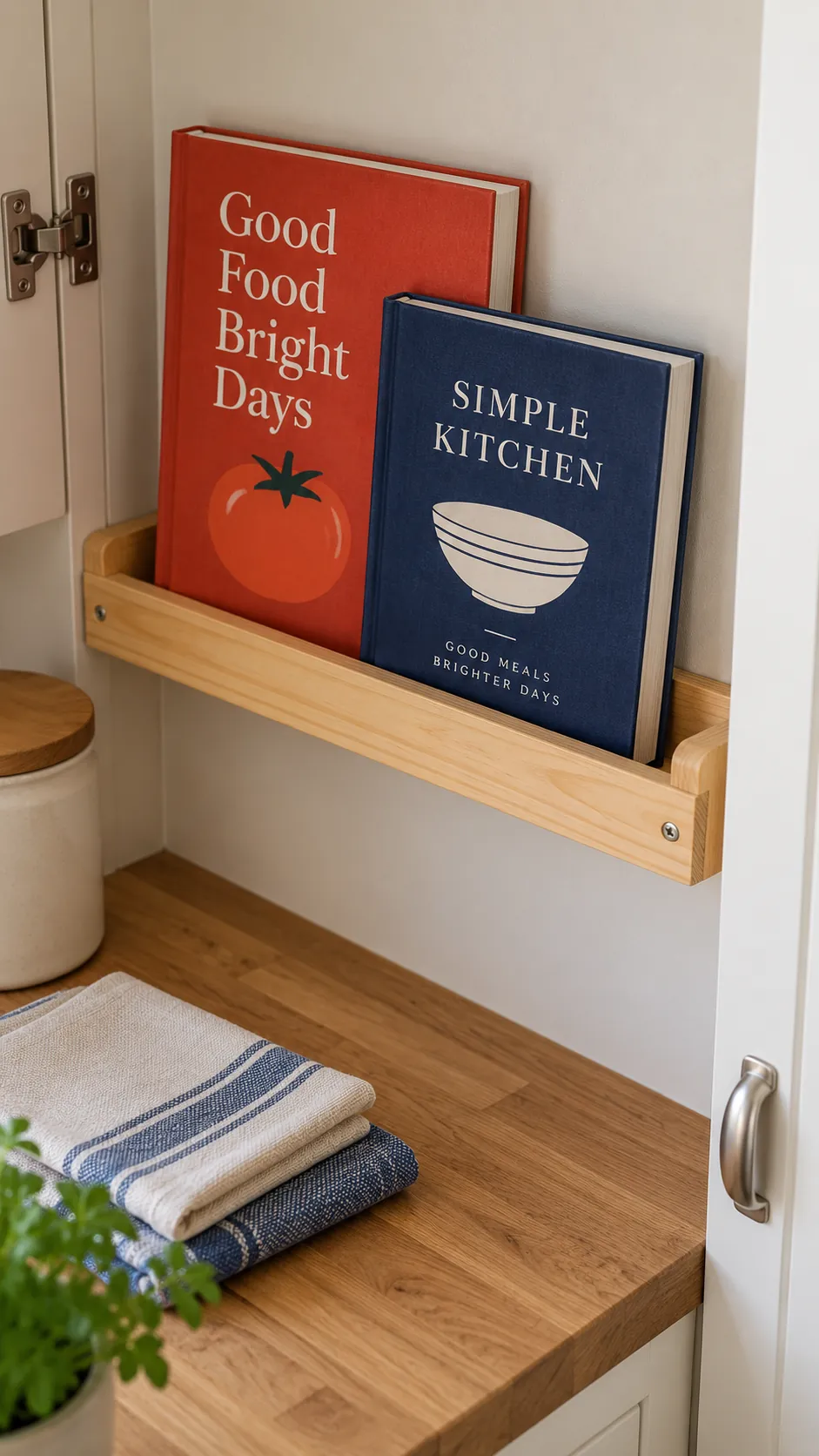
A single ledge for cookbooks
A front facing cookbook ledge makes attractive covers part of the room. Choose one or two books you actually use and protect them from the cooking area. Secure the ledge for the combined weight and keep the lower edge clear of switches. Changing the displayed title is a small way to refresh the wall as your cooking interests change.
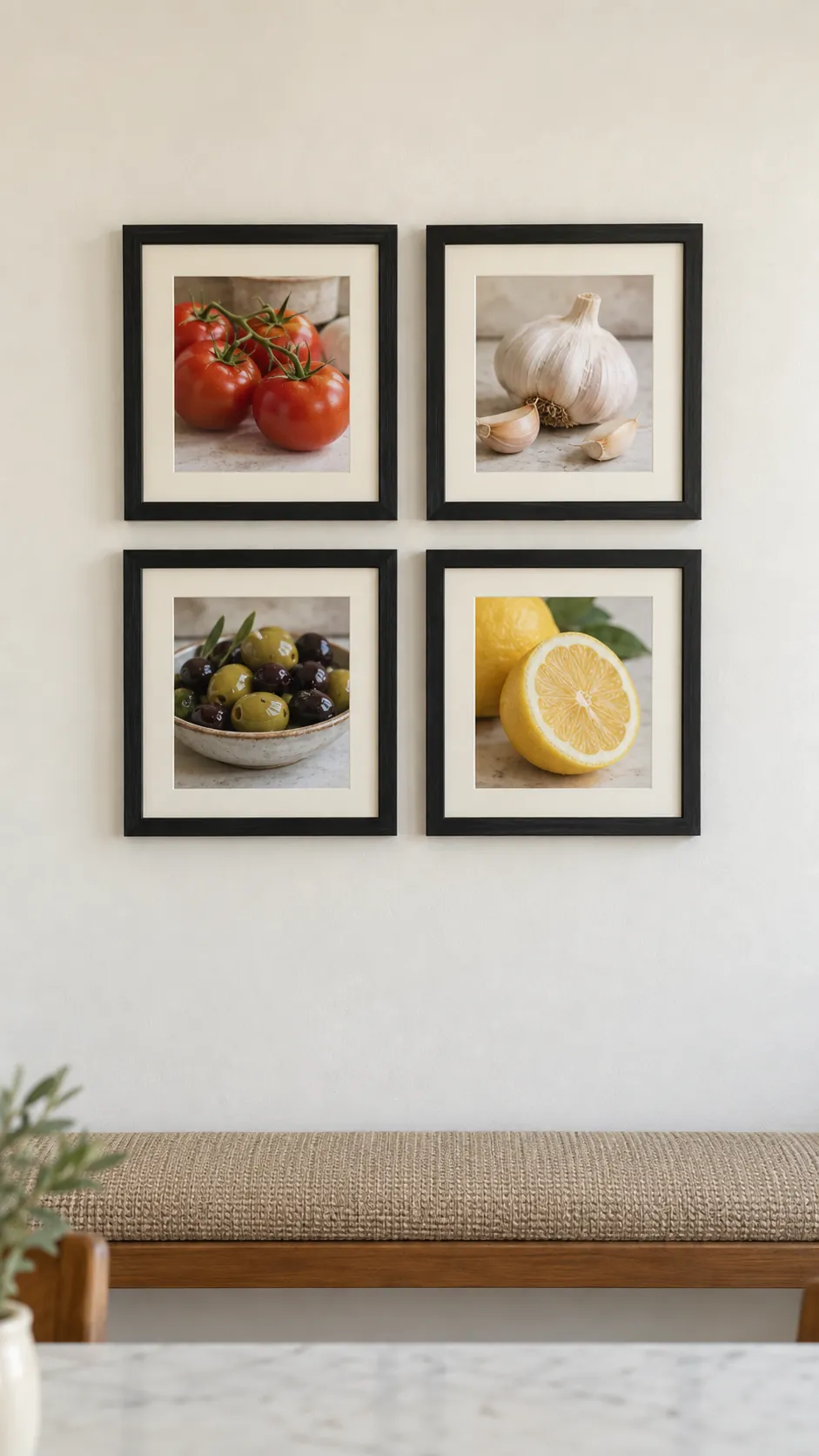
A clean grid of food photographs
A tight grid gives several small photographs the presence of one larger piece. Choose subjects with a shared palette, such as red tomatoes, pale garlic, and green olives. Identical frames and mounts make alignment easier and keep the collection from feeling accidental. Measure the gaps carefully because uneven spacing is especially obvious in a regular grid.
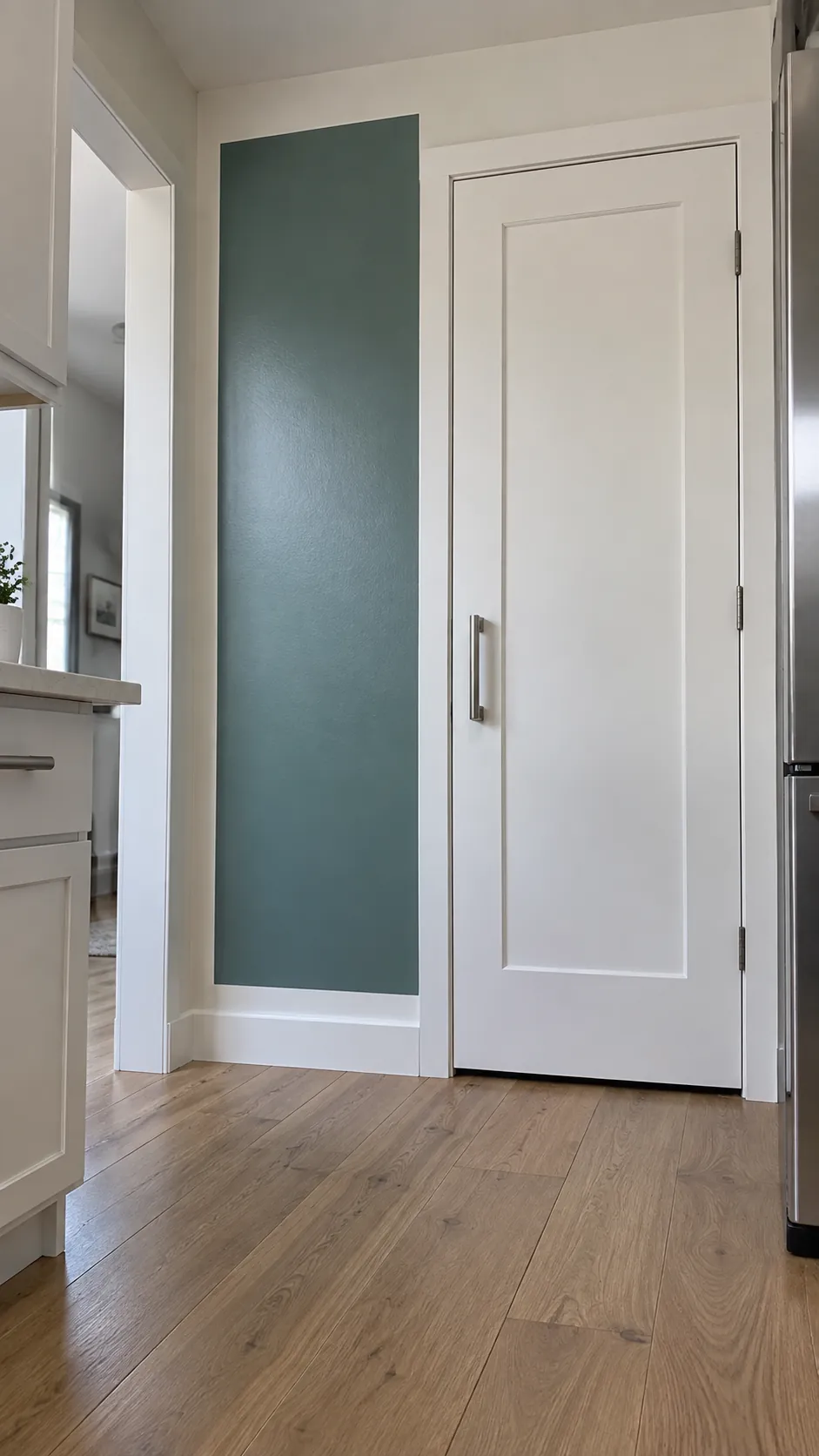
A washable color block on a narrow wall
A single painted rectangle can bring color to a narrow wall beside a pantry. Choose a finish appropriate for the surface and cleaning needs, then test a small sample first. Align one edge with a nearby architectural feature to make the shape feel deliberate. This DIY kitchen wall decor idea leaves the counter free and avoids extra dust catching objects.
An open patch with one hanging utensil
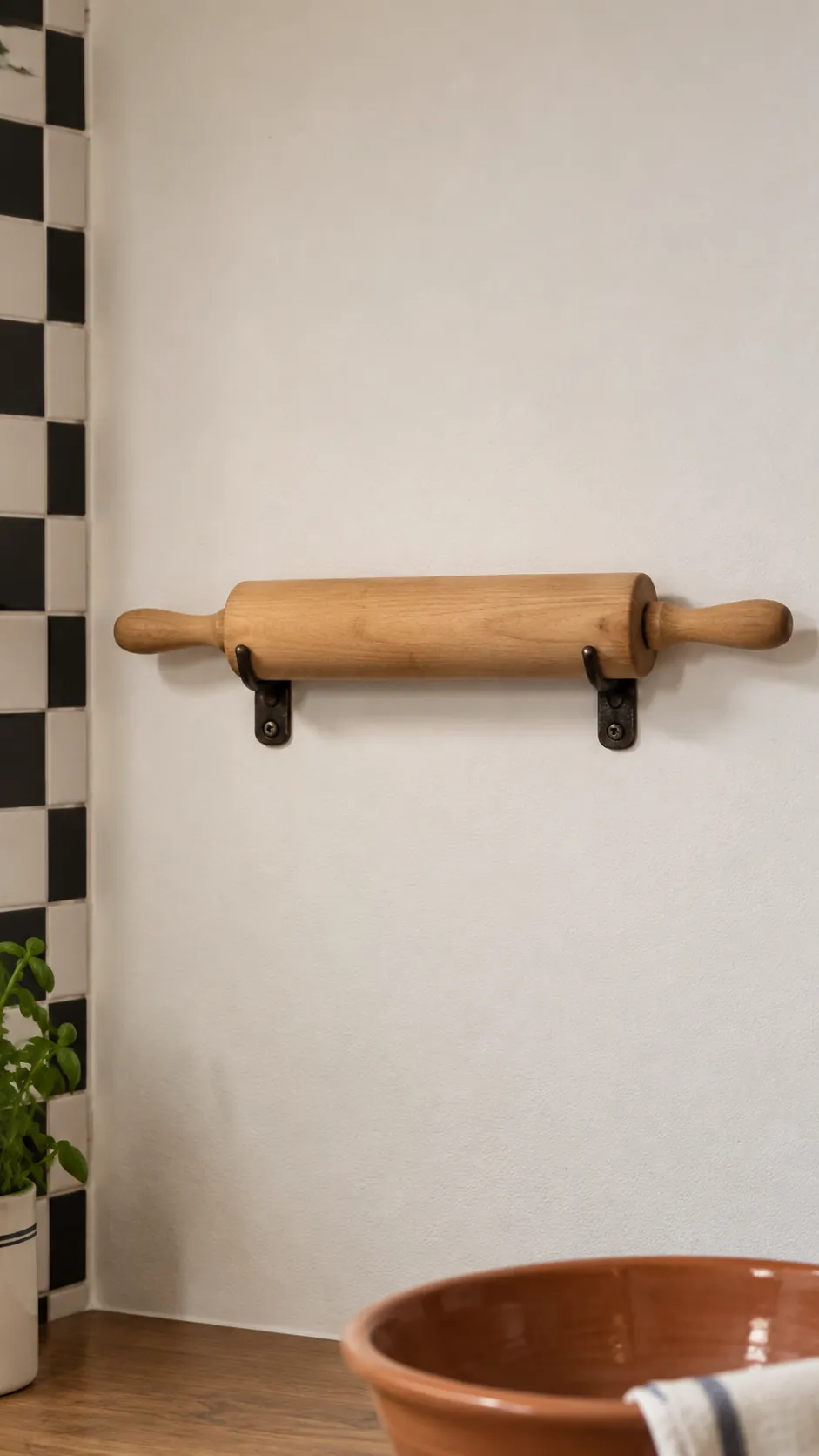
An empty wall does not need to become a display of everything you own. One appealing object, such as a wooden rolling pin on secure hooks, can give it a clear purpose. Leave enough space around that object for its silhouette to read from across the room. If the kitchen already has patterned tiles or crowded shelving, this quieter choice may be the one that feels best.