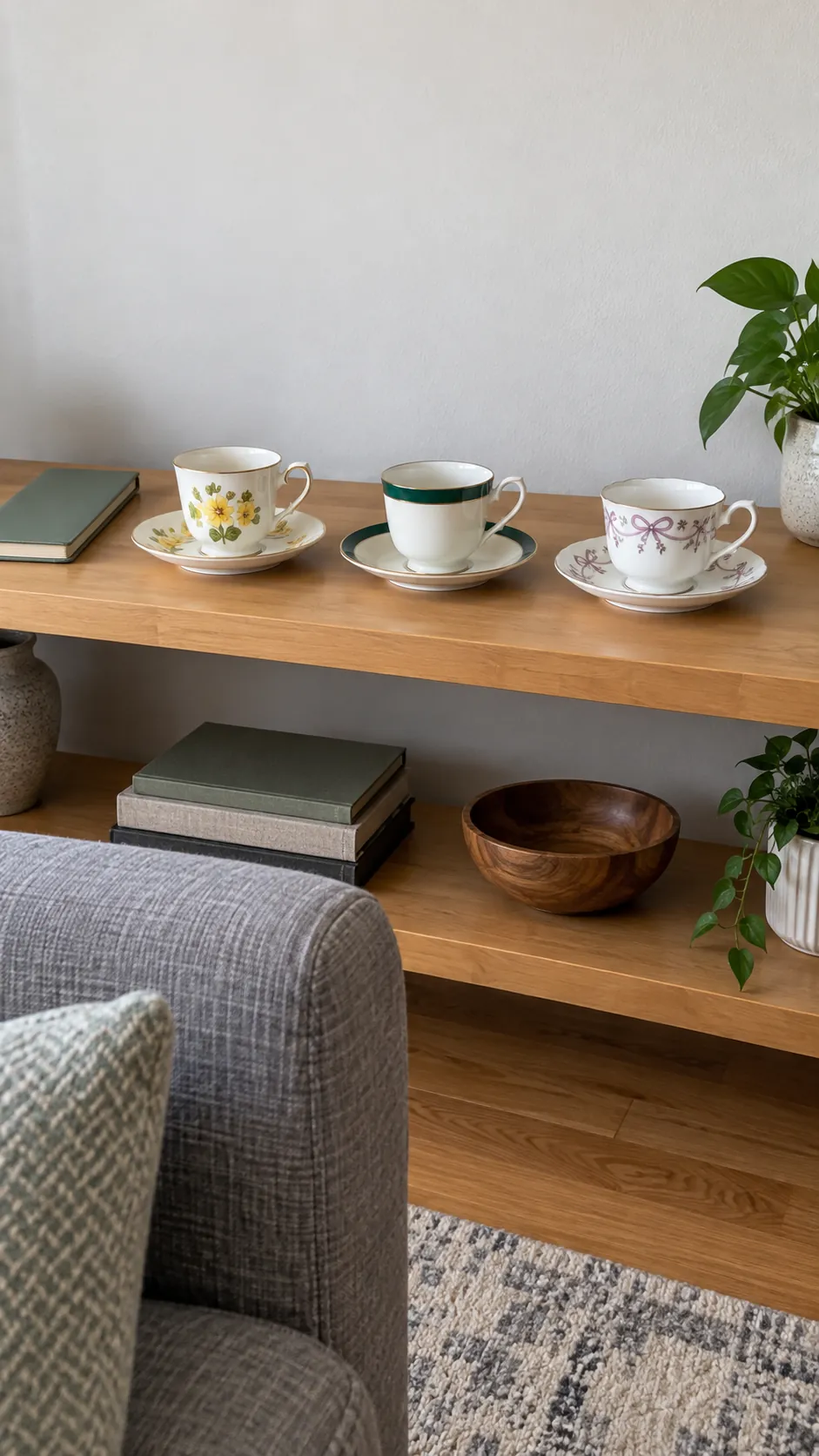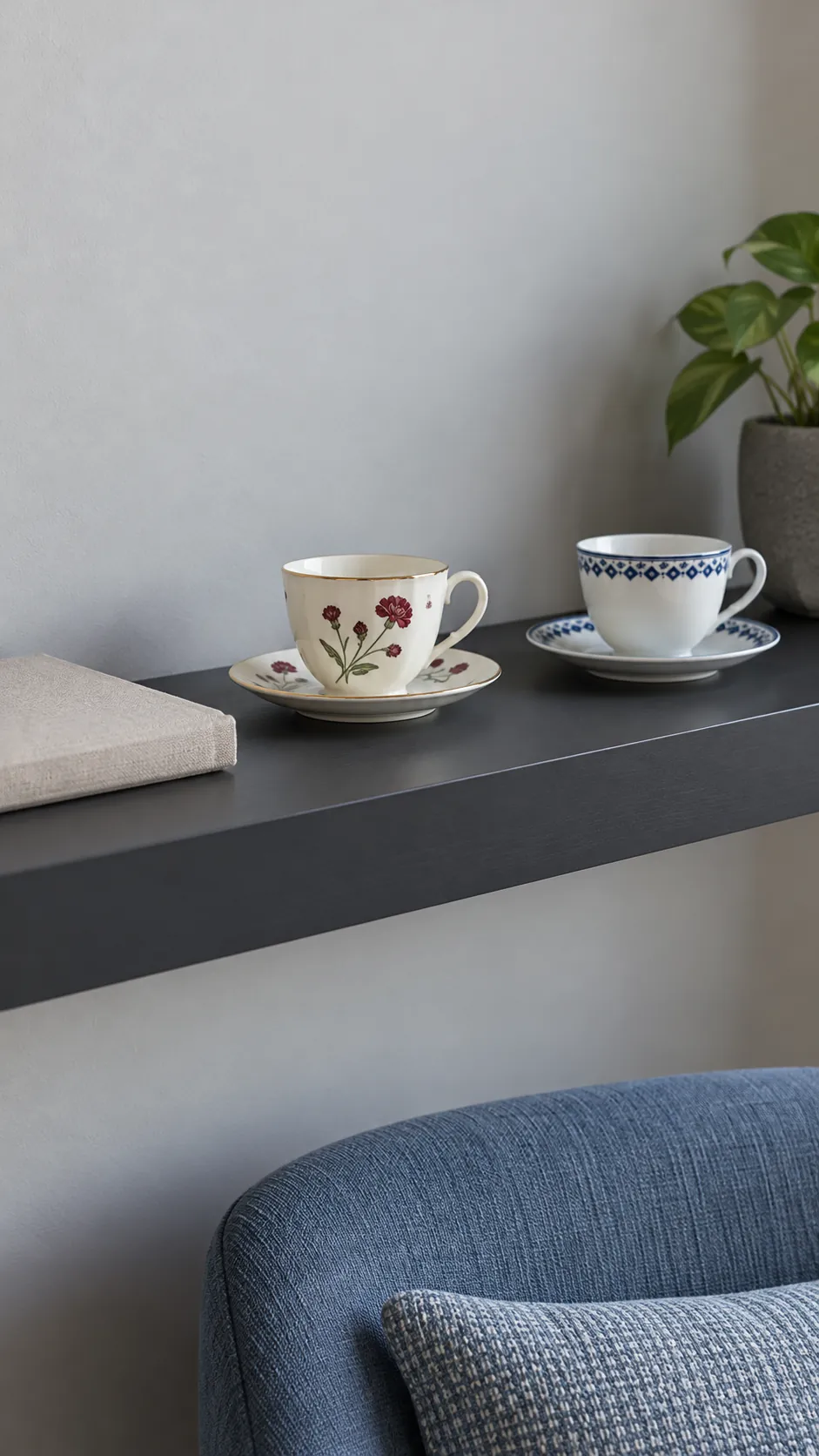
A cupboard full of china can carry more memories than your shelves have room for. You can keep a meaningful piece visible without turning the whole home into a storage room. Start with the cups you enjoy seeing, check their condition, and choose a display that does not depend on using an unknown vintage glaze for food or drinks.
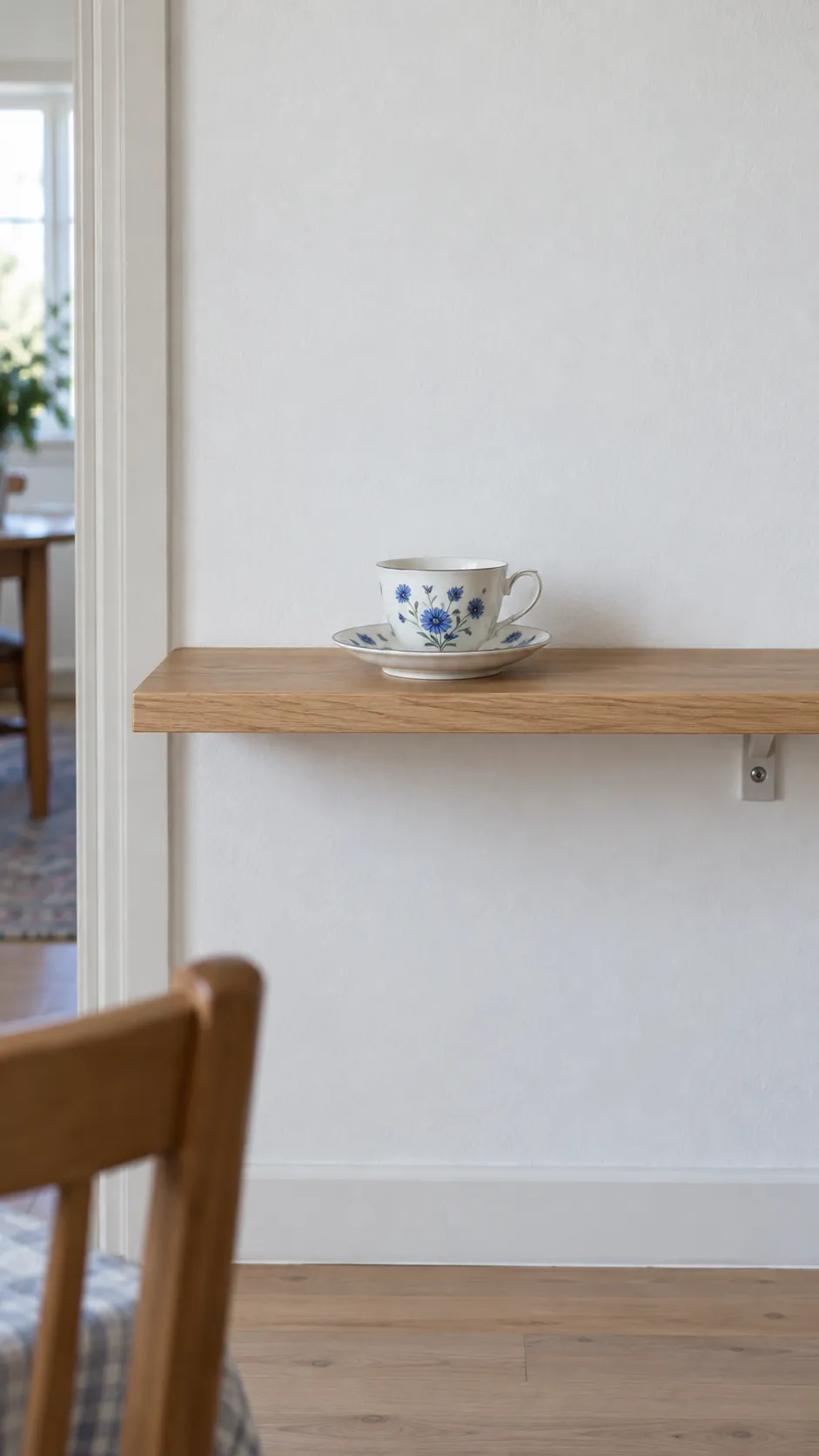
Give one favorite cup its own shelf
Choose the cup you most want to see instead of starting with the whole collection. Set it on its saucer on a sturdy shelf, away from the edge and any door that could hit it. A little empty space around the pair makes its pattern easier to notice and gives you a manageable starting point.
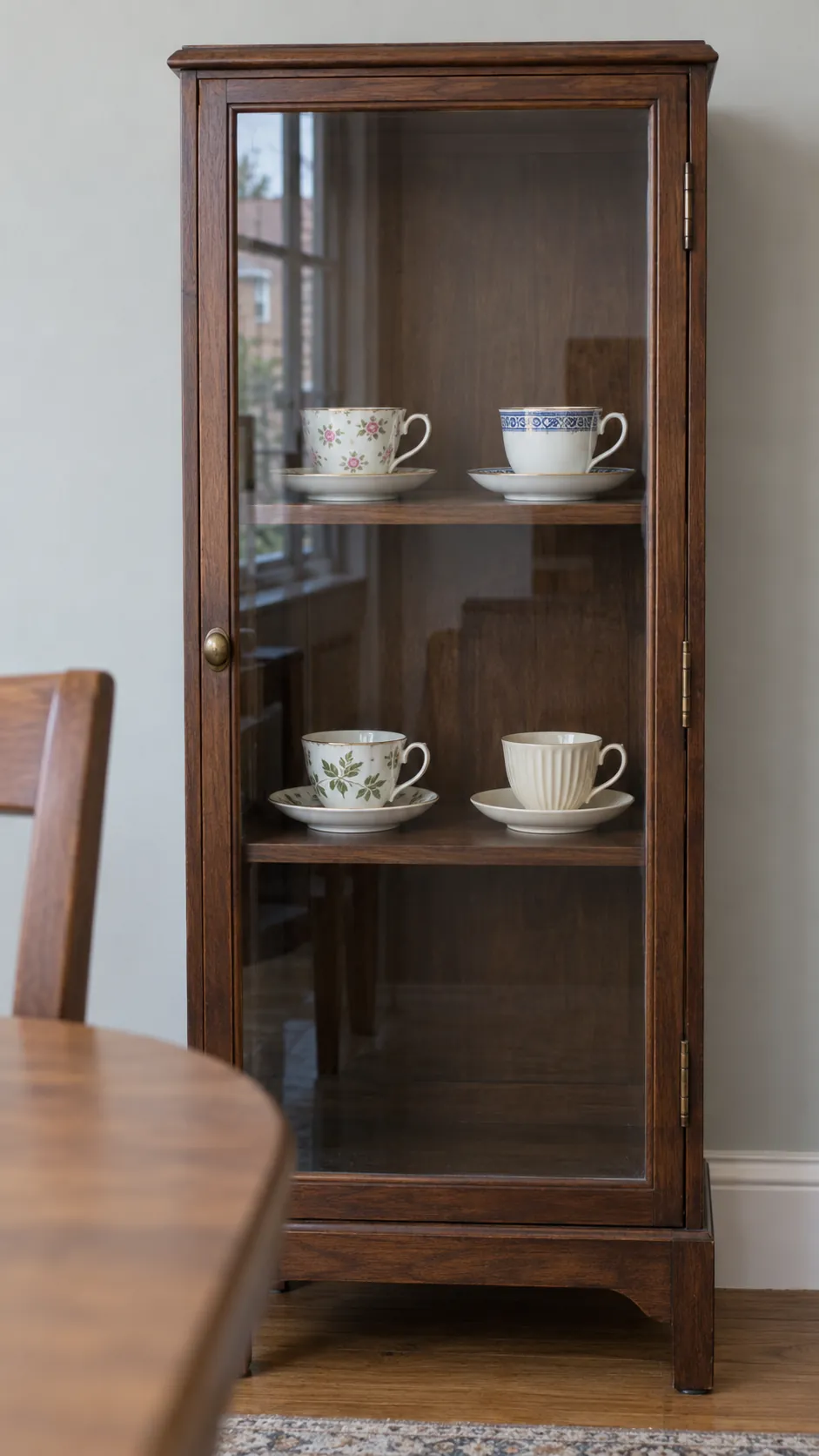
Use a glass front cabinet for fragile pieces
A closed cabinet lets you enjoy delicate china while reducing dust and casual knocks. Check shelf depth and load limits, and secure the furniture against tipping where needed. Leave space between cup handles so you can remove a pair without touching its neighbors. Keep the most fragile pieces away from a frequently used door edge.
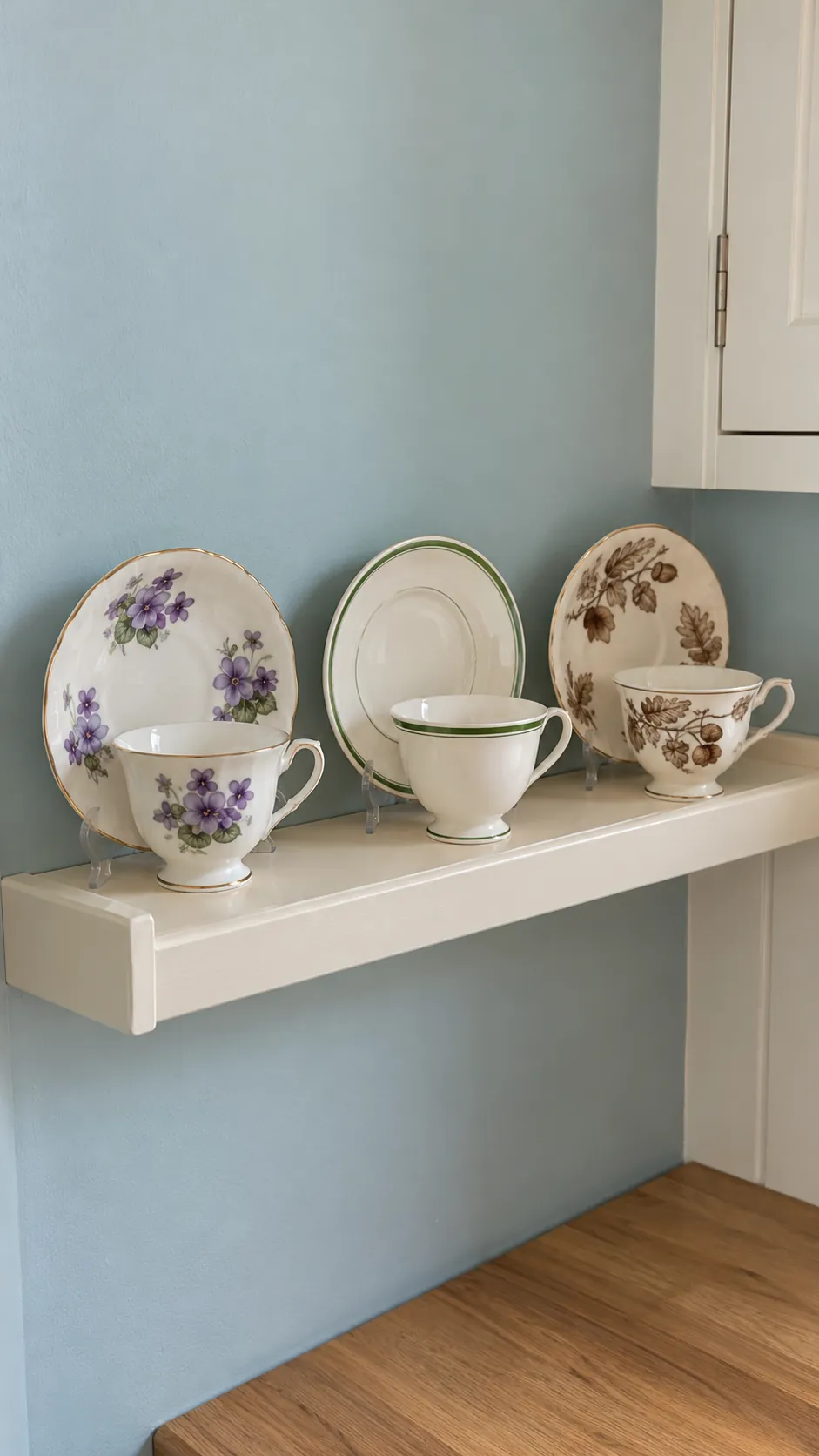
Arrange a shallow ledge with cups in front of saucers
Standing saucers can show decoration that disappears beneath a cup. Use a ledge with a retaining lip or suitable individual stands, then place the cups securely in front. Check that each saucer is supported rather than leaning loosely against another piece. Choose a position away from a busy passage or strong vibration. Keep the arrangement shallow enough that every cup foot remains fully on the shelf.
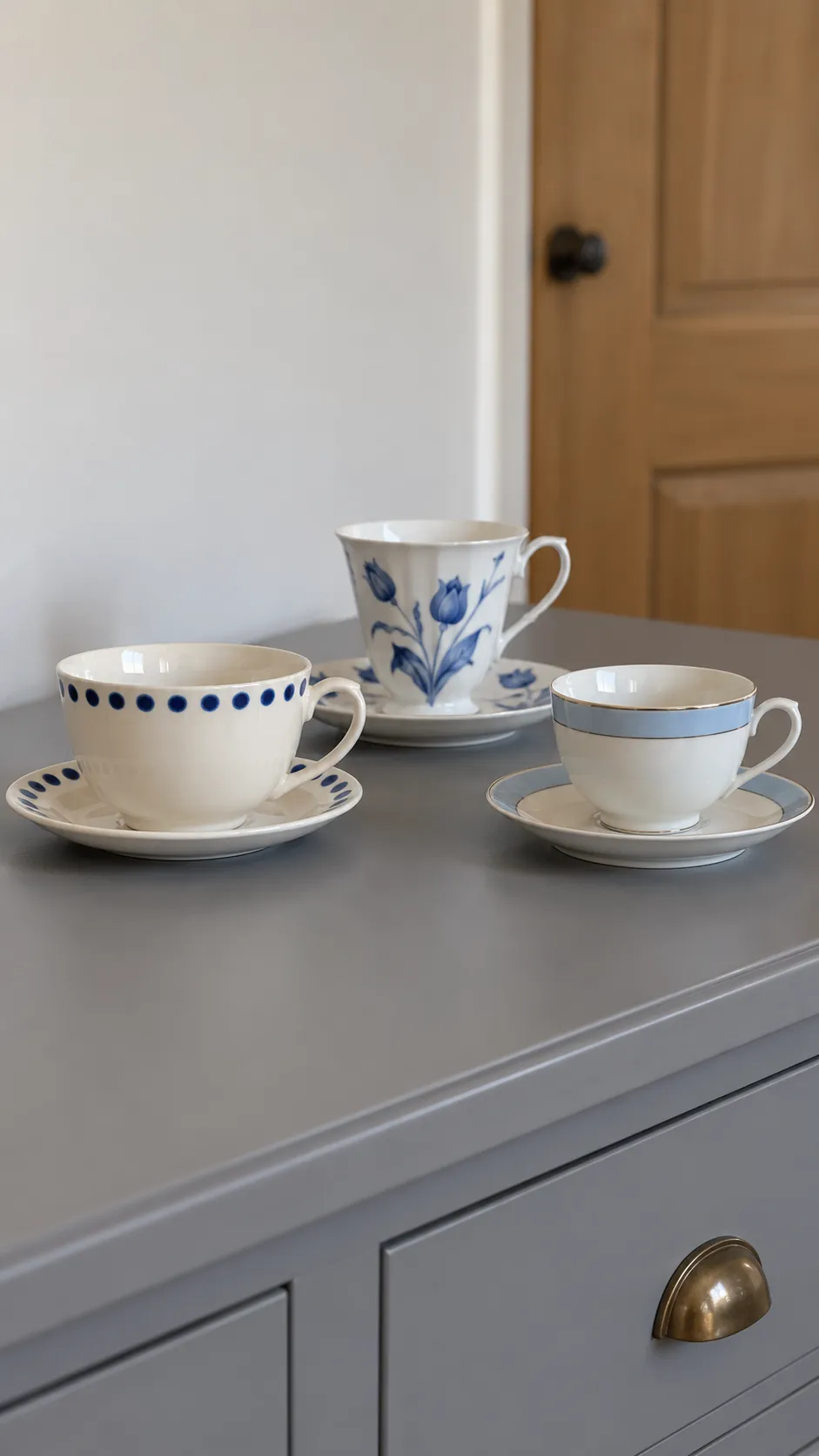
Group mismatched cups by one shared color
Mismatched teacups can look related when one color appears in all their patterns. Pull together the blue details or pink flowers and let the shapes remain different. Use a plain surface behind them so the color link is easy to see.
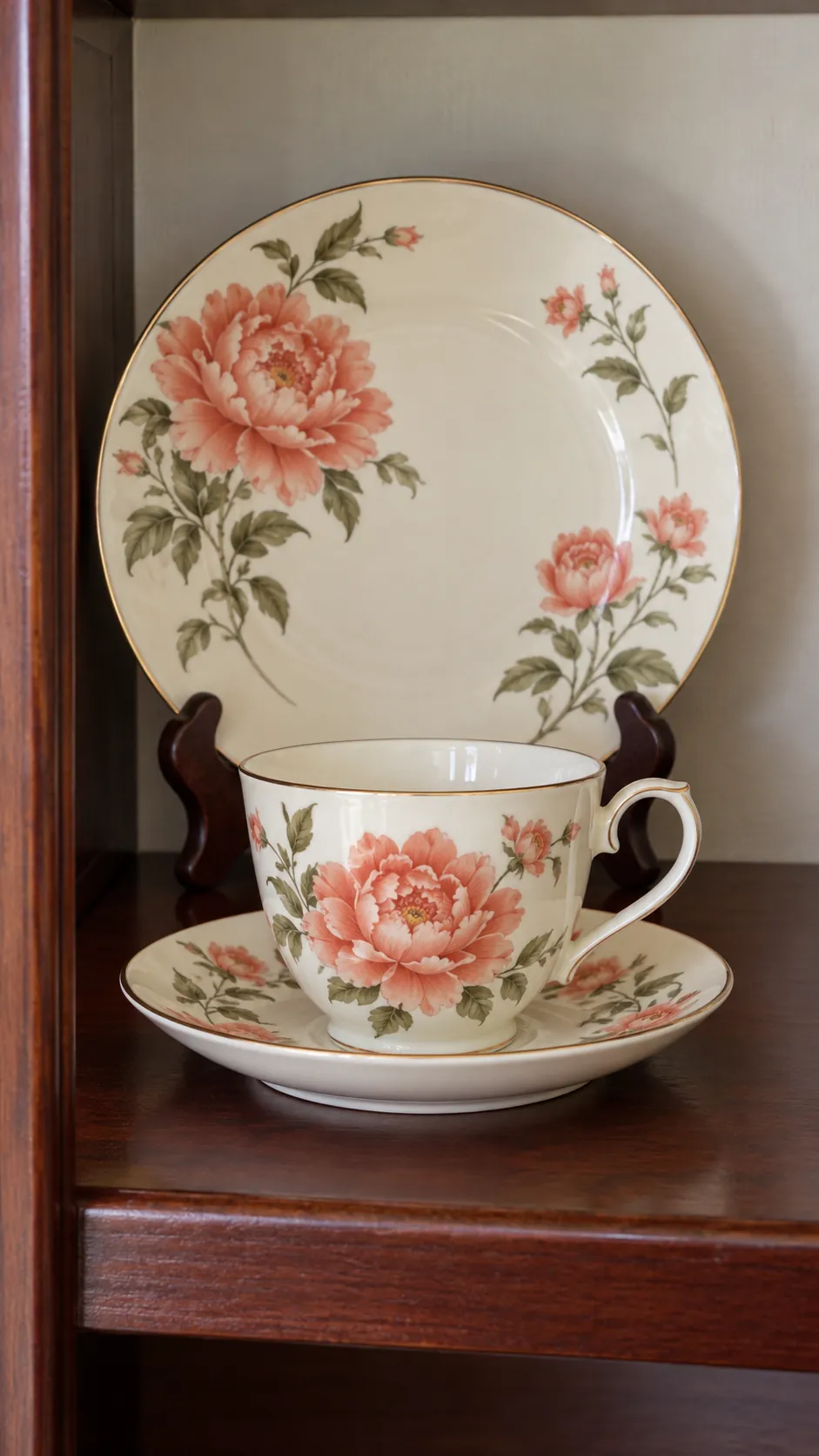
Display a complete cup and saucer trio
A cup, saucer, and small plate make a compact display of a favorite place setting. Stand the plate on a suitable plate stand and set the cup on its saucer in front, leaving a clear gap between them. Keep all three pieces on a stable surface rather than stacking them into a tower. This works well when you want a memory of the service without dedicating a cabinet to every plate.
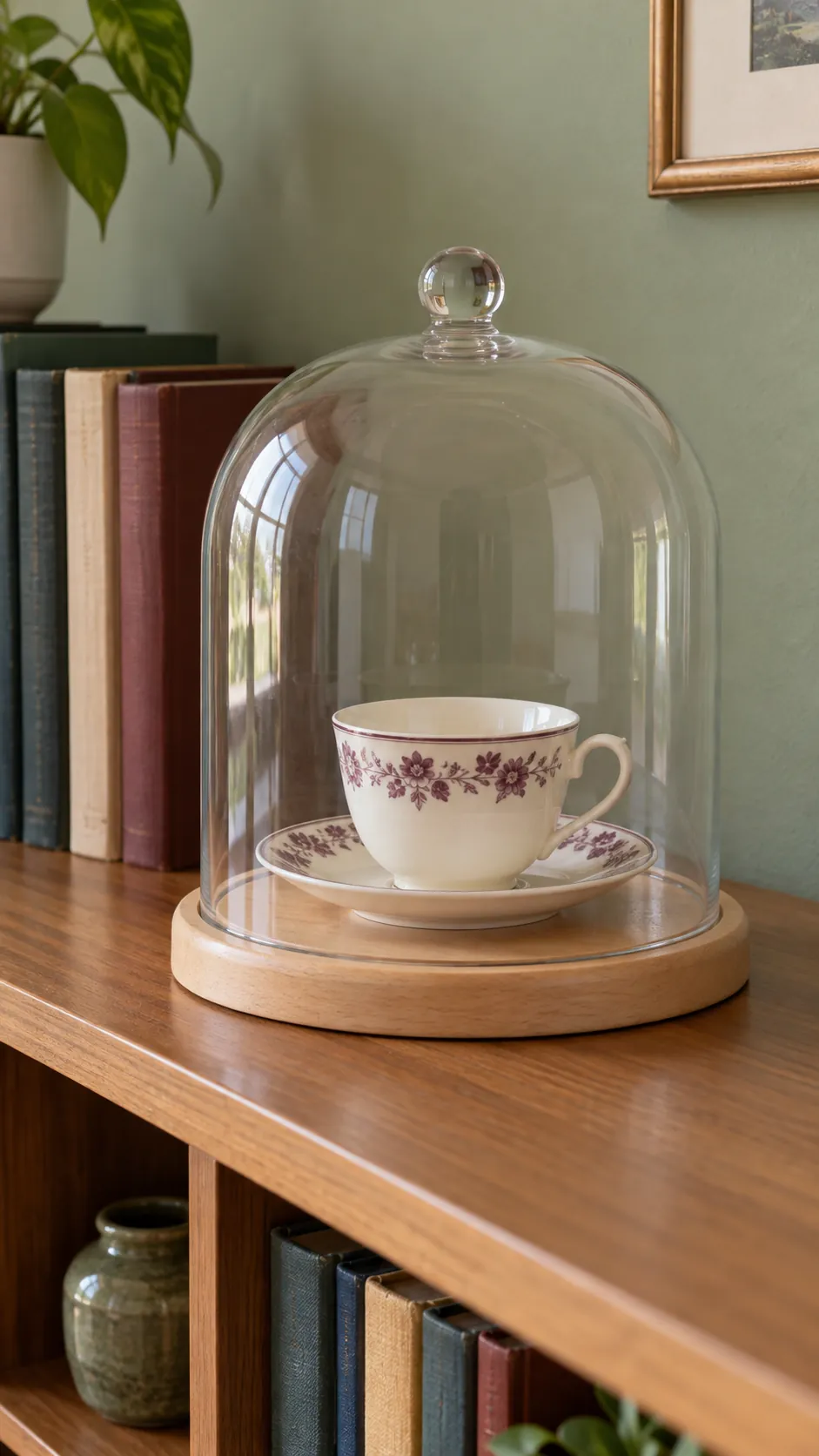
Show one pair under a glass dome
A glass dome can protect a small cup and saucer while making the pair feel like a deliberate keepsake. Measure the handle as well as the cup height so the cover clears the entire object. Use a broad stable base and lift the dome by its intended grip, keeping it away from the cup.
Choose a dome you can remove comfortably for cleaning. Do not wedge the saucer inside a tight cover or leave the dome where it is likely to be knocked. If a closed cabinet already protects the cup, the extra cover is optional.
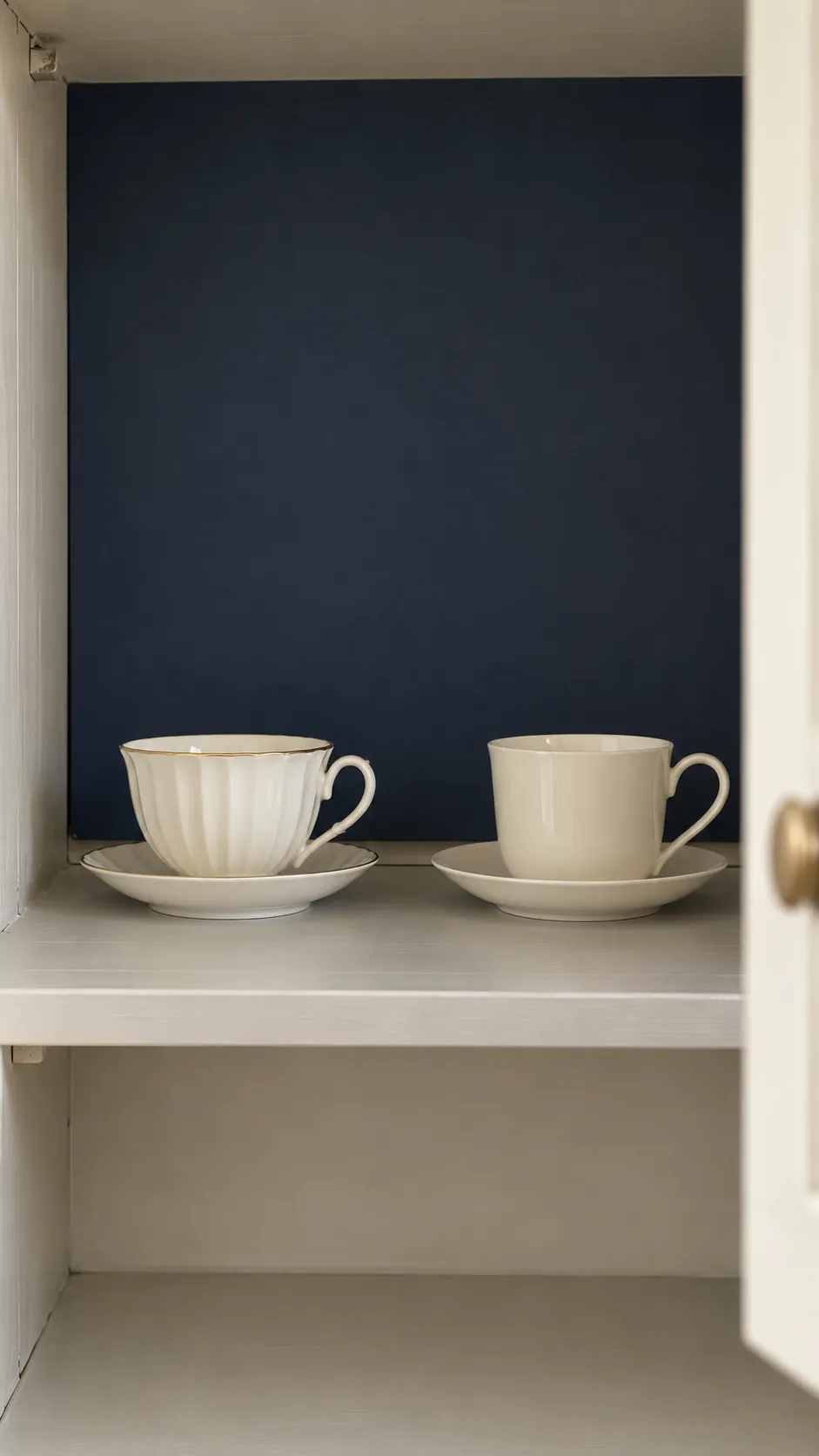
Let a dark cabinet backing define pale china
Pale cups can disappear against a white cabinet interior. A removable dark backing placed behind the display can reveal their outlines without altering the china. Use material that stays clear of the pieces and does not transfer color or adhesive onto them. Test the view with the cabinet door closed before covering the whole back.
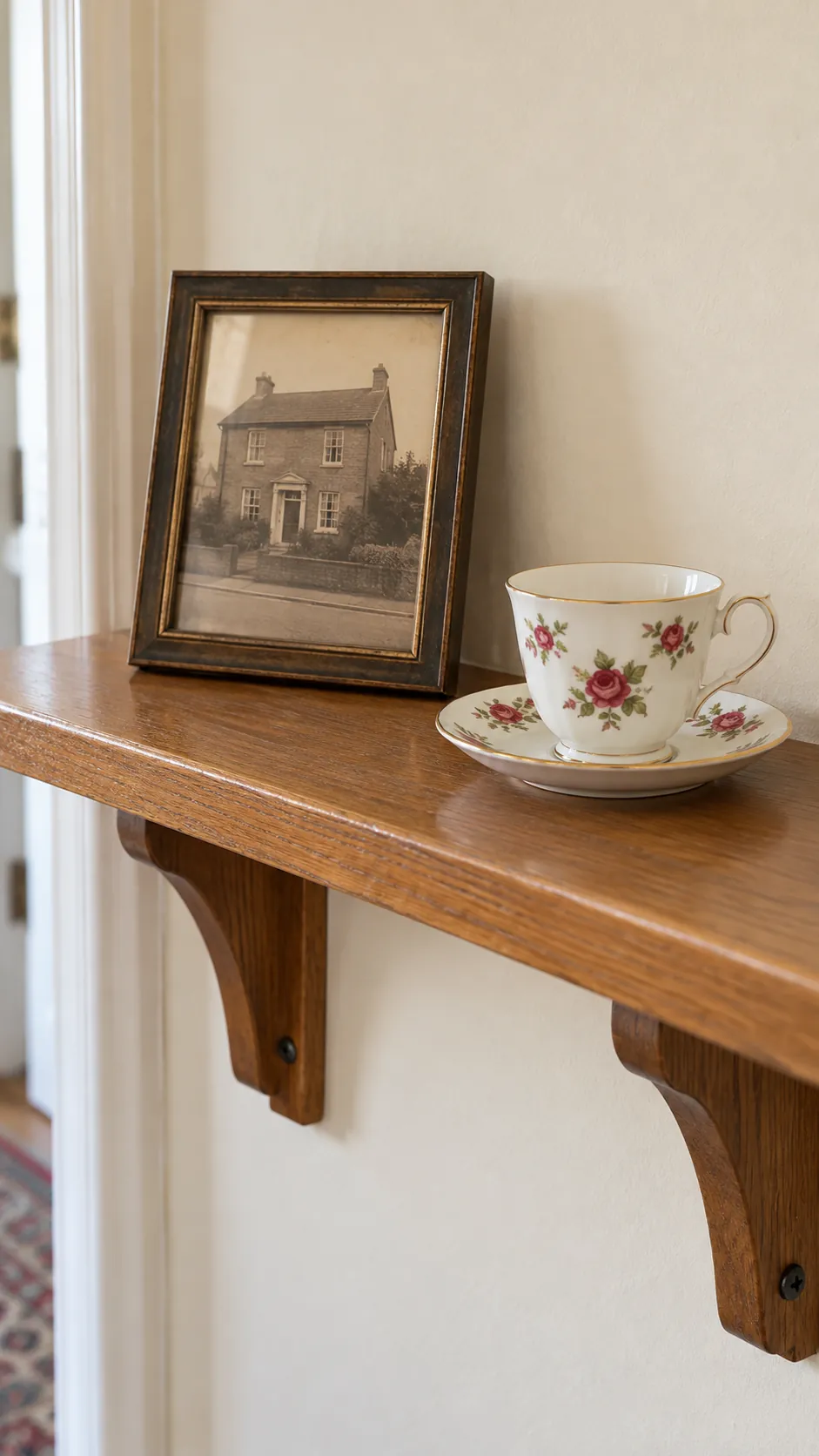
Set a pair beside a family photograph
A cup beside a meaningful photograph connects the object to a person rather than an obligation to keep a whole service. Put the photo in its own frame and place the cup on a saucer with enough space between them. Keep papers out of direct contact with the china and use a stable shelf outside harsh sunlight.
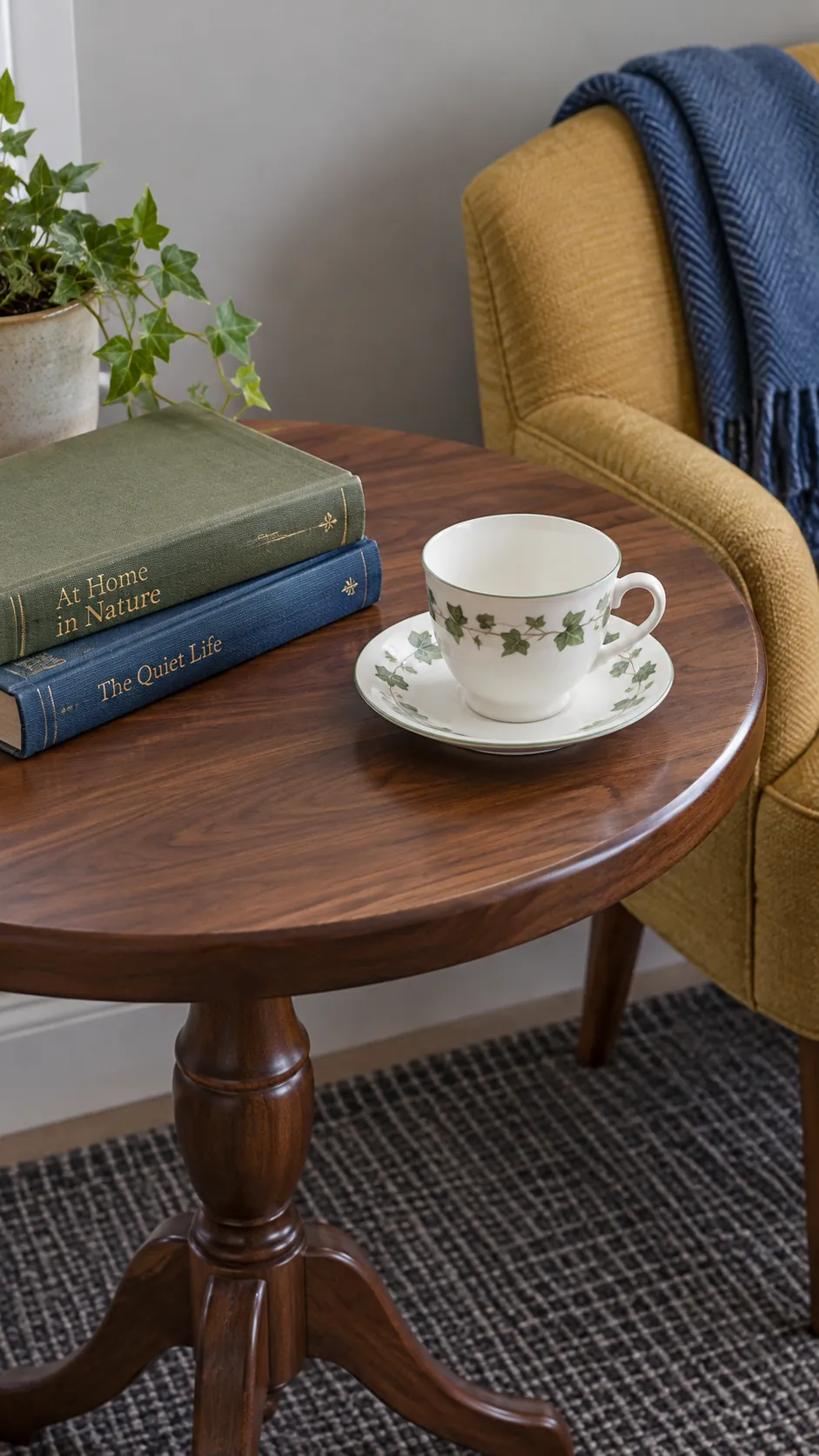
Create a small reading nook vignette
Place one favorite pair beside a few closed books on a firm side table near your reading chair. The cup can remain empty and decorative, so there is no need to assume an unknown vintage glaze is safe for drinks. Leave room for the things you actually use while reading. Keep it off soft cushions and away from the edge where a book or sleeve could catch its handle.
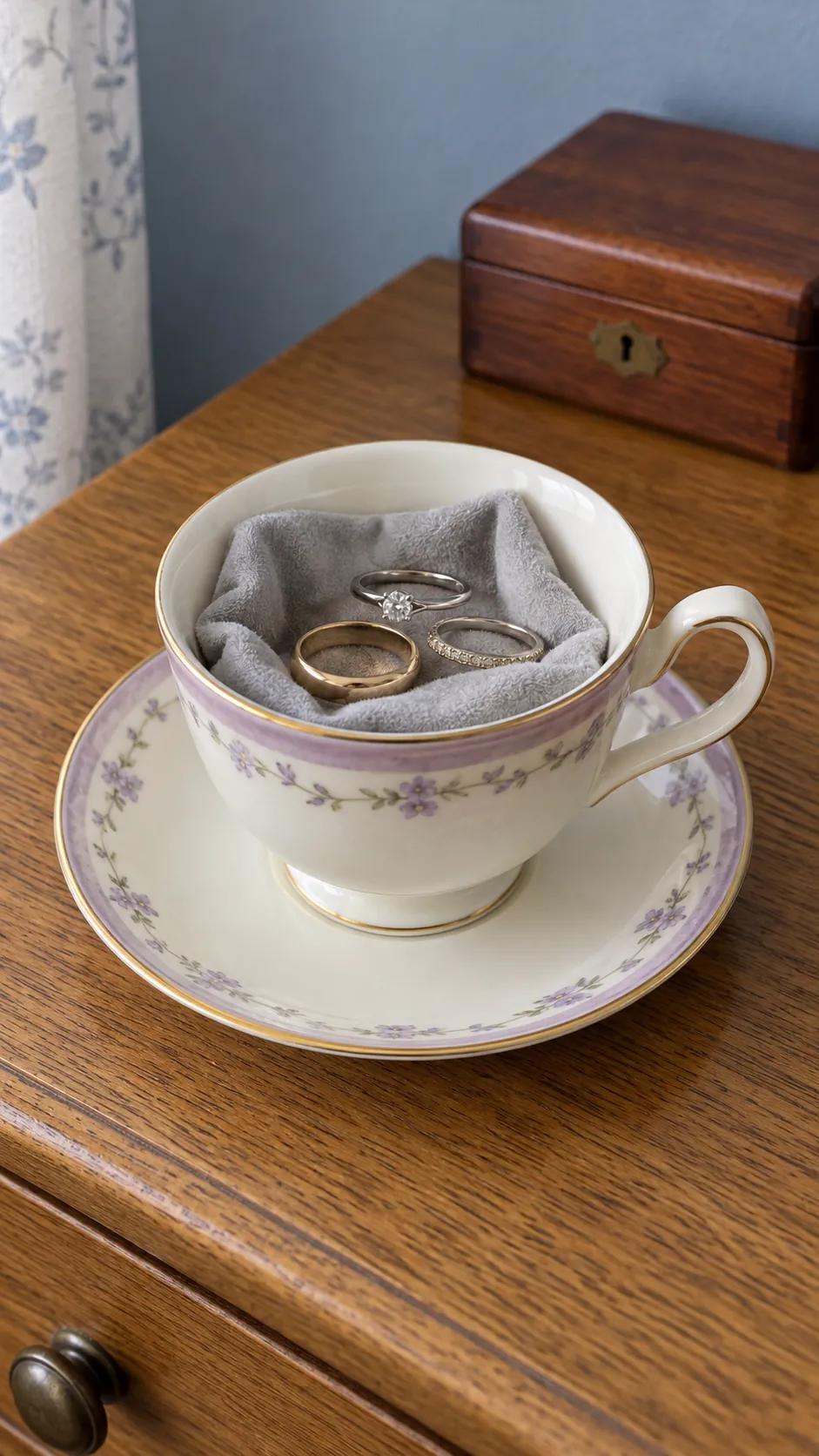
Use a lined cup for a few rings
A small soft removable lining can let an ordinary cup hold a few rings while displaying its outer pattern. Check that the lining is clean, colorfast, and easy to lift out without pulling on the handle. Choose a sound piece with a broad stable foot and set it well back on a dresser. Keep heavy jewelry out so it cannot chip the rim or scratch the glaze. Reserve valuable or very fragile cups for an empty display instead.
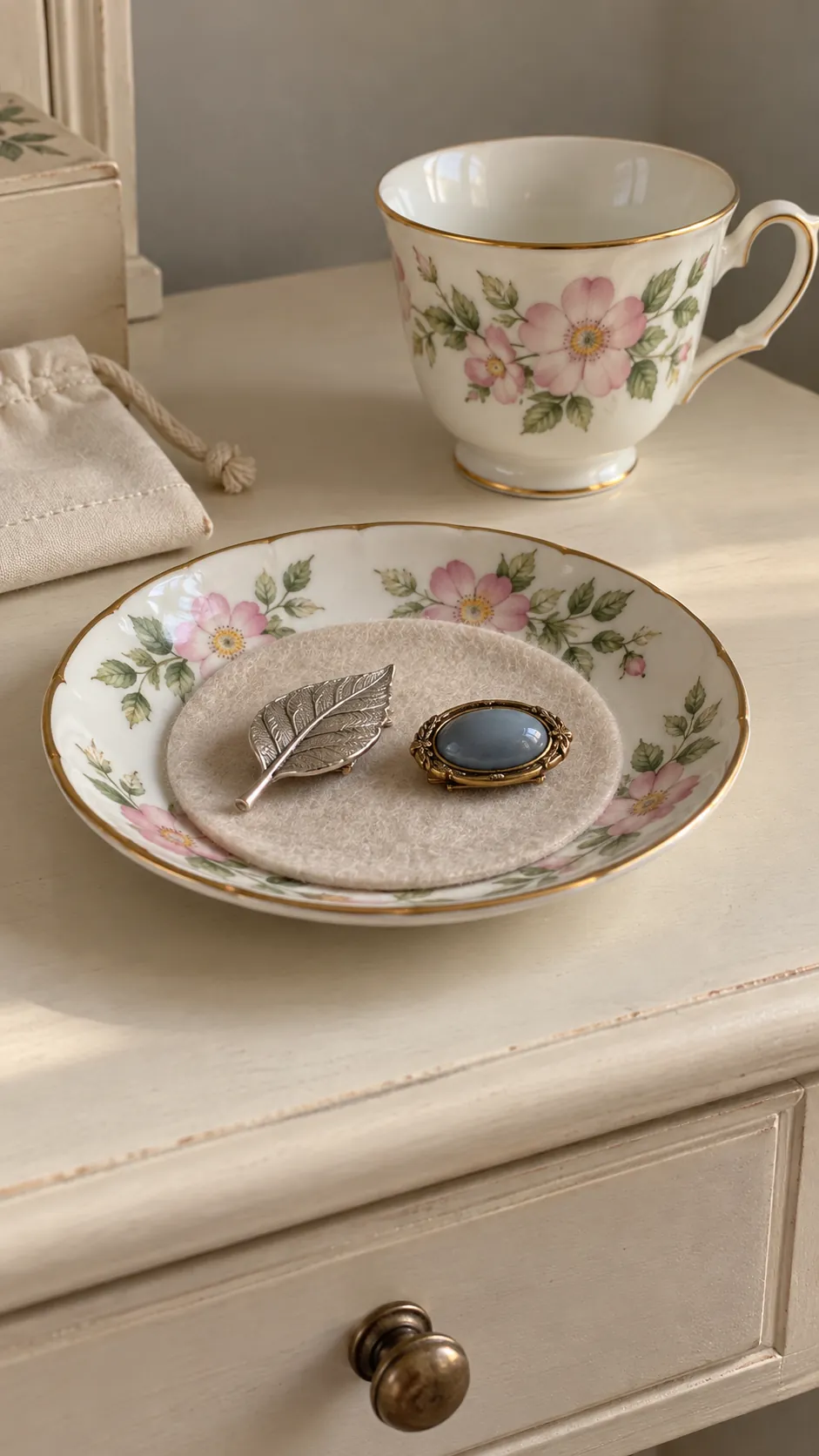
Give brooches a saucer beside their cup
A saucer can show a few brooches next to its matching empty cup. Place the closed pins on a soft protective layer and leave enough room that metal edges do not rest on painted decoration. This arrangement suits a dresser corner where you can see the china and select jewelry without lifting a crowded stack.
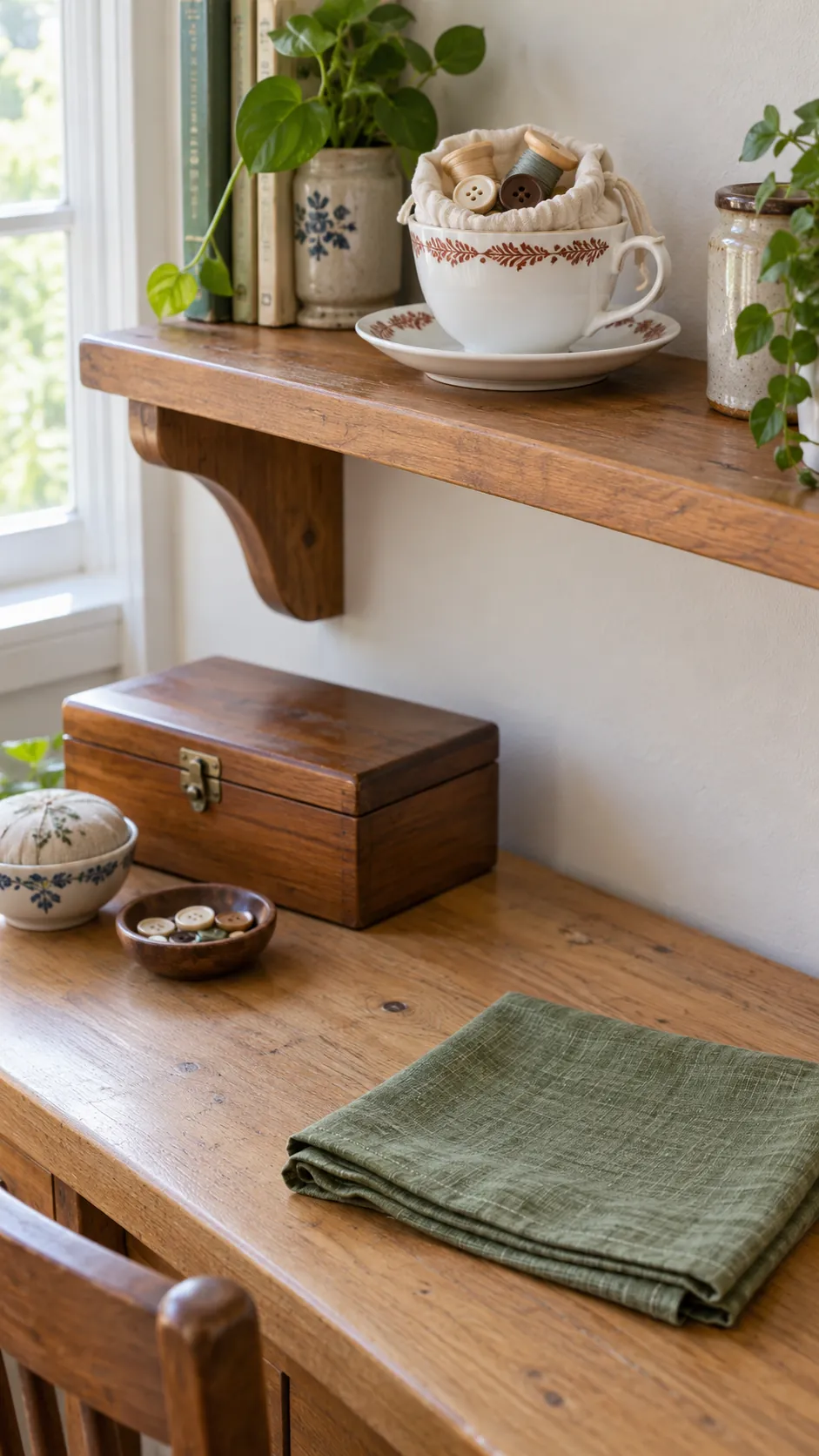
Contain small sewing notions without altering the cup
A sound, inexpensive cup can organize light buttons or thread spools at a sewing desk. Put small parts in a removable soft pouch inside it so loose metal does not scratch the interior. Leave scissors, needles, and heavy tools in their proper holders. Keep the cup on a flat shelf beyond the area where fabric moves.
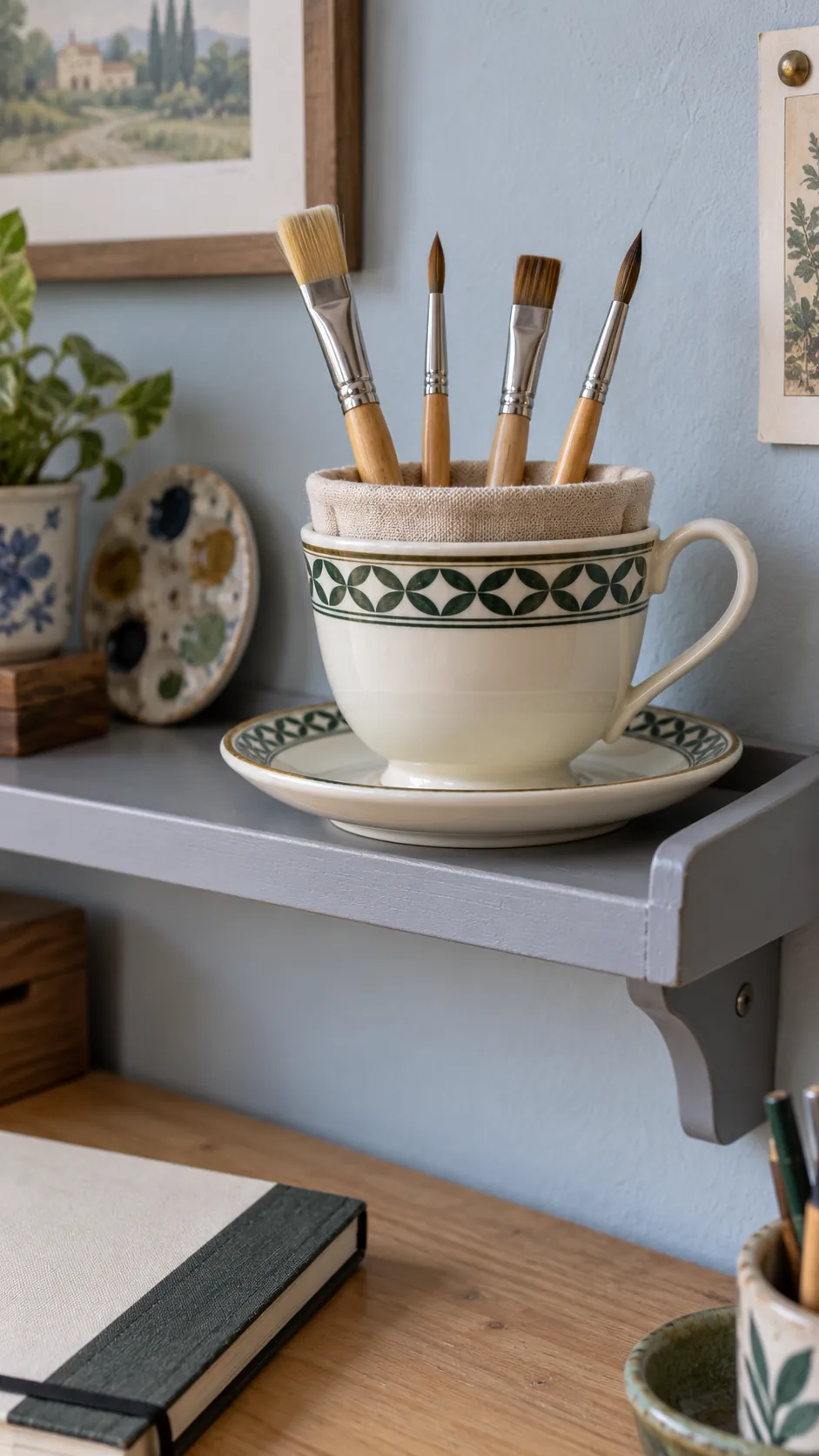
Stand short artist brushes in a sturdy cup
A broad based cup can hold a few short dry brushes in a craft corner. Use a soft removable liner and keep the brush weight low enough that the cup cannot tip. Do not pour paint water or solvent into sentimental china with an unknown finish. Longer brushes belong in a taller holder, leaving this cup useful without forcing it into the wrong job.
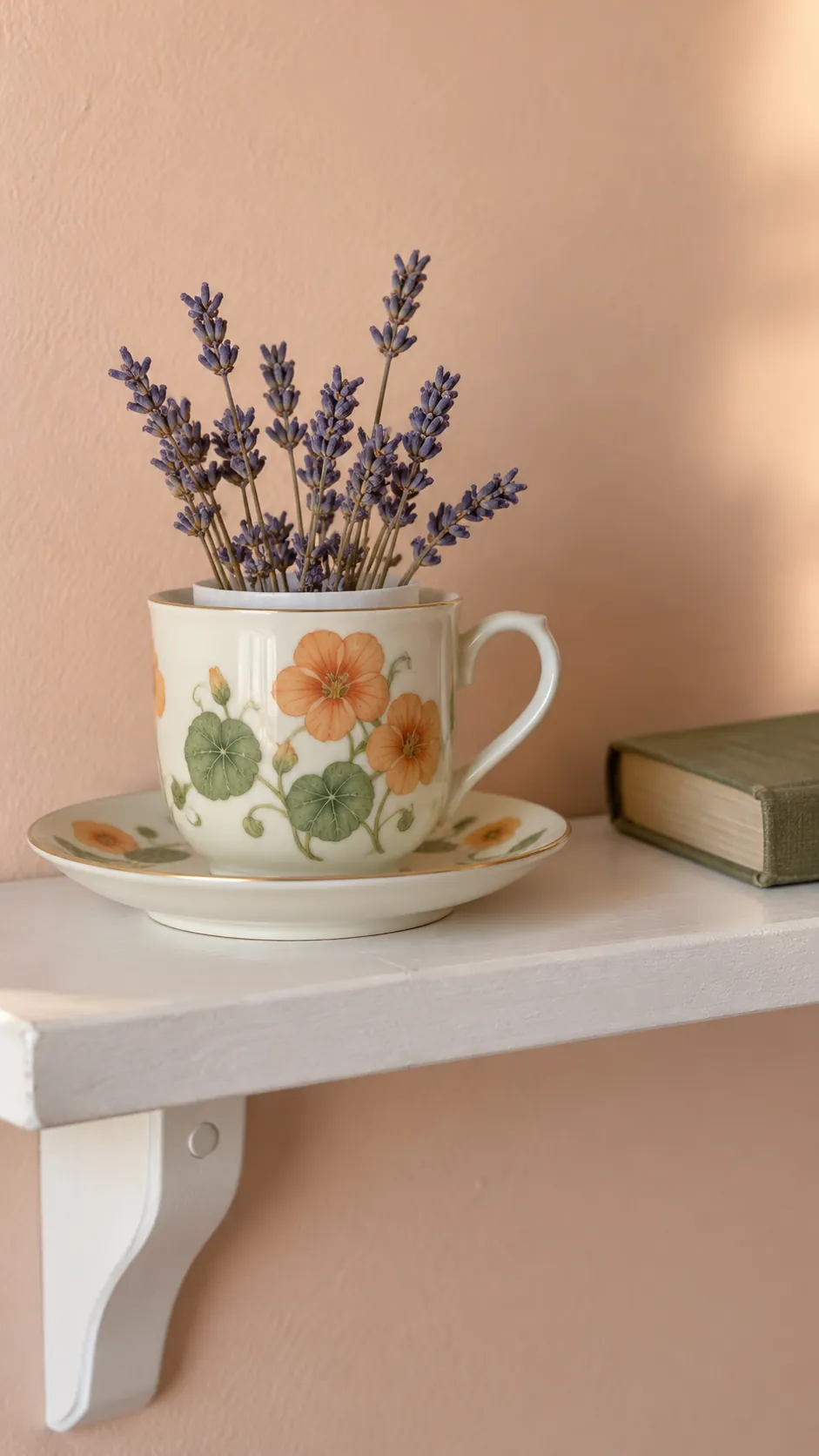
Add dried flowers to a protected empty cup
A few light dried stems can turn an inexpensive cup into a small decorative vessel. Keep the stems dry and use a removable insert so nothing is glued into the china. Make the arrangement short enough to remain stable, with the pattern and handle still visible. Dust gently and skip brittle flowers that shed constantly onto the display.
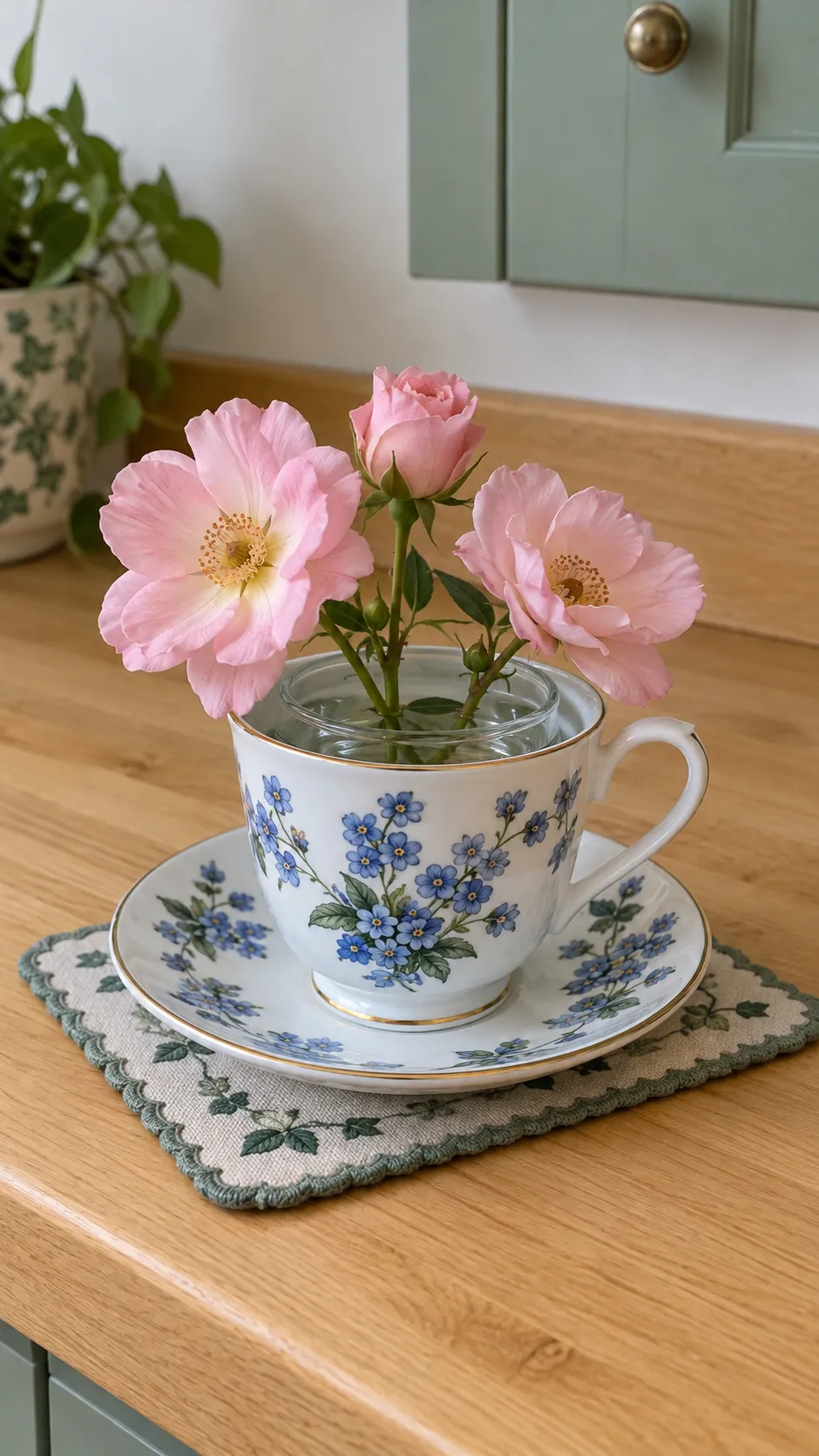
Use a removable inner vase for fresh flowers
Place a small watertight insert inside a sound cup before adding fresh flowers. The insert keeps water away from the china and can be lifted out for refilling. Use a low arrangement that does not pull the cup off balance, and check for leaks on a protected surface. Avoid fresh flowers in cracked, valuable, or delicate heirloom pieces.
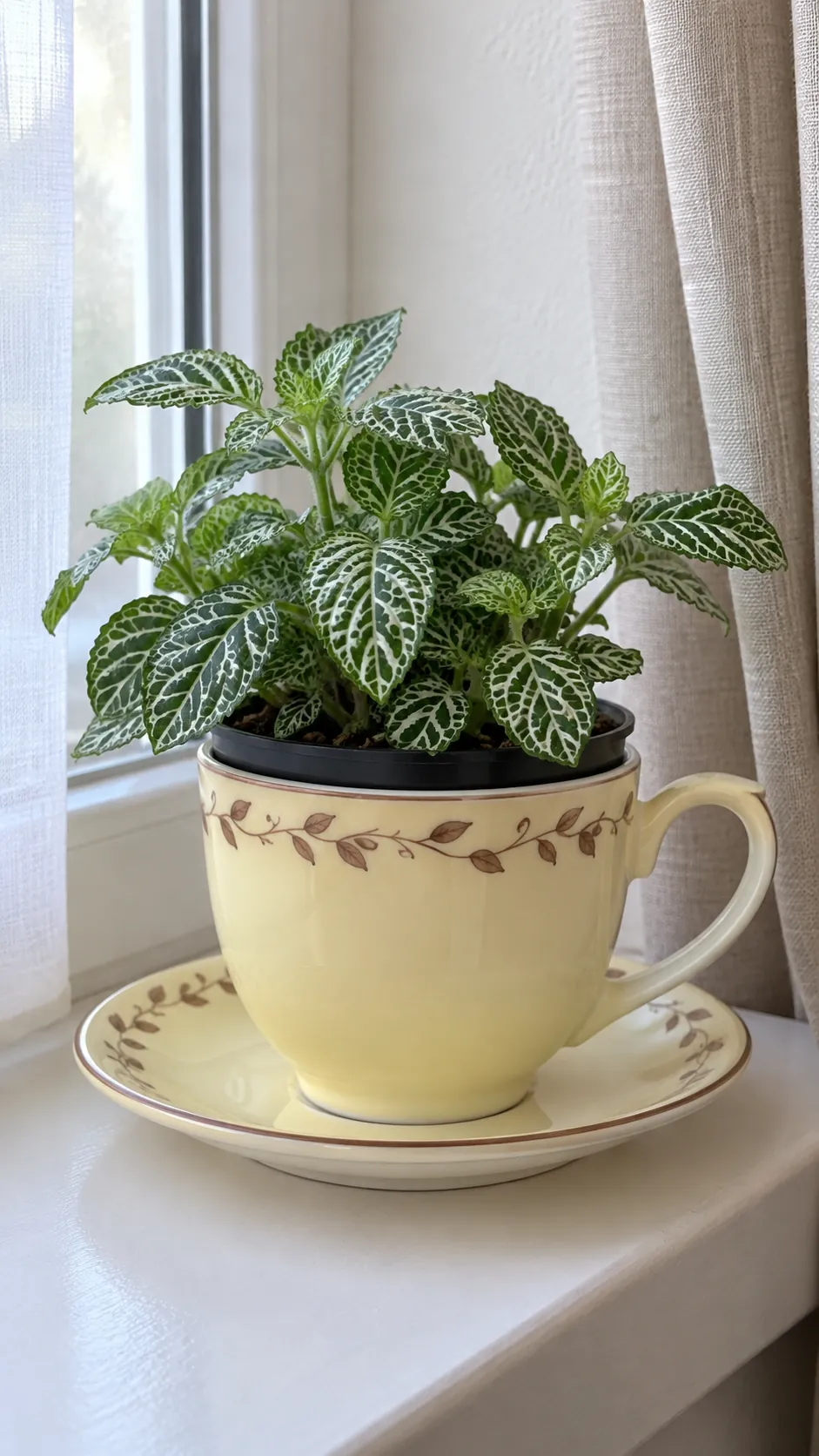
Nest a small nursery pot inside a spare cup
A small plant can sit in its nursery pot inside an ordinary spare cup, without drilling the china. Remove the nursery pot for watering and let it drain fully before returning it. Check that the pot fits without pressing against the rim, and choose a plant suitable for the available light.
This is a decorative outer container rather than a drainage pot. Protect the surface beneath and check for trapped moisture. Keep your most valuable or irreplaceable pieces out of this use.
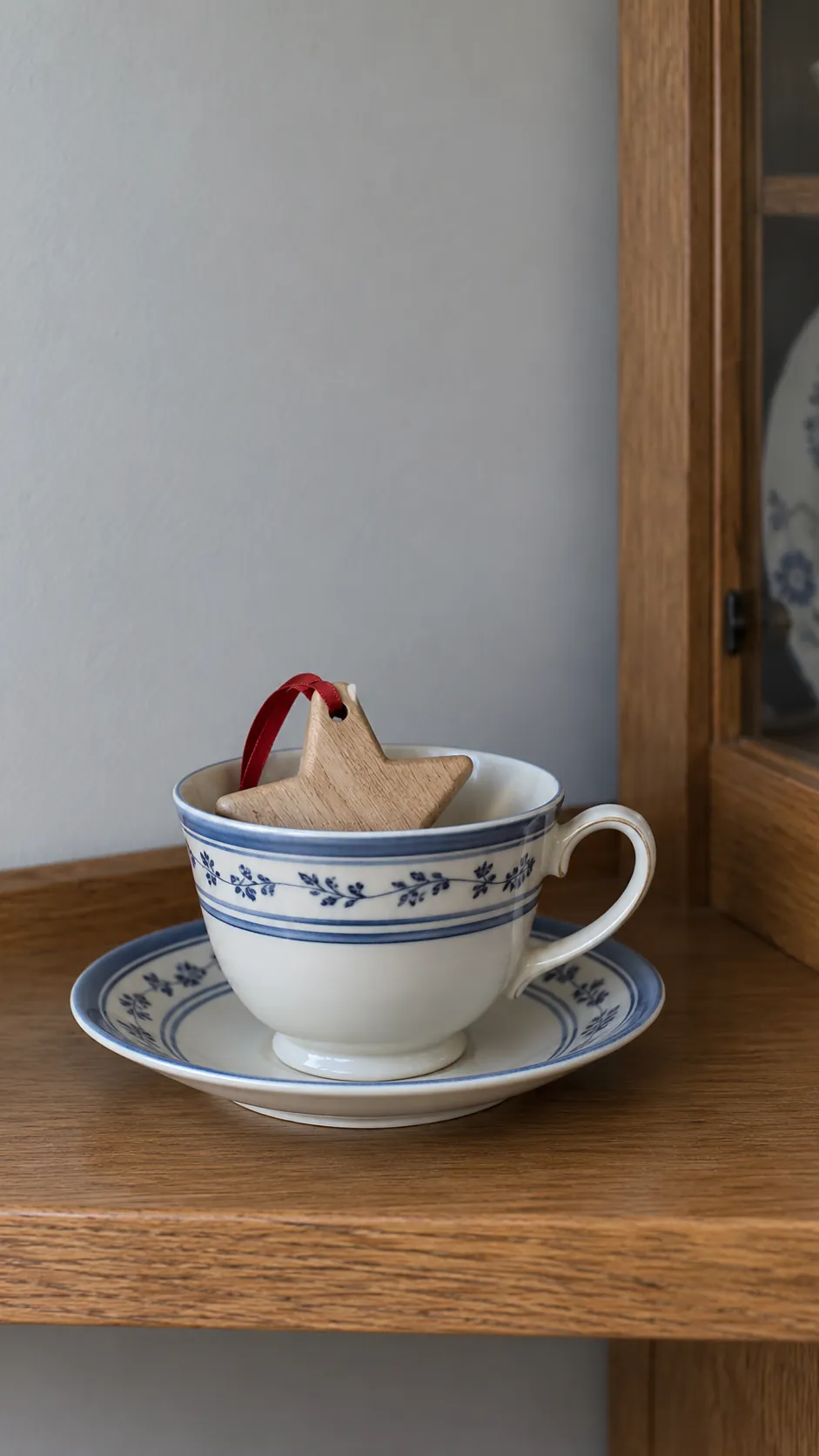
Show a seasonal ornament in the cup
A light removable ornament can give a spare cup a seasonal role on a shelf. Keep the ornament smaller than the opening so it rests safely without pressure on the handle or rim. Set the cup on its saucer and avoid heavy branches, hot candles, or glued decorations. After the season, remove the ornament and return to the plain pair.
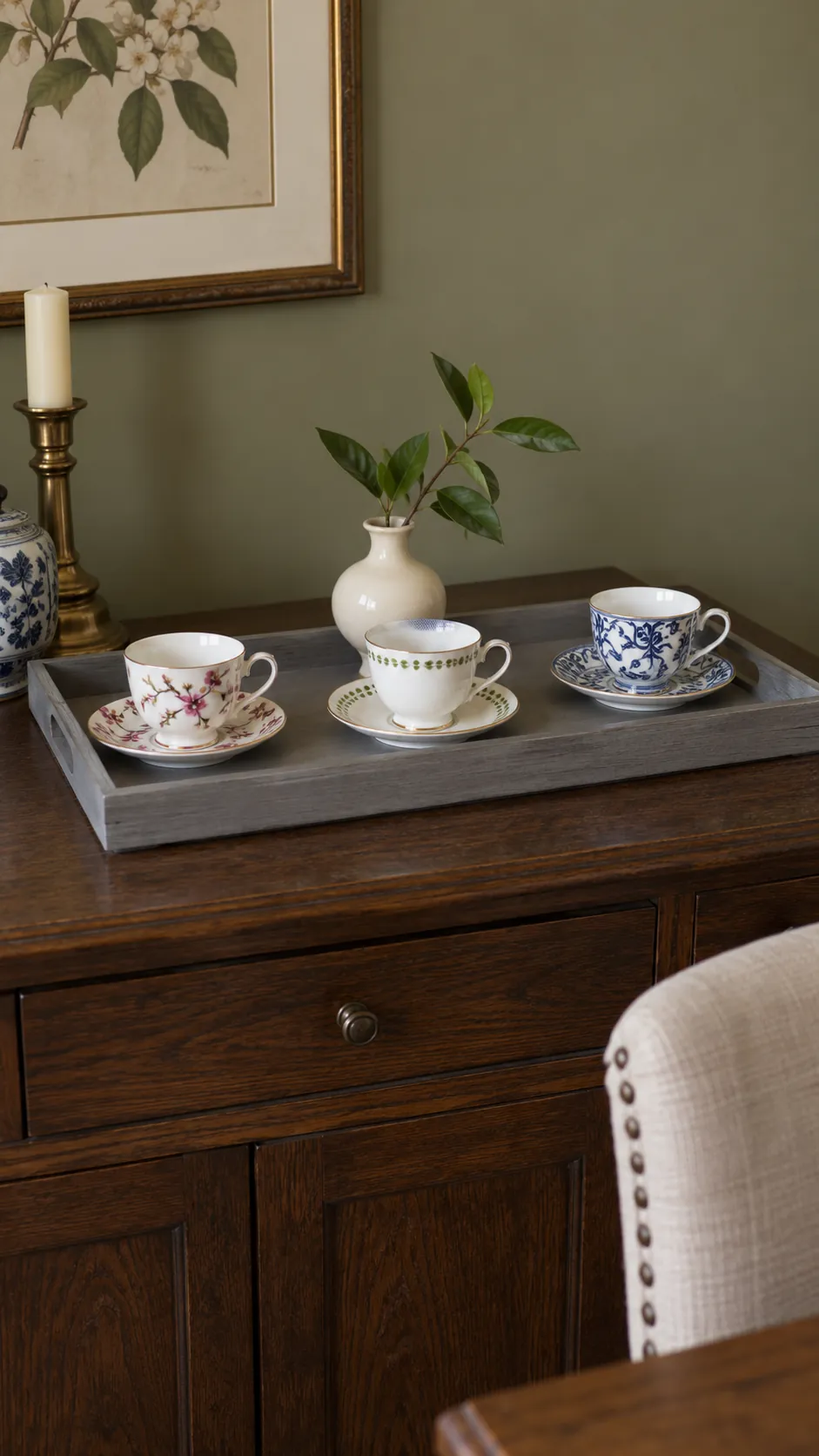
Make a restrained dining sideboard centerpiece
Arrange three favorite cup and saucer pairs on a stable sideboard tray. Give each pair its own space rather than piling the cups or balancing them on plate edges. A low central vessel can connect the group, provided it does not obscure the patterns. Move the tray only after removing the fragile pieces, and keep the display separate from busy food service areas.
Let cups occupy separate cubbies
Small cabinet compartments can give different inherited pieces their own visual space. Check that every cubby is deep and tall enough for the saucer and handle, and set the pair fully inside it. Keep the furniture stable and avoid tight openings that make safe removal difficult.
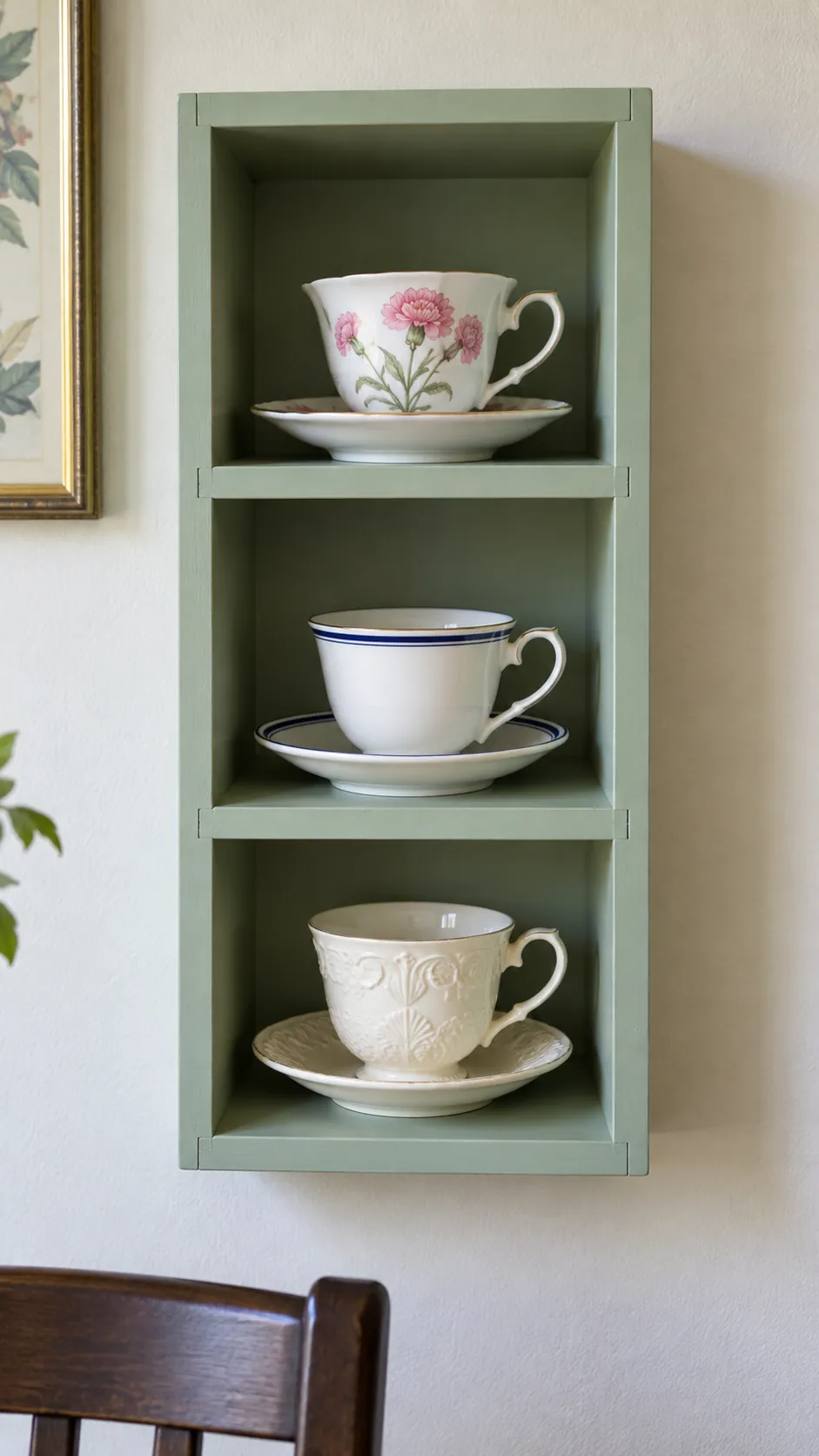
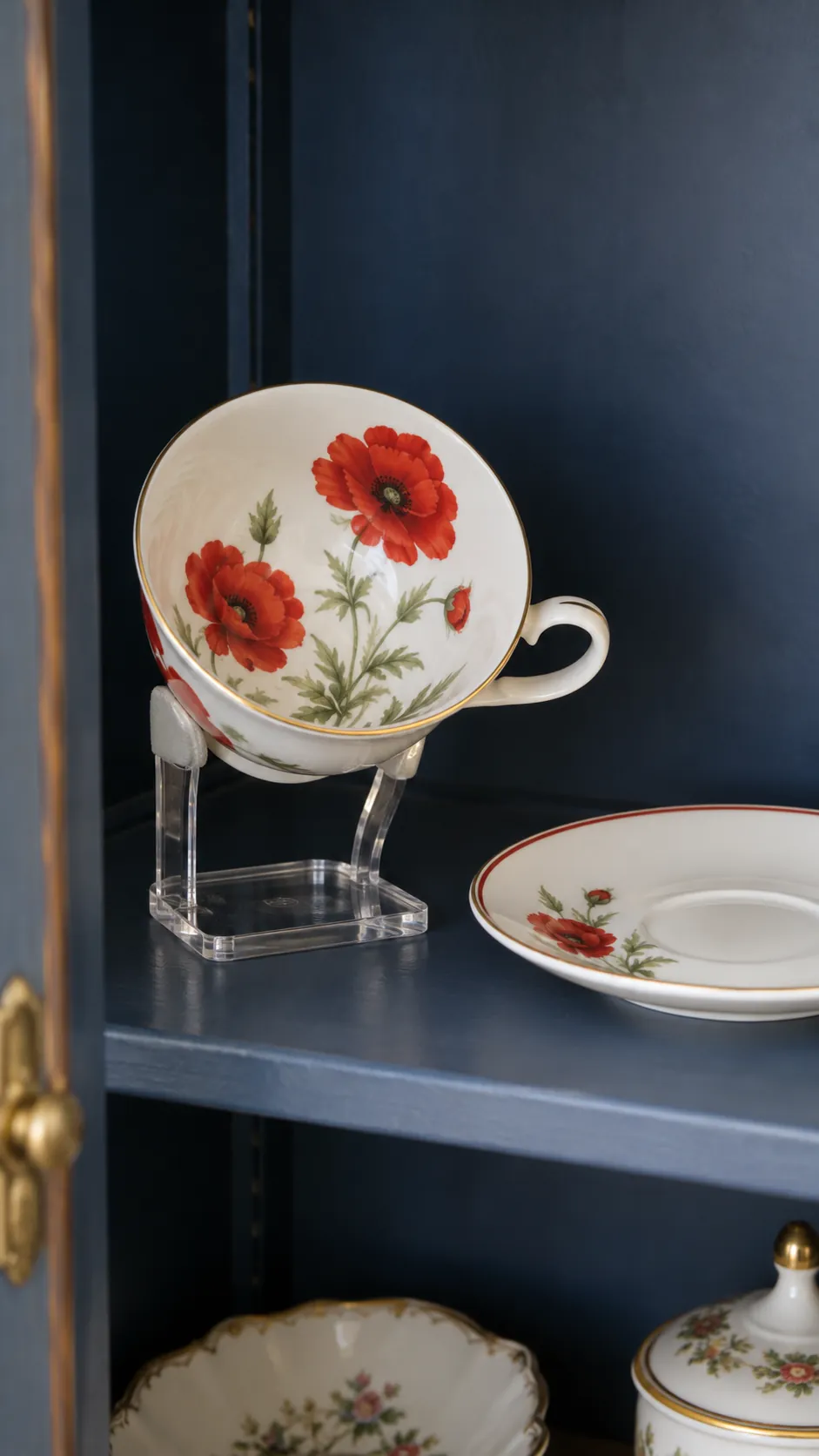
Use secure stands to reveal cup interiors
A stand designed for a cup can angle the interior pattern toward the viewer without an improvised stack. Choose supports suited to the cup size and shape, with smooth contact points that do not strain the handle. Test stability on a clear surface before putting the piece in a cabinet. If a stand presses against a fragile rim or lets the cup rock, display the cup upright instead.
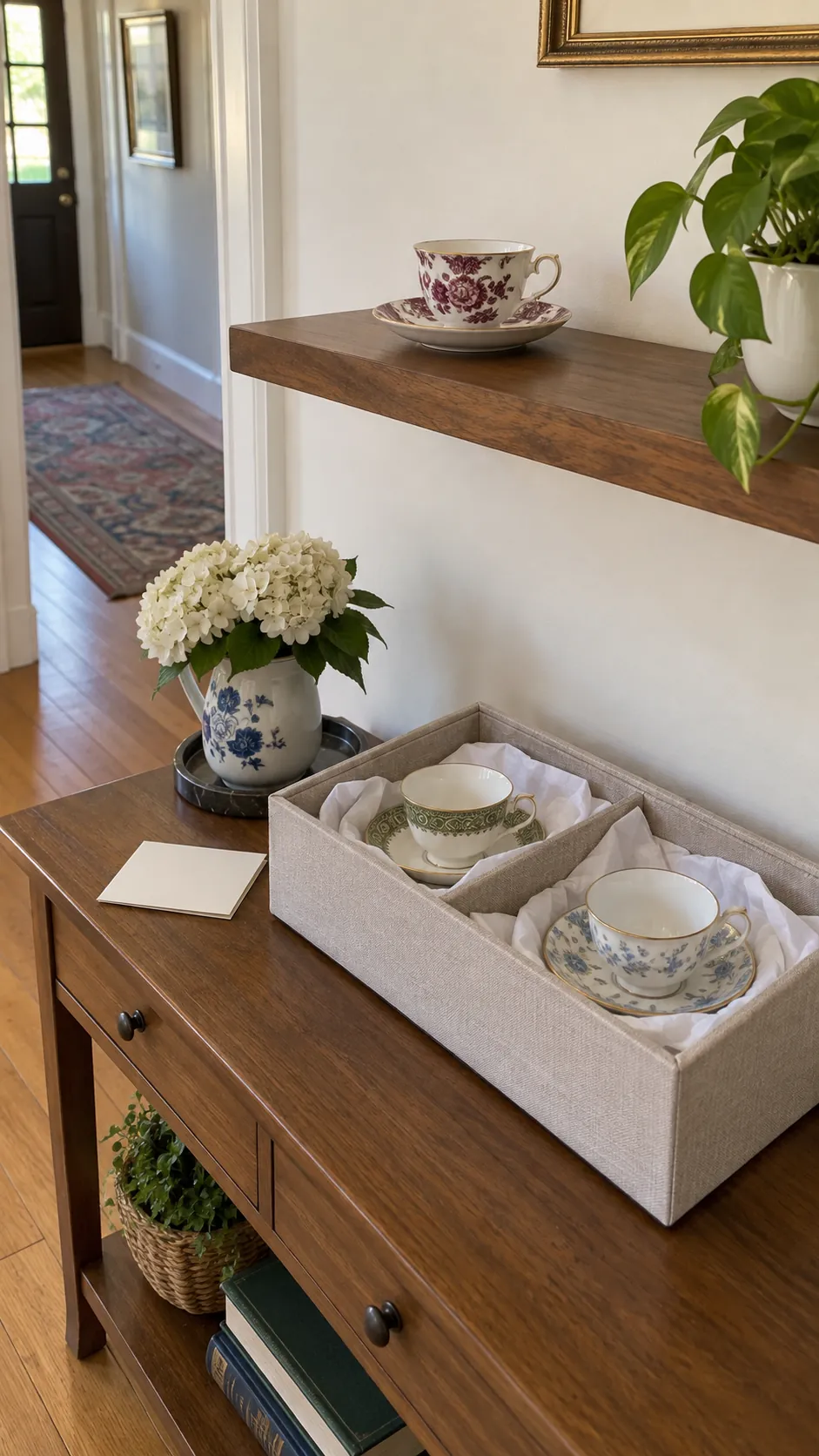
Rotate a small collection through one safe spot
A limited display area can hold different favorites over time. Choose a stable location and store the remaining pieces separately with suitable protection, never nesting fragile cups tightly together. Change the display when you feel like seeing another pattern, rather than forcing every inherited piece into the room at once.
Take a photograph of each arrangement if you want a record. Keep a simple note about which cup came from whom with your storage information. A rotating inherited teacup display lets the collection stay meaningful without making the visible shelf crowded.
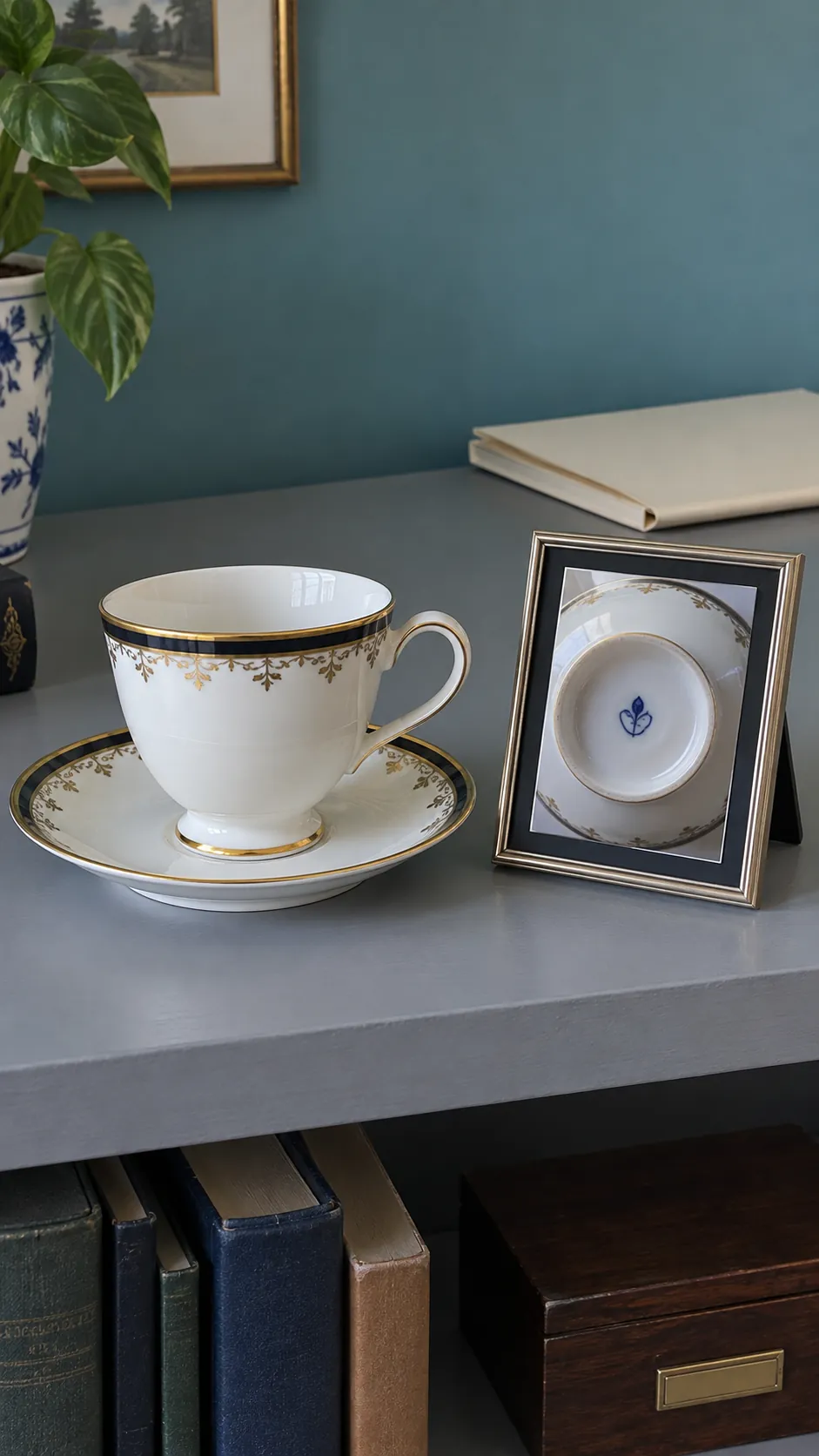
Keep a maker mark visible beside its cup
If a maker mark interests you, photograph the underside while handling the cup carefully and show the photograph beside the upright pair. This reveals the detail without balancing the cup upside down or asking guests to pick it up. Keep the image separate from the china, and do not claim a date or value from an unfamiliar mark without reliable identification.
Choose a few memory pieces for a shared family display
A small group can represent the people connected to the collection without preserving every piece in one room. Pick cups with distinct stories and arrange them on a stable shelf with space around each pair. Record those stories in a separate note so relatives can understand why the pieces matter. If others want parts of the service, discuss that openly and keep the pieces you actually enjoy seeing.