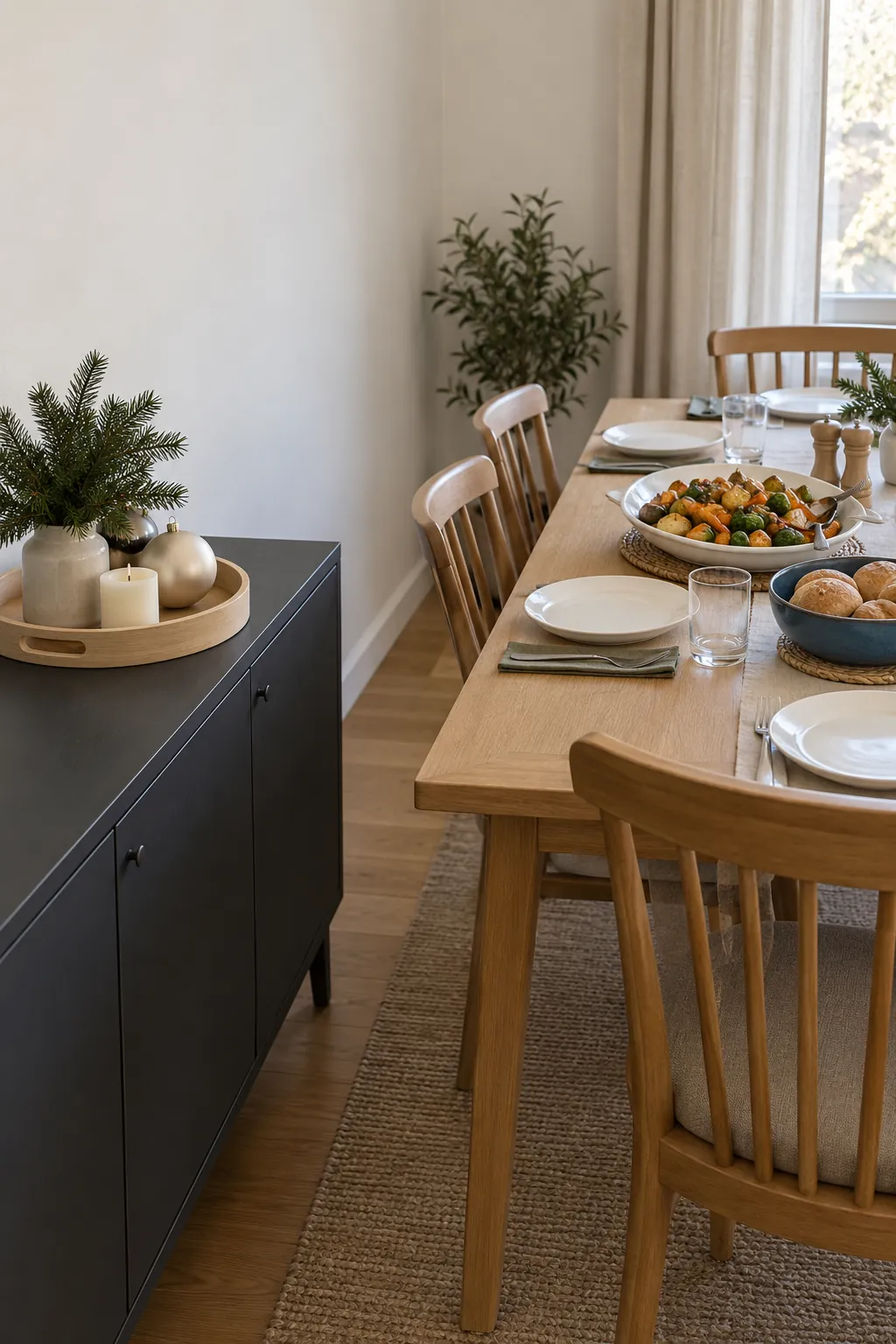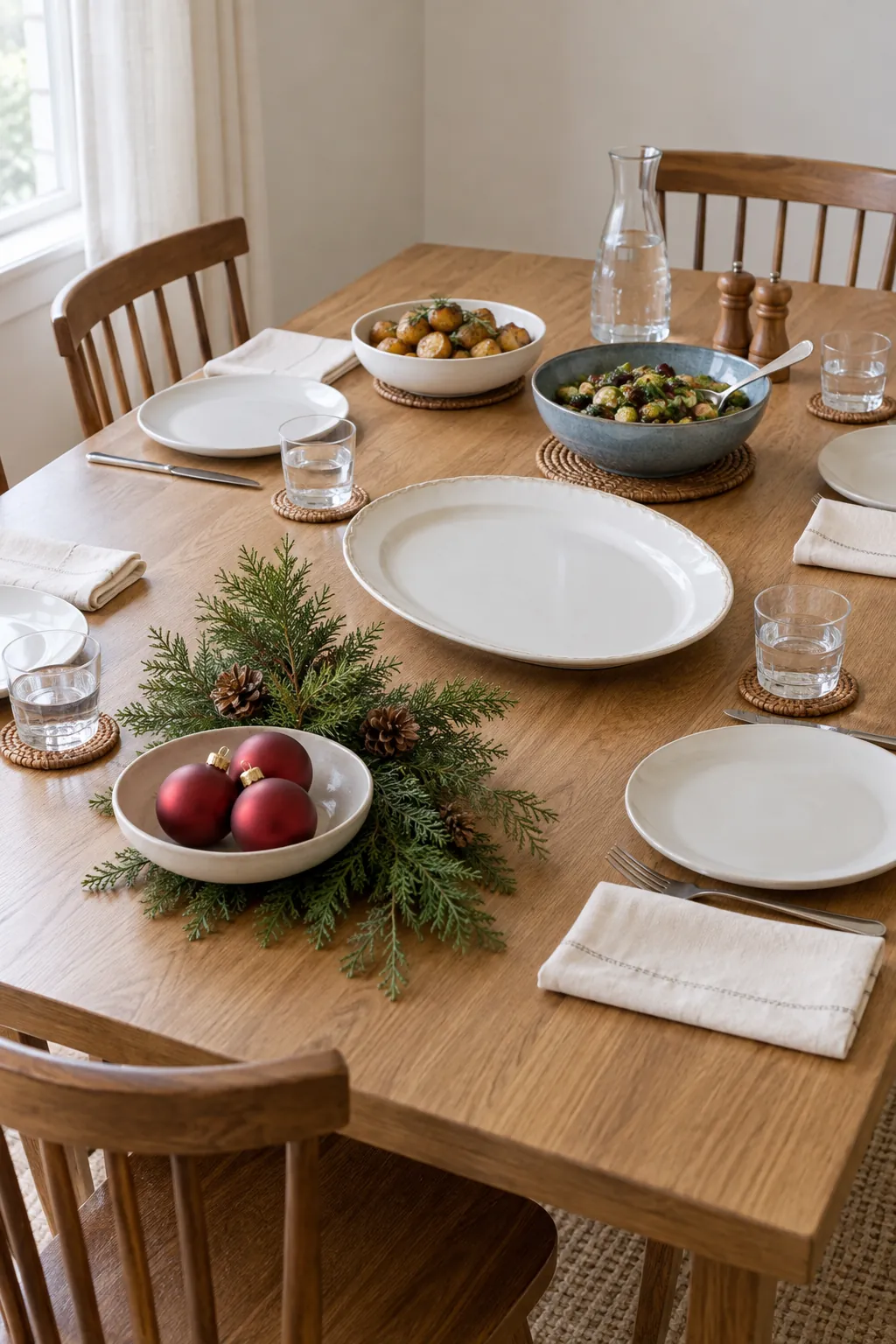
A decorated table can look spacious until the roast, vegetables, and serving spoons arrive. Start by setting out the empty dishes you will actually use, including their handles and any required trivets. Then let the decorations fit the remaining spaces, with a nearby place ready for anything that needs to move.
Low height helps conversation, but a small footprint matters just as much for serving. Keep decorative greenery and small loose parts away from food, and use battery lights when you want candlelike glow among busy place settings. No centerpiece needs to stay on the table if it makes passing dinner awkward.
A Thin Cedar Line
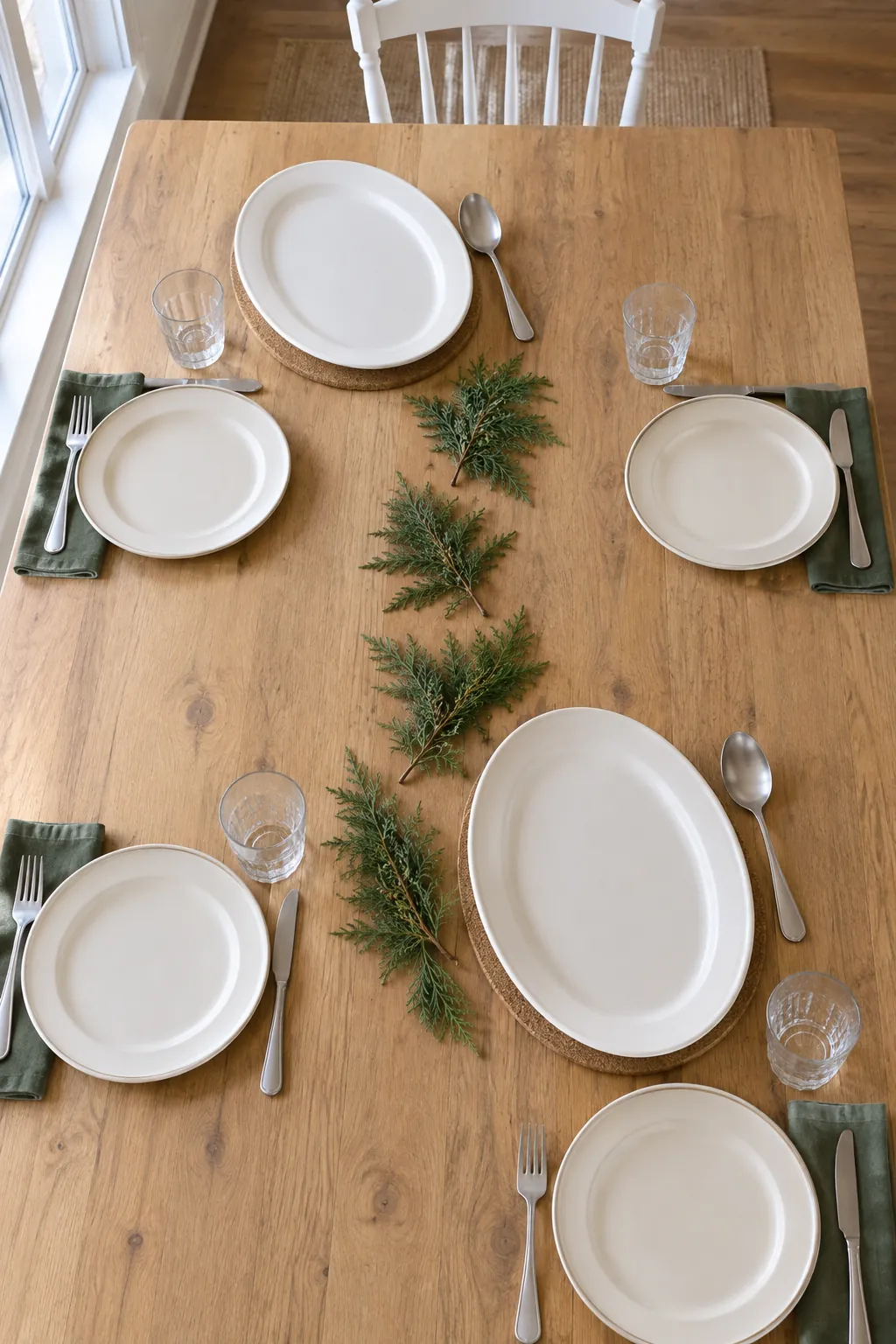
A few short faux cedar sprays can make a narrow seasonal line without taking over the middle of the table. Arrange them between the actual platter positions rather than measuring the display in isolation. Keep branch tips clear of plate rims and serving utensils, with no loose needles on food surfaces.
A Small Bowl of Matte Ornaments
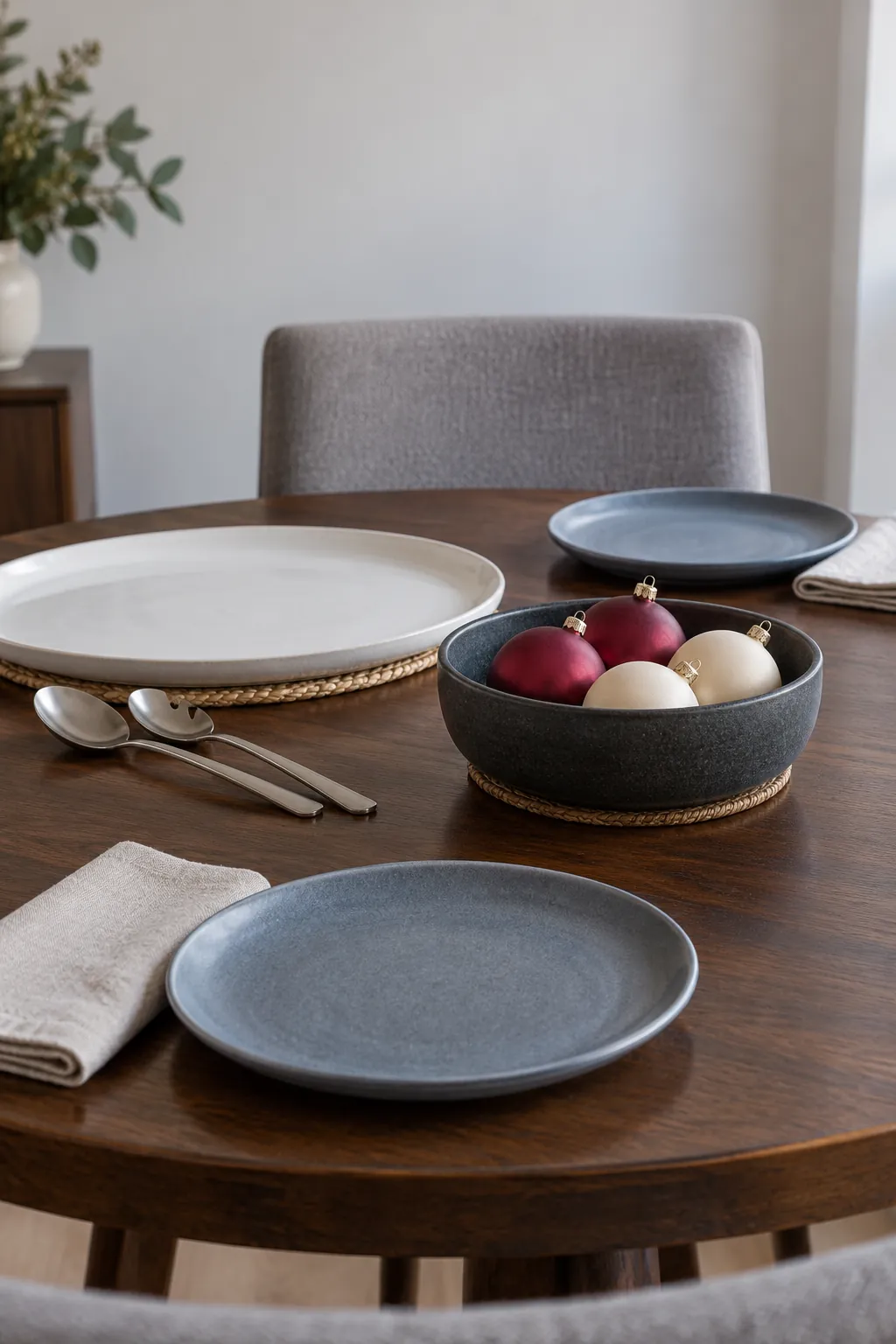
A small shallow bowl gathers ornaments into one footprint that is easy to understand and move. Choose a bowl that fits beside your largest platter, then limit the ornament count to what stays securely inside its rim. Matte finishes are helpful when glasses and dishes already create plenty of reflections. Leave the bowl low enough that seated guests can see across it.
One Short Jar of Evergreen Stems
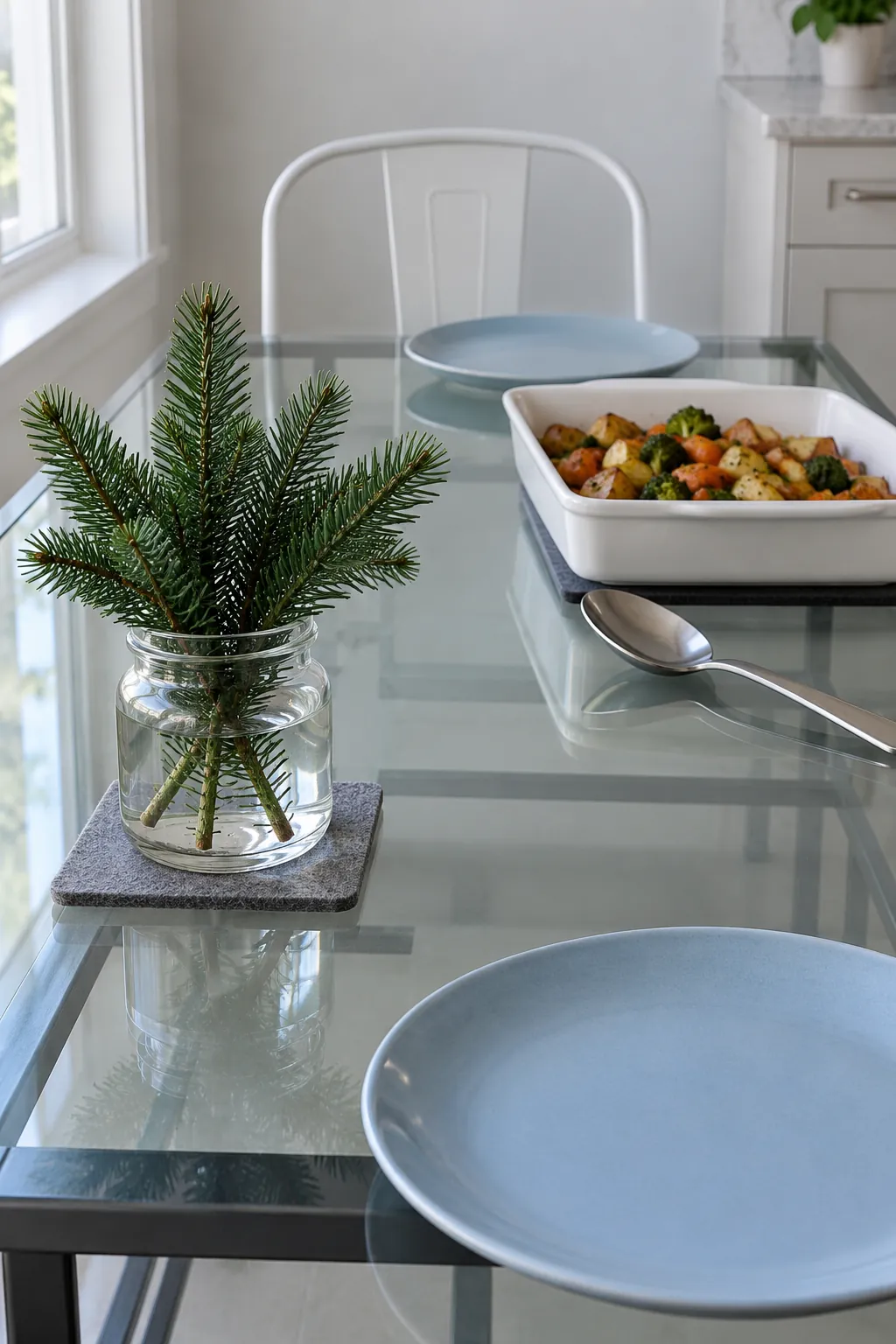
A squat jar with a few short faux evergreen stems gives height in one compact spot rather than across the whole table. Spread the stems lightly, keeping their ends out of the space where platters will pass. A broad jar base is more stable than a narrow bottle.
Place the jar away from the route of reaching arms and check it from a seated position. If the branches obscure someone opposite, shorten the arrangement rather than moving dinnerware into cramped positions. Use a suitable protective coaster beneath the jar to keep moisture or rough glass off the table finish.
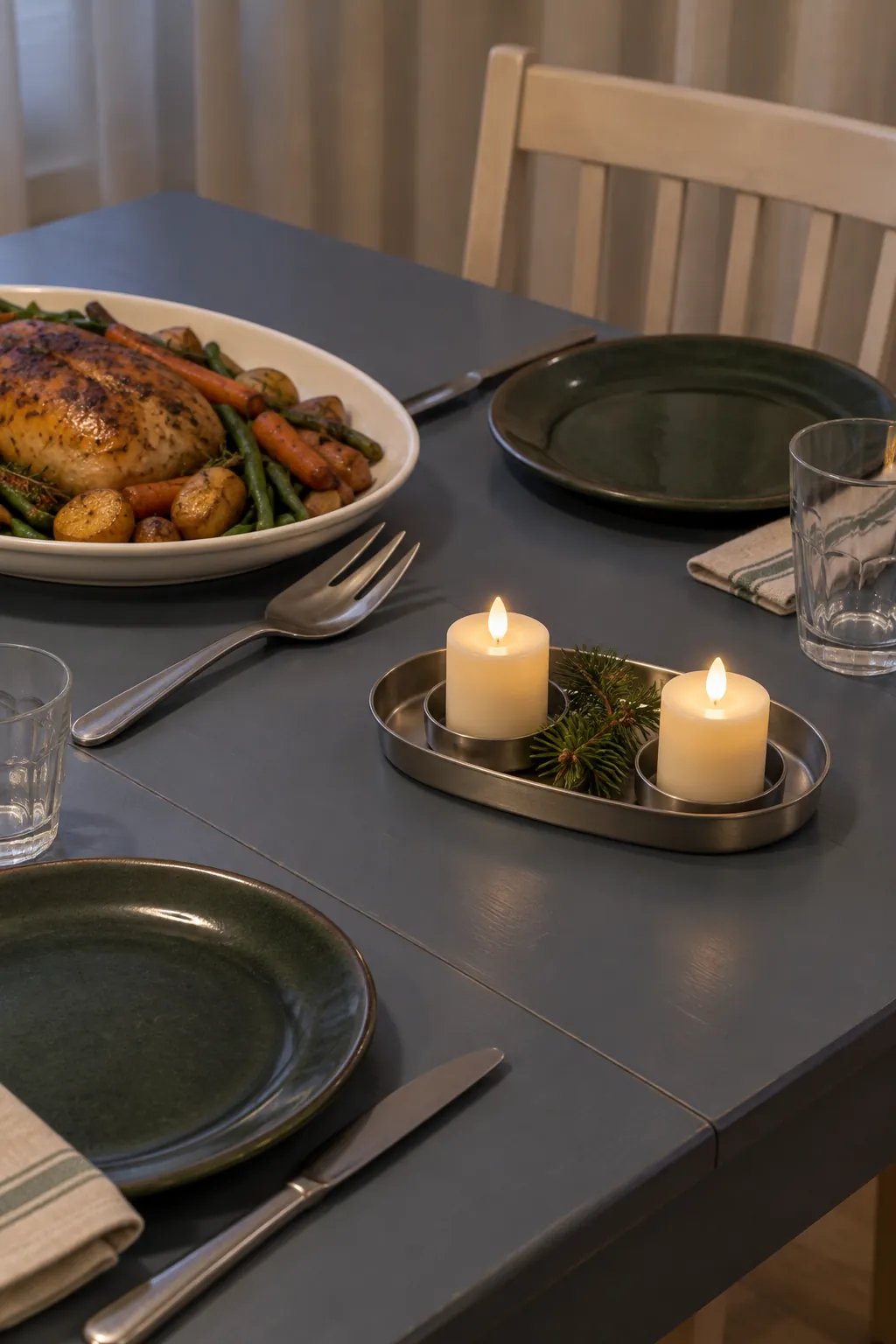
A Compact Tray of Battery Lights
Two small battery candles in a compact tray create an evening focal point without open flames. The tray keeps their bases together and makes the display easy to lift before an extra dish arrives. Leave enough bare table around it for the serving spoon handles as well as the platter itself. Avoid strongly scented decorative pieces beside dinner.
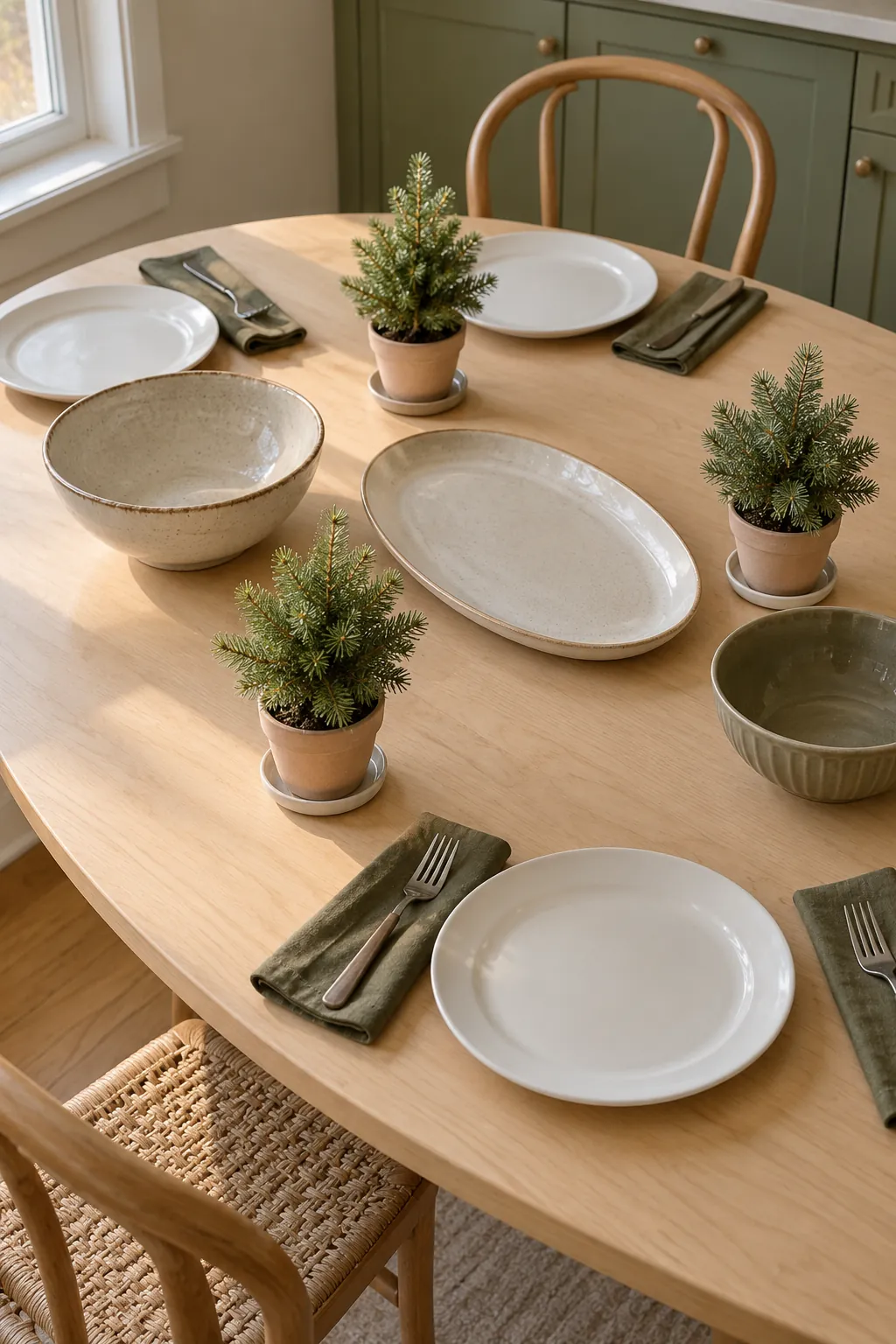
Three Tiny Pots With Gaps Between Them
Small faux evergreens in three tiny pots can be separated to fit the serving layout. Put them into remaining gaps after setting out the empty platters, rather than making a continuous row and hoping food will fit later. Stable pots and leakproof bases matter more than matching every plant perfectly. Keep their foliage short and narrow so guests can still pass dishes.
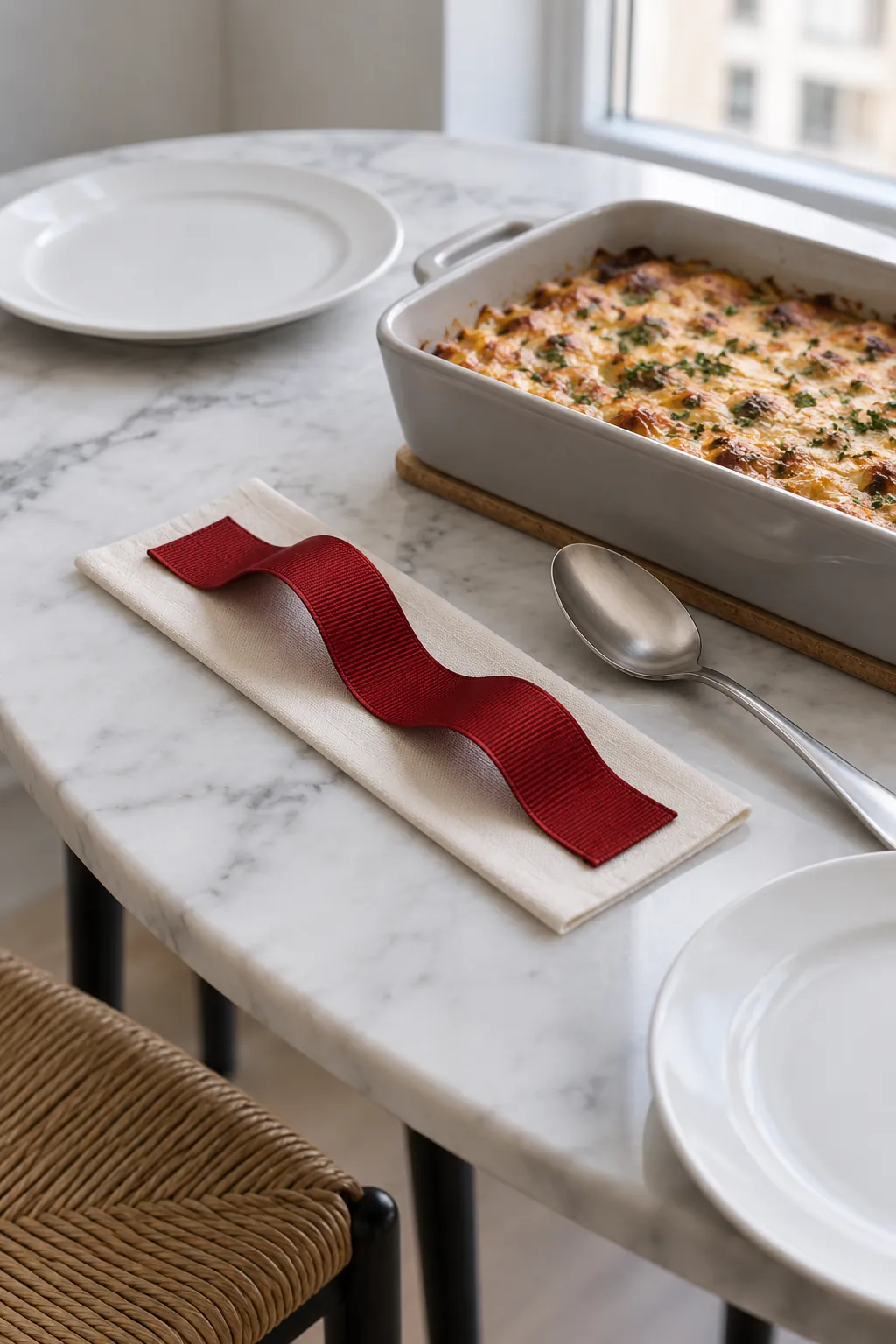
A Short Ribbon Accent
A short length of ribbon can introduce Christmas color with almost no vertical bulk. Let it rest flat in a small central area, with its ends contained on the table and clear of serving utensils. Use a washable or removable protective layer if the fabric could transfer color to the finish. One restrained ribbon gesture is easier to work around than multiple large bows.
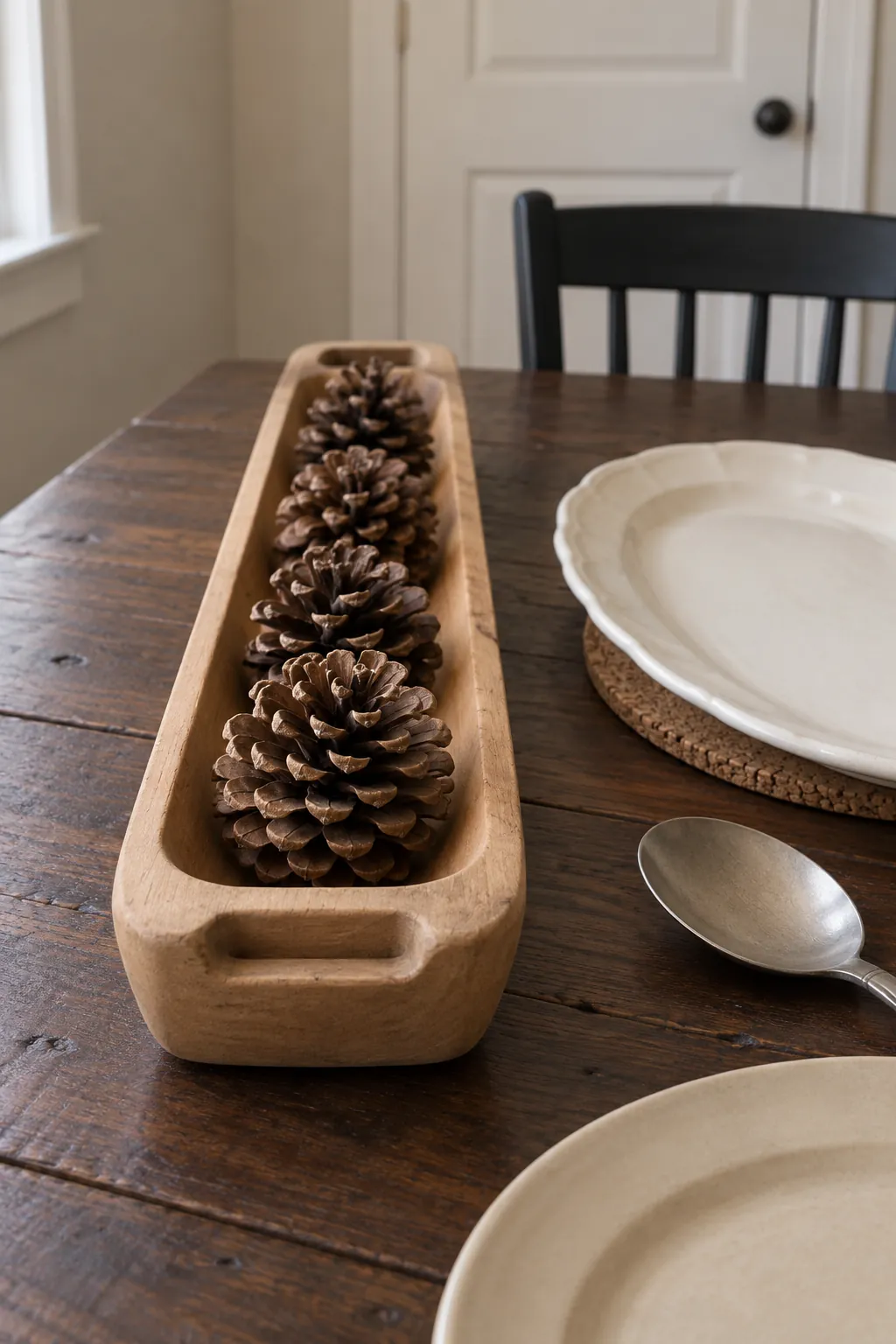
A Narrow Pinecone Trough
A narrow wooden trough contains pinecones and keeps their irregular edges out of nearby platter space. Arrange a few larger cones lengthwise instead of building a tall mound. Check that the trough’s handles or projecting ends also fit within the gap you have reserved. Choose clean decorative cones and keep them separate from food and serving surfaces.
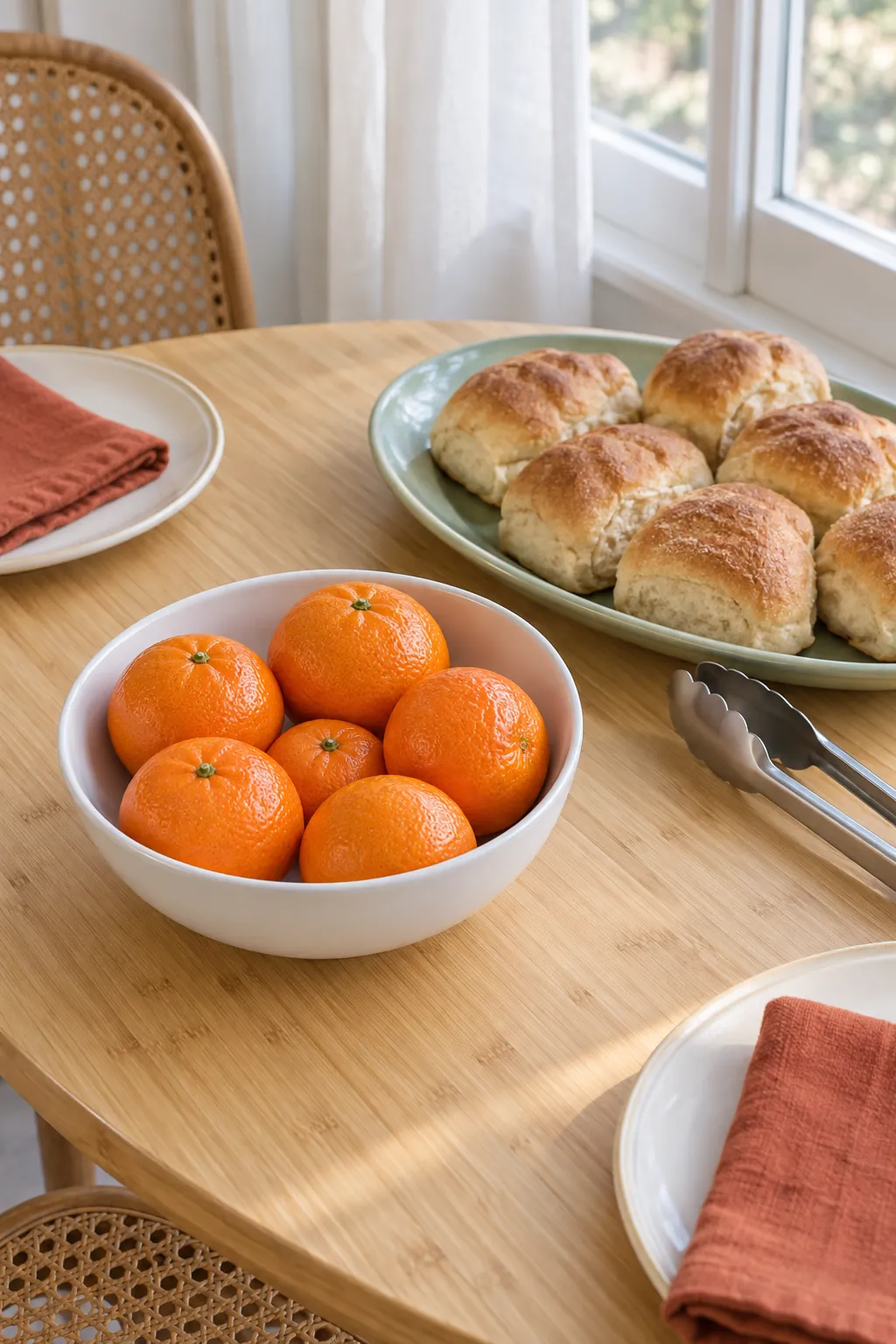
A Low Bowl of Clementines
A small bowl of clean clementines offers seasonal color while also serving as part of the meal. Use a vessel intended for food, and keep decorative sprays, glitter, or painted ornaments out of it. A low single layer is easier to fit than a piled fruit tower.
Let the fruit remain simple rather than adding elaborate garnishes that need separate space. Guests can help themselves if that suits your menu, which gradually reduces the centerpiece instead of leaving it in the way. Move the bowl aside when a larger serving dish needs its position.
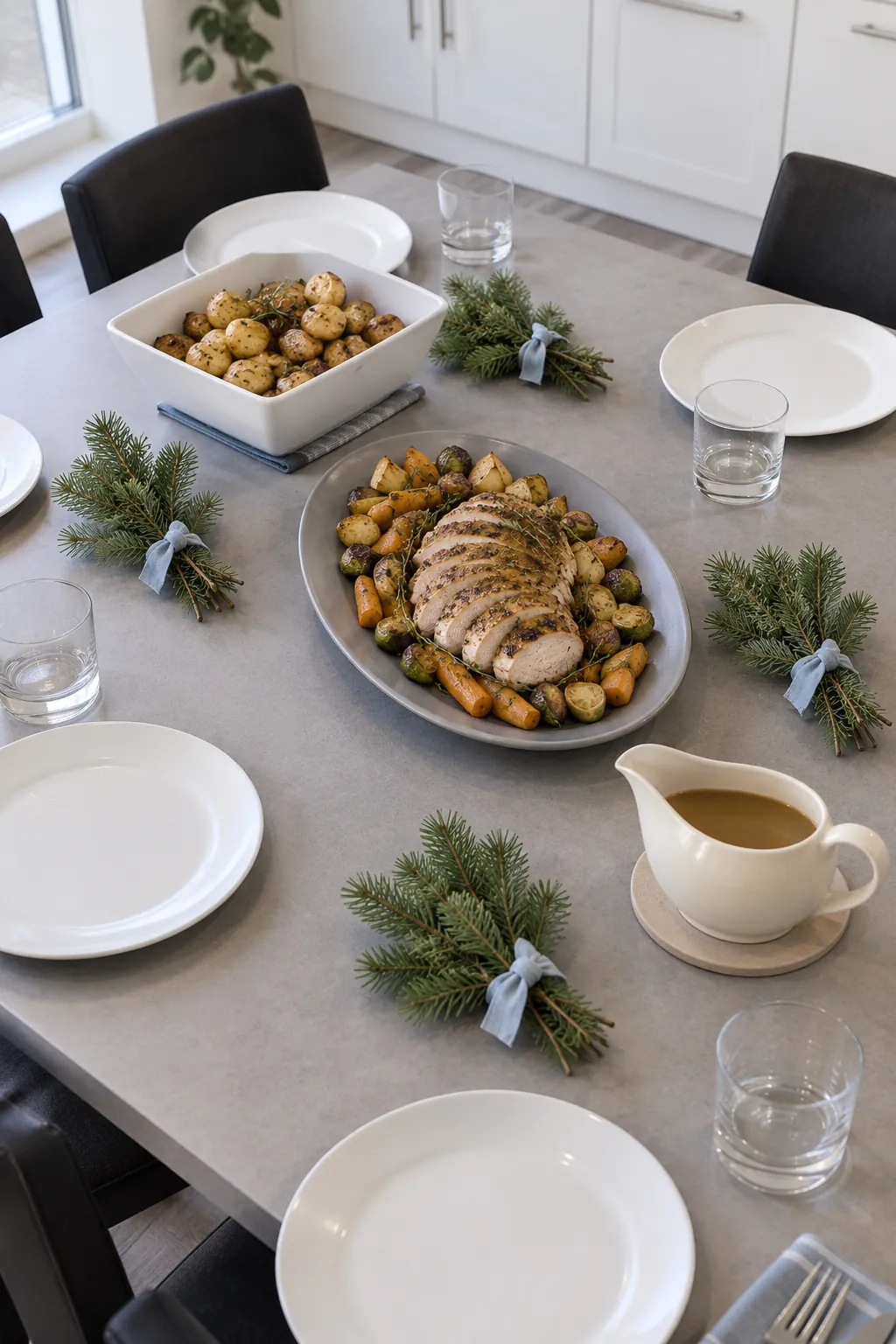
Small Greenery Bundles in Open Spaces
Several small tied faux greenery bundles can sit in the gaps between serving dishes. Their separate footprints let you move one bundle without dismantling the whole display. Keep ties short and secure so they do not trail into utensils or glasses. This works best when the table already has several distinct serving zones rather than one crowded center.
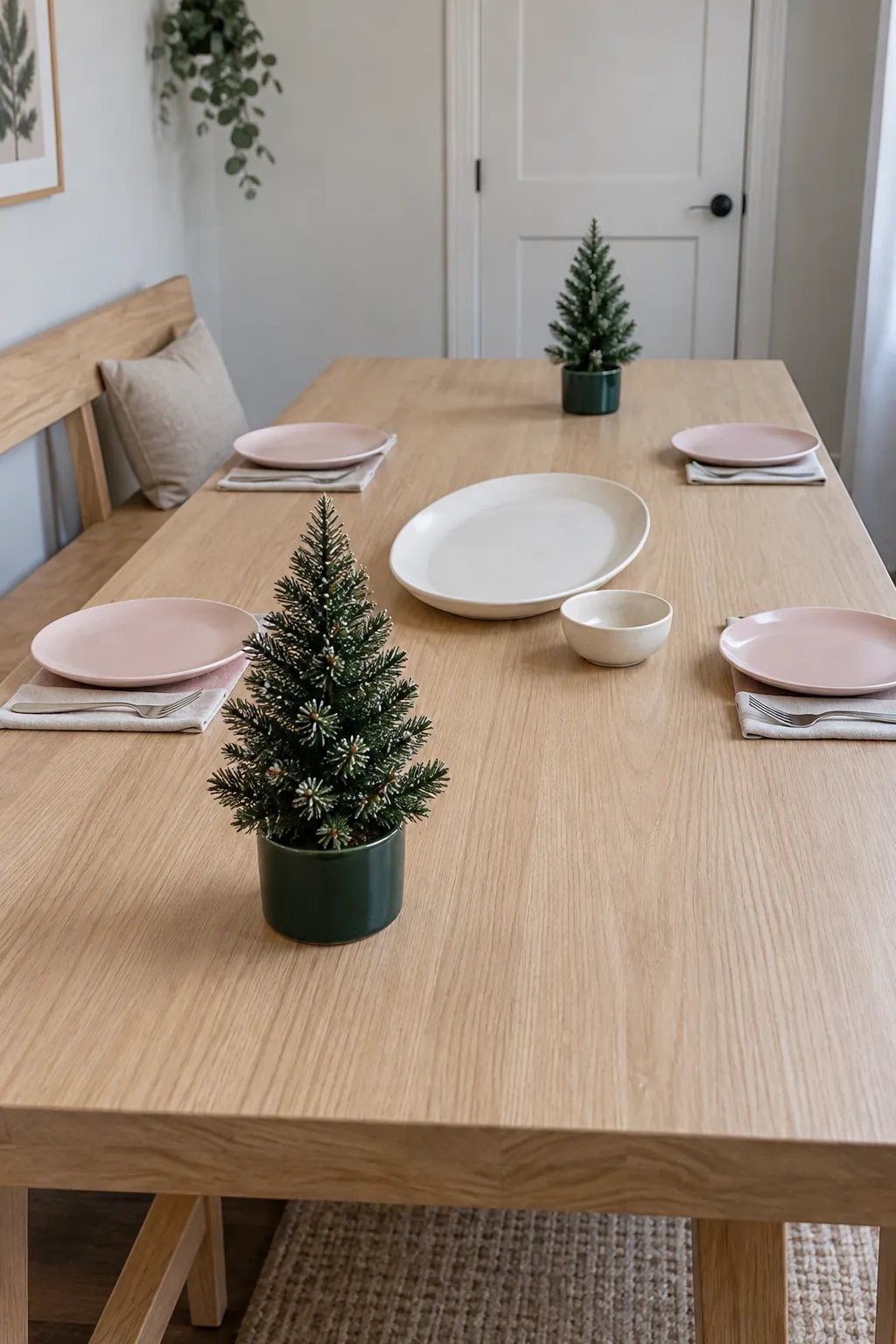
Miniature Trees at the Table Ends
Two small faux trees can decorate the ends while the main center stays available for dinner. Only use the ends if they are not occupied by place settings or serving positions. Choose broad stable bases and leave enough room that the trees cannot be knocked by a guest’s elbow. Reduce to one tree if the table layout cannot comfortably support both.
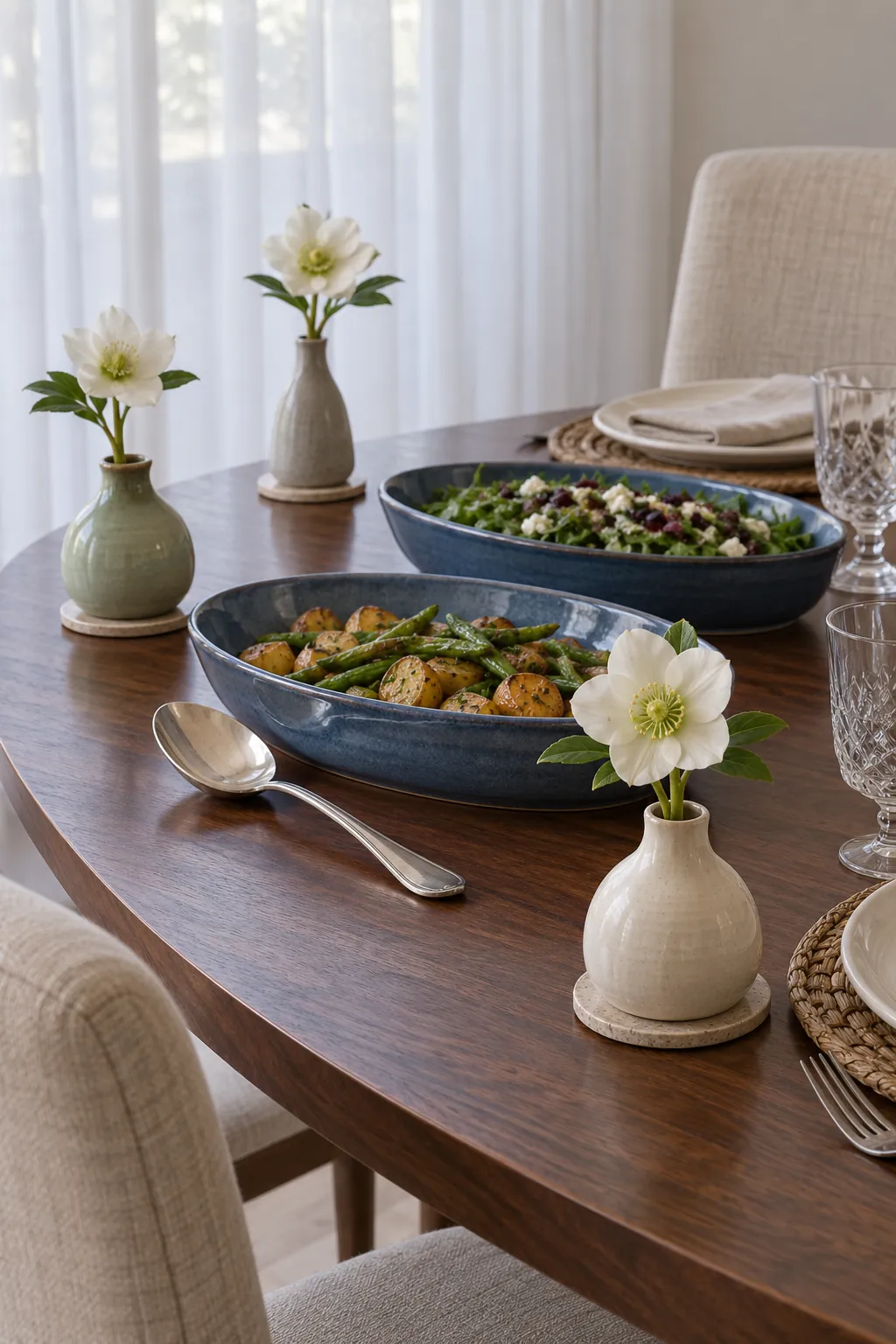
A Trio of Low Bud Vases
Three low bud vases with one short flower stem each can add detail without a large bouquet. Space them around the planned platters so the arrangement follows the meal layout. Choose modest unscented flowers where possible, keeping pollen and stems away from food. Water belongs inside stable vessels on appropriate protective bases. Check that the bloom heads do not reach into glassware or hide the guest opposite.
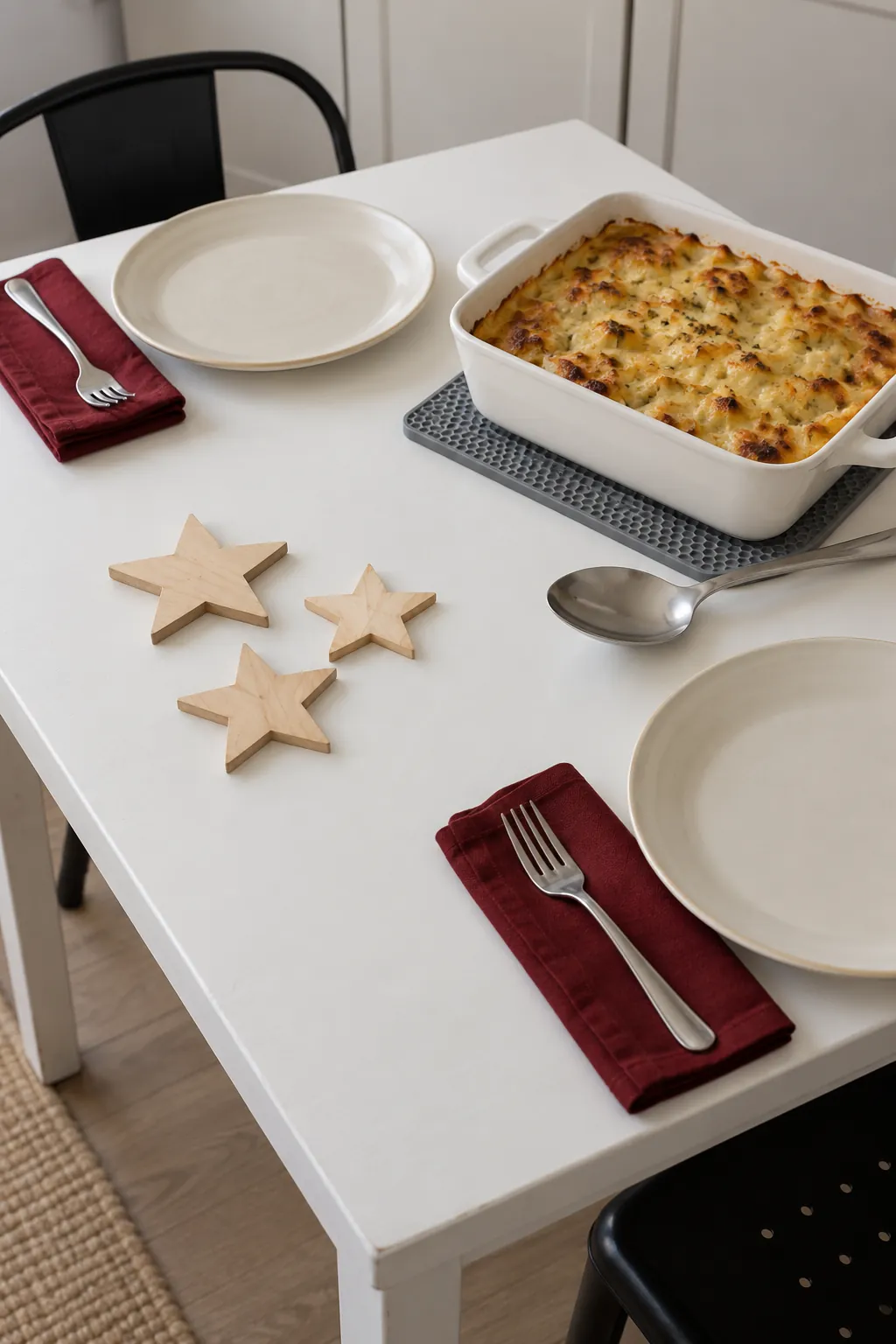
Flat Wooden Stars
A few flat wooden stars offer a decorative pattern with very little height. Group them in one narrow area instead of scattering them near every plate. Their flat shapes should still leave a clear landing place for each hot dish and its trivet. Keep decorative wood separate from food surfaces rather than using it as an improvised serving board.
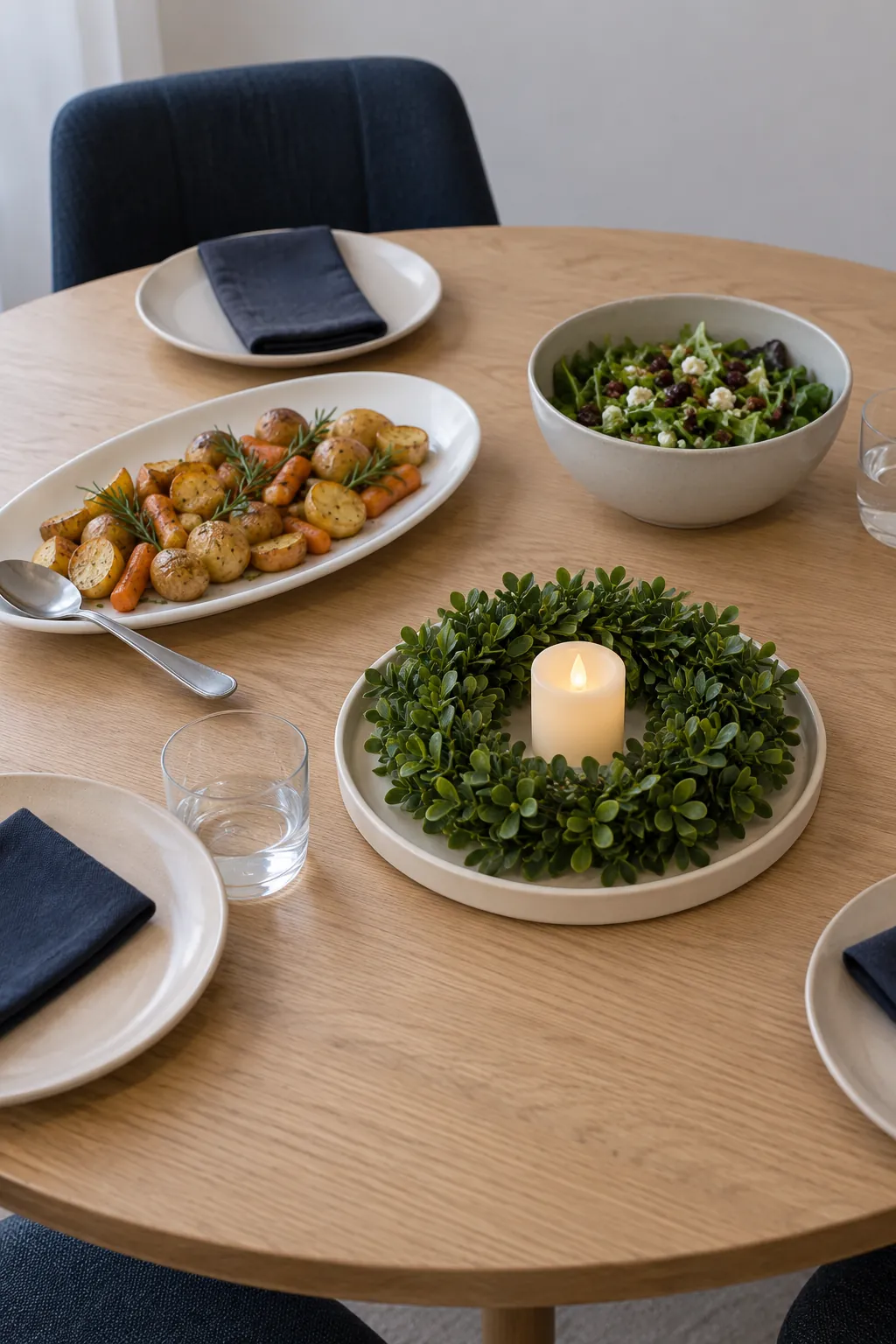
A Small Wreath Around a Battery Candle
A small low wreath can outline one compact centerpiece around a short battery candle. Check the full outer diameter against your serving layout, since the foliage takes more room than the candle base suggests. Use a stable shallow support so the wreath can move as one piece. This is a contained option for a table with one modest central gap, not a reason to squeeze out the main platter.
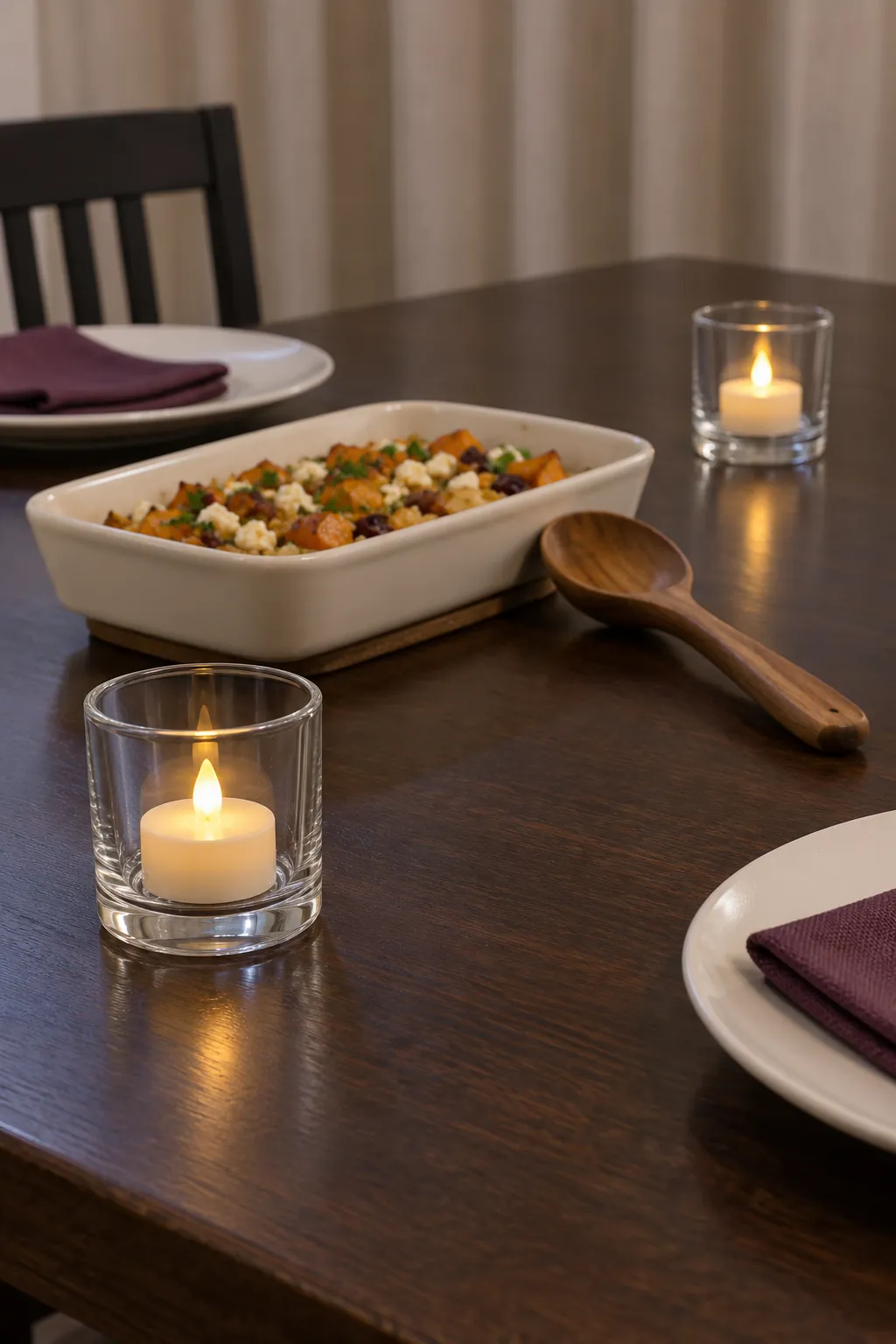
Two Small Glass Light Holders
Two short glass holders with battery tea lights provide a little sparkle without a tall candle arrangement. Put them in separate gaps rather than directly beside a platter that guests will lift repeatedly. Thick stable bases are useful on a busy dining table. Keep them clear of utensil handles and remove one if the serving route feels cramped.
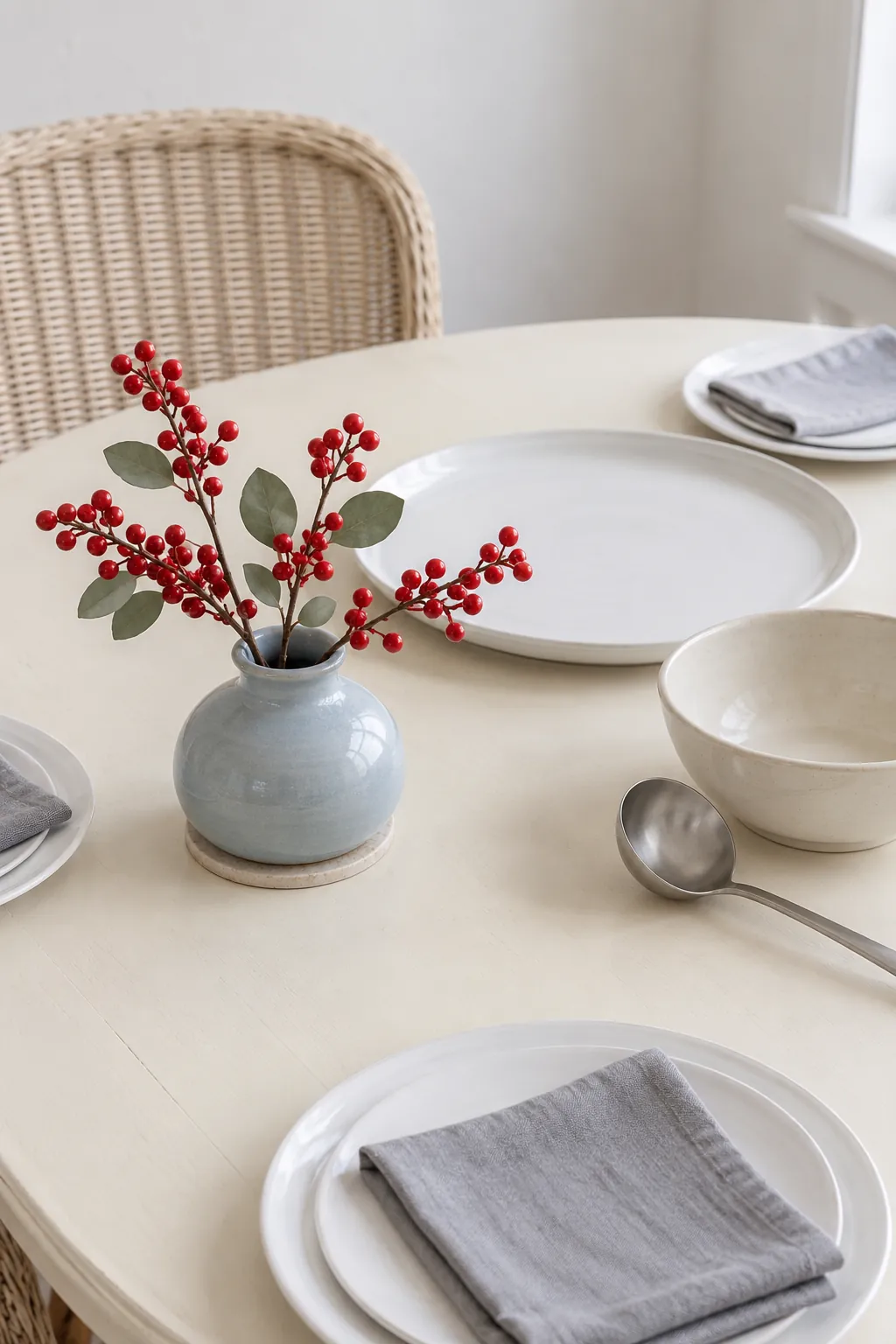
A Squat Vase of Faux Berries
Short faux berry stems add a clear red accent in one small vessel. Choose securely attached berries and keep the branches low, with no loose decorative parts around food. A squat vase with a wide base is easier to place between dishes than a top heavy tall arrangement.
Inspect the spread from both sides of the table before guests sit down. Rotate a stem inward if its tip extends over a plate or into the area used for passing food. The red accent needs only a few visible points to read as festive.
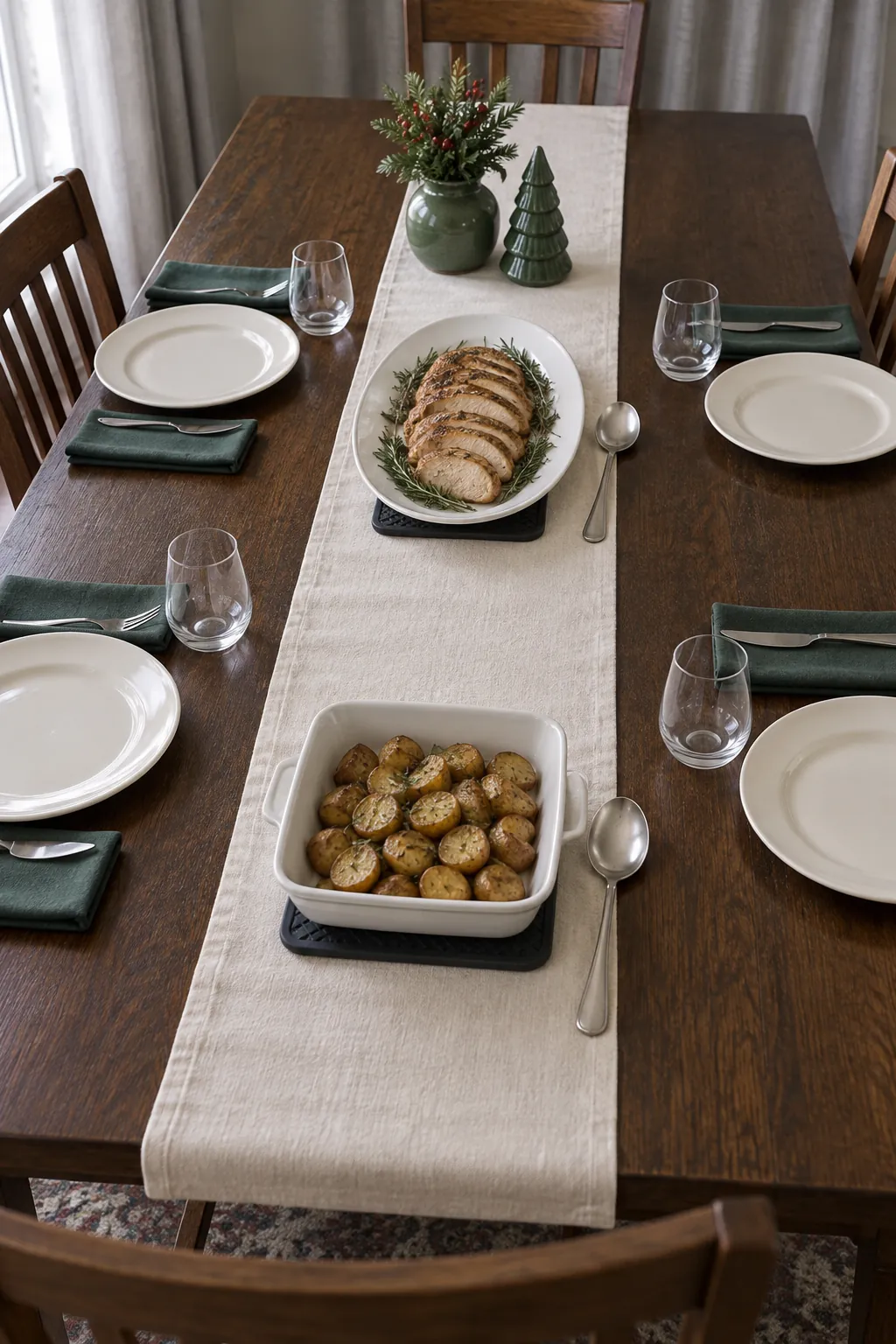
A Runner With Deliberate Bare Gaps
A narrow runner can define the table’s middle while small decorations occupy only selected parts of it. Leave actual dish landing spaces empty instead of filling the entire runner length. Hot dishes still need trivets suited to the table and their temperature, even when fabric is underneath. Choose a runner that lies flat and does not catch the base of glassware.
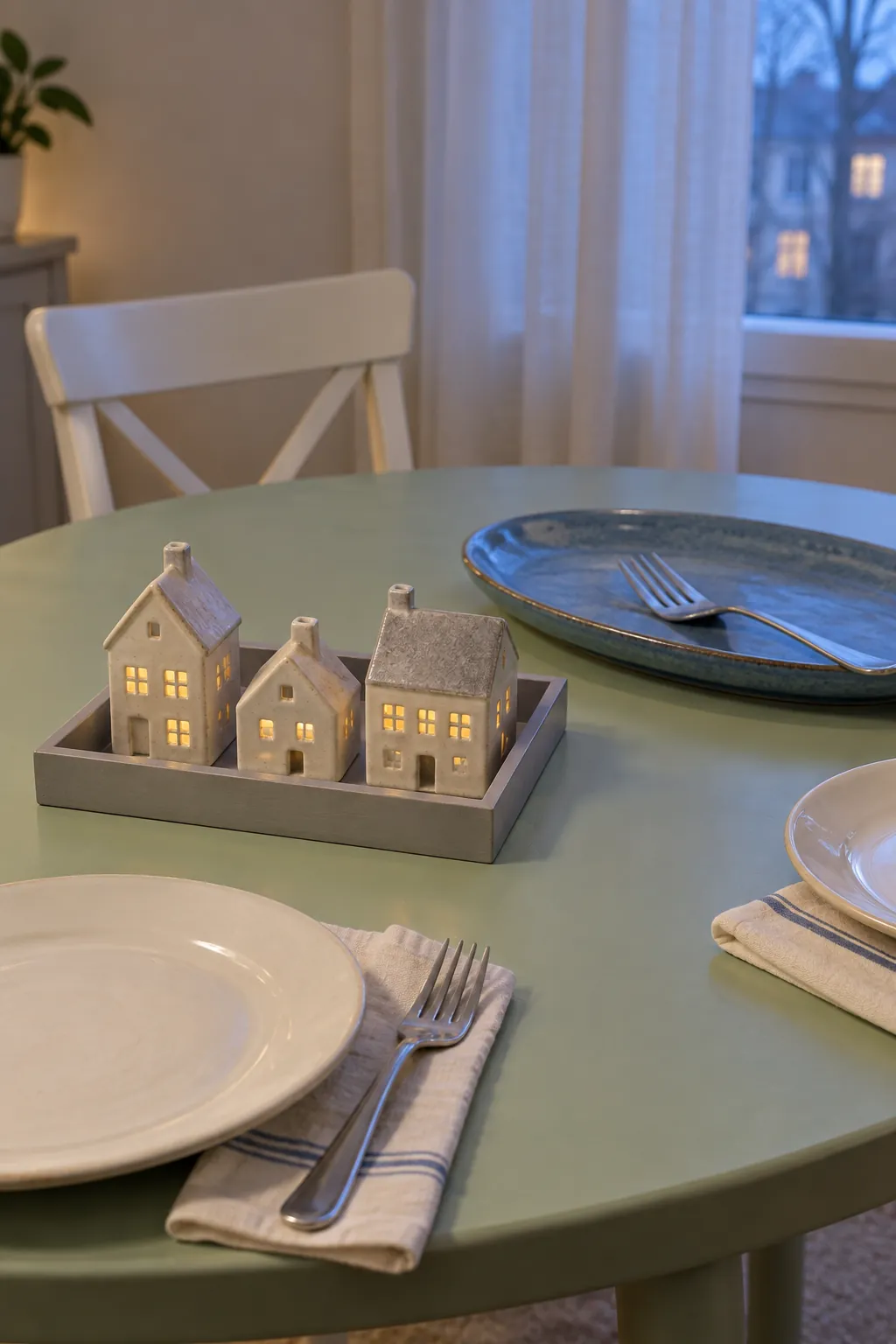
A Short Ceramic House Group
Two or three small ceramic houses can make a Christmas village within a compact tray. Keep their roofline low and avoid adding trees, snow, and figures that expand the footprint. Battery lighting can provide a little glow in houses designed for it. Set the whole group where it can be lifted away if the meal needs another platter.
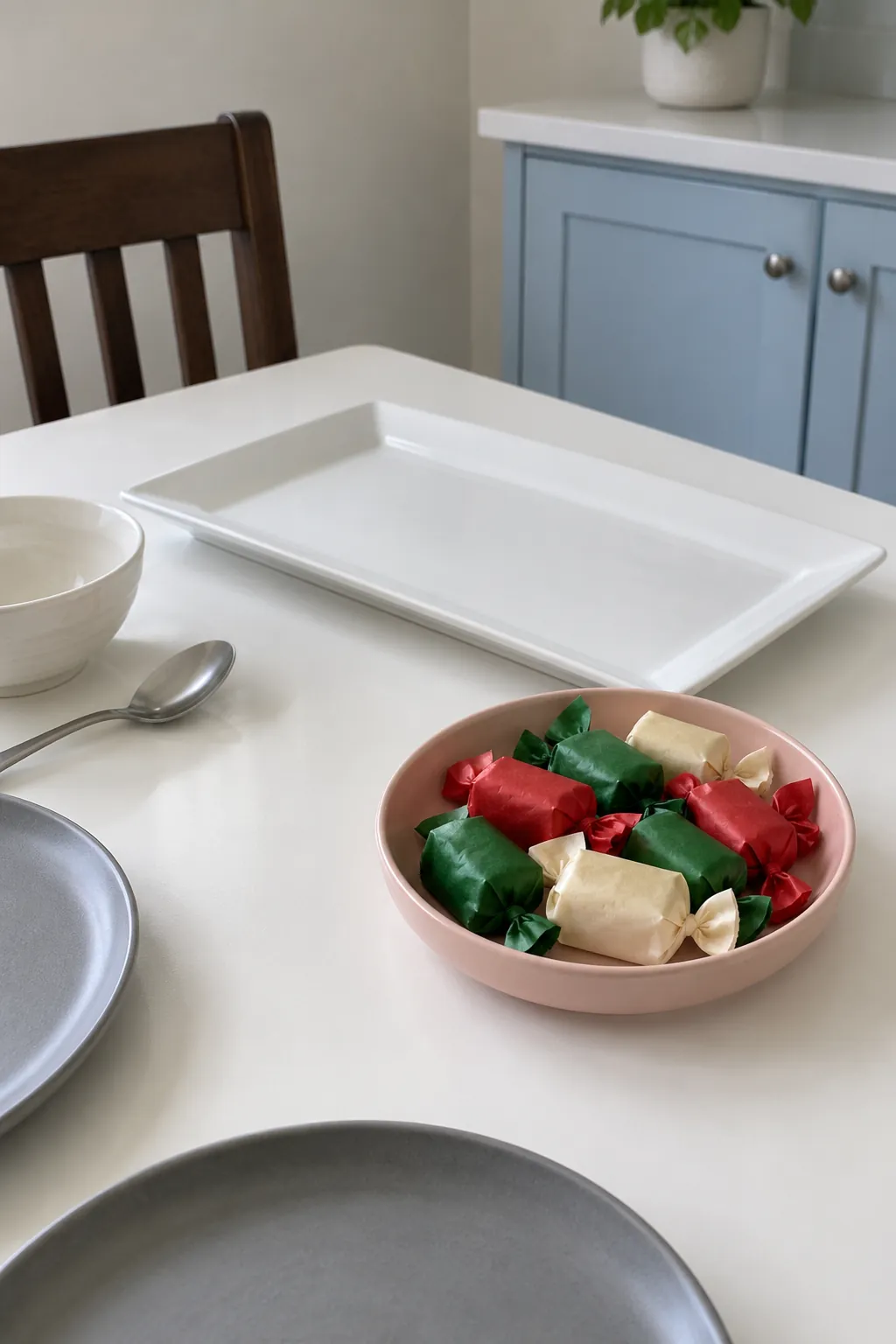
A Shallow Dish of Wrapped Sweets
A little dish of individually wrapped sweets can act as a seasonal accent that guests may enjoy after dinner. Keep ingredient information available and choose options that suit the people attending. The wrapping keeps the display more contained, but the dish should still be a clean food vessel. Avoid mixing in decorative ornaments or faux berries that could be mistaken for something edible.
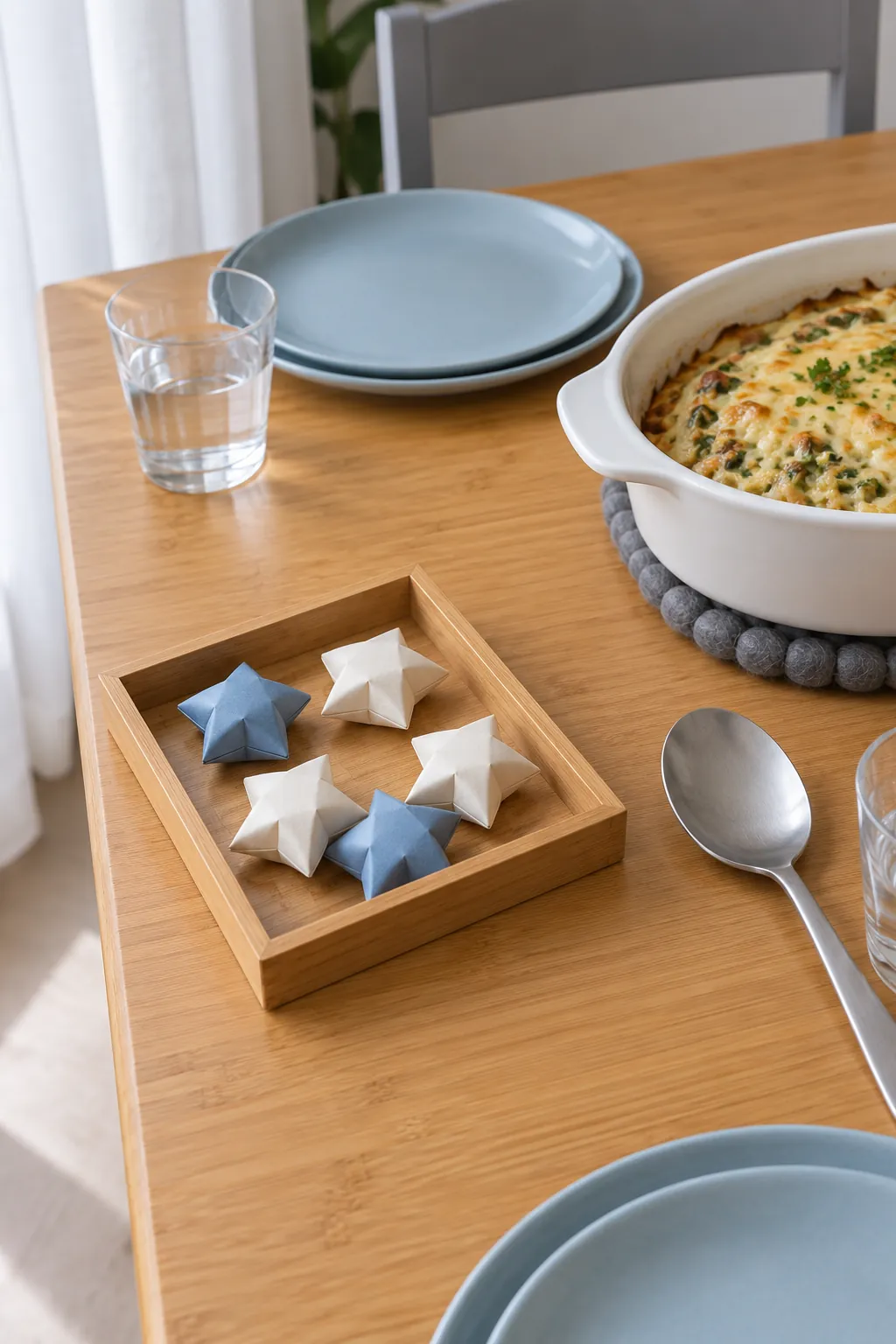
Folded Paper Stars in a Low Tray
Small folded paper stars offer volume without a tall structure. Gather them in a low tray so light pieces do not spread into plates when someone moves a dish. Keep the paper away from candles, hot cookware, and damp serving areas. A few well formed stars are easier to contain than loose paper confetti across the table.
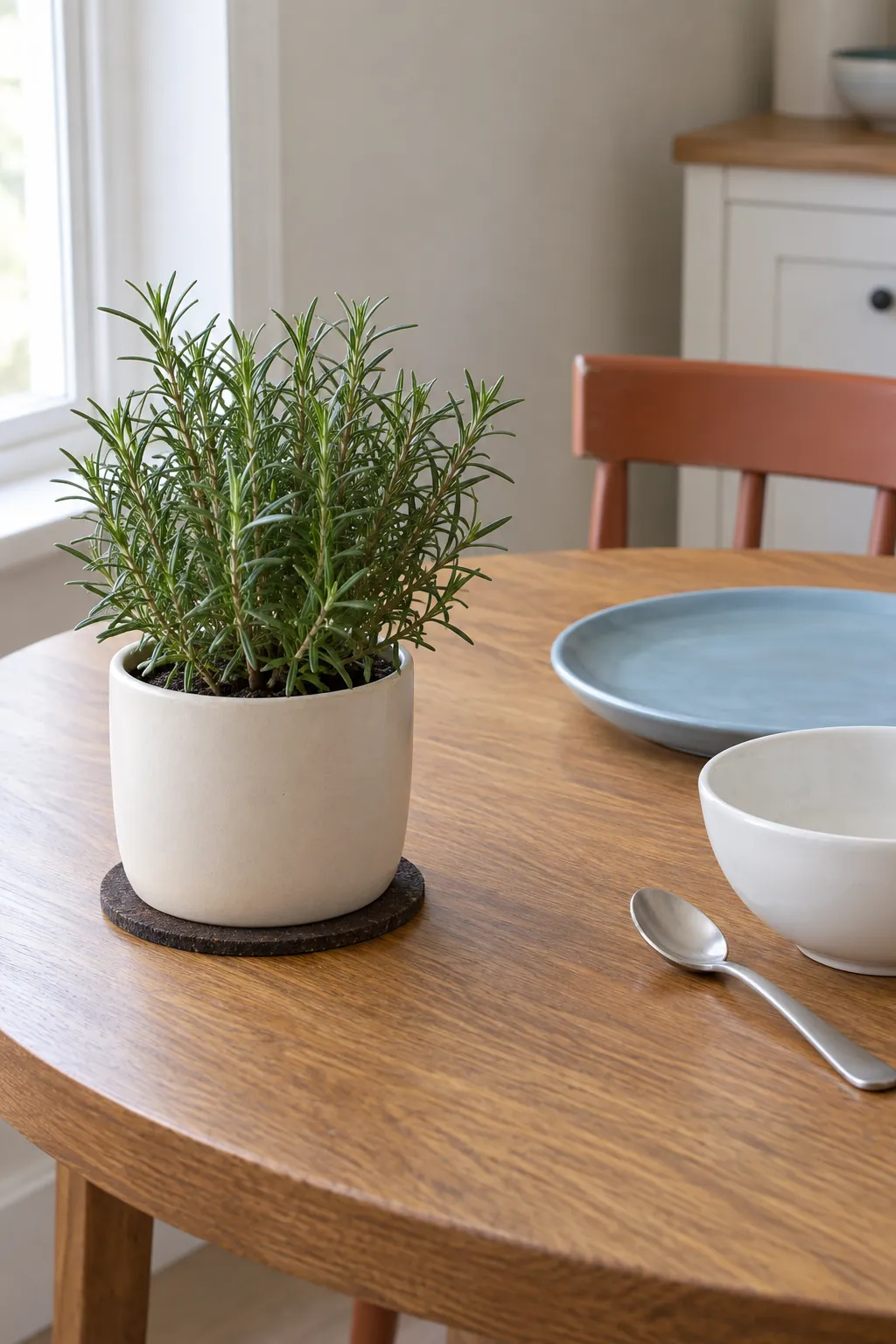
One Compact Rosemary Pot
A small rosemary plant can provide a simple evergreen shape on the dinner table. Use a healthy compact plant in a leakproof outer pot, with a protective base suited to the finish. Keep its branches clear of food, and do not serve sprigs unless the plant is suitable for culinary use and handled accordingly. A modest single pot works better than a large decorative tree when platter room is tight.
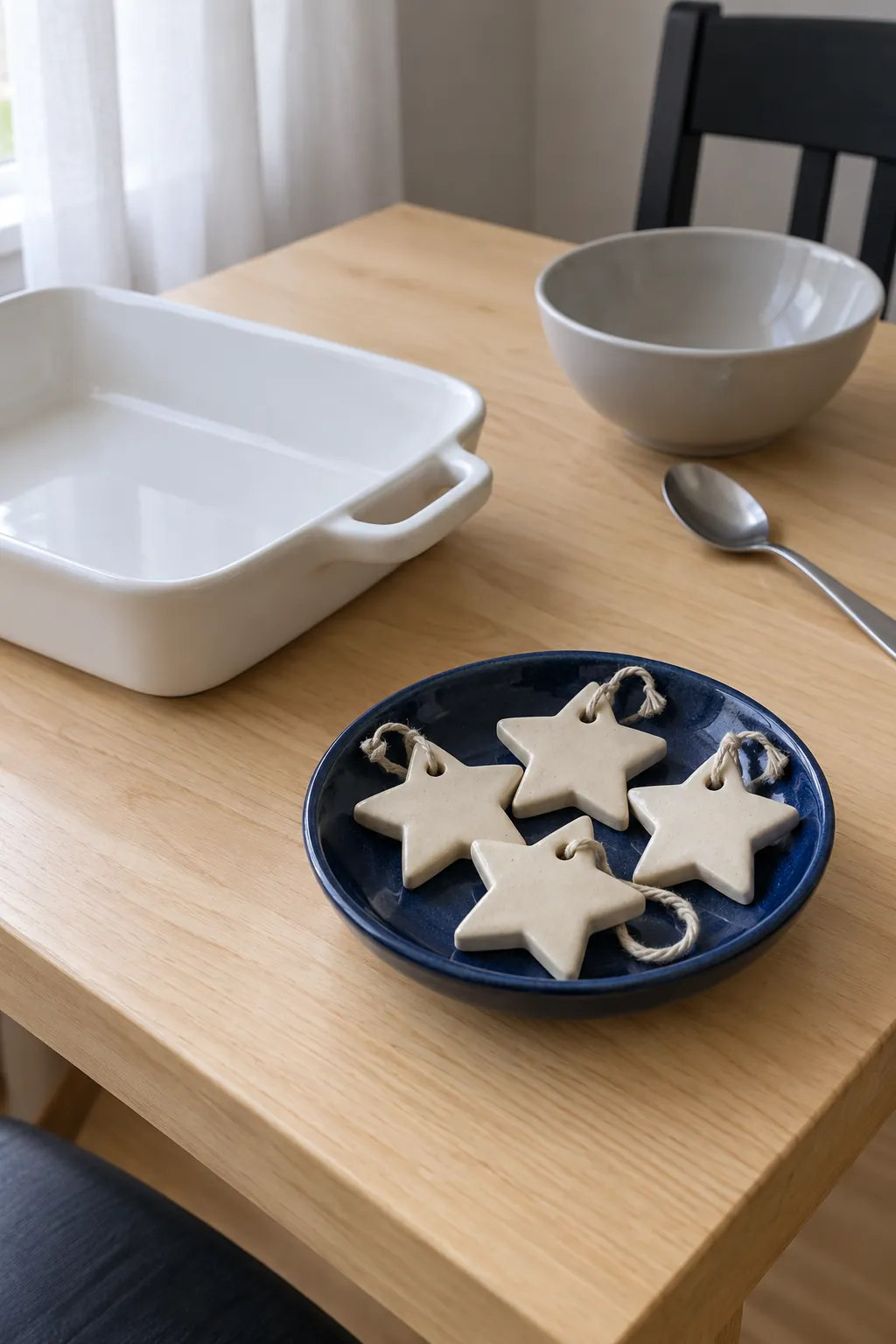
Salt Dough Stars in a Saucer
A shallow saucer can hold a few finished salt dough decorations as a homemade centerpiece. Use fully dry pieces and keep them clearly separate from edible food. Their soft cream color works with a mixed dinner service without adding another strong pattern.
Keep the stars inside the saucer rather than spreading them along the table. If children or pets could mistake them for food, choose another display location. A small contained group is enough to show the handmade character without filling the serving area.
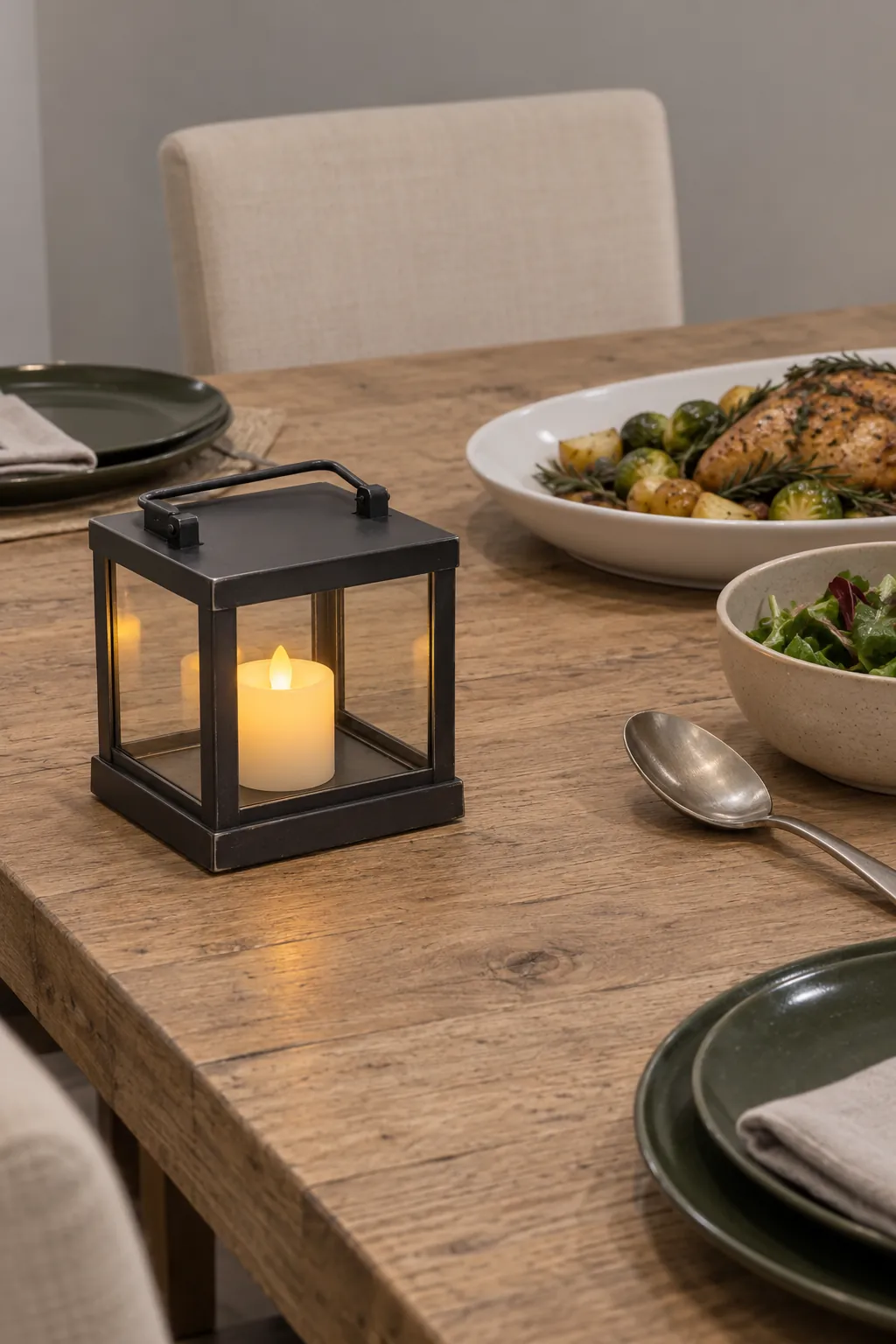
A Squat Lantern With an LED Candle
A small squat lantern gives one defined focal point instead of several scattered candleholders. Choose a battery candle and a stable base, then check that the lantern’s handle and corners fit the reserved space. Its enclosure should not become so tall that guests lose sight of one another. Keep it at one side of the serving zone if the center needs to hold a large dish.
Two End Groups and a Clear Center
Small groups of low greenery and ornaments can sit near the ends while the center remains fully open. Reserve those end positions only after checking every place setting and the platter layout. Connect the groups through one repeated material, such as cream dishes, rather than a continuous garland across the table. A clear middle is especially useful when several dishes need to be passed among guests. Remove an end group if it blocks a comfortable reach.
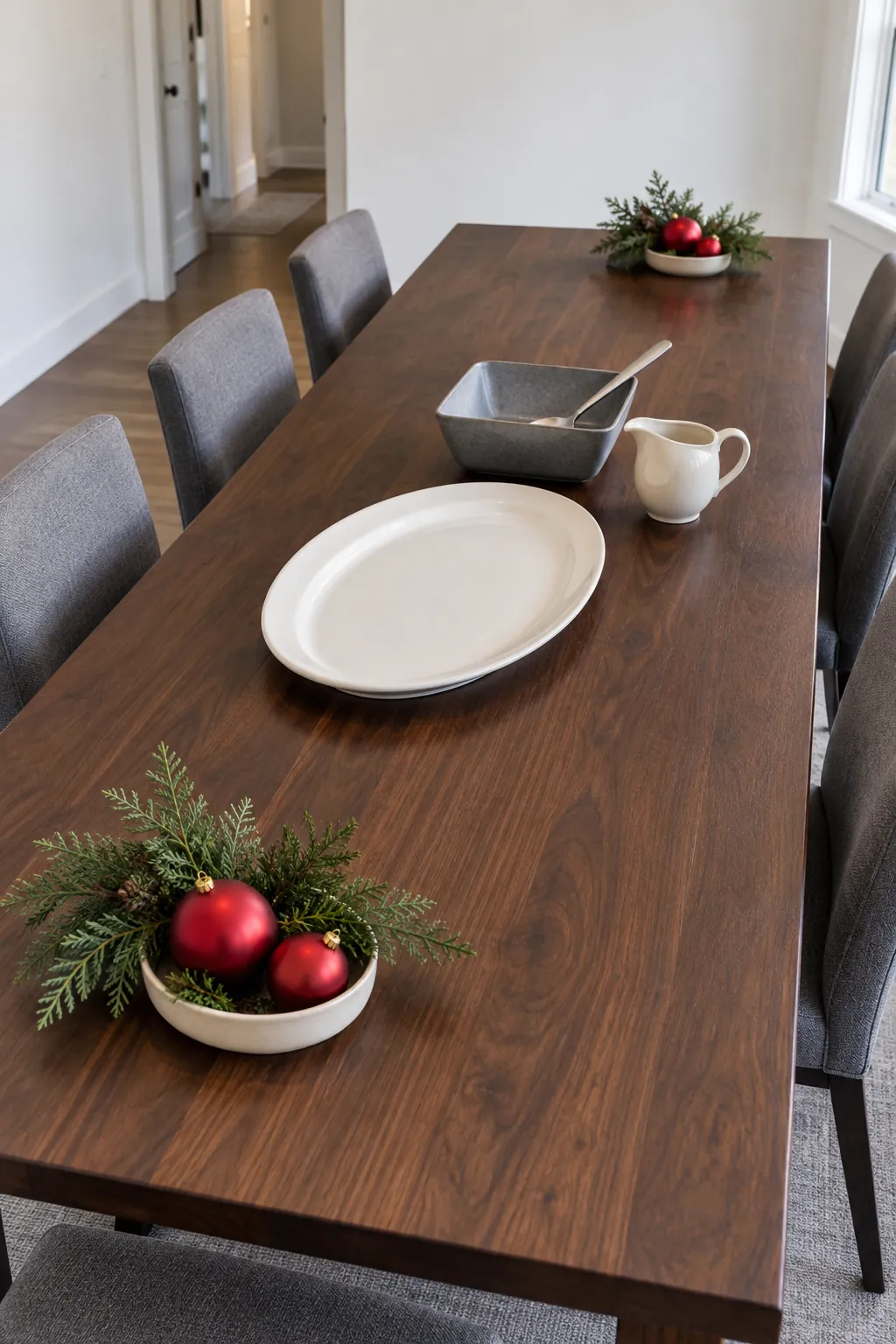
A Centerpiece Tray With a Nearby Landing Spot
A compact tray can hold the decorations before dinner and move to a sideboard when the platters arrive. Choose lightweight pieces with stable bases and test that the tray can lift without ornaments rolling. Set aside the landing spot before the meal so you are not searching for a clear surface while carrying it. Keep food serving space on the sideboard available if that surface is also part of your dinner plan. The most functional holiday table is the one that can change when the meal needs it.