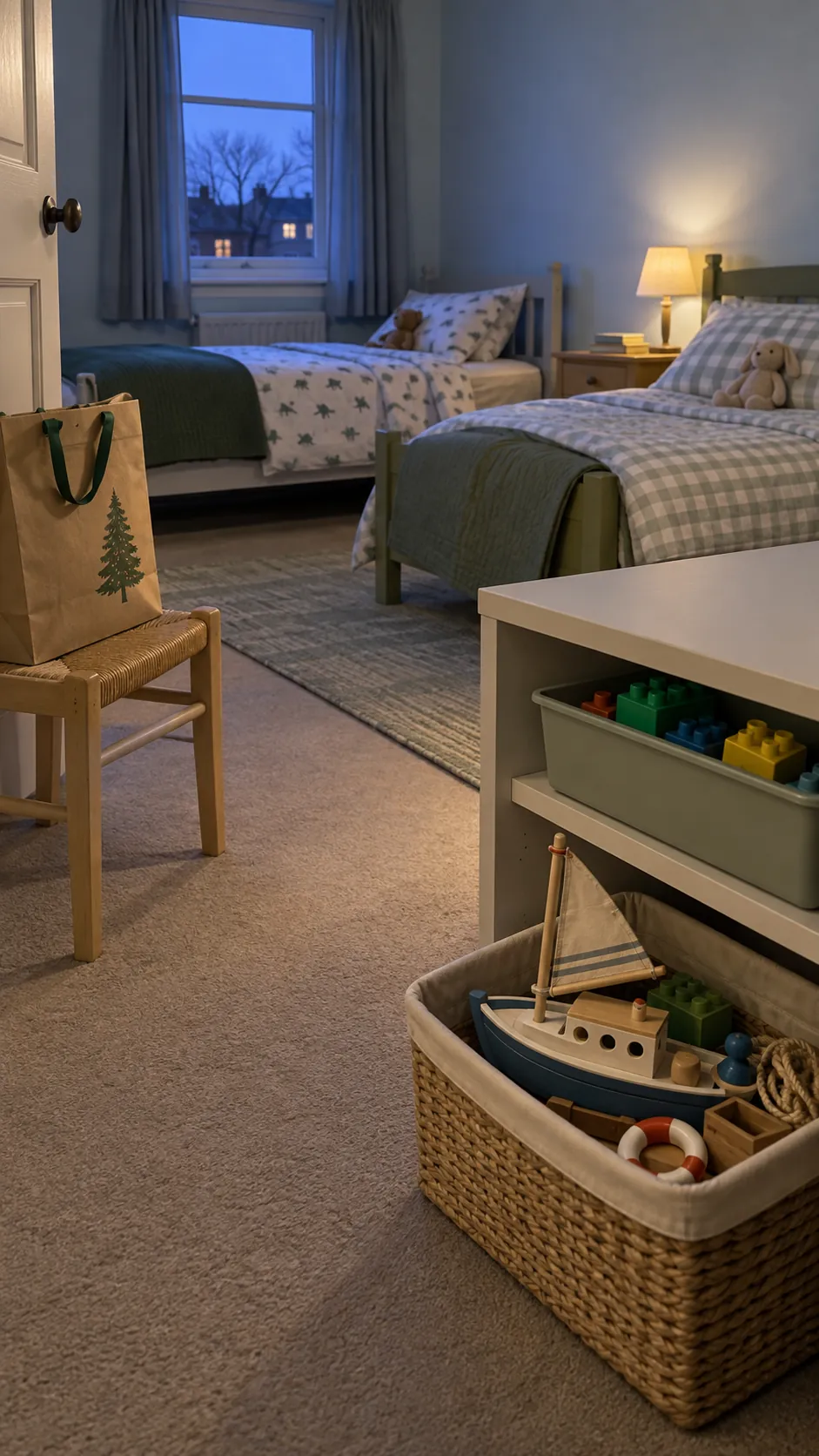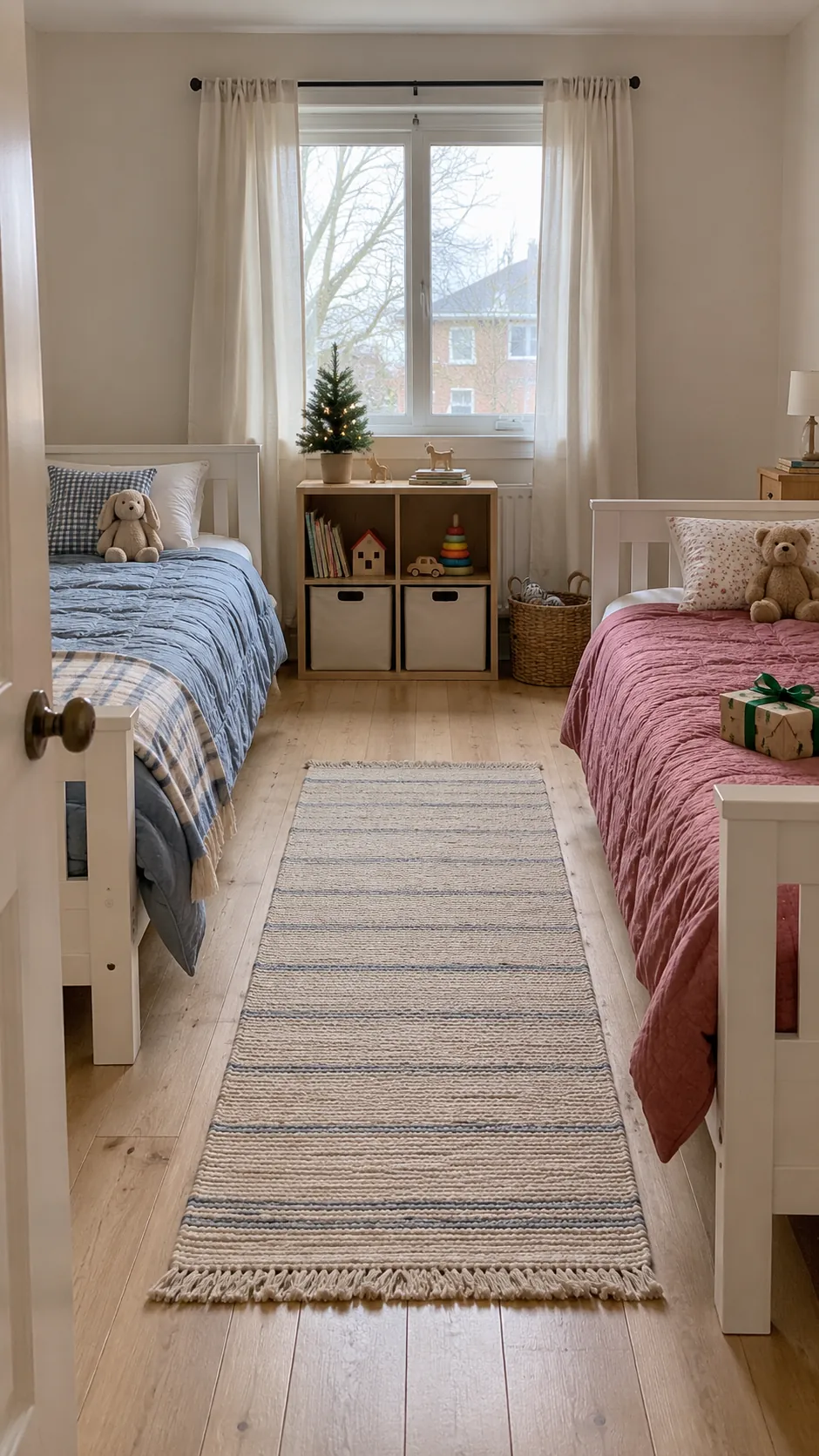
The wrapping can disappear in an afternoon, but the extra pieces will still need somewhere to live at bedtime. When two children share a compact room, another basket is useful only if it preserves their sleeping space, their access to belongings and a place to play. Make room before the gifts arrive, then give each new toy a realistic home.
Protect the space the room already needs
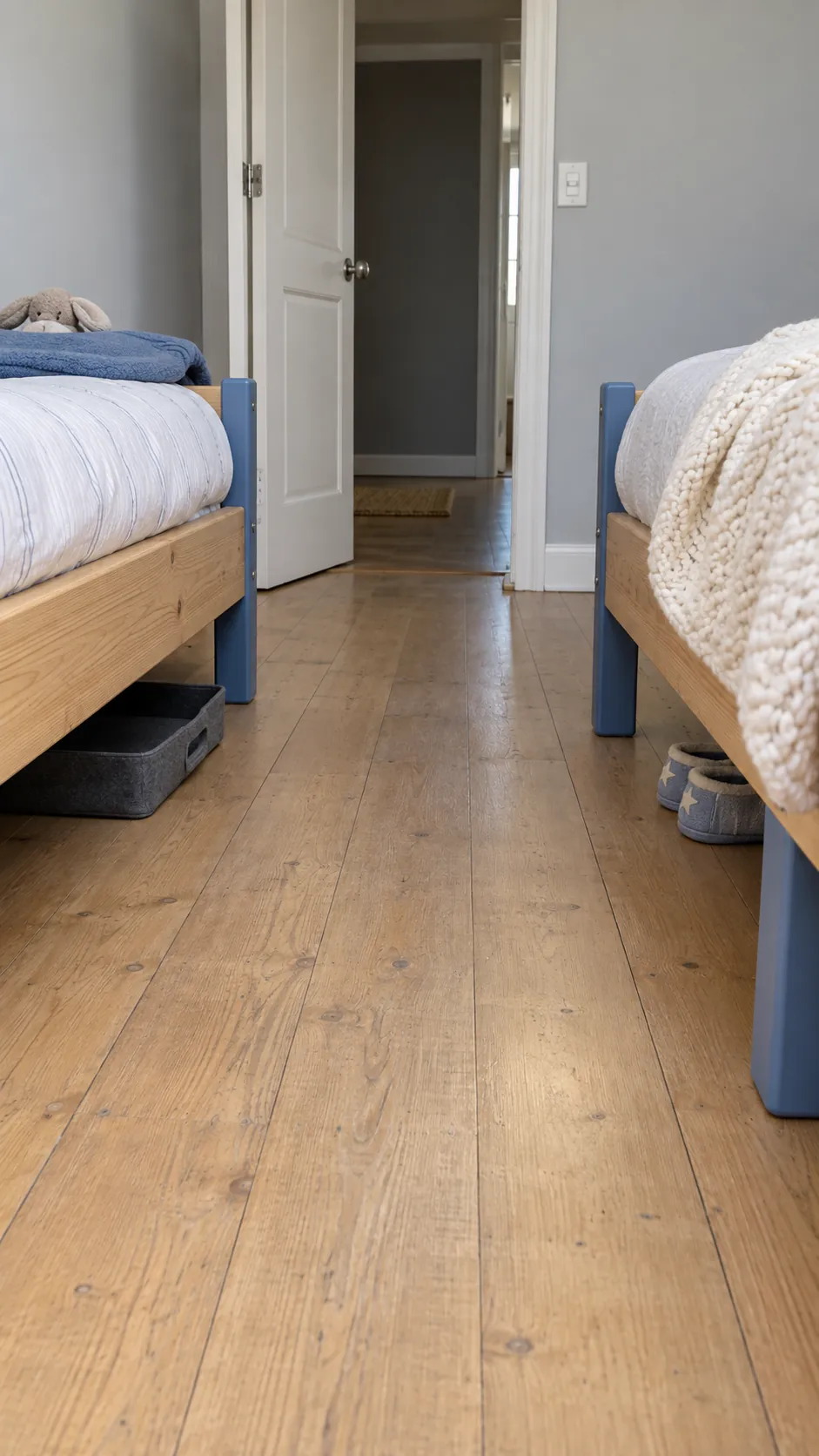
Before moving a single toy, walk from the bedroom door to each bed, the wardrobe and the window. Those routes are the room’s working space, even when they look empty. Keep the door swing clear and preserve access to any escape window; a new storage unit should never make someone climb around it.
Measure the places you can genuinely use, including the height beneath each bed and the distance a drawer needs to open. Check for bed supports before buying a shallow bin. A container that technically fits but cannot be pulled out without moving furniture is unlikely to help a child tidy up.
Choose one clear play patch that both children can reach. In a narrow room, that might mean keeping the strip between the beds free and using a portable play mat instead of a permanent toy table. Photograph the cleared space so you have a practical reference when Christmas gifts arrive.
Sort with each child before deciding what leaves
Work through one existing toy category at a time rather than emptying the whole bedroom. Put complete sets together, separate broken items and ask each child which toys they still choose during ordinary play. A favorite with worn edges can deserve a place more than a pristine toy nobody touches.
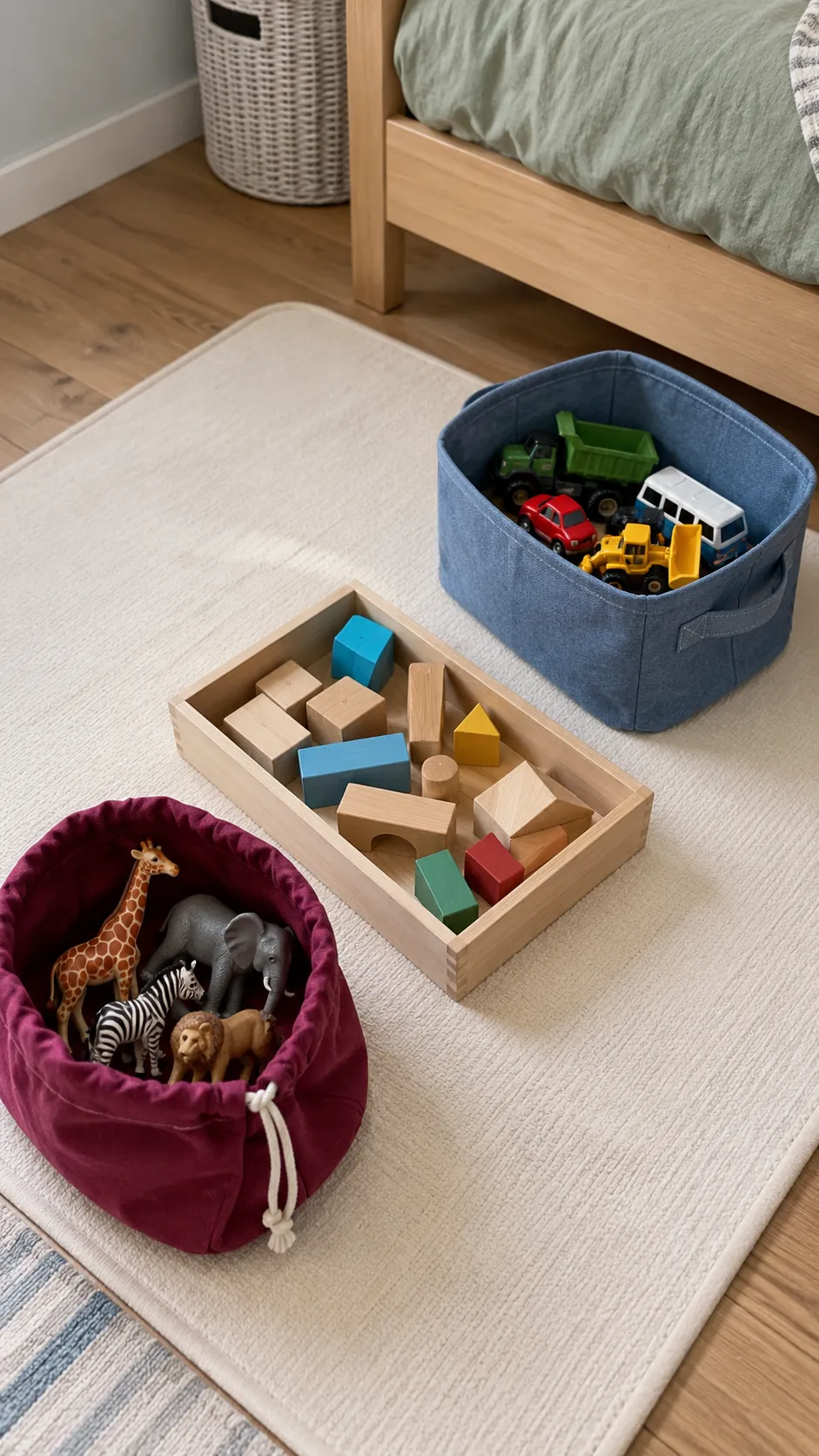
Give each child a small protected collection for treasures that are not automatically shared. Keep a separate shared container for toys both agree to use together. Equal access matters more than identical volumes, especially when one child collects tiny figures and the other plays with larger vehicles.
For pre Christmas decluttering, make an adult decision about unsafe items and an agreed decision about donations. Check the recipient’s current requirements before giving away incomplete sets. Use a temporary review box for uncertain belongings, record a date to revisit it and keep that box away from daily play.
Reserve real homes for the gifts you expect
New toy storage planning works best when you know what the gift becomes after its packaging is removed. A small construction set needs a container for loose pieces, while a play kitchen needs permanent floor space. Ask gift buyers for dimensions or the type of toy without requiring them to reveal every surprise.
Reserve an empty container or a measured section of shelf rather than squeezing existing toys into overflowing bins. If you have no spare capacity, agree on one category to rotate out when new gifts arrive. Leave genuinely unknown gifts in a temporary landing spot until you can inspect their pieces and instructions.
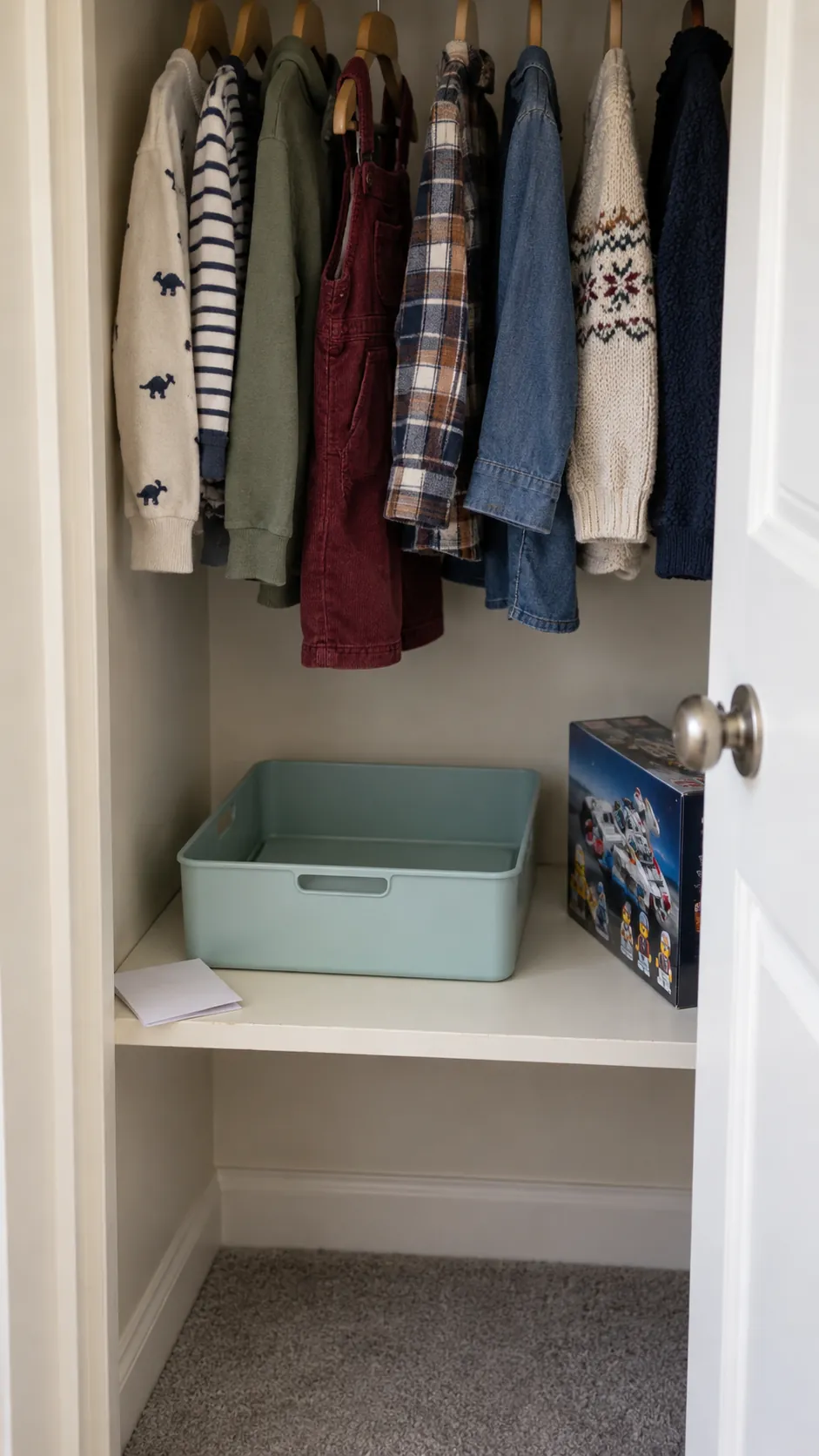
Use reachable storage without adding a climbing invitation
Put everyday toys in low, stable containers that a child can lift comfortably. Open baskets suit larger soft toys, while small lidded boxes keep complete sets together. Use simple picture labels or clear words that match what actually belongs inside, instead of labeling every container simply toys.
Check furniture anchoring requirements and use appropriate fixings for the furniture and wall. A renter may need the landlord’s approval or a suitable alternative before installing storage. Do not place tempting toys on a high shelf that encourages a child to climb.
Keep small parts, button batteries and age restricted toys inaccessible to younger siblings. A shared bedroom does not make every toy appropriate for both children. Follow the toy’s age guidance and keep adult controlled items in secure storage outside the children’s independent toy system.
Under bed holiday toy storage is useful only when bins slide freely and do not interfere with the bed’s supports or airflow requirements. Choose lightweight containers with easy grips, then try the movement yourself before expecting a child to manage it. Avoid heavy lids and any chest whose closing mechanism could trap fingers.
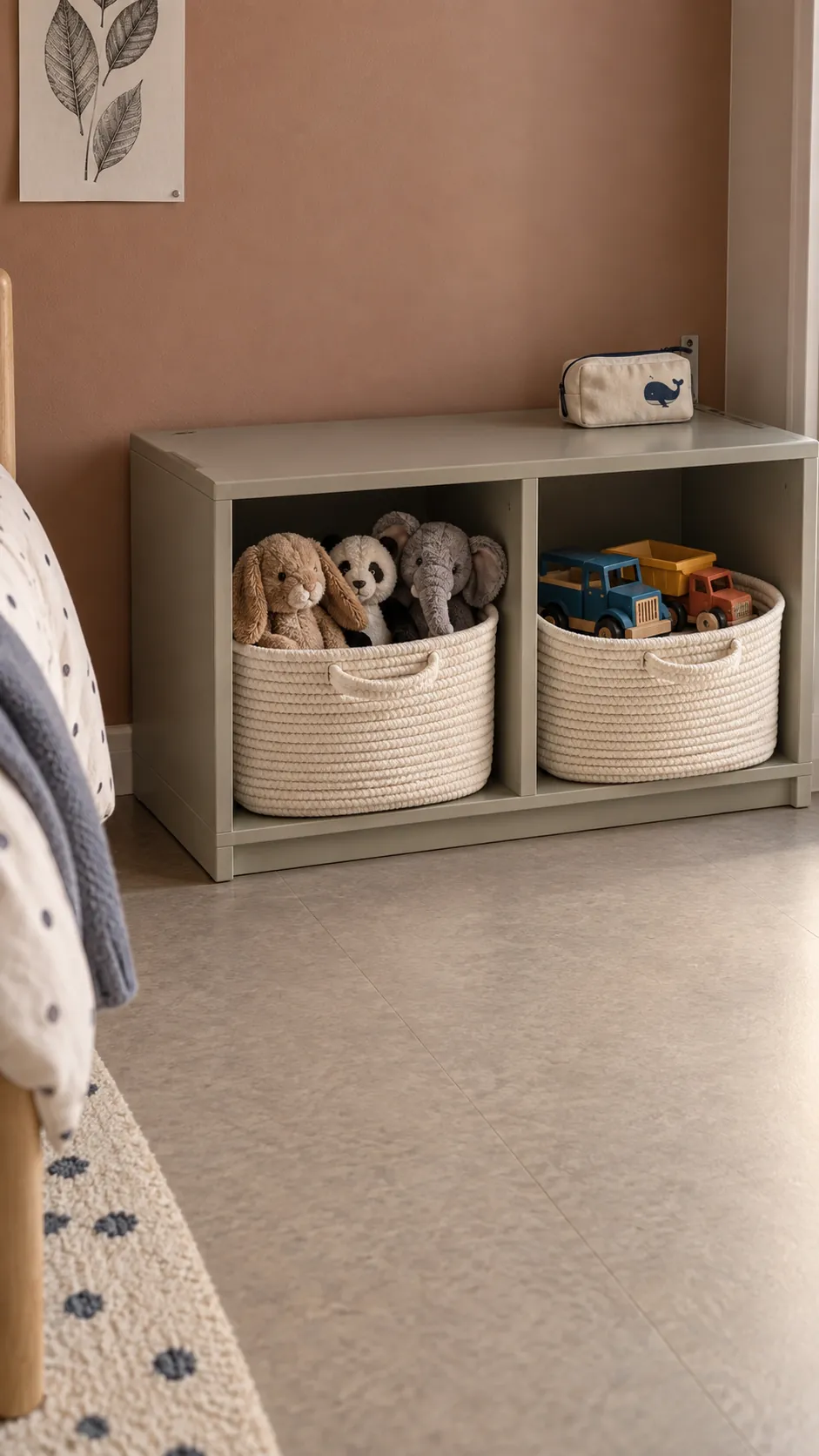
Make rotation a deliberate exchange
Toy rotation organization should reduce the number of choices on the floor, not hide the entire collection in another crowded corner. Choose a modest group of currently interesting toys and store the rest by complete activity. Keep instructions and specialist parts with their set so swapping it back in does not create a search.
Use existing adult storage if there is a safe, dry place for the rotation box. Do not turn the children’s wardrobe into a toy archive at the expense of clothing access. If your apartment has no reserve space, use a smaller total collection instead of buying containers for a rotation system you cannot maintain.
Agree to swap one category when interest changes, rather than promising a rigid calendar. Bring a stored set back when the children ask for it or when the current options have stopped being useful. Return the outgoing set complete before introducing its replacement.
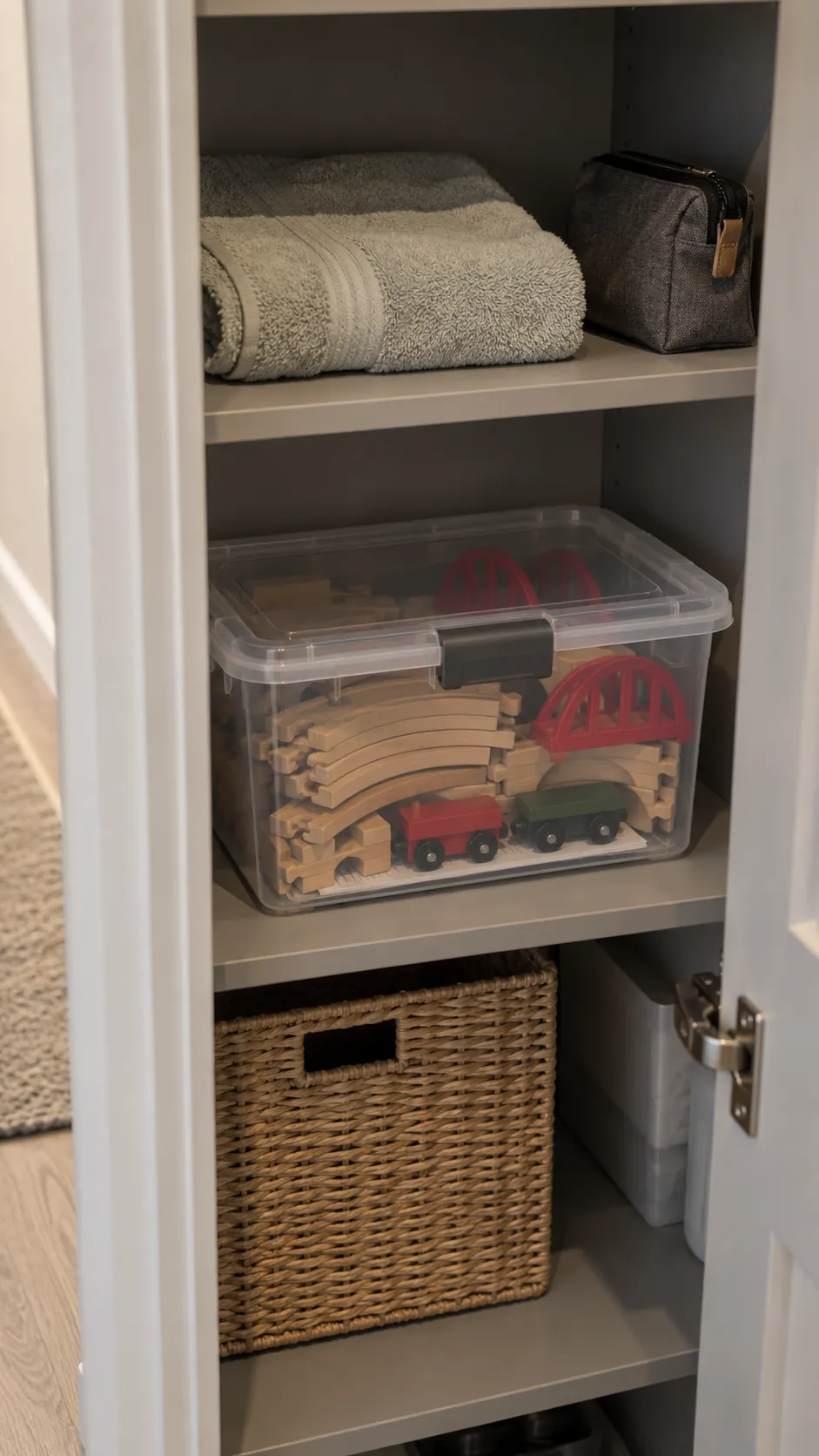
Set up Christmas morning and the first evening
Prepare a temporary gift landing basket in the main living area and keep the bedroom clear while presents are opened. Collect wrapping separately, save necessary instructions and let an adult handle packaging fasteners. Photograph complicated assembly instructions if that helps you keep track, but retain information you need for safe use.
Before bringing gifts into the room, match each one to its reserved home. Assemble only what you can safely accommodate and keep unopened items together when a decision is still needed. Discuss bulky surprises with the giver respectfully; the cost of a gift does not create extra floor space.
On the first evening, walk through the room with both children and return each set to its agreed place. Notice whether a bin is too heavy, a lid is awkward or a shared category causes arguments. Change that one part of the system while the problem is visible, then end with clear routes to both beds.