Sharing a creative room does not require sharing the same hobby, schedule, or tolerance for clutter. The room works when each person can begin, pause, and clean up without moving the other person’s project. That means planning ownership, reach, light, sound, and safety before choosing matching furniture.
Indexed Reddit snippets describe couples trying to fit sewing, gaming, digital art, reading, model building, and other interests into one spare room. The repeated problems are limited space, mixed storage, unclear territory, noise, and the cost of specialized furniture. These ideas use simple zones and flexible pieces so togetherness does not erase individual working styles.
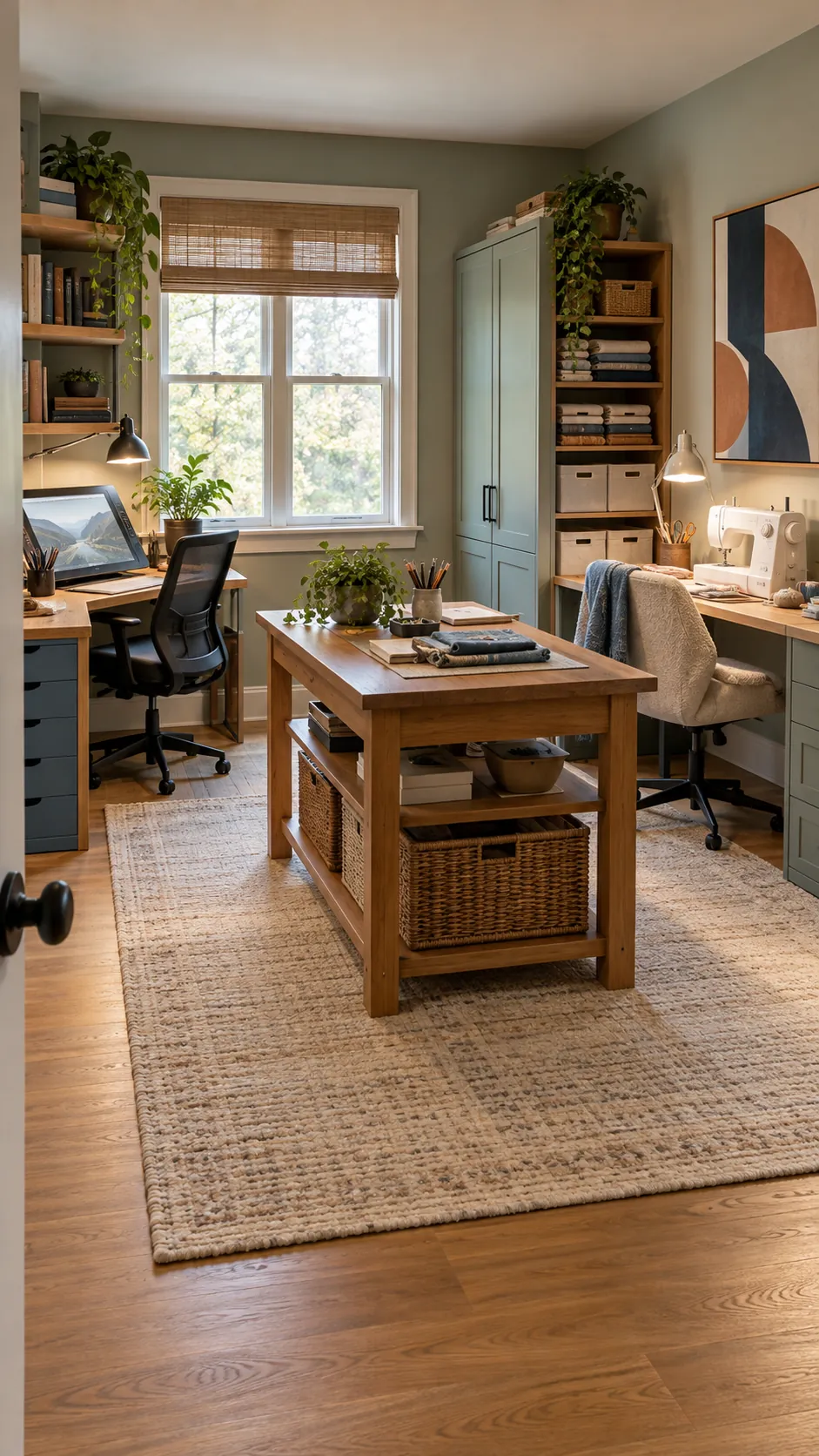
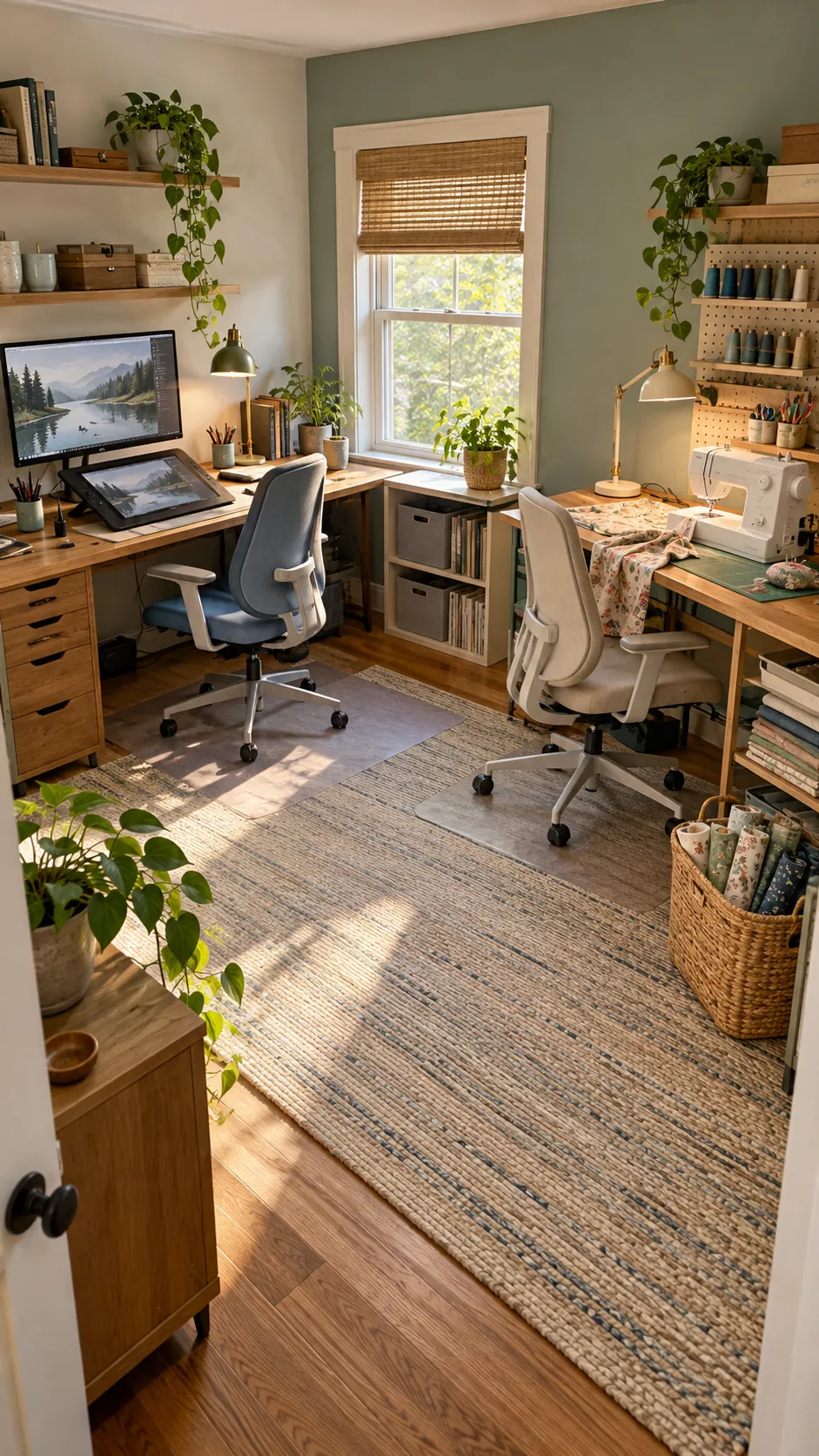
Face Two Desks Toward Different Walls
Separate wall facing desks give each person a clear visual field and reduce screen glare or tool distraction. Keep a shared aisle between the chairs so both stations remain easy to enter. Matching desk heights create order even when the hobbies look completely different.
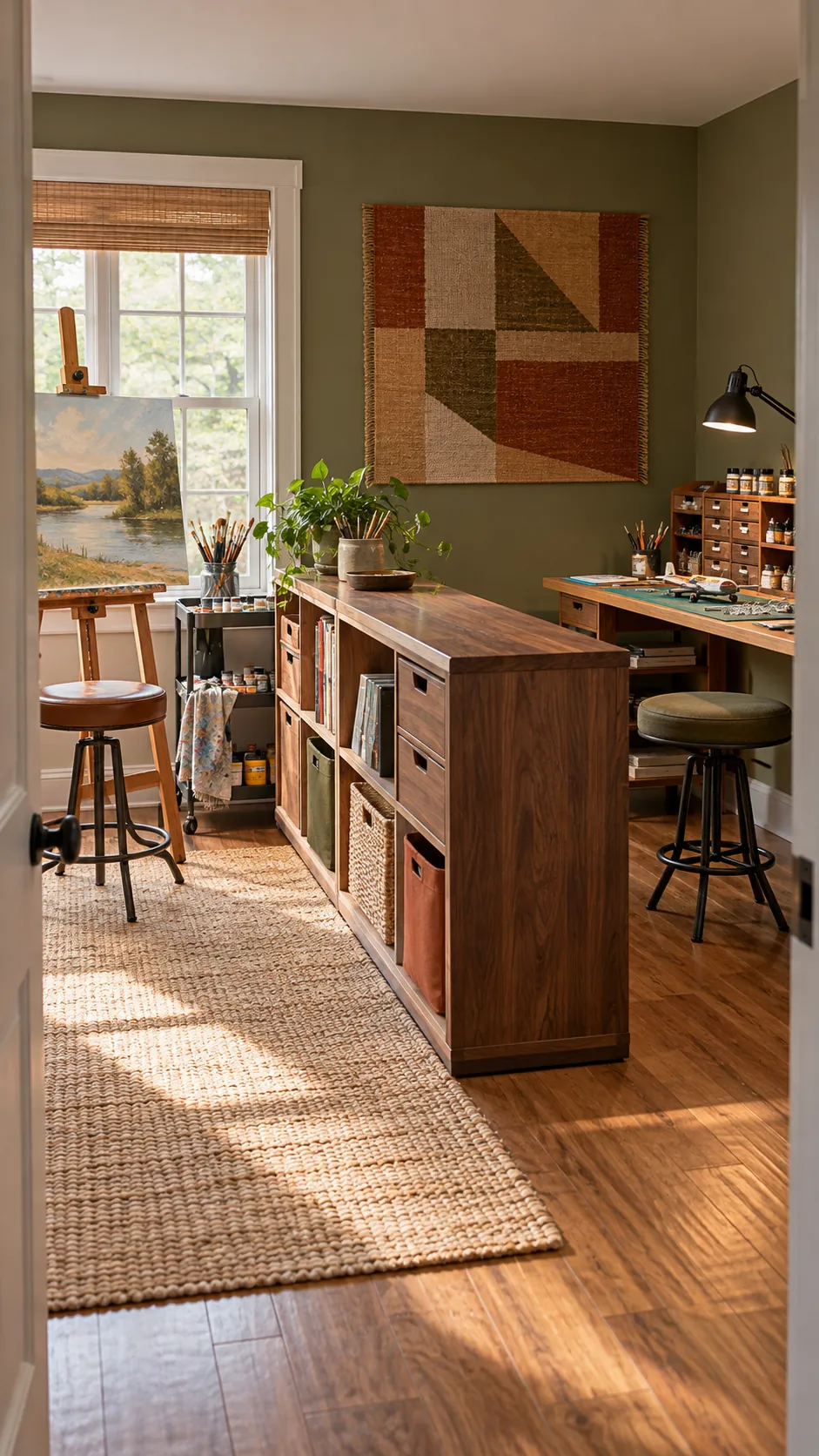
Divide the Room With a Low Cabinet
A low cabinet can mark two creative zones without blocking daylight or conversation. Give each side its own doors or drawers so ownership stays obvious. The top becomes a neutral shared surface for finished work, tea, or a small speaker.
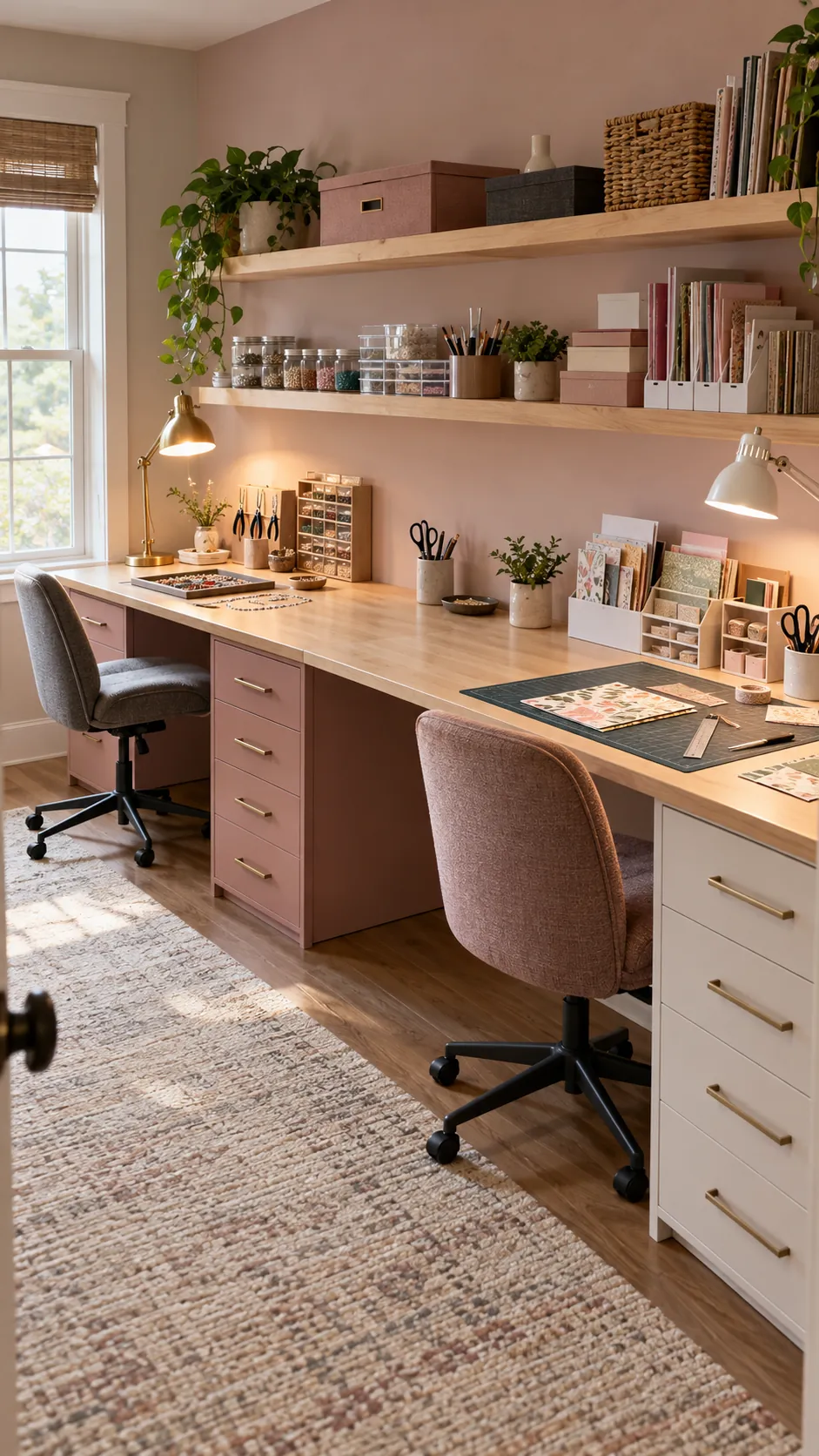
Share a Long Counter With Separate Drawers
One continuous counter saves floor space while individual drawer banks prevent supply drift. Leave enough knee space for both people and position task lights independently. A centered empty section can handle planning or a project that needs two sets of hands.
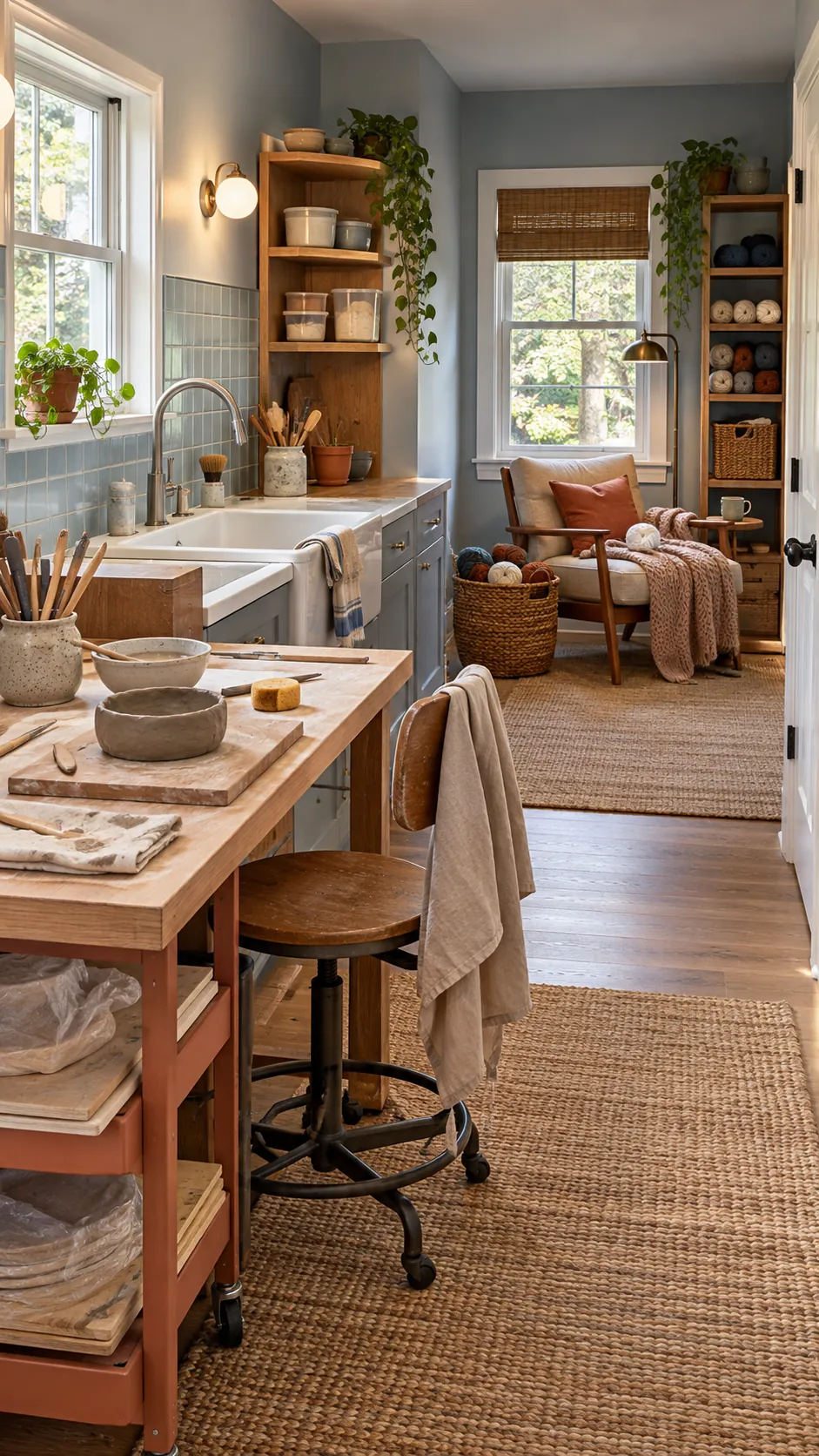
Put the Messy Hobby Near the Sink
Paint, clay, and dye are easier to share with another hobby when cleanup has a short route. Place the wet station beside a deep sink and keep paper, fabric, or electronics farther away. A washable floor zone makes the boundary visible without building a wall.
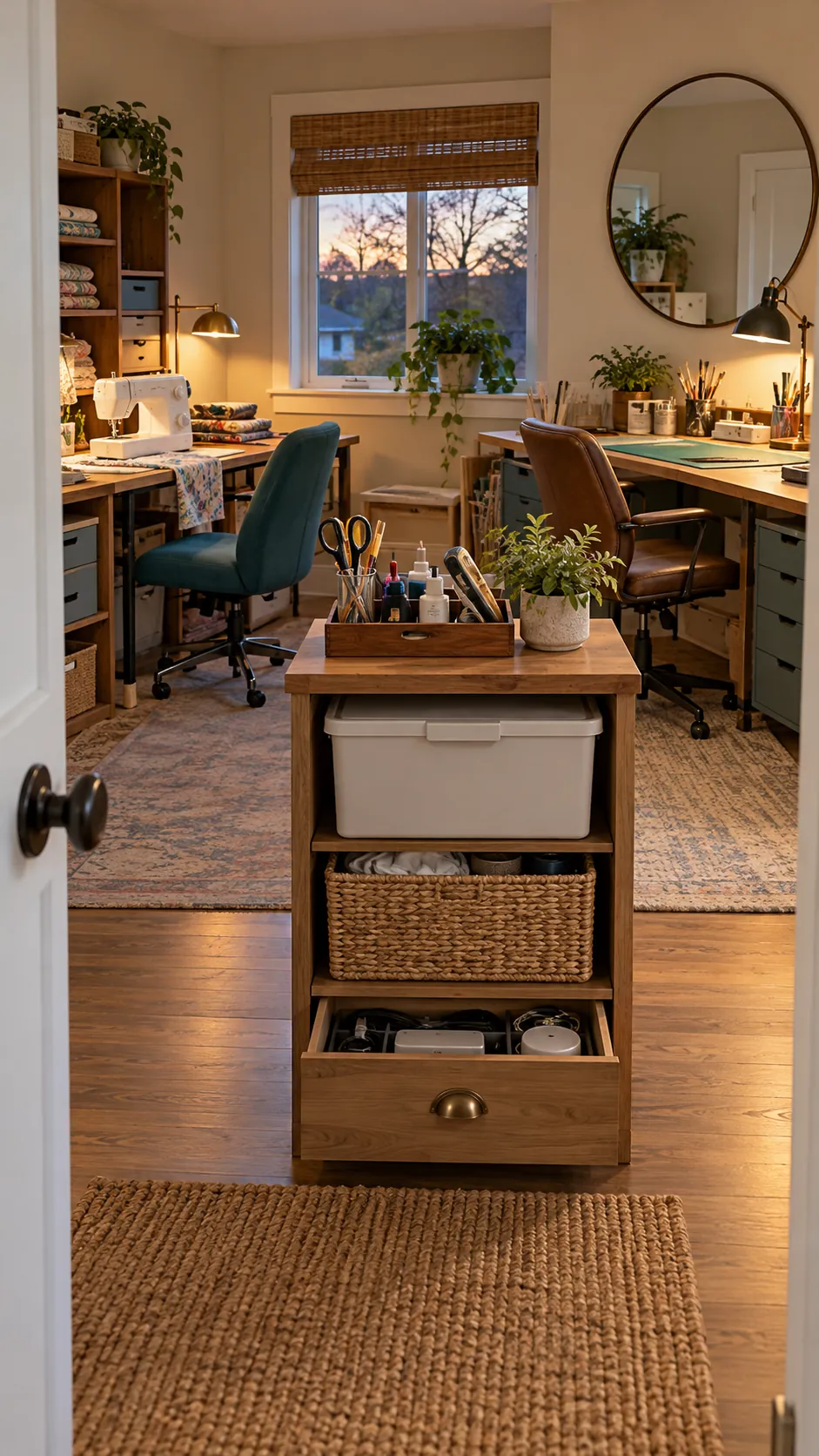
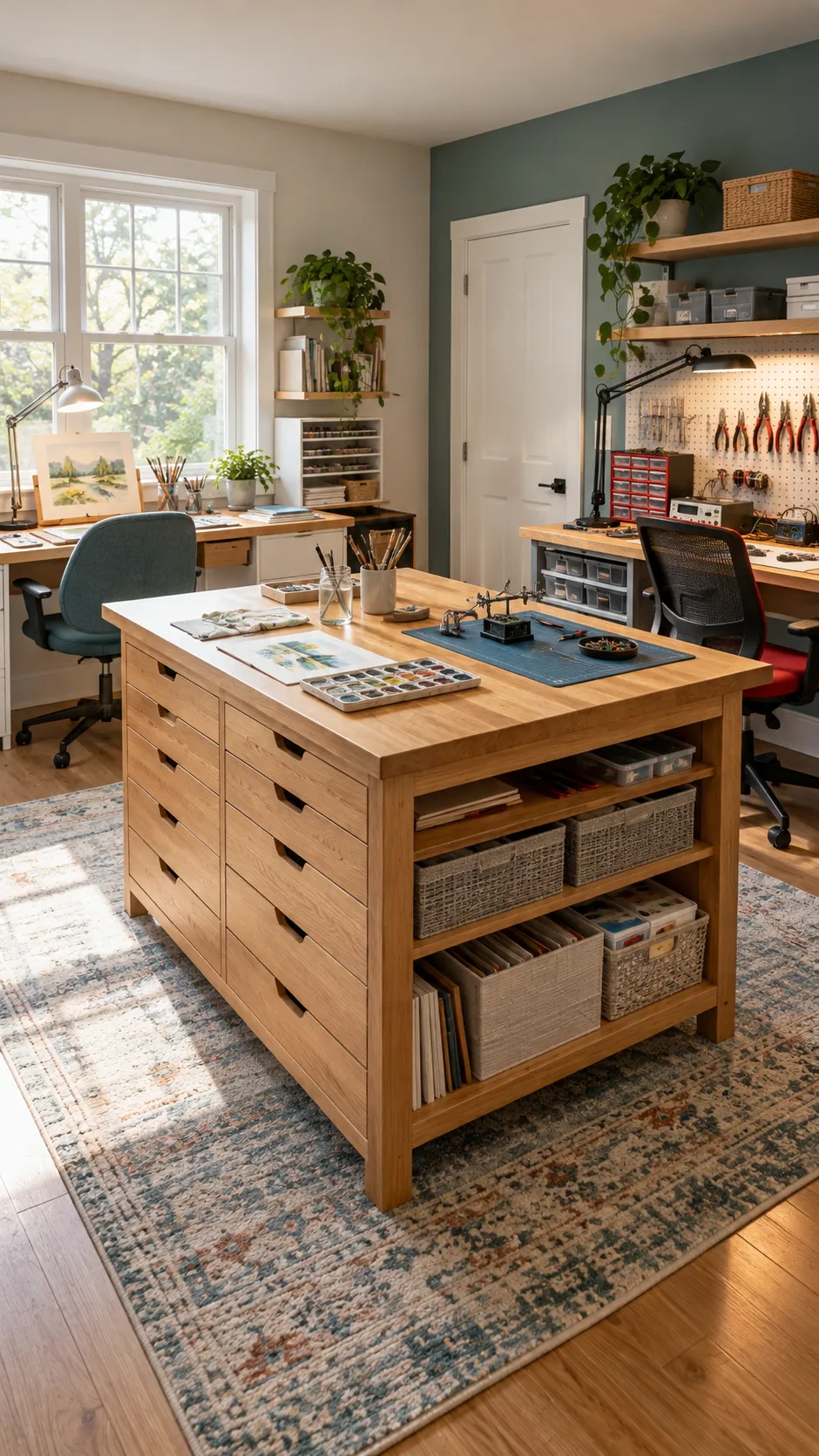
Use One Island for Temporary Overflow
A central island should absorb active project overflow rather than become permanent storage. Fit shallow drawers on opposite sides so each person can approach without crossing the other station. Clear it at the end of a session to preserve a flexible place for shared work.
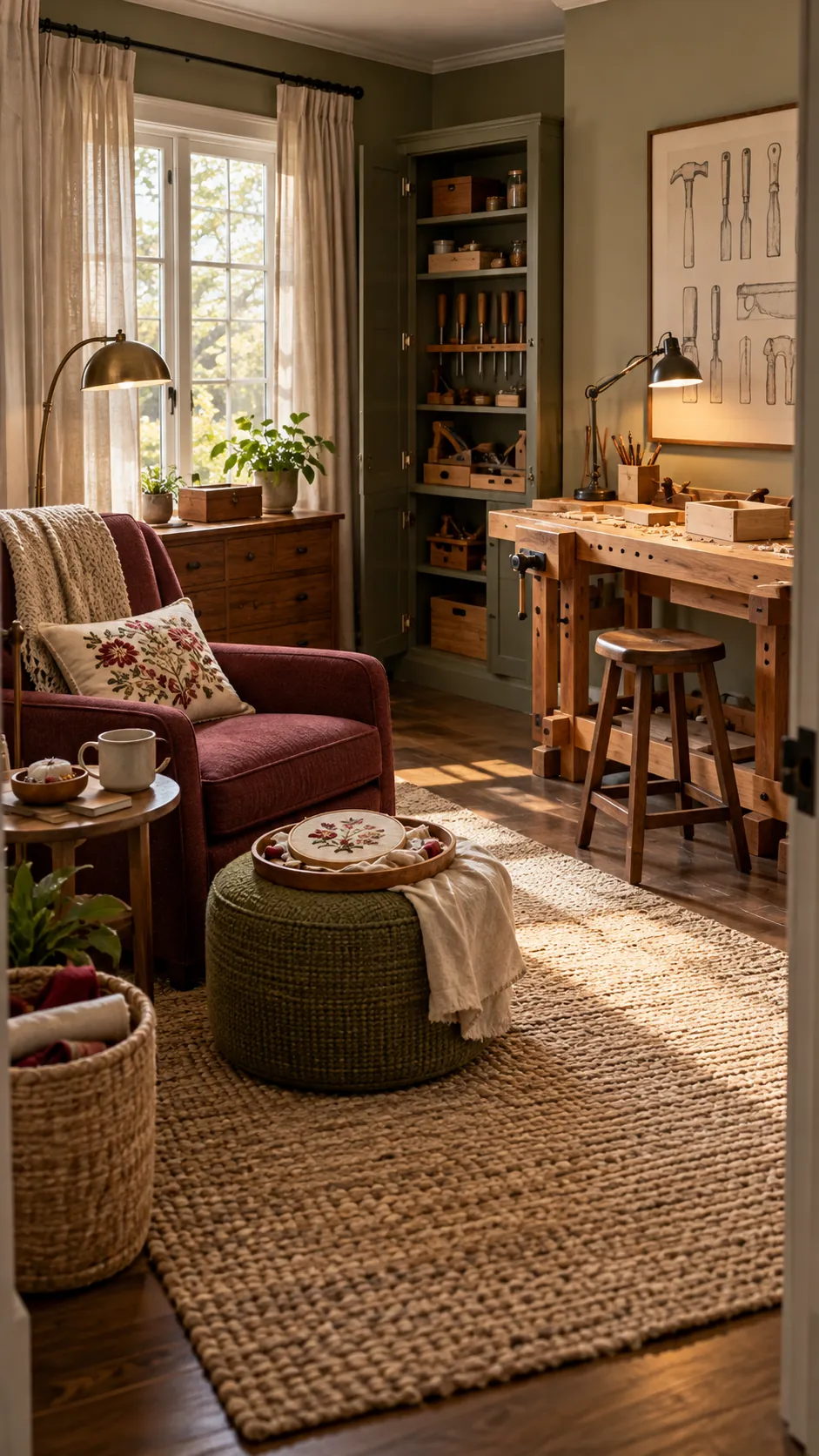
Pair a Quiet Corner With a Tool Corner
Reading, embroidery, or drawing can coexist with a louder hobby when the room gives each activity a different acoustic zone. Put the quiet seat near soft curtains and the tool bench beside closed storage on the opposite wall. A thick rug and felt pads reduce vibration without pretending that every sound can disappear.
Add a Rolling Surface for the Smaller Hobby
A mobile cart or table helps a compact hobby expand only when needed. Choose locking casters and a top that matches the fixed furniture so it does not look temporary. Park it beneath a shelf or beside a cabinet when the main aisle must reopen.
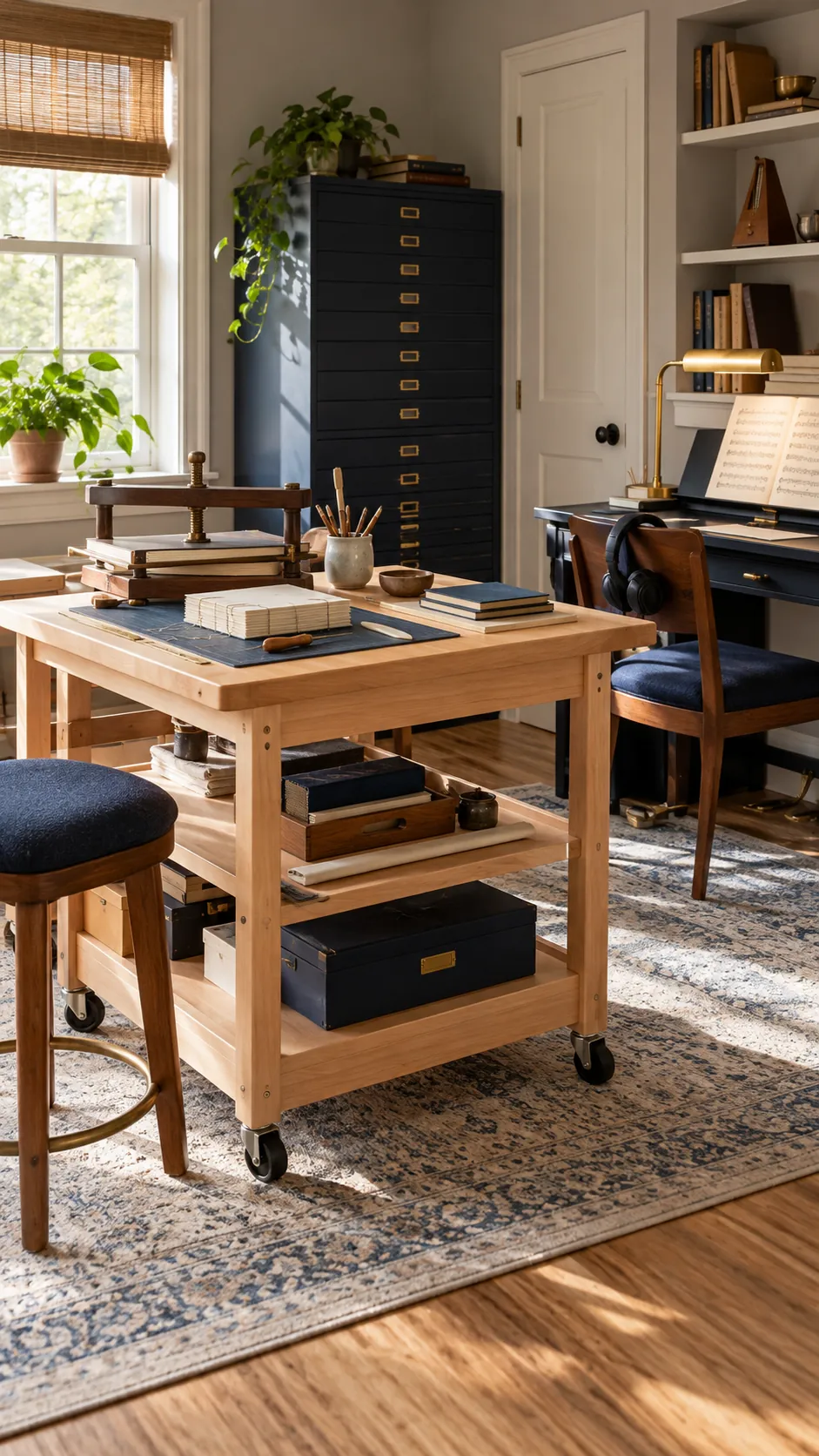
Give Each Person a Closed Tall Cabinet
Tall cabinets hold bulky or visually busy supplies without turning the whole room into storage. Assign one cabinet to each hobby and place shared materials in a smaller middle unit. Interior labels preserve order while the closed fronts keep the room calm.
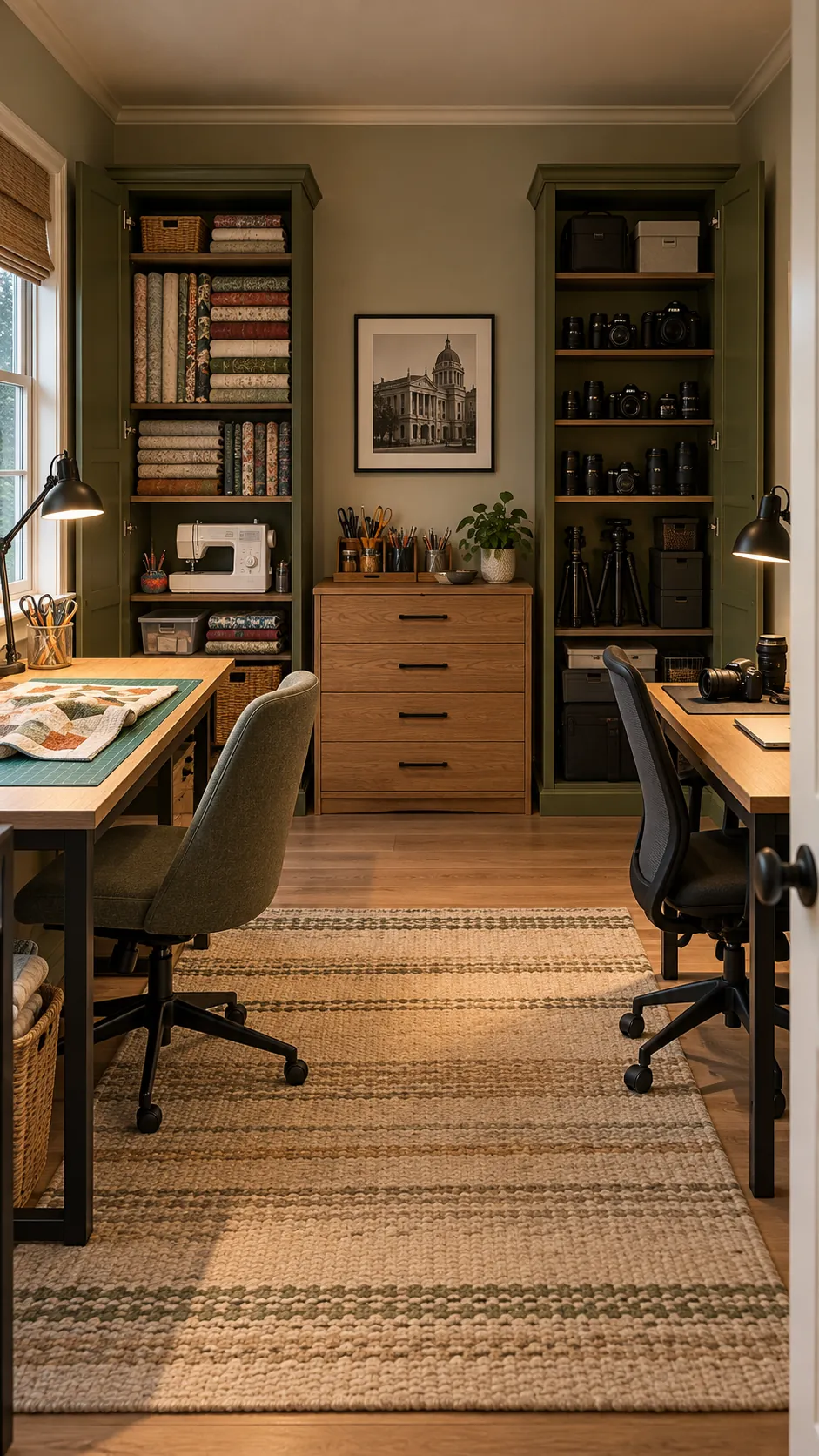
Build a Shared Display Shelf
A shared shelf can celebrate finished projects without mixing active supplies. Alternate objects from both hobbies and keep generous gaps so neither collection overwhelms the other. Rotating the display also gives completed work a destination, which makes clearing the desks easier.
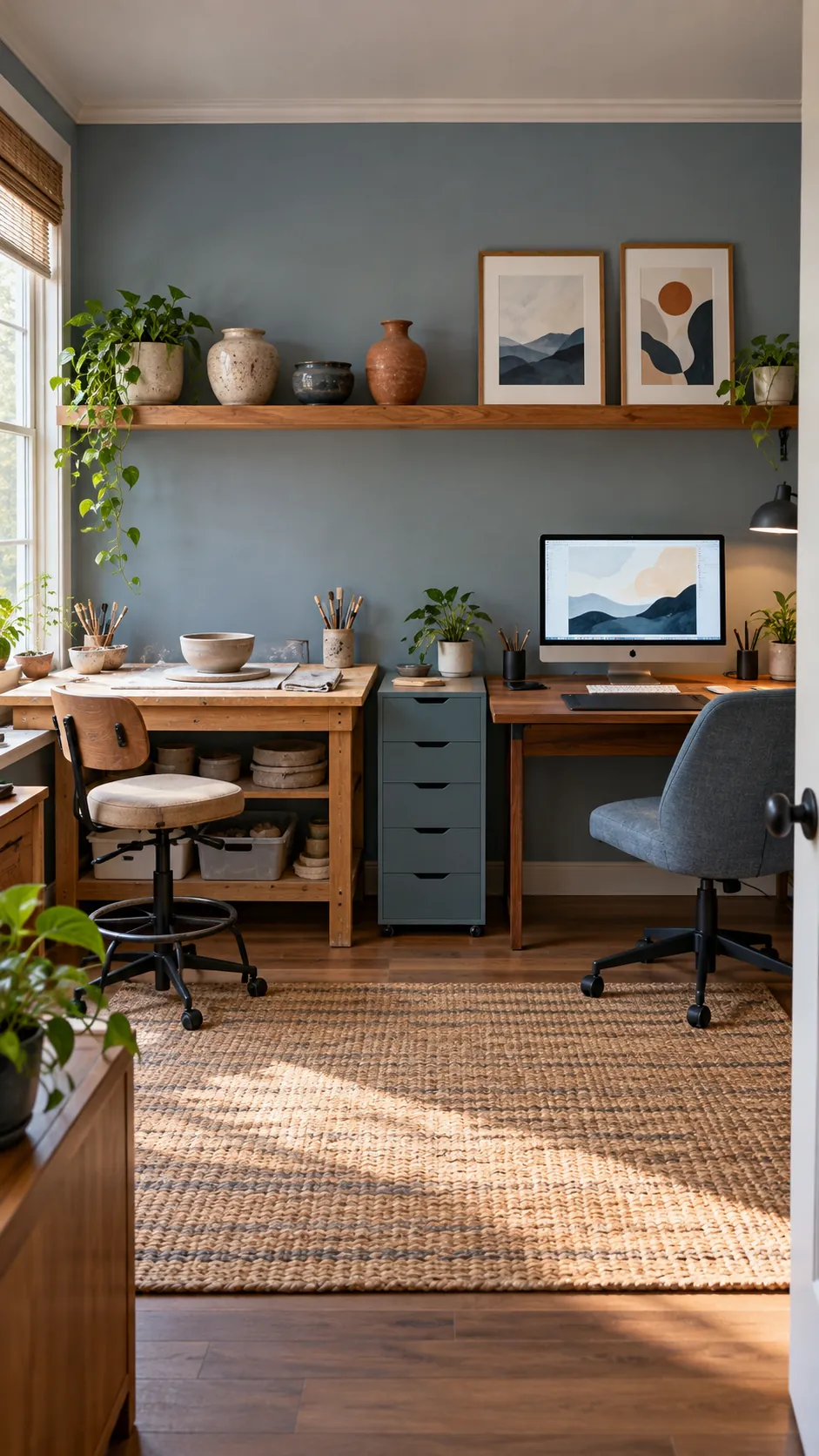
Turn the Window Into Neutral Territory
The best daylight does not have to belong to only one partner. Place a clear shared table near the window for color checks, photography, pattern review, or planning. Keep permanent machines and monitors on the side walls so the bright center remains flexible.
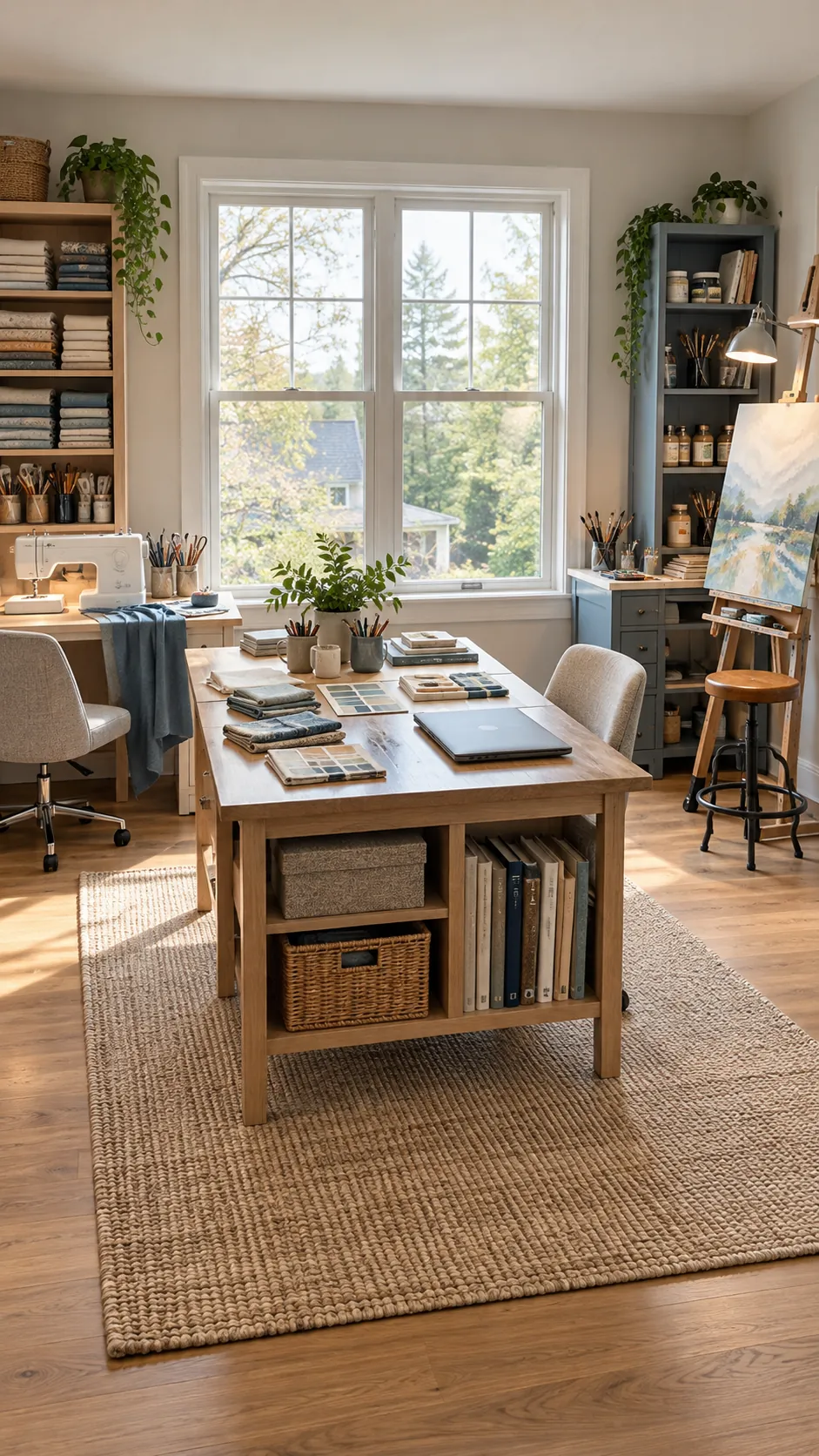
Choose Chairs for Different Working Styles
Two identical chairs can be wrong when one person sits for detailed work and the other moves constantly. Select each chair for posture, height, and duration, then repeat color or material to make the pair relate. Good support prevents the room from favoring one hobby through furniture alone.
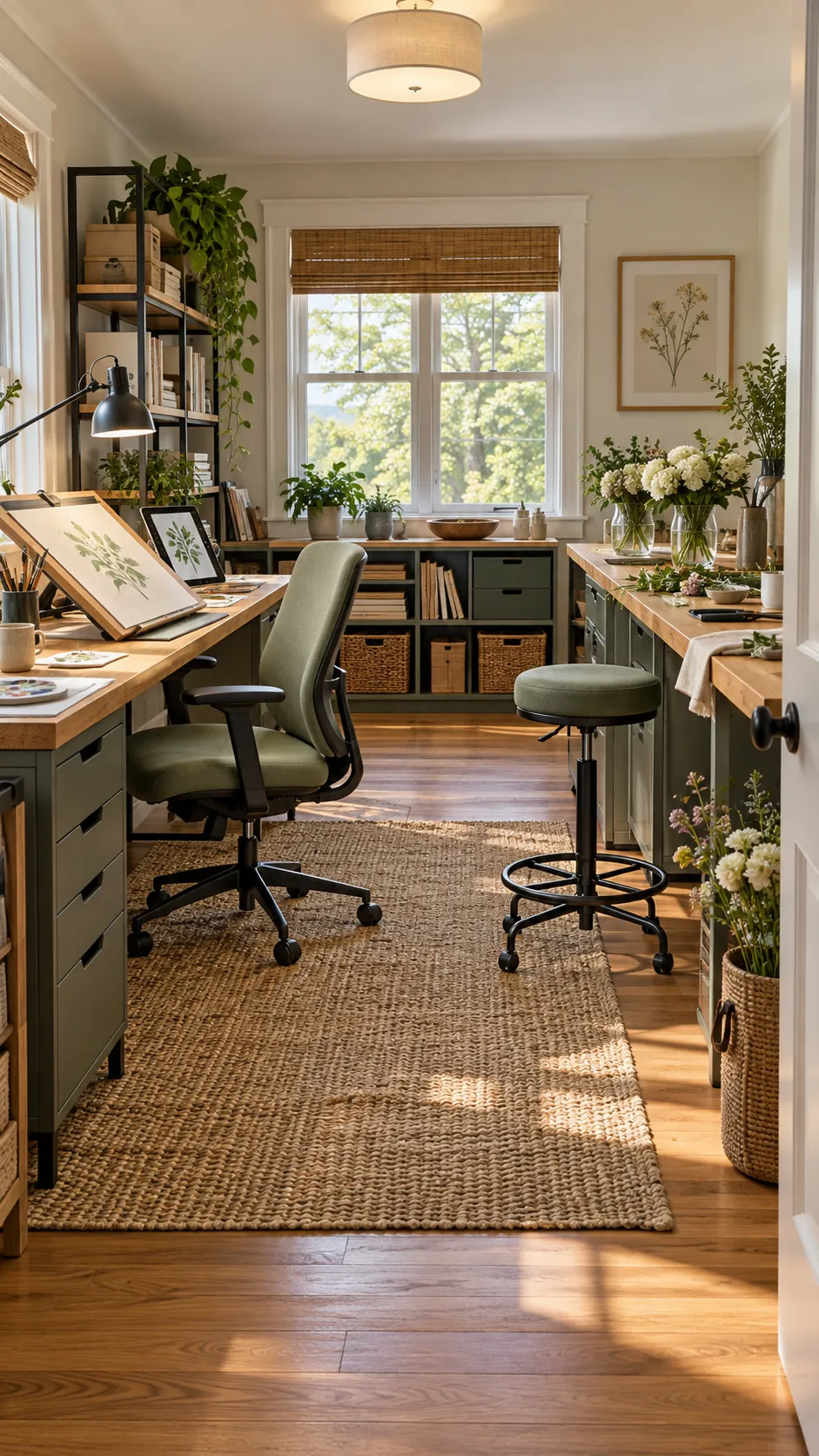
Create a Dust Safe Clean Zone
Sawdust, sanding residue, and spray particles should not share open air with textiles, cameras, or paper. Use closed doors or a sealed cabinet for dusty tools and keep the clean station across the room with covered storage. If proper ventilation is not possible, move the hazardous process elsewhere rather than relying on decor.
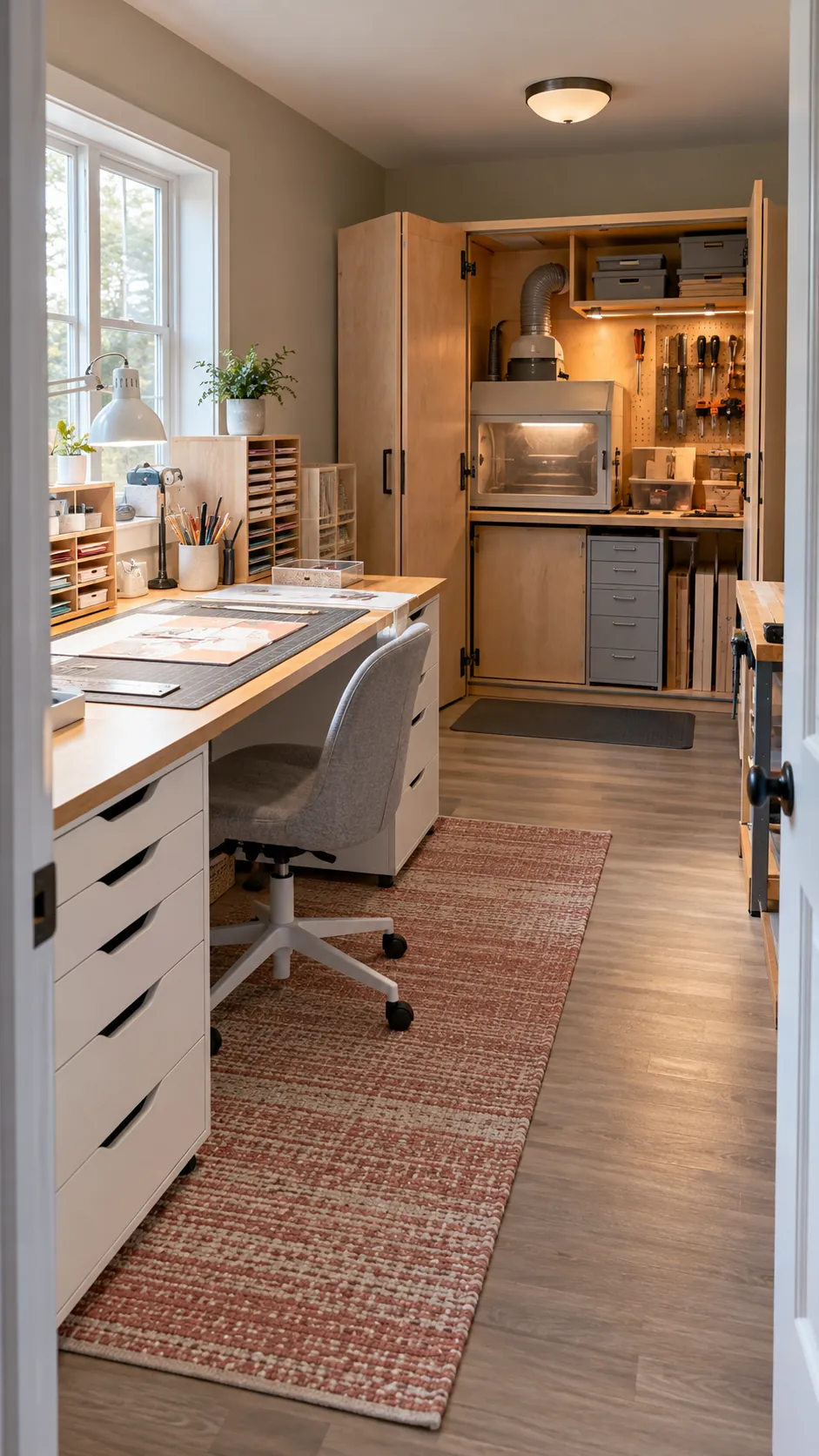
Use Curtains as a Soft Divider
A ceiling track curtain can give one partner visual focus while preserving a flexible shared room. Choose dense fabric that gathers neatly and leaves a wide opening when both people want contact. It reduces distraction and softens sound, but it should never block ventilation or the exit.
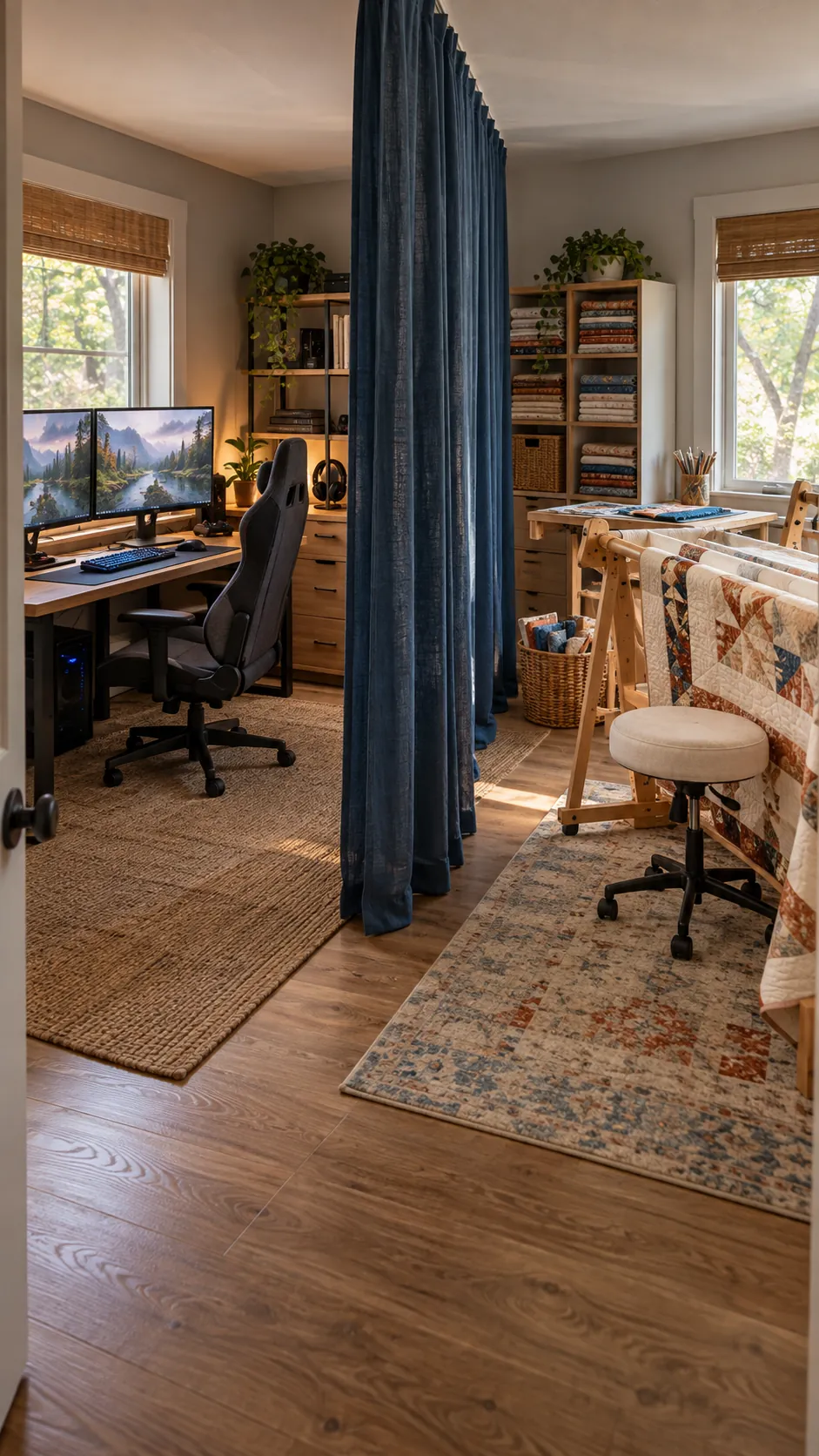
Mount Separate Task Lights
Each hobby needs its own light angle, brightness, and color accuracy. Give every station an independently adjustable fixture rather than forcing one ceiling light to solve everything. Route cords carefully and keep the general room light softer so both partners can work without glare.
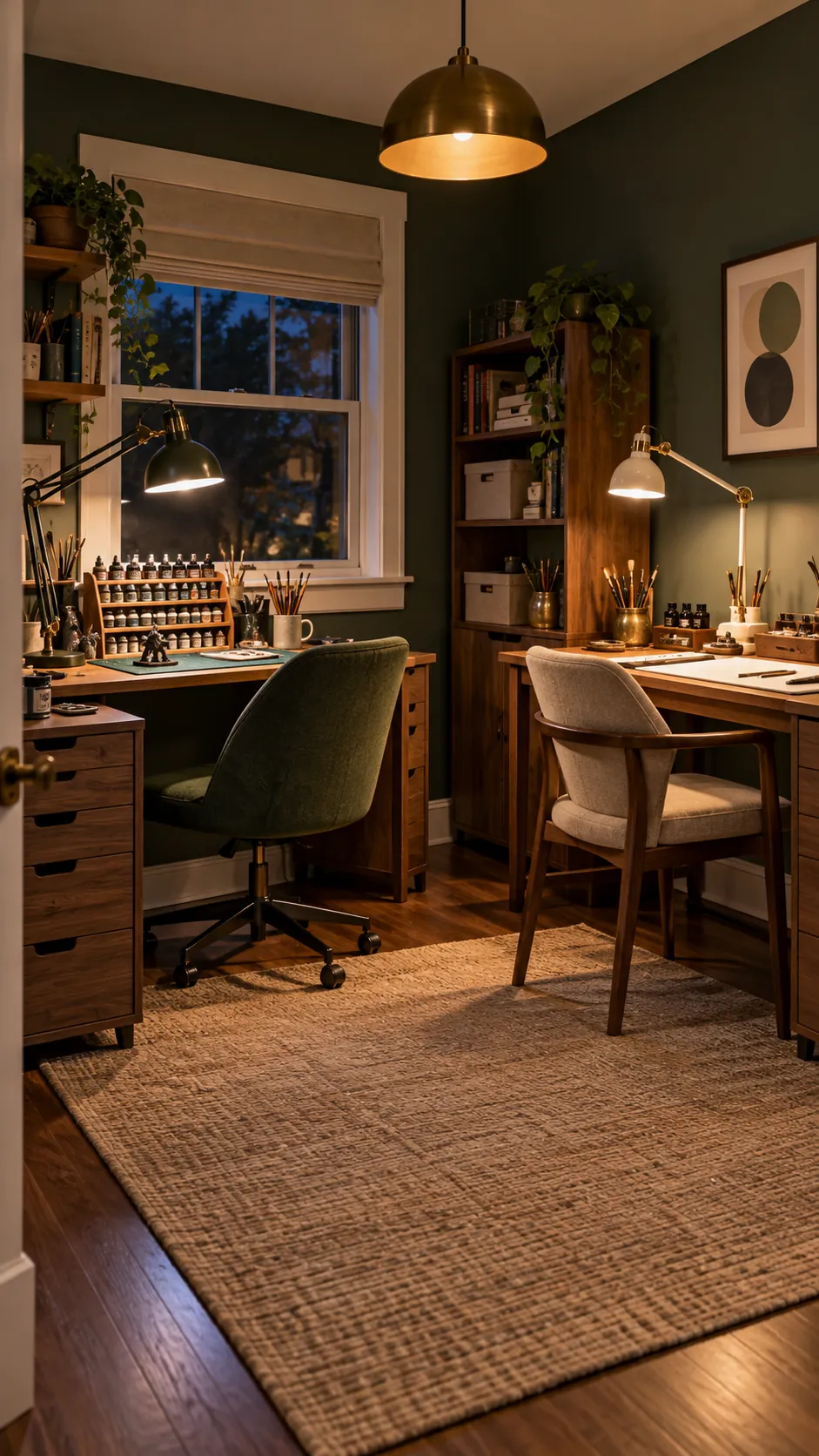
Store Shared Tools in the Middle
Scissors, rulers, tape, and basic hand tools belong where both people can reach them without entering the other zone. A shallow central drawer unit works better than a deep bin because every item stays visible. Return shared tools after each session so borrowing never becomes searching.
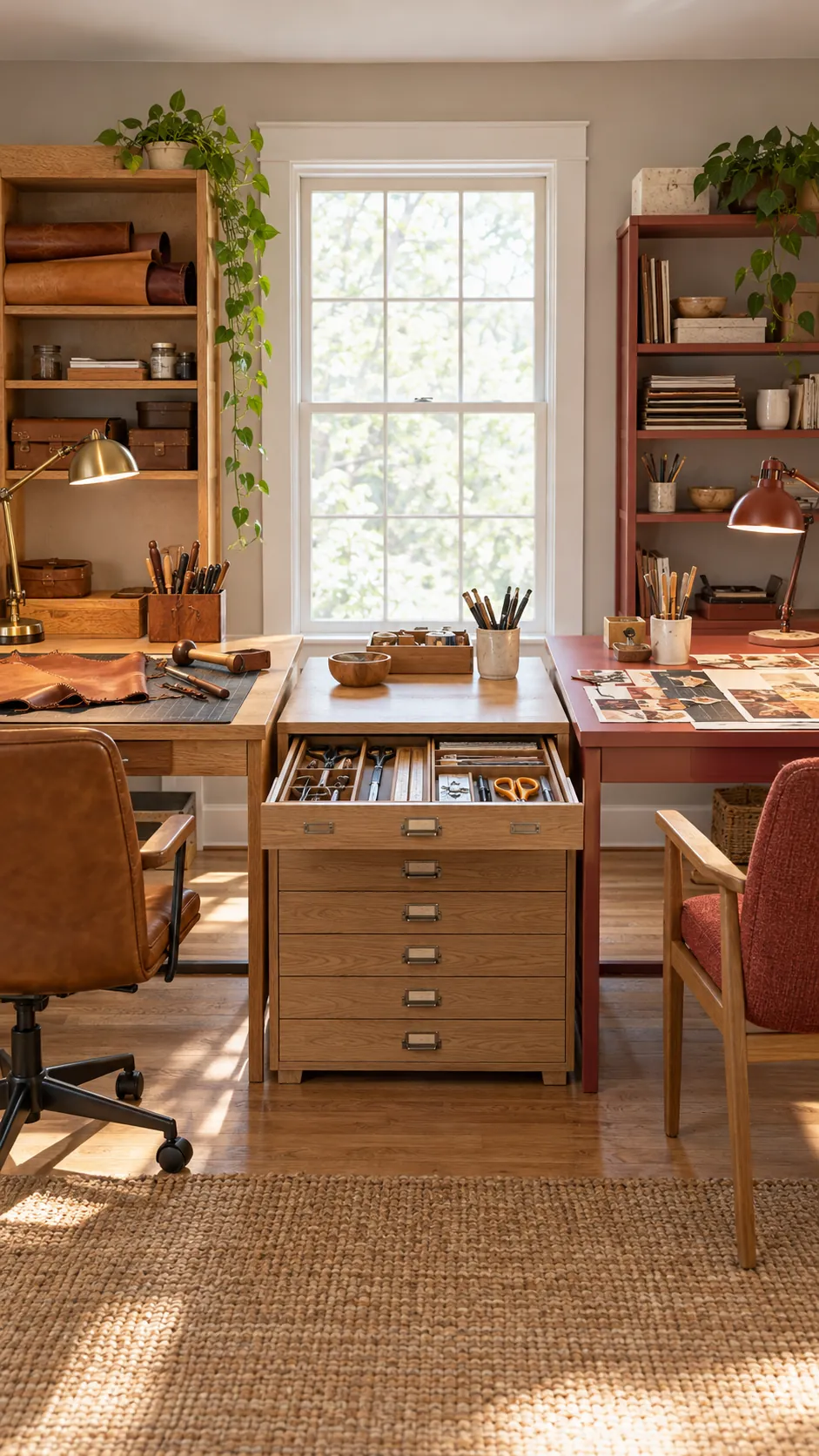
Use Different Wall Colors to Mark Zones
Subtle color blocking can define individual areas without adding furniture. Choose related shades with similar depth so the room still reads as one composition. Keep the transition aligned with a corner or cabinet edge, which makes the division look architectural rather than arbitrary.
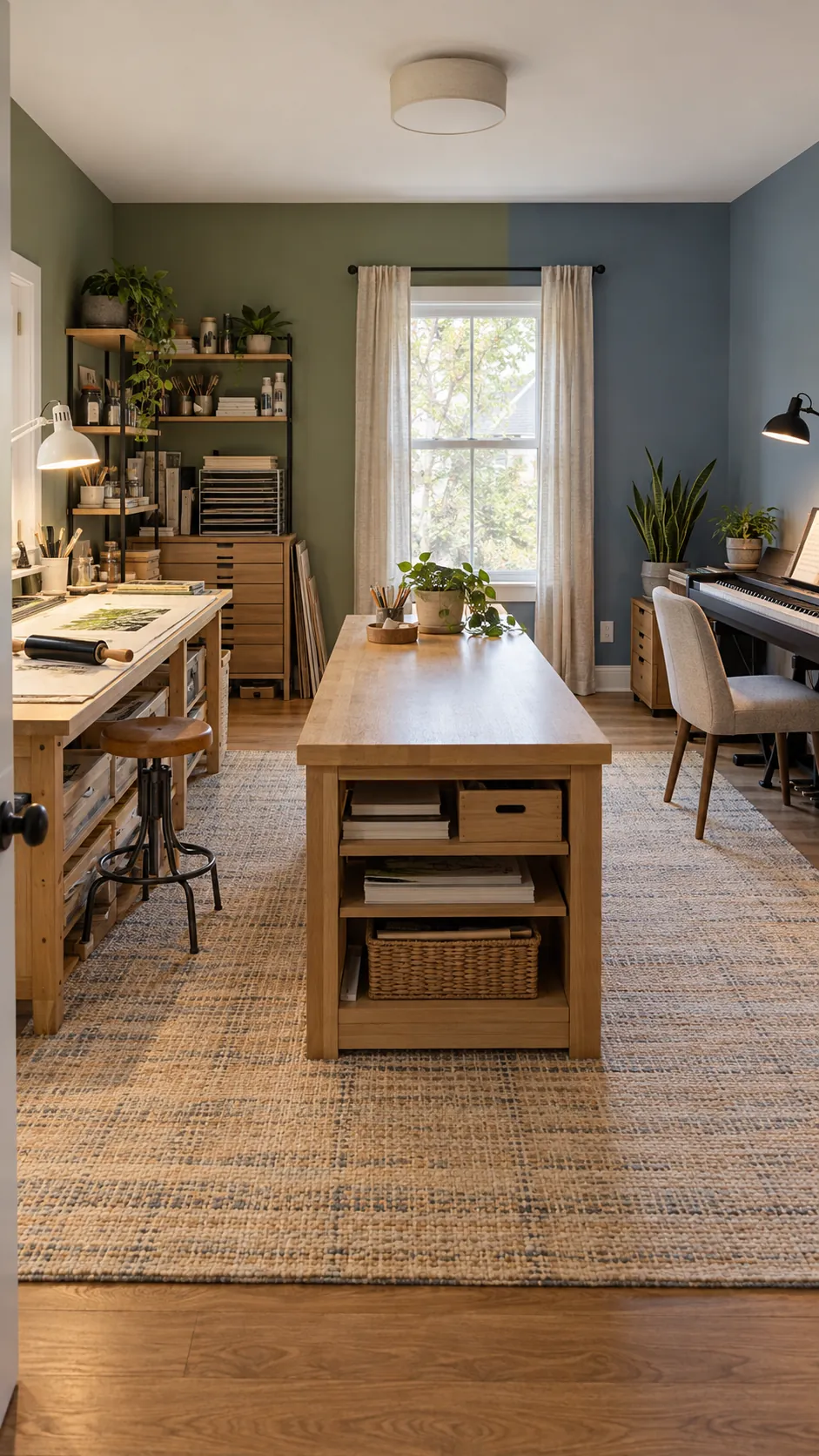
Plan a Clear Route to Every Station
A shared room fails quickly when one person must squeeze behind the other to leave. Draw the walking path first, then place chairs, carts, and open cabinet doors outside it. A comfortable route also makes cleanup and carrying large projects safer.
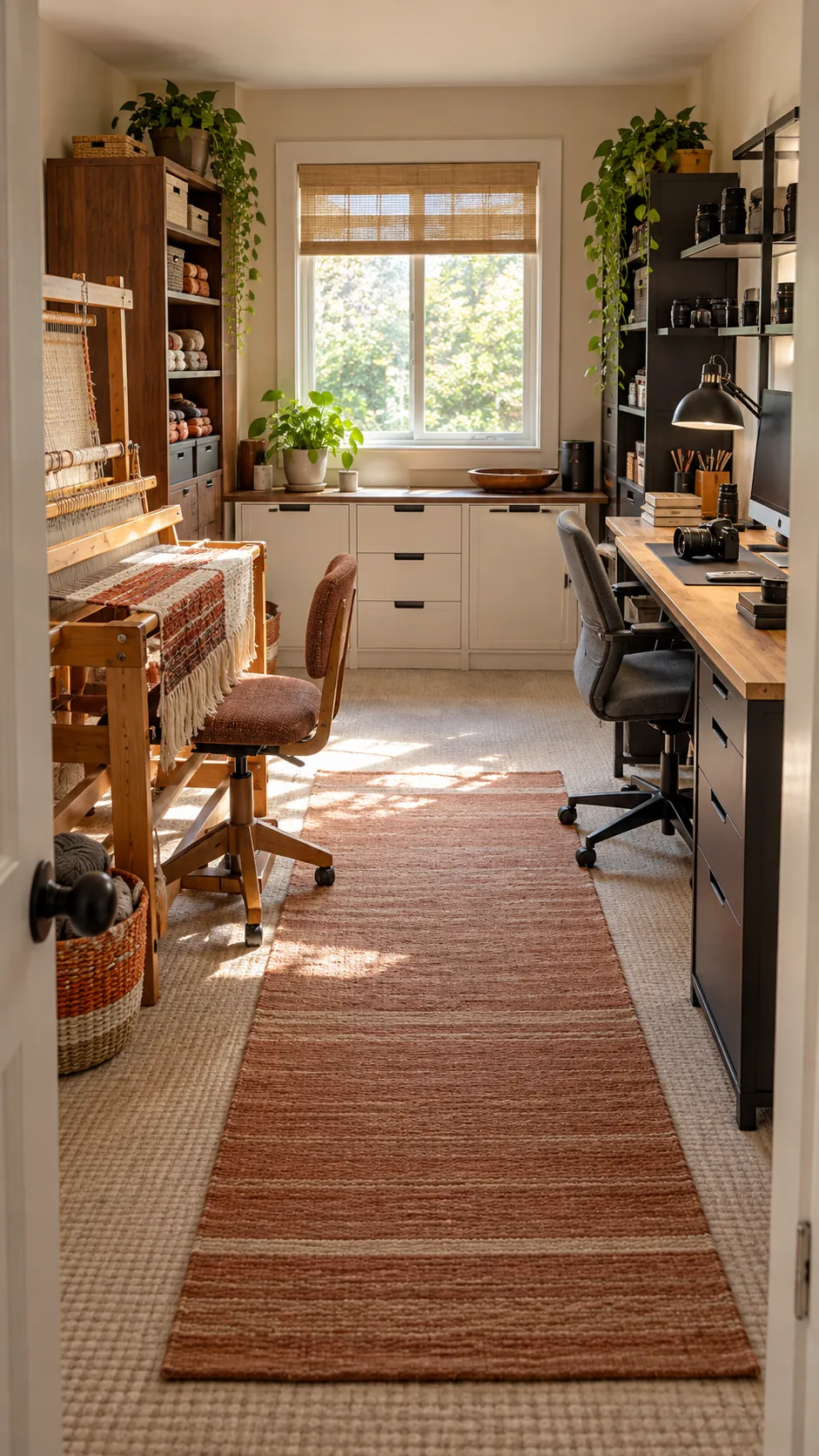
Add Headphone and Charging Storage
Digital music, gaming, and video work bring cables and headphones that can spill into another craft zone. Mount a simple hook and charging drawer at the relevant desk, with ventilation and easy access. The setup keeps technology contained while the rest of the room can stay tactile and calm.
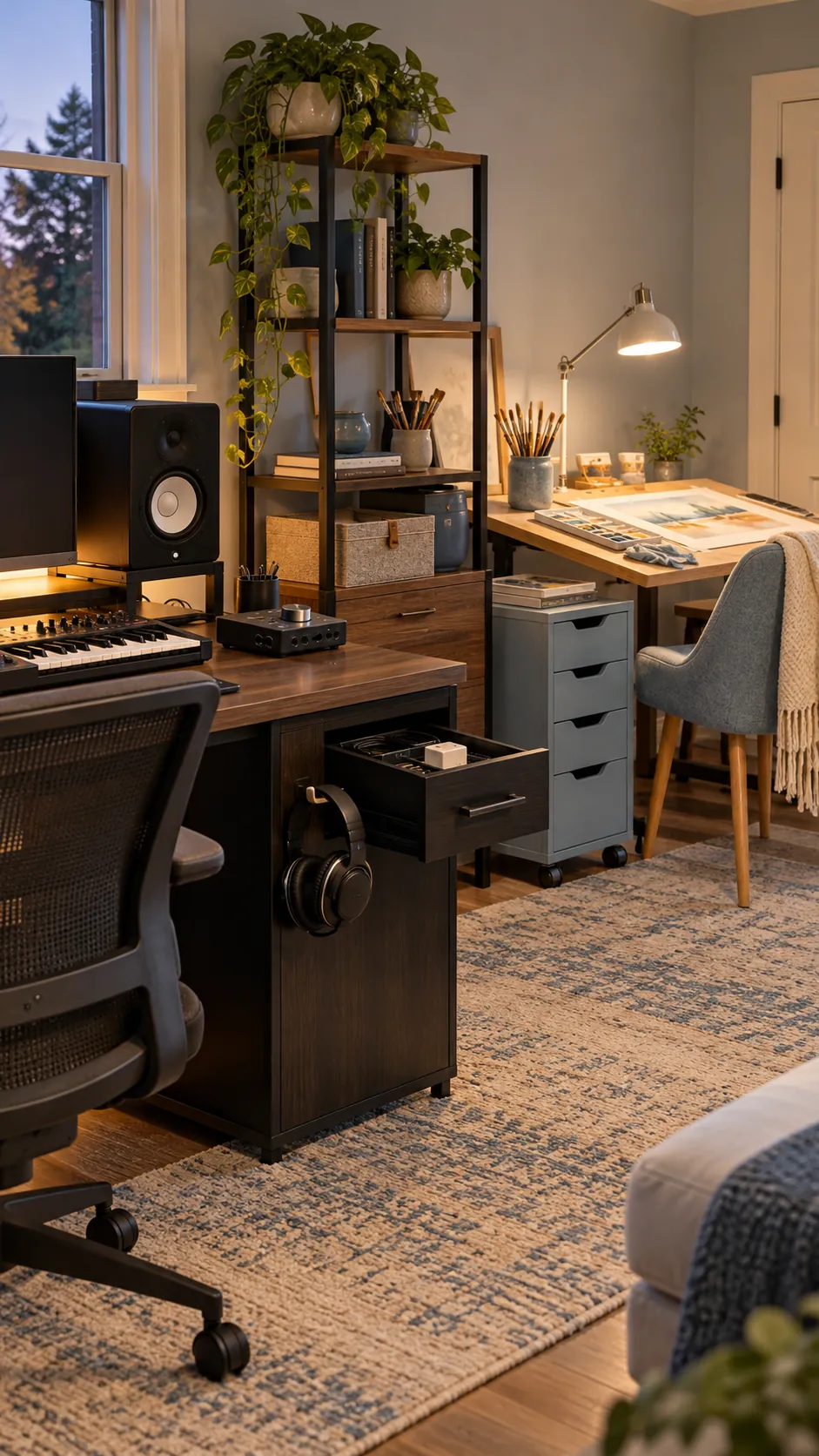
Choose a Rug That Unifies Both Halves
A single large rug can connect mismatched desks and chairs without forcing identical furniture. Use a low pile pattern that tolerates movement and avoids the messiest wet zone. Pull the main furniture onto its edges so the room feels shared rather than split into rival islands.
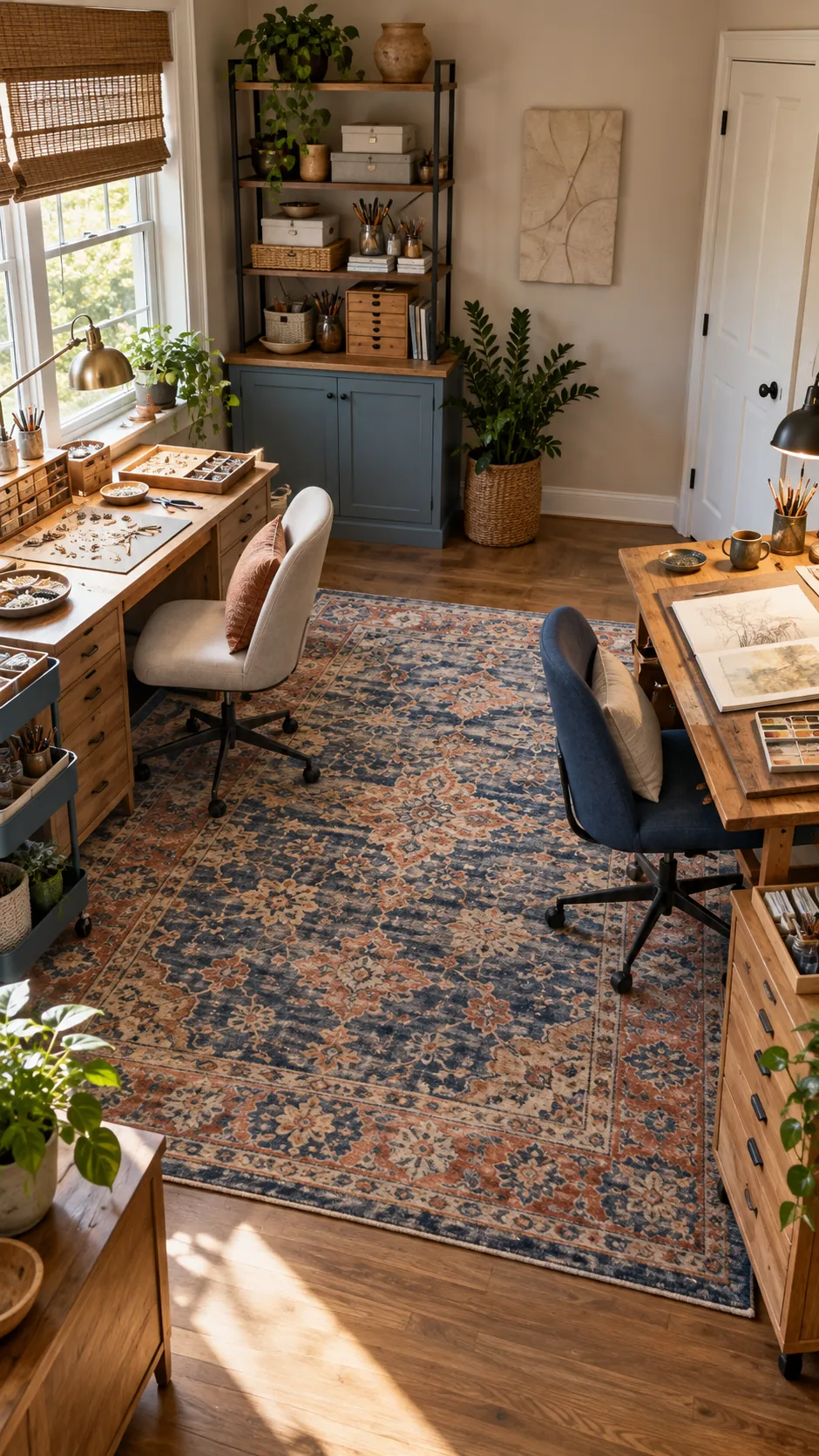
Create a Project Parking Shelf
Long projects need a safe place to pause without occupying every worktop. Give each partner one deep shelf or tray sized for current work and keep it separate from long term storage. A clear limit prevents abandoned projects from swallowing the room.
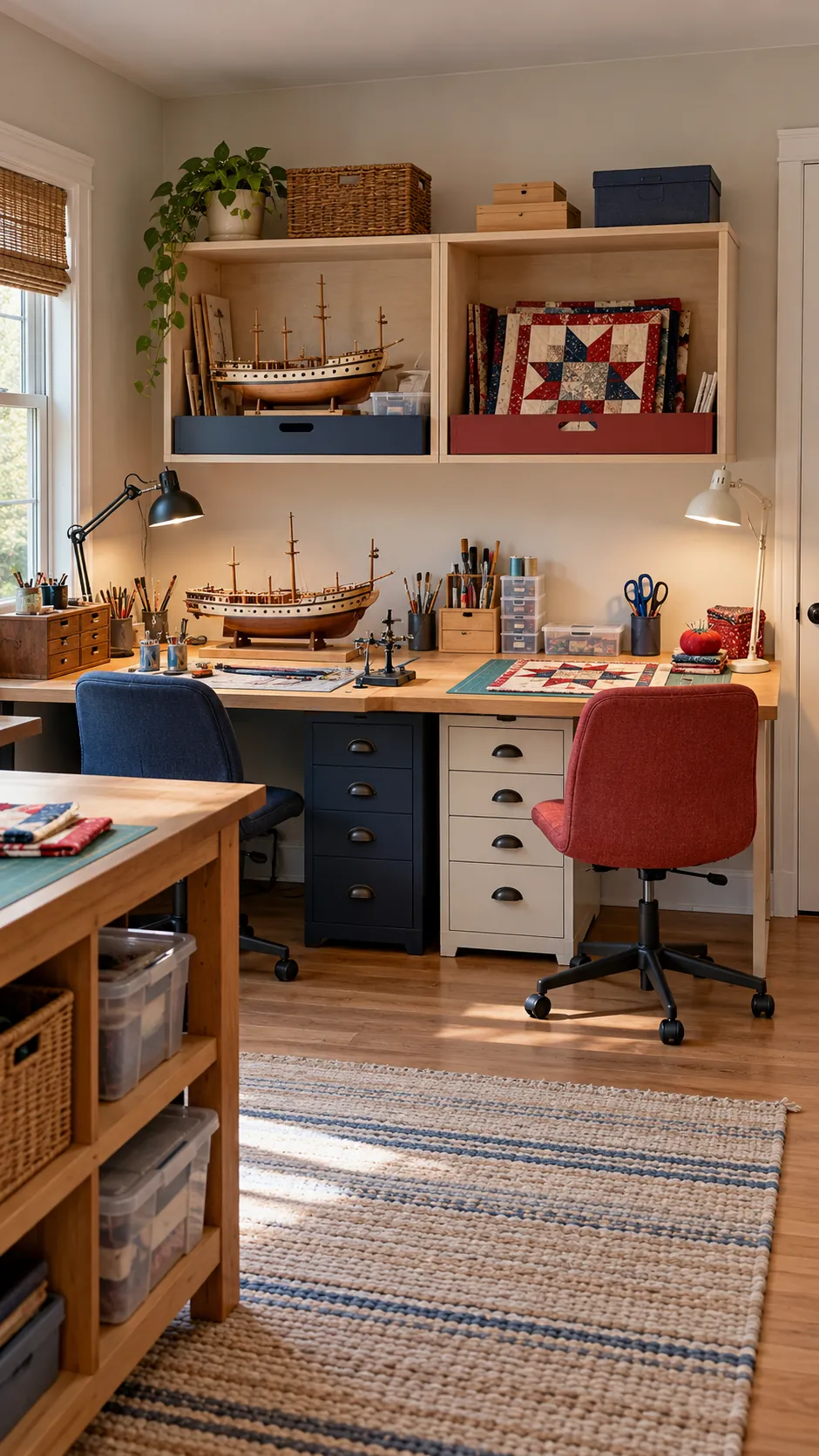
Make One Corner Comfortable for Company
A small bench or two easy chairs let partners share progress without standing over each other. Place the seating outside the active tool zones and give it one small table. This social corner helps the room support togetherness even when the projects remain separate.
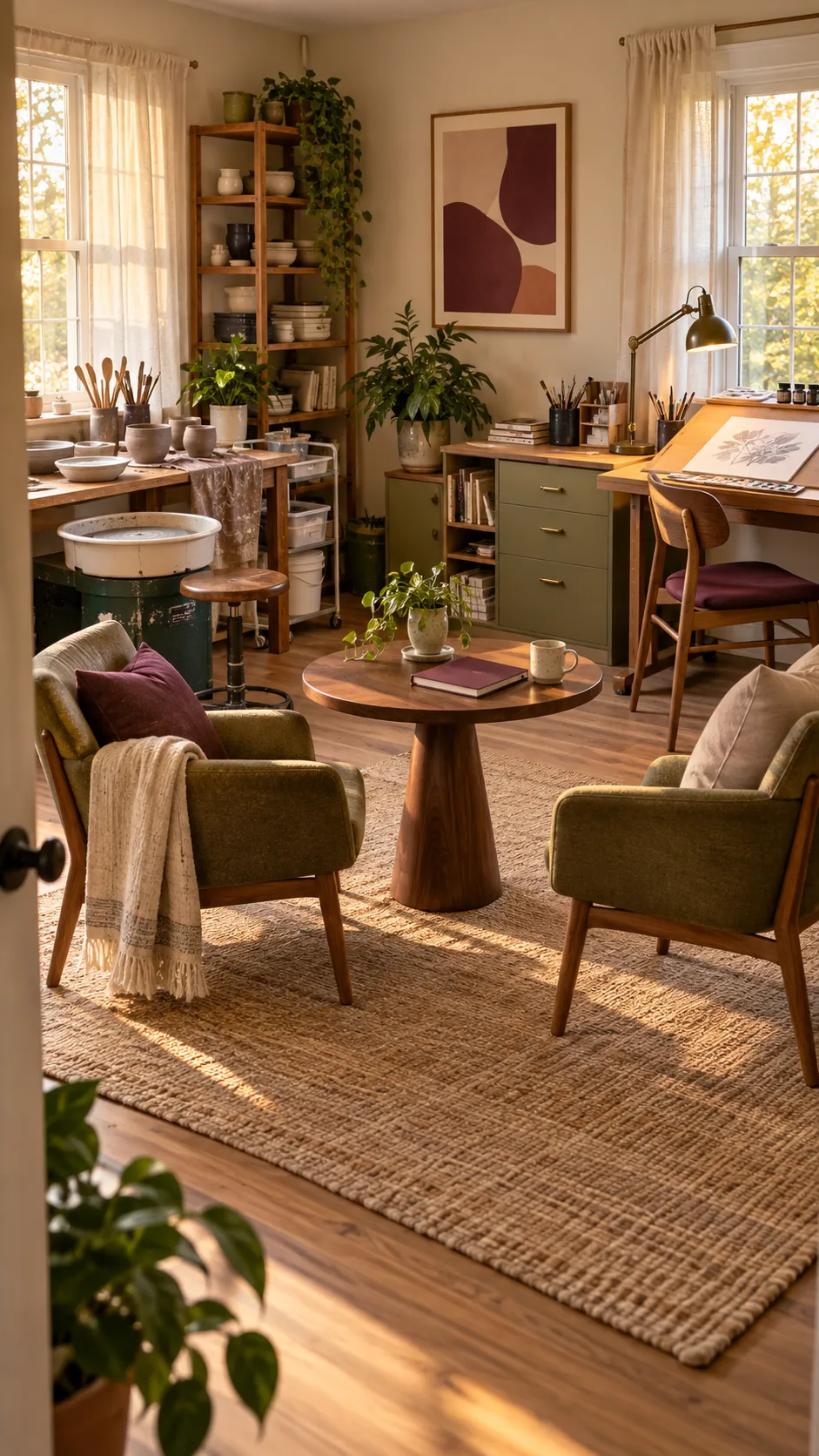
Use Peg Rails Instead of Full Pegboard Walls
A restrained wood peg rail can hold aprons, headphones, rulers, or a project bag without creating a workshop backdrop. Assign a short section to each person and leave hooks empty when not needed. The rail adds quick access while closed storage handles the visual bulk.
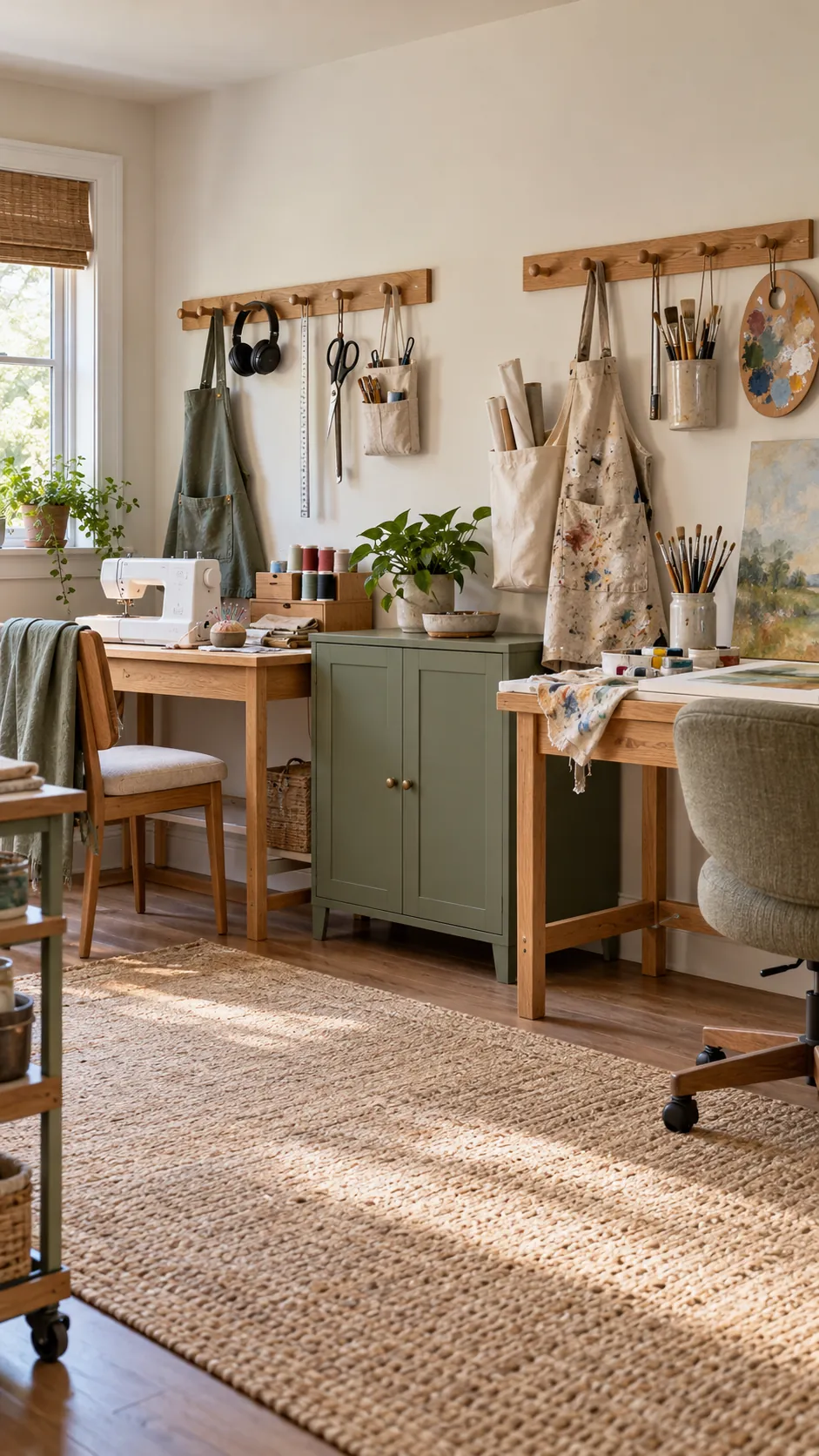
Keep Hazardous Materials Out of the Shared Room
Strong solvents, spray finishes, and high heat tools need ventilation and safety controls that a decorative spare room may not provide. Store only approved sealed materials and move risky processes to a suitable work area. This boundary protects both partners and makes the shared room easier to enjoy.
End With a Five Minute Reset Zone
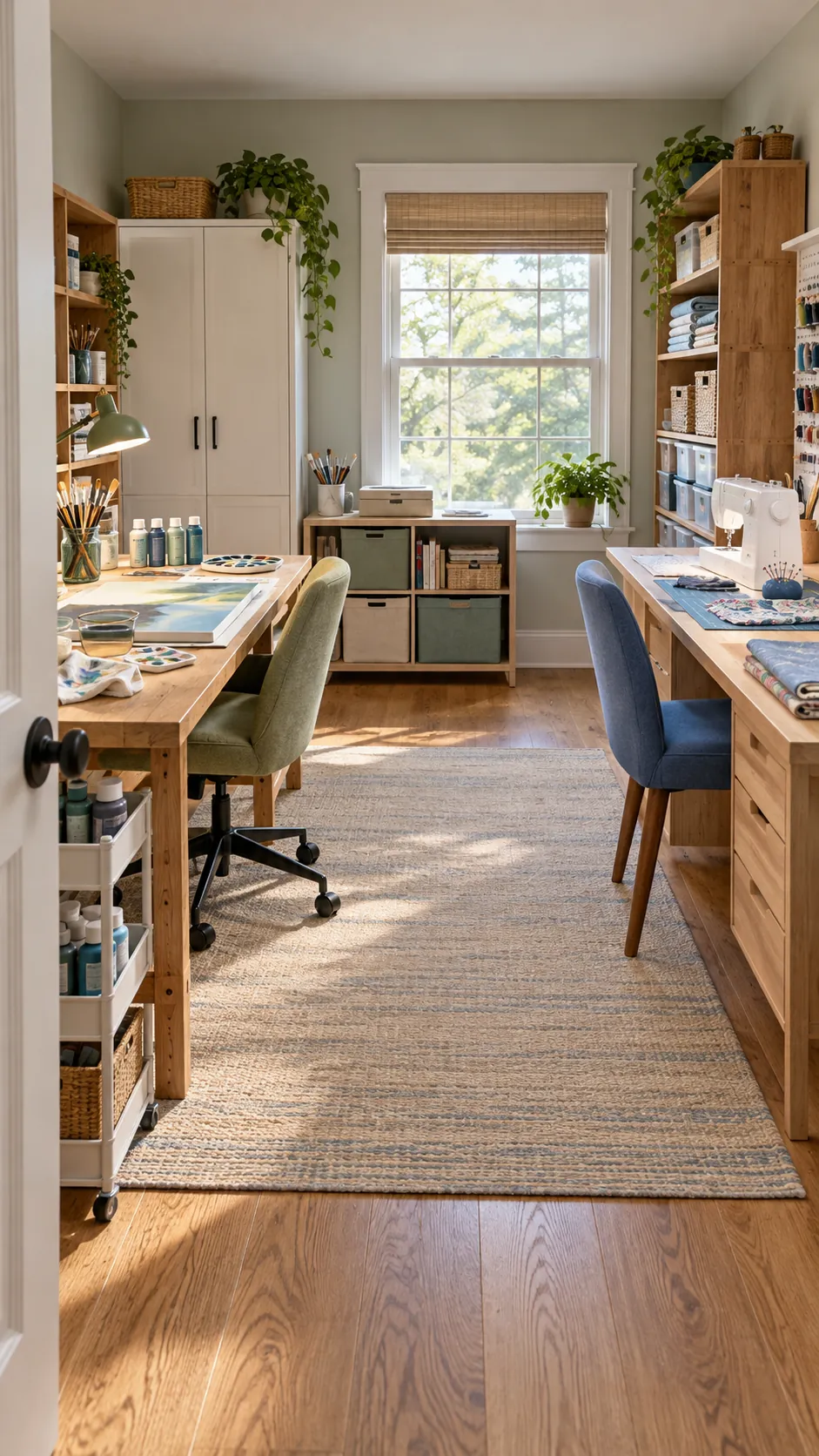
A shared room stays fair when cleanup has an obvious finish line. Place a waste bin, laundry basket, tool return tray, and charging point near the exit so both partners can reset without crossing the room. The routine preserves tomorrow’s starting space and prevents one hobby from slowly overtaking the other.