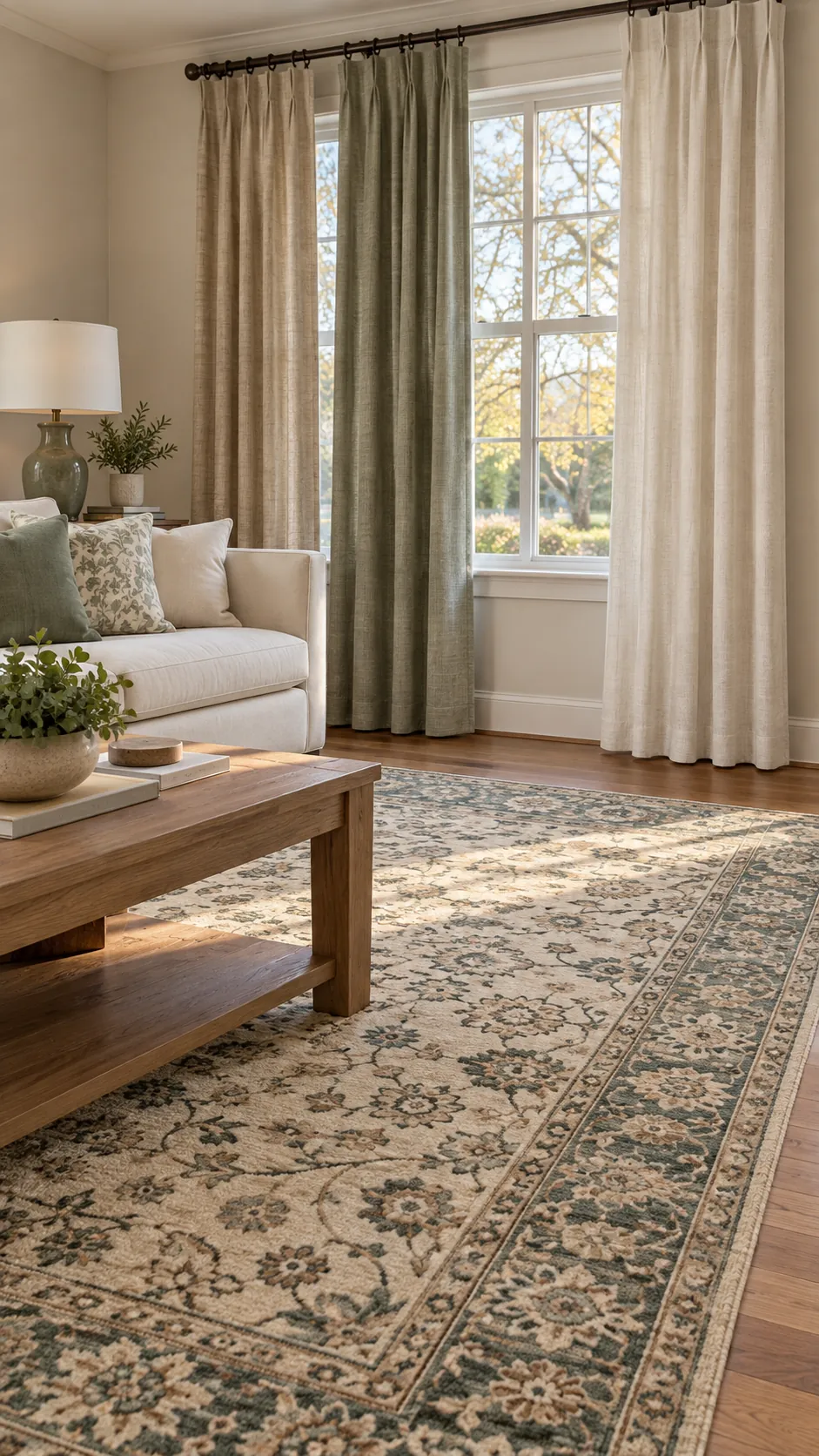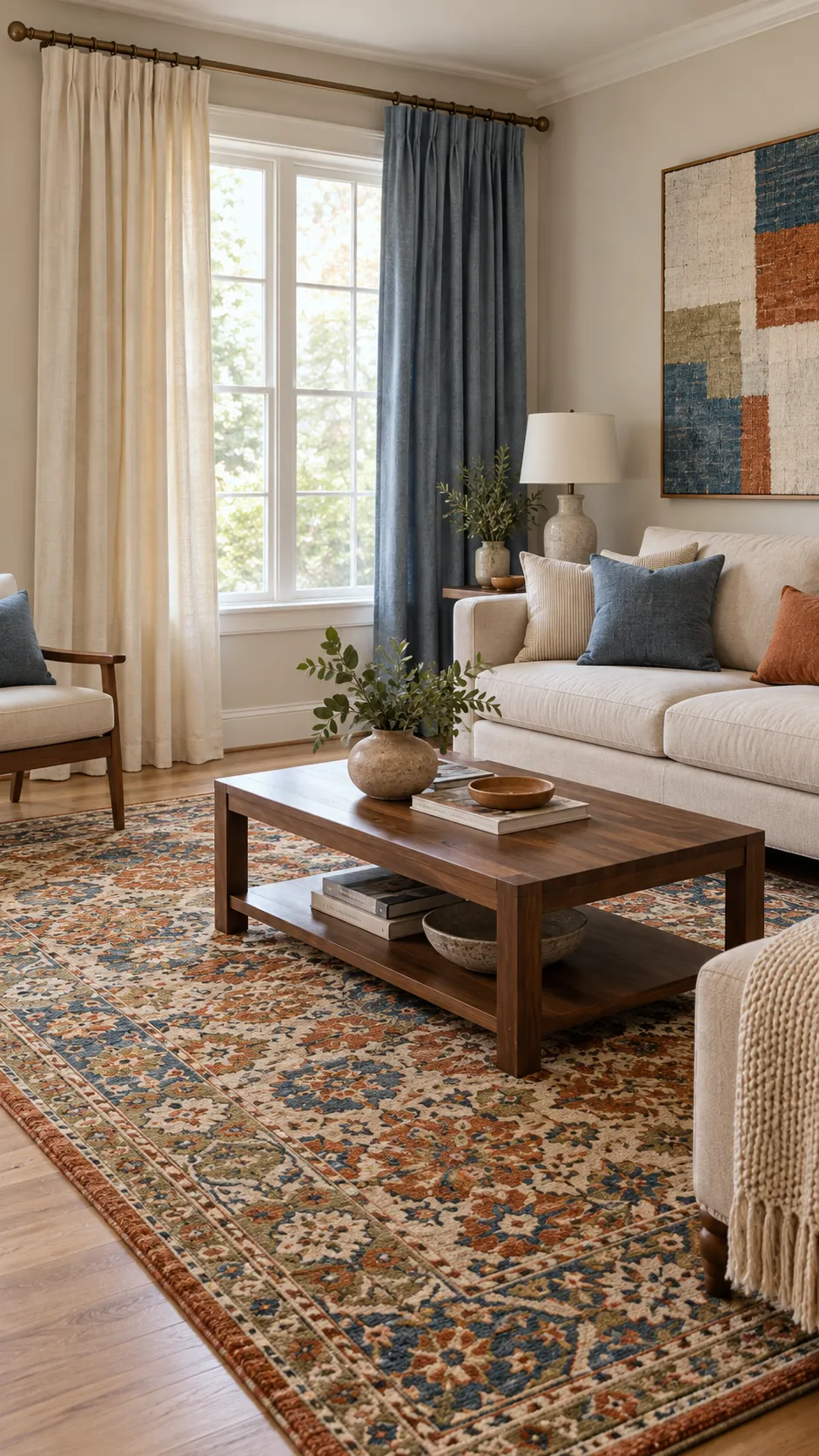
A patterned rug already carries several decisions about color, contrast, and movement. Curtains should support that work, not duplicate every motif or introduce a separate palette. The best choice depends on which element should lead, how much daylight enters, and how large each color field appears from across the room.
Start With the Rug Background Color
The safest curtain choice is often the quiet background color in the rug rather than its boldest motif. Cream, oatmeal, sand, or soft gray panels let the rug remain the focal point and make a smaller room feel more open. Match the undertone instead of chasing an exact shade, since identical colors can still look wrong when one is warm and the other cool. This approach is useful when the sofa and walls already add visual weight.
Pull a Secondary Color From the Pattern
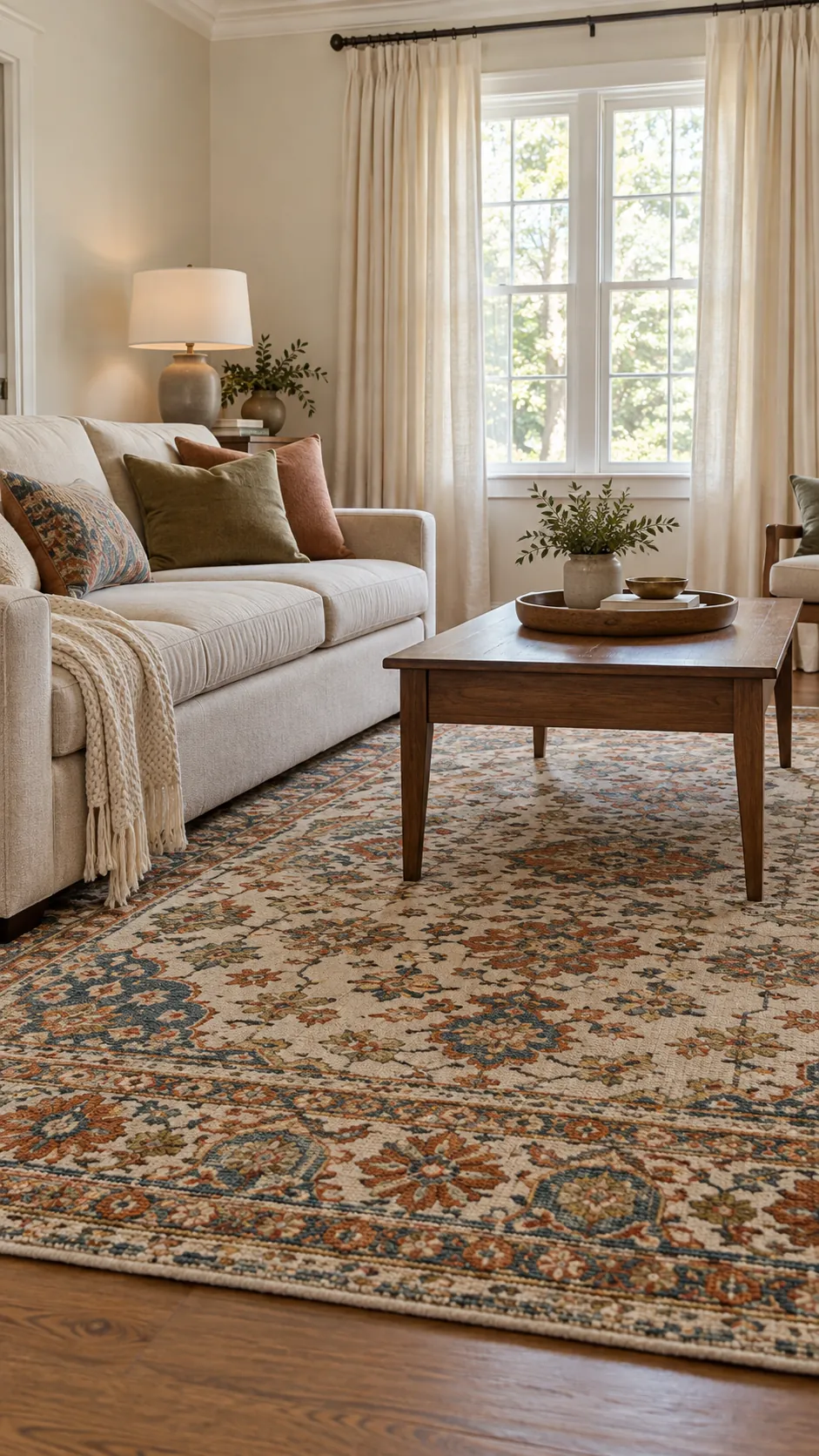
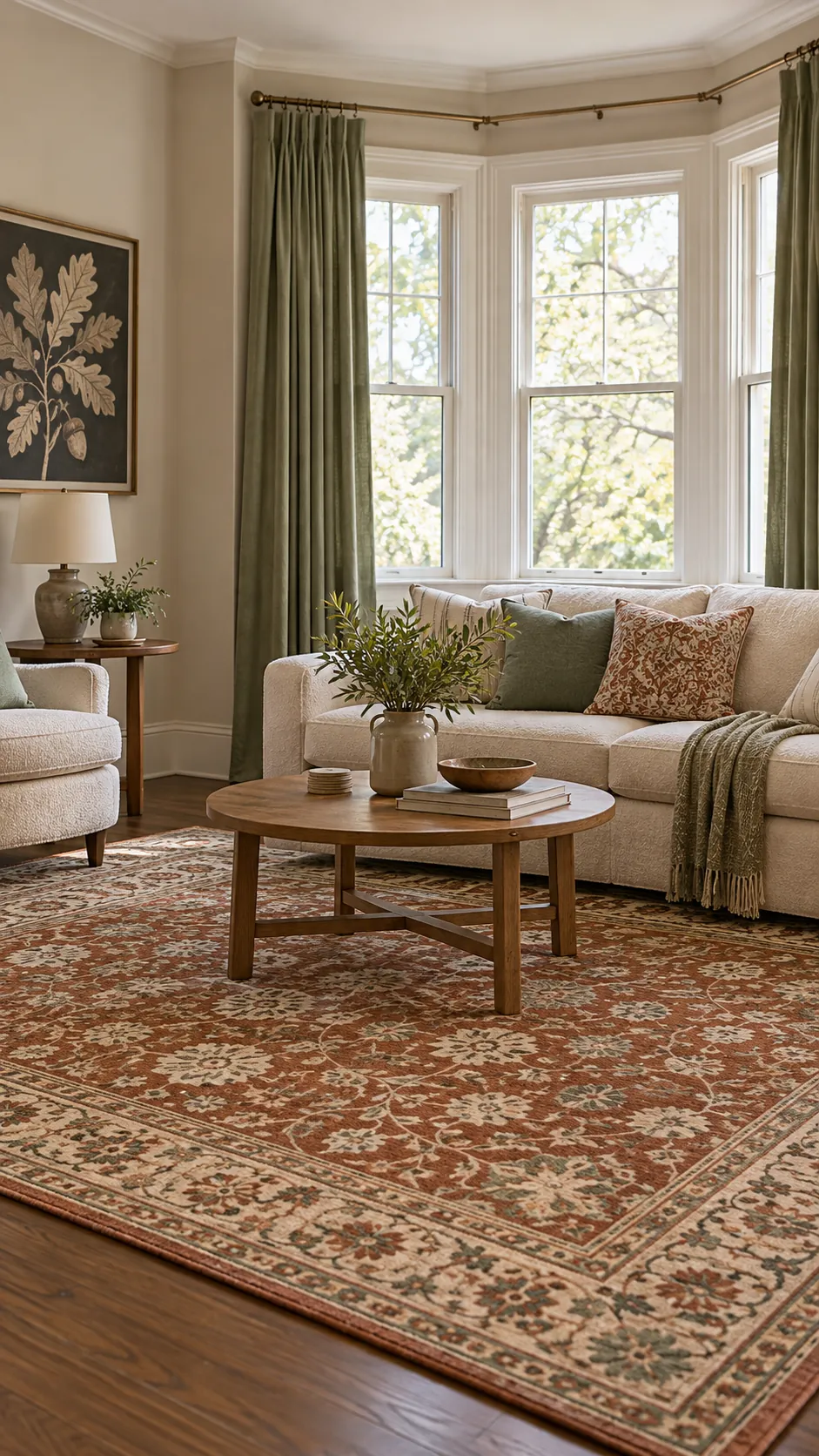
A secondary rug color can make solid curtains look connected without appearing overly matched. Choose a hue that covers a modest part of the rug, such as muted blue, sage, rust, or plum, then use a softer or slightly grayer version at the window. Repeat that color once in a cushion or object away from the window. The repeat turns the curtain choice into a room palette instead of a single borrowed swatch.
Use Light Curtains to Protect the Rug as the Focal Point
Light curtains are especially helpful when the rug has dense pattern, strong contrast, or several saturated colors. Their tall pale surface gives the eye a resting place and preserves daylight. Choose linen, cotton, or a textured weave so the panels still contribute depth. Sheer white can look disconnected beside a warm rug, so cream or natural flax is often more forgiving.
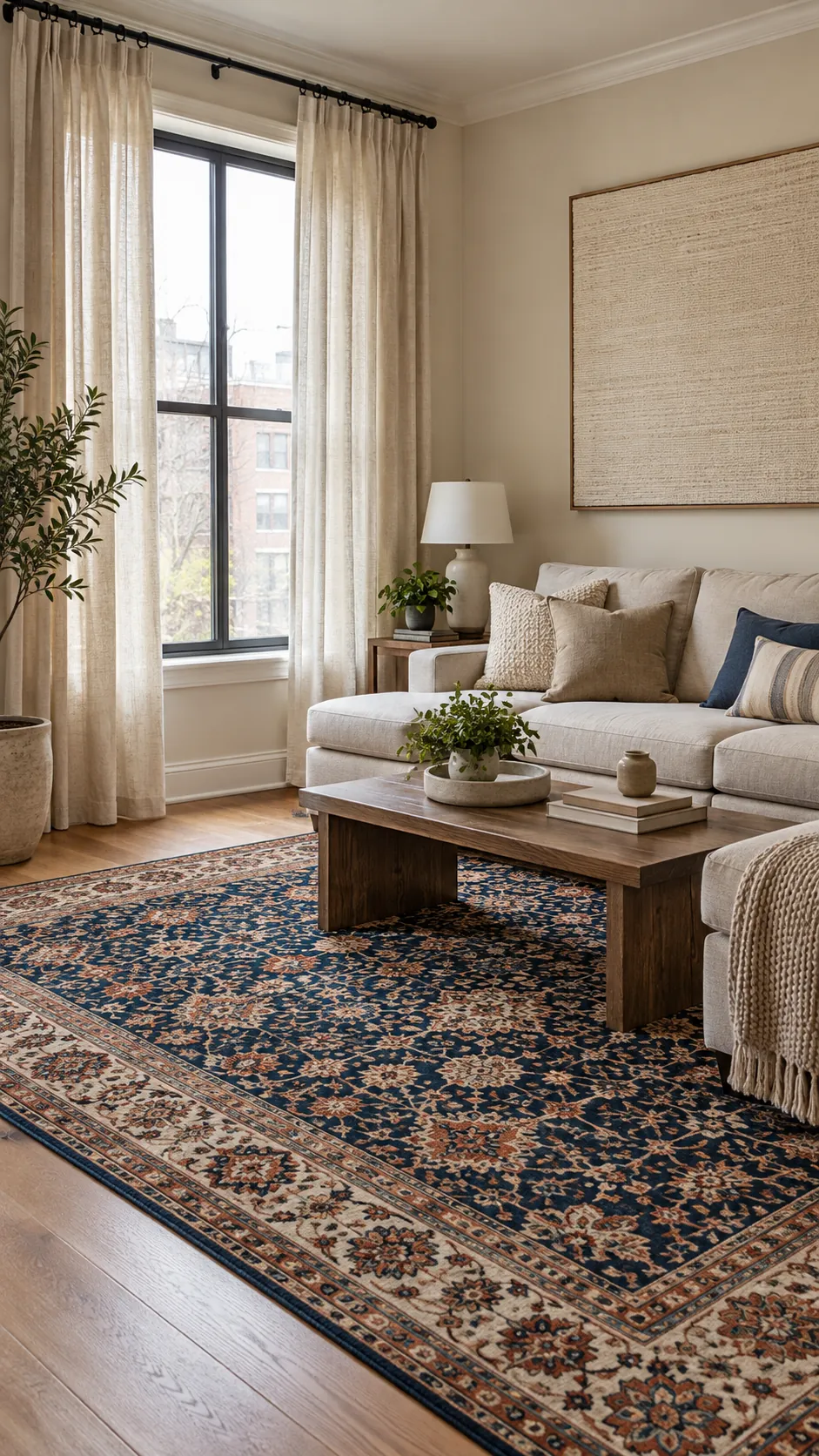
Choose Dark Curtains Only With Enough Visual Support
Dark curtains can work when the rug is large, the room receives good daylight, and the same deep tone appears elsewhere. Without that support, tall dark panels may make the rug look smaller and pull attention away from the center of the room. Repeat the curtain color in a lamp, cushion, or furniture detail and keep nearby walls light. Open the panels fully during the day so the window remains visually expansive.
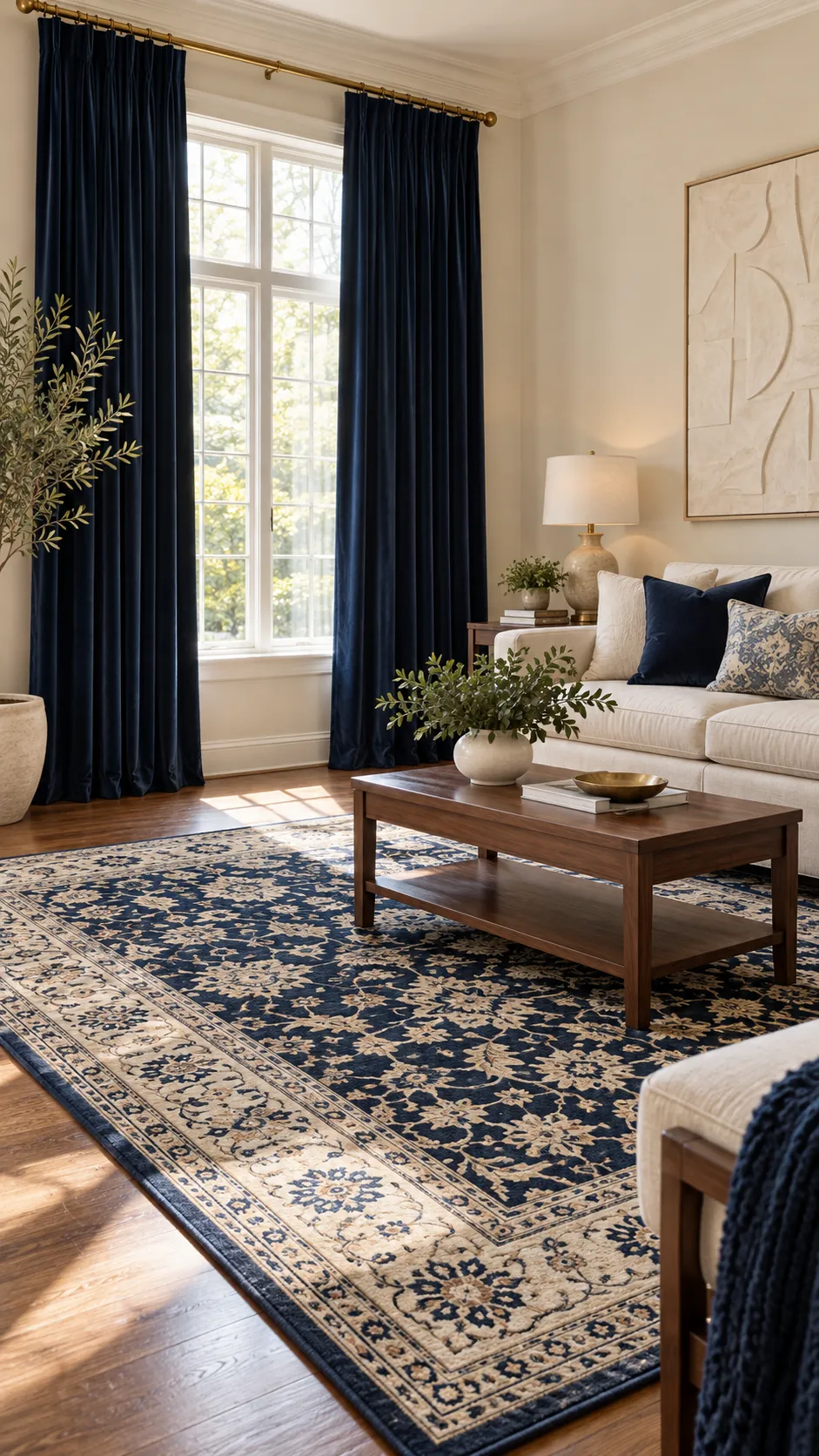
Mix Patterns by Changing the Scale
Patterned curtains are possible, but they should not compete at the same scale and contrast as the rug. Pair a large traditional rug motif with a narrow stripe, tiny check, or very open botanical design that shares one color. Leave some solid upholstery between floor and window patterns to separate them. If the rug already has many small busy marks, solid curtains will usually create a clearer result.
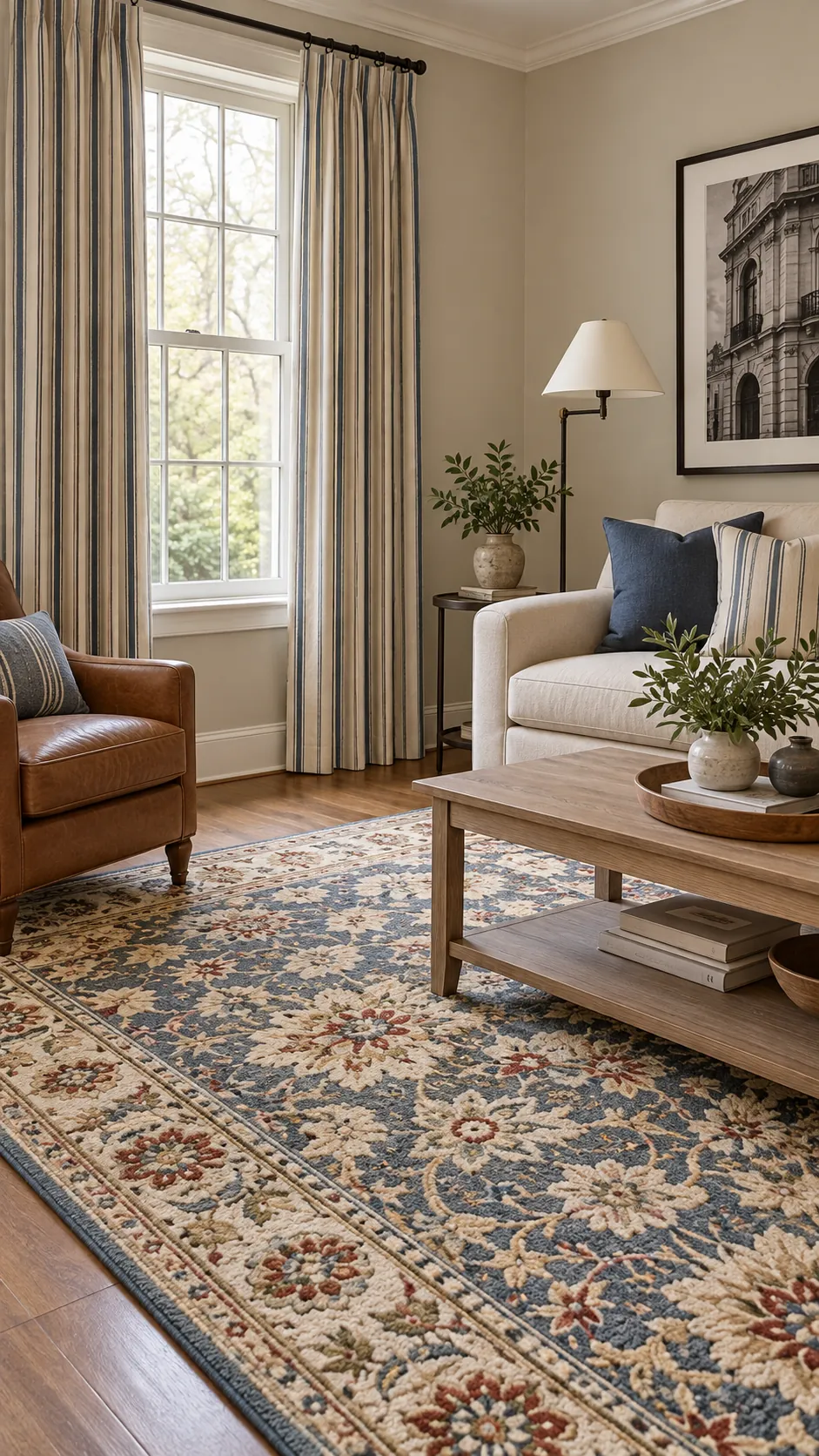
Test Fabric Beside the Rug in Daylight
Bring a curtain sample to the window and view it with the rug during morning, afternoon, and evening light. Look from the doorway as well as from the sofa, because distance changes how colors merge and how much visual space dark panels occupy. Check that furniture lets curtains fall freely and move the sofa a little forward if needed. Choose the sample that supports the whole room rather than the one that matches one rug thread under shop lighting.