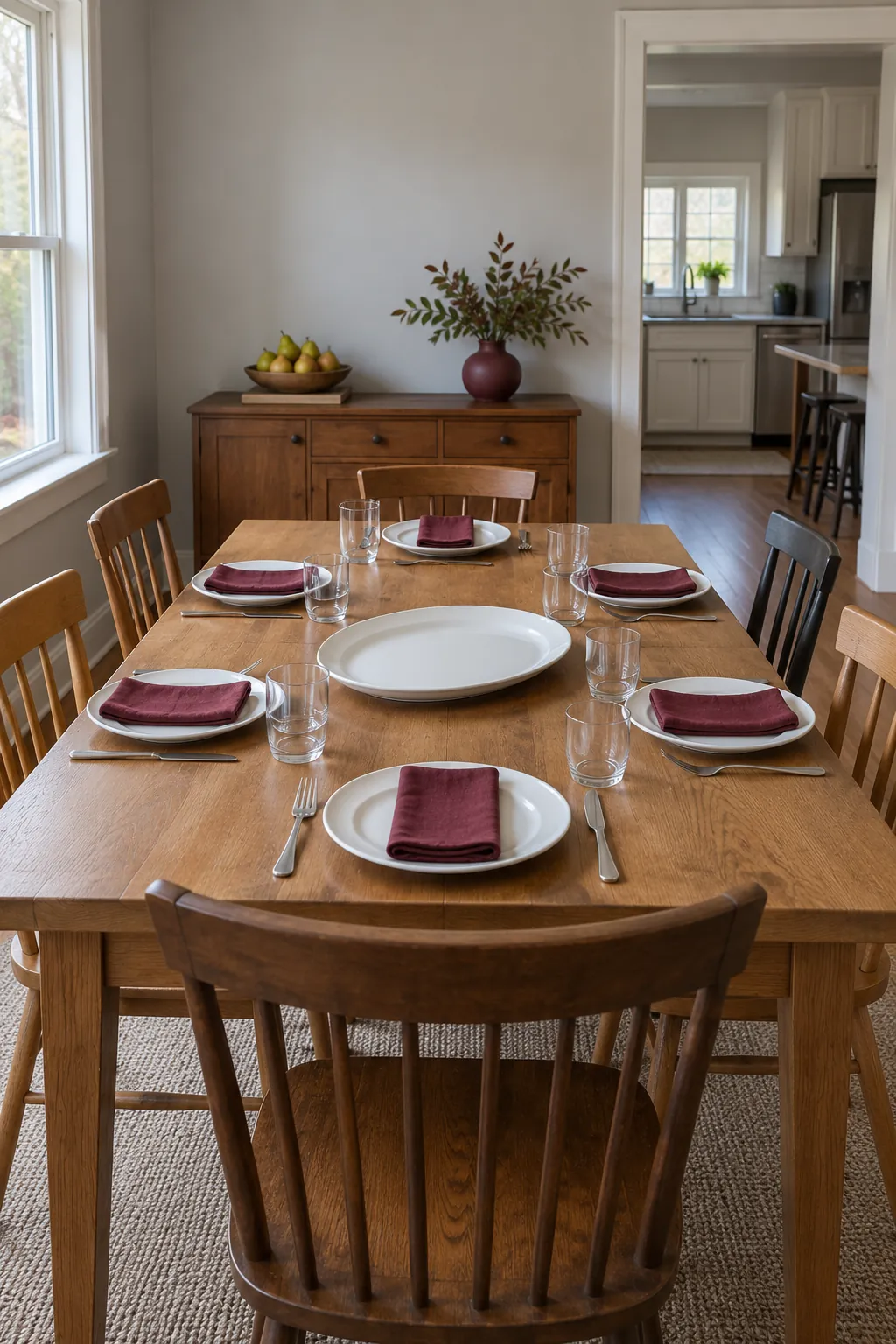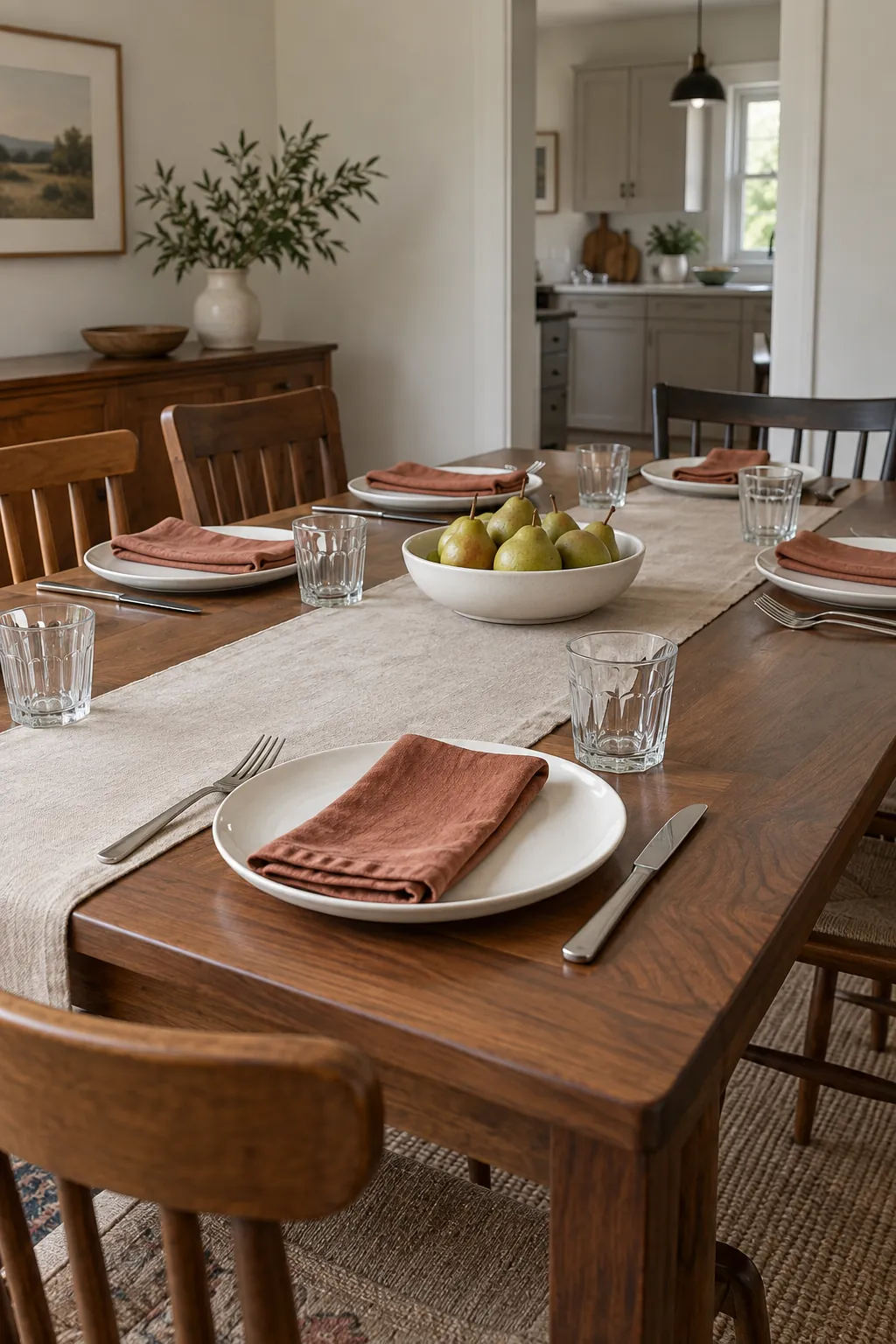
The plates in your cupboard can stay exactly where they are in the plan. A napkin color, a useful layer of texture, or a change in spacing can make the table feel festive without buying a second dinnerware set. Start with the pieces you actually need for the meal, then choose a setting that fits the room around them.
Budget Thanksgiving decor works best when the new detail solves a real visual problem. Dark mats can define pale plates, a runner can connect mixed furniture, and a low accent can leave conversation clear. Use these combinations as complete starting points, and remove any layer that makes serving harder.
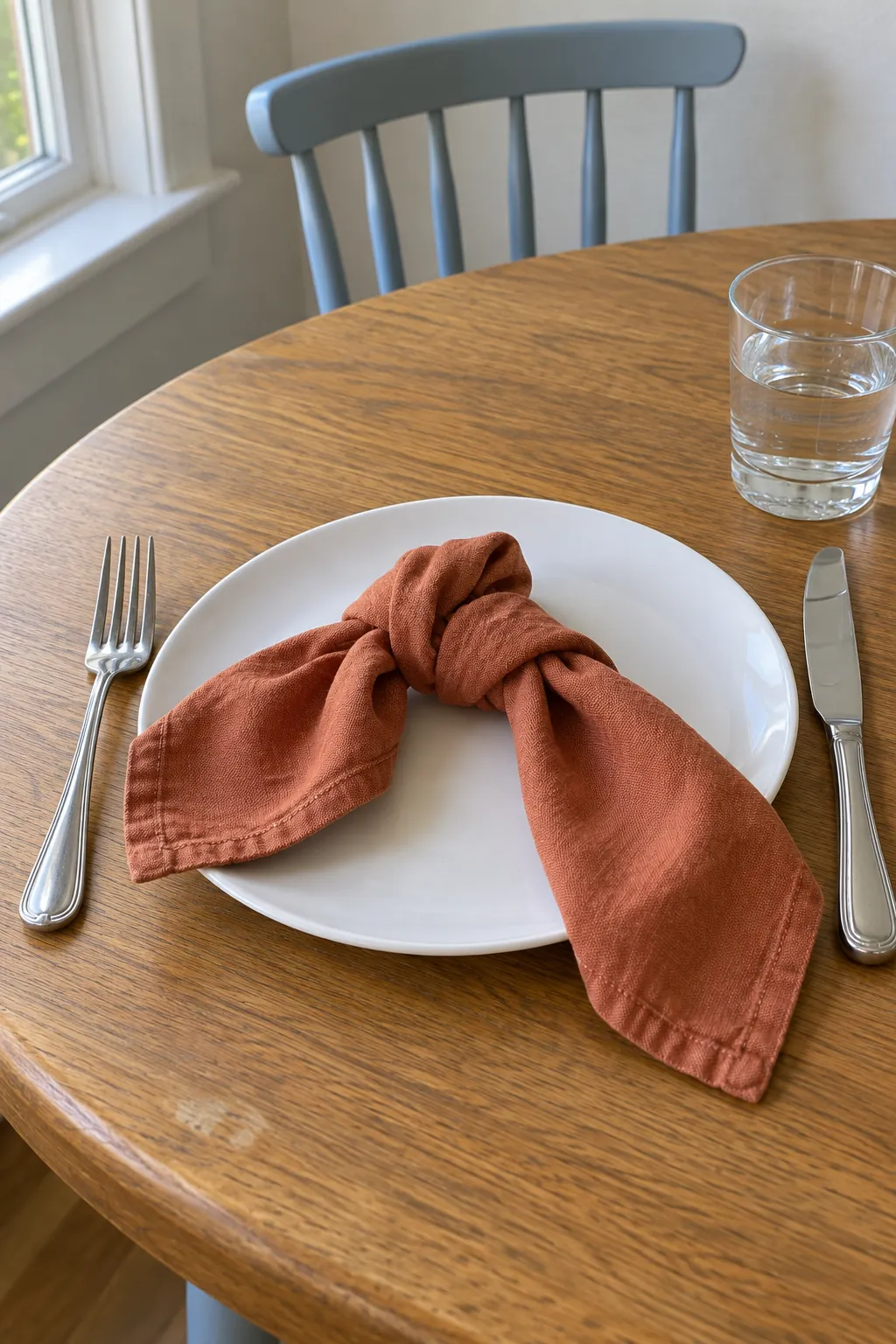
A loose terracotta napkin knot
Tie a soft terracotta napkin into a loose knot and lay it across a plain white dinner plate. The relaxed shape adds color without requiring a napkin ring or another dish layer. Let the ends fall within the place setting so they do not creep into a neighbor's space. A bare wood table and ordinary silver cutlery give this small gesture enough contrast to stand on its own.
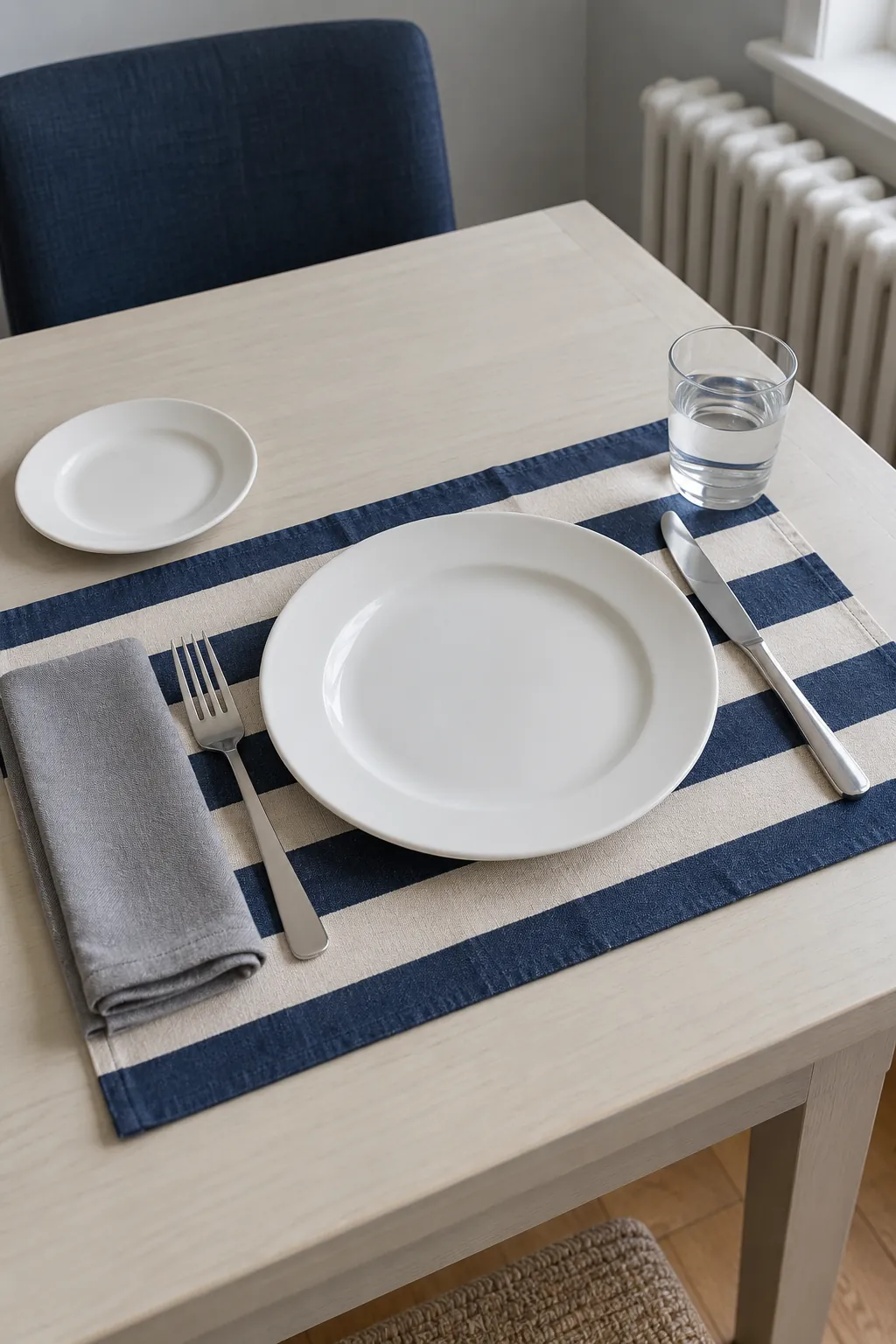
Navy stripes under a simple plate
A navy striped placemat gives white dishes a clear boundary on a pale table. Keep the napkin solid so the stripes remain the only pattern at the seat. Run the same direction of stripe around the table rather than turning every mat differently. This setting works especially well when the room already has blue upholstery or a blue serving bowl. Compare the placemat width with the cutlery spread before committing to the layout.
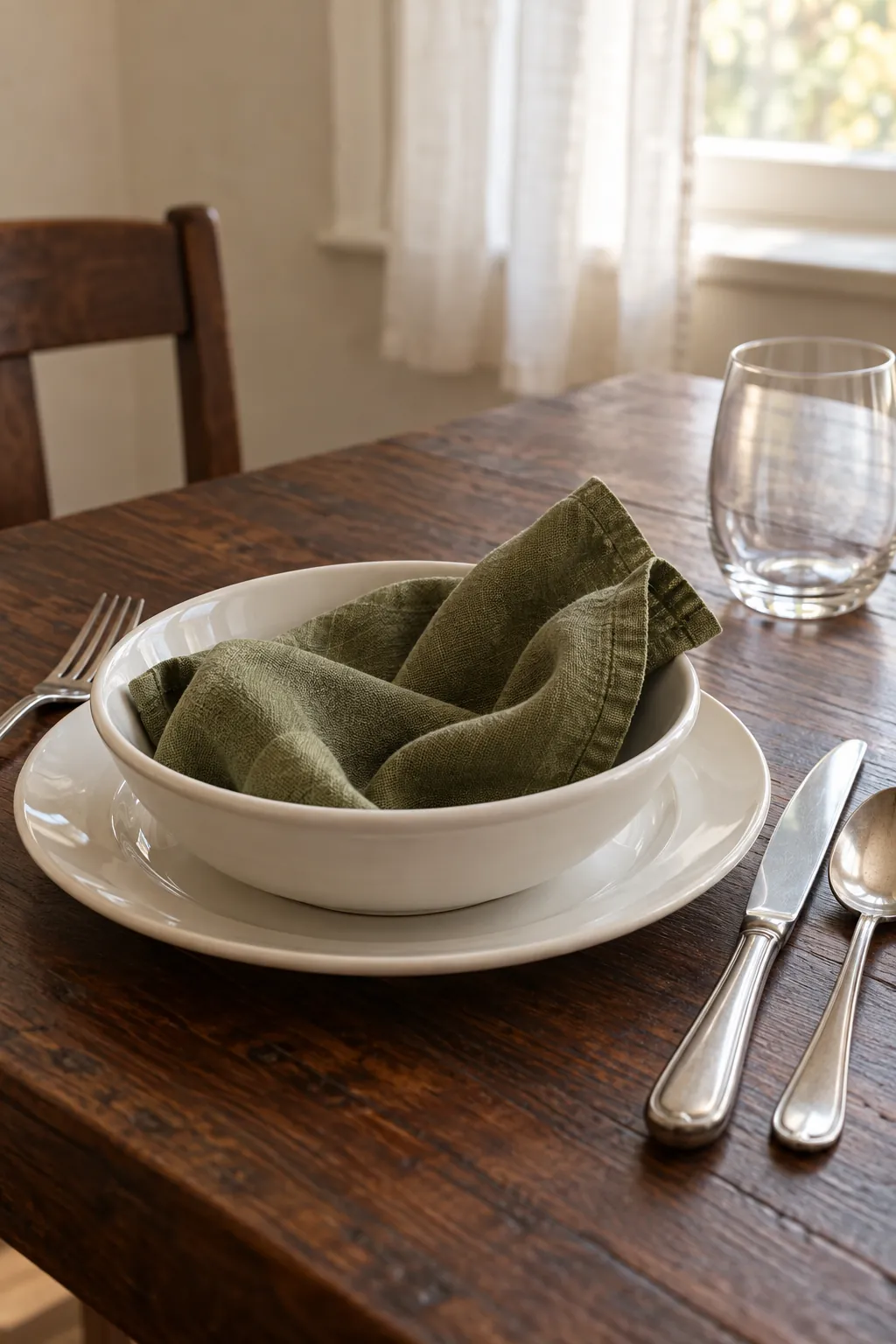
Olive linen inside a white soup bowl
Nest a loosely folded olive napkin inside the soup bowl if that bowl will be used with the meal. The white rim frames the fabric and makes a small amount of color look deliberate. Keep the fold loose so guests can lift the cloth in one motion.
Remove the napkin before serving, and skip the bowl entirely if soup is not on the menu. A soup spoon beside the knife makes the intended course clear. Everyday dinnerware styling feels more natural when each layer earns its place.
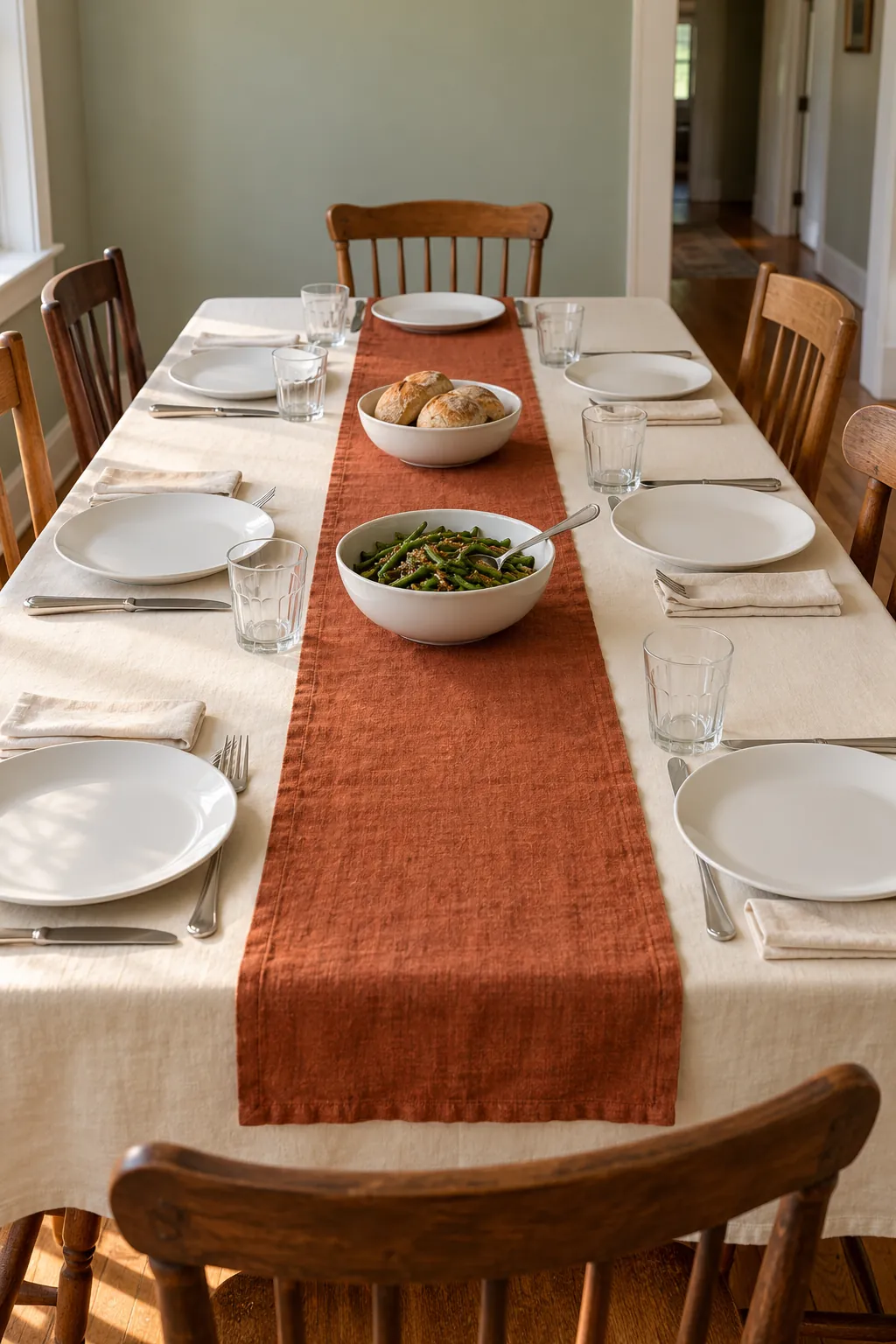
A rust runner across an ivory cloth
Spread an ivory tablecloth first, then place a narrow rust runner down the middle. White plates remain visually calm while the central color supplies the holiday mood. Leave the runner ends clear of knees and chair seats. Keep serving platters low and simple so the runner does not become the starting point for an oversized centerpiece.
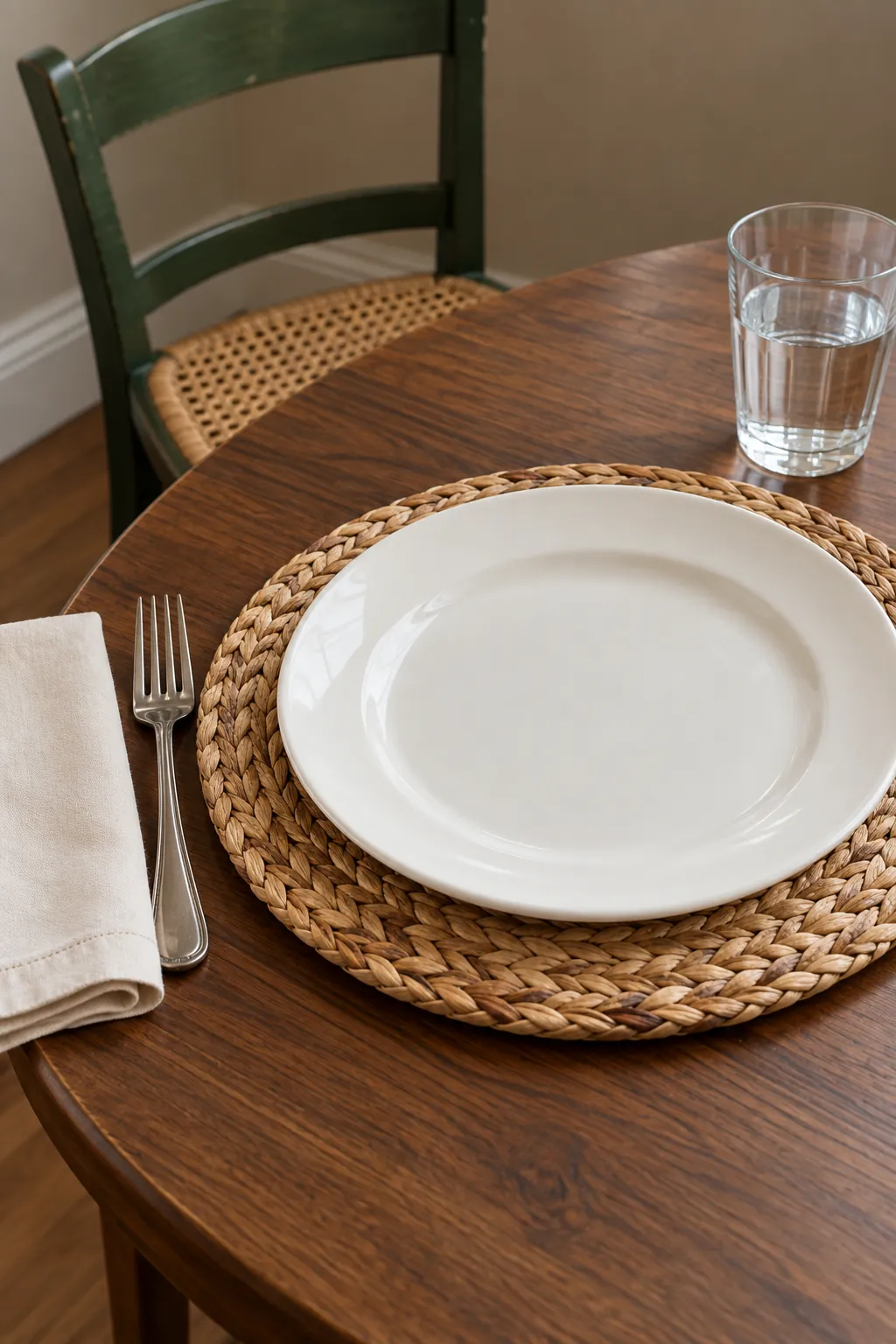
Woven chargers with plain cotton
A woven charger introduces a broad band of texture beneath a smooth white plate. Use a flat charger that supports the dish securely, and check that its outer rim fits within each guest's space. A charger that touches the neighboring setting is too large for that layout.
A plain cotton napkin keeps the arrangement from becoming too busy. Brush away loose fibers before setting dishes down, especially if the charger has been in storage. Put serving platters directly on suitable supports rather than assuming the decorative weave can protect the table from heat.
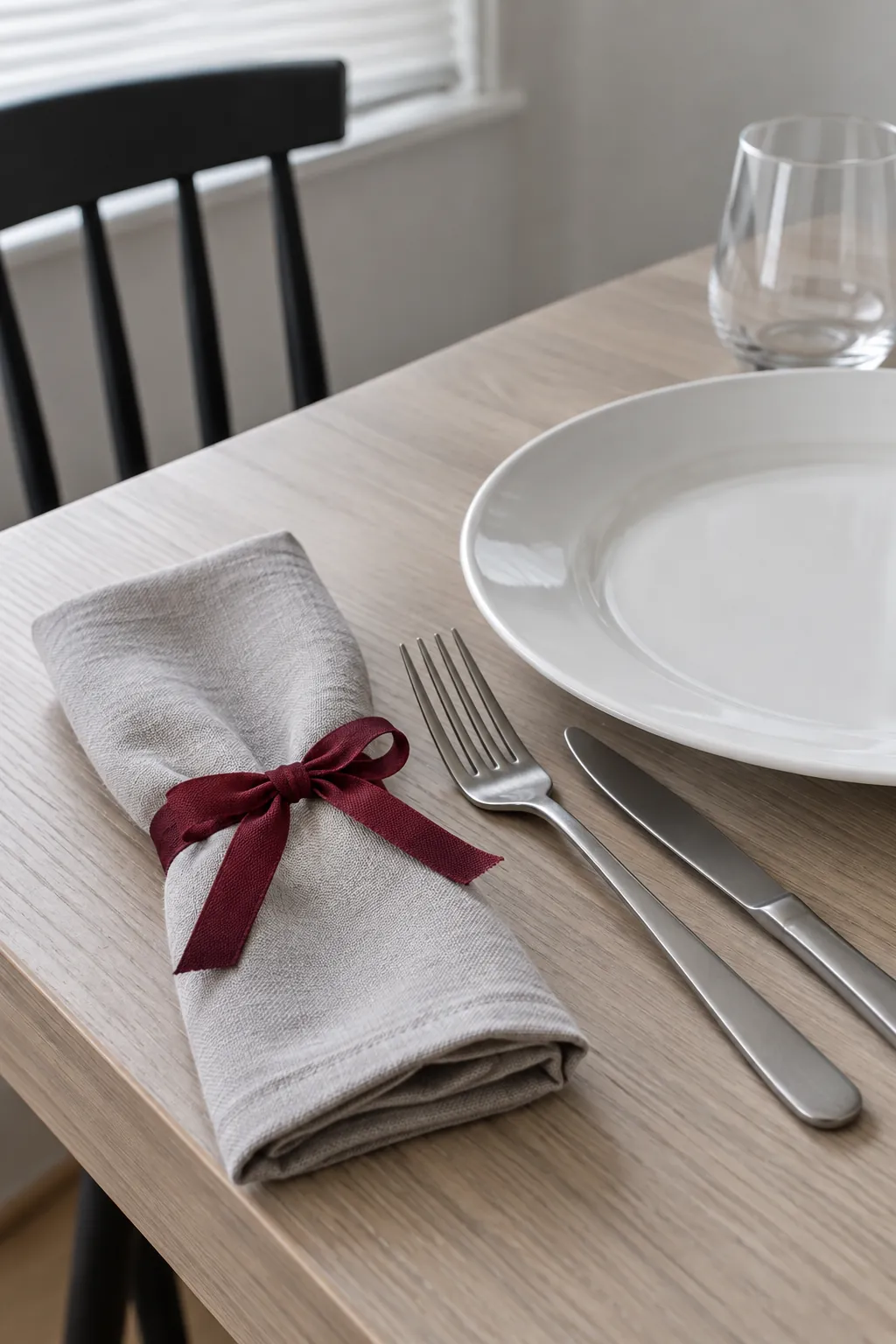
A burgundy ribbon around the napkin
Tie a narrow burgundy ribbon around a folded napkin and place the bundle beside the plate. The ribbon supplies a small formal detail without adding another object on the eating surface. Leave the knot loose enough to undo easily, and keep the tails short. Save the ribbons after dinner if they are clean so the detail can return at another gathering.
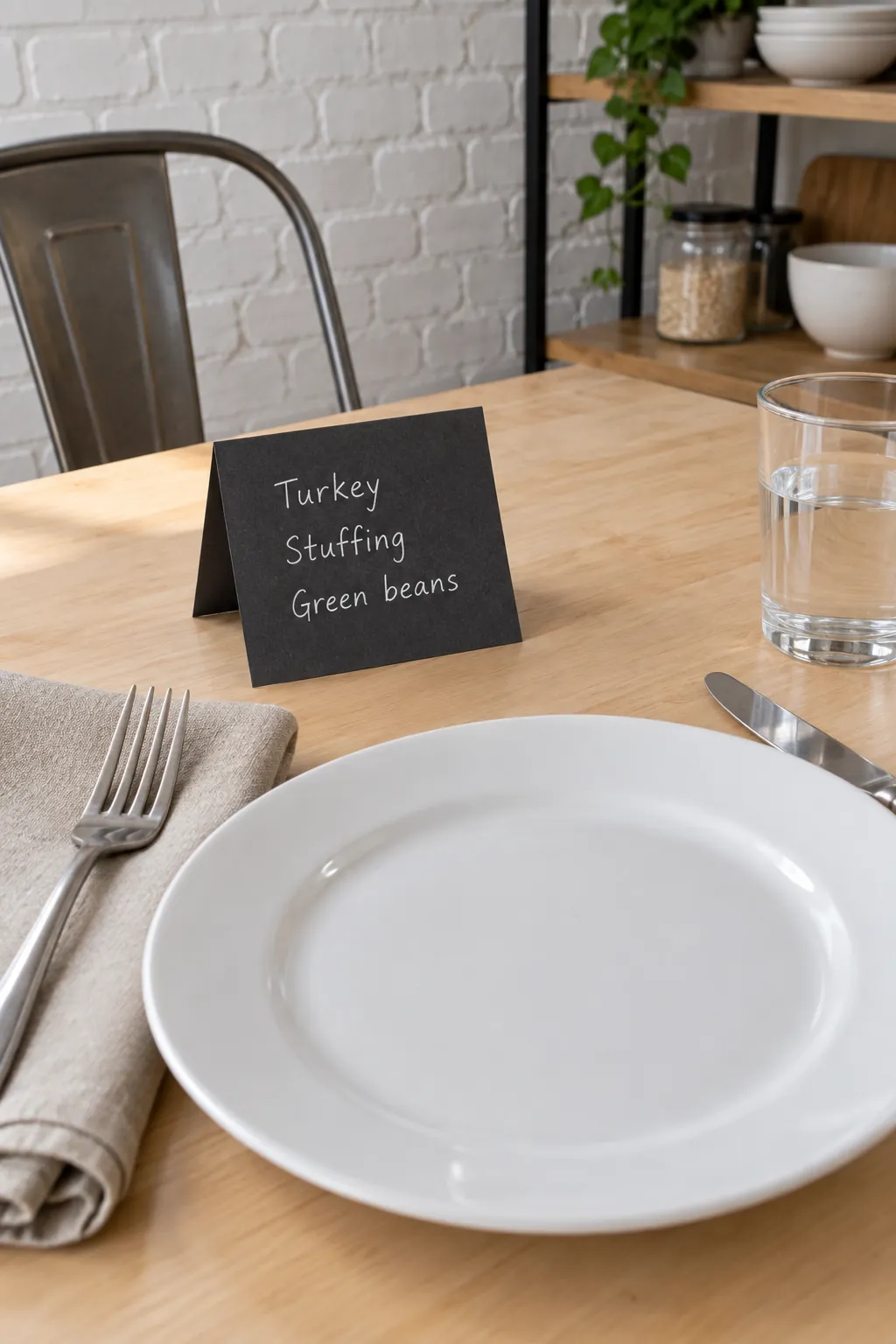
A dark menu card beside the fork
A small charcoal menu card can give a white plate tablescape a crisp graphic accent. Write a few menu names clearly in light ink and stand the card beyond the cutlery rather than over the plate. The card is optional, so use it only if guests will find the information useful. Check every dish name against what you are actually serving before the table is finished.
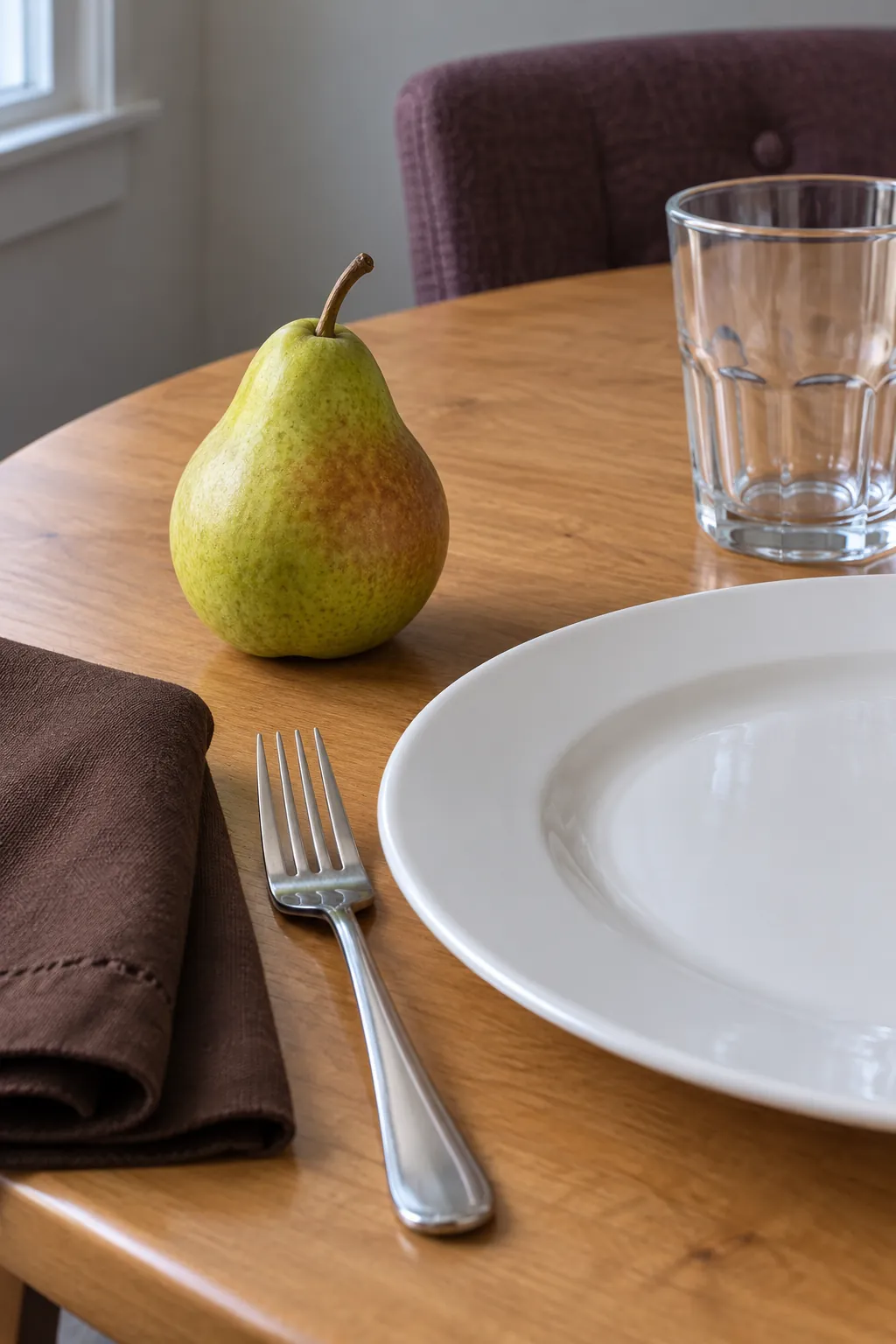
A whole pear at the outer corner
Set a whole pear at the upper outer corner of the place setting, away from the plate and drinking glass. Its irregular shape softens a very simple arrangement of white dishes. Choose firm fruit that can remain intact through dinner and keep it separate from food being served. A folded brown napkin makes the pear's natural green or russet color feel intentional.
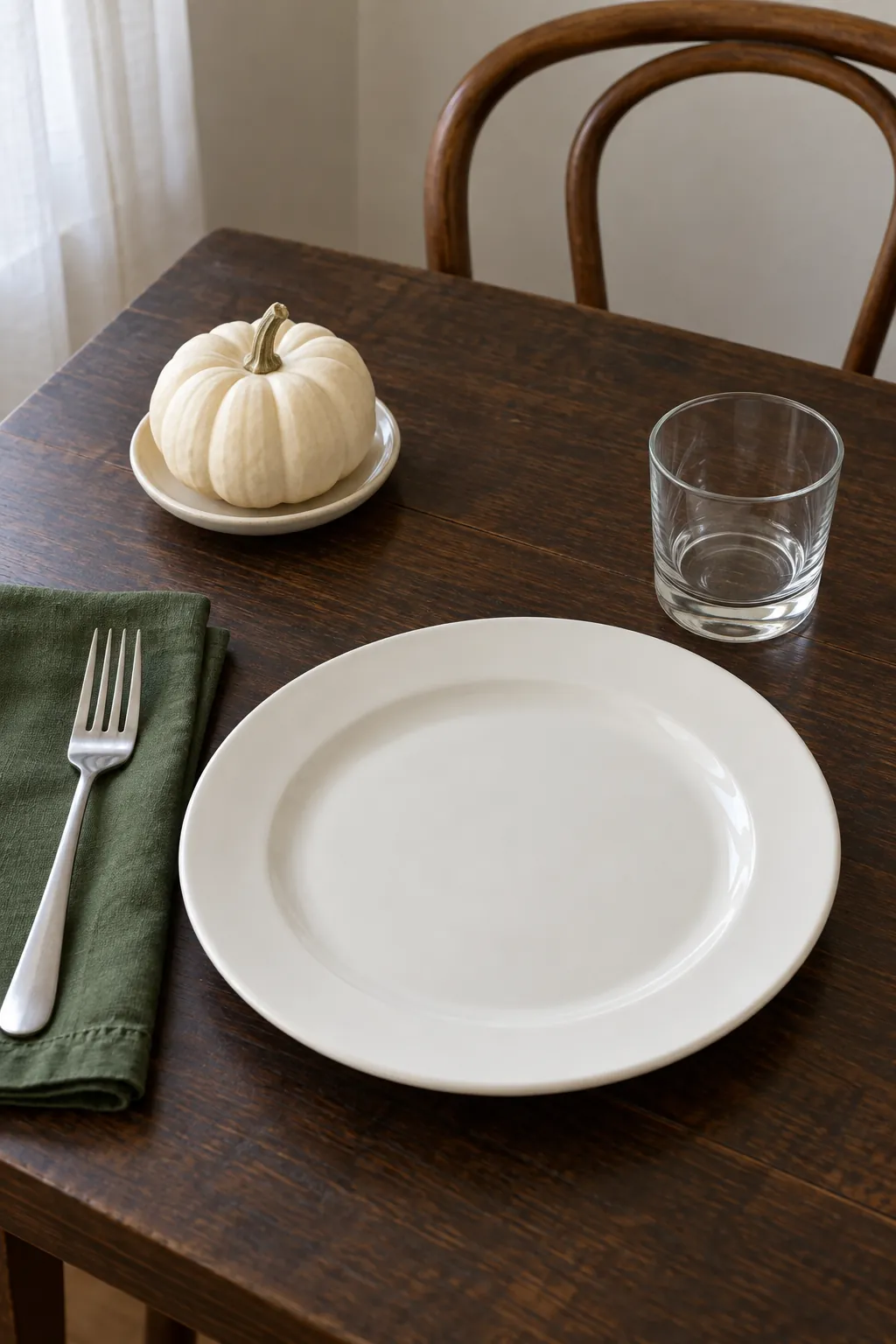
A small white pumpkin beyond the plate
Place one small white pumpkin beyond the plate rather than on top of it. The similar color lets shape do the decorative work while the dishes remain available for food. Give the pumpkin its own small saucer if its base could mark the tablecloth. This quiet setting benefits from one darker element, such as a muted green napkin, to keep the whites from blending together.
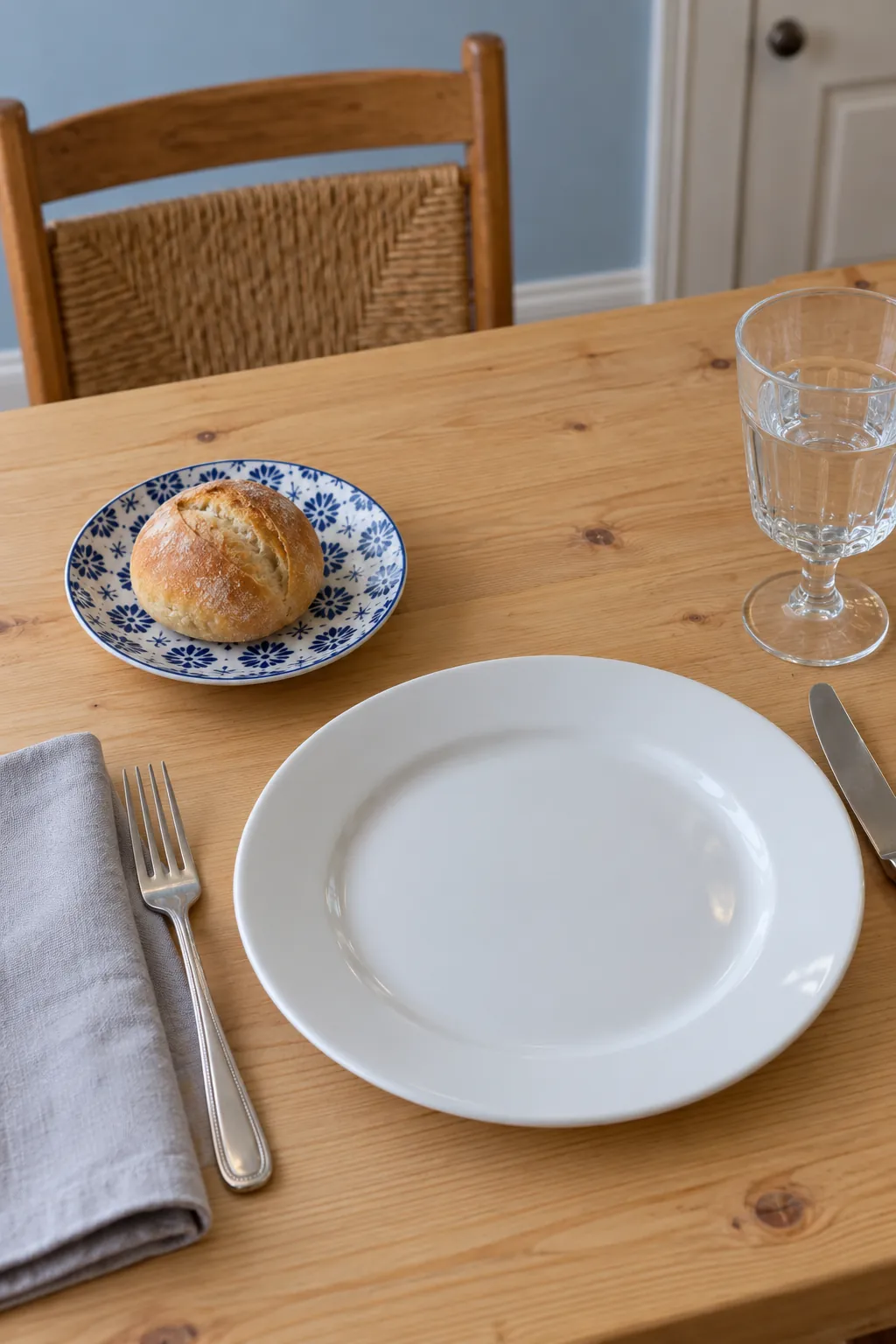
A patterned bread saucer
Pair the everyday dinner plate with a small blue patterned saucer for bread. The smaller piece introduces a collected look without replacing the main dinnerware. Keep the rest of the seat plain so the pattern remains readable. Place it where a bread plate belongs for your layout, and omit it if bread will be served directly with the meal.
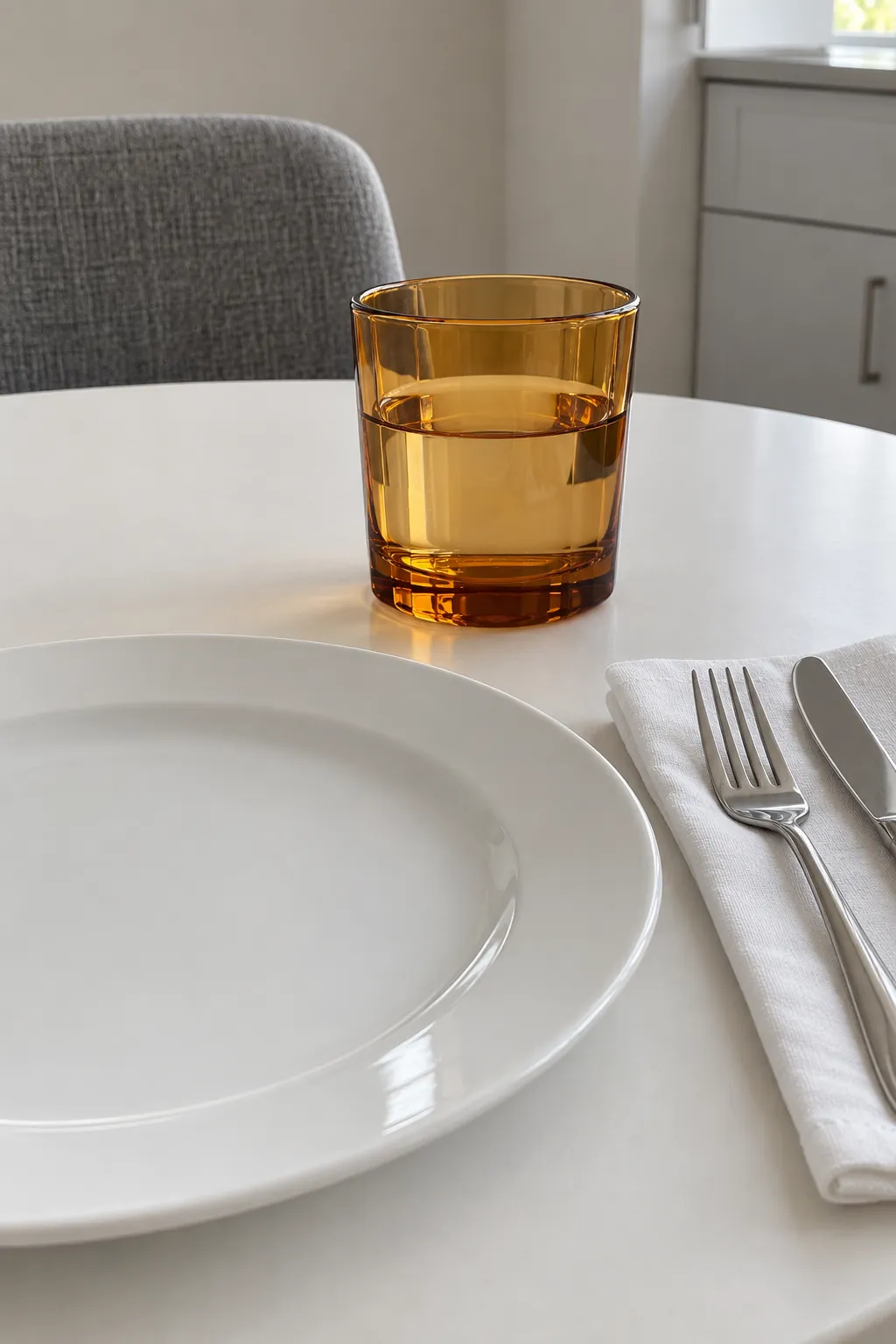
Amber glasses beside white dinnerware
An amber drinking glass adds color vertically, leaving the plate clear. Check that the glasses are comfortable to hold and suited to the drinks you plan to offer. A white napkin with a simple fold keeps attention on the glass. Limit other colored accents so the setting feels warm without turning the entire table orange. Give each glass its own flat spot so it stays stable as guests reach for drinks.
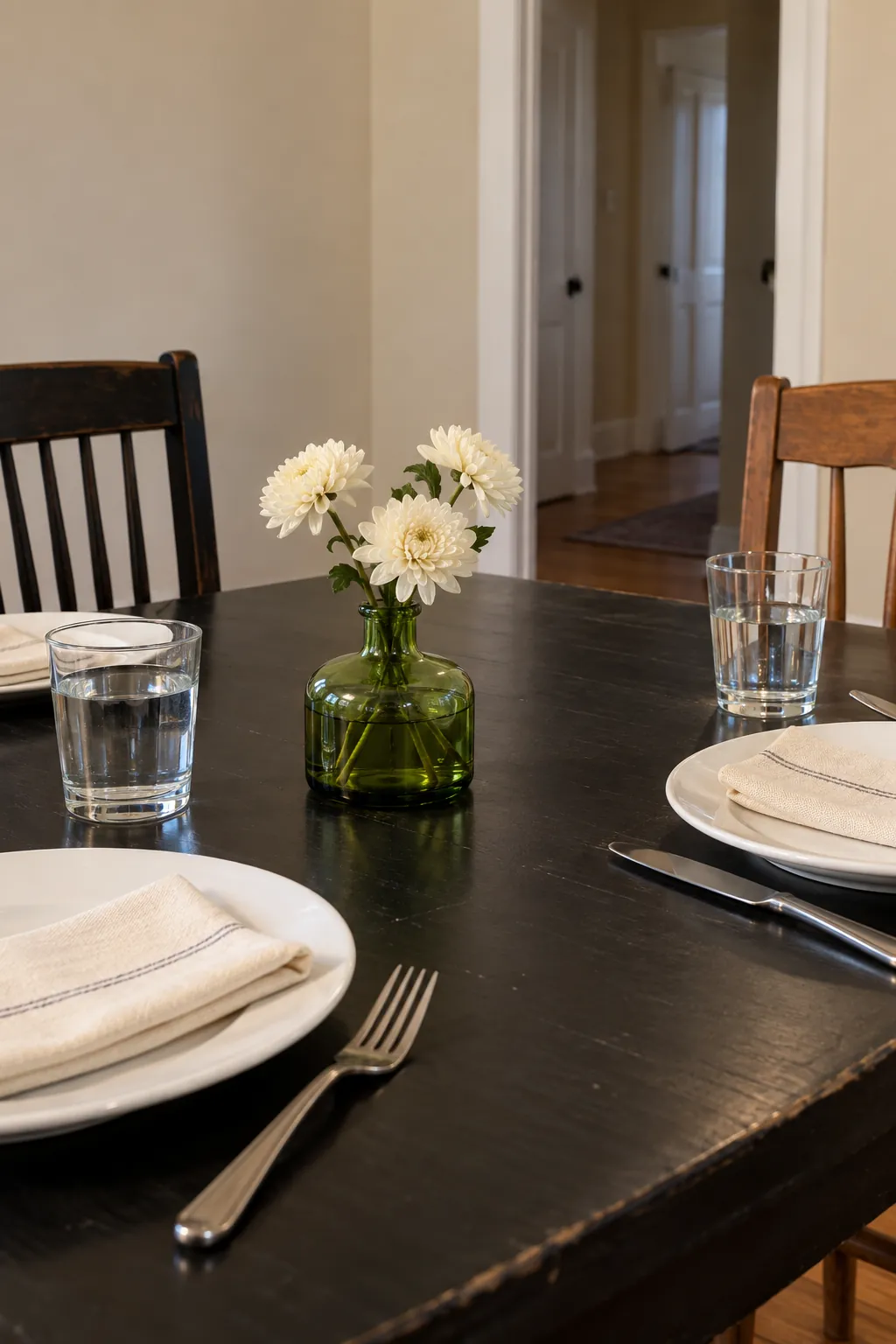
One green bottle vase for the center
A low green bottle with a few unscented stems can connect a row of plain white place settings. Keep the arrangement below conversation height and away from the path of passing dishes. Use a clean bottle that stands securely, and trim stems so they do not trail toward food. The bottle's color gives the table a focal point even when every napkin stays cream.
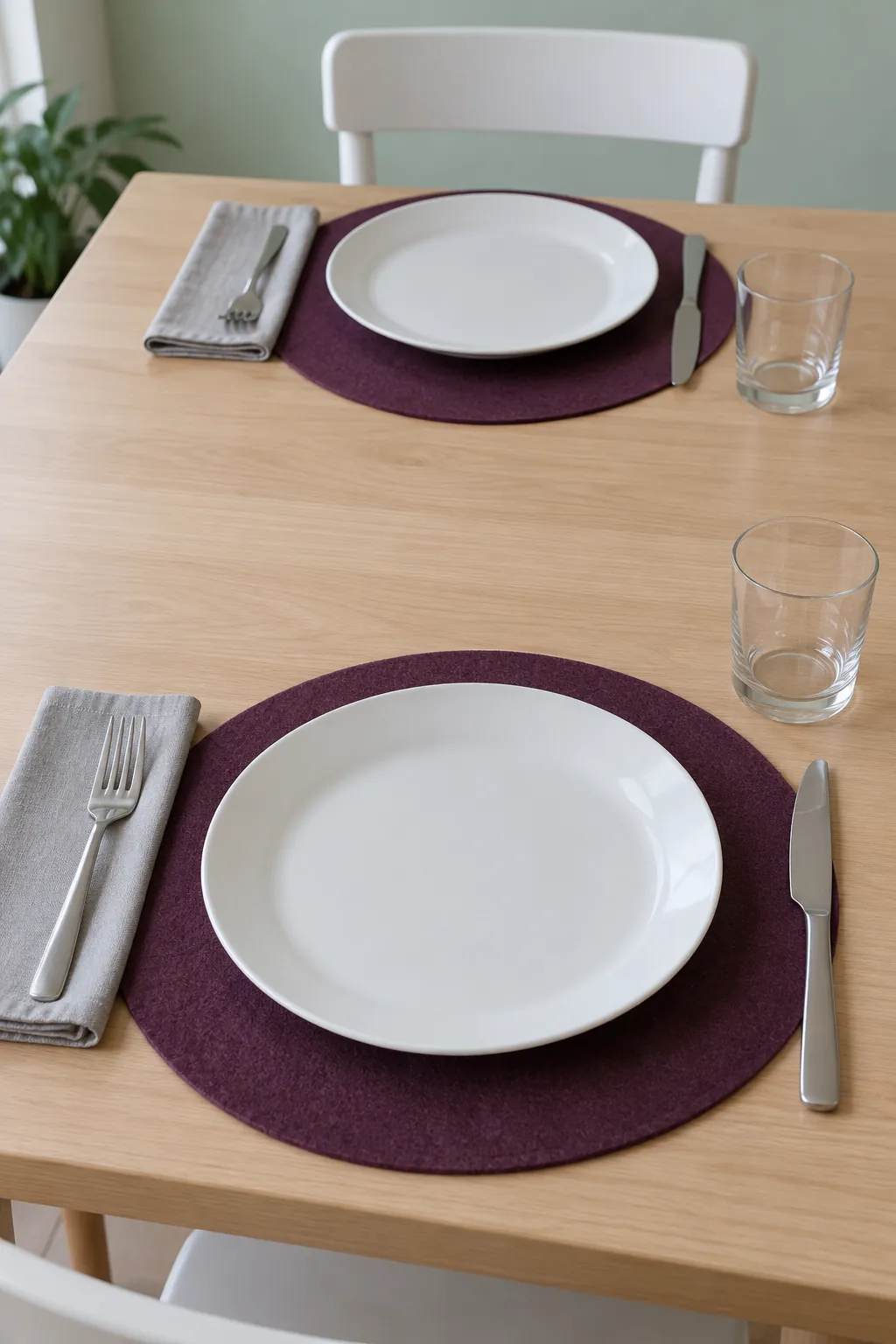
Plum mats with silver cutlery
Round plum placemats add a soft edge beneath circular white plates. Let enough of the mat show to create a distinct border rather than hiding it under multiple dish layers. Silver cutlery gives the dark color a clean contrast. Test the arrangement on the actual table, because a large round mat can crowd the center of a small rectangle.
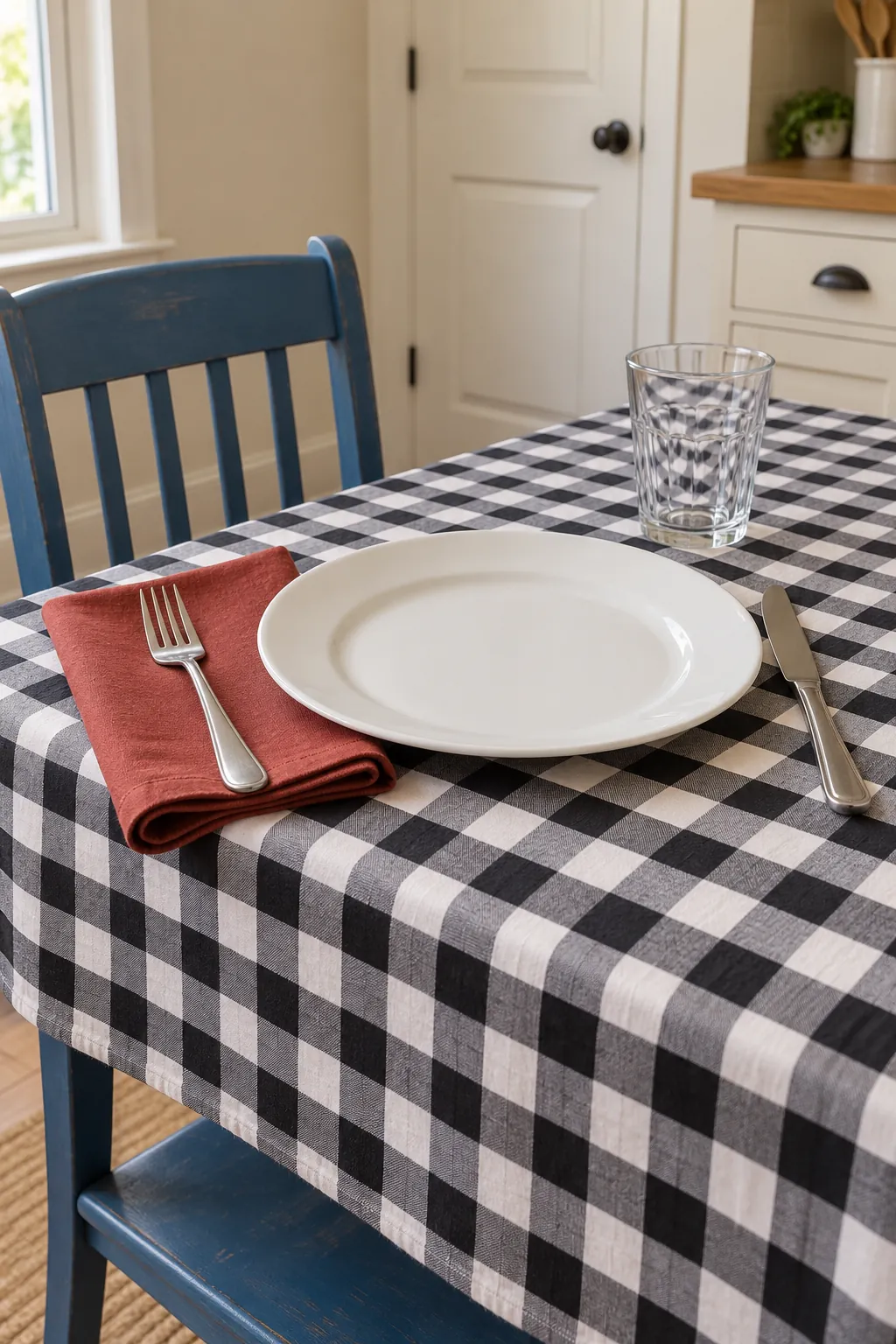
Black and white gingham as the base
A black and white gingham cloth turns plain dishes into a cheerful family setting. White dinnerware gives the eye a resting place within the checks. Choose solid napkins and leave elaborate patterns out of the centerpiece. Pull the cloth smooth before setting the plates so its lines help the table feel ordered rather than crooked.
A napkin pocket for the utensils
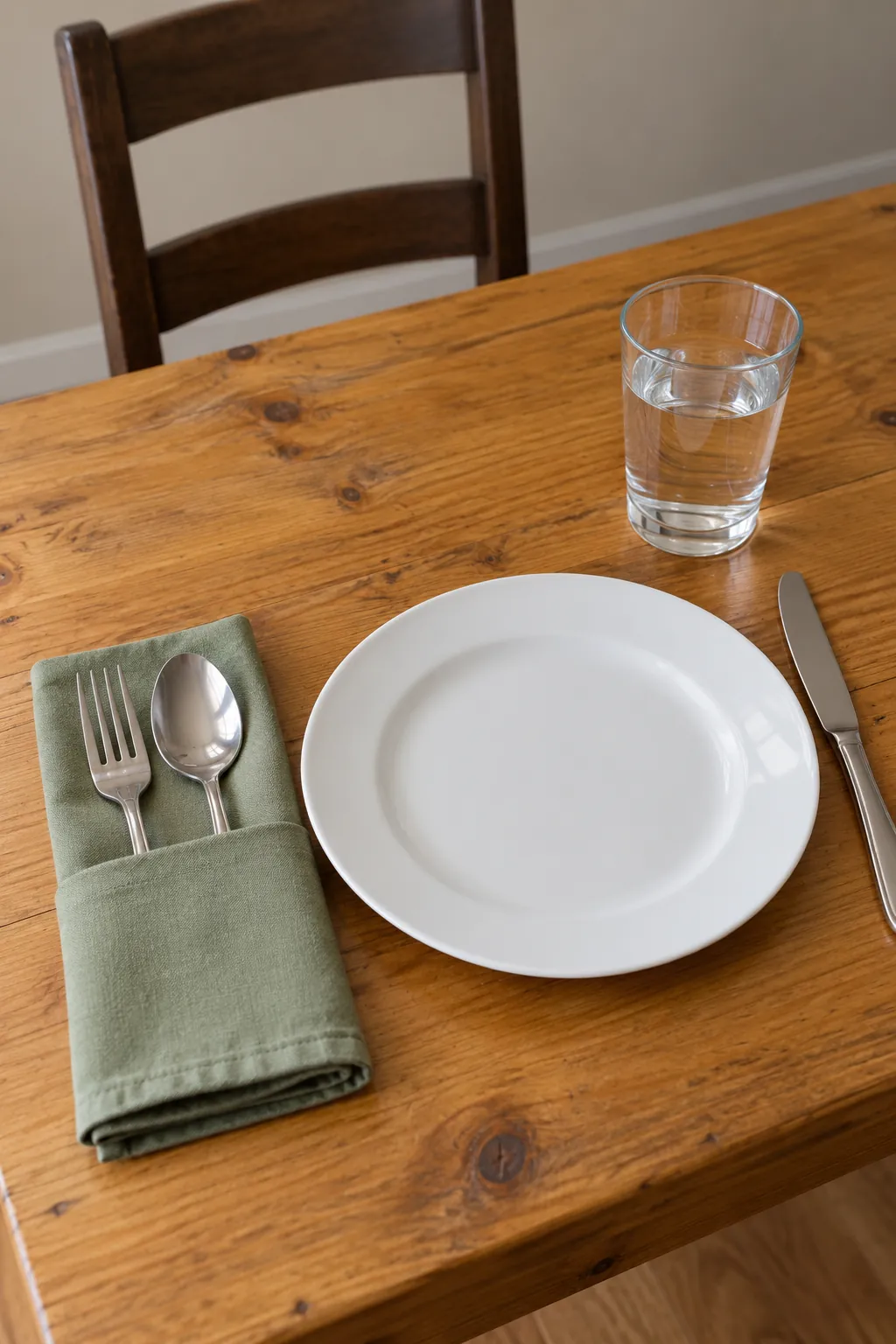
Fold a cloth napkin into a shallow pocket that holds the fork and spoon beside the plate. This keeps the useful pieces together when you are setting a long table in advance. Make the pocket broad enough that utensils slide out without pulling the whole napkin across the seat. Keep knives in their normal position if the pocket would conceal their edges.
Napkin corners on a round table
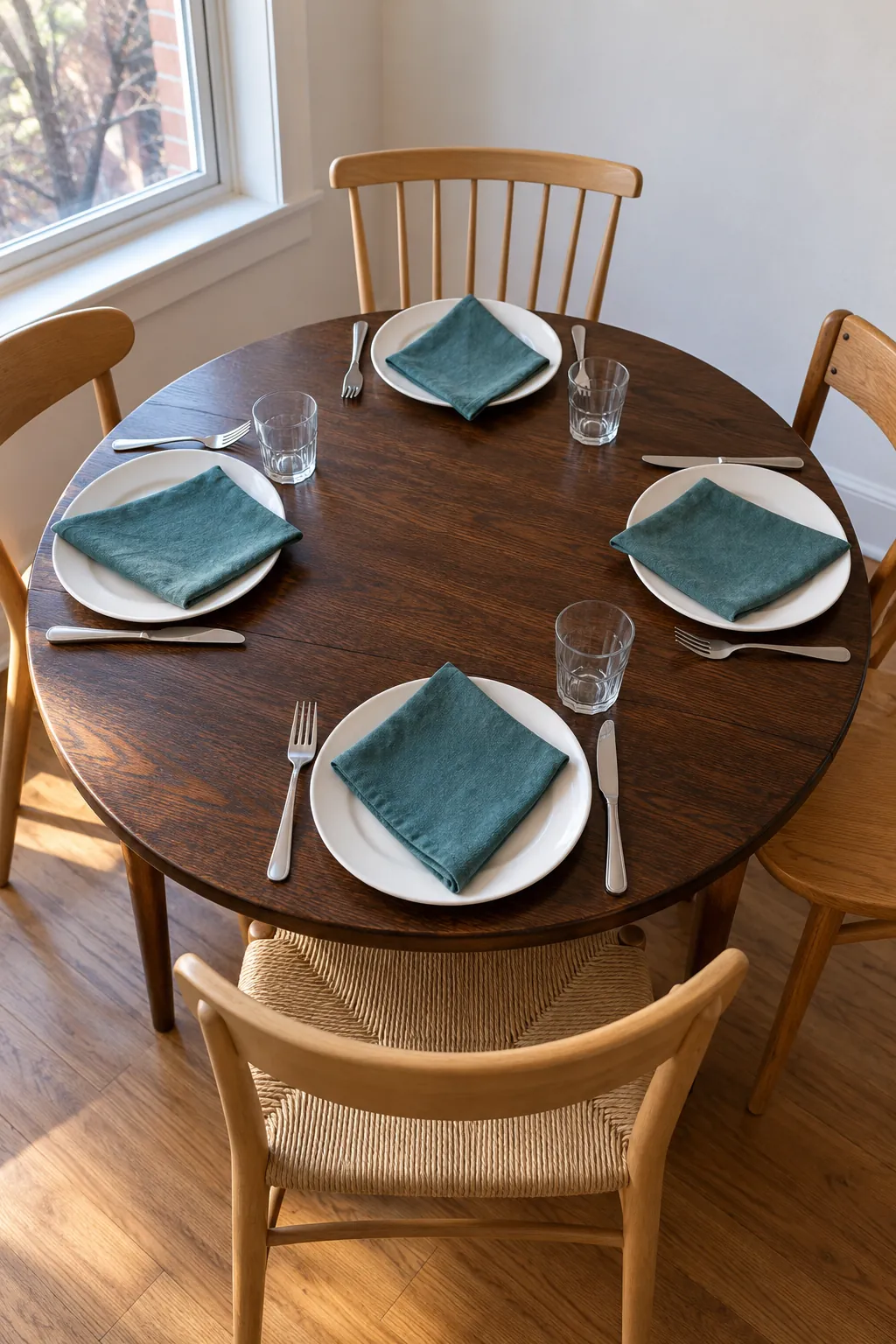
On a round table, place each folded napkin with one corner pointing gently toward the center. The repeated direction creates rhythm without a central decoration. Keep the white plate fully supported by the tabletop and leave a shared opening for food. A small bowl of fruit can occupy the middle only if the place settings still have comfortable elbow room.
A side napkin for a narrow table
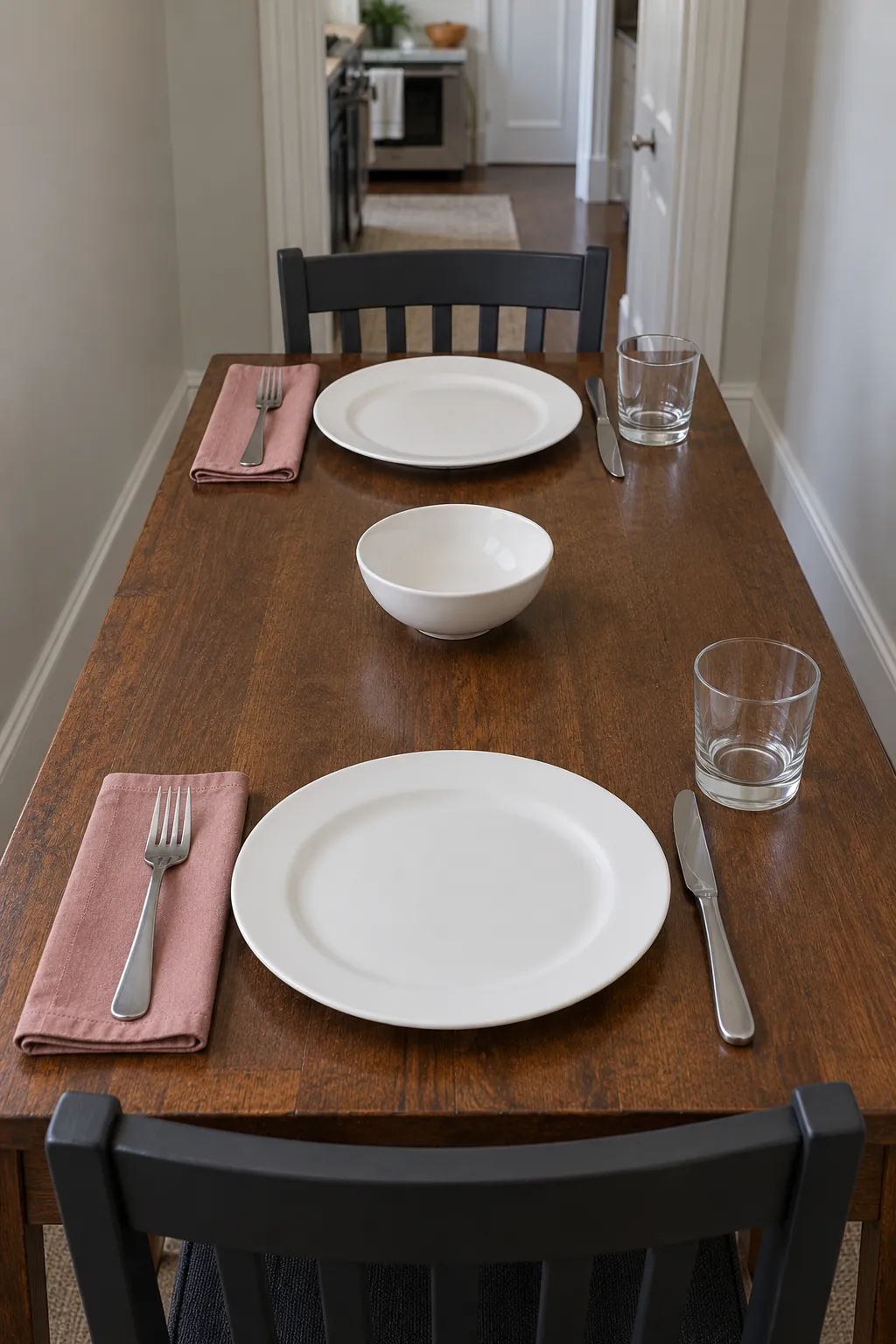
Slide a neatly folded napkin beneath the fork at a narrow rectangular table. It gives each seat a color accent while leaving the dinner plate and central serving strip open. Use only the dishes needed for the meal, because unused bowls consume the same space as real food. Check opposing place settings together before deciding how much room remains for platters.
Brass rings with unbleached linen
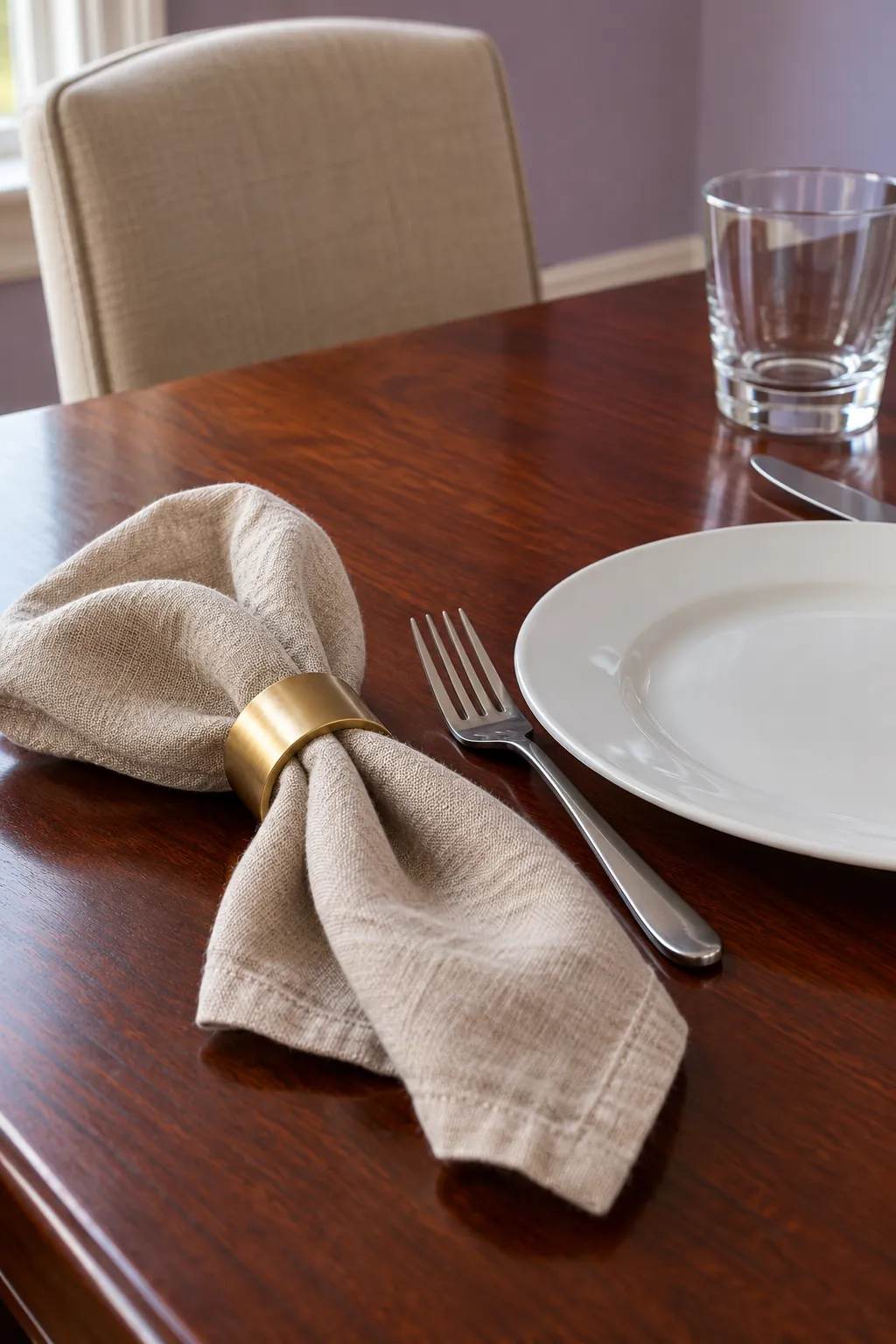
A simple brass ring gathers an unbleached linen napkin into a compact bundle. The metal adds a warm highlight against white dishes without relying on a printed holiday motif. Inspect the ring for rough edges that could snag the fabric. Place the bundle to one side of the plate so guests can release it without dismantling a decorative stack.
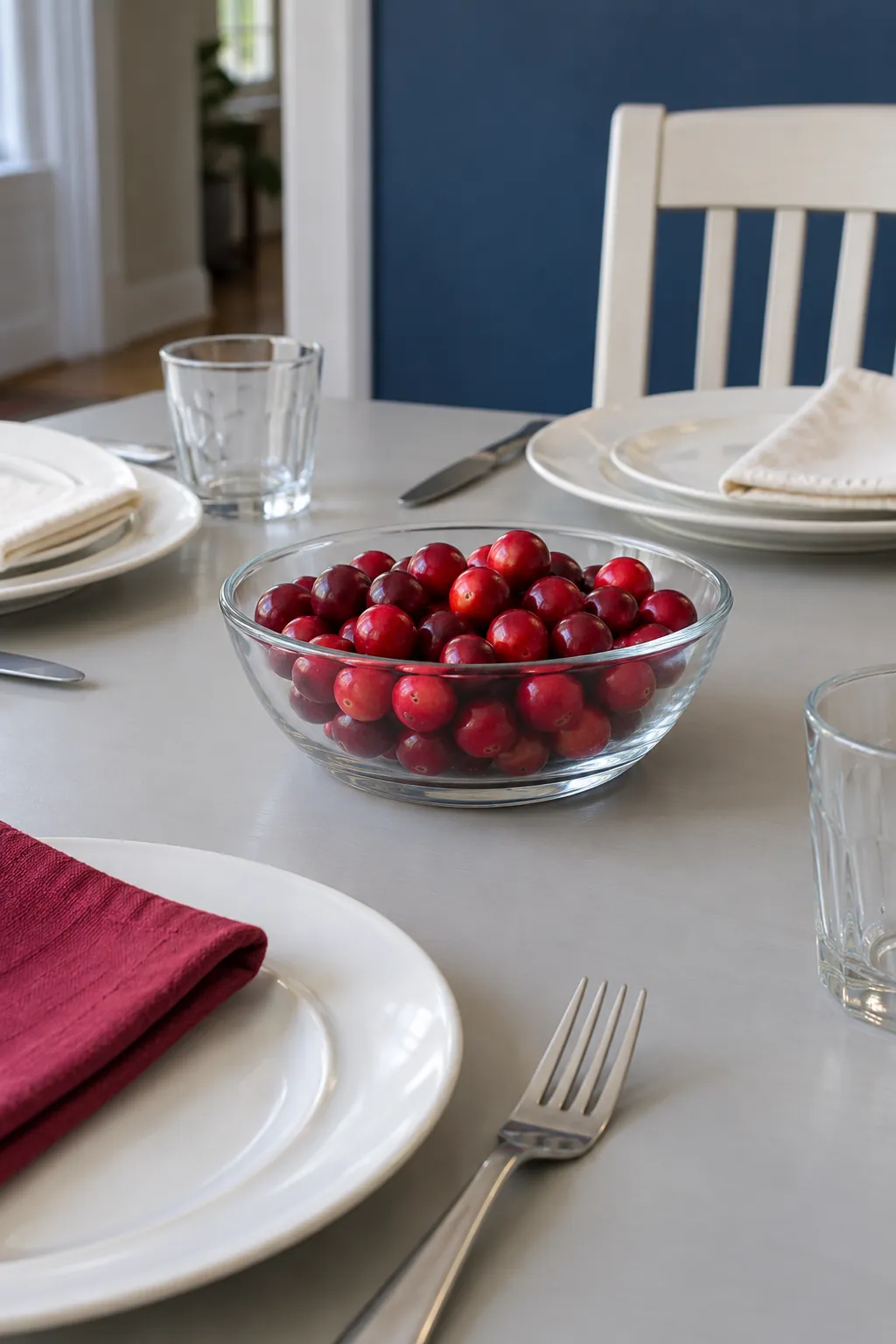
A cranberry bowl between the seats
A low bowl of whole cranberries makes a restrained color accent between white place settings. Treat the bowl as decoration and keep it separate from sauces or other food being served. Set it on a stable surface with enough room for passing platters nearby. A burgundy napkin can repeat the fruit color, but it does not need to appear at every seat.
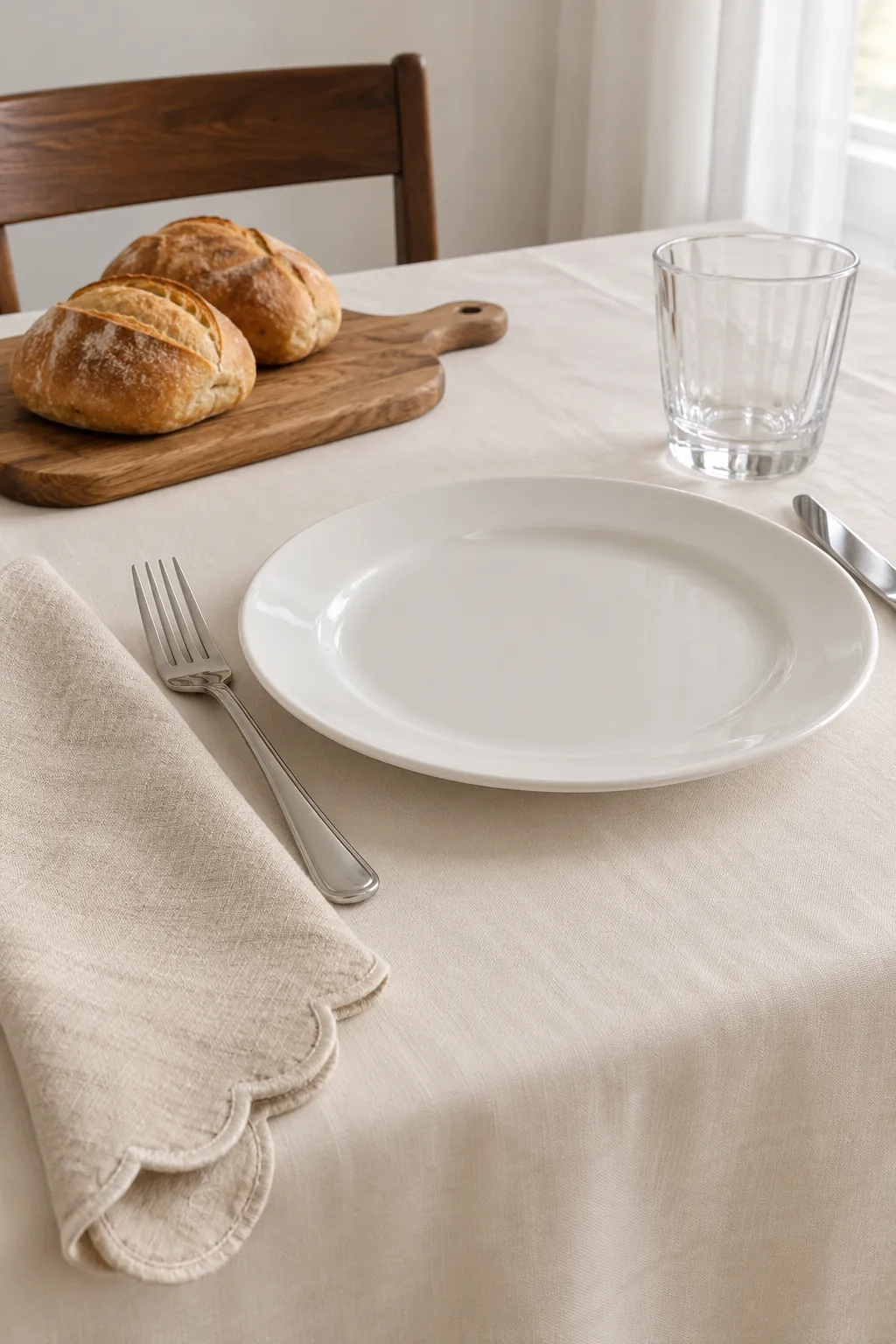
Cream layers with a scalloped napkin
White plates can look festive against cream textiles when the textures differ. Choose a scalloped cloth napkin, a smooth tablecloth, and clear glassware so the edges remain visible. Compare the fabrics in the room's daylight before dinner, since some creams appear much more yellow than others. A small wood serving board provides a grounding tone without breaking the quiet palette.
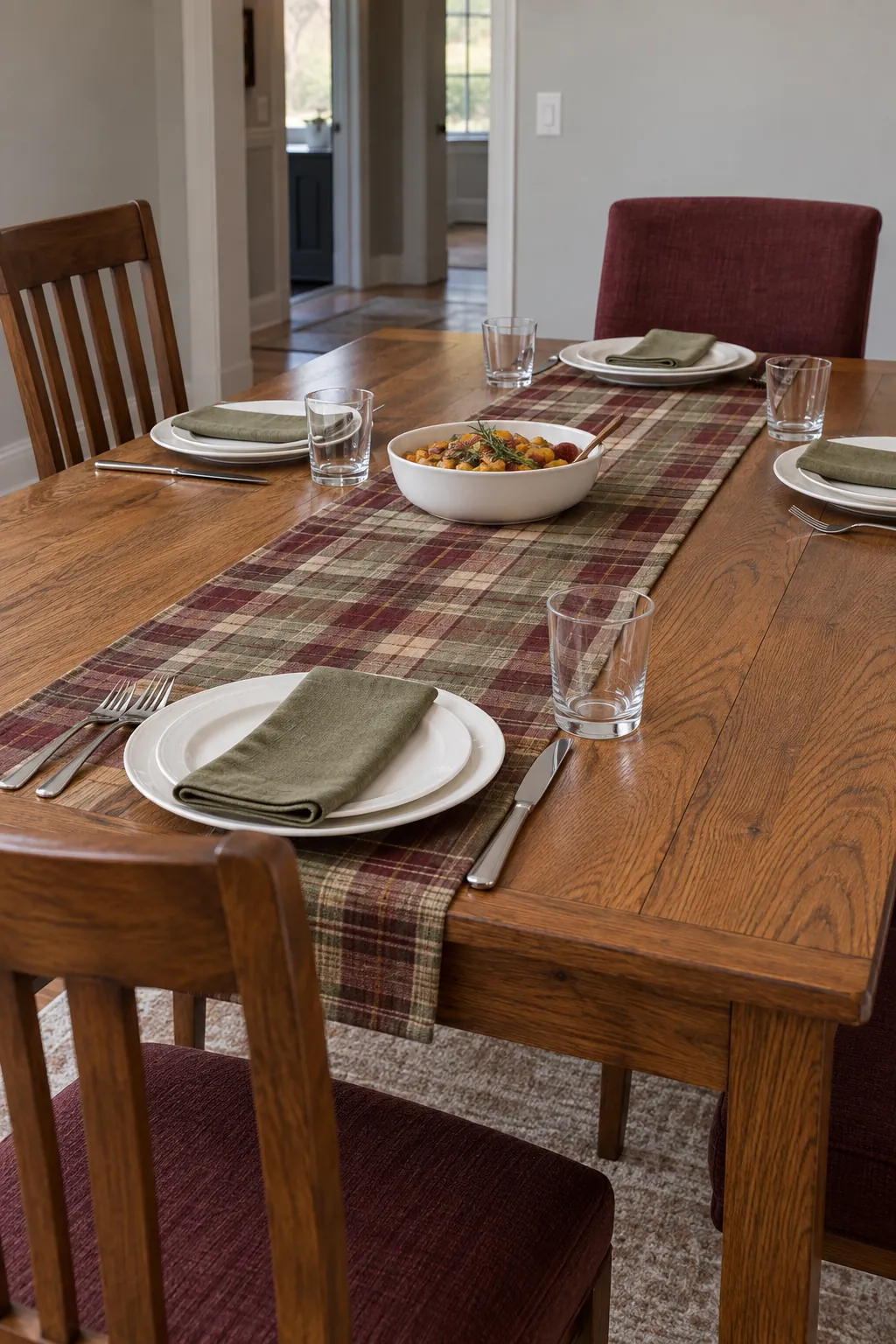
A plaid runner with plain place settings
Use a muted plaid runner as the only strong pattern on the table. Pull one color from it for the napkins and leave the white dishes undecorated. This gives the pattern a clear supporting role instead of repeating it on every surface.
The runner can connect mismatched chairs or a collection of serving pieces by repeating colors already present in the room. Keep bulky folds and trailing ends away from the places where guests sit. Set a serving bowl on the runner before dinner to check that the pattern remains visible without crowding the meal.
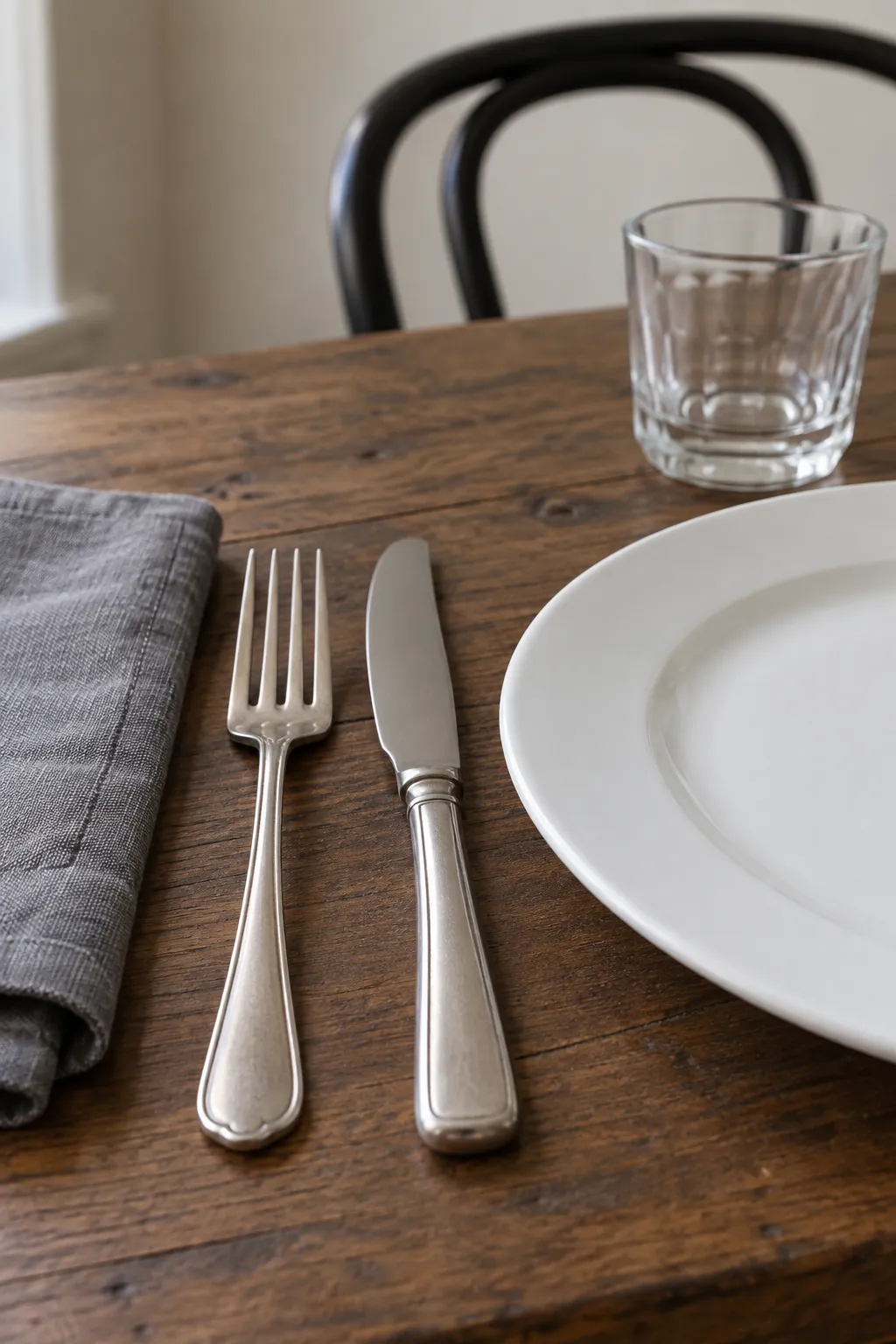
Collected pewter colored cutlery
Cutlery with a soft pewter finish gives plain white dinnerware a more collected character. Check that every piece is food safe and in good usable condition rather than choosing it only for appearance. A gray linen napkin supports the quiet metal tone. Let small differences among the pieces remain visible if the set is mixed, instead of adding extra decoration to disguise them.
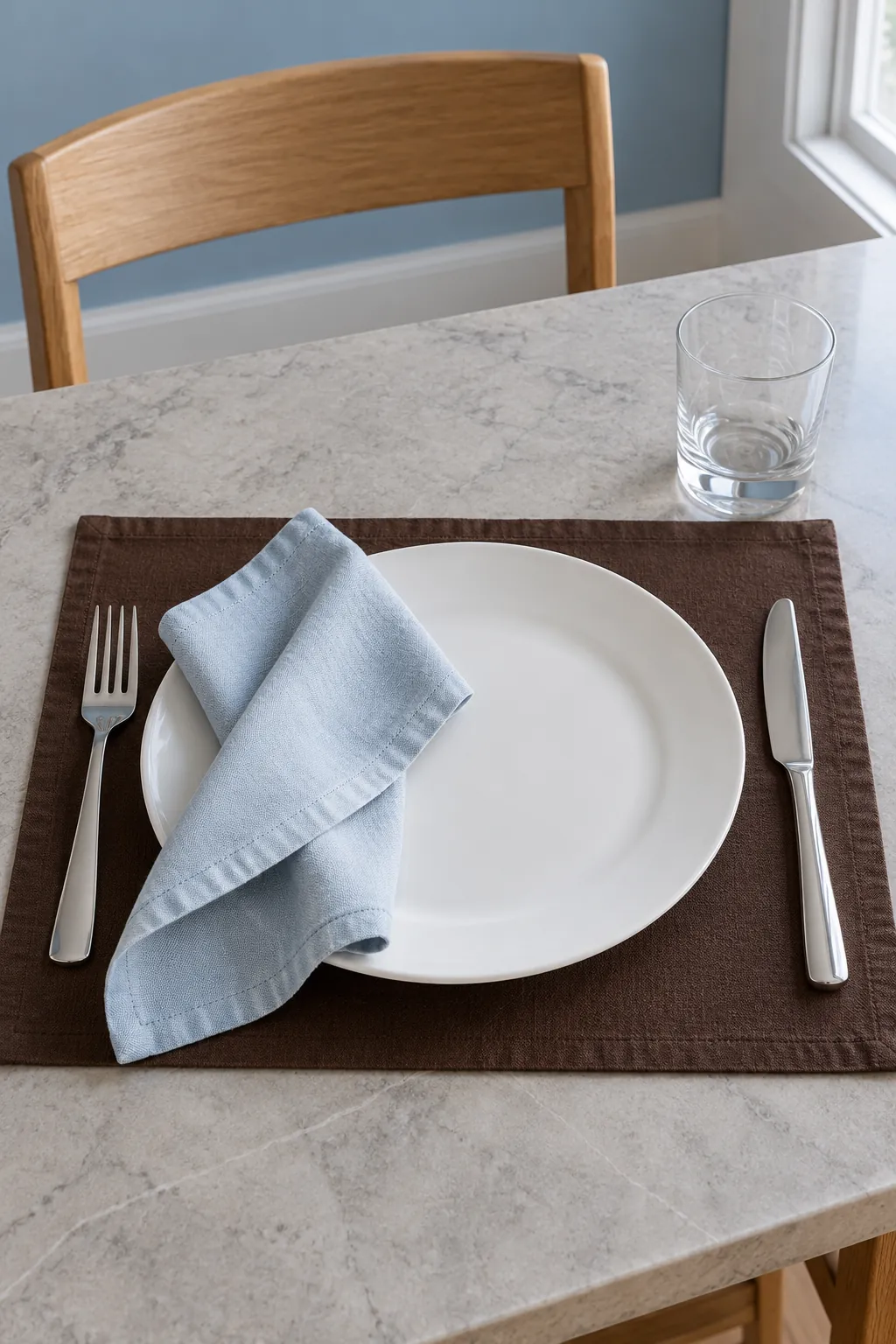
Chocolate mats with pale blue napkins
Pair a chocolate brown placemat with a pale blue napkin to move beyond the usual orange holiday palette. The white plate separates the two colors and keeps the contrast crisp. A clear glass prevents a third strong accent from competing with them. This combination is especially useful when the dining room already contains cool blue or gray details.
An open center with decor on the sideboard
Leave the middle of the dining table open and put the seasonal arrangement on a nearby sideboard. White plates, folded napkins, and clear glasses can carry the whole table setting when serving space is the priority. Repeat one color from the sideboard arrangement in the napkins to connect the surfaces.
Before guests arrive, set down the largest serving platter and check the room that remains around it. Move any unnecessary layer from the place settings if plates or glasses feel squeezed. The everyday white dishes have done their job when the table looks considered and the meal can still land comfortably.