A child’s room should reflect the person living there, not a narrow idea of what boys are supposed to like. Parents also need the room to survive changing interests, growing bodies, homework, laundry, and the endless arrival of small treasures. Keep expensive pieces flexible, then let personality live in the details that are easy to change.
Start With a Flexible Neutral Base
Choose a durable bed, dresser, and wall color that can support several future interests. Warm white, soft gray, muted green, and natural wood feel calm without stripping the room of character. Save the strongest theme for bedding, art, and display objects that can change without replacing furniture.

Create a Dinosaur Discovery Corner
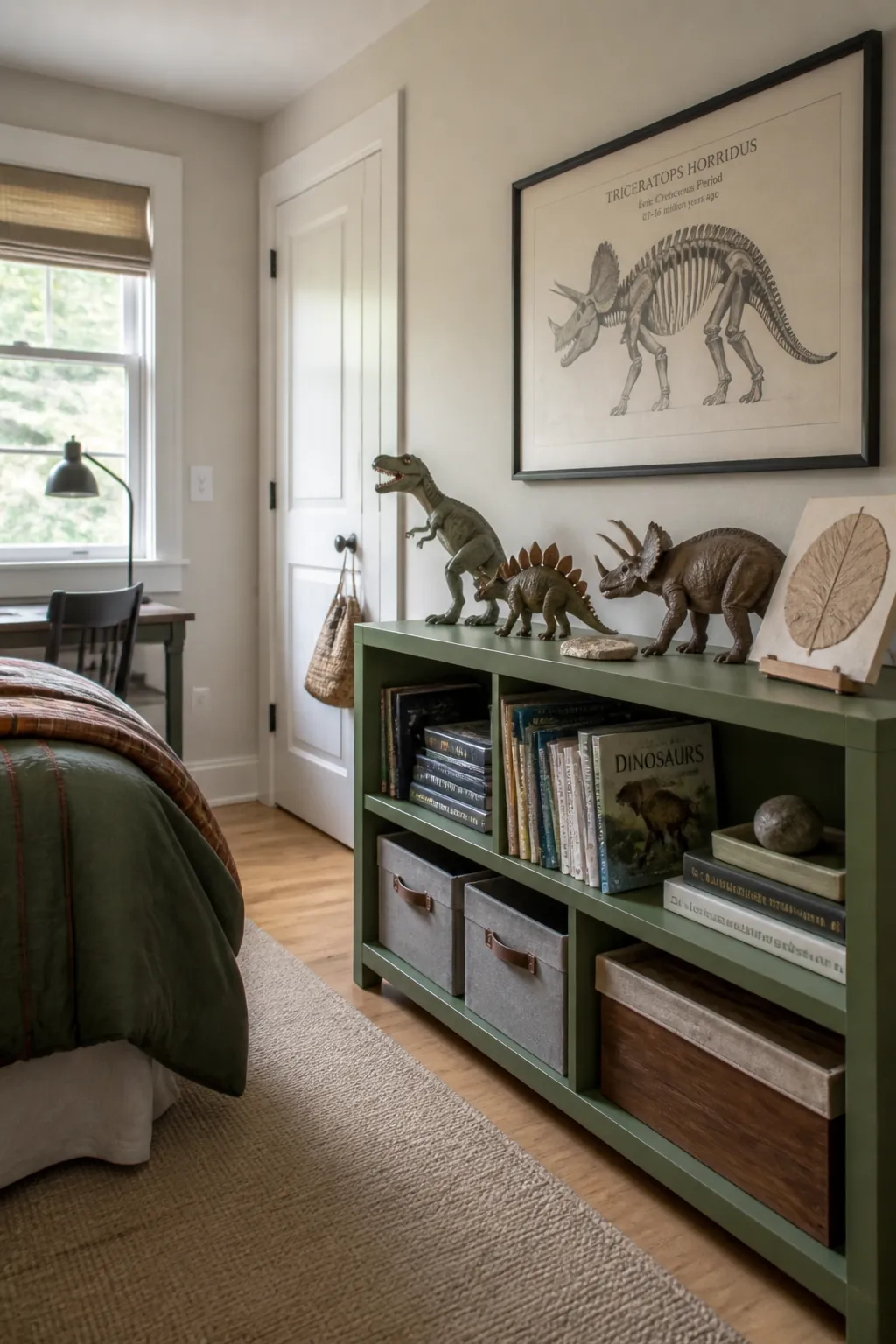
A dinosaur room feels richer when it resembles a curious collector’s space instead of a branded set. Display a few models, fossil prints, and favorite books on one reachable shelf. Use leaf green bedding or a textured rug to carry the prehistoric mood after the specific dinosaur phase passes.
Design a Football Practice Wall
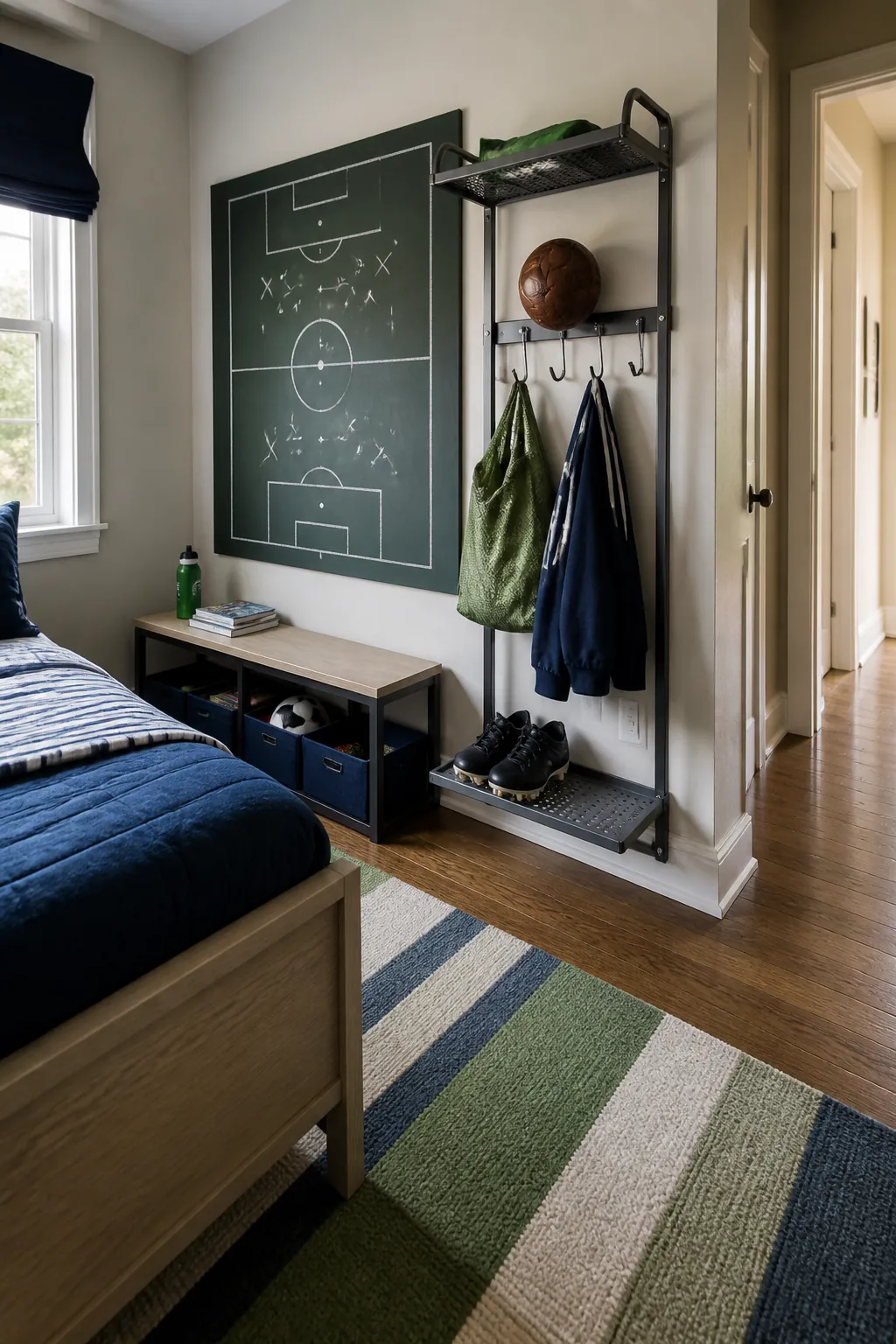
Frame a football bedroom around the love of the game rather than permanent team branding. A ball rack, boot tray, washable bench cushion, and tactical chalkboard give equipment a proper home. Real storage makes the sports theme useful even after favorite players and clubs change.
Paint a Quiet Space Ceiling
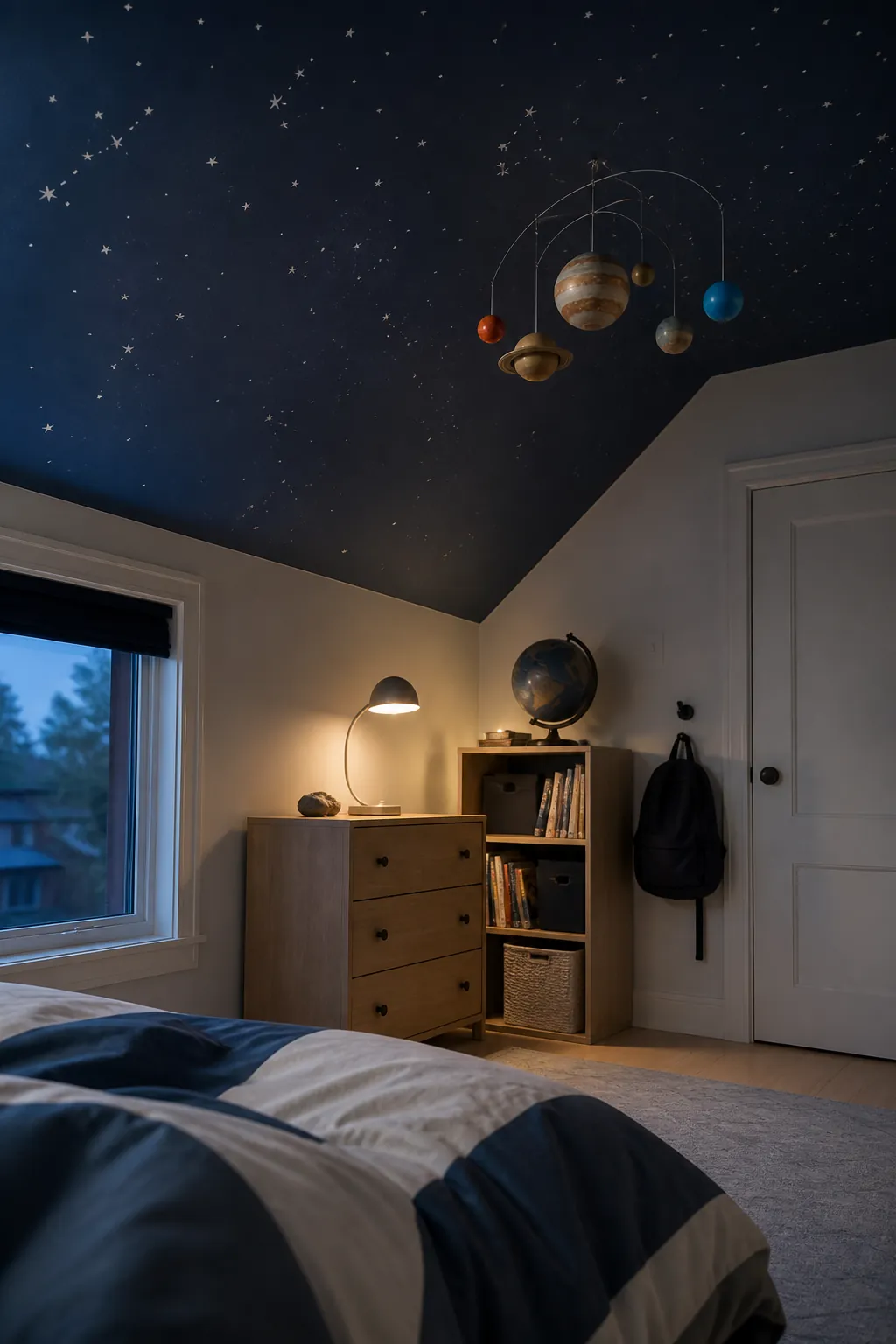
A deep blue ceiling can suggest the night sky while the walls remain light and adaptable. Add removable stars in a restrained constellation pattern and a small planet mobile away from the bed. Keep the rest of the room simple so bedtime feels peaceful rather than visually busy.
Use Construction Colors Without Cartoon Clutter
Safety orange, charcoal, and warm plywood can evoke construction equipment without covering every surface in vehicles. Store toy trucks in one low galvanized bin and add a simple road patterned play mat. A restrained palette lets the toys supply the story.

Build an Ocean Explorer Nook
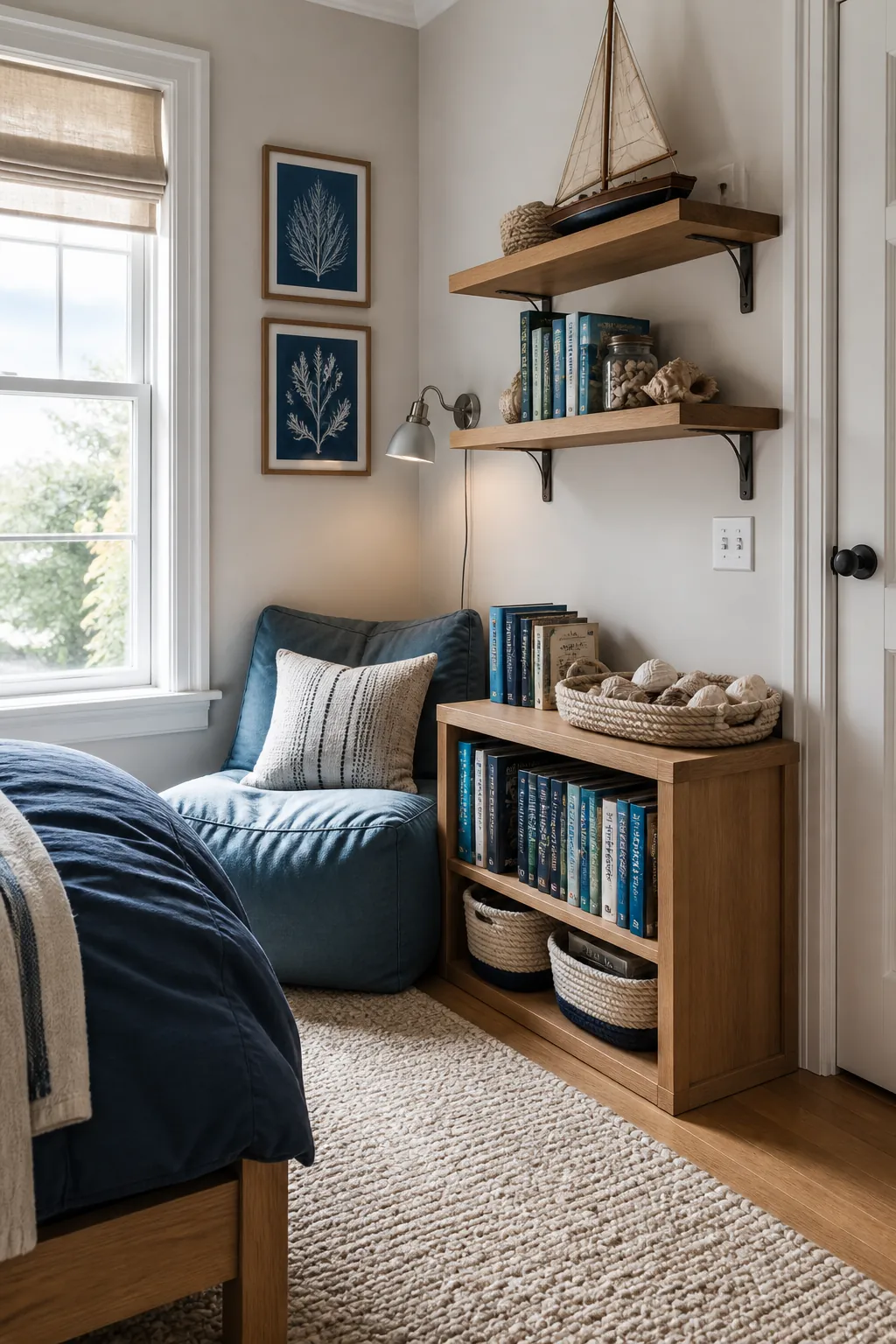
Layer navy bedding, sea glass colors, a rope basket, and natural history prints for an ocean theme with room to mature. A small shelf can hold shells, smooth stones, and marine books gathered over time. Avoid filling the room with novelty anchors because a few authentic textures create a stronger atmosphere.
Make a Forest Camp Bed
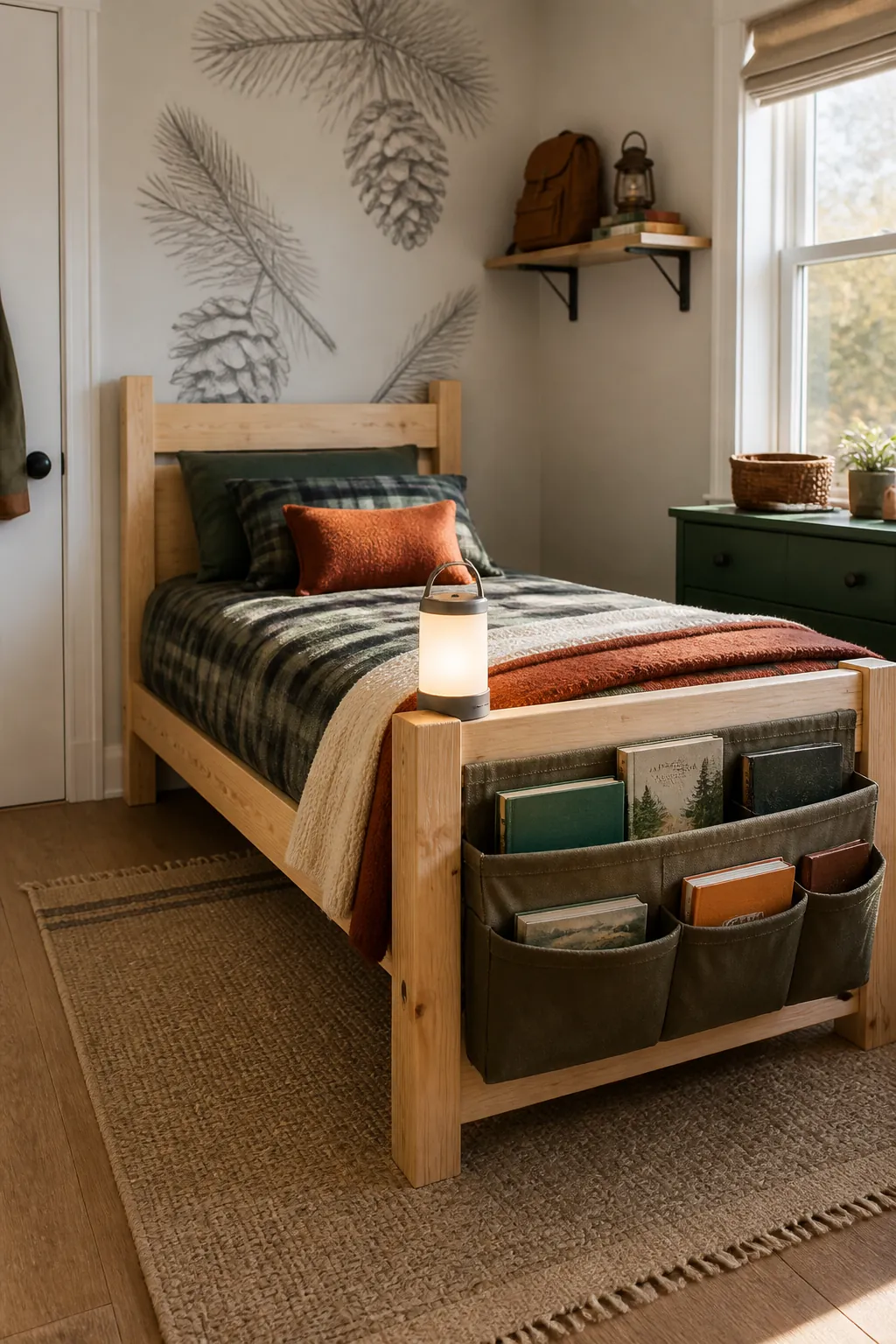
A simple timber bed can feel like a campsite with plaid bedding, a wool blanket, and one canvas pocket for bedtime books. Use forest green as an accent rather than darkening every wall. A rechargeable reading light provides the cozy tent feeling without loose cords.
Set Up a Small Science Desk
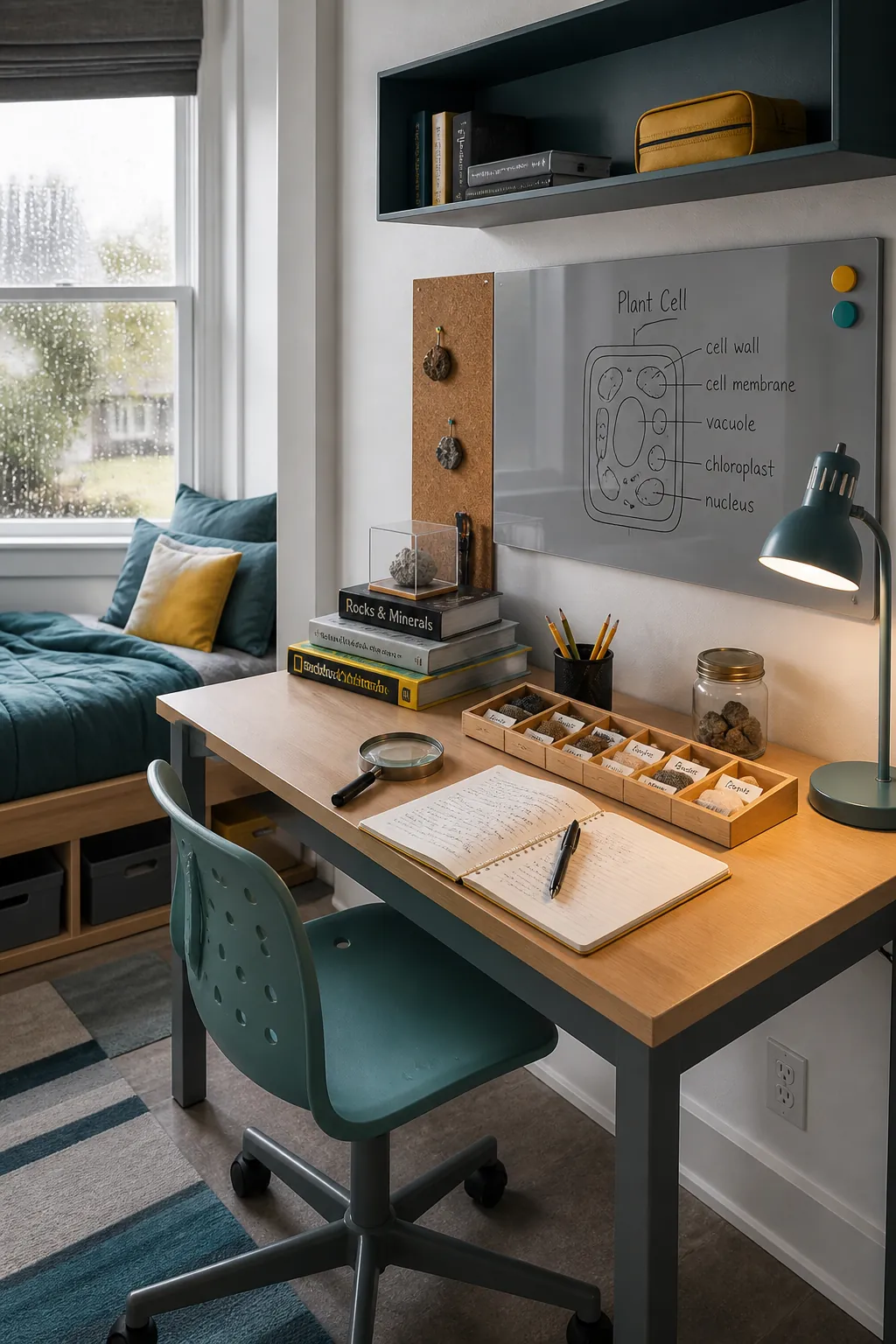
A compact desk becomes exciting when magnifiers, nature finds, and notebooks have defined storage. Mount a washable metal board for diagrams and current questions rather than permanent themed wallpaper. Leave most of the work surface empty so experiments and homework have room to happen.
Try a Vintage Aviation Accent
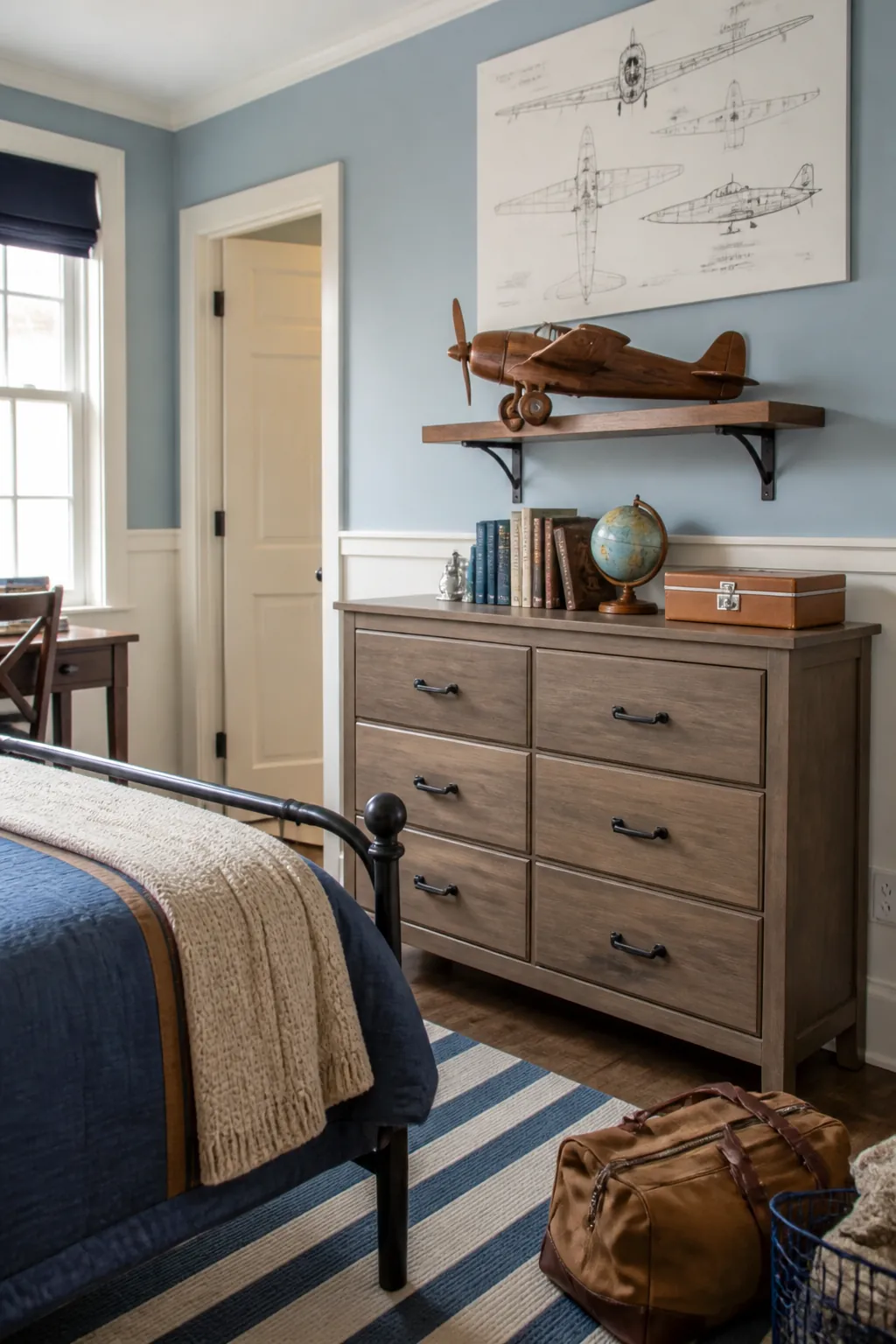
A carved wooden plane, cloud colored bedding, and one technical aircraft print can establish an aviation theme. Keep models on a secure shelf instead of suspending heavy objects over the bed. Tan leather handles and brushed metal details help the idea work for an older child too.
Give Race Cars a Display Garage
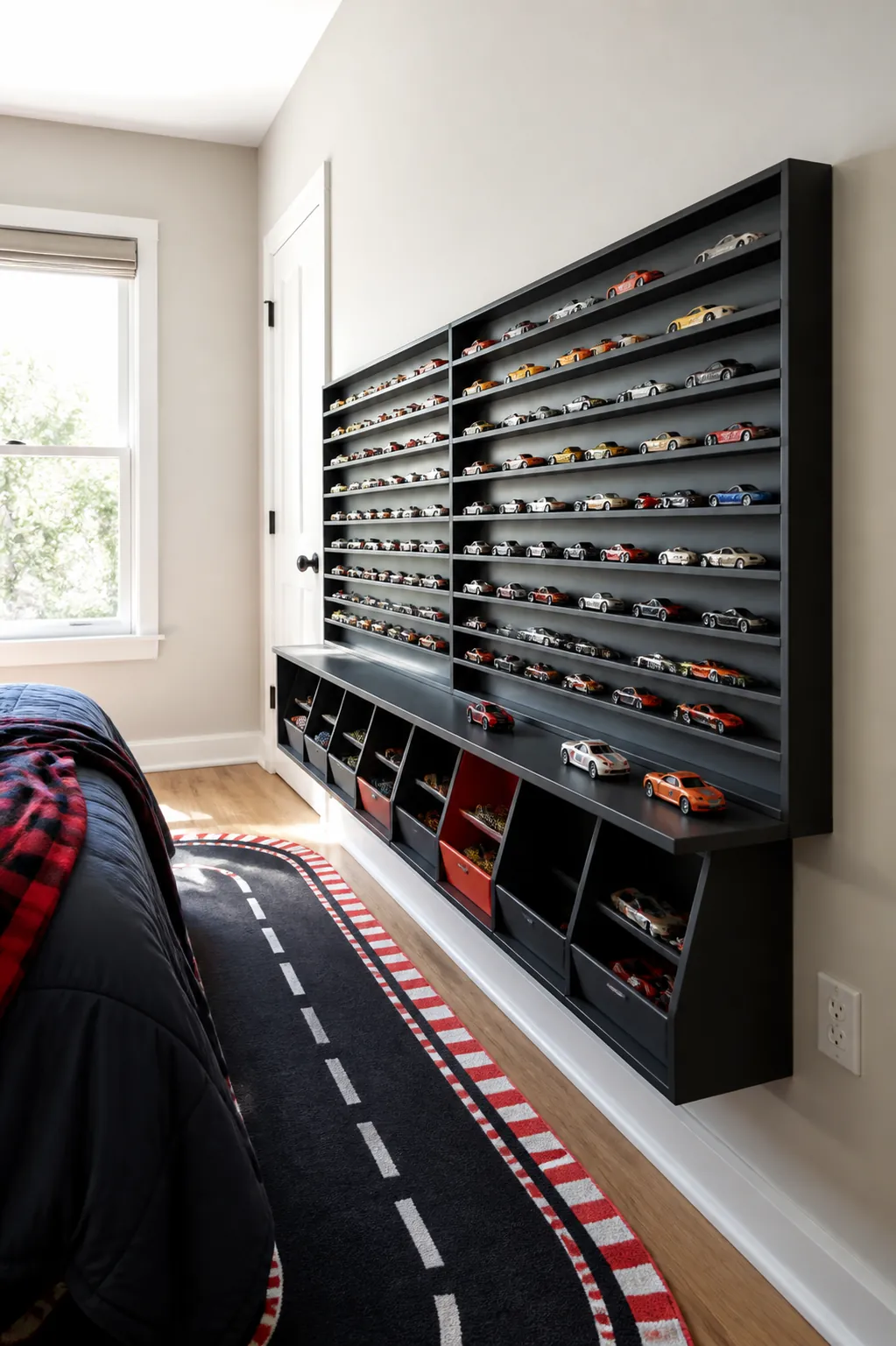
Shallow divided shelves can turn a scattered car collection into a graphic wall display. Position the lowest compartments within reach and reserve the upper row for delicate favorites. A charcoal rug with thin lane lines creates a play surface that still looks composed when the cars are parked.
Create a Comic Color Scheme
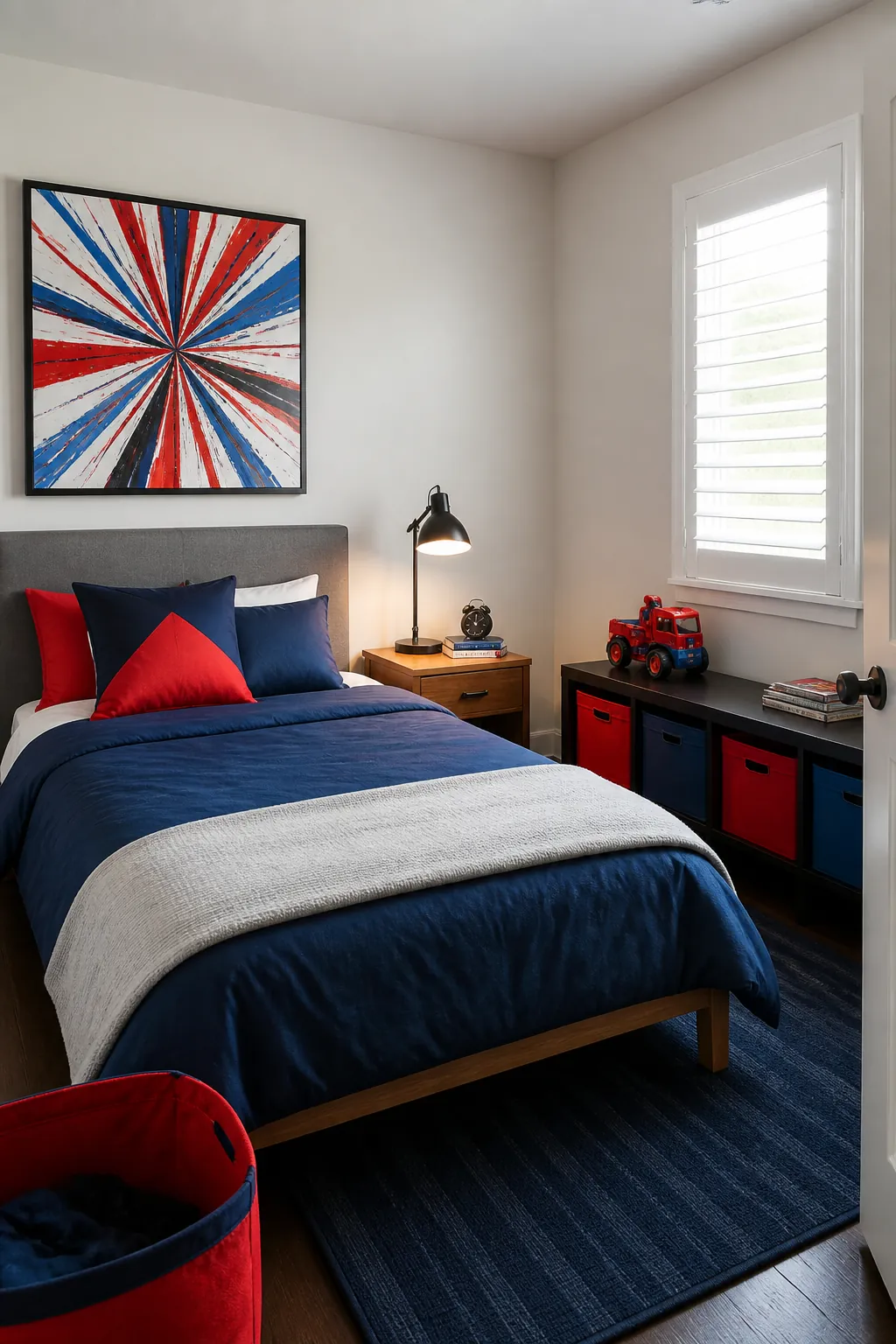
Red, blue, black, and white can suggest superhero energy without reproducing a specific character across the room. Use angular color blocks on removable art, then balance them with plain bedding and natural wood. Licensed Spiderman room accessories can remain a small replaceable layer if that is the child’s favorite.
Arrange Twin Beds With Equal Storage
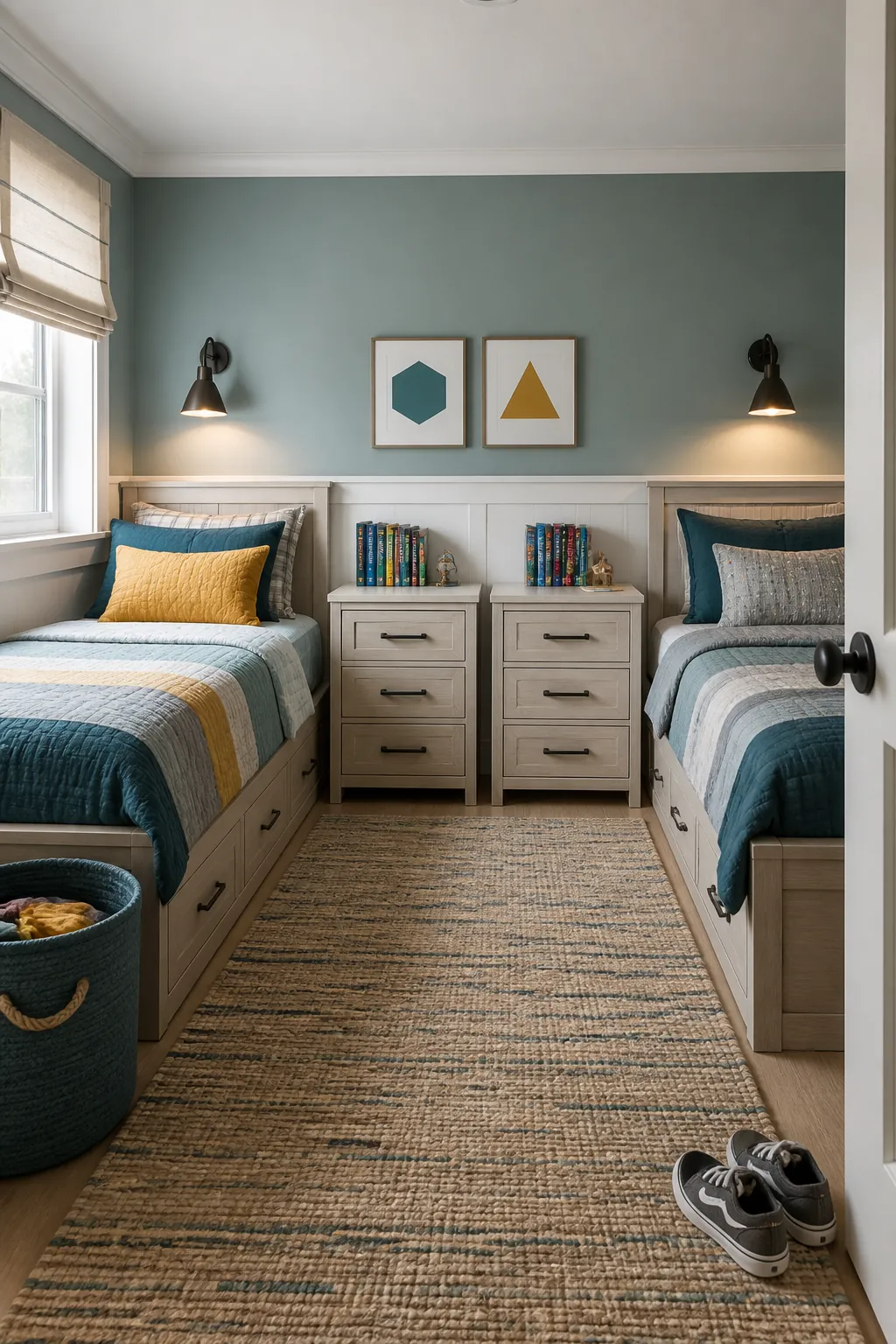
A twin boys room feels fairer when both beds receive the same drawer capacity, reading light, and display area. Individual accent colors can distinguish ownership without dividing the room physically. Keep one shared aisle wide and leave the exit visible from each mattress.
Turn the Lower Bunk Into a Den
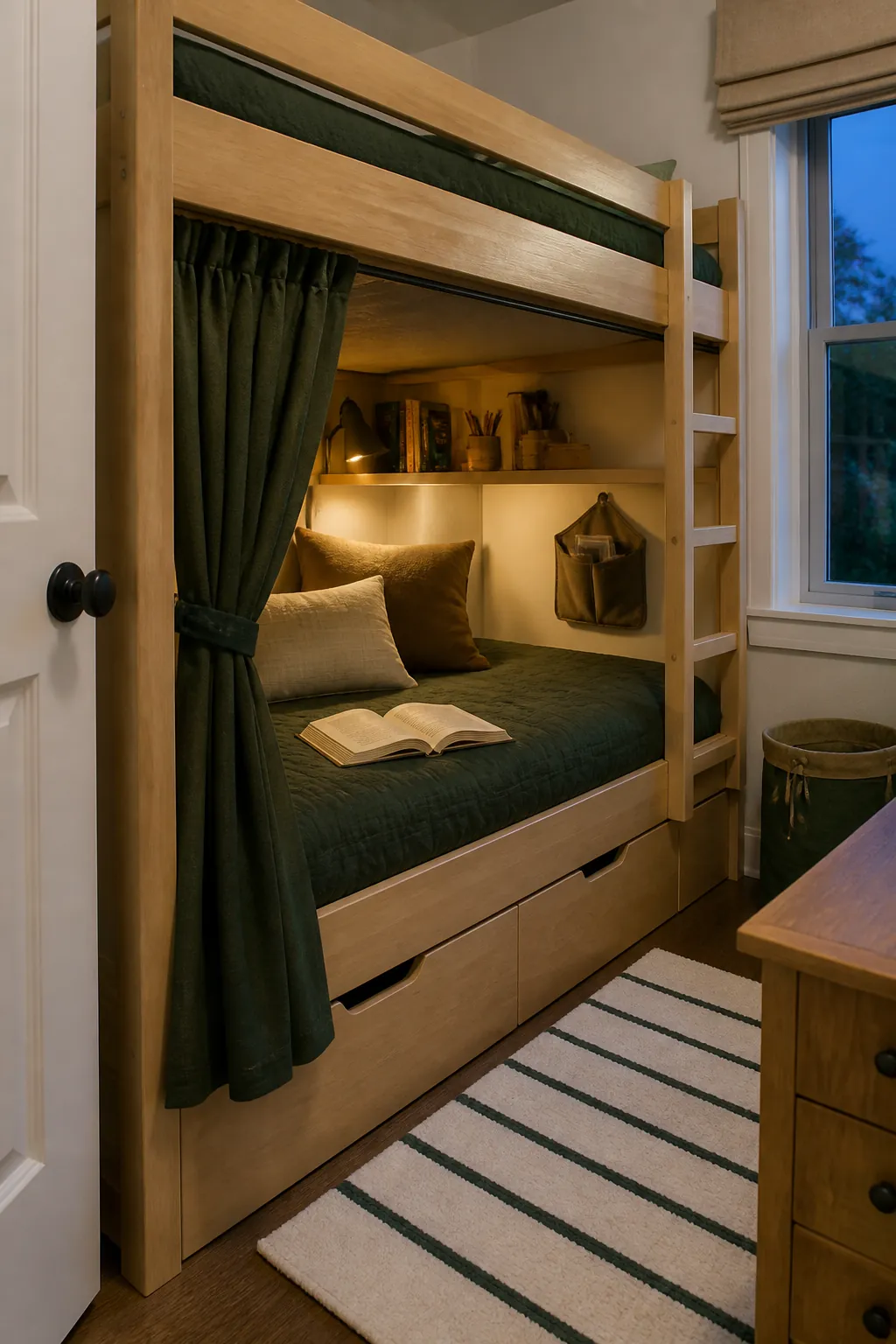
A clipped cotton curtain can make the lower bunk feel private for reading while remaining easy to open. Add a wall mounted light, one book pocket, and no loose hanging cords. Confirm that every fabric addition stays clear of lights, ladders, and the upper mattress support.
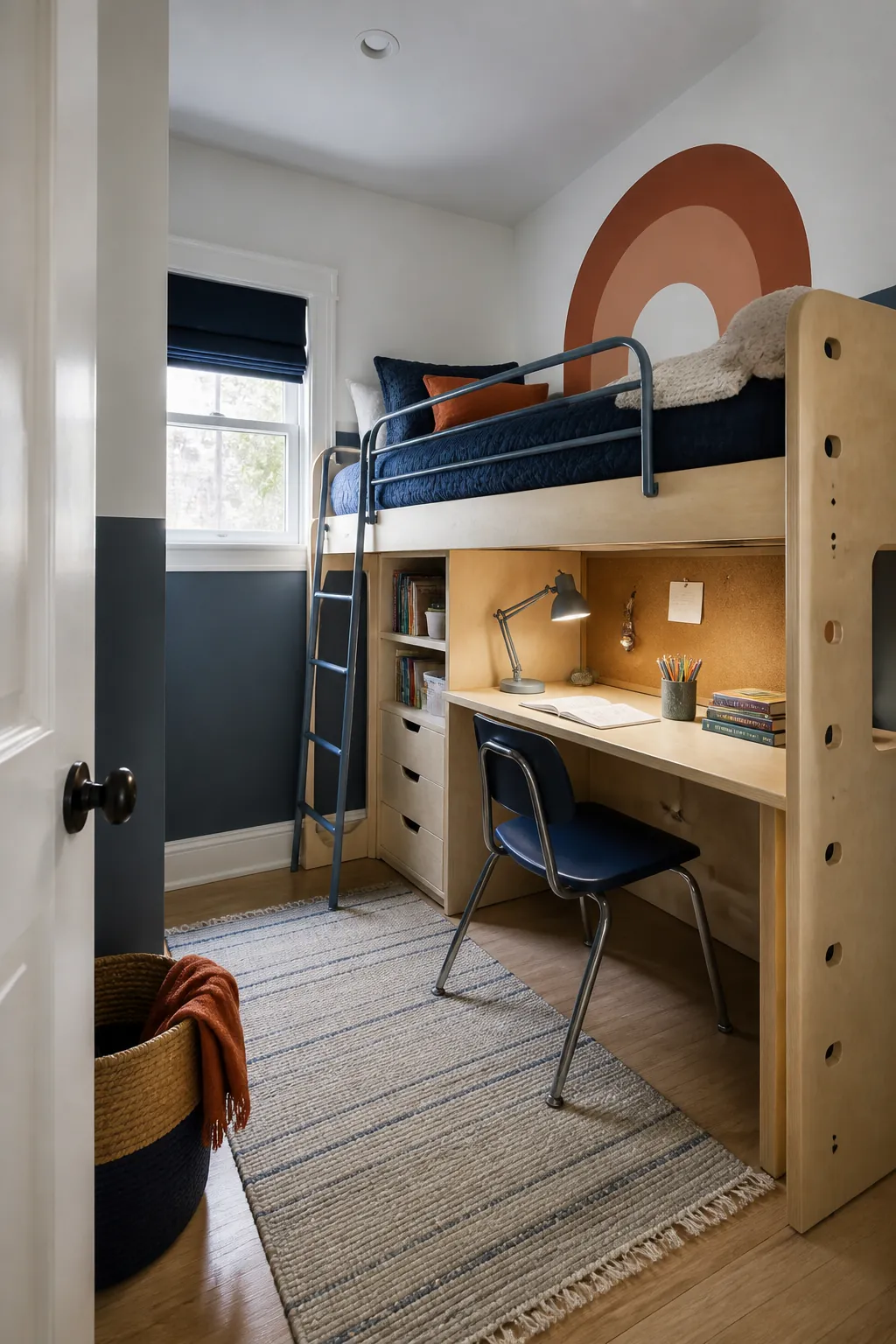
Fit a Loft Bed Over a Desk
A loft bed can make one footprint handle sleep and schoolwork in small bedroom ideas. Measure sitting height, ladder clearance, ceiling distance, and the location of outlets before choosing a frame. The desk needs real task lighting because the mattress platform will block some ambient light.
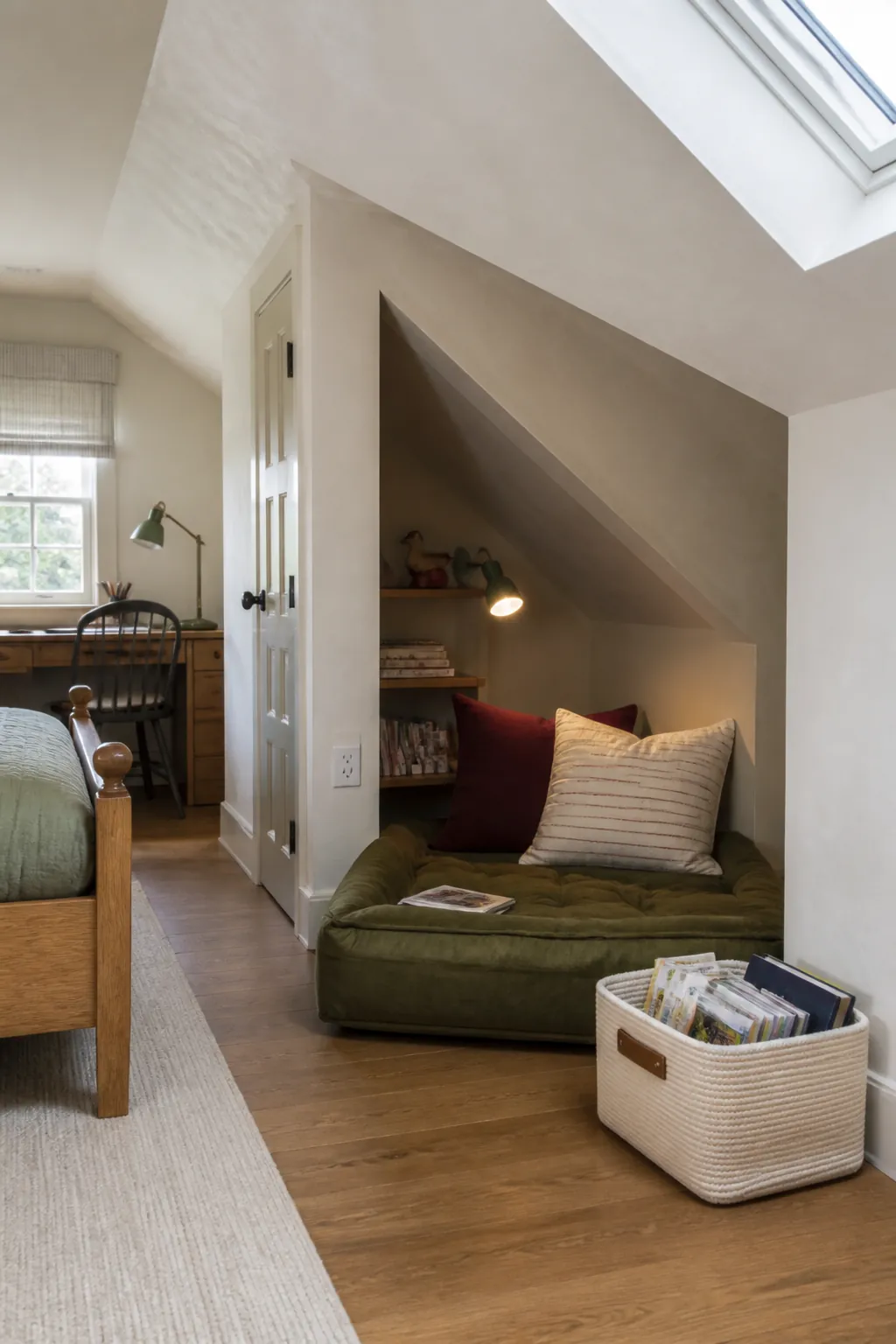
Add a Reading Cave Under the Eaves
A low sloped ceiling that cannot fit standing furniture may be perfect for a floor cushion and book basket. Line the back with a washable padded mat and provide a light that stays cool to the touch. Keep the entrance broad enough that the nook never feels enclosed or difficult to supervise.
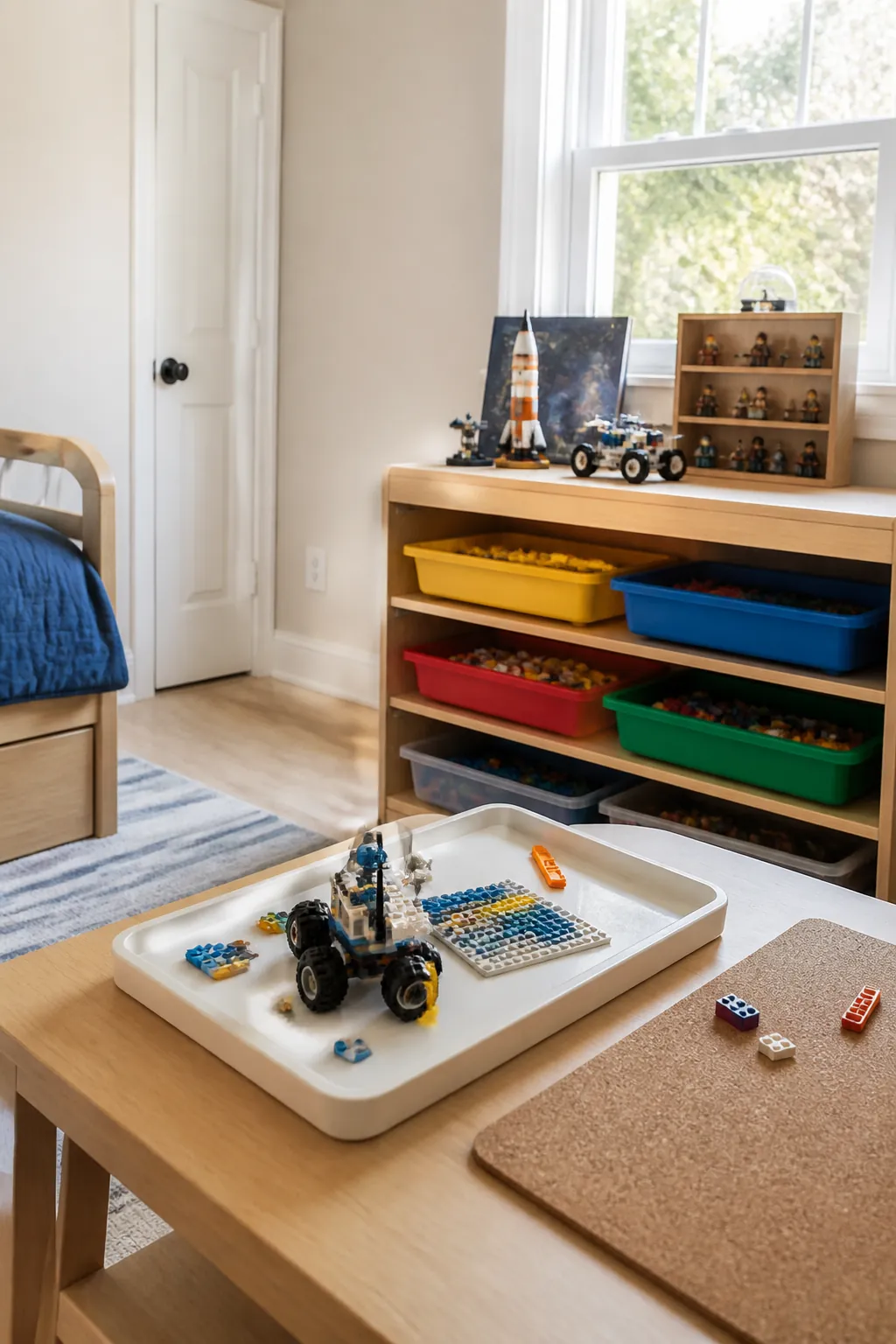
Organize Building Bricks by Project
Deep mixed tubs make it hard to preserve works in progress or find the next useful piece. Use shallow trays for active builds, broad color bins for loose bricks, and one shelf for finished models. A rimmed tabletop catches pieces before they reach the floor.
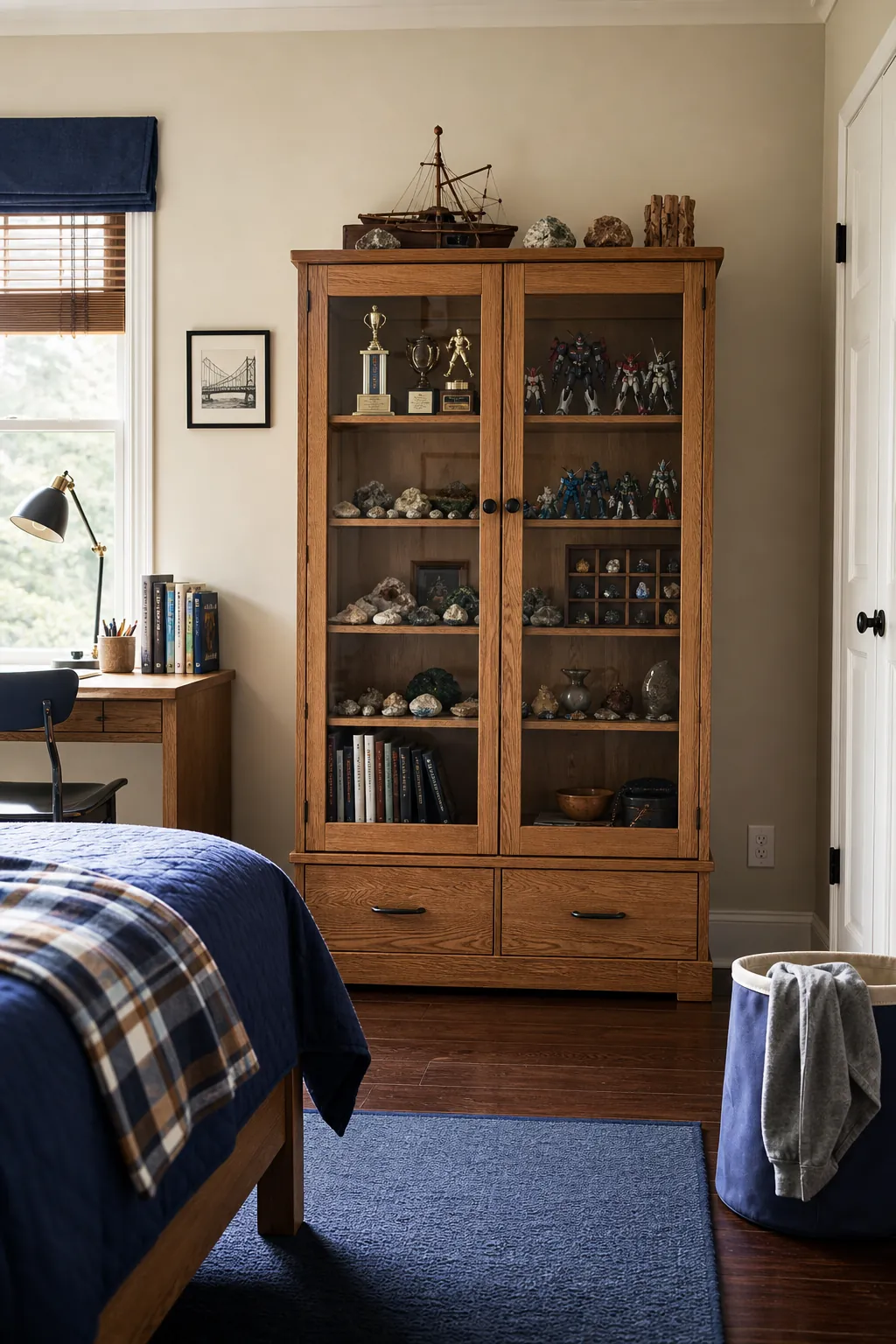
Display Collections in One Zone
Rocks, figures, trophies, and handmade objects create personality when they share a defined cabinet or ledge. Limit the display to what fits, then store or rotate the rest. A boundary honors the collection while preventing every surface from becoming crowded.
Hang Art in Easy Change Frames
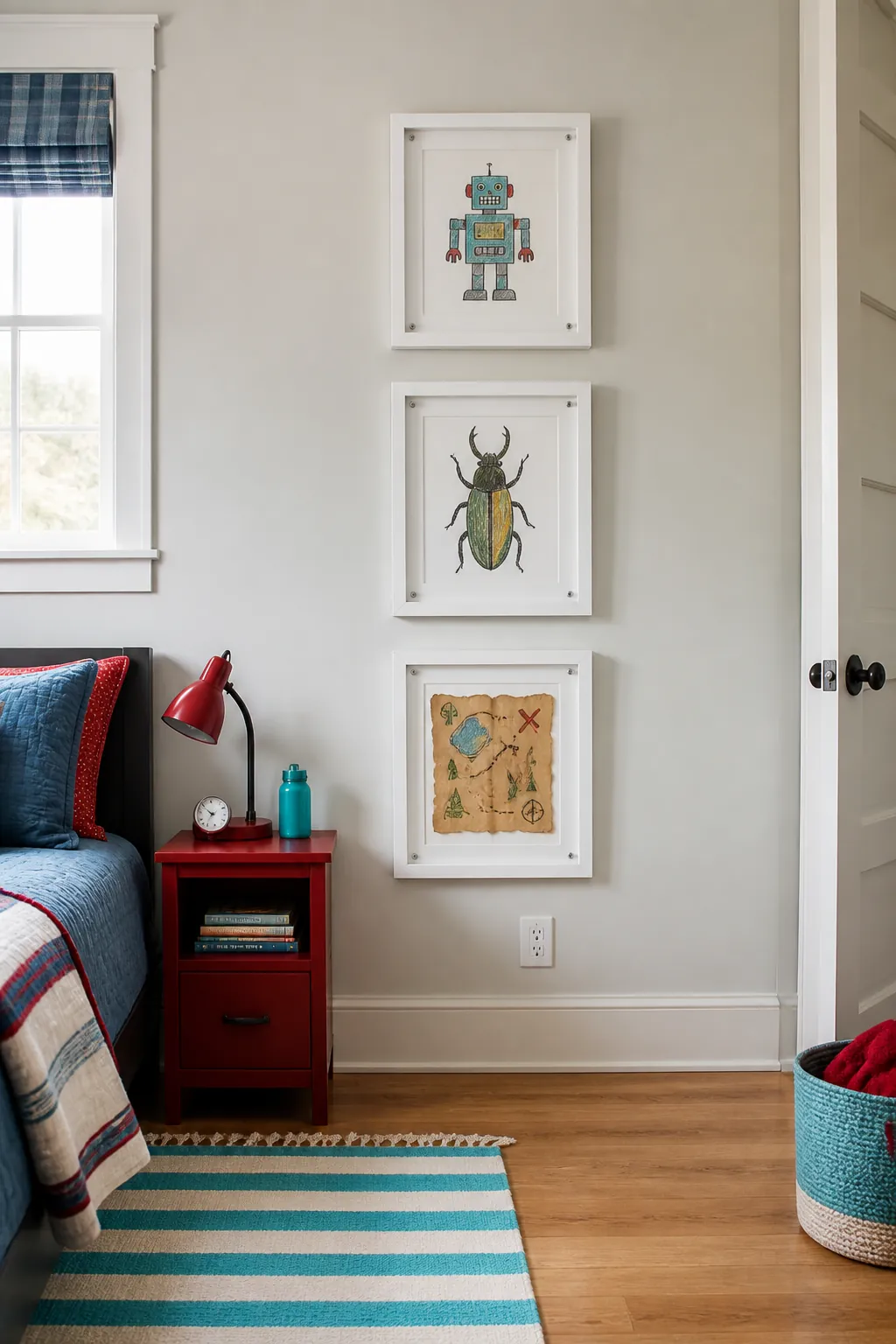
Front opening frames let a child update drawings, posters, and favorite subjects without damaging the wall repeatedly. Group a small number at eye level instead of filling every gap. The changing display gives genuine control even when parents choose the major furniture.
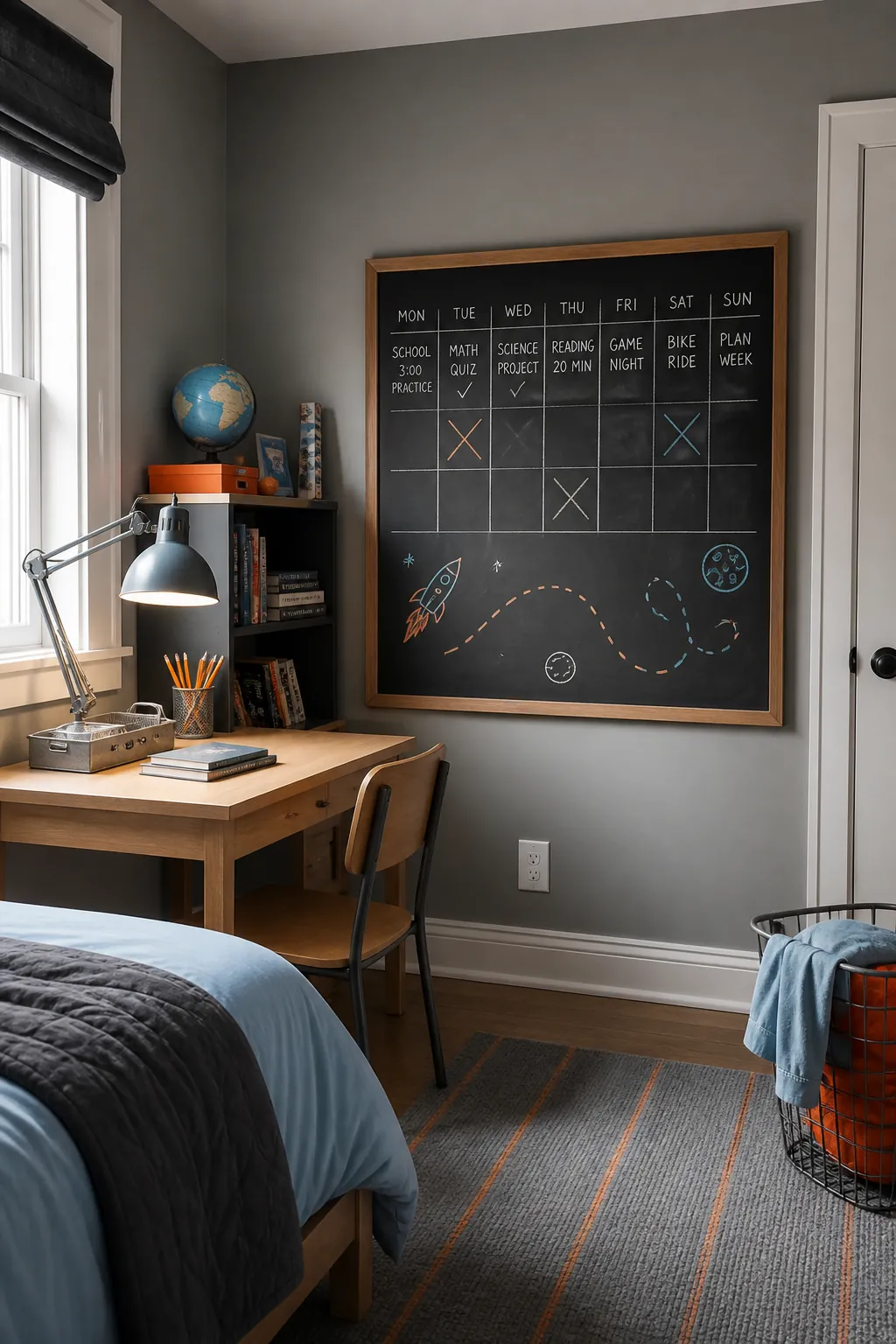
Use a Chalkboard Planning Panel
A framed chalkboard panel can hold a weekly plan, a quick drawing, or the rules of an invented game. Keep it beside the desk and use low dust chalk or washable markers suited to the surface. Avoid turning an entire wall dark when a contained panel provides the same creative freedom.
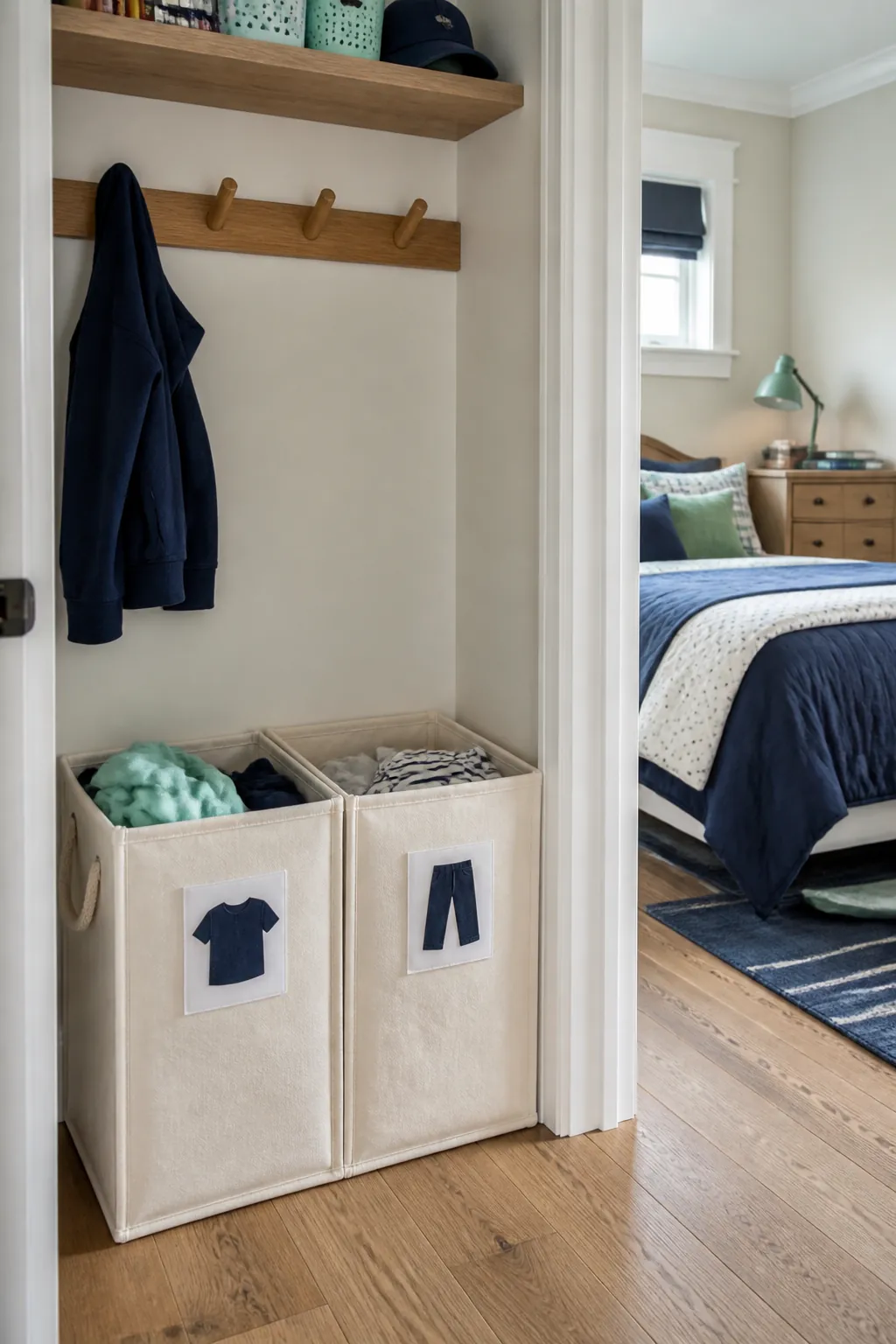
Make Laundry Sorting Obvious
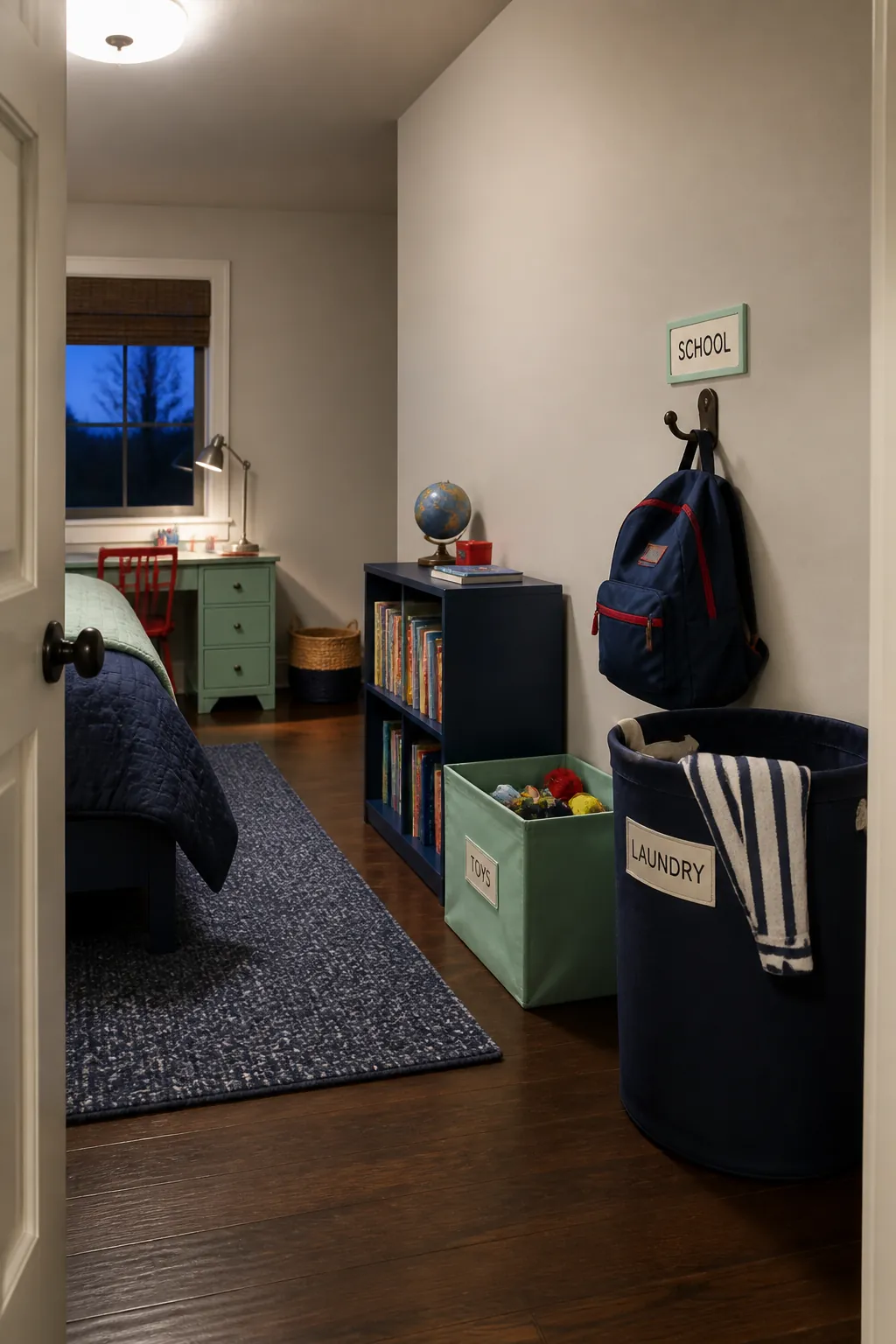
A light hamper with two picture labels can separate everyday clothes from sports kit or towels. Place it where clothes naturally come off, not where an adult wishes the routine happened. Choose a washable liner and a lid that cannot pinch small fingers.
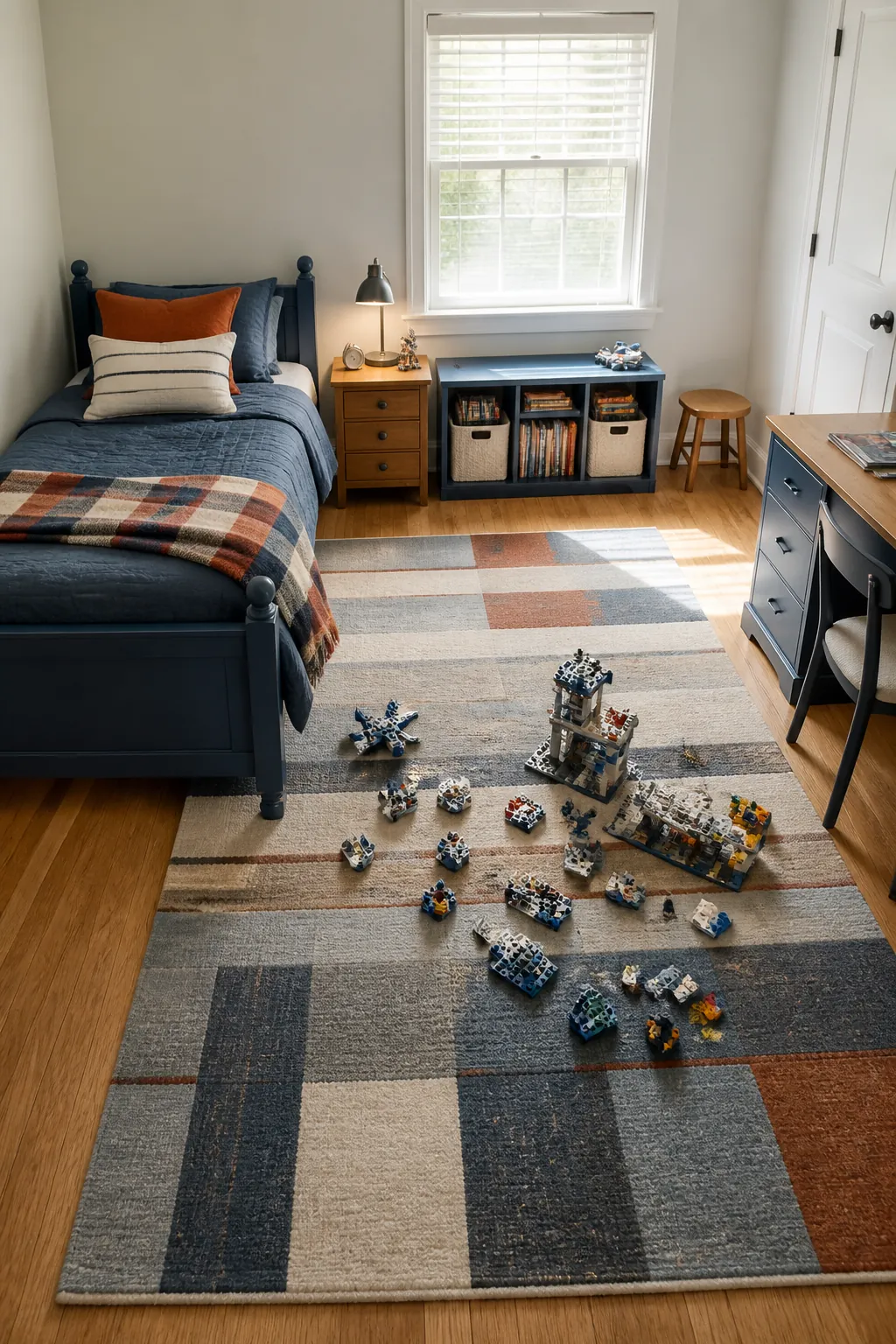
Choose a Rug That Supports Play
A low pile rug makes floor play comfortable and helps contain sound without swallowing small pieces. Pick a pattern broad enough that dropped parts remain visible. Use a proper underlay and keep the edges clear of drawer fronts and the main doorway.
Light Sleep Study and Play Separately
One bright ceiling fixture cannot serve every mood in a child’s bedroom. Combine a soft general light, a focused desk lamp, and a shielded reading light with safe cord management. Separate controls help the room shift from active play to a calmer bedtime routine.
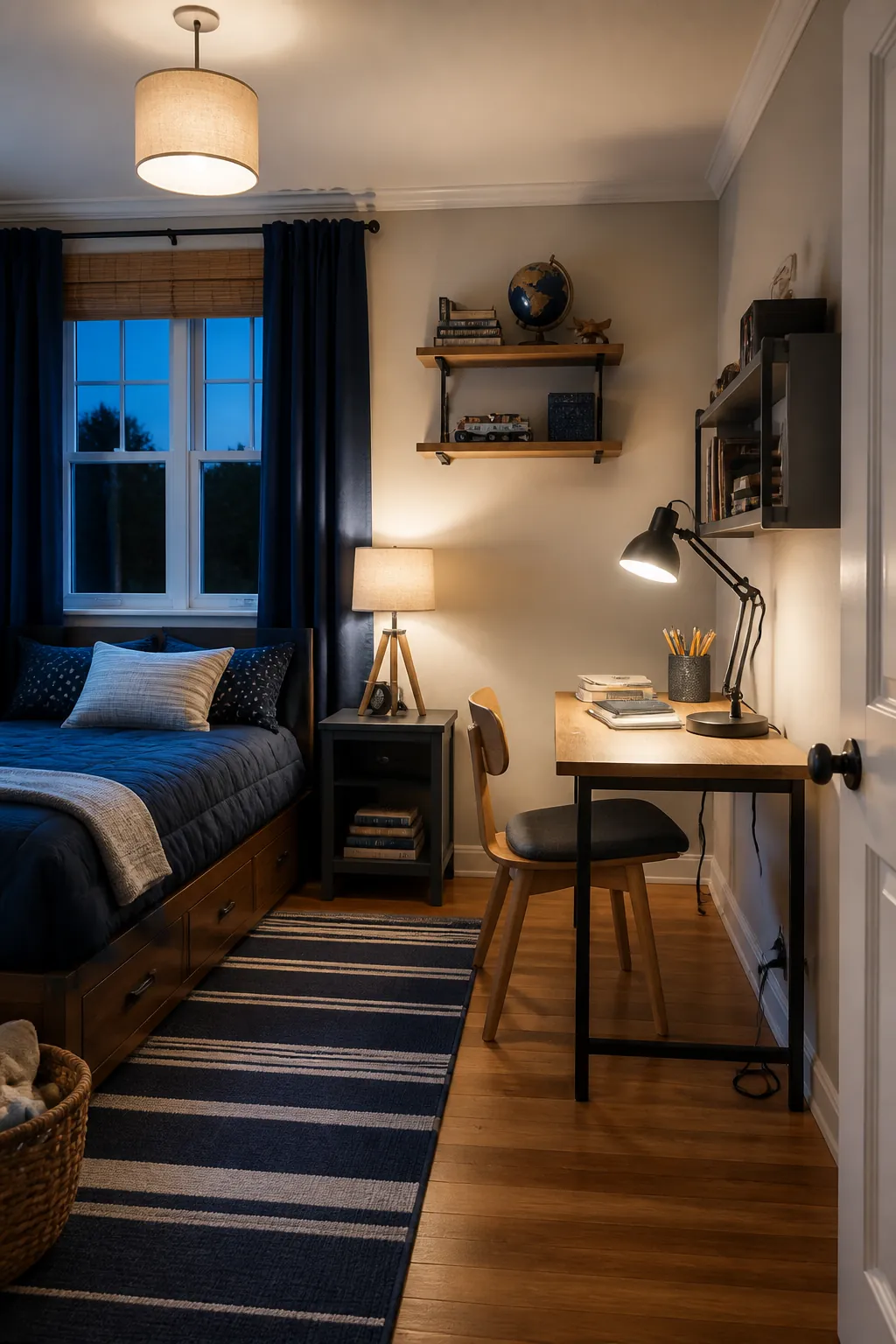
Plan a Calm Older Boy Upgrade
A preteen room can keep favorite collections while trading novelty bedding for textured solids and a larger work surface. Add a pinboard for current interests, photographs, and schedules instead of prescribing a new adult theme. Storage for chargers, school materials, and sports gear matters more than decorative maturity.
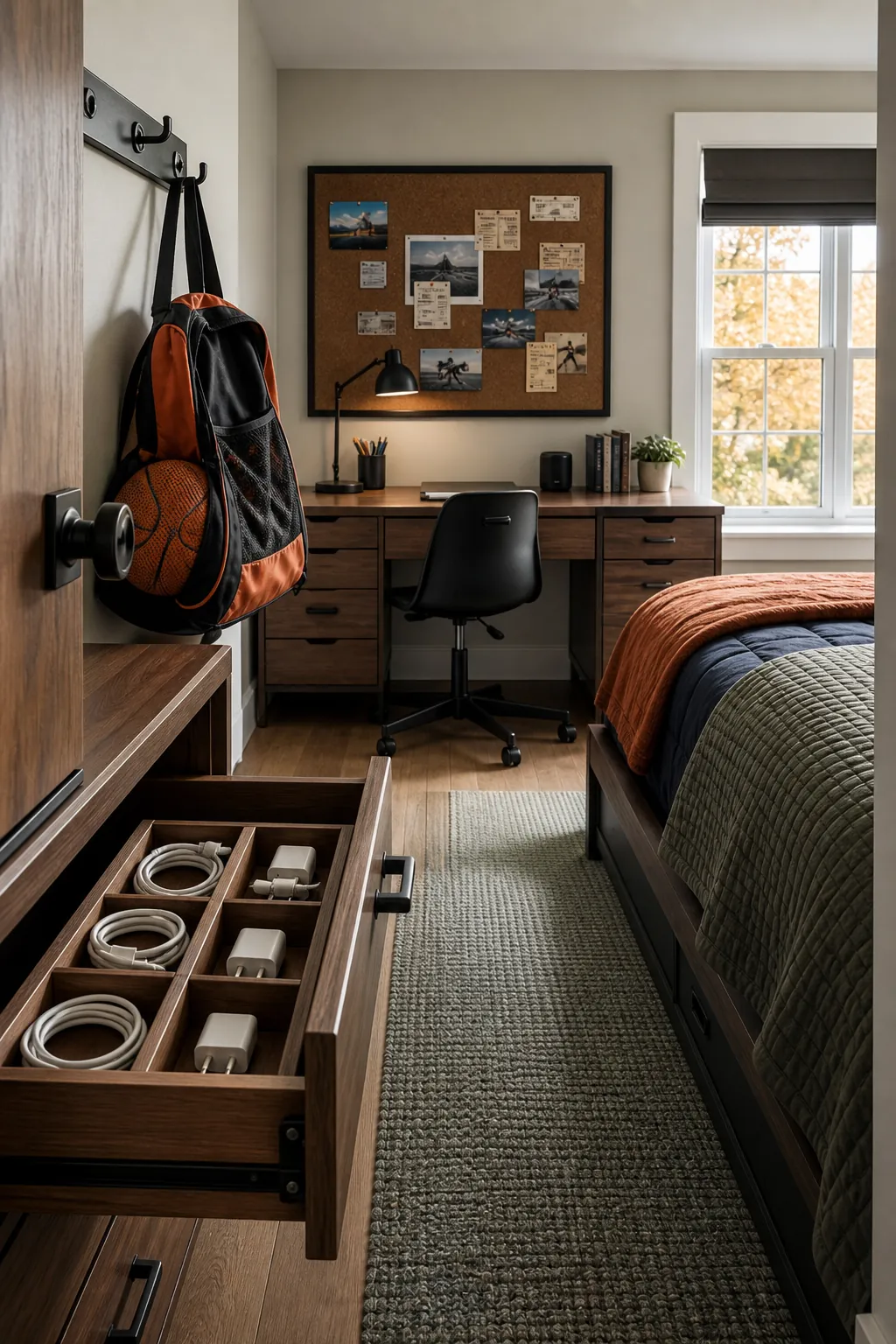
Let the Child Curate the Final Layer
Offer a few practical choices for bedding, accent color, art, and which objects deserve display. Set limits around cost, safety, and cleaning, then accept combinations that would not be an adult’s first choice. A room feels personal when the child can explain why the visible things matter.
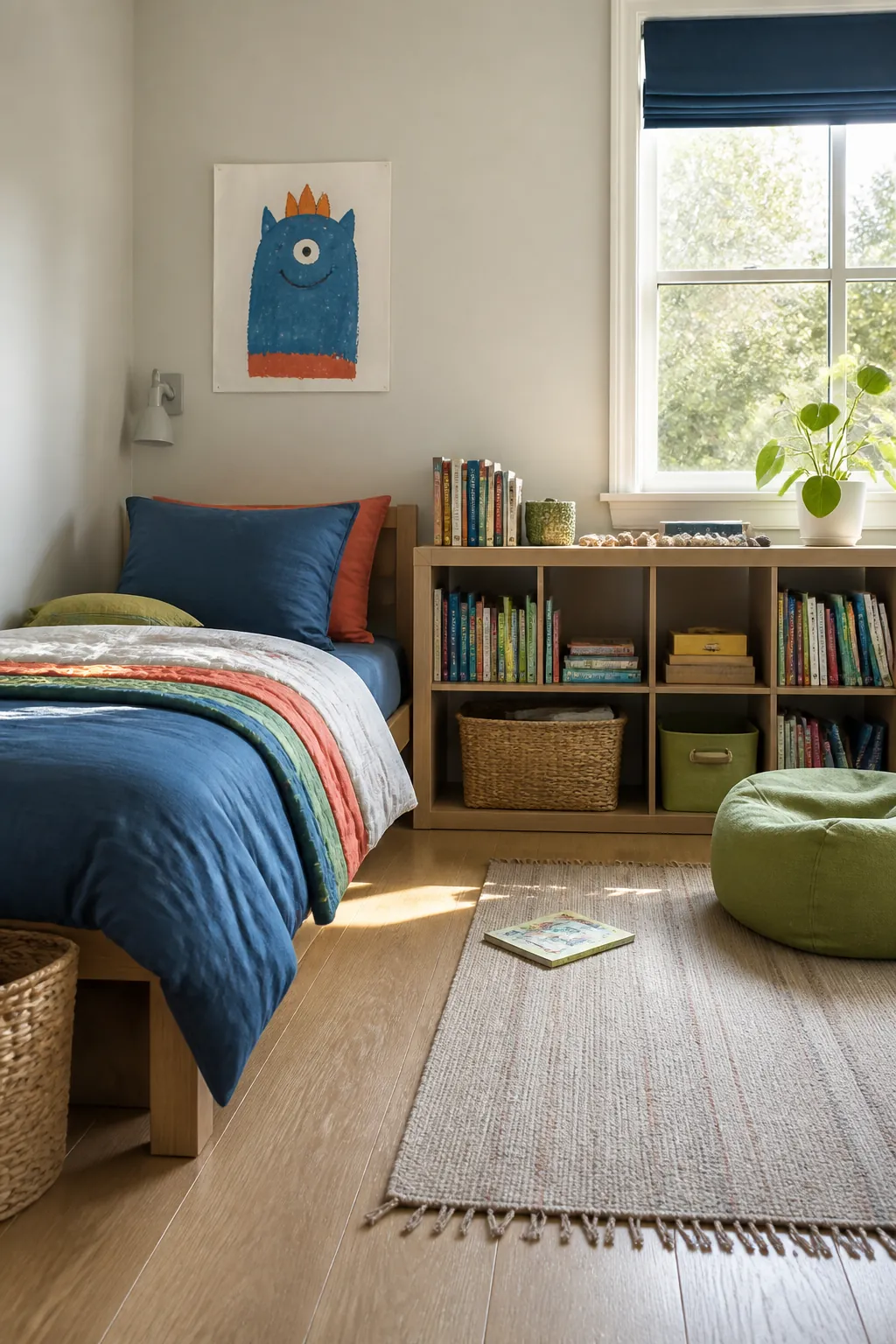
Keep a Clear Five Minute Reset Route
Place the hamper, toy bins, school hook, and book shelf in the order they are used during cleanup. Labels should be broad enough that tidying does not require an adult to classify every object. The most convincing bedroom inspirations make the right action obvious, reachable, and quick. Test the room by resetting it together, then move any storage that repeatedly gets ignored.