
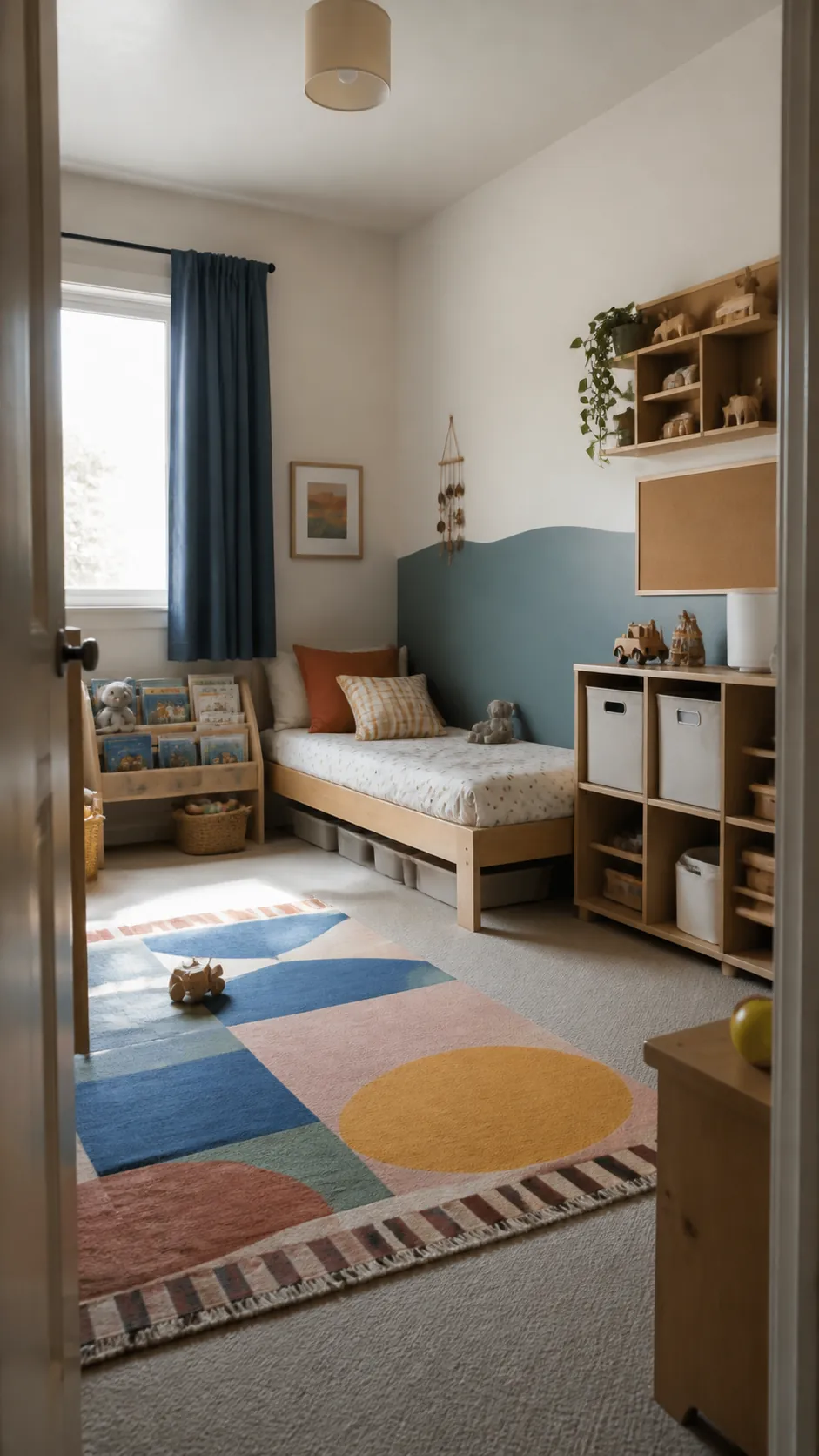
A small child’s room succeeds when it supports the moments that repeat every day: settling to sleep, finding clothes, choosing a toy, sharing fairly, and putting things away. Parents discussing tiny rooms often worry less about style than awkward furniture, darkness at bedtime, climbing risks, and nowhere to separate a toddler’s toys from an older child’s small pieces.
These 25 small children’s room ideas put safety and routines before themes. Measure the actual bed, open every door and drawer on the plan, anchor furniture correctly, and use only age-appropriate sleep products. A room can feel colorful and personal without sacrificing the clear floor and calm light children need.
Put the Bed on the Quietest Wall
Keep the sleep surface away from the noisiest shared wall and the direct line of the hallway. A quieter position makes bedtime easier without adding another piece of furniture.
Check the route from bed to door after dark. A low, warm night light can reveal the floor without flooding the room with stimulating light.
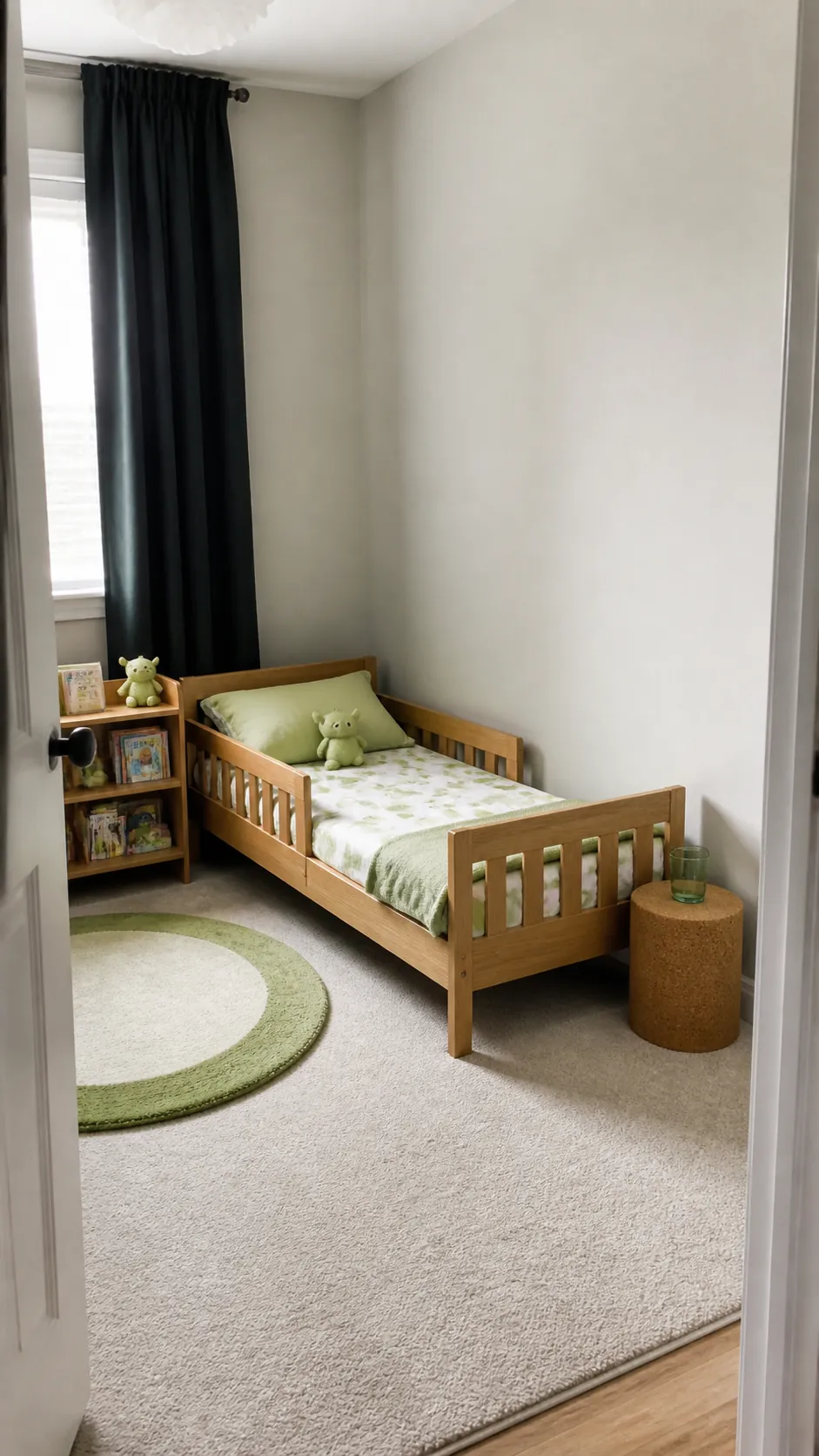
Build a Low Cleanup Wall
Put the storage children use every day between their knees and shoulders. They can see choices, return items, and finish cleanup without climbing.
Keep categories broad—books, building, pretend play—rather than creating a complicated system. Anchor every rail and cabinet to the correct wall structure.
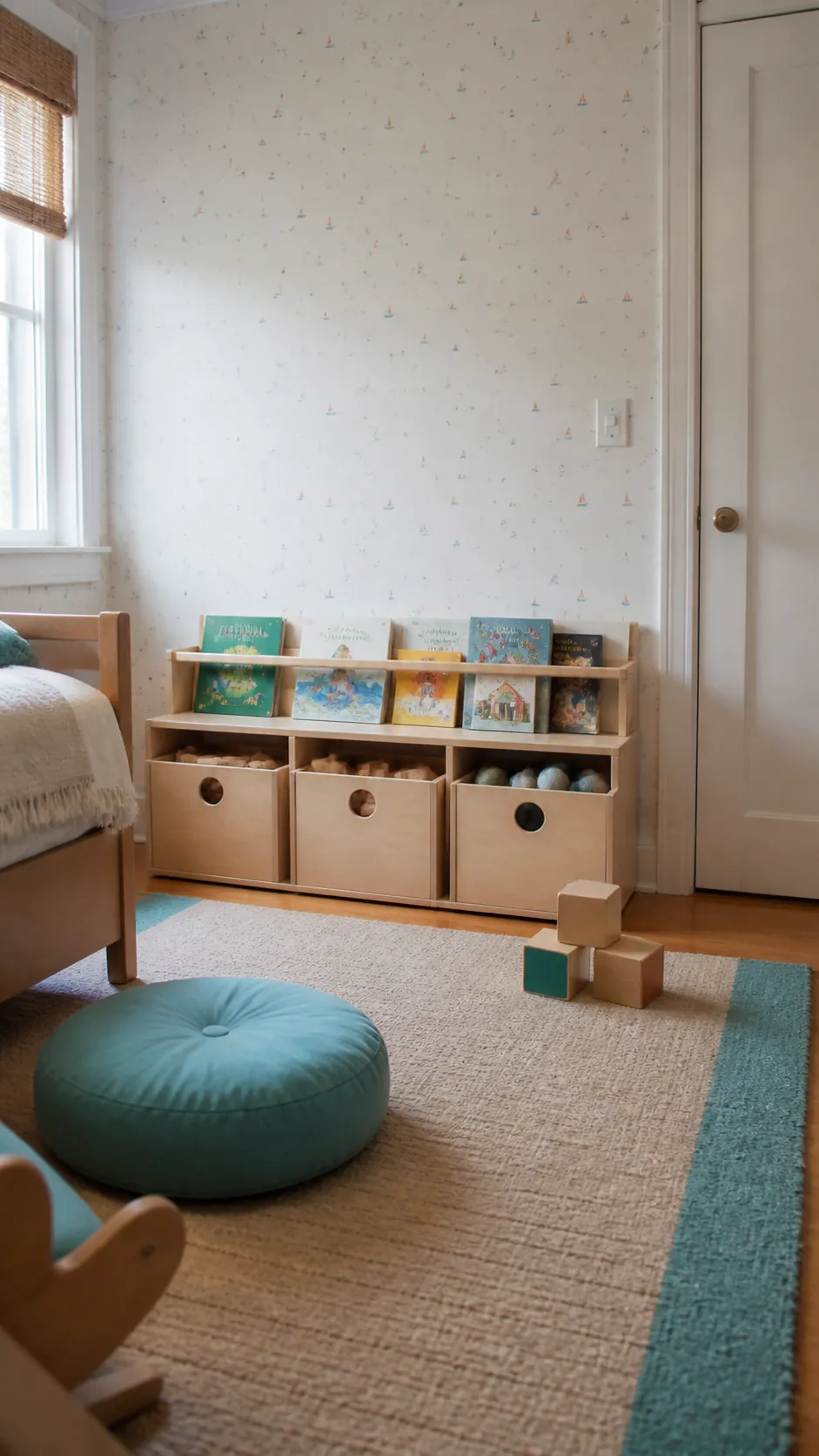
Frame the Window With Shallow Shelves
Shallow shelves use the bright wall without projecting far into the room. Leave the window hardware, ventilation, and safety devices fully accessible.
Face-out books act as changing color and make choosing easier. Rotate a few titles rather than forcing an entire library into the bedroom.
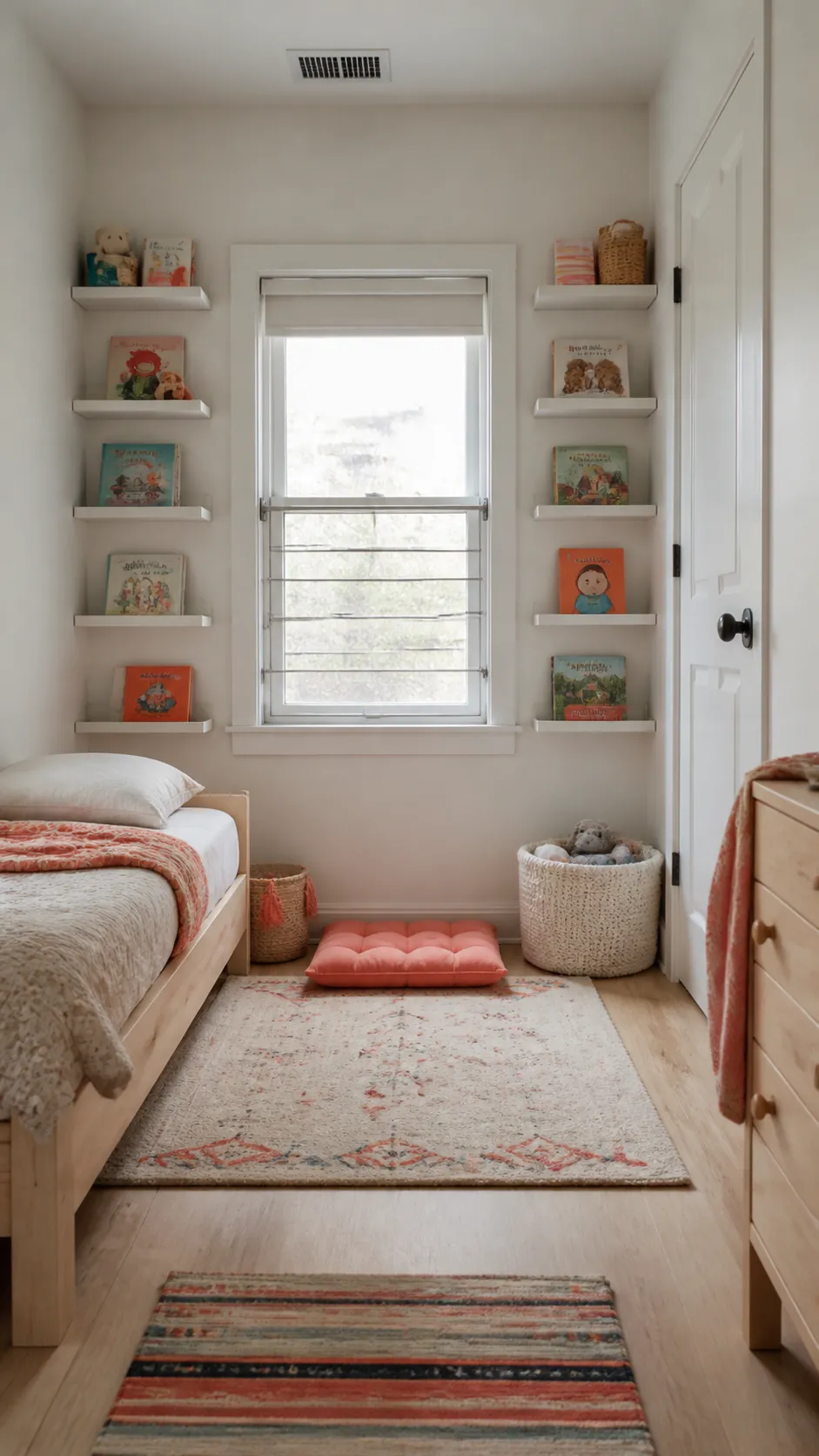
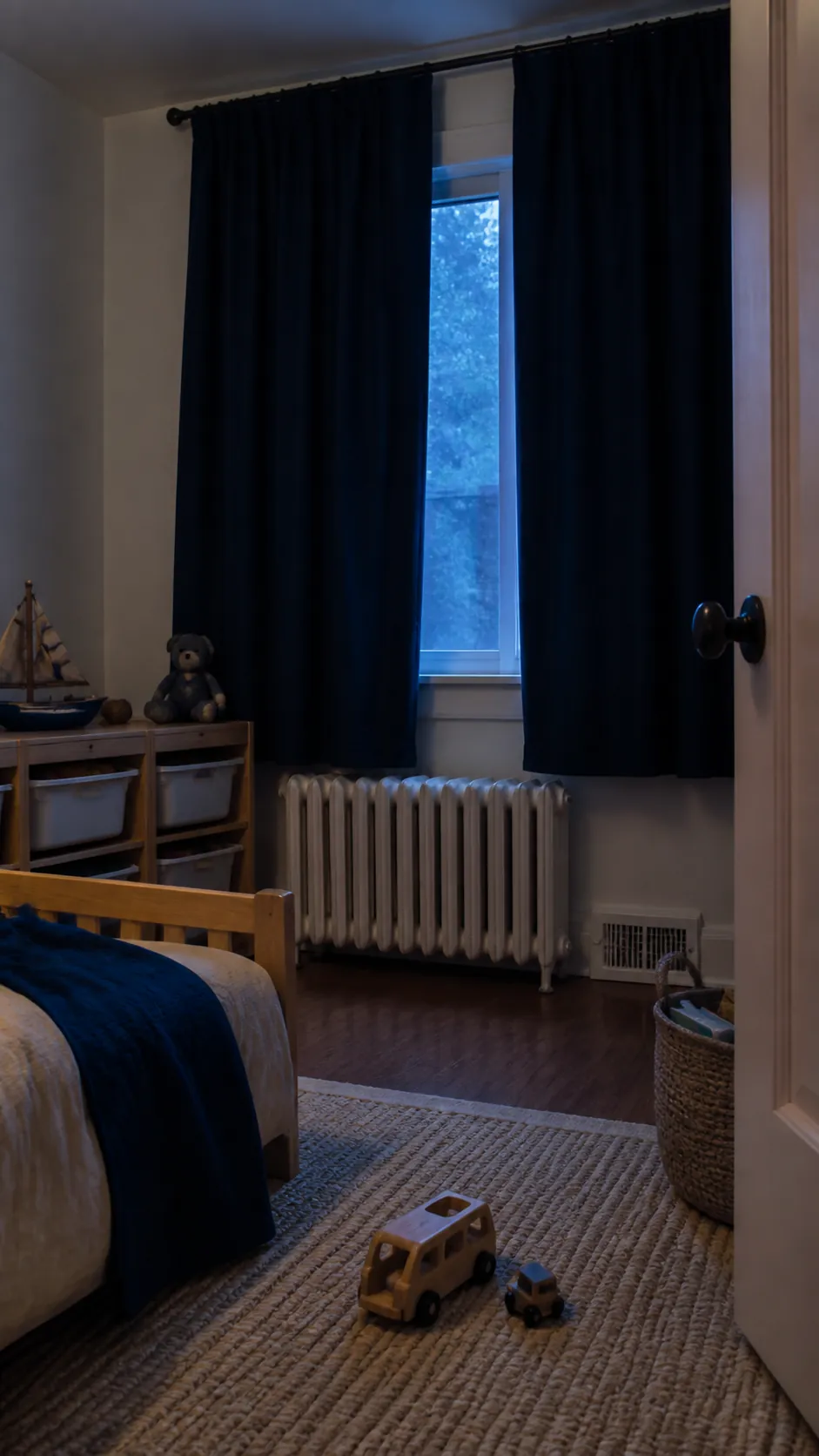
Use Blackout Curtains Without Blocking Airflow
Darkness can matter more to sleep than an elaborate theme. Fit the curtain close enough to control light while keeping heaters, vents, cords, and opening windows safe.
Choose cordless hardware where possible. During the day, pull curtains fully away from the glass so the small room receives all available daylight and air.
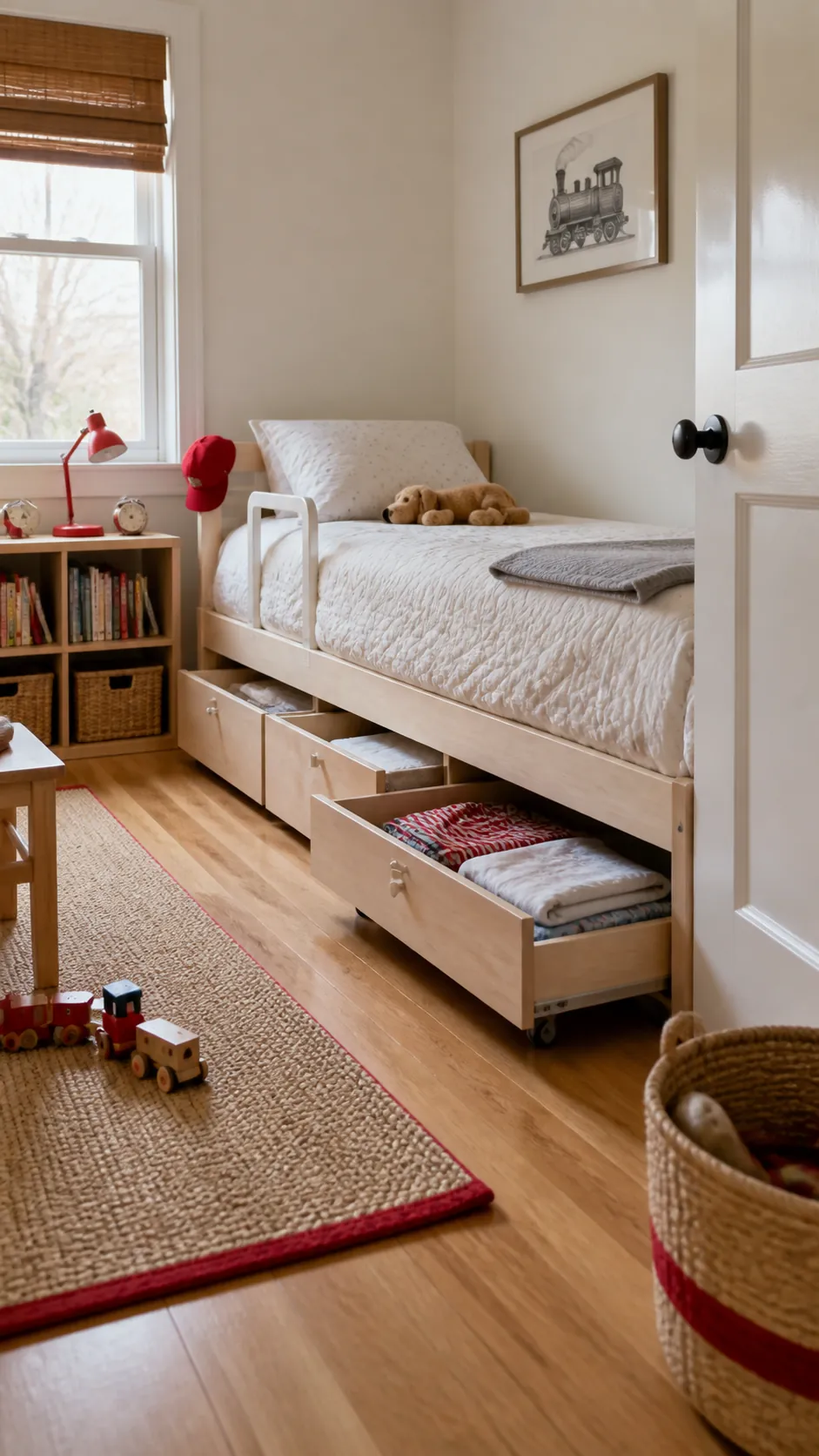
Slide Drawers Under a Standard Bed
Under-bed drawers keep sleep-related items close without adding a tall dresser. Choose shallow, light drawers a child can move without trapped fingers.
Leave enough floor clearance to pull each drawer completely out. If the only open space is blocked by another bed, the storage will become frustrating and unused.
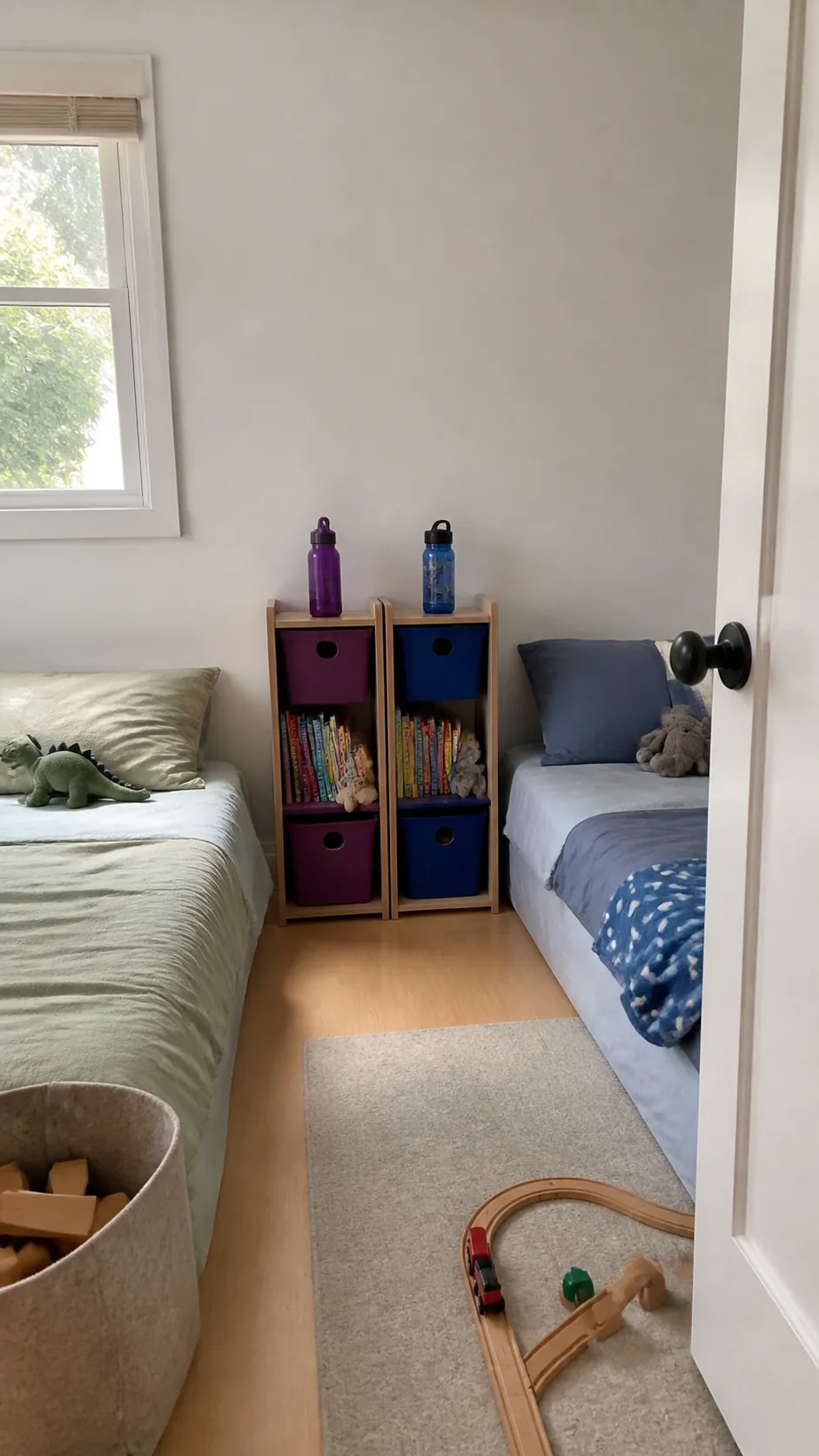
Create Two Clearly Owned Bedside Zones
Shared rooms work better when each child has a small territory that is not communal. Matching shelves can hold different trays, books, and comfort objects.
Personal space does not require dividing the room in half. A repeated storage boundary makes ownership visible while keeping the main floor shared.
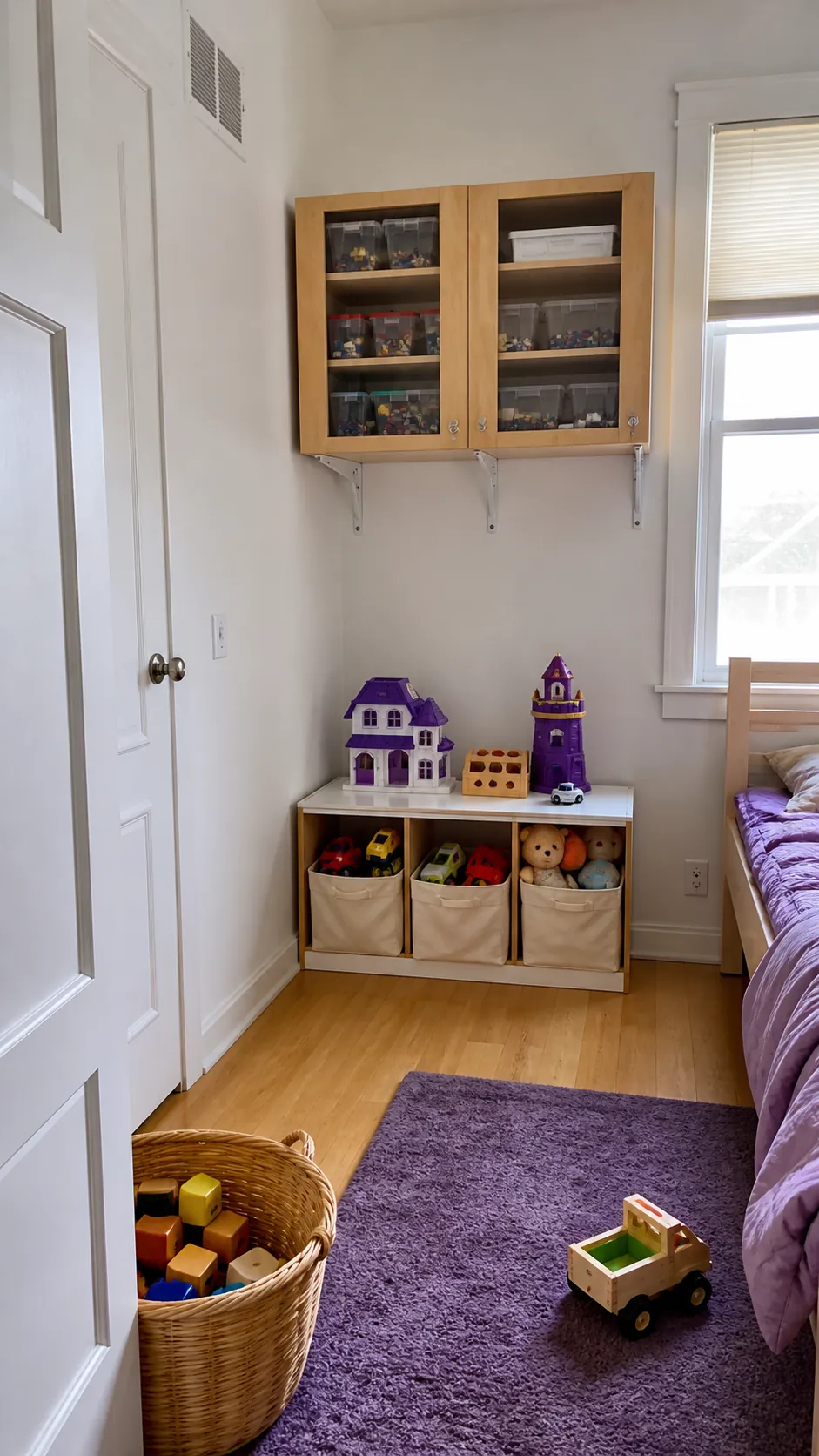
Separate Tiny Toys by Age
When ages differ, storage height must reflect choking risk rather than visual symmetry. Keep tiny pieces in an adult-controlled cabinet, not merely a higher open basket.
Give the younger child a generous safe zone below so the rule does not feel like punishment. Reassess access as skills and habits change.
Make a Reading Corner From One Floor Cushion
A reading nook does not need an armchair. One supportive floor cushion and a reachable light can create a destination in a corner too narrow for furniture.
Select a washable cover and keep the cushion clear of heaters. The books should be visible from the child’s height, not styled above reach.
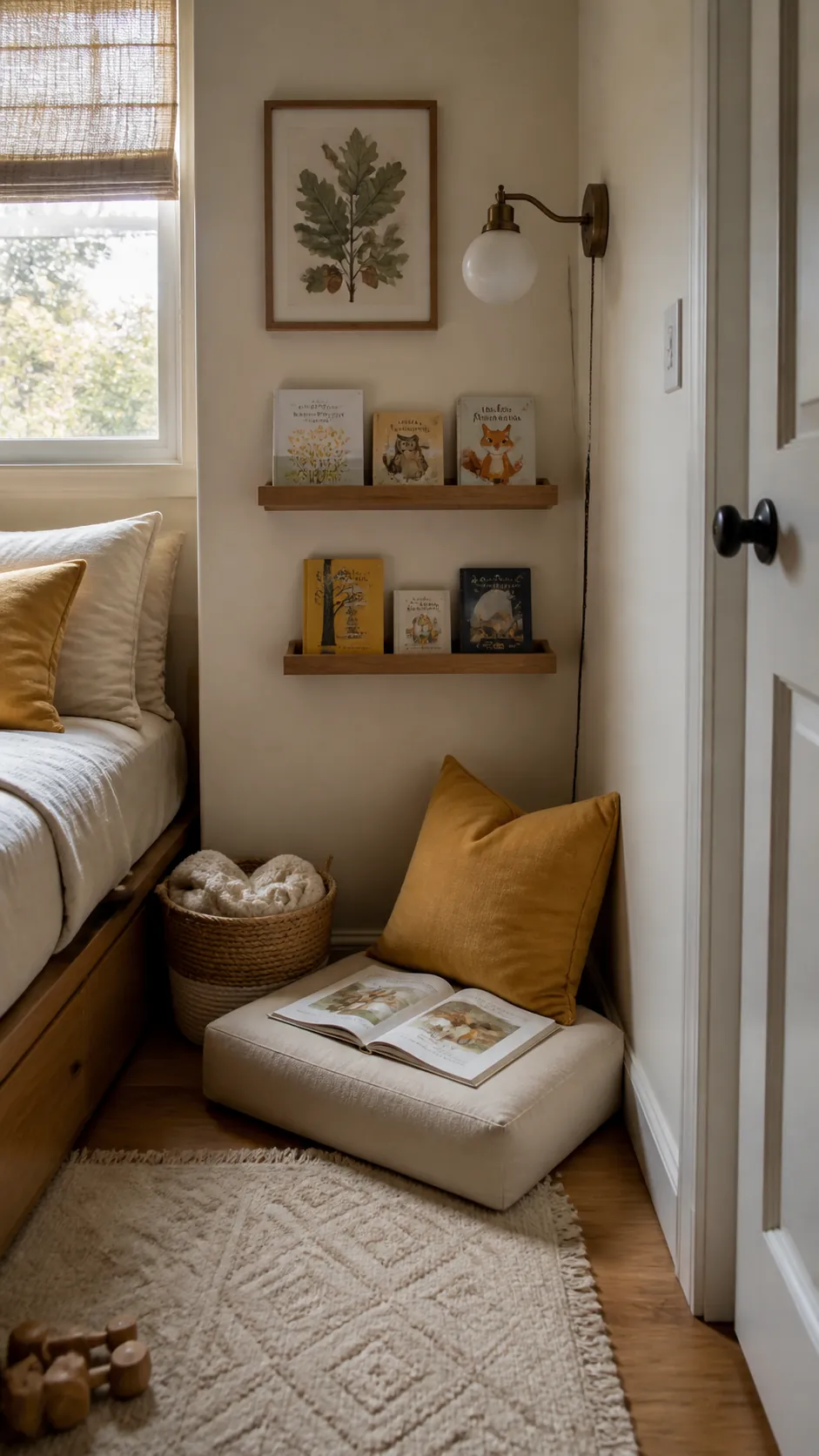
Choose a Round Table for Art
A round table removes sharp corners from a tight route and supports drawing from more than one side. Stackable stools disappear below it when the floor is needed.
Limit supplies to what fits in one nearby tray. The table stays useful when resetting it takes seconds rather than a full-room cleanup.
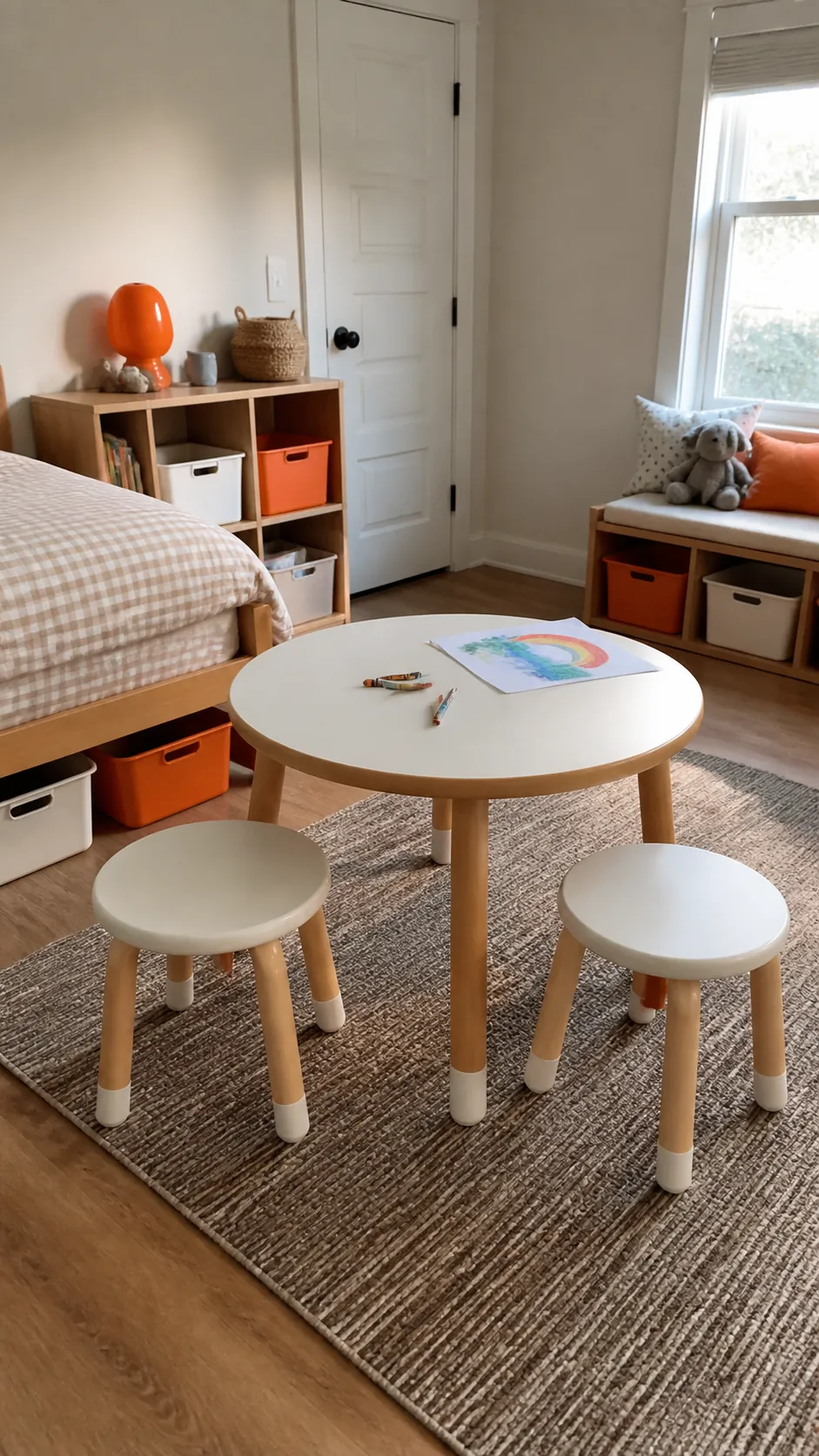
Hang Dress-Up Clothes on a Short Rail
Hooks turn costumes into accessible play without a bulky wardrobe. Keep the rail short, securely fixed, and free from loops or cords that could create hazards.
Five visible choices are often more inviting than an overflowing chest. Store the rest elsewhere and rotate them when interest fades.
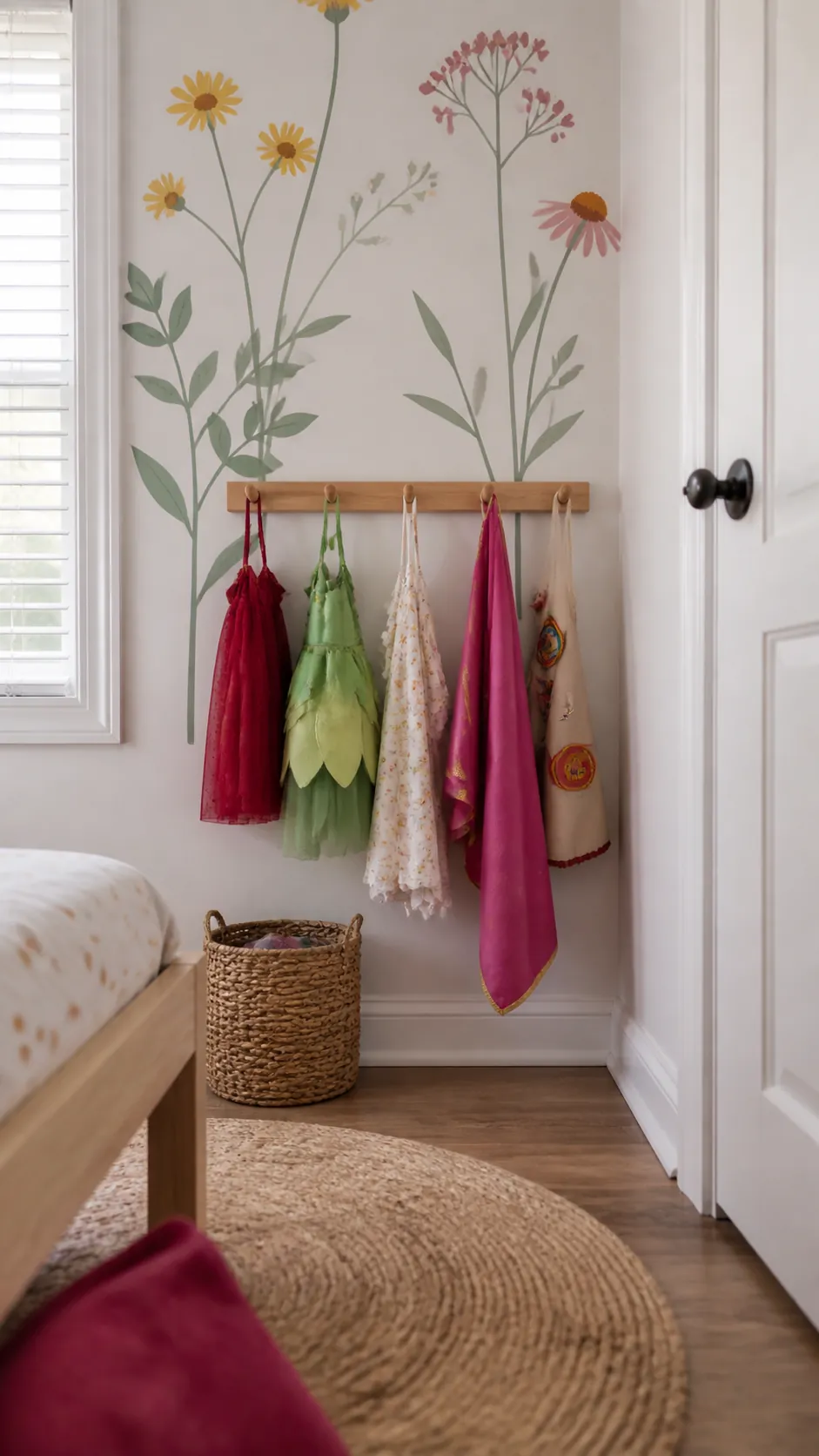
Fit a Desk That Can Change Height
A desk should fit the child now and adjust as they grow. Place it where daylight arrives from the side, while leaving space for knees and chair movement.
Keep the surface mostly empty and provide one nearby home for school papers. A small desk works when the workflow is clear, not when every supply lives on top.
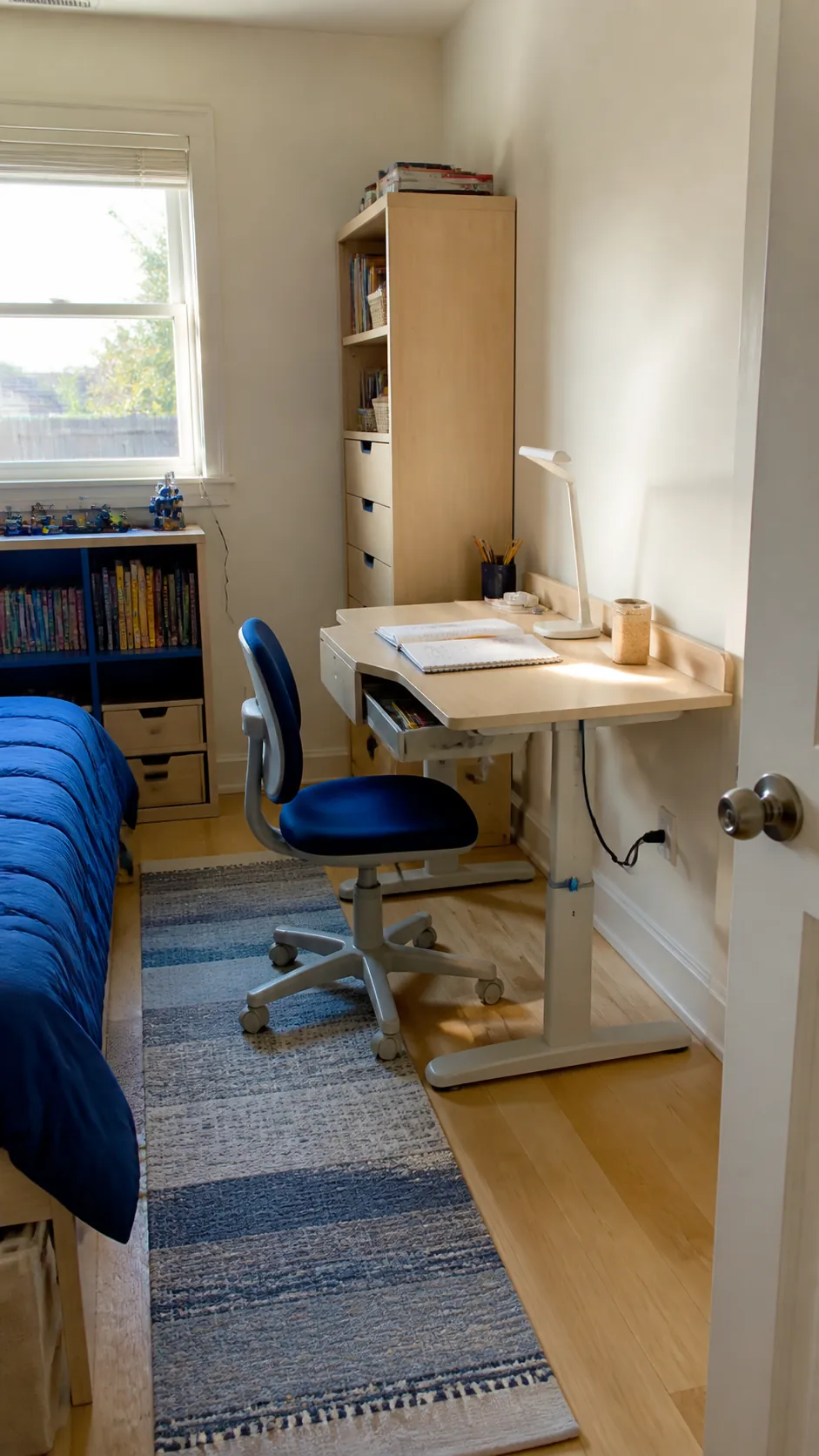
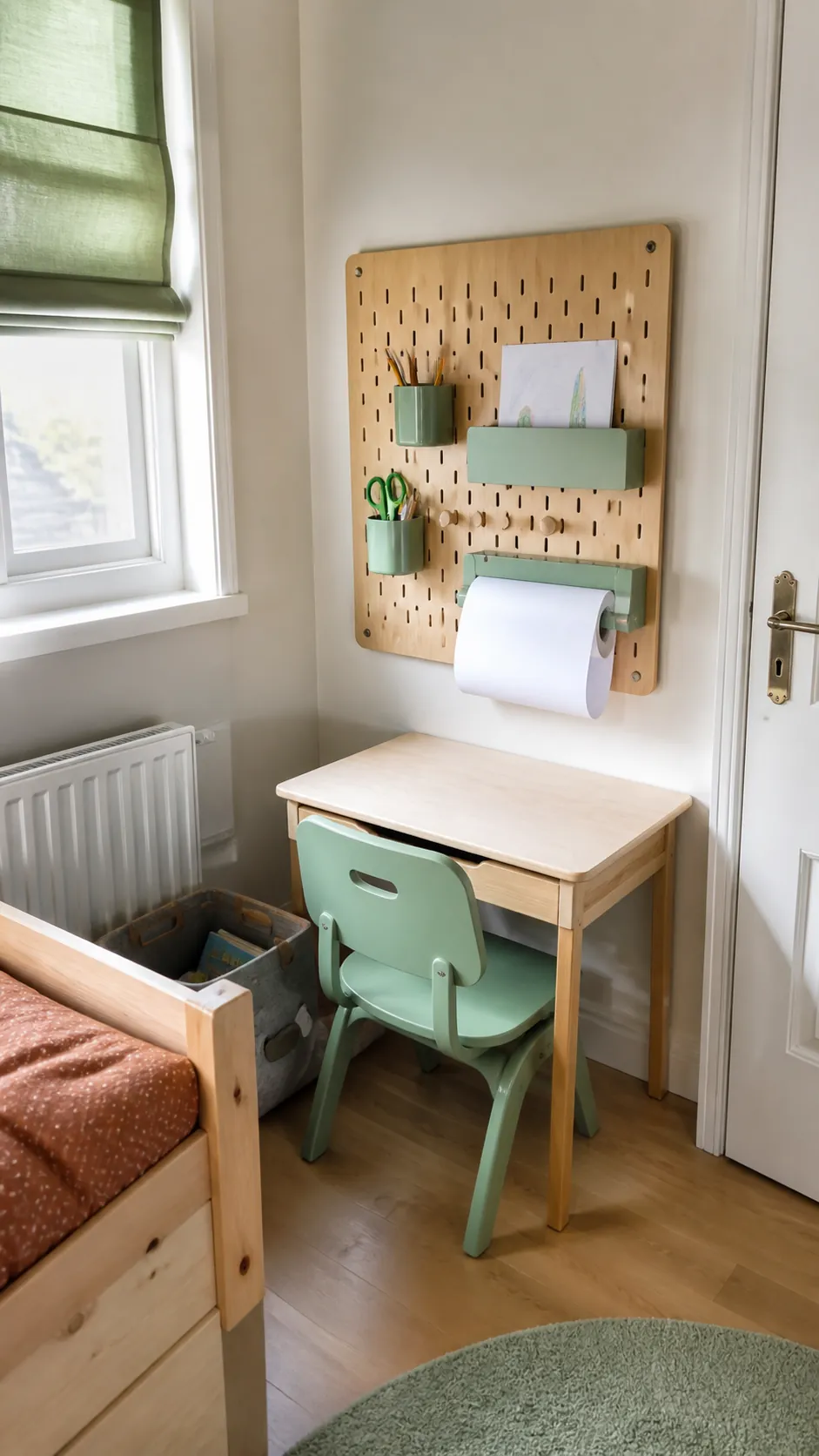
Use a Pegboard Above the Desk
A pegboard moves lightweight supplies off the desktop while keeping them visible. Mount it with proper fixings and keep heavier objects in drawers.
Arrange tools by the child’s reach and remove dangling cords. Leave open space so the board can change with school projects instead of becoming visual clutter.
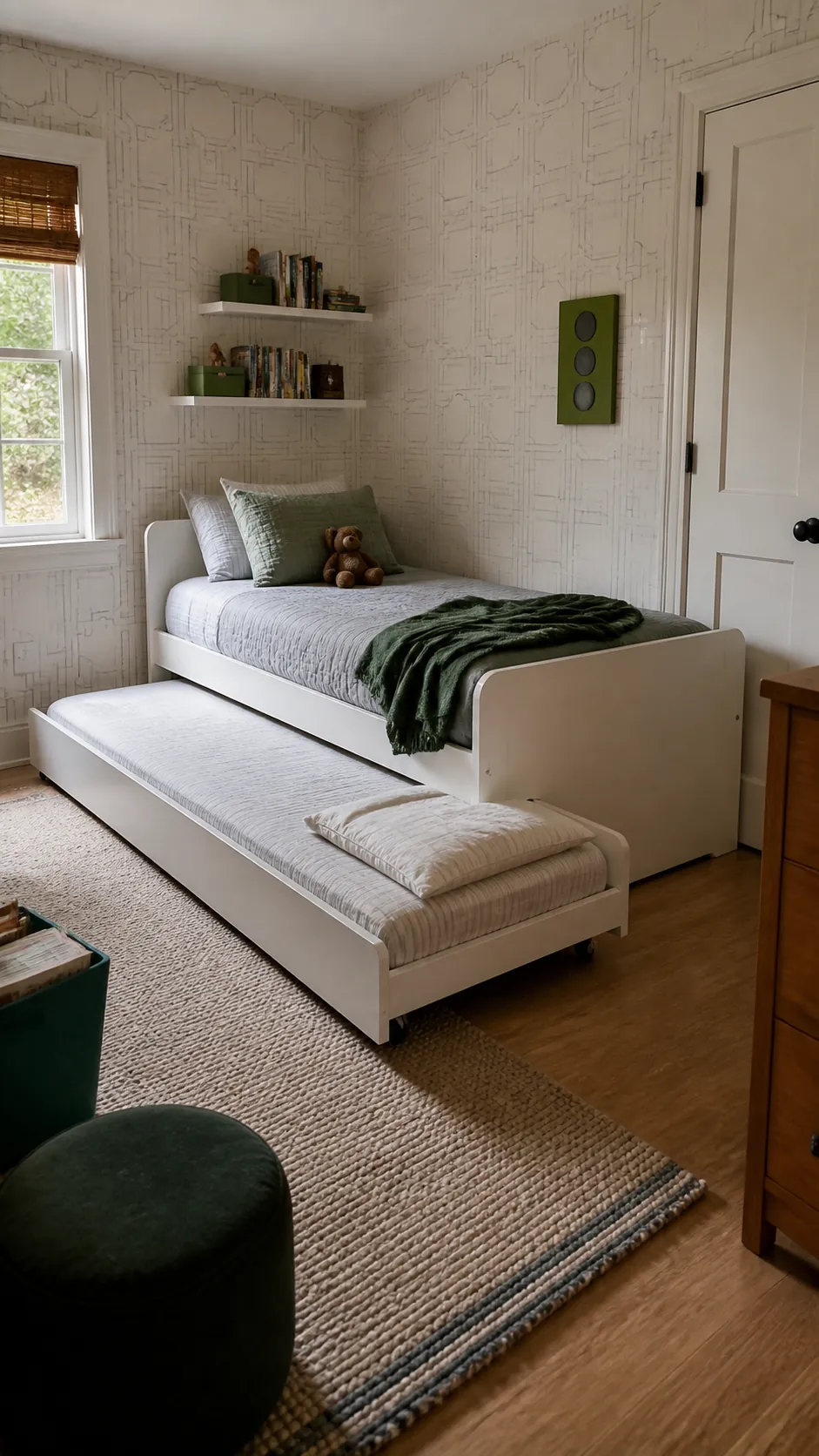
Try a Trundle for Occasional Sleepovers
A trundle preserves normal floor space while providing an occasional second mattress. Measure the full pull-out zone, including the route to the door.
Use it for guests rather than daily storage if that prevents easy access. The room must still have a safe night exit when both beds are open.
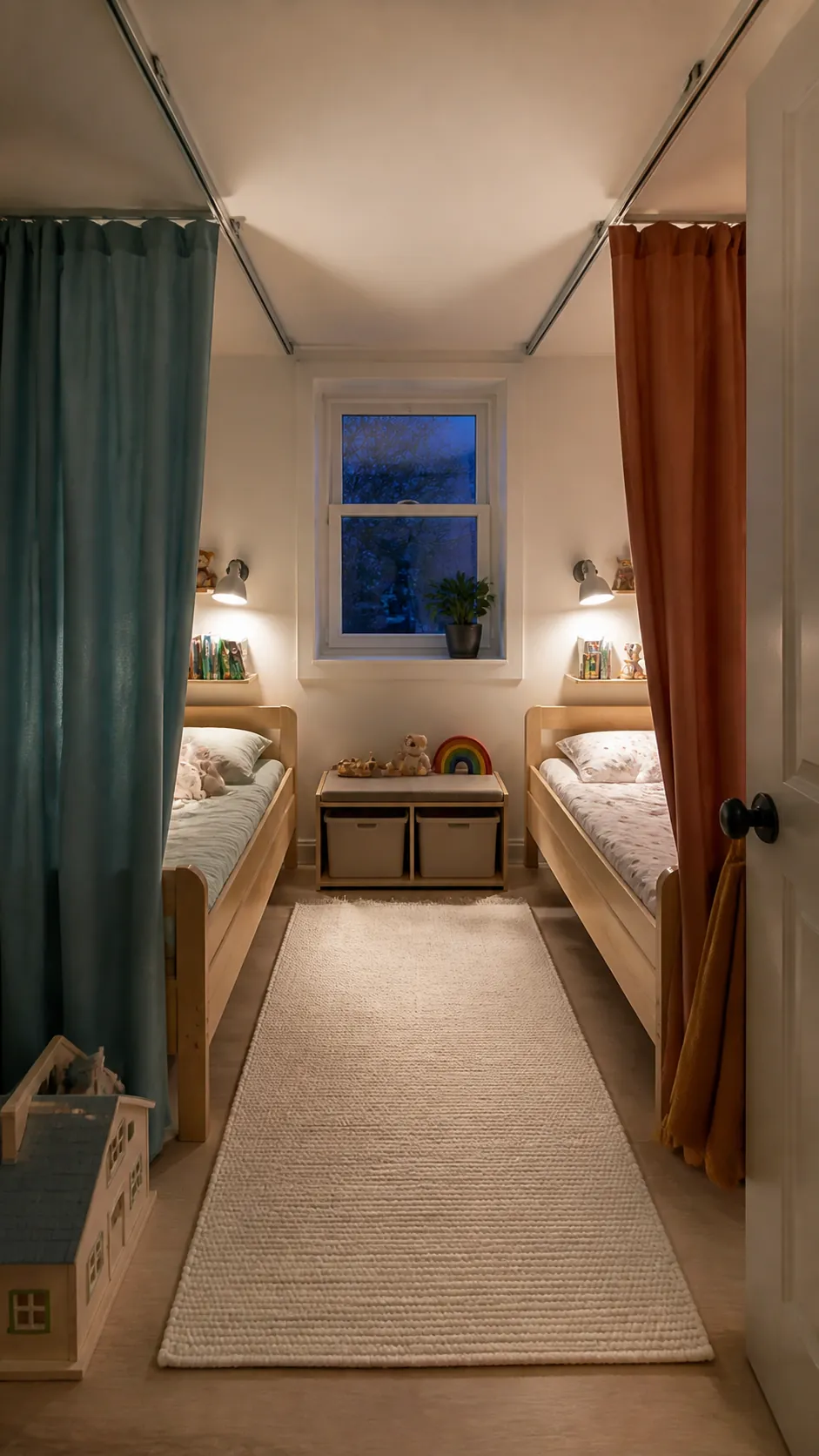
Zone a Shared Room With Curtains at Each Bed
Individual curtains can soften light and offer a small sense of privacy without building a solid divider. They should open easily and never interfere with ventilation.
Mount tracks securely, keep fabric away from lamps, and teach children that curtains are not climbing equipment. Each bed still needs a clear path.
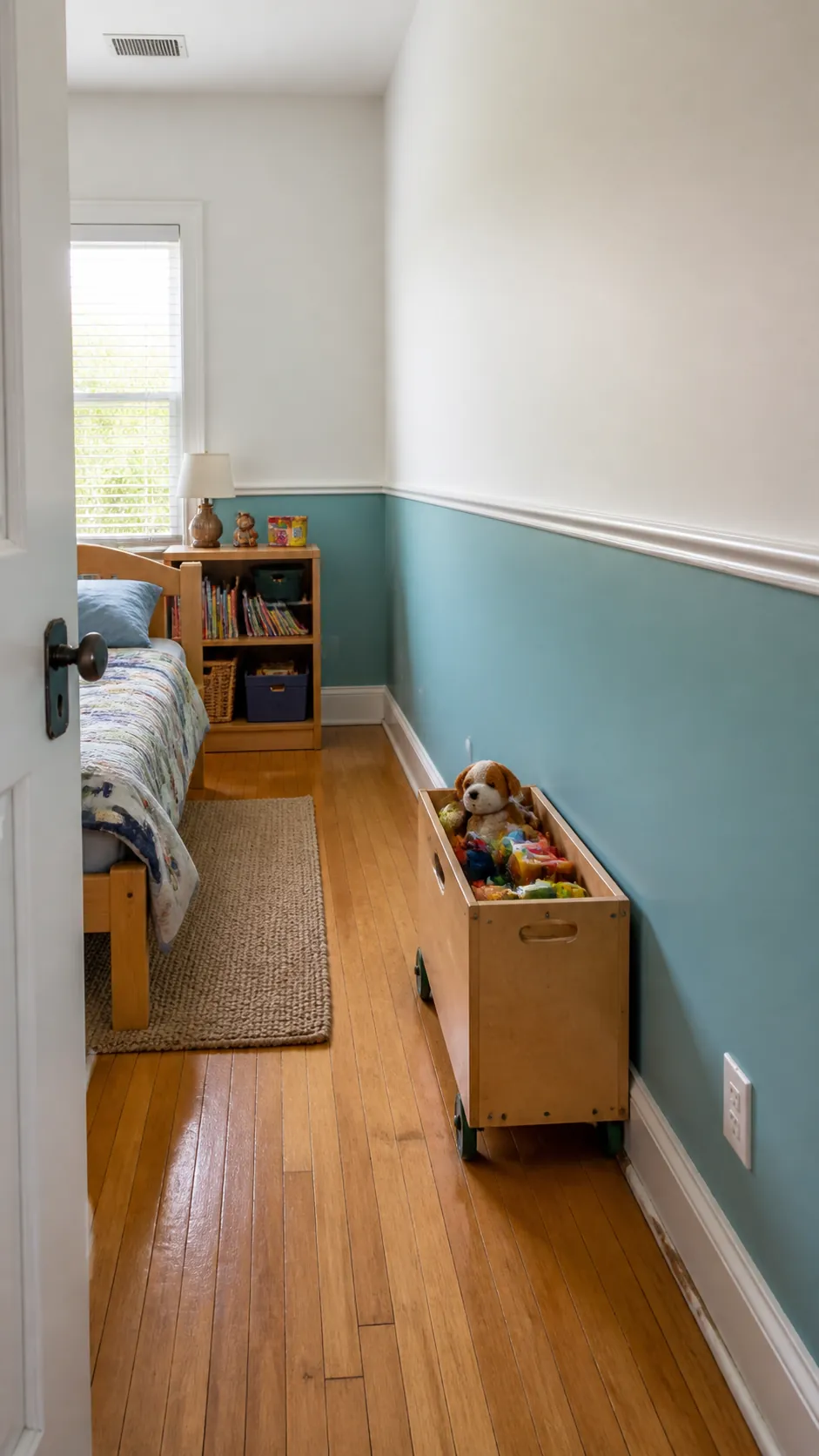
Paint a Half Wall to Lower the Visual Horizon
A half-painted wall adds color without making a tiny room feel enclosed. The lower band can also hide minor marks from toys and daily traffic.
Choose a washable finish and test the boundary against furniture heights. The effect should connect storage, bed, and play zone rather than slice them awkwardly.
Keep One Open Patch for Floor Play
Children need usable floor more than they need multiple small chairs. Protect one open patch large enough for a train line, puzzle, or stretching out with a book.
Audit every item that intrudes into that patch. A toy can live in the room without requiring its own permanent furniture.
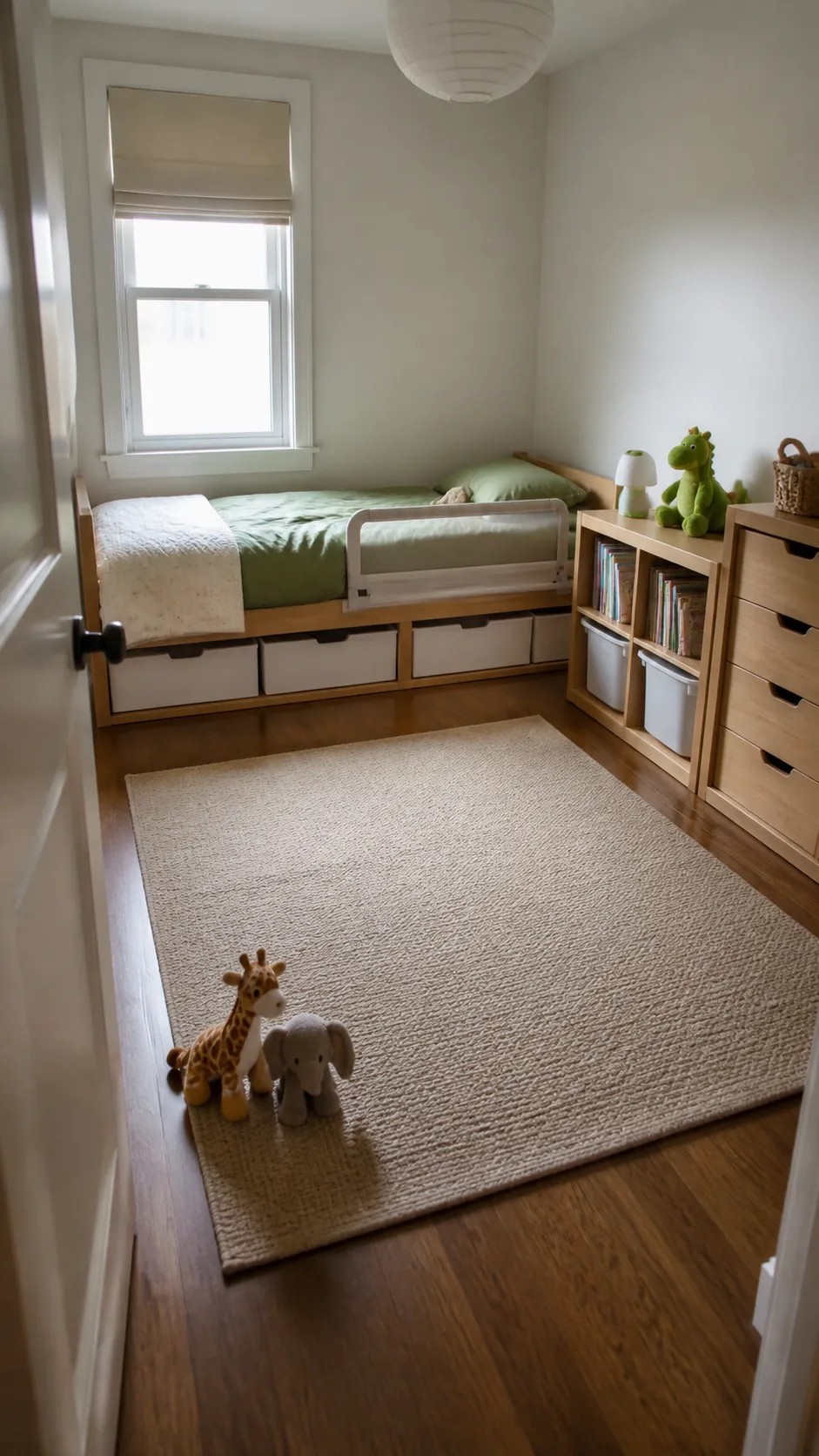
Store Clothes in Wide Low Drawers
Wide low drawers are easier for a child to see and use than a tall narrow chest. Even low furniture with drawers must be anchored to prevent tip-over.
Use pictures or simple words to mark categories. Do not overload drawers; a smooth one-handed close is part of an independent routine.
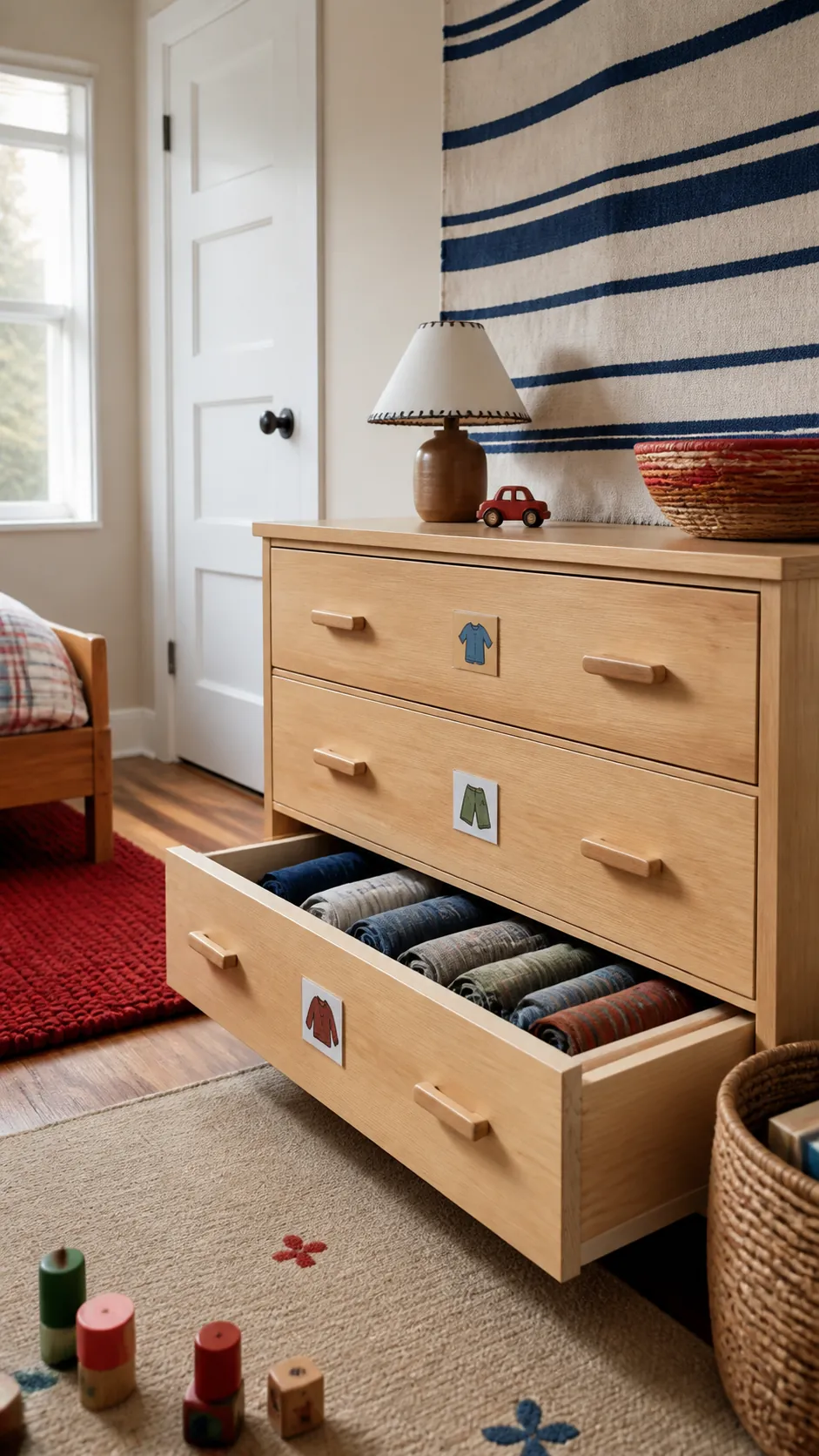
Build a Bedside Pocket Instead of a Table
Where a nightstand would block the path, a soft bed pocket can hold the few things used after lights-out. Keep it flat and away from the sleeping surface.
Avoid cords, heavy objects, and overfilled pockets. The route beside the bed should remain wide enough for a caregiver at night.
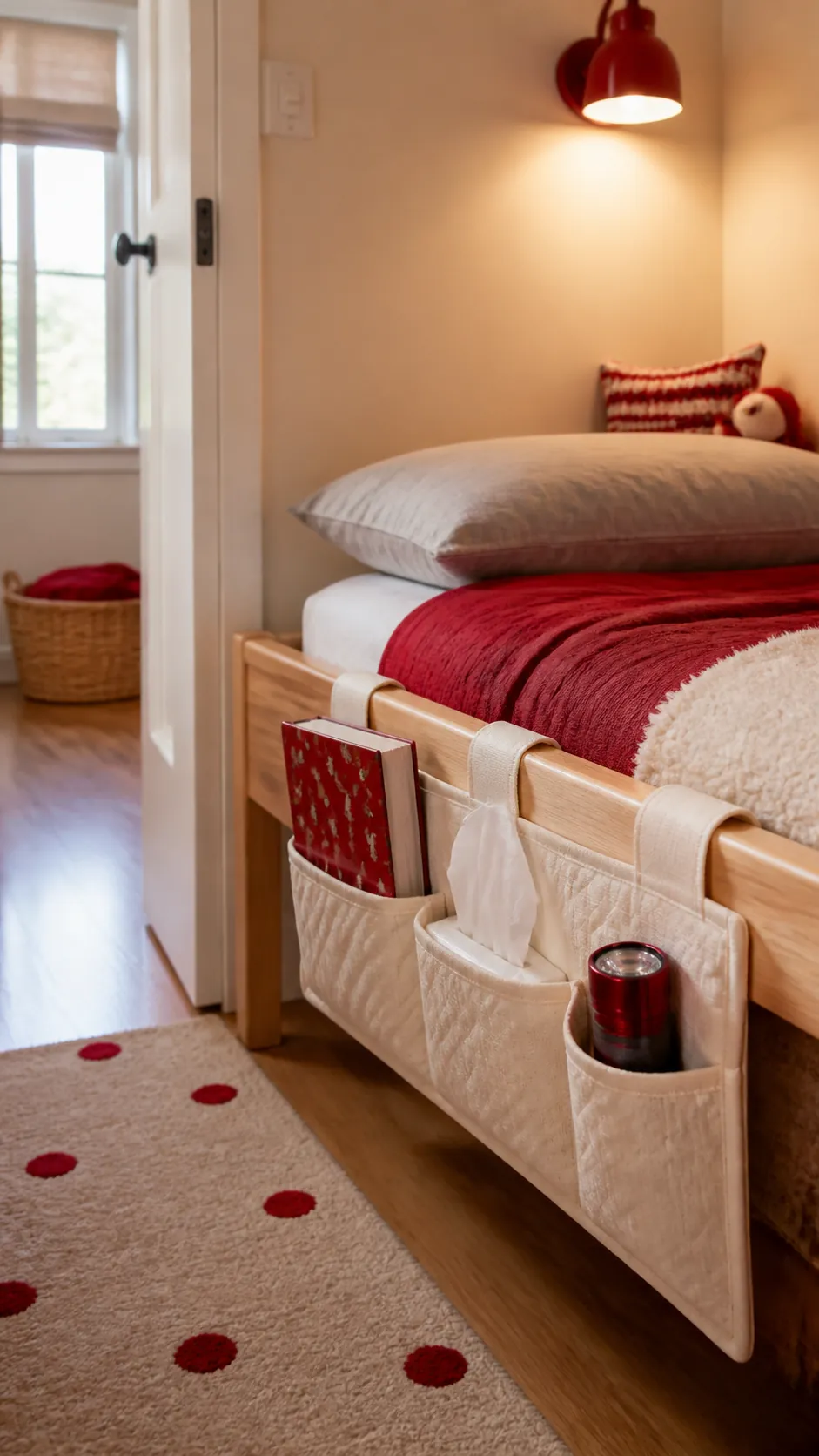
Use the Back of the Door Carefully
Door storage is useful only when it does not prevent the door from opening fully or create heavy swinging loads. Use it for soft, lightweight categories.
Check hinges, handle clearance, and finger gaps. Shoes, hard toys, and dense books belong in stationary storage, not on a moving panel.
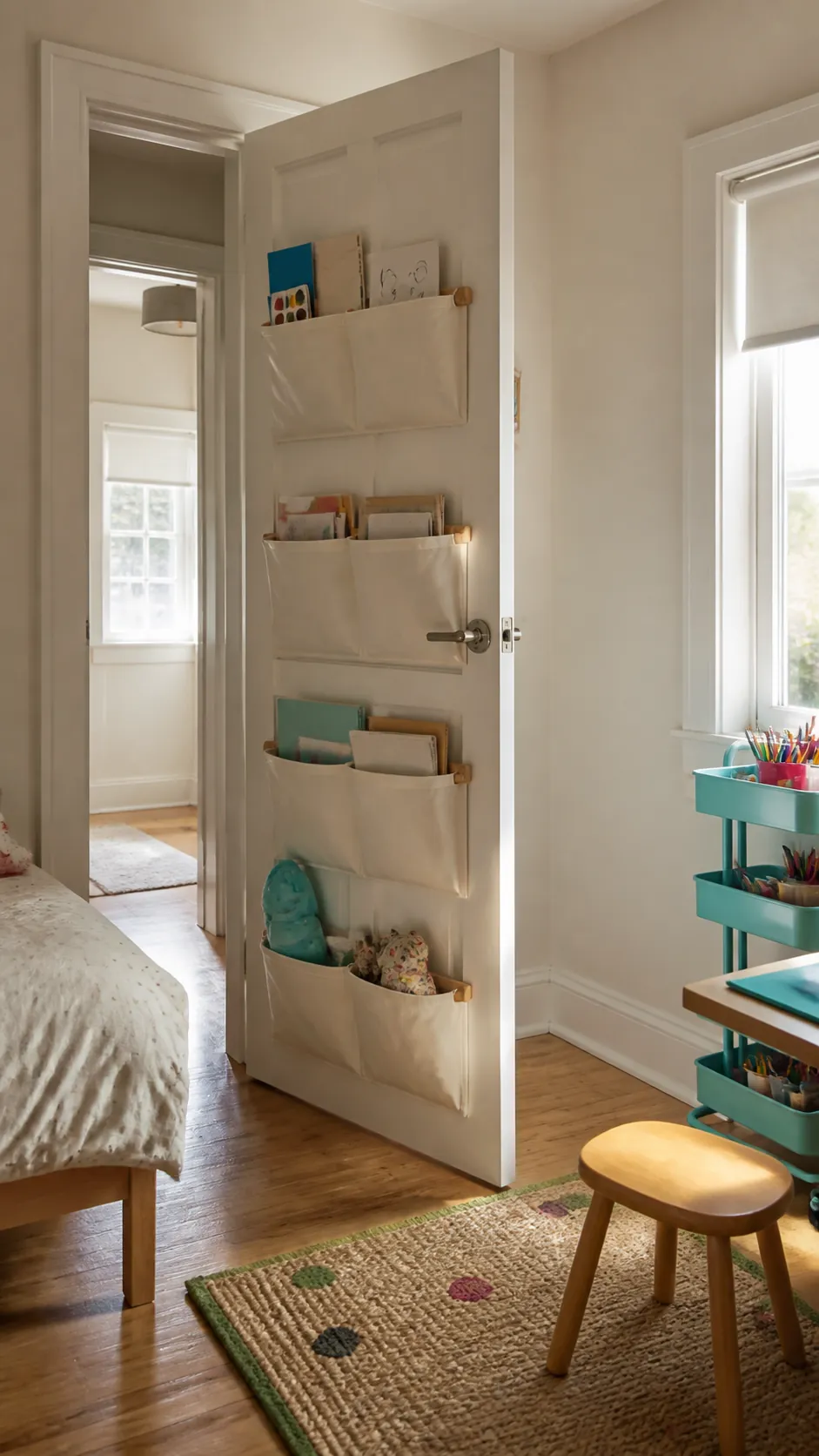
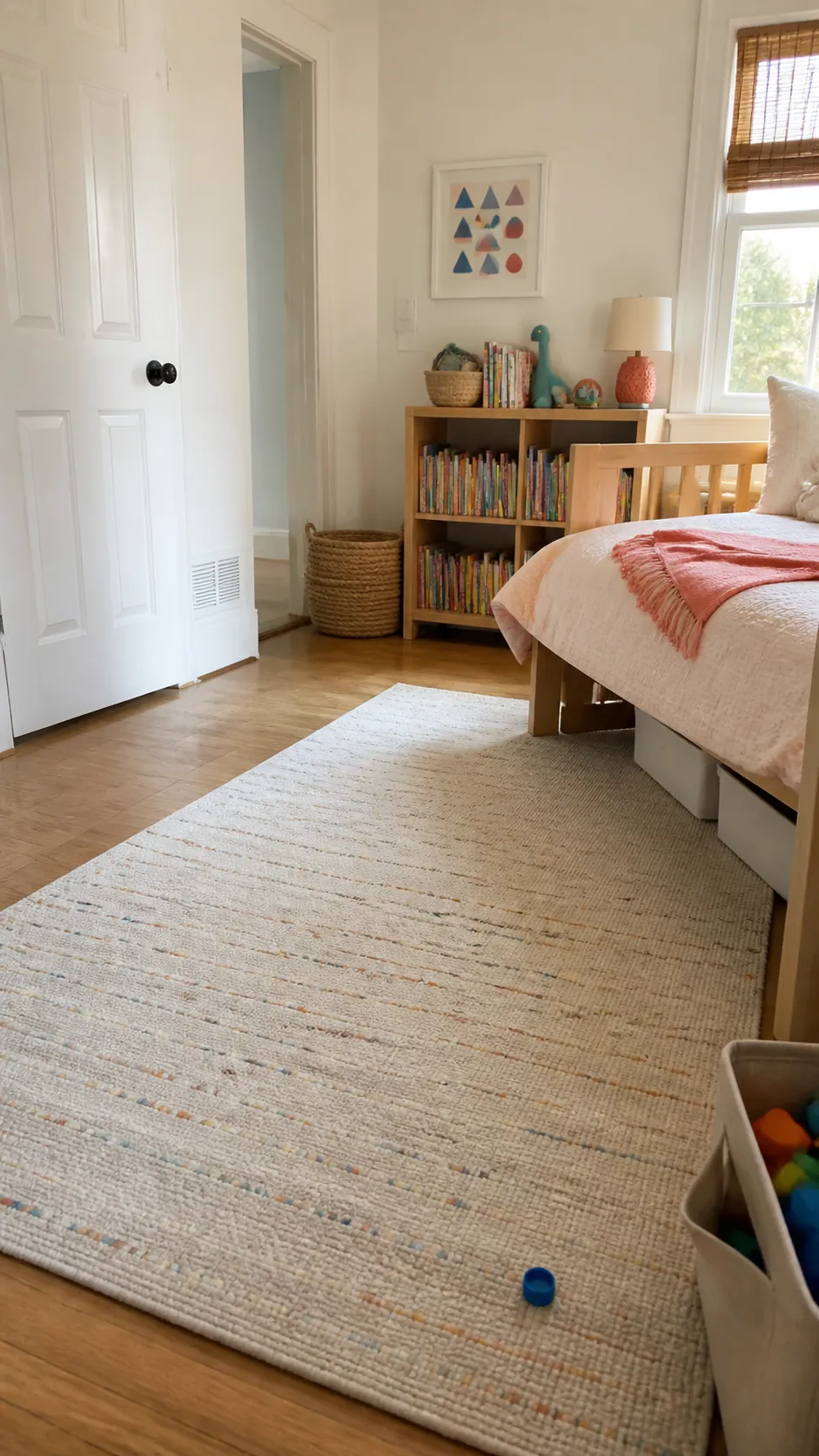
Choose a Washable Rug With a Quiet Pattern
A rug adds warmth and marks the play zone, but thick piles hide small pieces and make rolling storage difficult. Choose a low, washable weave.
A forgiving small-scale pattern handles everyday marks without dominating the room. Use a proper nonslip layer and keep rug edges outside the main door path.
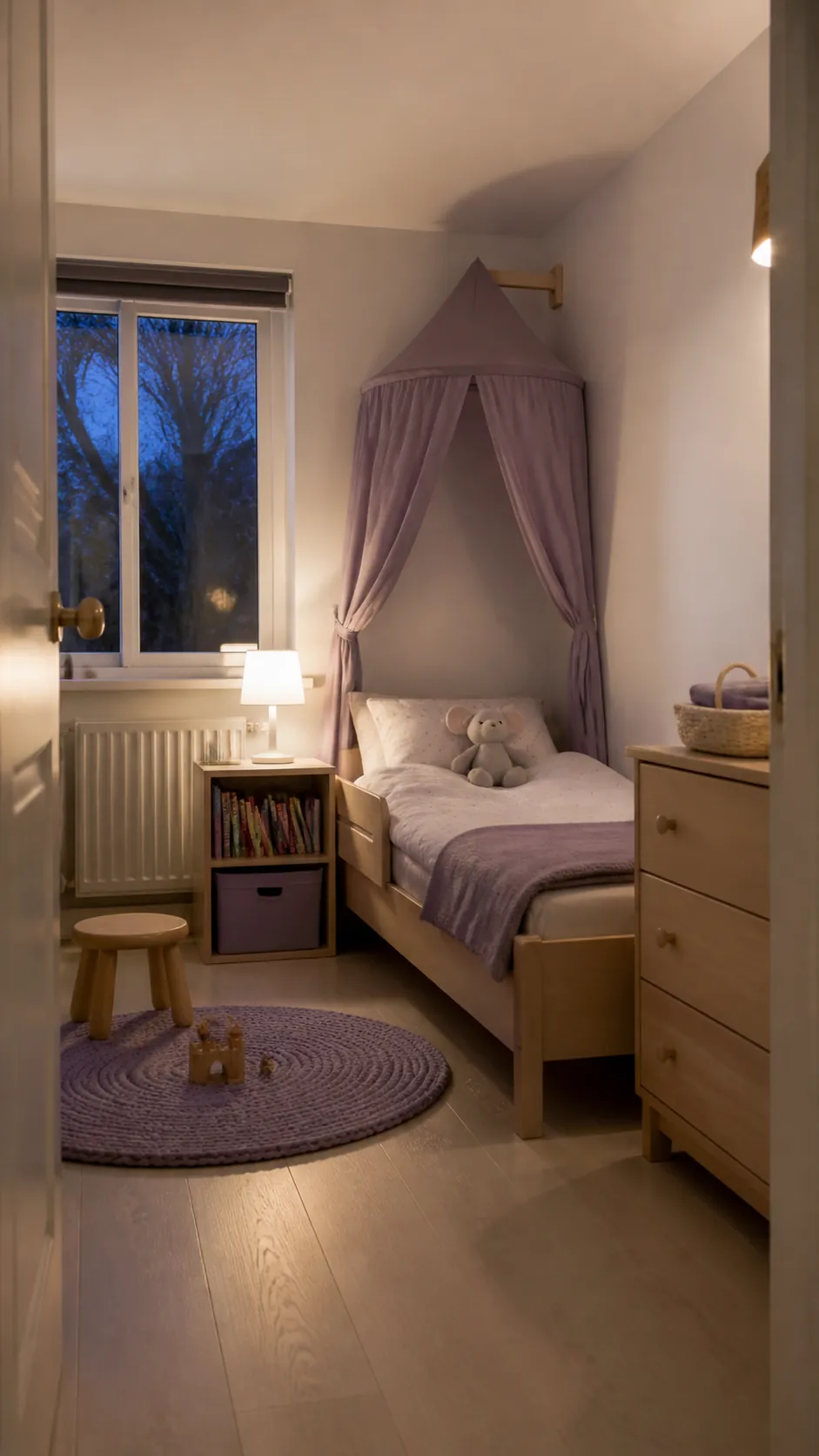
Add a Bed Canopy Without Loose Cords
A compact canopy can make a small room feel comforting without committing to a theme. Keep fabric controlled, breathable, and far from lights and heat.
Use secure fixings and avoid long ties, loops, or dangling cords. The canopy should frame a corner, not interfere with sleep or movement.
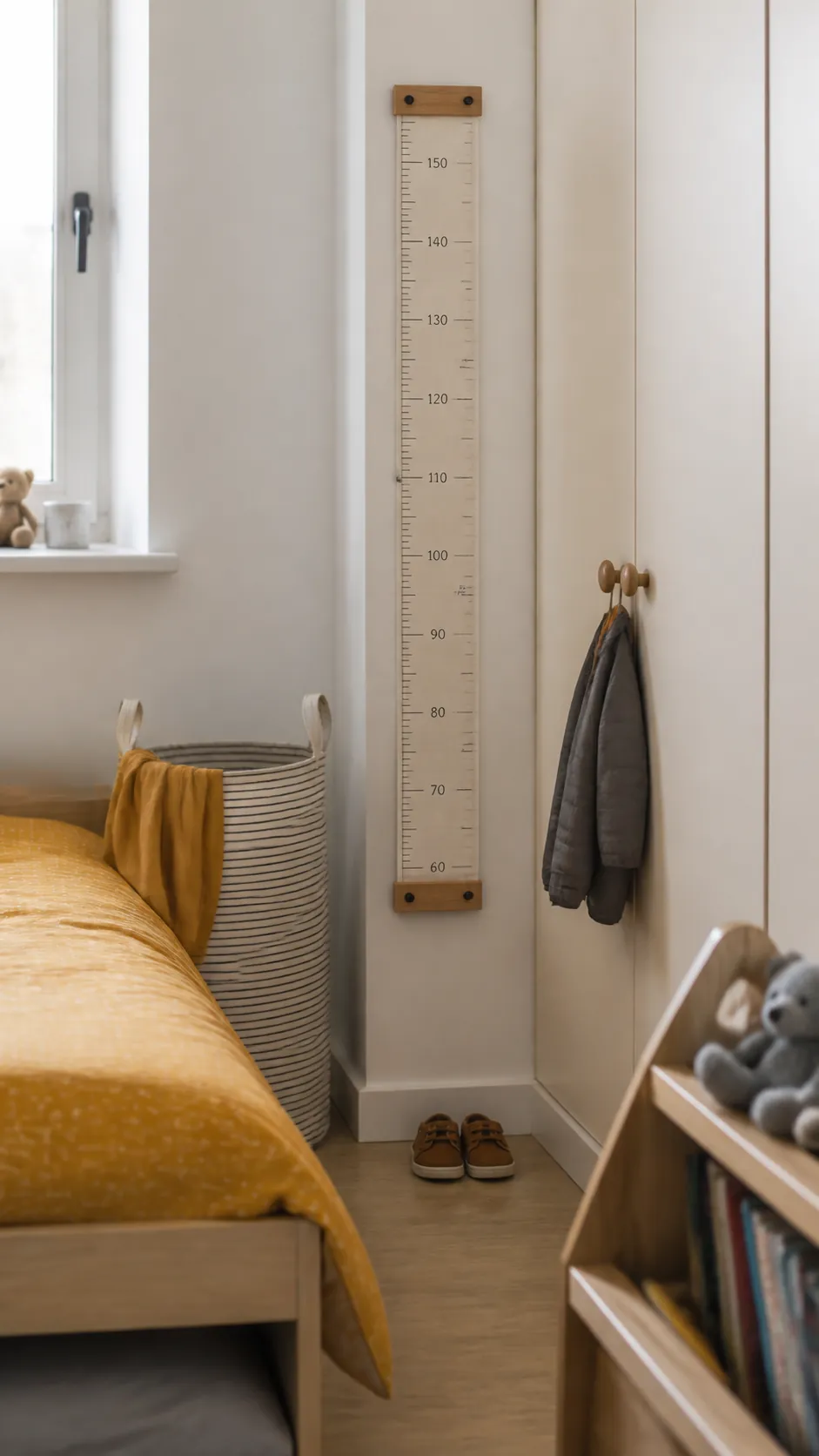
Place a Growth Chart on a Narrow Reveal
A narrow wall strip can carry memory without consuming storage space. A removable growth chart gives a rental-friendly focal point that can move homes.
Place it where measurements are easy and the floor is level. Keep the design legible but visually quiet beside busier toys and books.
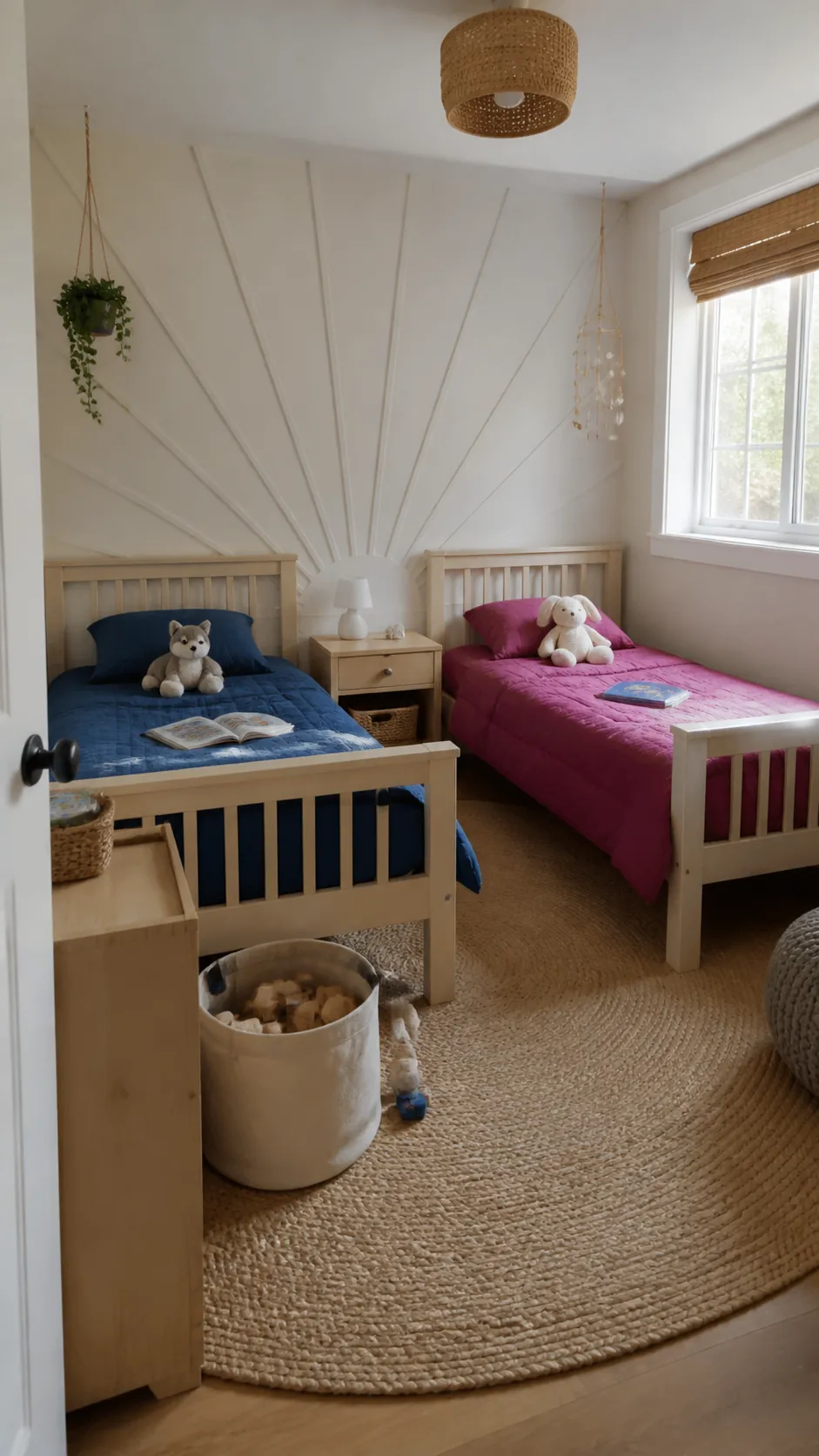
Use Matching Beds With Different Bedding
Matching frames create order in a small shared room, while different bedding lets each child make a visible choice. The room need not be perfectly symmetrical.
Keep equal access to light, storage, and a clear route. Fairness is more important than forcing identical decoration.
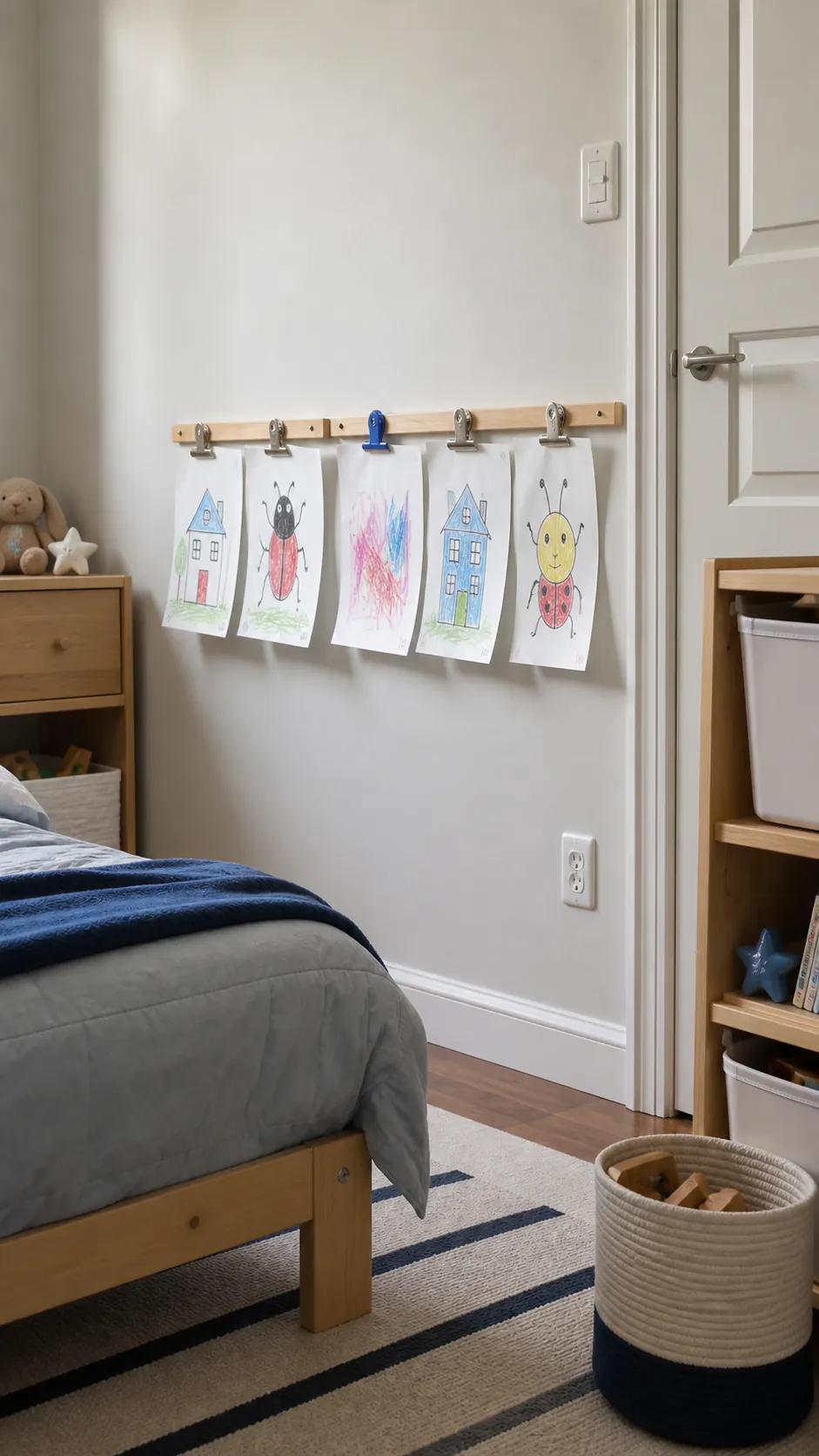
Create a Rotating Display Rail
A finite display rail celebrates current work without covering every wall. When a new piece goes up, an older one moves to a portfolio.
Mount clips above very young children’s reach if they are detachable. Keep the display clear of the bed and avoid glass frames in active play zones.
Edit the Room Around Sleep, Play, and Cleanup
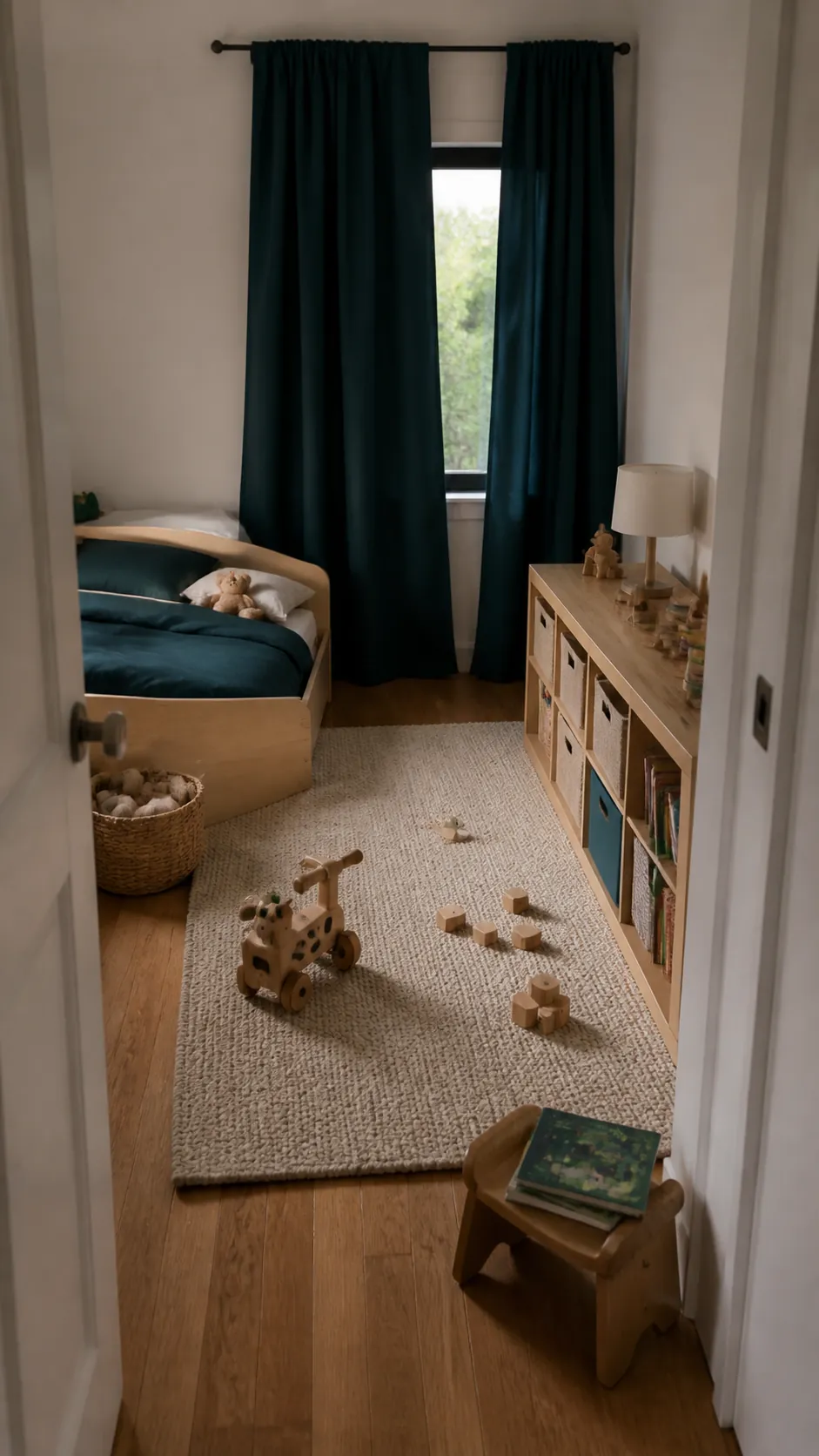
The best child room design is not the one with the strongest theme. It is the one where sleep is protected, play has space, and cleanup is possible at the child’s height.
Watch one complete bedtime and one cleanup before buying anything else. The remaining friction will tell you whether the room needs a hook, darker curtain, safer anchor, or simply fewer belongings.