
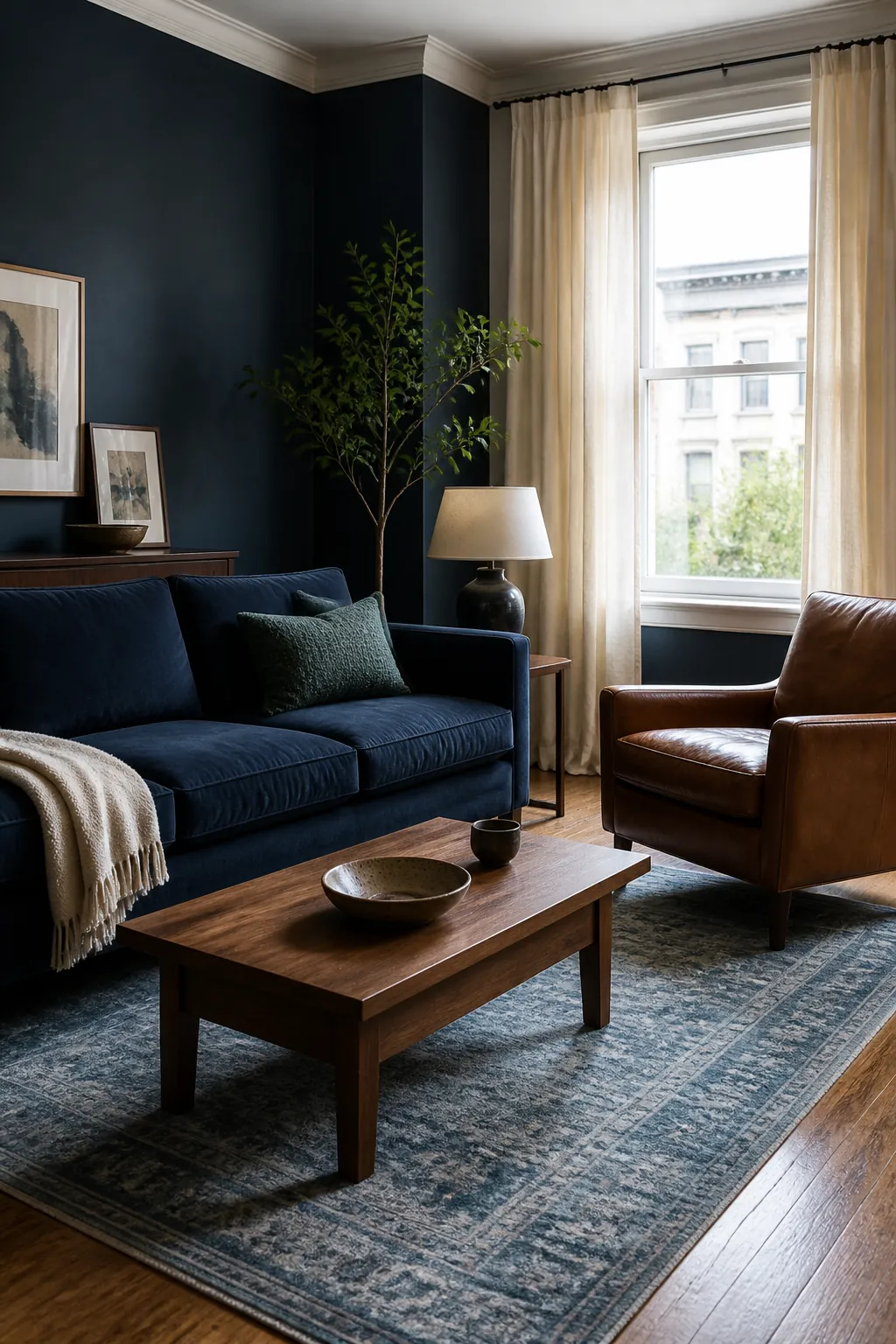
Brown and blue work because they solve opposite problems: brown gives a room warmth and weight, while blue brings distance and calm. The combination fails only when every element is the same depth or when cool gray-brown and yellow brown are treated as interchangeable. Choose one dominant color, one supporting color, and one light neutral, then repeat each at least twice.
Before buying anything, identify the brown already fixed in the room—flooring, beams, stone, or a leather sofa. Compare blue samples against that material in daylight and lamplight. These 25 brown and blue living room ideas show how to vary the balance without turning the room nautical, muddy, or overly dark.
Navy Walls With Cognac Leather
A cognac sofa keeps navy walls from feeling severe because its orange-brown undertone provides controlled contrast. Add ivory curtains and a pale rug so the largest horizontal surfaces still reflect light.
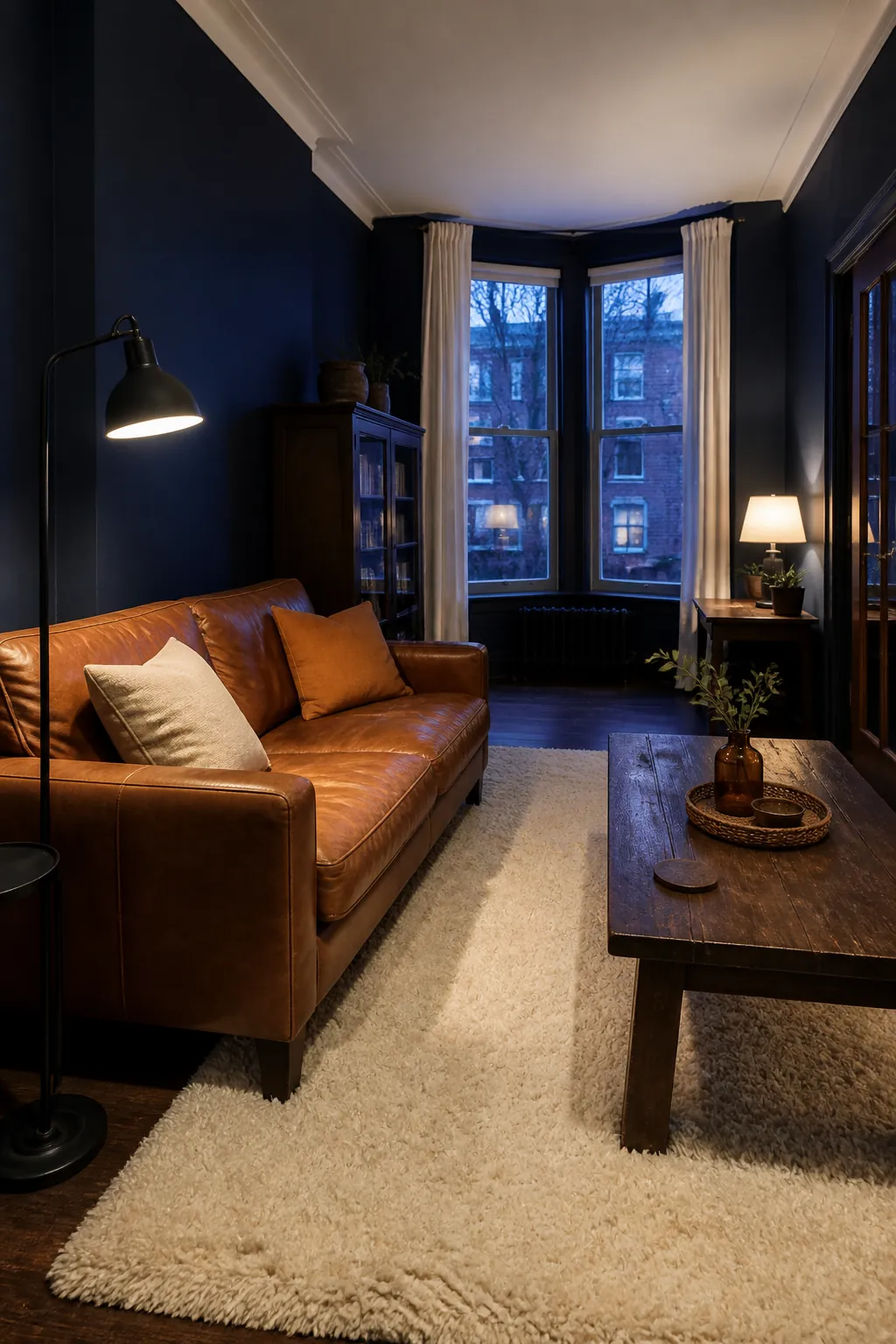
Use walnut or blackened metal for smaller pieces. The leather should be visibly warmer than the wood, preventing all the brown elements from merging into one heavy band.
Powder Blue With Walnut
Powder blue makes dark walnut look crisp rather than old-fashioned. This pairing suits apartments and smaller rooms because the wall color stays airy while the wood supplies a strong visual anchor.
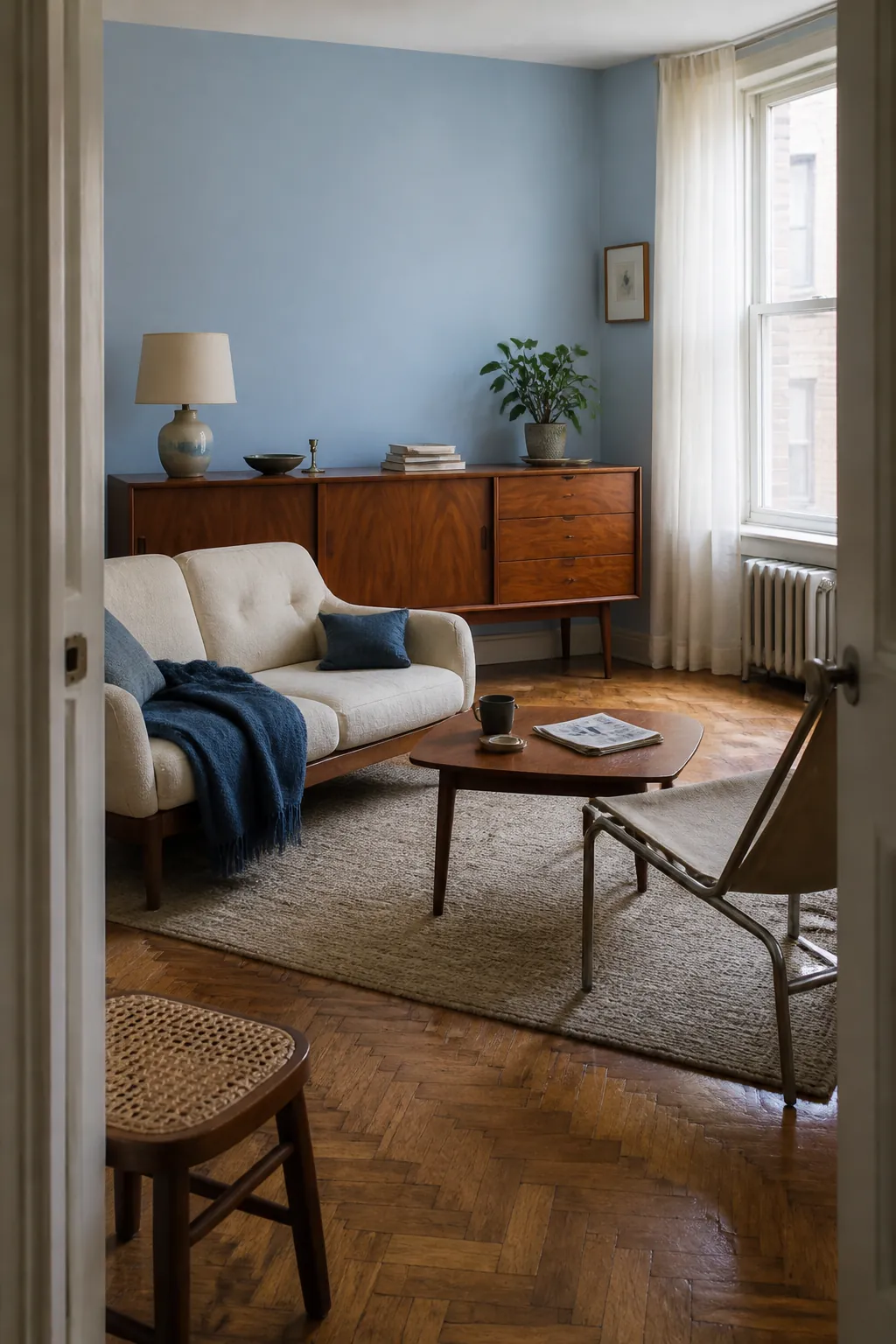
Repeat blue in one textile two values darker, then introduce cream between wall and wood. That buffer stops the combination from looking like two unrelated color blocks.
Denim Textiles With a Brown Sofa
A brown sofa can feel inherited rather than chosen until denim-blue cushions, a striped throw, and a faded indigo rug give it context. Varying the blues is more natural than matching every textile.
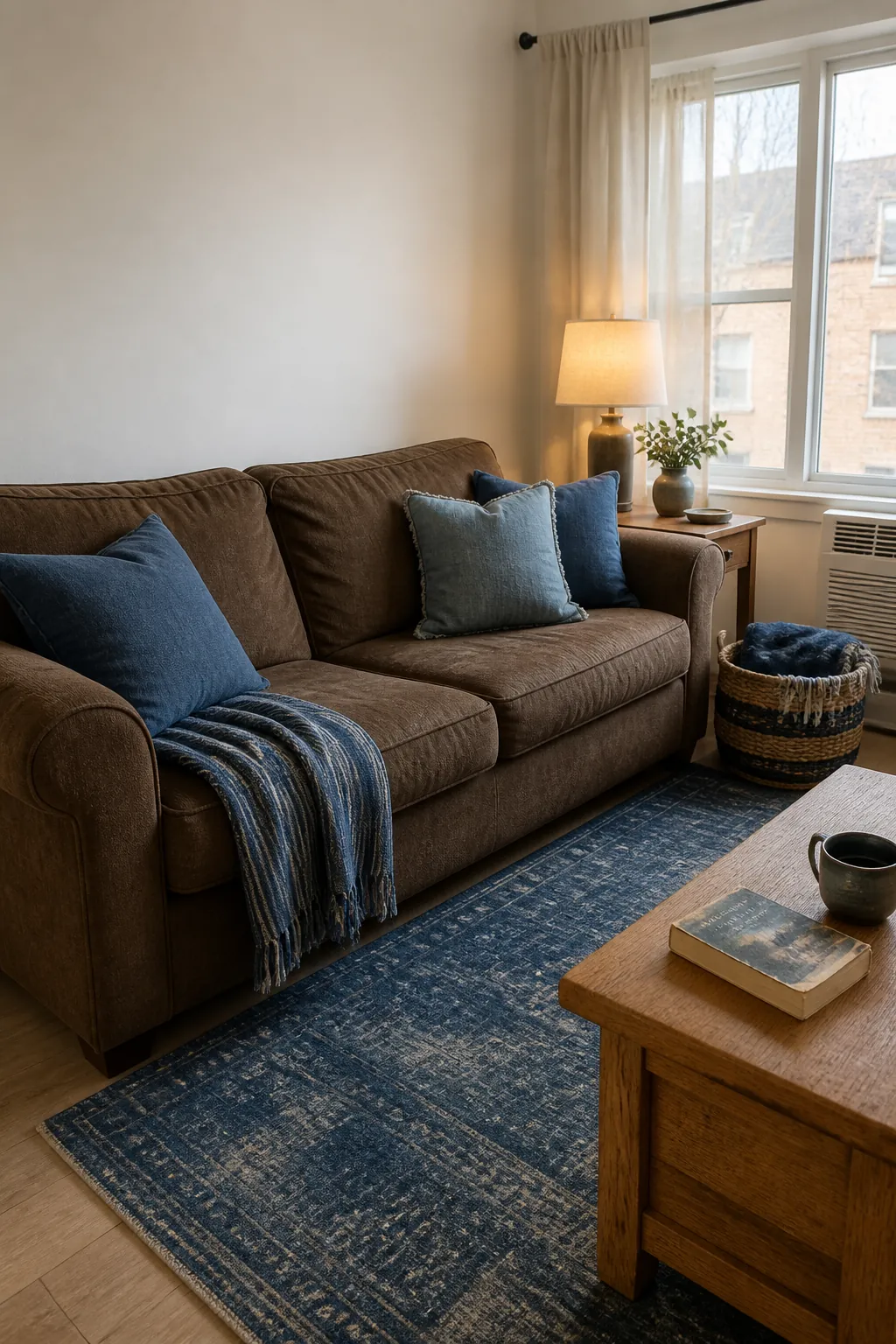
Keep walls warm white and let the upholstery carry the palette. This is one of the easiest living room with blue accents updates for renters or anyone avoiding new furniture.
Chocolate Walls With Pale Blue Seating
Chocolate walls become softer beside pale blue upholstery. The blue needs a gray or green undertone; icy baby blue can look disconnected from the room’s earthy envelope.
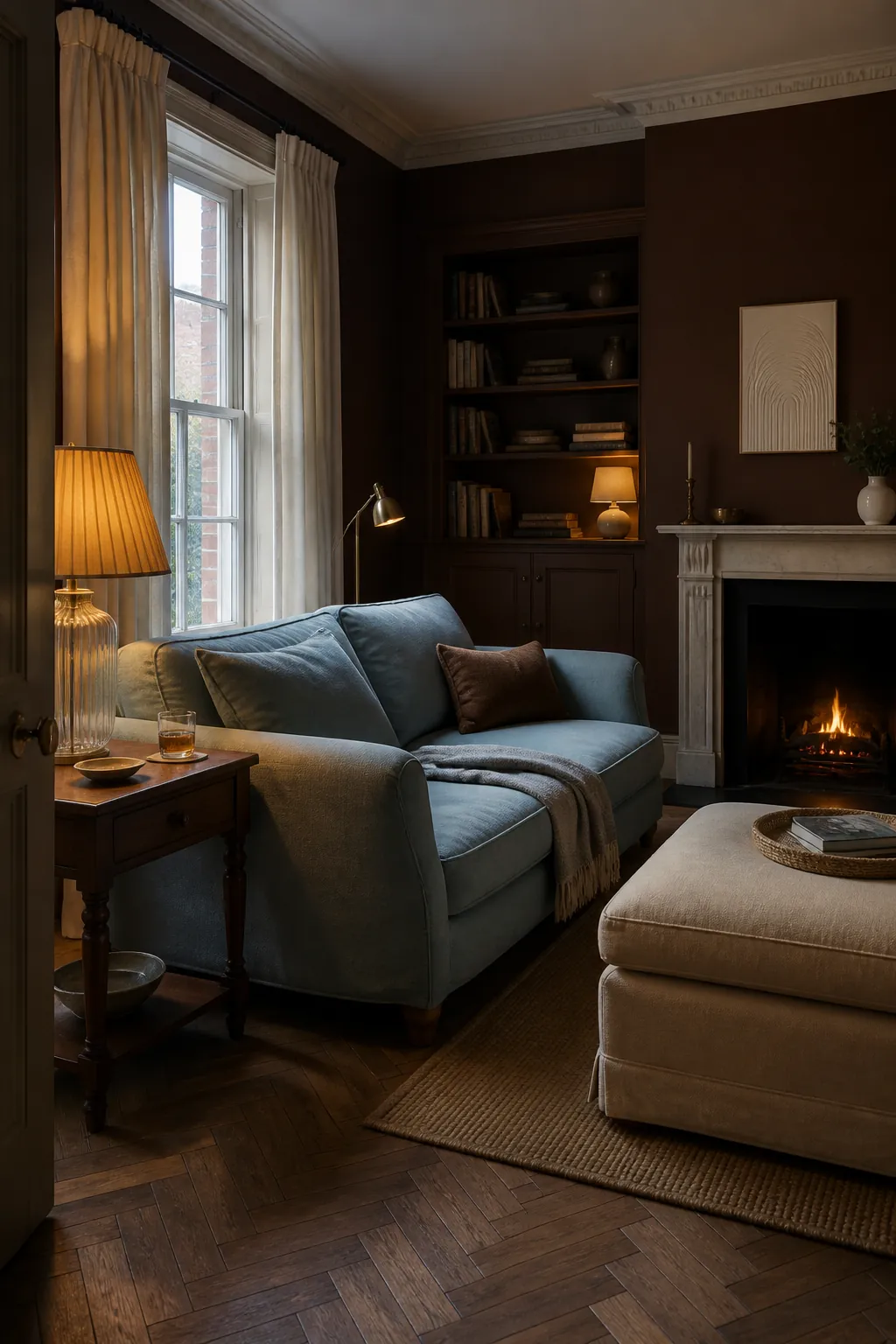
Use several lamps, a parchment ceiling, and light floor textiles. Dark walls need distributed light, not merely a brighter central bulb.
Muted Teal With Camel
Muted teal and camel make a sophisticated brown and teal living room because both colors contain complexity. Teal cools camel’s orange note, while camel prevents teal from feeling aquatic.
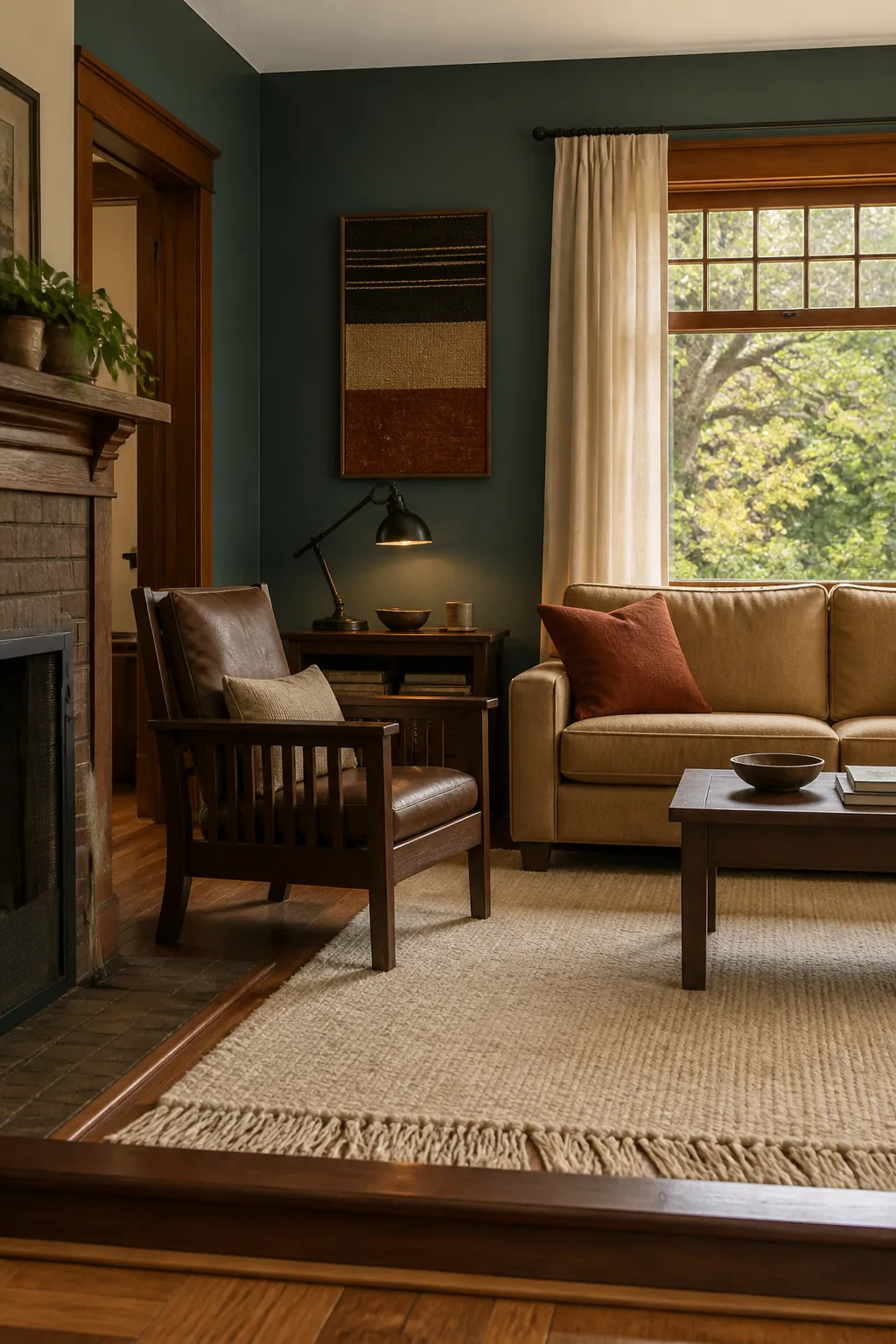
Add cream, dark wood, and a little rust. Avoid bright turquoise accessories, which shift the room toward a themed palette instead of a grounded one.
A Sapphire Sofa Against Oak
A saturated sapphire sofa turns honey oak from a background finish into part of the composition. White or parchment walls leave enough space for both strong materials to register.
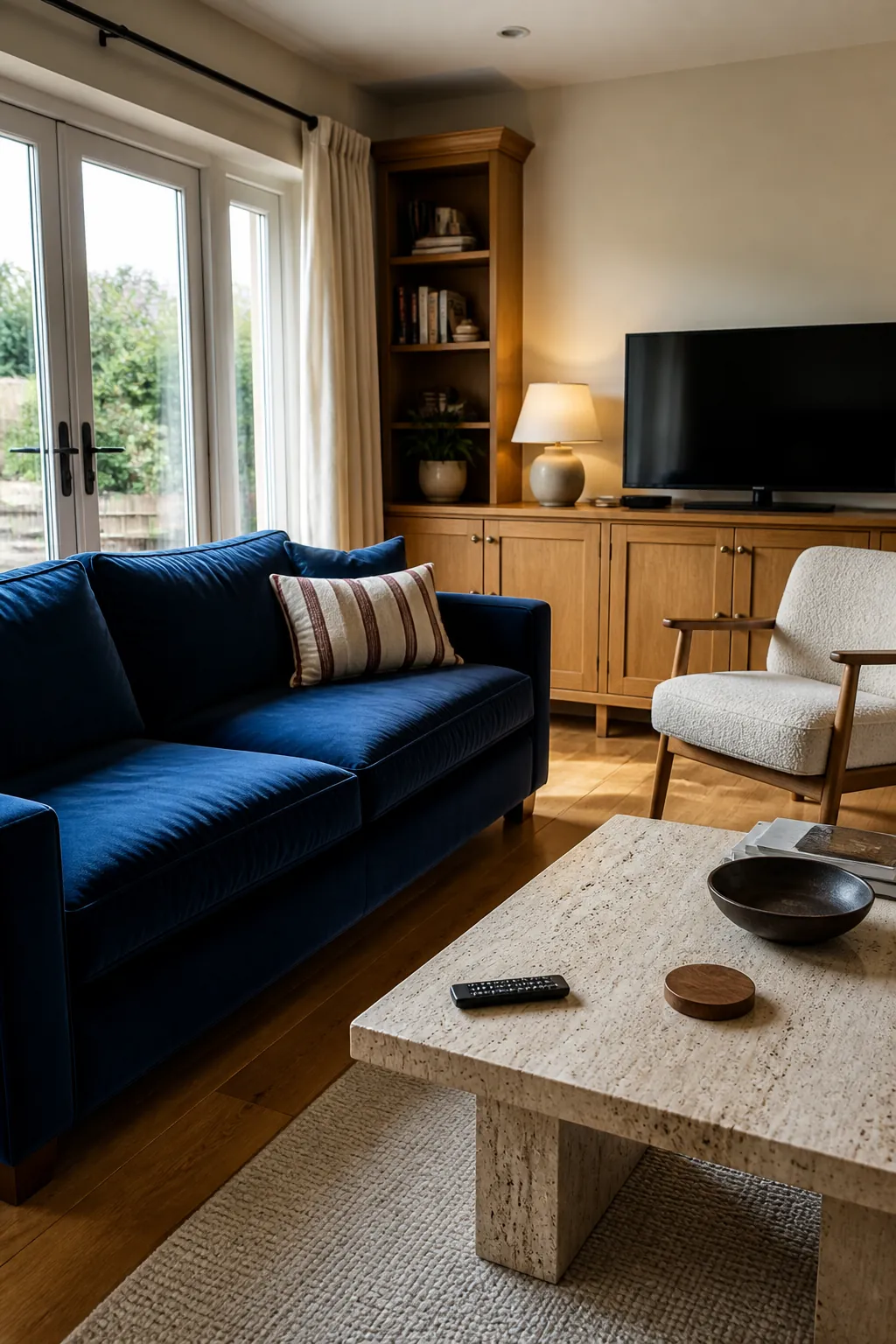
Keep other upholstery neutral and repeat sapphire only in a small patterned detail. One confident blue piece looks cleaner than a room full of near-matching blue objects.
A Blue Rug Under a Tan Sectional
A blue rug can organize a large tan sectional and define the conversation zone. Choose a pattern that includes cream or brown so the rug connects rather than sits beneath the furniture like a separate island.
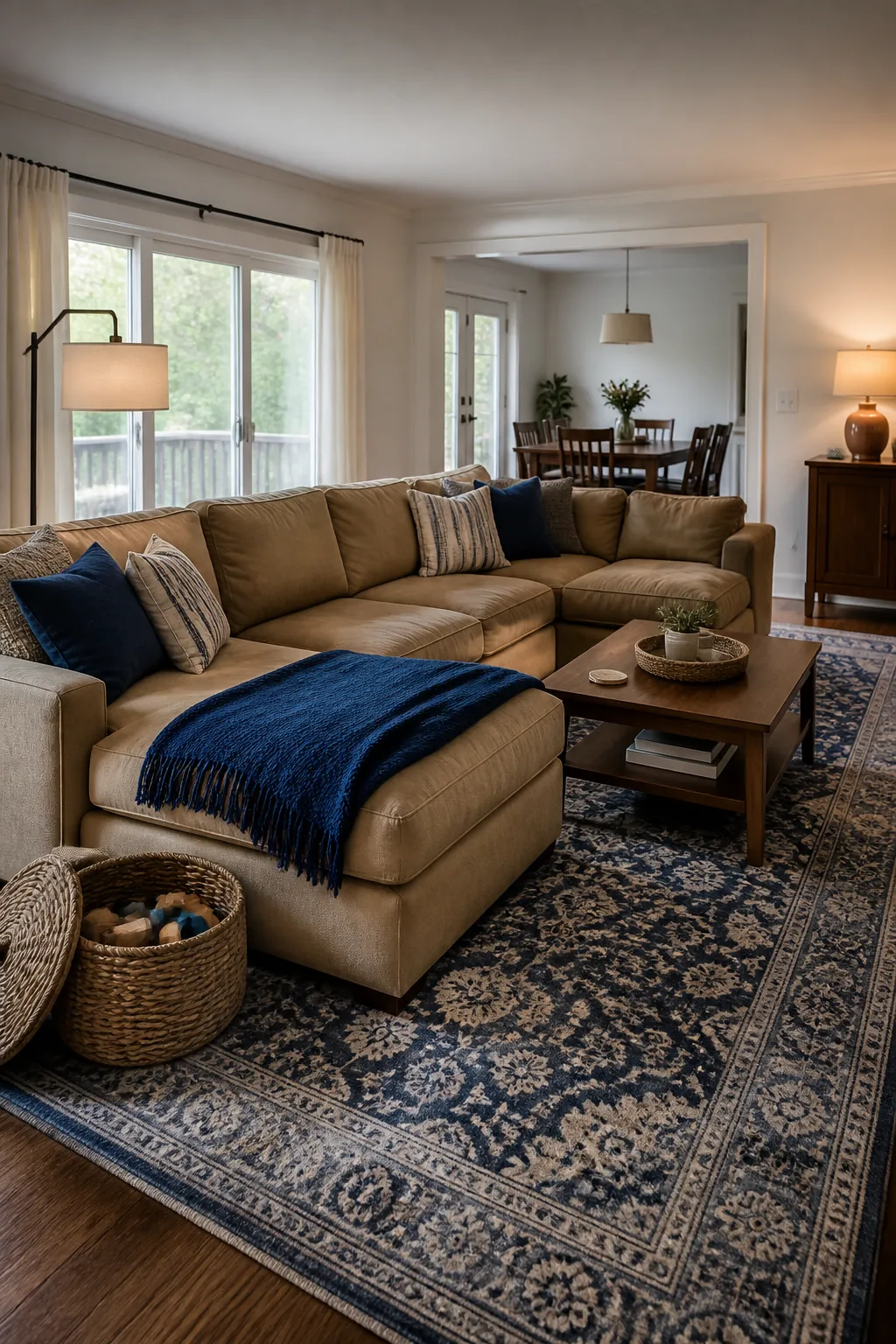
Match the rug’s blue loosely in one throw, not every cushion. The sectional remains dominant while the floor introduces rhythm and depth.
Walnut Paneling With Ice Blue Upholstery
Ice blue can work beside walnut when the blue is softened and the room includes plenty of warm white. The contrast makes wood paneling feel tailored rather than oppressively dark.
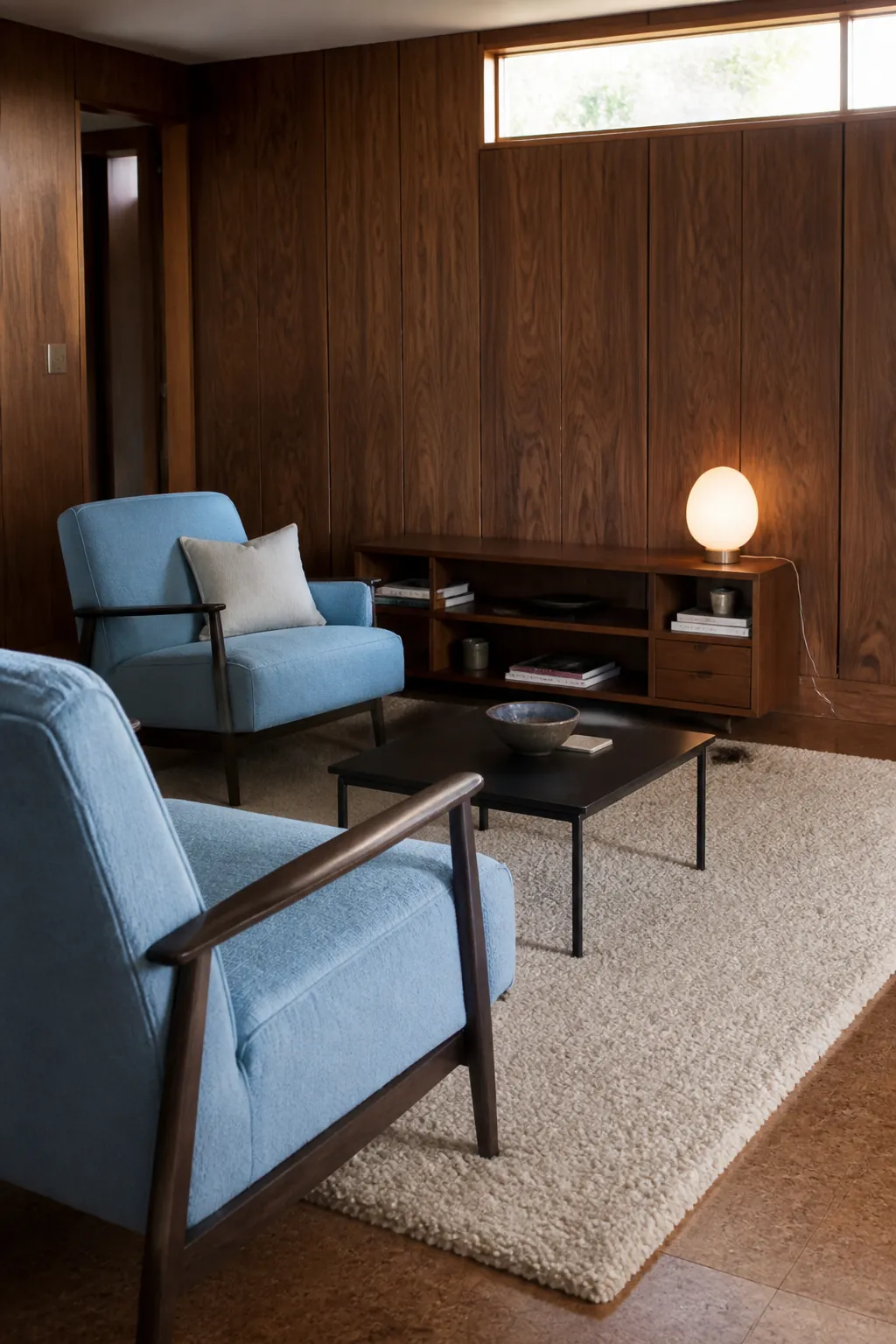
Use blue on fabric instead of paint so the natural grain stays visible. A cream rug and matte metal lighting provide a calm bridge between the two temperatures.
Rustic Beams With Slate Blue Walls
Slate blue respects the visual weight of rustic beams without competing with them. Its gray undertone also connects naturally to stone fireplaces and weathered wood floors.
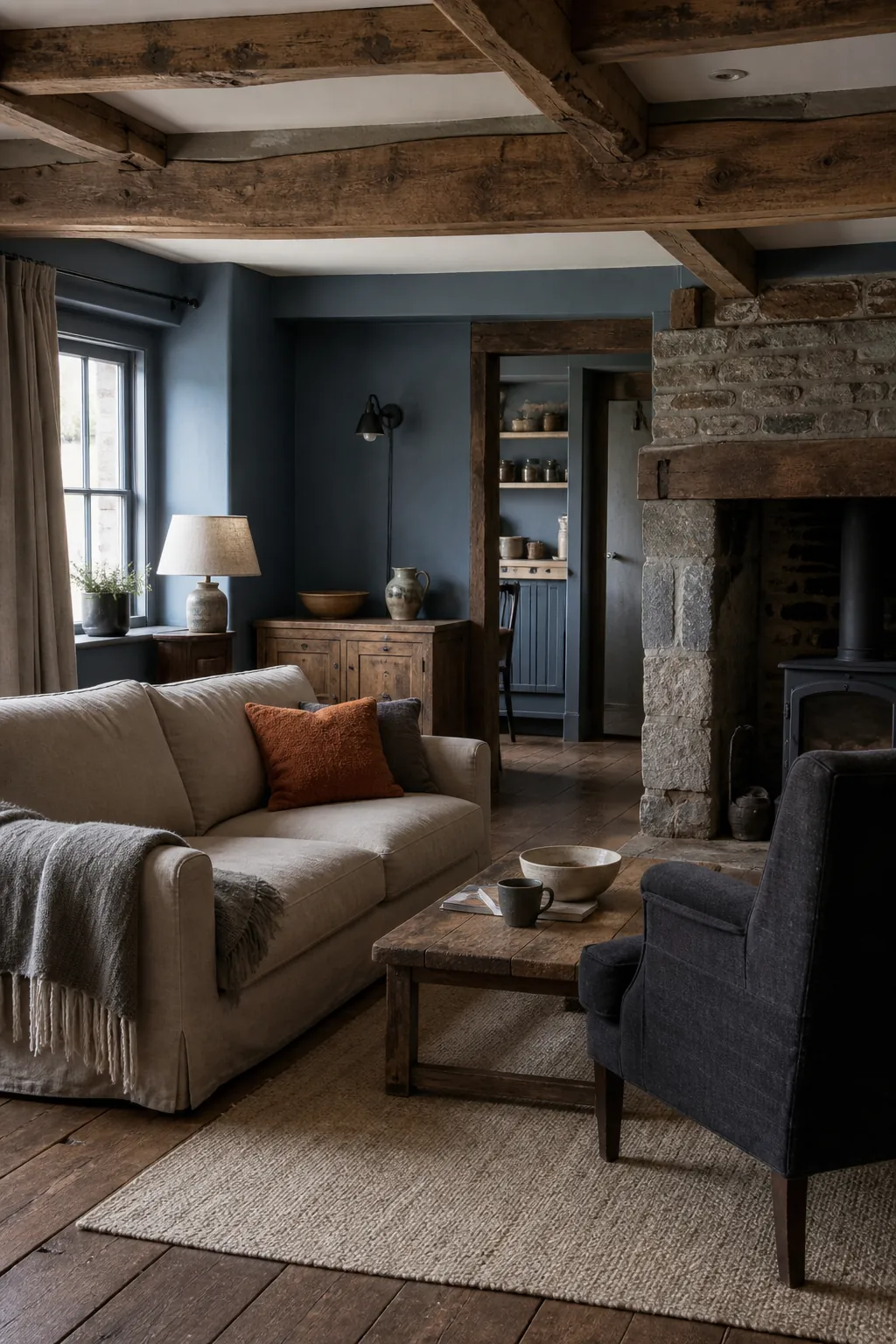
Keep the ceiling between beams light if height is limited. Flax, charcoal, and a single rust-colored textile complete the scheme without turning it into farmhouse shorthand.
Indigo in a Modern Farmhouse Room
Modern farmhouse living rooms look fresher when indigo replaces predictable black accents. Try indigo on built-ins, a washable slipcover, or one large rug beside medium oak and creamy painted walls.
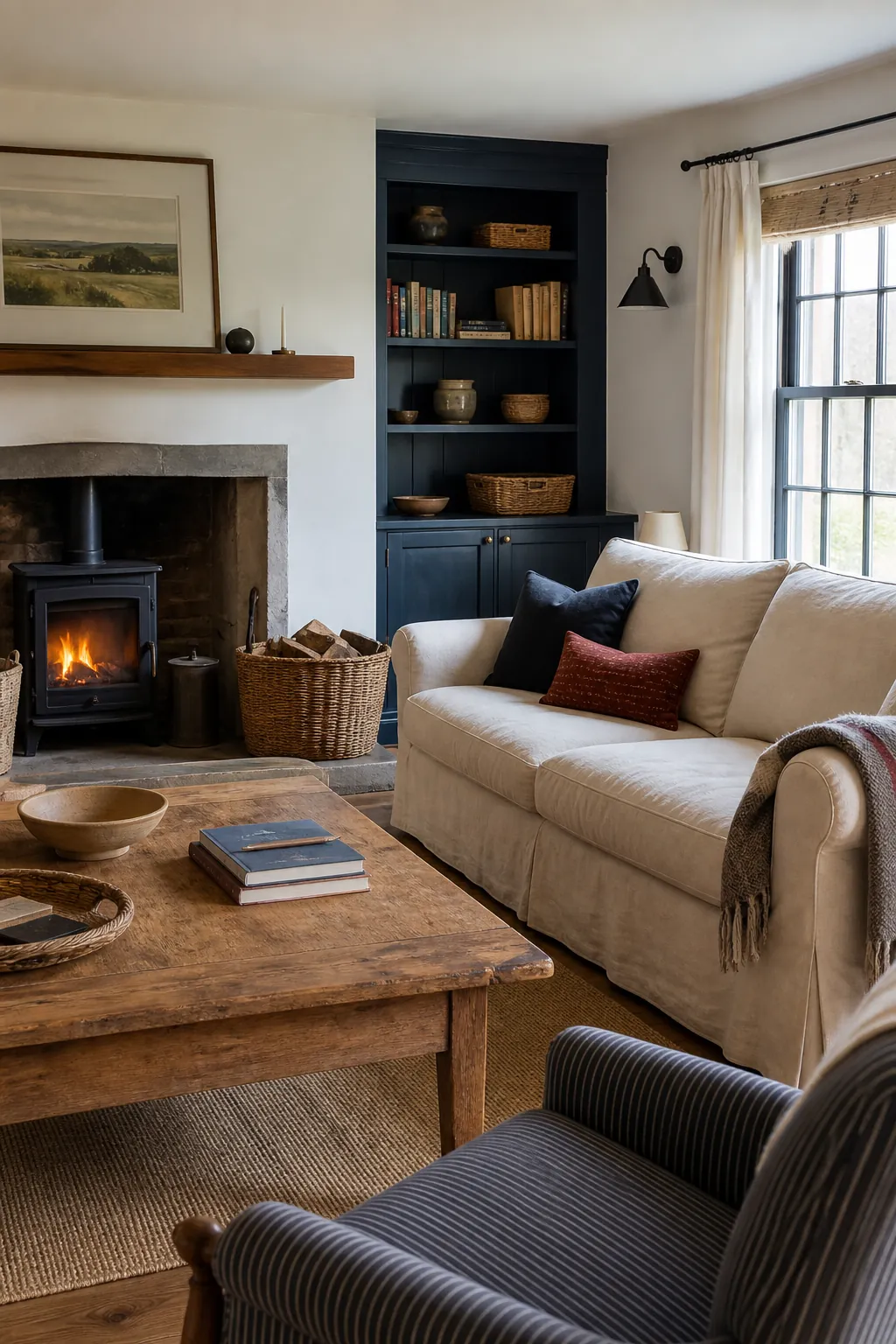
Skip signs and distressed decorative props. Honest materials—wood, cotton, iron, and wool—make the blue and wood living room feel current.
Navy Shelving With Chestnut Furniture
Navy shelving provides a strong outline for books and ceramics, while chestnut furniture supplies warmth at seating level. Painting only the joinery is an effective way to test a navy blue living room color scheme.
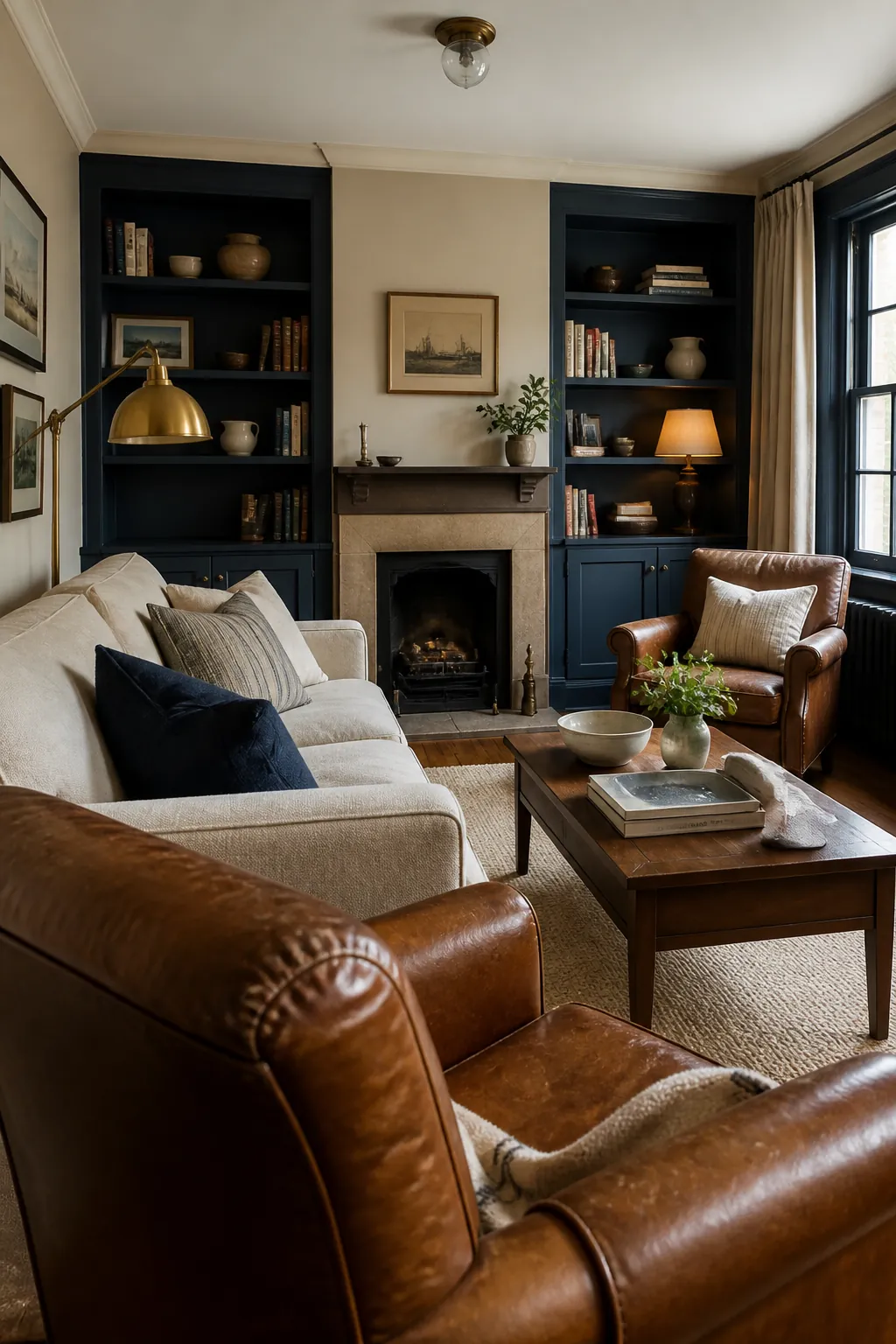
Leave negative space on the shelves. A few pale objects allow the dark paint to remain visible and keep the storage from reading as a busy wall.
Pale Blue for a Small Brown Room
When brown floors and furniture already dominate a compact space, pale blue walls offer visual relief. Choose a blue with a muted green undertone if the wood is golden, or a gray undertone beside cooler walnut.
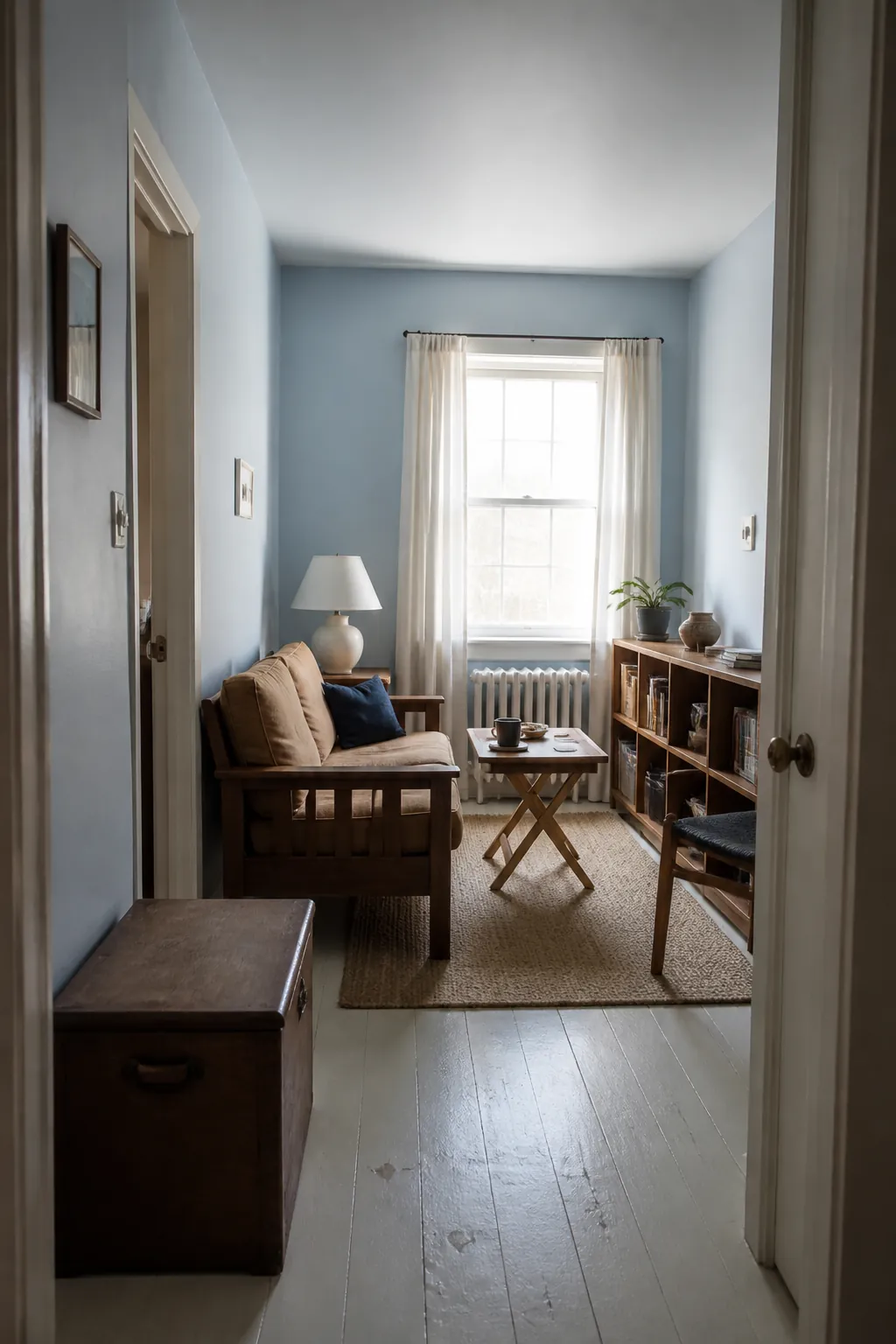
Expose some floor and use leggy pieces so the brown does not form one solid block. This practical spacing matters more than simply choosing the lightest paint.
Blue Accents Around a Brown Stone Fireplace
Pull the brown from a stone fireplace into wood furniture, then introduce blue through two substantial textiles—a chair and rug, for example. Tiny blue accessories will not balance a visually heavy hearth.
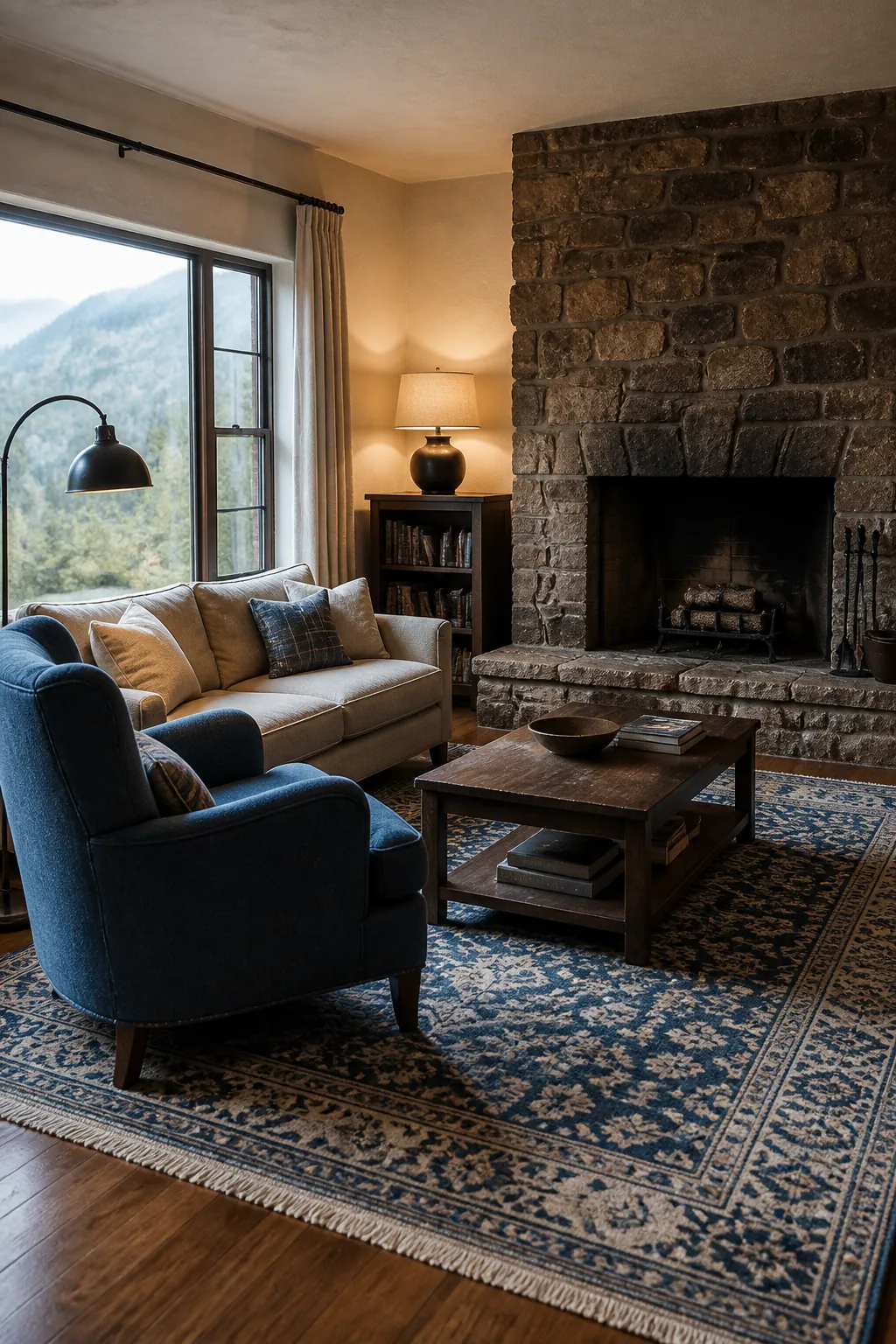
Use the stone’s lightest mineral tone for walls. The room then reads as one palette derived from the fixed finish.
Blue Drapery Behind Brown Leather
Floor-length blue drapery creates a large, soft field behind brown leather and helps absorb sound. Dusty cornflower, denim, or petrol all work depending on how dark the sofa is.
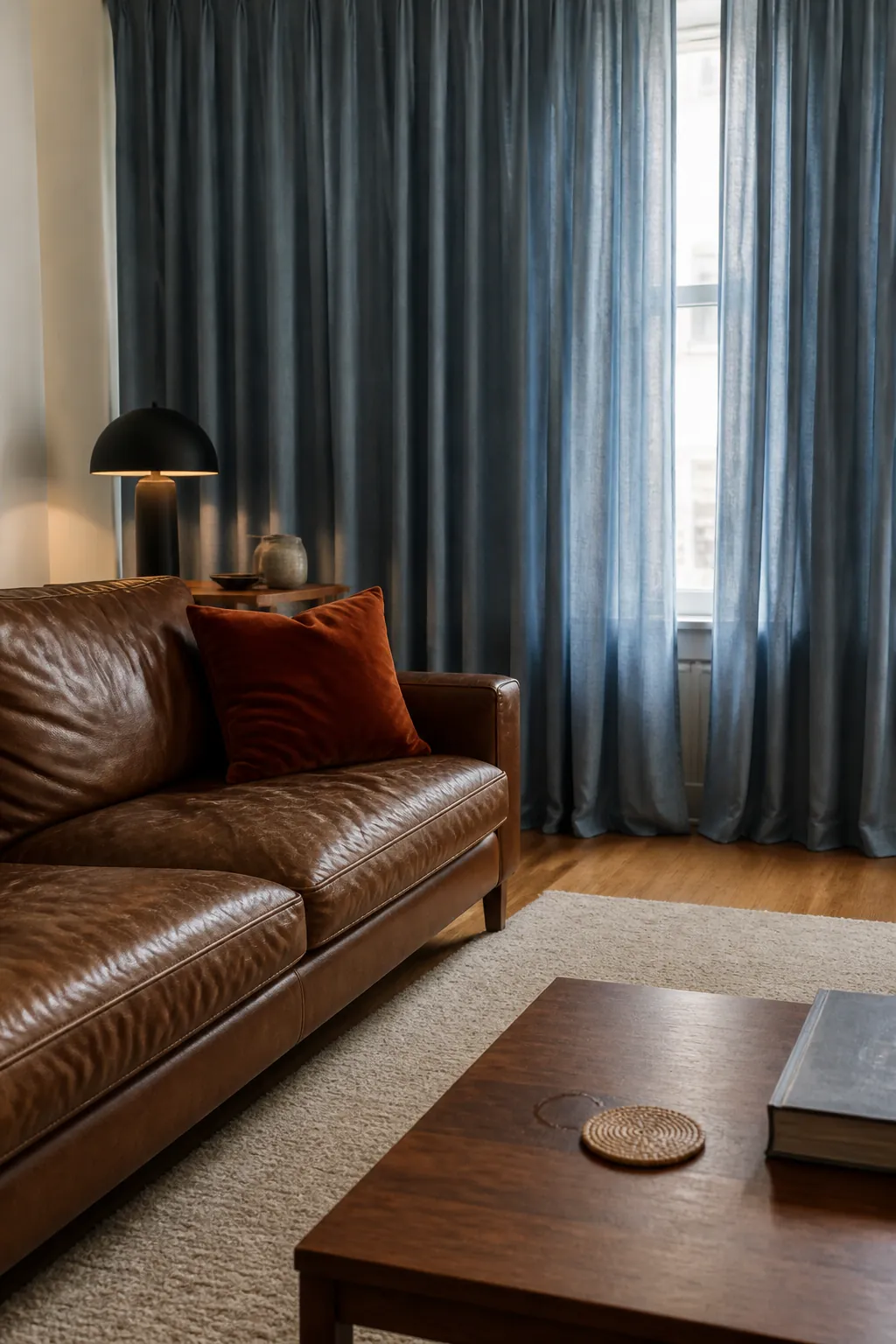
Match the curtain undertone to the room’s daylight, not the leather. Warm the composition with a cream rug and wood table rather than adding more brown fabric.
Blue Built-Ins With Brown Upholstery
Blue built-ins make ordinary brown upholstery look deliberate. Mid-tone ink blue is often easier than navy because shelf interiors remain visible without intense lighting.
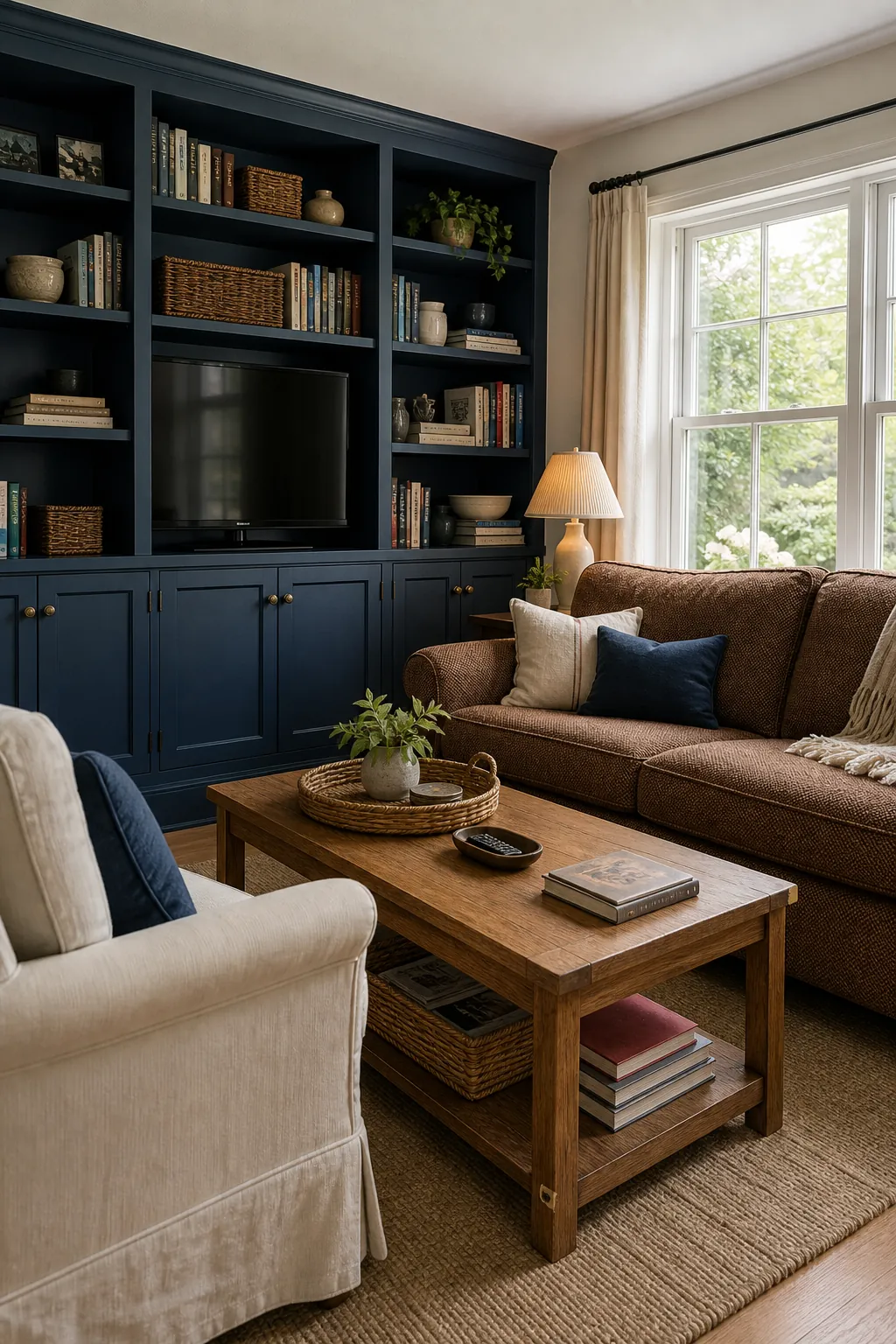
Repeat the blue on one cushion and the brown through baskets or book spines. The repetition connects joinery and seating without overmatching.
Mocha Walls With Cobalt Details
Mocha walls are quiet enough to support a clear cobalt lamp, chair, or textile. The brighter blue acts as a visual punctuation mark rather than another dark layer.
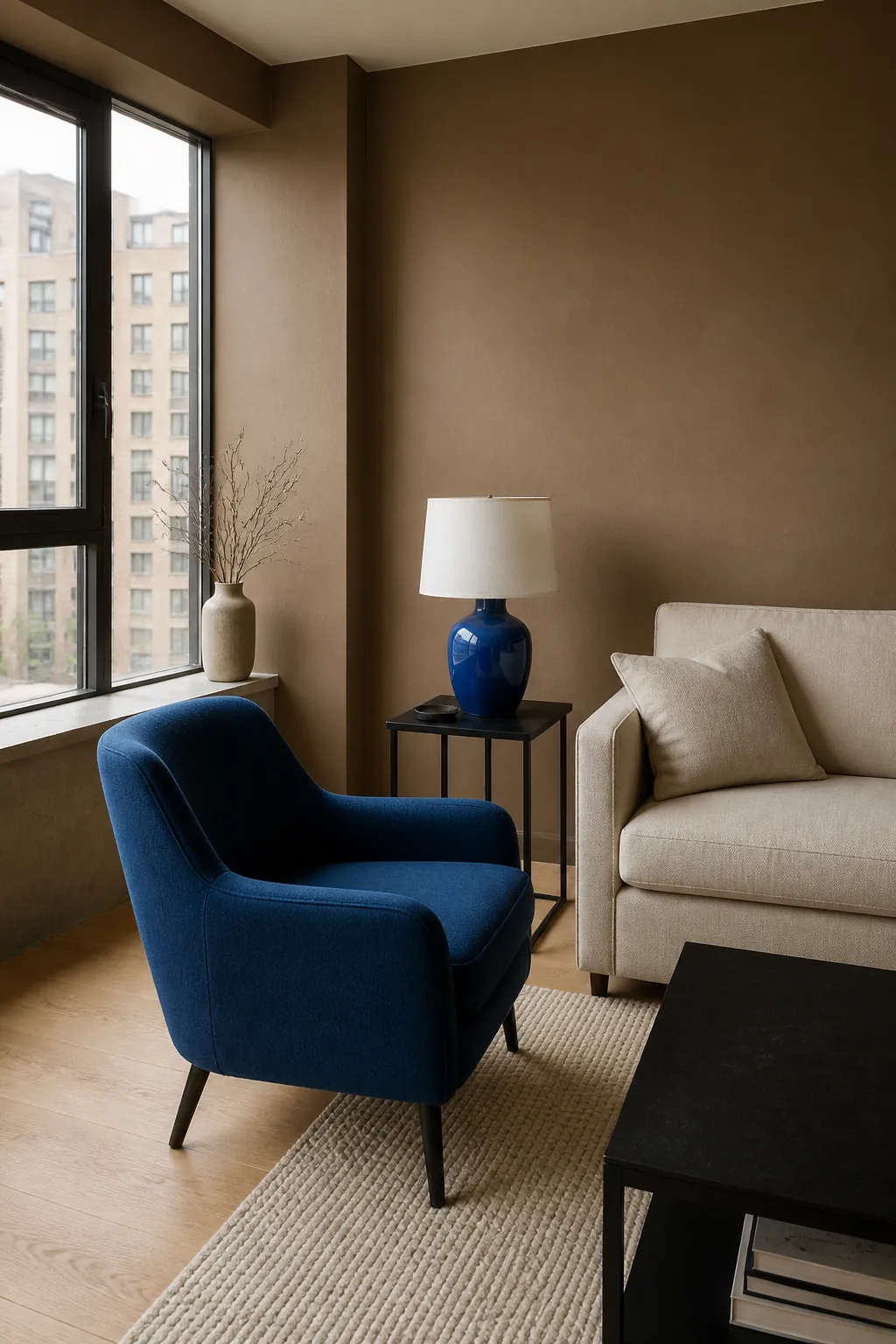
Concentrate cobalt in one or two places. Scattering many small bright blue objects around the room makes a sophisticated contrast feel busy.
Denim Slipcovers With Reclaimed Wood
Washed denim slipcovers and reclaimed wood share an easy, imperfect character. This pairing works well in a busy family room because wear improves both surfaces rather than making them look neglected.
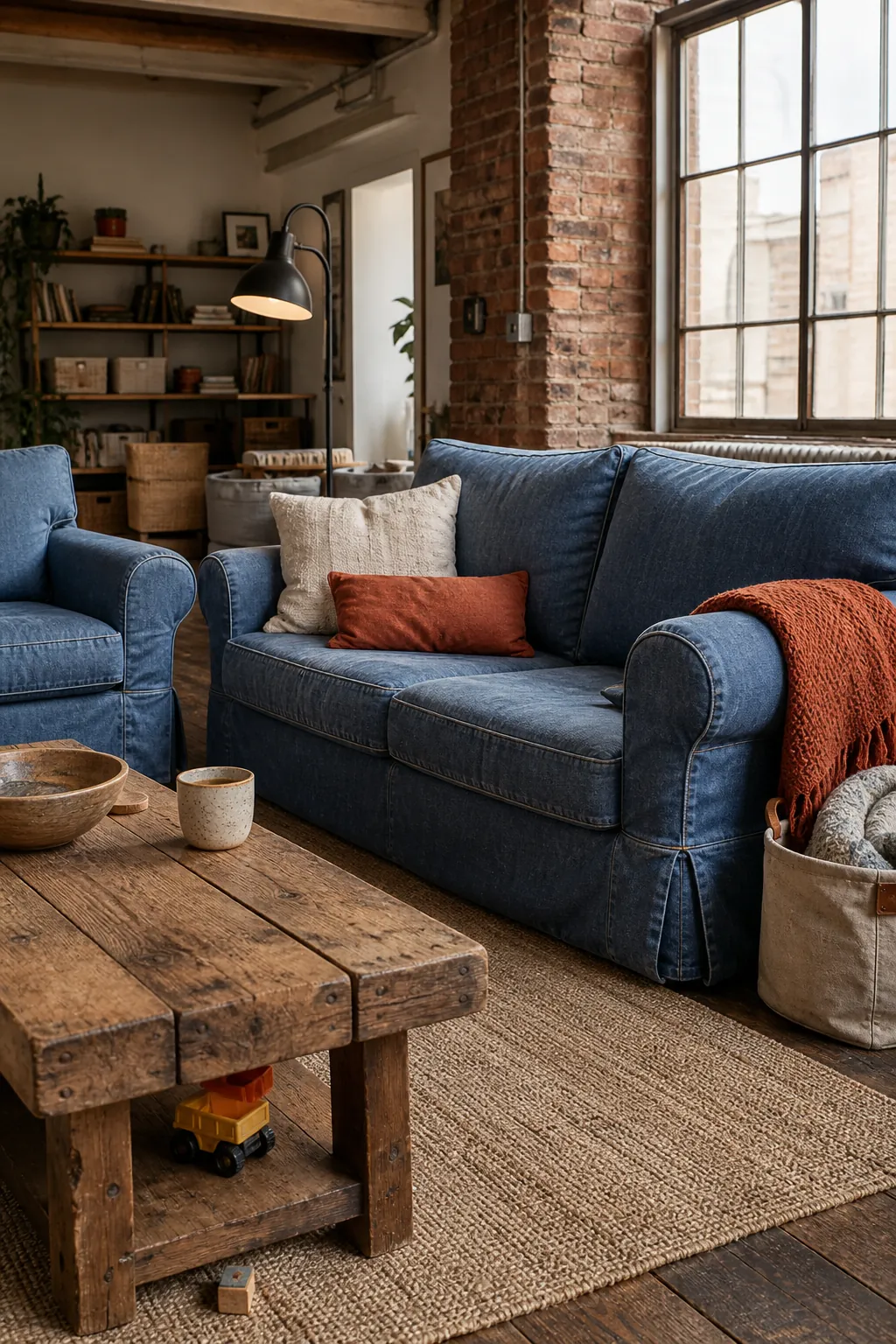
Add flax, charcoal, and one muted red accent. Avoid excessive rustic signs or distressing; the genuine texture already supplies enough personality.
Chocolate Velvet With Duck Egg Blue
Chocolate velvet has visual density, while duck egg blue offers a powdery counterpoint. Keep the blue slightly green and the brown deep to avoid a nursery-like pastel effect.
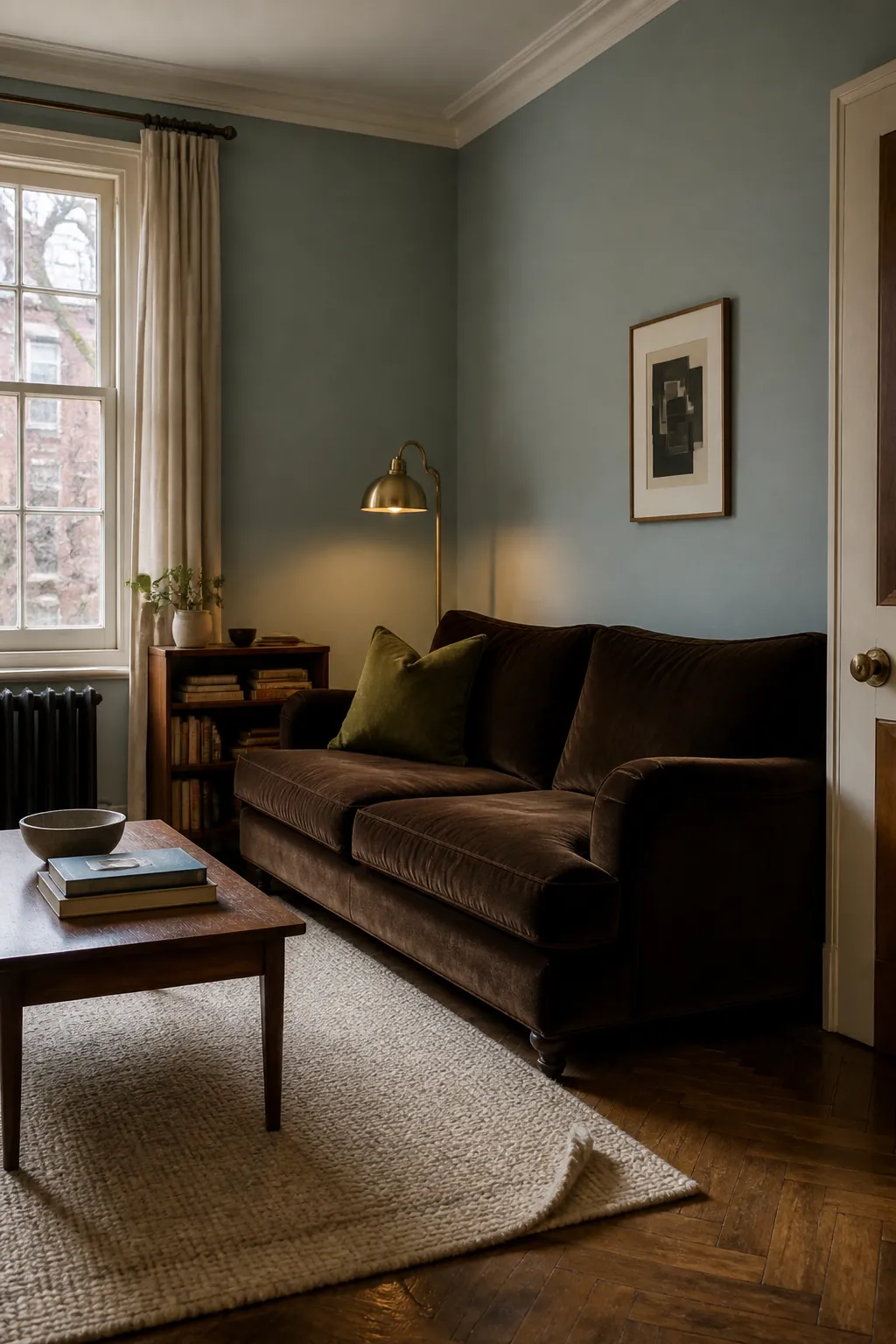
Aged brass, cream wool, and dark wood reinforce the adult tone. Let velvet and matte paint respond differently to light for a richer room.
Blue-Gray Walls With Rattan
Blue-gray walls can feel cool until rattan and warm woven fibers introduce honey-brown variation. The combination is particularly useful in a sunroom or casual apartment living area.
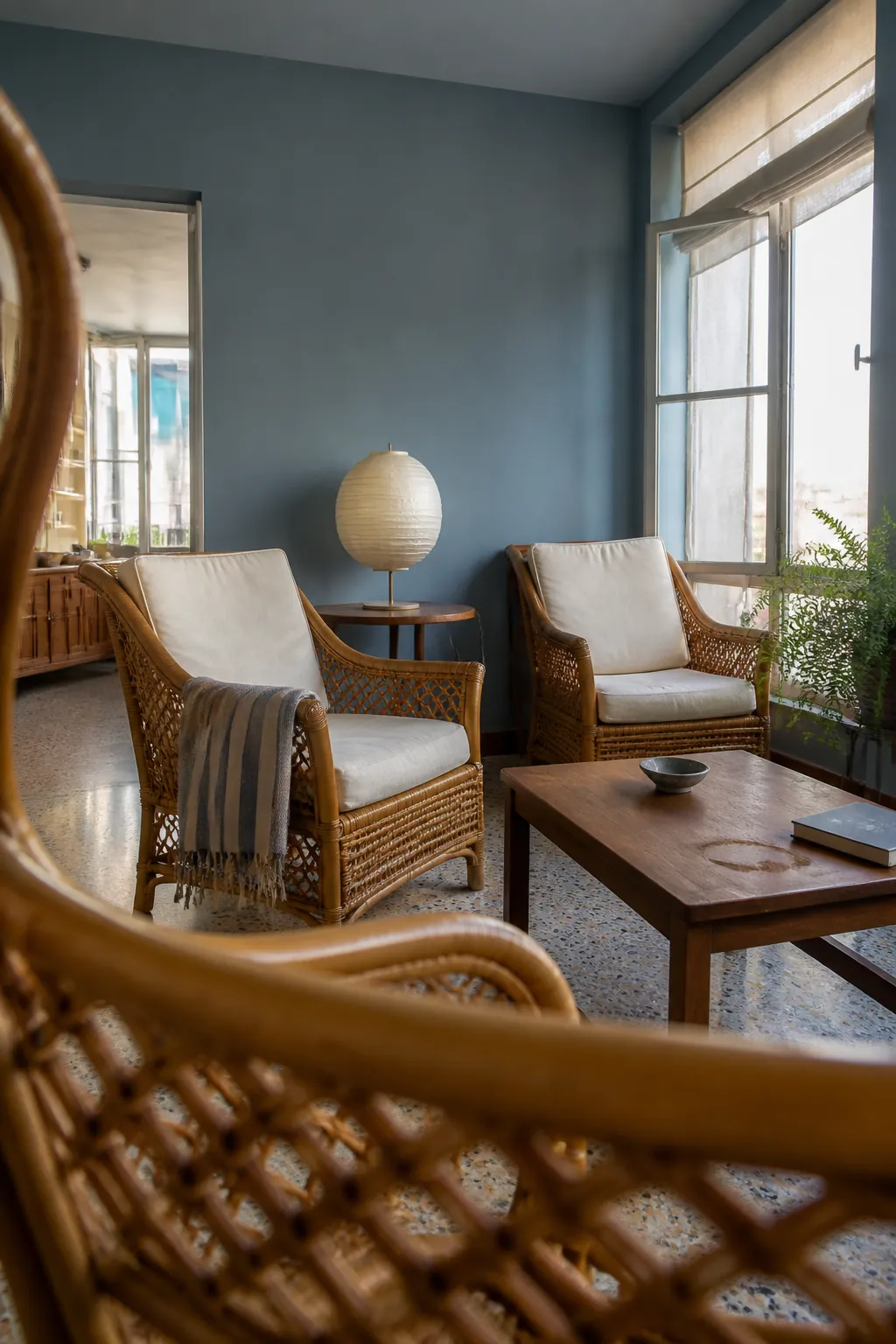
Use solid textiles instead of adding many tropical patterns. The cane construction and wall color create enough contrast on their own.
Indigo Pattern With Espresso Furniture
An indigo patterned rug or curtain prevents espresso furniture from forming a heavy visual block. Select a motif with visible cream ground so the pattern remains readable beside dark wood.
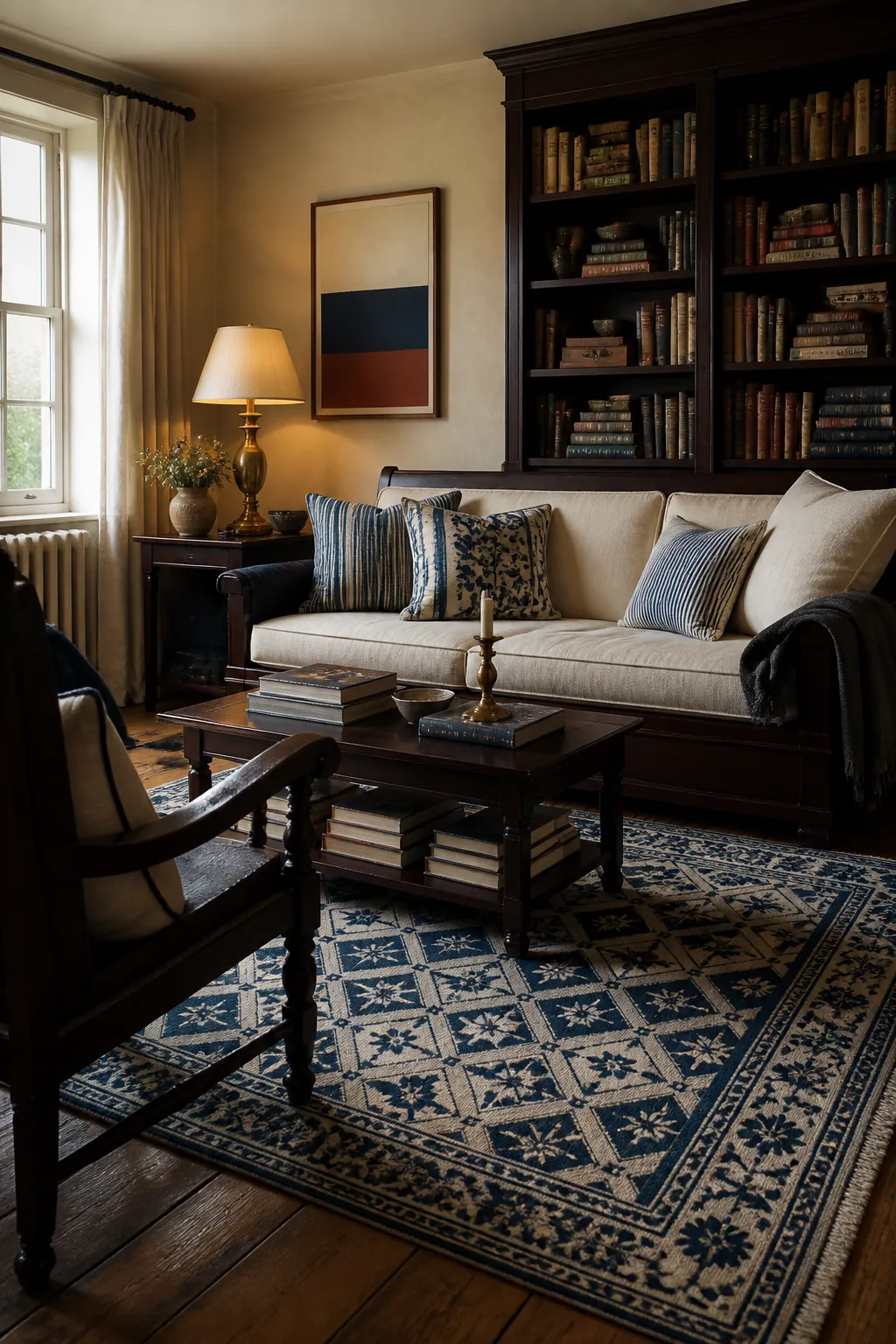
Repeat the pattern’s blue in one plain fabric. The room gains movement while keeping the furniture as its grounded base.
A Teal Chair Beside a Brown Sectional
A single teal chair can redirect a large brown sectional from bland to intentional. Choose a substantial chair rather than several small blue accessories so the color has comparable visual weight.
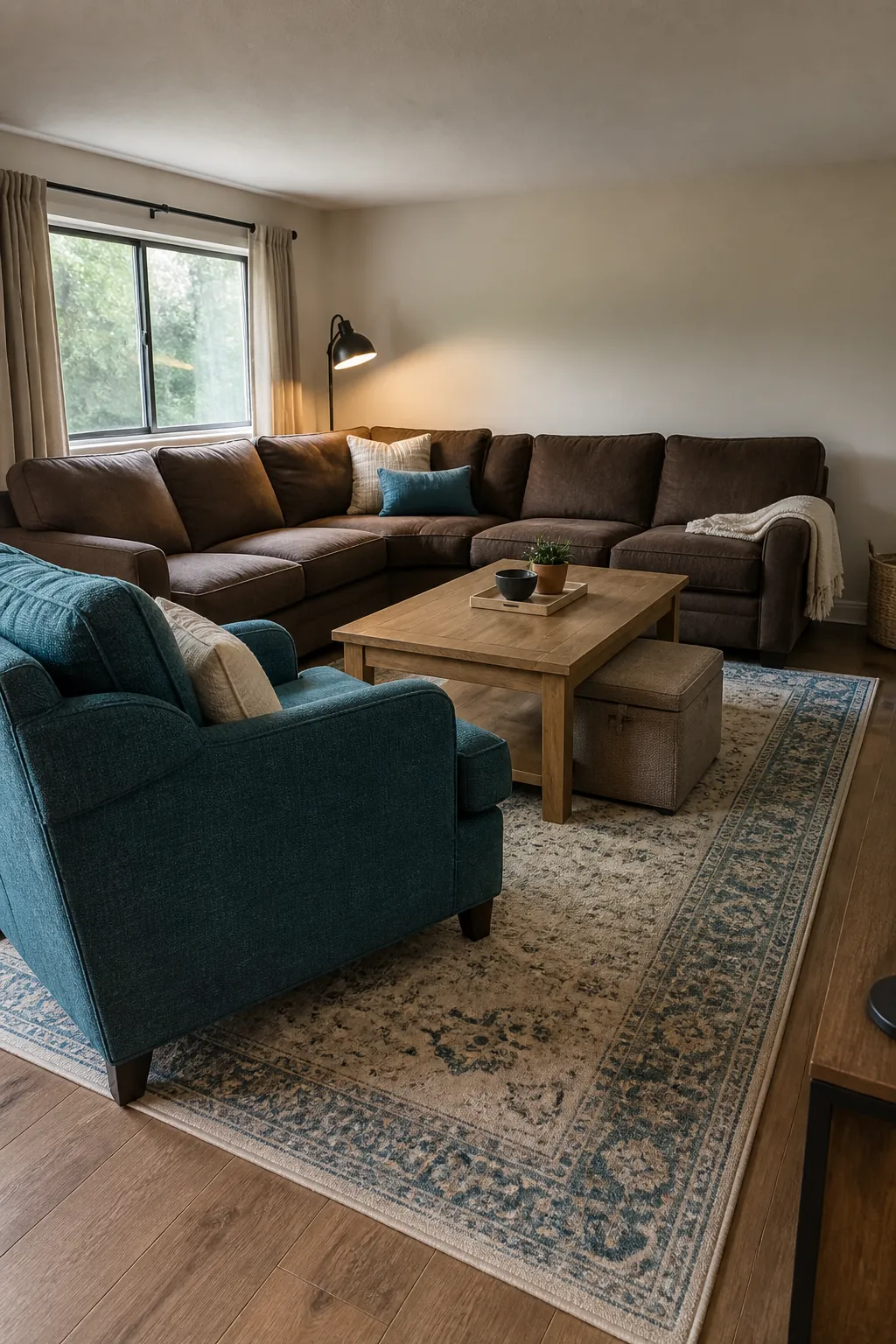
A patterned rug containing both colors completes the bridge. Keep walls and curtains light to offset the upholstery mass.
A Blue Ceiling Over Brown Walls
When brown walls feel enveloping but heavy, a smoky blue ceiling introduces an unexpected cool plane overhead. A picture rail or crown molding can provide a clean stopping point.
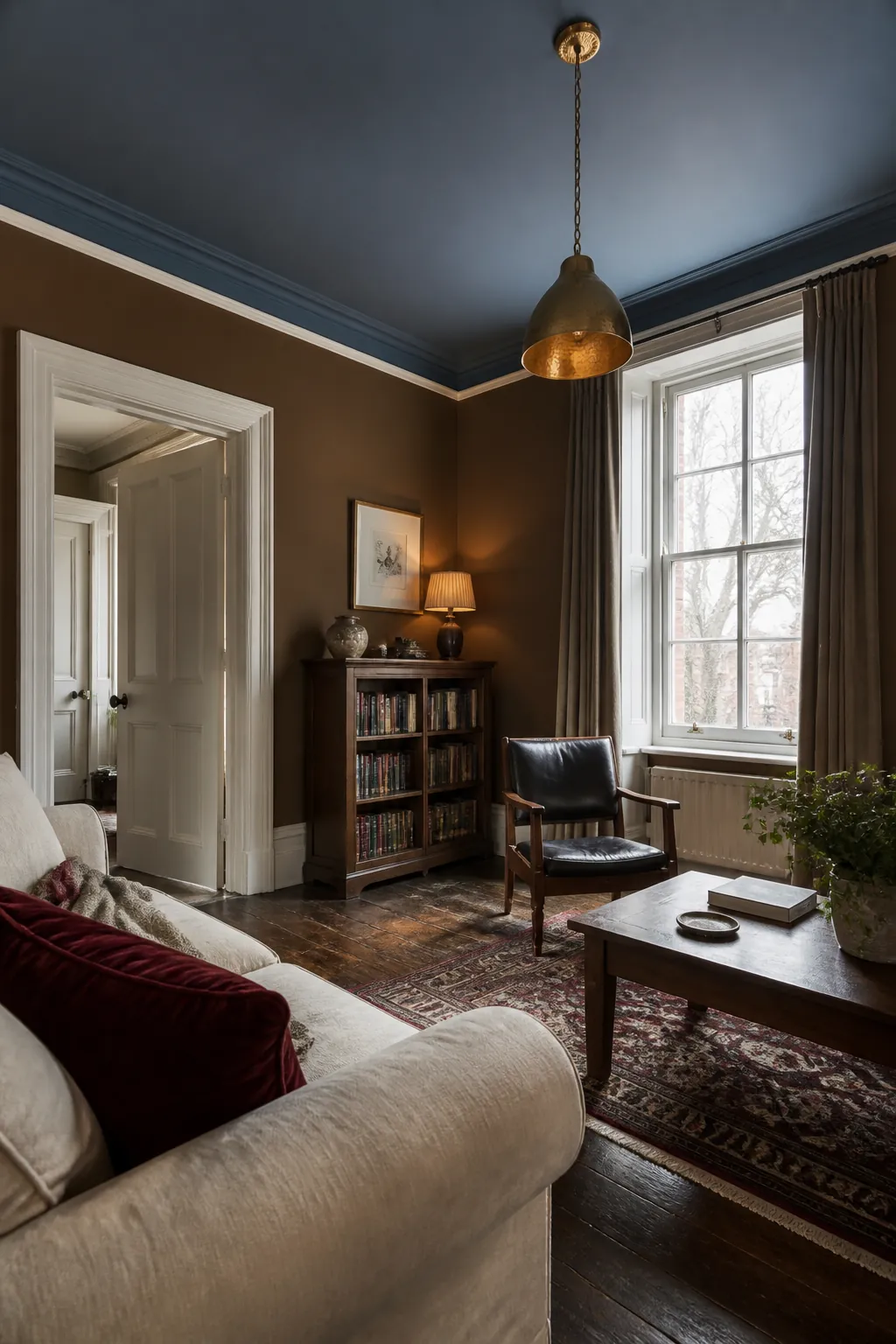
Test the blue overhead because ceiling light behaves differently from wall light. A grayed shade reads atmospheric; a clear blue may become too playful.
Tan Limewash With Sapphire Accents
Tan limewash supplies subtle brown movement rather than flat color, making sapphire accents appear especially clear. A blue chair, lamp, and small stripe are enough.
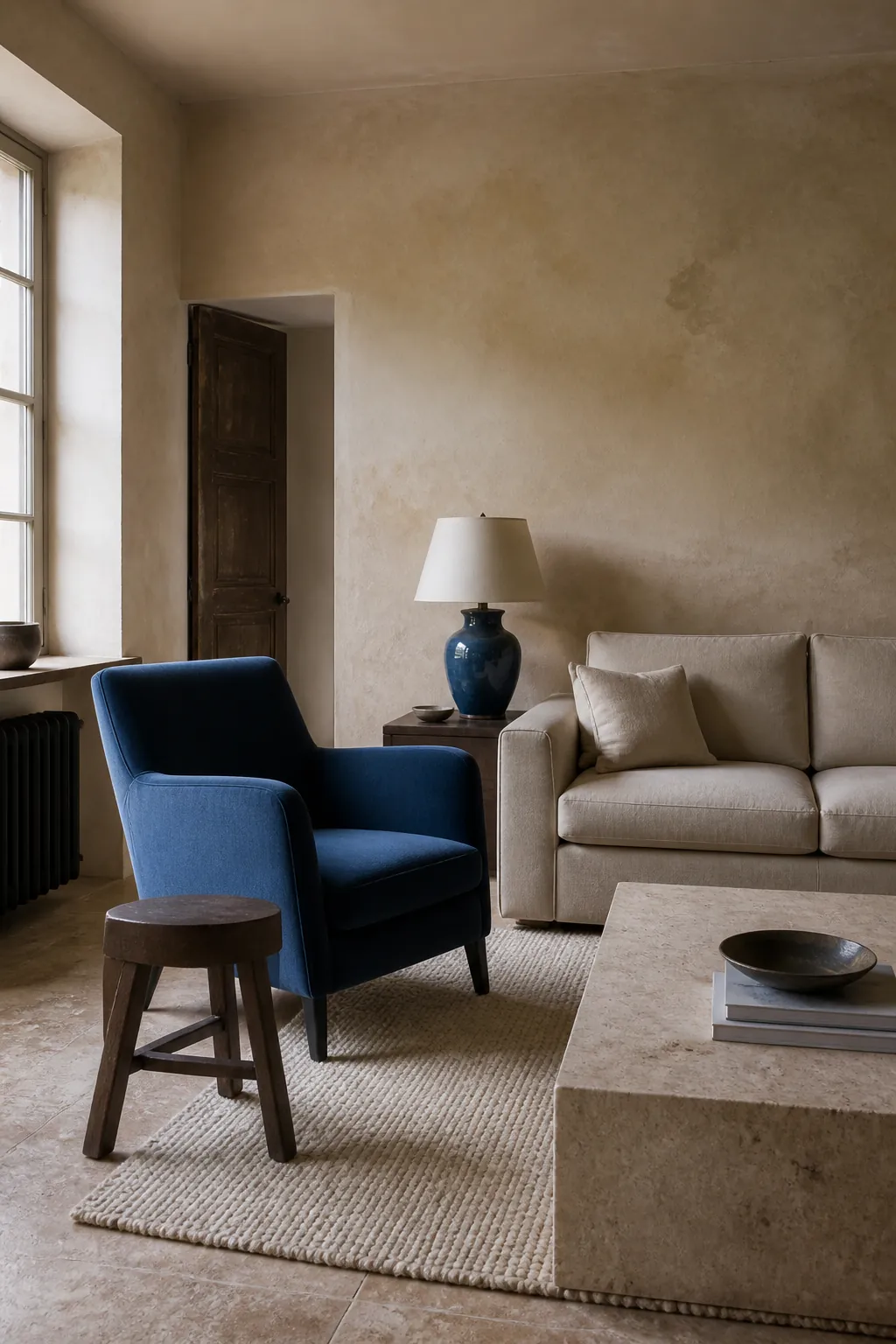
Let the mottled wall finish remain visible. Too many pictures or small decorative objects erase the texture that makes the neutral interesting.
Layered Blue and Brown Vintage Pieces
An eclectic room can mix navy, faded blue, walnut, mahogany, leather, and cane if the values are distributed. Place at least one light surface between the darkest brown and darkest blue.
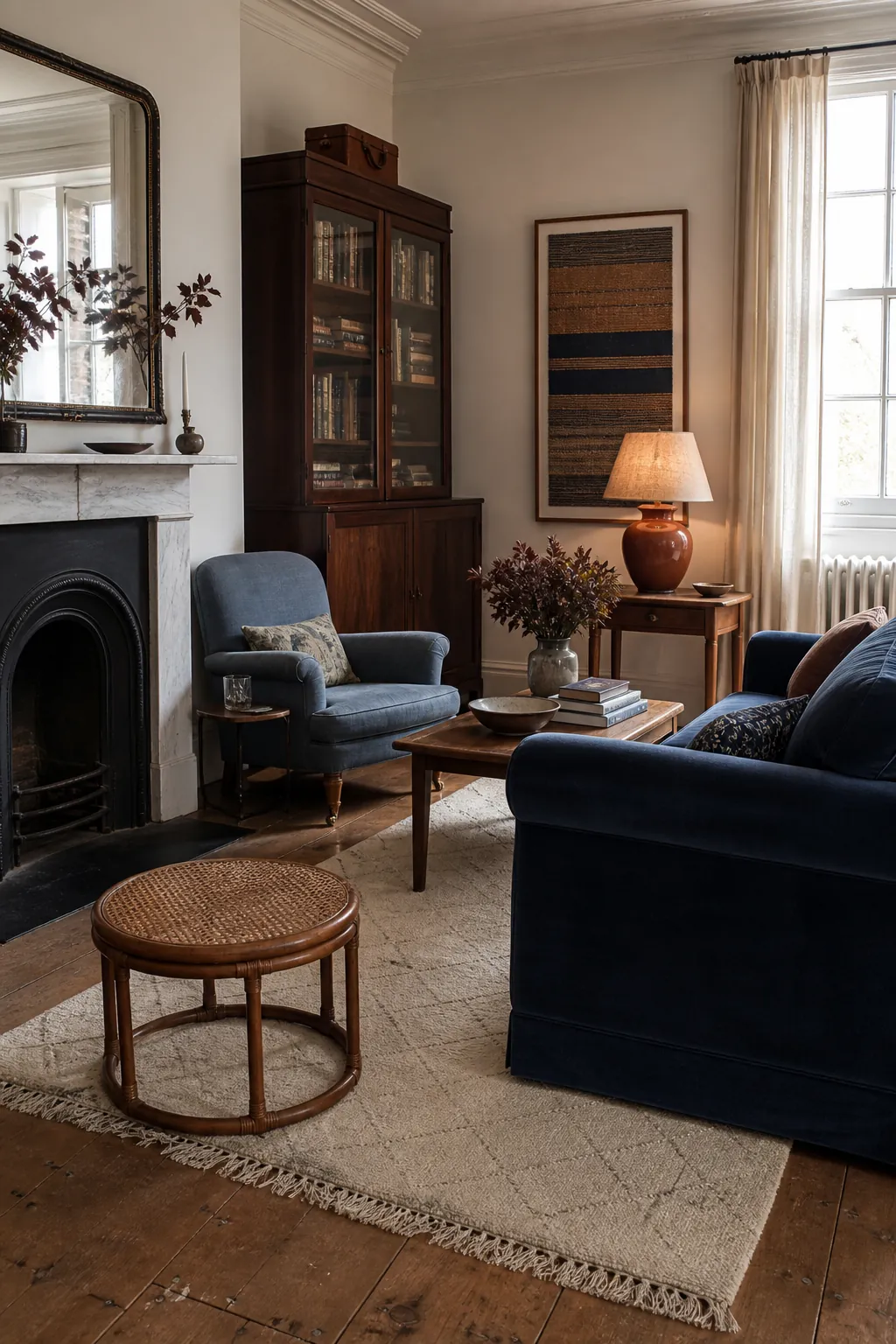
Use repeated materials rather than matching sets: two walnut notes, two woven fibers, and two blues are enough to establish order while preserving character.
Navy, Tan, and Warm White
The simplest navy and tan living room depends on proportion. Let warm white cover roughly half the visual field, tan occupy the largest furnishings, and navy define selected walls or textiles.
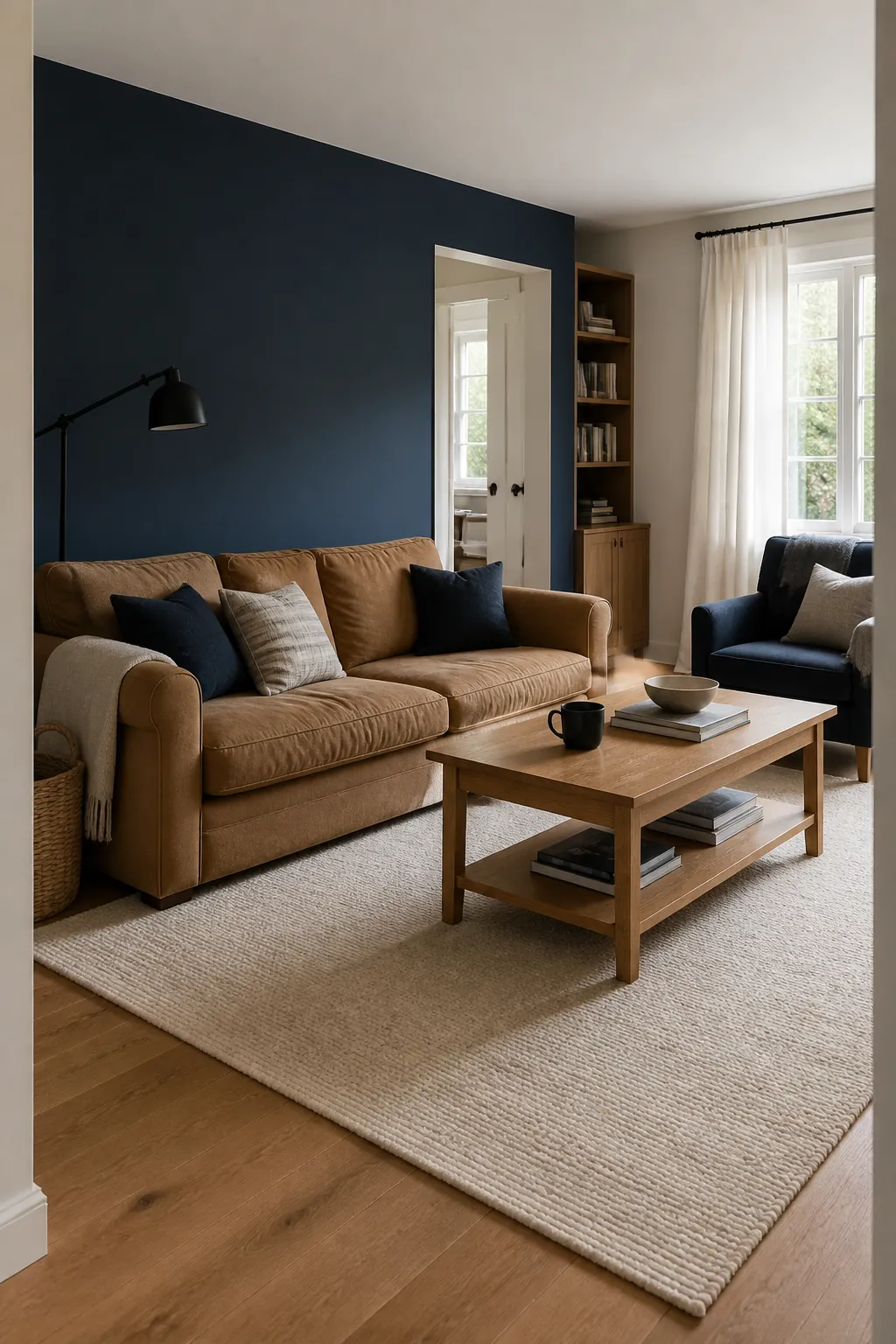
This final scheme succeeds because the light neutral gives both colors room to breathe. Brown provides comfort, blue supplies structure, and warm white prevents either from taking over. Once those proportions feel balanced in your actual daylight, stop adding colors and let texture do the remaining work.