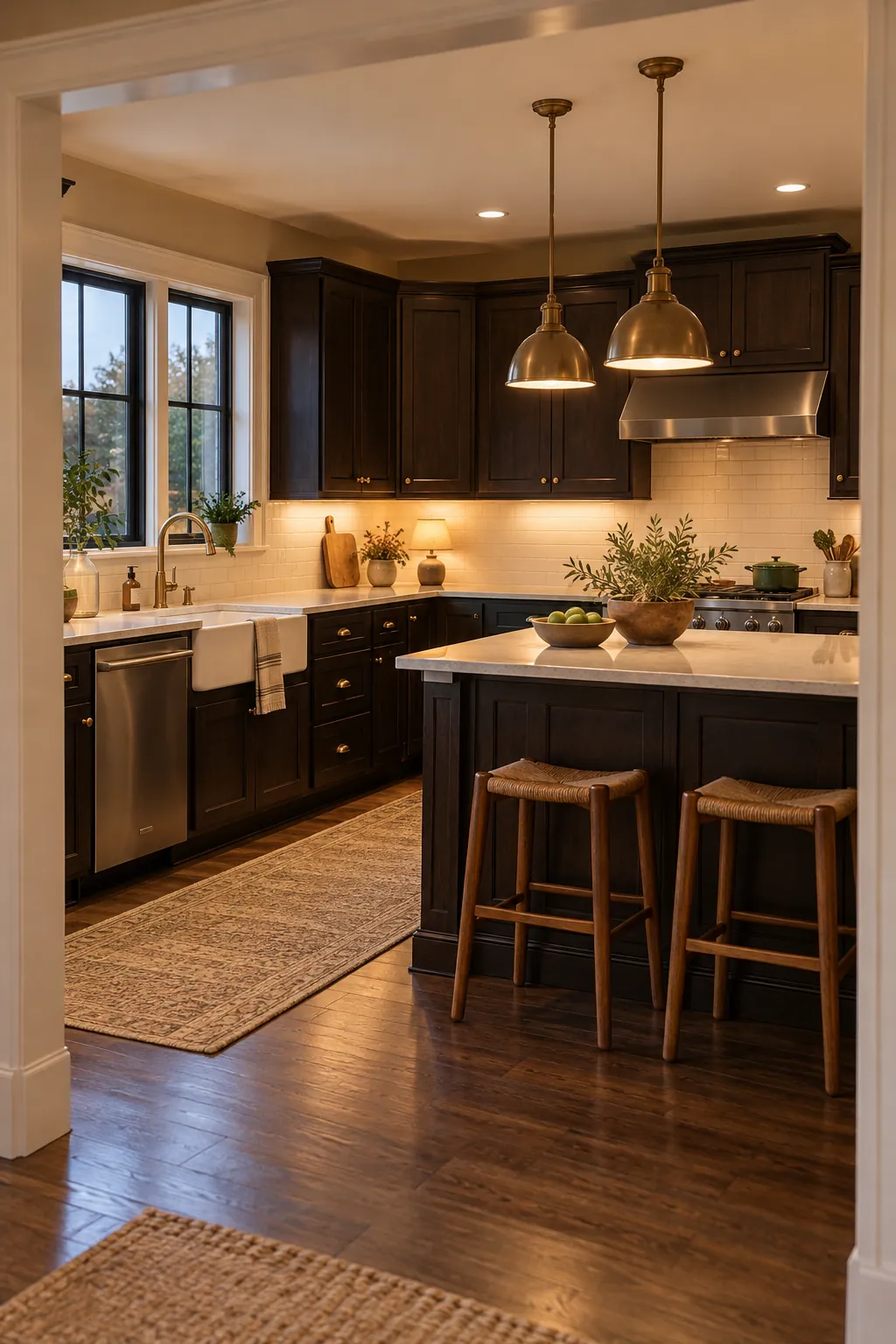
Sound dark cabinets are not a problem that automatically requires paint or demolition. A kitchen often feels heavy because light, contrast, storage, and surface clutter are working against the wood. Focused changes can make the same cabinetry look deliberate, warm, and worth keeping.
Add Warm Under Cabinet Lighting
Under cabinet light reaches the counter where ceiling fixtures often leave shadows. Choose an even warm white strip with a diffuser, then hide the source behind the cabinet edge. The glow brings out wood grain and makes the whole kitchen feel useful after sunset.
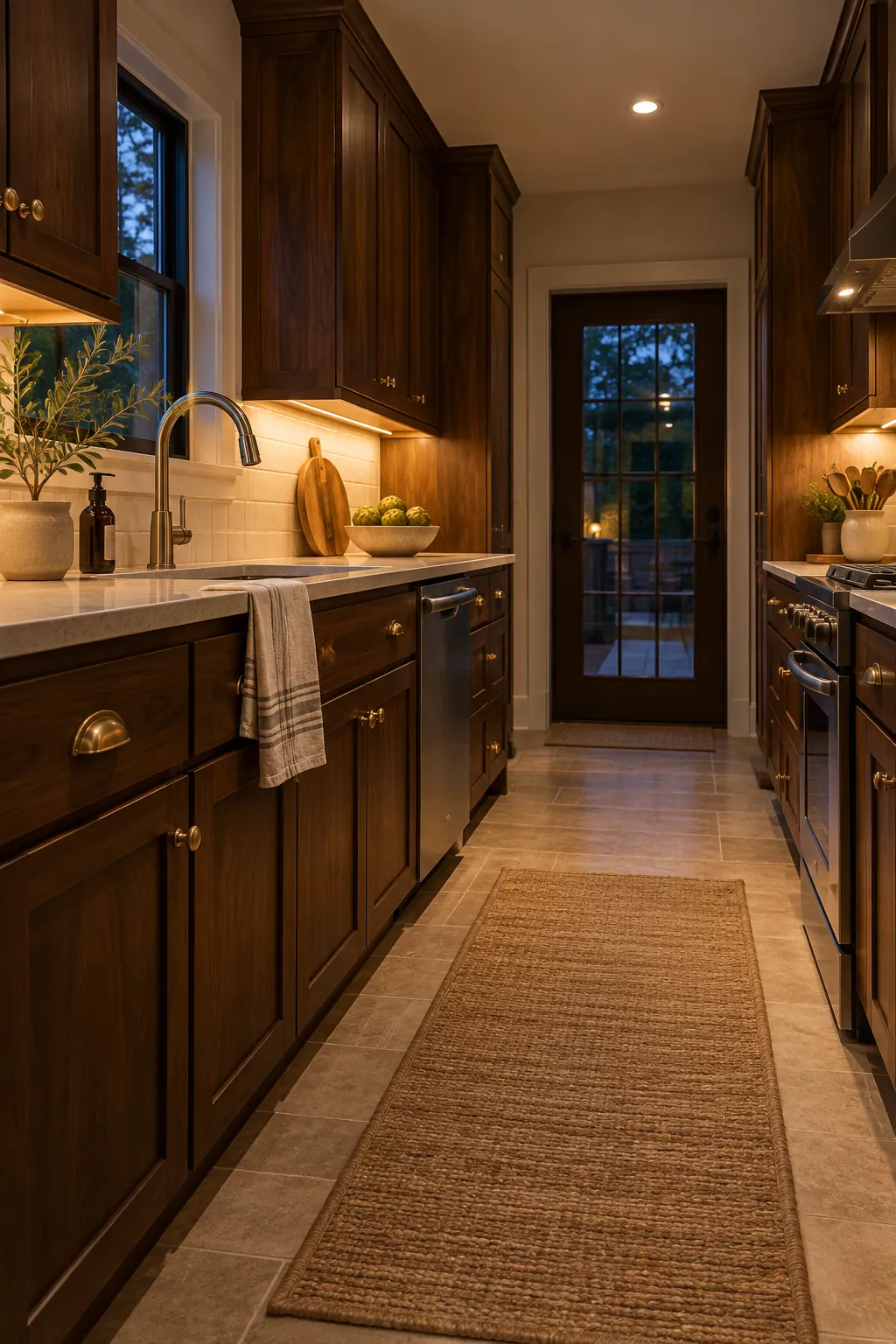
Paint the Walls a Soft Warm White
A warm white wall reflects more light without making dark wood look harsh. Test the paint beside the cabinets through morning and evening, because a cool gray undertone can make brown wood feel muddy. Keep trim close in color so the room looks calm rather than striped.
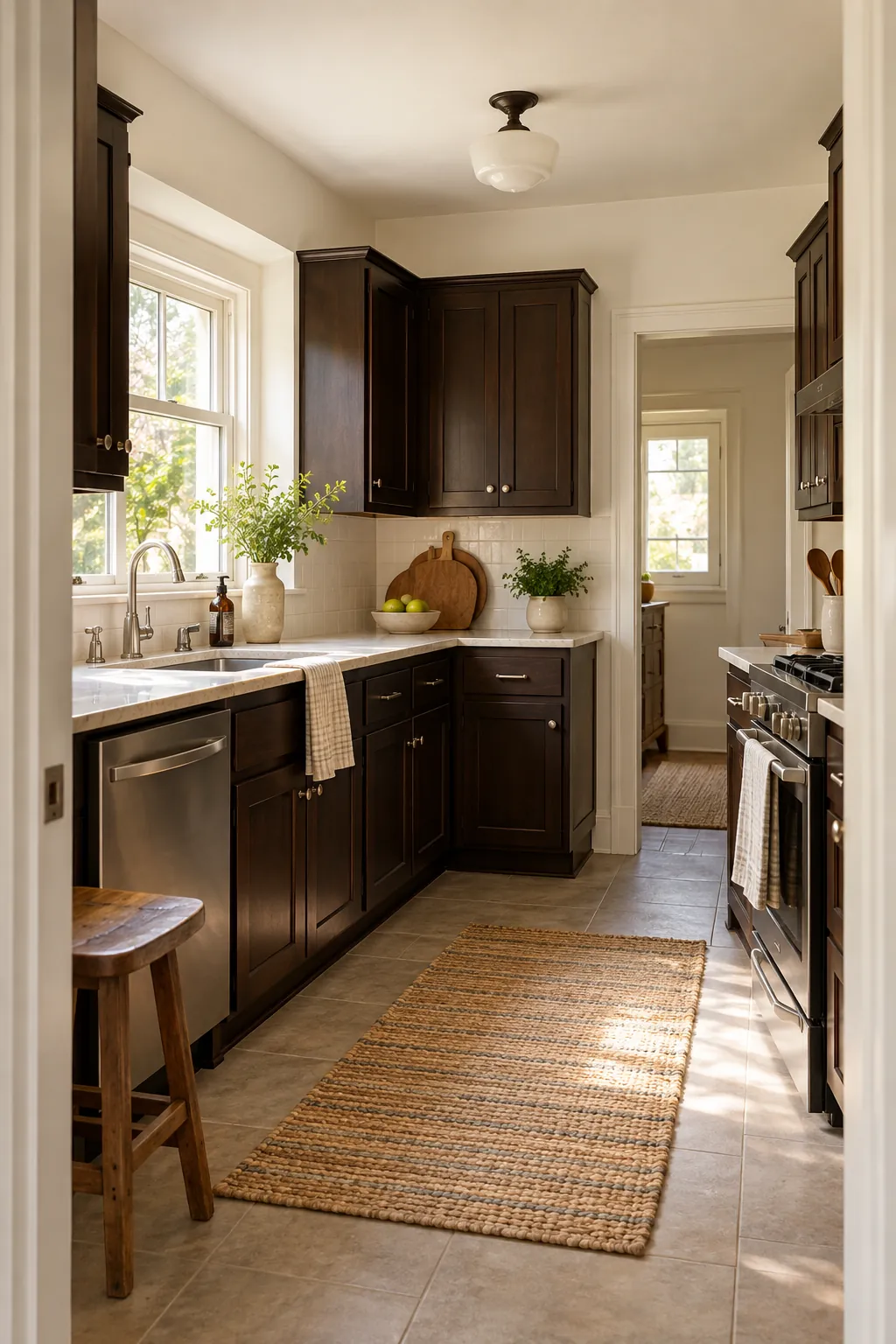
Use a Light Backsplash With Texture
A pale backsplash adds reflection between dark upper and lower cabinets. Handmade looking tile or quiet stone keeps the contrast from feeling clinical. Choose grout that supports the tile instead of drawing a busy grid across a small kitchen.
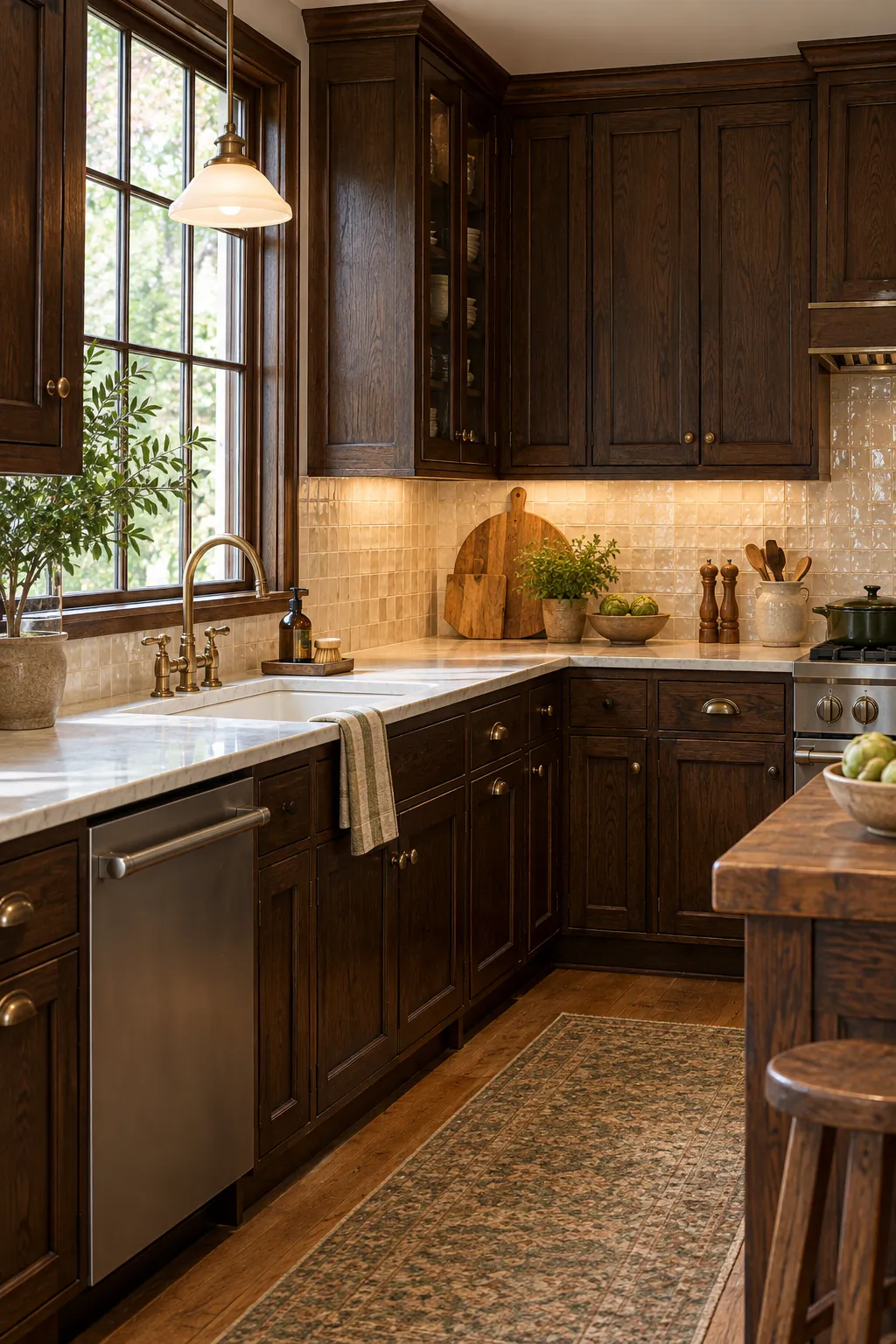
Bring In a Washable Runner
A runner softens hard floors and introduces light color at the center of the room. Choose a low pile weave with a pattern that disguises crumbs and keeps edges flat. Its long line can also make a narrow kitchen feel more settled.
Change Only the Cabinet Hardware
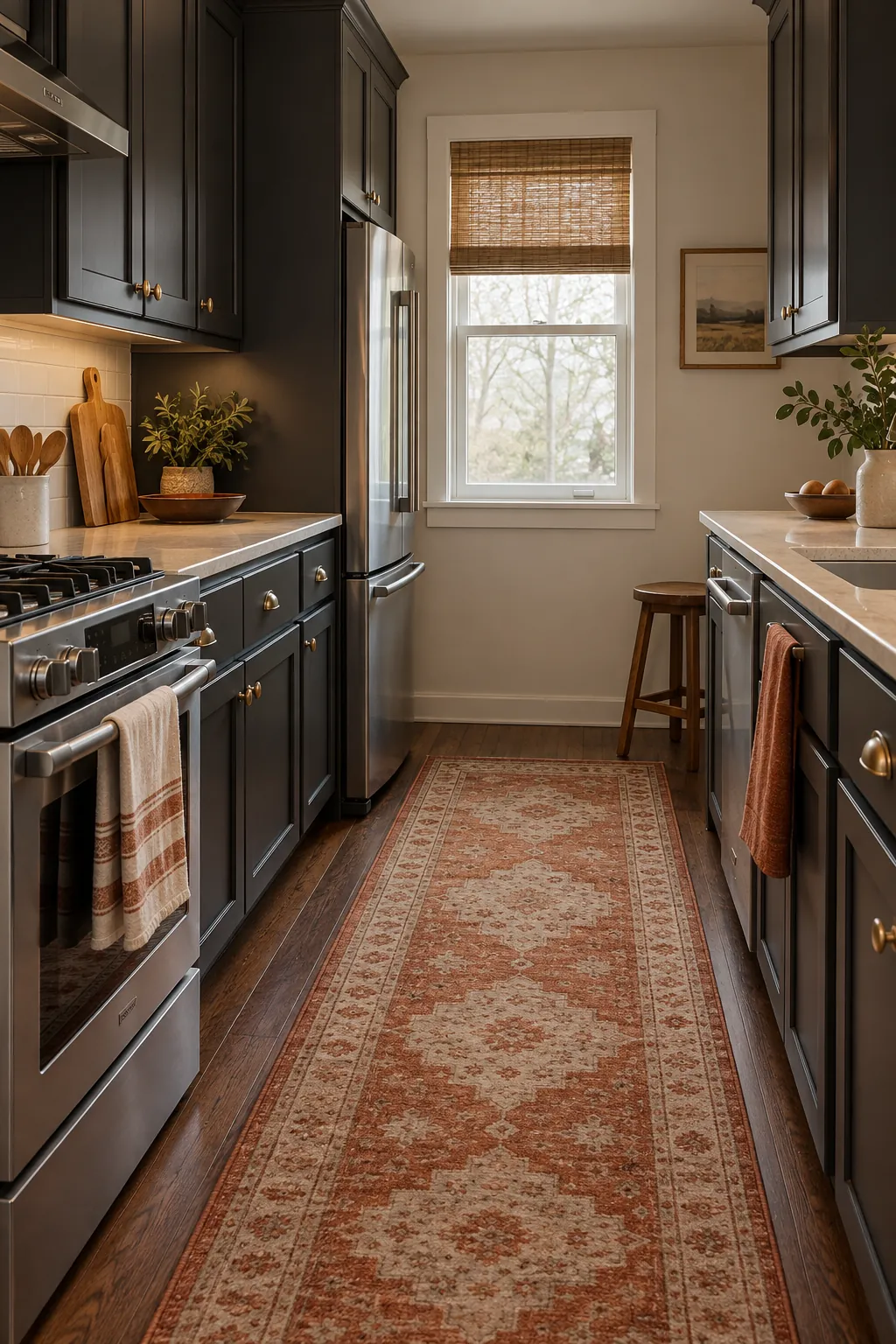
New knobs or pulls can clarify the style of sound cabinet doors without altering the finish. Match existing holes when possible and keep every handle aligned. A muted metal such as aged brass or dark bronze adds warmth without shouting.
Add a Small Table Lamp
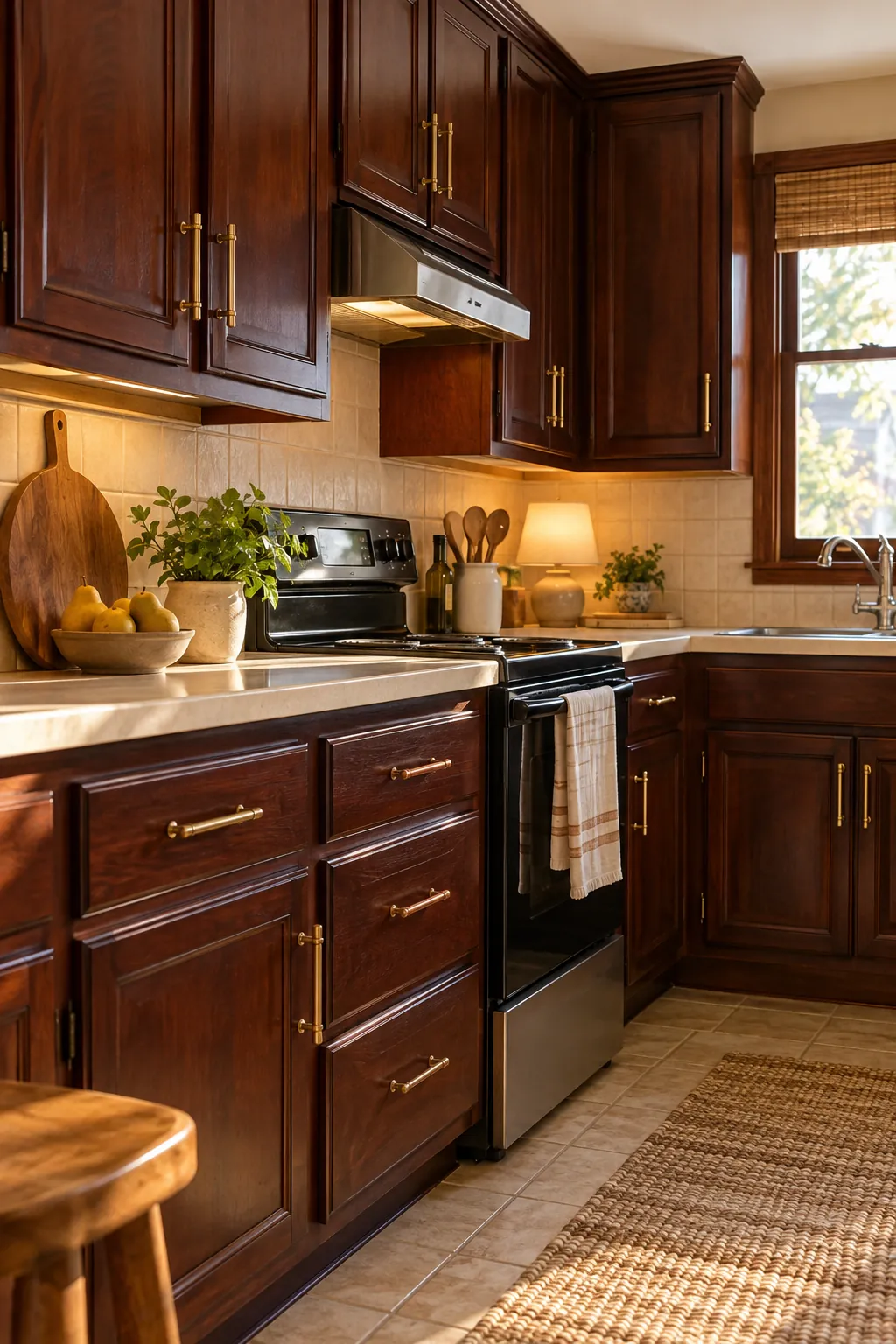
A compact lamp on a safe counter corner adds a domestic glow that task lights cannot provide. Keep it away from water and heat, and leave enough work surface for food preparation. A ceramic base and fabric shade can make the kitchen feel connected to nearby living spaces.
Clear the Cabinet Tops
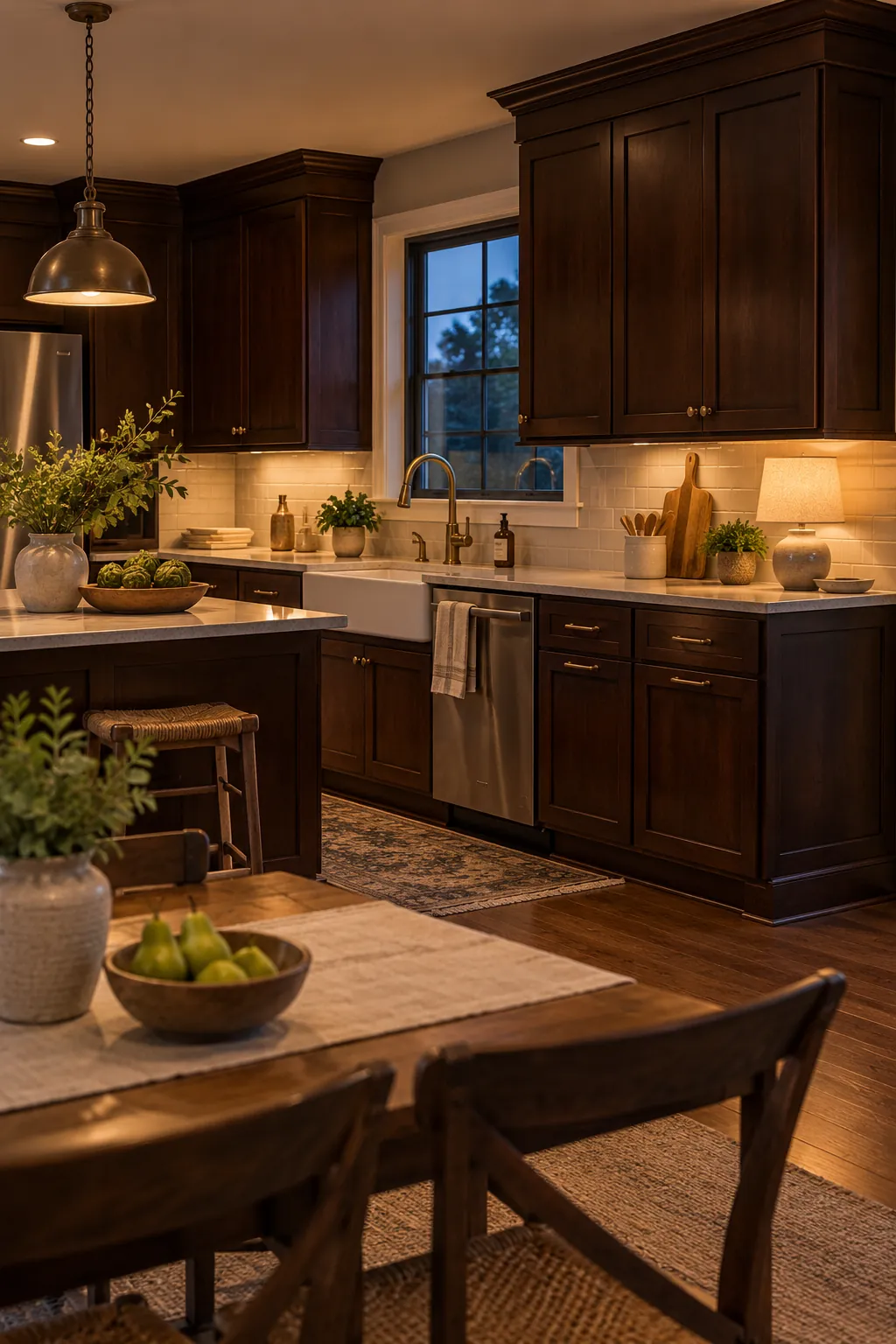
Objects crowded above dark cabinets create another heavy band near the ceiling. Remove most of them, clean the surface, and keep only one or two pieces with enough space around them. The quiet gap lets the ceiling feel higher and the cabinetry more deliberate.
Repeat the Wood in One Lighter Tone
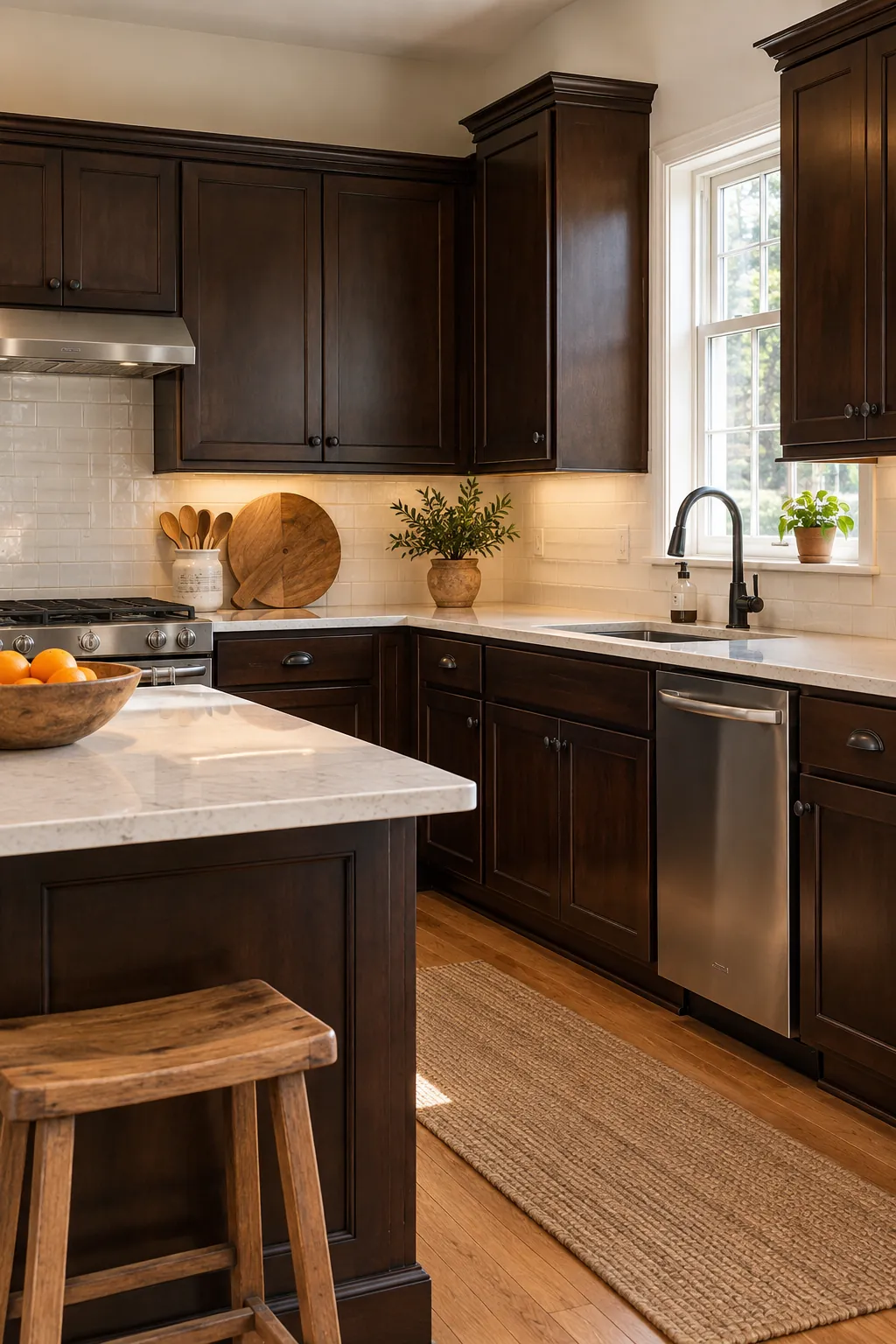
Dark cabinets feel intentional when another wood appears nearby in a lighter value. Use an oak stool, cutting board, or small table rather than trying to match the cabinet stain. The variation adds depth and keeps the room from becoming one dark block.
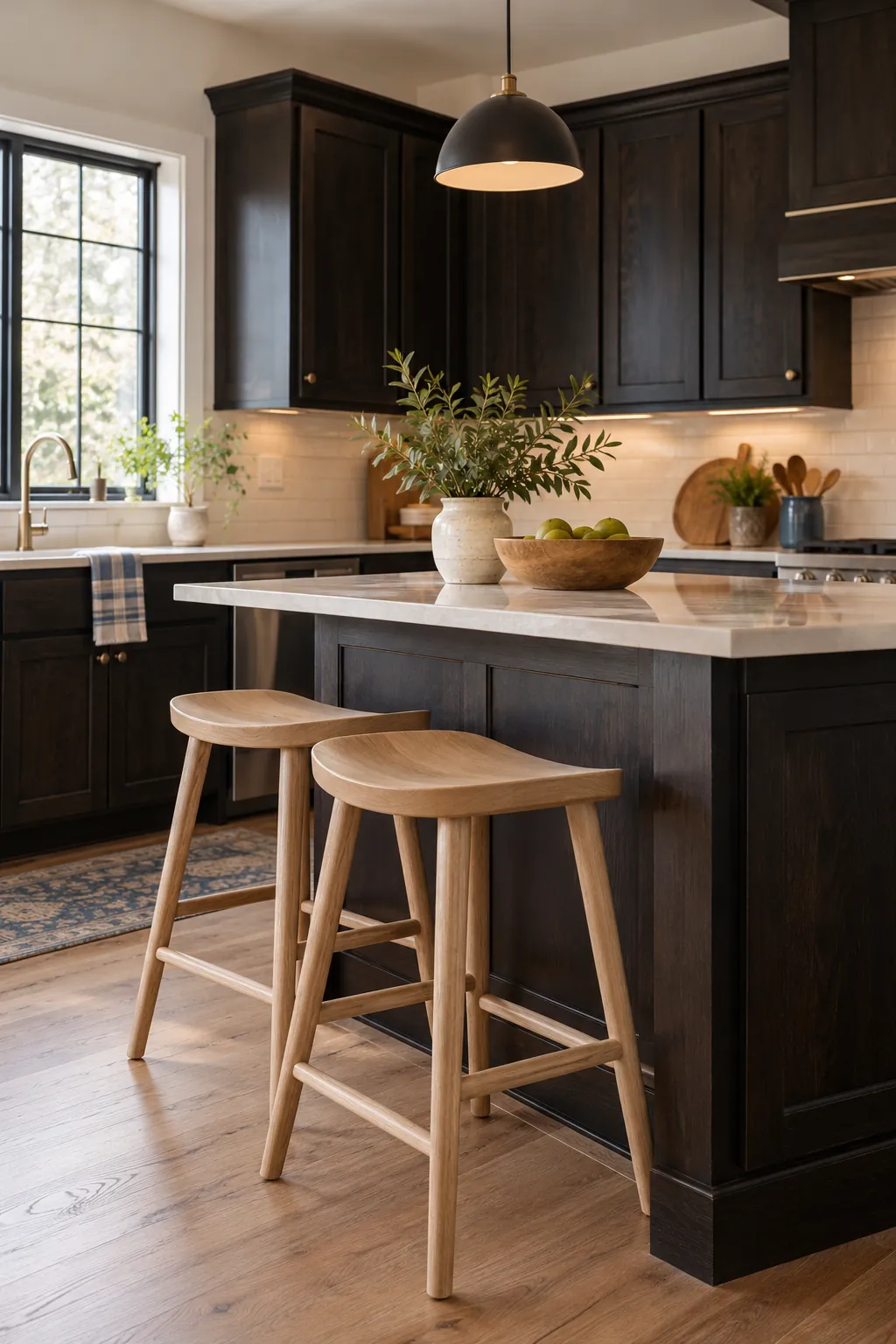
Display Pale Everyday Ceramics
A small group of cream bowls or white stoneware can brighten an open shelf without turning into decorative clutter. Display pieces that are actually used, and repeat their color in a towel or planter. Limit the group so the dark cabinets remain the main material.
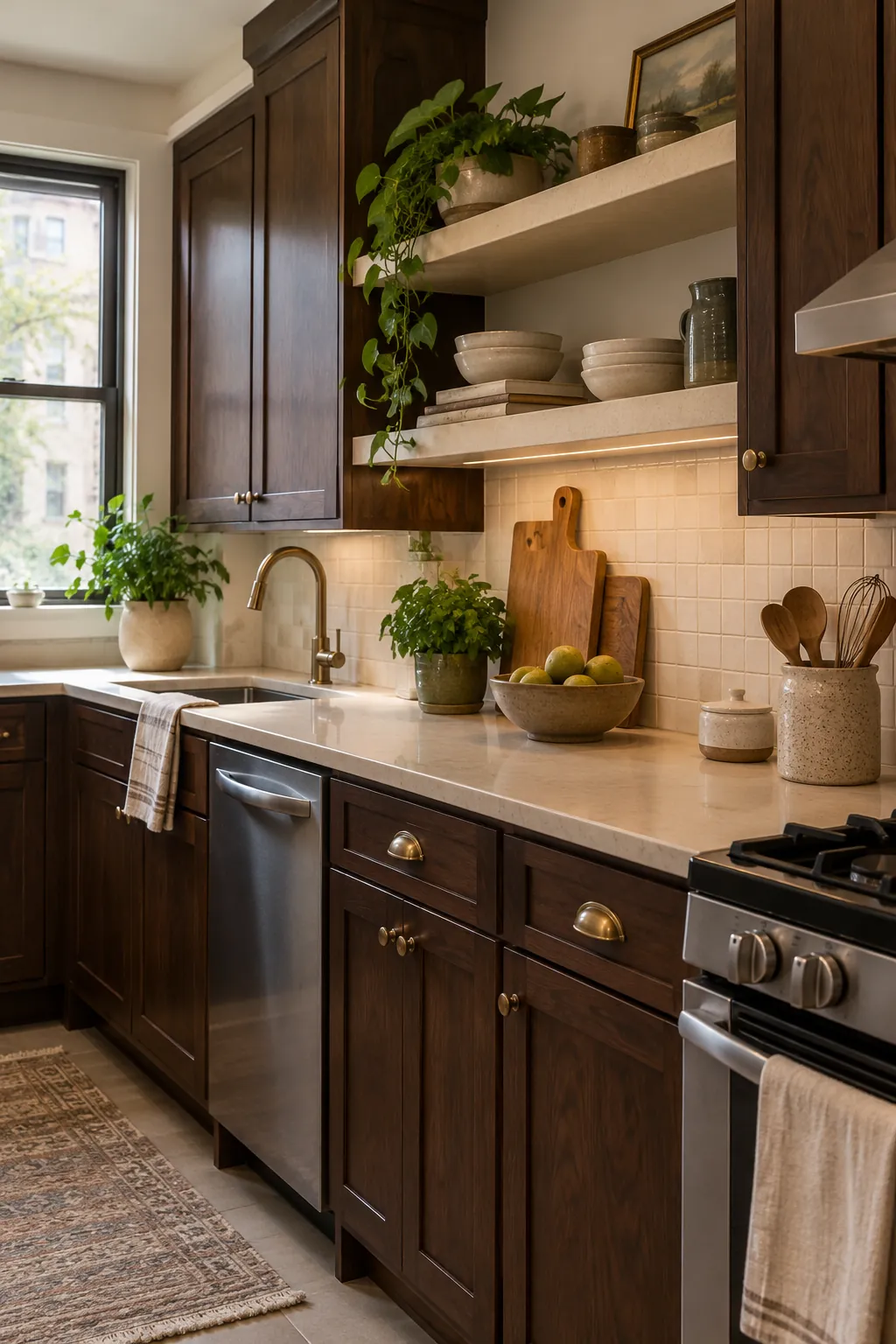
Use Natural Fiber Window Shades
A woven shade filters glare and adds a warm middle tone between dark cabinets and a bright window. Keep the weave open enough for useful daylight and clear of the sink splash zone. Its texture makes a simple window feel finished without heavy curtains.
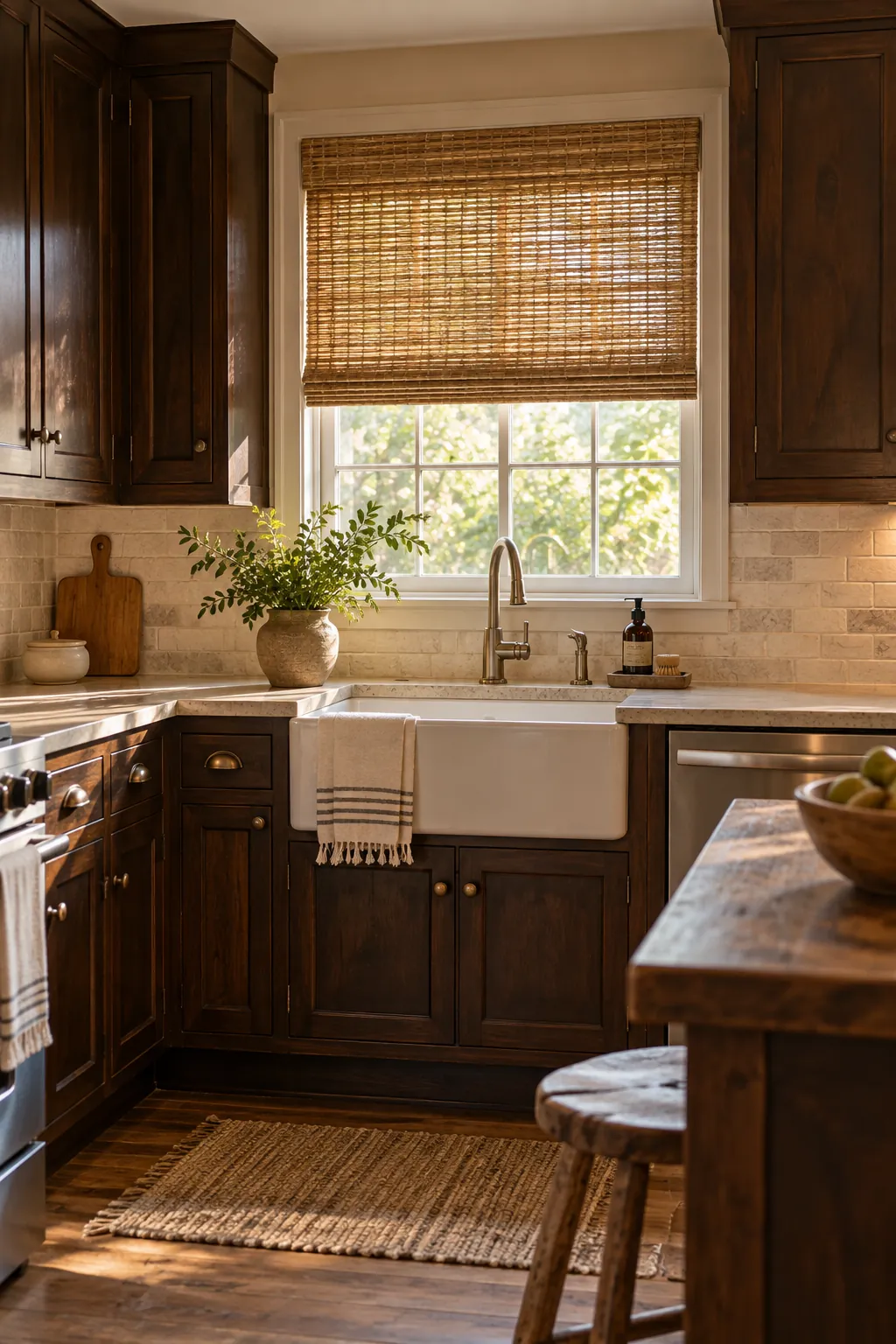
Swap a Dark Shade for a Diffuse Pendant
A solid pendant can make an already dark kitchen feel smaller. Replace it with a pale fabric, opal glass, or perforated shade that spreads light across the table. Check scale and clearance so the fixture improves the room without dominating it.
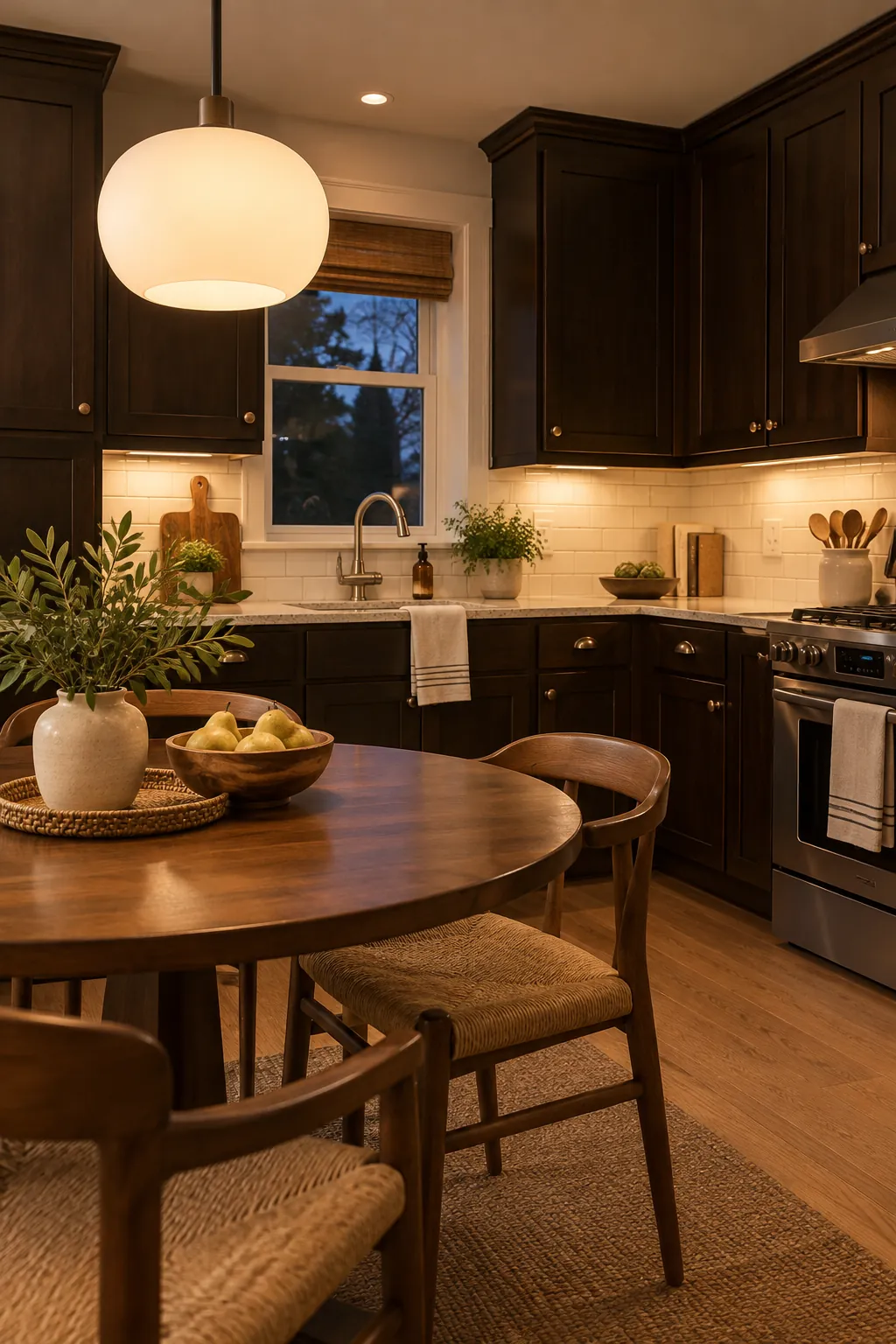
Keep Counters Visually Quiet
Dark cabinets gain breathing room when the counters are not filled edge to edge. Group daily tools on one tray and store occasional appliances elsewhere. The remaining open surface reflects light and makes cooking easier at the same time.
Add a Light Wood Cutting Board
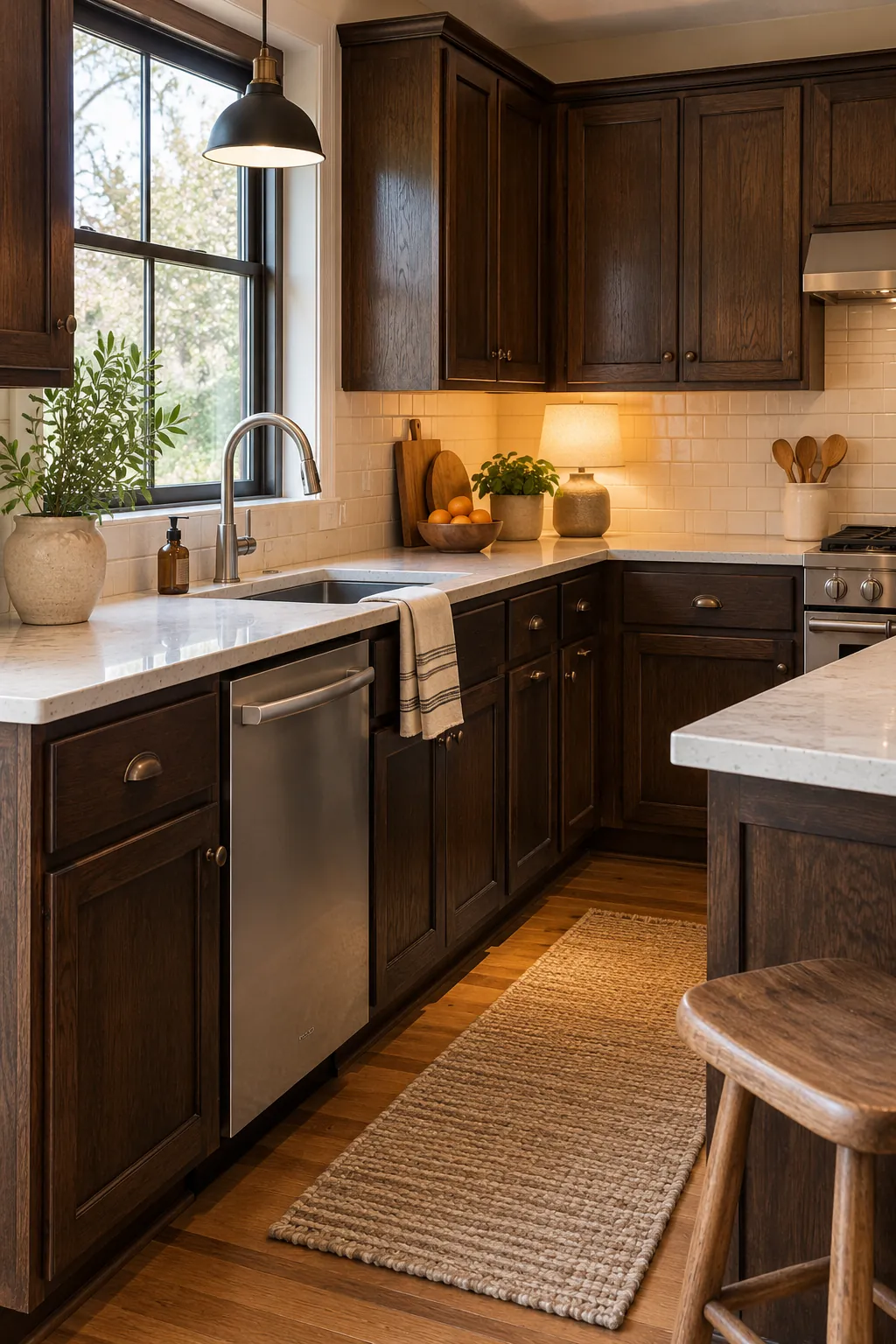
A large cutting board left upright can break a dark backsplash zone with a useful natural surface. Choose a simple shape and real wood that can be cleaned and maintained. It works best as one generous piece rather than a crowd of tiny boards.
Use Cream or Oatmeal Textiles
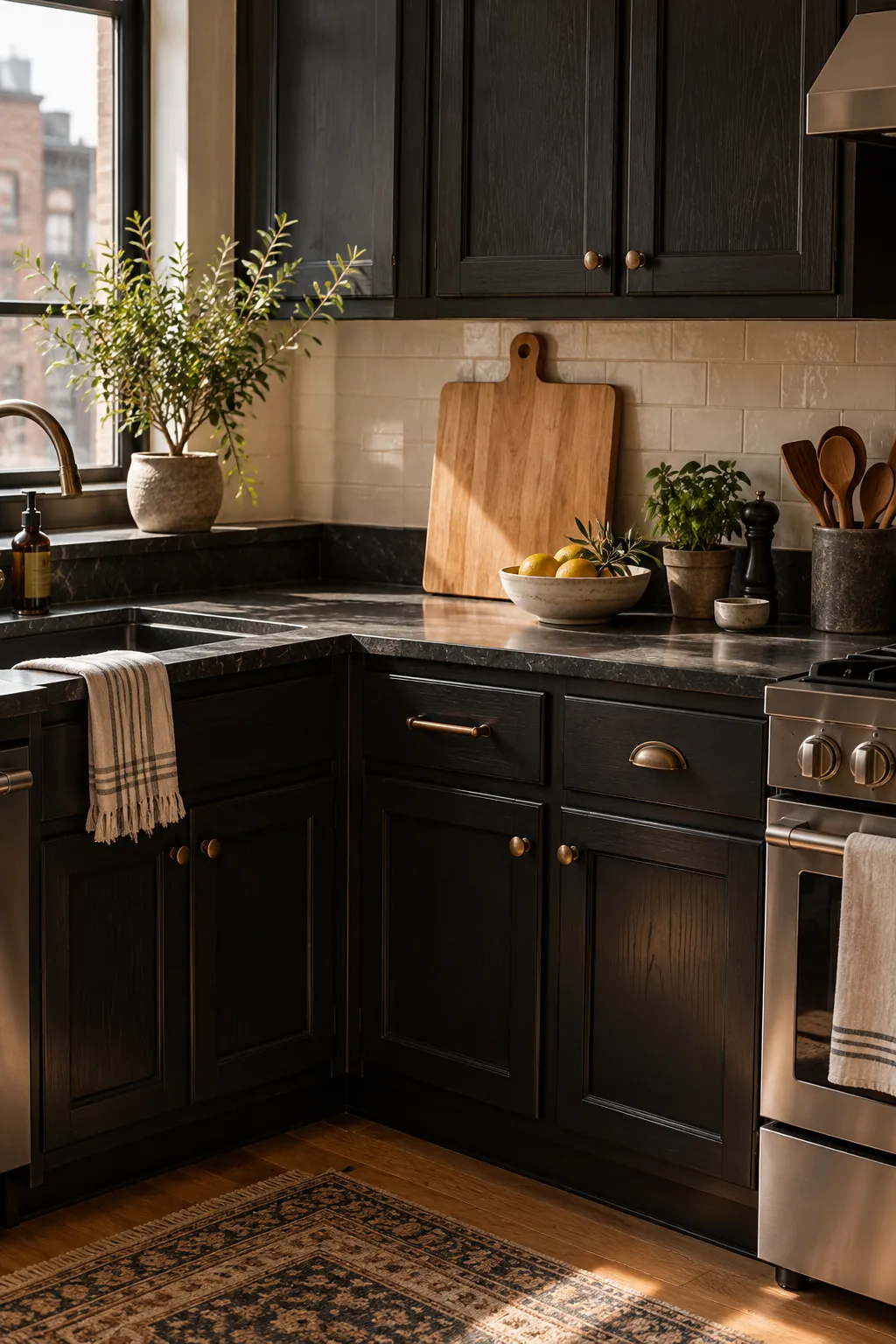
Towels, seat cushions, and a simple tablecloth can introduce light value without permanent work. Choose washable fabrics with visible weave so they feel warm rather than stark. Repeat the same neutral two or three times and stop before the room feels themed.
Place Greenery Near the Window
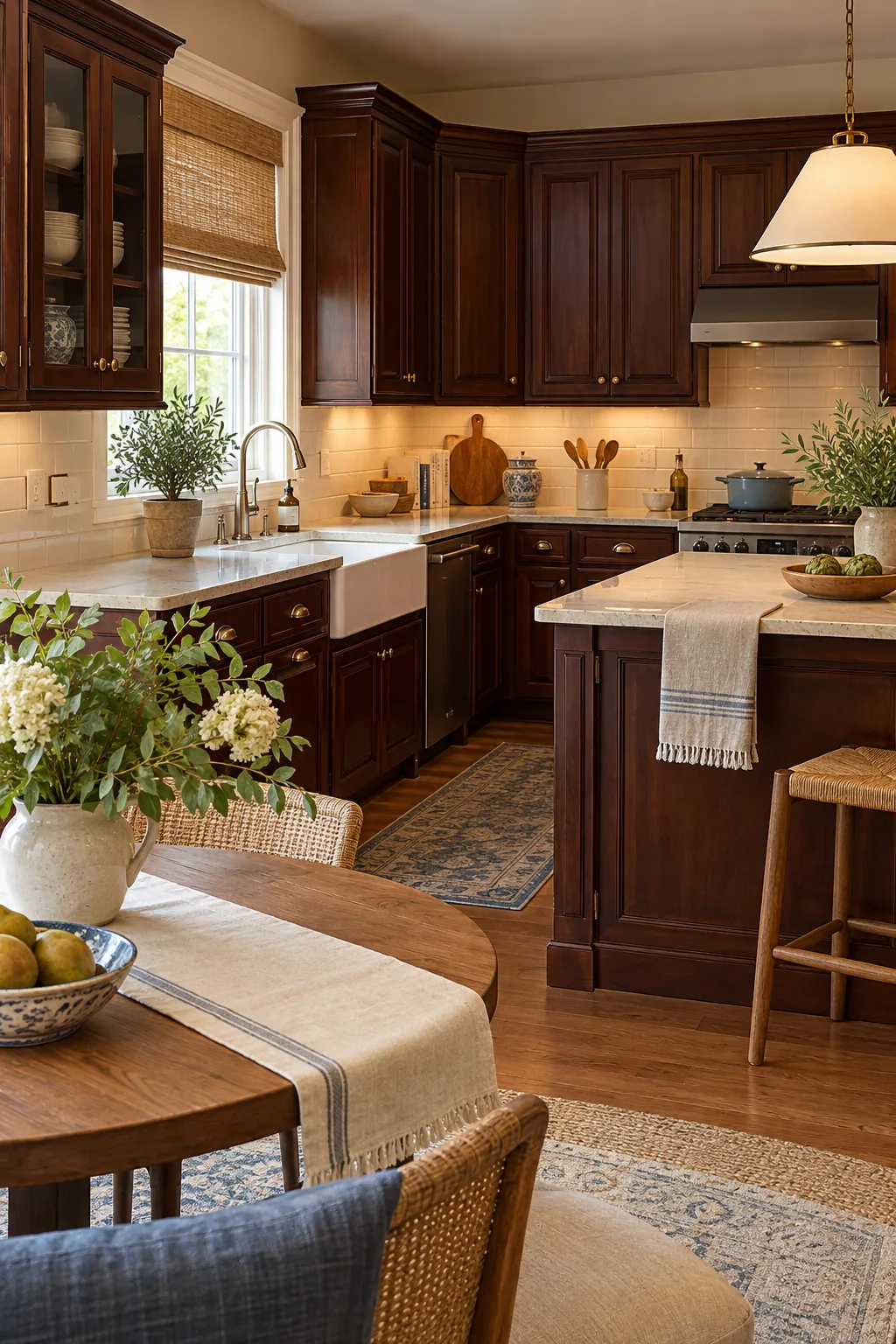
A healthy herb pot or modest plant brings life to dark wood and softens hard lines. Put it where daylight and watering are practical, not on every available ledge. One strong green note often does more than several small decorative objects.
Choose Matte Rather Than Glossy Accents
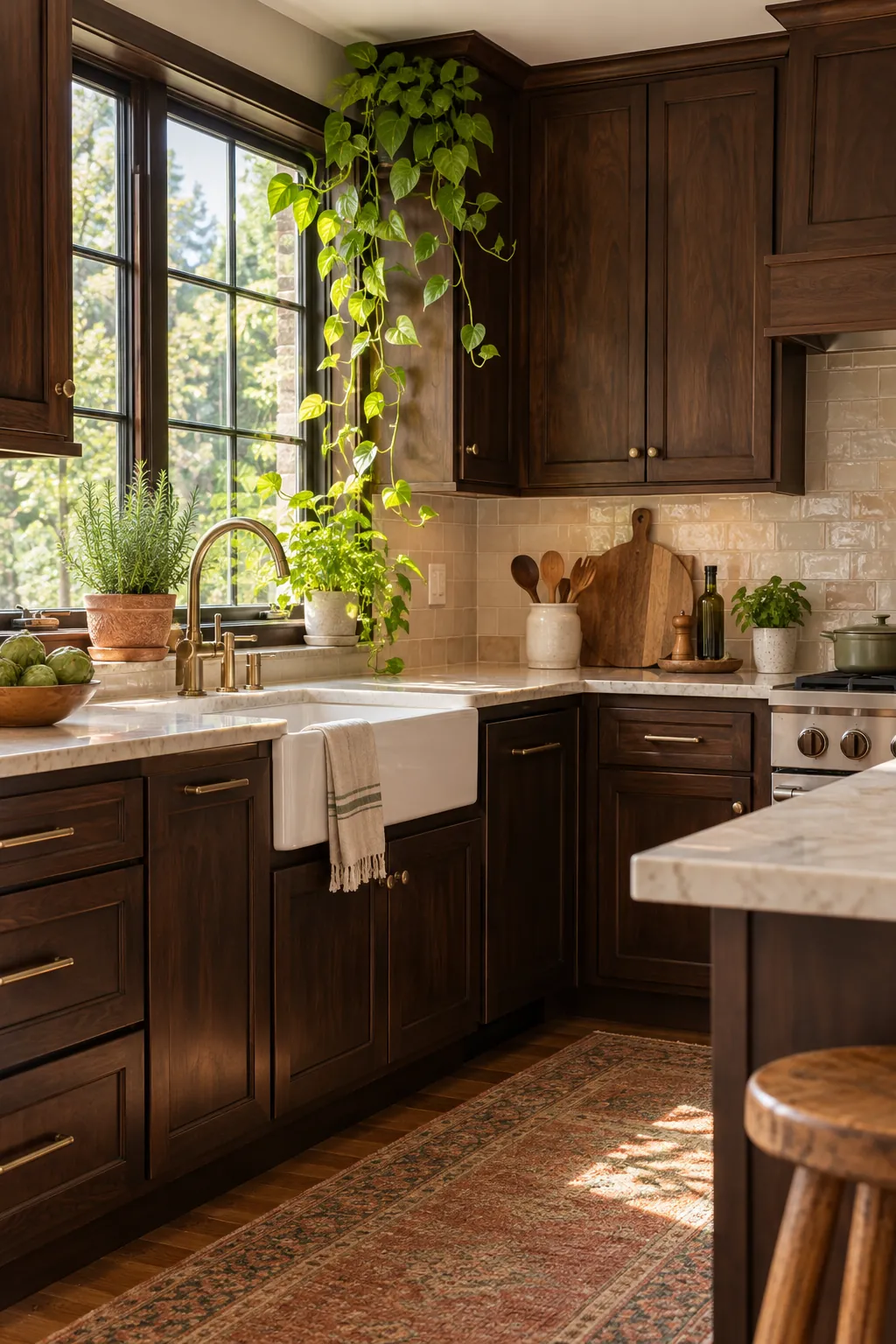
High shine can create sharp glare beside dark cabinets, while matte surfaces keep the room cozy. Use quiet ceramics, brushed metal, and honed stone for accessories that stay visible. A few controlled highlights are enough to prevent the room from feeling flat.
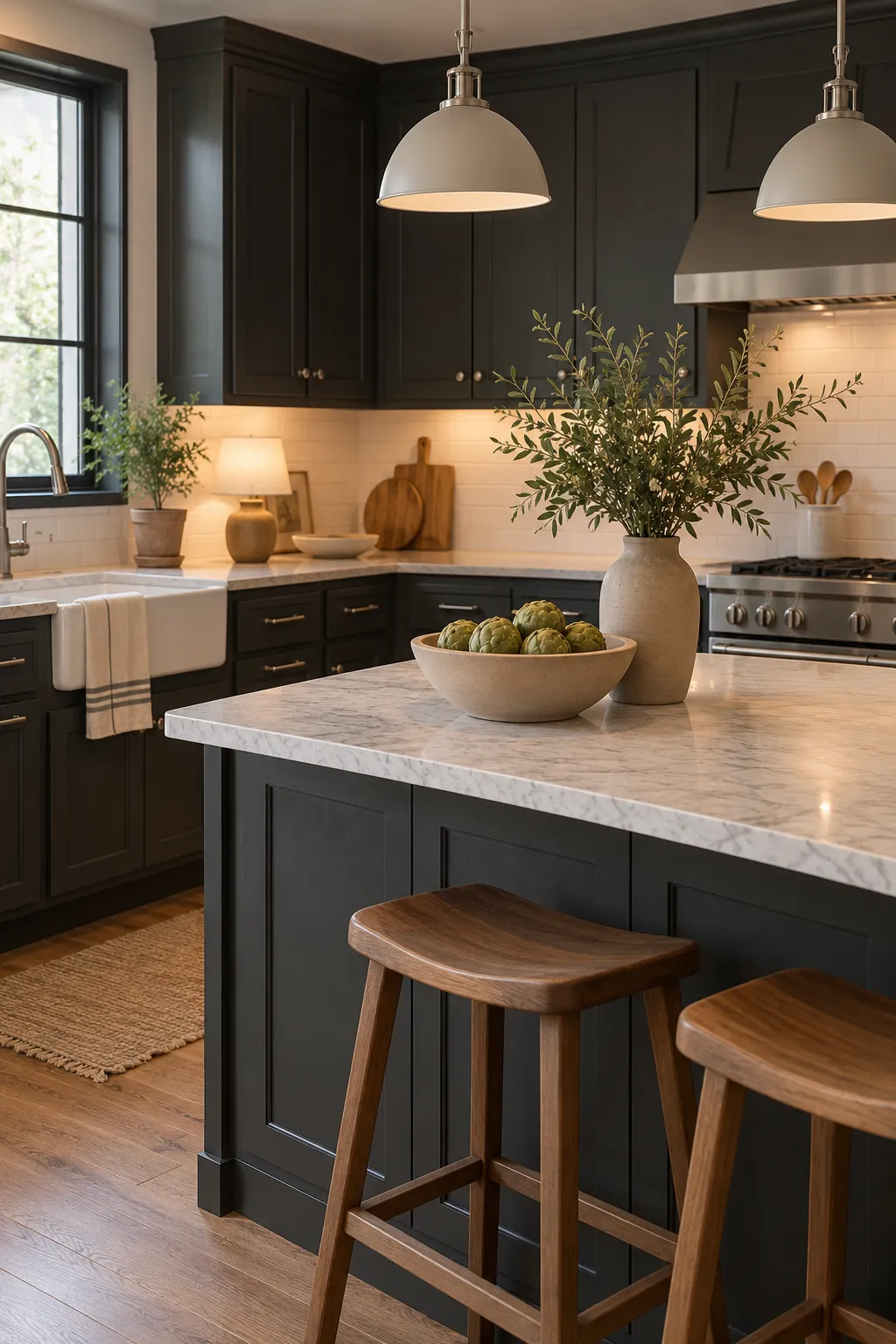
Warm Up a Cool Countertop
If the counter has a cool gray cast, repeat warmer colors directly beside it through wood, linen, and ceramic. The goal is not to hide the surface but to change its context. A restrained rust or olive accent can bridge gray stone and brown cabinets.
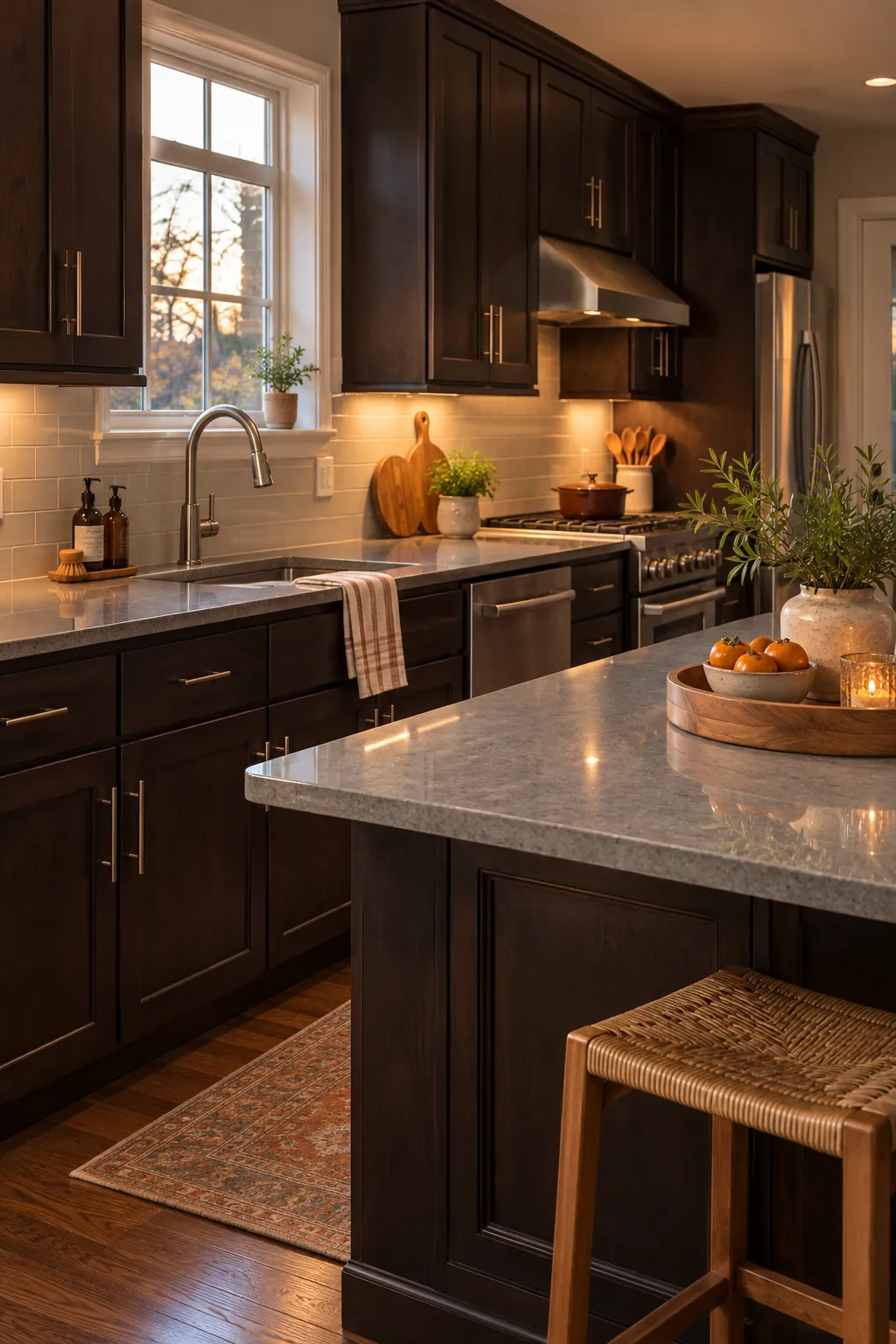
Add Pull Out Bins to Deep Cabinets
A deep pantry becomes easier to use when food groups come forward together. Fit sturdy bins or sliding baskets to the existing shelves, then keep the heaviest items low. Better function can make old cabinets worth keeping even when the interior is awkward.
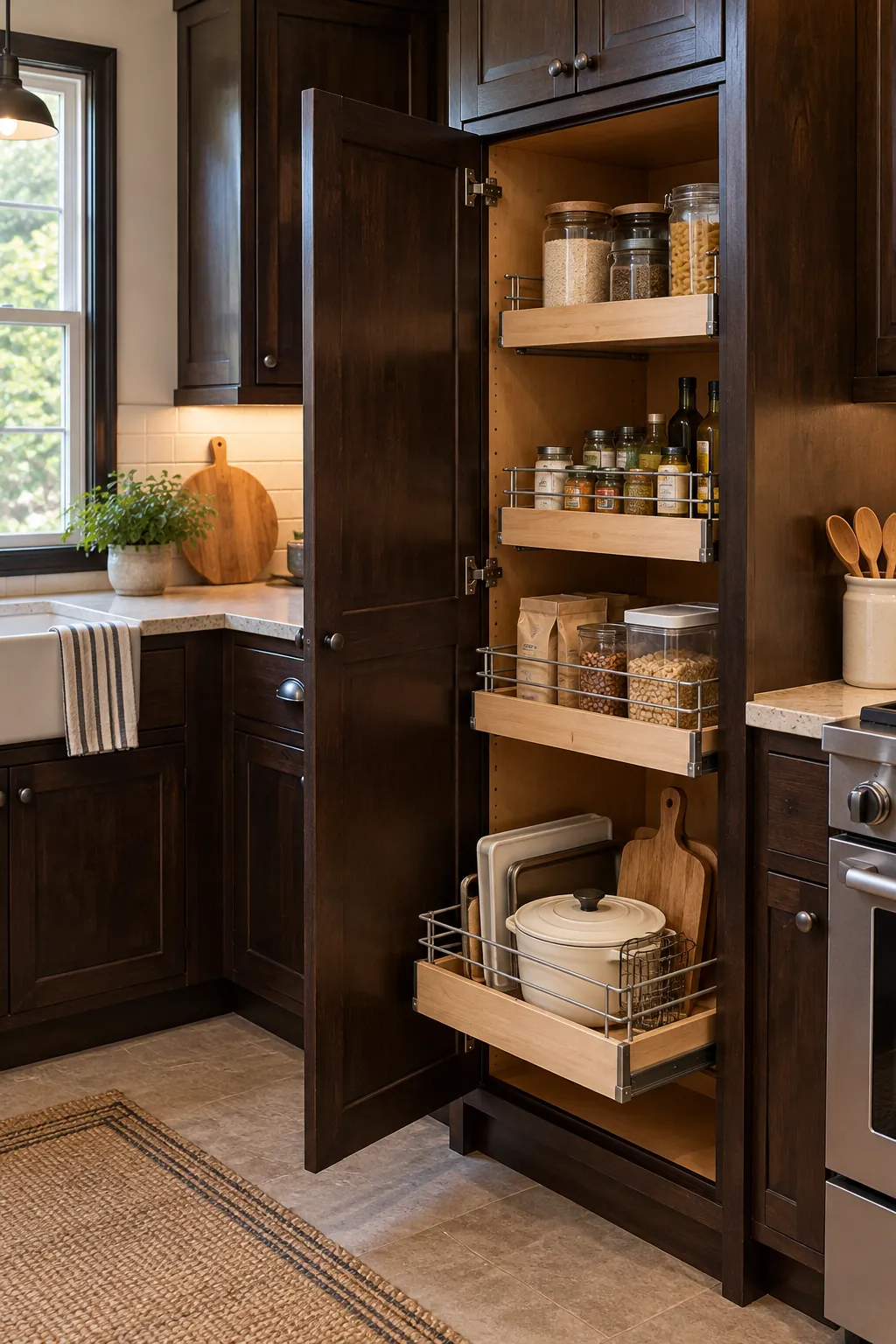
Line Glass Cabinets With Pale Fabric
A glass front cabinet can look dark when everything behind it disappears. Add a removable pale backing or restrained fabric panel so useful dishes read clearly. Keep the pattern quiet and install it flat to avoid a temporary craft appearance.
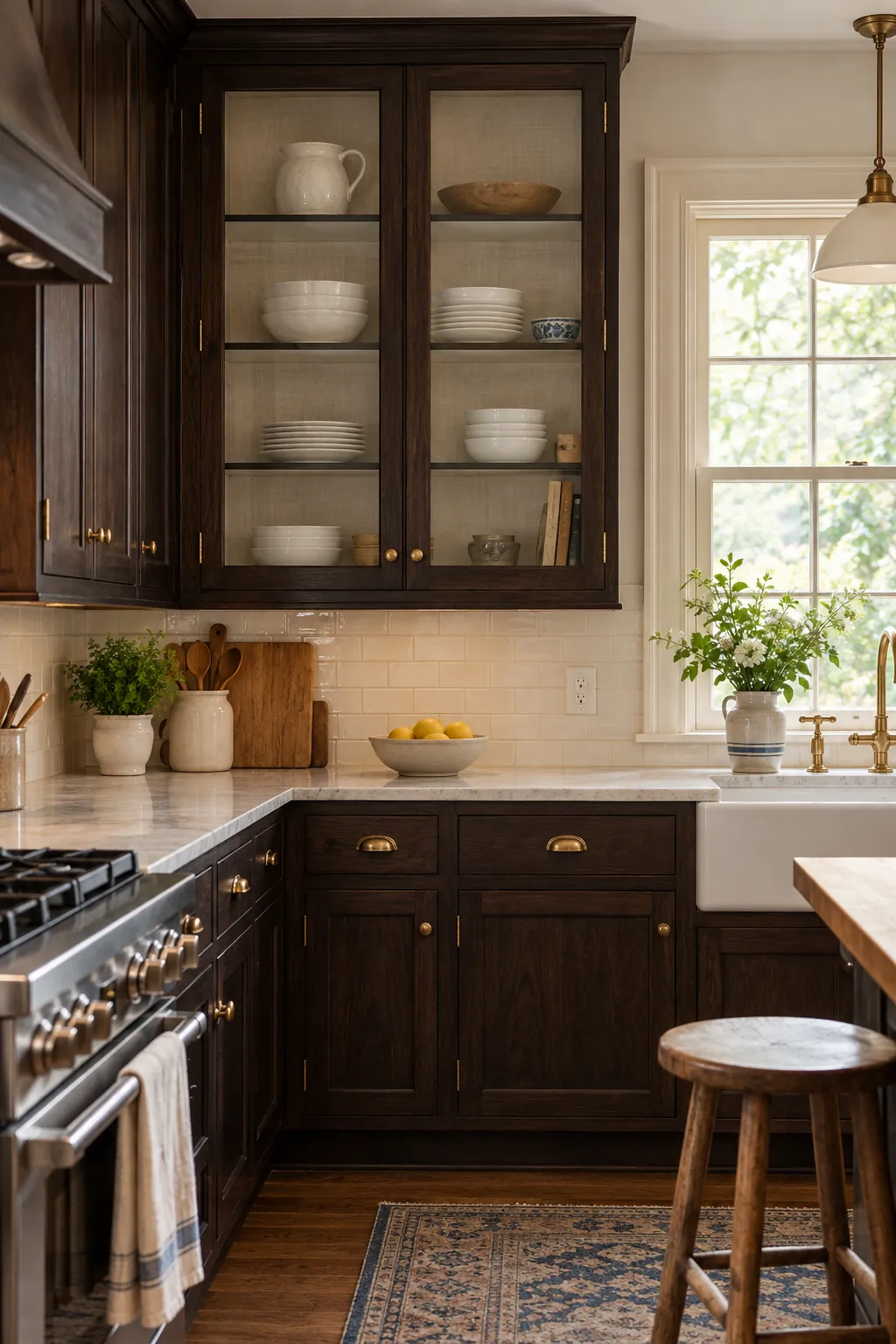
Use an Open Shelf Sparingly
Removing one awkward upper cabinet can release a crowded window or doorway, but it is not necessary everywhere. A single sturdy shelf can hold daily cups and leave more wall visible. Match its tone to another wood so it feels integrated with cabinets that stay.
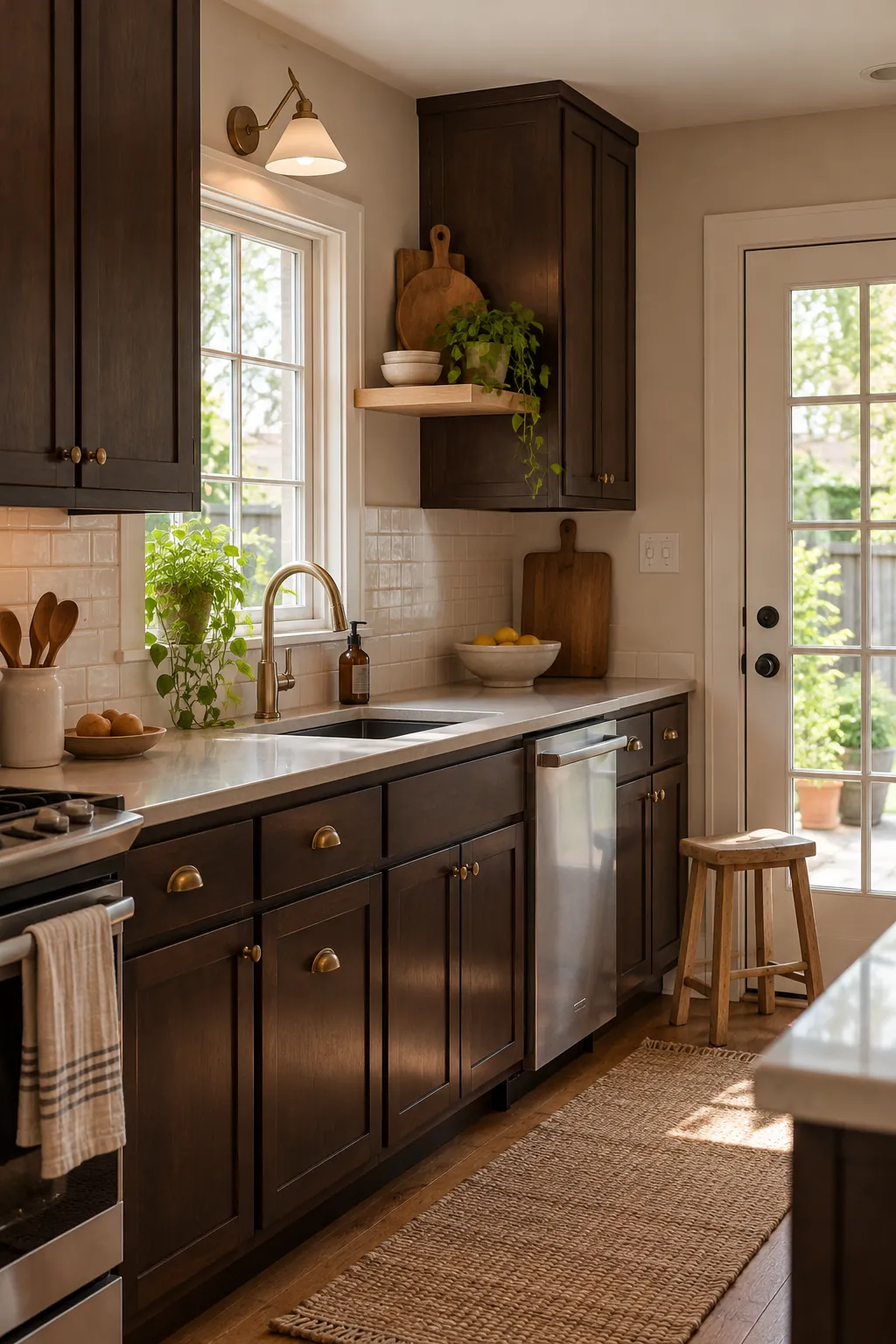
Add a Light Breakfast Table
A small pale wood or cream table creates a useful bright plane without touching the cabinetry. Keep the shape simple and leave comfortable circulation around the chairs. It can also draw attention toward the window instead of the darkest wall.
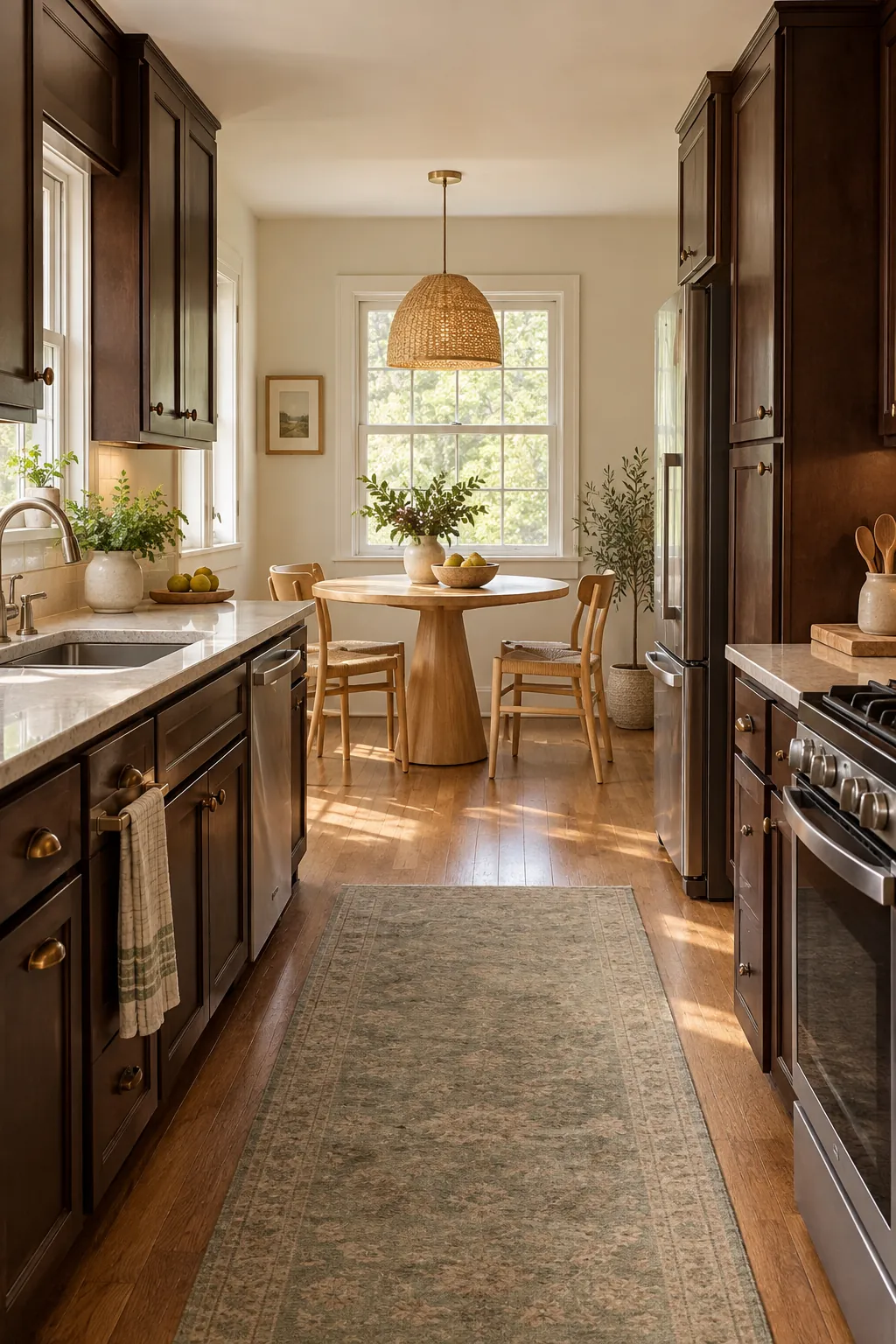
Replace Heavy Counter Stools
Bulky dark stools can merge with base cabinets and make an island feel solid. Choose stools with open backs, lighter wood, or woven seats so more floor remains visible. Preserve a comfortable seat height and enough space for knees.
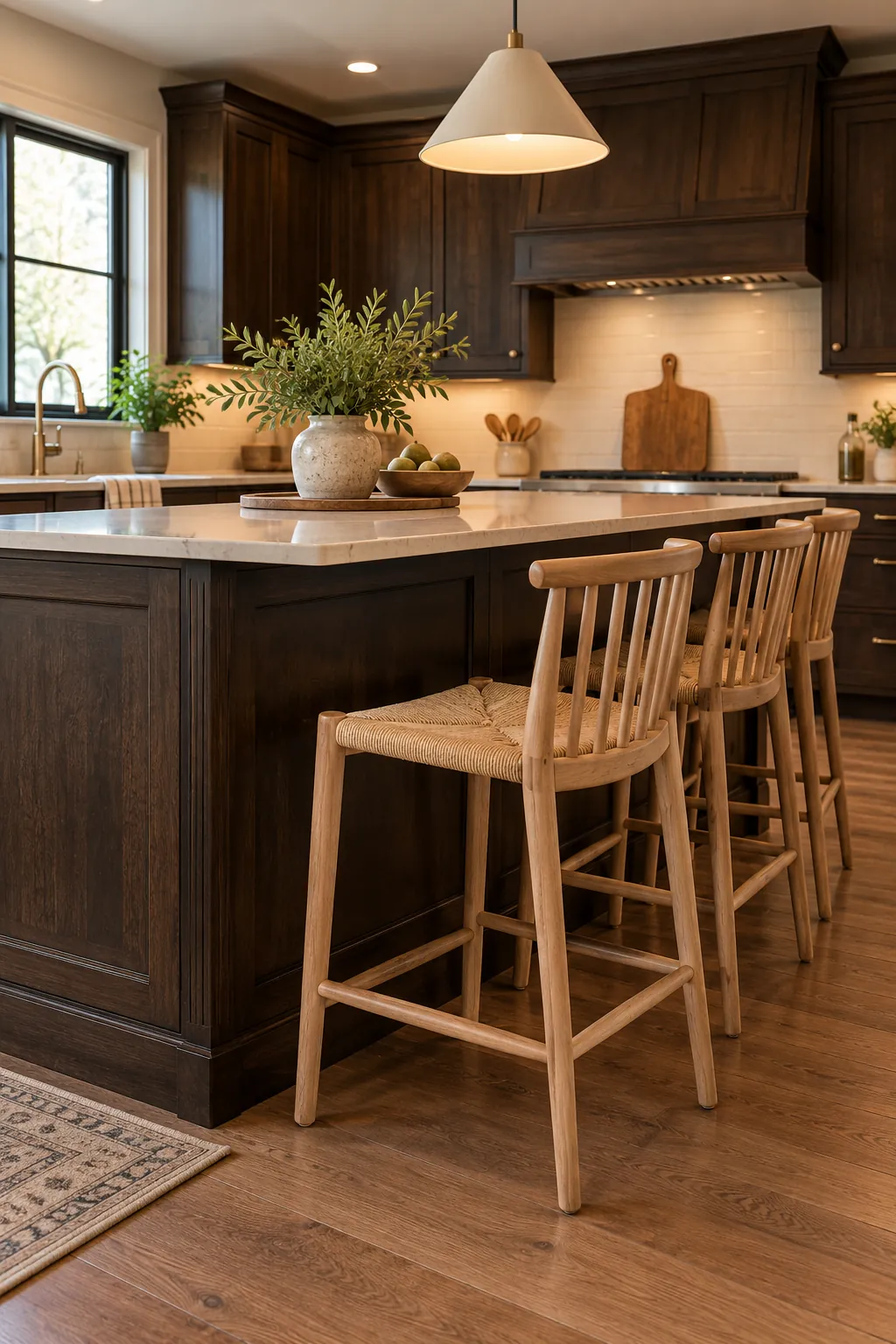
Use One Warm Accent Color
A measured accent such as rust, olive, or muted red makes dark cabinets feel rich rather than dull. Repeat it in two or three small functional pieces, not every accessory. The controlled color gives the room personality without risking a permanent finish.
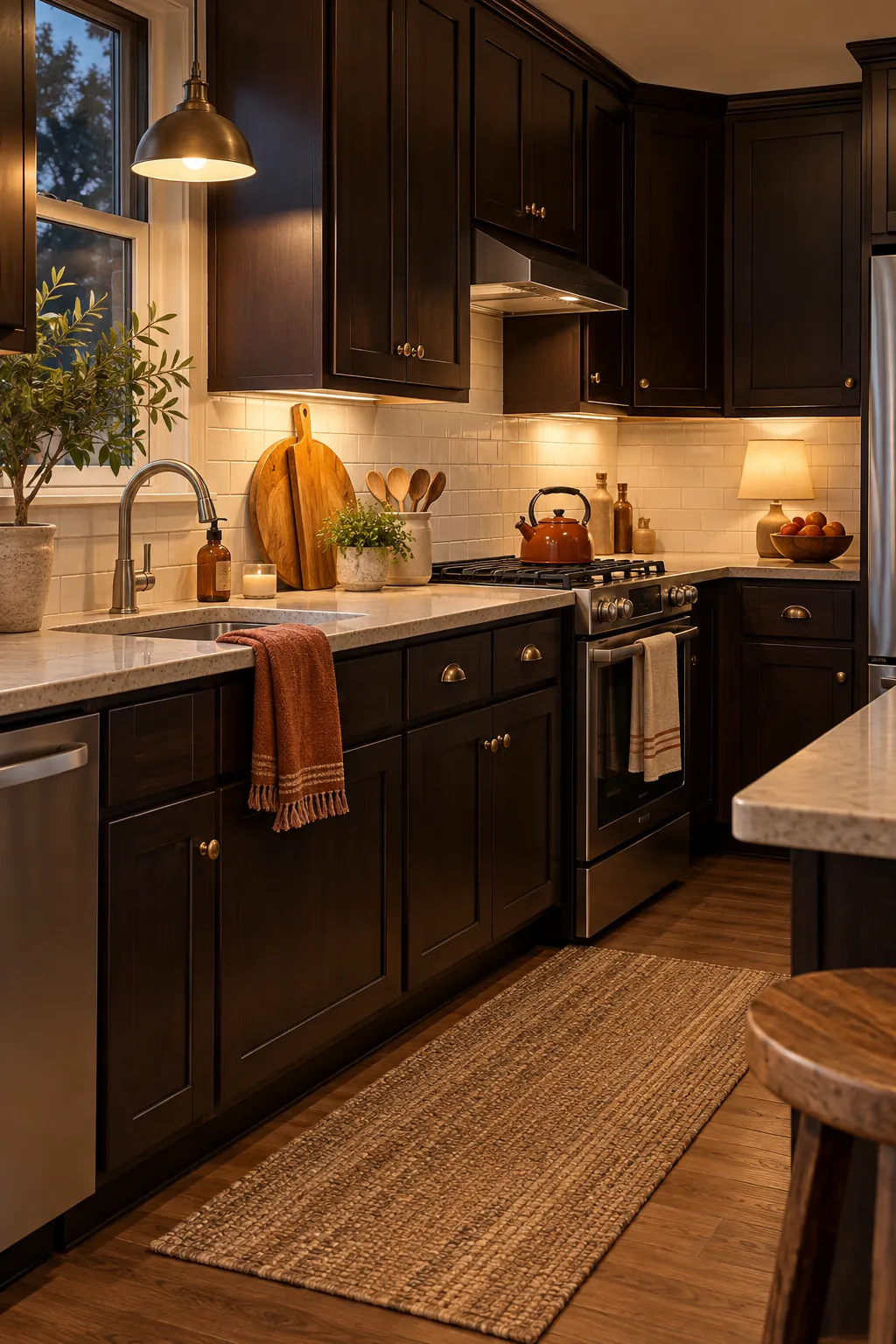
Reflect Light With a Simple Mirror
A small mirror can help a window carry light into a breakfast corner that has no upper cabinets. Keep it away from grease and choose a plain frame that relates to the room. The reflection should show daylight or a calm wall, not cooking clutter.
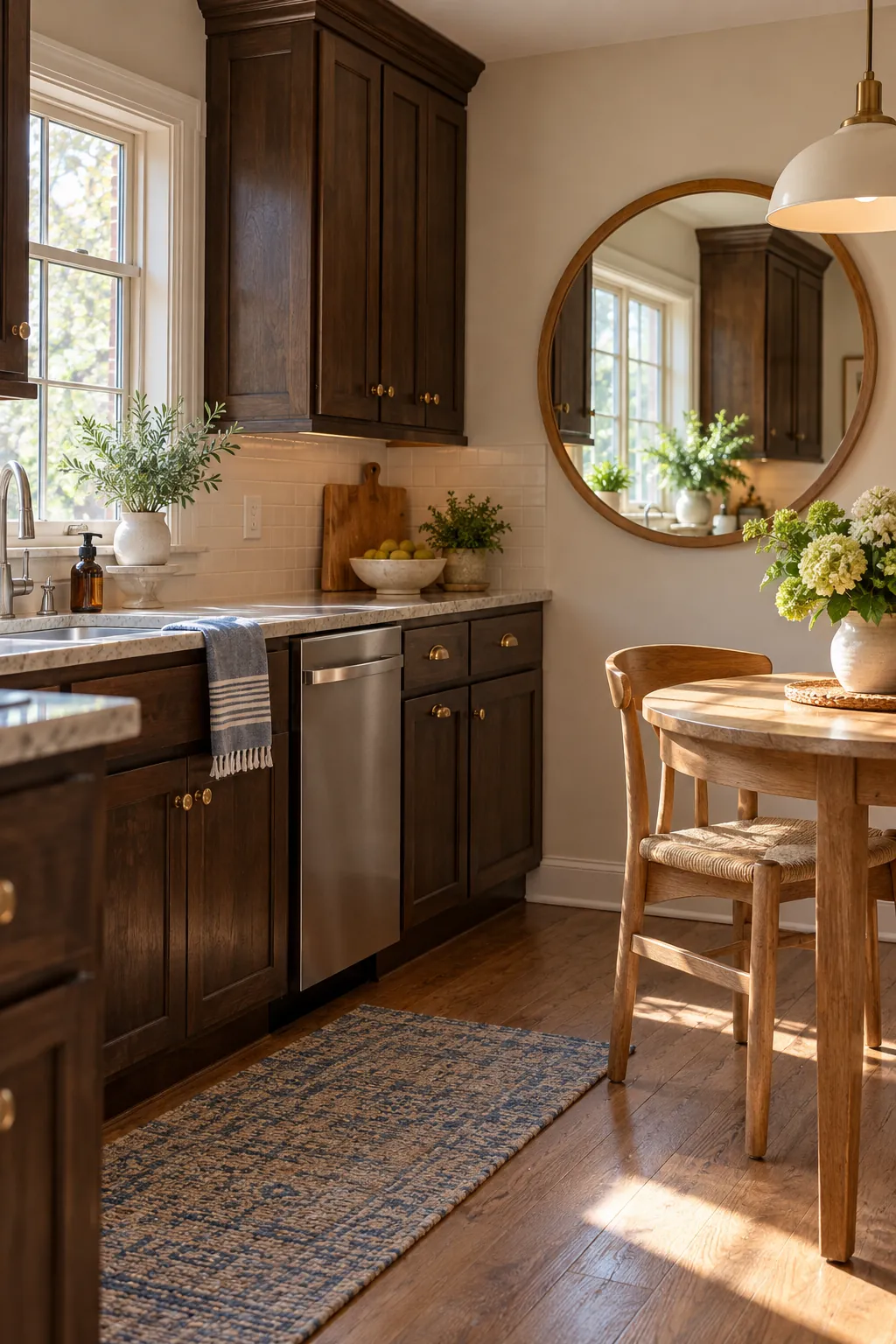
Clean and Condition Real Wood
Old dark wood can look heavier when grease and dry finish scatter light unevenly. Use a cleaner and conditioner suitable for the existing finish, and test it inside a door first. Restored grain often looks warmer and more intentional without any color change.
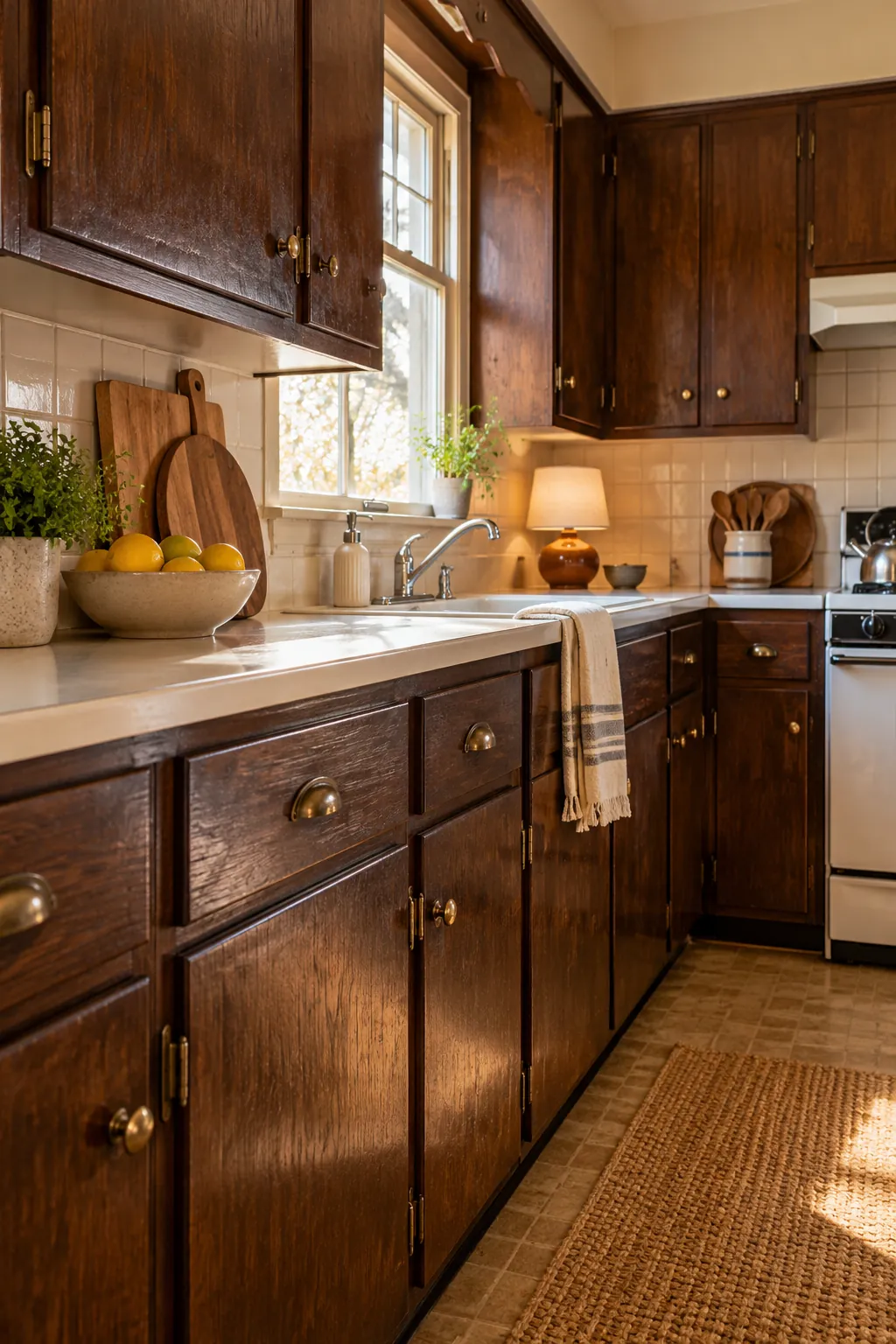
Edit the Whole Palette Before Buying More
A cozy dark kitchen needs contrast, warmth, and light, but not a new item in every corner. List the fixed colors in the cabinets, counter, floor, and appliances, then choose one light neutral and one accent to repeat. This final edit keeps small improvements working together instead of becoming another layer of clutter.