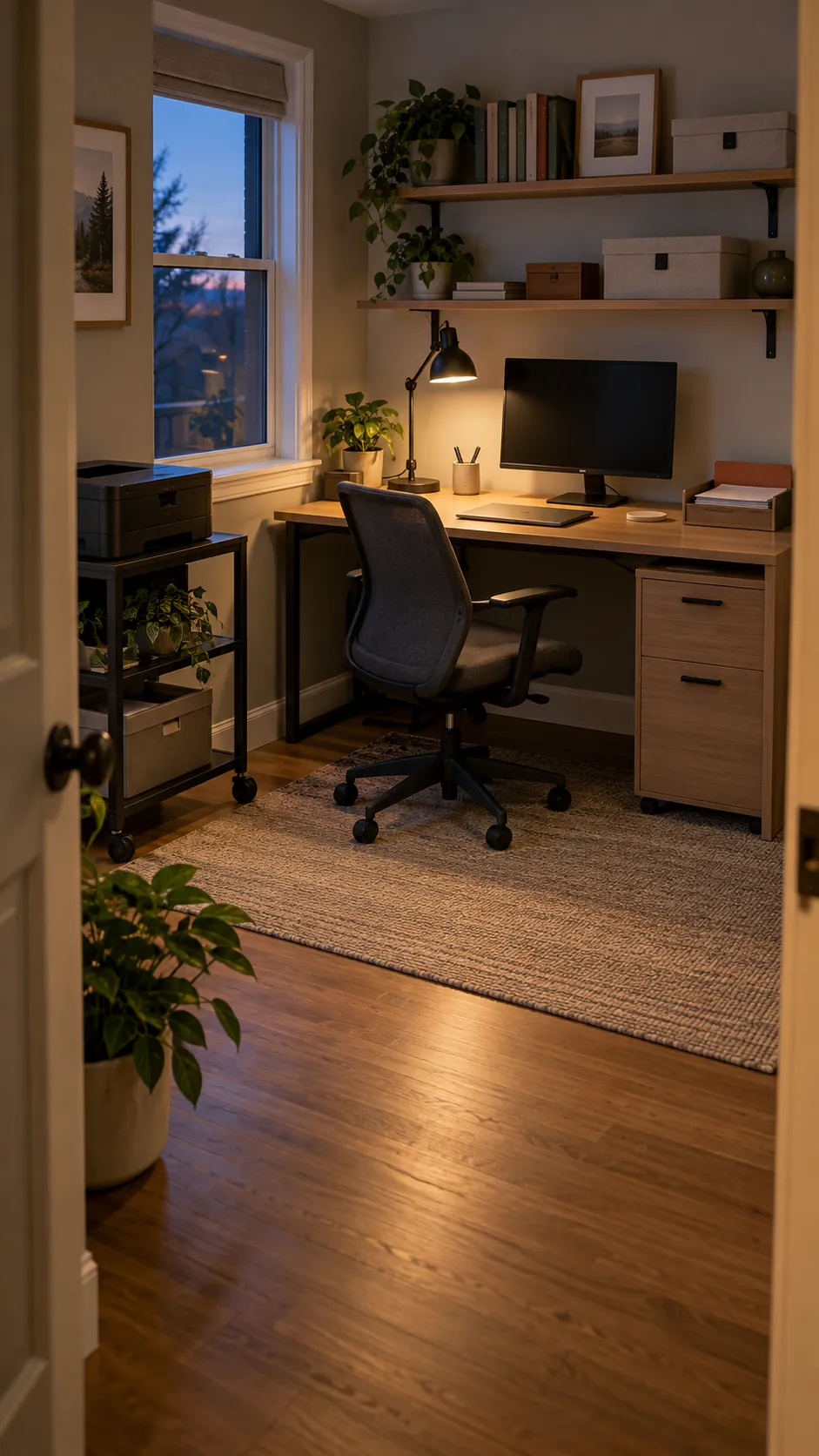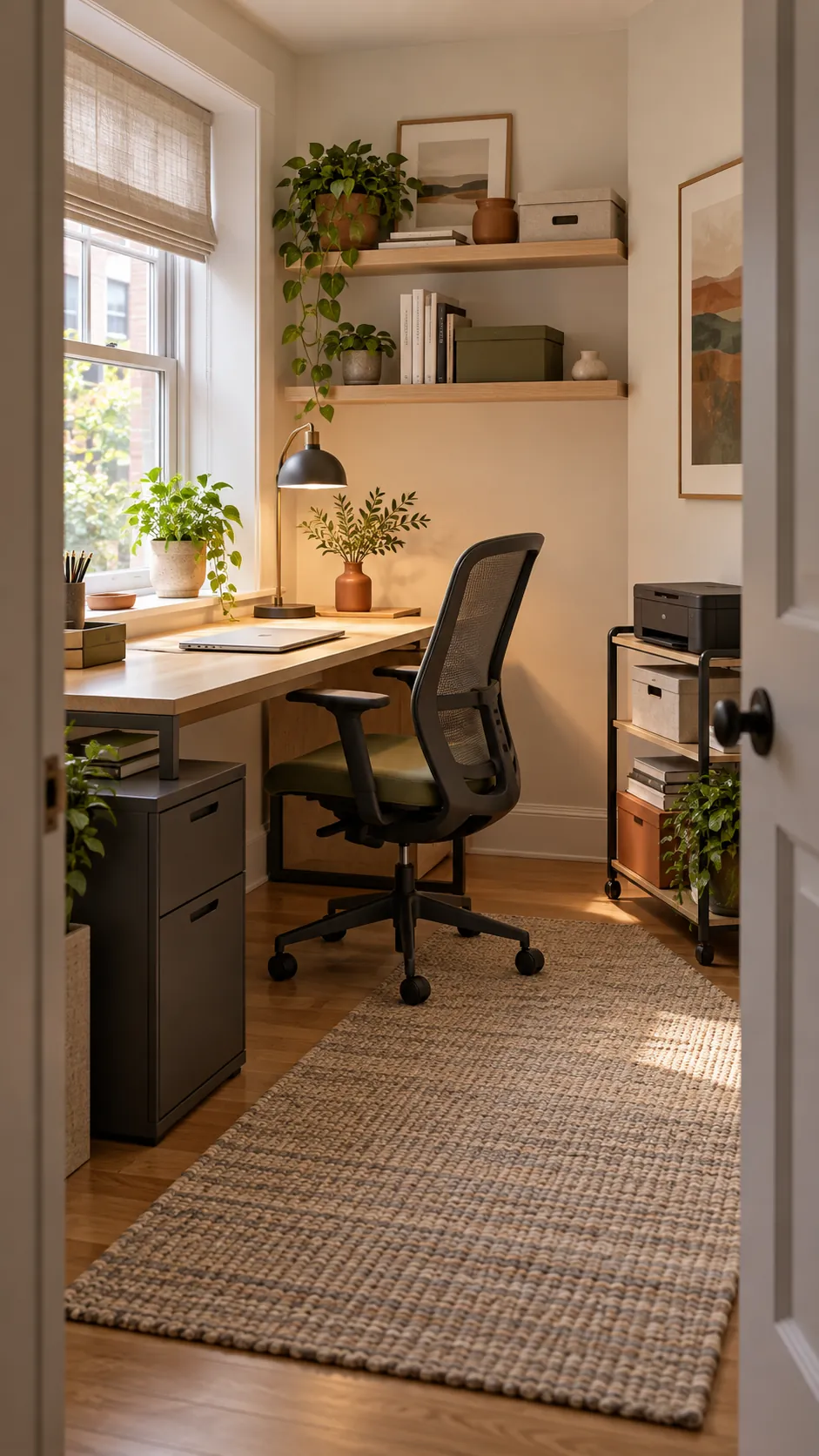
A small office can hold the right amount of equipment and still feel impossible to use. The problem often comes from an awkward layout, storage that ignores the walls, and papers with no clear destination. A better system starts with movement and daily tasks, then adds only the storage that supports them.
Map the room before moving furniture
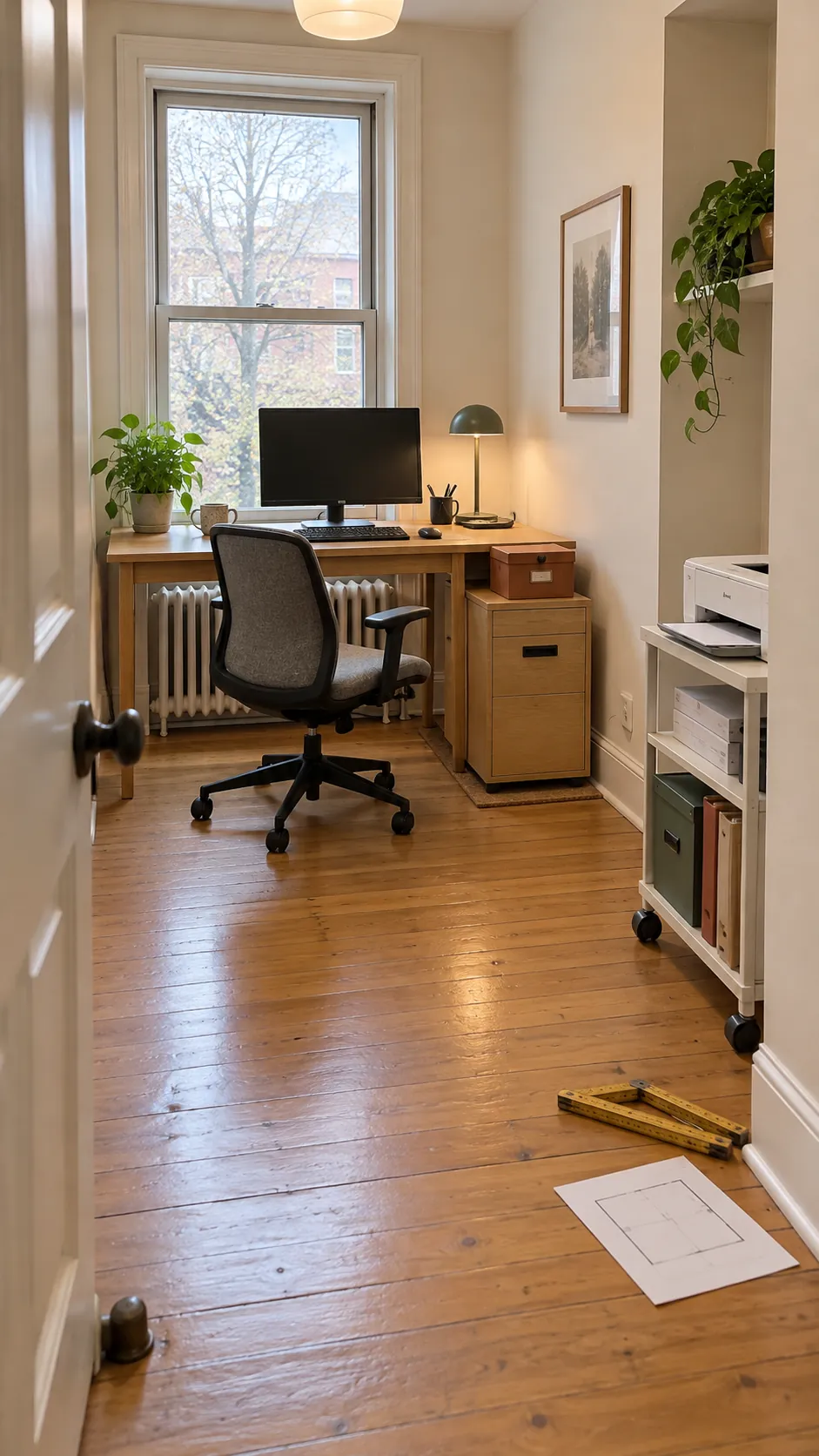
Measure the walls, door swing, window, outlets, and the space needed to pull out your chair. Draw a simple plan and mark the path from the doorway to the seat. A small office layout works when that path stays open and frequently used storage does not require moving the chair.
Next, identify the activities the room must support. Computer work may need one clear desk zone, while filing, printing, or packing needs a second zone nearby. Grouping each task with its supplies reduces the number of objects that drift onto the main work surface.
Declutter by category before buying storage
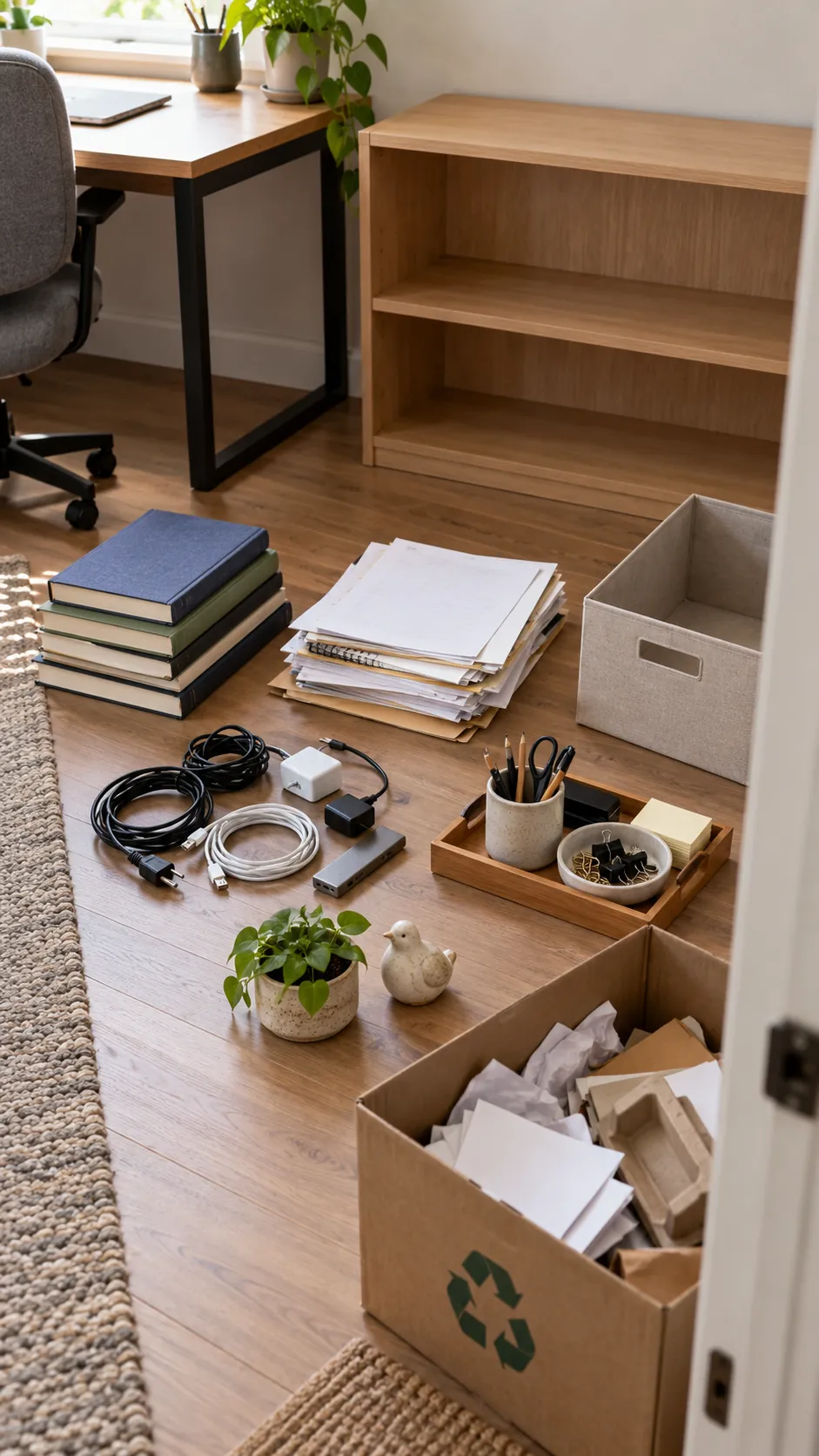
Sort books, papers, office supplies, electronics, and personal items as separate categories. This reveals duplicates and makes decisions easier than handling one crowded shelf at a time. Remove outdated documents, broken equipment, empty packaging, and supplies that belong in another room.
Keep enough capacity for normal work, not every possible future need. One spare notebook is useful, while a stack of unused notebooks consumes scarce home office storage. Finish the edit before choosing containers so each box or shelf has a defined purpose and a realistic amount to hold.
Choose furniture that preserves floor space
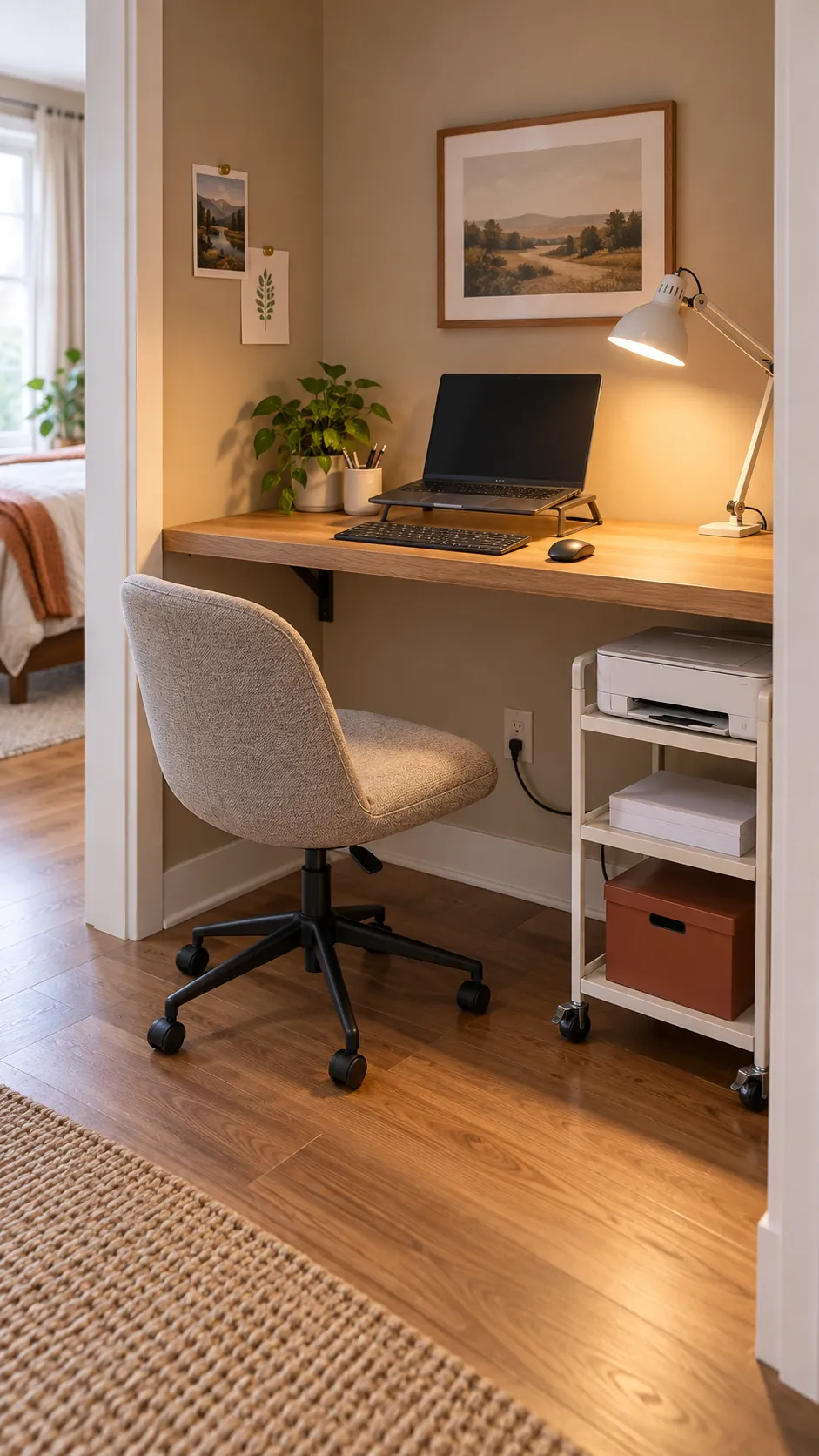
A desk should fit the primary task without dominating the room. A shallow wall mounted desk can free visible floor area, but it must support the equipment weight and provide enough depth for comfortable viewing. A narrow freestanding desk may be better when the wall cannot be altered or when hidden cable space matters.
Use mobile furniture only when movement solves a real problem. A slim rolling cart can serve a printer during work and park in a corner afterward. Avoid adding a cabinet simply because an empty corner exists; first confirm that the cabinet holds a specific category and leaves the walkway clear.
Build vertical storage with visible limits
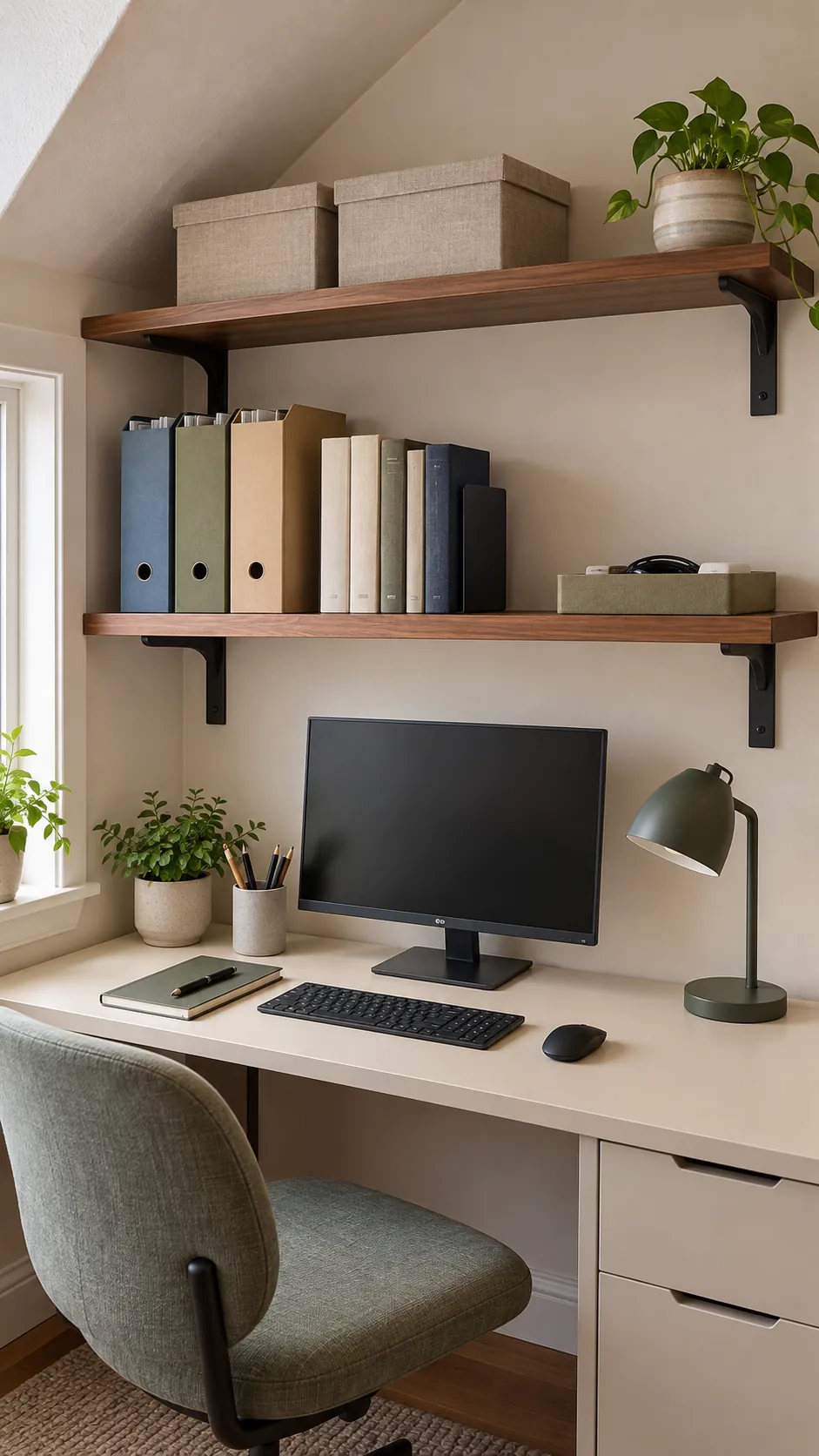
Vertical workspace storage uses wall height while protecting the floor. Install one or two shallow shelves above the desk for reference books and contained supplies, keeping heavy items on the lower shelf. Leave breathing room around groups so the shelves remain easy to scan.
Good office shelf organization combines open and closed storage. Keep current materials in upright holders where you can see them, then use matching boxes for spare cables or bulk supplies that would look busy in the open. Give every box one category and avoid stacking containers so tightly that returning an item becomes inconvenient.
Check mounting instructions and wall type before installation. Shelves must not interfere with standing headroom or force you to reach over a hot printer. If drilling is not allowed, use a tall narrow bookcase secured according to its manufacturer instructions.
Create a compact filing path
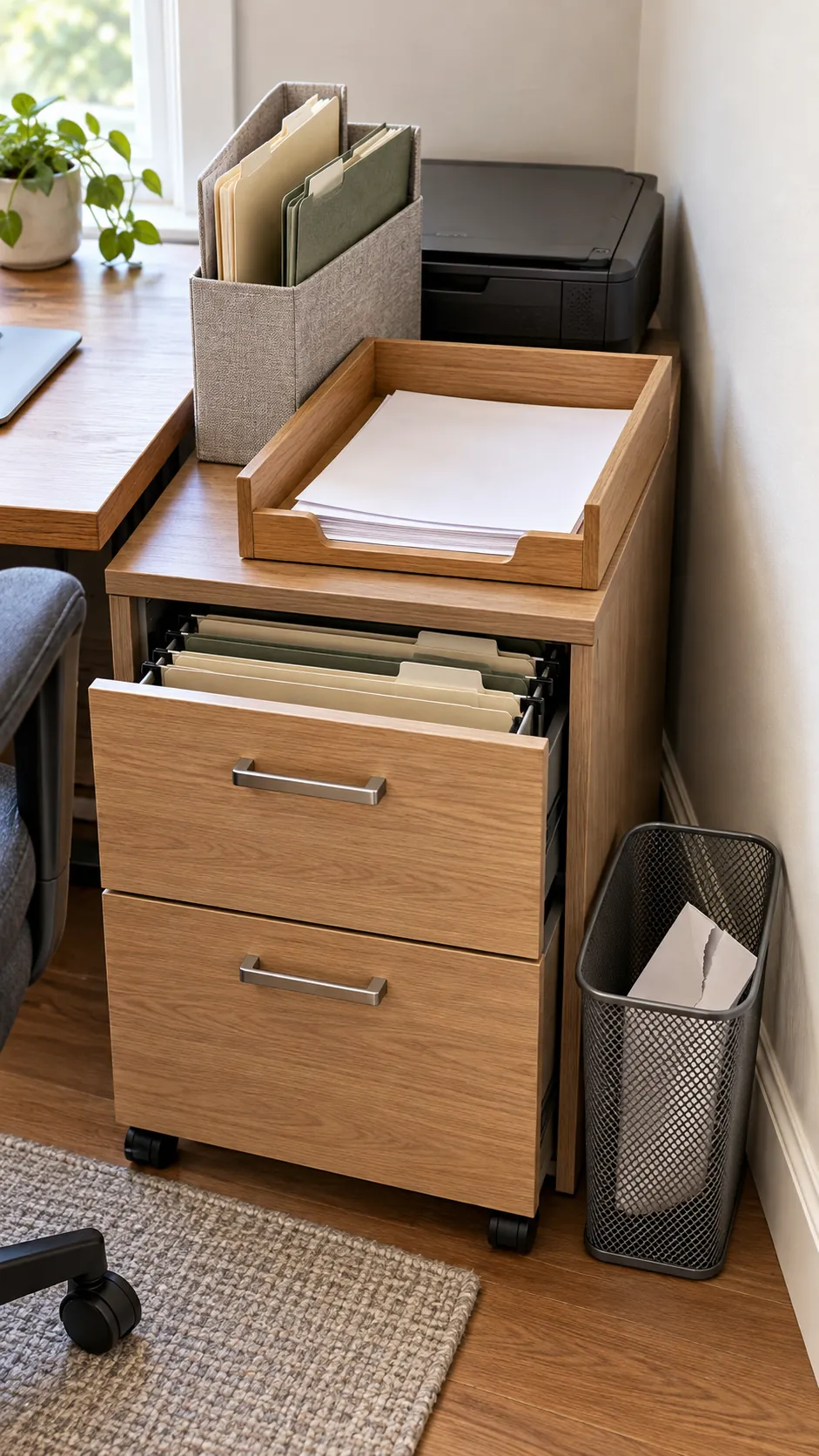
Papers accumulate when incoming, active, and archived documents share one pile. Use a small inbox for new paper, one upright folder for current work, and a compact filing system for records that must remain. Place recycling beside the filing area so unwanted paper can leave immediately.
Process the inbox at a regular time instead of storing it indefinitely. Act on short tasks, schedule work that needs more time, file necessary records, and remove the rest. Digital scanning can reduce volume, but only when you use clear file names and a backed up location you can search later.
Maintain the room with a closing routine
Reserve the last few minutes of the workday for a room reset. Return supplies to their task zones, place loose paper in the inbox, close files, and remove dishes. Clear the chair path and leave the desk ready for the first task tomorrow.
Use recurring clutter as feedback. A stack beside the printer may need a nearby paper tray, while supplies left on the desk may need a more accessible drawer. Adjust one storage location at a time and keep the total capacity fixed. This routine turns a clutter free home office from a brief result into a system that can survive normal work.