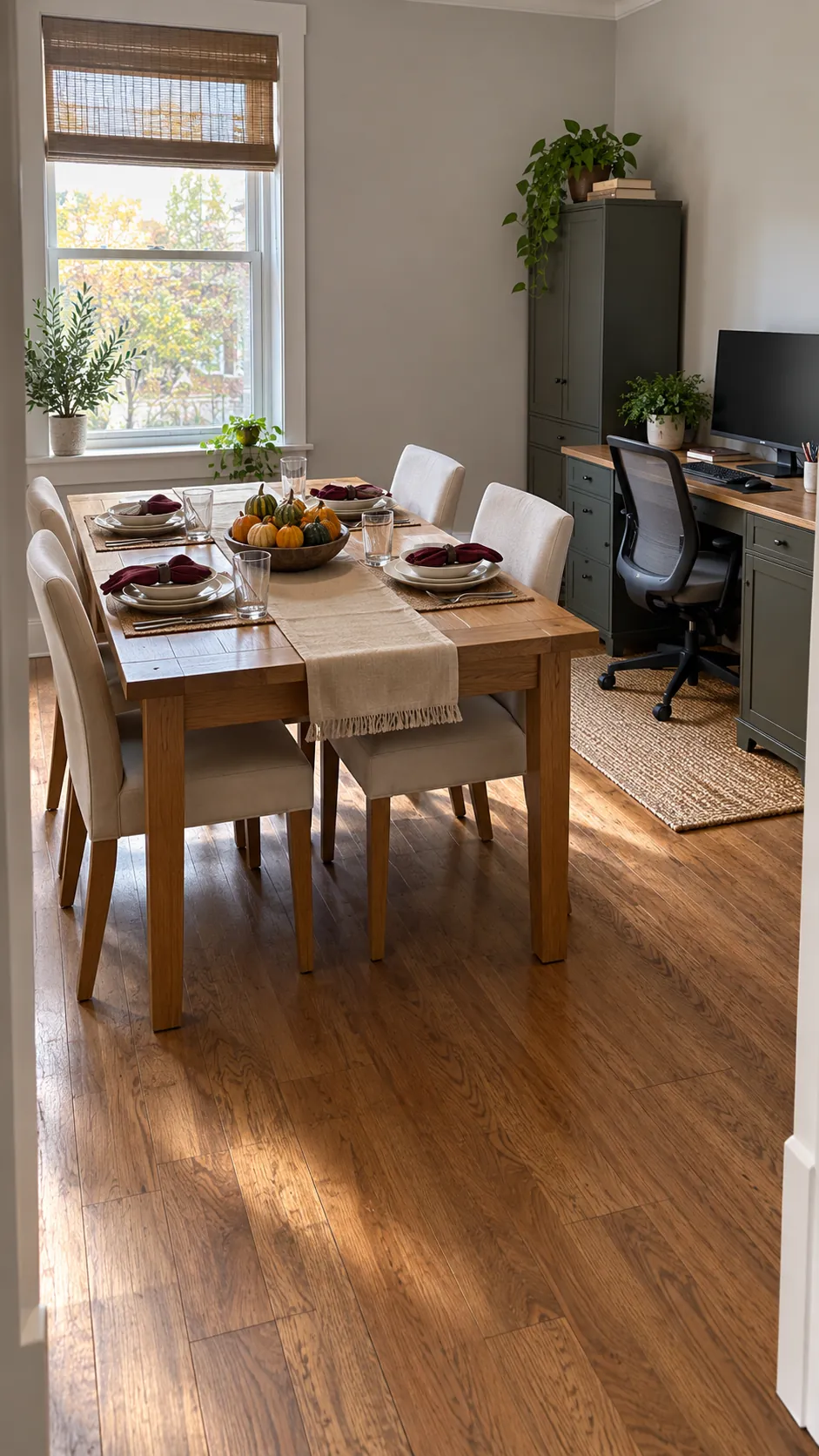
A dining room that holds your home office does not need to lose its desk to host Thanksgiving. It needs a clear table, enough room for chairs to move, and a place for the work that must be protected until the holiday is over. Choose the ideas that solve your actual room problem, rather than trying to fit all twenty-six changes into one evening.
Give everyday paperwork one closed home
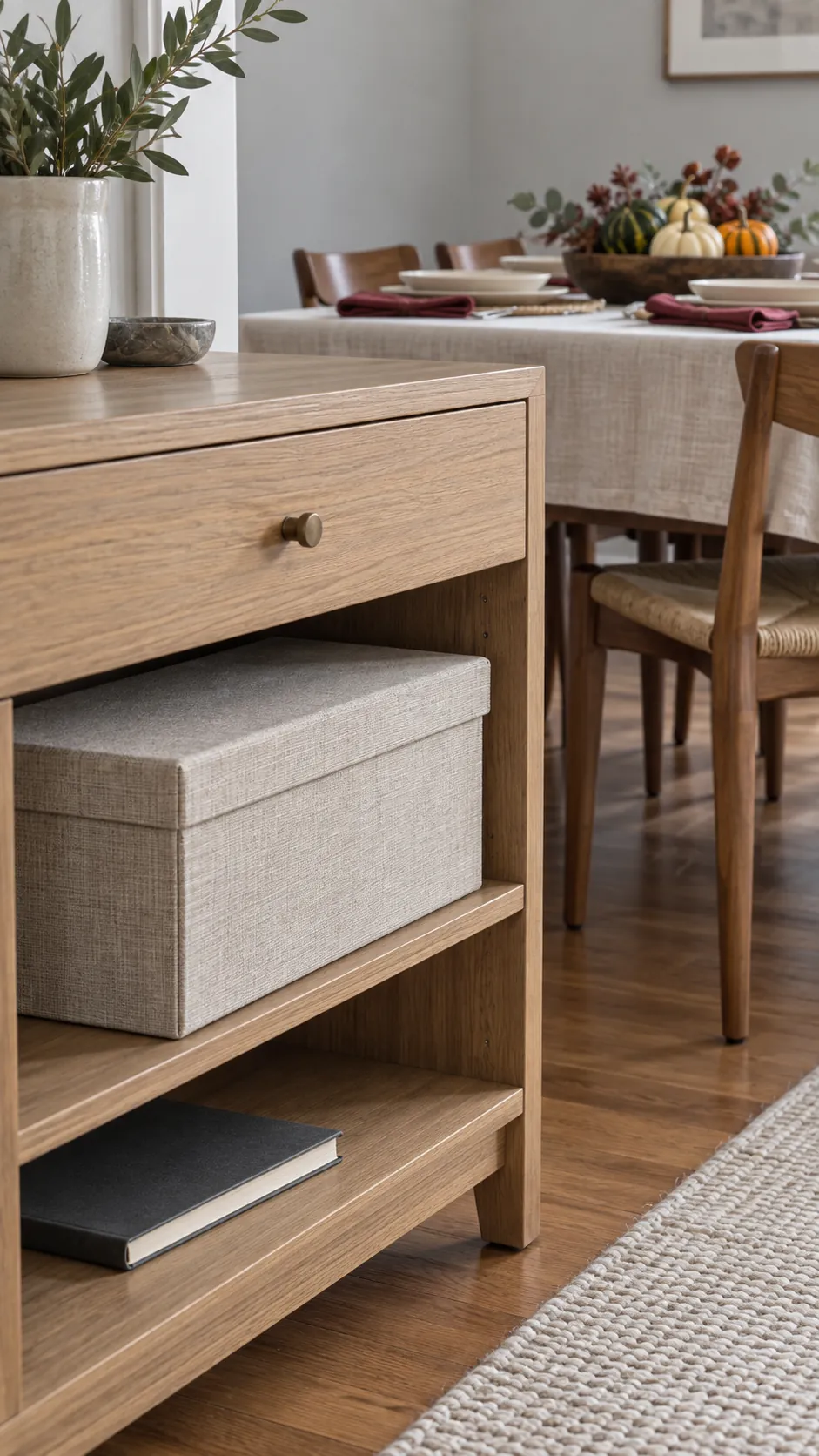
Gather ordinary notebooks, loose stationery, and nonconfidential papers into a lidded box before setting the dining table. Keep current work together instead of spreading it among several cabinets where it will be difficult to find later. Choose a box that fits an existing shelf, so the holiday transformation does not create a new floor obstacle.
Leave fragile items and electronics out of a tightly packed paper box. A simple divider can keep one unfinished project separate from general supplies. Put the closed box somewhere you can reach after the meal without moving the entire room back into office mode.
Protect sensitive work in a locked drawer
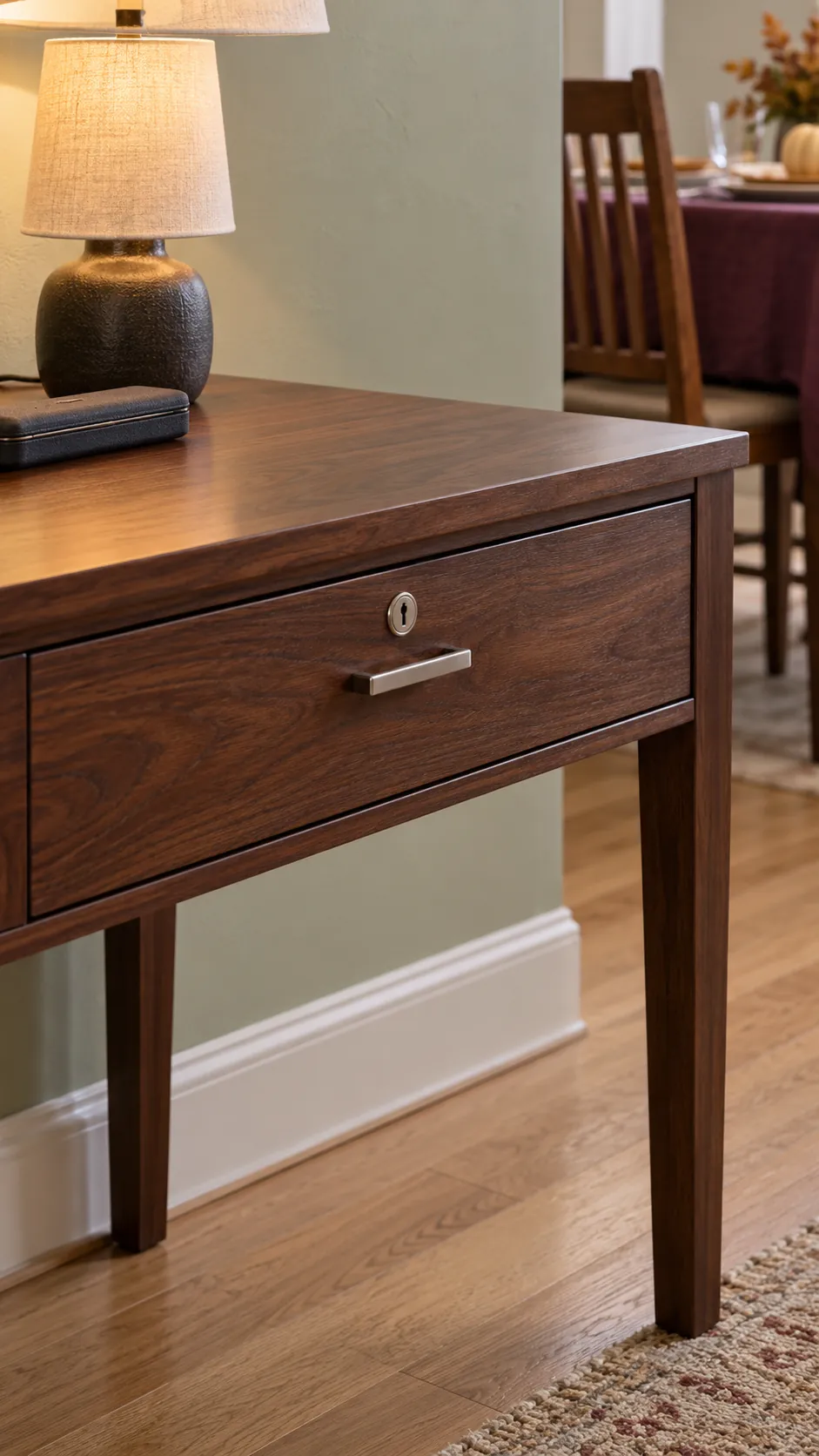
Hosting adds more hands and more casual curiosity to a shared dining work space. Put confidential papers, client materials, and small storage devices in secure storage that meets your work requirements. A decorative basket under a buffet is not an appropriate substitute for a locked place when the material is sensitive. Make sure the key or access method remains with you rather than beside the drawer.
Make a separate landing place for the laptop
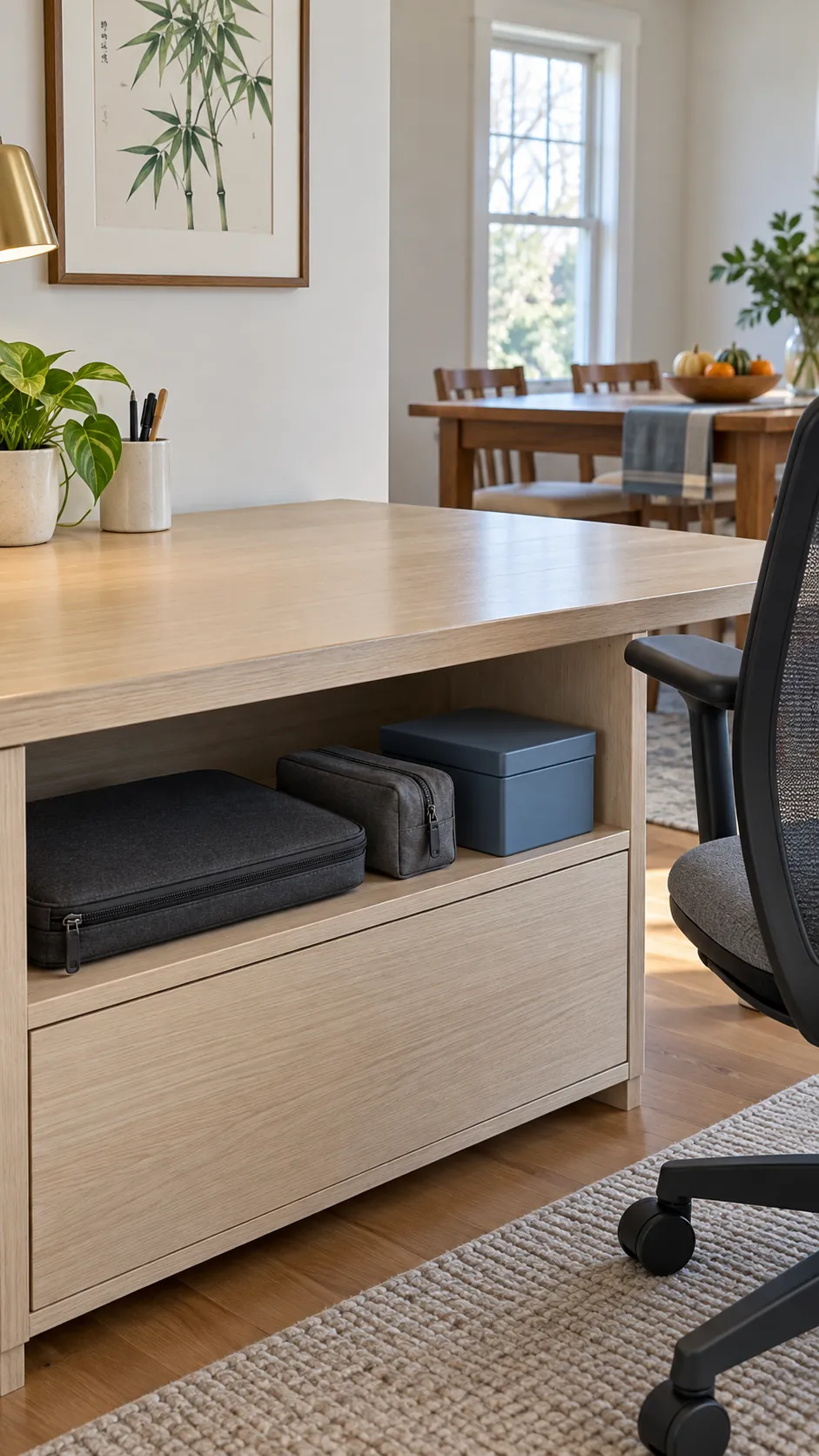
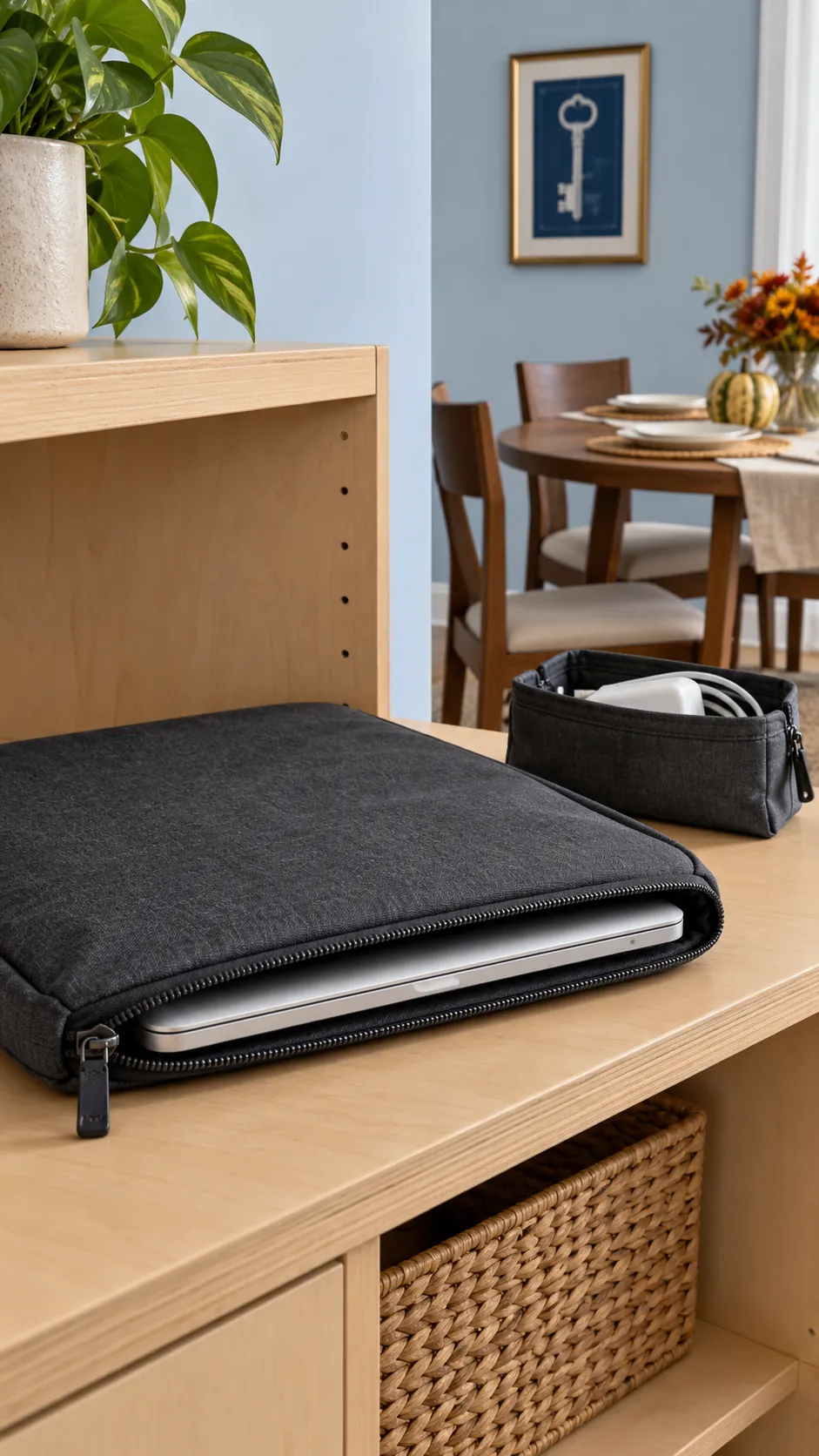
A laptop needs a protected destination before its usual table becomes the holiday dining setup. Shut it down or put it in the appropriate state for storage, disconnect accessories carefully, and place it in a padded sleeve on a stable shelf. Keep drinks, candles, and food well away from that shelf.
Give the charger and dock their own nearby container instead of leaving cables spread across the dining surface. Avoid stacking heavy serving dishes on top of the device, even when it is closed. The aim is to free the table while keeping the equipment ready for a straightforward return to work.
Keep large monitors on a dedicated desk edge
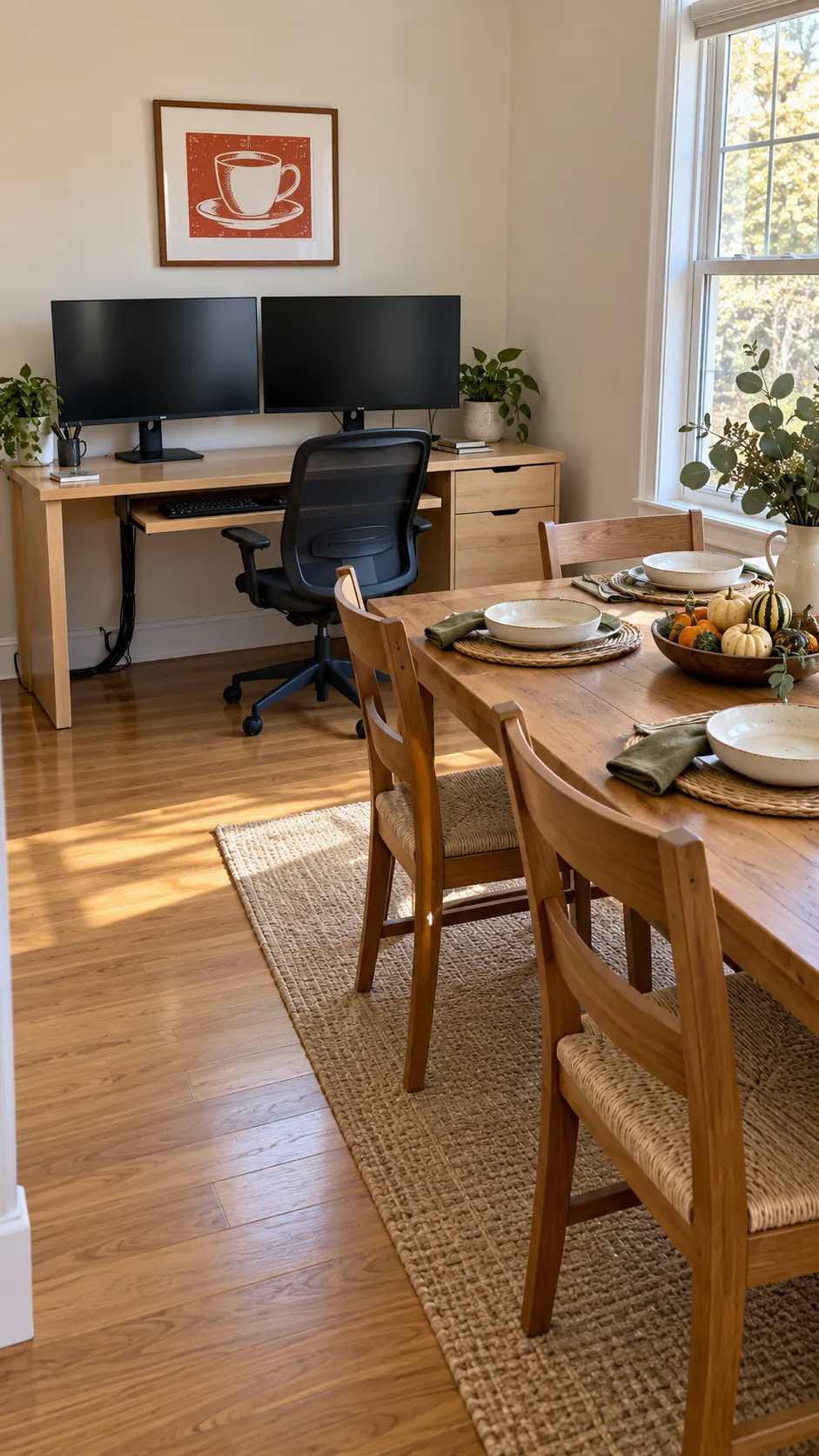
If your work requires large displays, an empty dining table may depend on keeping them at a separate desk. Move a screen only when its stand or mount is designed for that adjustment, and check that cables have enough slack. Where a shared tabletop cannot safely hold both a meal and the equipment, relocate the equipment to a protected supported surface before setting places. Covering an active monitor with cloth or balancing it behind dinner plates does not solve the problem.
Contain the cable route along the furniture
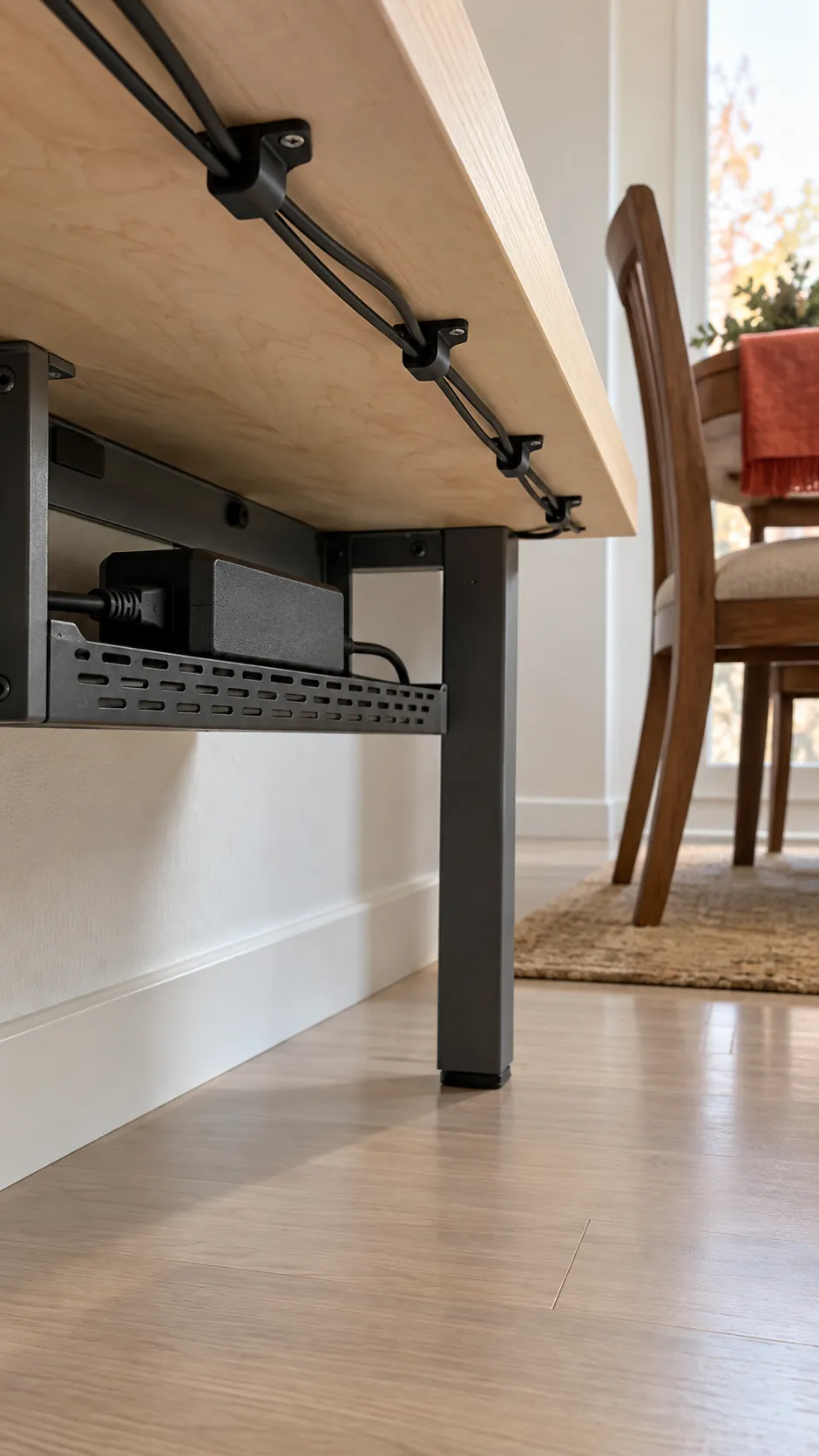
Clip loose peripheral cables to the desk edge or an existing cable channel so they cannot trail through the guest aisle. Preserve airflow and follow the equipment instructions instead of compressing power adapters into a decorative container. Unplug only the devices you can identify and reconnect correctly.
Check under the dining table after moving chairs, because a cable that was tucked away during work may now cross a foot route. Keep plugs and power strips accessible without putting them beneath a spill-prone serving station. A clean-looking room should still have a sensible electrical arrangement.
Park the rolling office chair outside the dining aisle
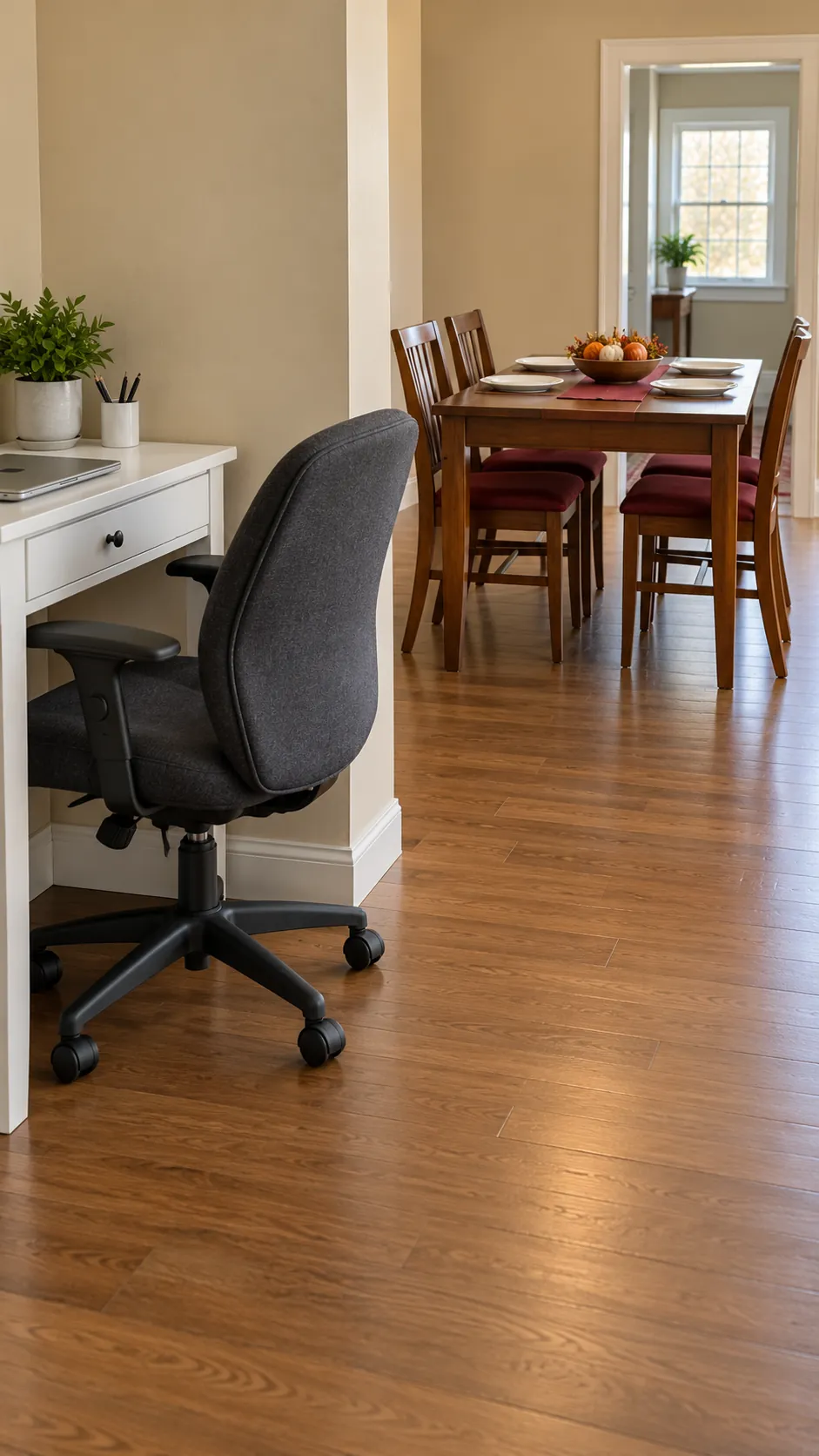
A large rolling chair can consume the clearance that Thanksgiving guests need behind their seats. Move it to another suitable room or a desk-side nook where it will not obstruct a doorway. Lift or roll it carefully according to your floor type, and keep the casters stable in its temporary position. Replace it at the table with an appropriate dining chair rather than squeezing both into the same corner.
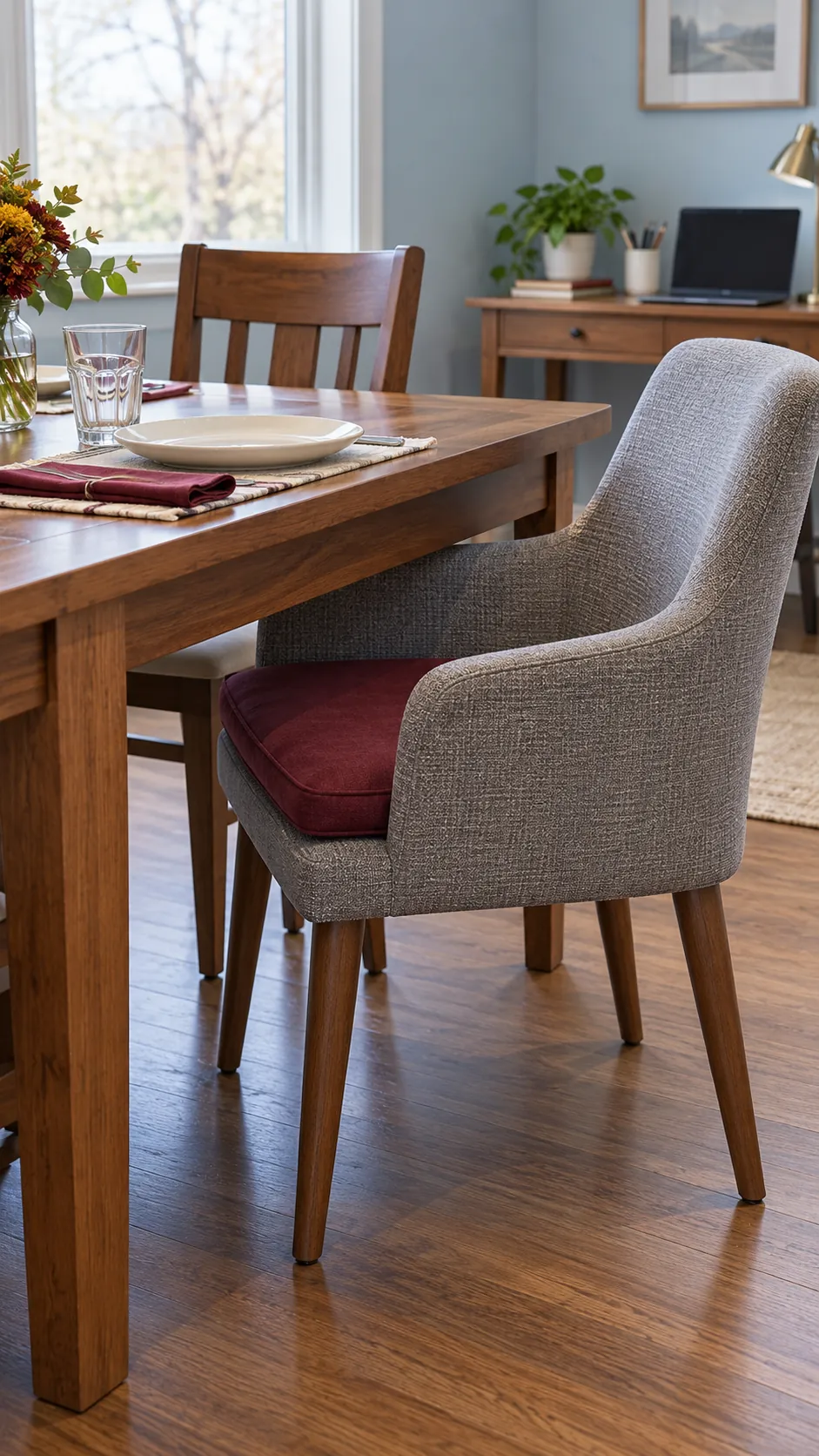
Use a compatible desk chair as an extra dining seat
Not every home-office chair has to leave the room. A stable chair with a suitable seat height can provide an extra place when its arms fit beneath the table and its base does not trip neighboring guests. Test the arrangement while someone is seated, and avoid using a chair that rolls unpredictably. A washable seat cover or cushion can connect it to the dining colors without hiding an awkward fit.
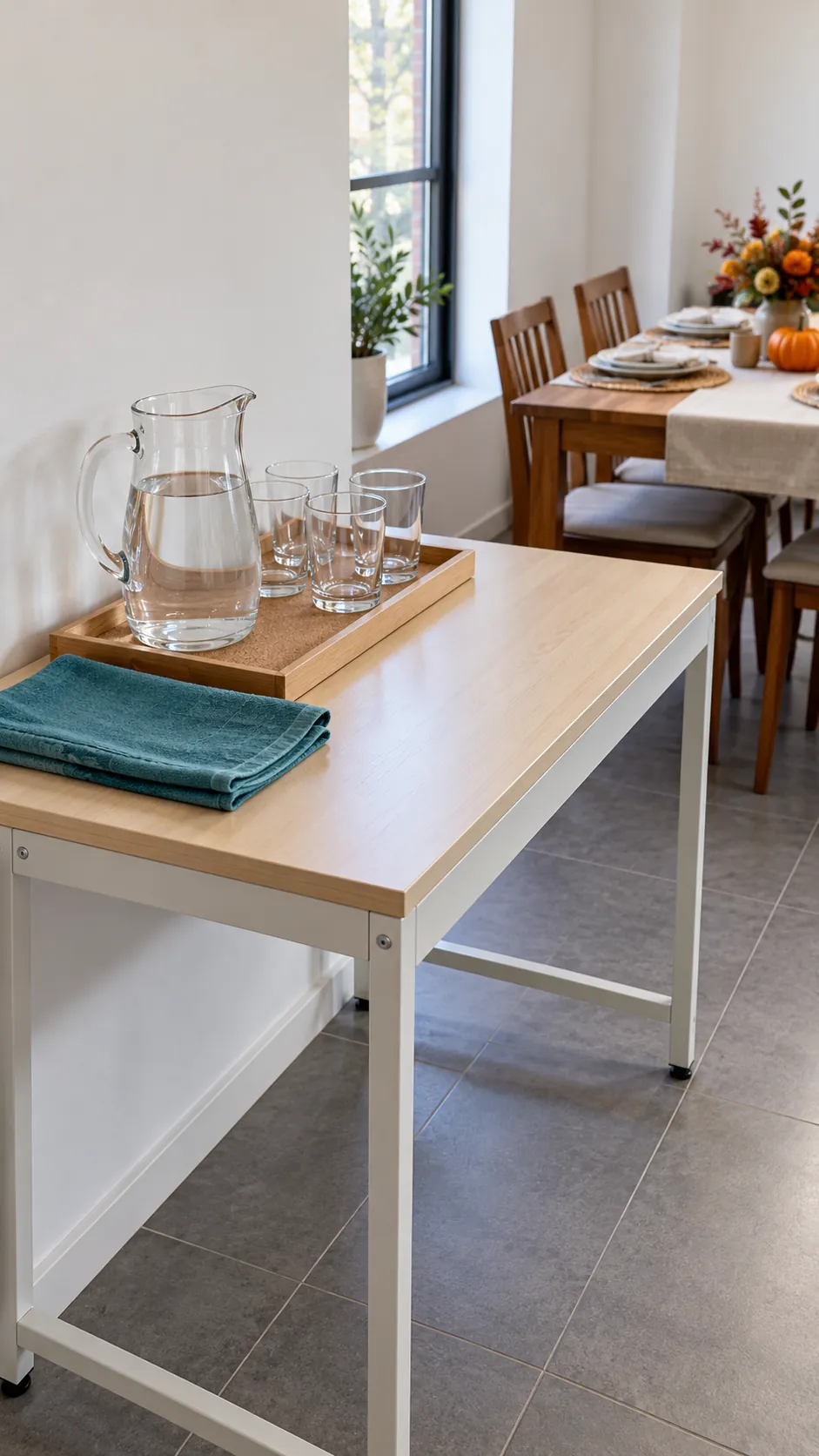
Turn a cleared desk into a water station
A fully cleared desk can take pressure off the dining table by holding water and glasses. Remove electronics and papers first, then clean and protect the surface appropriately. Set a pitcher on a stable tray with enough open space to put a glass down while pouring.
Keep the station away from plugged-in equipment and from the narrowest route behind dining chairs. Put a small towel nearby so guests do not need to enter the kitchen for a drip. If the desk surface or nearby equipment cannot be protected adequately, use a different serving location.
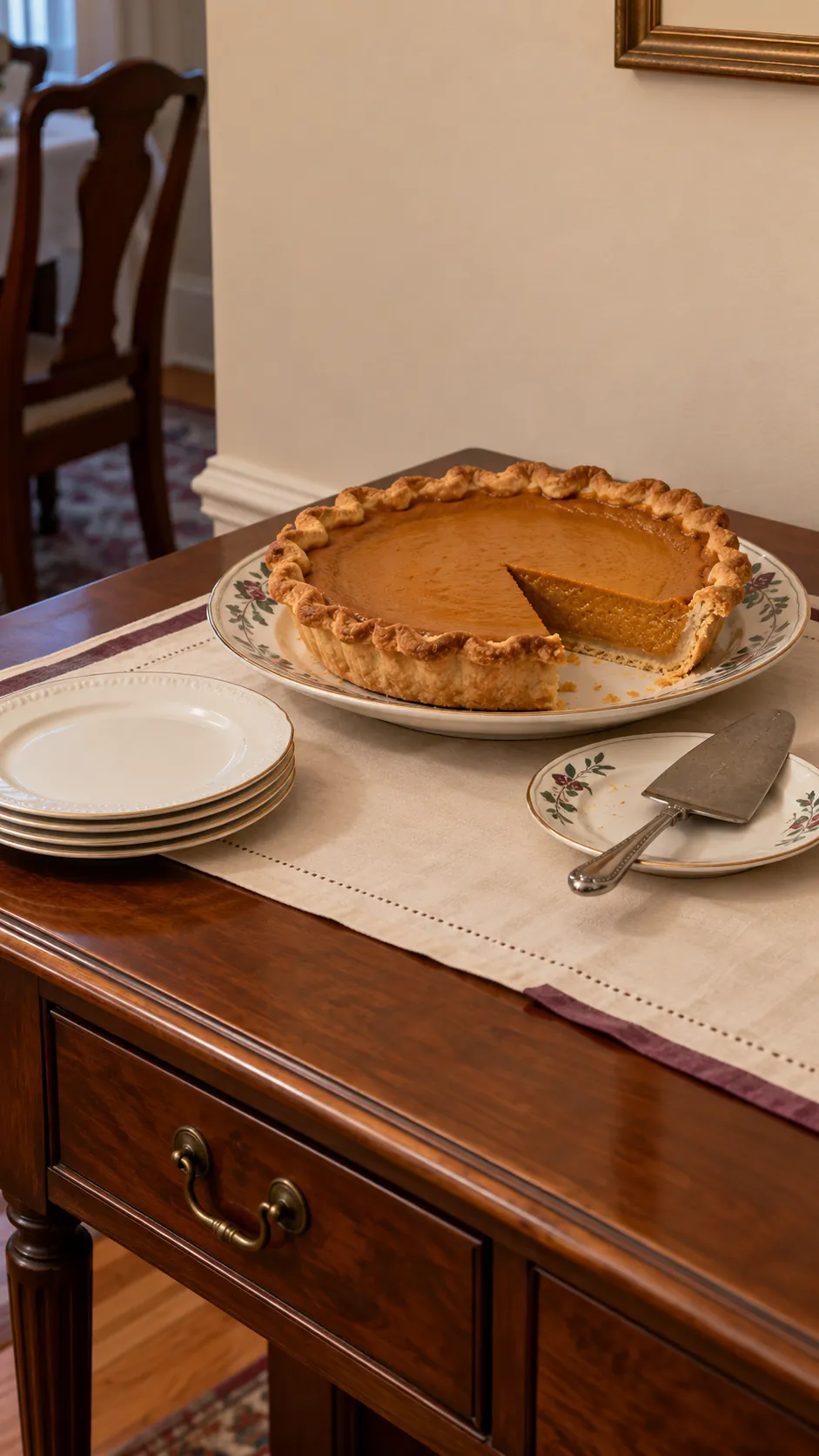
Reserve the work surface for dessert later
Your desk does not need to become a second buffet at the beginning of dinner. After the meal, a cleared and protected surface can hold a pie, dessert plates, and a serving utensil without crowding the main table. Keep chilled desserts refrigerated until service and follow appropriate food-holding guidance. Waiting until the dinner rush is over also makes it easier to keep dessert away from the work equipment.
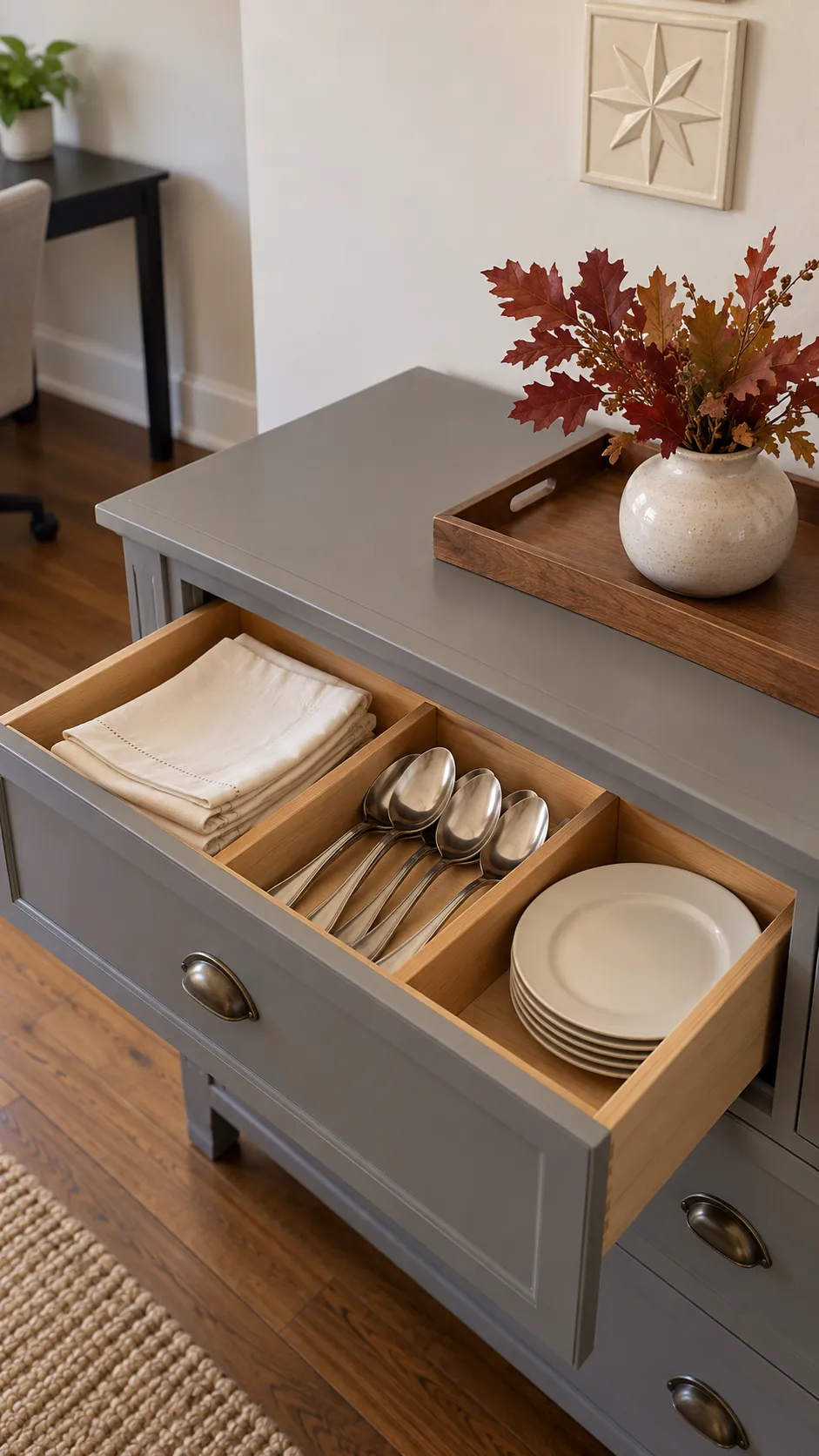
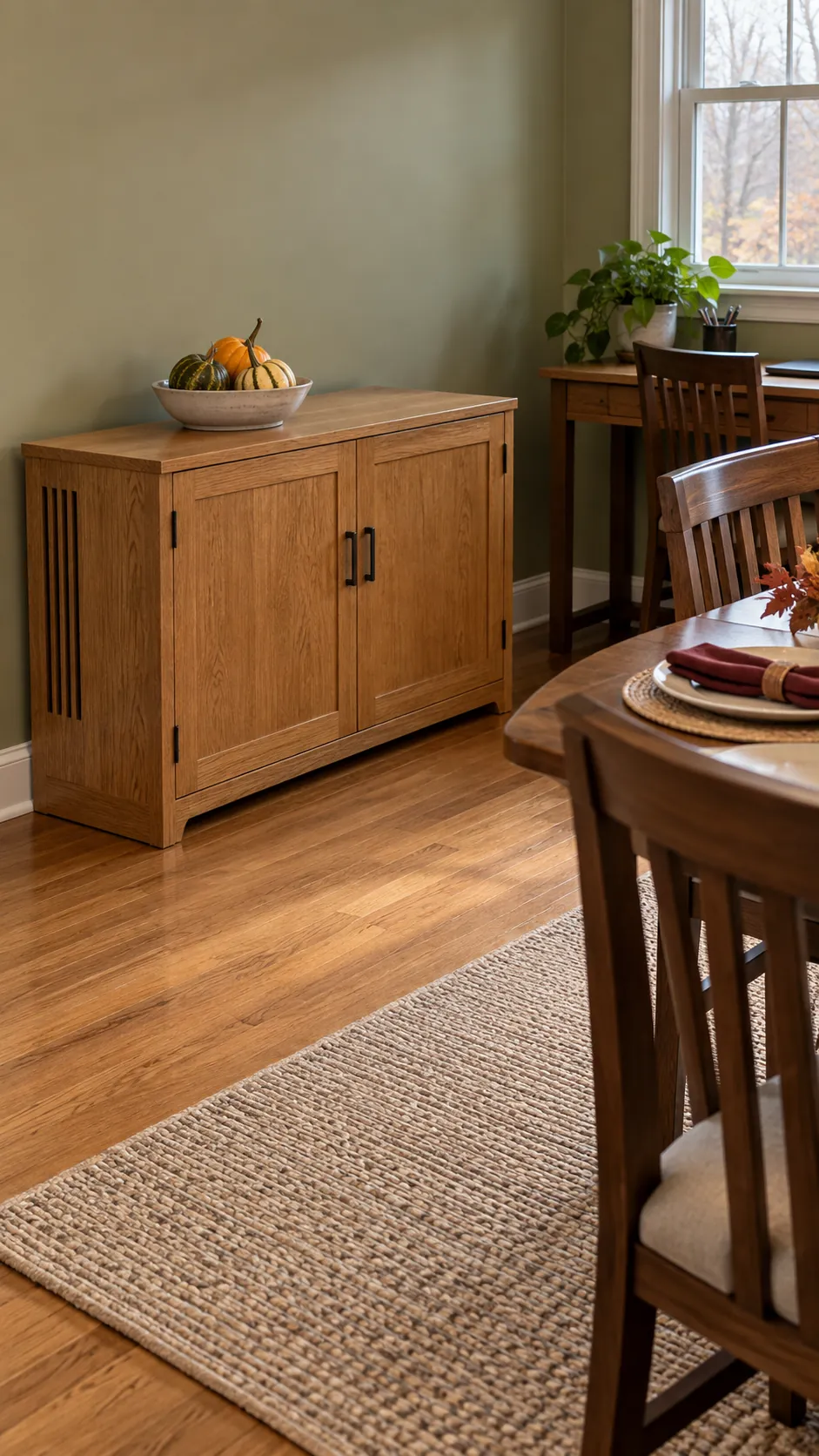
Let the office sideboard hold dining essentials
A sideboard that normally stores office supplies can still support Thanksgiving without emptying every drawer. Clear one accessible compartment for napkins, clean serving spoons, and extra plates. Keep business materials in closed separate storage so guests do not have to search among them for a fork.
Use the top as a small landing surface only after checking its finish and weight capacity. Set down a protective tray or appropriate trivets rather than placing hot dishes directly on the furniture. This keeps the sideboard useful for the meal while preserving its everyday storage role.
Close the printer cabinet when the printer is off
A printer can remain in the dining room when it has a proper storage cabinet and is not needed during the gathering. Shut it down as directed before closing doors or adding a temporary visual cover to the storage area. Never run equipment in a closed space that lacks the ventilation its manufacturer requires. Keep paper trays and cords contained so the cabinet can close without bending or trapping anything.
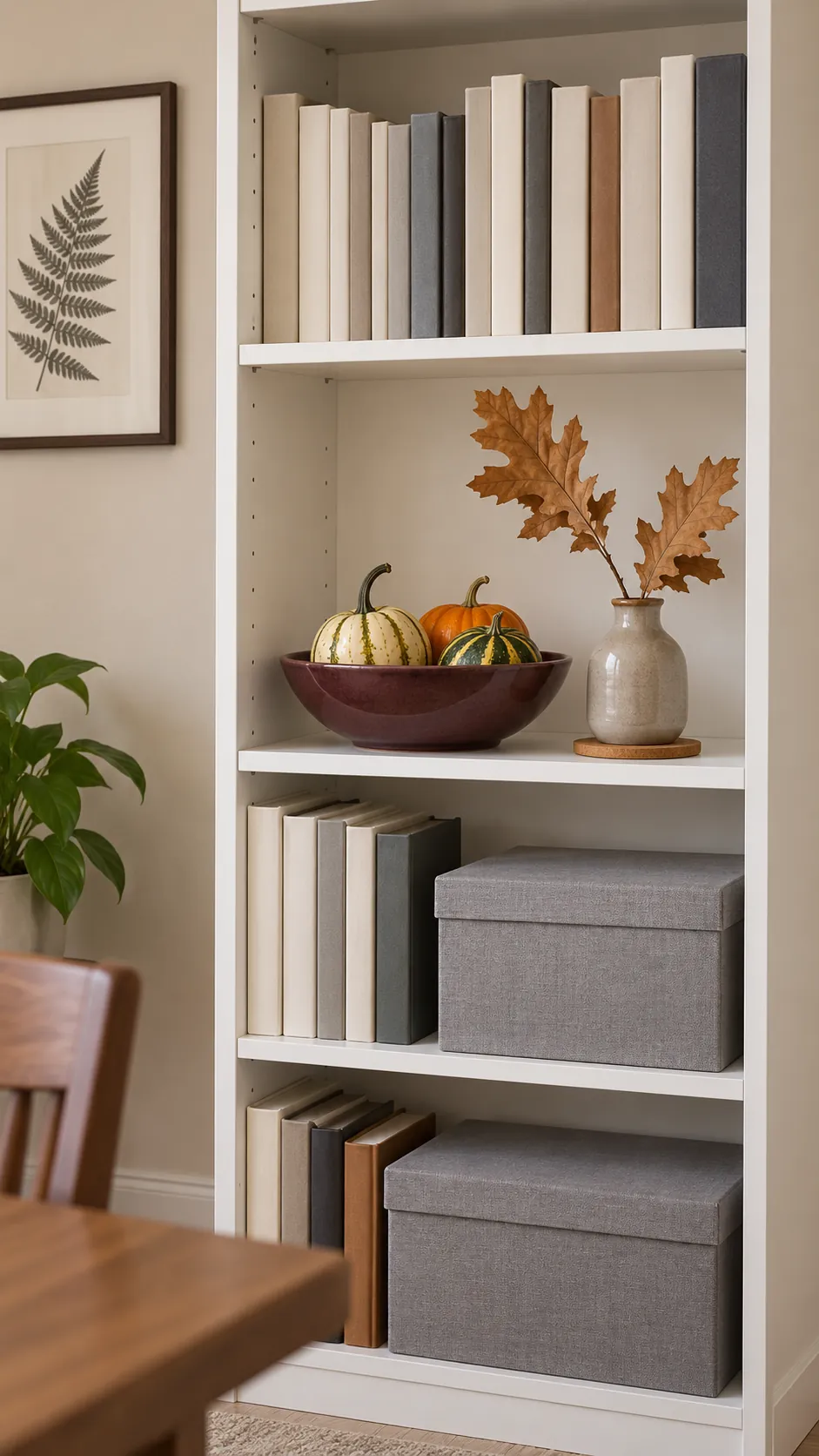
Give one bookcase shelf a harvest role
An existing bookcase can carry a restrained seasonal accent without sacrificing all its office storage. Clear one shelf for a small ceramic bowl of whole decorative gourds or a short vase of leaves, leaving surrounding books and closed boxes orderly. Keep liquids on a stable protective tray and away from papers.
Choose decor that fits fully inside the shelf rather than projecting into the guest route. Leave the rest of the storage system recognizable, so the room does not need a complete rebuild afterward. One deliberate shelf can make the home office feel part of the holiday room instead of an area that must disappear.
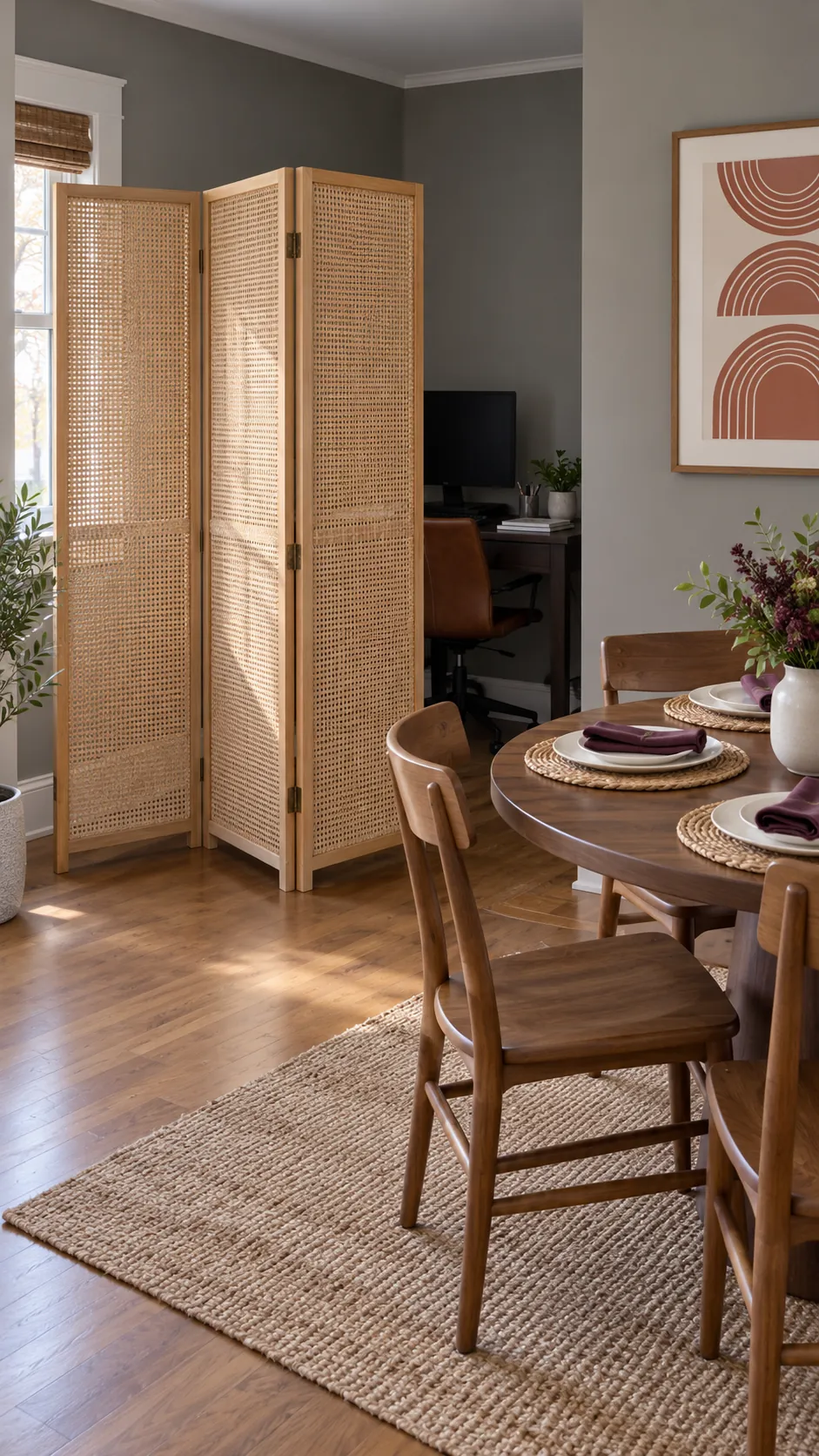
Use a stable folding screen for a desk nook
A freestanding screen can soften the view of a desk that cannot be moved. Open its panels to a stable configuration and place it where it does not narrow a door or the route to the table. Keep it clear of heat sources, electrical equipment, and anything that needs ventilation. Test its stability before guests arrive, especially if children or pets will use the room.
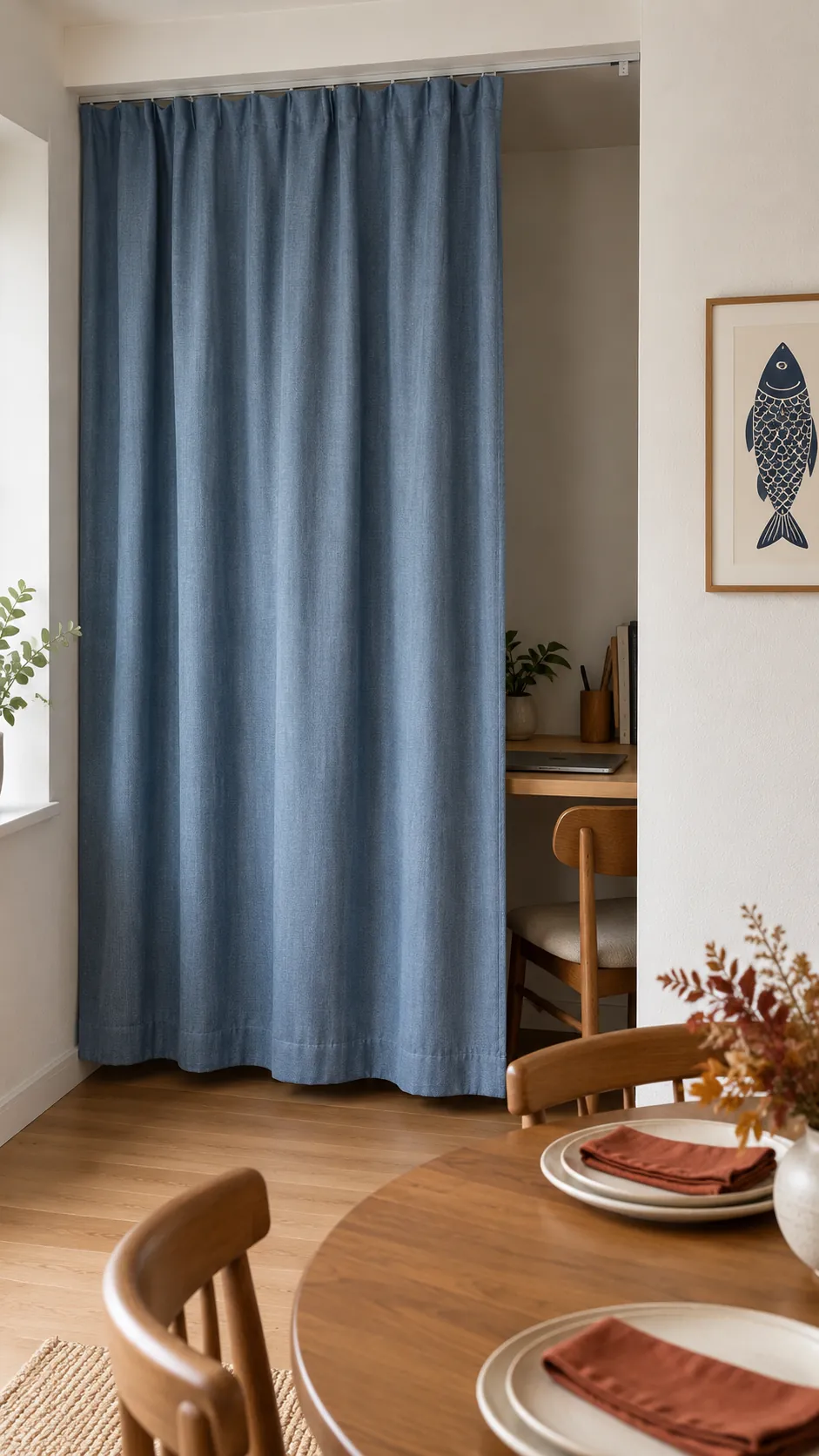
Draw an existing curtain across a work recess
If the workspace already sits behind a suitable curtain, close it after securing the equipment and checking that the fabric does not contact heat or block ventilation. This is most useful for a recessed nook, where the curtain can sit outside the dining chair footprint. Avoid installing a new hanging system in a rush when the wall or ceiling support is uncertain.
Keep the curtain hem off the walking floor and retain access to needed outlets or controls. A plain fabric close to the room colors will feel calmer than a dramatic temporary backdrop. The desk remains a functioning part of the home, simply quieter in the holiday view.
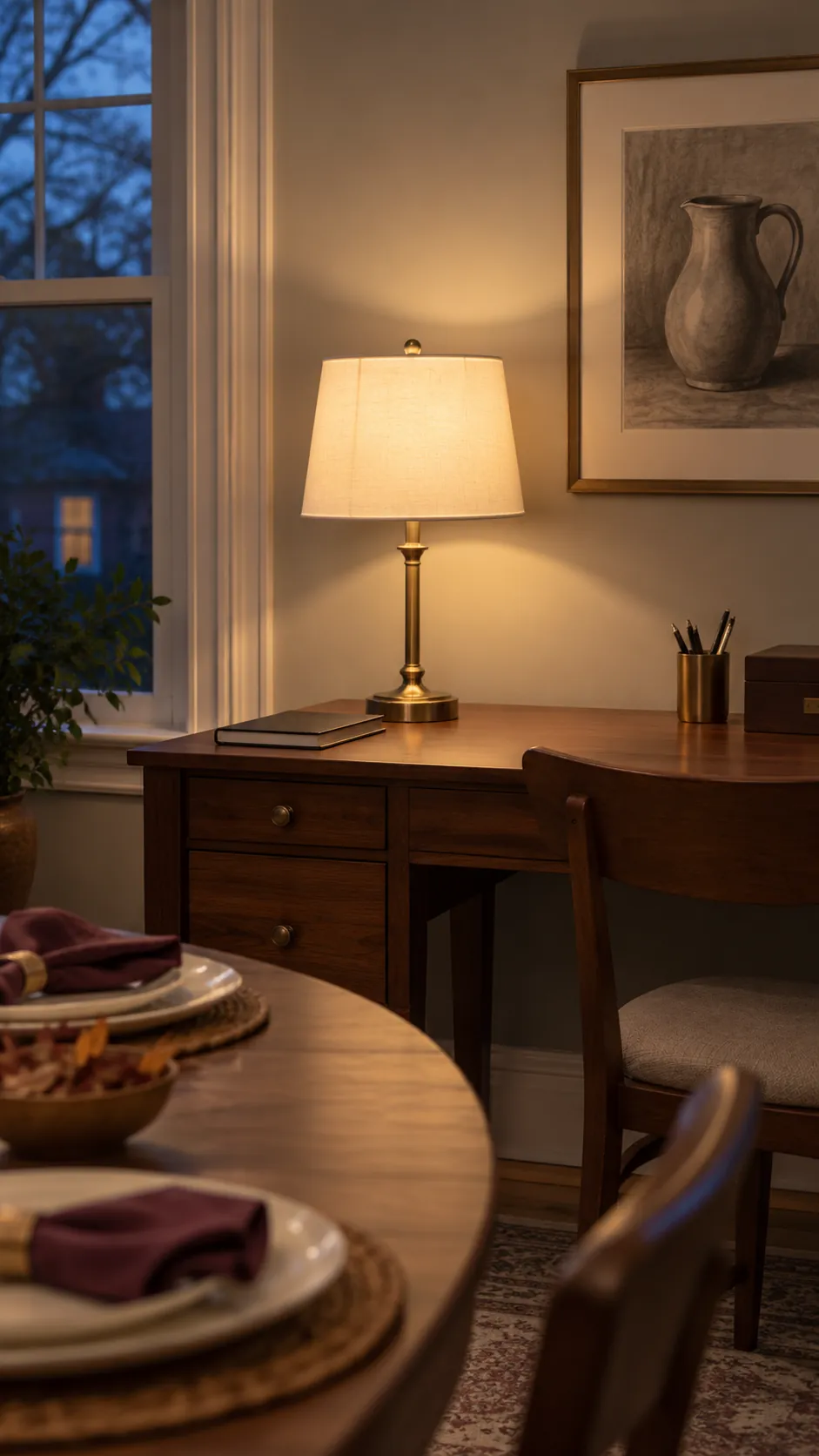
Let a shaded desk lamp support the evening mood
A shaded task lamp can help a Thanksgiving workspace transition when the desk remains in view. Aim it as the lamp is designed to be used, with the bulb shielded from seated guests and the cord contained. Let it provide a soft pool of light beside the dining area rather than shine directly into someone’s eyes. Keep fabric and seasonal greenery clear of the bulb and shade.
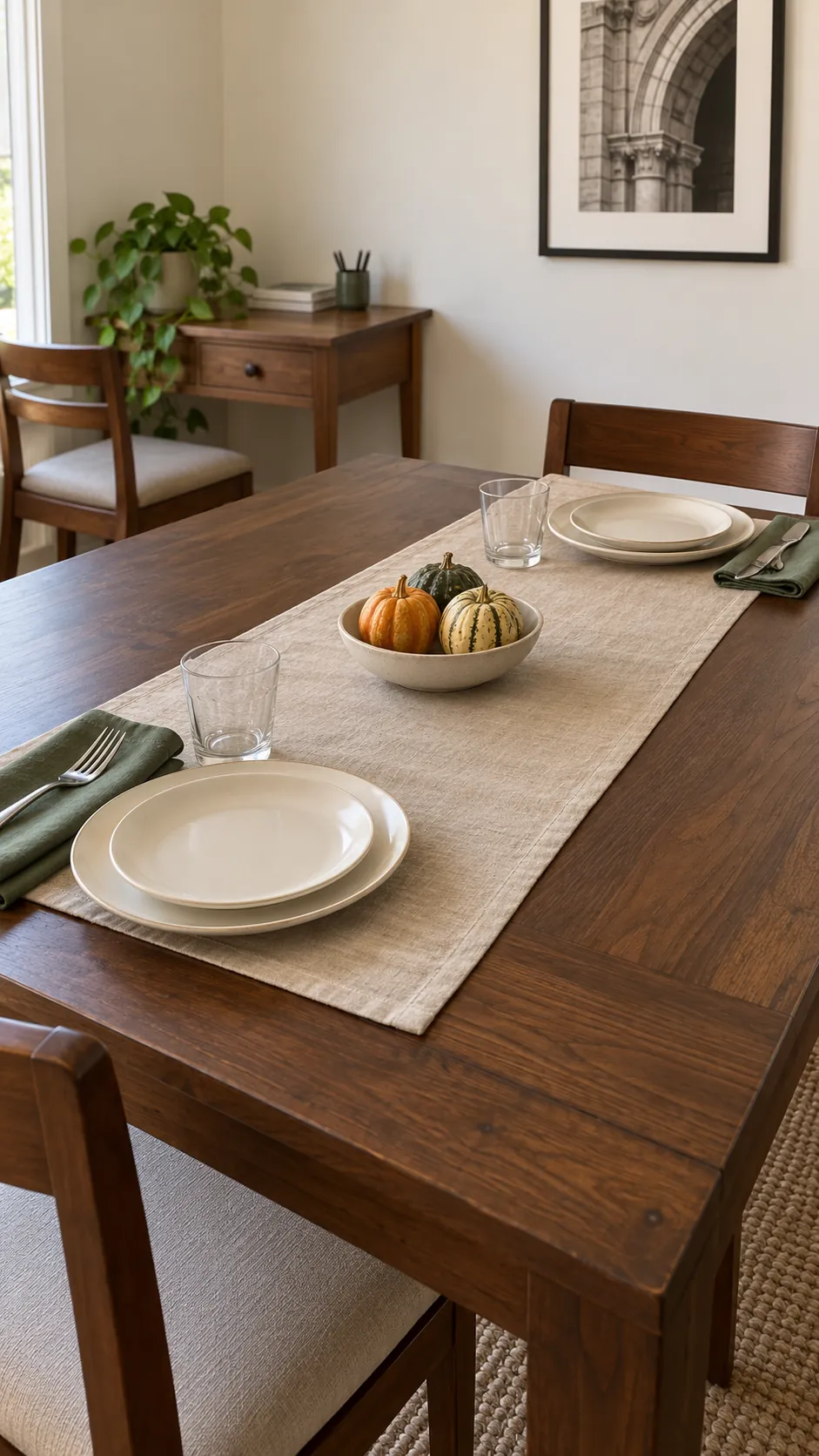
Replace the work mat with a short table runner
A shared dining table often still looks like a desk after the laptop is removed because the large work mat remains. Lift the mat, clean the surface using a method suitable for the finish, and add a short runner that leaves place settings level. Choose a washable fabric and keep its ends away from chair seats and shoes. The visual change comes from exposing the dining surface rather than burying it under layers of cloth.
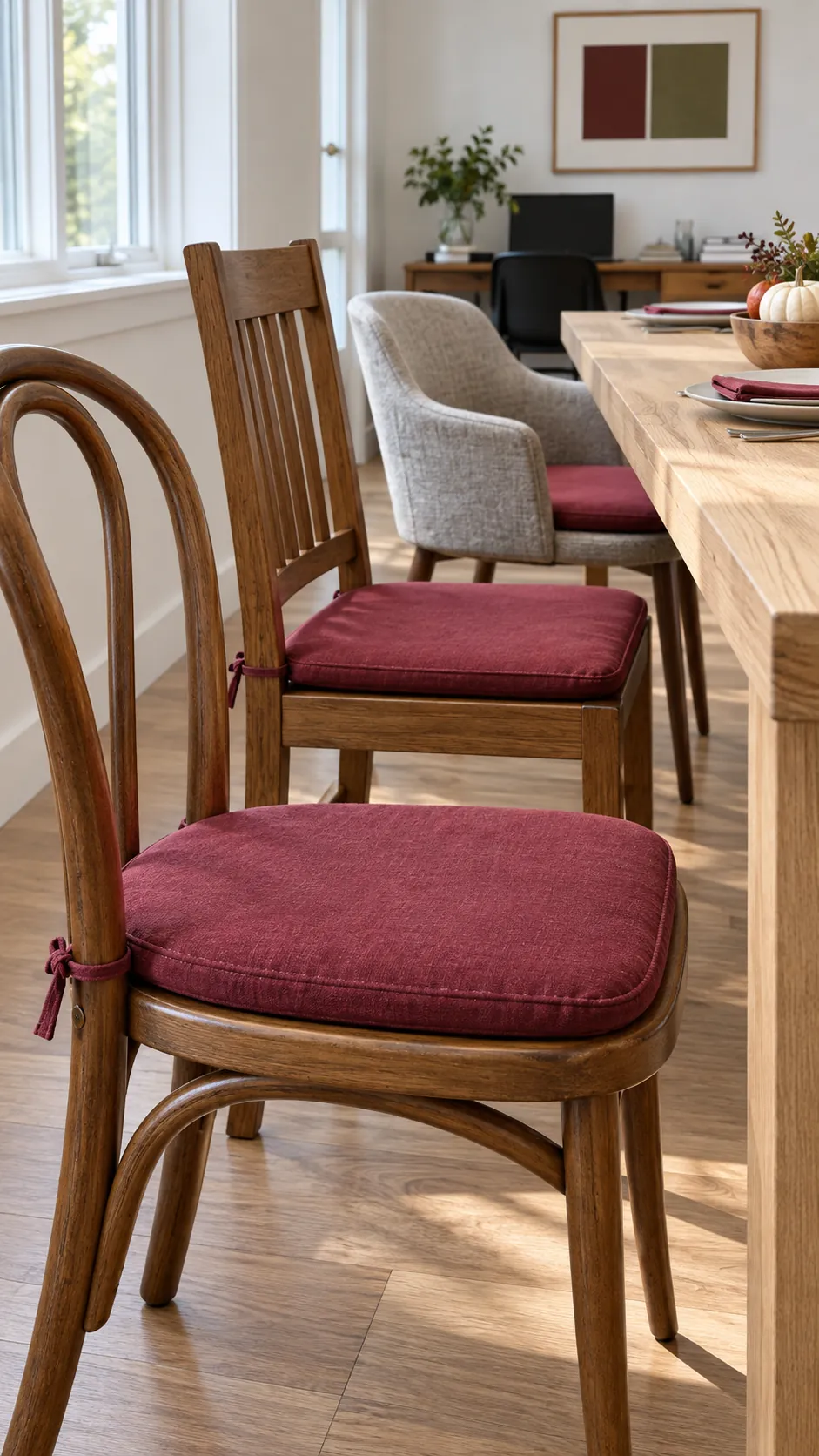
Use chair textiles to connect mixed seating
Borrowed chairs and a compatible desk chair do not need to match perfectly. A small repeated textile detail, such as similar seat cushions or neatly fitted washable covers, can tie the seating together. Check that each cover fits securely without loose ties or fabric on the floor.
Comfort and stable seating matter more than disguising the chair shapes. Avoid thick cushions that raise a guest too high for the table or slide on a smooth seat. A mixed set that works well is preferable to a coordinated set that makes dinner awkward.
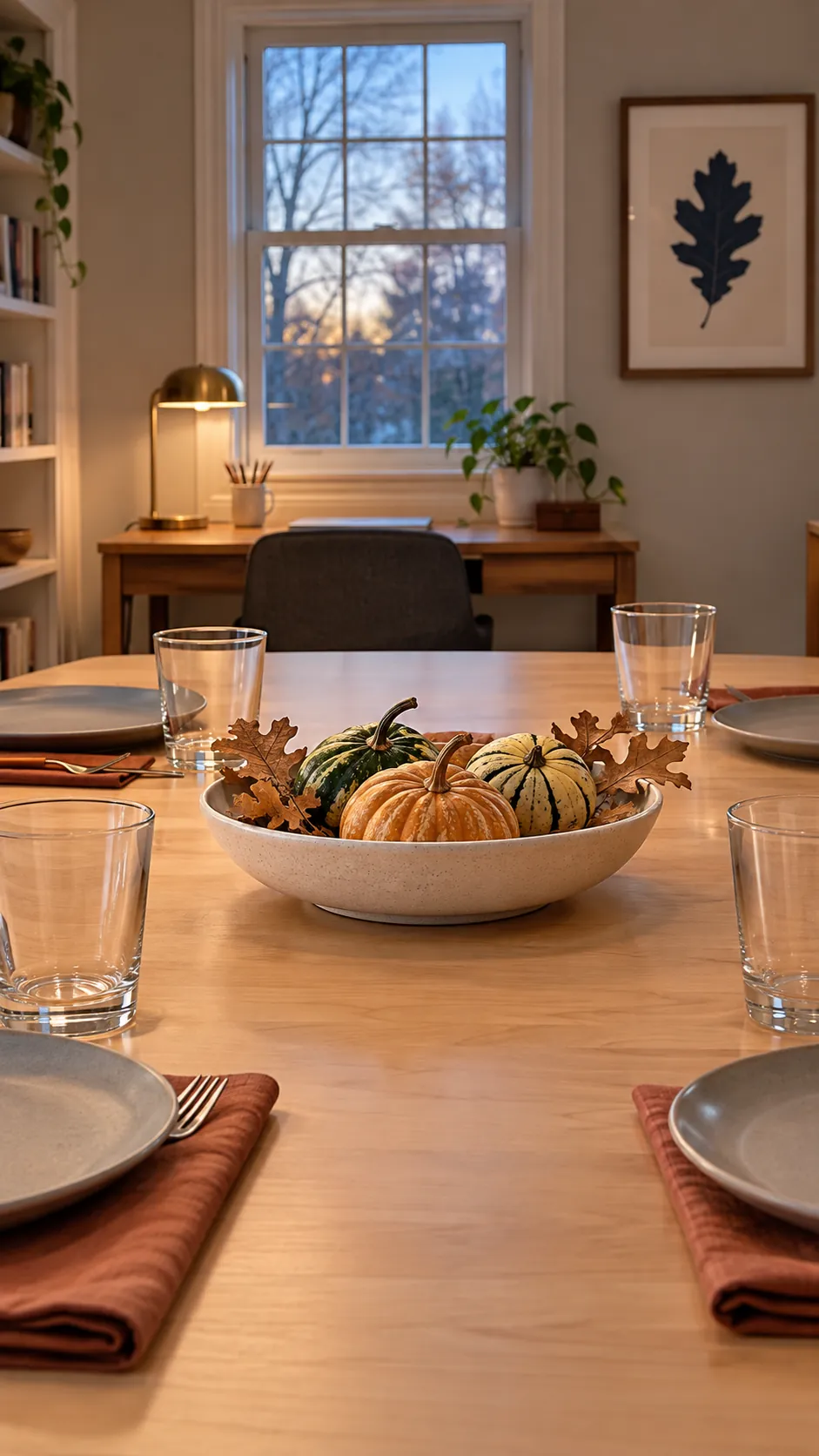
Keep the centerpiece below the conversation line
In a multipurpose room, the dining table needs to carry the holiday focus without adding another visual barrier. Use a low bowl of whole gourds, a small arrangement of leaves, or another compact centerpiece that lets people see across the table. Leave enough surface for glasses, shared dishes, and elbows. Keep anything fragile, flammable, or spill-prone out of the places guests will naturally reach.
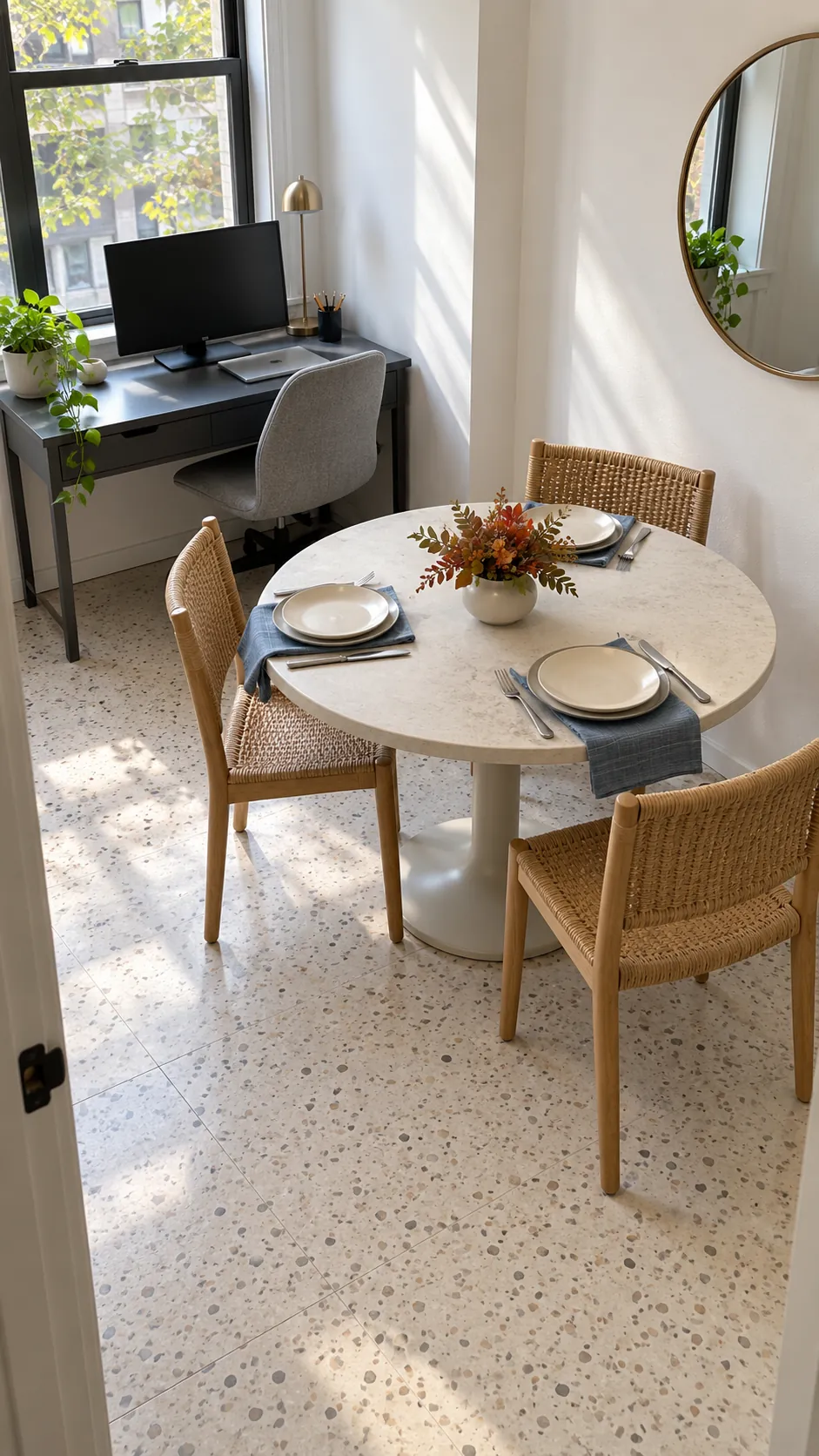
Choose a round table arrangement for a tight corner
When you already have a round dining table, its curved edge can make a desk-side corner easier to navigate. Rotate the seating arrangement so the busiest walking route runs between chairs rather than into a chair back. Test the full footprint with seats pulled out, since the tabletop shape alone does not guarantee clearance.
Do not force extra chairs around the curve if their bases collide. A nearby desk may need a narrower temporary use instead of another seat squeezed into the gap. The useful layout is the one that allows a person with a plate to move through the room comfortably.
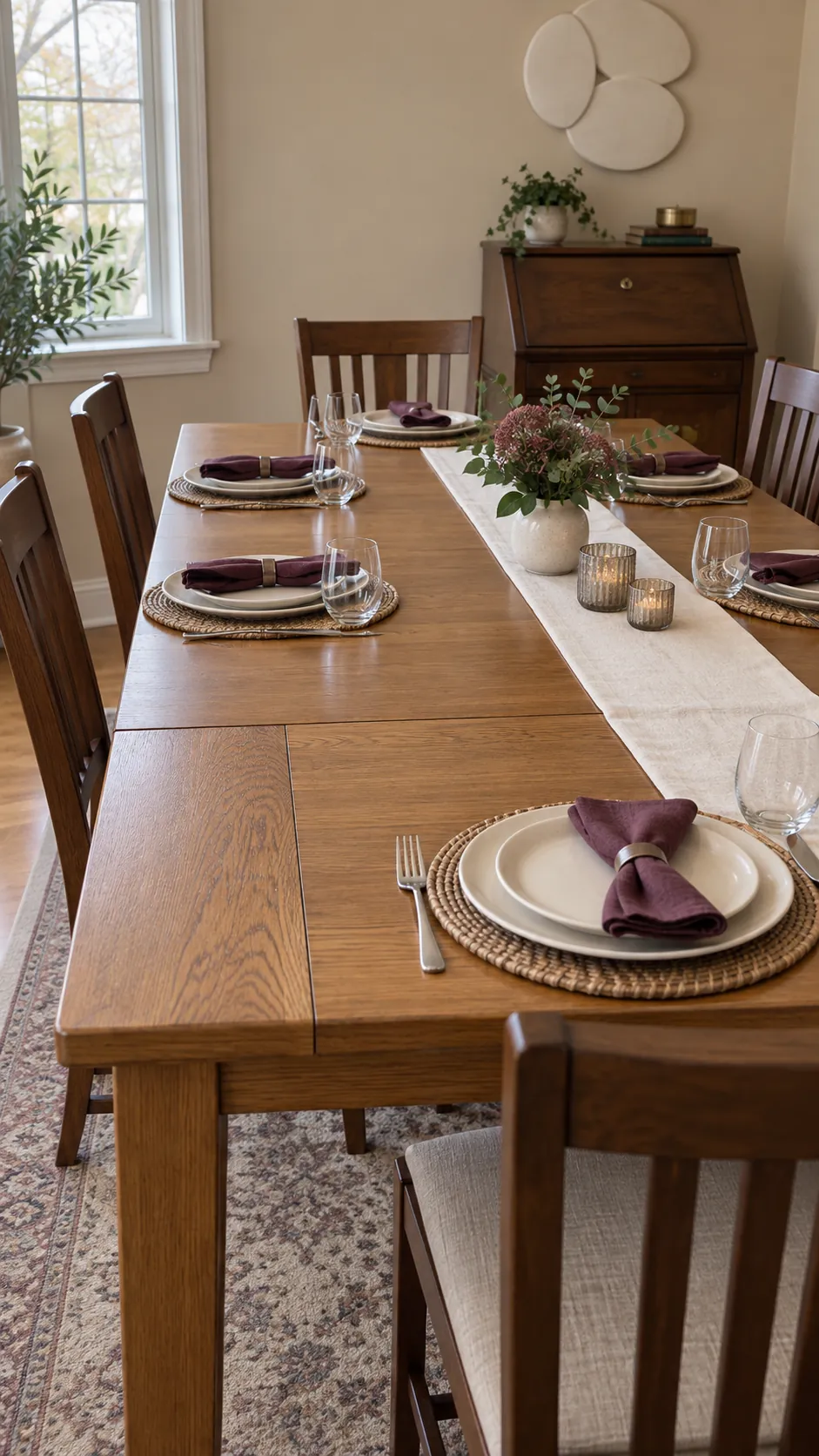
Test the table leaf before setting extra places
An extendable table can offer more Thanksgiving seating only if the extended footprint fits beside the office area. Open it according to its instructions, secure the leaf, and test the supporting mechanism before guests arrive. Move work items first so nothing is trapped in the table opening. Check chair access and walking space again with the table at its final length.
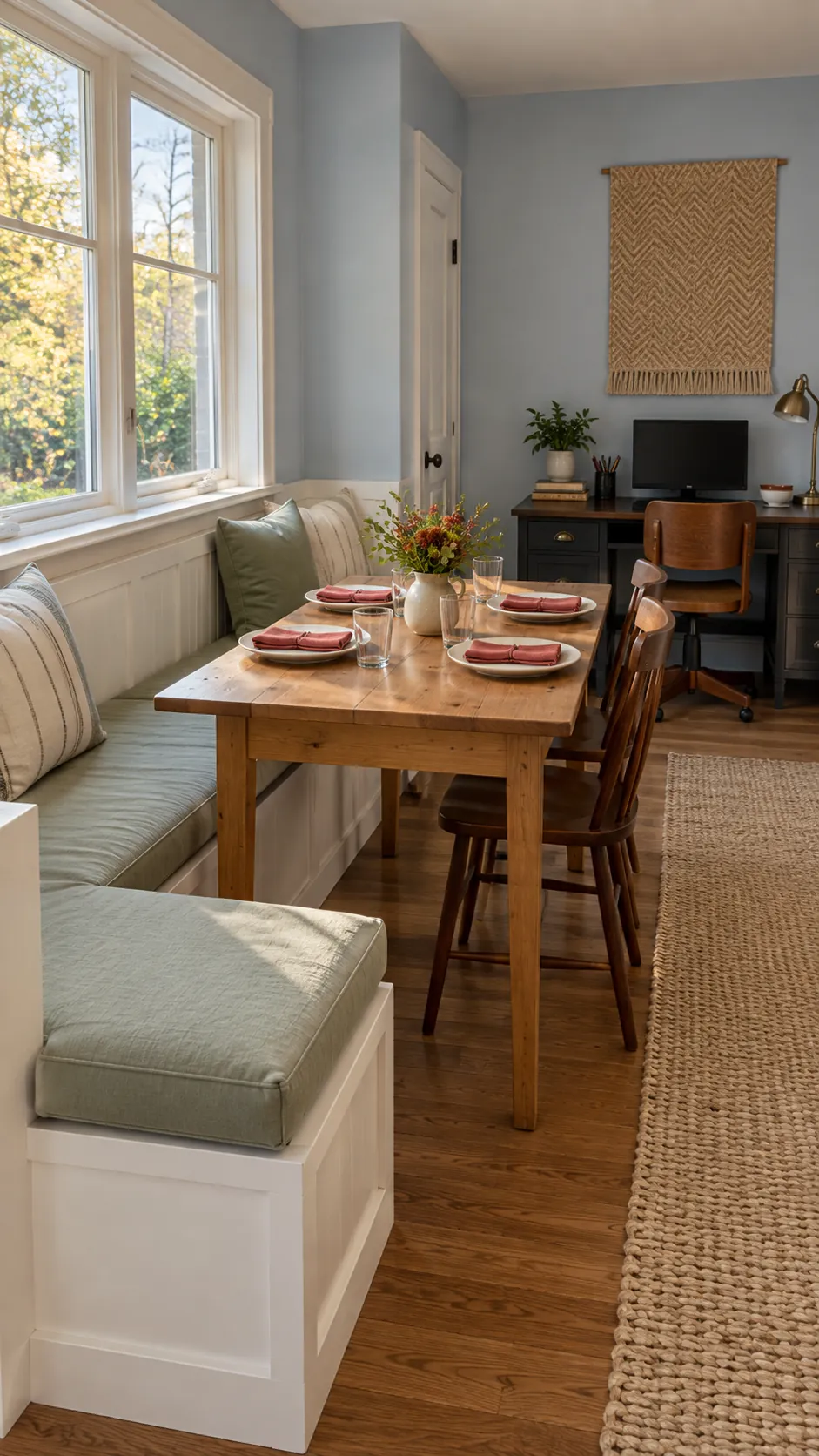
Use a wall-side banquette to define the dining zone
A banquette or existing wall-side bench can make the dining area feel distinct from a desk on the opposite side of the room. Keep a clear way to enter and leave the seat instead of trapping guests behind a table they cannot move. Use comfortable stable cushions that fit the bench.
Put the office storage on the desk side so someone does not need to reach behind diners during the meal. Seasonal detail can stay on the dining tabletop rather than spreading across both work and seating surfaces. This arrangement works best when the bench is already part of the room and its clearance is familiar.
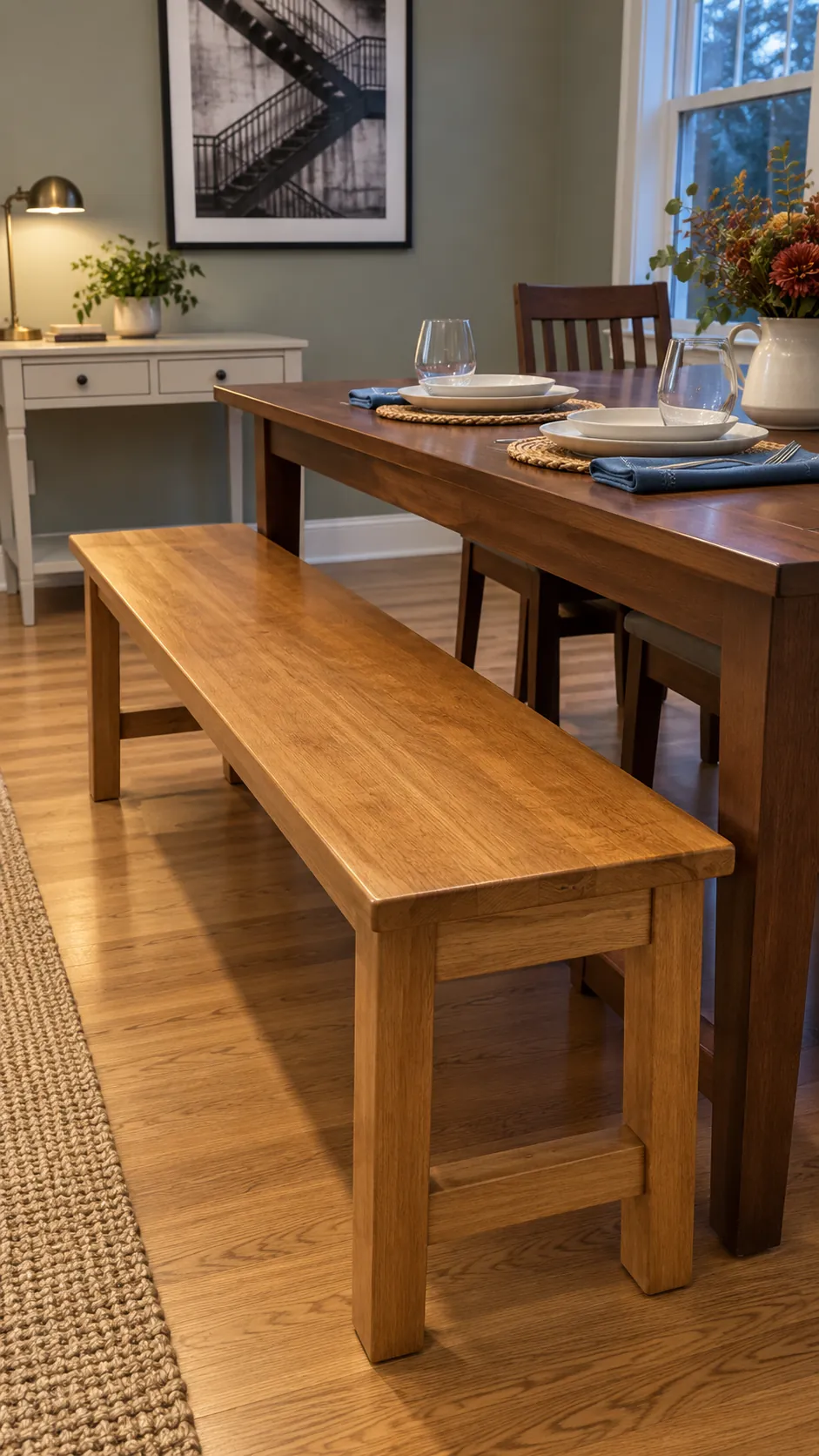
Bring in a dining-height bench for one table side
A suitable sturdy bench can replace a few individual chairs when it fits the table and the room. Check its height, load rating, and length rather than assuming any hallway or piano bench will work. Leave space for each guest to sit without straddling a table leg. Place it where people can enter from an end and where moving it will not block the desk or doorway.
Move bulky serving dishes away from the work table
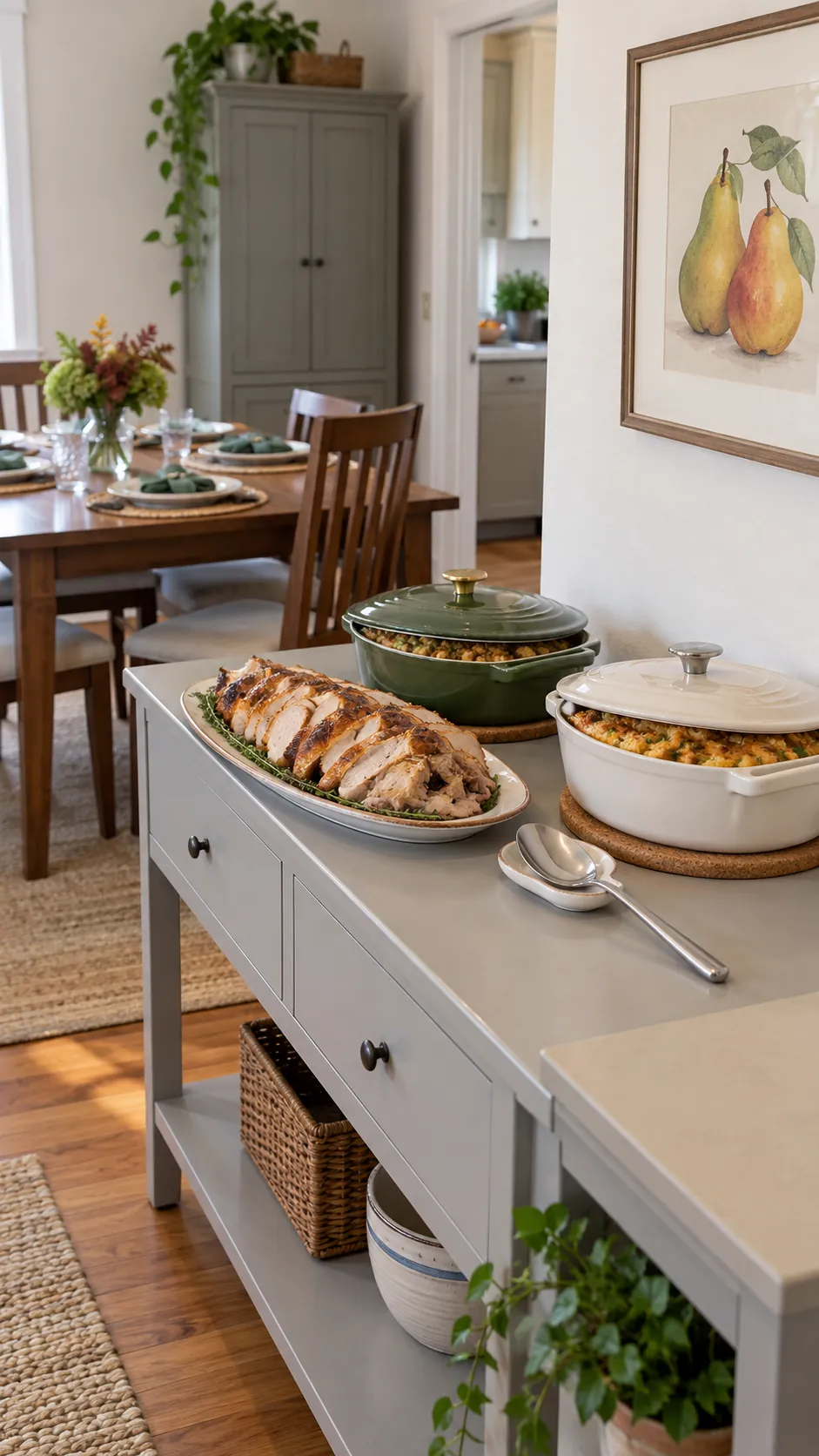
If the dining table also functions as your desk, its usable surface may be more limited than the guest count suggests. Serve from a separate suitable surface so dinner plates and glasses do not compete with large casseroles. Keep that surface clear of office equipment and protect it from heat or spills.
Choose the serving location with the guest route in mind, then bring food out close to service if it is not safely temperature-controlled. A few smaller dishes may work better than a crowded display of every serving bowl. The dining table can then be a place to eat instead of another balancing exercise.
Offer the cleared desk for a quiet after-dinner activity
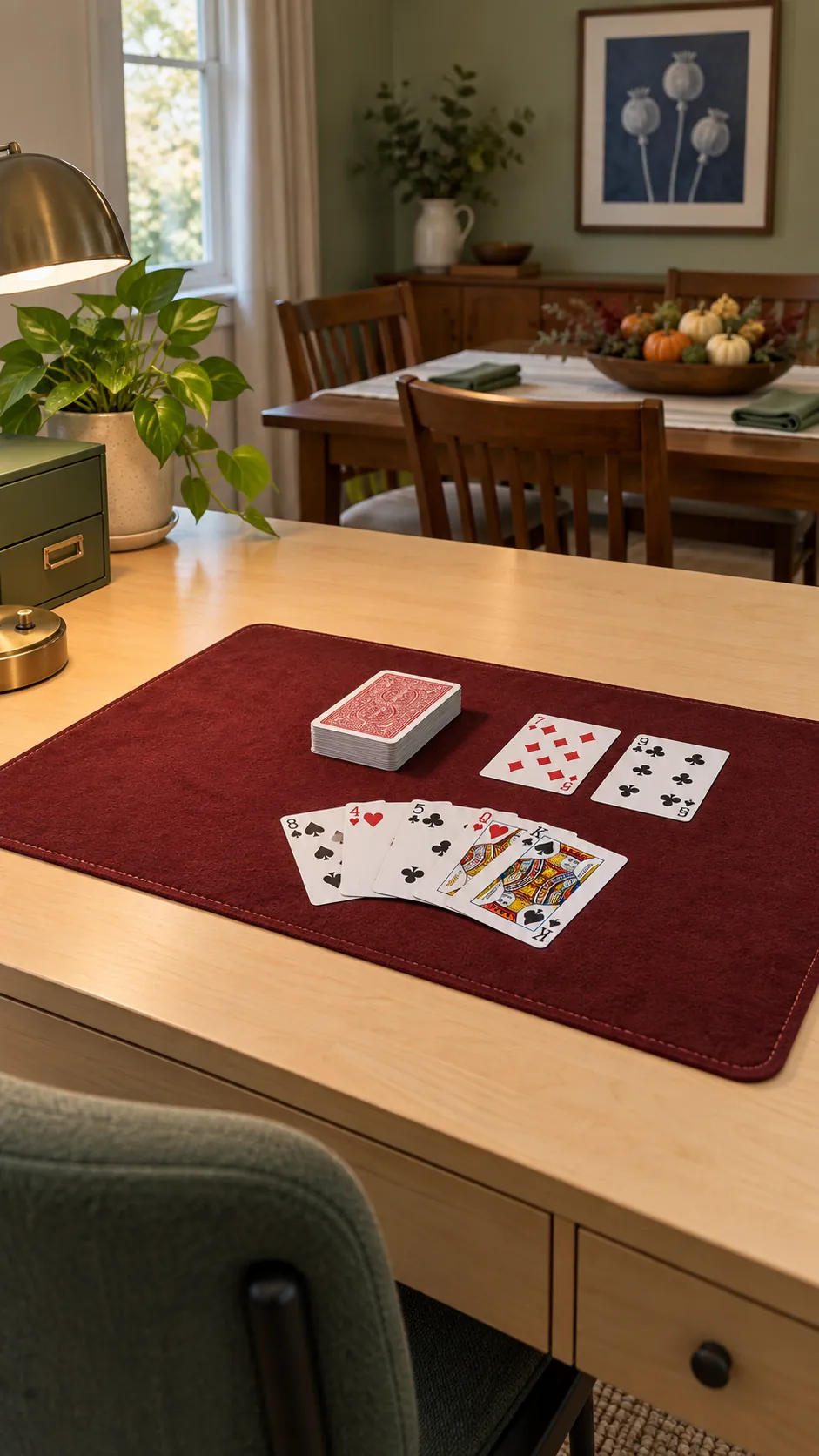
Once dessert is finished, a cleared desk can give the room another useful role. Set out a familiar card game, a simple drawing activity, or another age-appropriate option while keeping office materials secured elsewhere. Protect the surface and keep drinks on a separate stable spot. Guests gain a place to linger without having to rearrange the dining table immediately.
Give bags and coats a destination beyond the office chair
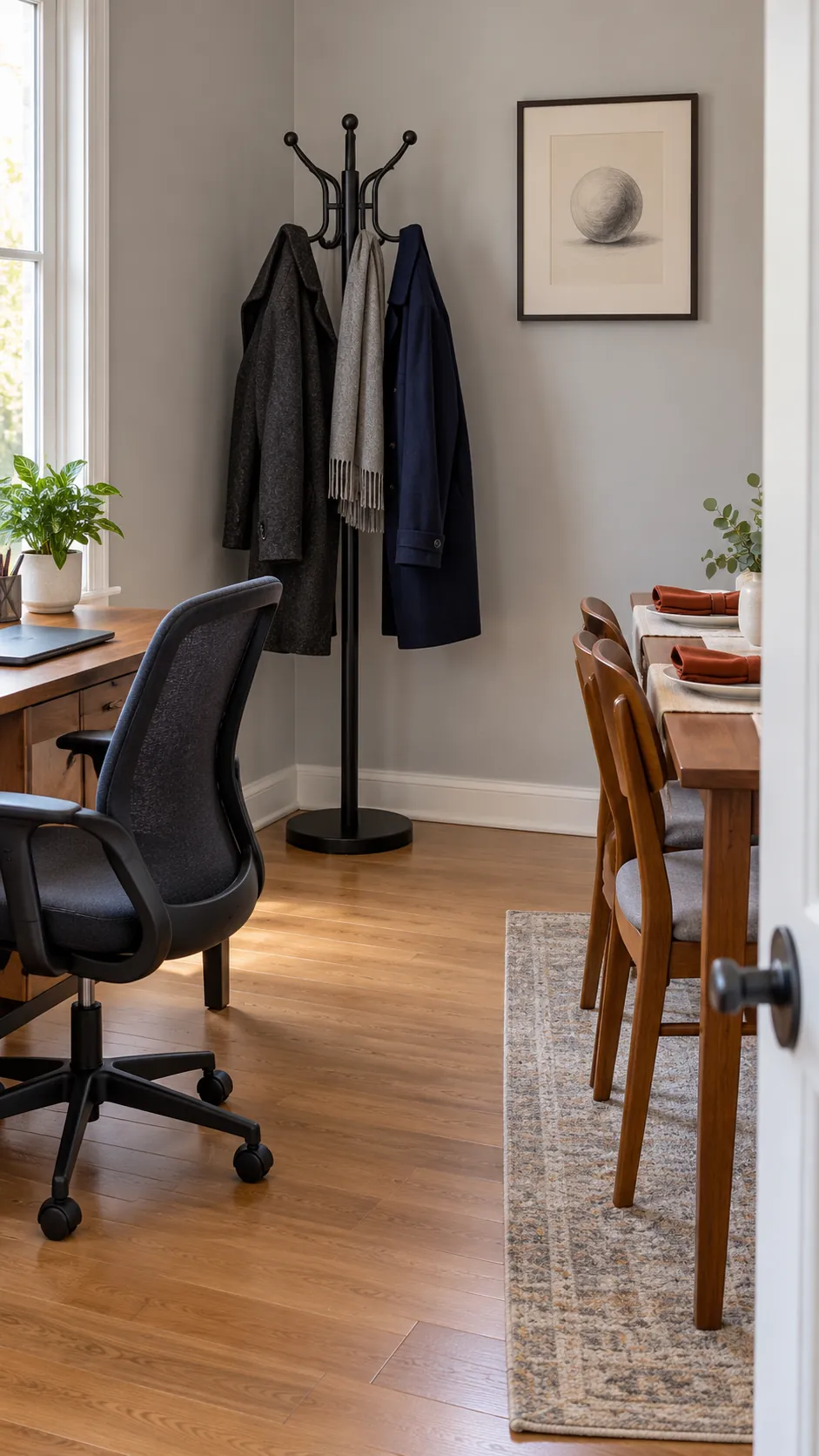
Without a clear coat destination, the desk chair often becomes a pile of bags and outerwear. Use an existing coat rack or a suitable room outside the dining aisle, and point guests there when they arrive. Keep heavy bags off office equipment and avoid overloading a freestanding rack.
If a rack stays in the dining room, test its full footprint with coats hanging from it. Keep it away from the table, screen, and main route so the added fabric does not become a hidden obstruction. The desk remains available for its planned holiday role rather than acting as accidental storage.
Plan the return to work before the room changes
The best holiday room transformation includes the next working day. Keep the laptop sleeve, cable container, and active-project box together in their protected storage spot, and note any connections you need to restore. After the gathering, clear food and liquids before bringing equipment back to the table. Reconnect carefully, check the work setup, and return the rolling chair only when the walking route is clear. Your Thanksgiving dining room has done its job when it welcomes guests and still gives your work a reliable place to resume.