A plant on the wall saves surface space, but it still needs a place to drain and a way to come down. Start by checking the light, the wall construction, and how comfortably you can lift a watered pot. Those choices make the decorative part much easier.
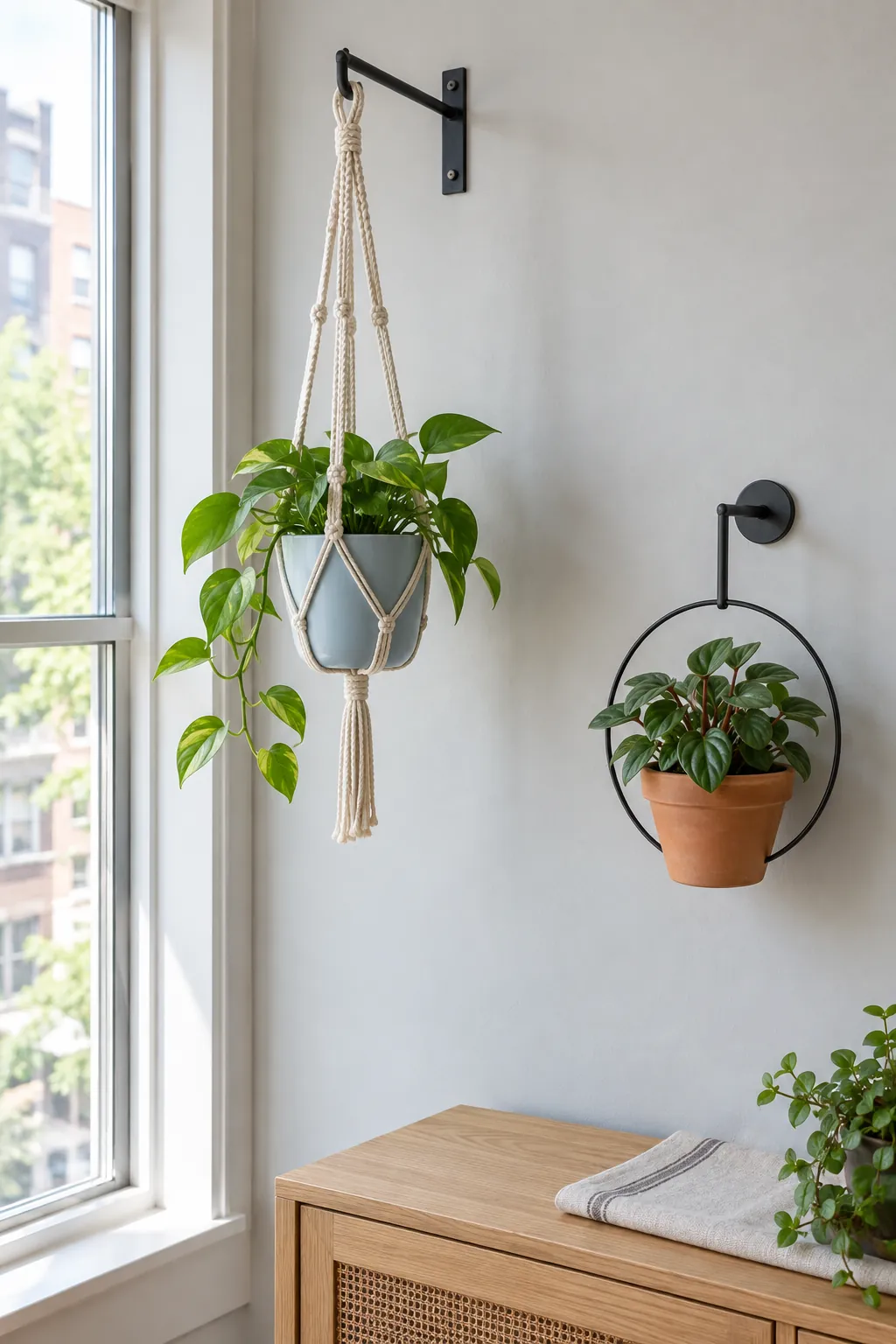
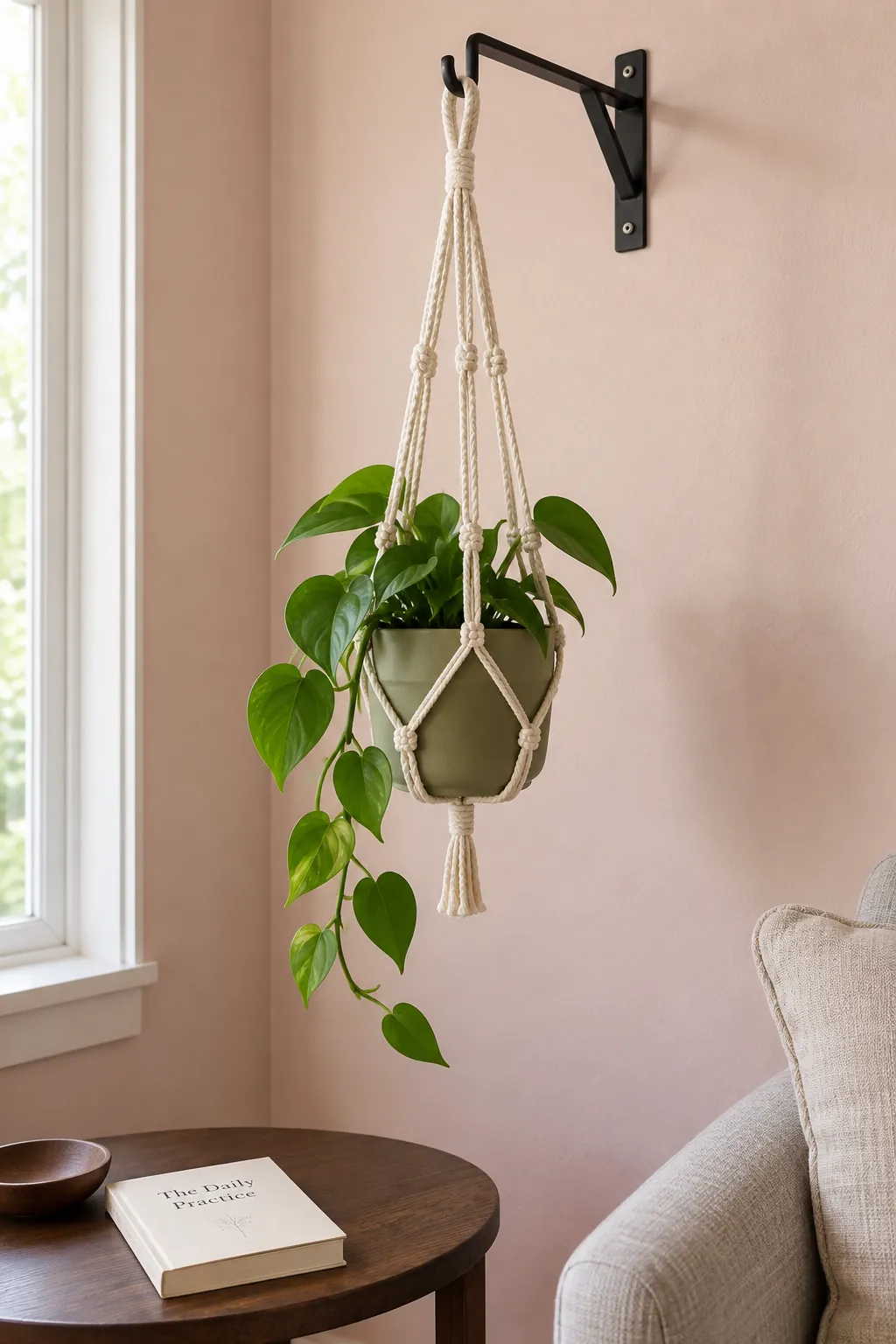
A cotton cord hanger on a wall bracket
A short cotton cord hanger brings a plant forward from the wall so trailing stems have room to fall. Choose a bracket that projects far enough to keep the pot level and leaves clear of the surface. Check both the bracket rating and the condition of the cord, since wet soil adds weight beyond the empty pot.
Keep the nursery pot removable instead of watering through the knots. Cotton can stay damp where it touches a wet vessel, so return the pot only after its outside is dry. Trim the cord tail if it catches on nearby furniture.
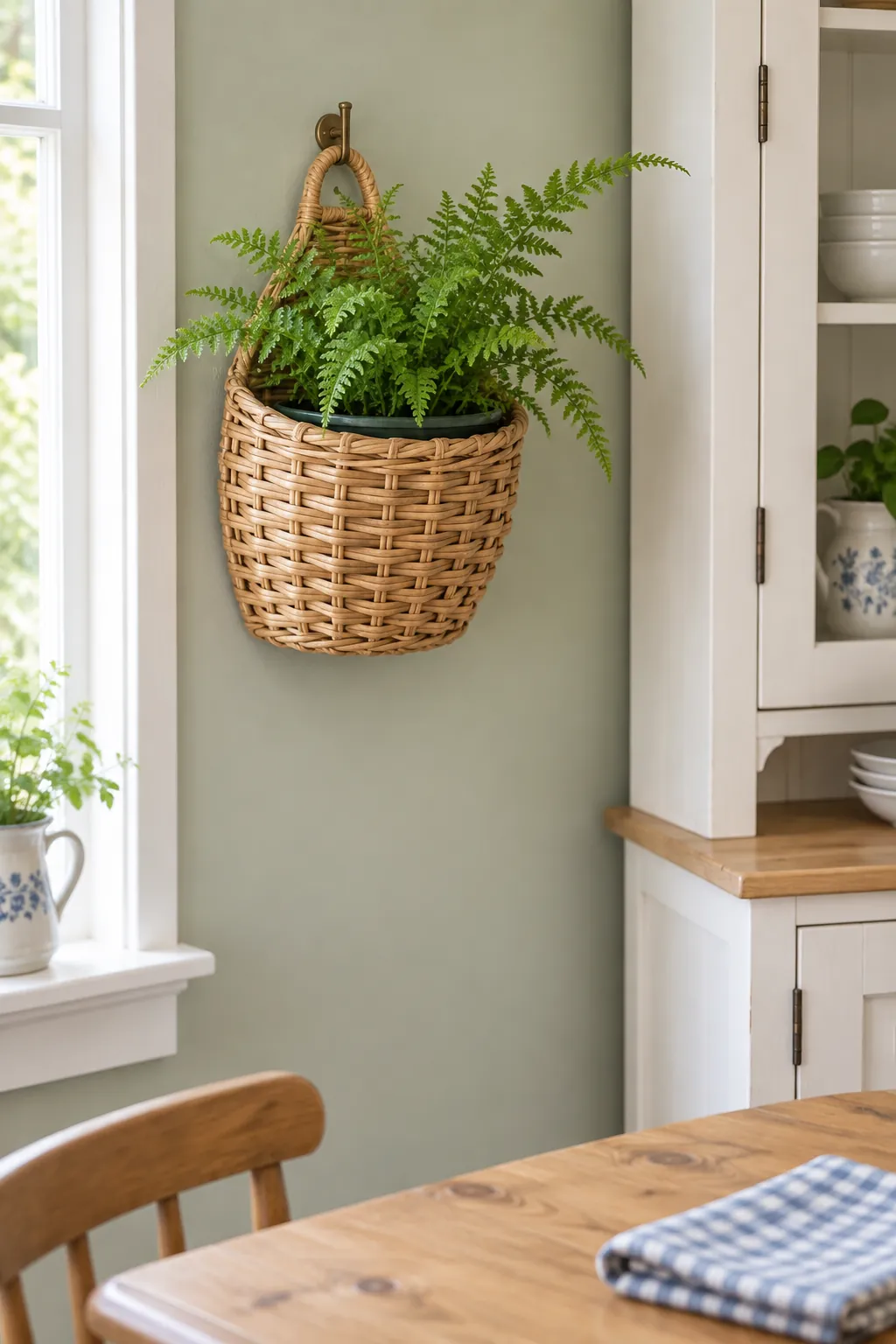
A woven basket with a hidden inner container
A flat backed woven basket adds warmth without needing a large planting arrangement. Put the living plant in a separate draining pot and use a suitable removable liner to protect the weave. The basket itself should not become a wet soil container. Let it dry completely if water reaches the fibers, and replace it if the hanging points weaken.
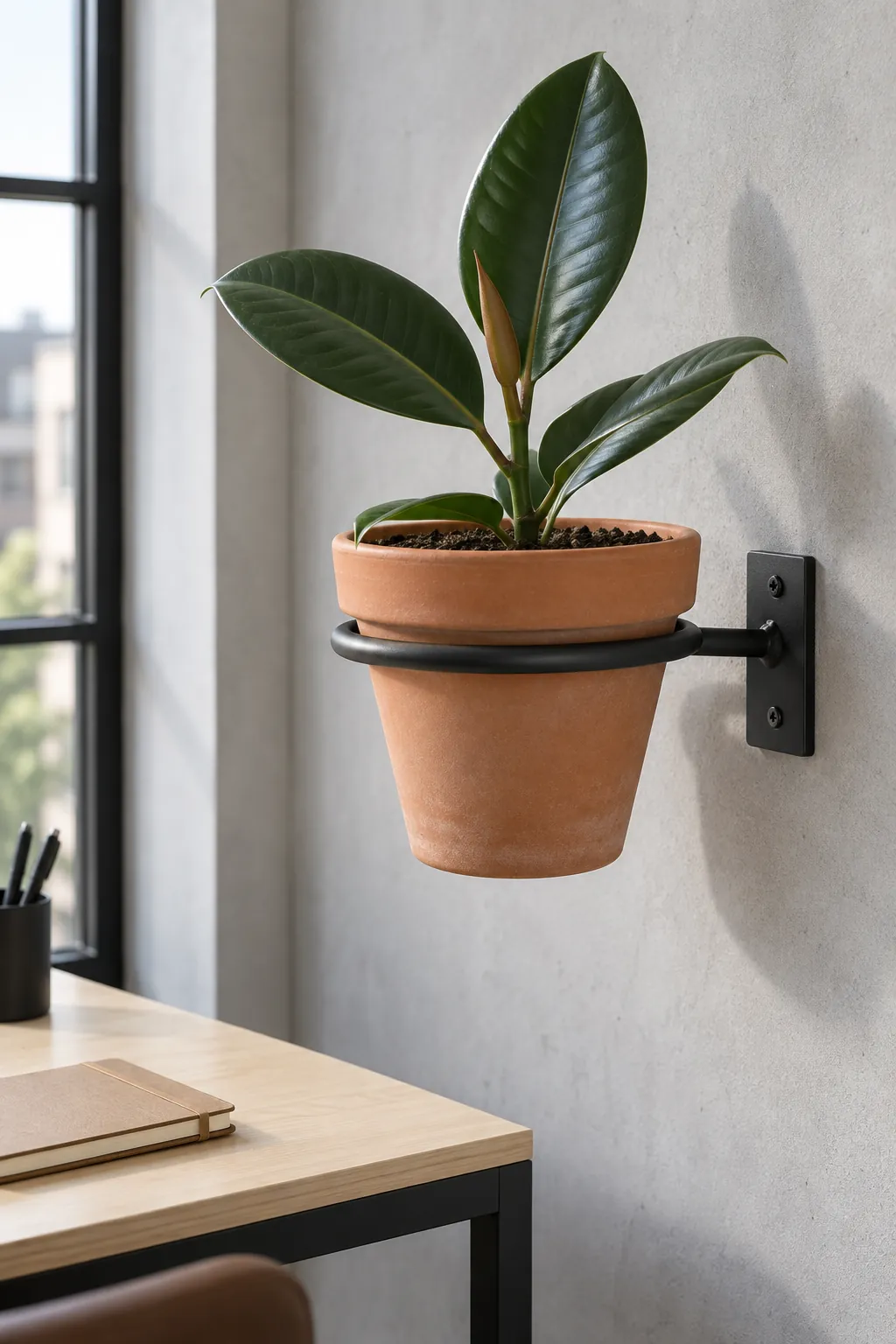
A metal ring that shows the whole pot
An open ring holder lets the shape of an ordinary pot become part of the display. Measure the pot at the point where the ring will support it, because a tapered body can slip through a ring that seems close enough. Check that the lip and ring are designed to carry the load together. This option is useful when you want to lift the plant straight out for a thorough inspection.
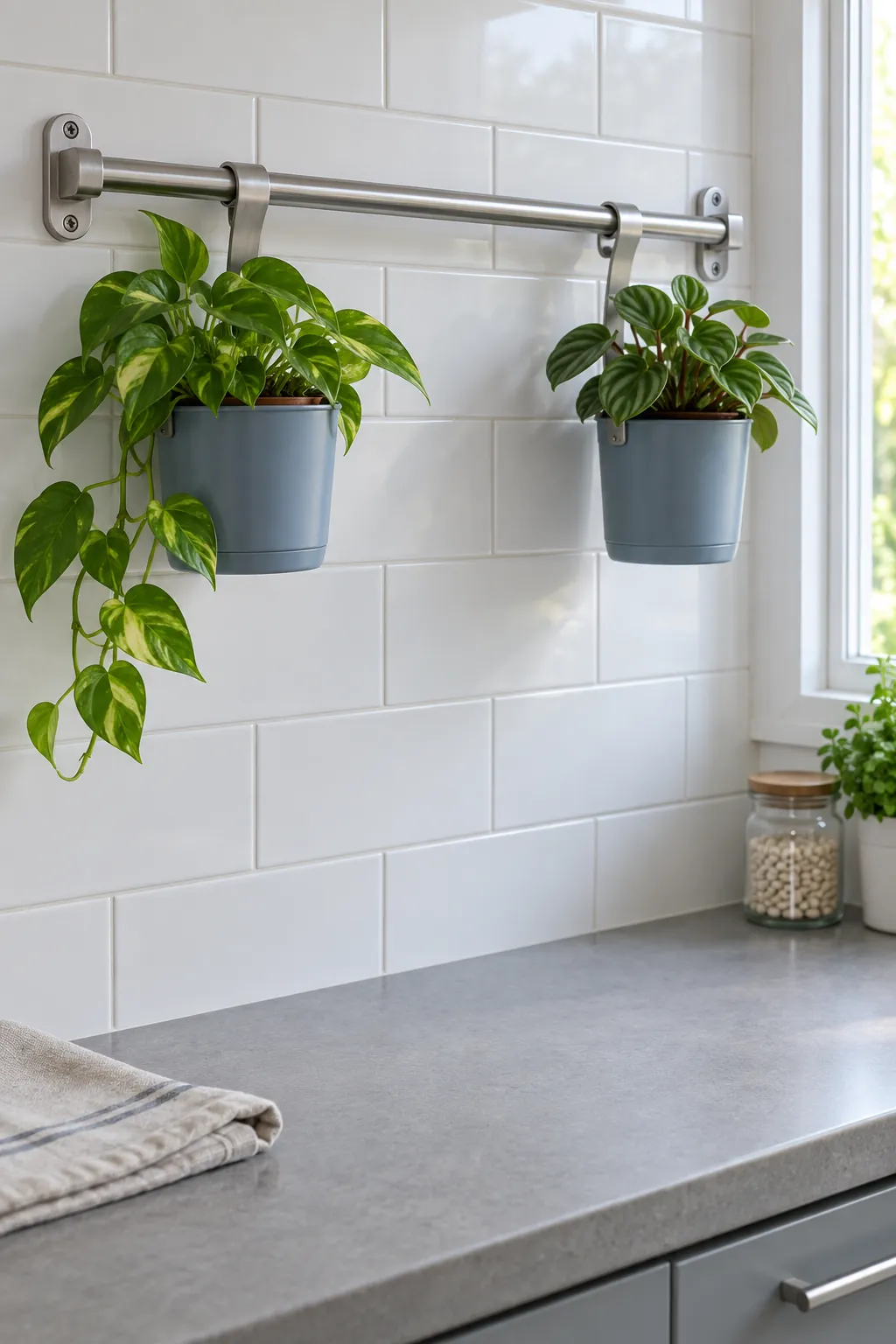
A short rail with movable plant hooks
A rail can gather several wall mounted plants while keeping their positions adjustable. Use compatible hooks that cannot slide off accidentally when a pot is lifted or bumped. Add the weight of every watered container before checking the rail and wall fixings.
Leave an empty stretch of rail rather than filling every hook immediately. That gap gives growing leaves somewhere to go and makes rearranging easier. A narrow rail also looks calmer when the pots differ slightly in height.
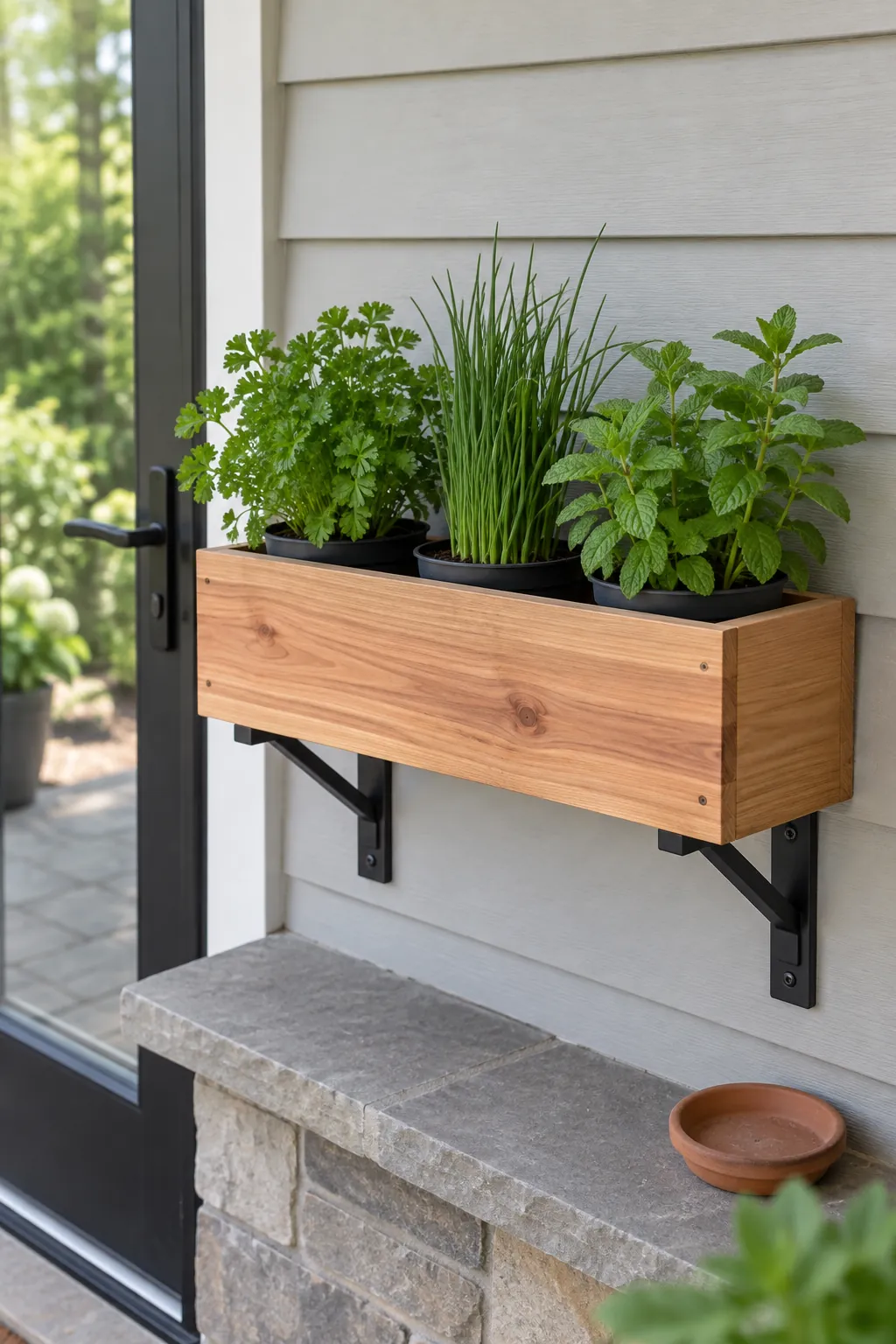
A cedar box with separate nursery pots
A cedar wall box gives a row of small plants a simple architectural edge. Individual nursery pots inside are easier to manage than soil placed directly against the timber. Keep any protective liner removable so you can inspect for trapped moisture. Outdoor wood finishes and construction details should match the exposure where the box will hang.
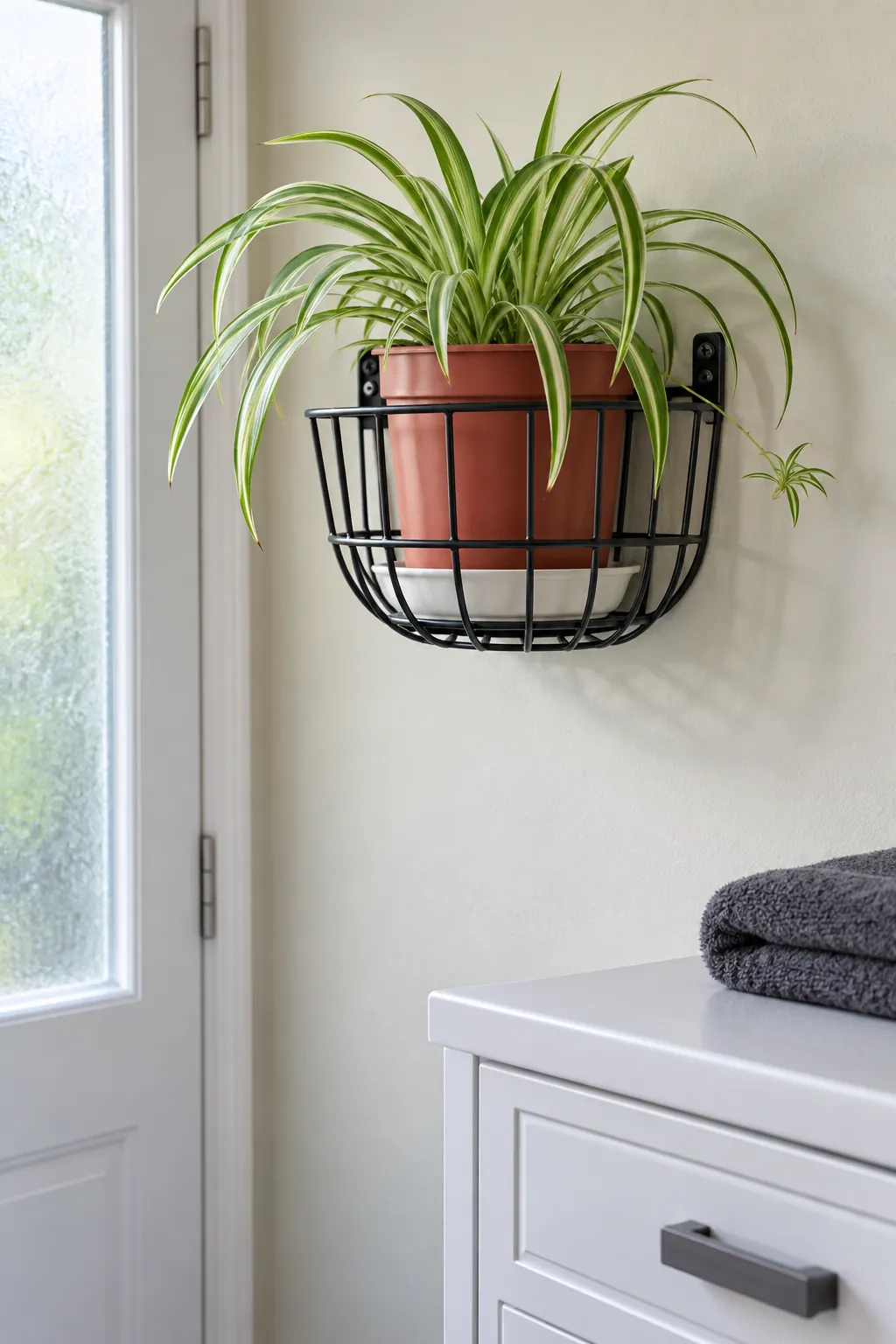
A wire basket lined for easy removal
An open wire basket makes a useful wall plant holder when it cradles a solid inner pot. The wire should support the container’s base and sides without pressing into fragile leaves. Choose a finish suited to indoor humidity or outdoor weather as appropriate. A loose decorative liner does not replace a container that can retain soil and drain predictably.
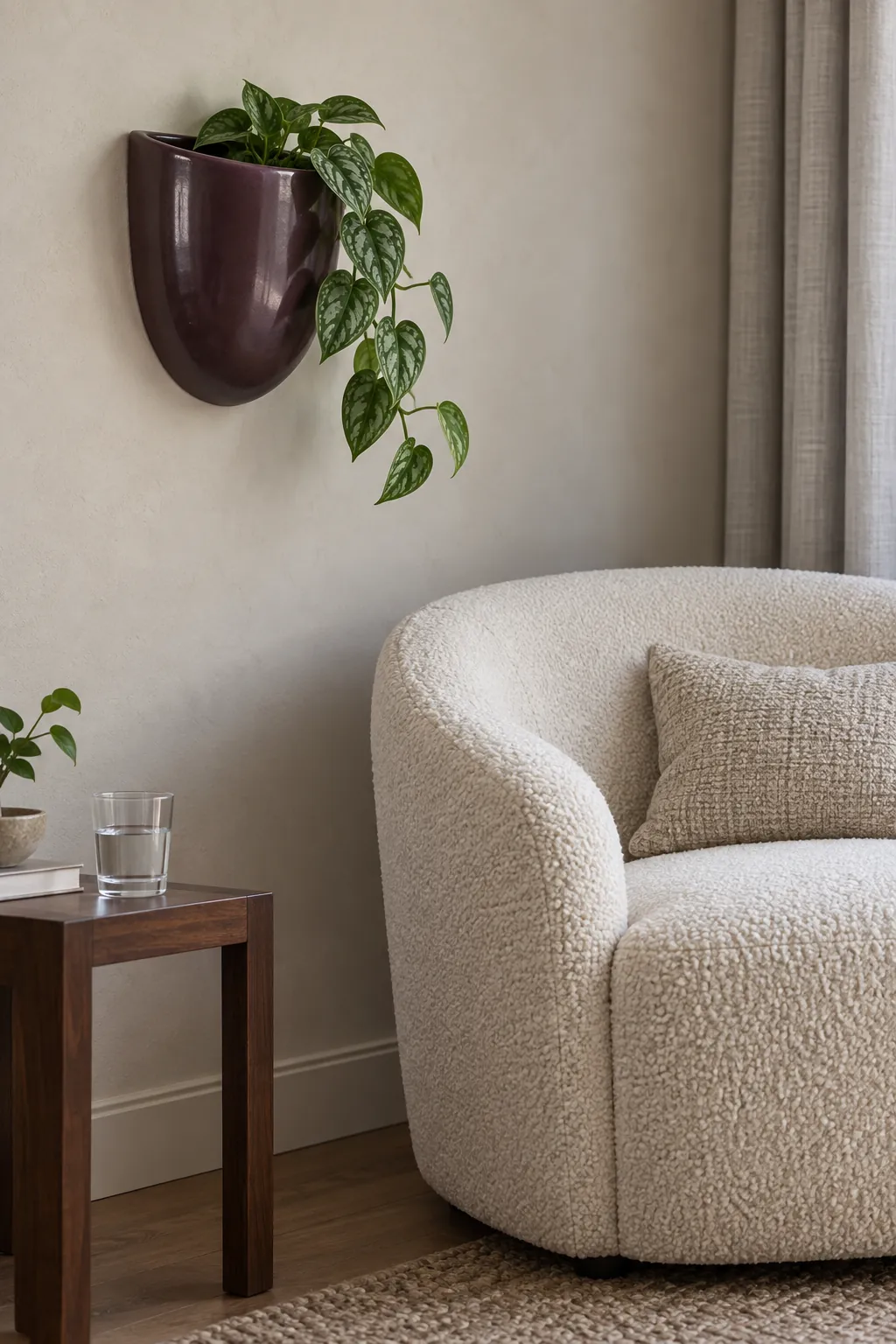
A single ceramic sconce with trailing foliage
A wall sconce planter can supply the visual weight of a decorative object and the softness of a plant at once. Look for a broad opening that leaves your hand room to lift the insert. A short trailing plant keeps the silhouette readable while you learn how quickly it grows. Position it beside a frequently used seat rather than over someone’s head.
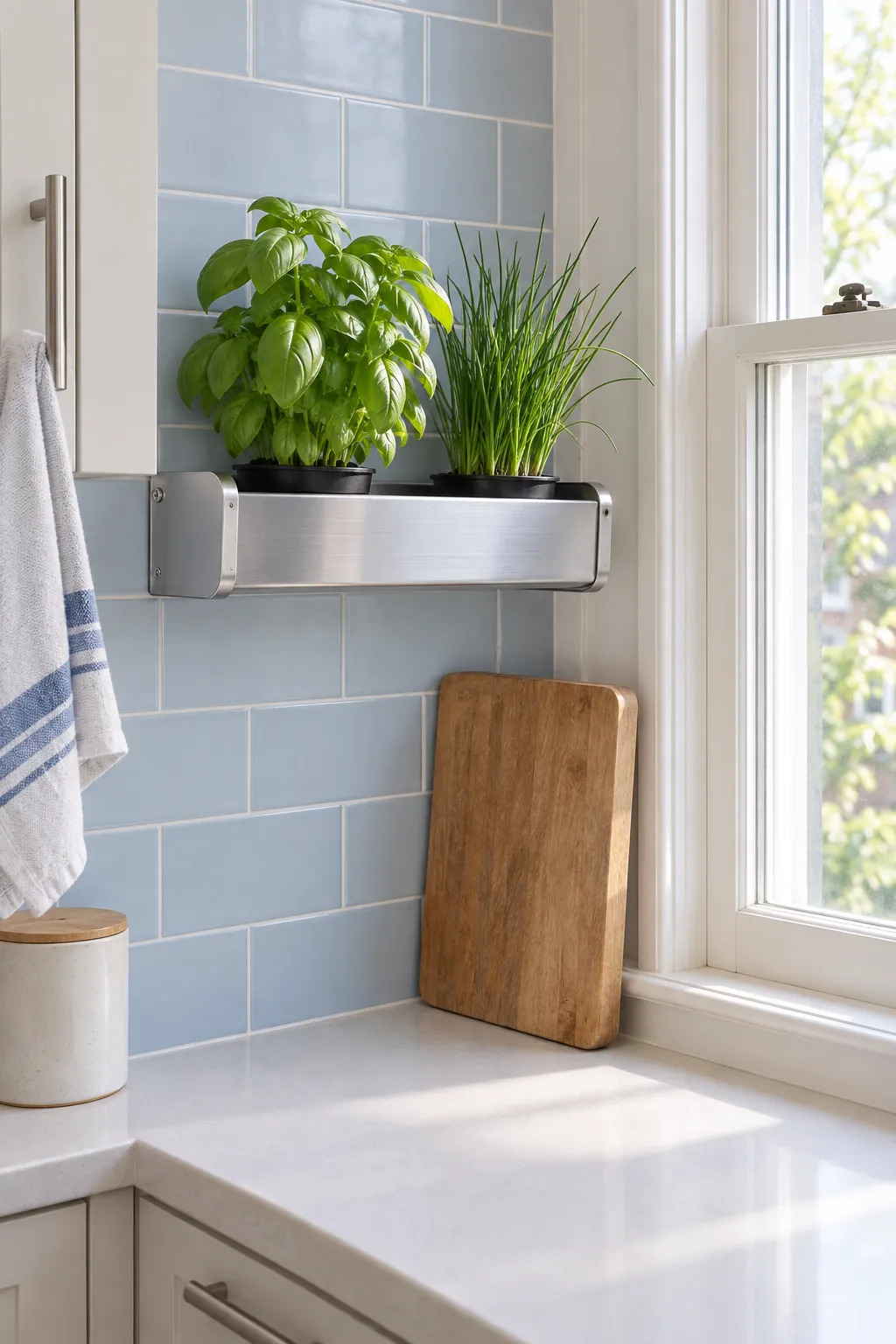
A narrow trough beside a bright kitchen window
A short trough can hold separate herbs without consuming a kitchen sill. Its success depends on enough light at the leaf level, not simply being in the same room as a window. Keep herbs with different moisture needs in their own inserts. Make sure you can lift the farthest pot out without reaching over a hot appliance.
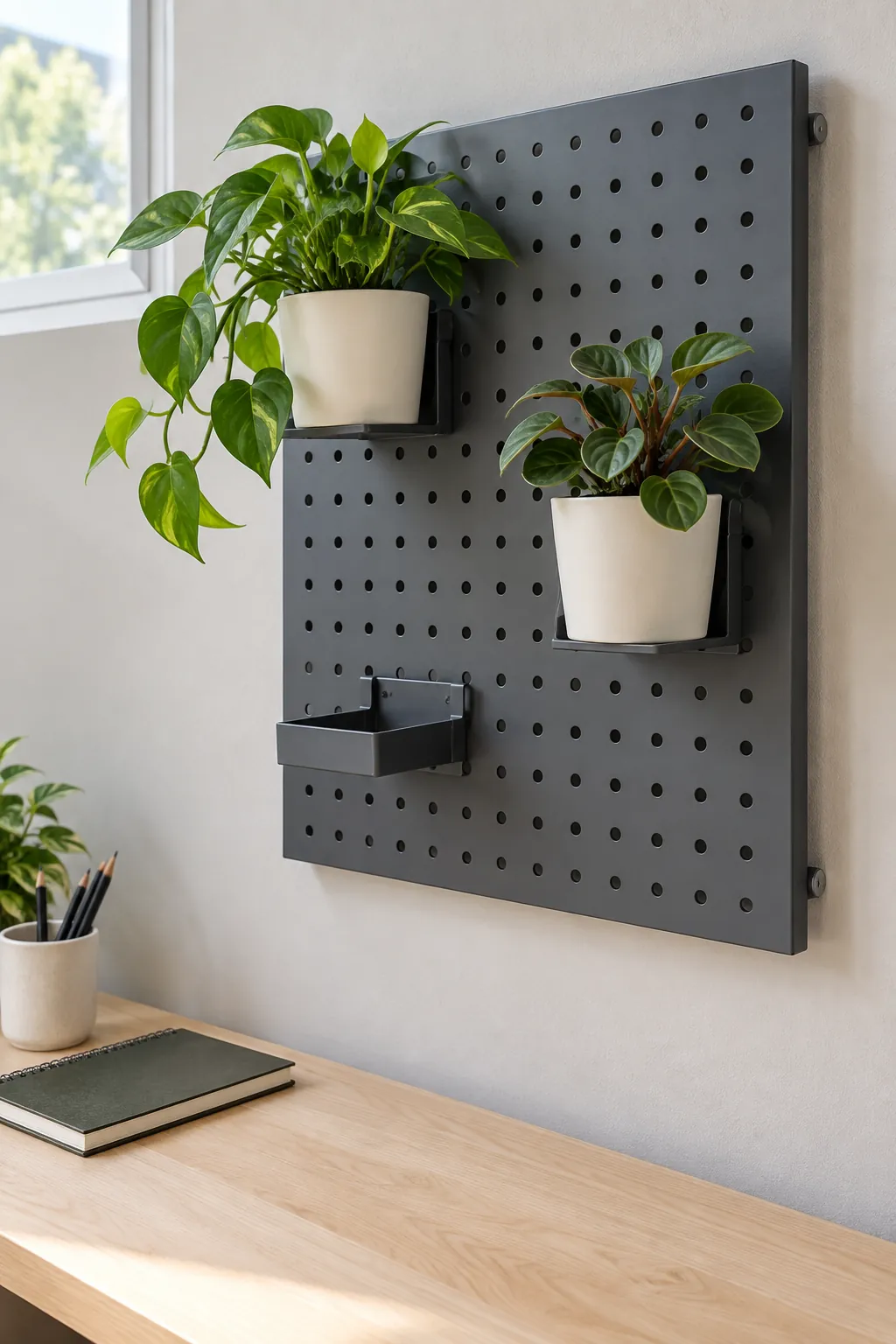
A pegboard made for plant containers
A plant rated pegboard system allows hooks and holders to move as the collection changes. Ordinary craft pegboard may not carry the same load, especially once several containers are watered. Use the board’s specified brackets and wall attachment method rather than improvising from appearance.
Arrange the plants so each pot can clear the one above it during removal. Keep a small gap behind the board where the system permits inspection and airflow. The board should remain accessible enough to check for loose fittings.
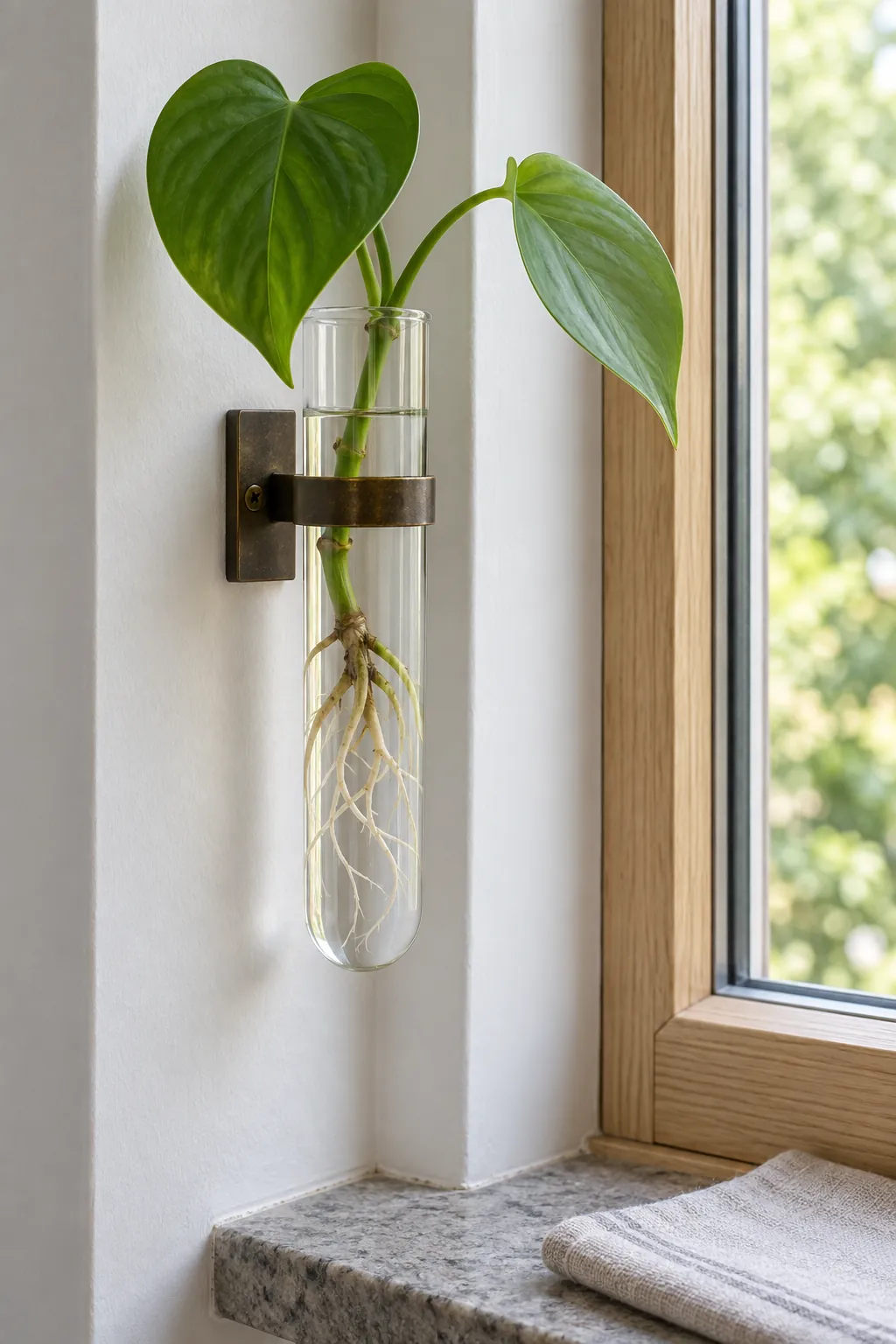
A hanging glass tube for cuttings
A glass propagation tube gives a wall a light touch while roots remain visible. Select a holder that supports the tube securely but lets you remove it for cleaning. Keep the cutting’s growing nodes in the appropriate position for the species and refresh the water as needed. This is a display for cuttings, so plan what happens when they develop enough roots for a pot.
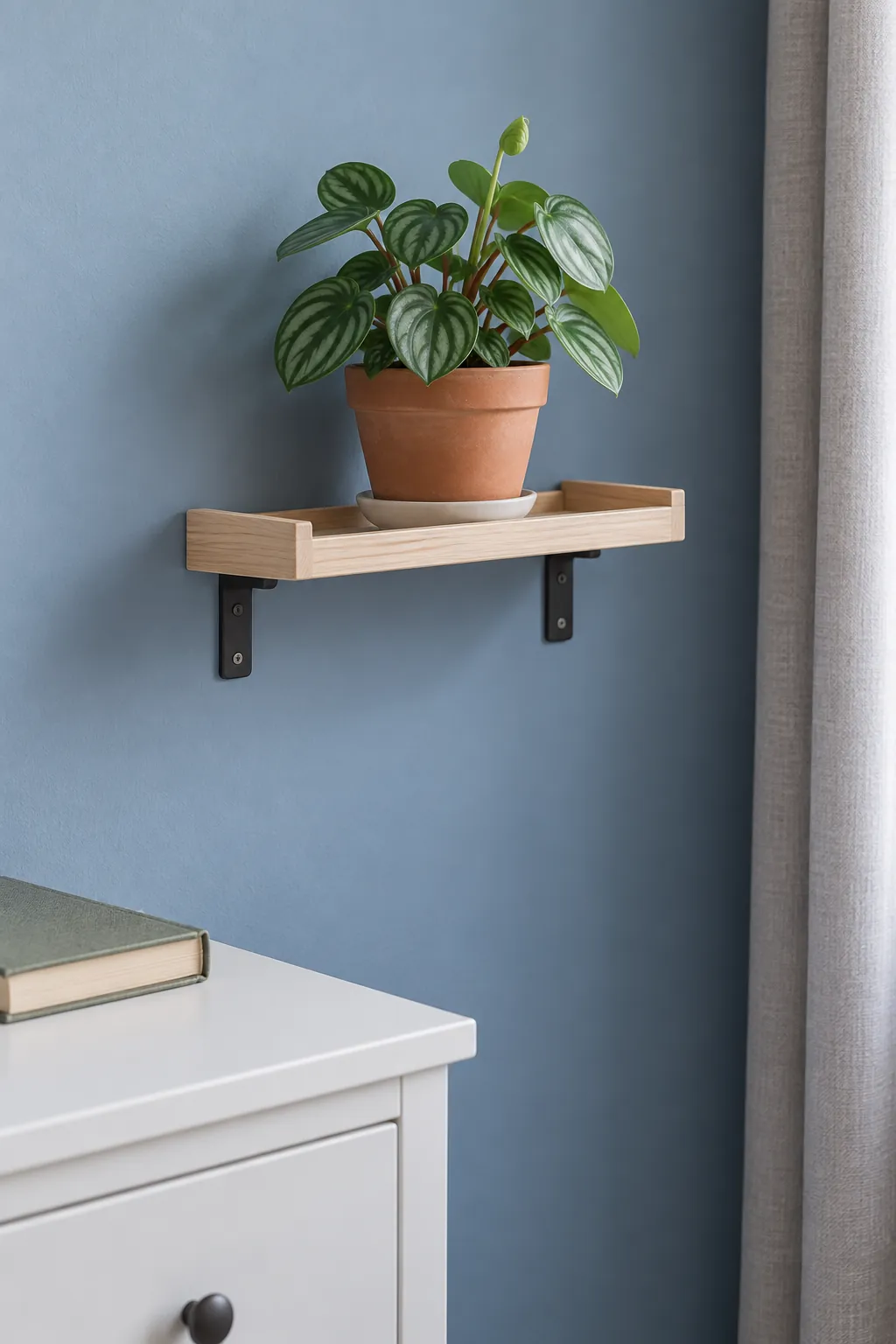
A wall mounted shelf with a retaining rim
A shallow shelf can display a plant at eye level if its depth and capacity suit the pot. A retaining rim helps reduce accidental sliding, but it does not make an unstable arrangement safe. Keep the heaviest part of the pot within the supported area. Remove the plant for watering so runoff cannot sit unnoticed on the shelf.
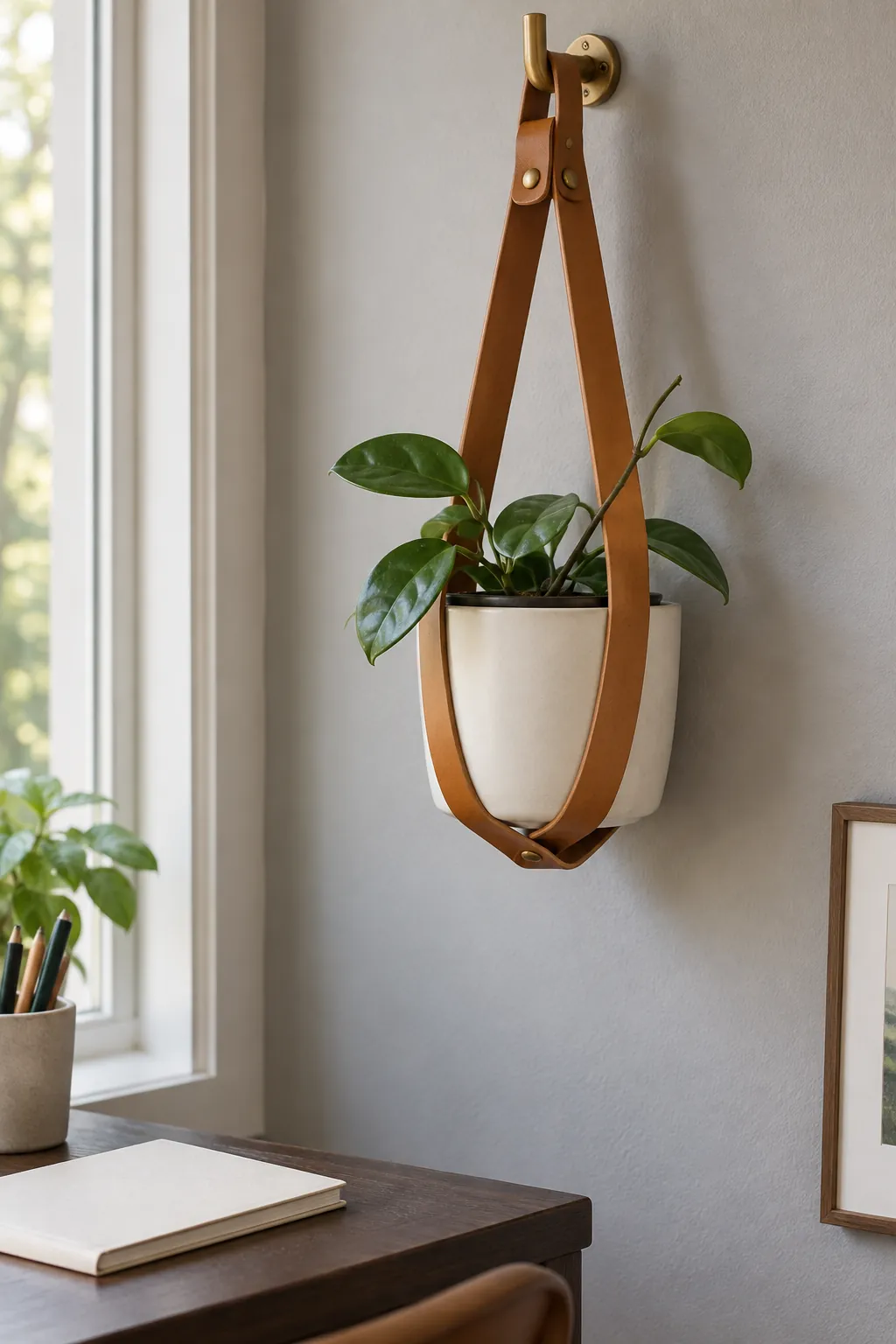
A leather sling for a small dry outer pot
A leather sling introduces a different texture from rope or metal. It needs reliable straps, joints, and a wall attachment intended to hold the complete container. Keep leather away from repeated soaking, and inspect it for stretching around fasteners. A lightweight inner nursery pot inside a dry outer vessel makes routine care simpler.
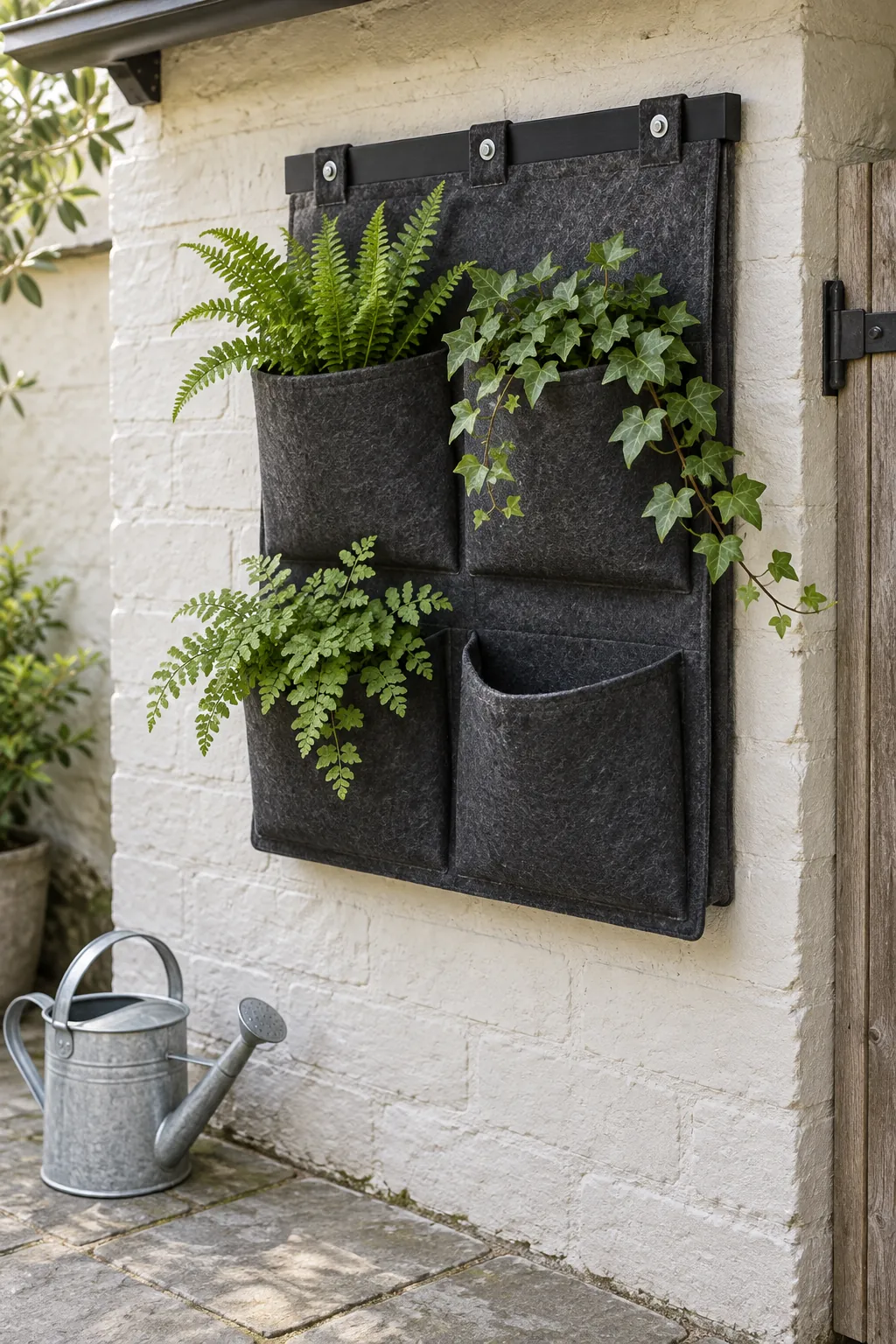
A felt pocket system on a protected outdoor wall
Felt planting pockets can make an outdoor wall look lush, but they behave differently from solid pots. They can dry unevenly, and their backing must protect the wall while allowing water to leave the planting area. Choose a system intended for the location and follow its irrigation and mounting guidance.
Start with fewer pockets until you understand the drying pattern. The upper row may need attention before the lower row, depending on the system and exposure. Check the wall behind it rather than assuming the fabric keeps everything dry.
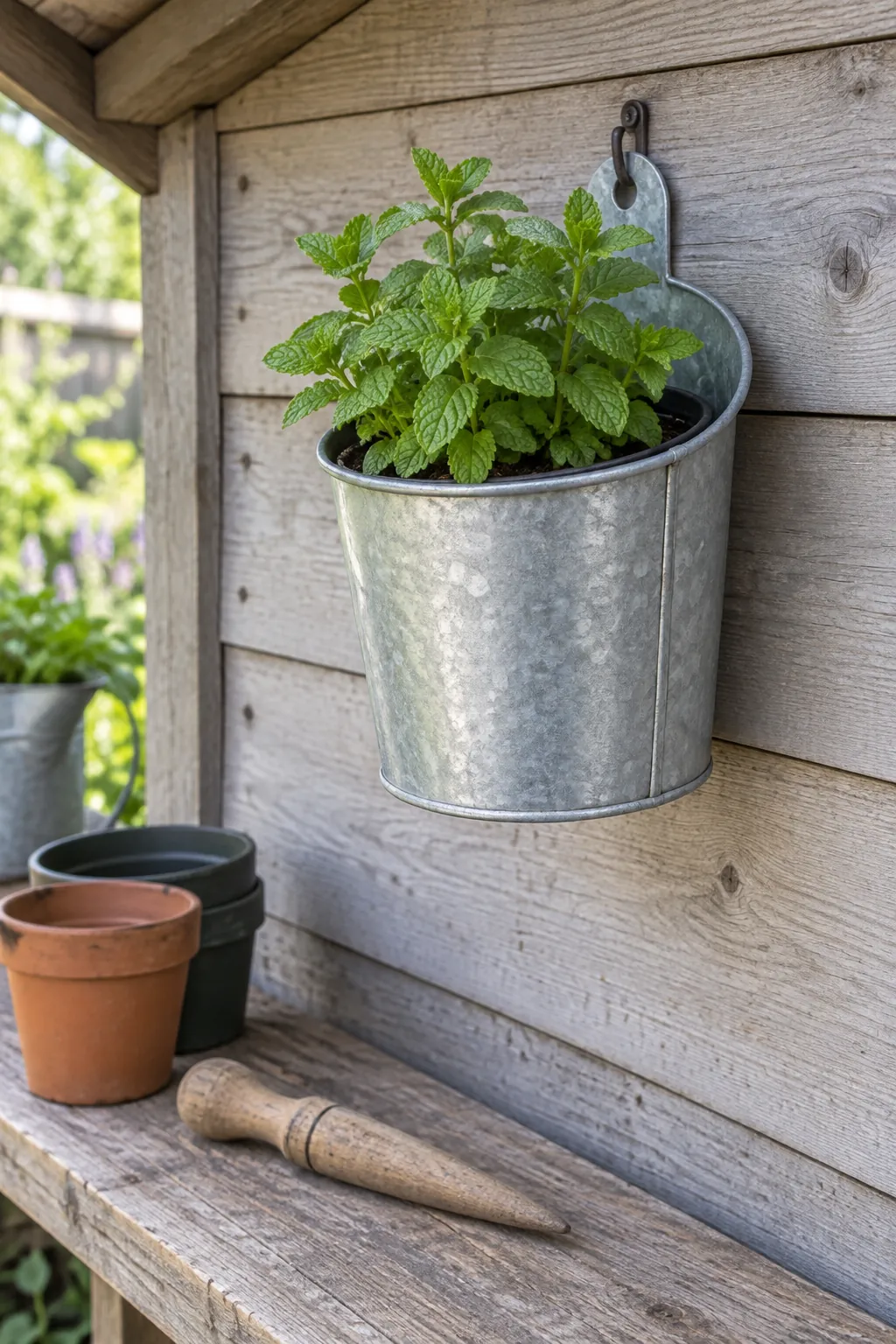
A galvanized wall bucket in a potting area
A galvanized bucket style holder suits a practical potting corner. Use a draining insert if the outer bucket is sealed, and empty any retained water after irrigation. Thin metal can heat up in strong sun, so assess exposure before choosing a plant. Inspect edges and hanging seams for wear if the container lives outdoors.
A small hanging planter beneath a wall shelf
A bracket fixed beneath a suitable shelf can create a second planting level. The shelf and its wall supports must be designed for the extra suspended load, not just objects sitting on top. Keep the hanging pot low enough to remove but high enough to avoid the work area below. Leave space around the suspension point so leaves do not snag as you lift it.
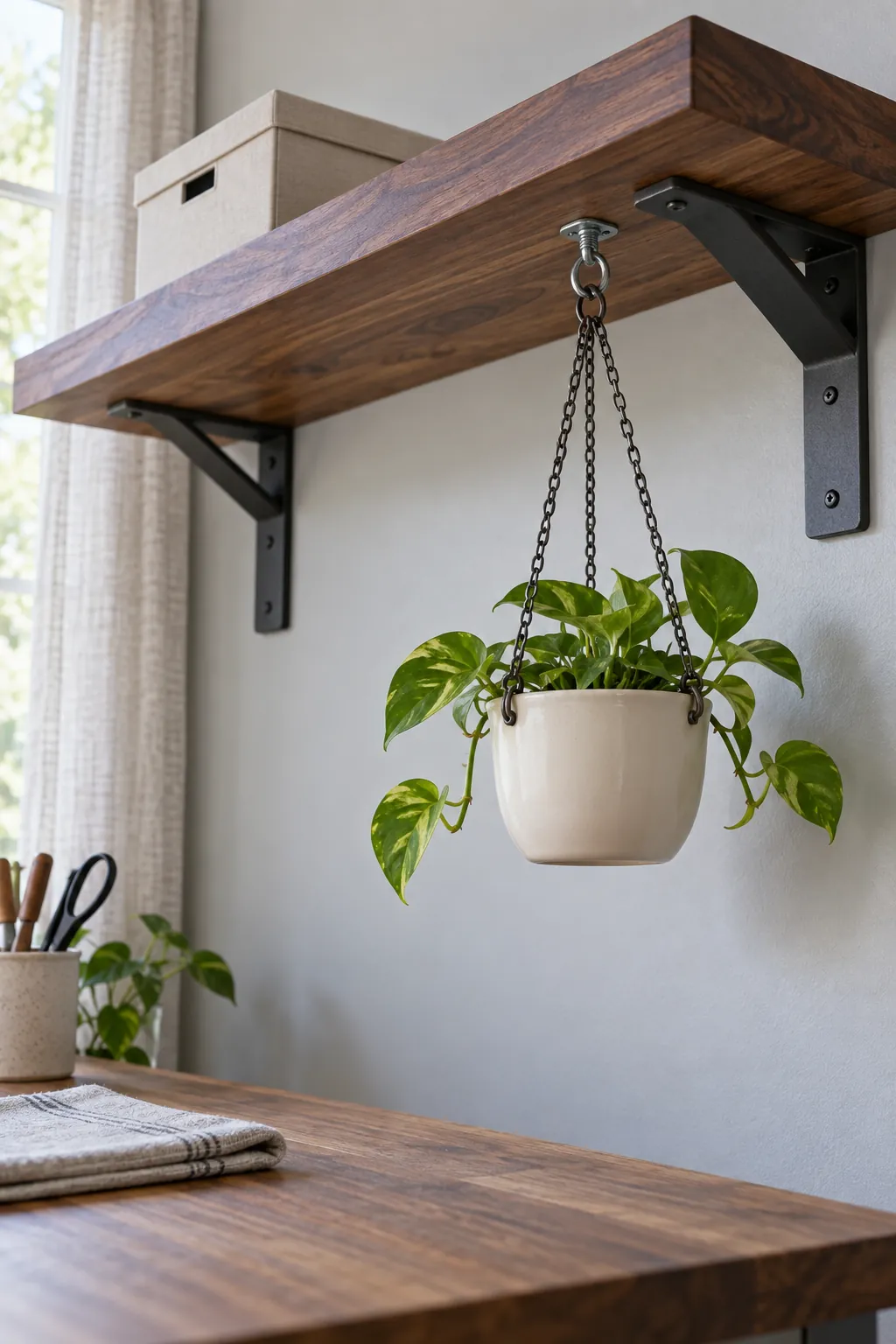
A slatted panel with spaced plant holders
A slatted panel can visually organize several hanging planter ideas into one area. The slats need structural backing and suitable fixings rather than relying on decorative thin strips. Attach each holder where the panel is designed to carry weight. Space the containers to keep the panel visible and allow air around the foliage.
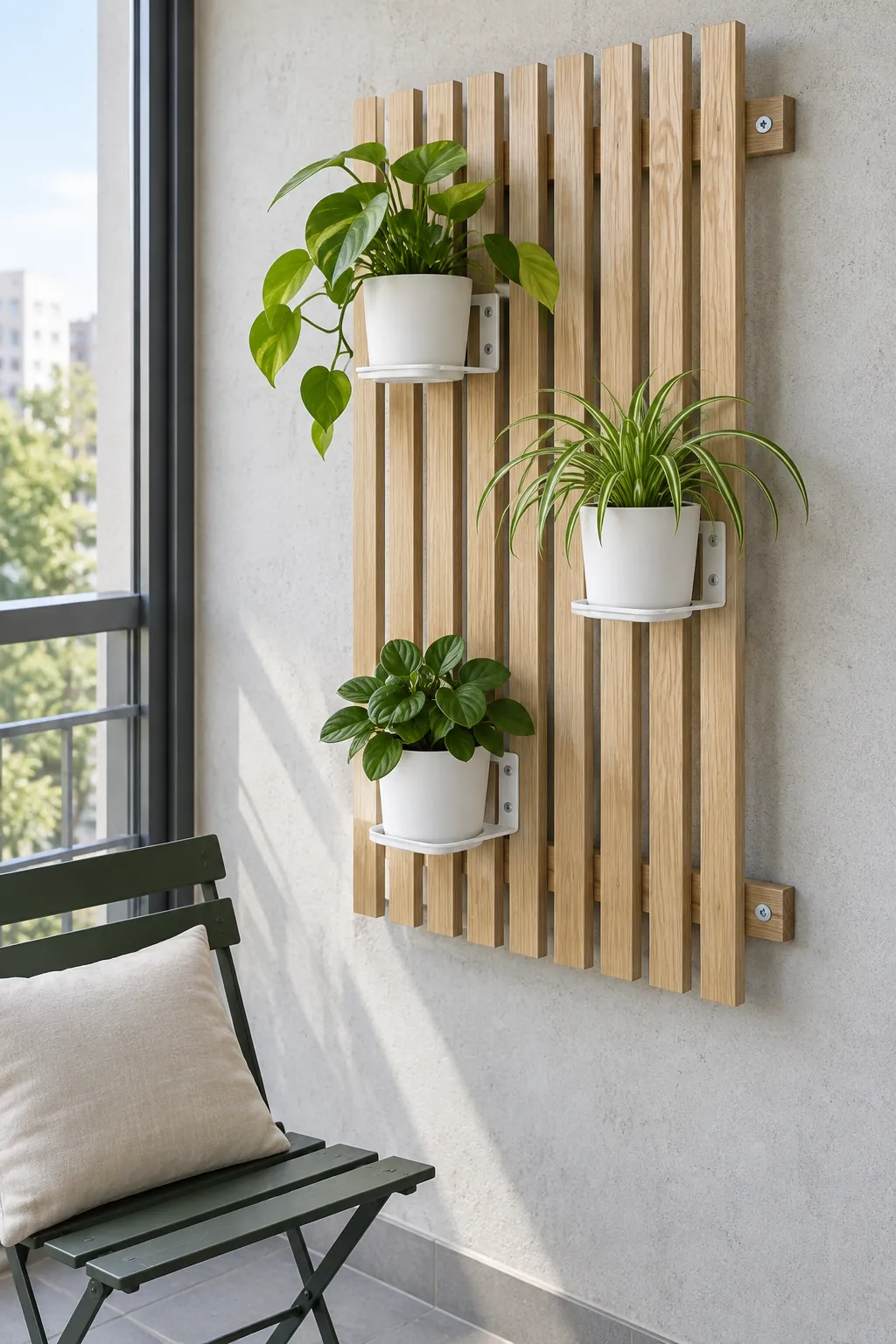
A corner bracket that turns a plant toward light
A projecting corner bracket can move a plant out of a shaded wall junction. Check the resulting position against the actual window light and the room’s walking route. The longer the projection, the more important the bracket’s intended load and fixing requirements become. Choose a compact container that will not swing into either wall.
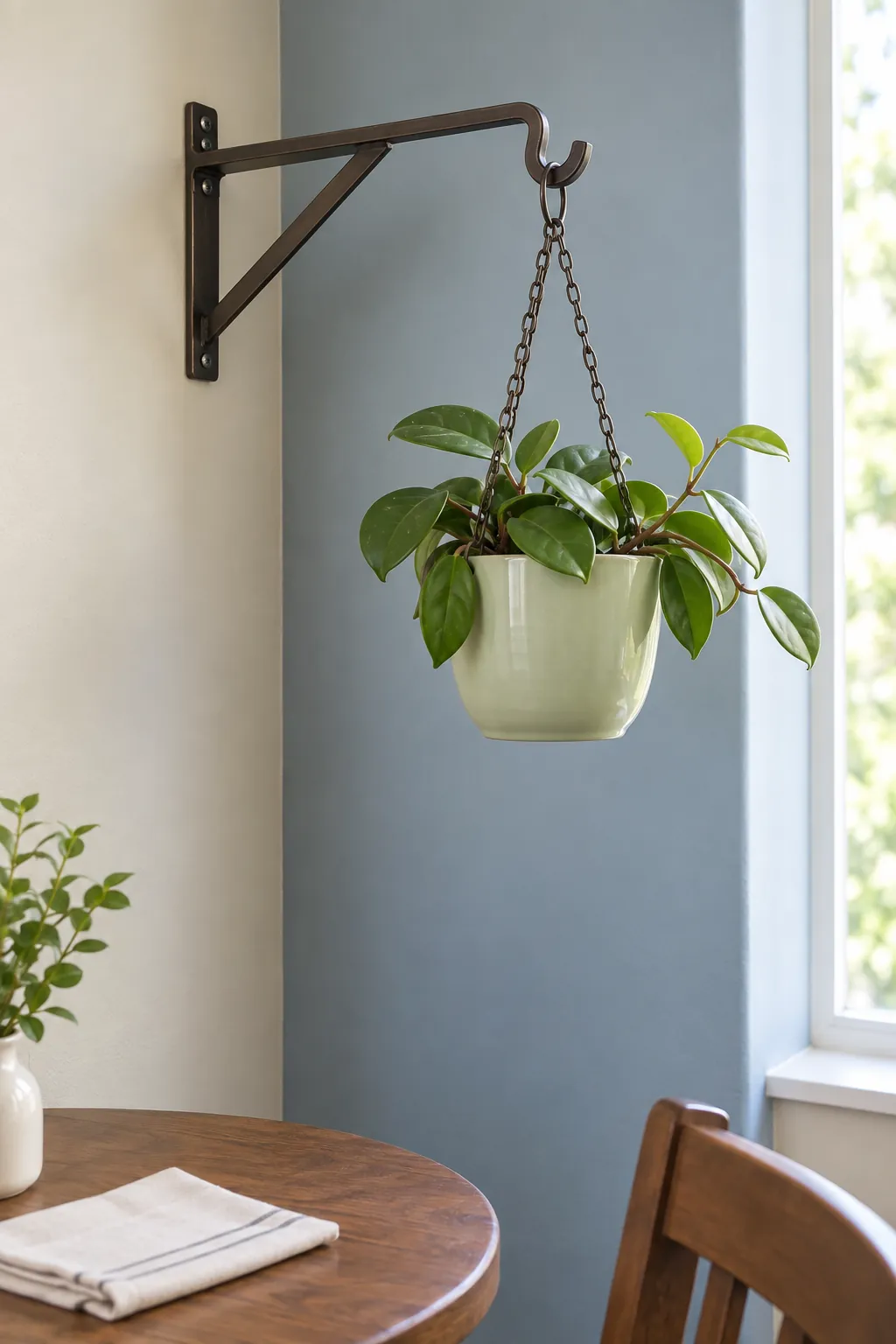
A pair of outdoor half baskets
Two half baskets can soften a plain fence or garden wall without taking over the whole surface. Use supports appropriate to the structure, since thin fence boards may not hold a heavy watered basket alone. A moisture retaining liner still needs a drainage route. Choose plants for the local sun, wind, and seasonal temperatures rather than for flower color alone.
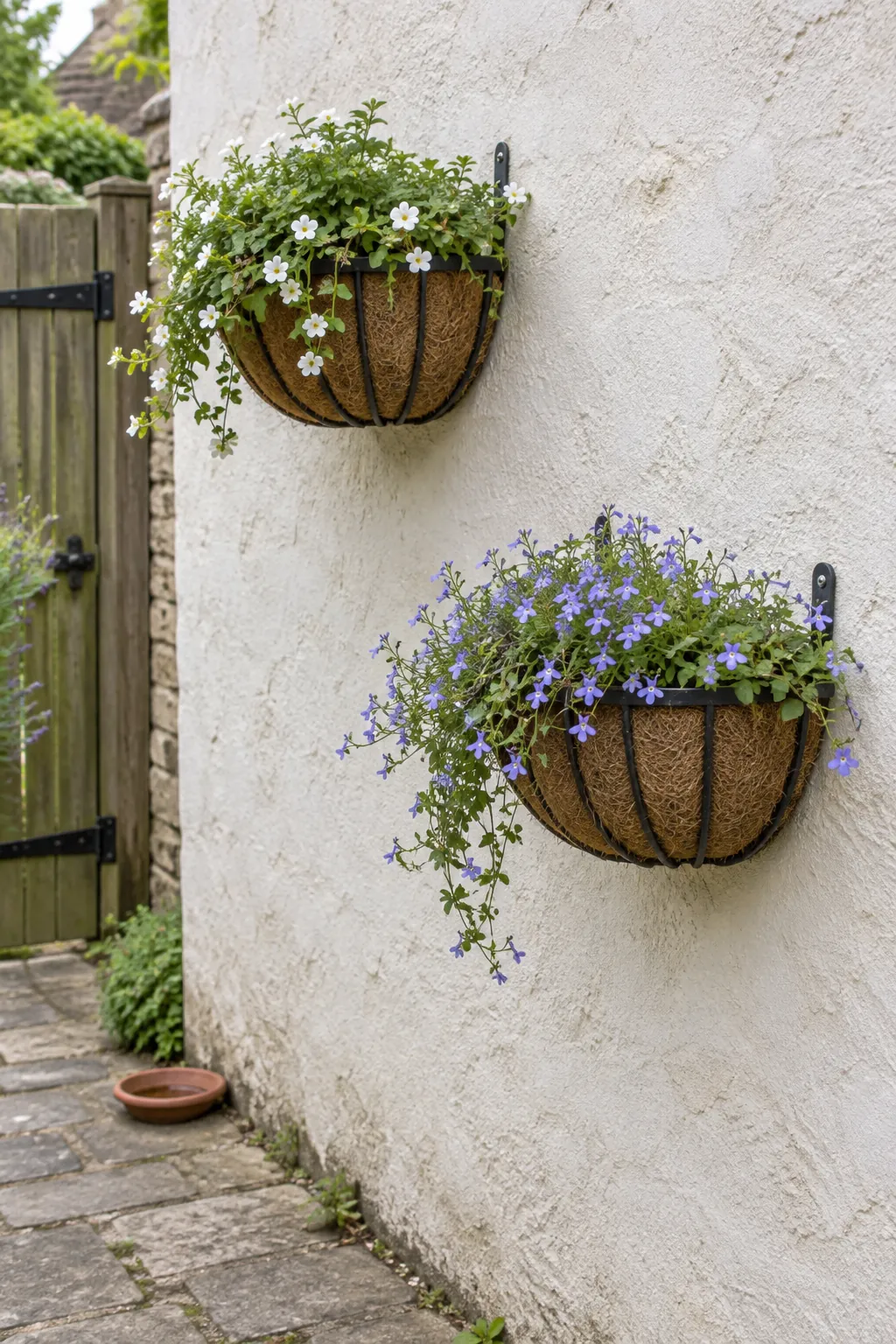
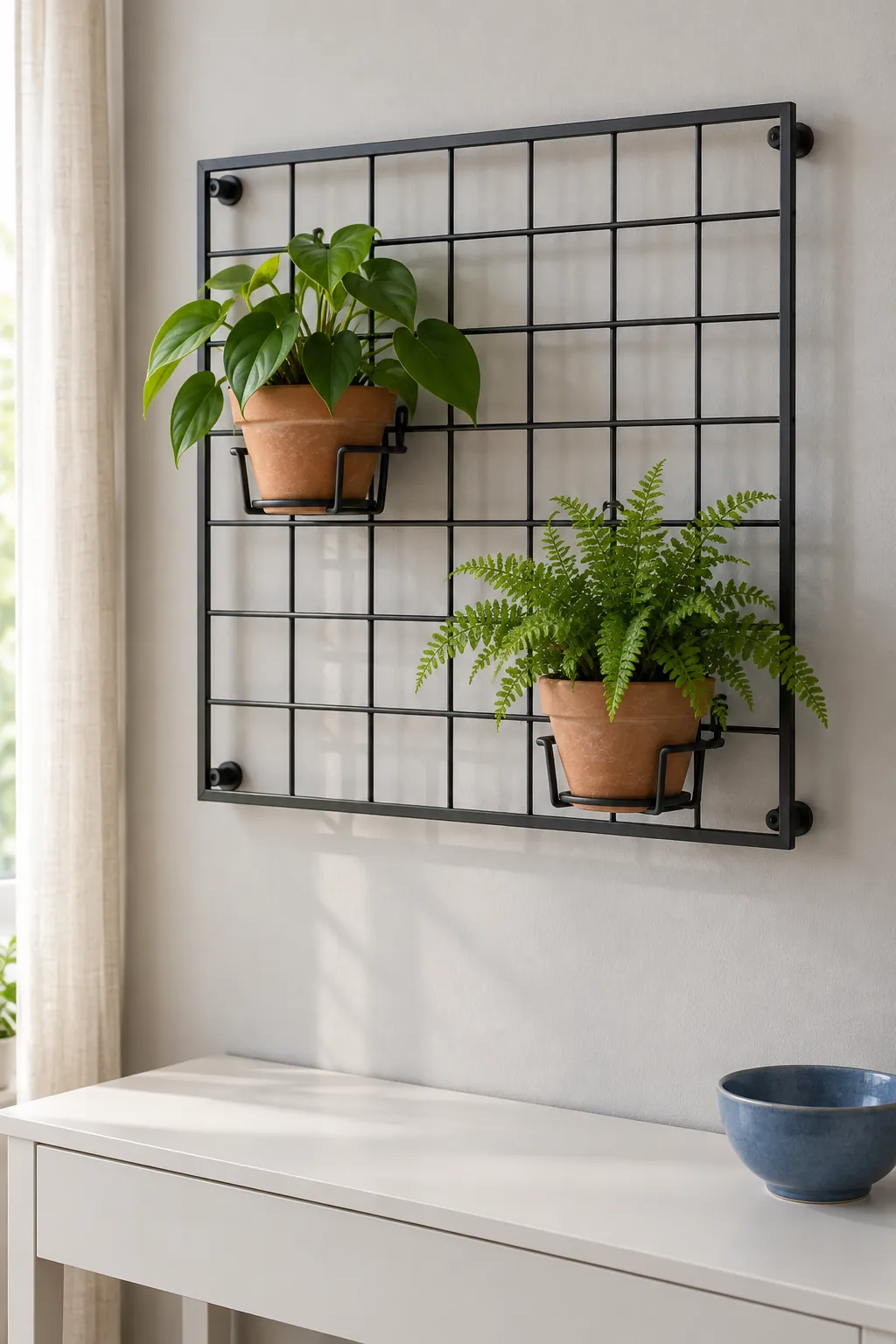
A metal grid with individual pot cradles
A rigid grid offers a clean framework for wall mounted planters indoor arrangements. Use cradles that lock or engage securely with the grid, keeping each pot supported beneath its base. The grid’s attachment points must carry the total load. A few separated plants usually make inspection easier than a grid filled edge to edge.
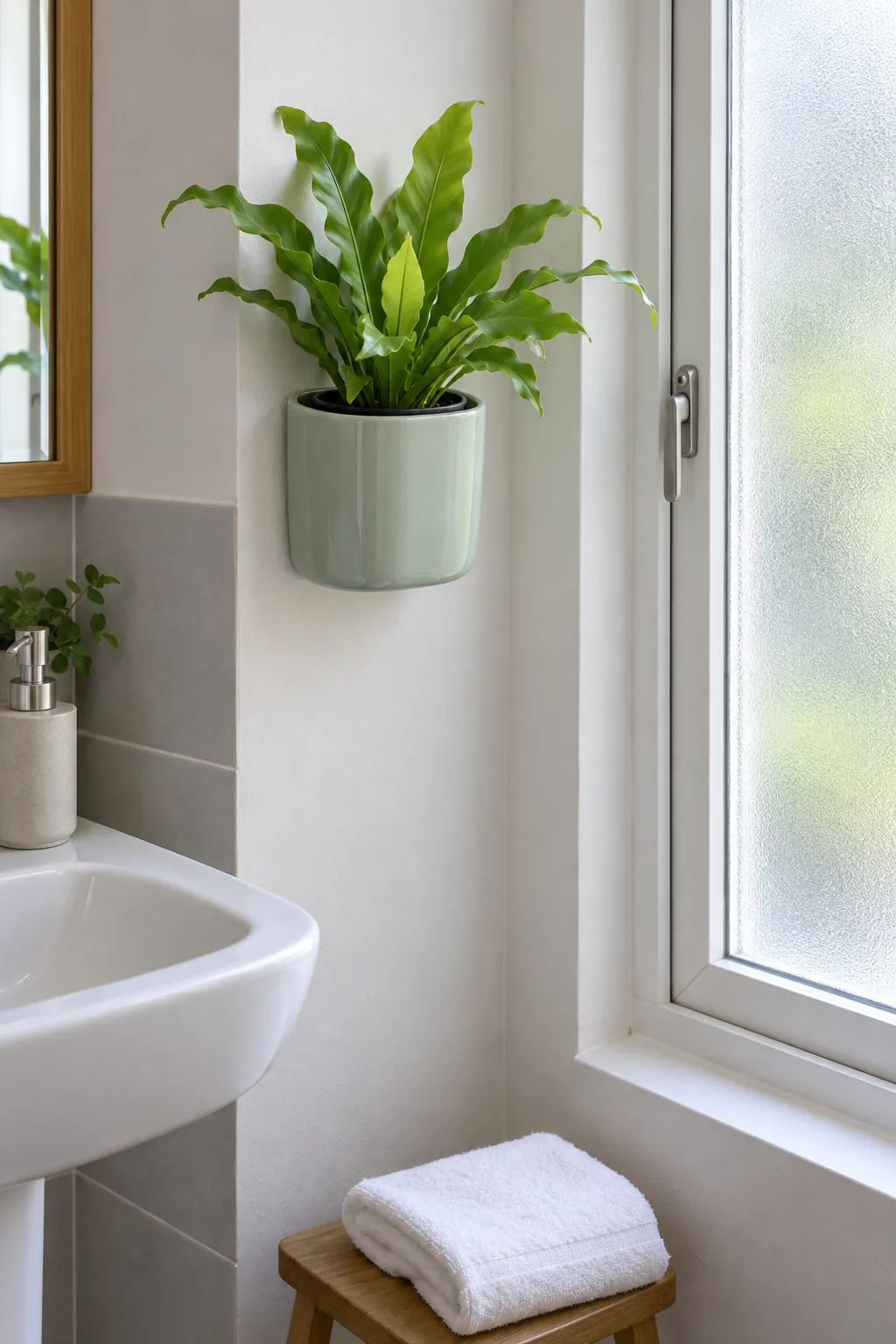
A compact planter beside a bathroom window
A bright bathroom can suit some foliage plants, but humidity does not replace light. Place the container outside direct shower spray and leave it reachable for cleaning. Choose hardware that tolerates the room’s moisture. A removable insert helps you check for water accumulating in the outer holder.
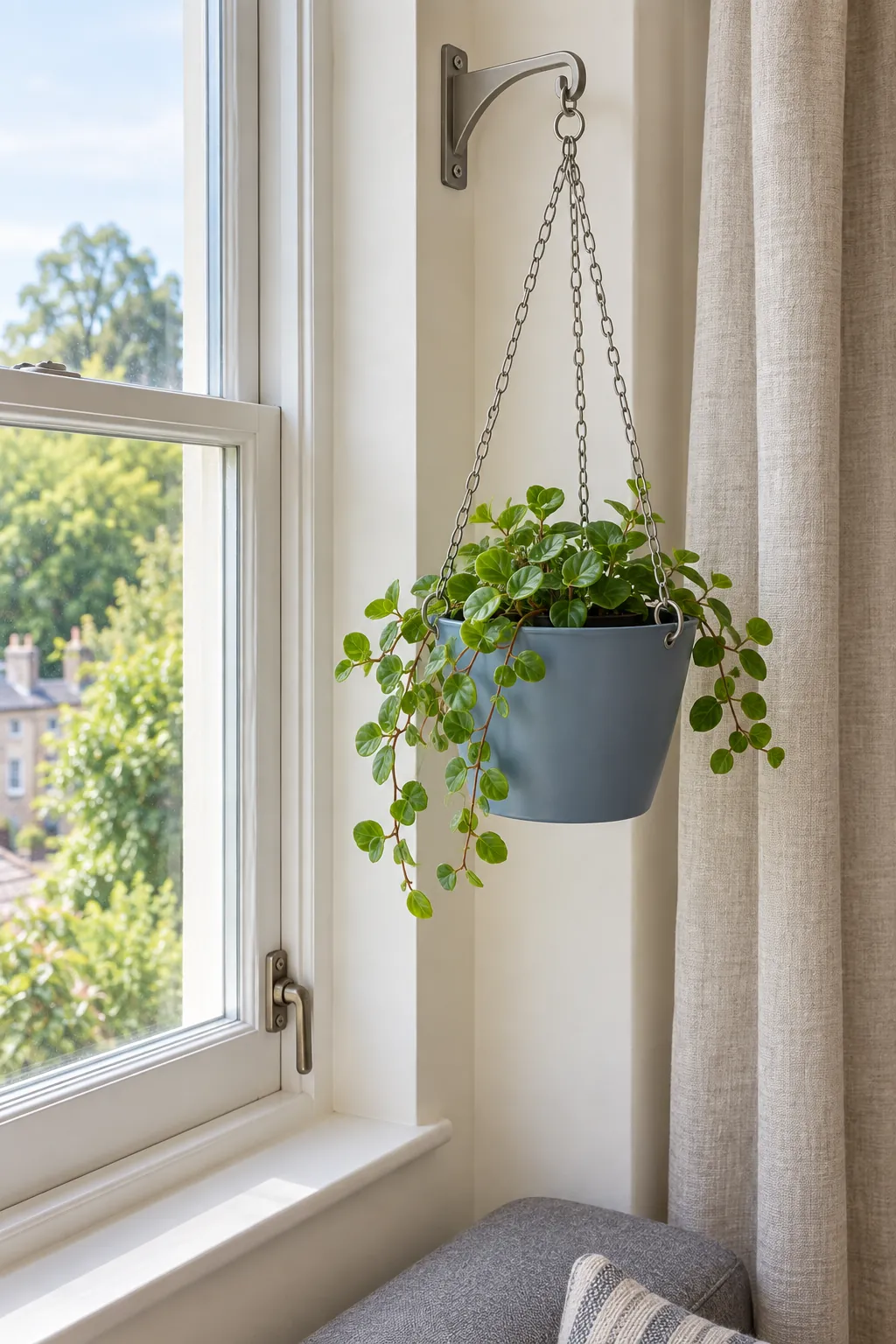
A window side chain hanger
A short chain hanger can keep a plant near useful light while adding a simple metal detail. The bracket should hold the pot far enough from the glass and curtain to prevent rubbing. Check the chain connections and any decorative links for the intended load. Keep the plant clear of window handles and the path needed to open the sash.
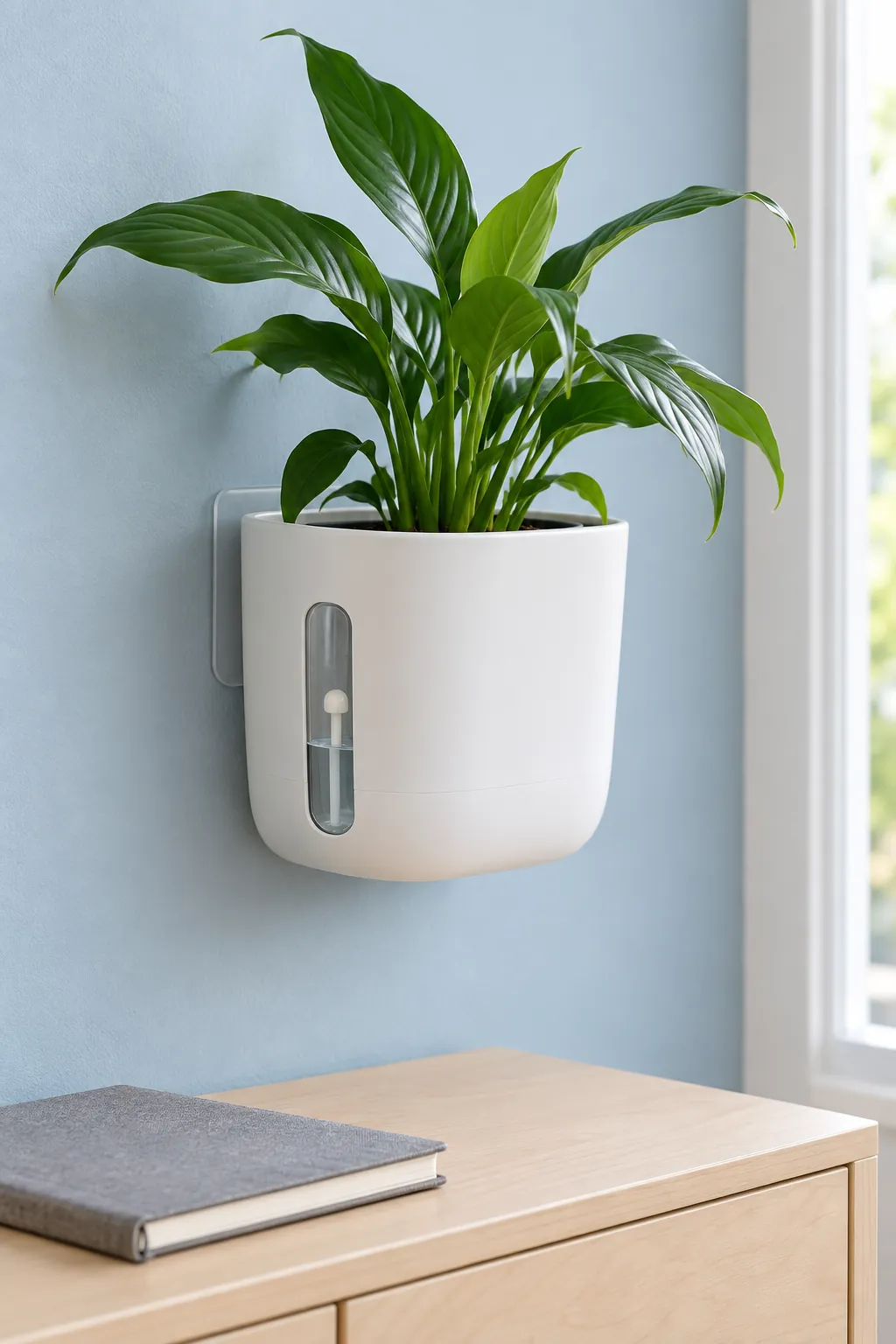
A small modular planter with a visible reservoir
A reservoir system can reduce some watering work when it suits the plant and growing medium. It still needs monitoring, particularly during establishment or when seasonal growth slows. Use the maker’s filling instructions and keep the indicator accessible.
Do not assume every succulent or drought tolerant plant benefits from continuously moist roots. Match the system to the species and inspect the root zone if growth declines. A visible reservoir is useful only when you can reach and clean it.
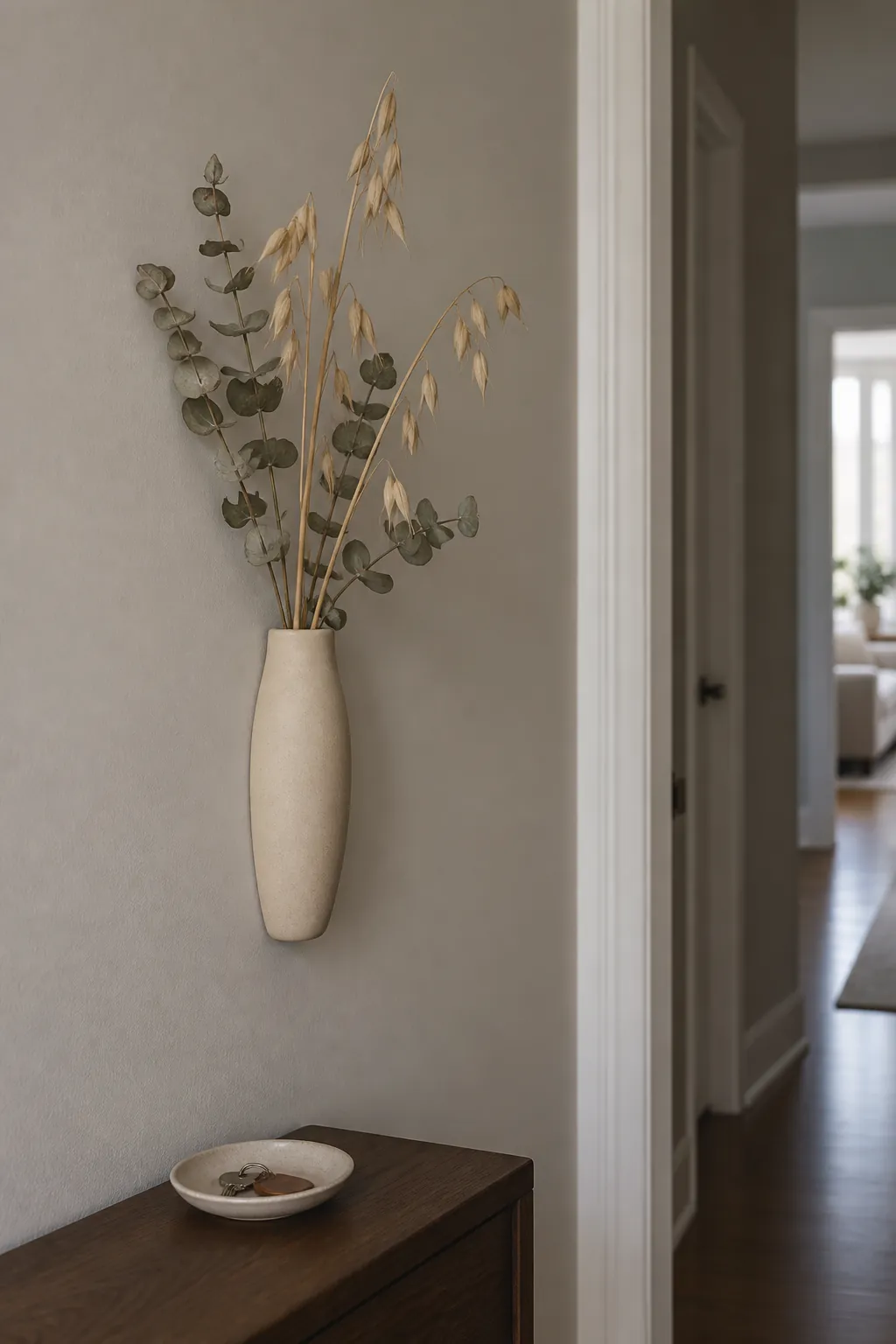
A wall vase for dried botanical stems
A dried arrangement gives you the hanging planter look on a wall that cannot support a living plant’s light needs. Use a narrow vase or pocket with stems that fit securely without crowding its opening. Keep dried material away from heat and damp areas. This can be a sensible choice for an interior hallway where a live plant would continually struggle.
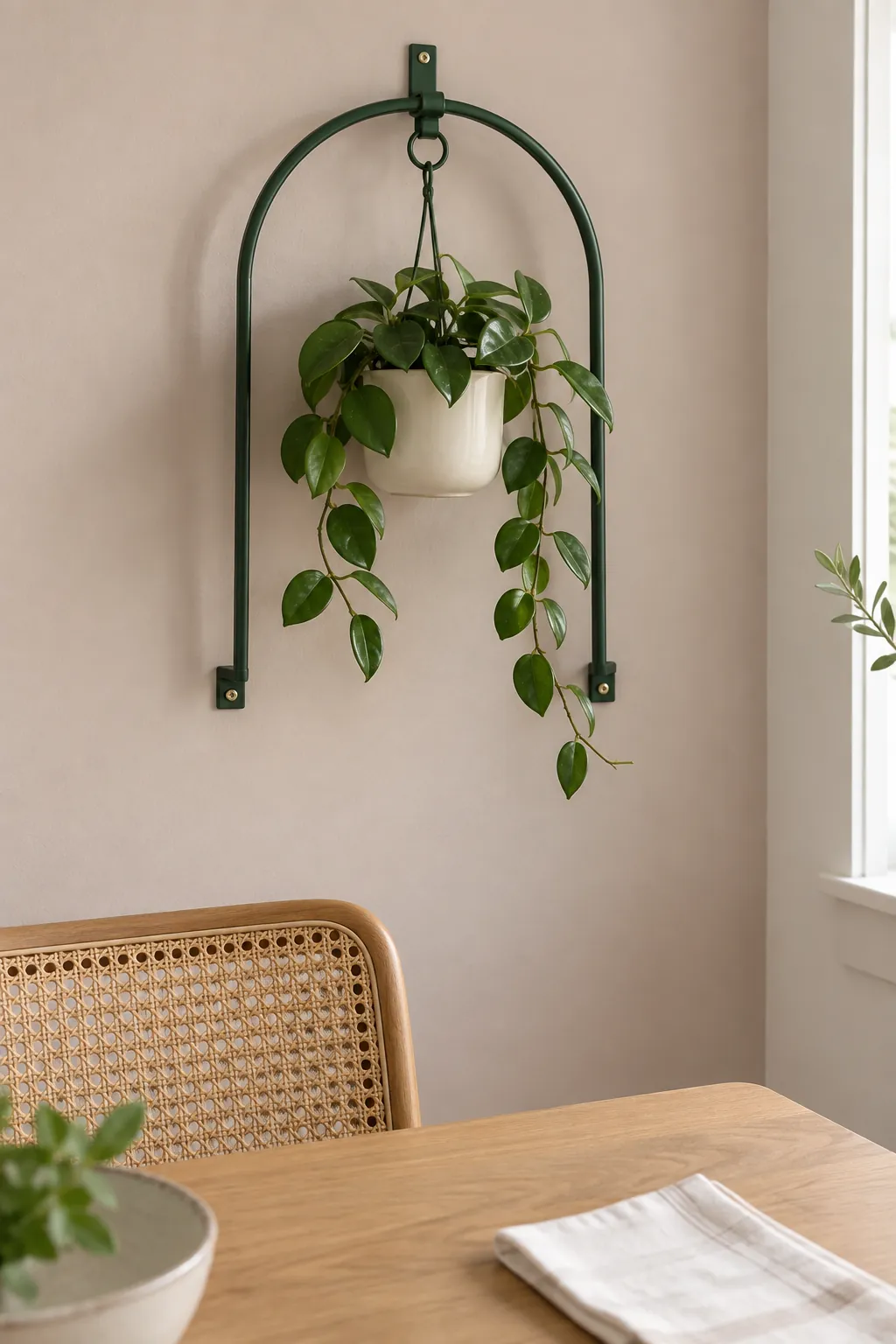
A small pot suspended from a decorative metal arch
A wall mounted arch can frame one hanging pot without requiring a whole plant wall. The decorative shape must still connect to a support designed for the pot’s weight. Keep the pot centered within the opening so normal movement does not knock it against the arch. A plant with short trailing growth lets the metal shape remain visible.
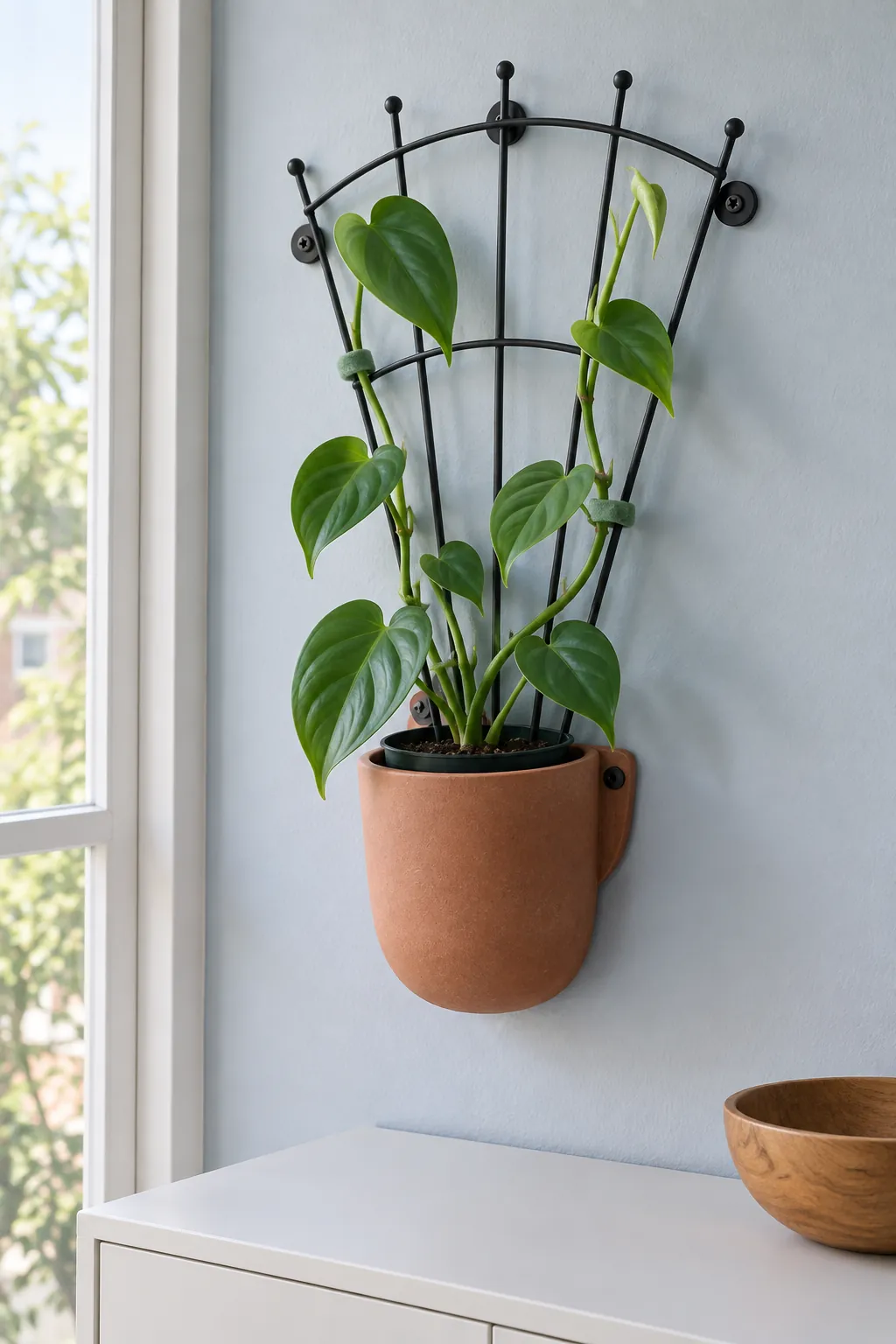
A wall trellis with a separate planting pocket
A planting pocket and a small trellis can encourage a climbing plant to grow upward instead of across furniture. Keep the pot removable and use gentle ties that allow stems to expand. The trellis should support the plant without carrying the full container unless it is designed for that purpose. Leave access to the soil surface as new growth fills the pattern.
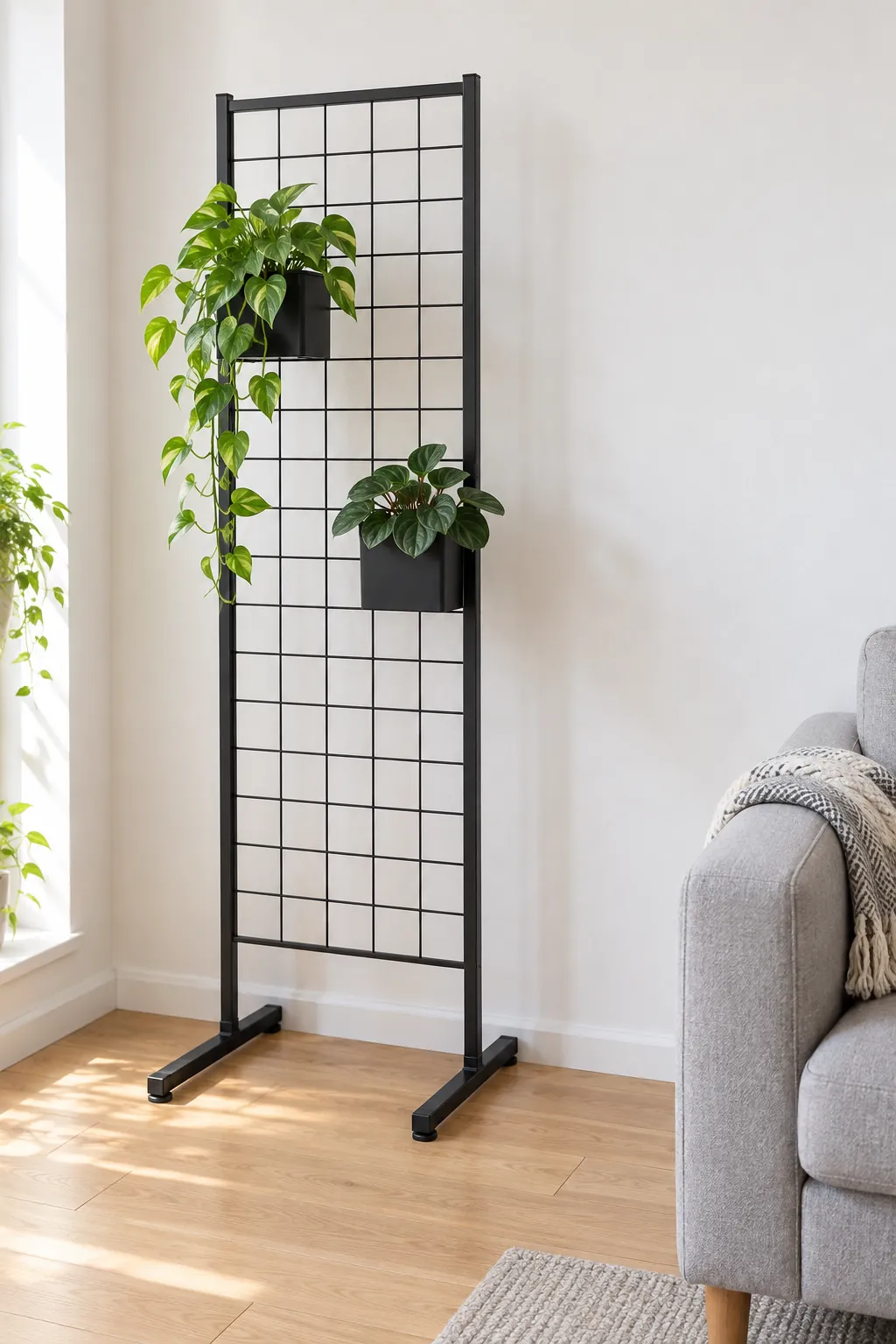
A freestanding panel for a rental wall effect
A freestanding plant panel can bring height to a room when permanent wall fixings are unsuitable. Choose a stable purpose built stand with containers and load limits designed as a system. Follow any required restraint instructions, especially where children or pets could pull it.
Place it close enough to the wall for the visual effect but leave the clearance the product requires. Test that the feet do not create a trip point in the room’s route. This option trades some floor space for fewer permanent wall changes.
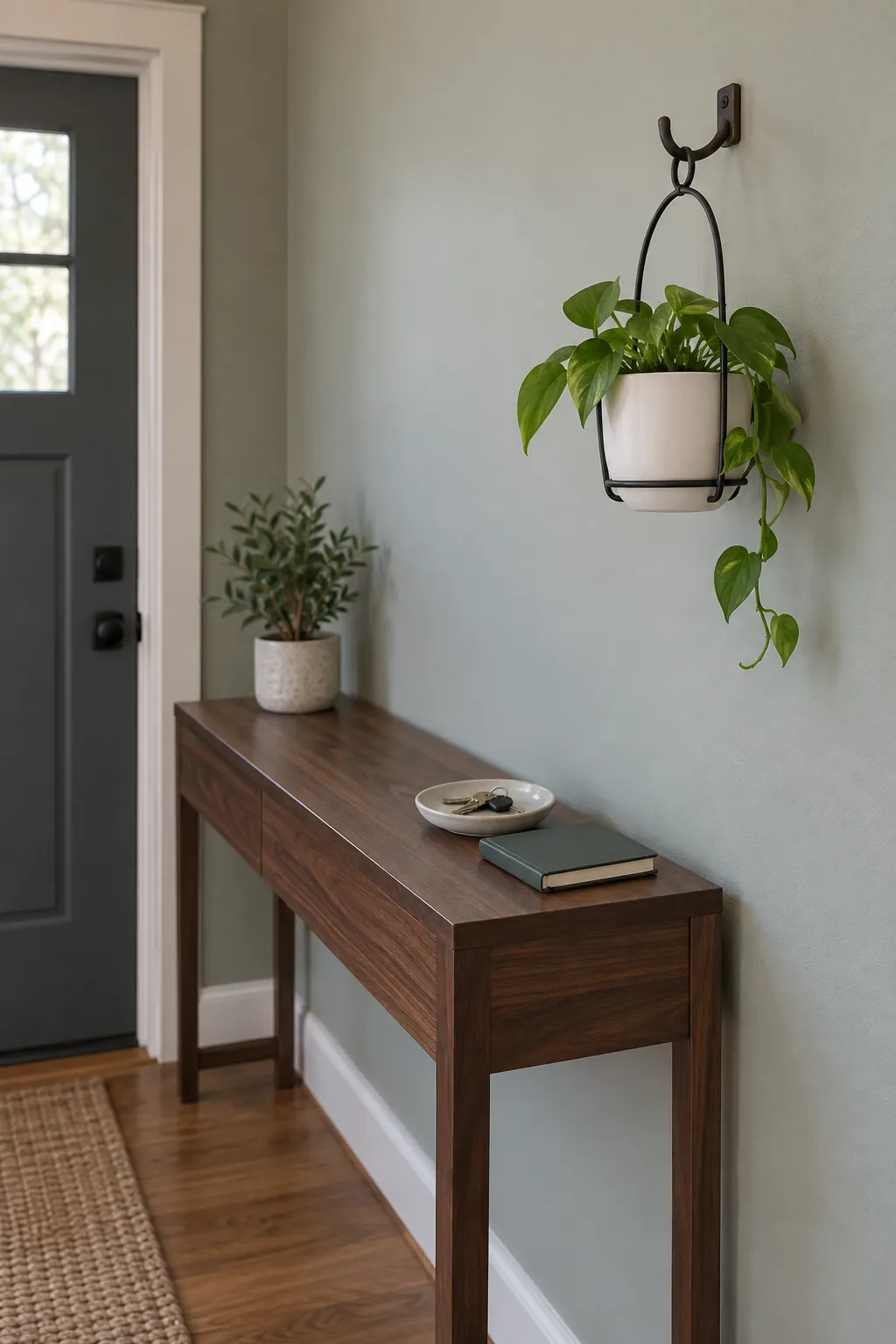
One reachable planter at the end of a console
A single small hanging pot beside a console can be enough to make an entry feel planted. Put it within easy reach and beyond the path of bags, coats, and keys. Before adding more containers, practice removing it, watering it, and returning it without moving the furniture. The best indoor wall planter ideas remain convenient after the first photograph.