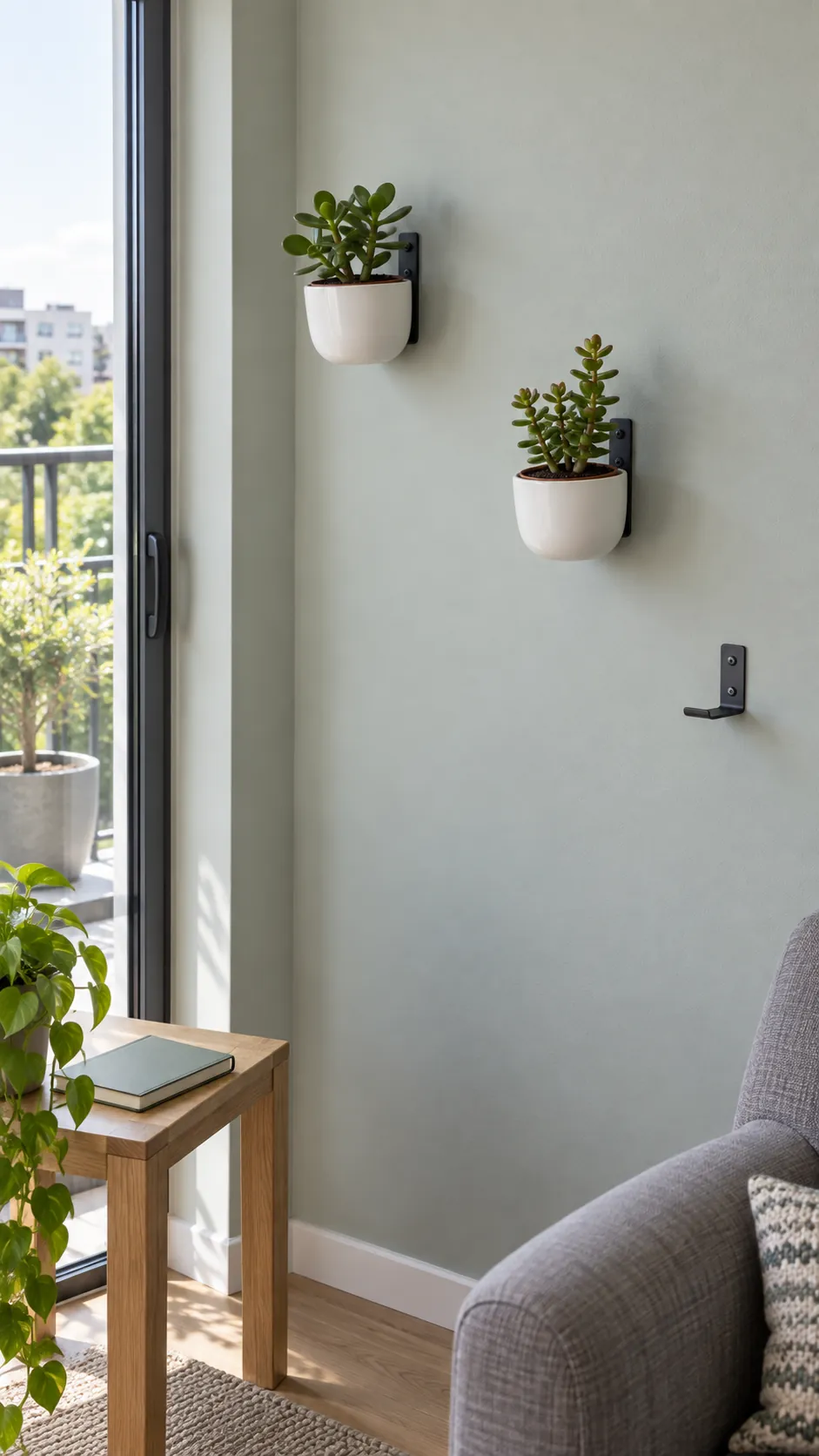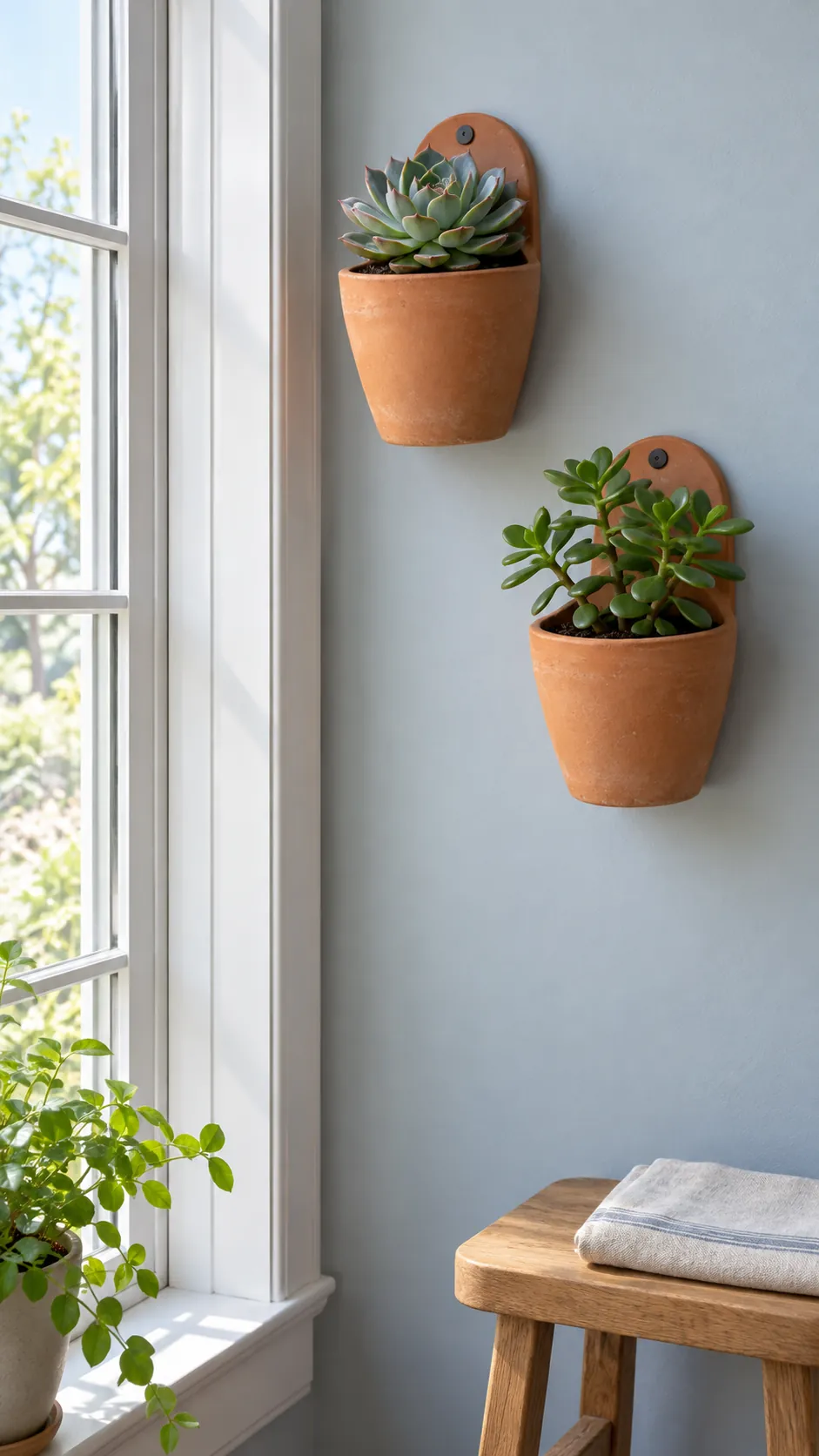
The hardest part of putting succulents on a wall is often watering them afterward. A display can look settled while its roots stay wet, its leaves stretch toward a window, or its soil shifts every time you move it. Choose a setup that lets you check the plants as easily as you admire them.
Let the light choose the wall
A blank wall can look perfect for a succulent display and still be too dim to grow one. Check the light where the leaves will sit, including shadows from window reveals, curtains, and furniture. A wall beside a window may receive much less light than the sill directly in front of it.
Many rosette succulents need strong light to keep compact growth. If the suitable wall is dark, use an appropriately positioned grow light or choose a different plant group instead of hoping occasional sunshine will be enough. Introduce plants to stronger sun gradually, since an abrupt move can scorch leaves.
Watch new growth after installation. Increasing gaps between leaves, leaning toward the window, and a loosening rosette can indicate insufficient light, although plant identity and other conditions also matter.
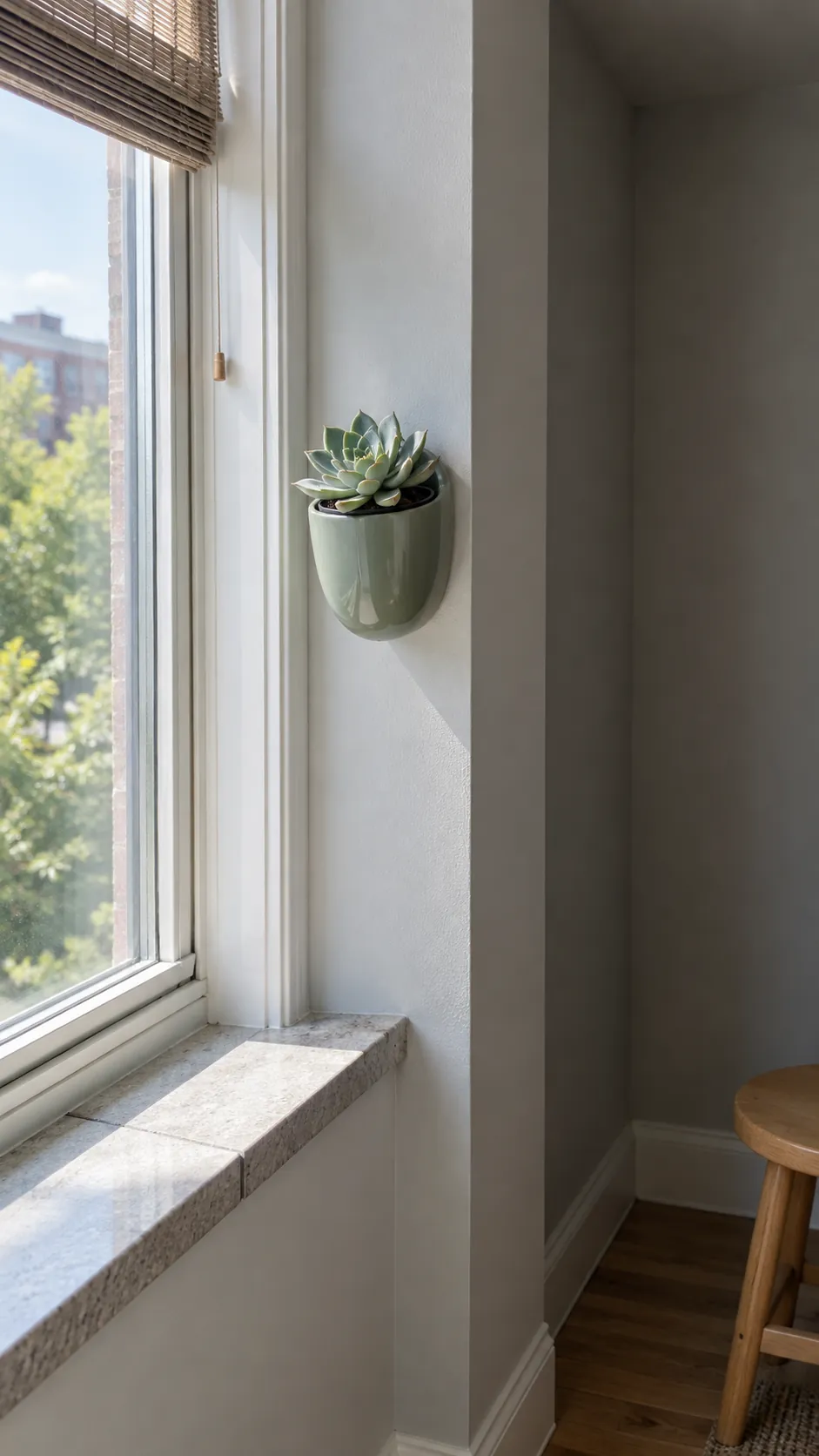
Choose removable pots before a packed living frame
For a first succulent wall planter, a rail or pocket system holding individual pots is usually easier to manage than a tightly packed vertical frame. You can turn each pot to inspect it, remove a struggling plant, and water without soaking the wall. A tray planted through mesh can be beautiful, but it adds questions about soil retention, rooting time, and how the whole piece comes down for care.
A Reddit discussion about a first hanging succulent wall includes an indexed account of fallen leaves dropping to the ground instead of staying in the planting area. That observation is a useful reminder that a vertical display behaves differently from an ordinary pot. Leave room for maintenance rather than designing only for the day the frame is filled.
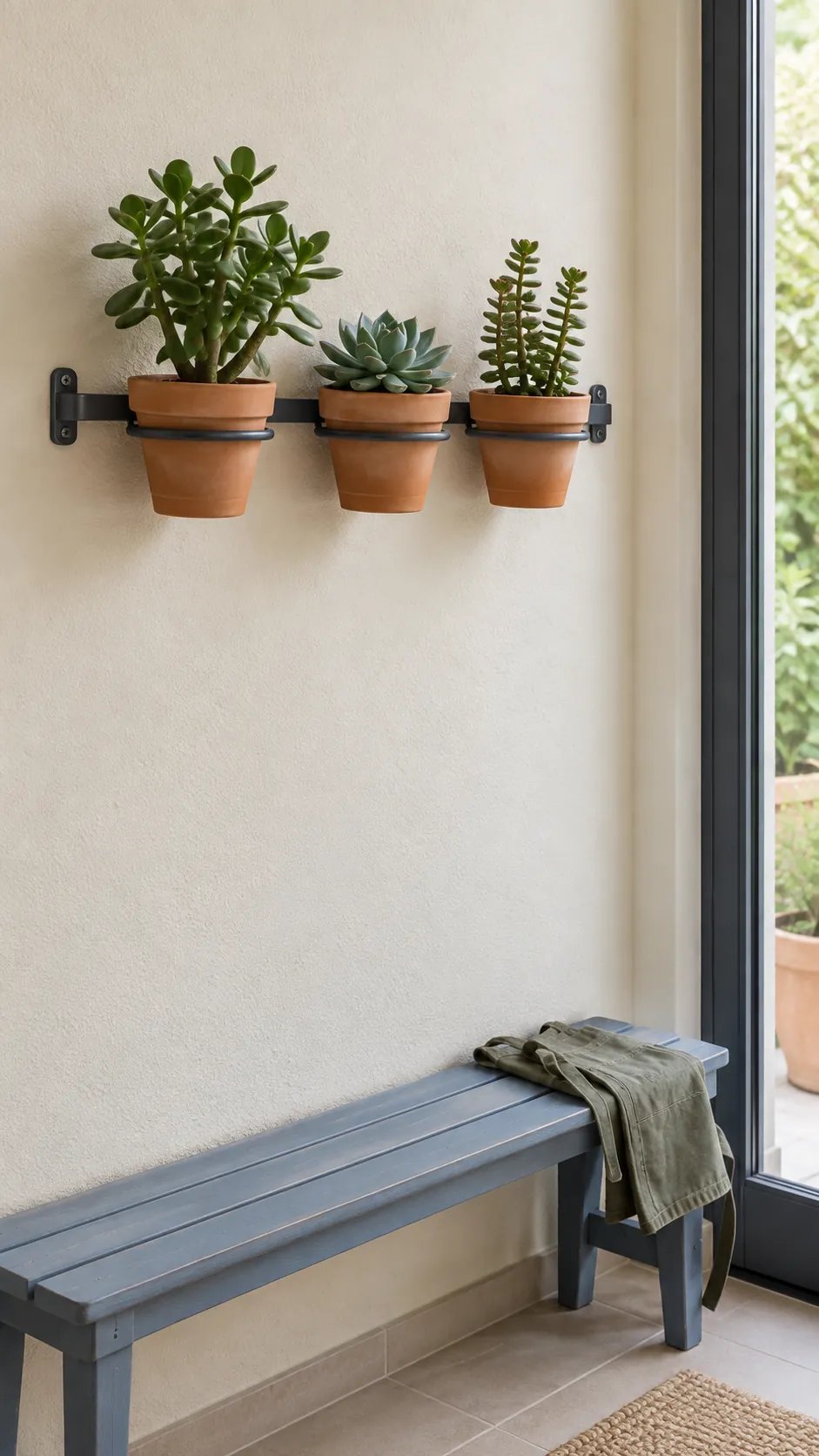
Give water a real way out
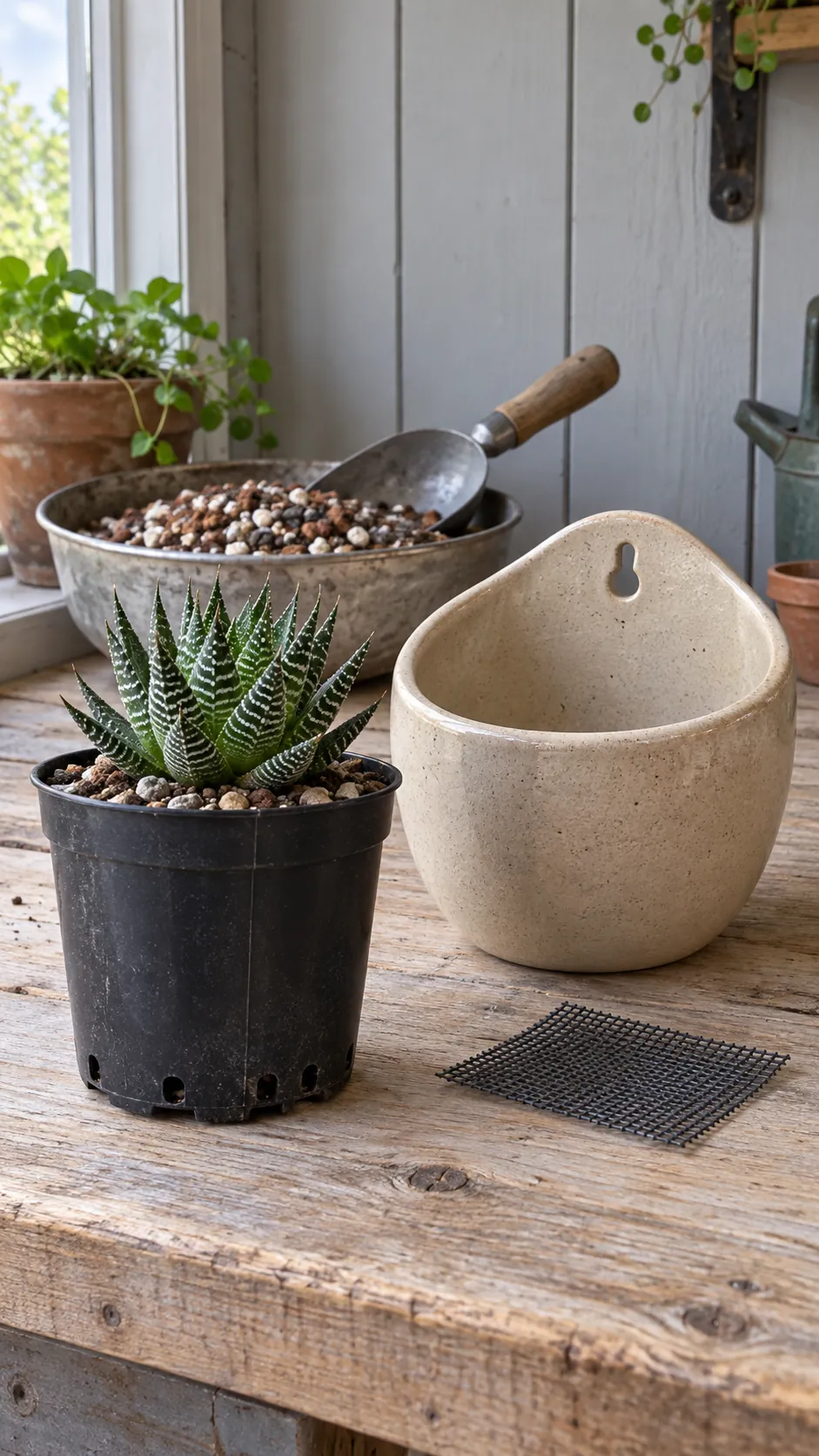
Use a container with drainage, or place a draining nursery pot inside a decorative holder that you empty after watering. A layer of stones at the bottom does not create an outlet from a sealed container. It also consumes root space, so do not use it as a substitute for drainage.
Choose a succulent mix that suits the species and your conditions. A mix containing appropriate mineral particles can improve air space, but there is no single recipe that performs identically in a humid room, a hot balcony, and a cool greenhouse. Avoid packing fine material tightly into a wall pocket just to keep it from spilling.
If a DIY wall planter indoor project uses a planting frame, follow a design that retains the substrate mechanically while letting excess water leave. Secure backing, suitable mesh, and a real drainage route perform different jobs. A watertight backing can protect the wall only if water still has a controlled exit from the planting area.
Treat the mount as part of the planter
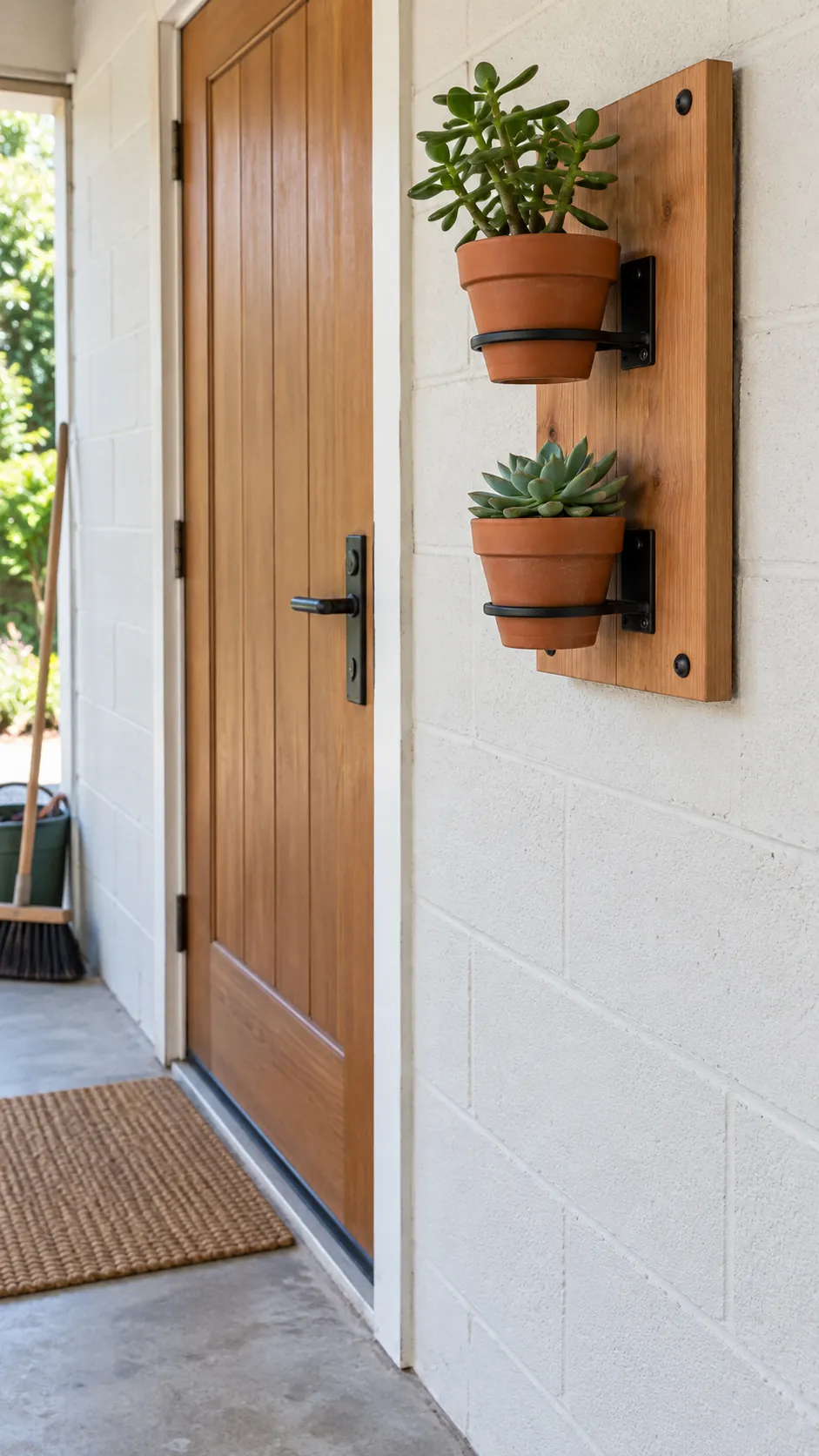
Weigh the finished assembly with watered planting medium before choosing fixings. Include the frame or ceramic shell, every plant, the support rail, and any retained water. Select hardware for both that load and the actual wall construction, using the maker’s installation guidance.
Keep the display outside door swings and away from places where someone’s head or shoulder passes. A small arrangement at a reachable height is easier to remove than a large frame above furniture. In a rental, a freestanding plant support can be a better route than attaching heavy containers with adhesive hooks.
Water off the wall when the plants need it
Check moisture through the root zone rather than watering because the calendar says it is time. Many common succulents benefit from drying between thorough waterings, but their species, season, container, and temperature change the interval. Leaf softness alone cannot reliably distinguish thirst from root trouble.
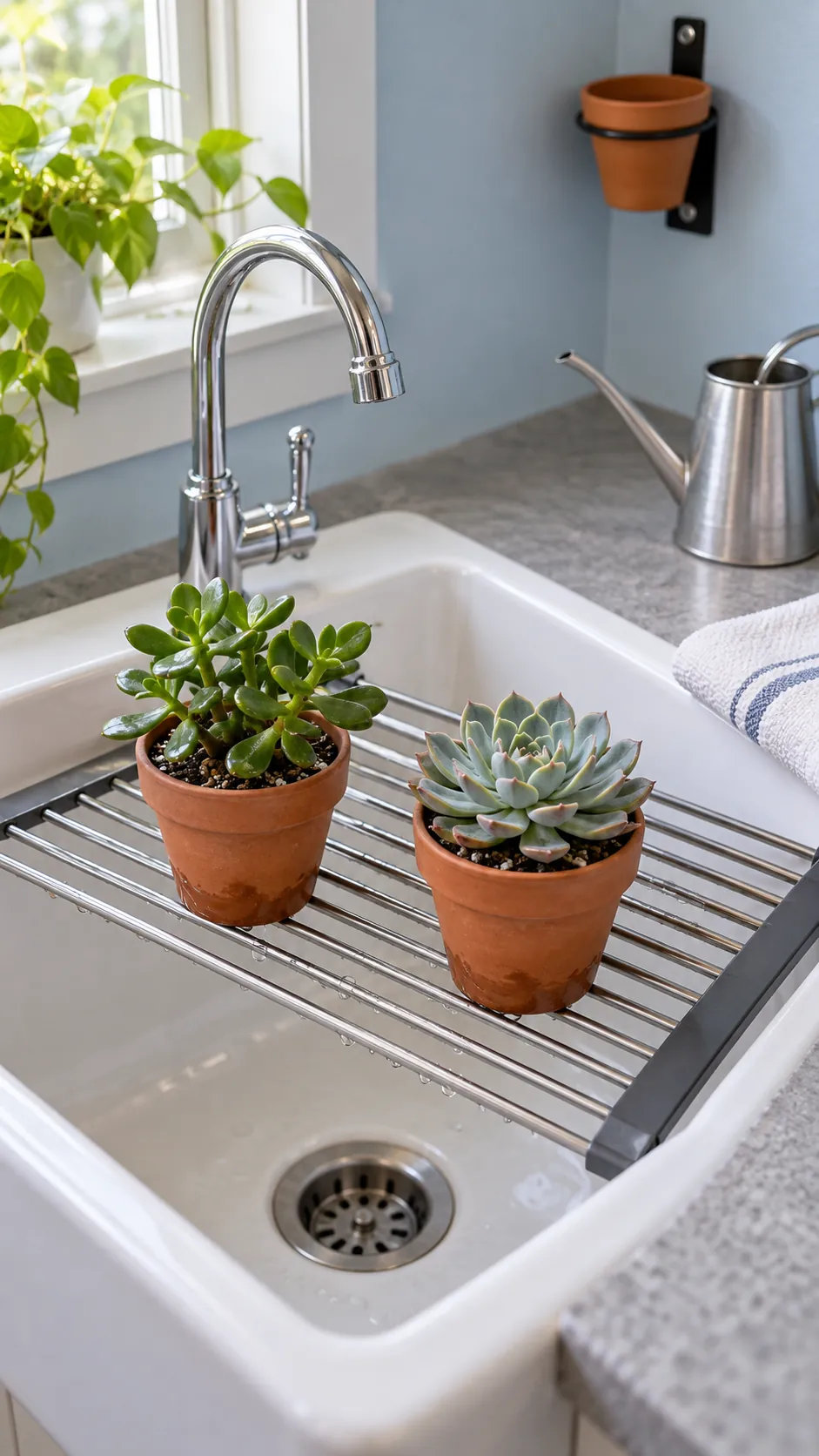
For removable pots, carry them to a sink or outdoor watering area. Wet the mix evenly, allow free drainage, then check the decorative holder for pooled water before returning the plant. Keep sensitive rosette centers from holding water, particularly in cool conditions with limited airflow.
If water runs through while the root ball stays dry, the mix may have become difficult to rewet. A controlled soak of the removable pot can help in some cases, followed by complete drainage. Check the actual moisture afterward instead of assuming fast runoff means the roots received enough water.
Do not turn frequent misting into the main watering method for a soil grown succulent arrangement. It can wet leaves repeatedly while leaving deeper roots dry. A design that makes proper watering awkward is a reason to change the container, not to compensate with a spray bottle.
Build a small display that can change
Start with a few plants whose light and watering needs fit the same location. Separate pots make it possible to combine contrasting shapes without forcing every root system into one shared mix. A compact haworthia type and a sun loving echeveria may look attractive together, but their preferred exposure may differ enough that separate positions work better.
Leave visible space around each plant and inspect new arrivals before adding them to an established group. Remove dry fallen leaves that collect around stems, and look for pests in tight crevices during routine care. If a living frame uses fresh cuttings, allow them to establish in the orientation and conditions recommended for that system before mounting it upright.
Indoor plant wall ideas succeed when the plants stay accessible after they grow. Choose the smallest arrangement that gives you the look you want, then expand after you understand its light and drying pattern. A succulent wall hanging should be easy to live with on watering day, too.