A small room does not need to imitate a miniature showroom. Children notice whether they can reach their things, move safely, display something they made, and settle at night. The strongest design choices make those daily actions easier while leaving enough flexibility for interests and bodies to change.
Map the fixed obstacles before choosing decoration. Door swing, window access, heating, outlets, and the nighttime route matter more than a perfectly balanced photograph. Once those limits are clear, color, storage, light, and personal details can make the room feel generous without making it busy.
Mark The Clear Floor First
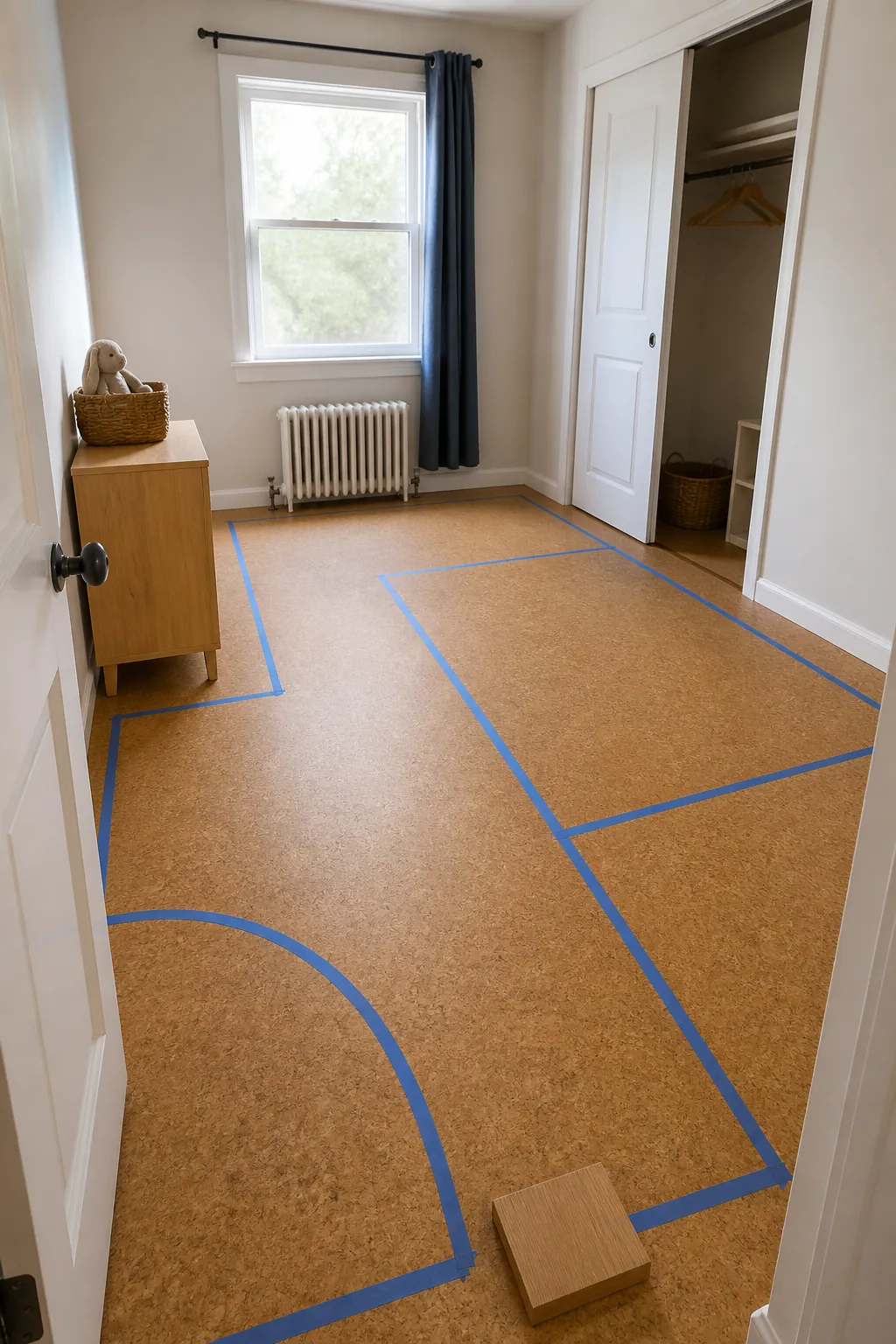
Use removable tape to outline the bed, storage, and door swing before moving heavy furniture. The remaining shape shows whether a child can dress, sit, and walk without squeezing sideways. Protect that clear area as deliberately as you protect storage.
Fit A Daybed Into The Long Wall
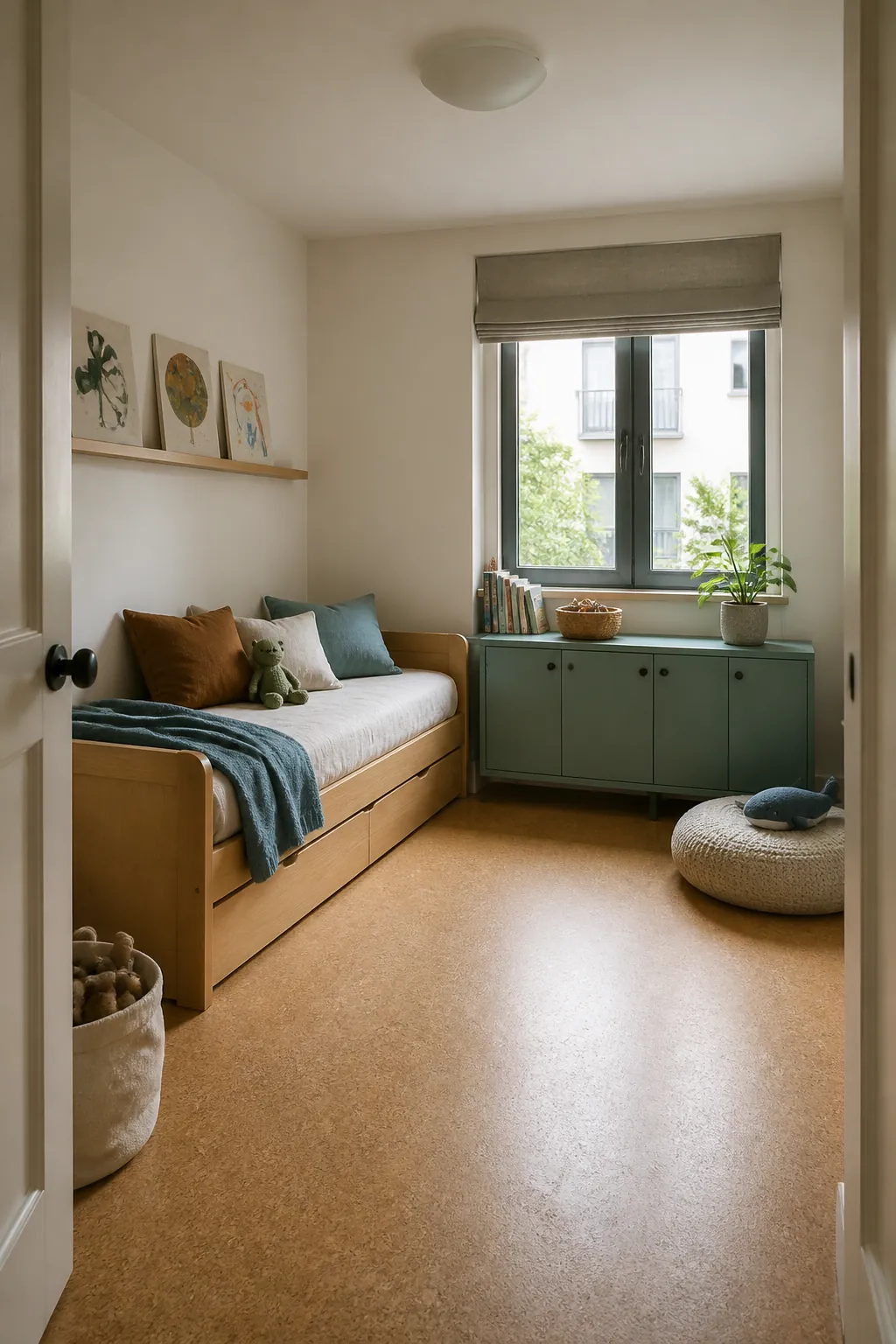
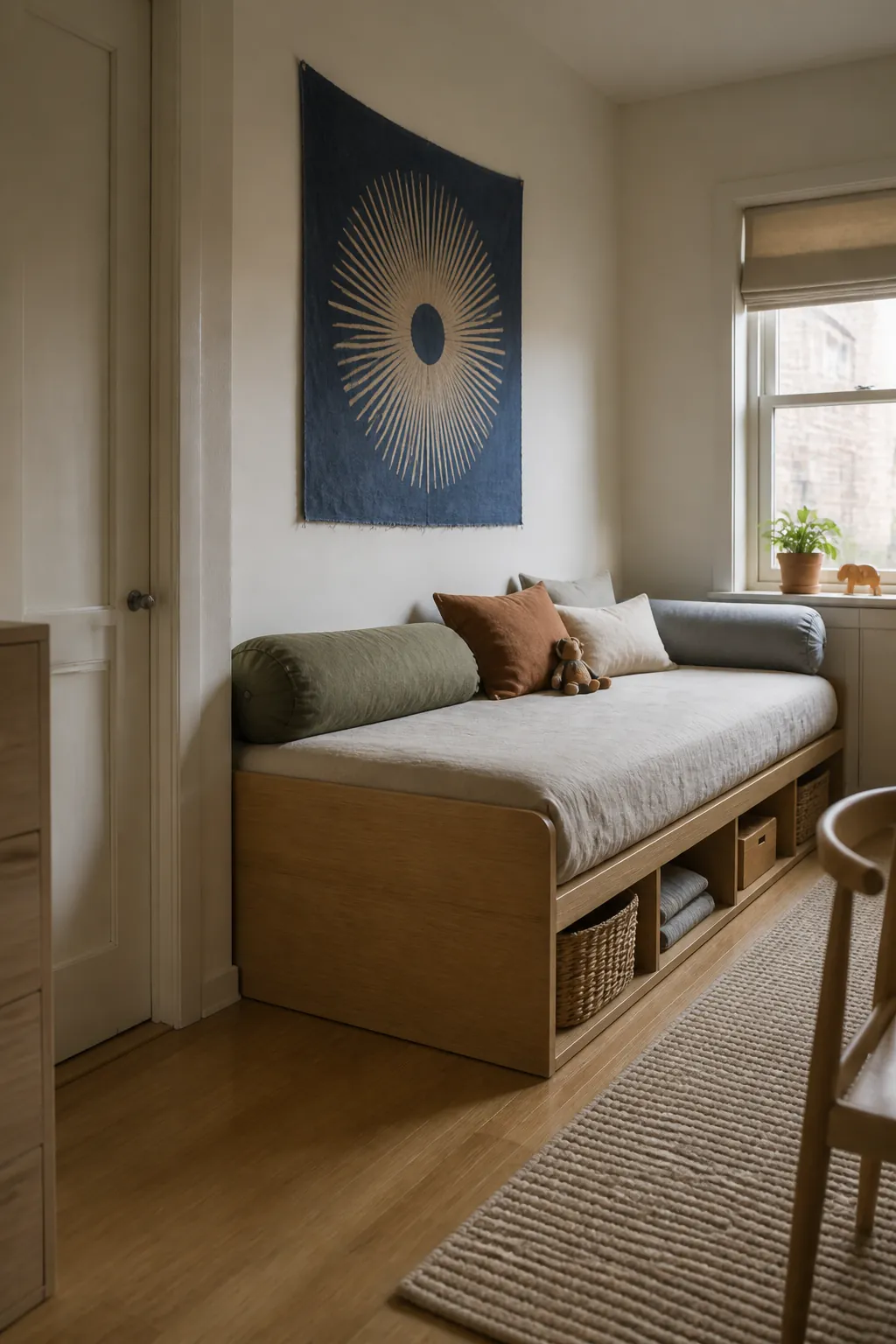
A simple daybed can support sleep, reading, and visiting friends without adding a separate chair. Keep bolsters limited so they do not become a nightly floor pile. Choose a frame with open space below or built in storage based on what the room actually lacks.
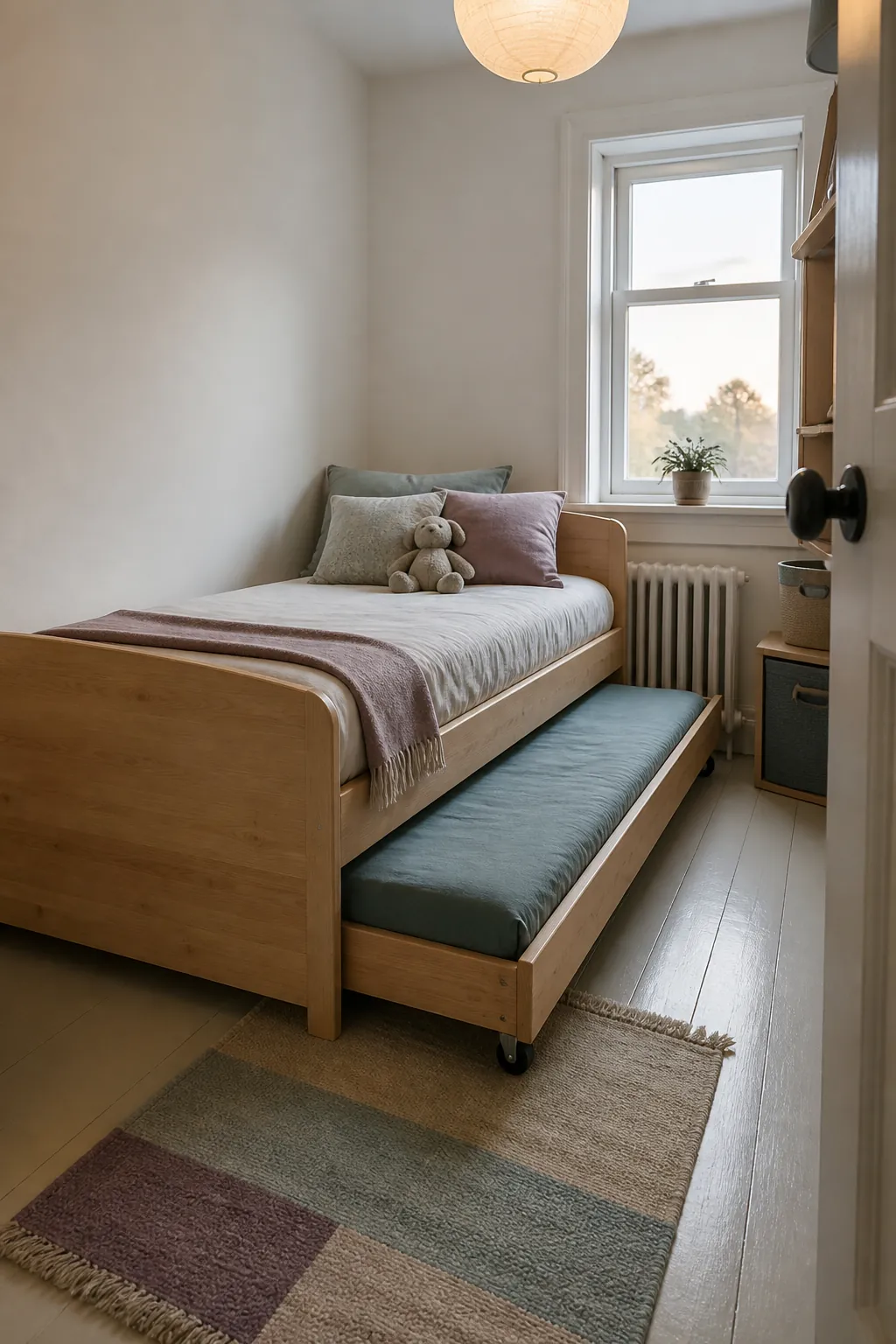
Hide A Trundle For Occasional Sleepovers
A proper trundle can provide an occasional second sleep surface without permanently occupying the room. Confirm that it opens into clear space and that both mattresses meet the frame requirements. Store nothing in the pullout path, because a blocked trundle becomes unused furniture.
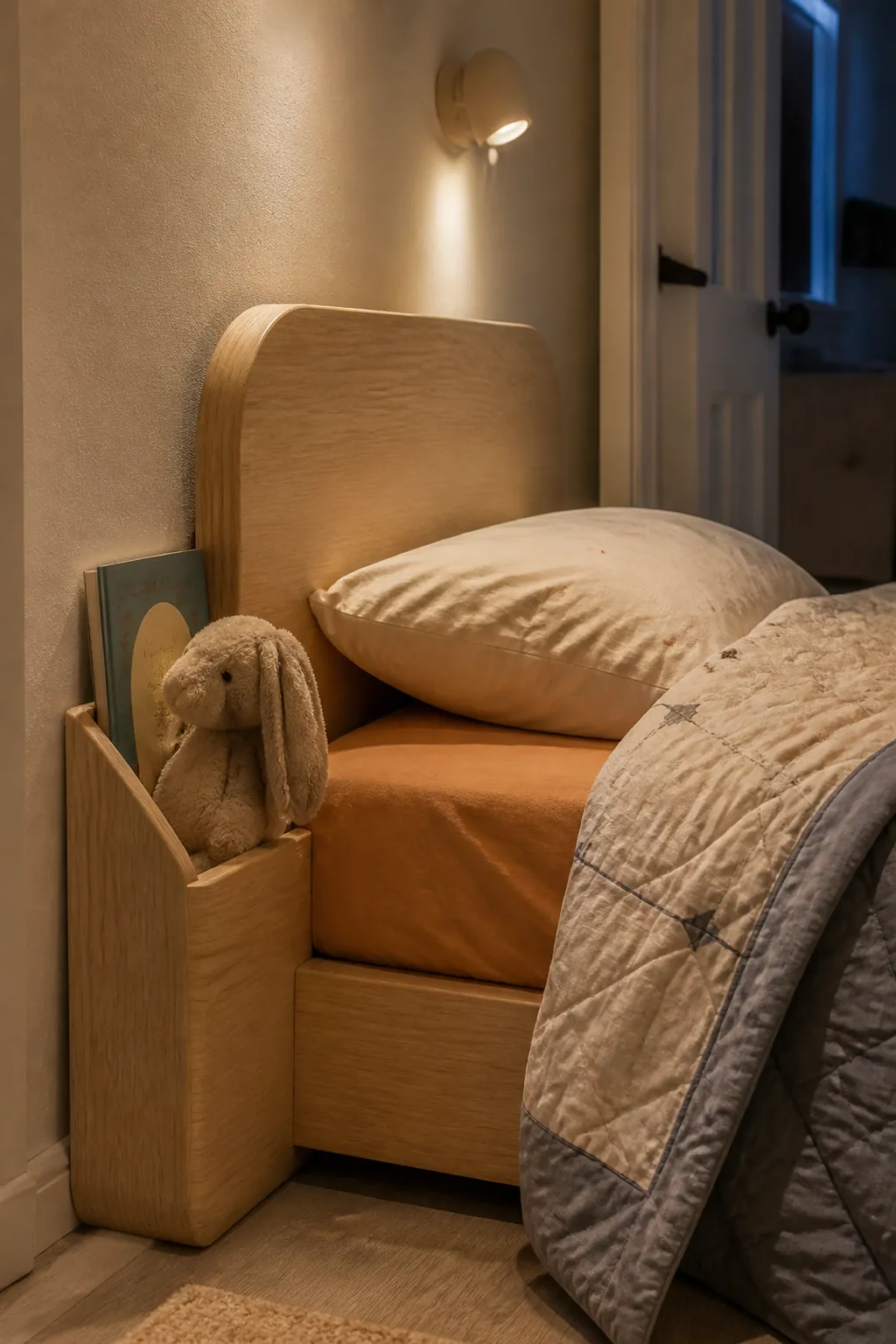
Choose A Headboard With A Book Slot
A shallow integrated slot can hold the current bedtime book without needing another table. Keep the opening away from the pillow and use rounded construction that cannot trap fingers. Rotate the book rather than filling the slot to its limit.
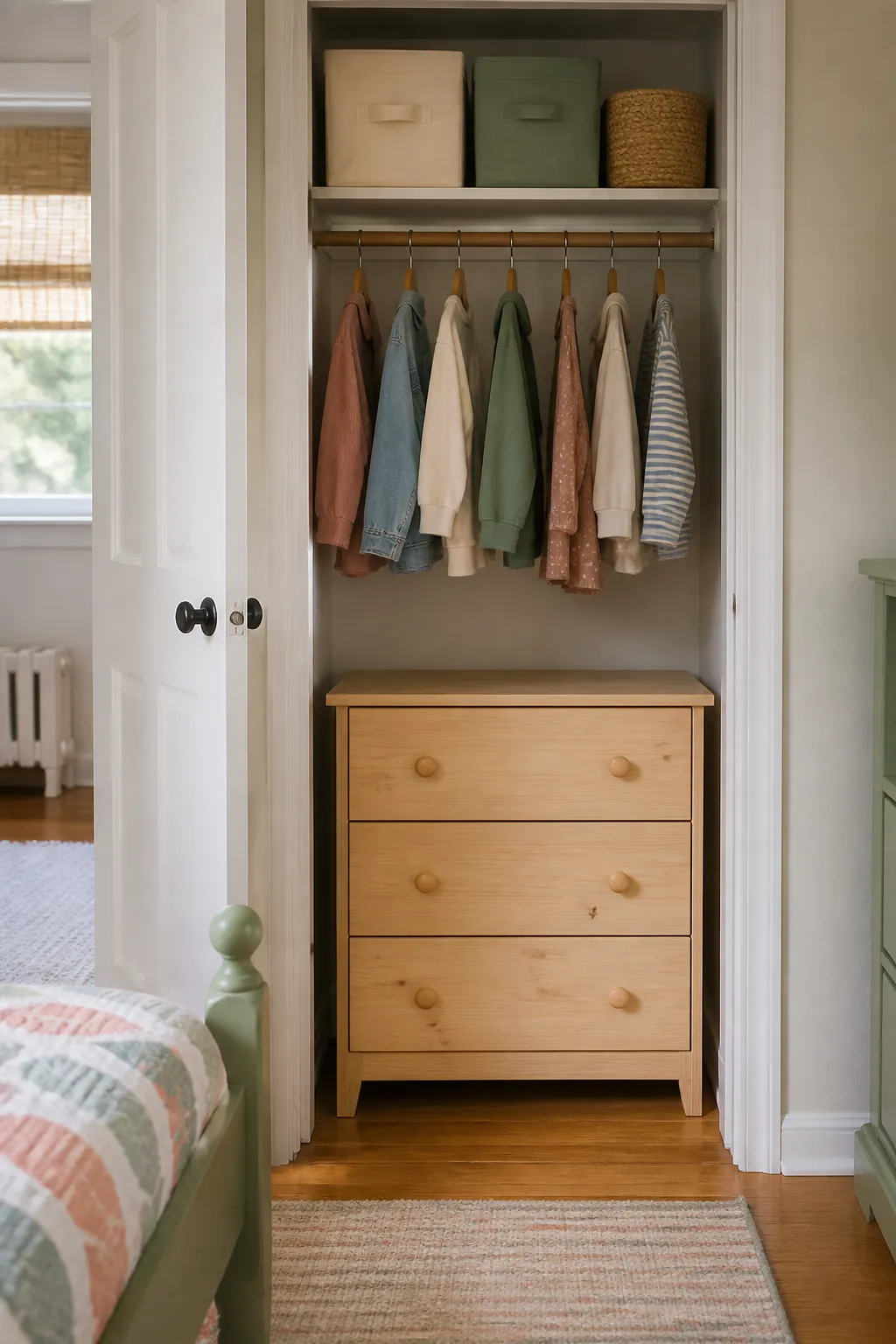
Move The Dresser Into The Closet
A dresser that fits safely inside a closet can return a full wall to the room. Anchor it correctly, preserve ventilation, and make sure drawers open without striking doors. Keep the top empty rather than stacking items where a child may climb to reach them.
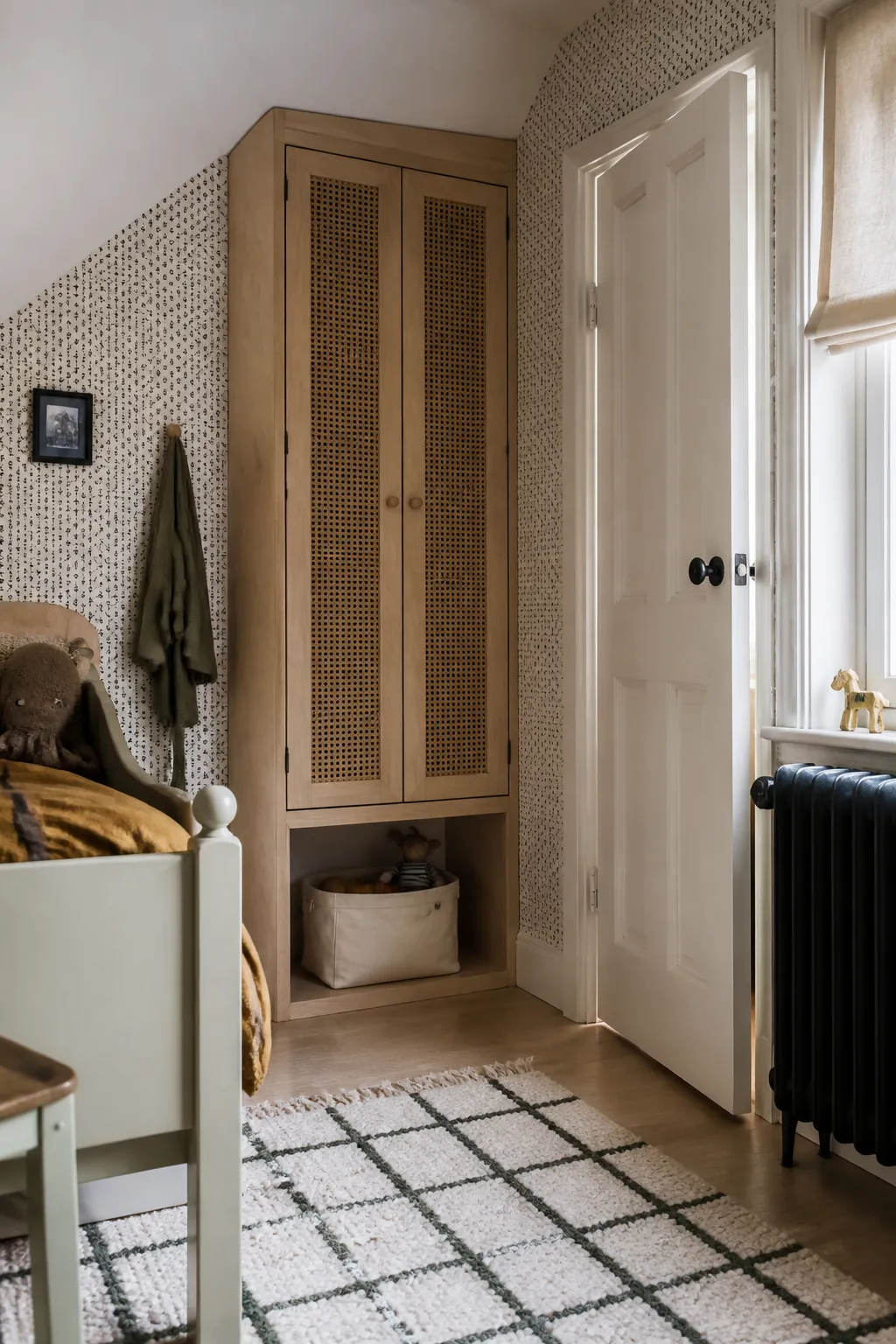
Use One Tall Corner Cabinet
A narrow corner cabinet may hold more than several unrelated floor bins. Secure it to suitable wall structure and reserve upper sections for adults. Closed doors reduce visual noise, while one low open compartment supports child independence.
Add A High Shelf For Adult Storage
A securely installed high shelf can hold light seasonal bedding that would otherwise crowd child storage. Use lidded fabric containers and keep heavy objects elsewhere. The shelf should never run over a bed or become a reason for a child to climb.
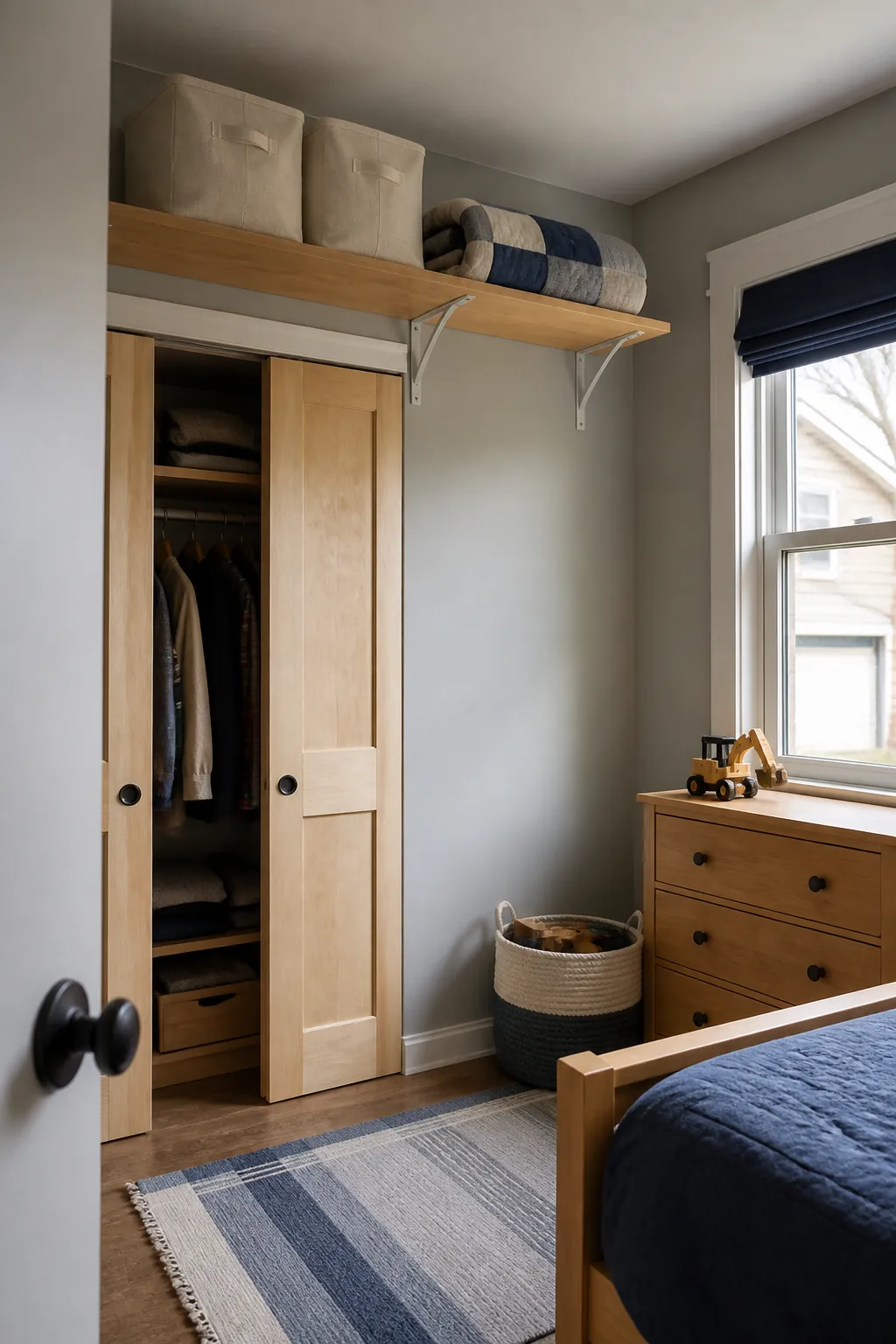
Roll Supplies Away After Art Time
A slim rolling cart can bring paper and washable art supplies to a table, then leave the bedroom entirely. Locking wheels help it stay still during use. Avoid letting the cart become permanent open storage beside the bed.
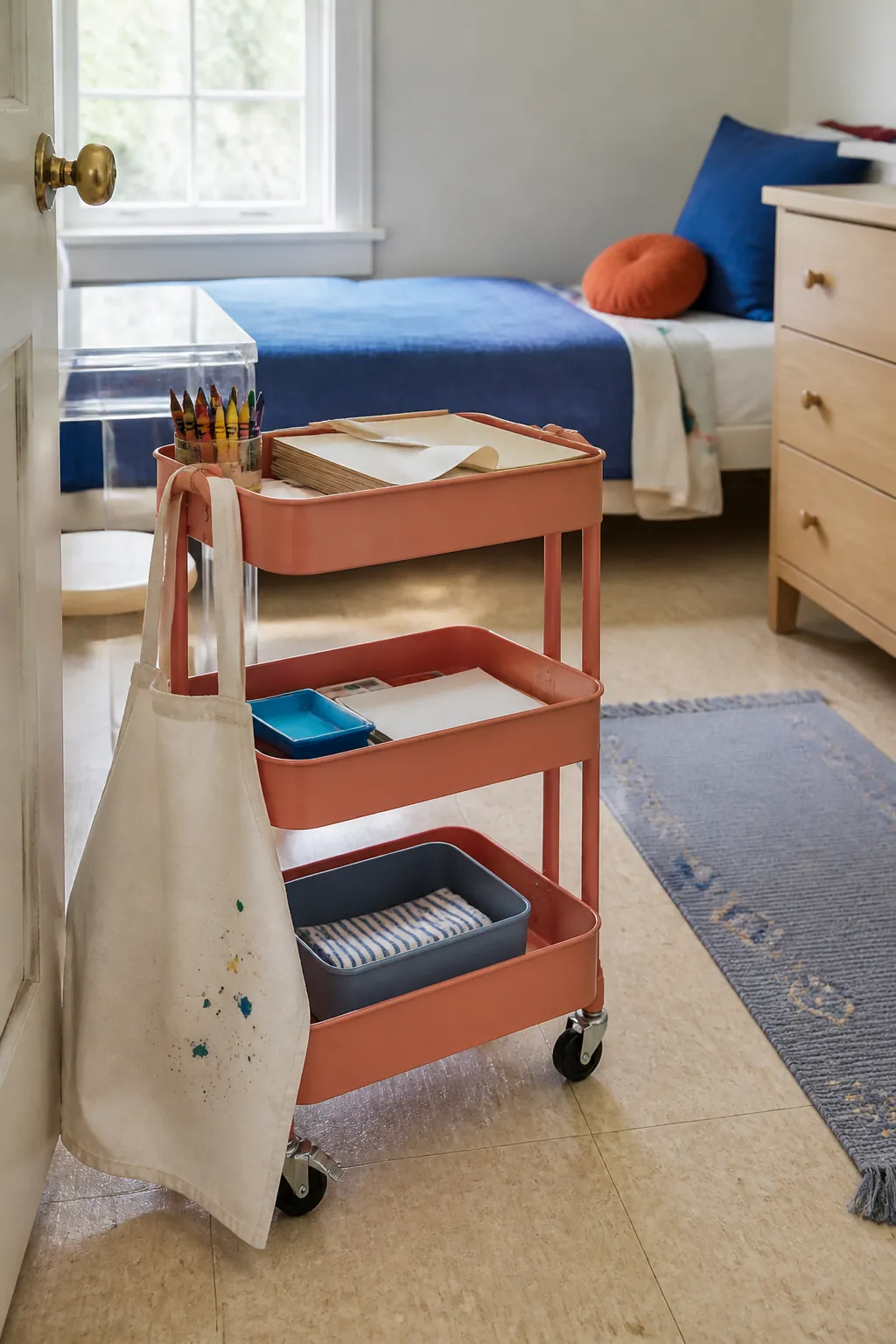
Display Art On A Shallow Picture Rail
A slim rail lets a few child made pieces change without covering the whole wall. Mount it securely above active reach and avoid glass in the display. Keep generous blank space around the selection so the room remains restful.
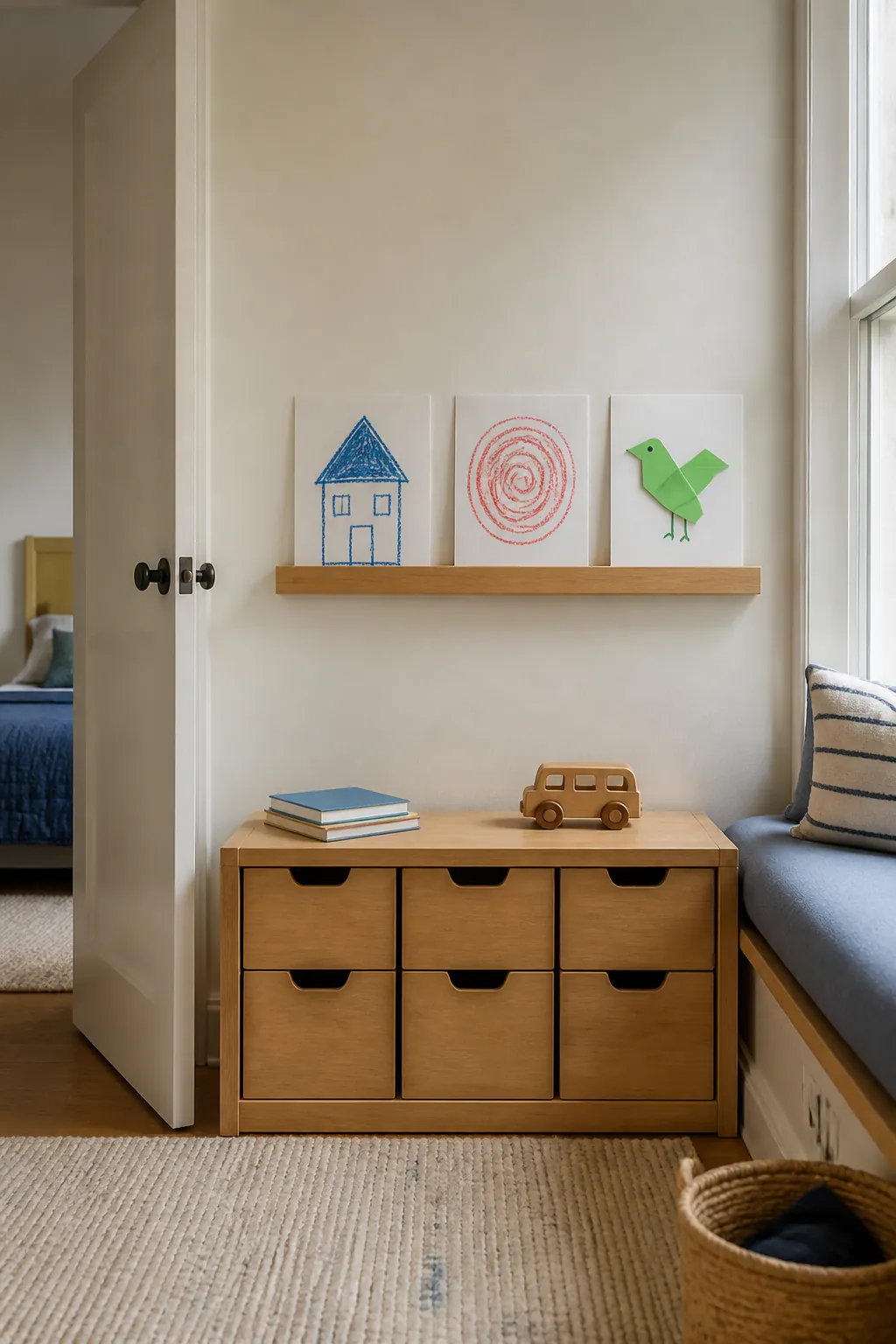
Frame One Oversized Drawing
One large child drawing can create more impact than many tiny decorations. Use lightweight glazing or no glazing, plus secure hardware suited to the wall. Let the child choose the work and update it when a new favorite appears.
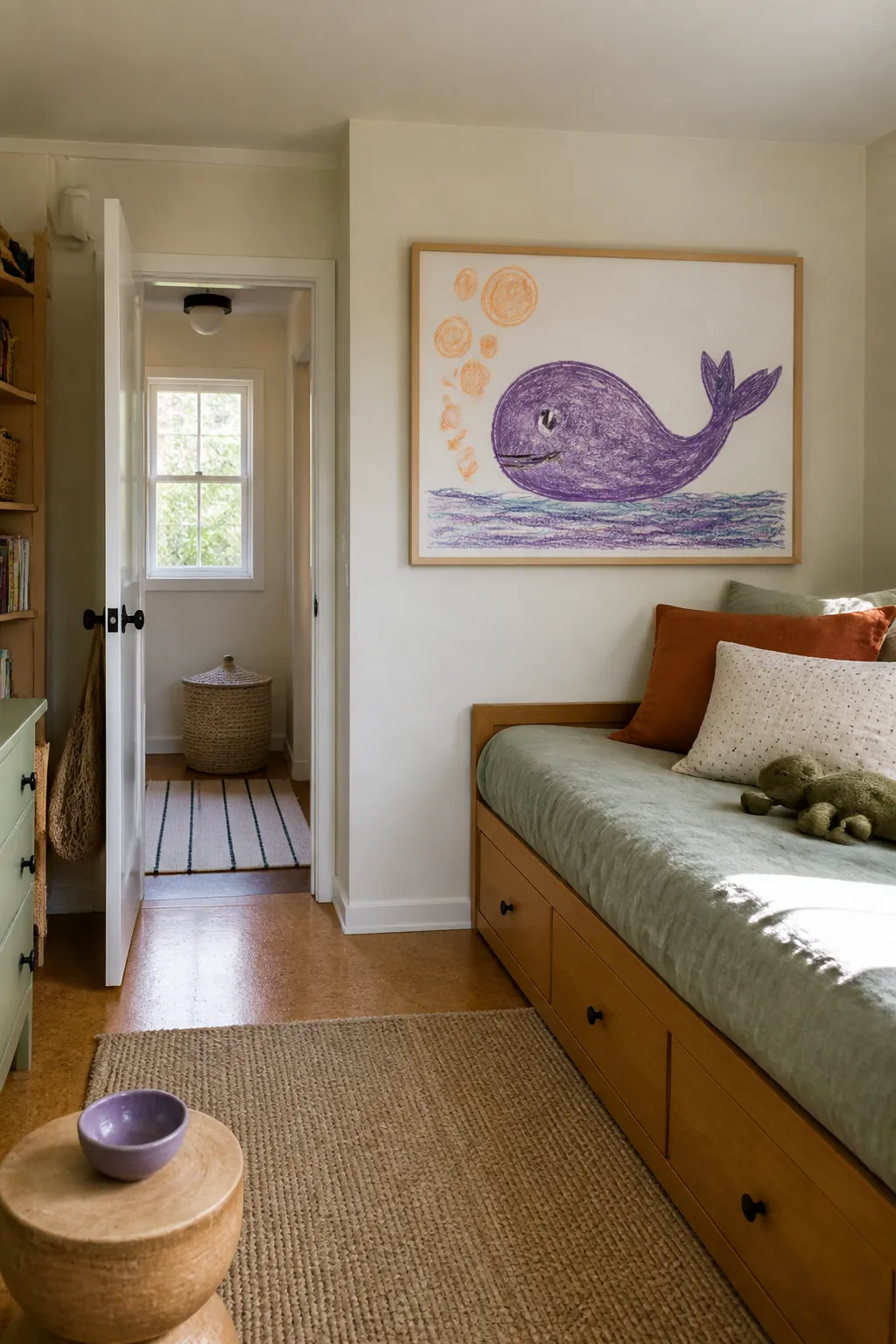
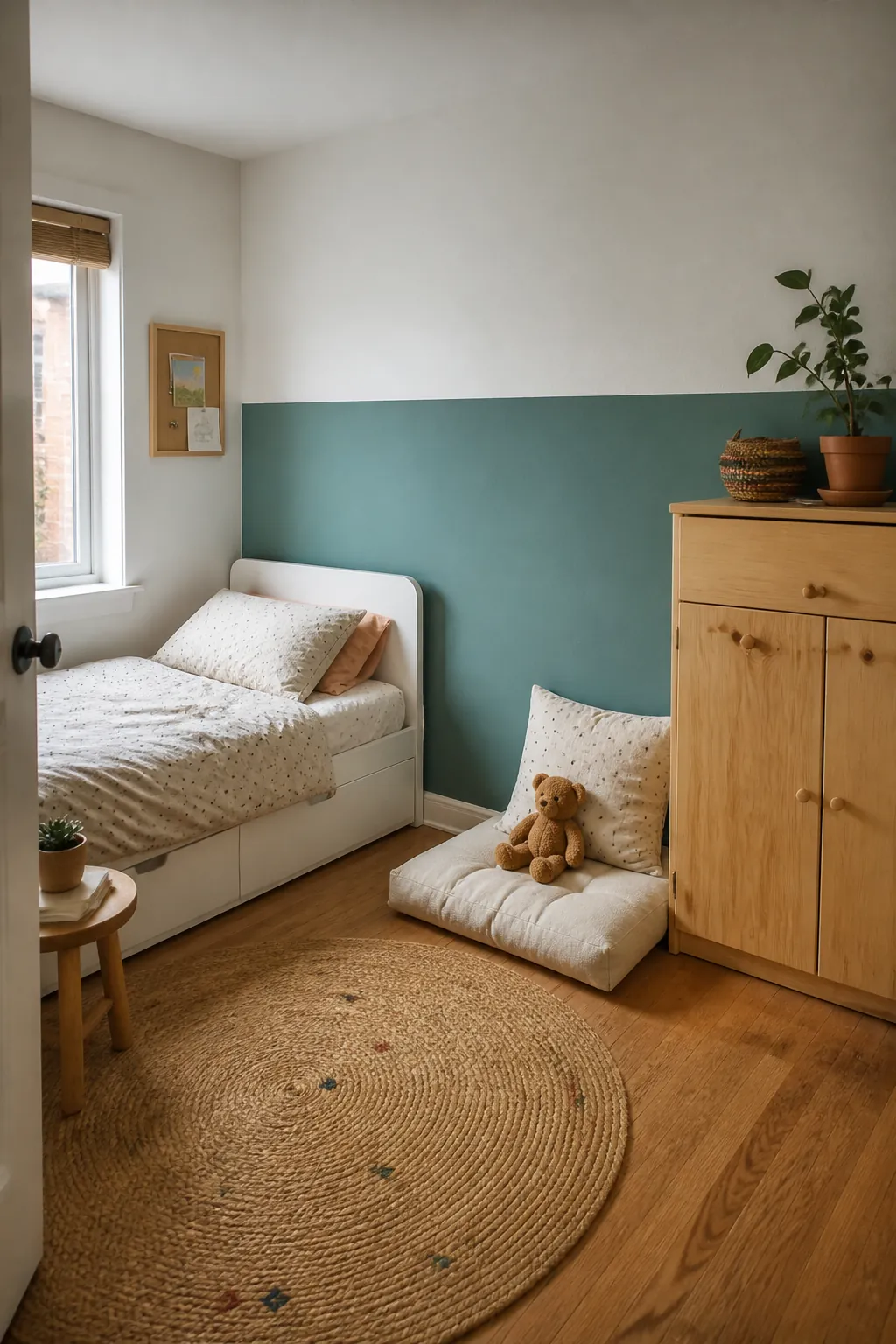
Paint A Color Band Around The Room
A horizontal color band can connect mismatched furniture and make decoration feel intentional. Set it at a height that avoids switches and complicated edges. A muted washable finish will handle daily contact and remain easier to update than a detailed theme.
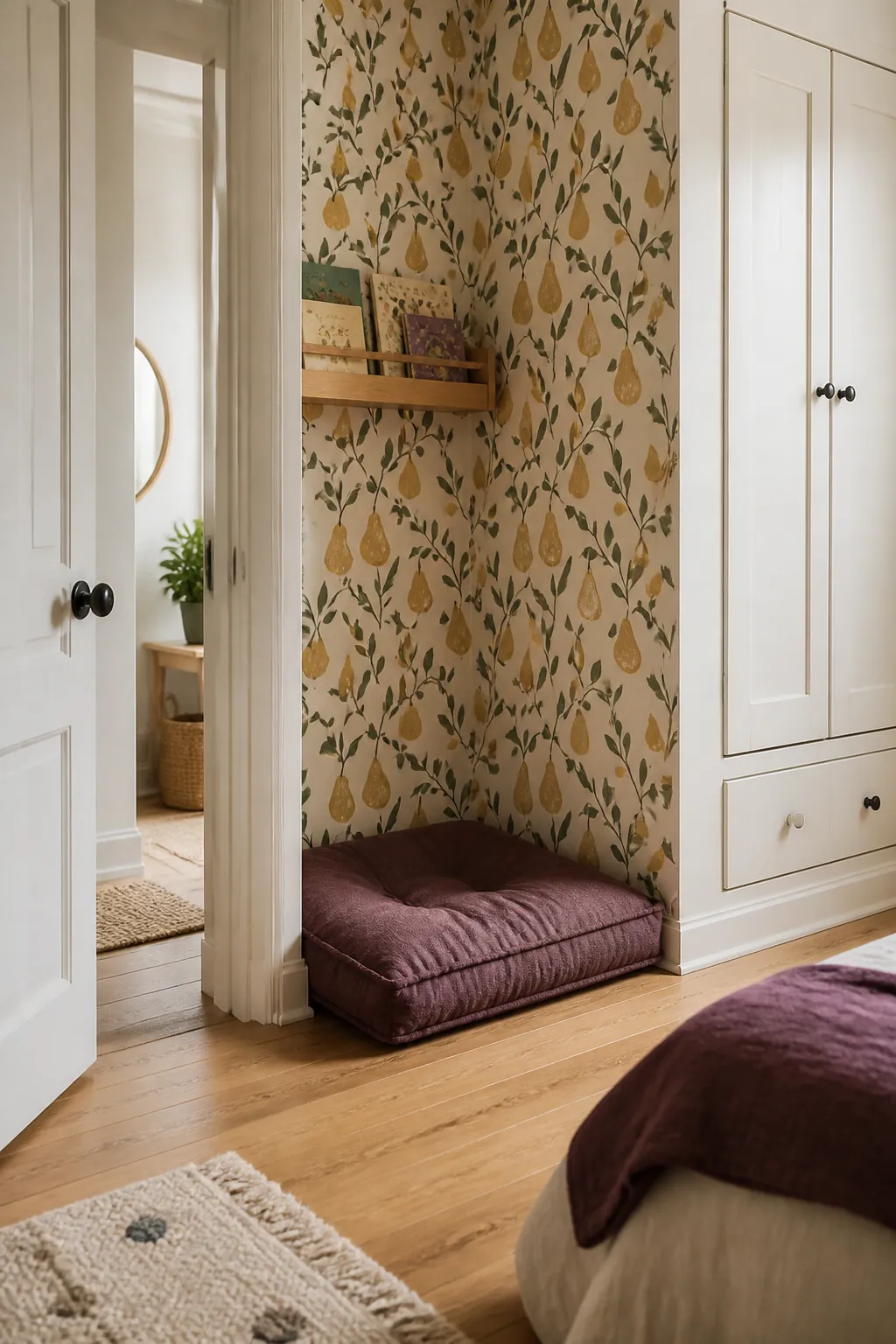
Cover One Nook With A Small Pattern
A limited wallpaper section can give a reading or dressing nook identity without surrounding the bed in pattern. Choose a scale that remains clear at close range and prepare the wall correctly. Keep adjacent textiles simple so the nook does not feel visually crowded.
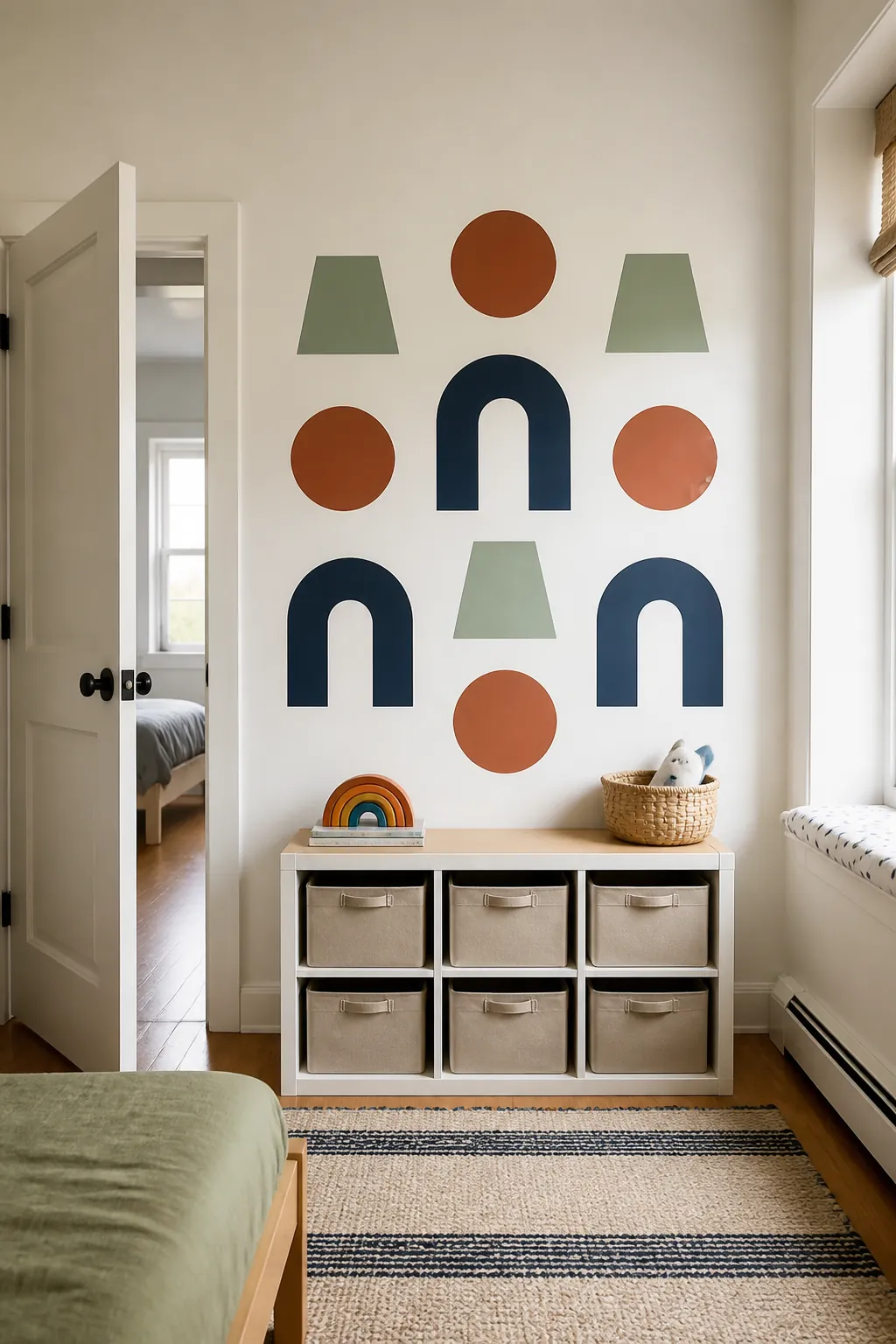
Use Removable Shapes As An Accent
A few removable shapes can add color without committing the whole room to a character or theme. Space them as one composition rather than scattering them across every wall. Check the product and wall finish first so removal does not damage paint.
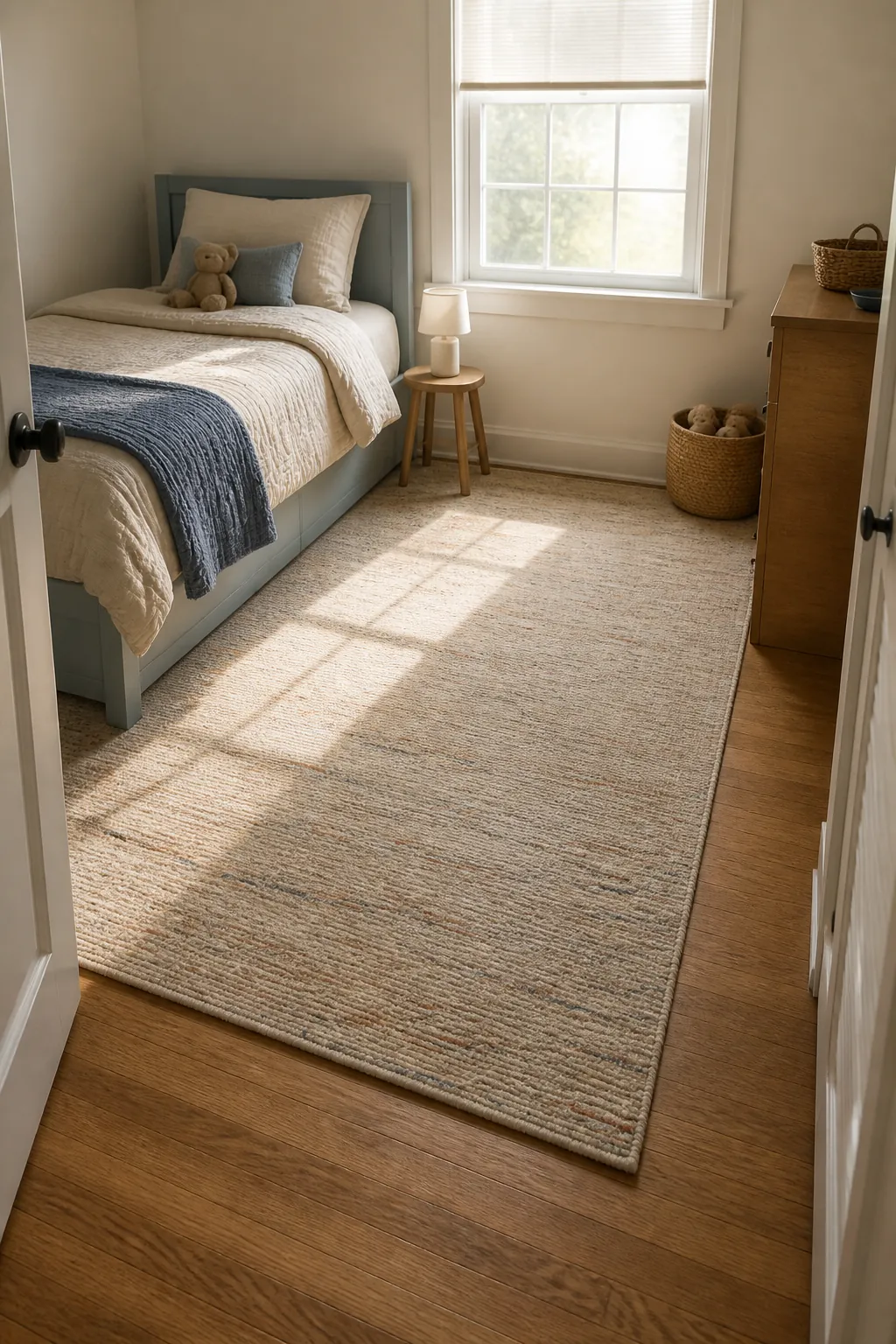
Choose A Rug That Reaches Beyond The Bed
A rug that extends beyond the bed creates one generous visual field instead of a tiny island. Select a low pile washable surface and secure it appropriately. Keep enough hard floor exposed for doors, drawers, and rolling storage to operate.
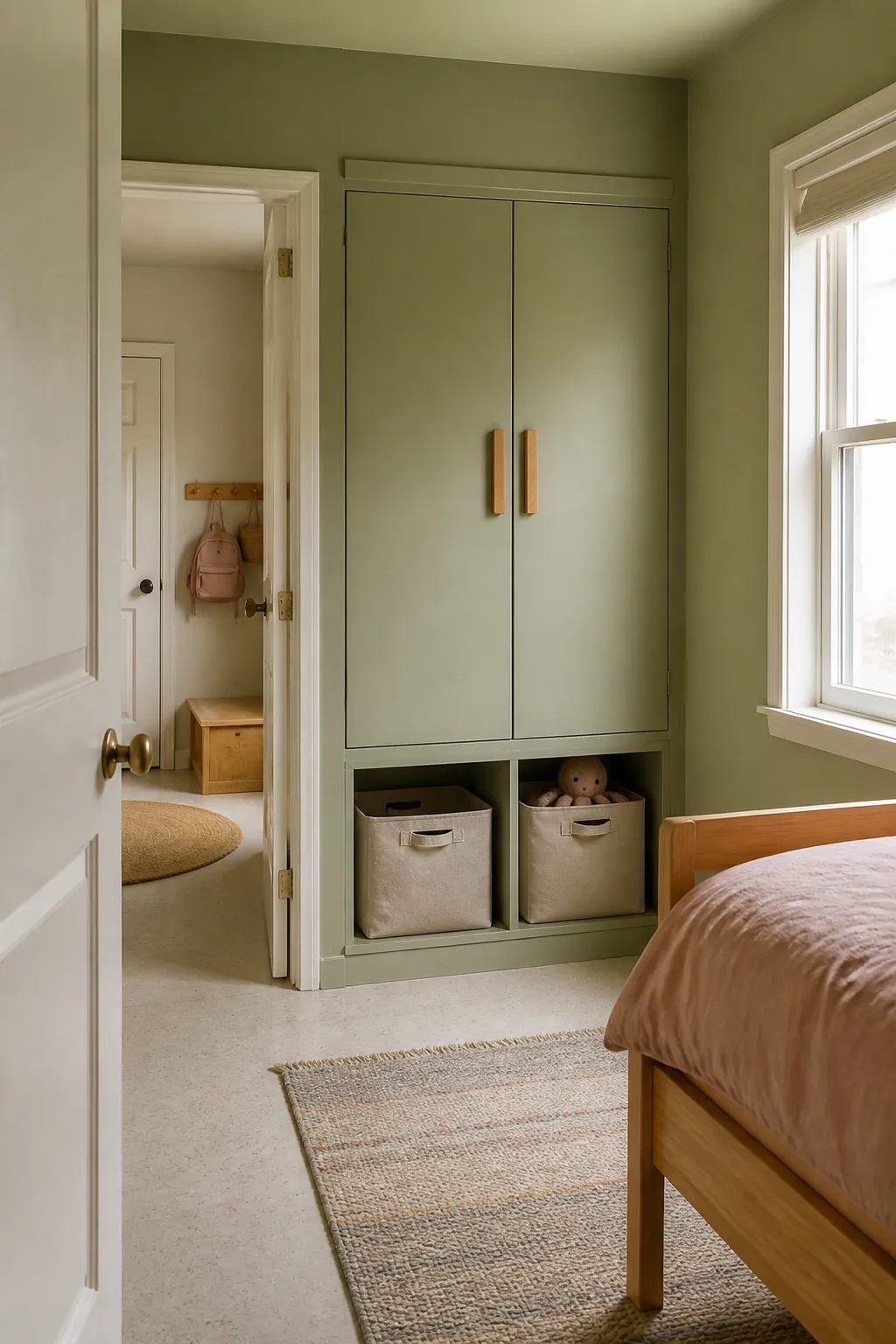
Match Wall And Storage Color
Painting a shallow storage unit close to the wall color reduces the number of strong edges in a small room. Preserve enough contrast at handles and openings for easy use. The effect works best when the unit is securely fitted and the surrounding wall is not overdecorated.
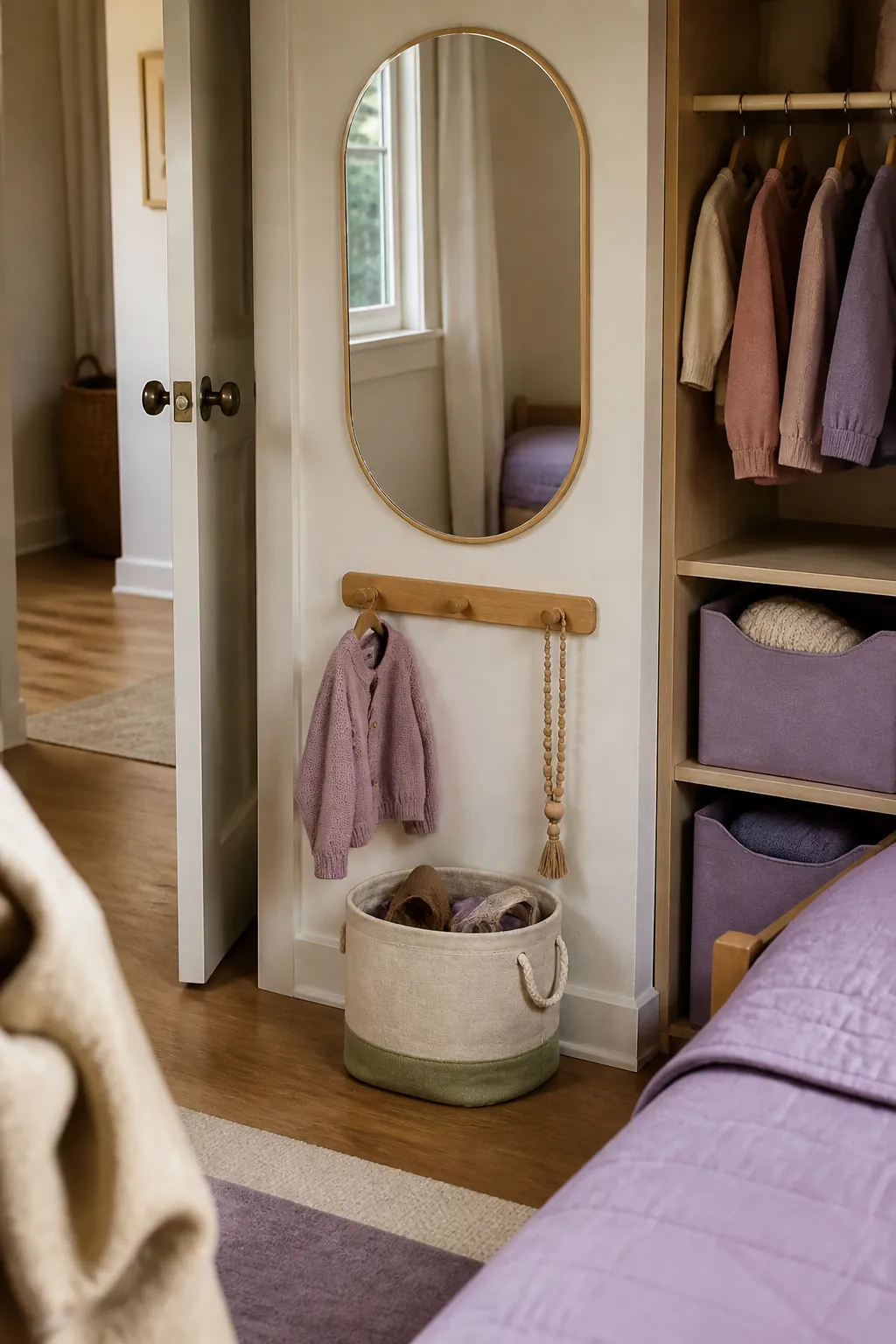
Mount A Safe Mirror Near Dressing Storage
A securely mounted shatter resistant mirror can support dressing and reflect useful light. Place it away from rough play and ensure edges are protected. It should help a routine rather than serve as a large decorative object above the bed.
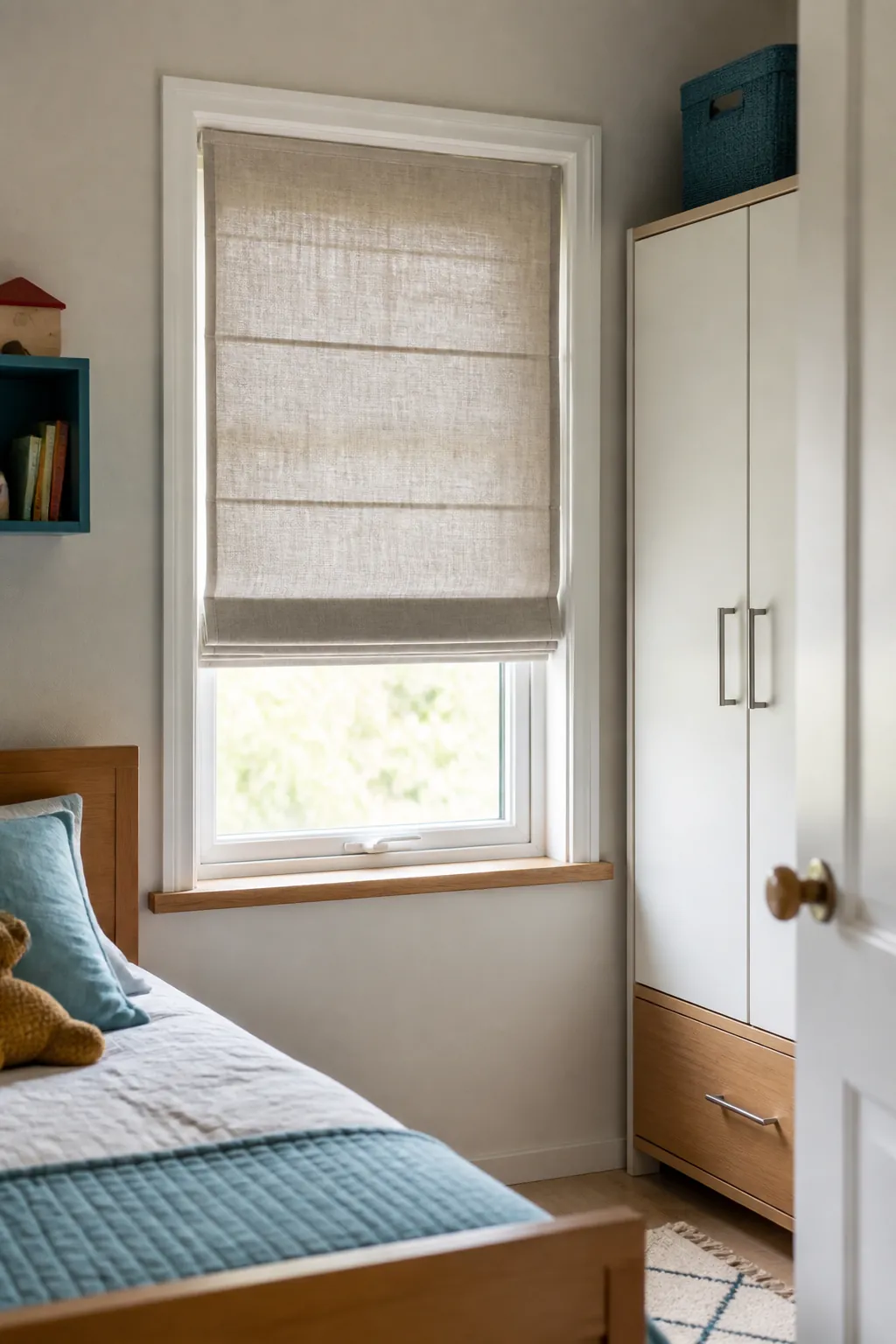
Install A Compact Roman Shade
A fitted Roman shade keeps fabric within the window footprint when side walls are crowded. Choose cordless hardware and a lining that suits the child sleep needs. Confirm that the window can still lock, open, and ventilate safely.
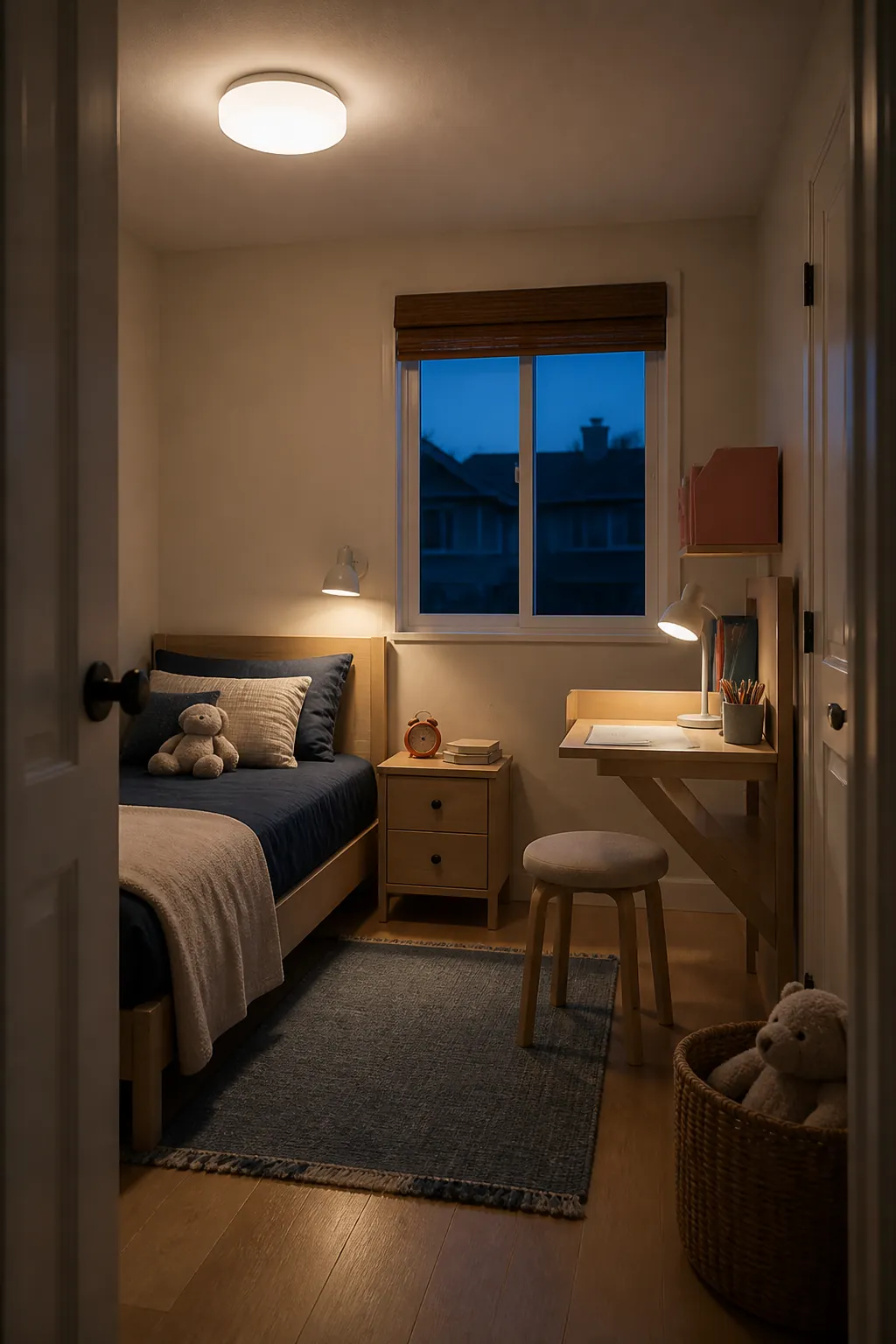
Layer Light At Three Heights
A ceiling fixture, protected reading light, and small task light can support different activities without overlighting the room. Use compatible bulbs with a calm consistent color temperature. Conceal cords and keep every source away from bedding and climbing zones.
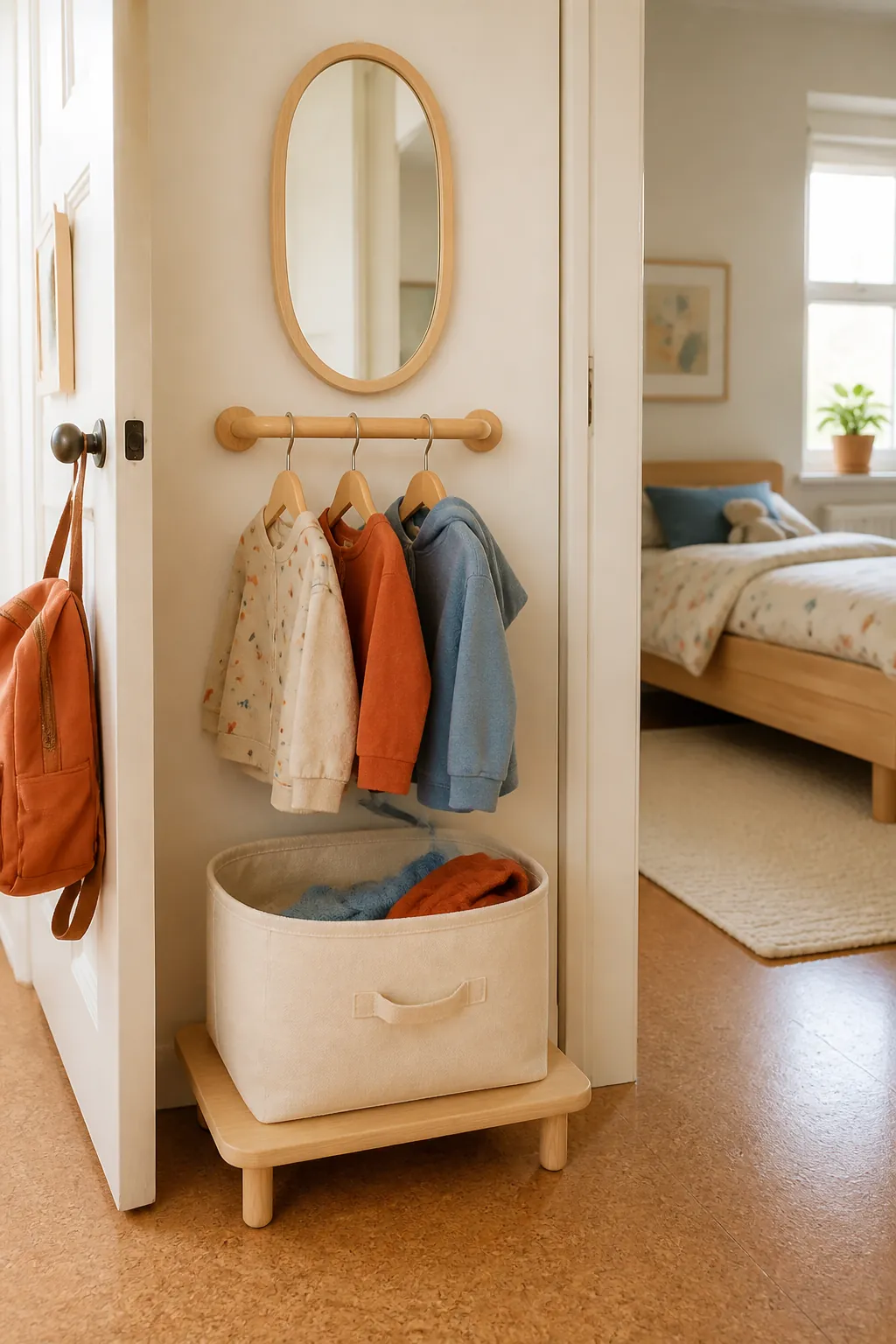
Build A Tiny Dressing Station
One low bin for daily clothes, a short rail, and a safe mirror can support independent dressing. Limit choices to what suits the current season. The station should leave enough room for an adult to assist without blocking the door.
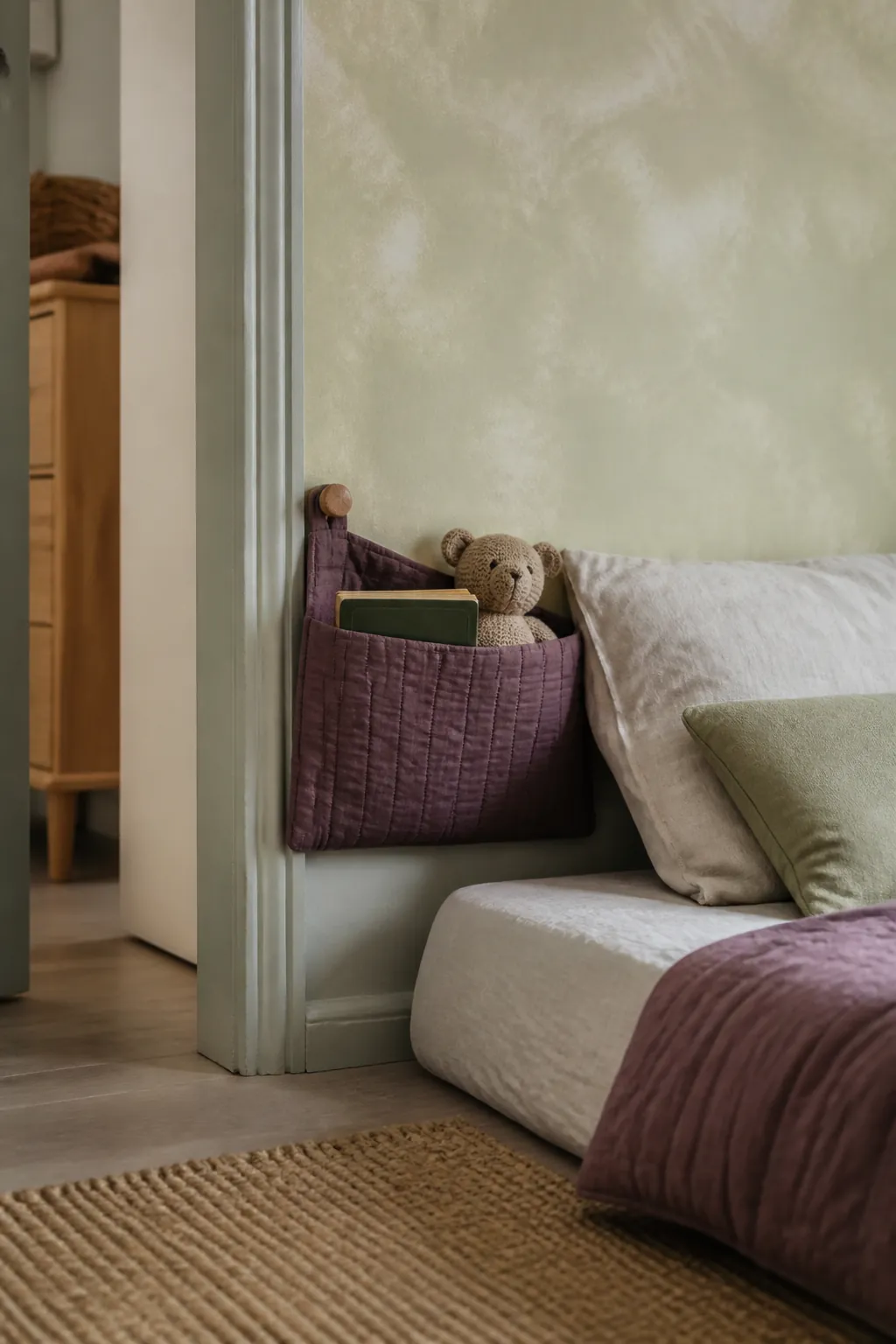
Keep A Bedside Pocket For Comfort Items
A securely attached bedside pocket can hold one book and one comfort toy without occupying the floor. Choose soft construction with no long ties or hard fasteners in the sleep area. Empty it regularly so it does not sag into the mattress.
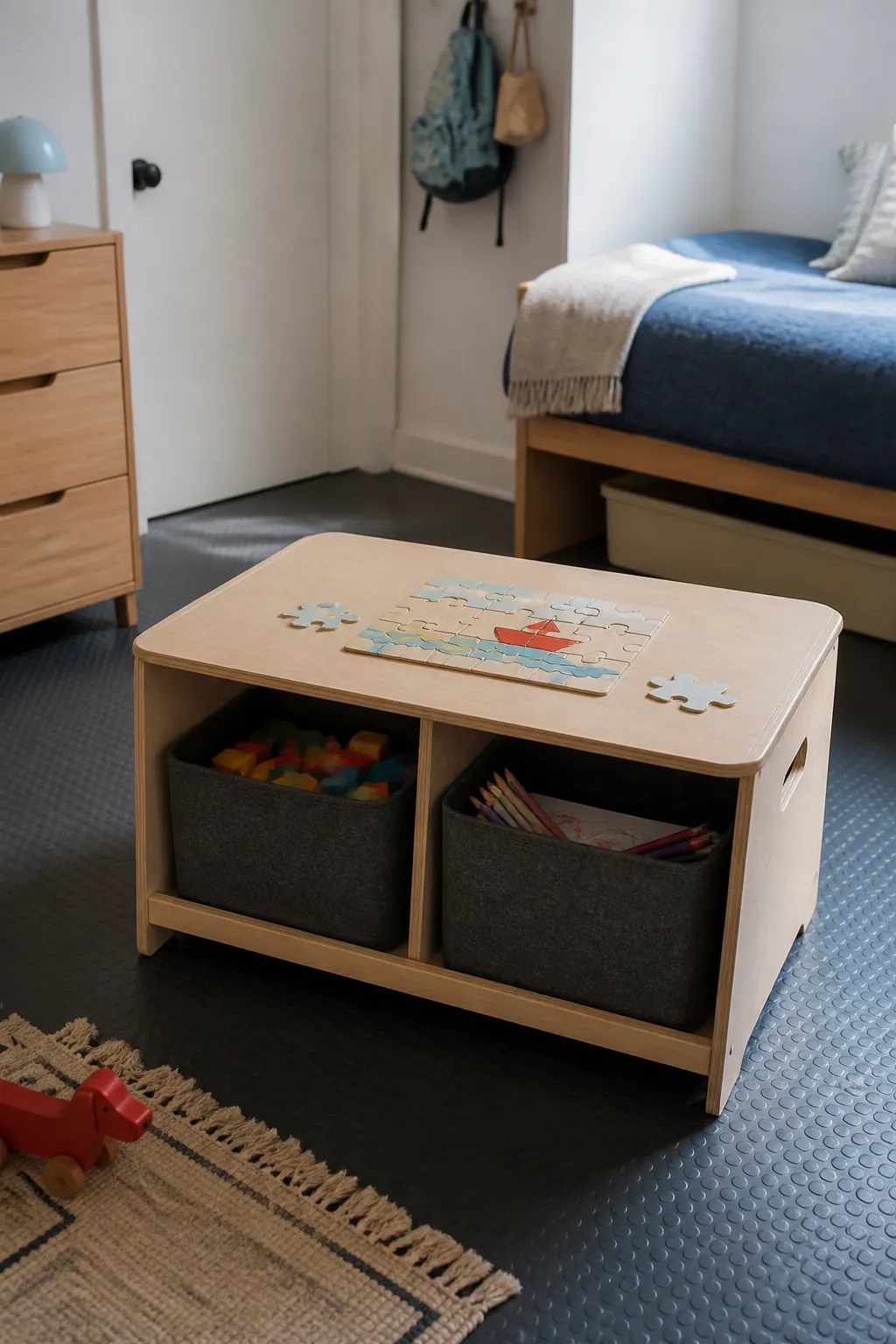
Use A Play Table With Two Bins
A compact table can contain building, drawing, or puzzles when storage stays limited to two broad bins. Choose a height that fits the child now and rounded construction that tolerates daily use. Keep the table away from the main route and windows.
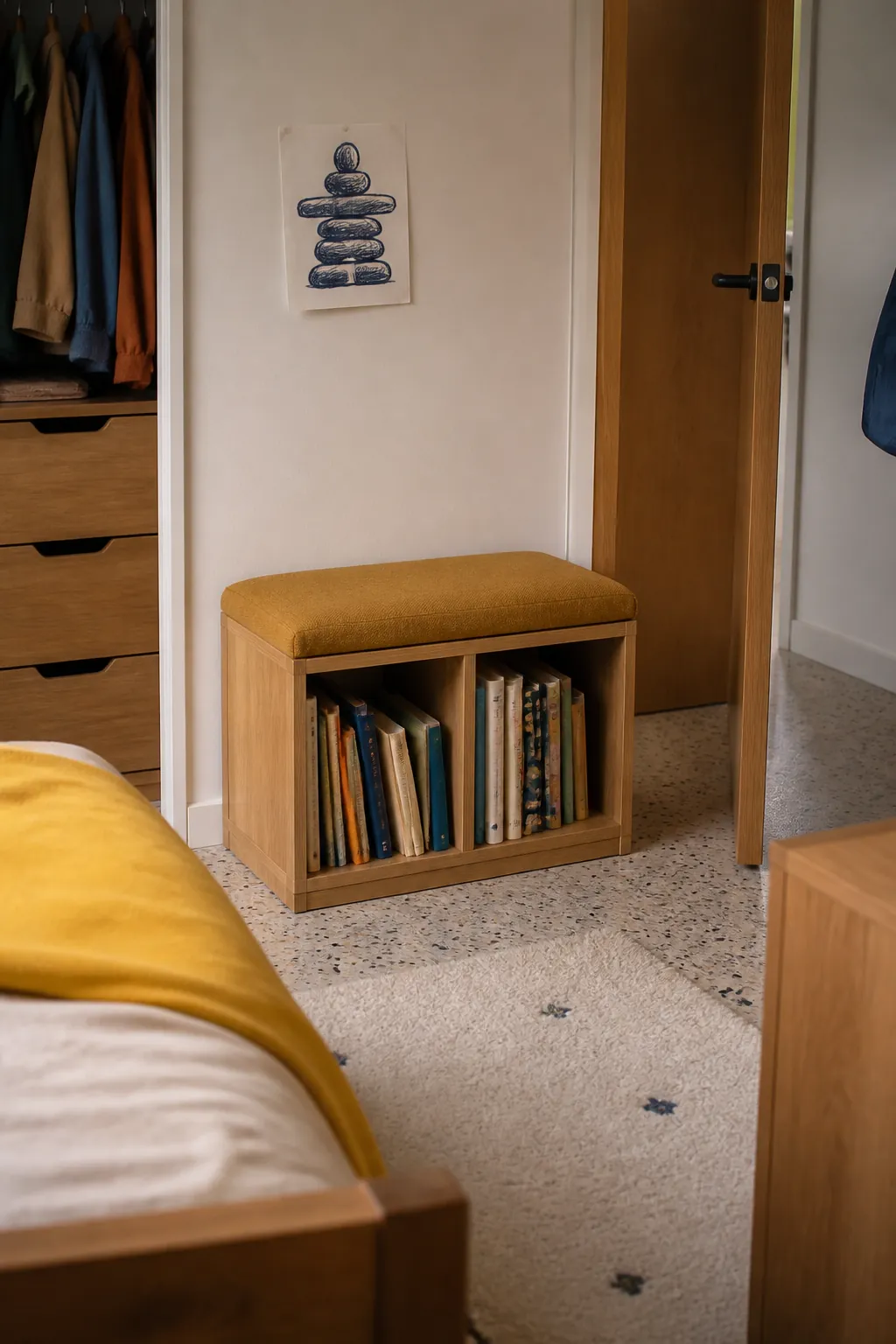
Turn A Low Cube Into A Seat
A secured low cube with a fitted cushion can hold books below and offer a place to pull on socks. Keep the cushion fixed against slipping and the compartments broad. Avoid stacking cubes or placing climbable storage near a window.
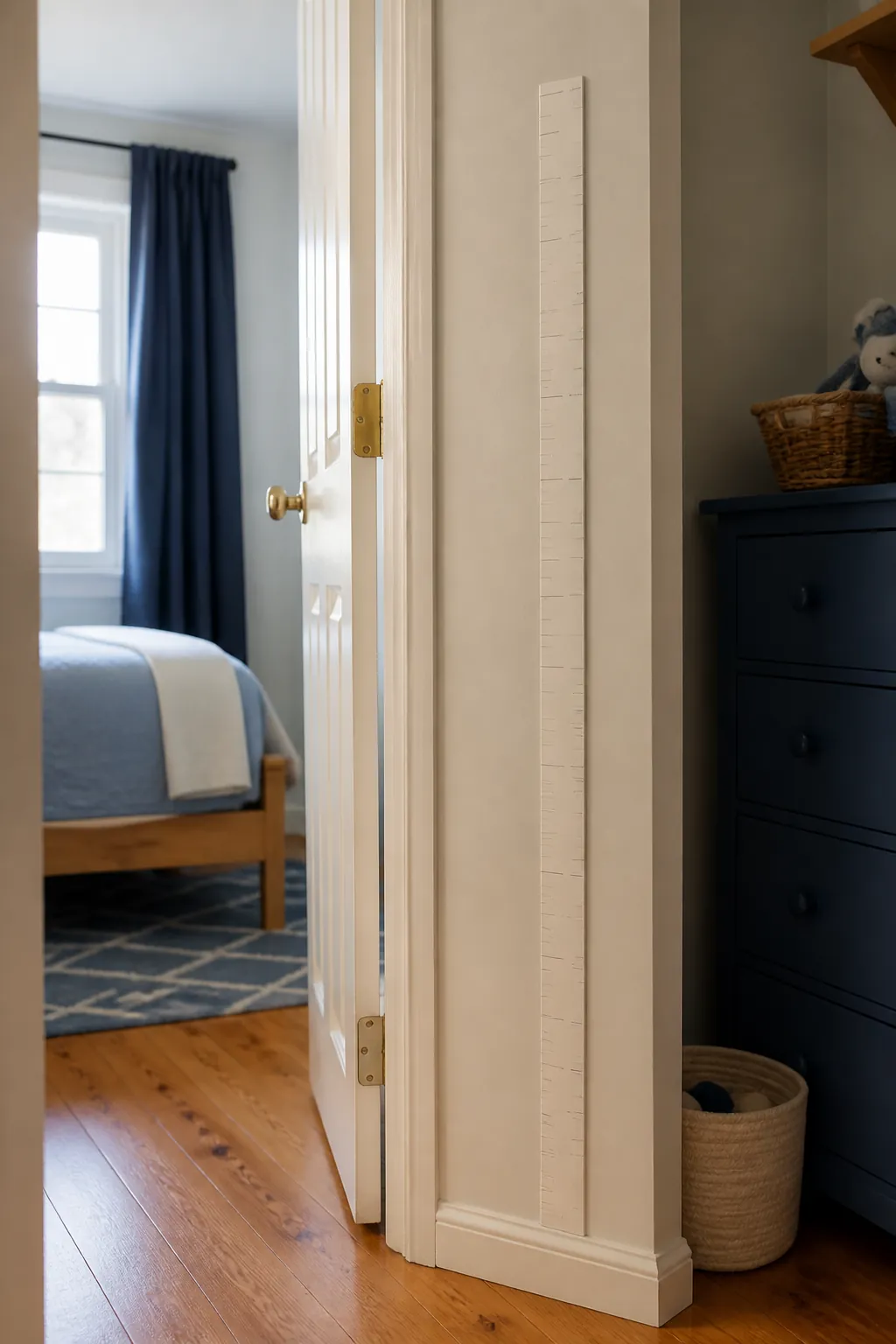
Mark Height On A Hidden Wall Strip
A simple growth strip behind the door can record change without dominating the bedroom decor. Keep marks readable to the family but free of identifying details in photographs. Place it where the door cannot scrape the surface or strike a child standing there.
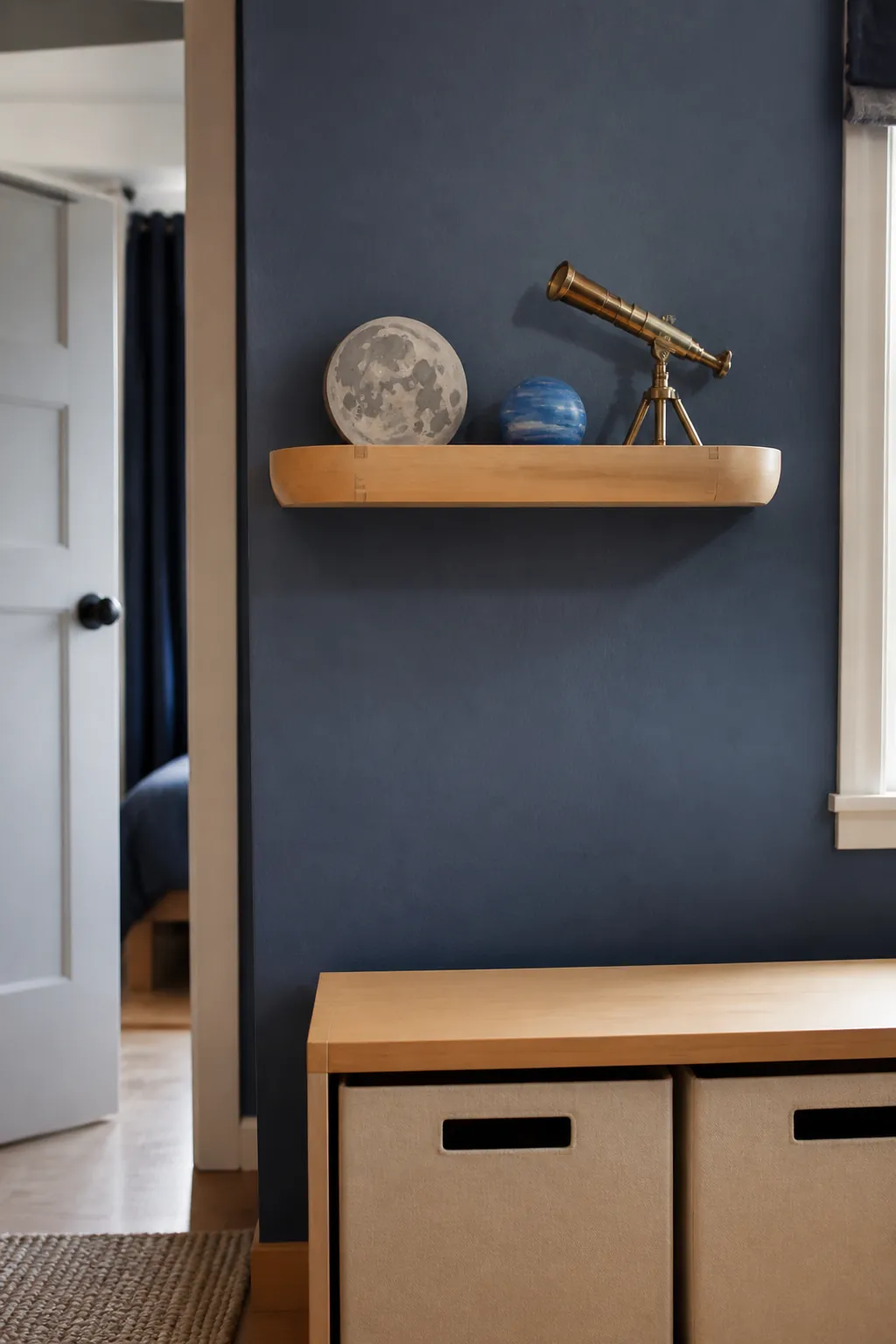
Reserve One Shelf For Current Interests
One small display shelf can celebrate a current interest without letting collections spread through the room. Limit it to a few sturdy objects and secure the shelf properly. When the interest changes, replace the display instead of adding another shelf.
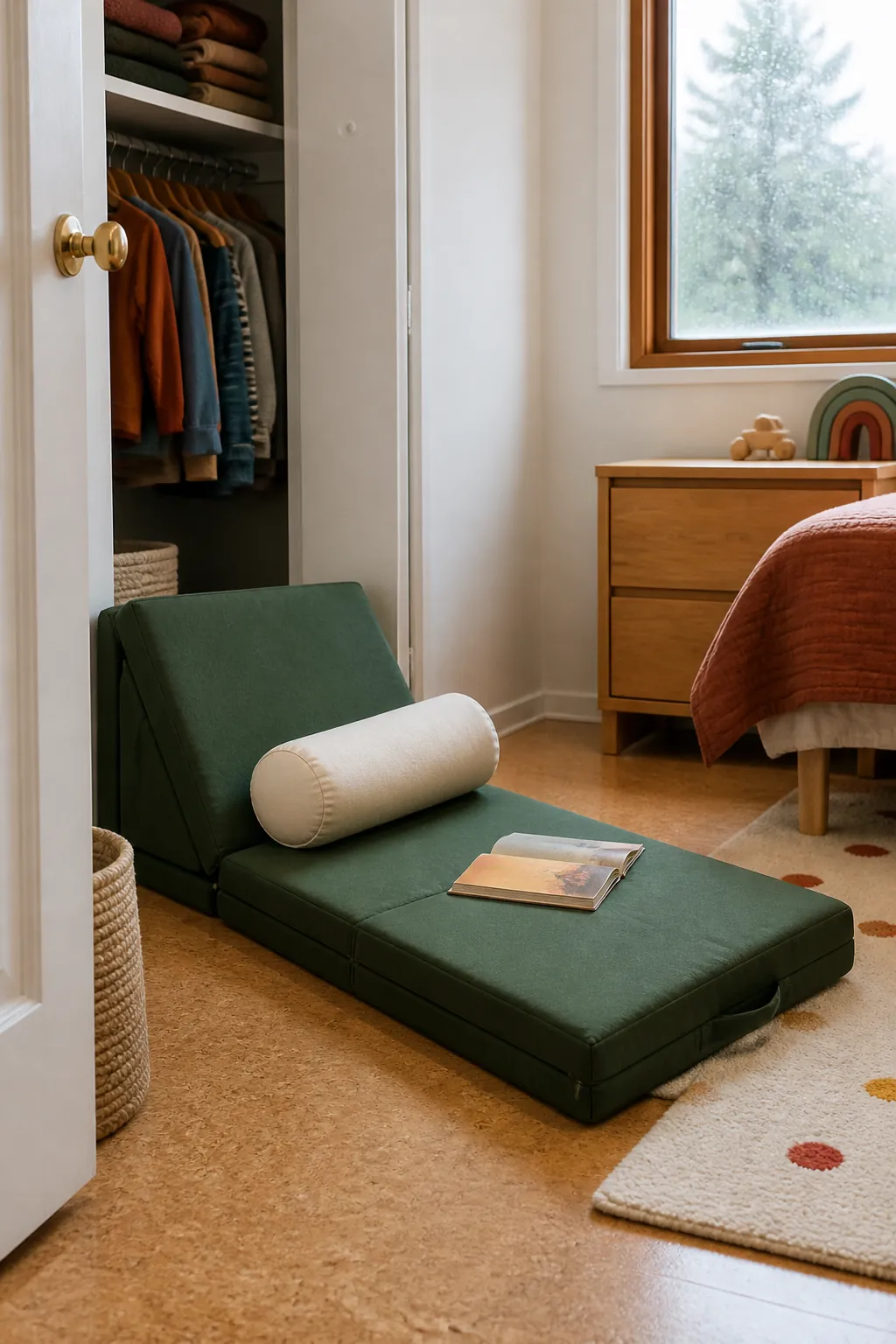
Fold A Floor Cushion Into The Closet
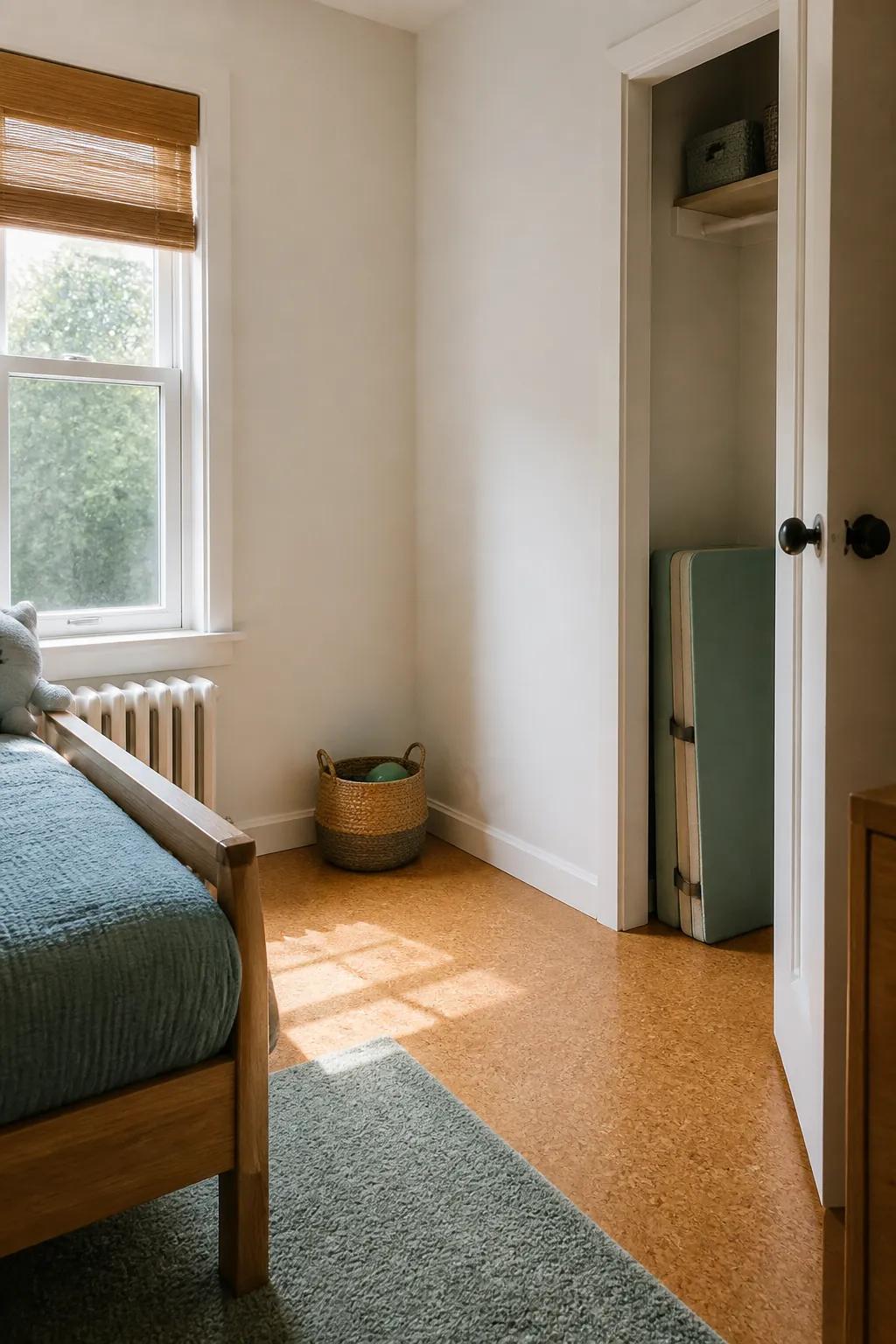
A firm folding cushion can create a temporary reading or game spot without permanently claiming the floor. Choose a washable cover and a folded size that fits inside the closet. Put it away after use so the route between door and bed stays open.
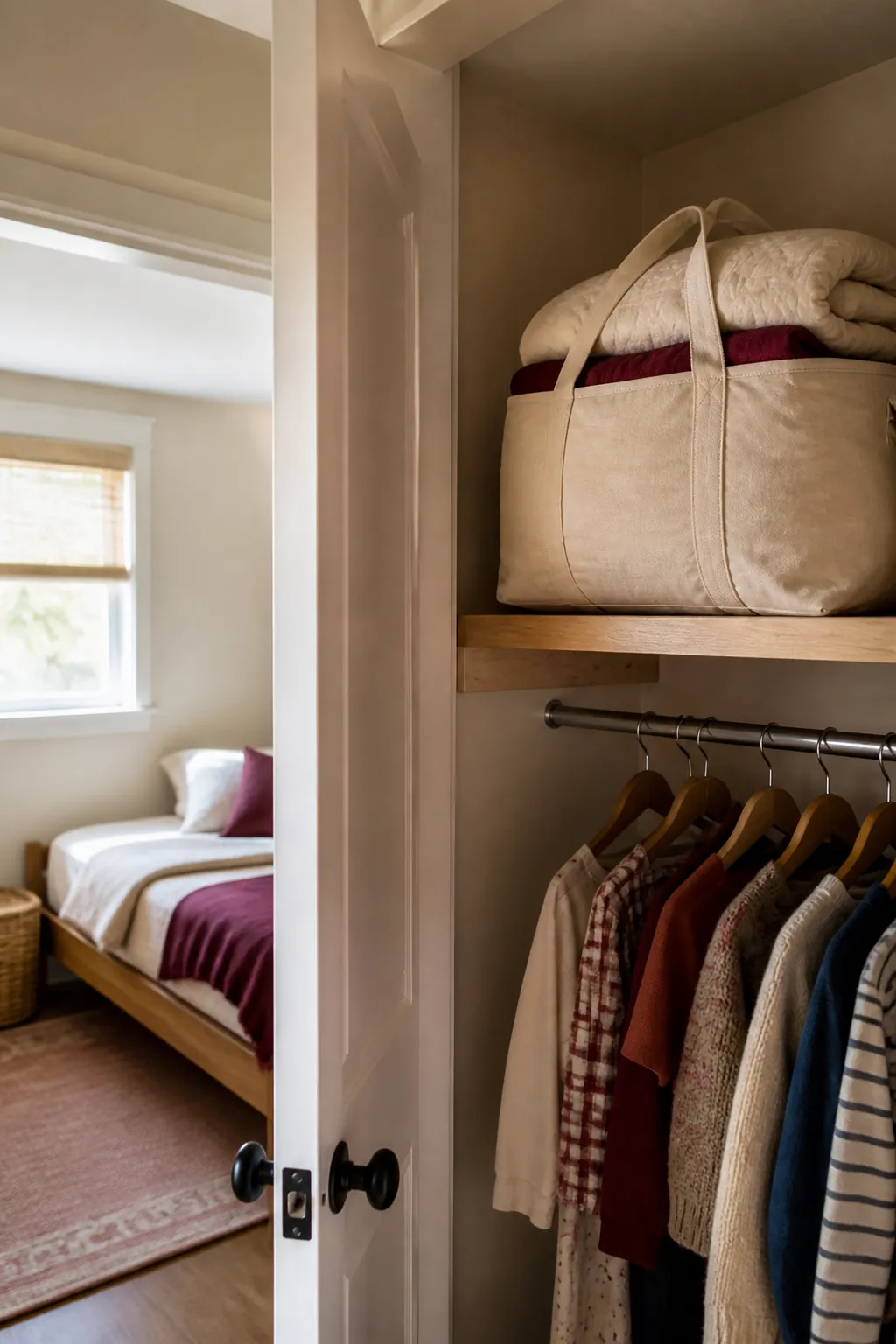
Store Seasonal Bedding In A Soft Bag
A breathable fabric bag can compress spare blankets into one predictable place. Keep it on an adult shelf or outside the bedroom if storage is already tight. Avoid hard cases that add weight overhead or cannot flex into the available space.
Leave Space For The Next Stage
An unfilled corner can be more useful than furniture purchased before a need appears. It may later hold a longer bed, homework surface, instrument, or private reading seat. For now, clear floor lets the child move, play, and show you what the room should become.