A tiny plant does not need a huge new home, but it does need enough space for its roots and a way for water to leave. Small containers are easiest to enjoy when you can lift them, inspect the mix, and keep the surrounding surface dry. Choose the growing pot first, then add the cover, tray, or display that suits your space.
Classic terracotta for a first plant
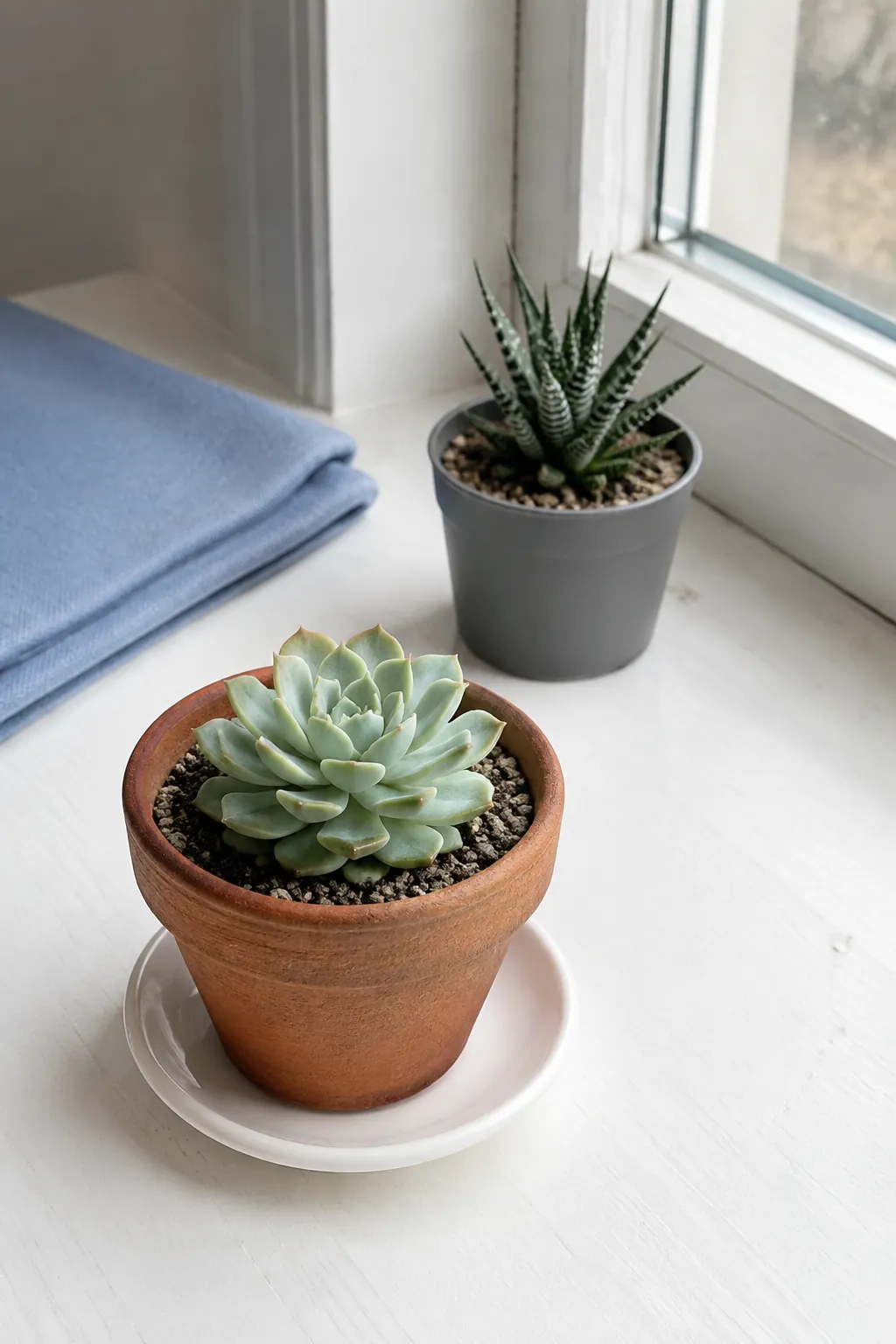
A small terracotta pot is a useful starting point because it is inexpensive and easy to lift when checking the mix. Choose an actual drainage hole and a size that leaves modest room around the existing roots. The porous walls can help moisture escape, but they do not rescue a plant kept in unsuitable soil or watered before it needs it.
Nursery pot inside a woven cover
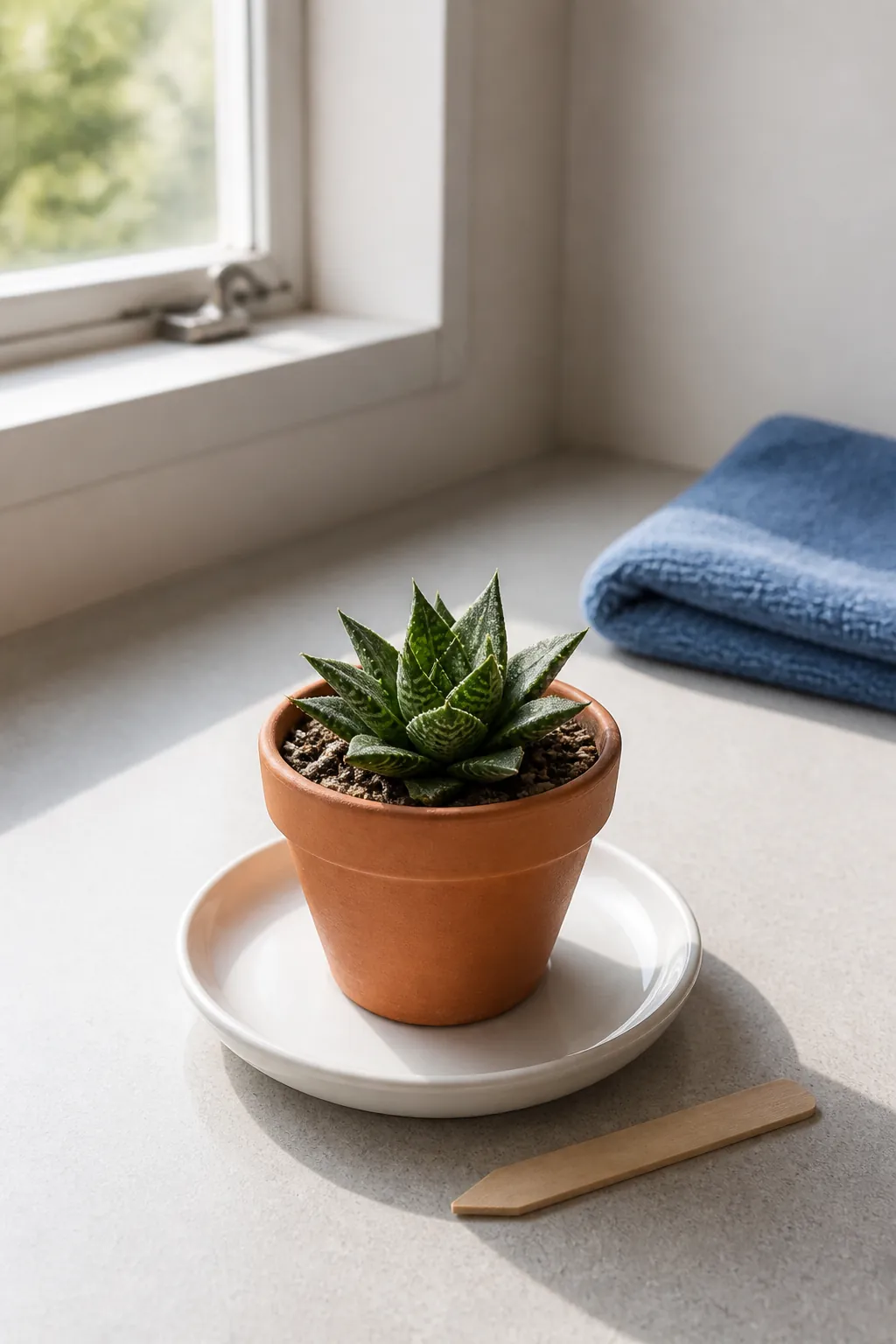
Keep a healthy plant in its existing nursery pot if the roots still have space, then use a woven cover to change the look. Lift the plastic pot out for watering and return it only after excess water has drained away. A waterproof liner protects the woven material, but it must not become a hidden pool beneath the plant.
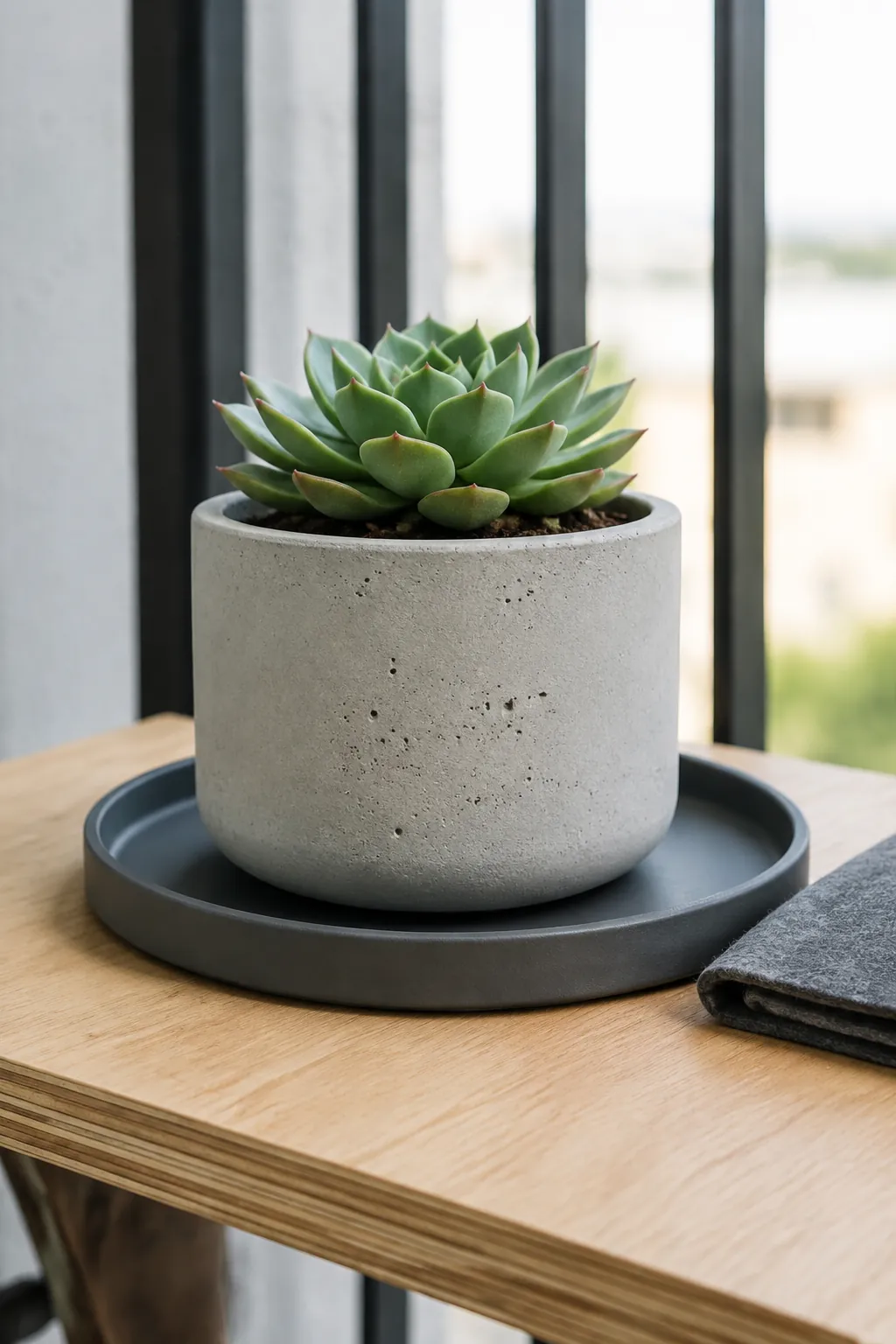
Mini concrete pot on a protective tray
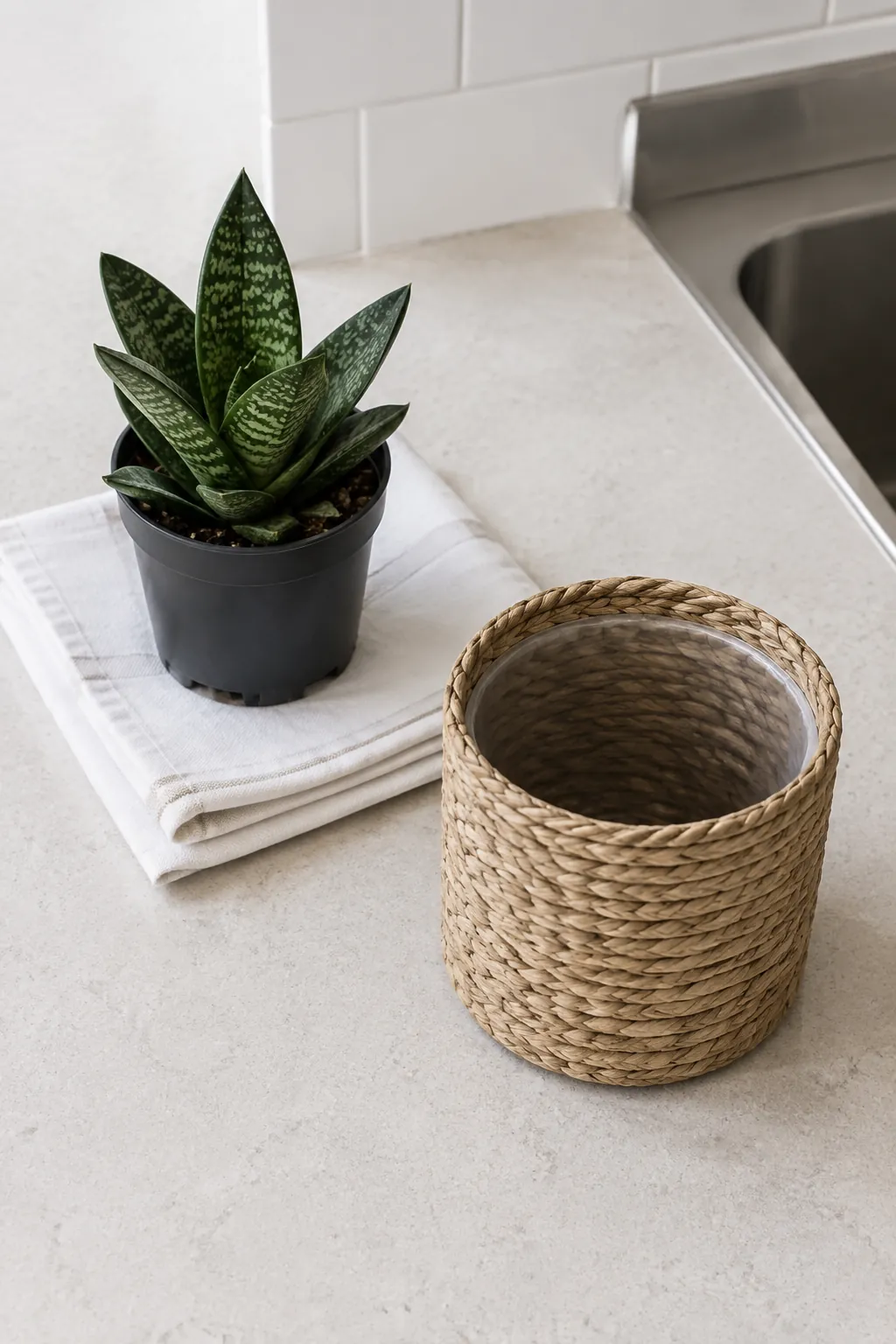
A little concrete pot adds weight to a compact display and looks especially good with a sharply outlined plant. Inspect the drainage opening and the surface underneath, since rough concrete can mark furniture. A suitable waterproof tray protects the table without requiring you to seal the drainage hole.
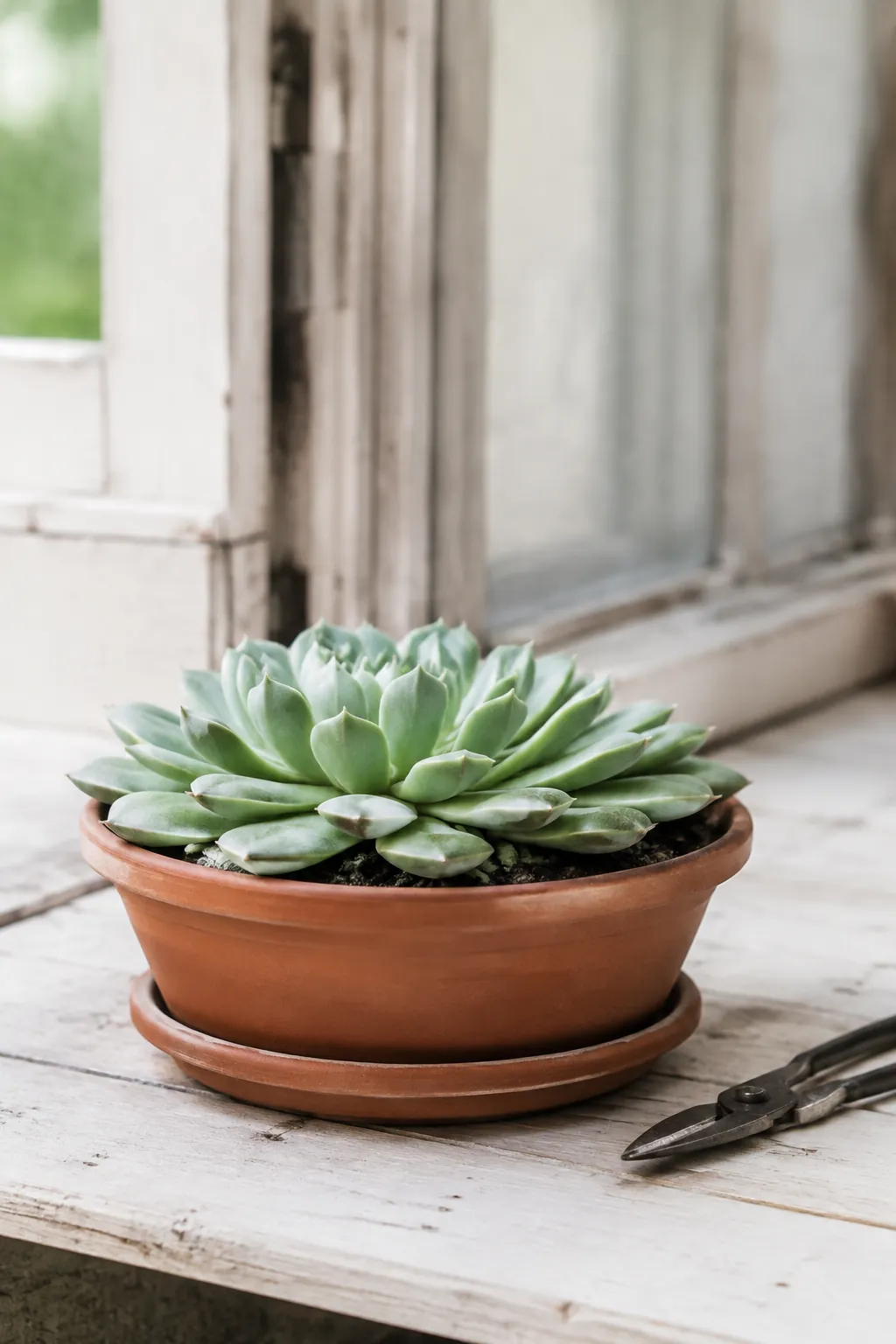
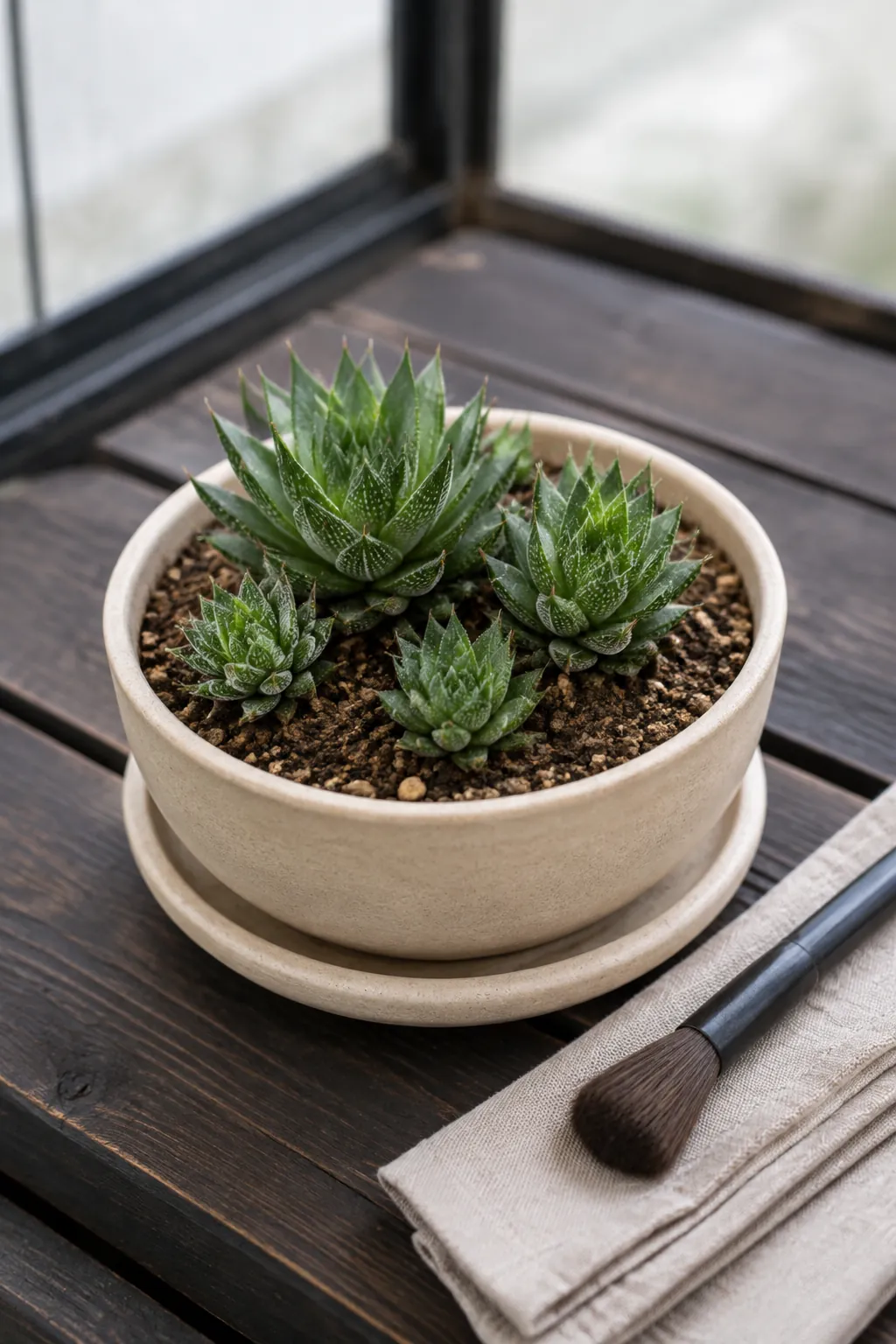
Short terracotta bowl for a low rosette
A short bowl keeps the leaves of a low growing rosette visible from the side. Compare its depth with the actual root ball rather than choosing the flattest vessel you can find. Leave a small accessible soil area around the plant so you can remove fallen leaves and inspect moisture.
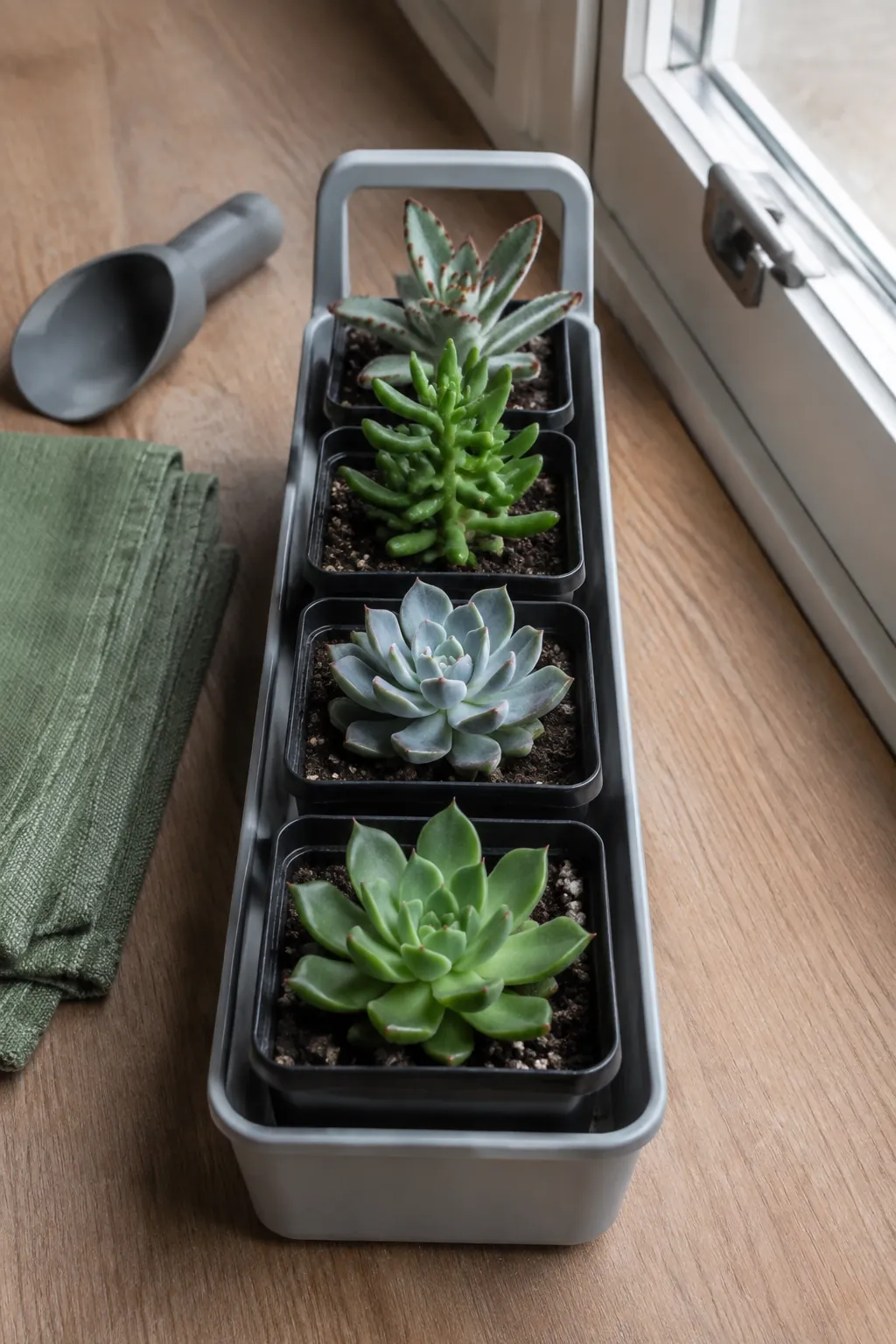
Square nursery pots in a simple carrier
Square nursery pots make efficient use of a small shelf because their sides sit close together. A lightweight carrier lets you move several plants to a watering area while keeping each root system separate. Leave enough space between the foliage that lifting one pot does not damage its neighbors.
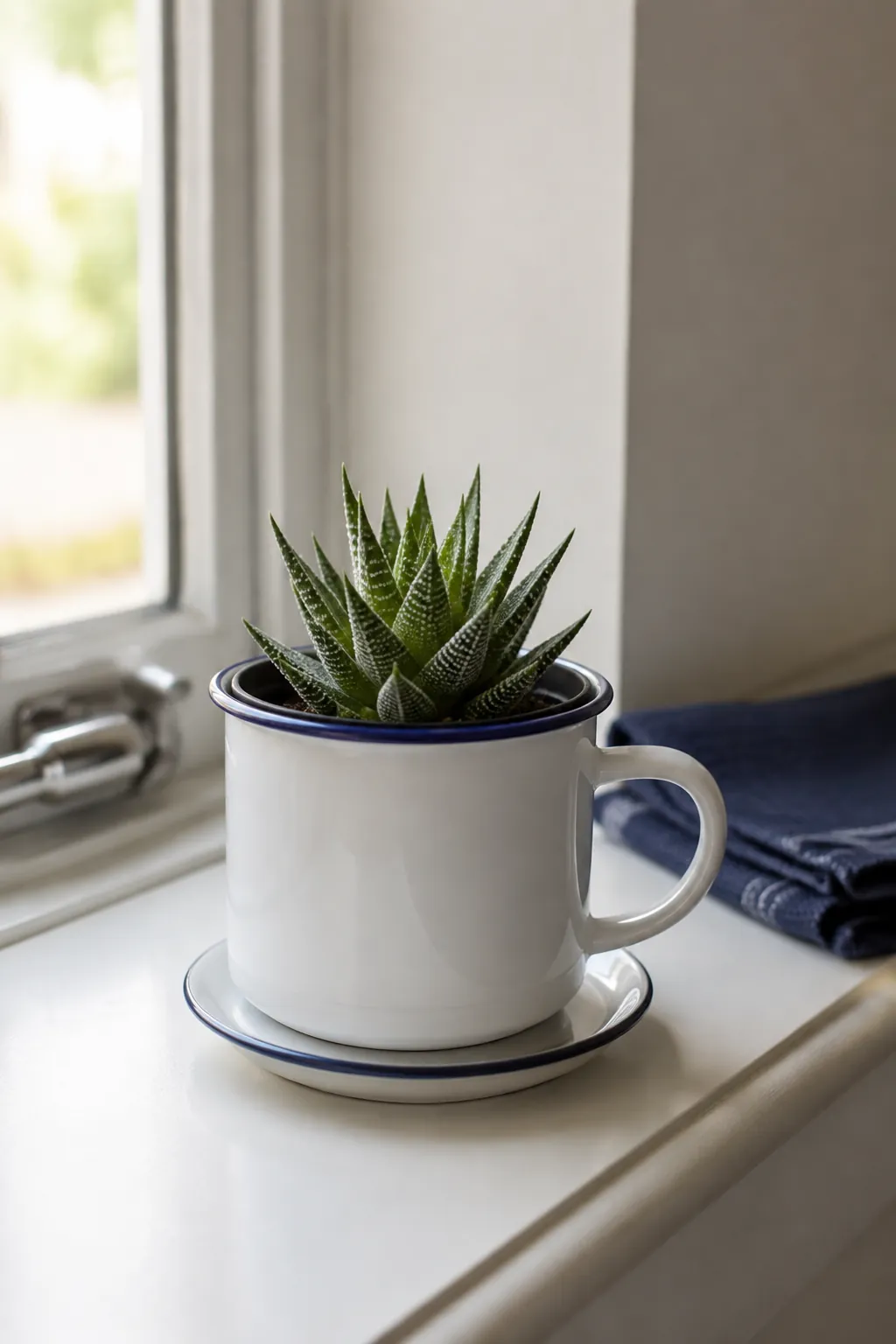
Tiny enamel cup as an outer cover
An enamel cup can hold a removable nursery pot and bring a useful second life to a spare household object. Treat the cup as a cover if it has no drainage, and inspect it for rust or sharp damaged edges before use. The inner container should lift out easily without wedging beneath the cup’s rolled rim.
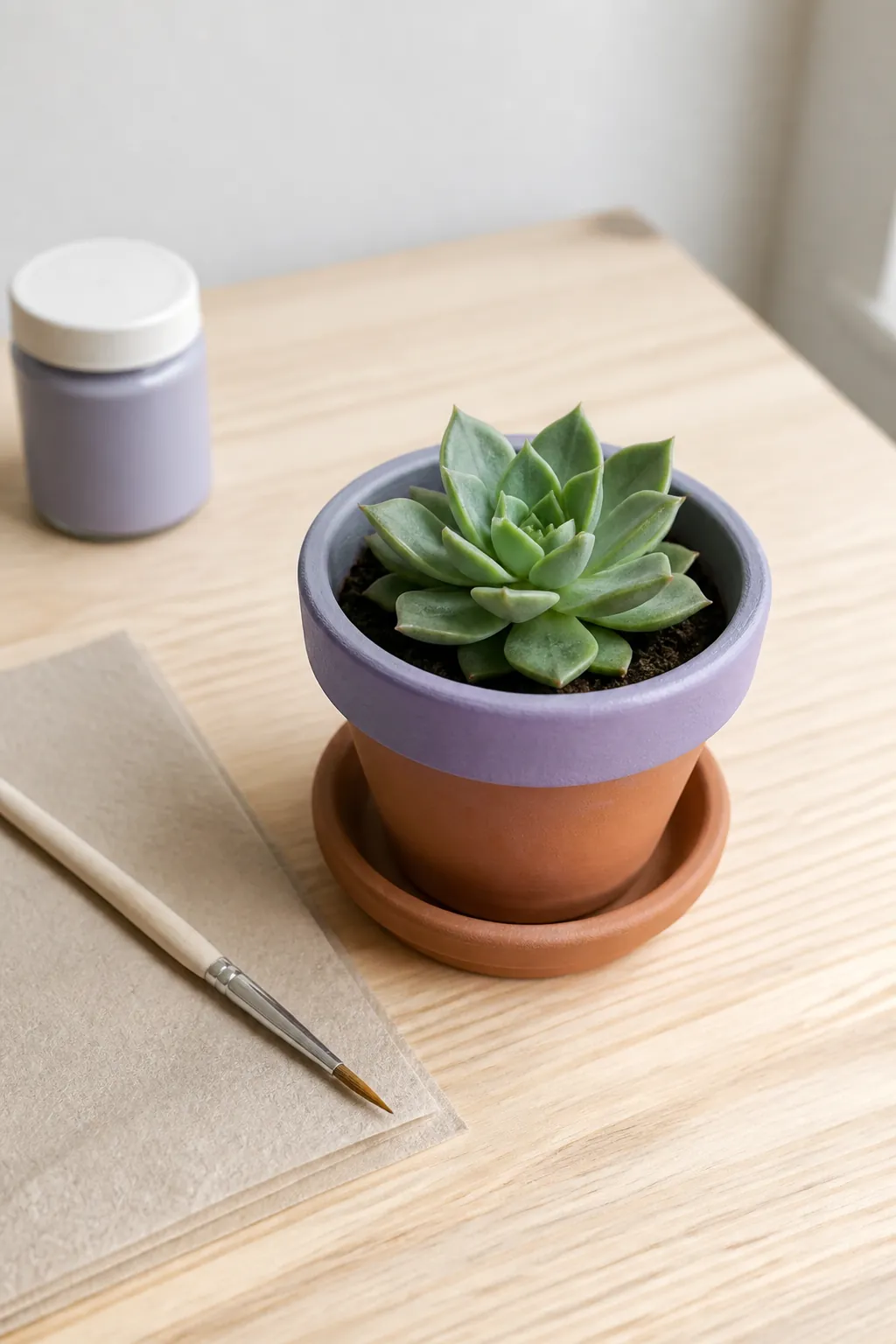
Small terracotta with a painted rim
Painting only the rim gives a familiar clay pot a little color without covering its entire exterior. Keep paint out of the opening and let the finish cure according to its label before planting. A single muted stripe is enough to connect the pot to a room without hiding the clay surface.
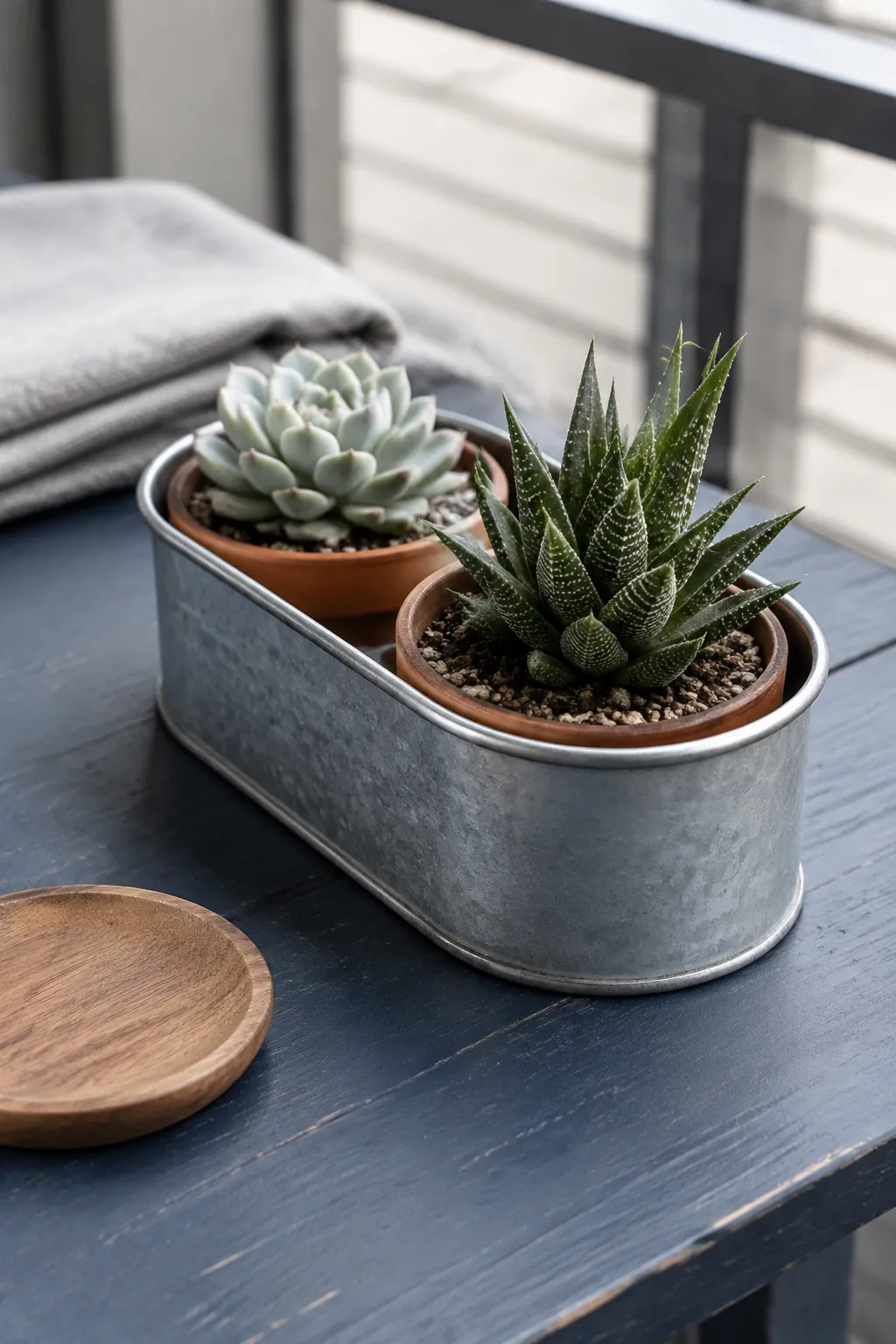
Low metal trough with removable pots
A compact metal trough can gather a few mini plant pots into one tidy arrangement. Keep the plants in separate draining containers and check the trough for water after every watering session. In a hot window or outdoor sun, monitor how warm the metal becomes and move the display if it overheats.
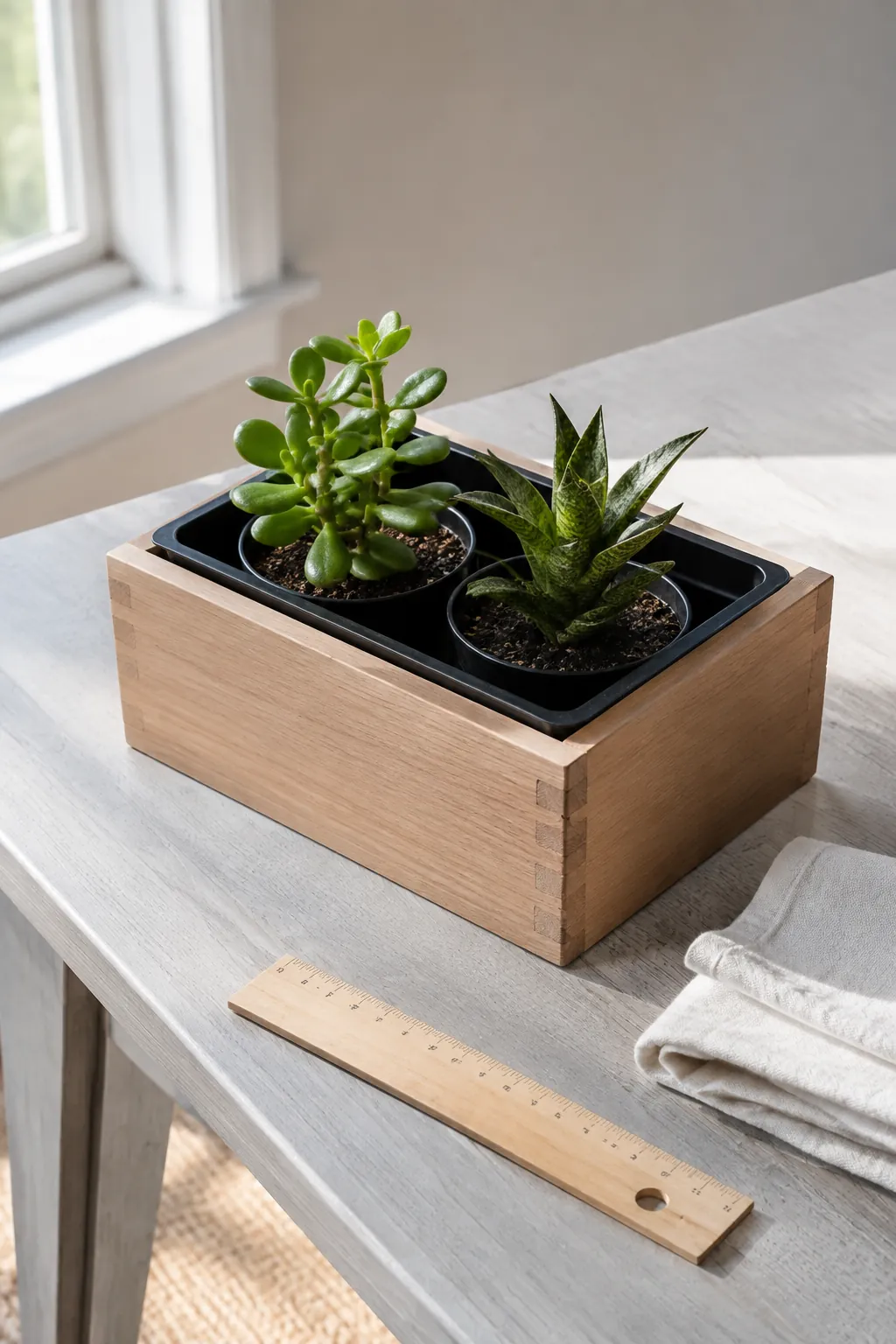
Small wooden box with a waterproof insert
A wooden box gives an indoor succulent garden a softer outline, but the wood should stay separate from wet potting mix. Fit a removable waterproof tray inside and keep the growing pots independent. That construction makes it easier to spot leaks and replace a plant without dismantling the entire box.
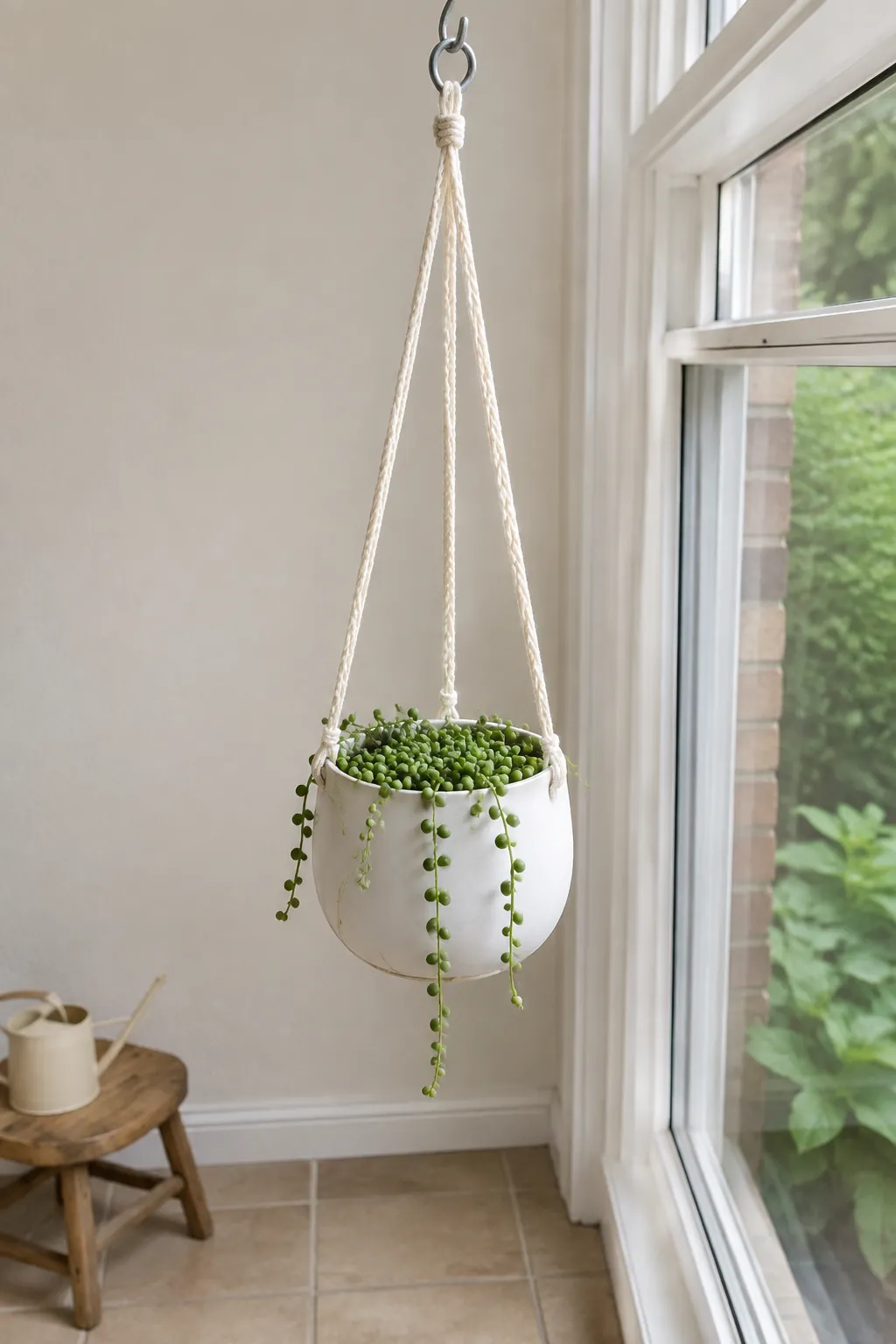
Compact hanging pot for trailing stems
A small hanging pot can show off a short trailing succulent where the stems have clear space to fall. Choose a secure hook and a hanger rated for the wet planted weight, then place it where you can still reach it safely. Remove or lower the pot for watering if there is no practical way to catch and empty drainage.
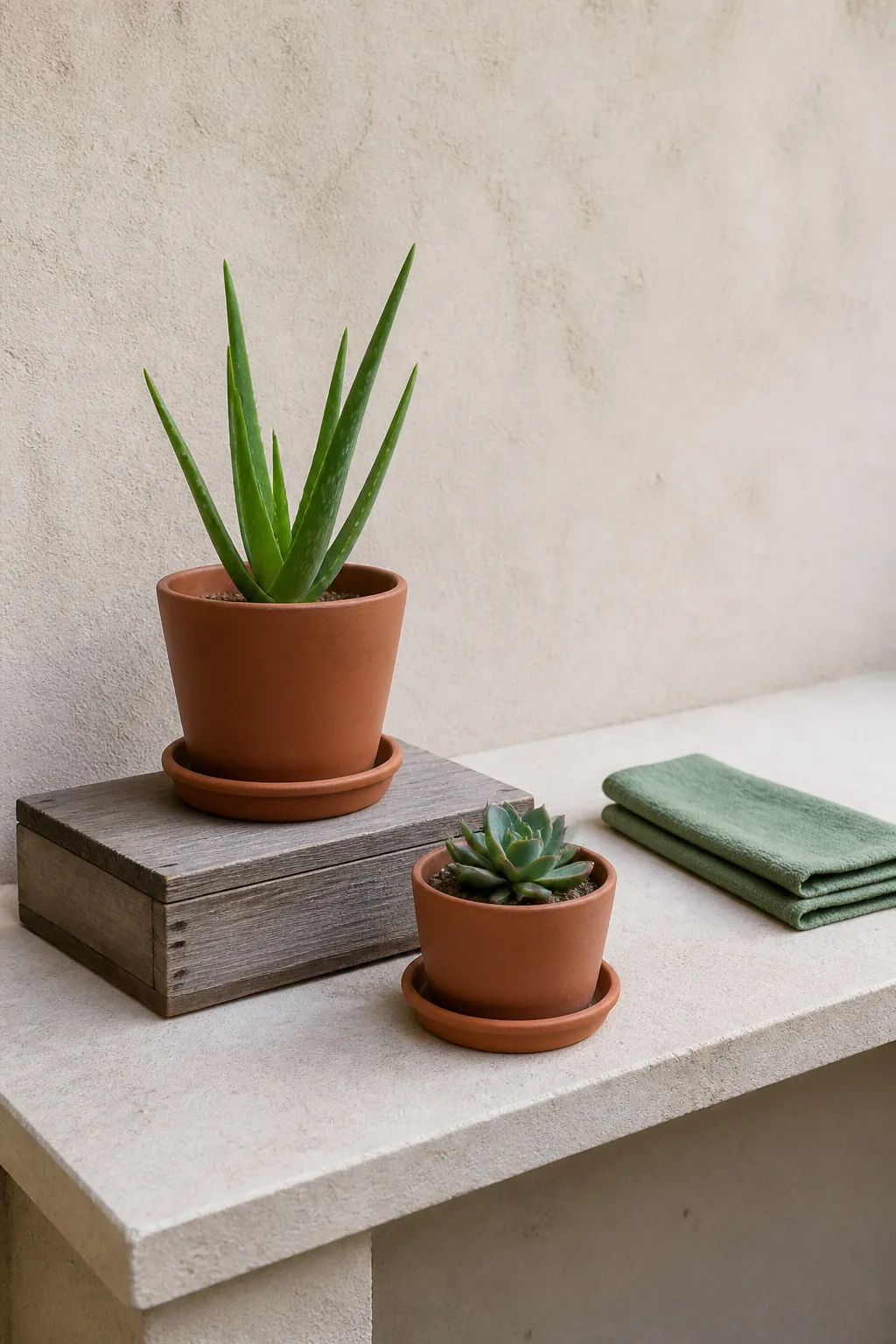
Terracotta pair at different heights
Two small clay pots can look more intentional when one sits on a low stable riser. Match each pot to its plant rather than buying identical containers for differently sized roots. Keep the riser broad enough for the whole saucer, especially if the arrangement sits near a walkway.
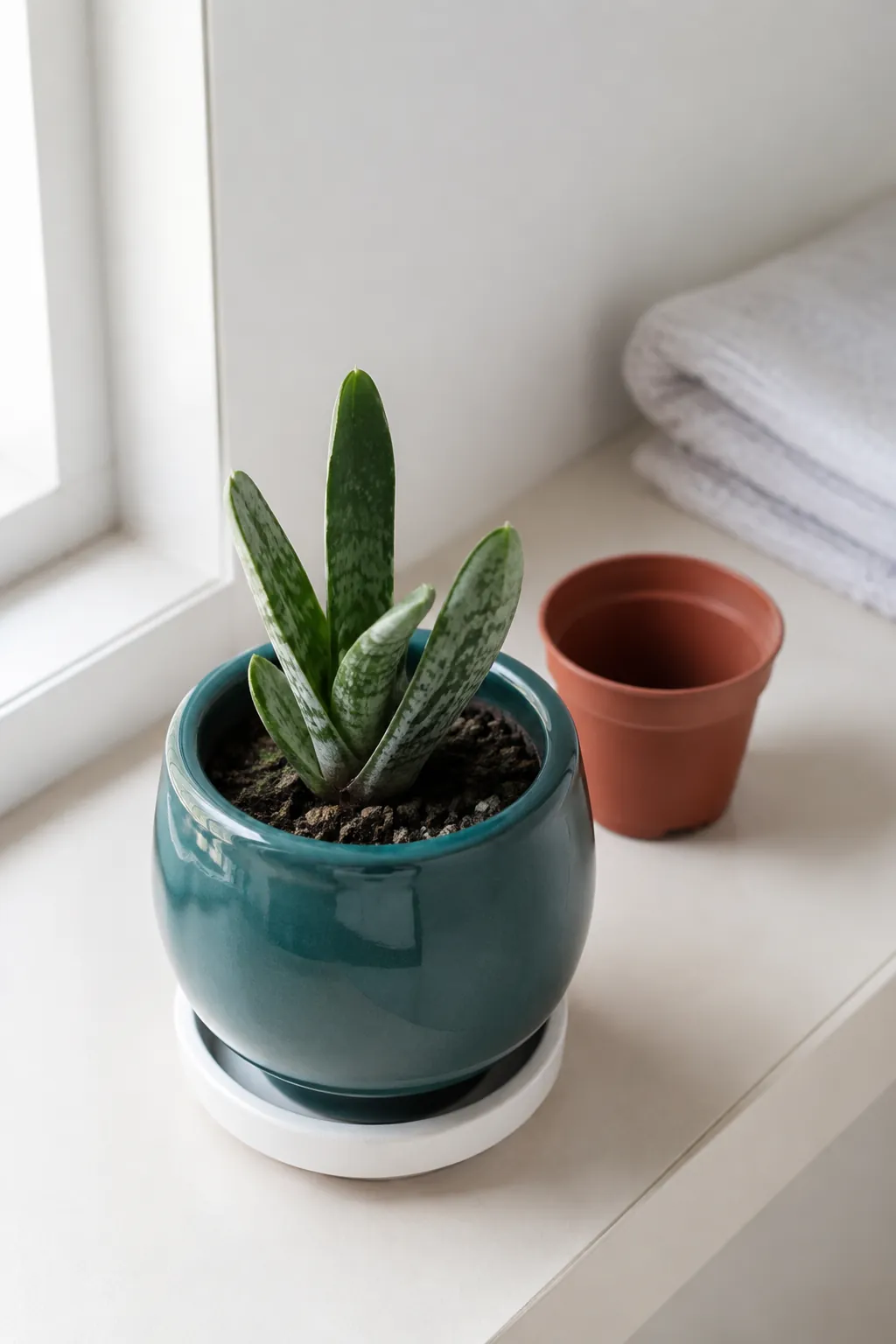
Mini glazed pot for an upright plant
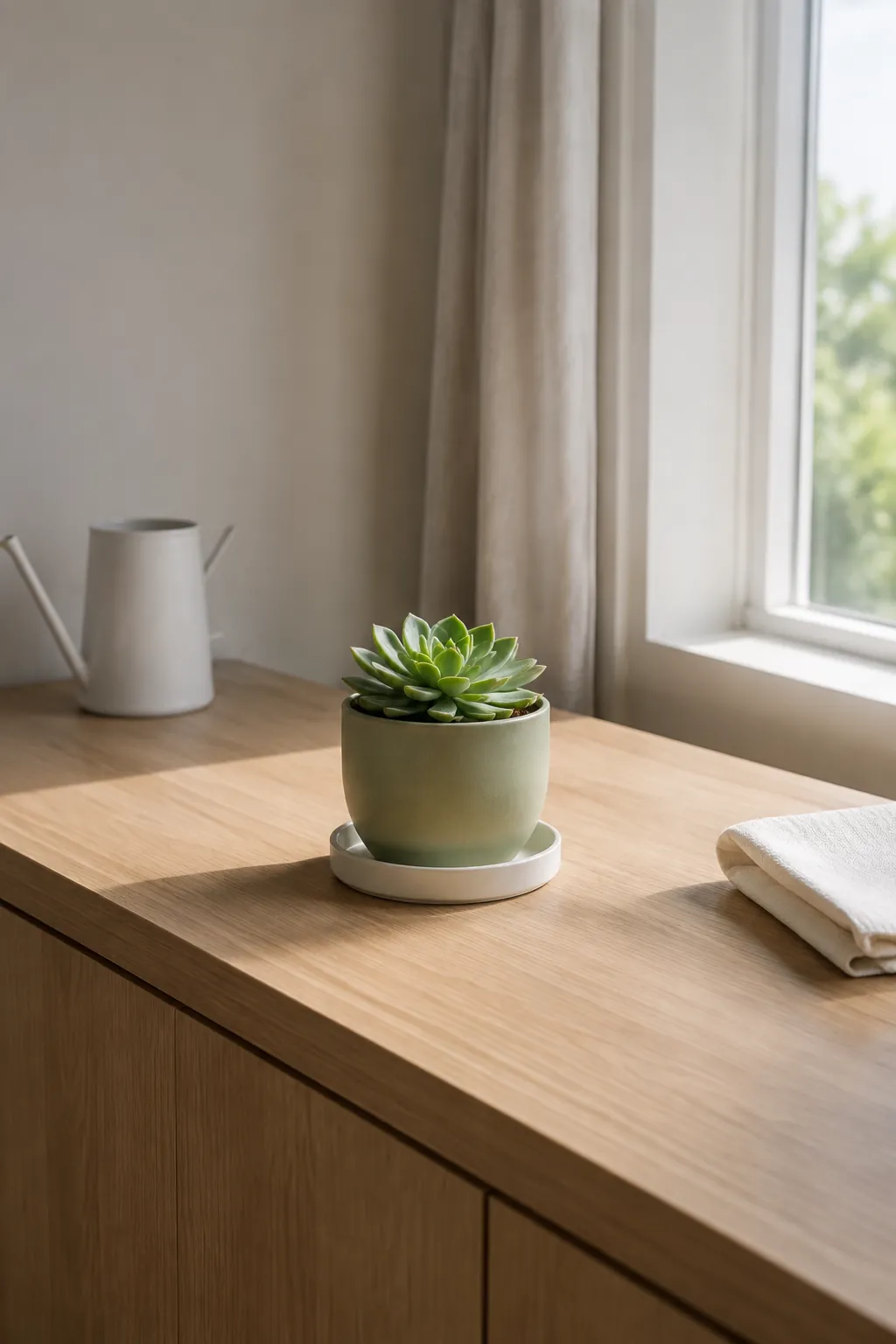
A petite glazed pot works well when an upright succulent leaves the opening visible. Measure the inside rather than relying on the outside width, because thick walls can take up a surprising amount of space. Watch how the mix dries after repotting, as a glazed container can behave differently from the nursery pot it replaces.
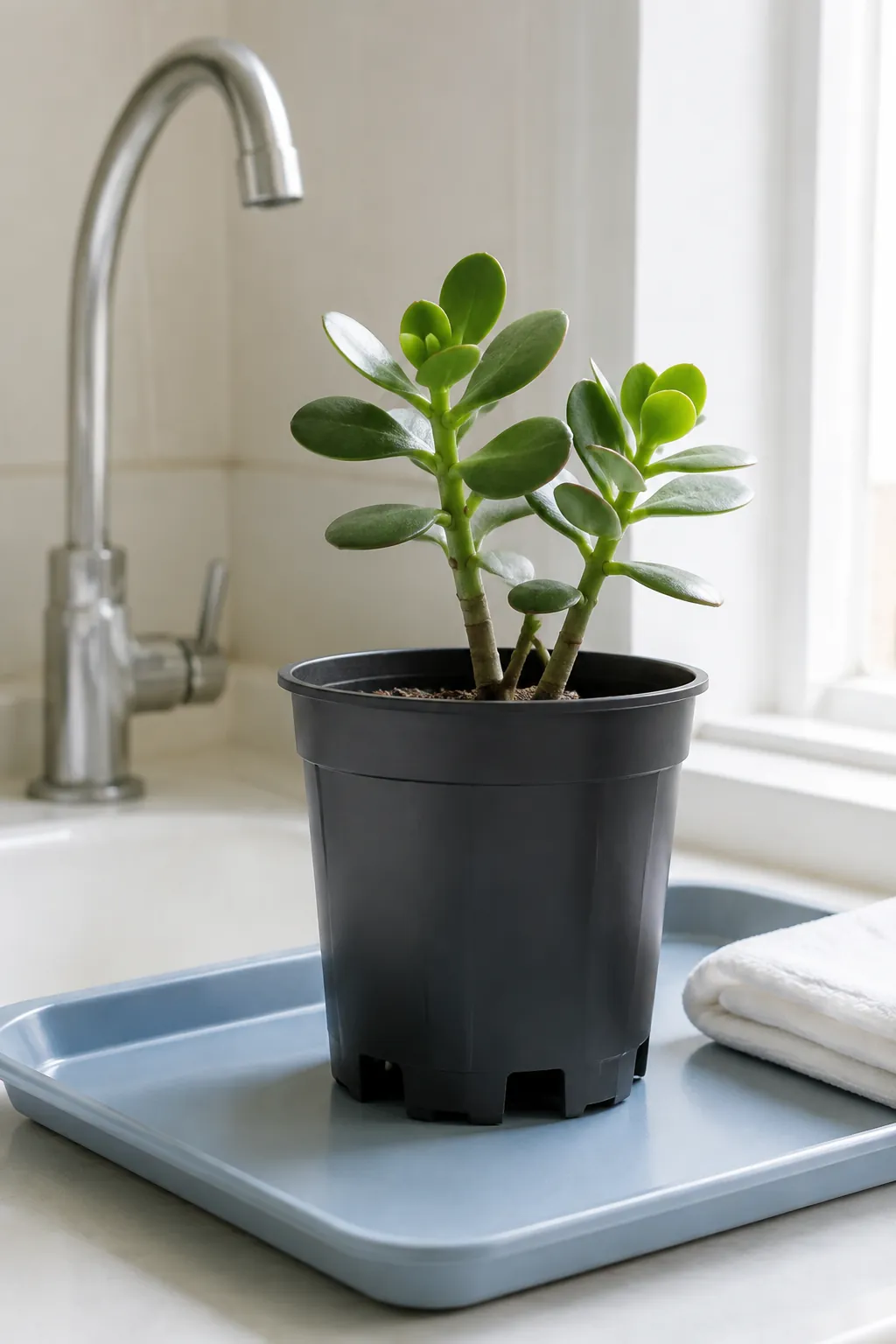
Simple plastic pot for easy handling
A plain plastic pot is worth keeping when light weight matters more than a decorative finish. It is easy to lift for a moisture check and less likely to chip when moved to a sink. Make sure its drainage openings stay clear and set it on a tray that will not trap the base in standing water.
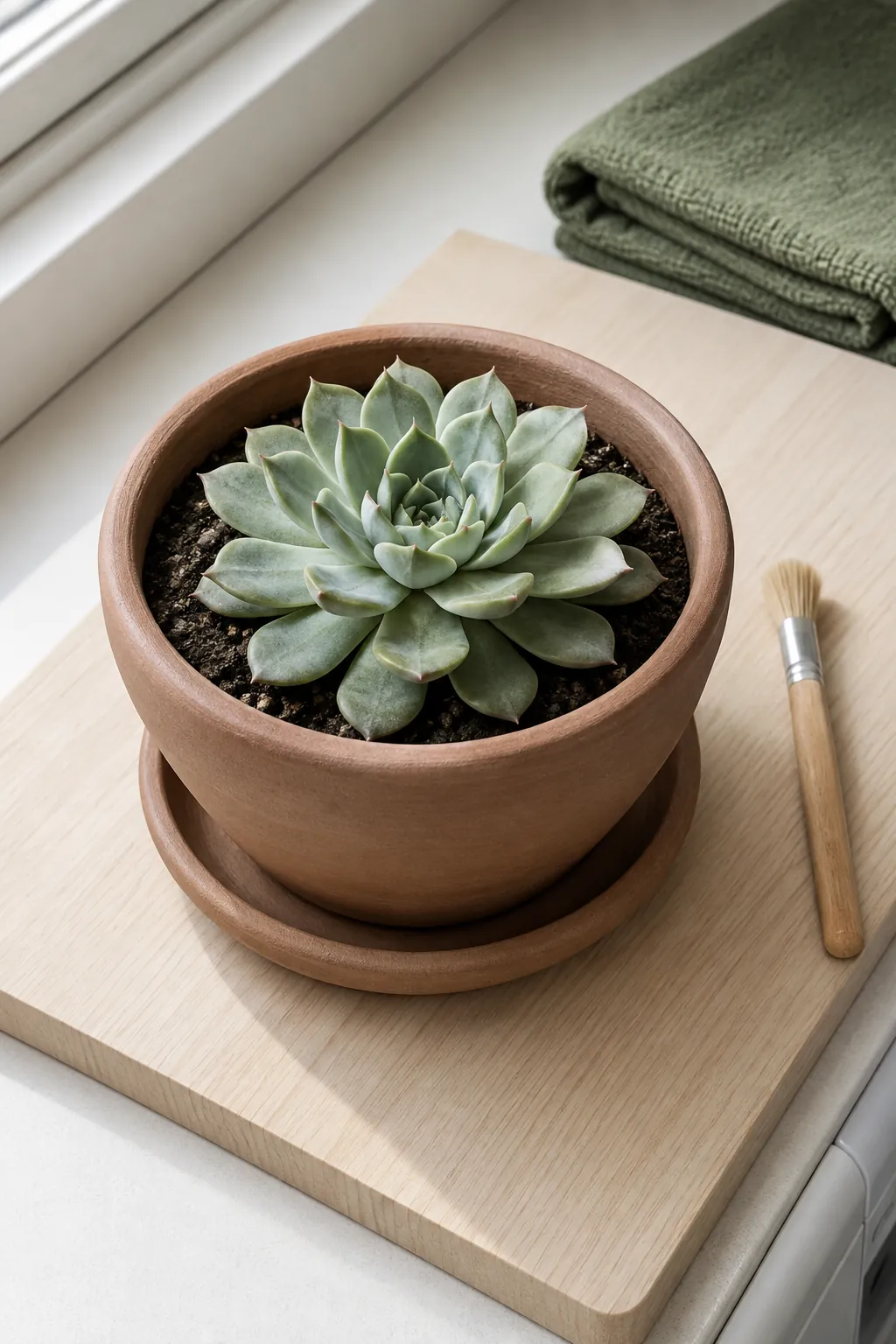
Small clay pot with a wide opening
A wide opening makes routine cleanup and later repotting less awkward. It also gives spreading leaves space above the rim instead of pinching them into a narrow neck. Choose the body depth to suit the roots, since a broad mouth alone does not tell you whether the container is the right size.
Miniature pot on a bright desk corner
One small pot can fit a desk without taking over the working surface. Place it near suitable light and keep the saucer separate from papers and charging cables. If the desk is far from a window, choose a properly positioned plant light instead of assuming room lighting is enough.
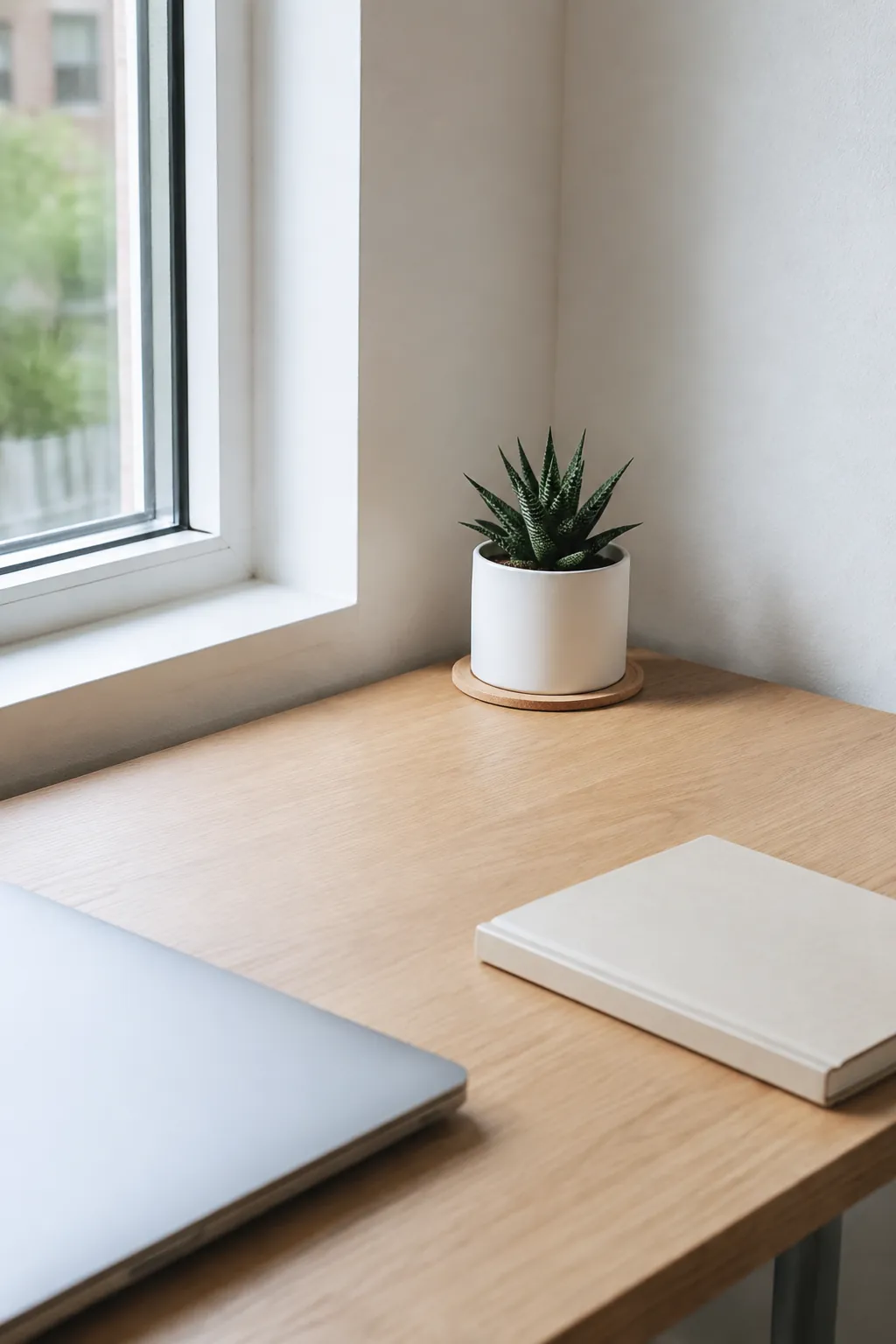
Small terracotta for a rooted offset
A rooted offset often needs only a modest individual pot after separation. Give it enough space for its roots without moving it into a large decorative container simply because it looks empty. Handle the roots gently and adjust care to the species and any damage from the separation.
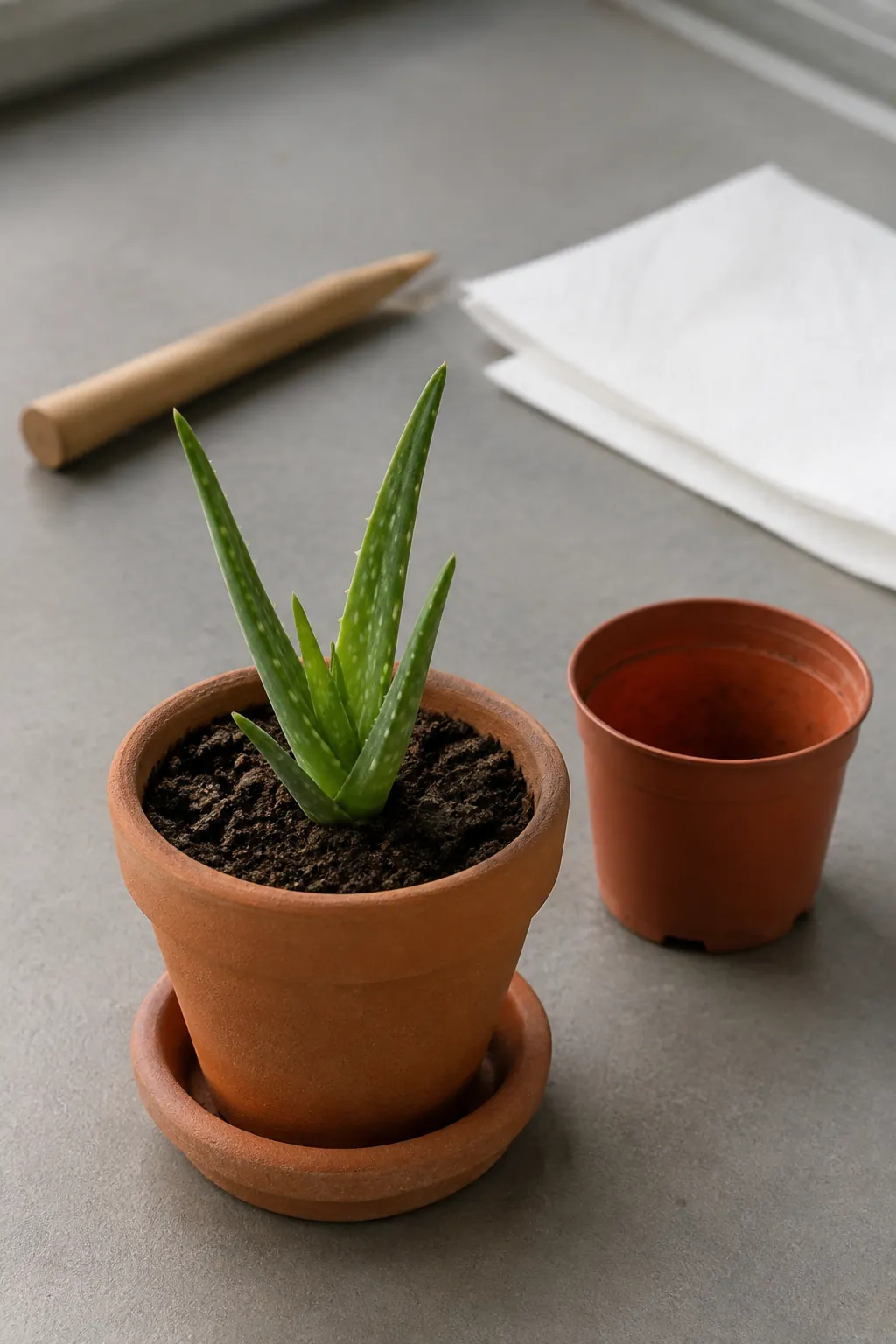
Tiny ceramic cover on a windowsill tray
A windowsill tray can protect the surface beneath a few small ceramic covers. Keep each inner growing pot removable, and avoid arranging them so tightly that the leaves press against the glass. Empty the tray if it collects water, even when the outer covers appear dry.
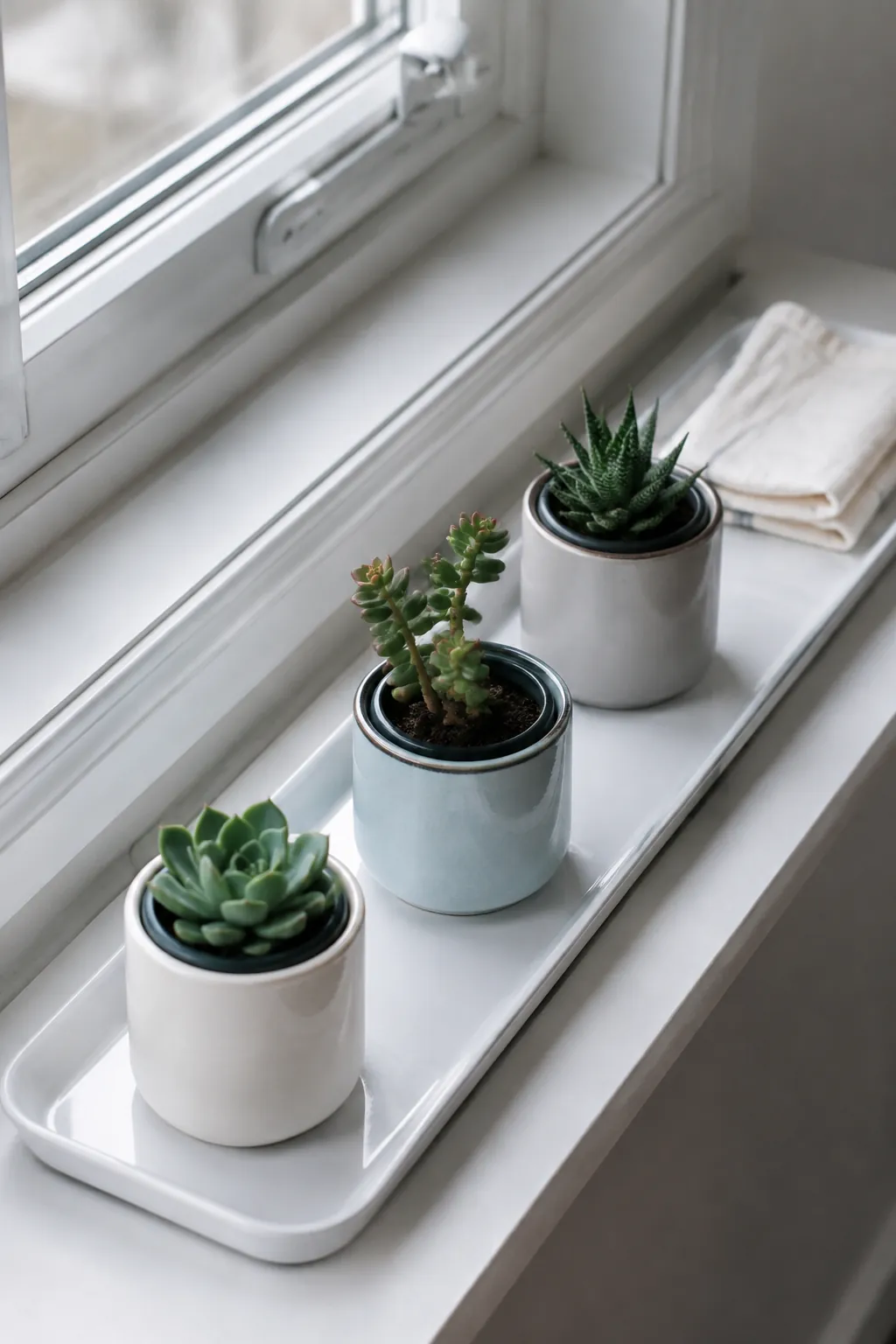
Small terracotta in a wire holder
A simple wire holder can lift a small clay pot slightly off a shelf while leaving its shape visible. Check that the holder grips the pot securely without forcing pressure onto a fragile rim. Add a separate catch tray underneath and make sure you can remove the pot without scraping the leaves.
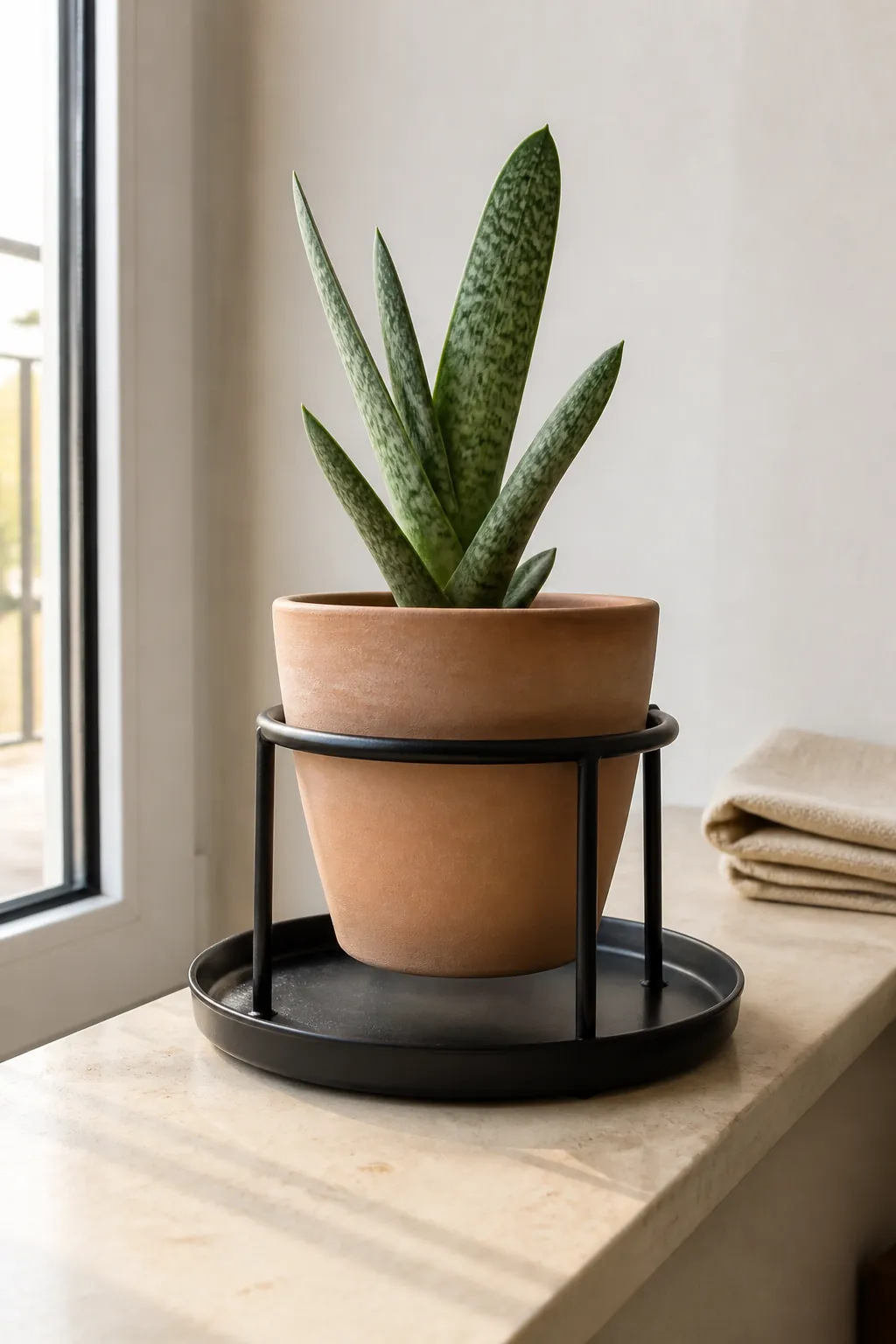
Shallow oval pot for one spreading plant
An oval pot can suit a plant that spreads more in one direction than another. Position the root ball naturally rather than forcing it into the center for perfect symmetry. The container should still have useful depth and an open drainage route beneath the soil.
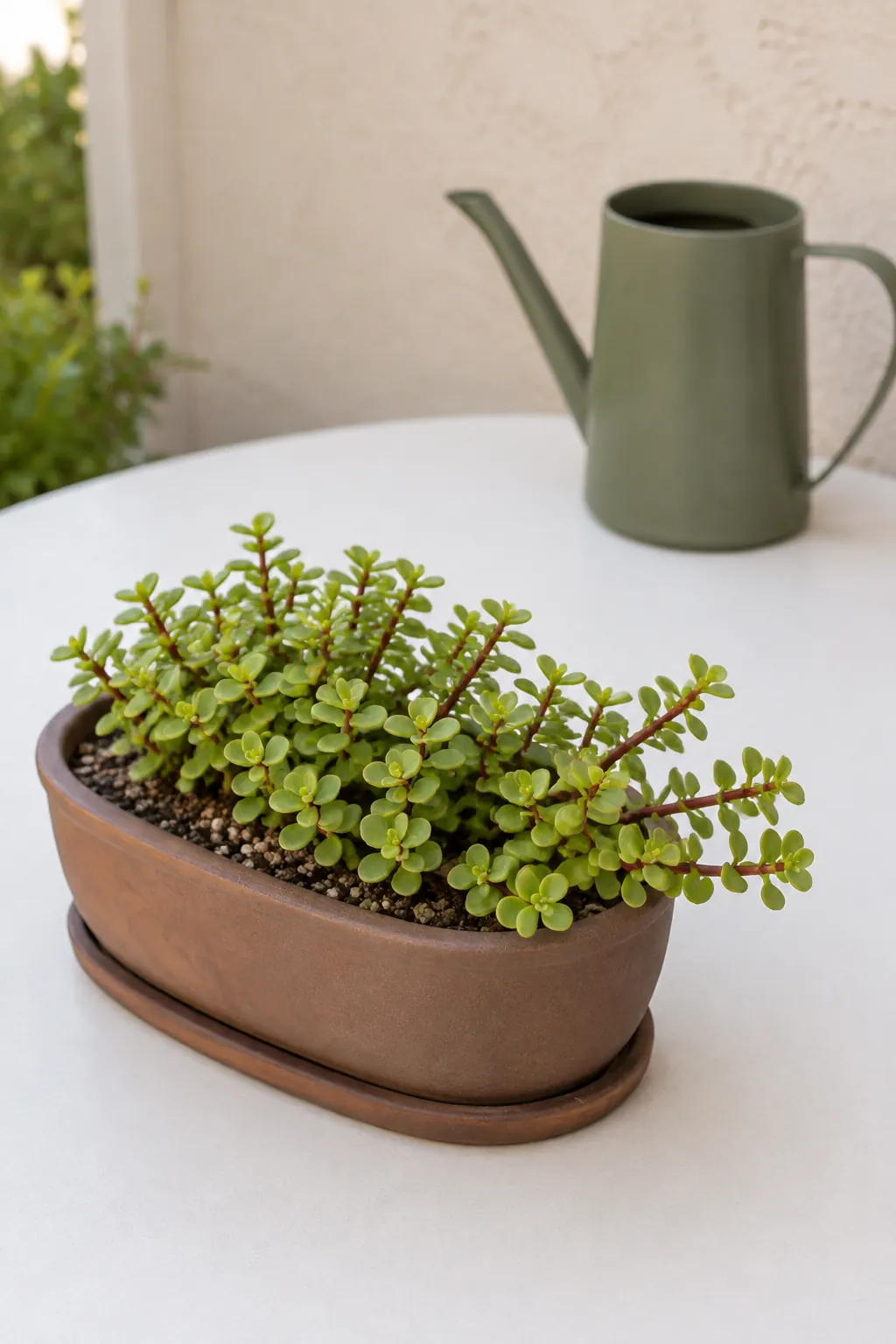
Mini pots grouped by watering needs
Grouping small pots by similar care needs can simplify a growing shelf. Keep the individual containers separate so a slower drying plant can wait while its neighbors receive water. Similar appearance is less useful than compatible light, soil, and drying behavior when planning the group.
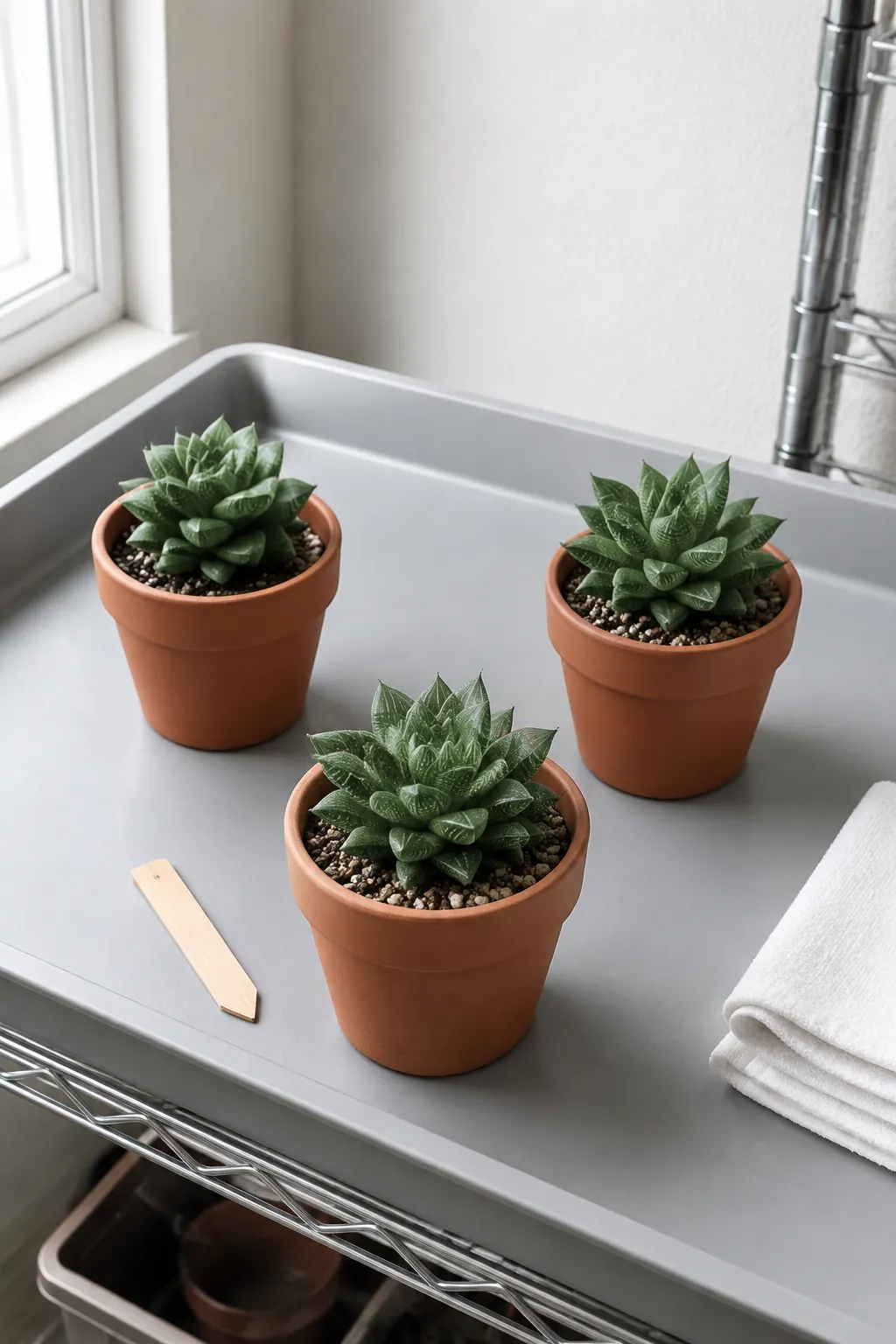
Small unglazed pot on a stone saucer
A stone saucer gives a simple unglazed pot a substantial base without adding root space. Check that the stone is suitable for catching water and that its underside will not scratch the surface below. A dry saucer after watering is more useful than a decorative base that quietly holds moisture against the pot.
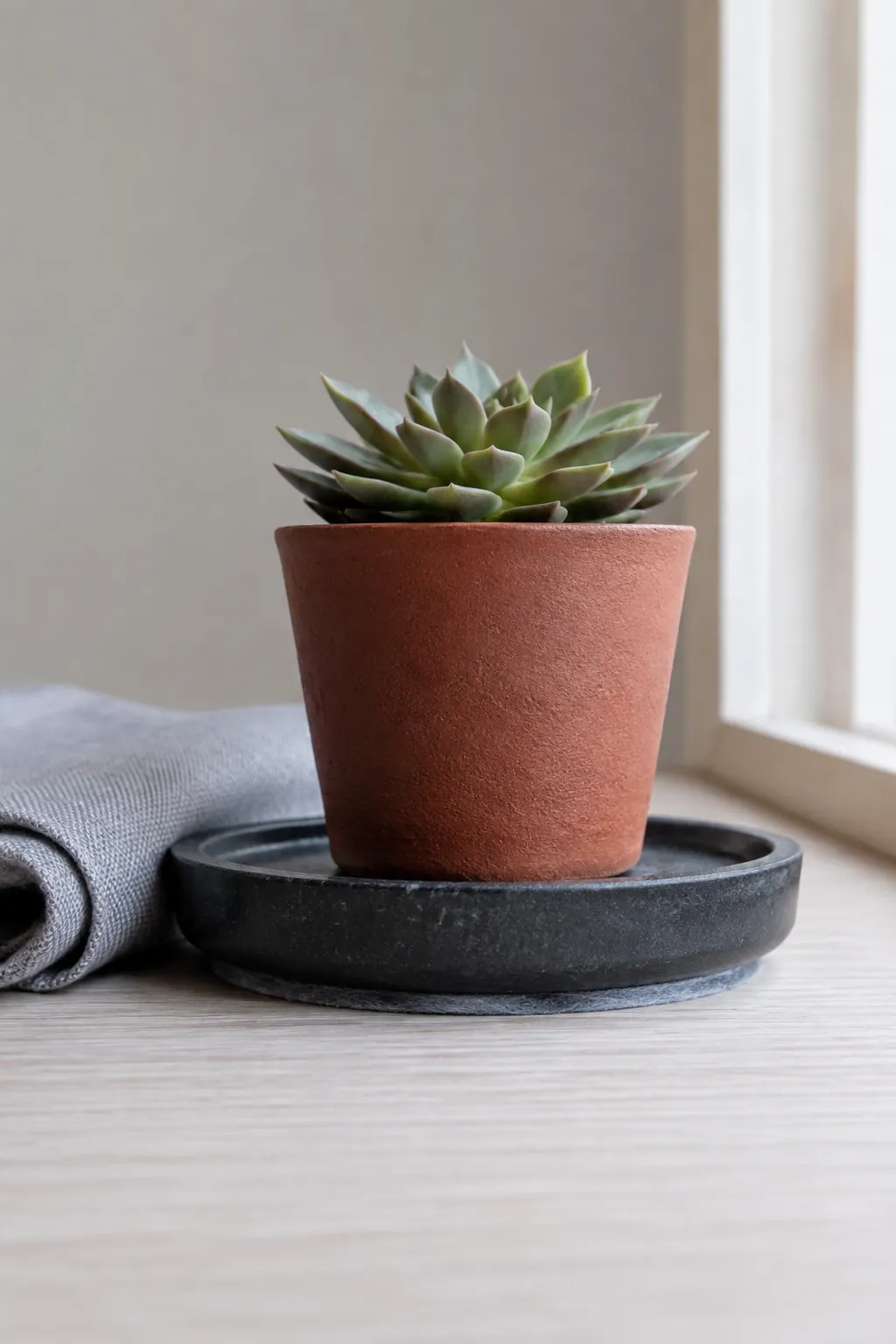
Compact pot beneath a plant light
A small pot can work on an interior shelf when a suitable plant light supplies what the window cannot. Follow the light maker’s distance guidance and watch the plant’s response rather than pushing the leaves directly against the fixture. Keep cords and electrical connections away from the watering area.
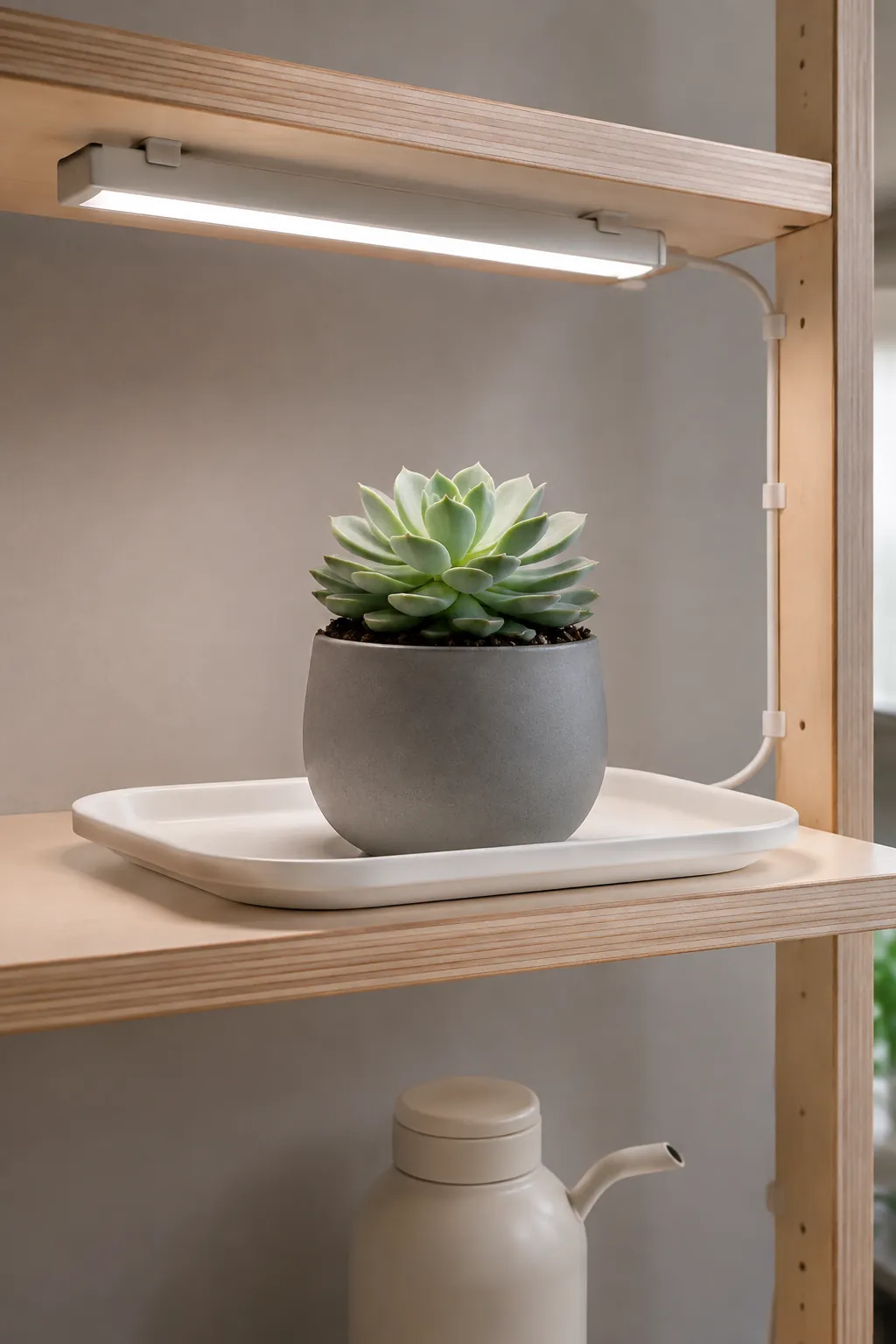
Tiny bowl for a compact cluster
A compact cluster can fill a small bowl attractively without mixing several unrelated species. Check whether the offsets already need more room before choosing a container for their current outline. Leave the crowns above the soil and enough space to inspect the center of the cluster.
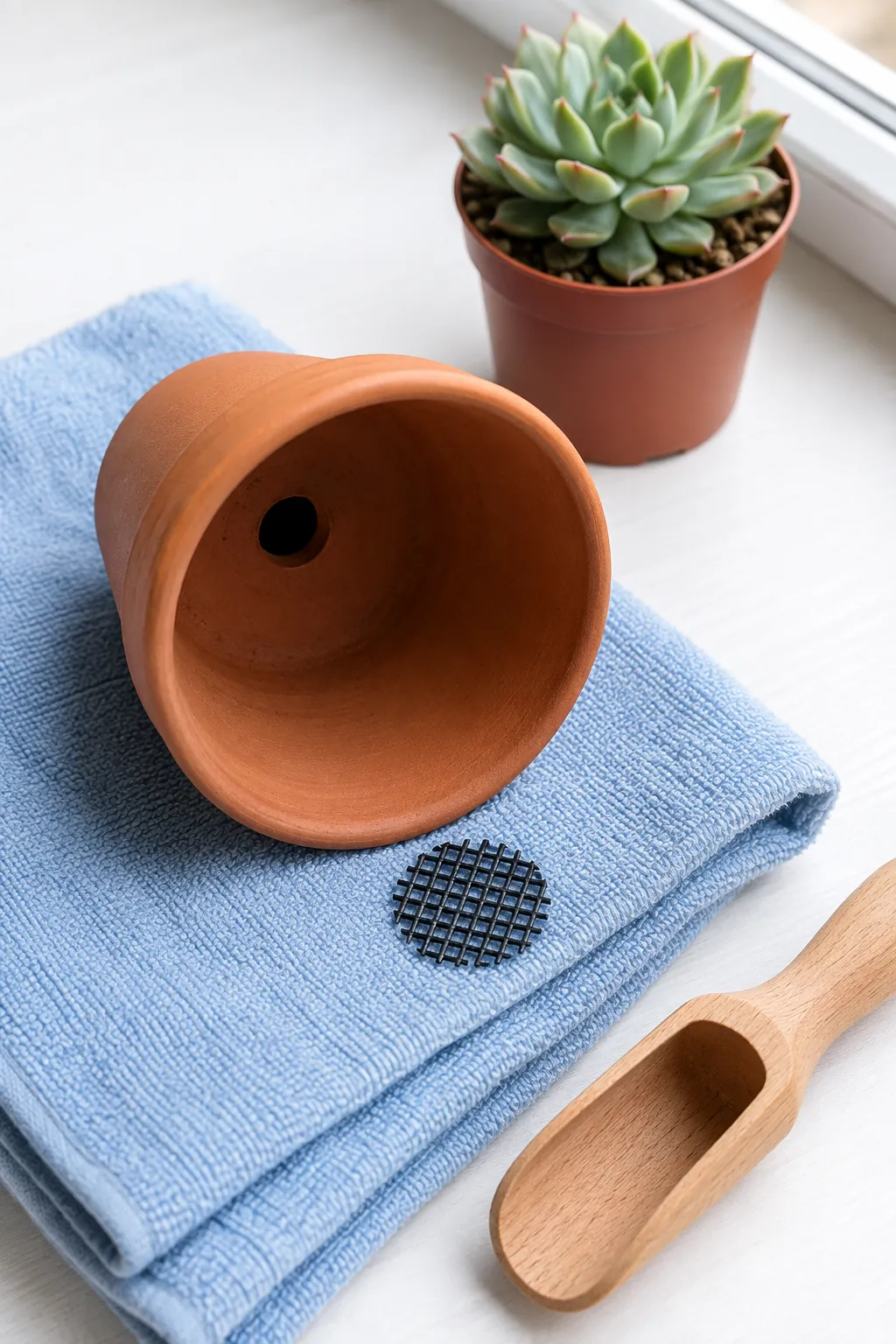
Small pot with a removable mesh screen
A little nonadhesive mesh over a large drainage hole can reduce soil loss while letting water escape. Use only enough mesh to cover the opening and avoid packing fabric or paper across the whole base. The screen is a particle barrier, not a reason to replace a draining mix with dense garden soil.
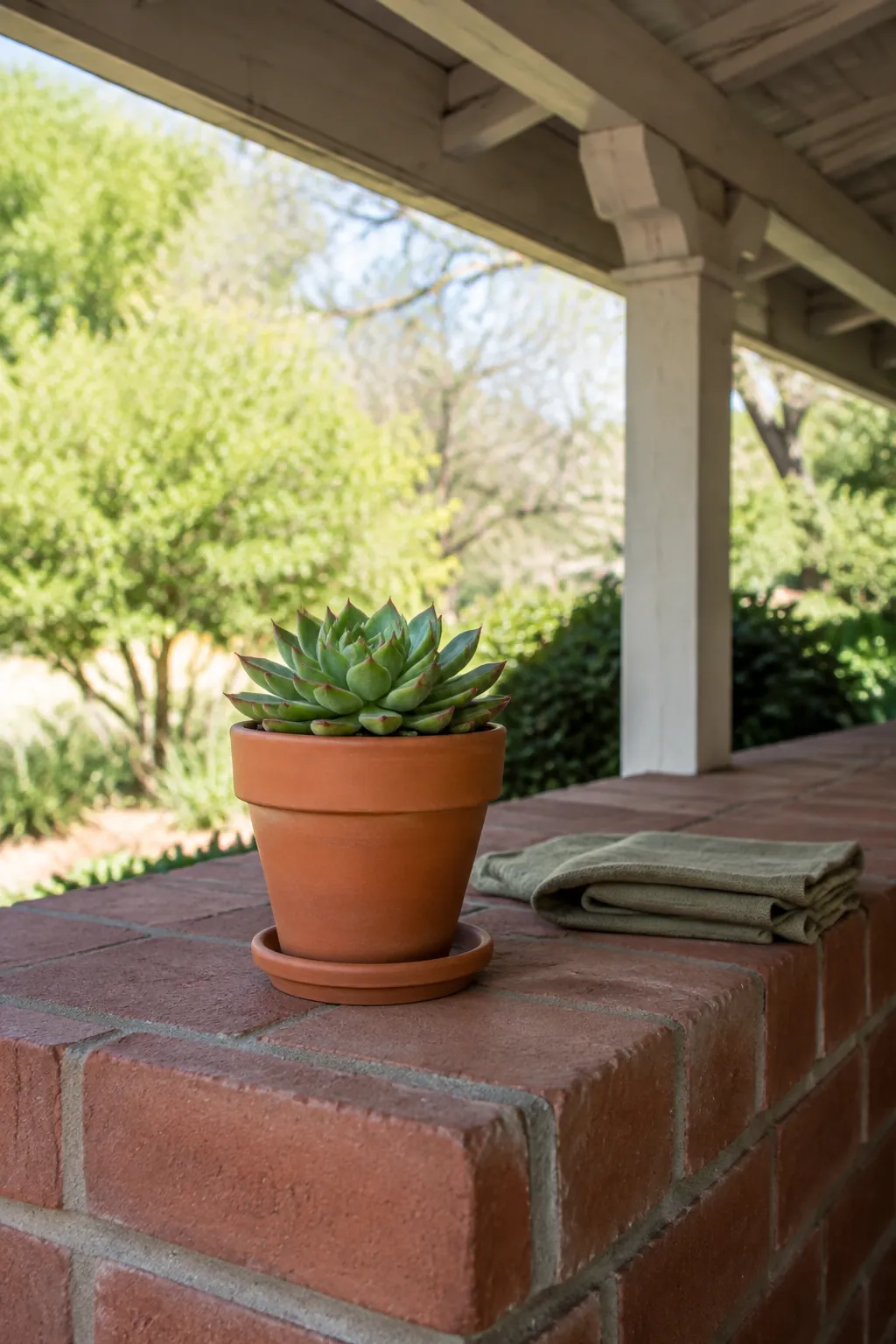
Mini terracotta on an outdoor ledge
A small clay pot can brighten a sheltered outdoor ledge if it sits securely and receives suitable light. Check exposure to wind and rain, because a tiny container can dry quickly in one position and stay soaked in another. Move vulnerable plants indoors or into protection when temperatures fall outside their tolerance.
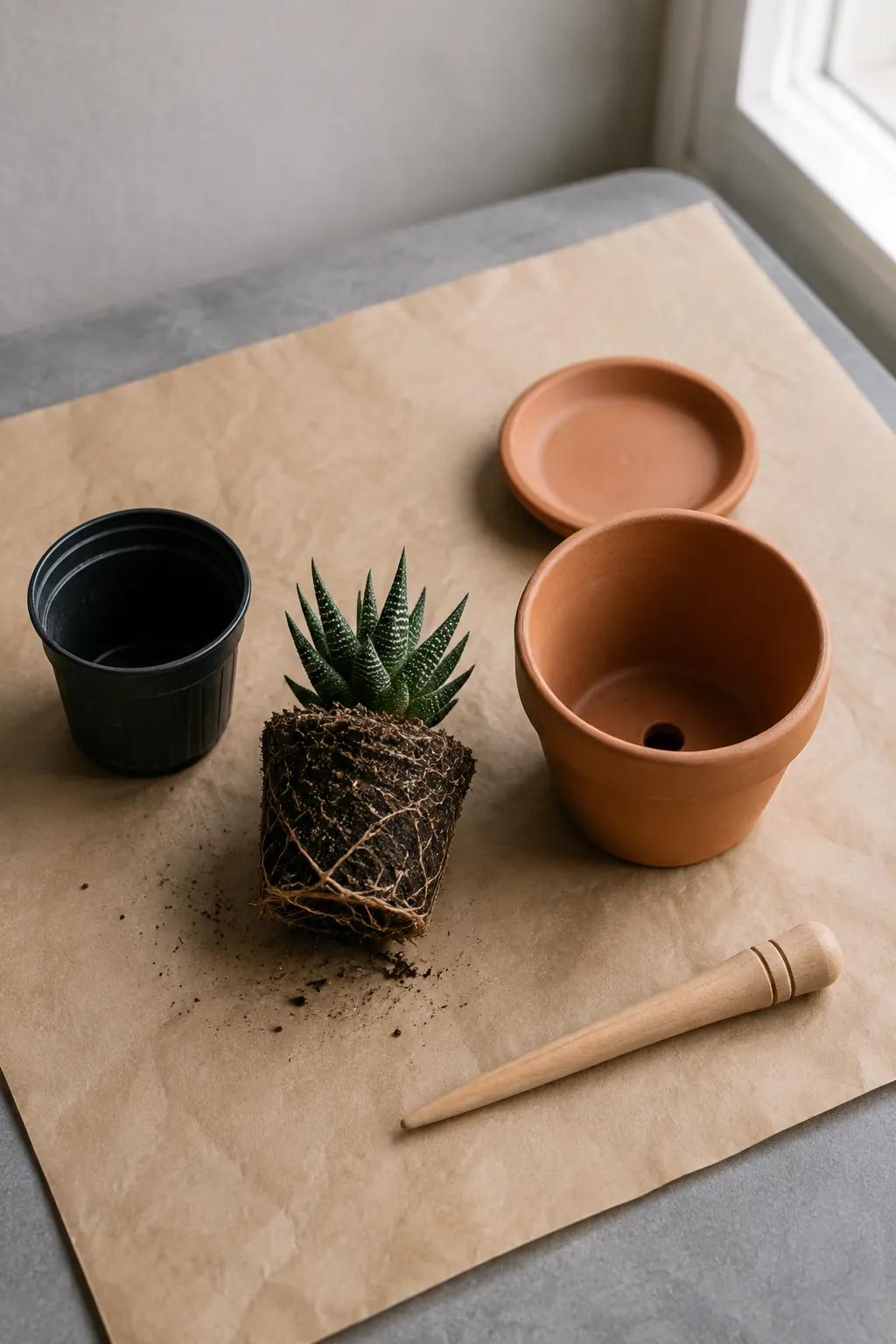
Small pot chosen for the next root size
When repotting succulents, compare the roots with the new container instead of choosing by the leaf canopy alone. A modest increase is often easier to manage than a large jump that leaves a lot of unrooted wet mix. Roots circling densely, drainage problems, and the condition of the existing mix are more useful clues than a fixed calendar date.
One favorite pot with room to maintain it
The best small planter ideas leave room for your hands as well as the plant. Choose a pot you can lift, inspect underneath, and return to its saucer without catching the leaves. A single well placed container that you can care for comfortably is a stronger finish than a crowded collection you cannot reach.