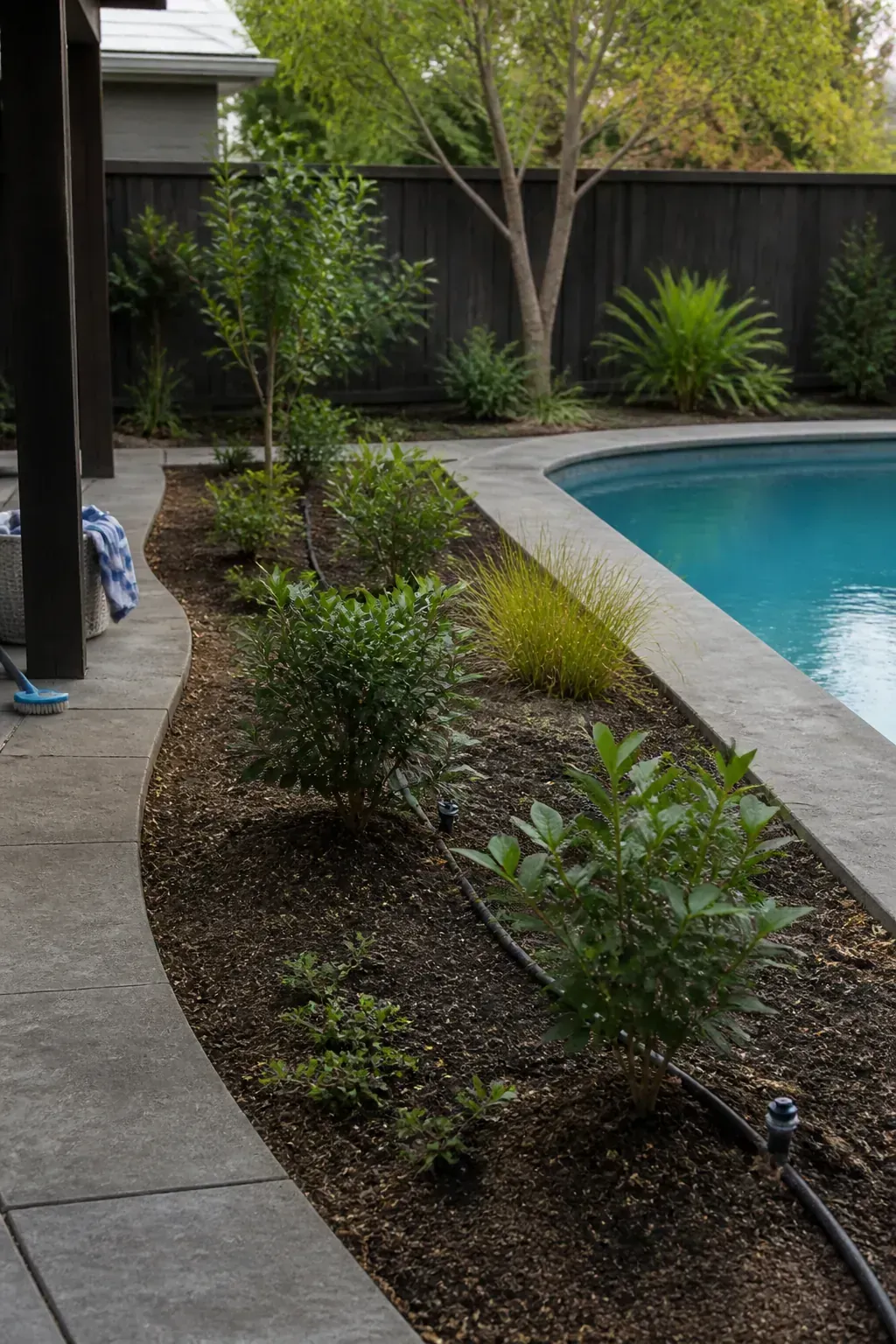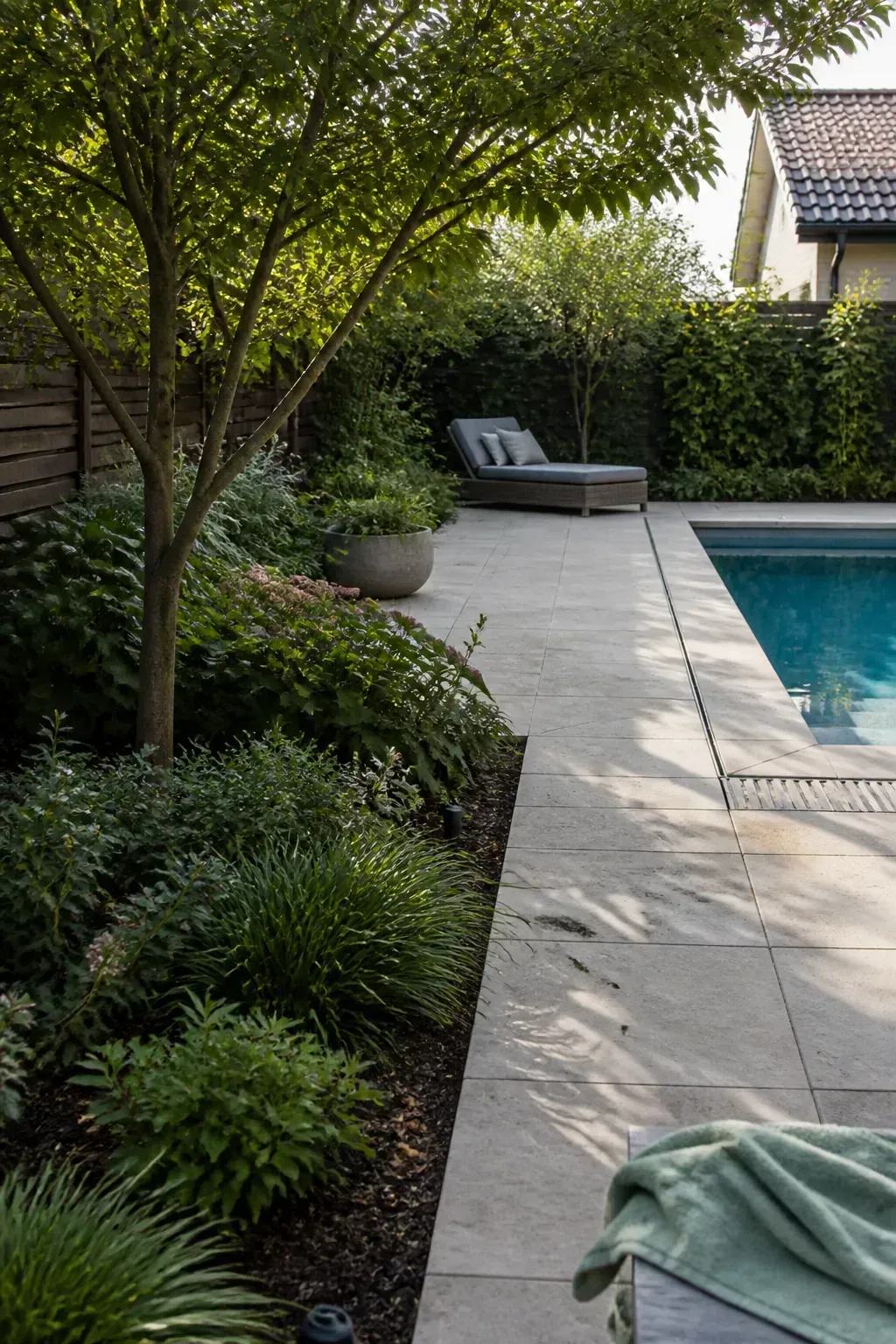
A new pool often arrives surrounded by more paving than the backyard has ever had. The clean surface is practical, but without plants it can feel hot, bright, and disconnected from the rest of the garden. These backyard pool landscaping ideas focus on softness that earns its place: shade where people sit, privacy where views cross, planting that contains soil, and species chosen for mature size rather than their nursery pot.
Pool owners repeatedly warn that the wrong tree or shrub multiplies cleaning as it matures—leaves in the water, roots under pavers, thorns near bare feet, and irrigation across the deck. Start with local climate, drainage, safety rules, and maintenance tolerance. Then use fewer plant types in stronger groups. The goal is not maximum greenery; it is a pool garden that still works five summers from now.
Cut Narrow Planting Pockets Into Broad Paving
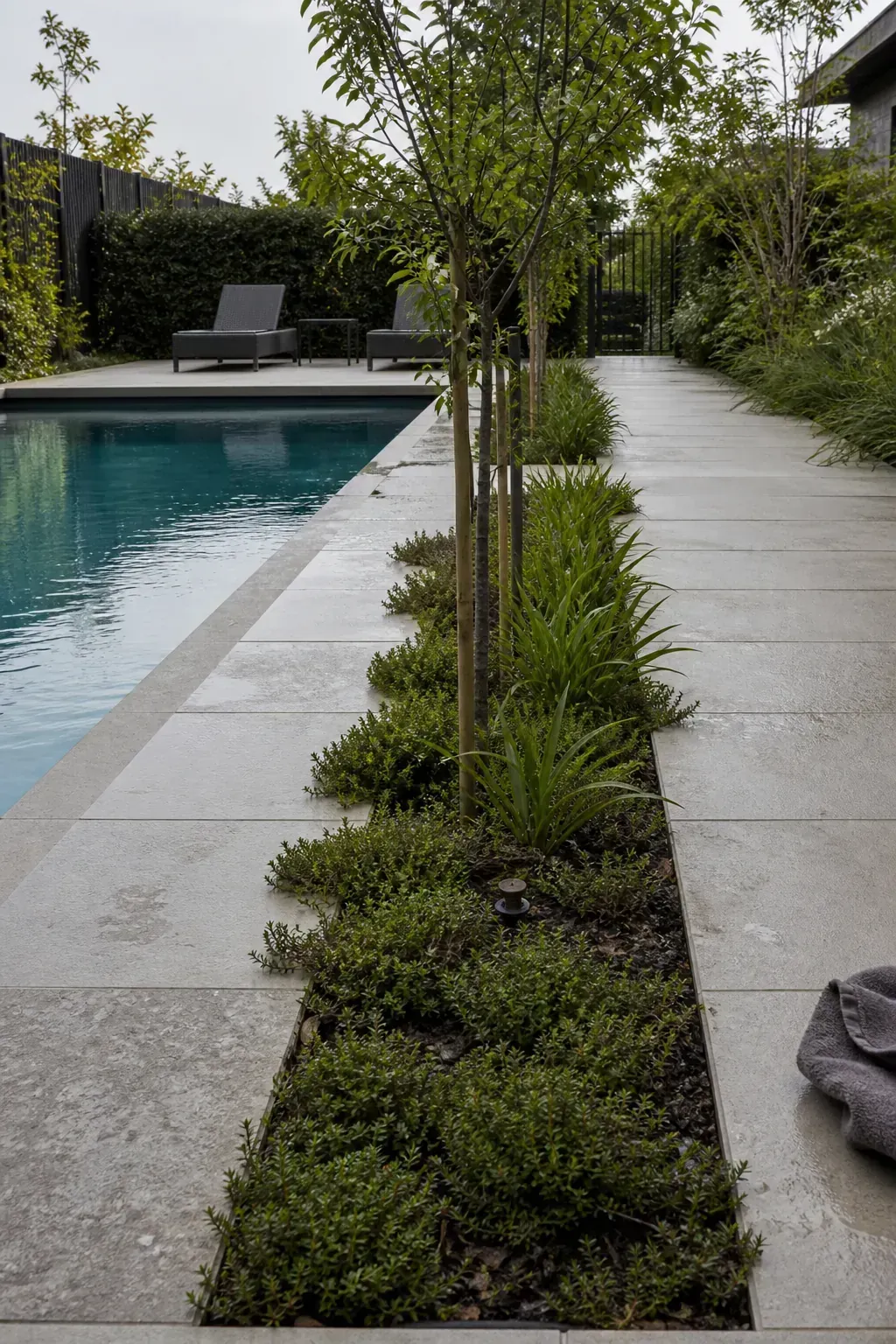
A few precisely placed openings can break up an oversized pool deck without sacrificing useful circulation. Position pockets outside the splash path and repeat one tough low plant so the cutouts read as an intentional rhythm.
Give every pocket root volume, drainage, and an edge that keeps soil off the paving. Avoid shallow decorative holes where reflected heat and limited water will make plants fail.
Build a Low Mixed Border Beyond the Coping
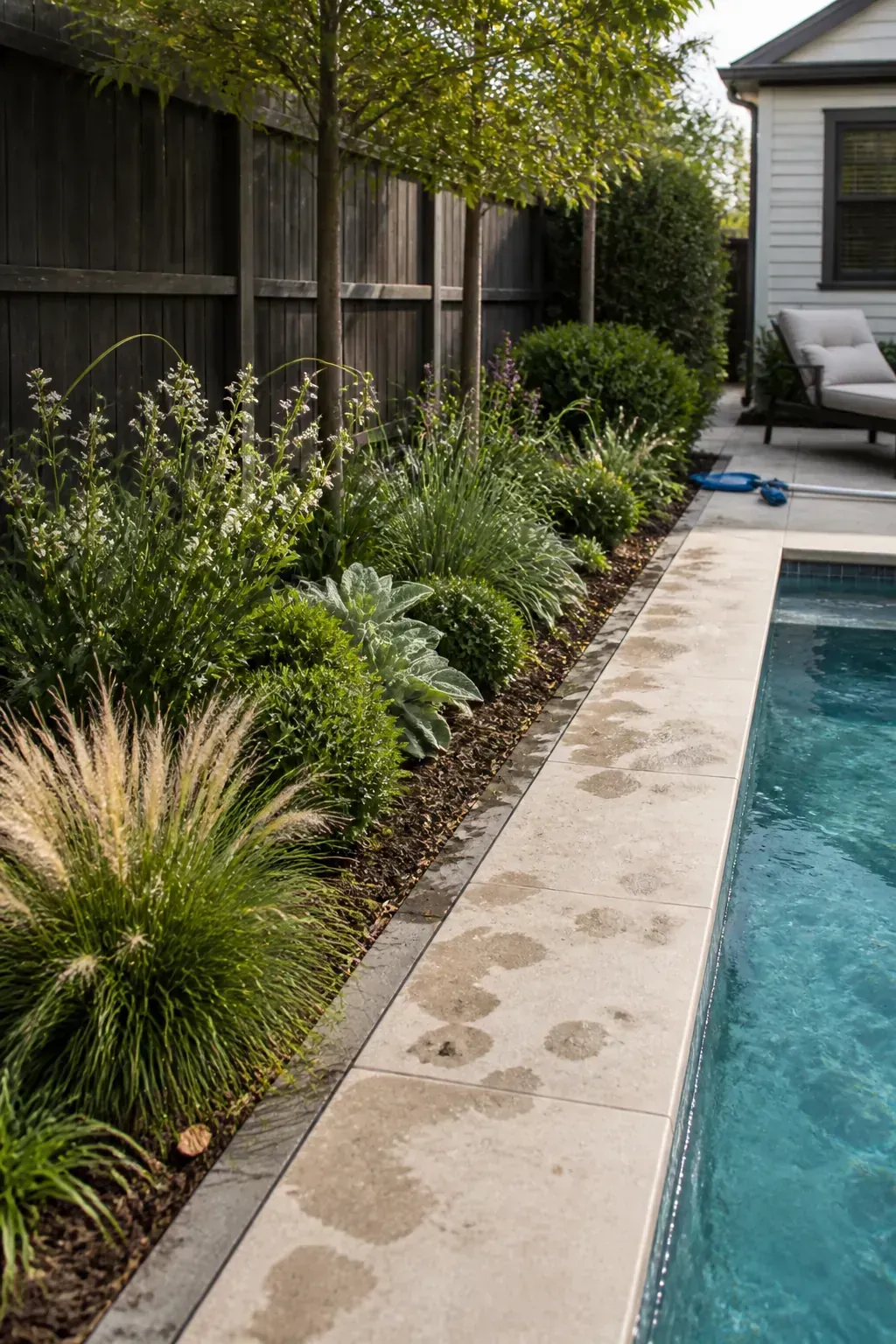
A low border of compact shrubs, grasses, and spreading perennials creates a soft horizon beyond the water while preserving supervision. Keeping the nearest layer below knee height prevents a lush scheme from feeling crowded.
Leave a clean maintenance strip between plants and deck. Choose species for local sun, soil, splash exposure, and mature width rather than buying a nursery row that will soon lean over the path.
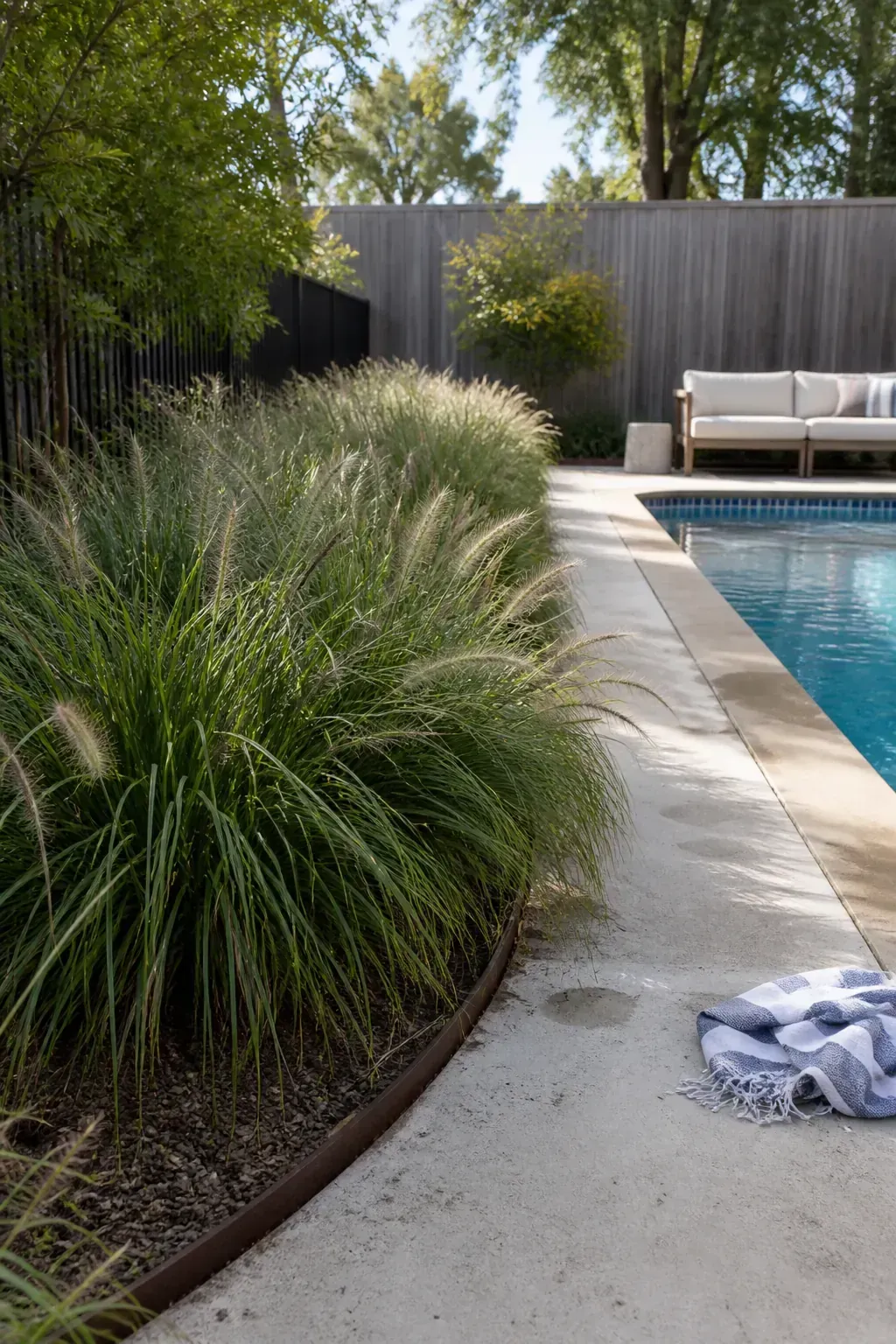
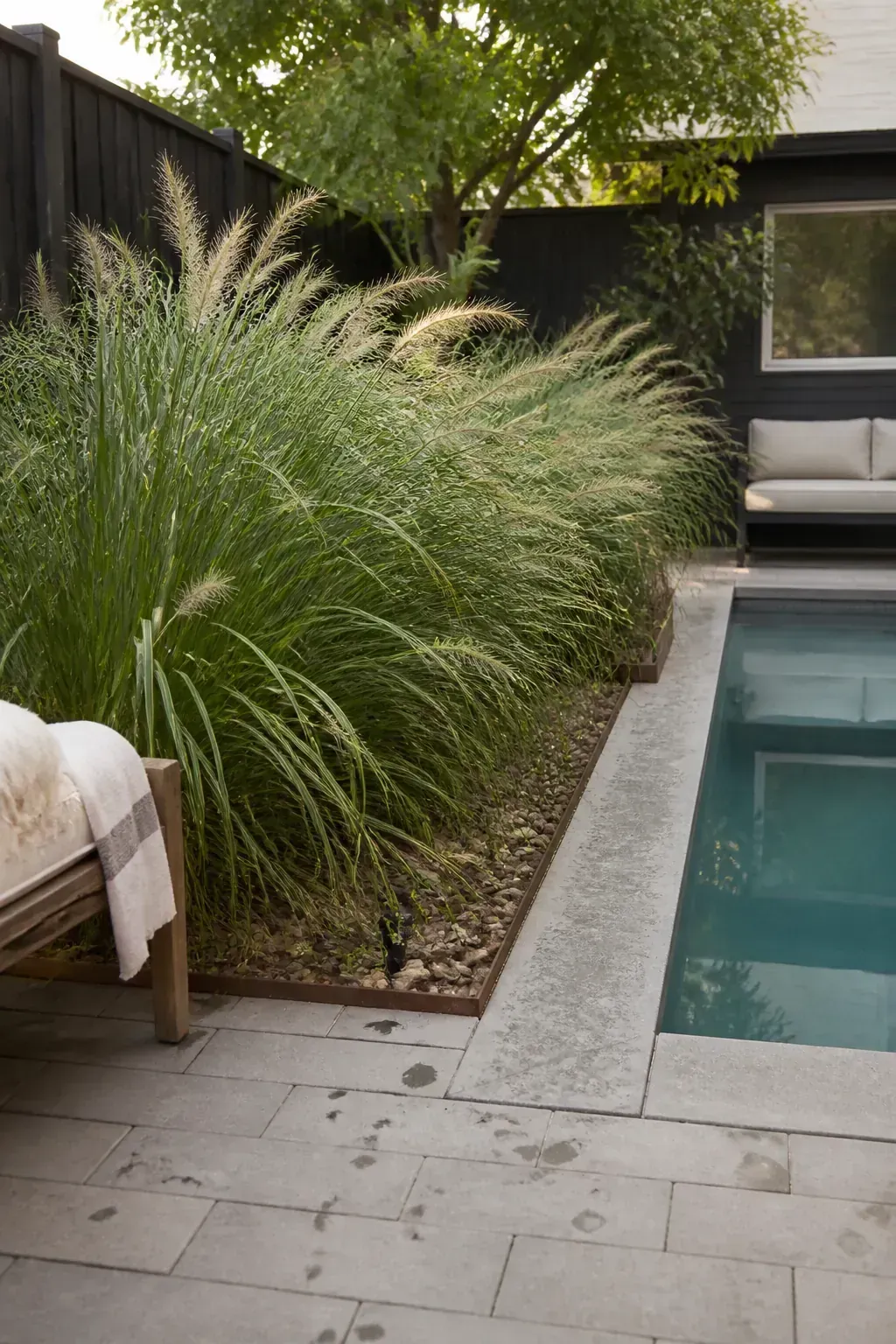
Repeat One Ornamental Grass in Drifts
One climate-appropriate, noninvasive grass repeated in loose drifts can soften long straight pool edges more effectively than many unrelated specimens. Fine foliage moves in the breeze and contrasts with still water and solid paving.
Check seed habits, winter appearance, cutting schedule, and local invasiveness. Place heavy-shedding or sharp-bladed varieties farther from the water, and keep their mature spread outside barefoot circulation.
Use Large Containers Where Roots Are Risky
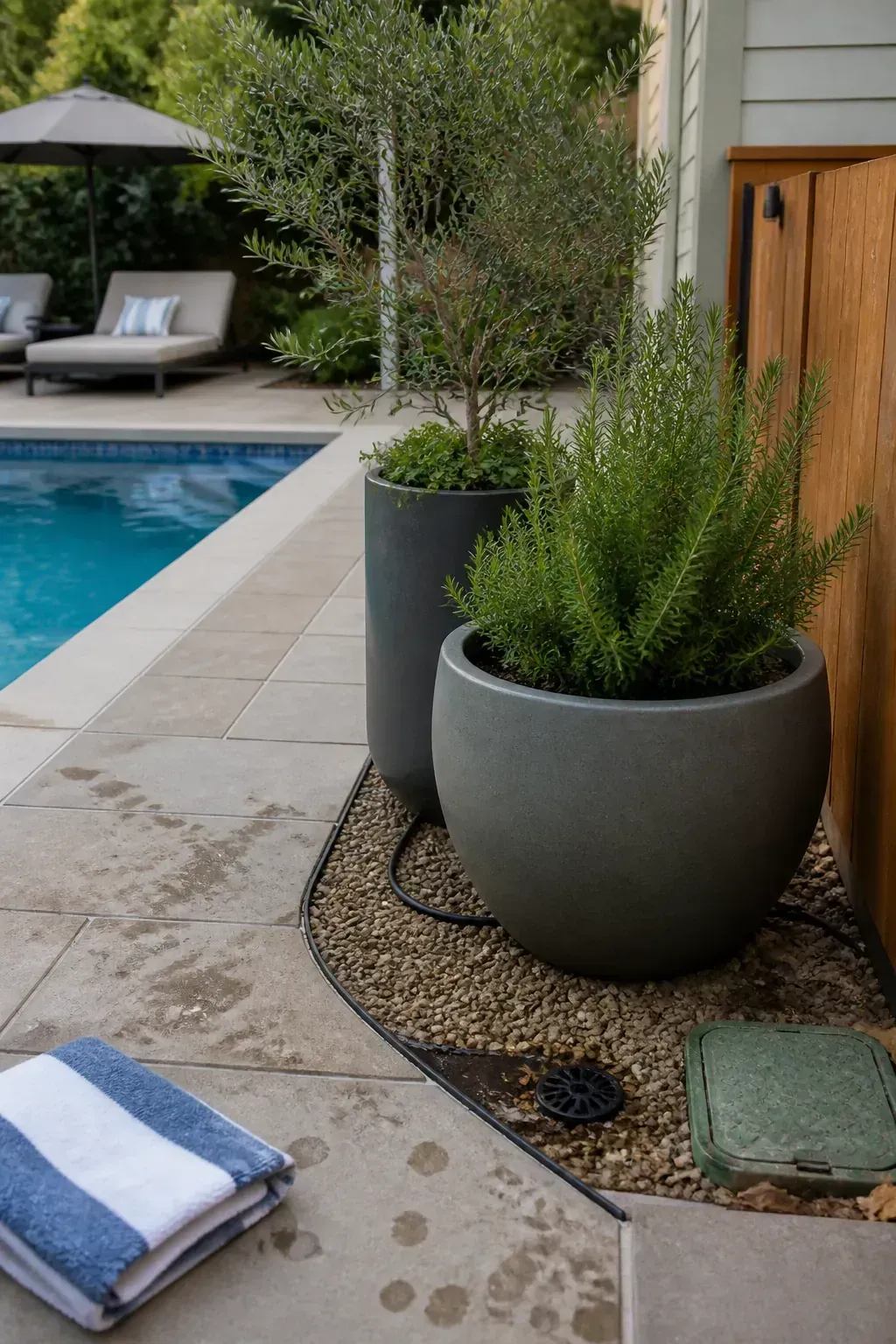
Large frost-appropriate containers bring height and foliage to hardscape where in-ground roots could conflict with pipes, walls, or pavers. A cluster of three related forms feels more settled than identical pots lined along the coping.
Use stable broad-based vessels with drainage, enough soil volume, and plants that tolerate reflected heat. Keep saucers, runoff, and irrigation lines from creating slippery deck patches.
Plant a Multi-Stem Tree for Filtered Shade
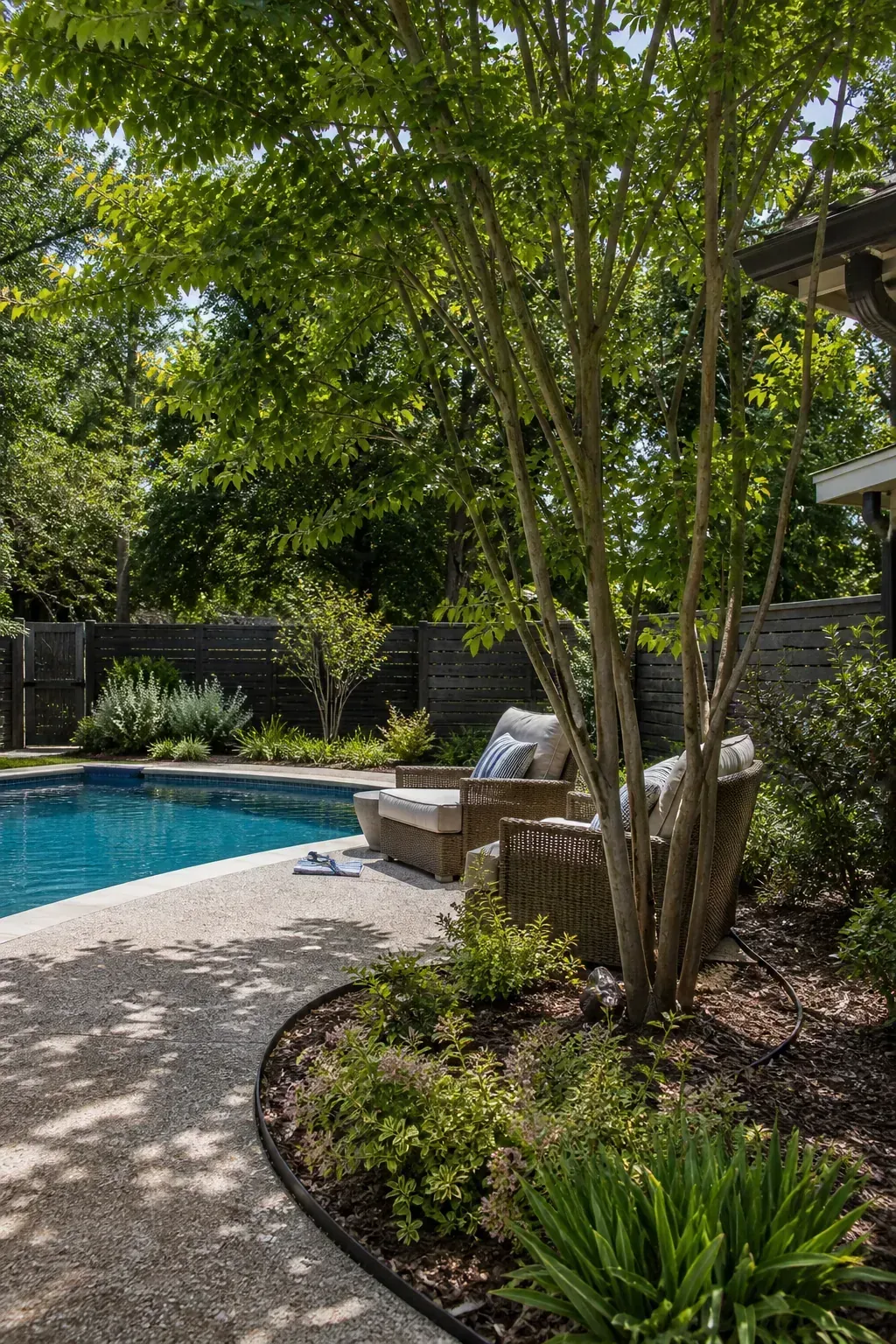
A carefully sited small multi-stem tree can shade a chair group and bring canopy into the pool view without covering the whole water surface. Its trunks also provide vertical structure during seasons when flowers fade.
Select a locally suitable tree with manageable roots, litter, fruit, and mature spread. Place it far enough from shell and plumbing, and orient shade toward seating rather than assuming the nursery-size canopy shows its final reach.
Layer Privacy Instead of Planting a Hedge Wall
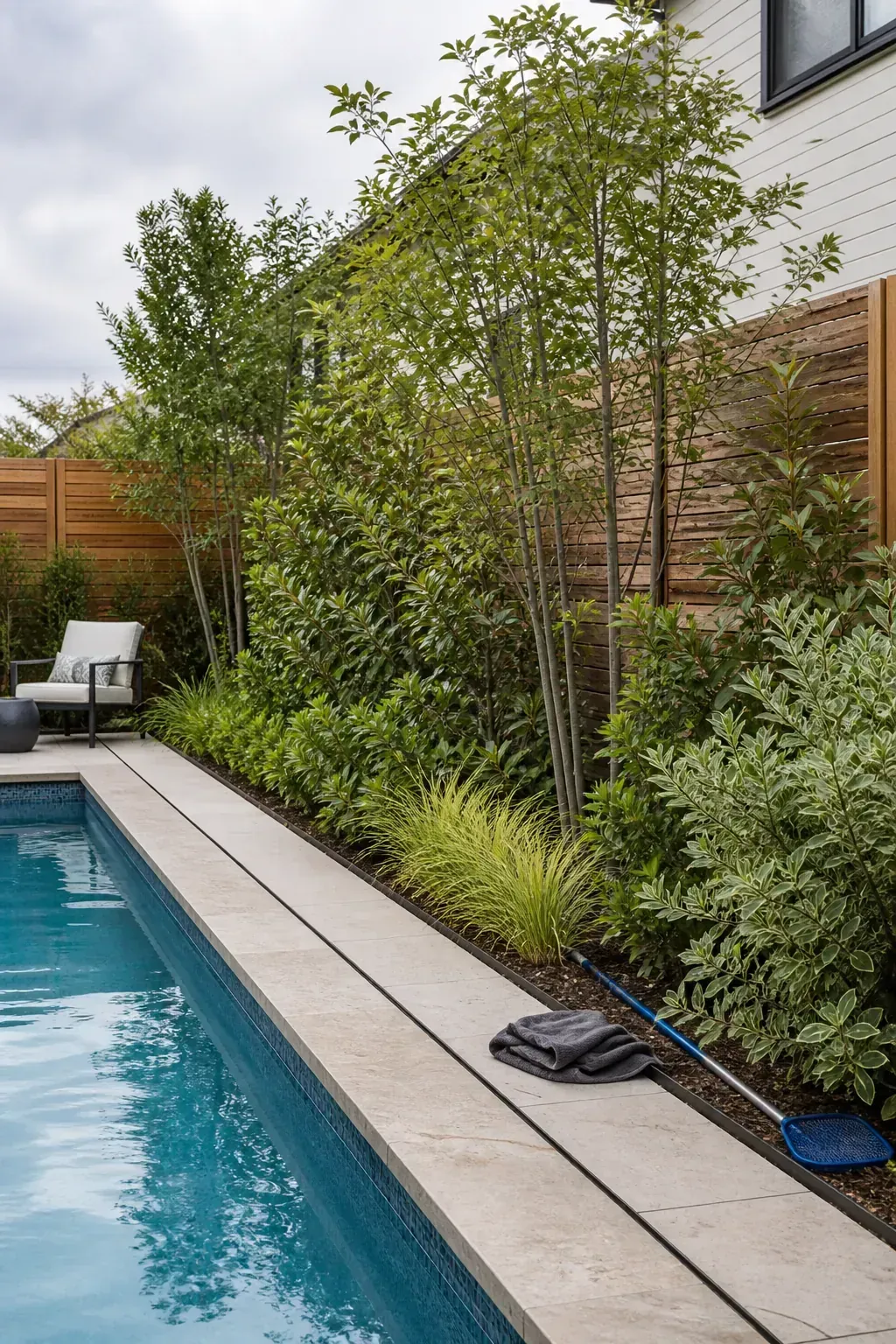
Combine a low evergreen base, a few upright shrubs, and small tree canopies only where sightlines require them. The depth looks more natural than one solid wall and allows air to move across a hot deck.
Map views from seated and standing heights before planting. A targeted group can block a neighbor window while keeping the rest of the boundary open, reducing cost, litter, and a boxed-in feeling.
Let Groundcover Spill Over a Raised Bed
Trailing groundcover over a raised planter edge turns a hard vertical line into a green cascade. Use it where foliage can fall toward a bed or wall face, not onto a walkway where wet stems become slippery.
Choose nonthorny, noninvasive plants that tolerate the planter’s heat and irrigation pattern. Maintain visible coping and drain lines so softness does not conceal structural joints or outlets.
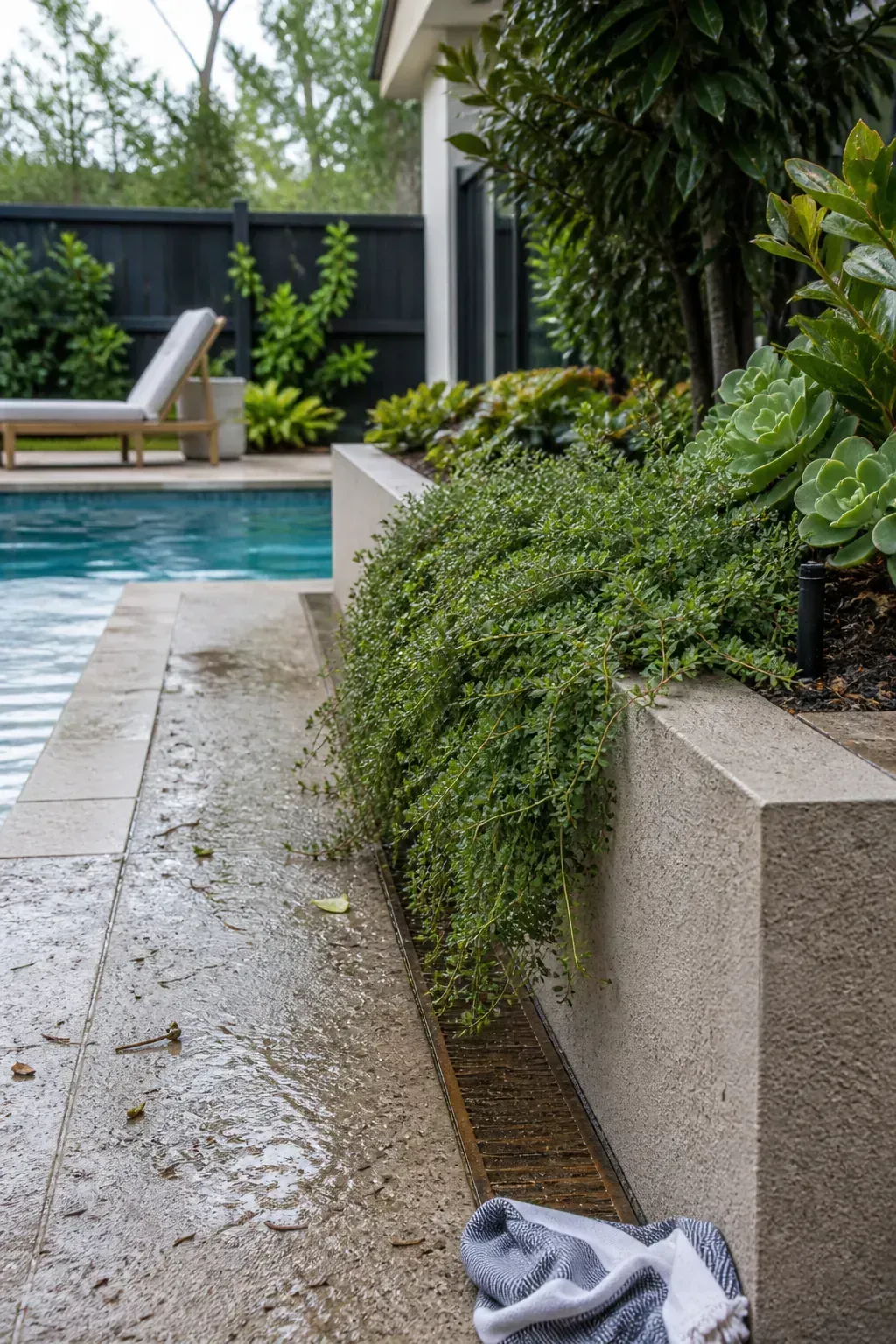
Create a Gravel Garden Outside the Wet Zone
A restrained gravel garden can bridge the pool deck and a dry-climate yard with sculptural foliage and permeable ground. Repeating a few drought-tolerant species keeps the composition calm.
Separate loose stone from barefoot routes with a firm edge and generous setback. Gravel is not maintenance-free: specify an appropriate base, manage weeds, and keep irrigation from washing fines onto the deck.
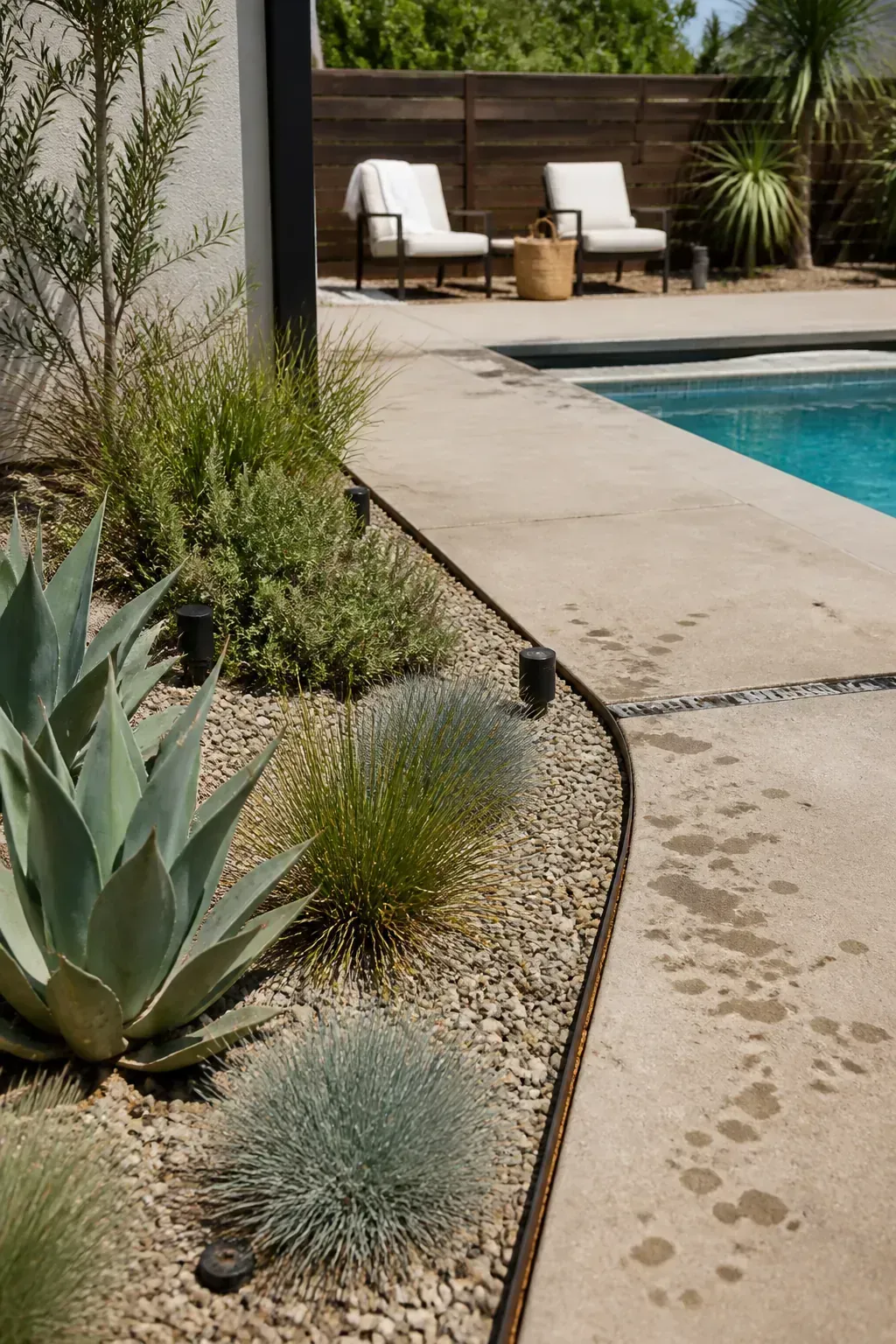
Frame the Shallow End With Soft Foliage
Broad leaves beyond the shallow end create a relaxed focal backdrop and make a rectangular pool feel less severe. The planting should frame the entry rather than hide steps, handrails, or supervising views.
Use soft, nonspiny foliage and account for cold tolerance, wind damage, and leaf size. A contained bed with a clean rim catches soil and keeps dramatic plants at a responsible distance from water.
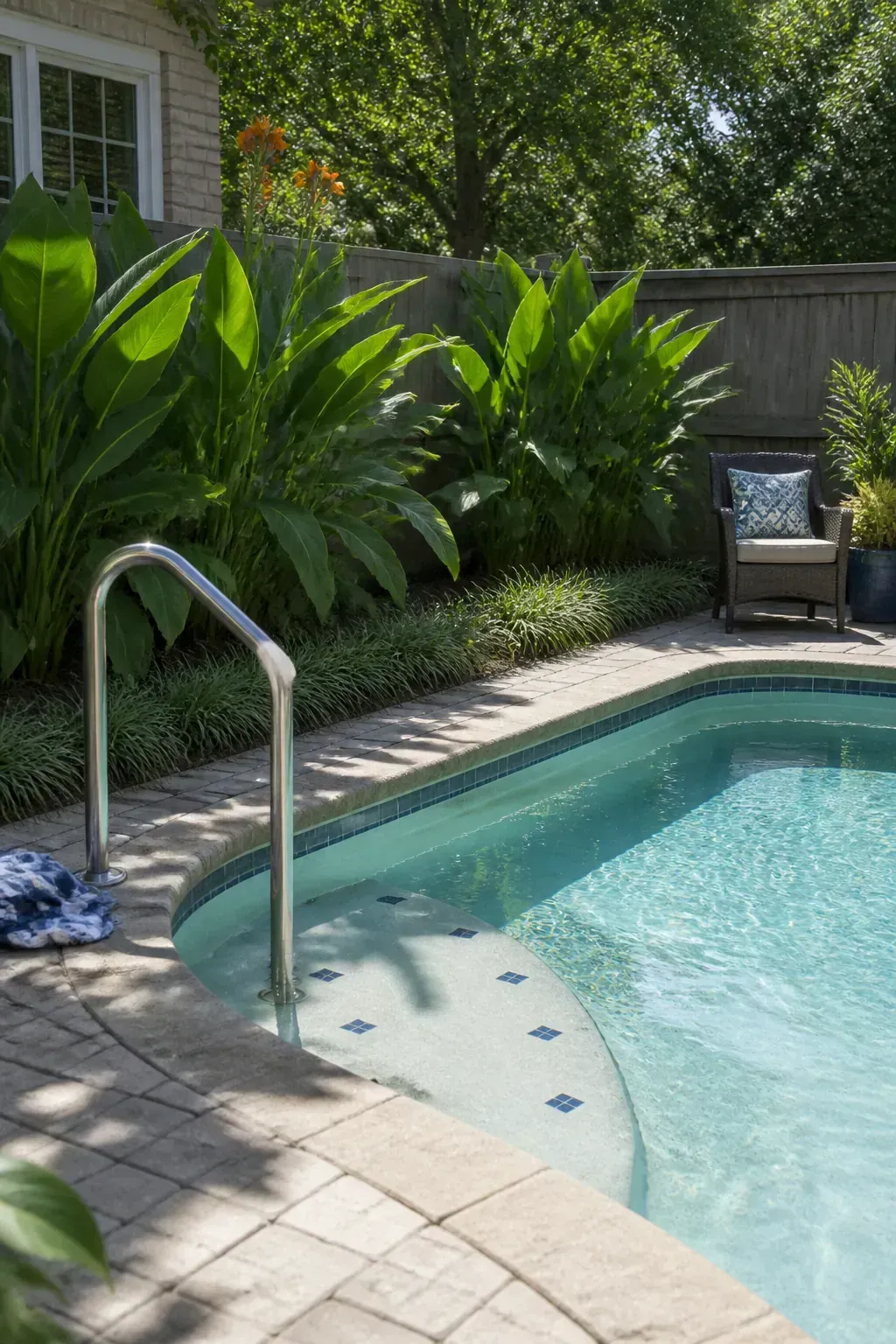
Keep Flowering Plants Farther From the Water
Color can belong in a garden around a pool without placing pollen, petals, and visiting insects beside swimmers. Put the flowering layer behind a lower evergreen or foliage buffer.
Select bloom periods and plants appropriate to local ecology, then observe where people walk barefoot or set drinks. The goal is seasonal interest at viewing distance, not a dense nectar border at the pool steps.
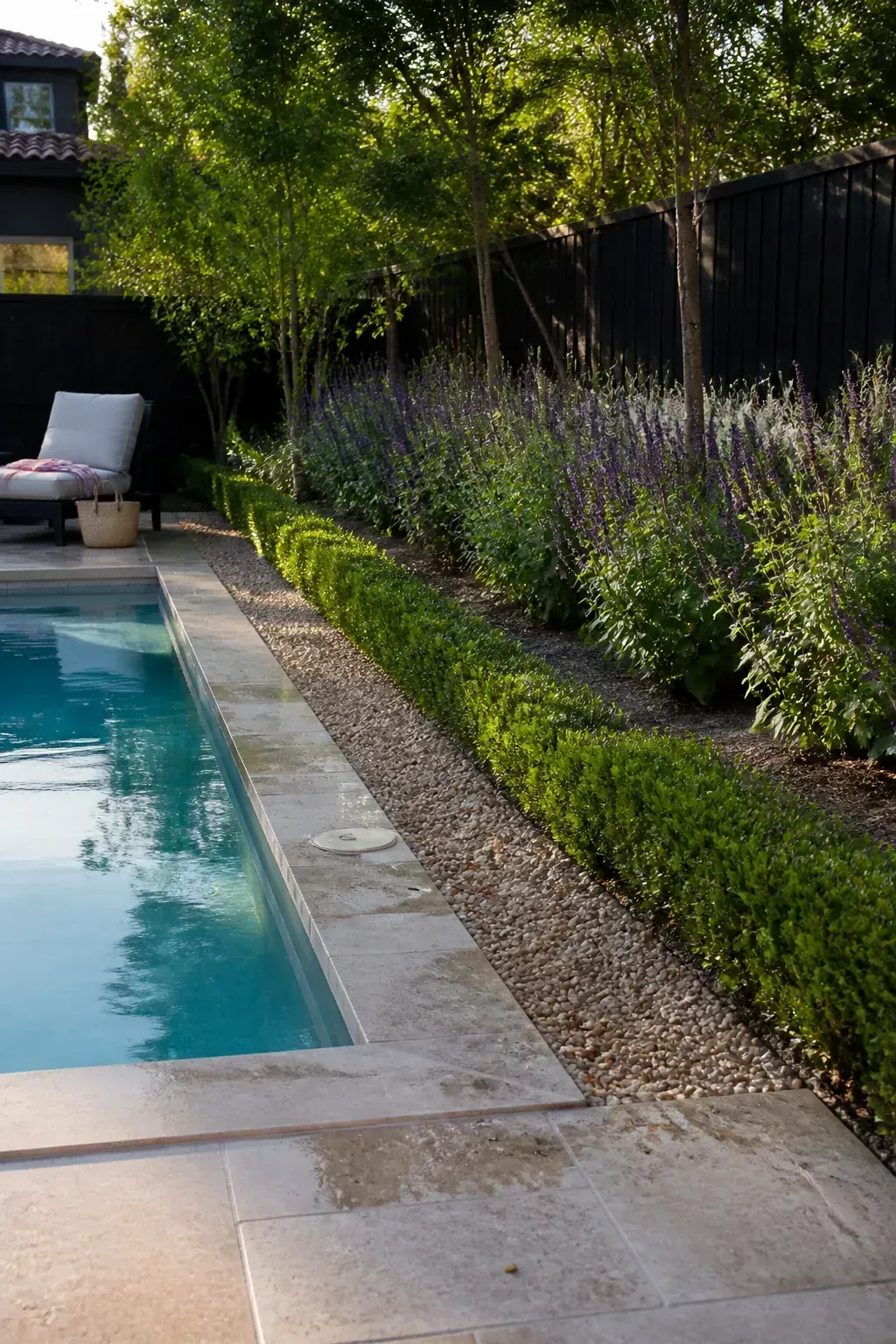
Use Evergreen Structure for the Off-Season
A few clipped or naturally compact evergreen forms keep the pool landscape coherent when perennials are dormant. Place them at corners, path turns, and behind seating instead of ringing the water with identical balls.
Choose cultivars that fit without constant shearing. Varied heights and honest natural texture prevent the scheme from feeling formal or synthetic while still providing a dependable backbone.
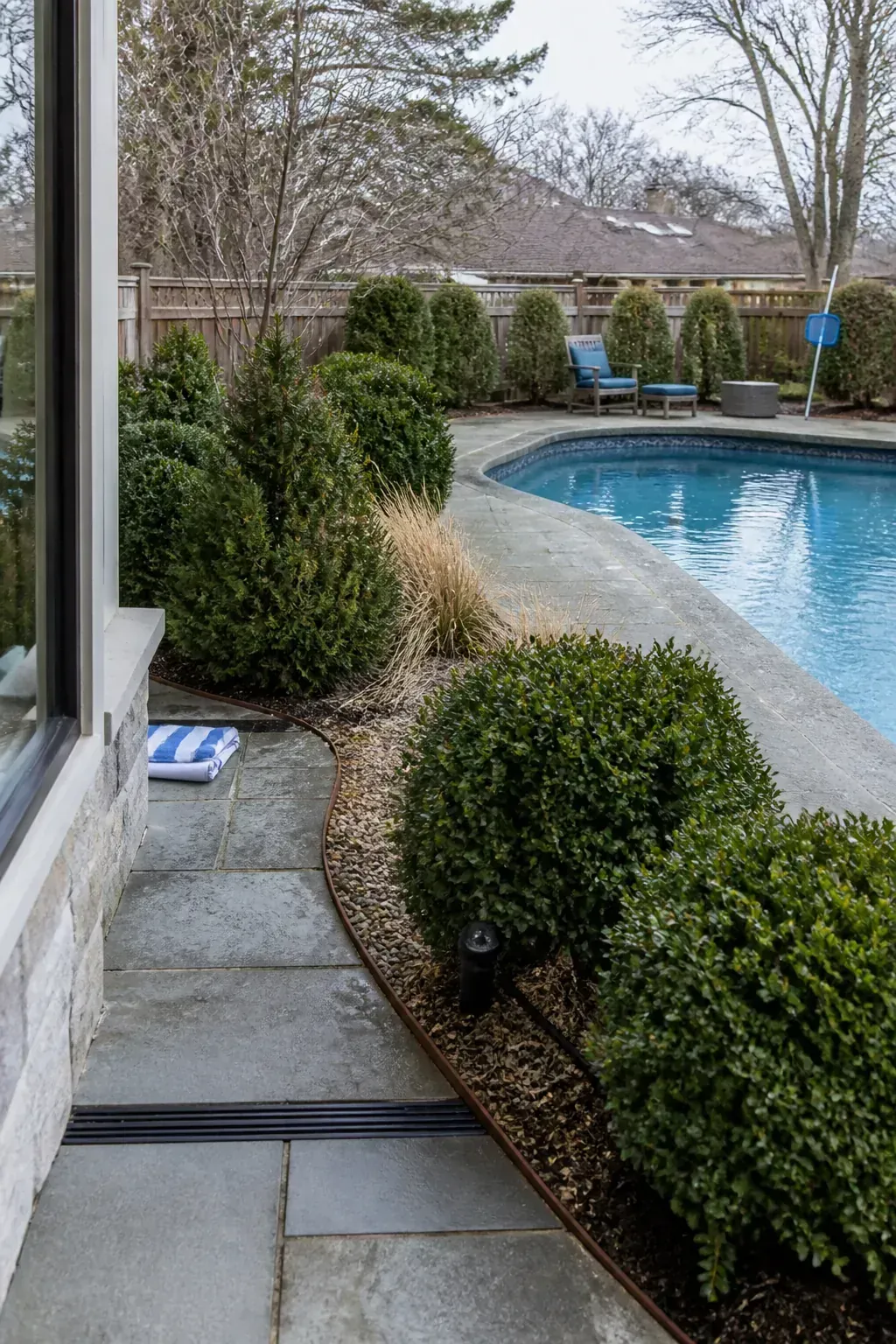
Thread a Drainage Swale Through Planting
A shallow vegetated swale can intercept runoff before it carries mulch and soil onto the deck. Sedges and other site-appropriate plants slow flow while a defined overflow route protects the pool during heavier rain.
Treat the swale as infrastructure: size it for the site, keep inlets and outlets visible, and avoid plants that clog the route. Coordinate with local drainage professionals where runoff volume or slope demands it.
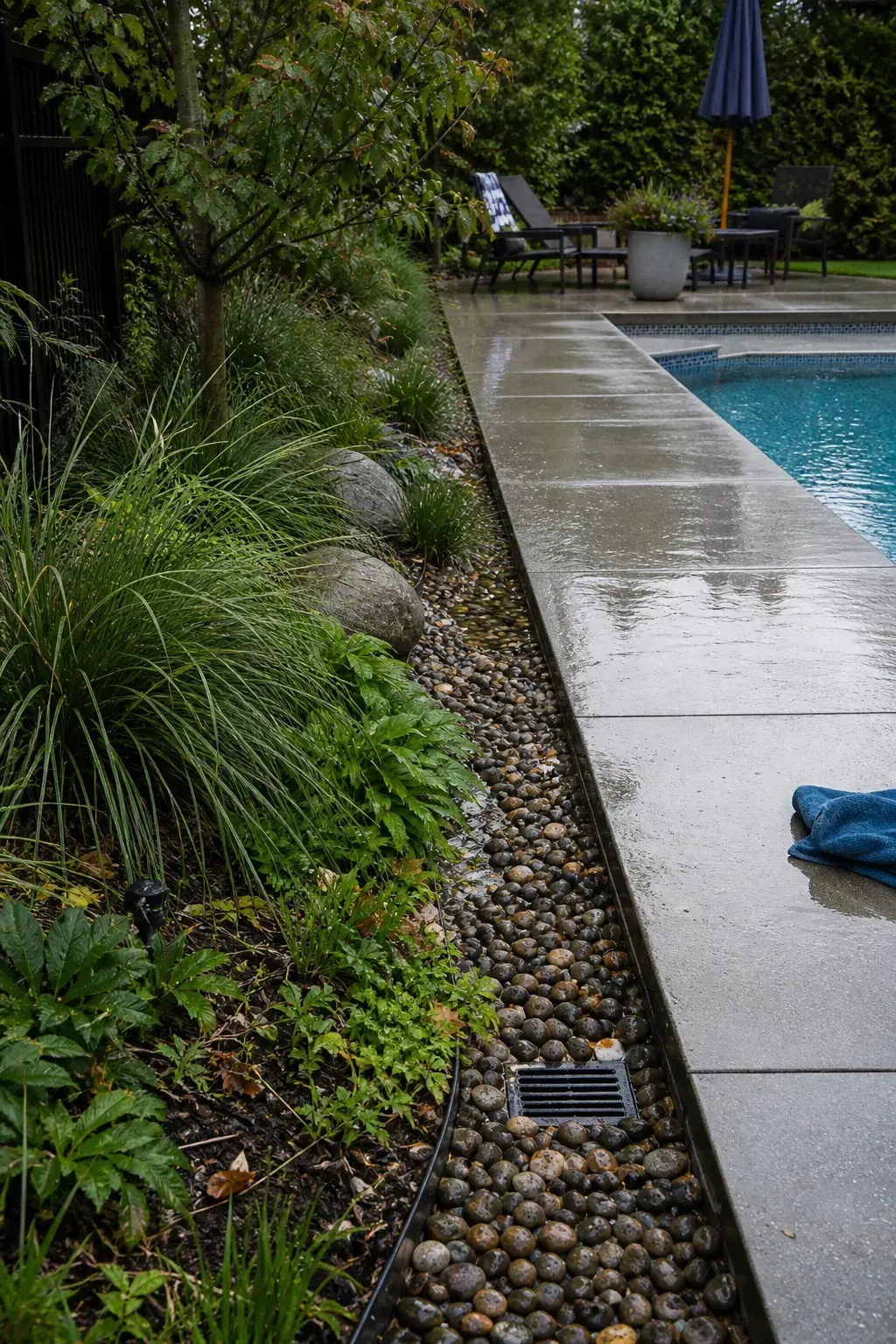
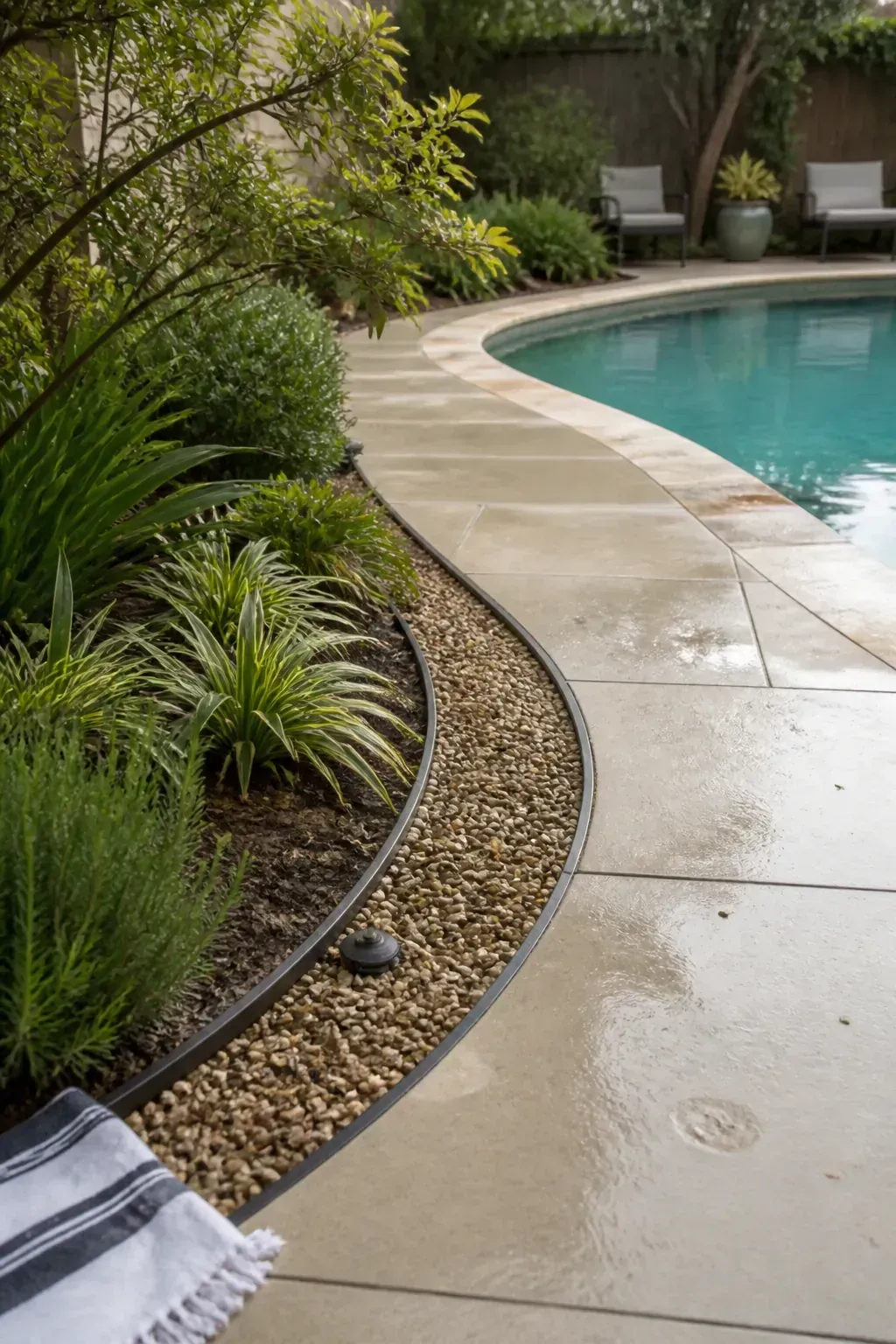
Replace Loose Mulch With a Contained Mineral Edge
A narrow band of washed stone can stop organic mulch from migrating onto wet paving and visually sharpen the transition from bed to deck. Use larger material that will not easily travel under bare feet.
Do not pile stone against pool walls or plant crowns, and avoid loose rock directly beside circulation. A metal or stone edge plus a maintenance strip keeps the solution neat and serviceable.
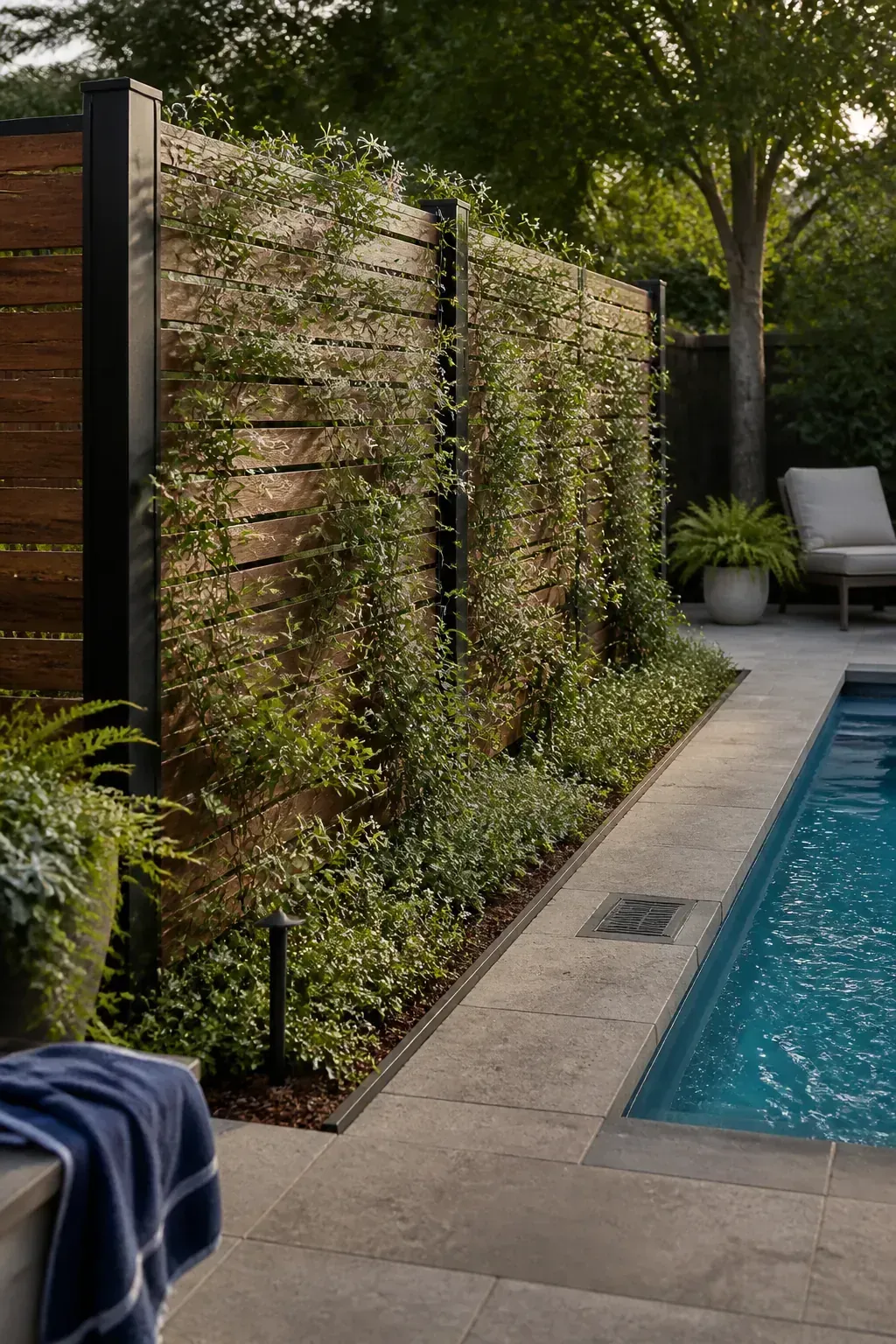
Train a Vine on a Freestanding Screen
A freestanding slatted screen with a controlled vine adds living texture to one exposed boundary without building a dense hedge. The combination filters a view while occupying little ground.
Choose a noninvasive climber with manageable litter and provide a structure independent of pool fencing unless codes allow otherwise. Keep growth away from gates, latches, lights, and equipment access.
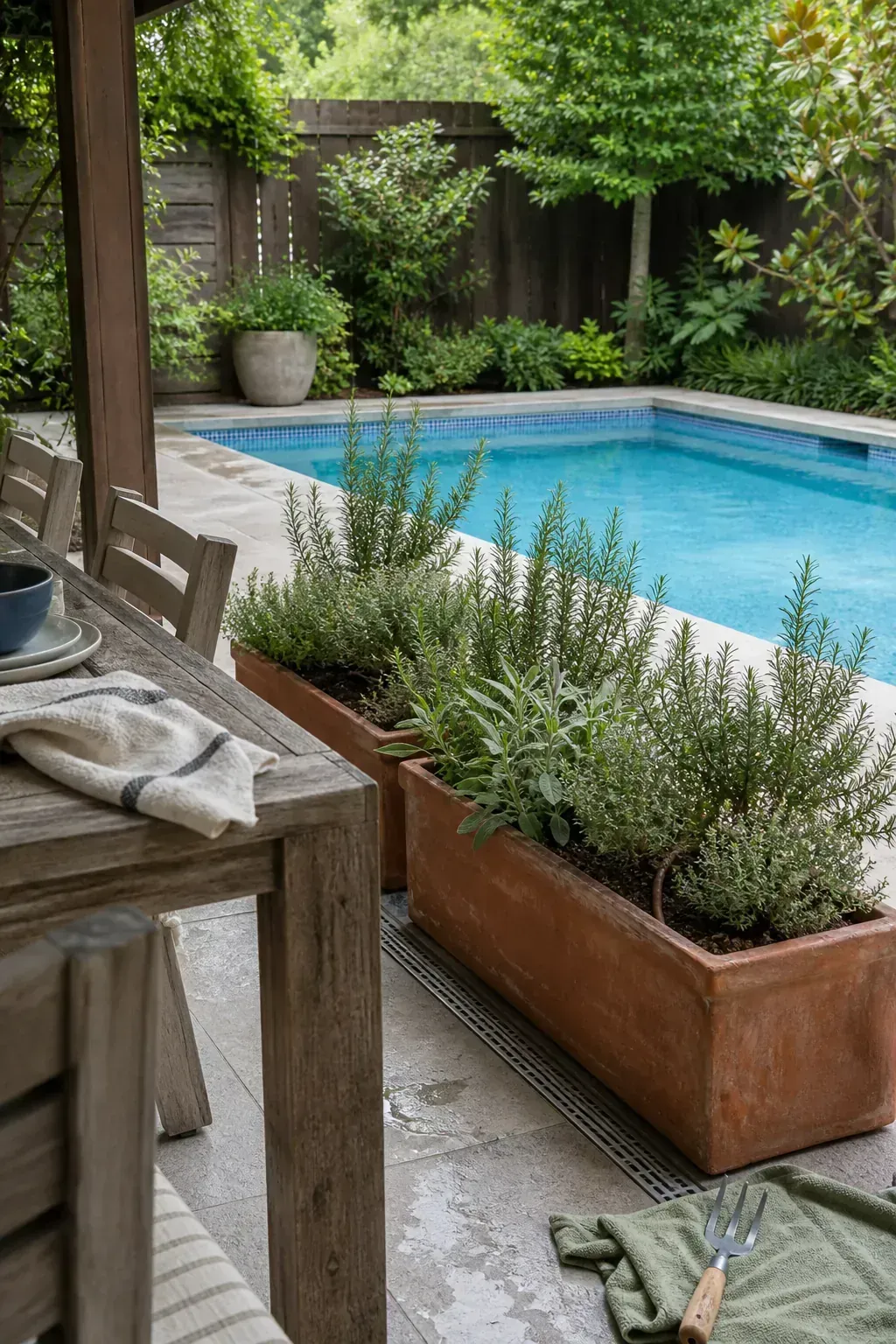
Plant Fragrant Herbs Near the Dining Zone
Rosemary, thyme, sage, or other climate-suitable culinary herbs can soften the dining terrace and make the outdoor room useful. Keep them near food preparation rather than at the coping.
Group plants with similar water needs in raised planters or containers. Locate strong fragrance and pollinator activity where diners appreciate it but swimmers and narrow wet routes are not forced through it.
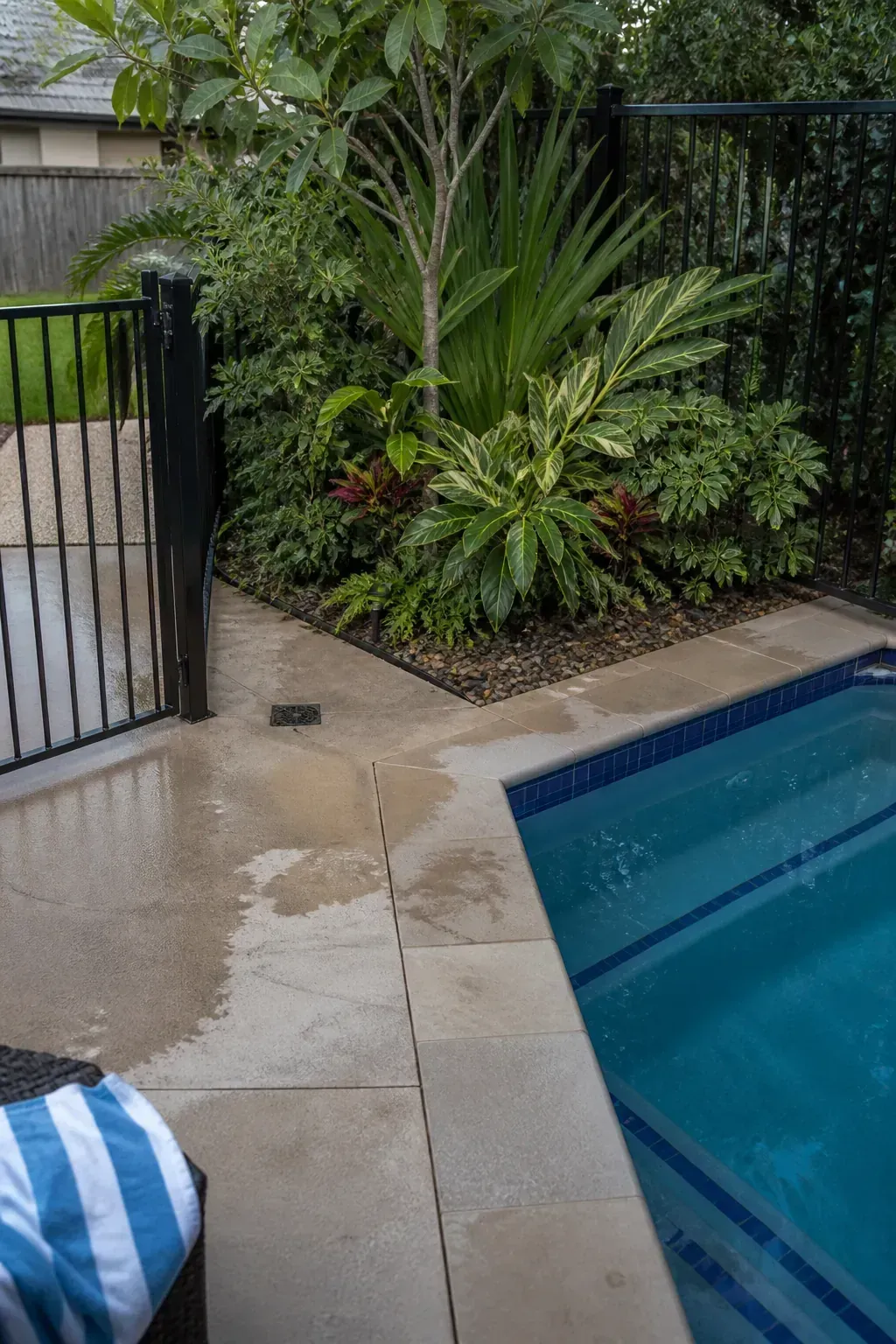
Turn a Fence Corner Into a Foliage Nook
An empty boundary corner can hold a deep foliage composition that gives the pool a visual destination. One upright plant, one rounded midlayer, and one spreading ground layer create depth without many species.
Maintain access to the fence, drainage, and utilities. Keep mature leaves away from gate hardware and avoid hiding corners that must remain visible for safety or supervision.
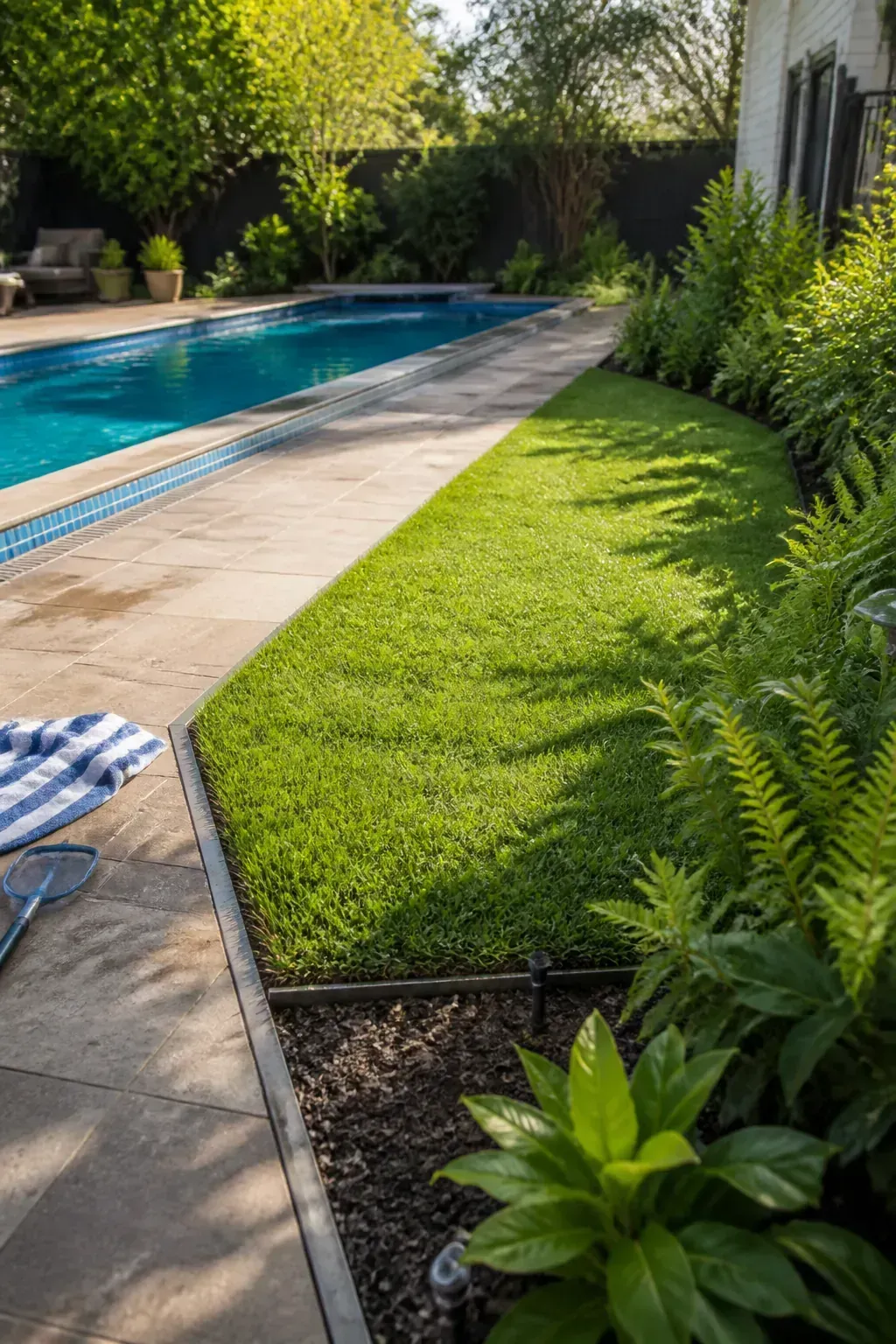
Use a Small Lawn as a Cooling Counterpoint
A modest patch of durable turf or climate-appropriate lawn alternative can cool the visual field and provide a soft place for play. It often works better than paving every leftover area.
Design a firm transition so soil and clippings do not wash into the pool. Size the lawn for actual use, place irrigation away from the deck, and choose a maintenance level the household will sustain.
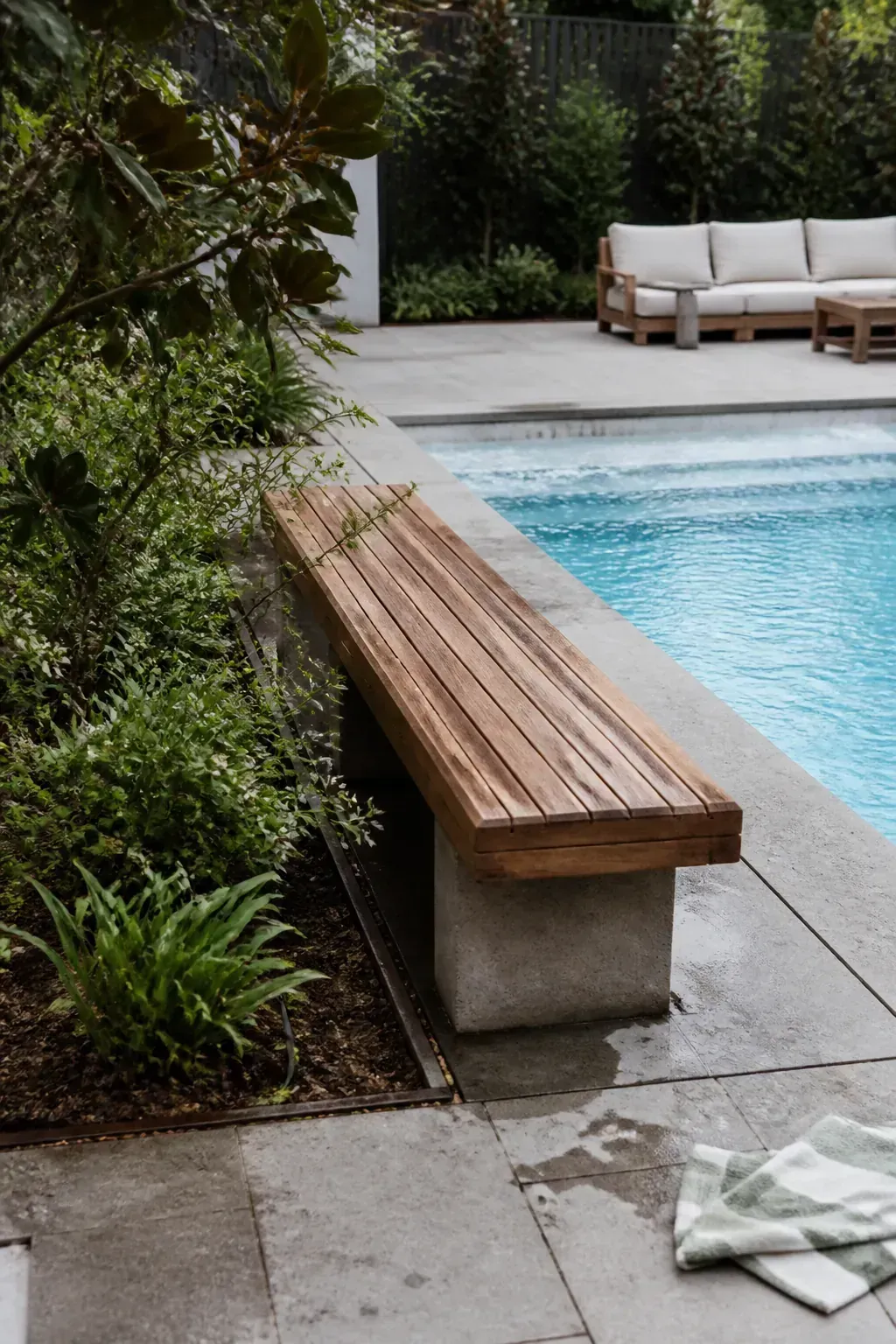
Add a Timber Bench Between Pool and Planting
A fixed or heavy bench can occupy the seam between hardscape and planting, giving the border a human purpose. Timber adds a warm tactile note against stone and water.
Keep supports on a stable drained surface and allow airflow beneath the wood. Seat height, back clearance, splinter-safe finish, and access to the bed matter more than sculptural styling.
Soften a Retaining Wall With Planted Ledges
Staggered ledges can break the scale of a necessary retaining wall and create narrow bands of foliage. Choose trailing and compact plants whose roots and irrigation suit the structure.
Do not conceal weep holes, movement joints, guard requirements, or inspection access. The planting should reveal the wall’s rhythm while reducing its visual weight.
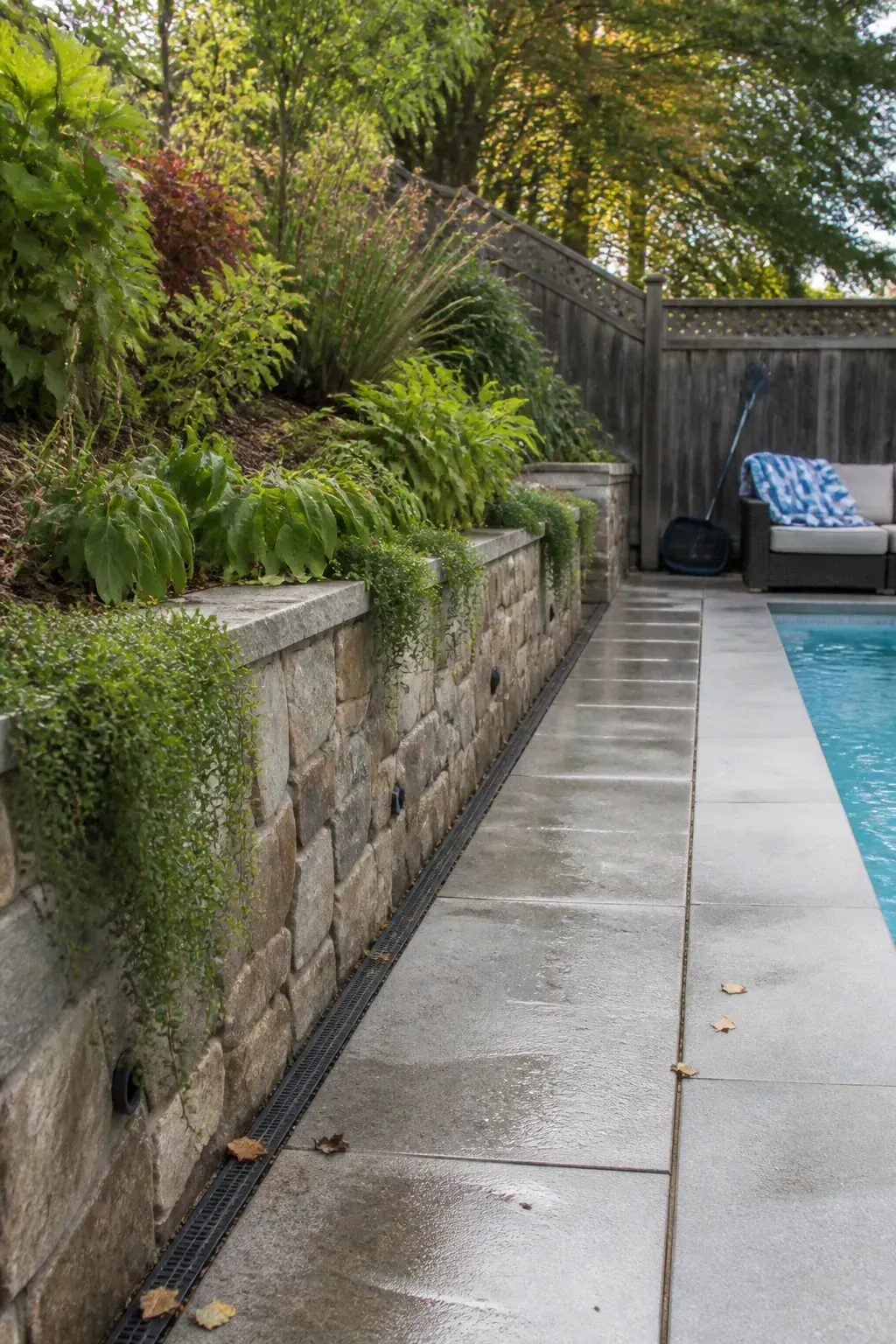
Carry One Native Plant Community Around the Pool
Plants adapted to the local climate can connect the pool to the wider landscape and reduce the sense that it was dropped into the yard. Repeat a small community of compatible grasses, shrubs, and perennials across several beds.
Native does not automatically mean pool-safe or low maintenance. Check mature roots, litter, thorns, wildlife value, establishment irrigation, and local availability before placing each species.
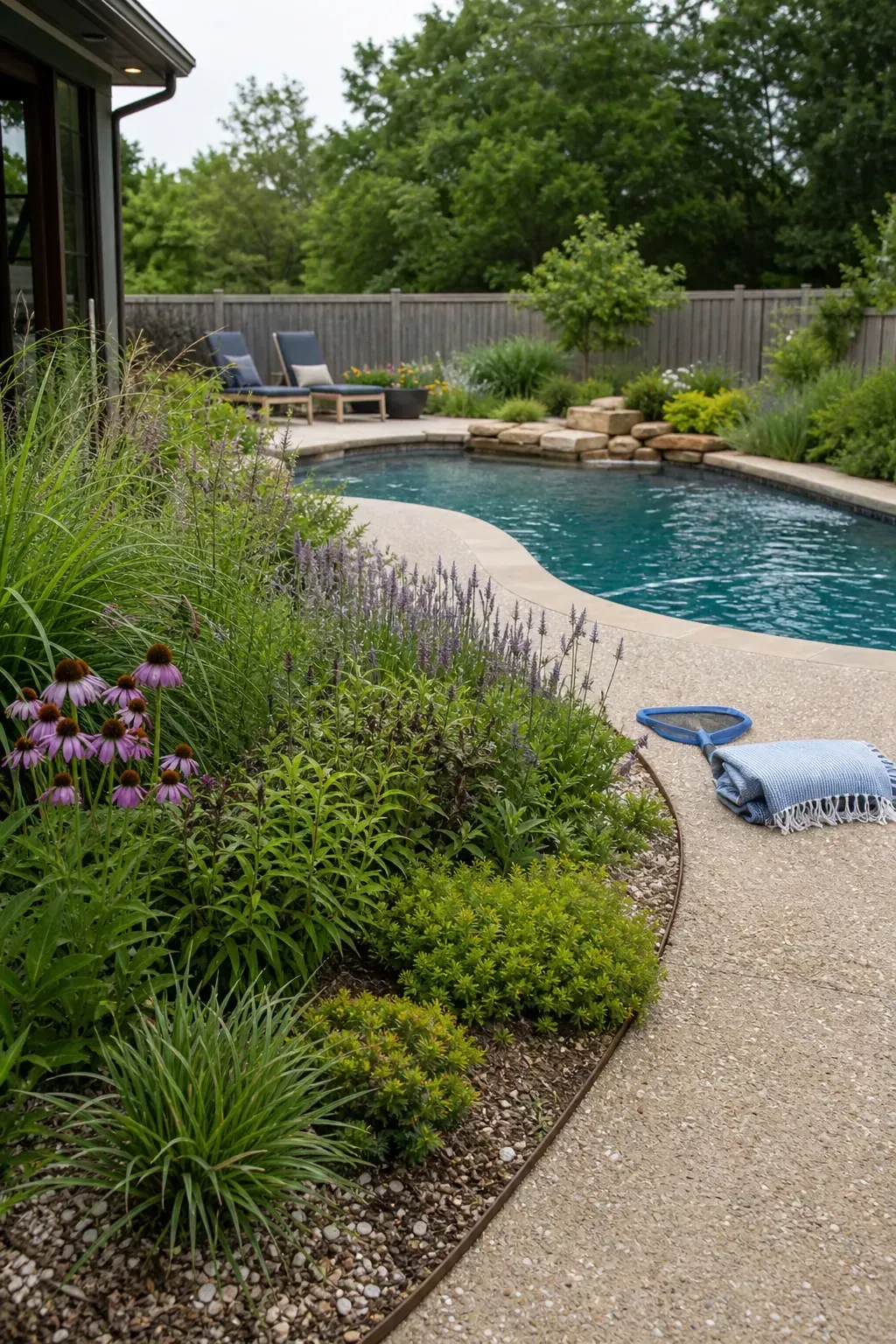
Use Dark Green Foliage to Cool Pale Paving
Deep green leaves beside pale stone create a strong cooling contrast and make broad paving feel less glaring. Concentrate the color in a few masses rather than dotting single plants around the perimeter.
Select leaves that tolerate reflected sun without scorching. Keep irrigation on soil, not paving, and mix leaf sizes so the dark planting still has depth in shade.
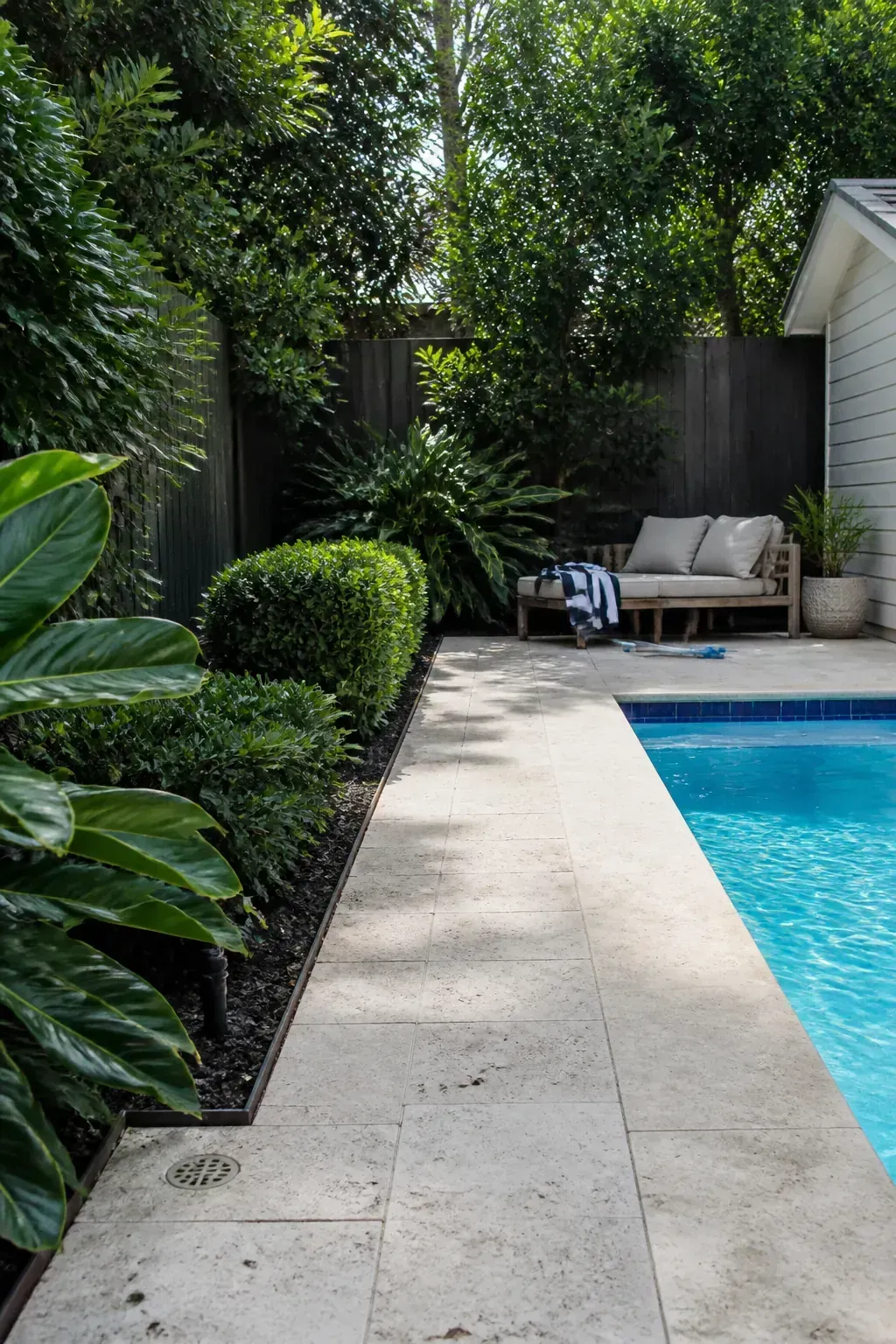
Add Airy Plants Behind Solid Pool Fencing
Light foliage rising behind a compliant solid fence can soften its upper edge without interfering with the barrier. Movement and partial transparency keep the boundary from reading as a blank wall.
Keep trunks, pots, benches, and climbable branches away from the fence as local safety rules require. Plant from the outside where possible so maintenance does not compromise the enclosure.
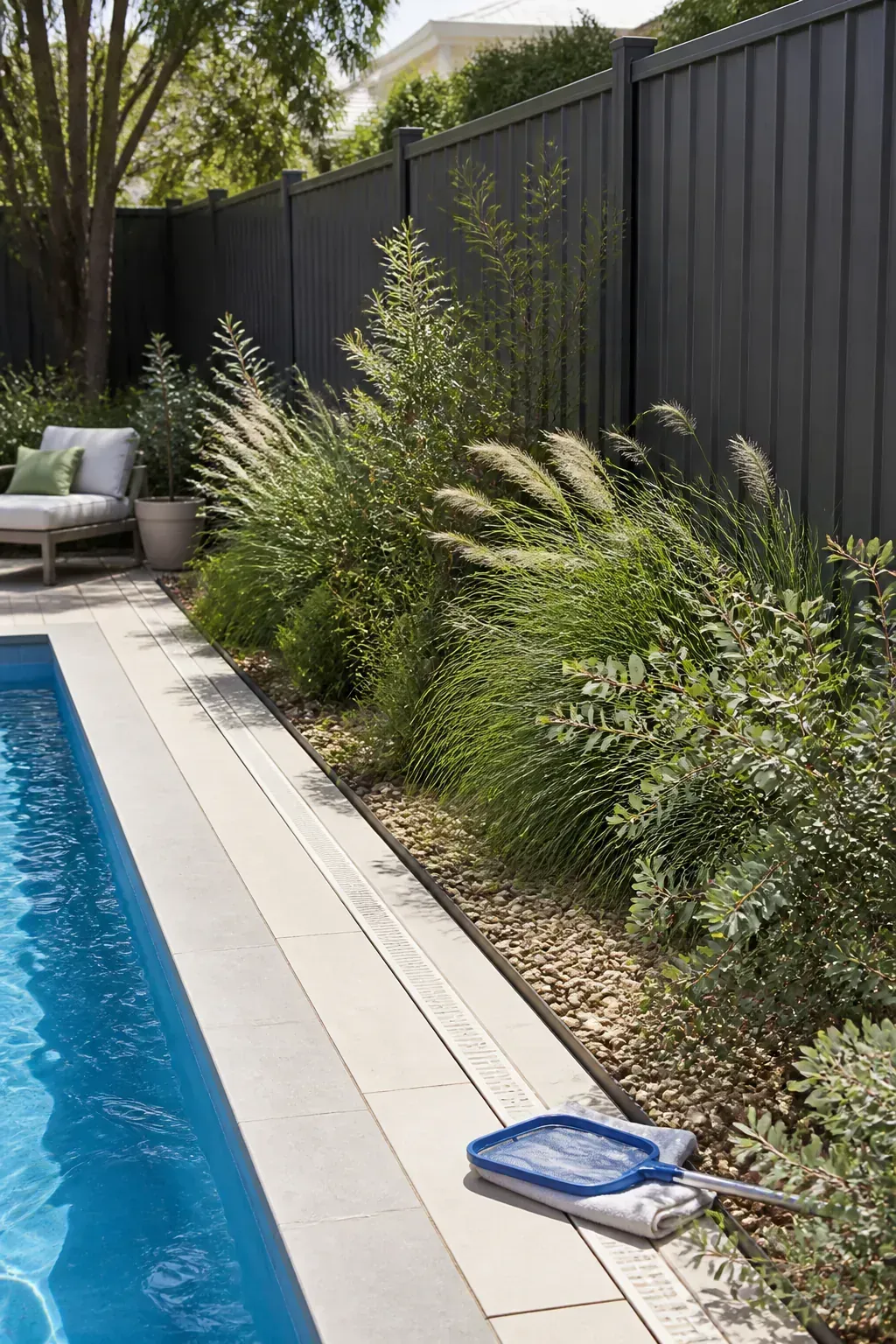
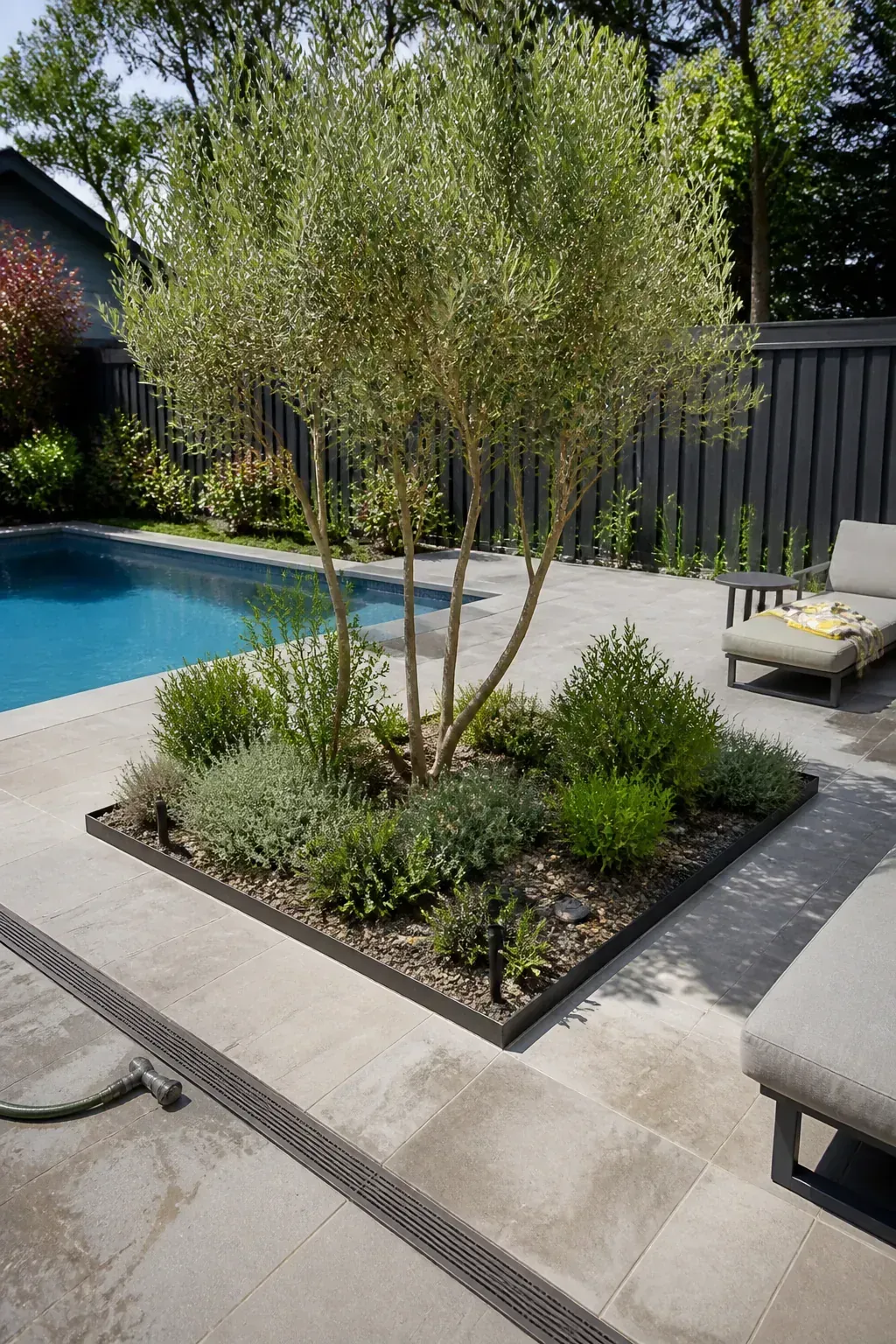
Make a Planting Island the Patio Focal Point
A contained island within broad paving draws the eye to bark, leaves, and seasonal movement instead of a sea of concrete. An airy small tree with low underplanting preserves sightlines.
The island needs serious root volume, irrigation, drainage, and an edge that contains soil. Use its shape to steer walking routes without creating a narrow pinch point.
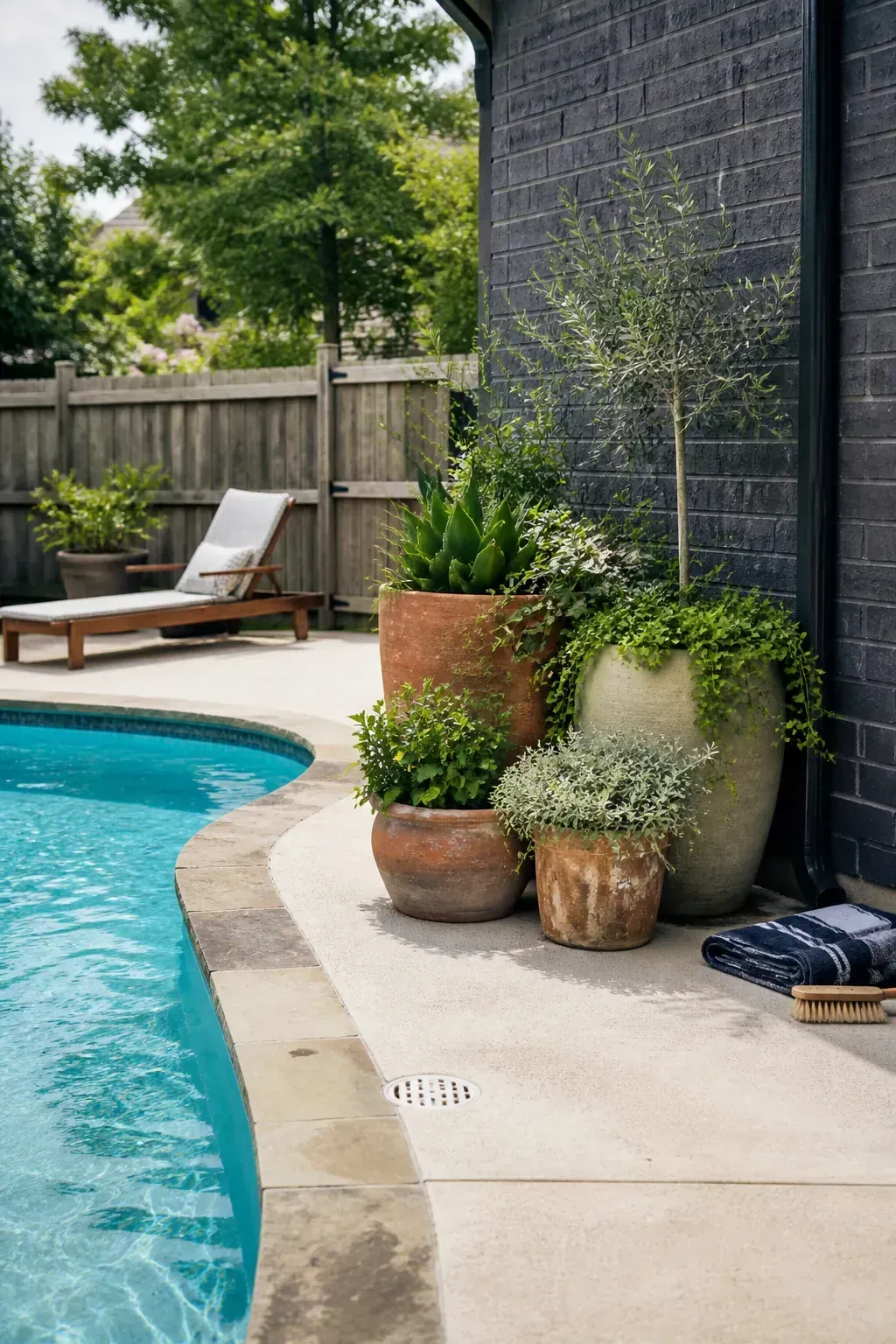
Cluster Pots at Different Heights
Three or five containers with related materials but varied heights can add instant softness to an existing deck. Cluster them near a corner or blank edge so the group reads as one composition.
Use stable pots, hidden but serviceable drip lines, and plants with compatible water and light needs. Leave enough space to clean behind them and move the largest vessel if the deck needs repair.
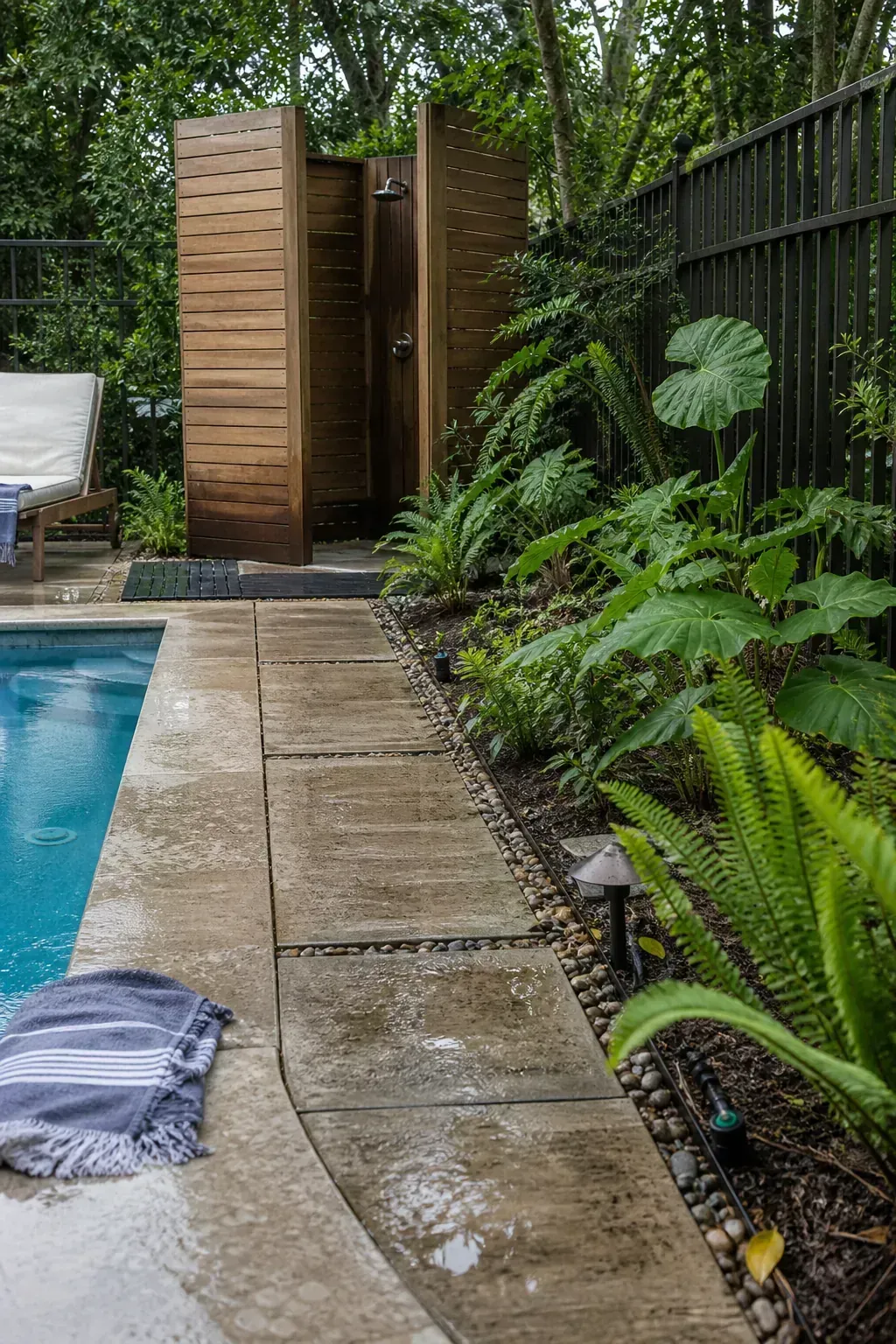
Plant Around an Outdoor Shower
An outdoor shower can feel like a small garden room when moisture-tolerant foliage surrounds its drained pad. Planting adds privacy and catches reflected splash without crowding the user.
Direct wastewater according to local rules and choose products that will not damage plants or enter the pool. Keep leaves away from controls and maintain a firm nonslip route.
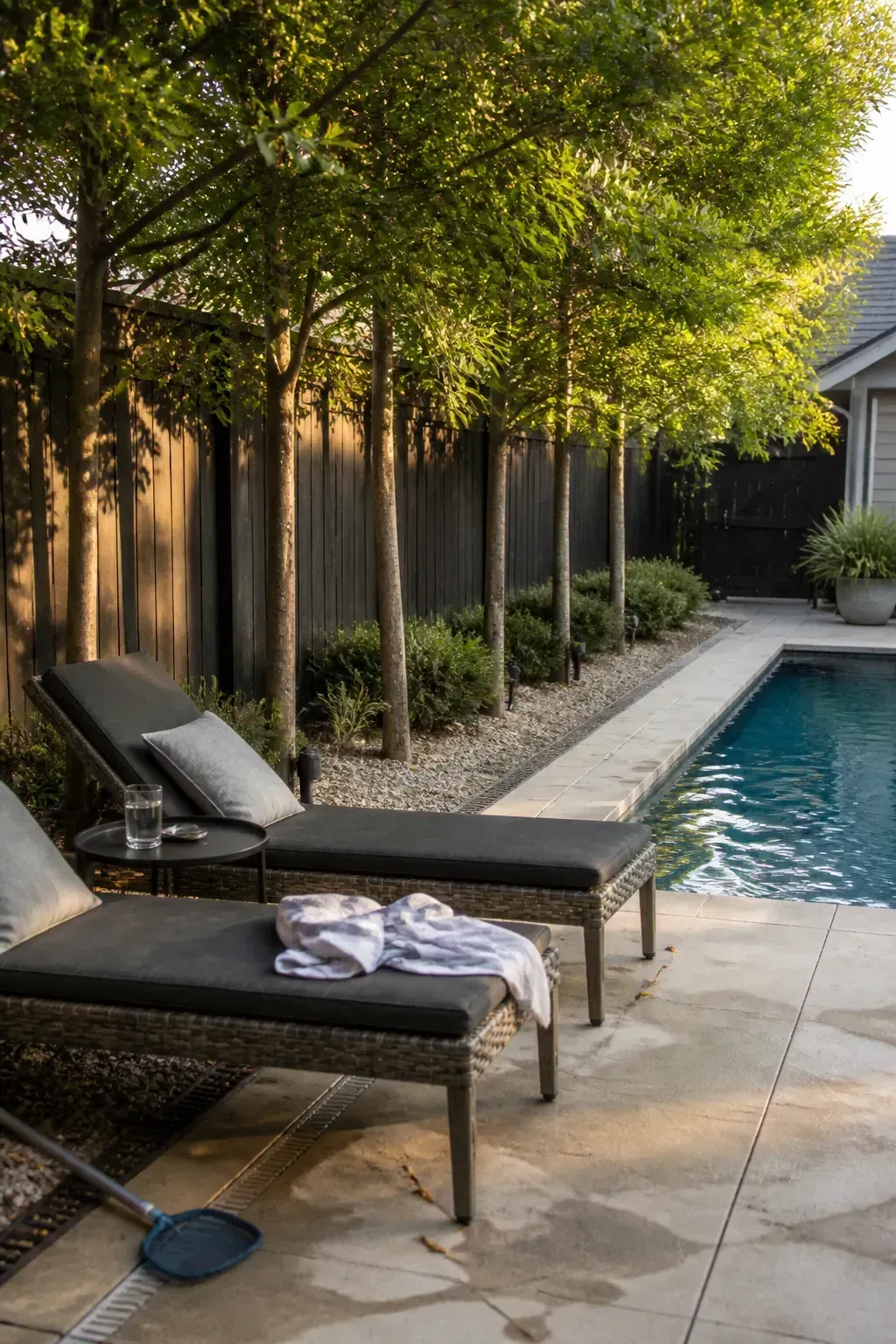
Use a Narrow Tree Line Beyond the Lounge
A short line of appropriately scaled trees beyond the lounge zone can provide filtered afternoon shade and a calmer backdrop. Stagger spacing slightly so the planting feels natural rather than institutional.
Study sun angles and mature canopy width before placing trunks. Root behavior, litter season, fruit, branches, and wind resistance determine whether the shade remains welcome years later.
Edge a Small Pool With One Bold Plant Mass
In small yard pool landscaping, one generous mass of a reliable plant often feels larger and calmer than many tiny beds. Use it to soften the longest hard edge or screen the least attractive corner.
Select a plant whose mature size fits the allocation and repeat it densely enough to read as one gesture. Preserve the widest circulation route and resist adding unrelated accents later.
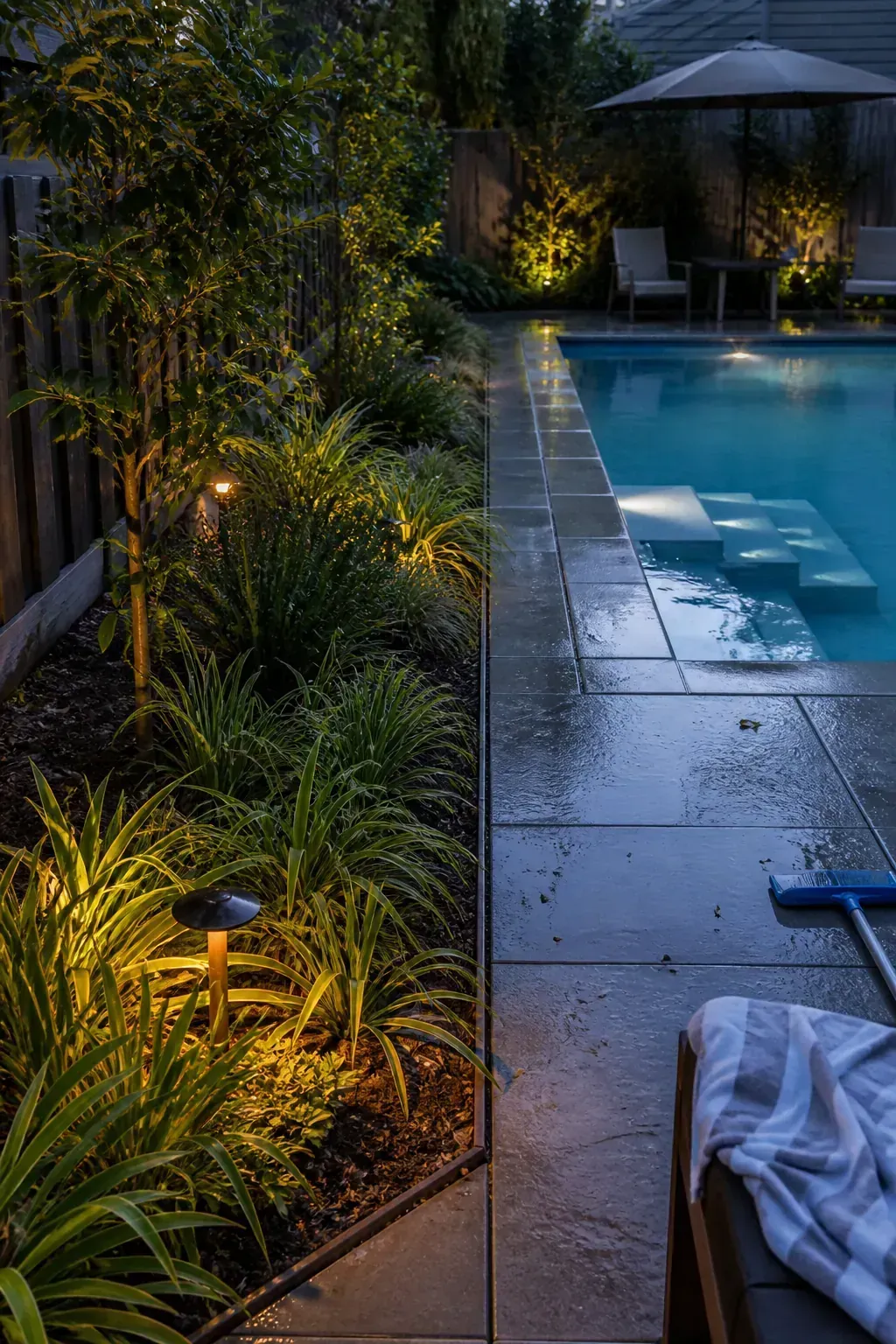
Use Lighting From Inside the Beds
Shielded low fixtures placed inside planting can graze foliage and wash light across a path without filling the yard with glare. The pool remains the brightest element while the garden gains depth after dark.
Aim fixtures downward, protect cables, and allow for plant growth around them. Warm consistent light and a few dark gaps look more natural than illuminating every specimen.
Leave Breathing Room for Plants to Mature
The hardest landscaping choice is often leaving visible space on installation day. Plants set at mature spacing will fill the beds without overwhelming coping, paths, drains, or each other.
Use temporary groundcover, mineral mulch, or a few movable pots while the permanent structure grows. A measured softscape around the pool becomes richer with time instead of turning into constant pruning.