The best plant beside a pool is not simply the one with the prettiest foliage. It has to tolerate the site’s heat, wind, soil, winter lows, and occasional splash while keeping roots, litter, thorns, and maintenance in proportion. These best plants around a pool are presented as design tools for specific climates and jobs—not as a universal shopping list.
Before planting, map the privacy gap you actually need to close, then check mature height and width with a reputable local nursery or extension resource. Leave room for deck cleaning, barriers, equipment, and drains. Low mess pool plants still shed something, and even a well-behaved species becomes troublesome when planted too close.
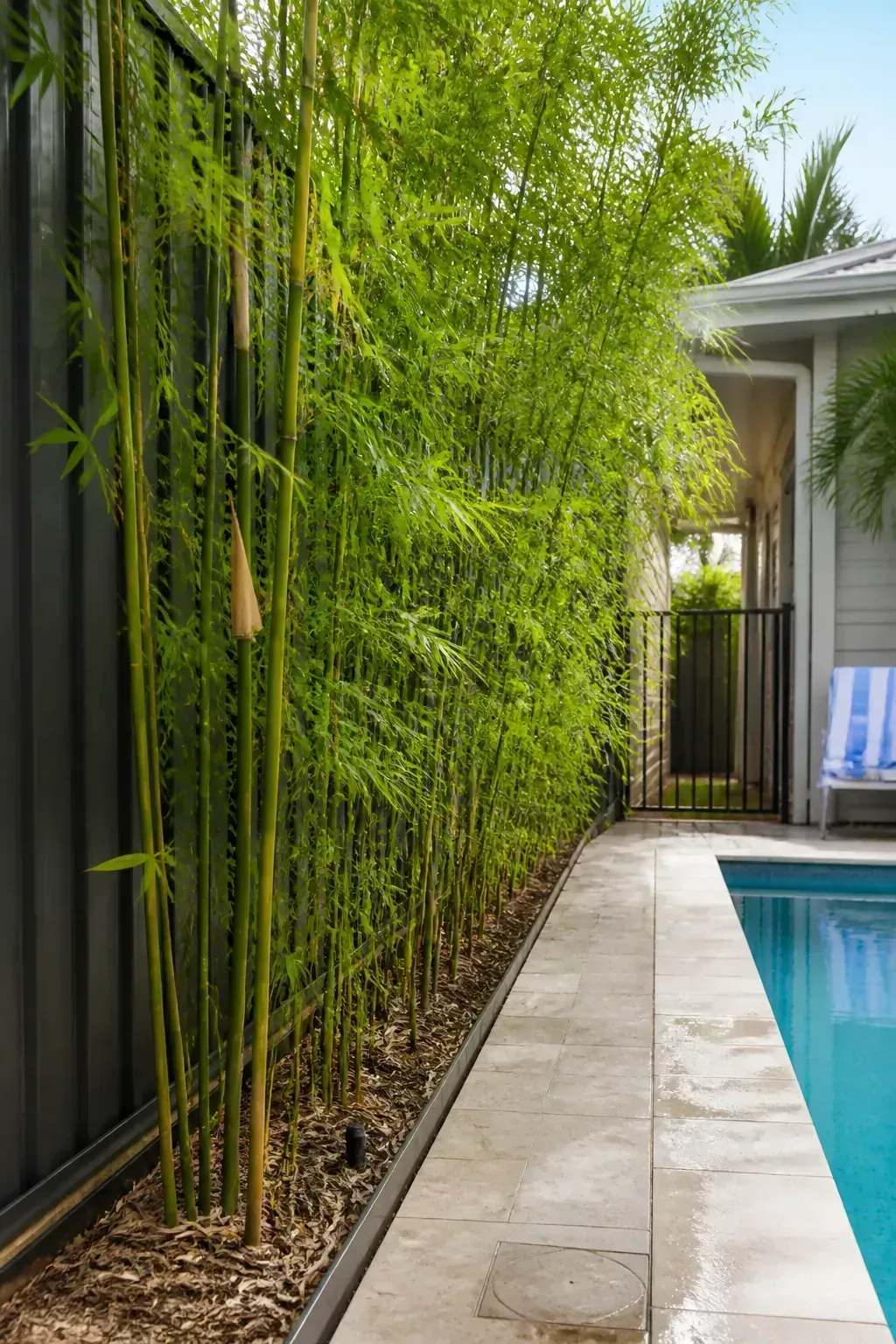
Clumping Bamboo for a Tall Narrow Screen
A genuinely clumping, locally noninvasive bamboo can provide height where the planting strip is narrow. Its upright culms and fine foliage give a pool a calm architectural backdrop without the rigid look of a conifer row.
Confirm the exact species and mature spread with a local specialist; never substitute running bamboo. Use a root-managed bed or large structural container, allow cleanup access, and keep canes away from safety fencing and paving joints.
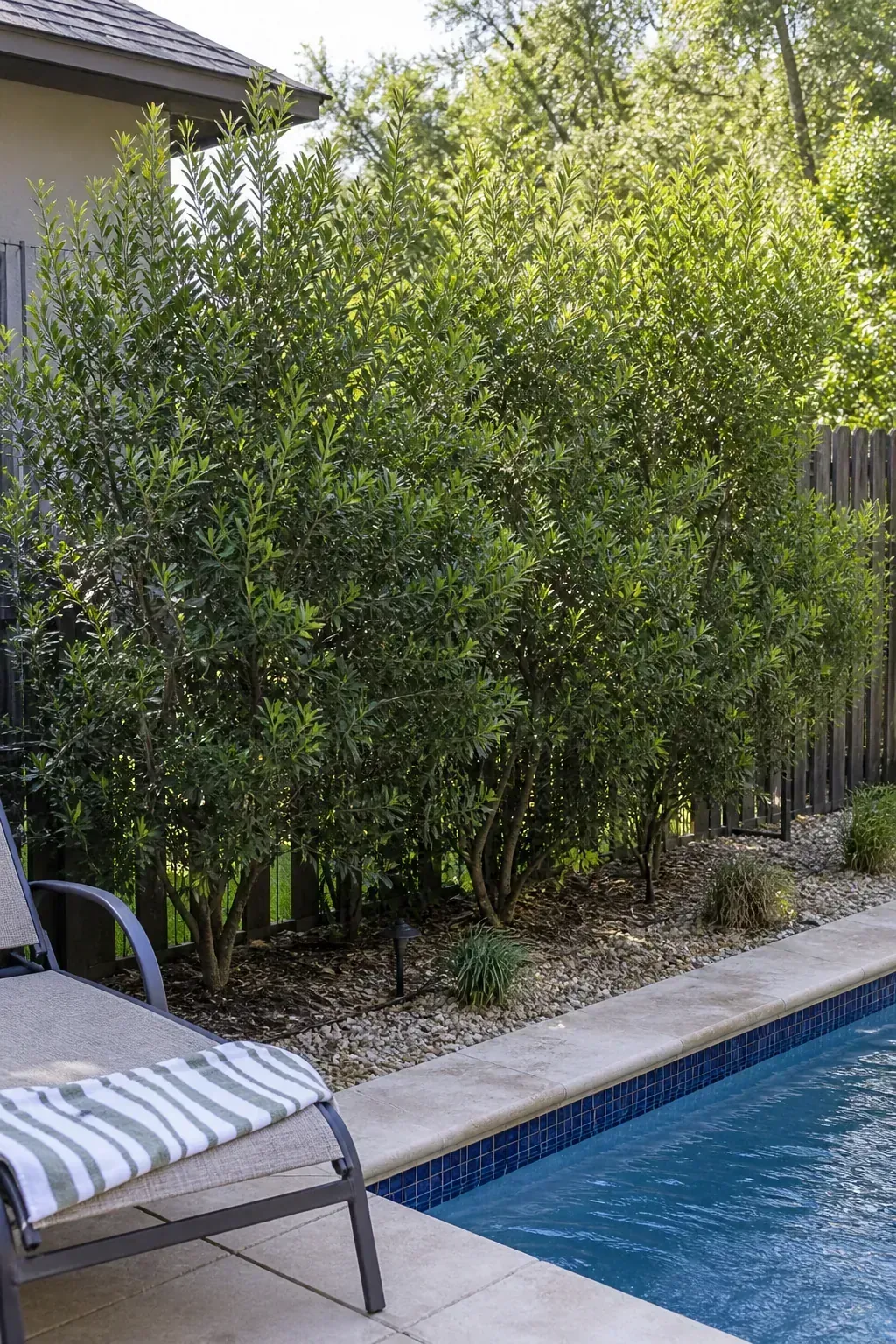
Wax Myrtle for Informal Evergreen Privacy
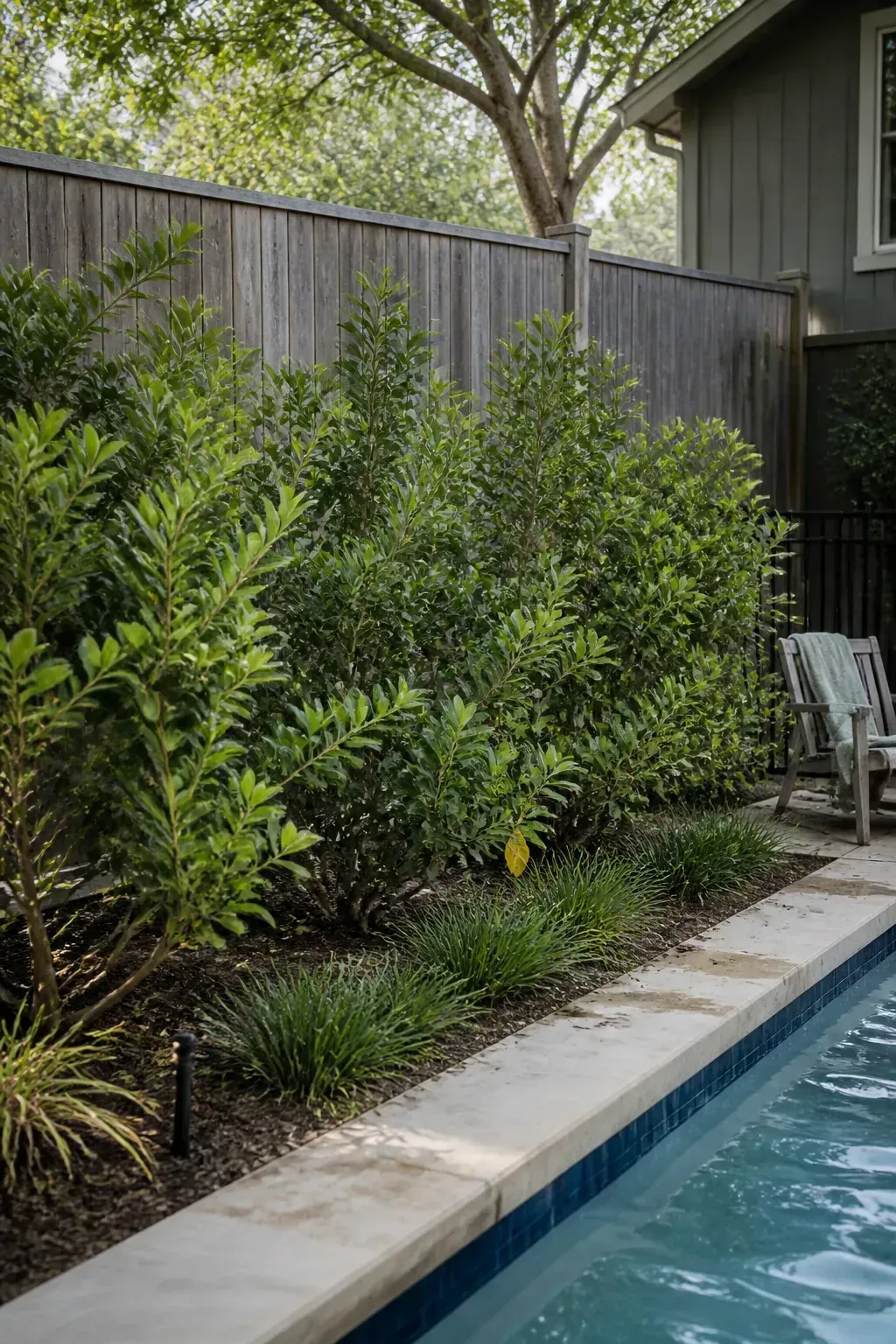
Wax myrtle suits warm regions where its airy evergreen mass can filter views and tolerate pruning into a broad informal screen. Staggered plants look more natural and provide better depth than a tight straight hedge.
Check local hardiness, mature width, sex and fruiting characteristics, and wind exposure. Place it far enough from the water for normal leaf turnover and give the screen room to grow without constant hard shearing.
Sweet Viburnum for a Dense Warm-Climate Hedge
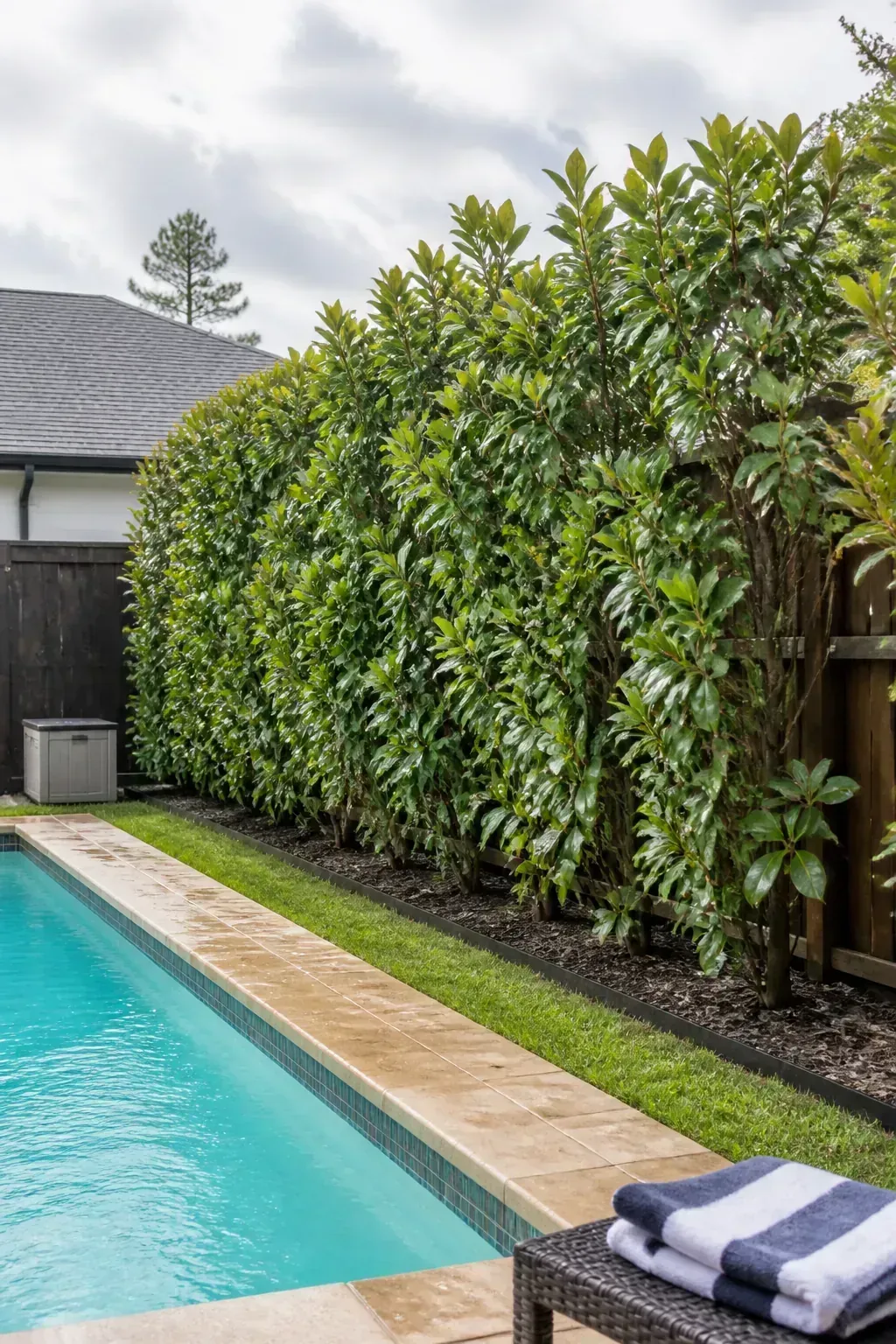
Sweet viburnum can quickly form a glossy dense background in frost-light climates, making it useful where eye-level privacy matters more than a narrow footprint. Its broad leaves contrast well with fine grasses.
This is a large shrub, not a small border plant. Verify regional suitability and pest pressure, provide its mature width, and keep flowers, berries, and routine leaf drop at a sensible distance from the skimmer.
Podocarpus for Upright Year-Round Structure
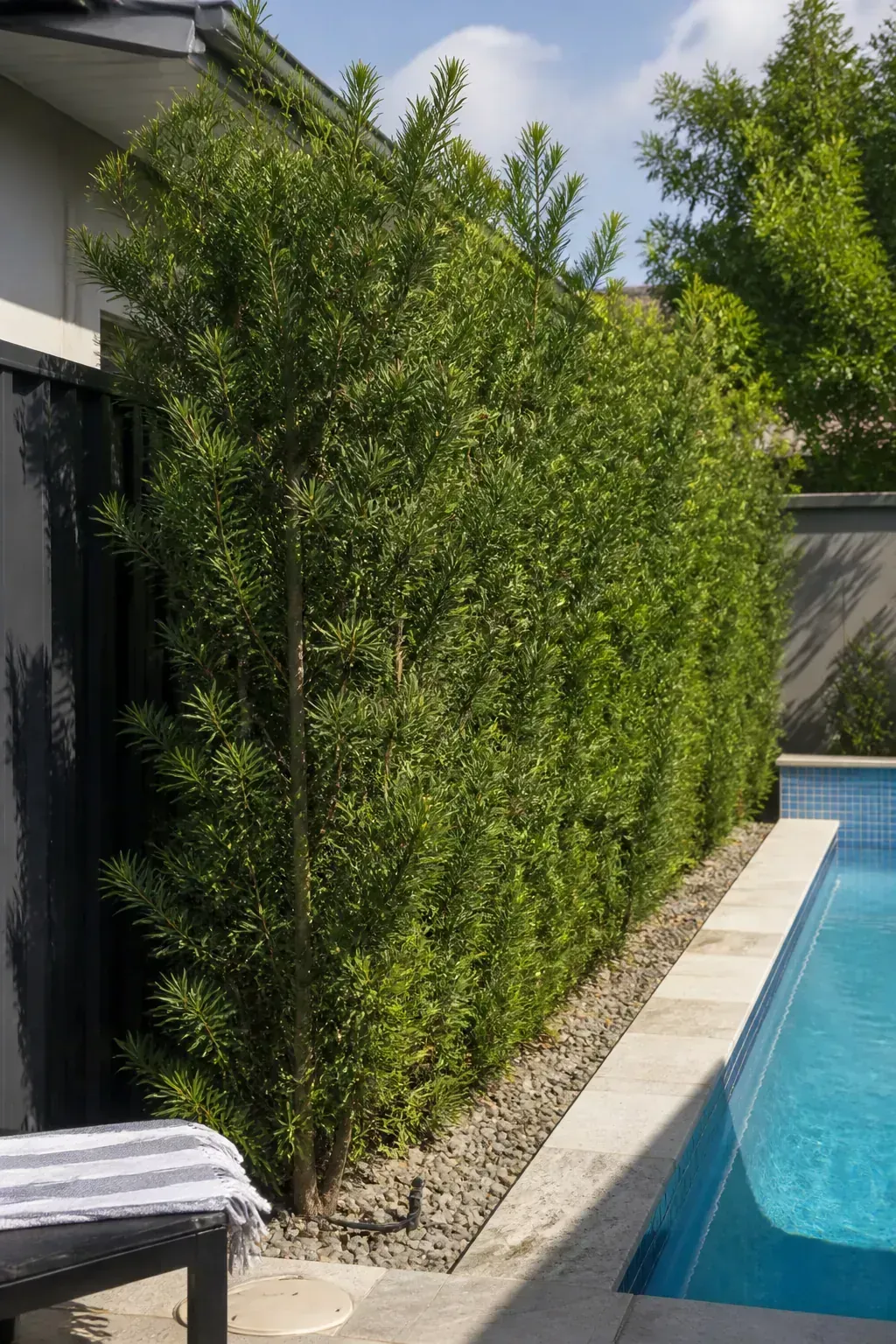
Podocarpus offers narrow upright evergreen structure in climates where it thrives. It can be trained as a hedge or left looser, and its deep green foliage gives pale pool paving a cooler visual edge.
Select an appropriate cultivar, because mature height and width vary substantially. Avoid overplanting for instant coverage; provide drainage, watch local toxicity considerations, and plan selective pruning rather than repeated flat topping.
Pittosporum for a Soft Green Boundary
Compact or upright pittosporum cultivars can make a rounded evergreen screen with small-to-medium leaves and a less formal texture than clipped boxwood. They work especially well as the middle privacy layer.
Match the species to local heat, cold, wind, and disease conditions. Account for flowers, seed, and mature width, and avoid varieties considered invasive in your region.
Griselinia for Mild Coastal Climates
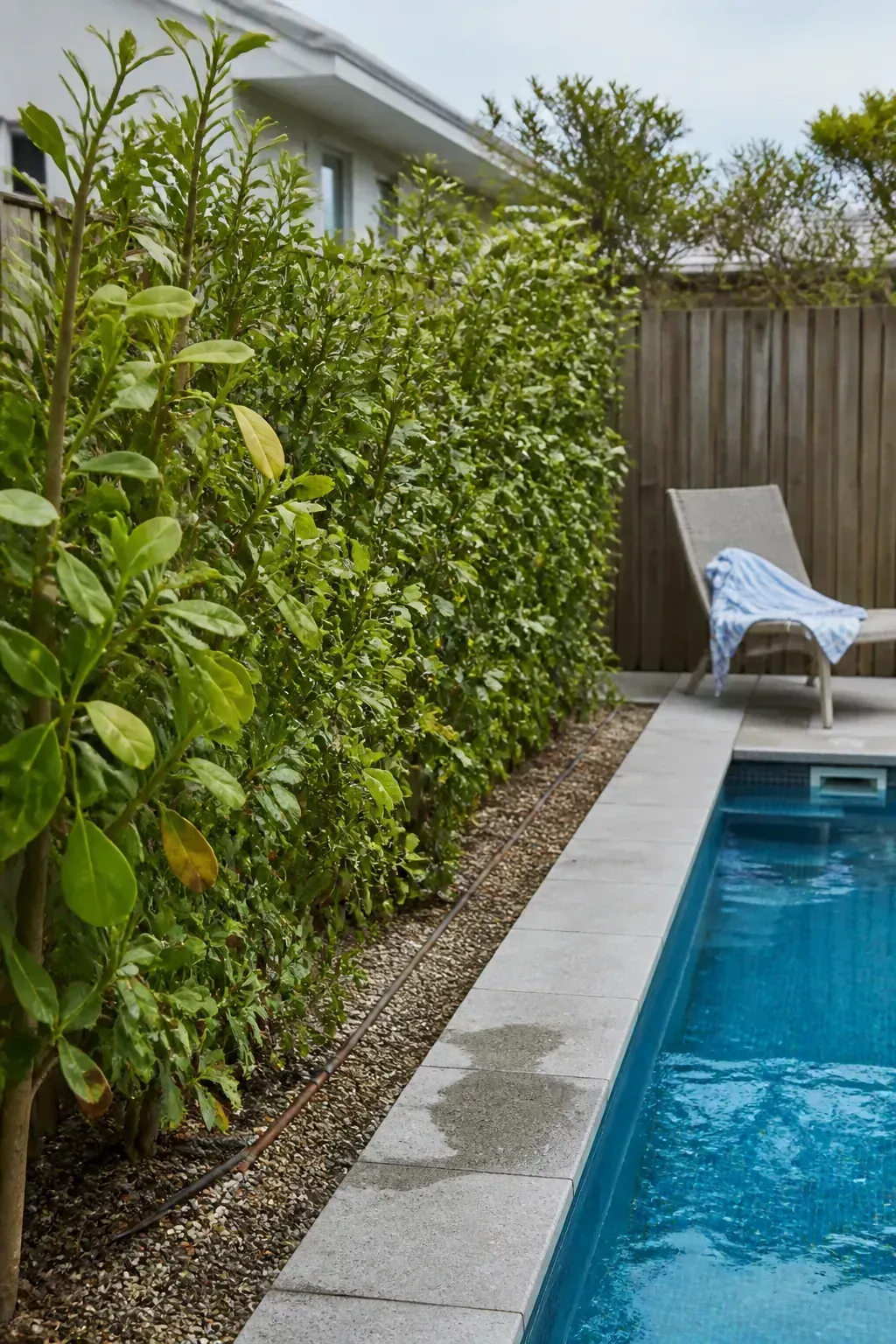
Griselinia’s glossy evergreen leaves and fresh green color suit mild maritime climates. A loose hedge can withstand coastal exposure and create a bright, clean pool boundary.
It is not a universal cold-climate choice. Provide sheltered establishment, soil drainage, and enough room for its final thickness; confirm regional performance before relying on it for year-round privacy.
Dwarf Yaupon Holly for Low Evergreen Mass
Dwarf yaupon holly creates a durable low evergreen mass in suitable warm climates. Its small leaves and naturally mounded form help frame a pool without blocking supervision.
Choose a fruiting or nonfruiting selection intentionally and confirm local native range or suitability. Keep it at its natural scale rather than forcing it into tiny geometric balls, and allow a maintenance strip behind the coping.
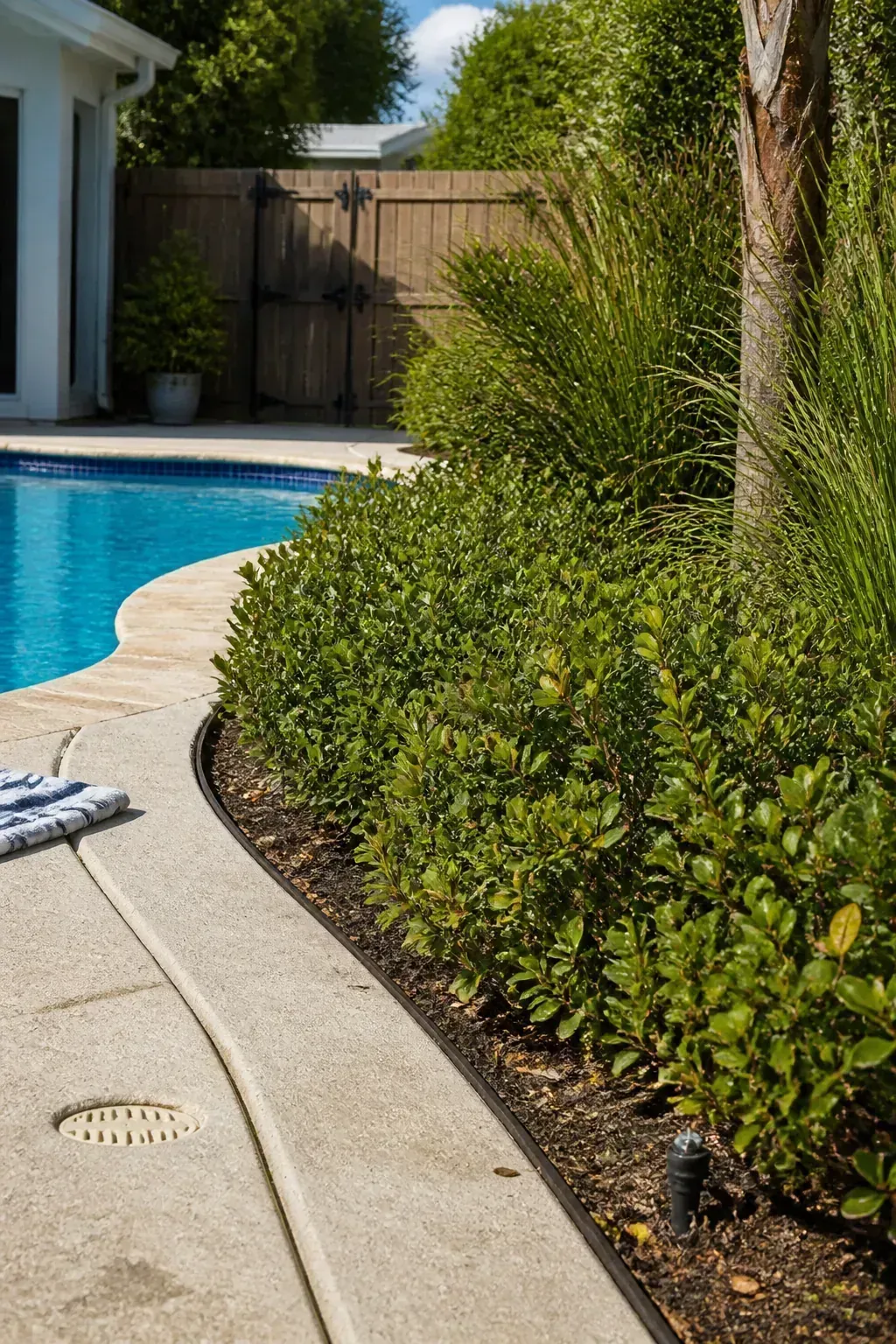
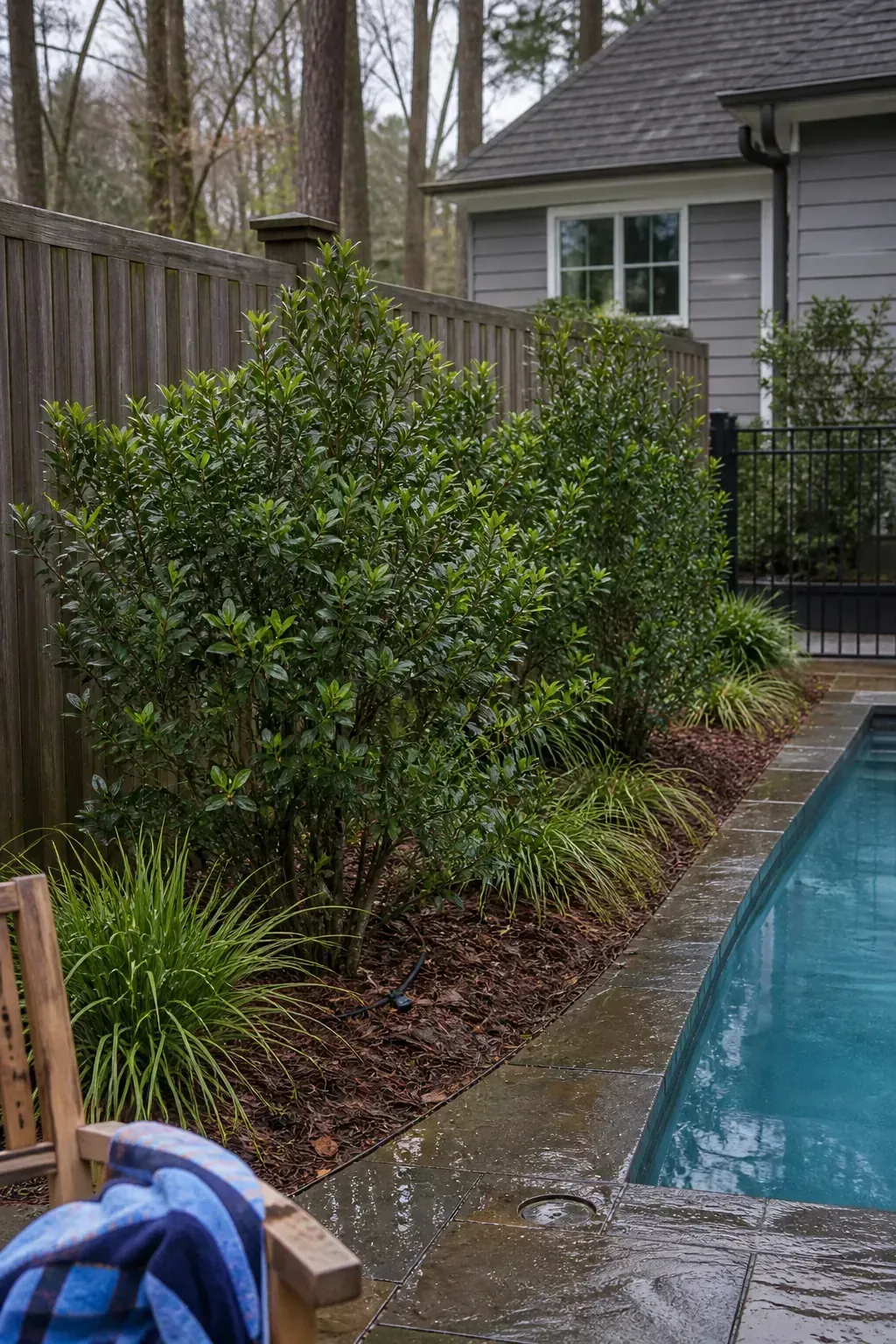
Inkberry Holly for Cooler Acidic-Soil Gardens
Inkberry holly can provide soft evergreen structure in cooler regions with suitable acidic, moisture-retentive but drained soil. Compact cultivars make useful low privacy layers.
It may thin at the base or struggle in alkaline dry sites. Test conditions, choose a well-scaled cultivar, and combine it with lower companions rather than planting a tight monoculture against the deck.
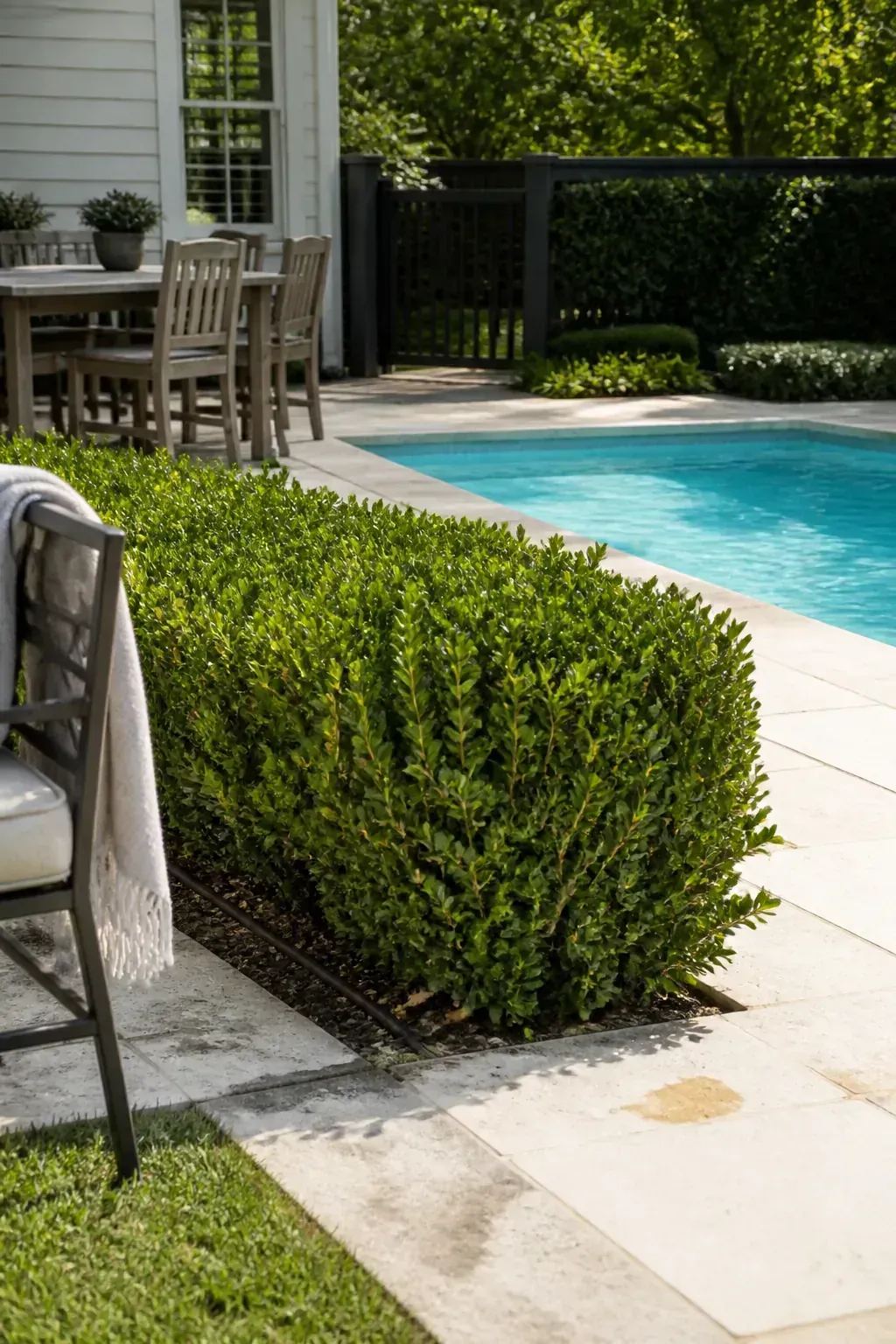
Boxwood for Controlled Low Structure
Where boxwood remains healthy and appropriate, restrained groups can define corners and provide winter structure without demanding much height. Pairing it with grasses keeps the pool garden from feeling stiff.
Boxwood diseases, pests, and climate stress vary widely. Consult local guidance, choose resistant cultivars, provide airflow, and avoid placing a continuous hedge where splashing or reflected heat is severe.
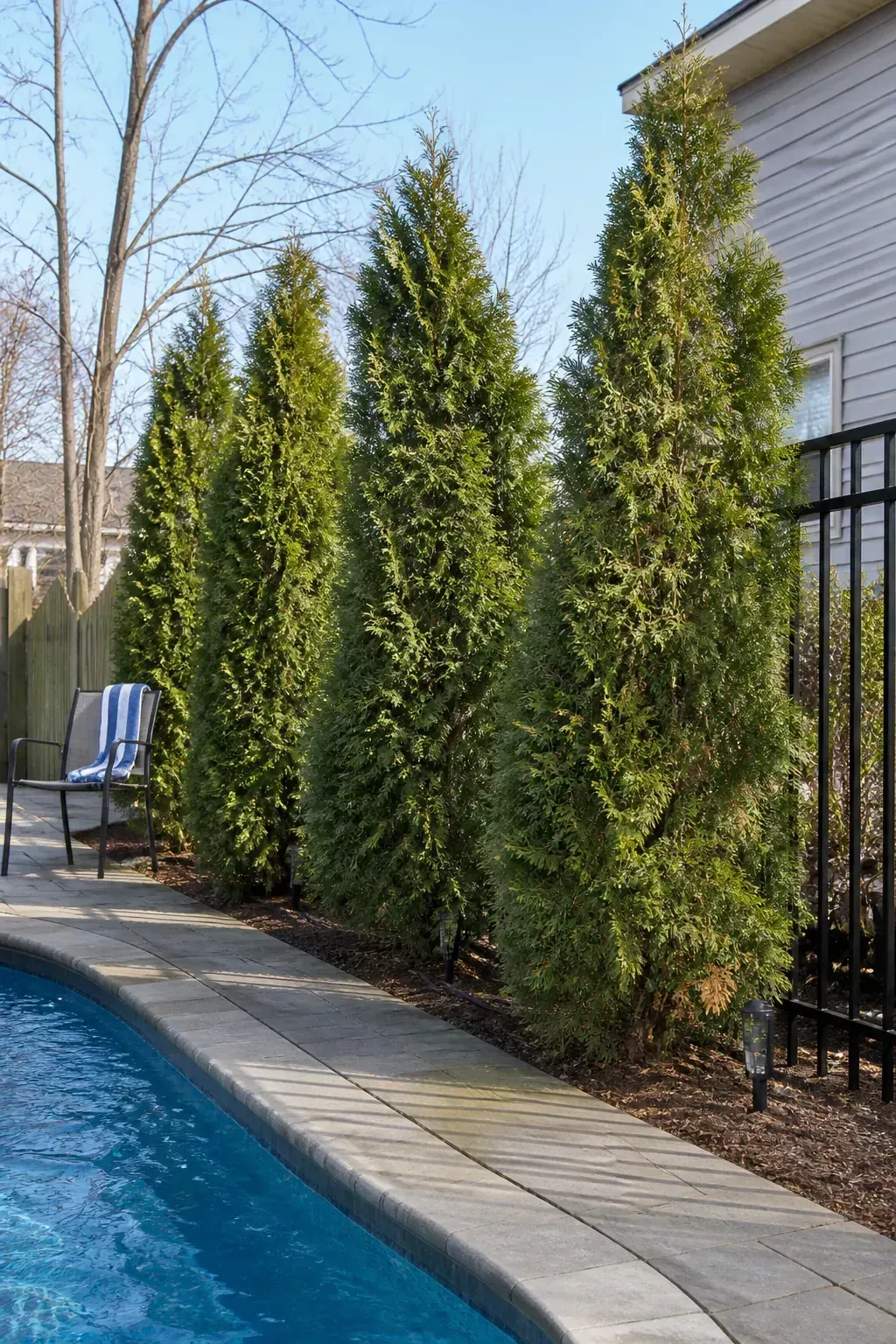
Arborvitae for Cold-Climate Vertical Screening
Narrow arborvitae cultivars can create year-round height in colder climates and small side yards. They are most convincing in staggered groups mixed with lower planting rather than an unbroken green wall.
Check snow load, deer pressure, wind burn, irrigation, and exact cultivar width. Give trunks a realistic setback from paving and do not crowd young plants simply to get immediate privacy.
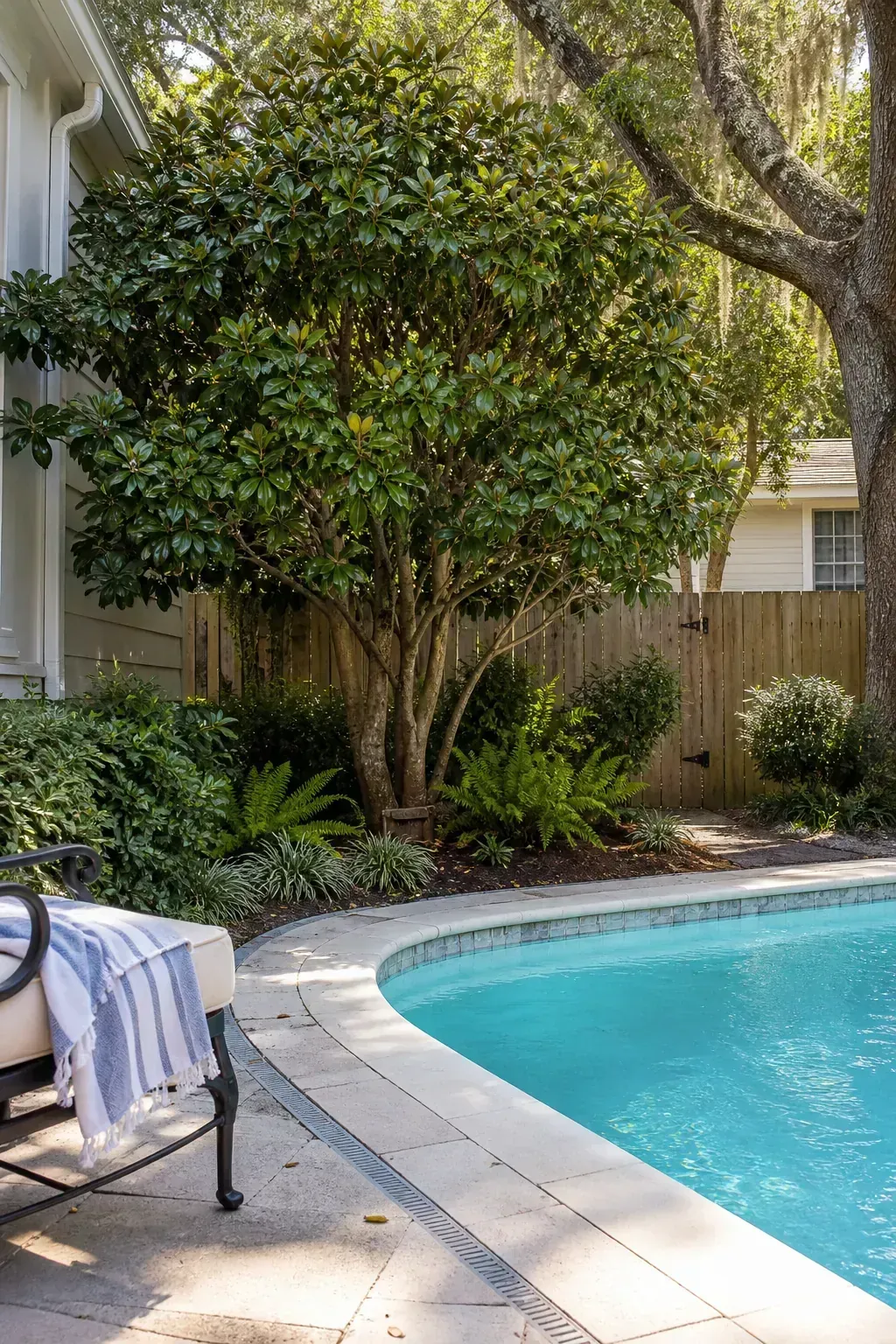
Little Gem Magnolia for Evergreen Canopy
A compact southern magnolia cultivar can provide glossy evergreen leaves, a defined canopy, and screening above fence height in warm suitable regions. It works best as a feature tree beyond the main deck.
Large leaves and flowers still fall, so low-litter does not mean no litter. Confirm root space, hardiness, mature width, and distance from the shell before choosing it as one of the small trees around a pool.
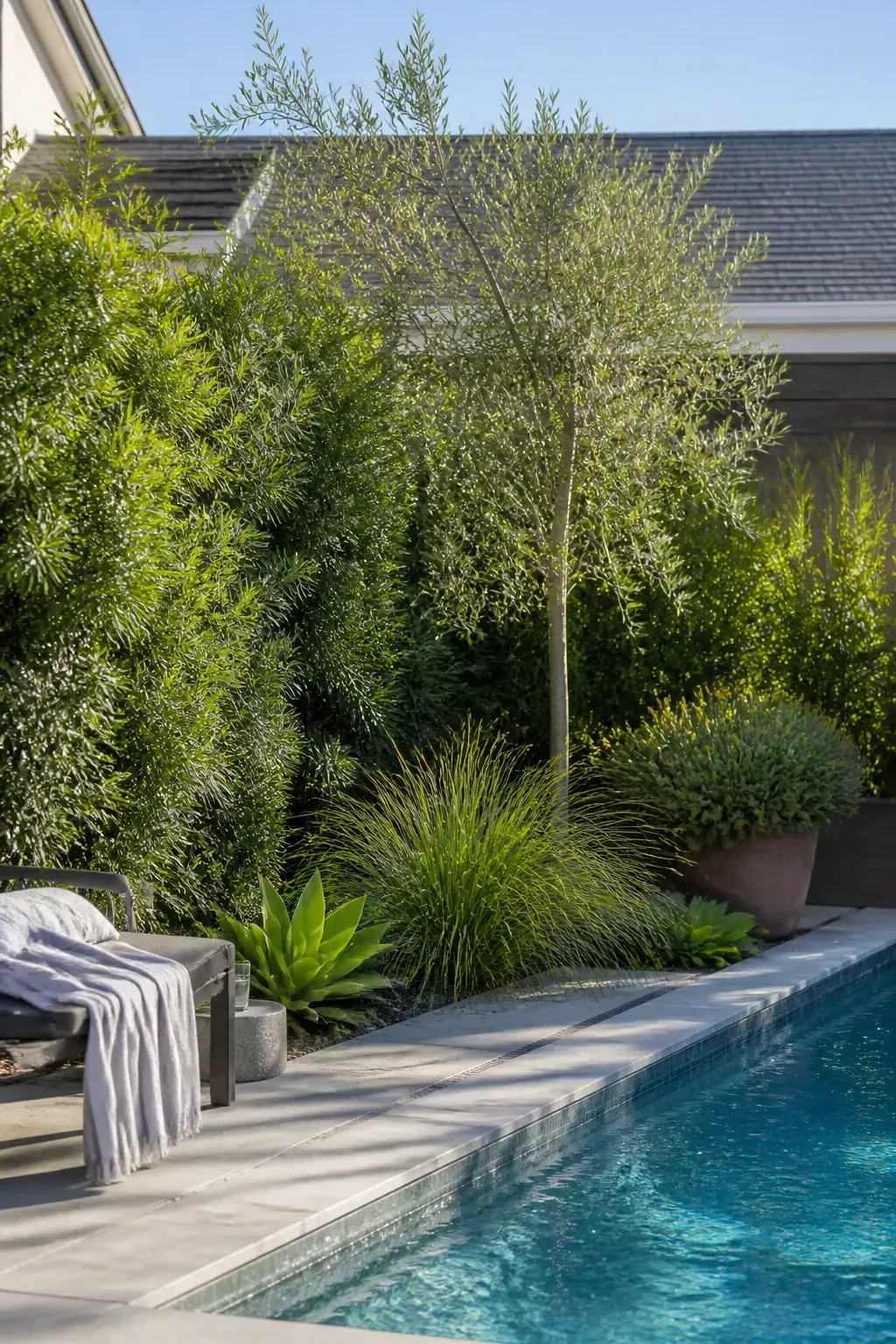
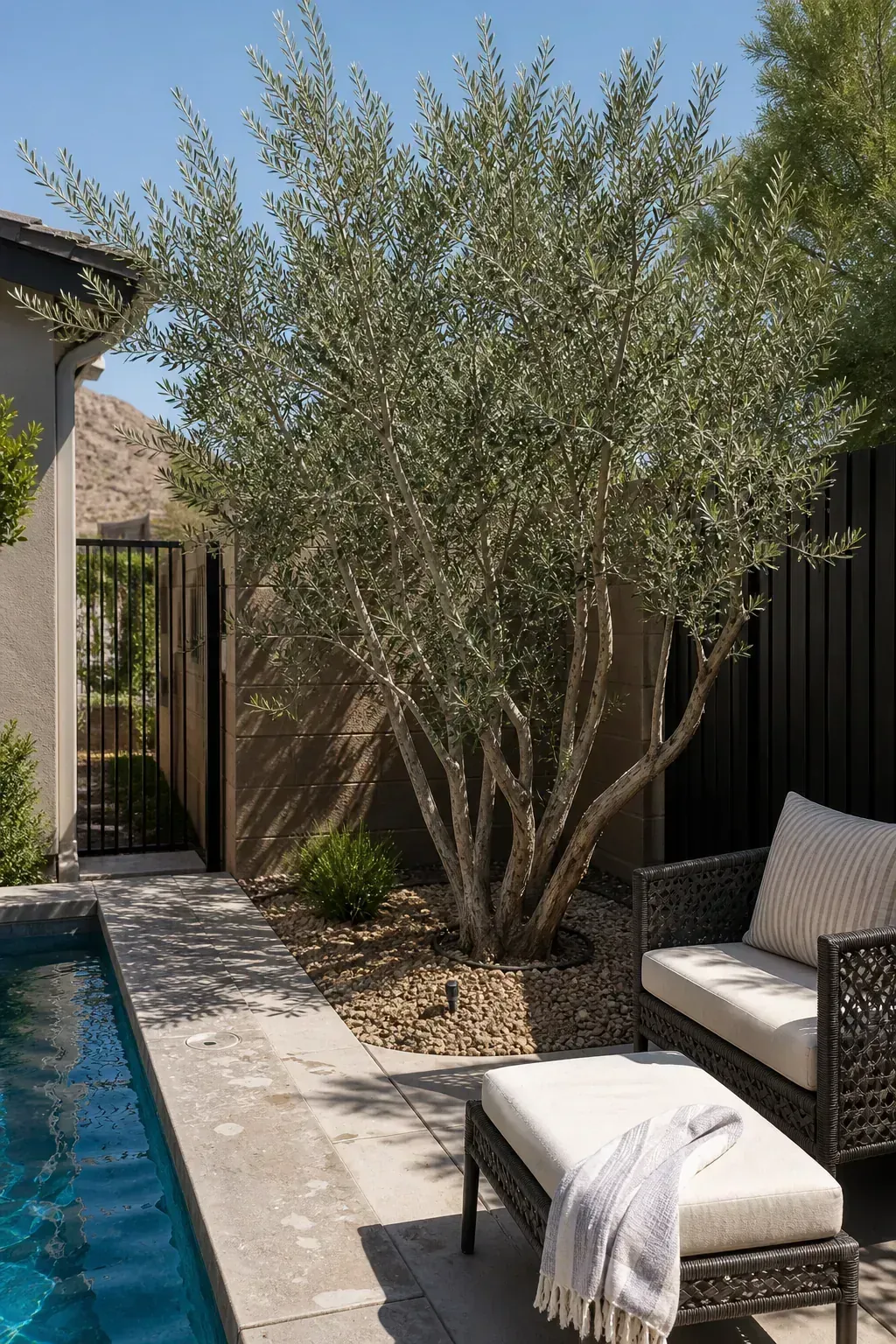
Olive for Dry-Climate Sculptural Shade
A fruitless or low-fruiting olive selection brings silver foliage, textured bark, and filtered shade to hot dry pool gardens. One well-placed tree can soften much more hardscape than many small pots.
Verify local invasiveness, pollen rules, fruiting behavior, and winter tolerance. Keep canopy out of the water, allow real root volume, and use it where reflected heat and lean well-drained soil suit the plant.
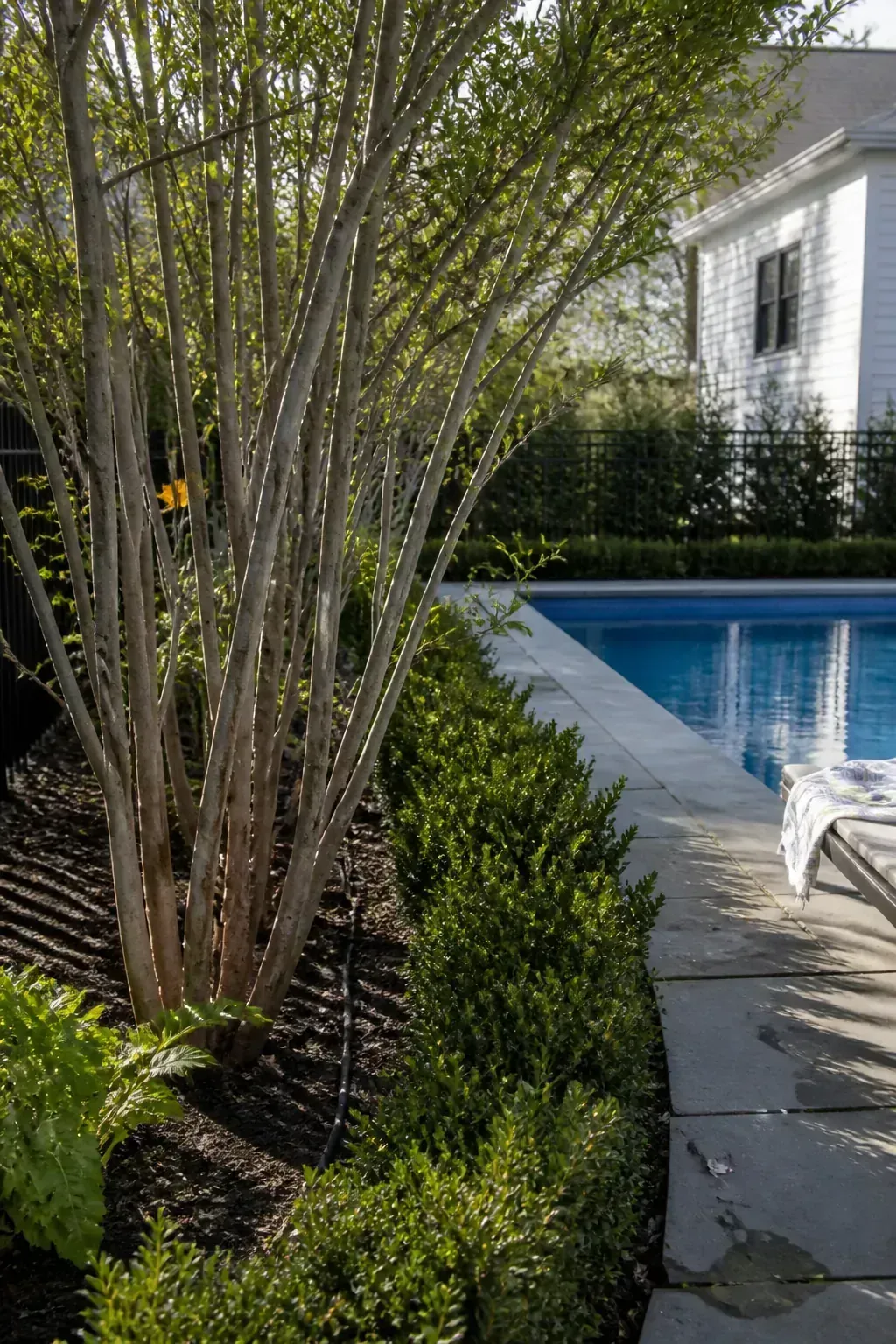
Serviceberry for Seasonal Multi-Stem Form
In suitable temperate gardens, a multi-stem serviceberry offers spring bloom, airy summer leaves, and elegant bark. It can screen an elevated window without creating a solid evergreen wall.
It is deciduous and produces flowers, fruit, and autumn leaves, so place it beyond a buffer rather than over the water. Check local species, bird activity, disease pressure, and mature canopy before planting.
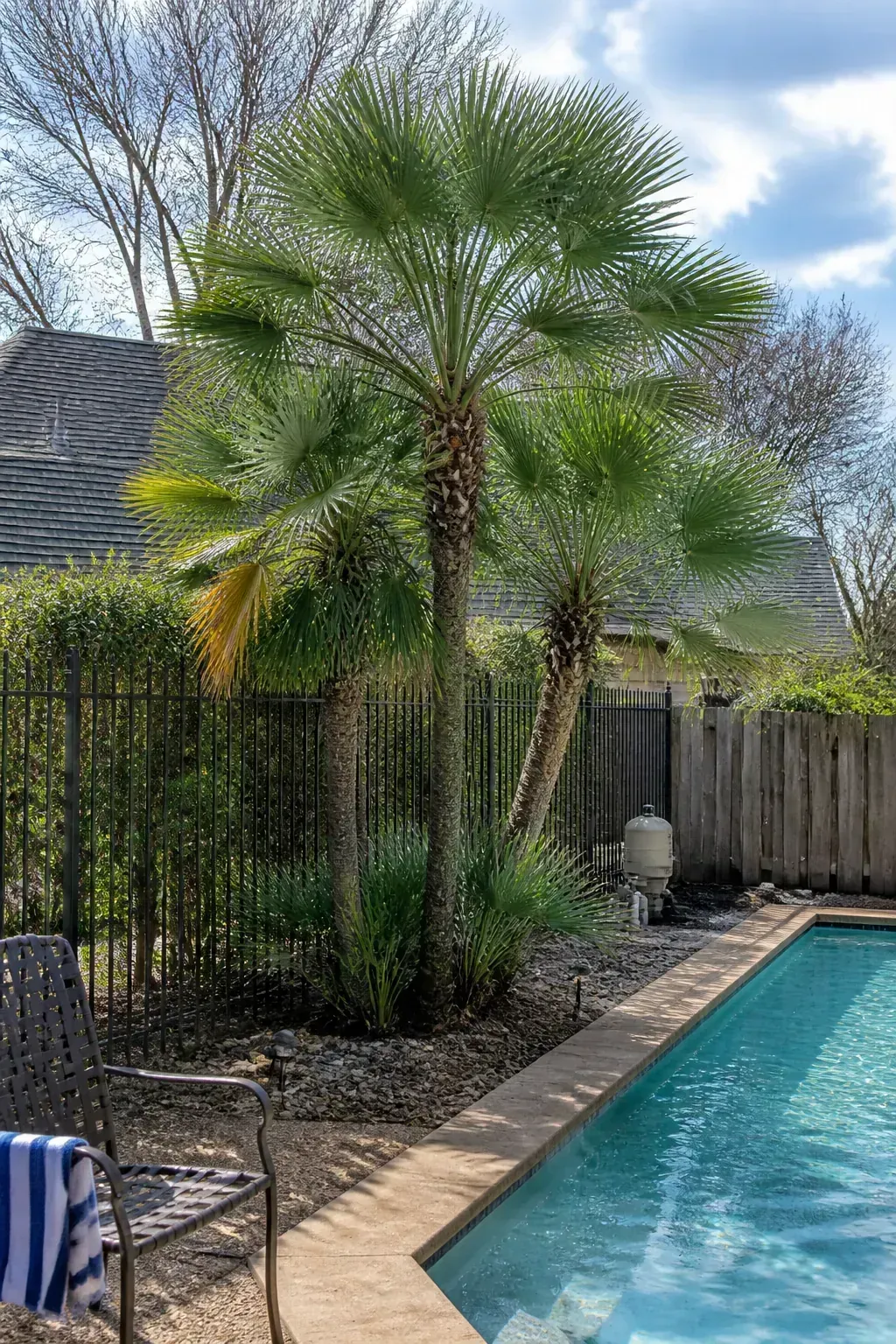
Windmill Palm for a Cold-Tolerant Palm Accent
Windmill palm can bring a palm silhouette to some cooler climates where many tropical species fail. Its narrow trunk and high crown make it useful as a vertical accent beyond seating.
Cold tolerance depends on age, exposure, soil, and local conditions. Falling fronds still require removal, and trunks must not create a climbable condition beside pool barriers.
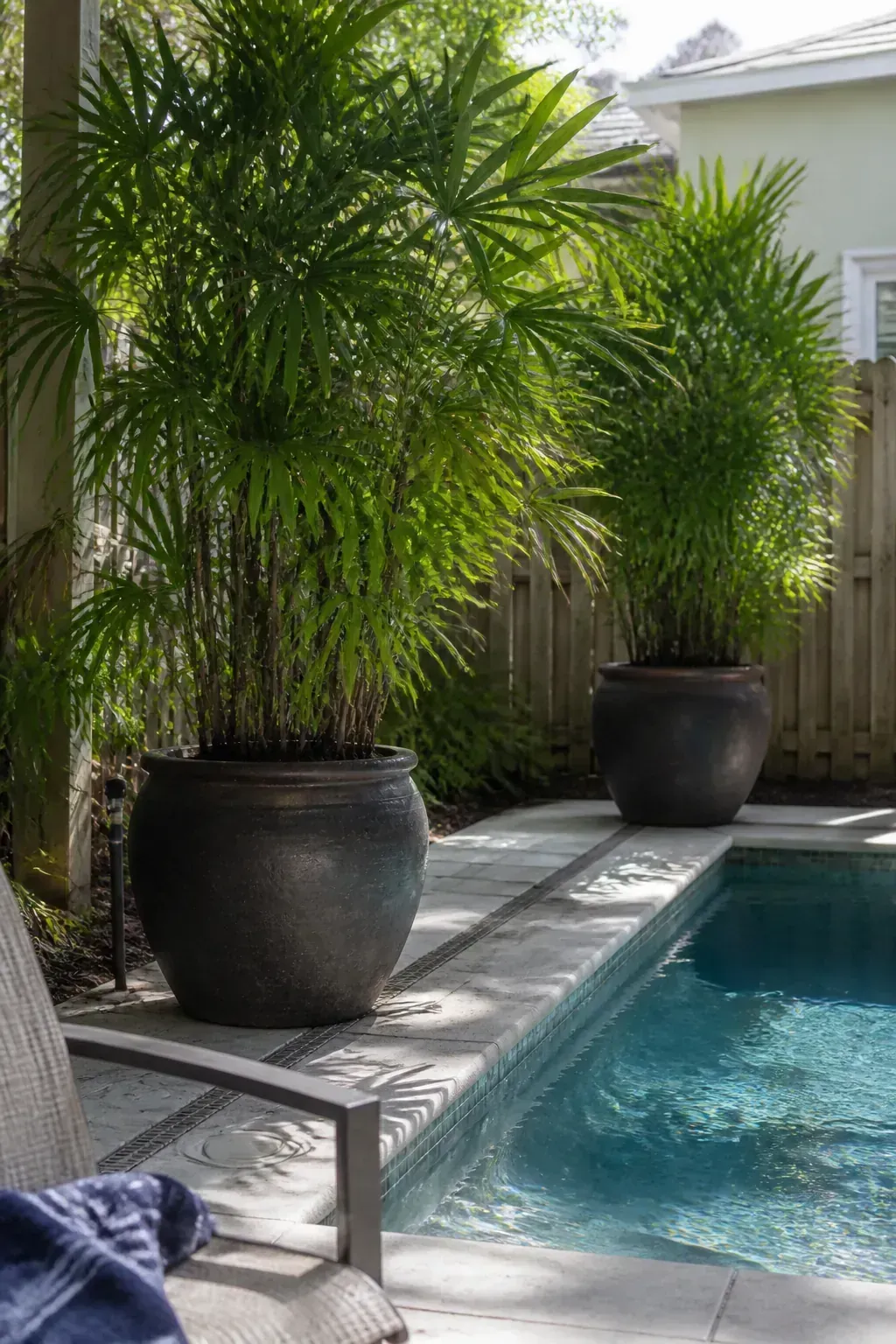
Lady Palm for Shaded Containers
Lady palm can form a refined upright screen in large containers or sheltered beds with bright shade and adequate humidity. Its clustered stems fit poolside planter ideas where roots must stay contained.
Protect it from severe cold, harsh midday reflection, and drying wind. Use a stable pot with generous soil volume and drainage, and divide or repot before the container becomes dangerously top-heavy.
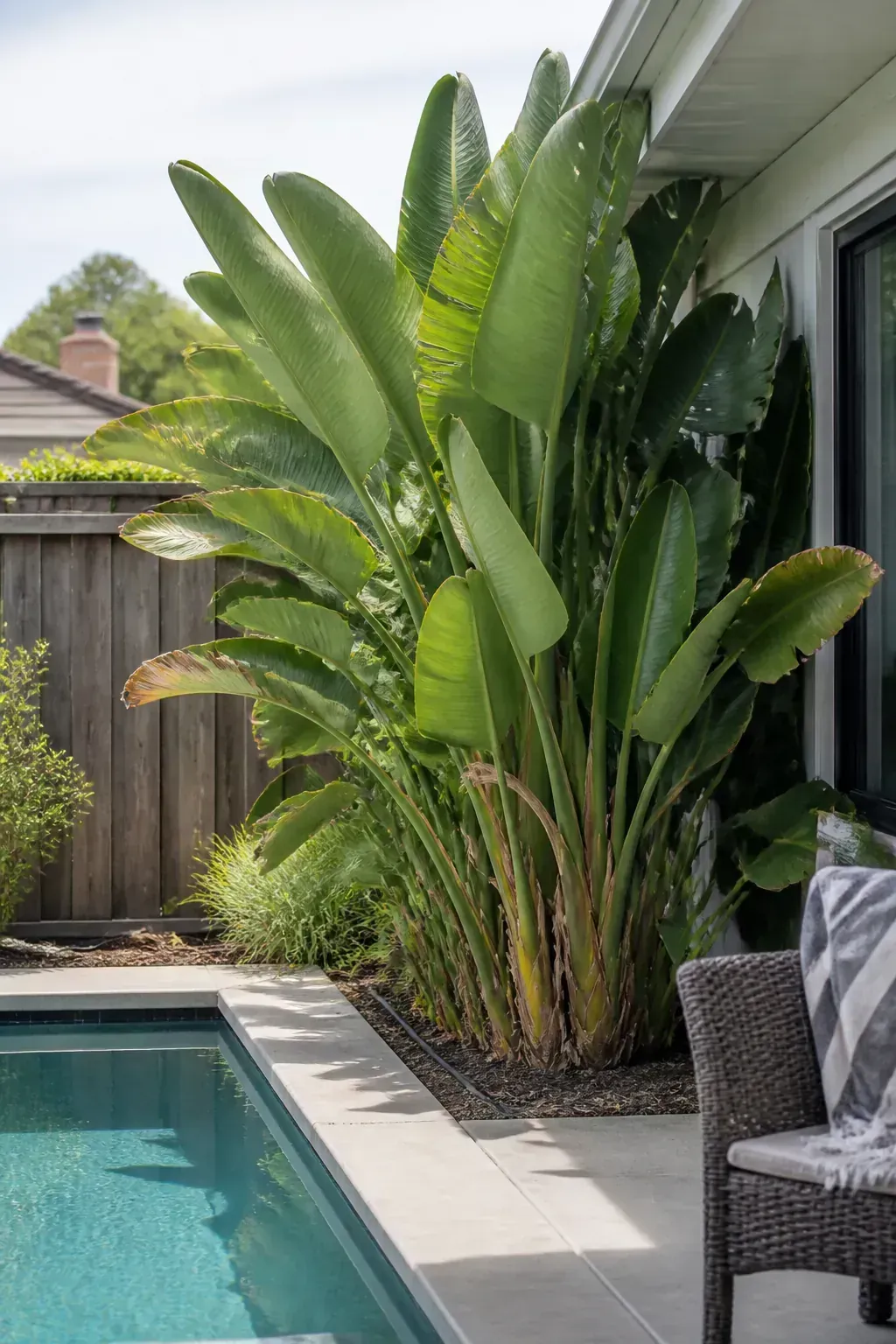
Bird of Paradise for Bold Warm-Climate Foliage
Bird of paradise supplies large upright leaves and a clear tropical gesture in frost-free or protected climates. A grouped planting can turn a blank pool corner into a strong foliage focal point.
Wind can shred leaves and flowers create seasonal debris. Give the clump mature width, keep it beyond circulation, and verify whether the standard or giant species fits the available scale.
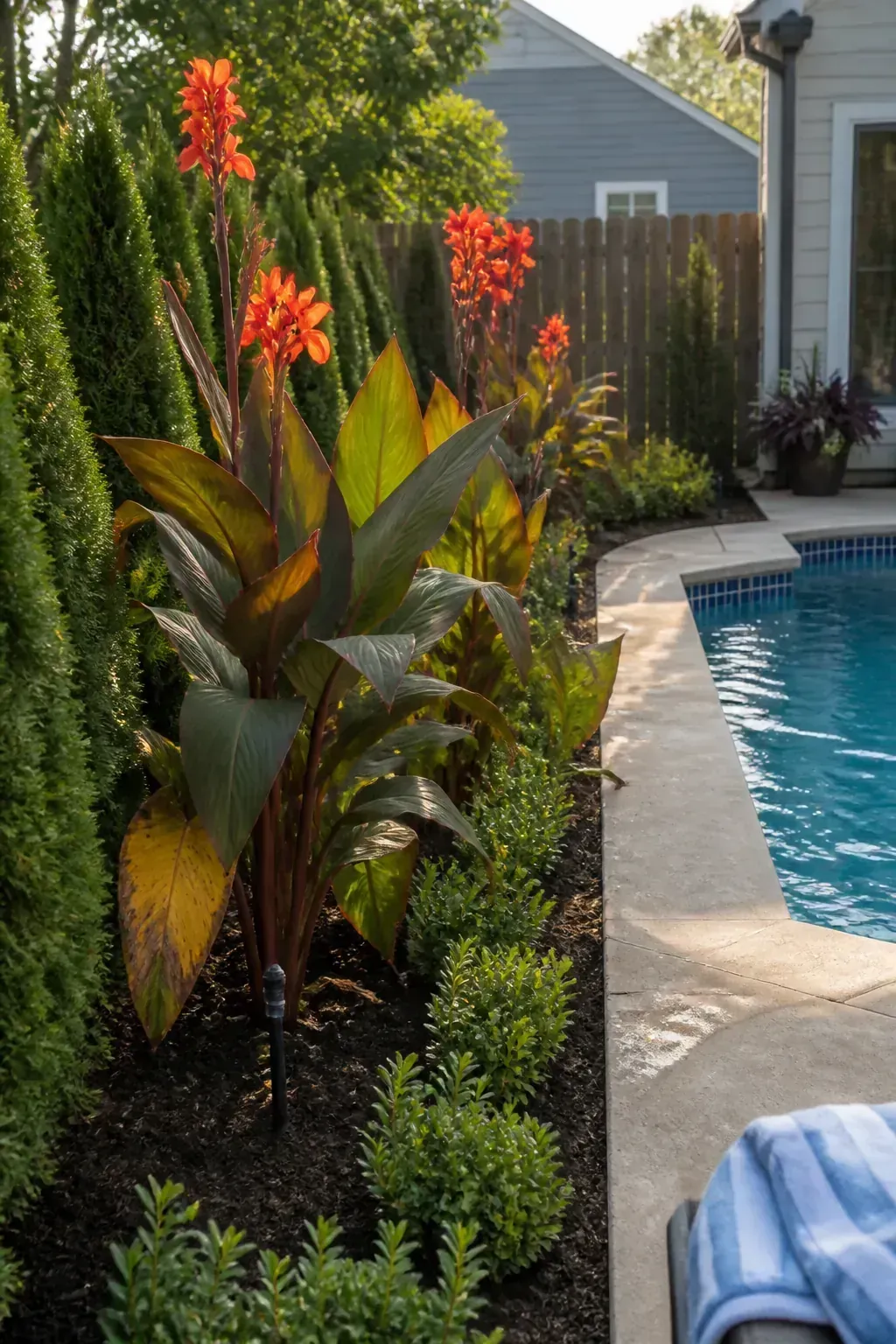
Canna for Seasonal Tropical Color
Canna offers fast summer height, broad leaves, and controlled color in regions where it performs well. It can deliver the look of tropical plants around a pool without committing to a large woody screen.
It dies back or needs lifting in cold climates and produces spent flowers and leaves. Place it behind a low buffer, choose noninvasive cultivars, and plan seasonal cleanup before the bed is designed.
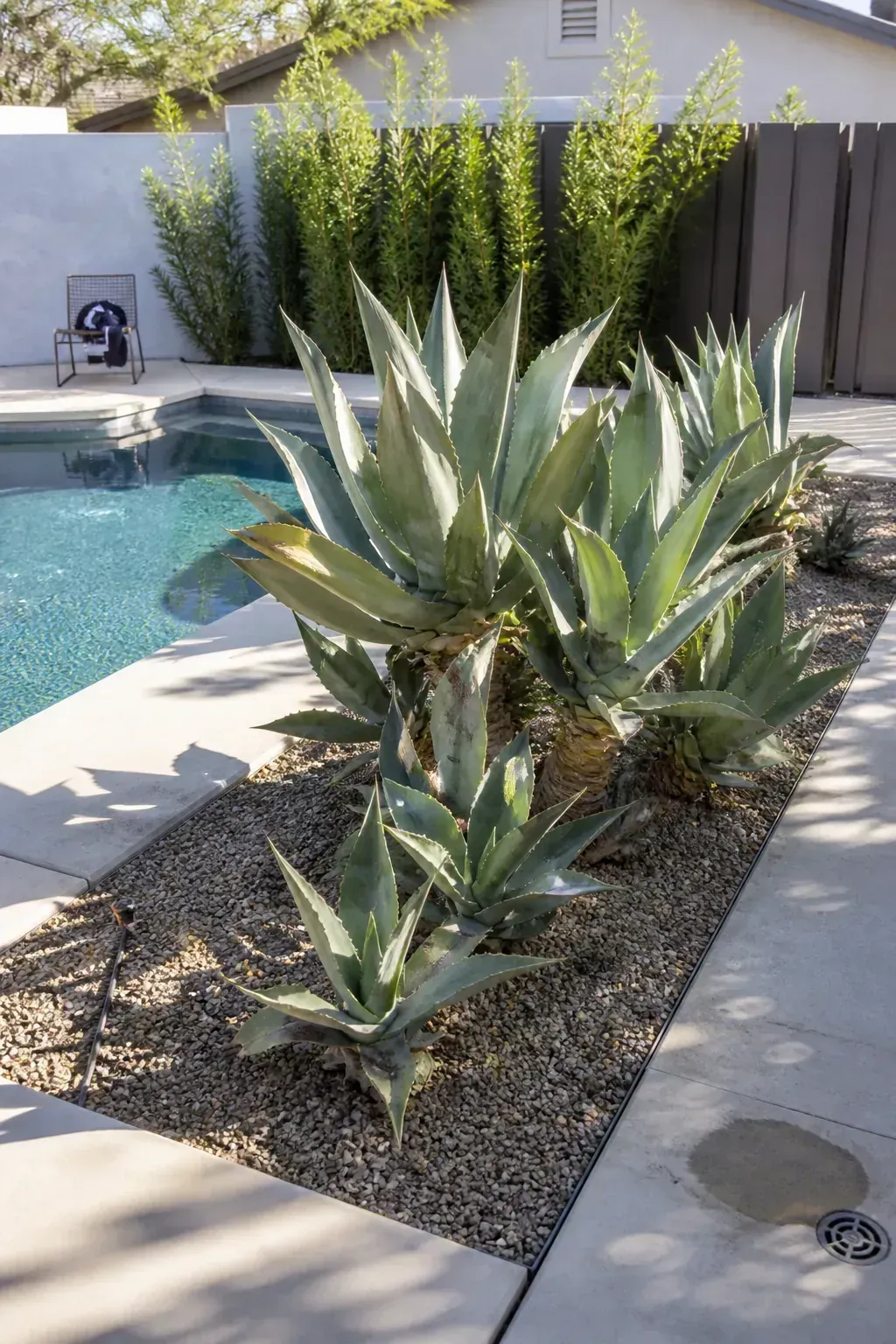
Soft-Leaf Agave for Sculptural Dry Gardens
Spineless or soft-tip agave selections create strong rosette form under reflected sun with modest irrigation. They suit dry-climate beds outside the wet route and pair well with grasses.
Confirm the plant is truly soft enough for the location and noninvasive locally. Keep all pointed foliage away from swimmers, allow for pups and mature diameter, and provide excellent drainage and frost protection where necessary.
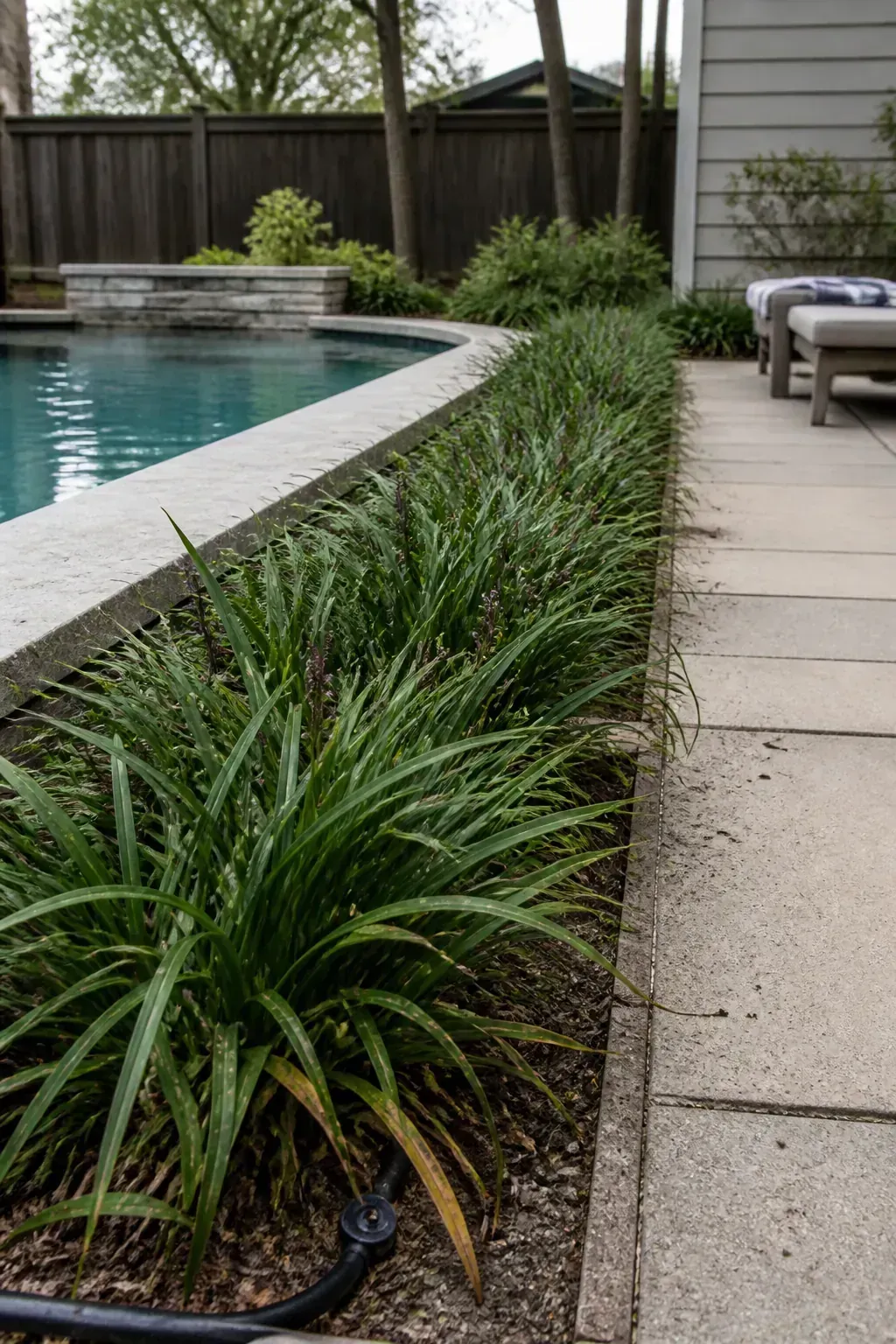
Liriope for a Tough Low Edge
Liriope can create a simple grassy edge in climates and soils where it is recommended. Its low form is useful for preserving sightlines and tying larger shrubs to the deck.
Some species spread aggressively in some regions, and flowers or berries add seasonal material. Choose a clumping, locally acceptable cultivar and maintain a firm boundary.
Muhly Grass for Airy Seasonal Movement
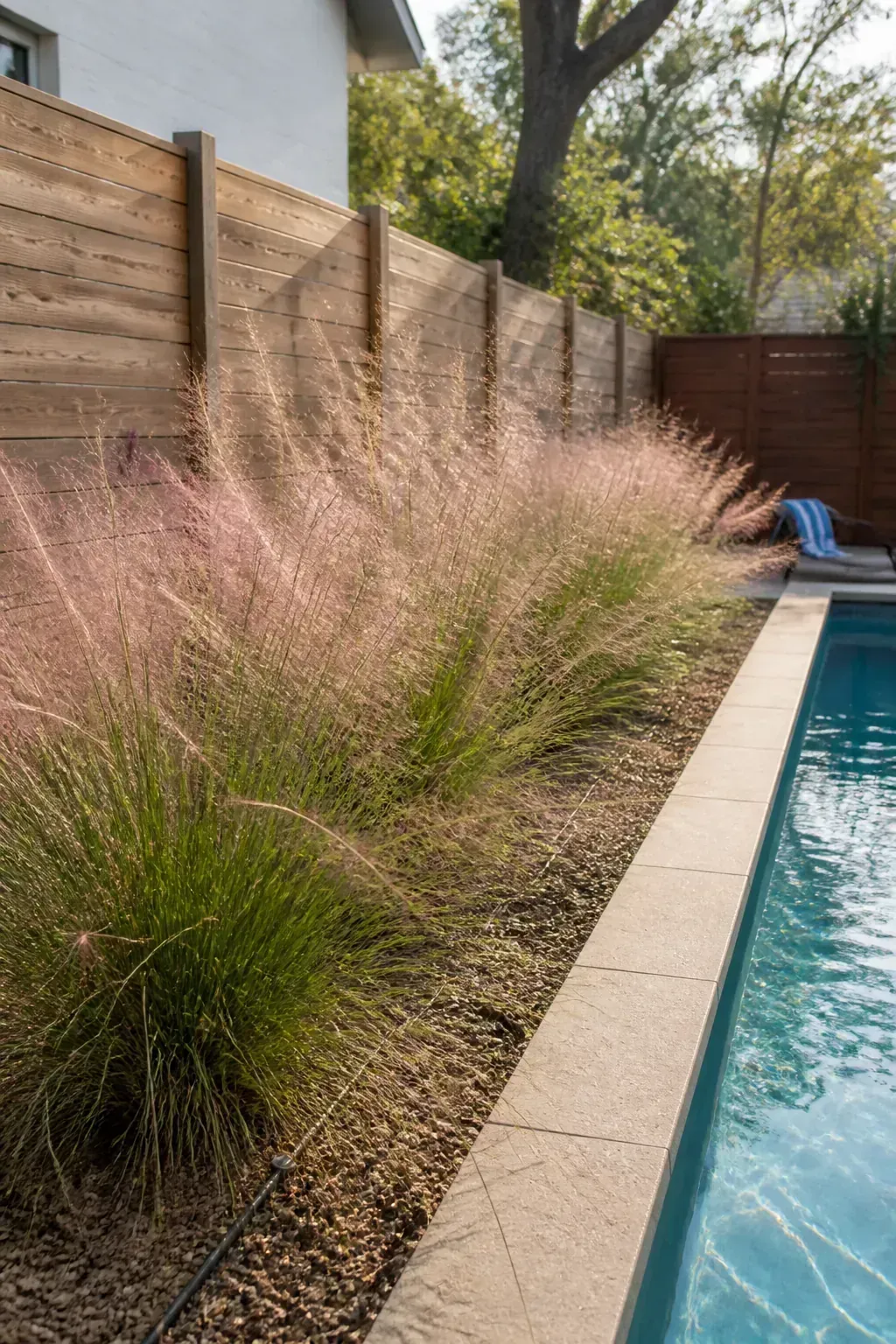
Muhly grass provides fine green foliage and a cloud of seasonal seed heads in suitable sunny climates. Repeated drifts soften long hard edges without needing tall woody mass.
Set it beyond the nearest coping so cutback debris and seed heads are manageable. Confirm local species and invasiveness, keep irrigation moderate, and preserve the full mature fountain shape.
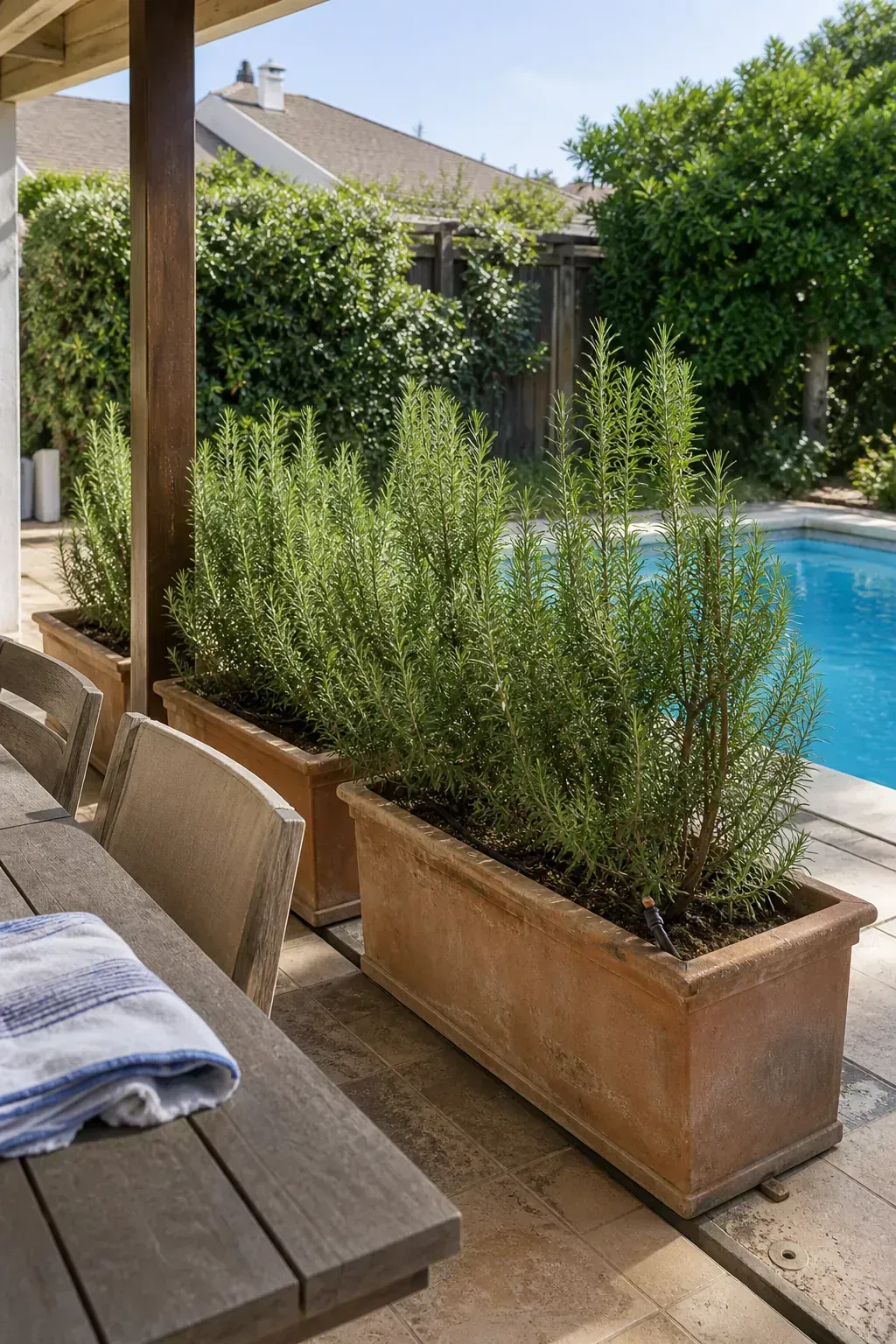
Rosemary for Sunny Poolside Planters
Rosemary brings evergreen texture and fragrance to hot sunny planters, especially near dining or an outdoor kitchen. Upright cultivars can form a low informal screen while trailing types soften pot edges.
It needs sharp drainage and can fail in wet soil or severe cold. Keep strong fragrance and pollinator activity near dining rather than at the steps, and replace woody plants when they outgrow the composition.