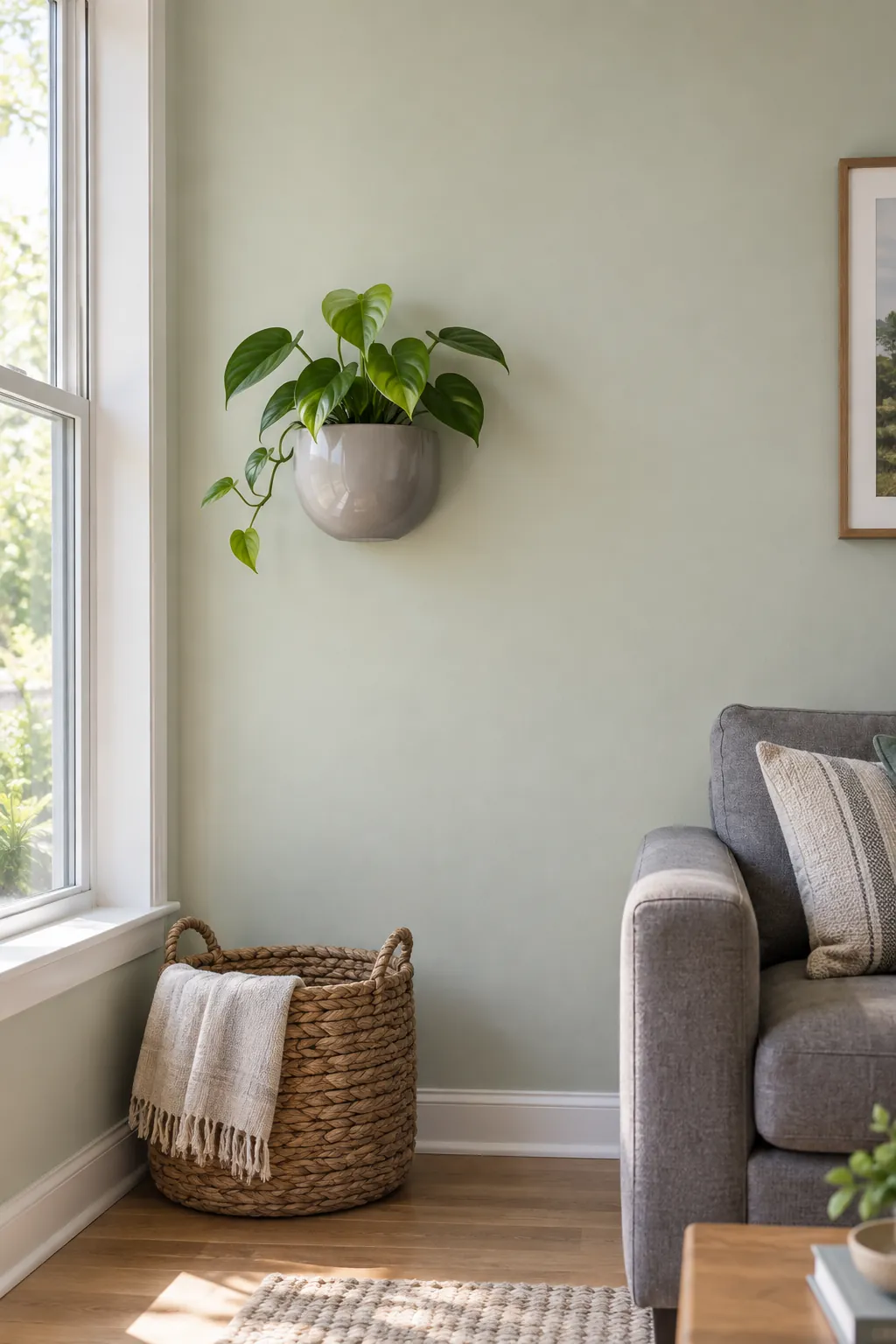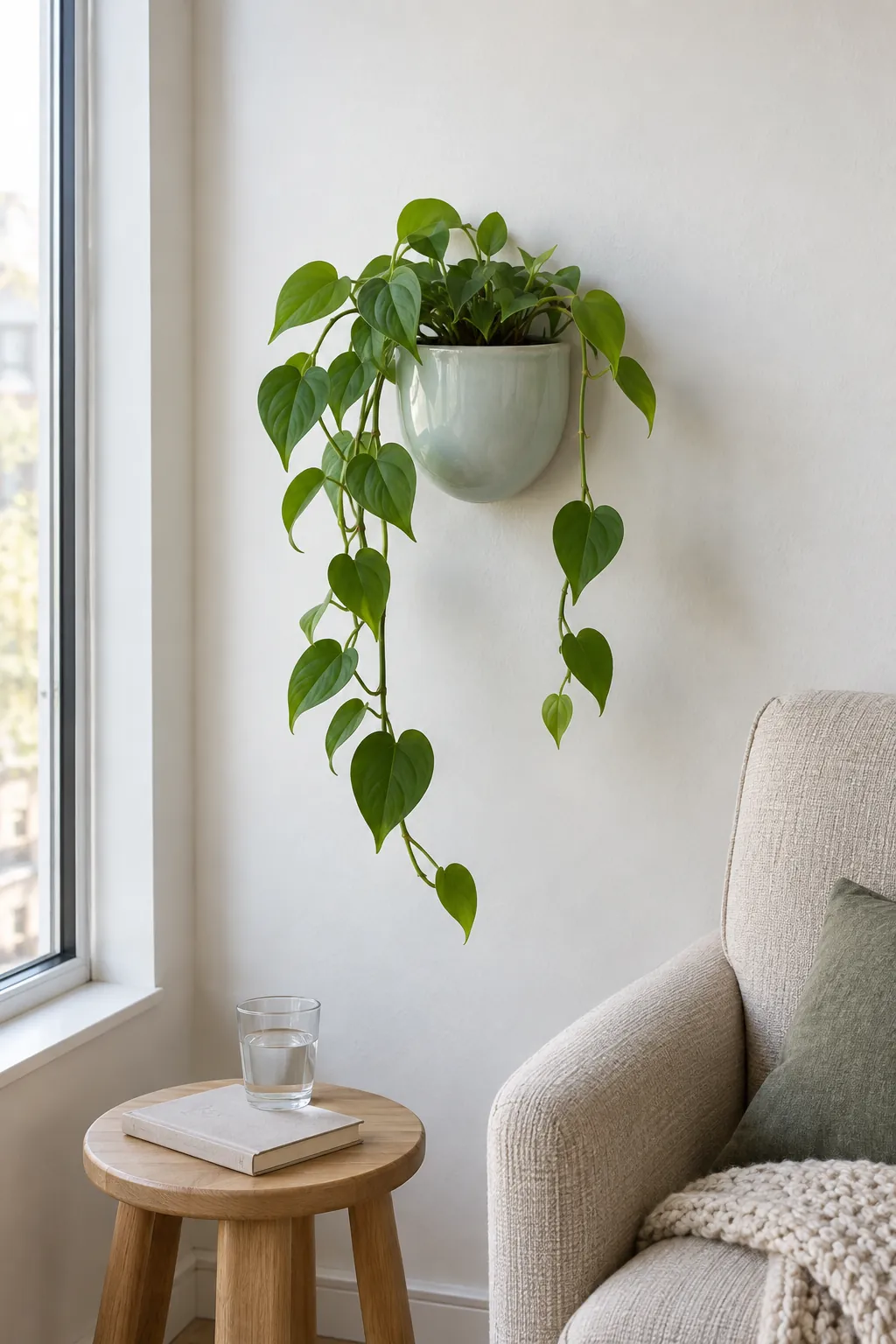
A beautiful wall pot becomes frustrating when you cannot water it without soaking the wall. Start with enough light, a secure mounting point, and an opening that lets you lift the plant out. Then choose the ceramic shape that belongs in your room.
A simple pocket with a removable inner pot
A ceramic pocket can hide a plastic nursery pot while leaving its rim accessible. Lift the plant out for watering, let it drain fully, and empty any water collected inside the outer shell before replacing it. Check the opening against your actual pot rather than relying on the planter’s exterior width.
This is an especially useful starting point when you like handmade ceramic planters but do not want to drill fired clay. A tapered nursery pot is often easier to remove than one with a wide rolled lip. Leave its base free of any collected runoff so the roots do not remain submerged.
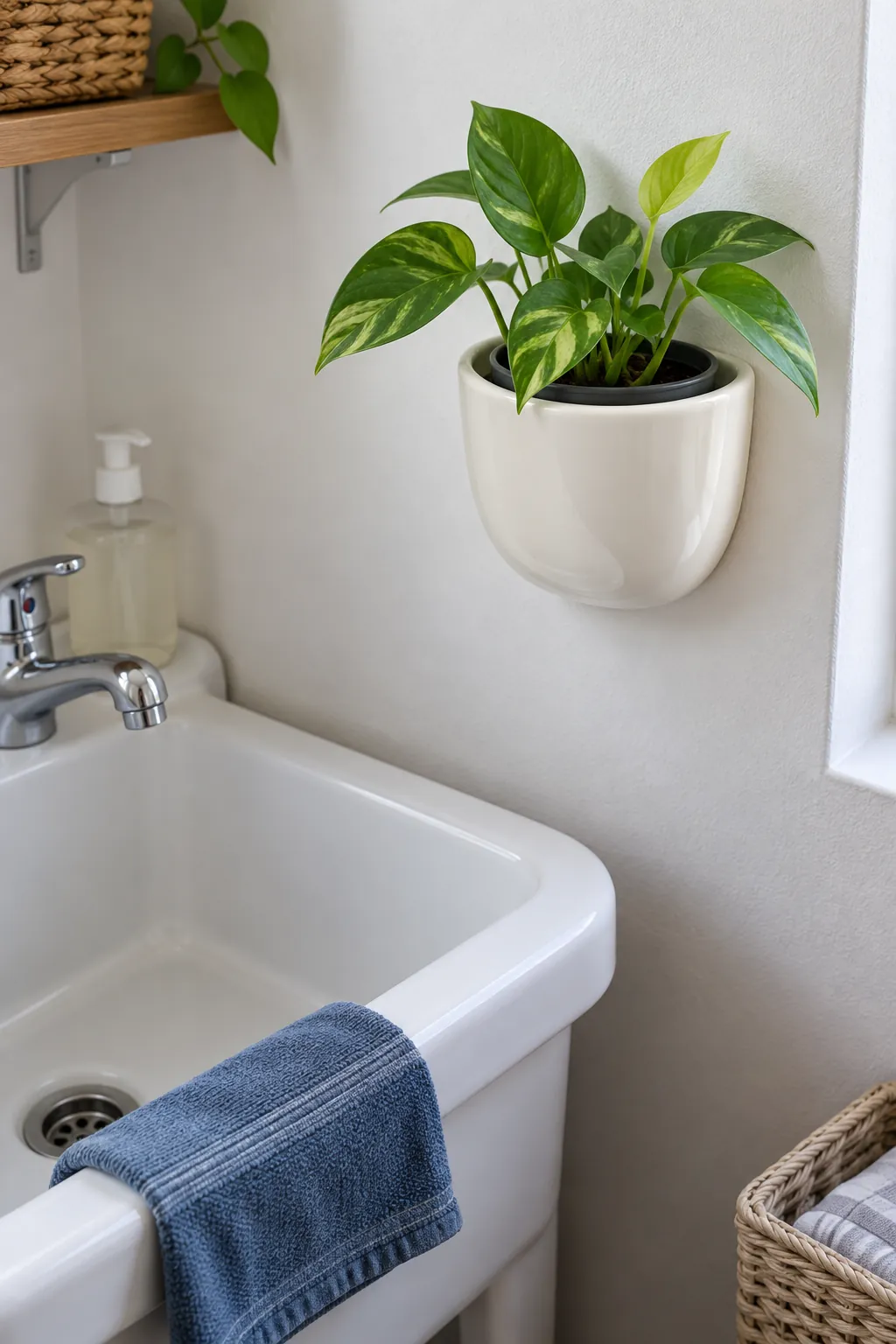
A half moon planter beside a reading chair
The broad curved face of a half moon planter gives a trailing plant a calm backdrop. Place it beside the chair rather than directly above where someone sits, and leave room for stems to grow without brushing a shoulder. A small heartleaf philodendron suits bright indirect light here. Choose a pocket deep enough for a real root ball, since some sculptural versions are intended only for cut stems.
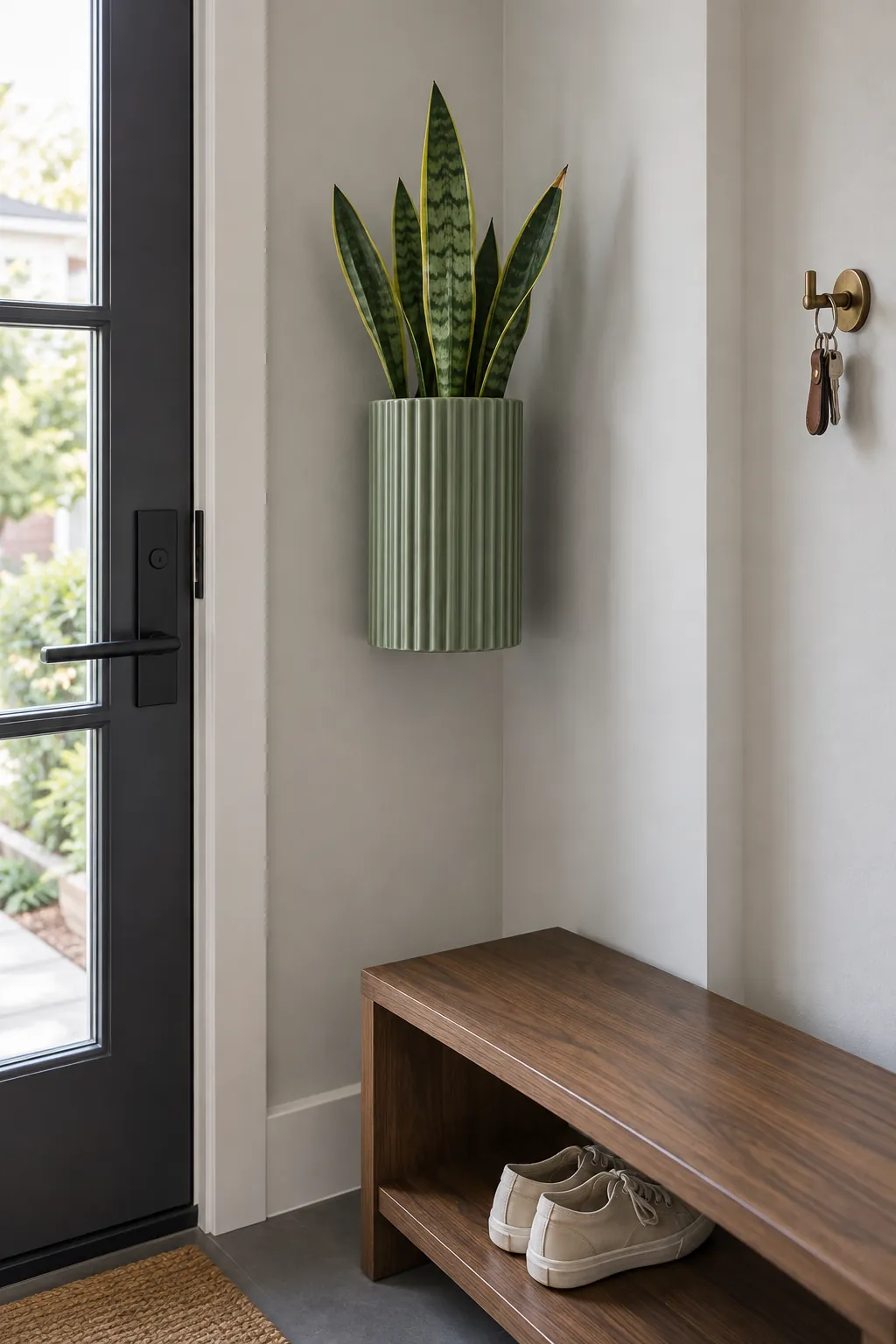
A ribbed cylinder for an upright silhouette
Vertical ribs add detail without competing with sharply shaped leaves. A compact snake plant can suit this shape if the wall receives suitable light and the inner pot has drainage. Keep the top opening wide enough to remove the plant as it grows. A tall ceramic sleeve also raises the center of gravity, so use the manufacturer’s mounting system and account for the fully watered weight.
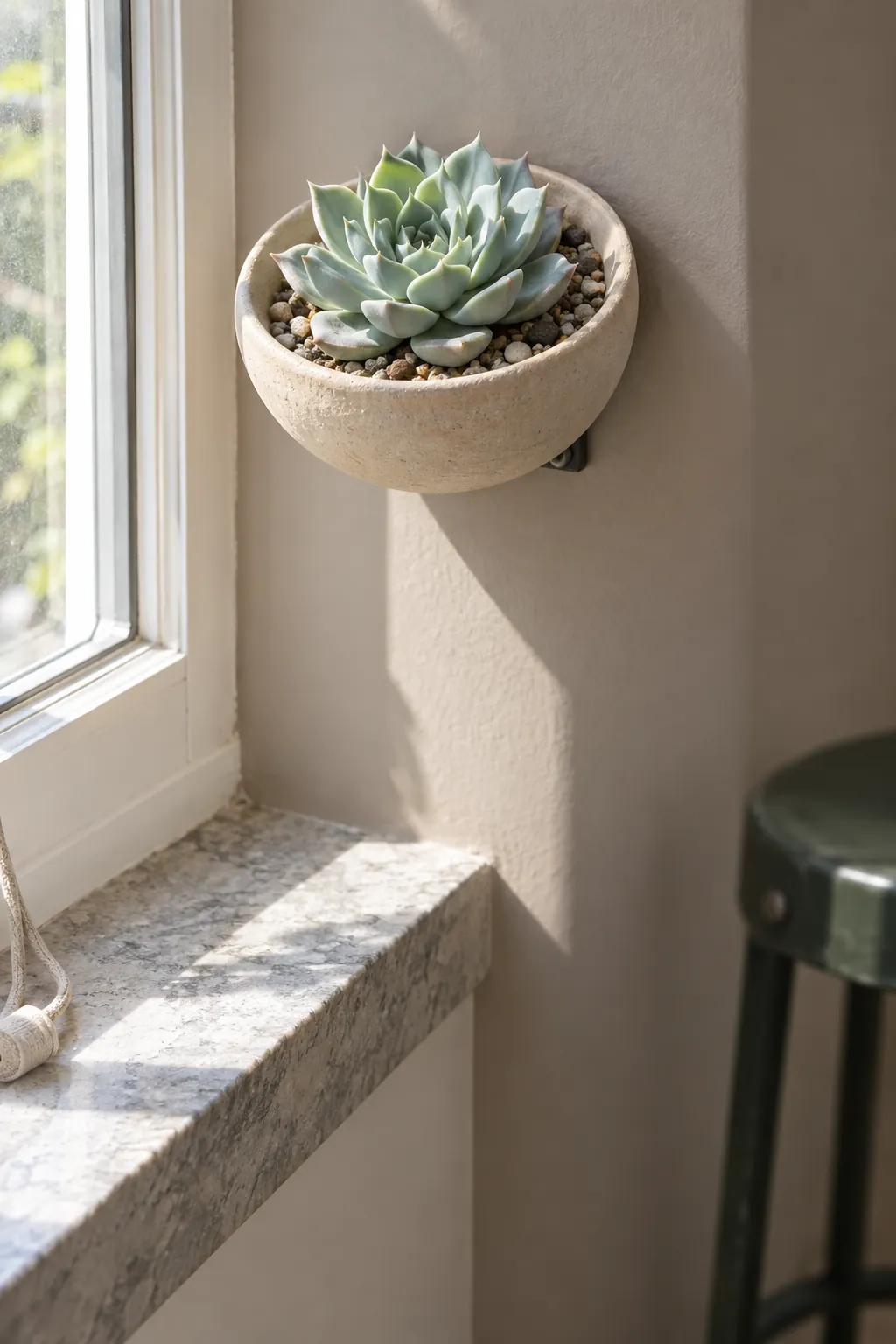
A shallow dish for a bright succulent corner
A shallow wall dish lets a small rosette read clearly against the clay. Treat it as a container for an appropriately shallow rooted plant, not as a place to press loose cuttings upright immediately. Succulents need enough light and a substrate that drains well. A bright window or suitable grow light matters more than matching the leaf color to the glaze.
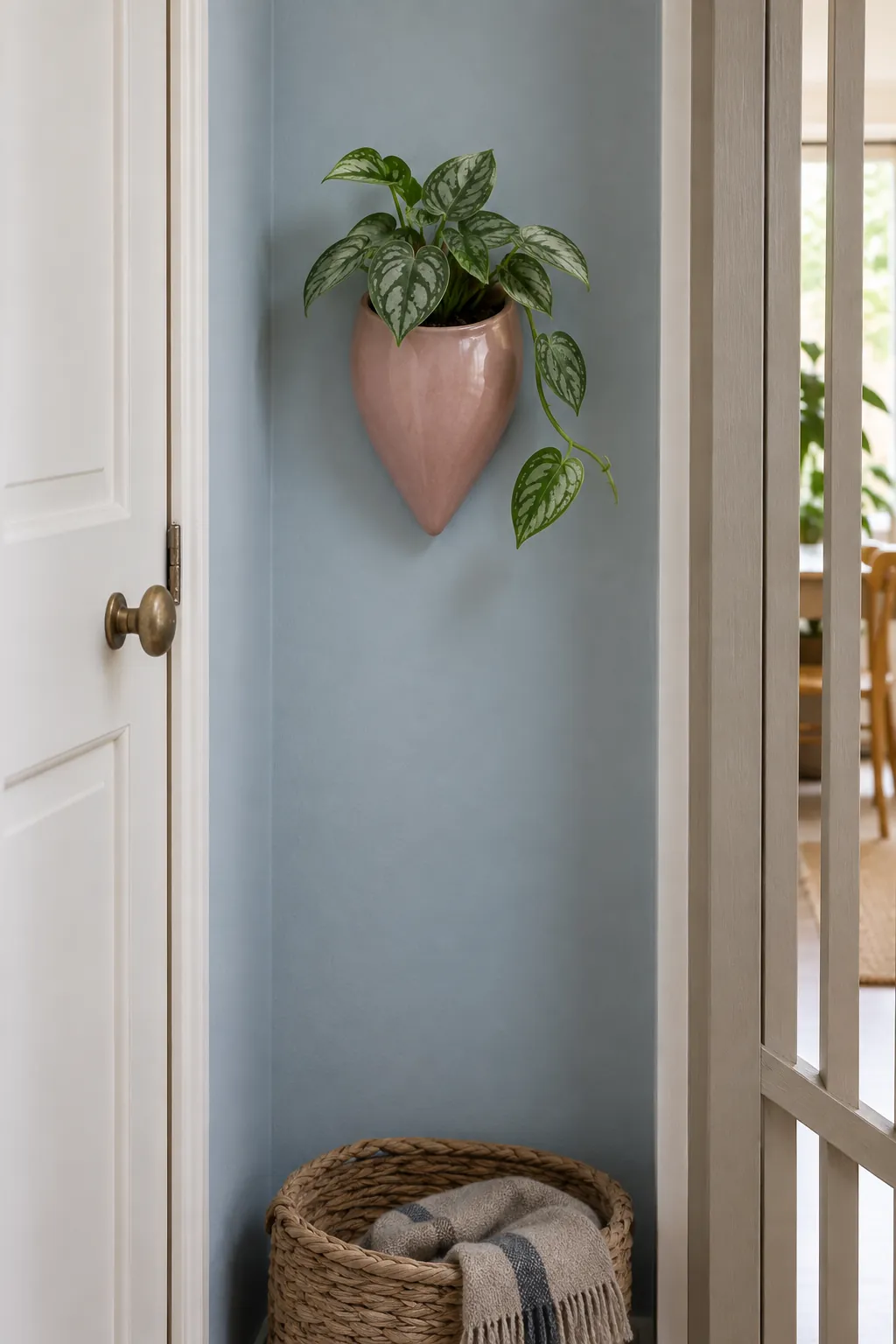
A teardrop pocket in a narrow alcove
A teardrop outline makes use of a wall strip that is too narrow for a shelf. Keep its widest part away from door handles and the path of an opening door. The tapered bottom can make usable soil volume much smaller than it looks. Test the fit of a small nursery pot before committing to a plant.
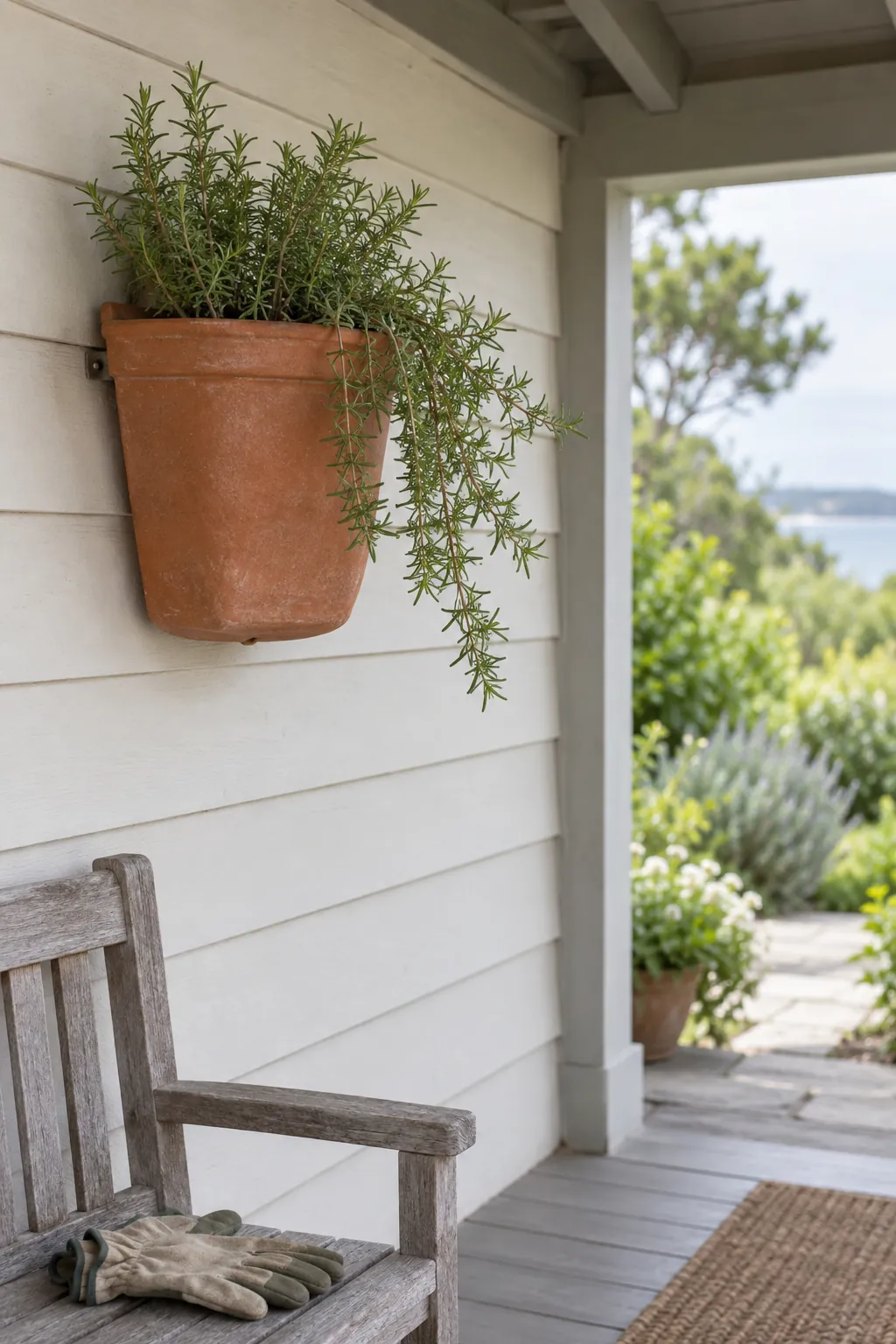
A terracotta pocket on a sheltered porch
Unglazed terracotta brings a warm surface to a covered outdoor wall. Its porosity can help a pot dry, but rain, wind, temperature, and the planting mix still determine how often you water. Choose a version designed for outdoor mounting with a clear drainage route. Bring it inside during freezing conditions unless the maker specifically rates it for that exposure.
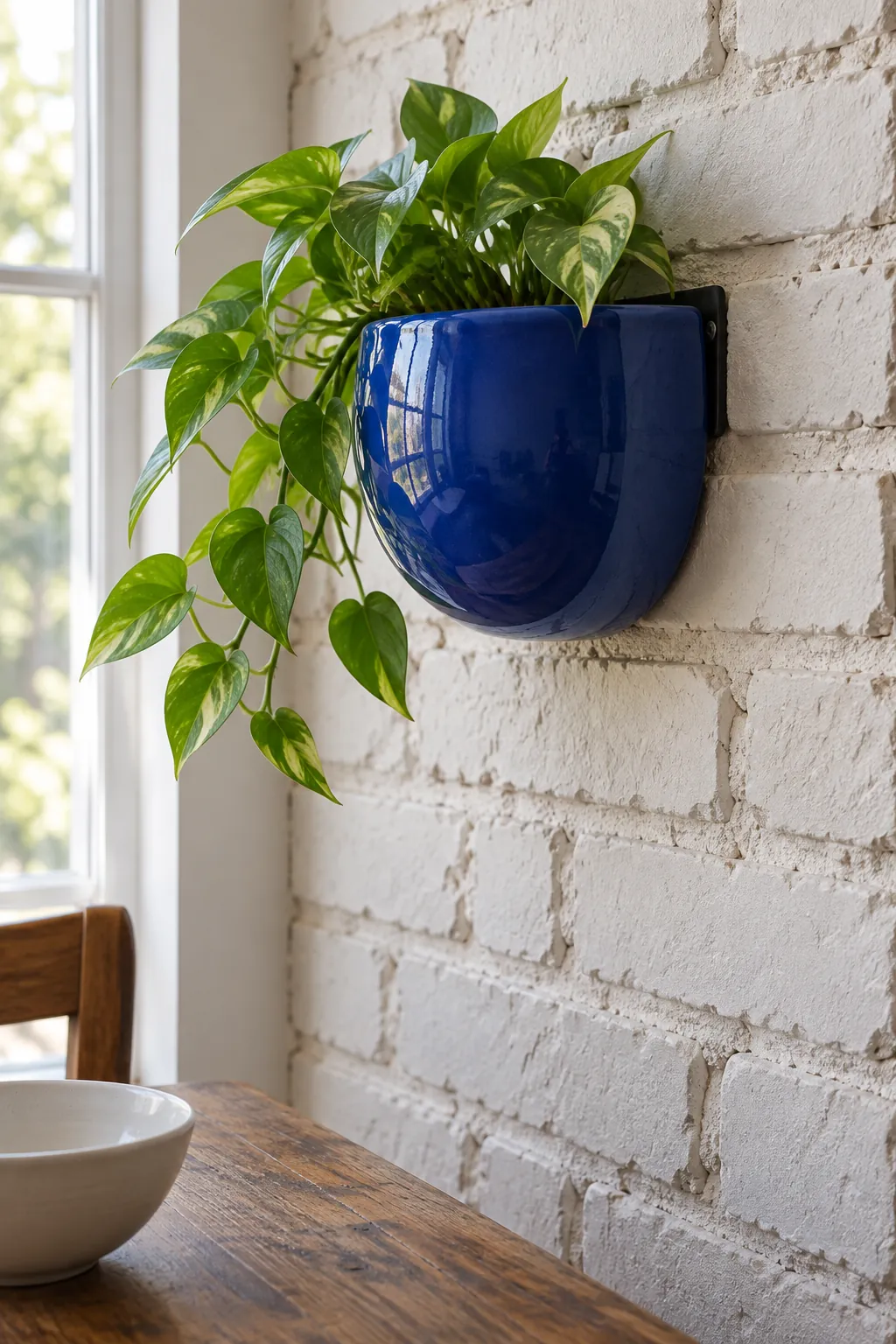
A glossy cobalt pot against pale brick
Cobalt gives a single wall mounted plant enough presence without needing a large arrangement. On brick, the uneven surface may call for stand offs or hardware specified for masonry. Keep the glazed body from rocking against raised mortar. A removable plant insert makes it easier to avoid water streaks on the pale wall below.
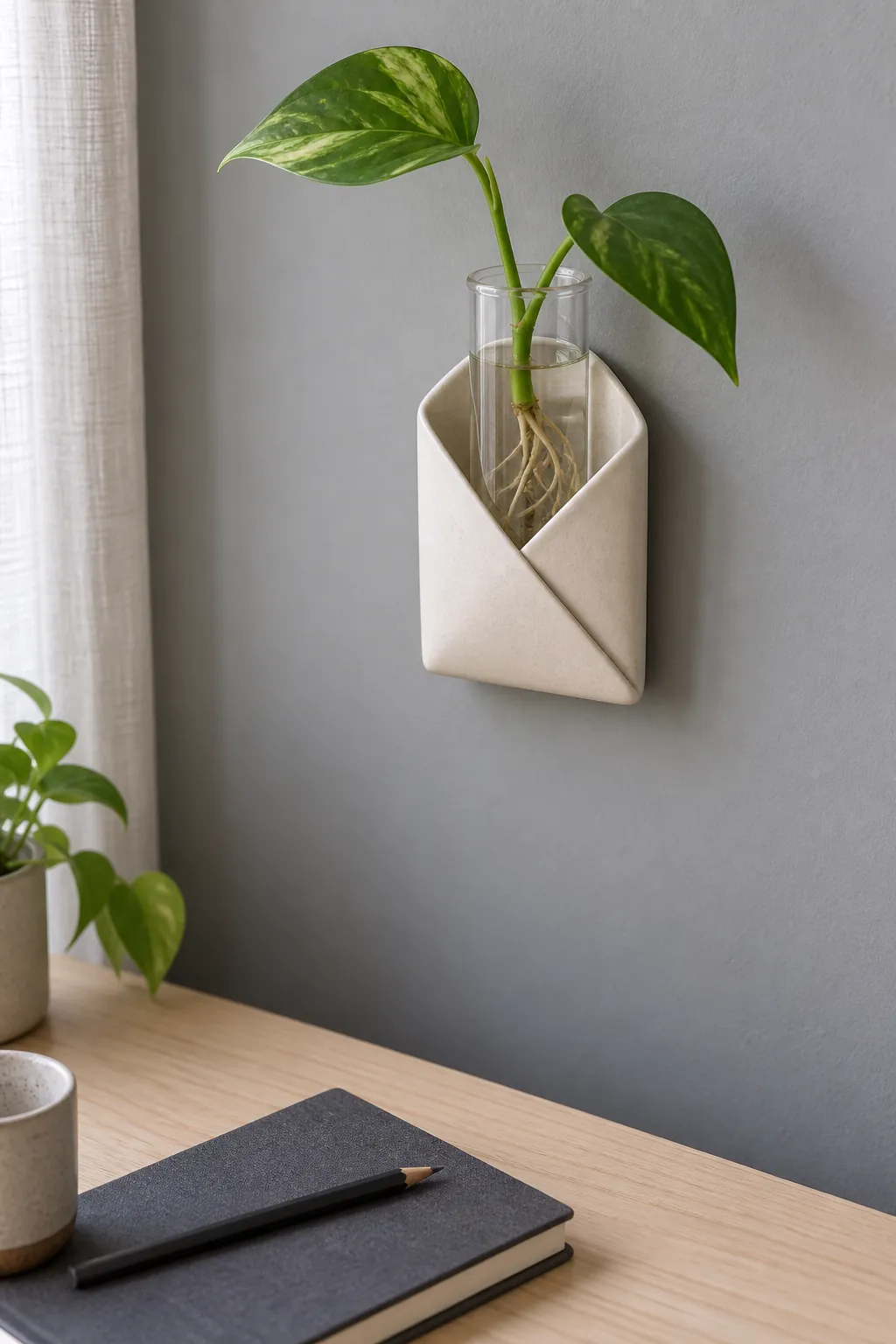
A folded clay envelope for a small cutting
An envelope shaped pocket has crisp edges that suit a spare workspace. Use a small rooted plant in a removable insert if the cavity allows it. For water propagation, use a separate watertight vessel that you can lift out and clean rather than assuming the ceramic shell holds water safely. Leave the opening visible so checking water or soil does not become a forgotten chore.
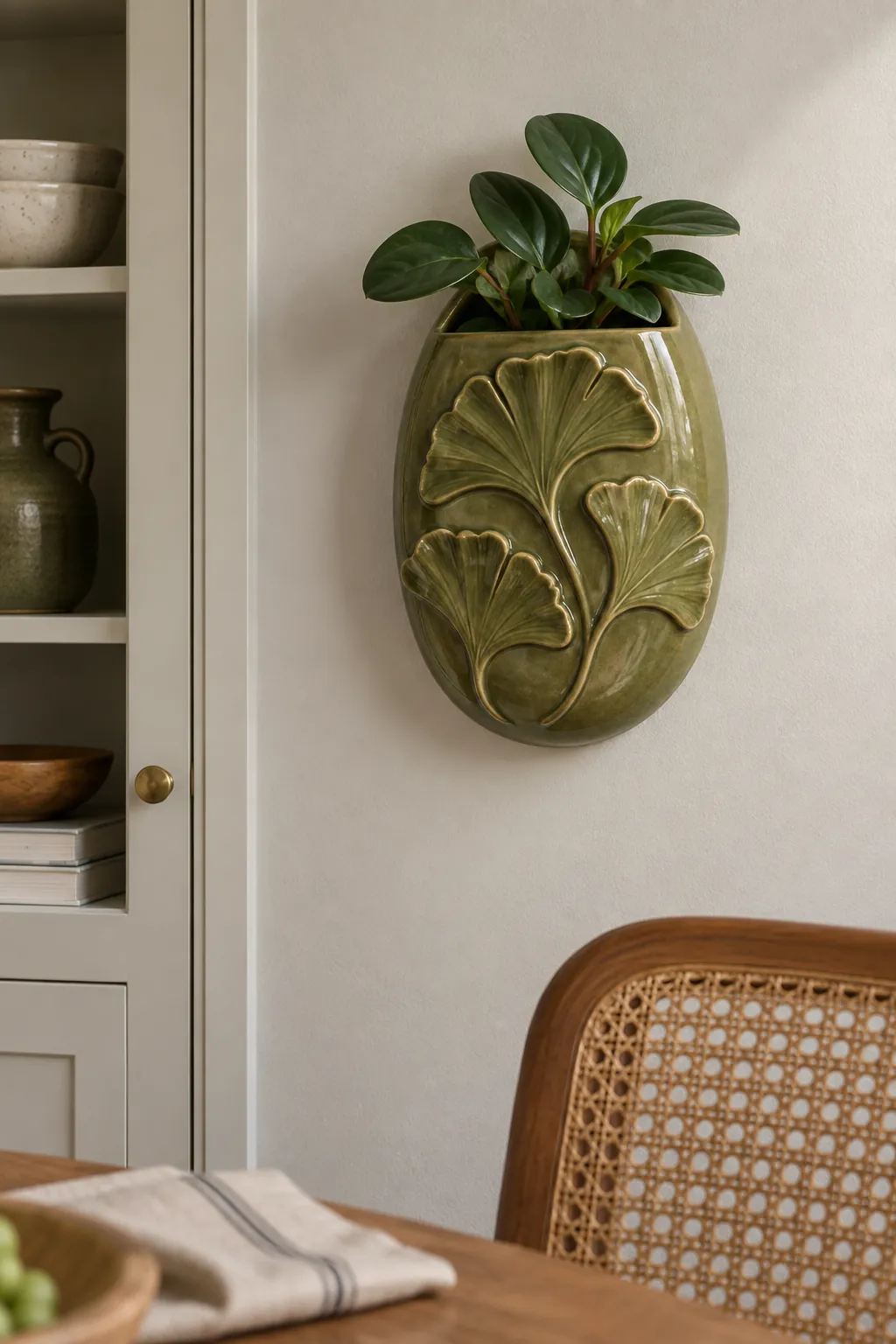
A botanical relief pocket with quiet foliage
Raised leaves or flowers can make the planter itself a piece of pottery wall art. Pair a busy relief with one restrained plant shape so the ceramic detail stays readable. Wipe dust from the recesses with a soft cloth, especially in a room where airborne grease or lint collects. The opening and hanging points should remain functional rather than disappearing behind decorative clay.
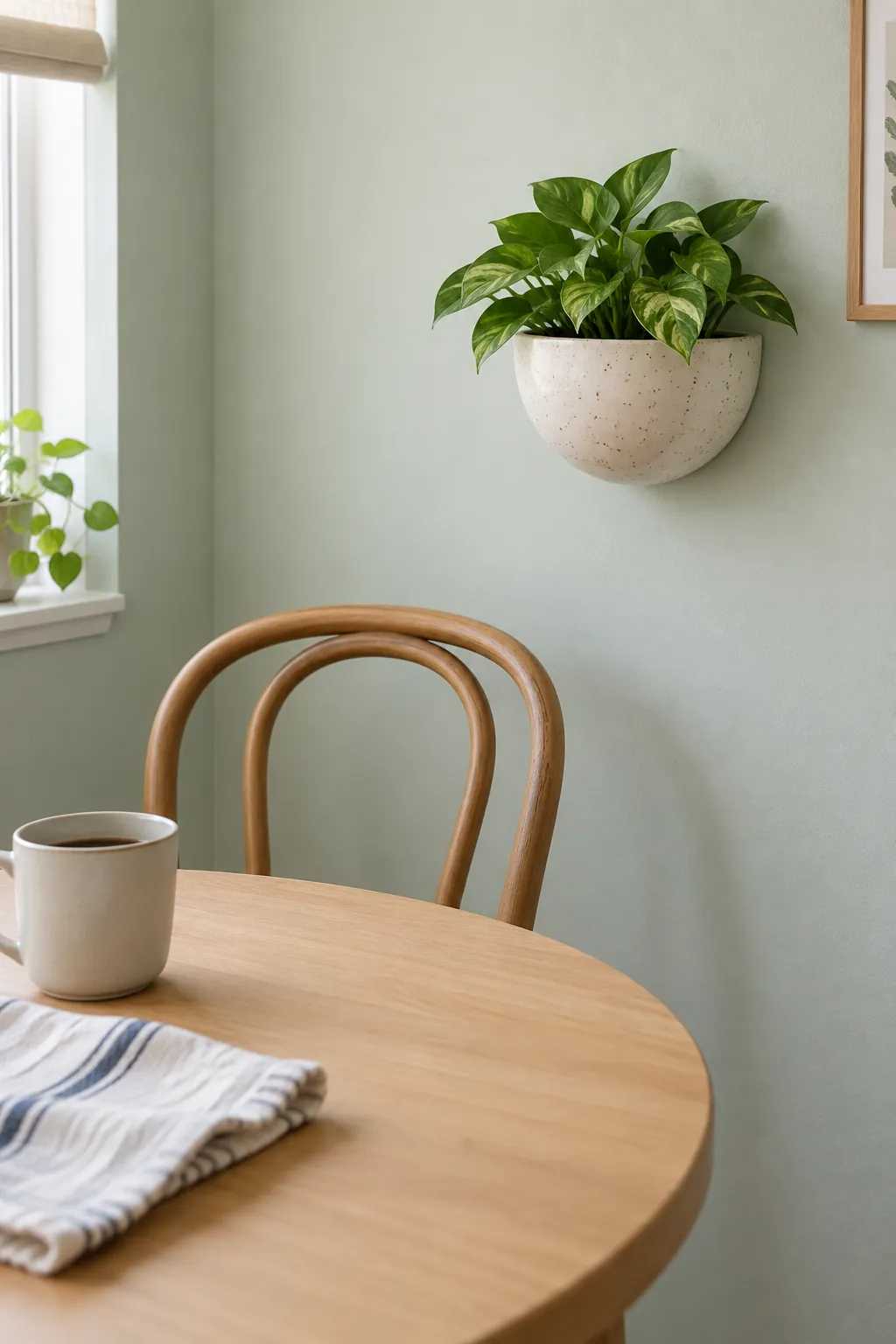
A rounded speckled bowl near the breakfast table
A softly rounded wall bowl can echo everyday tableware without using up the tabletop. Keep trailing stems outside the space where people lean back or carry plates. Speckled glaze already supplies visual texture, so a plain surrounding wall is usually enough. Water at the sink and dry the outer vessel before returning it above furniture.
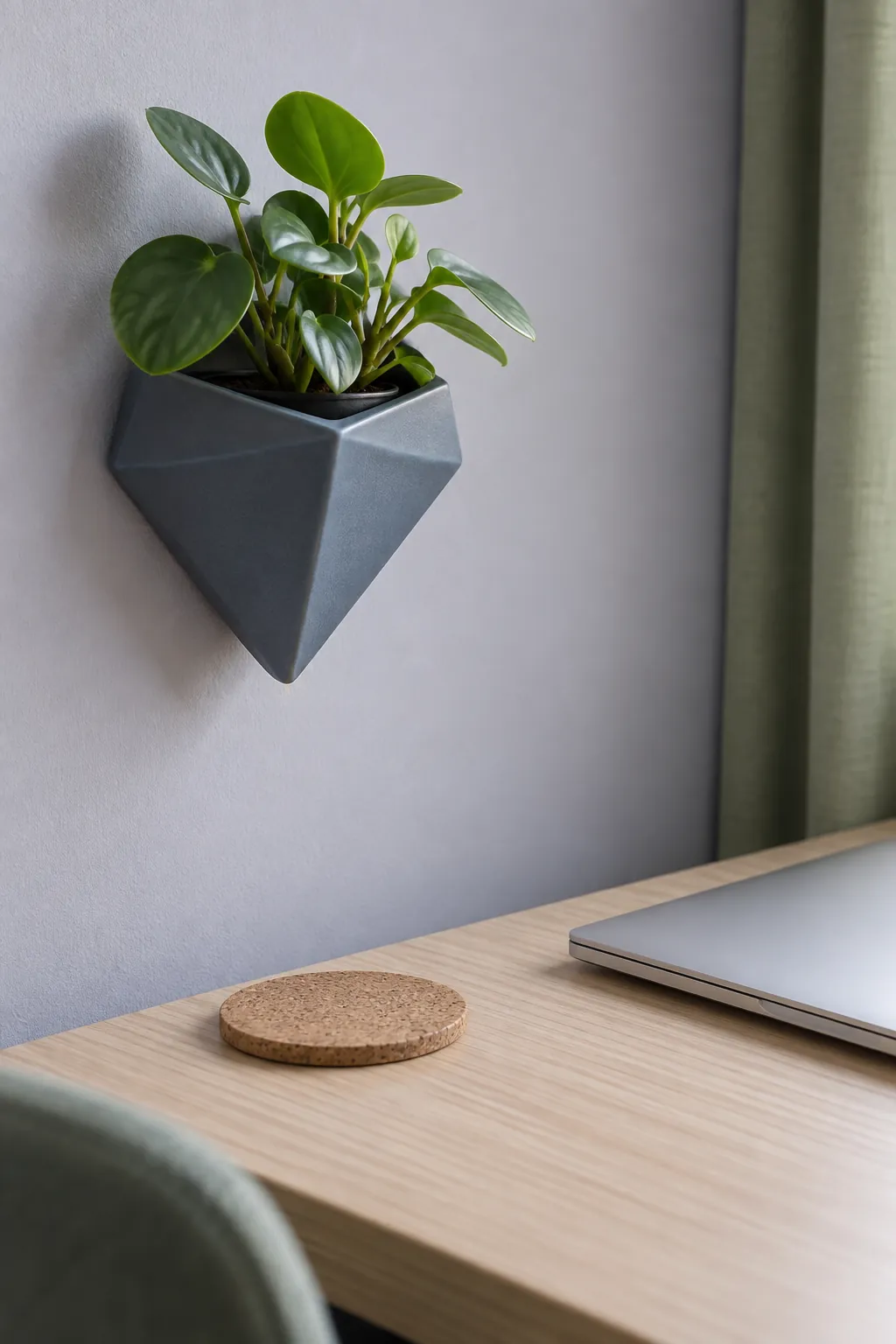
A geometric diamond on a home office wall
A diamond profile adds an angular note beside a desk. Look for a usable pocket behind the outline, because a thin decorative face may conceal very little room for roots. Position the plant away from computer vents and leave enough clearance to lift its insert straight up. Keep watering separate from the desk electronics.
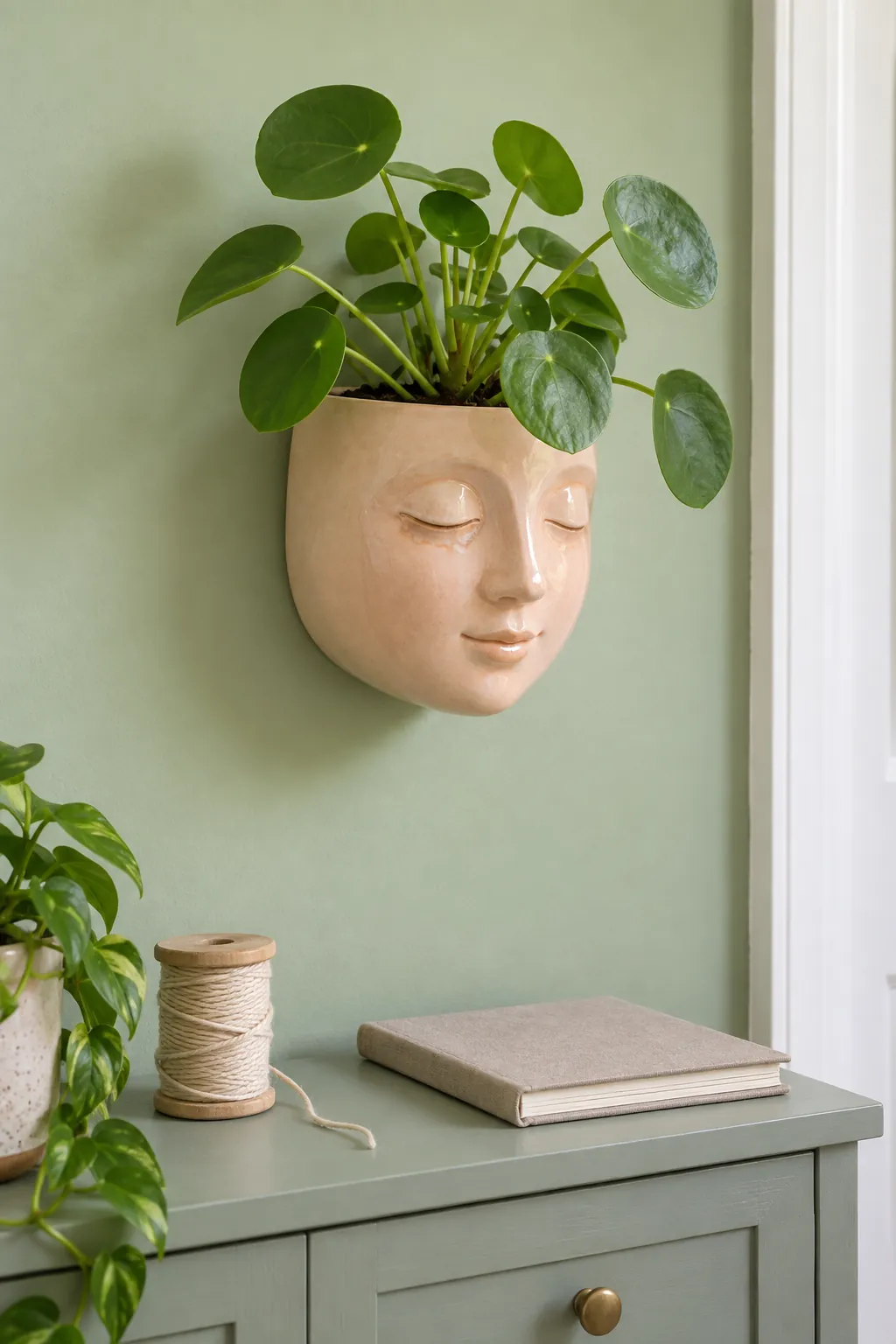
A face planter with compact foliage
A ceramic face can turn a small wall plant into a playful focal point. Choose foliage that leaves the eyes and nose visible rather than relying on constant trimming. Inspect any narrow bridge or sculpted hanging loop for the maker’s intended loading and installation method. A lightweight inner pot is more manageable than filling the entire ceramic head with wet soil.
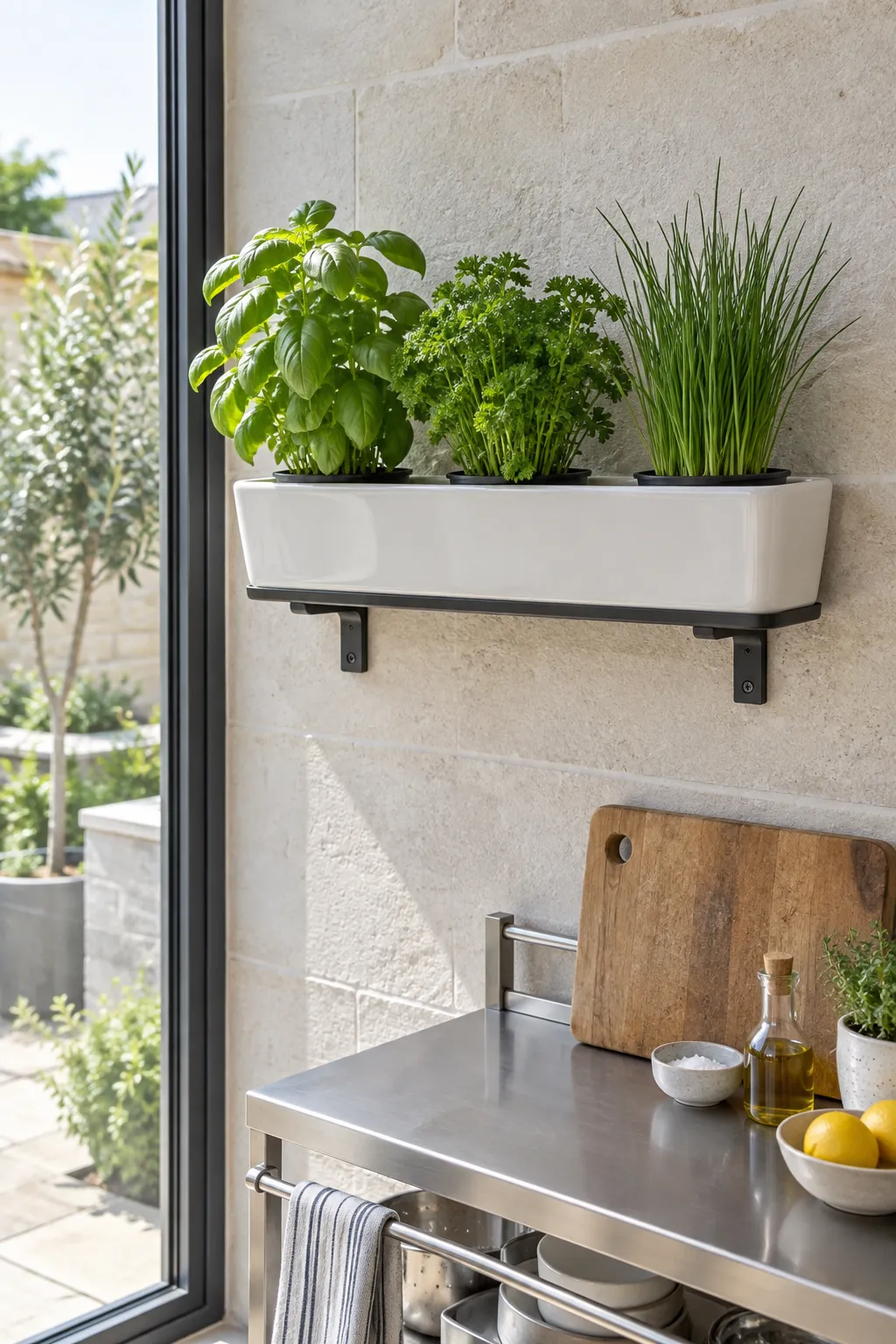
A long trough for a sunny herb station
A horizontal ceramic trough works only if the wall support suits its substantial wet weight. Give herbs enough light, and choose plants with compatible watering needs if they share a container. Separate removable pots offer more flexibility when one herb declines or needs harvesting.
Leave space above the trough for lifting those pots out without crushing the foliage. Basil usually appreciates more consistent moisture than Mediterranean woody herbs such as rosemary. Keeping them in separate inserts also lets you adjust the planting mix without rebuilding the display.
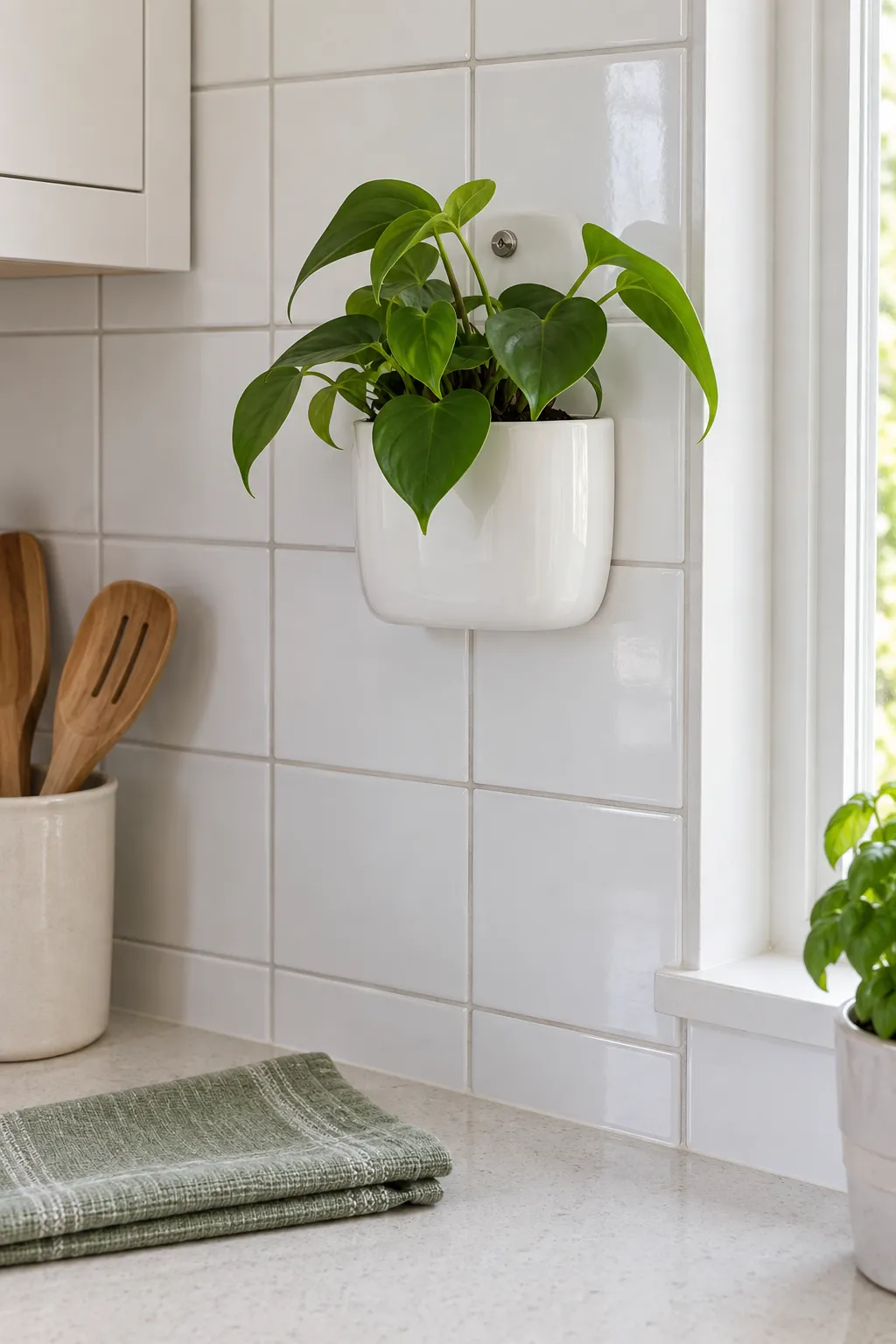
A small white pocket on a tiled kitchen return
A white ceramic pocket can blend into tile while a plant provides the contrast. Mount it outside the hot zone around a stove and away from routine splashes of cooking oil. Drilling tile needs suitable tools and an understanding of what sits behind the surface. In a rental, a permitted freestanding support may be more sensible than attaching a heavy pot with an adhesive hook.
A scalloped rim in a bright bedroom corner
A scalloped edge softens the silhouette of a plain planting pocket. Locate it where you can reach the opening without standing on the bed. Bright indirect light can suit a small peperomia, provided its particular care needs match the room. Avoid placing a heavy ceramic piece directly above the pillow.
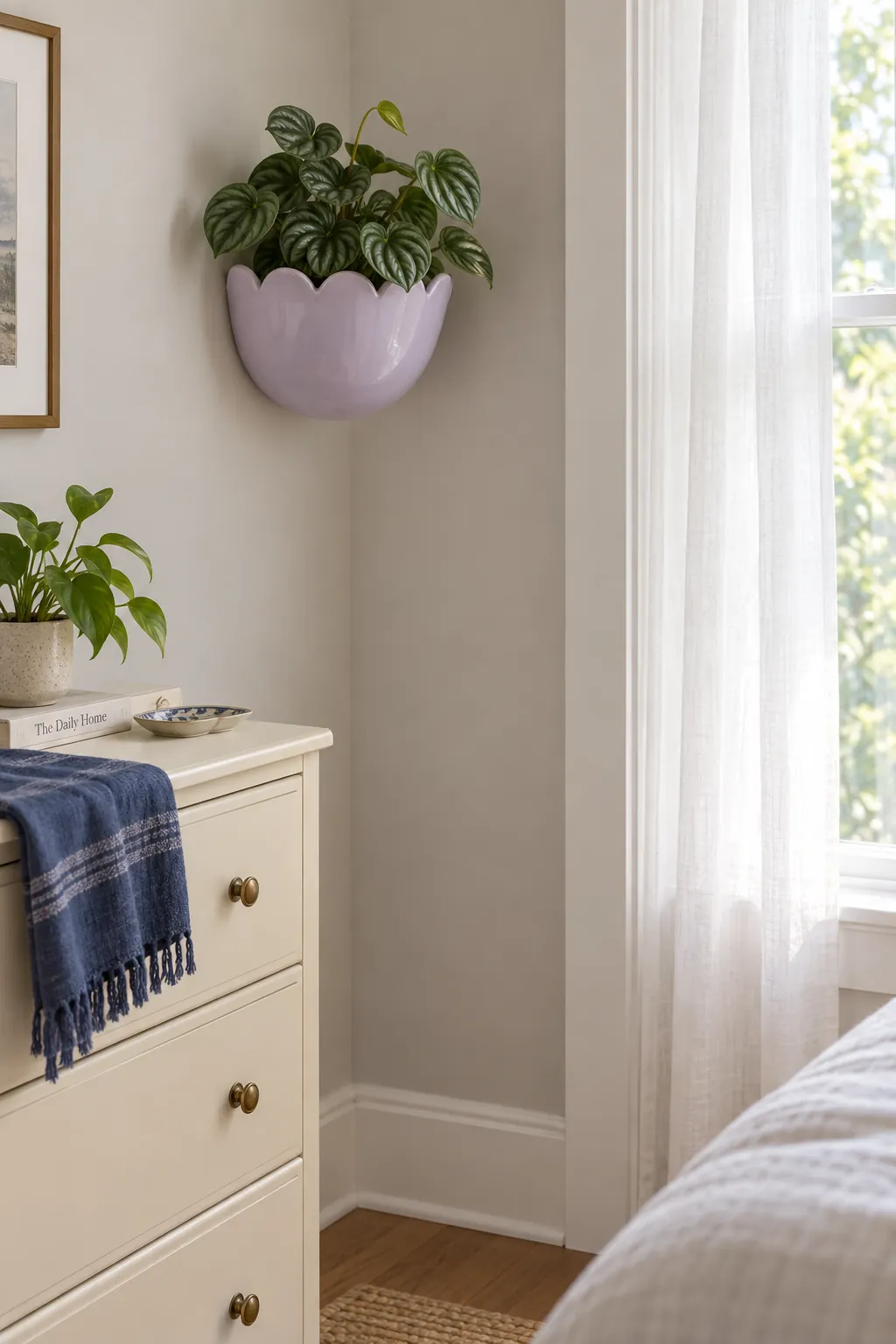
A pair of asymmetrical handmade pockets
Two different handmade pockets can feel connected through their clay body rather than identical shapes. Lay out their positions with paper outlines before making holes, allowing space for the wider plant at maturity. Mount each piece independently unless the system is designed to share a support. Small differences in opening size are normal in handmade work, so assign each plant after checking the actual fit.
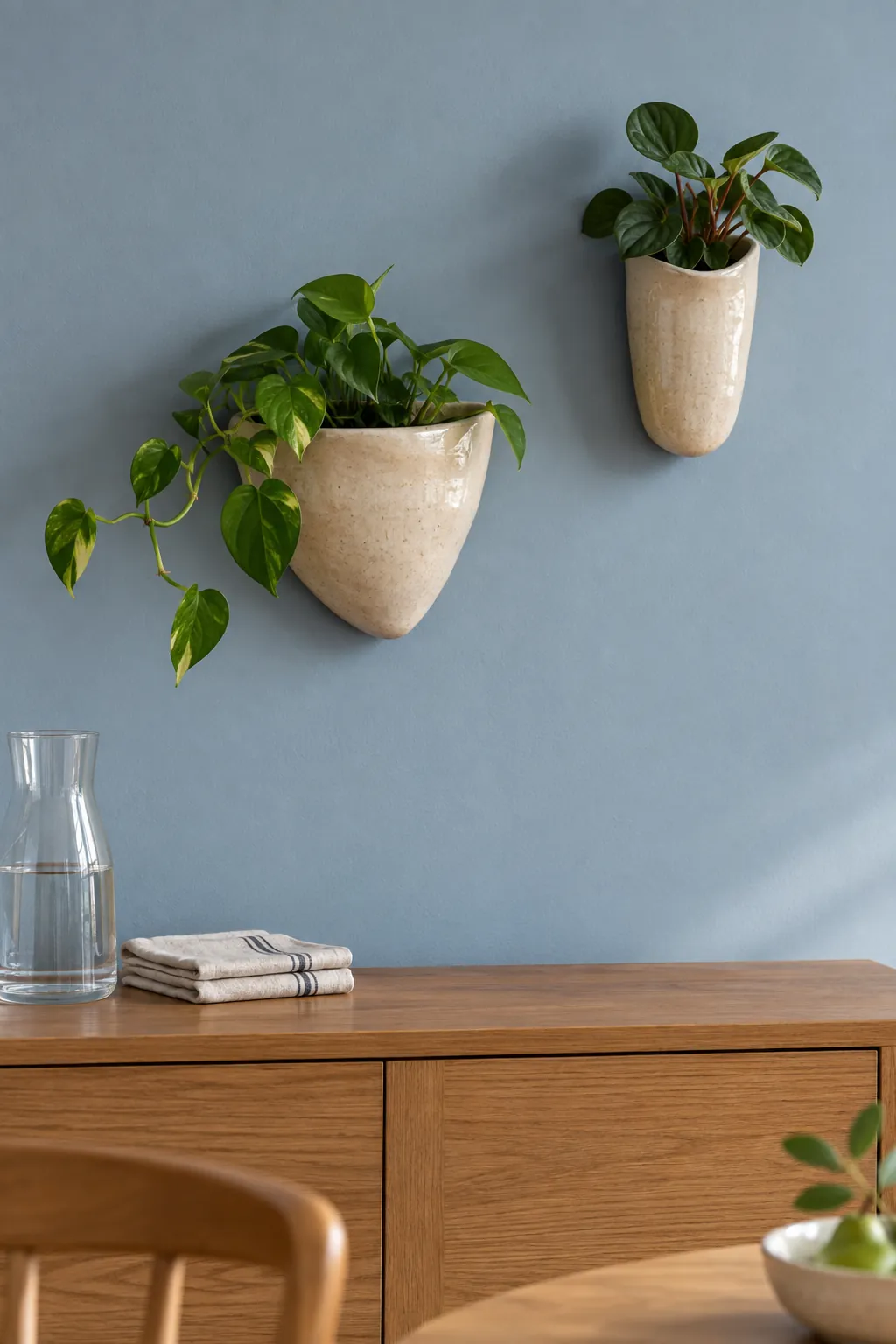
A vertical trio on a dedicated support panel
A removable support panel can gather several indoor wall planter ideas into one controlled installation. The panel itself still needs secure attachment suitable for the total load and the wall construction. Offset the openings so you can remove each plant without disturbing the one above it.
Protect the panel from trapped moisture and check behind the ceramic bodies occasionally. Seal exposed panel edges according to the finish maker’s directions before installation. A spacer can help you inspect the rear, but it does not replace fixing the panel securely to appropriate structure.
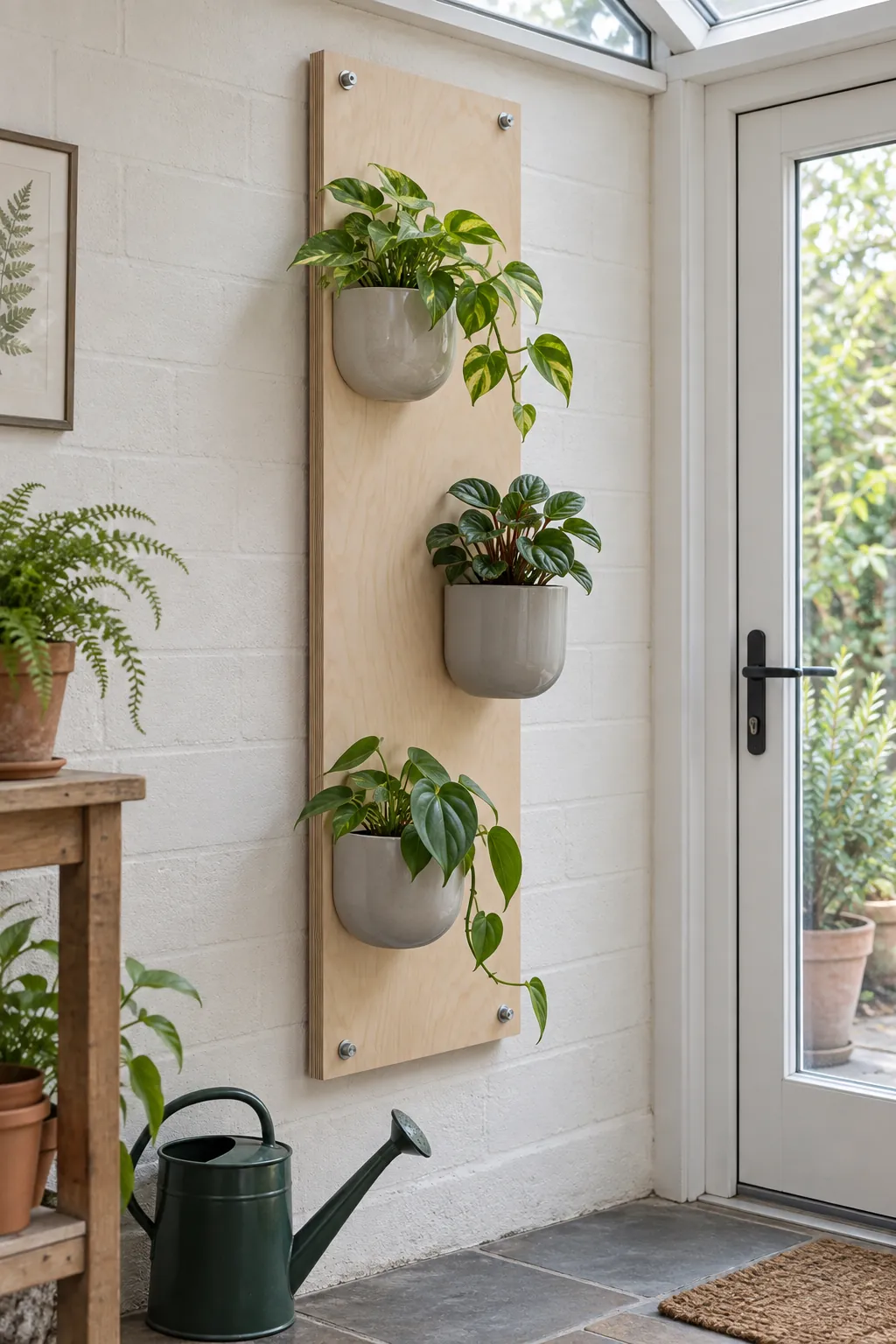
A ceramic pocket on a sturdy peg rail
A rail makes a plant display easier to rearrange if the rail, hooks, and pots are designed for that use. Use a planter with a rated hanging attachment rather than threading cord through decorative holes. Leave enough separation that a bumped pot cannot strike its neighbor. The rail’s load limit must cover every watered plant and ceramic vessel together.
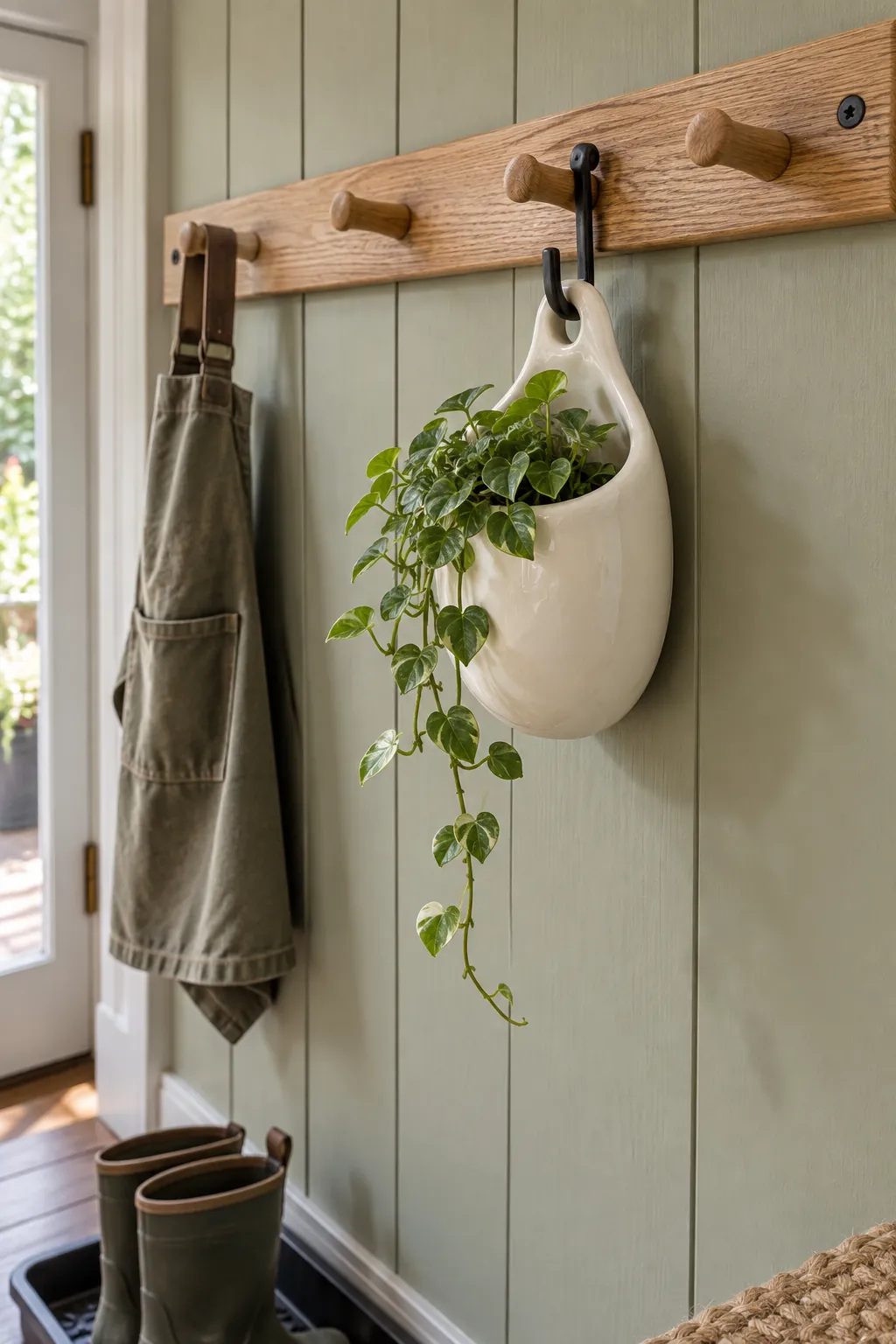
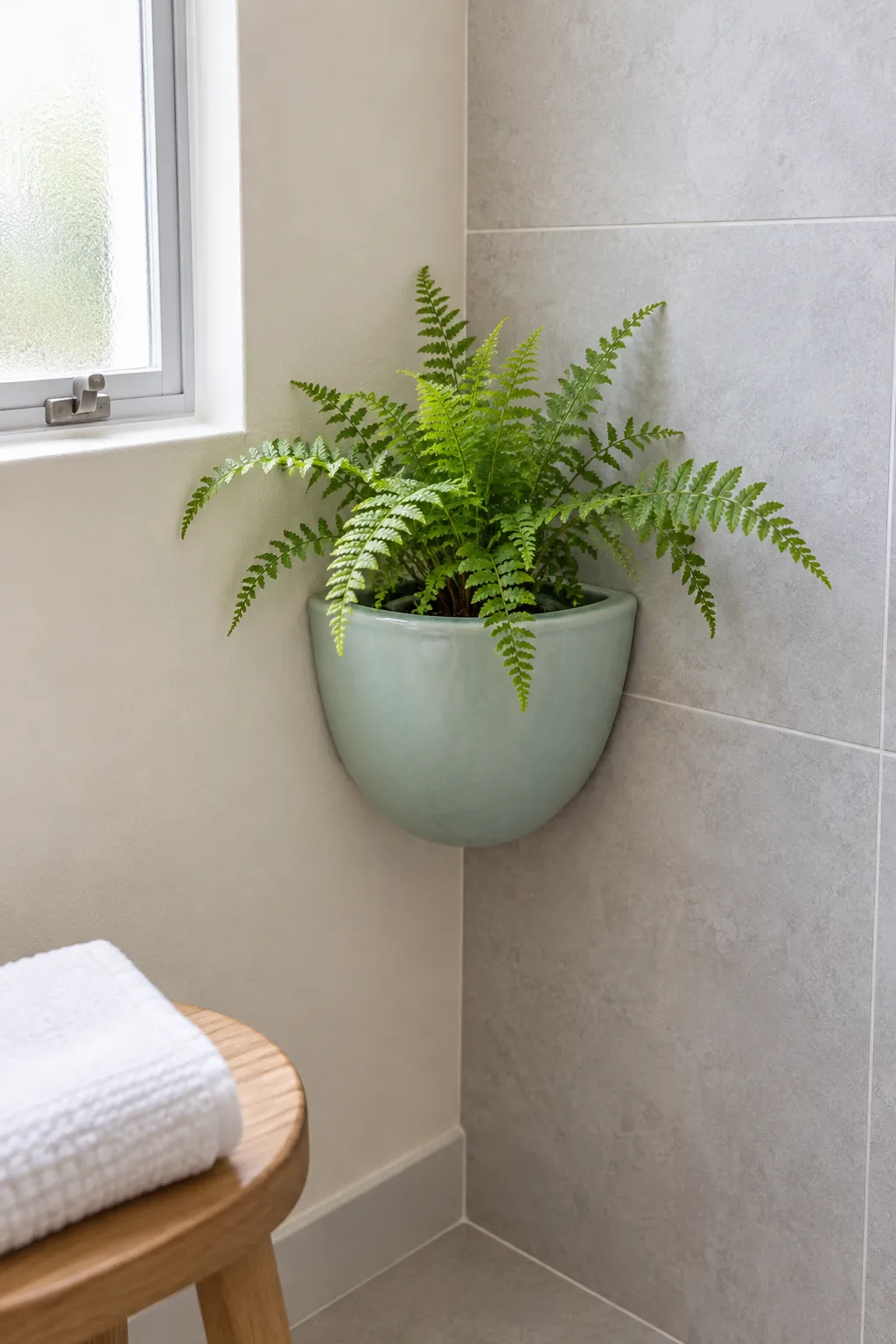
A corner fitting planter for an unused junction
A planter made to fit a corner can turn an awkward junction into a small planting spot. Confirm that the room’s angle matches the product, since walls are not always perfectly square. Foliage should have room to grow outward without scraping either surface. Check light at the actual corner rather than assuming the nearby window illuminates it adequately.
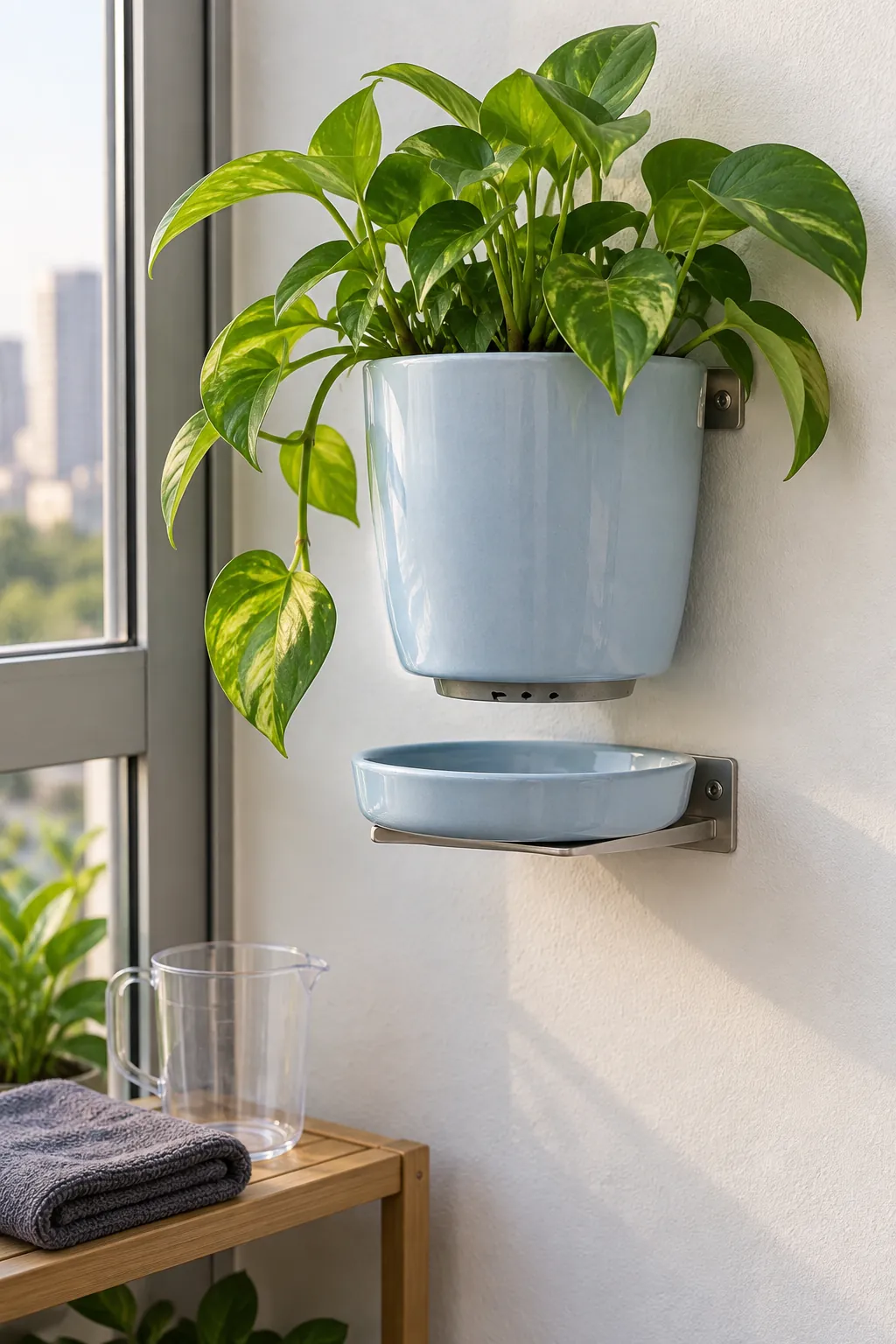
A glazed pocket with a separate drip tray
A drainage hole is easier to live with indoors when a removable tray catches the outflow. The tray must have enough capacity and remain accessible for emptying. Do not let the plant stand in retained water after watering.
Test the arrangement over a sink before hanging it above paint, wood, or upholstery. A decorative tray can look large while holding very little water. Check its usable depth and empty it promptly instead of treating it as a reservoir.
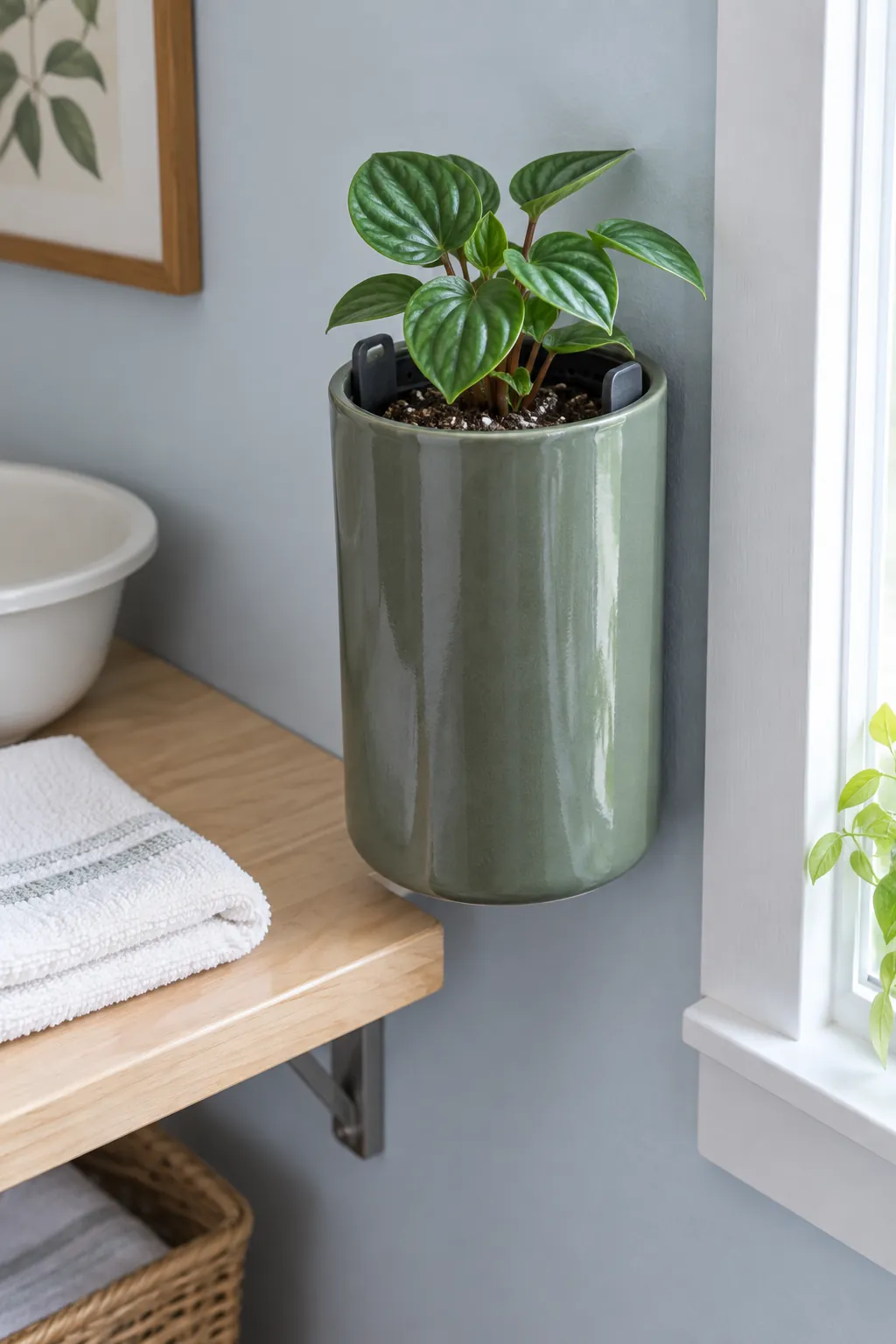
A cylinder with a lift out planting basket
A planting basket with a visible grip can make a deeper ceramic cylinder practical. The basket must fit securely while leaving enough room for removal without pulling on leaves. Choose an insert with drainage and keep any accumulated water below the root zone. This arrangement is helpful for gardeners who prefer checking a plant’s weight at the sink instead of guessing from above.
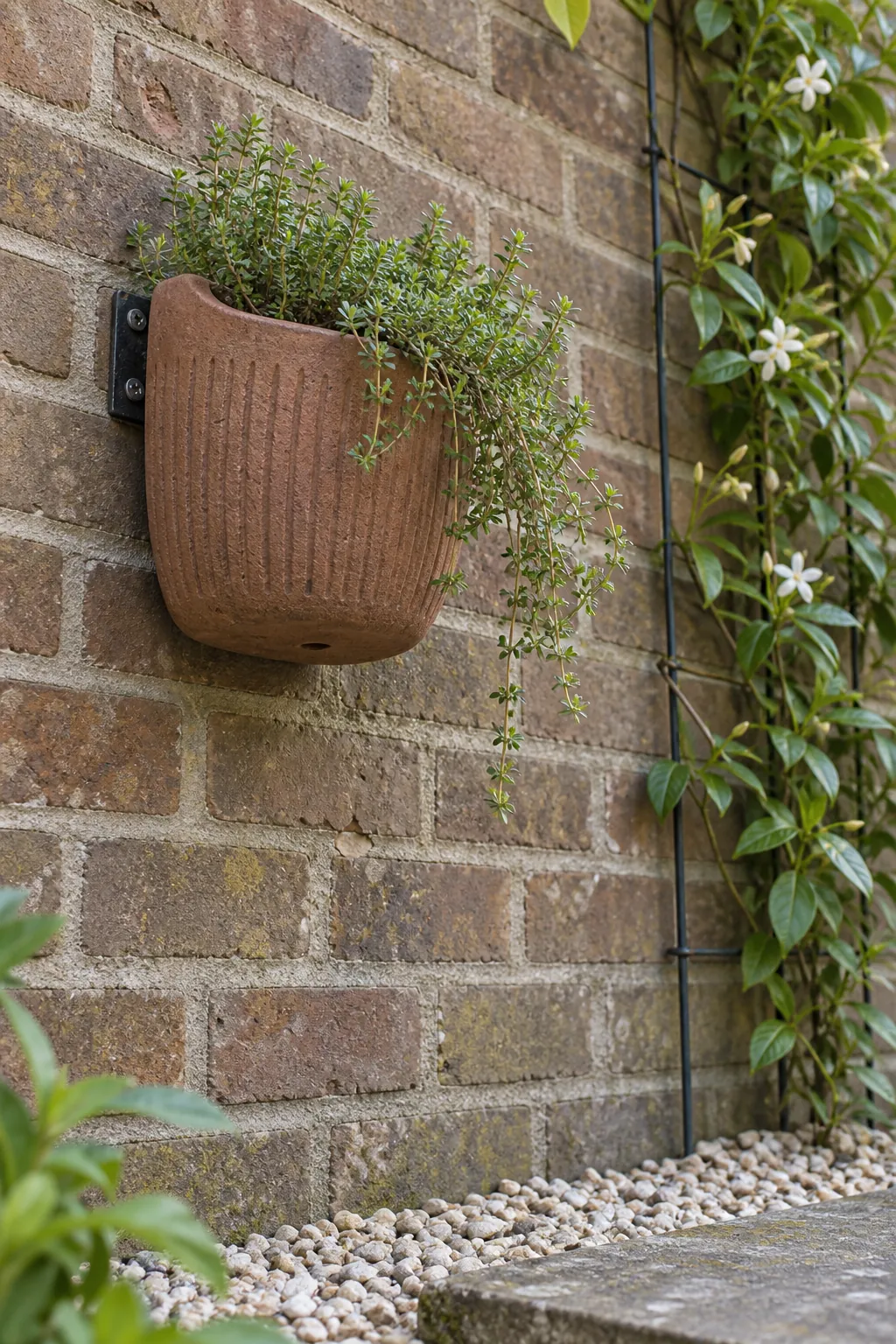
A textured clay pocket on a garden wall
A rough clay surface can sit comfortably beside climbing stems and older masonry. Outdoor suitability depends on the ceramic body, glaze, drainage, and fixing system rather than appearance alone. Keep the opening clear of fallen leaves that could block water movement. In exposed conditions, inspect the mounting after strong wind and follow the maker’s seasonal storage guidance.
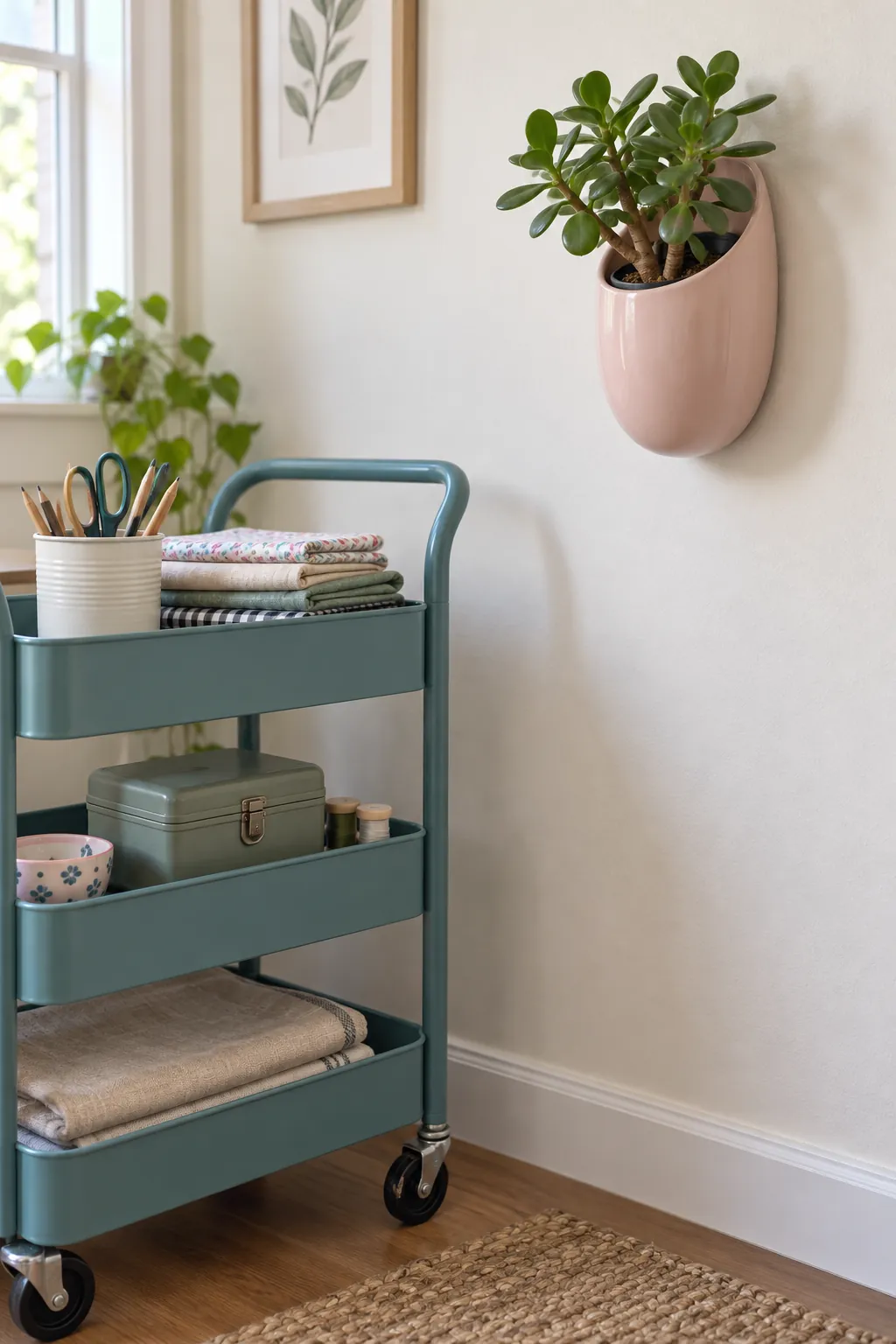
A blush oval above a craft trolley
A blush oval can add color to a practical craft corner without covering the work surface. Position it beyond the trolley’s moving path so handles and stored tools cannot hit the ceramic. A single compact plant keeps access simple. If the corner is dim, move the plant to suitable light or use a grow light rather than expecting it to adapt indefinitely.
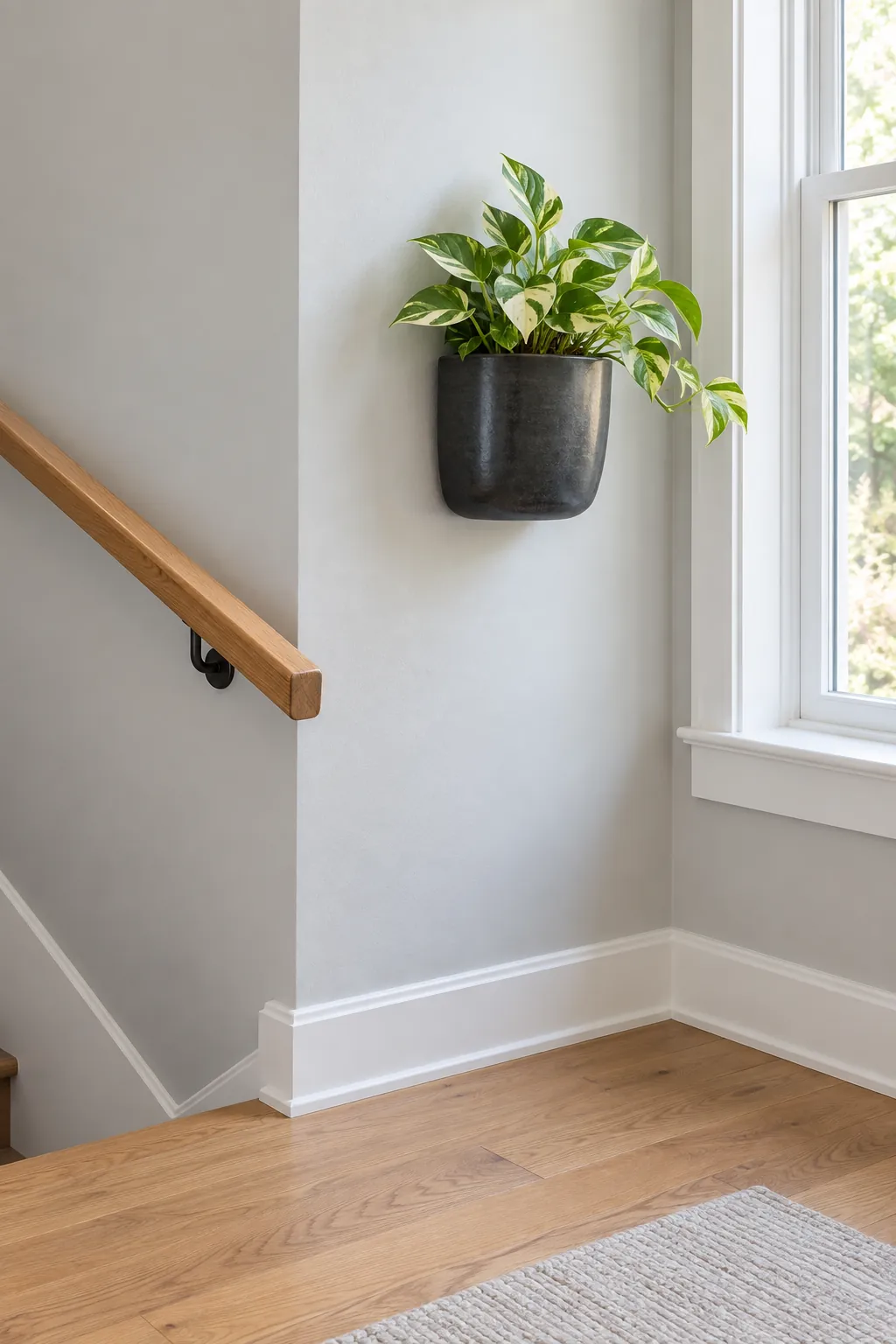
A dark stoneware pocket in a bright stair landing
Dark stoneware makes pale or variegated leaves stand out. A landing can offer good display space, but the pot must stay clear of the handrail, headroom, and carrying route. Choose a position reachable from stable flooring rather than over a stair void.
Keep the plant’s eventual width in mind before mounting. Carry a cardboard outline through the landing before drilling to check where shoulders and bulky laundry baskets pass. A pot that feels unobtrusive when the landing is empty may still catch something being carried.
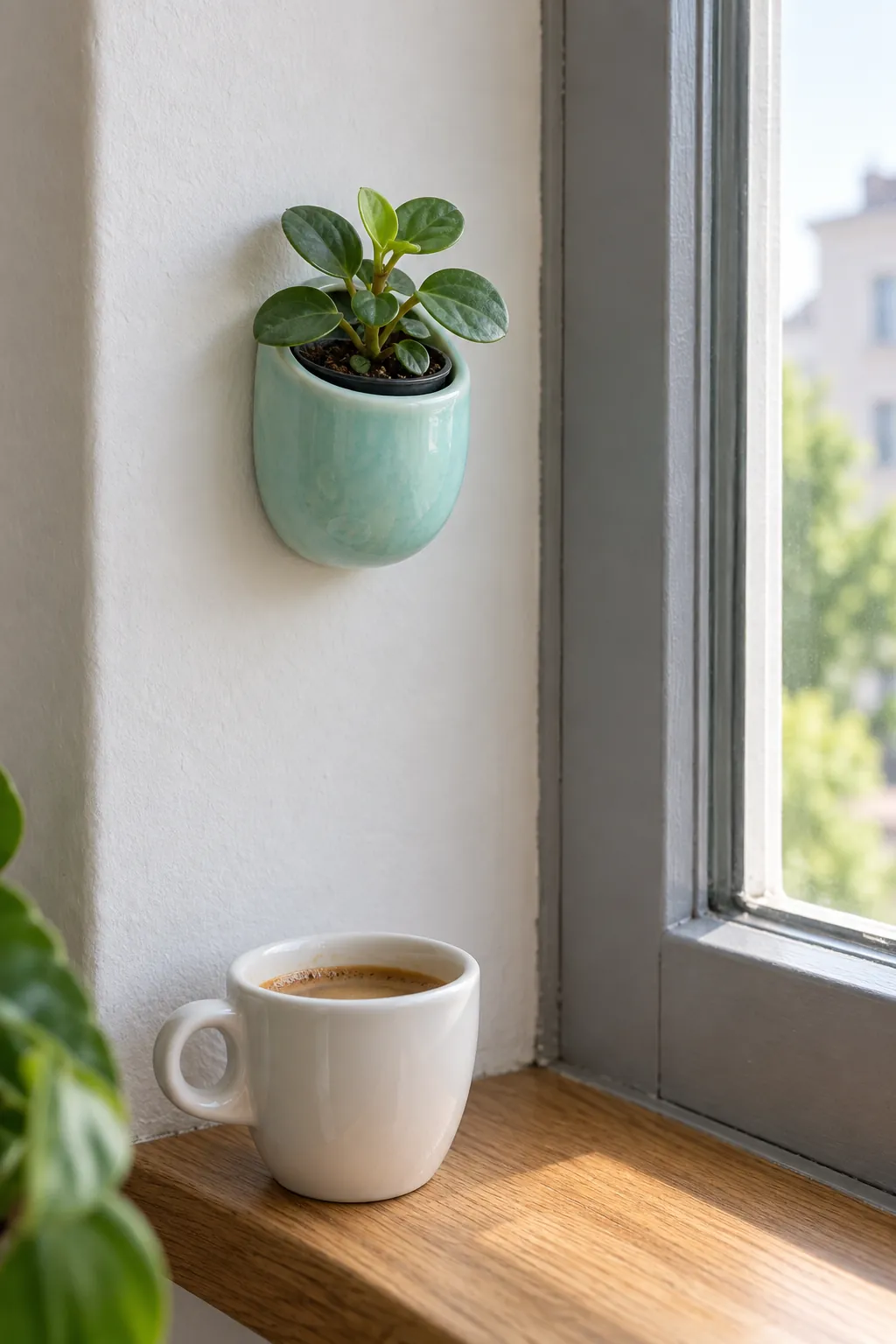
A miniature pocket for a tiny rooted plant
Miniature ceramics are appealing when wall space is limited, but their soil dries and changes temperature quickly. Pick a genuinely small rooted plant and check moisture more often while learning the container. An opening too narrow for repotting turns a charming object into a difficult plant home. Use it for dried stems instead if it cannot accommodate a removable living plant safely.
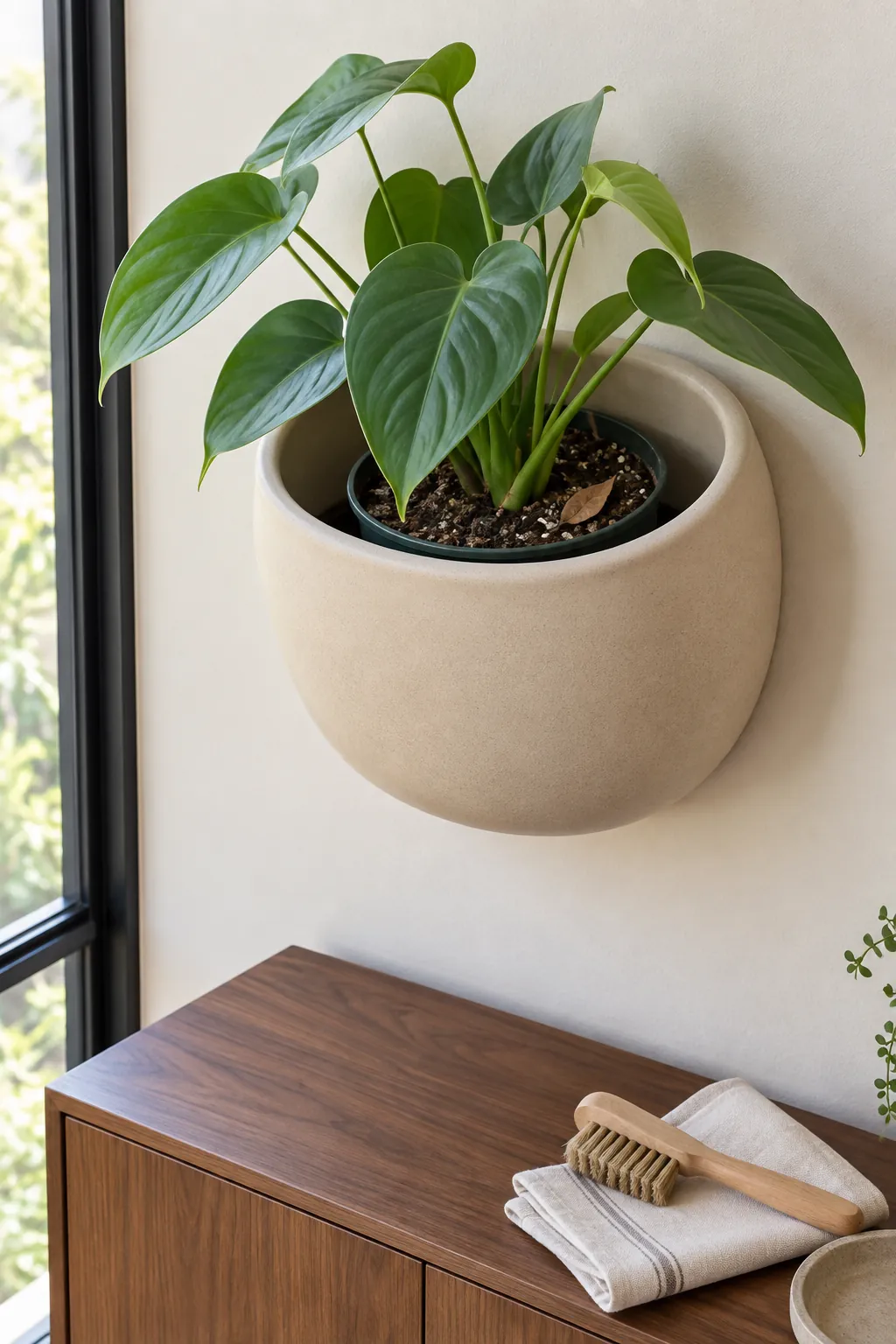
A wide opening pocket for easy maintenance
A broad opening earns its place when you want to see soil and remove fallen leaves easily. It also makes it simpler to check for pests around stems and pot edges. Keep the planting depth appropriate rather than burying a small plant in a large mass of wet mix. The ceramic shell can be generous while the removable nursery pot stays modest.
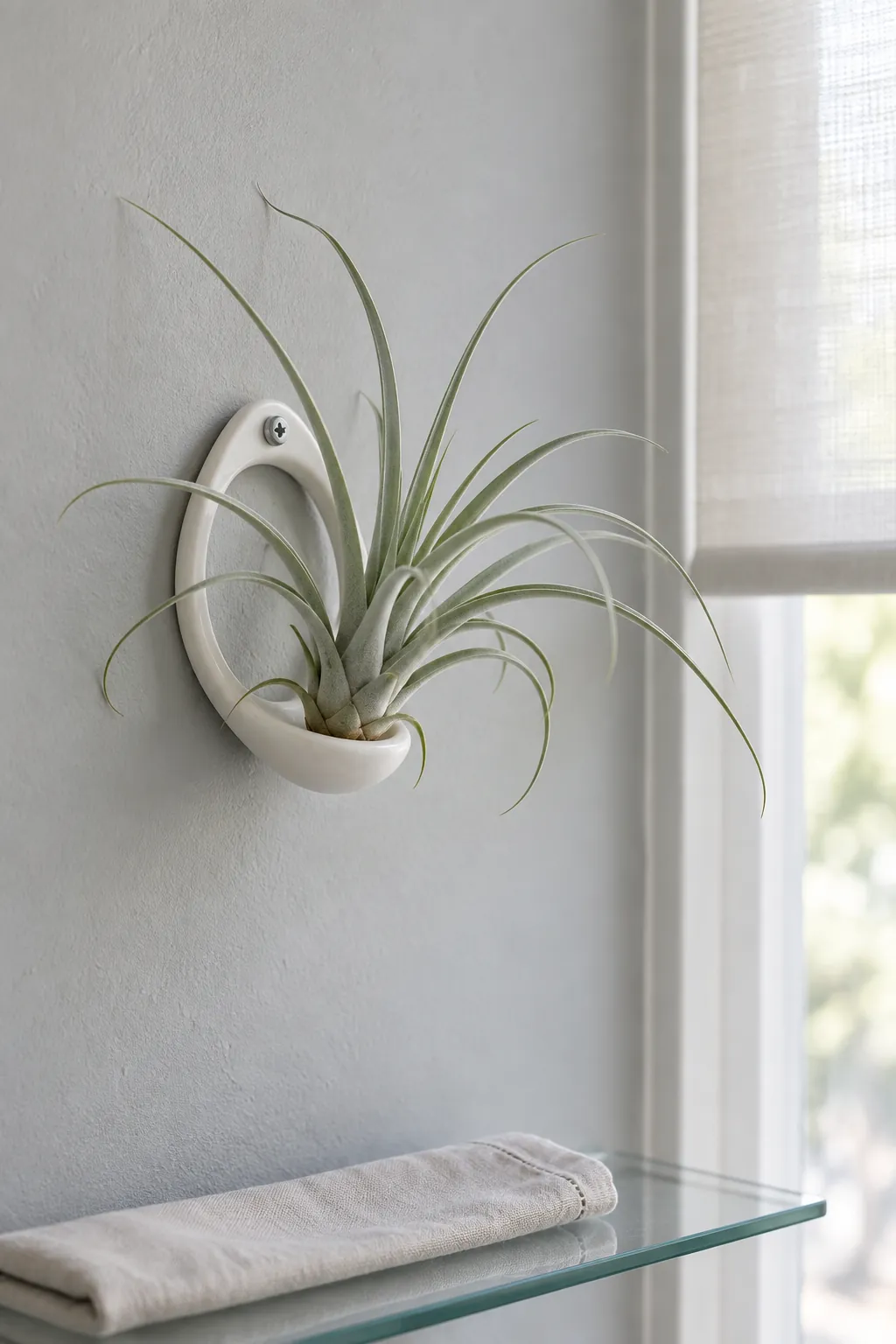
A ceramic air plant cradle
An open ceramic cradle can hold an air plant without pretending to be a soil pot. Match care to the species, and remove the plant for watering so it can dry with good airflow before returning. Avoid a deep cup that traps water around the base. Bright filtered light and a reachable position are useful starting points for the display.
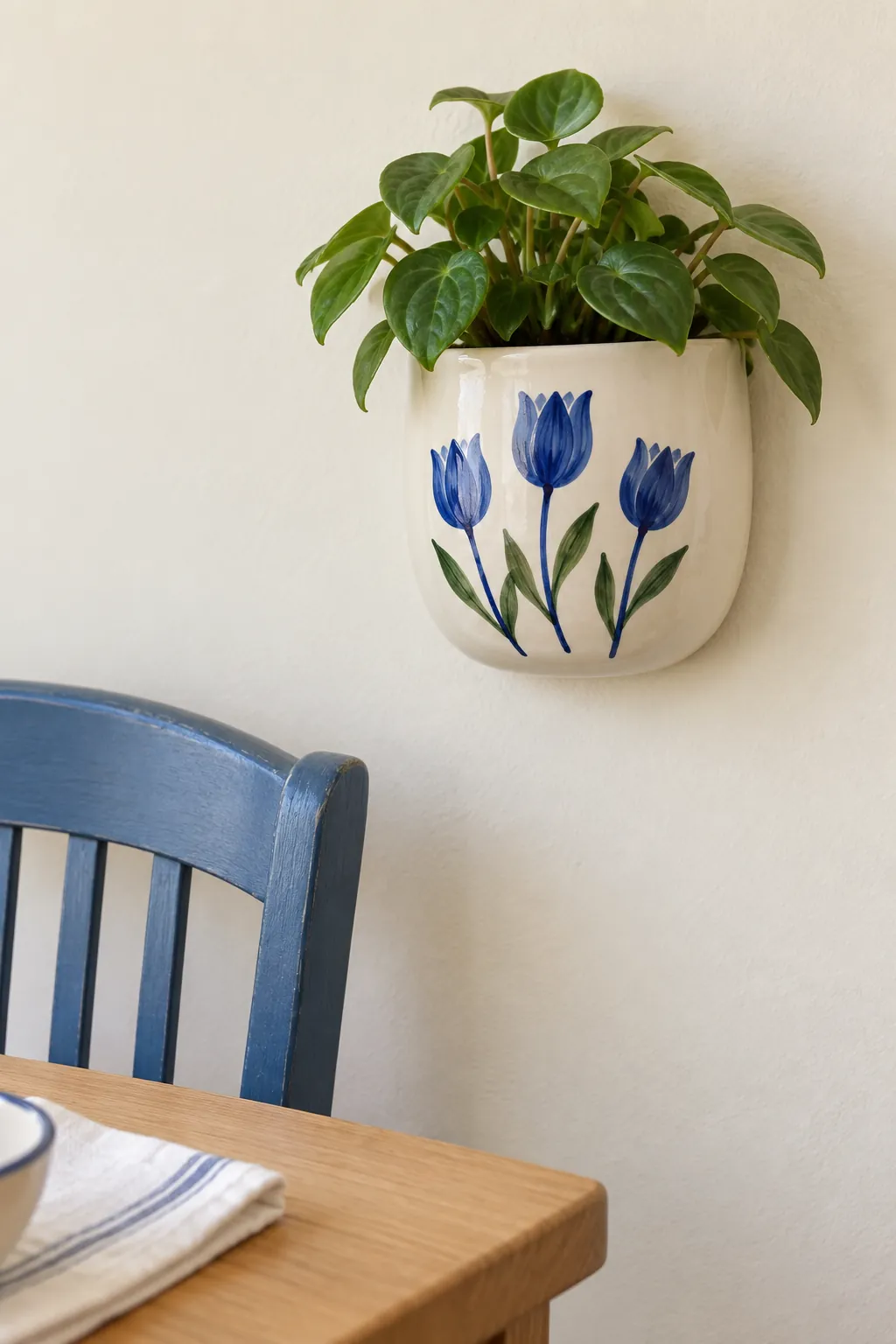
A hand painted pocket as the color accent
A painted stripe or flower motif can give a plain wall personality with one small object. Check whether the decoration and finish are intended for moisture exposure, especially with handmade pieces. Repeat one color elsewhere in the room if you want a visual connection without creating a matching set. Let the foliage frame the pattern instead of covering it completely.
A single generous pocket with room to grow
One well placed planter is easier to care for than a wall filled before you know how the spot performs. Start with a plant that suits the light, a removable pot, and fixings specified for the fully watered load. Leave visible space around the foliage so growth does not immediately require another move. Before buying more hanging wall planters, make sure watering this first one feels easy enough to repeat.