The back of a cupboard is expensive storage if retrieving one bowl means emptying half the shelf. Depth is useful for bulky equipment and grouped supplies, but it needs an access plan. Put an item there because you can retrieve it sensibly, not merely because it fits.
Good candidates include occasional serving pieces, manageable appliances, bulk pantry refills in removable bins, and cookware on suitable sliding shelves. Daily essentials belong within an easy reach unless a reliable organizer brings the back forward.
Reserve the back for occasional serving pieces
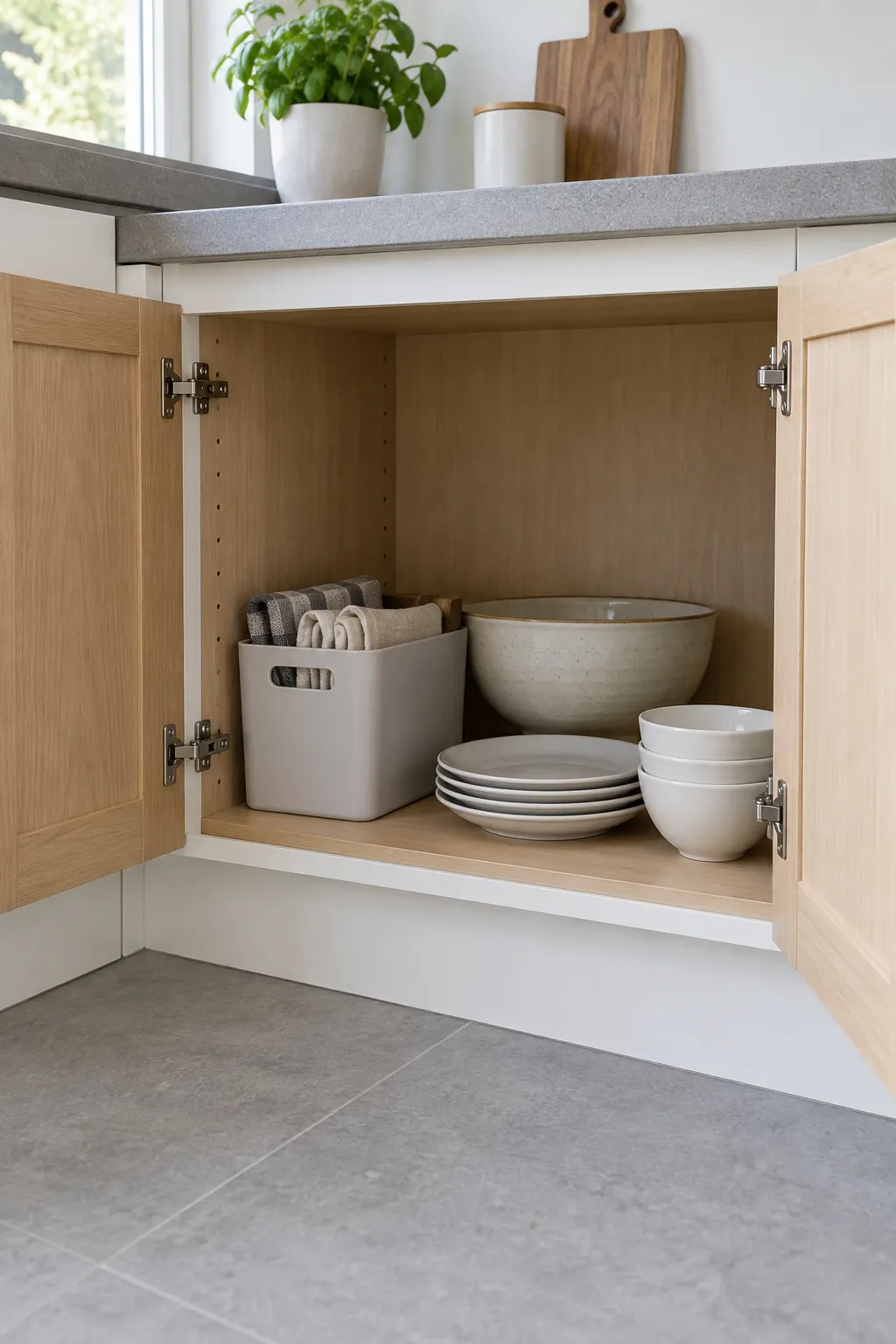
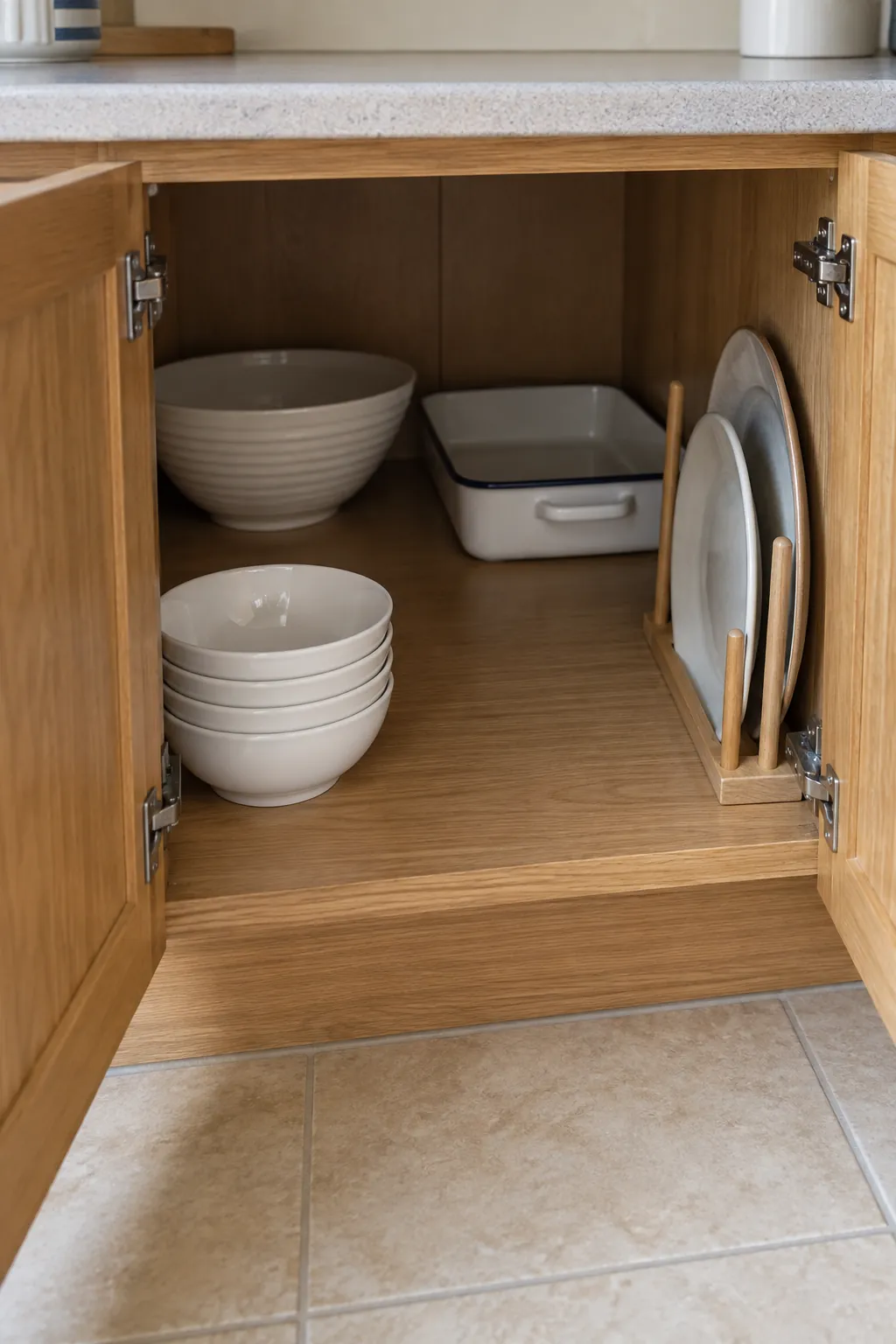
Large salad bowls, a roasting pan, and occasional serving platters can use the rear of a deep lower cabinet well. Group pieces that come out for the same meal or occasion, so moving one group has a purpose. Keep the everyday bowls toward the opening.
Back of cabinet storage still needs a clear retrieval route. Avoid placing a heavy appliance in front of a platter you cannot grip from above, and keep fragile pieces away from unstable stacks. A deep corner that you cannot safely reach may be better left partly empty than filled with breakable dishes.
If you store platters vertically, use a stable rack designed for their size and weight. Measure the opening as well as the interior, since a broad platter may fit inside yet be awkward to turn past the door.
Keep appliances low only when you can lift them comfortably
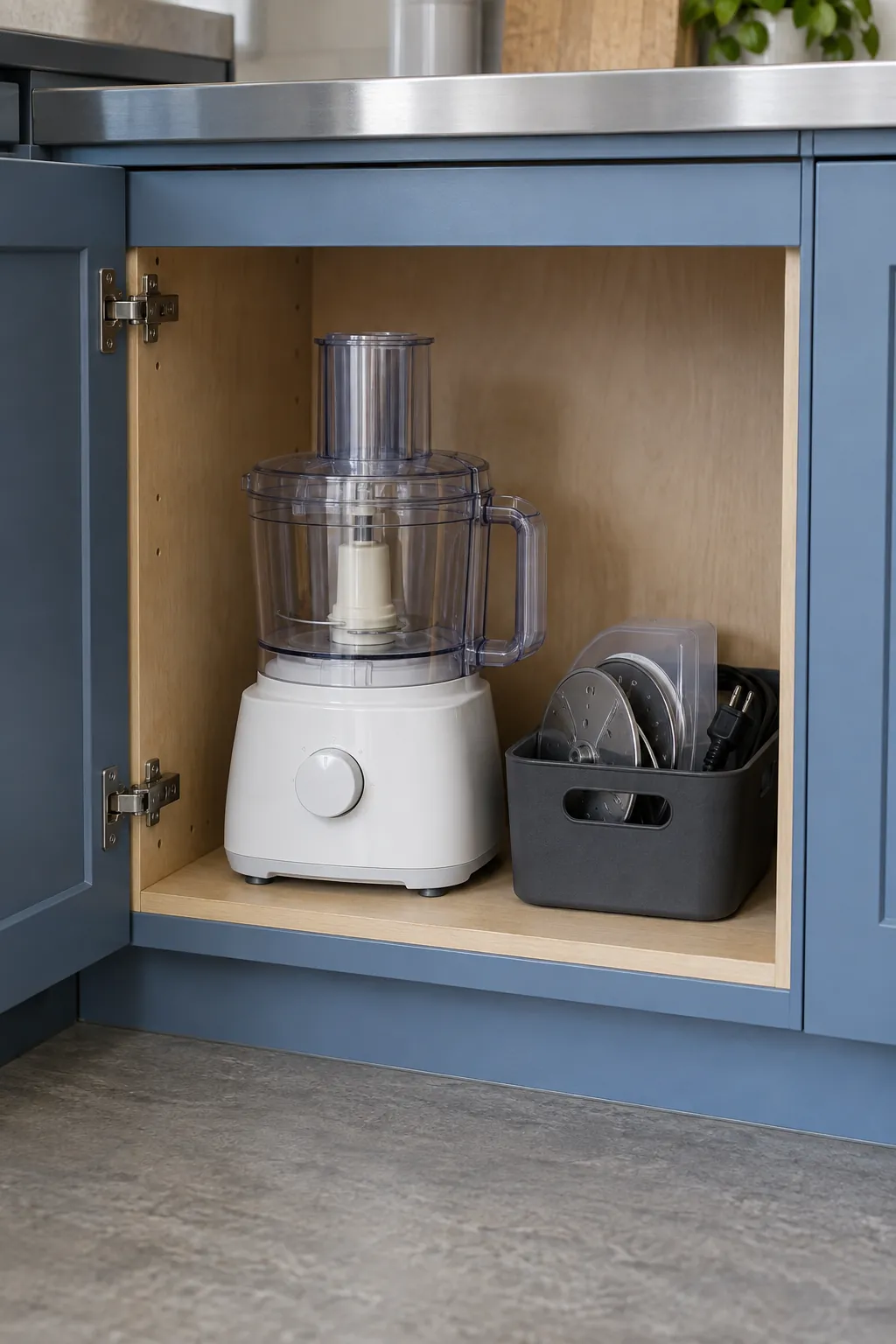
Large appliance storage belongs on a shelf that supports the weight and allows a comfortable lift. A food processor used on weekends may suit a low cabinet near the prep counter. A heavy stand mixer that you use daily may be more practical left on the counter than repeatedly lifted from near the floor.
Keep the appliance’s attachments together in a nearby bin and secure sharp blades in their protective storage. Let equipment cool, clean it, and dry it before putting it away. Store cords neatly without pulling tightly on the connection.
A cabinet is a storage place unless it and the appliance are specifically designed for operation there. Move ordinary heat producing equipment to a suitable open work surface before use and follow its instructions for ventilation. An appliance lift or sliding shelf can help, but only when its capacity, mounting, and locking mechanism suit the actual equipment.
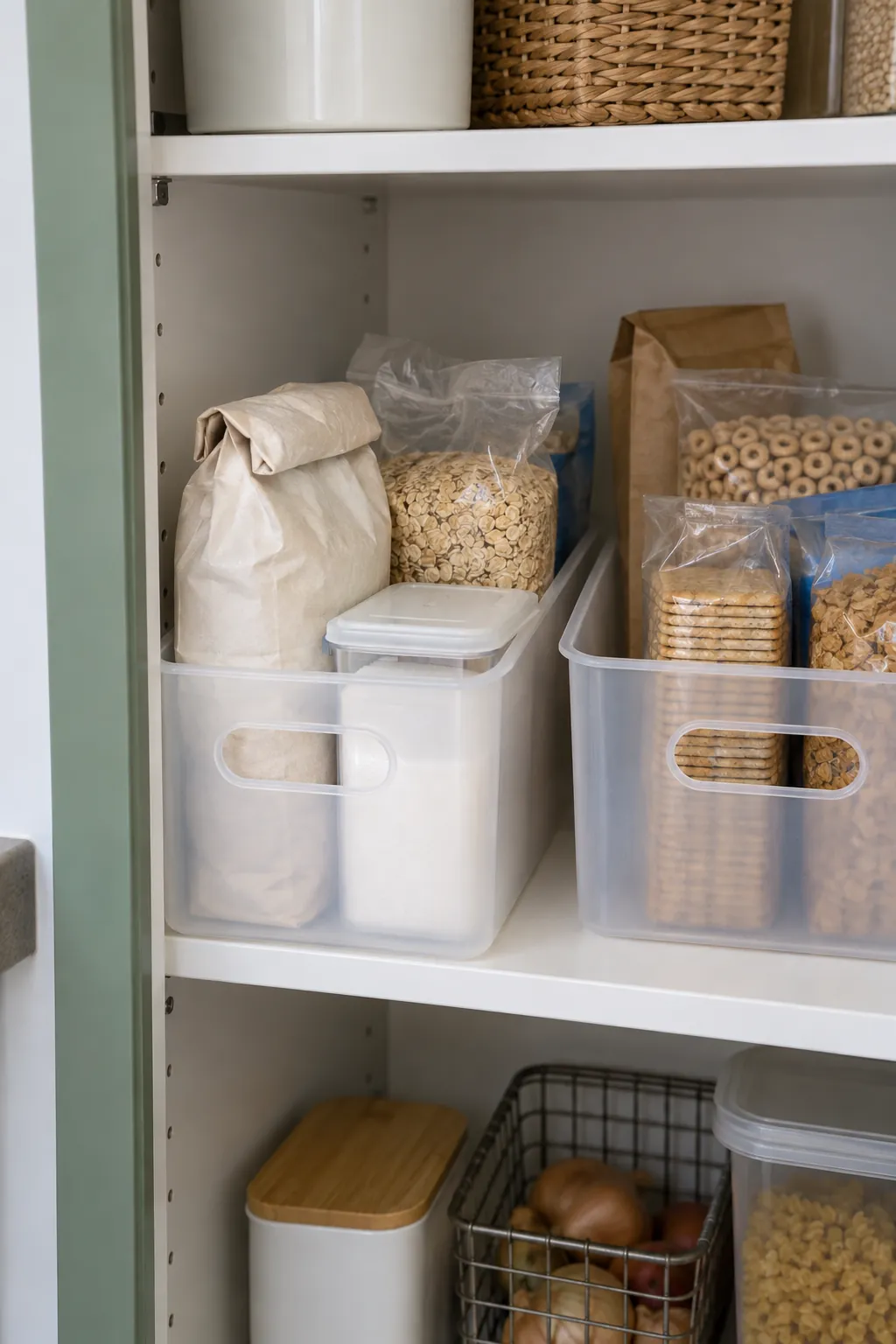
Put pantry refills in bins you can remove as a group
Deep pantry bins work best for a category you can name clearly, such as baking refills or breakfast supplies. Choose a container that fits through the door opening and leaves room to grip its handle. A bin packed with heavy cans may be technically removable but unpleasant to lift.
Keep opened foods in appropriate sealed containers and follow the package storage directions. Arrange earlier expiry dates toward the front and check the rear before shopping. Avoid storing food below plumbing that leaks or beside cleaning chemicals, and do not use a warm cabinet near the oven for items that need a cool location.
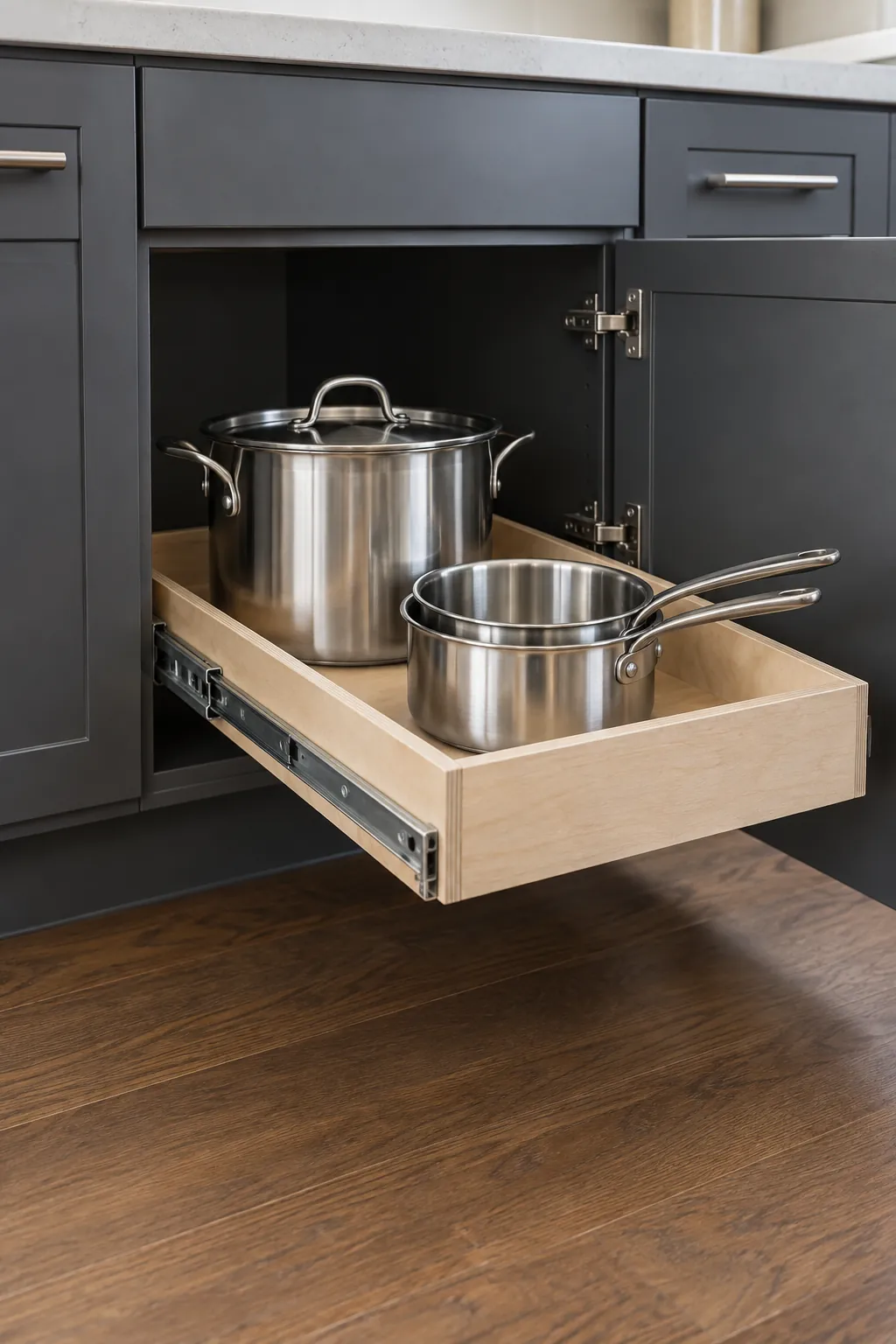
Use sliding shelves for cookware you reach for often
Pull out cabinet shelves can turn a deep base cupboard into useful daily cookware storage. They bring the back toward you, which matters more than squeezing another pot onto a fixed shelf. Keep short stacks with handles accessible and leave lids in a separate rack if they otherwise slide between pans.
Before buying hardware, measure the clear opening between hinges, the usable depth, and any center stile. Include door clearance when fully open. The interior cabinet width alone can overstate how wide a sliding basket or tray can be.
A kitchen cabinet drawer conversion requires compatible runners and secure mounting into sound material. Follow the hardware instructions and weight limits, including how the rating accounts for the tray. Renters can begin with removable bins, but a loaded sliding installation needs proper attachment rather than improvised adhesive supports.
After installation, test the shelf with a modest load before adding the rest. It should travel smoothly without scraping the door or tipping forward.
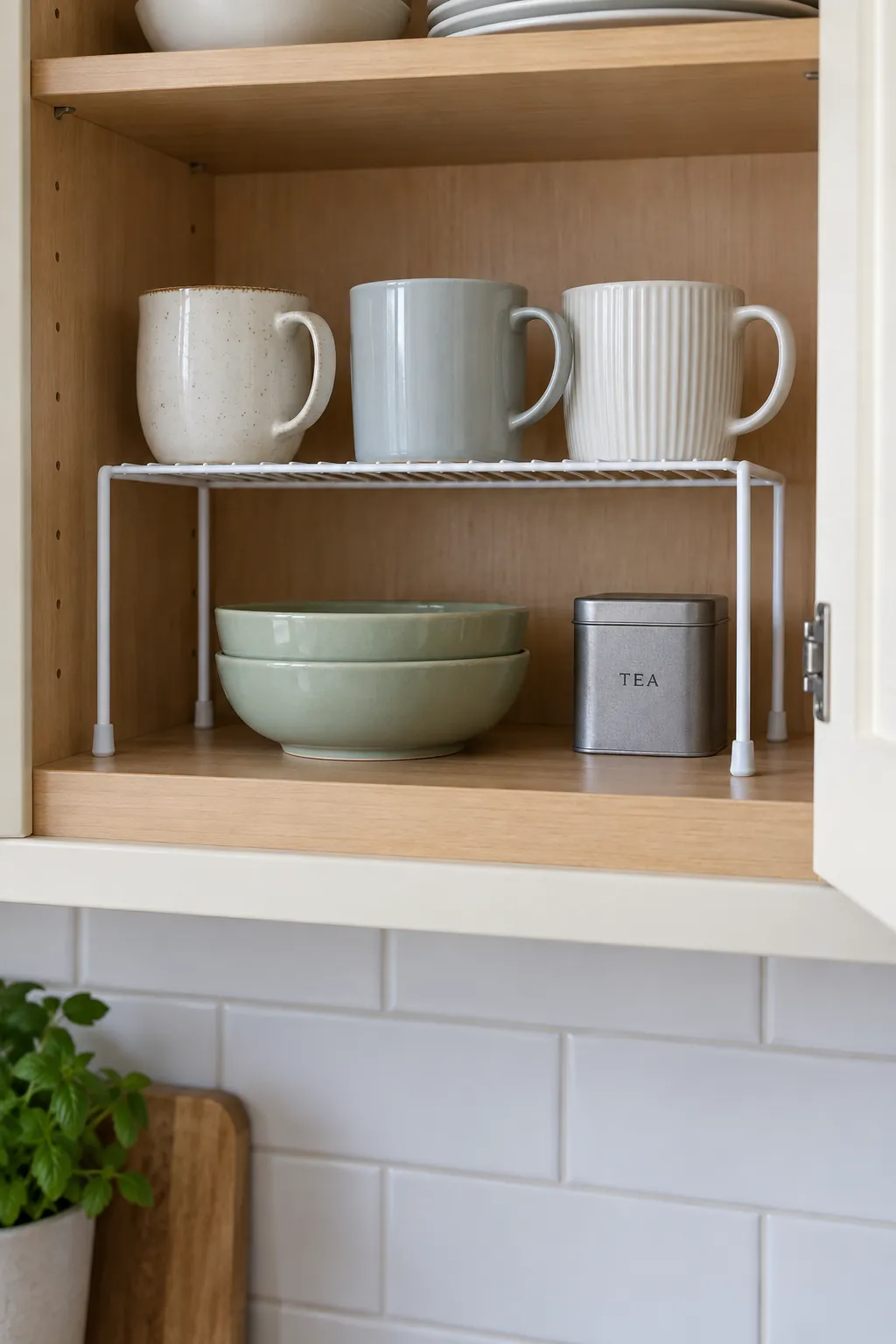
Match risers and turntables to the objects they hold
Shelf risers for cabinets can separate short stacks of bowls from mugs when there is enough vertical room. Choose a stable riser with feet fully supported on the shelf and keep the load within its rating. You should be able to take a bowl from underneath without moving the riser above it.
Lazy Susan storage suits small bottles or jars when the turntable can rotate freely inside the cabinet. Measure its diameter against the usable space, including hinges and the door opening. Keep tall containers stable and away from the rim; a rotating surface that knocks bottles into the door is the wrong fit.
A riser uses height, while a turntable changes access around a circle. Neither fixes every deep cabinet, and both consume space of their own. Try the objects in place before adding a second organizer.
Keep high storage light and give hidden space a limit
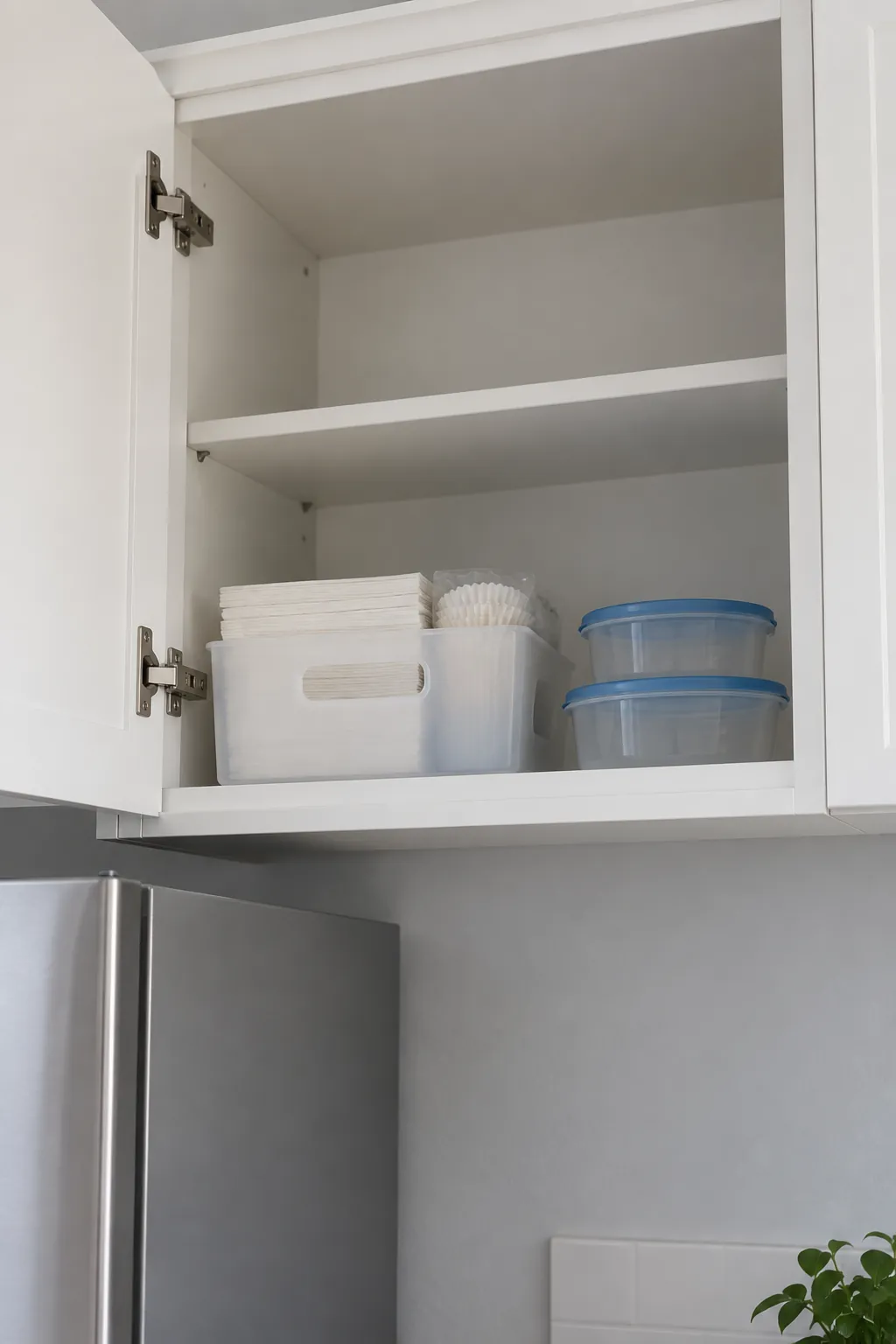
In a high deep cabinet, prioritize lightweight infrequently used items such as empty food containers, spare paper napkins, or a small box of seasonal baking cutters. Avoid heavy glassware and appliances that would need an awkward overhead lift. Use a stable step stool when needed, and do not climb on a chair or countertop.
Leave enough space to bring a box forward without tilting it over your head. An inside door note can remind you what is behind the front row, but it cannot make an unsafe reach sensible. Keep the heaviest and most frequently used belongings where your body can handle them comfortably.
Choose one cabinet to test before buying organizers for the whole kitchen. If retrieving the roasting pan still requires moving six unrelated items, change what lives in front of it. Useful storage ends where reliable access ends.