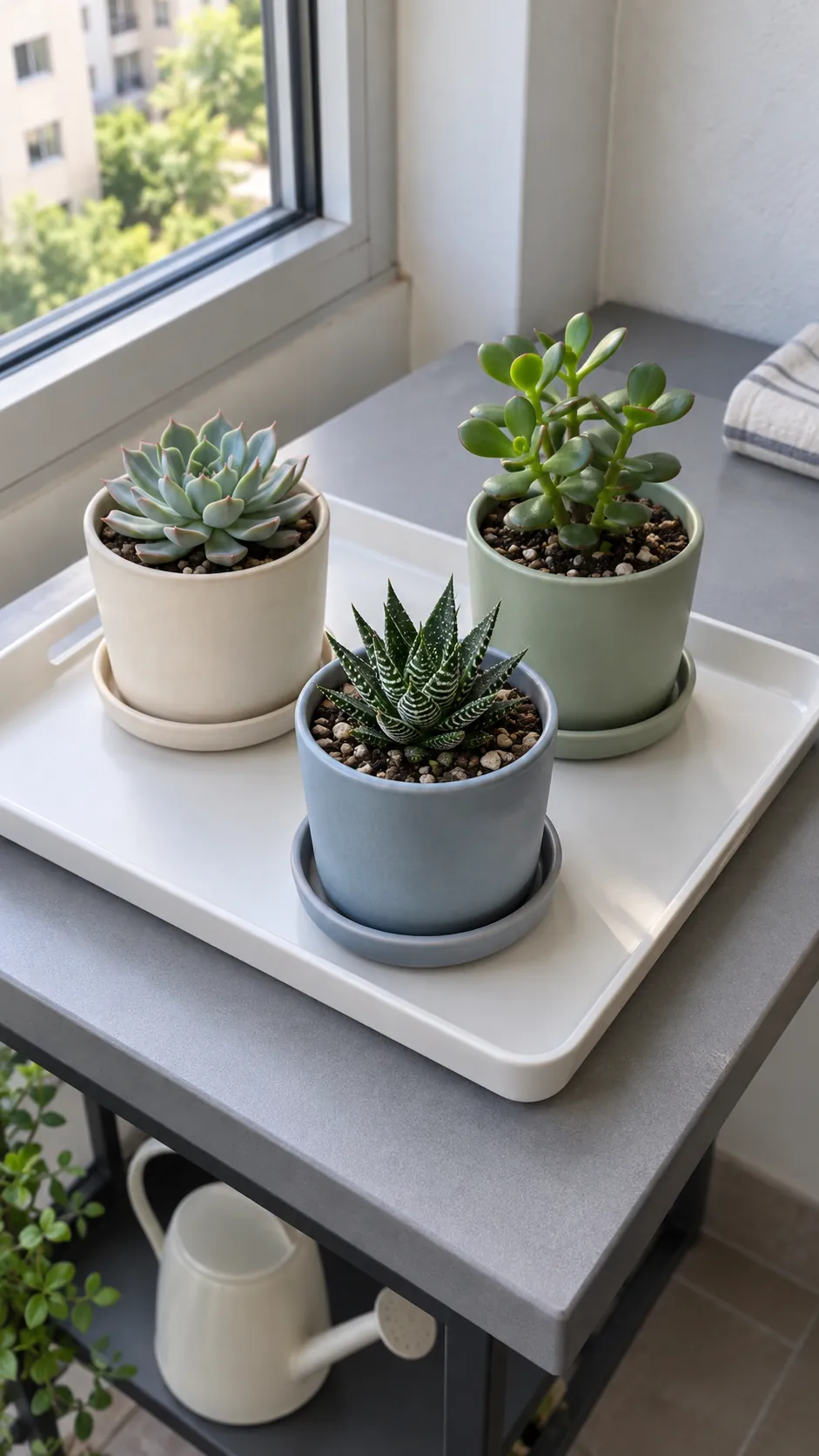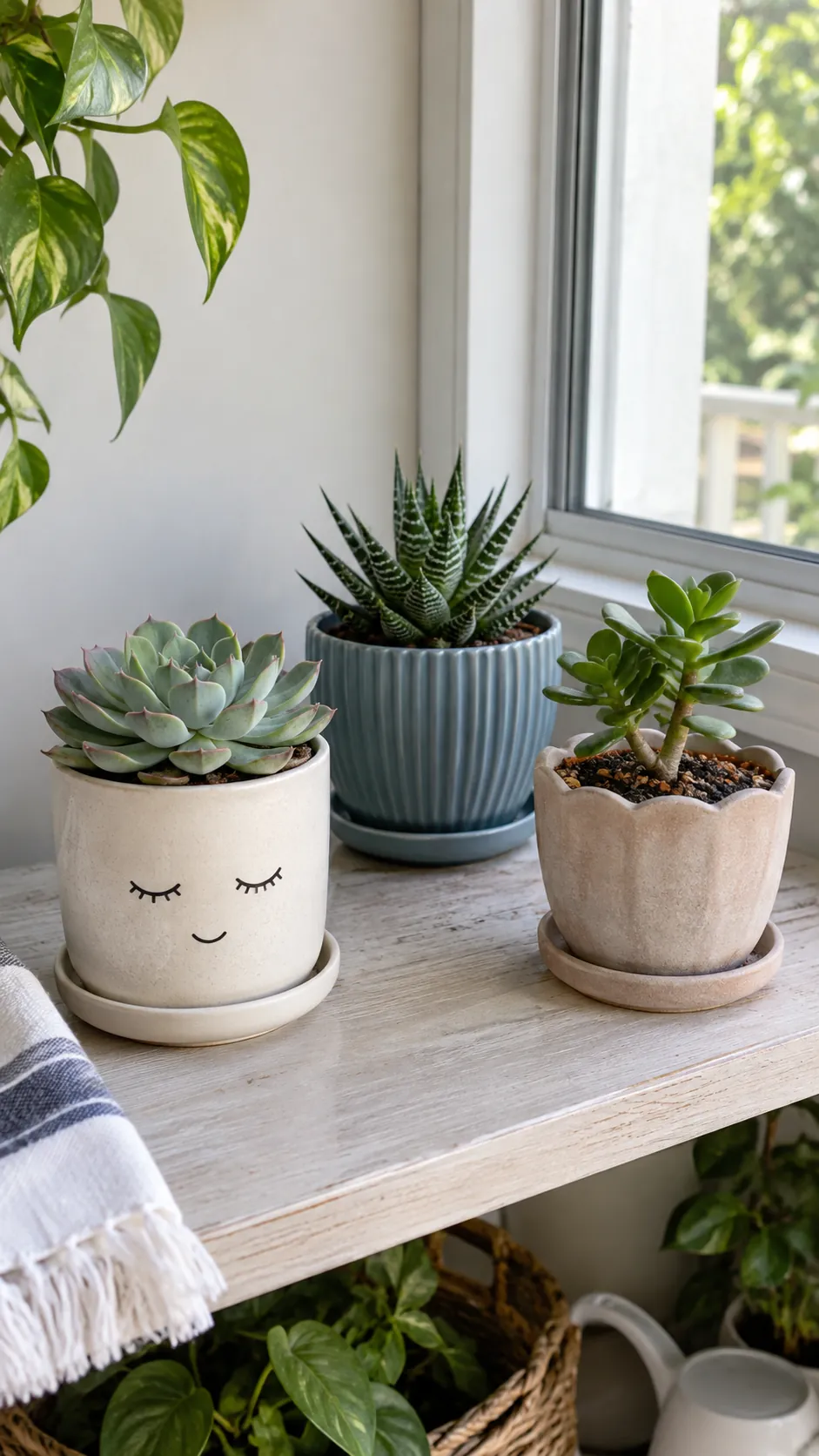
A tiny pot can look perfect in a photo and still be awkward to water or repot. Start with a container that fits the roots and either drains freely or holds a removable growing pot. Match the succulent to the light you have, and treat decorative gravel as a finish rather than a substitute for drainage.
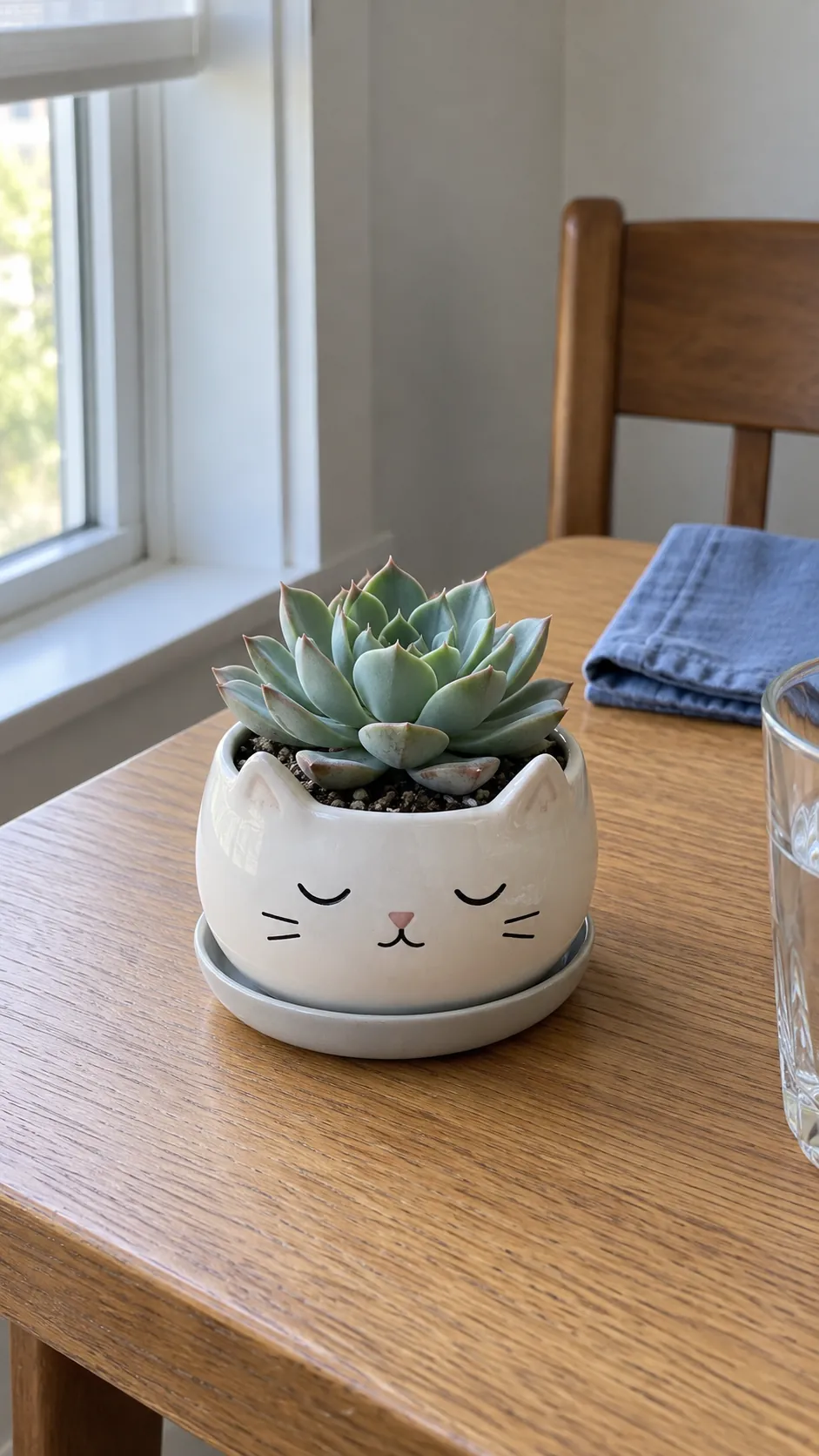
Sleepy cat ceramic pot
A sleepy cat face makes a compact rosette look like a leafy crown. Choose an opening wide enough that the leaves do not rub against the sculpted ears. A removable nursery insert lets you enjoy a holeless ceramic shell while watering somewhere washable.
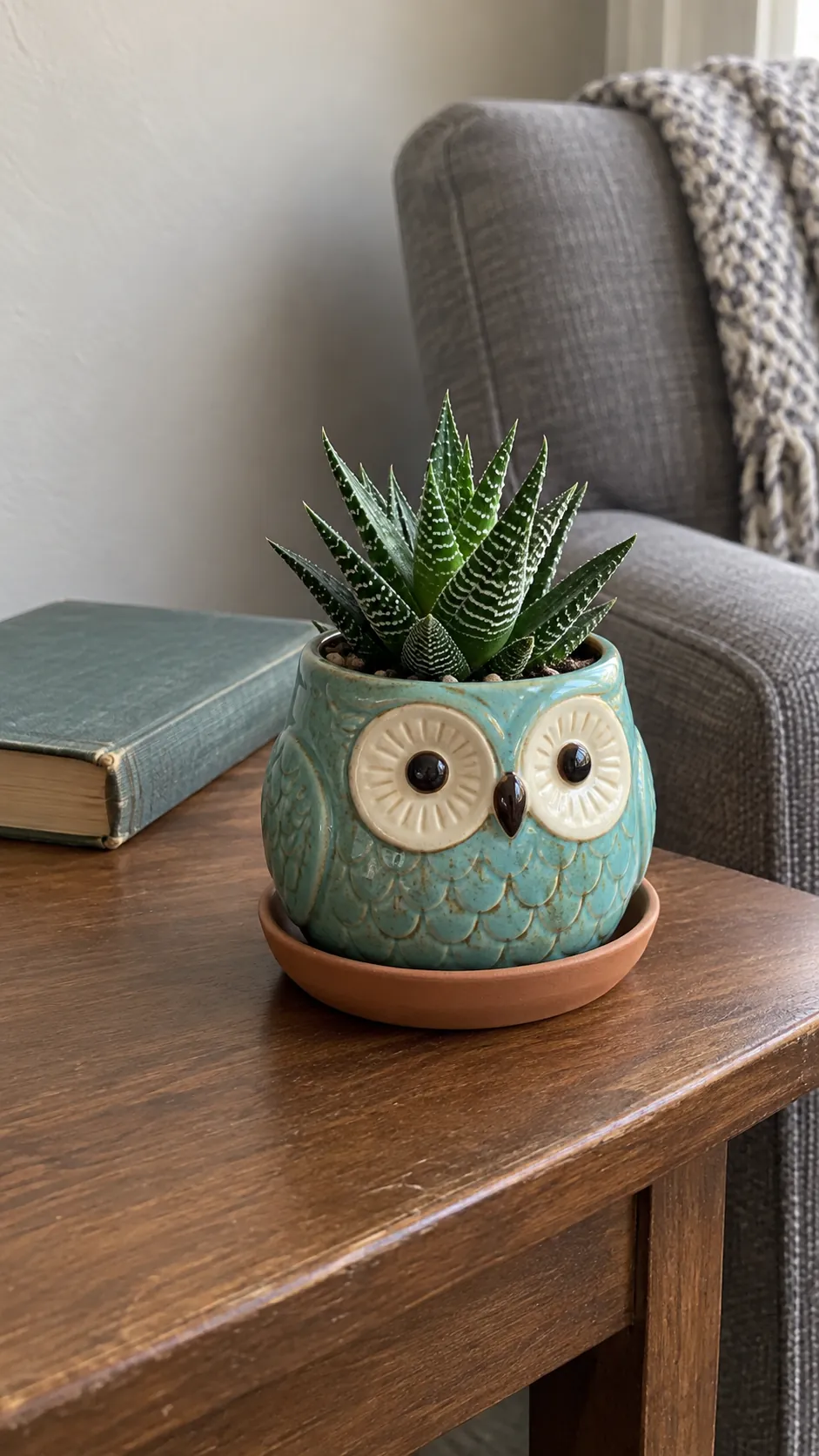
Round owl pot
Circular owl eyes give a small plant plenty of personality without needing bright paint. Keep the succulent low enough to leave the face visible, especially if the vessel has a narrow upper opening. Measure the usable cavity rather than counting the molded wings as planting space.
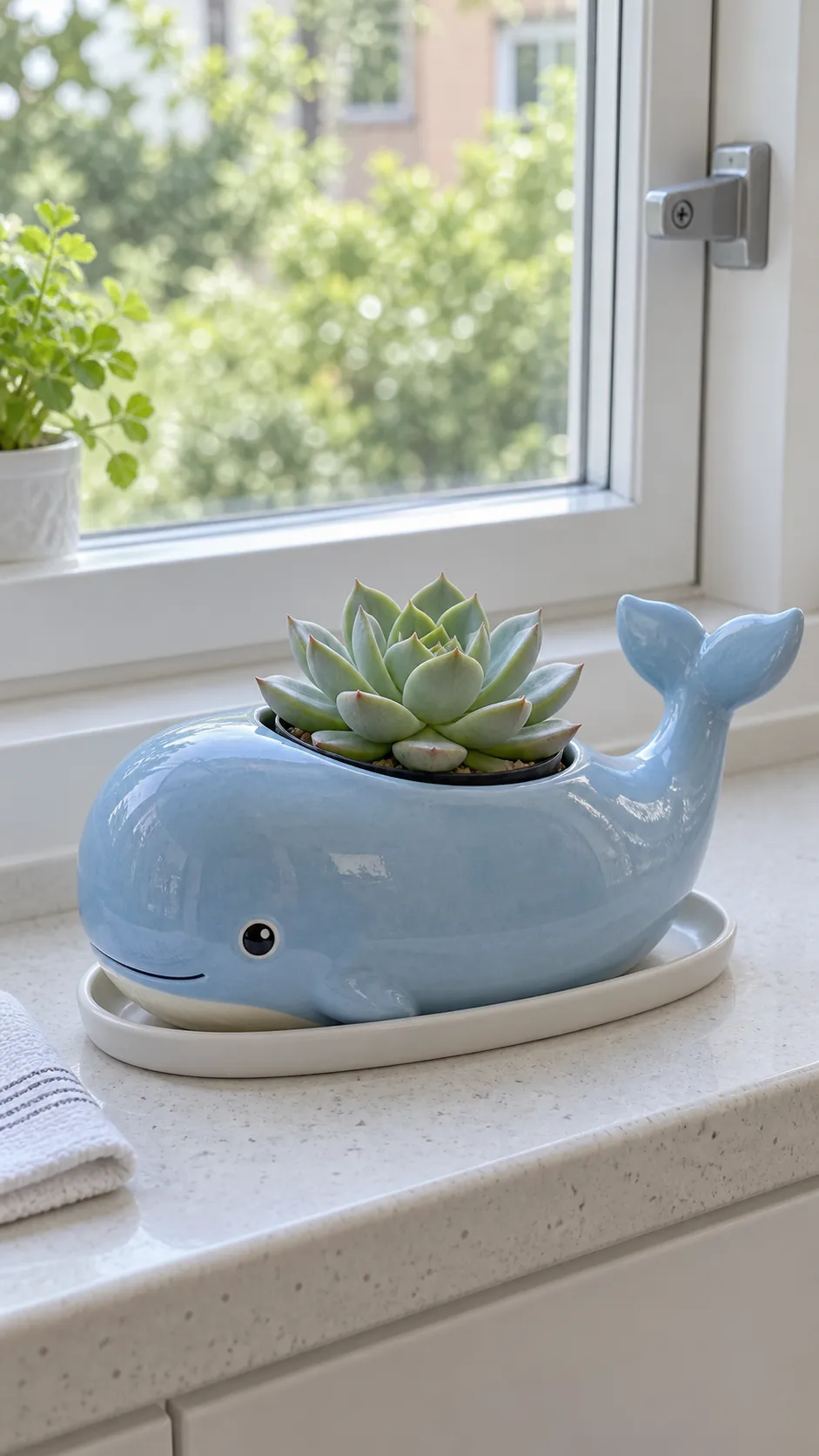
Tiny whale cover pot
A blue whale shape pairs neatly with the cool tones of an echeveria. The tail adds exterior width but no useful room for roots, so check the inner dimensions carefully. Lift the growing pot out by its rim instead of pulling the plant whenever it needs watering.
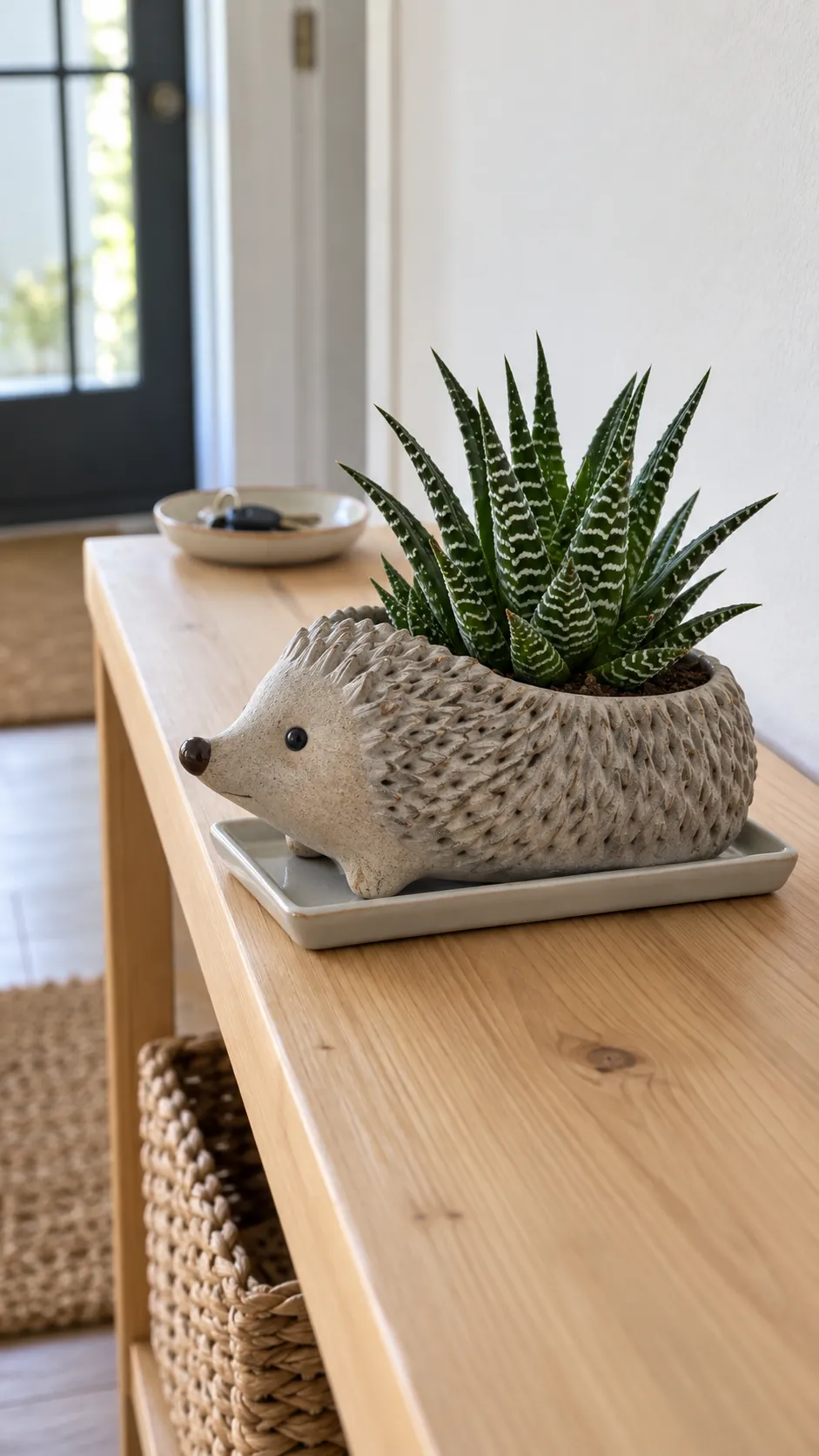
Hedgehog planter
A pointed haworthia can extend the prickly silhouette of a ceramic hedgehog. Pick a broad base so the elongated animal shape sits securely on its saucer. Leave enough room behind the plant to see the little nose rather than burying the whole character in foliage.
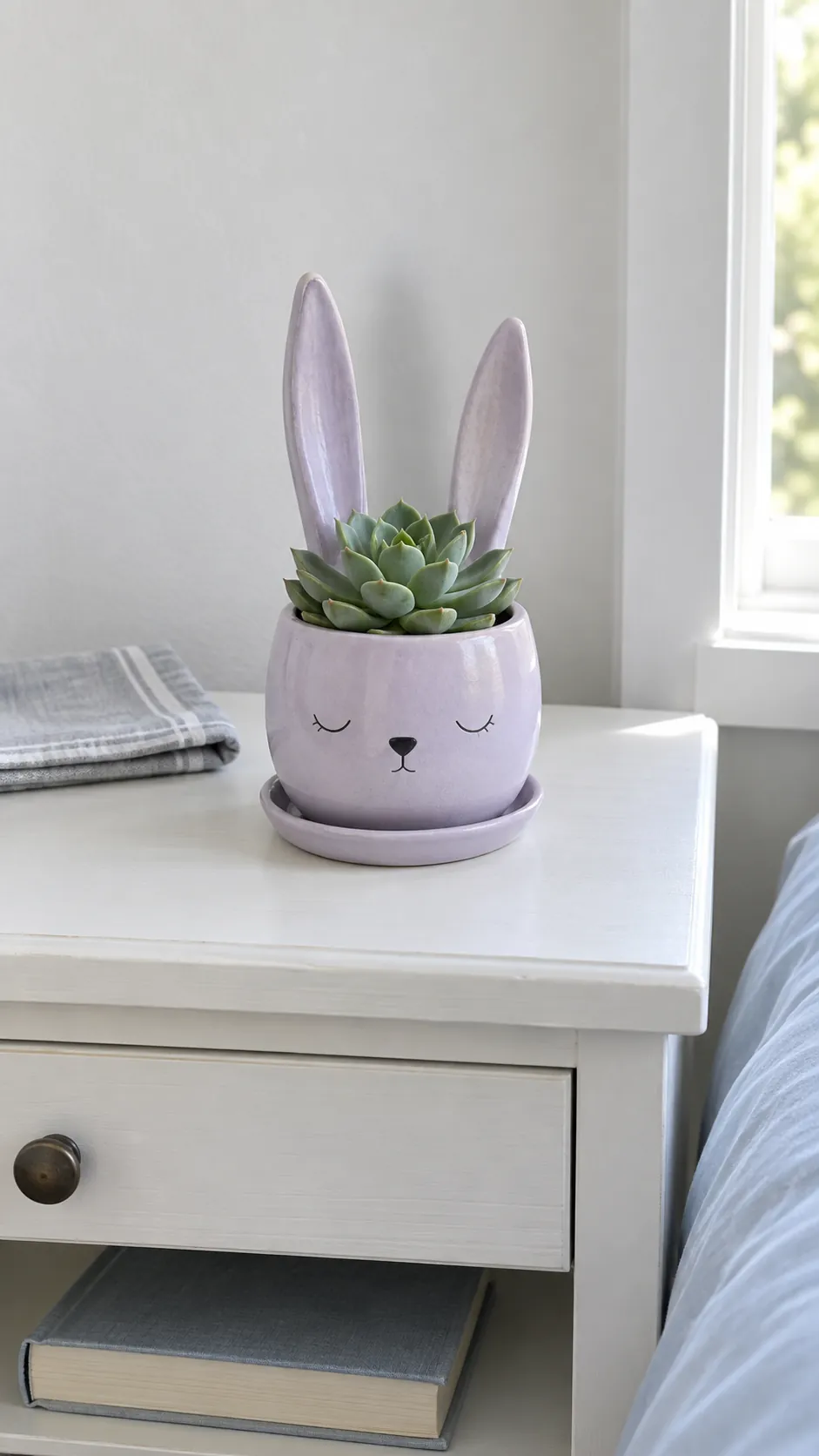
Bunny ear planter
Long ceramic ears create a playful outline around a small succulent. Position the plant where its leaves can expand without pressing against those ears. Treat delicate protrusions as decoration, not handles for lifting a heavy pot.
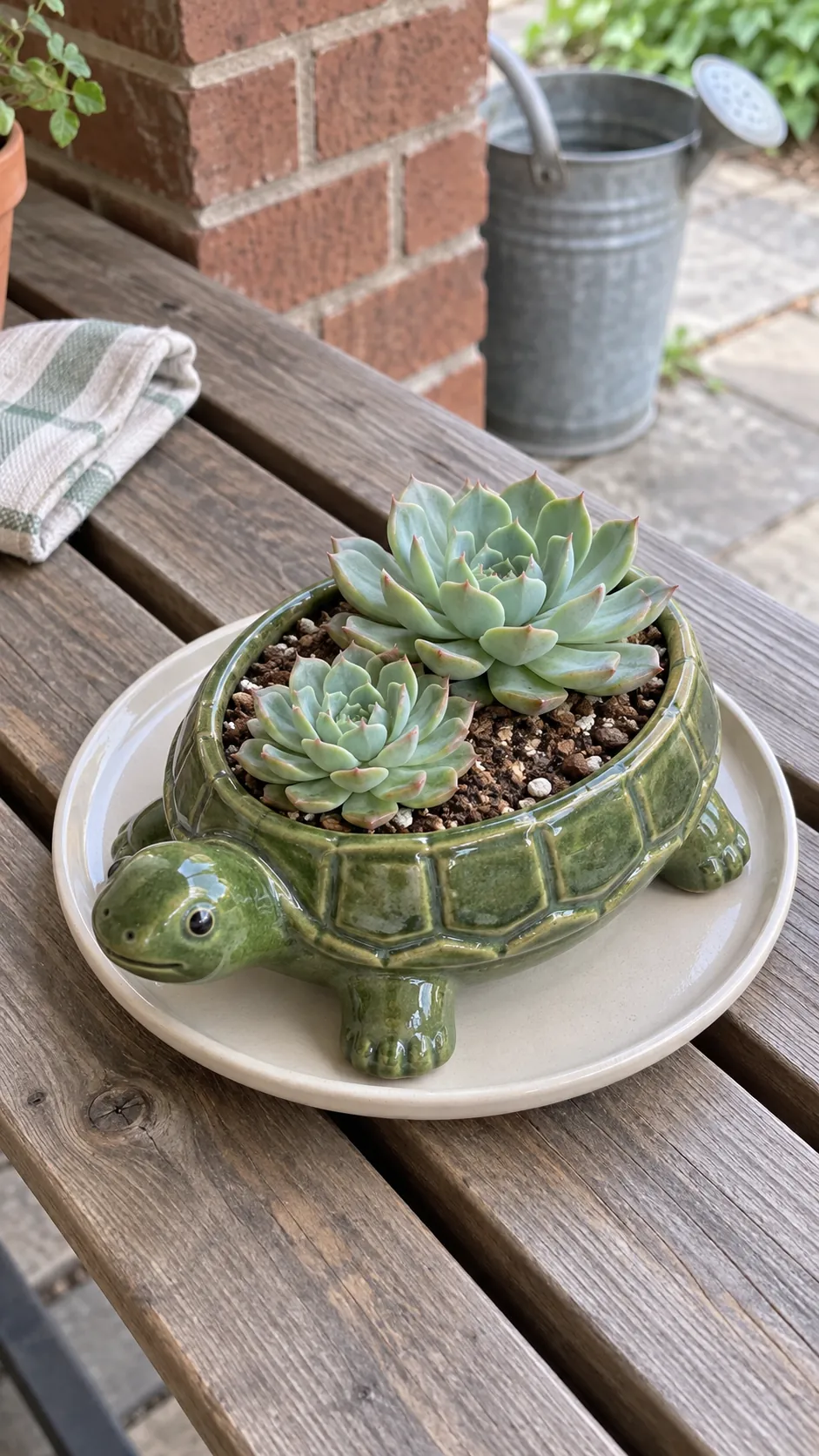
Turtle shell bowl
A low turtle planter suits a restrained cluster of small rosettes with similar growing needs. The shell pattern supplies interest without requiring a crowded planting. Confirm there is adequate root depth below the decorative rim and an outlet that does not become blocked against the saucer.
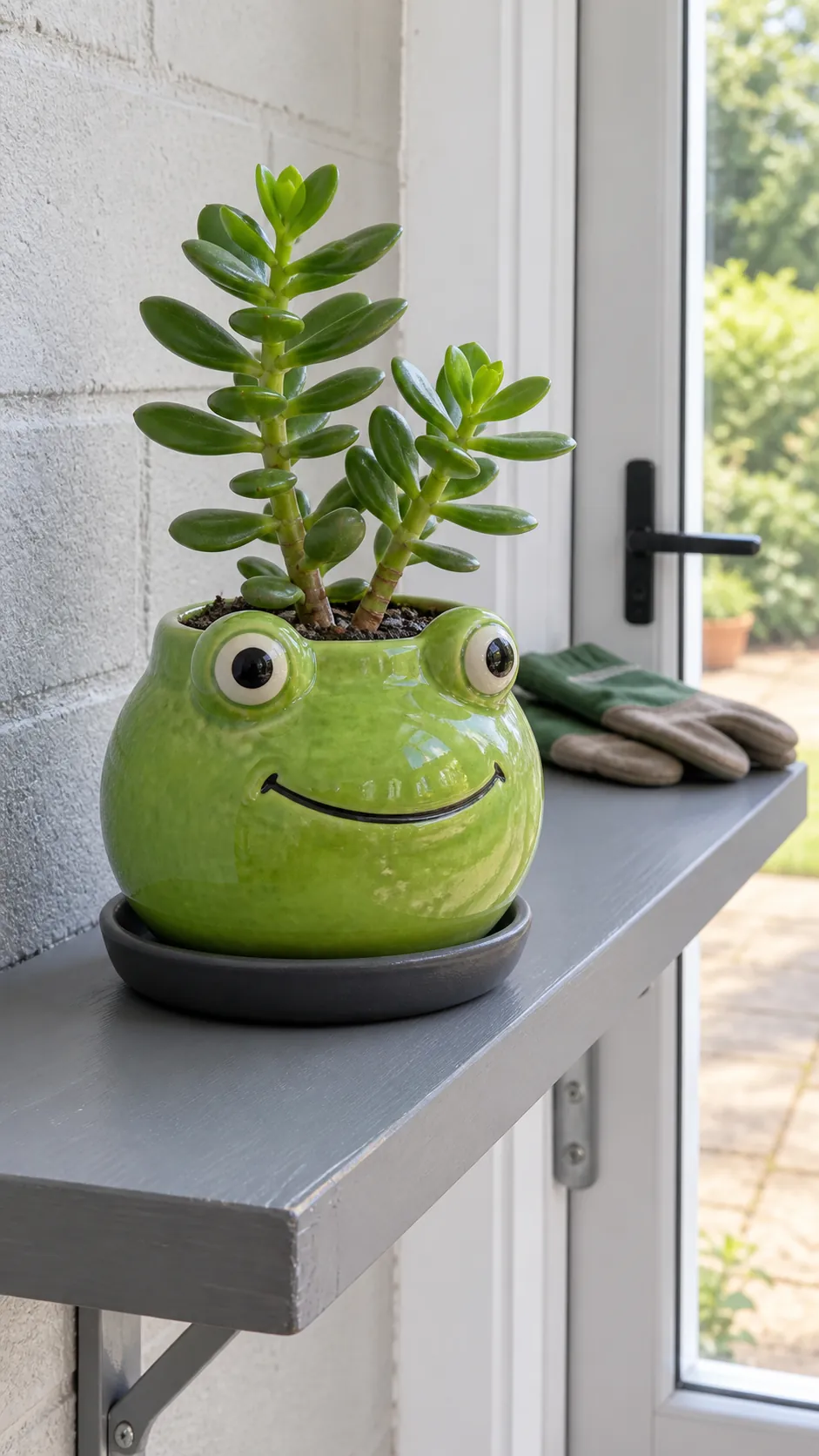
Frog face pot
A little green frog vessel can make a single upright succulent feel intentional. A contrasting plant silhouette helps the foliage remain visible against the green glaze. Keep the pot away from a pond edge or wet bathroom corner simply because the animal theme suggests moisture.
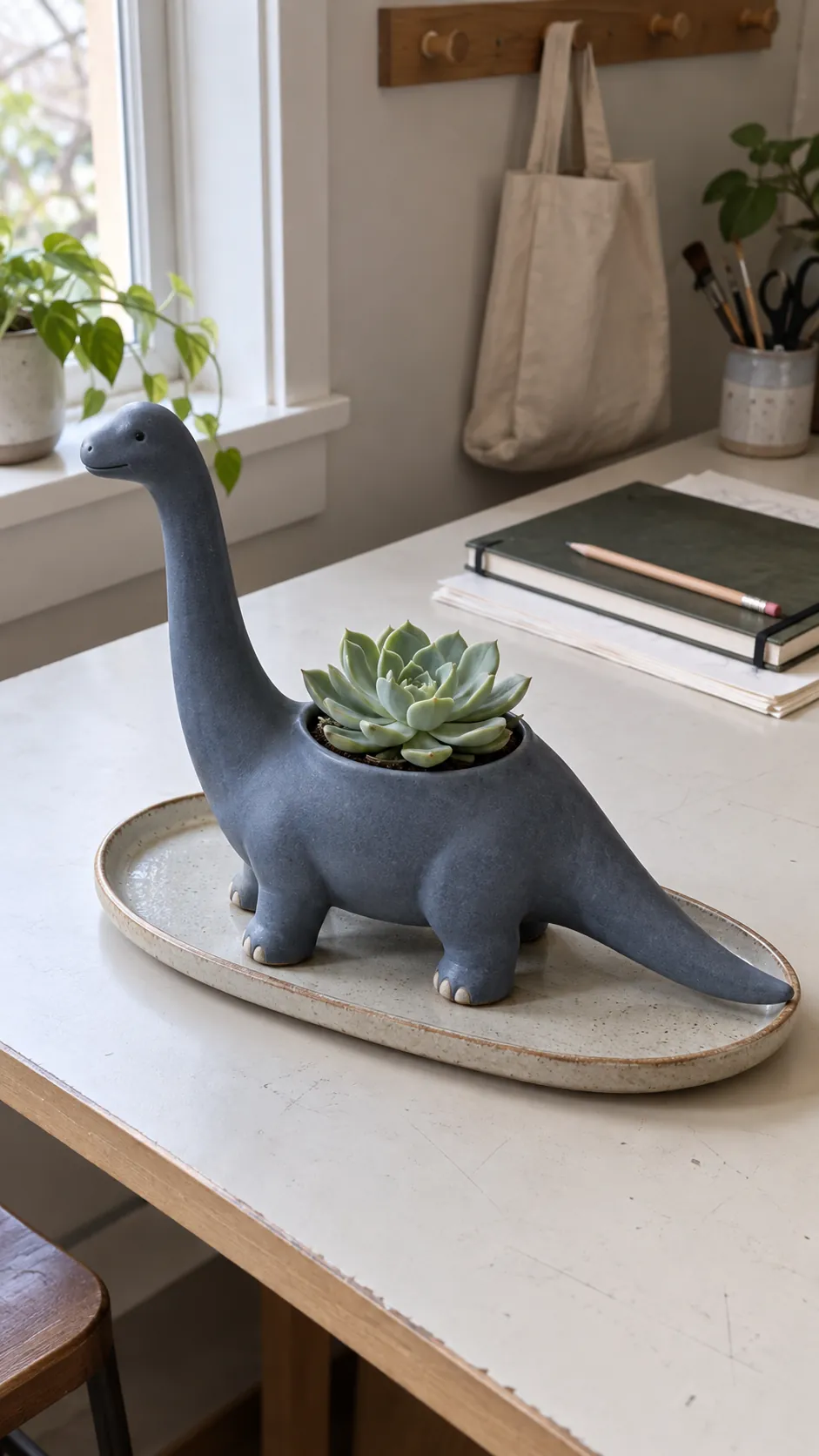
Dinosaur planter
A small dinosaur pot adds character to a desk or hobby shelf. Its body opening may be much smaller than the nose to tail measurement, so buy for root space rather than overall length. For homes with children, keep breakable pottery and any sharp or toxic plants out of reach.
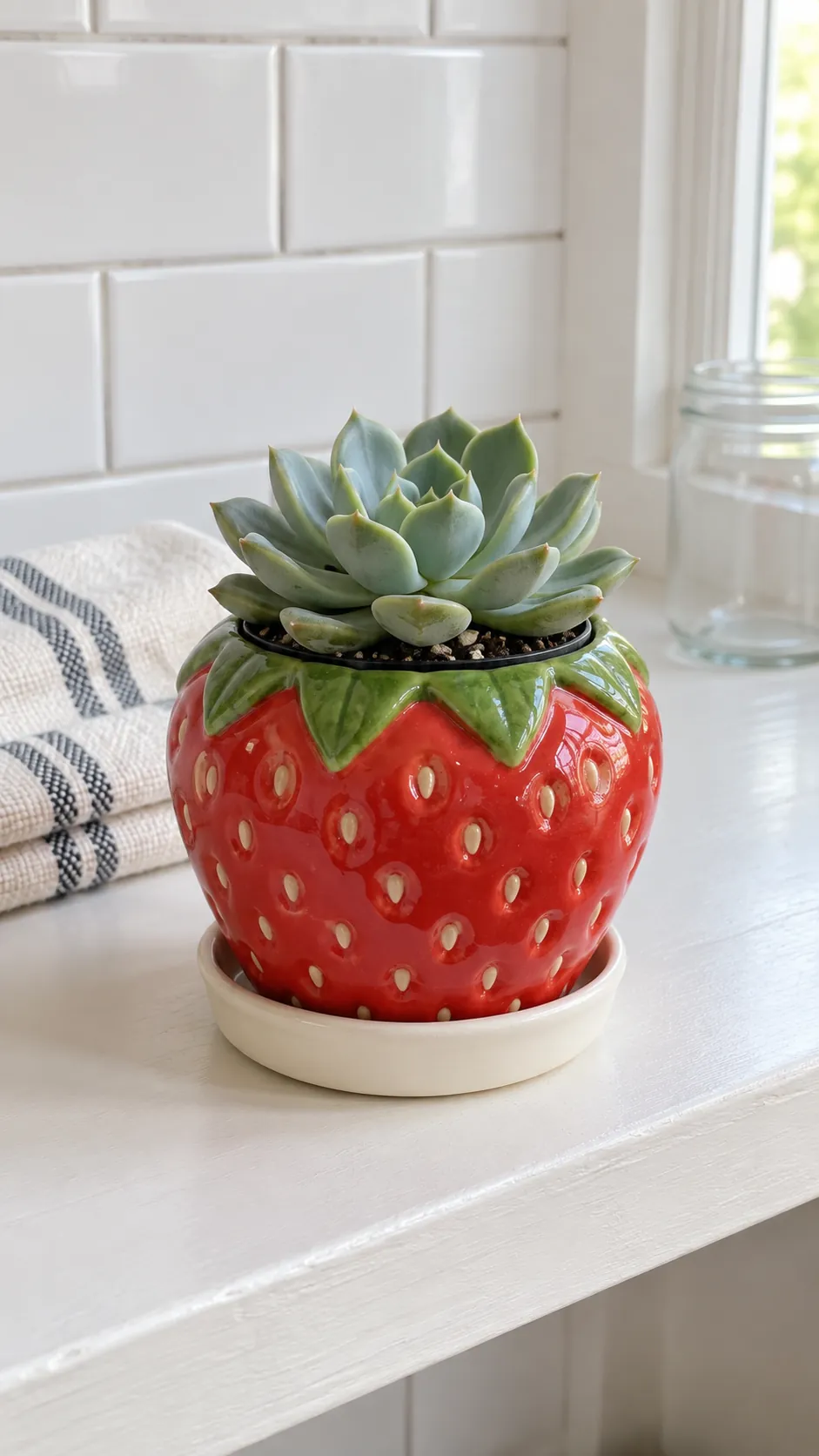
Strawberry ceramic cup
A strawberry shaped pot brings a cheerful red accent to a plain surface. Use the fruit form as an outer cover if it has no drainage, and empty it after the insert has drained. A single green rosette usually reads more clearly here than several different plants competing with the painted seeds.
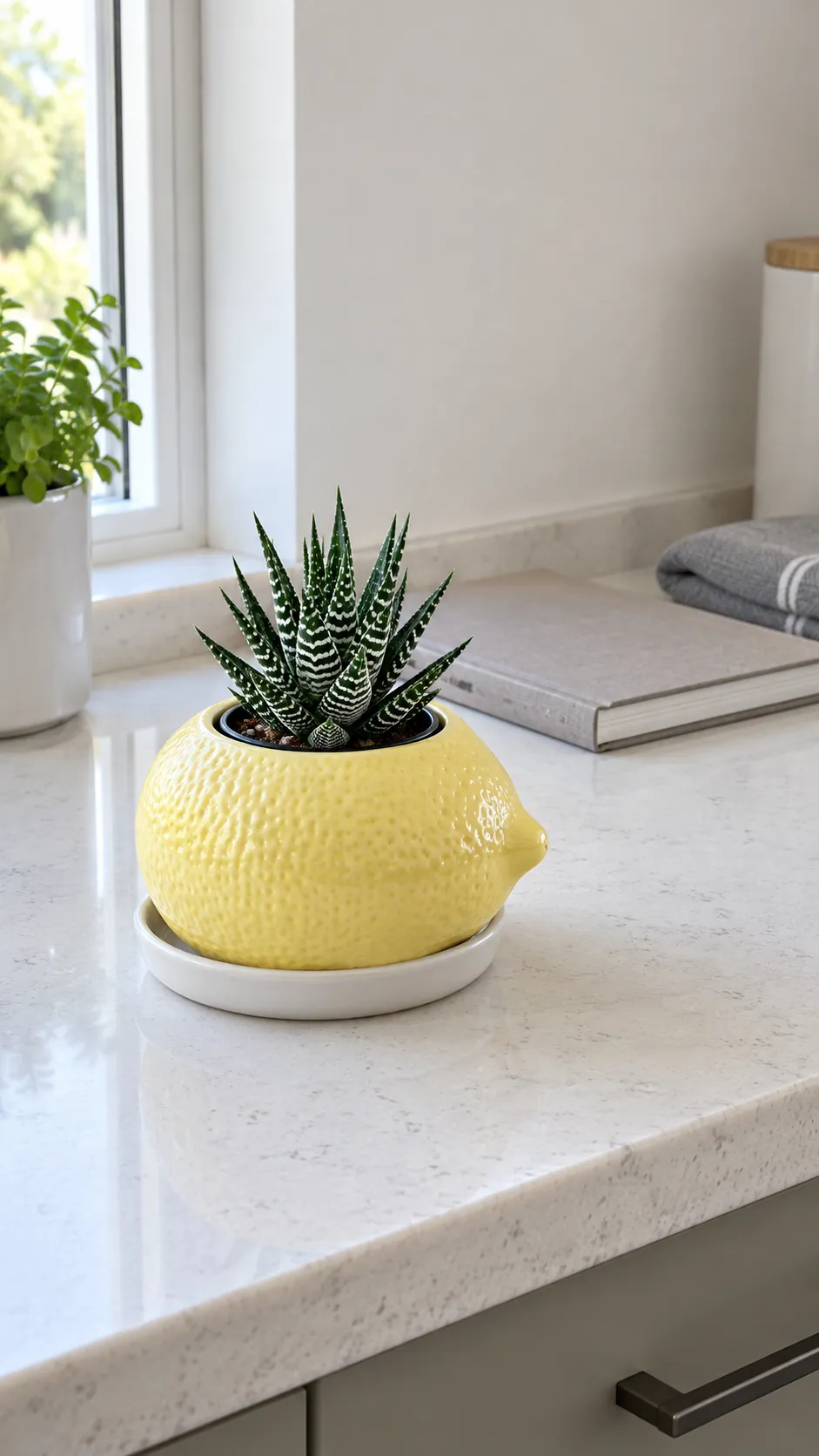
Lemon shaped planter
A pale lemon vessel gives succulent pot ideas a fresh kitchen feel without using a large container. Place it near suitable light and away from cooking heat, grease, and frequent sink splashes. A simple white saucer can keep the bright color from dominating a small shelf.
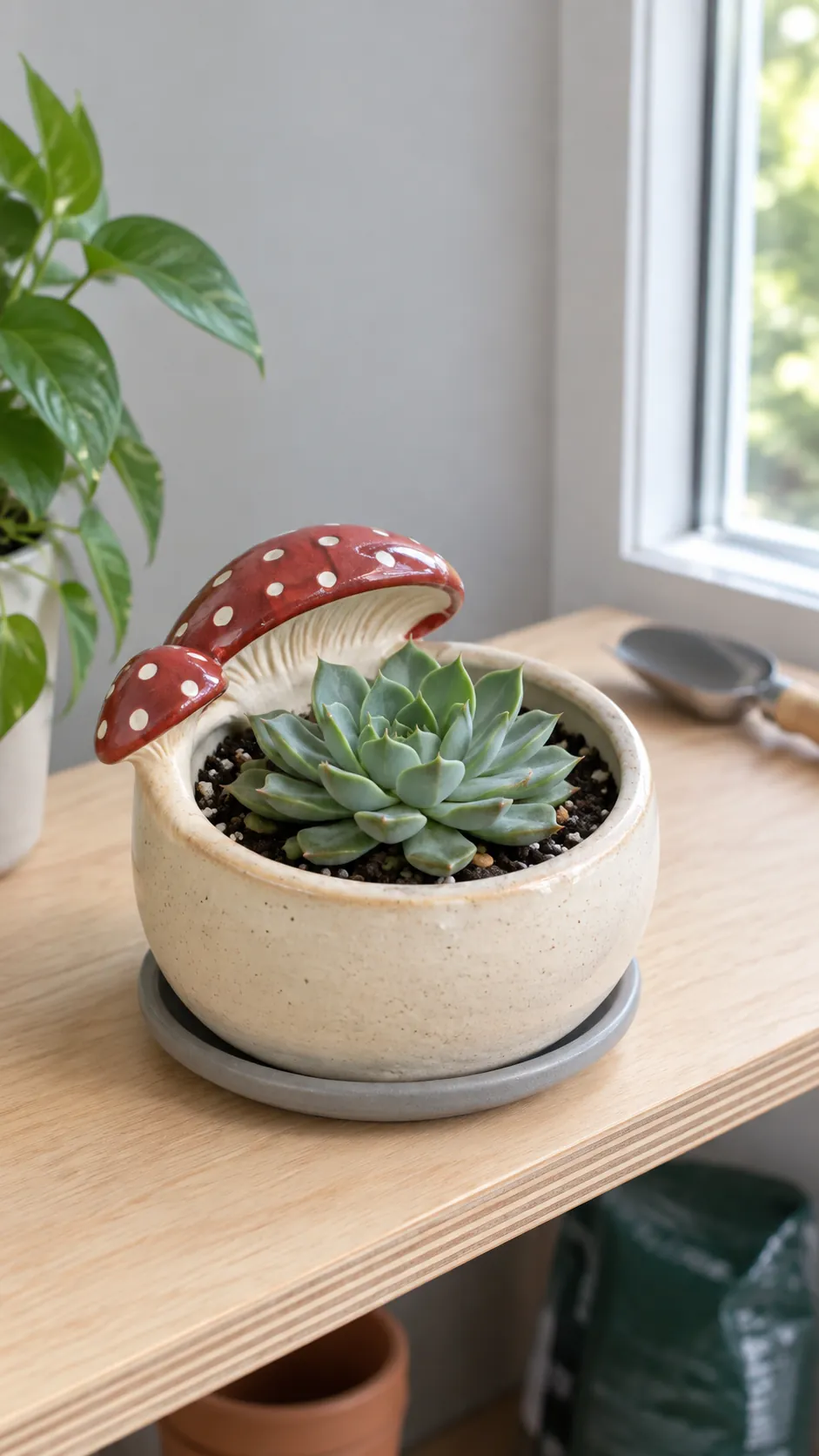
Mushroom rim pot
A mushroom inspired rim can be charming when it leaves the plant opening accessible. Check that the decorative cap does not trap fallen leaves or make it difficult to judge soil moisture. Keep any tiny removable mushroom ornaments separate if pets or children could swallow them.
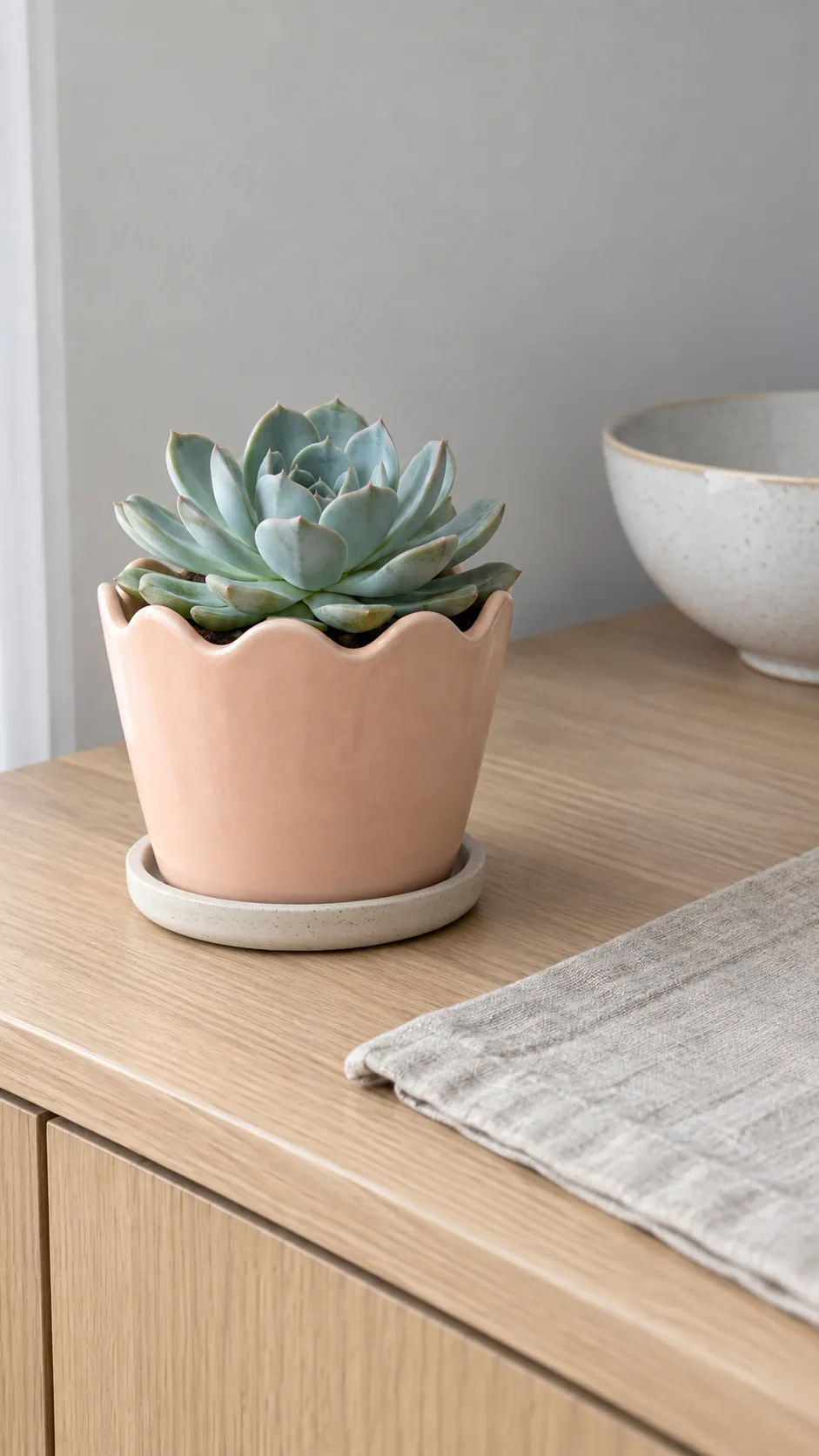
Scalloped pastel pot
A scalloped rim softens the geometry of a compact succulent. Choose a subtle pastel when the plant already has strong leaf color. During watering, aim at the mix rather than filling the scalloped recesses, then wipe away any mineral marks before they build up.
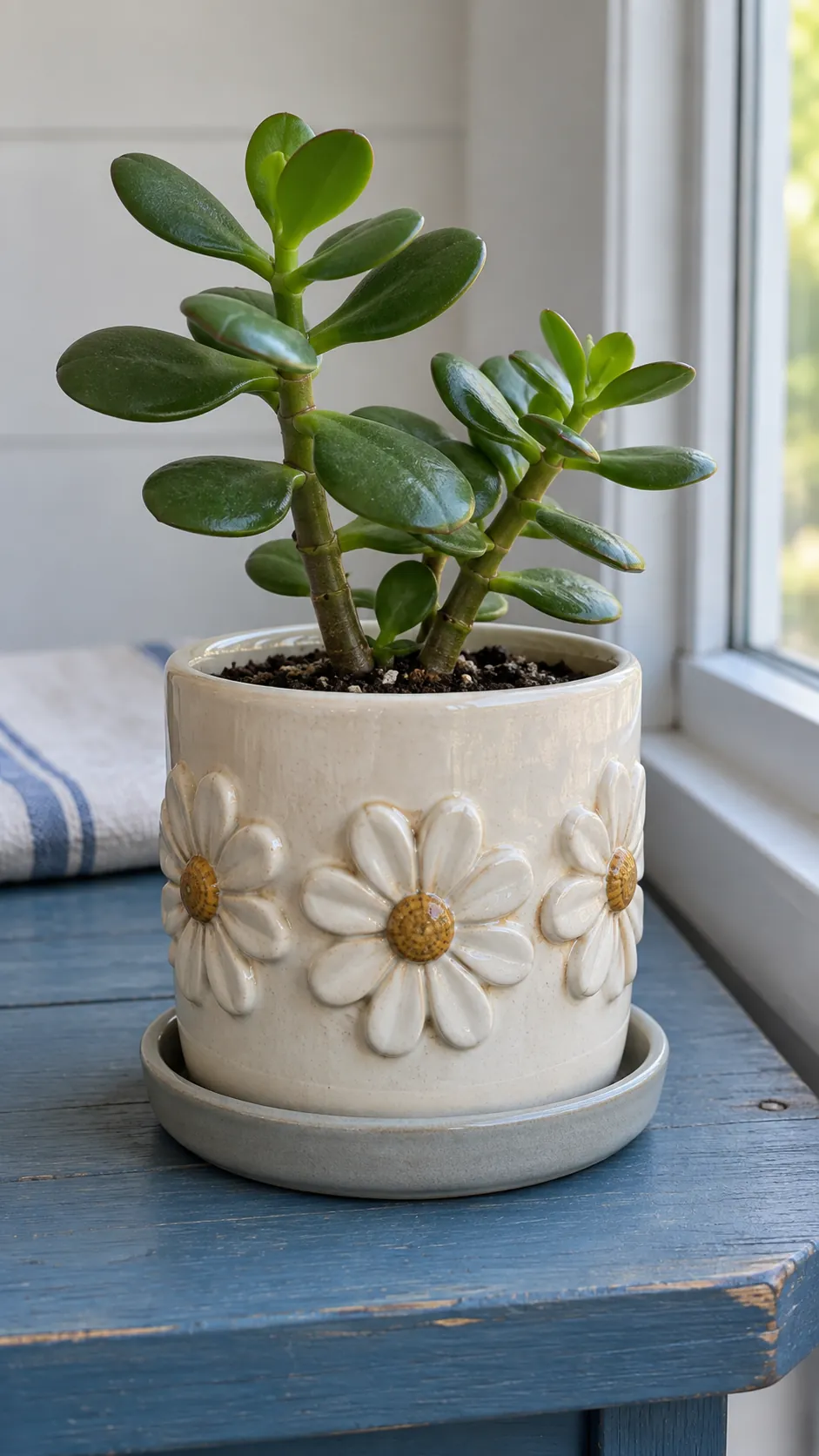
Daisy relief planter
Raised daisy petals add detail that does not depend on a painted slogan. A plain green plant allows the relief pattern to remain the focal point. Use a soft brush to remove dry dust from the grooves, and check the saucer separately instead of assuming the decorative base is watertight.
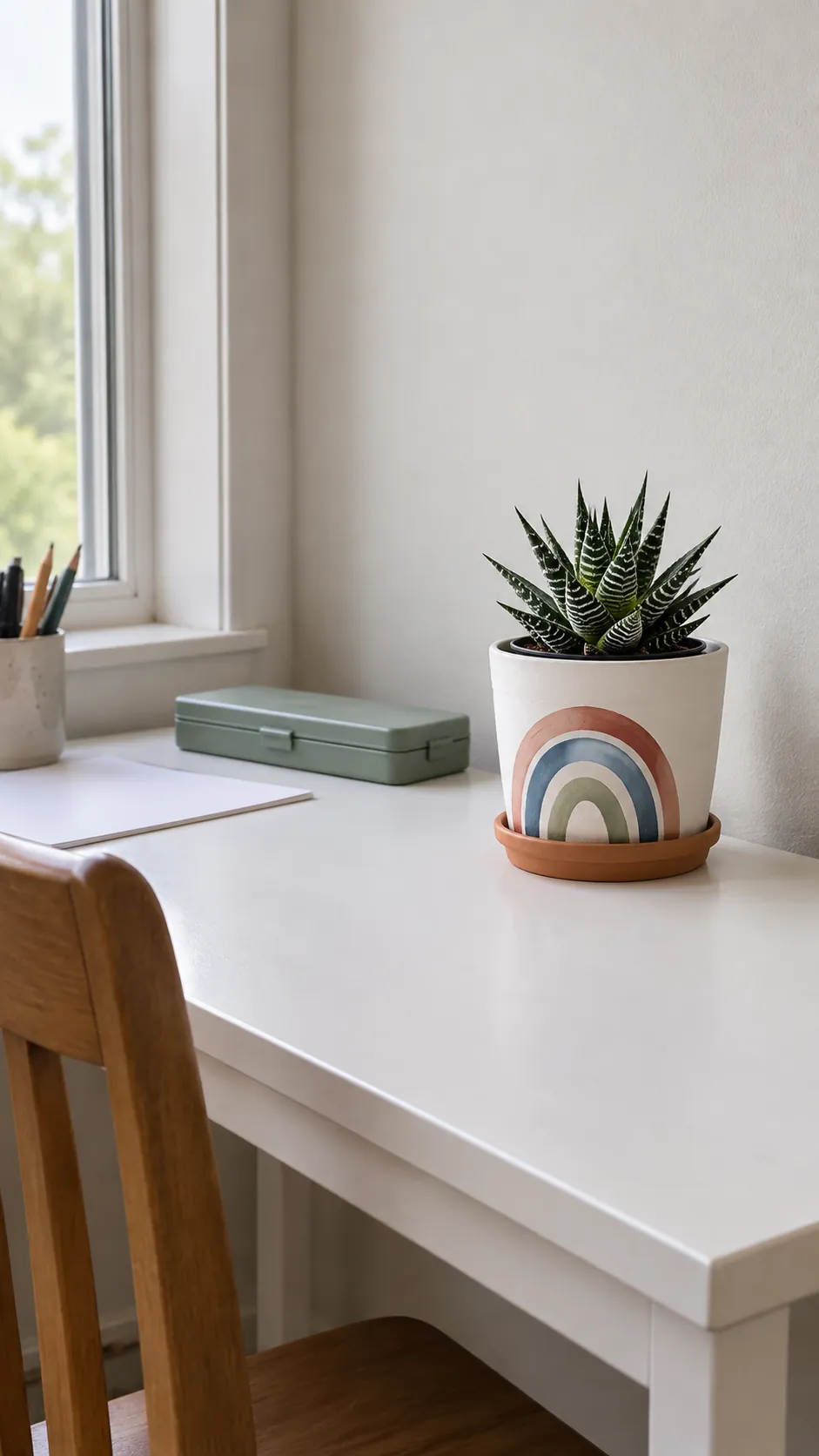
Rainbow arch cover
A rainbow motif works well as a small accent in an otherwise quiet room. Keep the rainbow on the exterior of a conventional container so root space and drainage remain straightforward. If you paint your own version, follow the coating’s preparation and curing instructions before putting it into use.
Smiling face cylinder
A simple smile can turn an inexpensive cylindrical pot into a cute planter. The regular shape is useful because nursery inserts are easier to match than they are with narrow animal bodies. Place the face below the foliage line so the expression stays visible as the plant grows.
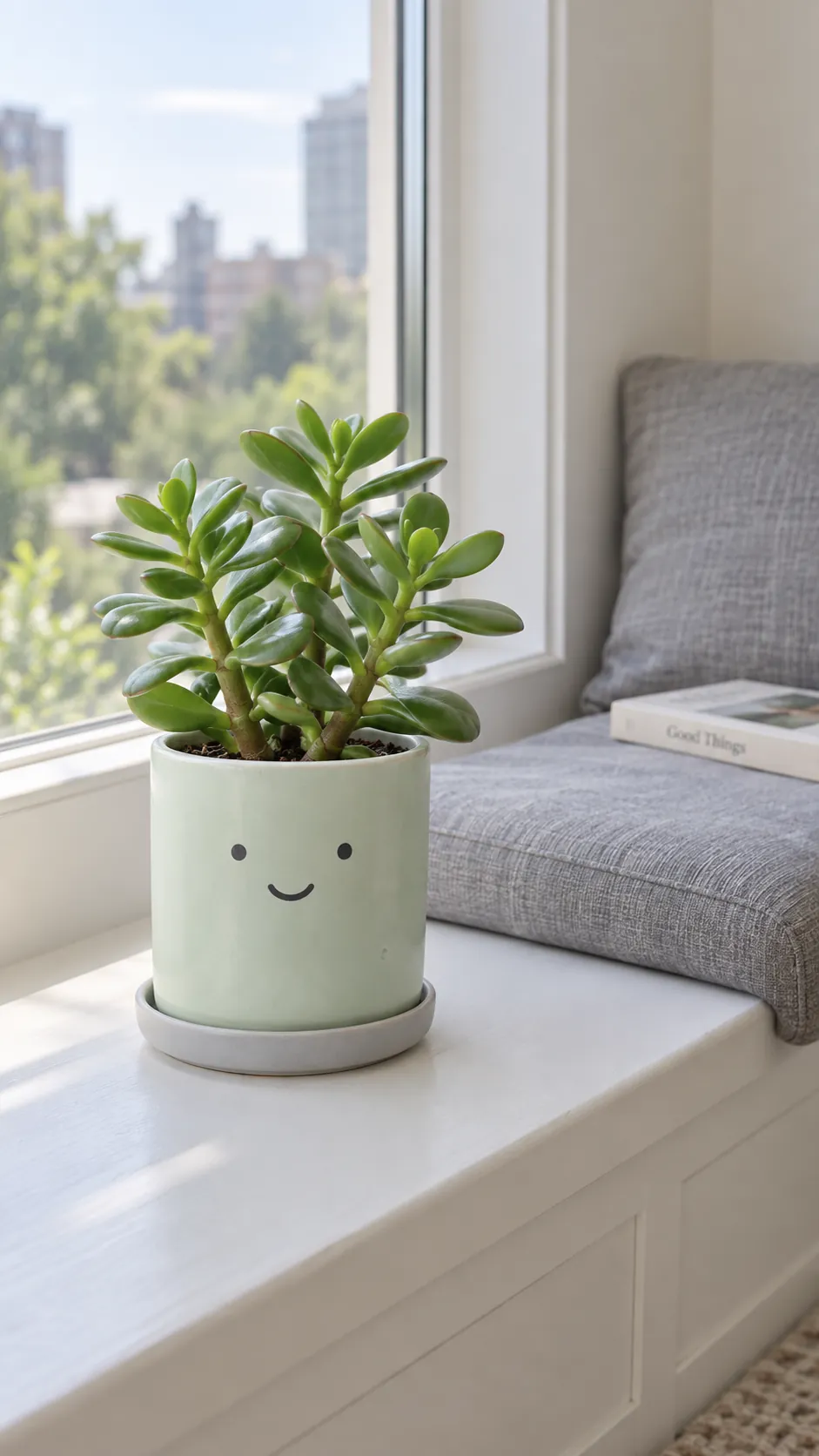
Blush cheek footed pot
Tiny feet and painted cheeks give a plain vessel a friendly presence. Check that all feet touch a flat surface and that the saucer can sit beneath the drainage outlet. Avoid a top heavy plant that could make the elevated shape easy to knock over.
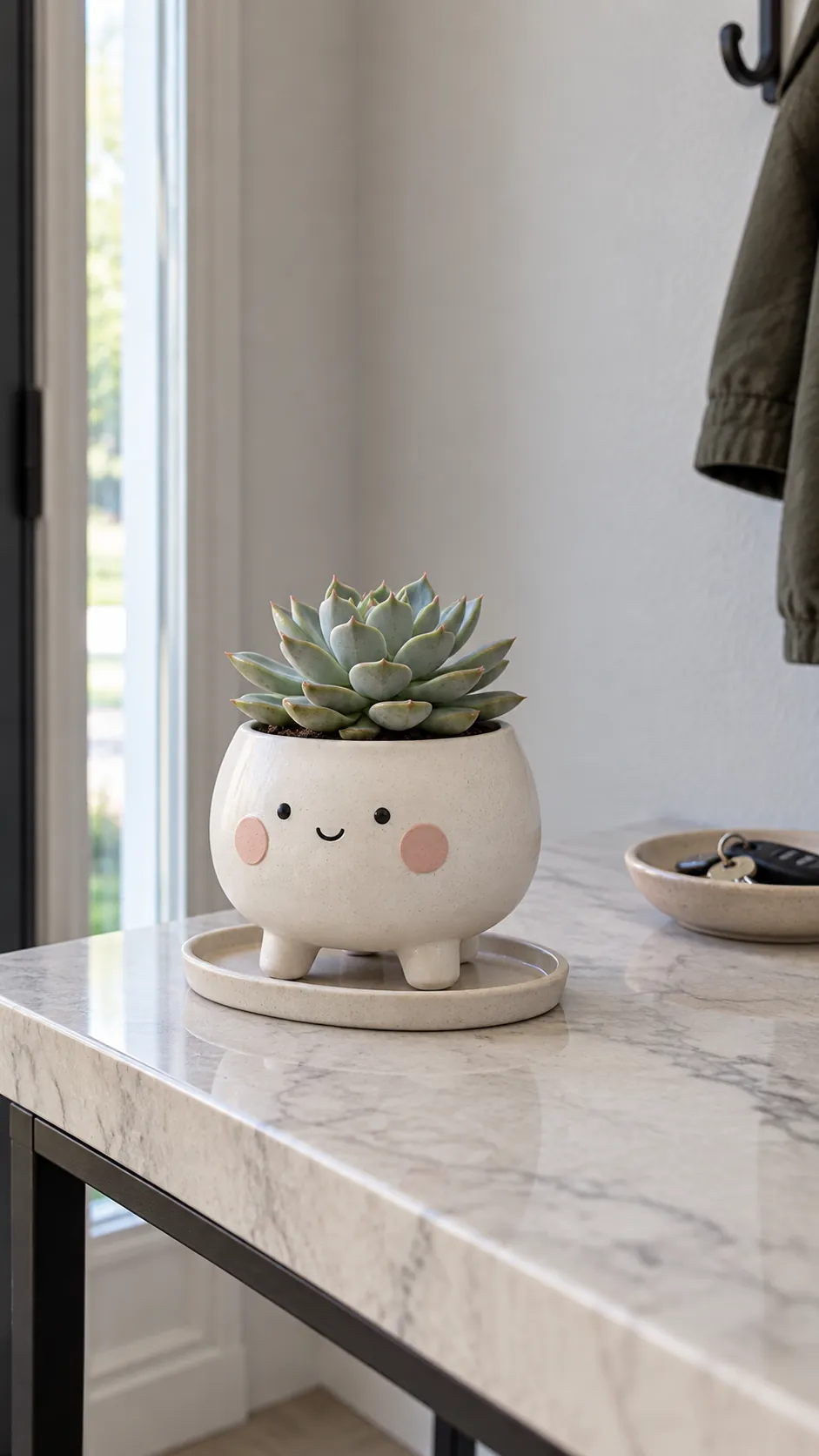
Mini boot planter
A boot shaped container is a playful choice for a sheltered porch. The toe may collect moisture beyond the roots, so a removable insert in the upper opening is often easier to manage. Outdoor use still depends on the material’s weather rating, not on the boot theme.
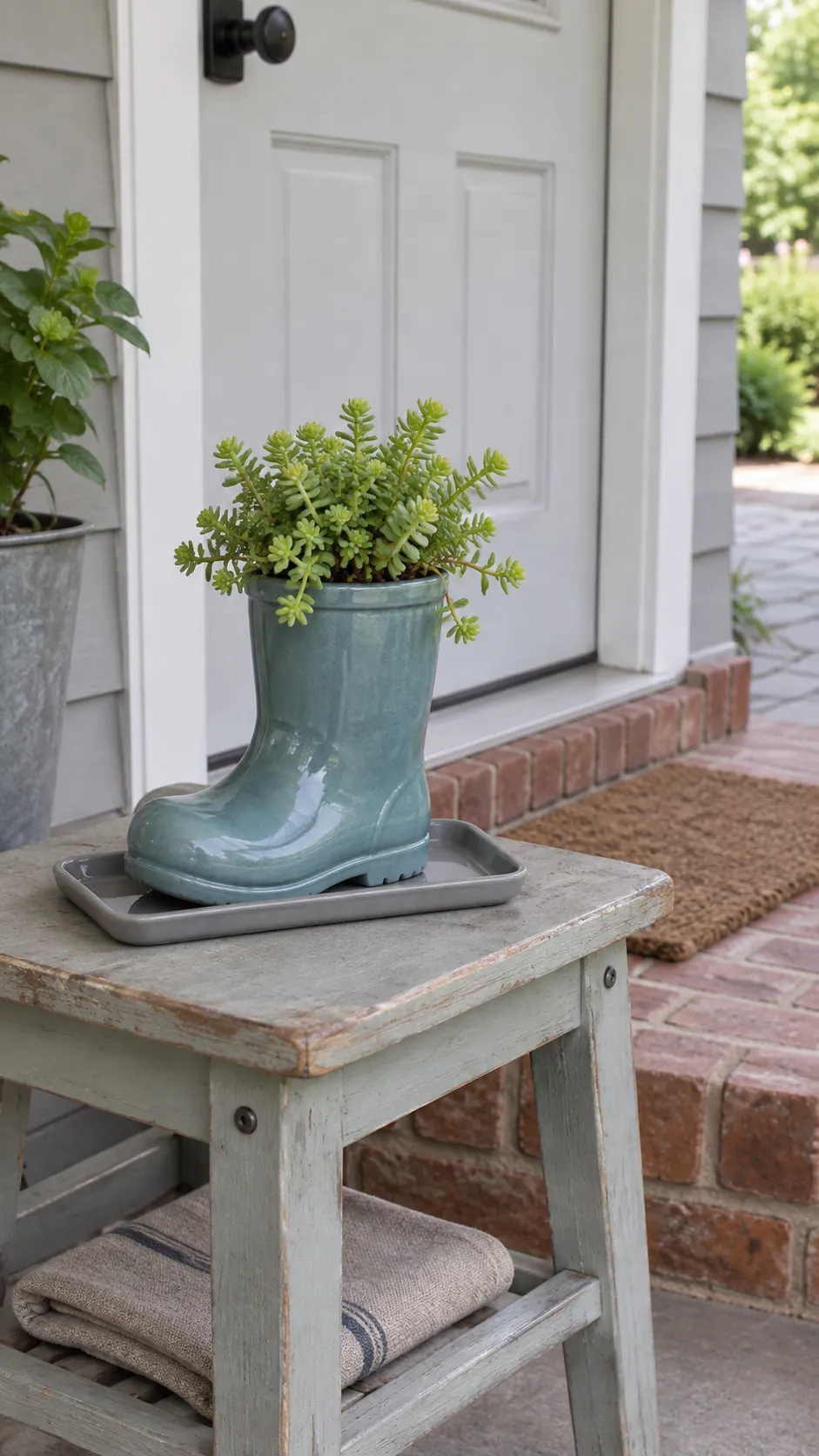
Teacup with a removable insert
A thrifted teacup can hold a tiny nursery pot without drilling a sentimental piece. Remove the insert to water and allow it to drain completely before returning it. Keep the cup’s handle clear of neighboring objects so you do not catch it while moving other plants.
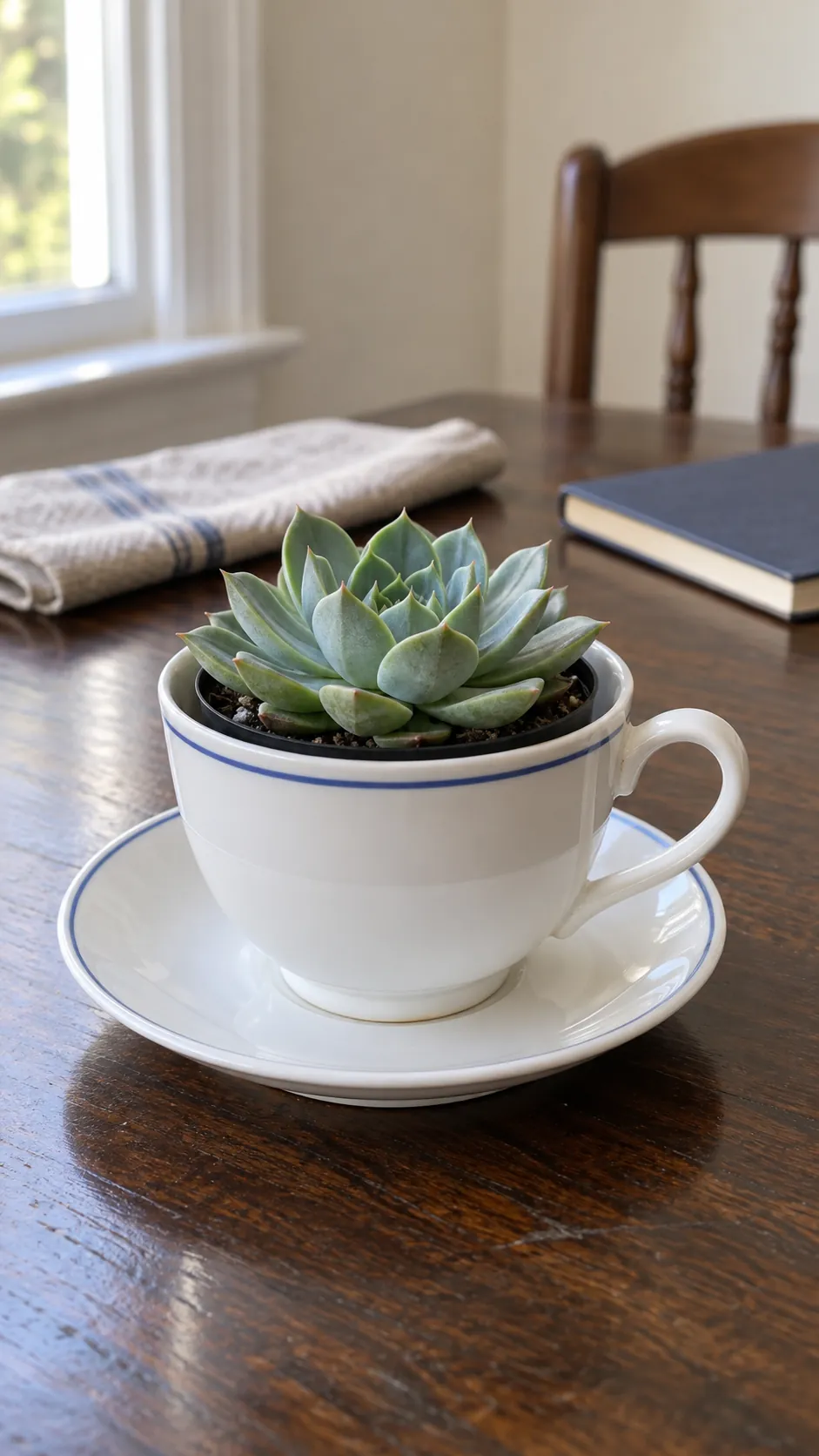
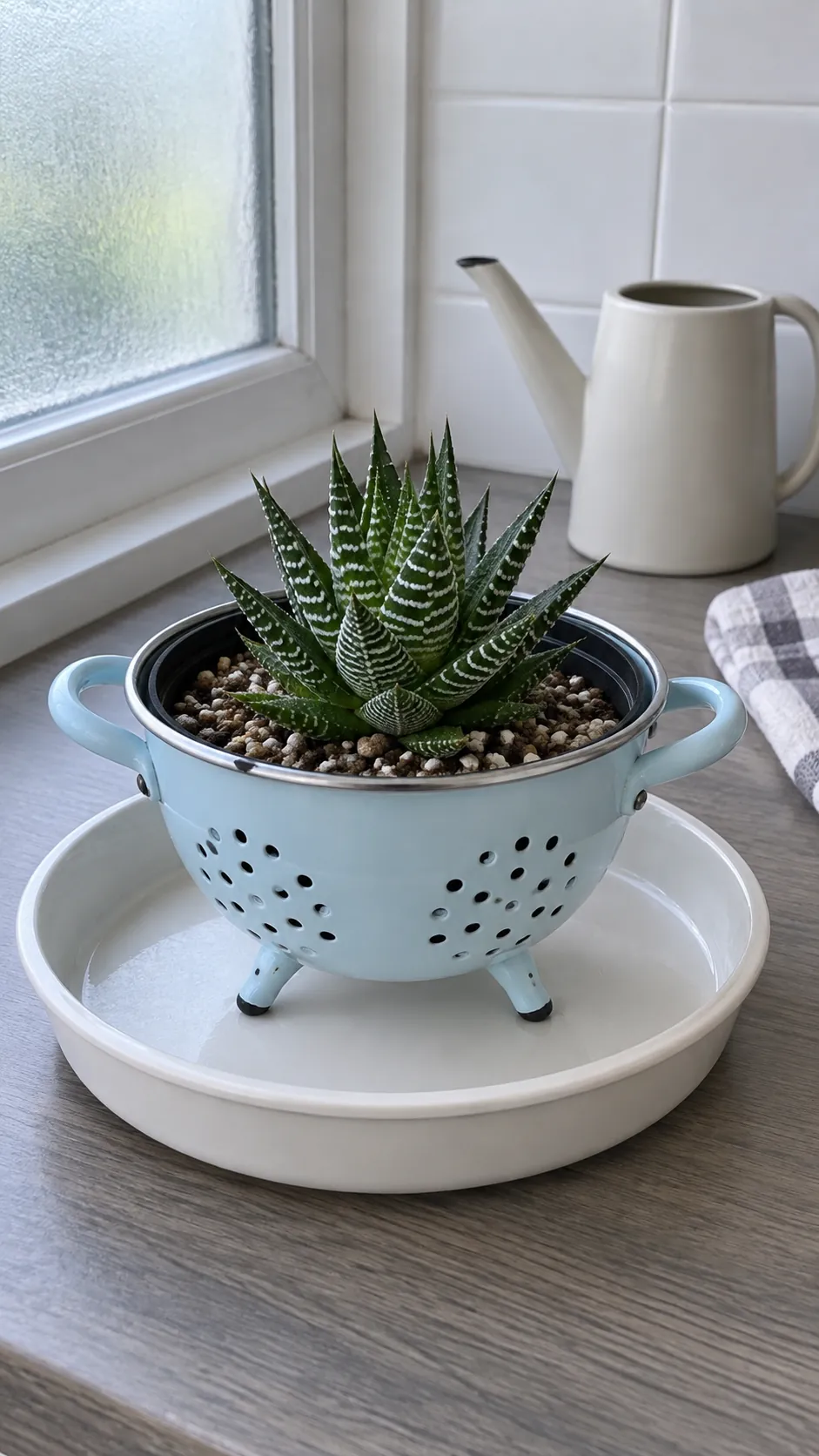
Mini colander planter
A small decorative colander offers many openings but also needs a plan for escaping mix and water. A suitable removable liner can simplify the arrangement while keeping the perforated appearance. Use it on a washable surface with a catch tray, and avoid metals that show problematic corrosion.
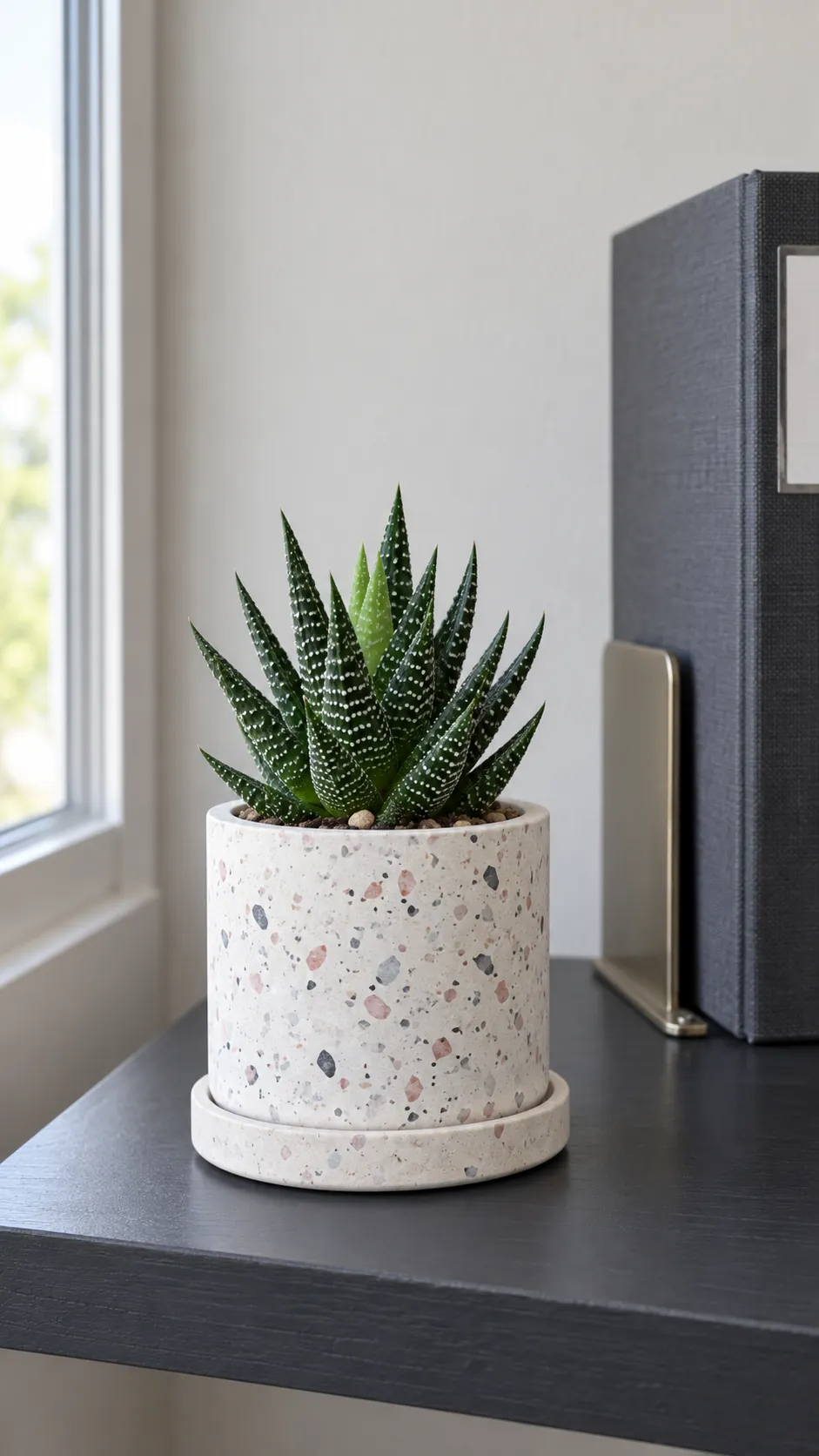
Terrazzo cylinder
Terrazzo gives mini plant pots visual texture without a figurative shape. Choose a pattern whose chips are small enough to suit the container’s scale. A neutral base with one restrained accent color lets the succulent keep its own character.
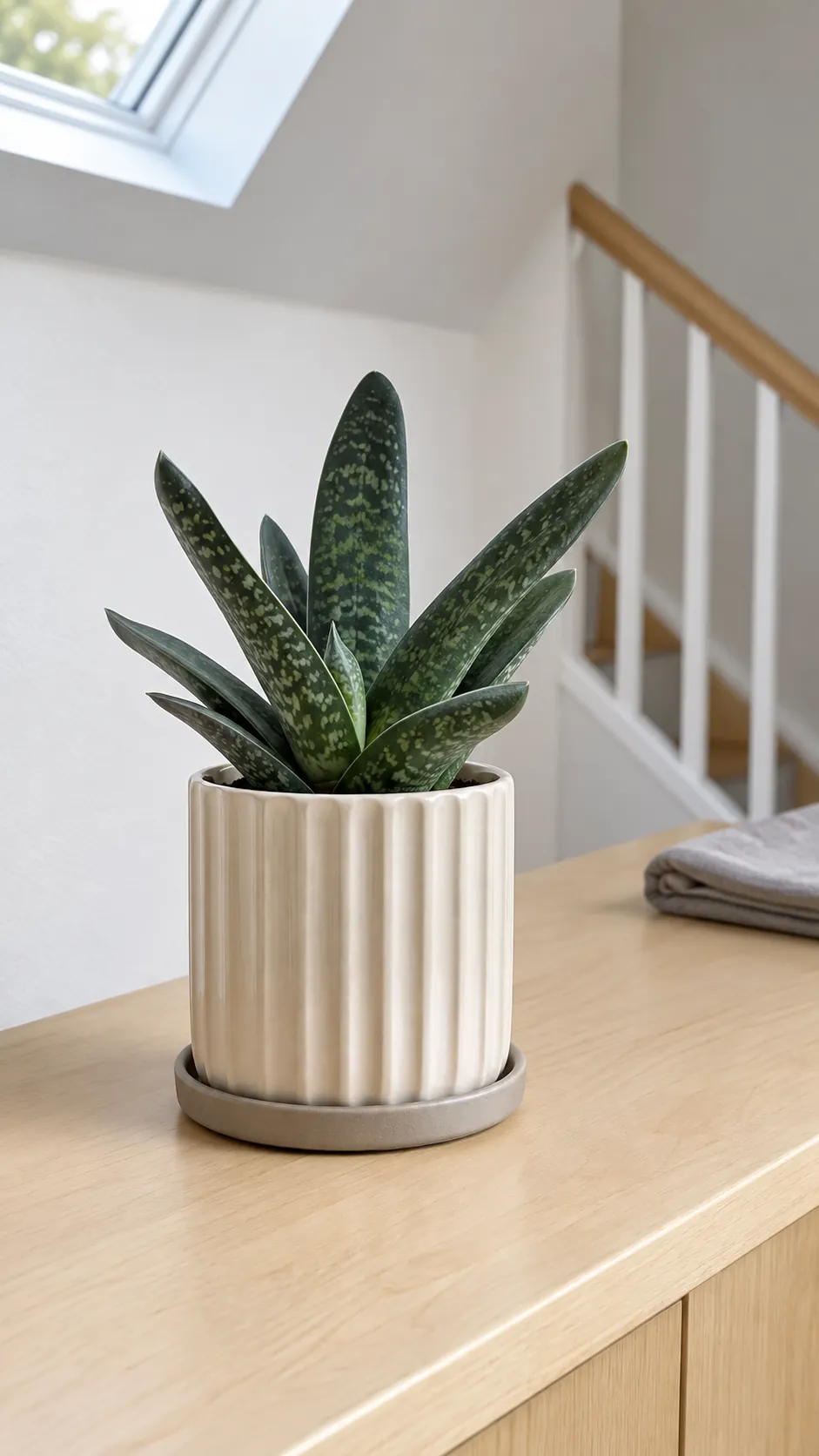
Fluted cream pot
Vertical fluting adds shadow and structure to an understated cream vessel. It works particularly well with a plant that has a clear silhouette, such as a small haworthia. Leave a little space around the pot so the ridges catch light rather than disappearing between crowded objects.
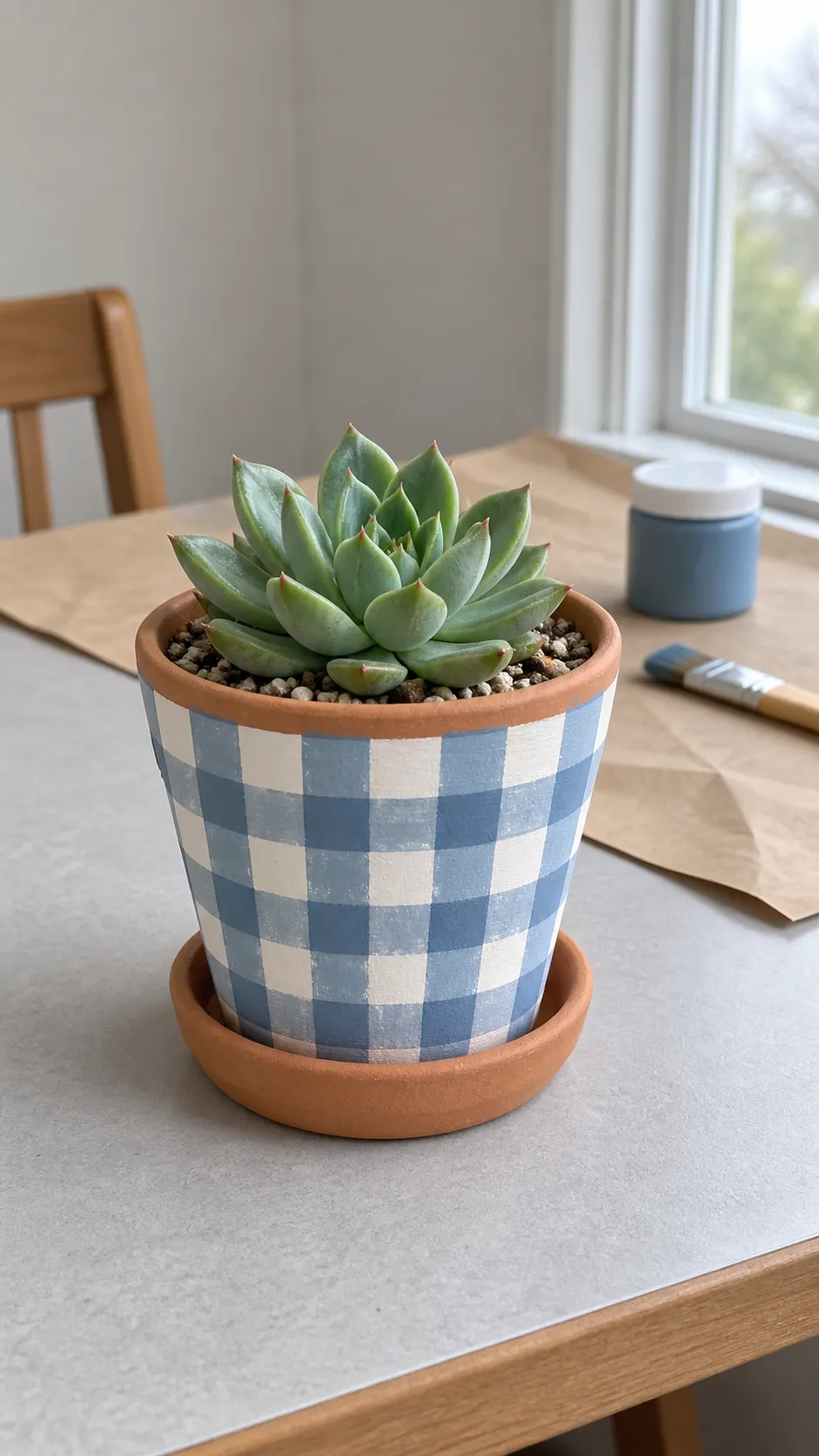
Gingham painted terracotta
A gingham pattern makes a straightforward DIY succulent planter from a pot that already drains. Mark the design lightly and use coatings suited to the surface and expected moisture exposure. Keep the interior and outlet clear unless the product specifically supports those uses.
Color dipped clay pot
A painted lower band can refresh plain terracotta while leaving some clay visible. Remember that coating changes how exposed surfaces interact with moisture, so continue judging the mix itself before watering. A matching saucer is useful, but it should not hold leftover water around the pot base.
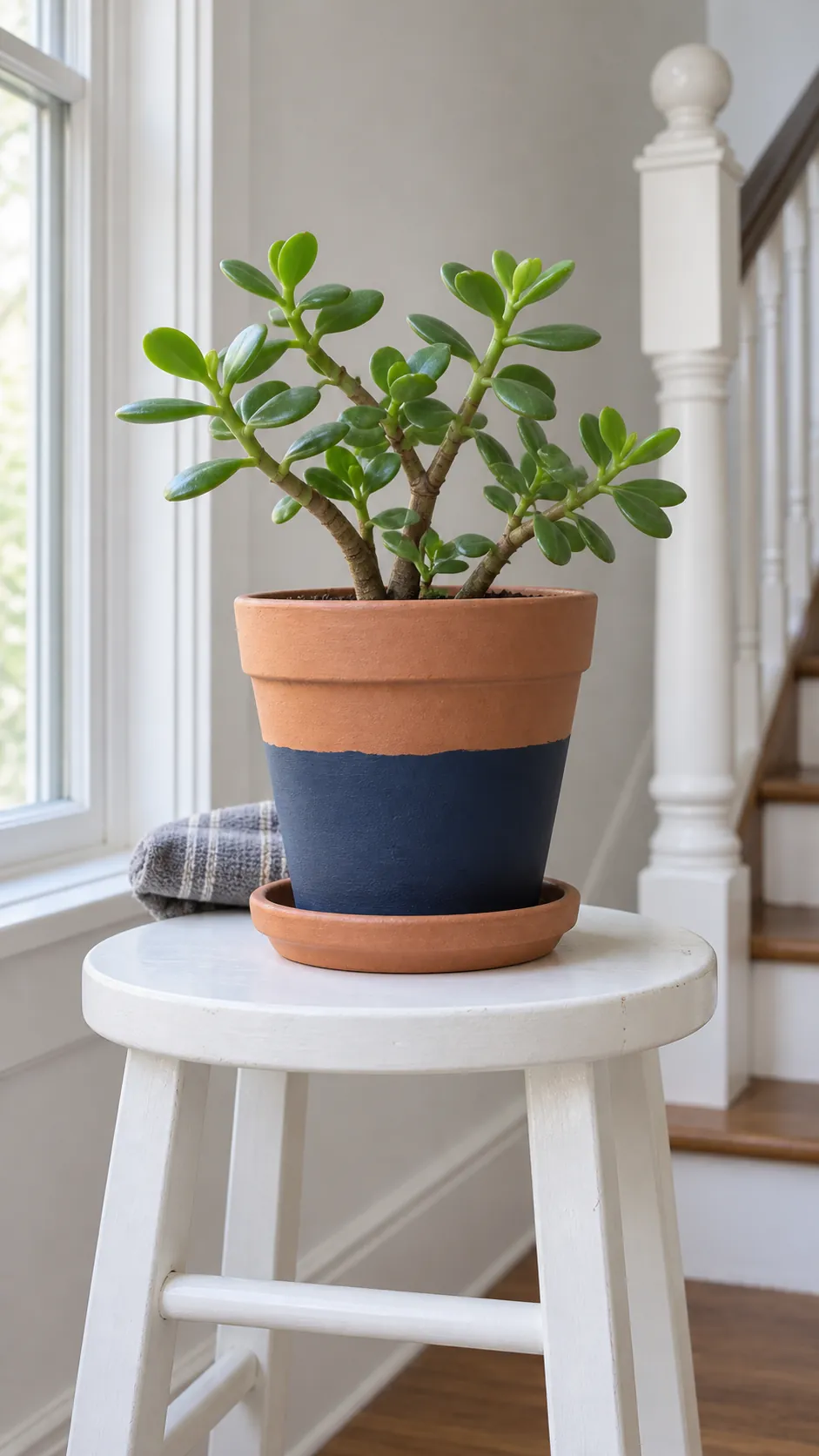
Hand pinched pottery bowl
A gently uneven handmade rim gives a small succulent container a quiet personal quality. Check the base for stability and look for a real drainage outlet before planting directly. Slight visual irregularity is appealing, but cracks or sharp edges are reasons to choose another vessel.
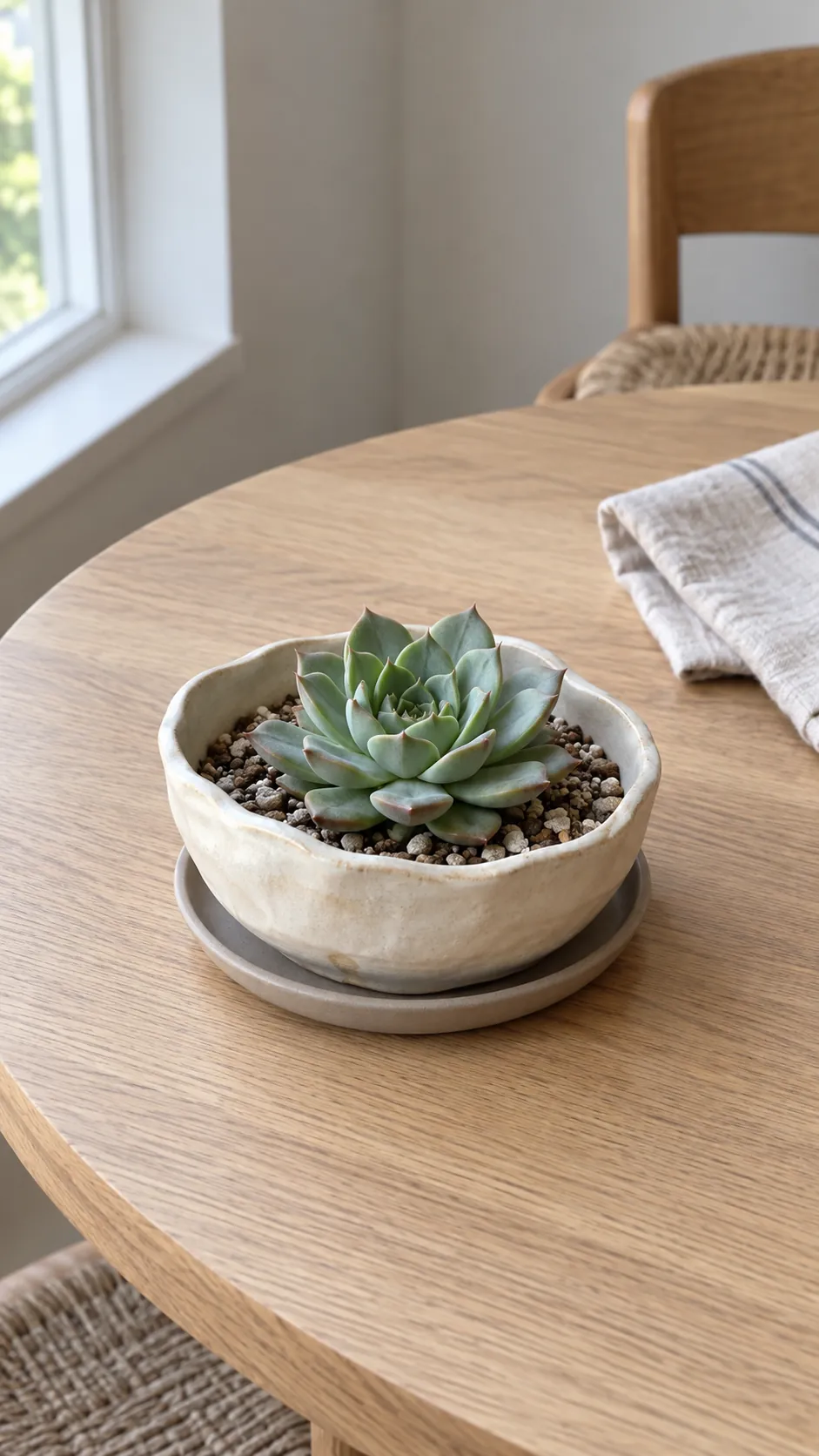
Pebble shaped planter
A smooth pebble silhouette can make one compact rosette feel sculptural. Narrow openings sometimes hide a much wider cavity, which can complicate later repotting. A removable insert avoids forcing an established root ball through a restrictive neck.
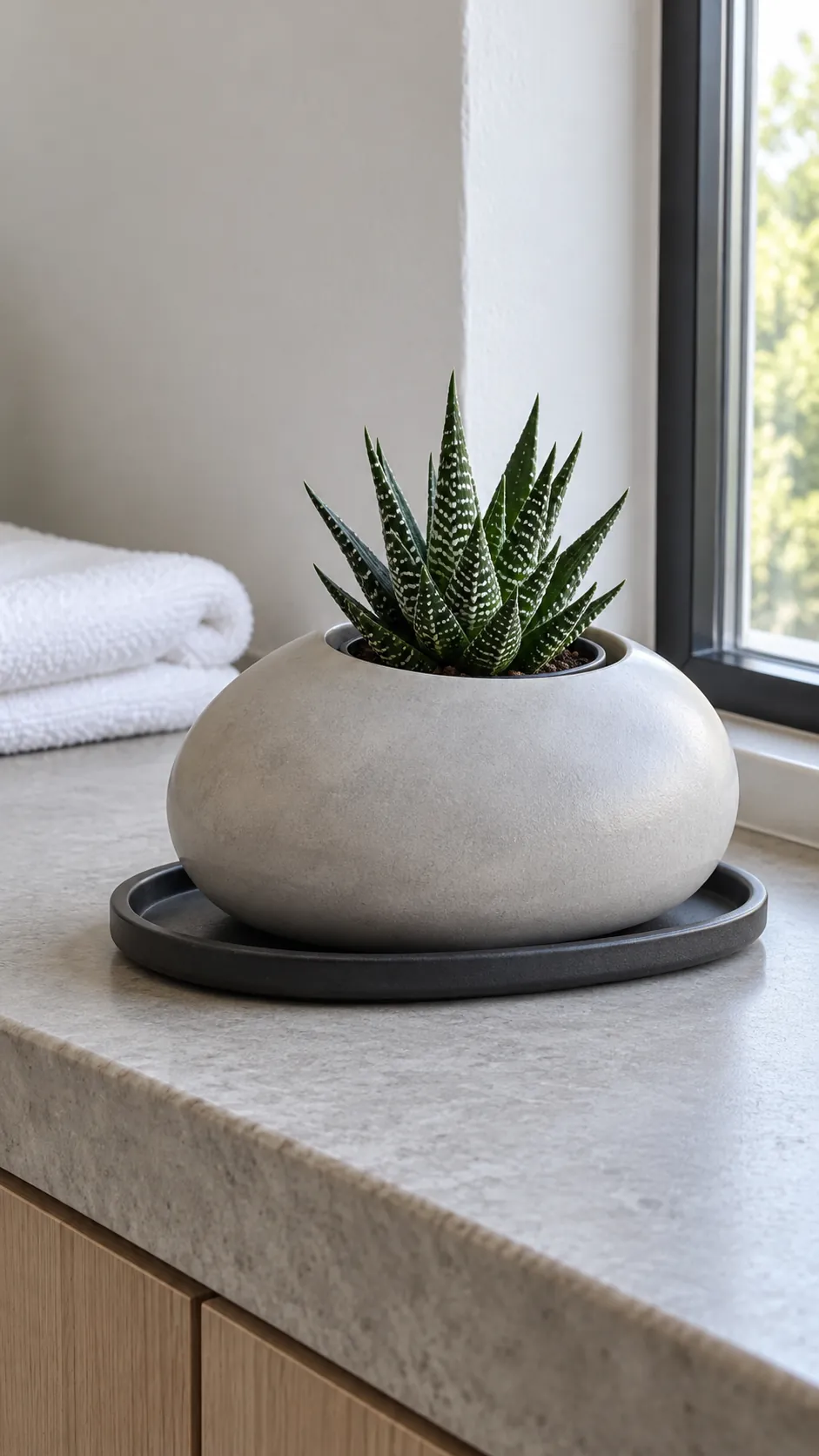
Shell inspired ceramic pot
A shell shaped vessel suits a light, coastal palette without needing sand or beach ornaments around the plant. A mineral growing mix should be chosen for the succulent rather than for its decorative resemblance to a beach. Check that the lowest part of the cavity can empty properly if you plan to plant directly.
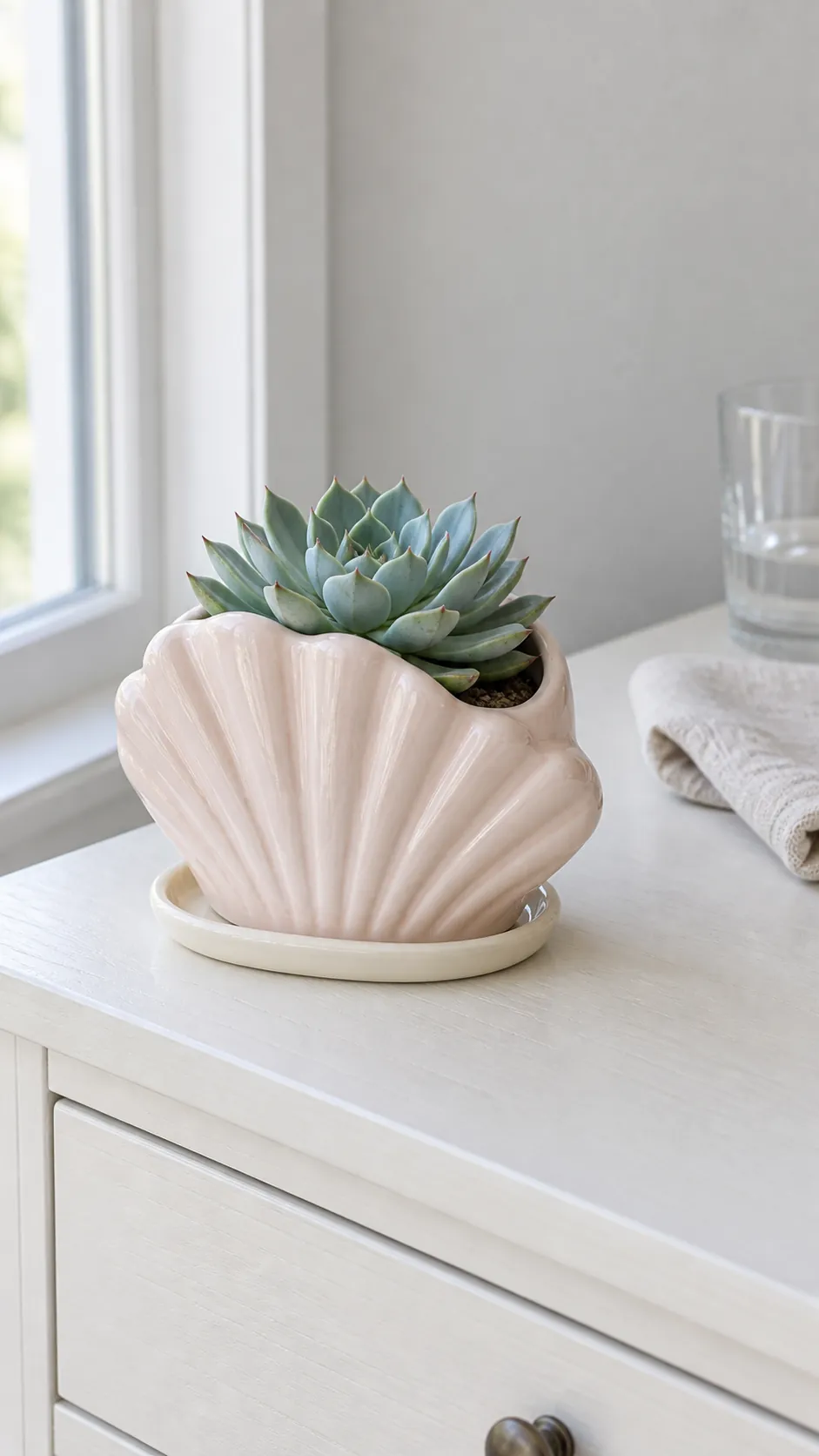
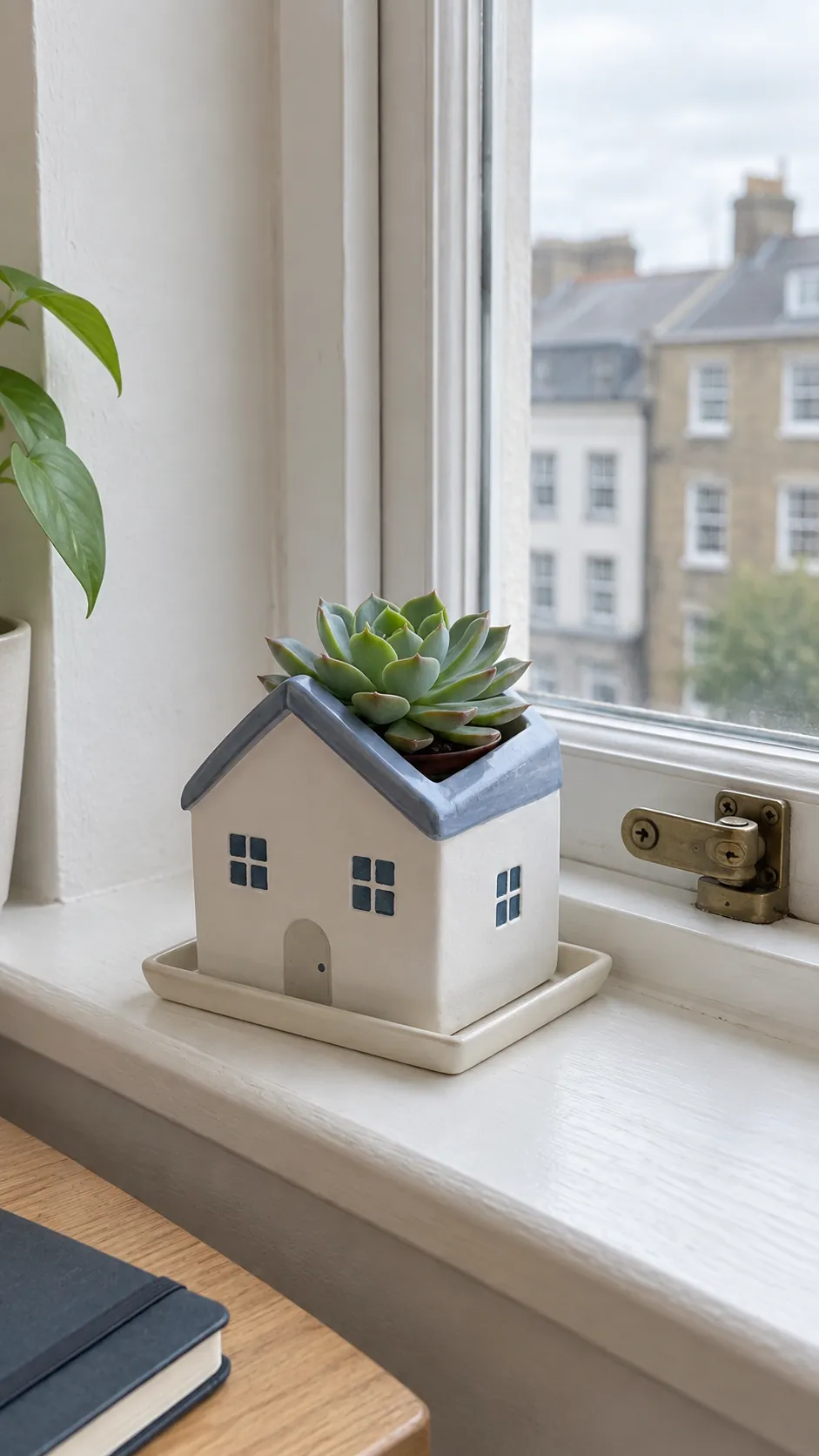
House shaped cover pot
A tiny house form can turn a windowsill into a playful display. Keep the roof opening large enough to remove the inner pot and inspect the mix. Position the vessel where the plant gets suitable light rather than hiding it deep inside a decorative village.
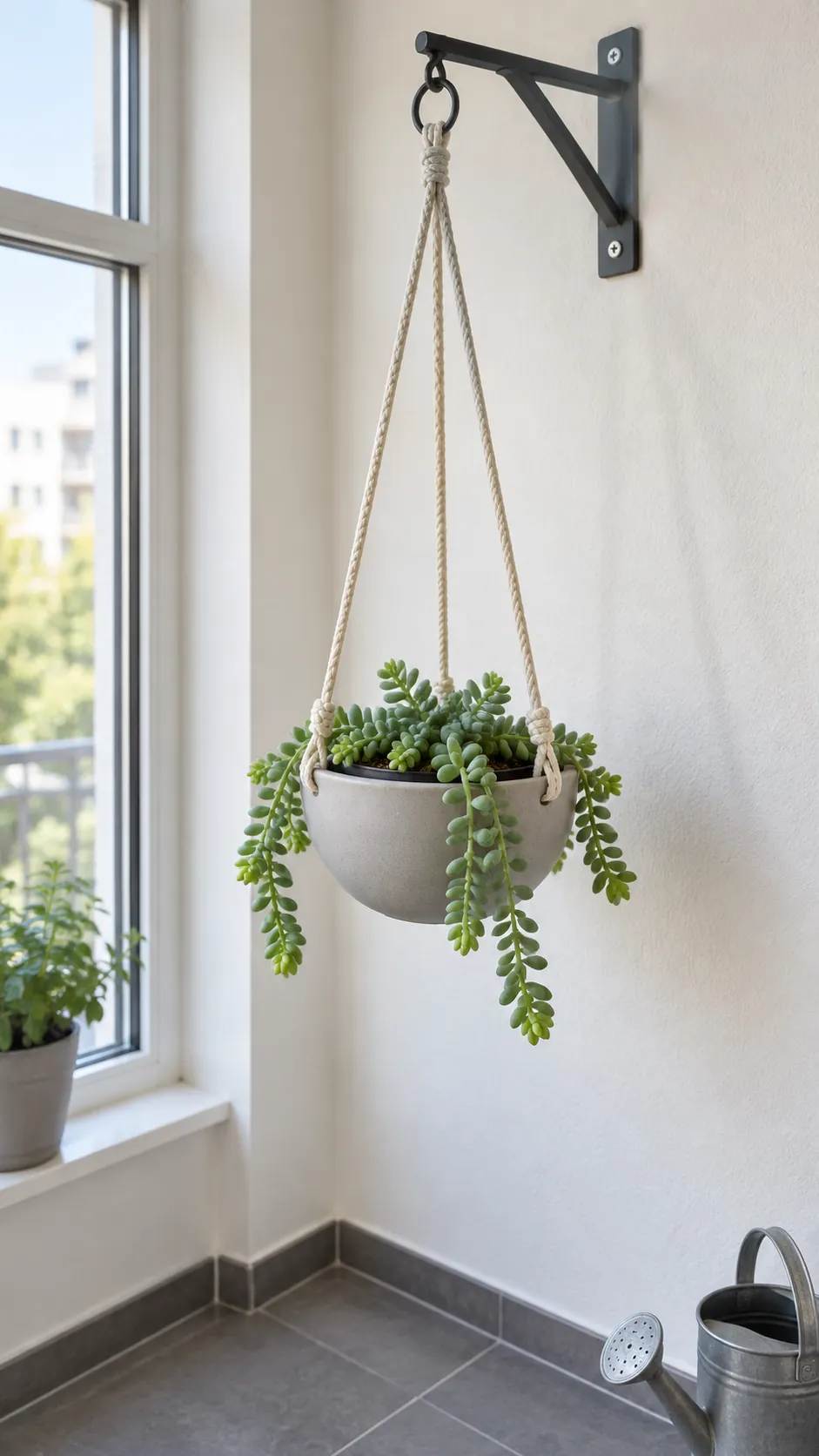
Small hanging bowl
A compact hanging bowl saves surface space when its support is appropriate for the wet weight. Use secure hardware suited to the mounting surface and keep the plant accessible for care. Water it away from furniture and electronics, then rehang only after excess water has drained.
Matching pots on a shared tray
A few coordinated pots on one tray can feel cohesive without forcing different species into the same soil. Keep each plant in its own container so you can adjust watering to its needs. Choose the arrangement you can lift and maintain comfortably, then leave room for the plants to grow.