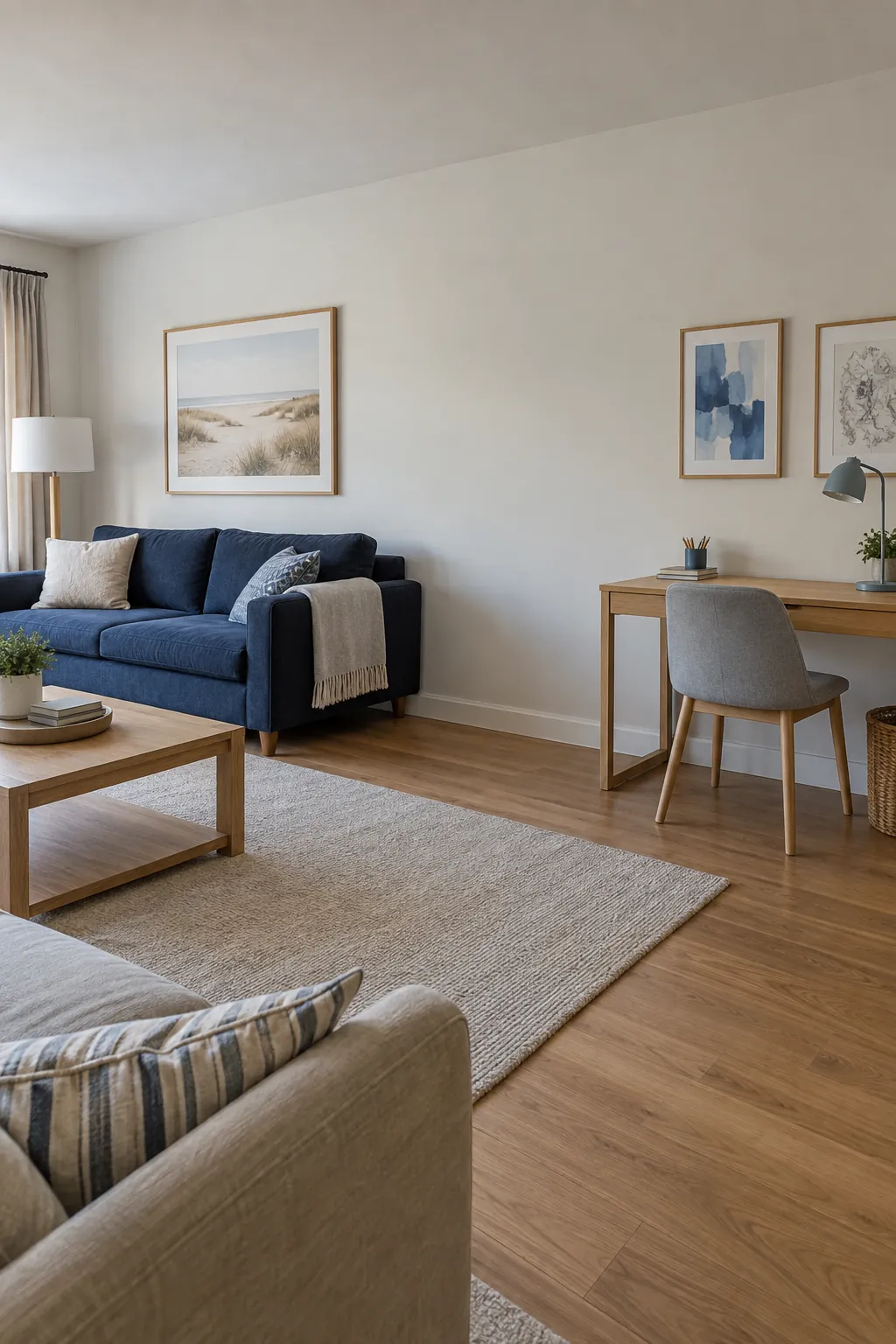
A bare wall can make the sofa look stranded, but filling it with small objects often creates a different problem. Start with what the room needs: a calmer focal point, useful storage, softer sound, or a place for family memories. Scale the decoration to the furniture and the way people move through the space.
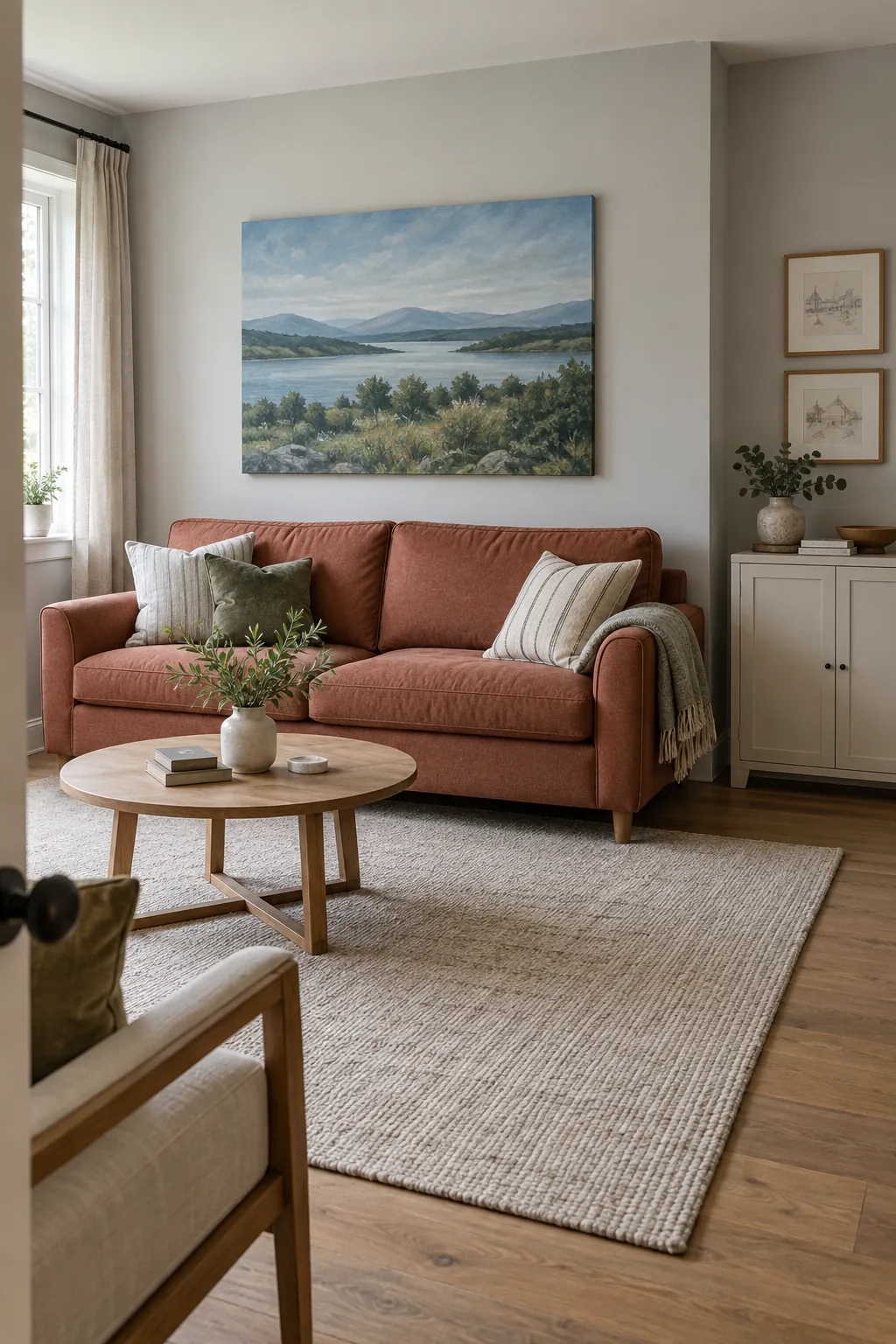
Let one large landscape settle the seating area
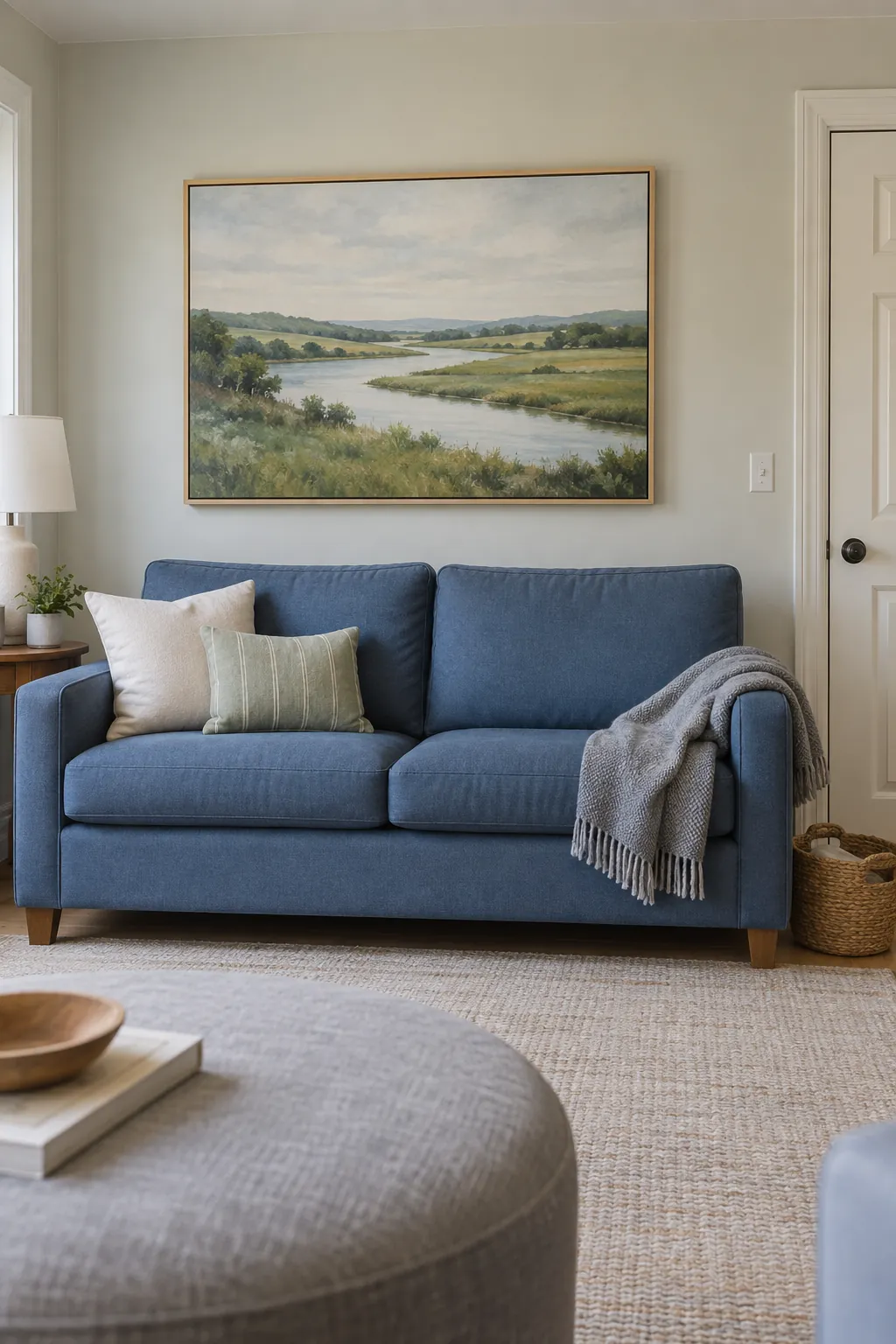
A single generous landscape gives a busy family room somewhere calm to look. Choose its outer width in relation to the sofa, leaving visible wall on both sides rather than stretching the picture to the furniture edges. A paper rectangle makes the scale easier to judge before you order. Canvas can reduce glazing reflections, though the frame and fixings still need to suit its weight.
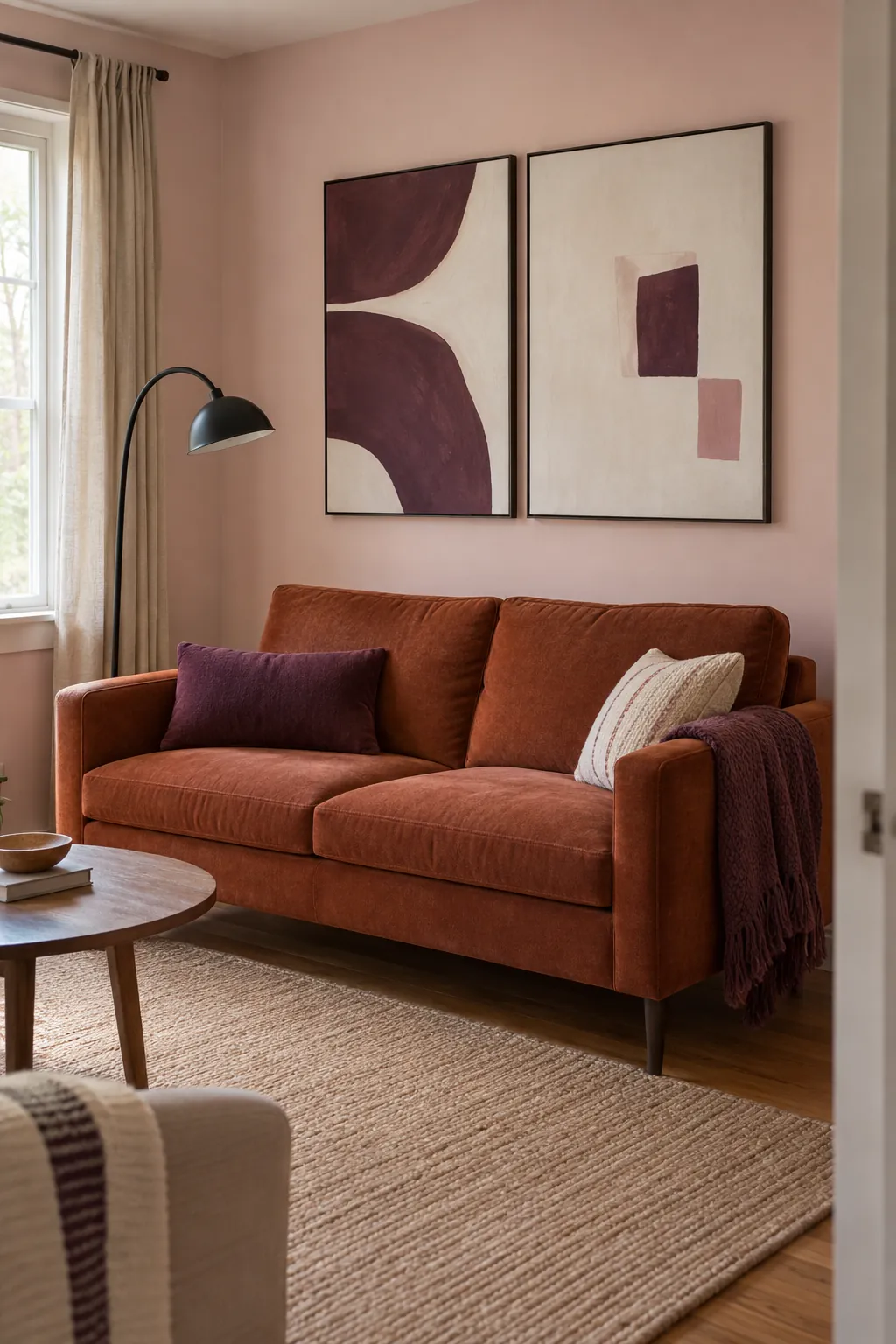
Hang two abstract works as a pair
Two related abstract pieces can fill a broad wall without requiring one enormous frame. Look for a shared palette and different compositions so the pair has a conversation instead of repeating itself. Keep their gap narrow enough that they read together from the main seat.
Align their top or center lines deliberately rather than hanging each in isolation. Include the space between the frames when measuring the total width. If the pair looks small, larger mats may help more than pushing the pictures farther apart.
Make a family photograph grid
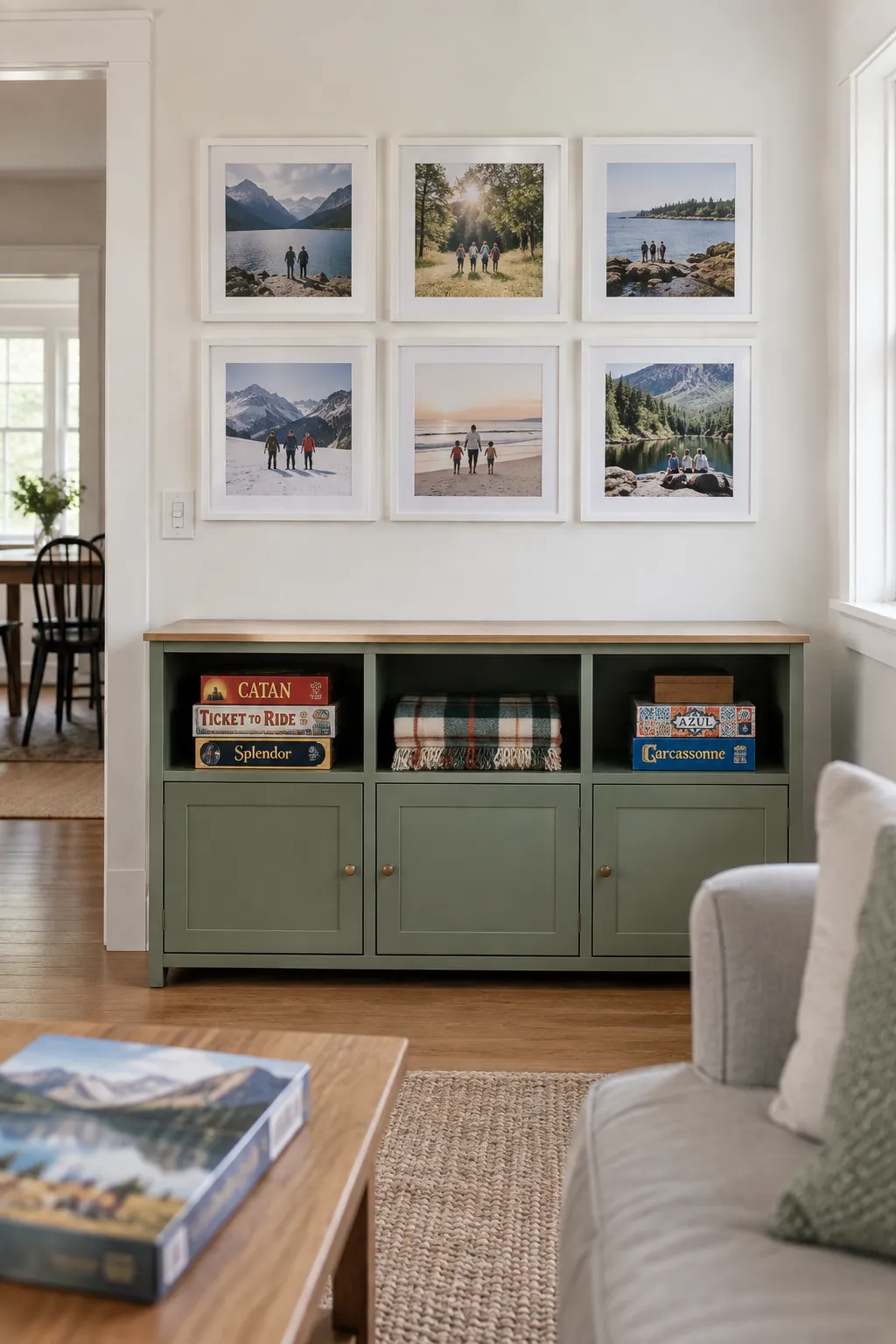
A regular photo grid brings personal history into the room while keeping the wall orderly. Select a limited number of photographs with different moments and similar print quality. Matching outer frames and consistent gaps give the collection structure even when the photographs are colorful. Choose appropriate glazing or lightweight alternatives for the location. Keep heavy pieces securely fixed and away from areas where energetic play could knock them loose.
Use a picture ledge for changing interests
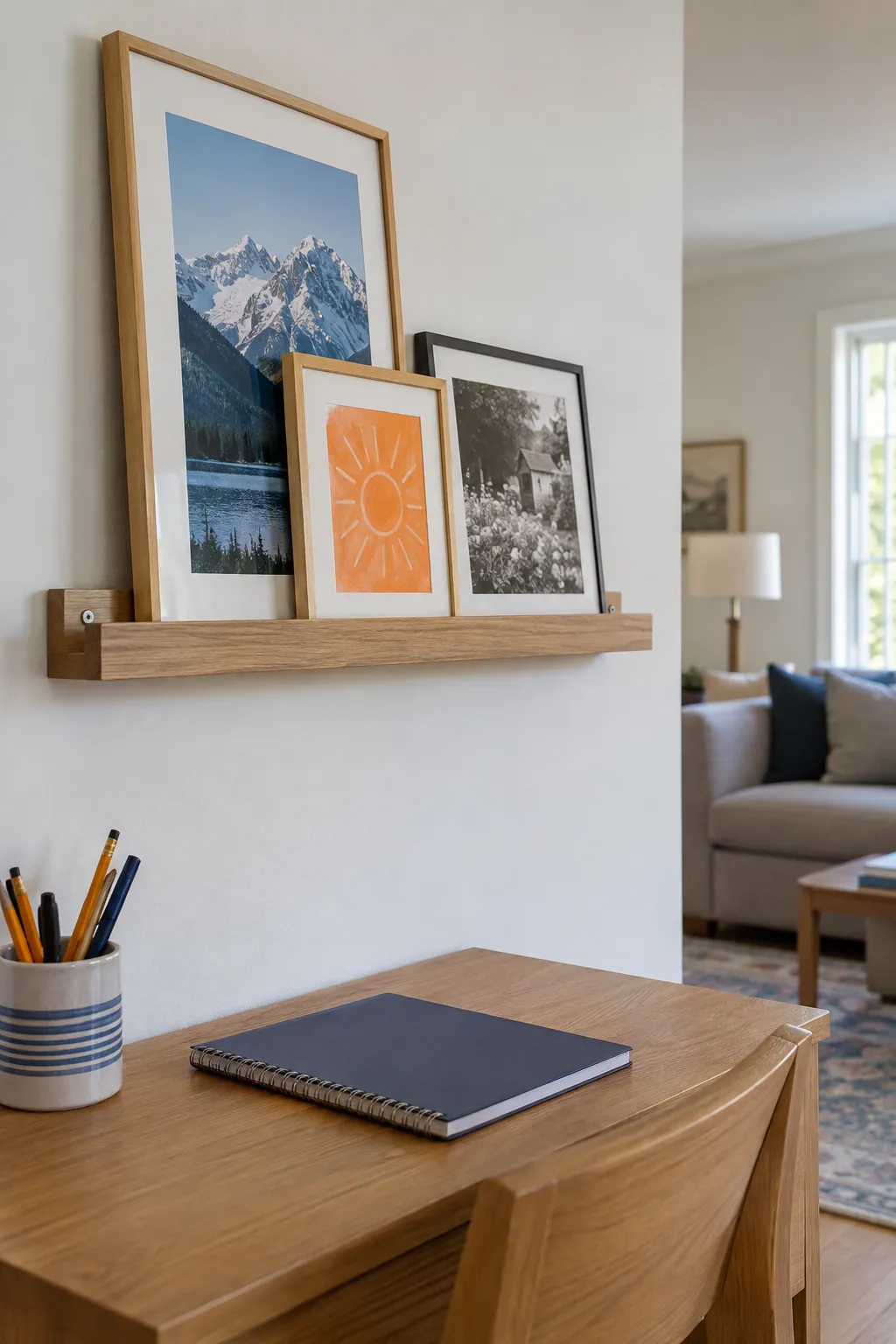
A shallow picture ledge suits families whose favorite photos, prints, and small drawings change often. Set larger frames behind shorter pieces and overlap only their blank margins. Check the shelf depth and load rating before treating it as a place for several substantial frames. Locate it where the projection will not meet someone’s head as they sit or stand.
Place a mirror where the reflection earns its space
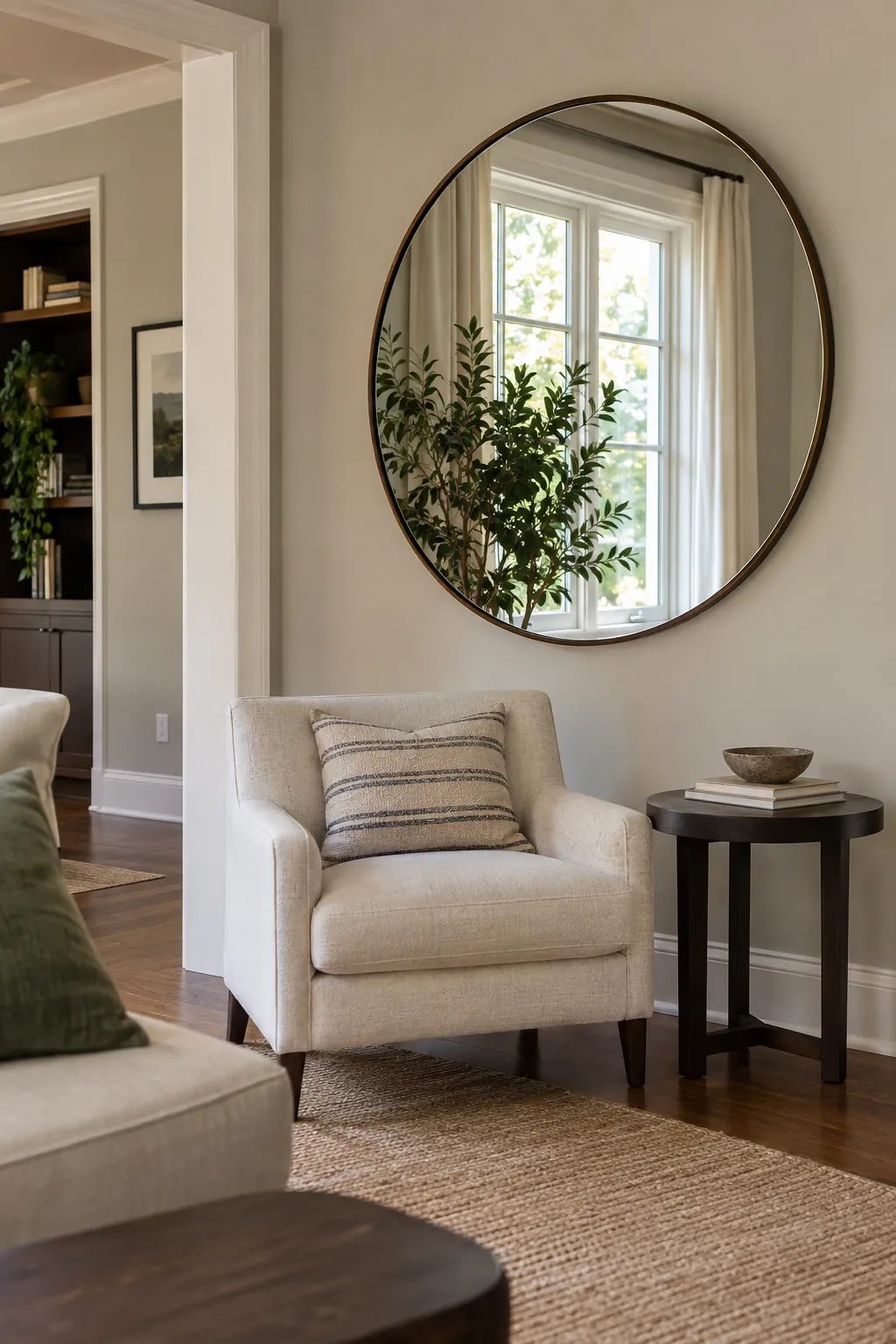
A mirror is most useful when it reflects something pleasant, such as a window, a plant, or a quiet section of the room. Test its position from the sofa before deciding that the center of the wall is automatically right. A large mirror can also repeat television glare or clutter you would prefer to overlook. Use suitable heavy duty fixings and professional installation where the size or wall construction requires it.
Hang a quilt as a broad textile artwork
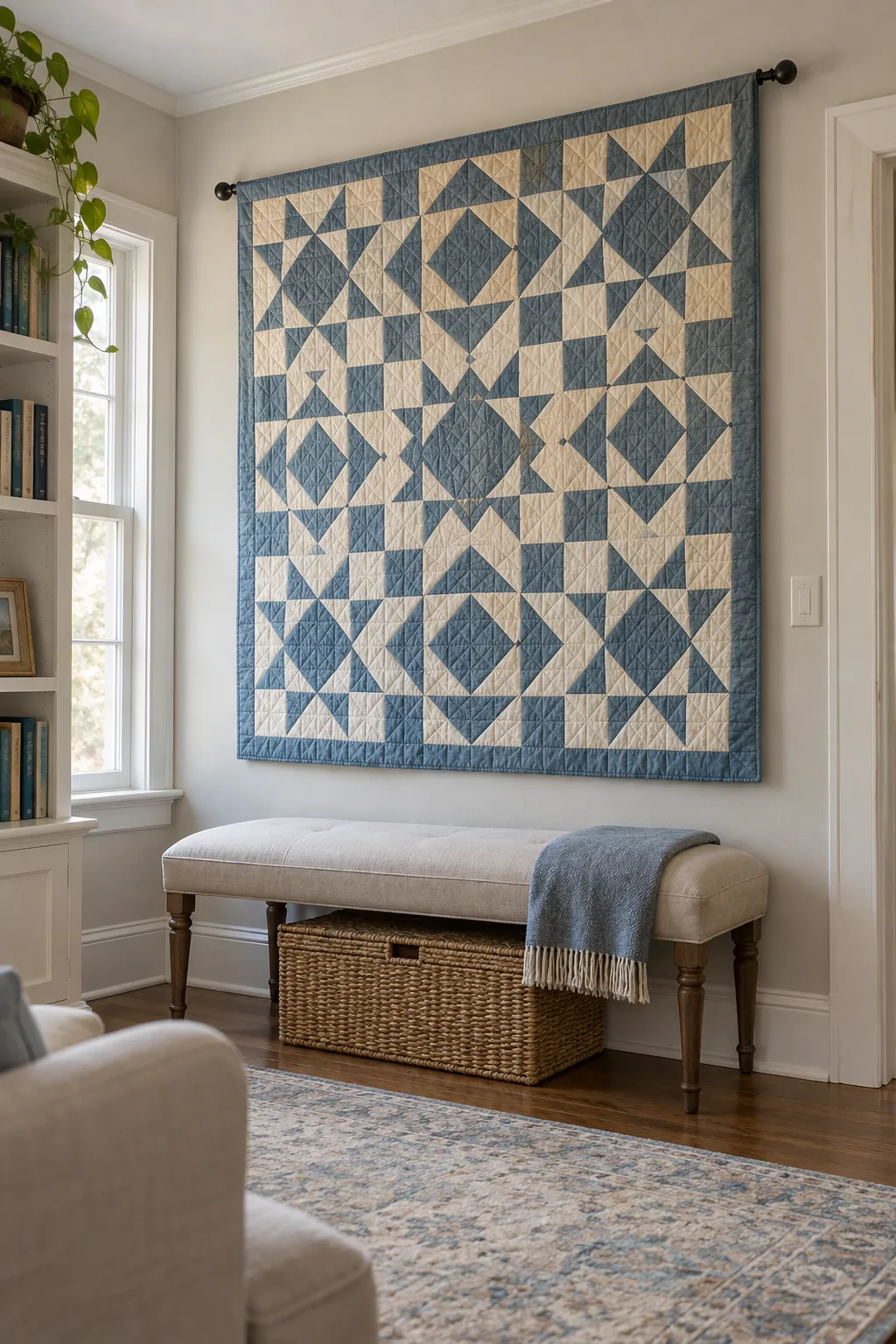
A quilt can cover a generous area while adding color and softness to a room filled with hard surfaces. Support it evenly with a proper hanging sleeve or a textile display system rather than suspending its weight from a few pins. Keep it away from damp, direct sun, and heat sources.
Choose a pattern whose scale remains readable from across the room. A heavily patterned quilt often looks best with fewer competing cushions nearby. Follow the textile’s care needs so dust removal does not damage the fabric.
Group woven baskets with varied profiles
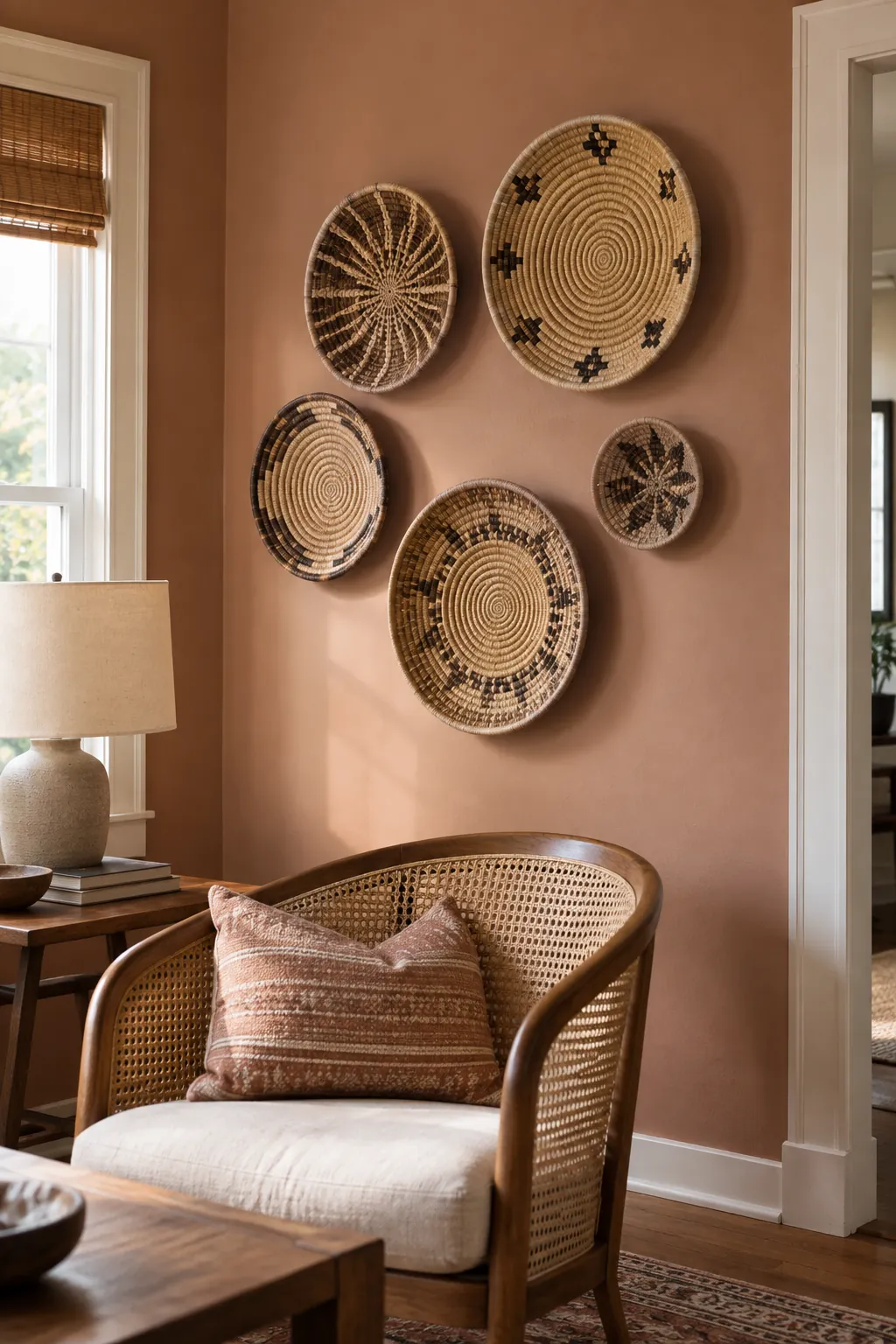
Shallow woven baskets offer a textured alternative to framed art. Mix a few diameters and weave patterns, but keep the overall arrangement compact enough to feel intentional. Space them so each rim remains visible and their shadows do not merge into one dark patch. Use secure attachments suited to each basket rather than relying on a loose hanging loop.
Add simple box molding to a plain wall
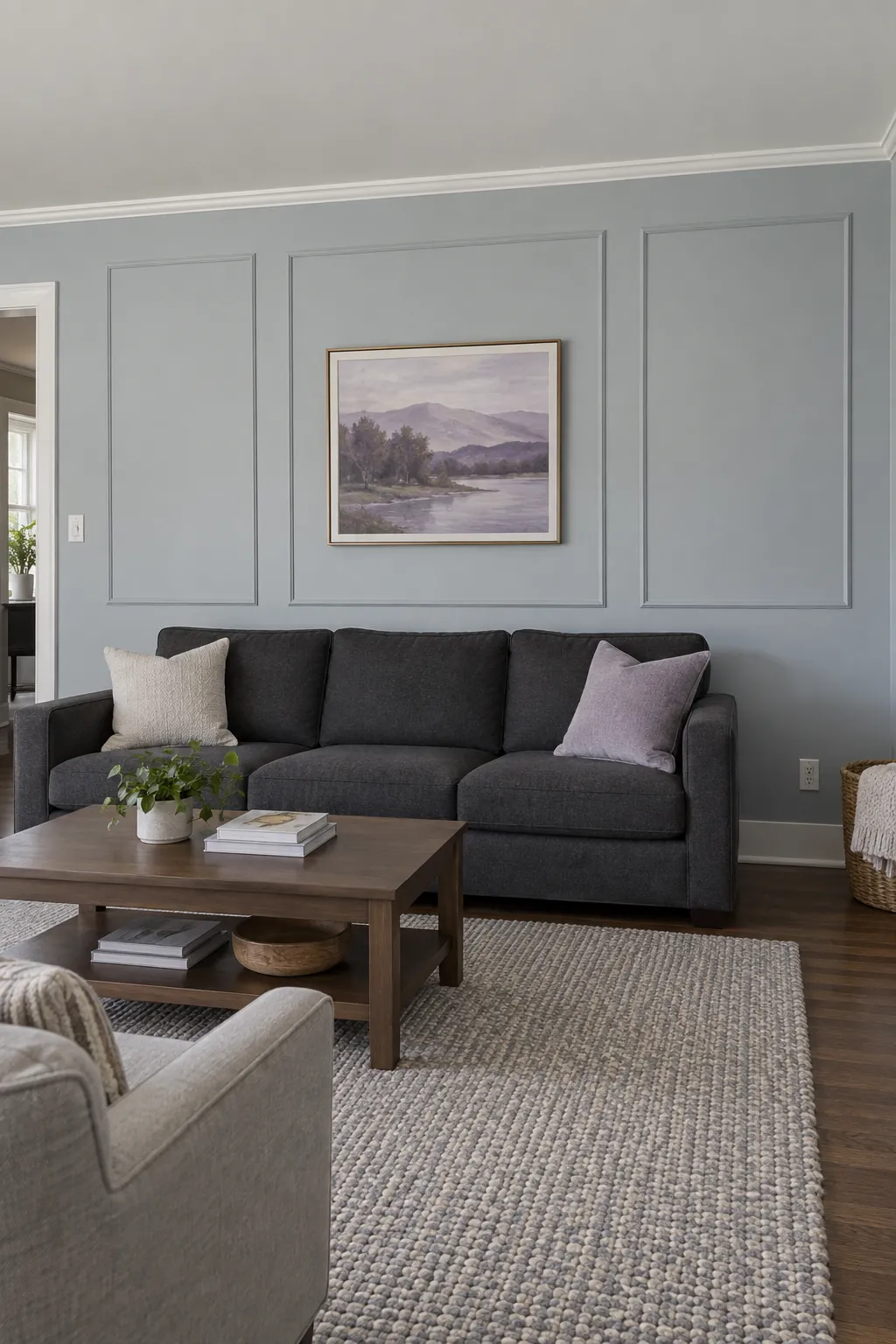
Box molding gives a long wall structure before any pictures are added. Plan the panel widths around outlets, door trim, and furniture rather than dividing the wall by eye. Painting the molding and wall the same color keeps the effect quieter. A single artwork within one panel may be enough, especially in a room that already holds toys and books.
Use vertical battens to give a low wall rhythm
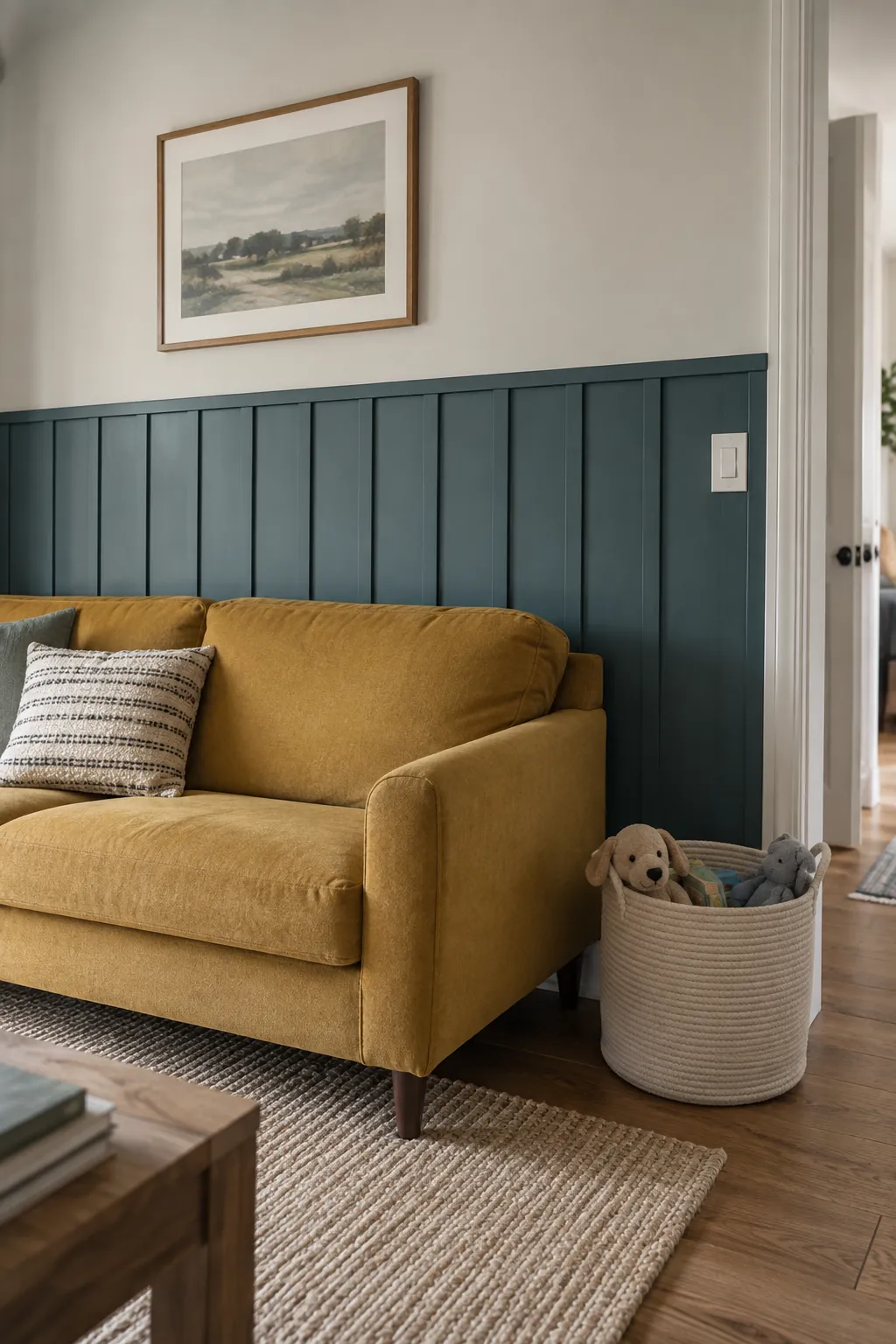
Vertical battens can make a broad plain surface feel more considered. Set their spacing with the room’s openings and furniture in mind, checking how narrow end gaps will look at corners. A durable painted finish is useful where hands and toys frequently touch the lower wall. Confirm how the battens will meet skirting and switches before installation. Avoid treating a decorative wall system as a support for shelving unless it is designed and fixed for that purpose.
Paint a broad band behind the sofa
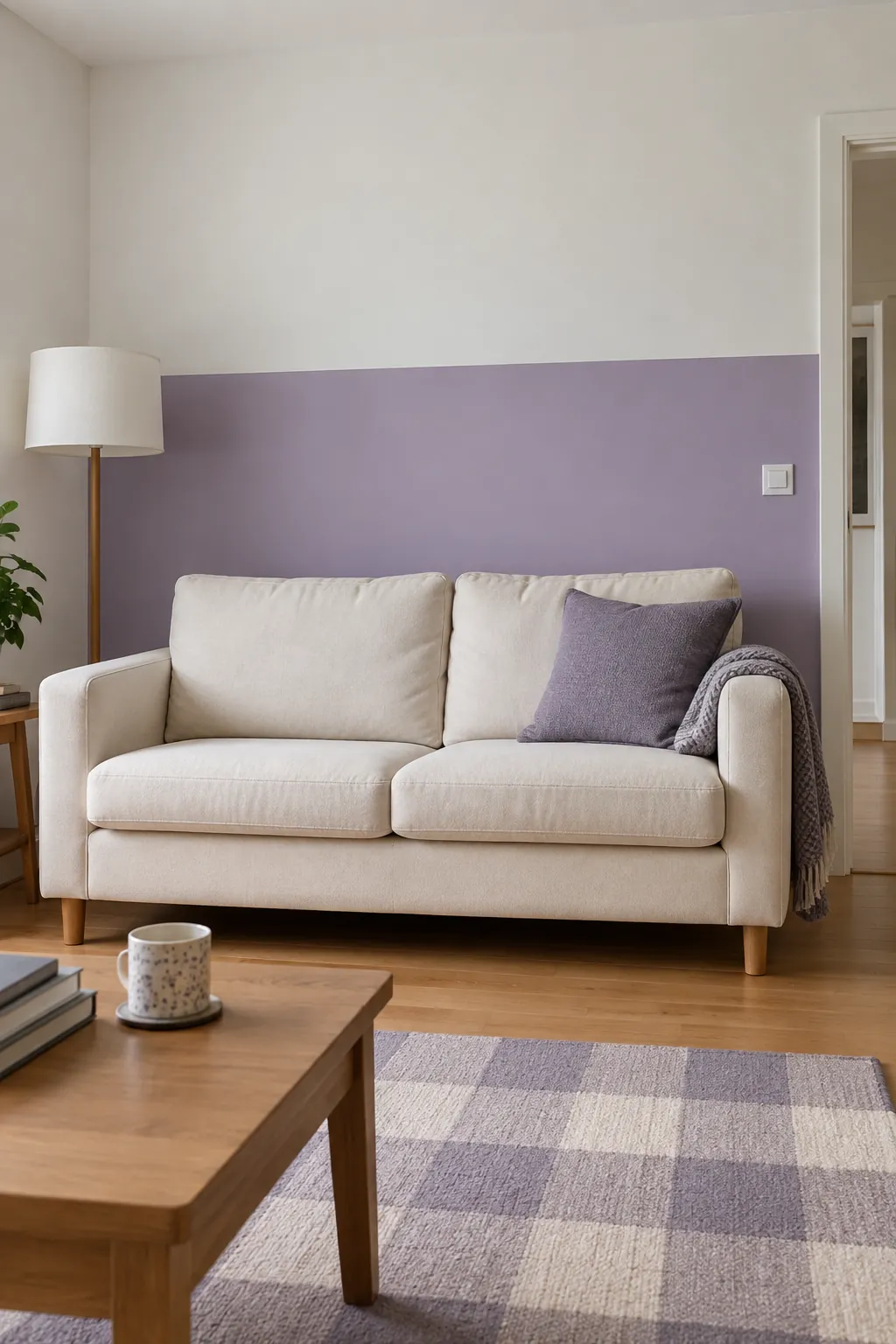
A band of color can give the sofa a backdrop without adding a projecting object above it. Test the band height against the furniture and any nearby windows so the line has a reason to stop where it does. A muted color drawn from a rug or cushion connects the room without matching every accessory. Keep the edge crisp and check the paint finish in both daylight and lamplight.
Frame a section of wallpaper
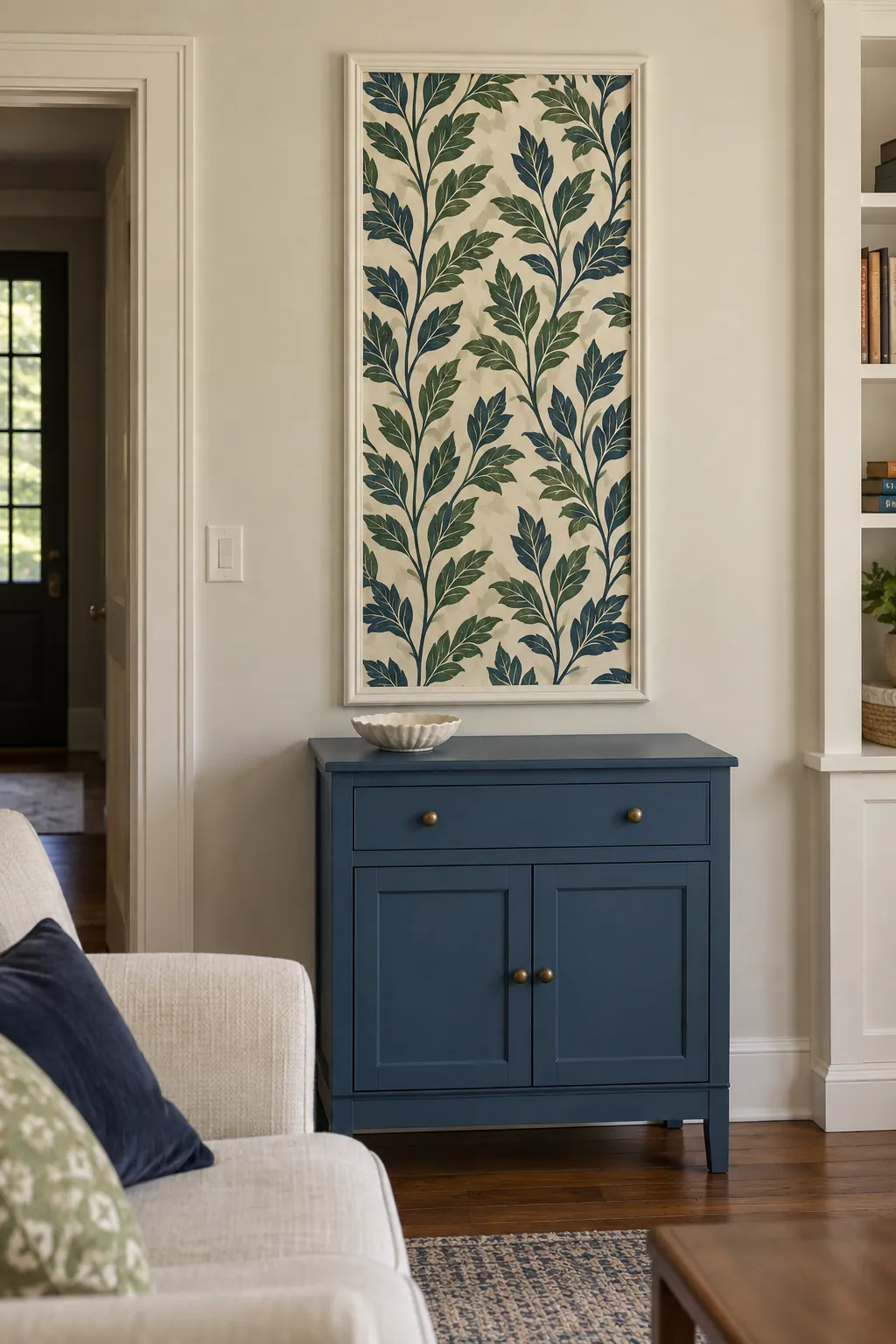
A framed wallpaper panel supplies pattern without covering the whole room. Choose a repeat that can be appreciated within the panel dimensions, then plan the crop before cutting. A slim molding border makes the panel look intentional rather than like leftover wallpaper. This can be a useful budget option when a small amount of a favorite paper is more manageable than a full installation. Test removable products on the actual wall finish instead of assuming they will always peel away cleanly.
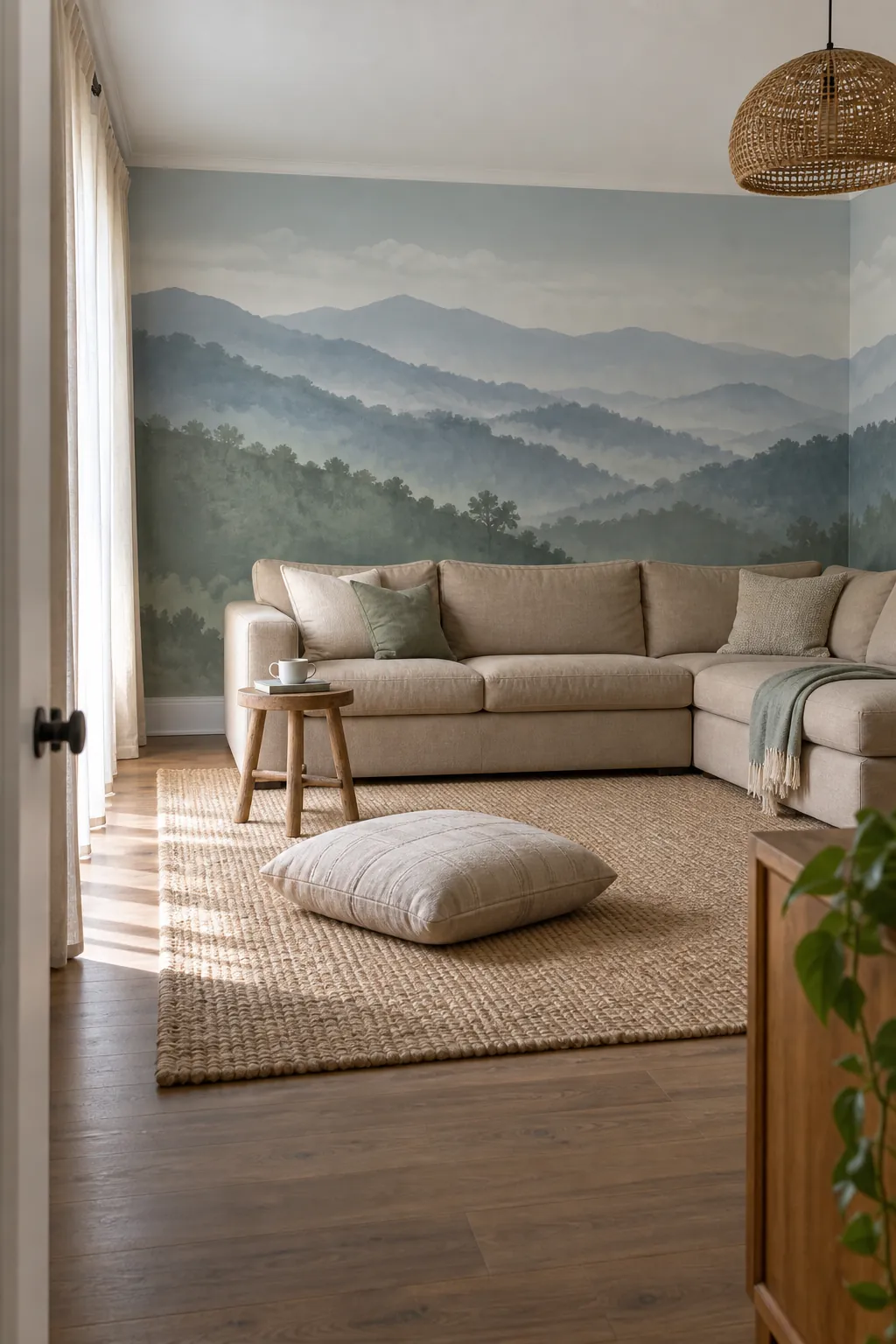
Give a mural enough quiet space around it
A mural can become the main visual event in a family room. Select a composition with calmer areas where furniture or a television must sit, rather than placing a detailed focal subject behind an obstruction. Large landscape shapes are often easier to live with than a wall full of small high contrast marks.
View a sample beside the sofa fabric before committing to the whole wall. Keep nearby artwork limited so the mural does not have to compete for attention. Plan the installation around switches and corners where a seam or crop could become conspicuous.
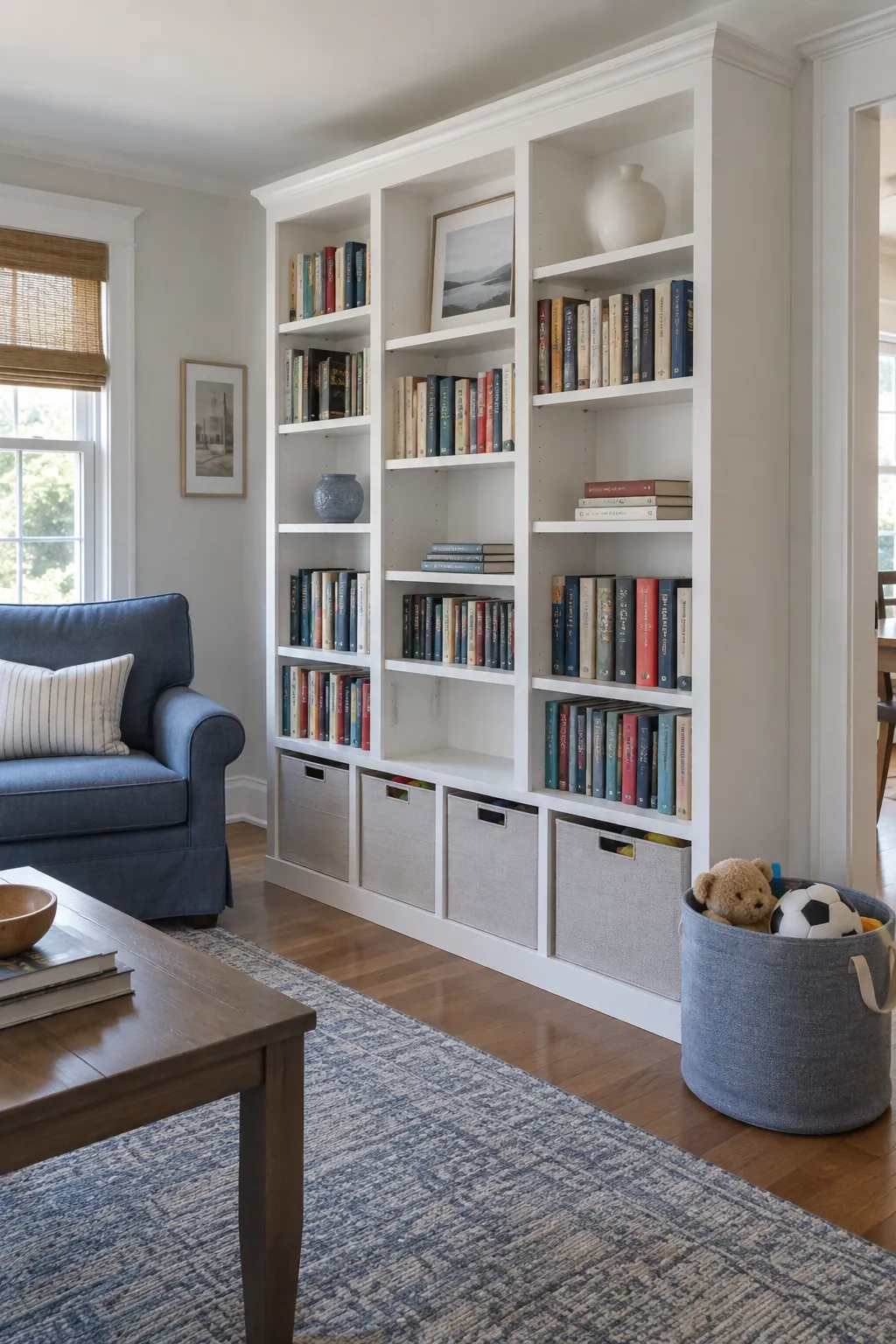
Turn a bookcase wall into useful decoration
Bookshelves bring color, shape, and daily purpose to a large empty wall. Combine books with a small number of meaningful objects, leaving some breathing room rather than filling every shelf edge. Put frequently used items within comfortable reach and heavier pieces lower down. Anchor tall furniture according to the manufacturer’s instructions. Closed baskets can contain smaller items without requiring every toy to become part of the display.
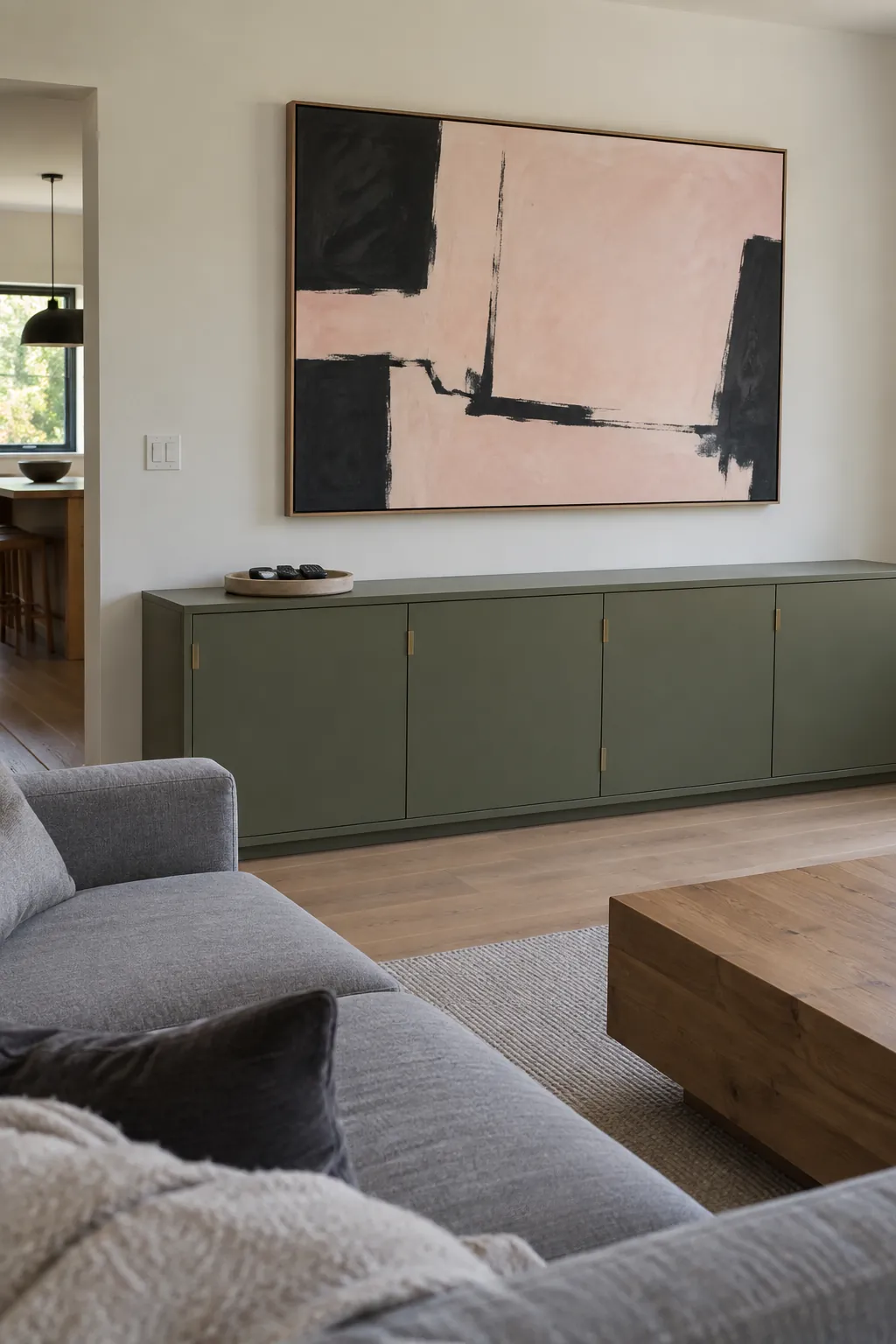
Pair closed storage with one strong artwork
A low run of closed cabinets can make the room feel calmer while giving the wall a clear base. Hang one substantial artwork above it and keep the cabinet top mostly usable. Measure door swings and access before choosing the cabinet depth. This combination works especially well where games, chargers, and remote controls need somewhere to disappear.
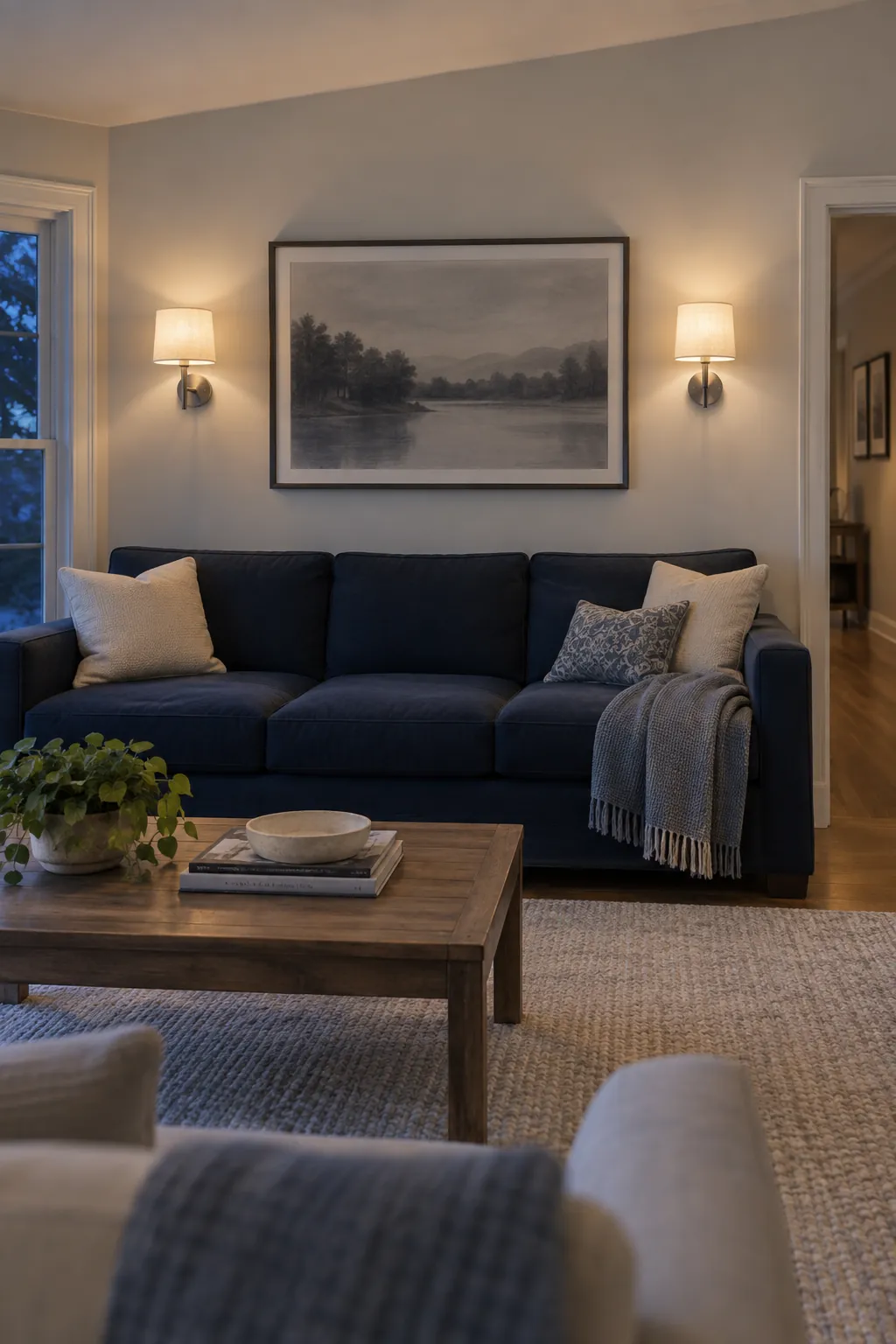
Use wall sconces to frame a quiet focal point
A pair of sconces can bring structure and evening light to an otherwise simple wall. Position them in relation to the artwork or furniture between them, not only to the wall’s midpoint. Check glare from the main seating positions before settling on exposed bulbs.
Choose fixtures that leave comfortable clearance beside a sofa or walking route. Keep plug in cords managed and out of children’s reach. Have wiring work completed by a qualified electrician where required.
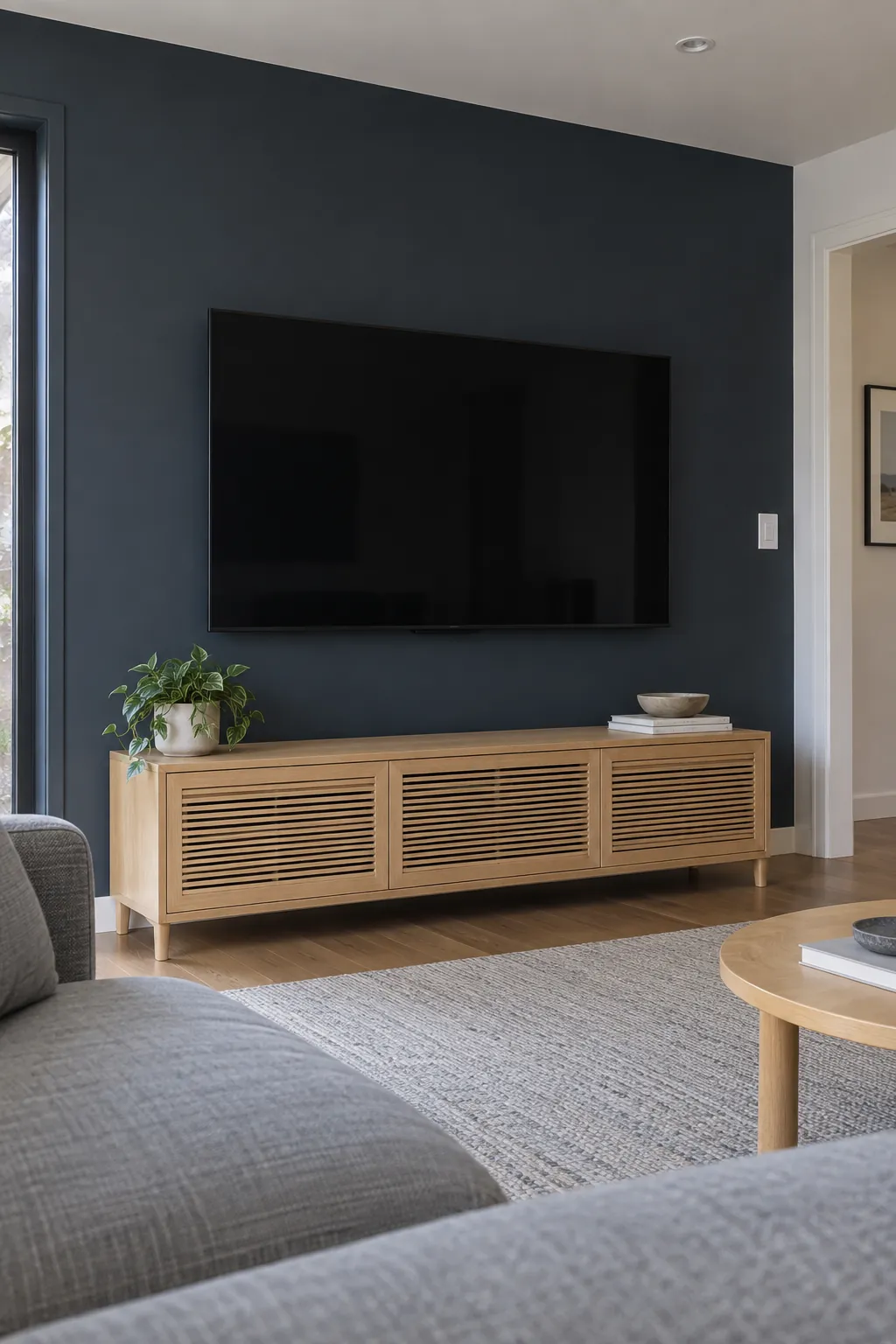
Let a dark television wall reduce contrast
A darker wall behind the television can make the screen feel less visually abrupt when it is off. Sample several shades near the actual screen because a color that looks soft elsewhere may become harsh beside black glass. Keep the surrounding decor restrained so the wall does not compete with moving images. Maintain the manufacturer’s ventilation and mounting requirements. The paint is a visual treatment, not a substitute for planning cables and equipment storage.
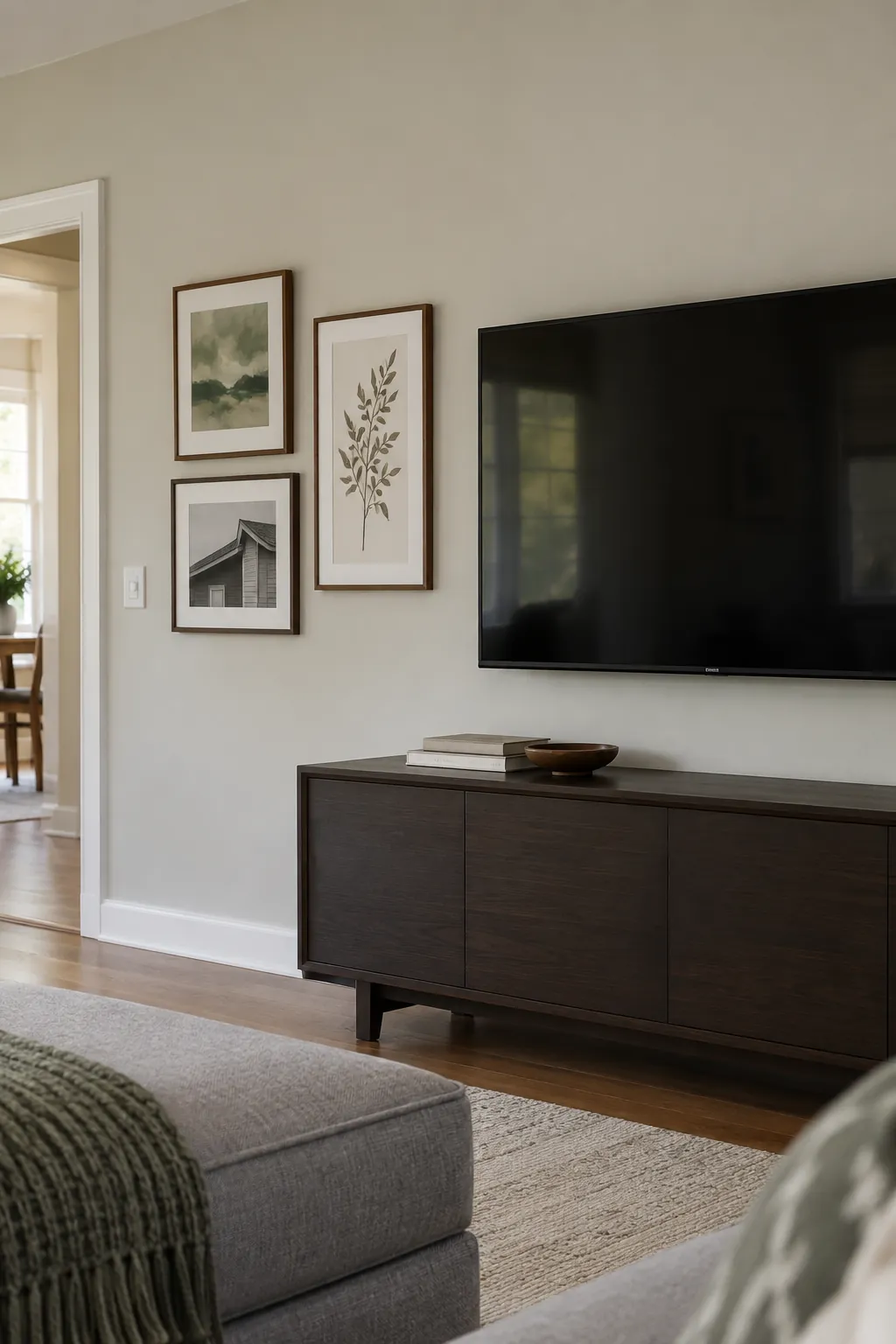
Build a restrained gallery beside the television
A few framed pieces beside the television can help it belong to the room. Use art with quieter contrast and arrange the group around the available wall rather than encircling every edge of the screen. Leave enough separation for the television to remain easy to watch. Avoid placing a valuable picture where equipment heat or a moving mount could affect it.
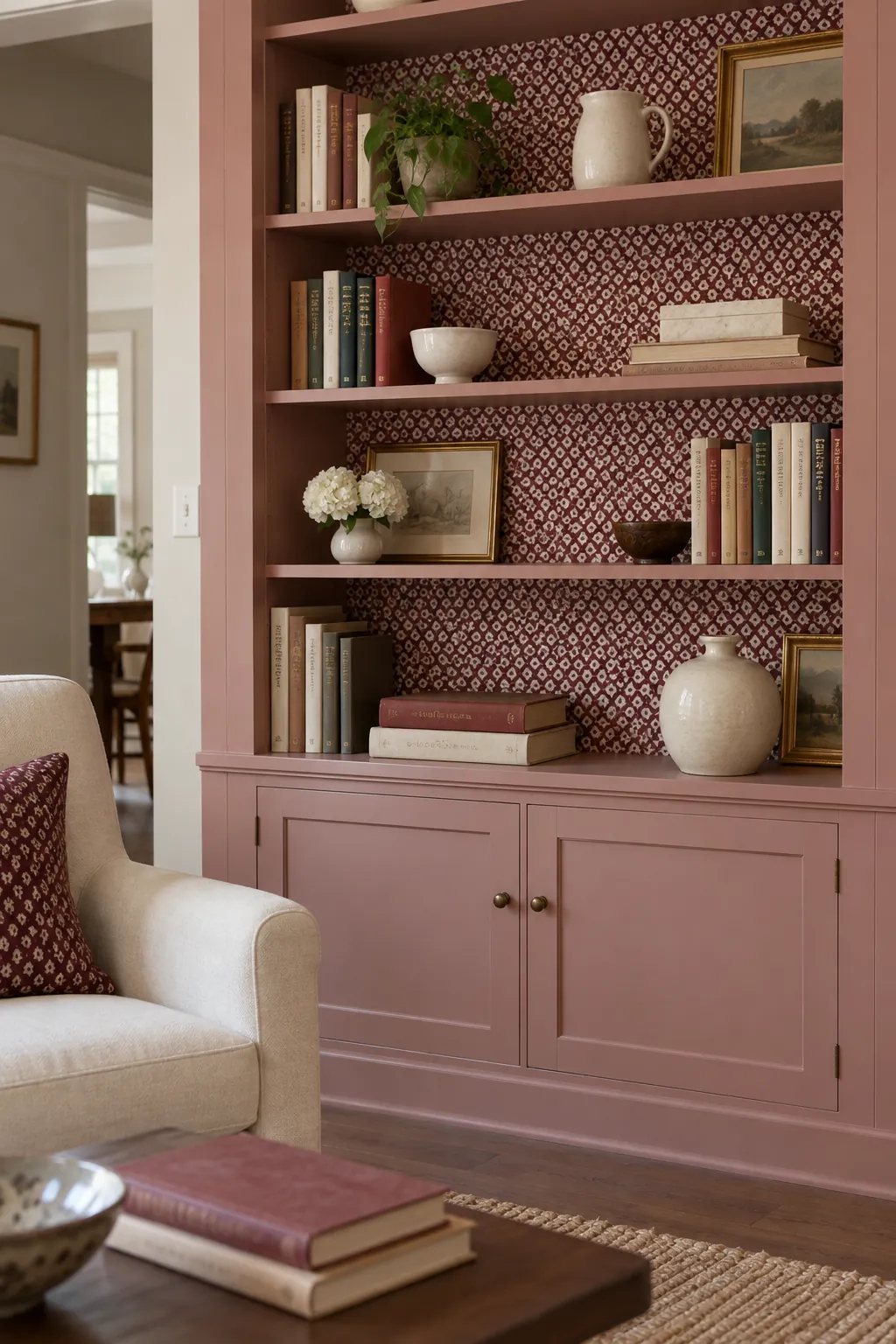
Put pattern at the back of open shelving
Wallpaper on a bookcase back adds interest without turning the whole room into a patterned surface. Test the scale with books in place because much of the design will be interrupted. A simple repeat can survive those interruptions better than a detailed scenic print. Keep shelf styling lighter where the pattern is strongest. Use materials and adhesives compatible with the shelf finish so a future change remains practical.
Display an instrument that is actually played
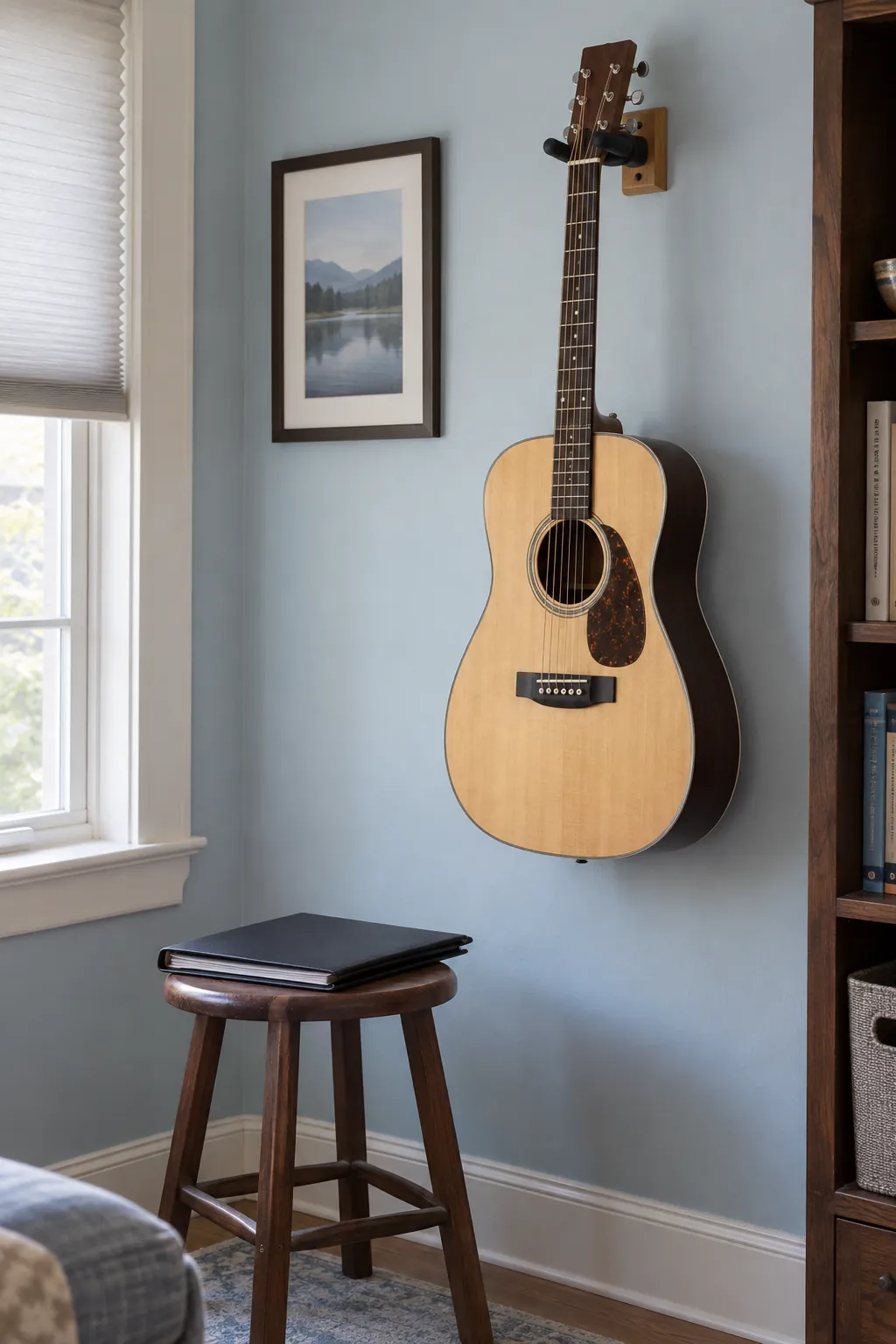
A regularly used guitar can make a wall feel personal while freeing a little floor space. Use a hanger designed for the instrument and compatible with its finish, fixed securely to an appropriate support. Keep the instrument away from direct sun, heat, and large humidity changes. Check that its position is comfortable for the player to reach and does not project into the walking route.
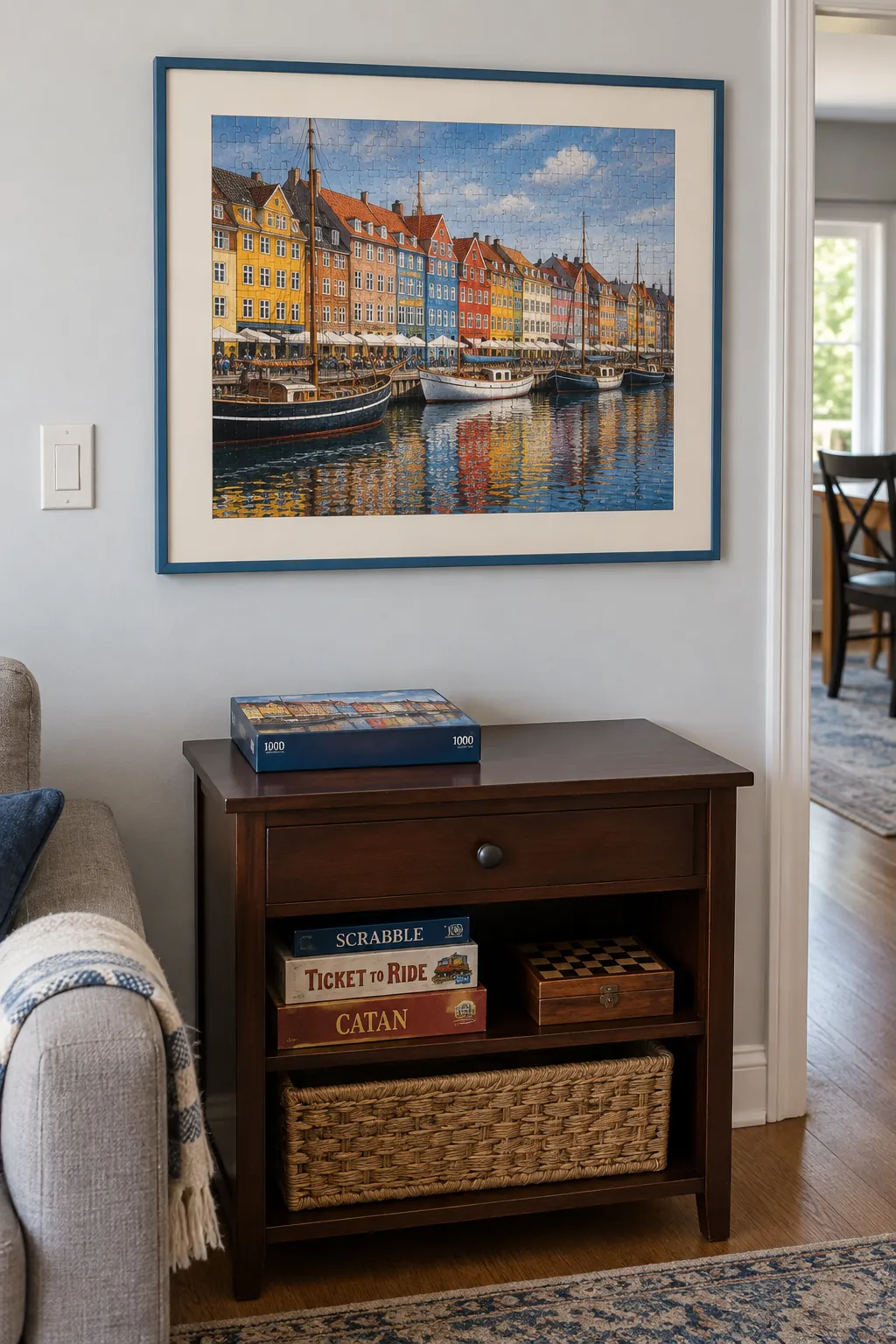
Frame a finished family puzzle
A completed puzzle can become a record of time spent together. Choose a mounting and framing method that supports it evenly, and decide whether preserving or later disassembling it matters to you. A broad mat can make a busy image feel less crowded on the wall.
Place the finished piece where its details can be enjoyed at a reasonable distance. If the image is especially colorful, give it a quieter background. Include the frame’s full weight when selecting hardware.
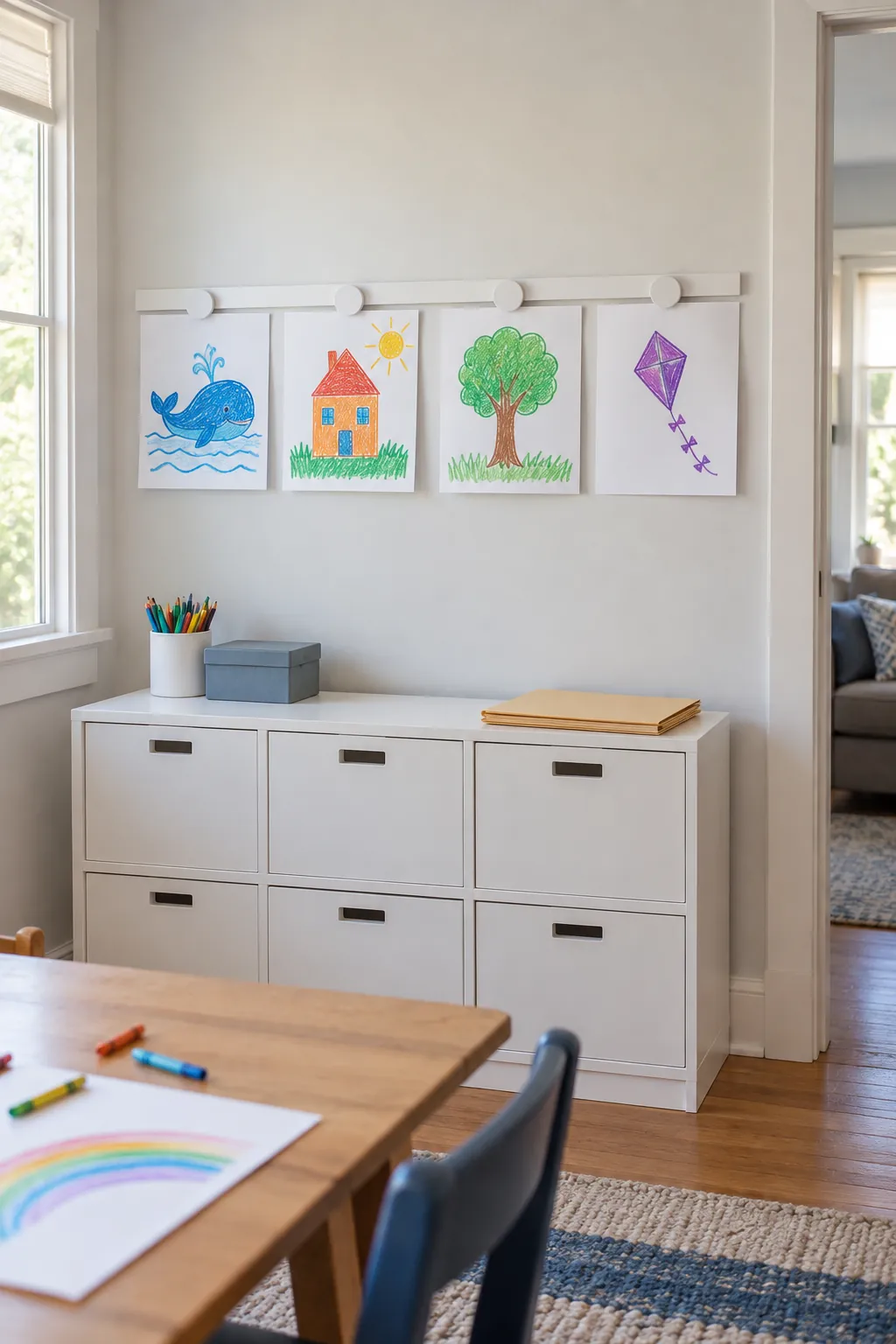
Make a dedicated rail for children’s drawings
A display rail gives children’s artwork a clear home and makes rotation part of the room’s routine. Choose a secure system with clips or holders appropriate to the age of the children using the space. Keep the number of visible sheets limited so each drawing can be appreciated. Place the rail where adults can manage it safely and where loose pieces will not interfere with sockets or equipment. A nearby folder can hold the drawings that are ready to leave the wall.
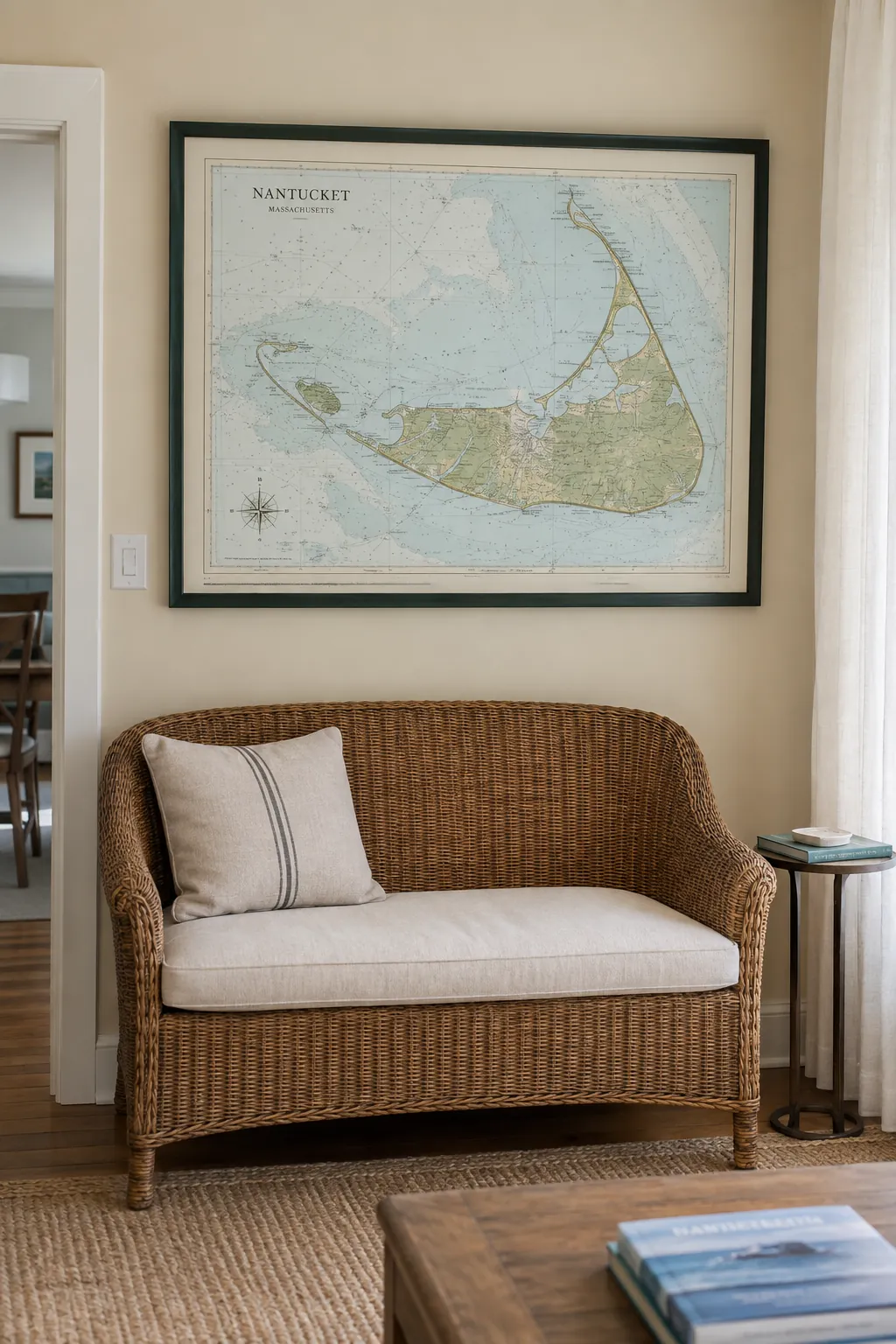
Choose a map with a family connection
A map becomes meaningful when it points to somewhere your family knows or hopes to visit. Pick a scale that remains interesting from the sofa rather than a sheet of tiny unreadable labels. A simple frame can give a detailed map enough structure without adding another busy border. Use a reproduction if the original paper is fragile or valuable.
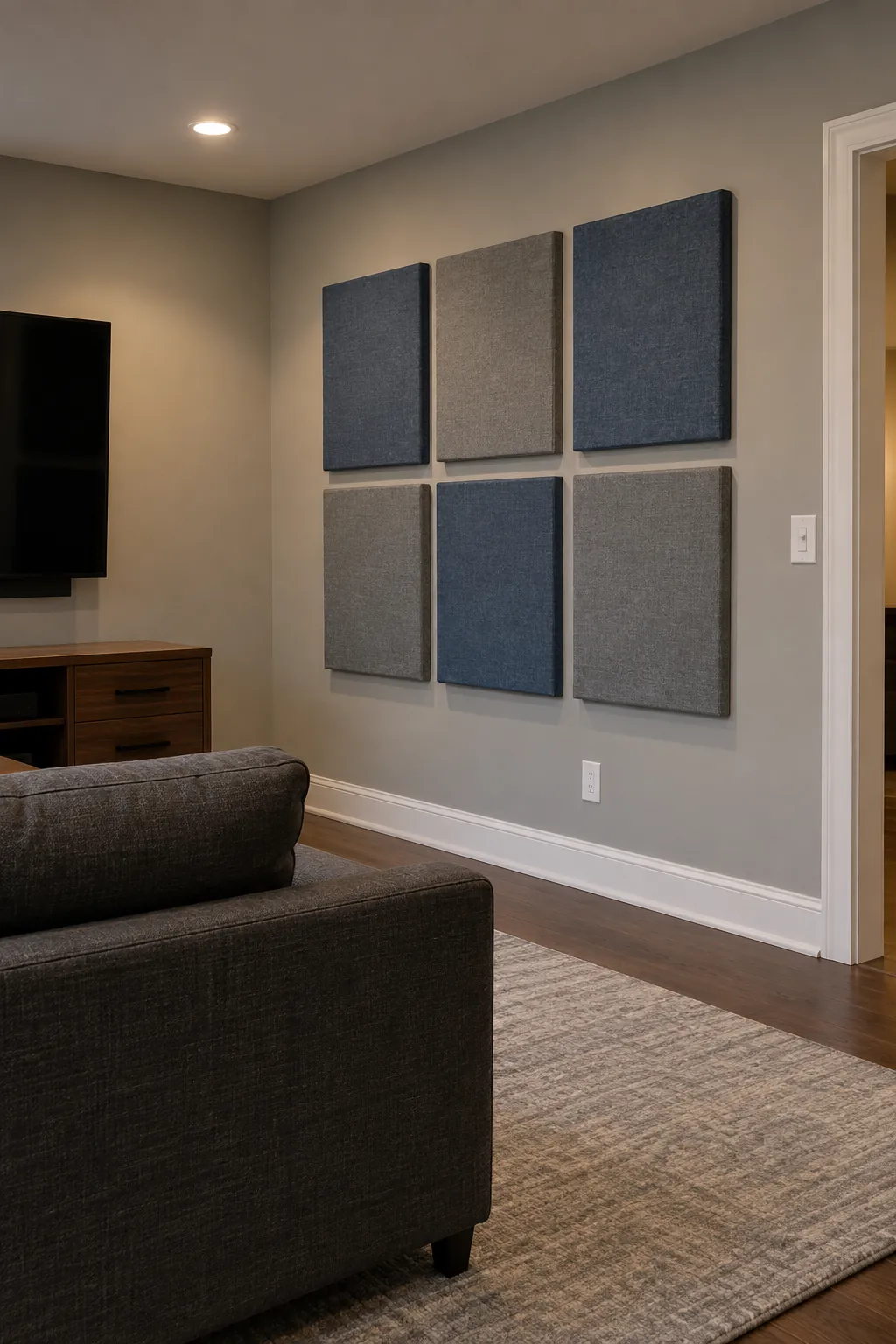
Treat sound absorbing panels as part of the design
Fabric covered acoustic panels can add a measured pattern while helping reduce some room reflections. Check the product’s acoustic data and recommended installation instead of assuming any soft wall panel will noticeably change the sound. Arrange the panels in a clear group and choose a fabric color that works with the seating.
Use products suitable for the room, including relevant fire performance requirements. Keep ventilation, outlets, and access panels clear. A few well chosen panels are more useful than decorative padding installed without understanding the room’s sound problem.
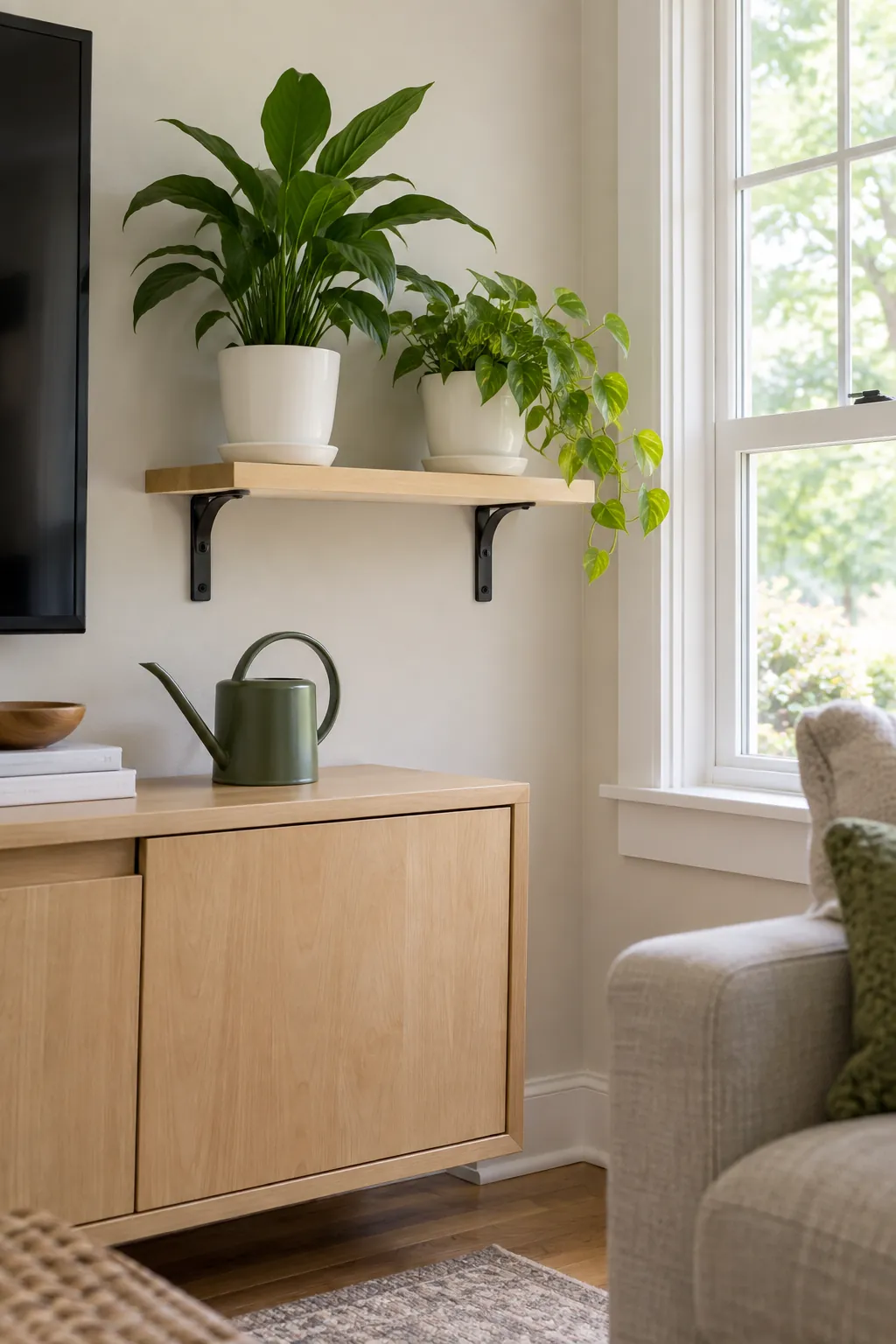
Reserve a small wall shelf for plants
A plant shelf can bring living color to a bright part of the family room. Match the plants to the available light and use watertight containers or trays that protect the wall and shelf below. Confirm the shelf can support the plants at their wet weight. Keep trailing growth away from electronics and choose plants appropriate for any pets or young children in the home.
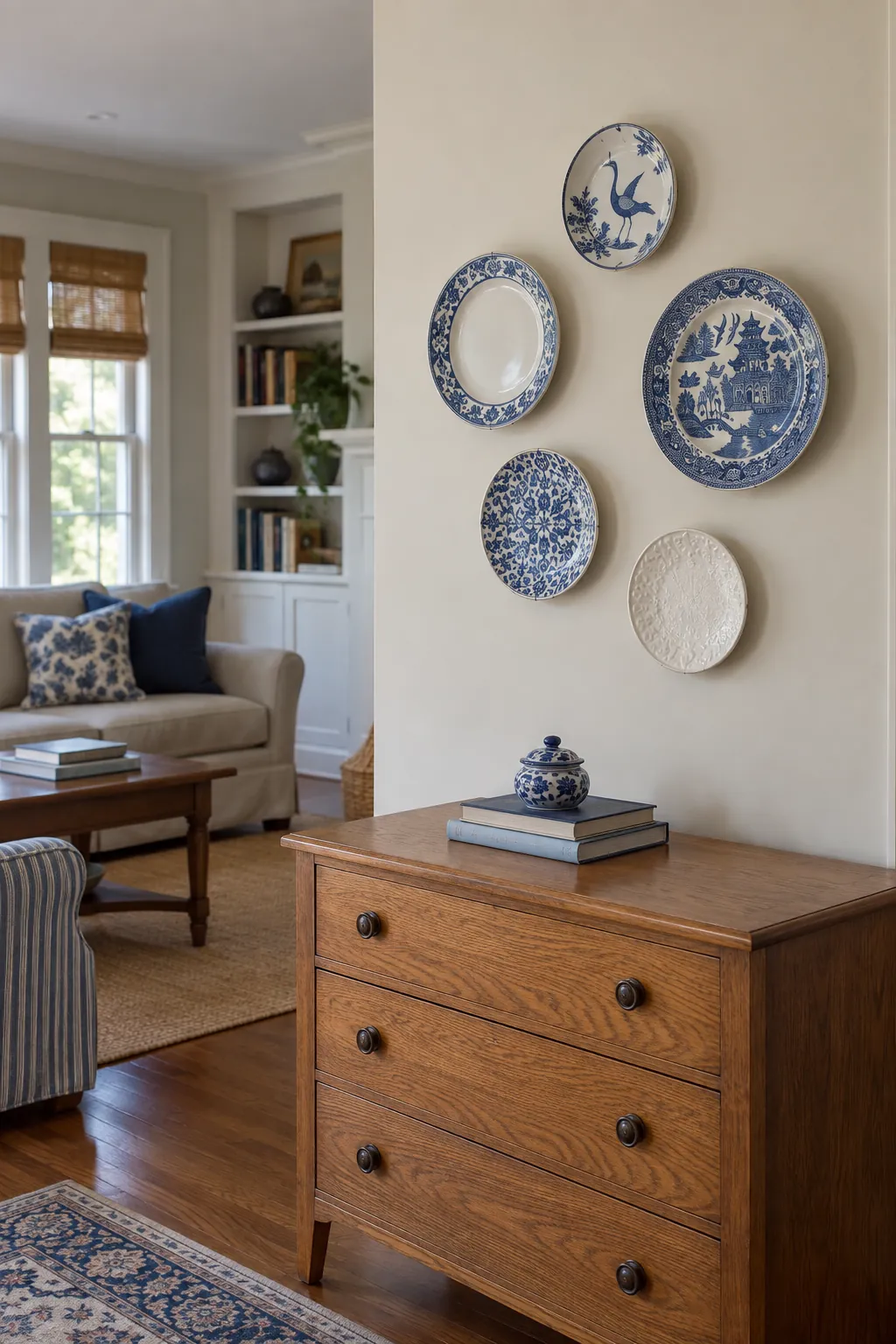
Arrange decorative plates where they are protected
A small plate collection gives the wall shape and surface variation. Choose pieces with a shared color or history and vary their diameters enough to create movement. Use plate hangers designed for the size and material of each plate, checking that they hold securely. Avoid placing fragile pieces above active play areas or where someone could brush them while passing. The best position lets the collection be enjoyed without making everyday movement more cautious.
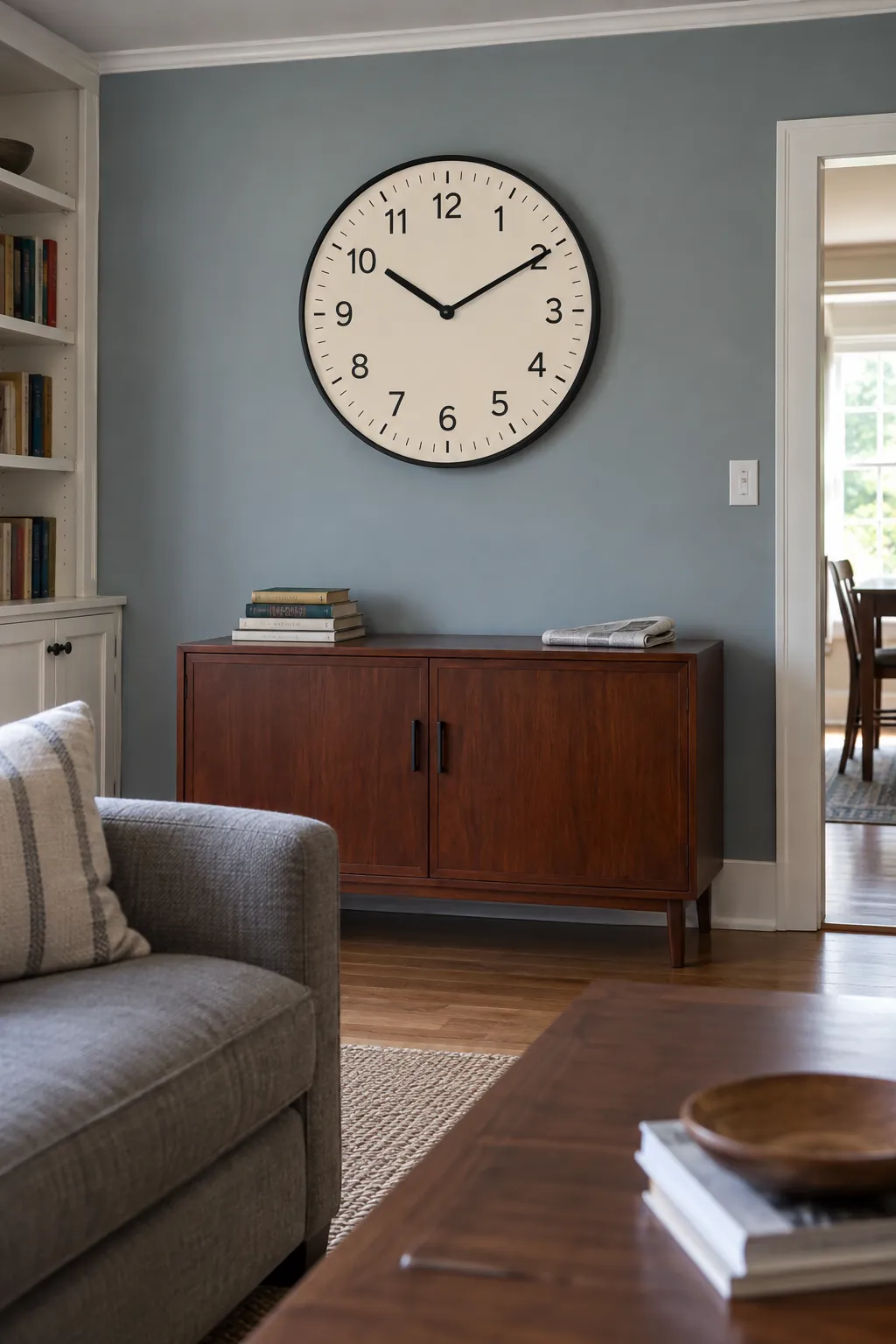
Use a large clock with a readable face
A wall clock can provide a focal point that also earns its place every day. Check its legibility from the main sofa before choosing a decorative face with faint hands or missing markers. Consider the sound of the movement in a room used for reading or television. Keep the wall around it fairly clear so the clock does not become one small item in a crowded cluster.
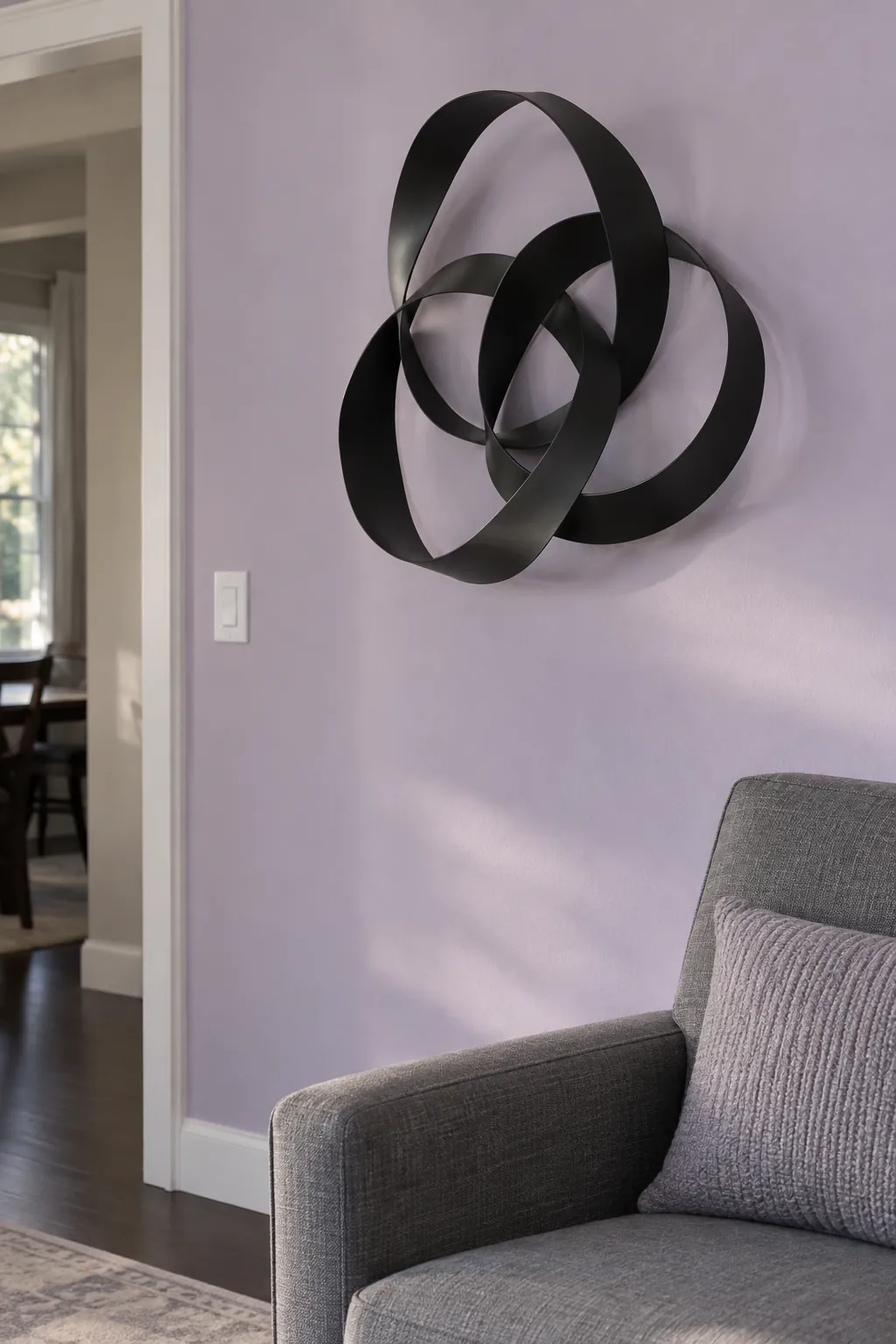
Try a shallow metal wall sculpture
A shallow sculpture adds shadows and changing light without requiring a painted picture. Choose a form that can be understood from the room’s usual viewing distance, with a finish that does not throw distracting glare. Check its projection and edges carefully before placing it near seating.
The fixing method should support the full weight and prevent unwanted movement. Leave enough bare wall for the silhouette to remain visible. A simple curved or geometric piece often works best when the nearby textiles already carry pattern.
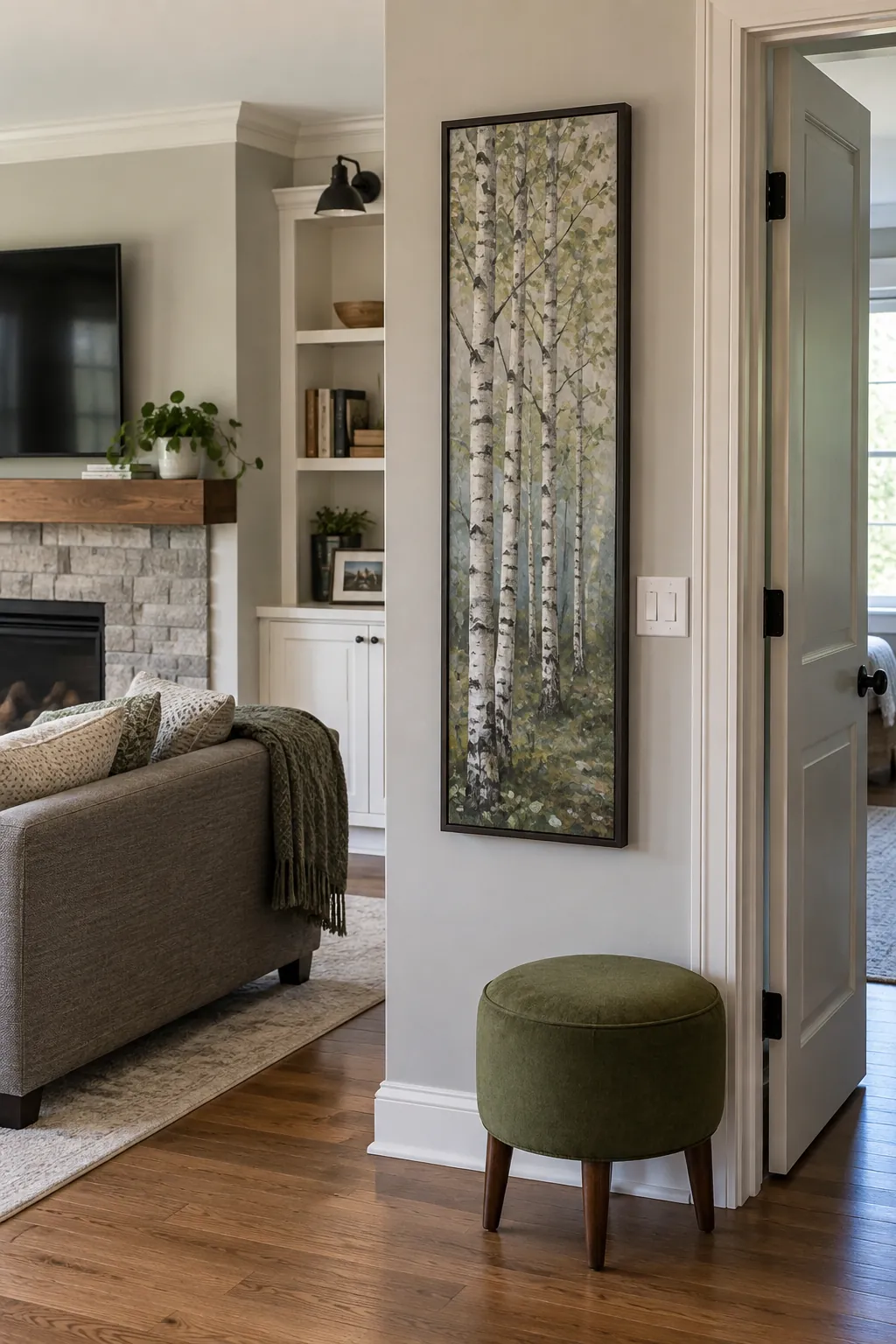
Use a tall artwork on a narrow return wall
A narrow wall beside a doorway can hold a tall image that would look lost above a sofa. Choose the outer frame dimensions around the usable strip of wall, including switches and door clearance. A vertical landscape or abstract piece can give this overlooked spot purpose. Hang it where its main detail is comfortable to see rather than pushing it toward the ceiling.
Divide a long wall into the room’s real zones
A long family room wall does not have to behave like one giant canvas. Give the seating area a calm artwork and let a separate reading or homework corner have its own smaller display. Use a shared color or material to connect the zones while leaving visible space between them. This approach makes long wall decorating ideas more manageable because each group has furniture and a purpose beneath it. Start with the zone your family uses most, then decide whether the remaining wall needs anything at all.