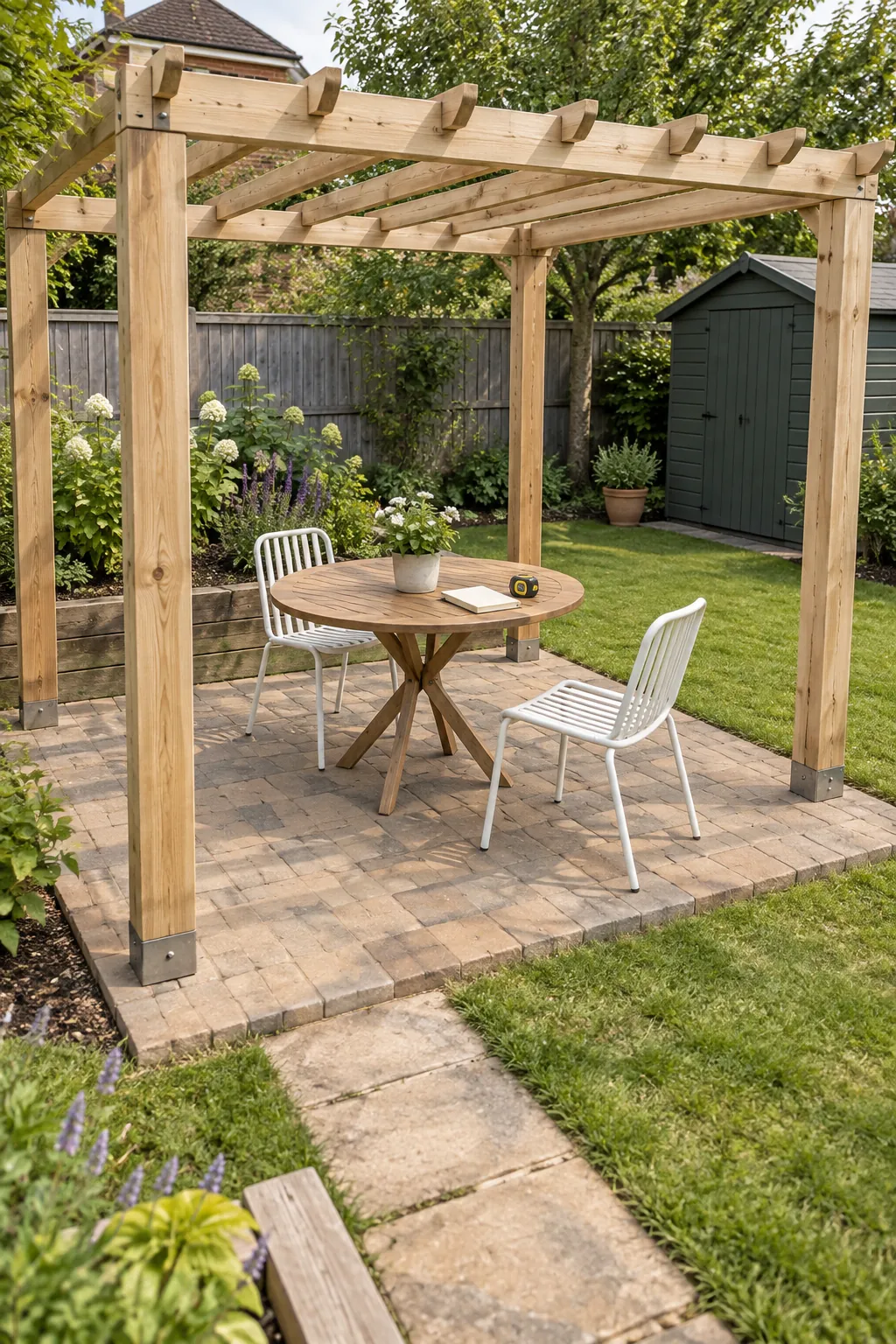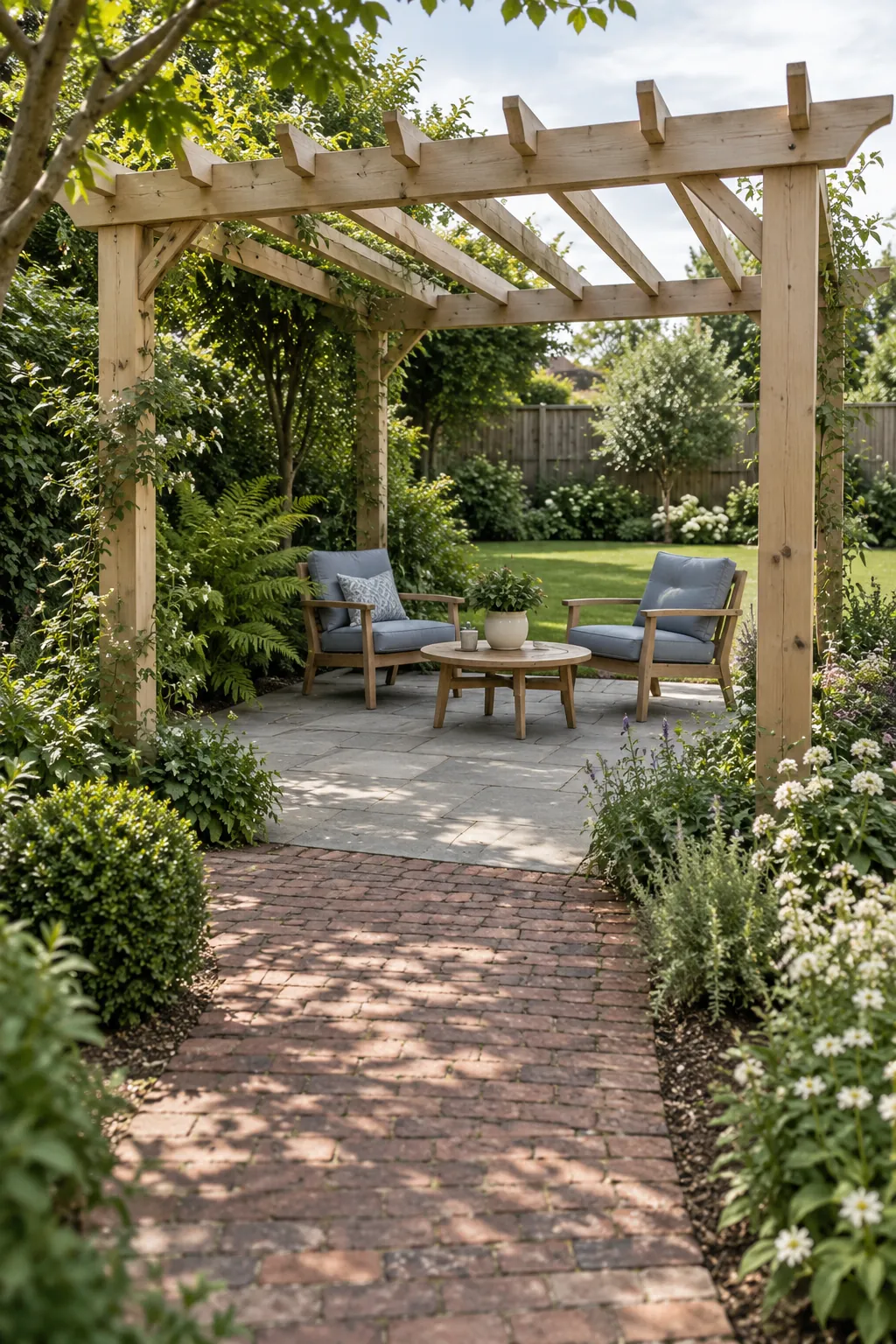
A shaded seat can look inviting and still be awkward to reach, too dark at the wrong hour, or crowded by growing plants. Decide how you want to use the space before drawing the frame. A comfortable route, suitable shade, and access for upkeep give the garden a place you will return to.
A bench at the end of a garden path
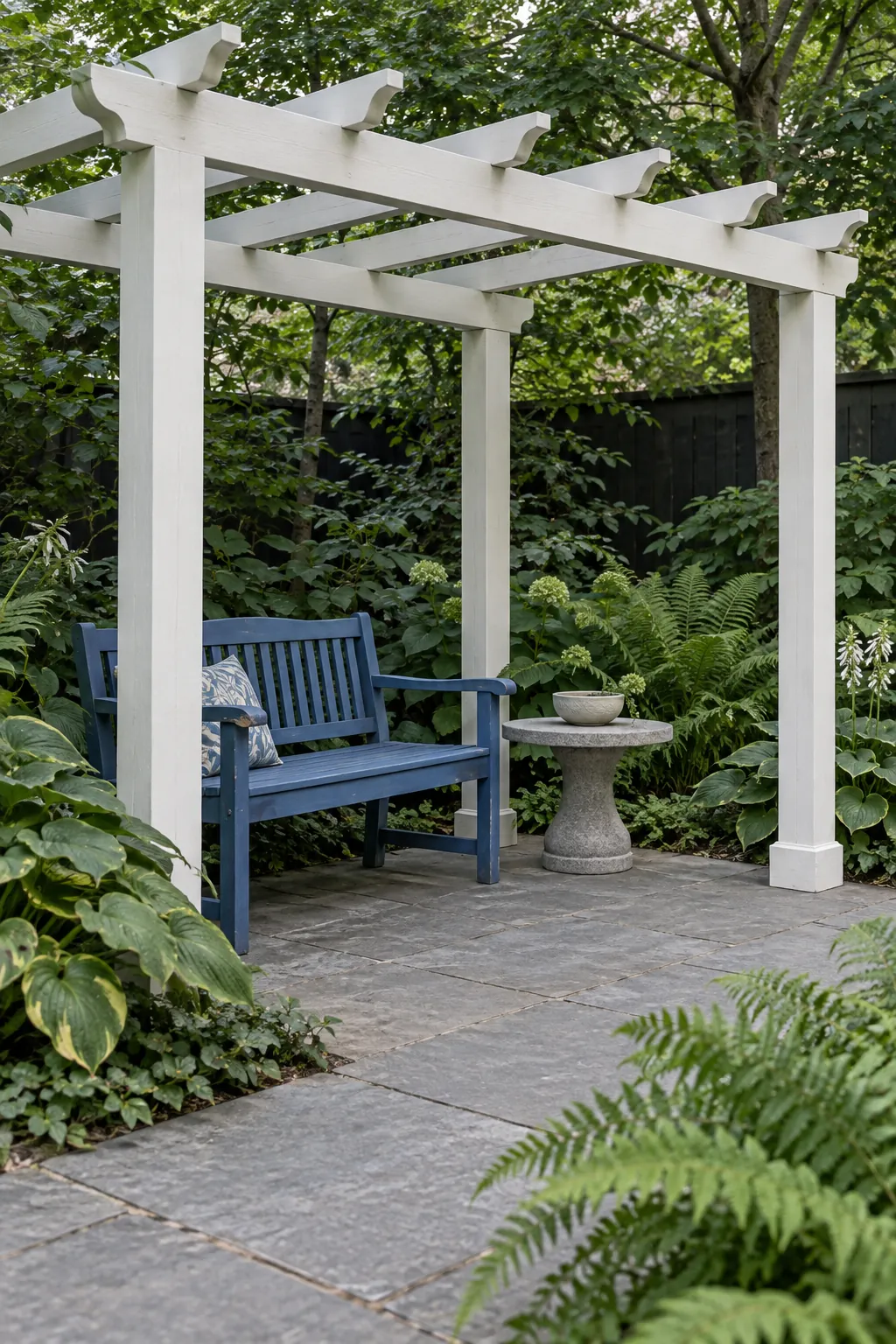
Put a simple pergola where an existing path naturally ends, with a bench facing back into the garden. The structure gives the route a destination without needing a large patio. Leave enough paving in front of the seat for feet and a comfortable approach. Test the view from the bench before fixing its position, because a good garden outlook matters more than symmetry.
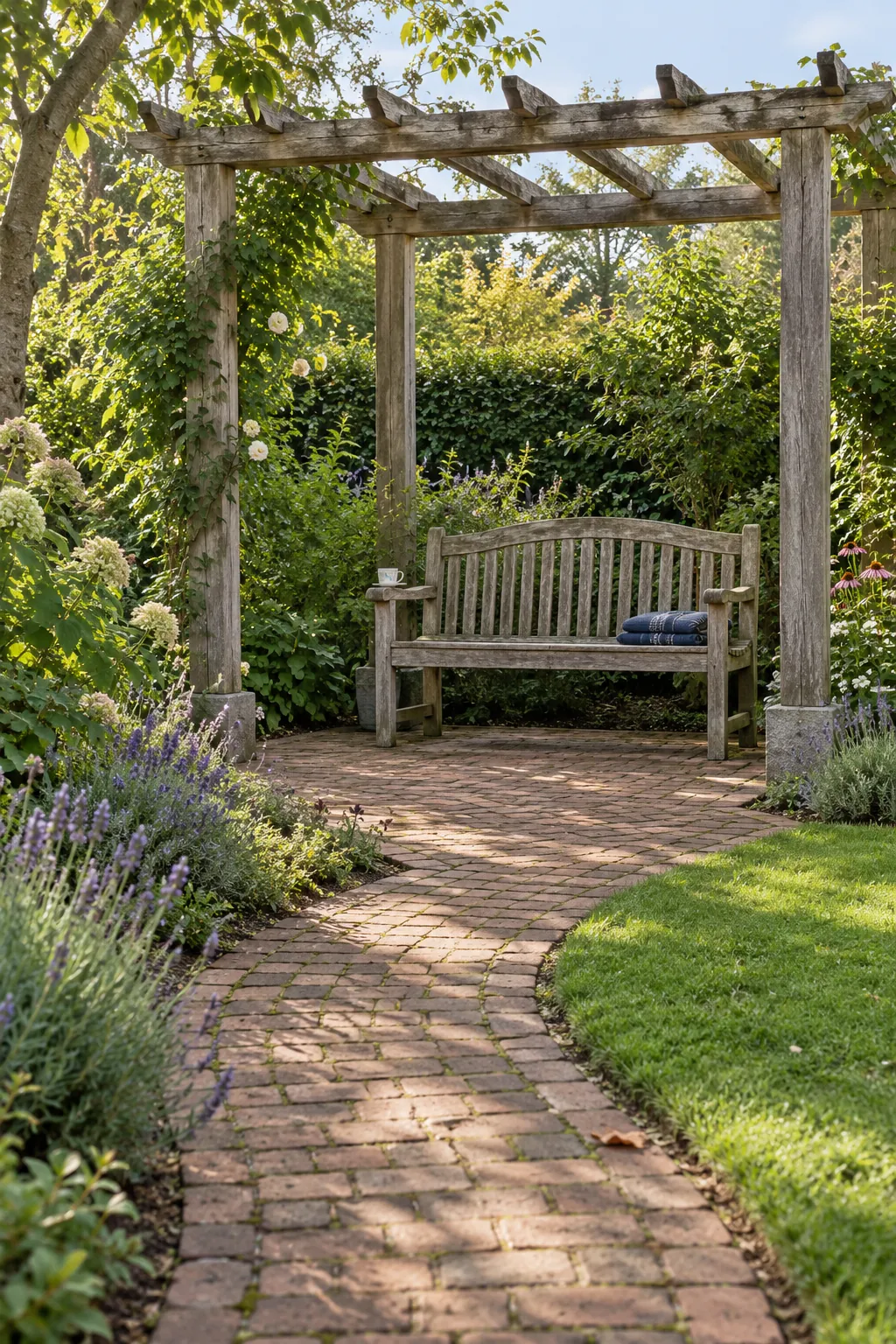
A small dining bay beside the vegetable beds
A modest dining pergola can make a productive garden feel like a place to spend time rather than only work. Keep the table outside the bed access routes so harvesting and watering remain straightforward. Choose washable surfaces and a floor that does not become slippery when soil falls on it. Leave room to pull out chairs without stepping into the crops.
A gravel sitting area with a firm entrance
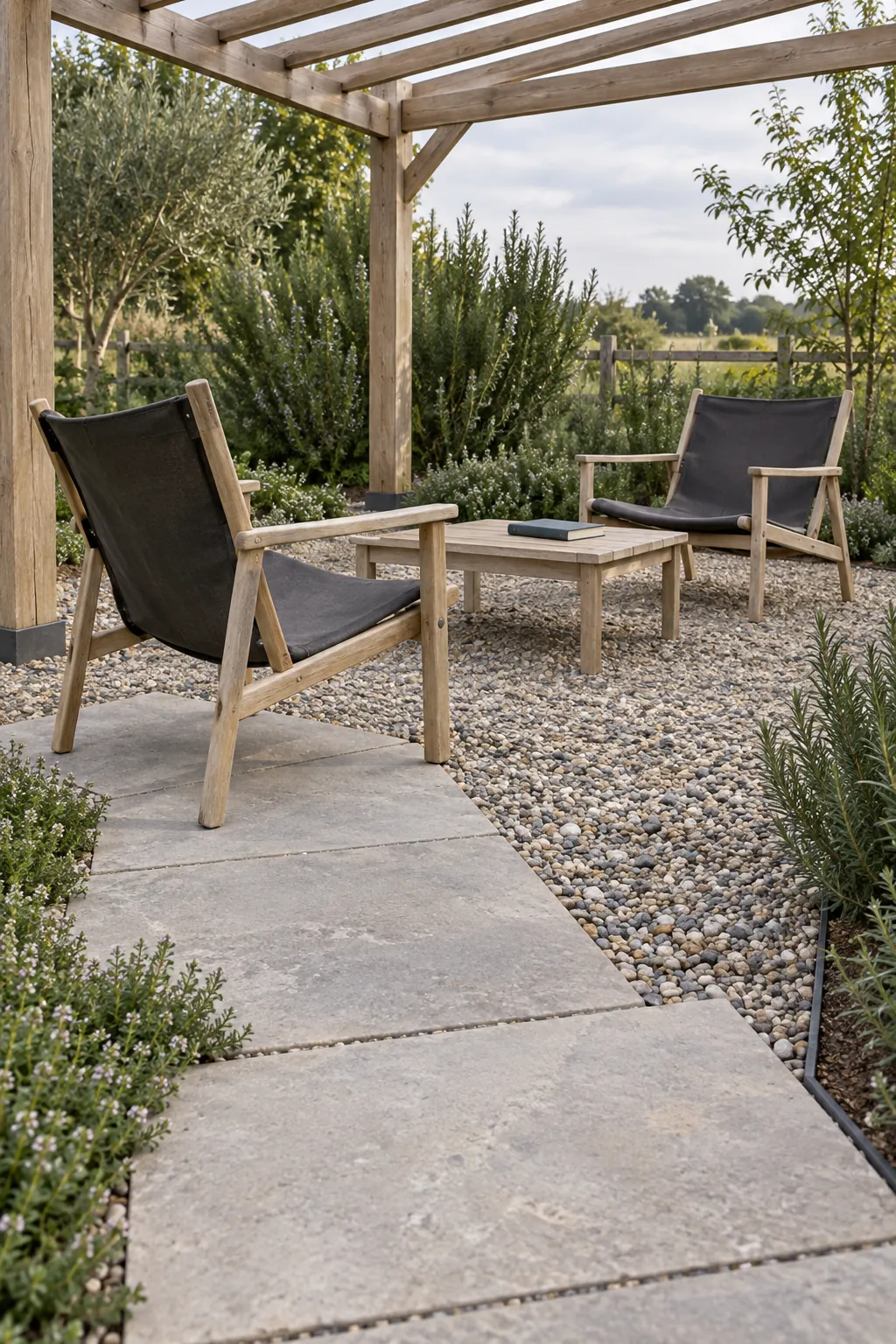
Gravel can suit a relaxed garden pergola, but loose stones affect how chairs and mobility aids move. Use a suitable stable floor arrangement in the sitting area and a firm route from the main path. Edge the gravel so it does not spread into beds or lawn. Try the actual chair feet on a sample area before committing to the finish.
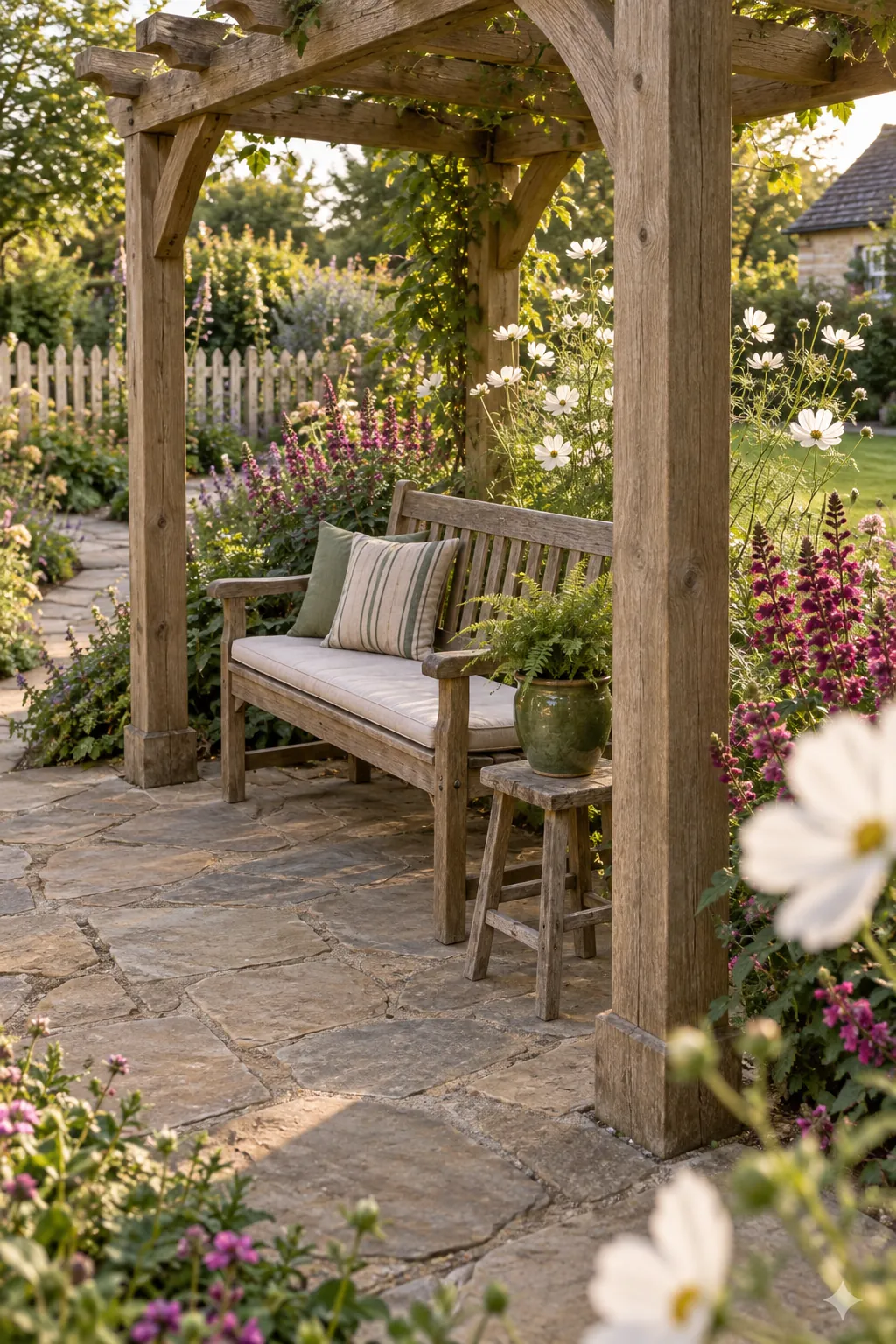
A timber frame among cottage planting
A timber frame can sit quietly among mixed flowers when its proportions leave the planting visible. Keep the first row of plants clear of post bases so the timber remains accessible. Select wood and protective treatment for the exposure rather than judging only the color. The flowers can provide seasonal change while the structure stays simple.
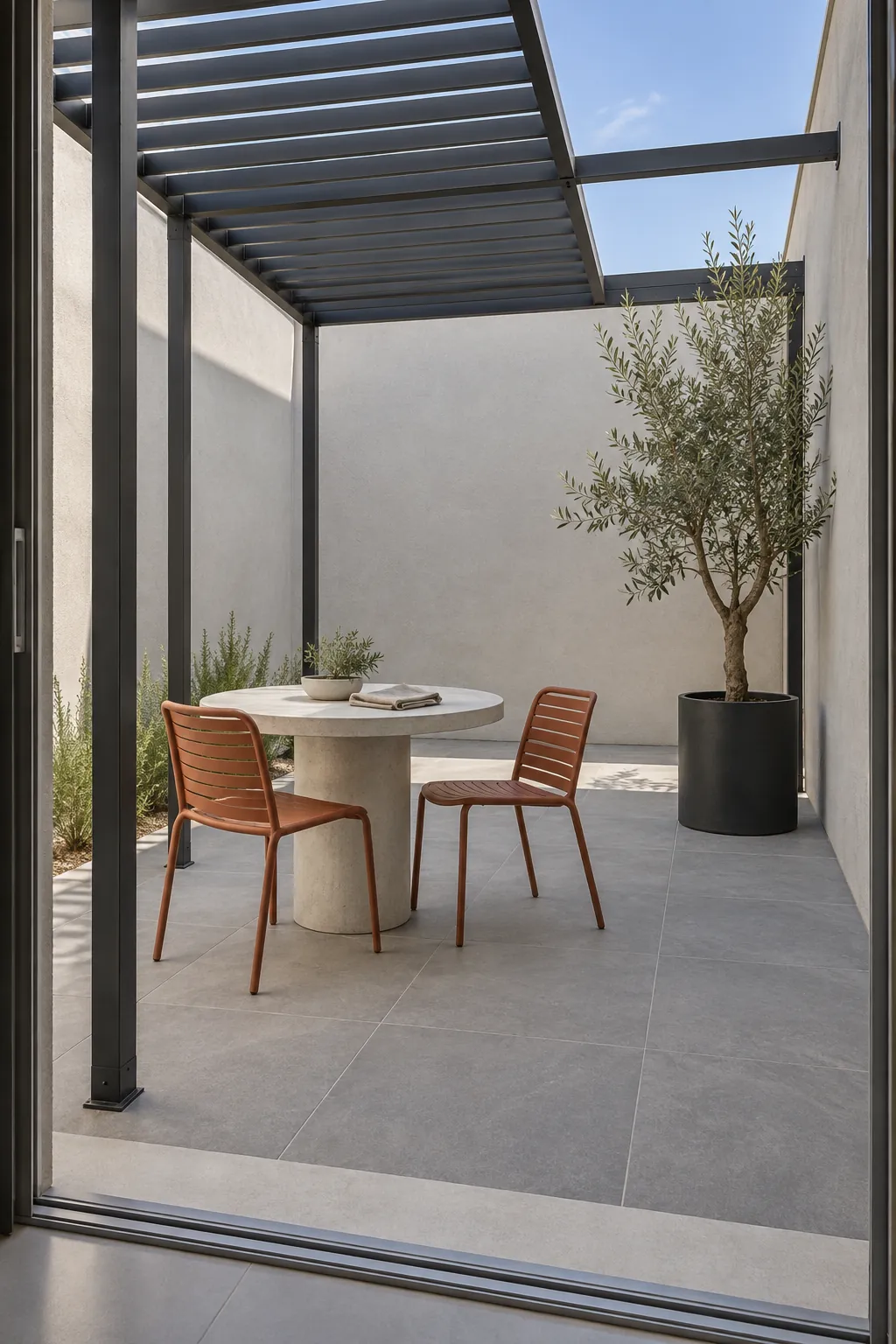
A dark metal frame over a restrained courtyard
A slim dark frame works well in a small courtyard where bulky members would dominate the view. Repeat one dark finish in a pot or chair to make the structure feel connected to its surroundings. Check the coating care instructions and protect damaged areas as recommended. Metal is not automatically maintenance free, especially in exposed locations.
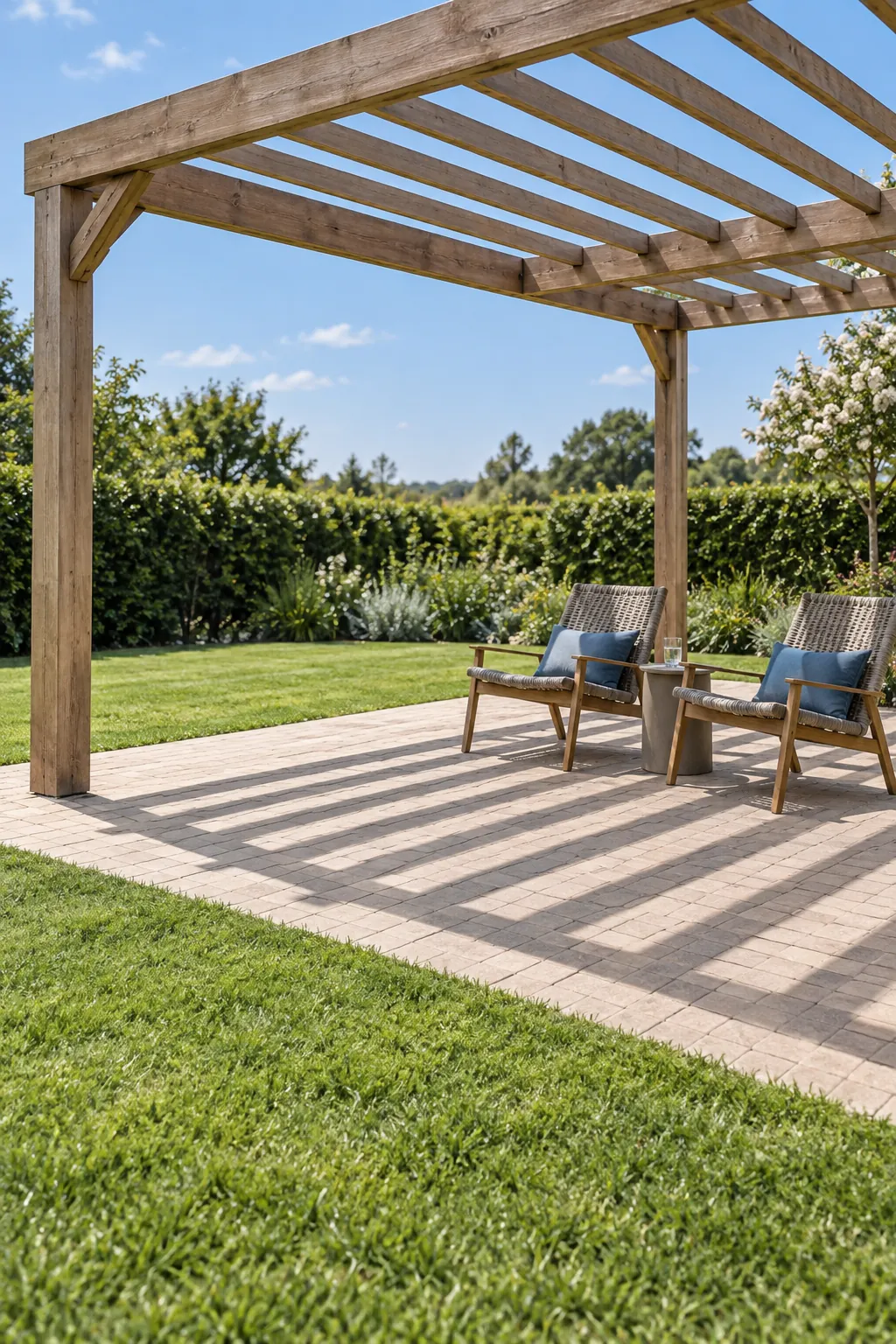
Open rafters beside a sunny lawn
Open rafters define an outdoor room while keeping the lawn side bright. Study where their shadows fall during the hours when you actually sit outside. The shade moves, so position seating around useful coverage rather than centering it by habit. Keep an uncovered lawn edge available if you enjoy both sunny and sheltered places.
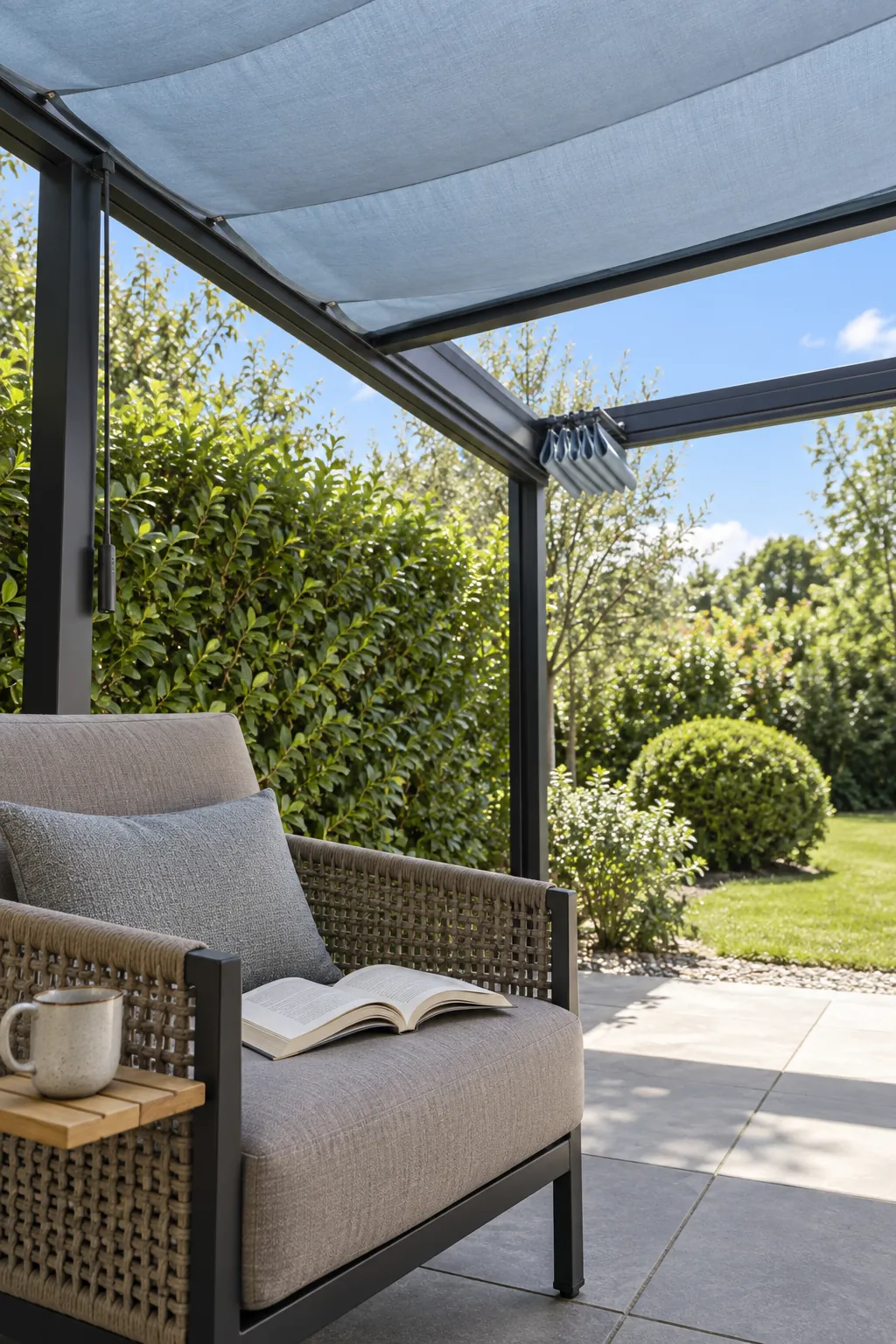
A retractable shade above a reading chair
A retractable canopy suits a reading corner where glare changes through the day. Place the chair so the fabric can shade the page without blocking the garden view. Follow the canopy system wind limits and storage instructions. Keep the operating handle or control within easy reach instead of hiding it behind a plant.
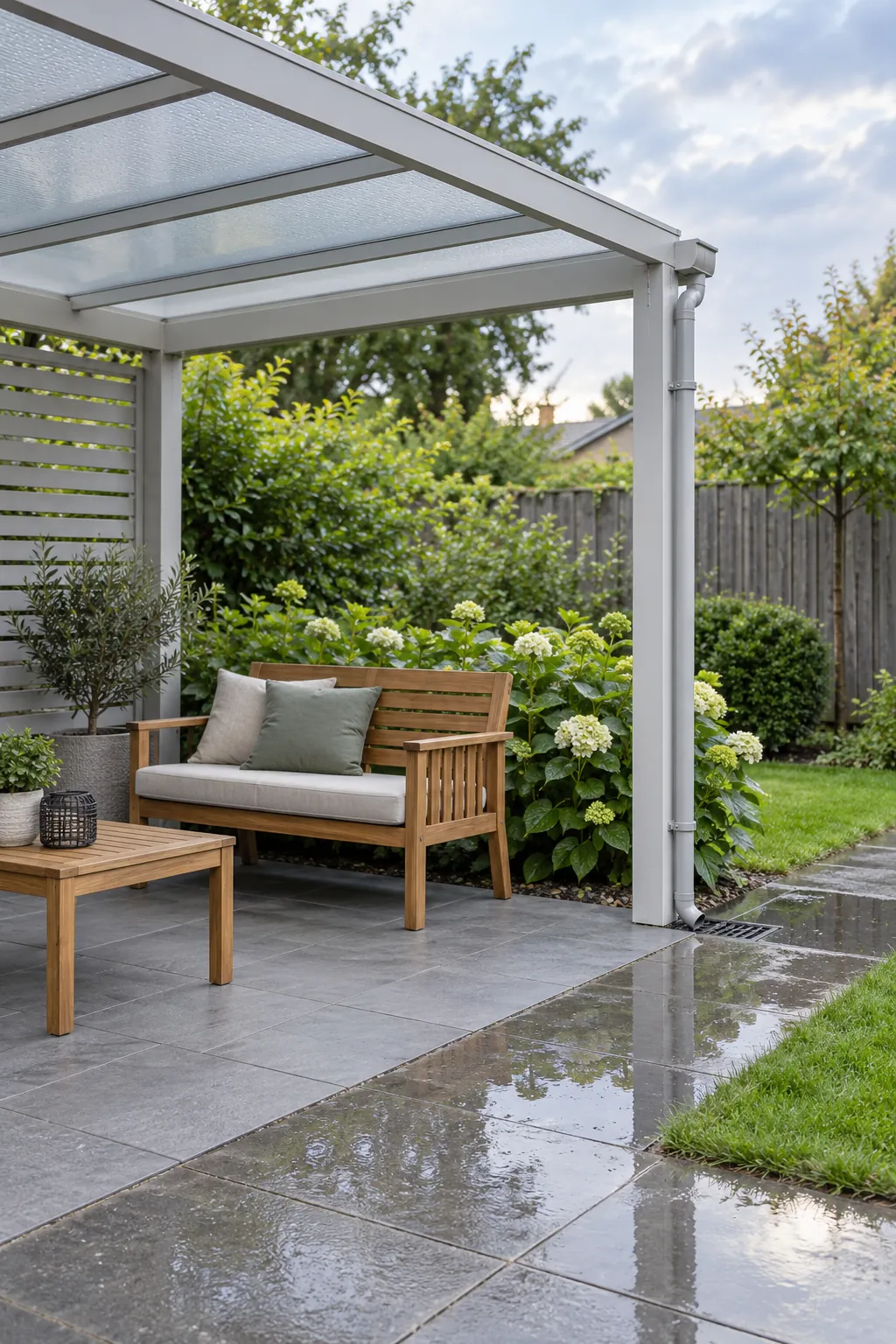
A rain shelter with a planned runoff route
A garden pergola with a roof needs more planning than an open frame. Confirm the roof product, slope, support, and runoff arrangement with the installer before choosing furniture. Send water to an appropriate drainage point rather than letting it land on the approach path. A sheltered seat is less useful when the route to it becomes a puddle.
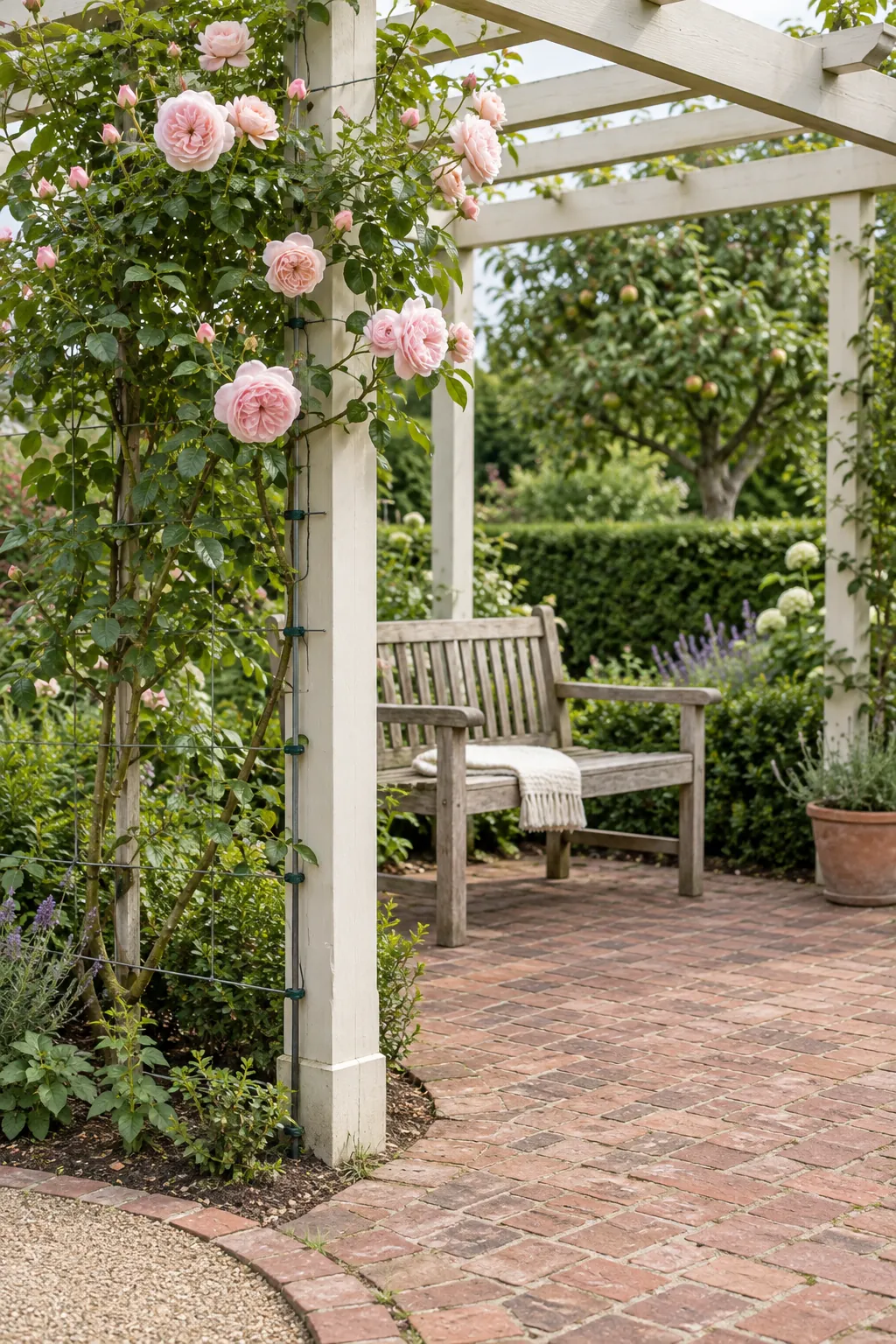
Climbing roses kept away from the seating route
Train a climbing rose on the outer side of a pergola where you can reach it for pruning. Keep thorny growth away from the path and the space behind chairs. Choose a variety for the local conditions and the room available for mature growth. The flower display should not make the everyday entrance awkward.
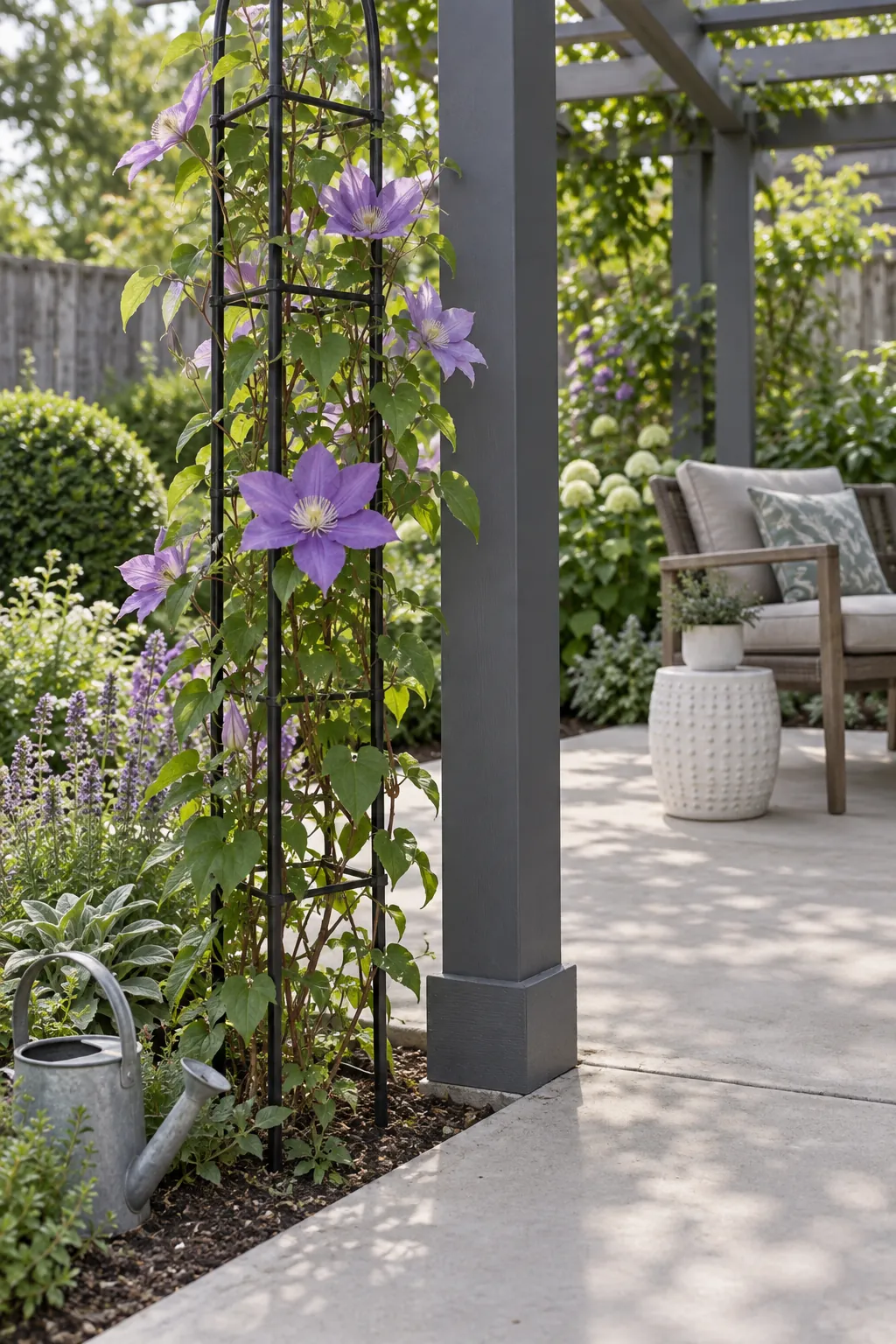
A clematis screen on a separate support
A separate support for clematis lets you adjust the planting without changing the pergola frame. Match the support spacing and position to the chosen plant and leave access to the roots. Check the pruning group before trimming because flowering habits differ. An independent trellis also makes it easier to inspect the nearby post.
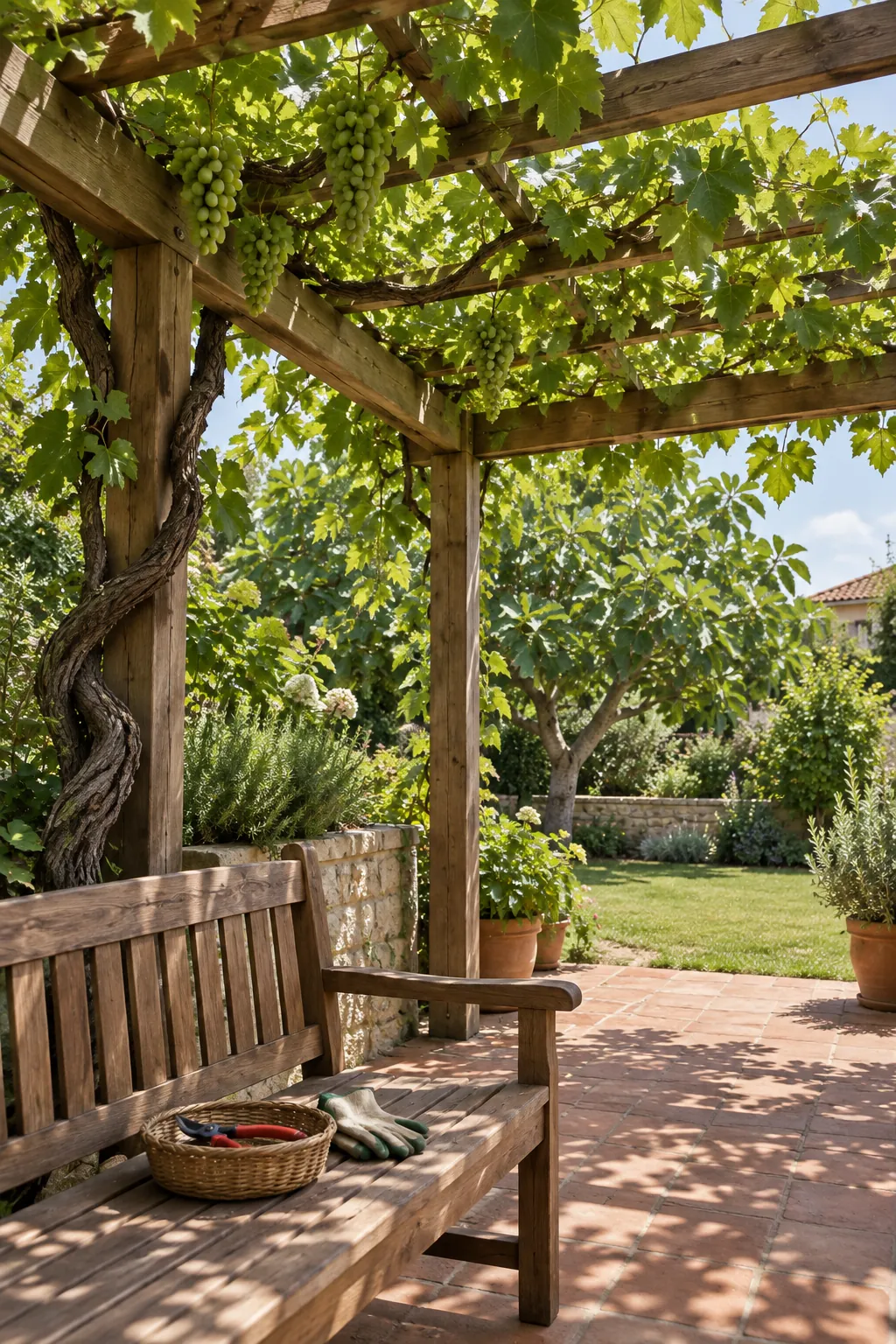
A vine canopy with manageable seasonal growth
A vine can create a leafy ceiling, but its mature weight and growth need to be part of the structure design. Select a plant whose pruning and seasonal leaf fall you can manage. Keep gutters and any moving roof components free of stems. Plan how you will reach the overhead growth safely rather than assuming it will stay within the first season outline.
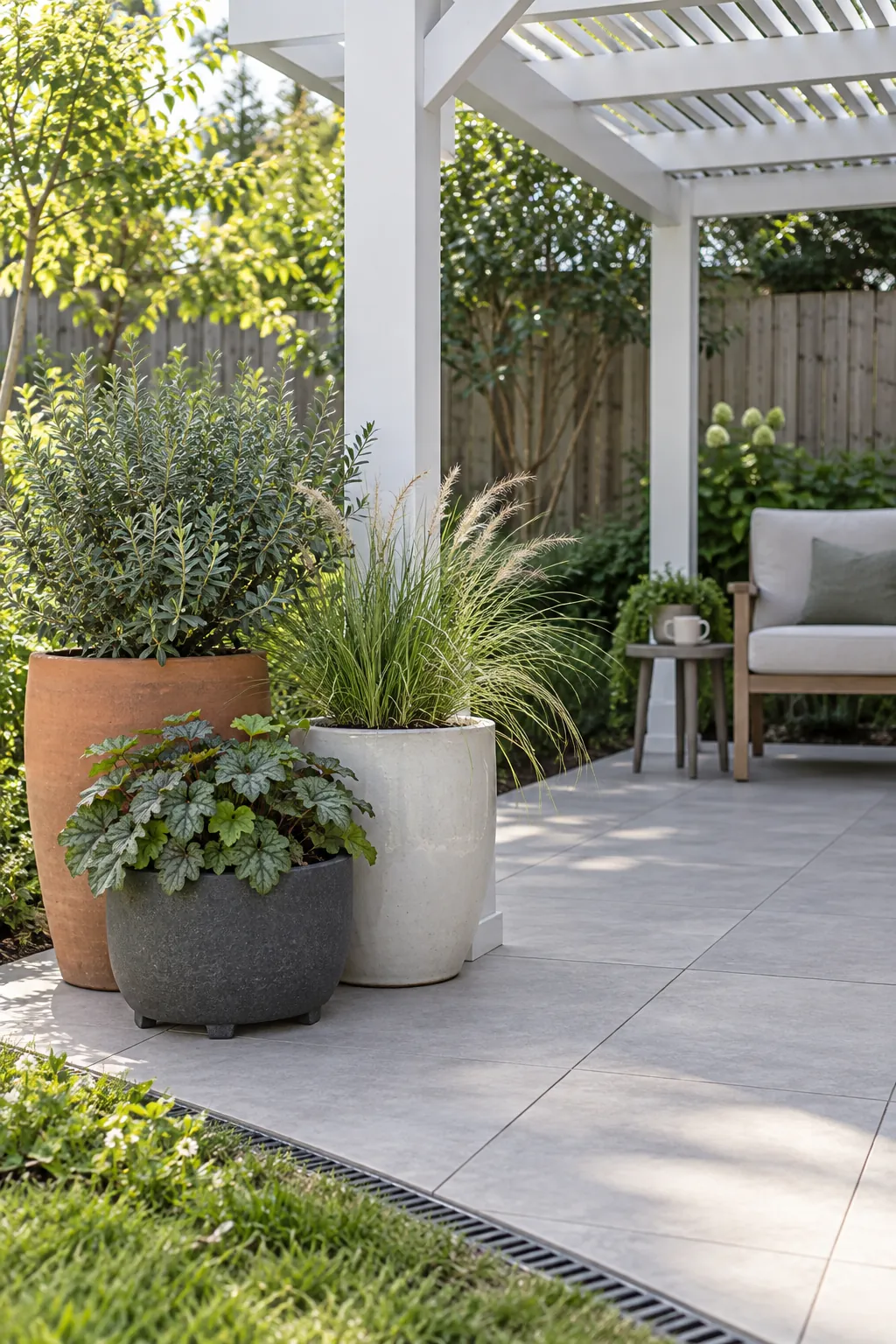
Large movable pots at the outer posts
Movable pots can soften a pergola where planting directly into the ground is impractical. Set them outside the walking line and choose containers you can move for maintenance. Drainage holes need a discharge route that does not keep the post base wet. Group a few suitable plants instead of surrounding every support with clutter.
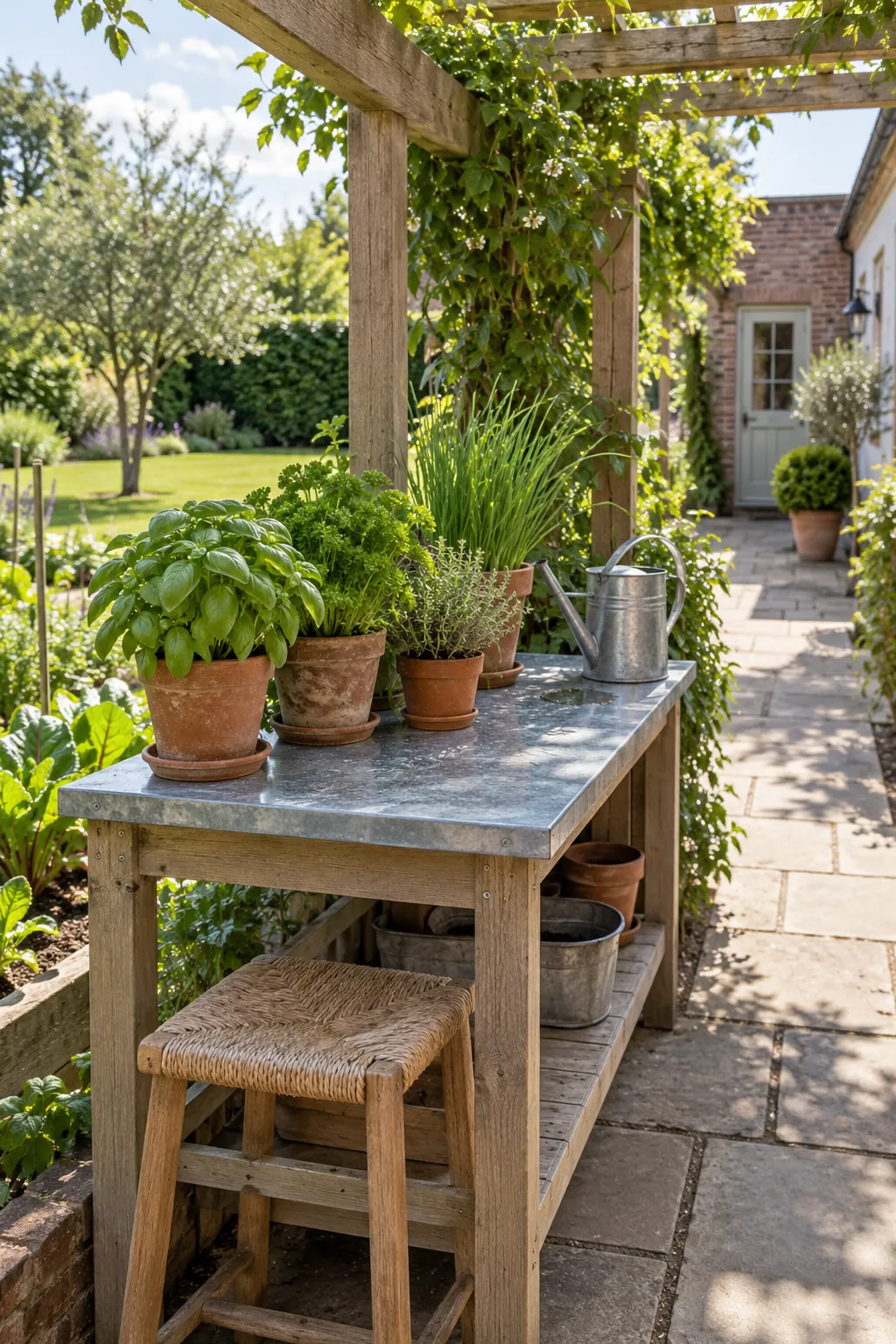
A sheltered herb table near the kitchen route
A small herb table makes a garden pergola useful for short daily visits. Place it where the selected herbs receive the light they need and where watering will not wet the seat. Keep the work surface separate from the dining table if compost and tools are used there. A nearby path makes the corner convenient even when the lawn is damp.
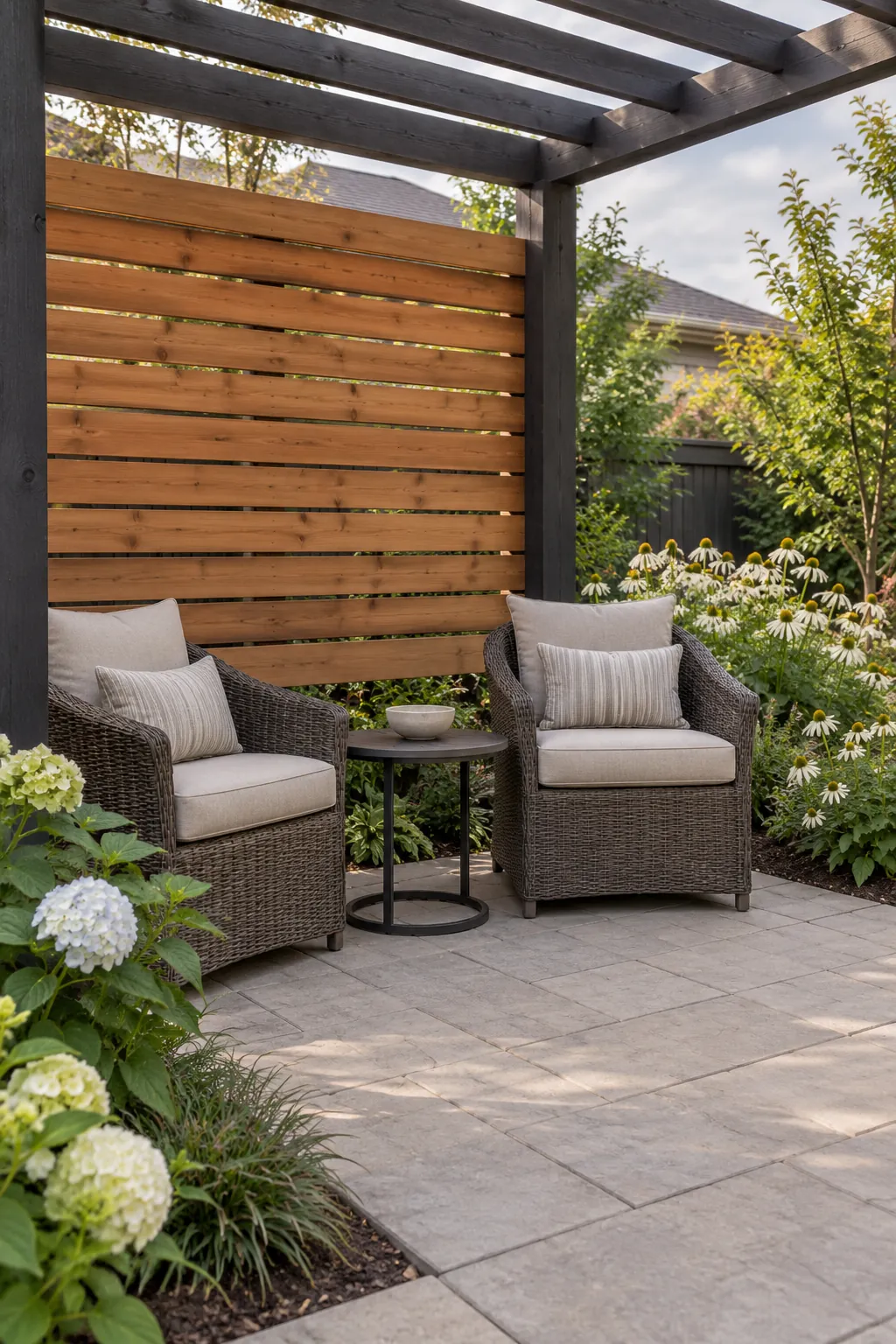
A privacy panel behind a two seat nook
Put a privacy panel behind the seat when the main concern is a single neighboring view. Check the sightline at seated height before selecting the screen height and location. Any additional panel changes wind exposure, so confirm compatible support and anchoring. Keep the other sides open if they offer light and a useful garden outlook.
A view framed toward an existing tree
Orient the pergola toward a mature tree or established planting that already gives the garden character. Keep the structure and its ground work outside sensitive root areas as advised for that tree. Leave space for future canopy growth and routine garden access. The best frame is often one that reveals an existing feature rather than competing with it.
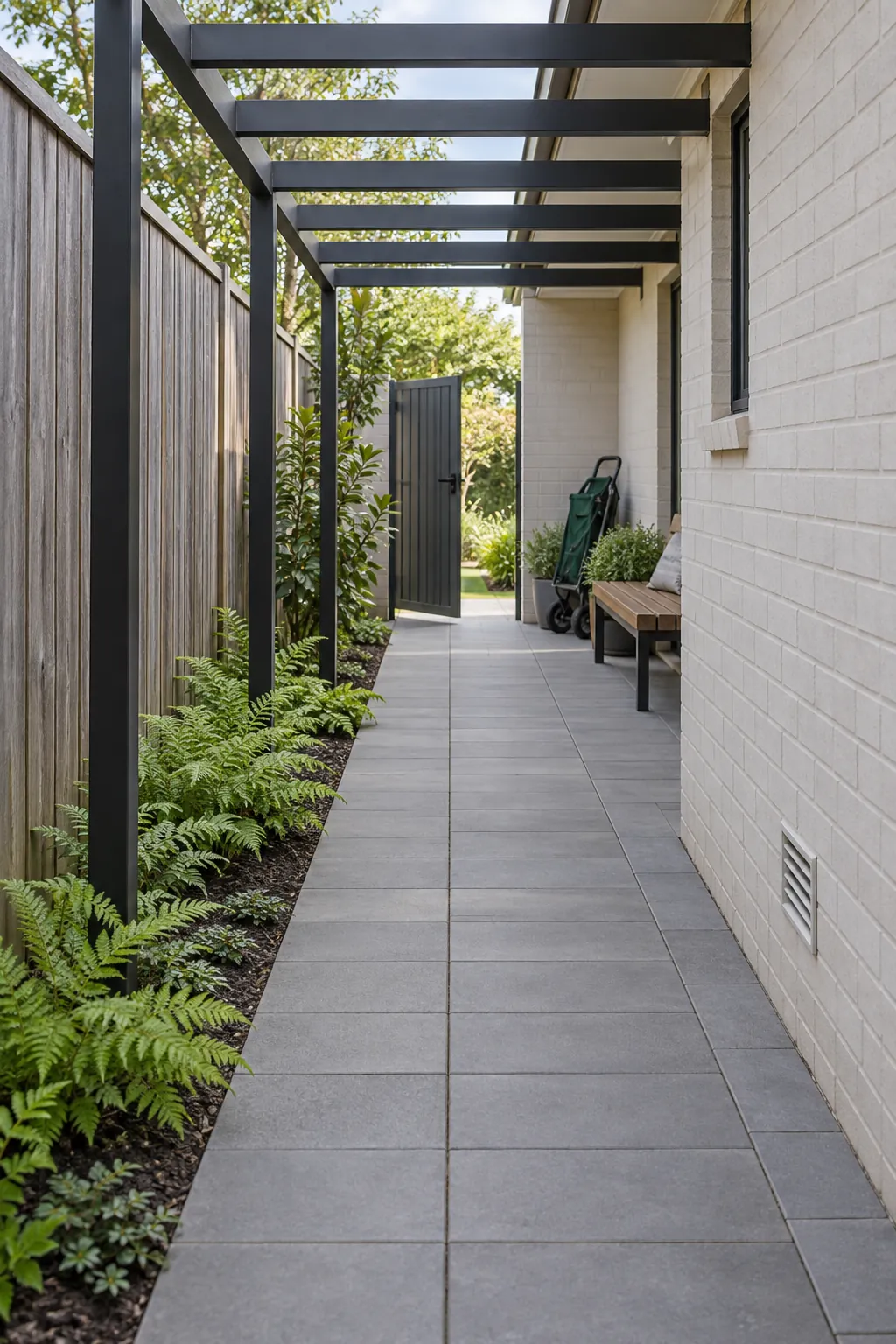
A narrow pergola along a side garden
A narrow frame can give a side garden purpose without turning it into a blocked corridor. Keep posts, seats, and pots outside the route needed for bins, tools, or utility access. Use the wider end for a small resting place. Measure the usable passage after adding the structure, because the drawing footprint does not show every obstruction.
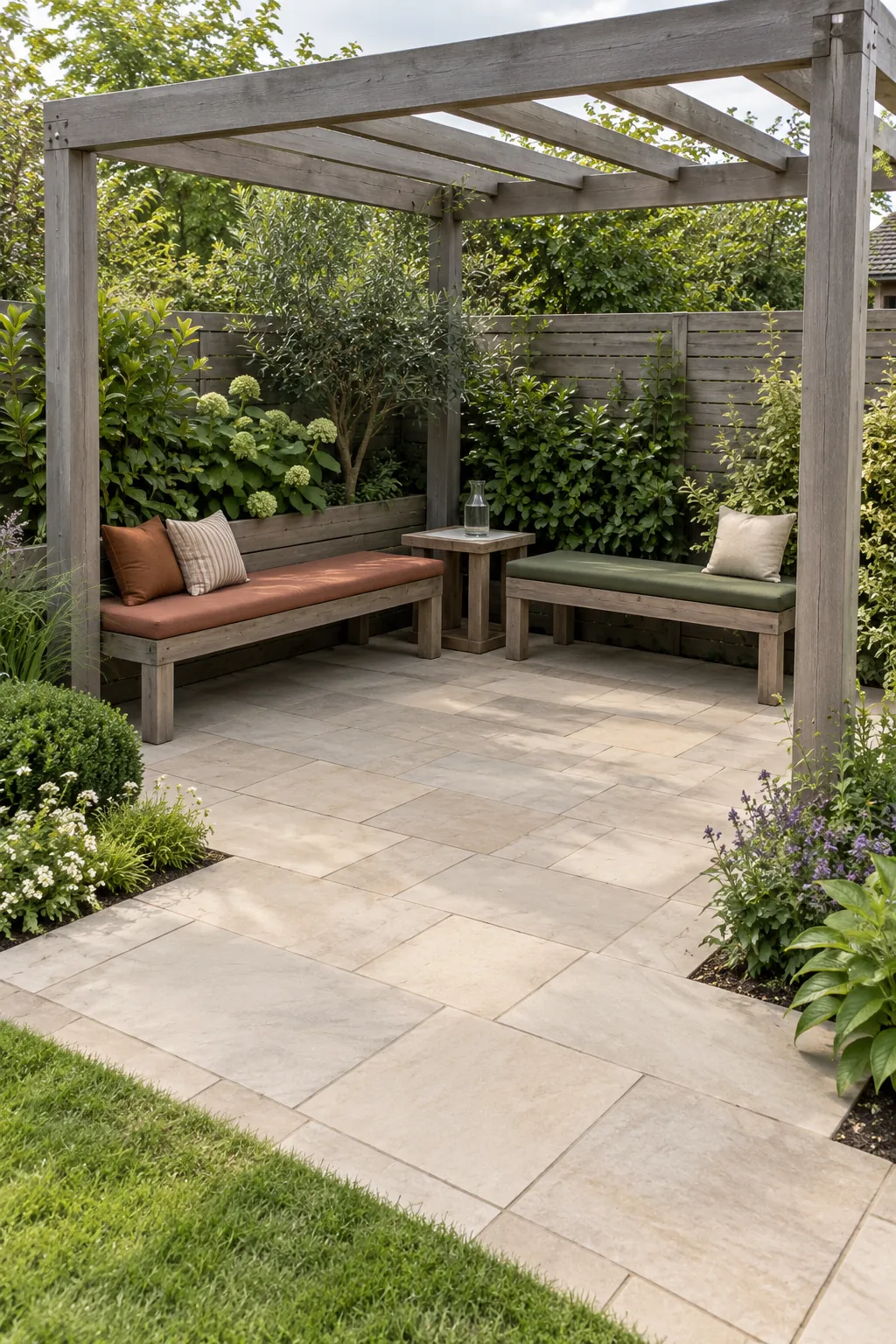
A corner seat that leaves the center open
A corner arrangement can preserve the middle of a compact garden for movement. Place a bench or two chairs along adjacent edges and keep the table small enough to pass. Allow space behind furniture to reach planting and posts. This layout is most useful when the garden needs to serve several activities in the same day.
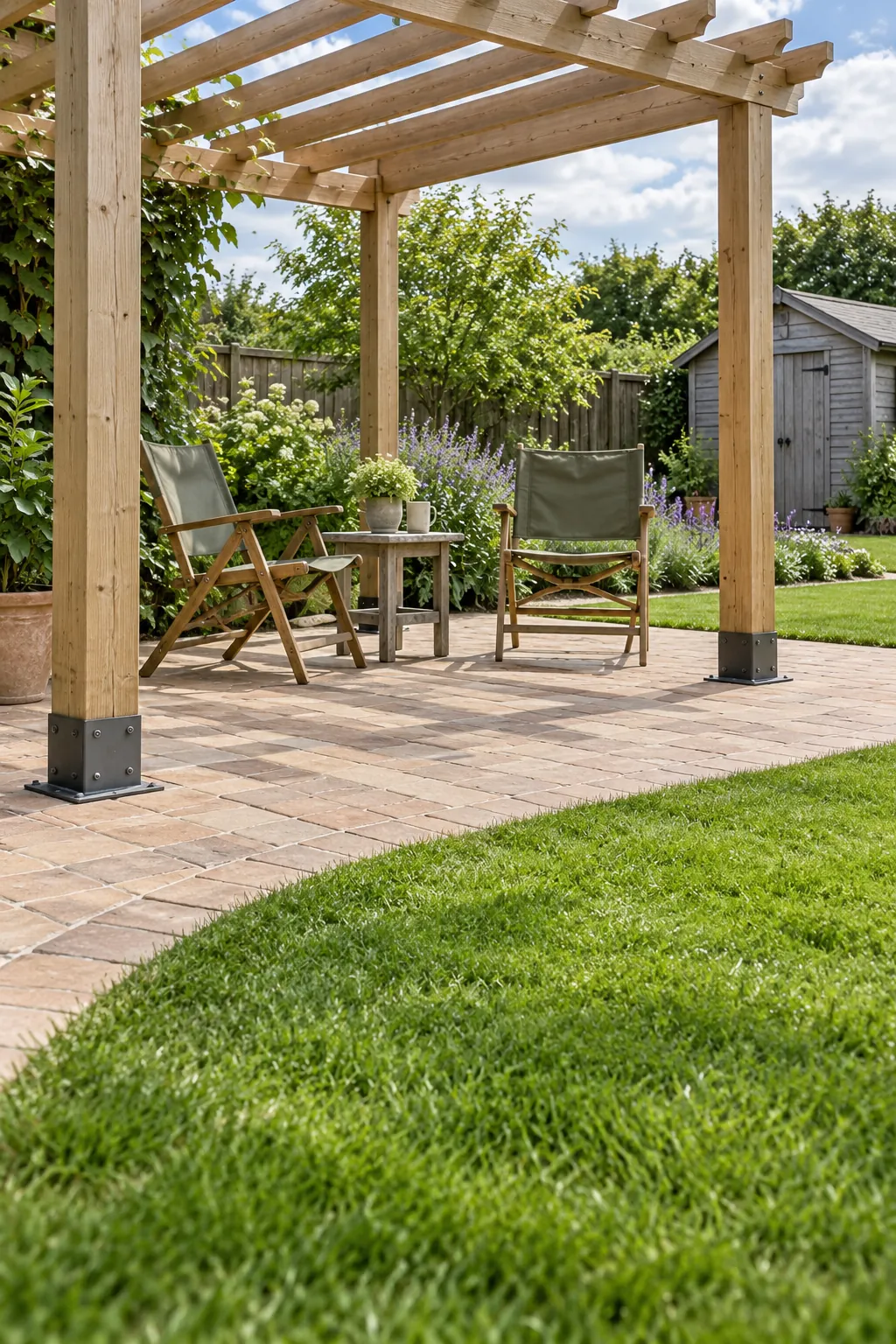
A pergola across the transition from paving to lawn
Set a pergola near the meeting point of paving and lawn to give both areas a clear edge. Keep its supports on foundations designed for the structure rather than relying on paving slabs. Align the walking route so feet do not repeatedly cut across a muddy corner. The frame can mark the transition while the floor remains easy to use.
A pale finish in a shaded garden
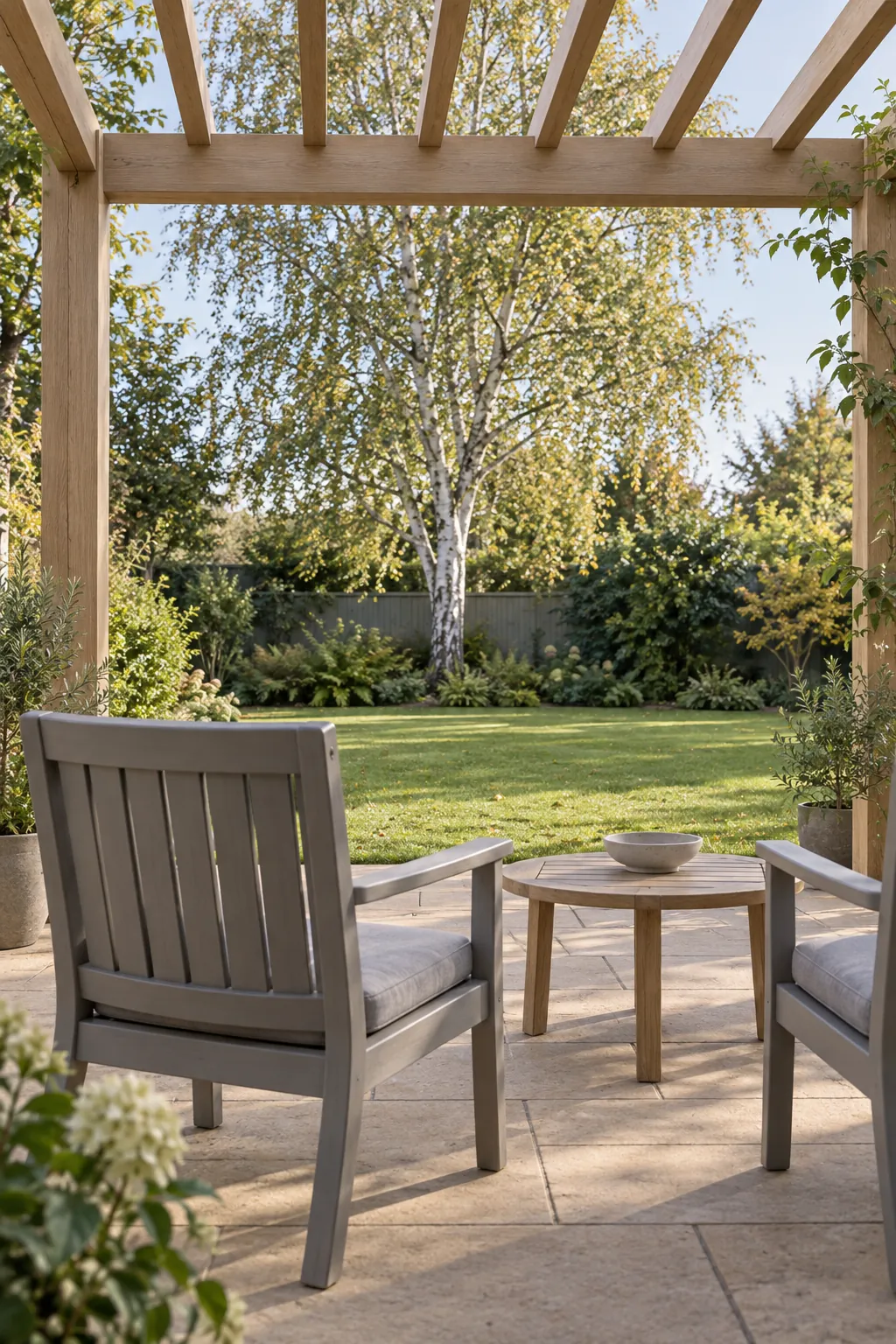
A pale frame can remain visible in a garden shaded by buildings or trees. Compare finish samples outdoors before choosing the tone, because nearby foliage changes reflected light. Pair it with planting that suits the actual shade rather than plants chosen only for color. Leave enough clearance around the frame to wash and repaint it when required.
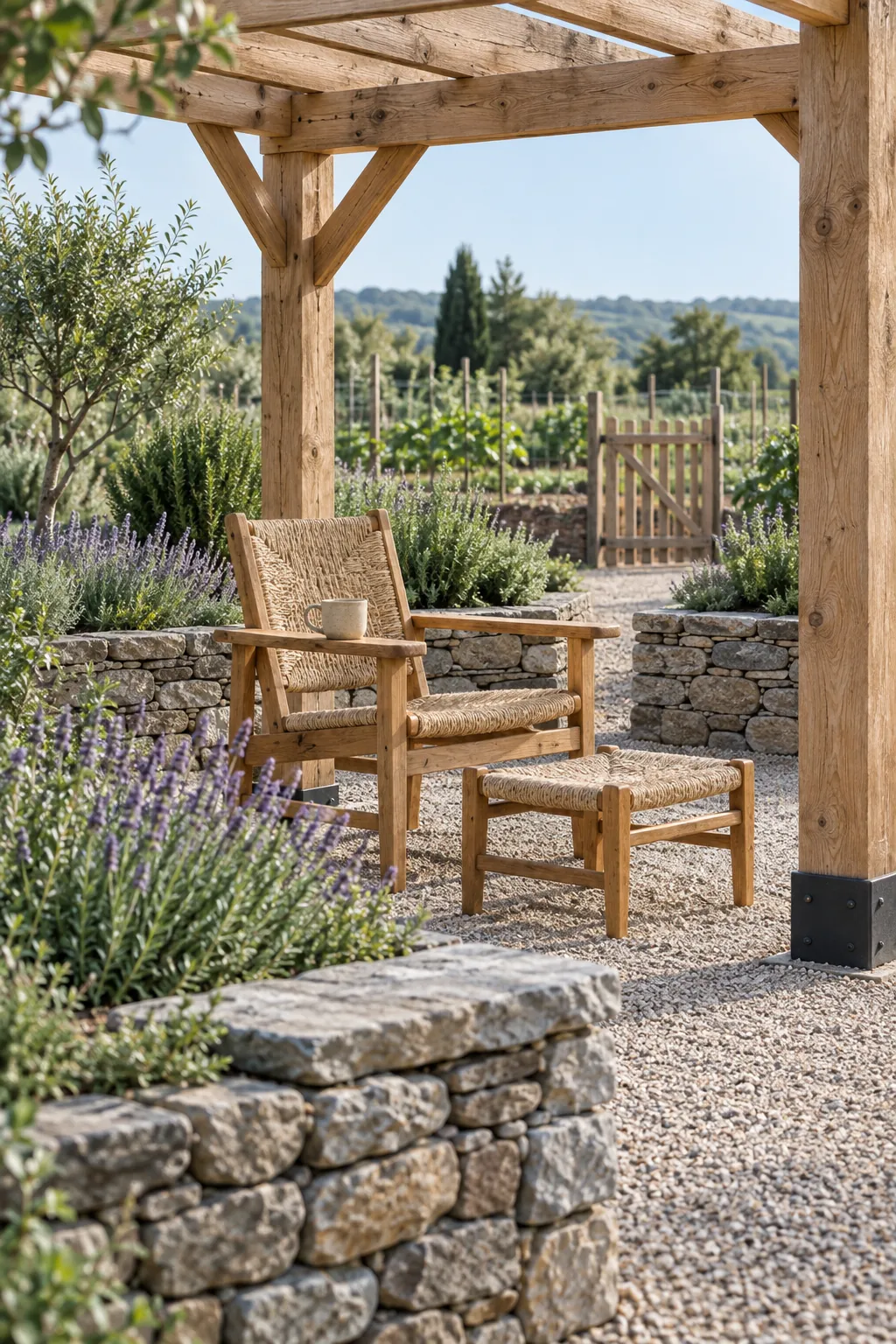
A natural timber finish beside stone beds
Natural timber and stone can give a garden pergola a quiet material relationship. Let the stone beds stay visually distinct instead of covering every surface with matching accessories. Inspect the timber care requirements and keep soil away from the supports. A limited material palette is useful when the planting already brings many colors.
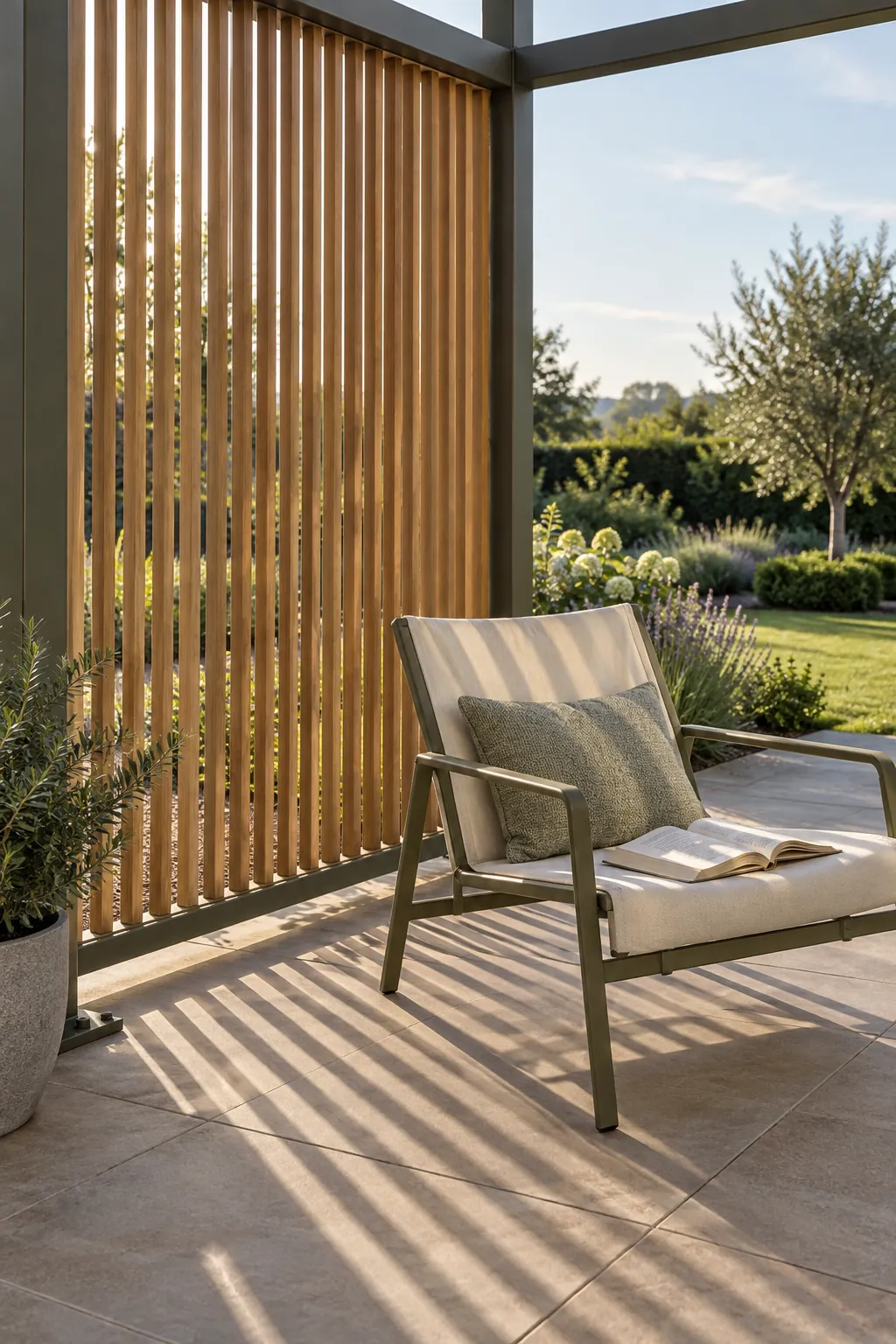
A slatted side that filters afternoon glare
A slatted side panel can reduce low afternoon glare while retaining gaps for a garden view. Review the sun direction and your seated position before deciding the slat orientation. The panel needs a structural design suitable for its exposure. Try a temporary visual mockup of the coverage rather than assuming decorative spacing provides the shade you need.
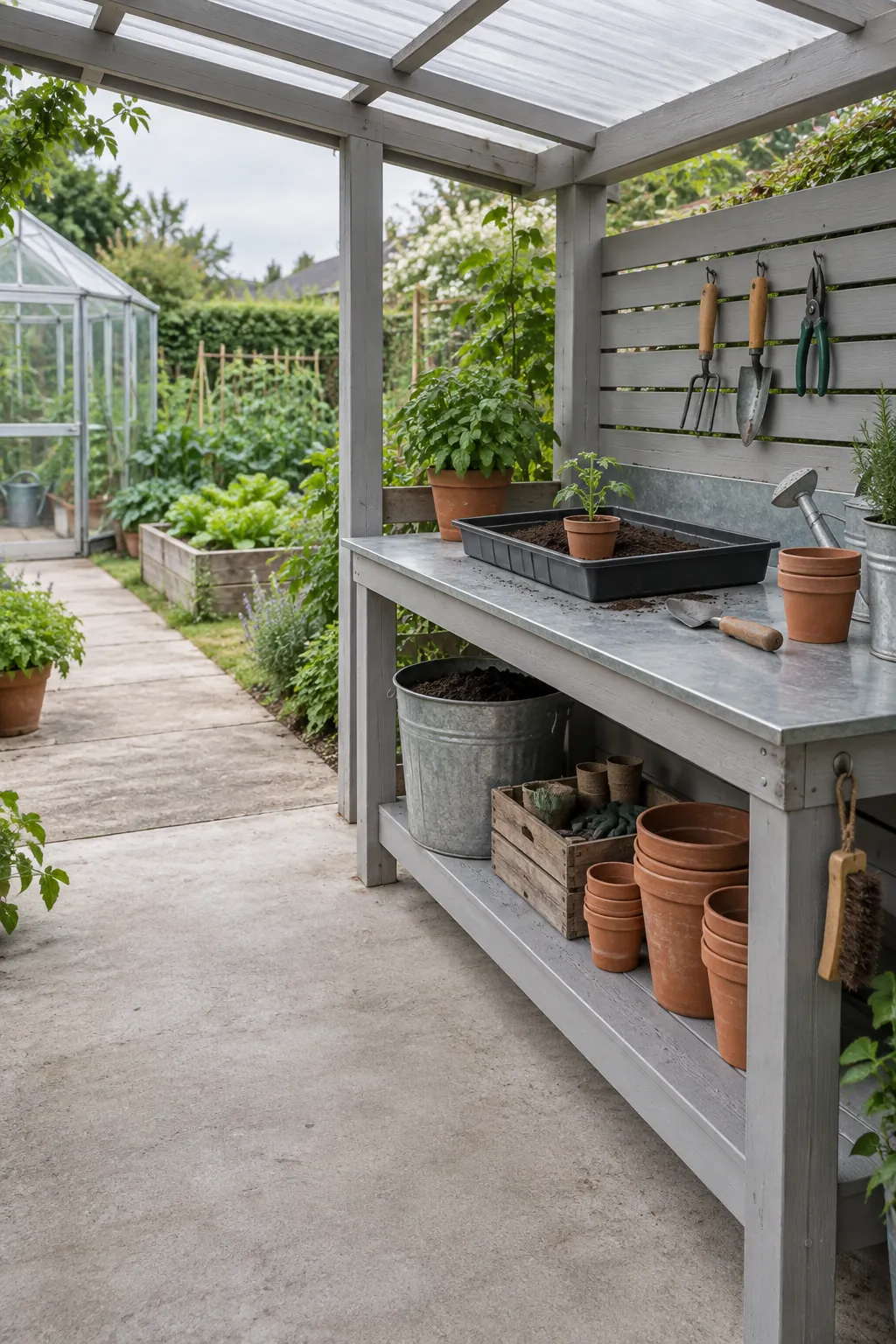
A covered potting corner with open storage
A pergola can shelter a potting bench when the roof system is suitable for that use. Keep compost, tools, and empty pots organized below the worktop so the surface remains available. Avoid storing chemicals where children, pets, or visitors can reach them. Leave the floor clear for sweeping and choose a bench finish that tolerates the intended wet work.
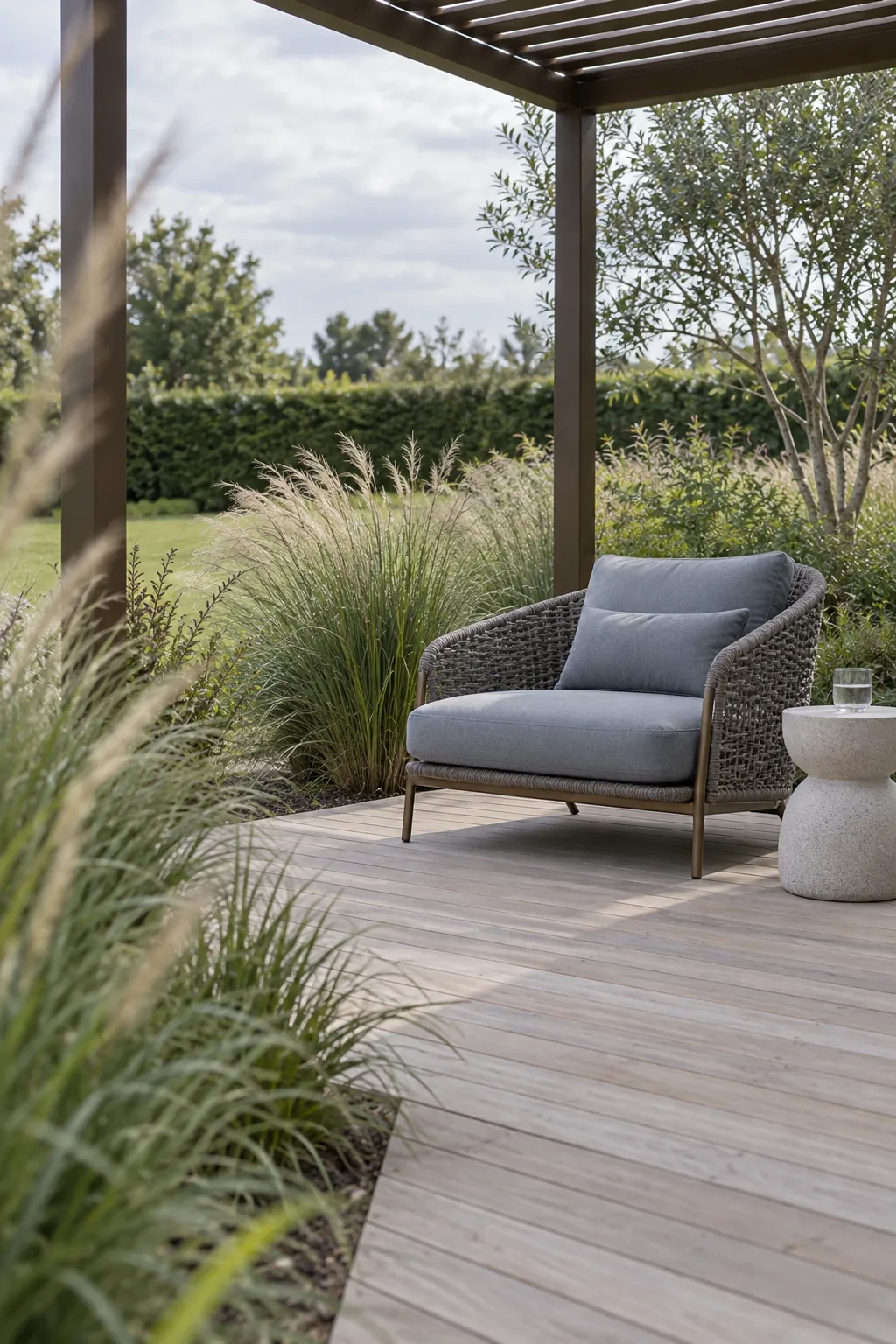
A lounge beside ornamental grasses
Ornamental grasses can soften a garden lounge without filling the space with hard screening. Choose plants suited to the local conditions and their eventual spread. Set the lounge back far enough that foliage does not brush every cushion. Leave a visible path into the seat group so the planting feels welcoming rather than enclosing.
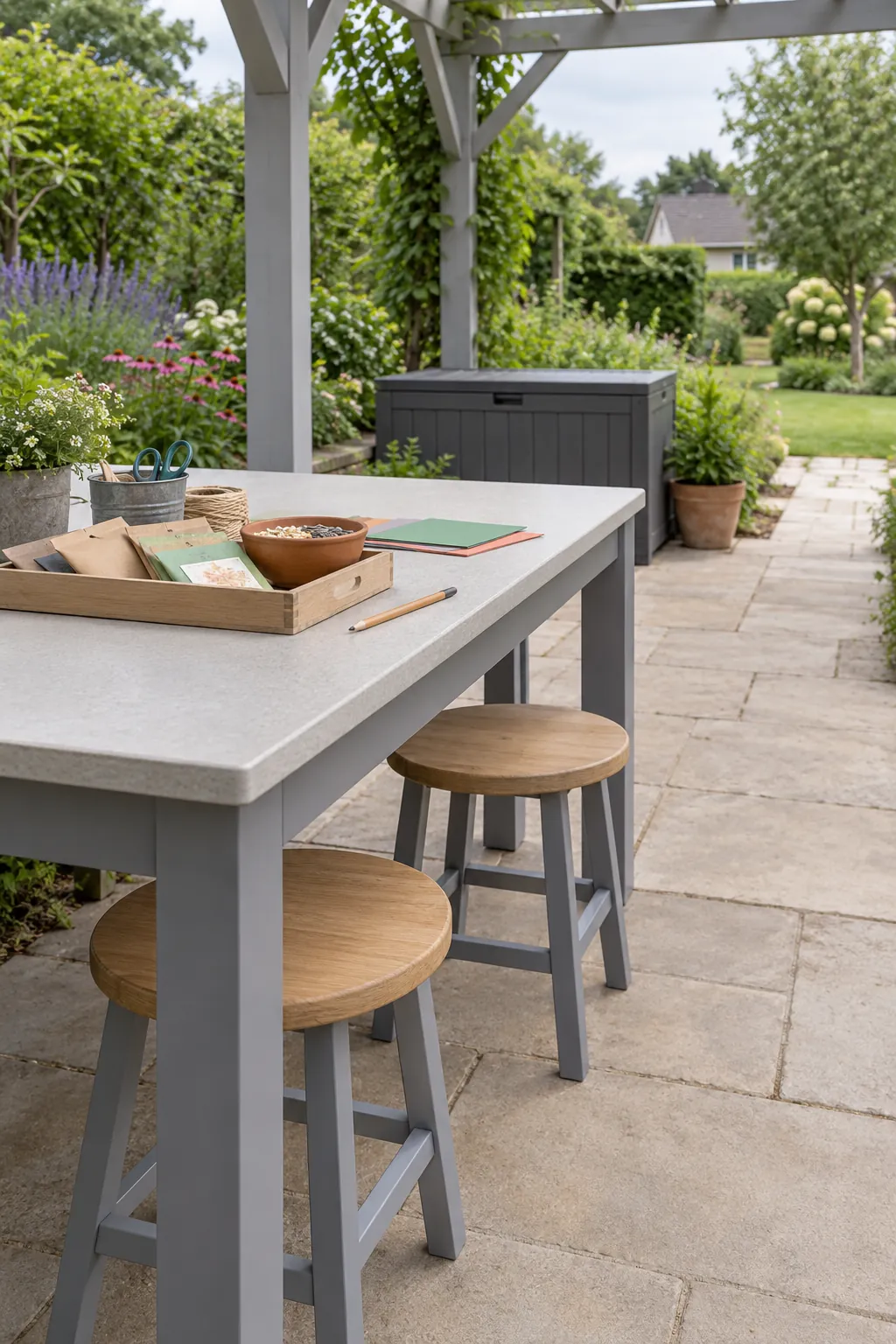
A modest outdoor table for shared projects
A sturdy table under a pergola can support crafts, seed sorting, and garden planning. Choose a washable top and use trays to contain small materials. Keep tools and supplies in suitable storage after use rather than treating the open structure as a secure room. The layout should still allow someone to walk past when chairs are occupied.
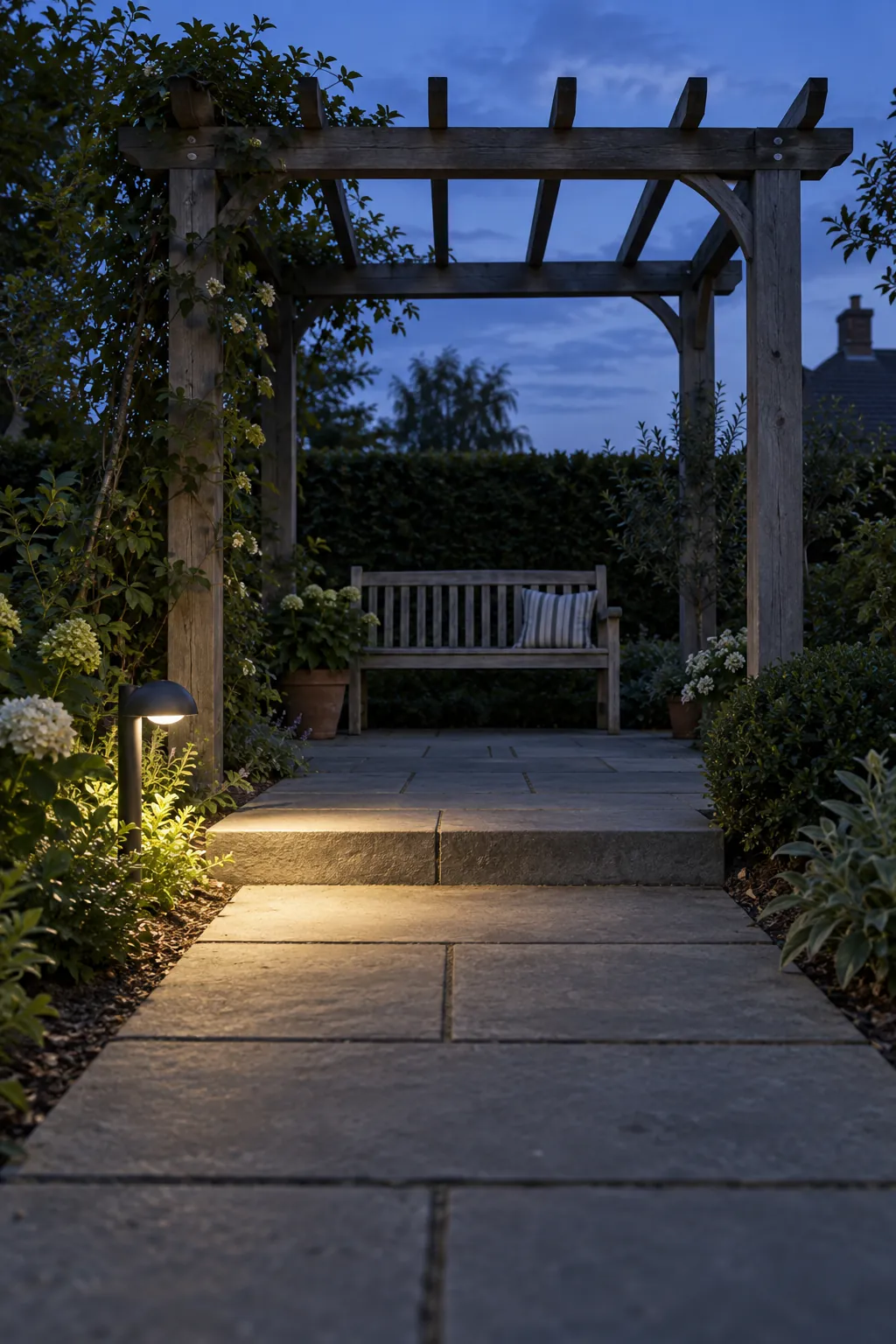
A path light at the entrance
A low entrance light can make the approach to a garden pergola easier to read after dark. Select outdoor rated fixtures and have electrical work completed by a qualified installer. Aim the light toward the path rather than into neighboring windows. Check the result from the seat and the house before adding more fixtures.
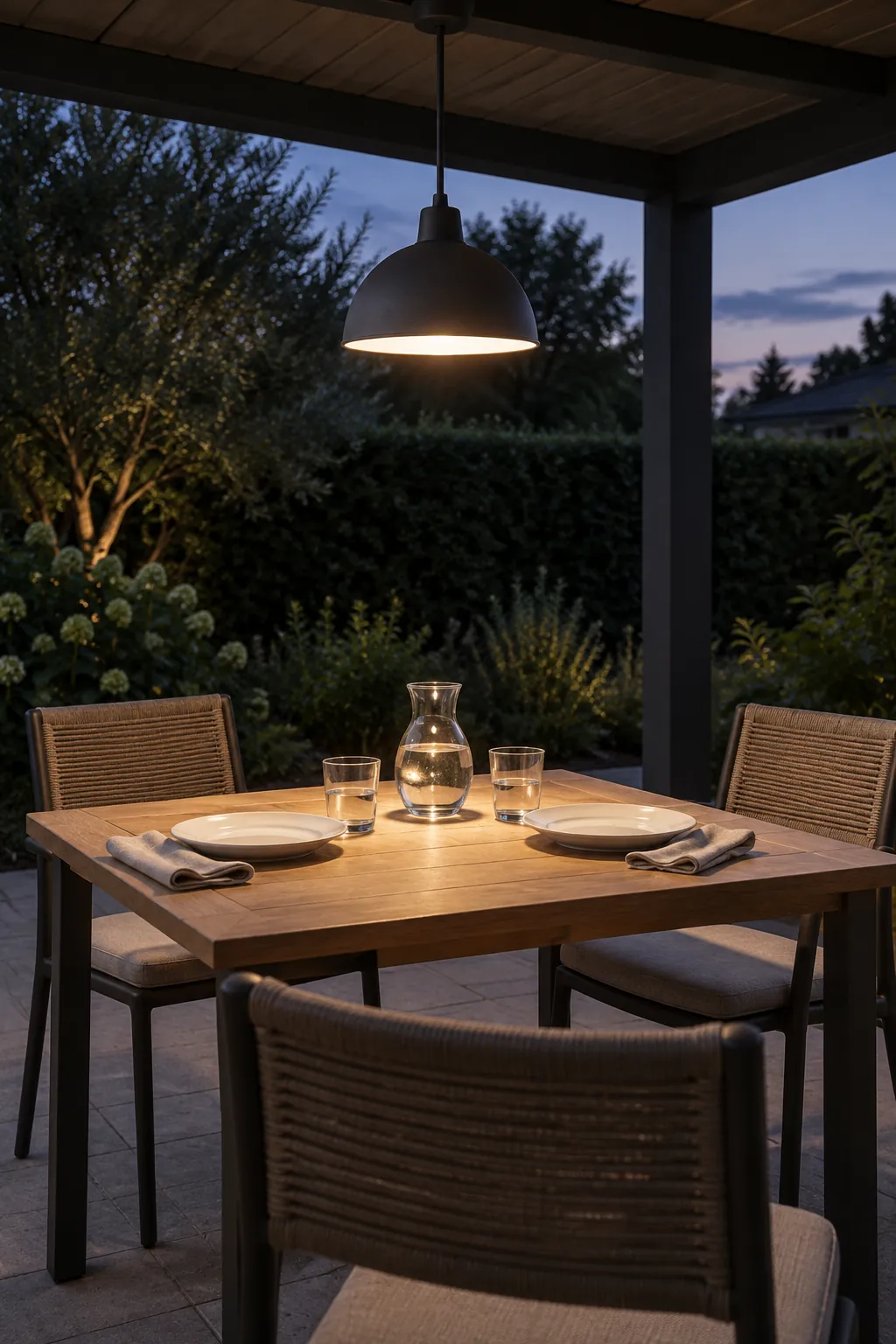
Soft task lighting above a dining table
Dining lighting should help people see the table without turning the garden into a bright display. Use a suitable outdoor rated fixture with a position that avoids glare at seated eye level. Coordinate wiring with the frame and any roof movement. A controlled pool of light can leave surrounding planting visible as a quieter background.
A chair arrangement that respects the breeze
Arrange the chairs after observing where the garden catches a breeze at your usual sitting time. A partial screen may improve comfort, but it must be designed for the wind loads it introduces. Secure light accessories and follow the limits of any fabric shade. Furniture placement can help comfort without promising that a pergola stops bad weather.
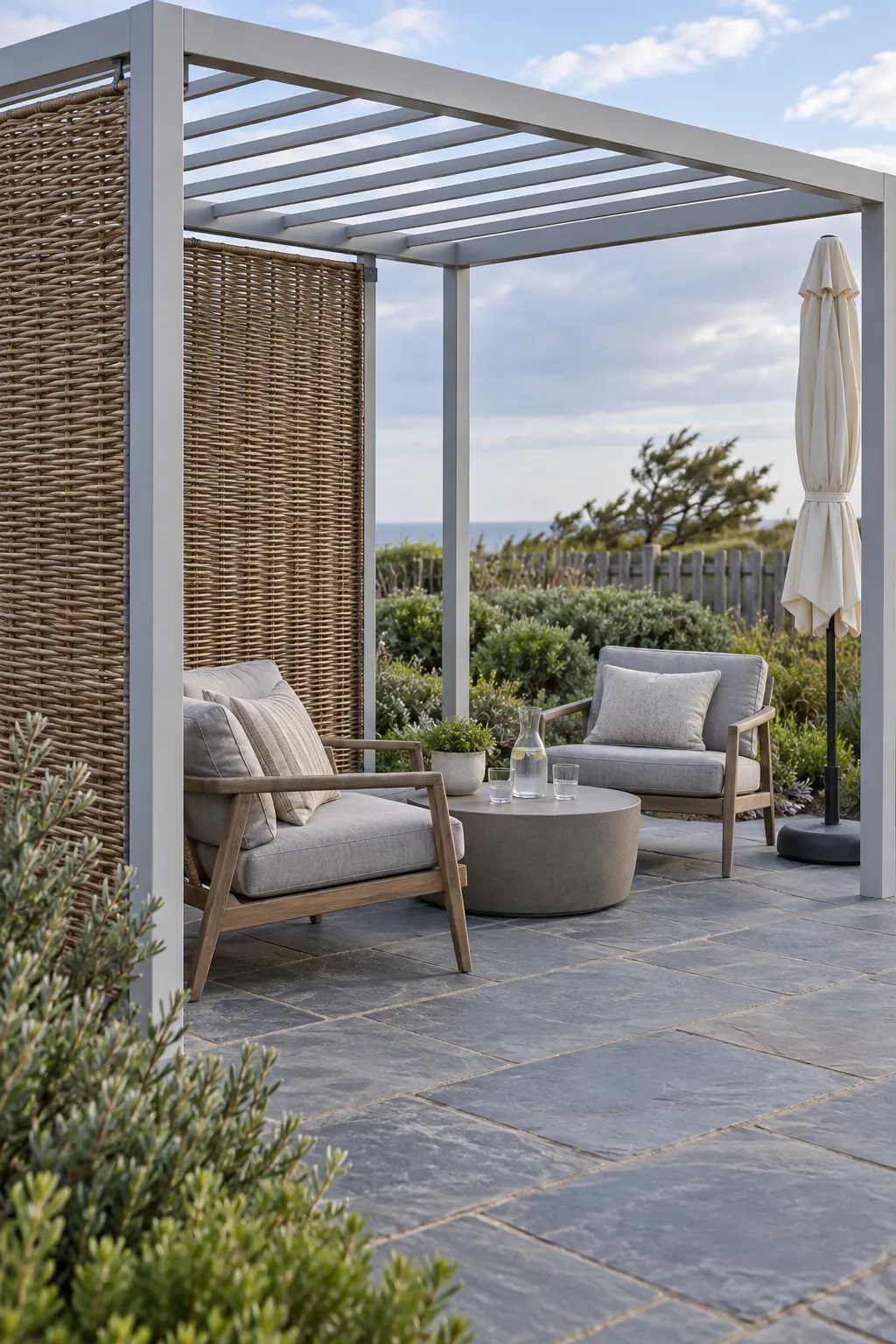
A floor plan with room for future mobility
Design the route and floor for the people who will use the pergola over time. A firm, even surface and enough turning space can matter more than a decorative border. Check level changes, chair clearances, and the journey from the house with the intended mobility needs in mind. Have drainage planned without creating an awkward threshold or steep approach.
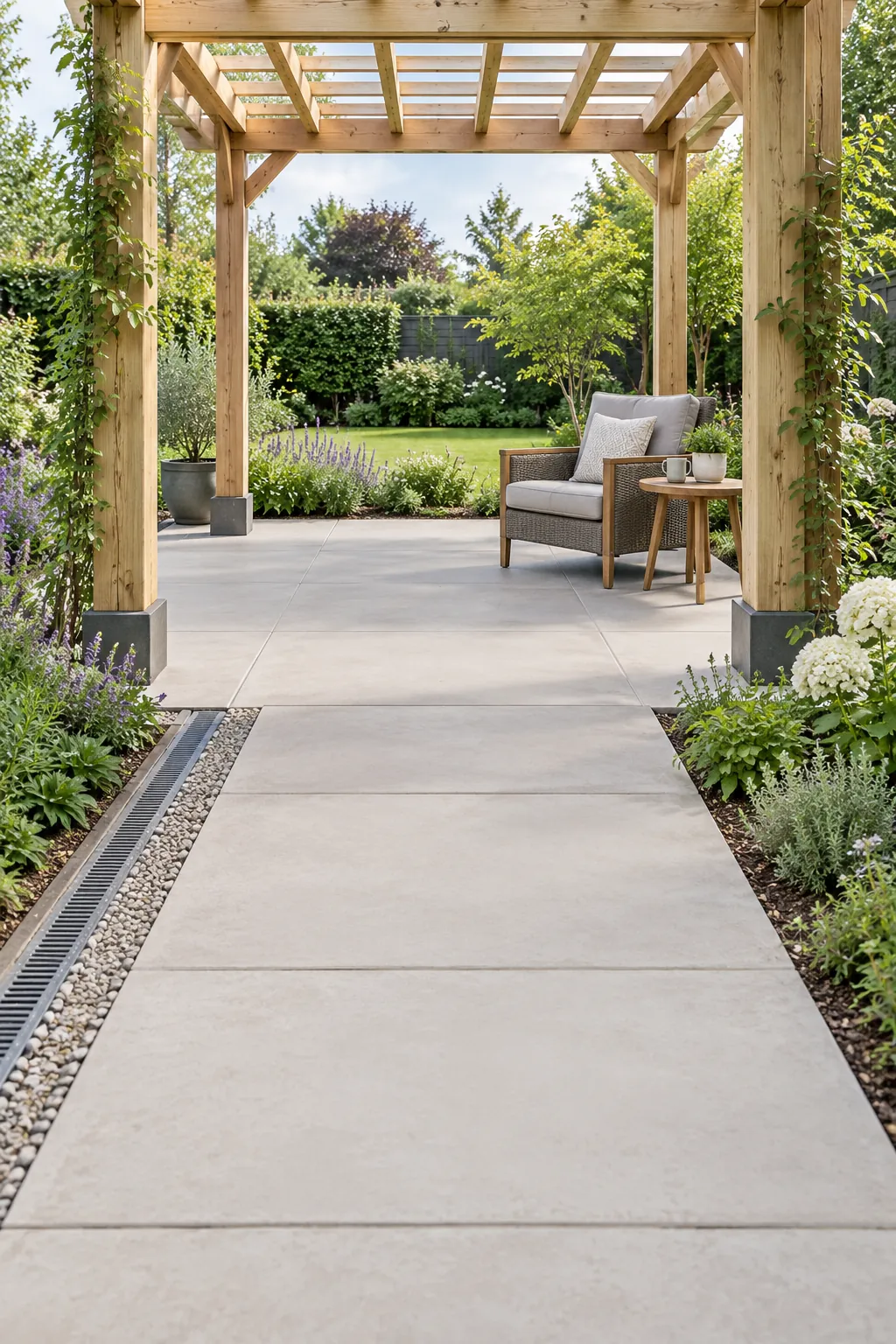
A frame that can be inspected from every side
Keep enough space around posts and joints to inspect the structure and reach the finishes. Avoid permanent planting or built in furniture that hides a connection you need to check. Follow the maintenance schedule for the actual frame, roof, and fittings. A pergola is easier to care for when access is part of its original layout.
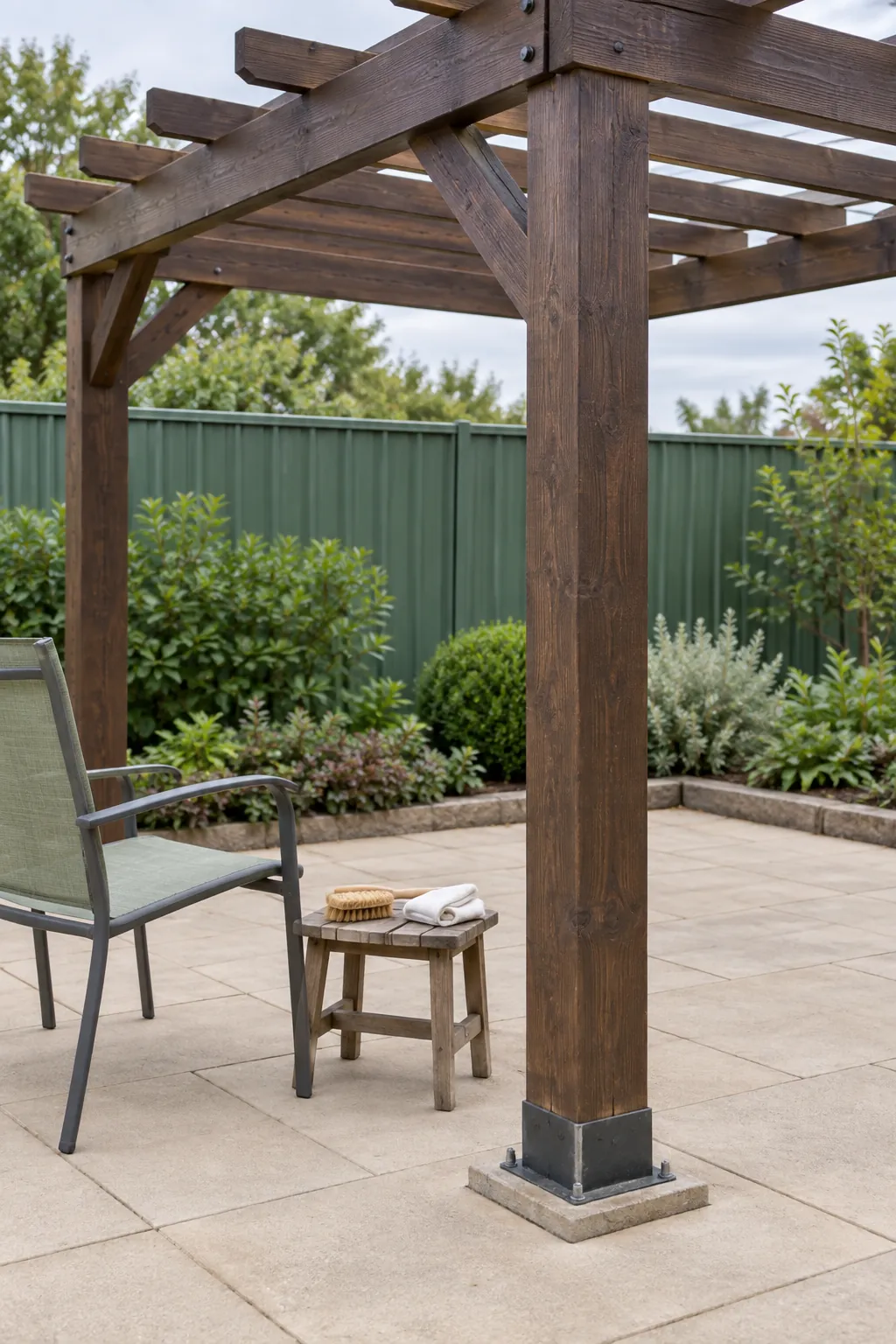
A simple footprint tested before building
Mark the proposed footprint on the ground and place the real furniture inside it before ordering a frame. Walk through the entrance, pull out chairs, and check the view from the house. Have a qualified designer confirm foundations, loads, local requirements, and any added roof or planting weight. Keep the footprint that supports daily use rather than the one that only fills the photograph.