A family photo wall can feel deeply personal without becoming visually noisy. The strongest displays solve practical questions about scale, spacing, changing photographs, and the furniture below them before the first hook reaches the wall. The ideas below offer distinct ways to make memories visible while keeping the room calm and intentional.
A Gridded Living Room Portrait Wall
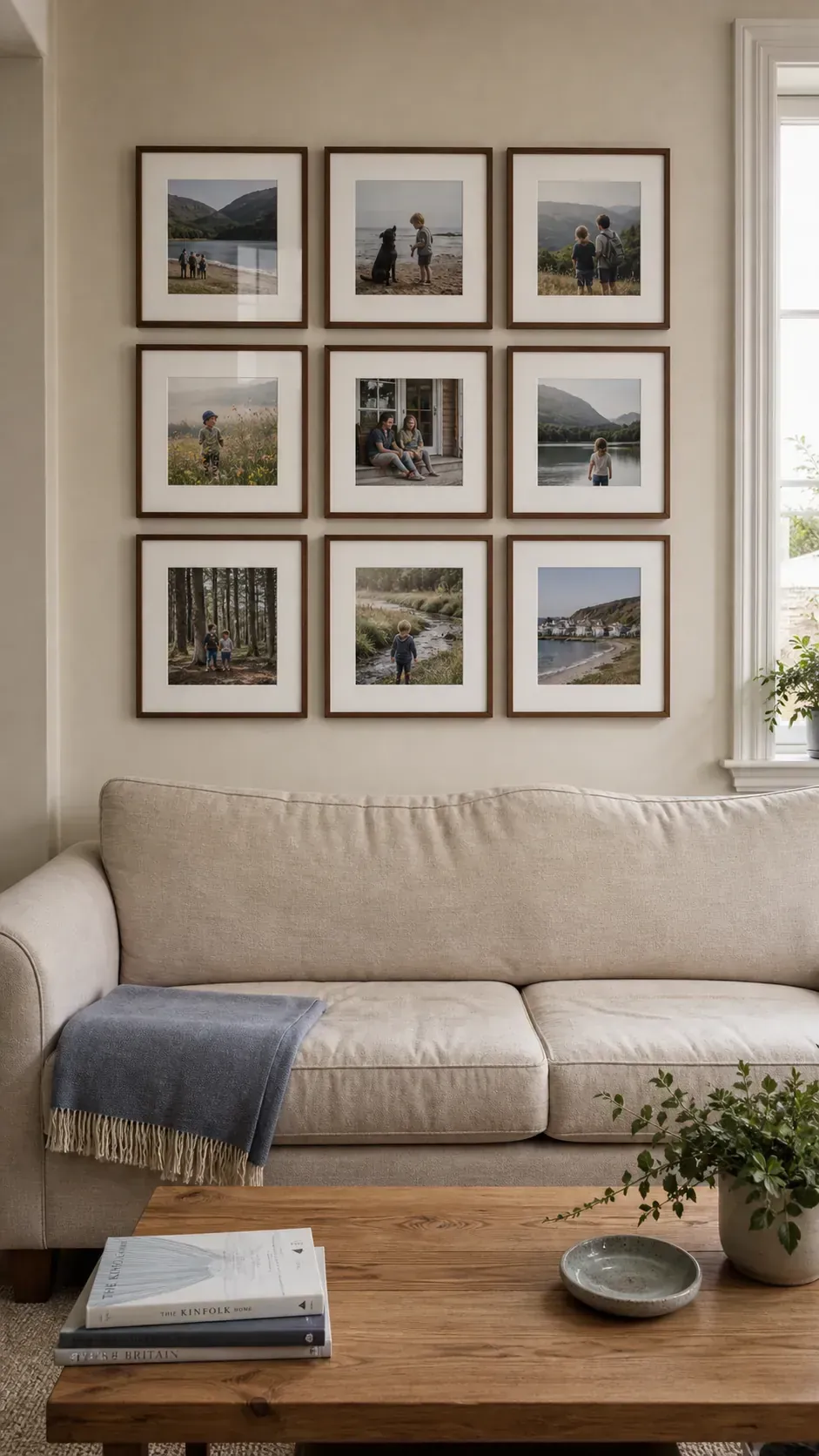
Use identical frames and generous white mats to give photographs from different years one visual rhythm. A precise grid works especially well above a sofa because its outer edges can align with the furniture below. Choose prints large enough for faces to remain readable from across the room, then keep every gap consistent.
A Staircase Gallery That Climbs Naturally
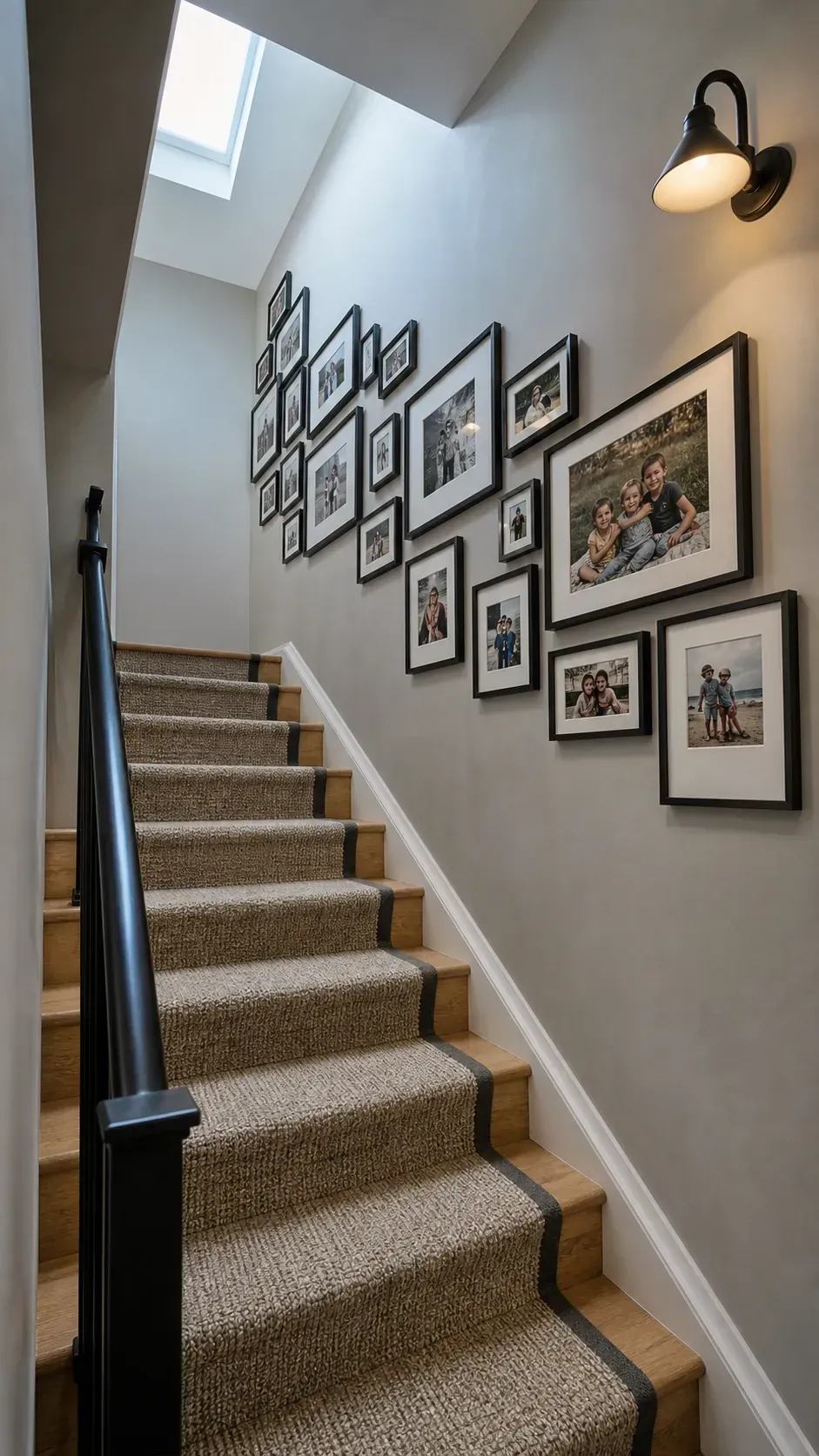
Let the lower edge of the arrangement rise with the stair angle instead of forcing a level rectangle. Begin with several anchor frames, then fill smaller spaces with candid family pictures. Test the sequence from both the bottom landing and the upper hallway so the display feels balanced from either direction.
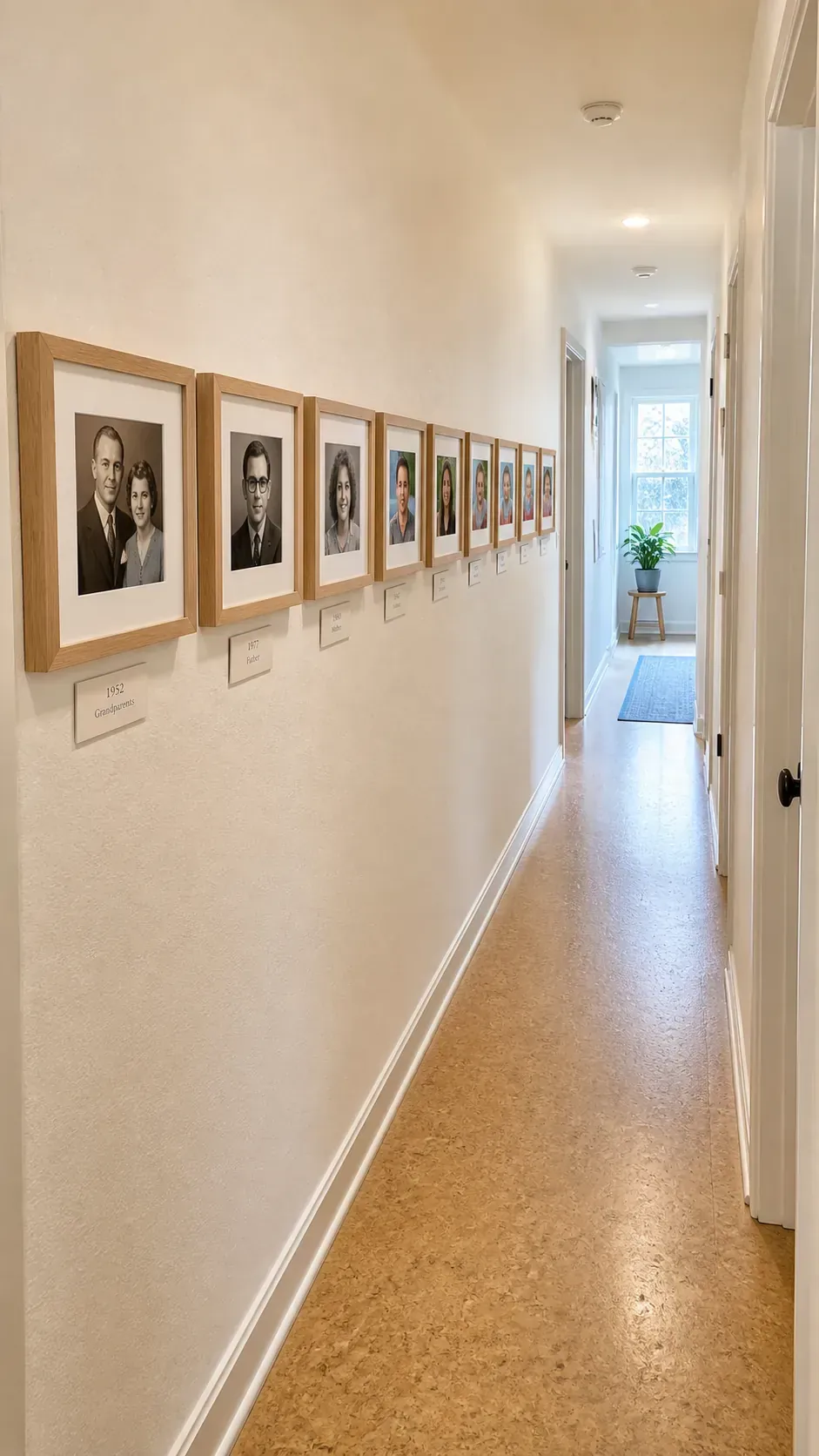
A Hallway Timeline of Family Milestones
Arrange photographs in chronological order to turn a narrow passage into a quiet family story. Repeated frame sizes keep the timeline easy to follow, while small date cards can identify meaningful years without competing with the images. Leave enough open wall at each end so the sequence feels complete rather than crowded.
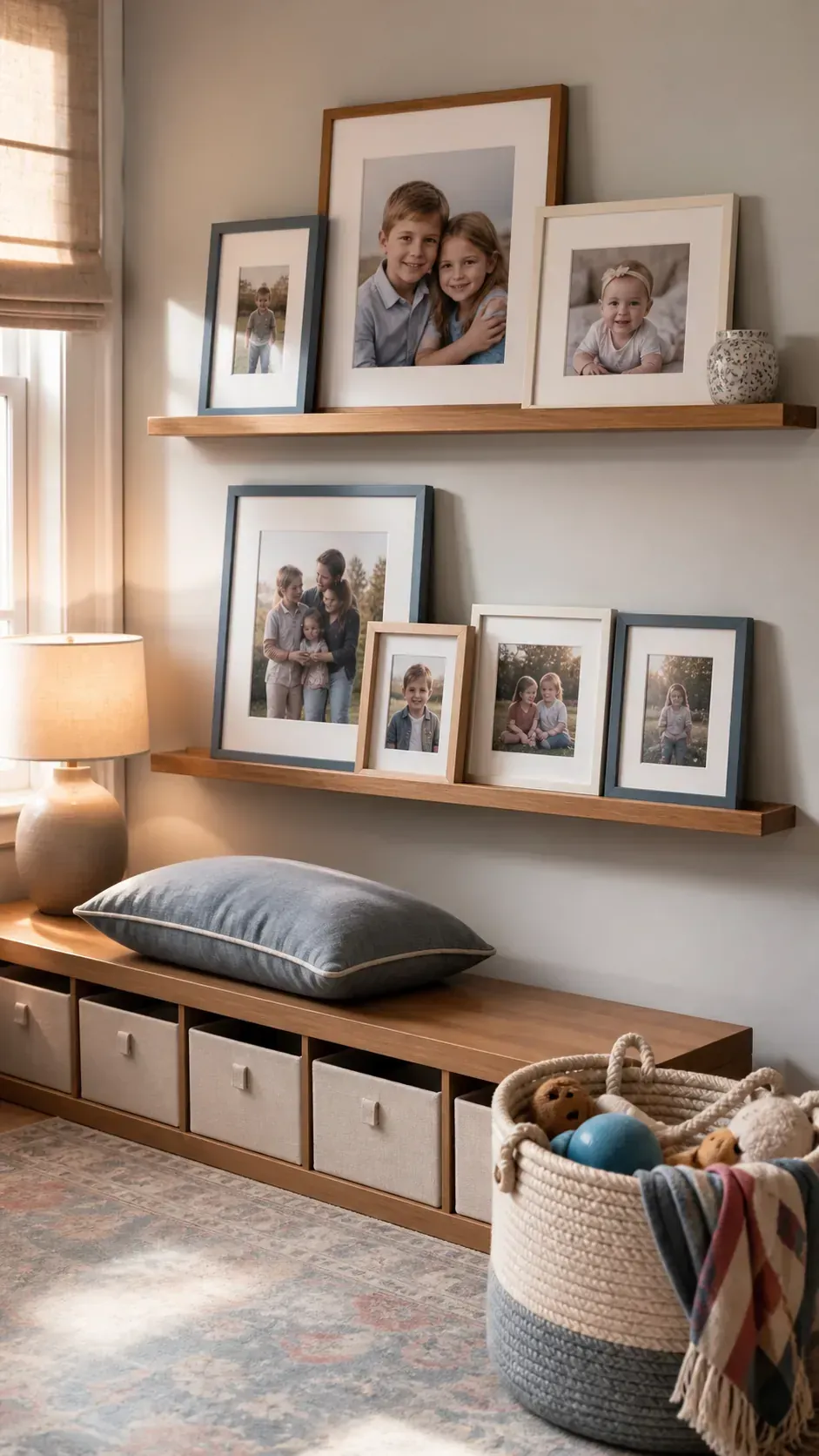
A Picture Ledge Display That Can Evolve
Picture ledges make it easy to rotate recent photographs without measuring new holes. Overlap a few frame edges and vary the heights, but repeat one material or mat color to preserve order. Secure taller frames discreetly if children or pets can reach the ledge.
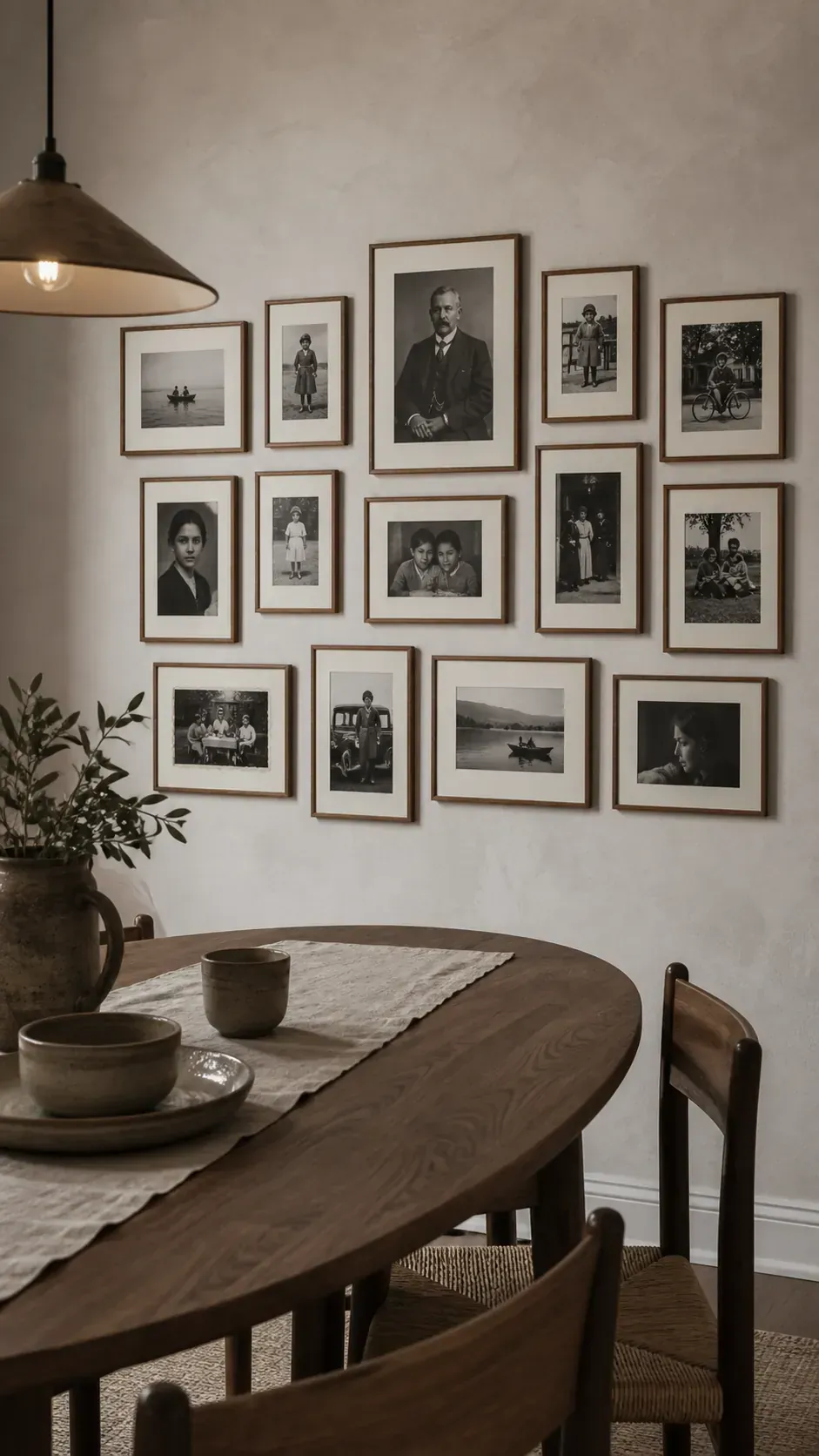
A Black And White Family Collection
Converting photographs to black and white can unite images captured under very different lighting conditions. Warm wood frames keep the collection inviting, while cream mats soften the contrast. Check every conversion before printing because faces still need clear highlights and distinct mid tones.
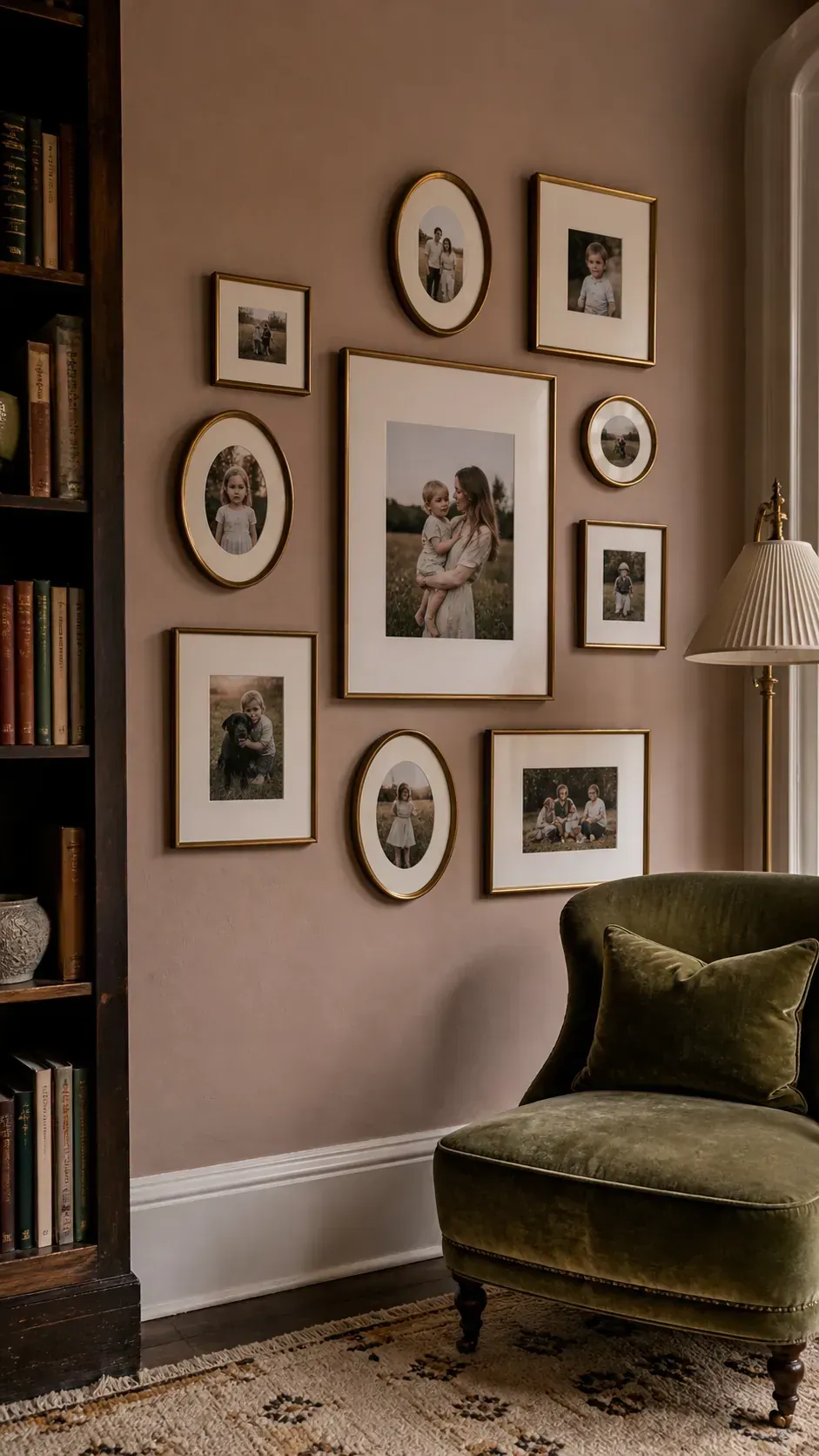
A Mixed Frame Wall With One Shared Finish
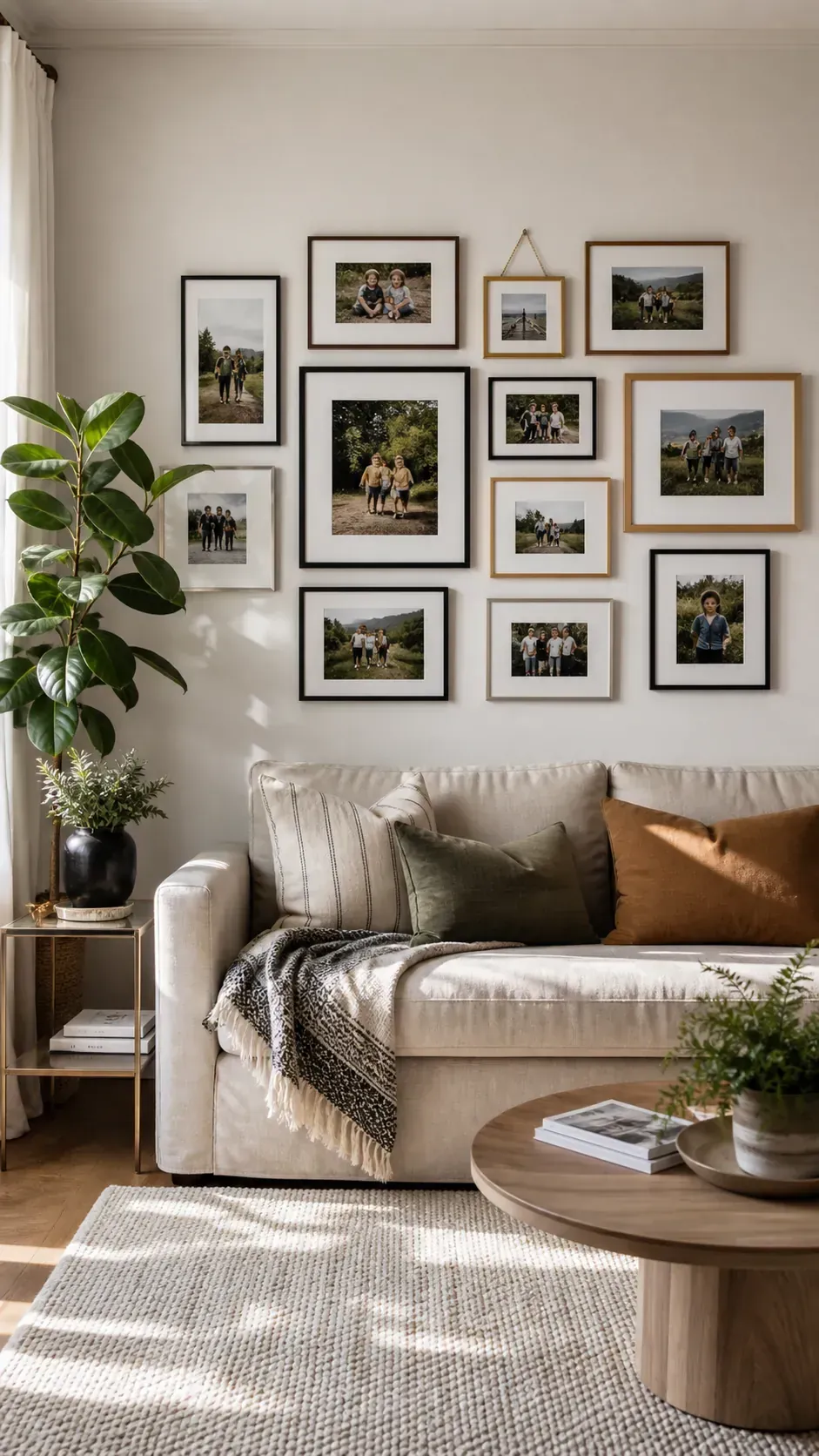
Combine several shapes and sizes while repeating a single metal finish to create variety without chaos. Place the largest portrait slightly away from the exact center so the composition feels relaxed. Keep the spaces between neighboring frames visually similar, even when their outer edges do not align.
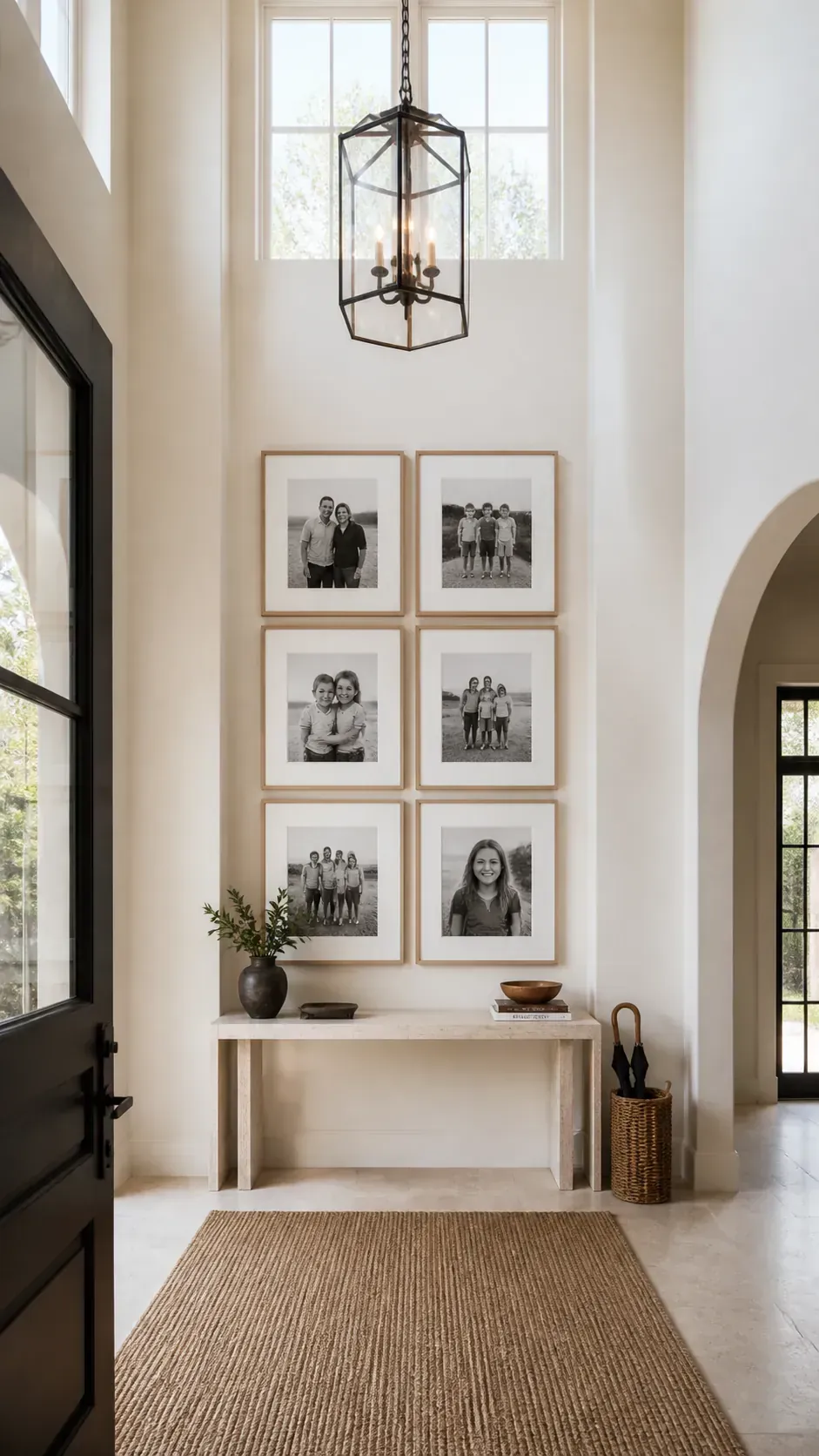
An Entryway Display With Large Portraits
A tall entry wall benefits from fewer, larger portraits that can make an impression from the front door. Use a symmetrical arrangement when the architecture already has strong centered lines. A narrow console below gives the collection a visual base and helps establish the correct hanging height.
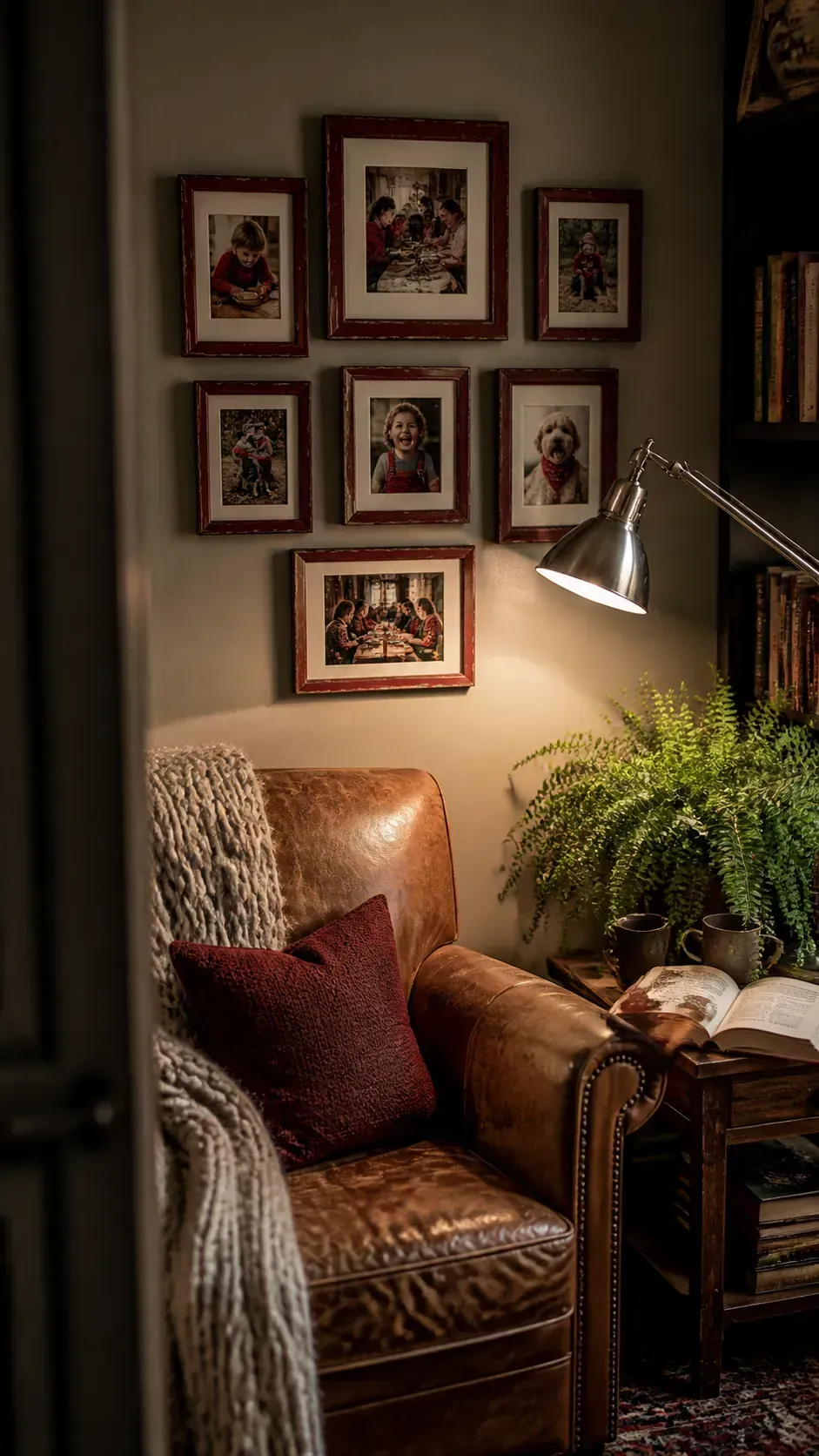
A Cozy Corner Filled With Candid Moments
Small candid photographs suit an intimate reading corner where viewers can approach them closely. Cluster the frames around a chair and lamp rather than spreading them across the entire wall. Let a recurring accent color in the photographs connect the collection to nearby textiles.
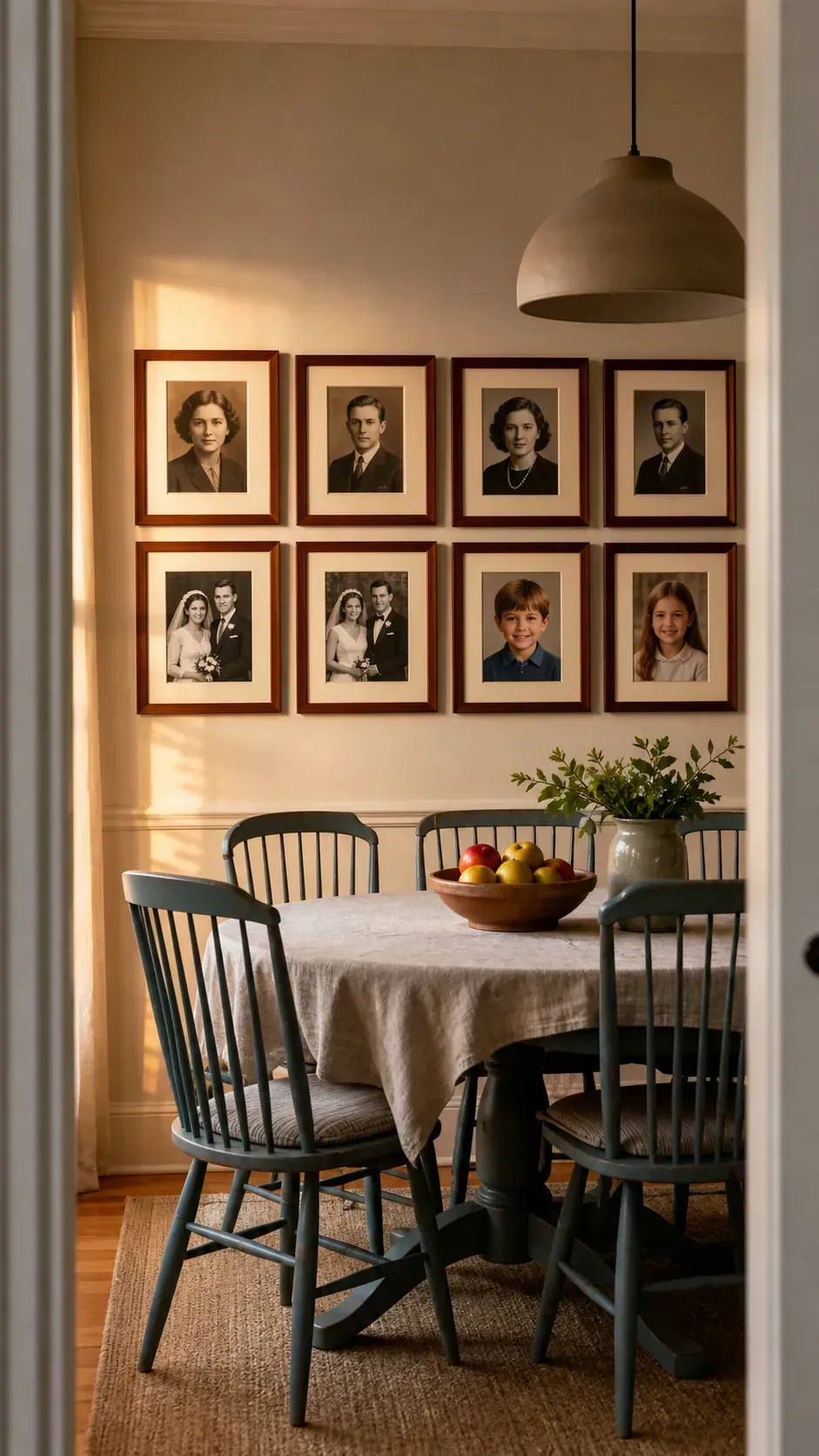
A Dining Room Wall With Generational Portraits
Gather portraits of several generations to give the dining room a sense of continuity. Similar crops and matching mats help old scans sit comfortably beside recent digital photographs. Protect delicate originals by displaying archival reproductions rather than irreplaceable prints.
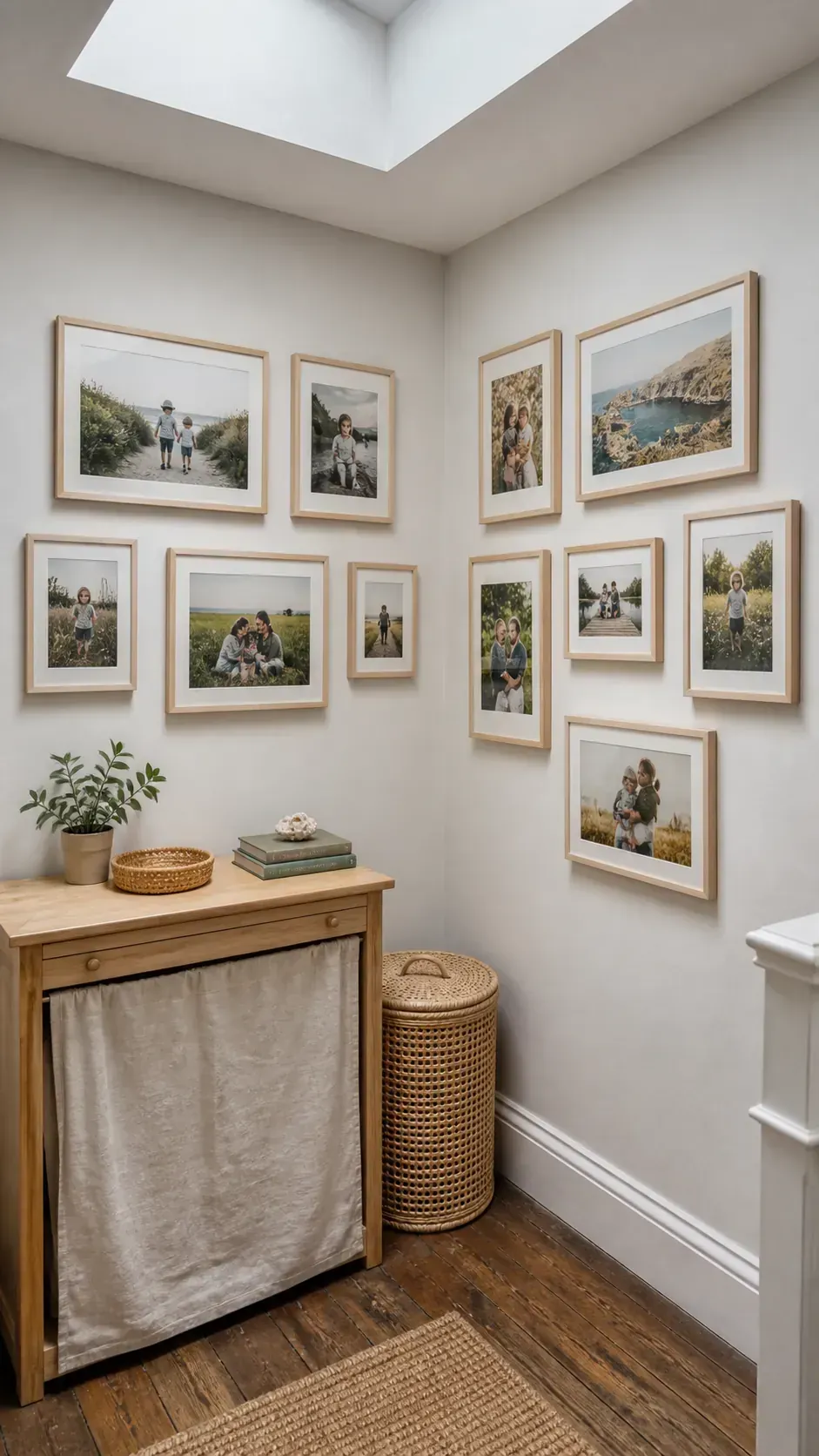
A Corner Gallery That Wraps Two Walls
Continue a family gallery around an inside corner to make an awkward architectural spot feel deliberate. Treat the corner as the center of the composition and balance visual weight on both walls. Paper templates are especially useful here because perspective can make spacing harder to judge.
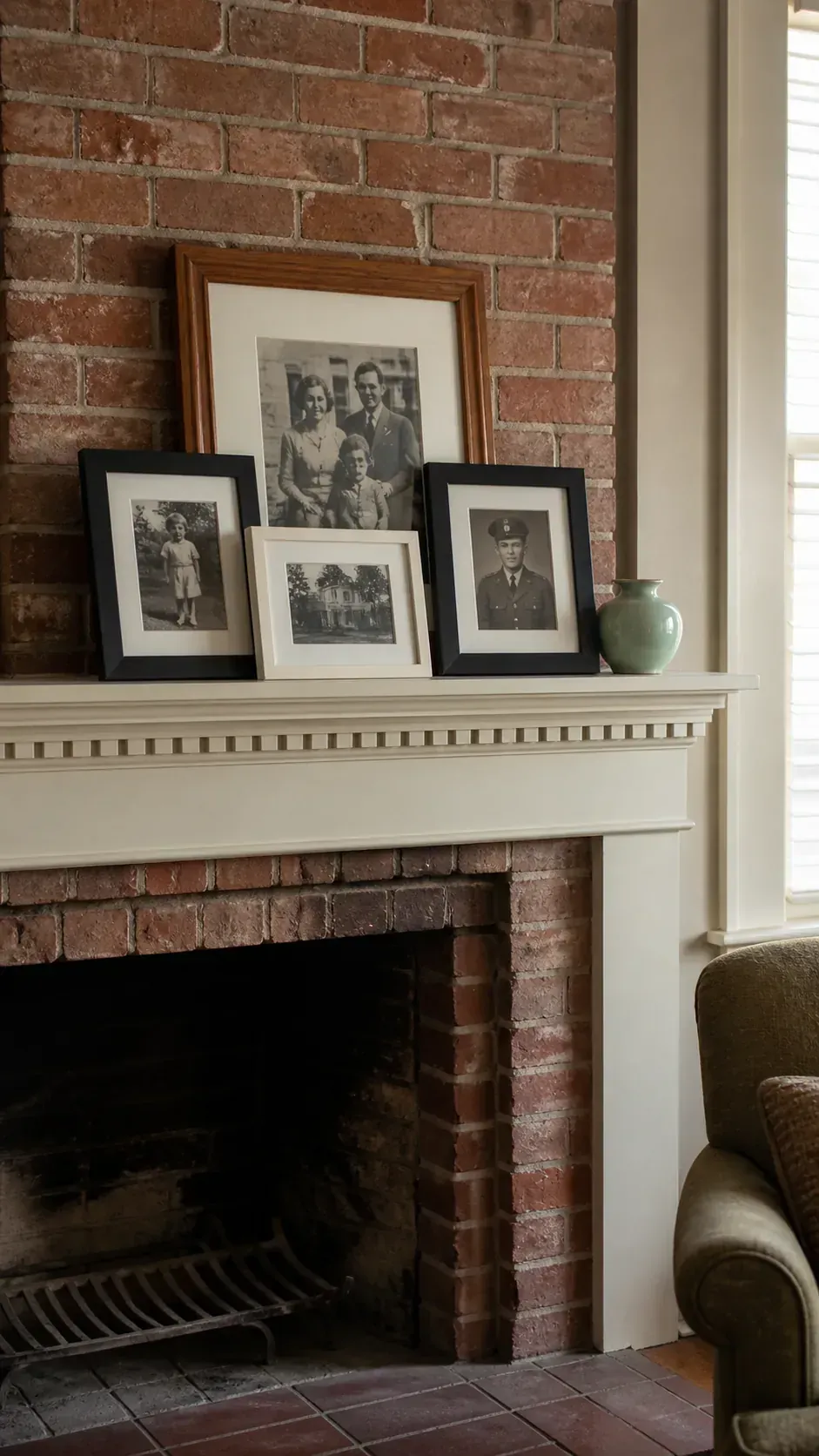
A Mantel Arrangement With Layered Frames
Lean family photographs on a deep mantel for a display that changes with seasons and celebrations. Place the largest frame behind the others, then keep smaller pieces clear of candles and heat. Limit the number of overlapping edges so every important face remains visible.
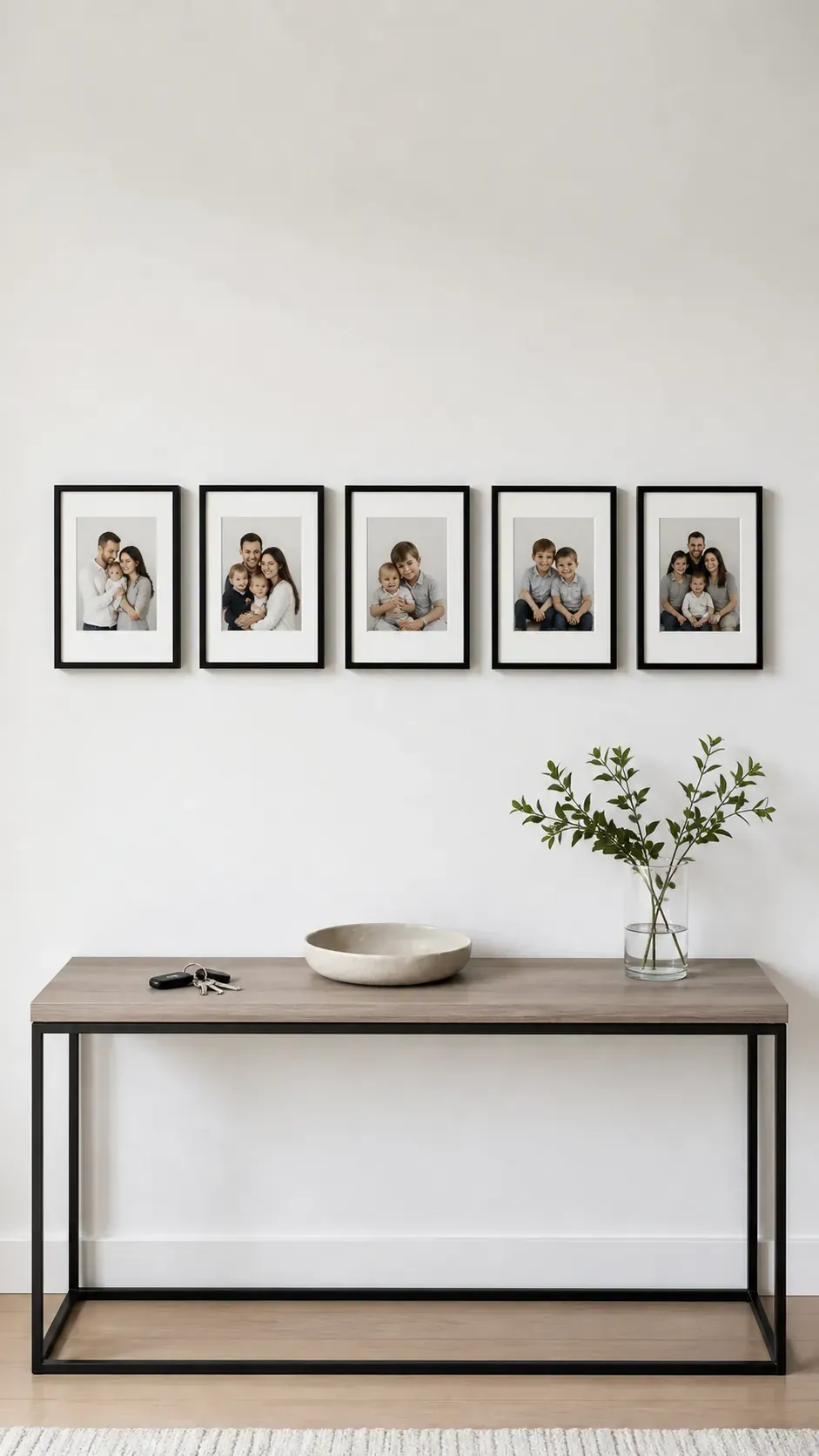
A Minimal Row Above A Console
Four or five matching frames can provide more impact than a large collection in a restrained room. Align their centers and repeat the same portrait crop for a calm architectural effect. Keep the full row narrower than the console so the two elements read as one composition.
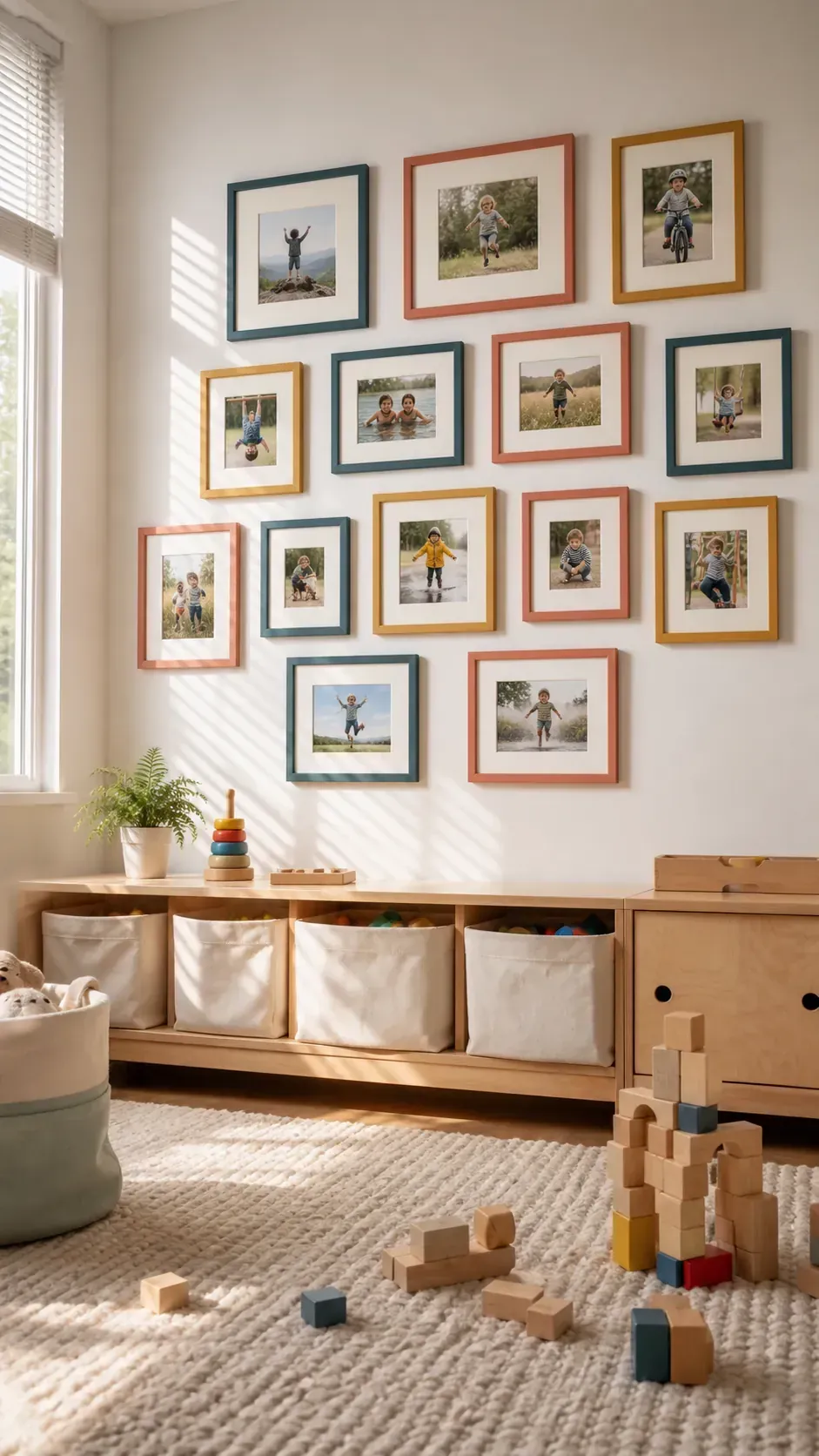
A Colorful Wall Of Childhood Memories
Children’s photographs can support playful frame colors when the palette is intentionally limited. Select three tones already present in the room and repeat each one several times. Ground the lively display with equal mats so the photographs still receive the most attention.
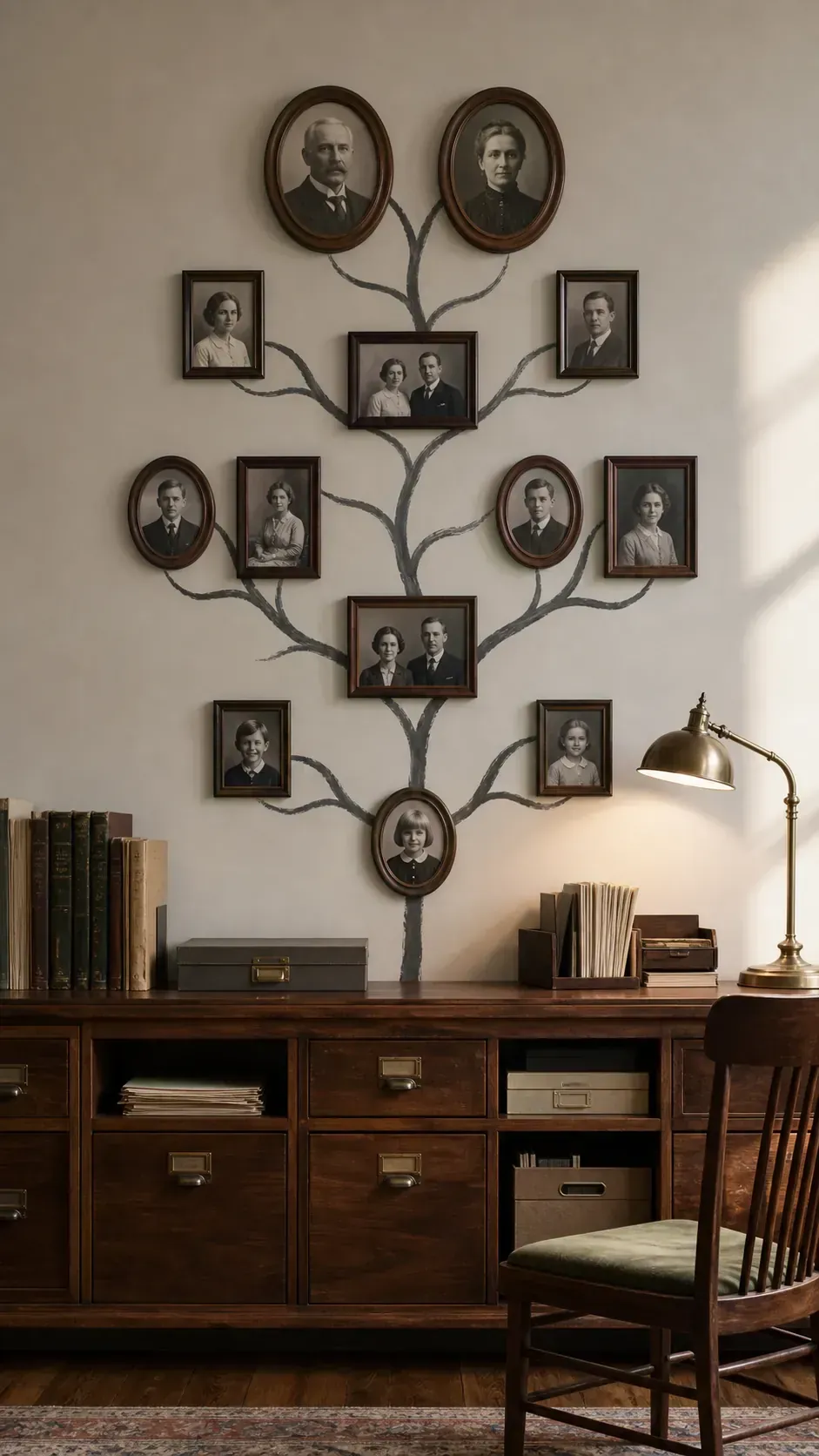
A Family Tree Inspired Arrangement
Build a branching arrangement with older generations near the base and younger relatives extending outward. A subtle painted line can suggest connections without turning the wall into a literal diagram. Plan names and relationships carefully before hanging so the structure remains meaningful to future viewers.
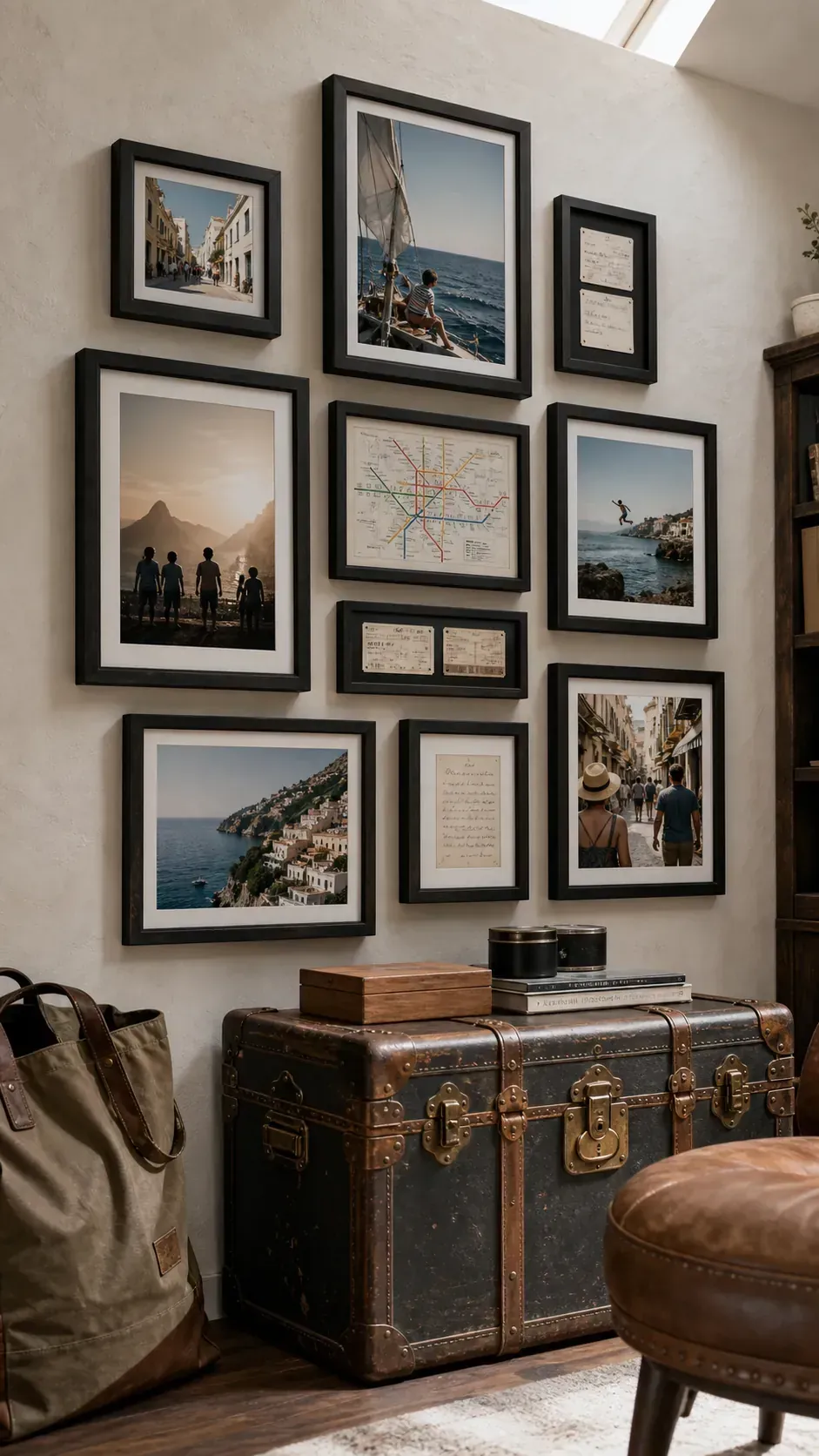
A Travel Memory Wall For The Whole Family
Mix family travel photographs with a few small maps, tickets, or handwritten place cards. Repeat frame materials so the keepsakes support the photographs instead of creating visual clutter. Choose moments that reveal interaction and atmosphere rather than a sequence of similar posed images.
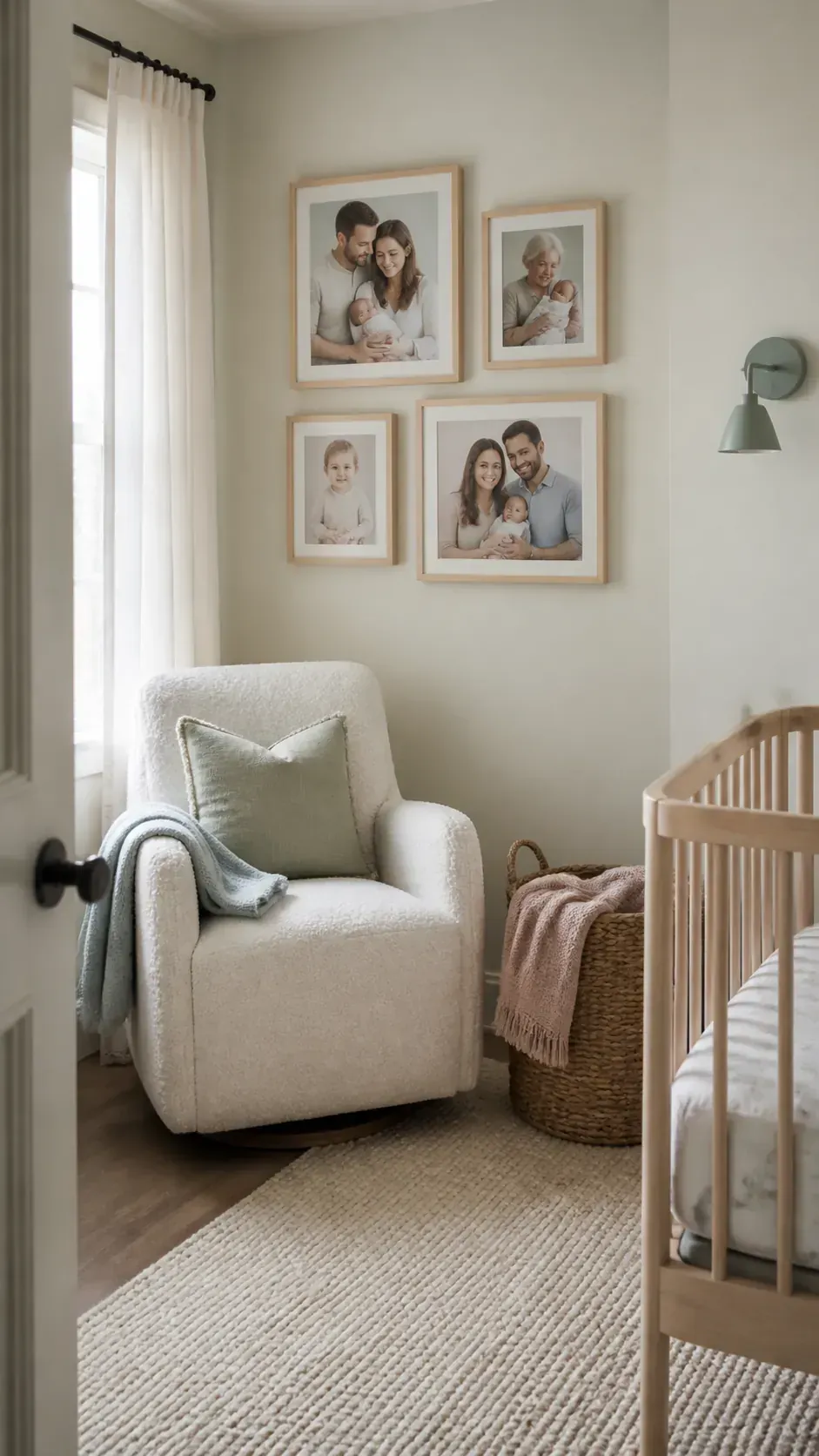
A Soft Nursery Family Portrait Group
Place a small group of lightweight frames where parents can see familiar faces during quiet nursery routines. Soft oak, pale mats, and gentle photograph tones complement a restful room without disappearing into it. Keep every frame safely away from the crib and use mounting hardware suited to the wall and frame weight.
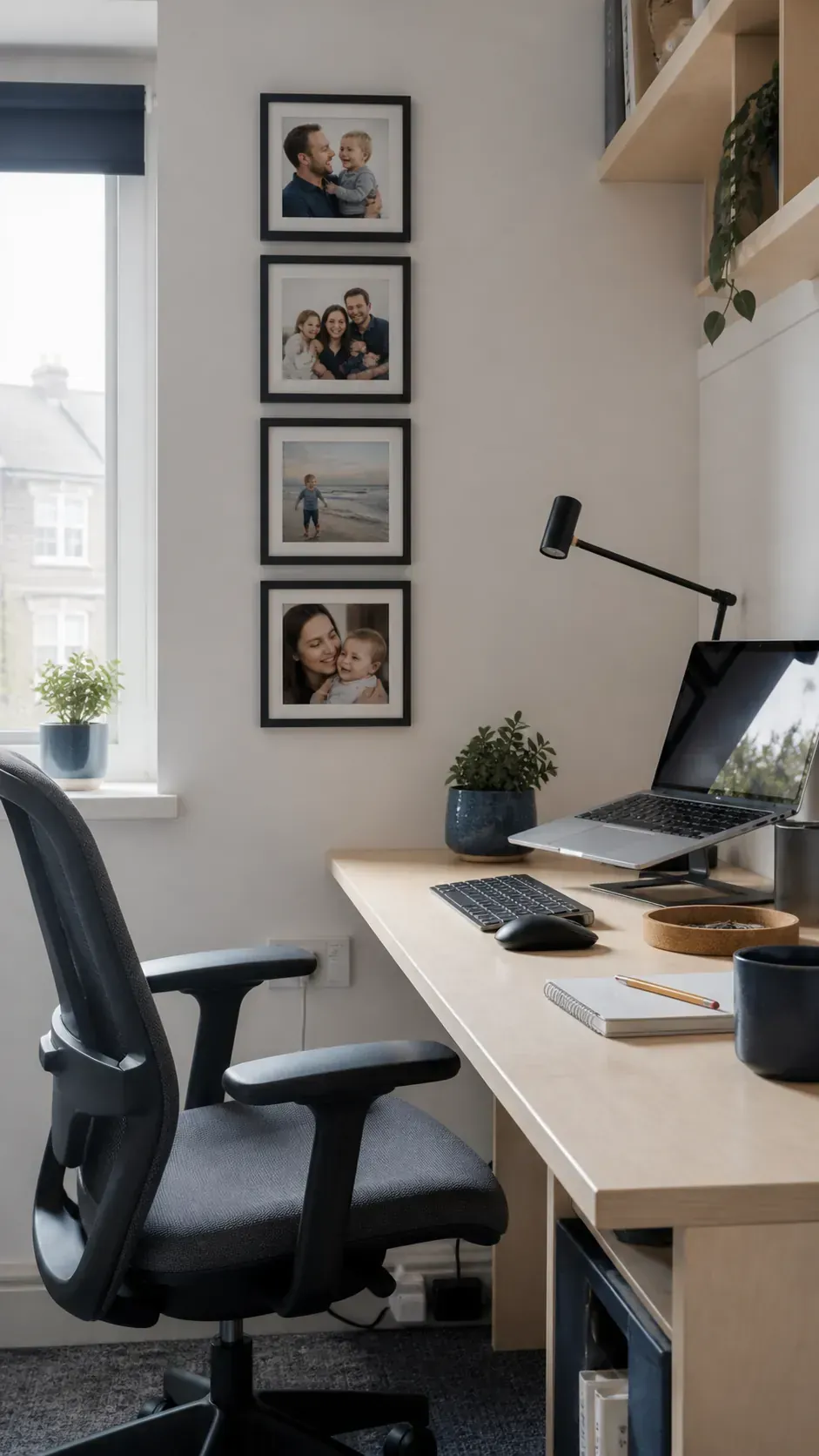
A Home Office Wall Of Encouraging Faces
A compact arrangement beside a desk can bring personality to a work space without distracting from video calls. Select a few photographs with open expressions and clean backgrounds. Position glass carefully to avoid window glare and screen reflections during working hours.
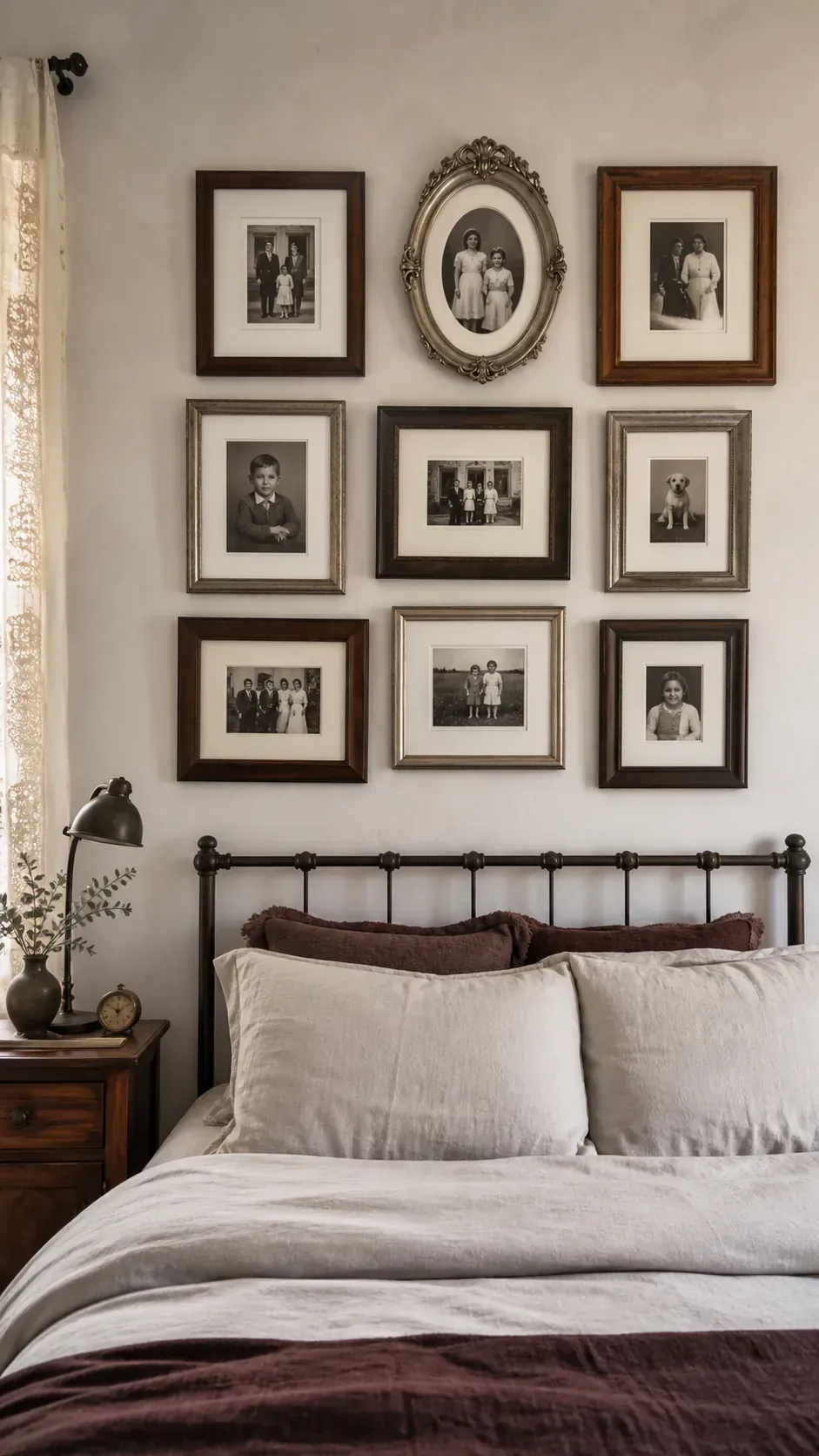
A Vintage Frame Collection With Modern Mats
Collected vintage frames give a family picture wall character, but fresh mats prevent the display from feeling dusty or random. Use a limited range of aged wood and metal tones, then place the most ornate frame as a single accent. Check old hardware and replace weak backing before the pieces go up.
A Polaroid Style Display In Real Frames
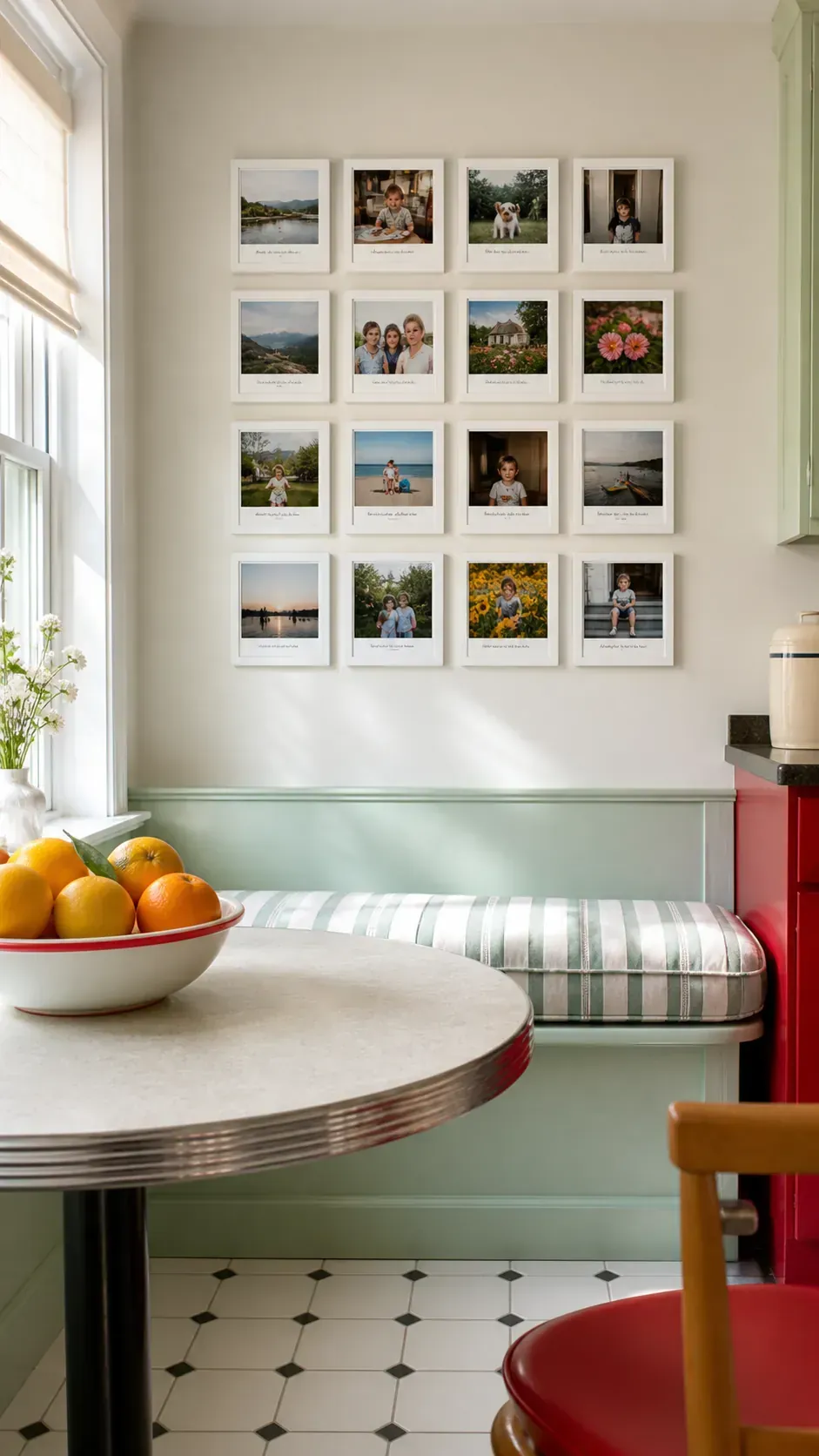
Print snapshots with generous lower borders to capture the charm of instant photographs while protecting them behind glass. Small square frames can form a tidy block that suits a kitchen nook or casual hallway. Add short handwritten captions to copies, never to original photographs that may matter later.
A Pet And Family Portrait Mix
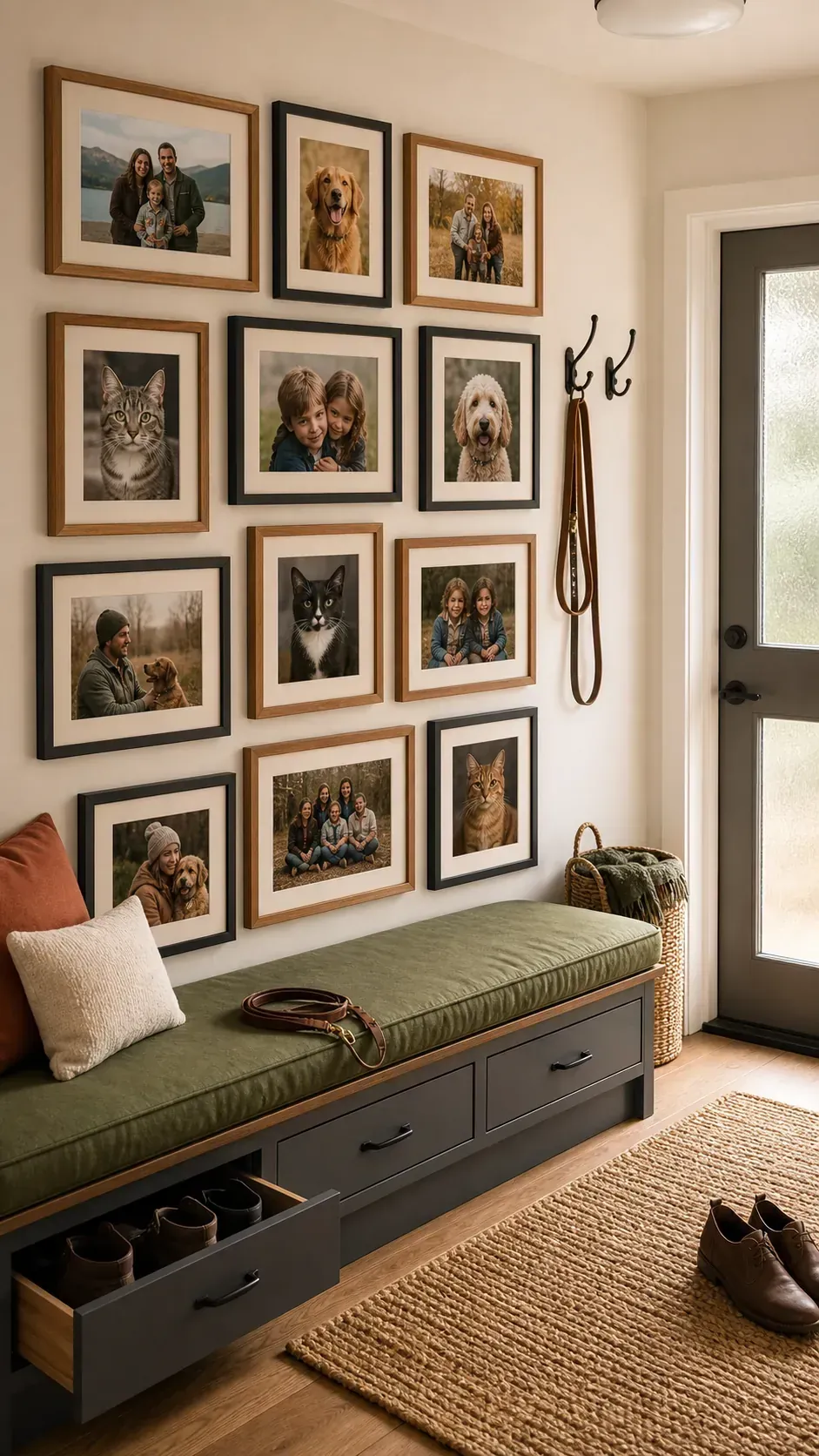
Include pets as part of the visual family story by alternating their portraits with everyday household moments. Similar camera crops and print finishes keep the mix cohesive. Avoid placing every formal portrait together, since candid pairings create a warmer and more natural rhythm.
A Grandparents Heritage Photo Wall
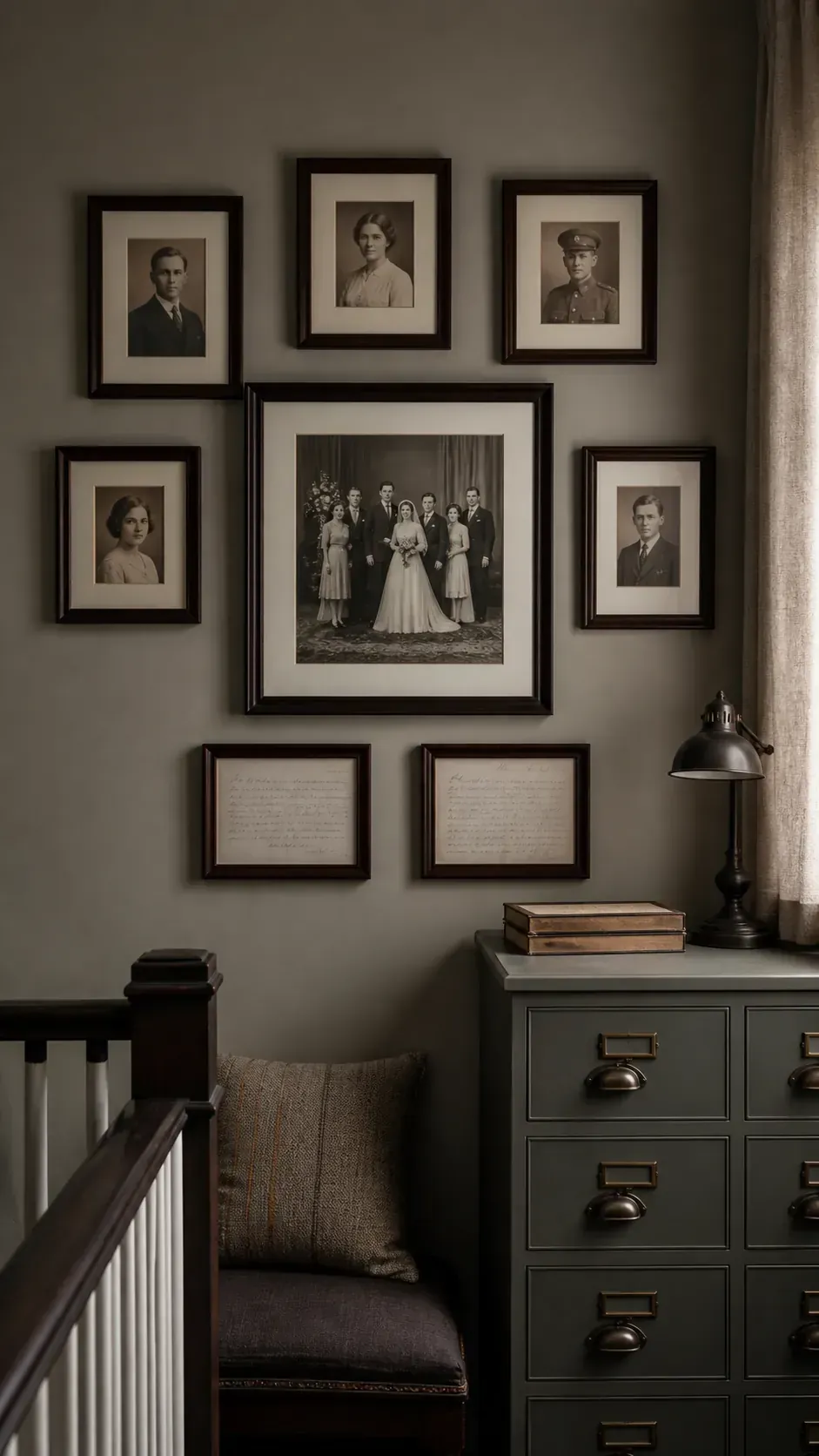
Scan fragile photographs at high resolution and display copies in simple frames that let the images lead. Pair formal portraits with one or two written family notes to add context. Use archival sleeves for the originals and keep them stored away from direct sunlight and changing humidity.
A Seasonal Family Photo Rotation
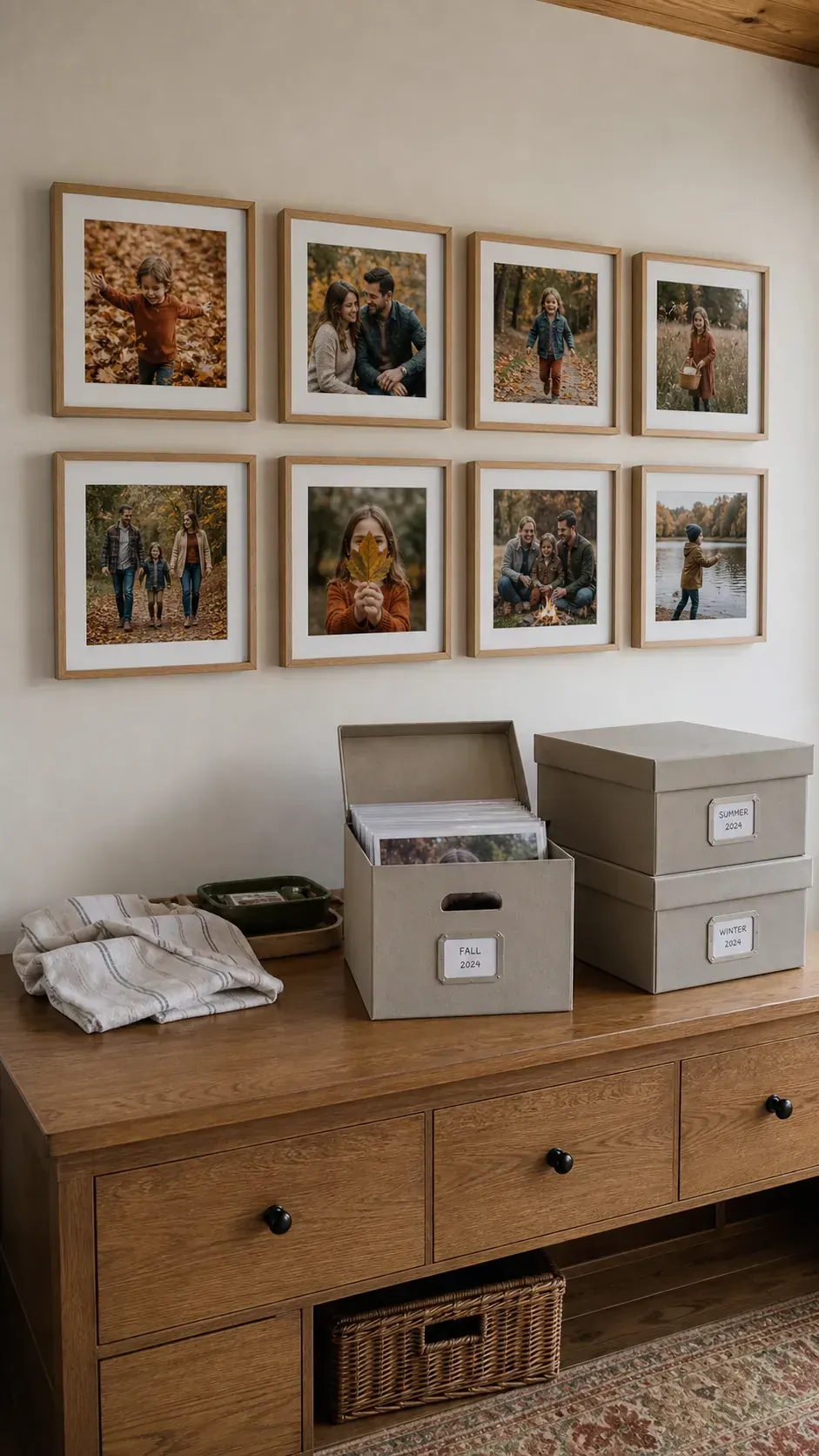
Keep permanent frames on the wall and change only the prints as seasons and celebrations pass. Label stored photographs by frame size so each rotation takes minutes rather than hours. A consistent editing style helps summer, holiday, and everyday scenes fit the same room.
A Renter Friendly Lightweight Gallery
Choose lightweight acrylic fronts and modest frame sizes when the lease limits wall changes. Follow the mounting product weight rating, prepare the surface exactly as directed, and test one hidden area because paint quality varies. If small nail holes are permitted, compare that option with adhesive removal risk before committing.
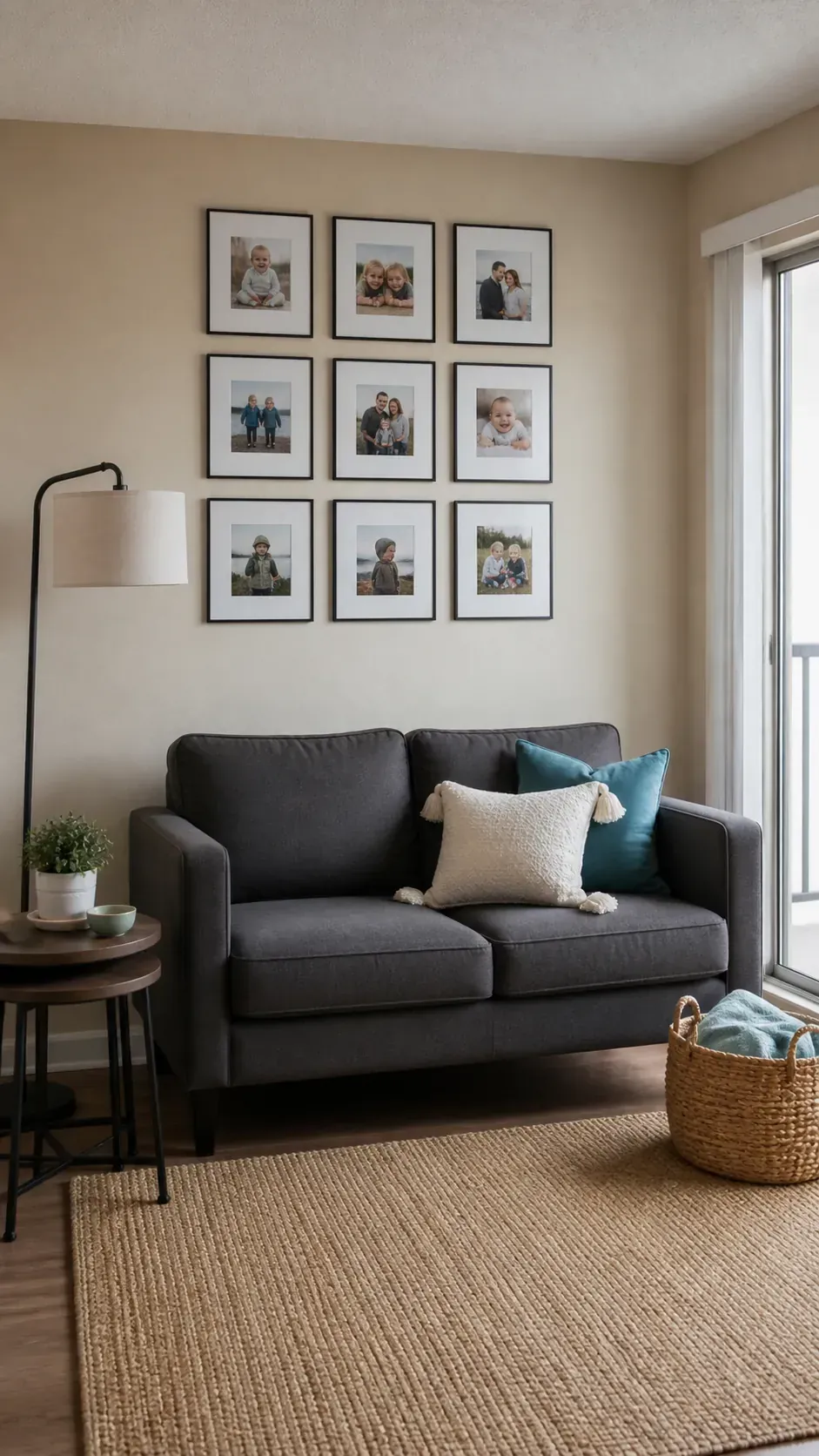
A Narrow Vertical Stack For A Small Wall
Use a vertical stack to make sense of a slim wall between a door and window. Three to five frames with aligned centers draw the eye upward without blocking nearby trim. Select photographs with simple compositions because the narrow format already creates strong visual movement.
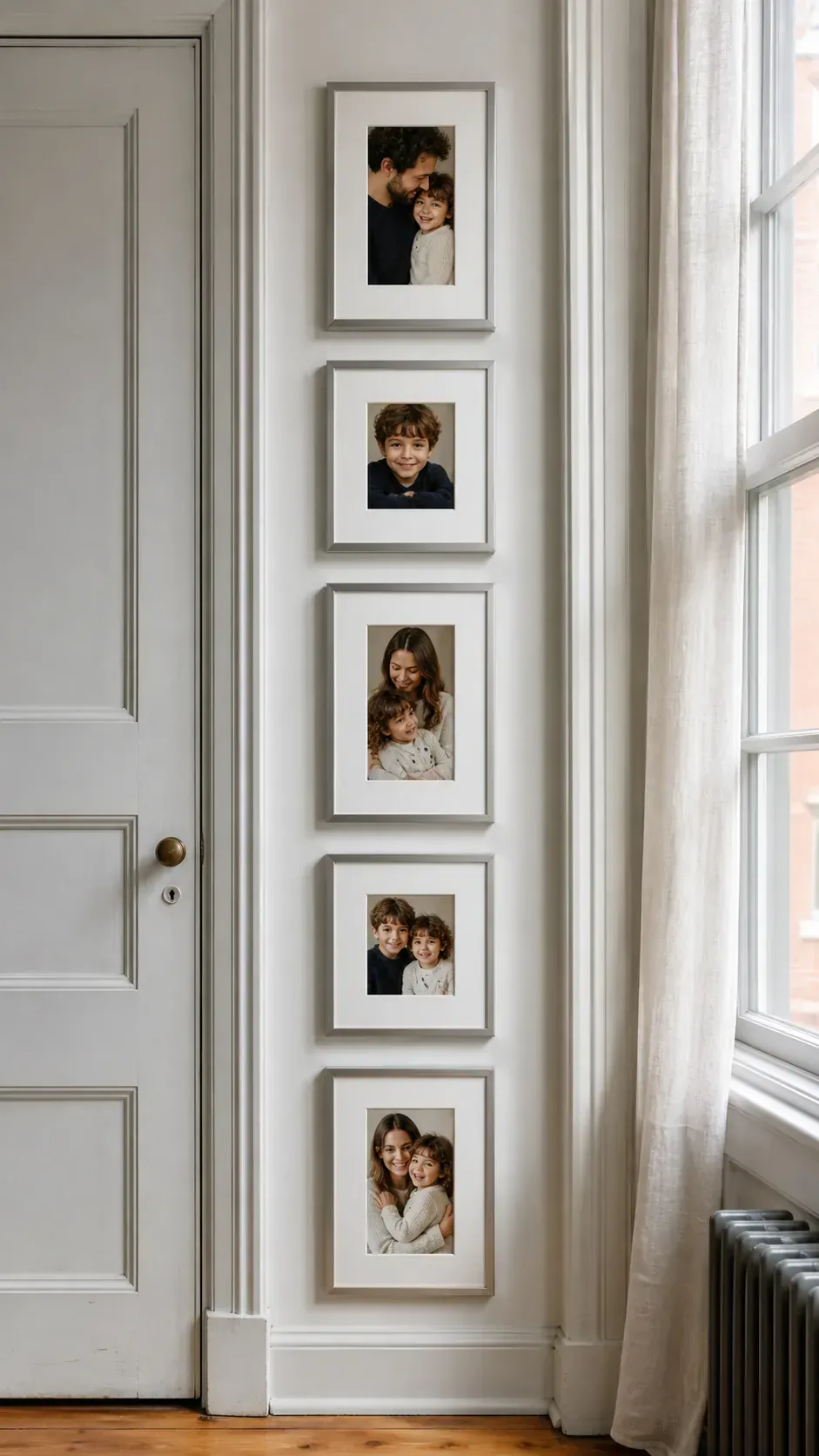
An Oversized Collage Frame Statement
One oversized collage frame offers many memories while keeping the wall visually simple. Give the strongest photograph the largest opening and let smaller images provide supporting details. Measure the complete piece against nearby furniture because its outer scale matters more than the size of any individual print.
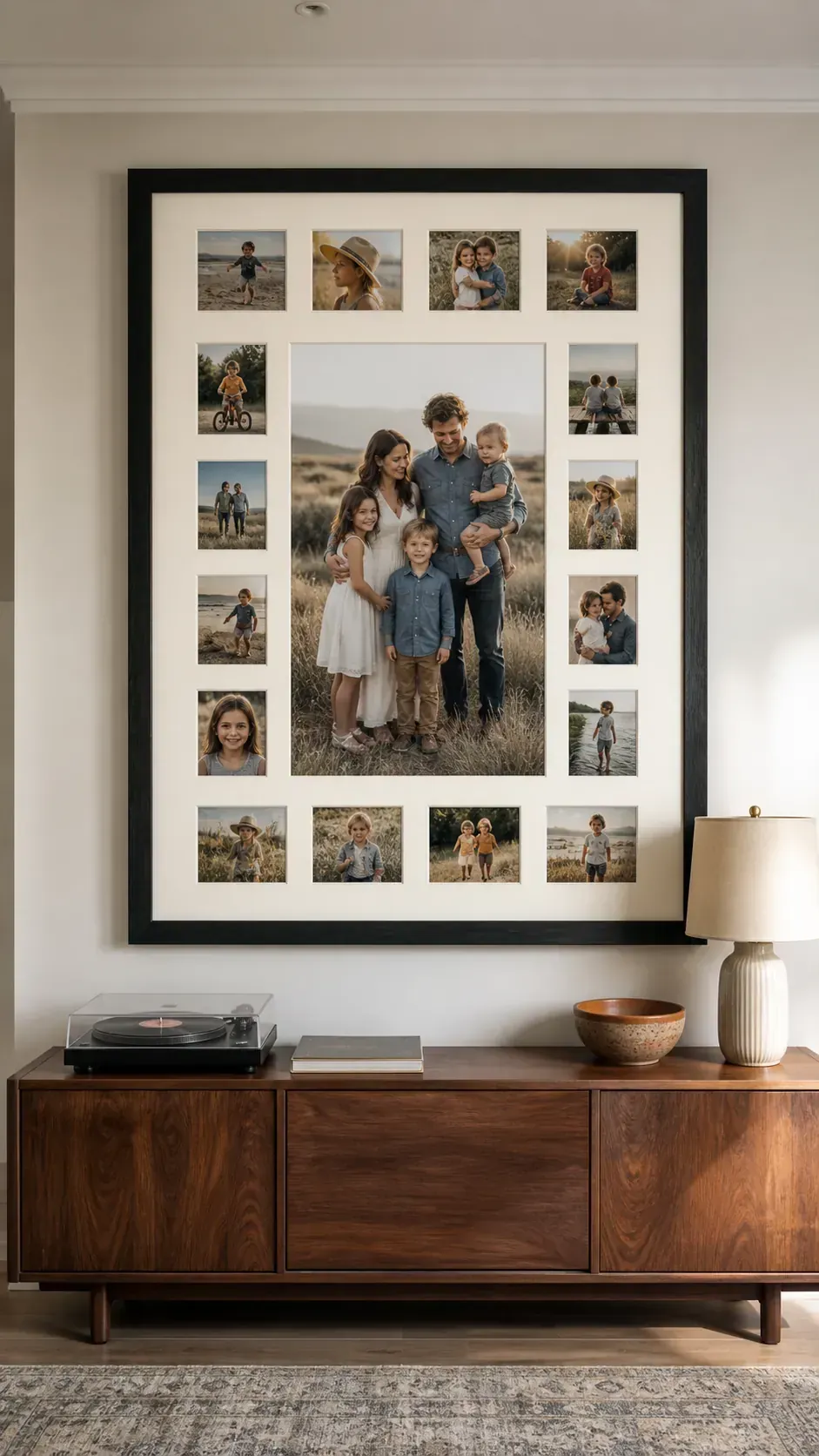
A Shelf And Frame Combination
Alternate wall hung frames with one short shelf to introduce depth and storage for small keepsakes. Keep objects below the photographs so shadows do not obscure faces. Leave breathing room around the shelf ends, since extending frames too far outward can make the arrangement look unstable.
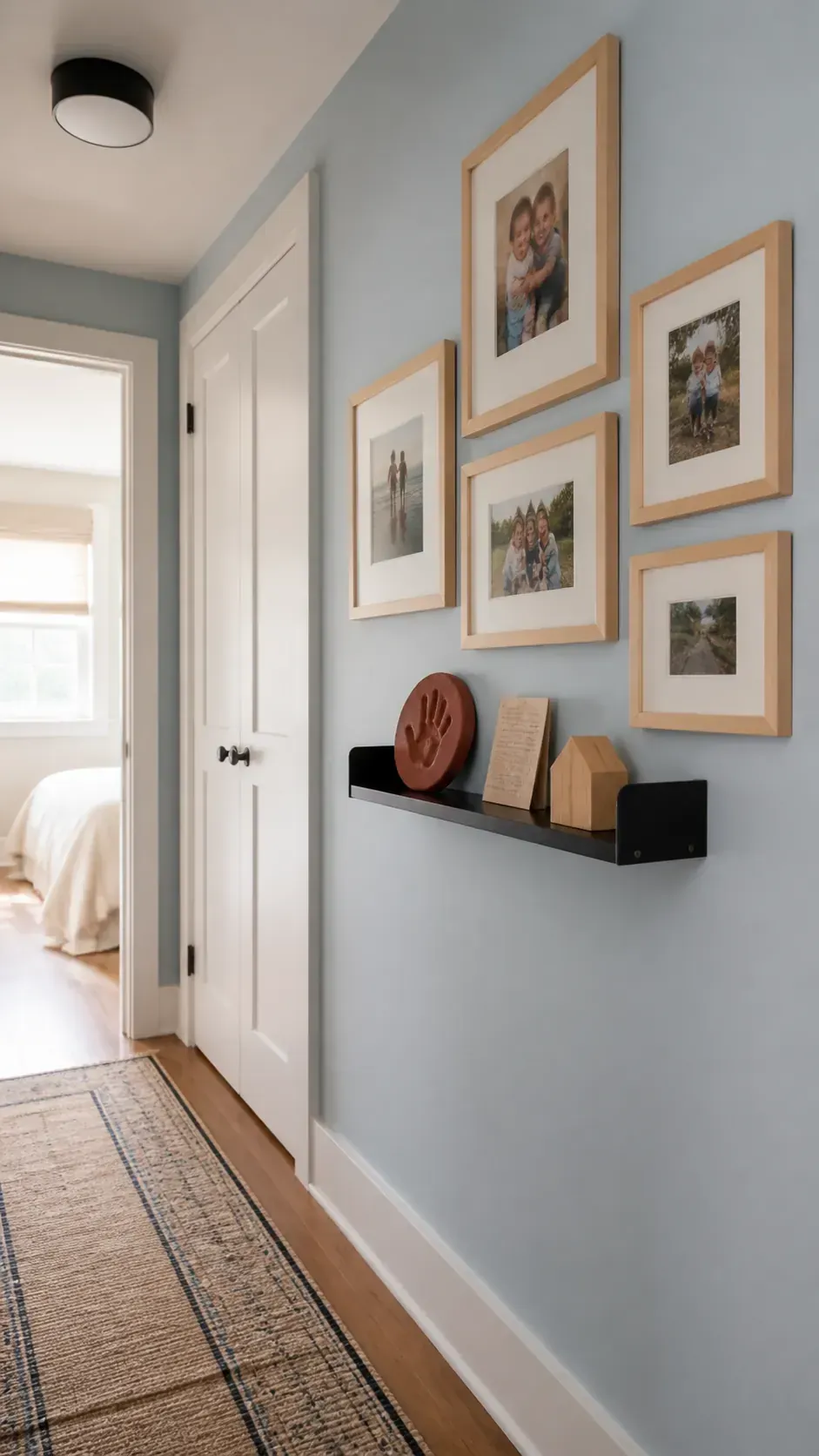
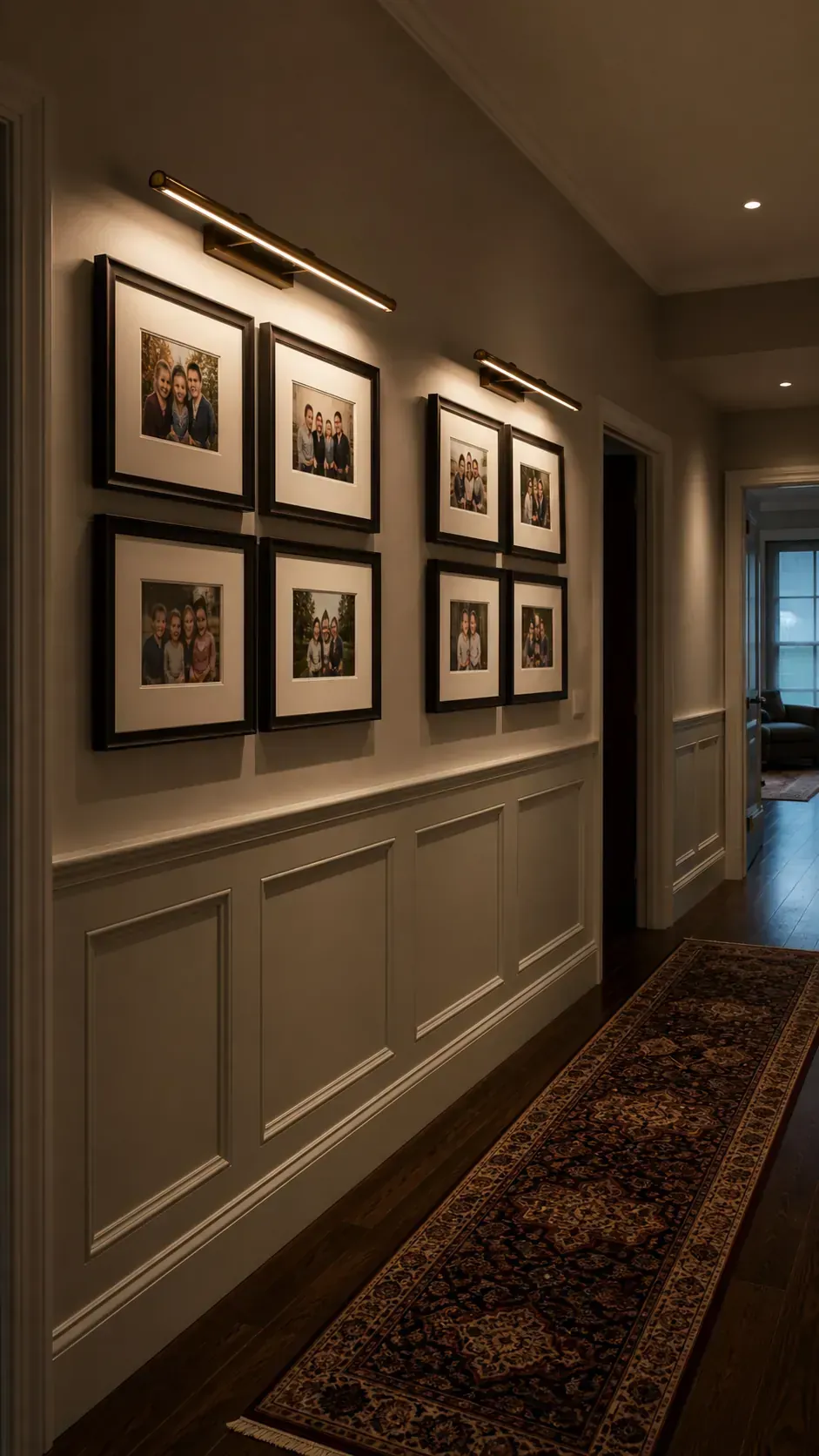
A Hallway Gallery With Picture Lights
Small picture lights can make a windowless hallway feel considered while helping photographs remain visible. Use warm, even illumination and position fixtures so glass does not throw harsh reflections at eye level. Conceal cords or plan electrical work before finalizing frame locations.
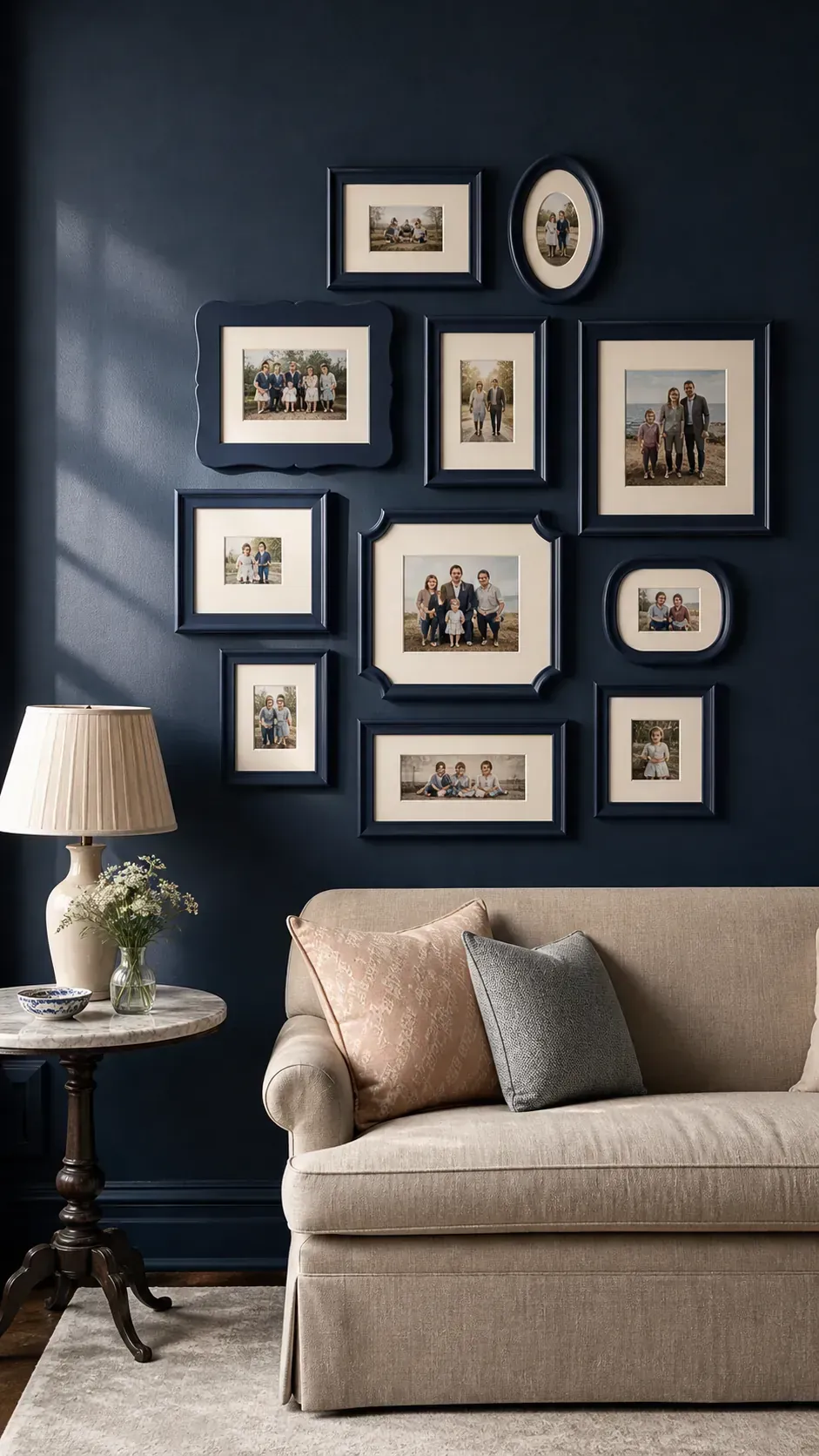
A Monochrome Frame Wall On Deep Paint
Frames painted to match a deep wall color create subtle relief while allowing bright photographs and mats to stand forward. Vary frame profiles rather than colors to add quiet texture. View paint samples under the room lighting because dark tones can shift considerably from morning to evening.
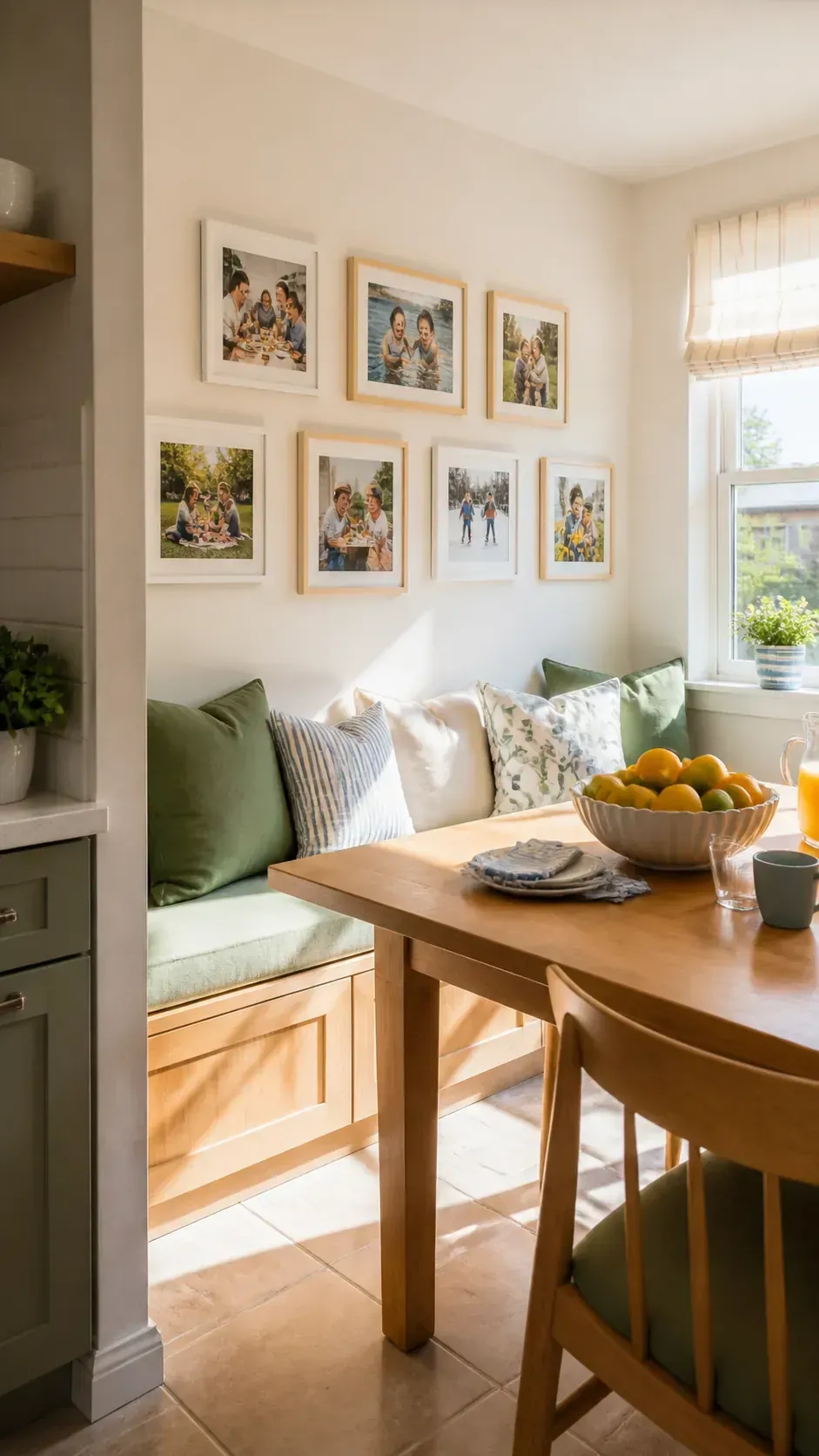
A Bright Kitchen Breakfast Nook Gallery
Casual family photographs bring warmth to a breakfast nook where daily routines already happen. Use wipeable frames and avoid the range, sink splash zone, and direct steam. A cheerful set of similar crops keeps the display lively without making a small eating area feel busy.
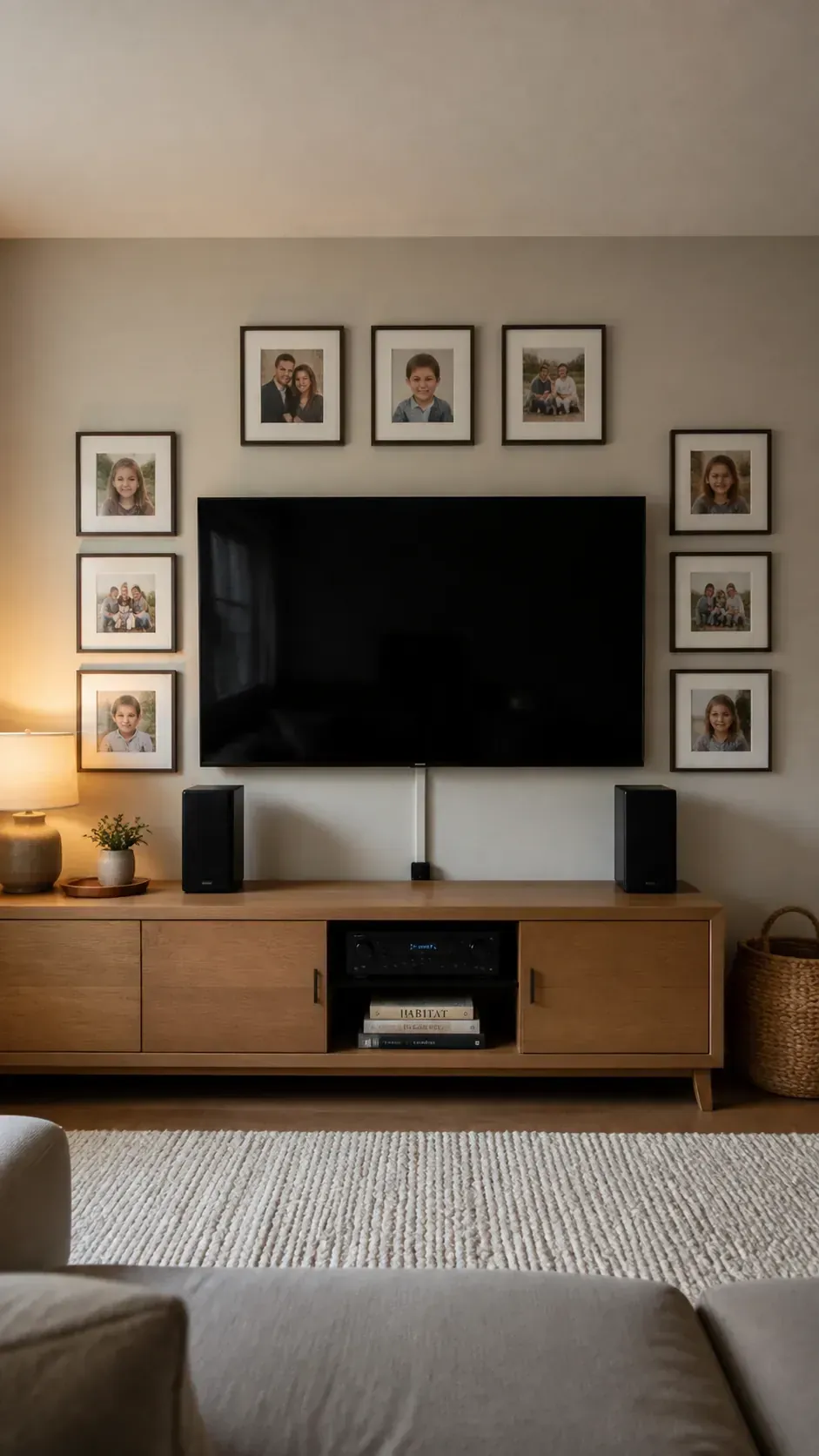
A Memory Wall Around The Television
Frames can soften a television wall when their arrangement respects the screen as the largest rectangle. Use quieter photographs and a limited frame palette so the display does not compete while the television is on. Keep ventilation, cables, and access panels clear, then align the outer arrangement with the media cabinet.
A Paper Planned Organic Gallery Wall
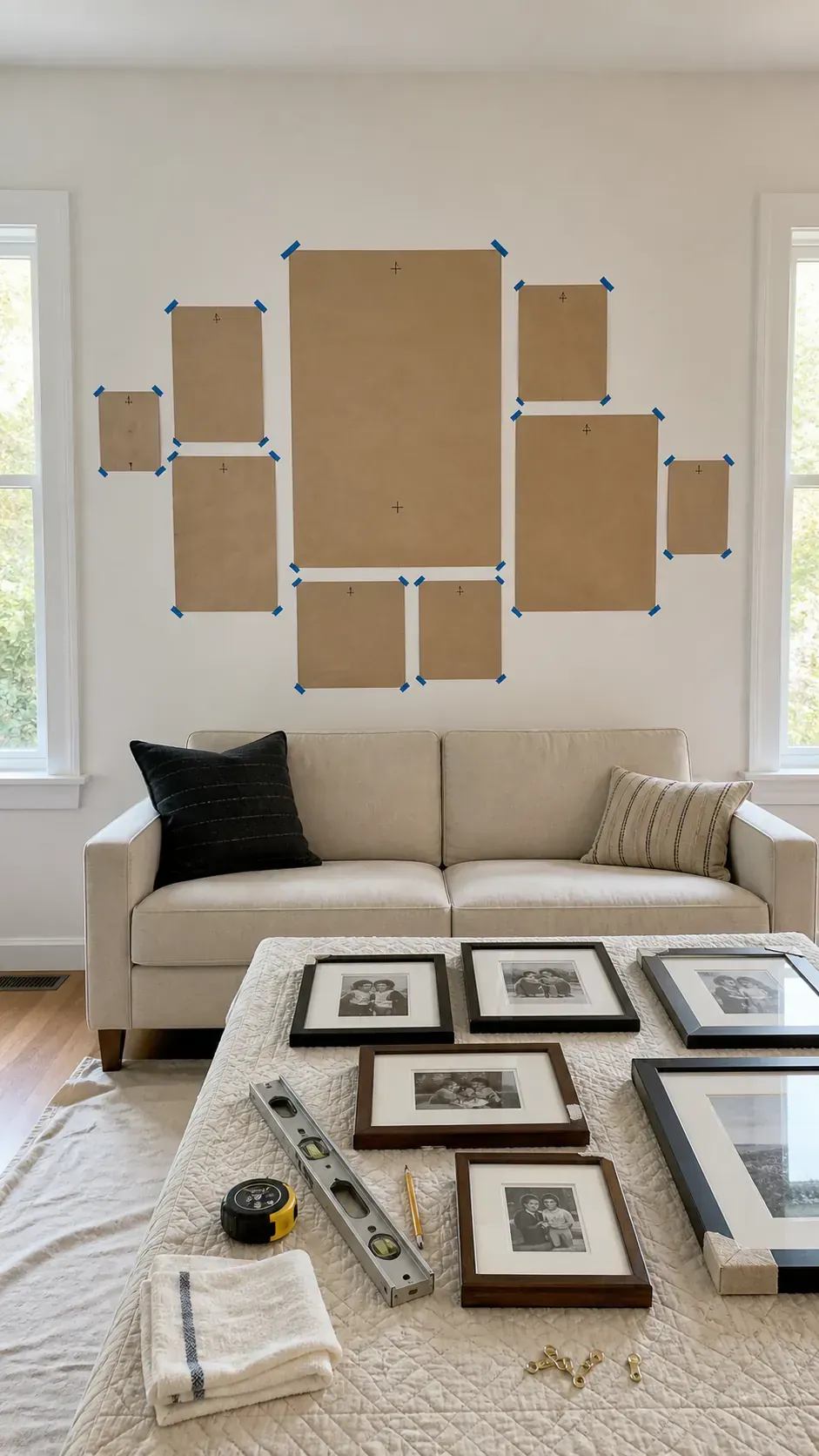
Trace every frame onto kraft paper and arrange the templates on the floor before transferring them to the wall. Mark the actual hanging point on each template so the final hardware lands correctly, then tape the shapes in place and view them from normal room positions. This patient rehearsal protects the wall, reveals frames that are too small, and gives an organic family collage the cohesion that improvisation rarely achieves.