A convincing Mediterranean garden is not a shopping list of olive trees, lavender, and terracotta pots. It is a landscape built around shade, scent, dry-loving plants, permeable stone, and places to pause. The best version also responds to your actual soil and climate, so the garden feels settled rather than themed.
These Mediterranean backyard ideas range from small courtyard landscaping to generous European gardens. Use one as the anchor, then borrow supporting details from the others. Before planting, check mature sizes, local hardiness, drainage, water restrictions, and whether a species is invasive where you live.
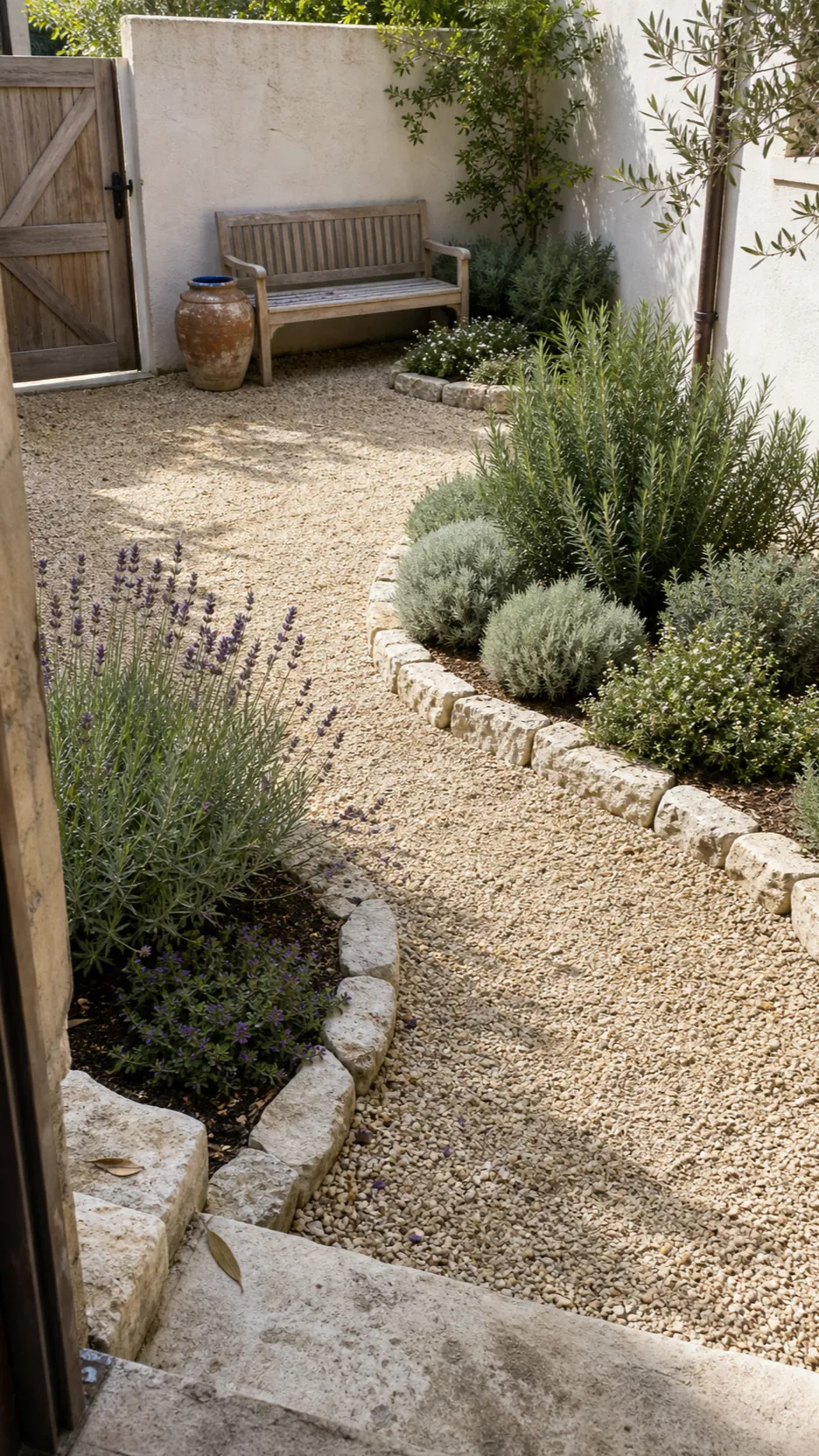
Build a Sun-Warmed Gravel Courtyard
Start with a permeable gravel floor edged by stone, then cut generous planting pockets for lavender, santolina, thyme, and upright rosemary. The loose surface gives an Italian courtyard garden its dry, luminous character while letting rain enter the soil.
Drainage comes before decoration. On heavy clay or a site that stays wet, improve the planting zones or use raised beds rather than burying struggling Mediterranean plants beneath a cosmetic layer of gravel.
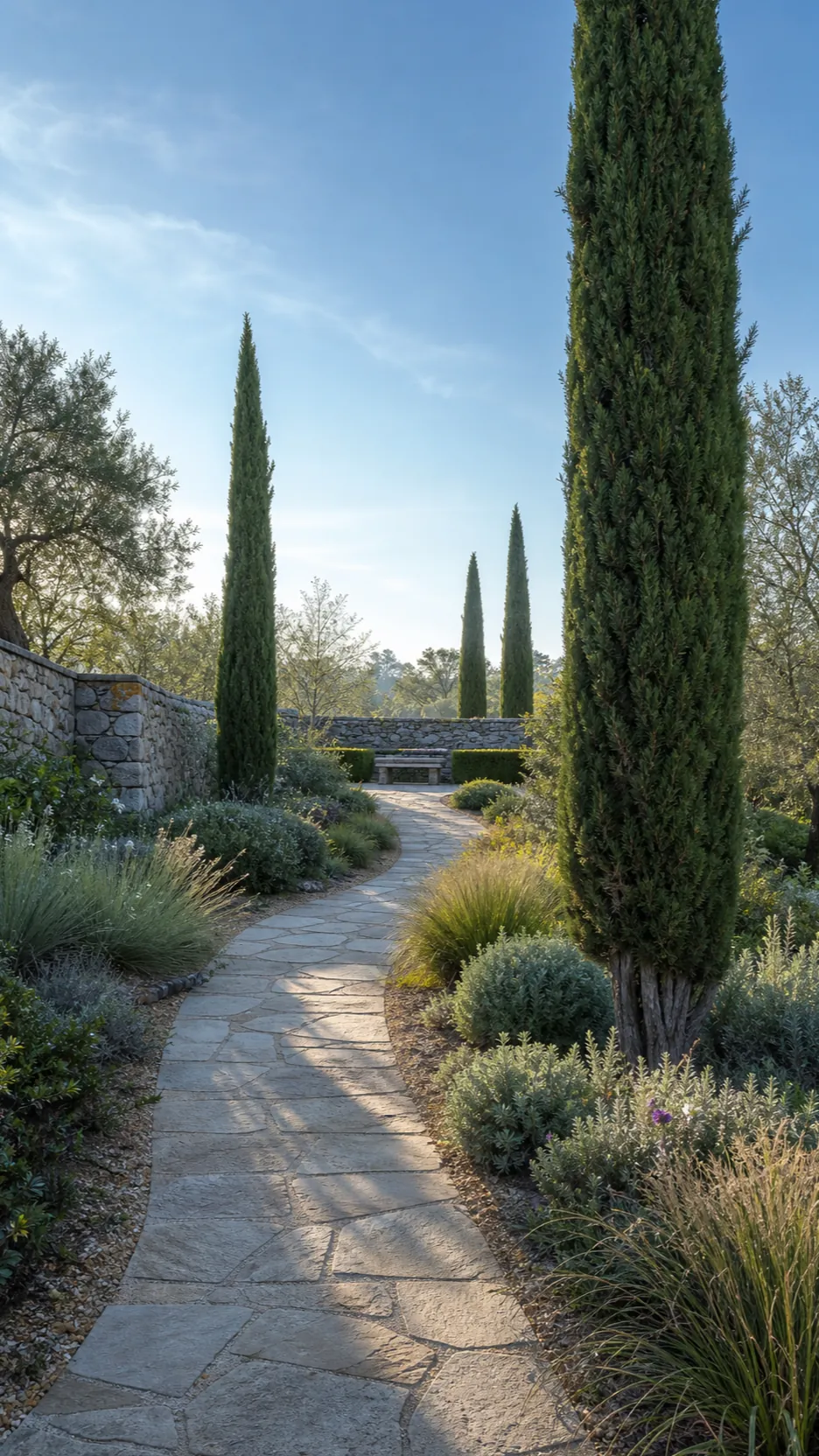
Frame the View With Italian Cypress
A pair or short rhythm of narrow evergreens creates the unmistakable vertical punctuation of an Italian garden. Use them to mark an entry, lead the eye toward a bench, or give a long boundary a destination.
Keep the rest of the planting lower and looser so the cypress silhouettes retain impact. Where true Italian cypress is unsuitable, choose a locally adapted columnar evergreen with a similarly slim habit.
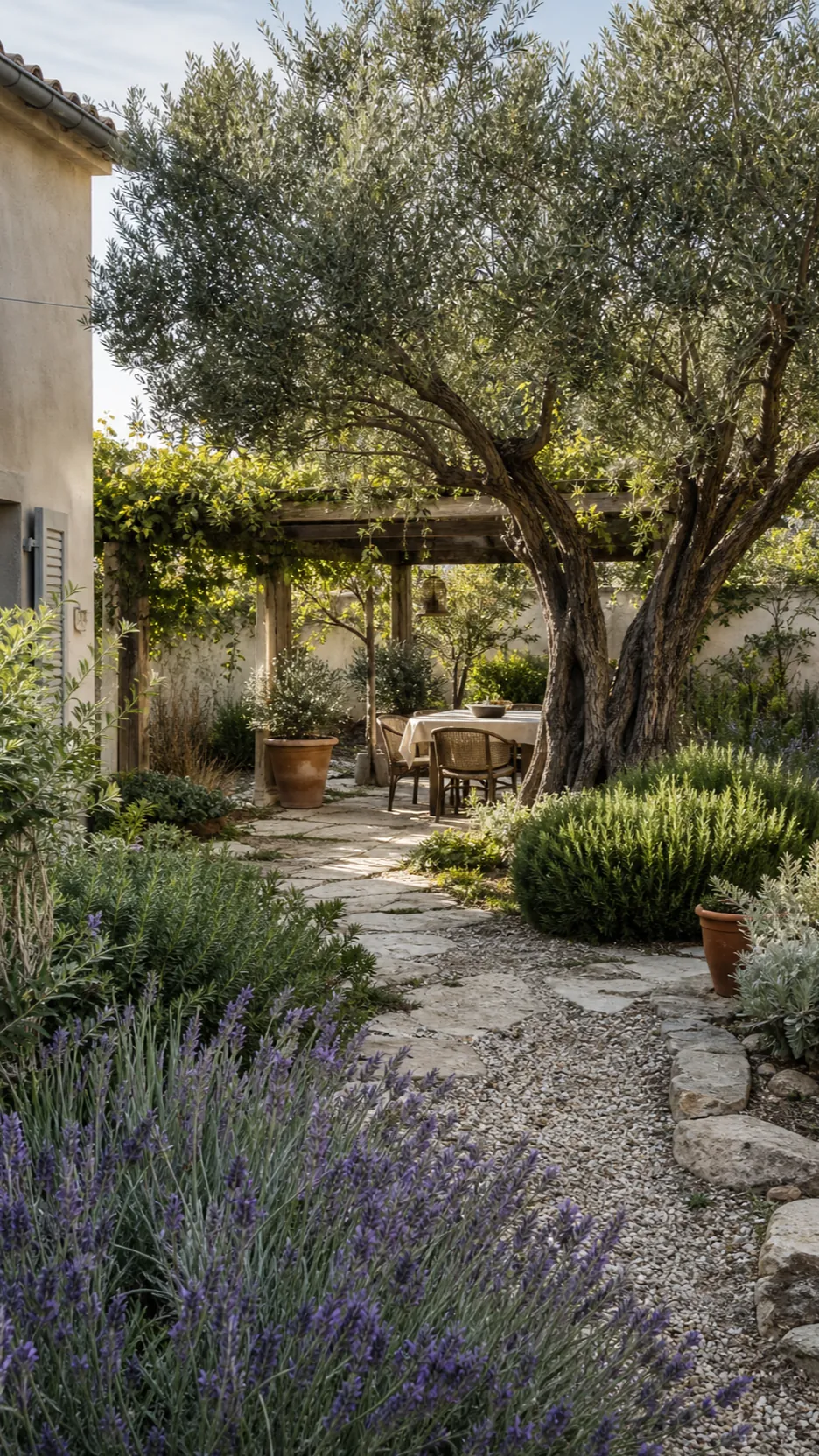
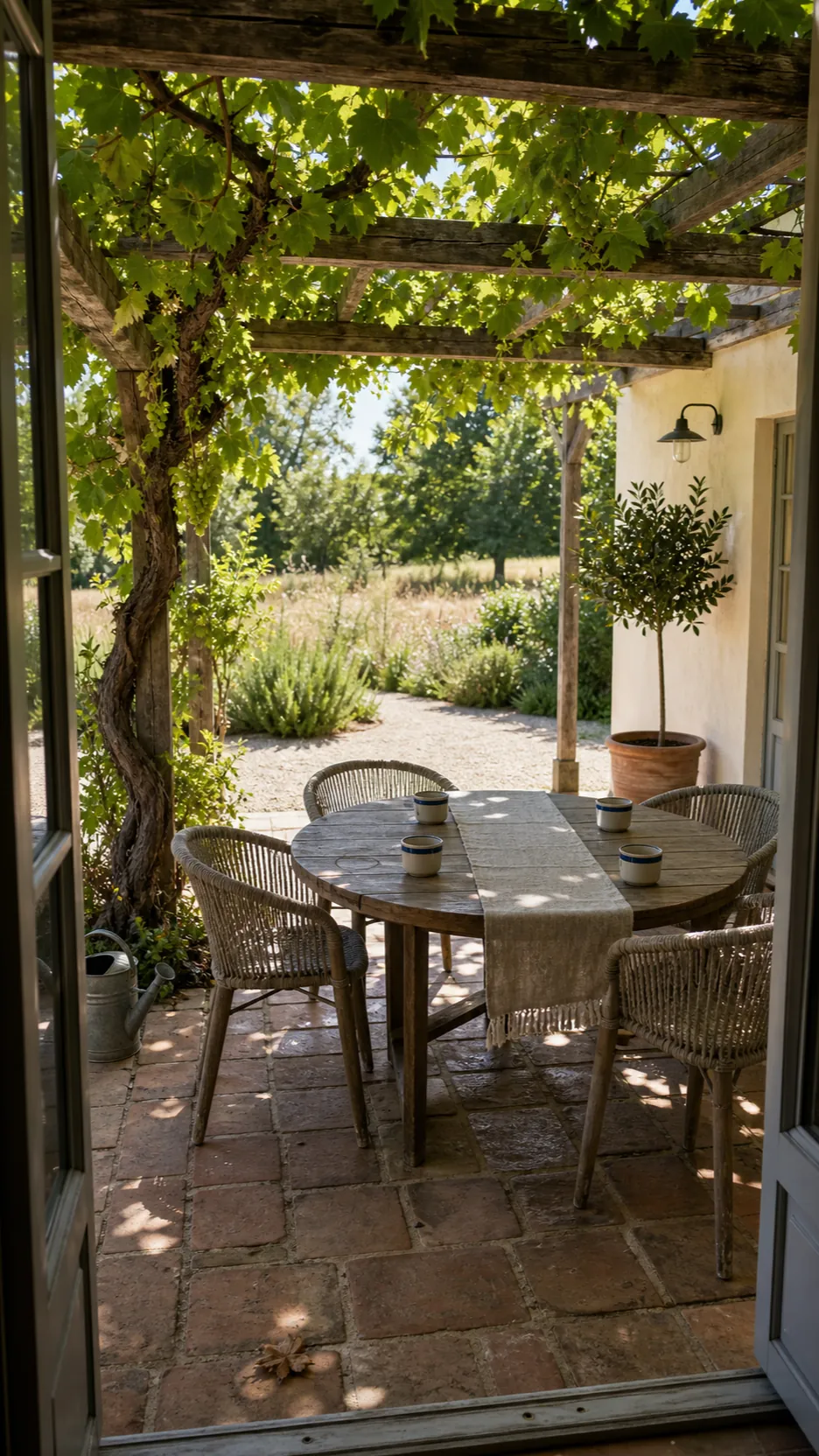
Create Shade With a Vine-Covered Pergola
A timber or powder-coated steel pergola turns a hot patio into a usable outdoor room. Train grapevine, jasmine, or another climate-appropriate climber across the top, leaving enough openness for shifting patches of light.
Place the dining table where afternoon shade actually falls, not simply at the geometric center. Mediterranean outdoor living works because comfort shapes the layout.
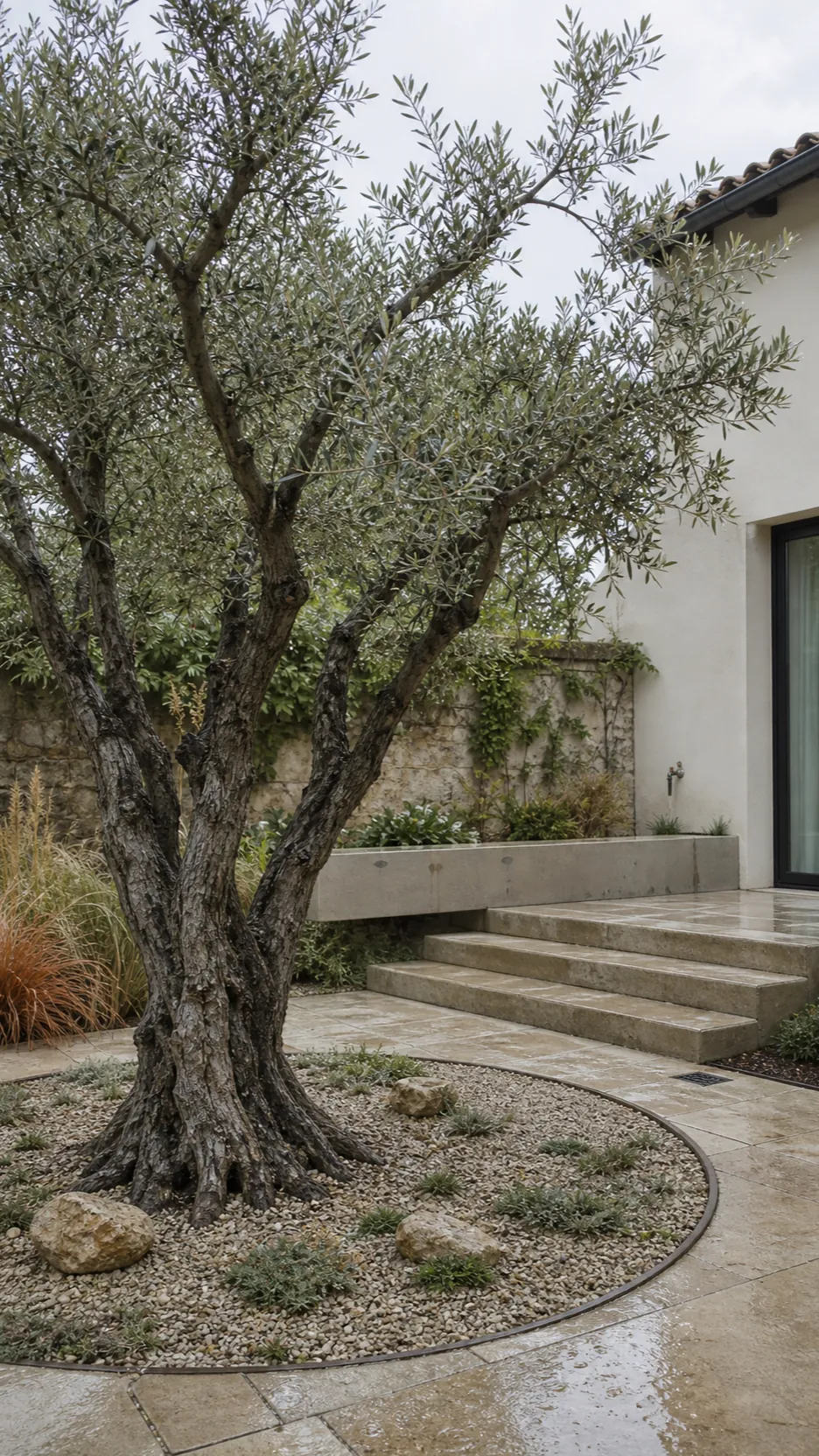
Center a Weathered Olive Tree
One sculptural olive can organize an entire modern Mediterranean garden. Give its twisting trunk breathing room in a gravel circle or broad raised planter, then underplant sparingly with low herbs.
Confirm local climate, fruit litter, disease risk, and mature root space before committing. In cold or unsuitable regions, a hardy multi-stem tree with silvery foliage can carry the same visual role.
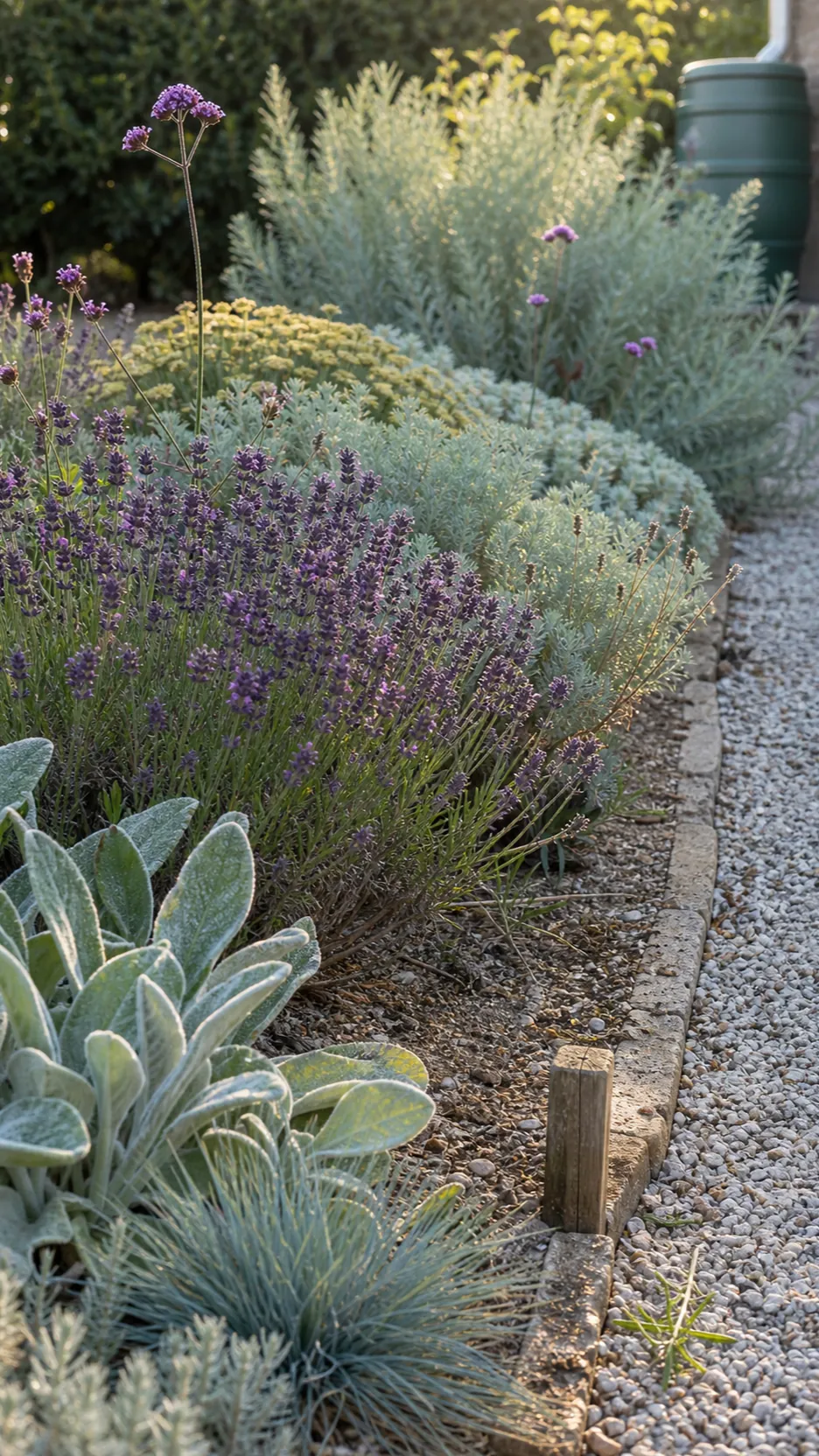
Layer Lavender and Silver Foliage
Repeat lavender among santolina, artemisia, lamb’s ear, and other silver-leaved plants to make heat and glare feel intentional. A limited palette creates cohesion, while differences in leaf shape prevent the border from becoming flat.
Give lavender full sun, moving air, and sharply drained soil. Space plants for their mature width; crowding them for an instant photo often produces damp centers and short-lived plants.
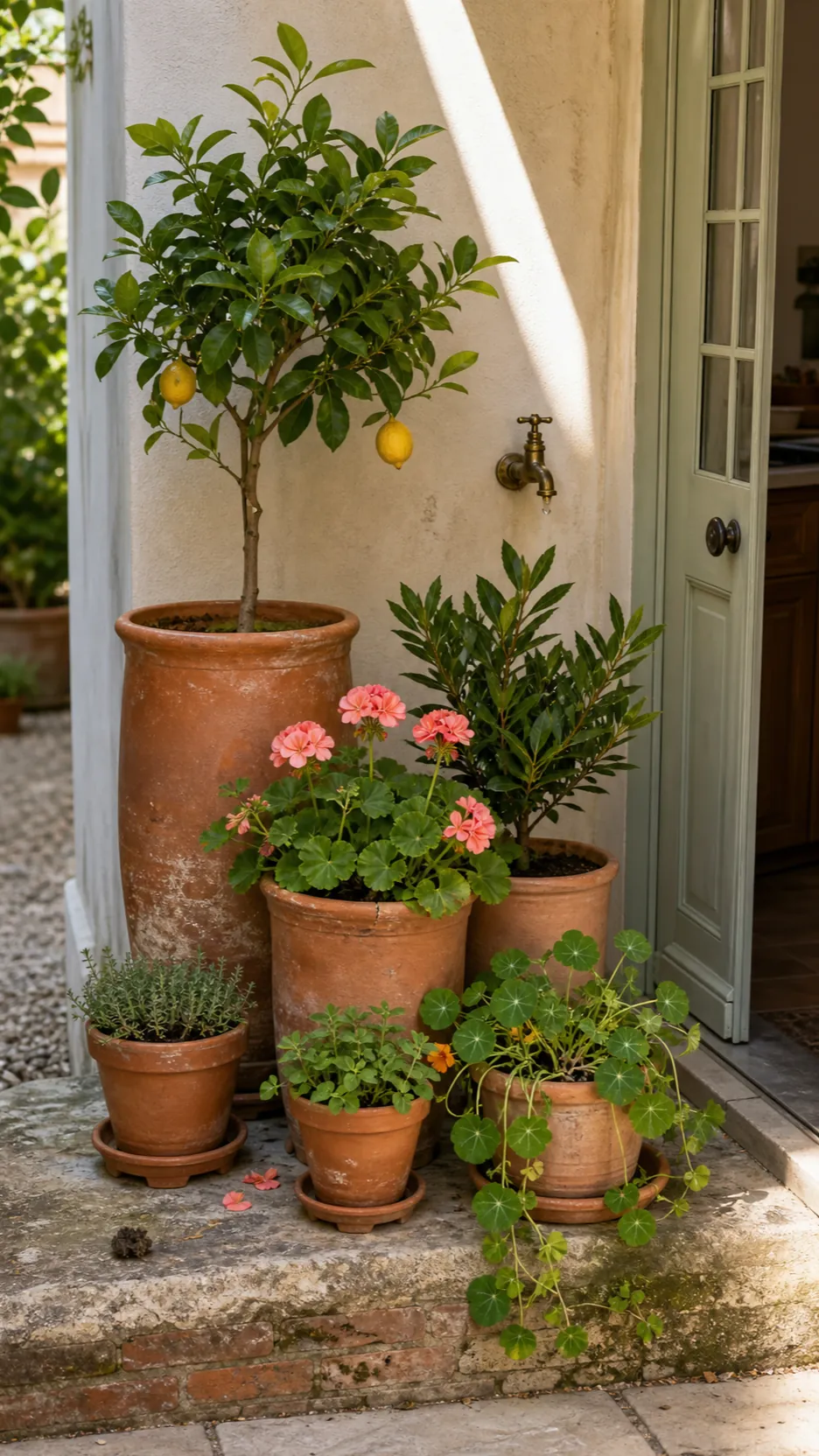
Use Terracotta Pots in Uneven Groups
Cluster three to five pots of different heights instead of lining identical containers along a wall. Combine citrus, pelargoniums, herbs, and a trailing plant so each group has height, fullness, and movement.
Repeat one pot shape or clay tone to hold the mix together. Elevate containers on discreet feet for drainage, and choose frost-safe terracotta if pots remain outdoors through winter.
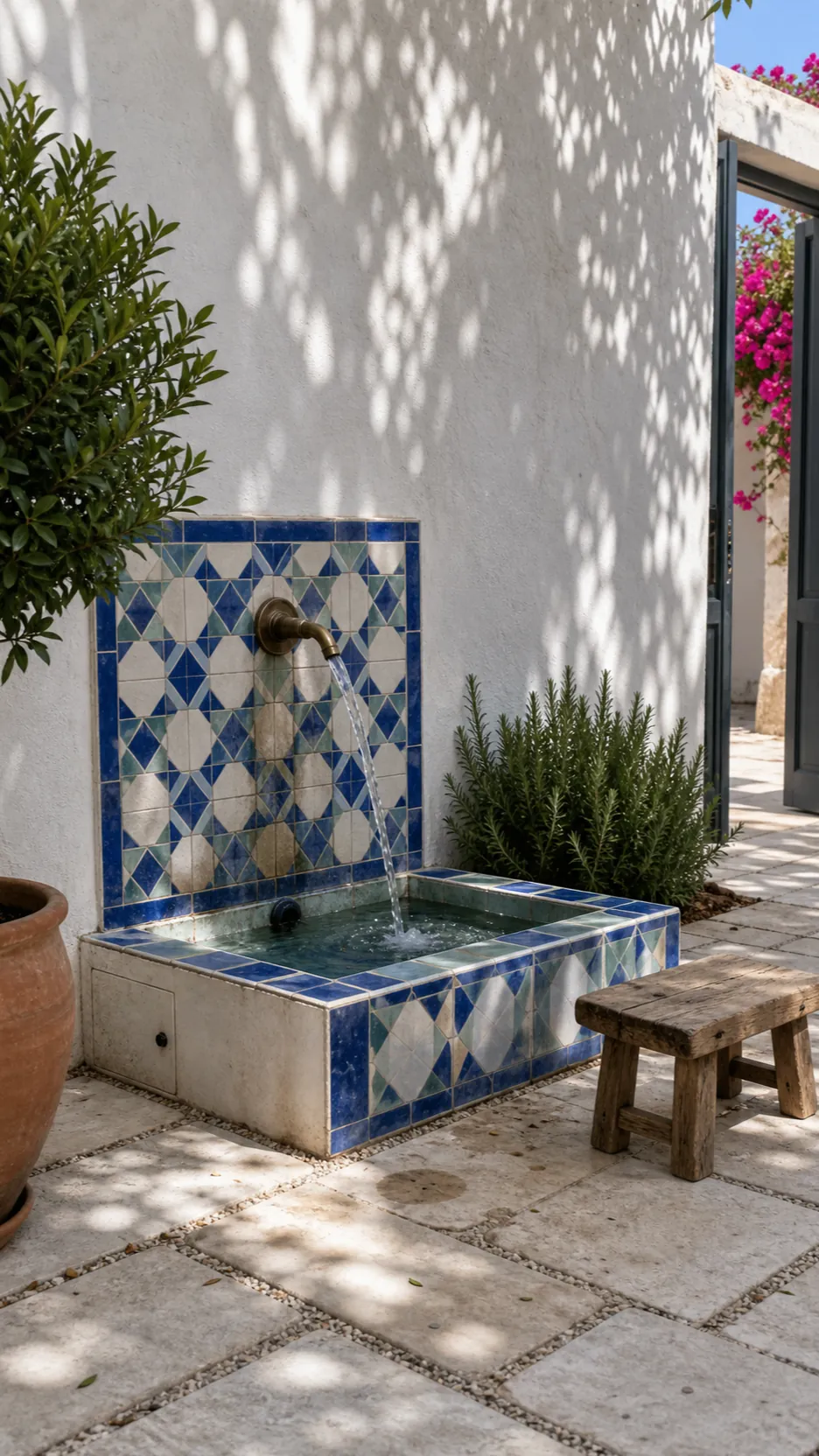
Make a Cooling Tiled Fountain
A compact recirculating fountain brings sound and reflected light to a Greek style garden without demanding a large pool. Set patterned tile inside the basin or on a restrained backsplash, then surround it with stone and clipped herbs.
Keep the scale proportional to the courtyard and provide safe access to the pump. In drought-prone areas, a small shaded basin with minimal splash loses less water than a high spray.
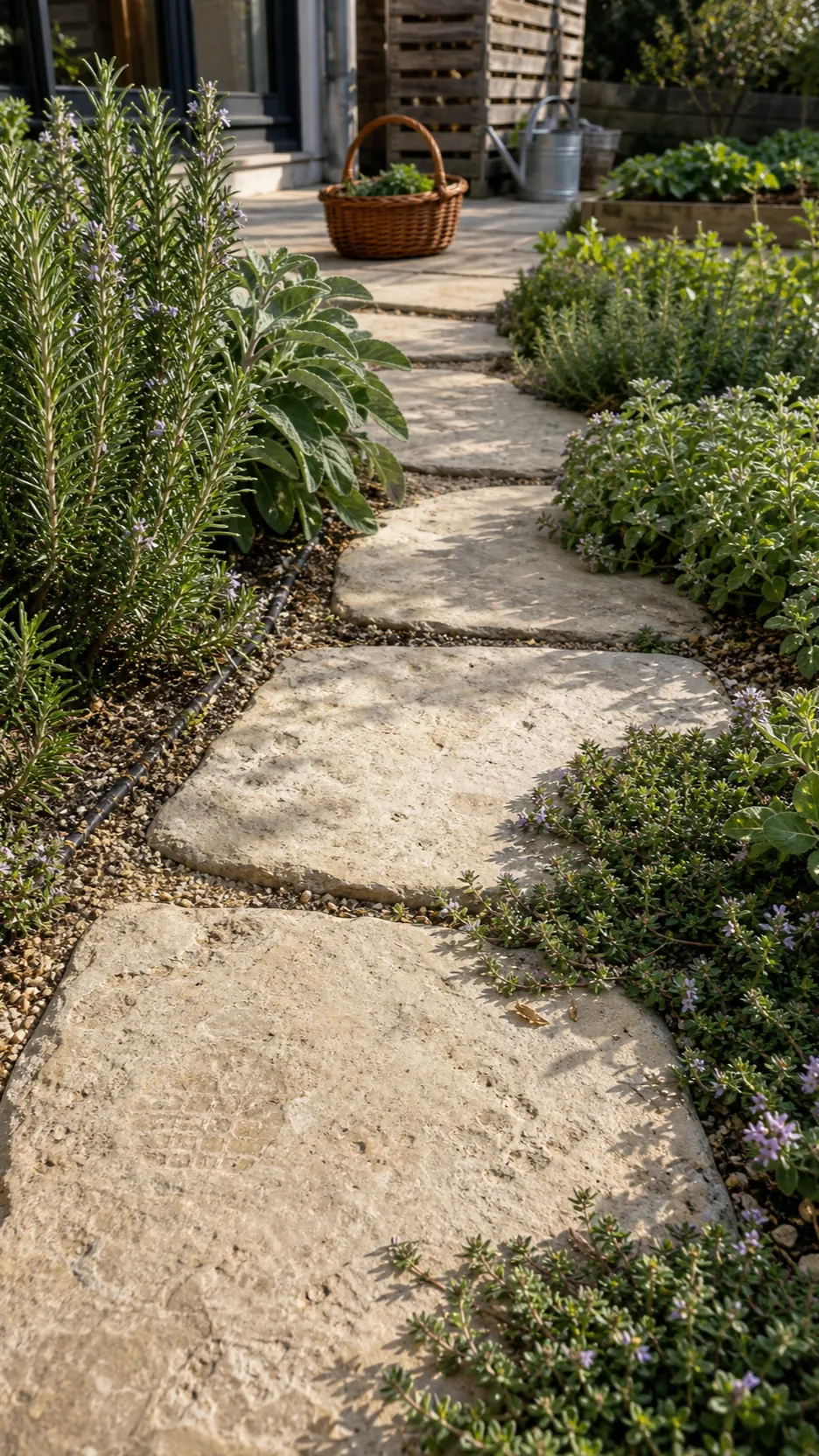
Plant a Fragrant Herb Walk
Edge a sunny path with rosemary, thyme, oregano, sage, and savory so passing feet release fragrance. Let low thyme soften selected joints while keeping the main walking line stable and unobstructed.
Match each herb to traffic and moisture. Woody rosemary belongs beside the route; only genuinely walkable groundcovers should sit where shoes land.
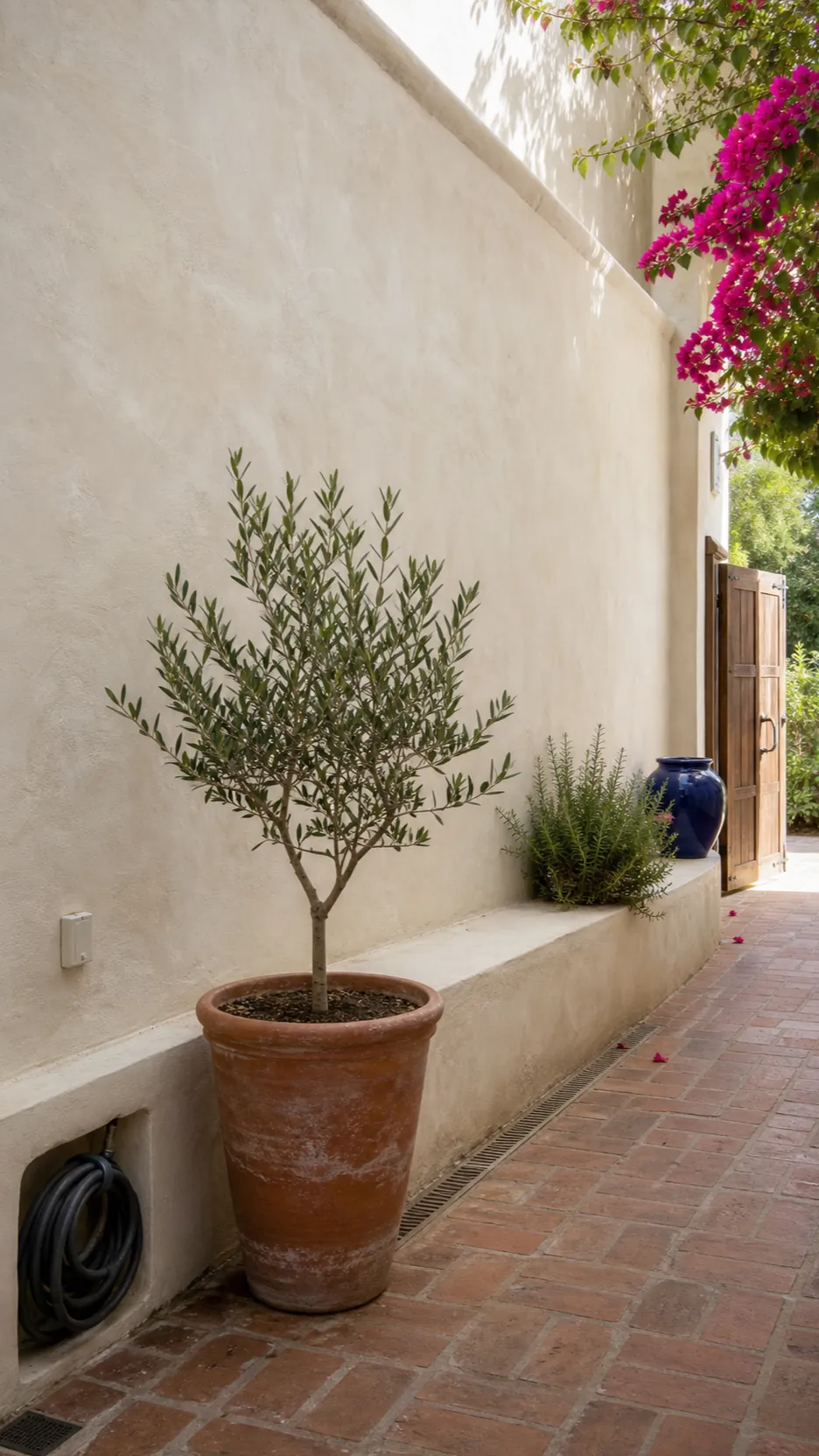
Turn a White Wall Into a Bright Backdrop
A limewashed or warm-white wall bounces light into a narrow courtyard and gives olive green, cobalt blue, and bougainvillea pink extra clarity. Use the wall as quiet architecture rather than covering every inch.
Choose a finish compatible with the wall construction and local weather. A warmer white generally feels softer outdoors than a stark blue-white, especially beside pale limestone.
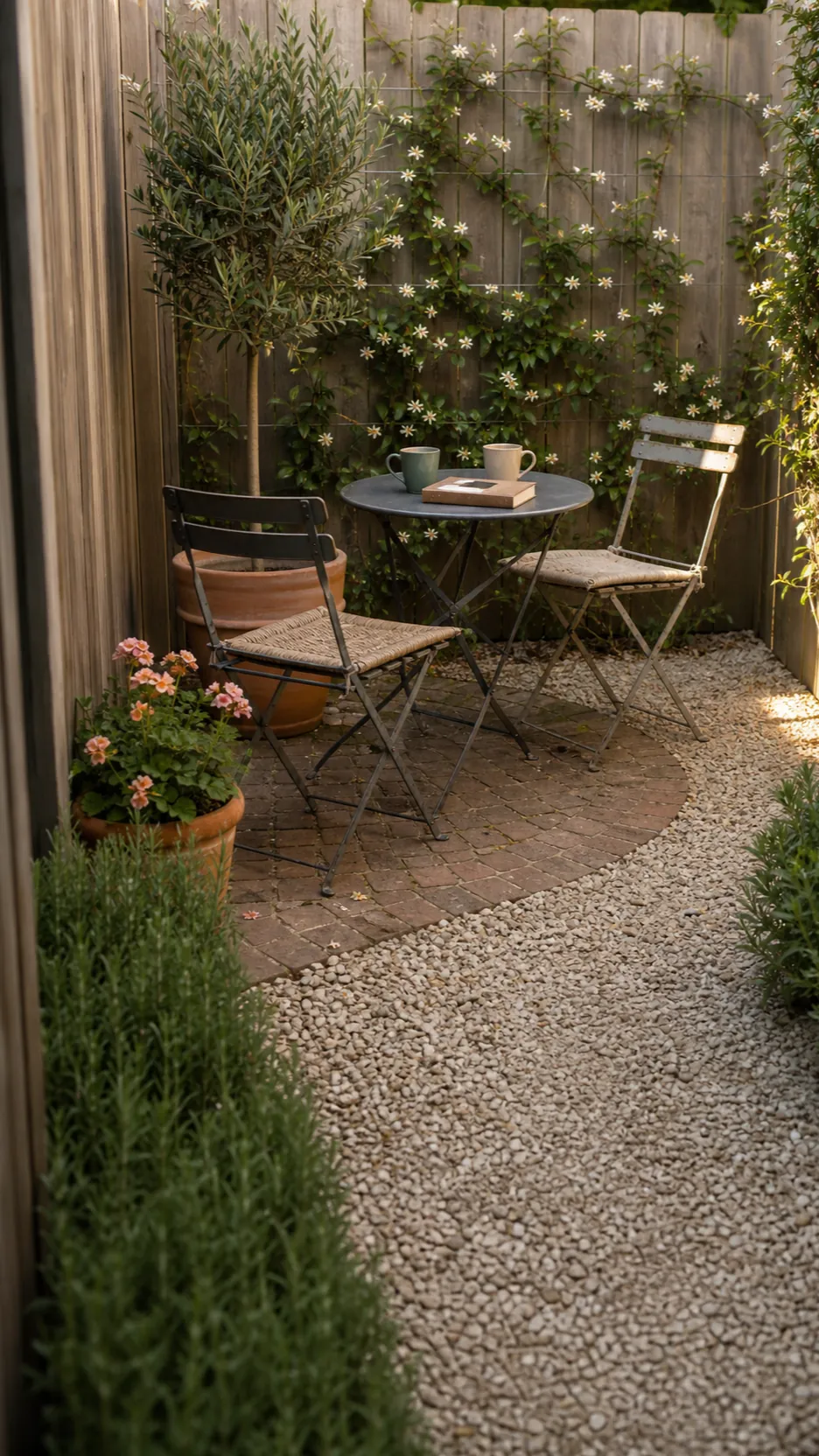
Carve Out a Tiny Bistro Corner
Even a small Mediterranean garden benefits from a destination. Tuck a round bistro table and two folding chairs into a sunny corner, then frame it with one tall pot and a fragrant edge plant.
Leave a clear route and enough space to pull out a chair. A usable two-person corner is better than an overcrowded imitation terrace.
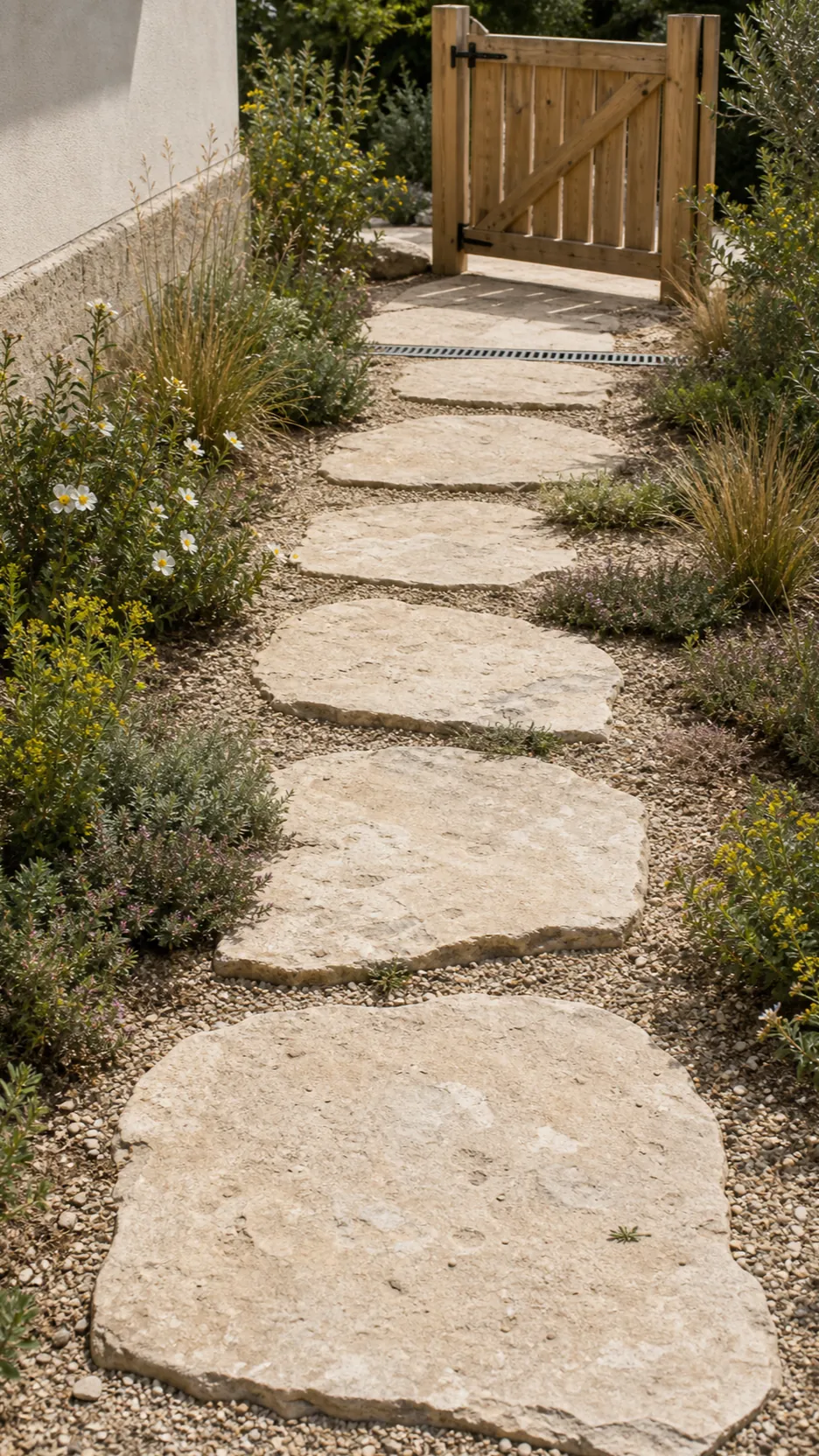
Lay a Limestone Stepping Path
Broad limestone or locally appropriate pale stone slabs make a garden feel established and sun-washed. Set them through gravel or low planting with a consistent, comfortable stride.
Use a compacted base and keep finished surfaces level to reduce wobble and trip edges. Avoid polished stone where rain can make it slippery.
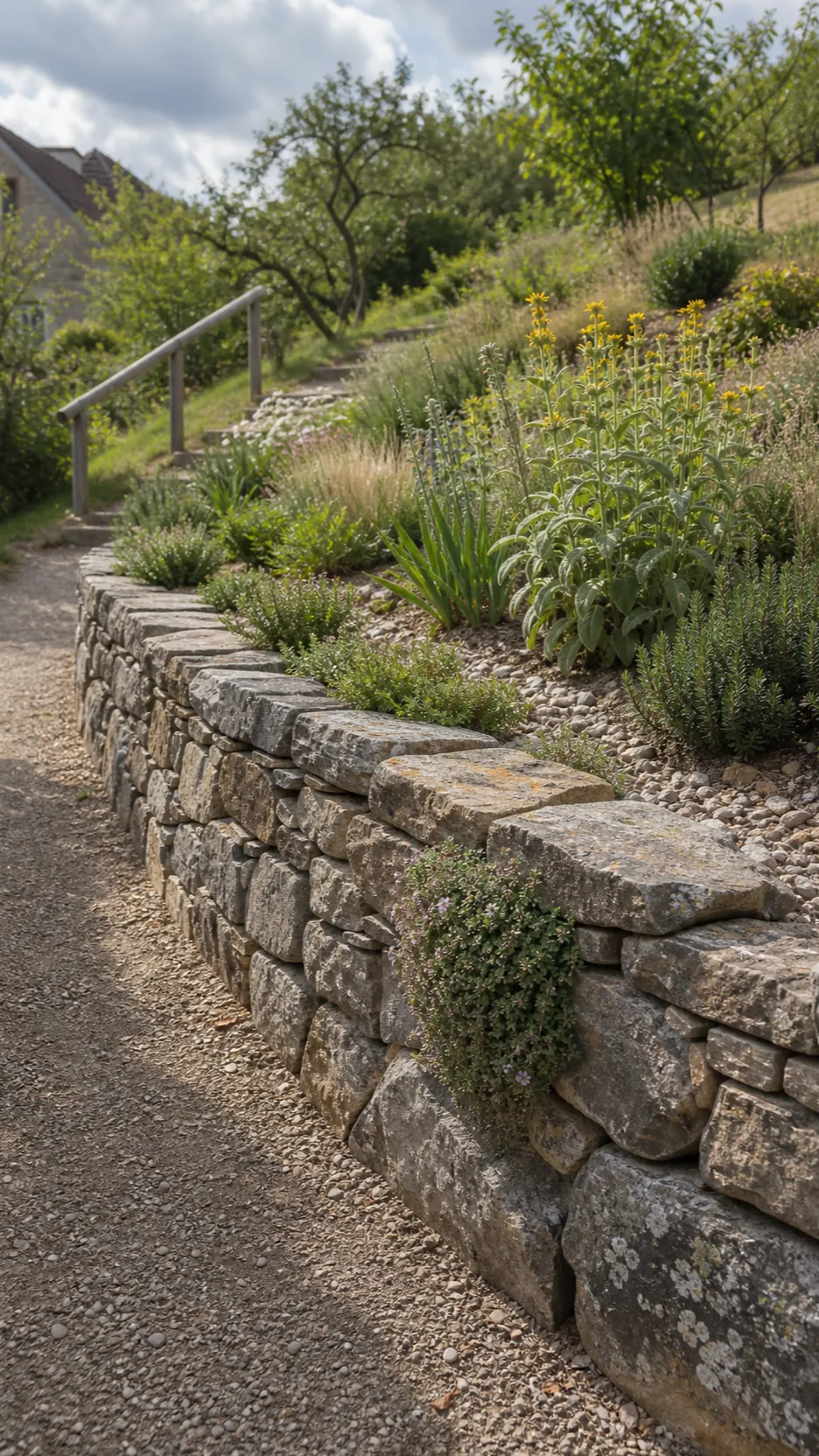
Shape a Curved Dry-Stone Terrace
On a slope, a low dry-stone retaining edge creates a level planting terrace and echoes old European garden walls. A gentle curve feels more connected to the land than a rigid strip.
Retaining structures need correct drainage and safe construction; bring in a professional where height, load, or local codes require it. Plant crevices only where roots will not compromise stability.
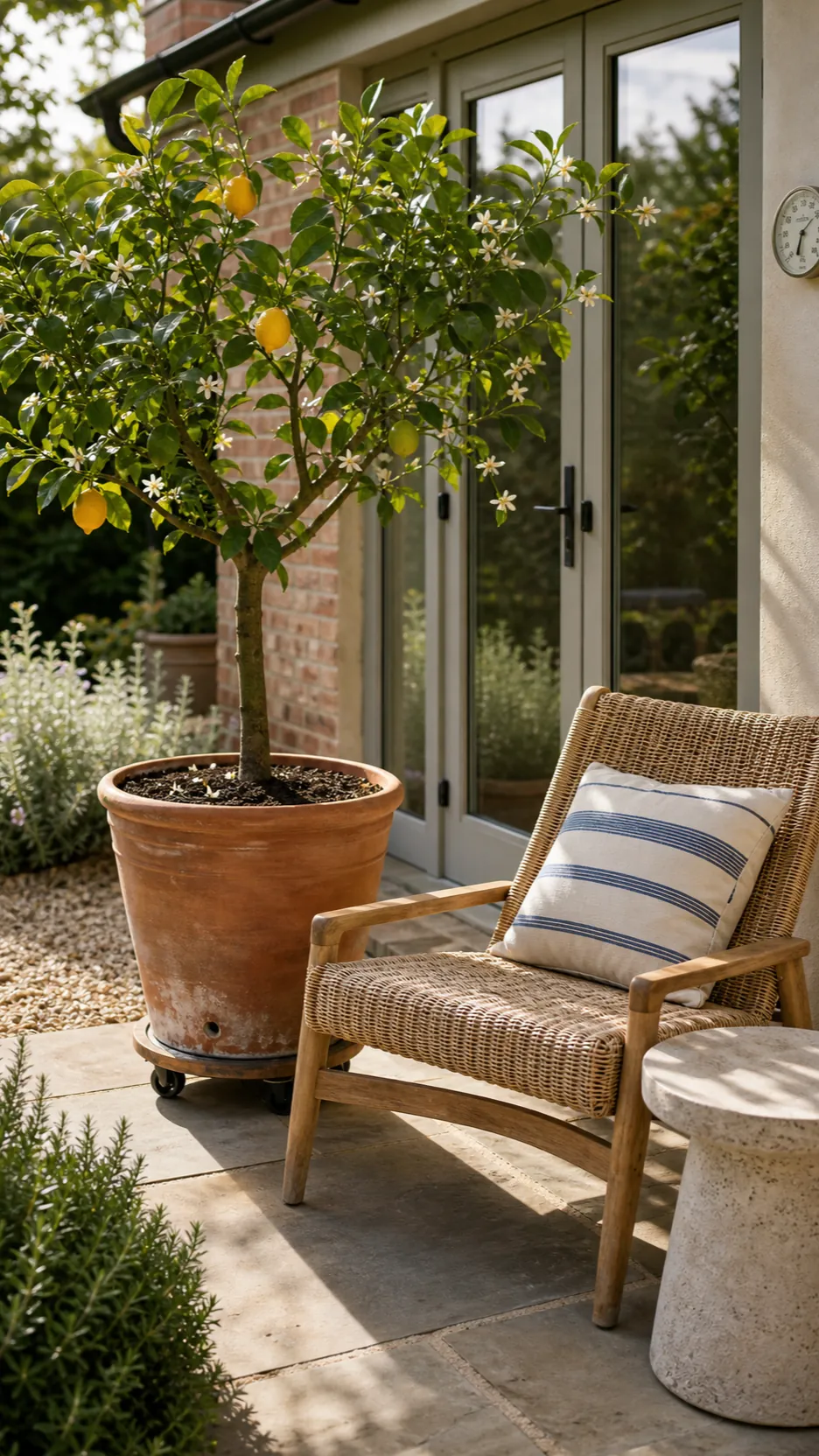
Grow Citrus Beside the Seating Area
Lemon or kumquat trees bring glossy foliage, blossom fragrance, and edible color close to daily life. In a mild climate, plant one in the ground; elsewhere, use a substantial container that can be protected seasonally.
Allow for thorns, falling fruit, and watering access. Position the pot beside rather than directly over the table, where it can frame the scene without crowding diners.
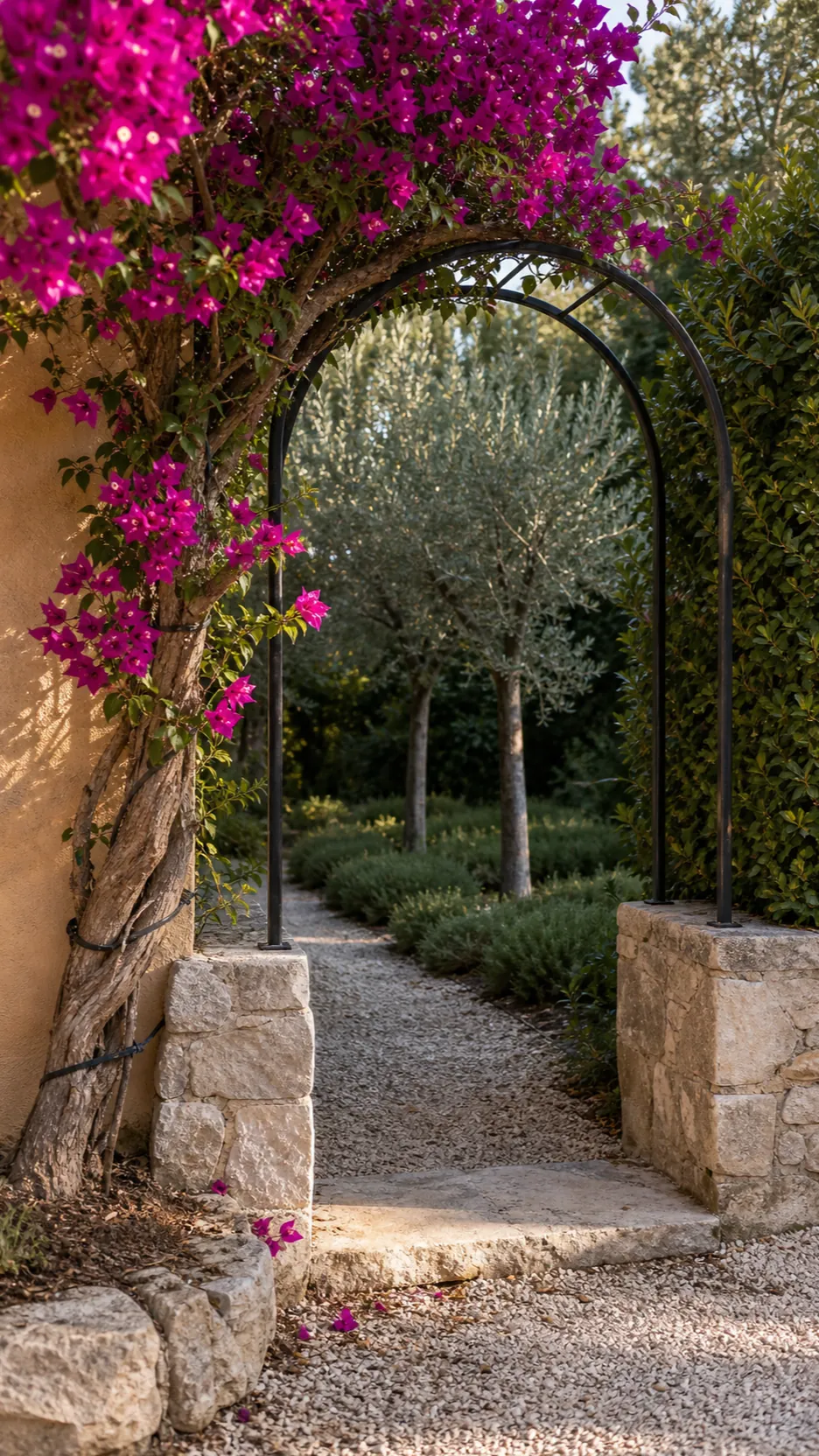
Train Bougainvillea Around an Arch
Where climate permits, bougainvillea makes a vivid threshold between garden rooms. Train the structural stems securely around a metal or masonry arch, keeping thorny growth away from face height.
In colder zones, substitute a hardy flowering climber suited to local conditions. The design idea is the same: a concentrated burst of color at a transition, not color scattered everywhere.
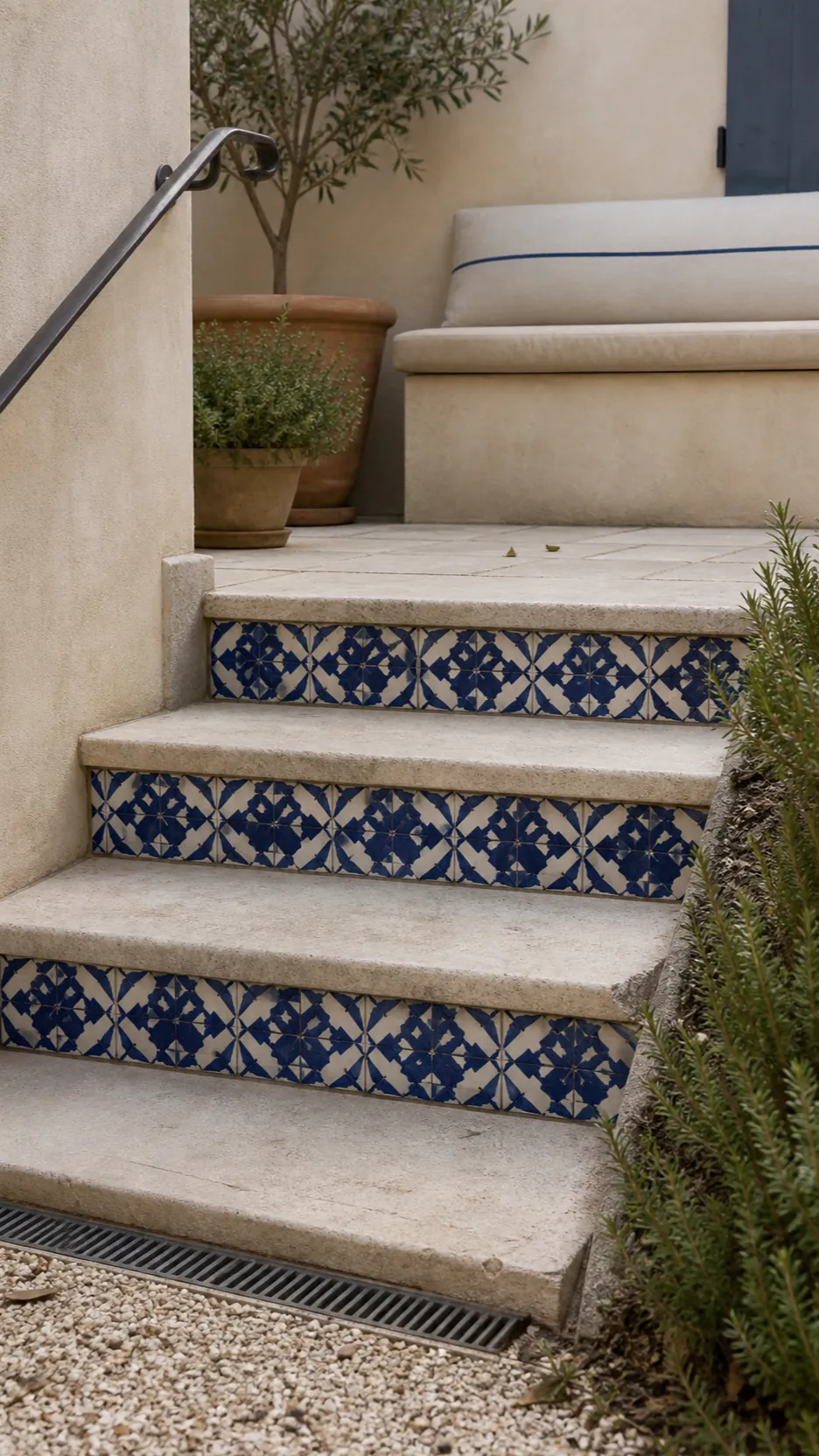
Mix Blue Tile With Quiet Stone
Use patterned blue tile as a small accent on stair risers, a bench face, or fountain basin. Surround it with plain limestone, gravel, and restrained planting so the craft detail remains special.
Limit the pattern family and repeat its blue once in a pot or cushion. Covering every surface turns a timeless courtyard into a busy theme set.
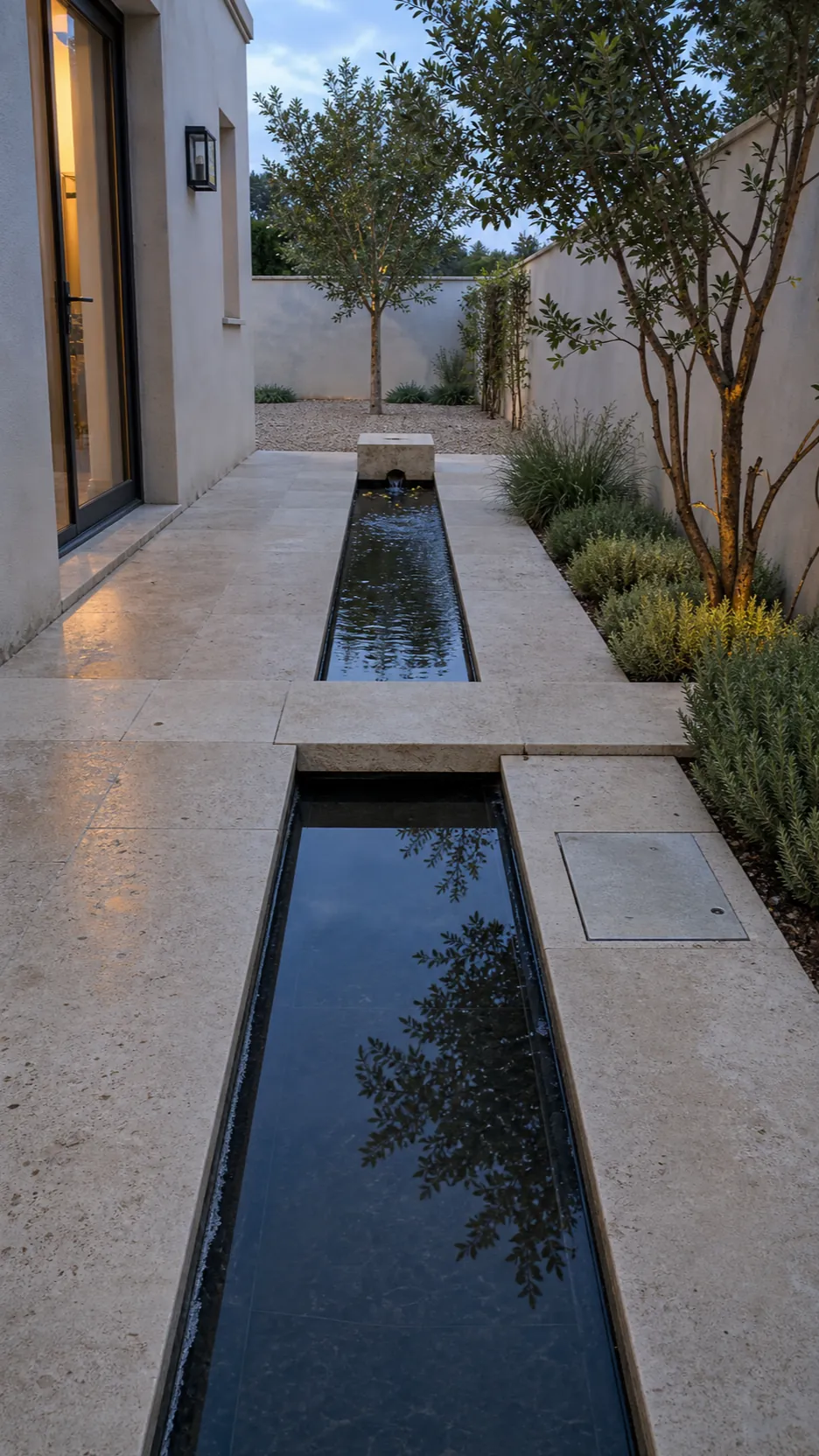
Design a Rill Along the Main Axis
A narrow recirculating water channel can stretch a compact courtyard visually and guide the eye toward a tree or sculpture. Keep the edges simple and the water shallow enough for the intended setting.
Plan filtration, child and pet safety, evaporation, and winter care before installation. A still dark-lined rill feels calmer and more modern than multiple decorative jets.
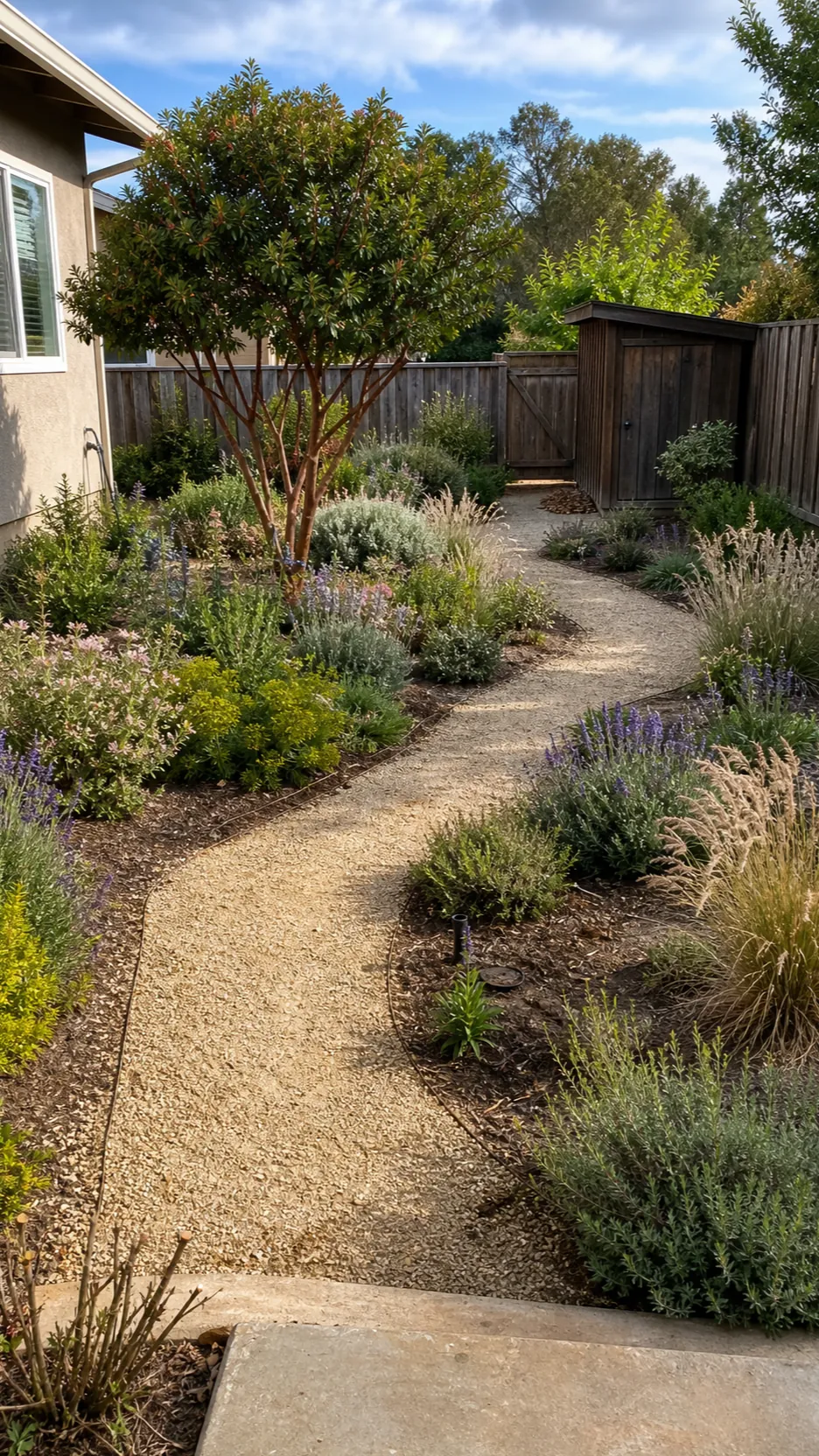
Replace Lawn With Textured Planting Islands
Break a thirsty lawn into broad islands of drought-adapted shrubs, grasses, perennials, and gravel paths. Repeating a few plant communities looks calmer than collecting one of everything.
Group plants by similar water needs and retain clear maintenance access. New low-water plants still require deep, consistent watering during establishment before they become resilient.
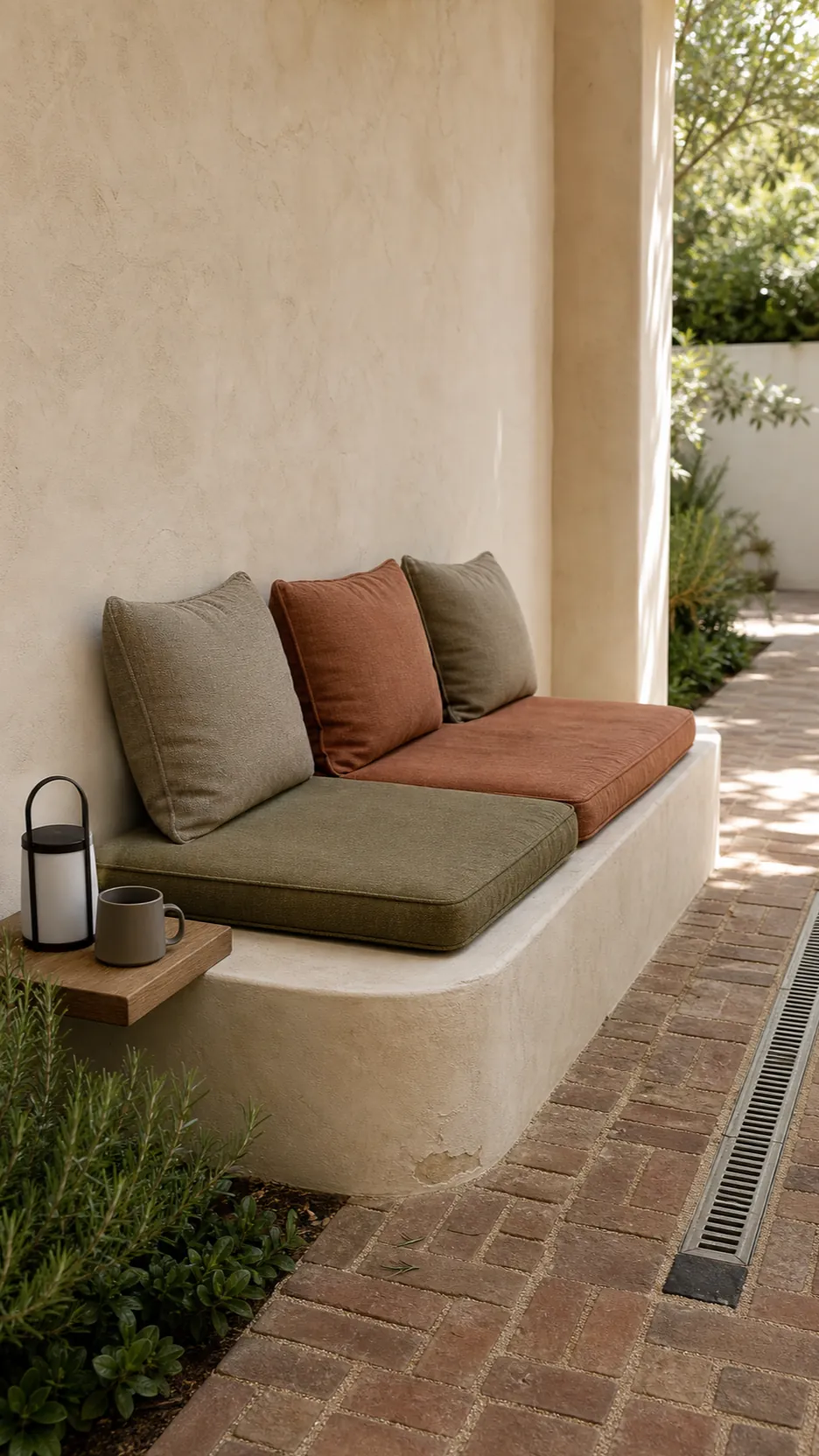
Add a Built-In Stucco Bench
A masonry bench uses a boundary efficiently and gives a courtyard a permanent, architectural feel. Finish it in warm off-white stucco and add washable seat pads in olive, rust, or faded blue.
Check seat height, depth, drainage, and back comfort before building. Leave a small gap behind cushions so rainwater and debris do not collect against the wall.
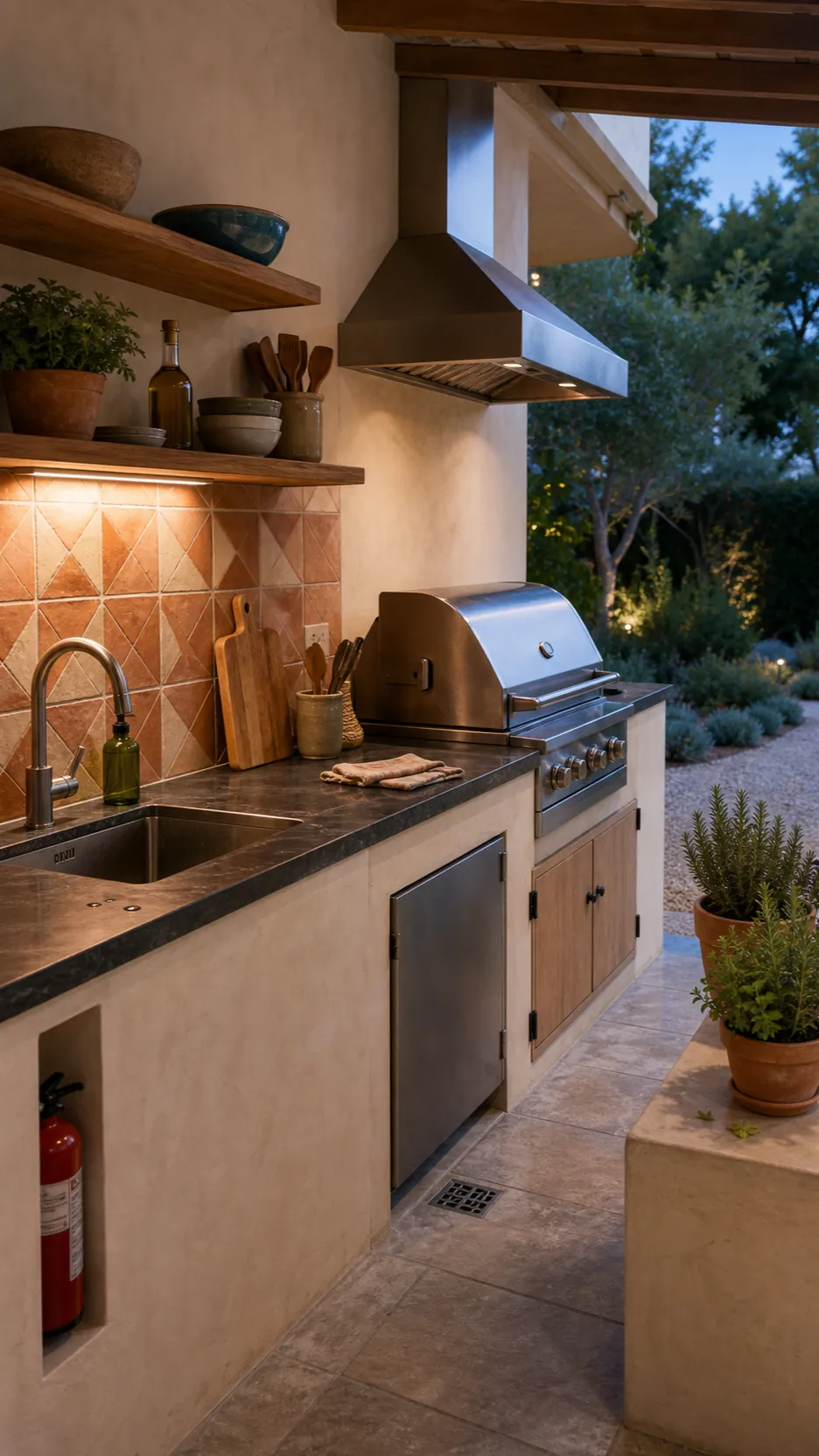
Define an Outdoor Kitchen With Clay and Timber
Give an outdoor cooking zone tactile warmth with lime plaster, handmade tile, timber shelving, and a durable stone counter. Keep the material palette compact so practical equipment does not overwhelm the garden.
Food-safe surfaces, ventilation, utilities, and fire clearances take priority. Place herbs within reach, but away from the hottest exhaust and busiest work path.
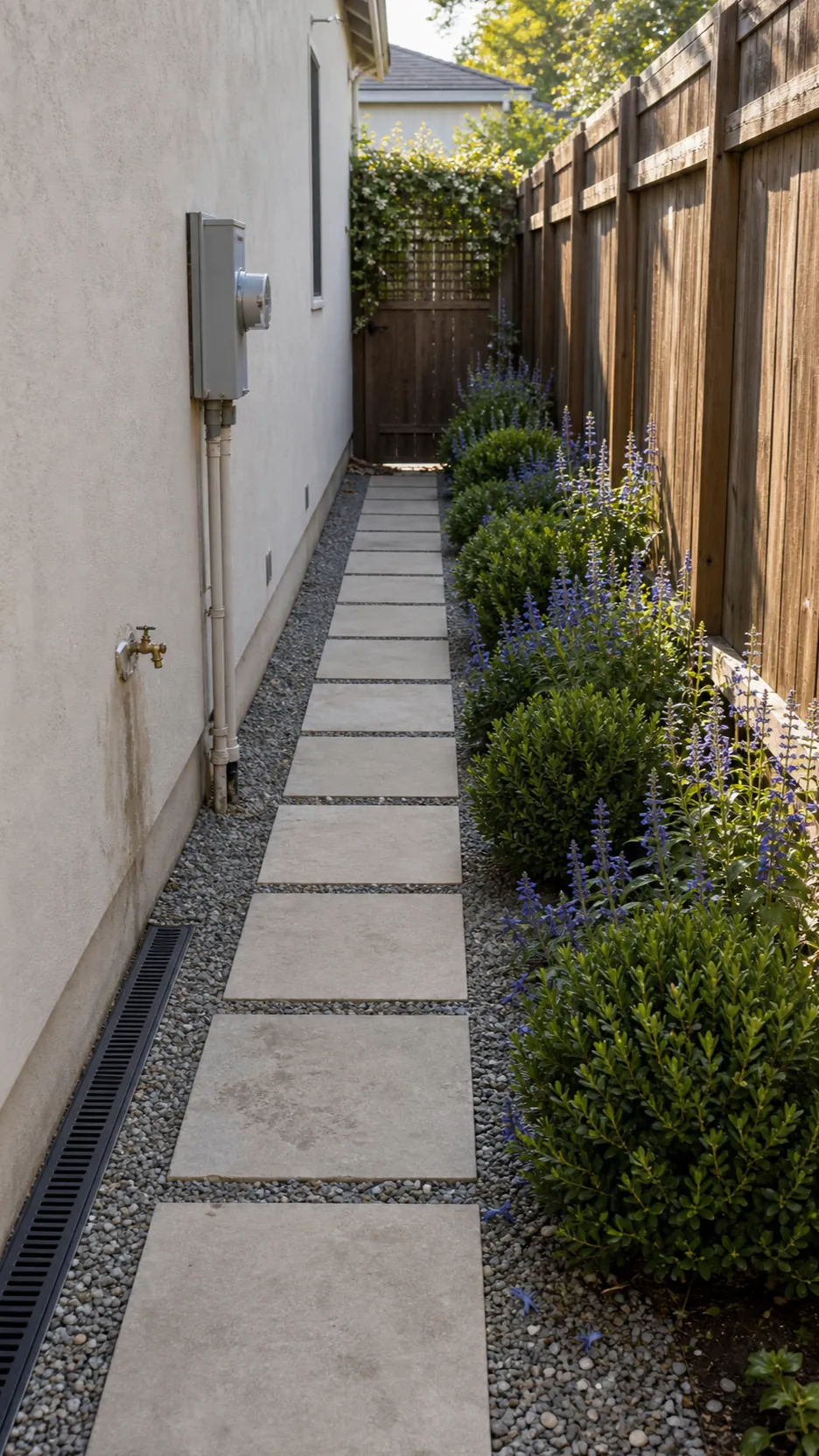
Use Repetition to Calm a Narrow Side Yard
In a slim passage, repeat one pale paver, one clipped shrub shape, and one flowering perennial at a steady rhythm. The controlled sequence makes the space feel intentional without narrowing it further.
Keep plants clear of gates, utilities, and the walking line. One fragrant climber at the far end creates a destination without adding clutter along both walls.
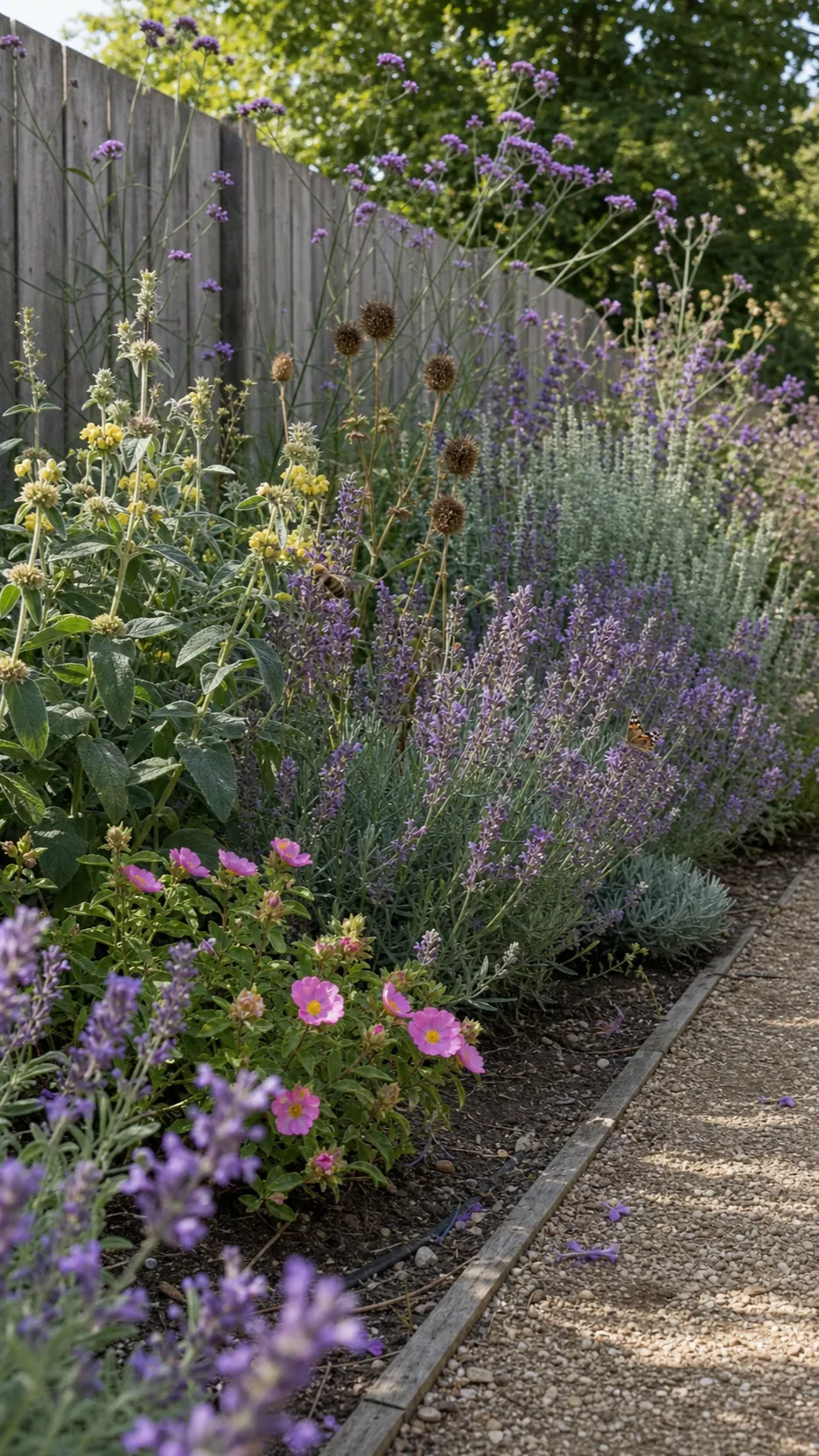
Plant a Pollinator-Rich Dry Border
Combine long-flowering, drought-adapted plants such as lavender, catmint, phlomis, verbena, rockrose, and locally suitable salvias. Repeat each in drifts so pollinators can forage efficiently and the border reads as a whole.
Choose noninvasive species appropriate to your region and stagger bloom times. Leave selected seed heads for winter texture and habitat instead of cutting everything at once.
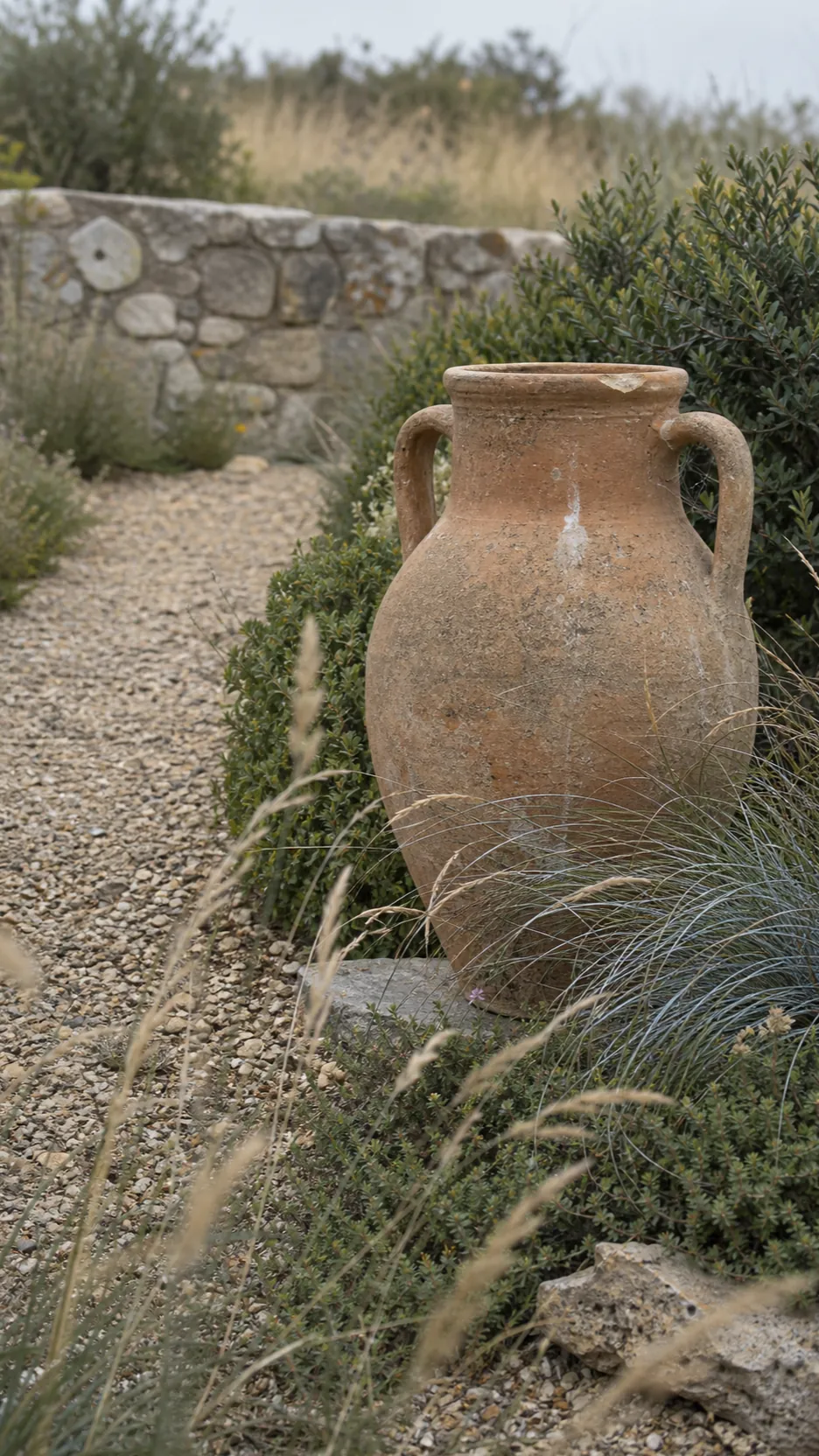
Set an Amphora Among Soft Grasses
One weathered clay vessel can become a quiet focal point when partially nested into airy grasses and low herbs. Turn it slightly off-axis and let planting overlap its base so it feels discovered rather than displayed.
Use one substantial piece instead of many small ornaments. Secure tall vessels against wind and ensure they cannot hold stagnant water where mosquitoes are a concern.
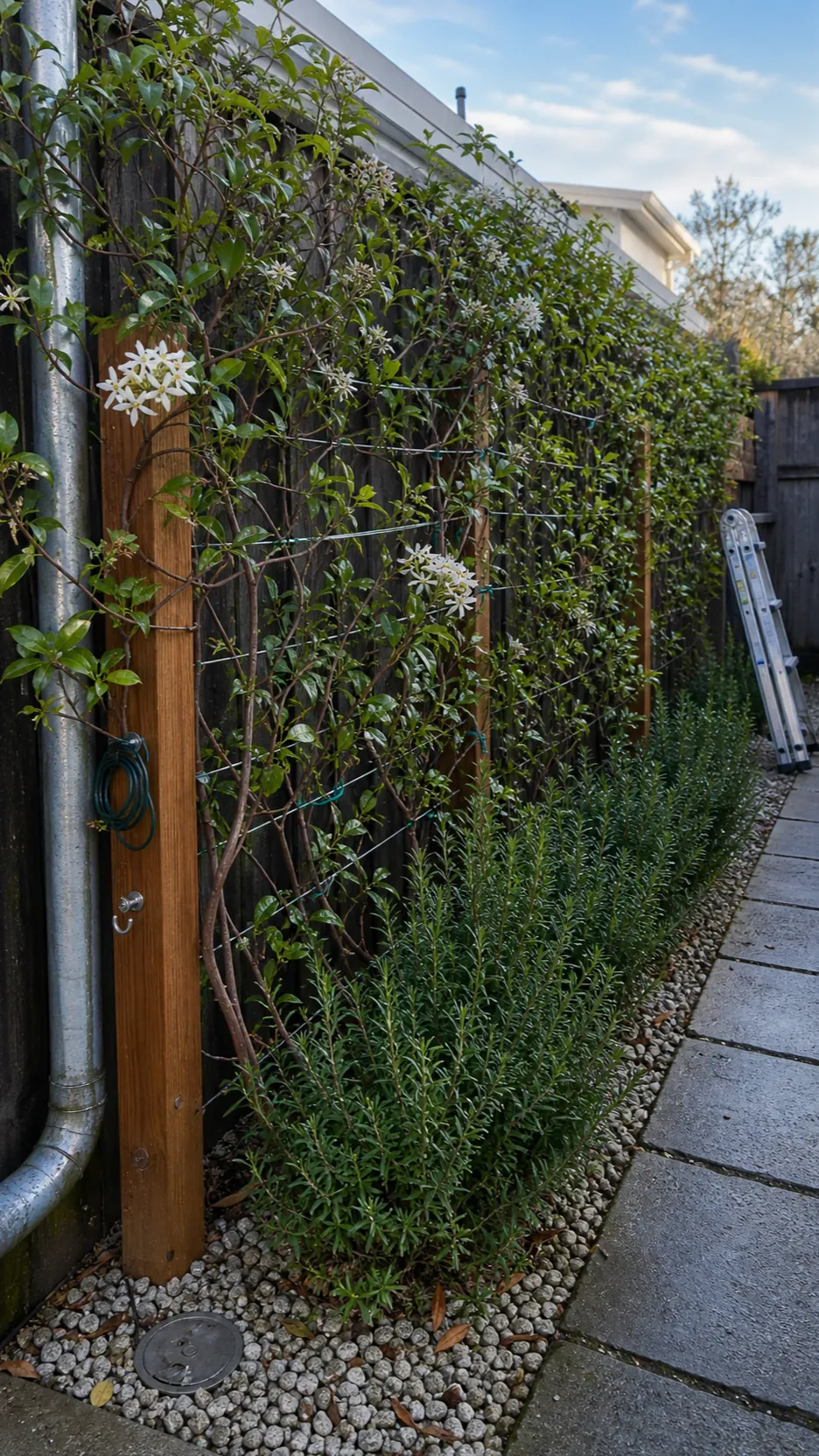
Clothe a Boundary With Star Jasmine
An evergreen scented climber softens a practical fence and gives a small courtyard depth. Train it on wires with deliberate gaps so the plant forms a breathable green plane instead of a heavy tangle.
Confirm hardiness and vigor for your region, and keep stems away from gutters and roofing. Pruning access matters as much as the first season’s effect.
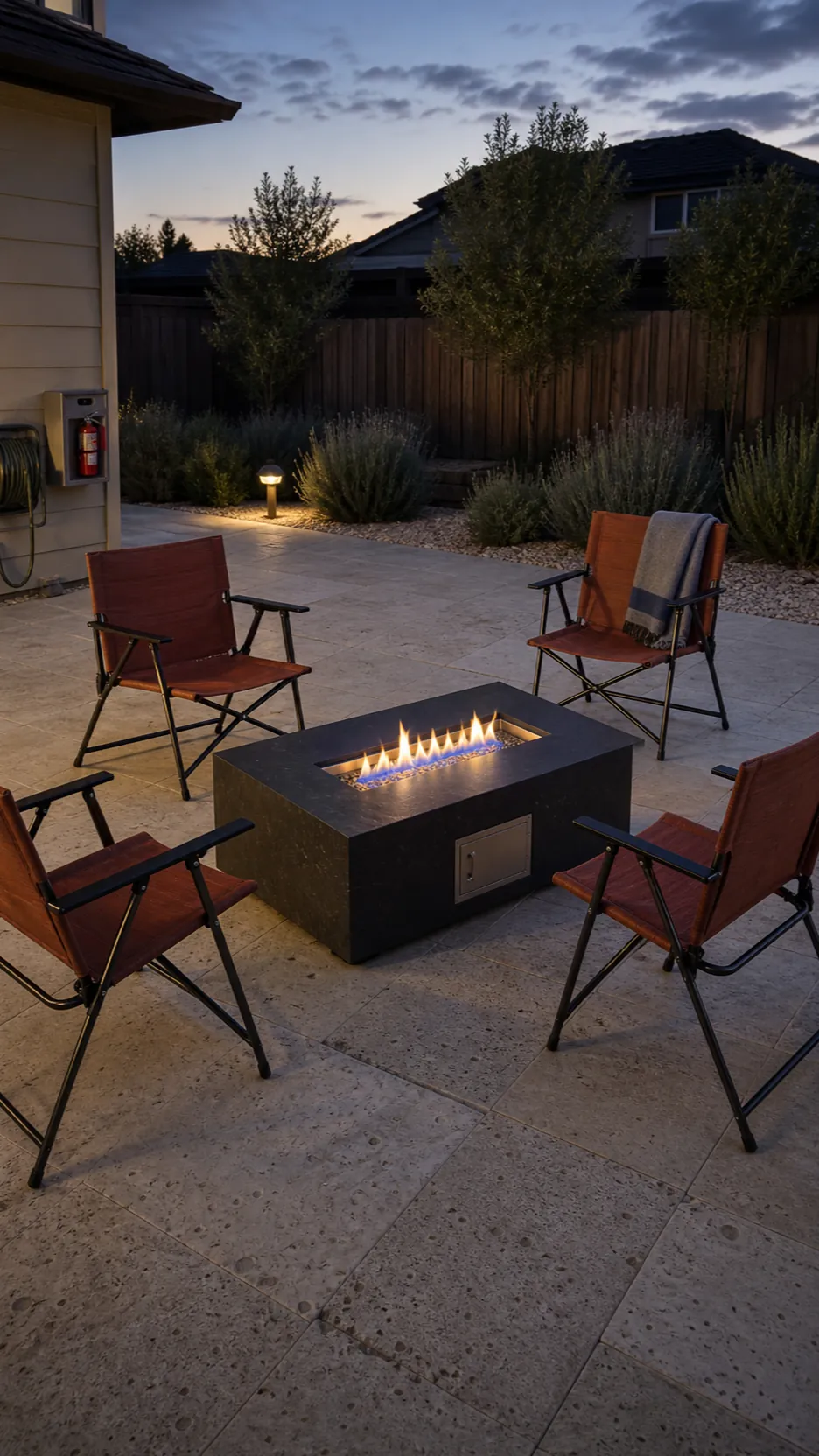
Make a Fireside Conversation Terrace
Arrange low chairs around a code-compliant fire feature on a broad noncombustible surface. Use aromatic planting outside required clearances and keep the seating loose enough for people to move comfortably.
Local fire rules, seasonal bans, prevailing wind, fuel storage, and ember risk govern this idea. In restricted areas, create the same circular conversation layout around a large lantern cluster or sculptural table.
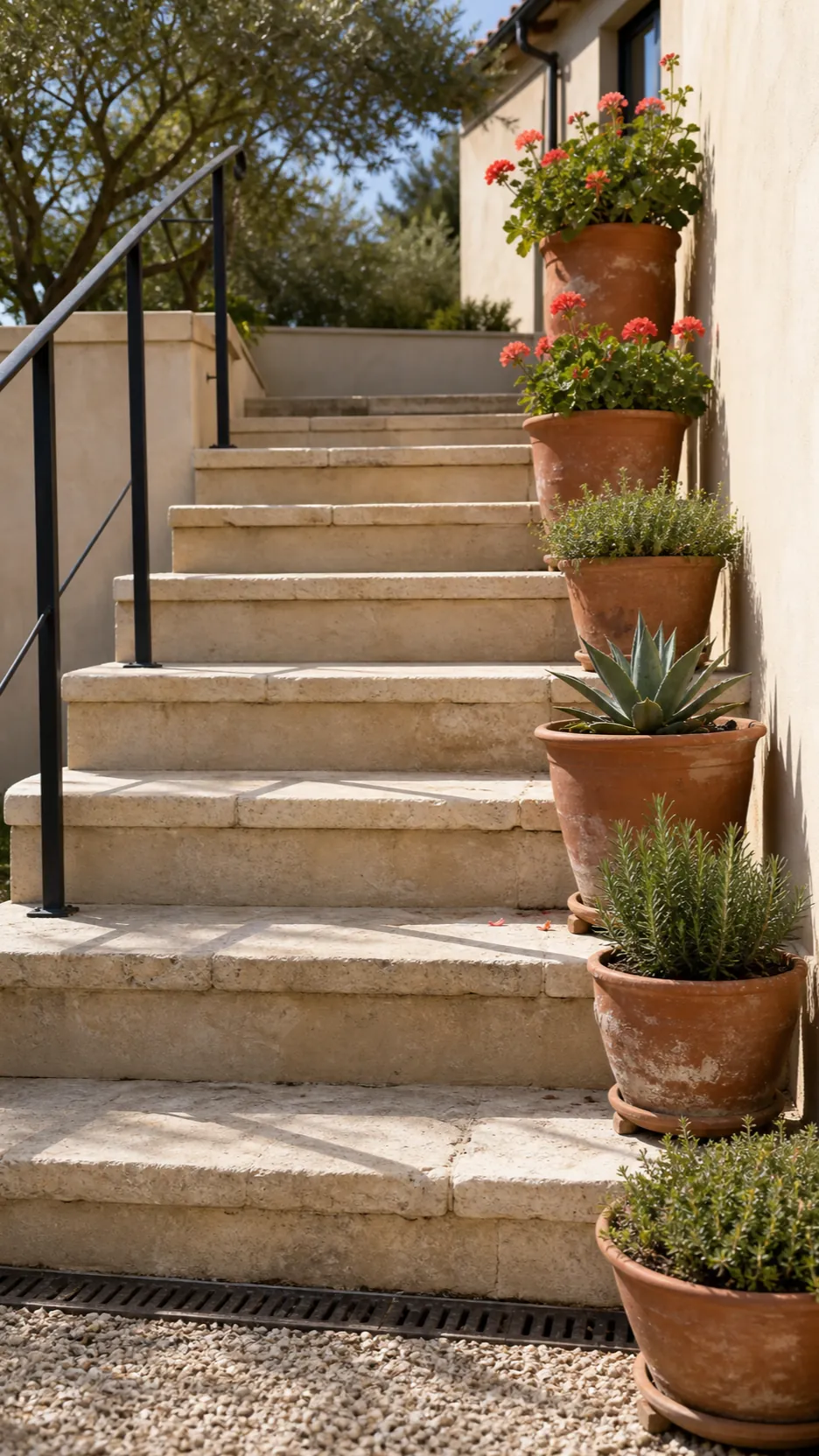
Turn Steps Into a Pot Display
Place terracotta pots along one side of broad exterior steps, varying height while repeating two or three plant types. The diagonal arrangement leads the eye upward and makes an ordinary level change memorable.
Never compromise the handrail or clear walking width. Use saucers or discreet feet where runoff could stain stone, and secure pots in exposed locations.
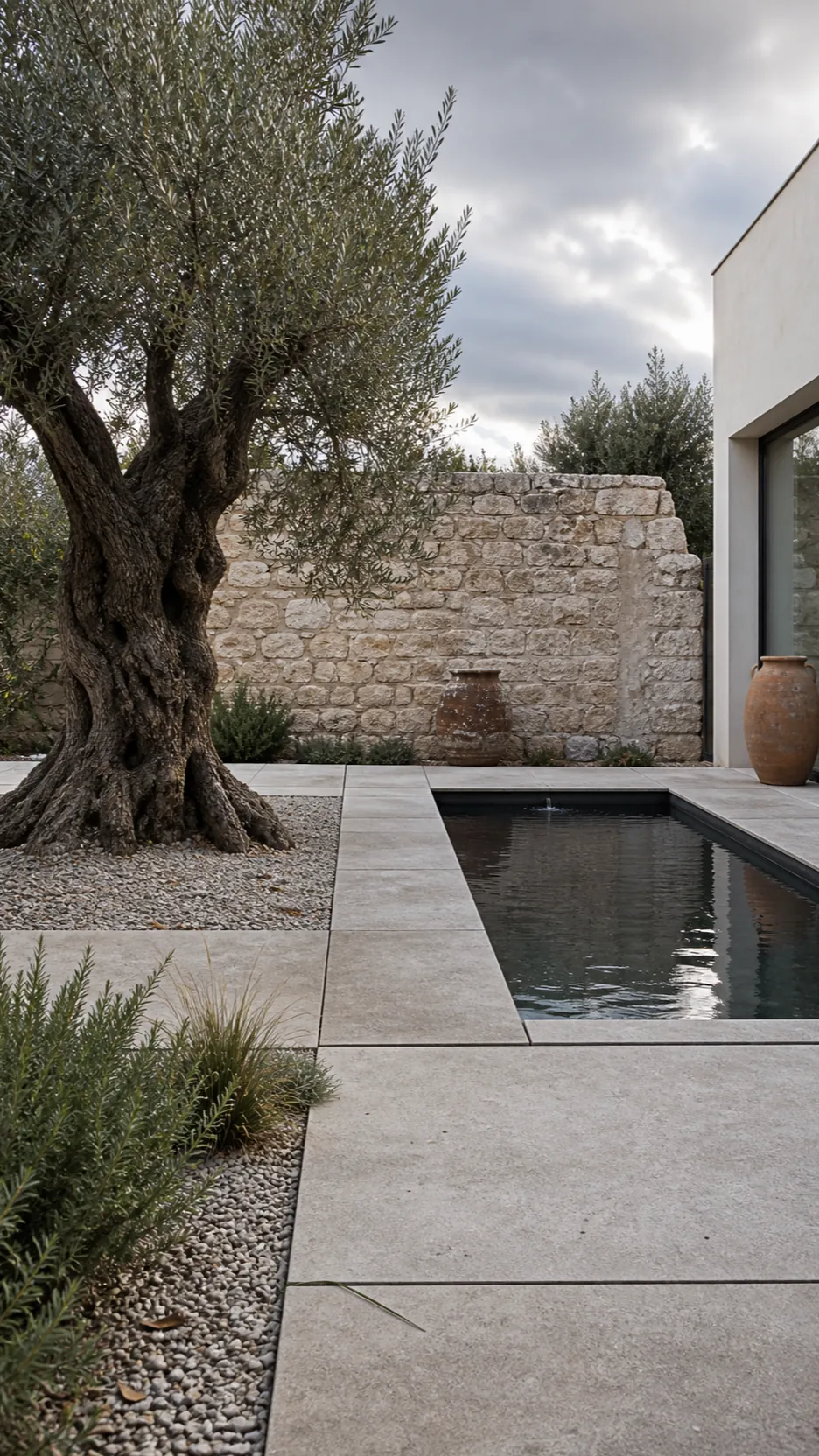
Blend Modern Lines With Ancient Materials
Pair large-format linear paving and a simple rectangular pool with rough limestone, old olive trunks, and hand-thrown clay. The contrast keeps modern Mediterranean garden design crisp without losing warmth.
Limit the project to a few honest materials and repeat their proportions. Too many finishes create visual noise and make future repairs harder to match.
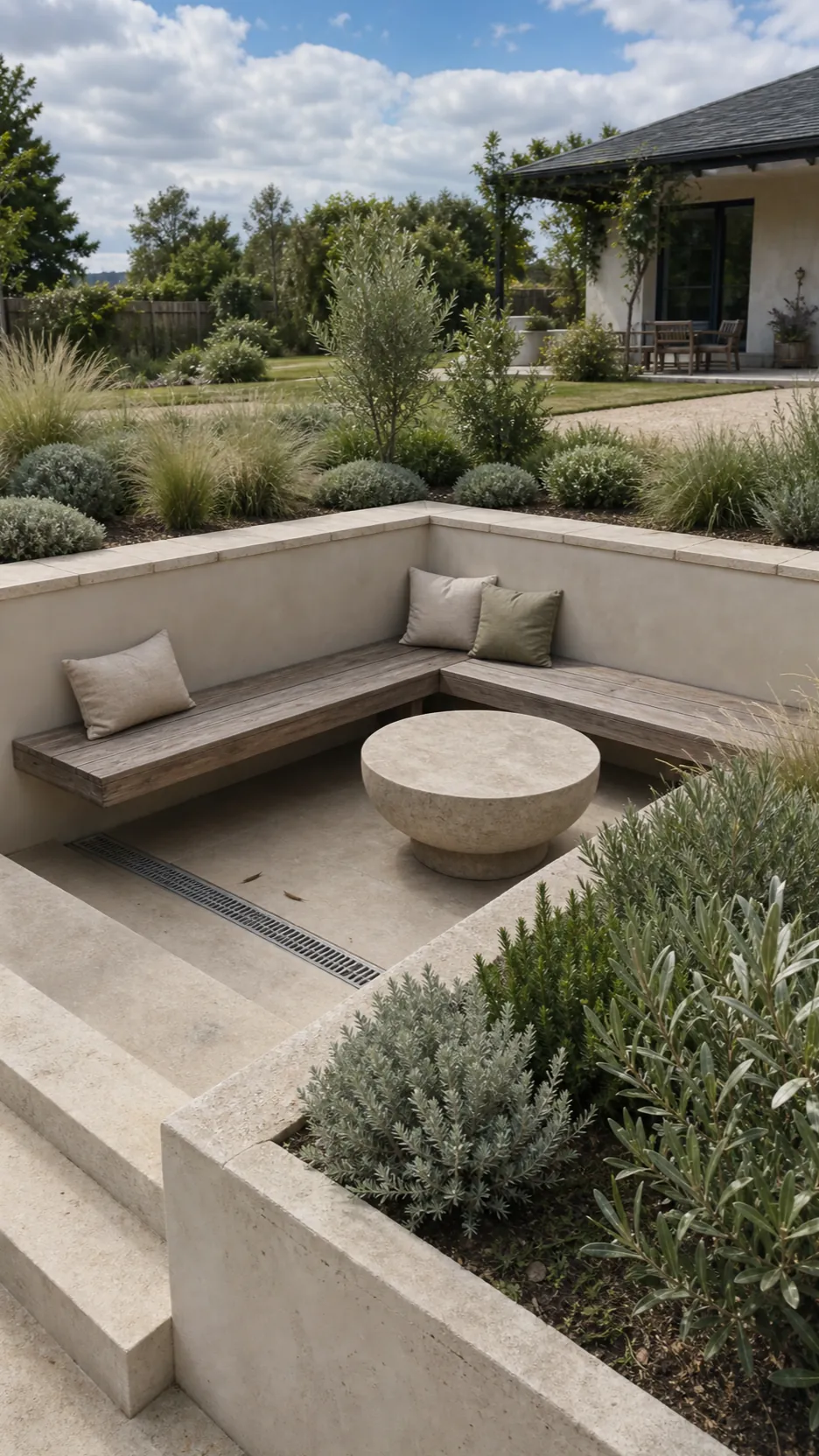
Shape a Sunken Lounge With Planted Edges
A shallow sunken terrace creates shelter and a sense of enclosure in an open backyard. Border the upper edge with low, wind-tossed planting so the lounge connects to the garden instead of reading as a pit.
Engineer drainage carefully and provide safe, visible steps. In wet climates or on flat clay, achieve a similar protected feeling with raised planters around a level terrace.
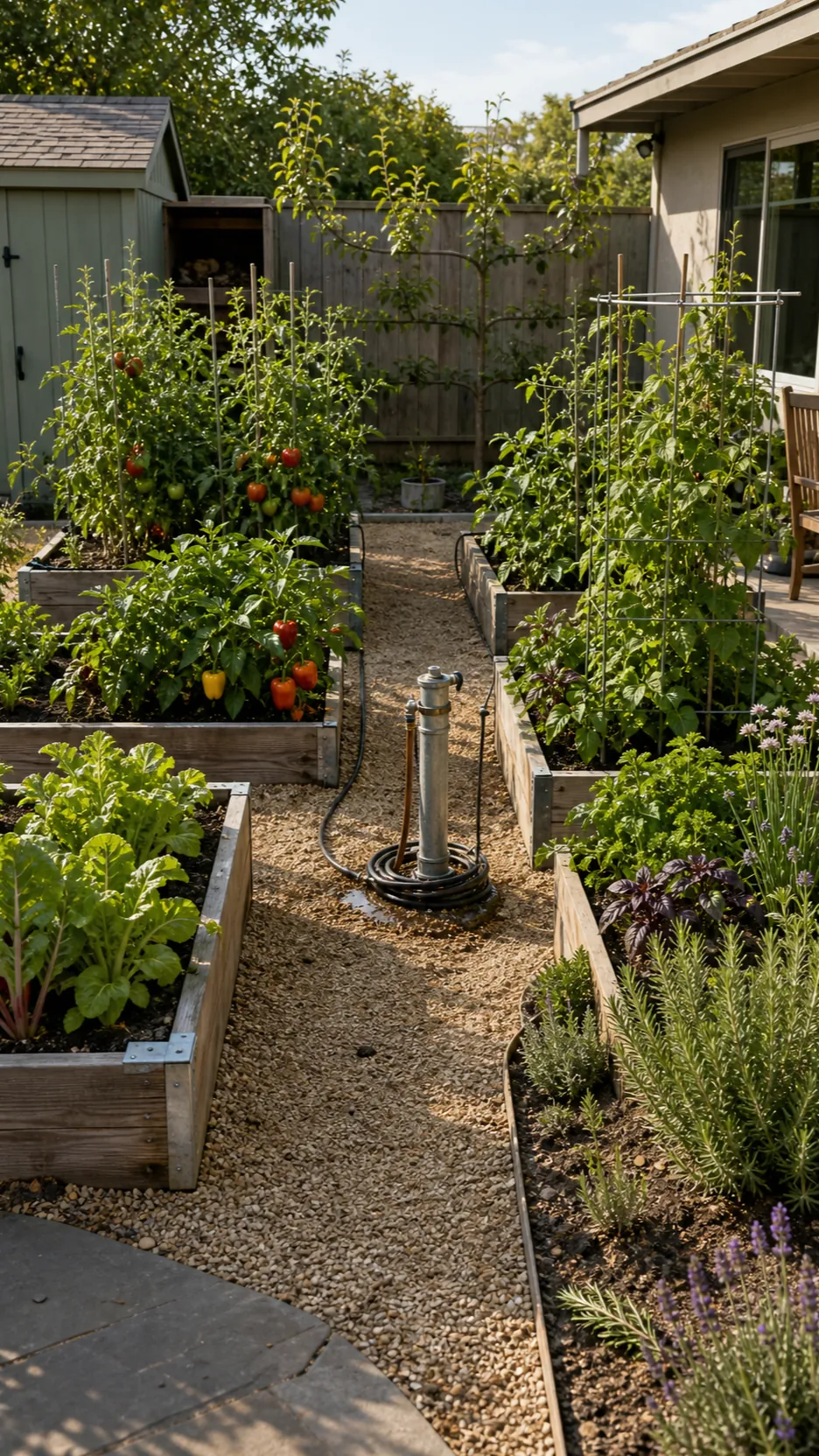
Create a Productive Kitchen Garden
Organize tomatoes, peppers, herbs, greens, and espaliered fruit in simple raised beds edged with gravel. A central water point and narrow working paths make the space beautiful because it functions well.
Keep higher-water vegetables in their own irrigation zone, separate from dry-loving rosemary and lavender. This hydrozoning avoids overwatering the plants that need sharp, lean conditions.
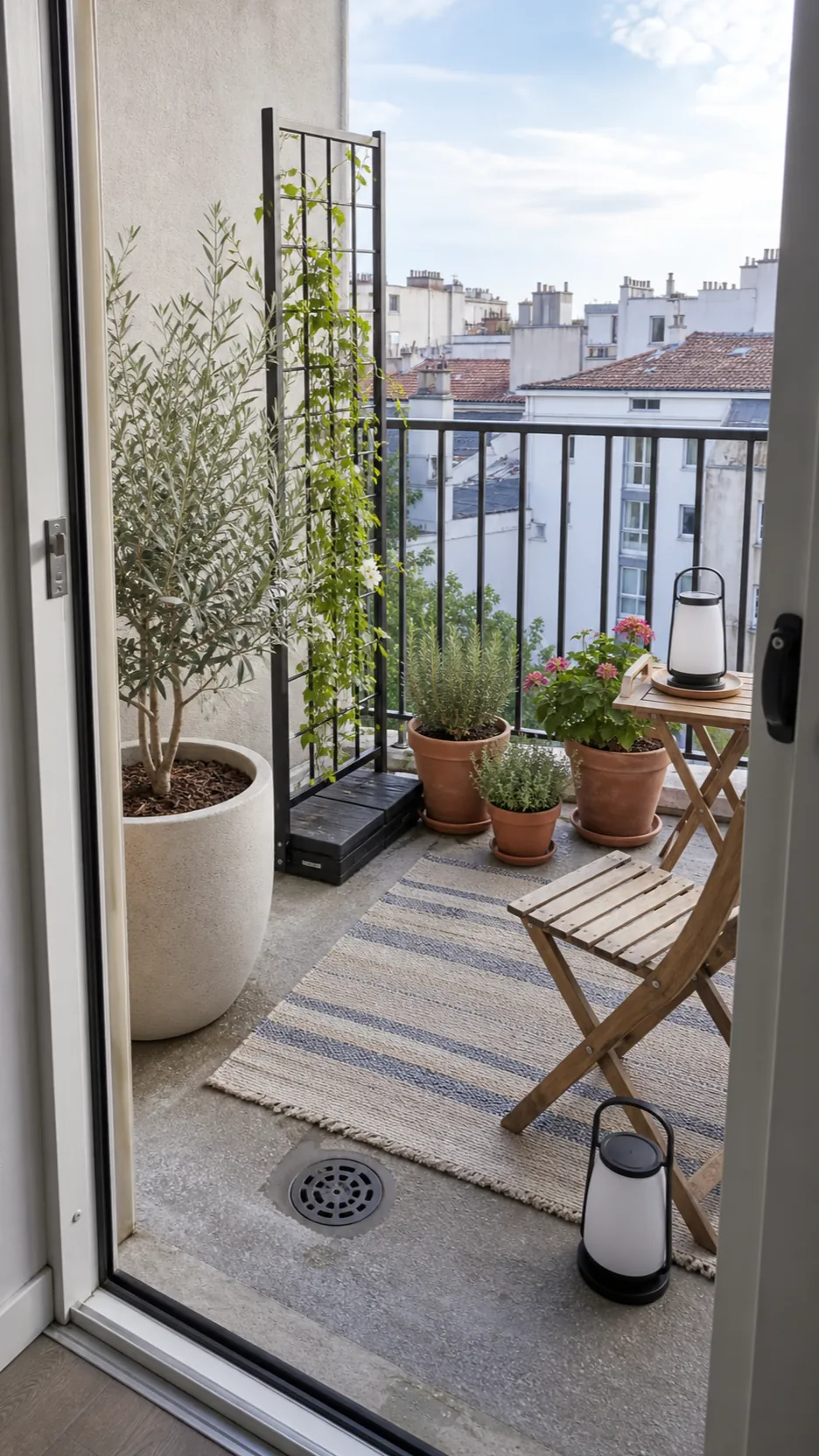
Design a Rental-Friendly Container Garden
Build the look entirely with movable pots, a freestanding trellis, outdoor rug, rechargeable lanterns, and folding furniture. Use one oversized container as the anchor and smaller herbs to fill gaps.
Check balcony load limits, drainage rules, wind exposure, and landlord requirements. Lightweight faux-stone containers can reduce weight while real terracotta is reserved for the most visible positions.
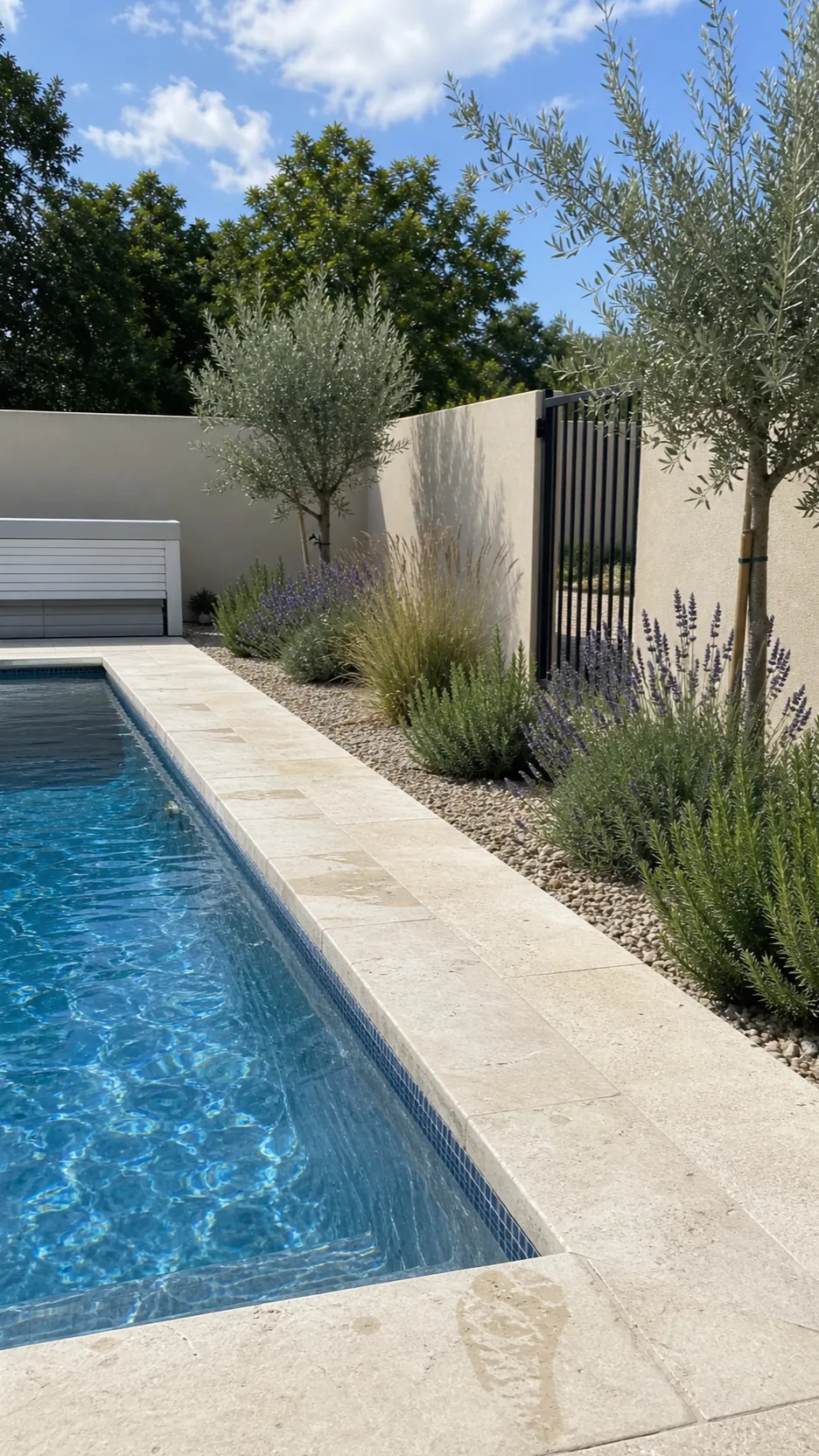
Soften a Pool With Olive and Lavender
Use a restrained band of silvery trees, clipped rosemary, lavender, and ornamental grasses beyond the splash zone. Pale stone coping and muted planting make blue water feel especially clear.
Select plants with low litter, nonaggressive roots, and tolerance for the site’s reflected heat. Keep thorny, bee-heavy, or messy plants away from narrow circulation routes.
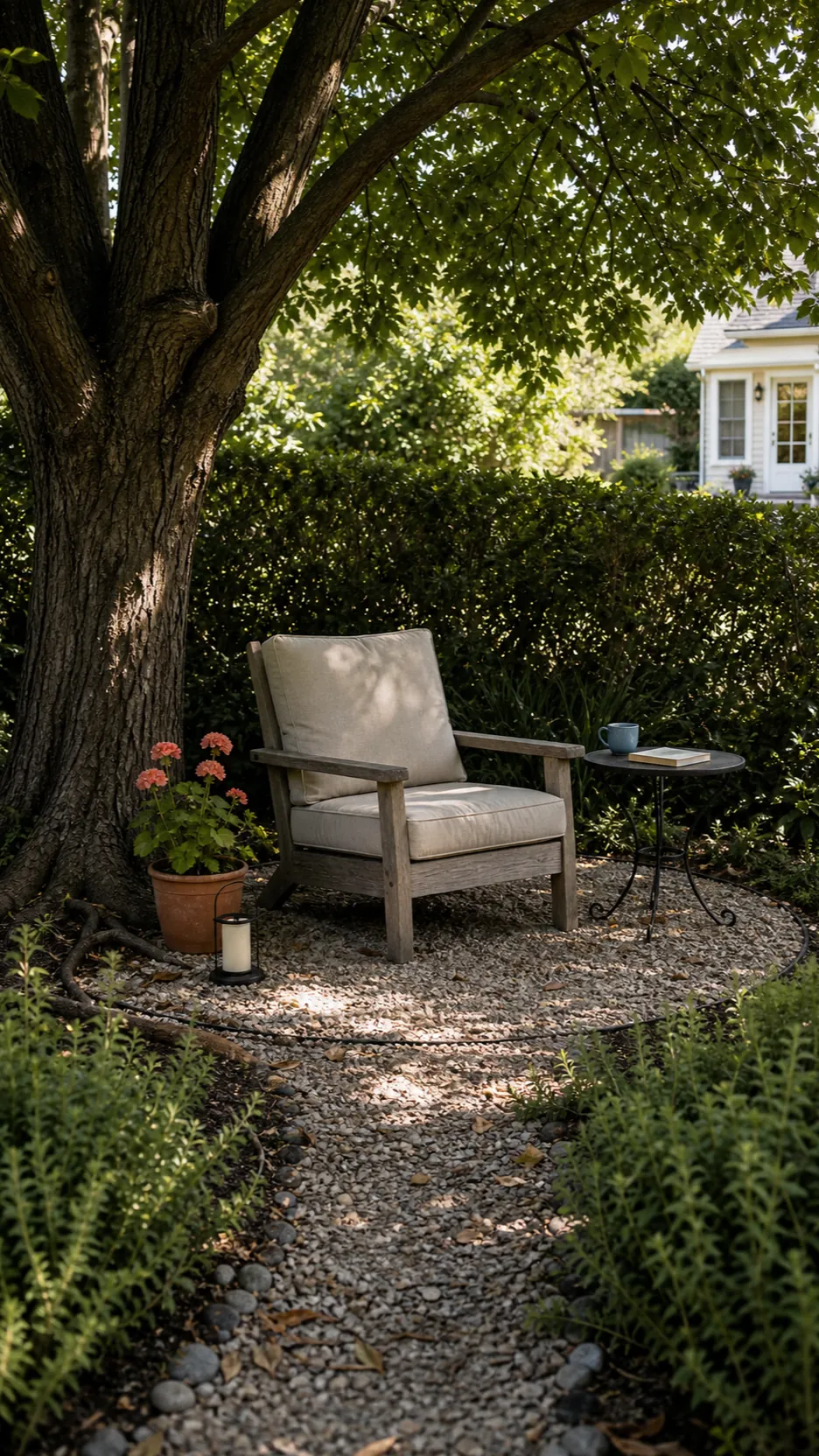
Carve a Reading Nook Beneath a Tree
Place one deep chair and a small table beneath existing dappled shade, then define the nook with a circular gravel pad. A pot of scented pelargonium and a low lantern are enough detail.
Observe the site at the hour you intend to use it. Shade, glare, wind, insects, and the distance to the house matter more than how the nook looks from a window.