
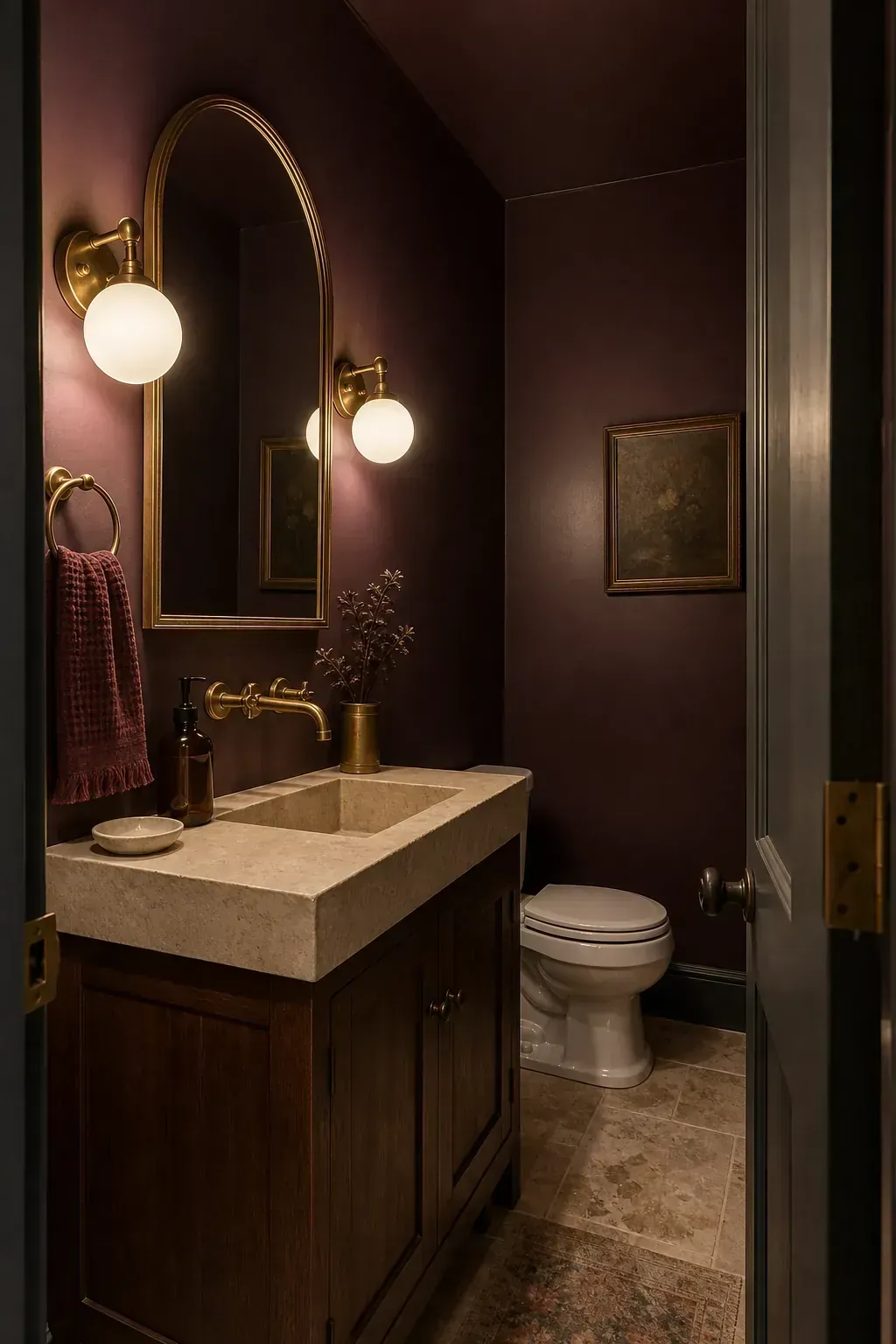
A half bath is one of the safest rooms in the house for a bold decorating decision. You spend minutes here rather than hours, so deep color, dramatic pattern, and low-glow lighting feel immersive instead of exhausting. The best moody half bathroom ideas do more than paint every surface black: they balance darkness with texture, reflection, flattering light, and enough practical contrast to keep the room easy to use.
Before committing, test large paint samples beside the vanity, flooring, and bulb you will actually use. A color that looks velvety at noon can turn muddy under a cool LED. Then choose one idea below as the room’s lead character and let the remaining finishes support it.
Color-Drench the Room in Oxblood
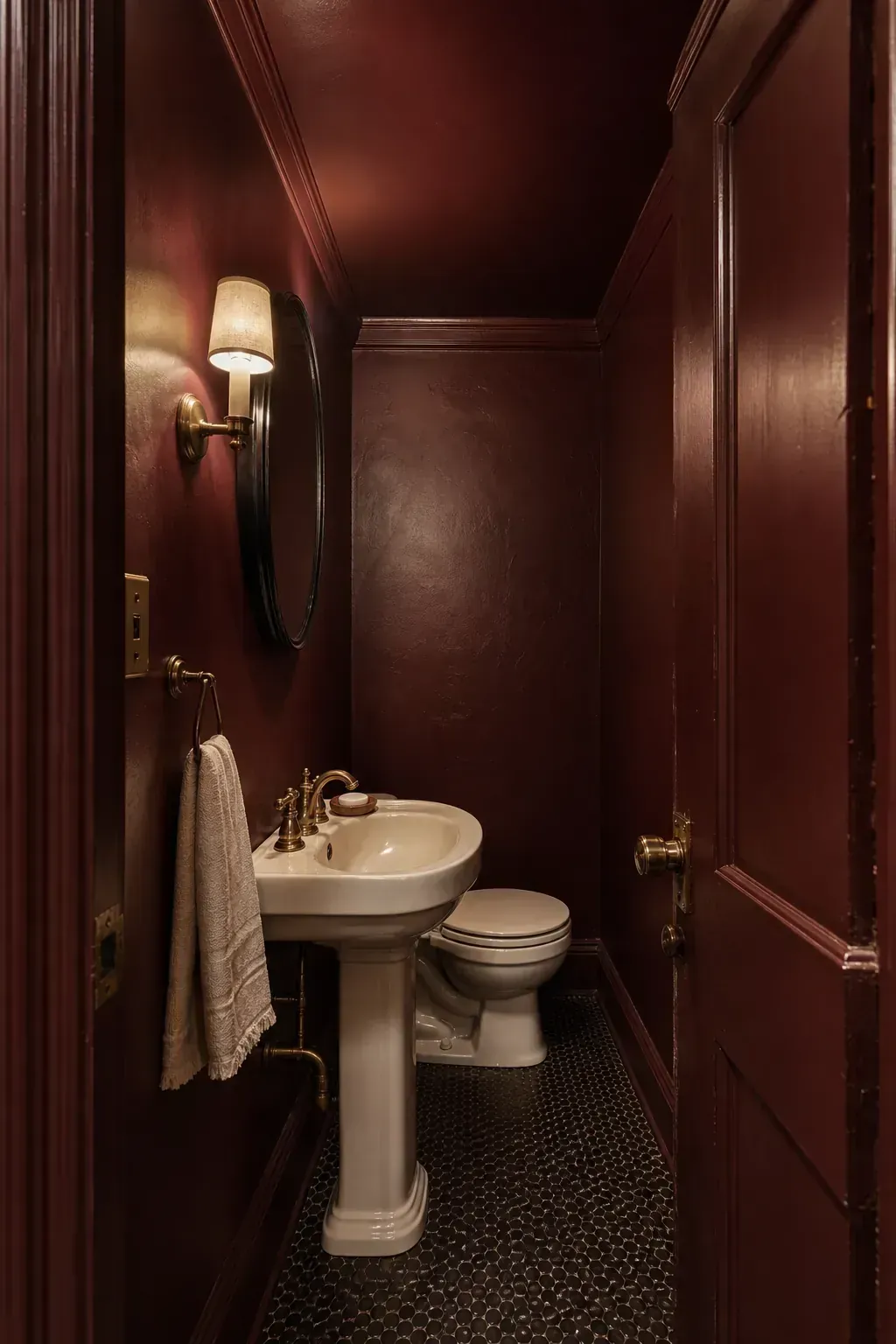
Wrap the walls, trim, door, and ceiling in a deep red-brown for a jewel-box effect. Oxblood reads warmer than black and makes aged brass look especially rich. Use an eggshell or bathroom-rated matte finish on walls and a tougher satin on trim. Repeating one color across every plane also blurs awkward corners, which helps a small moody bathroom feel intentional rather than chopped up.
Pair Inky Navy With Warm Walnut

Navy gives you drama without losing all color. A walnut vanity brings back warmth, visible grain, and a natural midtone that keeps the room from feeling flat. Choose a pale stone or off-white basin so guests can see the sink edge clearly. A slim floating vanity also preserves visible floor area, an easy way to make a dark moody powder room feel less crowded.
Use Charcoal Limewash for Movement
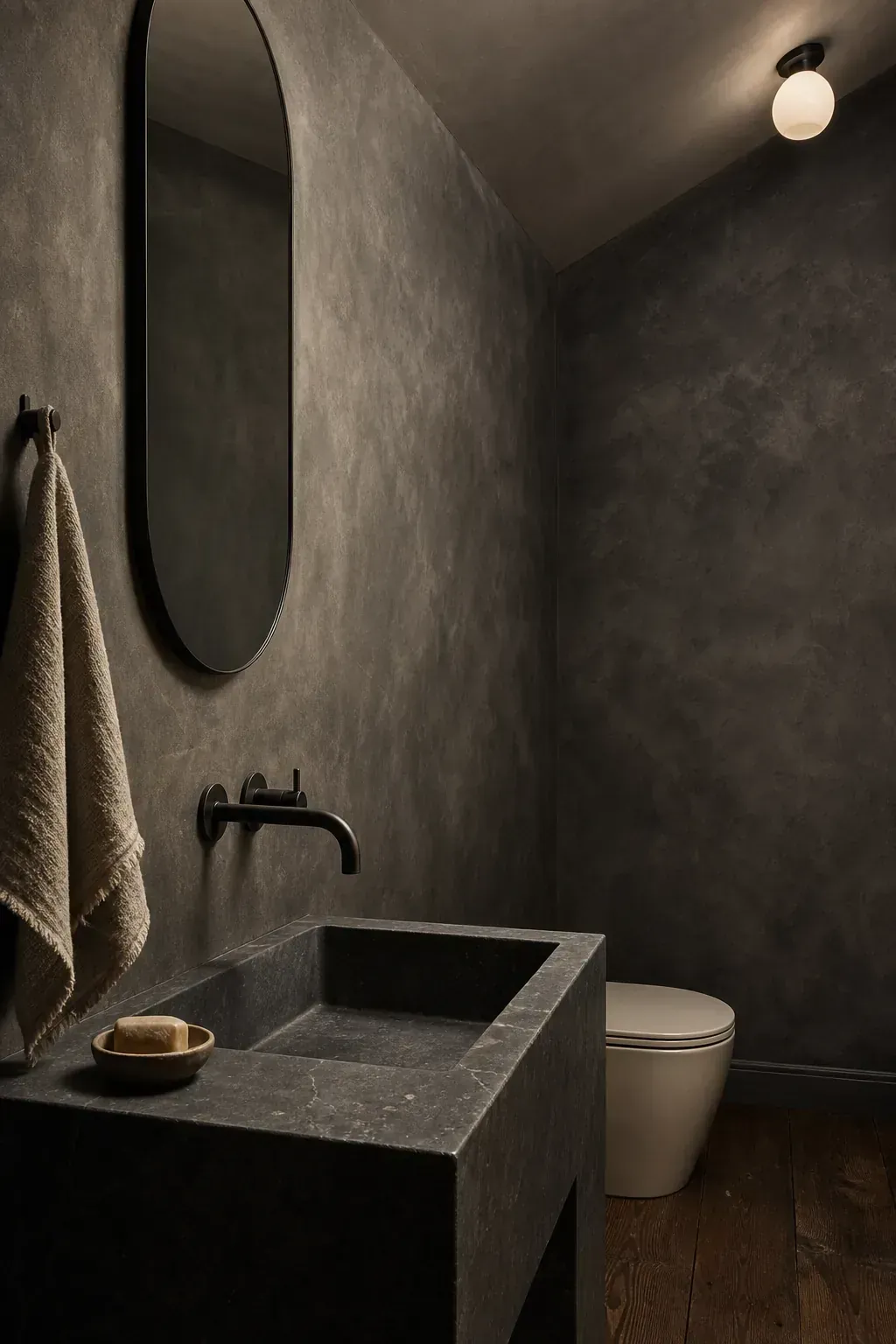
Flat charcoal can feel severe; limewash gives the same depth a soft, cloudy movement. The variation catches side light and disguises minor wall irregularities. Confirm the product and sealer are suitable for a bathroom, especially around the basin splash zone. Keep the remaining materials quiet—dark oak, honed stone, and unlacquered brass are enough.
Hang an Overscale Botanical Wallpaper
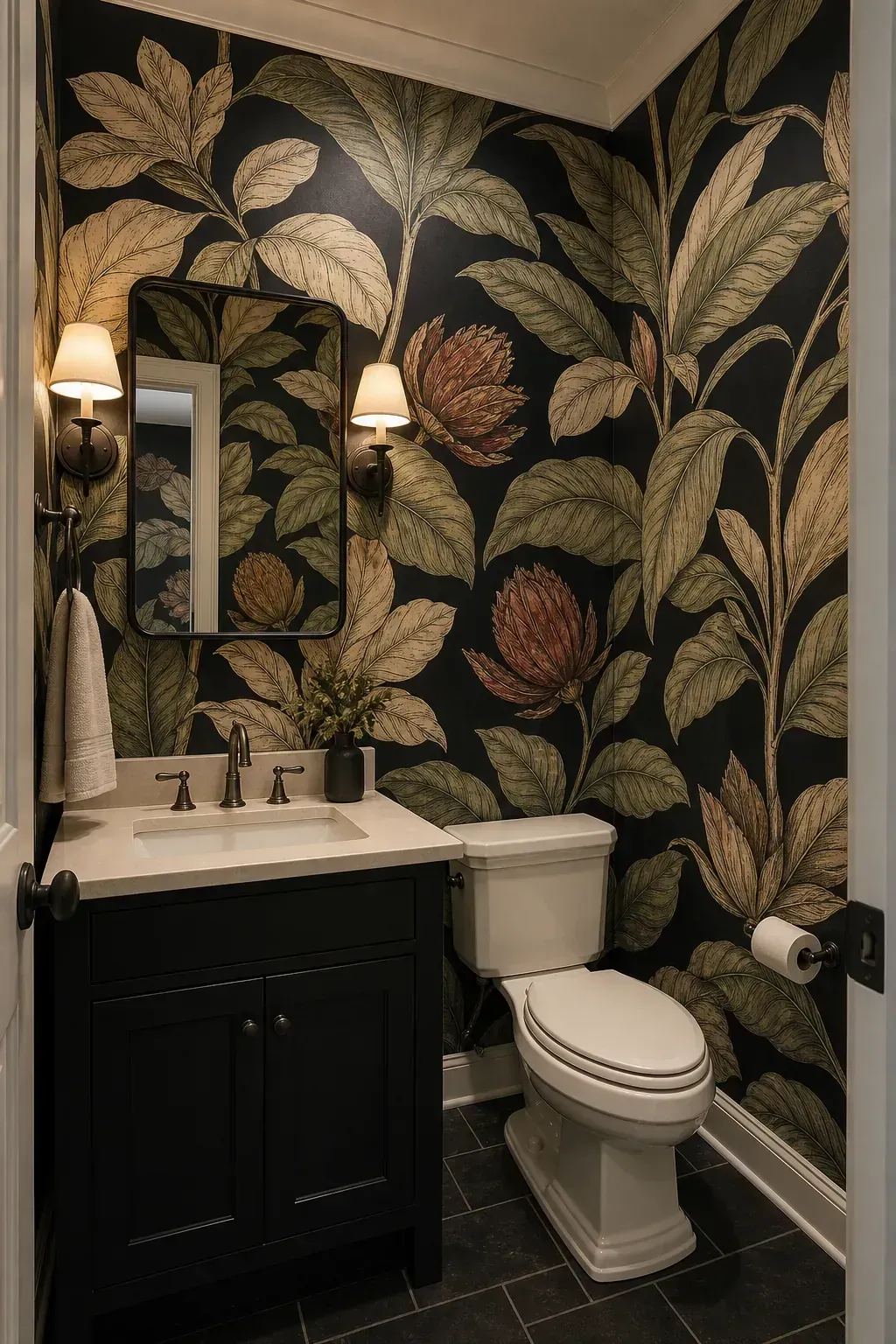
A large botanical repeat can make a tiny room feel more expansive than a fussy miniature print. Look for an ink, forest, or aubergine ground with leaves that have distinct highlights. Continue the paper around corners instead of treating it as a single accent wall. A full-room pattern creates immersion; one isolated strip can look hesitant.
Ground Emerald Walls With Black Marble
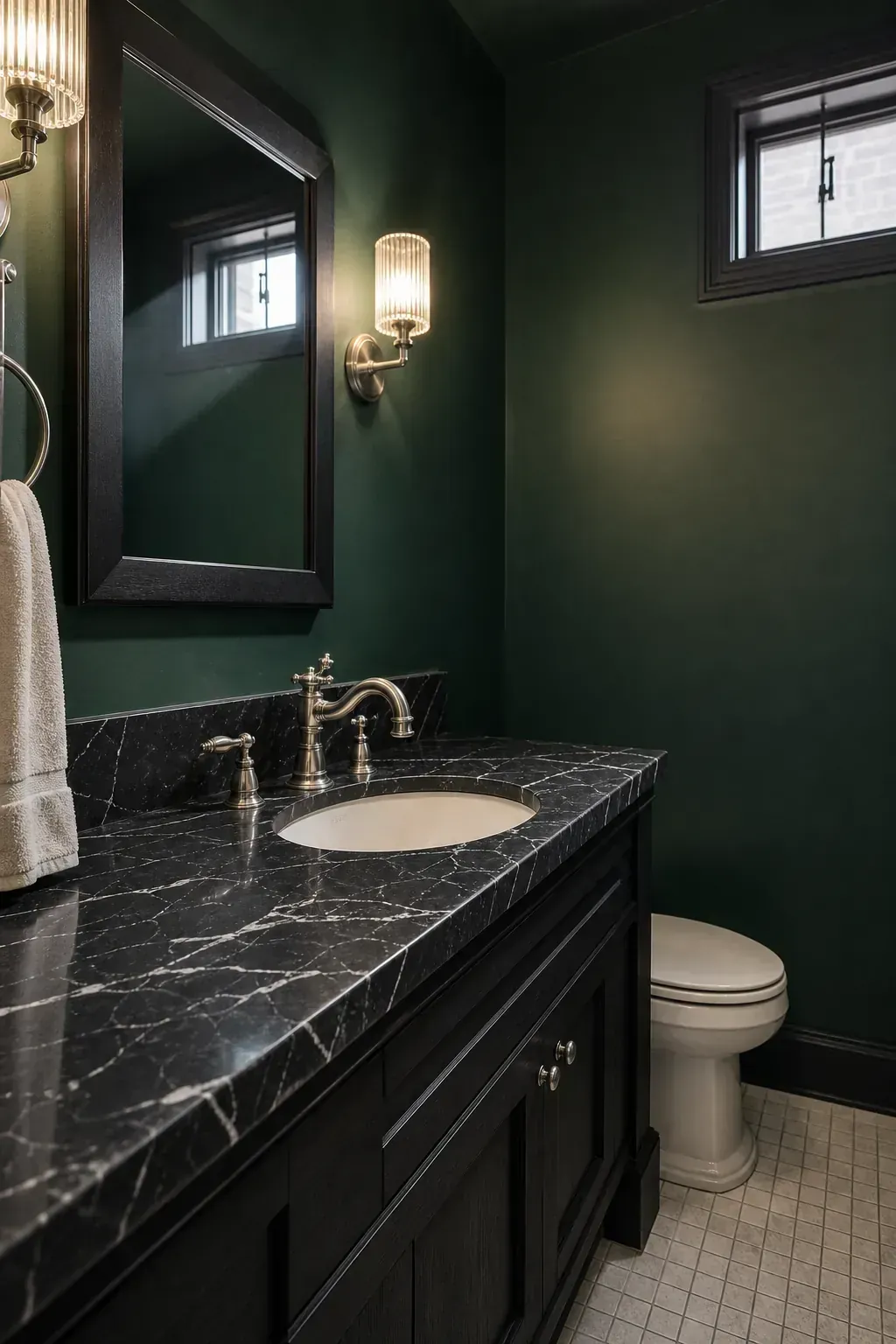
Deep emerald becomes sophisticated beside black marble with fine white veining. Let the stone be the room’s sharp graphic element and repeat black only in one or two places, such as the mirror frame and door lever. Warm sconces prevent the green from skewing blue, while a white toilet keeps daily cleaning practical and visible.
Install Reeded Wood Paneling
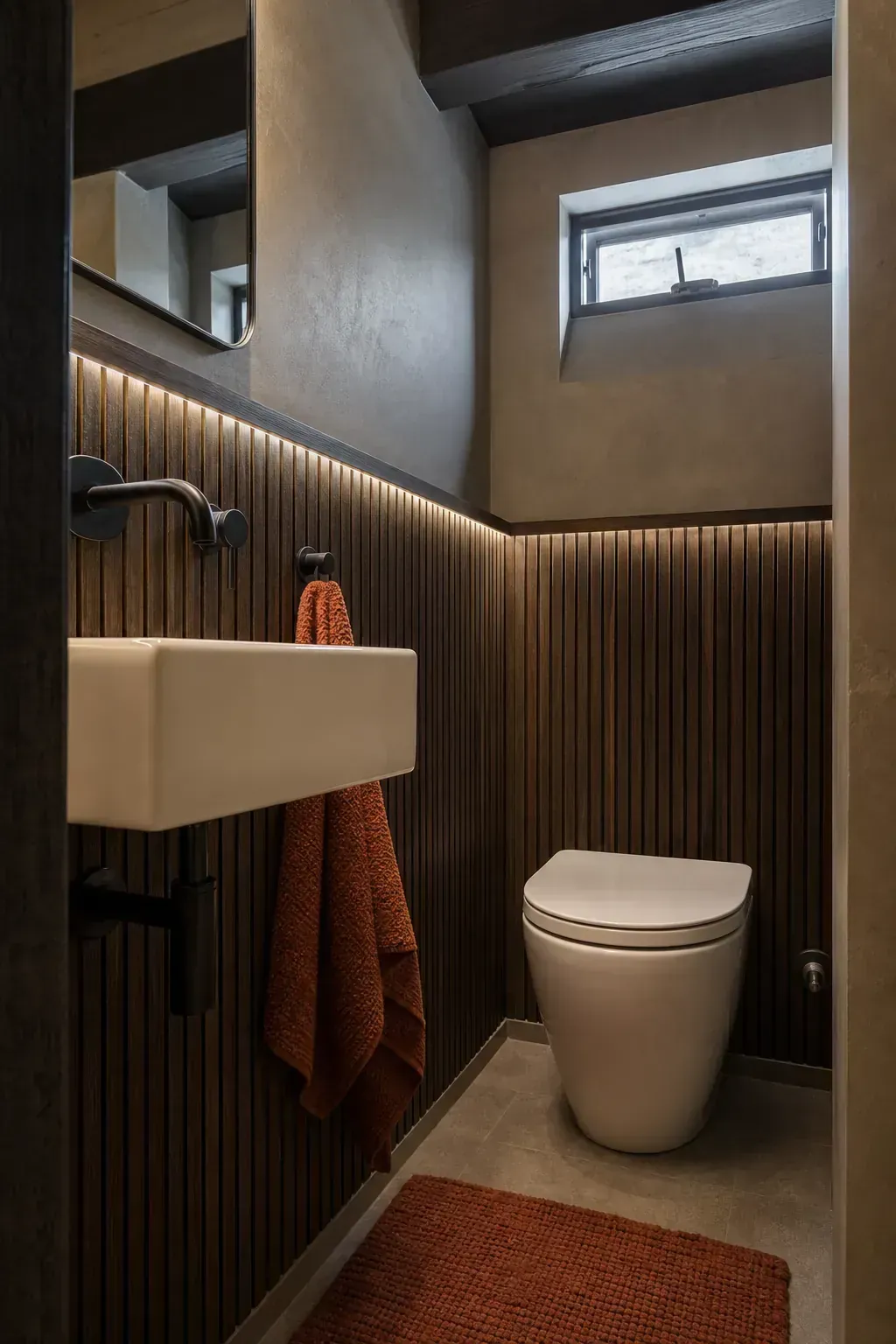
Vertical reeded panels add rhythm and make a low ceiling seem taller. Use them on the vanity wall or below a chair rail, where the tactile detail can be appreciated up close. Seal real wood carefully and leave clearance around plumbing. Pair the grooves with simple plaster above so the small room has somewhere for the eye to rest.
Try Aubergine With Aged Brass
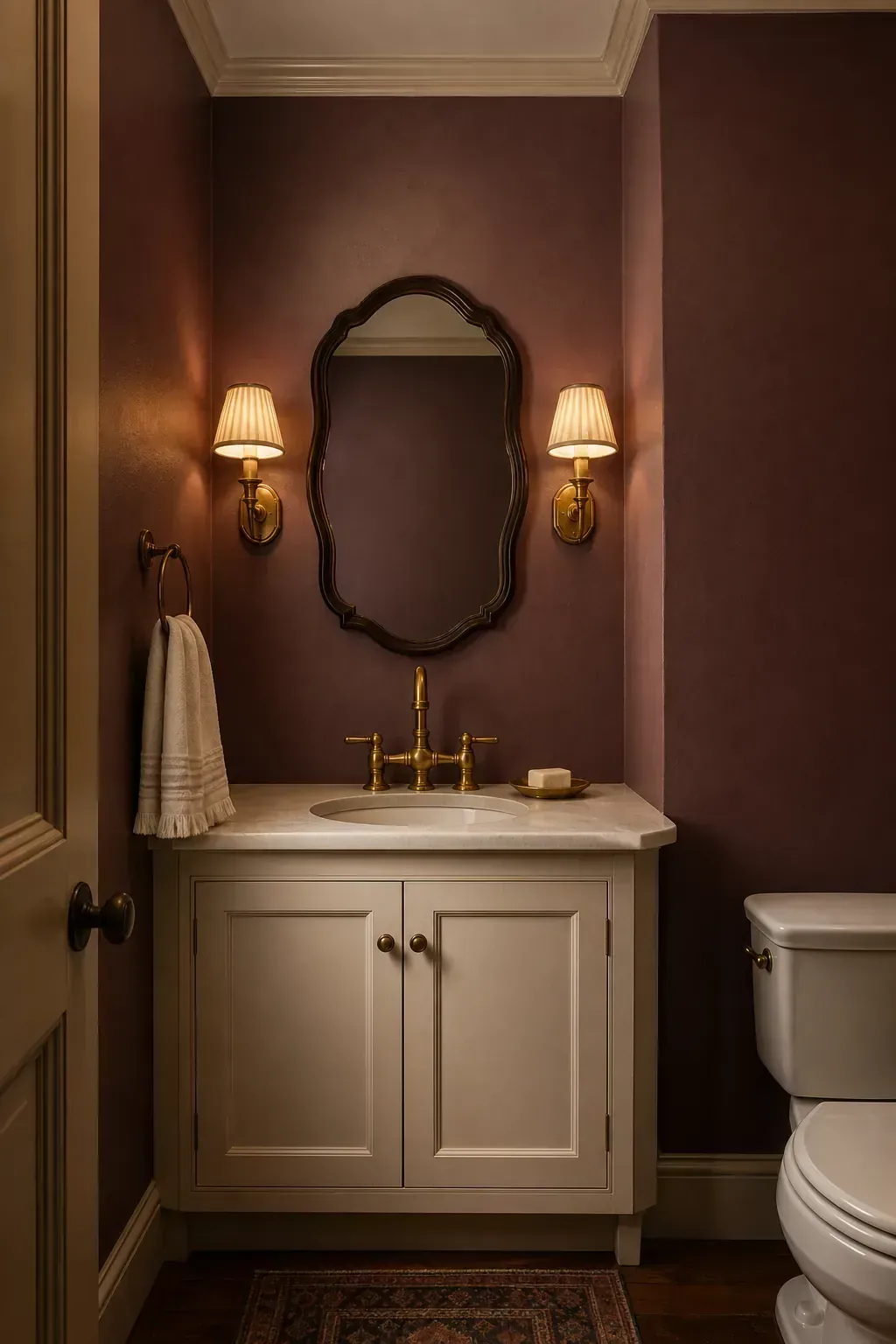
Aubergine shifts between brown, wine, and purple as the light changes, giving a windowless room unusual depth. Aged brass is a softer partner than bright gold and will not turn garish under warm bulbs. Add cream towels and a pale sink to create small points of relief without breaking the enveloping palette.
Tile the Vanity Wall in Glossy Zellige
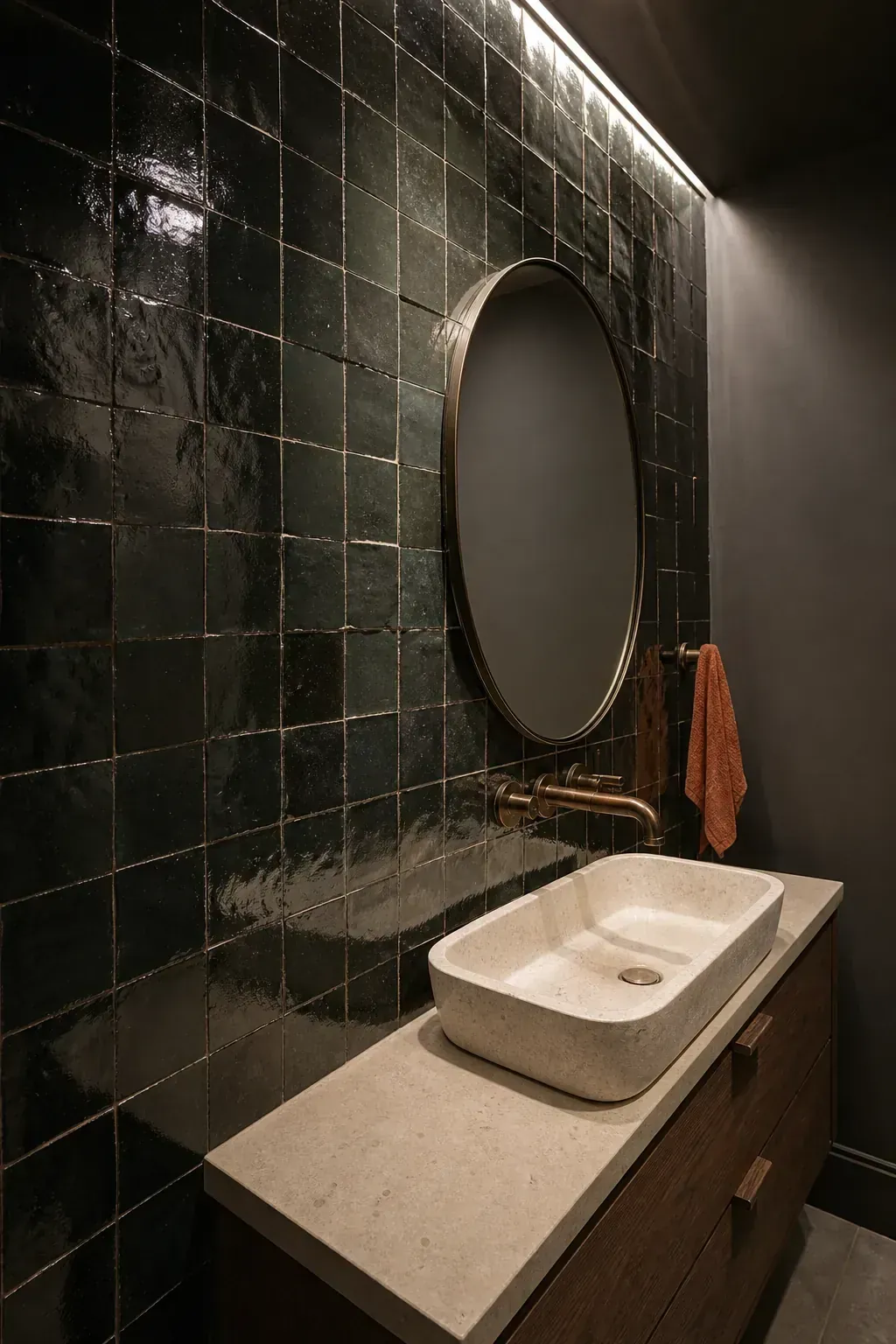
Handmade-look zellige tile reflects pinpoints of light across its uneven surface, making it ideal for a dark room. Tile from counter to ceiling behind the sink, then use related matte paint on the other walls. The finish variation supplies the decoration, so a clean-edged mirror and restrained faucet keep the composition from becoming busy.
Wrap the Ceiling in the Wall Color
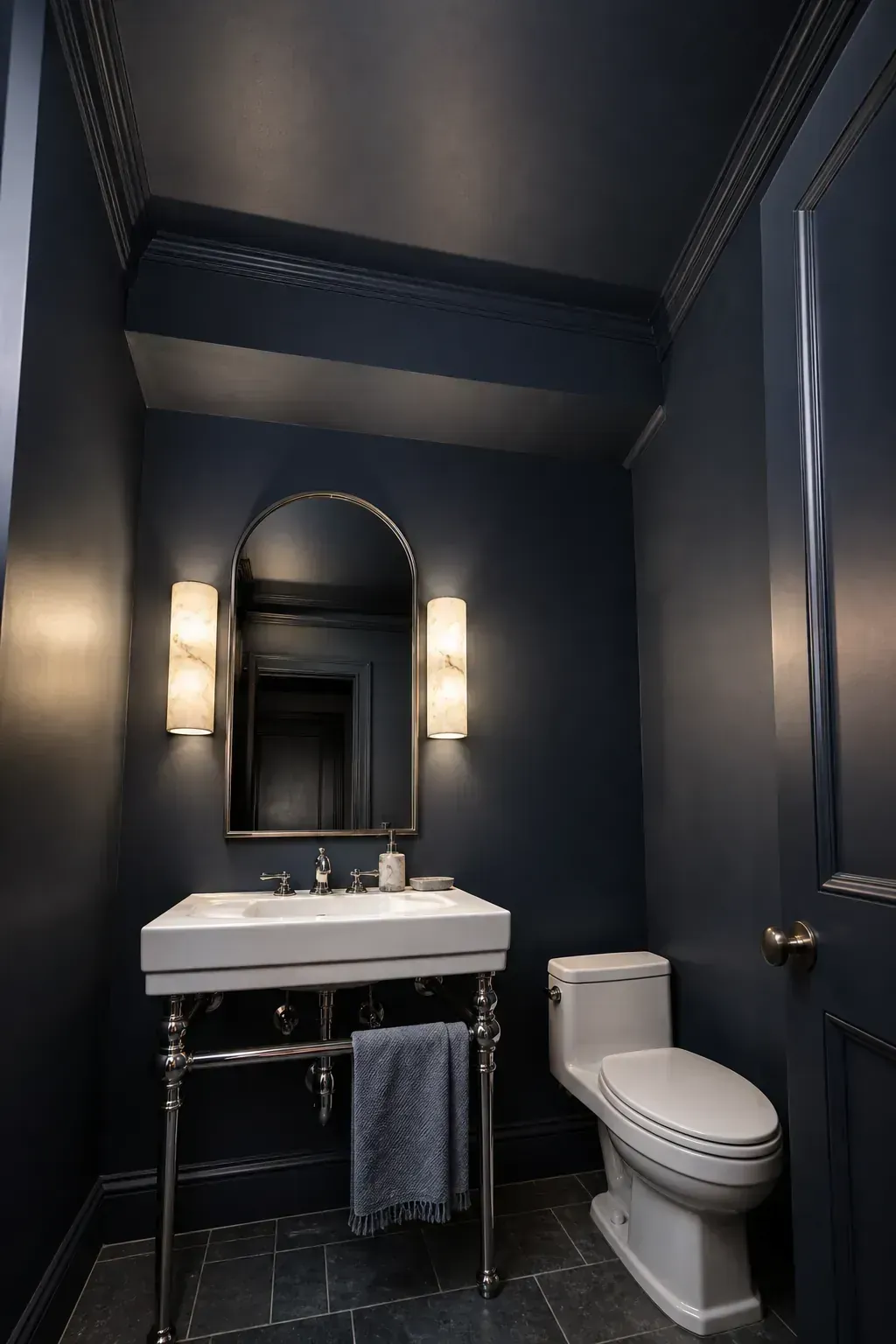
A bright white ceiling can look like an abrupt lid over dark walls. Carrying the wall shade overhead removes that hard boundary and creates a cocoon. Use sufficient face-level light rather than relying on a single ceiling fixture. The goal is controlled atmosphere, not poor visibility, especially around the mirror and floor.
Layer Sconces With a Tiny Accent Lamp
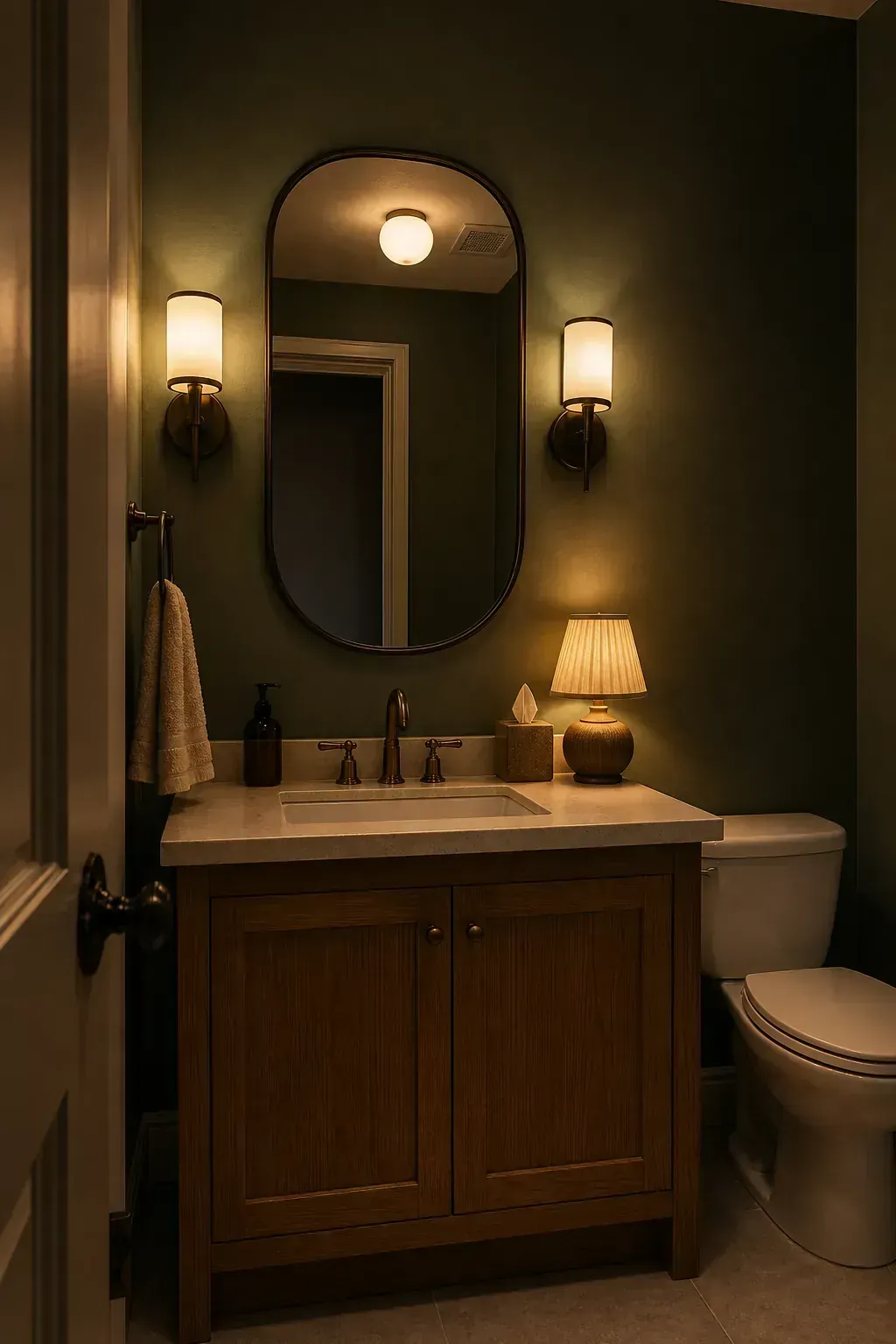
One overhead bulb creates hard shadows and makes dark paint look dead. Put warm, high-color-rendering sconces near face height and add a safe, compact accent lamp only where code and splash clearance permit. Dimmers let the room shift from useful daytime brightness to an evening glow. Keep bulb temperatures consistent so finishes do not change color from one corner to another.
Choose a Sculptural Stone Basin
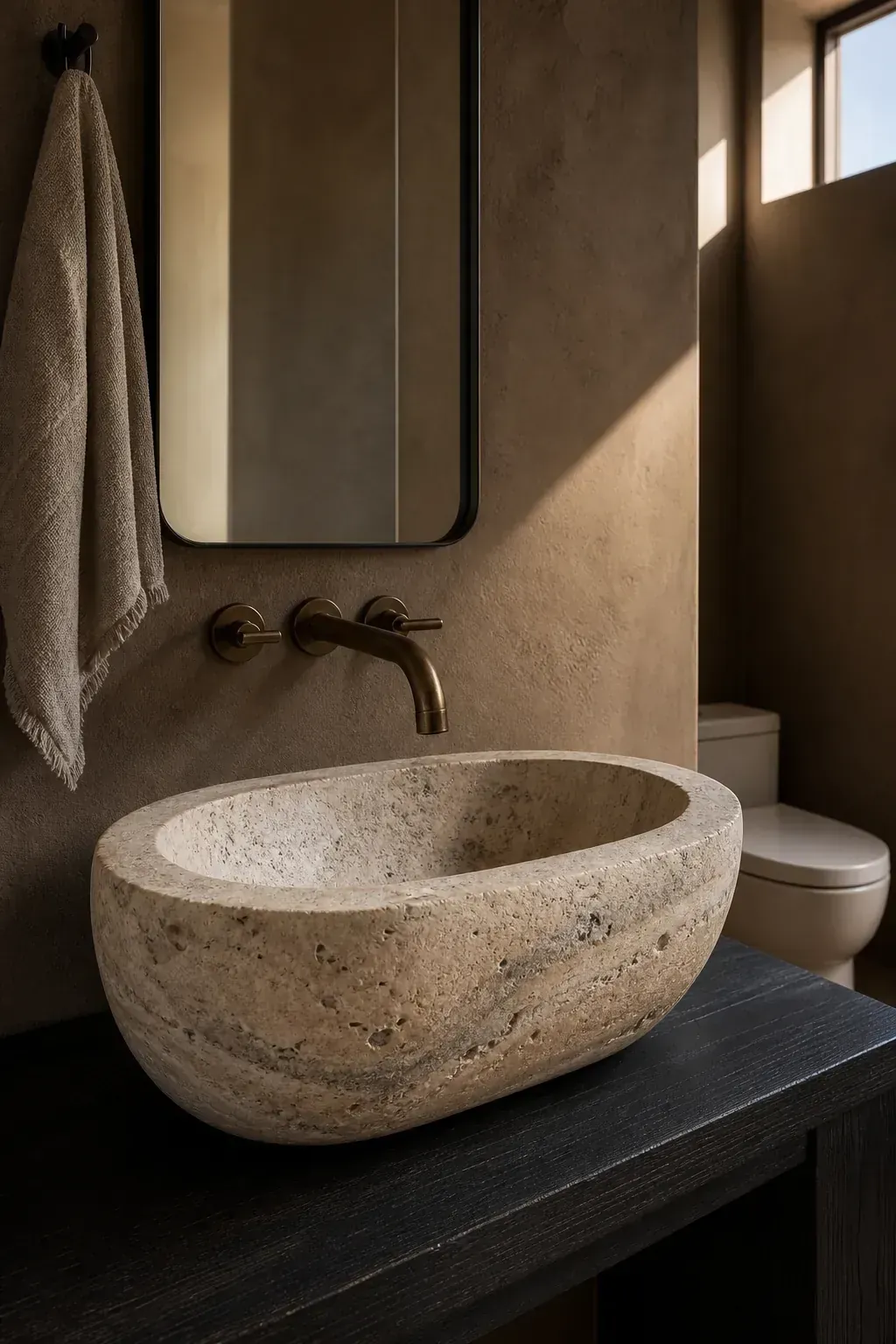
In a half bath, the sink can serve as the main object rather than a background fixture. A carved travertine, soapstone, or richly veined marble basin provides weight and texture. Check vessel height and faucet reach before buying; a beautiful bowl that splashes or forces awkward hand positions will quickly lose its appeal.
Add Black-and-White Checkerboard Flooring
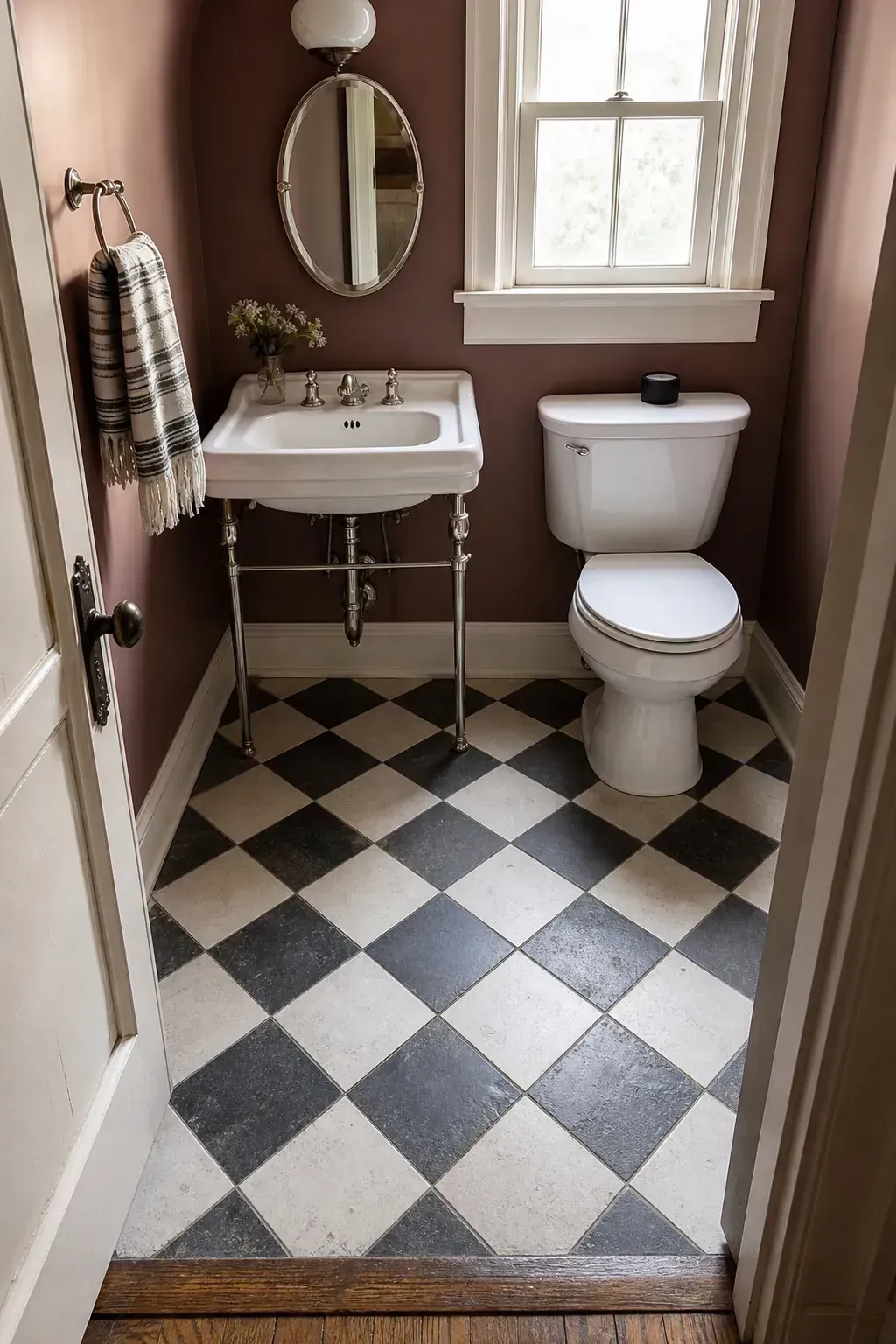
A checkerboard floor gives dark walls a crisp foundation and suits both vintage and modern rooms. Lay the pattern diagonally if you want more movement, or square to the walls for a calmer look. Slightly softened white and charcoal usually integrate better than stark optic black and white, especially with aged or warm-toned finishes.
Frame the Sink With a Fluted Arch
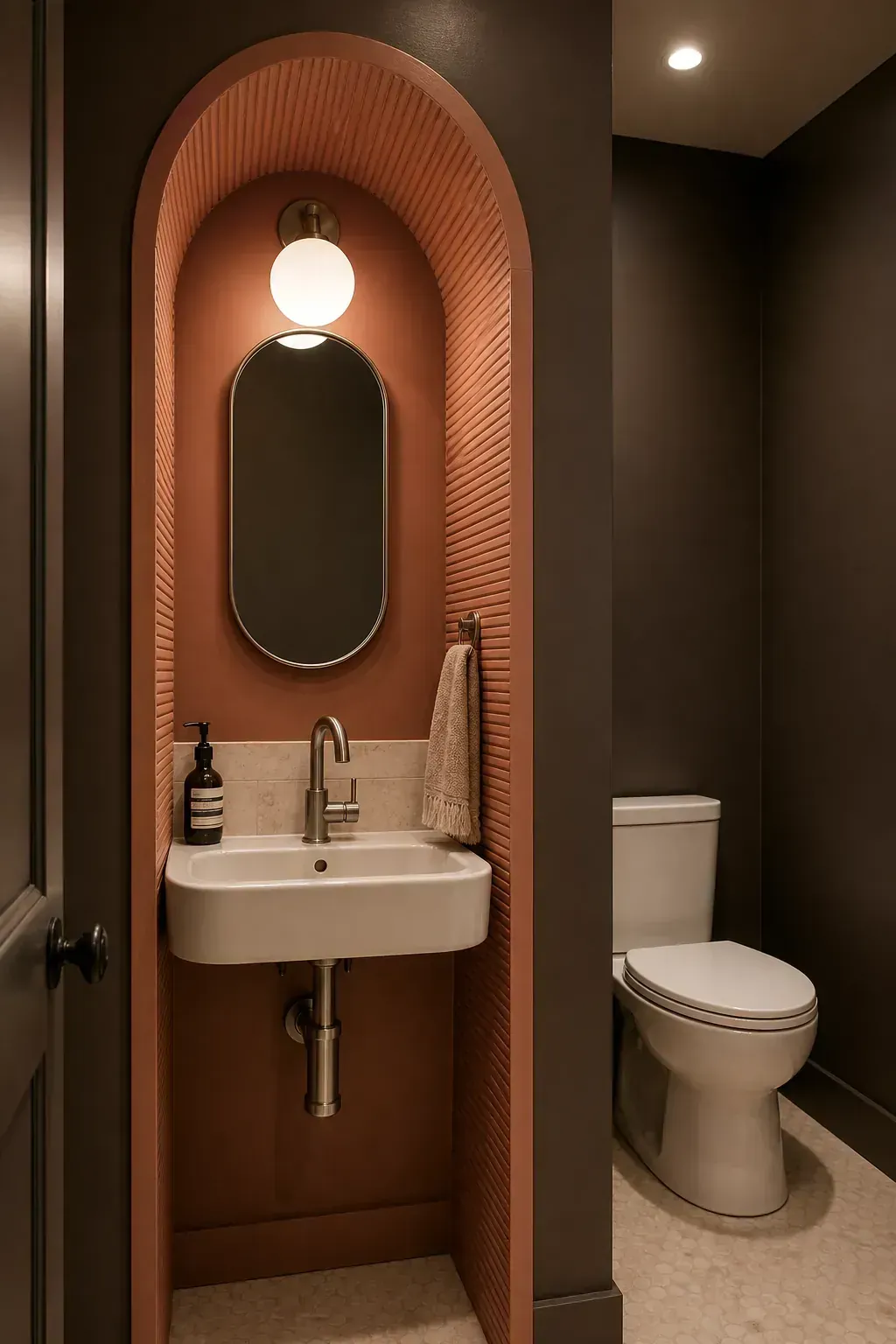
A shallow arched surround can turn an ordinary pedestal sink into an architectural focal point. Fluting or narrow battens add shadow without consuming much floor space. Keep the arch’s projection modest and verify door swing and shoulder clearance. Painting it one shade deeper than the wall creates definition without introducing another material.
Build a Moody Vintage Gallery Wall
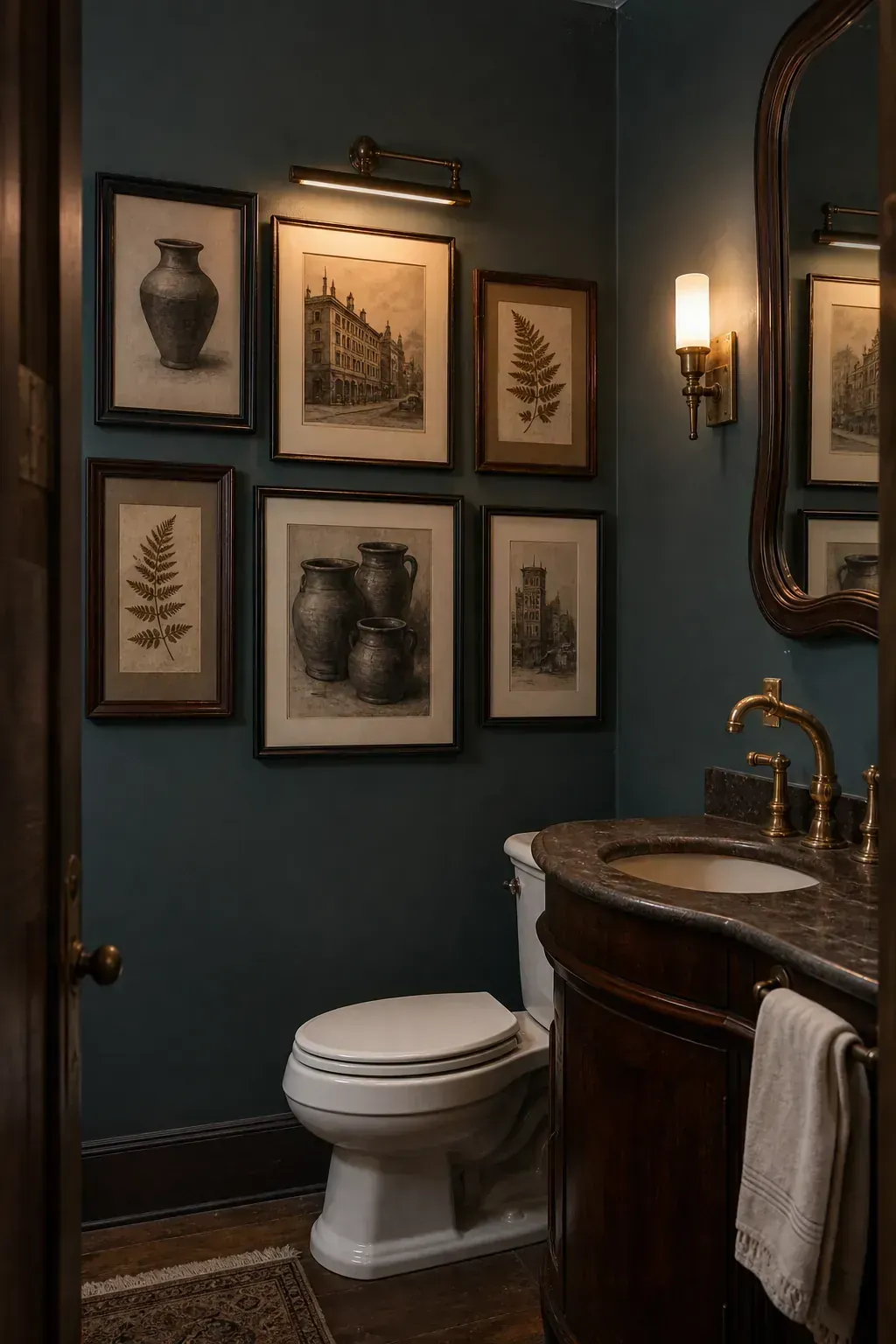
Use a tight group of botanical studies, charcoal portraits, or architectural etchings rather than generic filler prints. Mix two frame finishes and repeat the wall color inside a few mats to unify the arrangement. Keep paper art away from direct splash and use bathroom-safe hanging methods. Larger pieces generally feel calmer than dozens of tiny frames.
Contrast Dark Walls With White Wainscoting
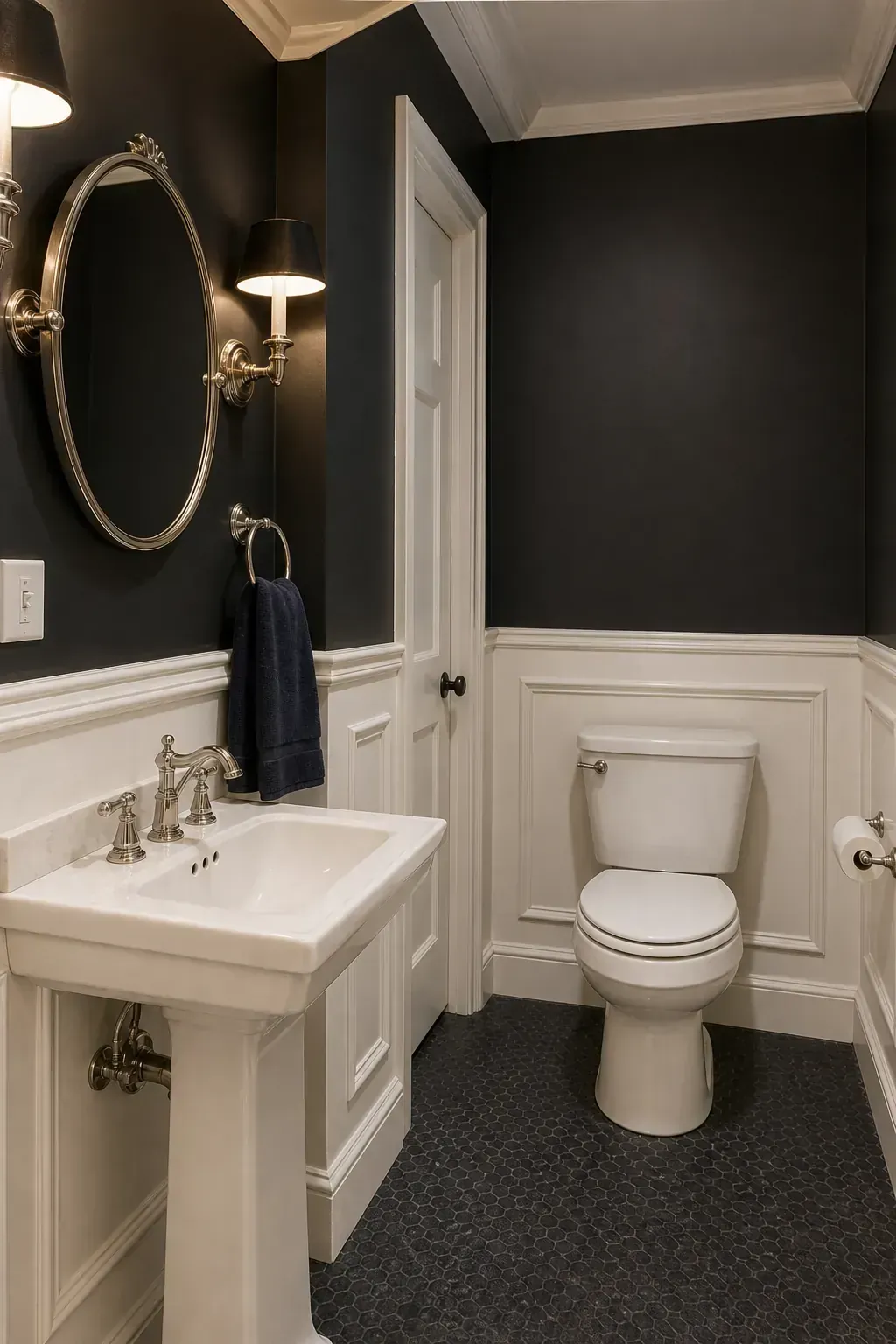
Warm white paneling keeps a dramatic paint color from swallowing every edge. Align the top rail with a meaningful feature, such as the sink backsplash or windowsill, rather than choosing an arbitrary height. Continue the treatment around all walls for continuity. This is also a practical choice in busy guest baths because the lower satin-painted surface wipes clean easily.
Mix Olive Paint With Terracotta
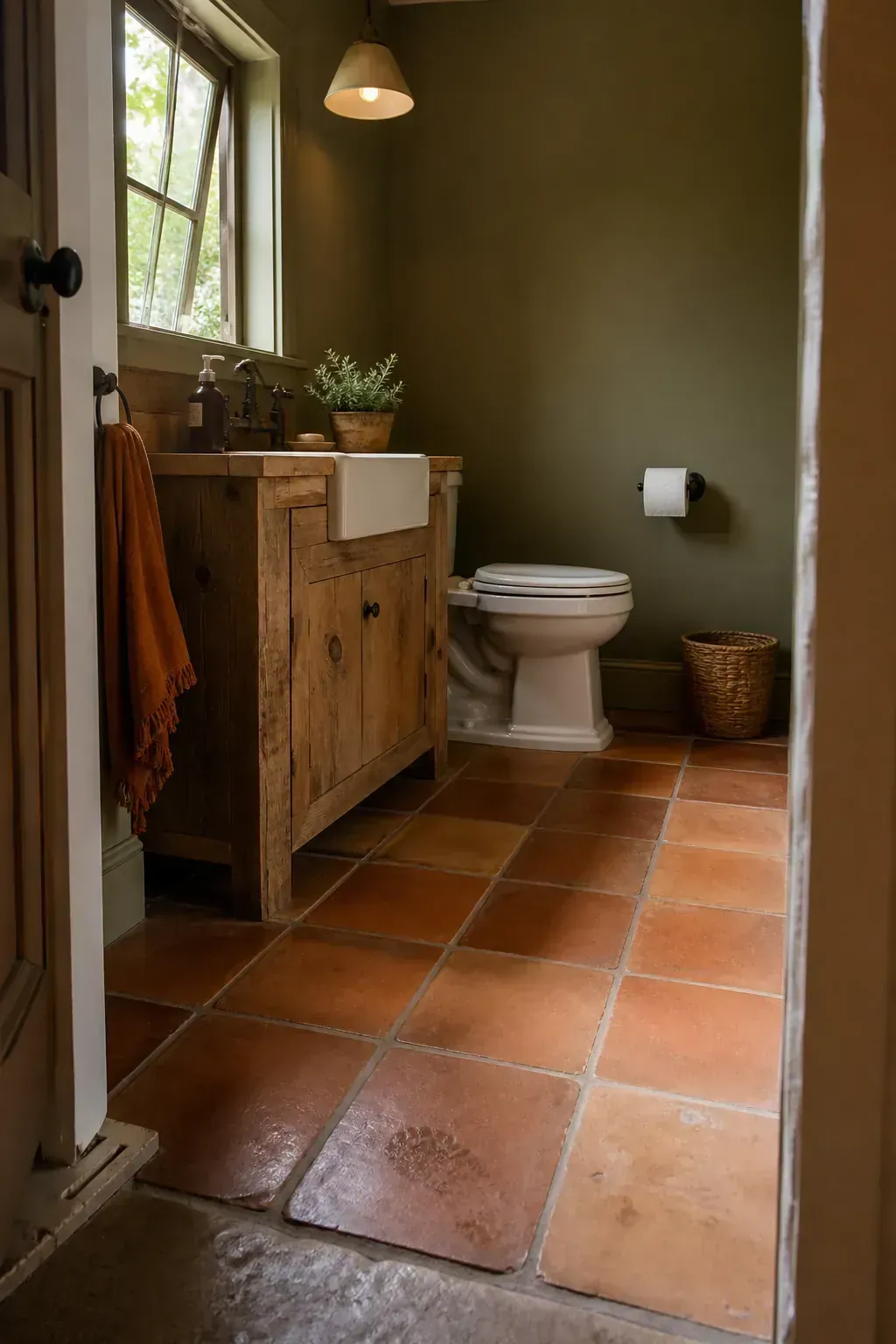
Olive and terracotta make a dark room feel earthy rather than formal. Choose muted, brown-based versions of both colors so they share the same visual temperature. Handmade floor tile, a timber vanity, and linen hand towels add believable texture. Seal porous terracotta properly and keep spare tiles for future repairs.
Make the Mirror the Brightest Shape
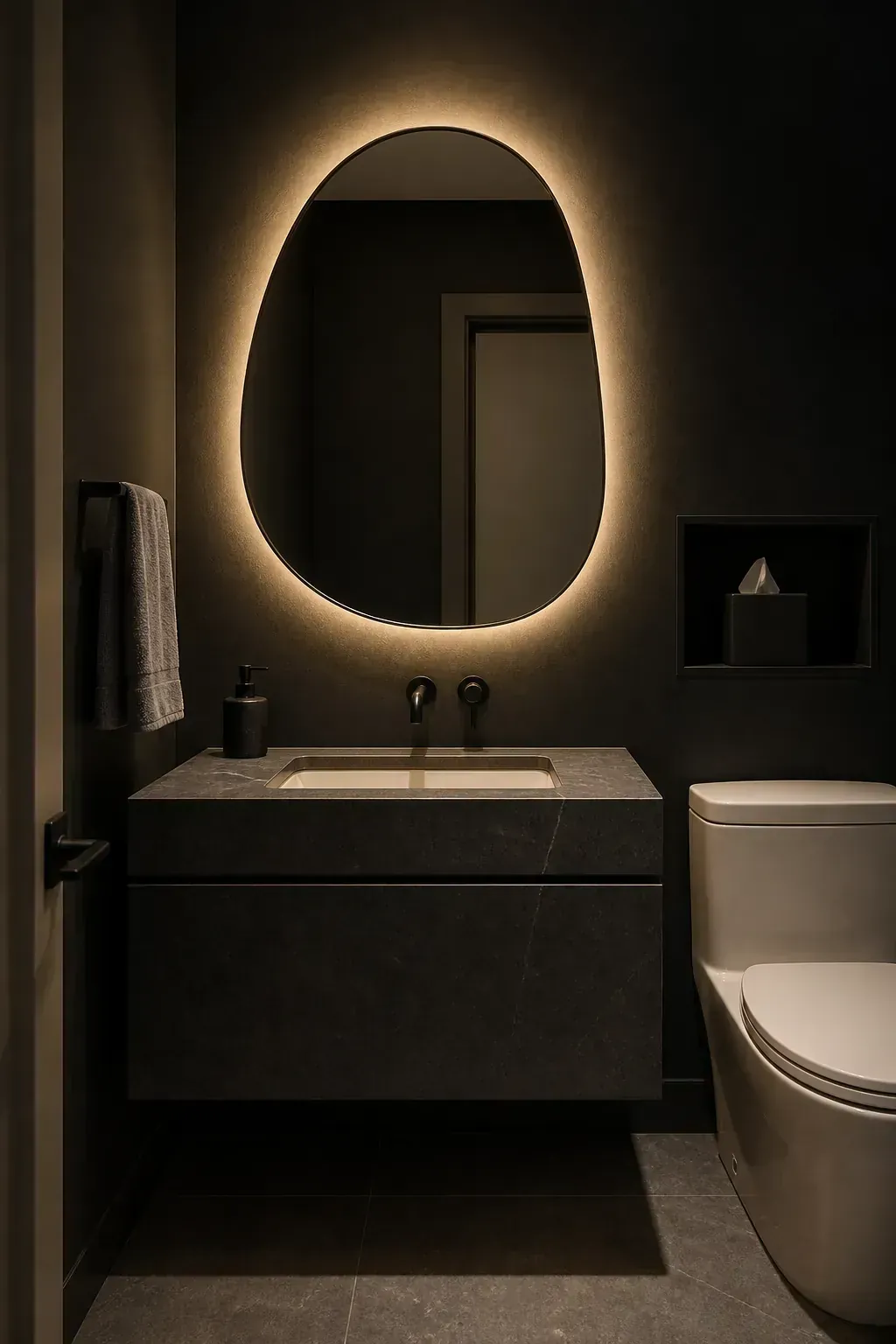
A mirror naturally relieves a dark scheme, but its shape matters. An oversized pill, arch, or irregular organic mirror offers a clean luminous area amid saturated surfaces. Position lighting so faces are lit from the front or sides, not only from above. Measure the faucet and backsplash before sizing the mirror to avoid a cramped gap.
Use a Deep Teal Monochrome Palette
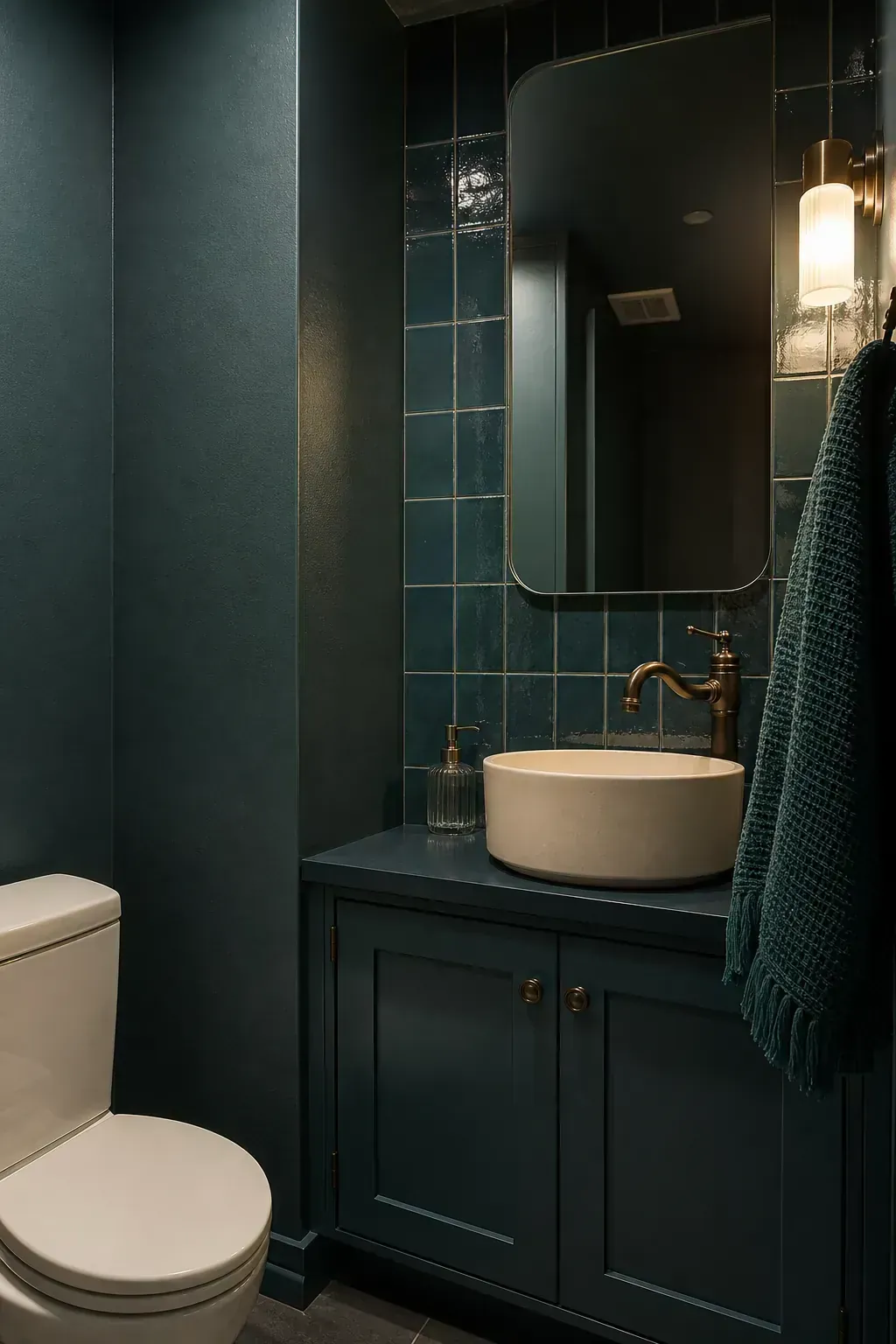
Build depth with several teal finishes rather than one exact match: matte paint, glossy tile, woven towel, and perhaps a lacquered vanity. The shift in sheen keeps the color from becoming a flat box. Introduce one warm metal and a small cream element to prevent the palette from feeling cold, particularly in a room without daylight.
Create a Plaster Sink Ledge
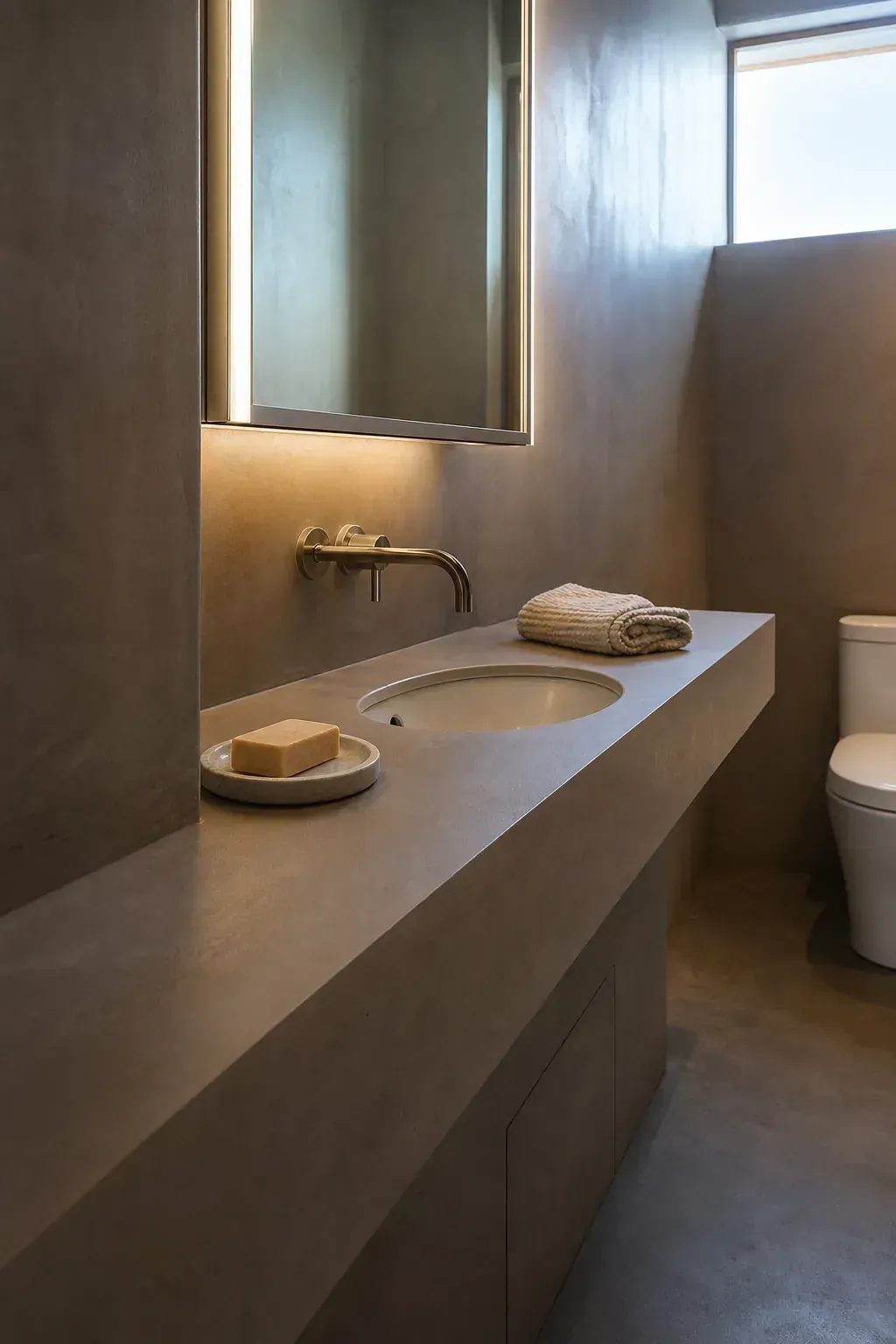
A slim built-in ledge finished in waterproof plaster creates a quiet, monolithic vanity wall. Integrate a compact basin and conceal plumbing where access remains possible. Because the form is simple, small details become prominent: align the faucet precisely, choose a neat drain, and limit the ledge to soap and one purposeful object.
Combine Black Tile With Soft Pink
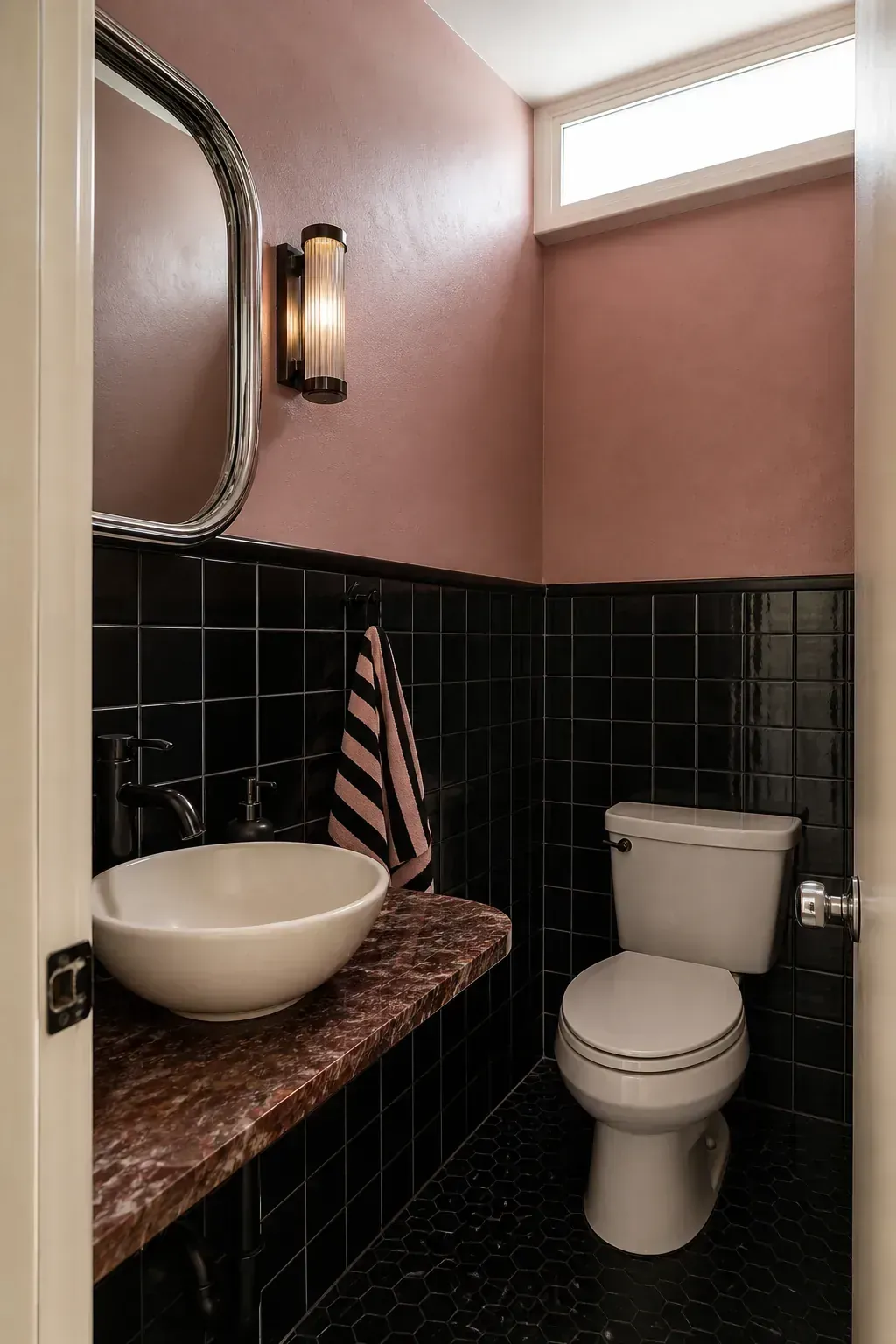
Dusty pink takes the severity out of black tile while preserving the drama. Use the darker material on the lower wall or sink zone, where it also handles splashes, and let muted pink soften the upper half. A red-veined stone or burgundy towel can bridge the two colors without making the scheme feel sugary.
Paint the Door and Trim Near-Black
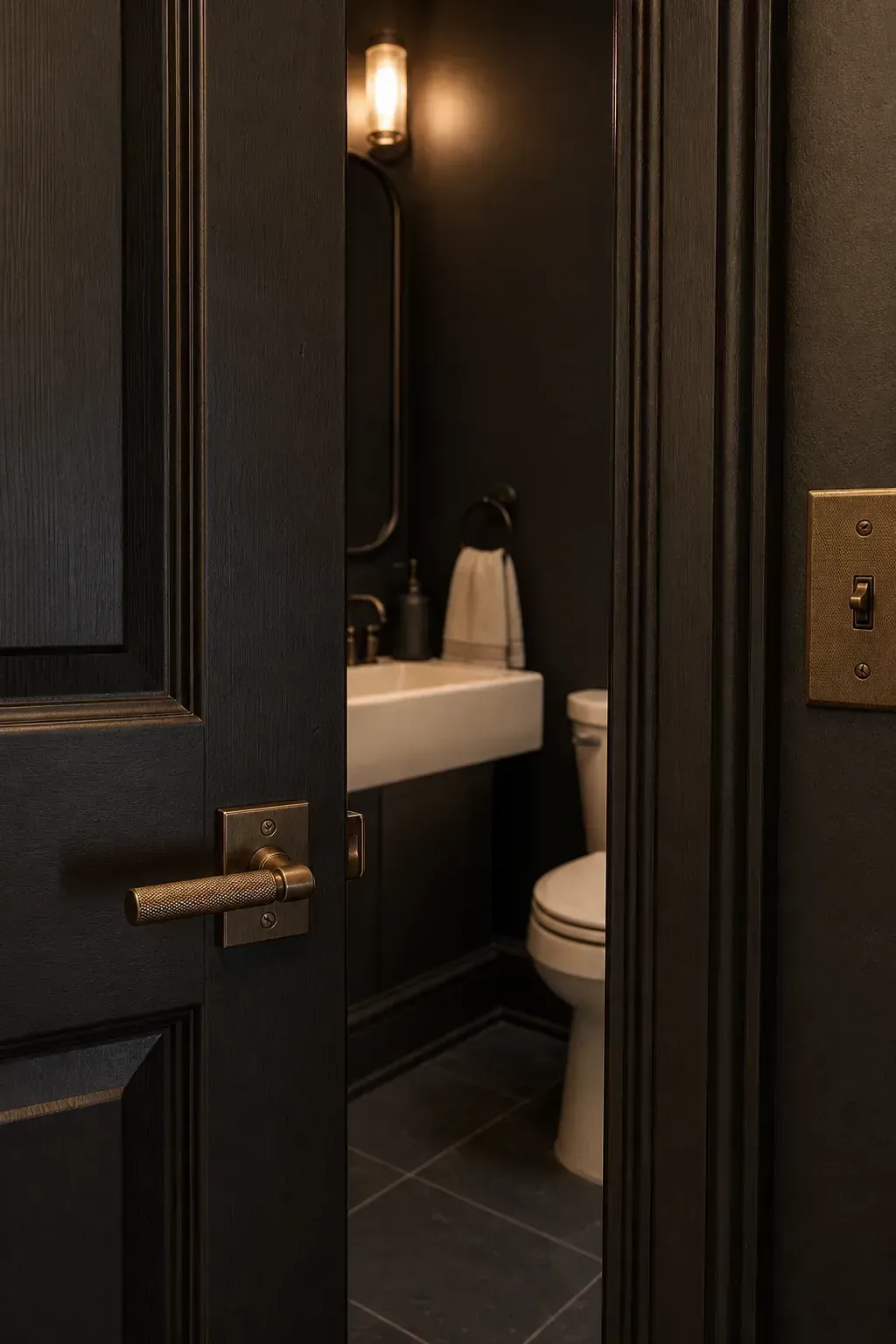
White trim can outline every small dimension of a half bath. Painting the inside face of the door, casing, and baseboards near-black lets those boundaries recede. Use a durable finish and prep high-touch areas carefully. A tactile metal switch plate and substantial door lever then read as deliberate accents rather than afterthoughts.
Add a Dramatic Stone Backsplash Slab
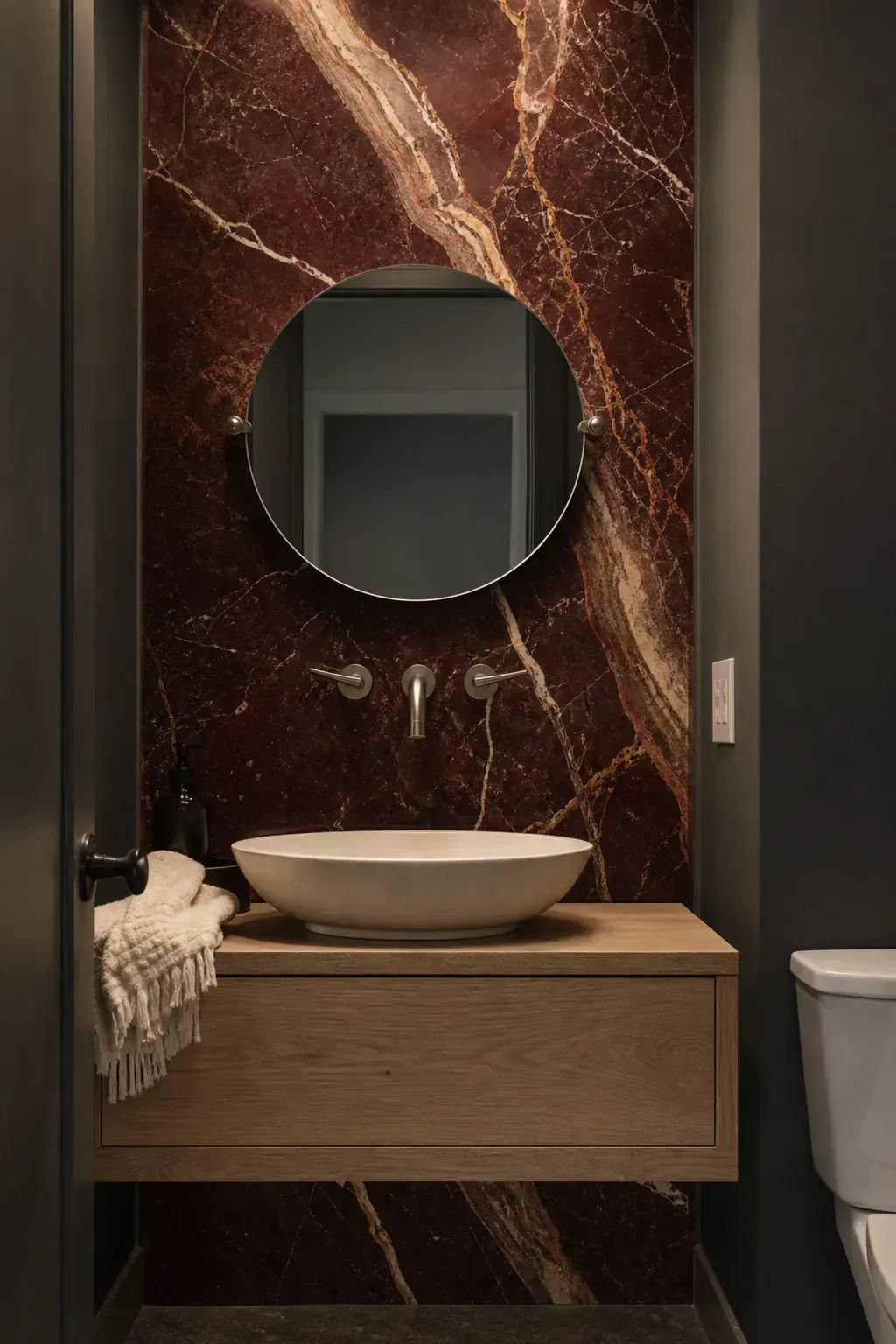
A remnant can be enough to create a full-height sink backsplash in a tiny room. Choose a stone with veining that relates to the wall color, then keep the mirror simple so it does not cover the best movement. Ask the fabricator about sealing, faucet holes, outlet cutouts, and edge treatment before falling in love with a particular offcut.
Bring in Smoked Glass Details
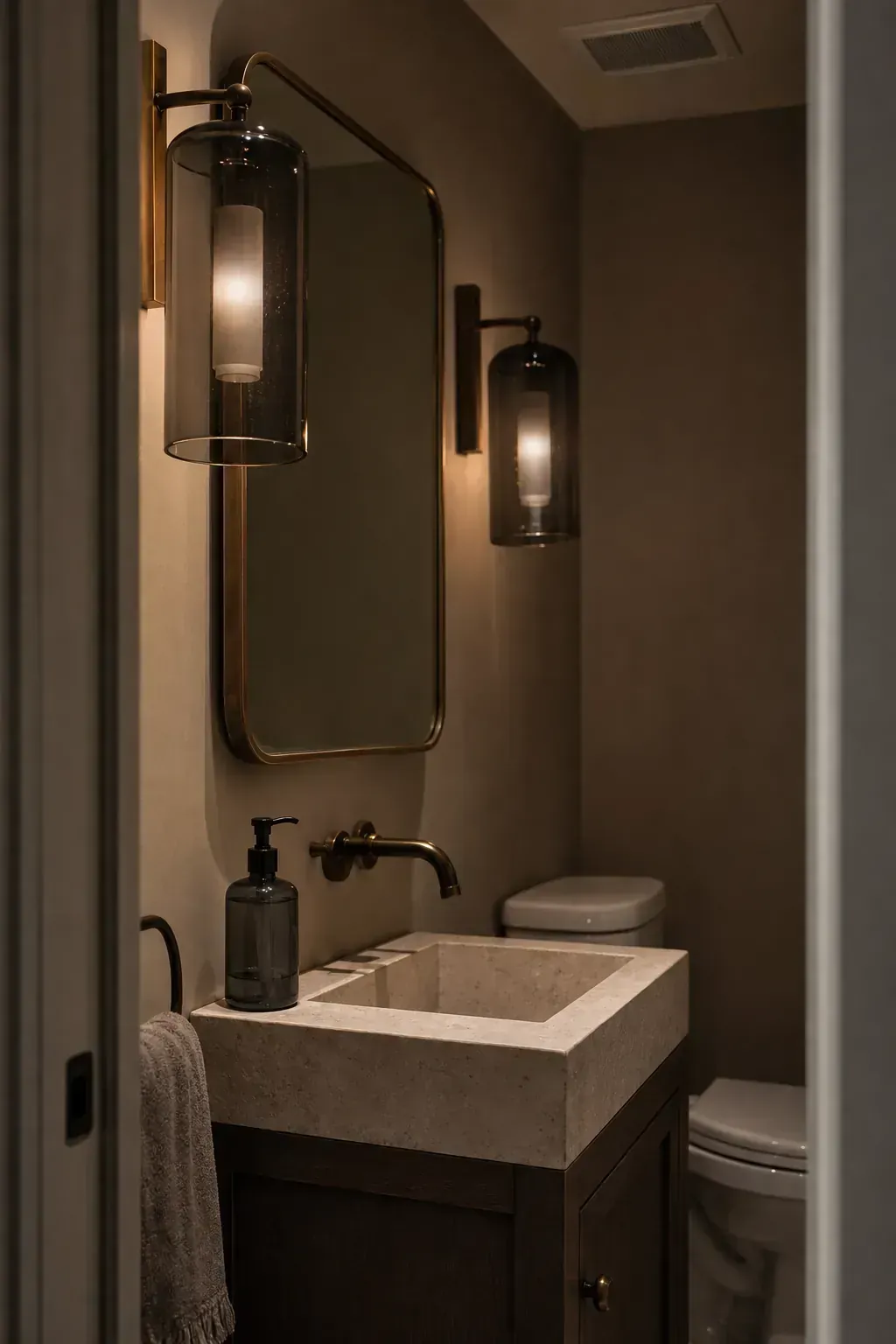
Smoked glass shades, a charcoal soap dispenser, or a gray vessel sink add translucence without introducing bright color. Use these sparingly and keep bulbs dimmable because tinted shades reduce usable light. The contrast between glass, matte walls, and rough stone makes a restrained room feel layered even with very few objects.
Try a Dark Floral Ceiling
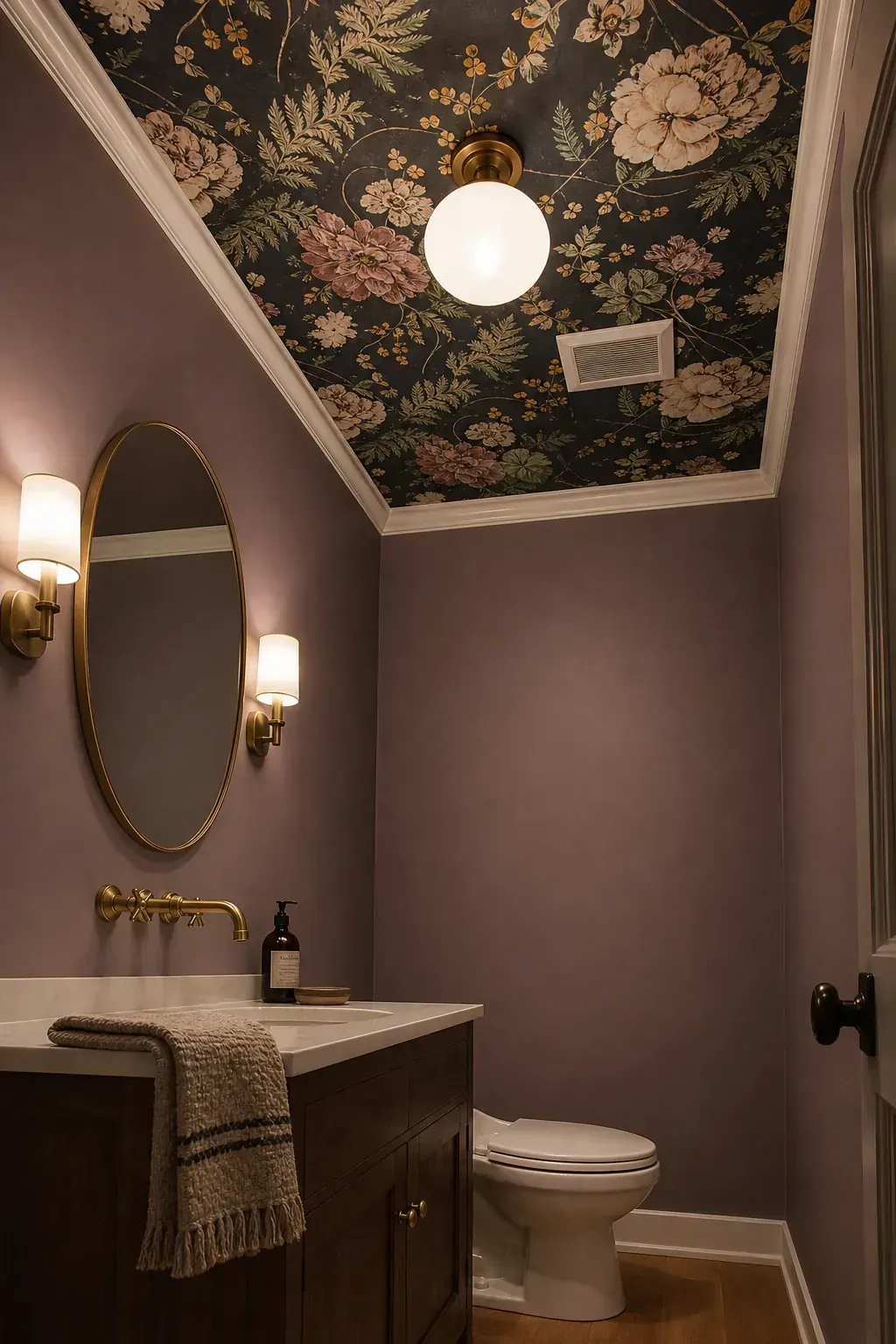
Wallpapering the ceiling rewards anyone who looks up and leaves the walls available for a calmer paint. Pick an airy botanical repeat with enough negative space that seams are less obvious. Professional installation is worthwhile overhead, and the paper must suit the room’s moisture conditions. Pull one minor color from the pattern onto the walls.
Balance Espresso Brown With Cream
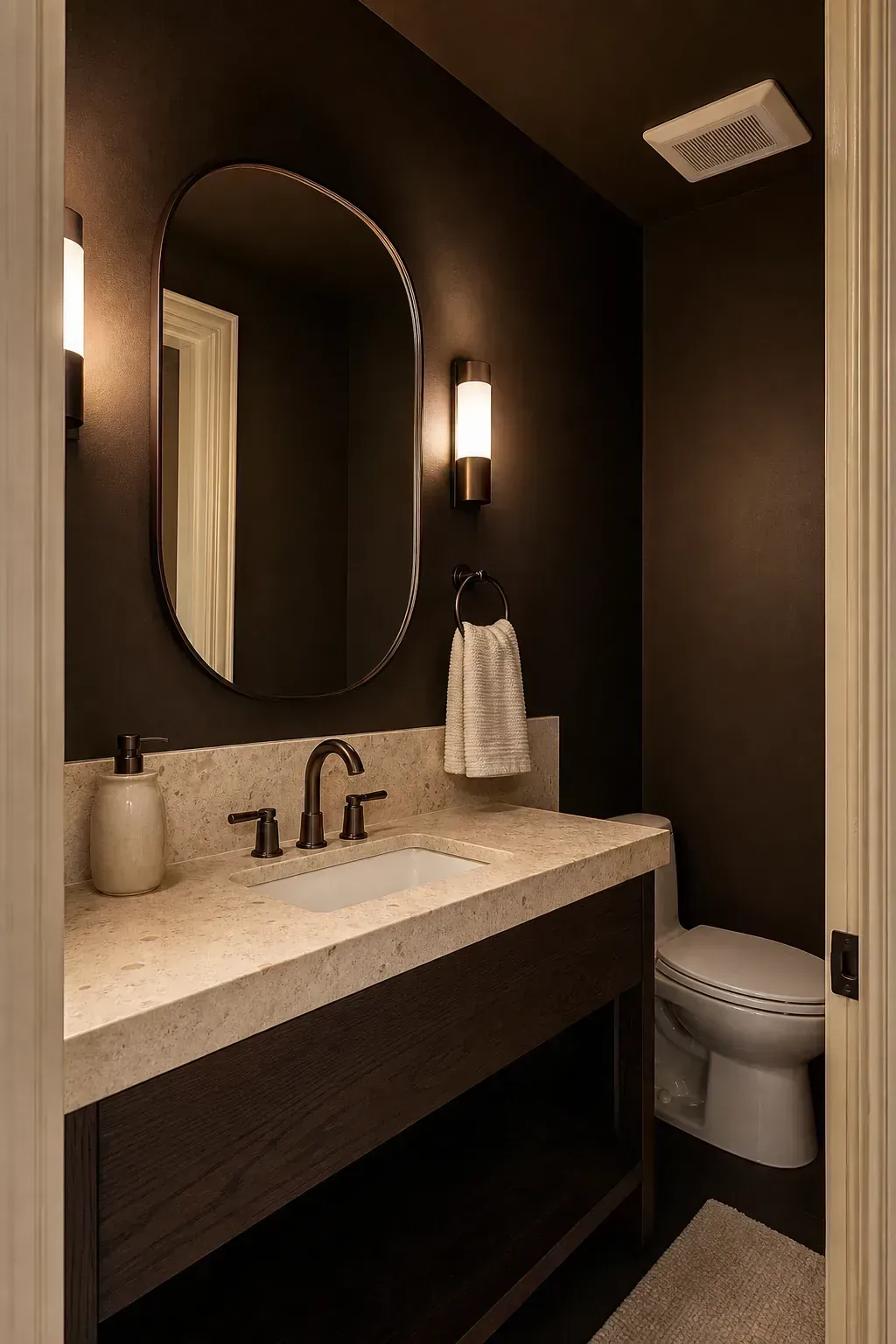
Espresso brown feels softer and more enveloping than pure black. Cream limestone, warm white ceramic, and an ivory towel lift the center of the room while preserving the tonal mood. Avoid cool gray grout or blue-white bulbs, which can make the brown look dirty. A small amount of bronze is a natural finishing note.
Use Ribbed Glass for Privacy and Glow
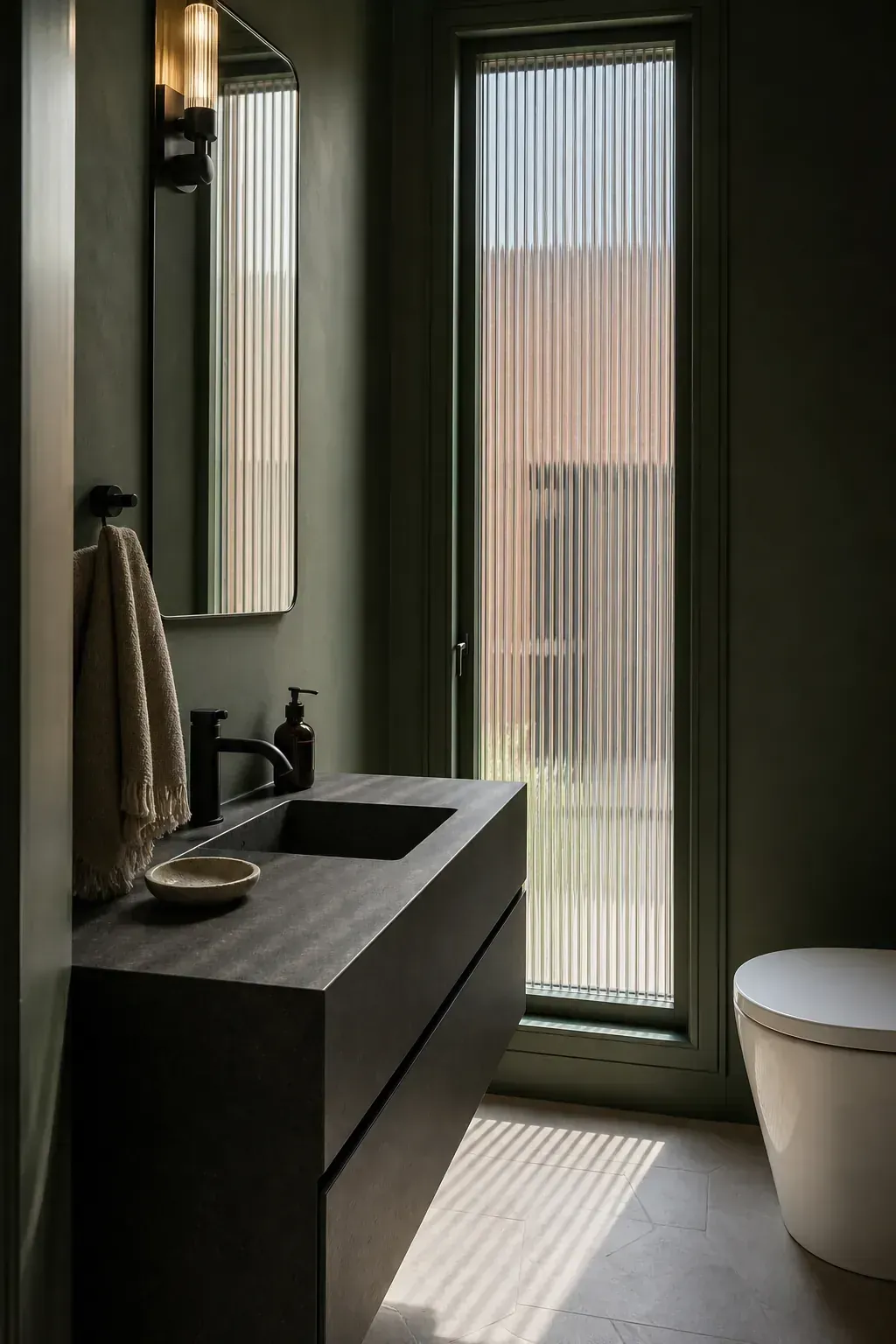
If the half bath has a window or glazed door, ribbed privacy glass turns daylight into a blurred luminous panel. It offers more character than adhesive frosting and throws subtle linear shadows on nearby surfaces. Confirm local glazing requirements and sightlines. Keep window trim close to the wall color so the glow, not the frame, becomes the feature.
Introduce Antique Brass Plumbing
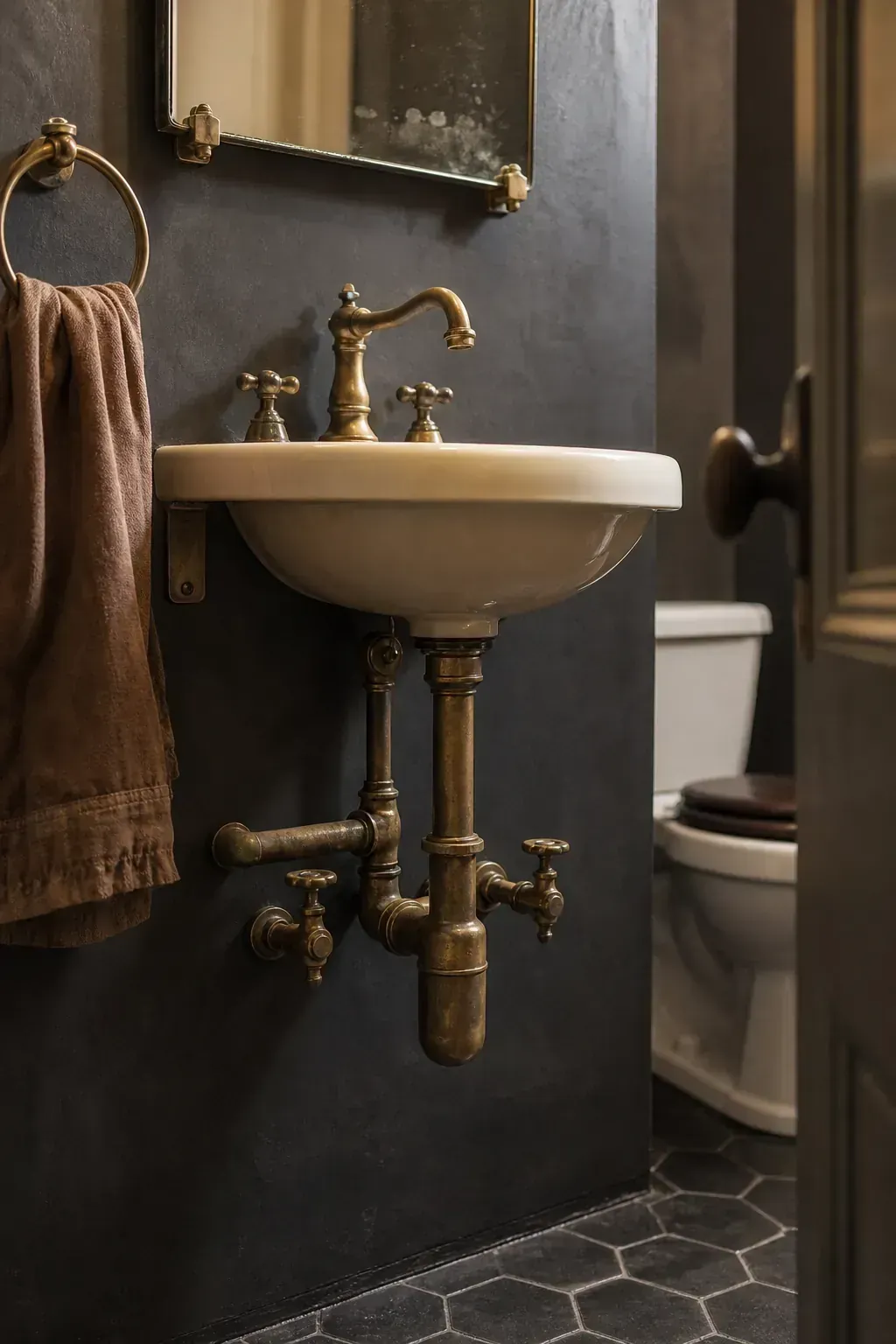
Antique brass has brown undertones that sit naturally against charcoal, burgundy, forest, and navy. Repeat it in the faucet, trap, towel ring, and one light detail, but do not force every metal to match perfectly. A living finish will patinate, so decide whether you enjoy that change before specifying it throughout the room.
Carve Out a Candlelit-Look Niche
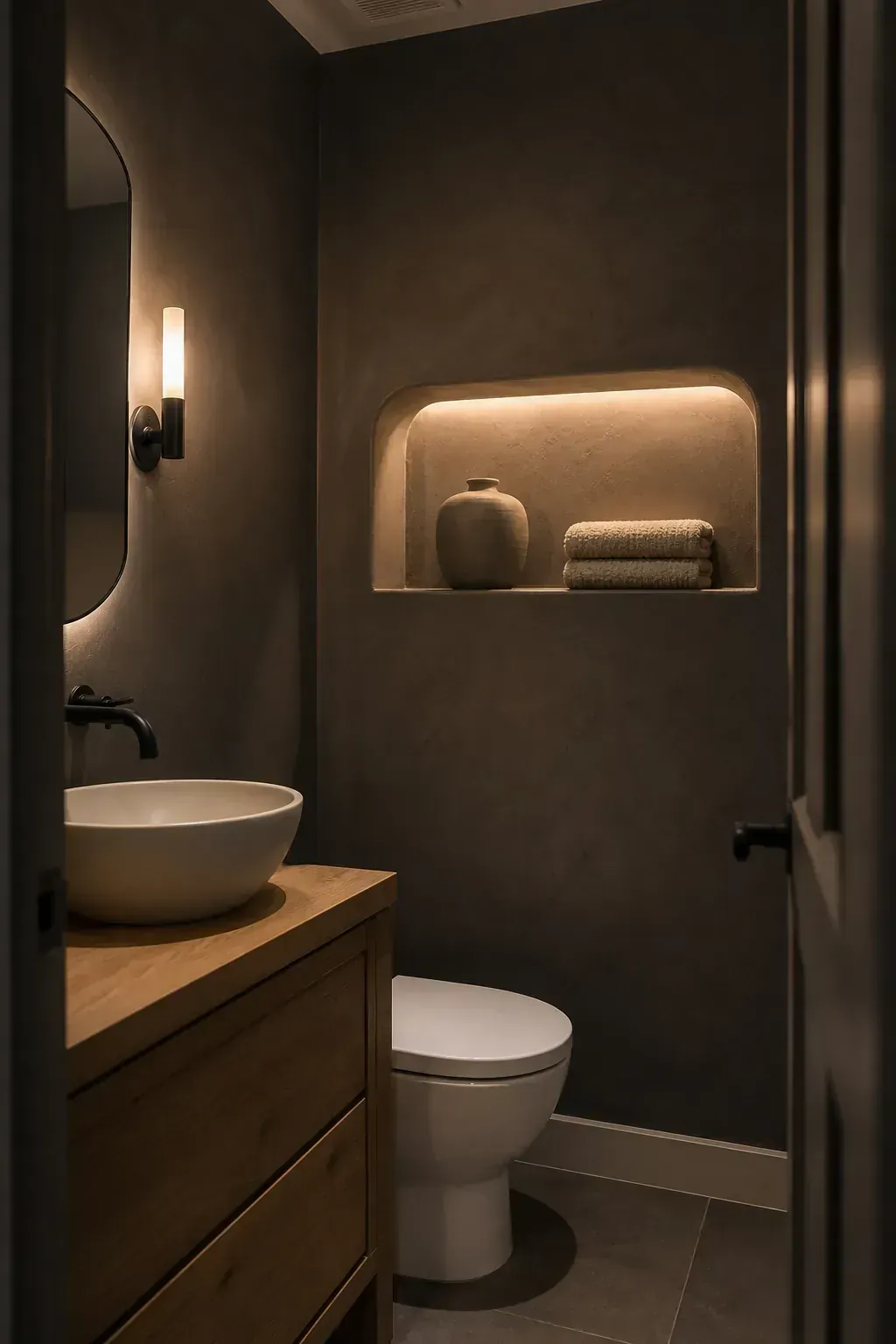
A shallow recessed niche with concealed warm LED lighting gives the softness of candlelight without an open flame. Use it for one ceramic vessel or a small stack of hand towels, not miscellaneous storage. Plan wiring, ventilation, waterproofing, and access before closing the wall. The best niche looks architectural even when its light is off.
Paint a Two-Tone Burgundy and Blush Scheme
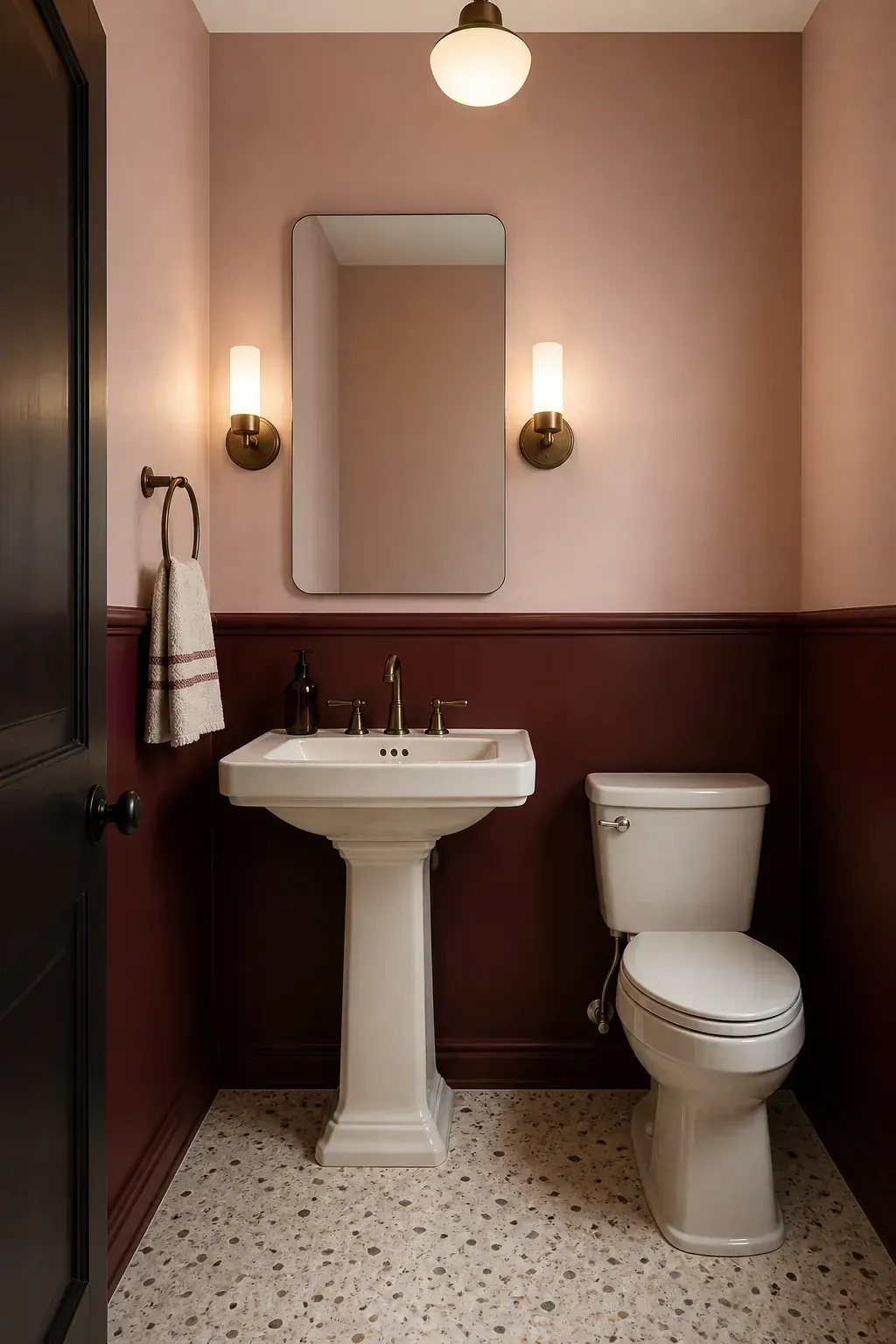
Put burgundy below a crisp horizontal line and muted blush above to create drama with a lighter face-level backdrop. The division can follow a tile edge or slim molding. Burgundy disguises scuffs in the lower zone, while blush reflects warmer light around the mirror. Repeat both colors in a patterned towel or small ceramic accessory.
Let a Vintage Mirror Set the Tone
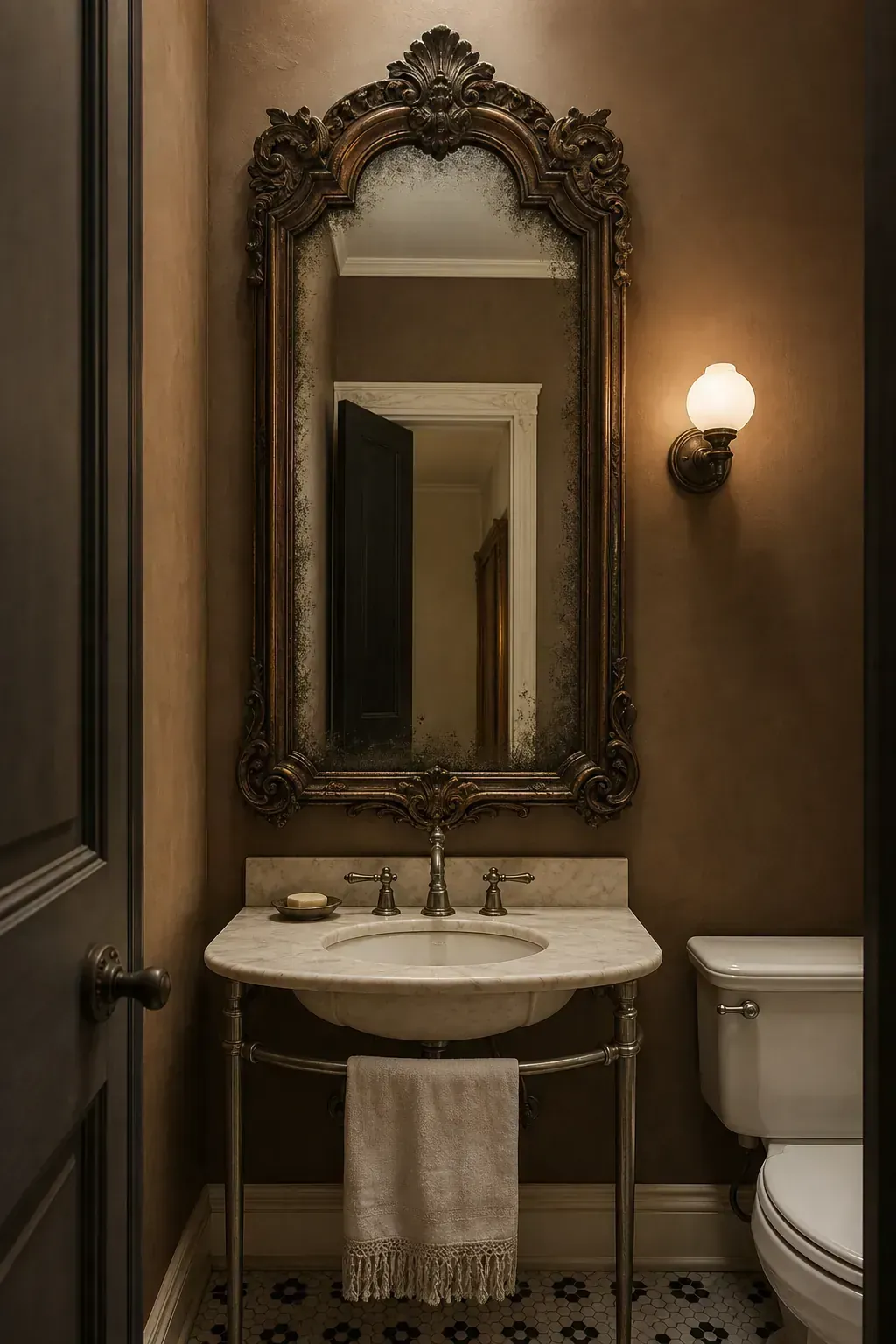
Start with a distinctive antique or vintage-inspired mirror, then choose paint and lighting that support its age and shape. A foxed edge can be beautiful, but the central reflection should remain useful. Center the faucet and basin beneath it, and give an ornate frame breathing room rather than surrounding it with several competing objects.
Finish With a Quiet Slate-and-Oak Palette
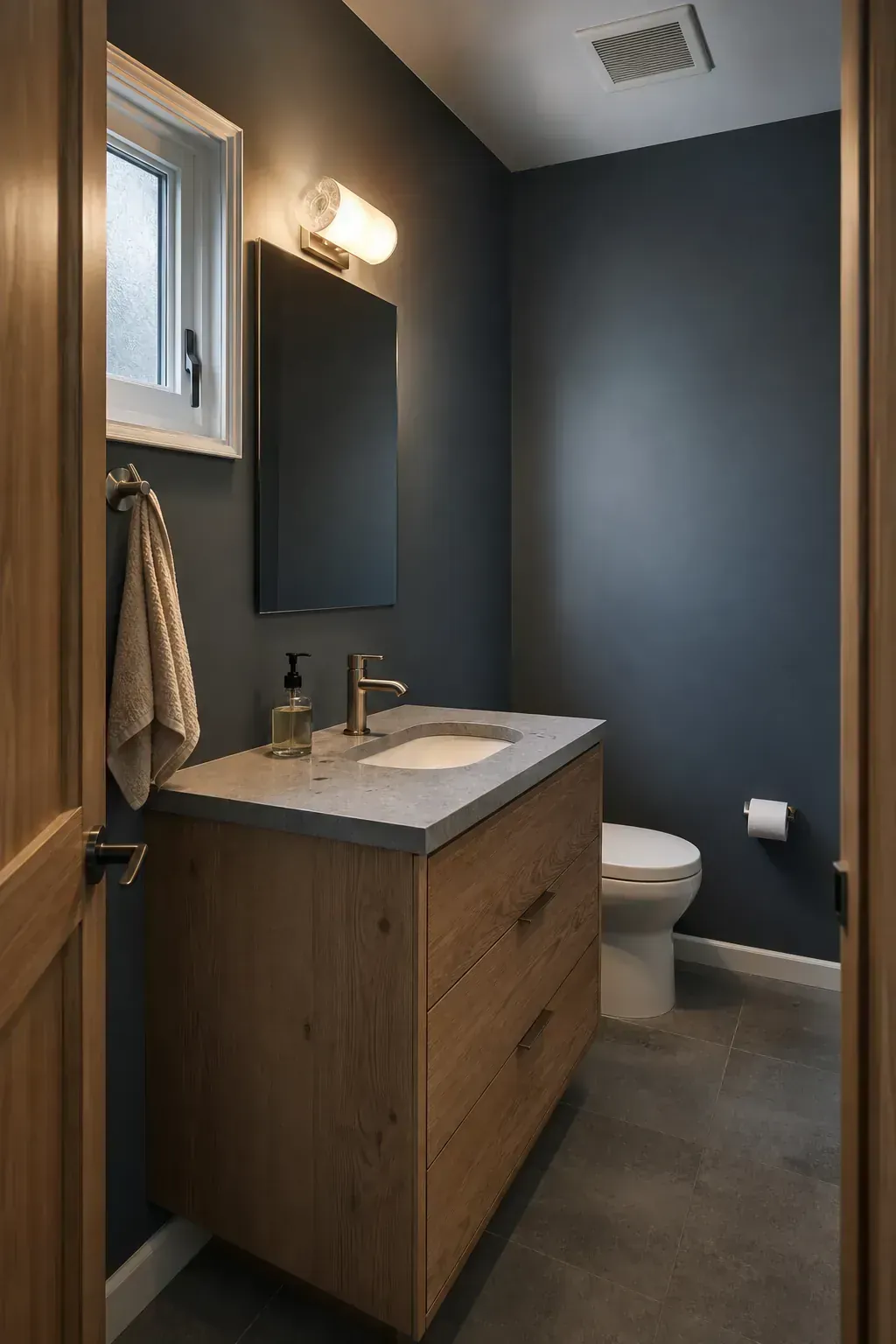
For a moodier room that still feels restrained, combine slate walls, a simple oak vanity, honed gray stone, and warm white ceramics. The contrast comes from material rather than ornament: dry matte paint, open wood grain, cool stone, and soft cotton. Test every finish together under the final bulbs, keep the counter clear, and make sure the mirror lighting is flattering. A successful moody half bath should feel composed in person, not merely dark in a photograph.