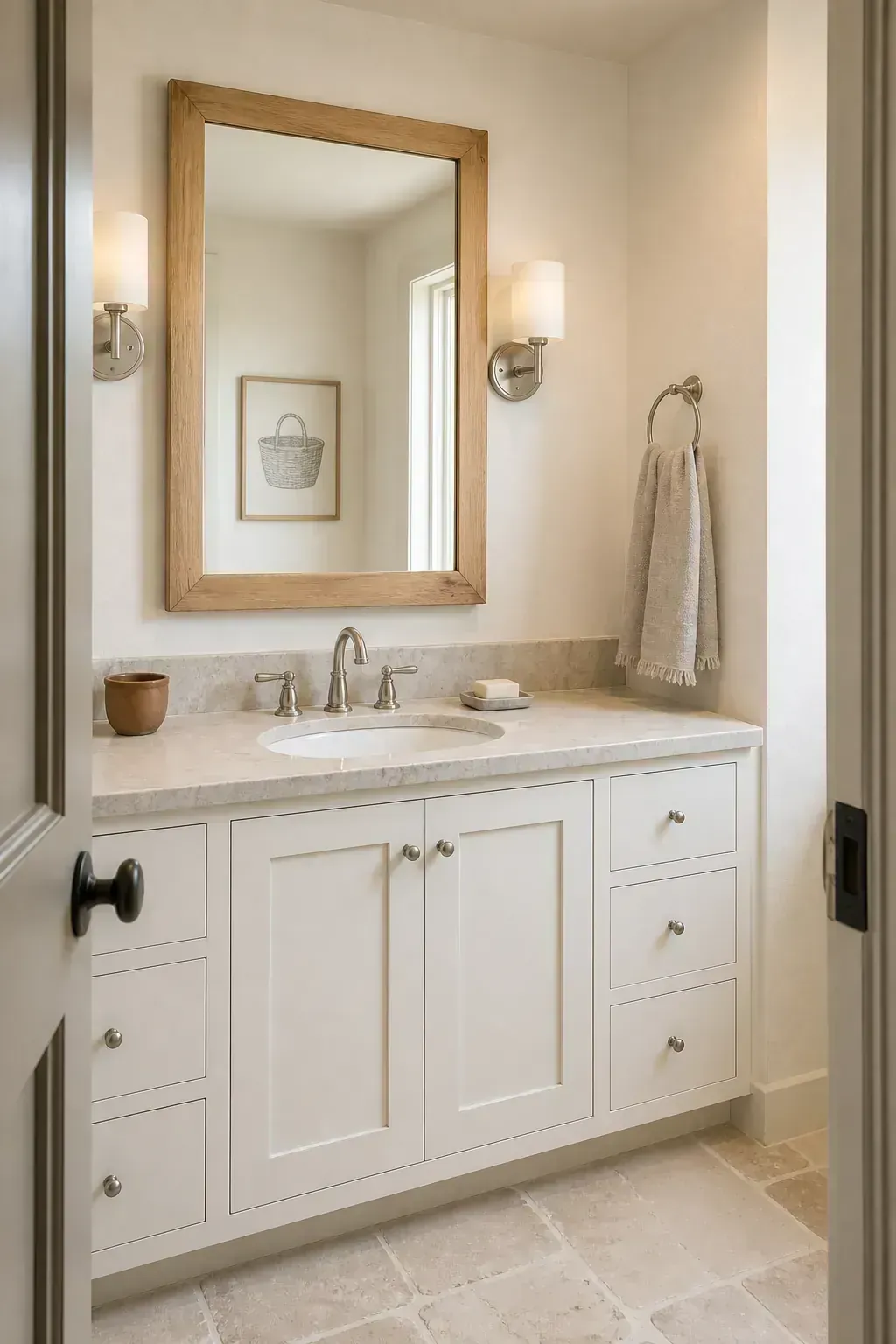
A white bathroom vanity is easy to live with, but it can disappear into a room of white tile, white paint, and cool light. The answer is not necessarily more color. Texture, undertone, and contrast at the right scale can give a neutral bathroom warmth while keeping the clean look that made you choose white in the first place.
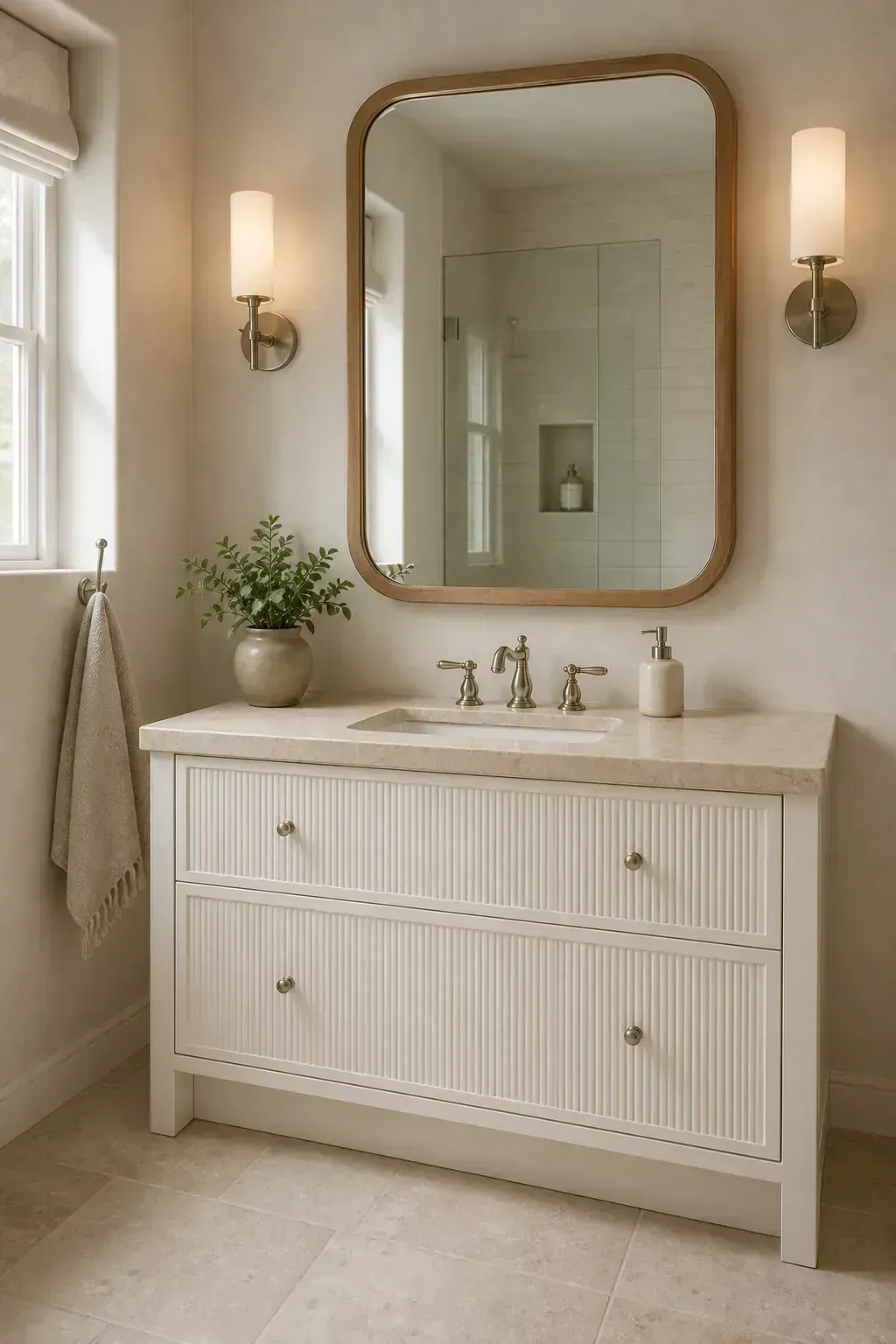
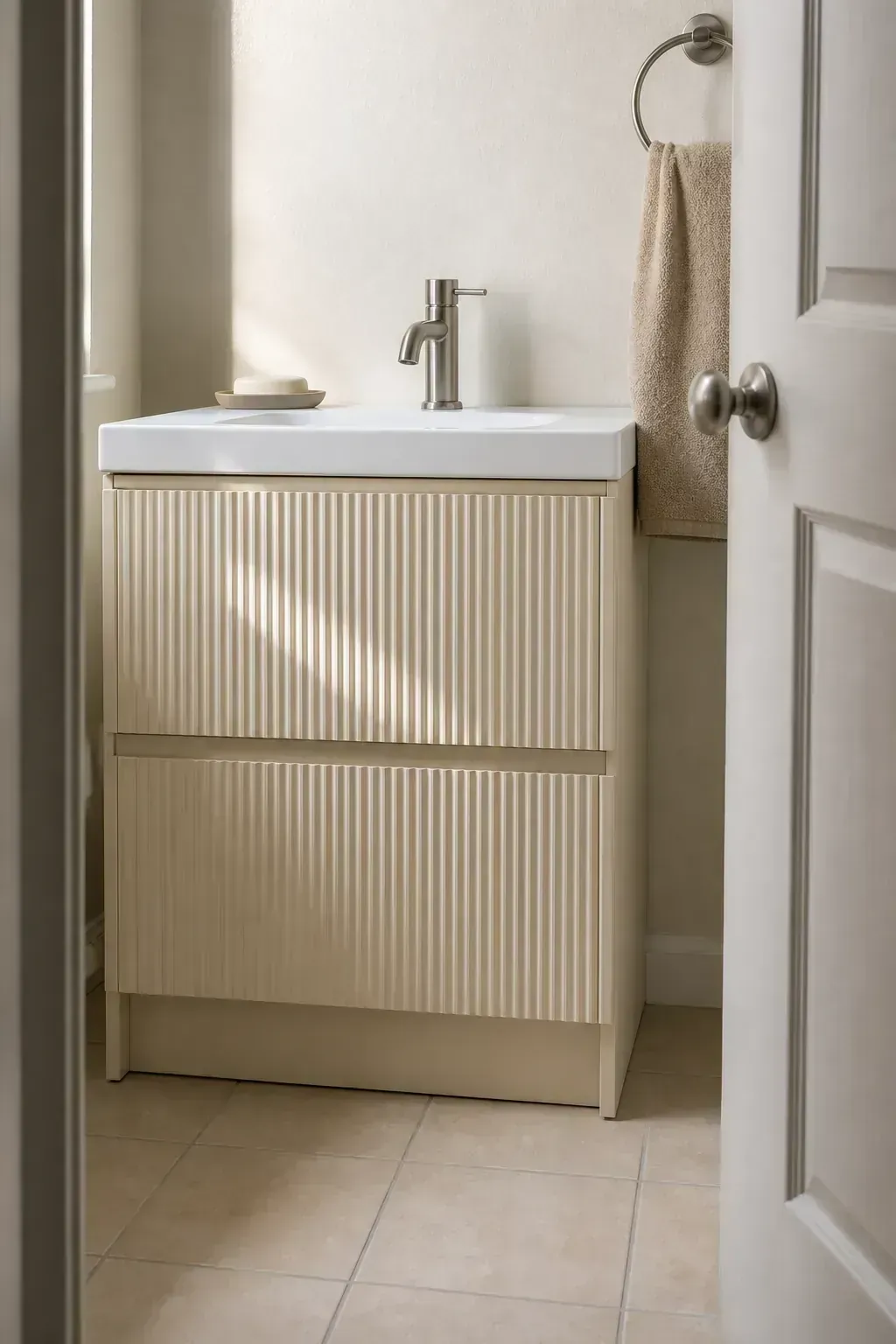
Choose an Off-White Reeded Vanity
Fine vertical reeding gives a white vanity visible shadow and rhythm. Choose a creamy off-white rather than a blue-white lacquer, and keep the hardware simple so the cabinet texture remains the feature.
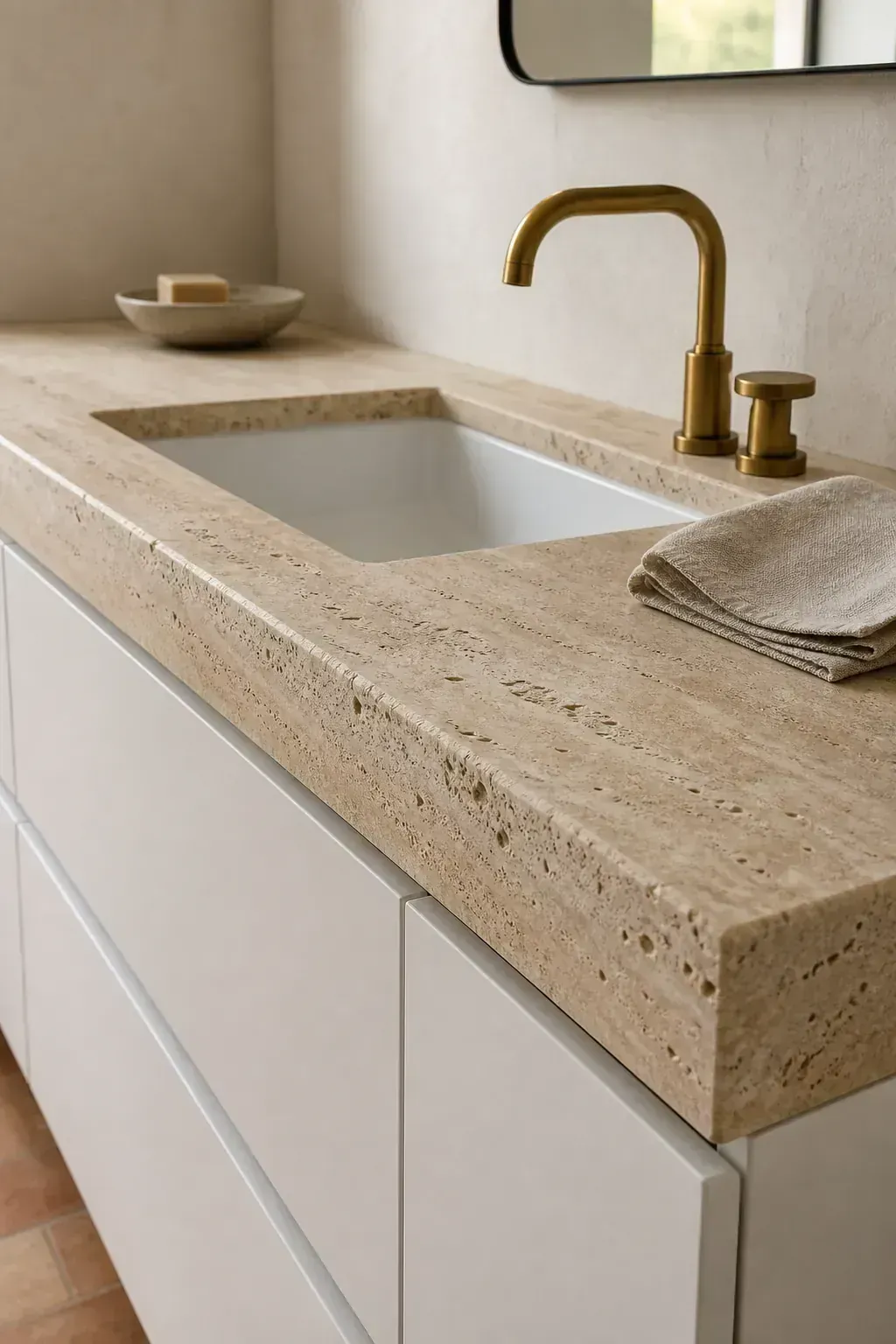
Add a Honed Travertine Counter
Honed travertine introduces quiet pores and sandy variation without a glossy luxury effect. Seal it correctly, or use a convincing porcelain slab when lower maintenance matters more than natural patina.
Frame the Mirror in White Oak
A white-oak mirror frame places natural grain at eye level, where it keeps a pale vanity wall from looking flat. A rounded rectangle also softens the hard horizontal lines of the counter and drawers.
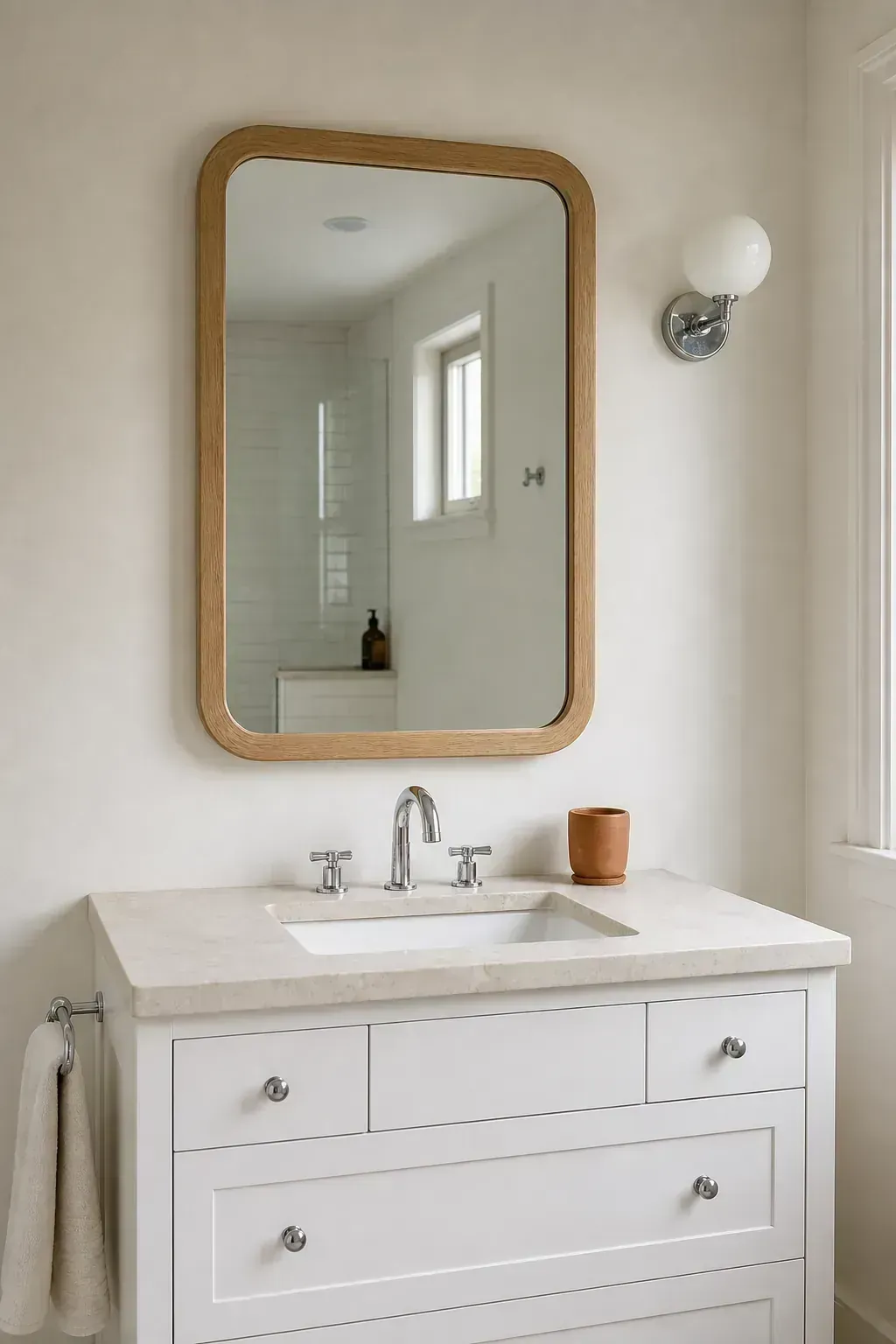
Use Handmade Cream Tile
Handmade-look tile varies slightly from piece to piece, so even a cream-on-white palette has depth. Select a satin or softly glossy glaze and warm grout; stark white grout can erase the effect.
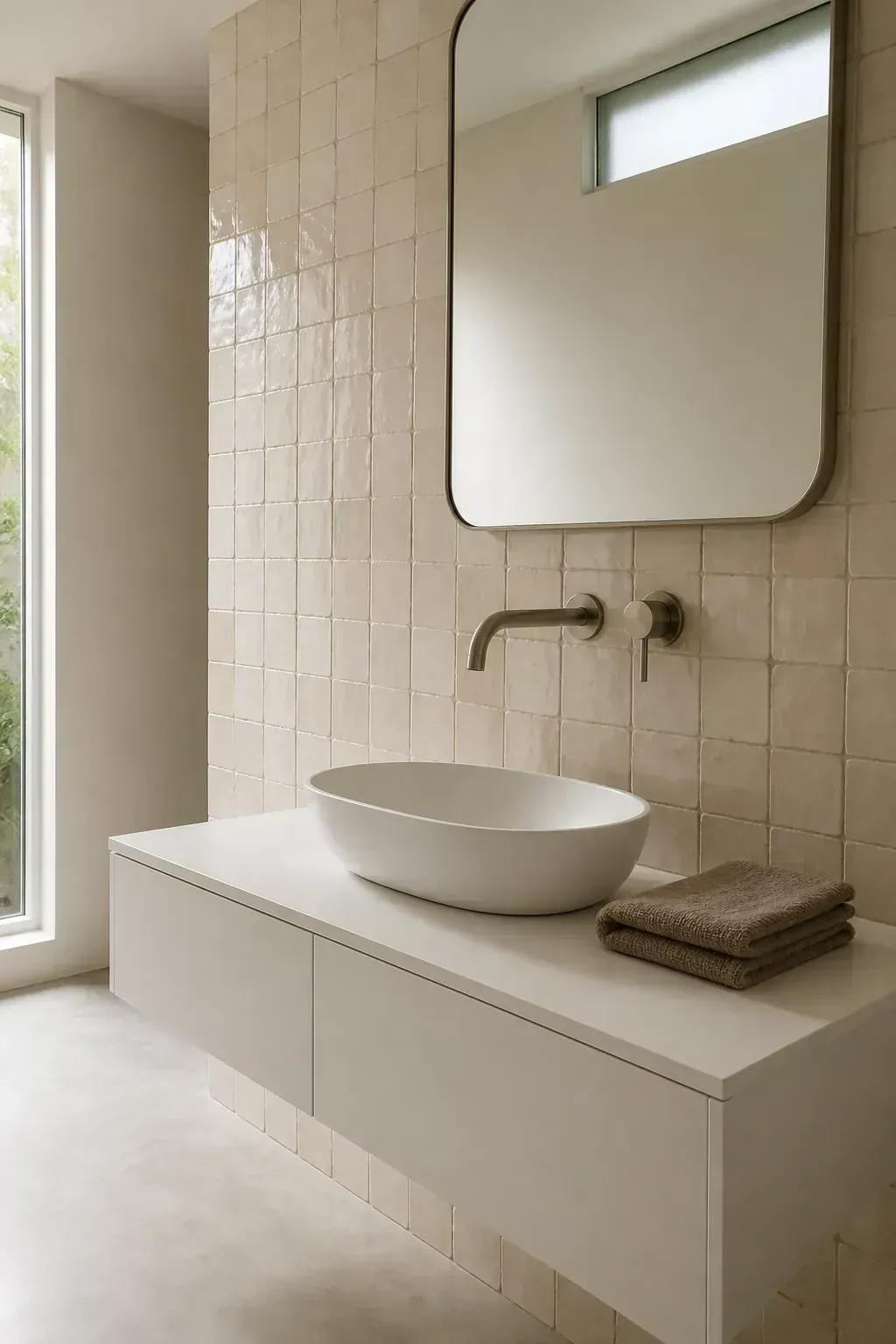
Layer a Fluted Stone Backsplash
A short fluted stone backsplash creates texture close to the basin while leaving the wall above quiet. Keep the grooves shallow enough to wipe down and use the treatment where splashing is limited.
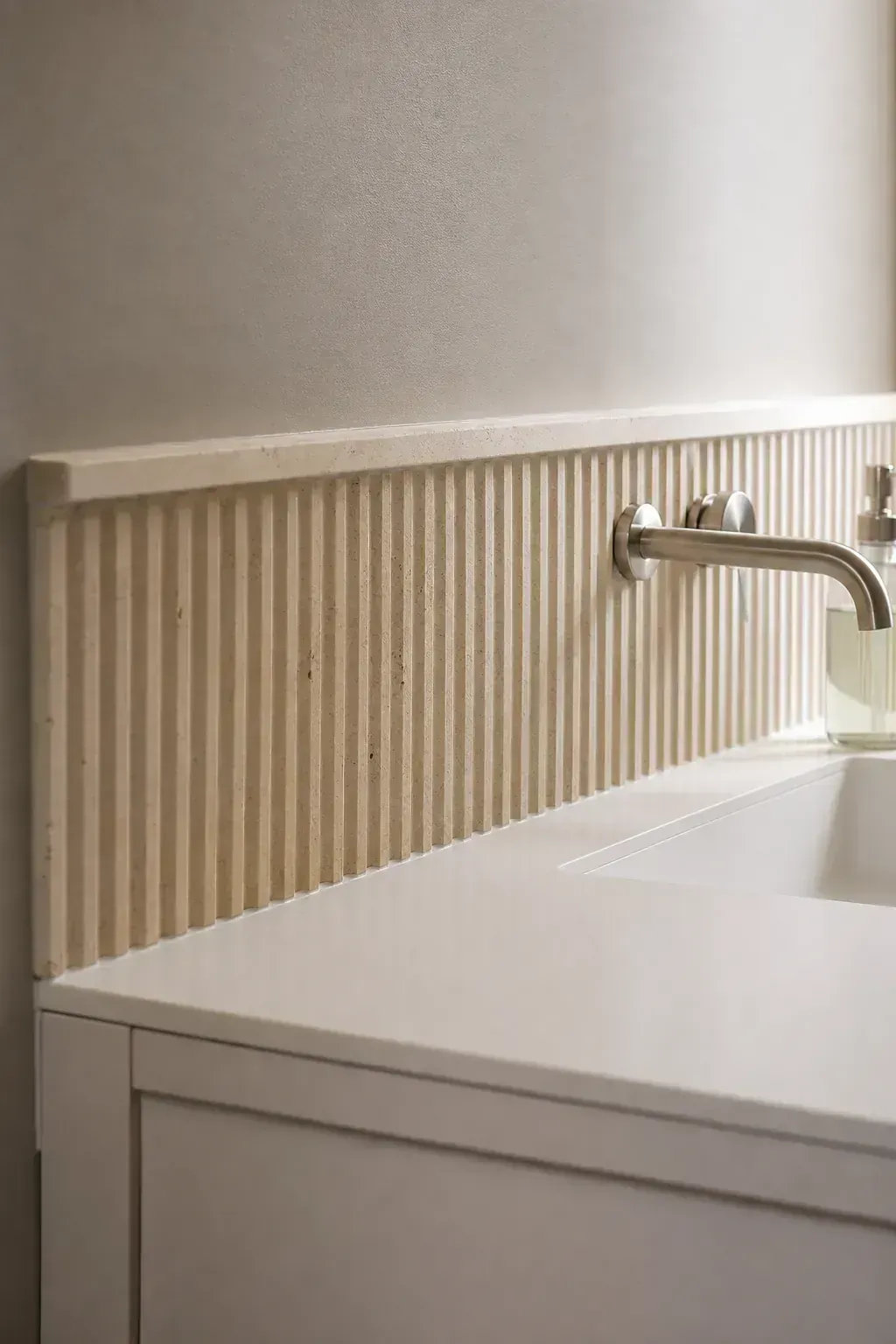
Bring in Woven Cane Storage
Cane-front drawers or a nearby linen cabinet break up painted cabinetry with an airy natural pattern. In a wet room, use cane away from direct splash and make sure the frame is sealed for humidity.
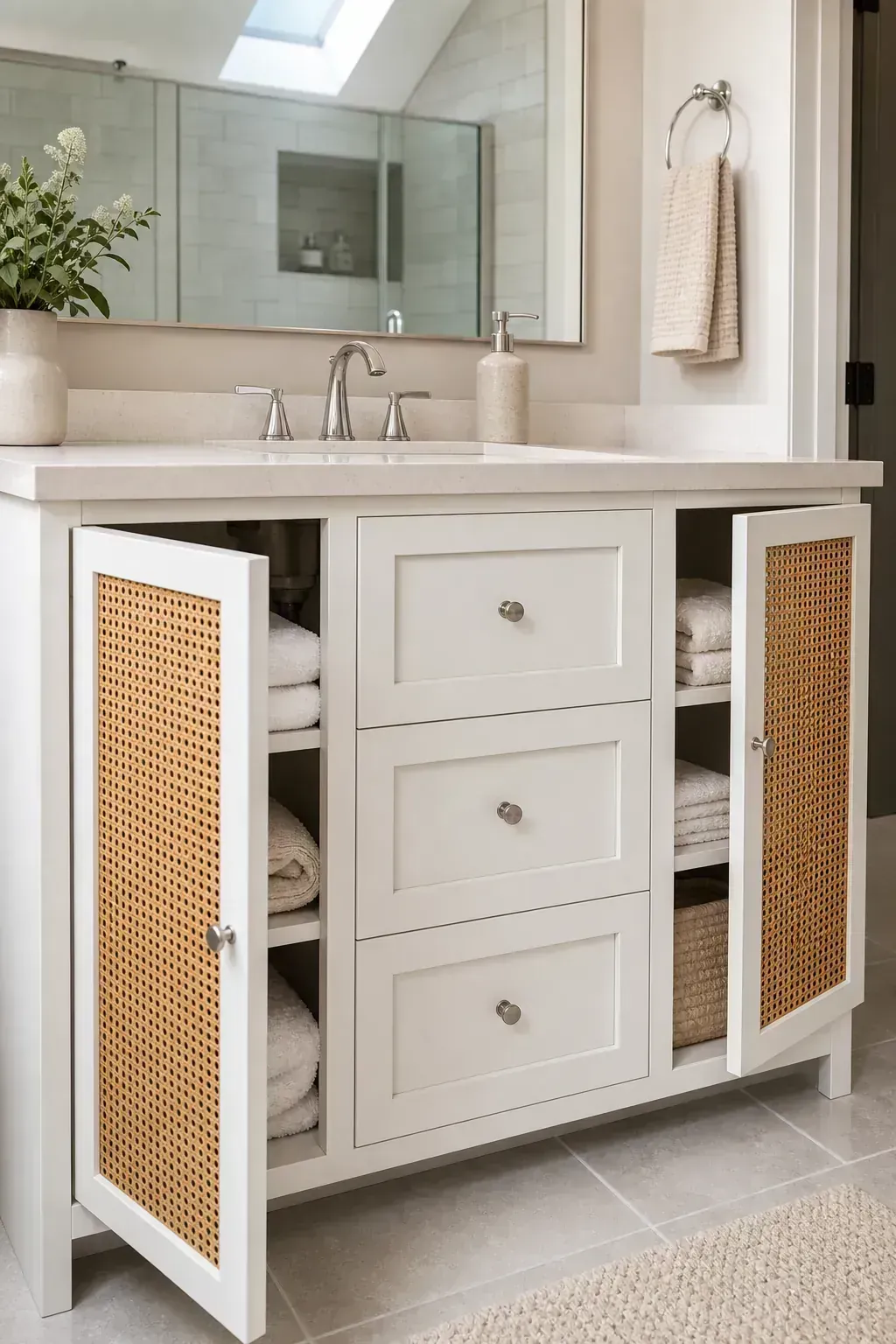
Warm the Wall With Putty Limewash
A putty-toned limewash-style wall lets a white vanity remain bright without blending into the background. Its cloudy variation is especially useful in windowless bathrooms where flat white paint can look clinical.
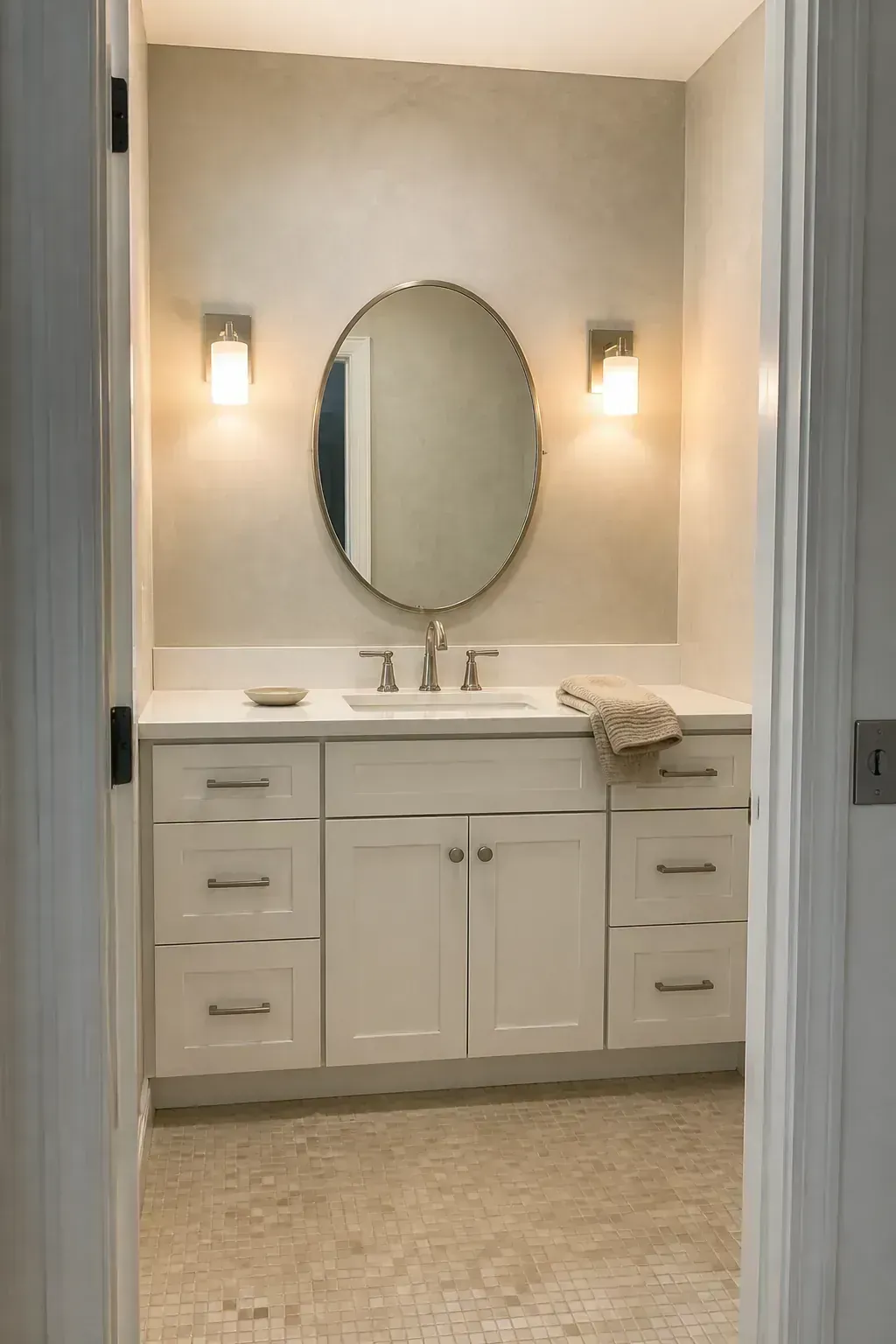
Install Pleated Linen Sconces
Small pleated linen shades diffuse vanity lighting and introduce fabric near the mirror. Use bathroom-rated fixtures and warm-neutral bulbs with strong color rendering so white surfaces still look clean, not yellow.
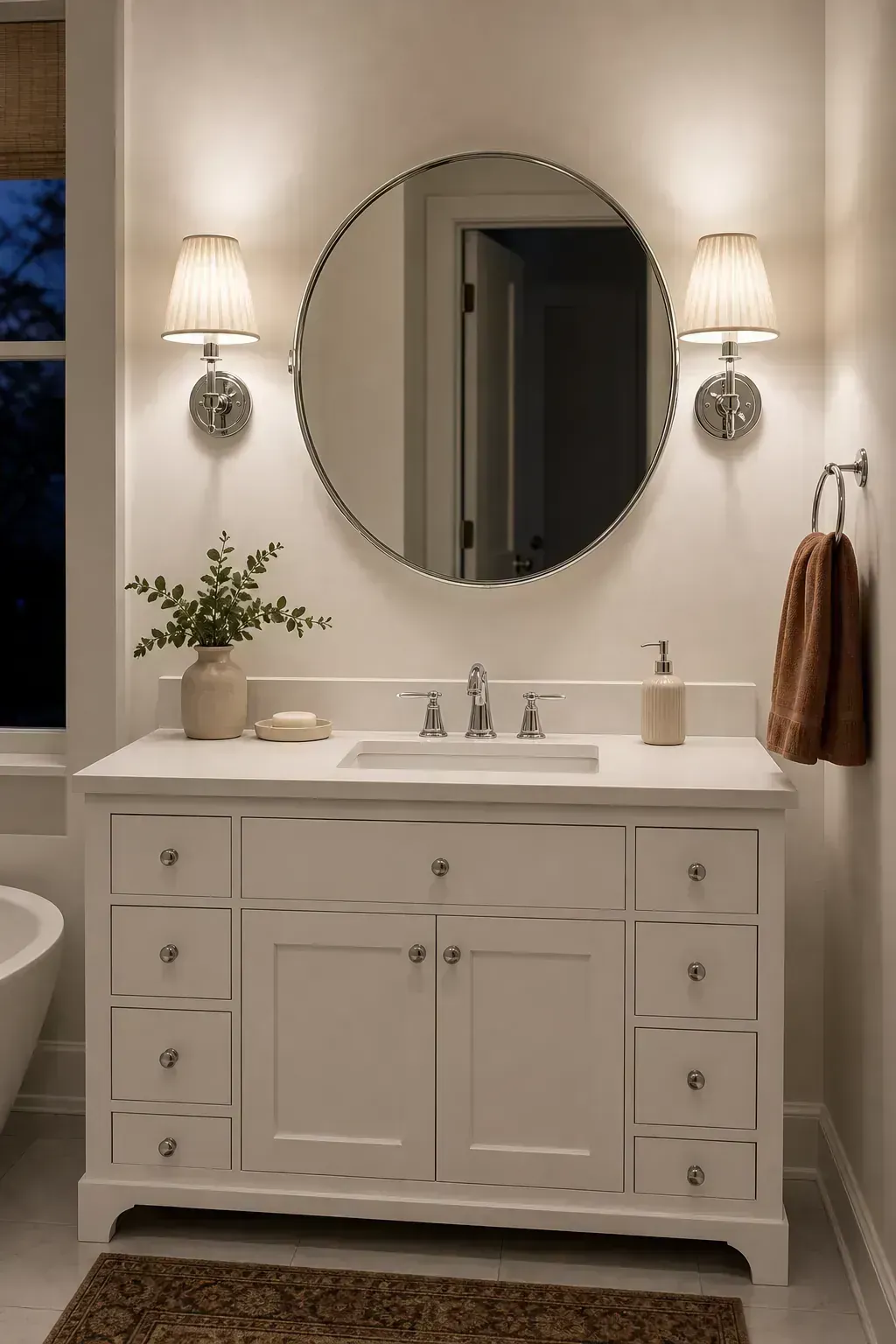
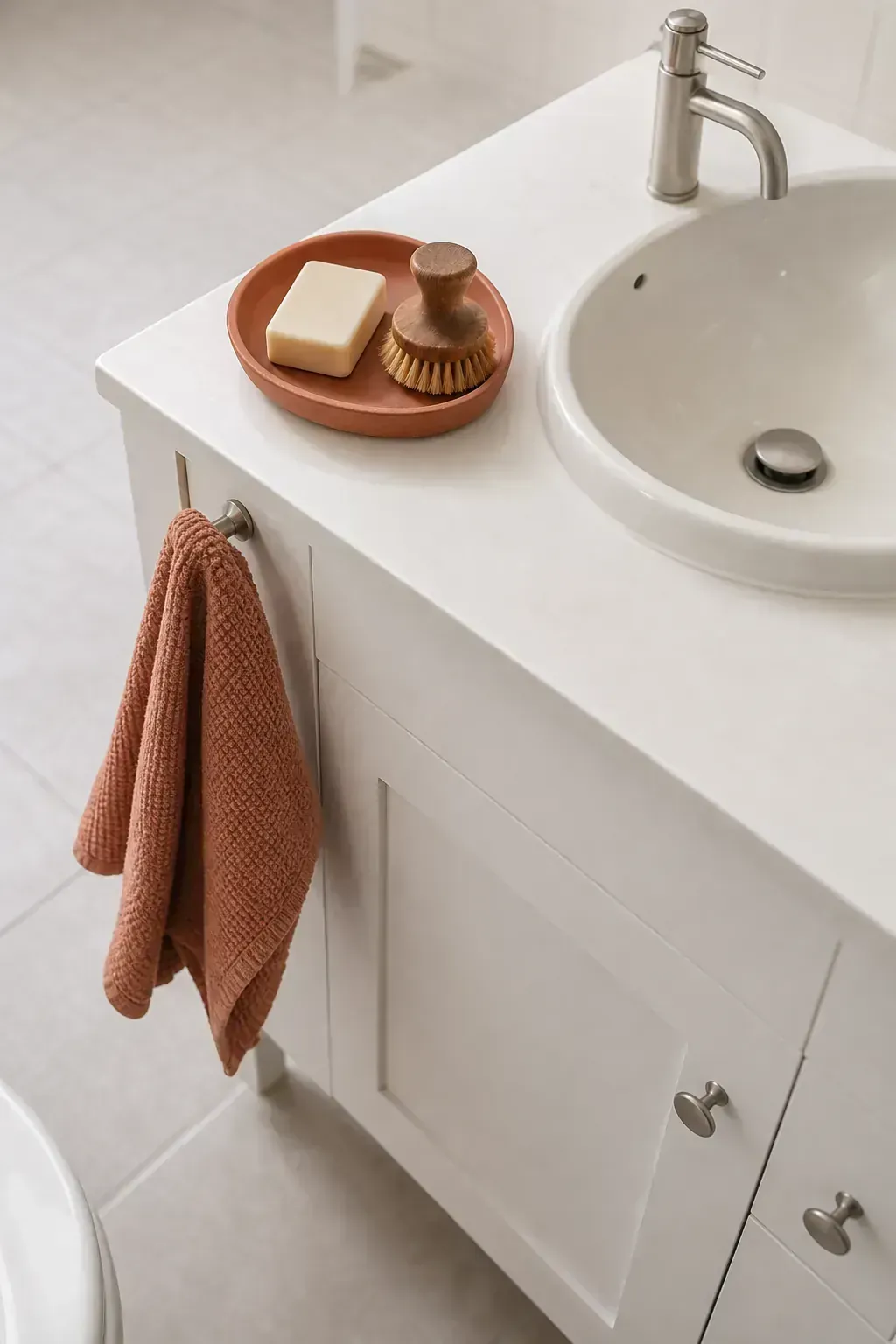
Mix in Muted Terracotta
A terracotta towel, low tray, or floor tile gives white cabinetry a warmer middle tone. Keep the shade dusty rather than orange, and repeat it only once or twice so the room stays restful.
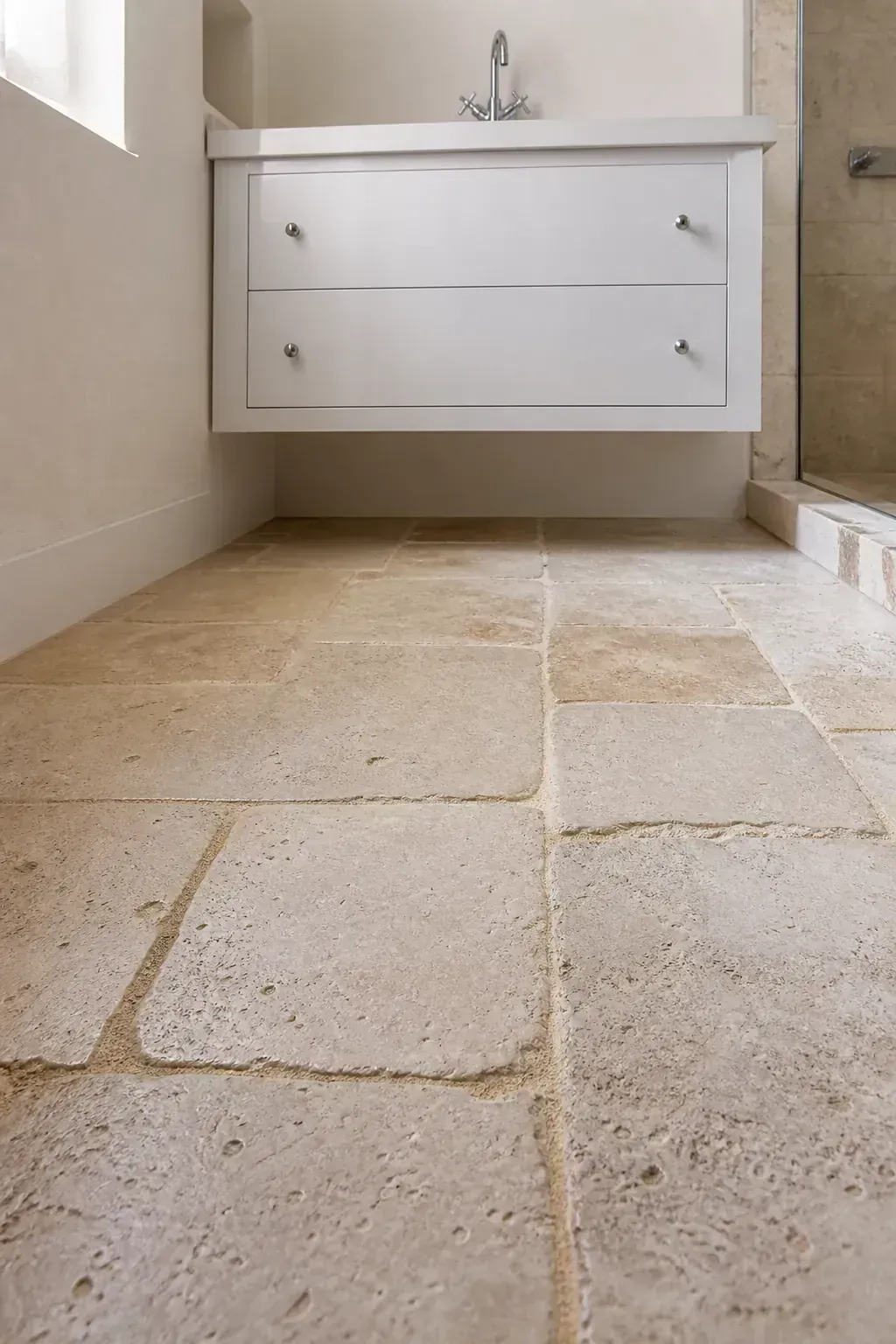
Ground It With Tumbled Limestone
Tumbled limestone floor tile has softened edges and natural variation that counter a pristine cabinet. A porcelain version can provide better stain resistance while keeping the irregular, warm-stone appearance.
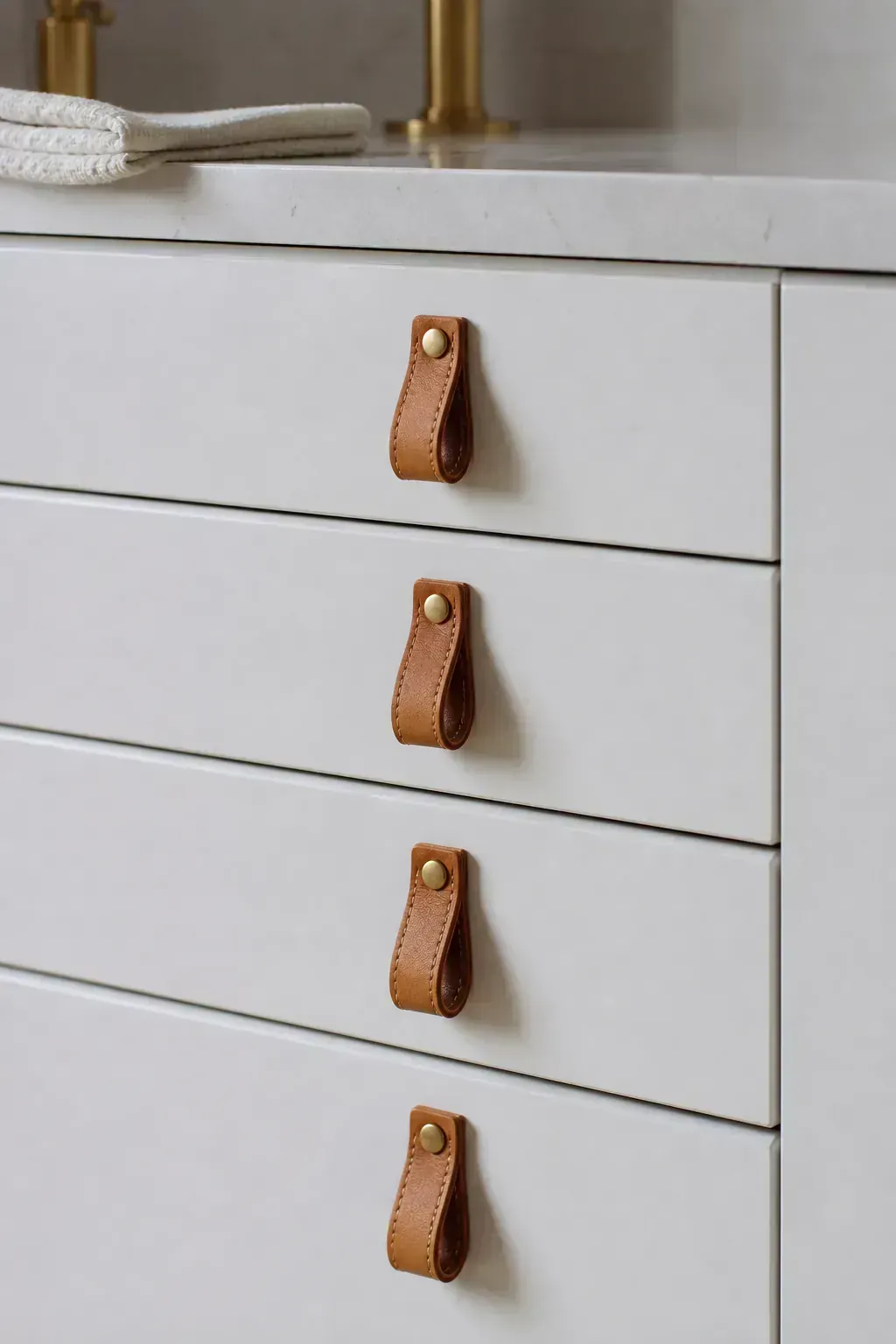
Top Drawers With Leather Pulls
Leather loop pulls add a small tactile detail to a white vanity without introducing another shiny finish. Choose sealed vegetable-tanned leather and place it where wet hands will not constantly soak it.
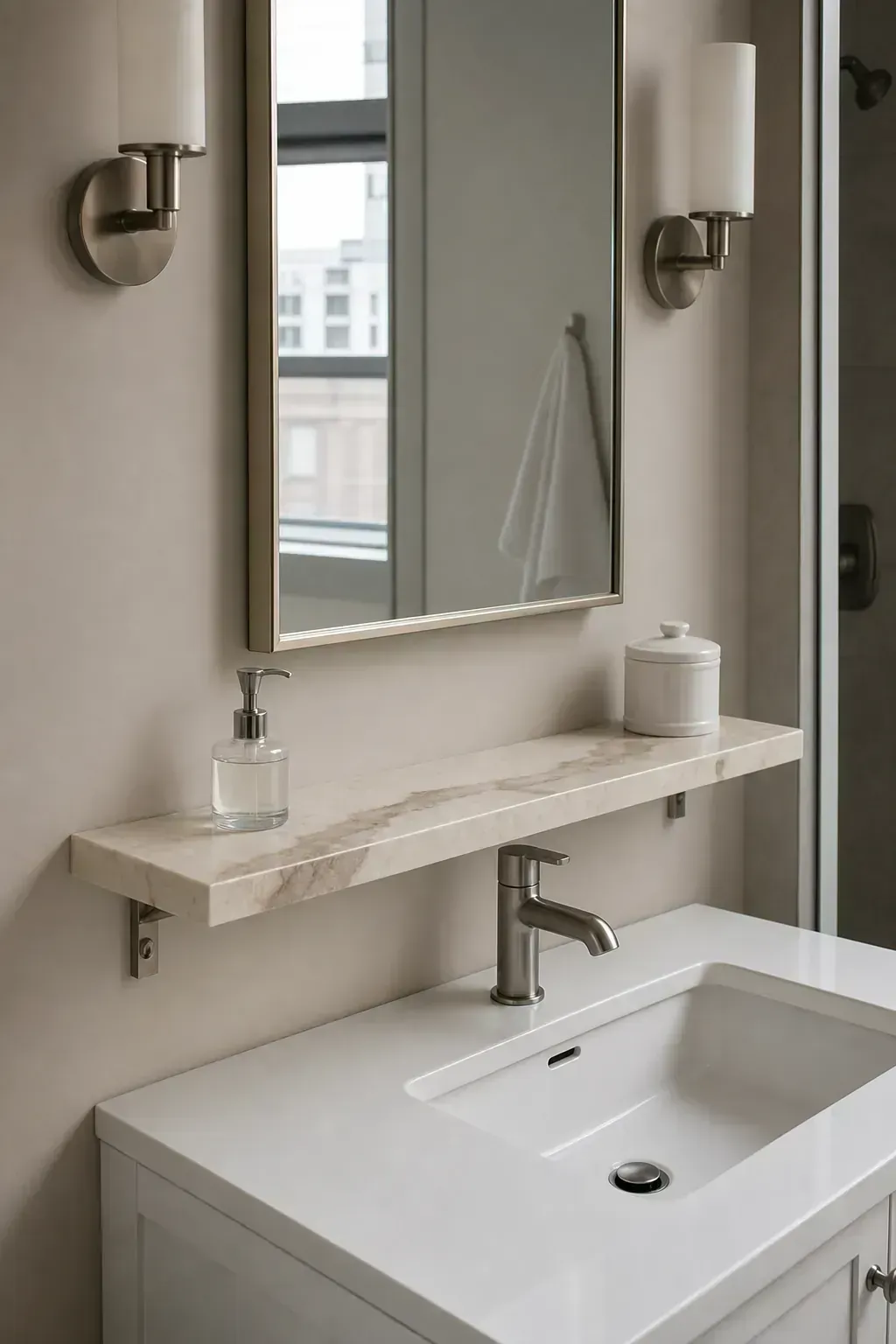
Add a Softly Veined Marble Shelf
A shallow marble shelf above the backsplash gives daily items a home and adds one controlled line of natural pattern. Use restrained beige or taupe veining so it complements rather than competes with the counter.
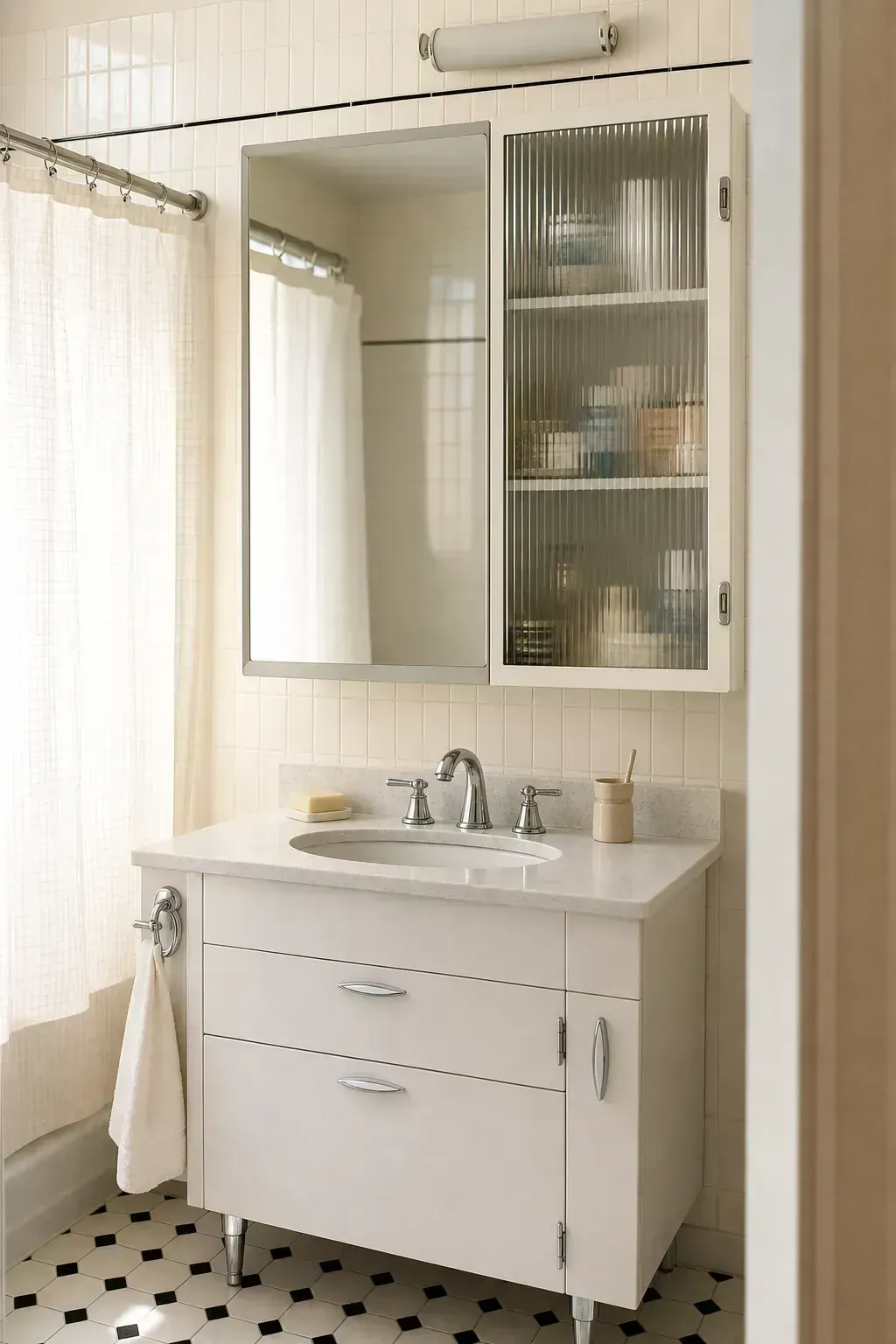
Style a Ribbed Glass Cabinet
Ribbed glass on a medicine cabinet catches light and obscures visual clutter. Pair it with a plain mirror panel or use it on one side only; texture feels richer when it is not repeated across every surface.
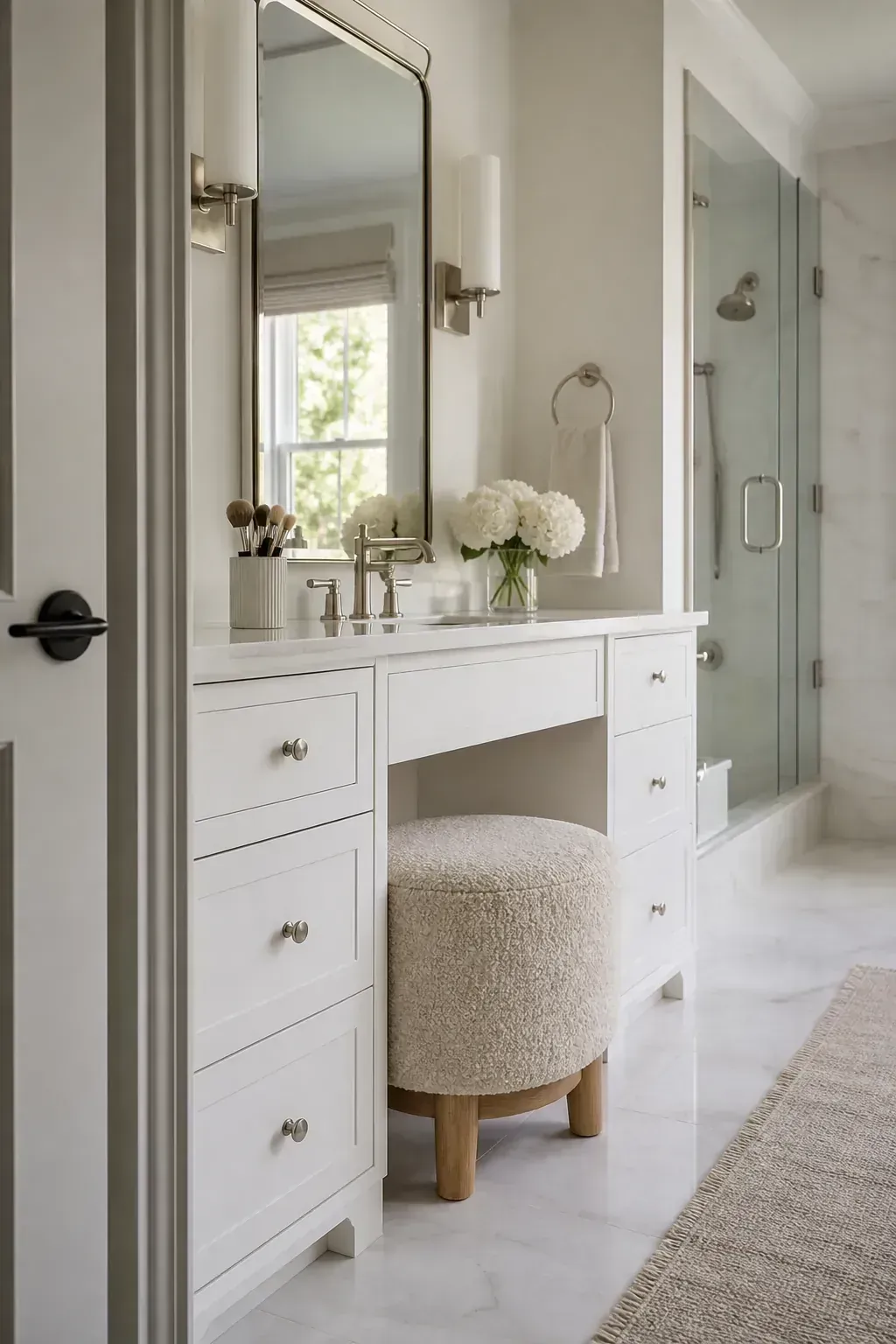
Use a Bouclé-Textured Vanity Stool
In a larger bathroom, a compact stool with nubby performance fabric creates a soft landing beside a white makeup vanity. Keep it outside the splash zone and choose a washable or commercial-grade textile.
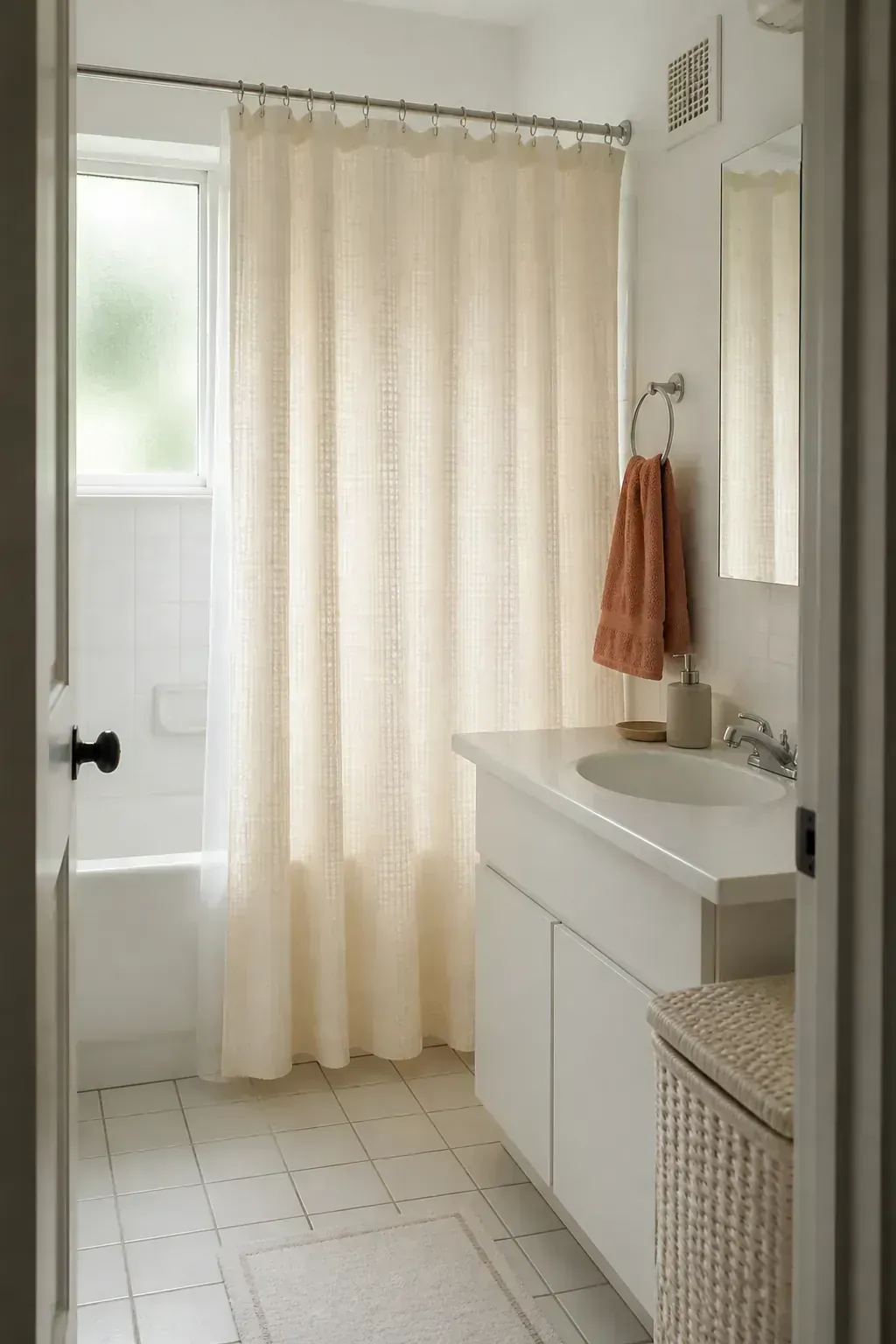
Hang a Waffle-Weave Shower Curtain
A waffle-weave curtain adds large-scale texture without shrinking the room. Choose warm ivory rather than bright optical white, then contrast it with a clay or olive hand towel at the vanity.
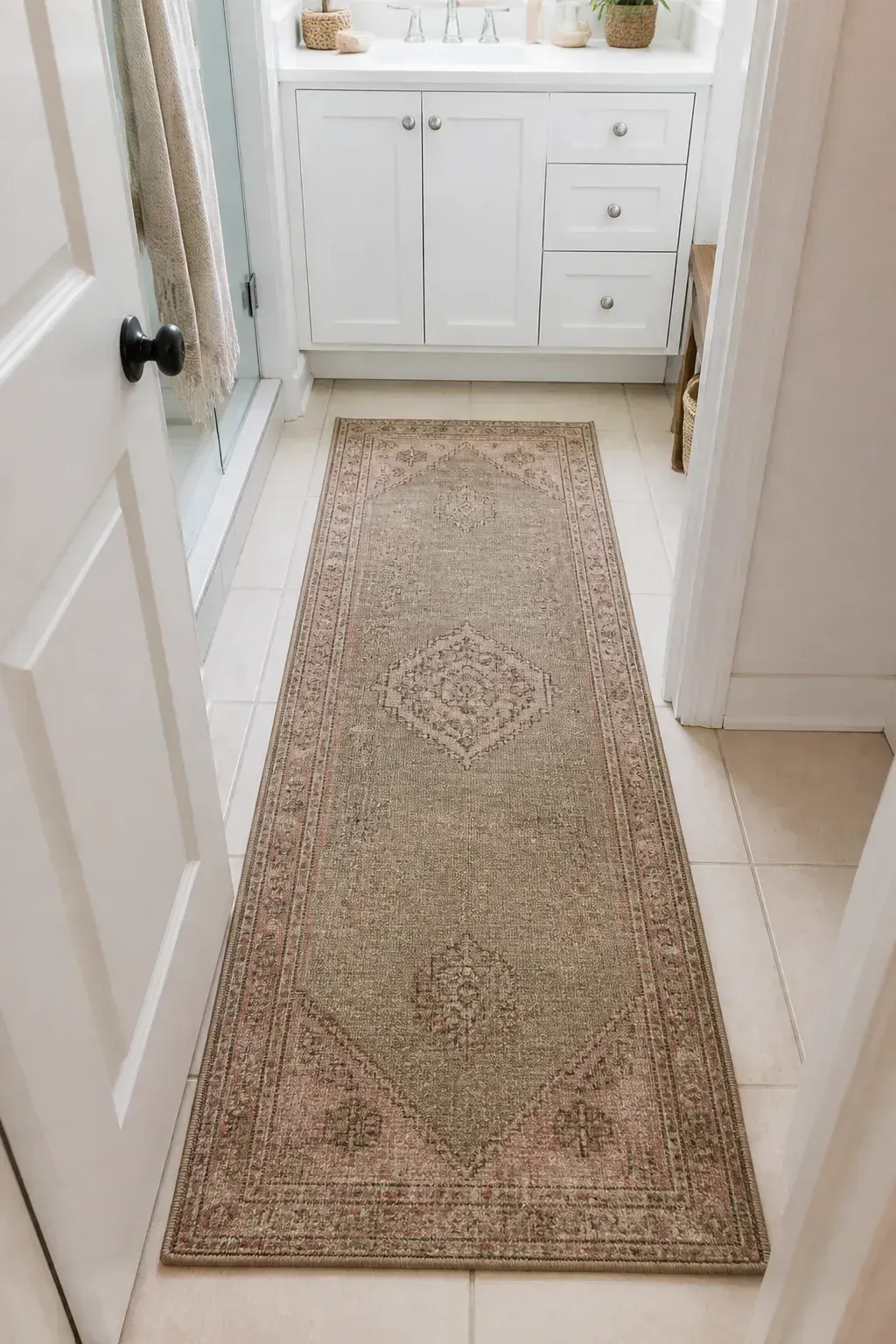
Soften the Floor With a Wool-Look Runner
A washable wool-look runner gives the vanity zone warmth underfoot and breaks up cold tile. Faded taupe, muted rose, or moss patterns work better than crisp black outlines in a soft neutral bathroom.
Balance Smooth and Textured Surfaces
The most convincing neutral bathrooms do not texture everything. Let the white vanity and basin stay smooth, then choose two or three tactile counterpoints—perhaps wood grain, linen, and honed stone. That contrast gives each material room to register.
Check the room from the doorway before adding more bathroom decor. If the largest surfaces already vary in sheen and texture, edit the countertop rather than filling it. Warmth comes from material depth and useful objects, not visual noise.