Succulents are forgiving only when their roots can dry at the right pace. A clever vessel becomes useful when its depth, material, and position suit the plant rather than forcing care into an awkward routine. These arrangements begin with real growing conditions, then use shape and texture to make each solution memorable.
Sunny Sill Propagation Tray
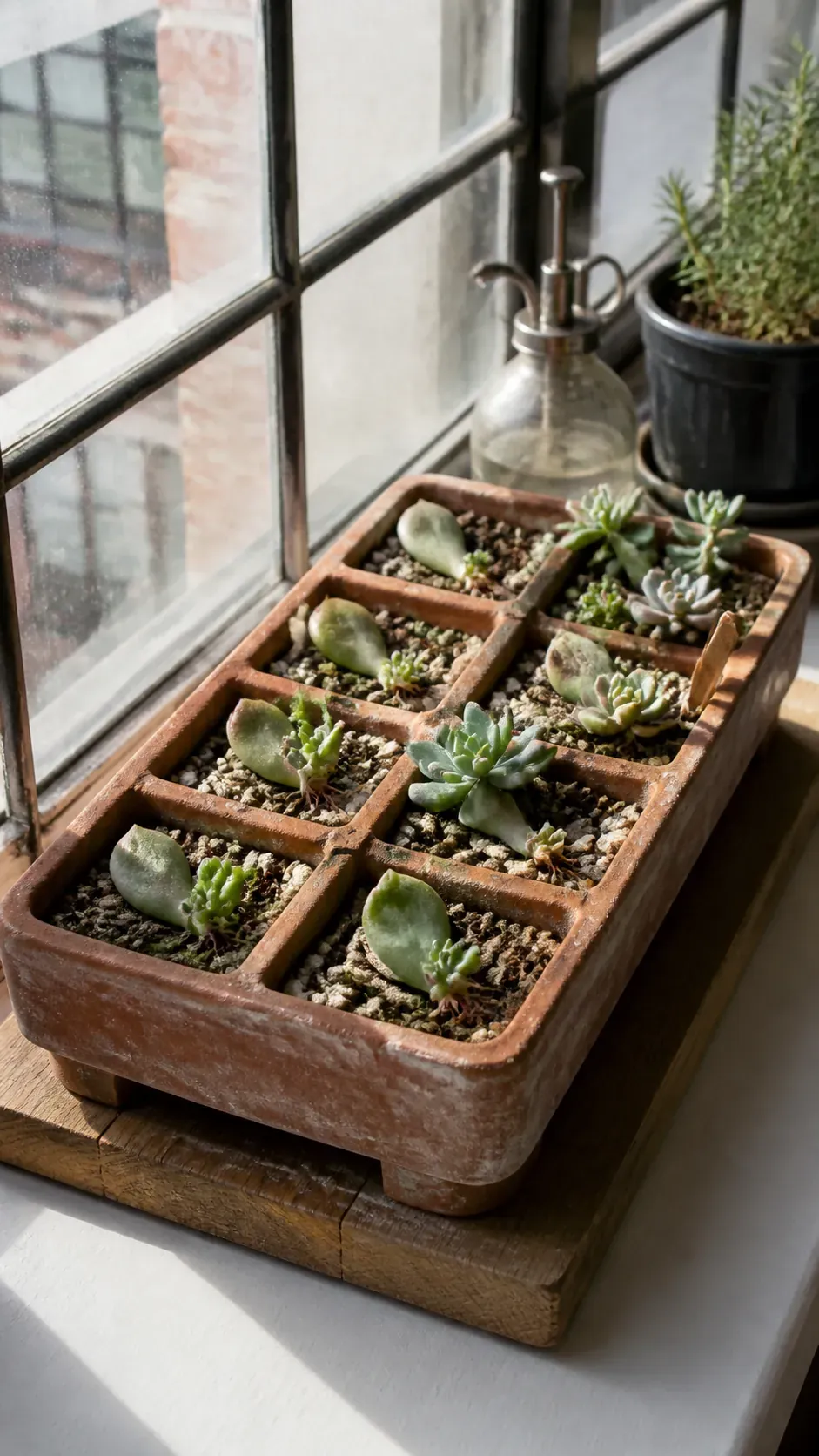
A divided propagation tray keeps new offsets visible while their roots are still small. Fill each cell with gritty mix and water only after resistance at the base shows that roots have formed. A low tray also lets every cutting receive even window light without taller pots casting shadows.
Arched Concrete Window Box
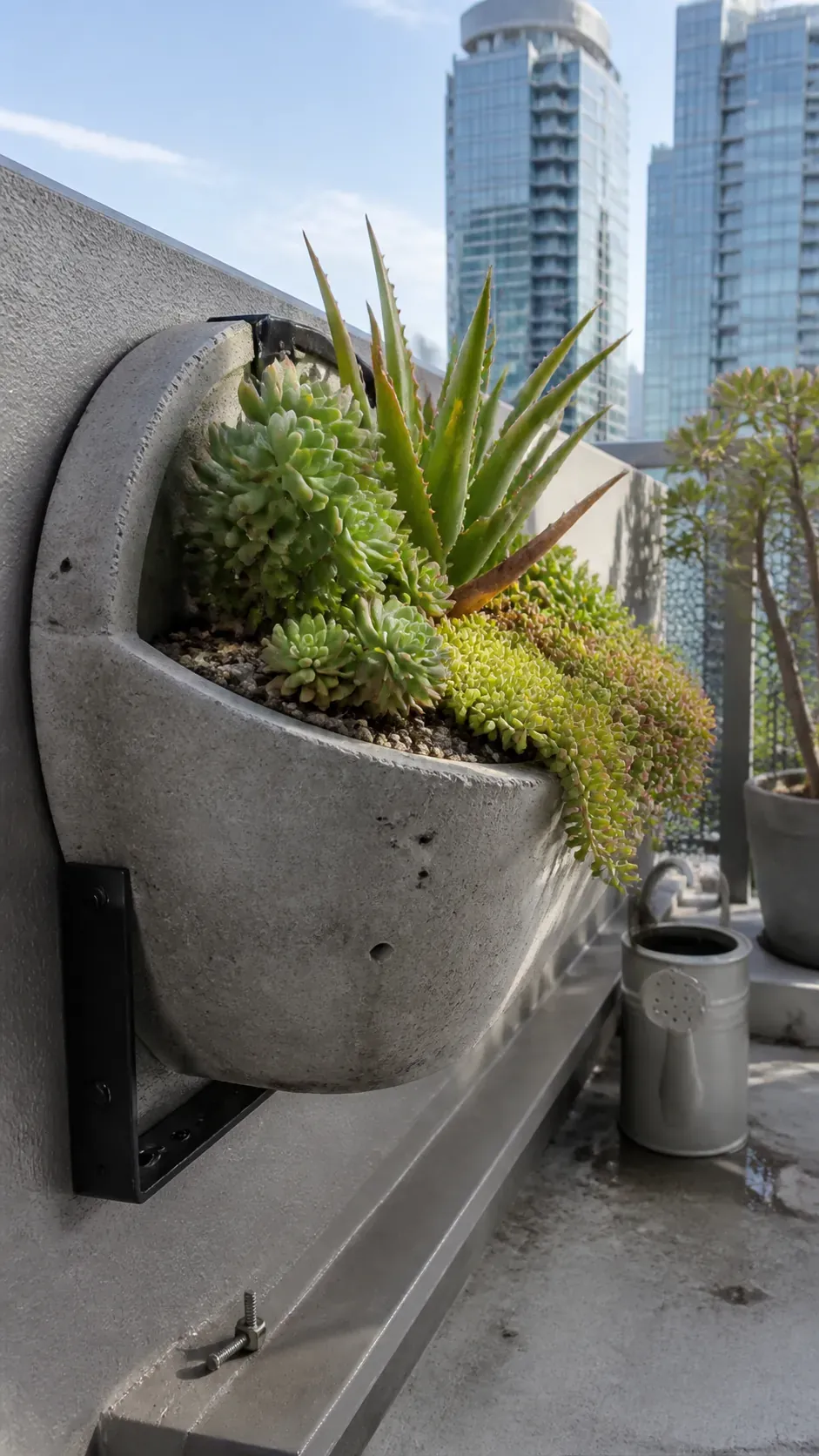
A long concrete box can soften a straight balcony ledge when its upper rim has a gentle arch. The mass keeps shallow rooted plants stable in wind, although the support below must be rated for the full wet weight. Combine low sedum with one upright aloe so the planting has movement without blocking the view.
Speckled Breakfast Bowl
A handmade breakfast bowl becomes a compact indoor succulent garden when a drainage hole is added before planting. Its curved interior suits a small central rosette surrounded by fine gravel and two tiny offsets. Keep the arrangement near bright glass and rotate it regularly so the rosette remains even.
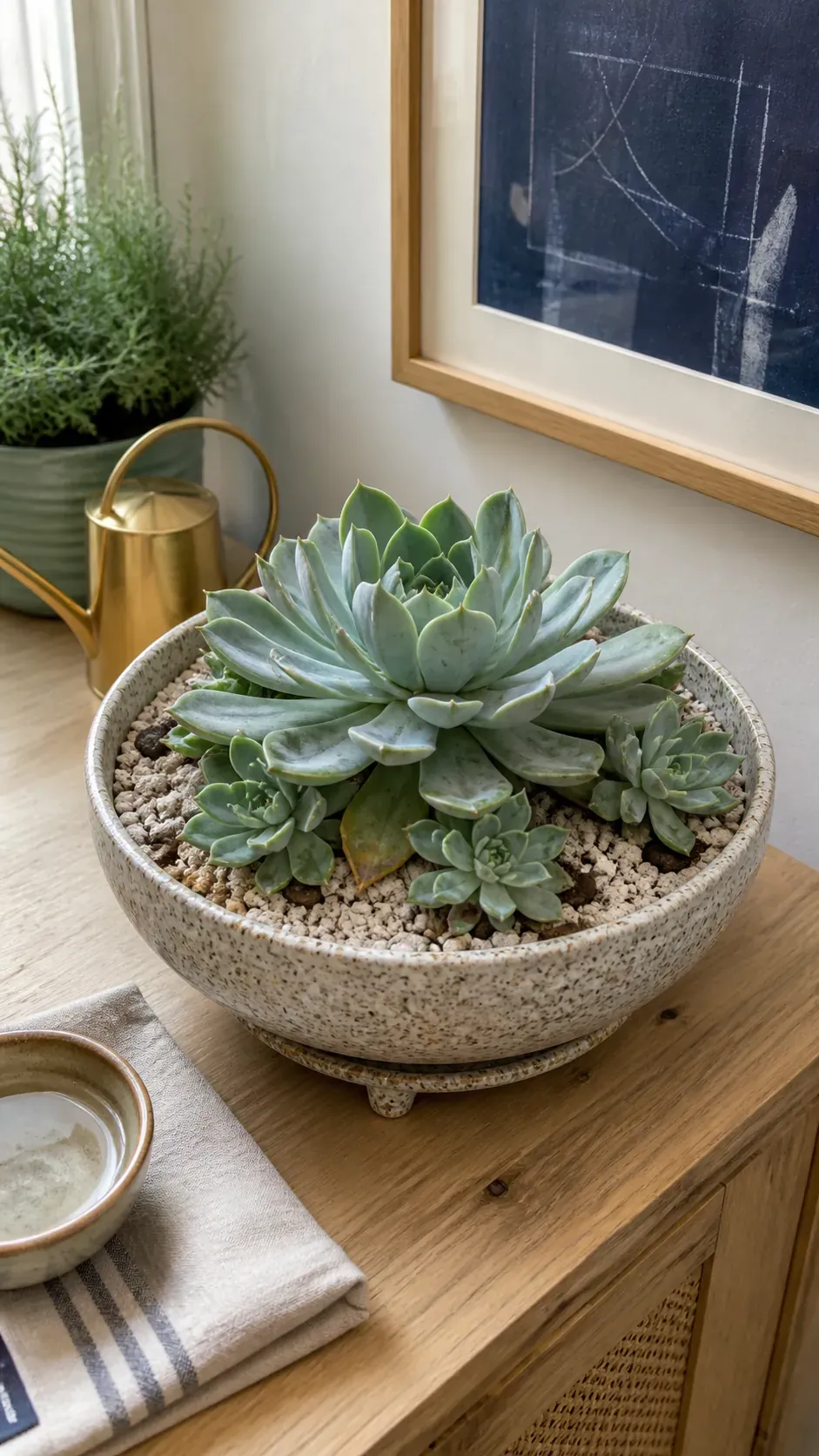
Crushed Stone Garden Ribbon
A narrow ribbon of crushed stone can function as a succulent garden bed beside a hot path. Plant repeated clusters rather than scattering single specimens, since grouped forms read more clearly from a distance. Slope the bed away from paving and select hardy varieties suited to local rain and winter temperatures.
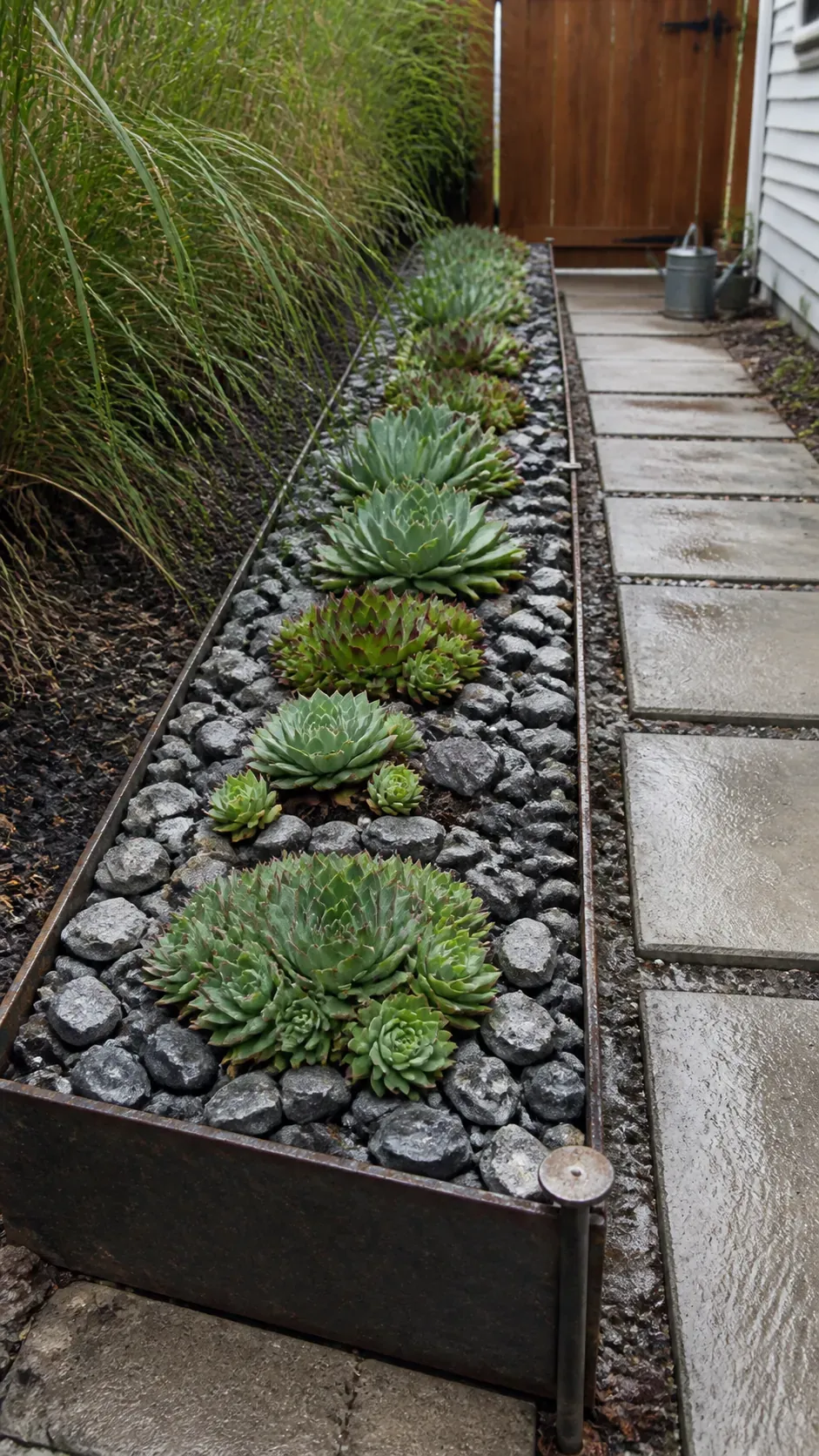
Hollow Log Nursery
A sound hollow log can hold nursery pots while creating the impression that plants emerge from the wood. Keeping the plants in separate inserts prevents wet mix from accelerating decay inside the log. This removable approach also makes seasonal shelter easier when tender varieties cannot stay outdoors.
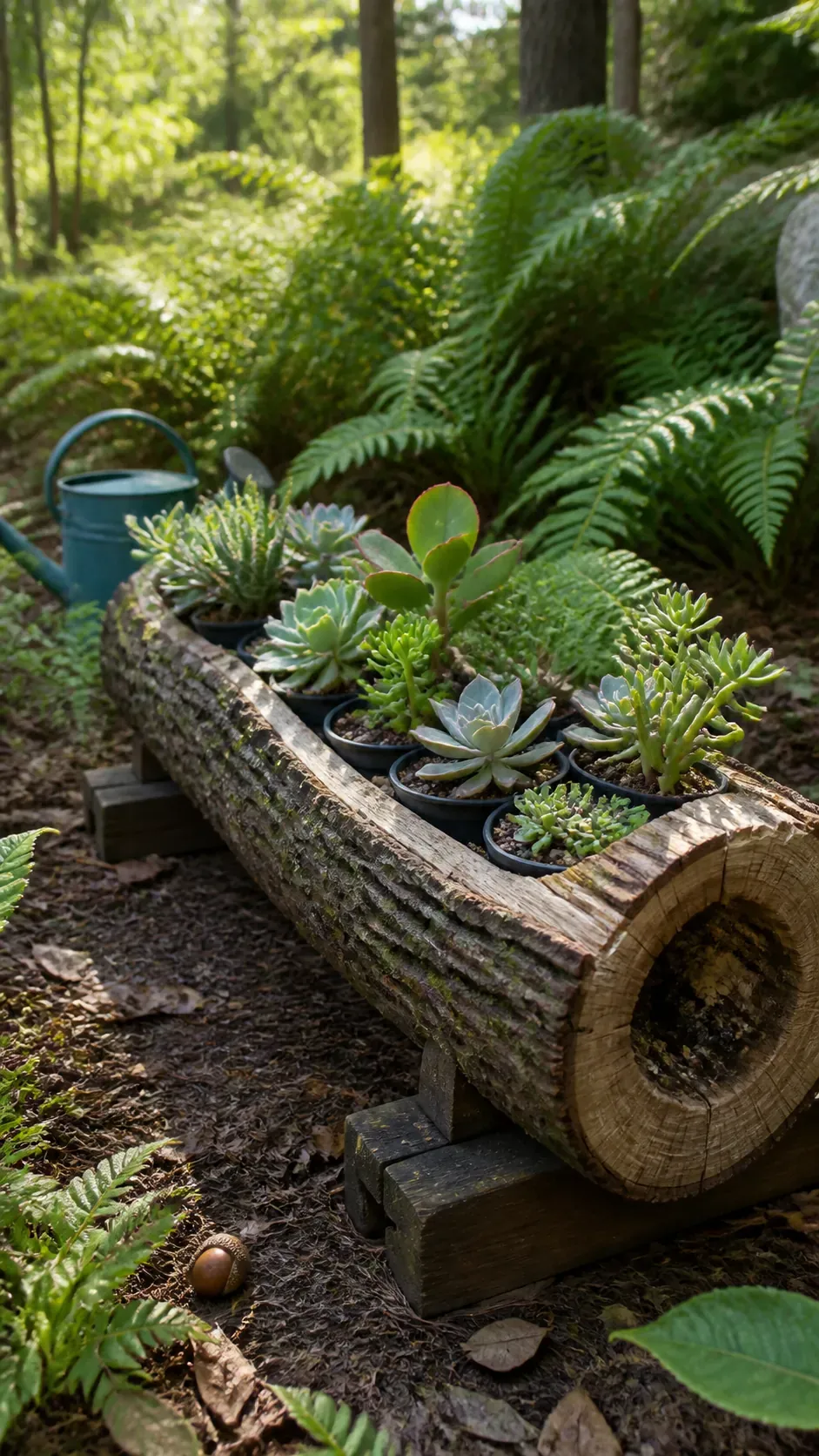
Pedestal Planter With Gravel Collar
A simple pedestal raises a shallow planter above dense border plants where its outline can be seen. A gravel collar around the central agave keeps lower leaves away from damp organic mulch. Choose a base broad enough to remain steady and place the planter before filling it with heavy mineral mix.
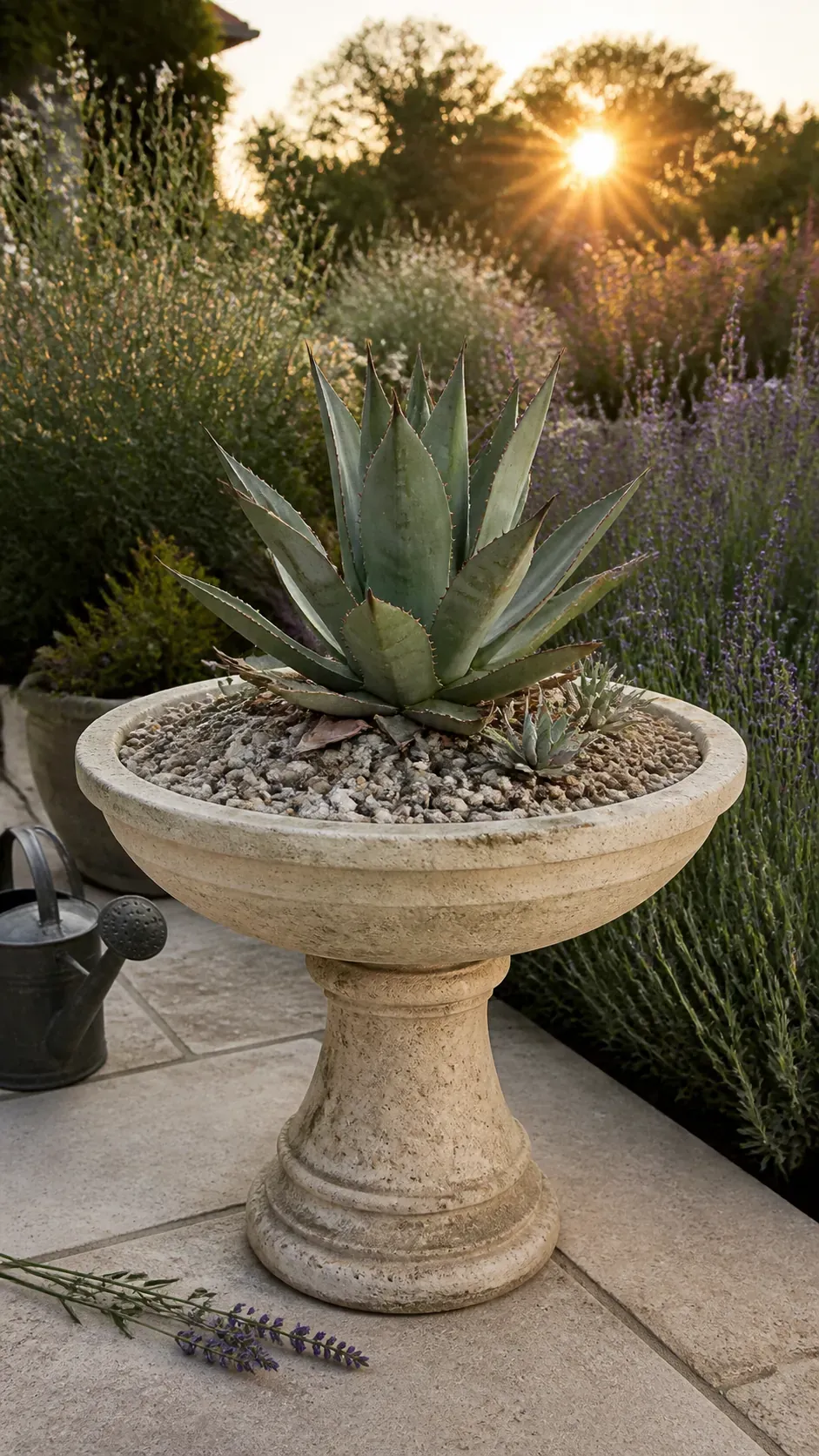
Sunken Patio Pot
A wide pot set partly into gravel can make a patio planting feel integrated rather than placed on top. Keep the drain opening above the compacted base so runoff never backs into the container. A broad rim offers a clean boundary between the planted rosettes and surrounding loose stone.
Tiered Corner Shelf
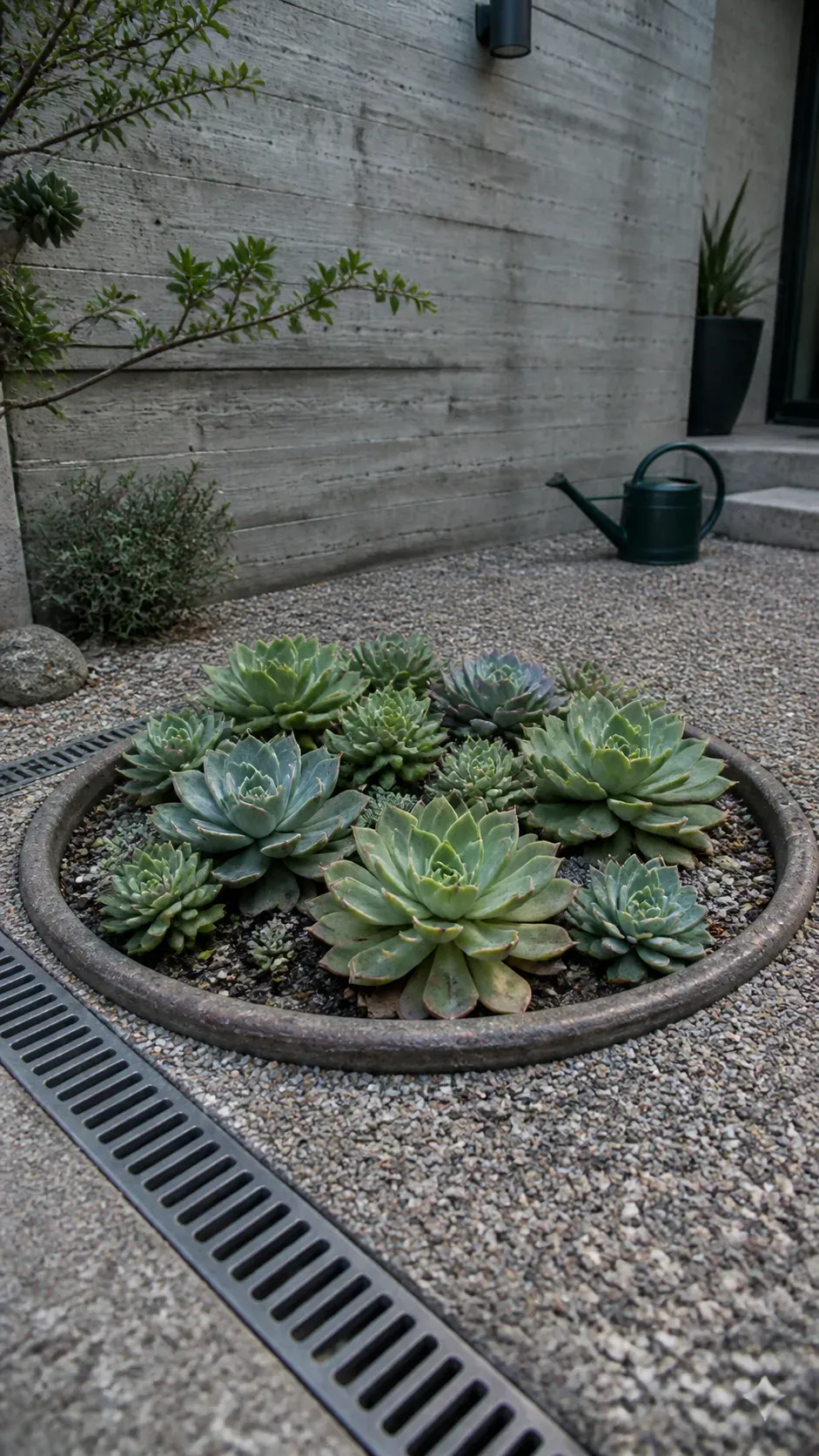
A tiered corner shelf gives several small pots access to the same bright window. Place the tallest plants on the lowest tier and trailing varieties on the outer edge so none shade their neighbors. Removable saucers make watering safer while preserving the airy vertical arrangement.
Carved Sandstone Cube
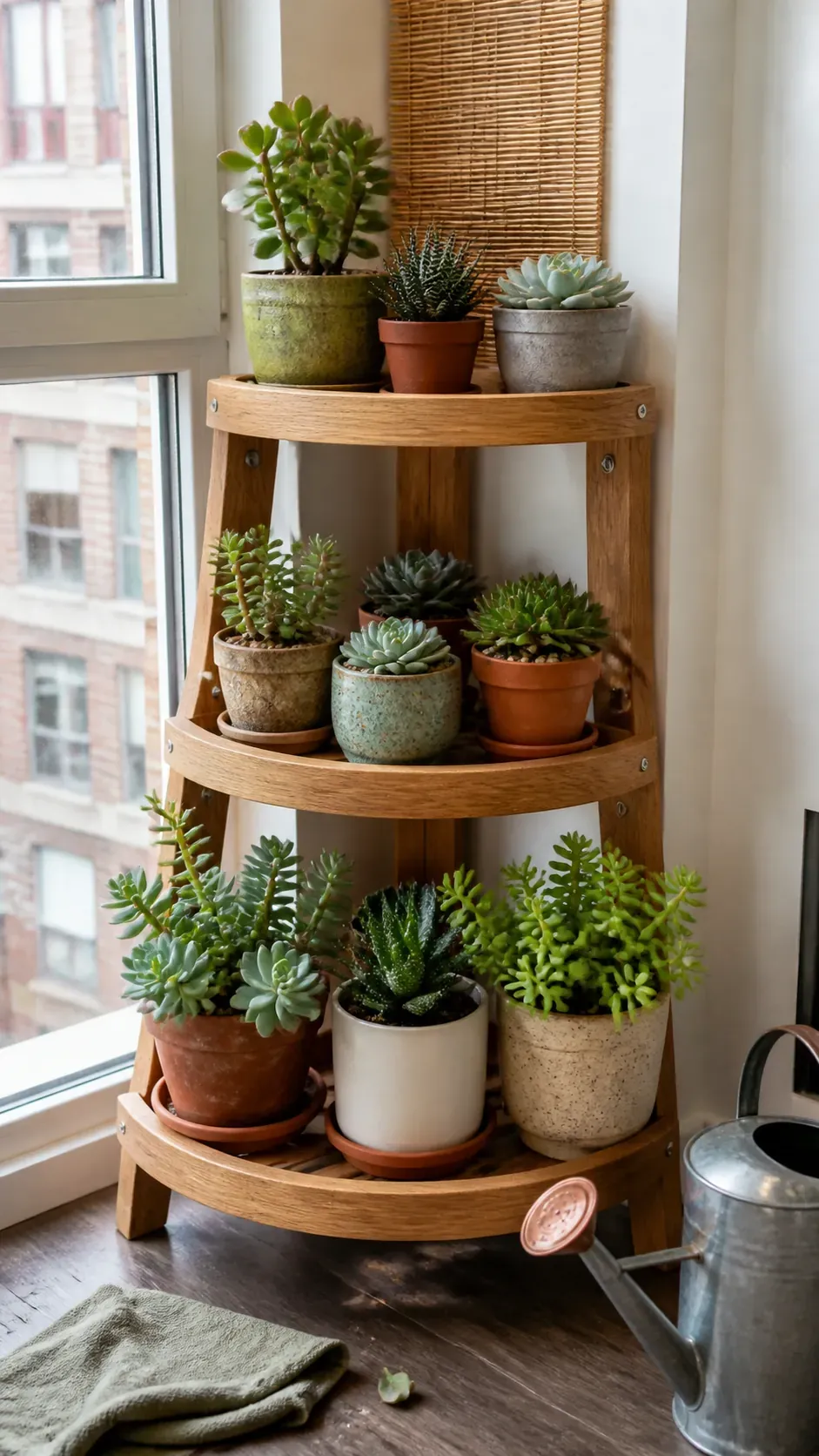
A carved sandstone cube makes a strong counterpoint to a soft mound of sedum. Its internal cavity should be wide enough for drainage material and a realistic soil volume, not merely a decorative notch. Let the stone weather naturally, because subtle mineral variation adds more interest than a polished finish.
Kitchen Herb Pot Companion
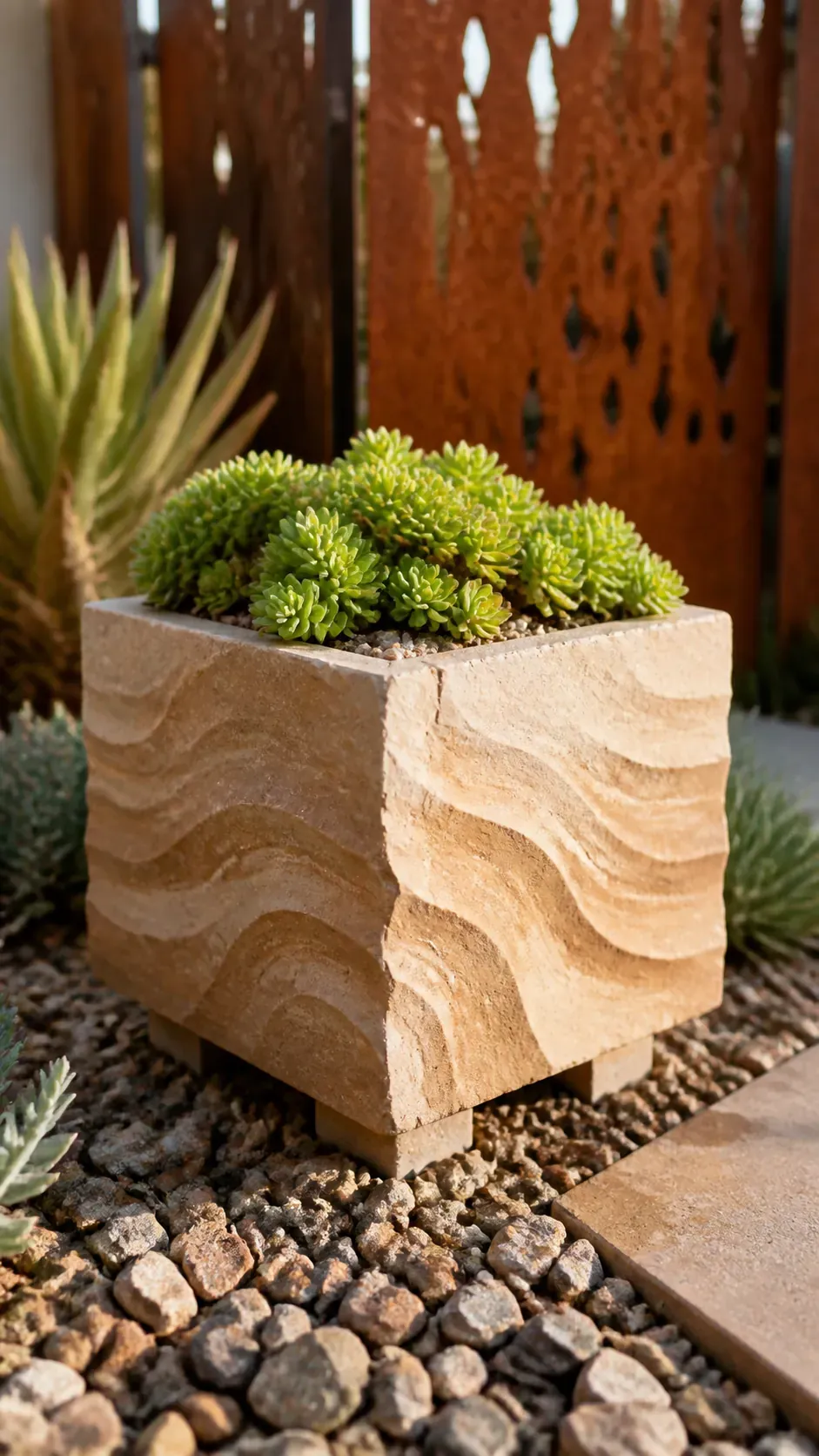
A small succulent can share a sunny kitchen zone with herbs while remaining in its own dry mix. Repeat the herb pots’ clay color to connect the group, but choose a lower form that signals a different watering routine. Set the succulent nearest the glass where stronger light supports compact growth.
Raised Steel Garden Bed
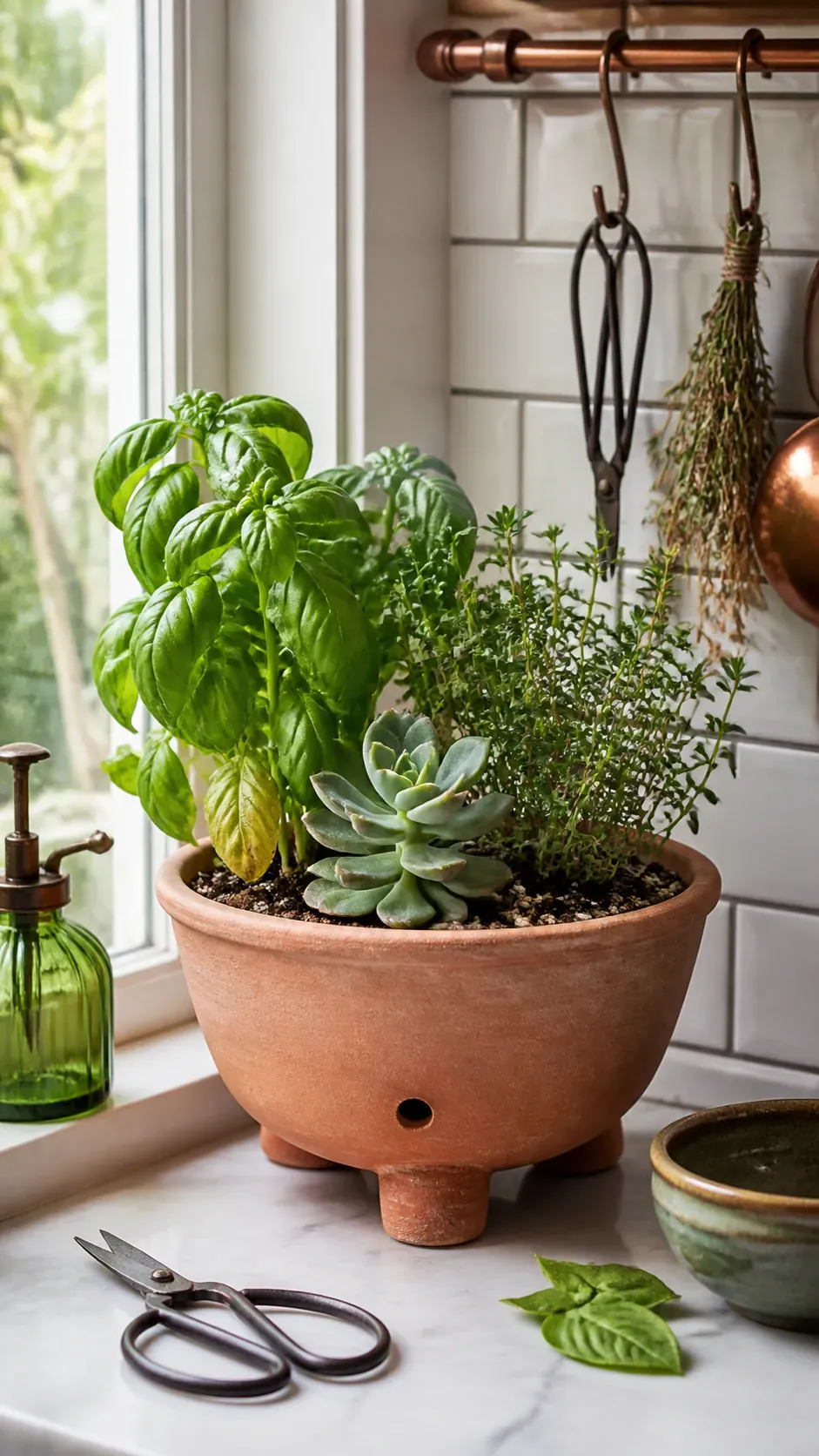
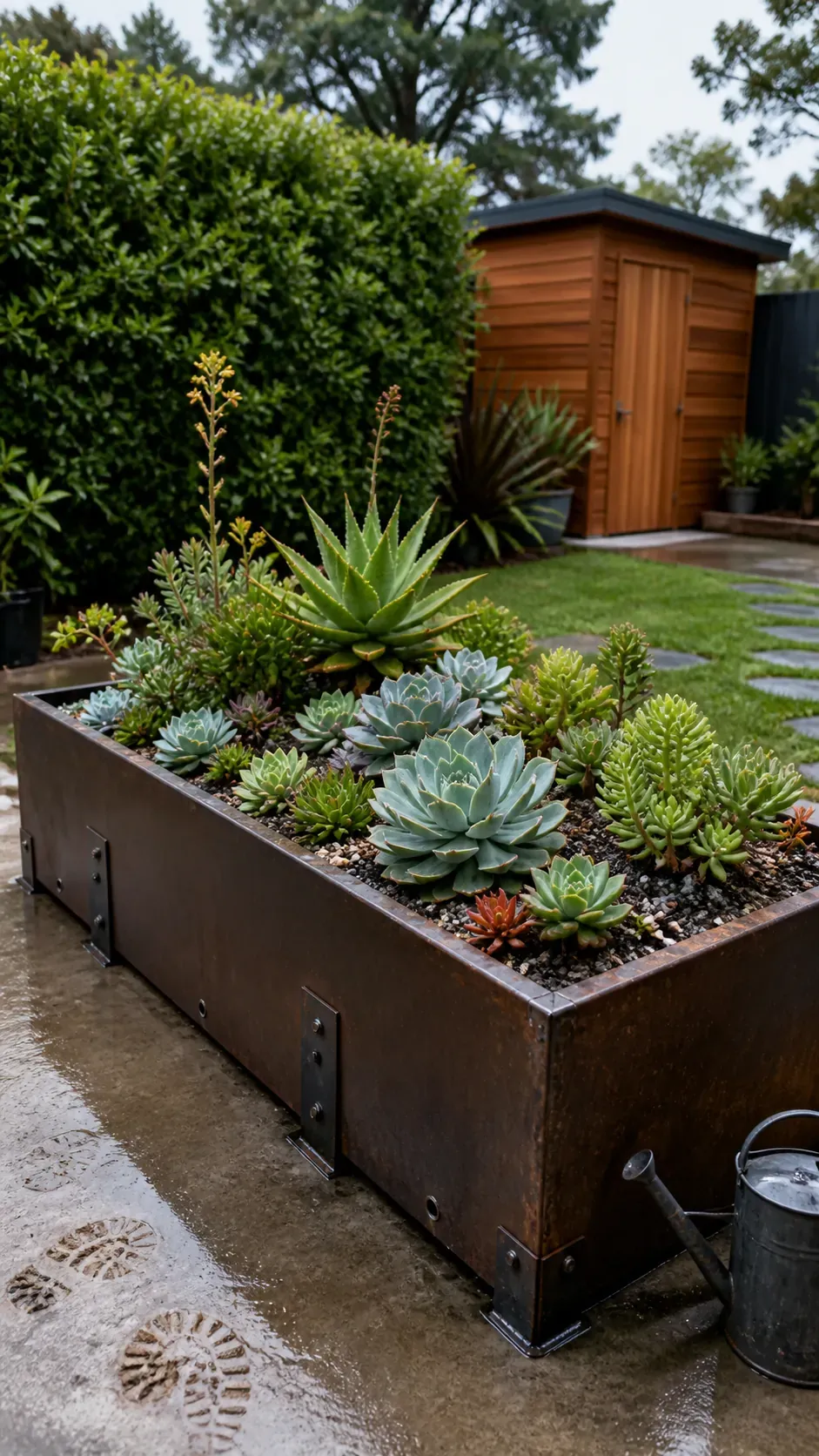
A low steel bed creates a crisp frame for an outdoor succulent garden on poor native soil. Fill it with a free draining mix and leave the soil surface below the rim to reduce washout during storms. Repeating three plant shapes across the bed produces unity without making the design rigid.
Handbuilt Crescent Planter
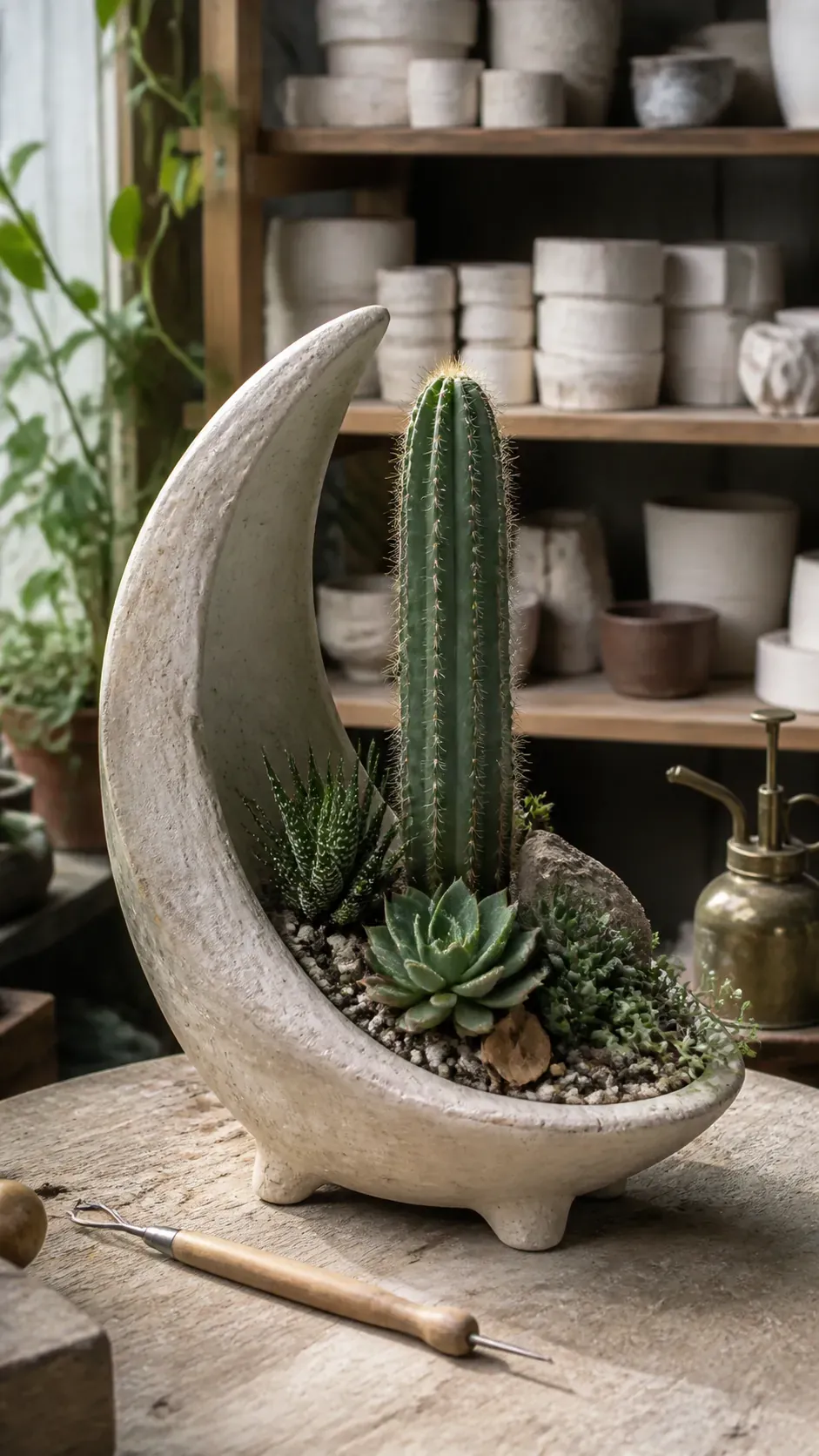
A crescent shaped ceramic planter can wrap around a single upright cactus without crowding its base. Fill the curved section with low succulents whose roots use the shallower space comfortably. The asymmetrical opening looks intentional when the tallest plant sits slightly away from the visual center.
Wire Basket Pot Rack
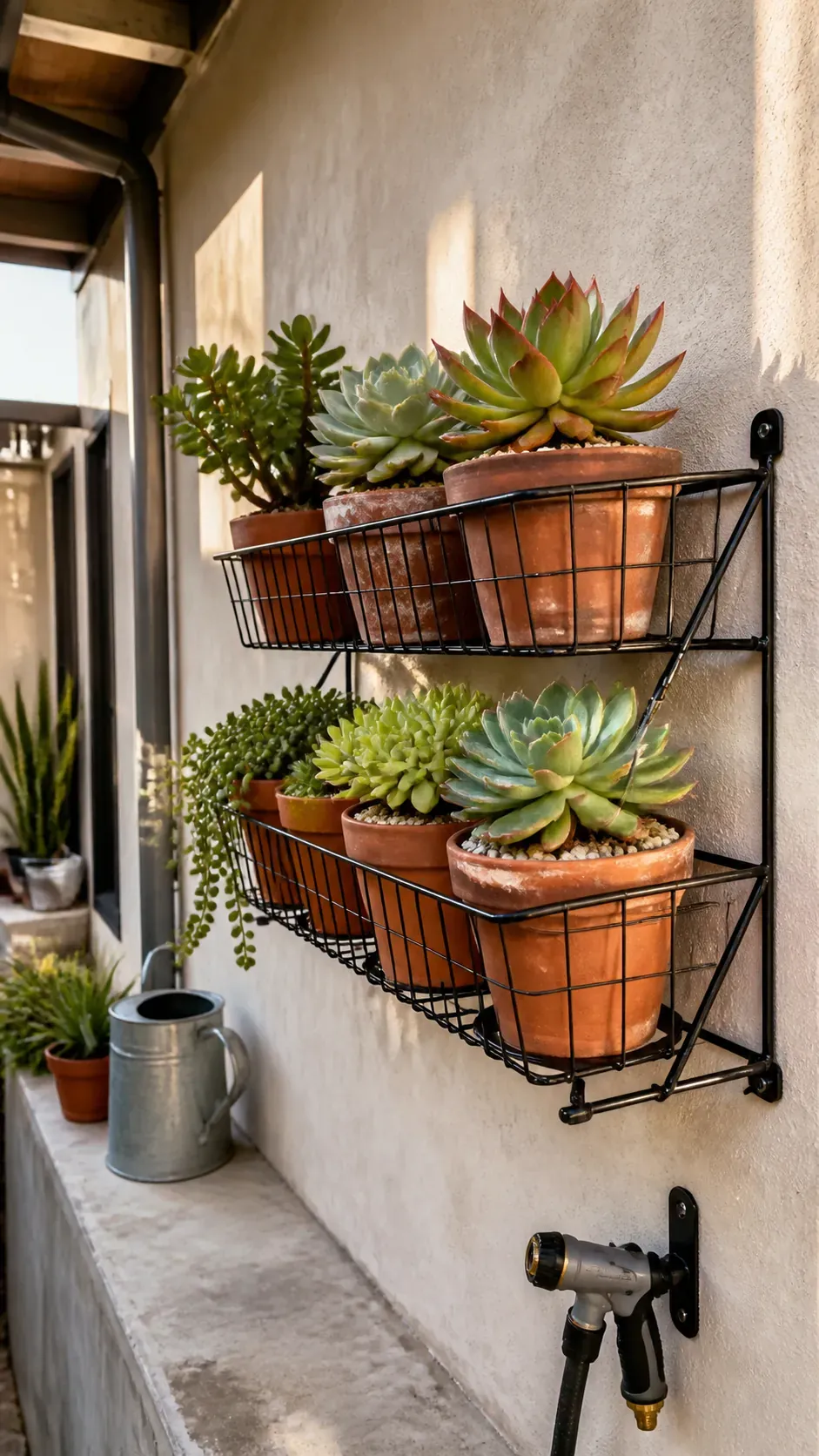
A wall mounted wire rack can hold drained terracotta pots without trapping moisture behind them. Secure the rack into structure rather than surface plaster, then confirm every pot has a deep enough retaining ring. Leave generous gaps so leaves do not rub against metal or neighboring plants.
Low Oval Table Planter
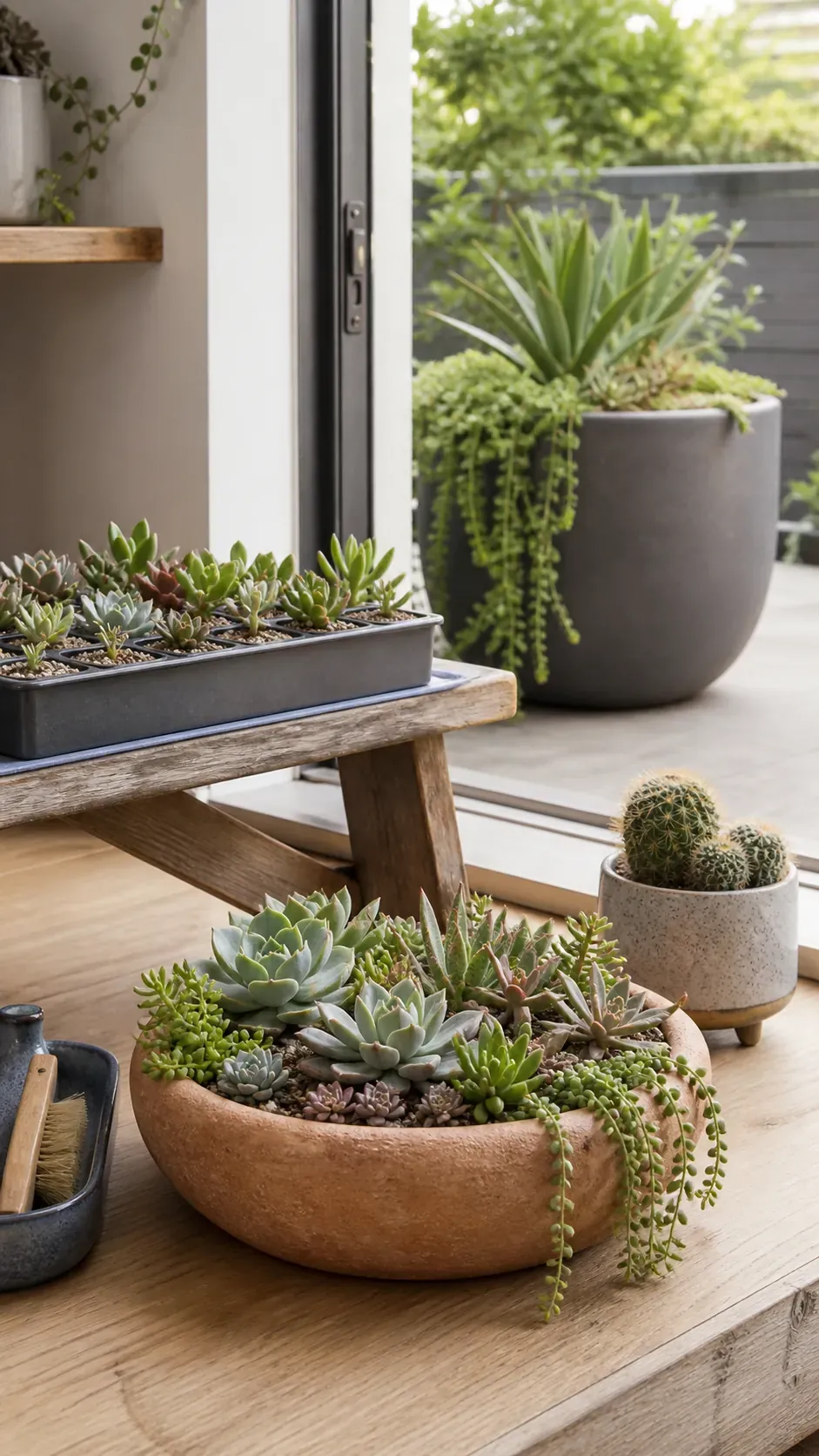
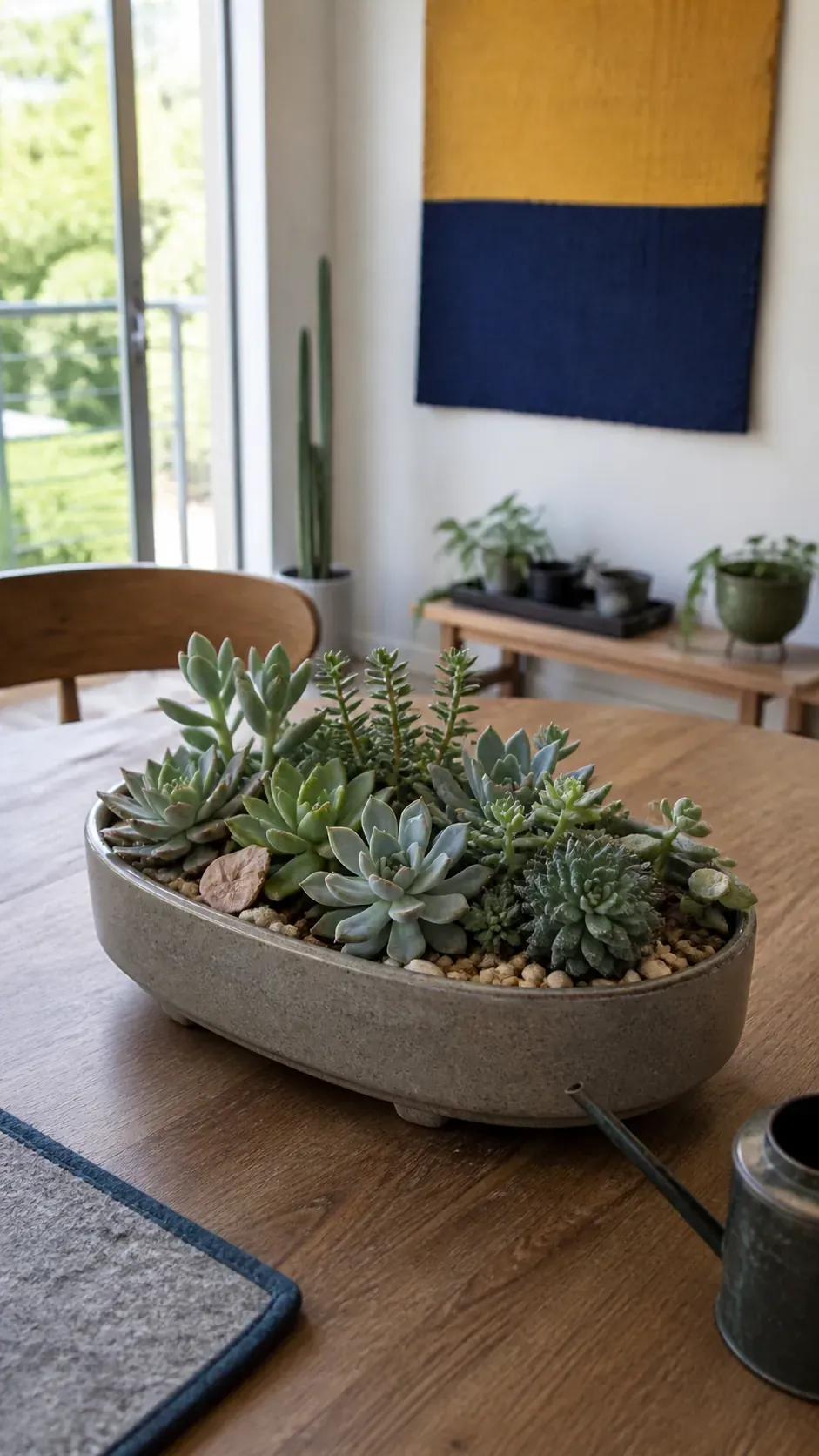
A low oval planter can sit at the center of a table without interrupting conversation. Use plants that remain below eye level and place the vessel on a waterproof mat before watering. One repeated leaf color keeps the arrangement restful even when several textures are included.
Reeded Glass Cachepot
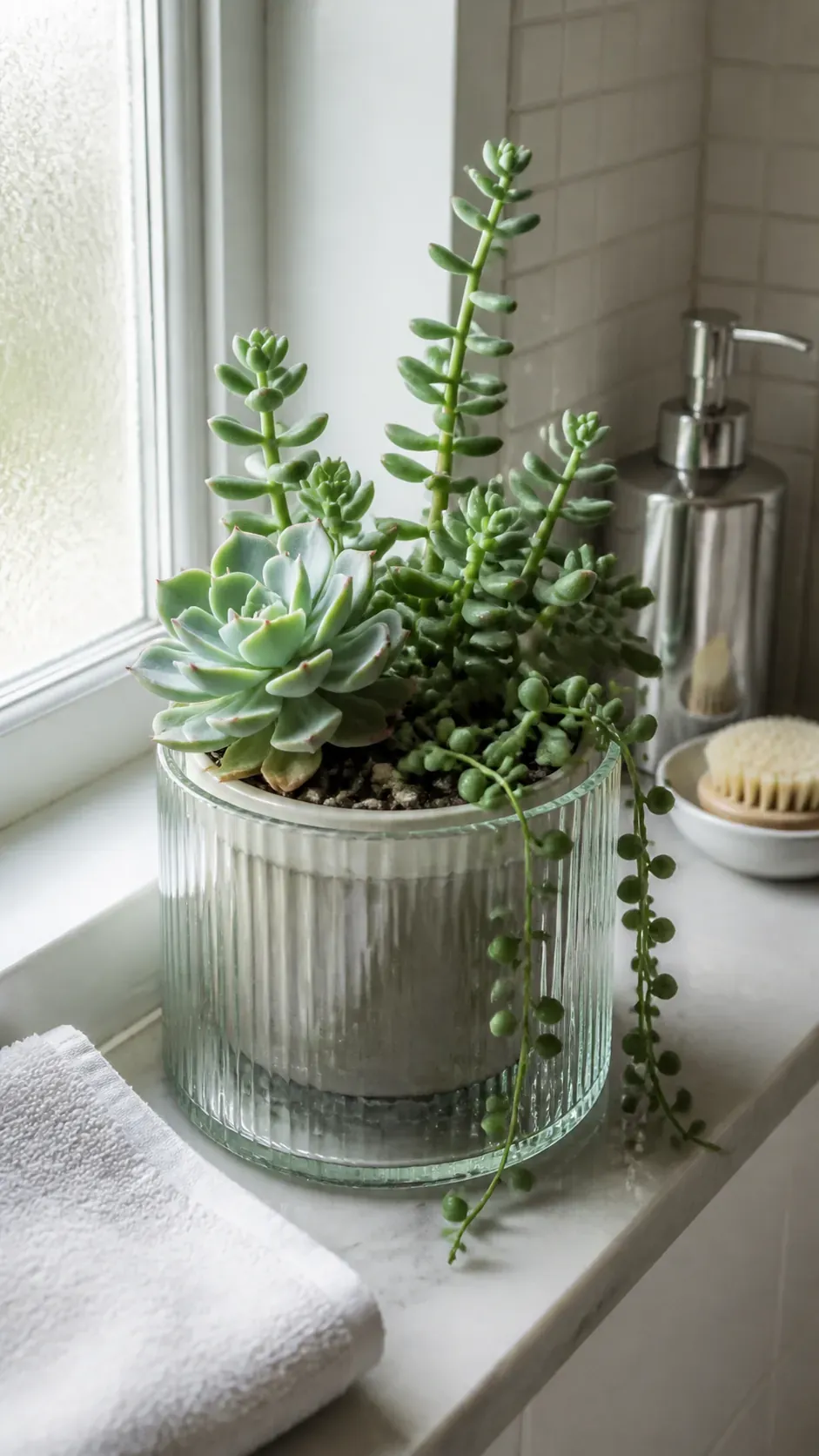
A reeded glass cachepot diffuses the outline of a plain nursery pot while keeping its drainage intact. Remove the insert for watering and wipe any condensation before replacing it. The vertical glass texture pairs especially well with a compact plant whose leaves form a strong horizontal rosette.
Porch Step Pot Sequence
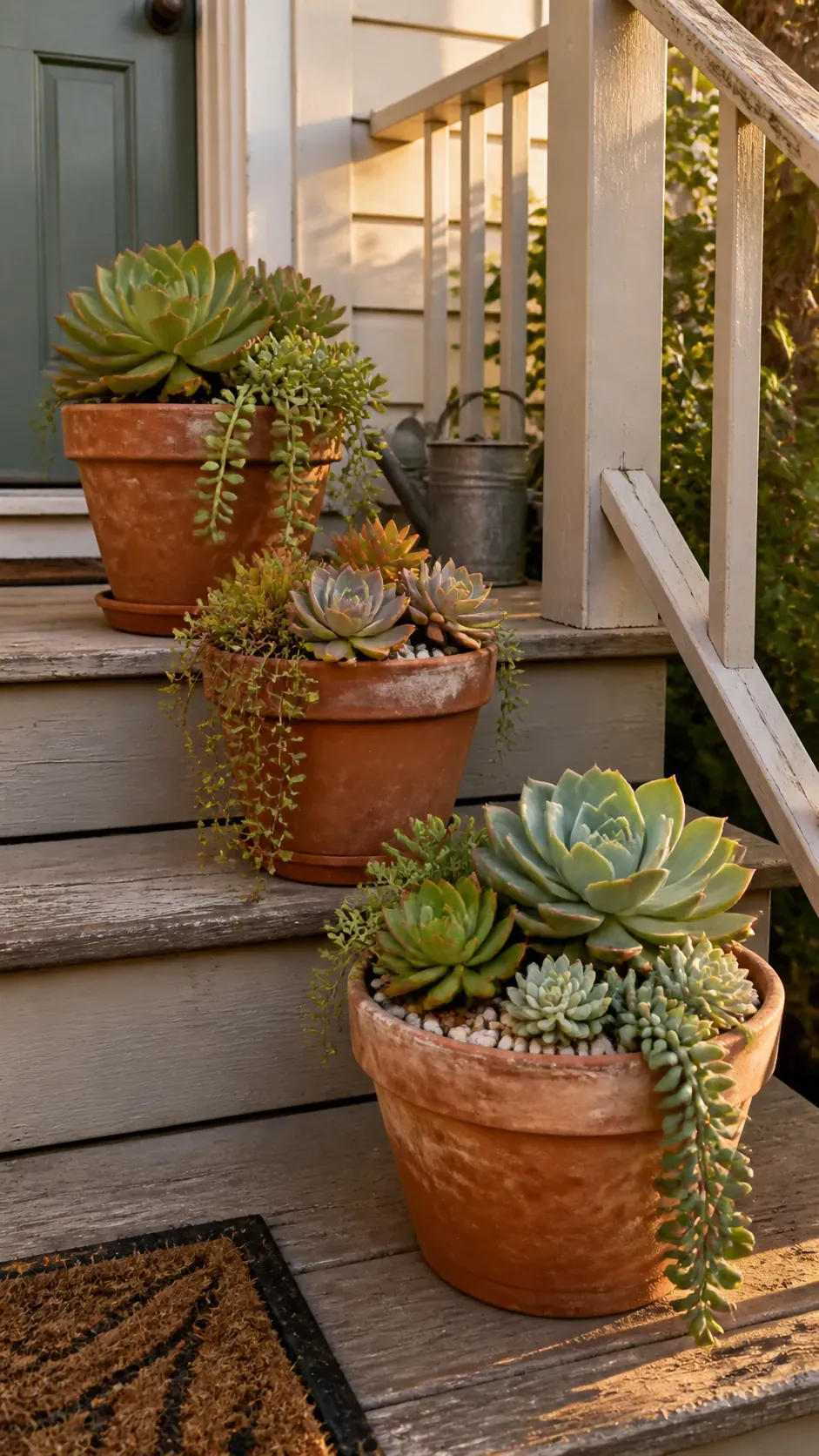
A sequence of three pots can guide the eye up broad porch steps without narrowing the walking path. Increase plant height gradually with each step while keeping the containers from blocking rail access. Matching saucers and related clay tones connect the grouping more effectively than identical plants.
Rock Crevice Planter
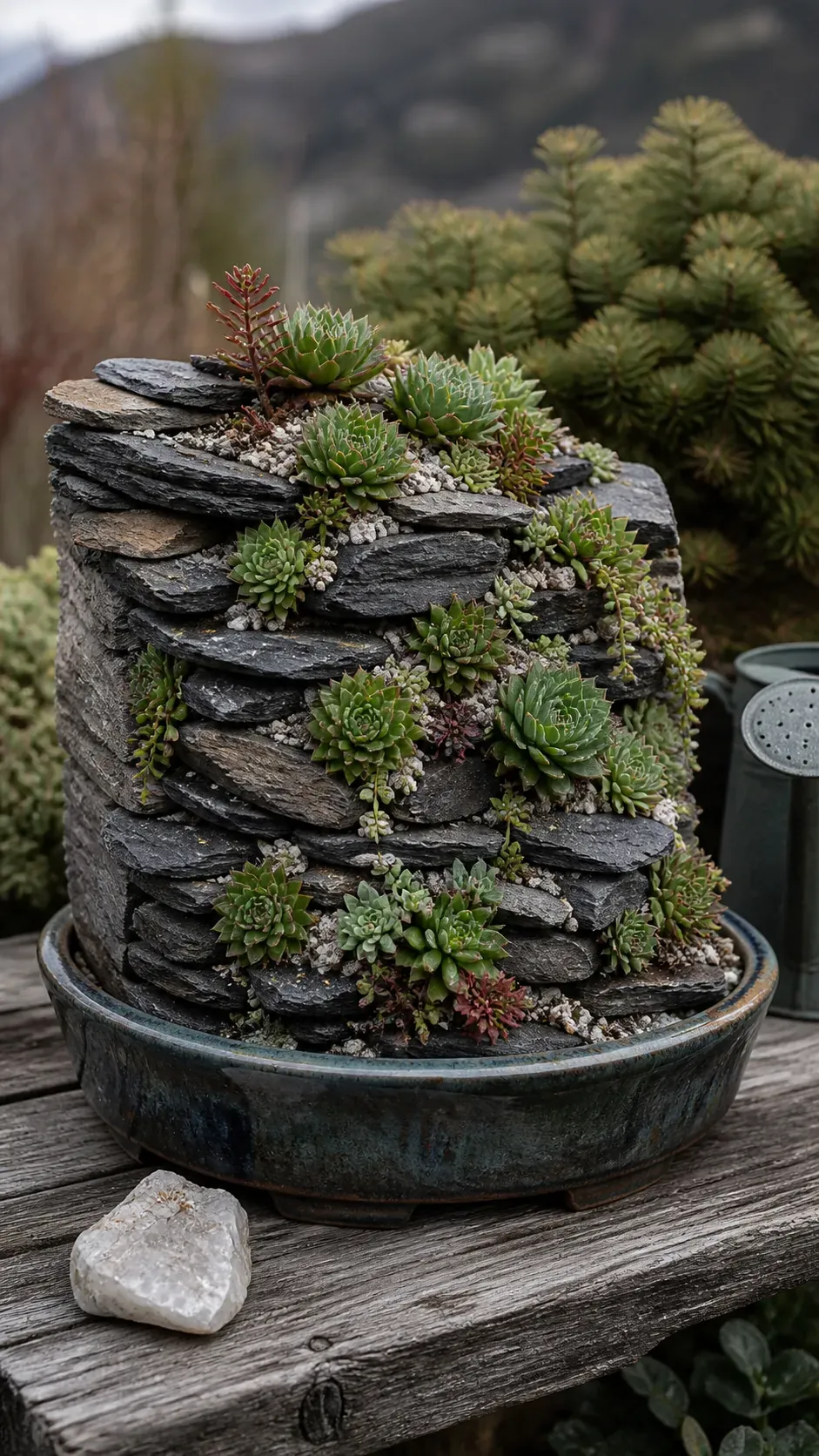
A purpose made rock crevice planter gives small alpine succulents the cool root run and sharp drainage they prefer. Set flat stones vertically with narrow pockets of mineral soil between them. Keep plant crowns above the gaps so winter water cannot collect around their centers.
Painted Arch Wall Niche
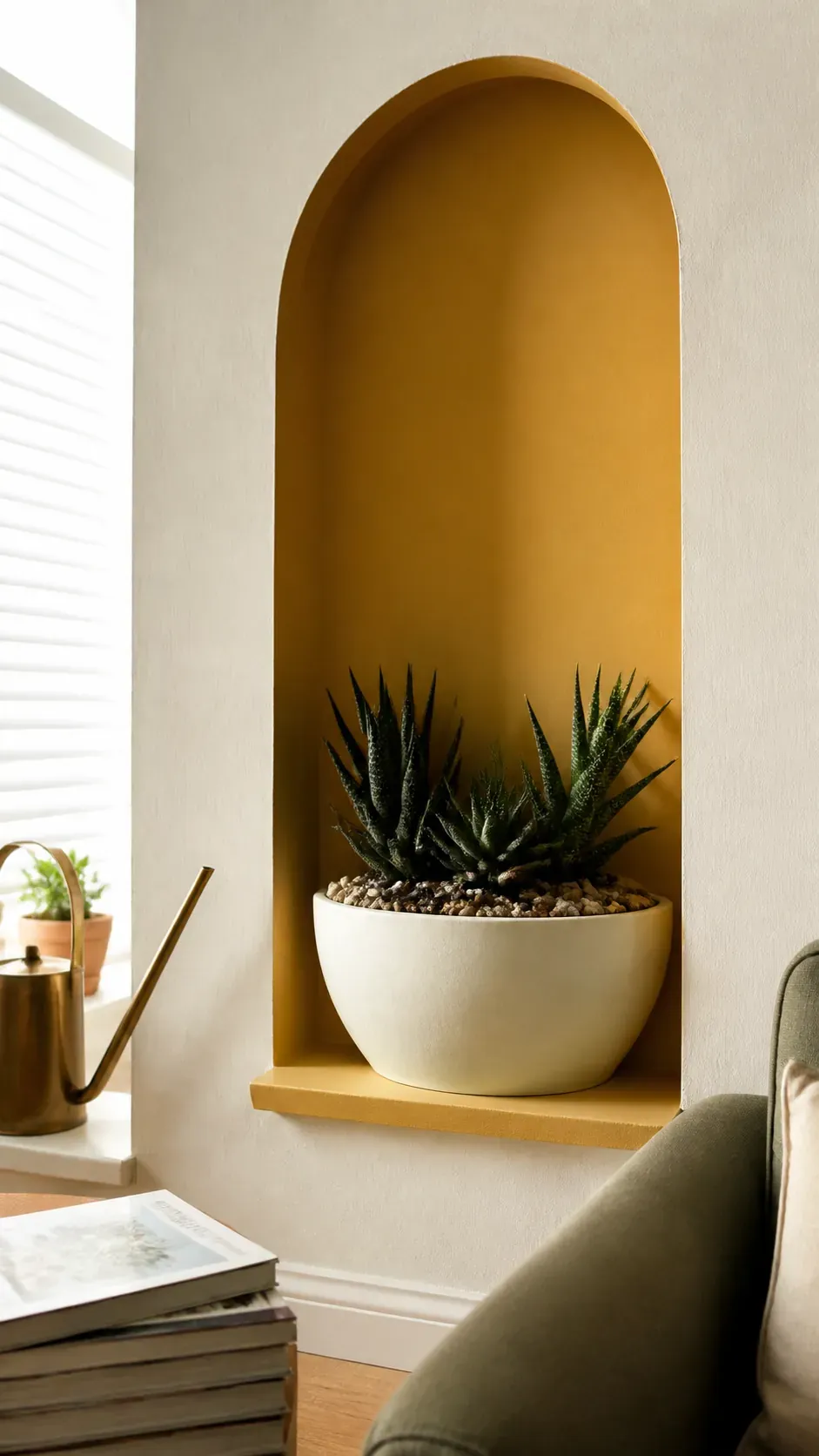
A painted arch behind one planter can define a display without adding another object to a small room. Keep the color field wider than the foliage and use a simple pot that does not compete with the shape. The plant still needs real window light, since the decorative backdrop cannot compensate for a dark corner.
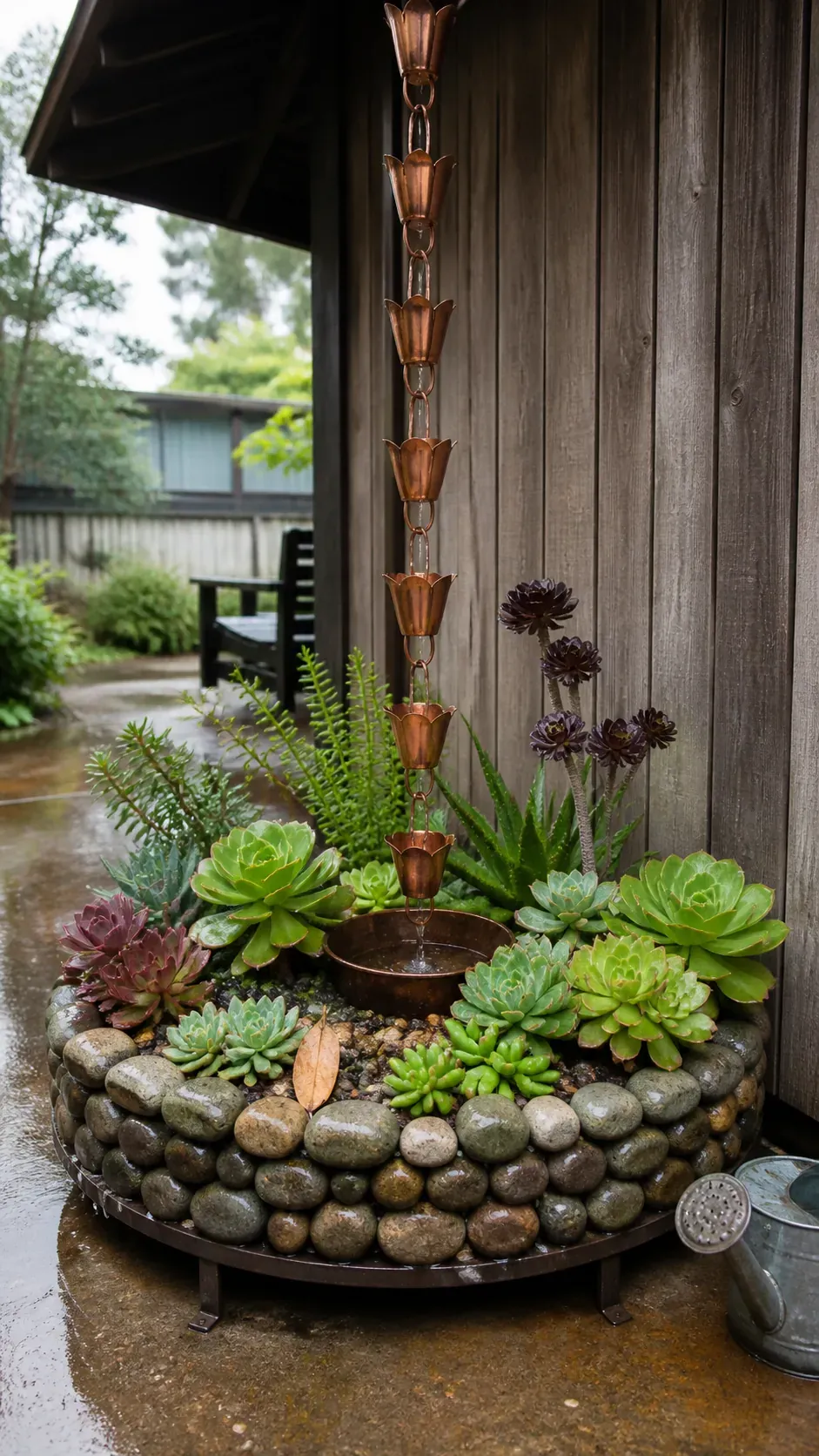
Copper Footed Bowl
A copper footed bowl catches warm reflections while lifting a compact planting from a dark console. Use a separate perforated insert so wet soil never sits directly against the decorative metal. Blue gray foliage balances the copper visually and reveals the shape of each leaf.
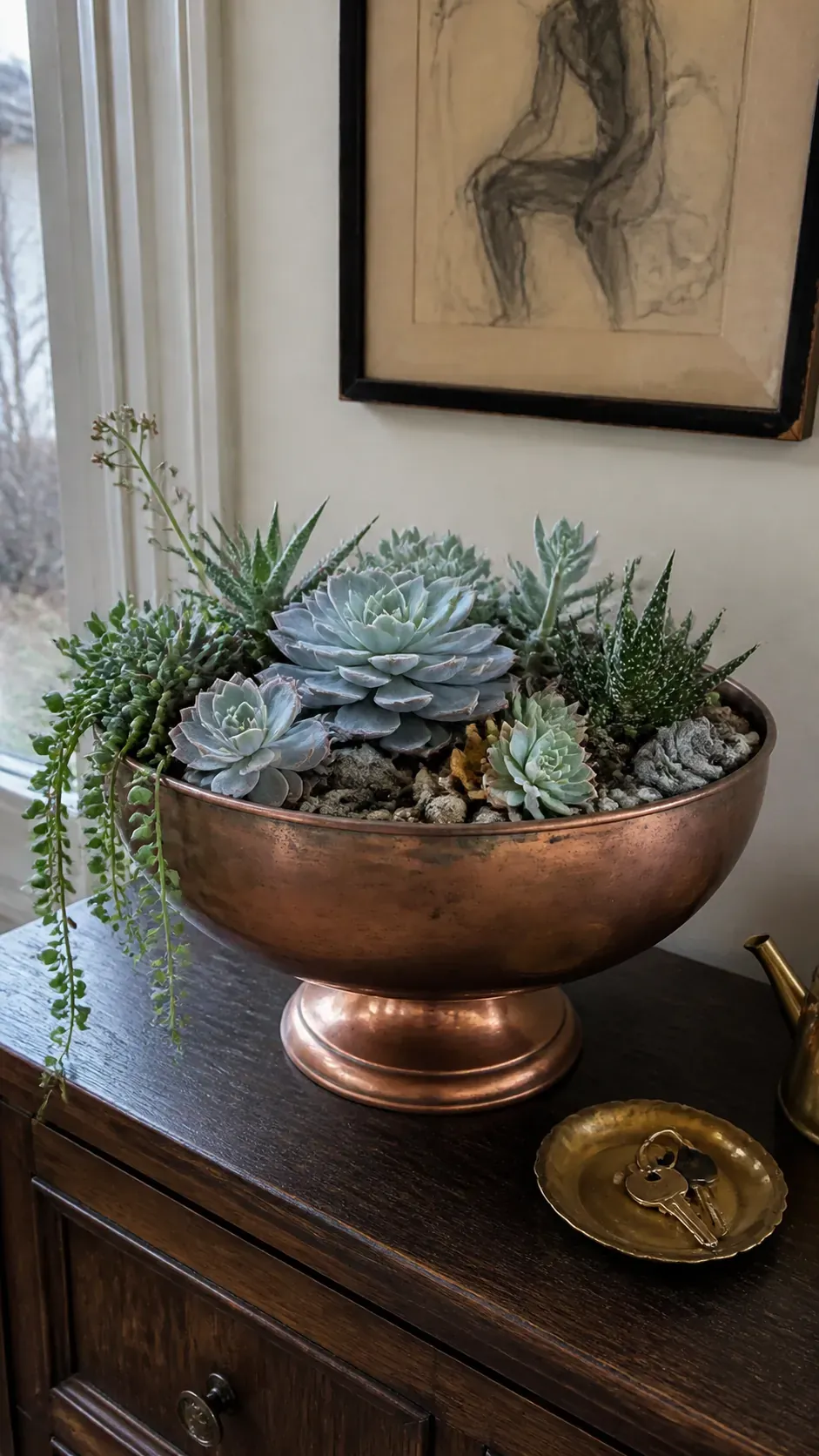
Bench End Planter
A rectangular planter fitted at the end of a garden bench makes greenery part of the seating zone. Leave enough separation that spines and brittle leaves cannot brush anyone using the bench. A removable liner simplifies care and protects the timber structure from persistent moisture.
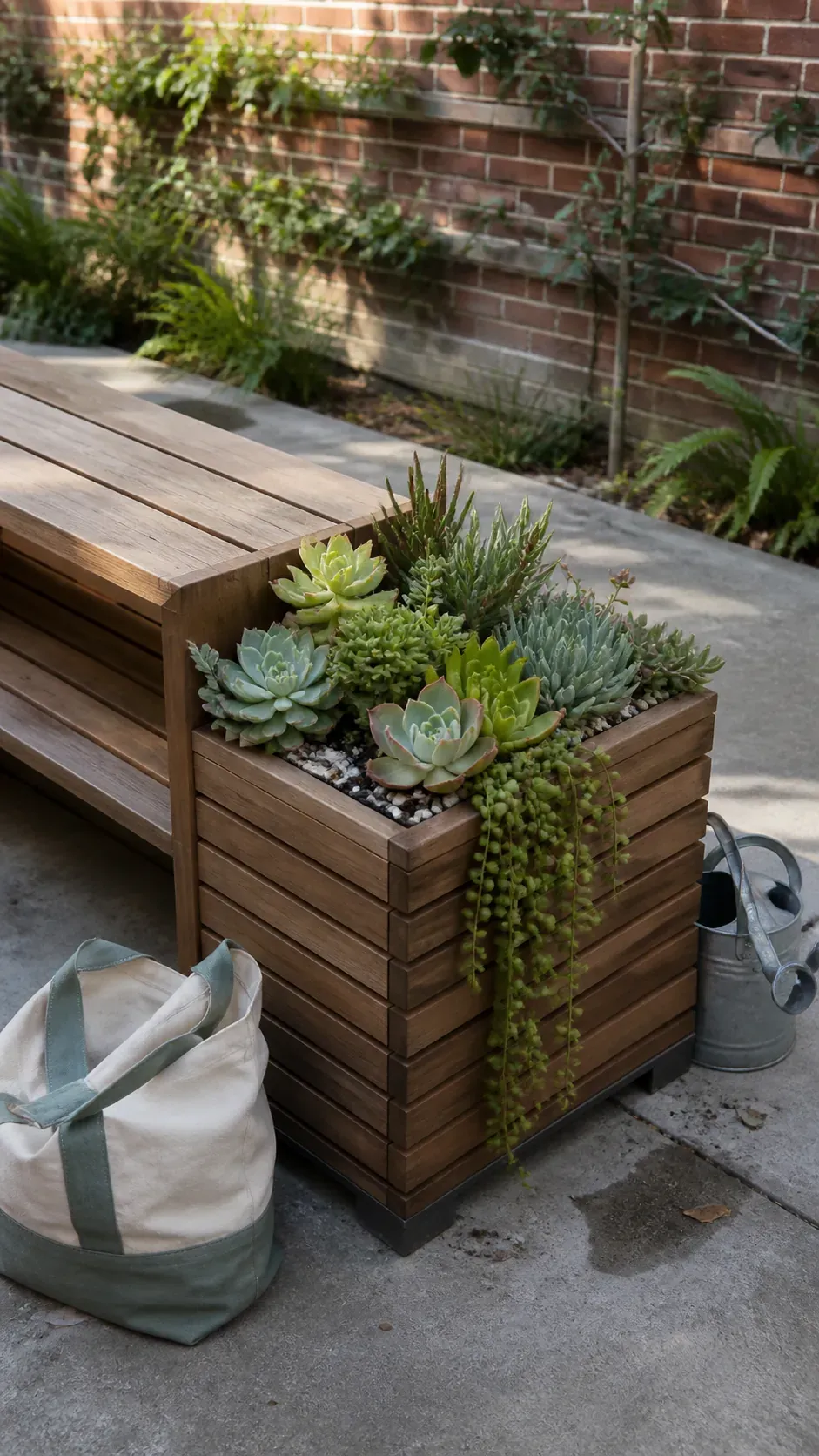
Matte Black Cactus Bowl
A matte black bowl makes pale cactus spines and silver succulent leaves appear especially crisp. Keep the vessel out of intense reflected heat, since dark surfaces can warm roots faster outdoors. Indoors, set it close to a bright window and use a broad saucer that disappears beneath the base.
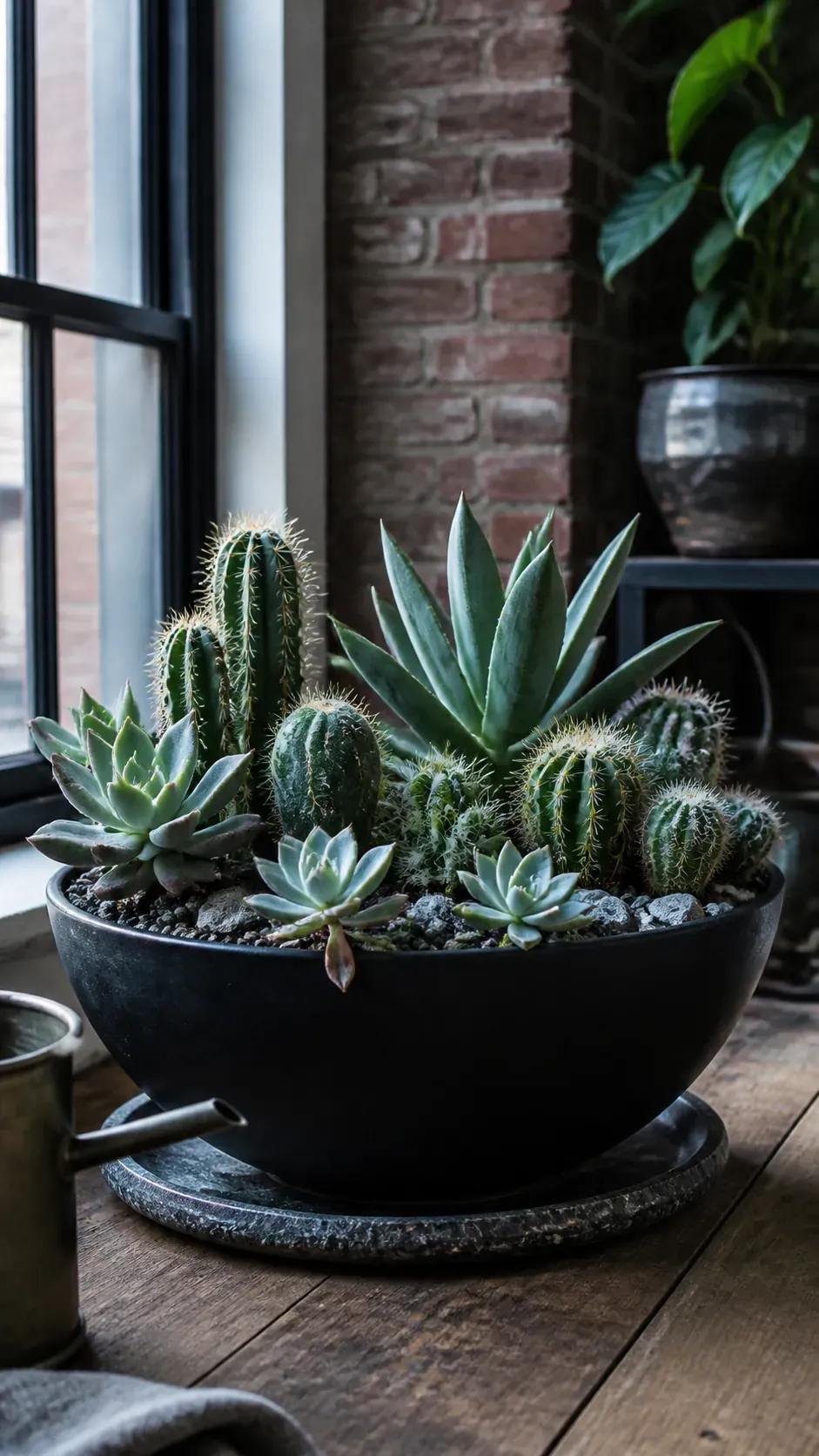
Rain Chain Base Planter
A gravel filled planter at the base of a rain chain can be beautiful without placing succulents directly in the runoff path. Plant drought tolerant specimens on a raised outer ring and let water fall into a central stone basin. An overflow opening should carry storm water away before it reaches the dry root zone.
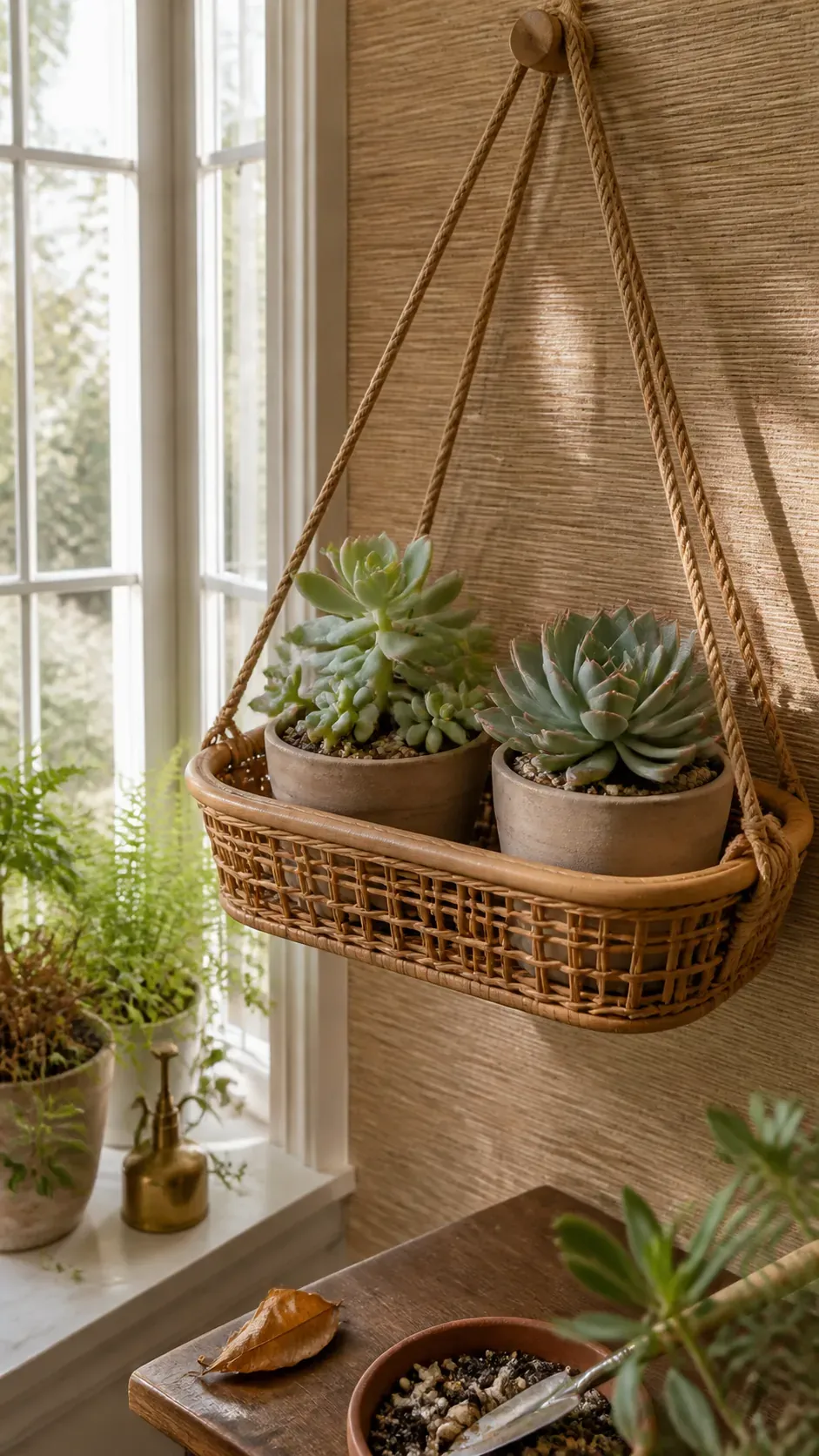
Rattan Hanging Shelf
A small rattan shelf can suspend two lightweight pots in front of a bright but sheltered window. Balance the weight on both sides and keep the shelf high enough that trailing stems remain clear of furniture. Water the pots elsewhere, then return them only after every drop has drained.
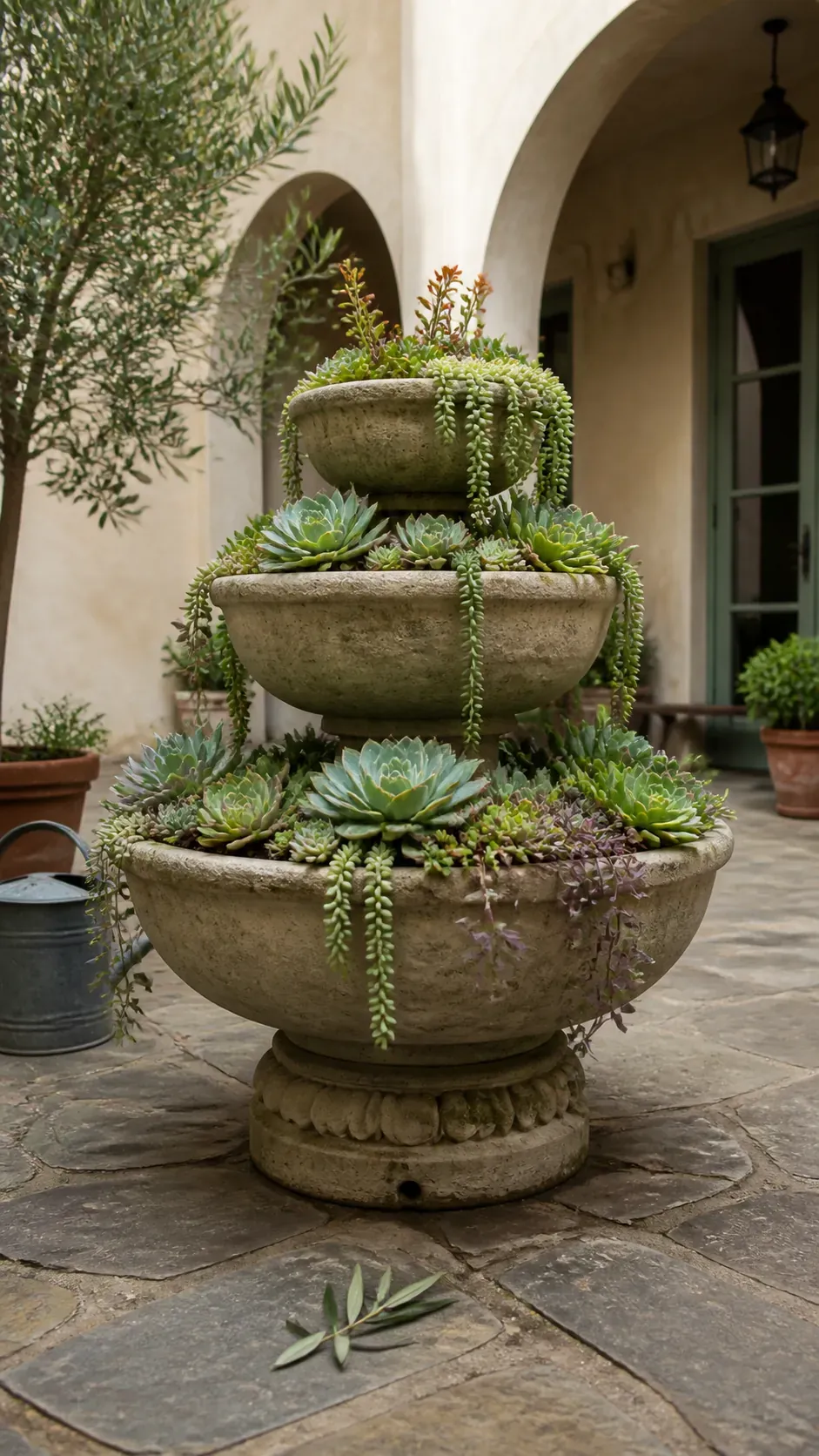
Courtyard Fountain Conversion
A dry tiered fountain can support succulents when each basin has reliable drainage and enough soil depth. Use trailing plants on the upper tier and stronger architectural forms below to reverse the usual fountain flow. Confirm that the structure is stable and no sealed basin can collect seasonal rain.
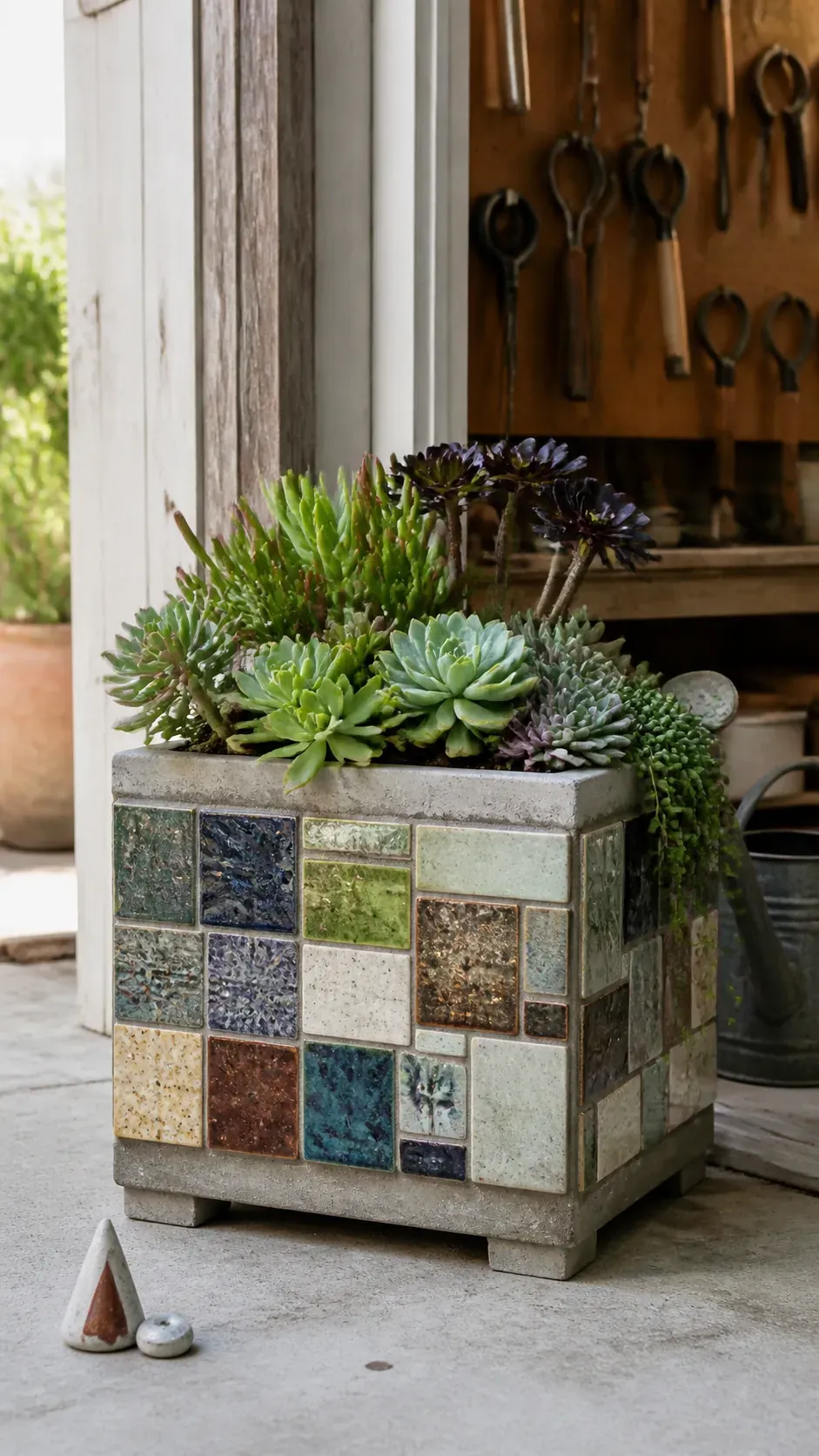
Ceramic Test Tile Planter
A plain planter decorated with fired glaze test tiles becomes a useful record of studio color experiments. Space the tiles irregularly while keeping sharp edges smooth and the base free of added weight. Choose restrained green plants so the varied glaze samples remain readable without making the arrangement chaotic.
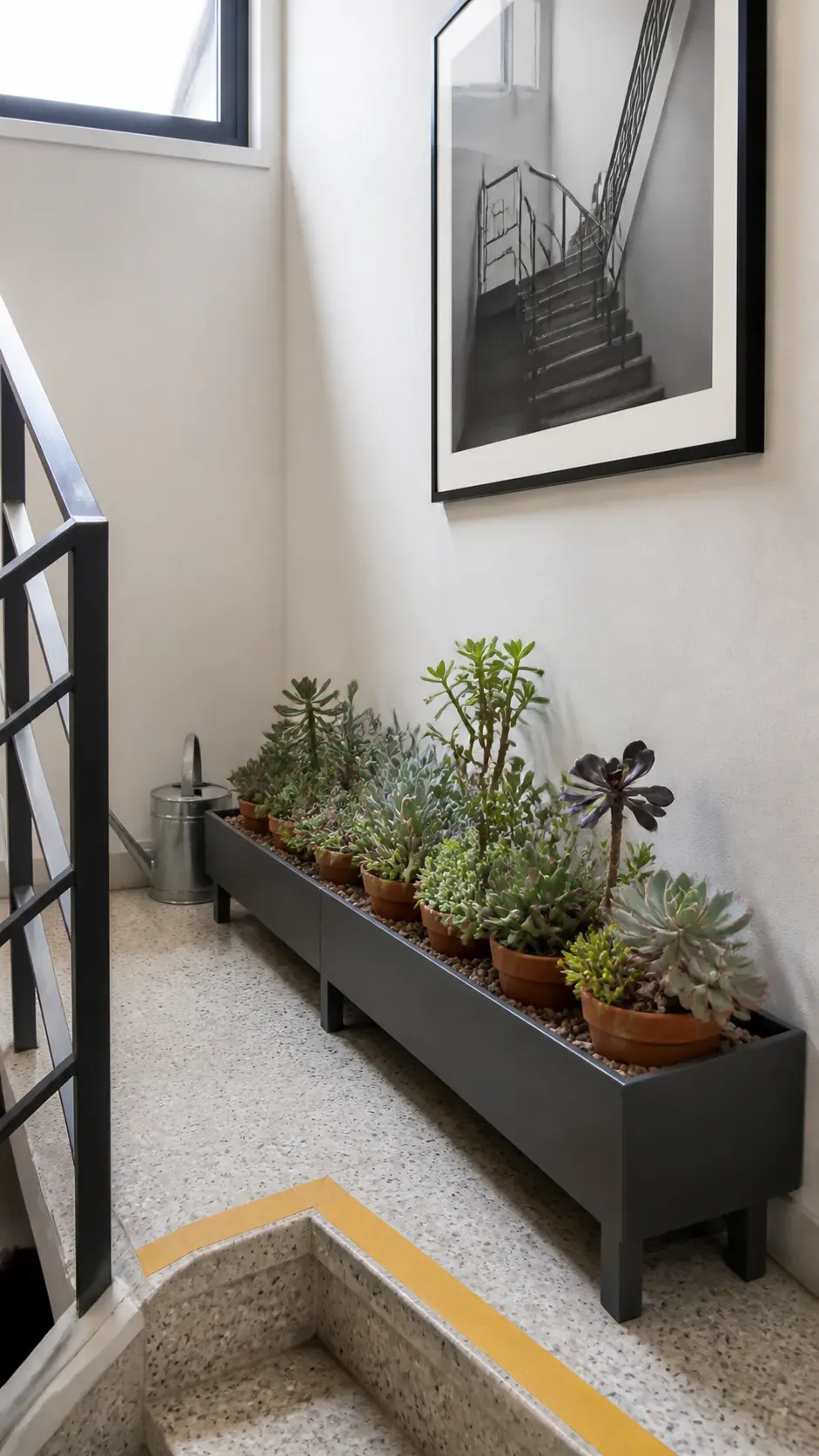
Narrow Stair Landing Trough
A narrow trough can enliven a stair landing when it remains completely outside the required walking clearance. Secure the container against movement and select compact plants that will not spill across the route. A long waterproof tray protects the floor while allowing the inner pots to drain separately.
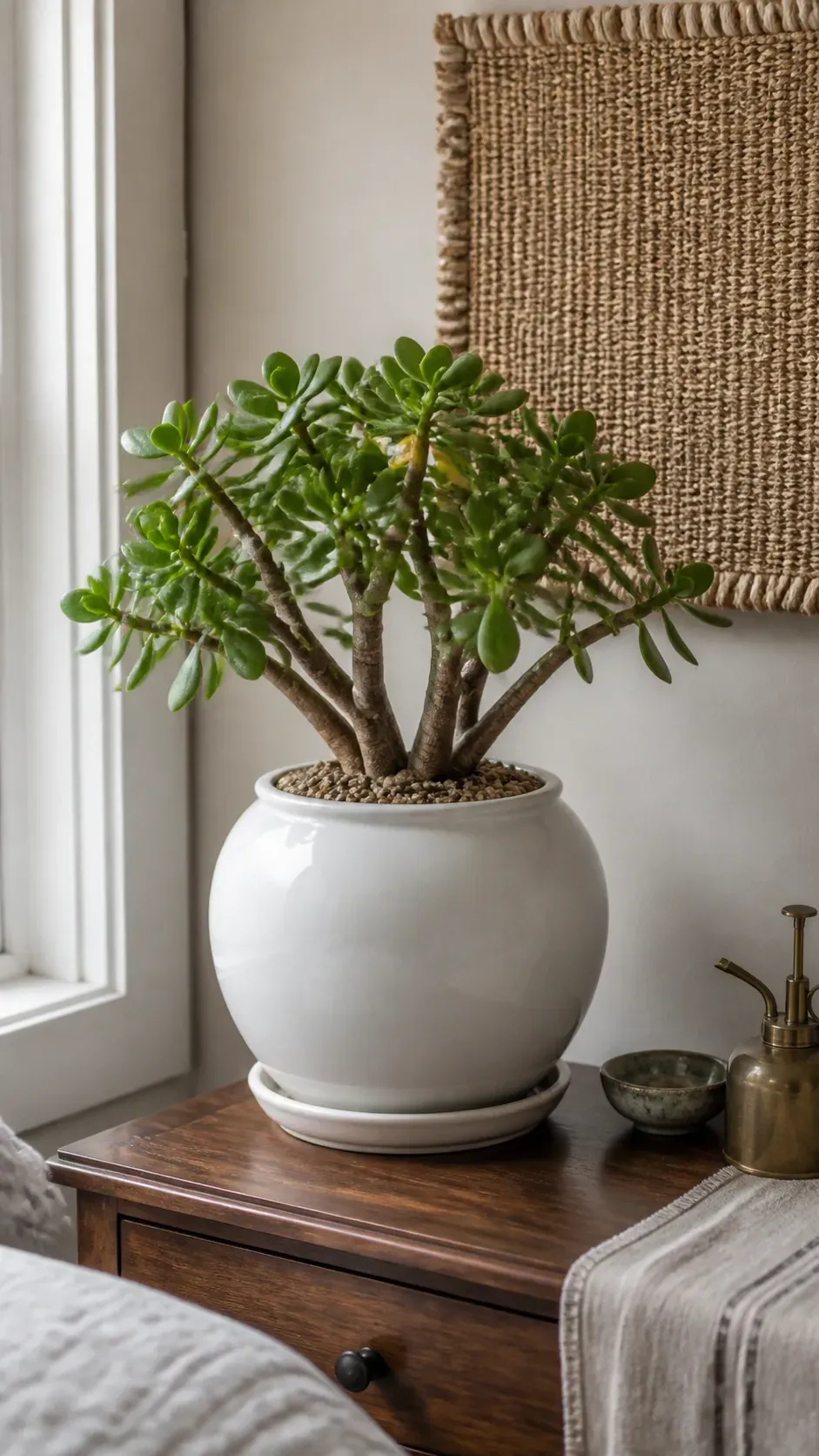
Moon Jar Cachepot
A round moon jar cachepot gives a tall branching jade plant a calm visual base. The inner nursery pot should sit on a spacer so its drain holes never touch collected runoff. Leave the outer jar mostly unadorned and let its slight handmade asymmetry echo the plant’s mature form.
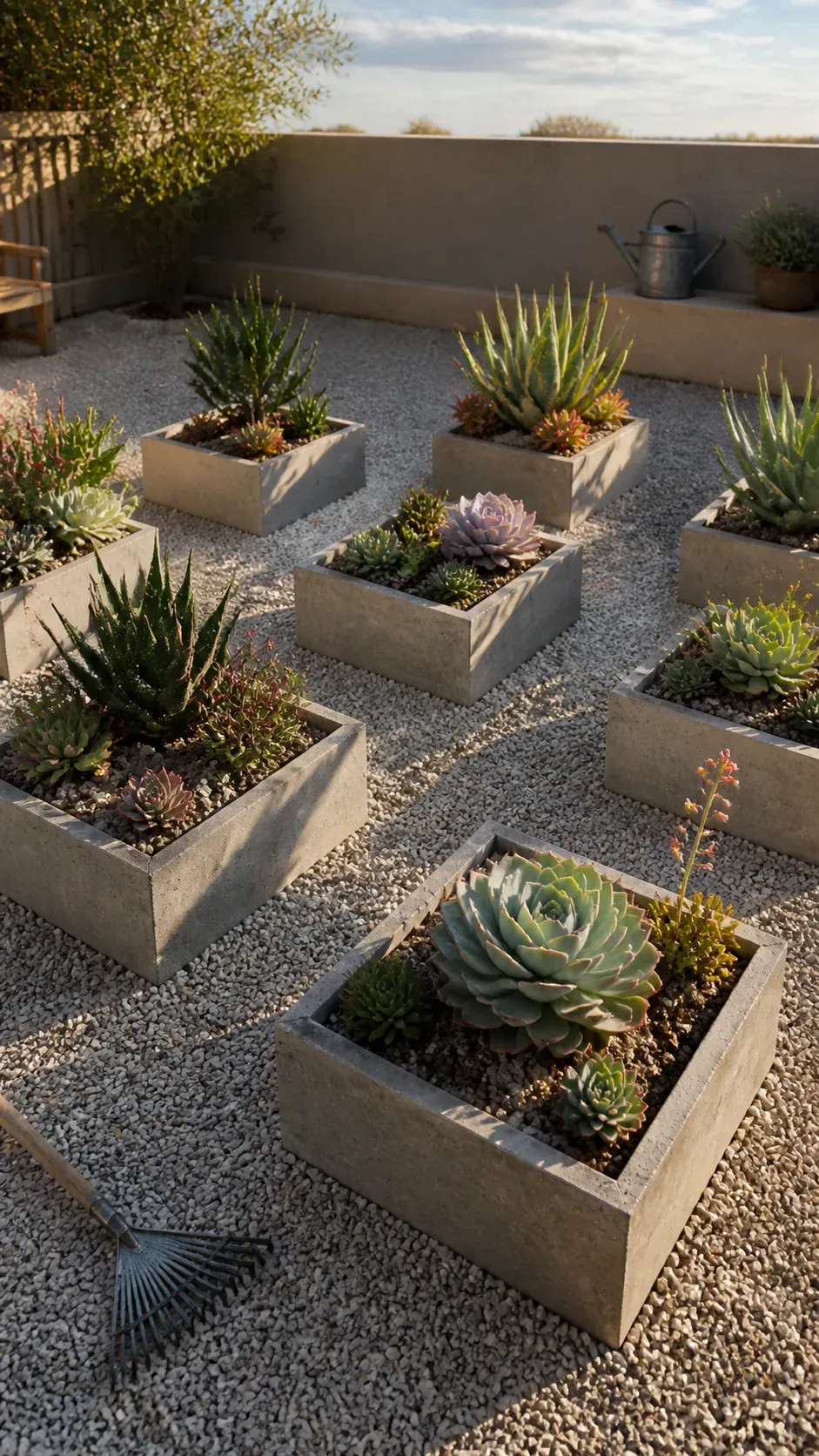
Gravel Courtyard Grid
A loose grid of square planters can organize a large gravel courtyard without turning it into a rigid pattern. Vary plant height and rotate the squares slightly so movement remains natural. Keep enough open gravel between them for maintenance access and unobstructed drainage after heavy rain.
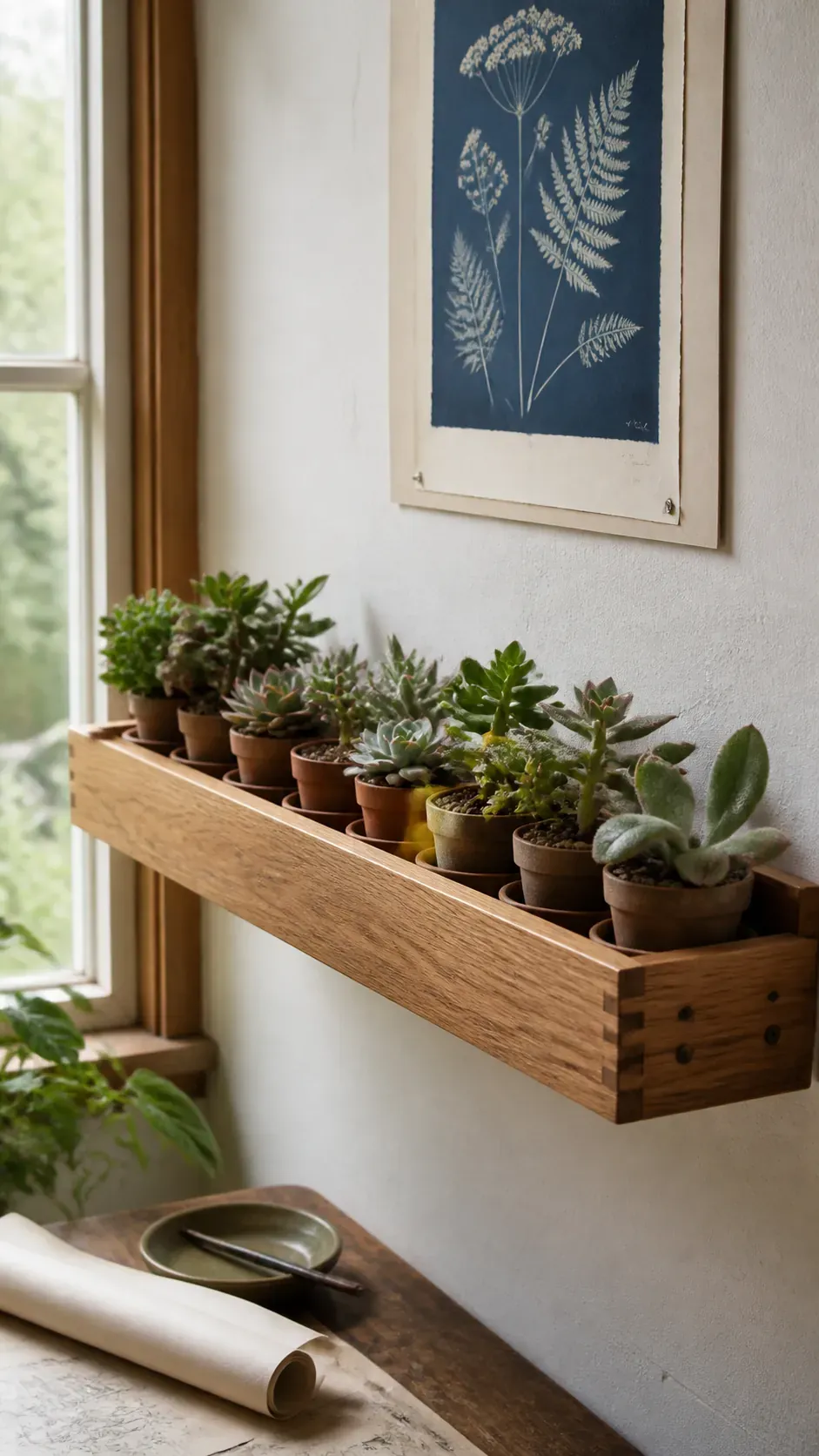
Floating Oak Pot Ledge
A deep floating oak ledge can display several small succulent pots without a bulky cabinet below. Fasten it into wall structure and include a discreet front lip that keeps pots from sliding. Use matching saucers, then remove each plant for watering to prevent stains in the wood grain.
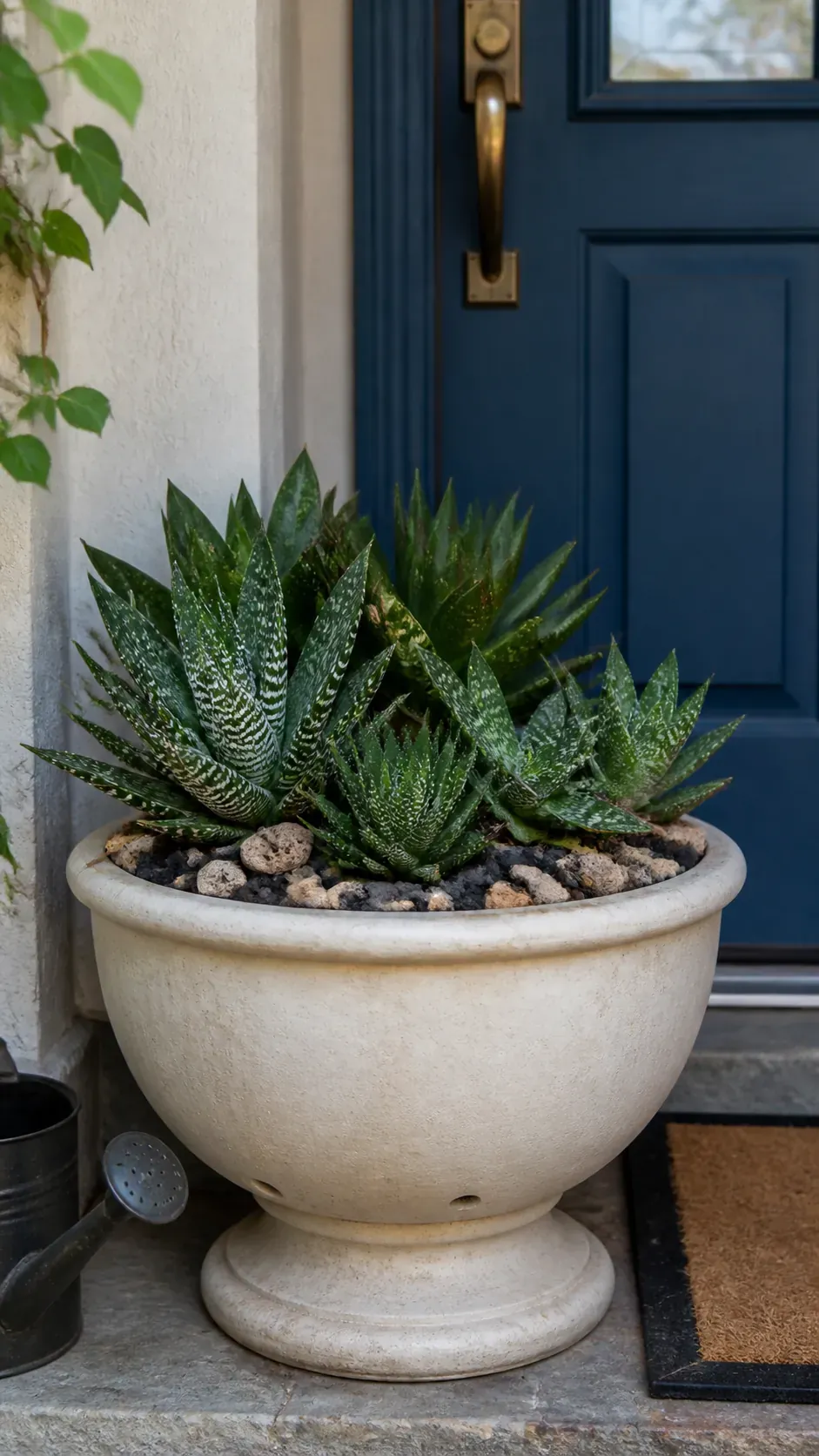
Shaded Entry Urn
A shaded entry urn can still support succulents when the doorway receives several hours of bright reflected light. Choose haworthia and gasteria rather than sun hungry echeveria, then monitor growth for stretching. A pale urn improves visibility in the dimmer zone and keeps the arrangement welcoming.
Curved Border Planter
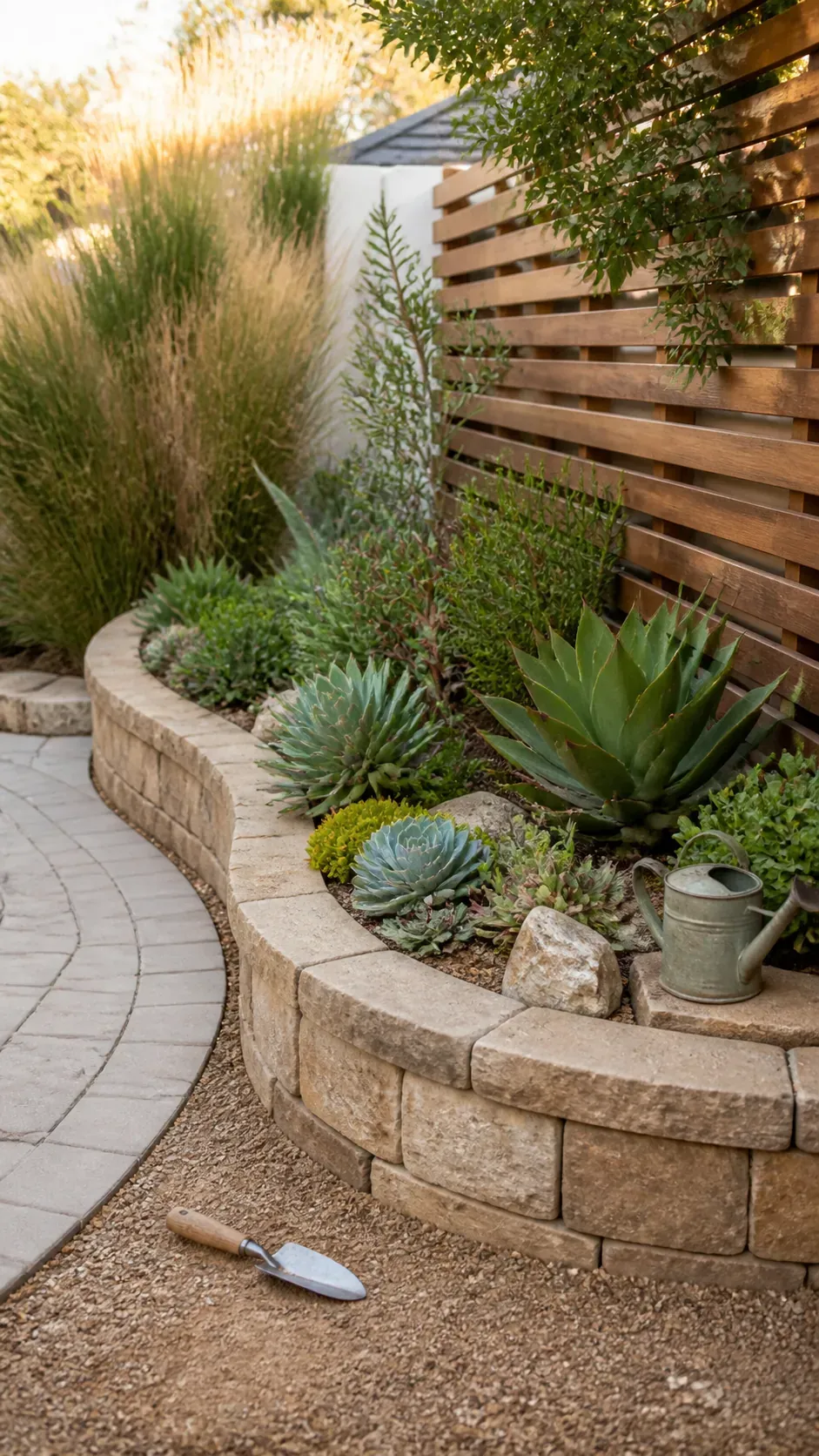
A curved border planter can connect a patio corner to the surrounding garden without a harsh right angle. Repeat low succulents along the outer edge and reserve taller forms for the deeper center. The final result works best when the soil line, paving level, and drainage outlet are planned together before planting.