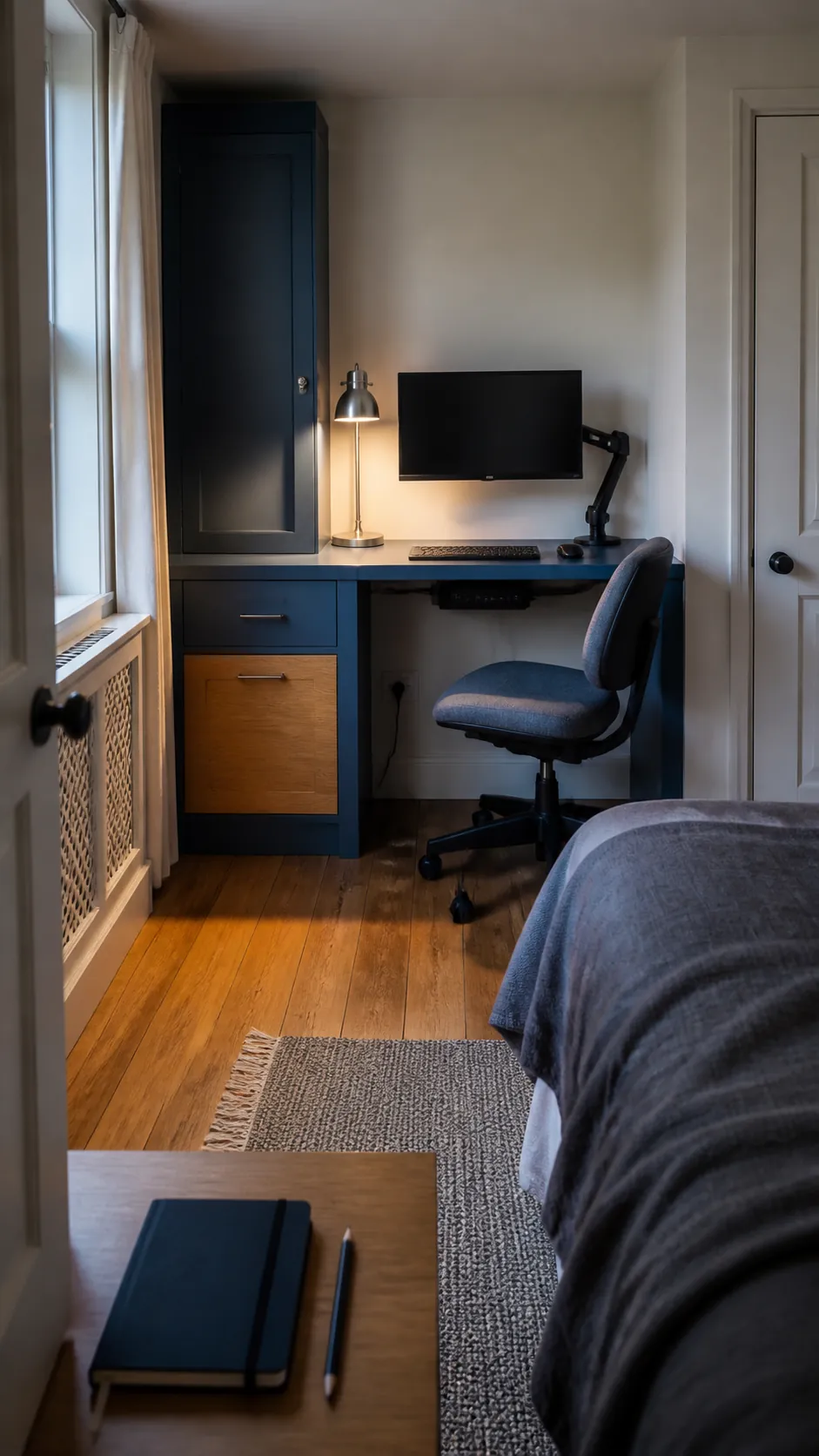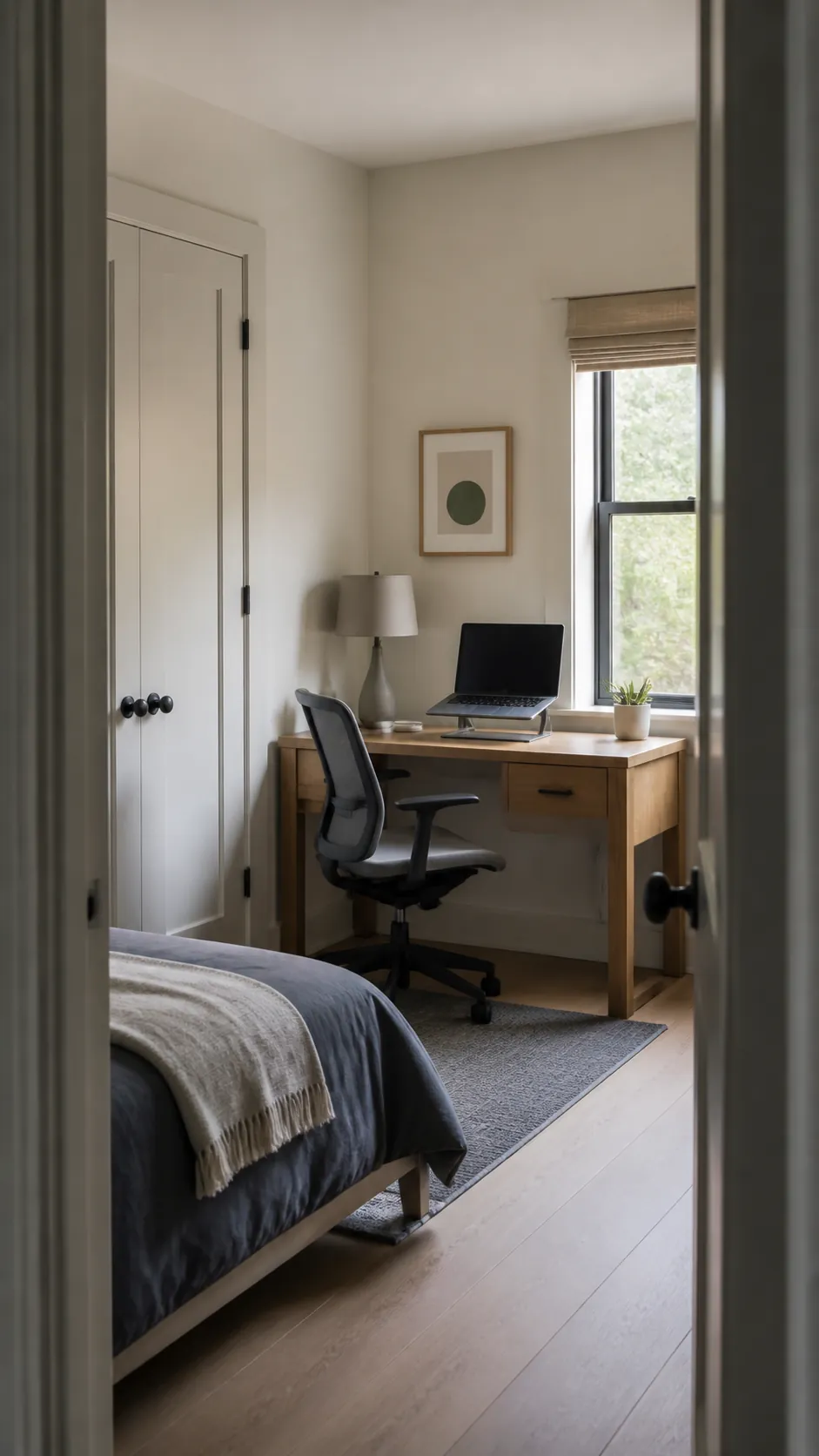
Putting a desk in the bedroom solves a space problem but can create a sleep problem if the screen, papers, and task light remain visually active all night. The layout should protect circulation first, then support posture, and finally make work easy to close away. A calm office corner succeeds when the bedroom can still feel like a bedroom after the laptop shuts.
Set the Desk Perpendicular to the Window
Placing the desk sideways to a window gives your face useful daylight while keeping glare off the screen. Leave enough space for curtains to move and confirm that the chair does not block the route around the bed. A laptop riser with a separate keyboard improves posture when the desktop must remain shallow.
Continue the Wardrobe With a Floating Desk
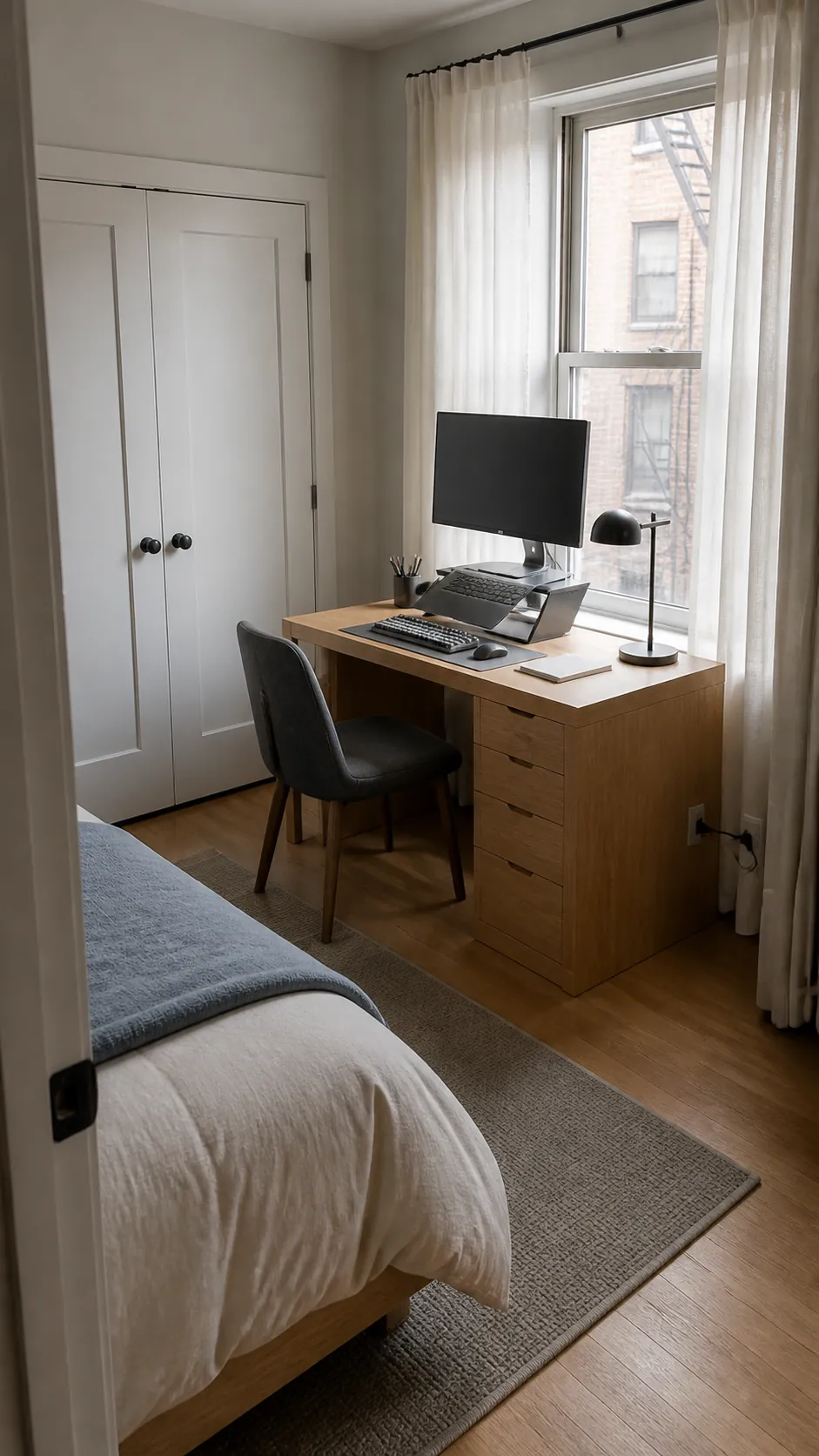
A floating desk looks intentional when its top aligns with the wardrobe panel beside it. Keep the drawer shallow enough to preserve knee clearance and mount the monitor on an arm to recover depth. Matching the finish to existing storage helps the work area settle into the bedroom instead of competing with it.
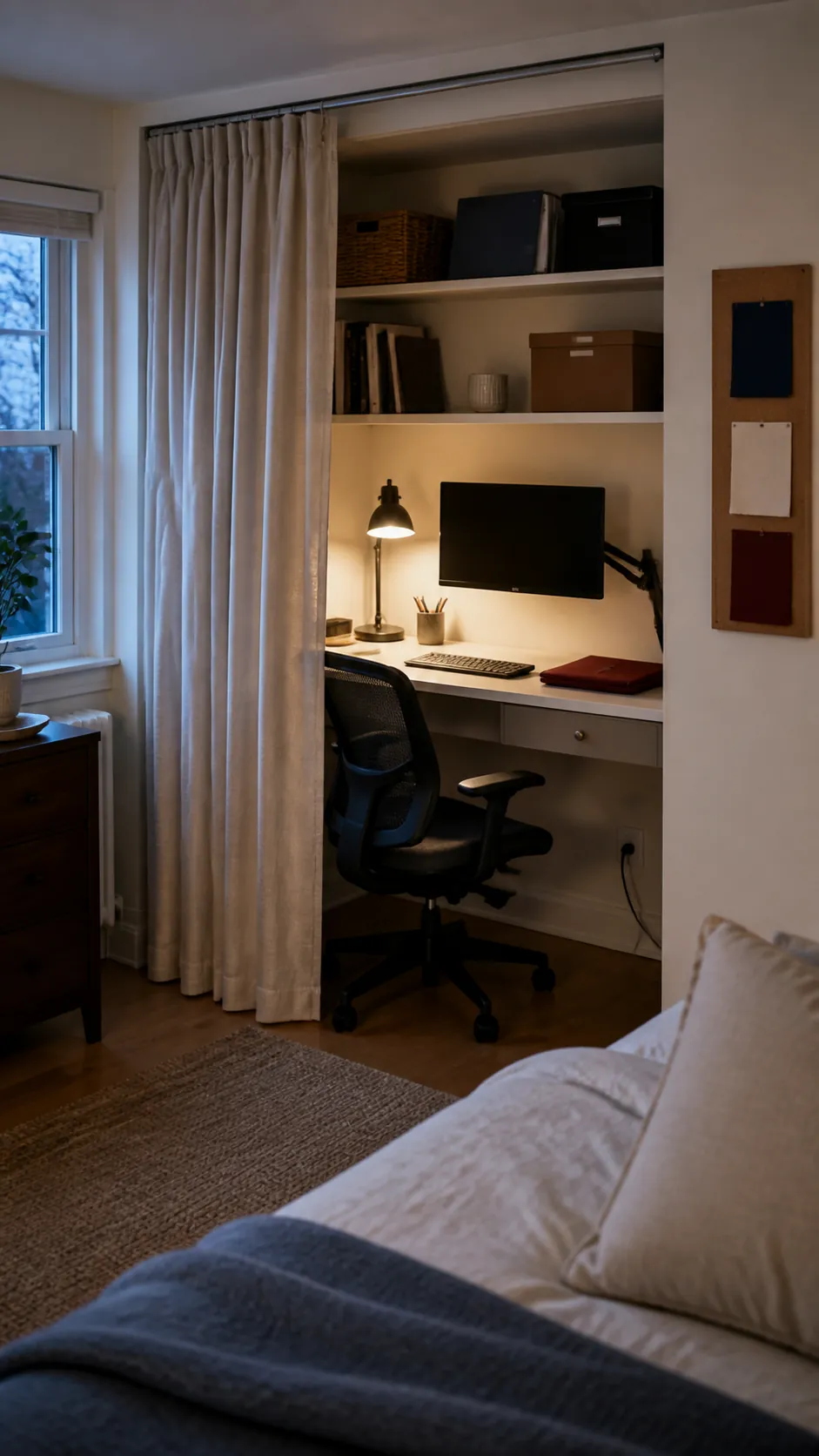
Close the Office Behind a Curtain
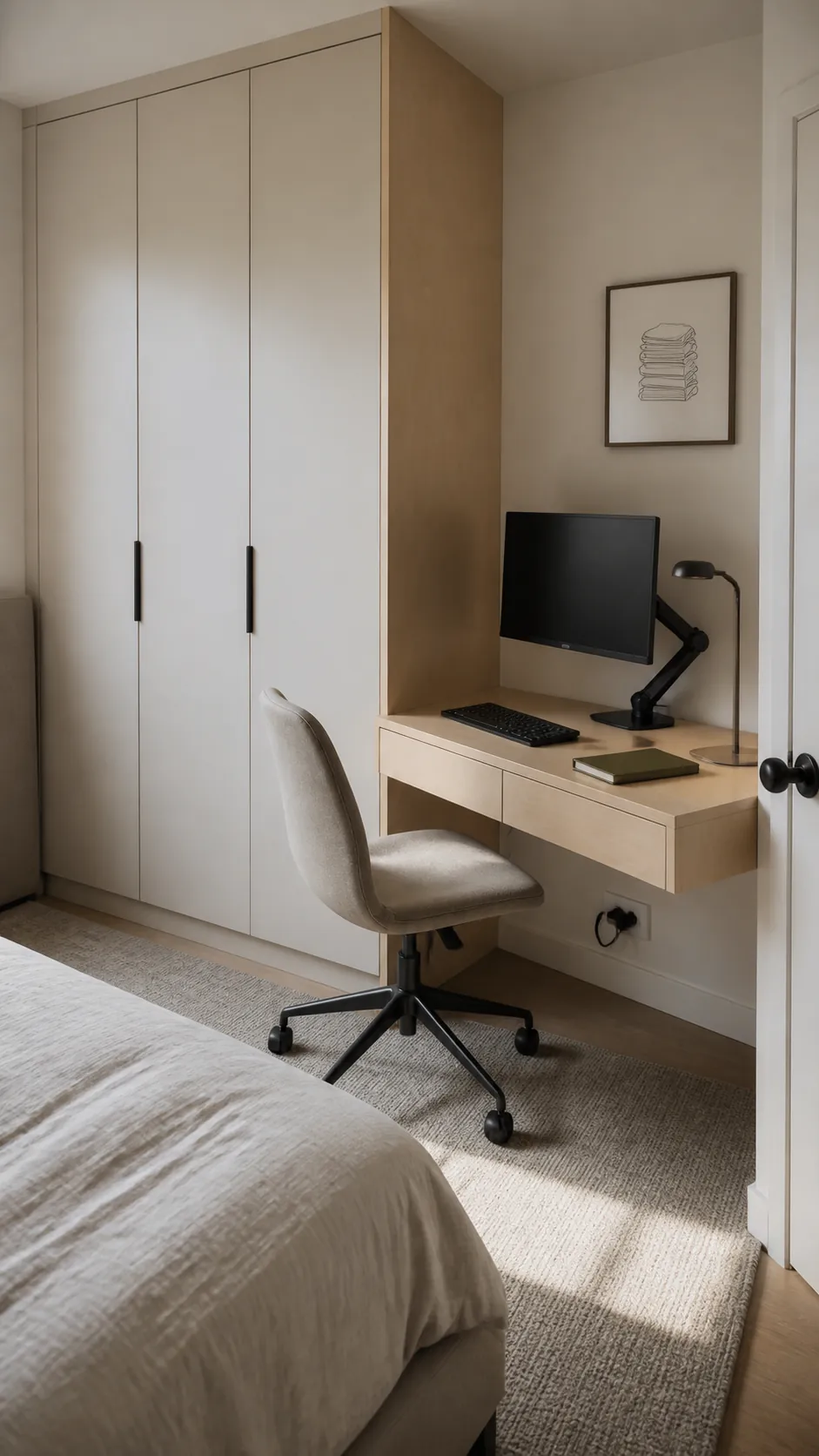
A ceiling curtain creates a clear end to work without requiring doors or permanent millwork. Mount the track wide enough for the fabric to stack outside the desktop when the office is open. Closing the curtain each evening hides the monitor and gives the bedroom a stronger visual cue for rest.
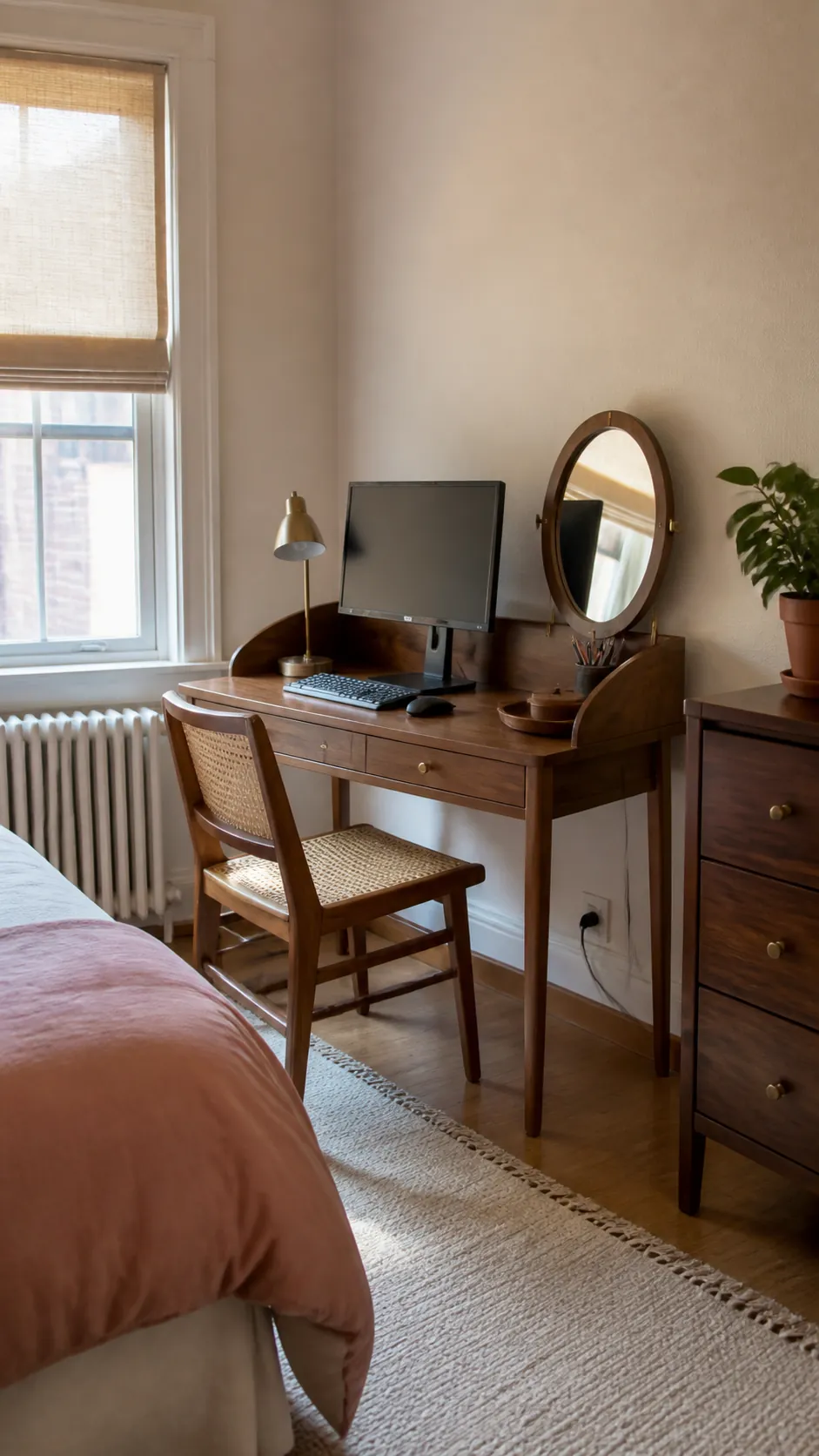
Use a Vanity That Can Handle Work
A vanity can support occasional work when the mirror folds away and the drawer has room for a laptop kit. Choose a chair that supports longer sitting rather than relying on a low decorative stool. Keep grooming items inside one lidded tray so the surface changes purpose quickly and stays hygienic.
Aim the Chair Away From the Bed
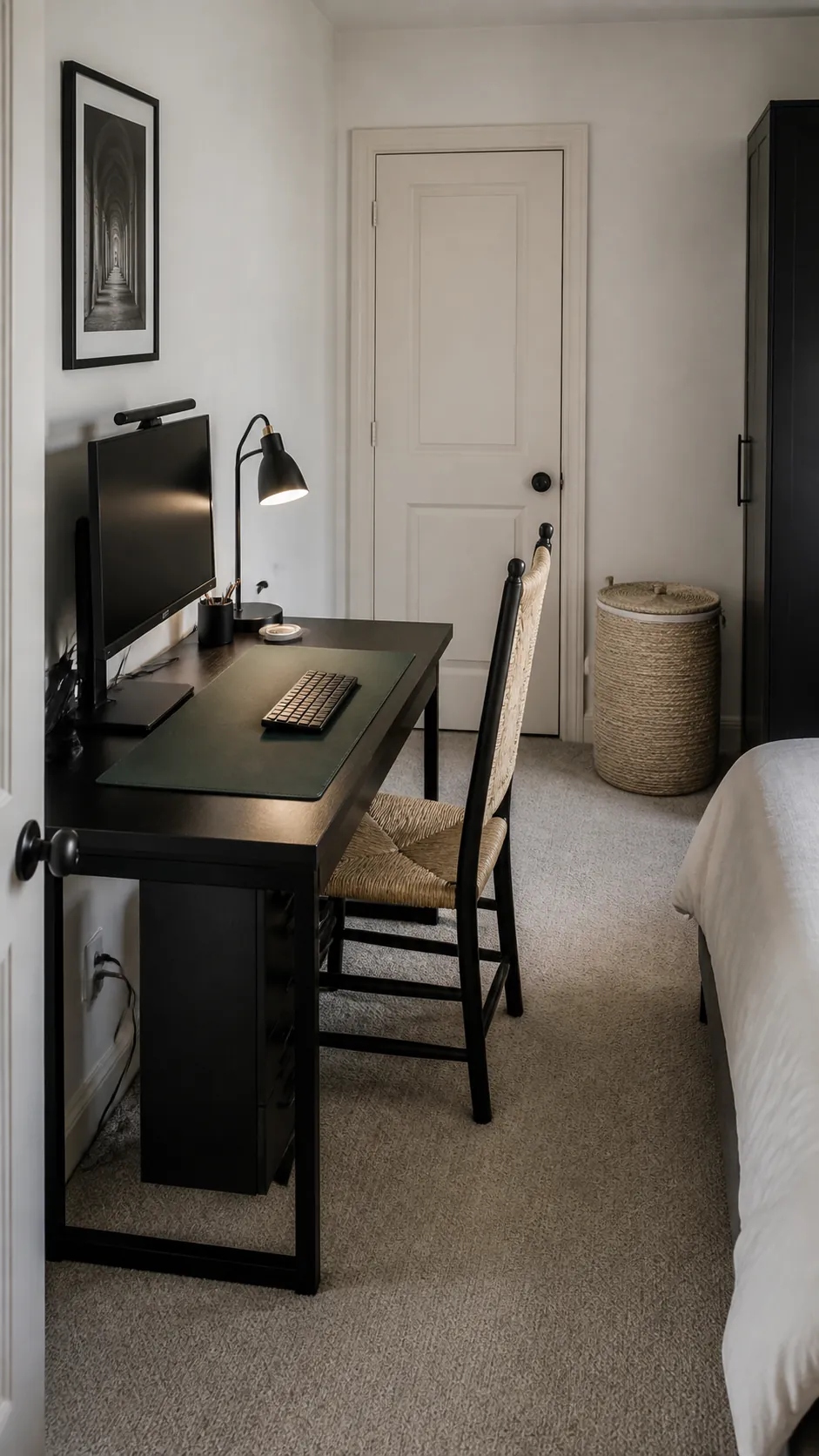
Chair direction changes the mood of a bedroom office more than many decorative upgrades. Facing a side wall keeps the bed out of your immediate view and can reduce the pull to lie down. Preserve a clear path to the door so the new orientation does not make the room feel boxed in.
Keep Nighttime Storage Within One Reach
Closed storage works best when every daily object has a home within arm’s reach of the chair. Use the high cabinet for light supplies and reserve the low drawer for papers that need frequent access. Before bed, one short reset should clear the desktop, hide the cables, and return the corner to the bedroom.