
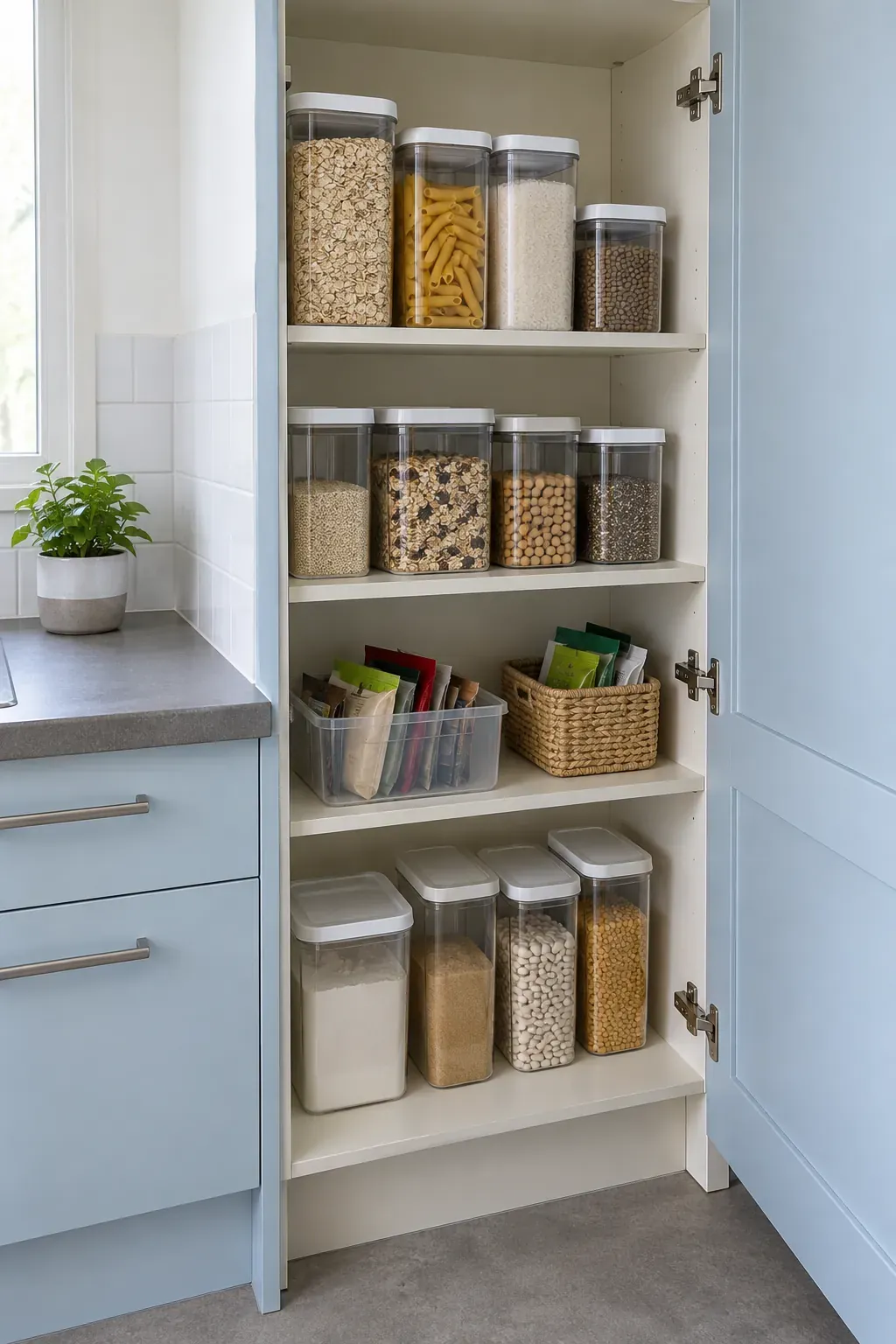
A full cupboard can hide a surprising amount of unusable space. The problem may be a jar that is too large, a bin that will not come out, or food you cannot see behind the front row. Check how each shelf works during cooking and shopping before adding more storage products.
Buying organizers before measuring the shelf
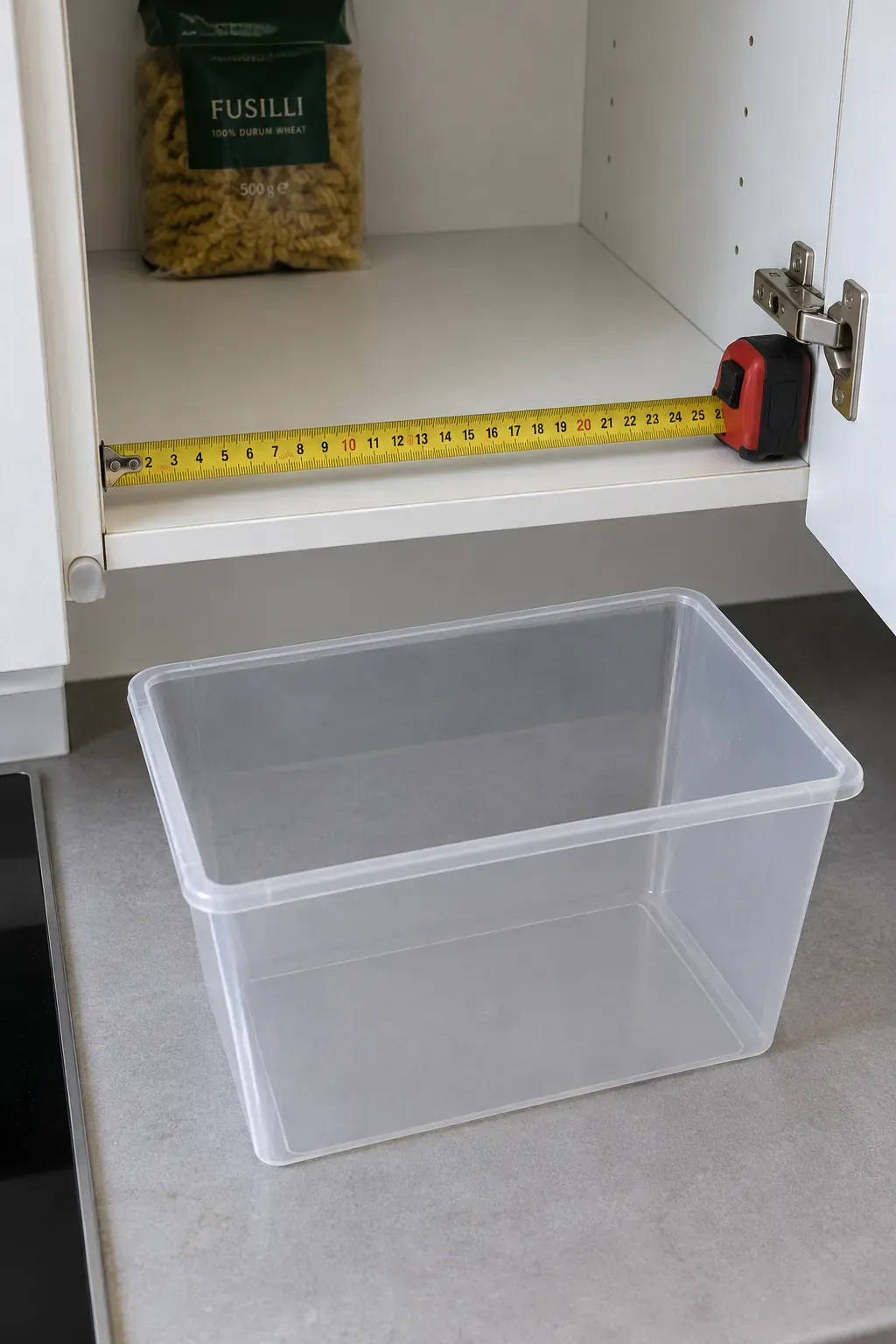
Measure usable width, depth, height, and the clear door opening before shopping. Include hinges, shelf supports, and any raised front lip that a bin must pass. An organizer that fits inside but cannot come through the opening adds another obstacle.
Choosing containers larger than the food you buy
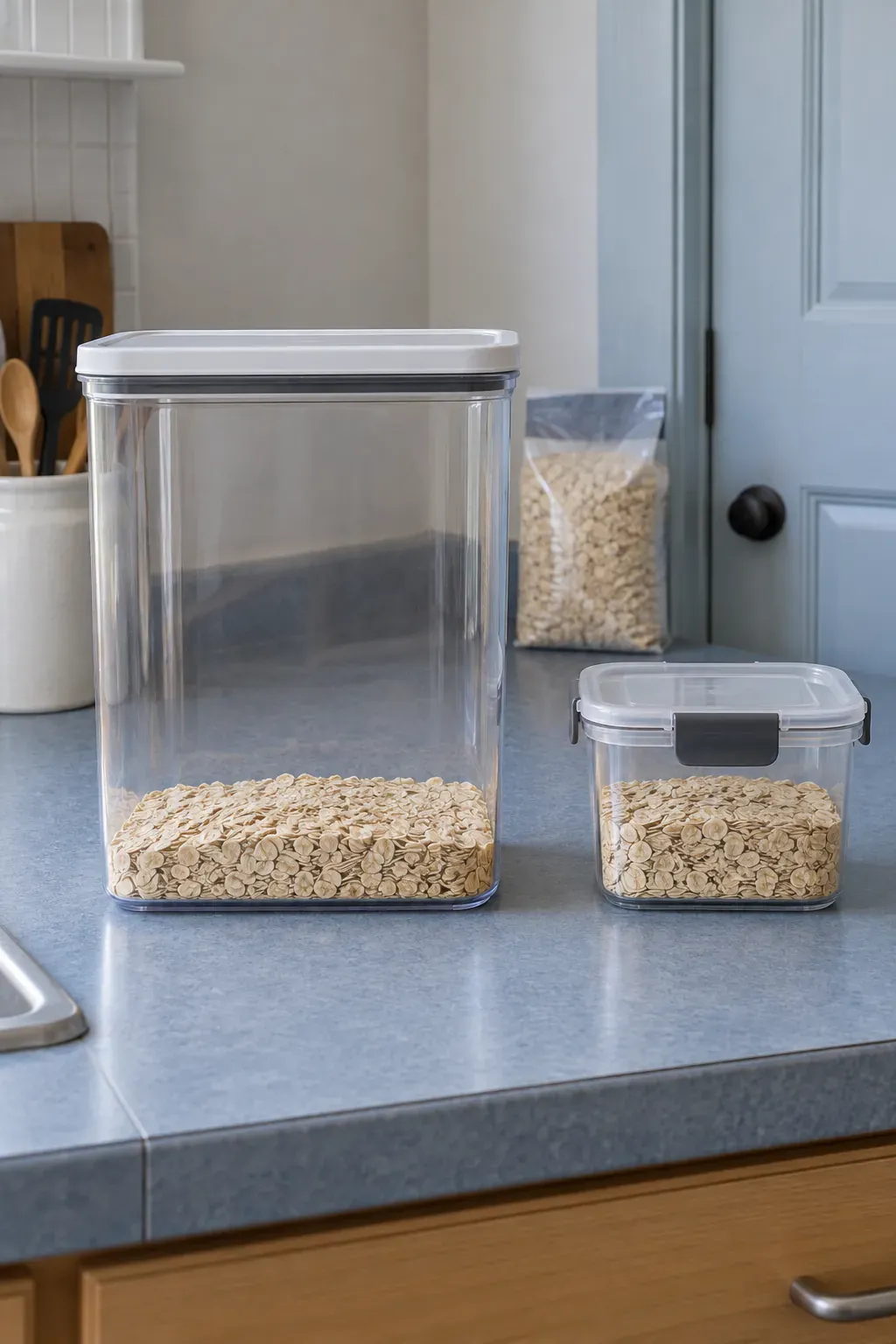
Match pantry container sizing to the amount you normally store after a refill. A large vessel with only a little food inside occupies the same shelf footprint as a full one. Compare your usual package volume with the container capacity and leave the working space needed to close its lid. Avoid buying a complete oversized set for a few small ingredients.
Ignoring tapered sides and bulky rims
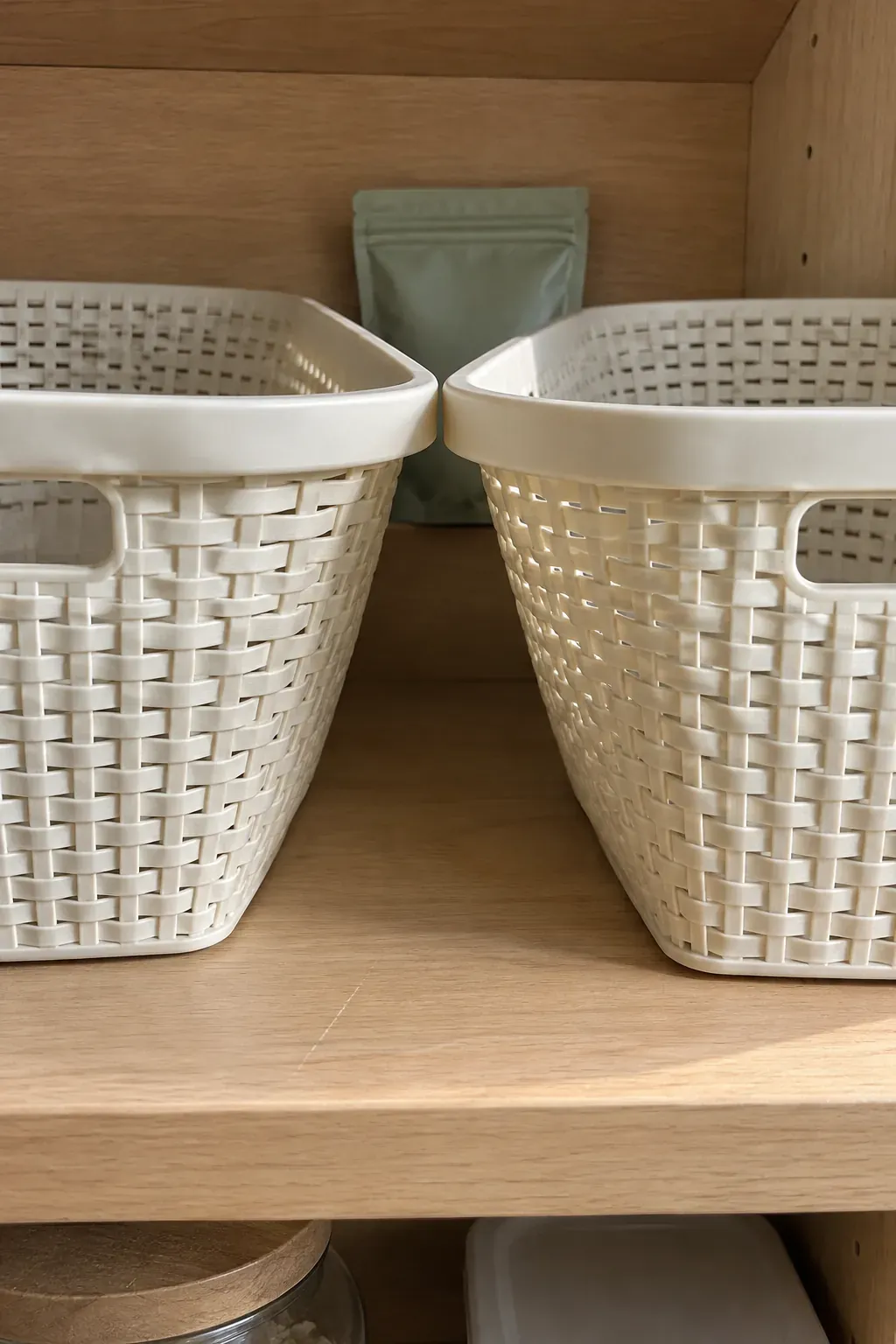
Measure the widest part of a storage bin, including its rim and handles. A basket can look narrow at its base while taking much more room at shelf level. Straight sides may fit closely together, but retain enough space to grasp and remove each bin.
Decanting every package automatically
Some foods benefit from a suitable sealed container, while others already have practical packaging. Decant only when the new container improves protection, access, or usable space. Keep product identity, dates, preparation instructions, and allergen information with the food.
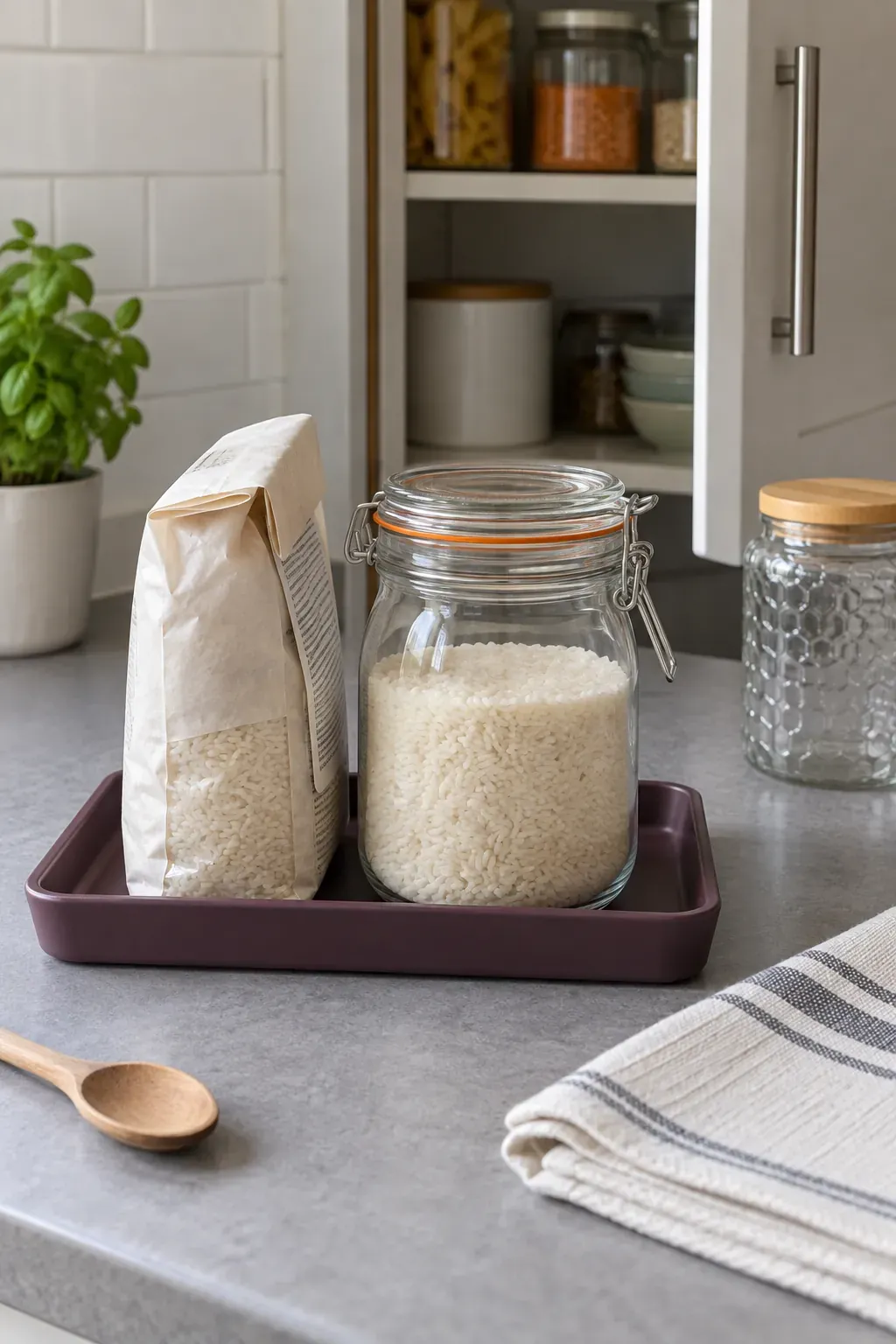
Do not combine old and new food merely to empty a packet. Clean and dry containers as appropriate before refilling, and follow the food storage guidance on the package. If a partly emptied bag remains beside an oversized jar, the change may have increased clutter.
Leaving partial refills in several places
Give the remainder of an opened refill one clear home near its main container. Check that the package is properly closed and stored according to its instructions. Several forgotten fragments can occupy more space than the ingredient you are trying to organize. Add the remainder to your stock check before buying another bag.
Treating every shelf gap as wasted space
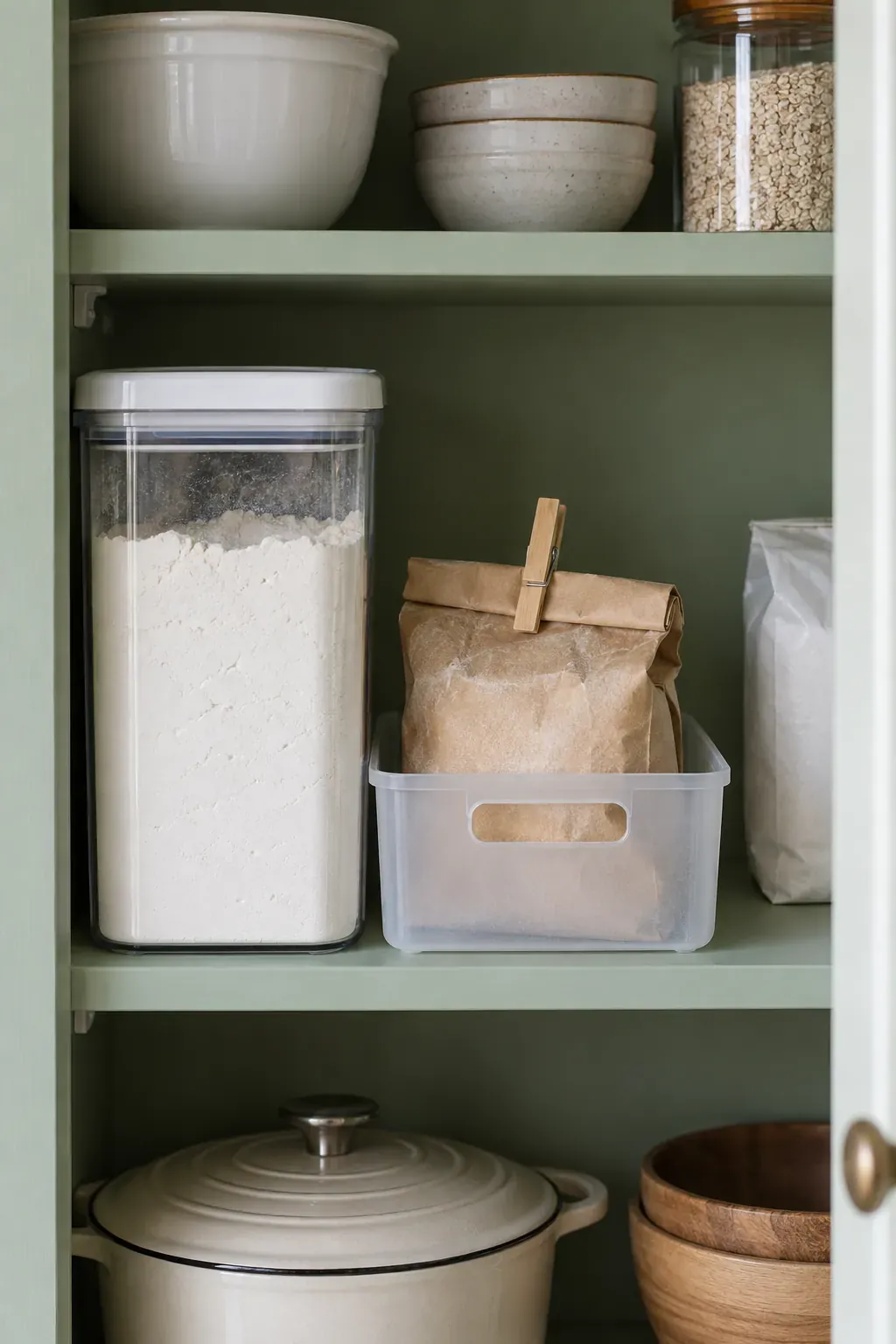
You need room to grip a jar, tilt a box, and remove a lid. A tightly packed shelf can have impressive capacity but poor access. Leave deliberate handling gaps where your hands and containers need them.
Keeping short jars beneath an unnecessarily high shelf
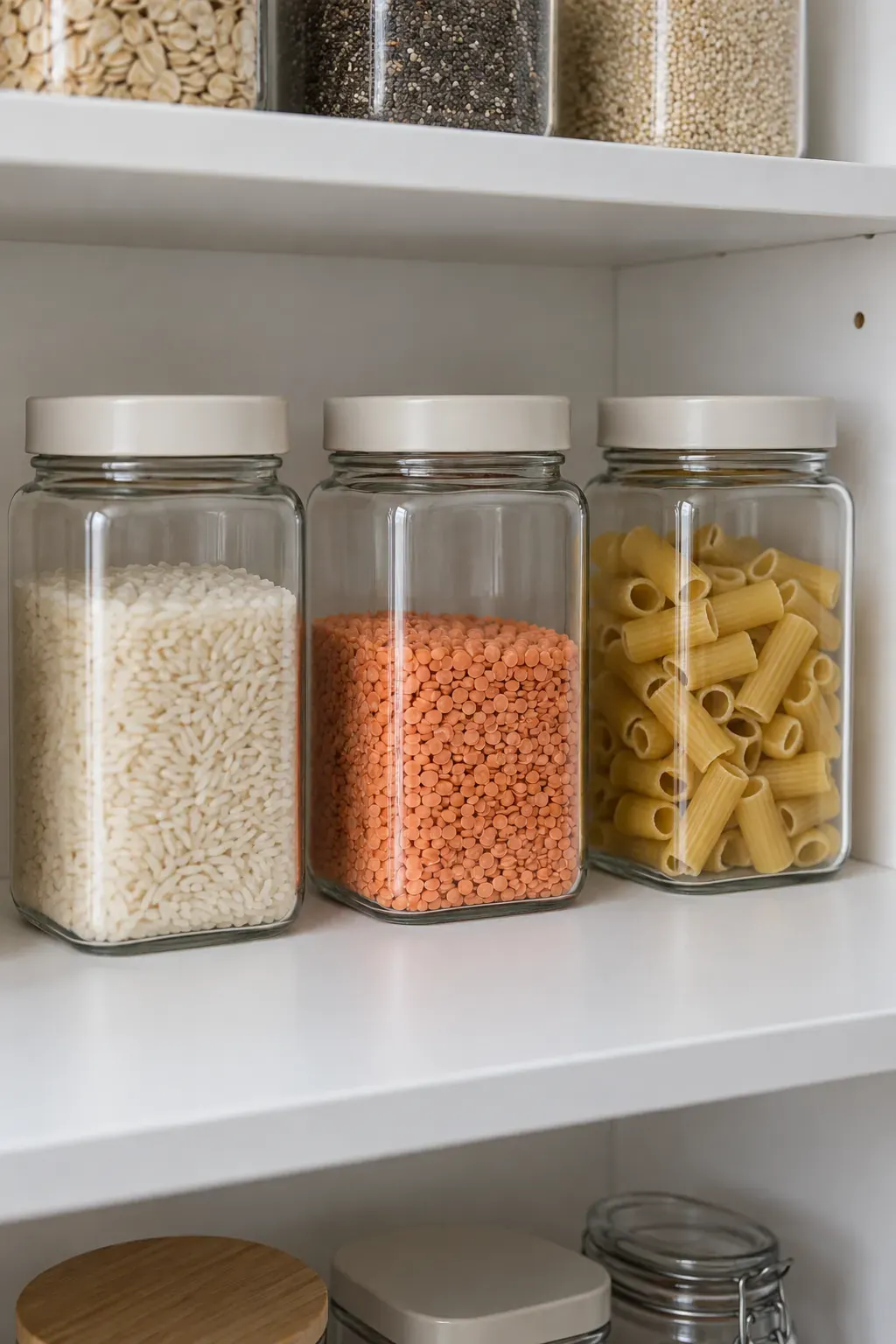
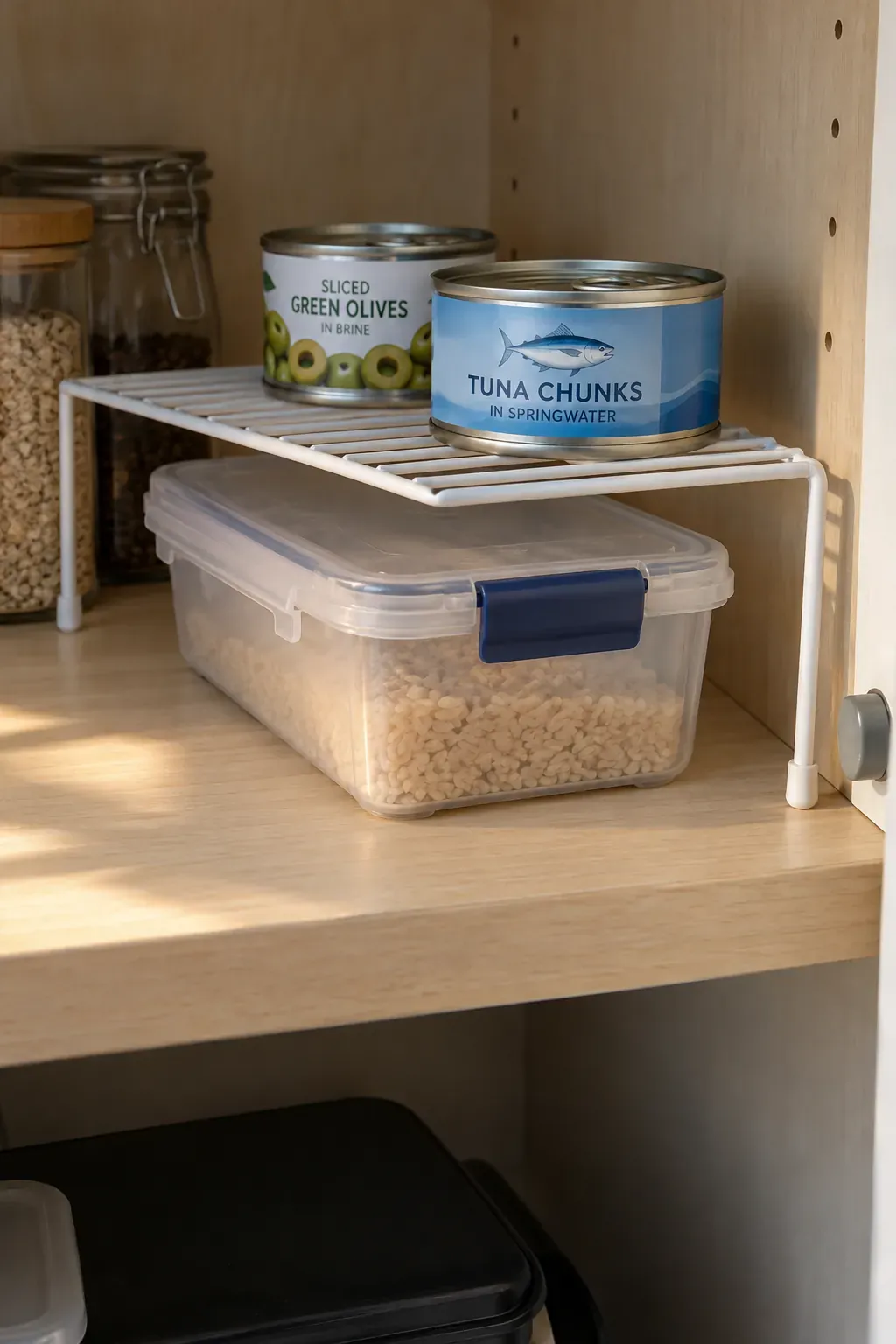
A large empty space above low jars may be adjustable pantry shelf height waiting to be used. Move a movable shelf or consider a stable rated riser when the cupboard allows it. Check that the jars still lift out comfortably and that the revised upper space remains useful. Do not alter structural shelves to chase a small gain.
Adding a riser that blocks the lower level
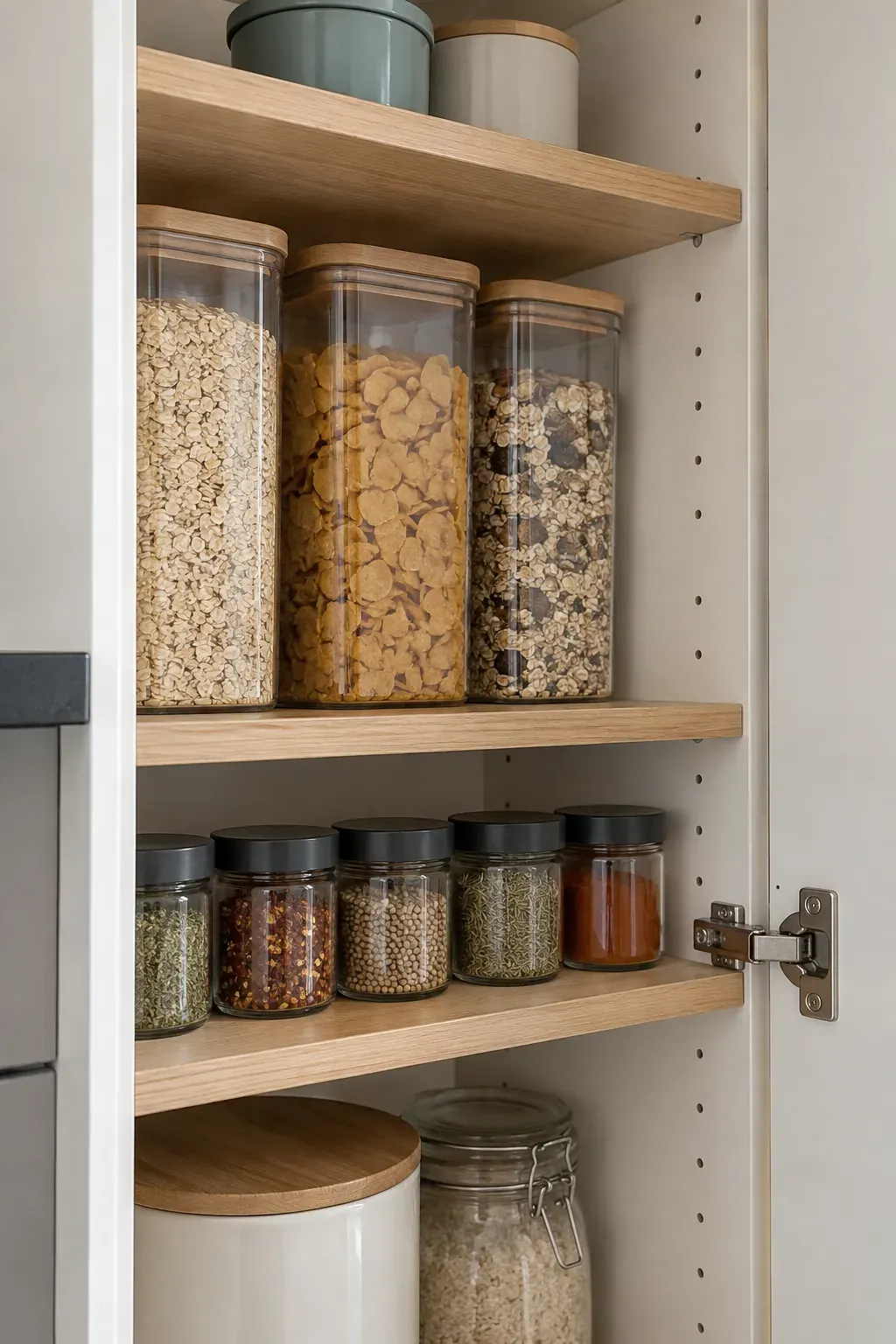
A riser is useful only when the items underneath can come out directly. Check leg positions, front clearance, and the height of actual containers before loading it. If you must remove the riser to reach a daily ingredient, change the arrangement.
Using round storage everywhere
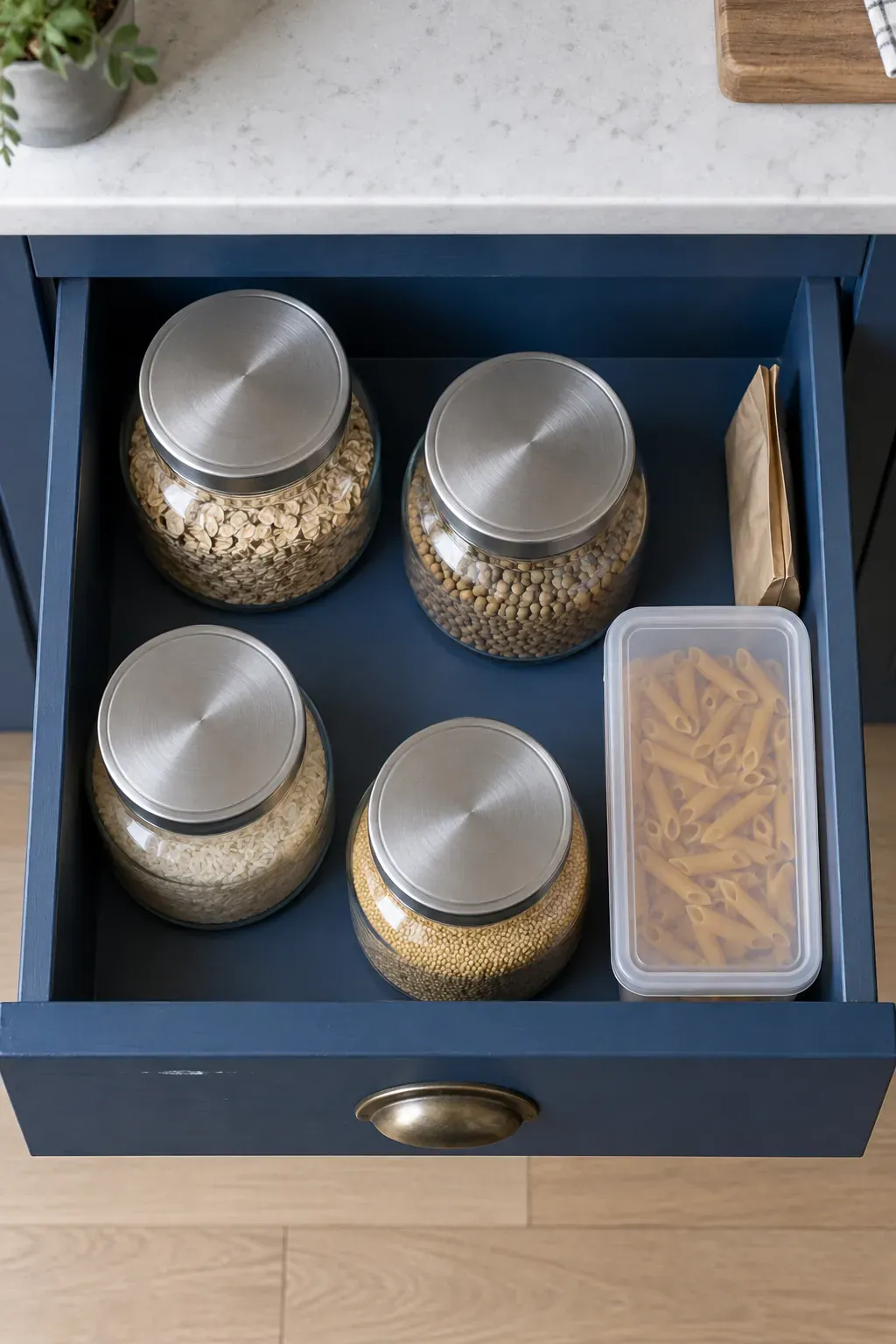
Round jars and turntables can be useful, but their shape leaves gaps on rectangular shelves. Compare the footprint of the whole arrangement with the food it holds. Use a round solution where its access benefit outweighs that lost area, such as a suitable corner for small bottles. Straight sided containers may work better in a narrow row.
Putting a turntable in the wrong size space
Measure the turntable diameter and the clearance needed for bottles to rotate. A small circle in a deep rectangle may leave inaccessible corners, while an oversized one can strike the cabinet frame. Try the footprint with paper before buying.
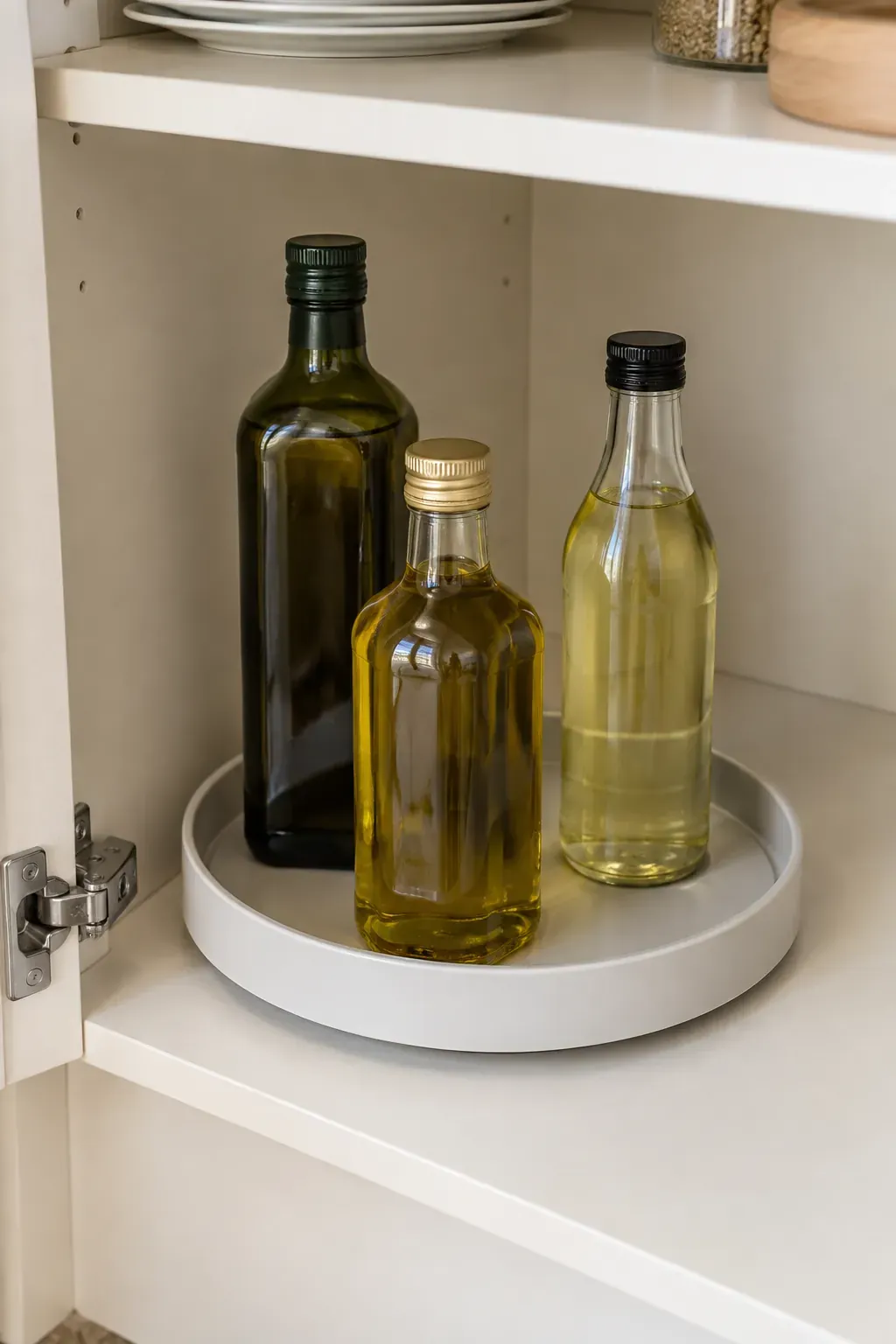
Keep taller bottles stable and within the product load rating. Rotate the loaded tray slowly to check for collisions. A shallow removable bin may serve the same shelf better when most items are rectangular packets.
Hiding small items behind tall packages
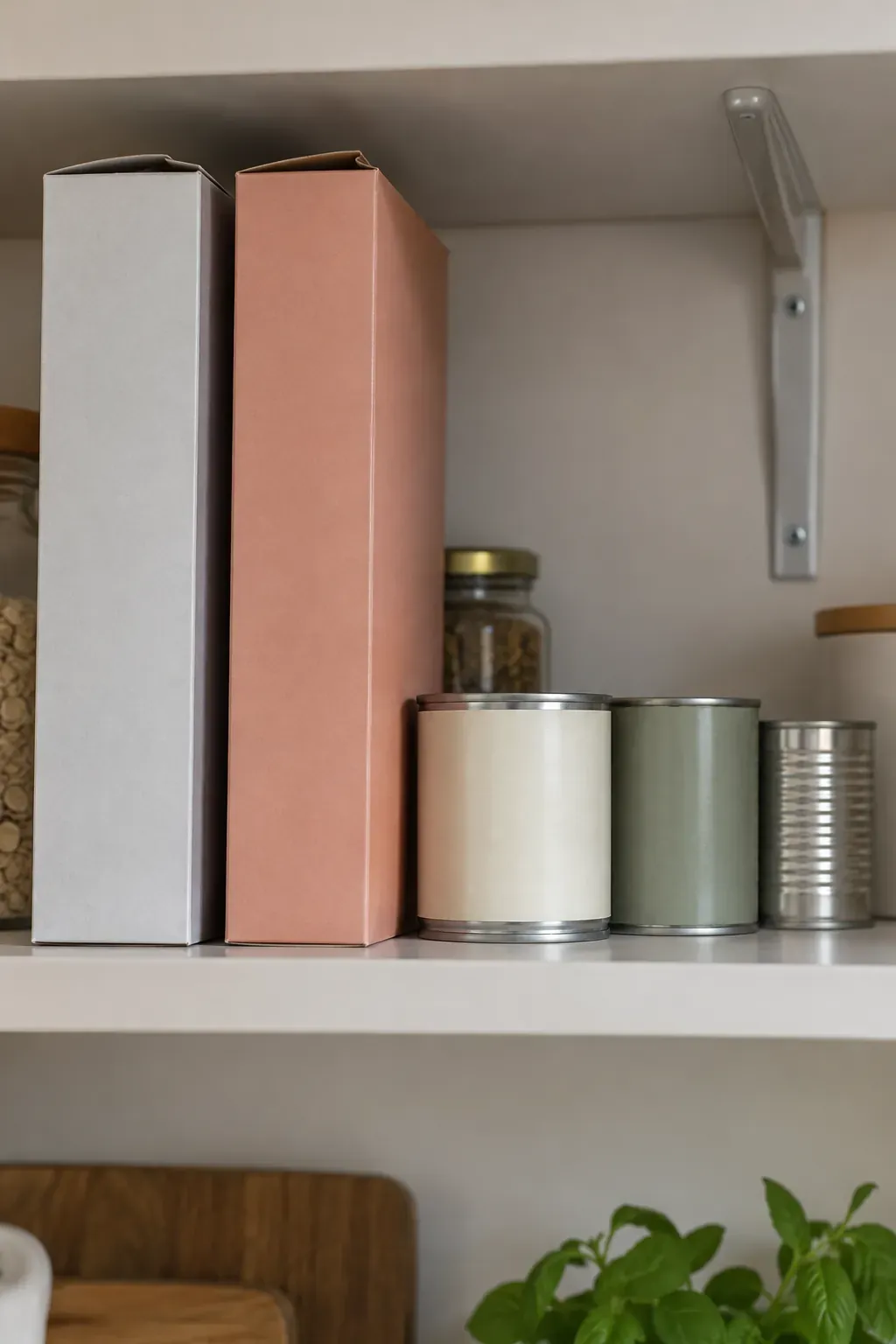
Tall cereal boxes can hide a row of short tins or spice jars. Keep smaller items at the front or give them a separate shallow zone. A suitable tiered shelf can help visibility, provided the back row stays reachable.
Filling deep shelves with loose rows
Loose packages become difficult to track when several unrelated rows sit behind one another. Group compatible items in a removable bin sized for the shelf and the load you can lift. Pull the category forward to inspect it instead of reaching blindly behind the front row. Leave enough room for the bin handles to clear the opening.
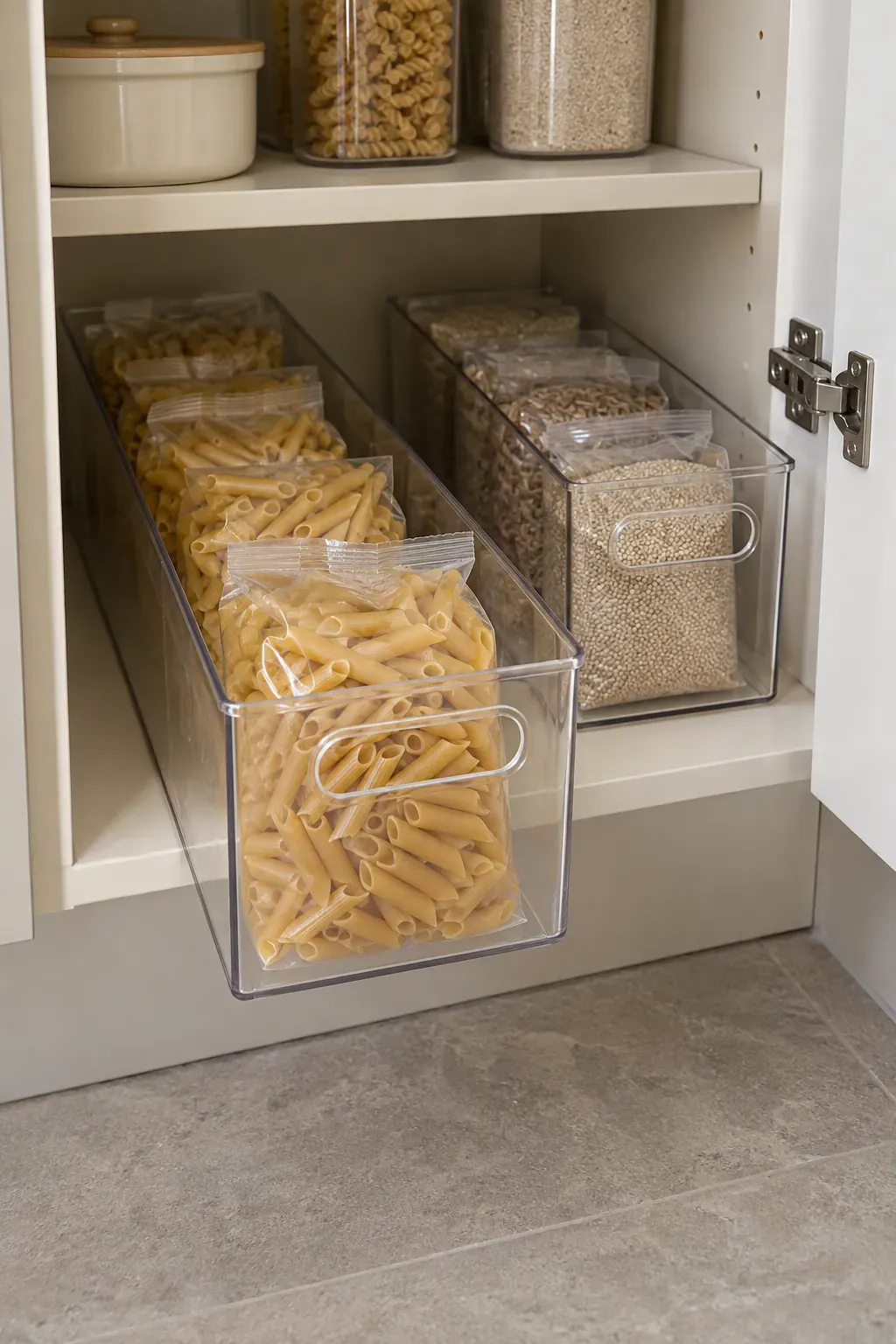
Making one enormous category bin
A large basket of all snacks can be too heavy and confusing to use. Divide it only where the distinction helps, such as breakfast bars and savory packets. Smaller manageable groups let you see stock without emptying the whole shelf.
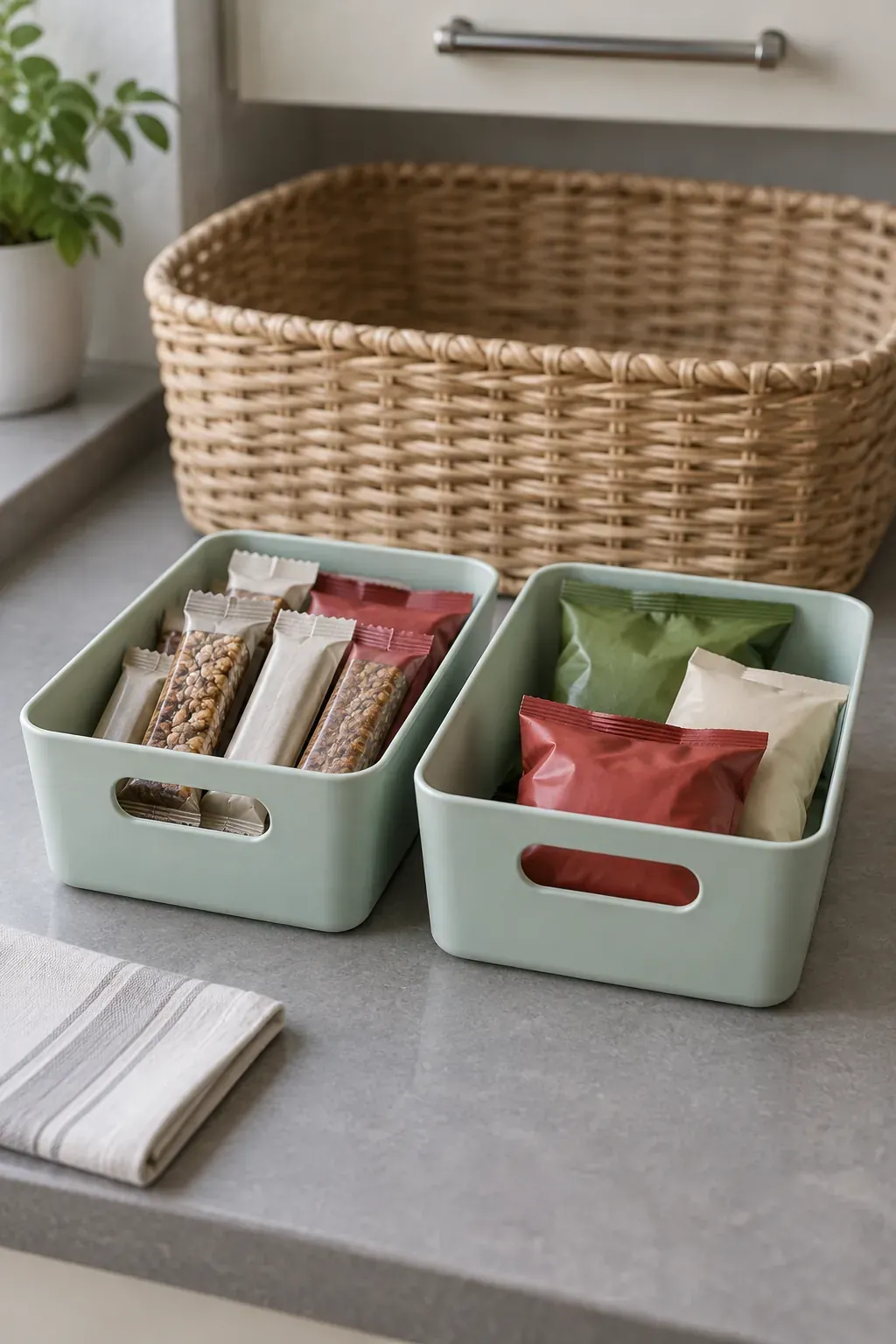
Dividing categories into too many tiny bins
Every divider and basket wall consumes space. Avoid giving one small packet its own large container simply to make the shelf look uniform. Combine items that are used and replenished together, while keeping food safety and allergen needs clear.
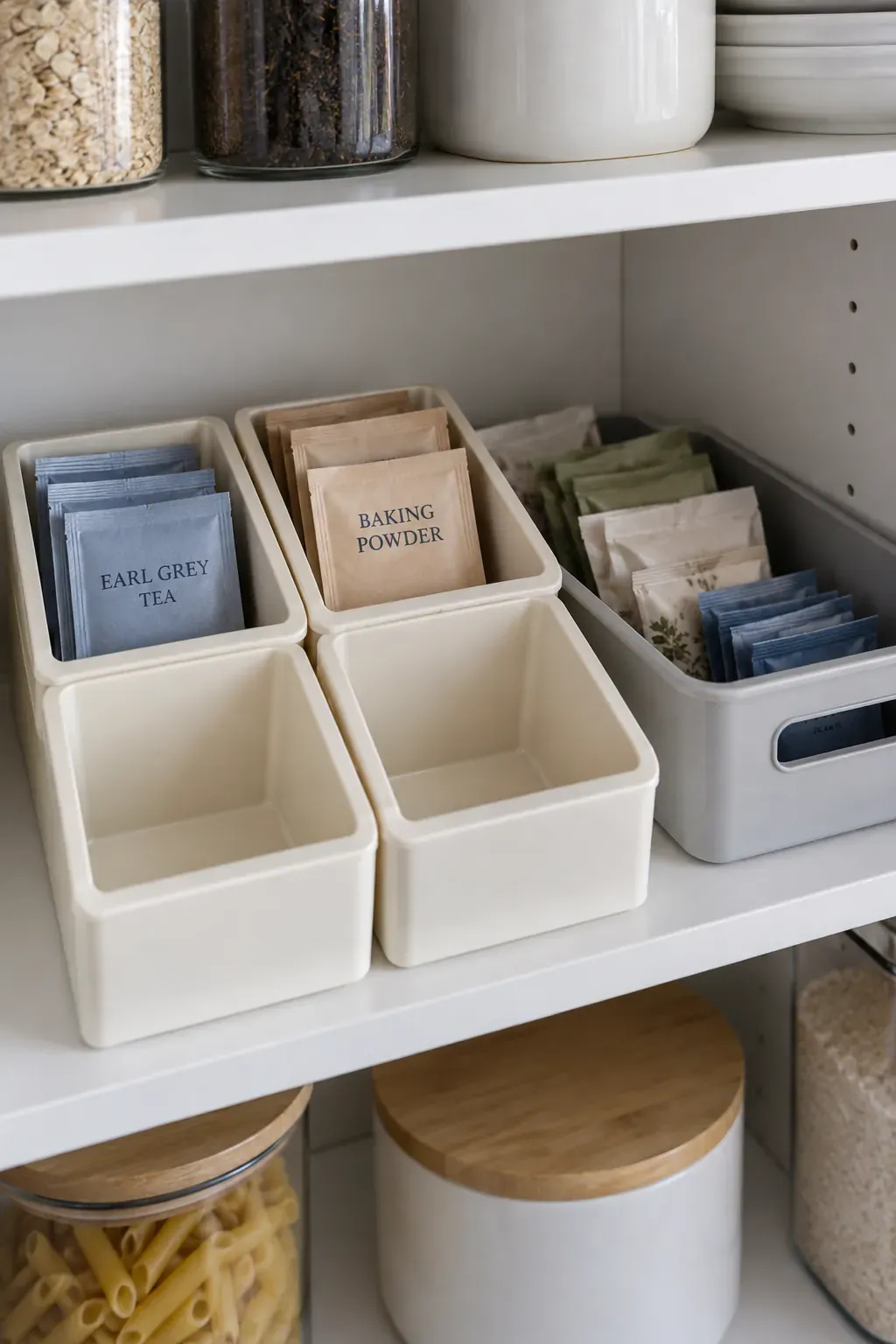
Keeping backup stock among opened food
Separate unopened backups from the food currently in use so quantities are easier to judge. A defined rear or upper zone can work if it remains visible and reachable when needed. Put the open package in the daily zone and check it before taking a refill. Do not let the backup area expand into several untracked shelves.
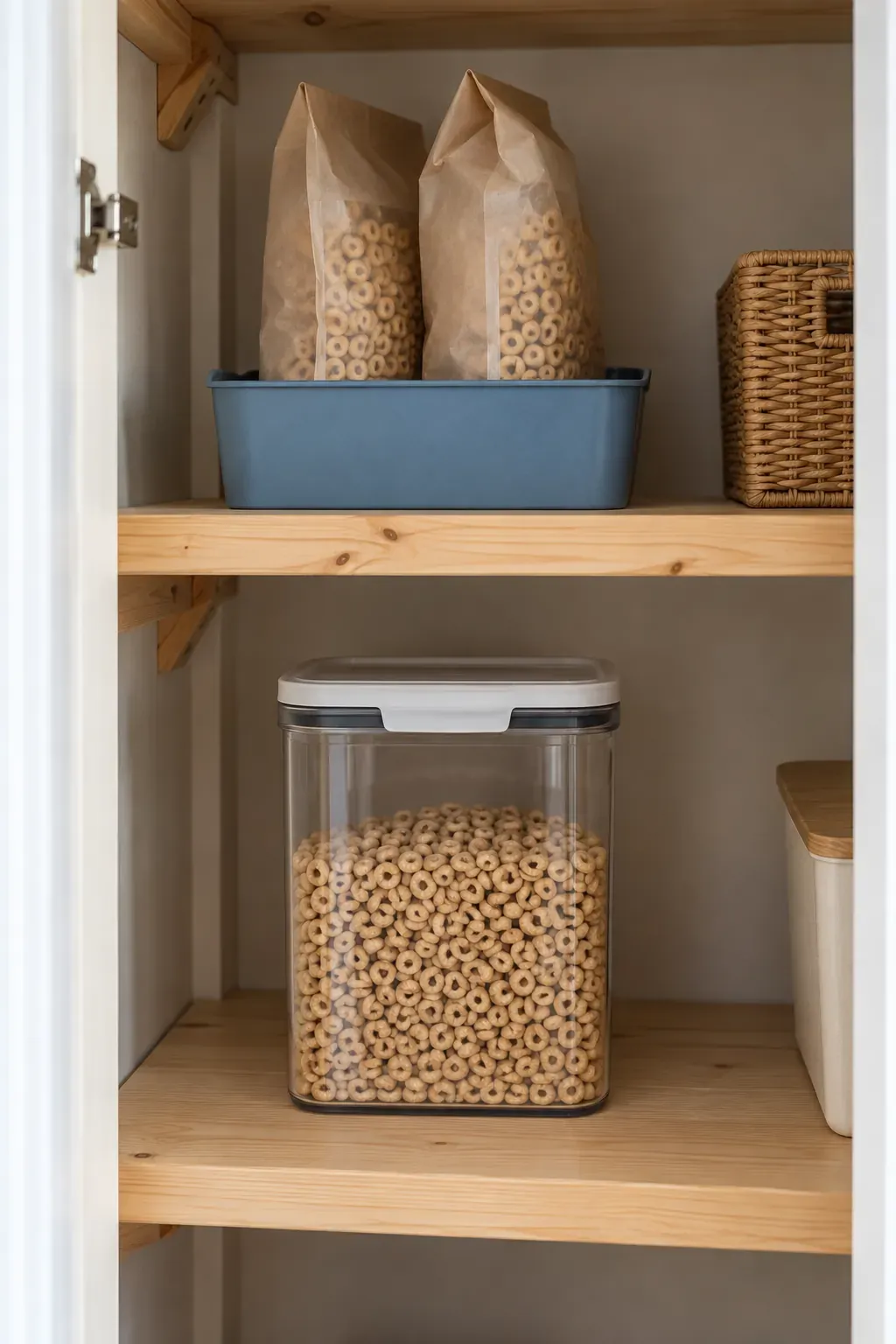
Buying bulk amounts without a storage limit
A large pack only fits your pantry if you can store and use it under the stated conditions. Decide how much space that category can occupy before buying several refills. Consider consumption rate, package dates, and whether the food needs refrigeration after opening.
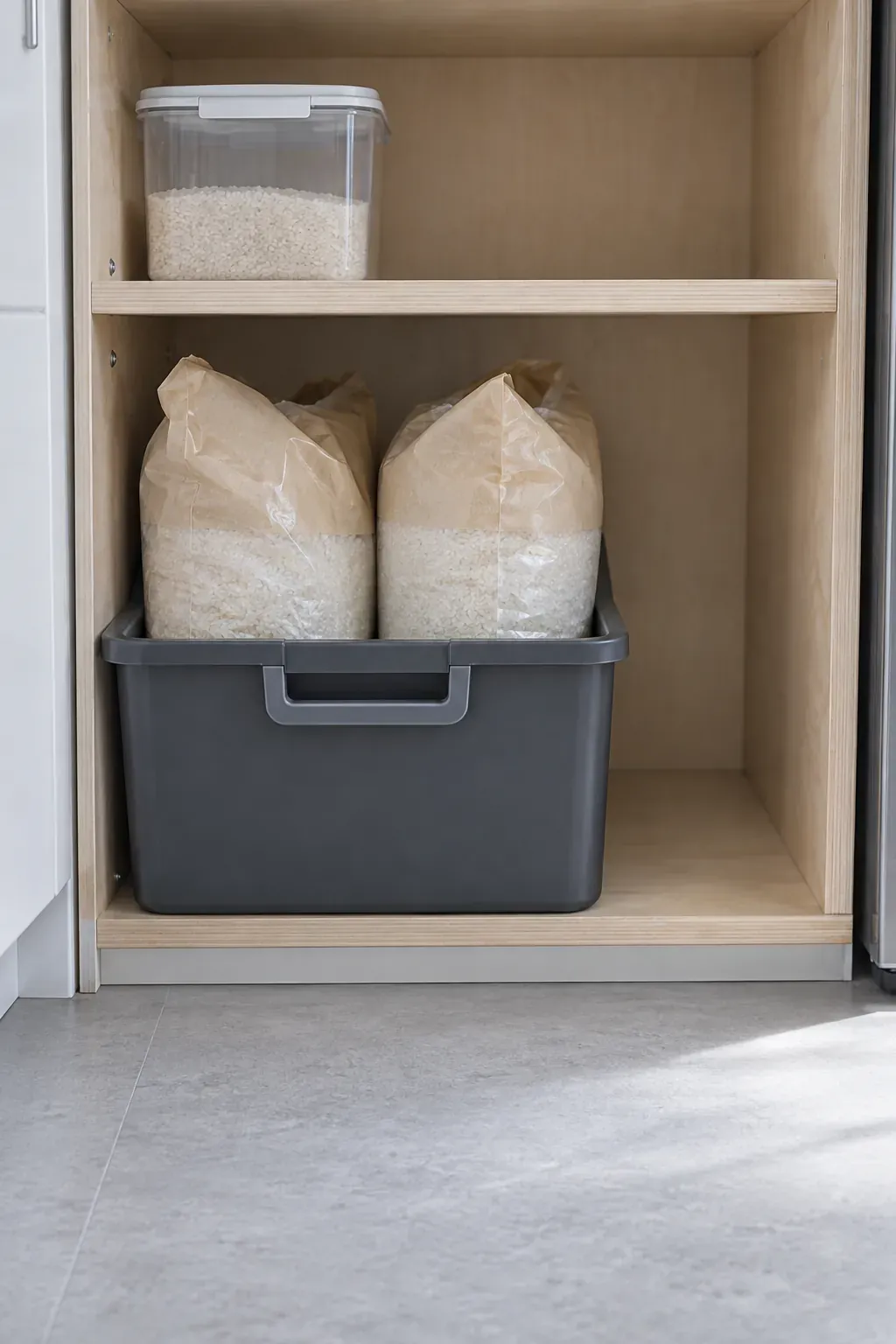
Keep the limit realistic for your household rather than choosing a number for appearance. An occasional large purchase may need a planned secondary storage location. Avoid using the floor or a warm appliance gap as overflow simply because the cupboard is full.
Opening a second package before checking the first
Several open bags of the same food create extra containers and make freshness harder to track. Keep the current package easy to see and put unopened replacements together. Before opening another one, check that the existing food is still suitable to use and has been stored correctly.
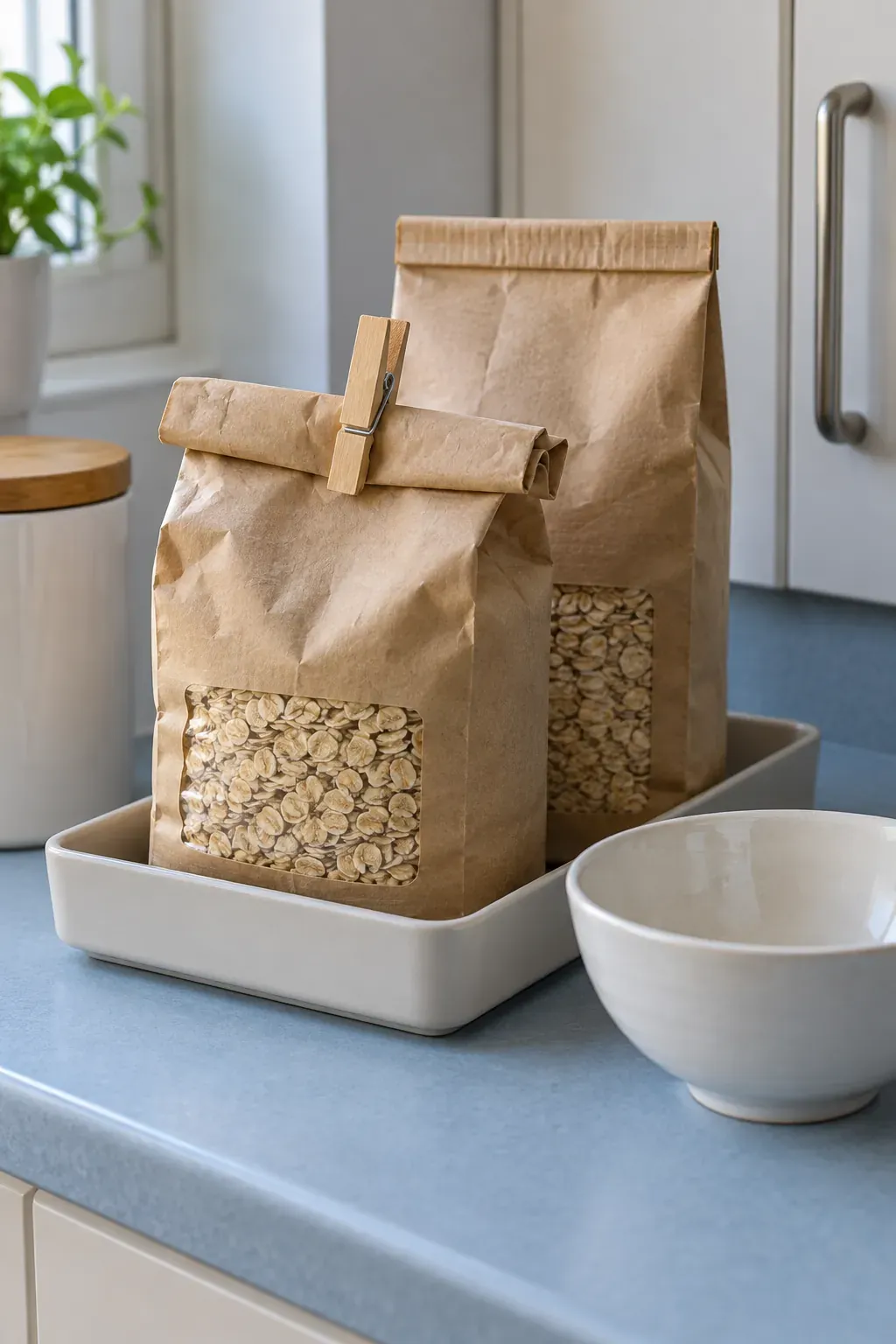
Ignoring forgotten and unsuitable food
Review dates, package condition, and storage instructions during a stock check. Remove food that must be discarded and relocate items that need a different storage condition. Do not treat every date label as interchangeable, and use local food safety guidance when unsure. Clearing genuinely unusable stock reveals the space you actually have.
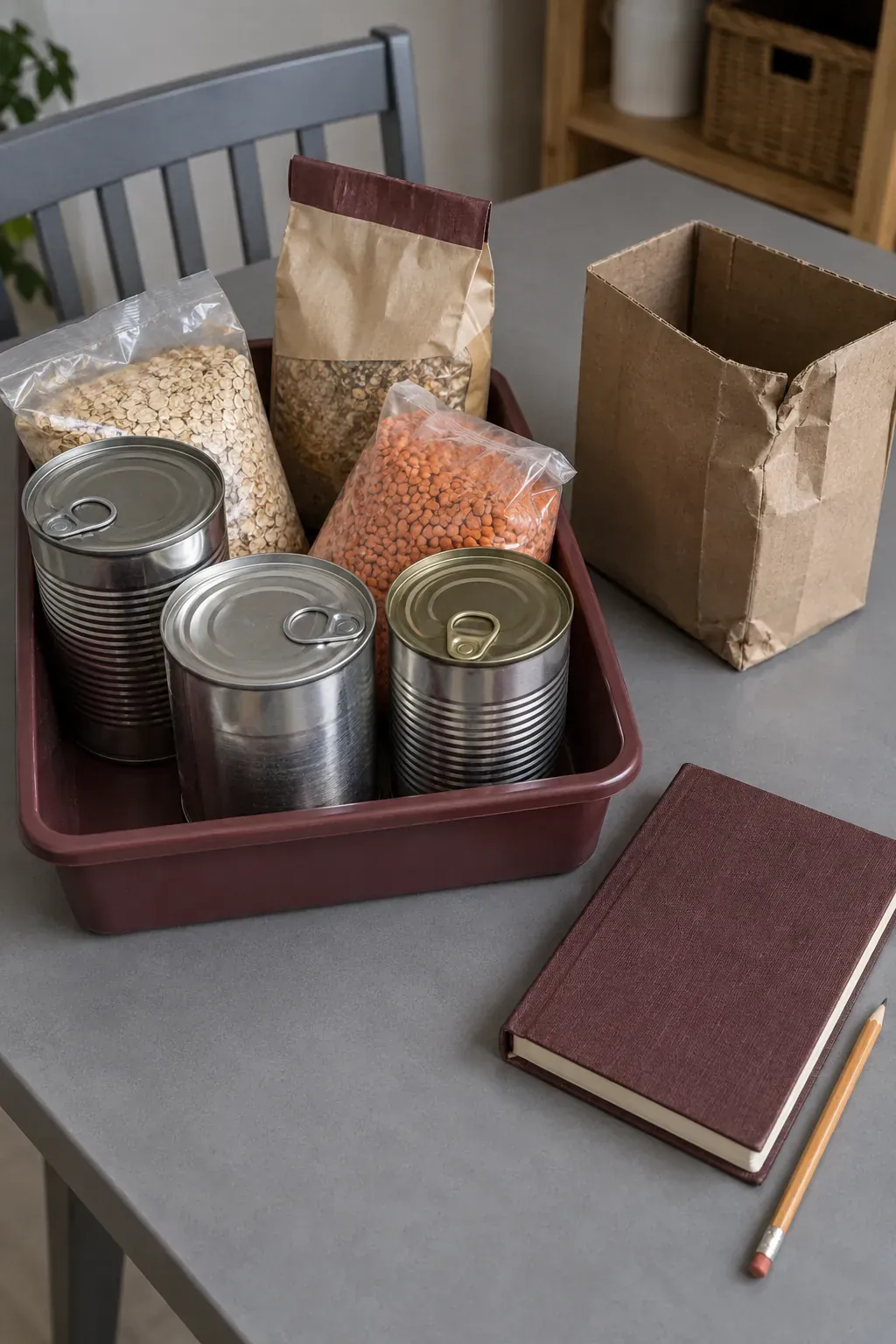
Keeping labels where you cannot read them
A front label is little help in a drawer viewed from above. Put identifying information on the surface you see first, while retaining important package details. Use plain names that everyone in the household understands.
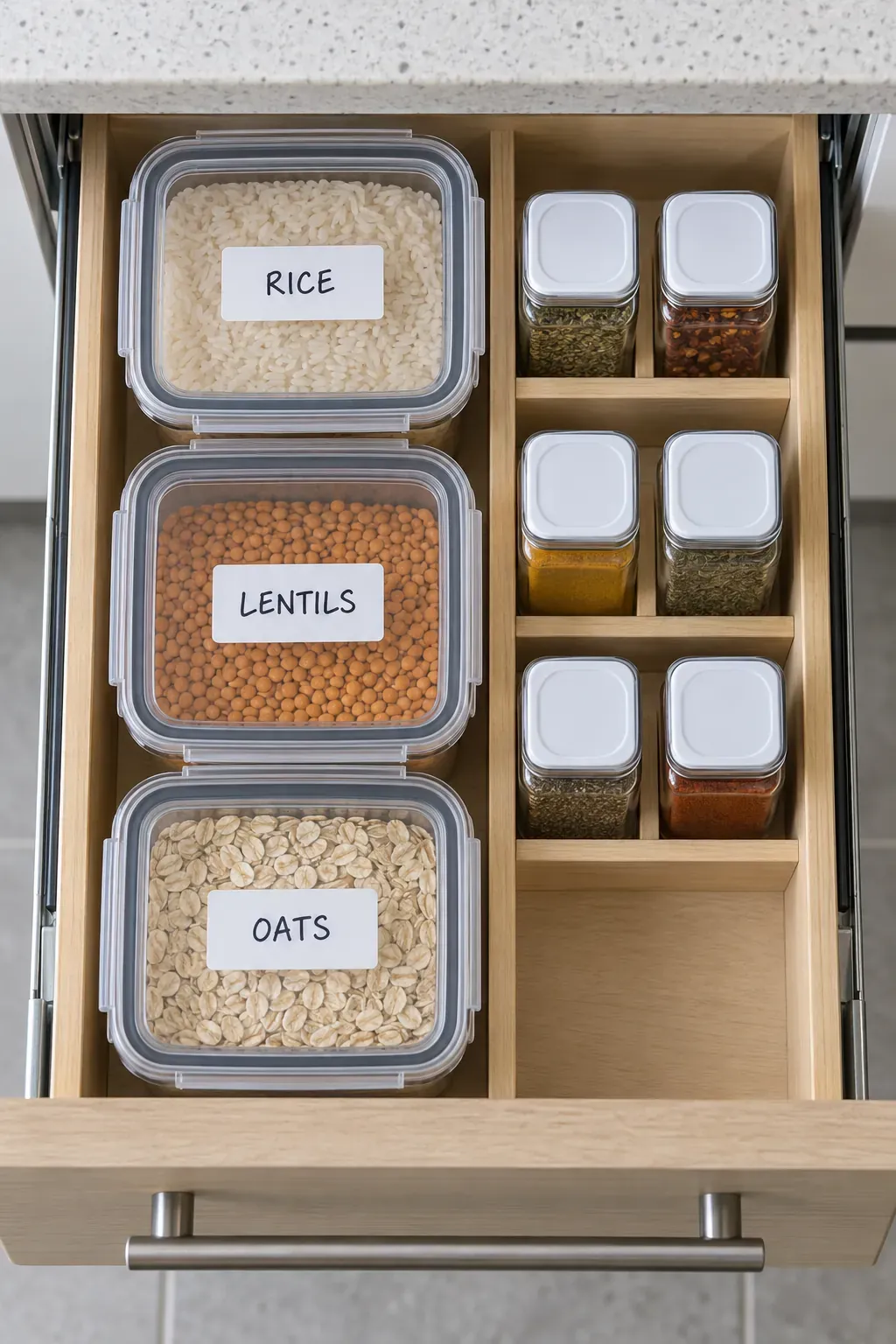
Making labels too specific for a changing category
A basket labelled for one brand can become confusing when the next shop brings a different product. Choose a stable useful category name unless exact identification is necessary. Keep ingredient and allergen details attached to individual foods rather than relying only on the basket label.
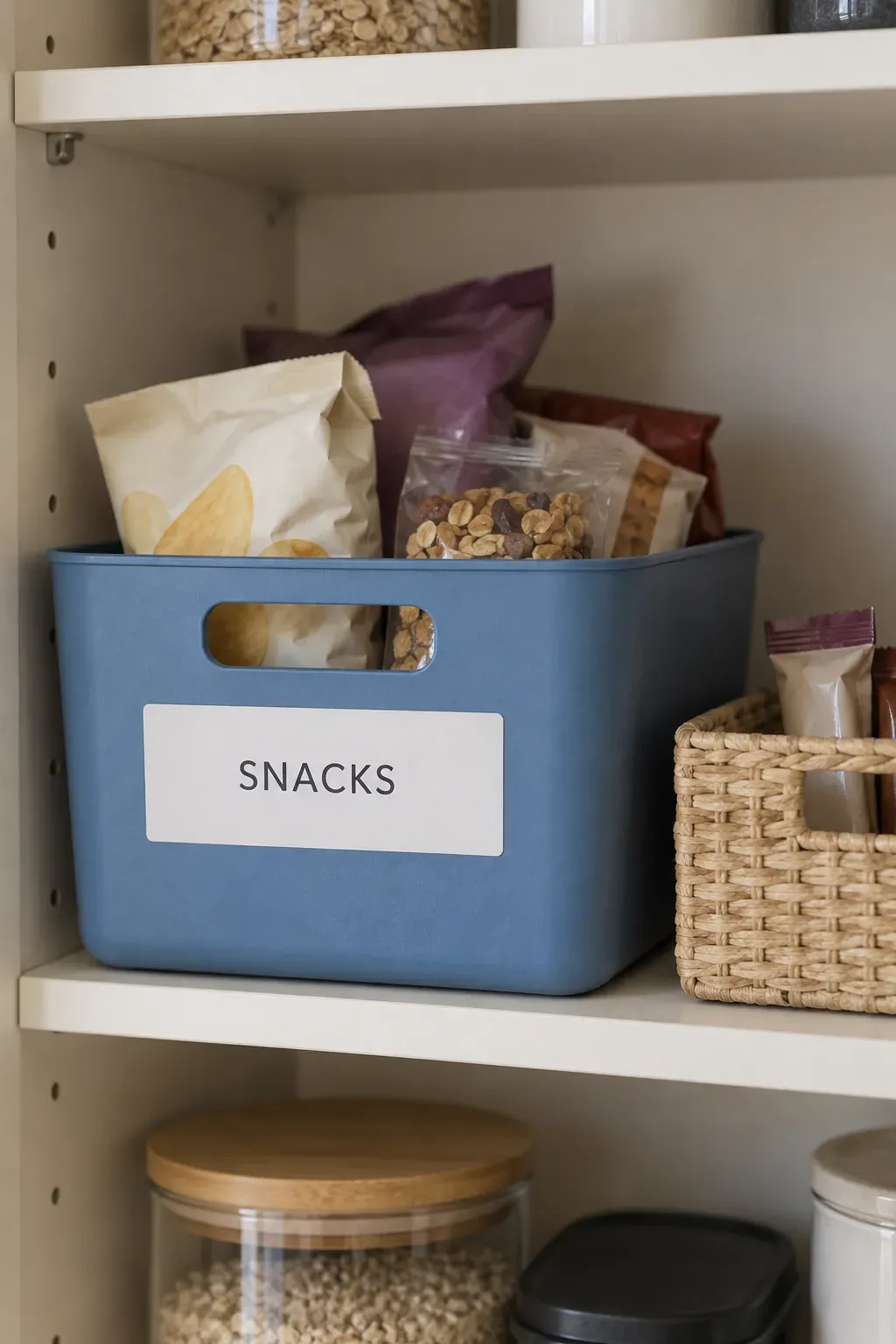
Packing heavy containers on the highest shelf
High shelves are poor places for loads that are difficult to lower safely. Move heavy jars and large tins to a supported level where you can control them. Reserve higher positions for lighter occasional items and use safe access equipment when needed. Confirm the shelf load limit before filling any level.
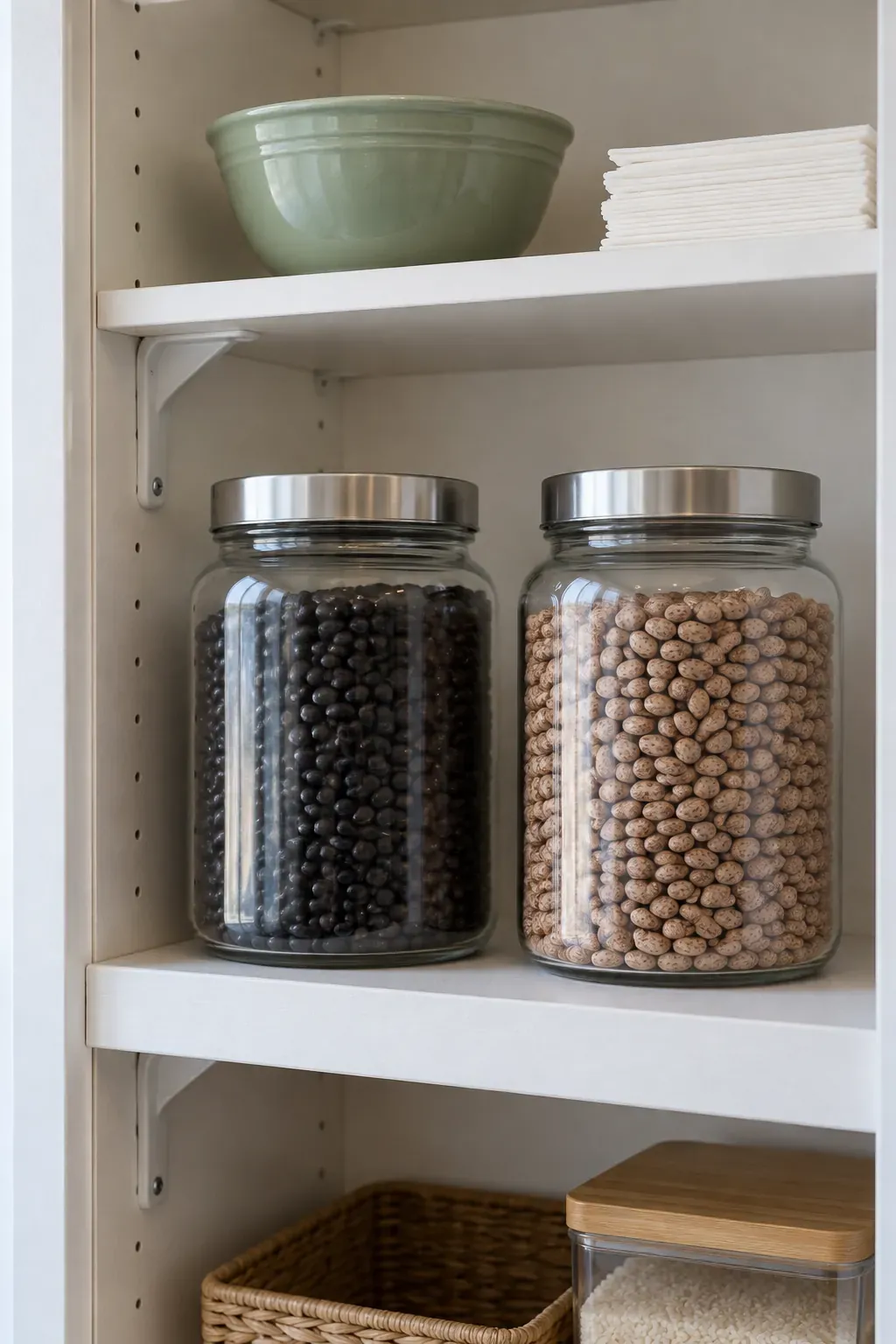
Burying daily food in awkward corners
Arrange the compact pantry layout around how often items are used. Put everyday breakfast and cooking ingredients within comfortable reach, and place occasional supplies in less convenient zones. A technically full corner does not help if its contents are repeatedly forgotten.
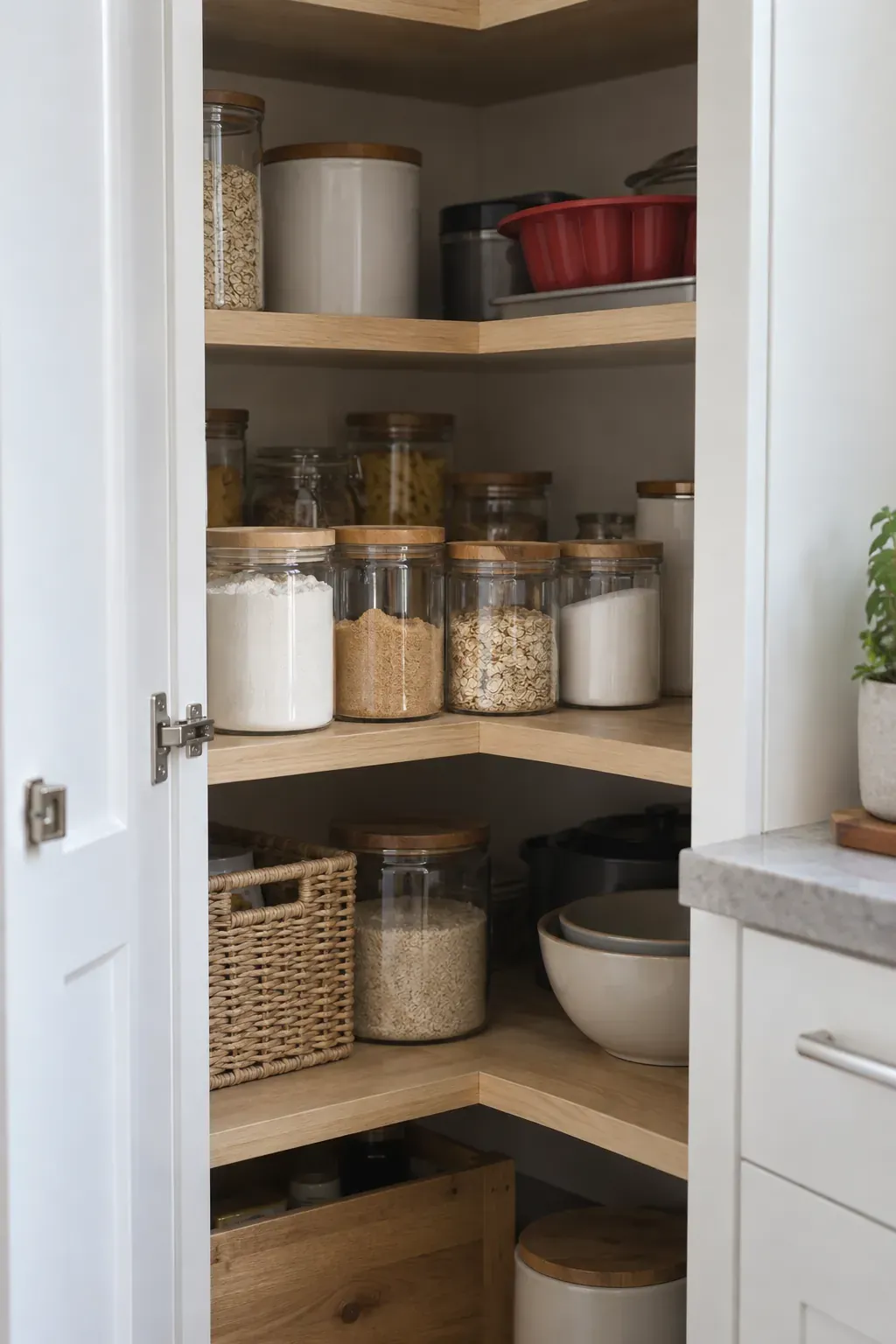
Using deep opaque baskets without a way to check stock
Opaque storage can look tidy while hiding what is left inside. Choose a shallow basket, a clear side, or a simple stock note where that improves visibility. Make it possible to inspect the category without unloading the entire pantry.
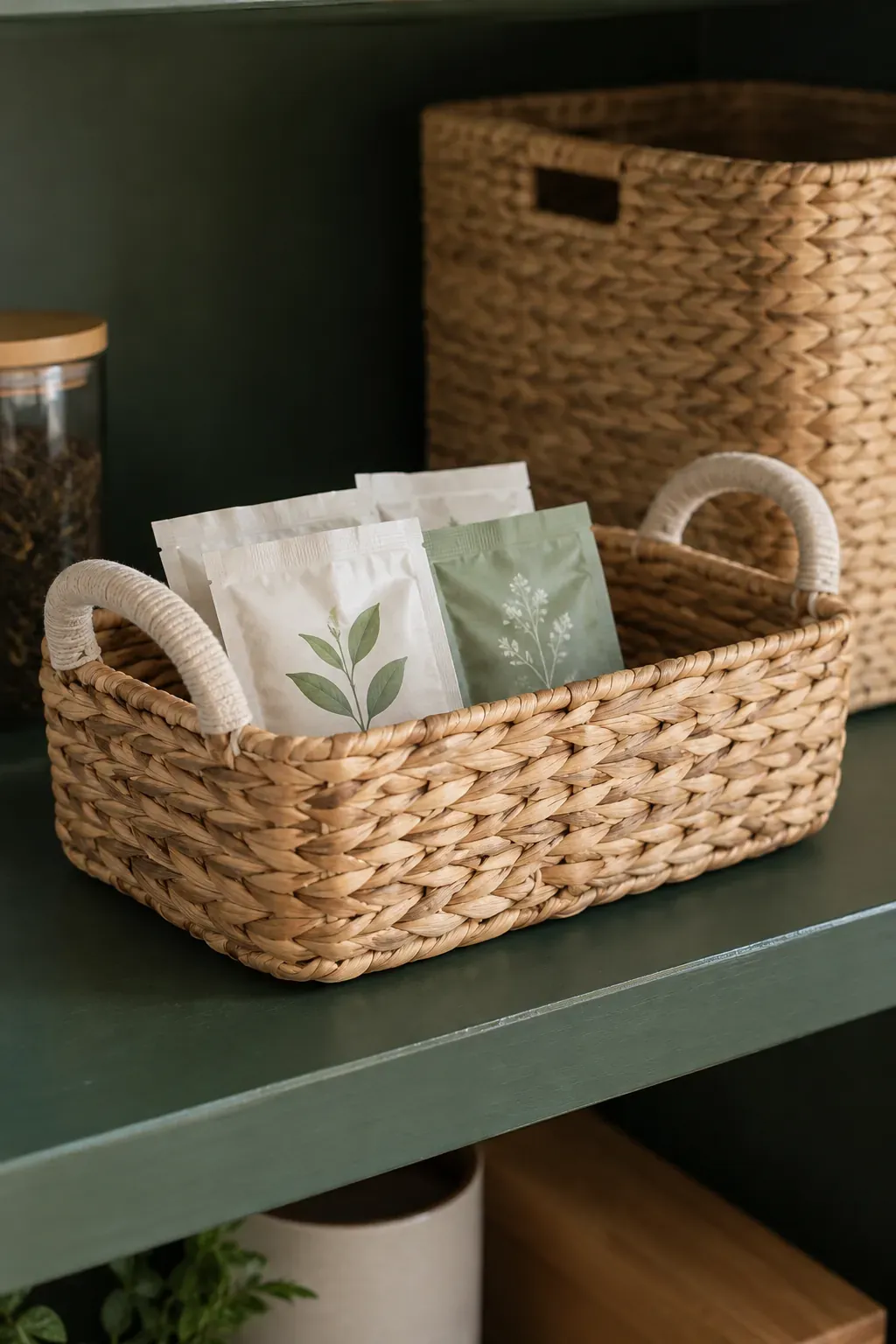
Letting packet tops spread across the shelf
Soft packets can slump into neighboring categories and conceal smaller items. Stand suitable closed packets in a shallow bin or use a simple divider to contain their footprint. Keep closures intact and avoid folding packaging in a way that hides essential instructions.
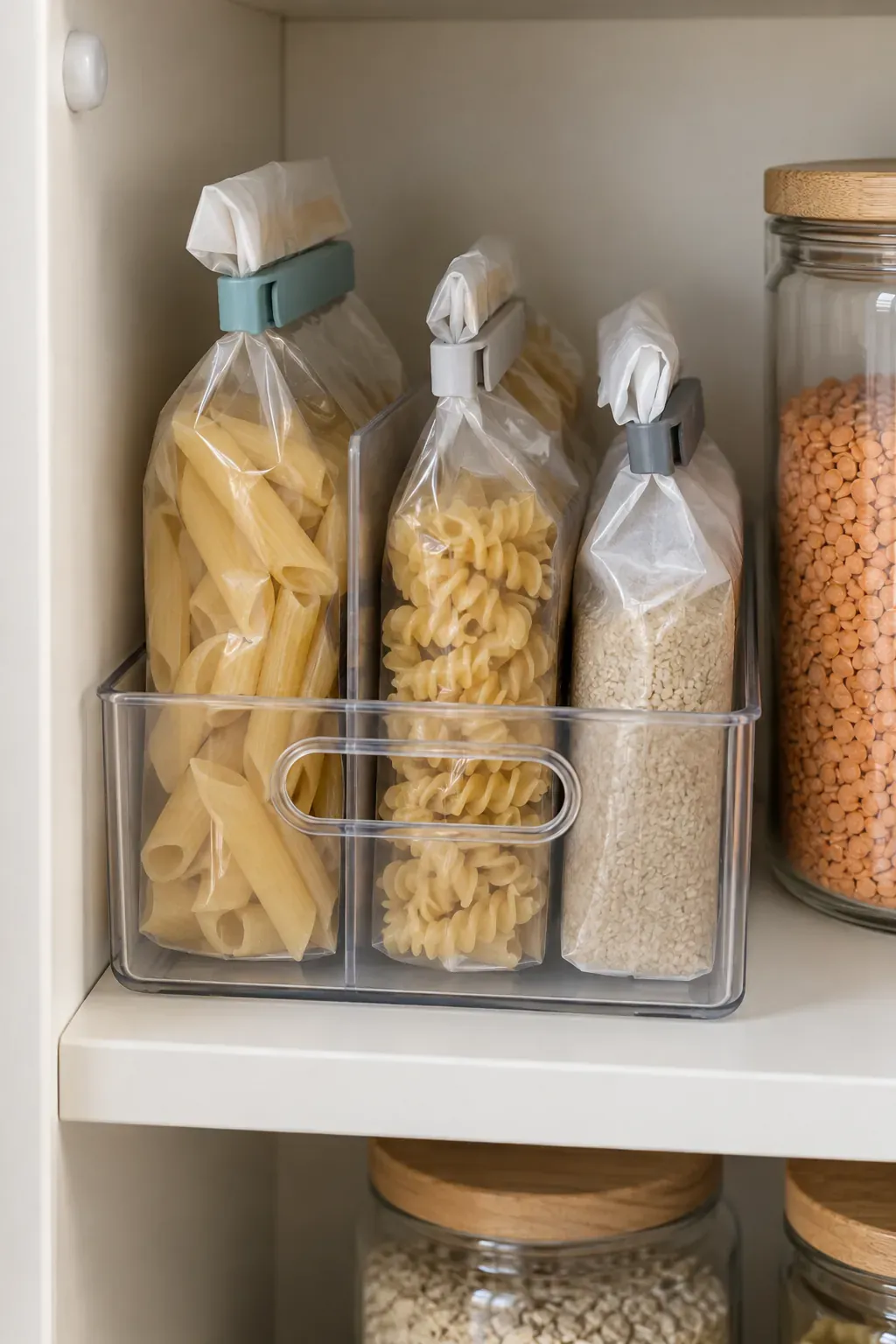
Stacking unstable containers
Only stack containers in the way their design permits. Lids that look flat are not necessarily stable bases for another full jar. Keep heavy contents low and leave enough room to remove the top vessel without striking the shelf above.
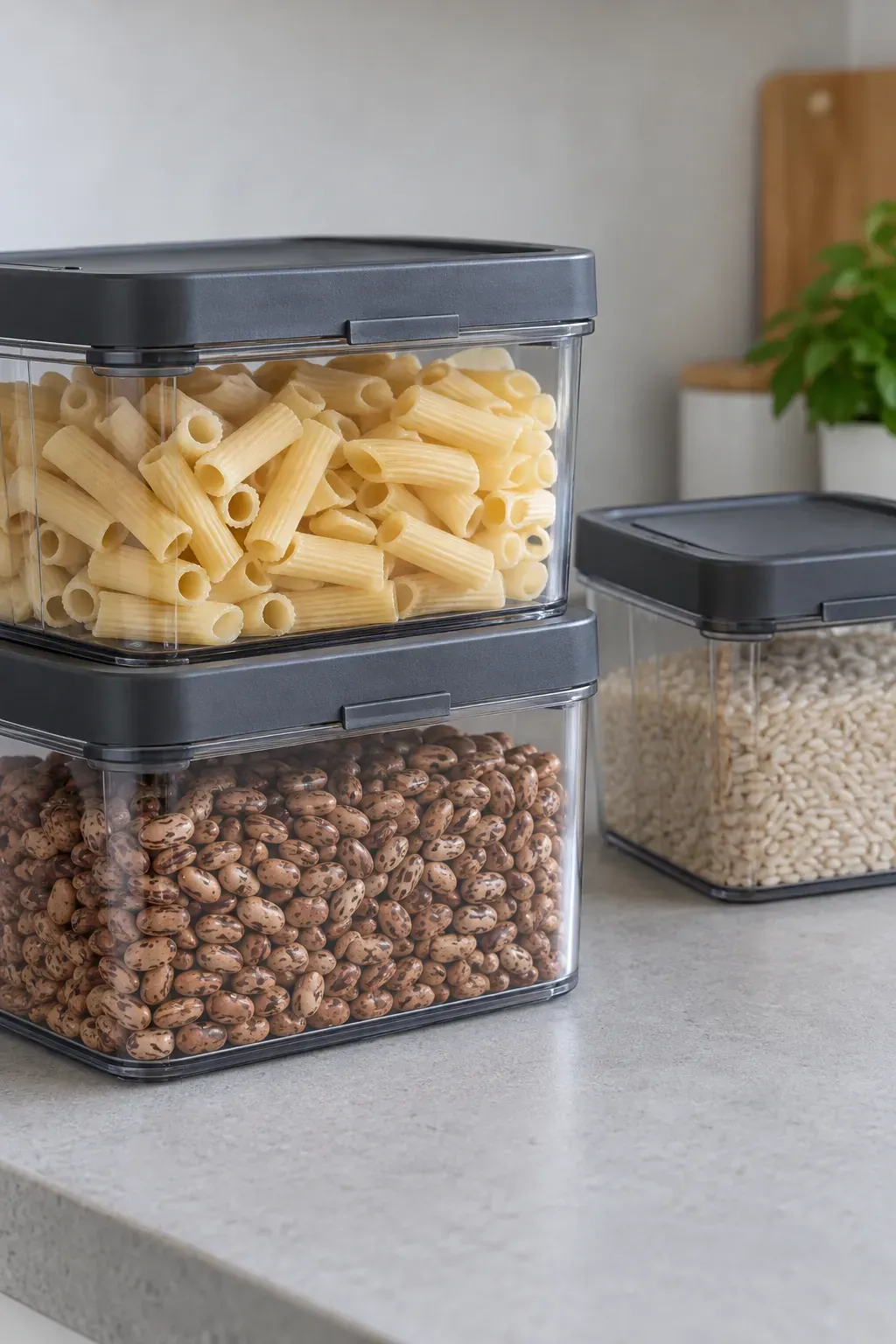
Inspect the stack after routine use rather than assuming it will stay aligned. If everyone must dismantle it for breakfast, move frequently used items to separate positions. A lower stable arrangement often works better than a tower that nobody wants to rebuild.
Keeping empty organizers in prime shelf space
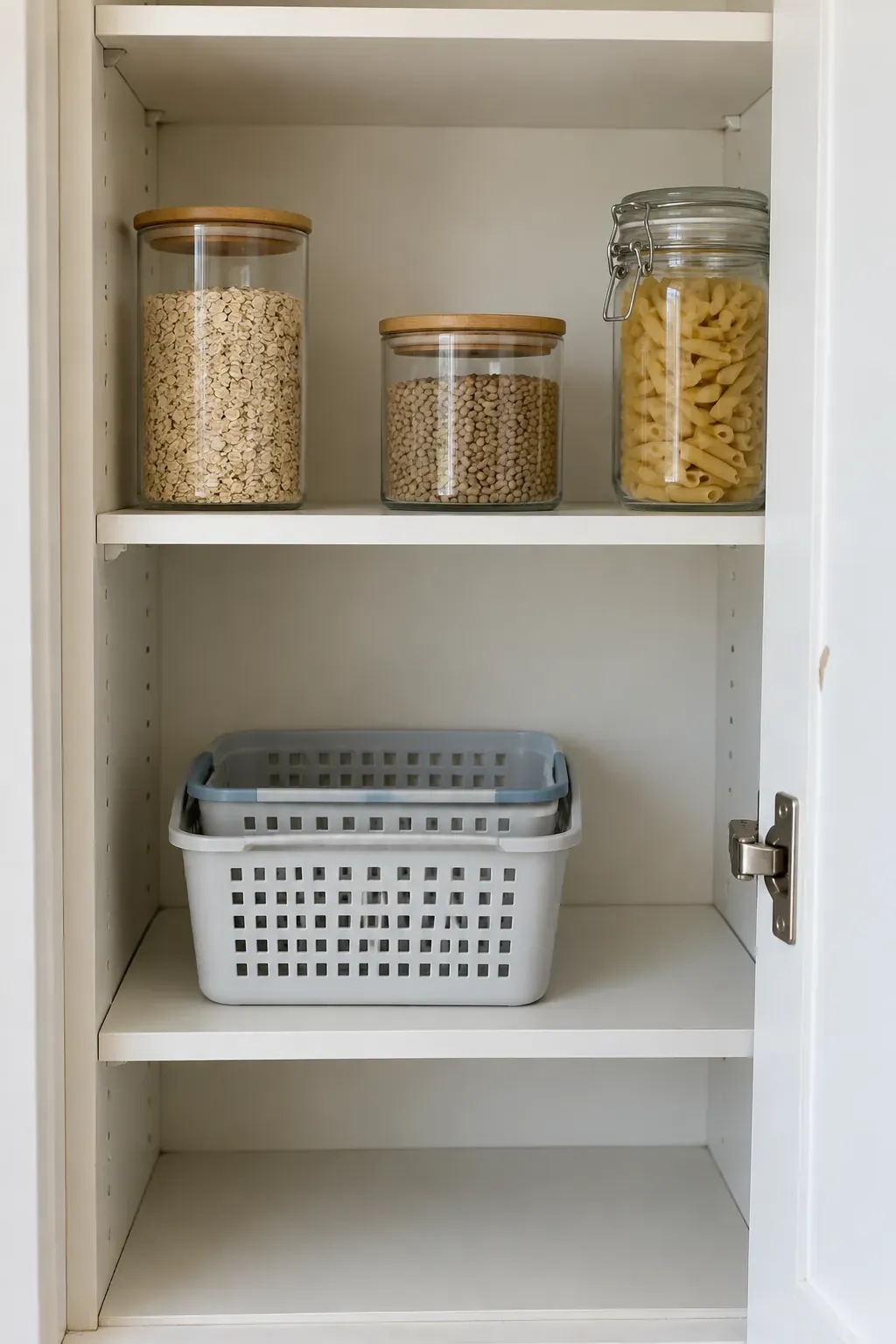
An unused basket still occupies room even when it looks orderly. Nest spare organizers in a secondary location or remove them from the pantry until they have a clear job. Let current food and actual access needs decide the shelf layout.
Mixing unrelated household storage with food
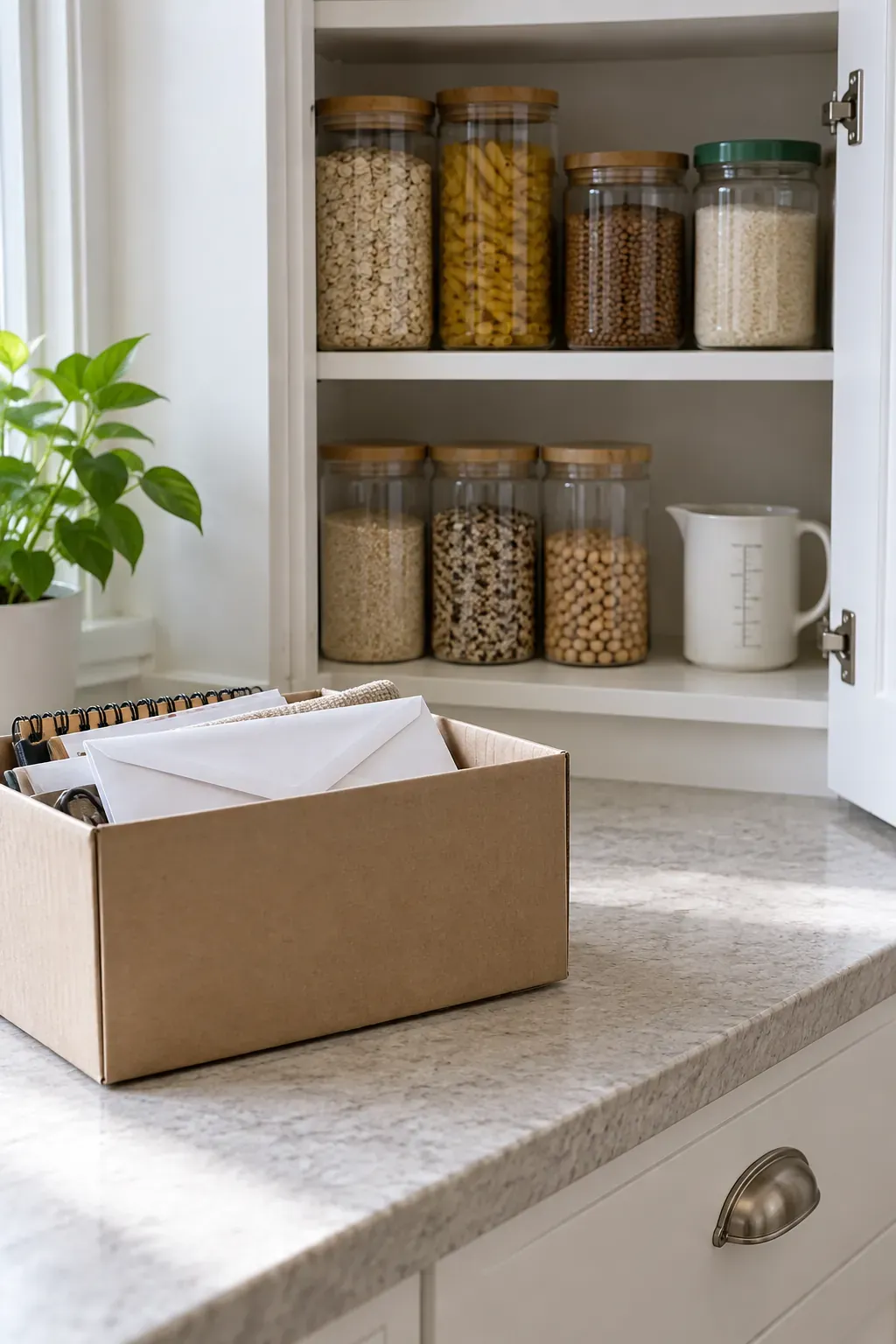
Mail, loose batteries, and cleaning supplies can gradually claim a pantry shelf. Give these items appropriate separate homes, with chemicals secured away from food. Keep the pantry for the food and related equipment that genuinely belong there.
Overloading the door with deep racks
A door rack projects into the cabinet when closed. Check hinge strength, fixing requirements, rack rating, and clearance from the shelf contents before installing one. A deep rack that forces everything else backward may reduce usable pantry space. In a rental, confirm permission for permanent changes.
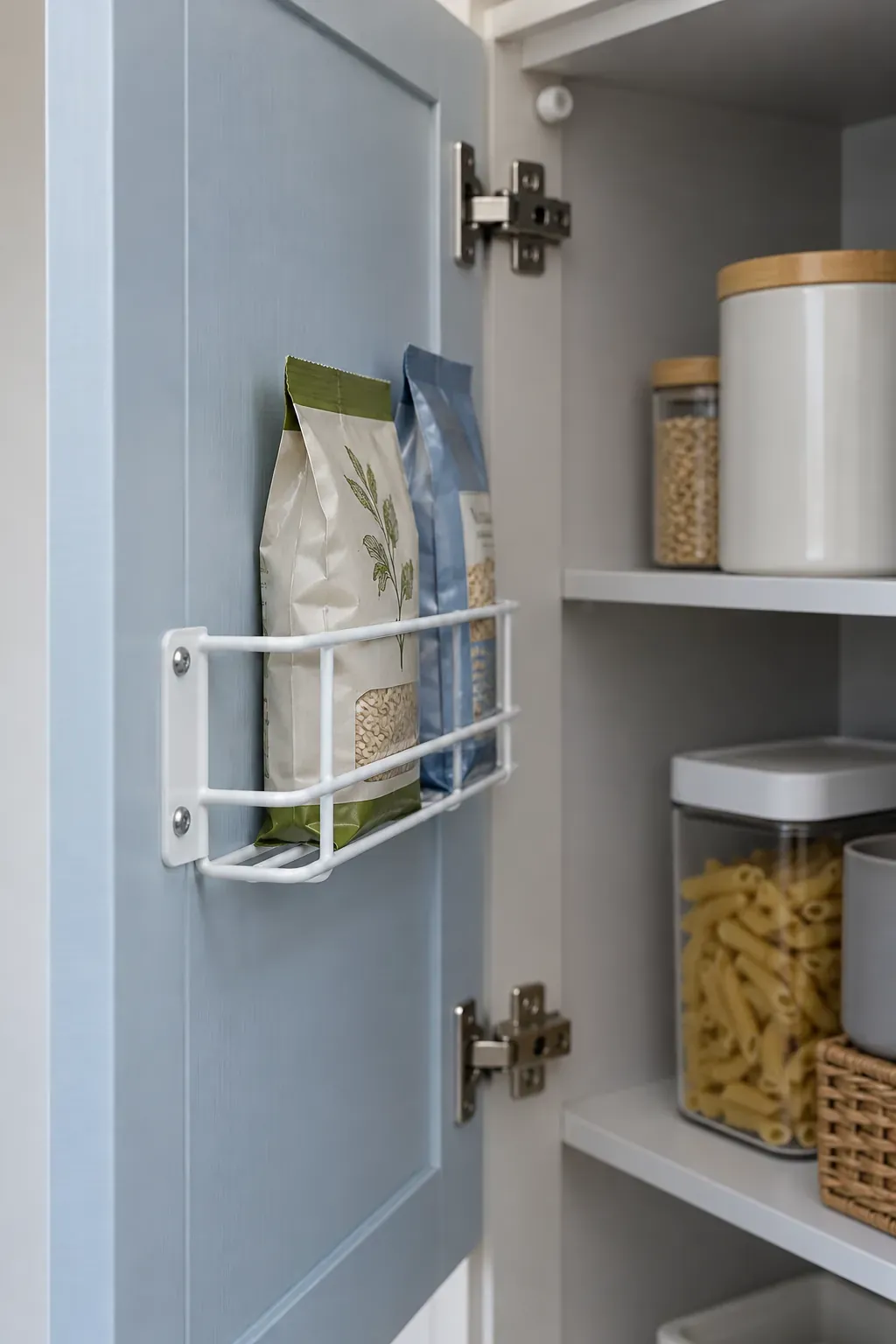
Forgetting the usable lower compartment
The bottom area can hold stable removable bins when the shelf or floor surface is suitable. Keep food protected in appropriate packaging or containers and follow pest and moisture precautions. Do not pile loose food directly on a damp floor or block access to cleaning and inspection.
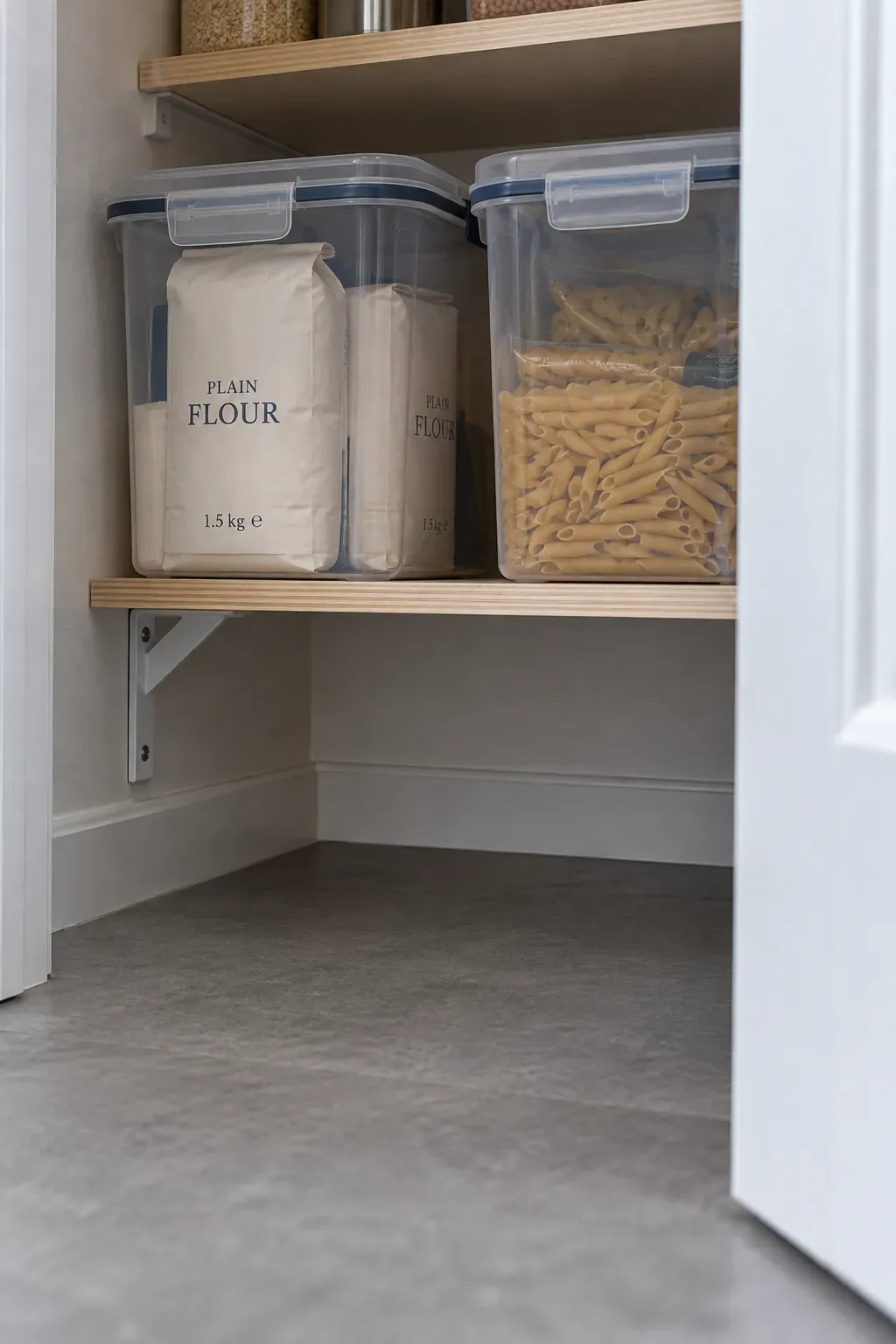
Storing food beside heat or damp
A shelf near an oven, leaking pipe, or humid appliance may be unsuitable for some foods. Follow the stated storage conditions and move vulnerable items to a better location. Extra capacity is not useful if the food deteriorates there. Fix moisture problems before returning dry goods to the space.
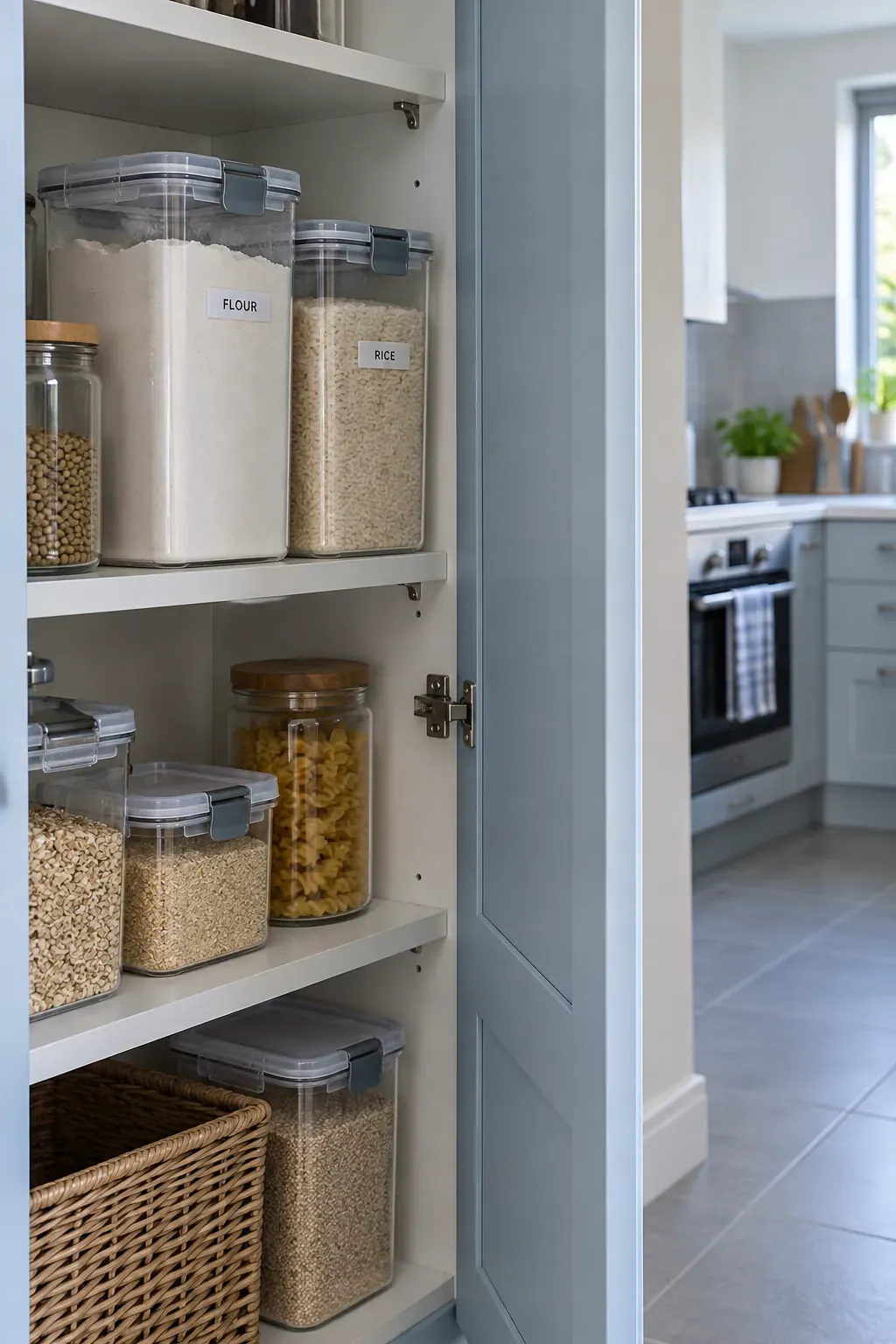
Leaving no room for the next normal grocery shop
A pantry filled to its limit has nowhere for routine purchases to go. Keep a realistic margin based on the size of your usual shop and the categories that fluctuate. The gap is working capacity, not an invitation to fill it with decorative baskets.
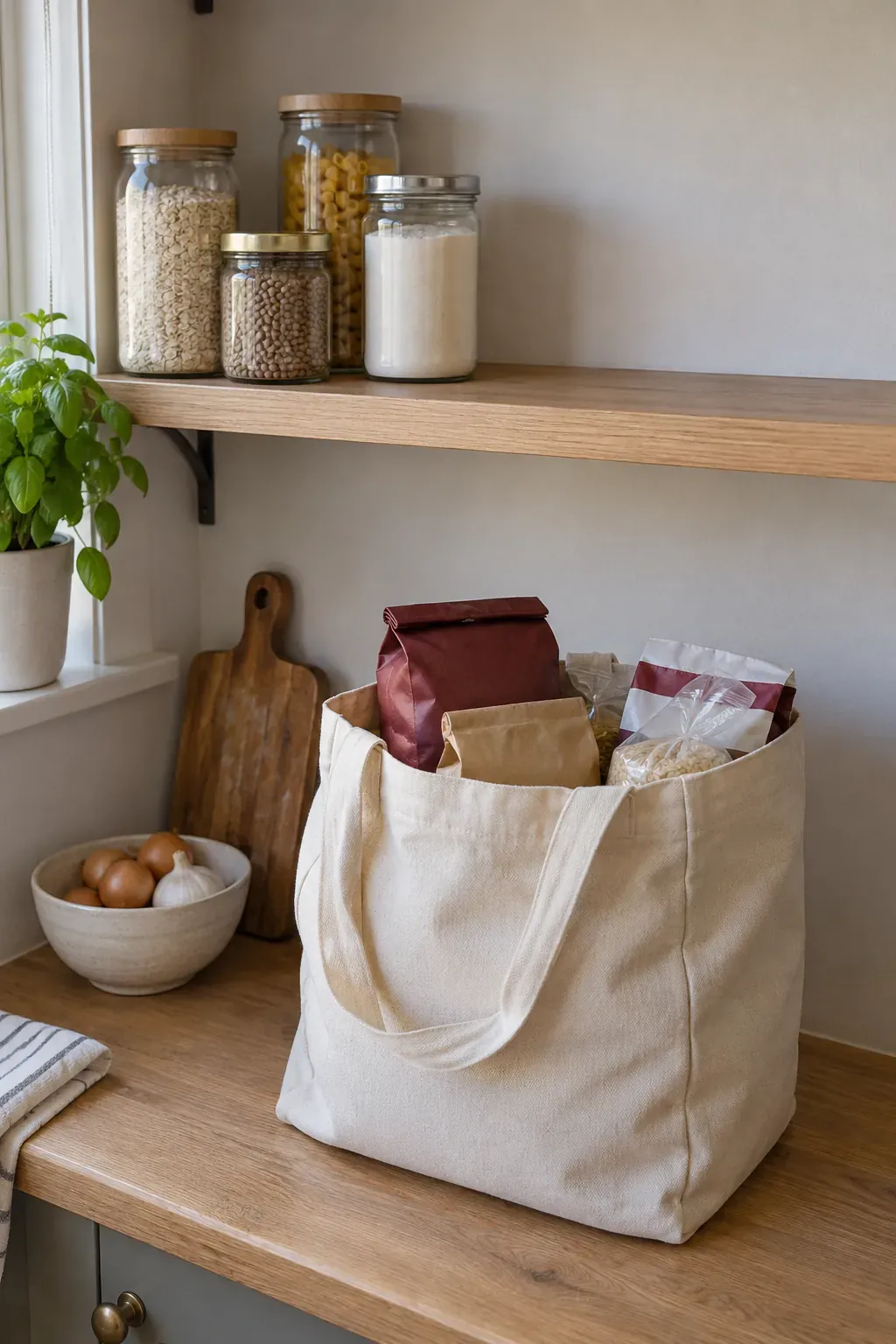
Keeping a layout that nobody can maintain
Watch how food returns to the pantry after an ordinary week. A category that always lands on the wrong shelf may need a clearer location or a simpler boundary. Adjust the system around the people who use it while preserving safe storage conditions.
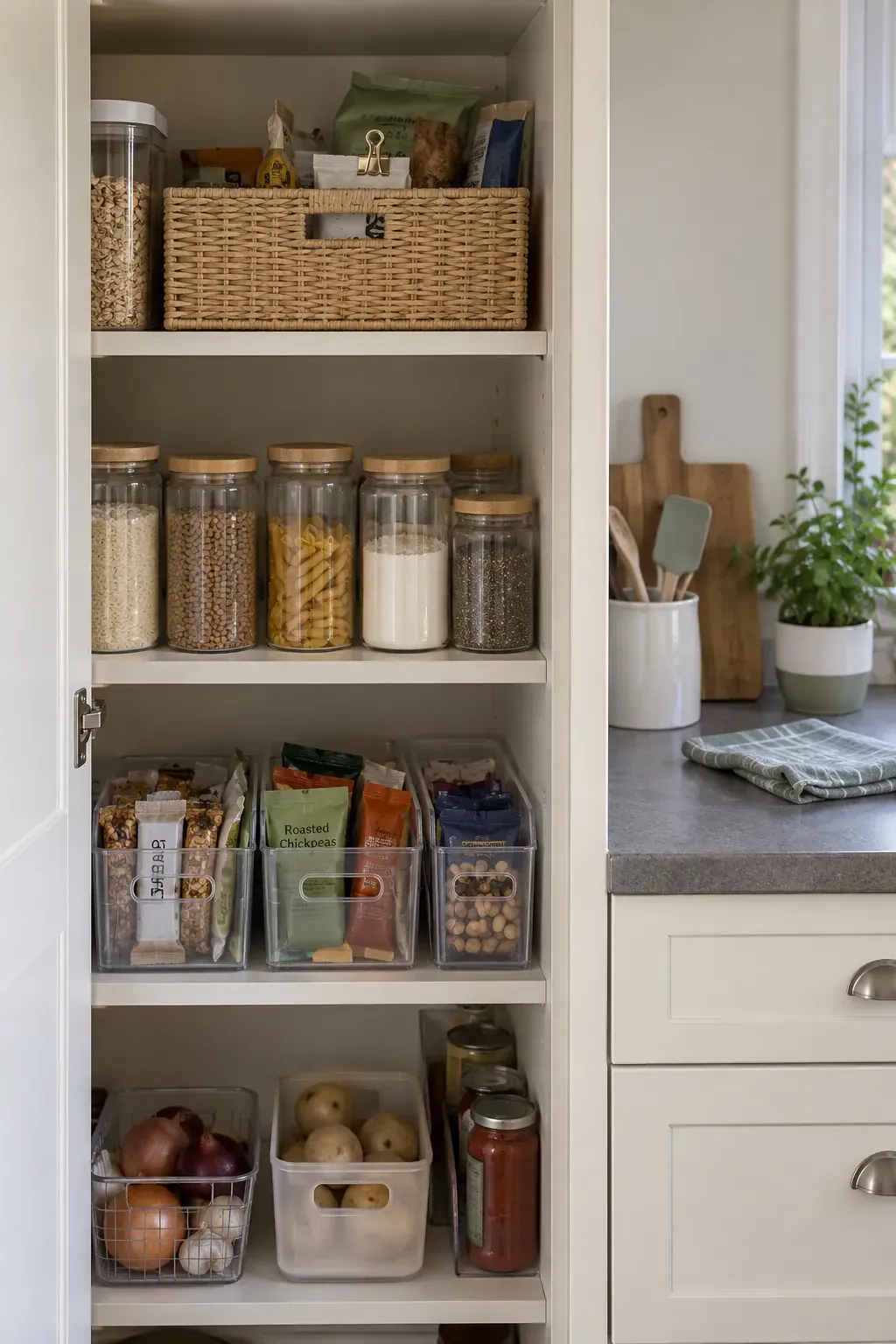
Use the next stock check to review one troublesome area at a time. Keep changes that make items visible and easy to return, and remove organizers that add handling without benefit. Efficient pantry storage leaves you able to find, use, and put away food without rebuilding the shelf each day.