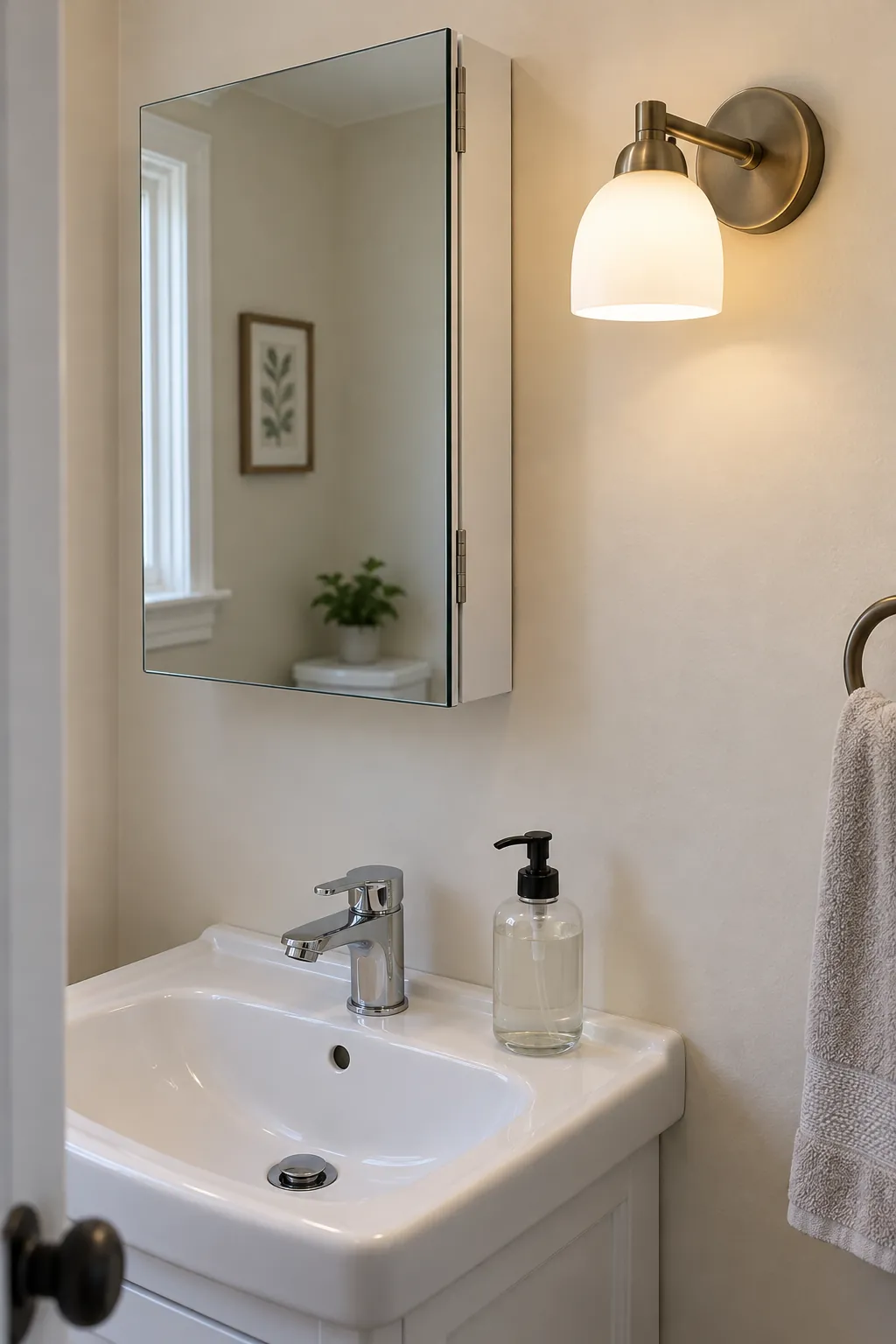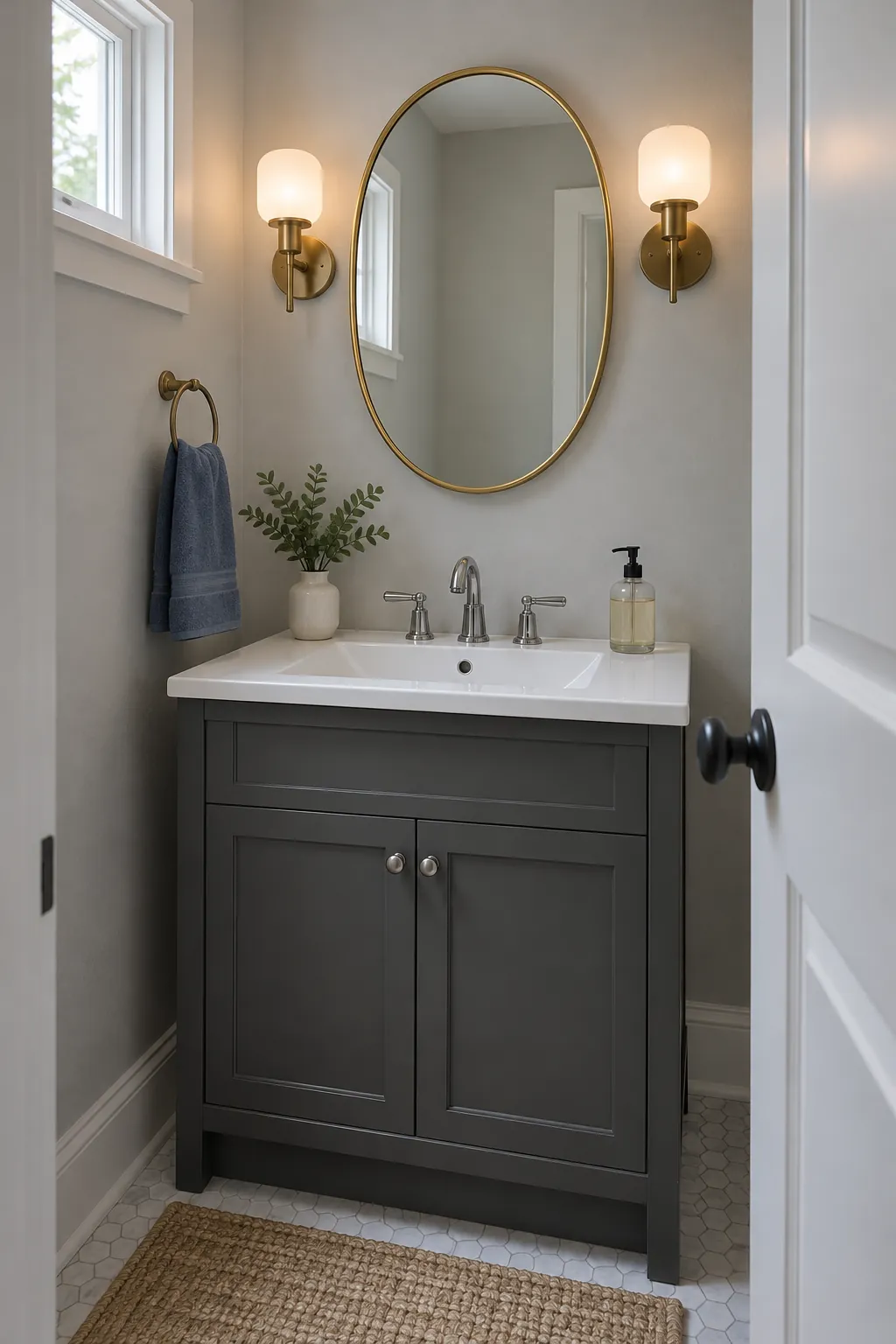
The next light does not have to solve every mismatch in the room. It needs a clear relationship with the fixtures you will keep and enough visual restraint to let them coexist. Start with that relationship before deciding whether the metal should be warm, cool, bright or quiet.
Start with the metals you are keeping
Look around the whole bathroom before selecting a light. Note the faucet, mirror frame, towel fittings, cabinet pulls and door hardware, then decide which pieces will stay. Give the largest and most visible fixed finishes more weight than a tiny hinge at the back of the door.
A mixed metal bathroom does not need every fitting to agree. If the chrome faucet works well and the brass mirror is staying, treat both as useful starting points rather than defects. The sconce can connect to one of them without forcing a new purchase in every corner.
Choose one finish for the lighting group
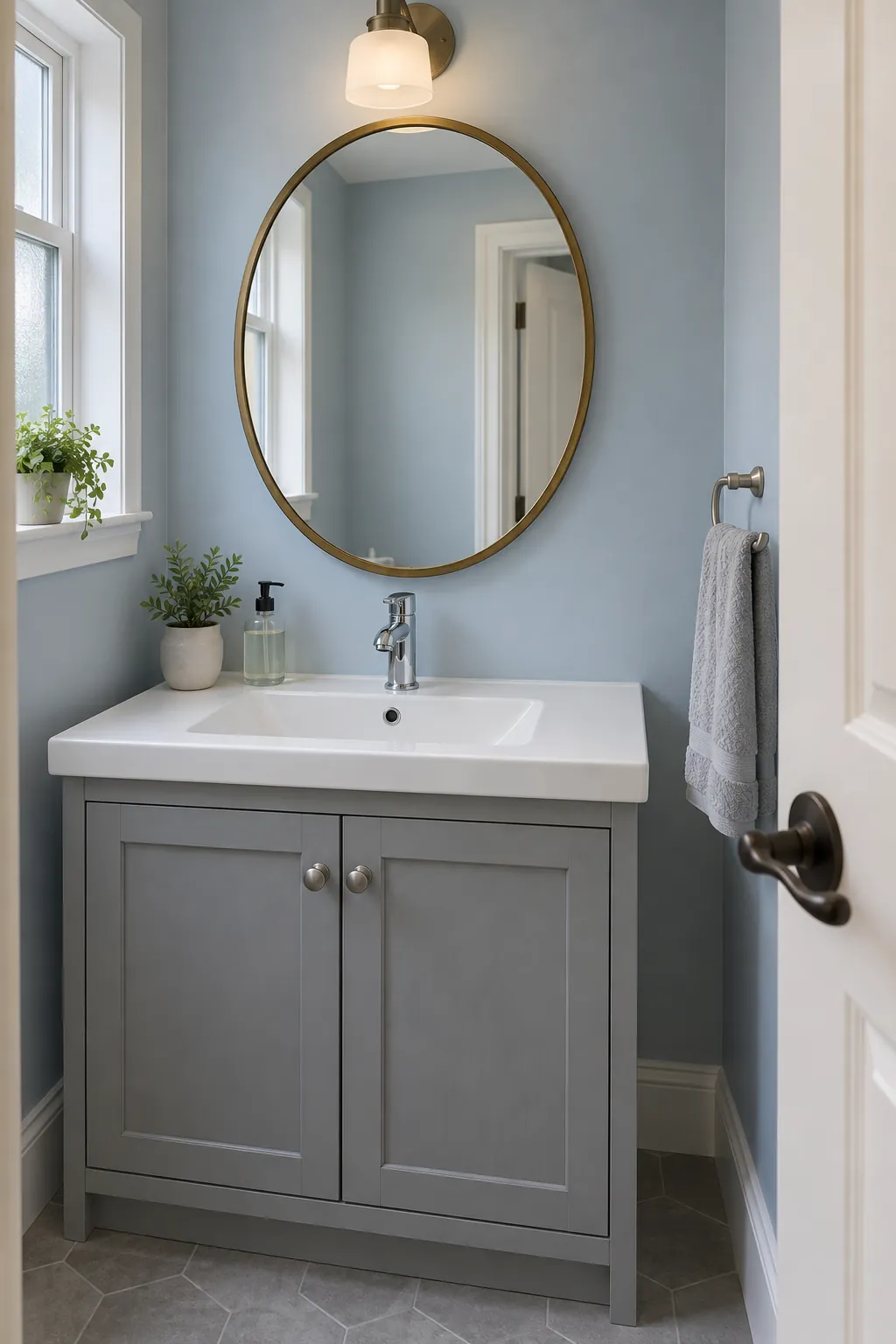
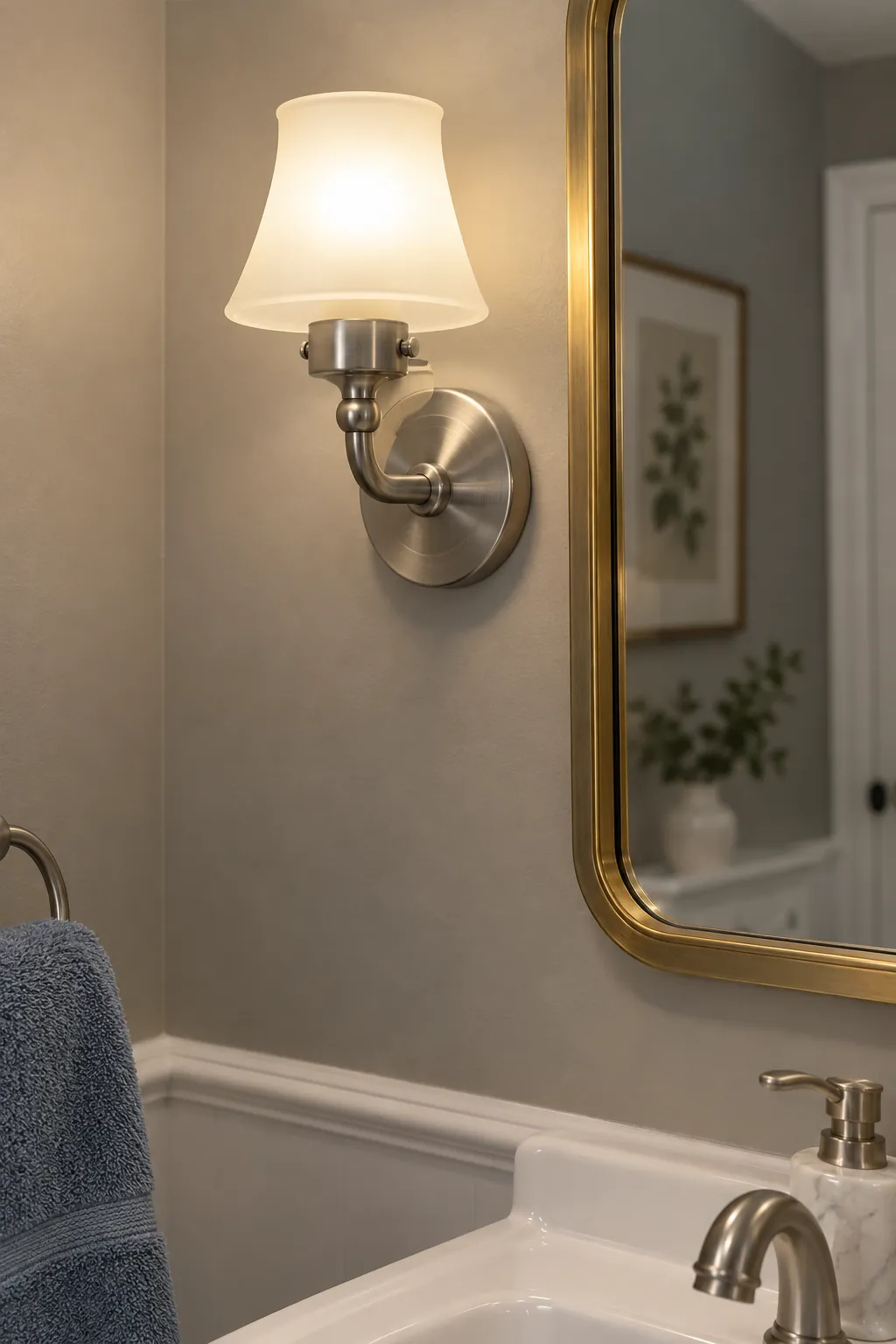
When the room already feels busy, matching the sconces to an existing prominent metal is a clear first option. A brass mirror can give brass lights a reason to be there, while a chrome faucet can support cool silver lighting. Keep a pair of sconces in the same finish and style so the lighting reads as one group.
Compare warmth and sheen separately
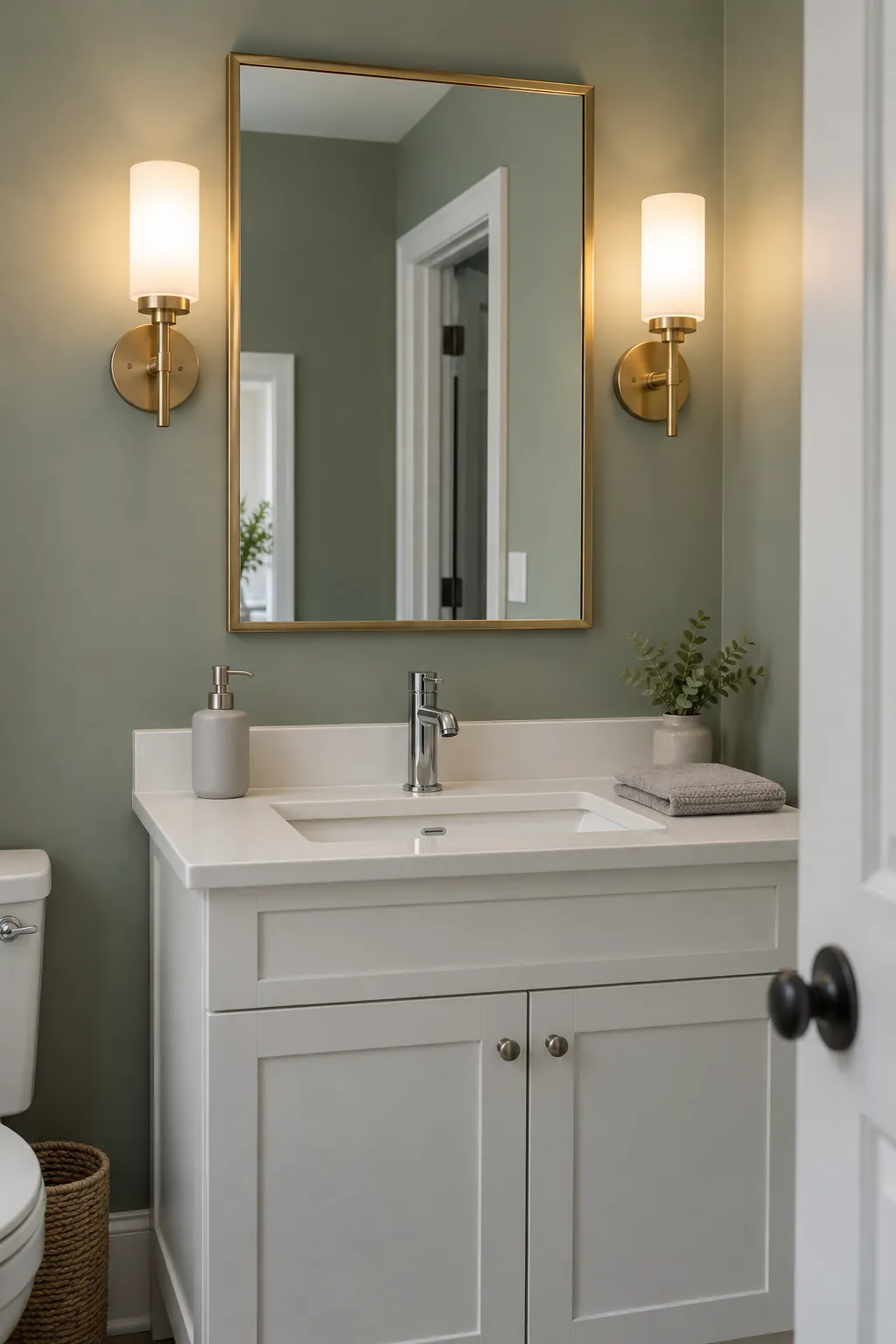
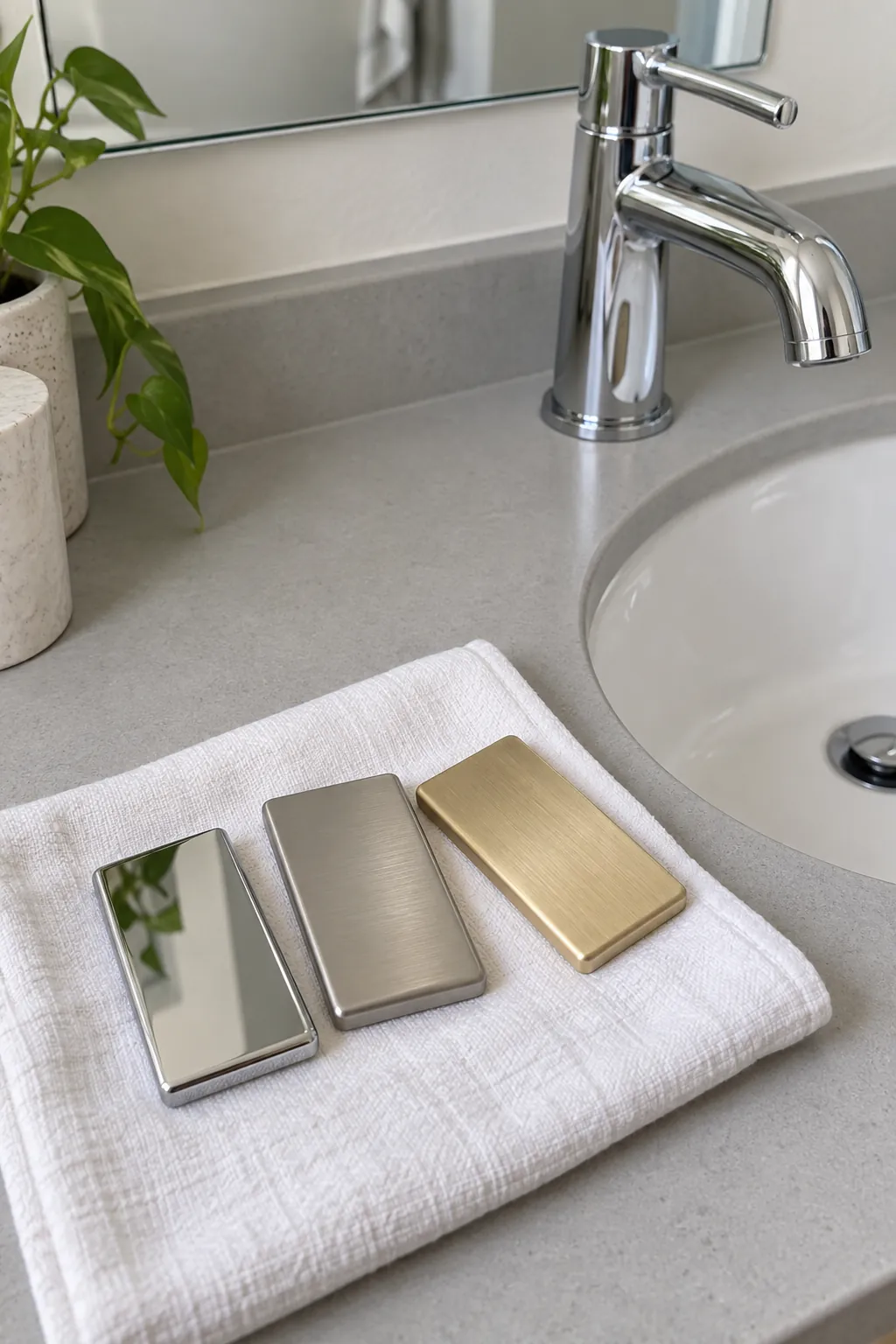
Metal color and surface sheen are different decisions. Polished chrome reflects its surroundings strongly, while brushed nickel spreads highlights more softly and may read warmer. A finish called brass can range from pale champagne to deep brown, so the name alone is not enough for bathroom fixture coordination.
Hold actual finish samples near the mirror and faucet if you can get them. A close but visibly different gold can be more distracting than a deliberate contrast. If a sample is unavailable, check the return policy before choosing from a screen image.
Use a dark finish only when it has a role
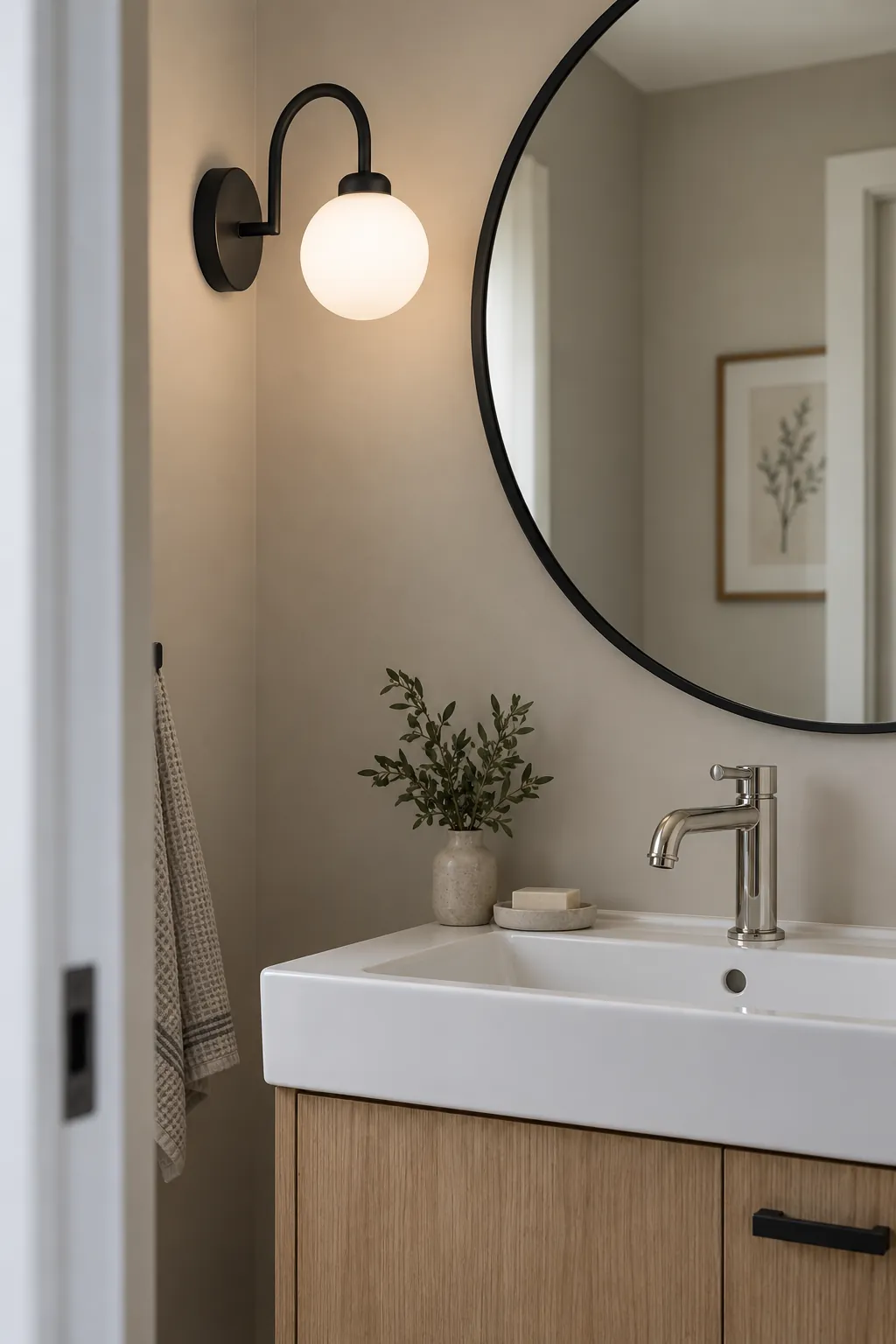
A dark sconce can repeat a black mirror edge or cabinet pulls and give the eye a clear outline. It can also add another isolated finish if nothing else relates to it. Before calling black a universal solution, check whether its shape and visual weight work with the rest of the room.
You do not need to scatter black accessories around the bathroom just to justify the light. A single strong connection near the mirror may be enough. If the dark fixture becomes the first thing you notice for the wrong reason, compare a quieter finish that already exists.
Check the sample under the light you will use
Compare bathroom sconce finishes in daylight and with the room lights on. Wall color and reflected surroundings can shift the way metal looks, especially beside a large mirror. Keep the bulb conditions consistent while comparing, so a different light source does not masquerade as a finish difference.
Also judge the shade and the quality of light, not just the metal backplate. A compatible diffusing shade can reduce harsh reflections, while an exposed bright bulb may make every shiny surface feel more pronounced. Follow the fixture maker’s bulb and installation requirements rather than choosing by appearance alone.
Stand at the doorway and at the basin. A finish that looks balanced in a close sample photograph can carry a different weight across the whole vanity wall.
Confirm fit and maintenance before ordering
Check the fixture dimensions, mirror clearance and existing electrical position before buying. Choose a fitting rated for its bathroom location under applicable local requirements, and have a qualified electrician assess wiring or placement changes. A suitable finish cannot compensate for a light that does not fit or belong in that position.
Read the care guidance, including whether the finish is intended to change over time. If you want stable color, do not assume an unlacquered surface will stay as it looks on day one. Choose the option that works with the metals you will keep and the cleaning routine you will actually follow.