
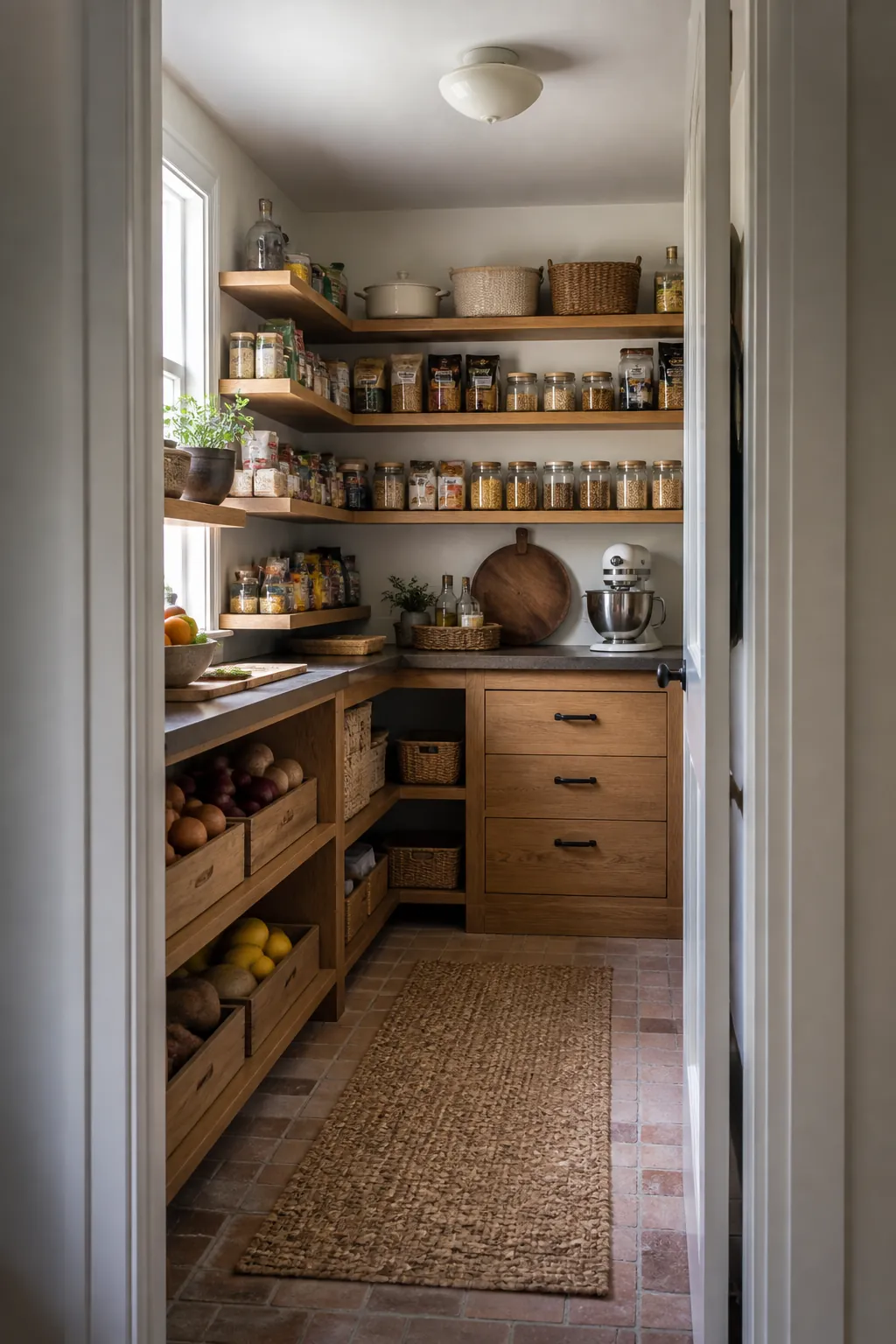
A walk-in pantry should make cooking and grocery unloading easier, not become a room where food disappears. These 33 ideas cover layouts, shelves, drawers, appliances, lighting, and realistic organization for everything from a narrow closet conversion to a full scullery.
Start with what your household stores and how often you shop. Shallow everyday shelves, accessible lower drawers, and a clear walking path matter more than copying a perfectly decanted pantry.
Single-Row Shelves That Keep Food Visible
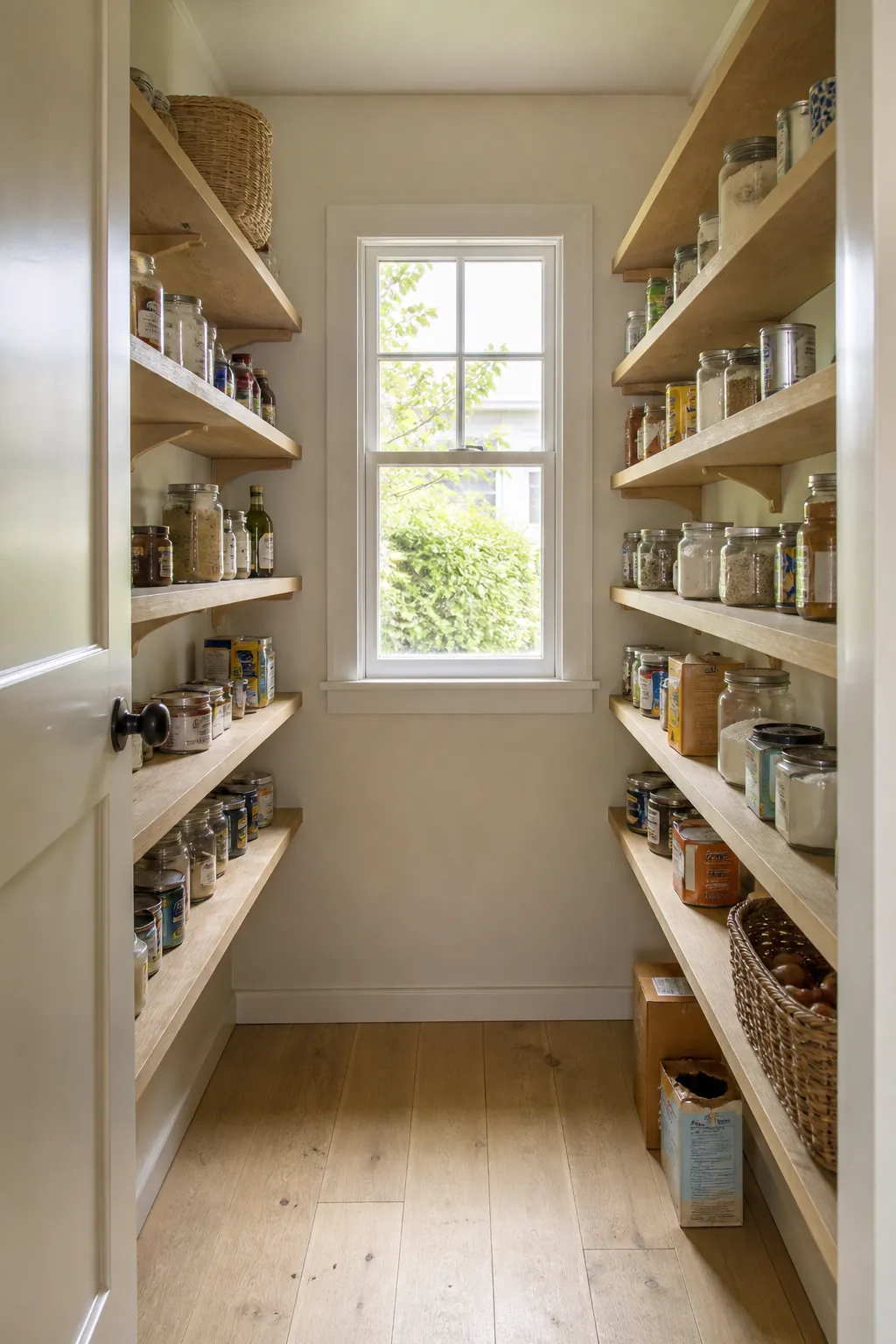
Shelves around 8 to 12 inches deep keep cans, jars, and boxes in one visible row. This simple choice reduces expired backstock and makes a small pantry room feel wider.
Mixed Shelf Depths for Real Package Sizes
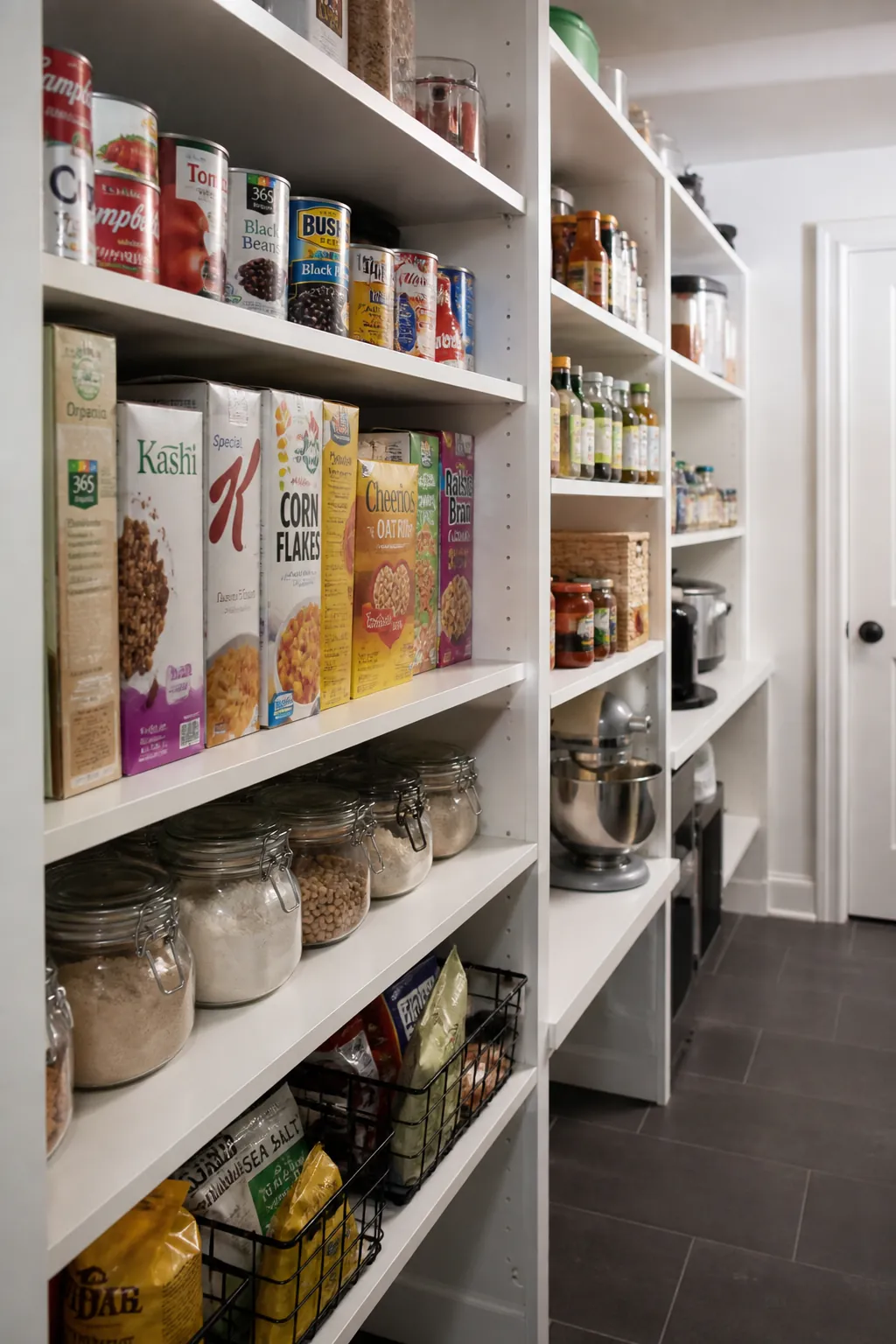
Use shallow shelves for cans, medium shelves for cereal and baskets, and a few deep zones for appliances or bulk packs. Varying depth prevents every category from being forced into an oversized shelf.
A U-Shaped Layout for a Wide Pantry
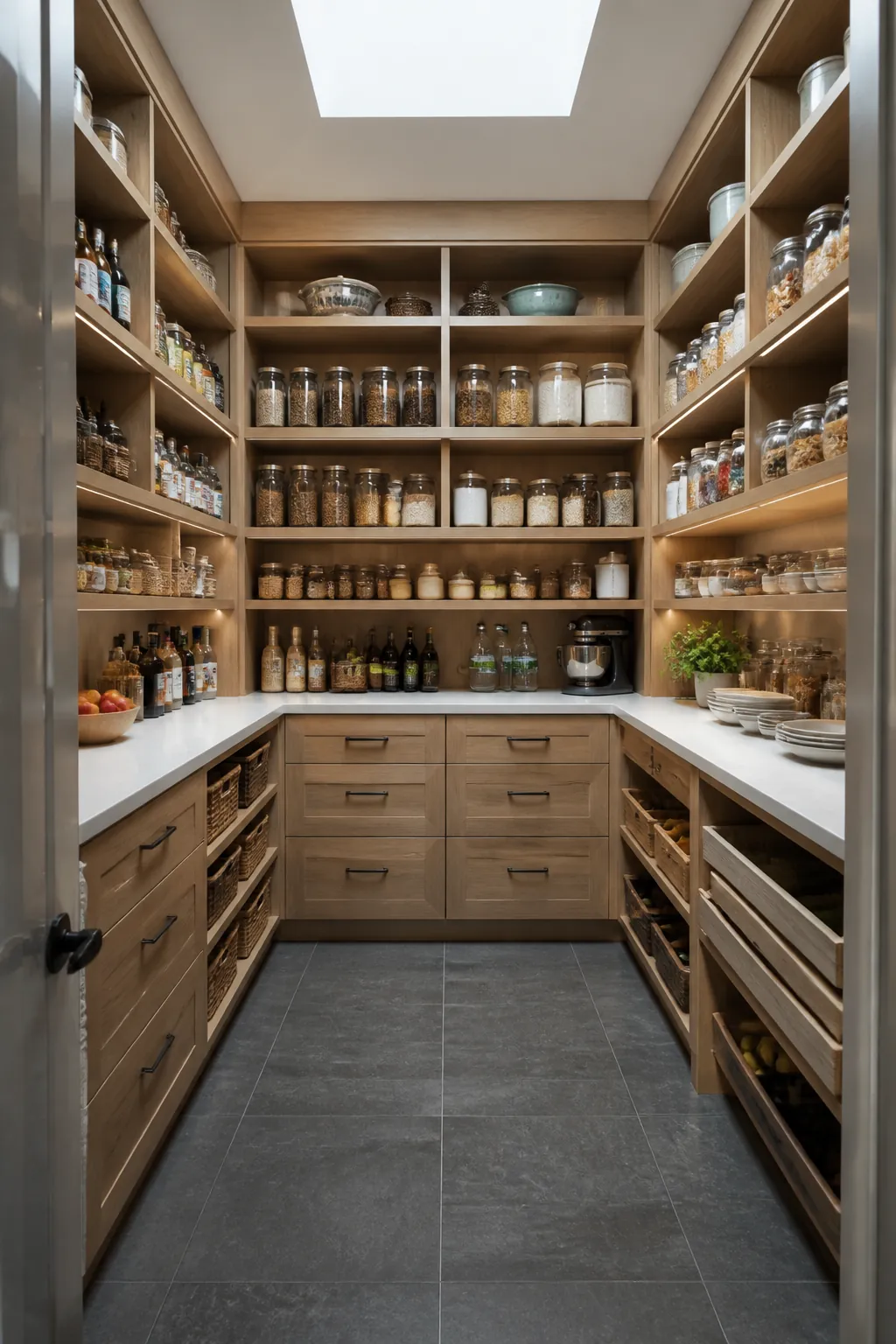
A U-shaped walk-in pantry ideas layout can use three walls effectively when the room is wide enough. Keep at least one run shallow and avoid letting opposing drawers collide.
An L-Shaped Plan with One Open Wall
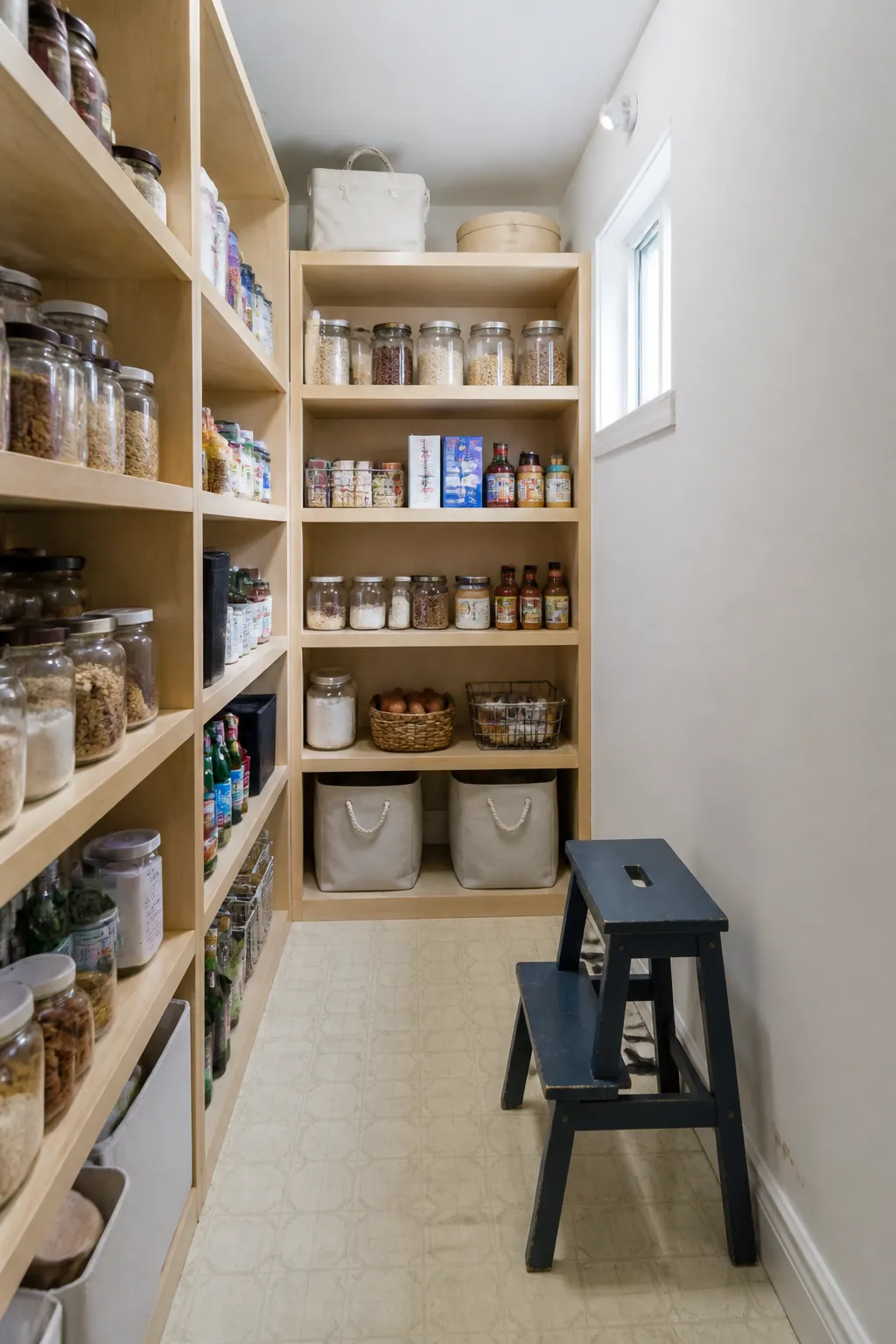
An L-shaped plan adds corner storage while leaving a wall free for circulation, a step stool, or cleaning tools. It often outperforms a cramped U in a medium-width room.
A Galley Pantry with Unequal Sides
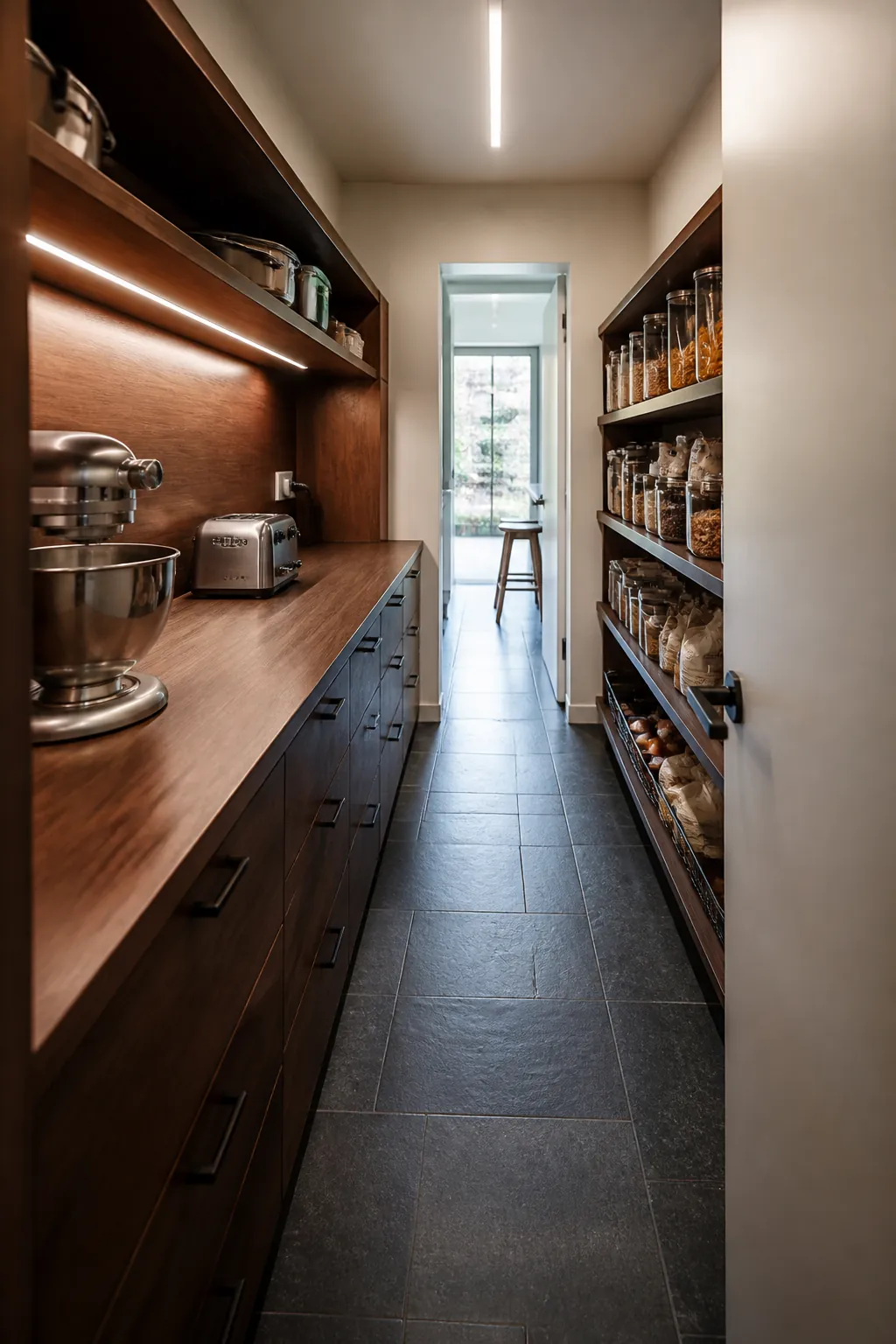
In a galley pantry, pair a standard-depth work counter with shallow shelves opposite. The unequal sides preserve the aisle while supporting both food storage and appliance use.
A Narrow Pantry with a Clear End Wall
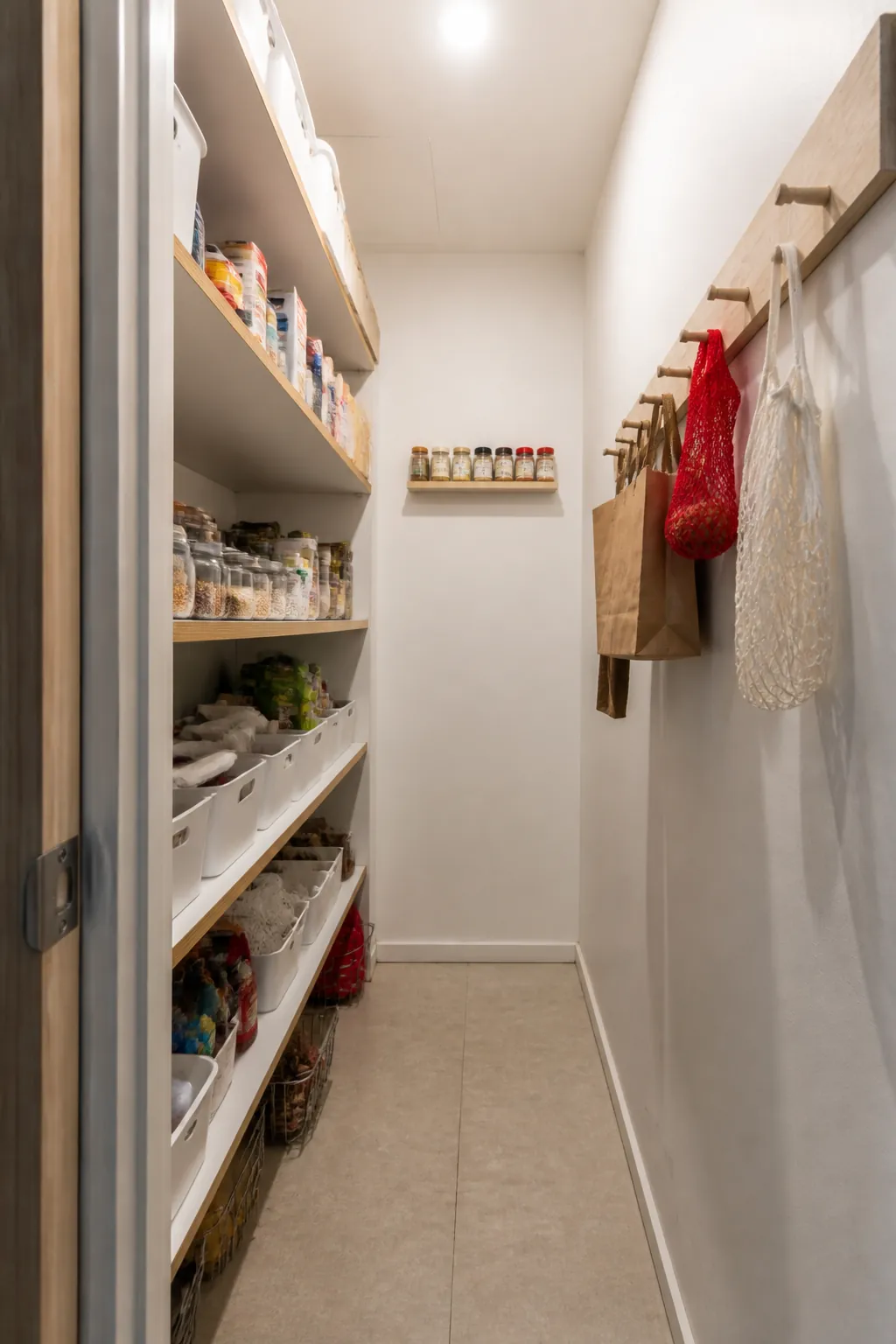
Leaving the end wall clear can stop a narrow walk-in pantry from feeling like a tunnel. Use a peg rail or tiny spice ledge there instead of another full-depth unit.
A Pocket Door That Returns Wall Space
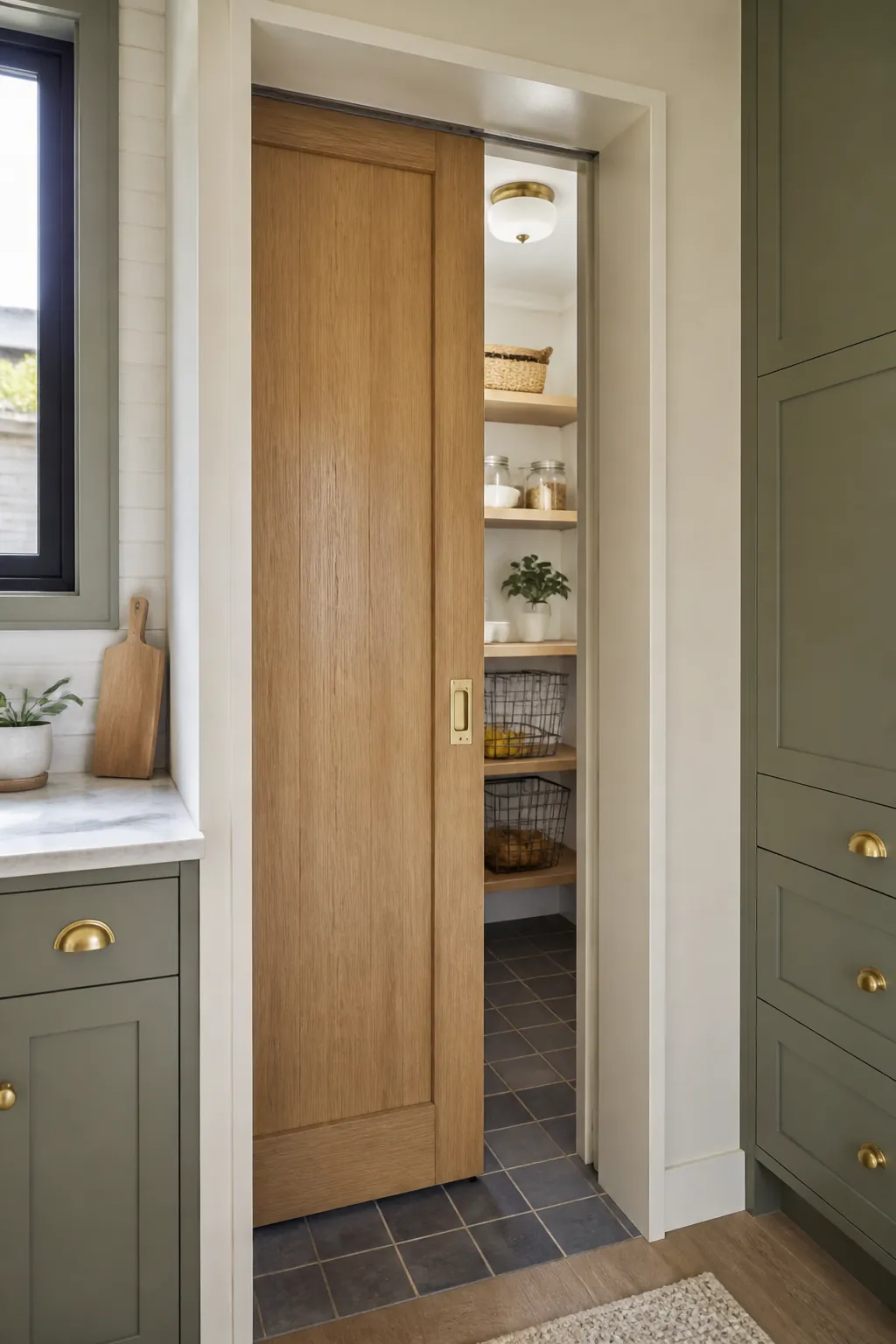
A pocket door eliminates the unusable area behind an inward swing. Confirm the wall pocket can coexist with electrical wiring and shelf anchors before framing.
A Hidden Cabinet-Panel Entrance
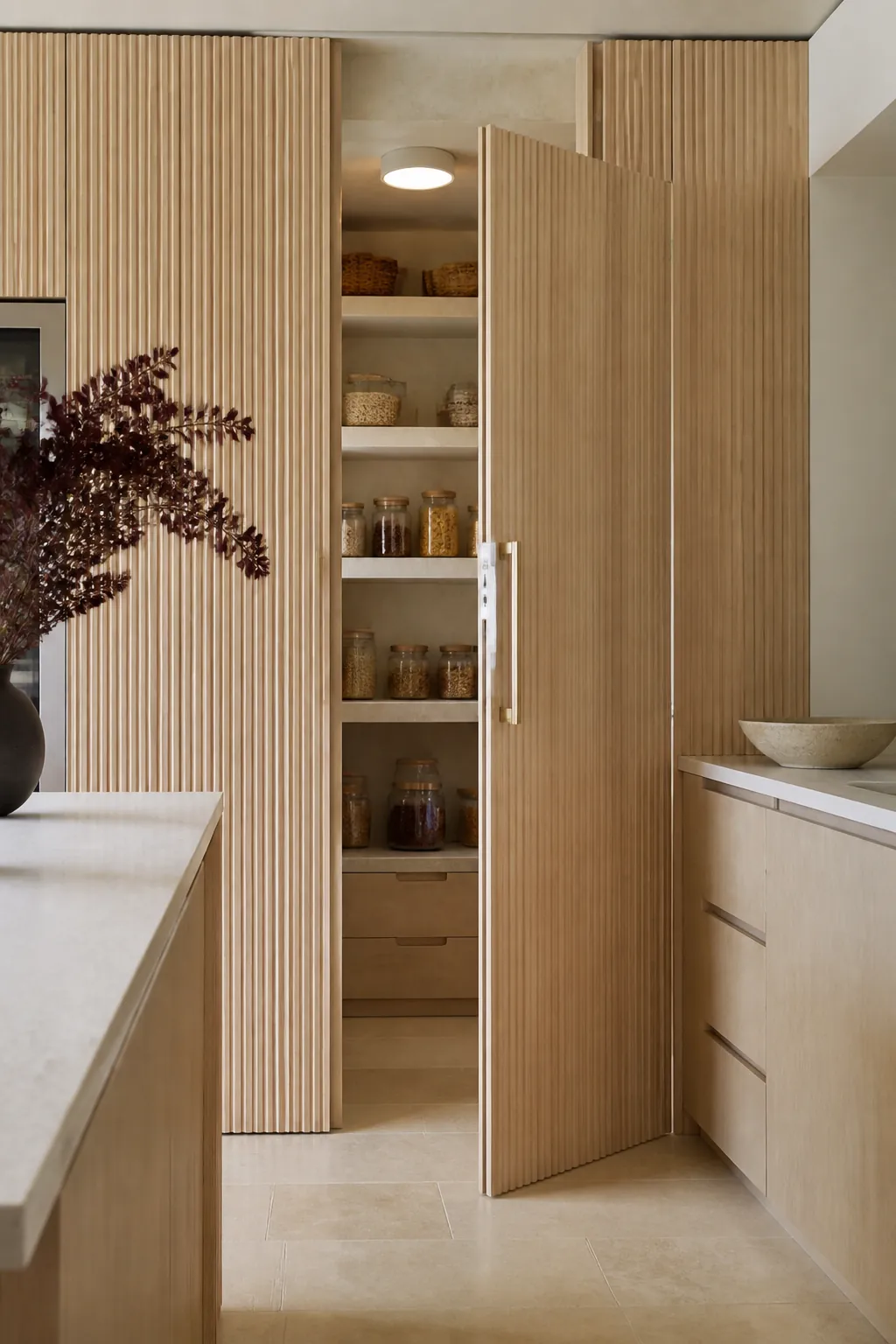
A hidden pantry walk-in keeps an open kitchen visually quiet. Use a reliable latch, comfortable pull, and automatic light so the disguised doorway remains easy to use with full hands.
A Walk-Through Route from Garage to Kitchen
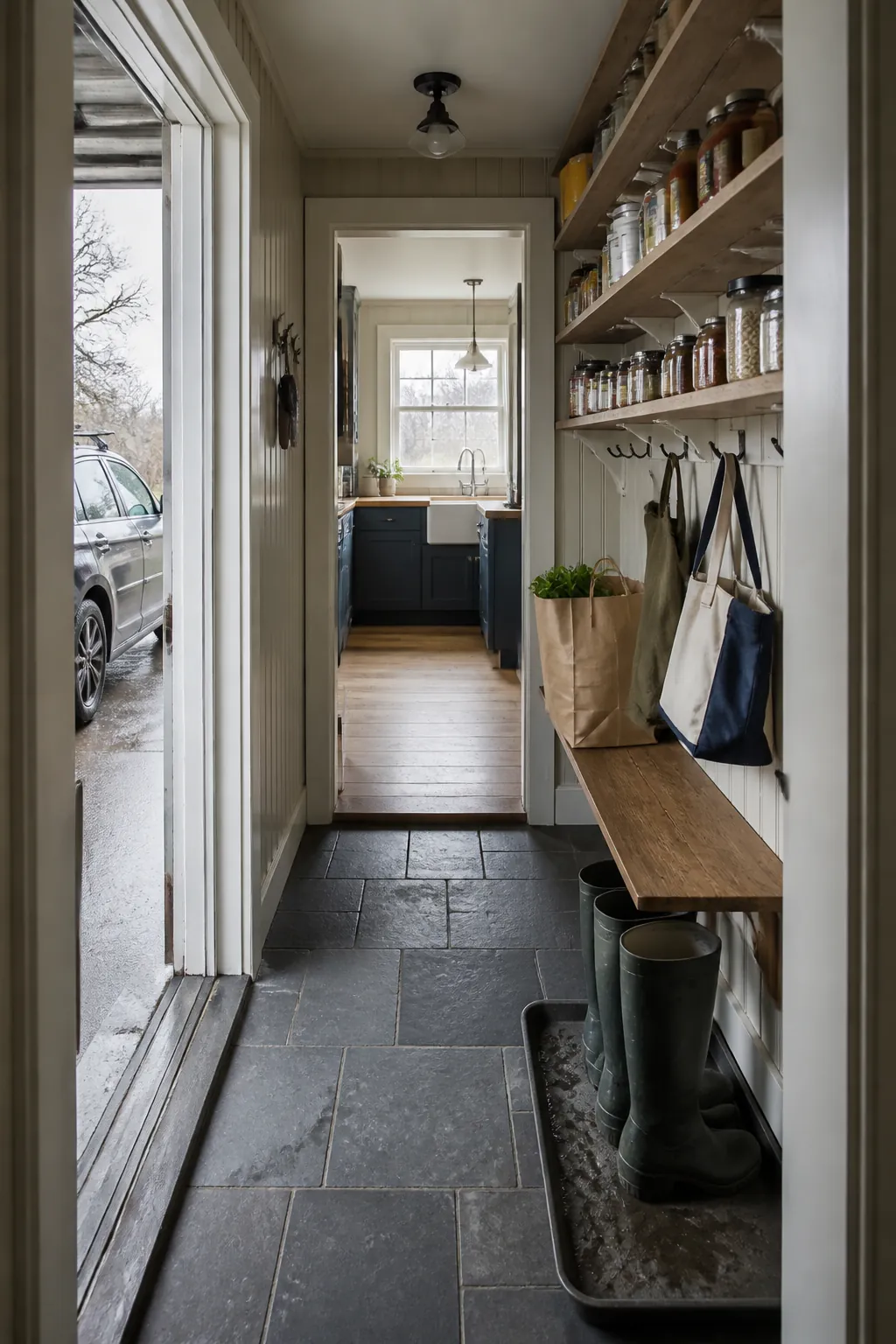
A pass-through pantry can become the grocery route between garage and kitchen. Keep both thresholds and the full path clear, with storage shallowest near the doors.
A Grocery Landing Counter by the Entry
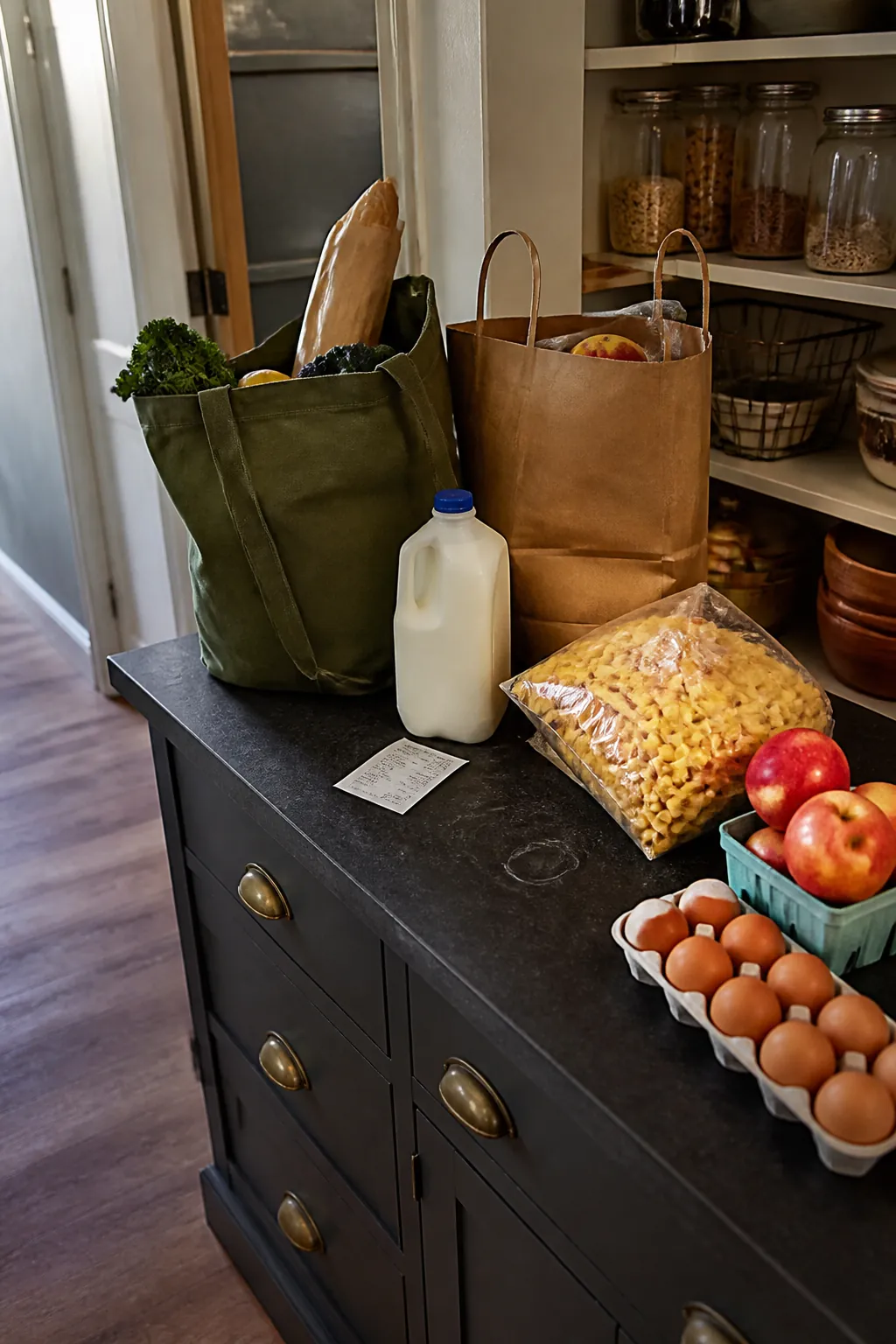
A short empty counter gives bags somewhere to land before groceries are sorted. Keep it intentionally uncluttered and place reusable bags in a drawer directly below.
An Appliance Counter with Plenty of Outlets
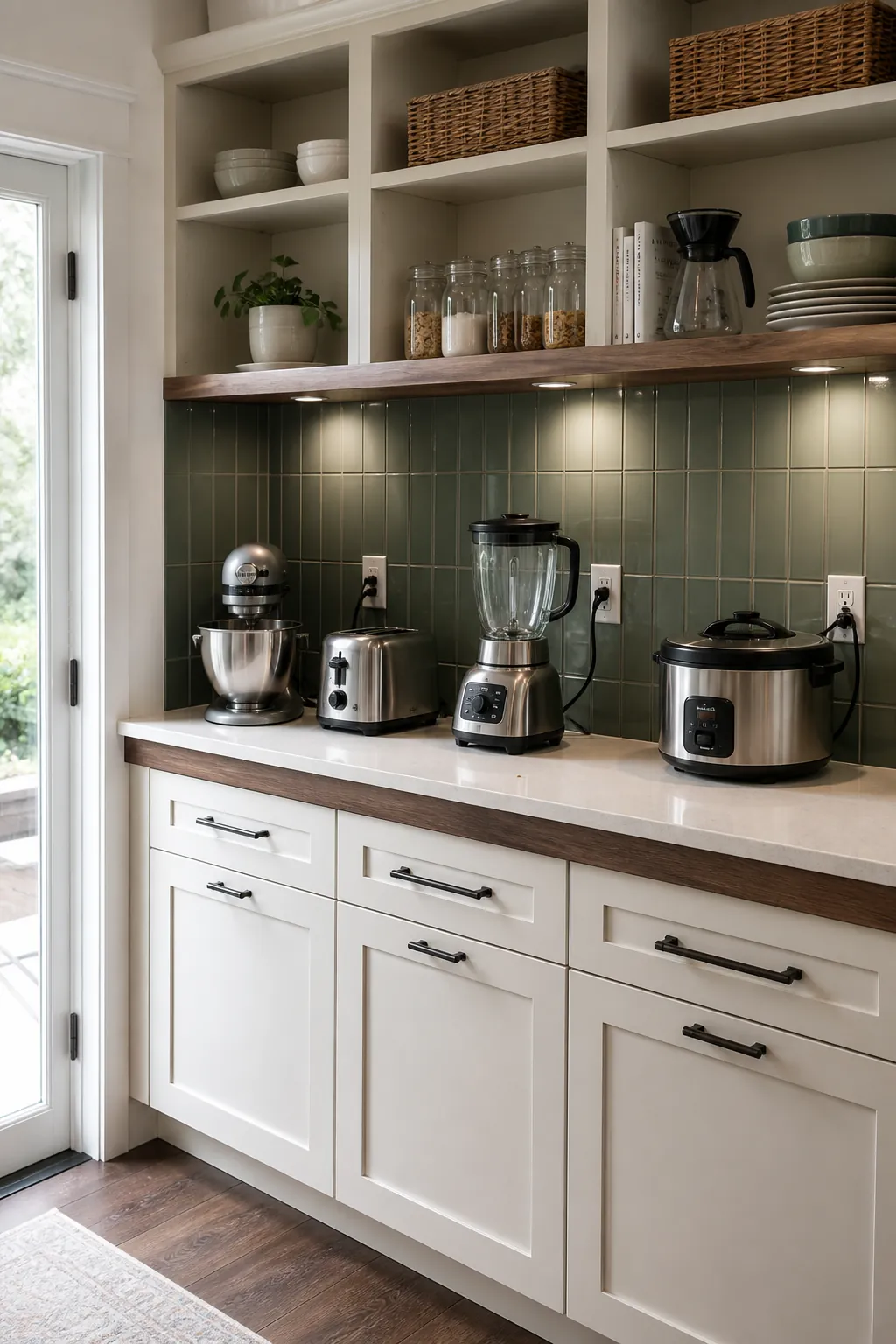
A full-depth counter can hold the toaster, blender, rice cooker, and mixer off the main kitchen worktop. Provide appropriate outlets, heat clearance, and a landing area beside each machine.
A Coffee Bar Outside the Cooking Zone
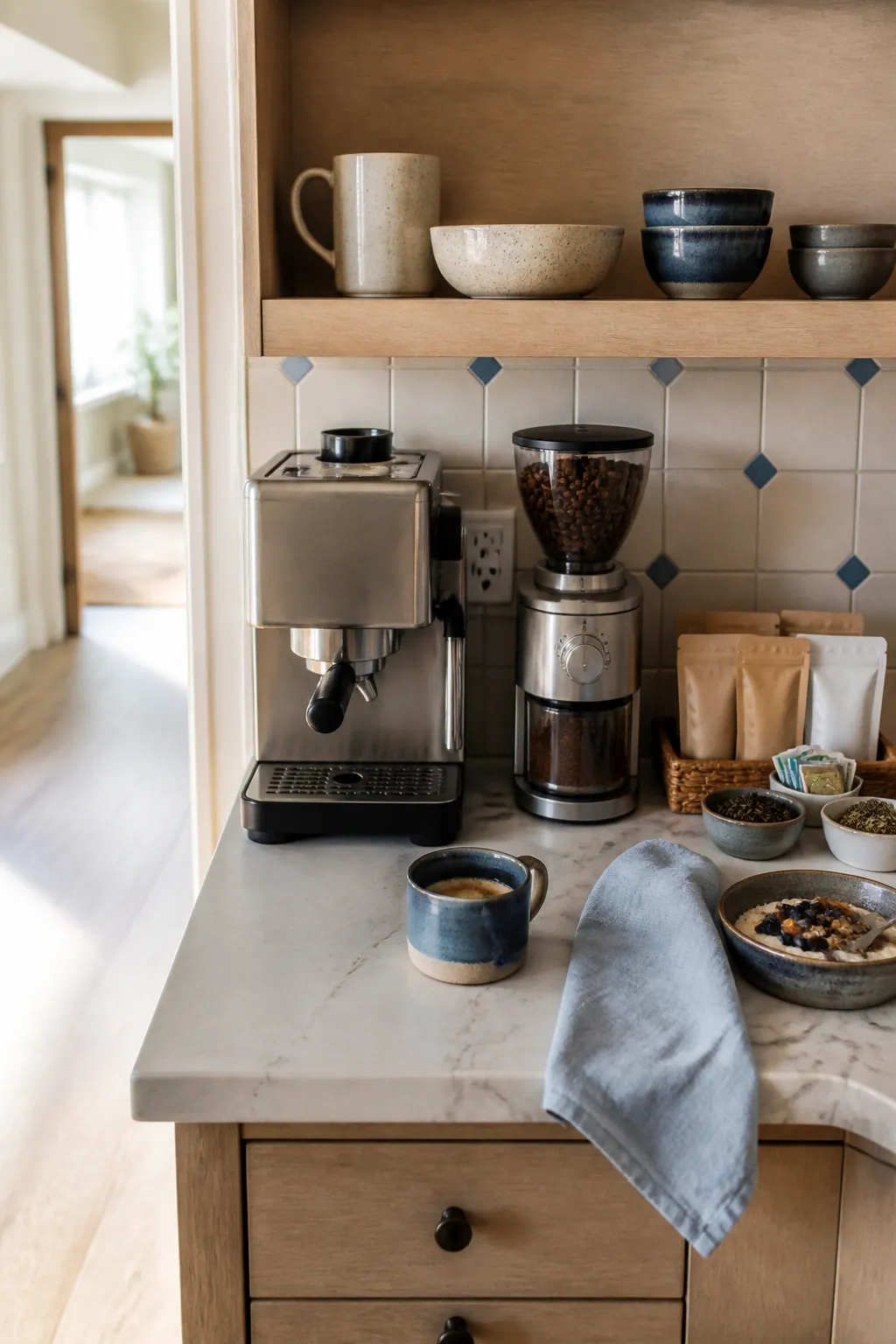
Gather coffee, mugs, tea, sweeteners, and breakfast dishes in one station near the pantry entrance. Morning traffic stays away from the range and sink.
A Baking Station with Heavy Tools Below
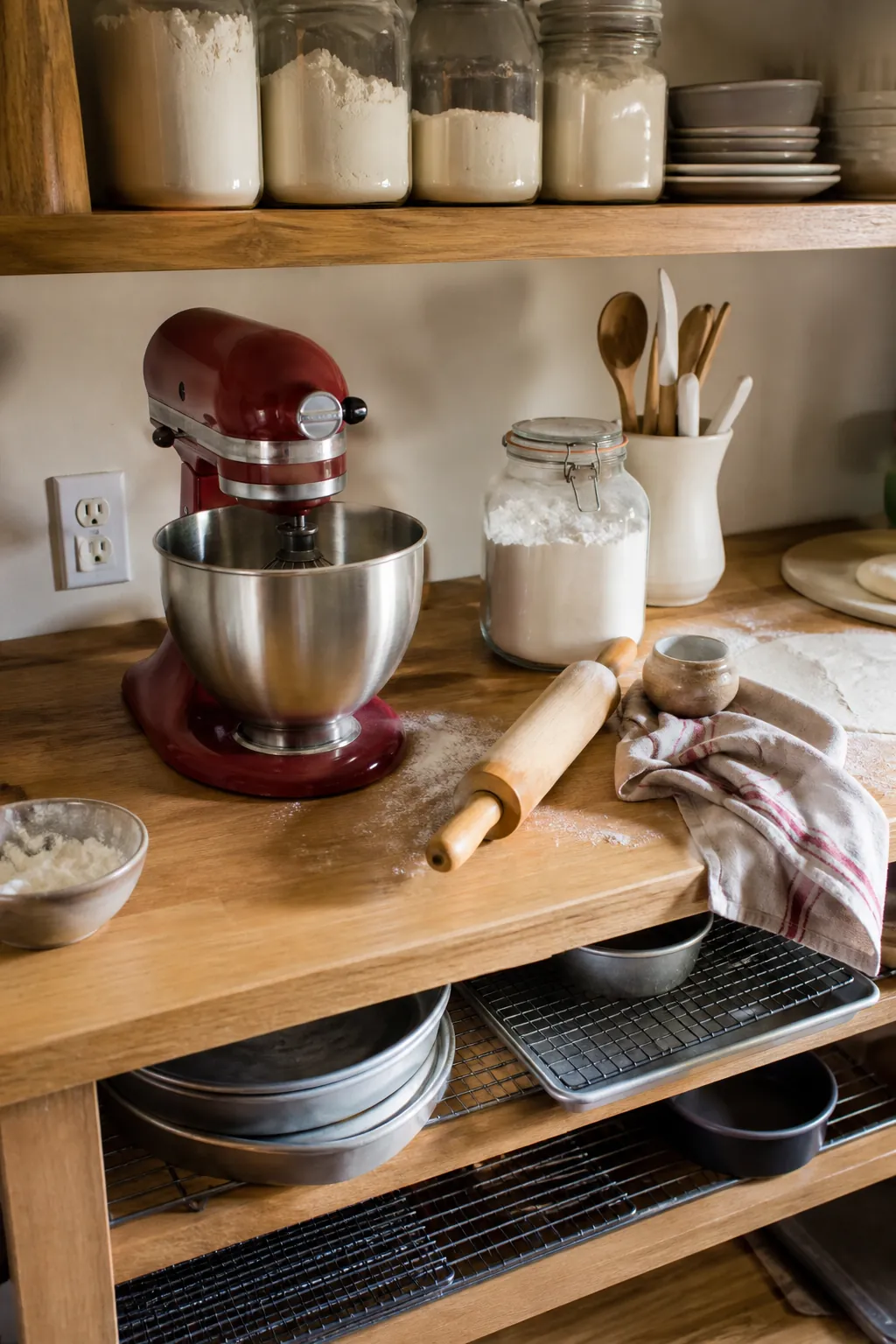
Store the mixer, flour, pans, and rolling tools within one compact zone. Heavy equipment belongs at counter height or on a rated pullout so it does not need to be lifted from the floor.
A Microwave Shelf with a Landing Surface
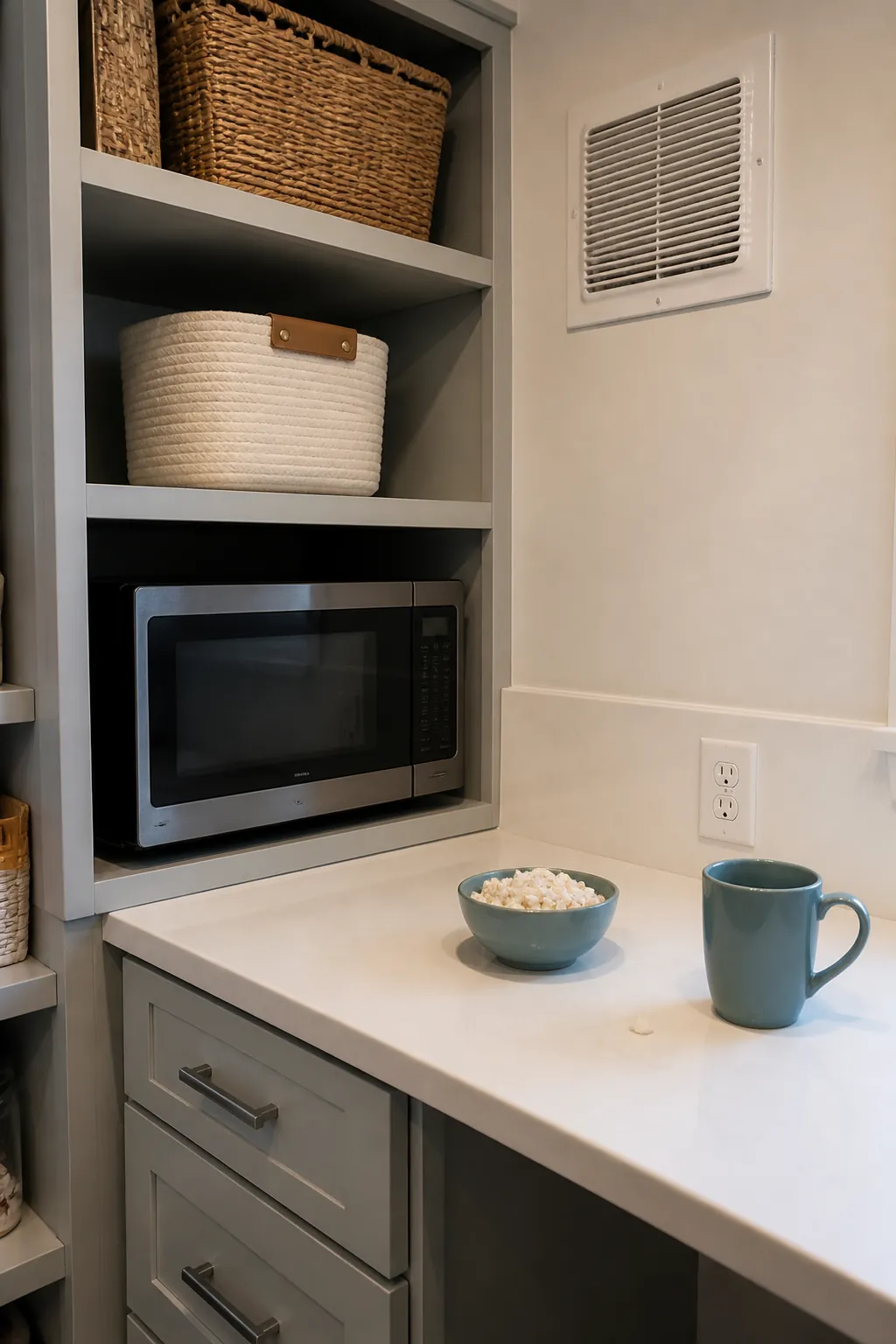
Place the microwave at a comfortable height with ventilation and clear counter space for hot dishes. An appliance crammed above a freezer without a landing zone quickly becomes awkward.
A Scullery Sink for Messy Prep
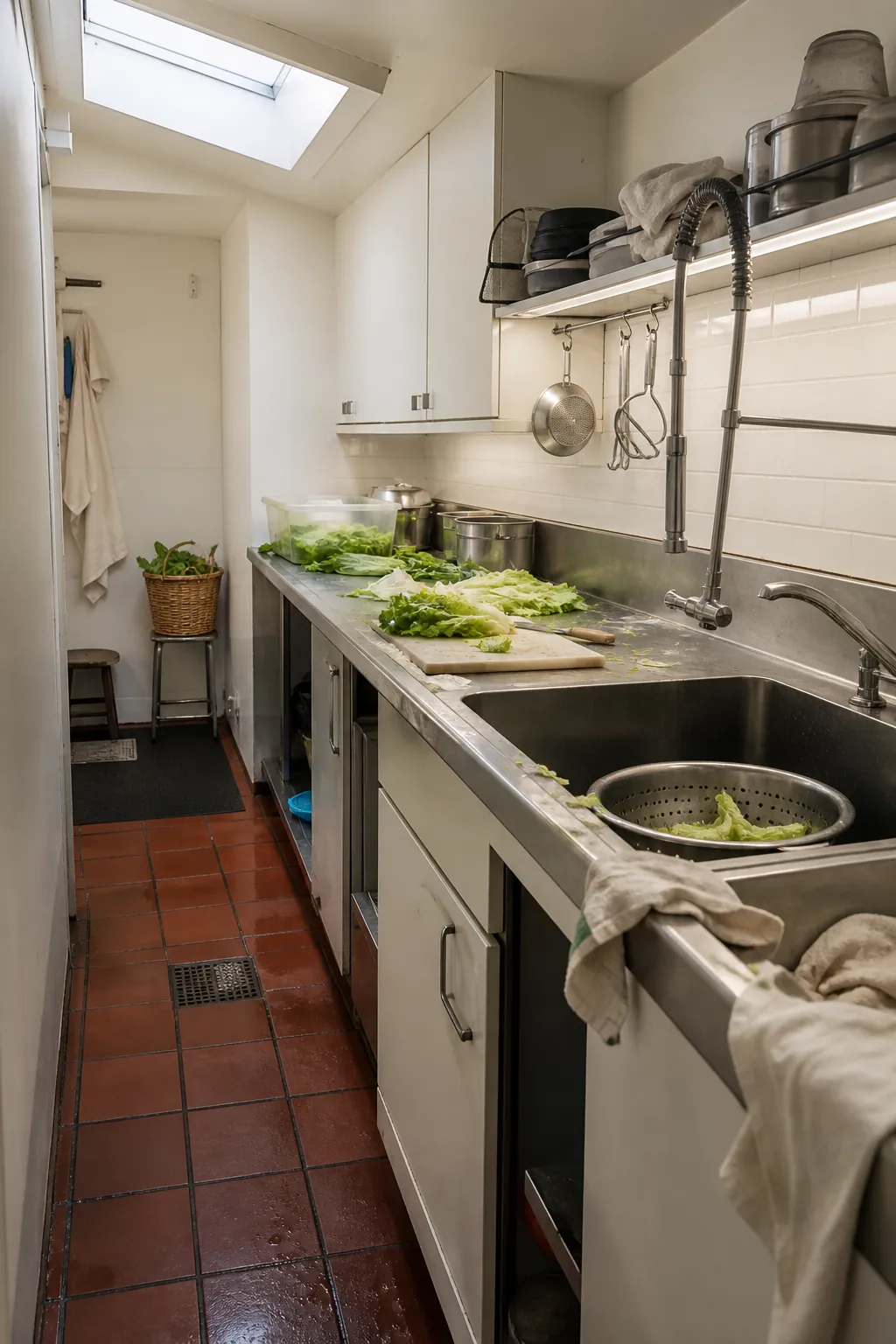
A sink turns a dream pantry walk-in into a true back kitchen for produce washing, flower trimming, or party cleanup. Use durable counters, good task lighting, and washable finishes.
An Undercounter Beverage Fridge
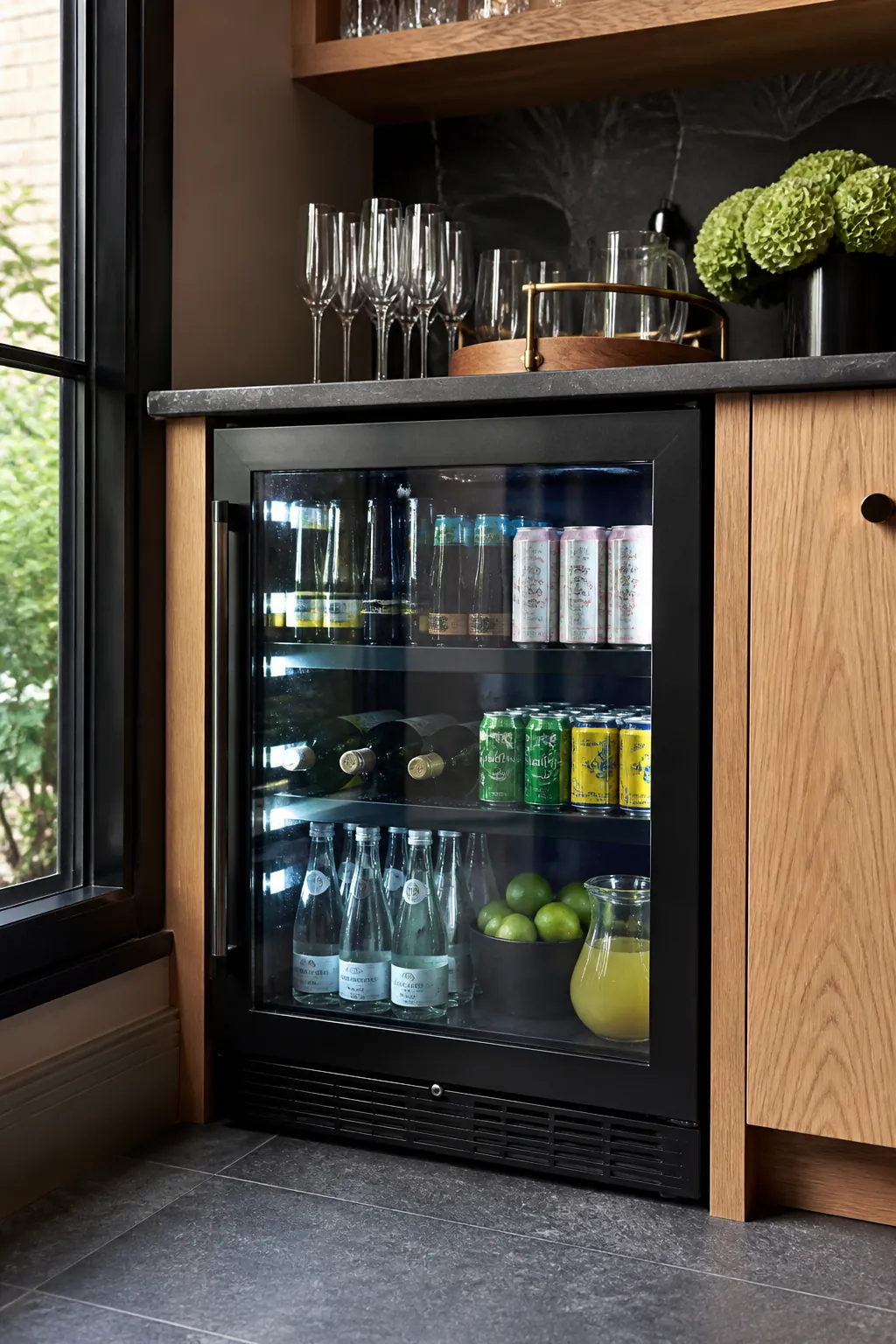
A front-venting beverage fridge can support entertaining without consuming tall storage. Place glasses and serving supplies nearby so the cold-storage zone works as one unit.
A Compact Freezer for Bulk Shopping
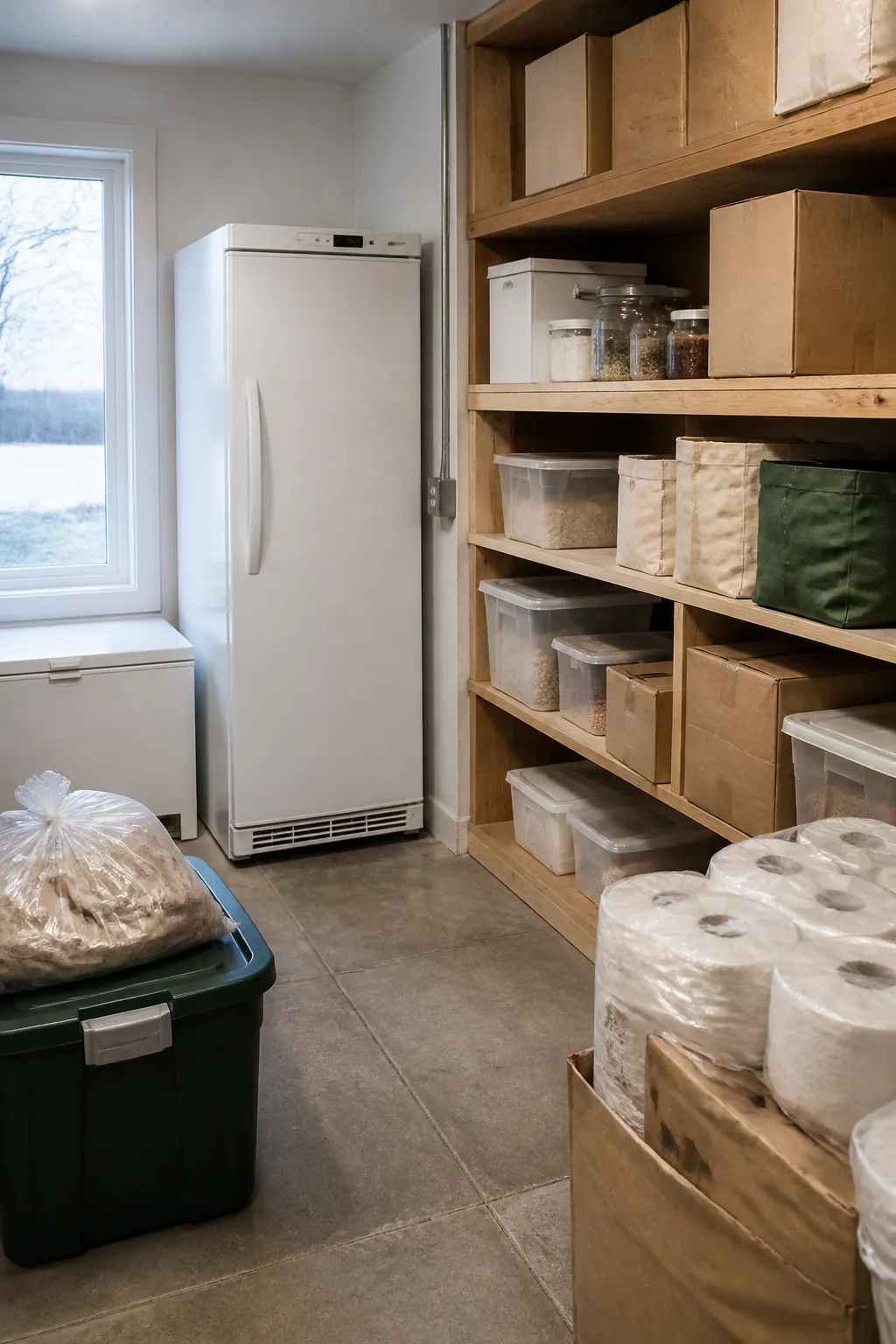
A compact upright freezer suits households that cook ahead or shop infrequently. Give it a dedicated circuit, ventilation, and enough door clearance to remove drawers for cleaning.
Full-Extension Drawers for Bags and Packets
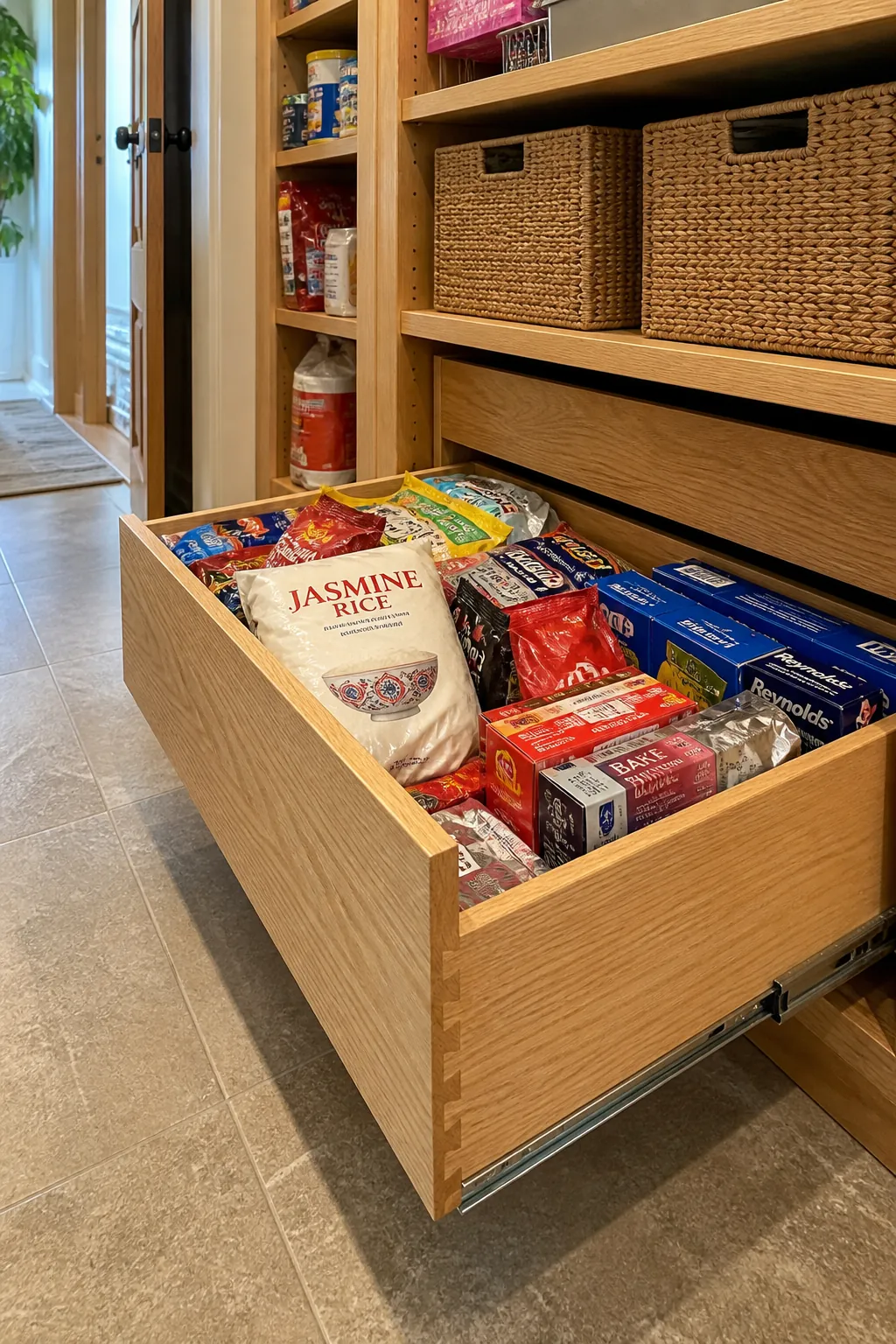
Lower drawers prevent snacks, rice bags, and baking packets from becoming piles. Full-extension slides reveal the back and confine spills to one removable zone.
Individual Rollout Trays in Deep Cabinets
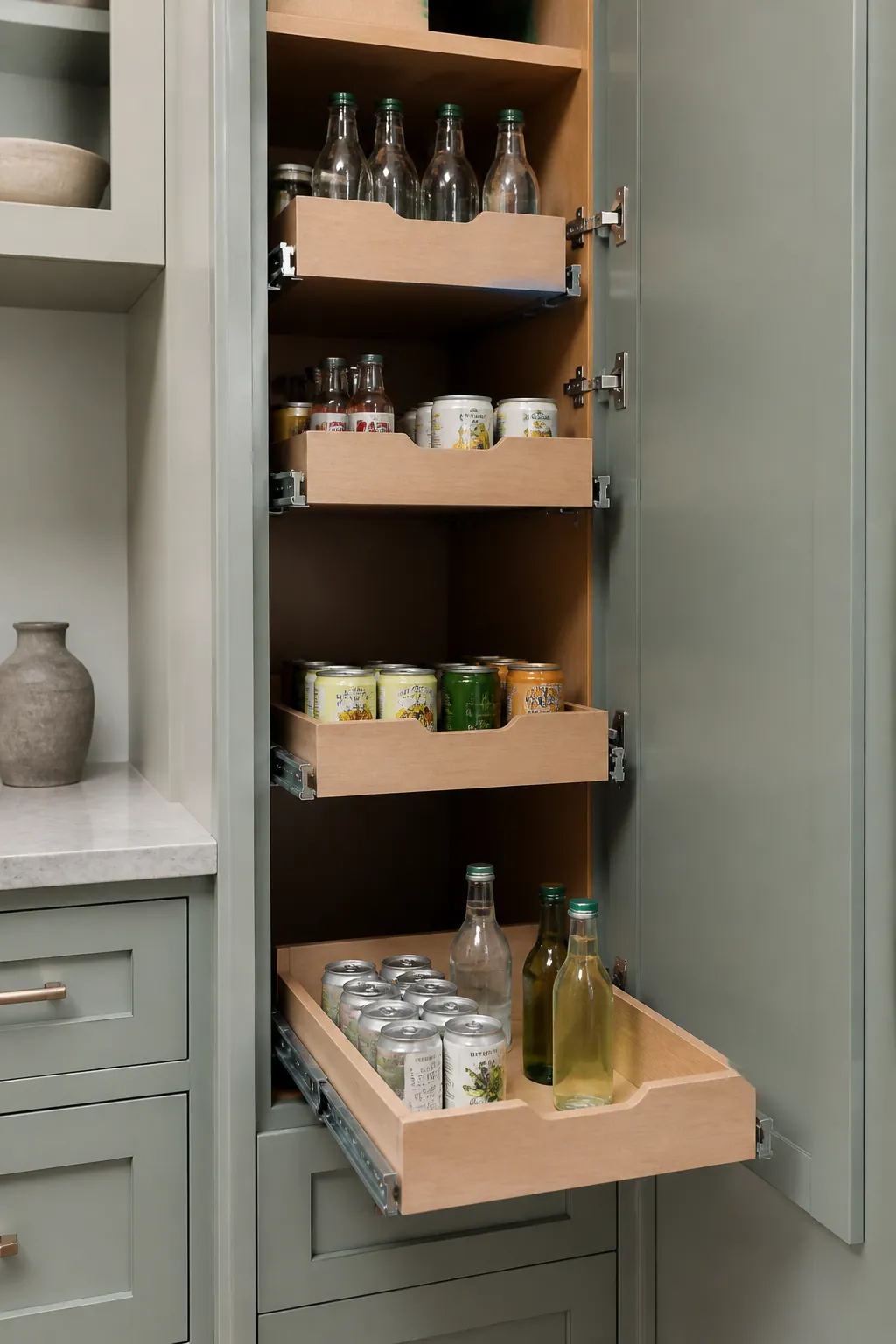
Individual rollout trays are easier to pull than one tall, heavily loaded larder. Open only the level you need, and make sure cabinet doors clear the tray hardware fully.
Shallow Door Racks for Small Items
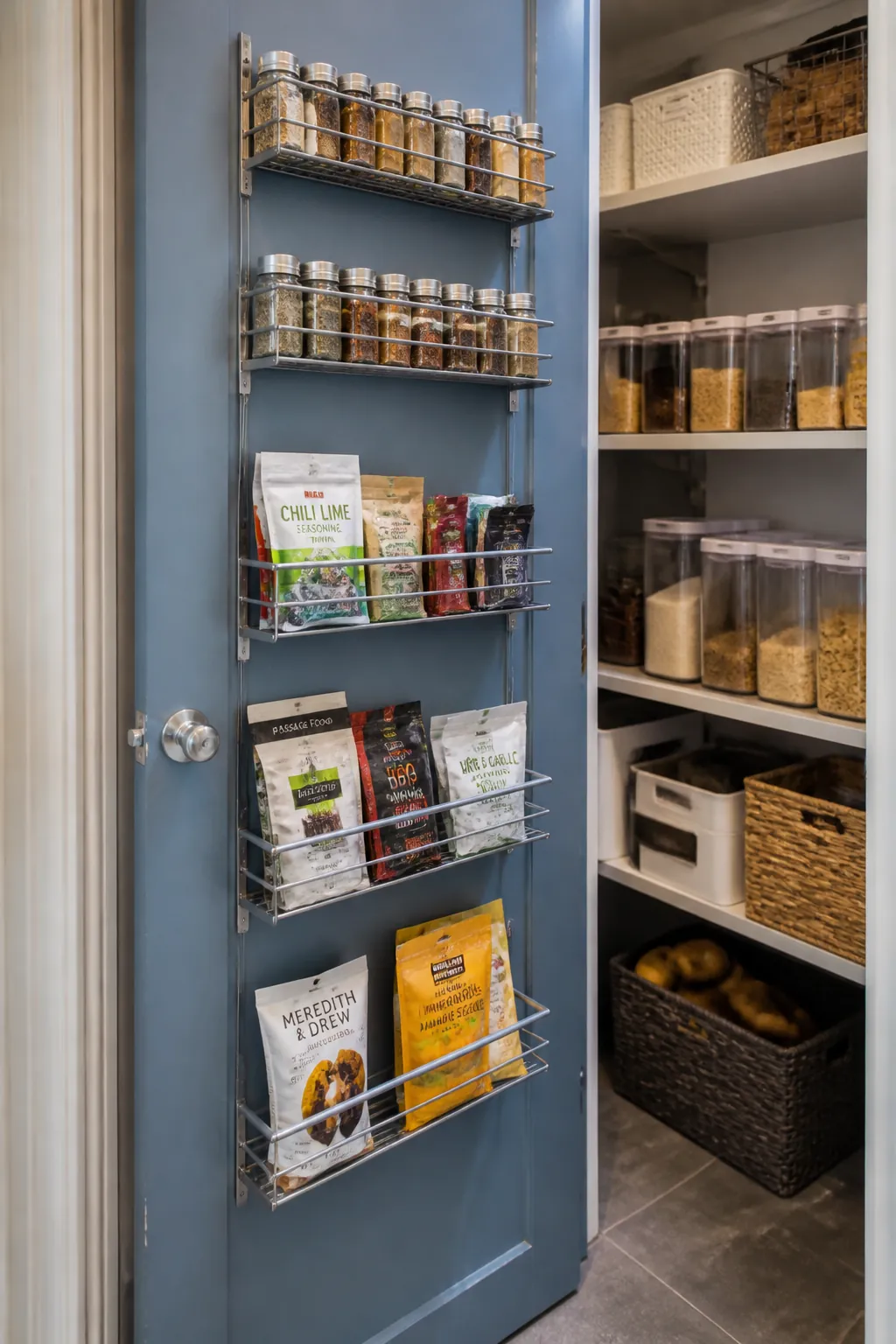
Secure racks on a strong door can hold spices and packets that vanish on deep shelves. Check weight, hinges, and shelf clearance before loading them.
Ventilated Drawers for Produce
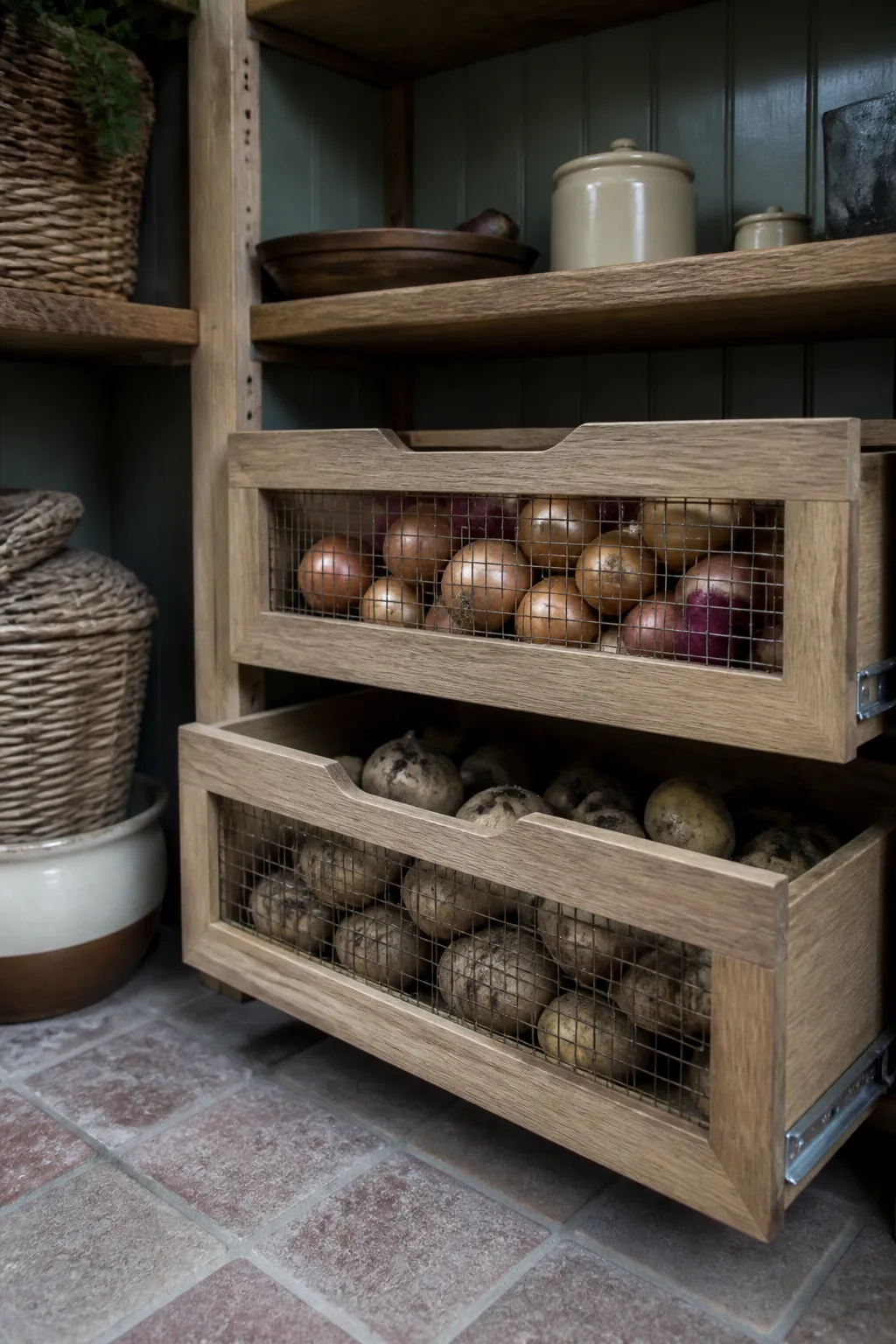
Mesh or slatted drawers allow airflow around onions and potatoes while keeping them contained. Separate the two crops and locate them away from appliance heat and direct sun.
Pull-Forward Bulk Bins on Casters
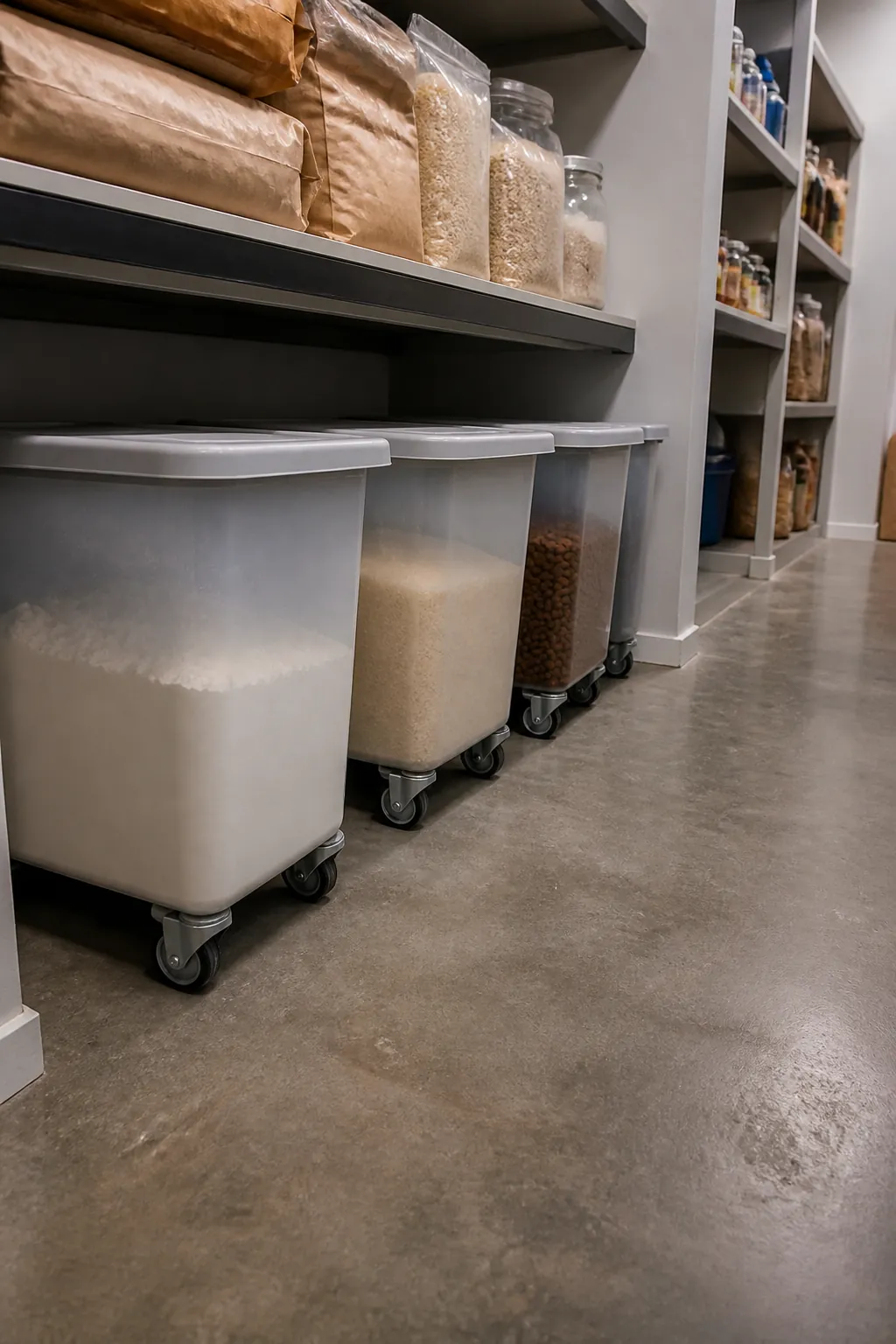
Rolling bins make deep lower space useful for flour, rice, pet food, or recycling. Choose washable containers and leave a clear pull path into the aisle.
Vertical Slots for Trays and Platters
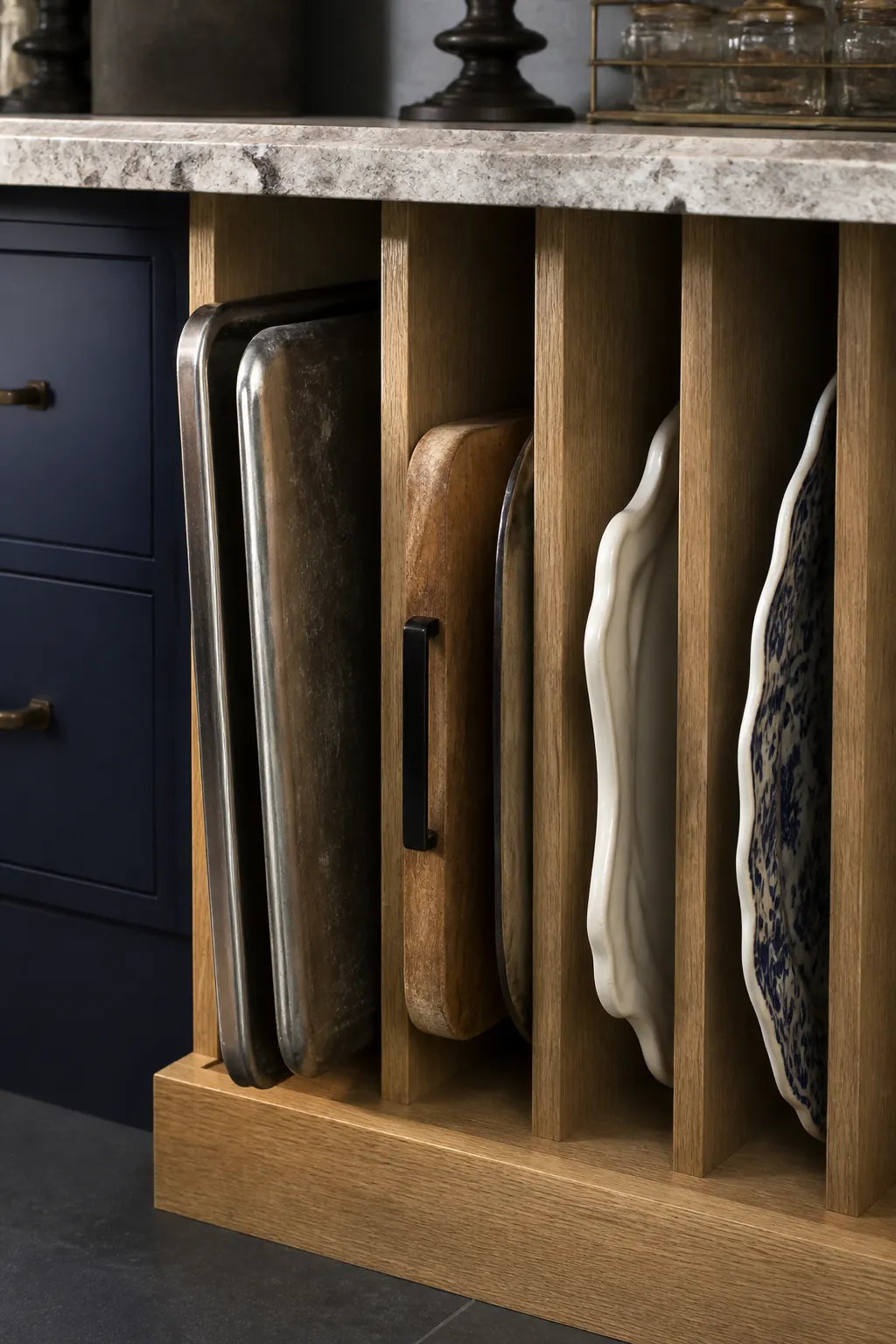
Vertical dividers keep sheet pans, cutting boards, and serving platters separated and easy to lift. A short counter-height section is usually safer than overhead storage for heavy pieces.
A Dedicated Folding Step-Stool Bay
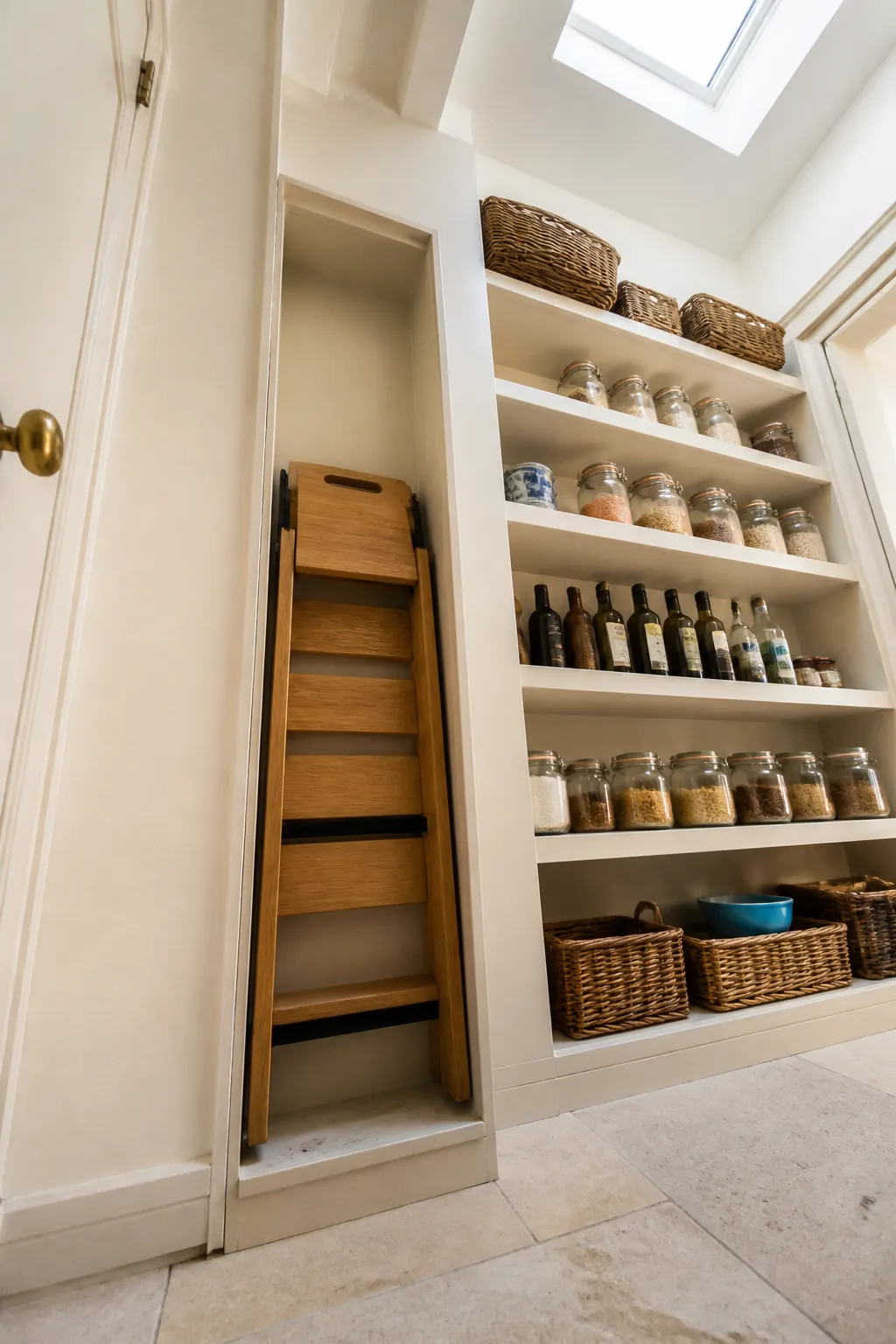
If shelves reach the ceiling, the step stool needs an obvious home. A slim vertical bay keeps it accessible without balancing it against food or blocking the doorway.
Floor-to-Ceiling Seasonal Storage
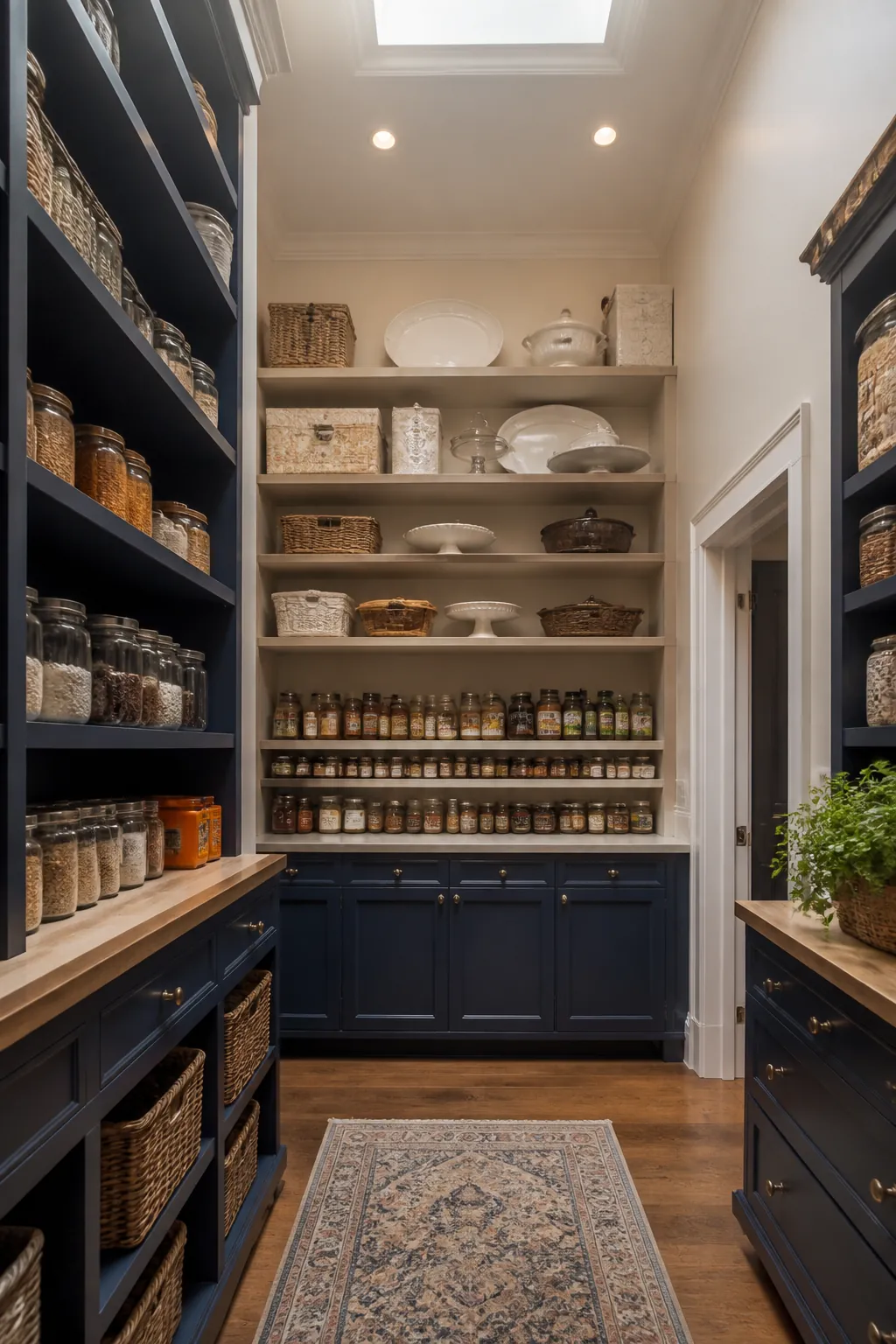
Use upper shelves for light seasonal dishes, party supplies, and rarely used equipment. Keep everyday food between knee and eye level so the most convenient zone does the most work.
Low Storage Beneath a Window
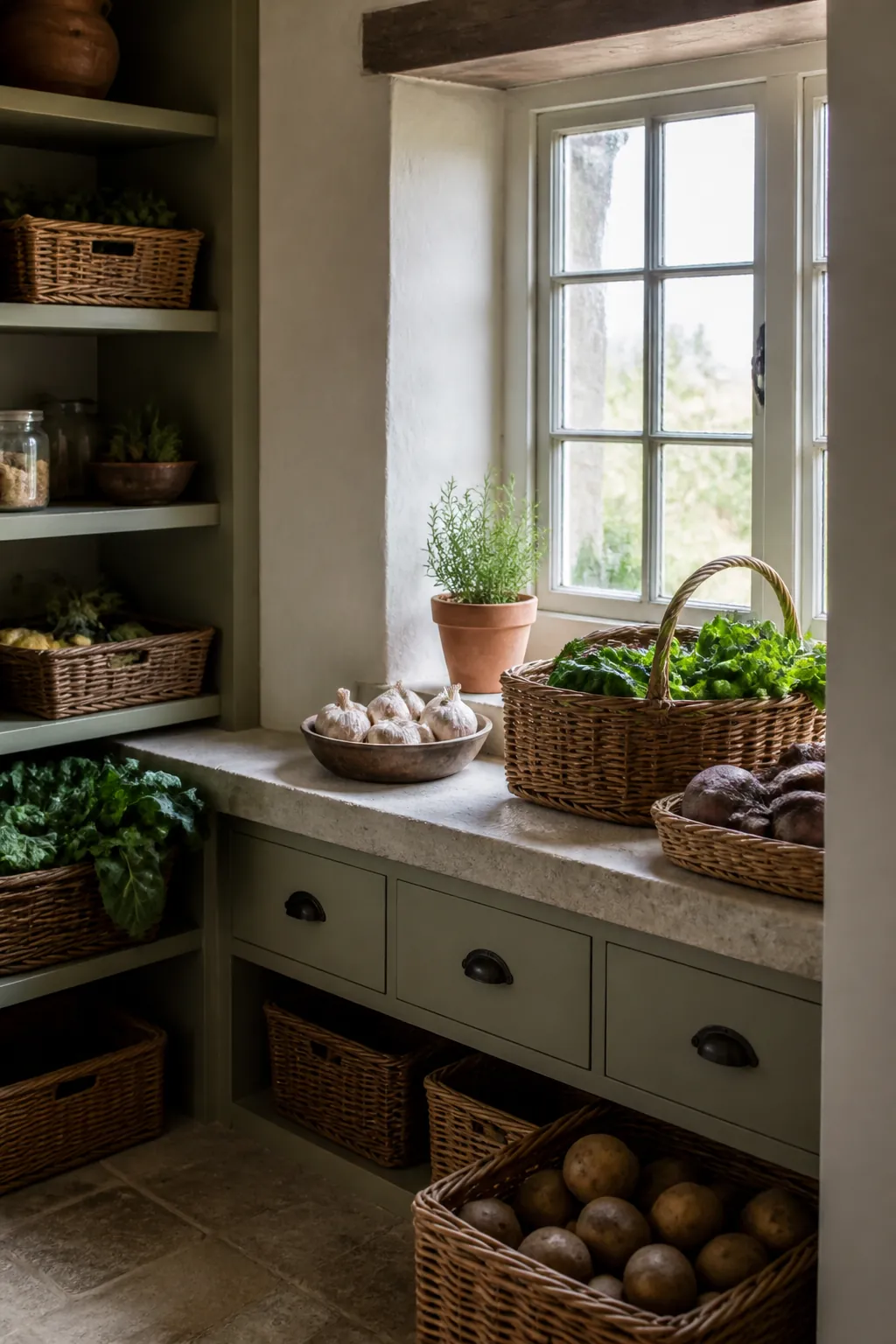
Preserve natural light with drawers or a low counter beneath the window instead of tall cabinets. Protect temperature-sensitive food from direct sunlight.
Motion-Sensor Lighting for Full Hands
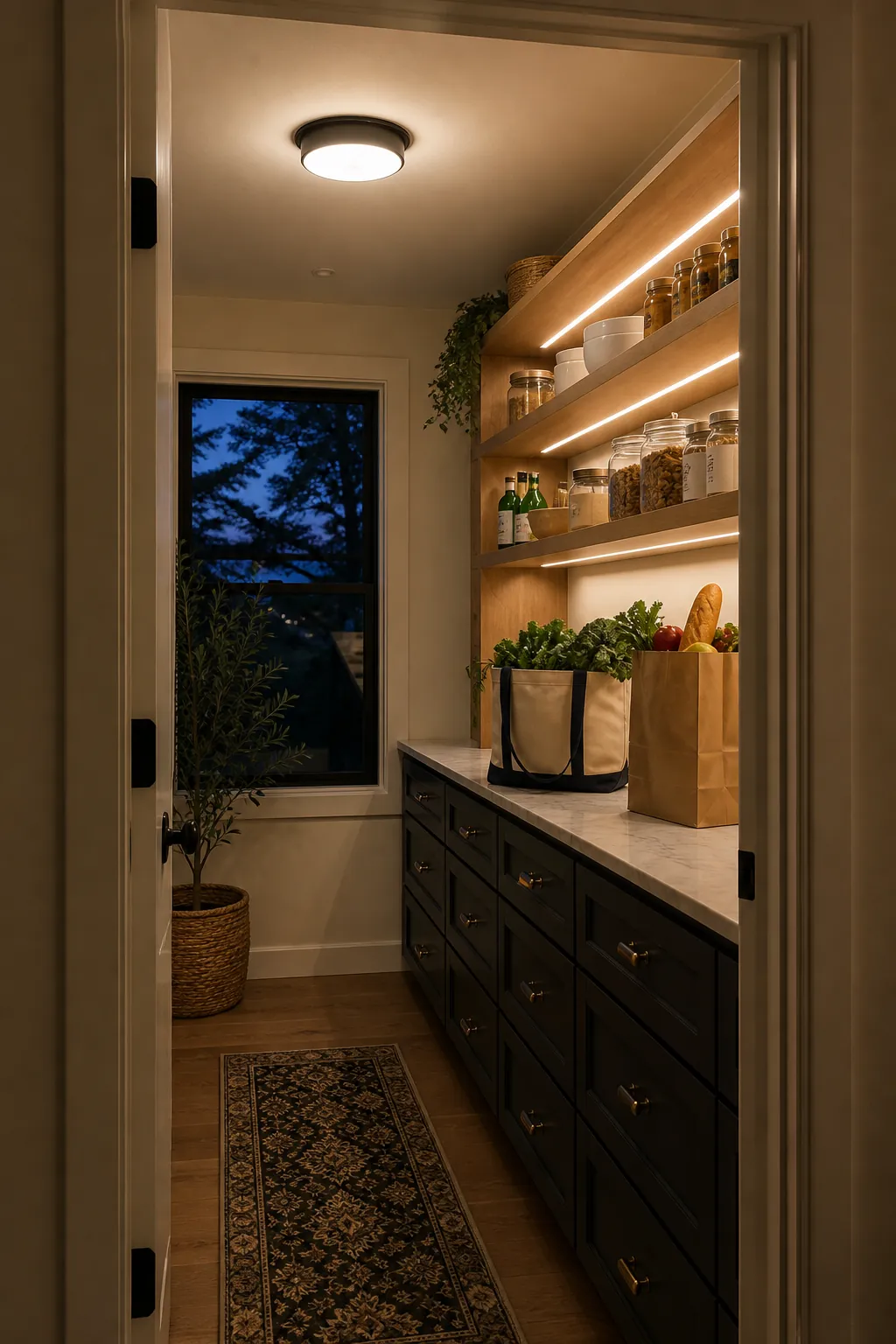
Automatic ceiling light is a small upgrade that pays off whenever both hands carry groceries. Add under-shelf task lighting where deep counters create shadows.
Zones Labeled by Everyday Tasks
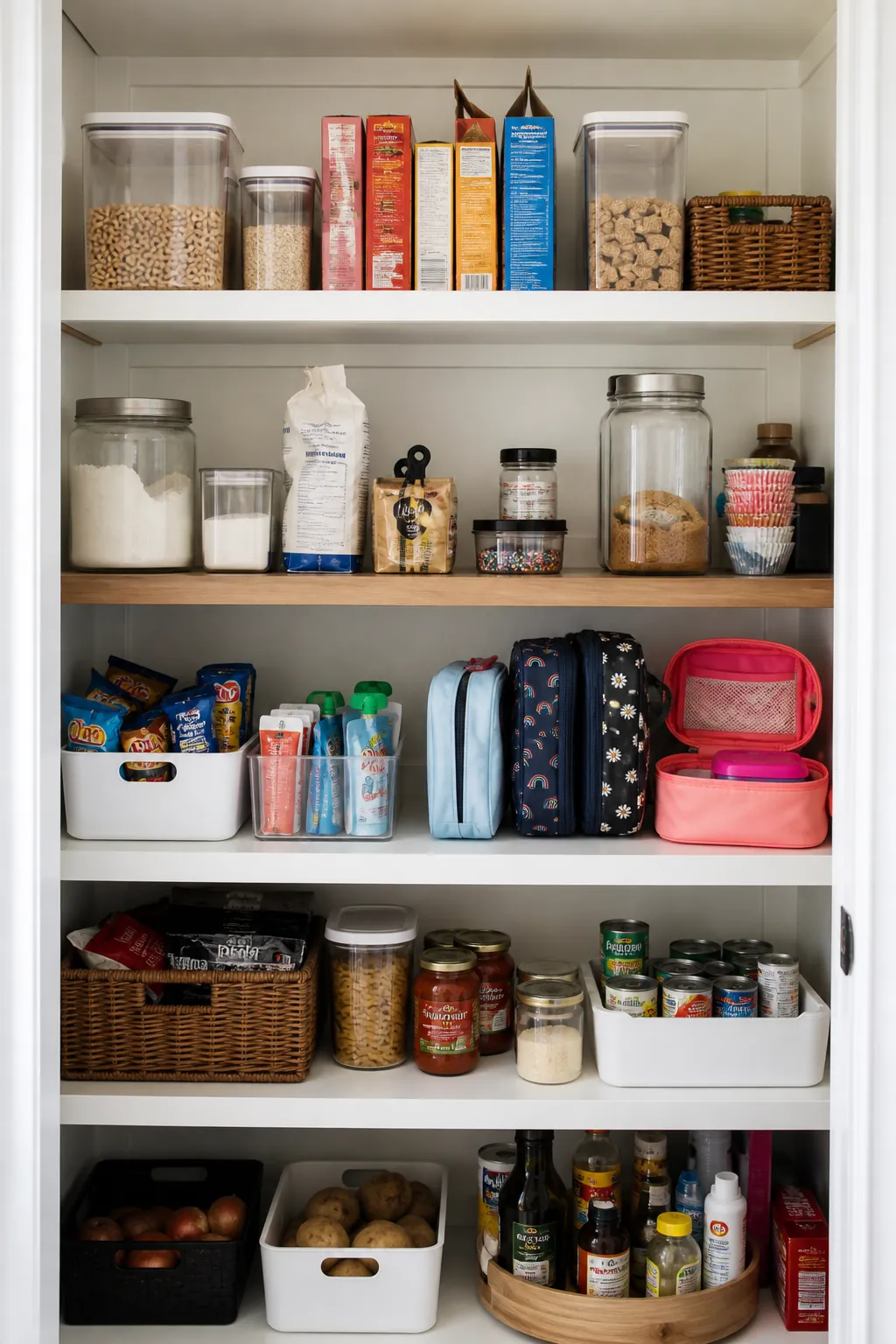
Organize by routines such as breakfast, baking, lunch packing, and dinner rather than by container style. Everyone can return an item to the zone where it is actually used.
A Family Snack Station at Reachable Height
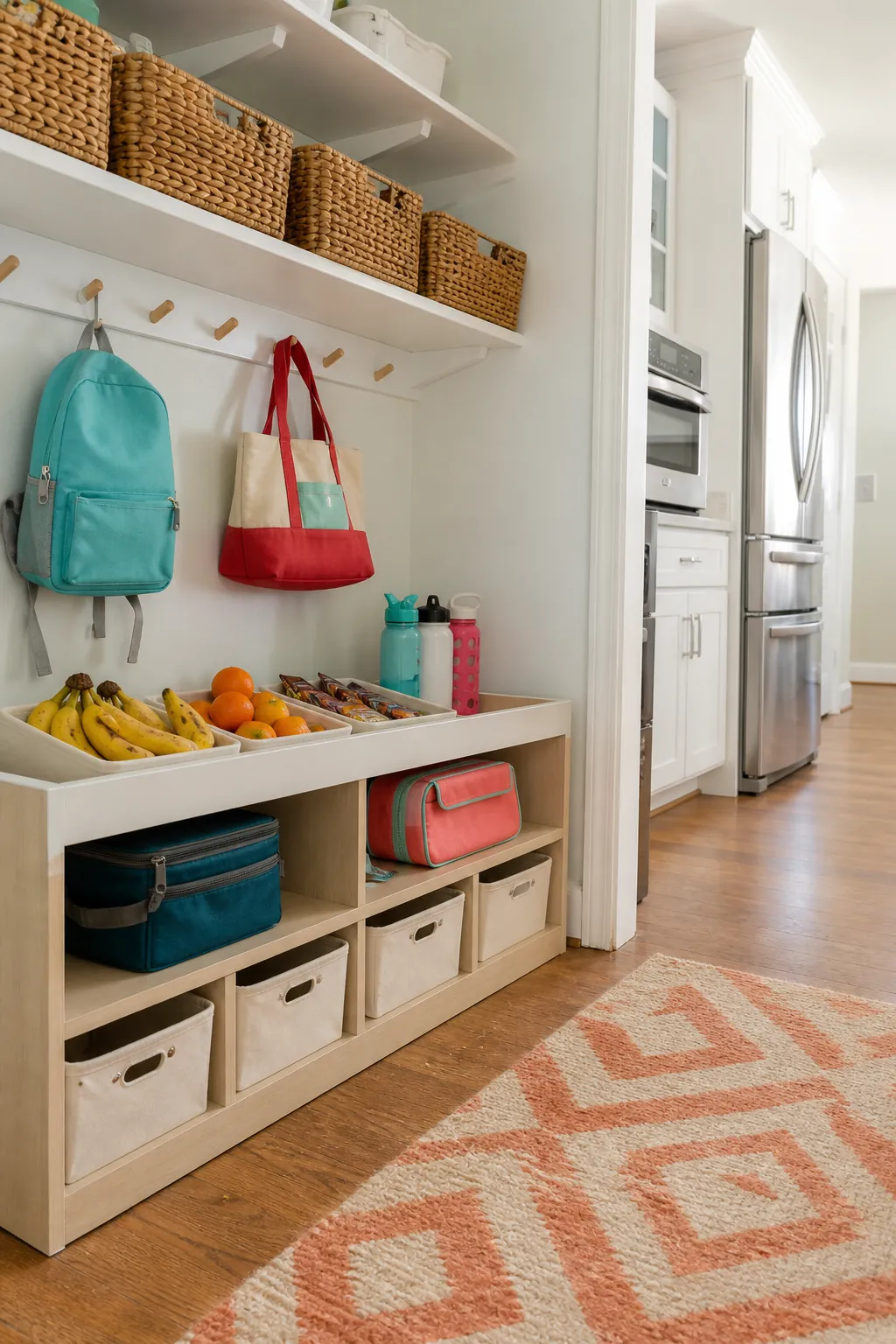
Low bins for approved snacks, fruit, lunch boxes, and bottles let children help themselves without climbing. Keep glass and restricted items in higher storage.
An Entertaining Zone for Glassware and Serving Pieces
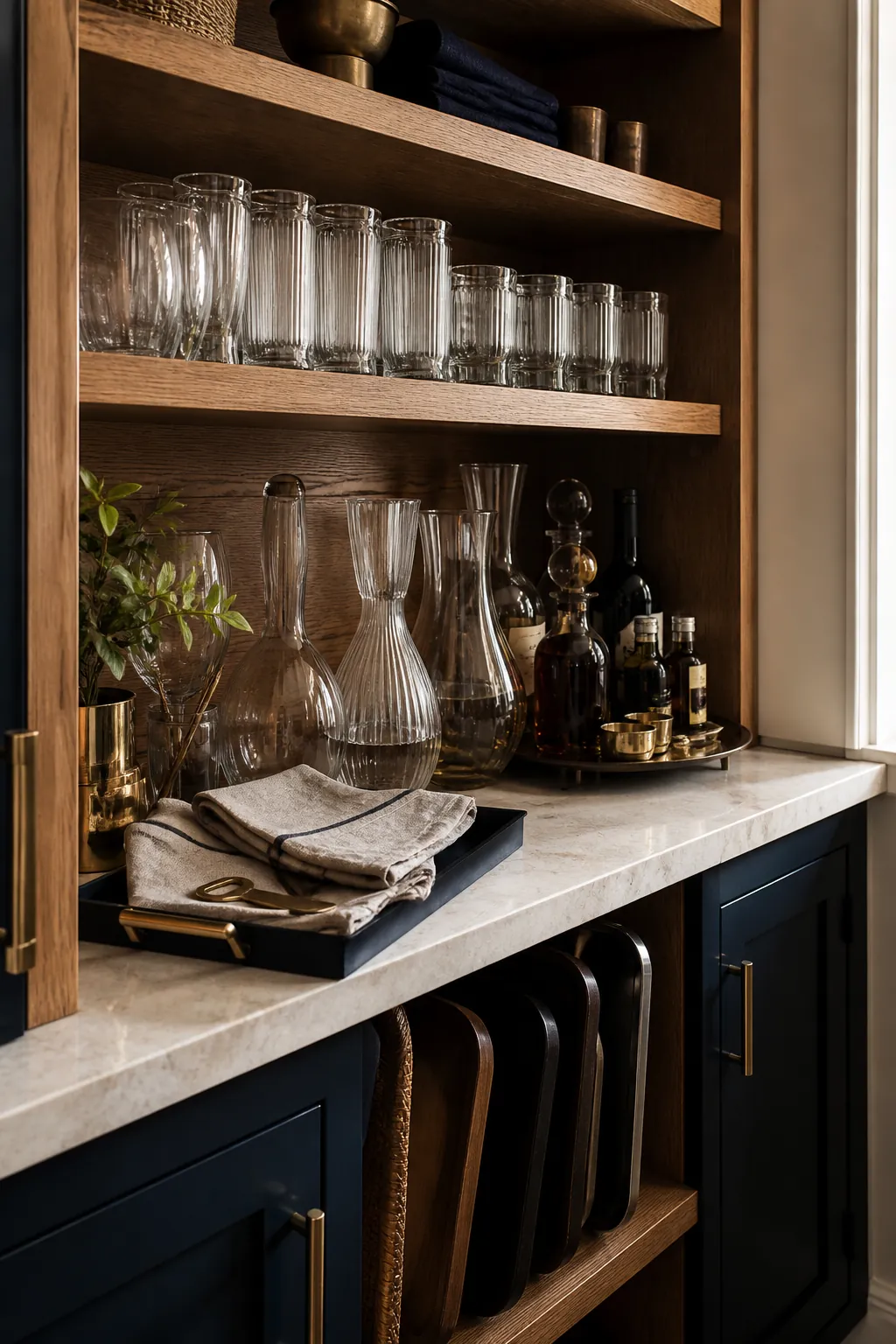
Store party glasses, trays, napkins, and drink supplies together on shelves sized to each item. This small butler’s pantry idea makes setup faster and reduces traffic through cooking zones.
A Refill Station with Containers Sized to Full Packs
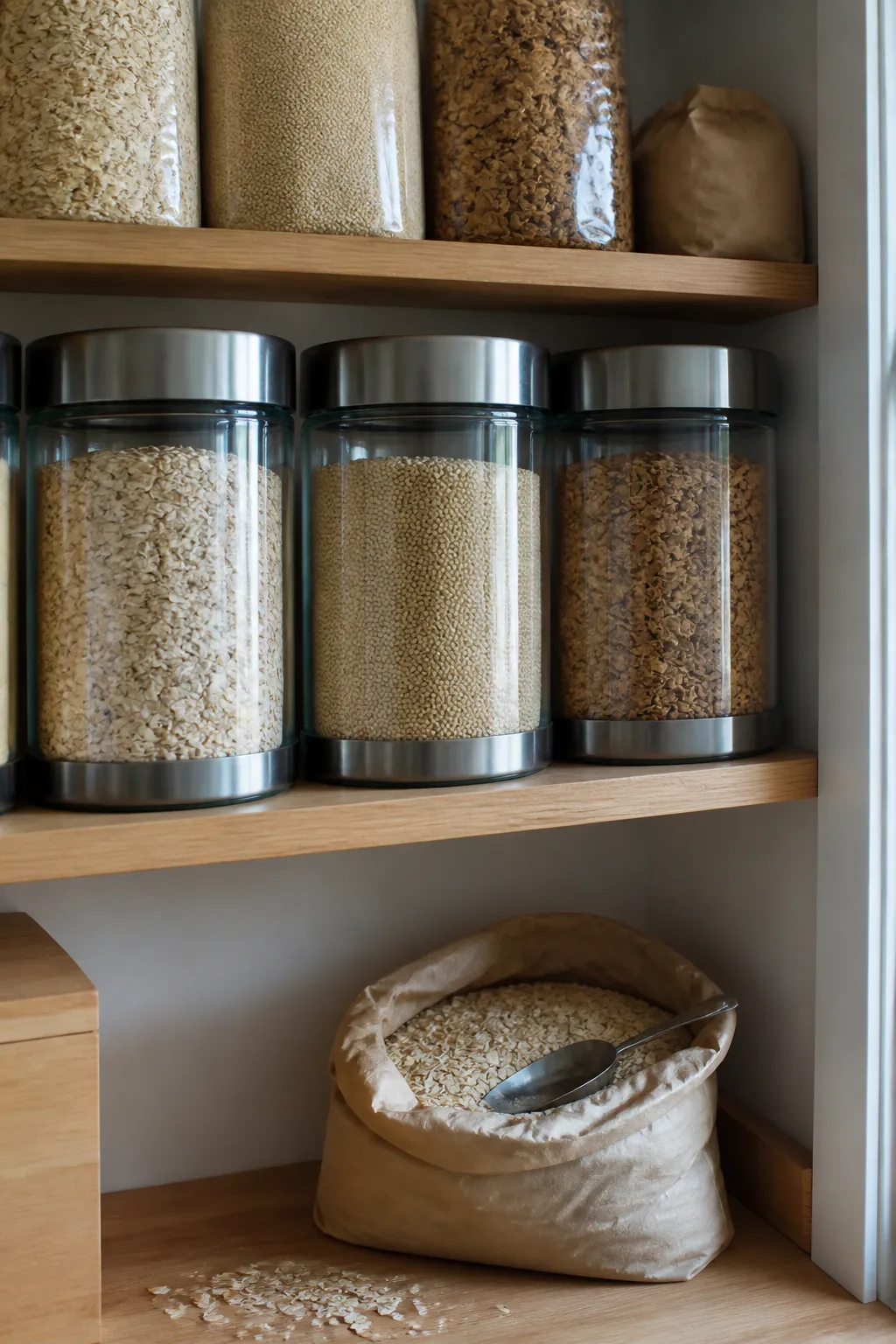
If you decant staples, choose vessels that hold an entire replacement pack with headroom. Tiny matching jars may photograph well but create leftover bags that need a second storage system.
A Slim Utility Zone for Brooms and Recycling
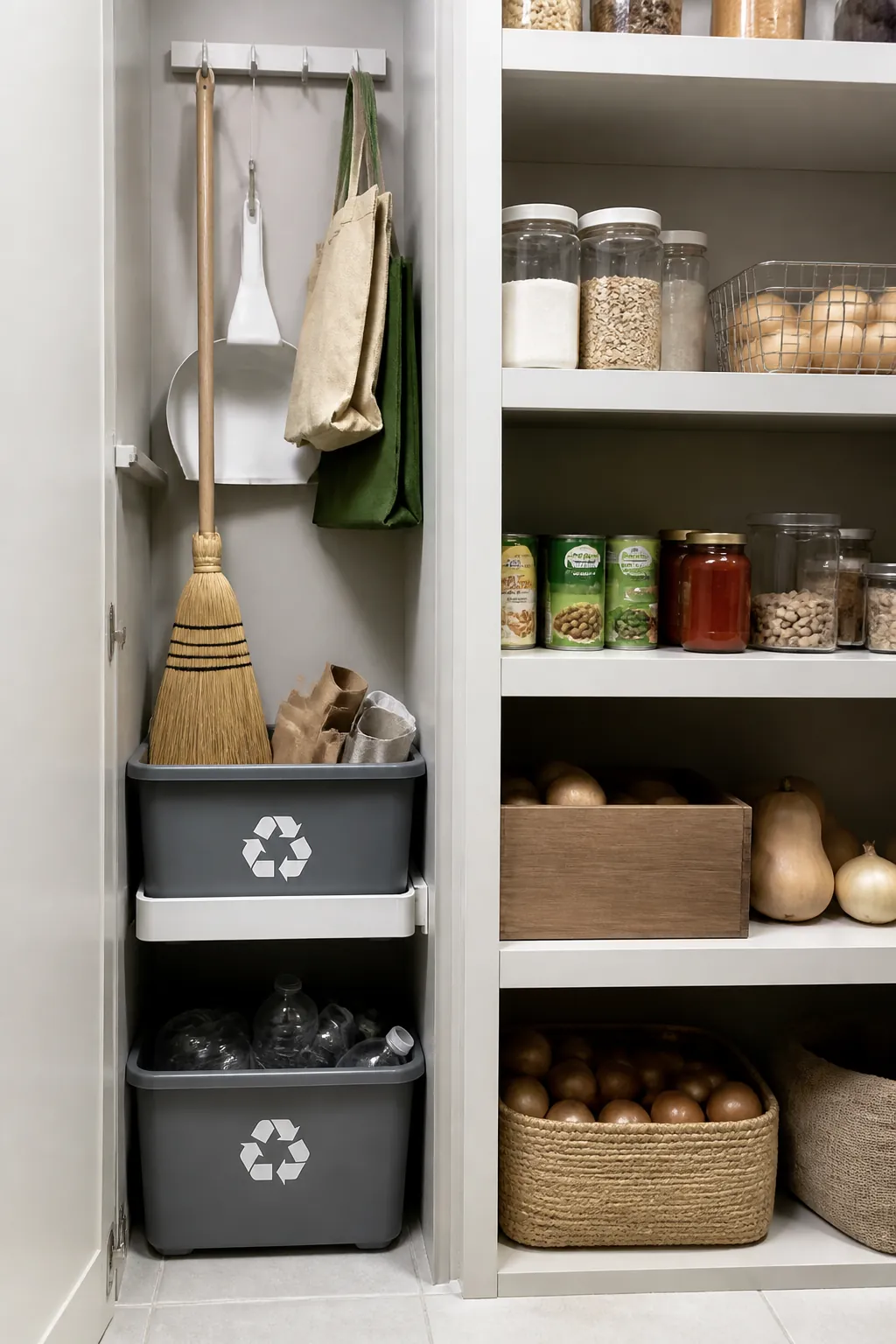
A narrow tall bay can hold brooms, dustpan, folding bags, and recycling without mixing them into food shelves. Keep cleaning chemicals secured and separated from ingredients.
A Pantry Designed for Easy Seasonal Resets
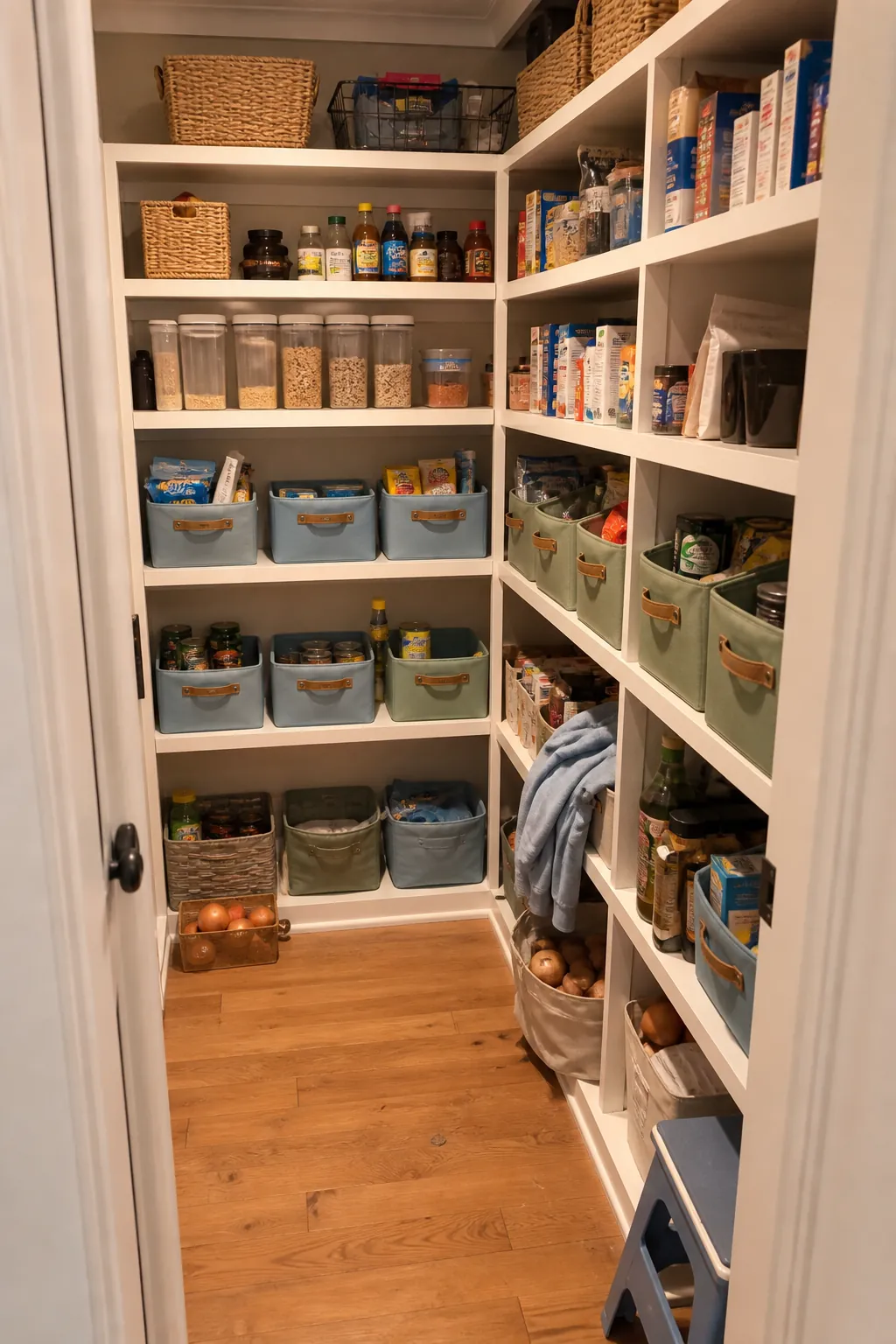
No pantry stays perfectly aligned forever. Leave a little spare capacity, use bins that lift out easily, and plan a twice-yearly reset for expired food and wandering household objects. A pantry remodel succeeds when ordinary mess is easy to correct, not when the room requires constant styling.
The best pantry design ideas make inventory visible, heavy things easy to reach, and daily routes obvious. Build around those behaviors and the room will remain useful long after the first photograph.