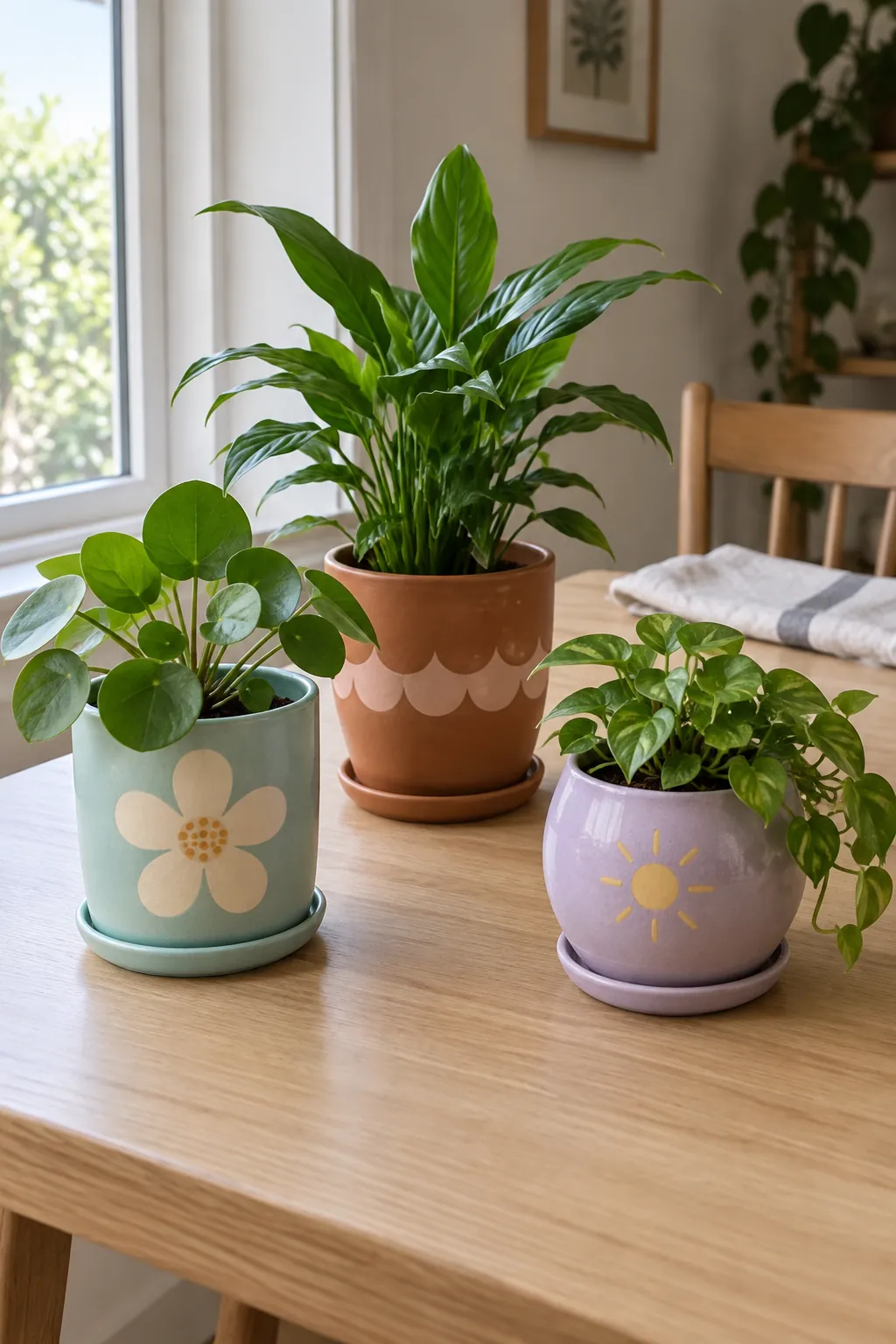
A tiny painted bow, a soft scalloped edge, or one oversized flower can change how a plant corner feels. These 37 cute plant pot designs range from simple brushwork to sculptural shapes, so you can choose something that suits your space and your patience. Start with a container that fits the plant, then let the decoration add the personality.
Pretty outer pots do not always have drainage holes, which makes a removable growing pot a useful option. Lift it out for watering, let excess water drain, and empty any water left in the outer container before returning it. For painted pots, choose products compatible with the surface and intended location, and let each coat cure as directed before putting the finished piece into use.
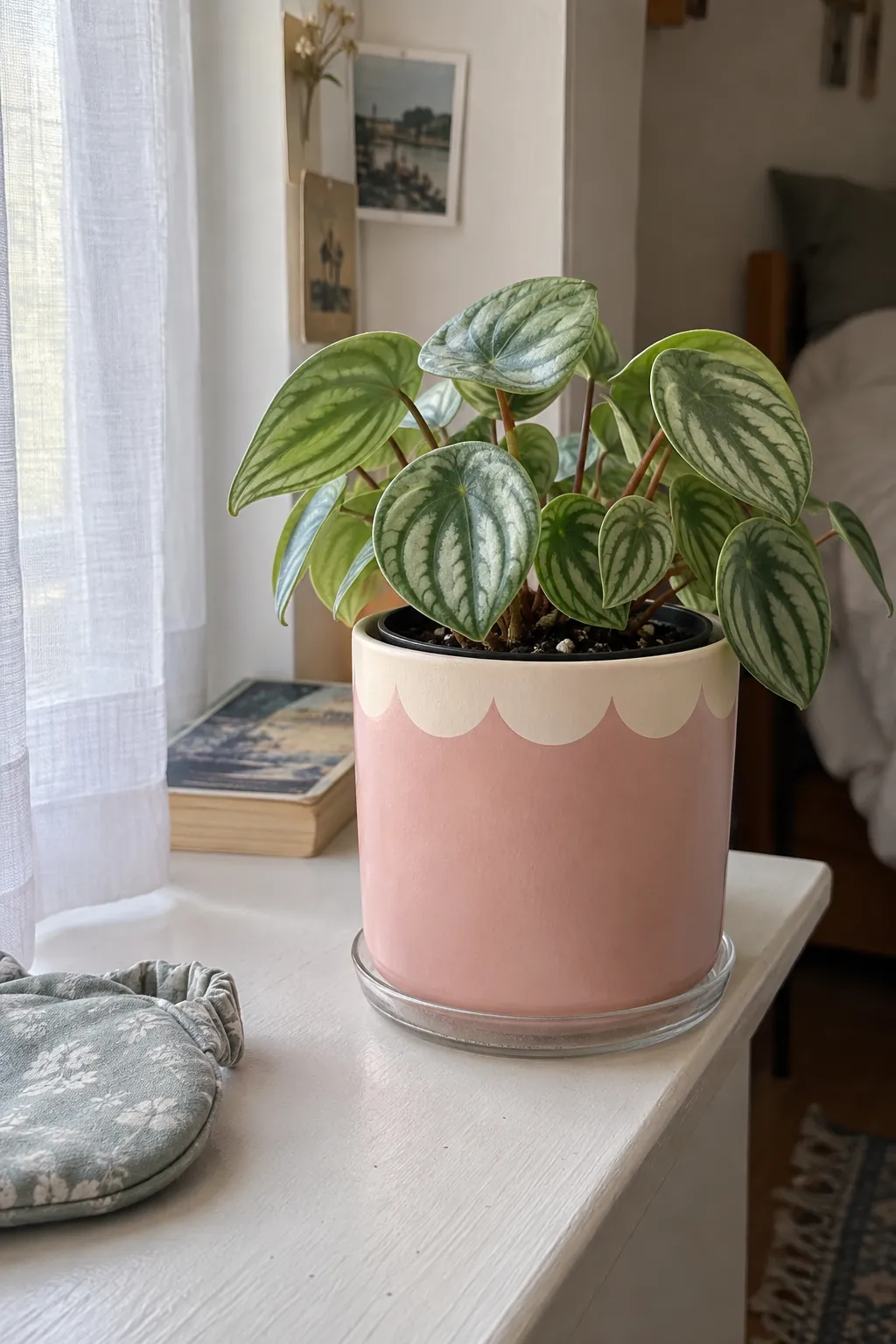
Scalloped blush rim
A scalloped rim gives a plain cylinder the sweetness of a little cake stand. Paint the curves below the lip so the opening stays smooth and easy to wipe, then leave the lower half a quiet blush pink. A compact peperomia lets that edge remain visible without turning the whole arrangement into a crowded bouquet.
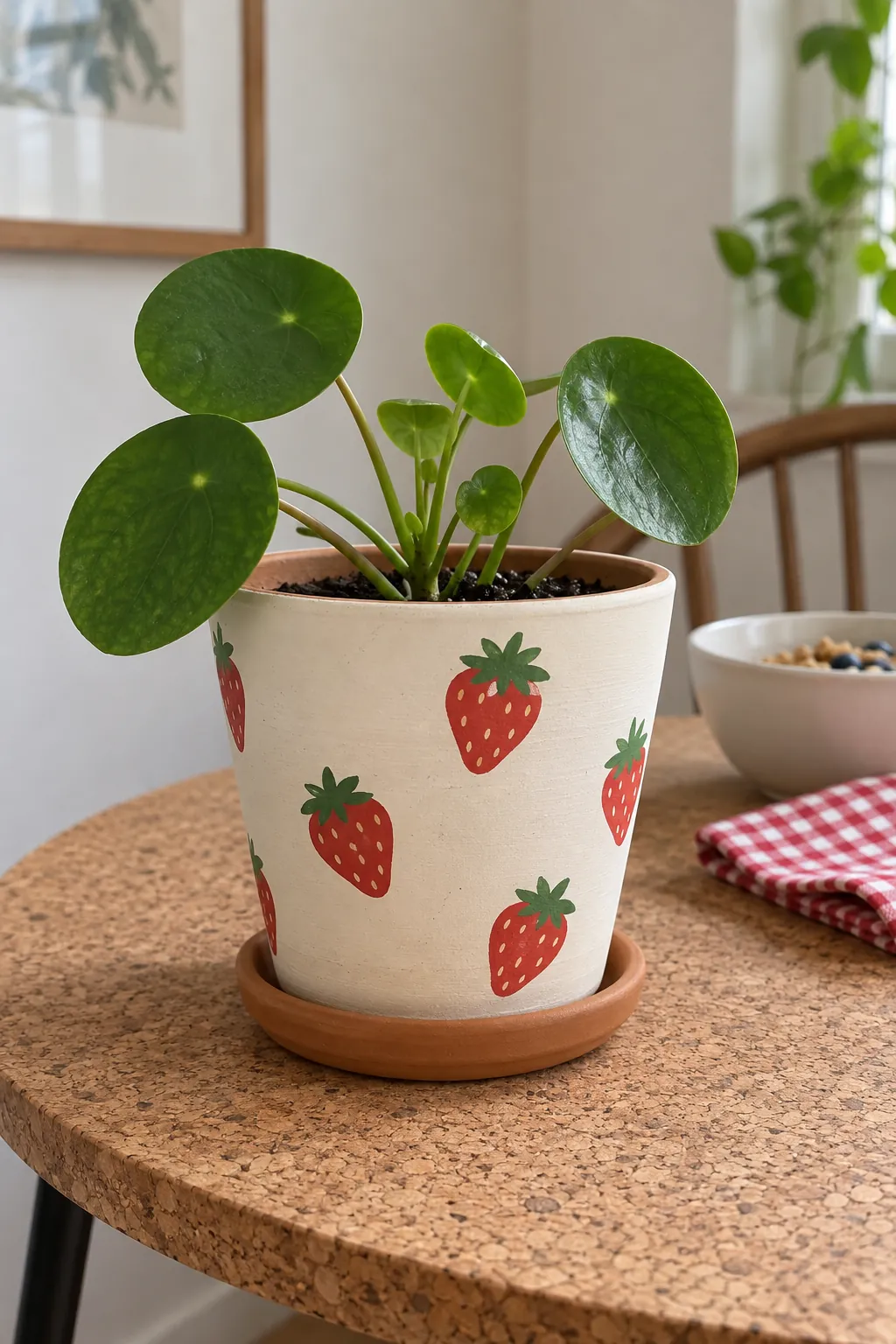
Strawberry patch dots
Tiny strawberries make cute flower pot painting ideas feel playful without demanding a perfect drawing. Start with spaced red teardrops, add a few pale seed marks, and finish each berry with a small green crown. Keep the fruit comfortably below the rim so soil and repeated handling do not hide your favorite details.
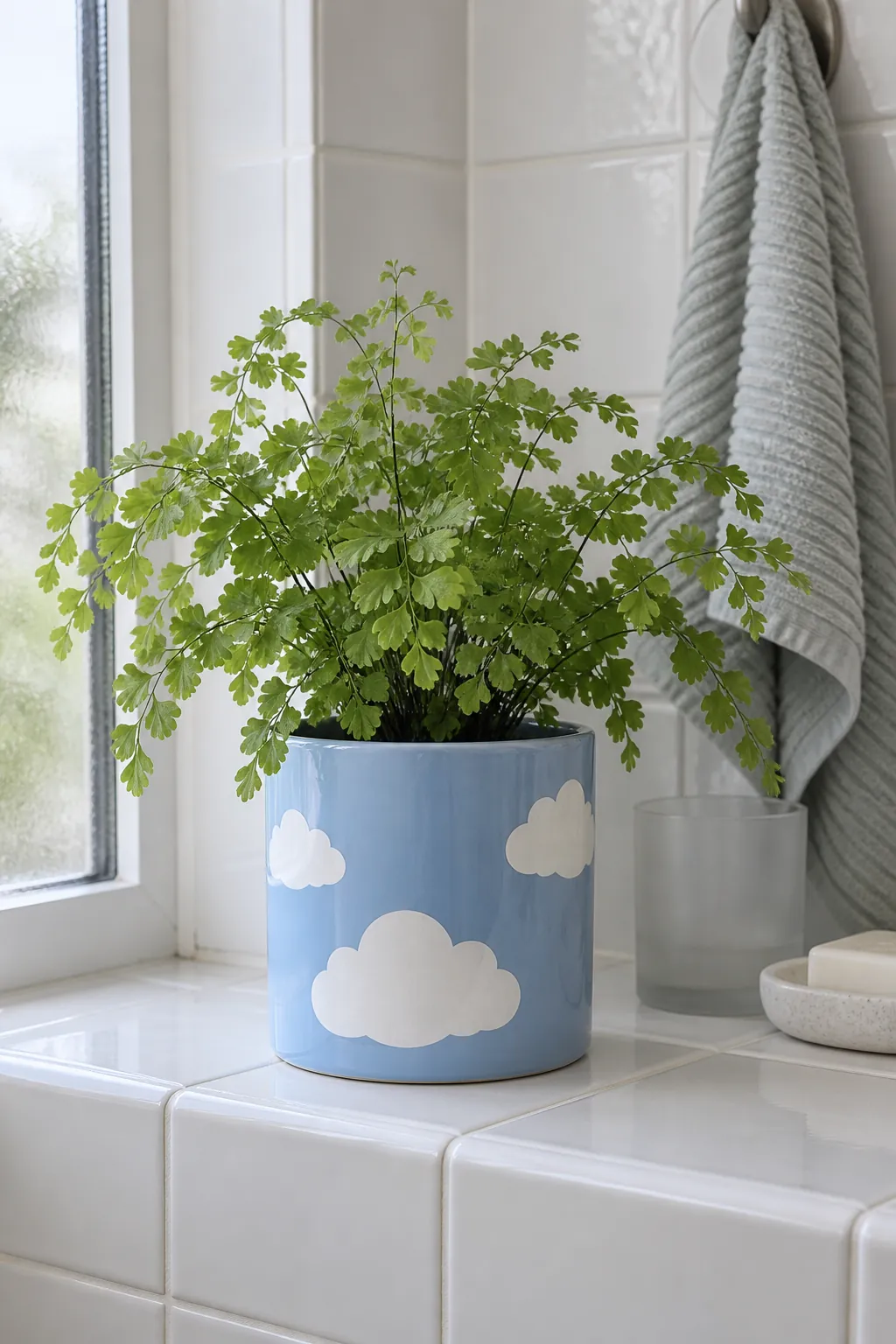
Clouds on a blue cylinder
Soft white clouds are forgiving because no two outlines need to match. Leave a broad patch of blue between them and carry one cloud around the side, which makes the design interesting when the pot turns. A fern suits the airy mood, provided its inner growing pot can drain and the blue outer container is emptied after watering.
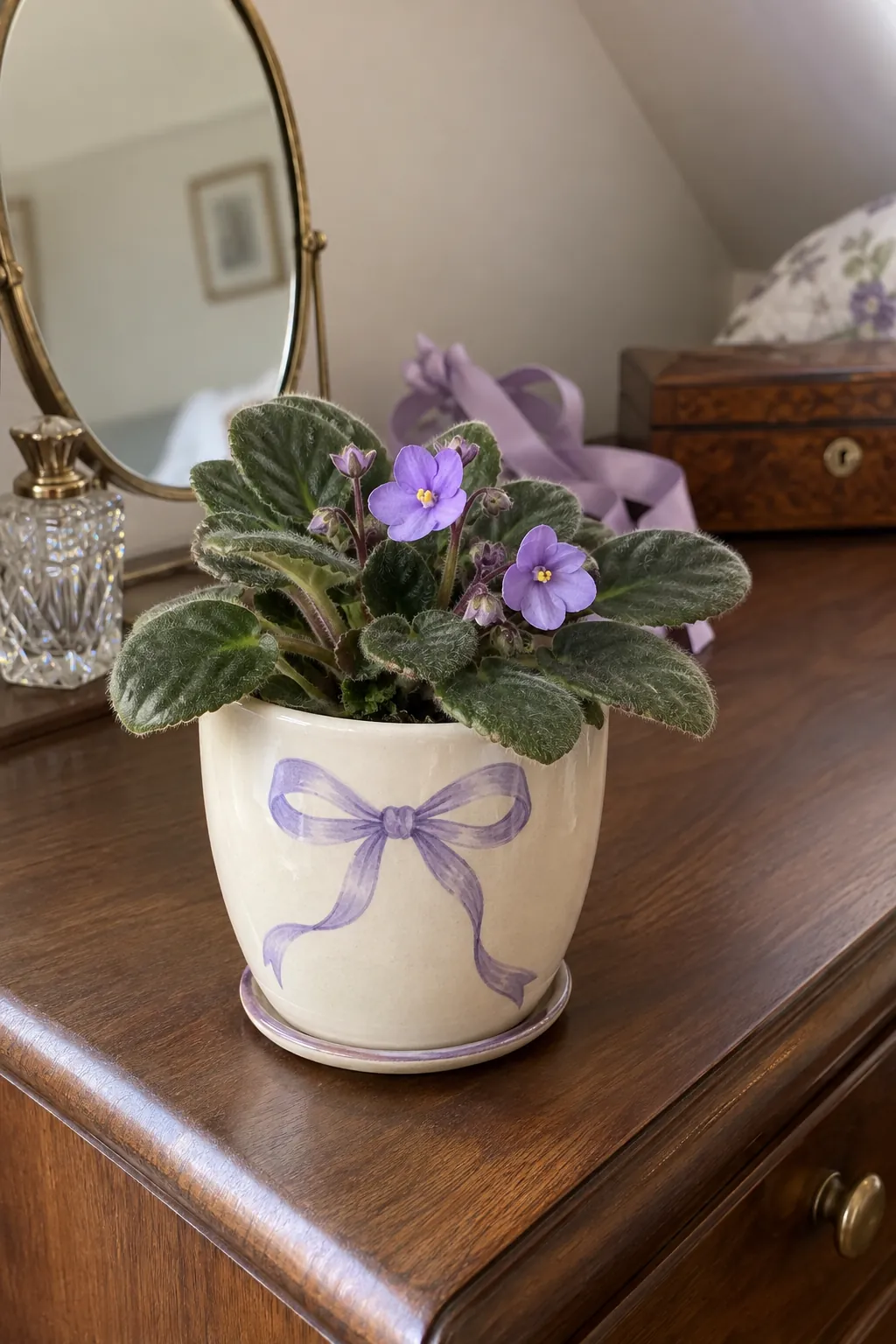
A lavender bow on ivory
One painted bow can do more than a pot covered in tiny decorations. Place it slightly above the middle and let the ribbon tails curve toward the base, using a fine brush only for the final edges. This is a lovely gift option when you know the recipient likes soft colors but do not know the rest of their room palette.
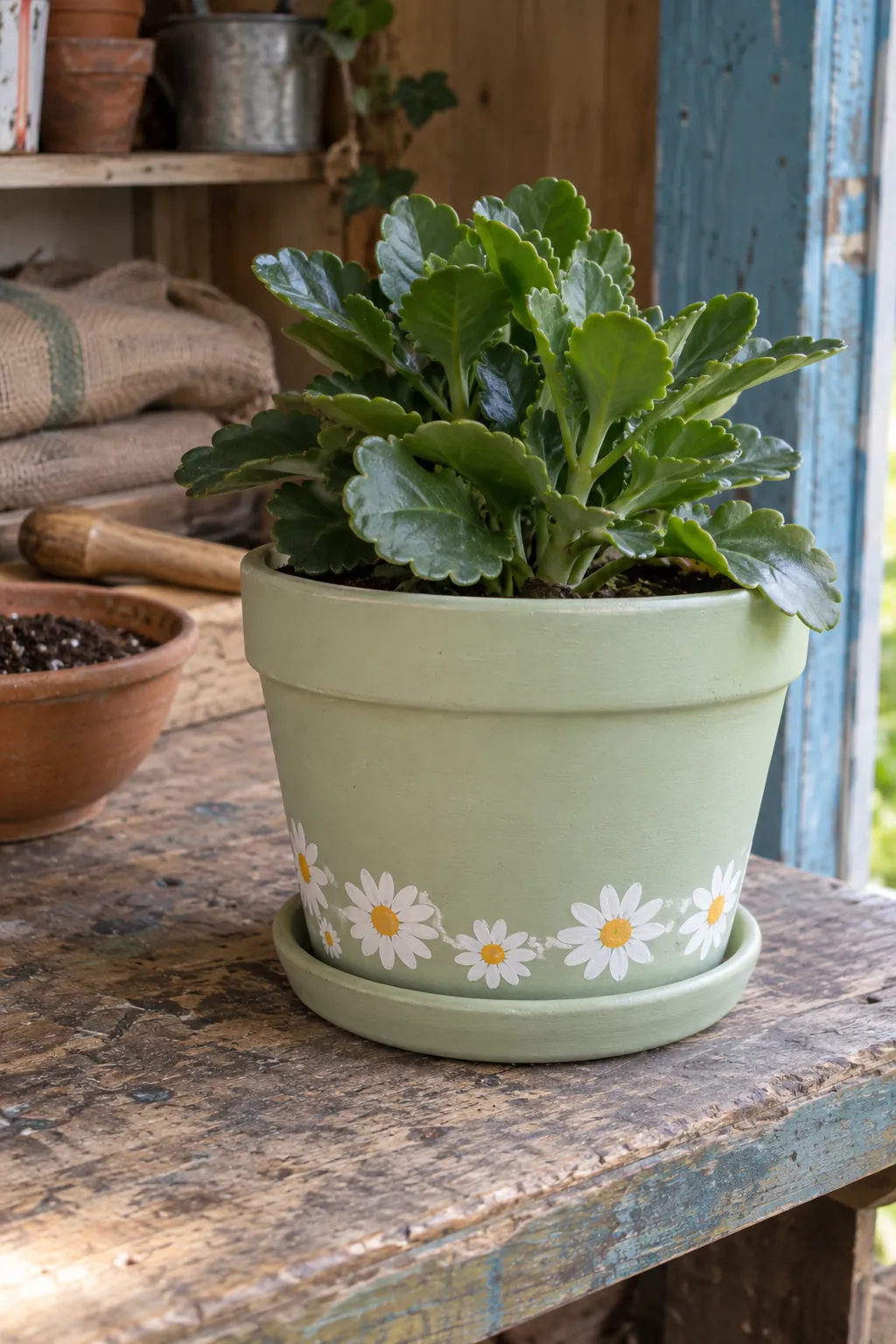
Daisy petals around the base
A low border of daisies leaves the upper pot open and calm. Stamp the petal shapes with a small rounded brush, then return with a smaller tool for the centers after the white paint dries. Those repeated flowers work especially well on a wider container where the pattern has room to travel.
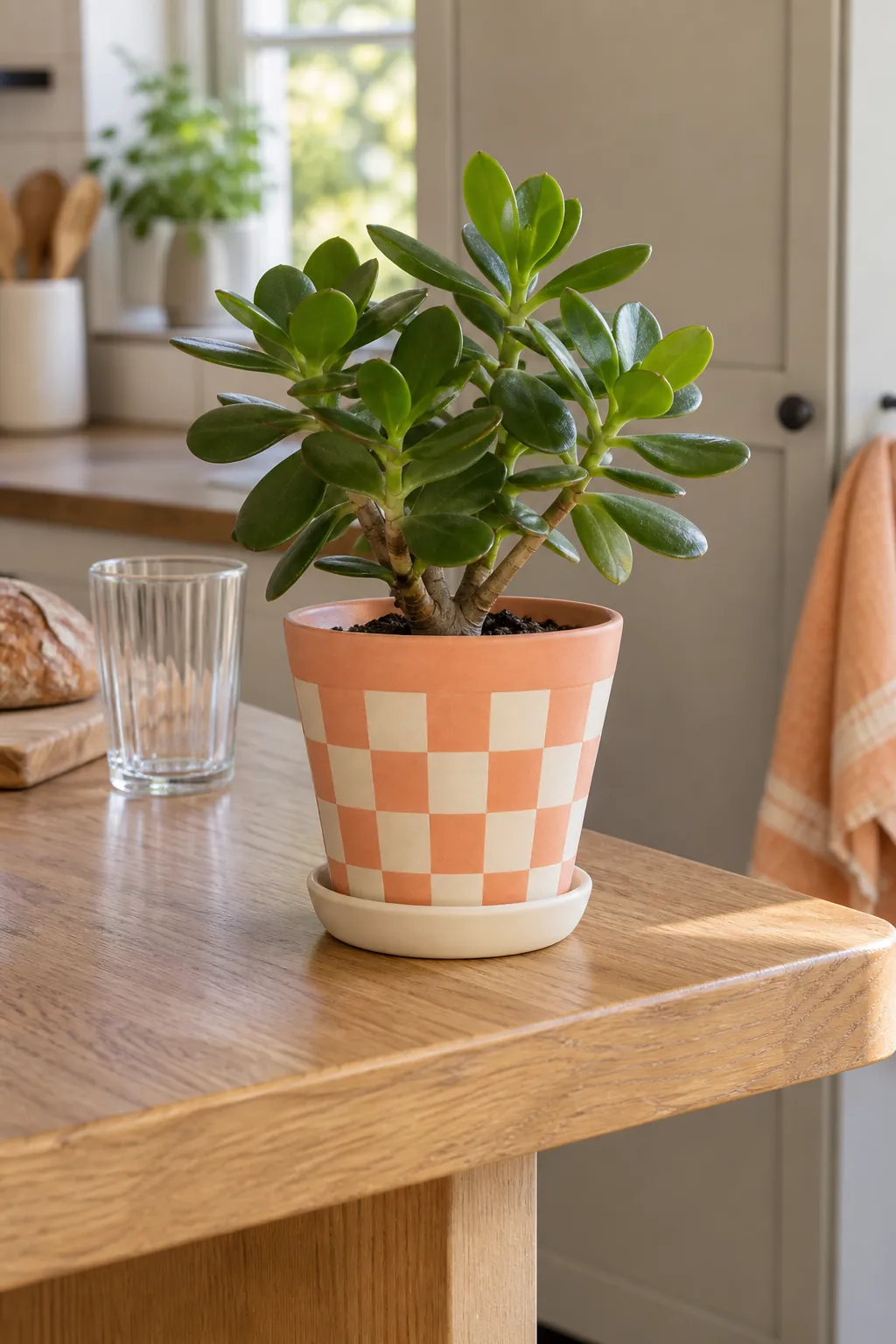
Peach checkerboard
A peach and cream checkerboard brings a little picnic energy to an indoor shelf. Mark the spacing lightly before painting, because a tapered pot needs narrower checks toward its base to keep the pattern balanced. If exact squares feel fussy, gently irregular blocks can still look intentional when their size stays consistent.
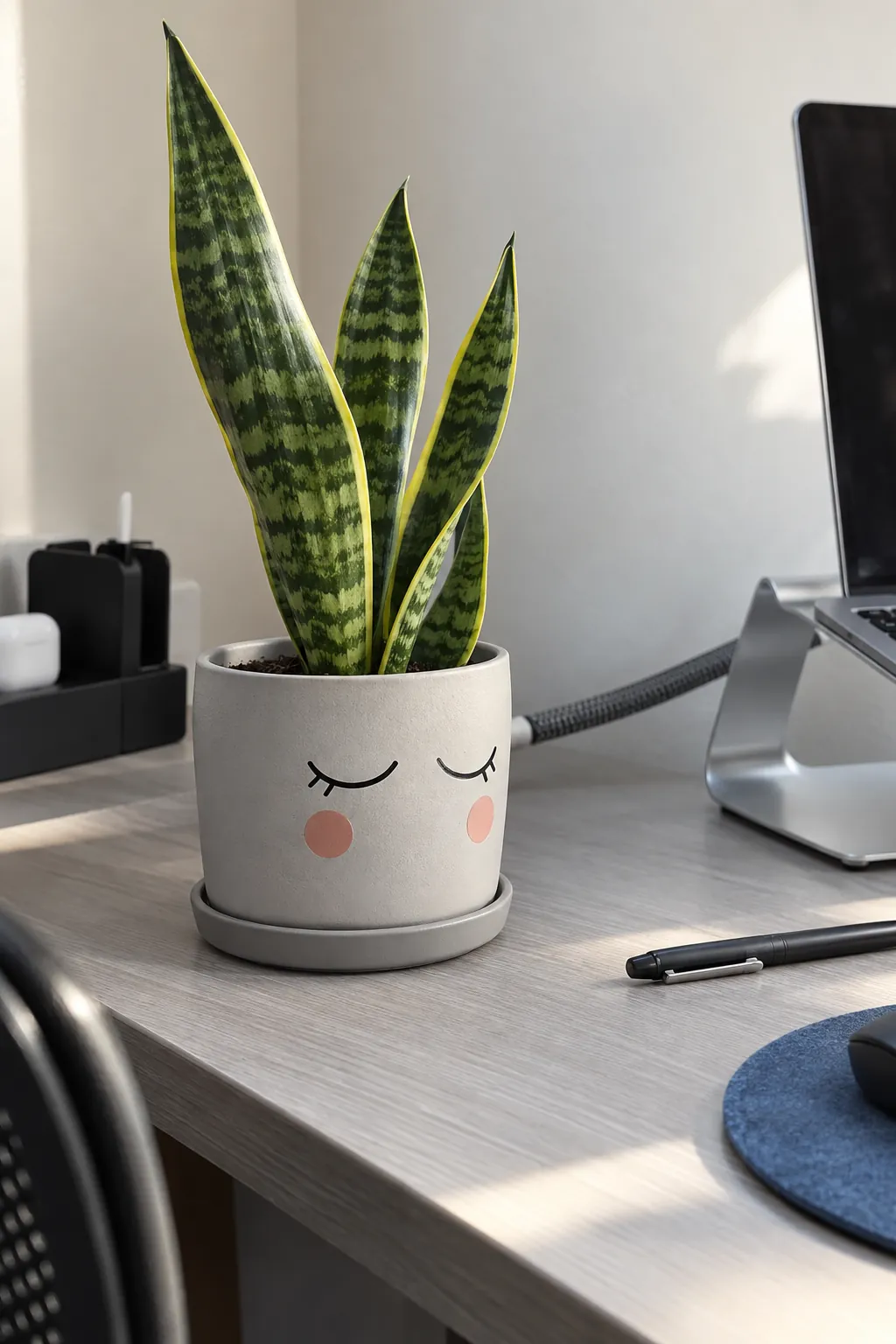
Sleepy eyes and rosy cheeks
Two closed eyes and a pair of blush circles are enough to create a face. Put the features on the front third of the pot and check them from normal viewing distance before adding eyelashes. Choose an upright plant so leaves do not obscure the expression or give the face an accidental green moustache.
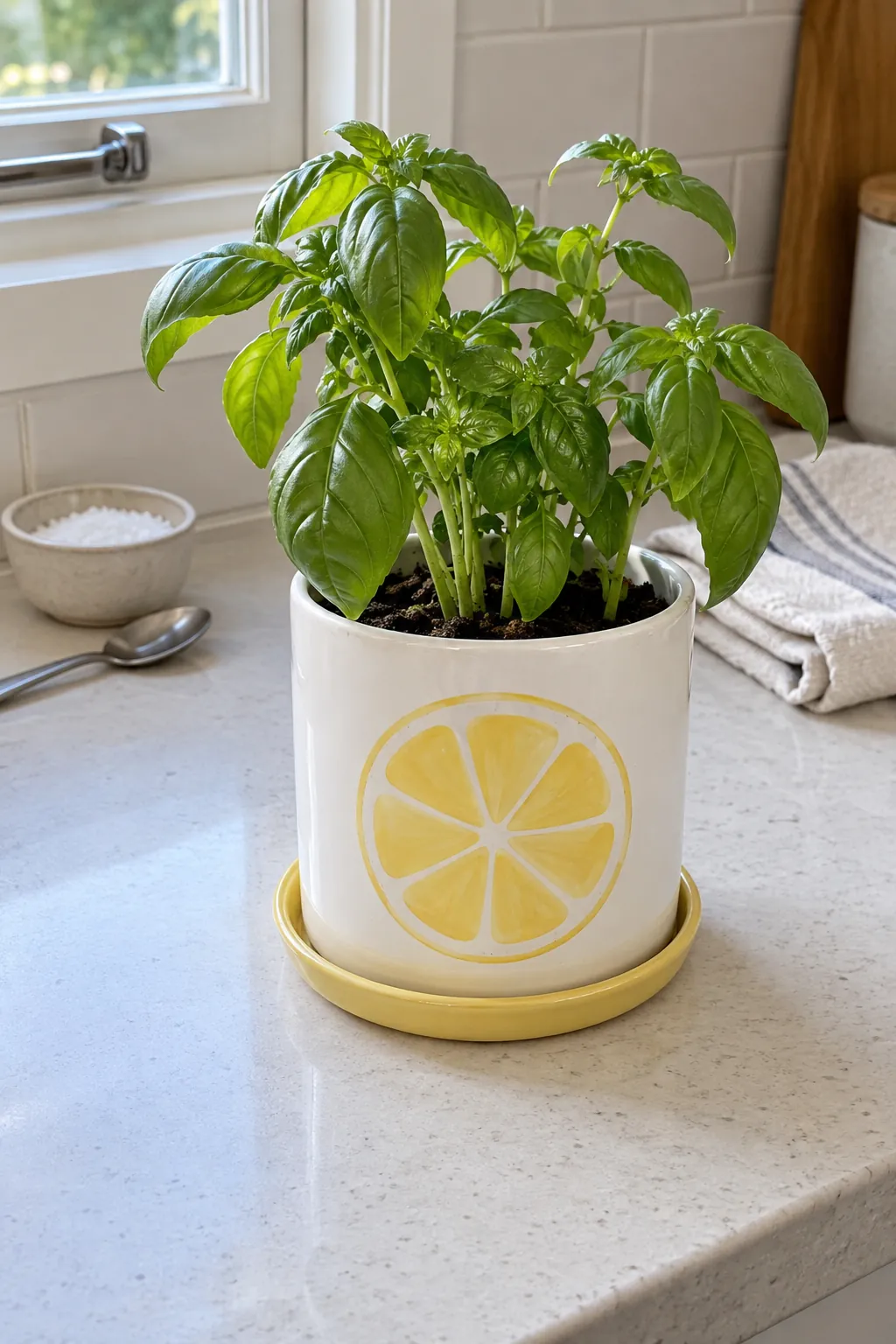
A lemon slice accent
A single lemon slice makes a white pot feel fresh without a busy allover print. Paint a pale circle first, divide it into wedges, and keep a thin white border between the segments. Beside a kitchen herb, that bright accent reads clearly even when the container is only a few inches wide.
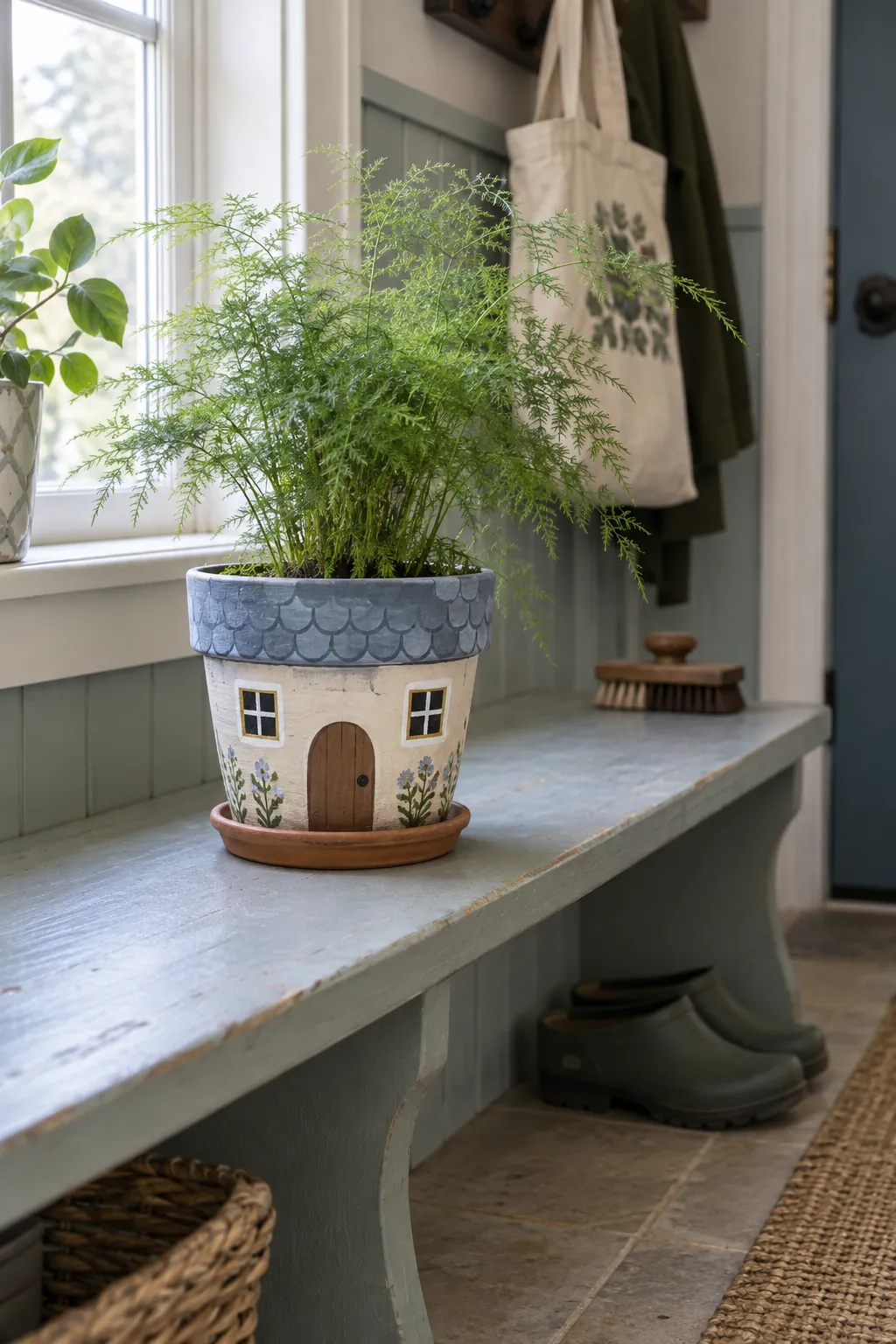
Little cottage windows
Turn the pot into a miniature cottage with painted windows and a door. Set the door above the base so it is not swallowed by the saucer, and use the rim as a simple roof band. Avoid adding a physical roof across the opening, since the plant still needs access for watering and inspection.
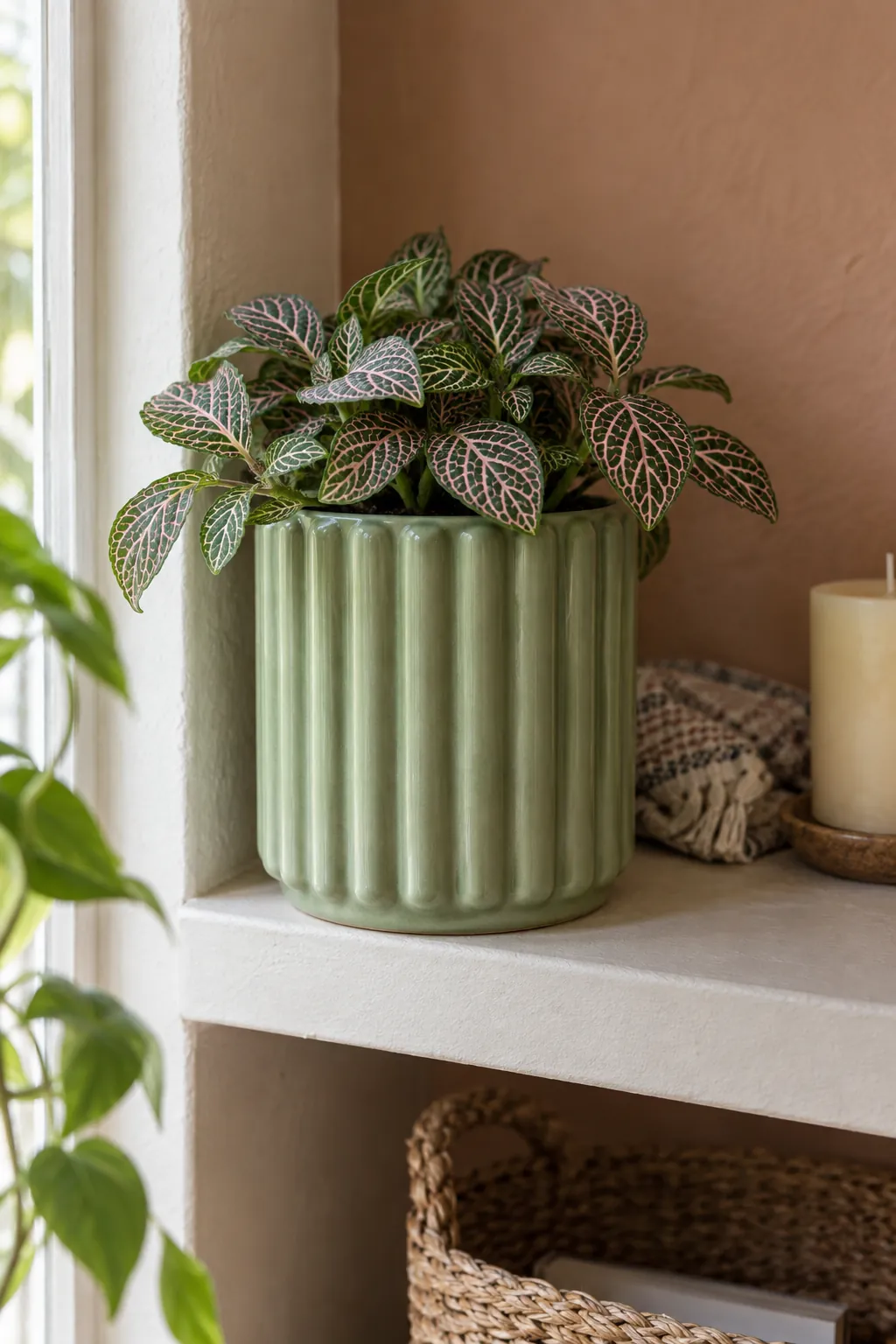
Sage green vertical ripples
Raised vertical ripples make quiet cute planters that rely on shape instead of a picture. A glazed ceramic version is the practical choice for frequent wiping, while a decorative sleeve should stay away from splashes. Low growing foliage softens the top without hiding the rhythm of the sides.
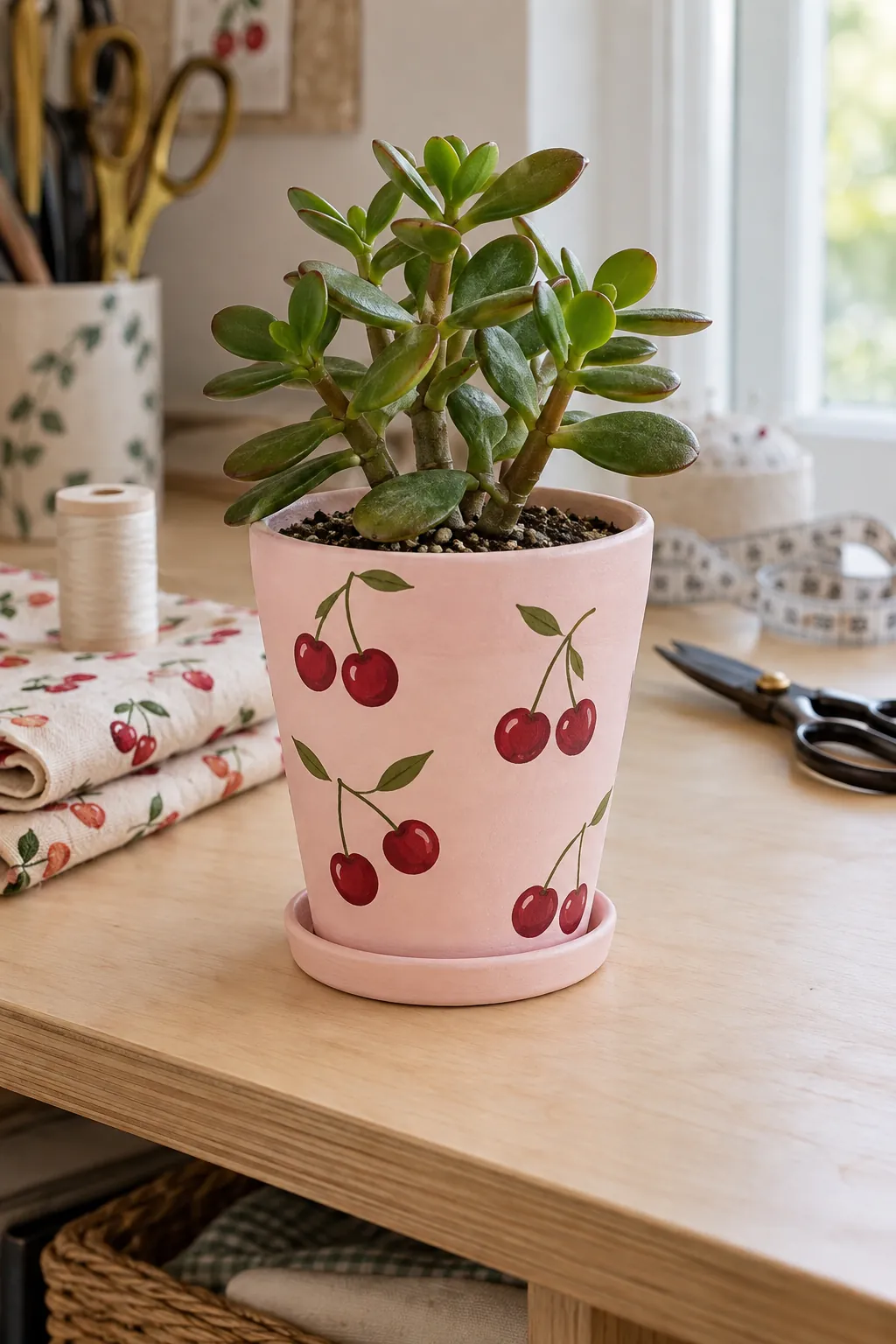
Cherry pairs on pale pink
Paired cherries give small pot painting ideas a clear repeating unit. Paint each stem before the fruit so the red circles can cover any untidy joins. Space the pairs farther apart than you first think; a little empty pink makes each tiny motif much easier to read.
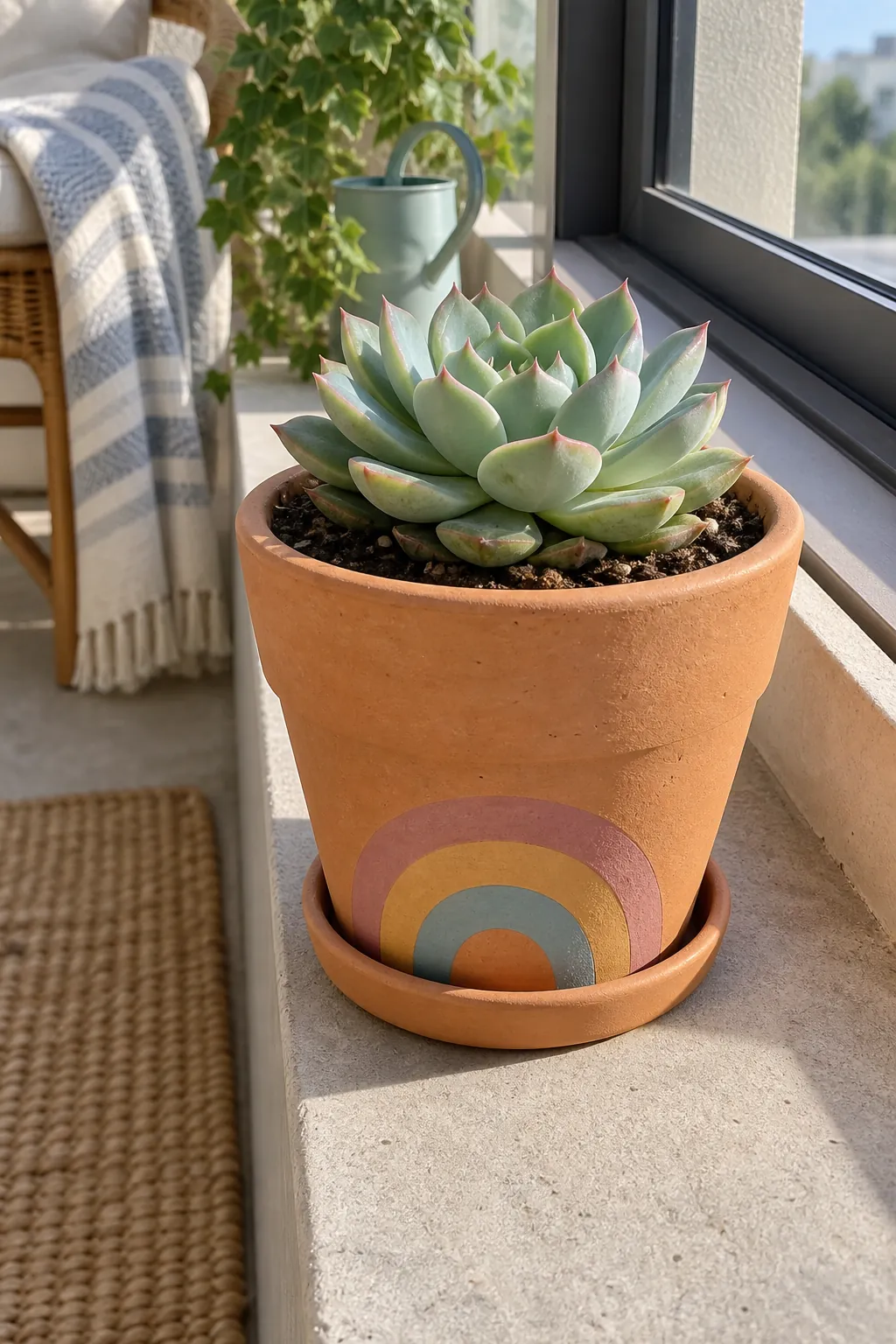
A rainbow tucked at the bottom
A small rainbow rising from the base creates a cheerful focal point while most of the clay stays visible. Limit it to three muted bands to keep the brushwork manageable on a curved surface. Use a matching plain saucer rather than extending the rainbow across two pieces that will rarely stay aligned.
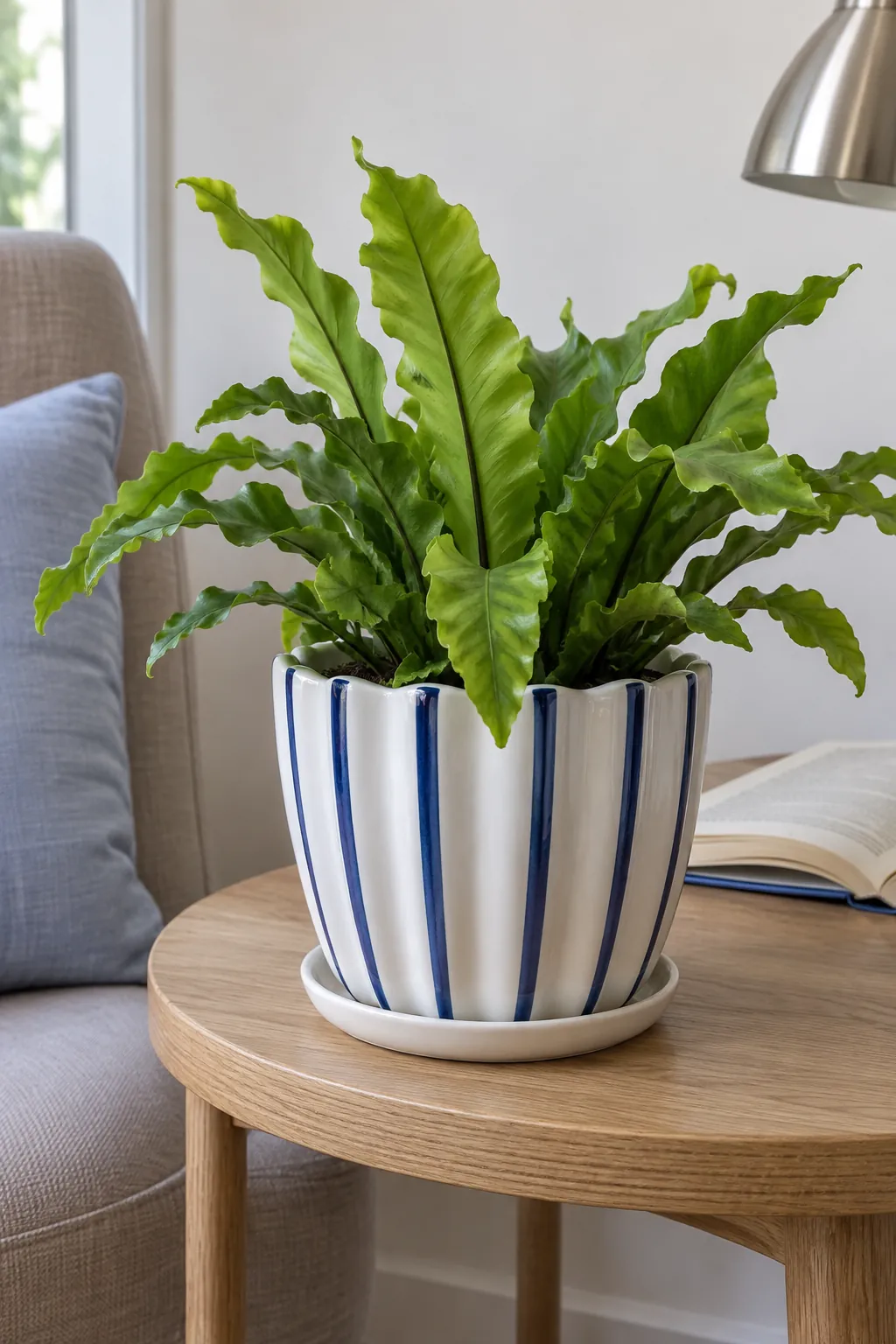
Blue ribbons on a fluted pot
Narrow blue stripes emphasize the folds of a fluted container. Follow alternate ridges instead of filling every groove, which keeps the effect closer to ribbons than a dense barcode. Check that the base sits flat before buying a sculptural pot, because a pretty silhouette does not compensate for a wobble on a narrow sill.
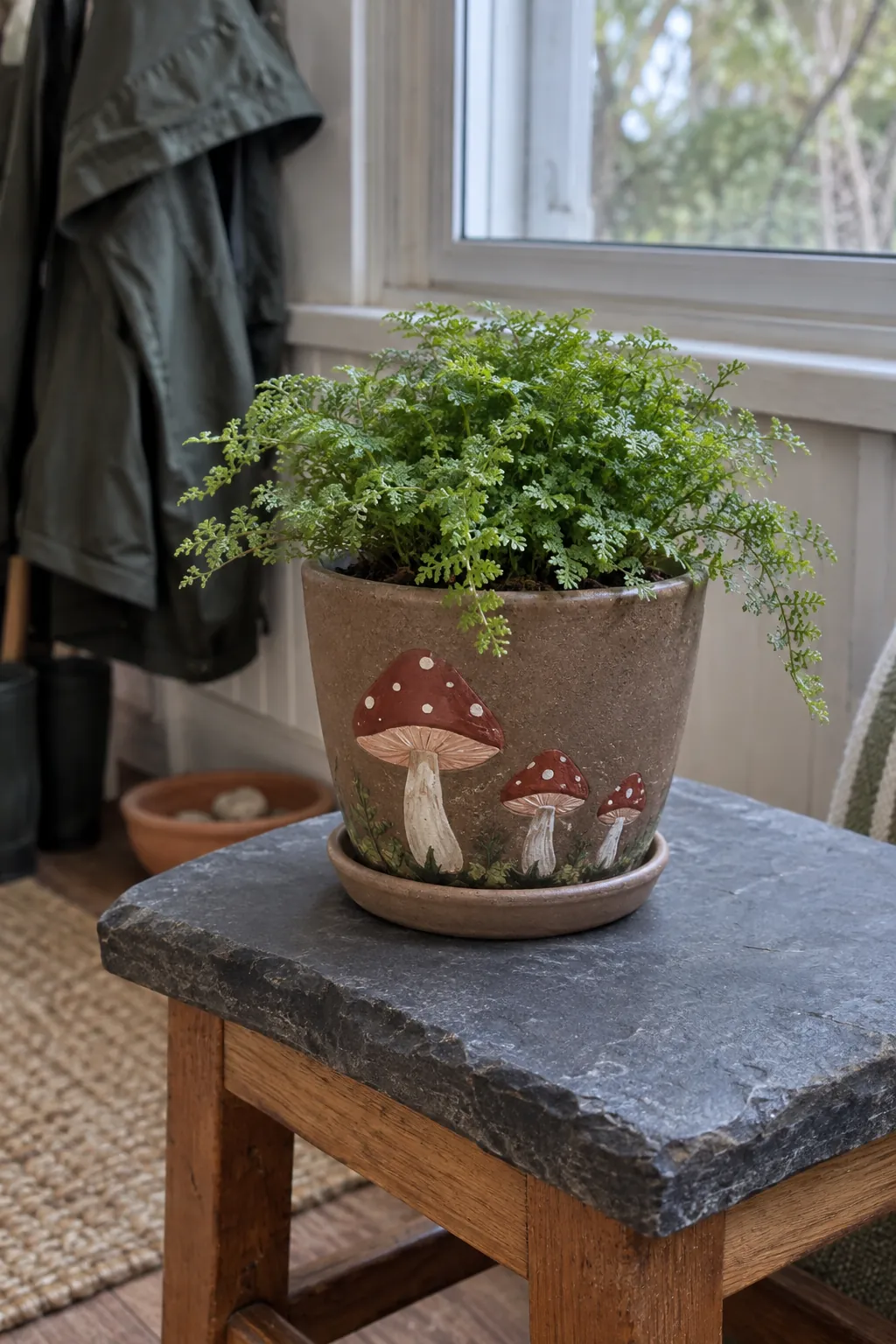
A tiny mushroom garden
Paint a cluster of mushrooms near one side and vary their cap heights. The smallest stems only need a confident line, while one larger cap can carry a few cream spots. A mossy looking houseplant nearby completes the woodland feeling without requiring a layer of decorative moss over soil that needs to dry.
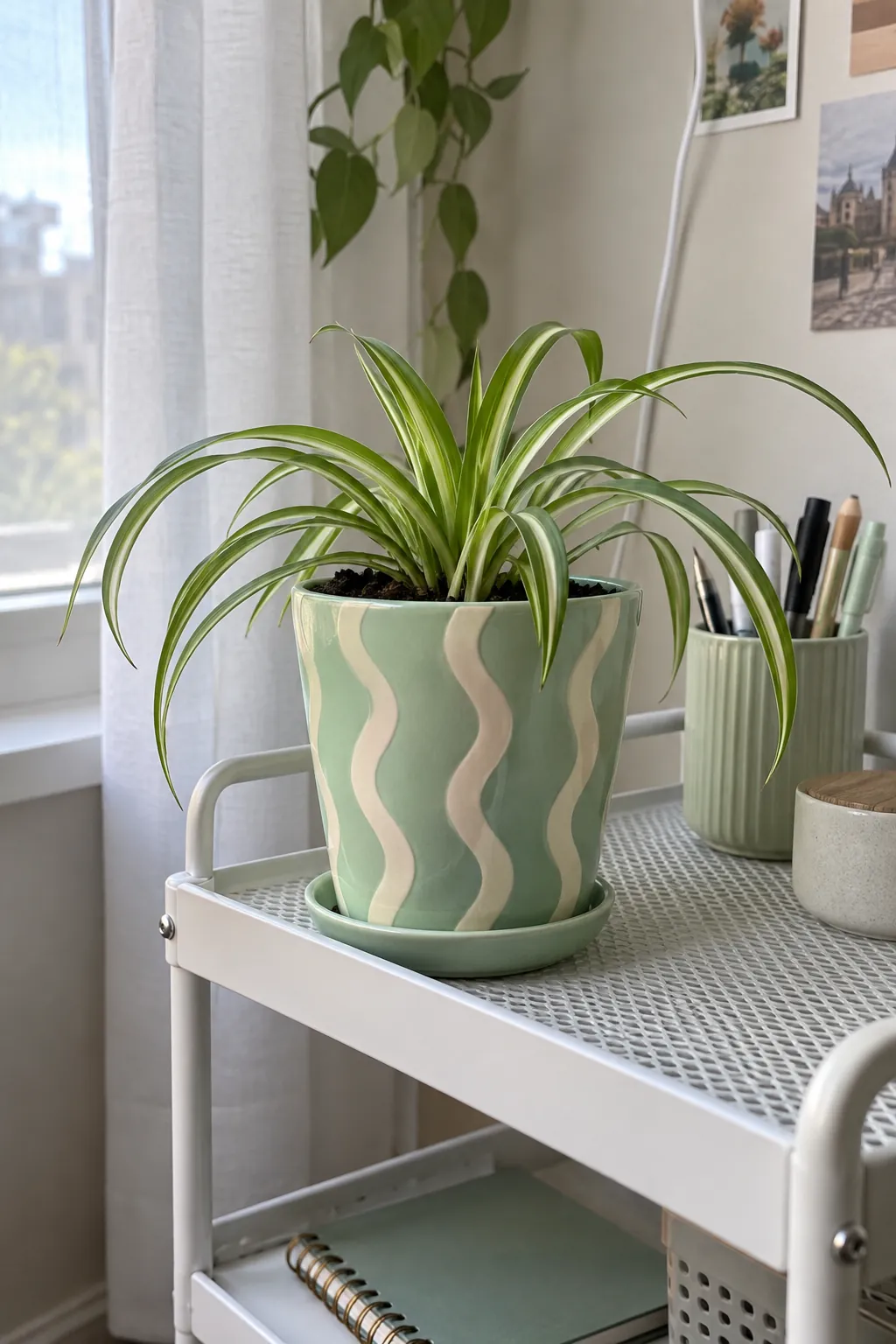
Mint and cream wiggles
Loose vertical wiggles are an easy way to make plant pot art without measuring a grid. Begin at the rim and let each line wander a little differently as it travels down. A mint base with cream strokes stays gentle enough for a busy desk, even when the marks are deliberately uneven.
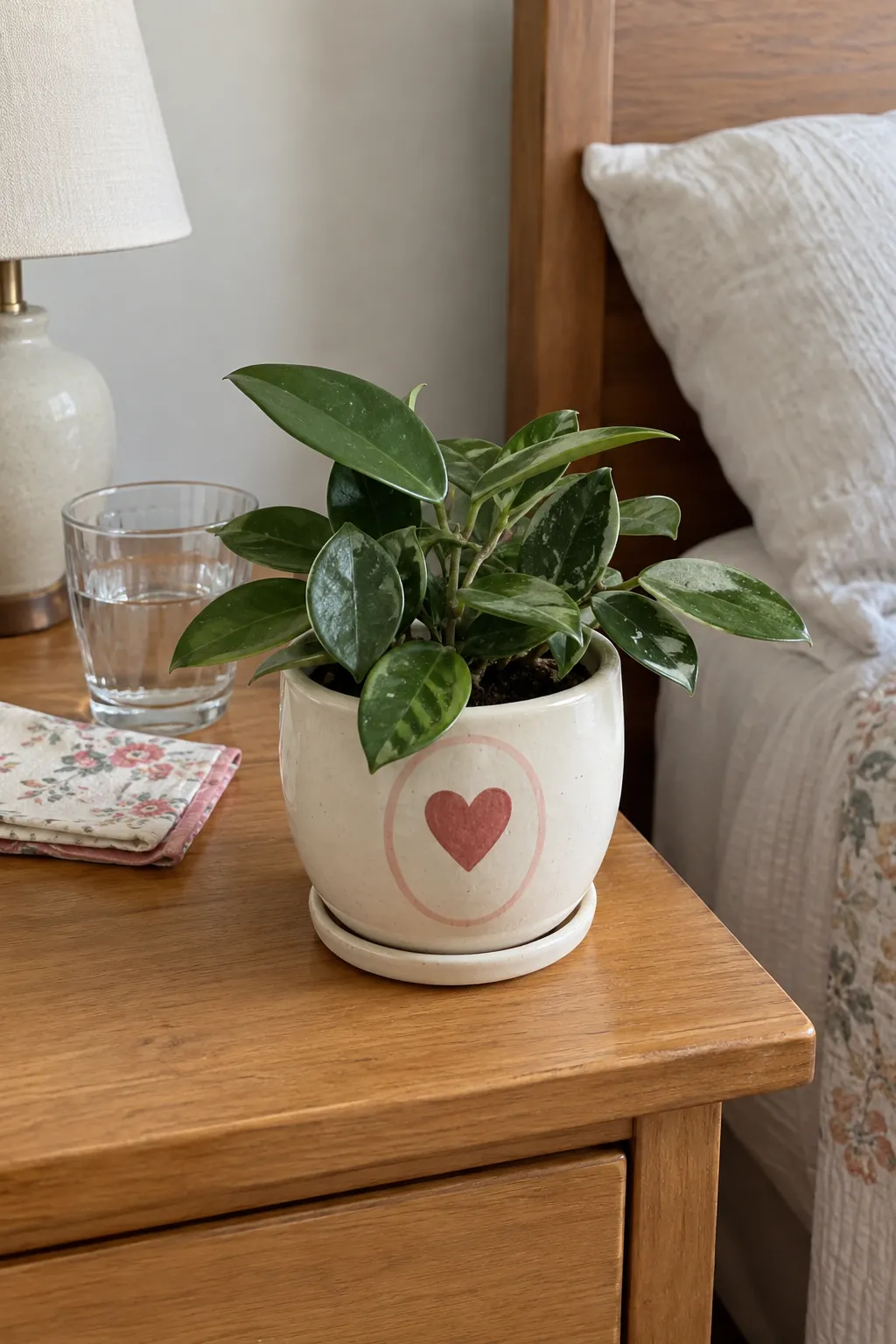
A heart shaped front medallion
A single heart set inside a shallow oval border gives the pot a keepsake quality. Test the heart on paper at actual size before transferring it, because a motif that looks generous on a flat page may shrink visually around the curve. Leave the back plain if the container will live against a wall.
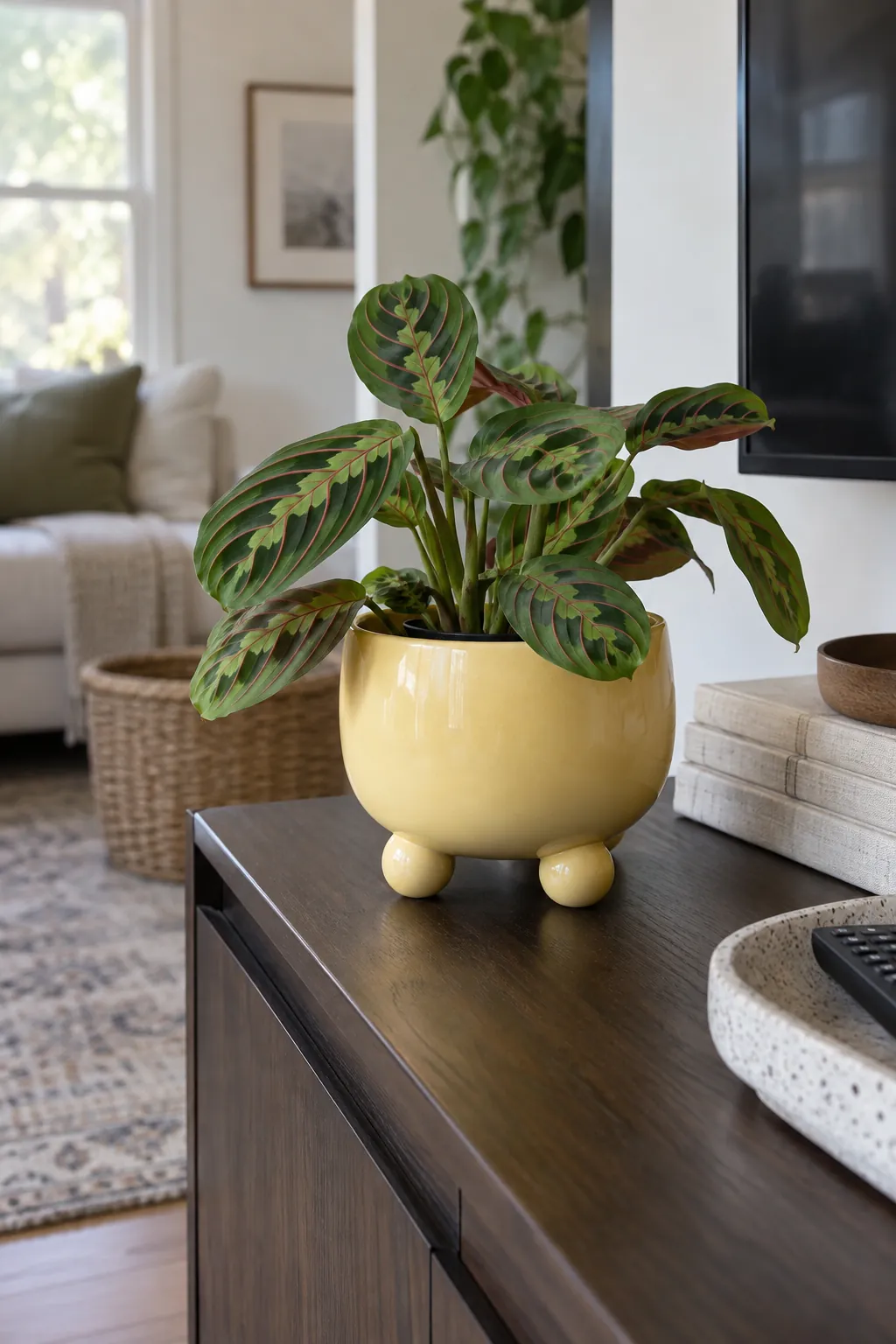
Butter yellow beaded feet
Small rounded feet lift a simple pot into something with personality. Look for feet that are part of a properly fired vessel or a stable manufactured base, rather than gluing craft beads underneath a heavy planted container. A separate removable inner pot keeps watering manageable without relying on the decorative feet for drainage.
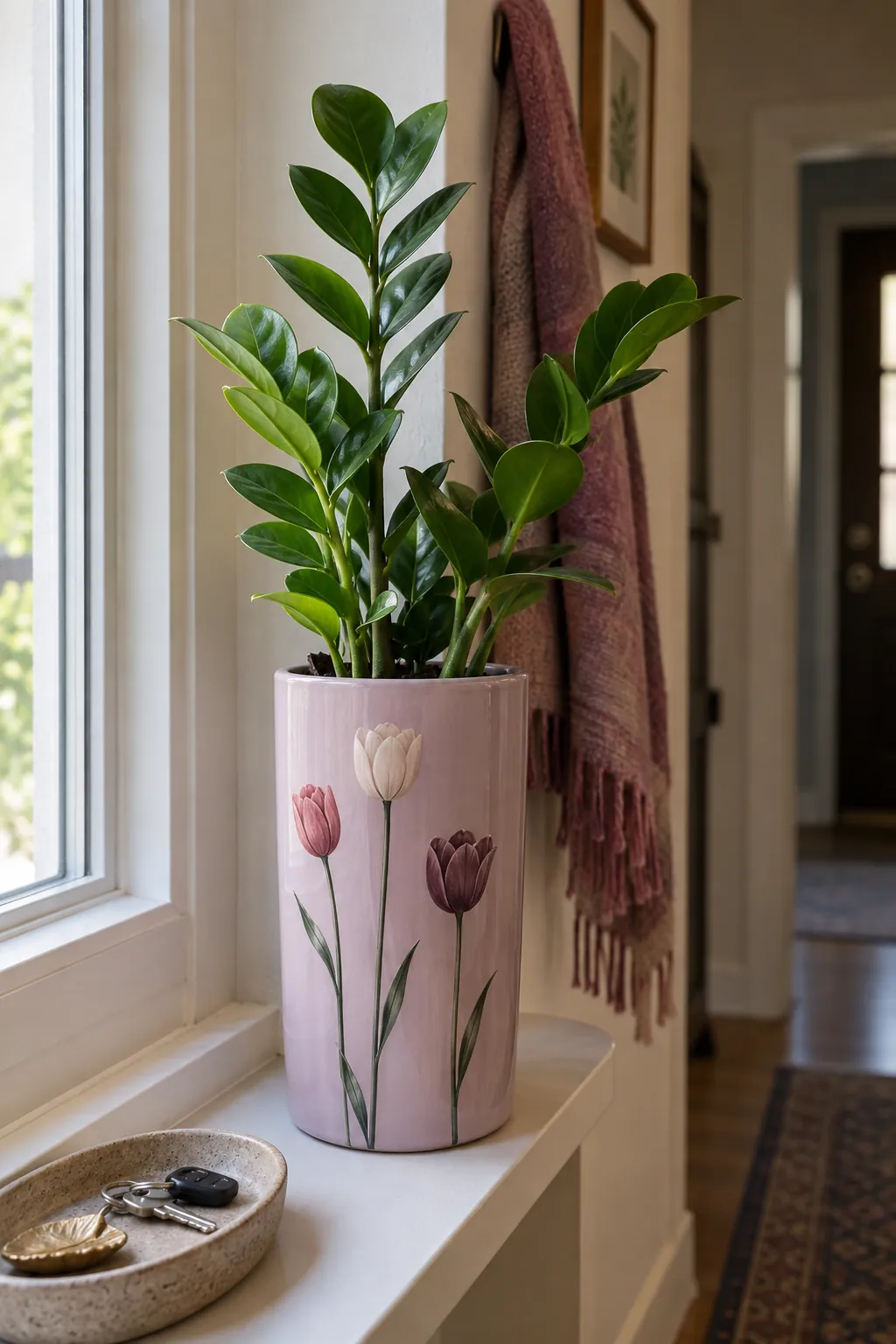
Tiny tulips with tall stems
A few tall tulips create a pattern that suits a slender pot. Alternate their heights and stop the stems before they all converge into one heavy green band. This is one of those flower pot painting ideas with an aesthetic that changes dramatically between bright primary flowers and dusty mauve blooms.
An orange peel texture
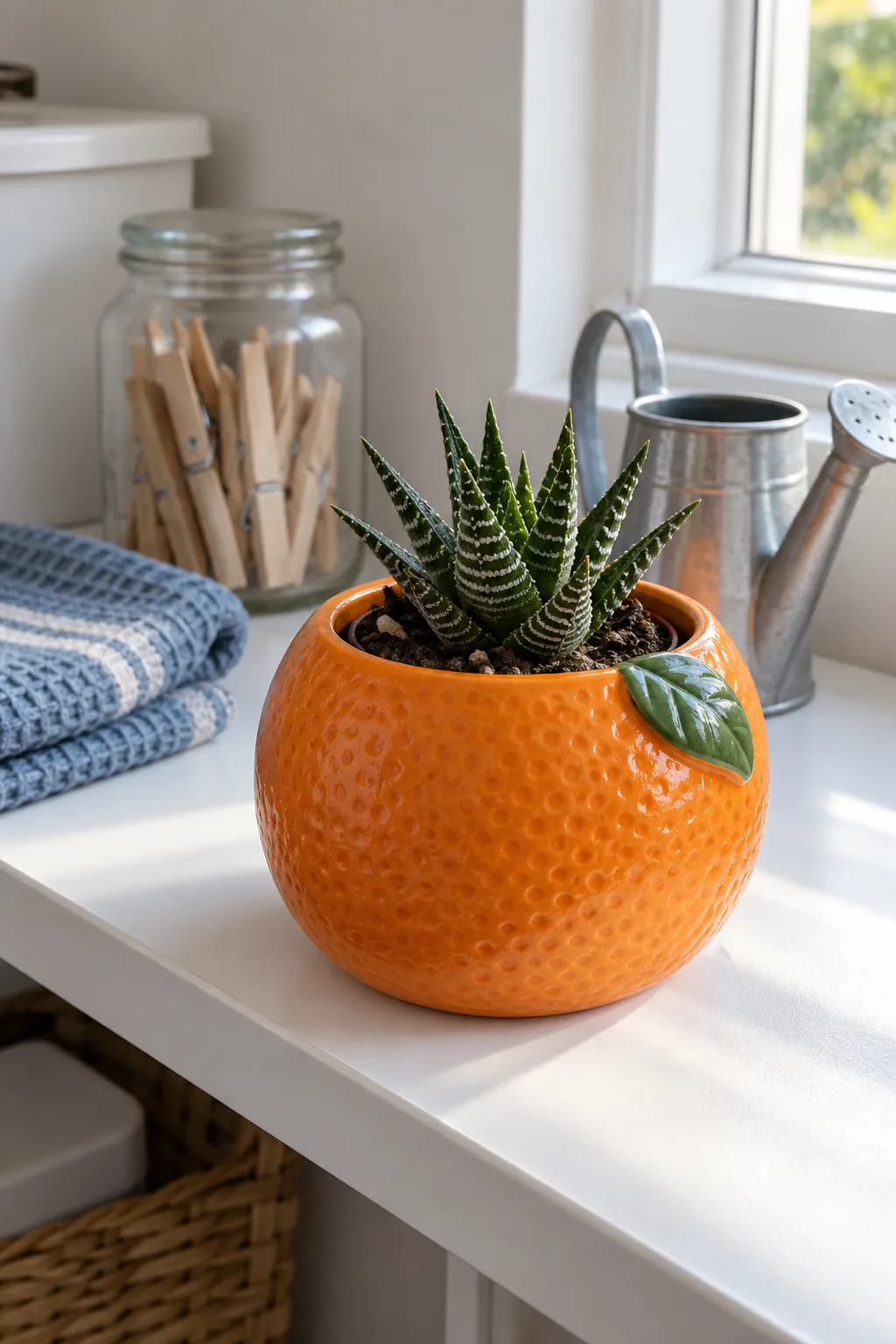
A rounded orange planter brings a fruit bowl feeling to a sunny plant corner. Shallow dimples and a small green leaf detail sell the idea more convincingly than a perfectly smooth orange sphere. Keep the opening wide enough to remove the nursery pot, since narrow novelty containers can trap roots and make routine care awkward.
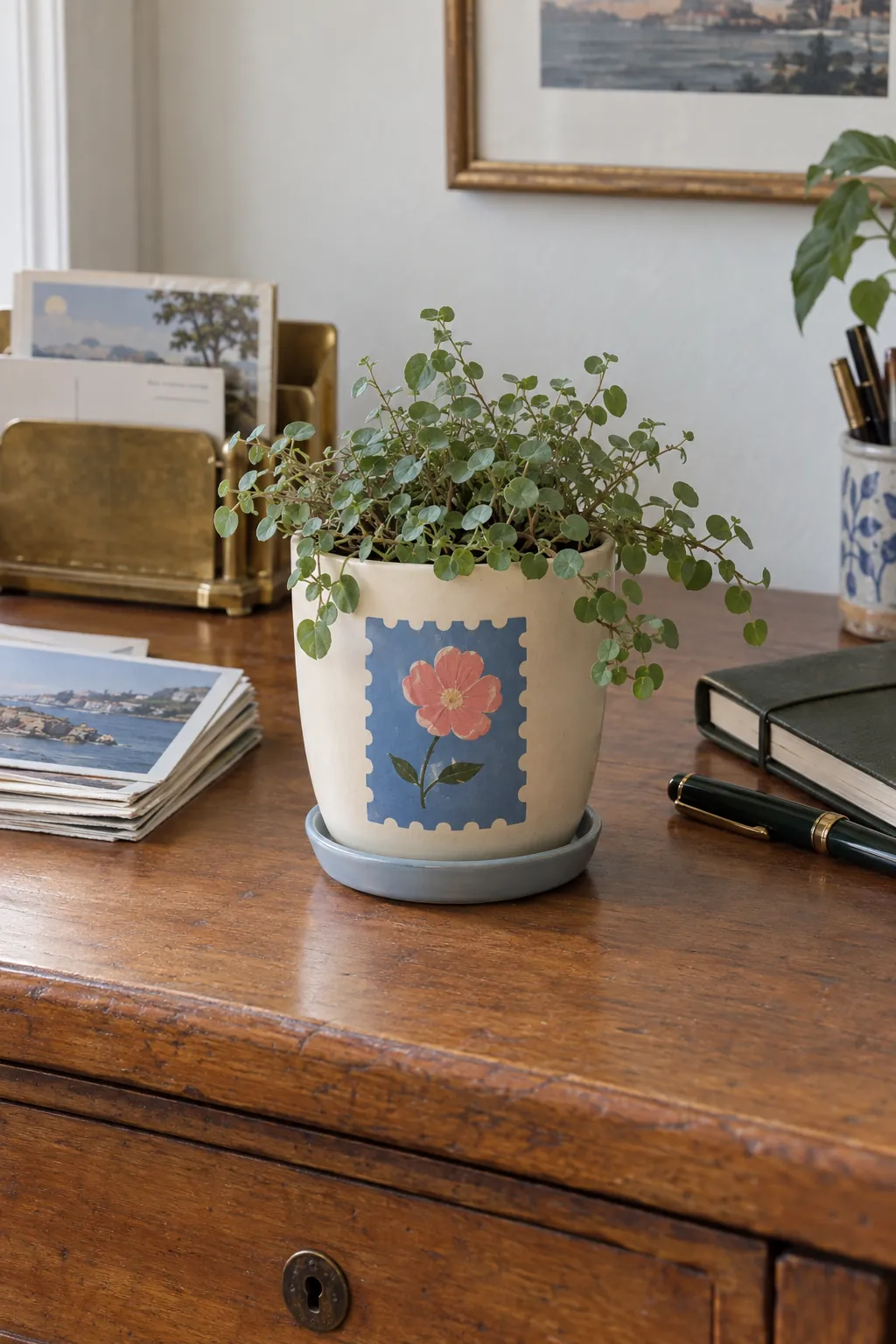
Postage stamp flower frame
A painted scalloped rectangle turns one little flower into a postage stamp motif. Keep the frame on the front and use a single bloom inside it so the design does not depend on tiny lettering. The result feels collected and personal, especially on a pot that sits beside postcards or a travel journal.
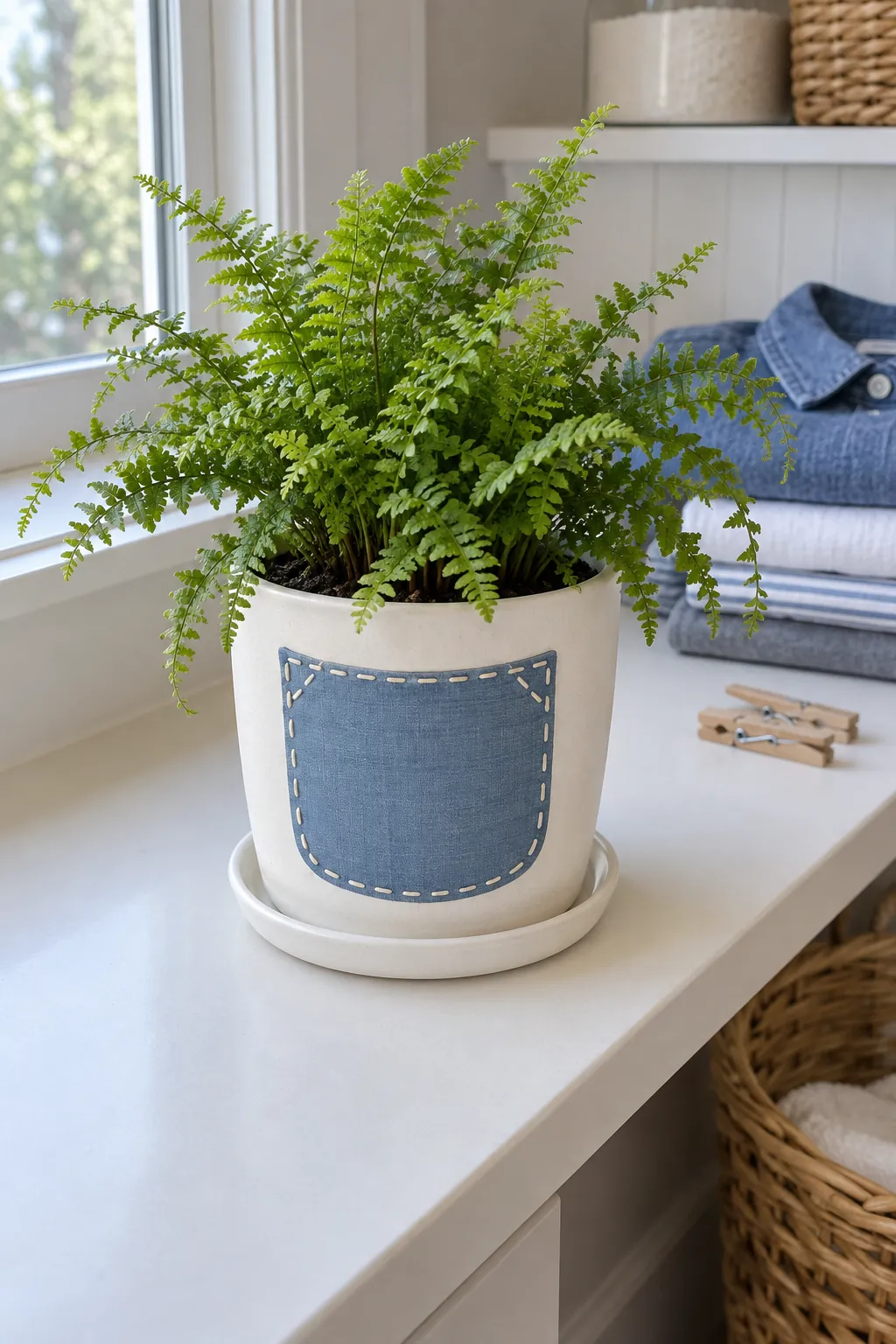
A stitched pocket illusion
Short painted dashes can suggest stitching around a pale blue pocket shape. Round the pocket corners and leave the middle empty, allowing the illusion to stay legible on a small container. Treat it as paint on a solid pot rather than an actual fabric pocket, which could catch water and stay damp.
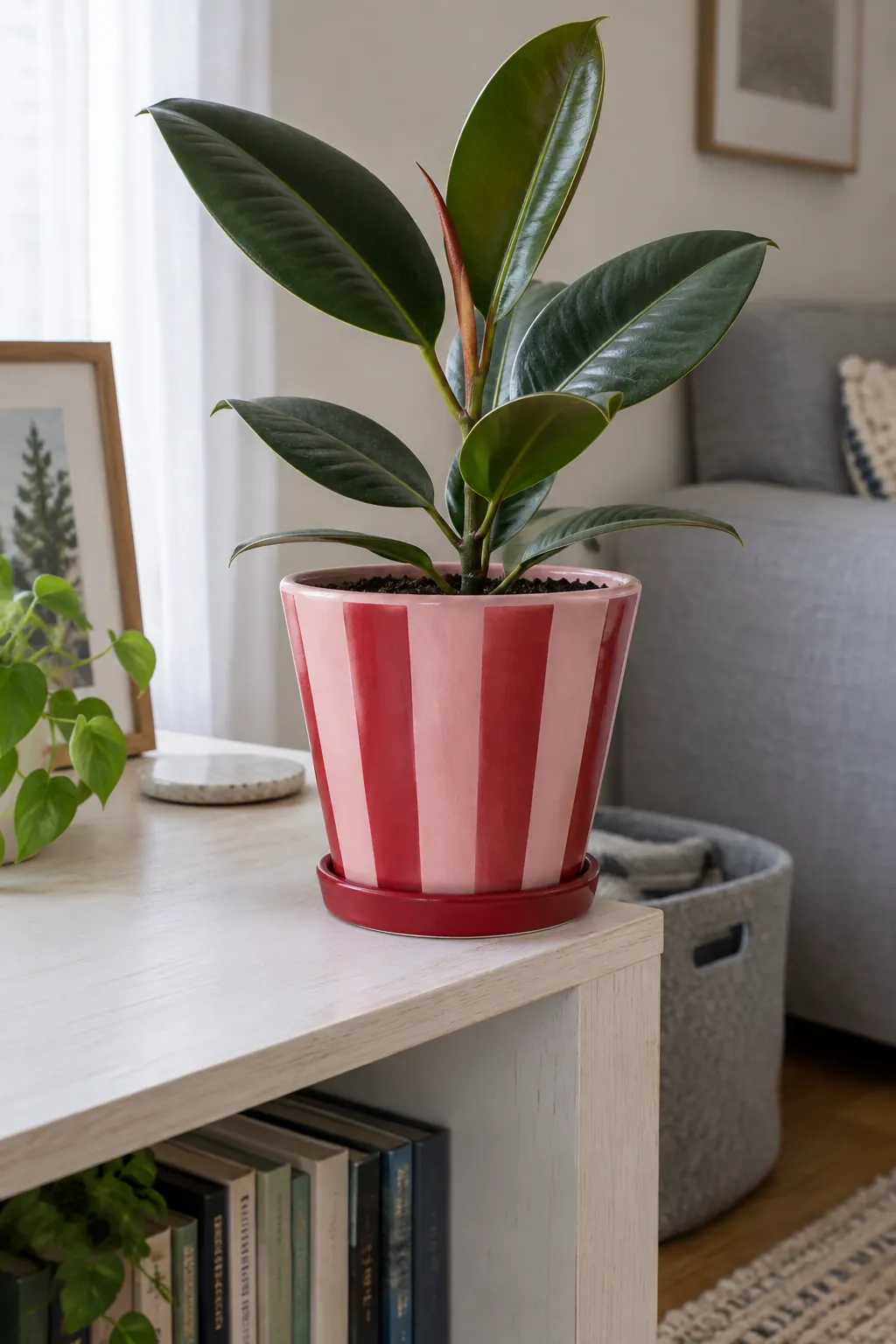
Pink and red candy stripes
Broad candy stripes turn a basic tapered pot into a confident color accent. A narrow brush helps clean the edges, but the real secret is letting one stripe dry before working against it. Pair the lively sides with simple green leaves so neither the pot nor the foliage has to compete with a second pattern.
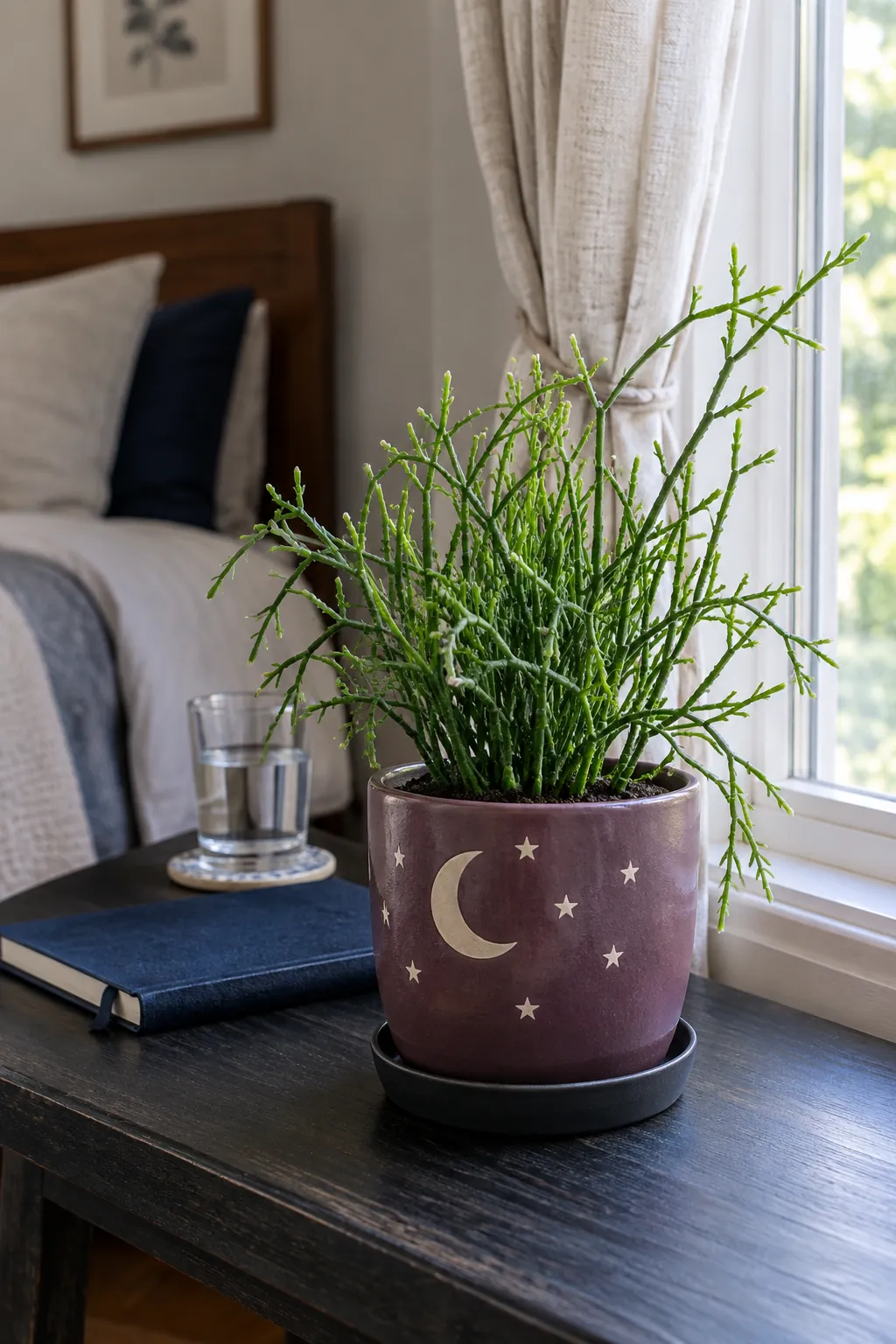
A crescent moon and tiny stars
A pale crescent on a muted plum background feels sweet without becoming a whole galaxy mural. Add only a handful of star marks and vary their size, leaving space around the moon. Set the finished pot somewhere with suitable daytime light for its plant; a nighttime theme is decoration, not a care recommendation.
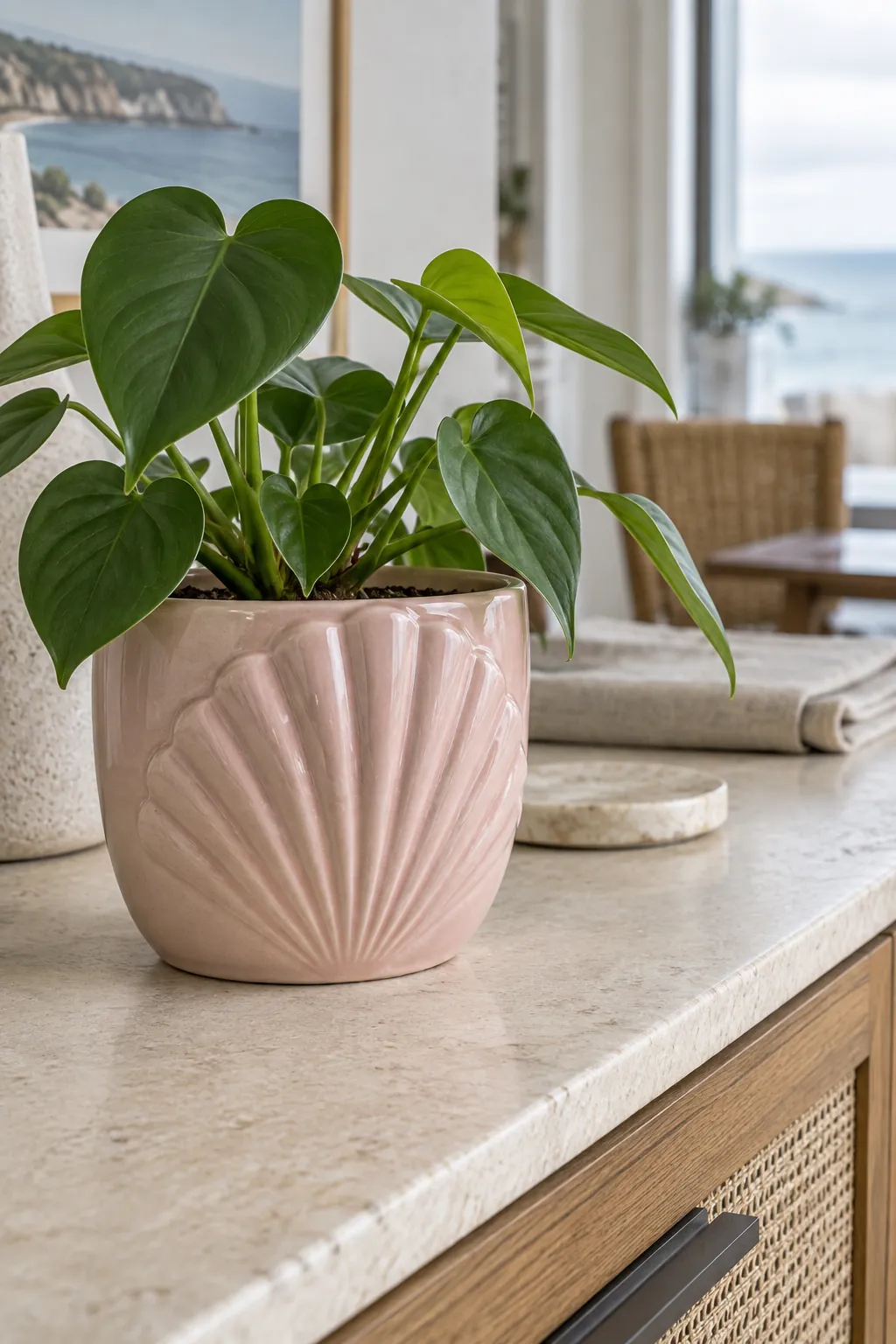
Shell pink fan relief
A fan shaped relief brings a seaside reference to a pot without loose shells or complicated glue. Let light graze the ridges by placing it near the side of a window rather than pushing it deep into a dark shelf. A pale pink glaze keeps the relief visible while remaining easy to pair with stone or woven textures.
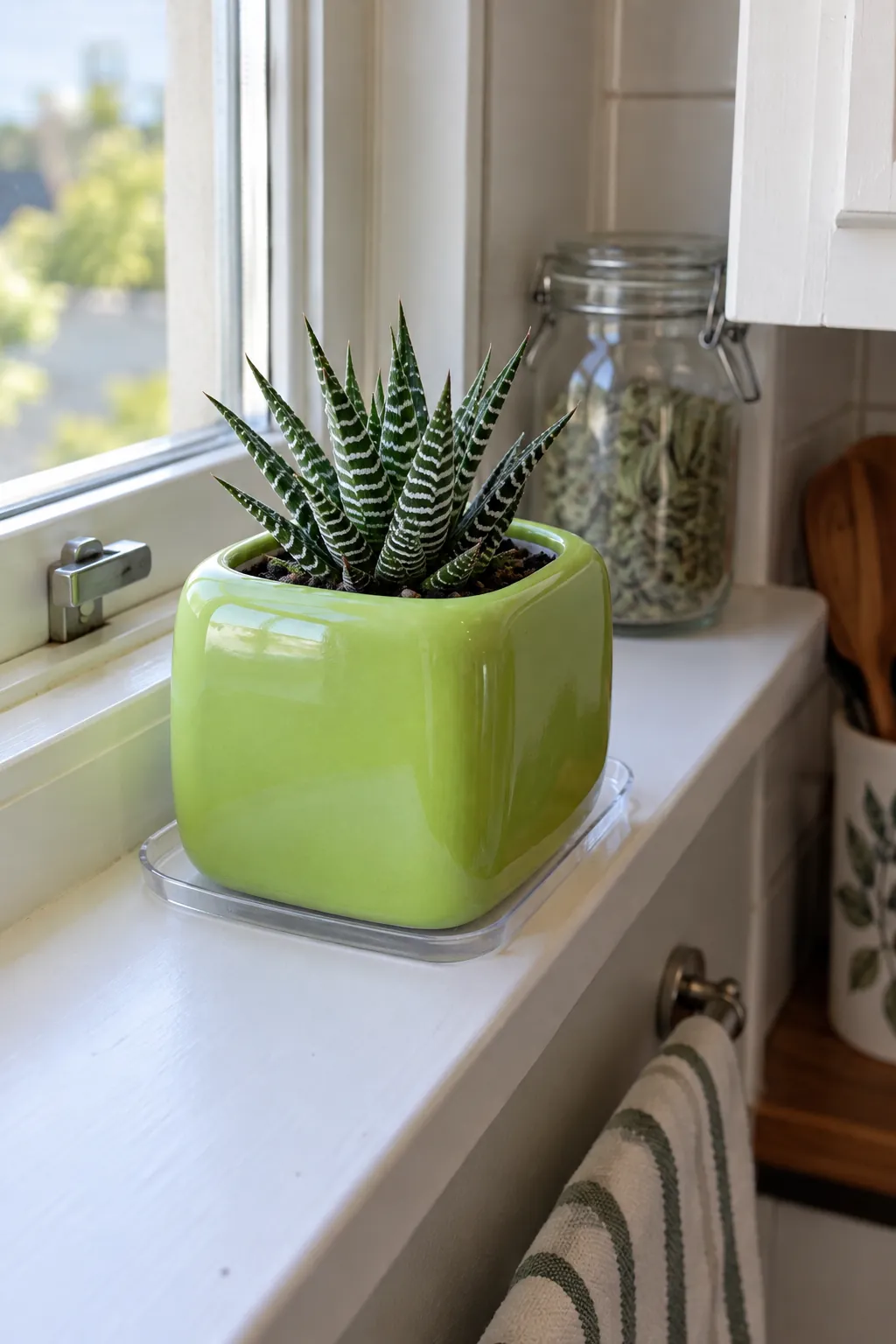
An apple green rounded cube
A rounded cube in apple green is a useful break from flower and face motifs. Its flat front takes up little visual space, while the curved corners make the shape feel softer than a sharp square box. Measure the internal opening before choosing a plant, because thick walls can leave much less growing room than the exterior suggests.
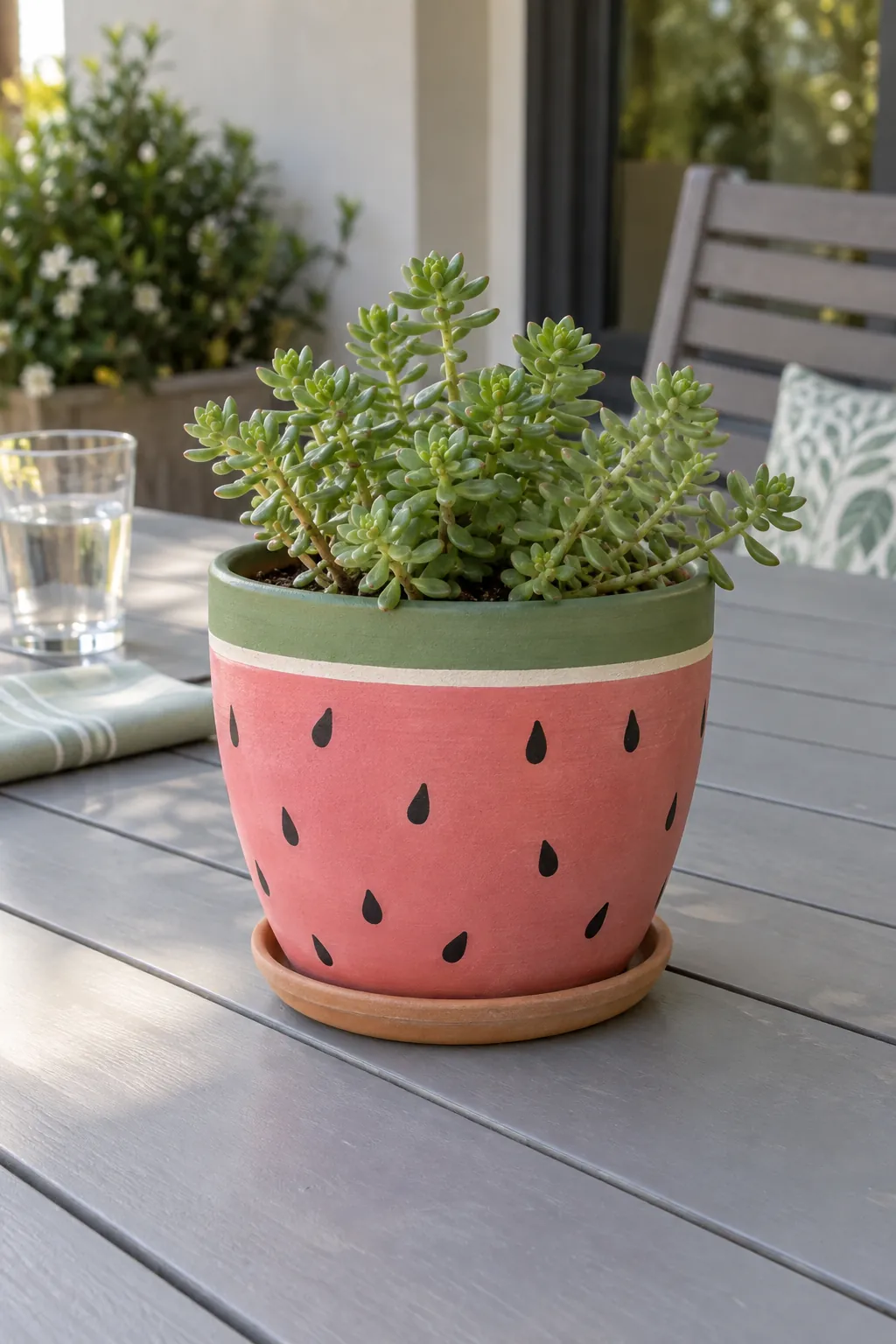
Watermelon seed scatter
A dusty pink body, green rim, and sparse black seeds hint at watermelon without copying an entire slice. Angle the seeds in different directions and avoid lining them up like polka dots. For plant pot painting ideas that are easy DIY projects, this combination delivers a recognizable theme with only a few simple marks.
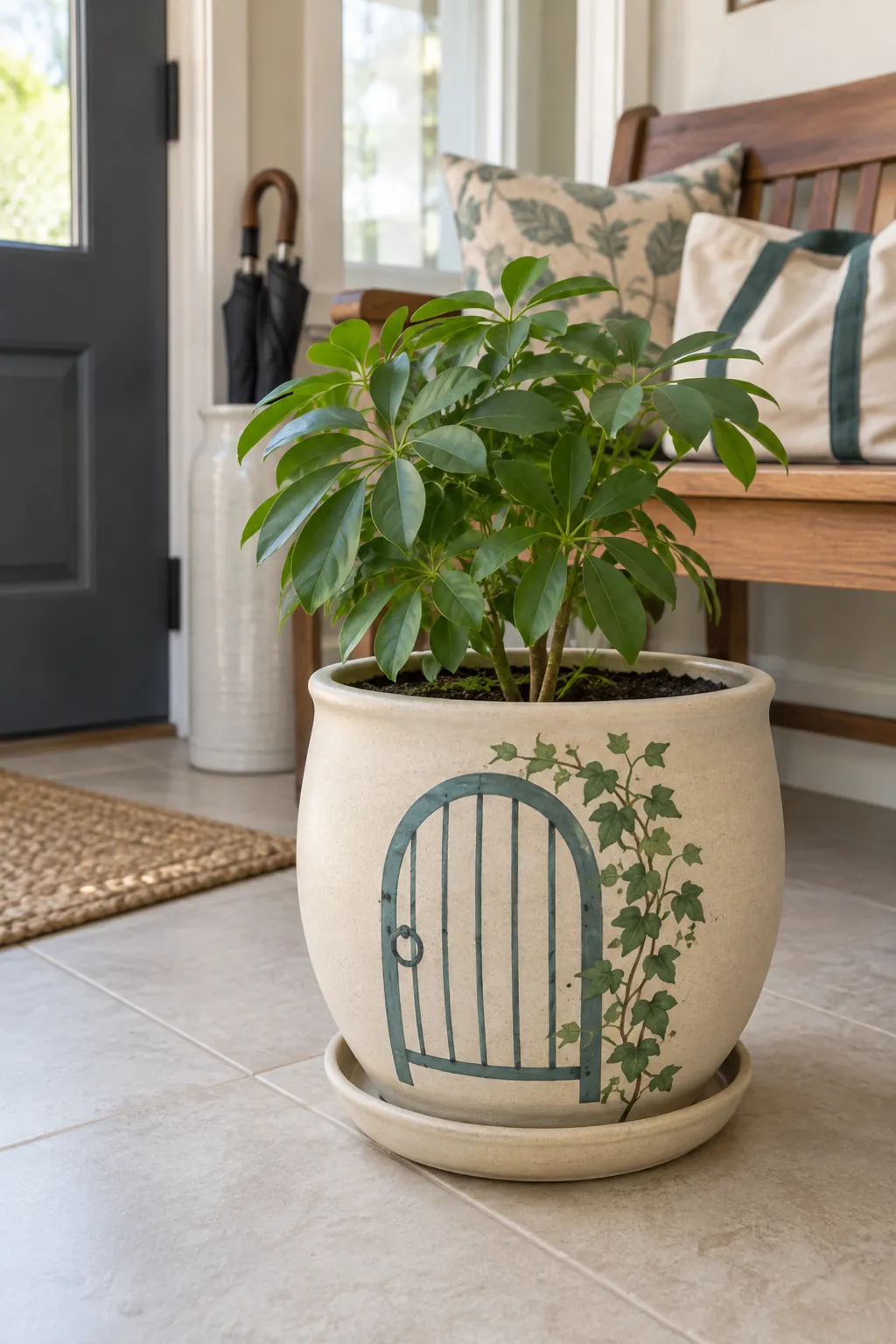
A small painted garden gate
An arched garden gate makes a charming focal motif for a larger pot. Sketch the outer arch first, then add a few vertical bars and a climbing vine along one edge. Keep the vine on the container rather than attaching fragile wire decorations that could snag a watering can.
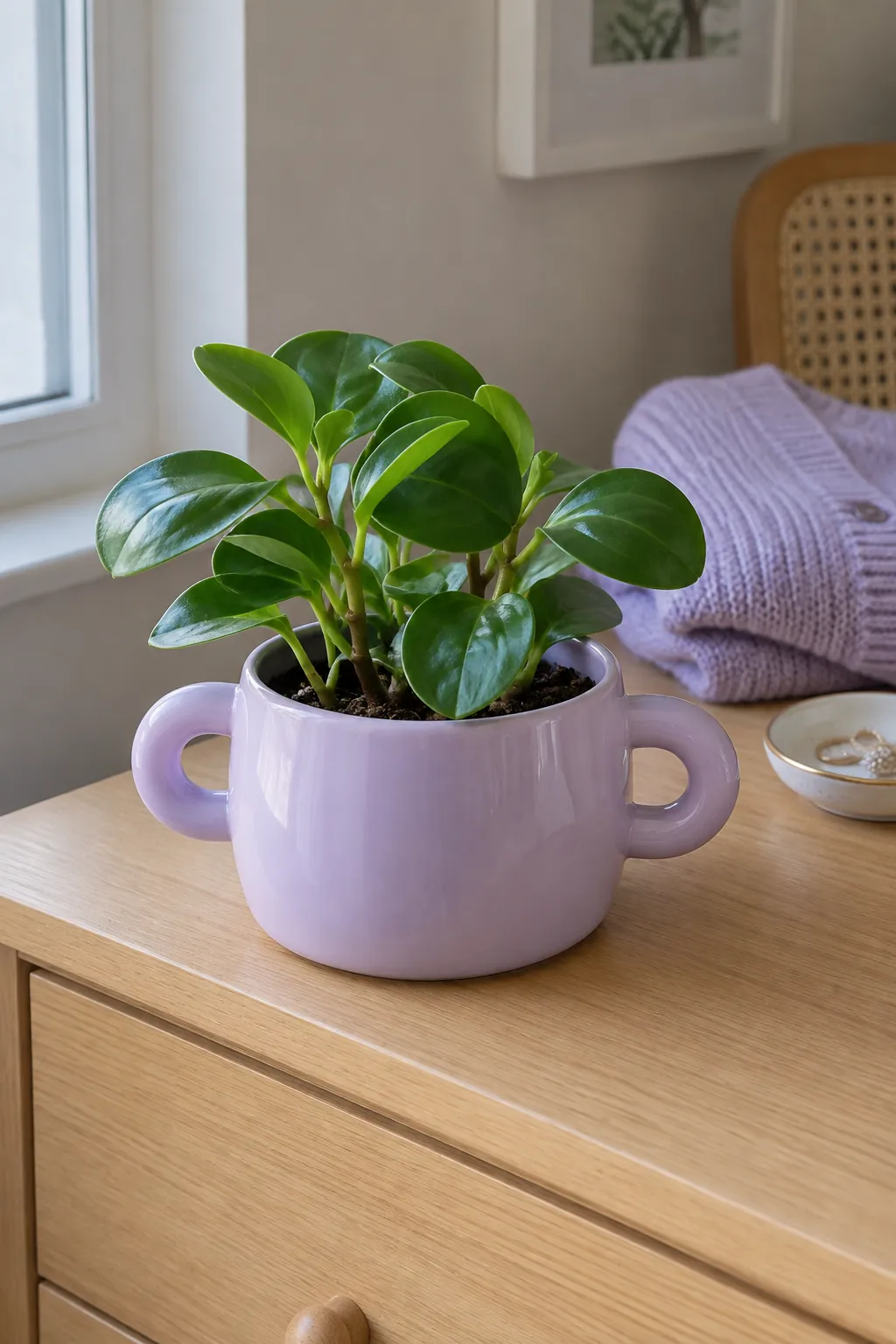
Lilac bubble handles
A pair of rounded handles can make an otherwise plain pot feel delightfully toy like. Check whether those handles are intended for lifting; decorative attachments may not safely support a wet plant. Carry the container from its base and let the loops serve as the visual flourish.
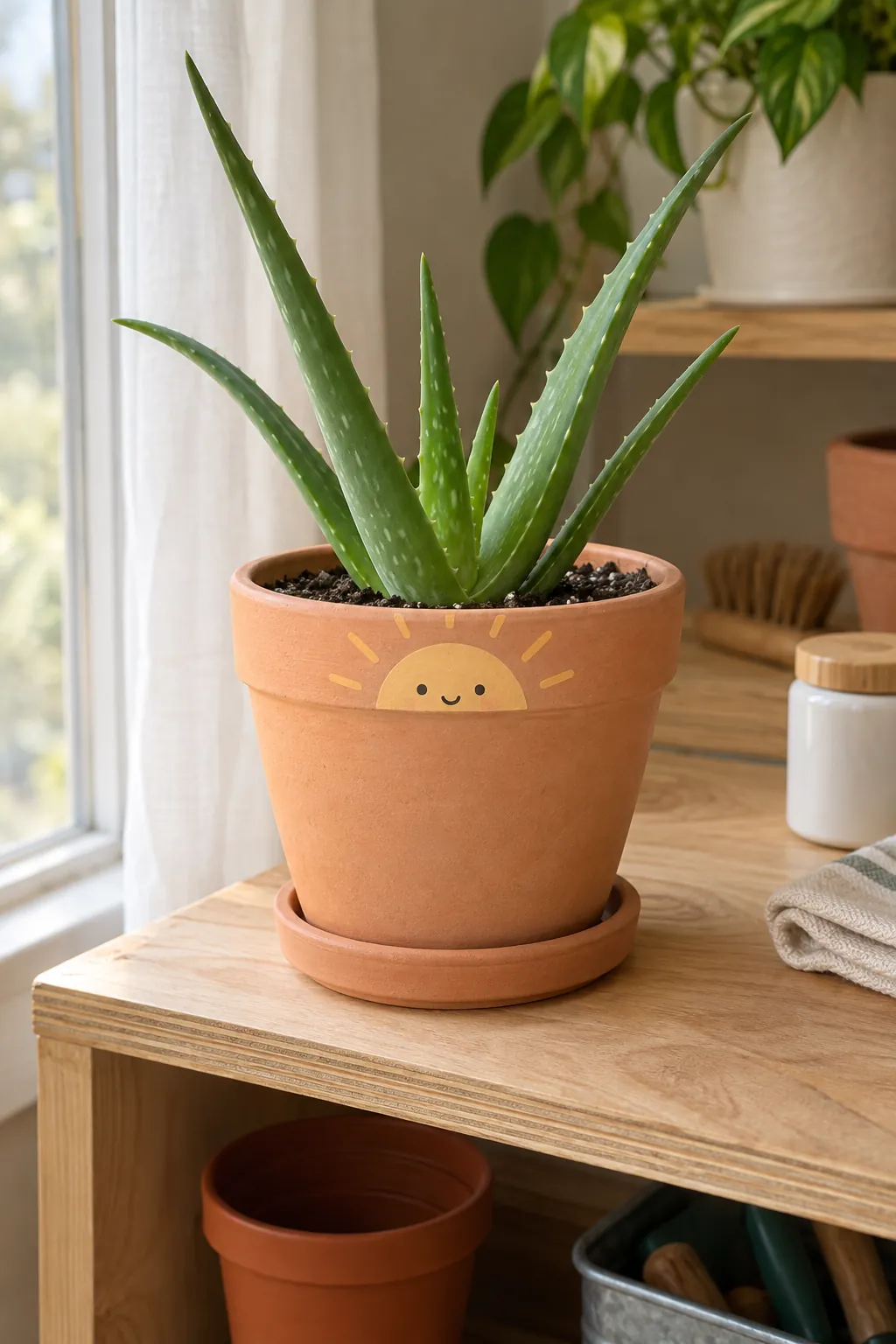
A sun peeking over the rim
Paint a half sun just below the rim so it seems to peek into the room. Short rays leave plenty of breathing space around the face, and a muted apricot body keeps the design from becoming glaring. A fresh terracotta pot should be clean and thoroughly dry before any coating goes on, with products and curing times chosen for that surface.
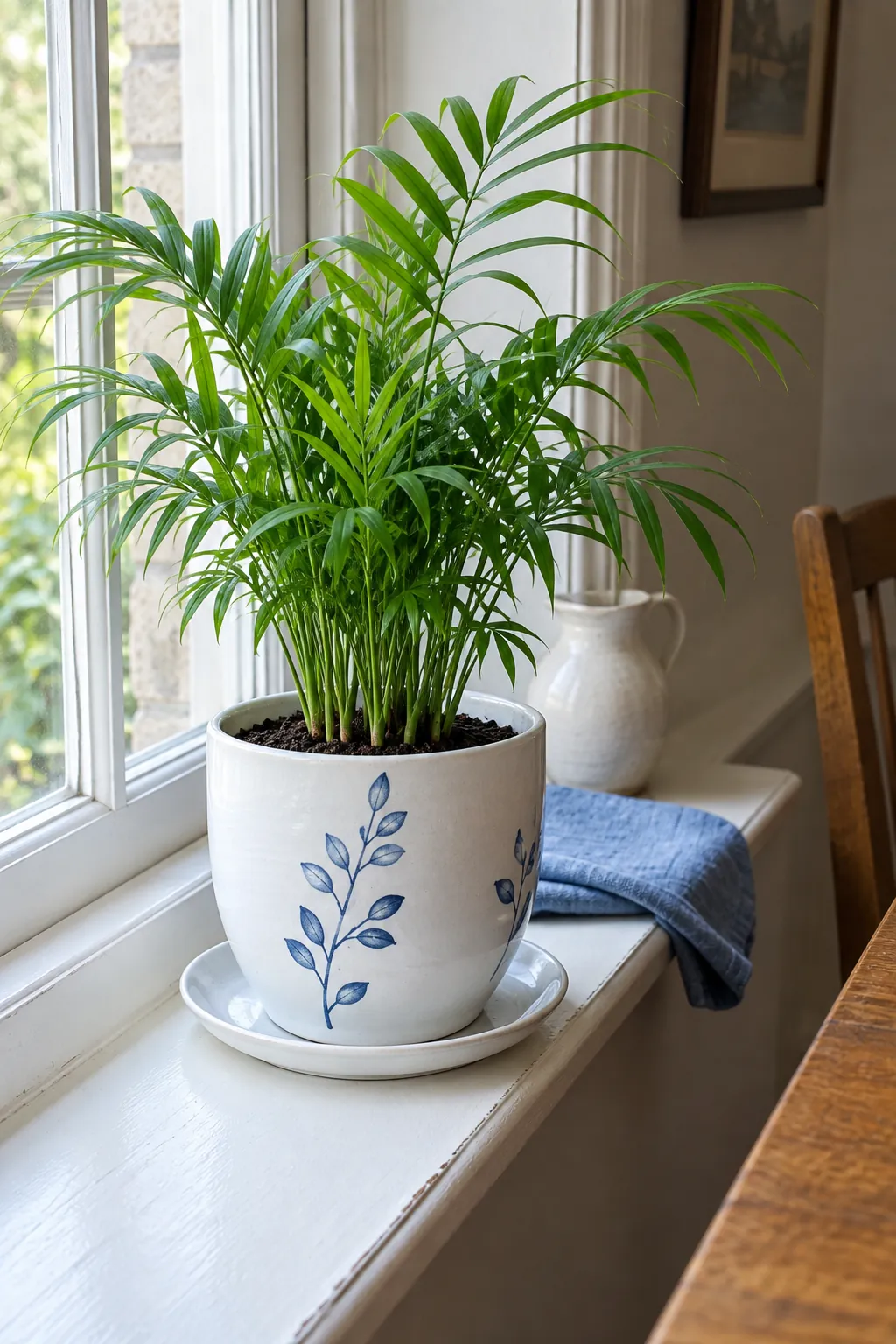
Blue porcelain inspired sprigs
A few cobalt sprigs on white borrow the delicacy of painted porcelain. Use uneven leaves on thin stems instead of trying to reproduce a complex antique pattern. Ordinary craft paint on a glazed pot may need a compatible preparation system, so test adhesion discreetly and follow the paint maker's instructions before decorating the whole surface.
A pear silhouette with freckles
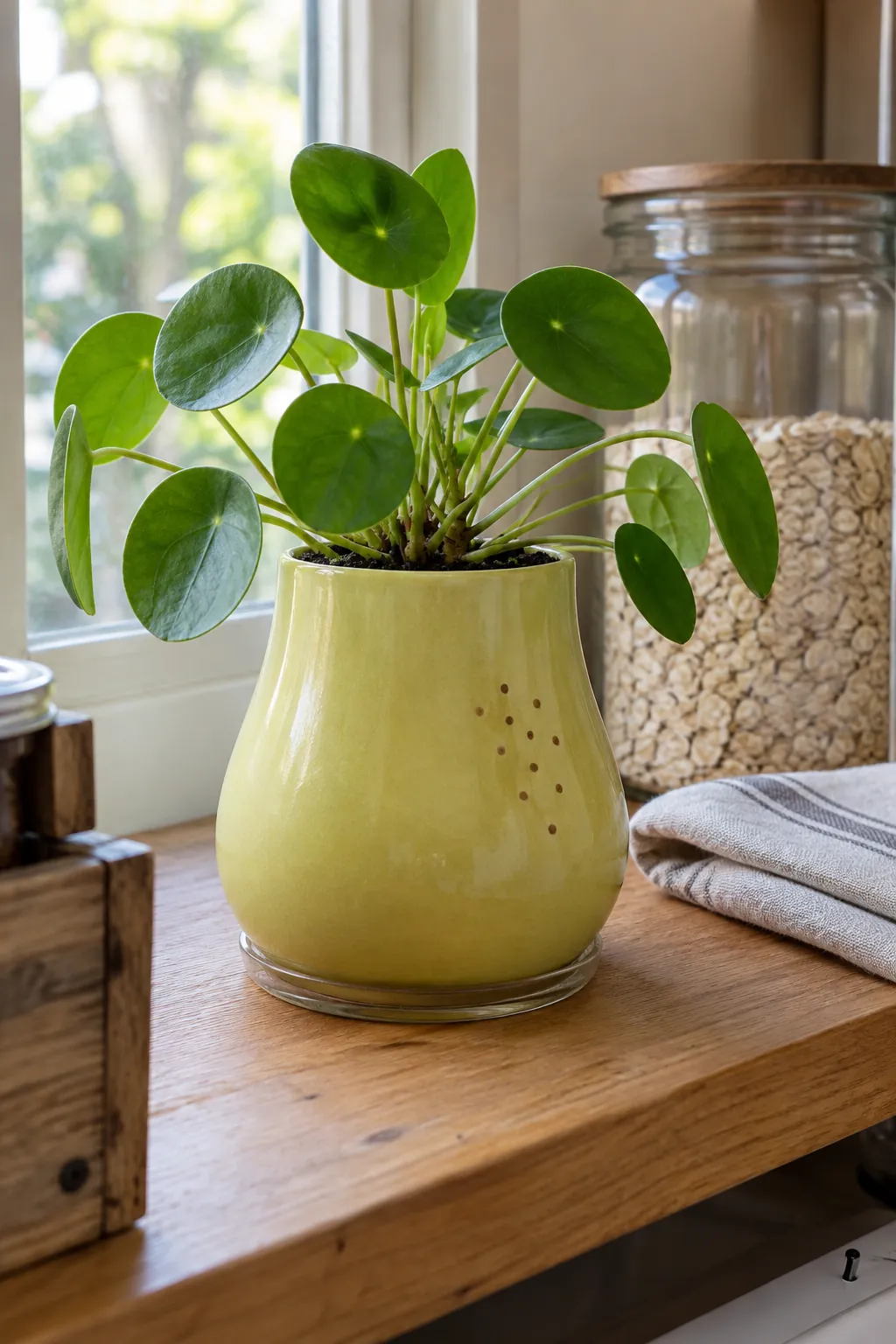
A softly tapered pear pot looks especially friendly with a small freckled patch. The body can stay a gentle chartreuse while the freckles gather on just one cheek. A plant with a compact root ball is easier to house in this shape than one that demands a broad, straight sided growing container.
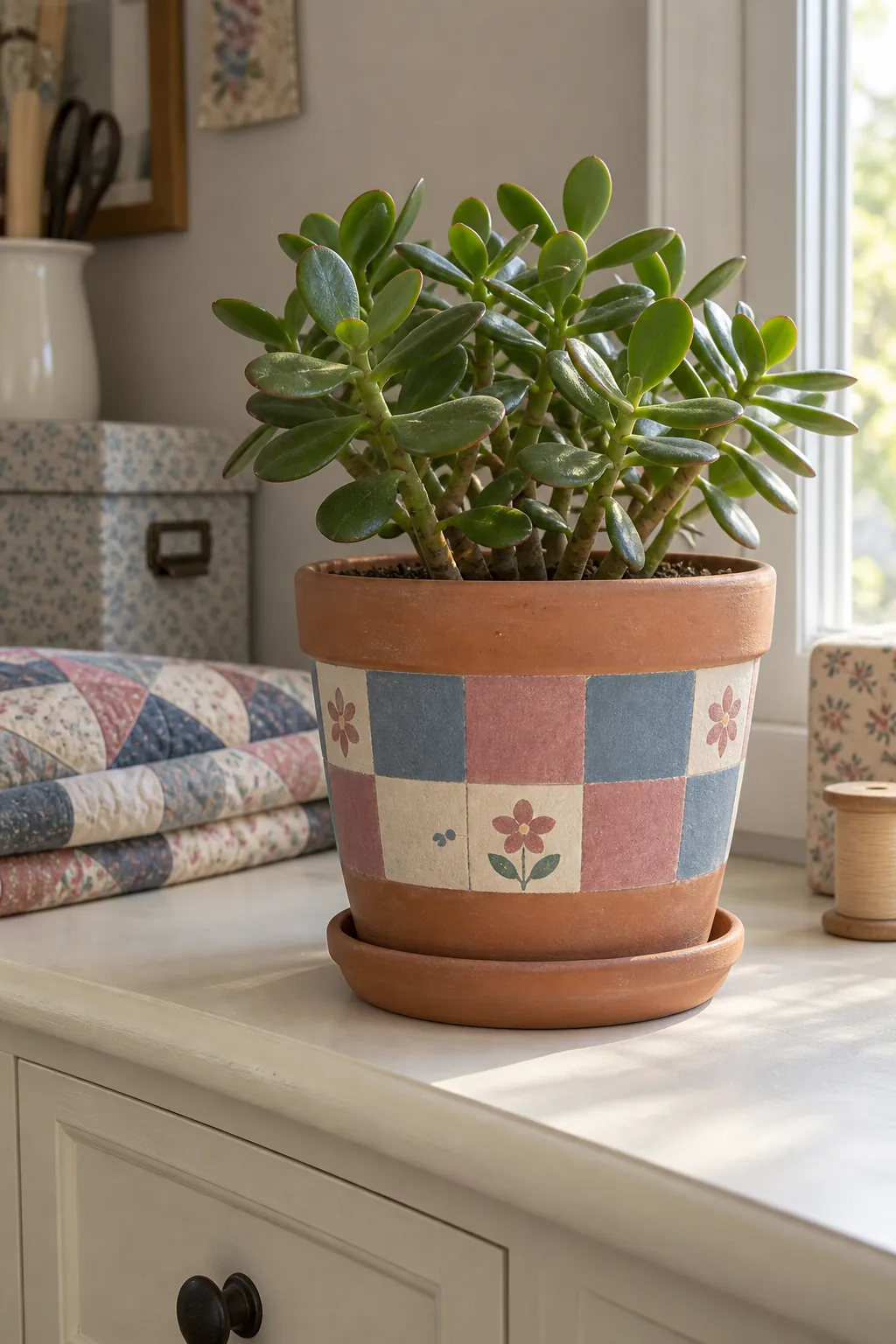
A quilt patchwork band
A patchwork band combines several favorite colors without covering every inch of clay. Alternate a solid patch with a tiny floral patch and keep the shapes large enough to paint comfortably. Repeating one background color across the band pulls the different pieces together even when the motifs vary.
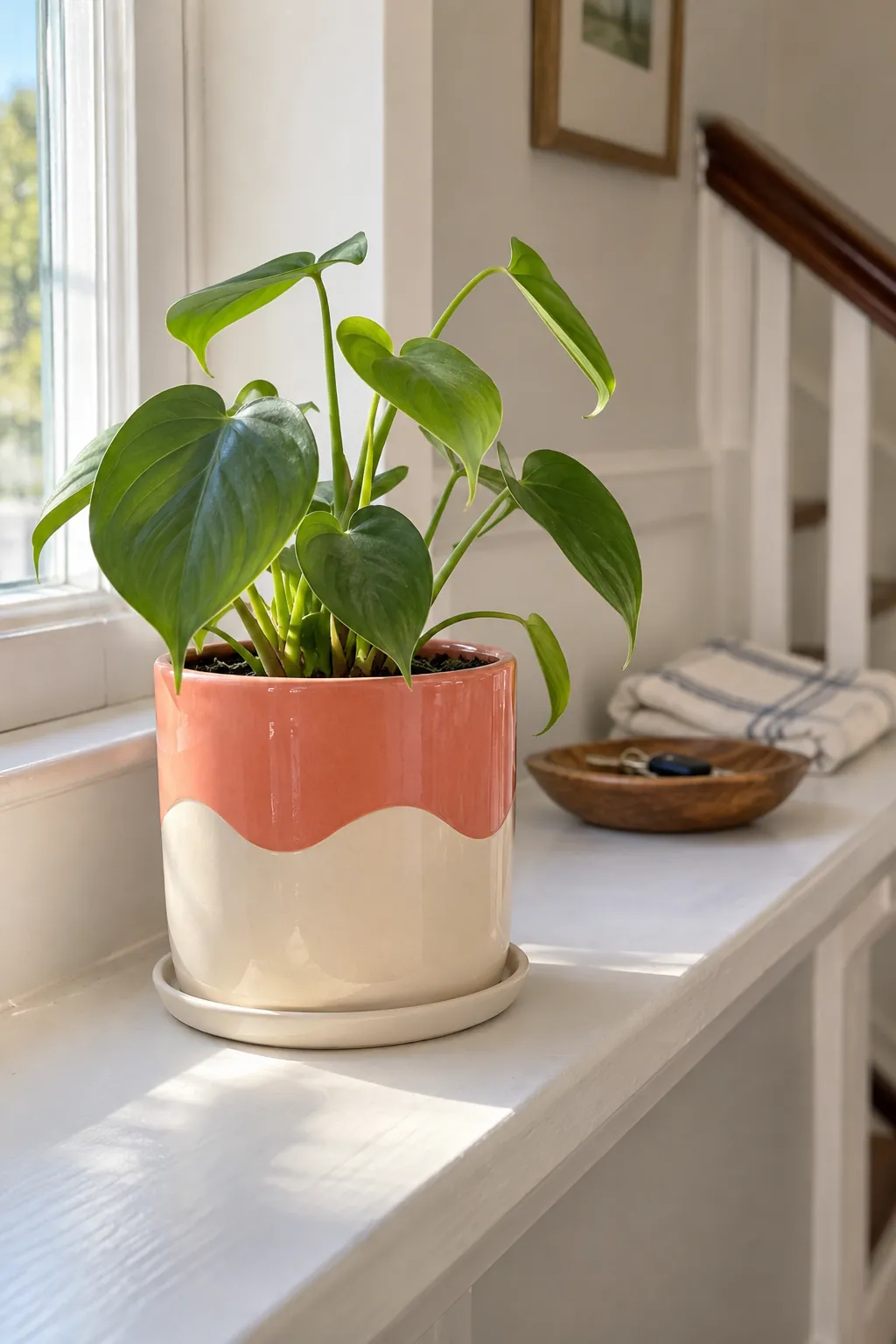
A coral wave edge
An undulating coral edge makes the top of a simple cream pot feel lively. Trace a slow wave around the body below the actual opening, then fill the area above it with coral. Leaving the physical lip unaltered preserves a smooth place to grip while still creating the impression of a fancy rim.
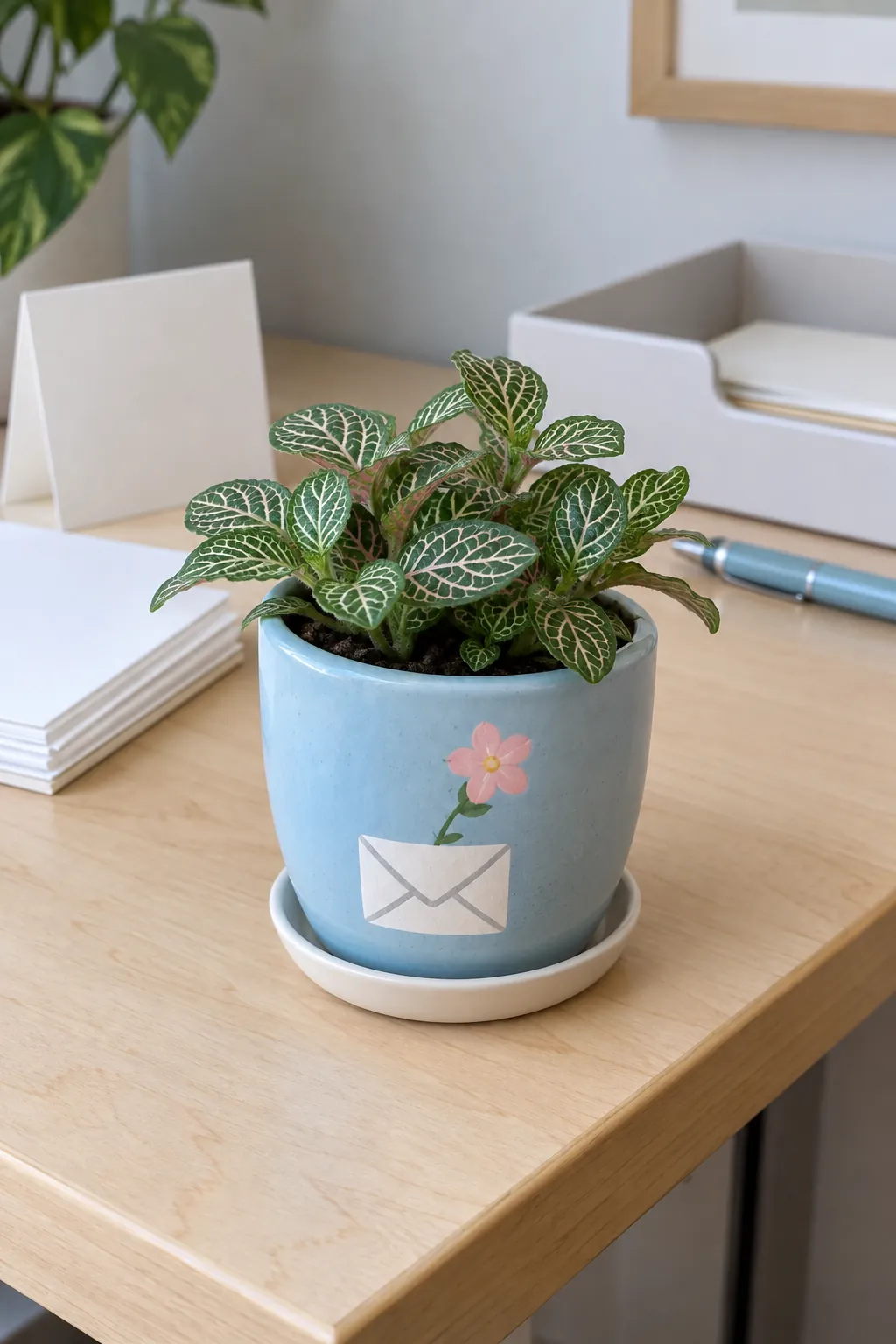
A tiny envelope with a flower
A painted envelope holding one flower turns a pot into a gentle thank you gift. Draw the envelope as a simple rectangle with two diagonal flap lines, then let the stem rise above it. The recipient can enjoy the message without a name or occasion permanently written across the container.
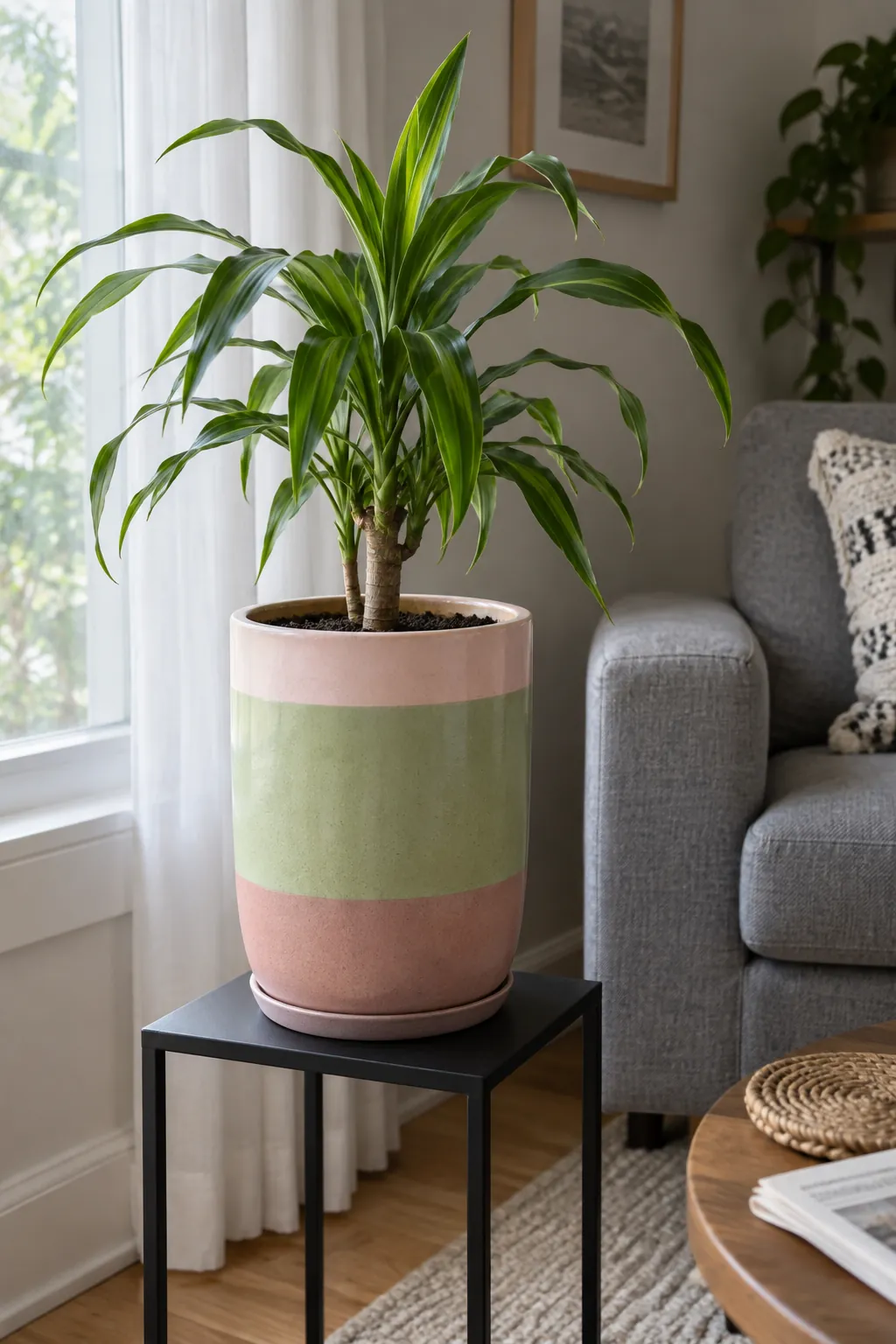
Pistachio and pink stacked bands
Broad stacked color bands make a tall pot look considered with very little detail work. Let one band be noticeably wider so the arrangement does not resemble a measuring chart. This approach suits cool plant pots for a shared living space where a playful palette is welcome but illustrated characters are not everyone's taste.
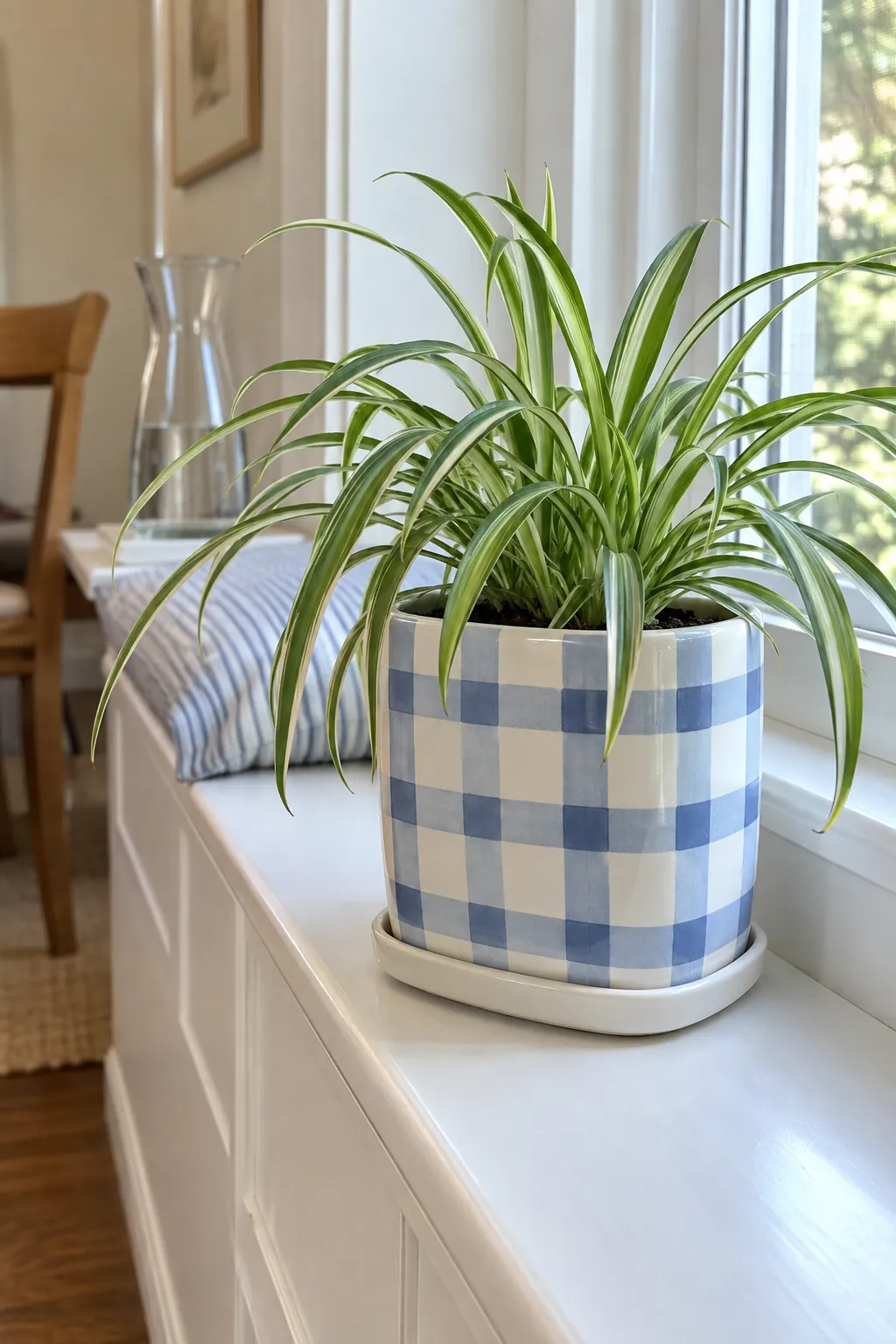
A softly squared gingham wrap
Gingham works beautifully on a pot with relatively flat sides because the intersecting lines are easier to control. Paint the light base, add translucent looking horizontal and vertical bands, then deepen only their overlaps. Keep the inner growing container removable so this carefully decorated outer surface can stay dry during watering.
One oversized petal flower
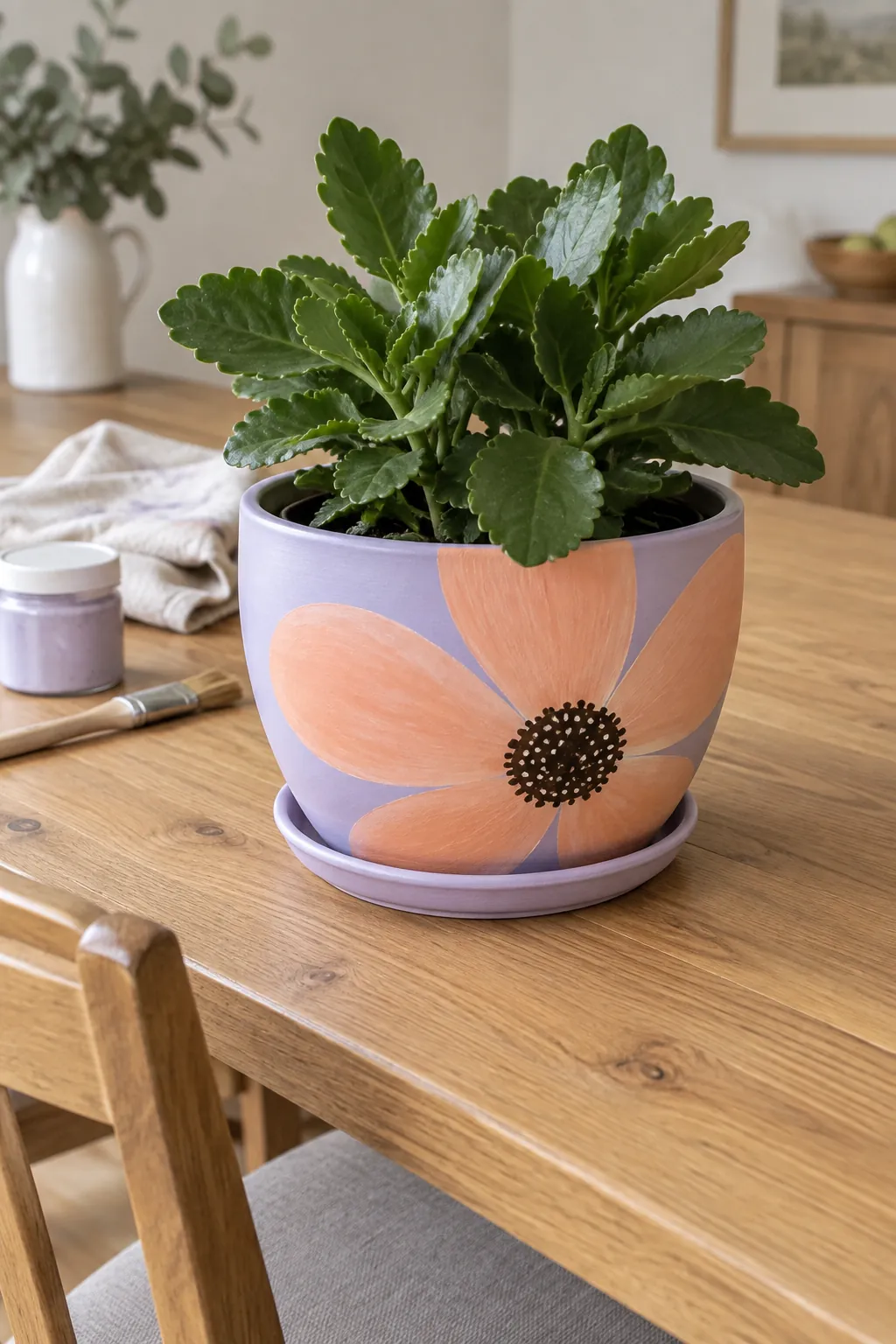
An oversized flower is a satisfying final option when tiny motifs feel intimidating. Let a few broad petals disappear around the sides, with the center offset rather than perfectly centered. Choose one of these cute plant pot designs that fits both your painting patience and your plant's needs, then keep its drainage hole clear or use a draining inner pot that you lift out and allow to drain before returning it.