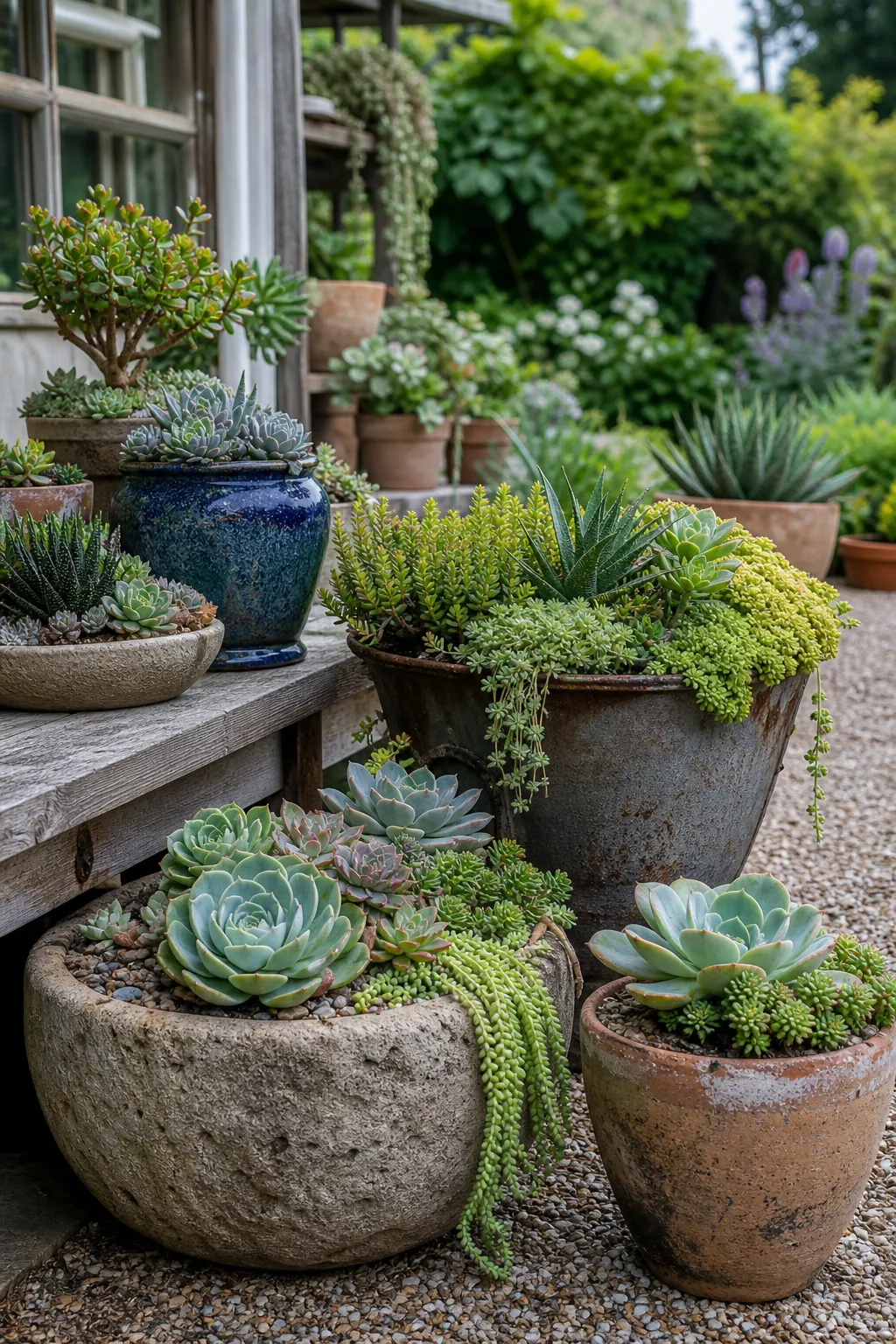
A beautiful container can still fail a succulent if water lingers around the roots. The useful question is not simply what looks charming, but which vessel gives the plant enough drainage, light, and room to settle. Each idea below pairs a clear visual direction with the practical detail that keeps it workable.
Weathered Terracotta Bowl
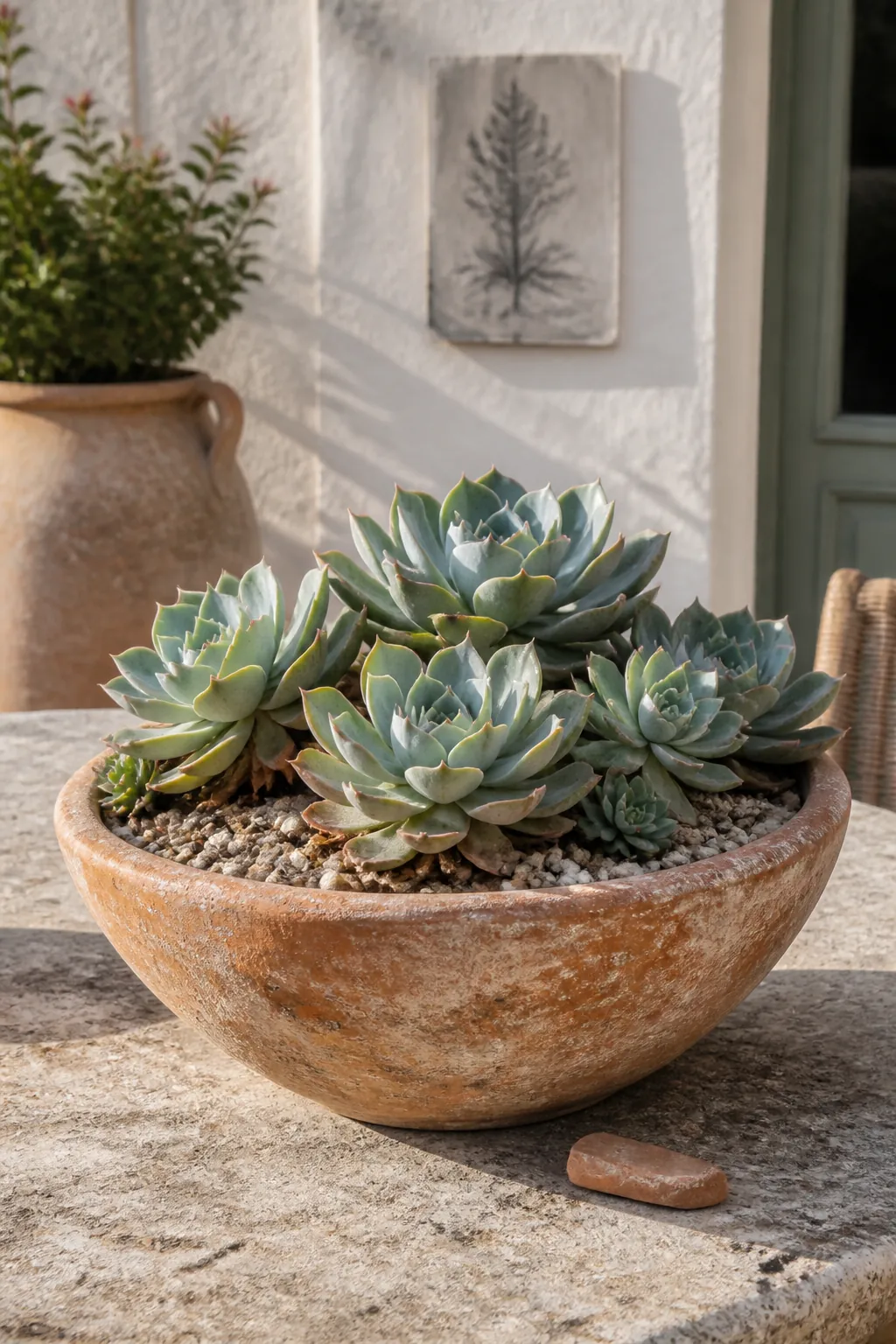
A broad terracotta bowl gives rosette succulents room to spread without burying their shallow roots. Its porous clay releases moisture faster than glazed ceramic, which helps after a generous watering. Use a gritty mix and place larger echeverias near the center so smaller offsets remain visible around the rim.
Stone Trough Garden
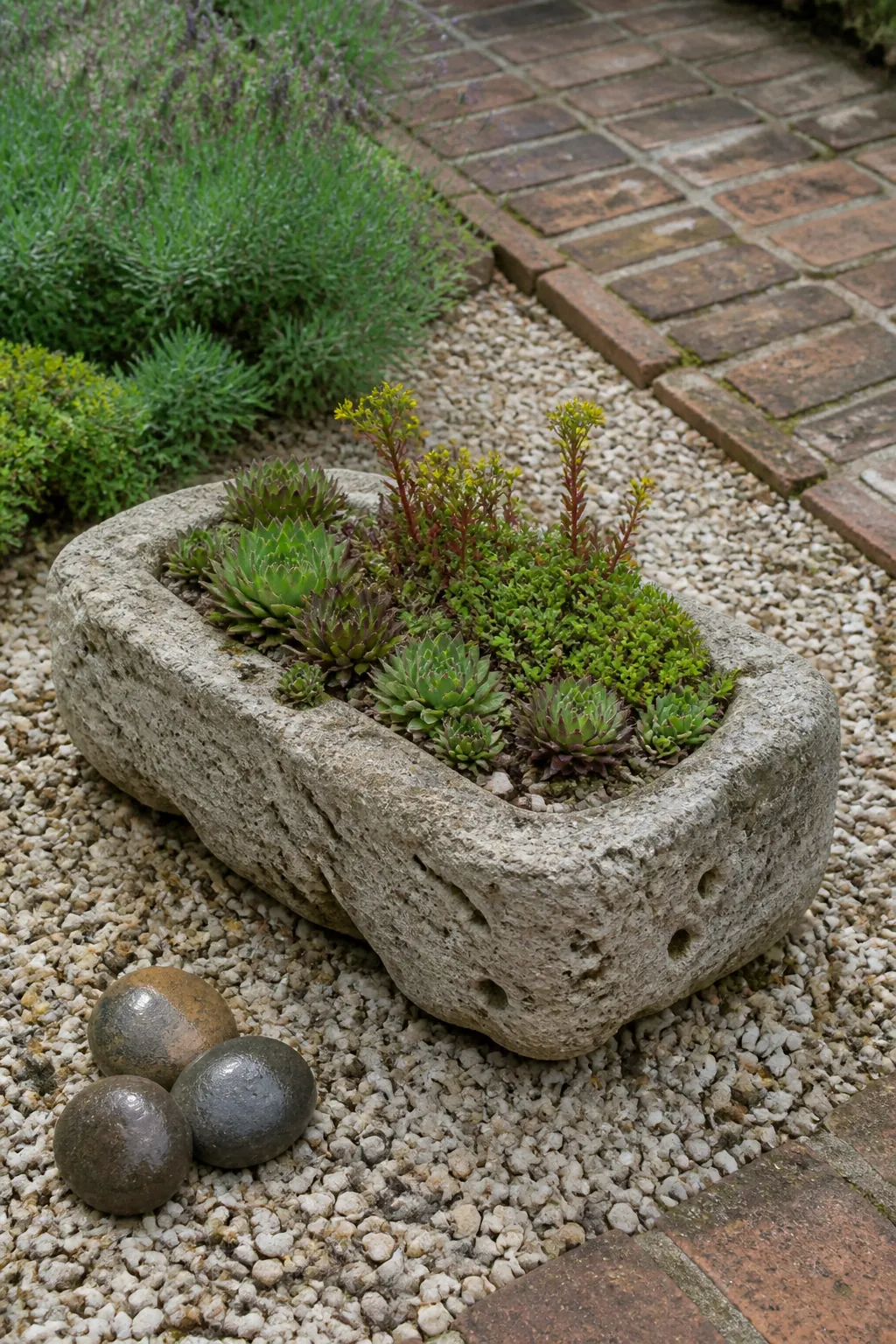
A low stone trough makes a convincing miniature landscape because its weight visually balances chunky foliage. Sedum, sempervivum, and small crassula varieties tolerate the exposed position well when drainage holes stay clear. Tuck coarse gravel between plants to limit soil splash without sealing the surface.
Reclaimed Timber Box
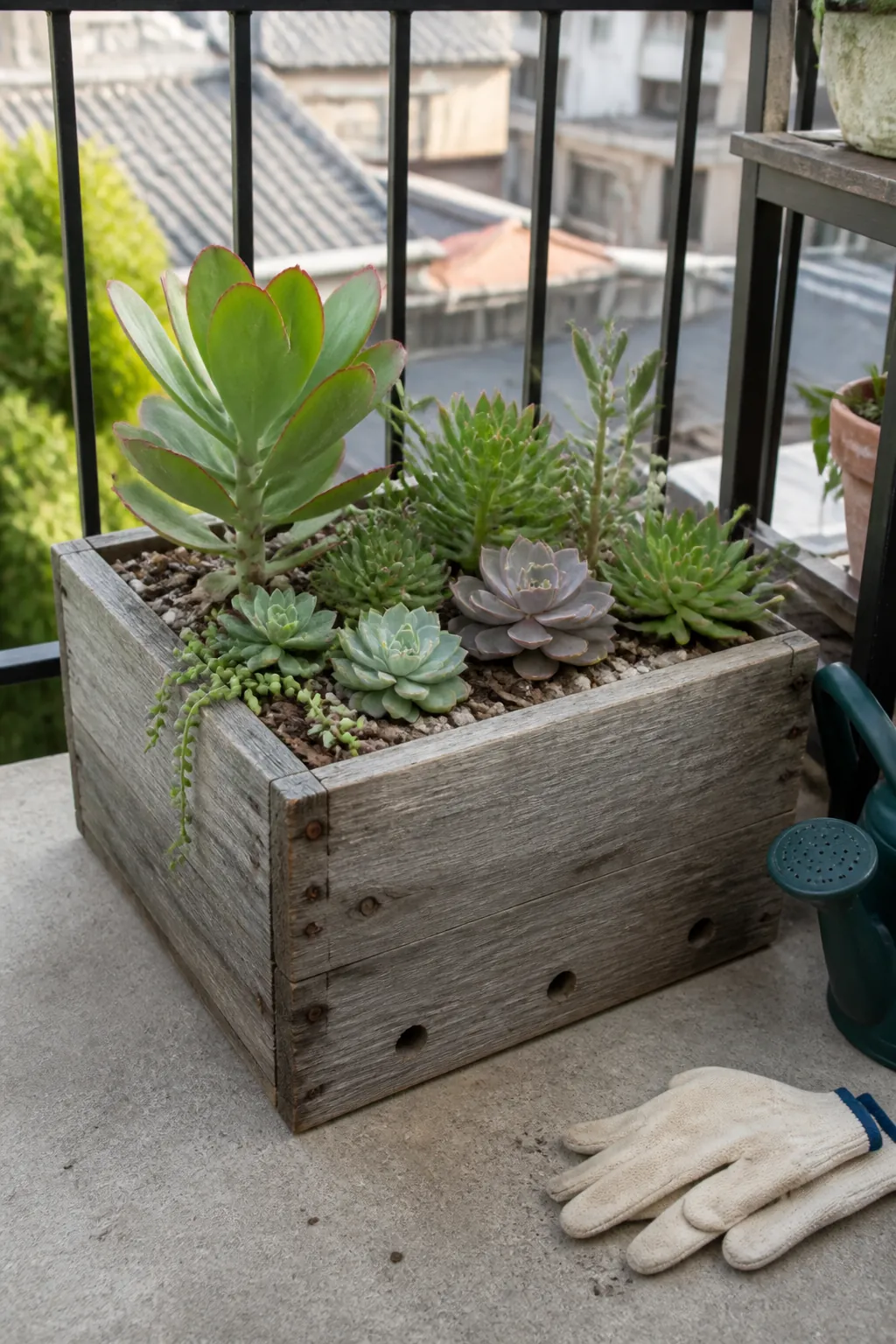
A reclaimed timber box brings warmth to a patio and can hold several plants in one loose arrangement. Line only the sides with a breathable barrier while leaving drainage openings at the base, since trapped water will shorten the life of both roots and wood. A raised foot at each corner lets air move under the box after rain.
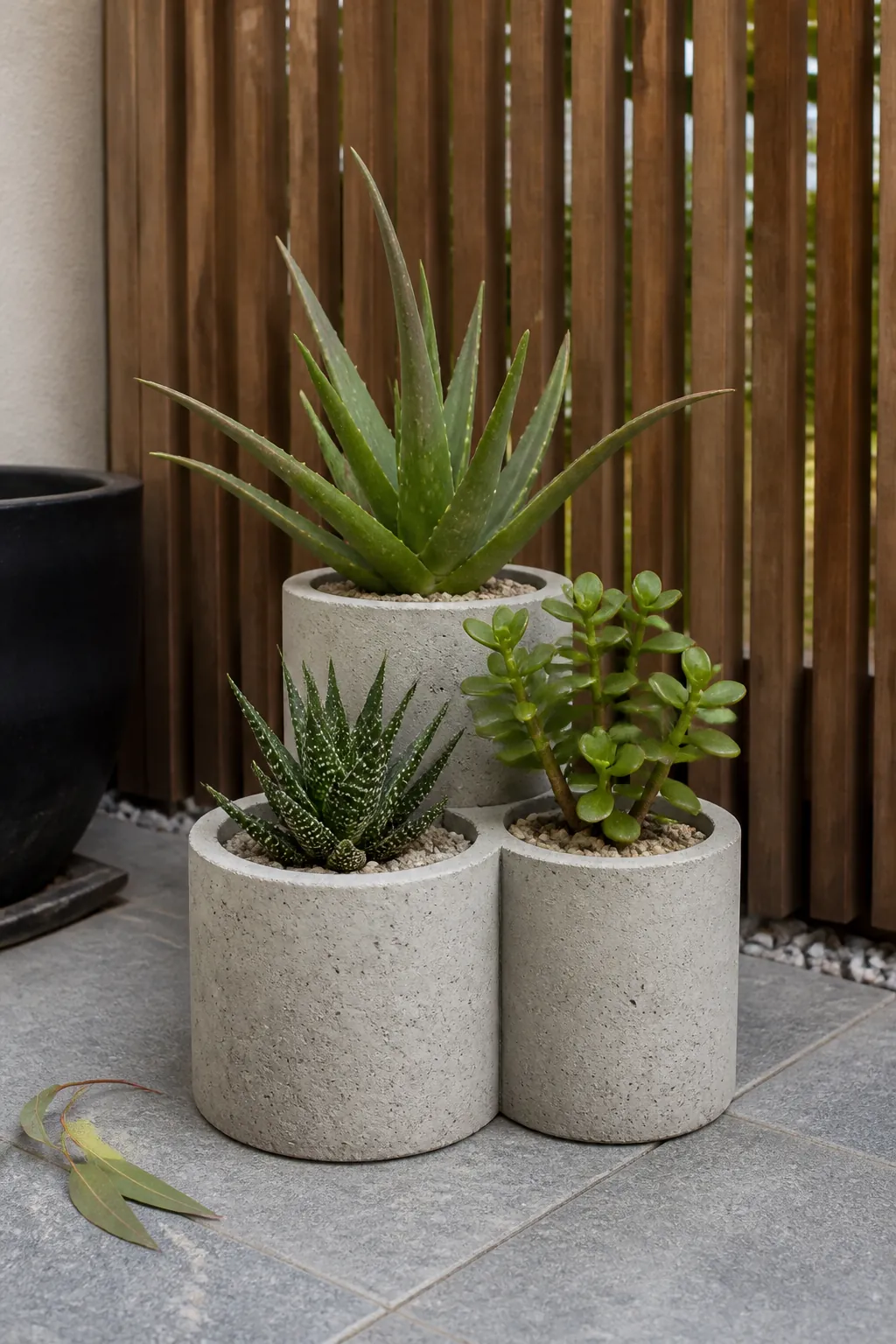
Concrete Cylinder Cluster
Concrete cylinders in three heights create structure without relying on bright decoration. Their simple shape suits sculptural aloe, haworthia, and compact jade plants, while a sealed inner surface prevents fresh concrete from affecting the soil. Keep the tallest pot behind the group so every plant receives useful light.
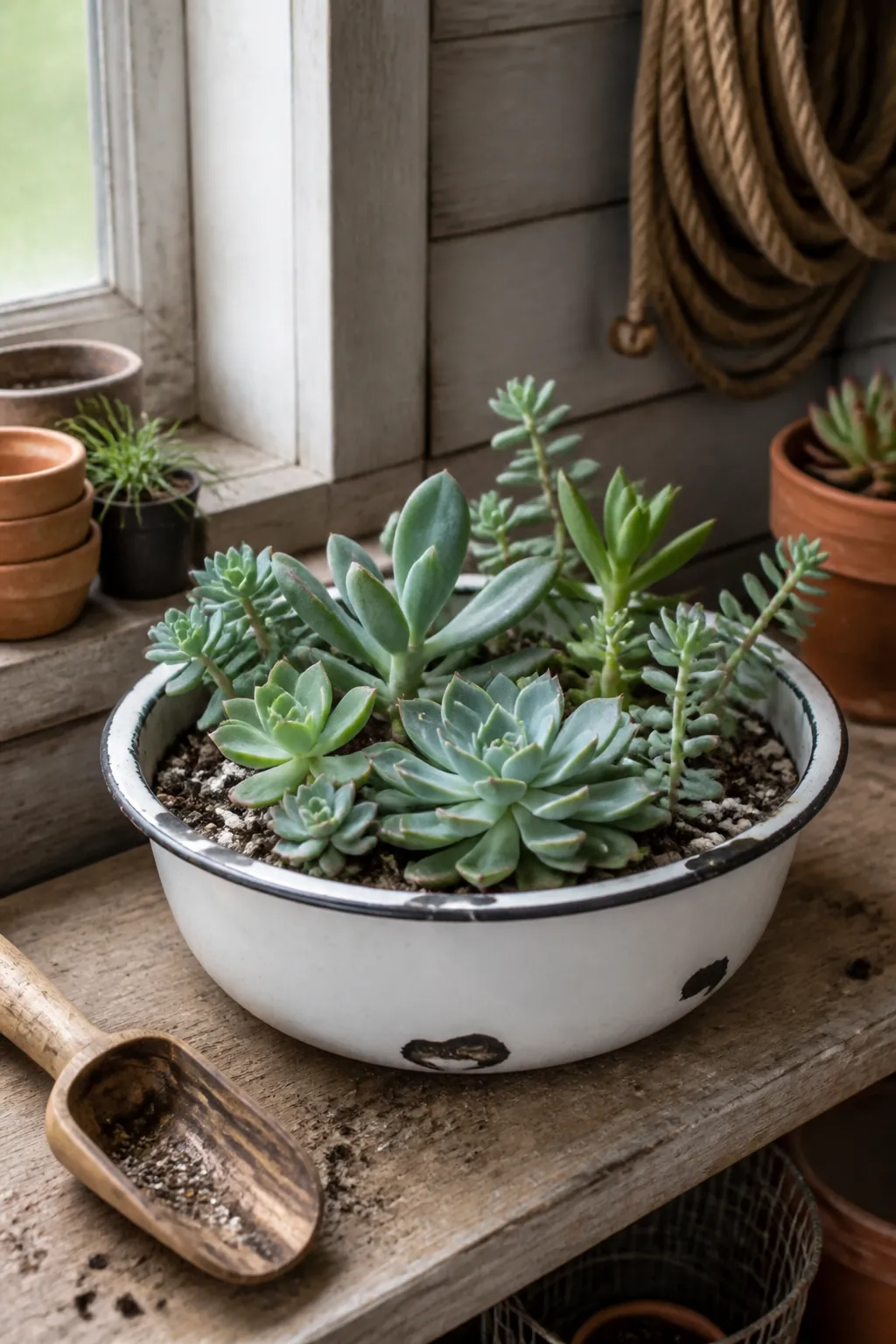
Vintage Enamel Basin
An old enamel basin offers generous planting width and a bright surface that sets off blue green leaves. Drill several base openings before adding soil, then cover them loosely with mesh so grit does not escape. Small chips in the enamel add character, but deep rust around the base signals that the vessel needs reinforcement.
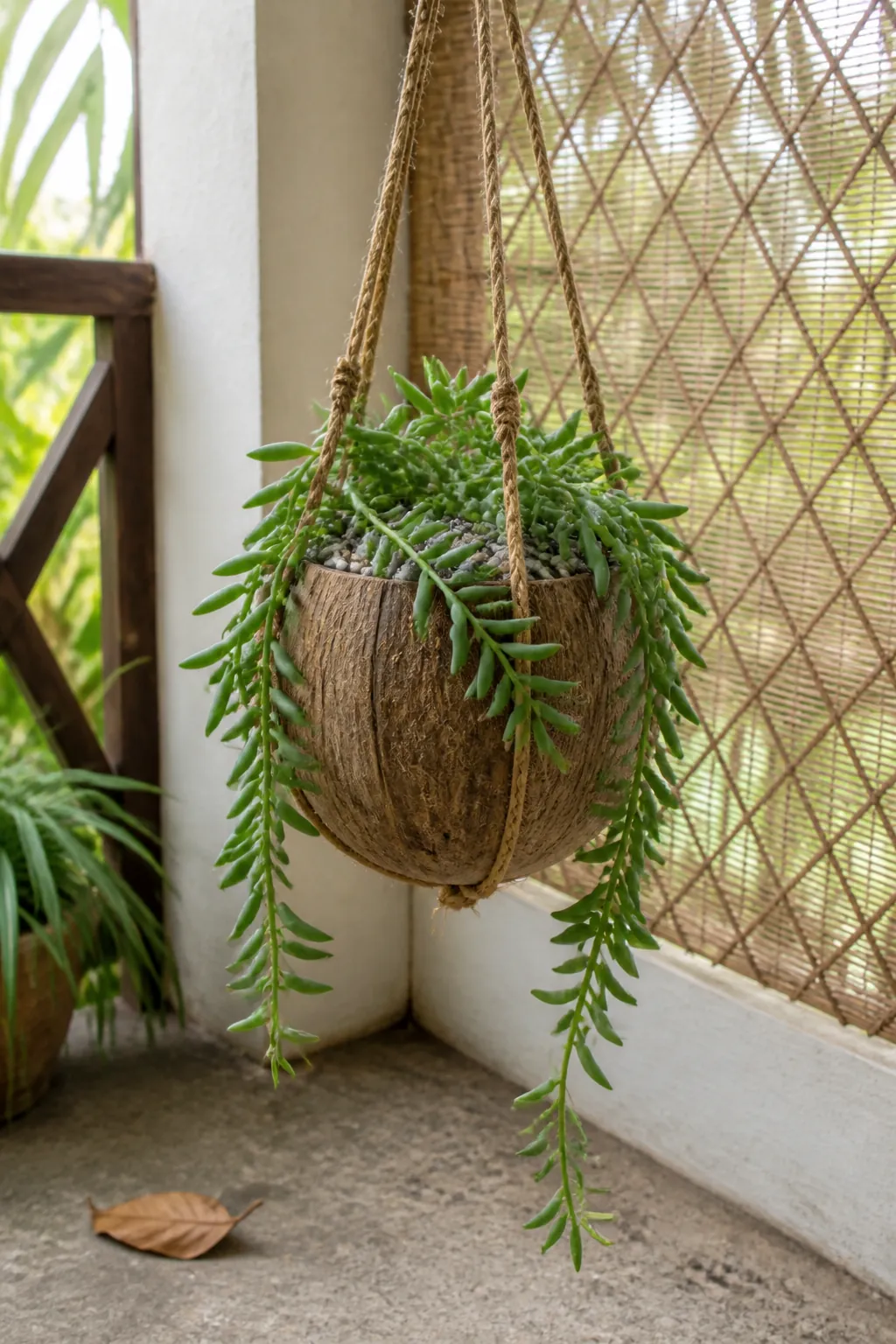
Hanging Coconut Shell
A cleaned coconut shell makes a light hanging planter for a trailing string of bananas or compact sedum. Three evenly spaced cords keep the shell level, which prevents water from pooling on one side. Hang it beneath a covered porch where strong light reaches the plant but prolonged rain does not saturate the small soil volume.
Repurposed Tea Tin
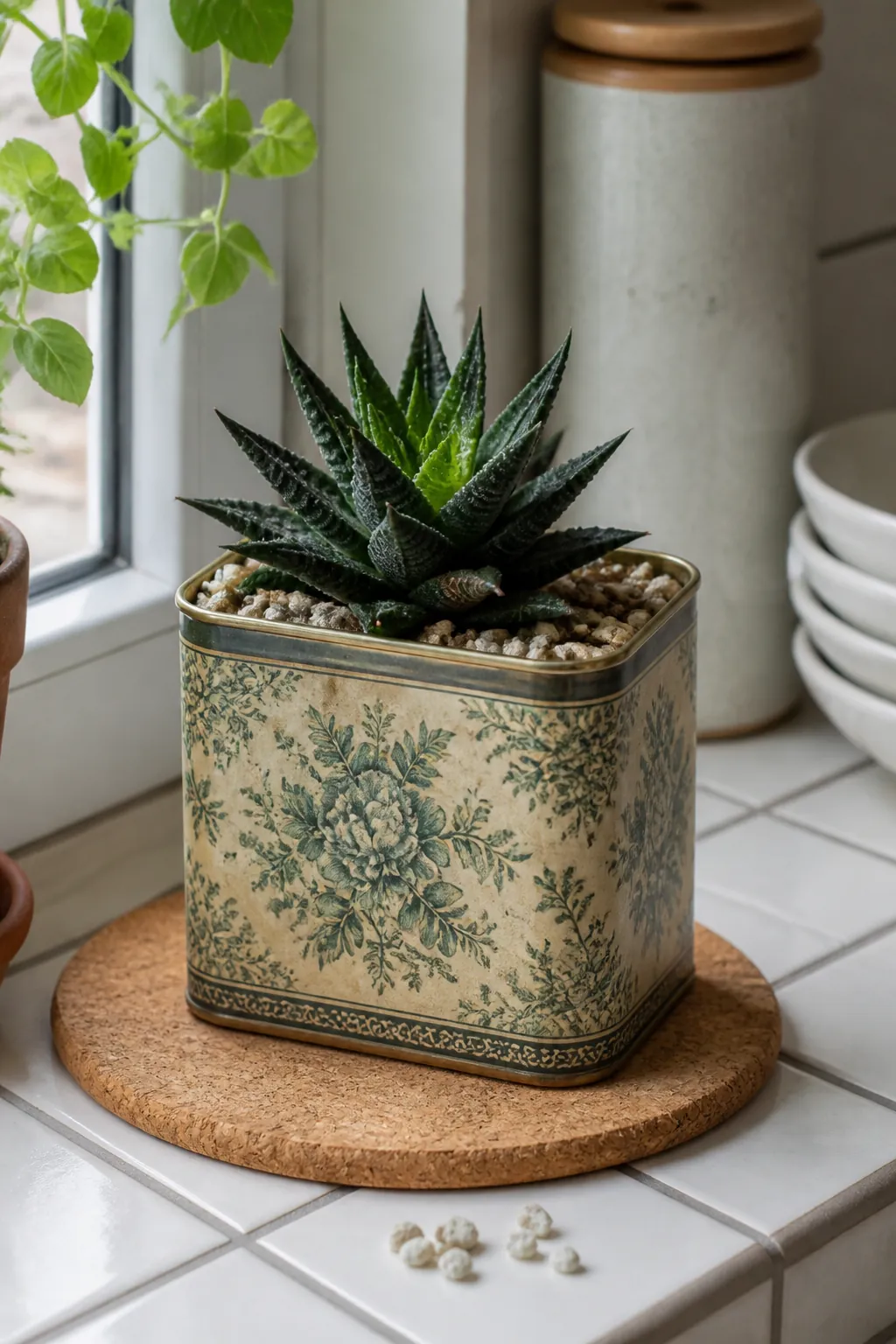
A patterned tea tin turns a tiny haworthia into a cheerful shelf accent. Metal heats quickly beside glass, so this option belongs in bright indirect light rather than harsh afternoon sun. Punch drainage holes from the inside outward and slip a cork mat beneath the tin to protect furniture.
Footed Ceramic Compote
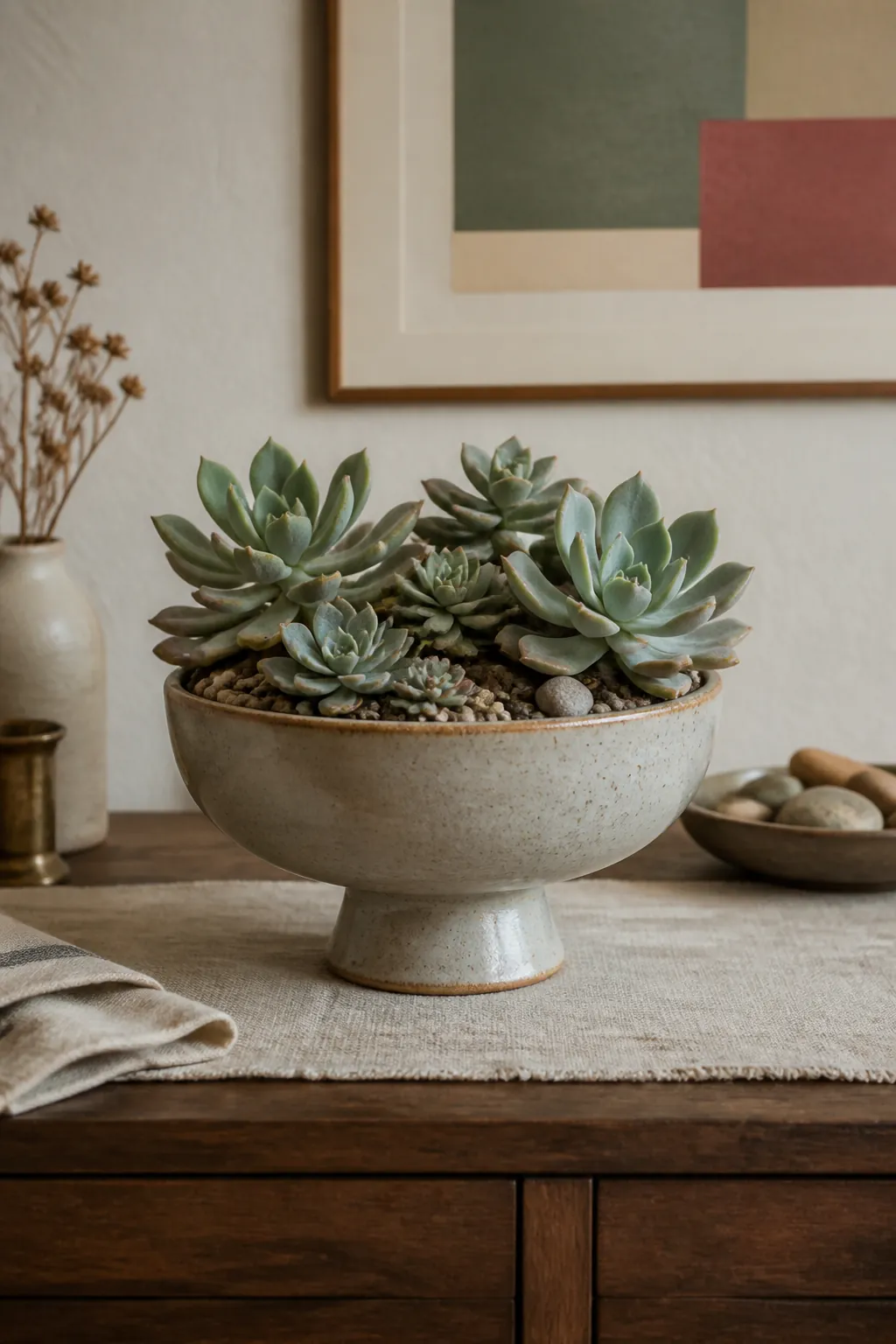
A footed ceramic compote lifts a succulent arrangement to eye level on a dining console. Choose a shallow piece with a real drain opening, because a decorative bowl without one demands too much watering precision. Repeat one leaf color across several varieties to keep the composition calm despite the mixed forms.
Wall Pocket Trio
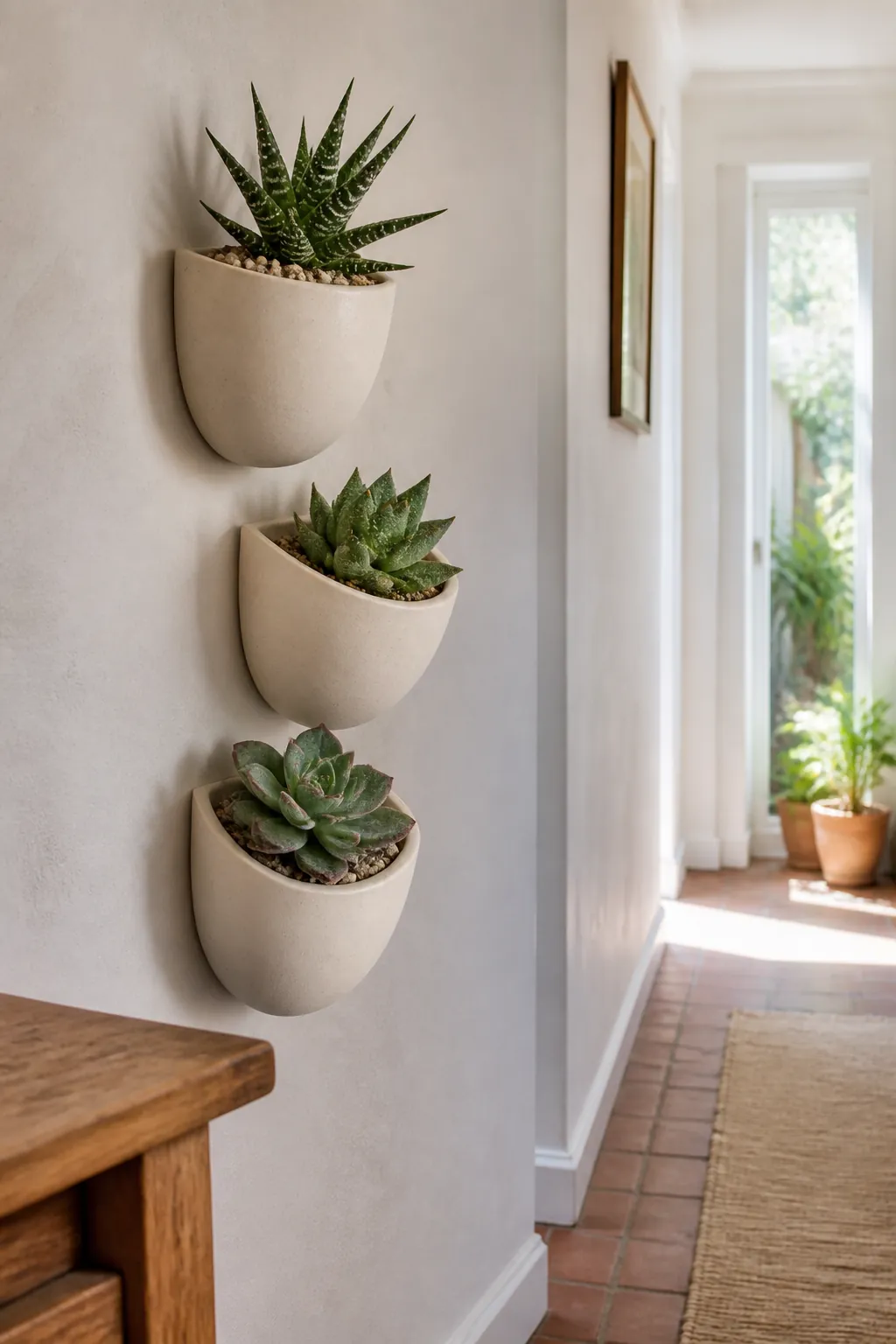
Three ceramic wall pockets can turn a narrow vertical strip into a living display. Position them far enough apart that the lower plants are not shaded by the upper vessels. Water each pocket at the sink, let it drain completely, and return it only when the outer surface is dry.
Shallow Bonsai Pot
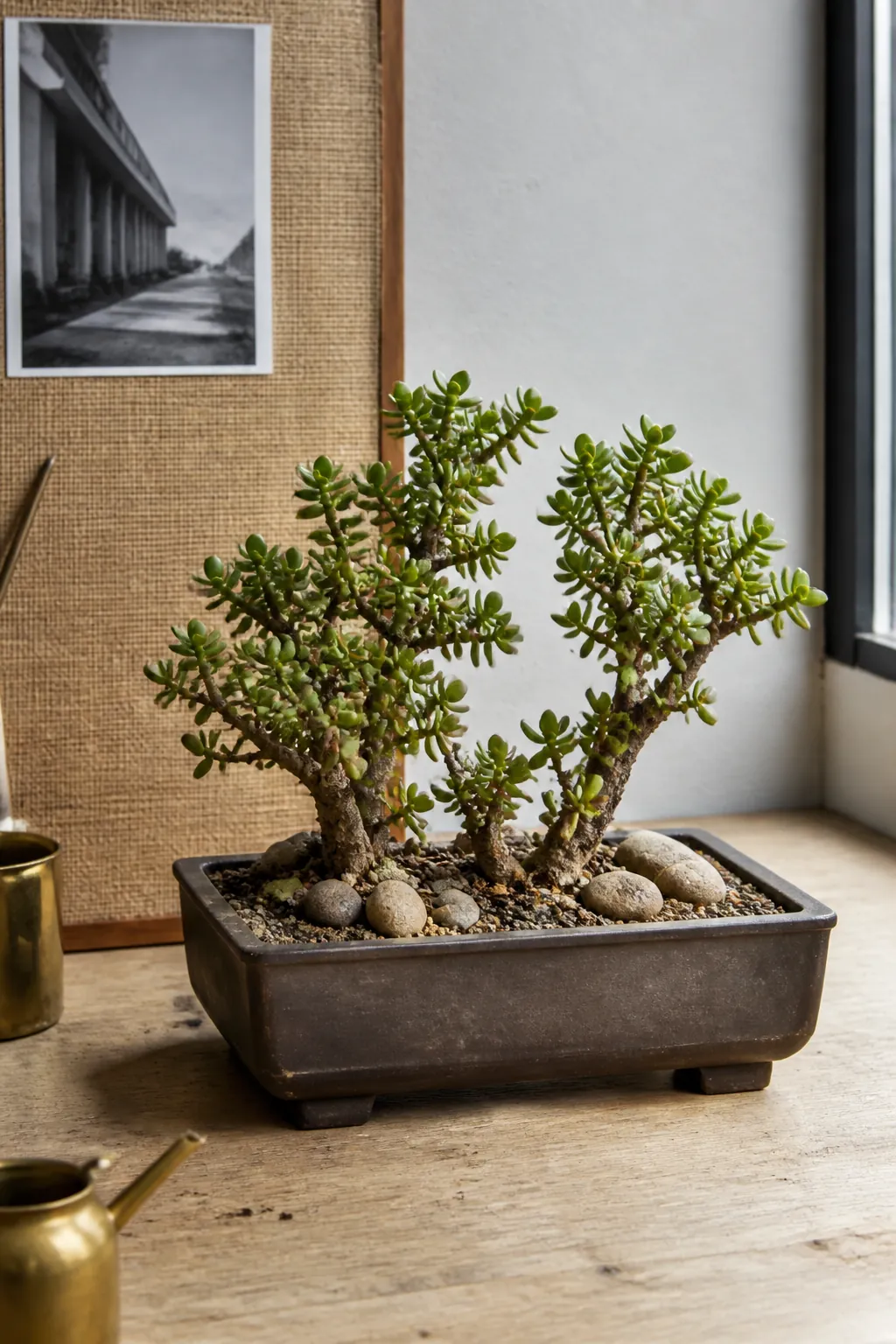
A rectangular bonsai pot naturally suits succulents with fine, shallow root systems. Its wide drain openings and low profile make moisture easier to manage than in a deep decorative cachepot. Use one mature crassula as the anchor, then leave a patch of exposed stone so the scene can breathe.
Rusted Tool Caddy
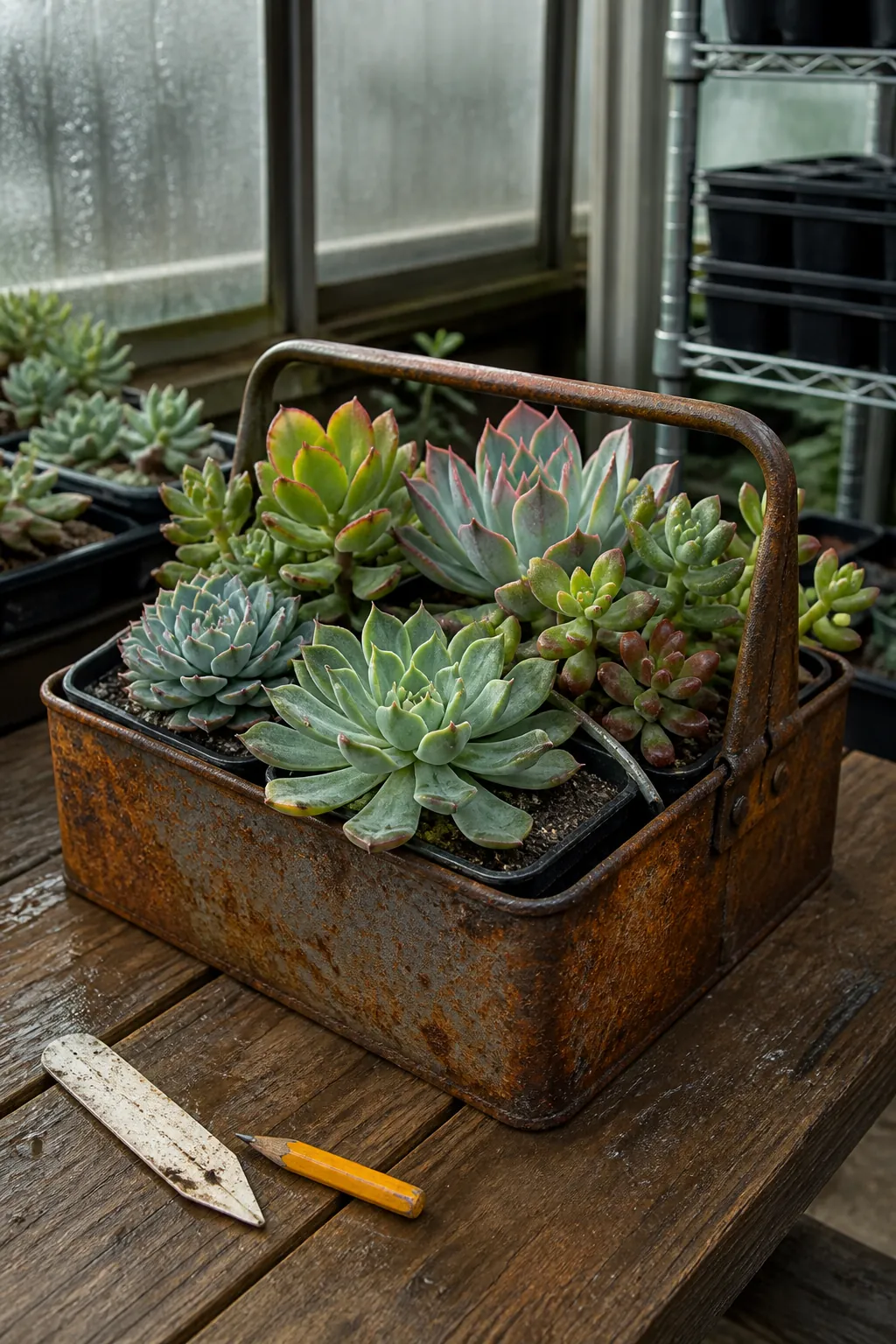
A divided tool caddy creates ready made planting zones for several small specimens. Keep plants in removable nursery pots inside the compartments if the metal base is too valuable or difficult to drill. This approach also lets you rotate individual plants toward stronger light without disturbing their neighbors.
Carved Lava Rock
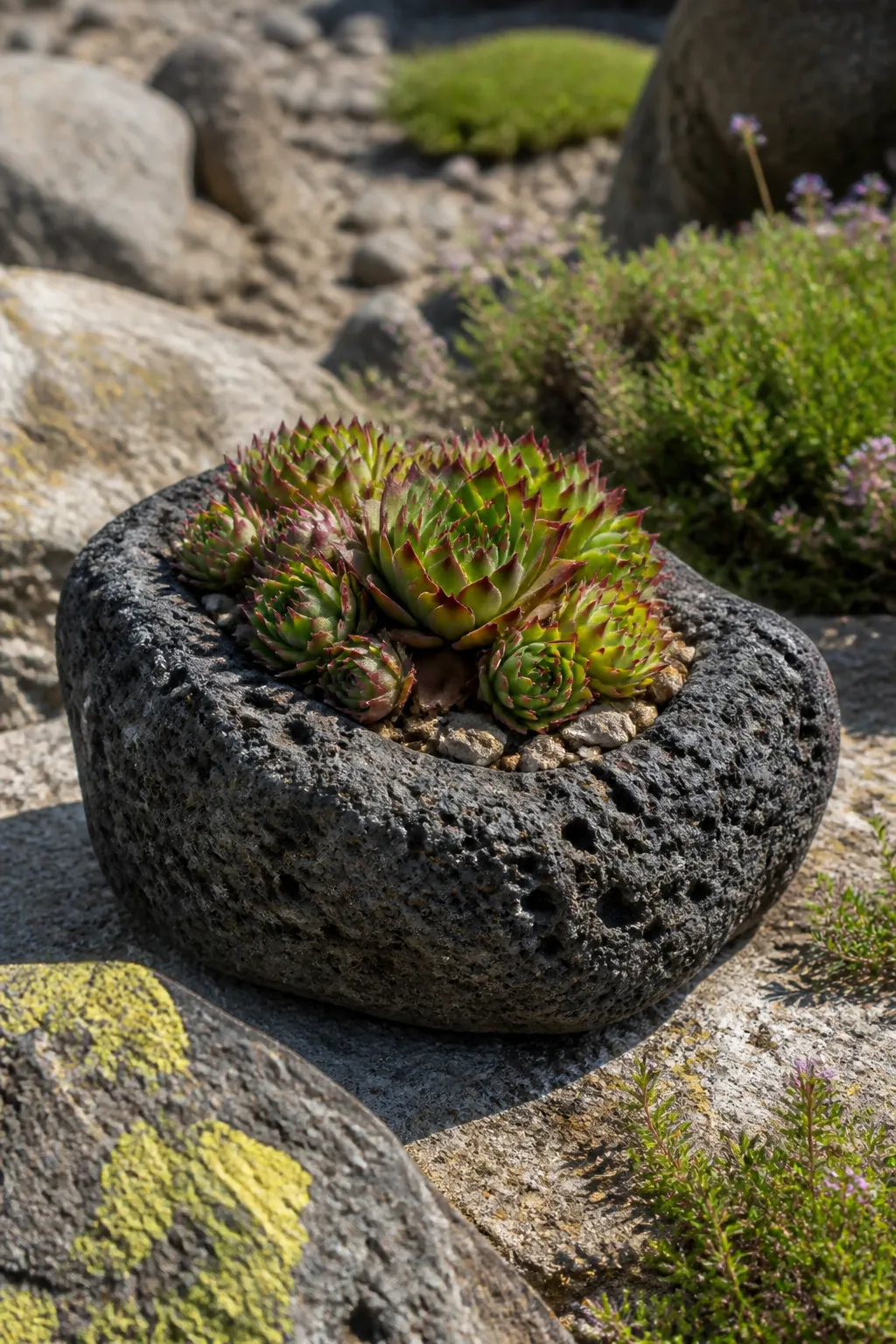
A hollowed lava rock looks especially natural with compact sempervivum or sedum. The porous surface echoes the plants’ dry habitat and makes a strong focal point in a gravel garden. Use only a modest soil pocket, then watch it more closely during hot weather because the small root zone dries quickly.
Copper Gutter Planter
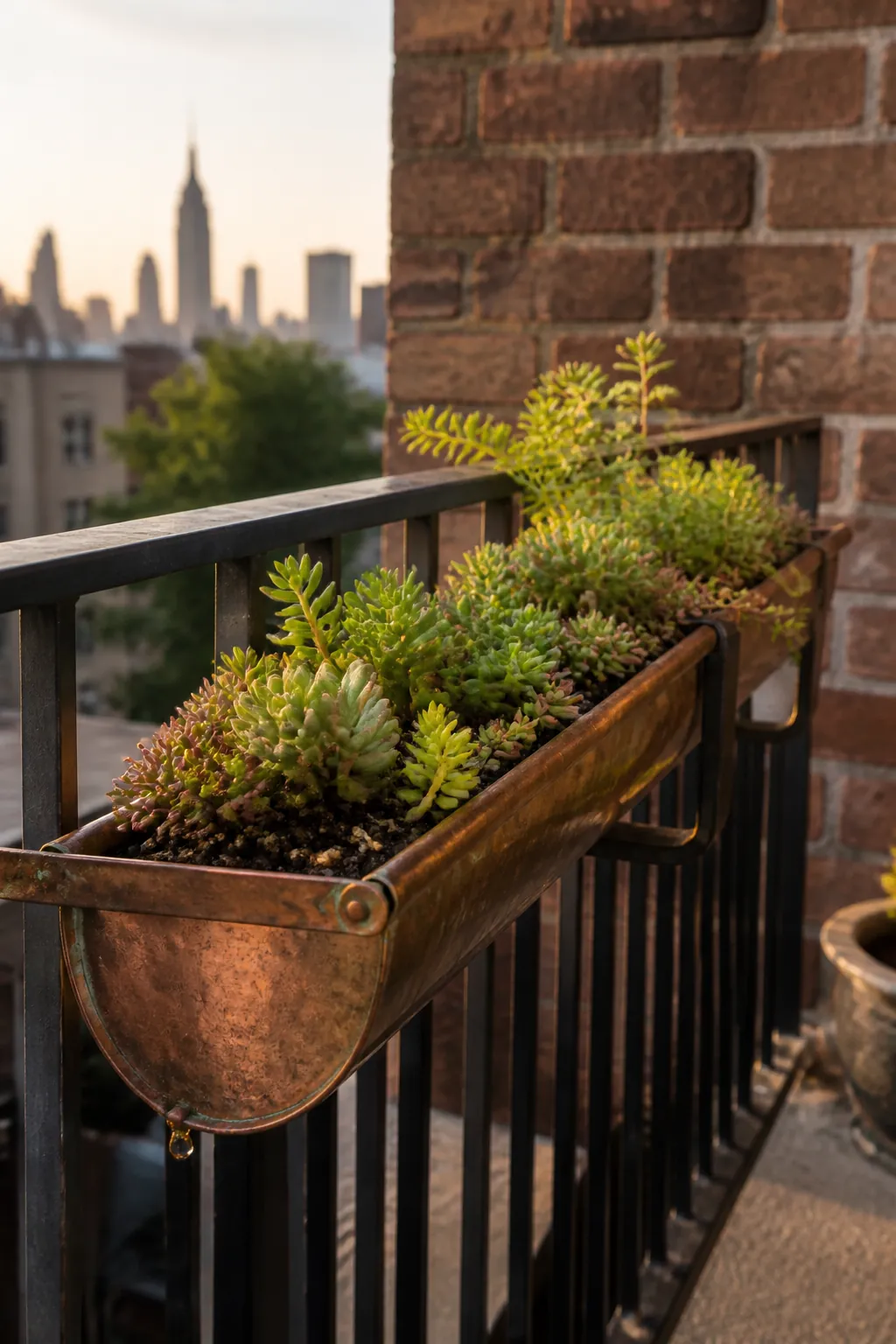
A short copper gutter section provides a slim planting line for a balcony rail or fence. Secure it at several points because wet soil adds more weight than the delicate profile suggests. Allow the metal to age naturally, and choose low sedums whose roots can use the narrow depth comfortably.
Handmade Pinch Pots
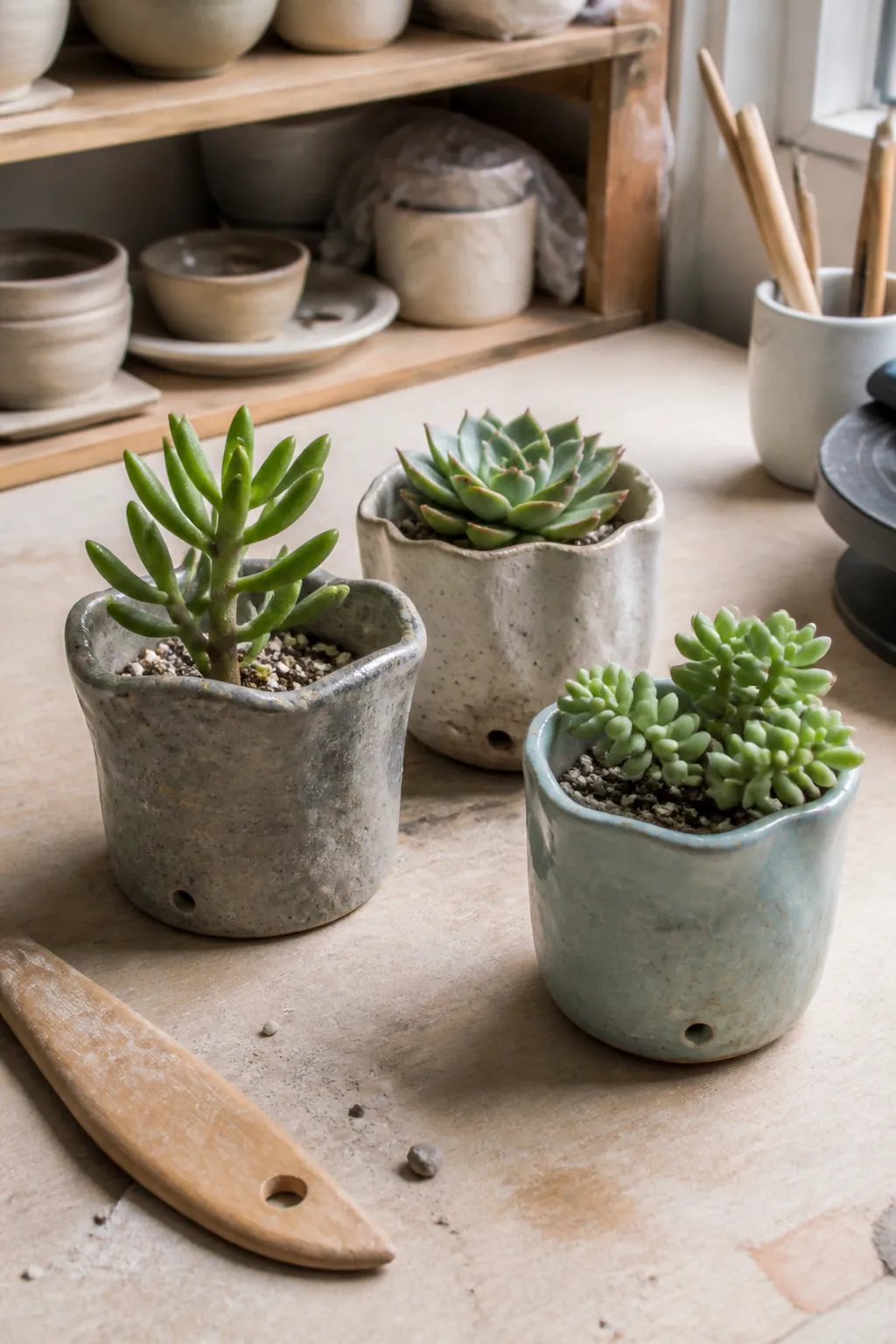
Small handmade pinch pots make individual leaf shapes feel intentional rather than lost in a group. Slight differences in rim and glaze give the collection personality without competing with the plants. Match each vessel to a single slow growing specimen and resist planting offsets too tightly.
Woven Basket Cachepot
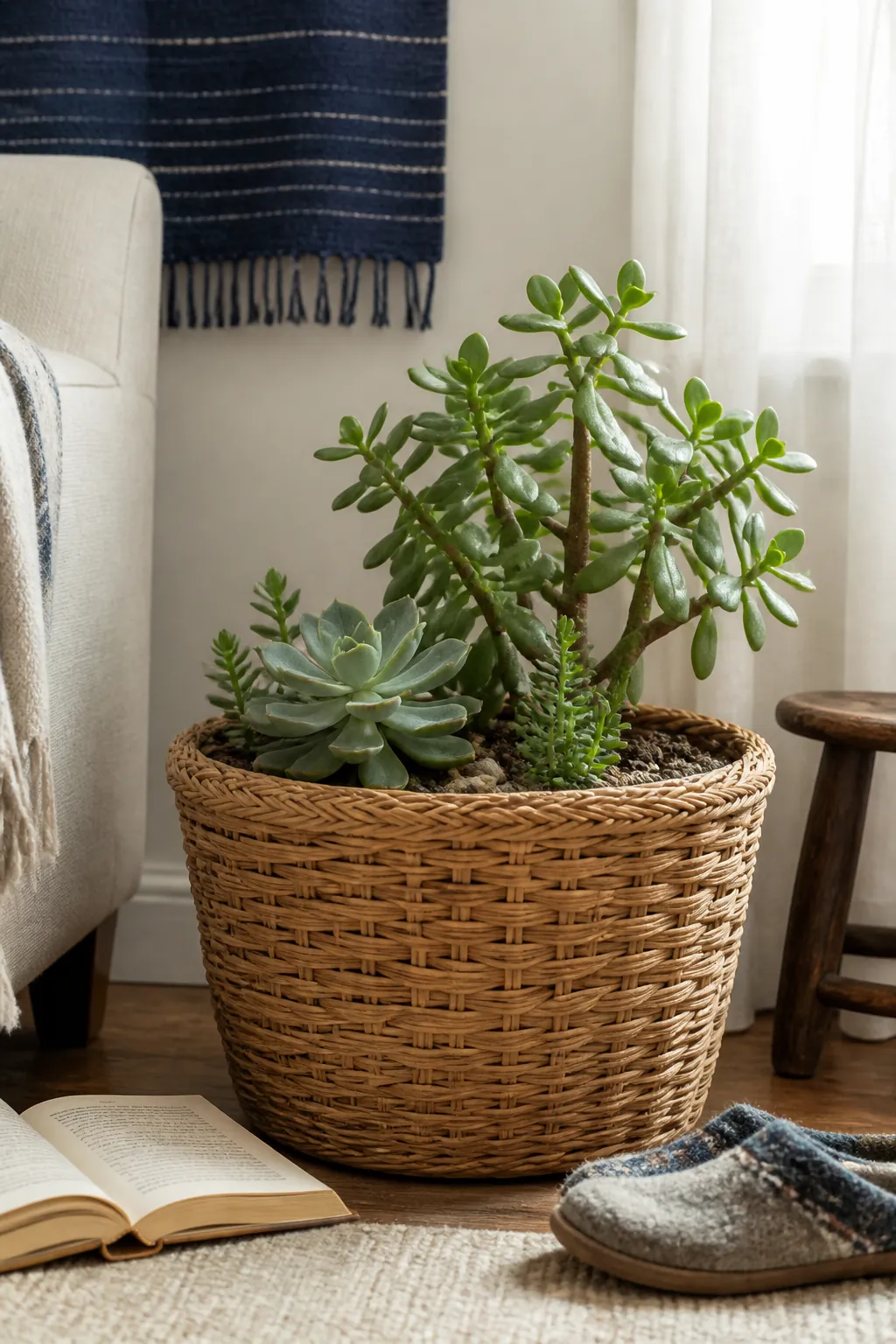
A woven basket softens the hard outline of a large nursery pot and suits relaxed indoor rooms. Keep the succulent in its drained inner pot and remove it for watering, since damp basket fibers can stain floors and invite mold. A low saucer inside the basket offers extra protection but should never hold standing water.
Broken Pot Cascade
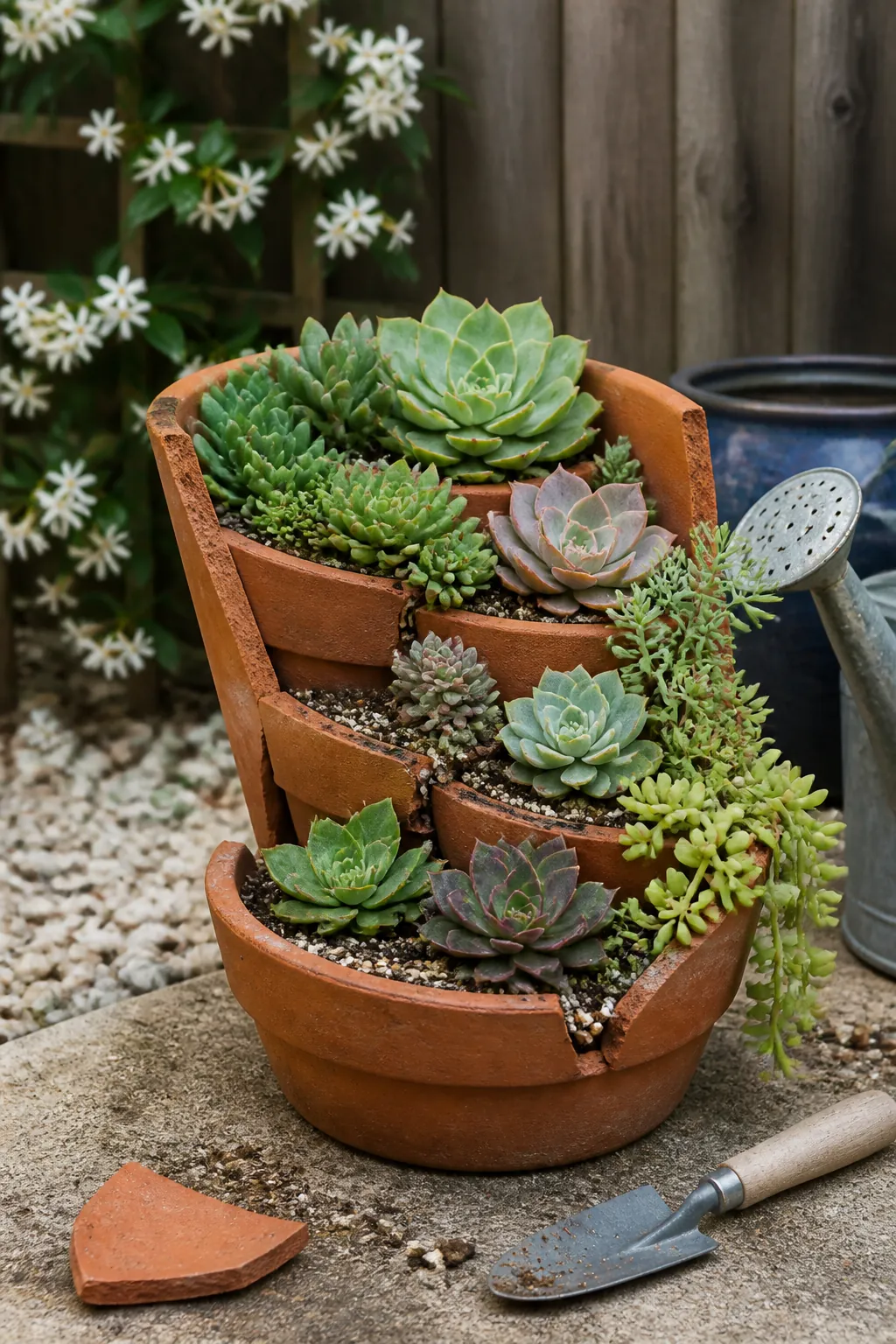
A cracked terracotta pot can become a stepped planting scene instead of waste. Nest the largest shards firmly into soil so they form stable terraces, then place trailing sedum near the upper edge. Smooth or bury sharp points before working around the container, especially in a family garden.
Galvanized Wash Tub
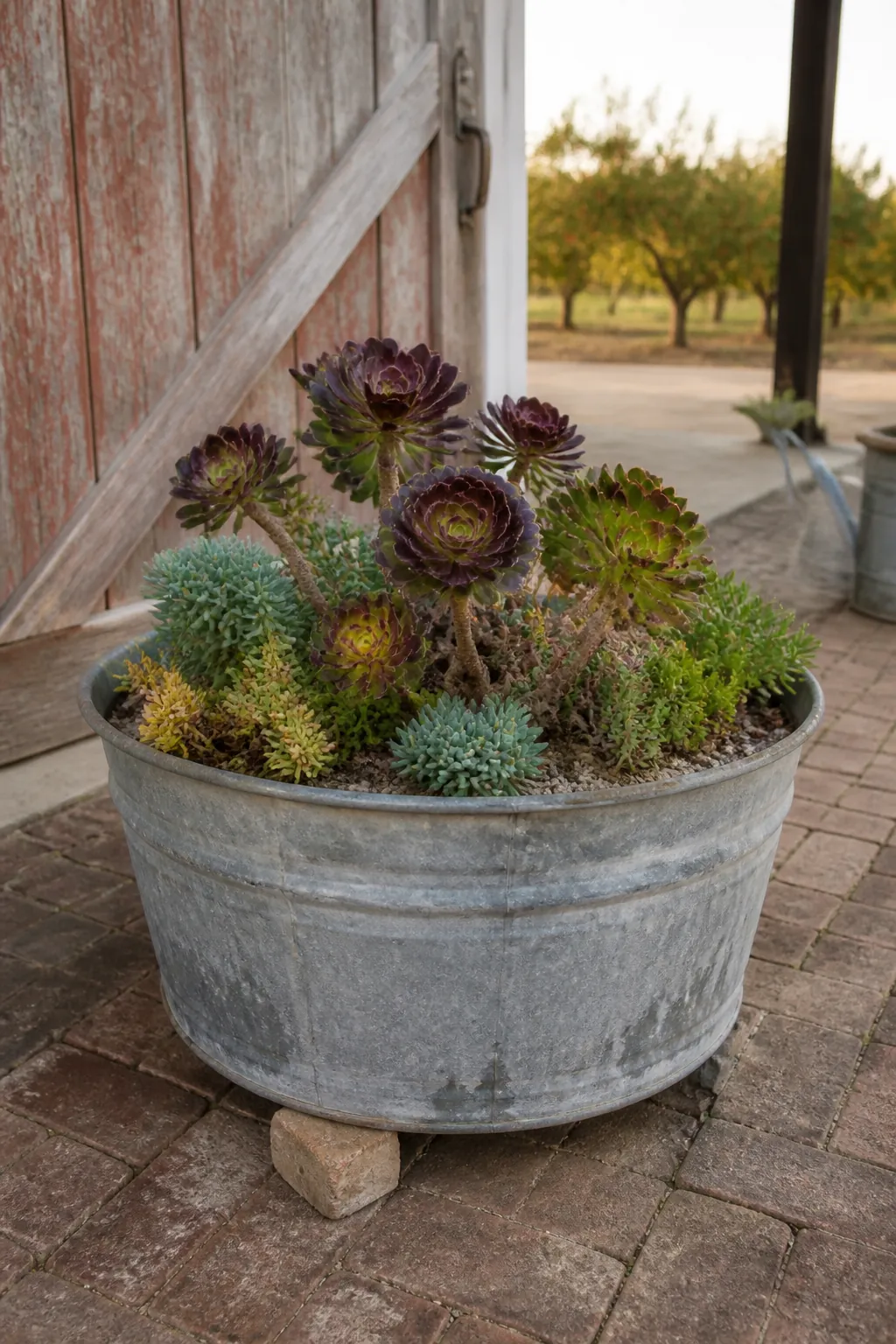
A galvanized wash tub can hold a bold outdoor collection without requiring a permanent garden bed. Add many drain openings across the lowest surface because one central hole may not empty a broad base evenly. Set the tub on bricks, then combine taller aeoniums with spreading sedums for layered height.
Minimal White Cube
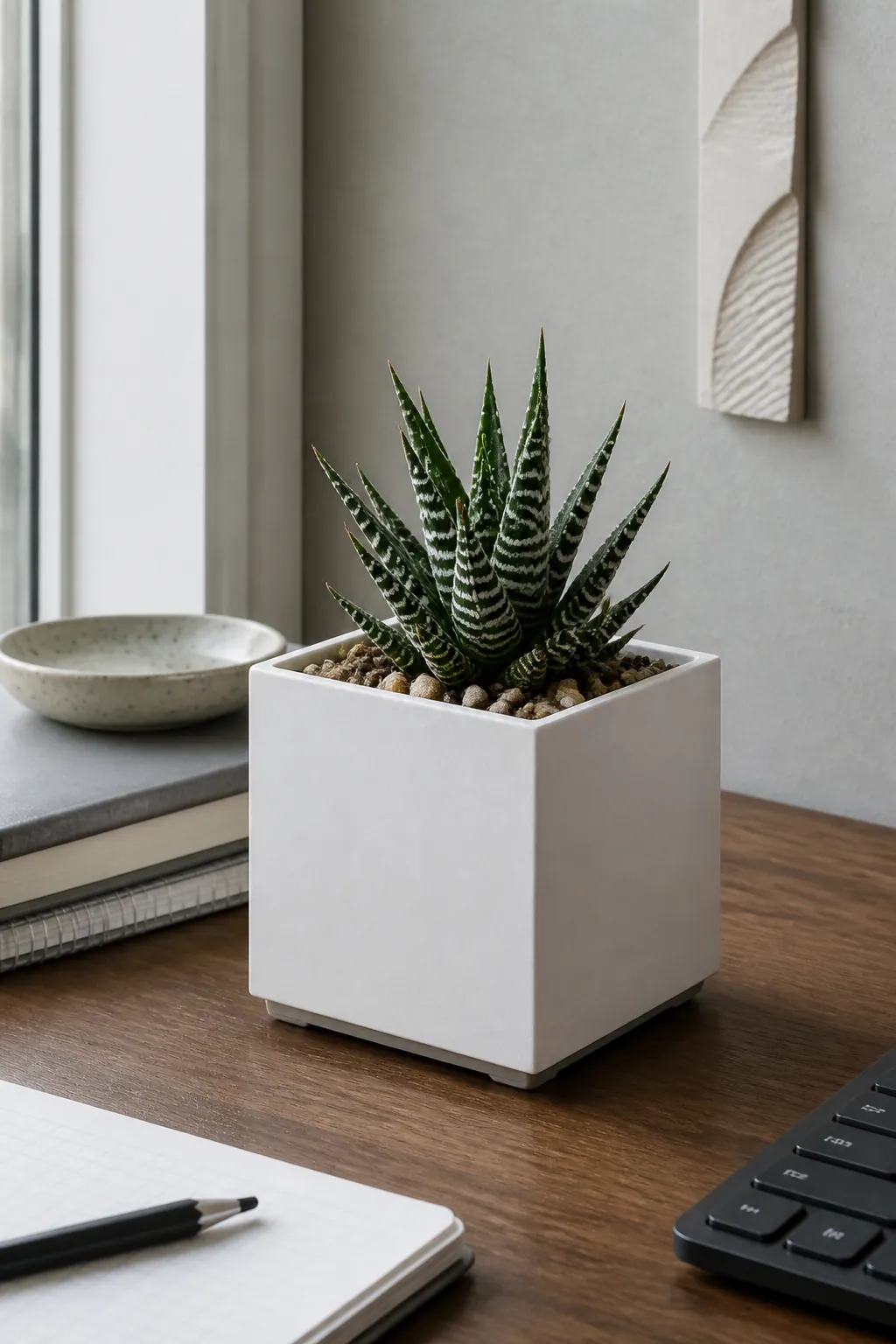
A matte white cube sharpens the silhouette of a dark green haworthia or zebra plant. The restrained pairing works well on a desk where too many colors would feel busy. Choose a cube with a removable drain plug, and open it whenever the plant is watered.
Driftwood Planting Pocket
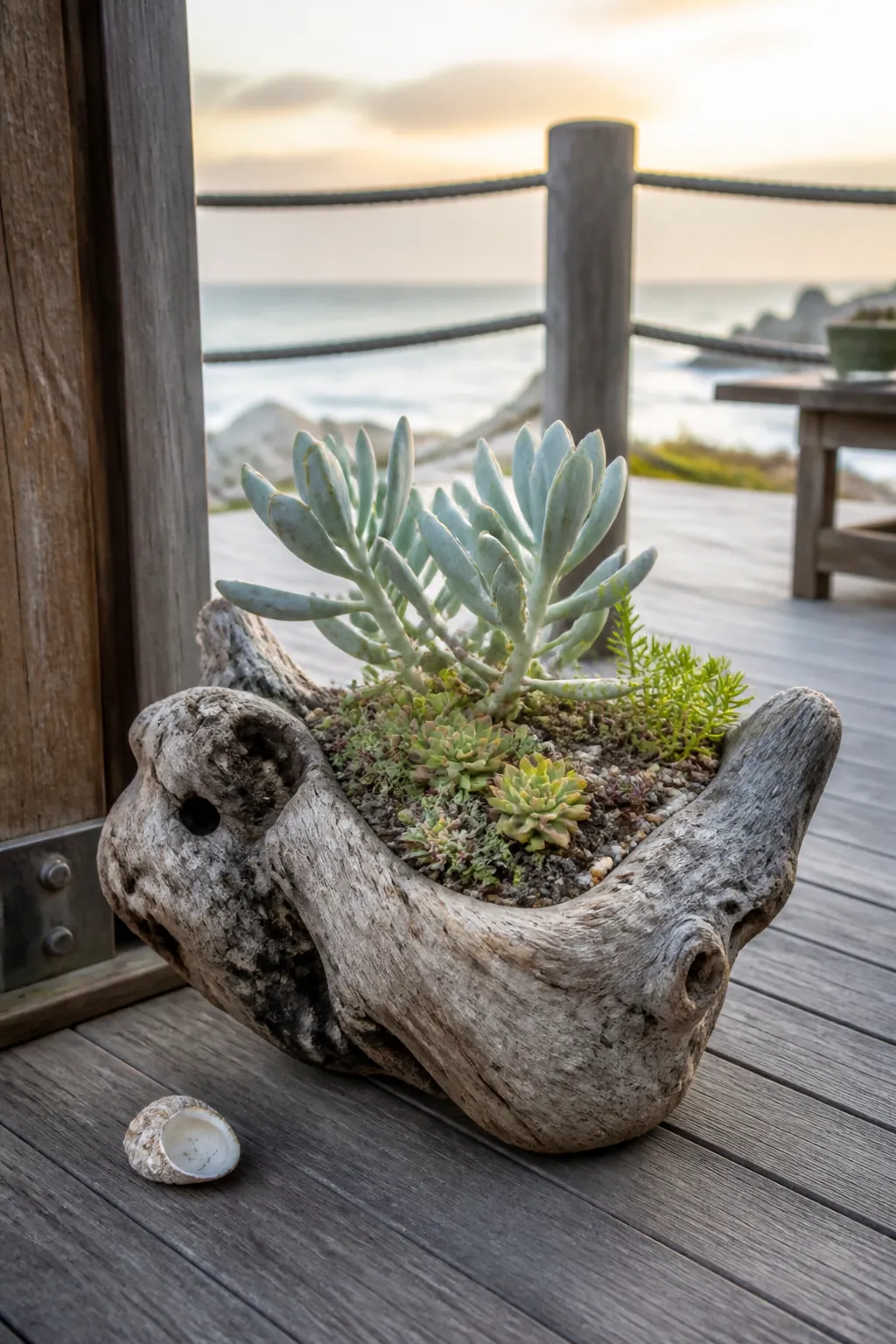
A weathered driftwood piece can cradle a narrow ribbon of drought tolerant plants. Rather than filling every hollow, select one stable pocket and secure a small amount of gritty mix with discreet mesh. Place the display where it stays dry enough for the wood to remain sound and the roots to breathe.
Mosaic Tile Bowl
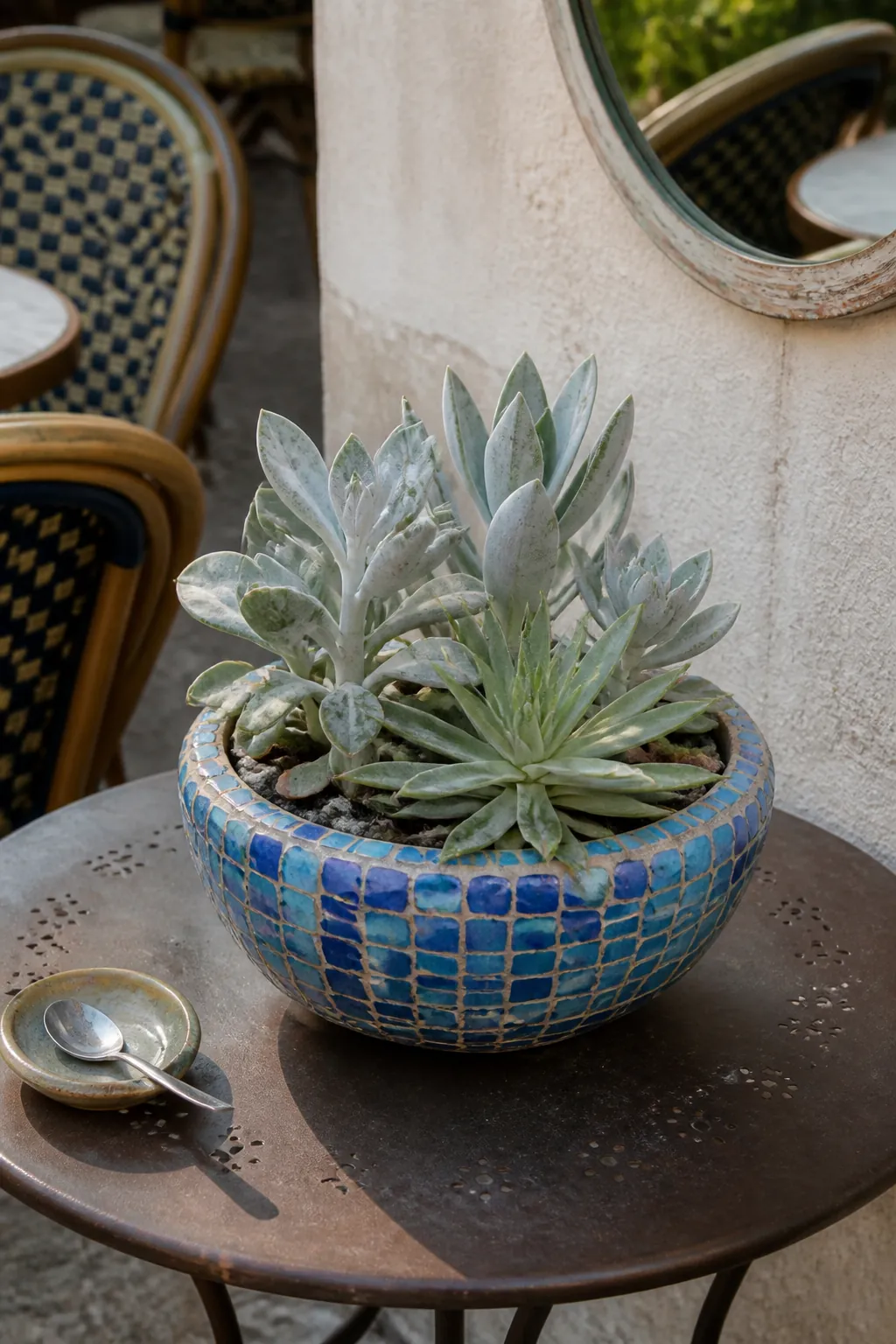
A mosaic tile bowl gives a simple succulent garden a lively handcrafted border. Keep the plant palette limited to silvery greens so the patterned exterior remains a frame rather than visual competition. Check that grout and adhesive are sealed outside the soil cavity, while the base opening remains unobstructed.
Tiered Strawberry Pot
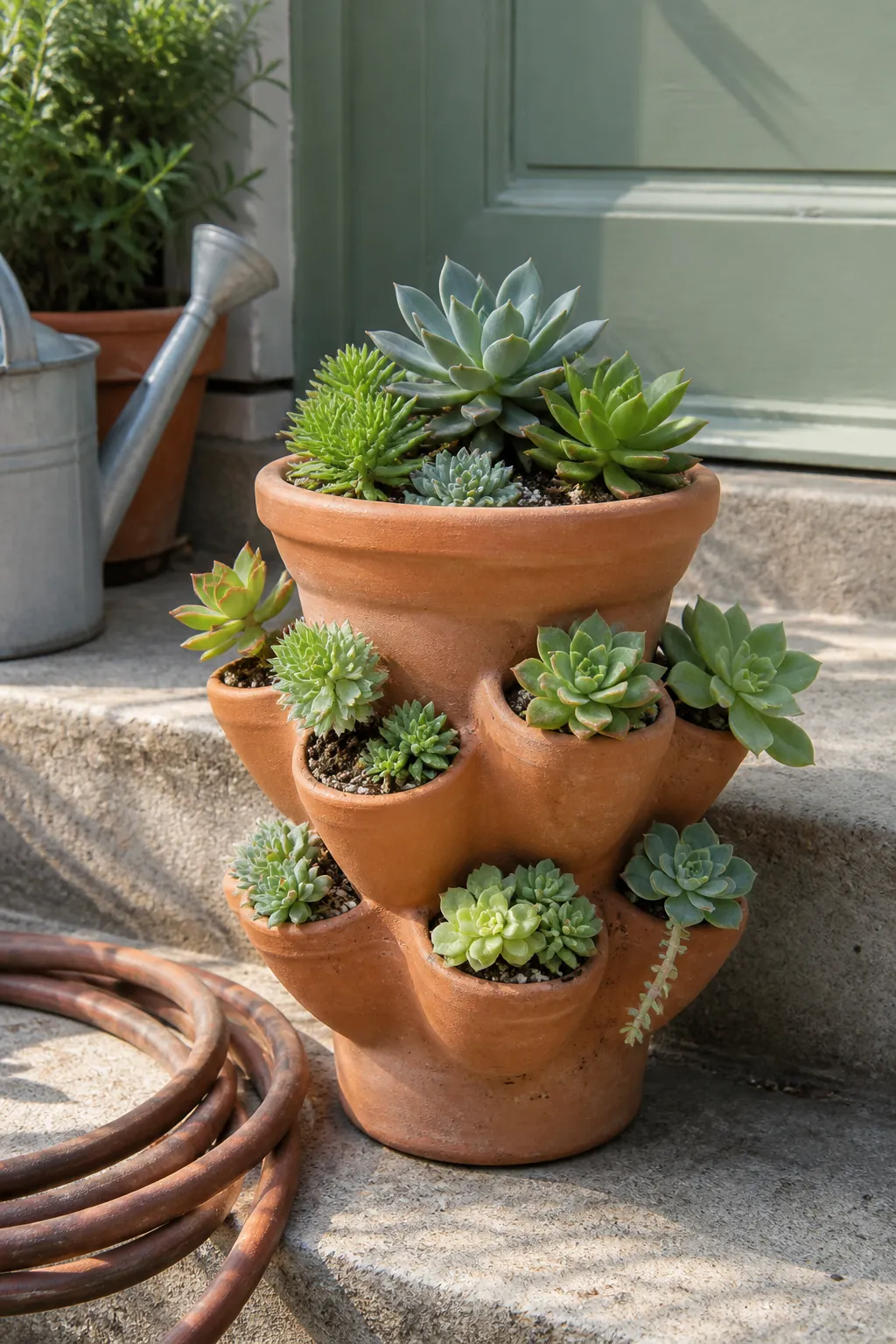
A strawberry pot offers many side pockets that naturally suit compact succulent offsets. Fill the vessel gradually, placing roots through each opening before adding the next layer of mix. Turn the pot every week indoors so plants on the darker side do not stretch toward the window.
Bamboo Section Planters
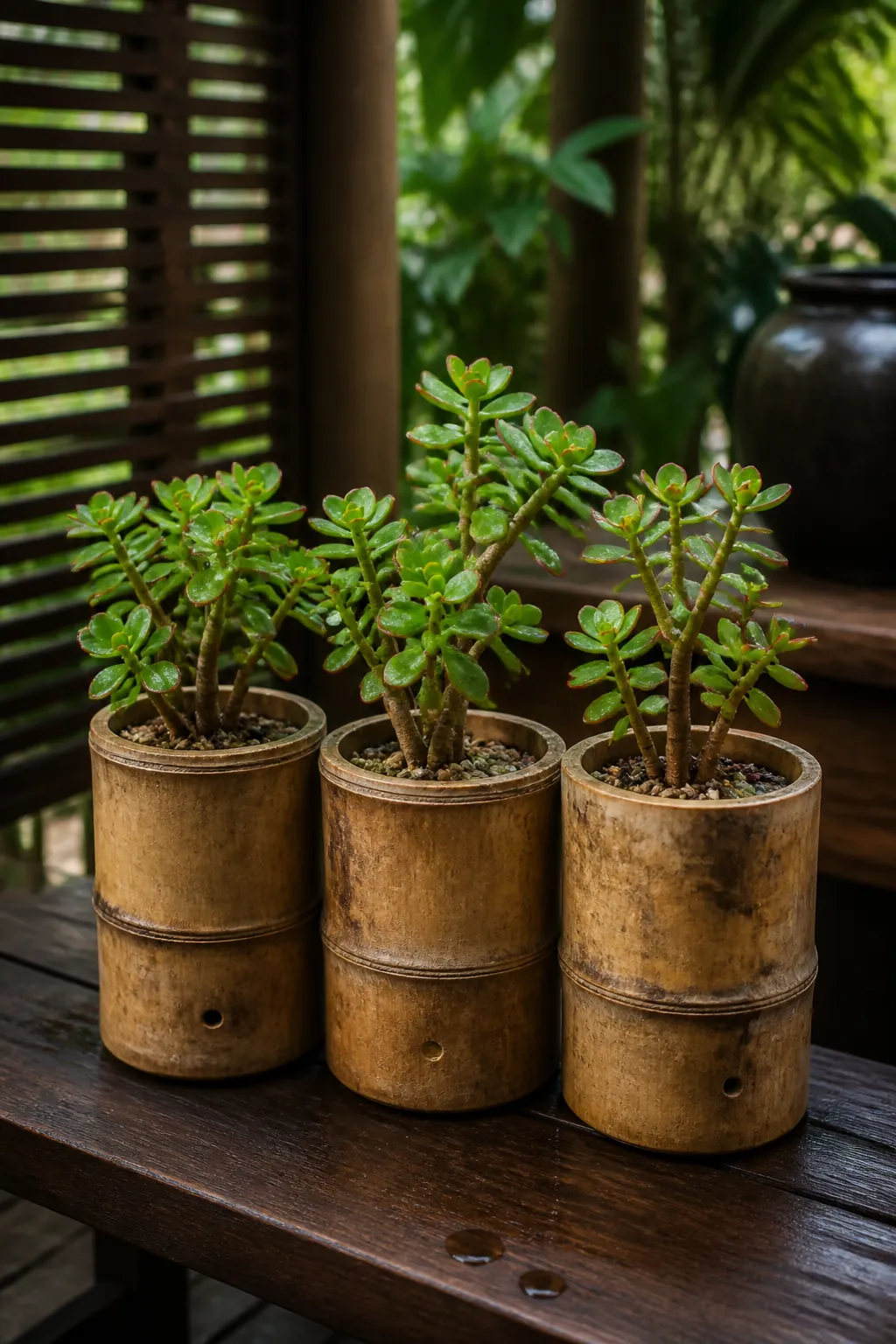
Wide bamboo sections create lightweight vessels with a calm natural finish. Seal the cut edges, open drainage at the lowest point, and use a removable liner so moisture does not sit against the bamboo. Group three lengths together to create height while keeping the plants themselves easy to reach.
Color Blocked Clay Pots
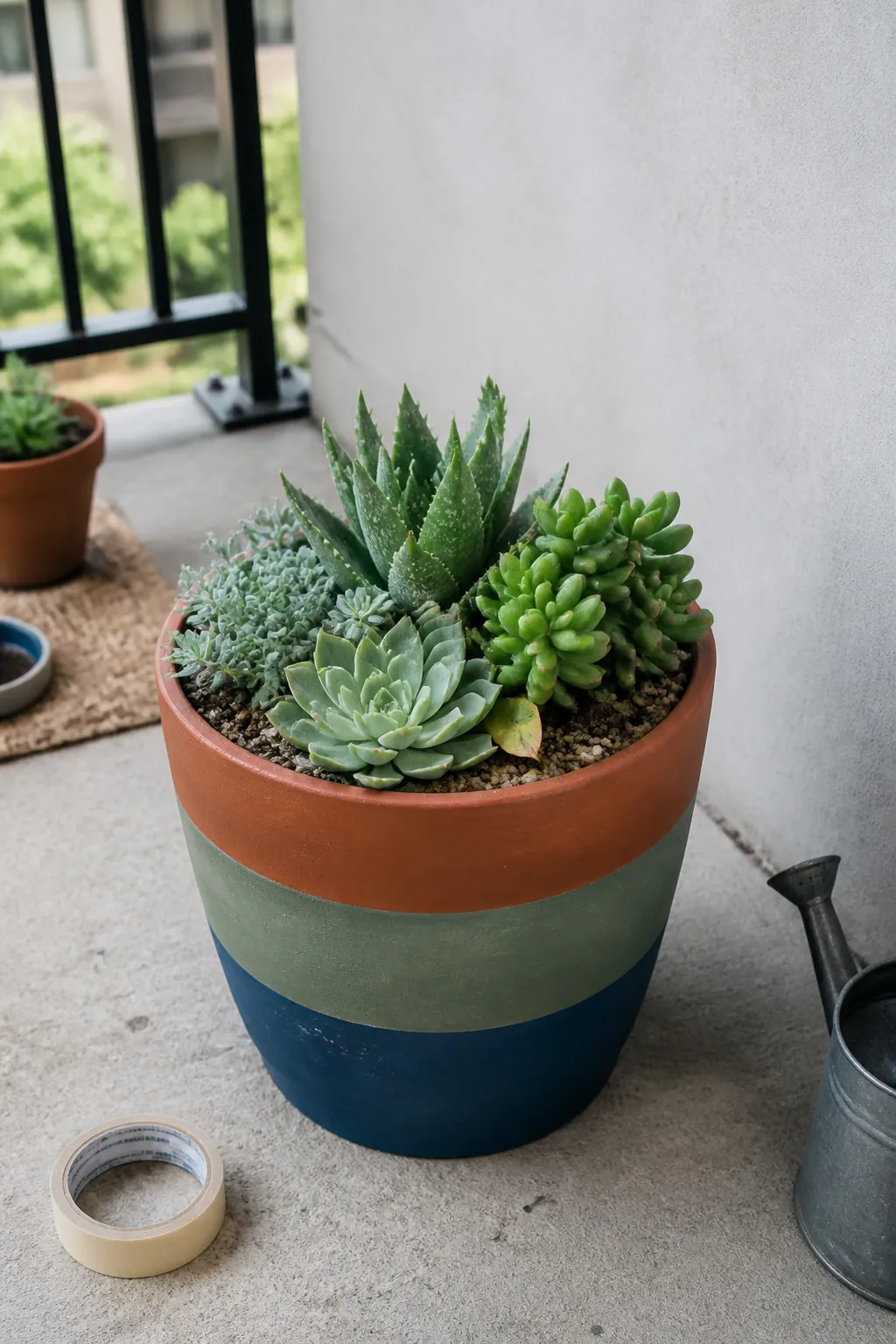
Painted clay pots can introduce color while retaining an unpainted band that helps moisture escape. Use exterior paint only on the outer surface and keep the inner clay bare. A small set in rust, sage, and deep blue looks cohesive when every pot repeats the same clean geometric boundary.
Birdbath Succulent Island
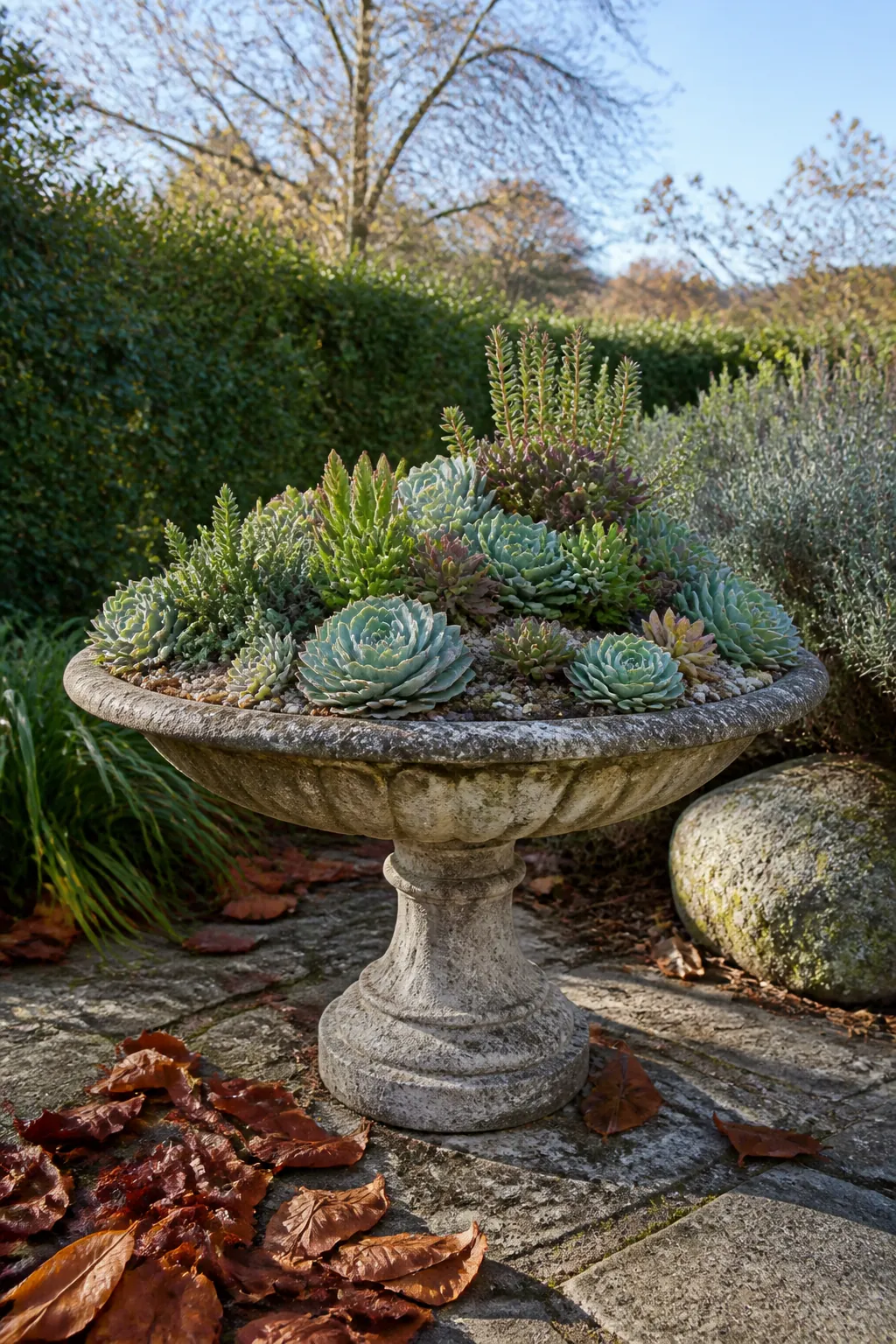
A shallow birdbath can become a raised succulent island where winter moisture is not severe. Confirm that water drains through the bowl instead of relying on evaporation, then mound the mix slightly at the center. Choose wind tolerant varieties and leave gaps between them for air movement and future growth.
Window Ledge Trough
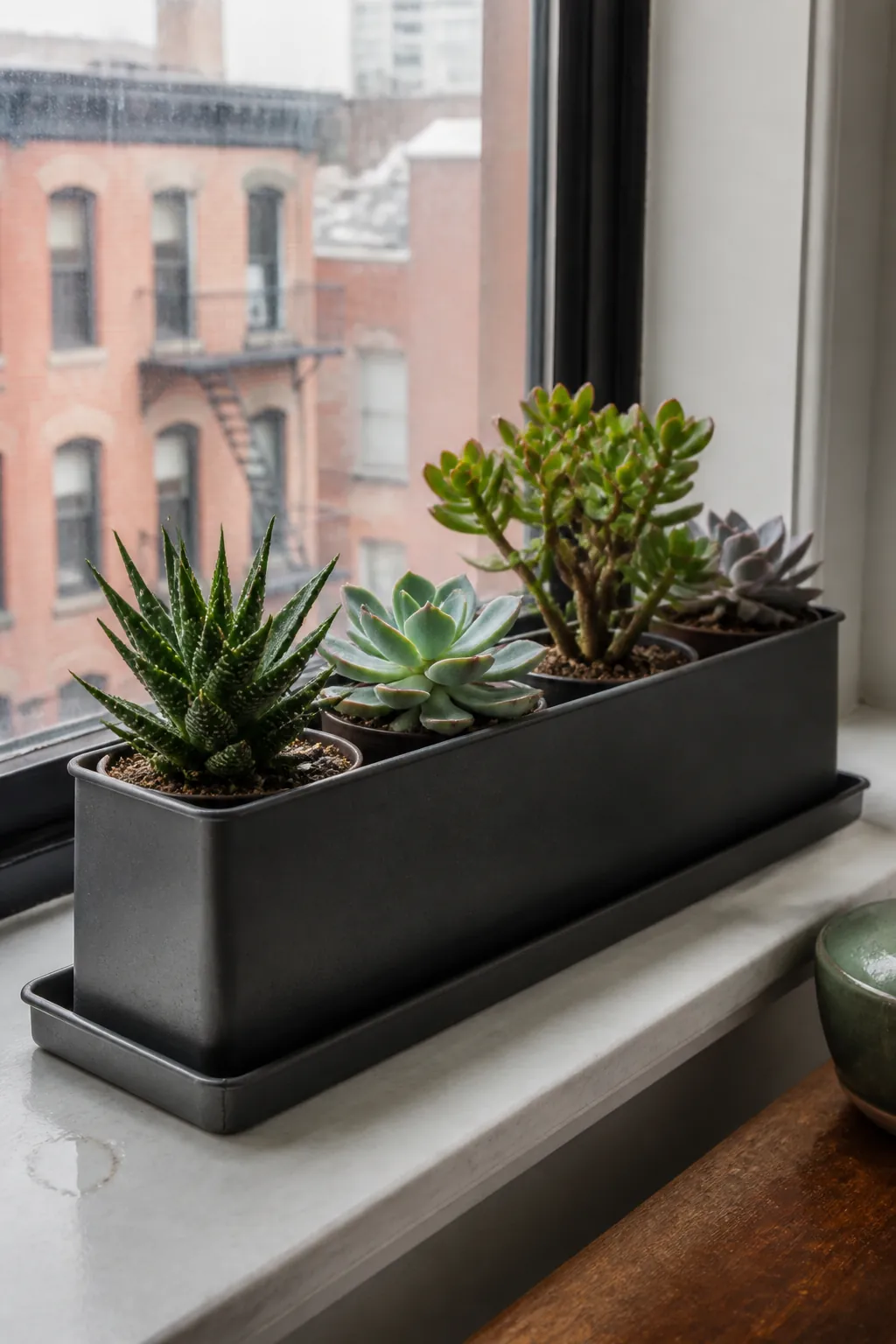
A slim window ledge trough keeps a small collection together without crowding the sill. Use individual nursery pots inside a long outer container so each plant can be watered according to its own needs. Add a hidden waterproof tray beneath them, then empty it promptly after any runoff appears.
Geometric Metal Stand
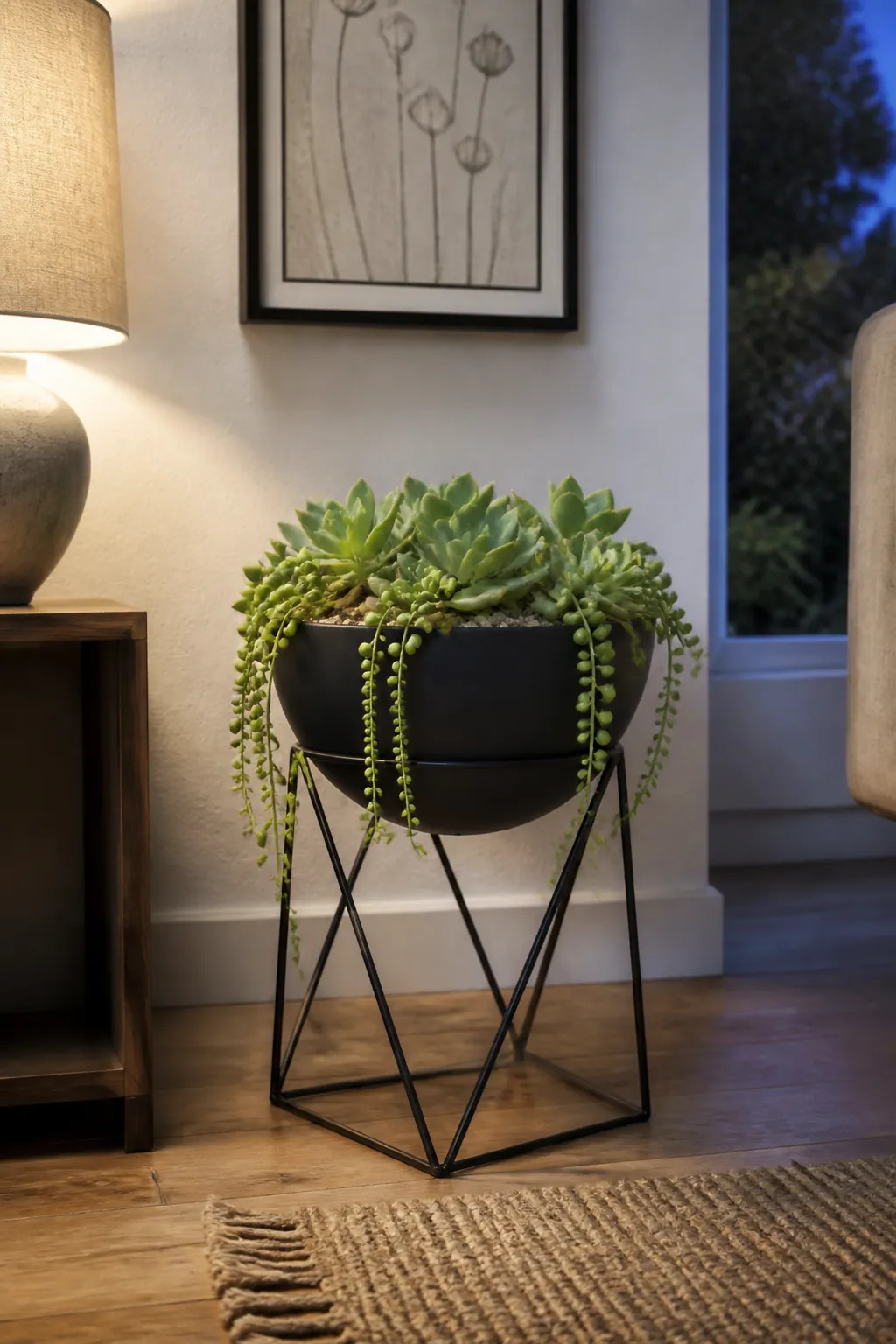
A geometric metal stand turns one simple planter into a floor level focal point. The raised position improves airflow beneath the pot and keeps trailing stems away from crowded surfaces. Check the stand against the actual pot diameter before planting, since a heavy container should sit fully within the support ring.
Hypertufa Alpine Bowl
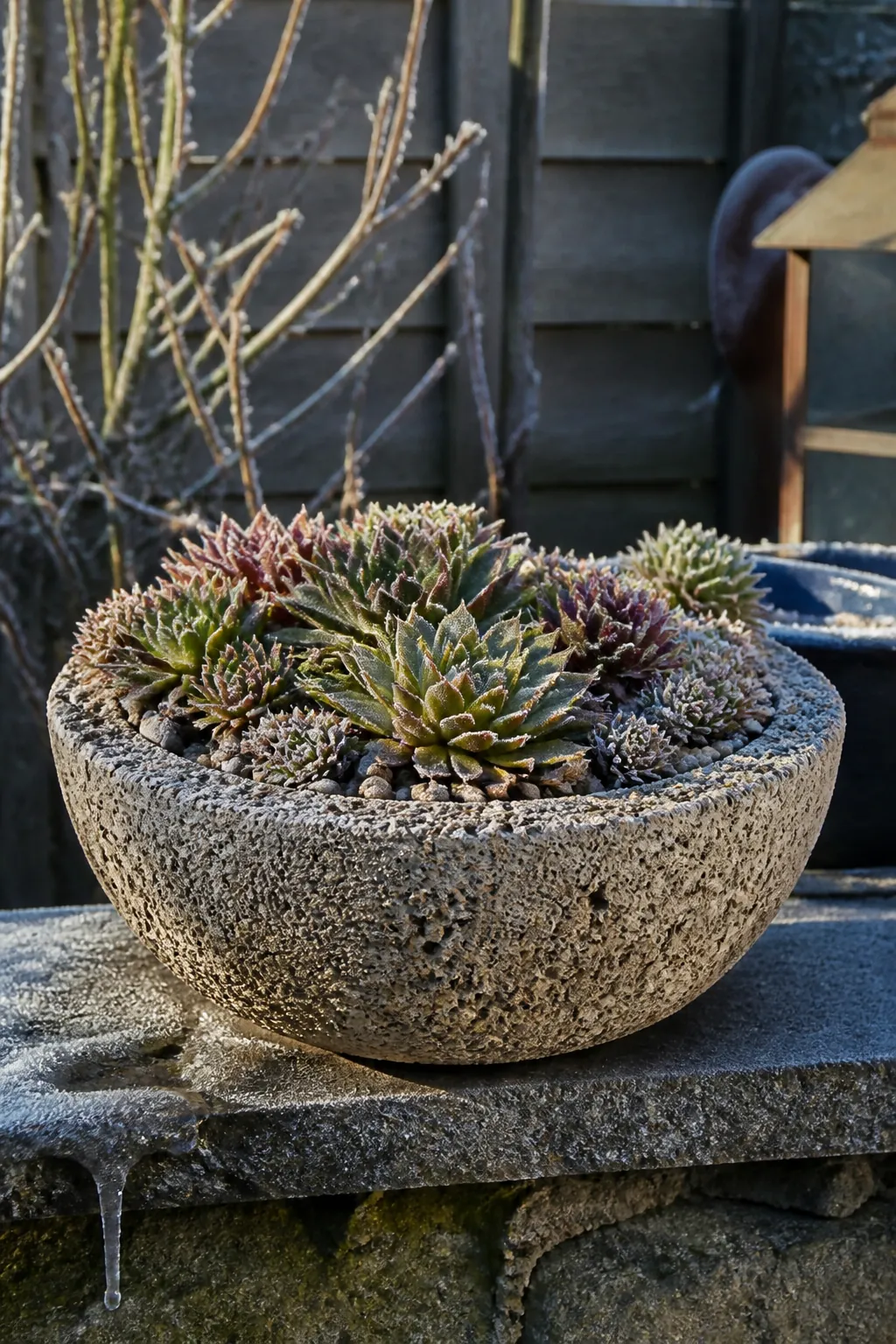
A handmade hypertufa bowl has the rough, aged character of stone without the same weight. Its breathable material and shallow form work especially well for hardy sempervivum in a cool climate. Cure the vessel fully before planting and raise it above frozen ground so thawing water can leave freely.
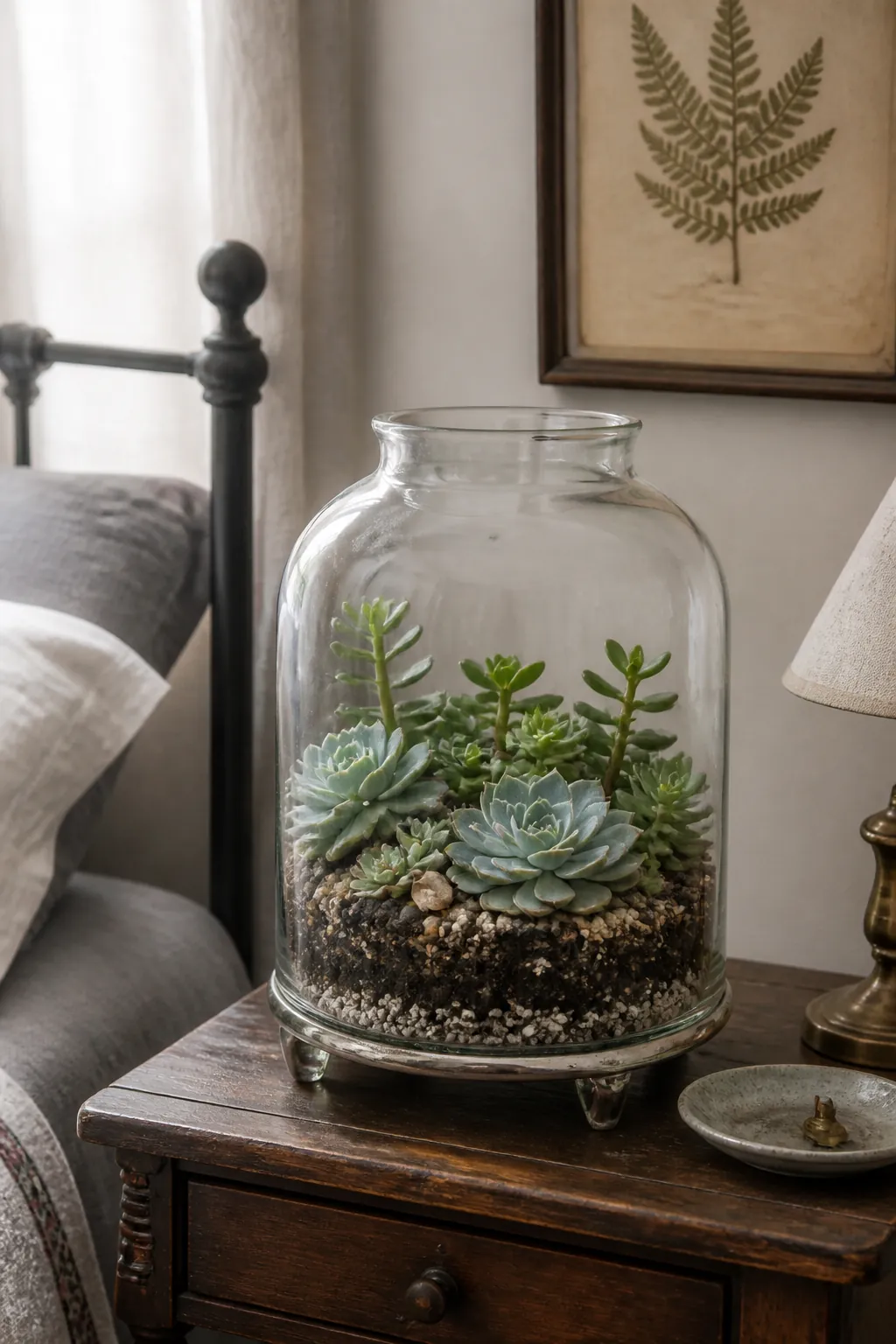
Glass Cloche Display
An open glass cloche can frame a single potted succulent without turning it into a humid terrarium. Lift or remove the dome for most of the day so heat and condensation never collect around the leaves. Use the glass only as a temporary styling element in a room with stable, gentle light.
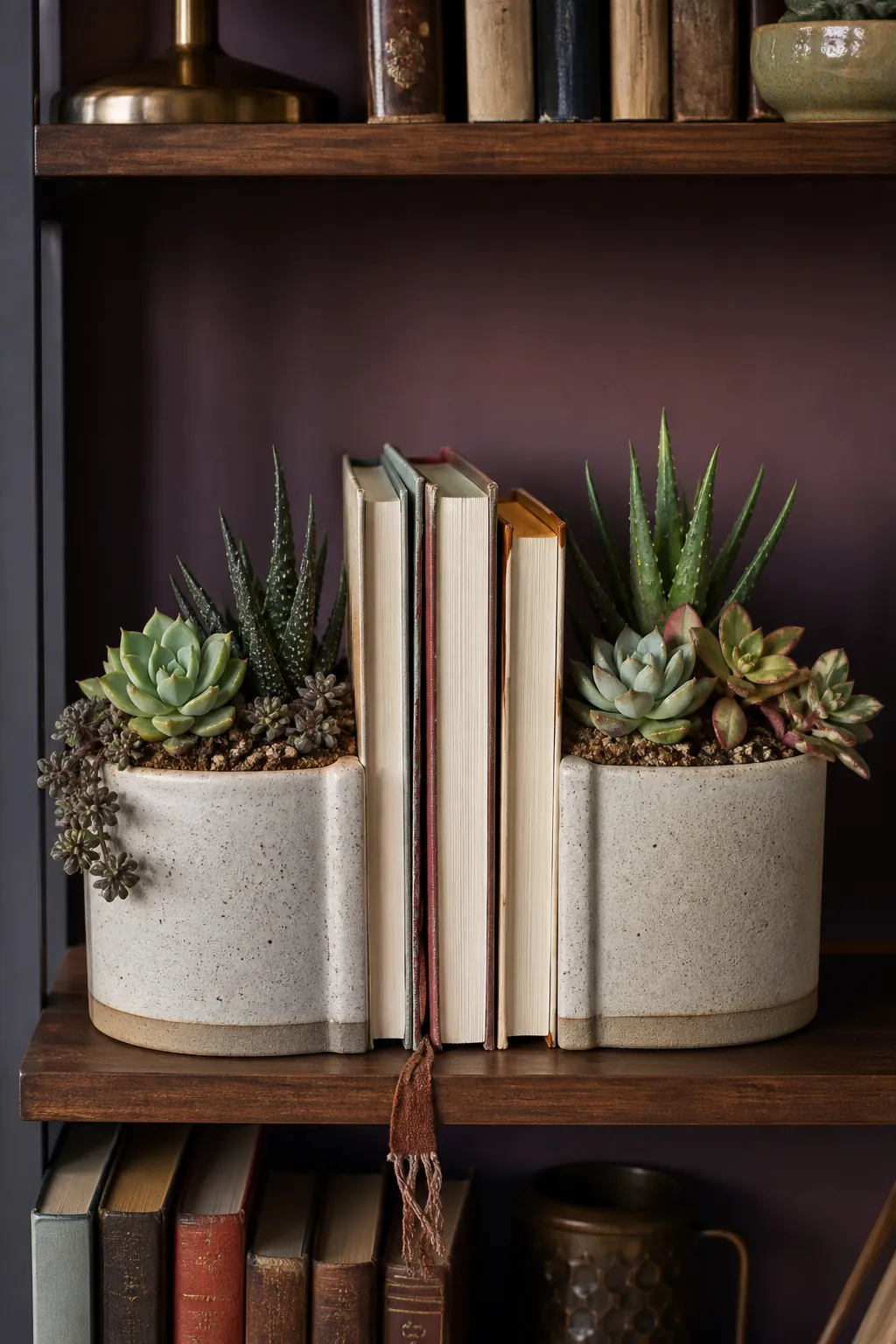
Bookend Planter Pair
Two heavy ceramic planters can act as bookends while adding living texture to a shelf. Select compact plants that will not lean across book spines or shed dry leaves into narrow gaps. Waterproof saucers and measured watering matter here because even a small leak can damage paper quickly.
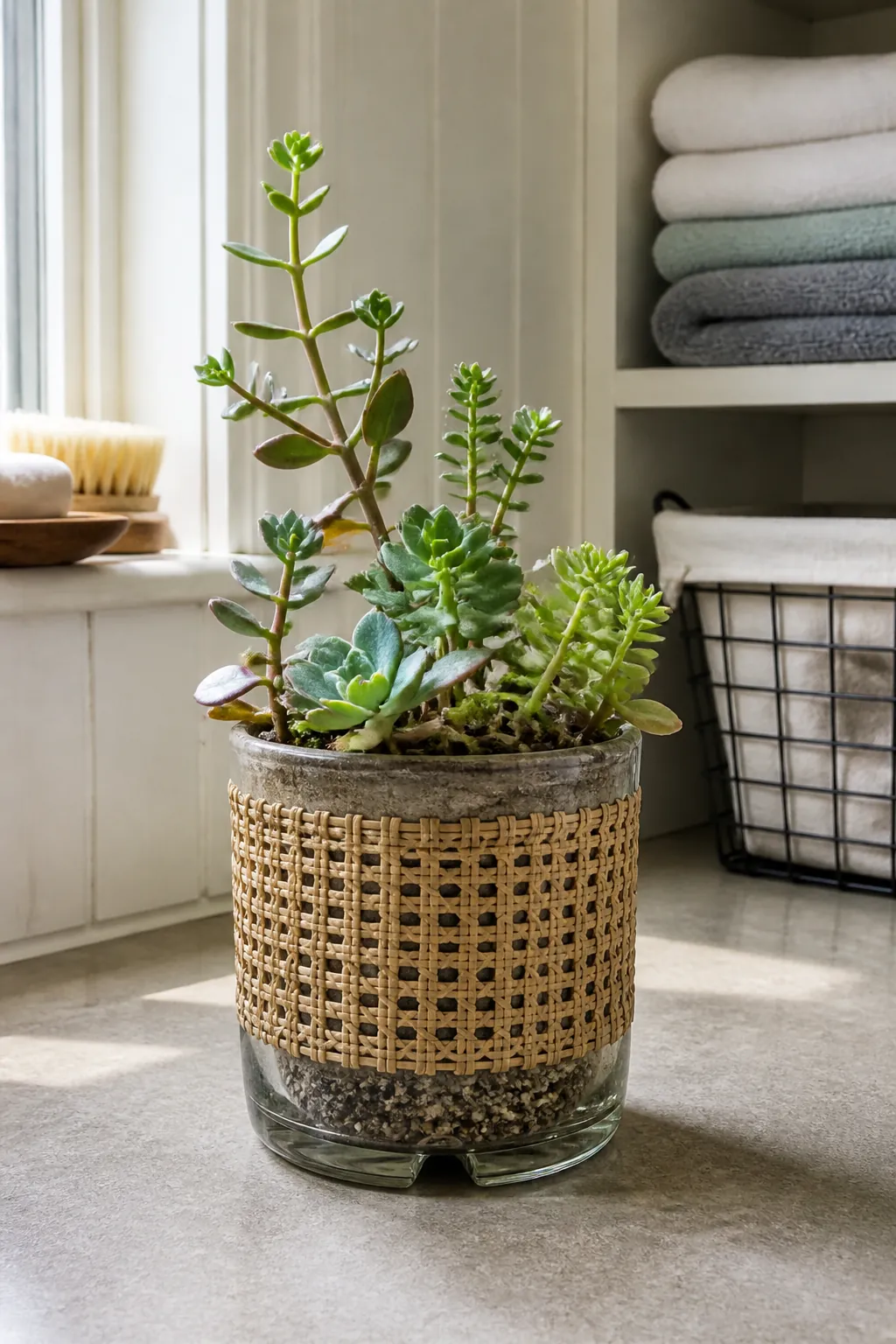
Recycled Glass Jar Sleeve
A recycled glass jar can serve as a visible sleeve for a smaller drained pot rather than a direct planter. The gap between vessels makes it easy to see and remove runoff before roots sit in water. Wrap the lower glass with cane or cord to disguise the nursery pot while leaving the top open to air.
Shell Shaped Ceramic Pot
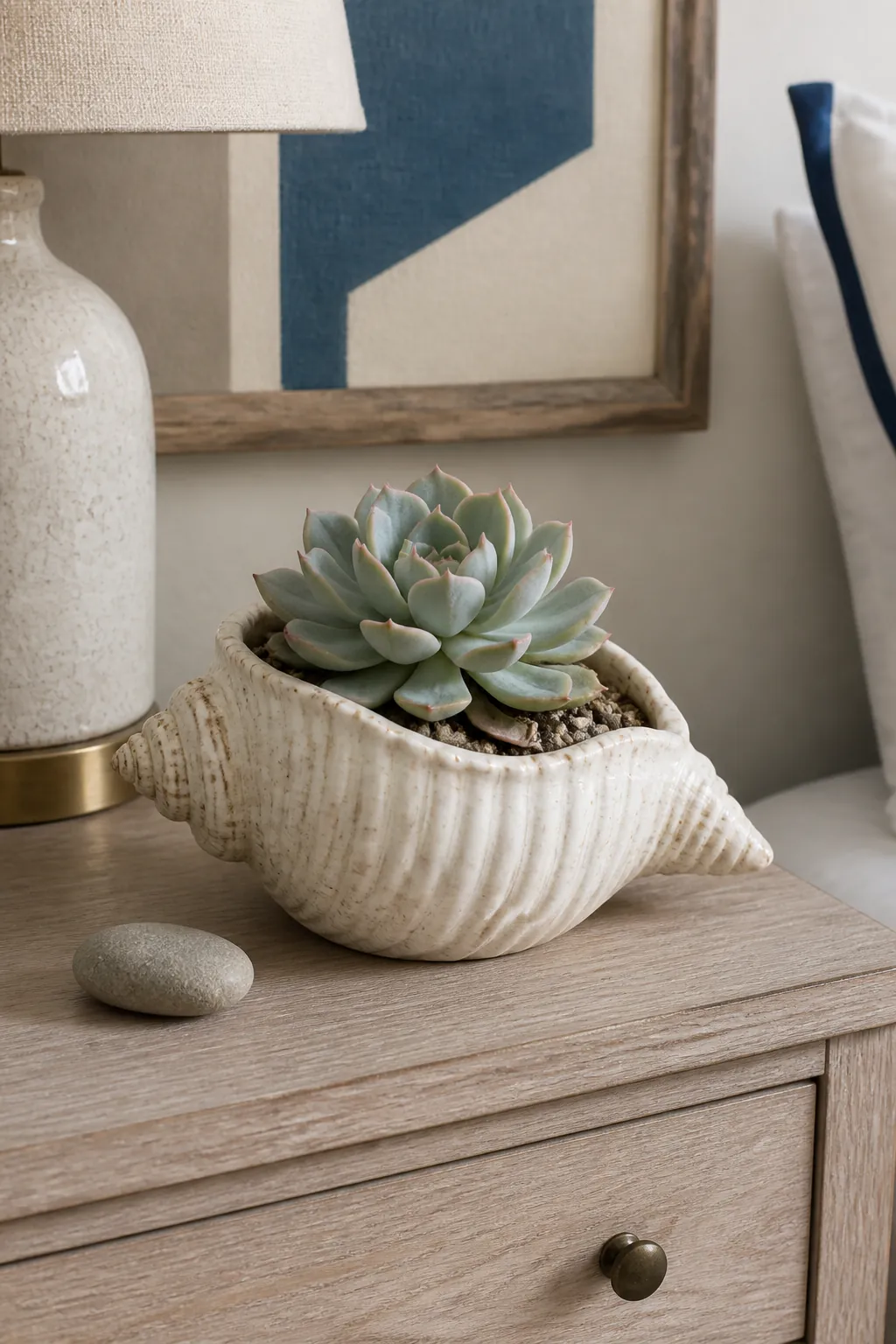
A shell shaped ceramic pot brings a coastal note without using a fragile real shell. Let the curved ridges remain the main decorative feature and pair them with one pale, symmetrical echeveria. Confirm that the irregular base sits steadily before placing it on a narrow table.
Vertical Mesh Frame
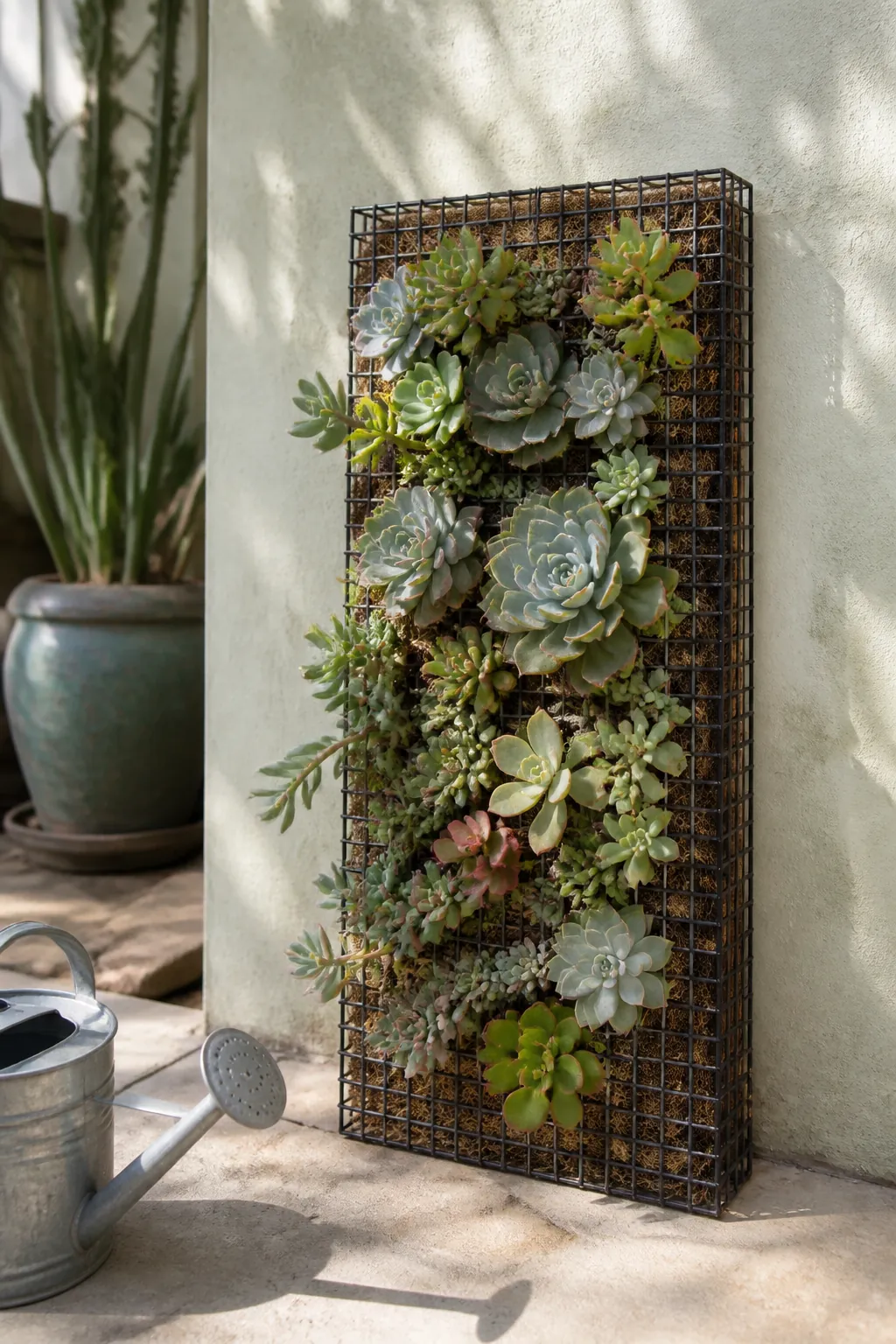
A shallow mesh backed frame can hold rooted succulent cuttings as a vertical garden. Establish the plants flat for several weeks before raising the frame, since fresh roots need time to grip the mix. Water it horizontally, allow full drainage, and inspect the lower edge for moisture before returning it to the wall.
Wide Raku Vessel
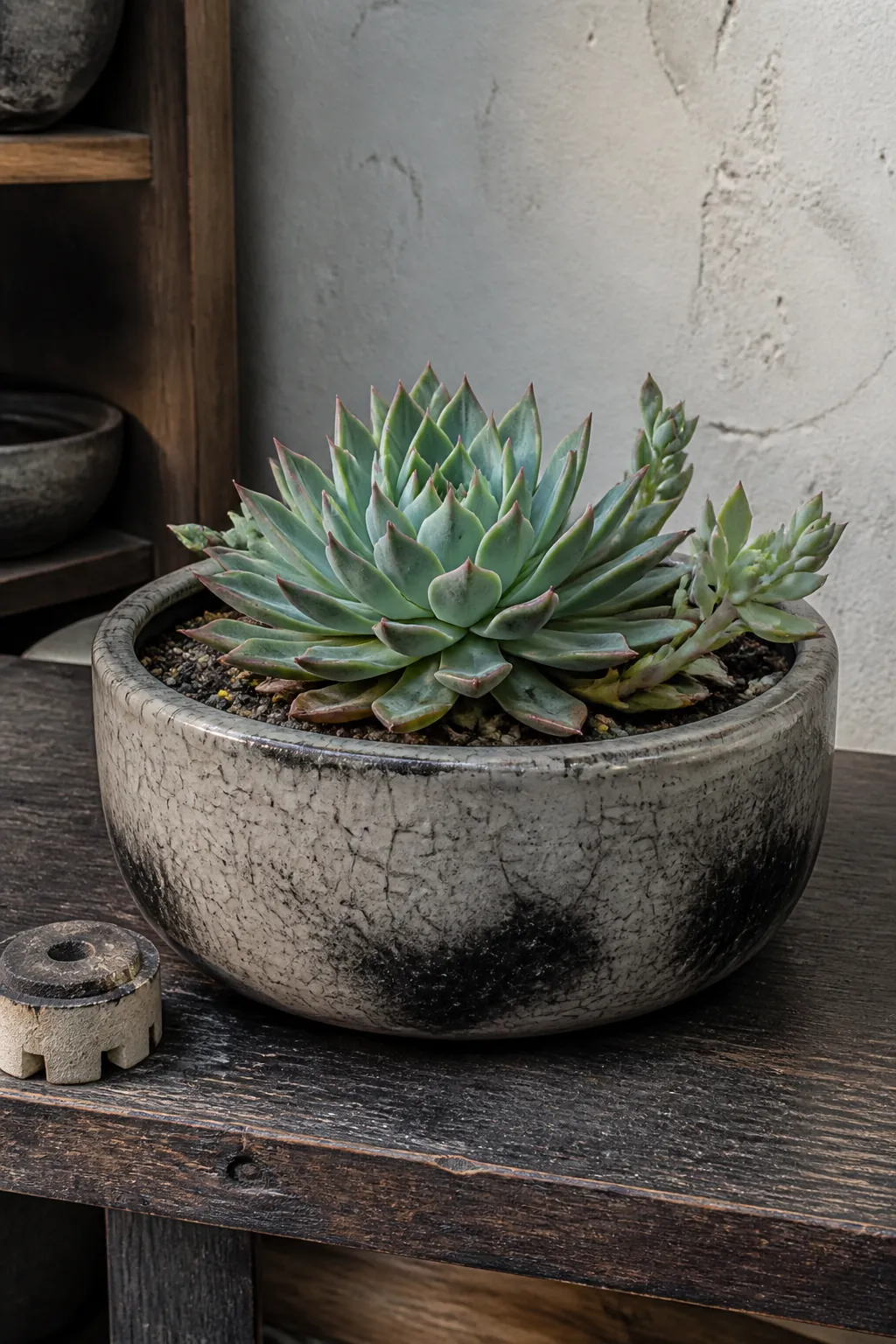
A wide raku vessel pairs crackled glaze with the precise geometry of a rosette succulent. Treat decorative raku as a cachepot unless the maker confirms it is suitable for wet soil and has drainage. A plain inner pot preserves the ceramic finish and lets the plant receive a thorough soak at the sink.
Cinder Block Pocket
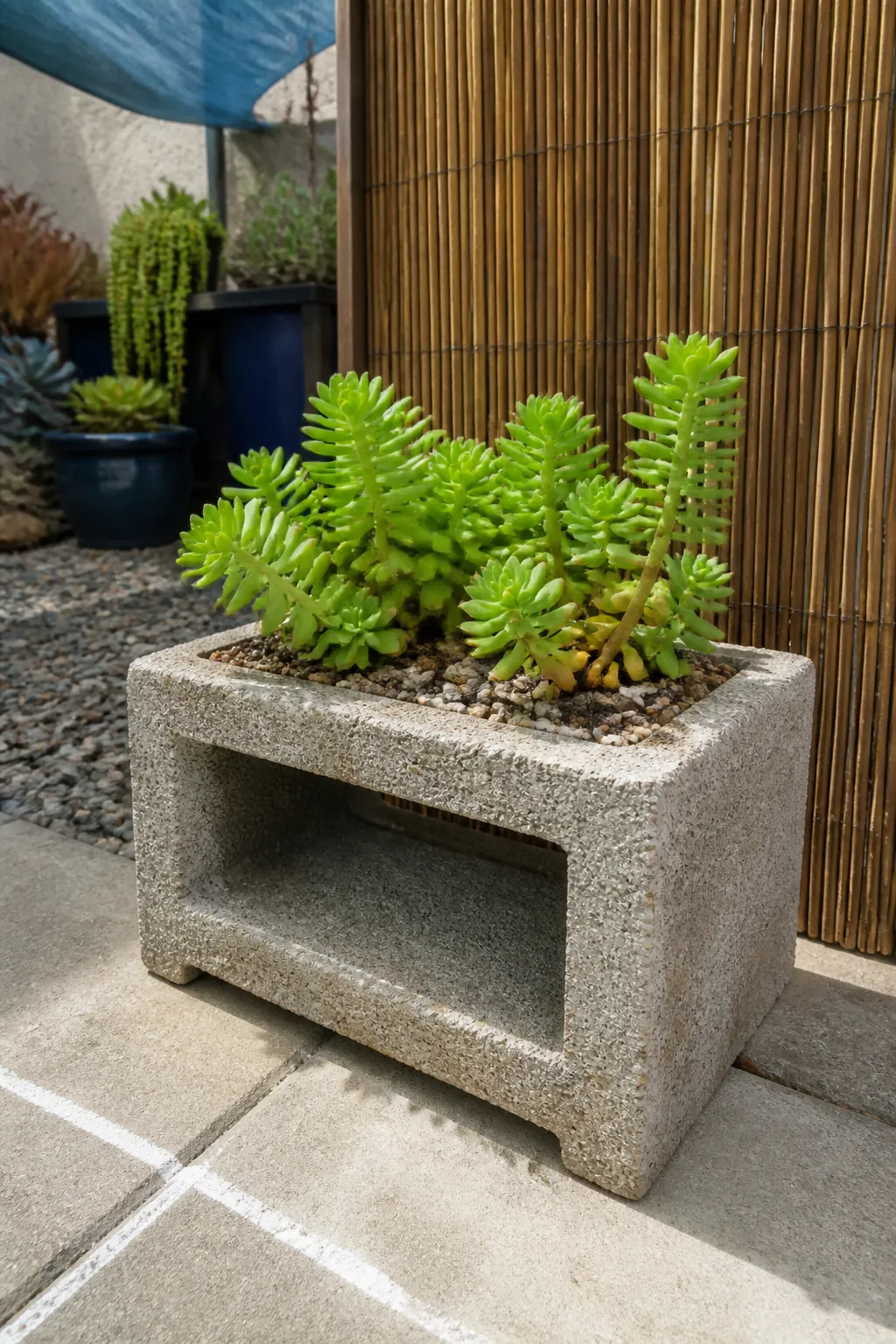
A clean cinder block pocket offers an inexpensive module for an outdoor succulent garden design. Set the block on compacted gravel so water can pass through the open core rather than collecting beneath it. Repeat only a few units and stagger their heights to avoid a bulky wall effect.
Frosted Apothecary Pot
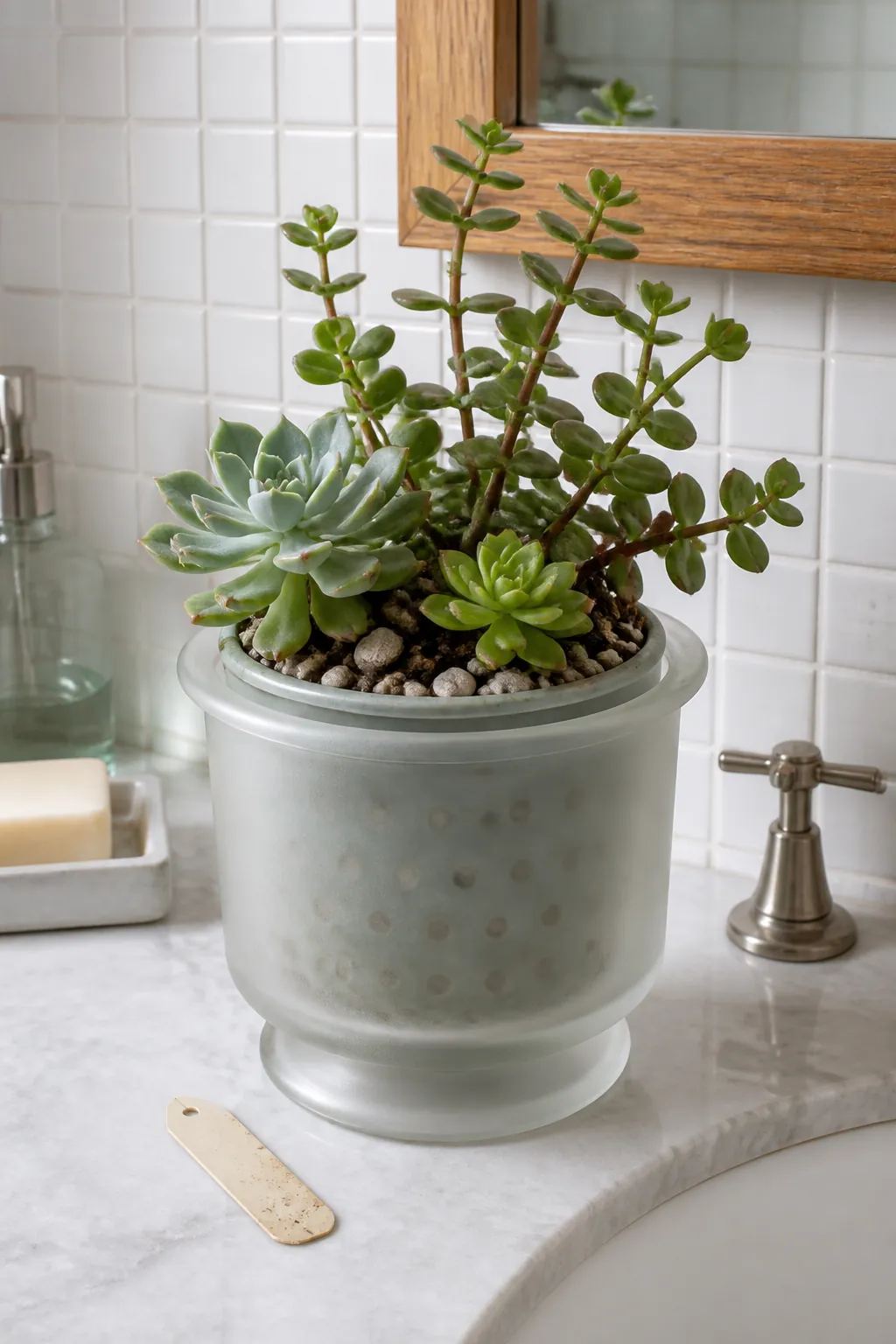
A frosted apothecary style pot can make a propagation station look orderly on a bright counter. Use it as an outer vessel for a perforated insert, since decorative glass should not hold damp soil directly. Label plant varieties on removable tags beside the pots rather than writing on the containers.
Oversized Urn Centerpiece
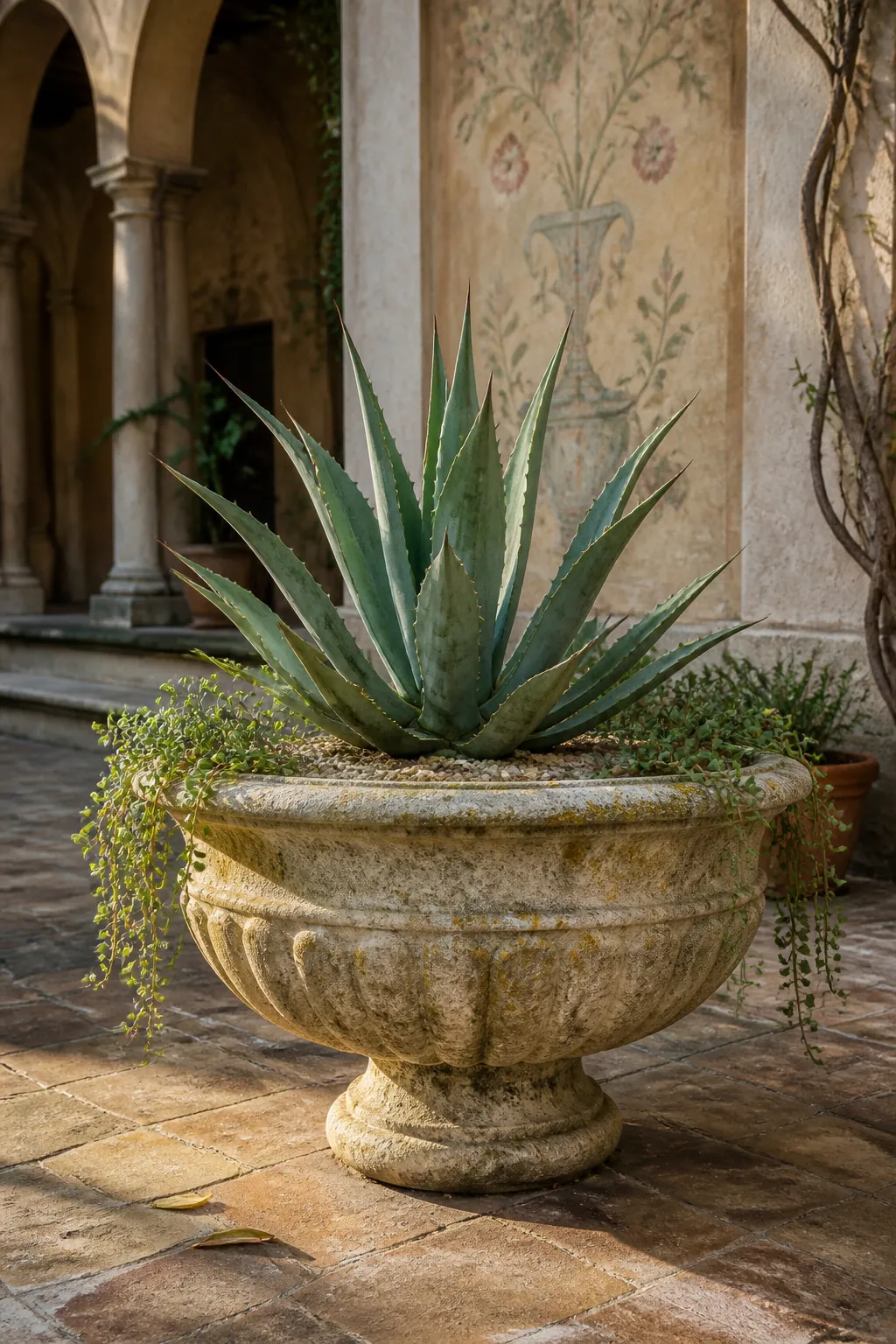
An oversized urn creates enough height for a courtyard centerpiece, but it does not need to be filled entirely with soil. Use a stable internal platform to support a shallower planting basin near the rim, reducing weight and excess wet mix. Let one architectural agave lead the composition, with low trailing plants softening the edge.
Desktop Cork Planter
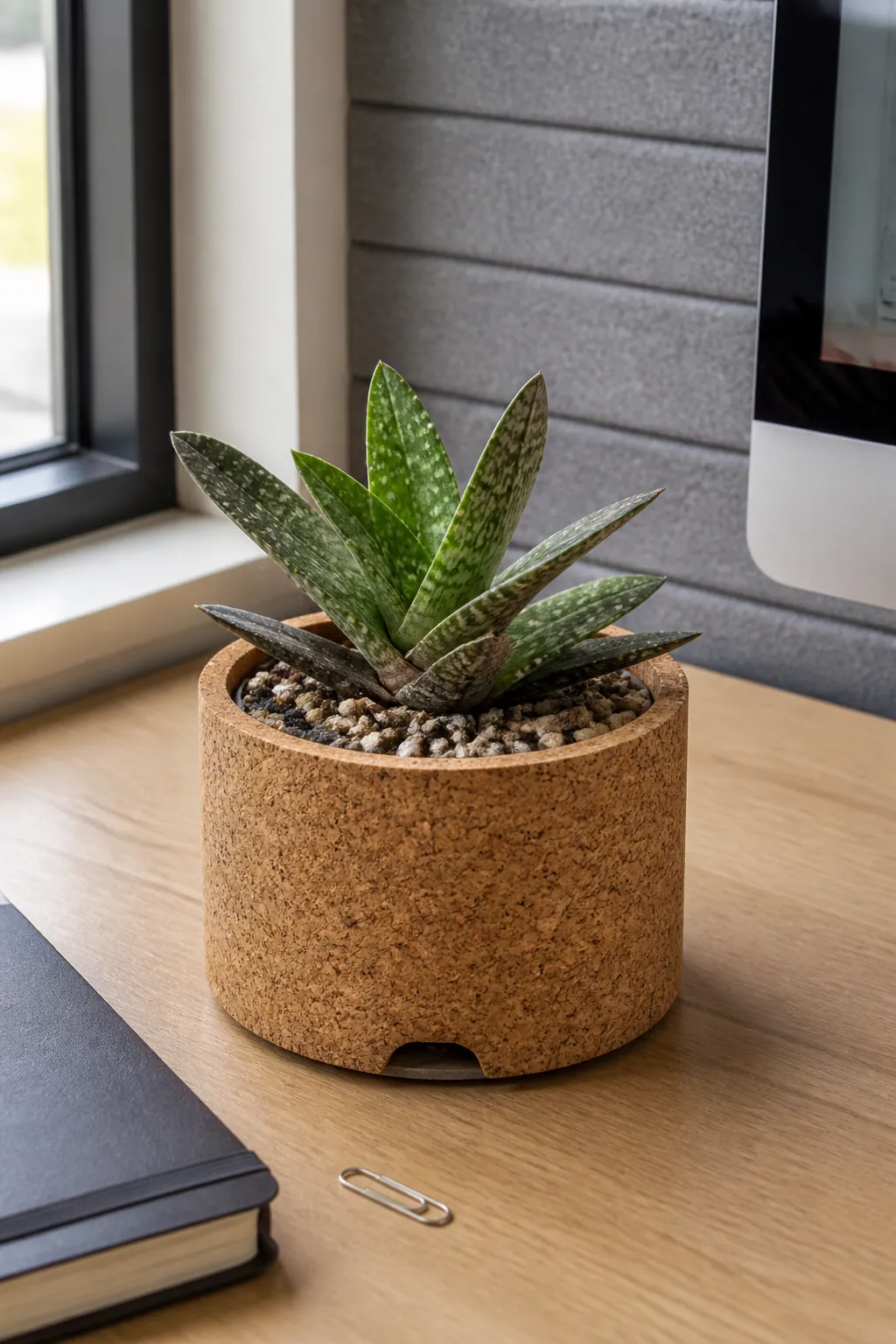
A cork wrapped planter brings gentle texture to a small work surface. Keep the cork outside a waterproof inner pot and choose a plant that stays compact under bright office light. The soft exterior protects the desk, though a hidden saucer is still necessary during watering.