
A modern front yard balances clean structure with planting that softens the architecture. These ideas explore low-maintenance layouts, sculptural plants, layered greenery, contemporary paths, and inviting entrances for yards of every size.
Use the examples to identify features that suit your home, climate, and upkeep goals. Simple materials, restrained plant palettes, and clear circulation from sidewalk to door can make even a small or sloped frontage feel intentional.
Create a Resort-Inspired Entrance With Palms and Sculptural Succulents
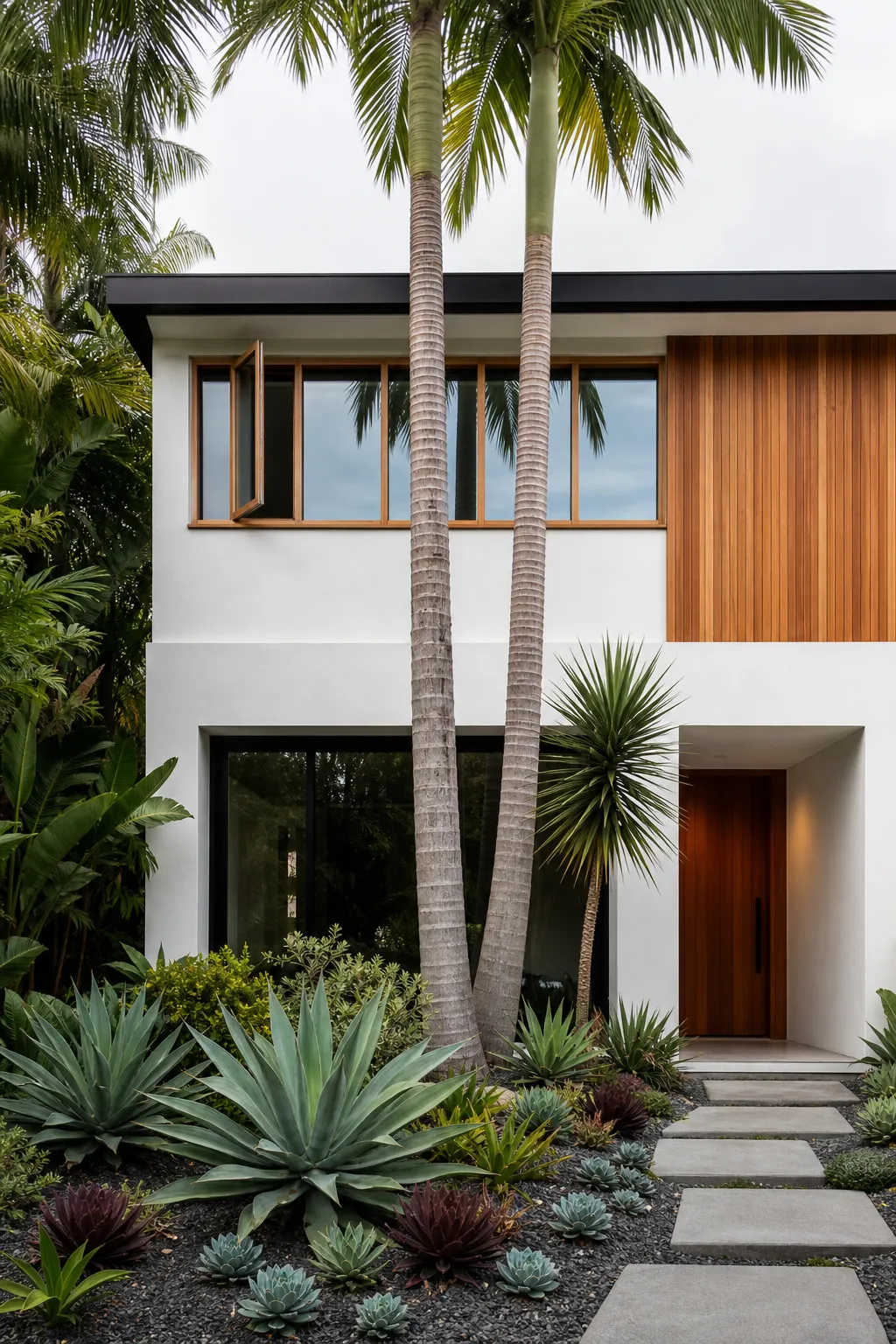
Layer tall palms behind agaves, aloes, or other architectural succulents to create a resort-inspired entrance with strong vertical interest. The contrasting silhouettes make even a compact frontage feel lush and intentional.
Keep the ground plane simple with gravel, stone, or restrained low planting. This gives each sculptural plant room to stand out while keeping maintenance and water use manageable.
Pair Black Gravel With Geometric Spheres for Minimalist Curb Appeal
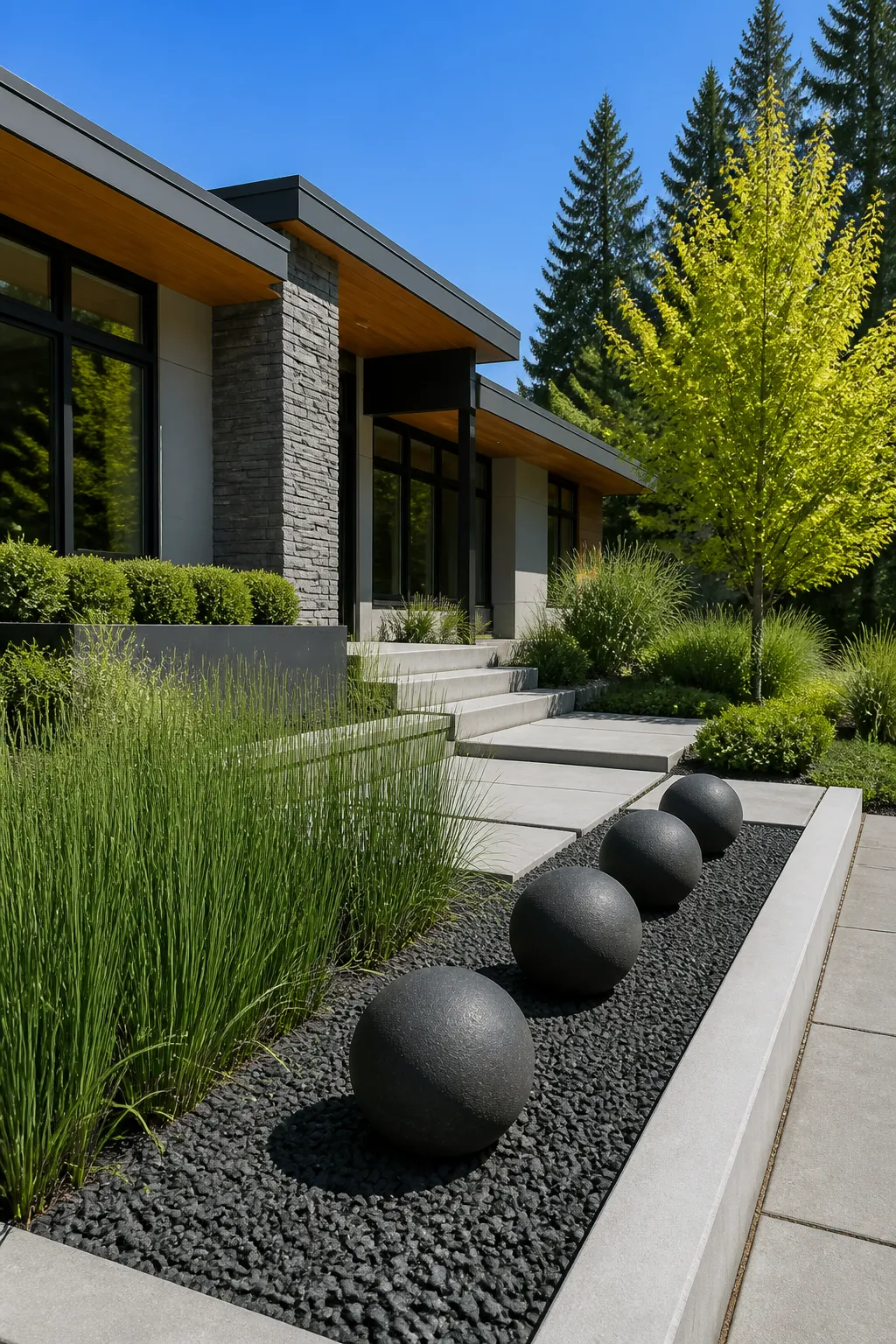
Black gravel creates a crisp, uniform base that complements contemporary architecture and makes pale walls or greenery appear more vivid. Add geometric spheres as simple sculptural focal points rather than conventional garden ornaments.
Limit the palette to a few repeated materials and plants so the composition remains calm. Clean edging is essential for preserving the sharp, minimalist effect.
Soften Sculptural Agaves With Lavender and Drought-Tolerant Color
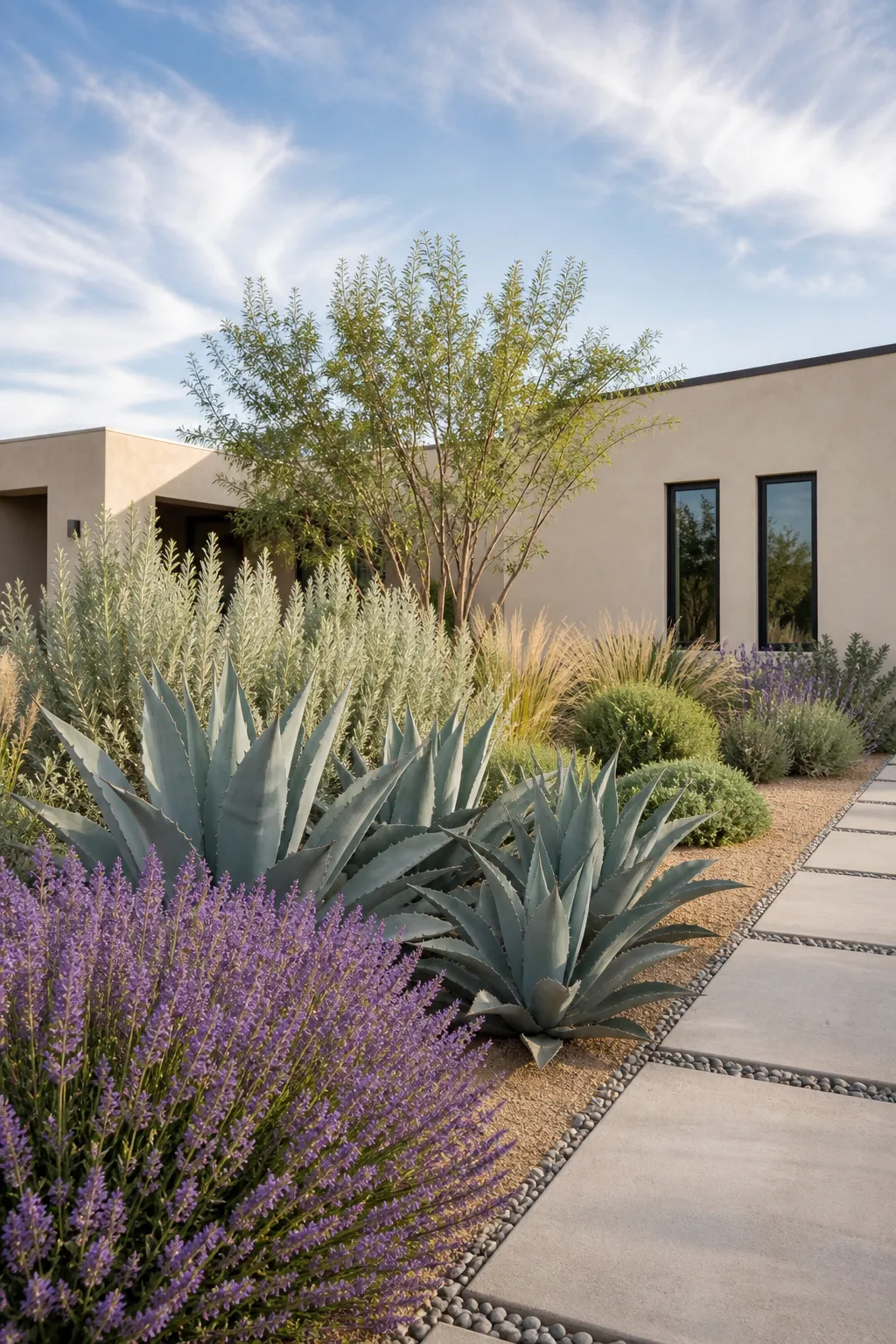
Agaves provide bold structure, but their sharp forms can feel severe when planted alone. Surround them with lavender and low, flowering perennials to introduce soft color and texture without abandoning a water-wise scheme.
Repeat small drifts of purple, silver, and muted green across the bed. The restrained palette unifies the planting while allowing the agaves to remain the principal features.
Give a Modern Facade Cottage Charm With Flowers and Airy Grasses
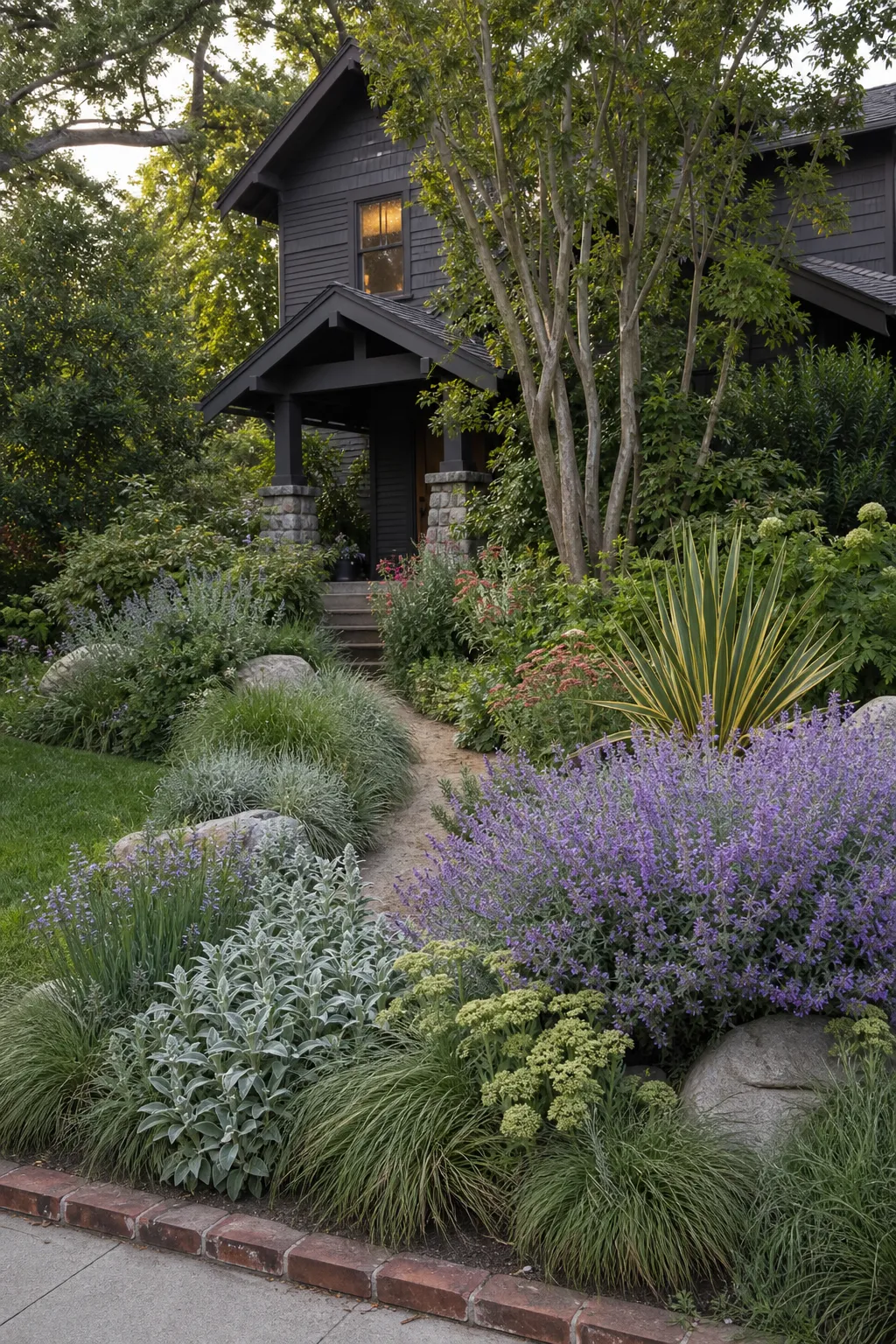
A contemporary facade can feel warmer when framed by loose flowers and fine ornamental grasses. Their relaxed shapes add cottage-style softness while preserving the home's clean architectural lines.
Choose a limited mix of long-blooming flowers and grasses with compatible growing needs. Repeating them in generous clusters keeps the planting romantic rather than visually cluttered.
Frame a Contemporary Two-Story Home With a Structured Front Fence
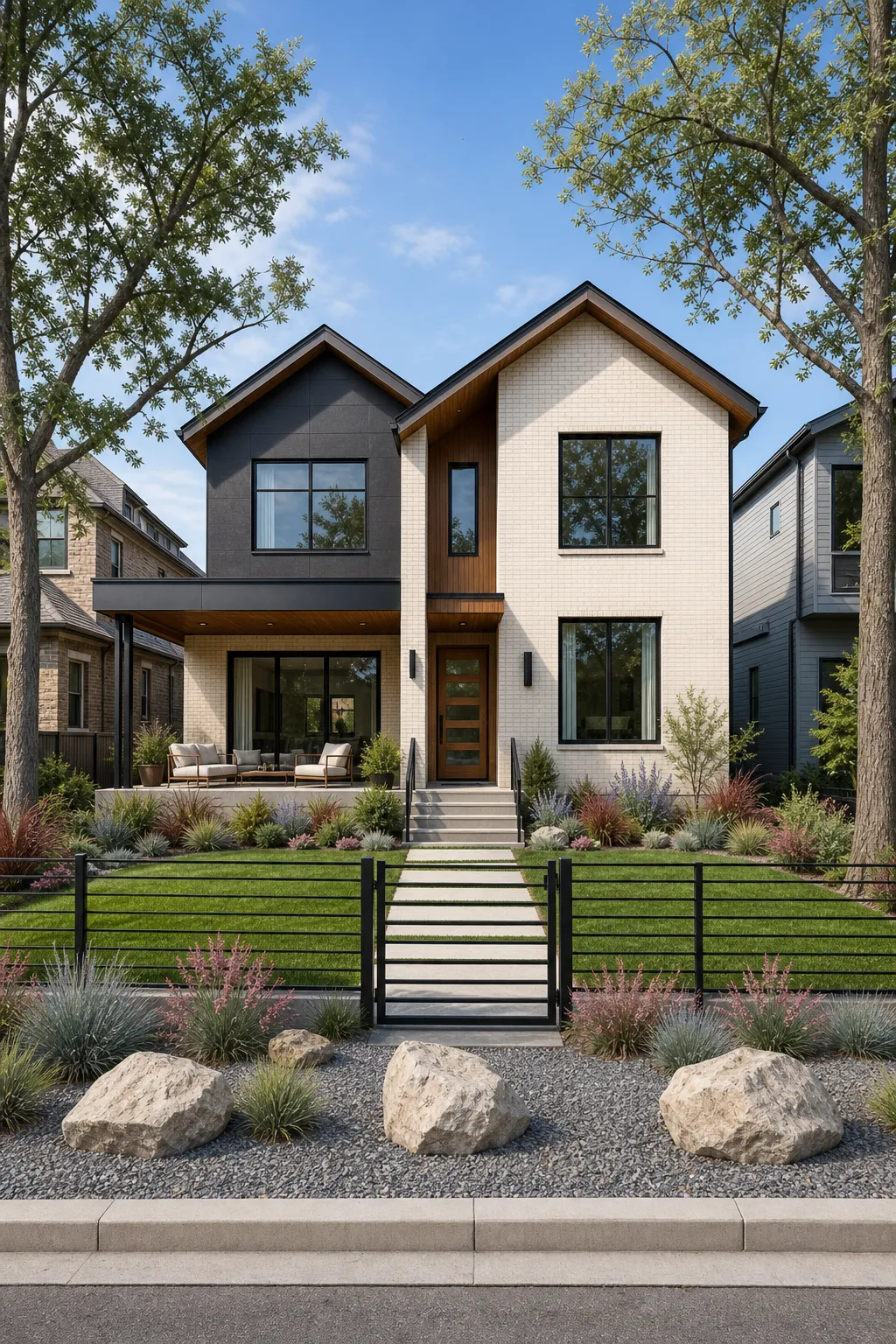
A structured front fence gives a tall contemporary home a clear visual boundary and helps bring its scale closer to the street. Aligning the fence with key architectural lines creates a cohesive, tailored frontage.
Balance privacy with openness by using spaced slats, low walls, or integrated planting. A clearly defined gate should lead the eye naturally toward the entrance.
Use Pampas Grass to Add Height, Movement, and Softness
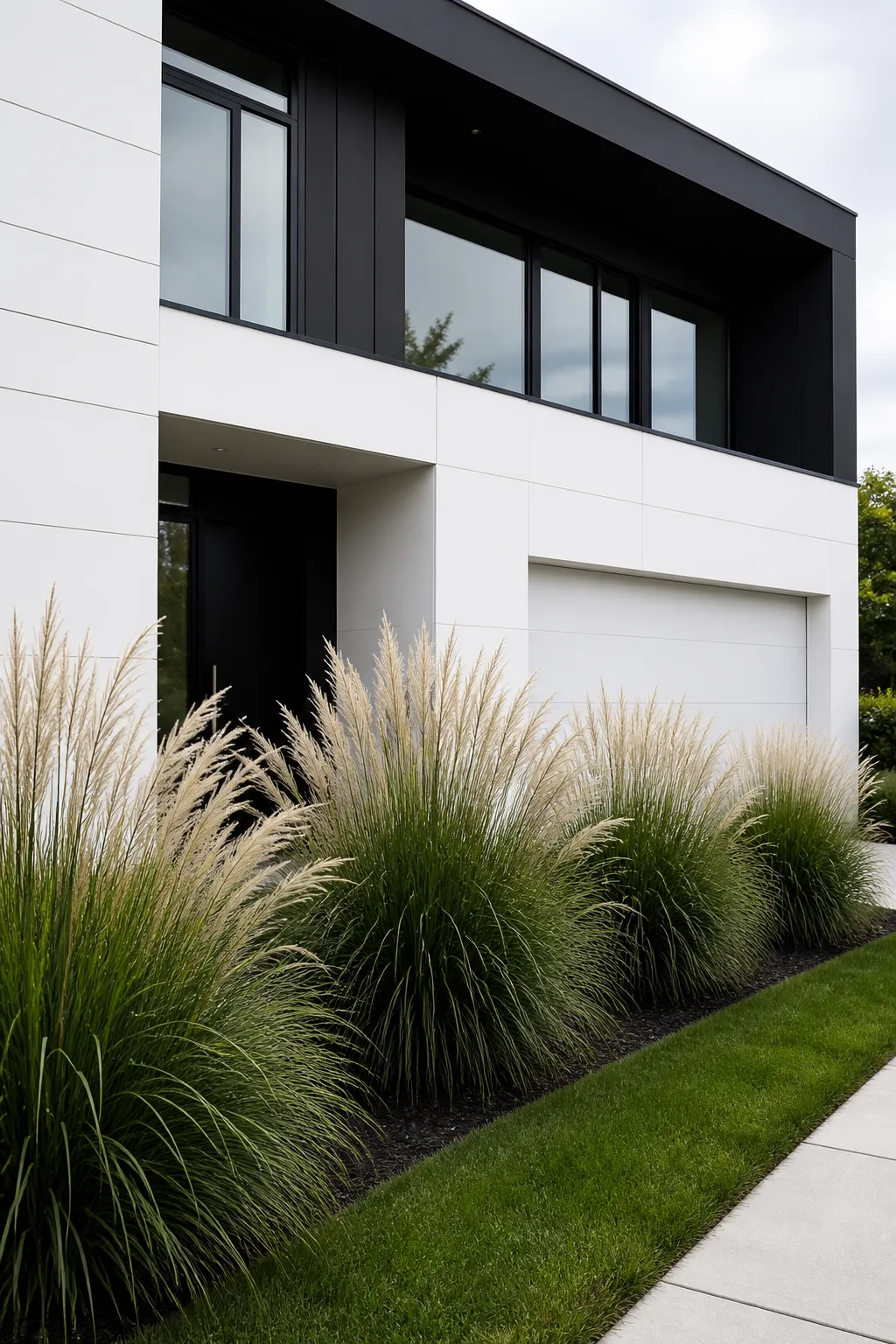
Pampas grass introduces height without the visual weight of a hedge or solid screen. Its feathery plumes catch light and wind, bringing movement and softness to rigid modern surfaces.
Give each clump enough room to reach its mature size and keep it away from narrow paths. Where pampas is invasive, choose a locally appropriate, noninvasive grass with a similar airy form.
Guide Visitors Through a Desert Xeriscape With a Curved Walkway
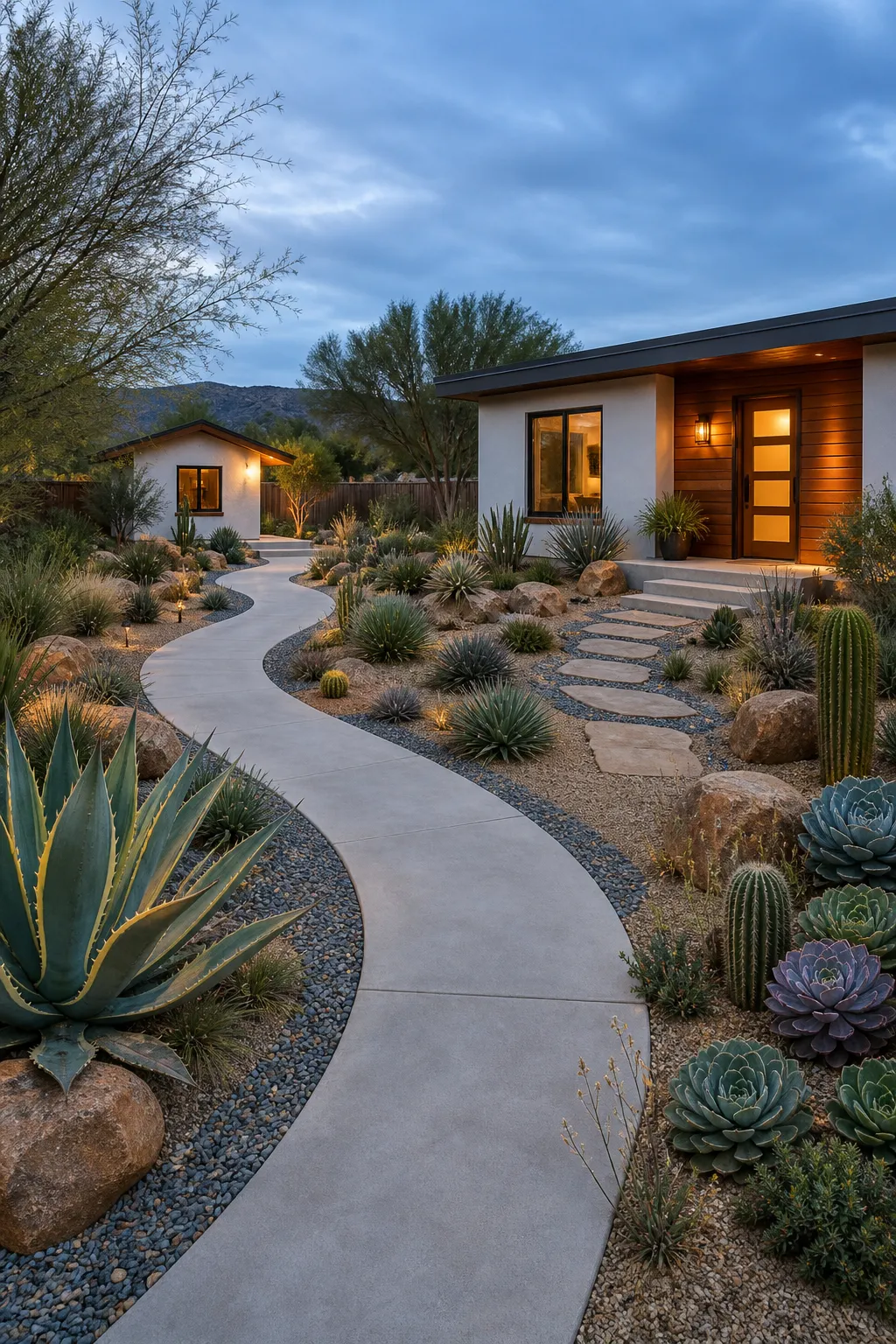
A gently curved walkway turns the journey to the door into part of the landscape experience. Let it move between gravel, boulders, and drought-adapted plants to create a welcoming sense of discovery.
Keep curves broad and purposeful so the route remains comfortable and intuitive. Place distinctive specimens near bends to draw visitors forward without obstructing the path.
Update a Midcentury Entrance With a Lush, Linear Garden Path
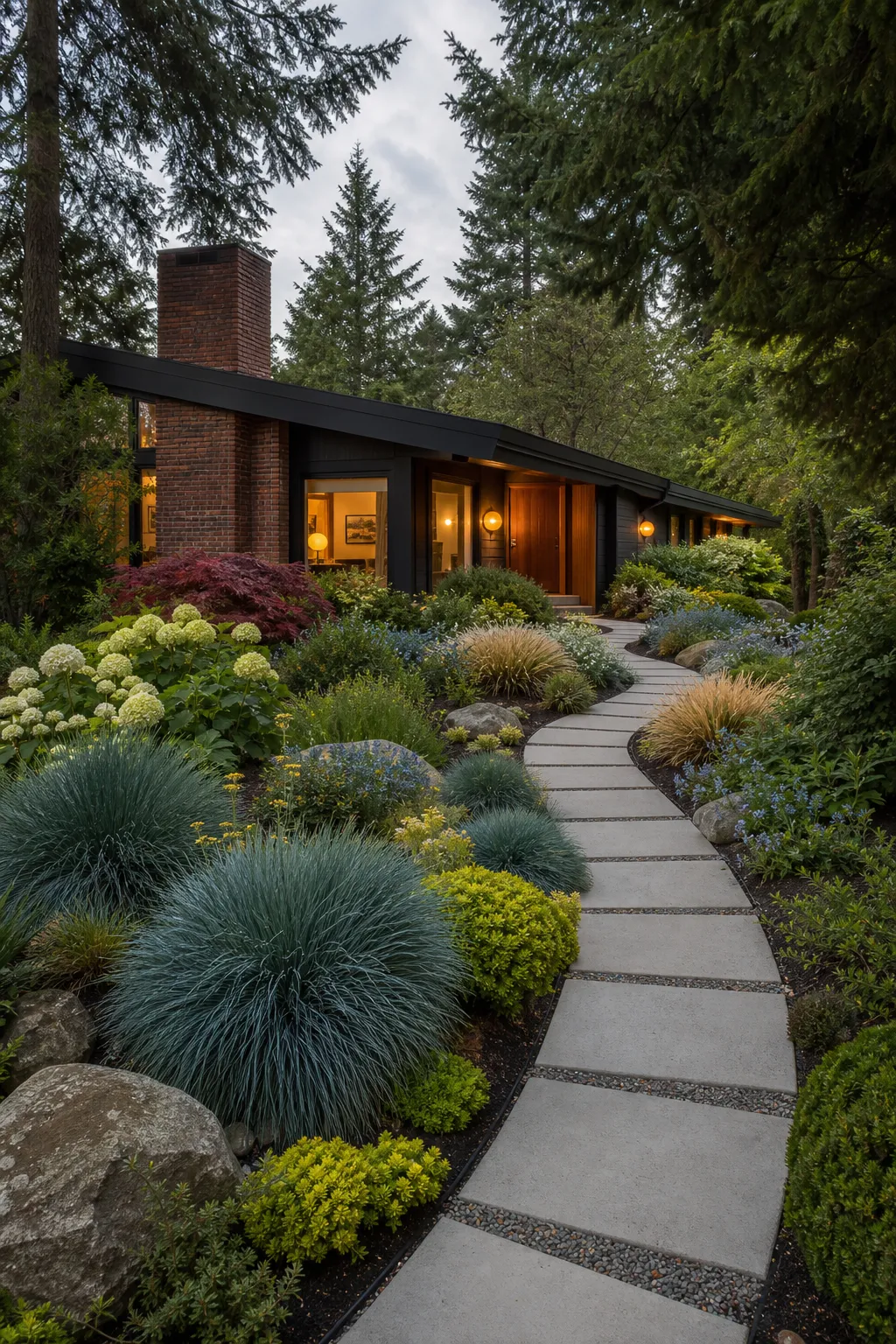
A straight garden path reinforces the horizontal geometry associated with midcentury architecture. Dense planting along both sides provides lush contrast to the clean lines and makes the approach feel immersive.
Repeat a small selection of foliage plants in long bands rather than scattered groups. Simple paving and concealed edging will keep the composition disciplined and easy to navigate.
Turn a Sloped Yard Into Illuminated Terraces for Evening Drama
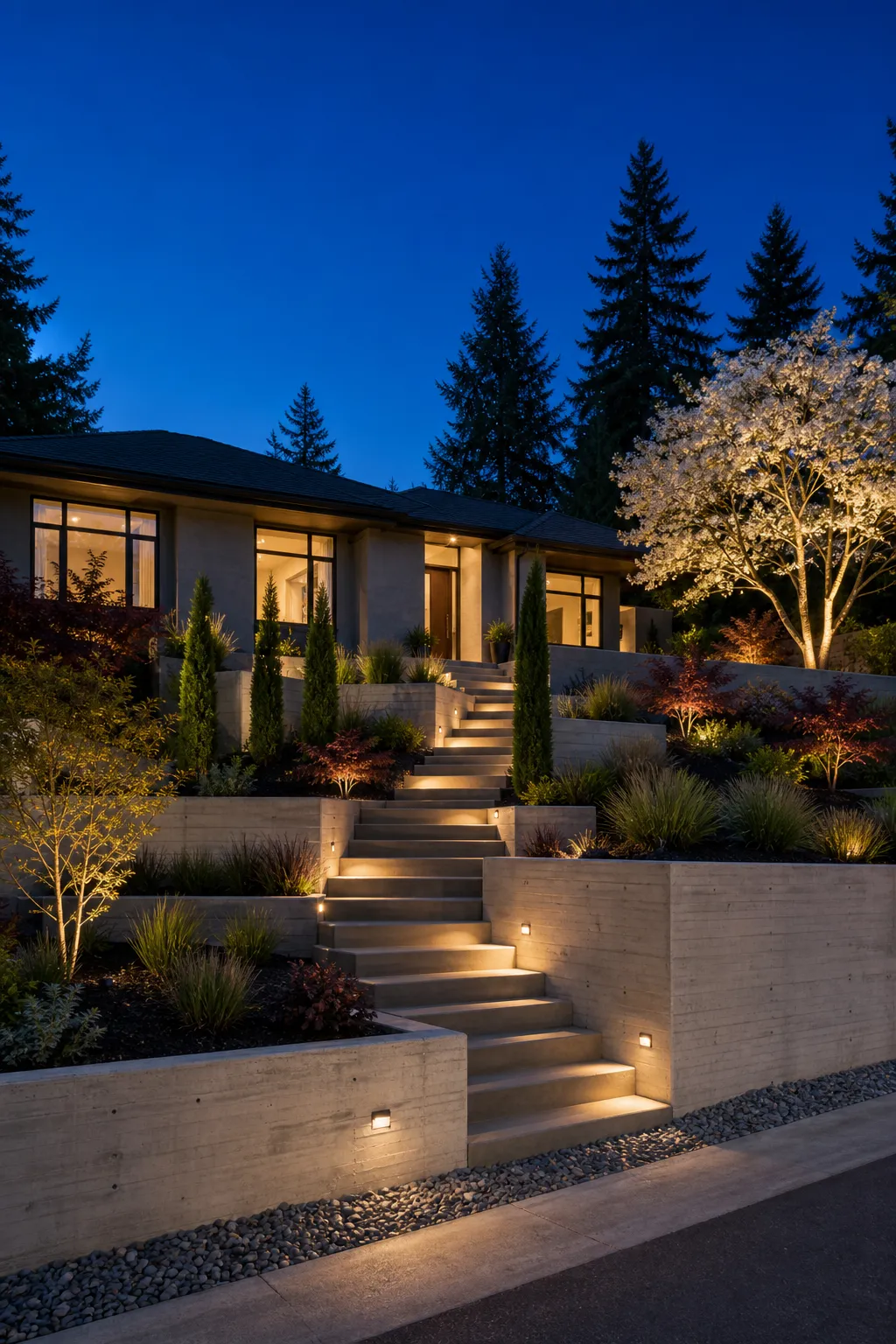
Terracing transforms an awkward slope into a sequence of usable planting levels while helping manage erosion. Retaining walls can also echo the home's geometry, giving the yard strong architectural structure.
Integrate low-voltage lighting beneath wall caps, beside steps, or among specimen plants. A restrained lighting plan produces evening drama while keeping routes and level changes safely visible.
Connect Native Planting to the Entry With a Warm Timber Deck
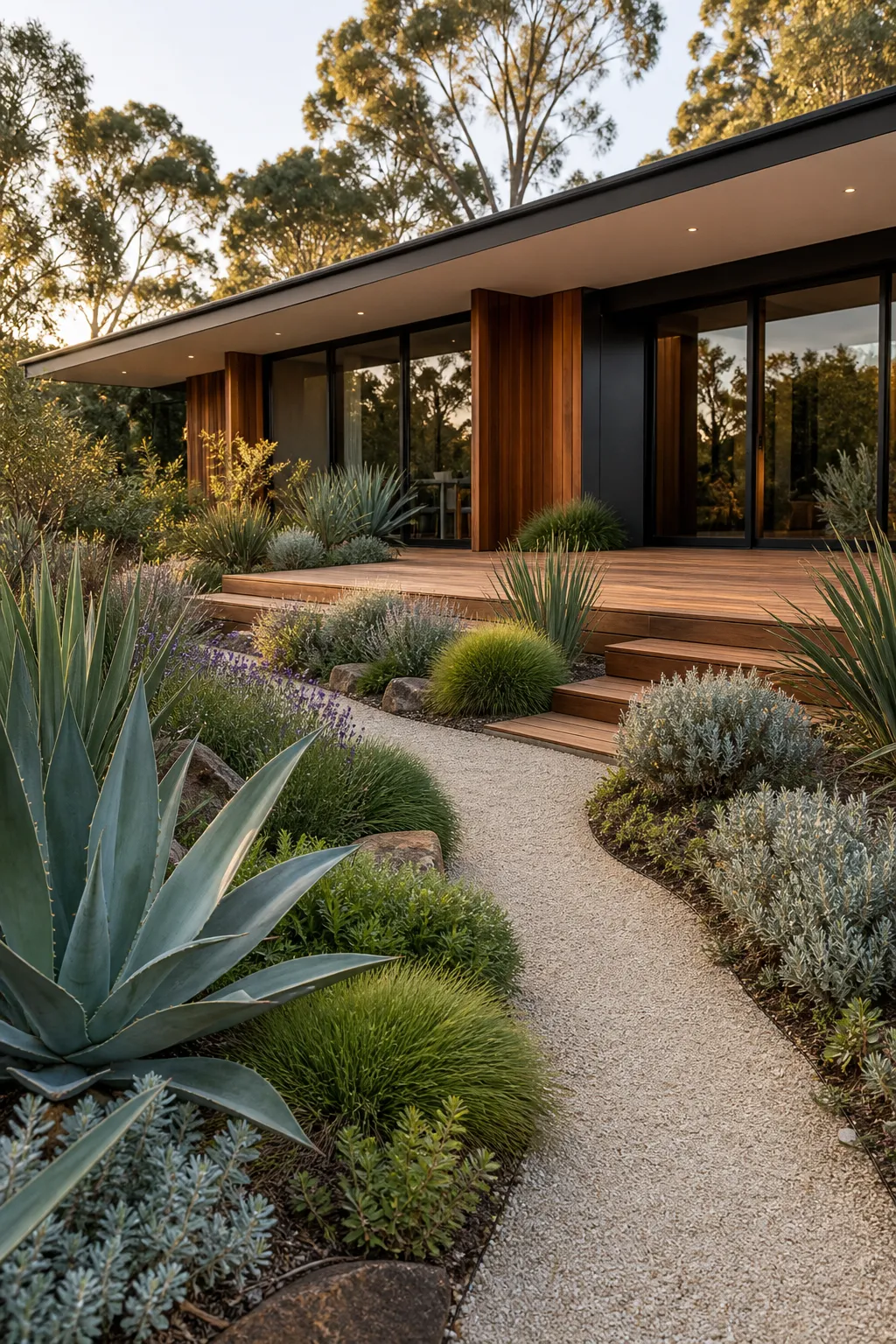
A timber deck creates a warm transition between a home's hard exterior surfaces and informal native planting. Extending it toward the entrance establishes a clear and inviting route through the garden.
Choose durable, responsibly sourced timber suited to the local climate, and detail it for drainage and ventilation. Let selected plants overlap the edges slightly to blend the constructed path into the landscape.
Complement Midcentury Architecture With Gravel and Restrained Greenery
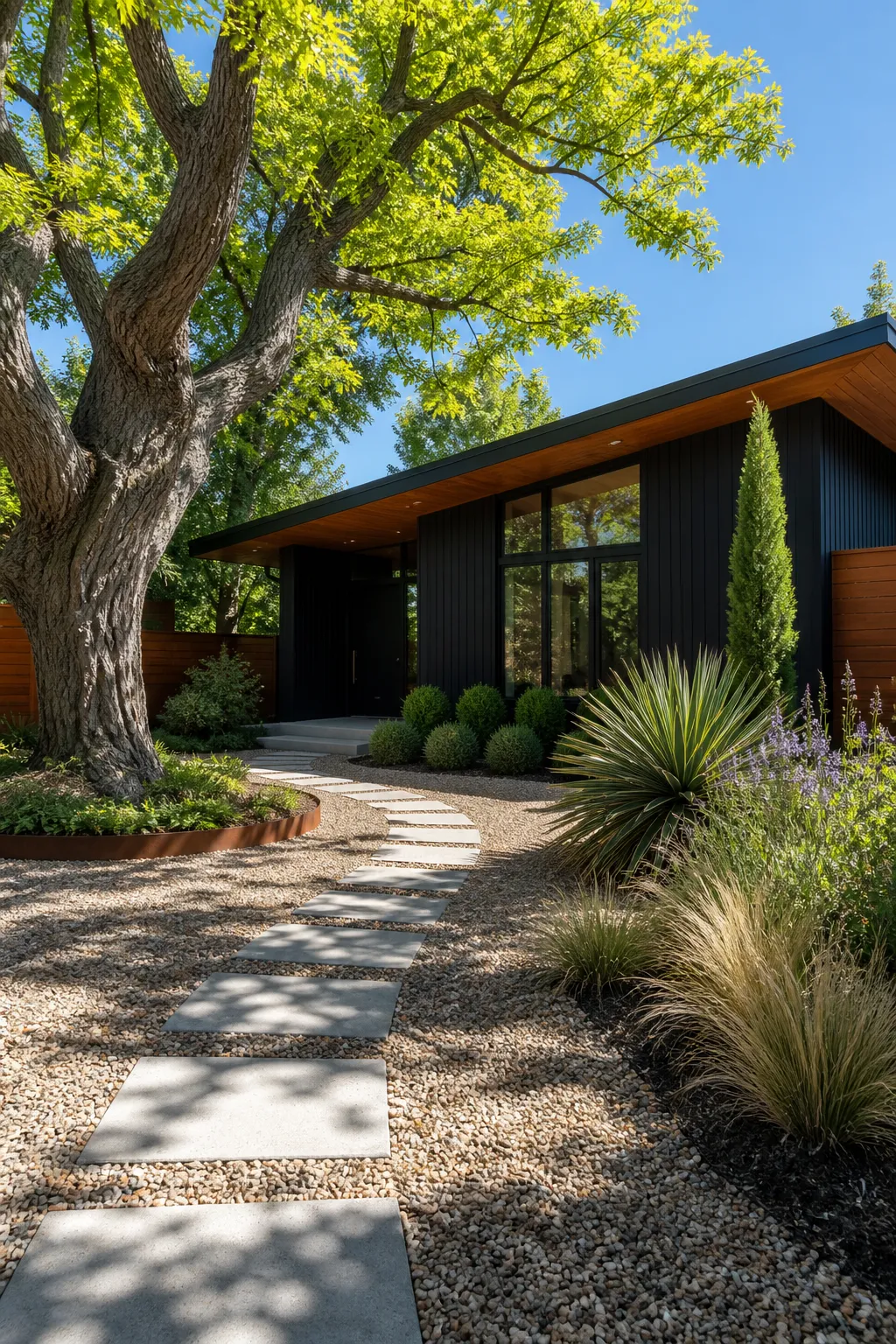
Gravel suits midcentury architecture because it creates a broad, uncluttered ground plane that emphasizes low rooflines and horizontal forms. A few carefully positioned plants provide controlled greenery without visual noise.
Favor species with distinct silhouettes, such as compact shrubs, grasses, or sculptural succulents. Repeating these plants at measured intervals strengthens the home's orderly composition.
Alternate Stepping Stones and Ornamental Grasses for a Rhythmic Path
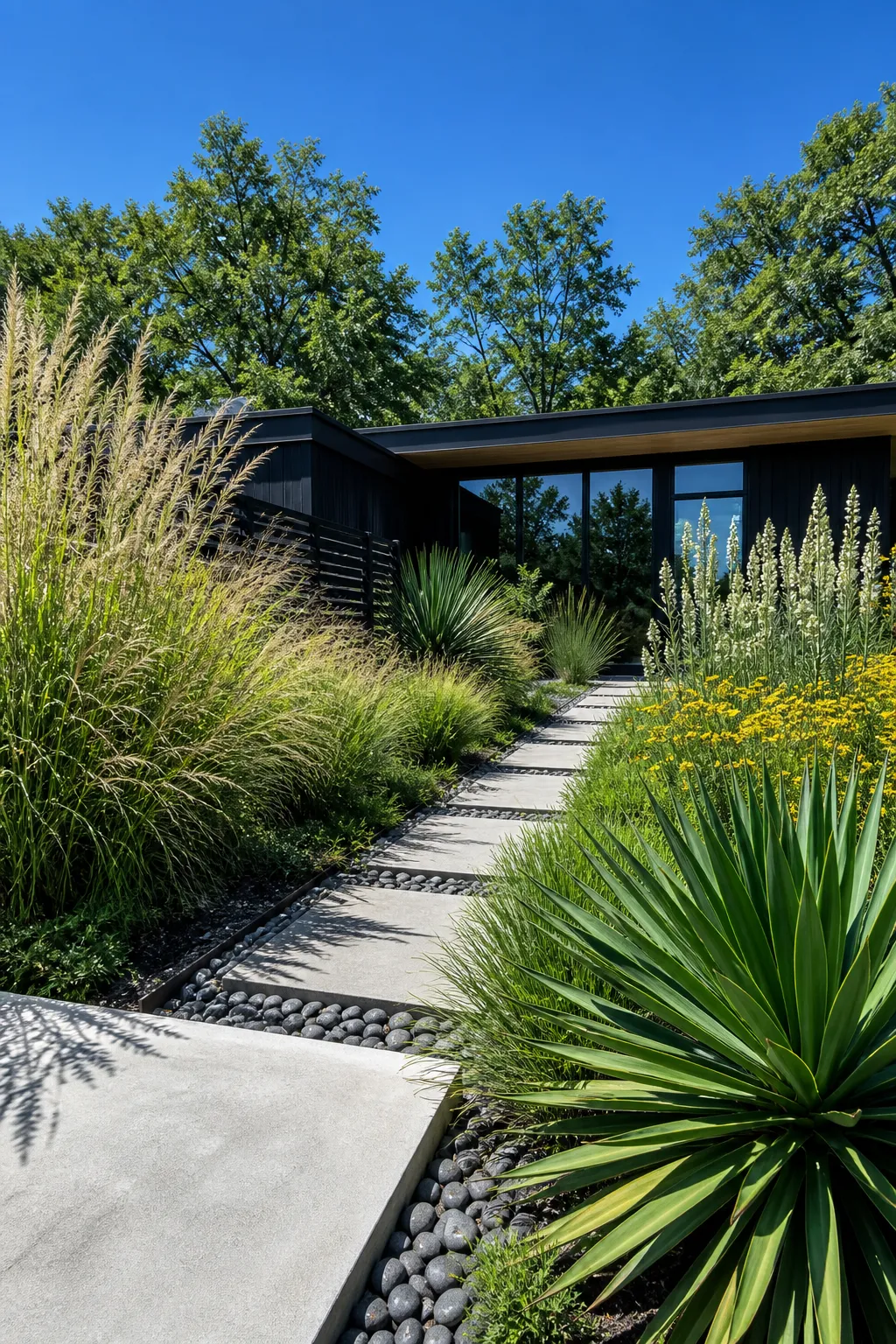
Regularly spaced stepping stones establish an easy walking rhythm, while ornamental grasses soften the gaps and edges. Together, they create a dynamic path with natural movement.
Select flat, slip-resistant stones and space them for a comfortable stride. Keep grass crowns clear of the walking surface so the route stays practical as the planting matures.
Define a Modern Ranch Courtyard With a Raised Statement Planter
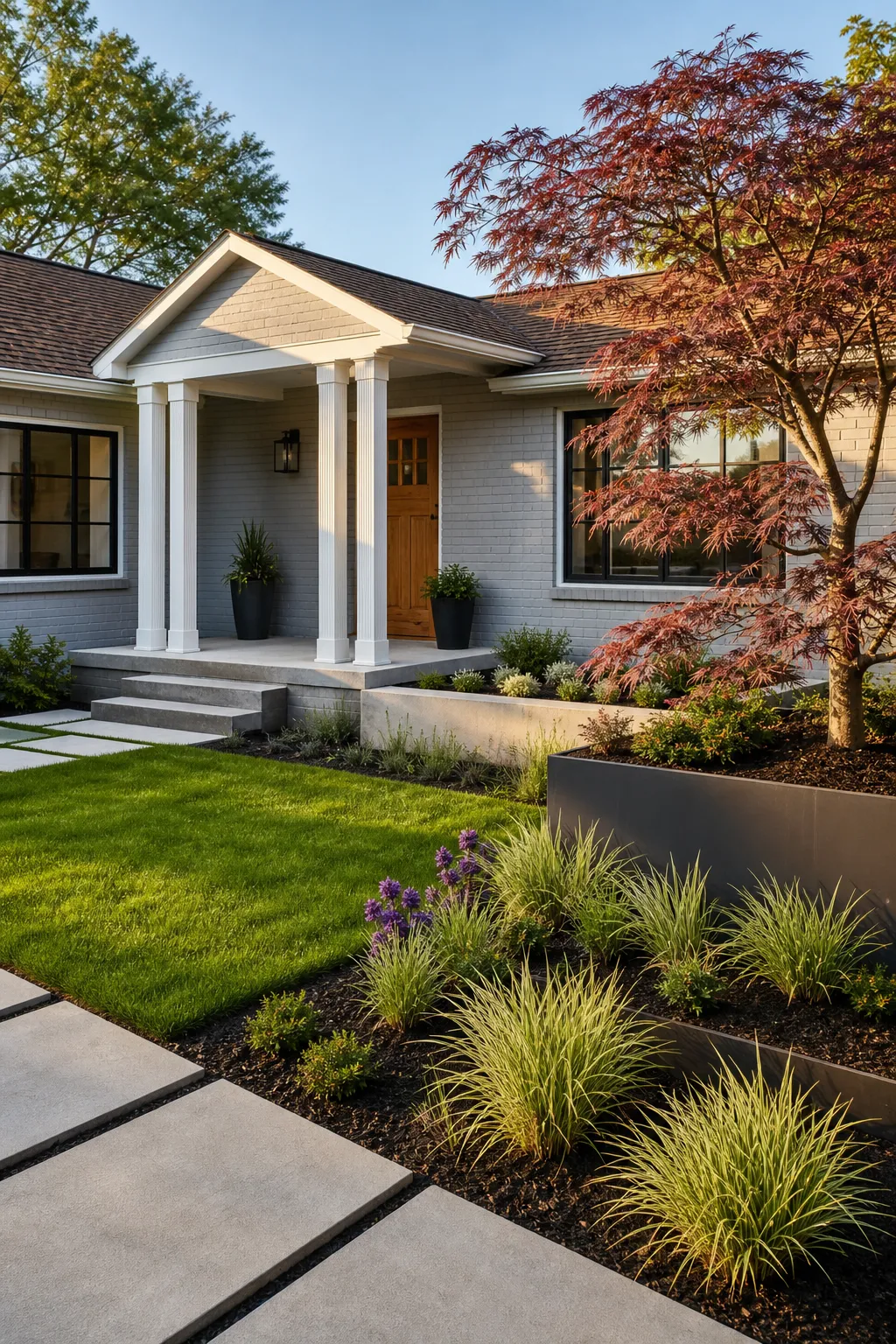
A raised planter can organize an open ranch-style courtyard and provide a strong focal point visible from the street and interior. Use a shape and finish that relate to the building for architectural continuity.
Fill it with one dramatic specimen or a restrained arrangement of contrasting forms. Keeping surrounding elements simple allows the planter to anchor the courtyard without overwhelming it.
Use Agaves and Shade Planting Around a Crisp White Facade
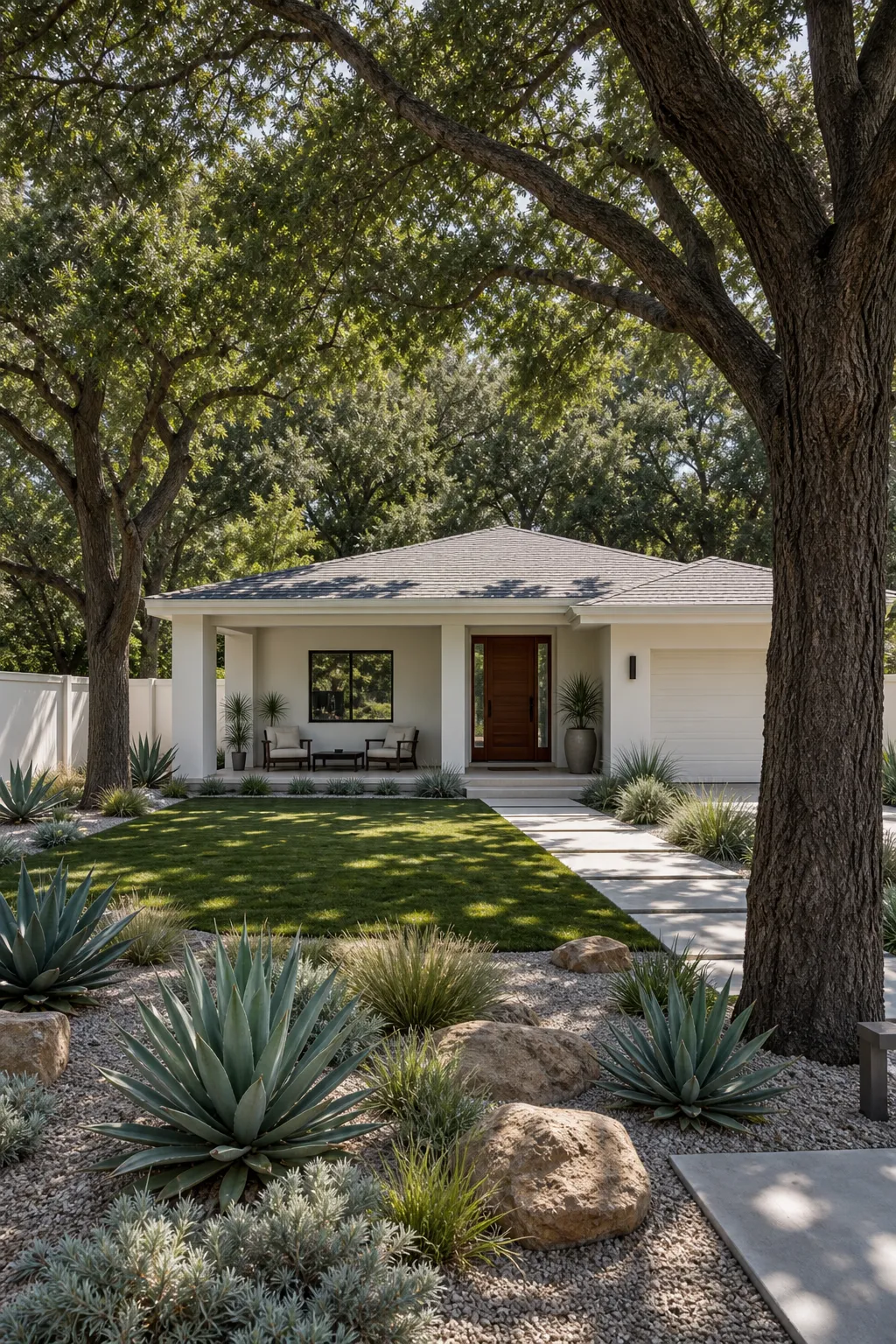
Blue-green agaves create striking contrast against a crisp white facade and reinforce a clean, sun-washed aesthetic. In sheltered areas, softer shade plants can form a cool, layered understory around their bold shapes.
Match each species to the actual light and drainage conditions rather than forcing one palette across the entire frontage. Repeating foliage colors will connect sunny and shaded planting zones.
Make a Lime-Green Front Door the Focus of a Charcoal Exterior
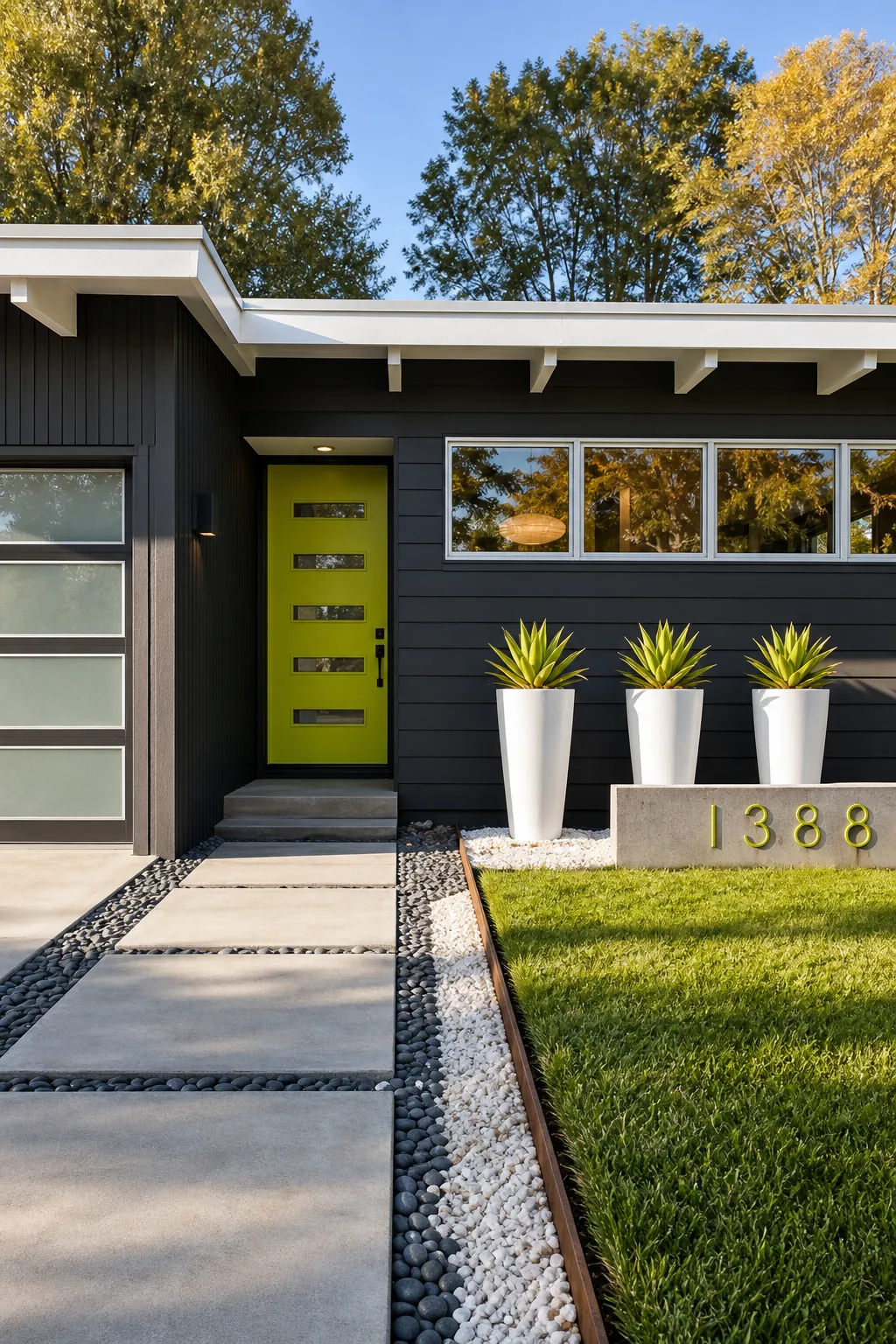
A lime-green door becomes an immediate focal point against a charcoal exterior, clearly signaling the entrance from the street. Keep nearby finishes understated so the high-impact color contrast remains deliberate.
Echo the door's color sparingly through fresh green foliage or one small accessory. Limiting repetition prevents the accent from feeling themed and preserves the facade's sophisticated character.
Float Concrete Stepping Stones Through a Lush Front Garden
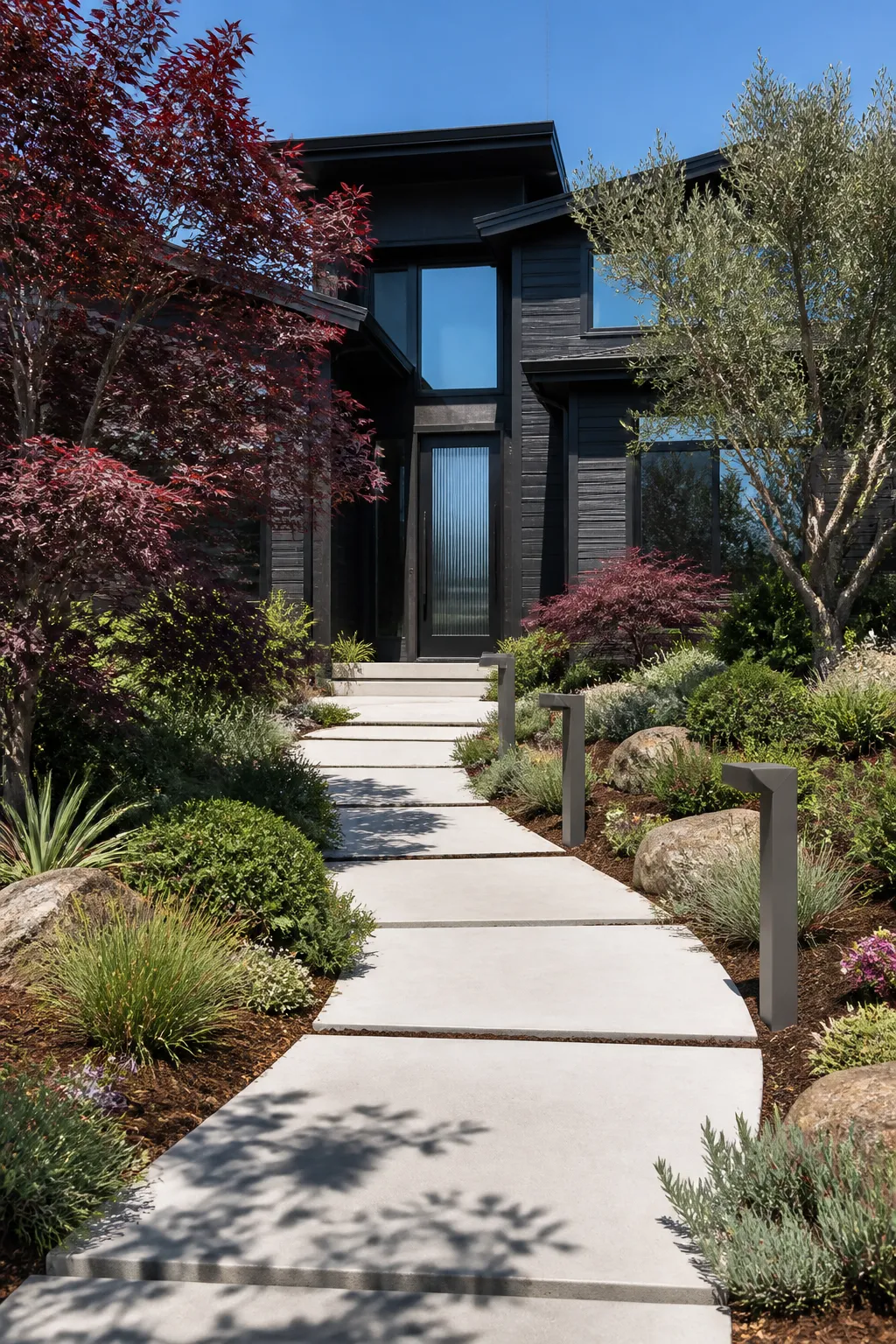
Space broad concrete slabs slightly apart so they appear to float above low greenery. Generous proportions create a comfortable route while giving the planting room to soften every edge.
Repeat a restrained mix of ground covers, ferns, and compact shrubs beside the path. The contrast between crisp concrete and abundant foliage makes the approach feel modern yet welcoming.
Combine a Gravel Walkway With Wispy Grasses for Easy Upkeep
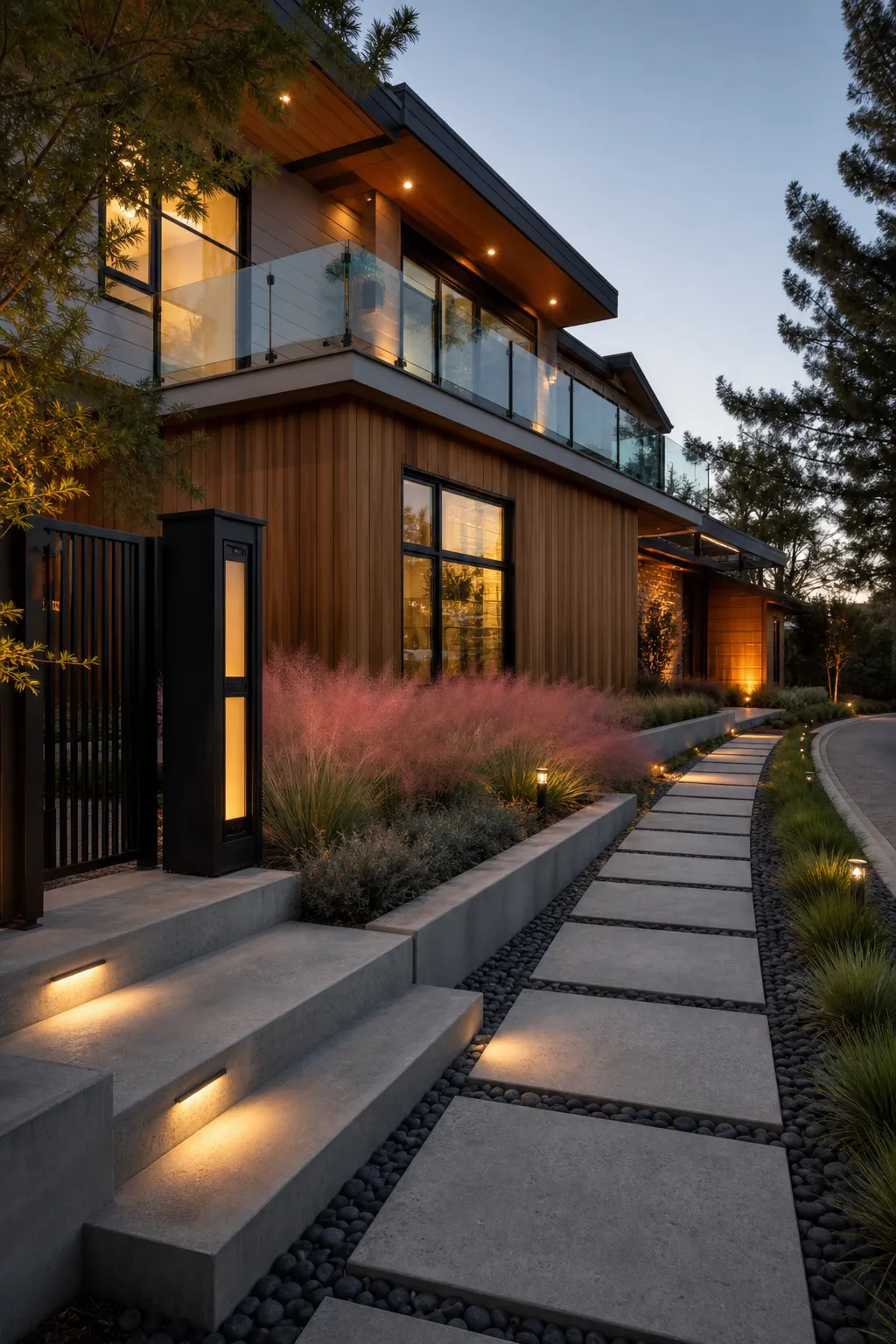
A compacted gravel path drains well, adapts to irregular spaces, and needs fewer complex cuts than paving. Add sturdy edging to keep the surface neat and prevent stones from migrating into planting beds.
Choose ornamental grasses that hold an airy shape without constant trimming. Repeating a few resilient varieties delivers easy-care movement and texture rather than a crowded planting scheme.
Design a Midcentury Xeriscape With Bold Forms and Open Space
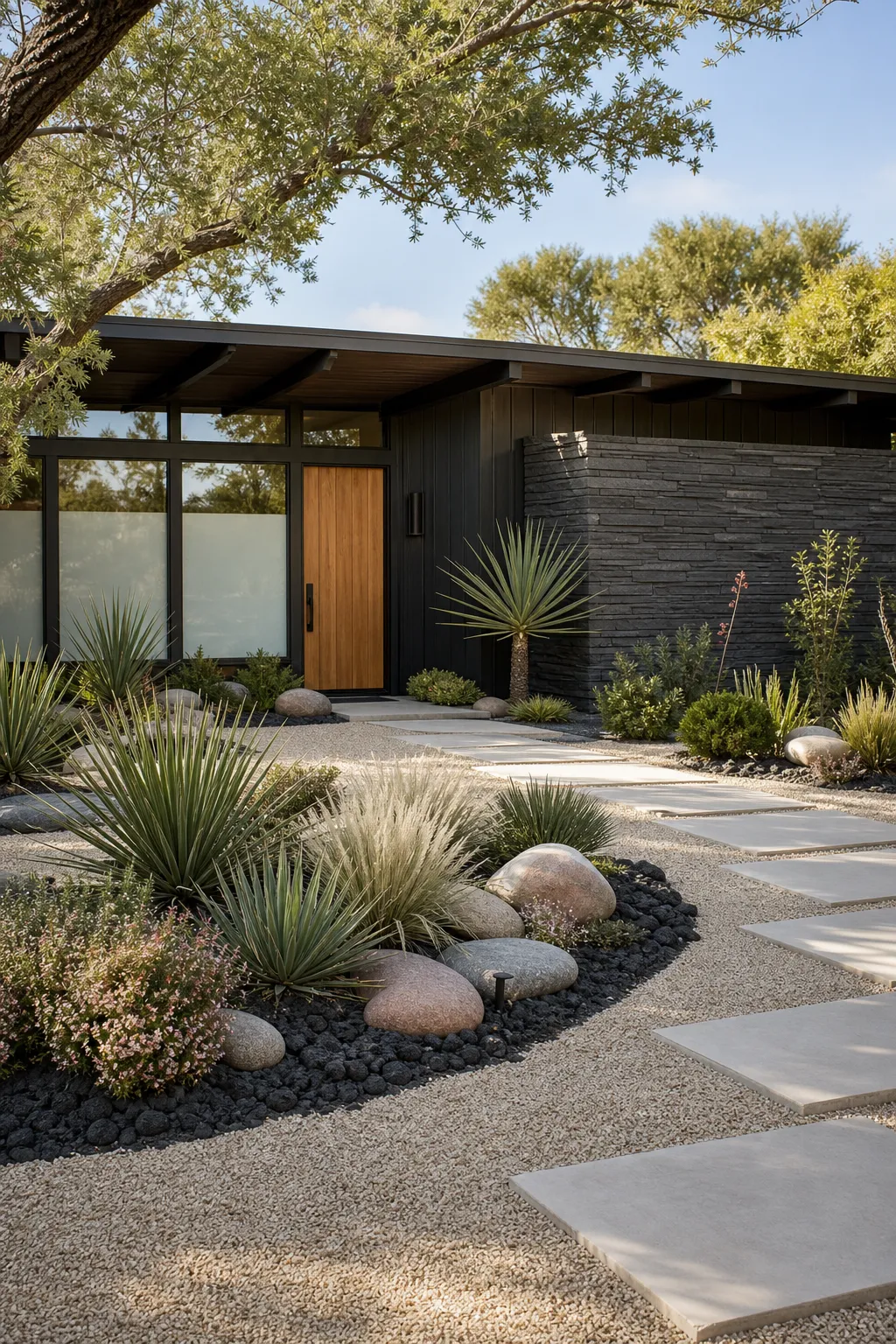
Build the composition around gravel, angular beds, and a limited palette of sculptural drought-tolerant plants. Strong geometry complements low rooflines and broad horizontal architecture.
Leave deliberate gaps between yuccas, agaves, grasses, or rounded shrubs so each form remains legible. Open ground is part of the design, creating a landscape that feels calm rather than sparse.
Bring Tropical Energy to the Front Yard With Saturated Foliage
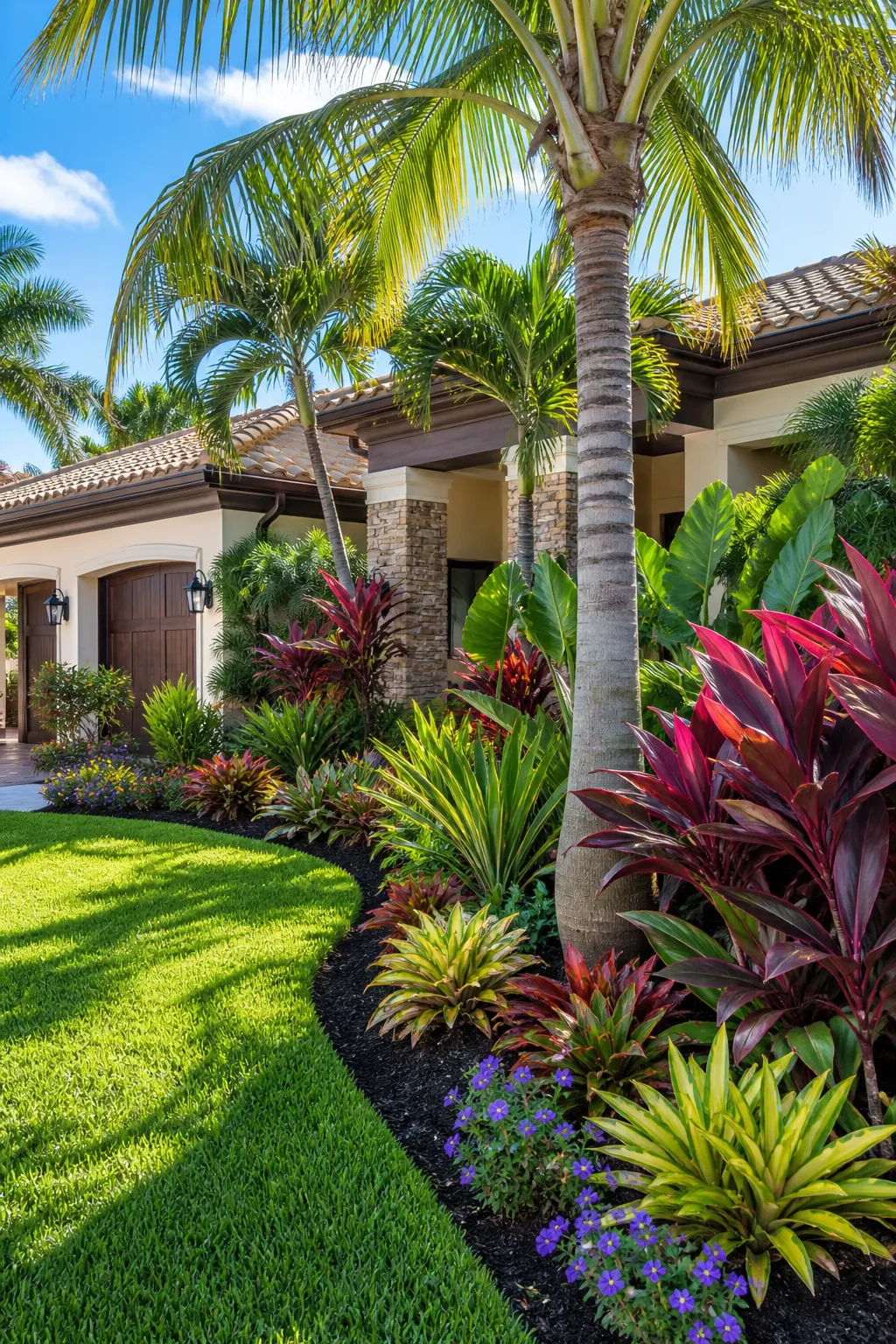
Layer broad leaves, upright palms, and richly colored foliage to make the entrance feel energetic. A foundation of deep green keeps brighter chartreuse, burgundy, or variegated accents from becoming chaotic.
Group plants in generous clusters instead of scattering individual specimens. This creates lush visual impact while establishing a clear rhythm along the path and facade.
Build Concrete Planter Terraces Into a Challenging Sloped Lot
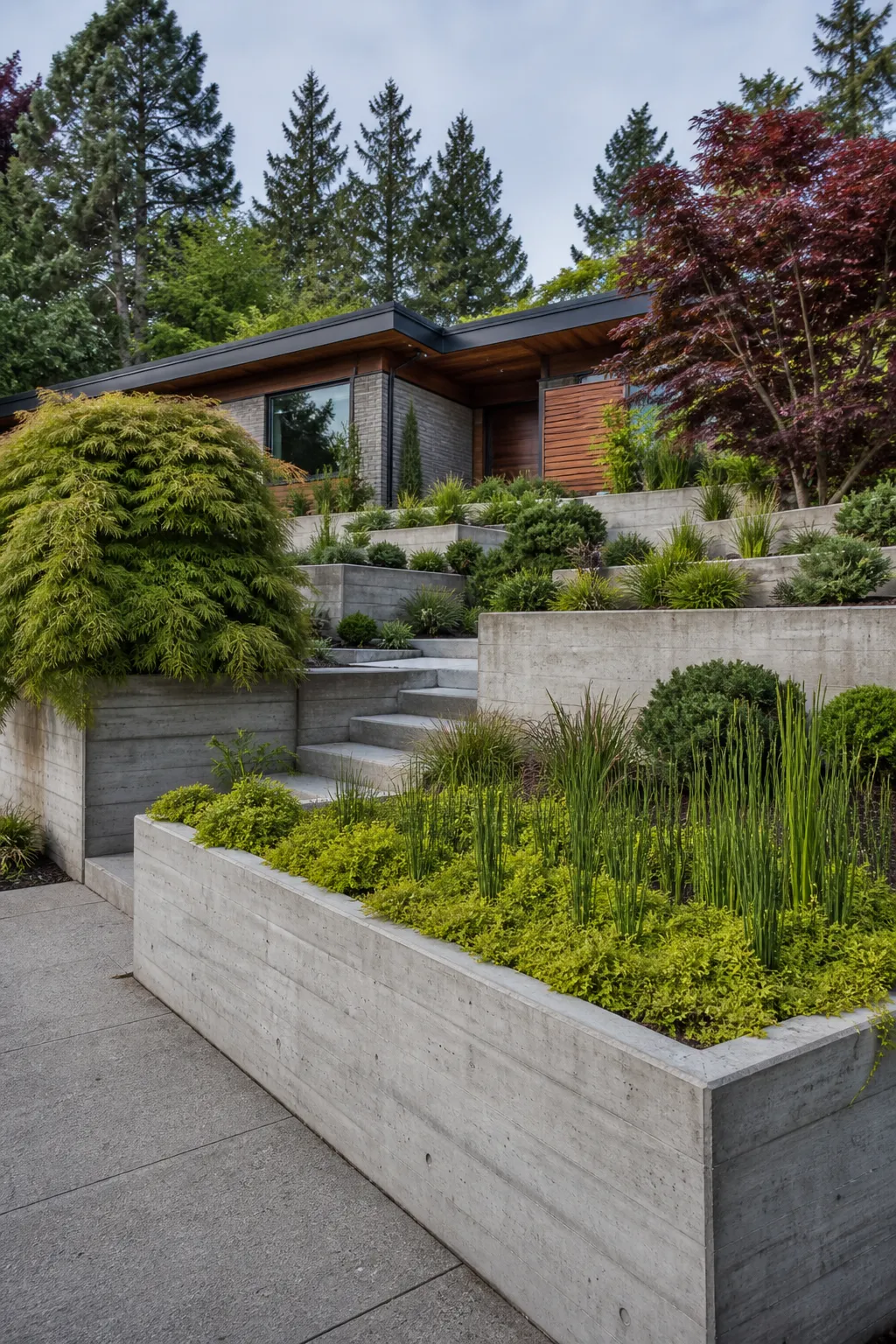
Divide a steep frontage into a sequence of level concrete planters that follow the rise toward the house. Terracing controls the grade while creating usable pockets for planting.
Use trailing plants near exposed edges and taller structural varieties toward the back of each tier. The layered arrangement softens the retaining walls without hiding their clean architectural lines.
Simplify Maintenance With Durable Hardscape and Repeated Planting
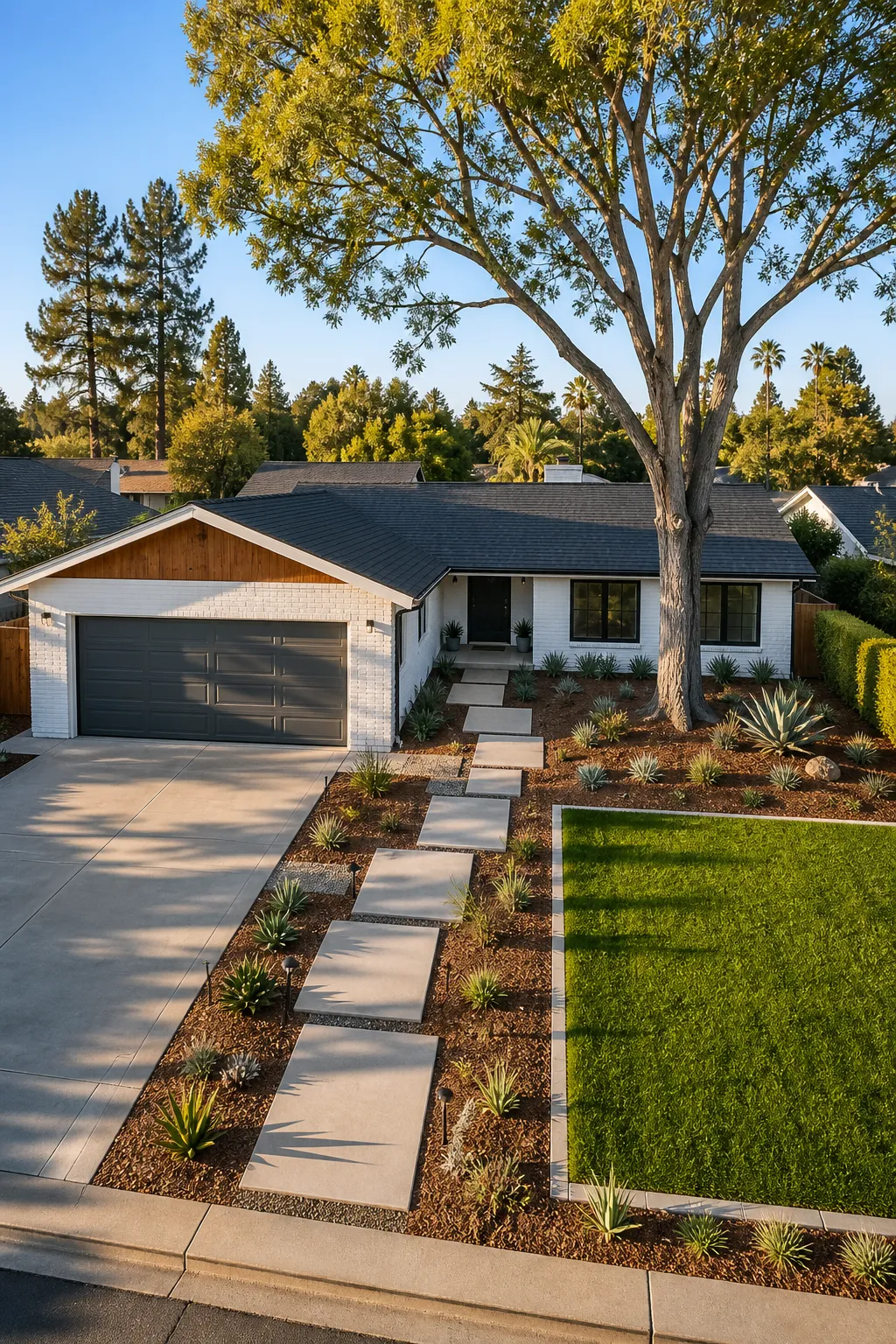
Prioritize long-lasting paving, gravel, or concrete in the areas that receive the most foot traffic. Clear bed boundaries make routine sweeping, weeding, and seasonal cleanup more manageable.
Repeat a small selection of dependable plants across the frontage. A limited plant palette reduces maintenance decisions and gives the entire yard a cohesive, intentional appearance.
Layer the Front Entry to Highlight Midcentury Lines and Materials
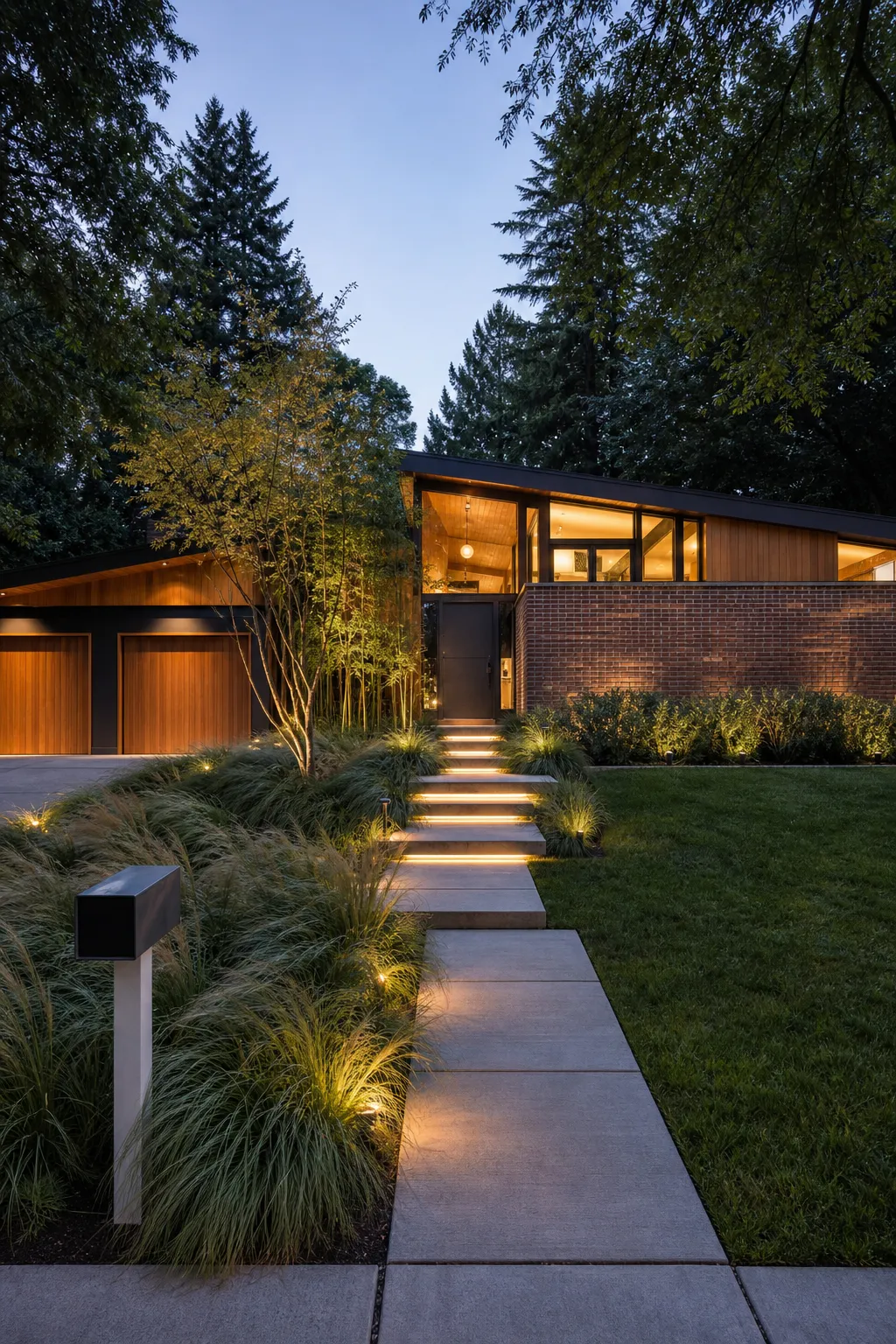
Echo the home’s horizontal lines with elongated pavers, low planters, and bands of restrained planting. Repeating architectural materials such as wood, concrete, and stone visually connects the landscape to the facade.
Arrange plants in distinct heights, keeping lower forms near key sightlines and taller accents beside blank walls. This layered approach adds depth without obscuring the entry’s geometry.
Create an Immersive Tropical Walkway With Dense Architectural Leaves
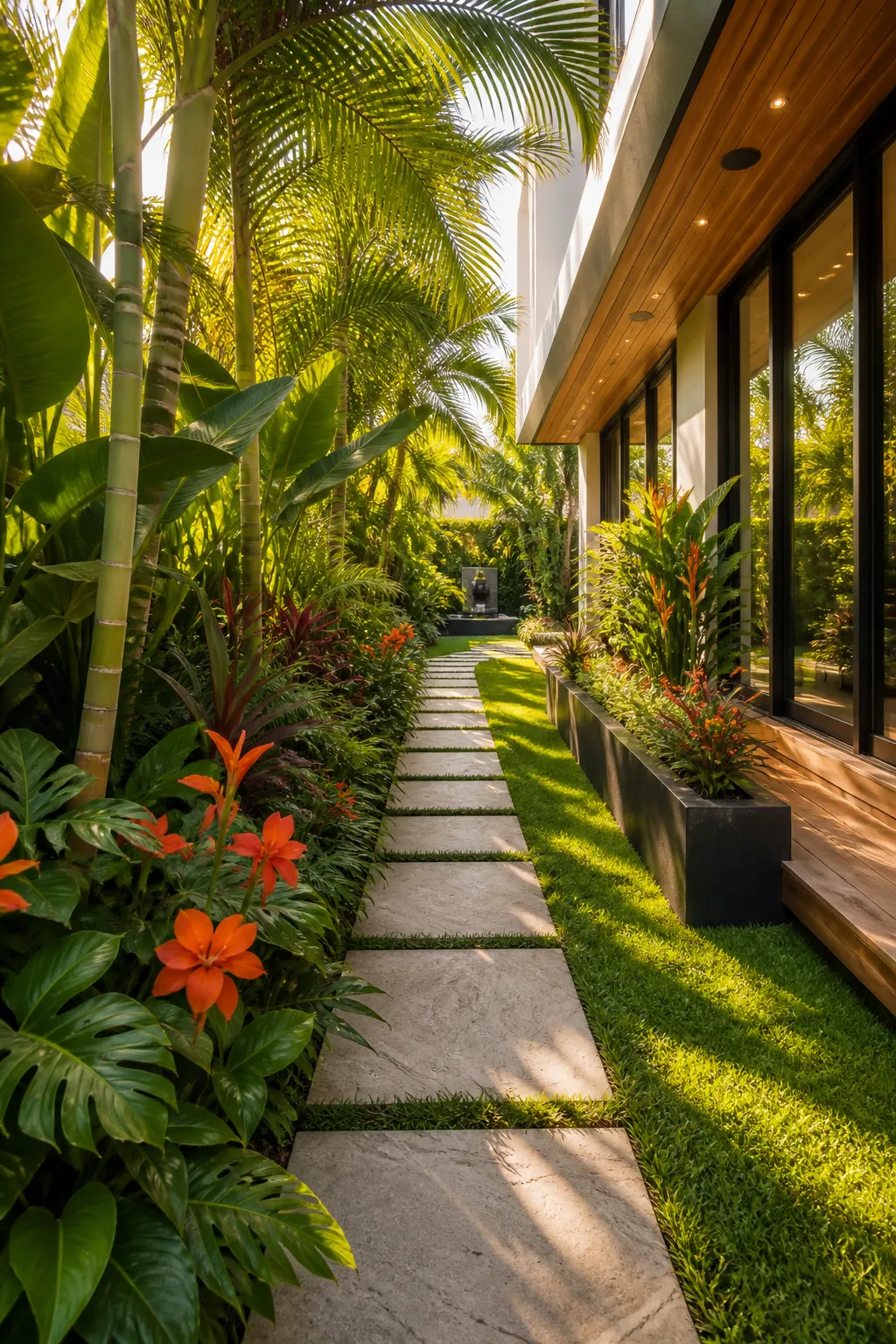
Border the route with overlapping palms, elephant ears, philodendrons, or other bold-leaved plants suited to the local climate. Bringing foliage close to the path creates an immersive garden passage.
Balance the dense planting with a simple, clearly defined walking surface. Allow enough mature clearance for comfortable movement, and use smaller ground-level leaves where the path narrows.
Add Elegant Garden Lighting to a Formal, Symmetrical Landscape
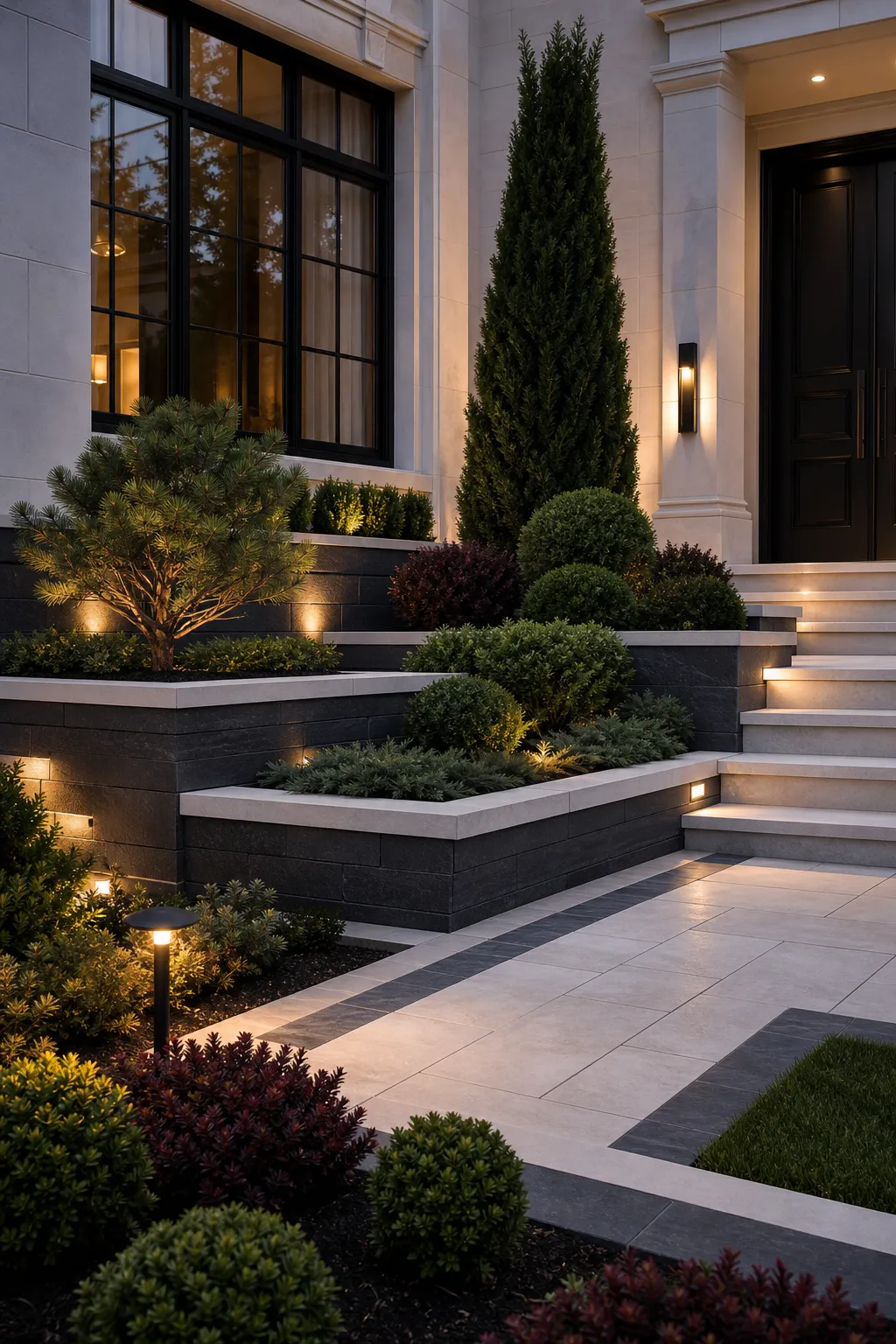
Place matching fixtures at corresponding points along paths, steps, and clipped planting beds. Balanced lighting reinforces the symmetry after dark while making the route to the entrance easier to follow.
Use warm, restrained illumination rather than flooding the entire yard. Subtle uplights can emphasize paired trees or architectural features, while low path lights reveal edges without producing harsh glare.
Let Native Flowers Spill Along a Relaxed Naturalistic Path
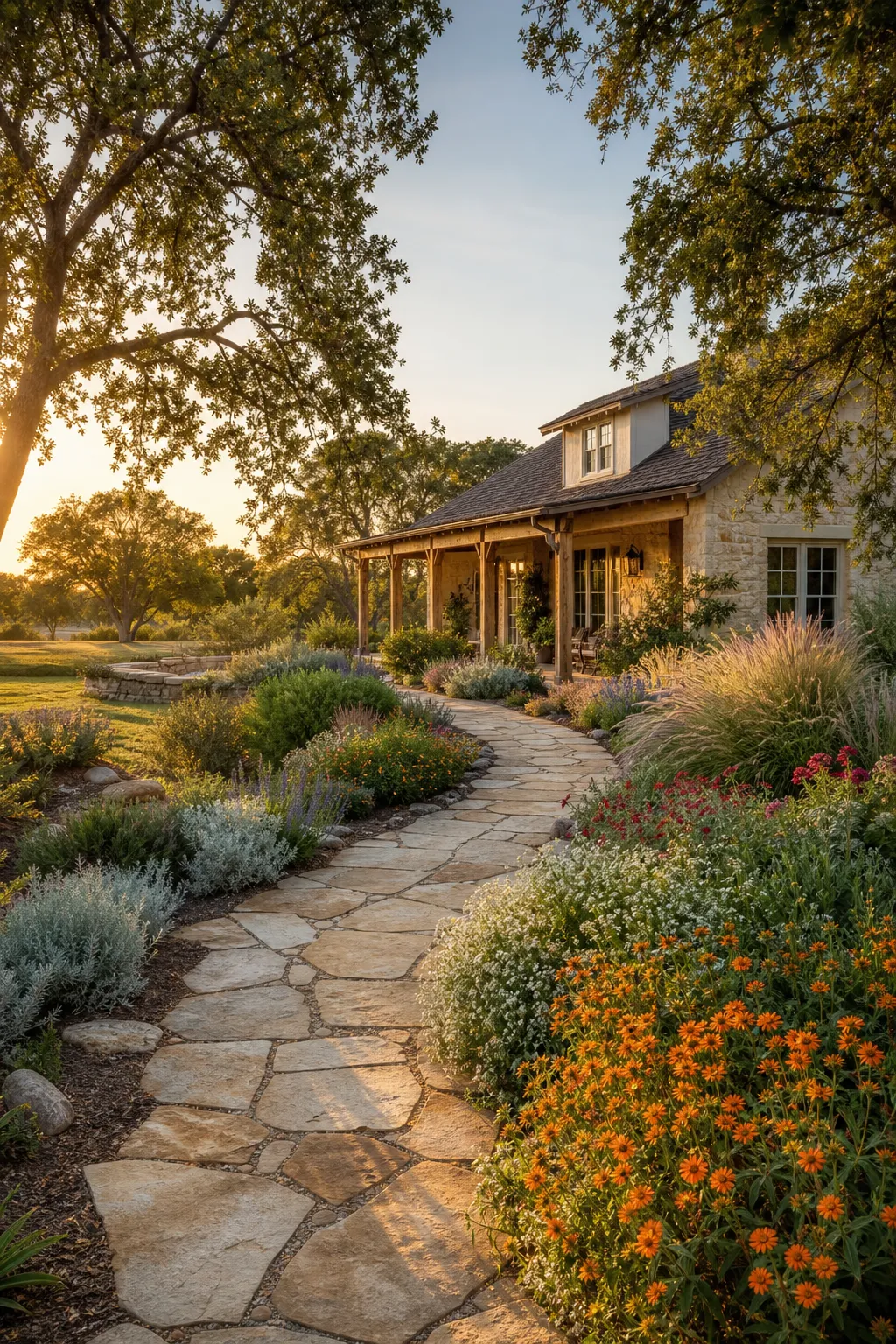
Plant native flowers and grasses in loose drifts that gently overlap the path’s edges. The informal shapes create soft, natural movement and make a simple walkway feel integrated with the garden.
Choose species with staggered bloom periods, varied seed heads, and compatible moisture needs. Keep the center of the route open so the planting appears abundant without obstructing access.
Stack Concrete Planters for Layered Curb Appeal and Clear Structure
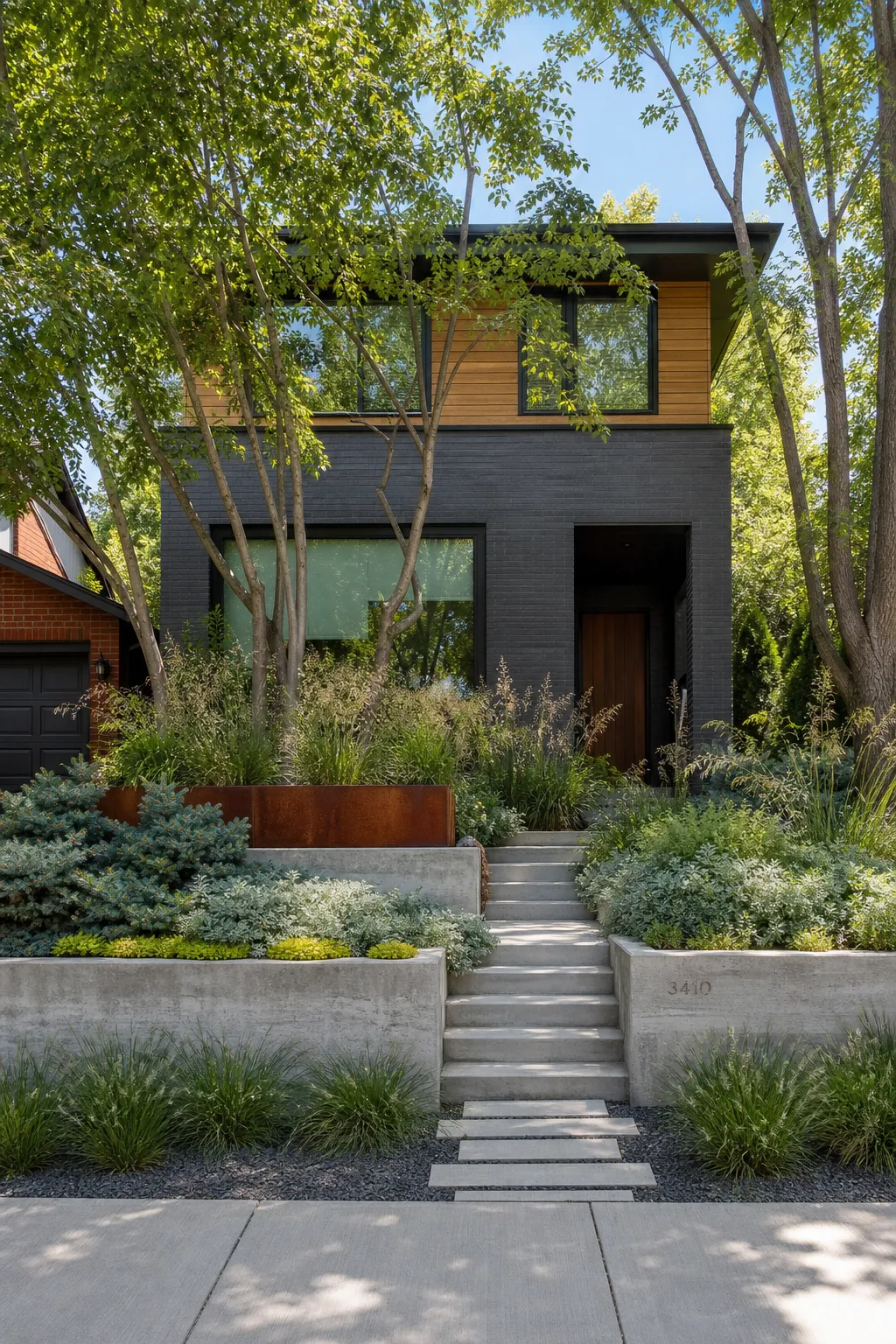
Arrange concrete planters at stepped heights to define the entrance and organize changes in elevation. Layered levels add depth from the street while preserving the clean character of a modern facade.
Repeat plants across adjacent tiers to connect the separate containers visually. Trailing foliage can soften corners, while compact upright specimens maintain a clear, structured silhouette.
Lead to the Door With Desert Plants and Oversized Stepping Stones
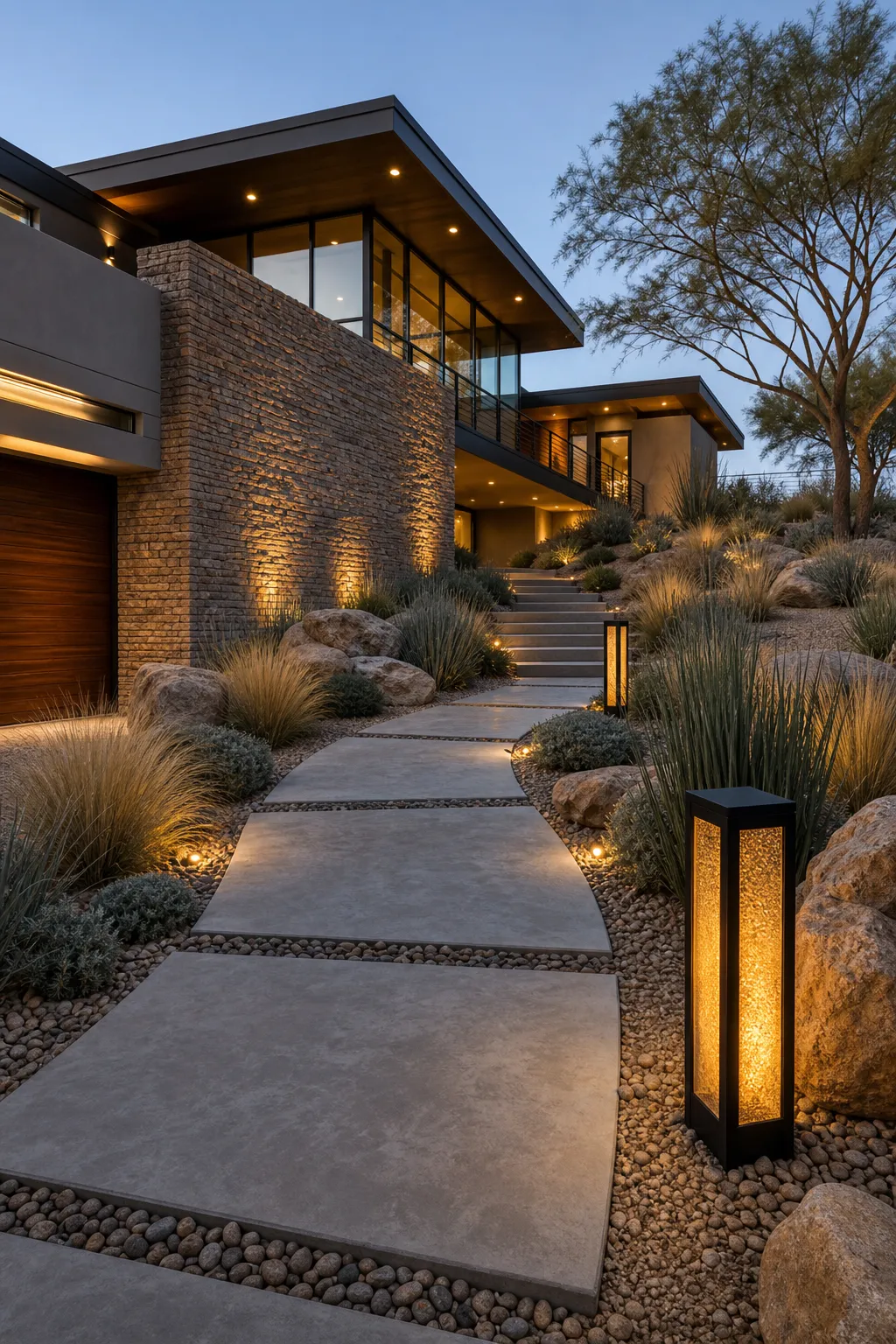
Set broad stepping stones on a direct or gently offset line toward the entrance. Their generous scale creates a clear sense of arrival and feels proportionate beside bold desert plants.
Frame the route with agaves, aloes, yuccas, or drought-tolerant grasses, leaving space for their mature spread. Gravel mulch unifies the composition and keeps the sculptural forms easy to see.
Install Recessed Step Lighting for a Safer, More Dramatic Approach
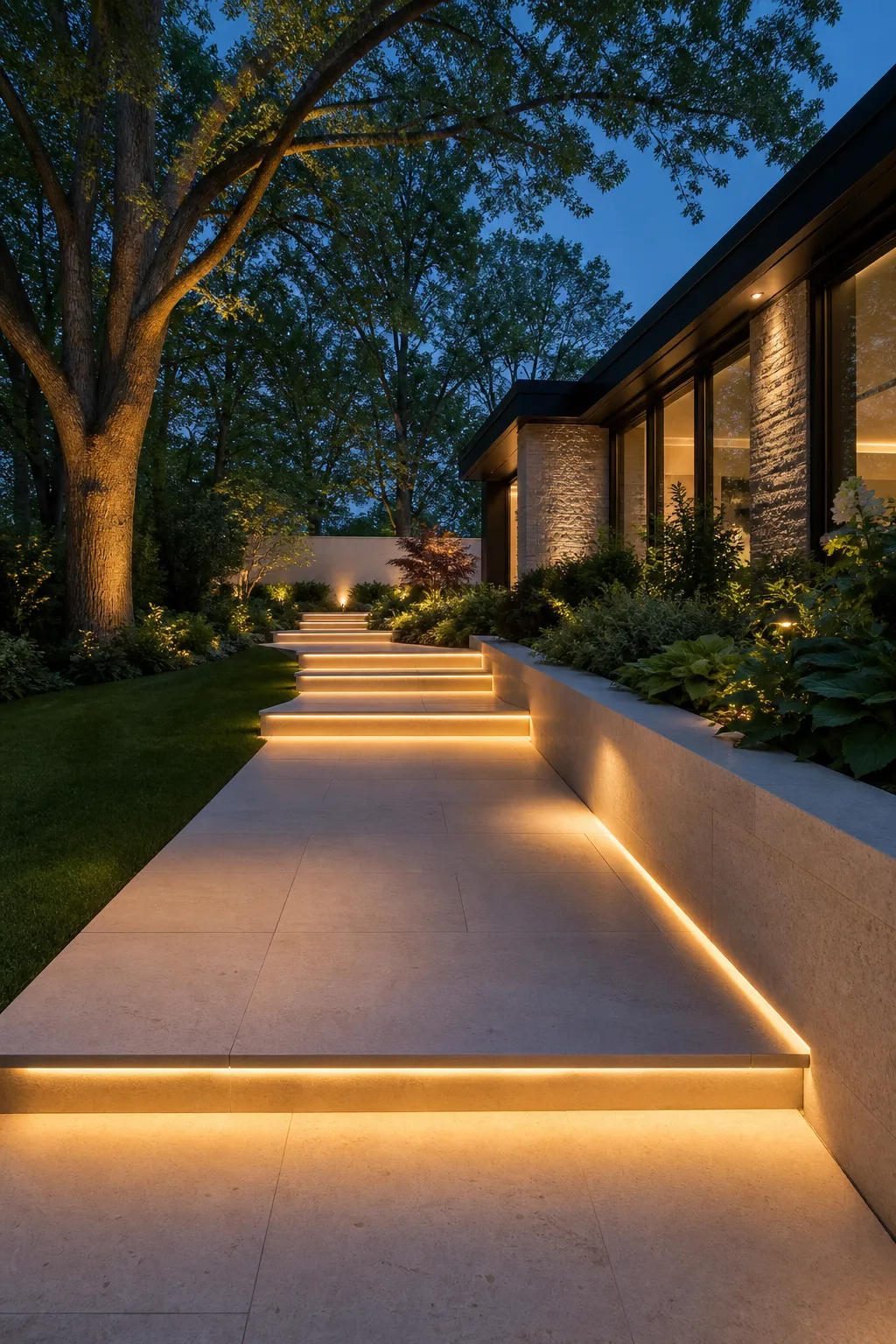
Integrate compact fixtures into stair risers or adjacent walls so each change in level is visible at night. Even, low-glare illumination supports safer footing without distracting from the architecture.
Keep fixture spacing and color temperature consistent from the sidewalk to the door. The repeated pools of light establish a dramatic rhythm and make the approach feel deliberately designed.
Contrast a Black-Clad Extension With Soft Layers of Native Plants
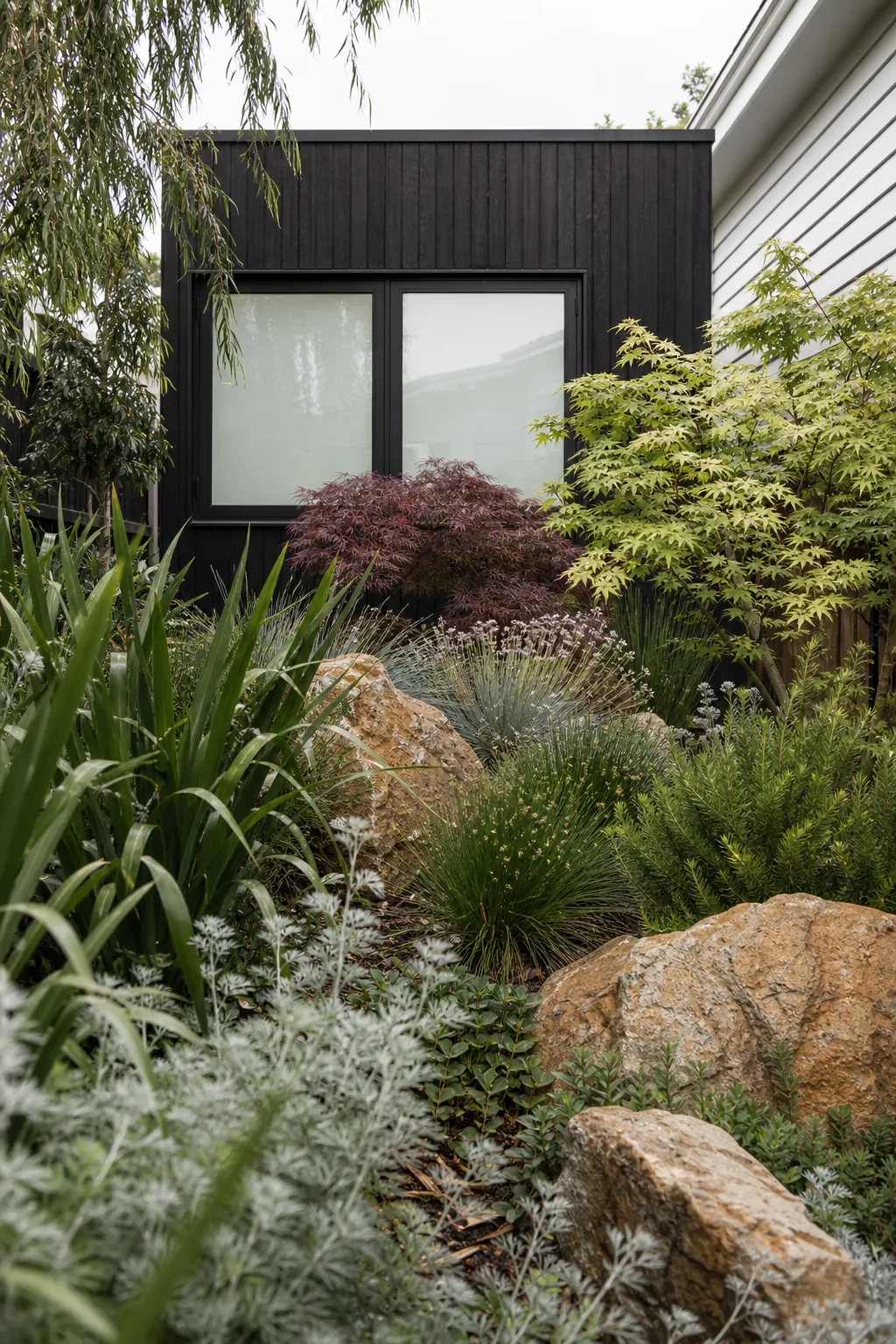
Use flowing grasses, fine-textured shrubs, and seasonal native flowers to soften the visual weight of a dark exterior. Airy planting layers provide movement and prevent the black cladding from feeling severe.
Limit the flower colors and repeat key species across the bed for cohesion. Leaving portions of the facade visible preserves the strong contrast between crisp architecture and relaxed vegetation.
Build a Calm Gravel Garden Around a Sculptural Birch Tree
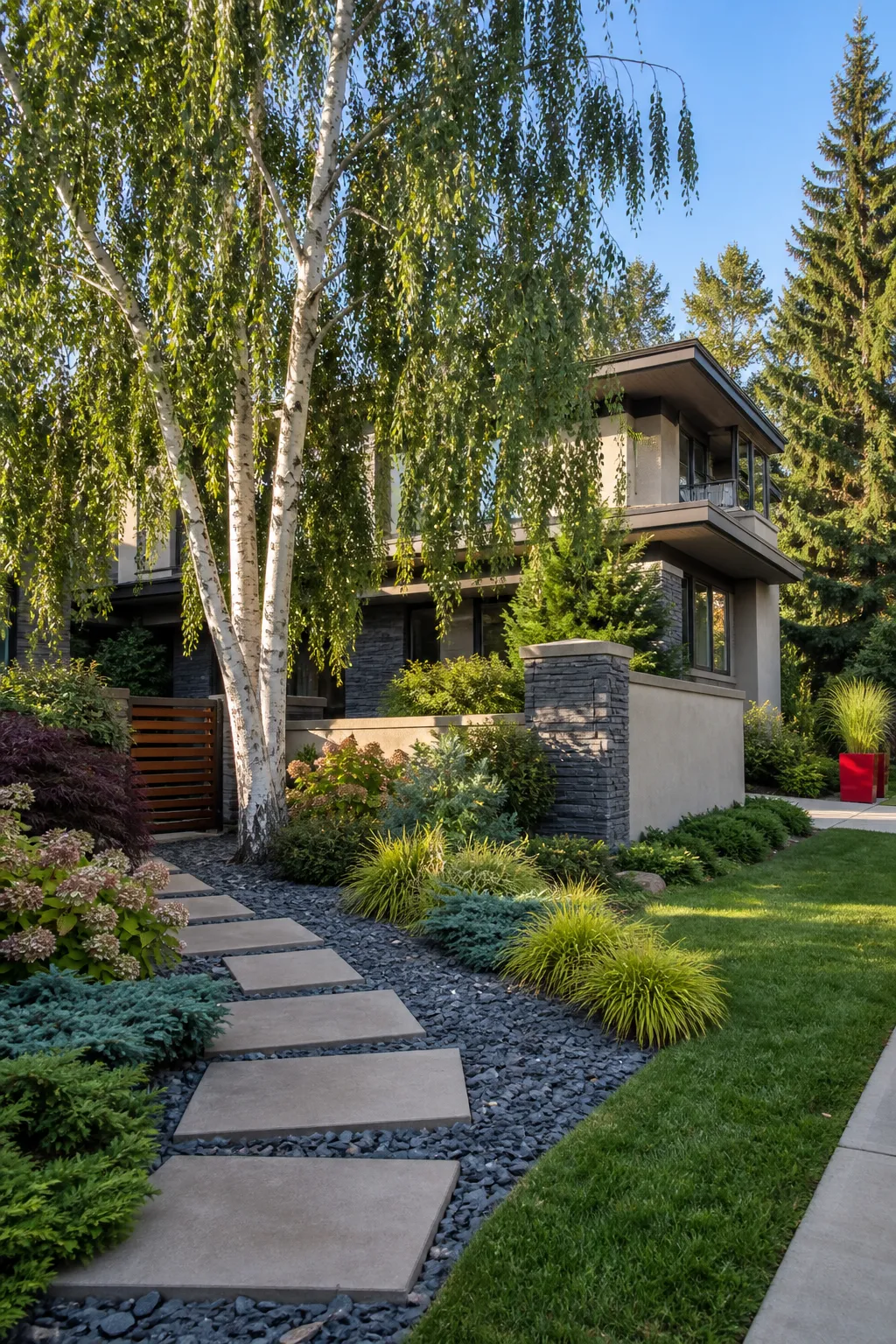
Make the birch the focal point by surrounding it with a broad, uncluttered field of gravel. The pale bark and delicate canopy stand out against this quiet neutral backdrop.
Add restrained clusters of grasses, low perennials, or simple stones beyond the trunk’s root flare. Keeping ample open space preserves the calm composition and allows the tree’s form to command attention.
Warm a Modern Entrance With Illuminated Wood Steps
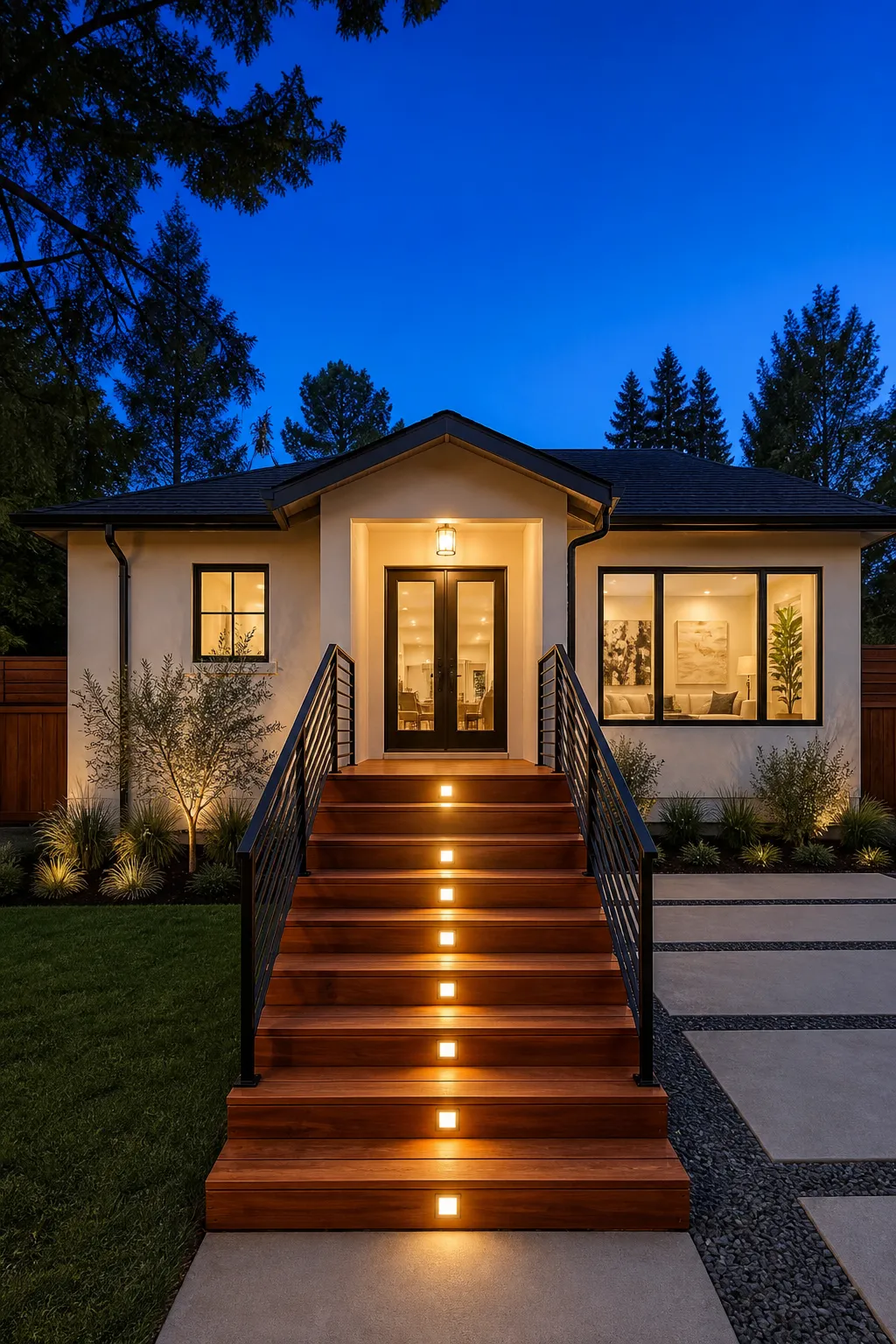
Wood treads bring natural warmth to a streamlined facade, while integrated riser lights make each level easy to navigate after dark. Choose a durable exterior-grade timber and repeat its tone on the door or cladding for a cohesive finish.
Keep surrounding plants simple so the craftsmanship remains prominent. Warm, concealed lighting creates an inviting glow without introducing distracting fixtures.
Accent a Stepping-Stone Path With Weathered Corten Planters
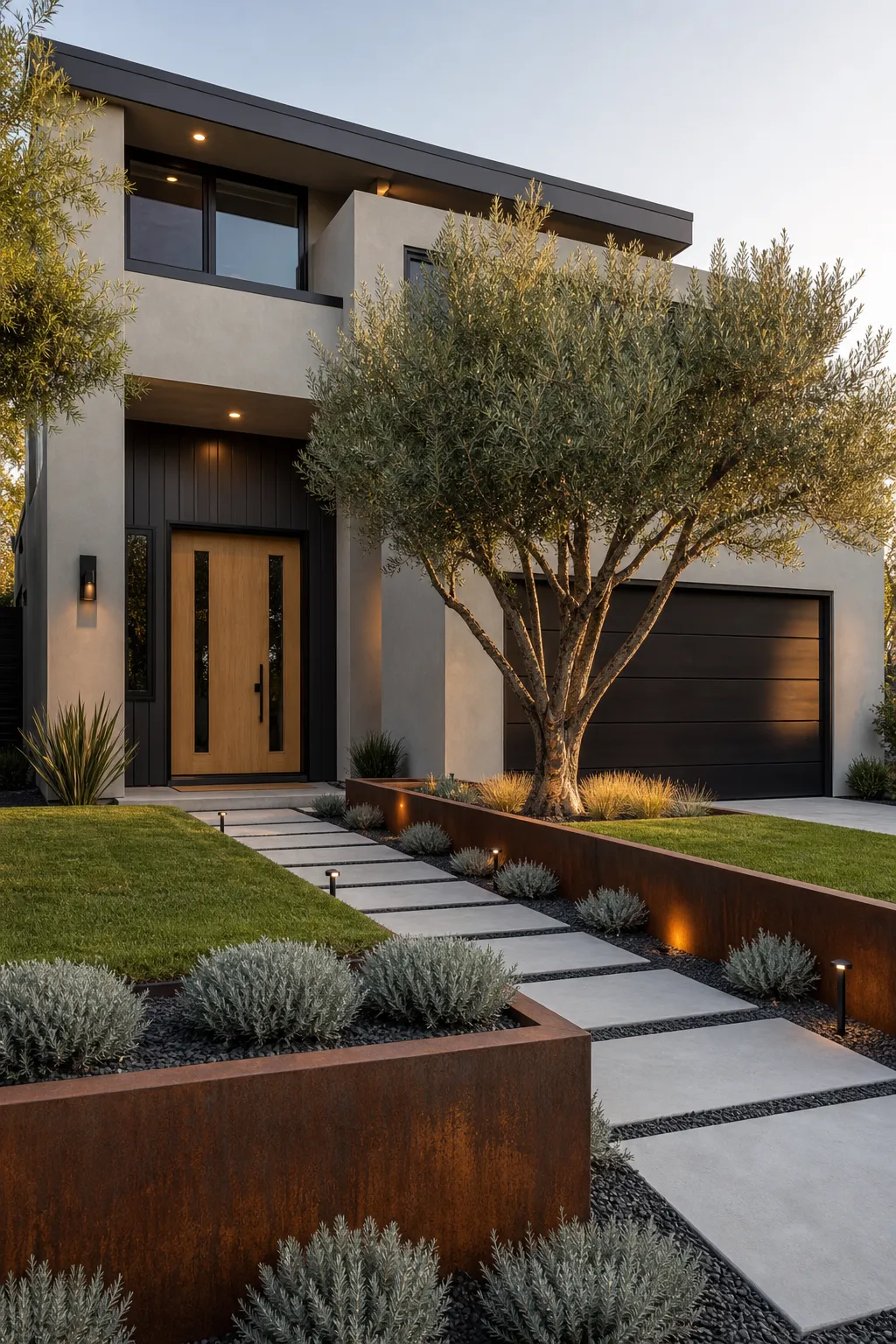
Large stepping stones establish a relaxed route to the entrance, while Corten planters add structure and earthy color. Their weathered finish complements gravel, concrete, and drought-tolerant foliage particularly well.
Vary planter heights or sizes to create rhythm along the path. Leave generous gaps around each stone so the walkway feels intentional rather than crowded.
Shape a Dramatic Slope With Layered Planting and Subtle Lighting
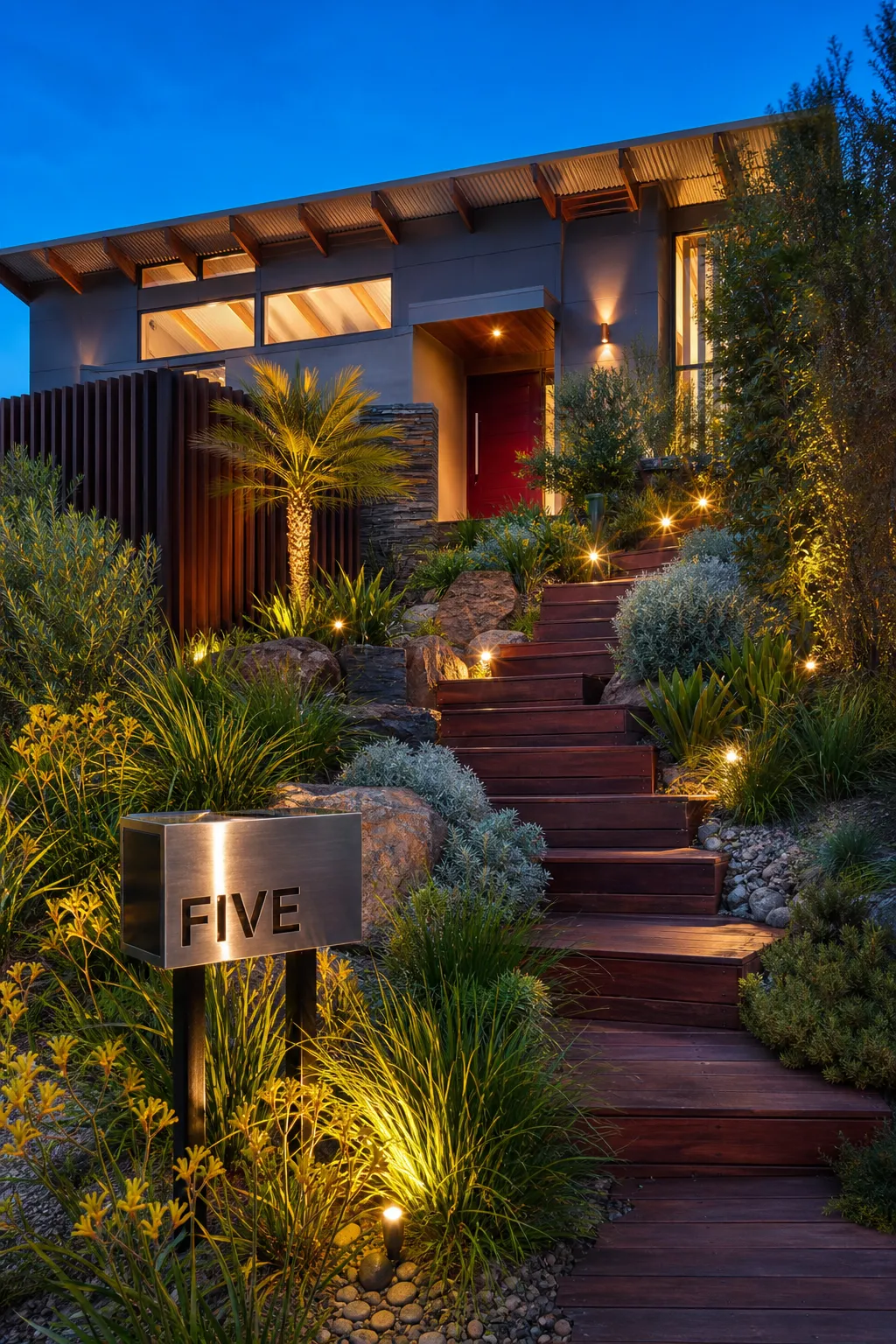
Plant a steep frontage in broad, overlapping bands to stabilize the soil and turn an awkward grade into a strong visual feature. Low ground covers at the path edge can transition into shrubs and taller architectural plants uphill.
Small, shielded fixtures should illuminate steps and reveal foliage without flooding the garden. Layered planting gives the slope depth in daylight and dramatic texture after sunset.
Border Crisp White Steps With Graduated Layers of Greenery
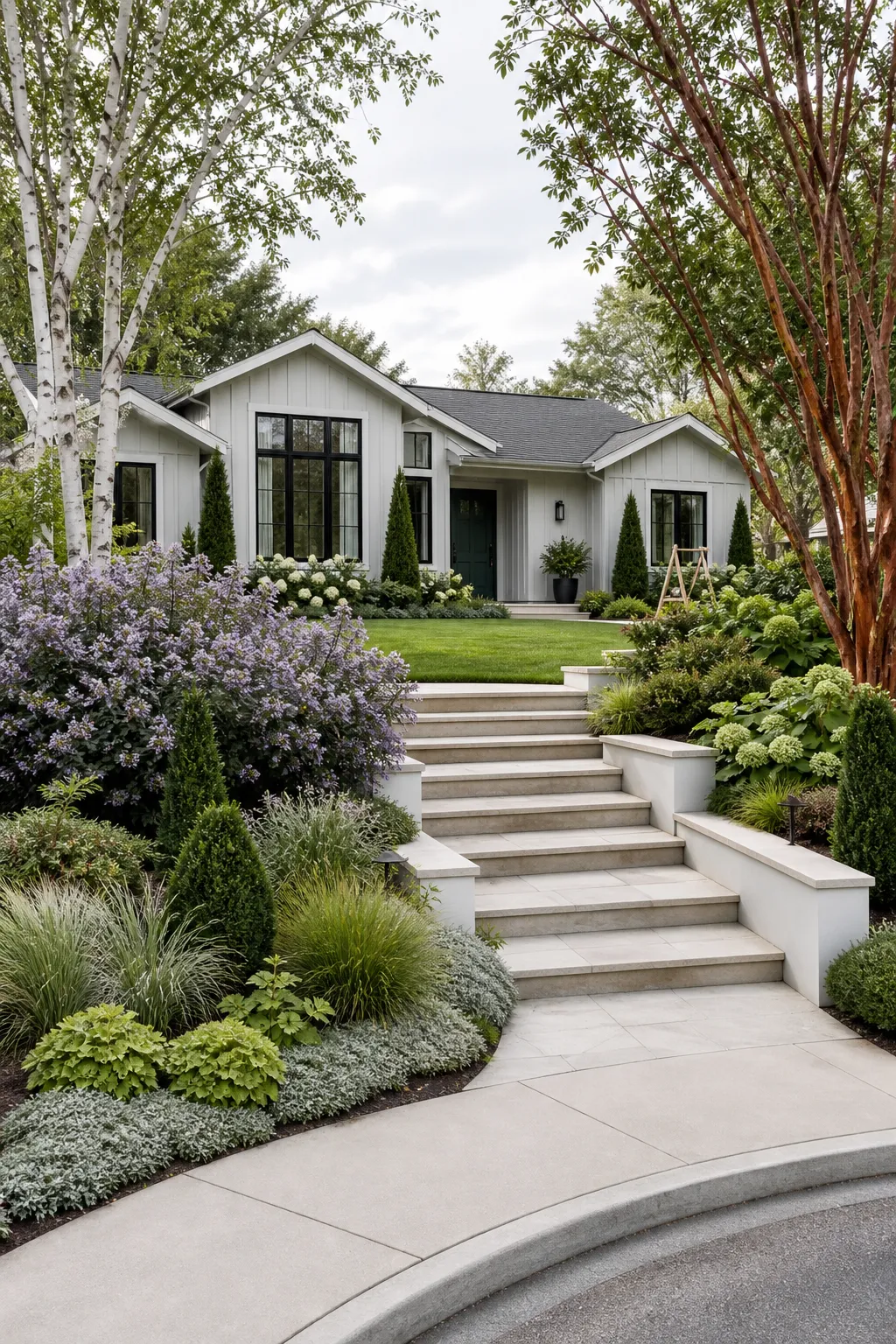
Bright white steps create a sharp architectural line that becomes softer when framed by foliage. Arrange low plants beside the lowest treads, medium shrubs farther back, and taller specimens near the facade.
Use several shades and leaf shapes within a mostly green palette to avoid visual clutter. Graduated plant heights preserve clear sightlines while making the approach feel lush.
Blend a Double-Garage Midcentury Home Into Its Wooded Setting
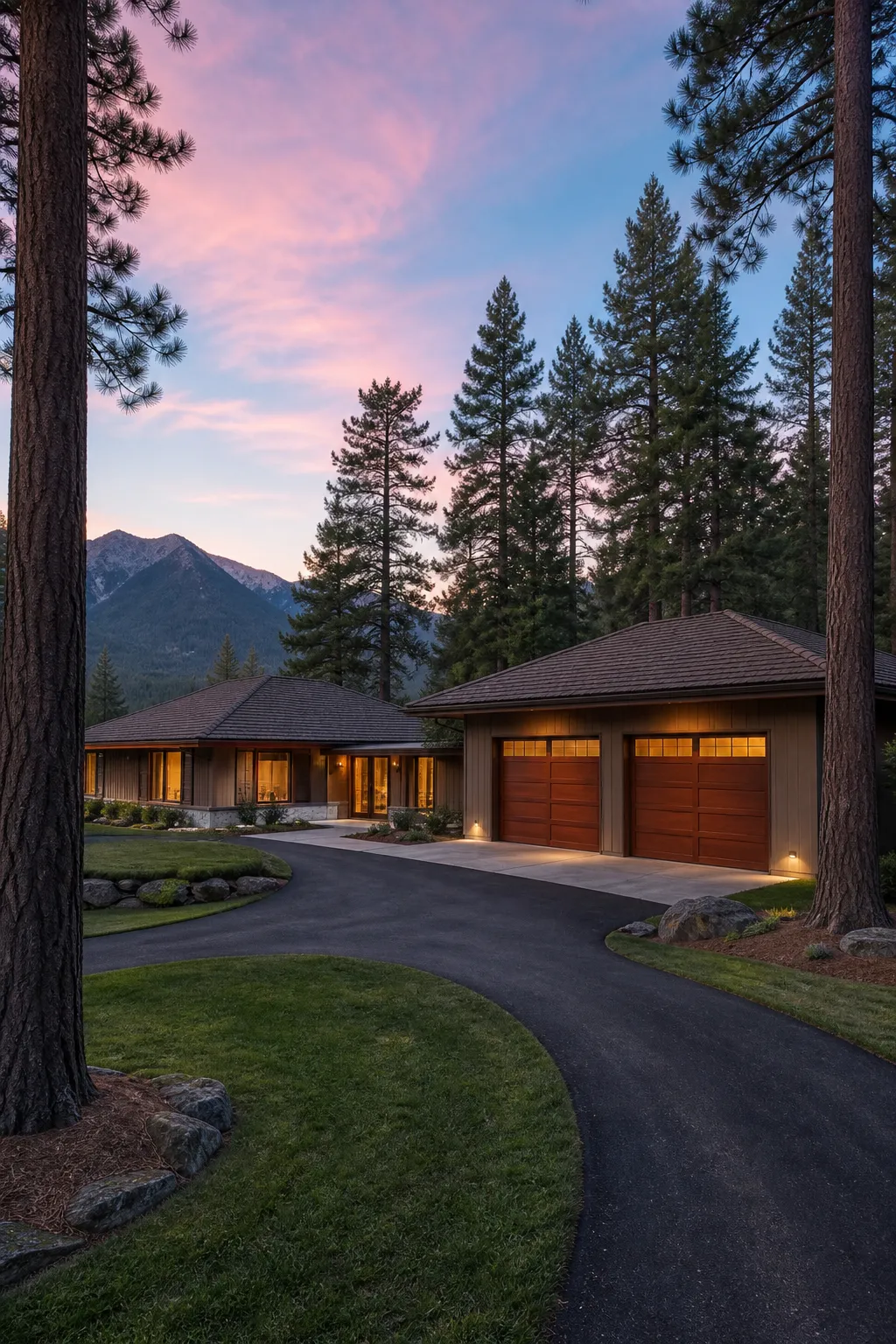
A wide garage elevation can feel less dominant when planting overlaps its edges and echoes the surrounding woodland. Multi-stem trees, loose shrubs, and sweeping ground covers help connect the architecture to the larger site.
Choose restrained hardscape colors that relate to bark, stone, and the home's original materials. Preserve mature trees wherever practical to retain shade and authentic midcentury character.
Keep a Drought-Tolerant Courtyard Sleek With a Limited Plant Palette
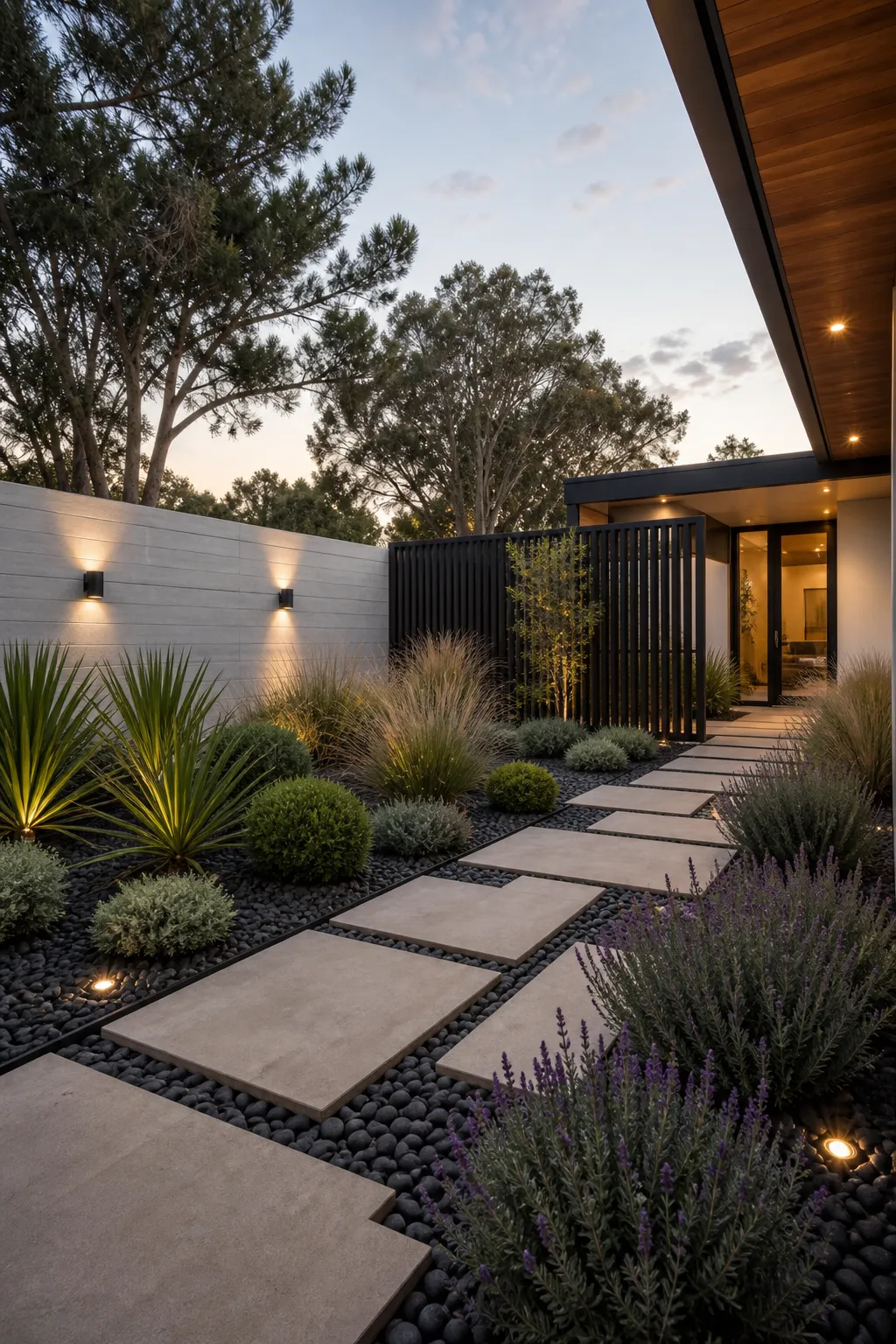
A small group of well-chosen species gives a water-wise courtyard a calm, contemporary identity. Repeat sculptural succulents, compact grasses, or clipped shrubs rather than filling every space with a different plant.
Gravel mulch and simple paving reinforce the clean composition while reducing exposed soil. Repetition creates cohesion and makes routine maintenance more manageable.
Make a Steep Front Yard Accessible With Broad Concrete Steps
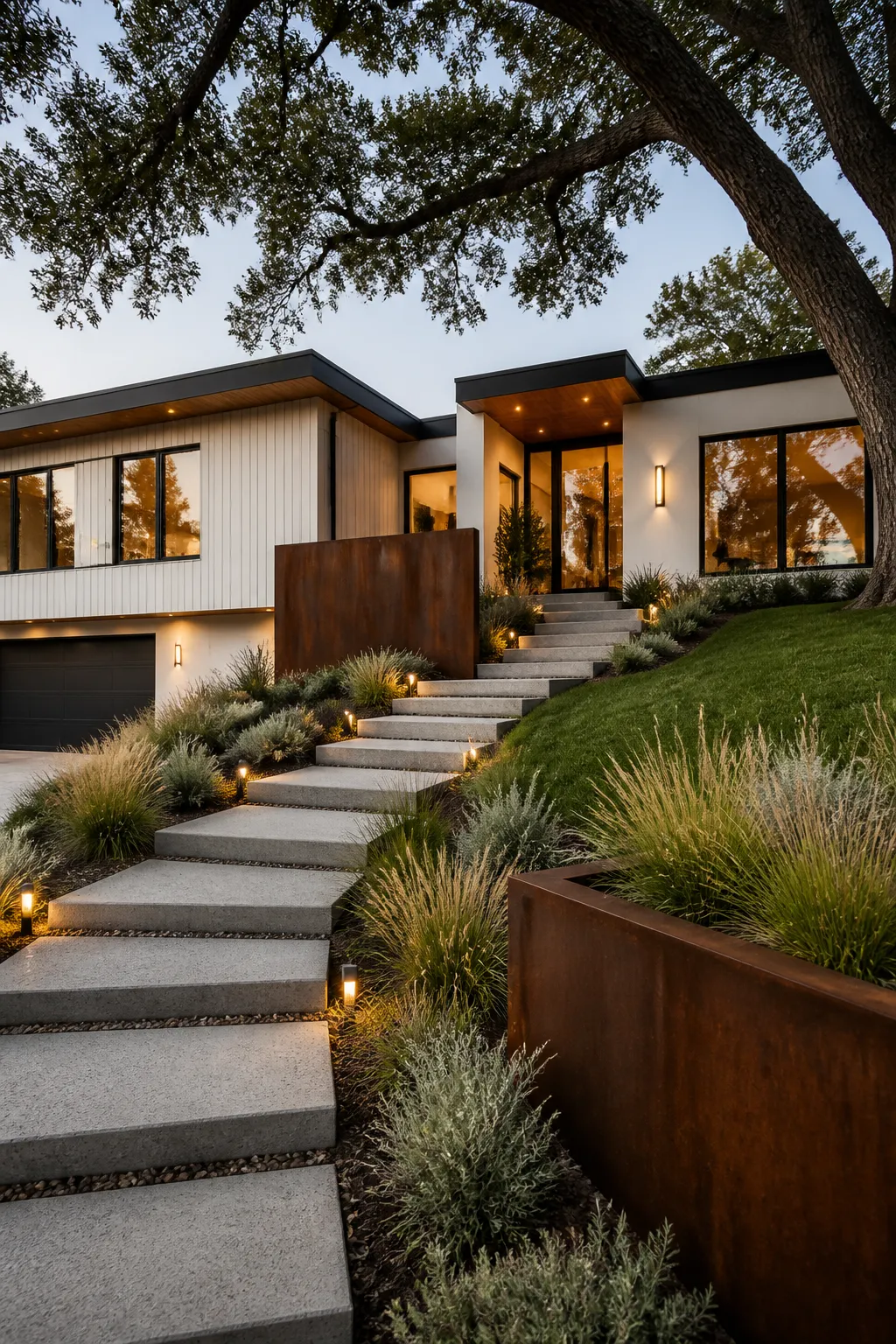
Wide concrete treads create a comfortable, visually grounded route up a challenging grade. Break a long climb into shorter runs with generous landings that offer pauses and space for directional changes.
Add a sturdy handrail and consistent low-level lighting for safer everyday use. Deep, even treads feel more welcoming than a narrow staircase slicing abruptly through the slope.
Arrange Sculptural Succulents Across a Tiered Modern Entry
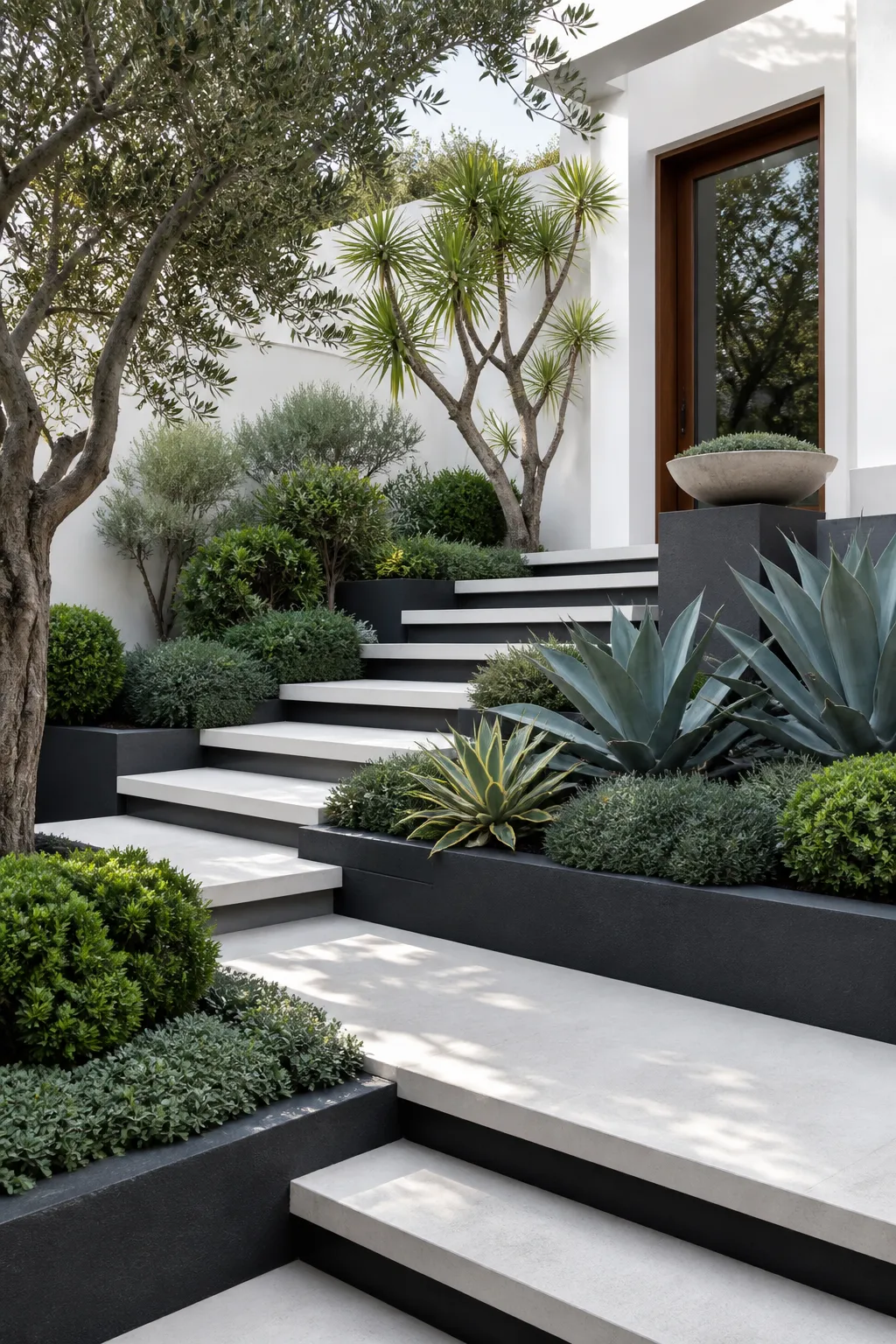
Terraced beds provide natural stages for agaves, aloes, and other architectural succulents. Position larger rosettes as anchors, then use smaller varieties to fill transitions without concealing the retaining lines.
Allow open gravel or stone around standout specimens so their silhouettes remain distinct. Balance form and spacing to achieve a collected look that still feels disciplined.
Soften Floating Front Steps With Full, Textural Planting
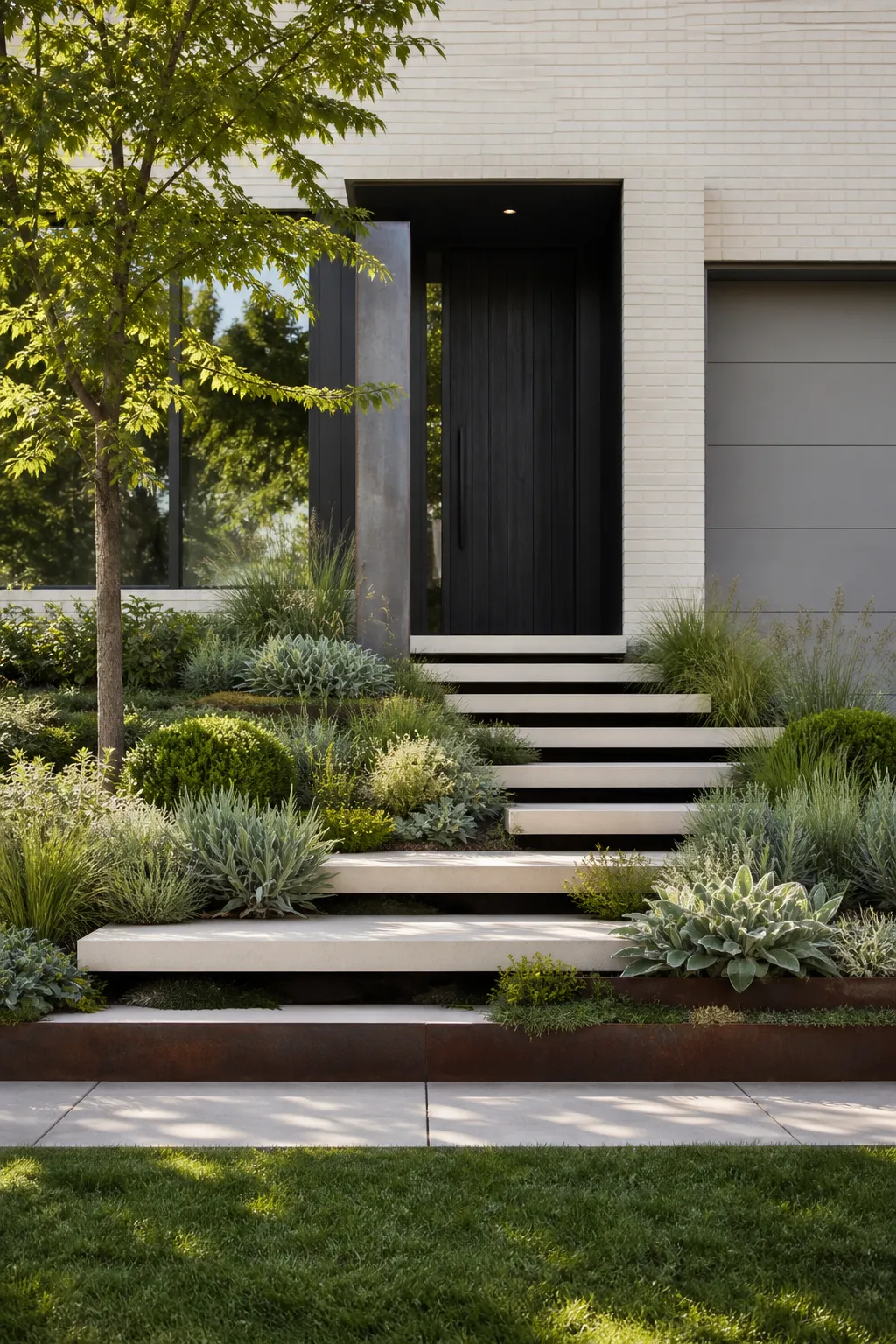
Dense planting beneath and beside floating steps reduces their visual weight while emphasizing the cantilevered effect. Combine fine grasses, rounded shrubs, and broad leaves to build contrast around the clean geometry.
Keep foliage below the walking surface and away from tread edges to maintain a safe route. Textural planting makes the entry feel generous without compromising its modern lines.
Widen the Feel of a Narrow Entrance With a Clean Linear Path
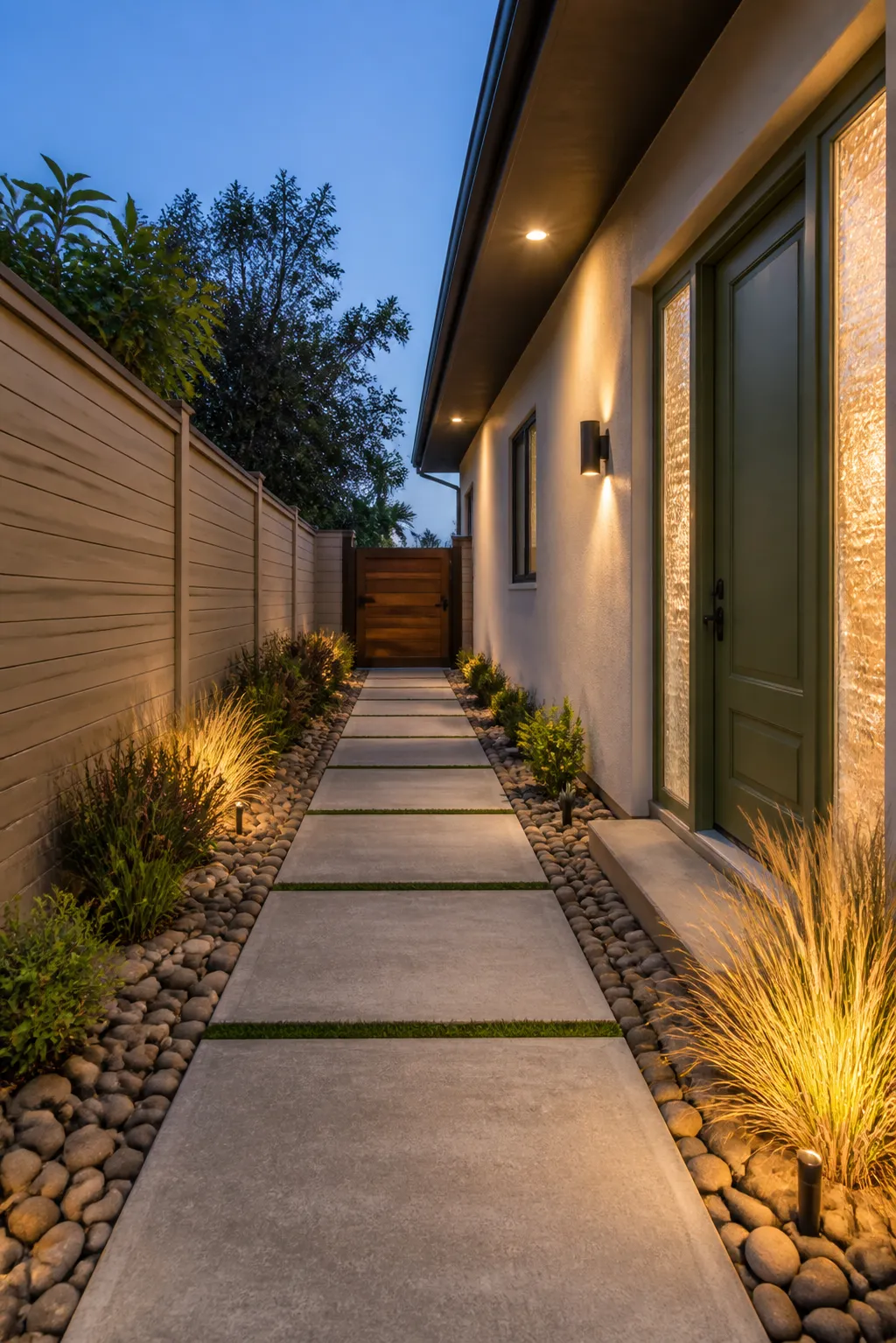
A straight path with long, uninterrupted joints draws the eye toward the door and makes a confined approach feel calmer. Extending the paving close to the planting edges can also create the impression of greater width.
Use low, orderly plants and limit sharp contrasts along the route. Continuous horizontal lines help the entrance appear broader and less enclosed.
Frame a Tropical Front Door With Bold, Upright Foliage
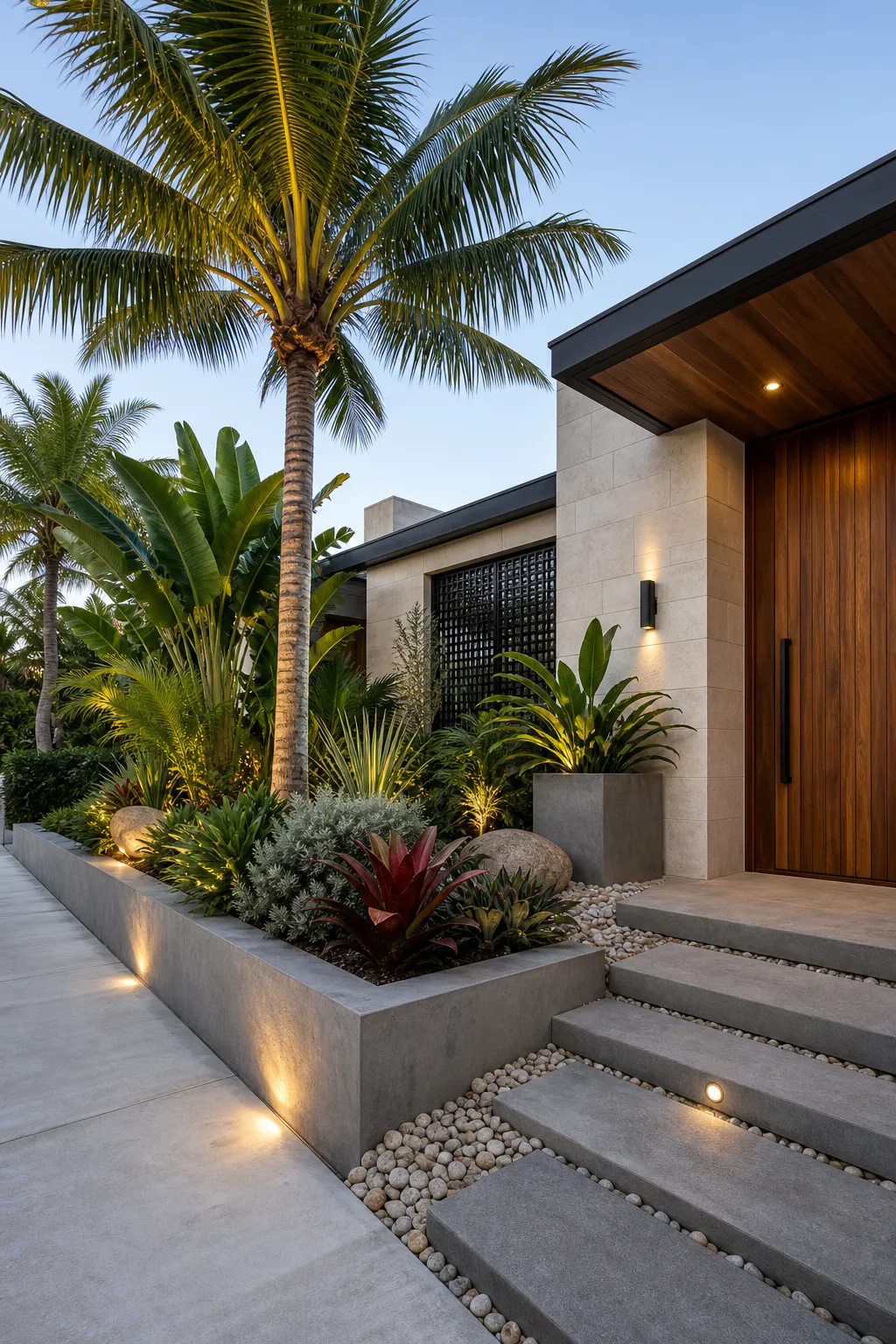
Tall, vertical leaves create a lively frame that guides attention toward the front door. Place the strongest forms to either side while preserving enough clearance for guests and outward-opening doors.
Layer shorter tropical foliage at the base to conceal bare stems and add fullness. Upright plants emphasize height and bring an immersive garden character to a compact entry.
Mix Colorful Drought-Tolerant Plants Along an Informal Garden Path
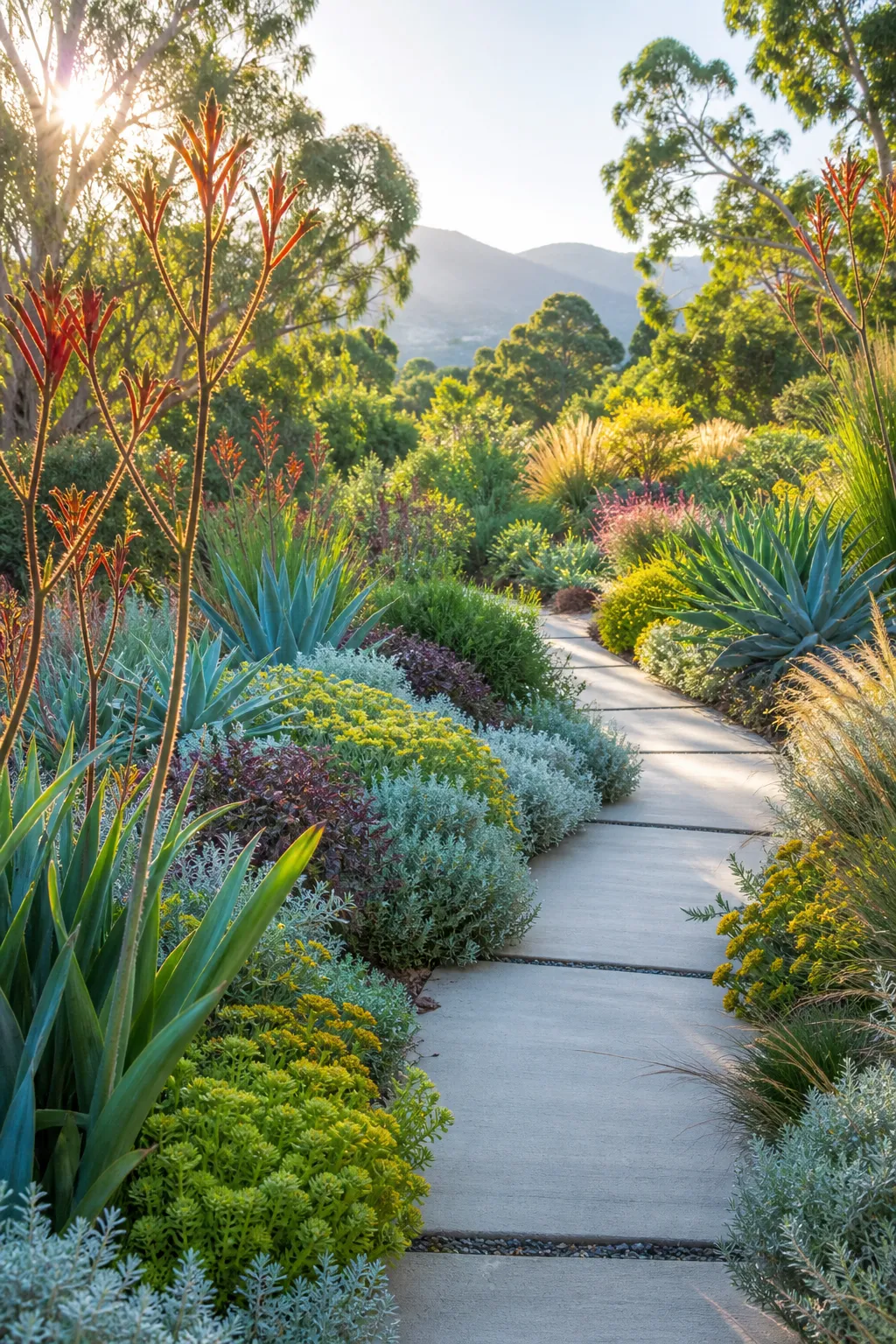
Let hardy flowering perennials, ornamental grasses, and succulents mingle loosely beside a gently curving path. Repeating a few colors at intervals keeps the exuberant combination connected from the sidewalk to the door.
Select plants with different bloom periods and foliage tones for interest beyond a single season. Repeat key varieties to give the informal design an underlying structure.
Brighten a Midcentury Courtyard With a Cheerful Yellow Door
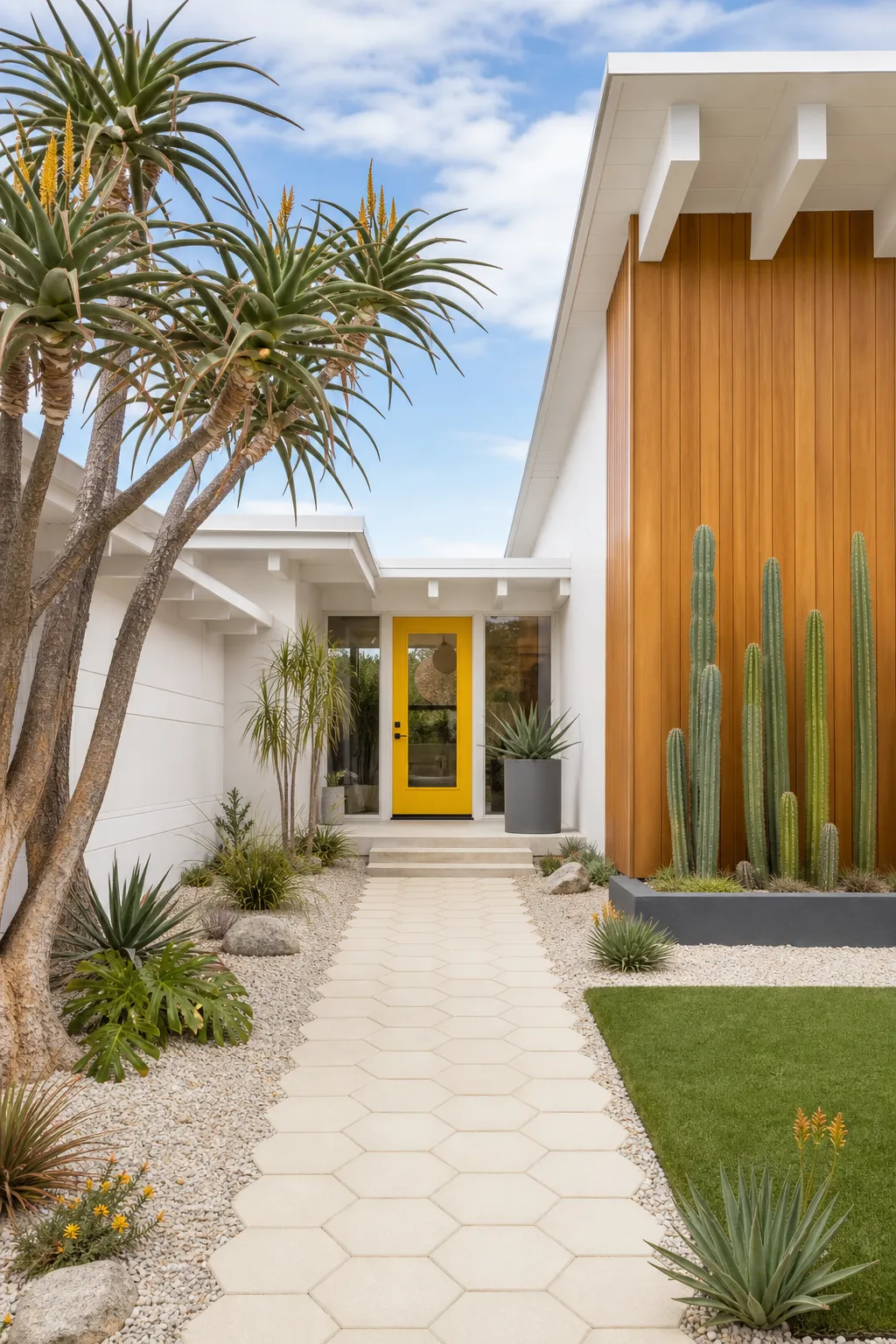
A yellow door provides an energetic focal point against neutral masonry, wood, or pale stucco. Keep nearby paving and planters understated so the color reads as a deliberate architectural accent.
Echo the hue sparingly through flowers, furniture, or a small accessory rather than matching everything. One vivid focal point can refresh a courtyard while respecting its midcentury simplicity.
Edge a Contemporary Front Walkway With Repeating Ornamental Grasses
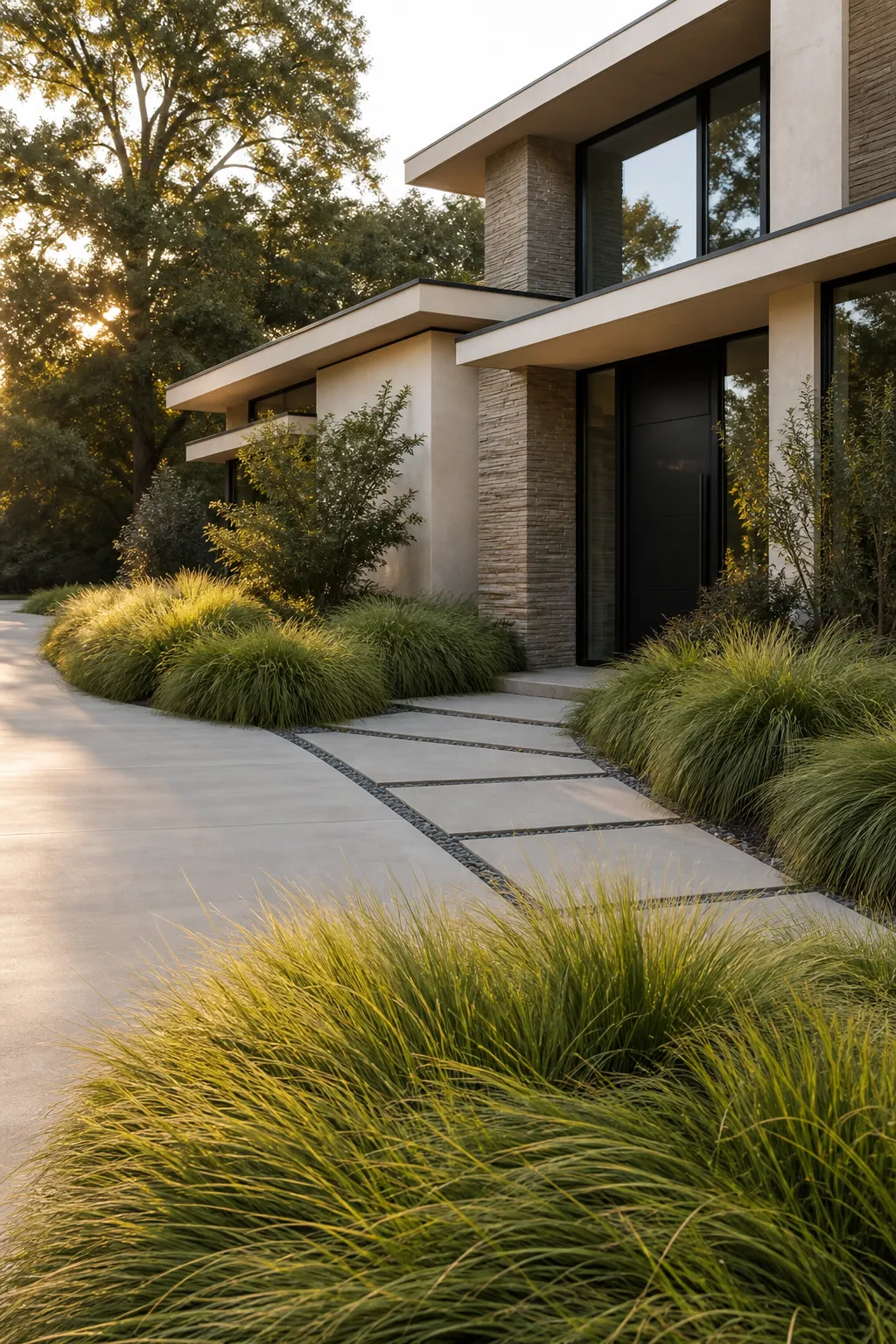
Evenly spaced grasses create a soft border that reinforces the direction of a clean modern walkway. Their fine blades provide movement and texture against concrete or large-format pavers.
Choose a compact variety that will not flop across the walking surface when mature. Consistent repetition delivers a polished rhythm and keeps the planting scheme easy to read.
Maximize a Small Front Yard With Compact Drought-Tolerant Planting
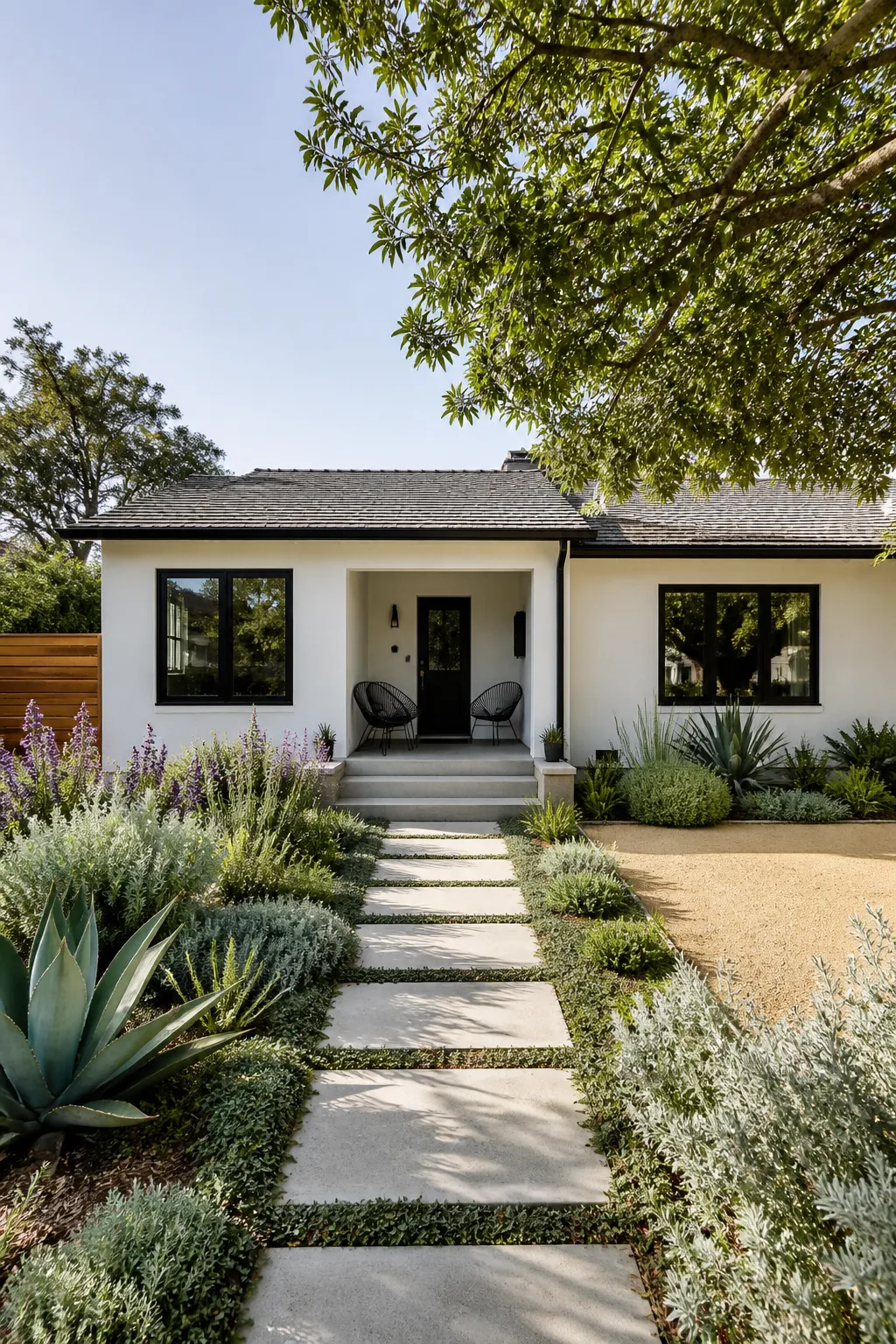
Make every planting pocket count with slow-growing succulents, low grasses, and compact flowering perennials suited to the site's sun and soil. A restrained mix prevents limited space from feeling busy.
Use gravel, a few well-placed rocks, and one focal plant to establish structure without consuming valuable room. Select plants by mature size to reduce crowding and ongoing pruning.