A window can look like the perfect place to sit until the sill presses into your back or the new bench blocks the route through the room. Start with the way you want to use the seat, then choose its depth, storage, and window treatment together. A comfortable place for five quiet minutes is more valuable than a beautiful corner nobody uses.
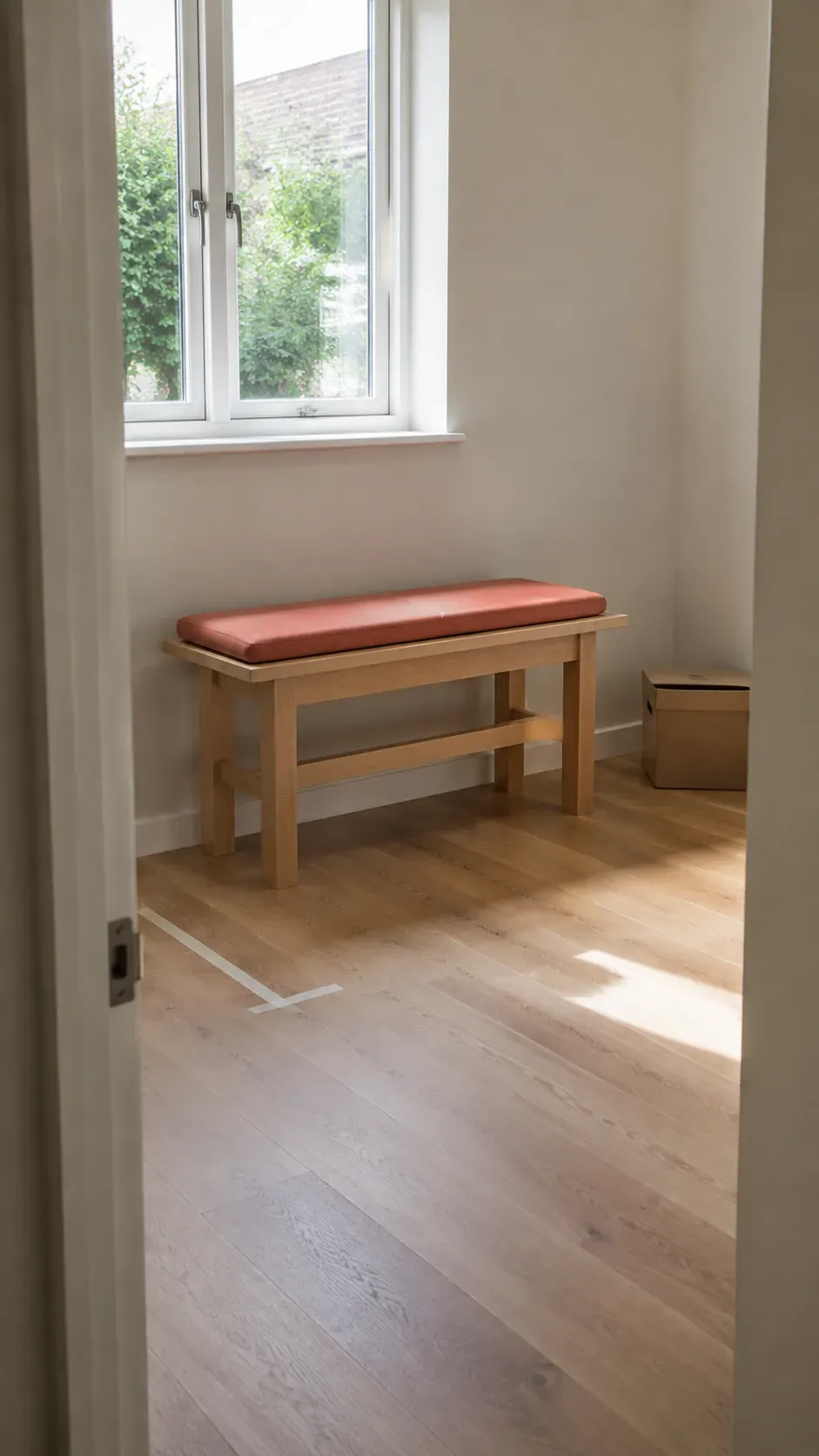
A freestanding bench for a rented room
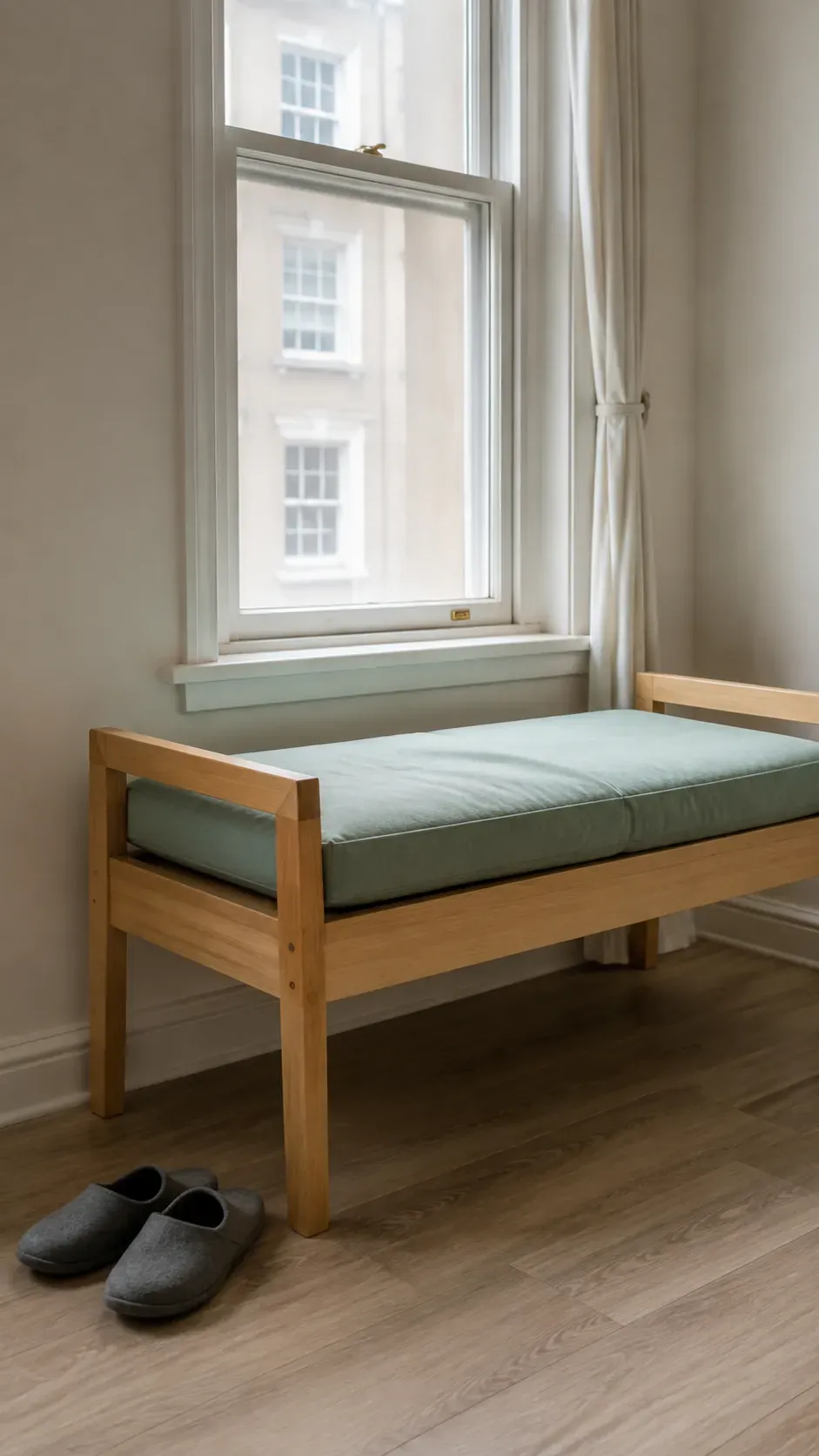
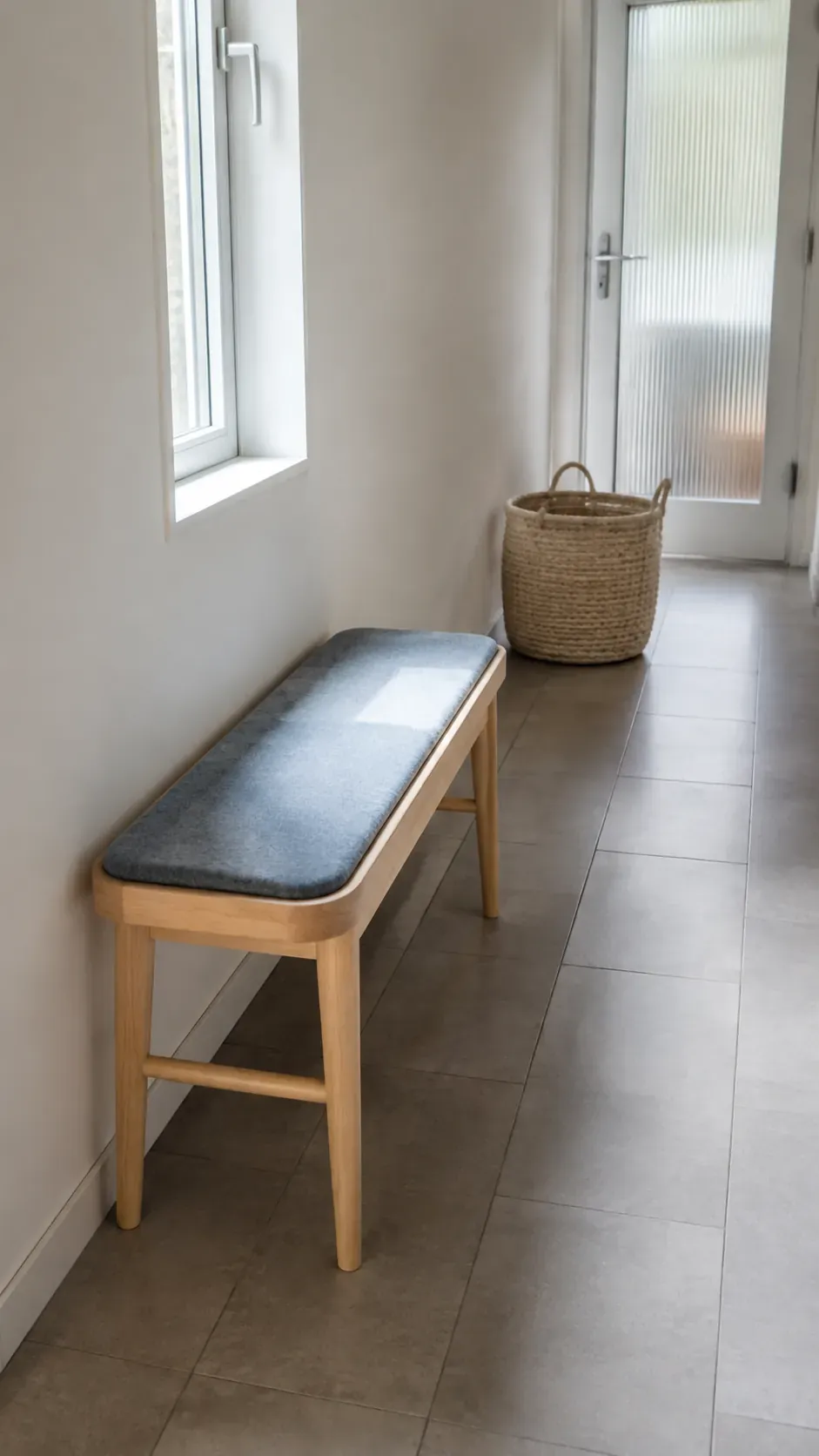
A freestanding bench lets you test whether you actually sit by the window before paying for fitted joinery. Choose furniture intended to carry seated adults, rather than treating a console table as seating. Leave enough space behind it to operate blinds and clean the glass.
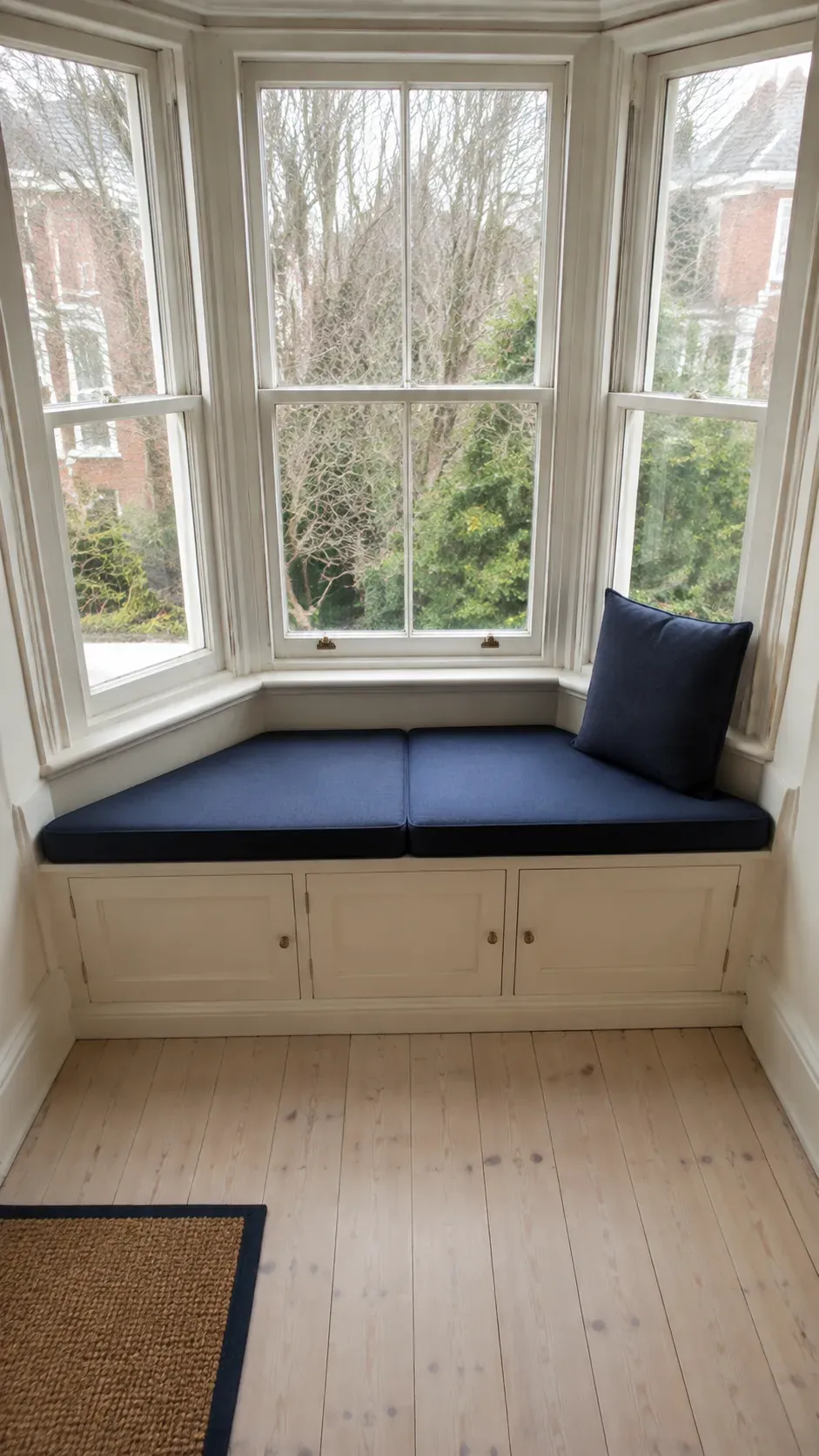
A bay bench with a straight front
A straight front across a bay creates a generous seat without making every cabinet follow the window angles. Measure the narrowest usable depth after allowing for cushions and projecting sills. A cardboard footprint on the floor will show how much walking space the new front edge consumes. For a DIY bay window bench, make that footprint before buying sheet material.
Separate modules for seasonal flexibility
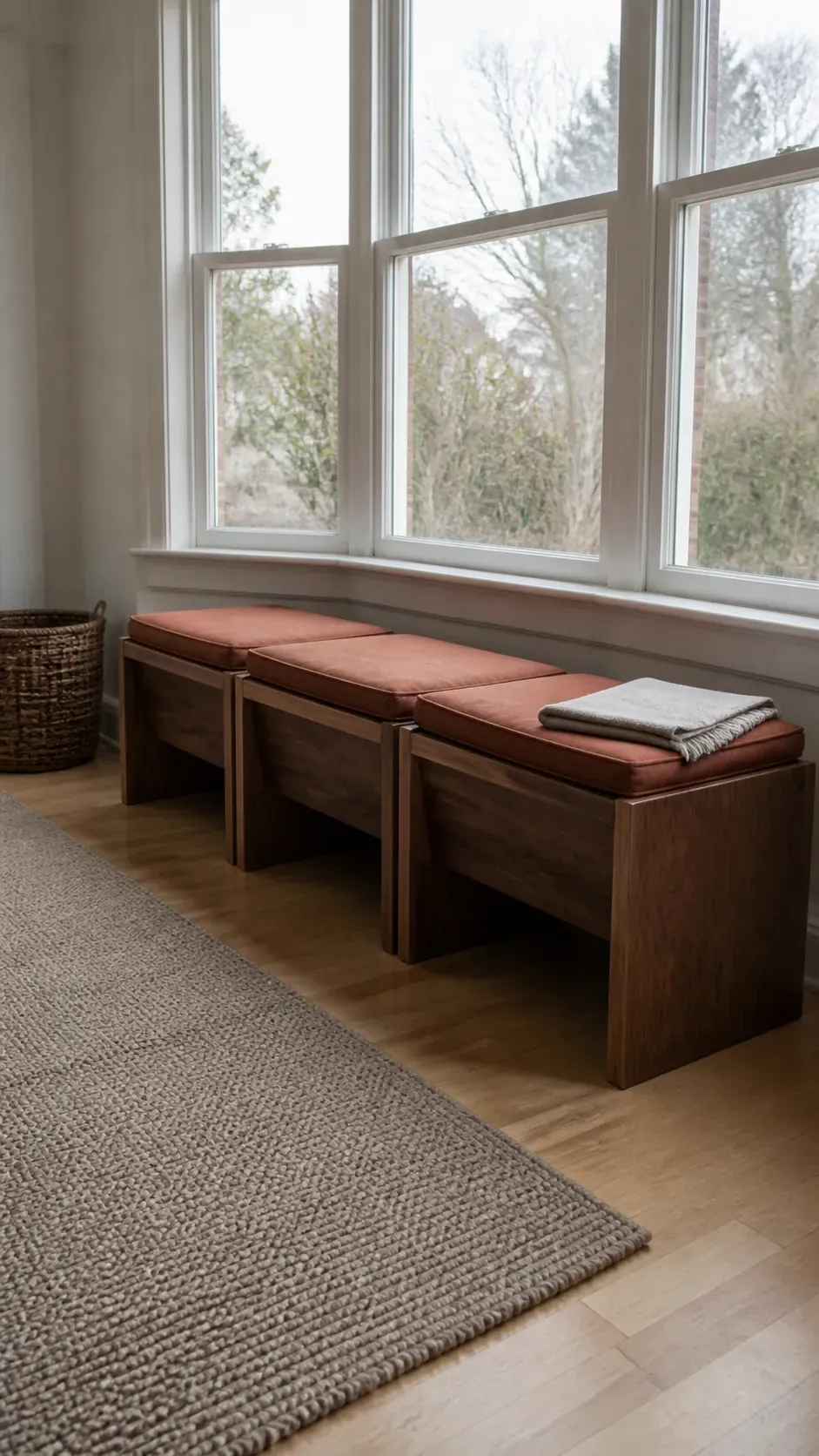
Three independent seating modules can make a bay easier to rearrange when that corner becomes the Christmas tree spot. Each module needs its own stable, load bearing construction; a continuous cushion cannot make unsupported boxes safe. Check that the largest piece will pass through the doorway before you commission it.
A shallow perch beside a busy walkway
Small window seat ideas work better when circulation comes first. A shallow perch suits putting on shoes or pausing with a cup, although it will not feel like a lounging sofa. Tape the intended front edge onto the floor and walk past it carrying a laundry basket.
A deep reading seat with back support
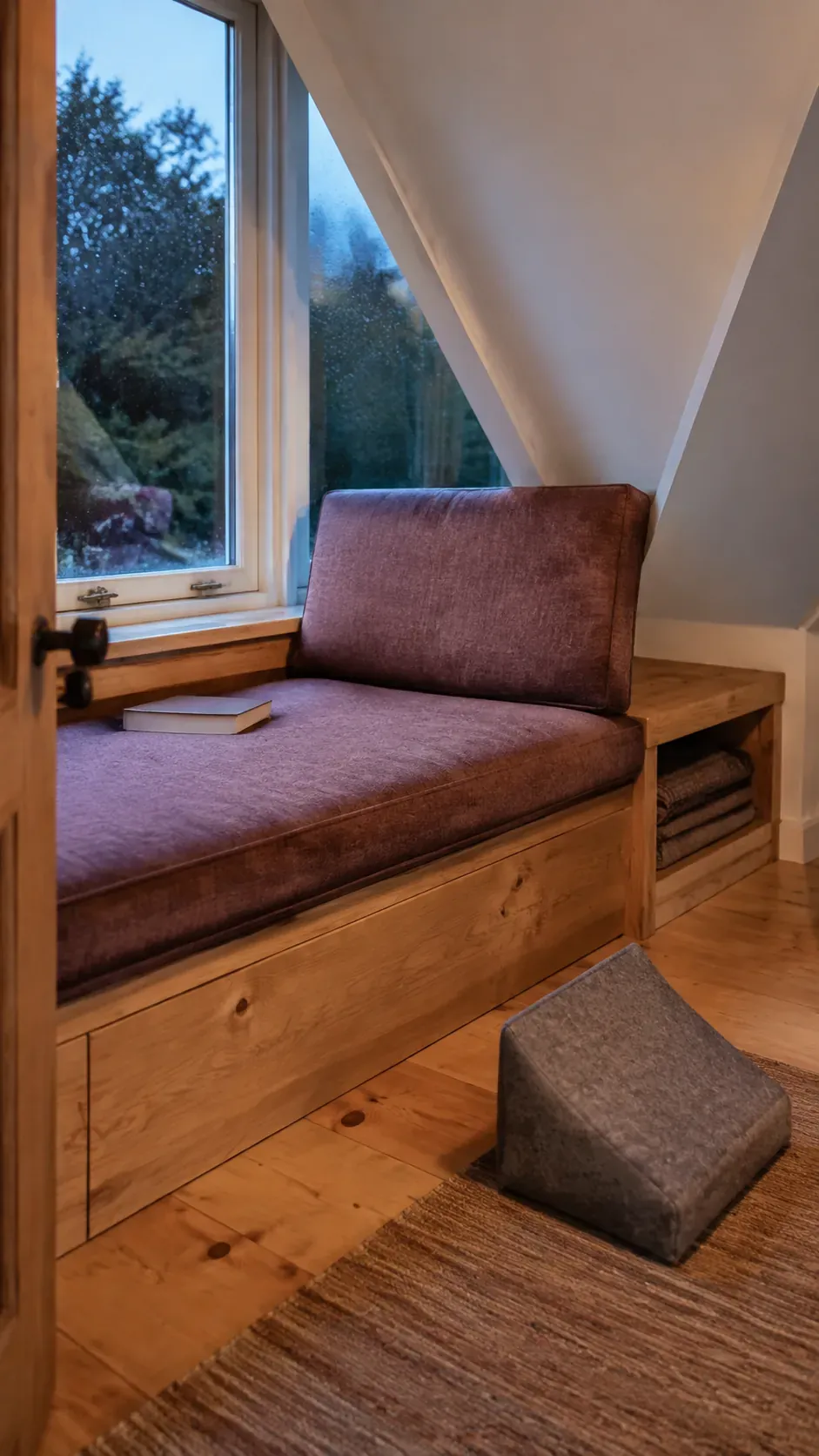
Depth is useful only when your back can reach something comfortable. Bring a firm cushion forward from the glass so the window sill does not press into your shoulders. Test the arrangement with the book and posture you actually use, including somewhere to rest your feet.
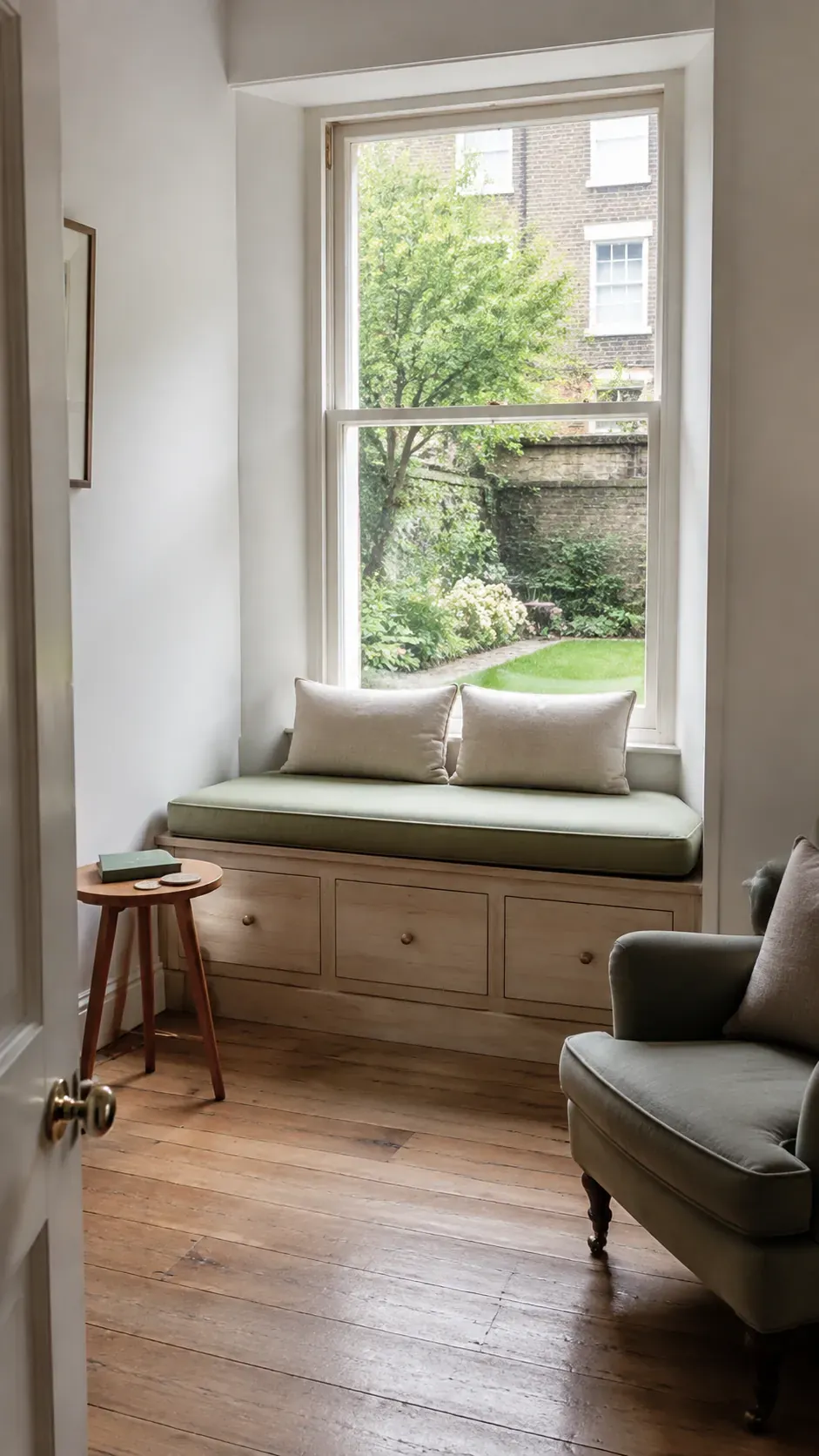
Pullout drawers for everyday clutter
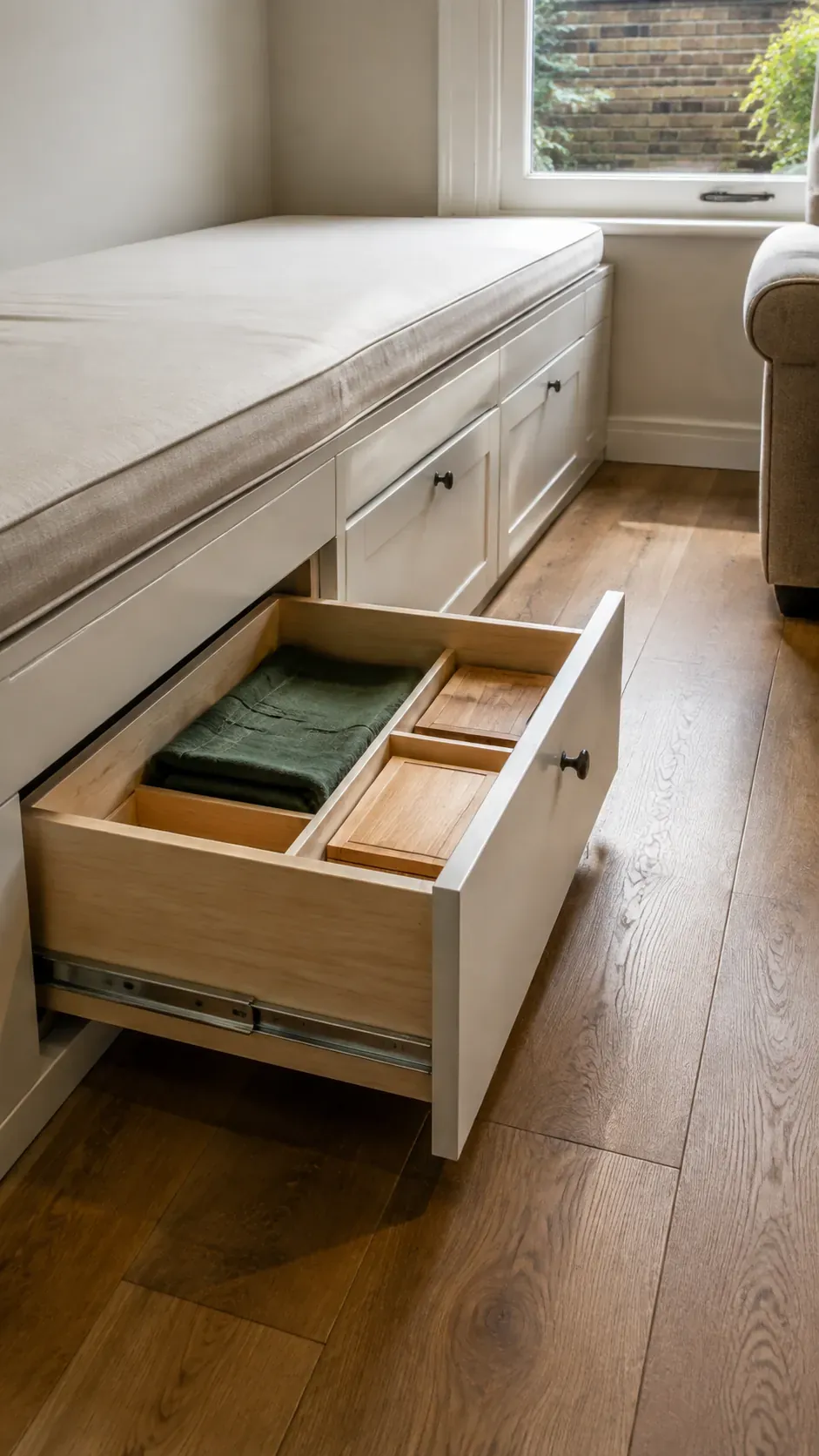
Drawers allow access to stored items while someone is still sitting on the bench. Allow clear floor space for the full drawer travel and check that nearby furniture will not trap a handle. Divide the contents by use so a deep drawer does not become a second junk cupboard. Choose runners rated for the intended drawer contents as well as the drawer itself.
Open baskets for quick cleanup
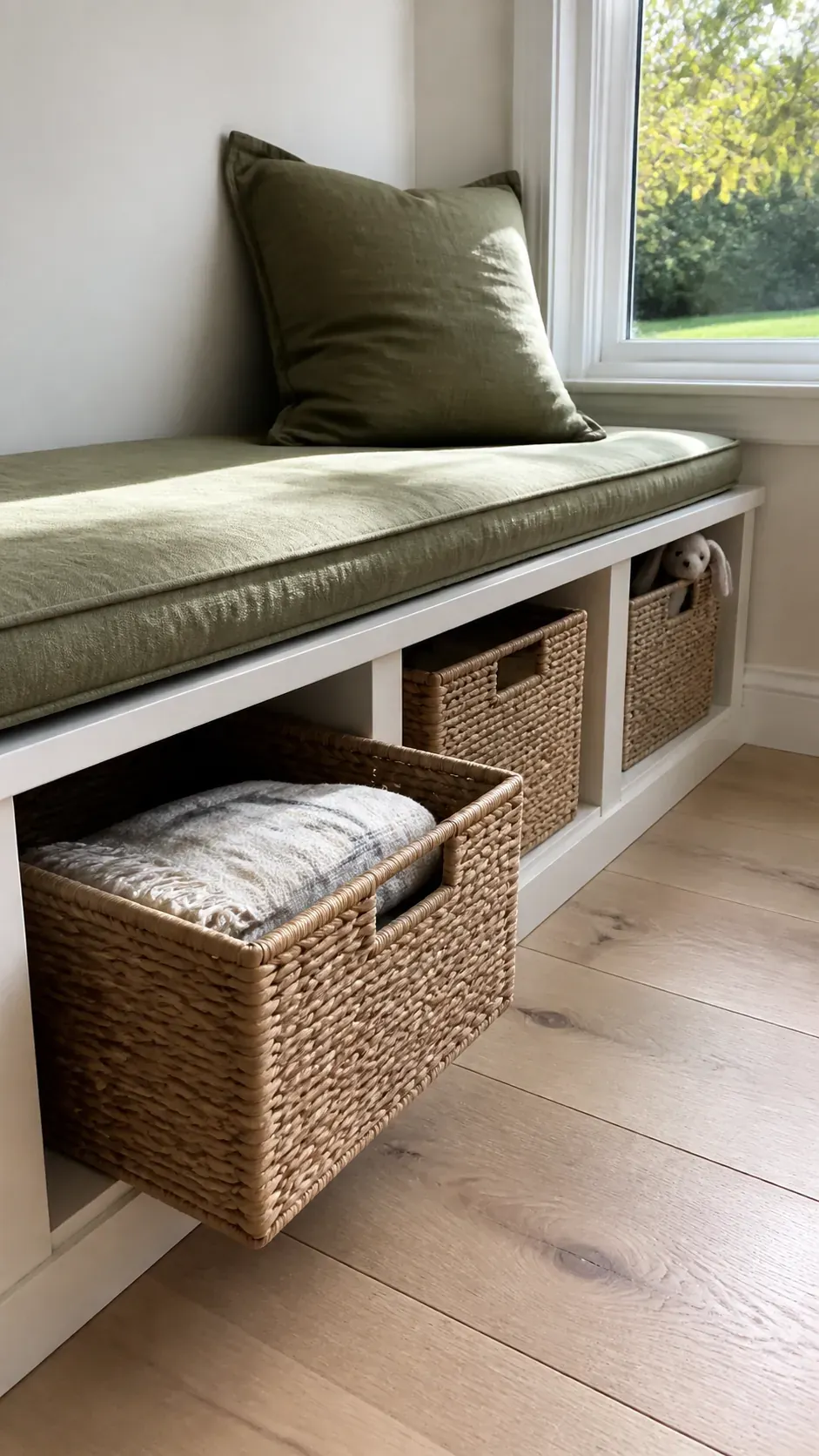
Basket storage works well when the contents need to disappear in seconds. Measure the opening with the basket handles included, and choose a weave that will not snag blankets. Leave a little lifting room above each basket instead of fitting it tightly beneath the seat.
A lift lid for occasional storage
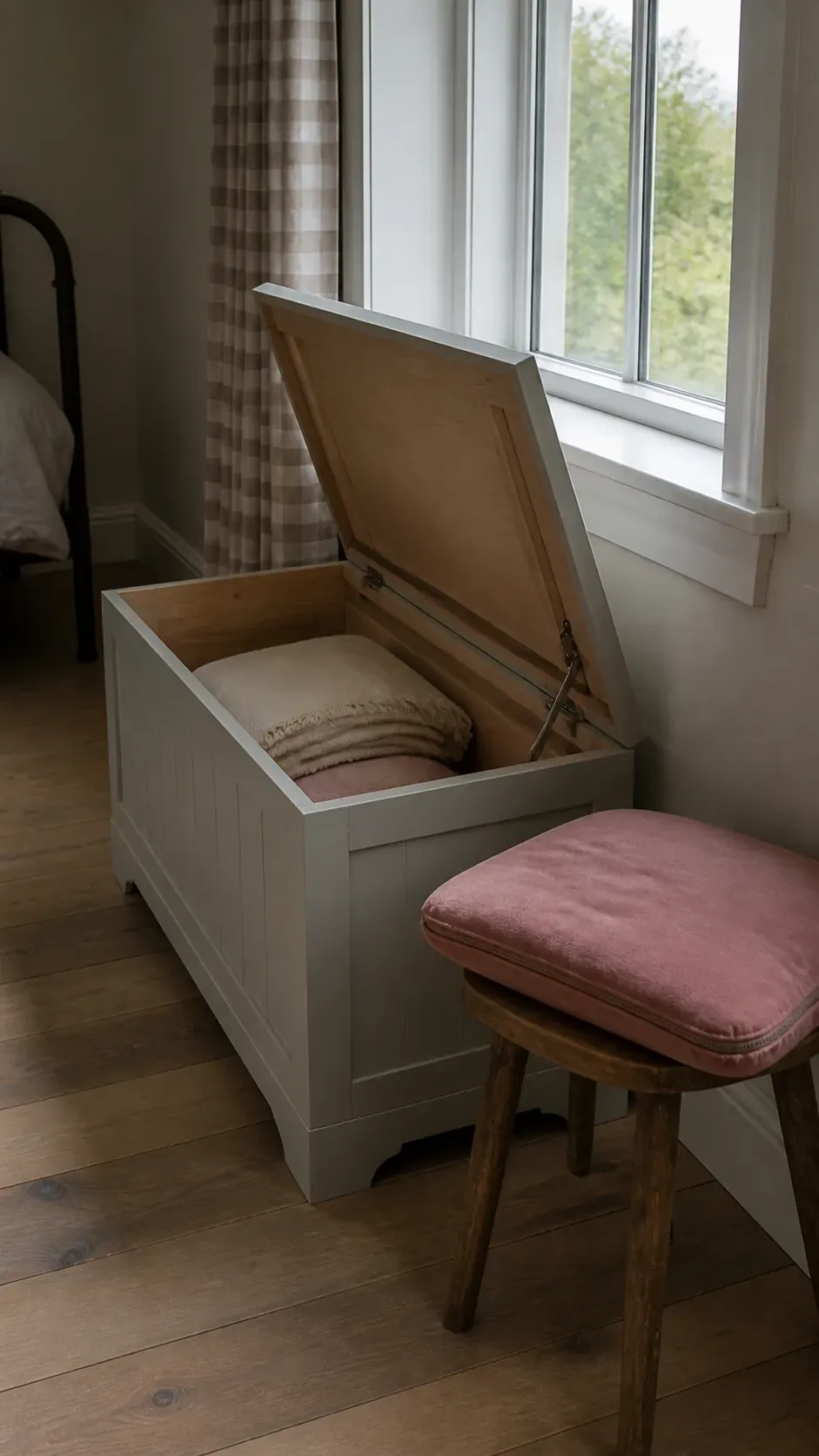
A lift lid makes sense for things you retrieve infrequently, such as spare throws. Use suitable lid supports and hinges designed for the weight of the top, and account for finger trapping risks. Position the hinge so neither the sill nor the cushion prevents the lid from opening.
A bedroom bench that catches tomorrow’s clothes
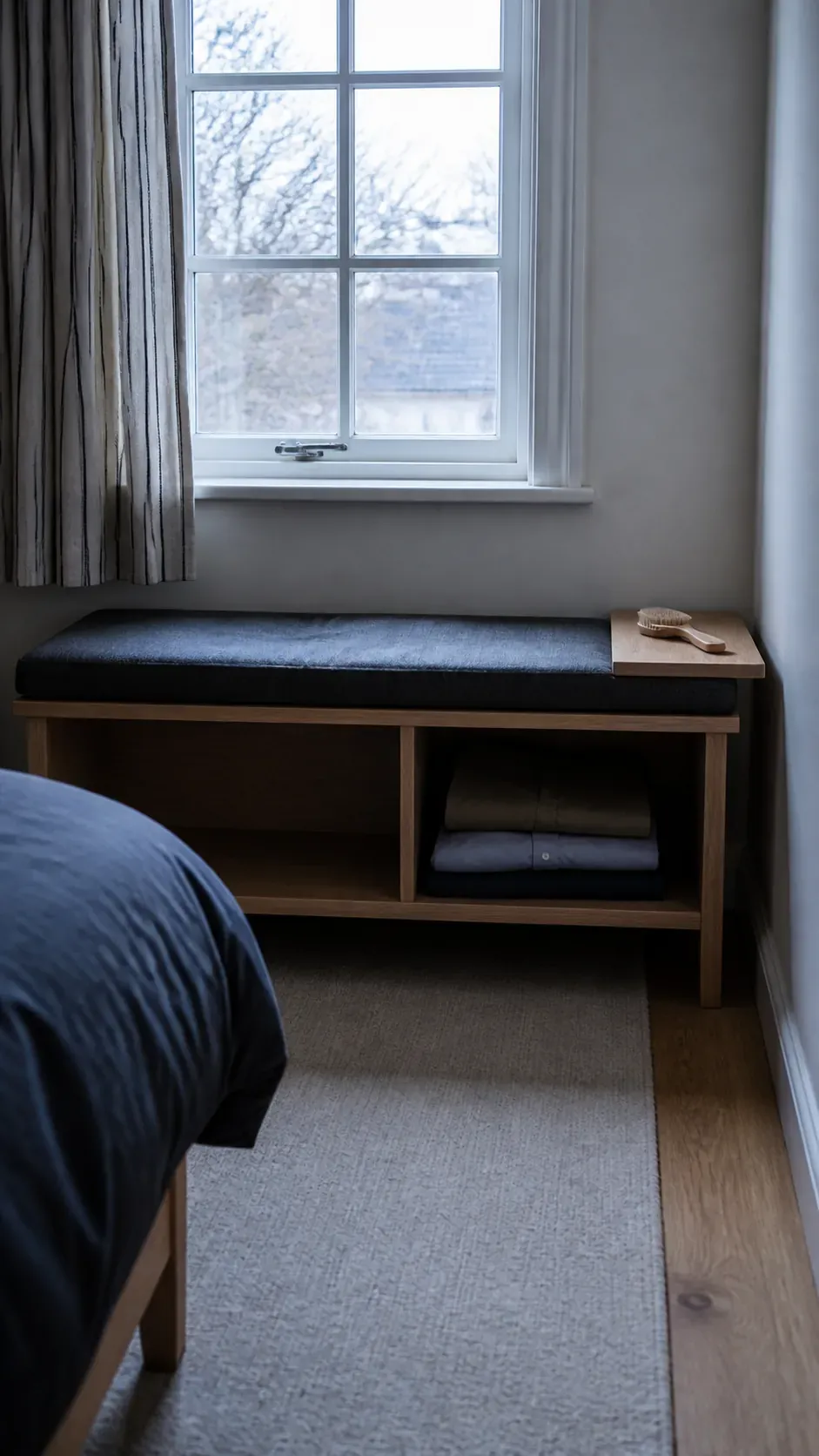
A window seat in the bedroom can replace the chair that collects half worn clothes. Keep one end as a clear sitting place and use a divided compartment for garments waiting to be worn again. A shallow basket can separate accessories from the larger folded pieces. If the seat sits near the bed, preserve the route used when changing sheets.
A kitchen seat matched to the table
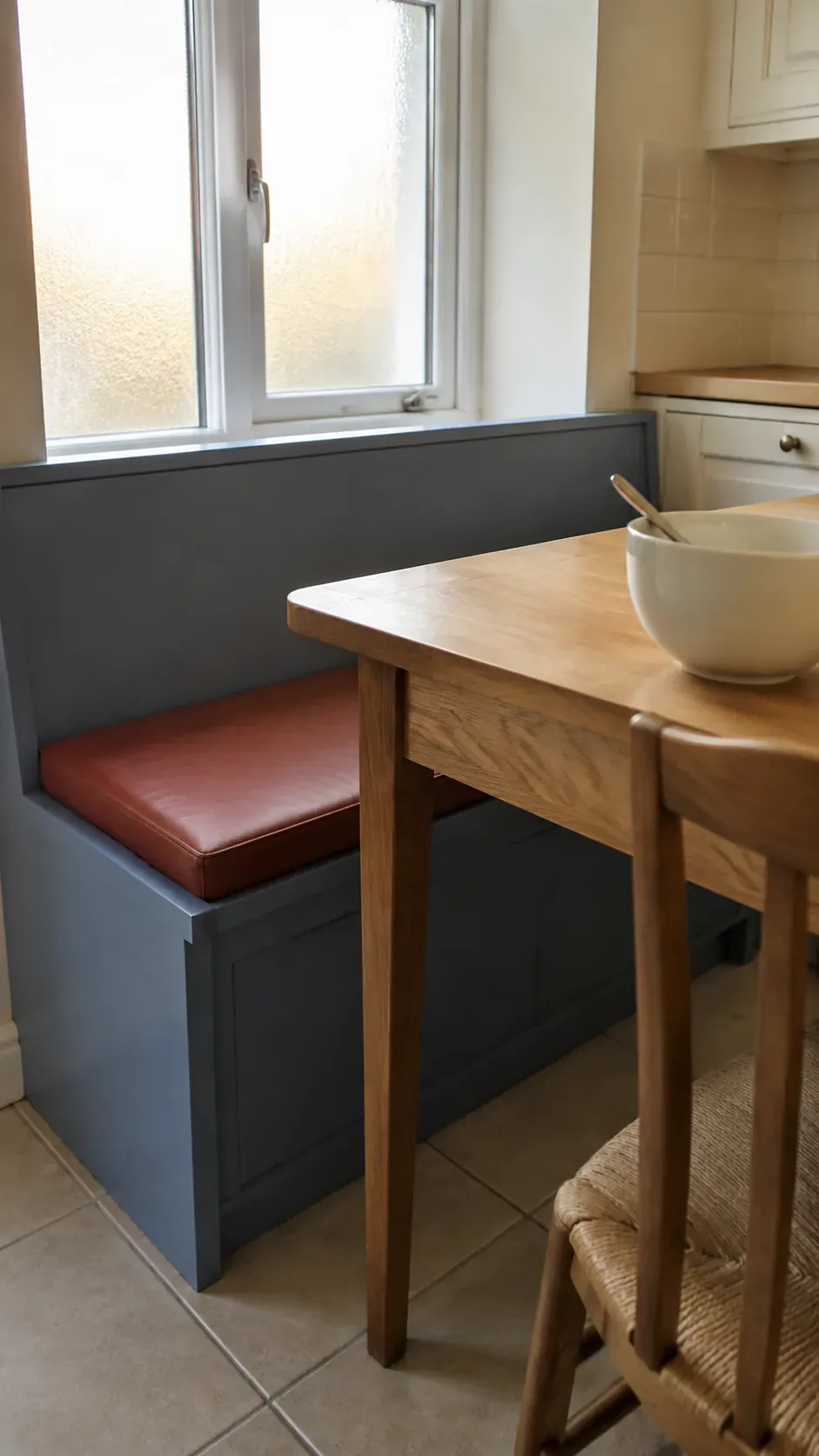
A kitchen window bench needs to work with the table as carefully as it works with the window. Compare the finished cushion height with comfortable dining chairs you already own. Table legs and aprons must leave room to slide in without twisting knees around an obstacle.
An L shaped corner for conversation
A corner window seat can connect two views while giving a room a natural gathering spot. Plan the corner cushion separately so it can be removed for cleaning. Avoid filling the meeting point with pillows that steal the only comfortable place to turn your legs.
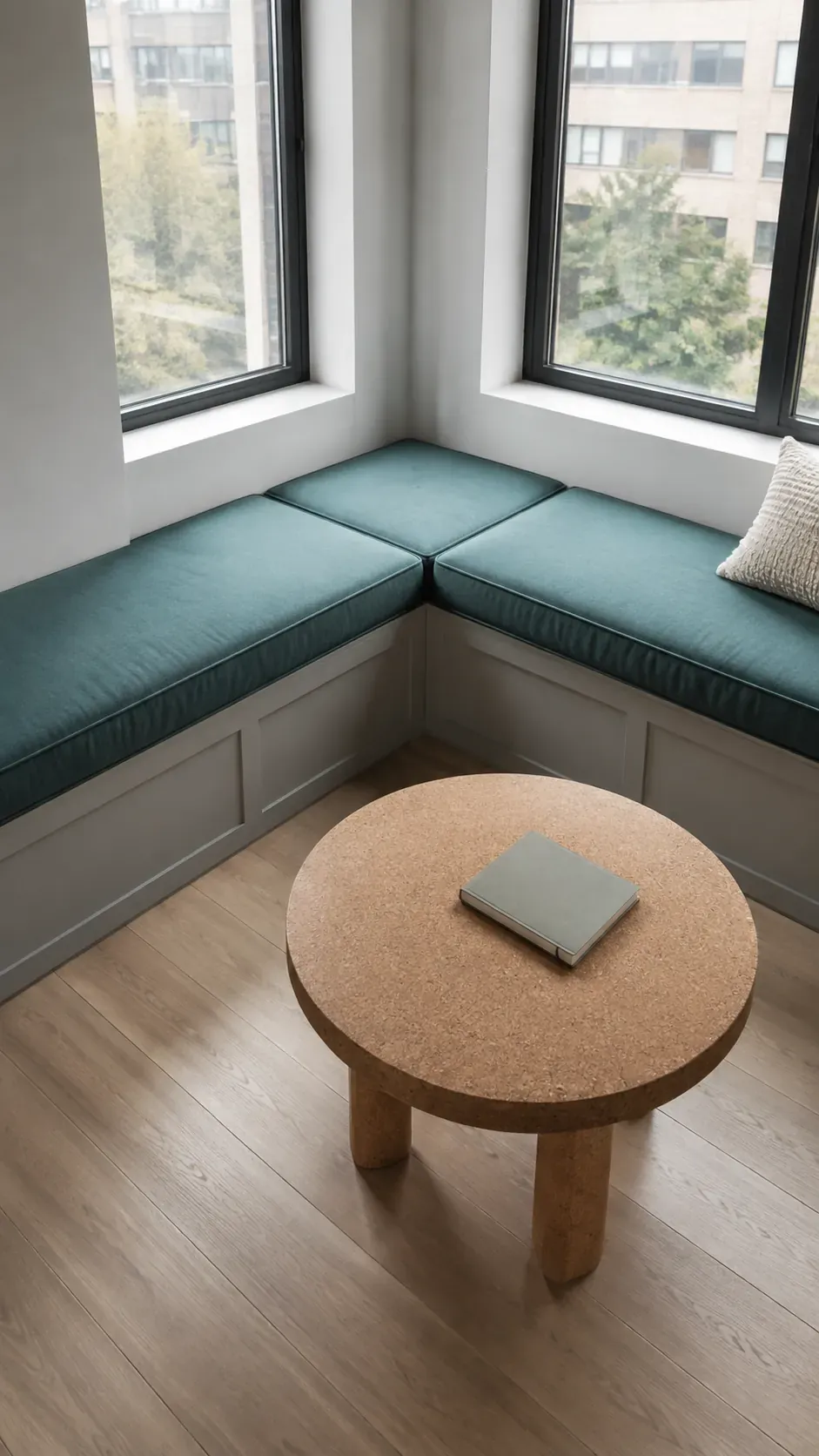
A long seat divided into personal zones
A long window seat becomes more useful when each person has a clear place to settle. Separate cushions create natural boundaries and are easier to lift than one enormous pad. Put shared drinks on a stable side surface so the middle sitter does not become the room’s unofficial tray holder.
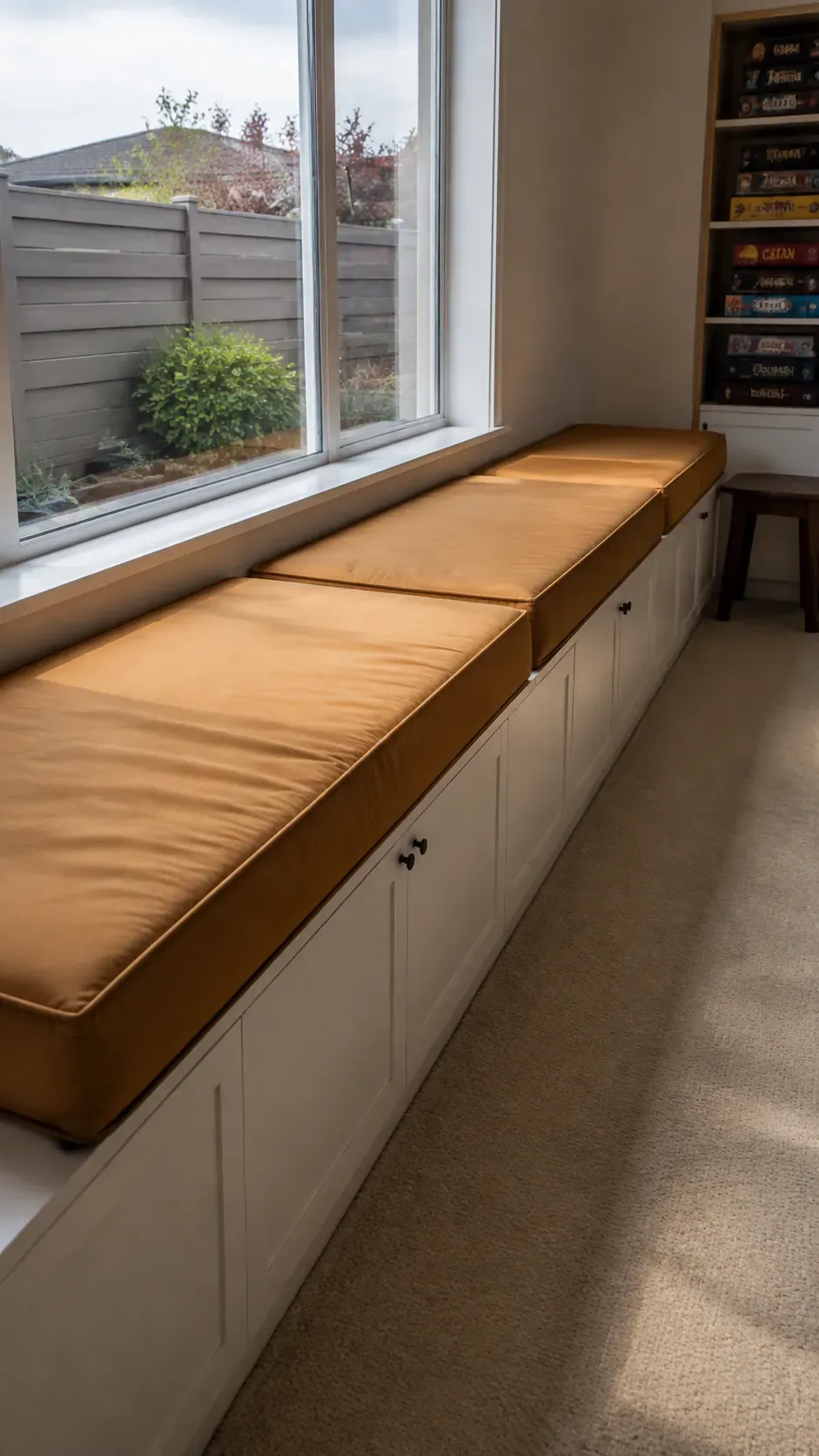
A narrow end shelf for a drink
An integrated end shelf can do more for comfort than another decorative pillow. Keep it within an easy reach and slightly apart from upholstery that could be damaged by spills. Round an exposed corner where it meets the route through the room.
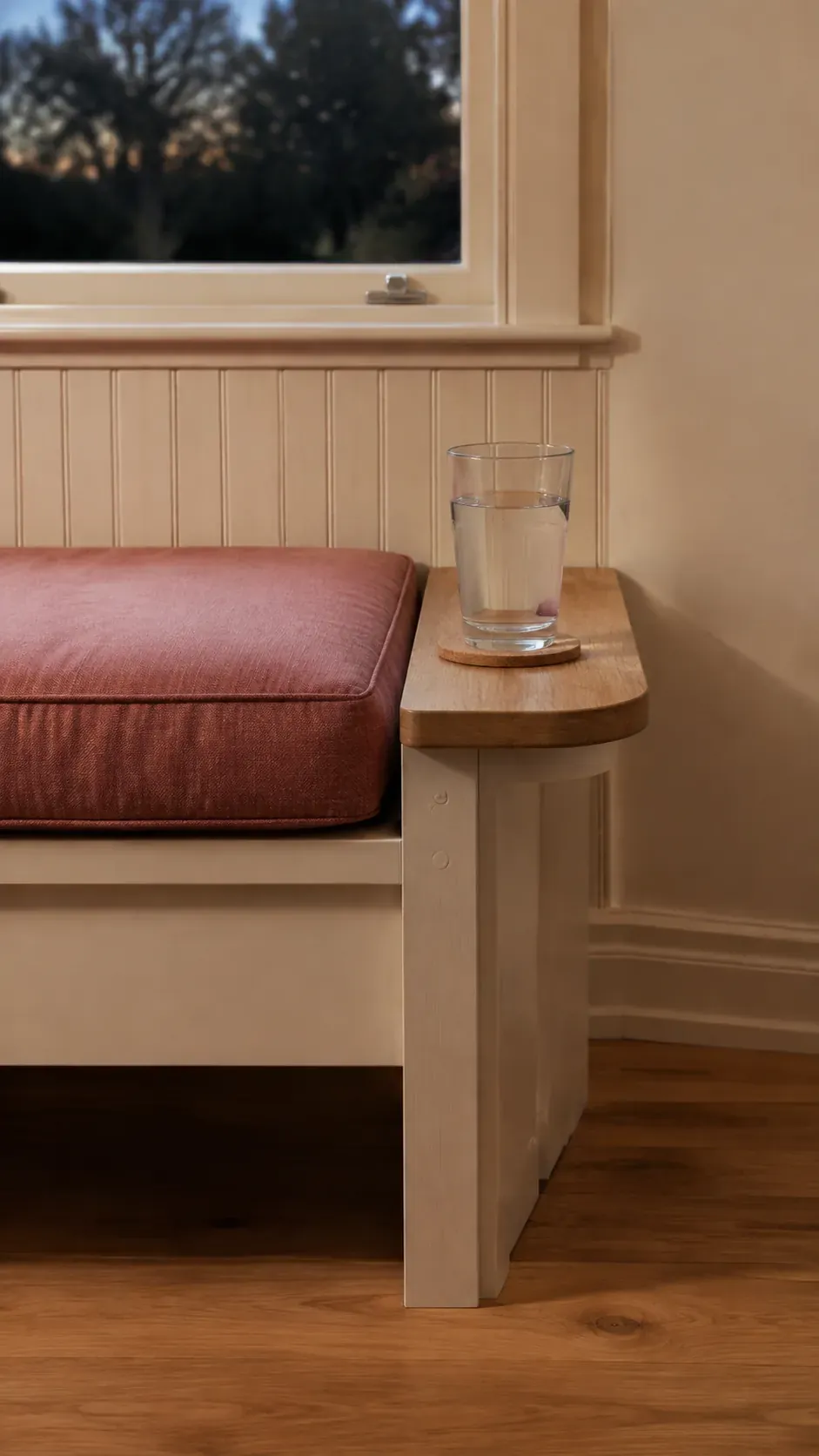
A washable cushion for family use
A removable cover makes frequent use much less precious. Check the actual washing instructions before buying fabric, because a zip does not guarantee machine washability. Order enough material for a spare cover if the seat will be out of service while laundry dries.
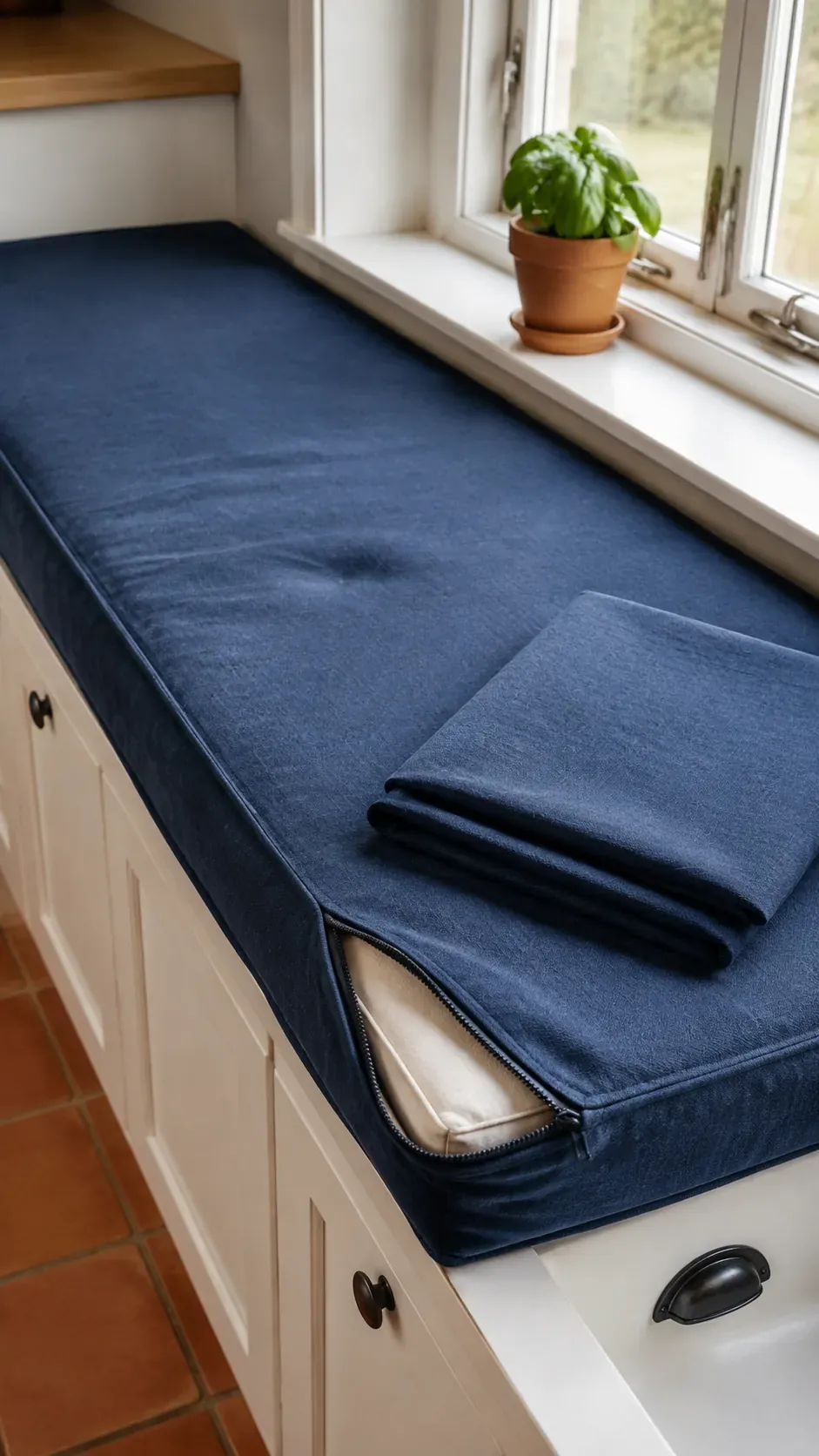
A tailored cushion for an awkward bay
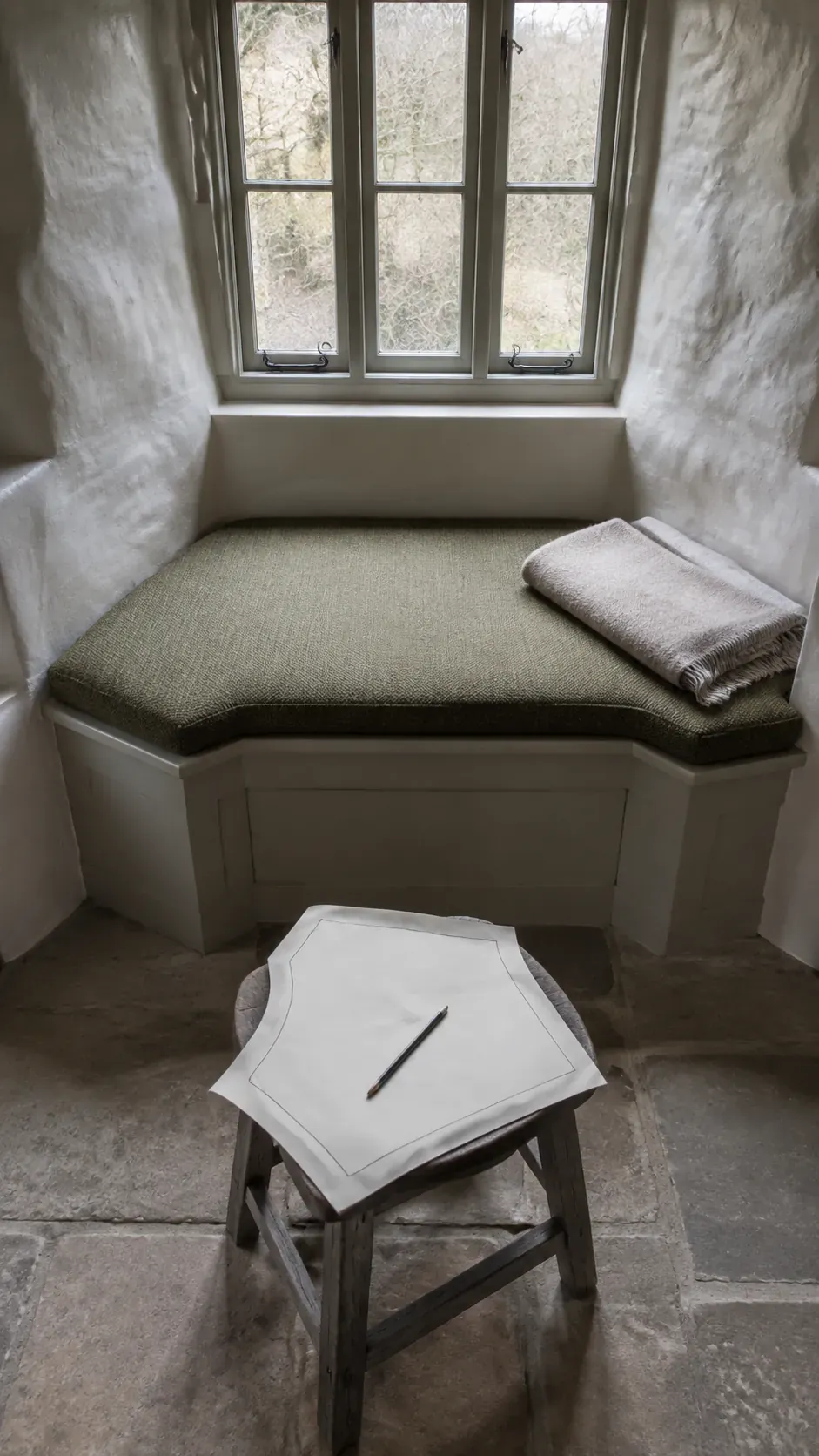
A paper template helps a cushion maker account for angles that are rarely perfectly symmetrical. Mark the front edge, top face, and any sill projections clearly. Confirm whether the maker wants your finished dimensions or a template with fitting clearance already included.
A slim bolster instead of a pillow pile
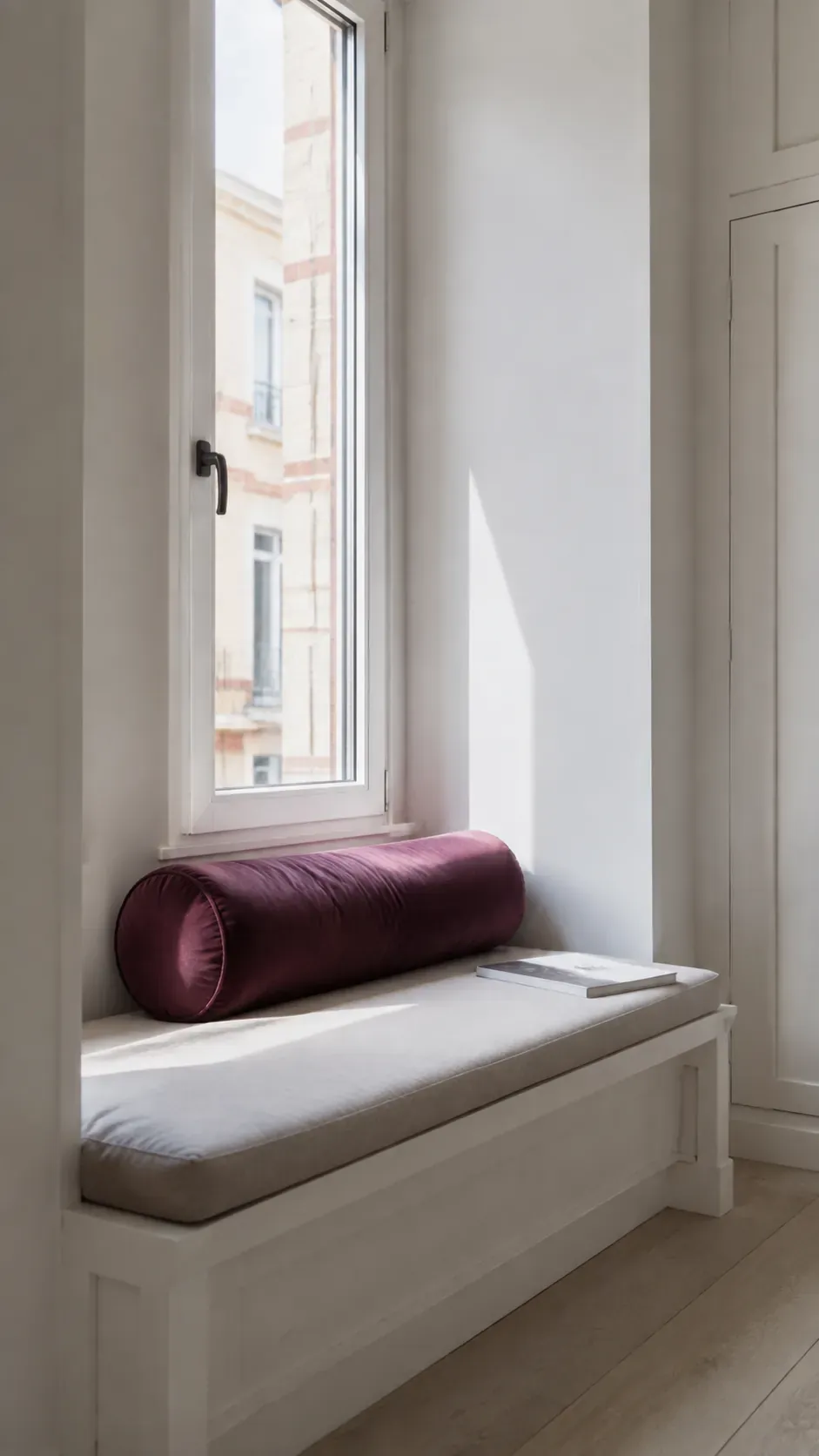
One bolster can support the lower back while leaving most of the bench available for sitting. Try its position before choosing its diameter, especially on a shallow seat. A loose bolster also moves easily when someone wants to stretch out along the window. A cover with ties can help a slippery bolster stay where your back needs it.
An upholstered back below the sill
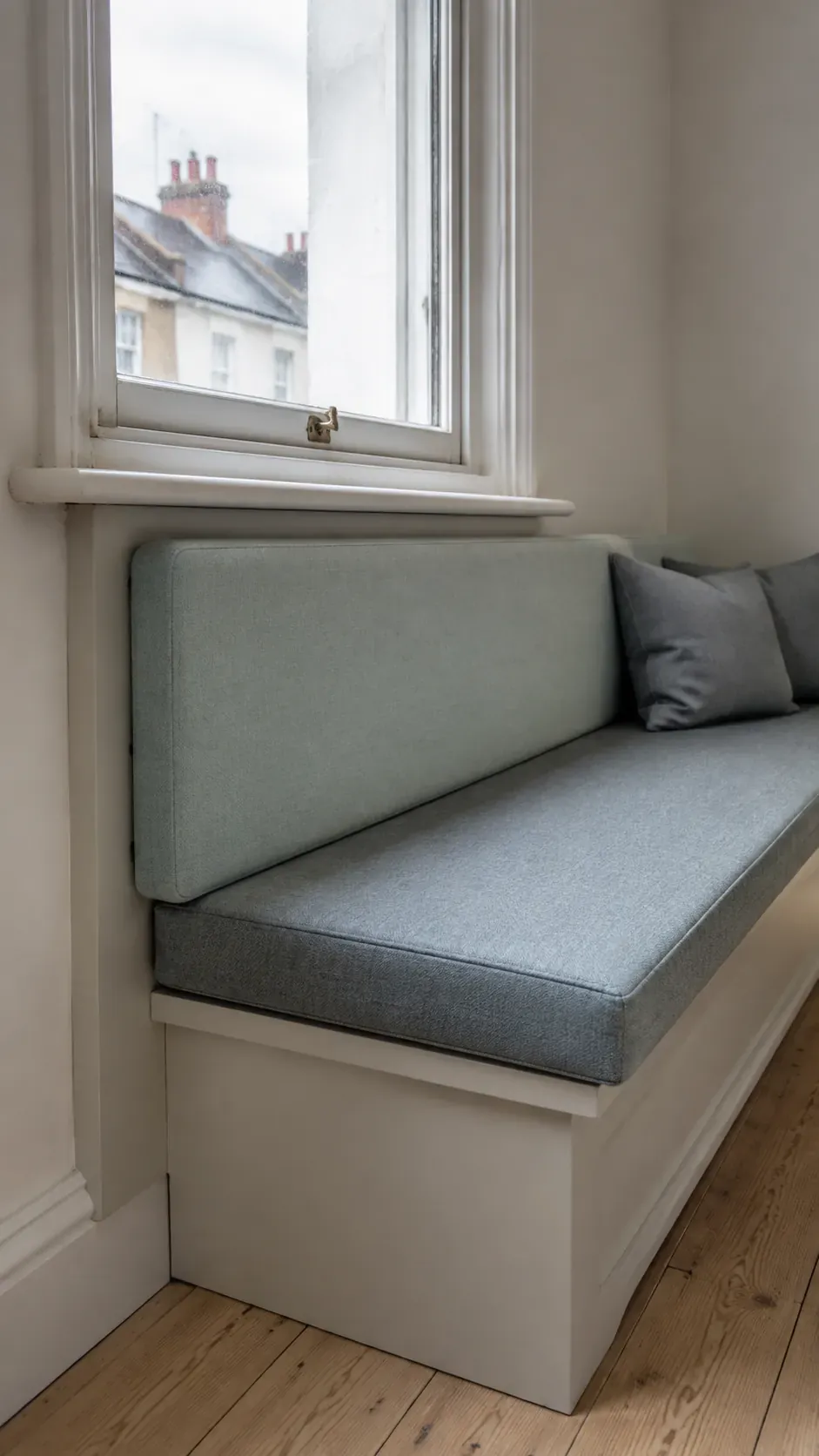
A padded back panel can protect shoulders from a projecting sill when there is enough room for the panel and seat depth together. Keep it clear of moving window parts and areas that collect condensation. A removable panel offers access for inspection and cleaning behind it.
A bench set forward from the glass
A small gap behind a bench can make window cleaning much less awkward. It also gives curtains space to hang without bunching beneath the cushion. Keep the gap intentional and accessible, rather than creating a narrow trap that only catches dust and dropped toys.
A curtain arrangement that clears the seat
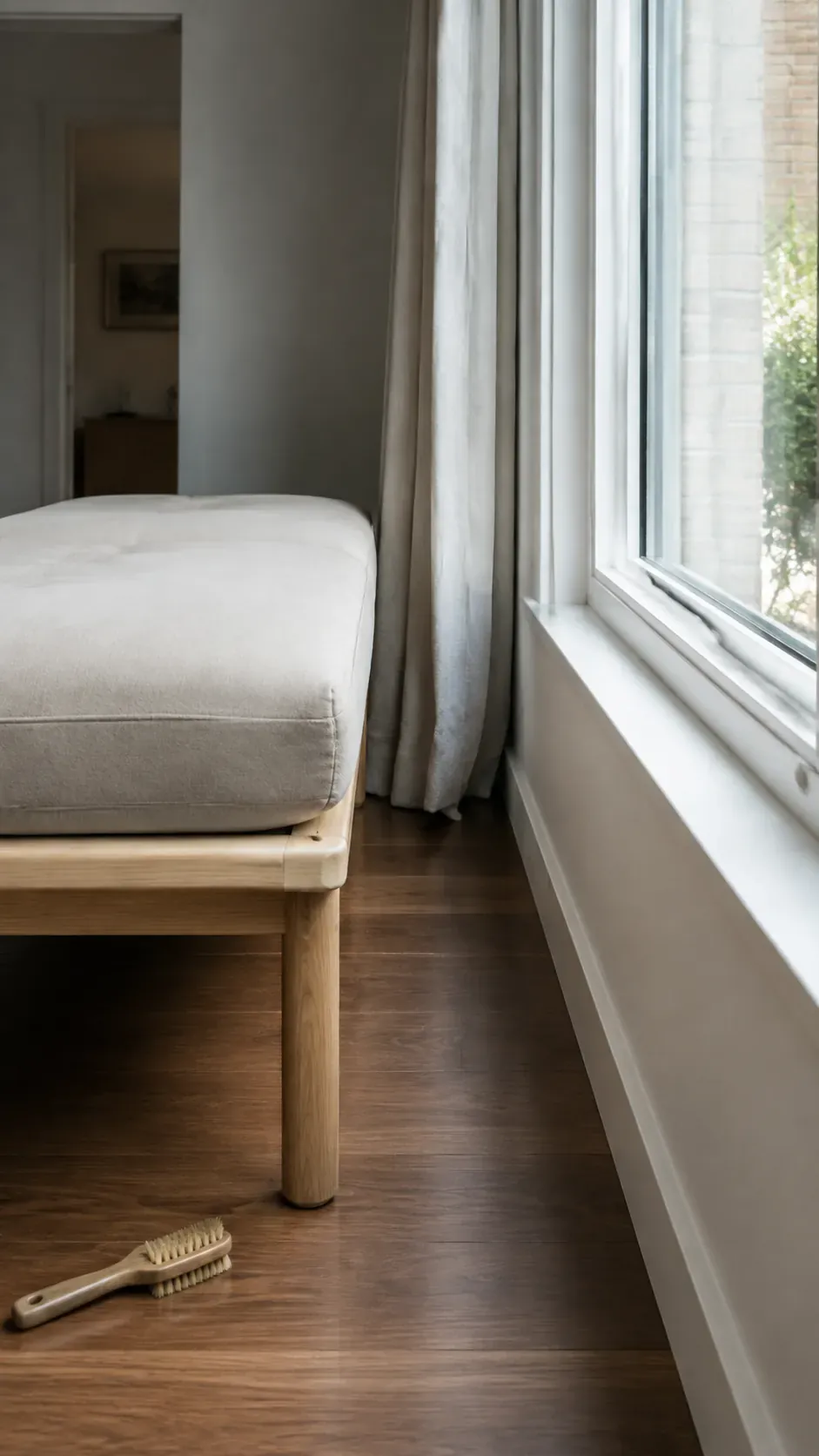
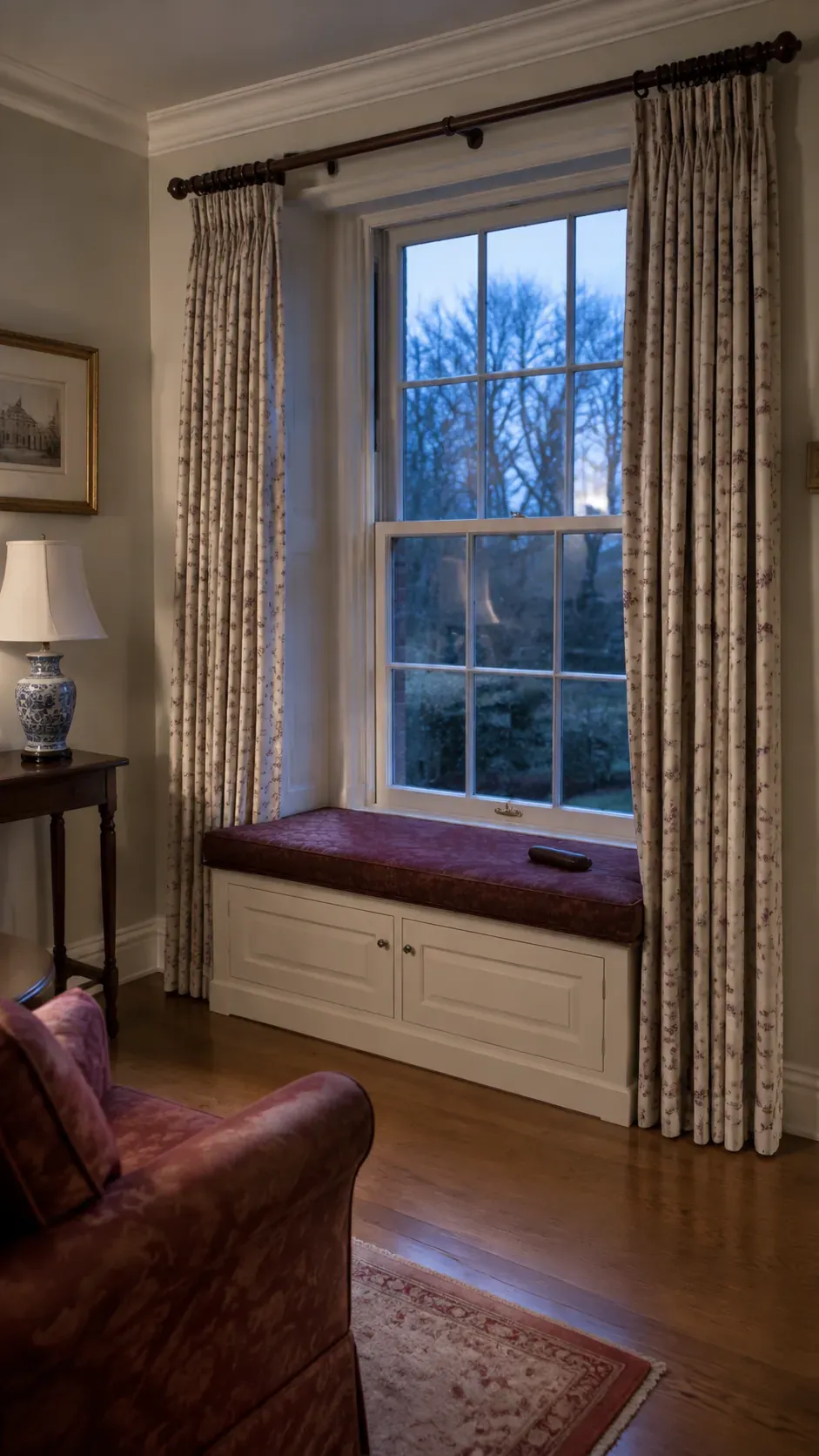
Curtains that land on the cushion can be irritating every time you sit down. Mount and size the treatment so fabric can stack outside the main seating area where practical. Check the arrangement with the curtains fully closed as well as neatly drawn back. Window seat ideas for living rooms need to work at night, when privacy changes the fabric position.
A shade for afternoon glare
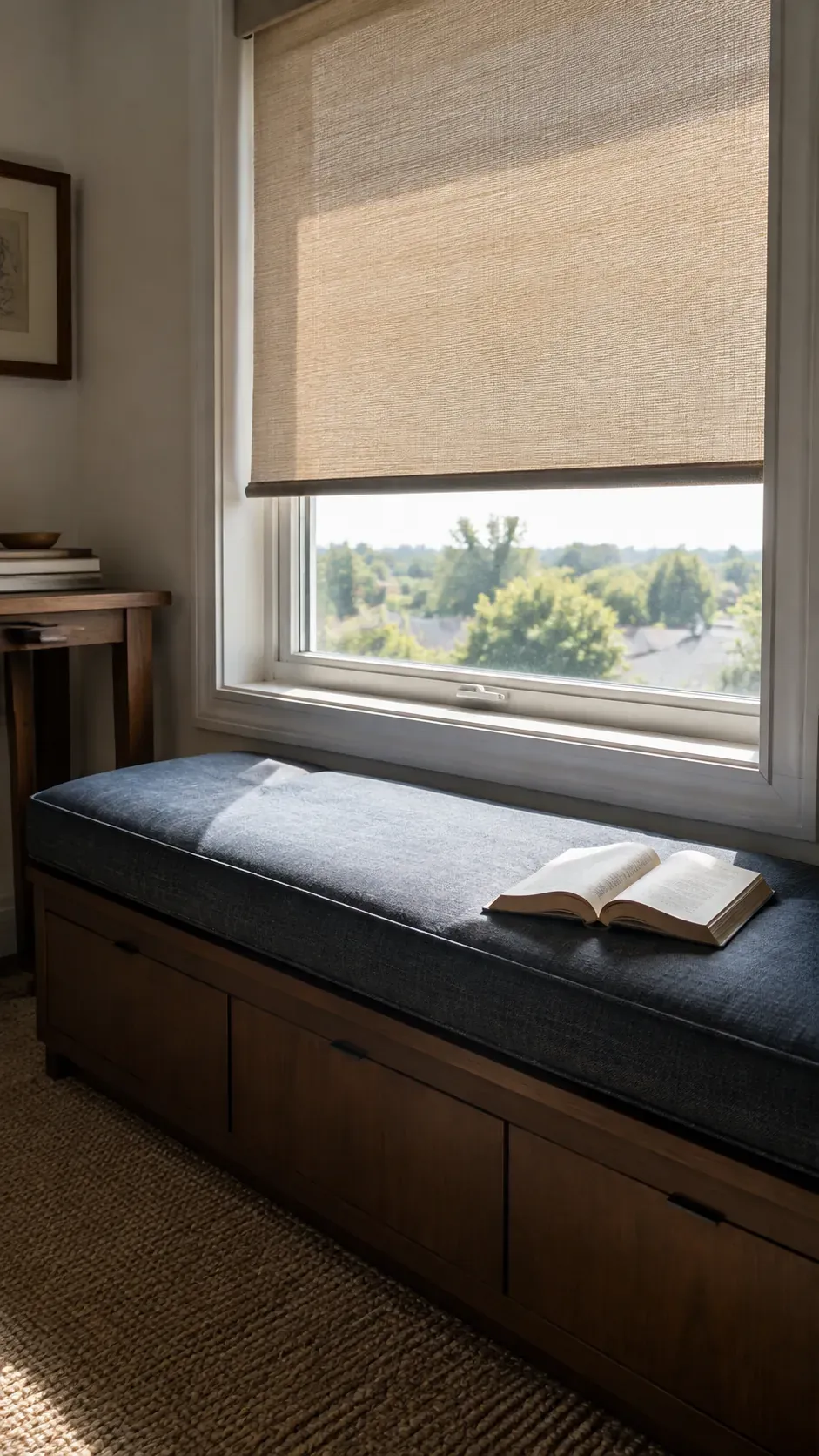
A sunny view is less inviting when it shines directly into your eyes. An adjustable shade lets you preserve some daylight while reducing glare at reading height. Use window coverings that meet current local safety requirements, especially where children can climb onto the seat.
A dark timber bench with a light cushion
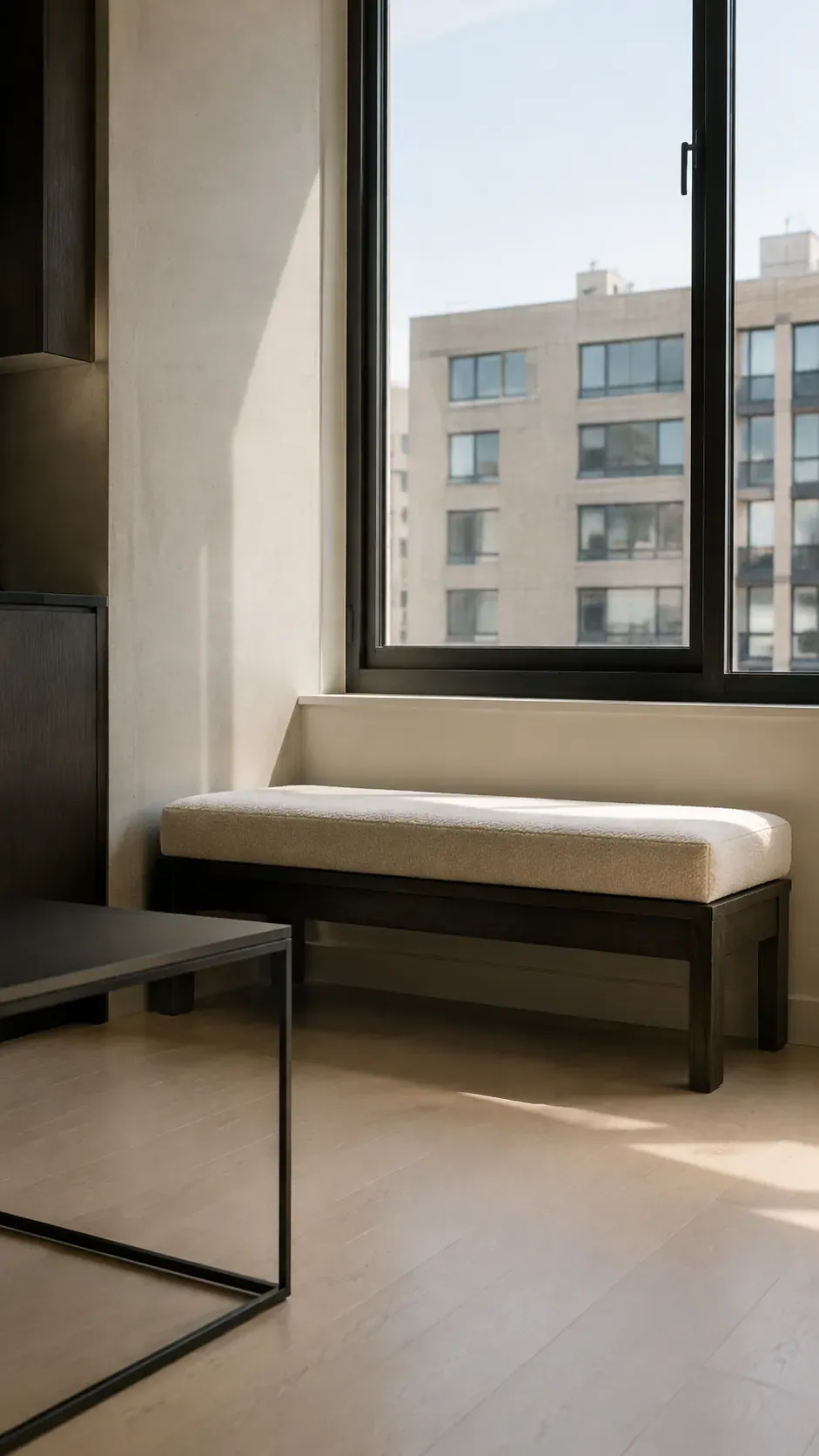
Dark timber gives a simple modern window seat a clear outline against pale walls. A light removable cushion keeps the seating surface legible without requiring decorative objects everywhere. Check a finish sample in the actual window light, which can reveal red or purple undertones.
A painted base that matches the trim
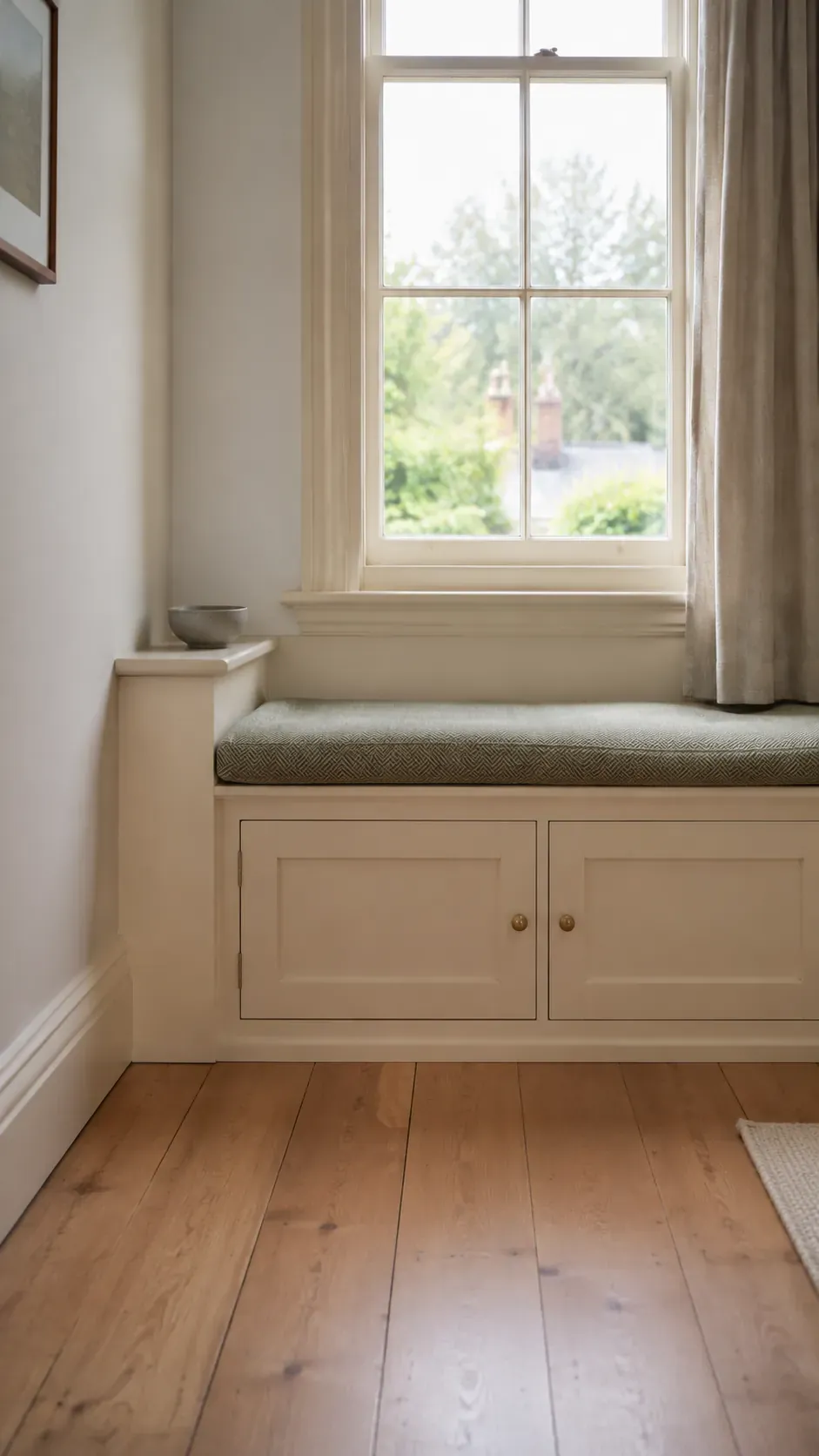
Matching the base to existing trim makes new joinery feel connected to the room. Compare paint sheen as well as color, because a glossy seat front can stand out beside matte skirting. Use a finish suited to furniture wear and allow its specified curing time before regular use.
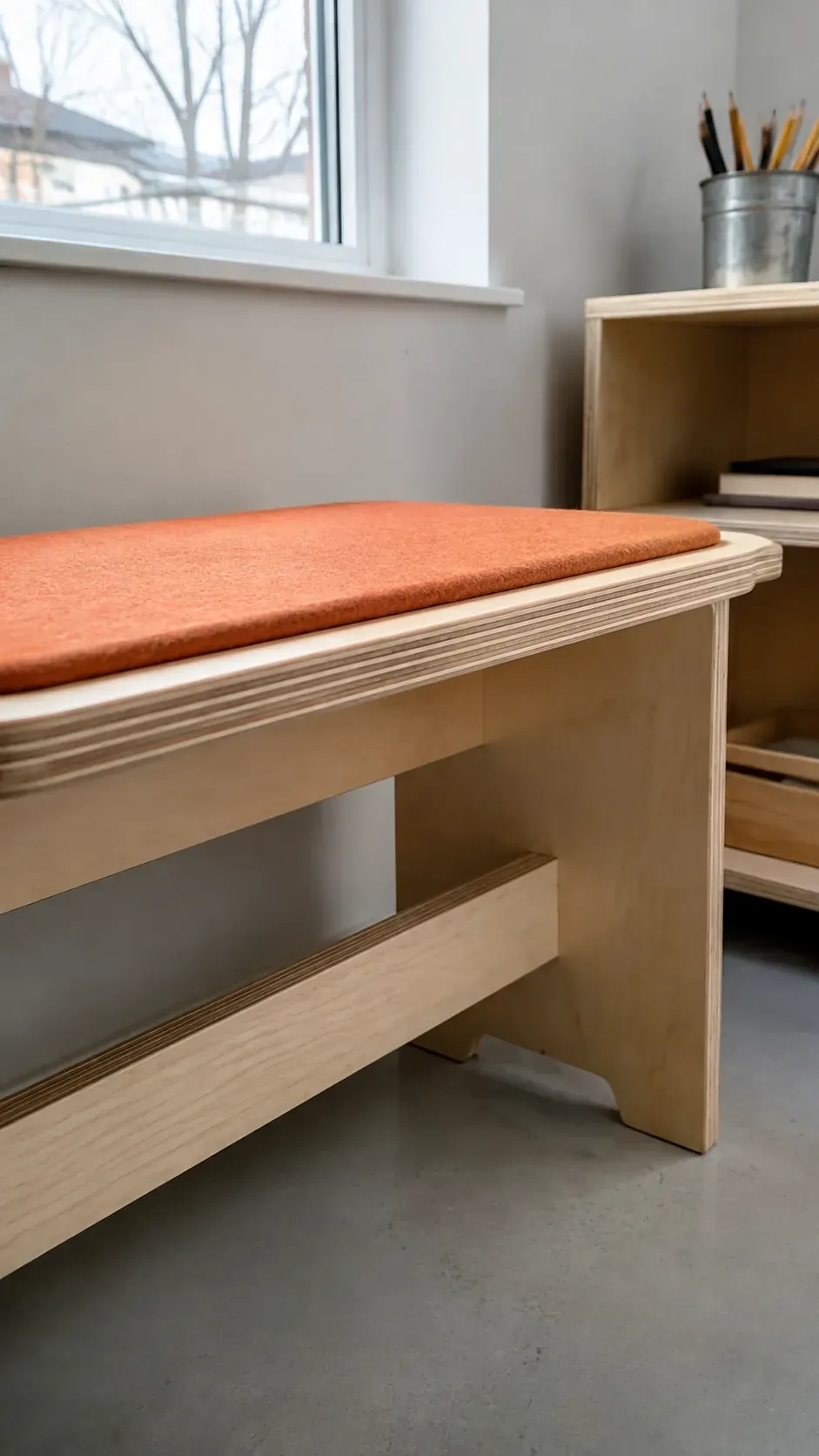
A natural plywood seat with exposed edges
Visible plywood edges can make a modest bench feel deliberate when they are cleanly finished. Choose material and construction appropriate for seating loads, with edges sanded smooth wherever legs or hands touch. Keep the surrounding styling restrained so the layered edge remains the detail worth noticing.
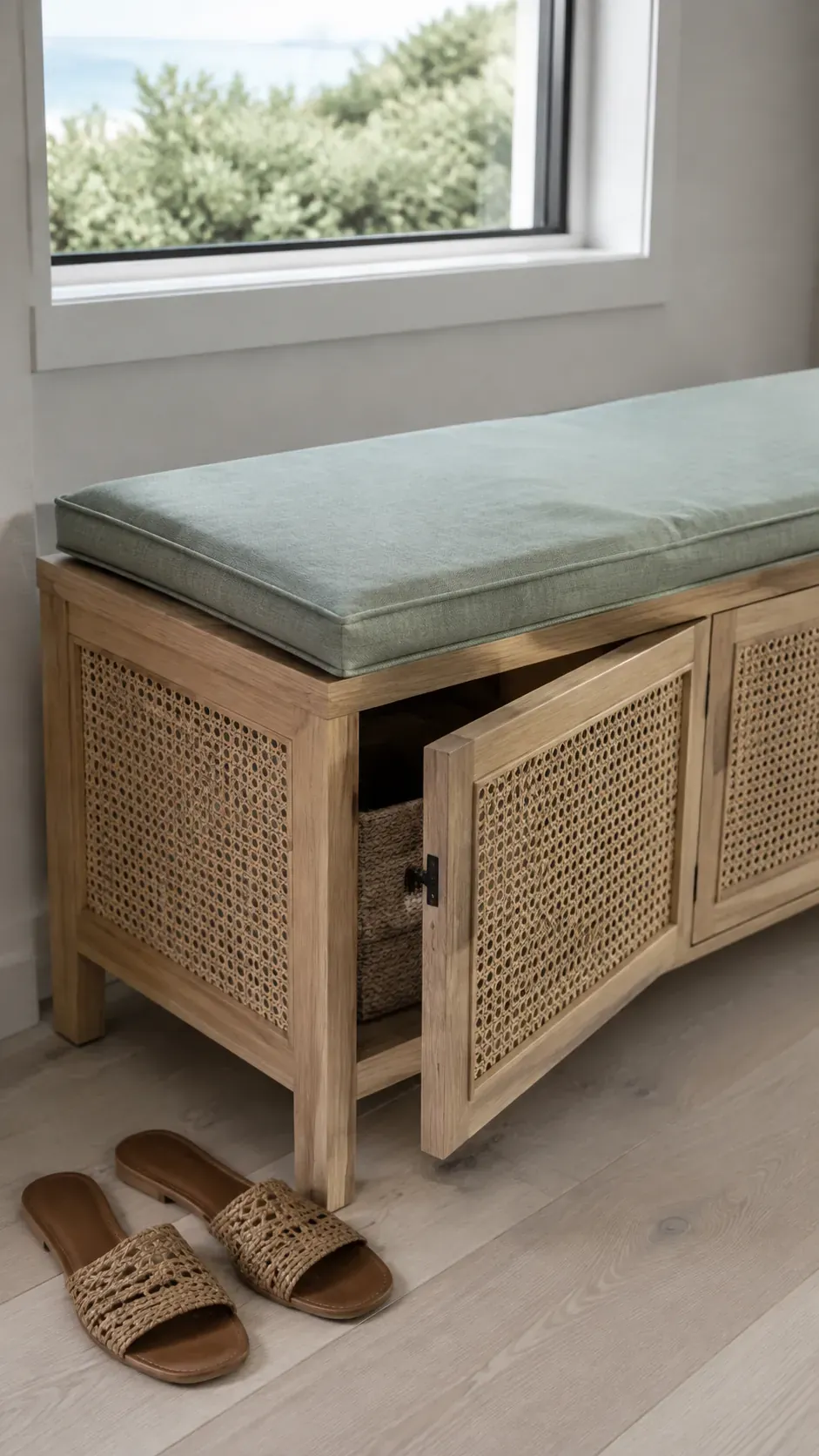
A cane front that hides loose items
Cane panels offer a lighter visual texture than a wall of solid doors. Use them on cabinet fronts rather than assuming decorative cane can support a sitter. Check how transparent the weave looks against stored objects before deciding whether a backing is needed.
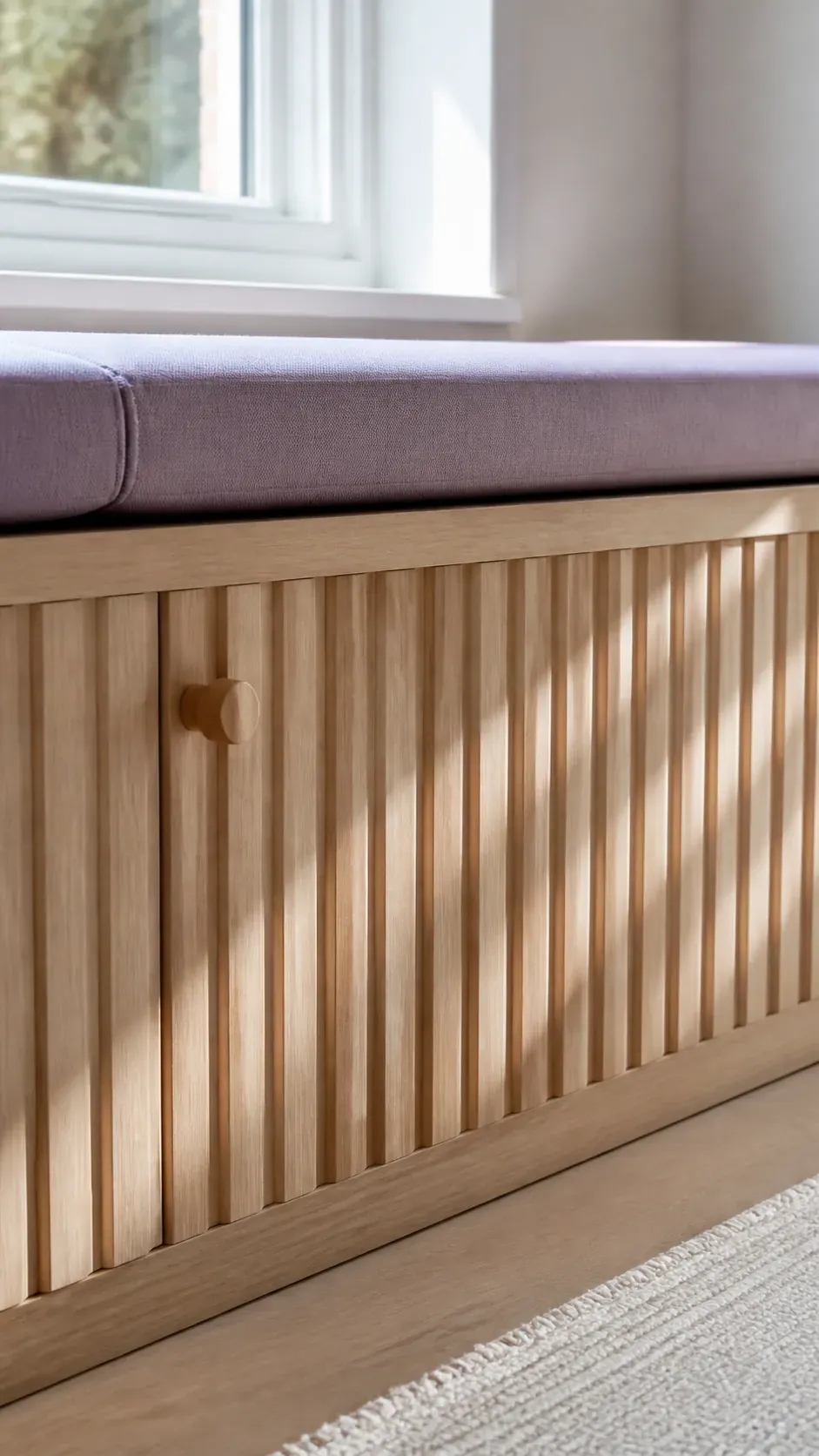
A fluted front with simple hardware
A fluted bench front adds shadow and depth without adding objects to the seat. Wider grooves are generally easier to wipe than tightly packed channels. Keep handles simple and test their position against calves, especially where people sit with feet tucked back.
A toe recess for easier sitting
A recessed base gives feet a place to tuck when the bench is used upright. The difference matters at dining tables and shoe changing spots where shins sit close to the front. Ask the builder to include the recess in the structural design rather than cutting into a completed support.
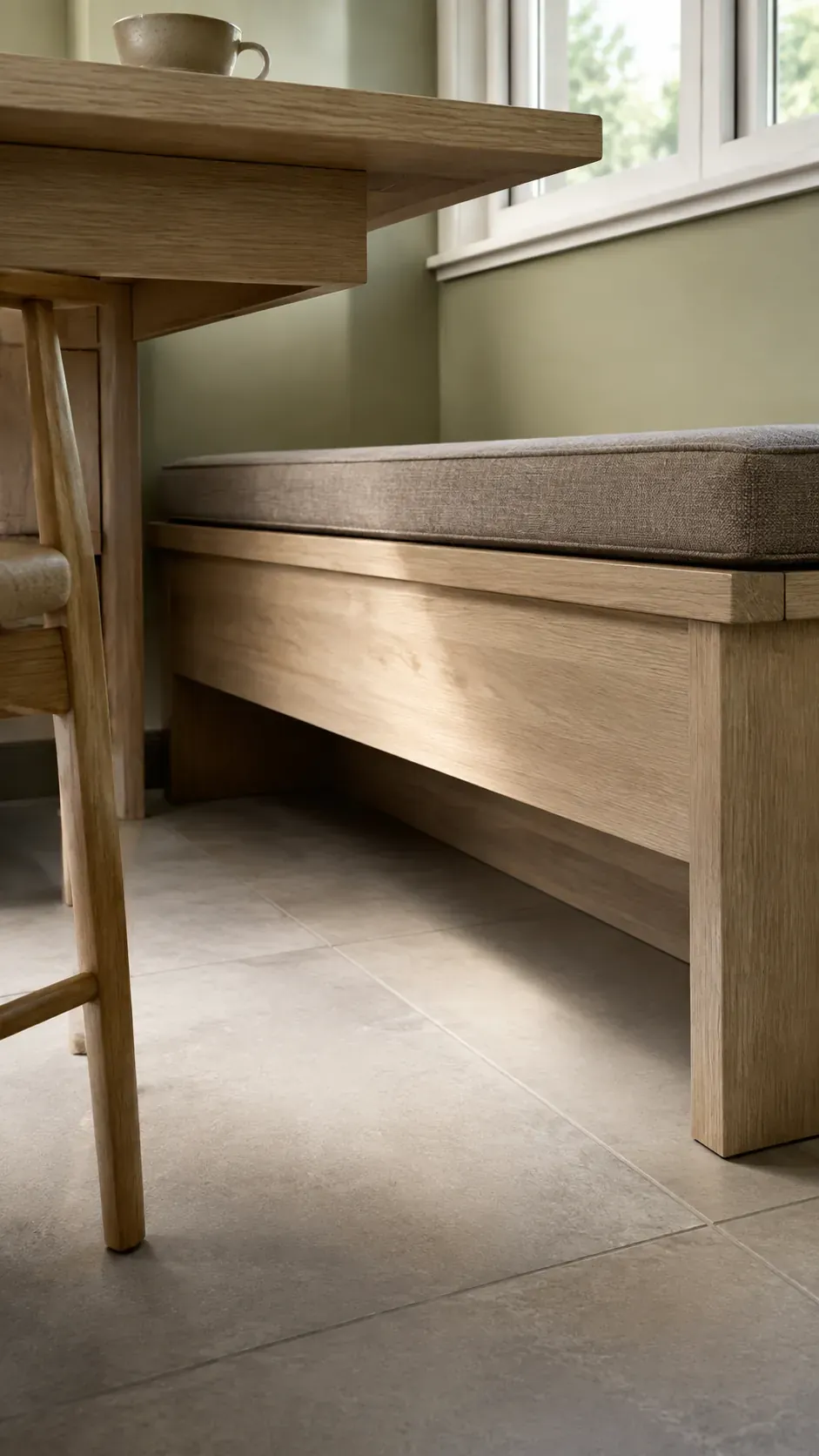
A raised bench that leaves the floor visible
Legs can make a bench feel lighter in a compact room by letting the flooring continue beneath it. Choose a stable frame with supports that will not wobble under everyday movement. Measure your cleaning tool’s height before assuming the gap will make vacuuming easier.
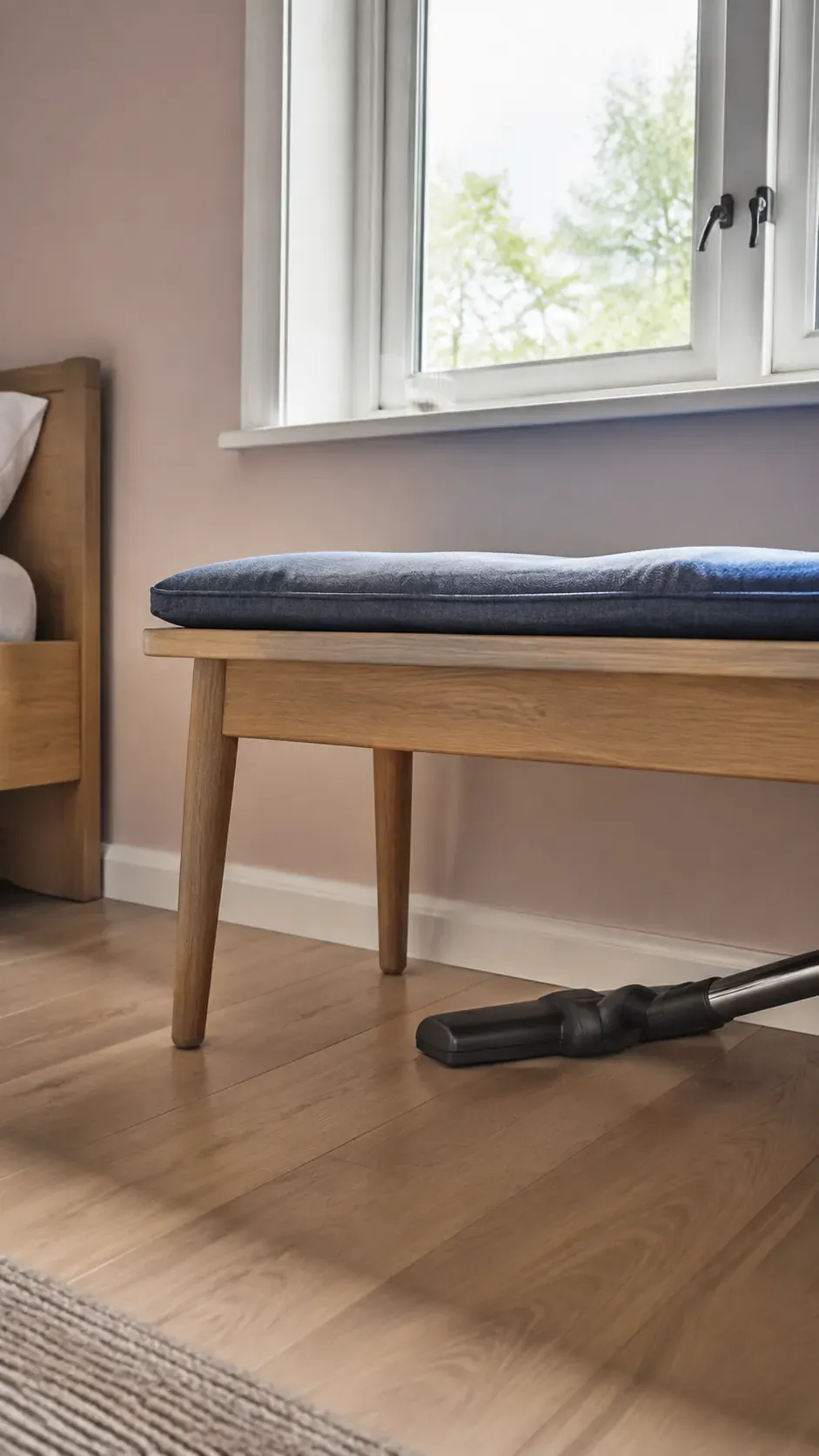
A removable seat pad for a sunny room
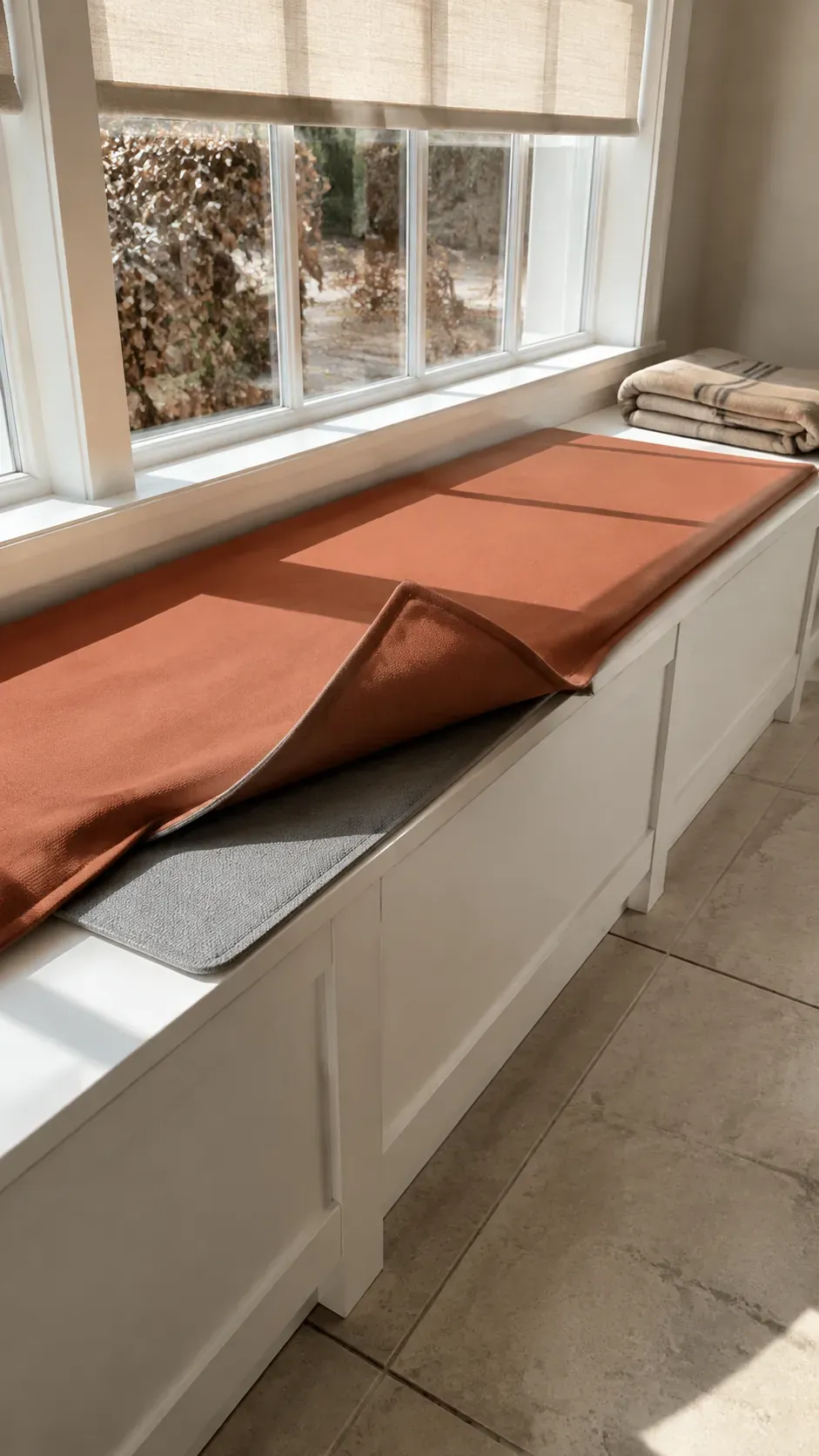
A loose pad is easier to bring away from intense sunlight when the seat is unused. Use a suitable nonslip backing that is compatible with the bench finish. Check beneath it regularly so trapped grit or moisture does not damage the surface.
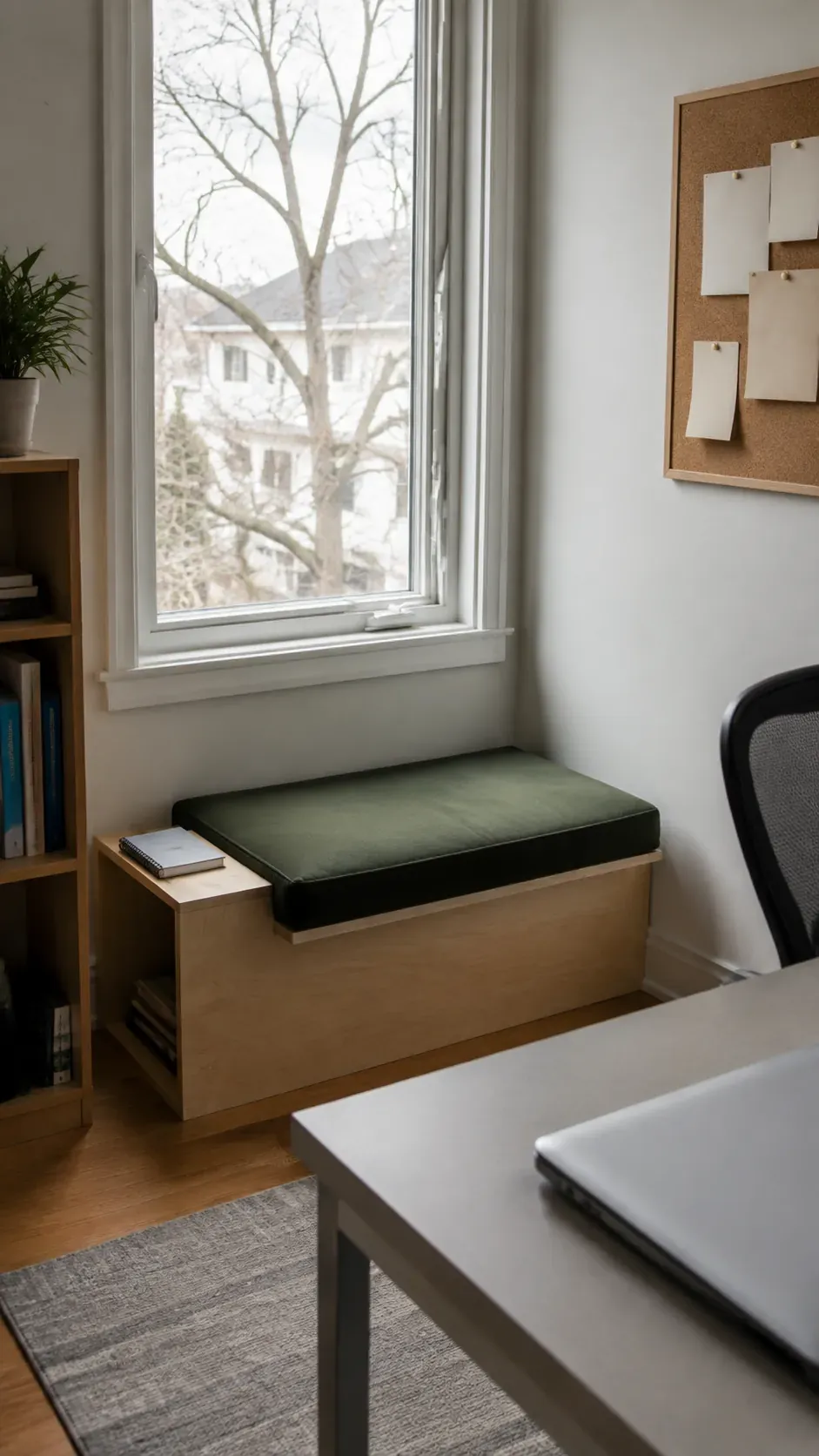
A window perch in a home office
A second sitting position can give a workroom somewhere to read printed notes away from the desk. Keep the bench clear of cables and avoid routing extension leads through cushions. A small adjacent shelf is useful for a notebook, while the main work surface remains at the desk. Treat the perch as a reading break, since a window ledge rarely offers a comfortable keyboard height.
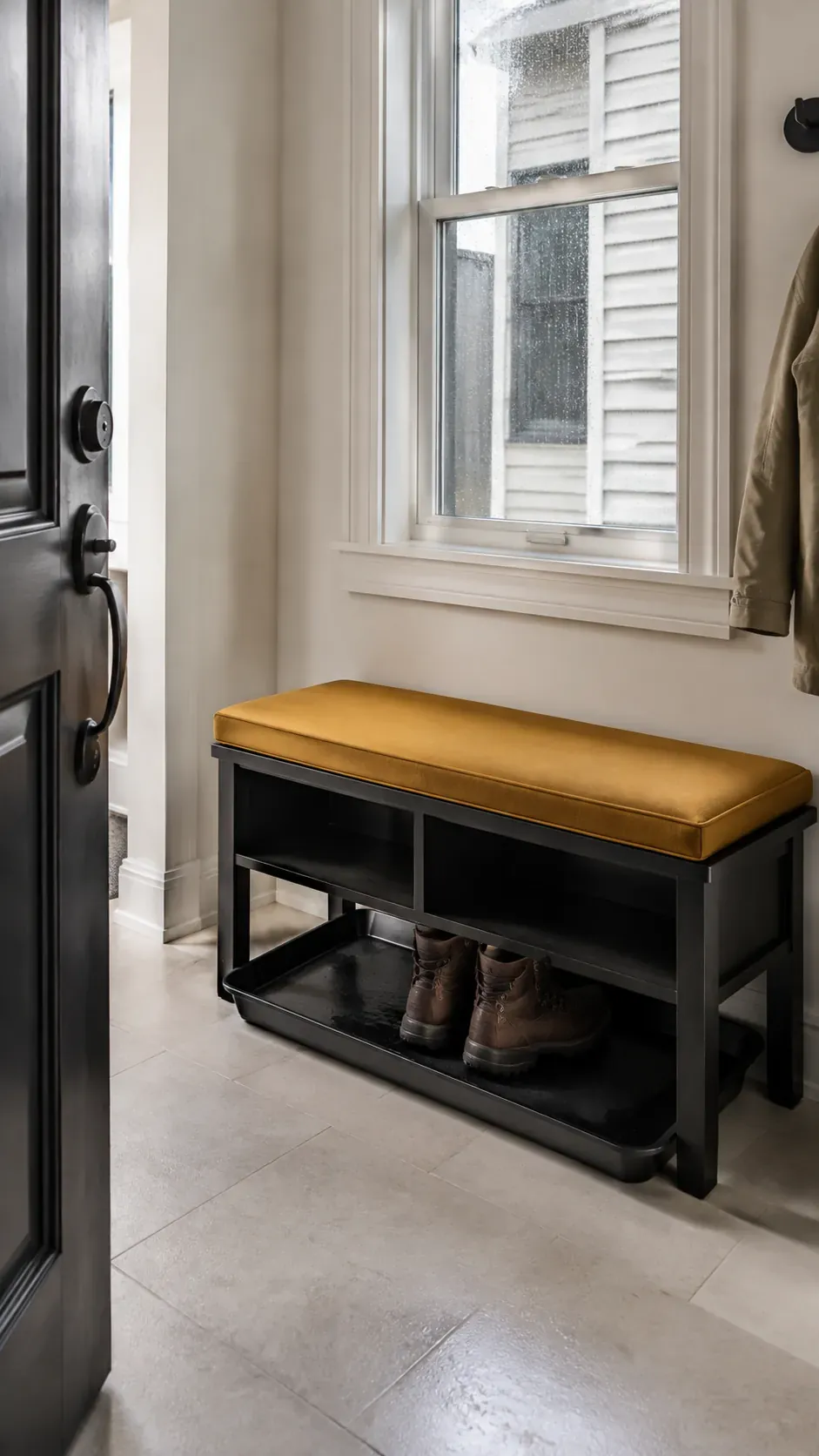
An entry bench with a shoe tray
A bench in front of a window can turn a cramped entry into a practical arrival spot. Put wet footwear on a removable tray below the seat rather than directly on cabinet material. Choose a tray that lifts out without tilting water onto the floor. Leave the door swing completely clear, including space for someone already sitting down.
A guest room seat with spare bedding
A window bench can hold spare bedding without consuming the wardrobe your guests need. Store textiles dry and allow access without moving the bed. Use a separate smaller cushion if a large upholstered top would make the storage difficult for a guest to open.
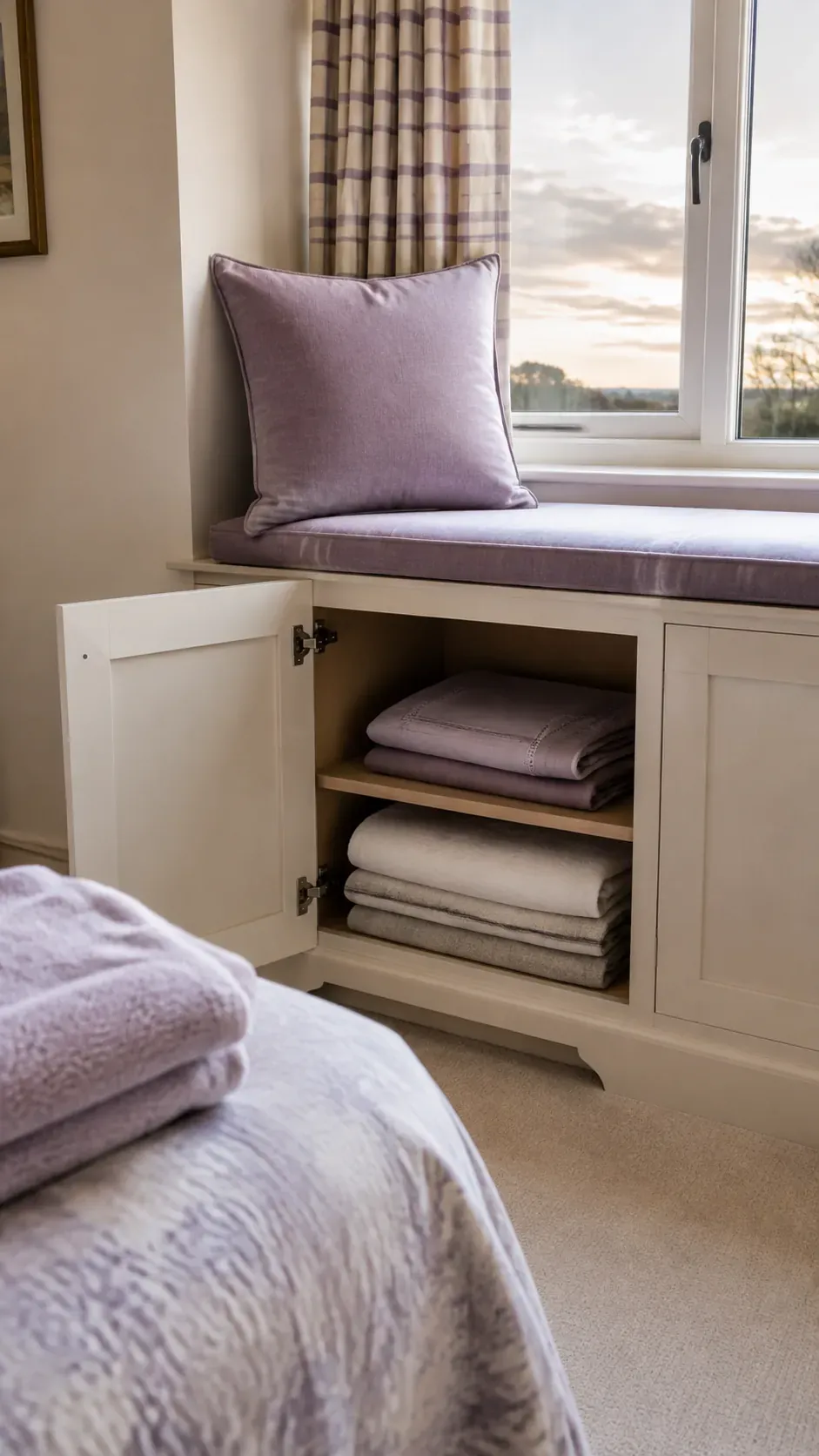
A quiet landing perch
An upstairs landing may have enough room for a short bench even when a full chair would feel intrusive. Preserve required escape routes and access to the window before choosing its footprint. Keep the floor around the perch free of trailing throws that could catch a foot near stairs.
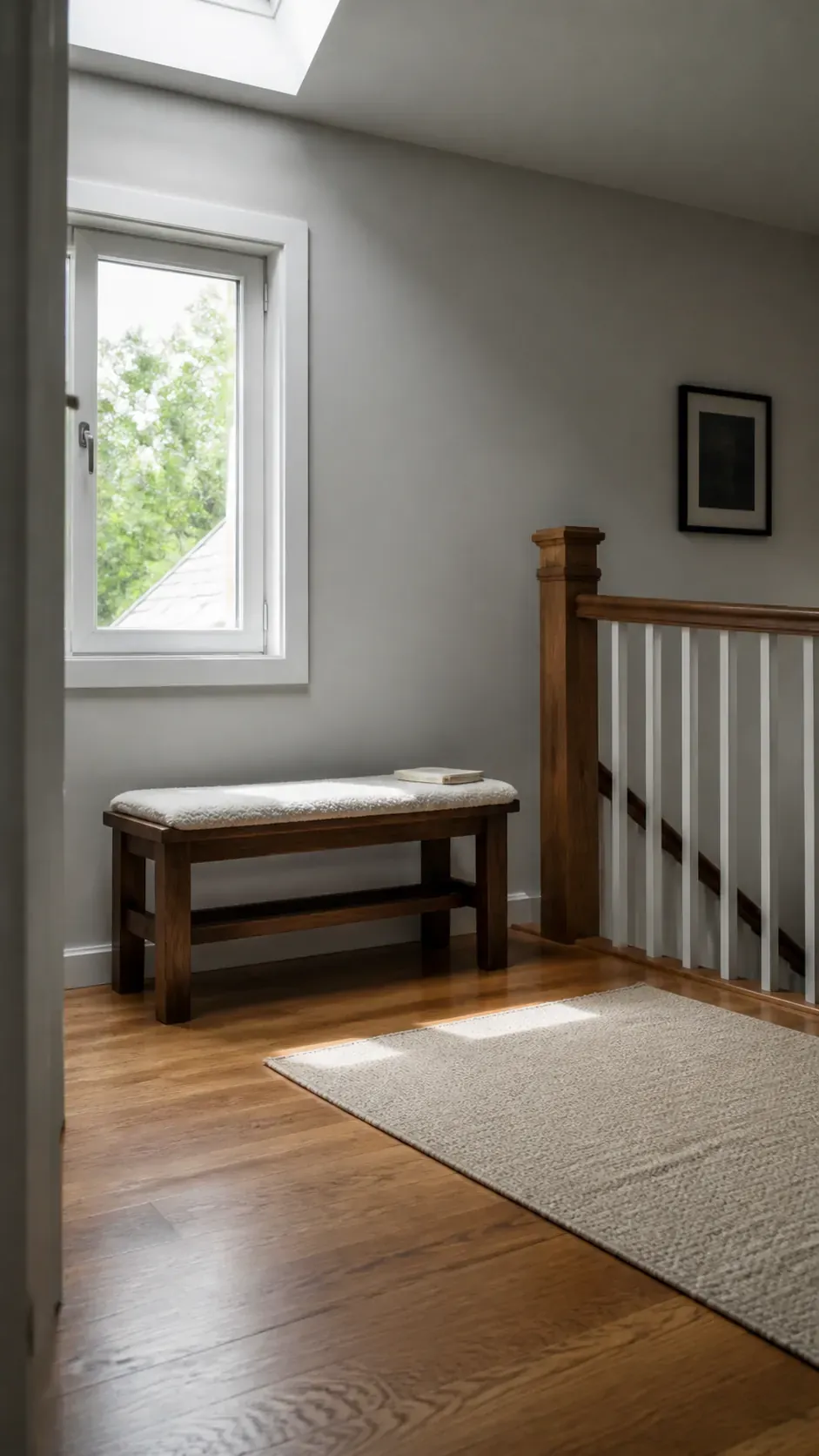
A window seat beside book storage
Books within reach make a reading corner useful without a large surrounding library. Put heavier volumes low and secure tall adjacent furniture as its manufacturer directs. Leave a small empty shelf area so the book currently being read has an obvious resting place.

A curved front for a tight approach
A curved leading edge can soften the route around a bench where a square corner projects into the room. Mock up the curve before ordering upholstery because every change affects the cushion shape. Retain enough flat sitting area that the softened front does not become a slippery perch.
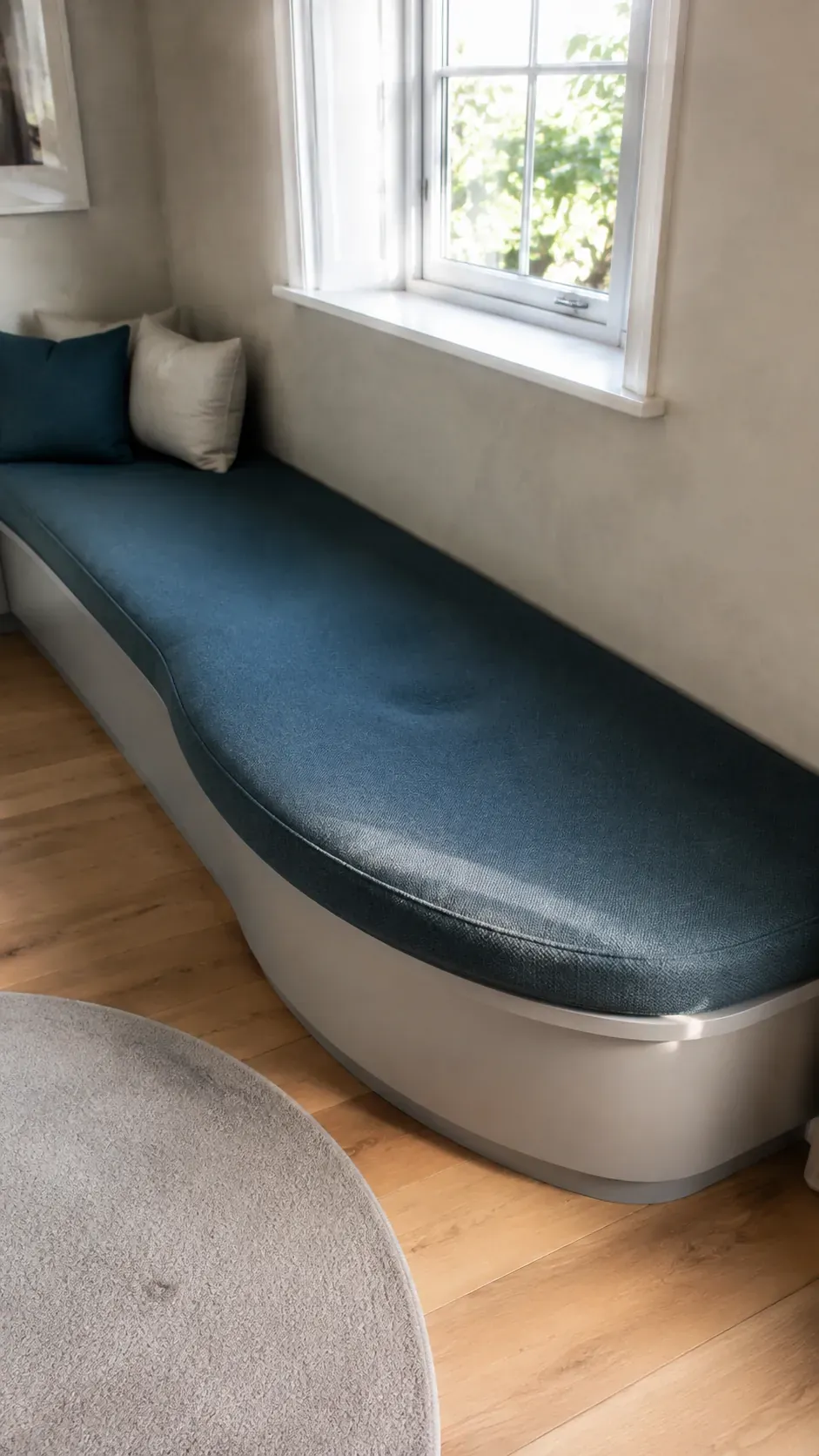
A centered bench beneath an oversized window
The seat does not have to span every inch of a wide window. This is particularly helpful when a ready made bench already fits the room comfortably. A shorter centered bench can preserve room for floor vents, curtain stacks, or a side table. Align it visually with the window while choosing the actual width around the people who will use it.
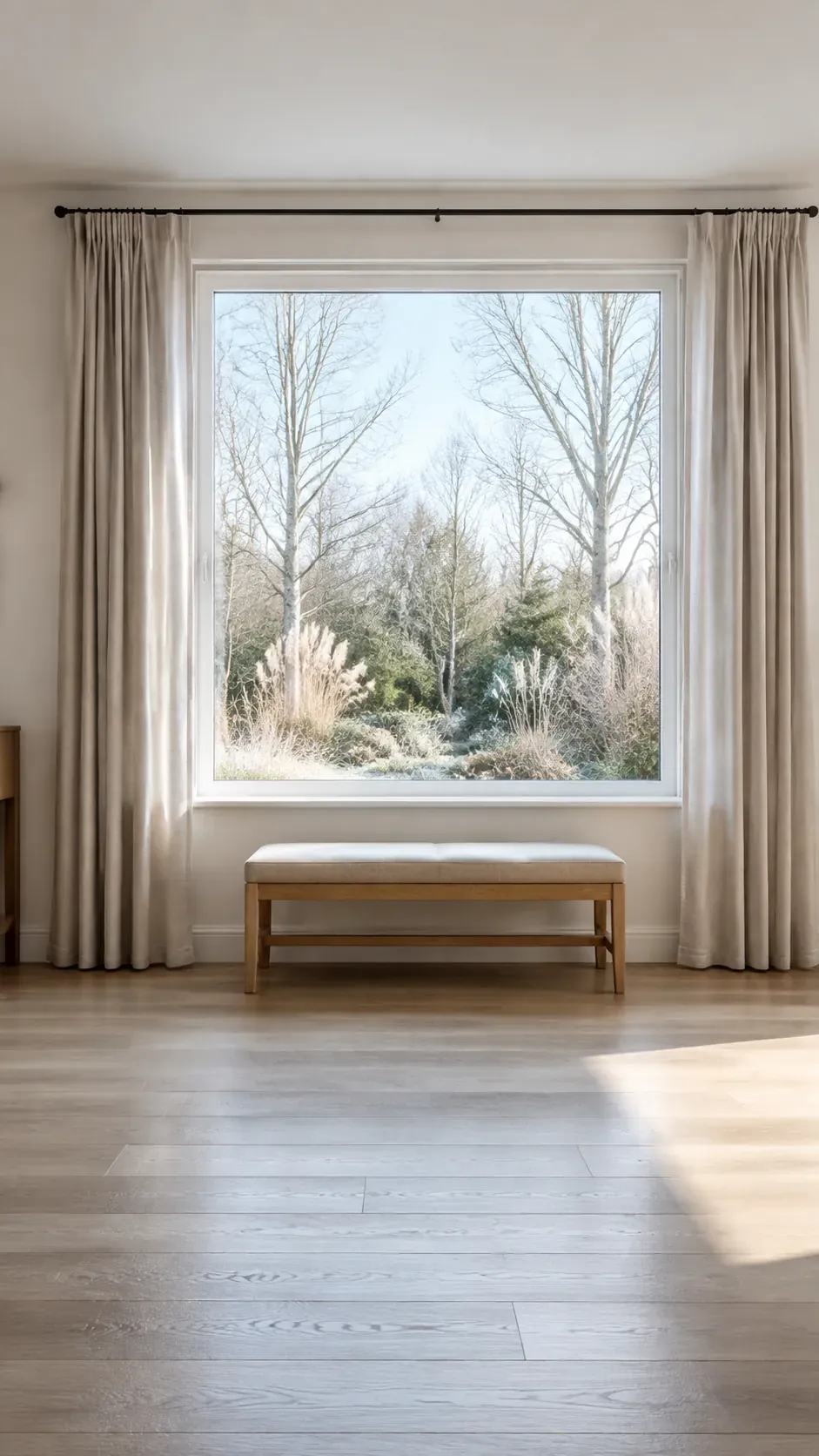
An offset bench that protects access
An off center arrangement can be the sensible answer when one side of the window must remain accessible. Place the seat where it supports the room’s movement instead of forcing symmetry. Repeat one material from nearby furniture to make the offset position look considered.
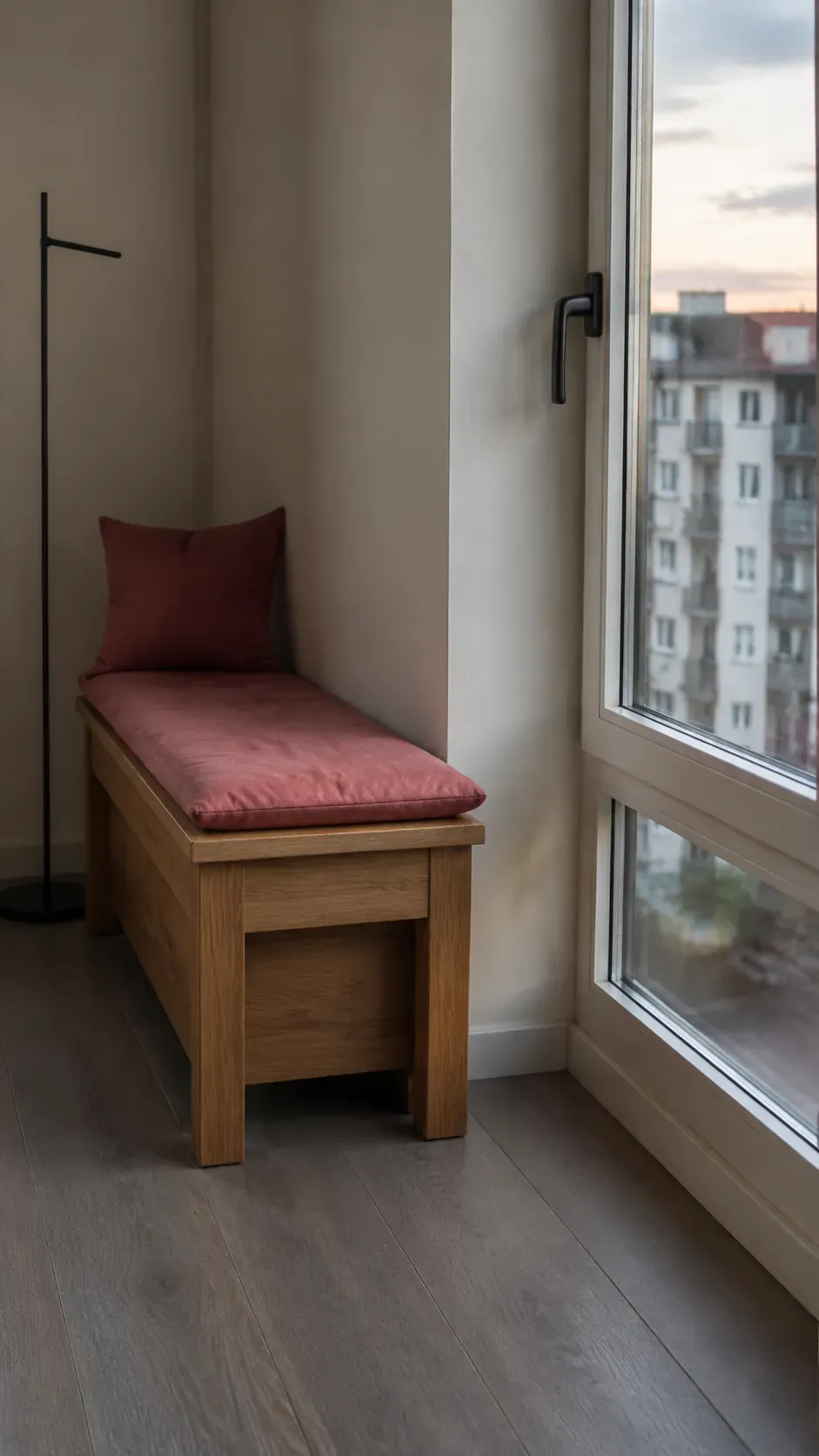
A bench with a dedicated pet cushion
A separate washable pet pad can keep the main cushion easier to maintain. Check that a pet looking outside cannot push through an insecure screen or reach an unsafe opening. Keep the pad separate enough to remove without stripping the entire bench. Position the perch according to your pet’s mobility instead of expecting a tall jump every time.
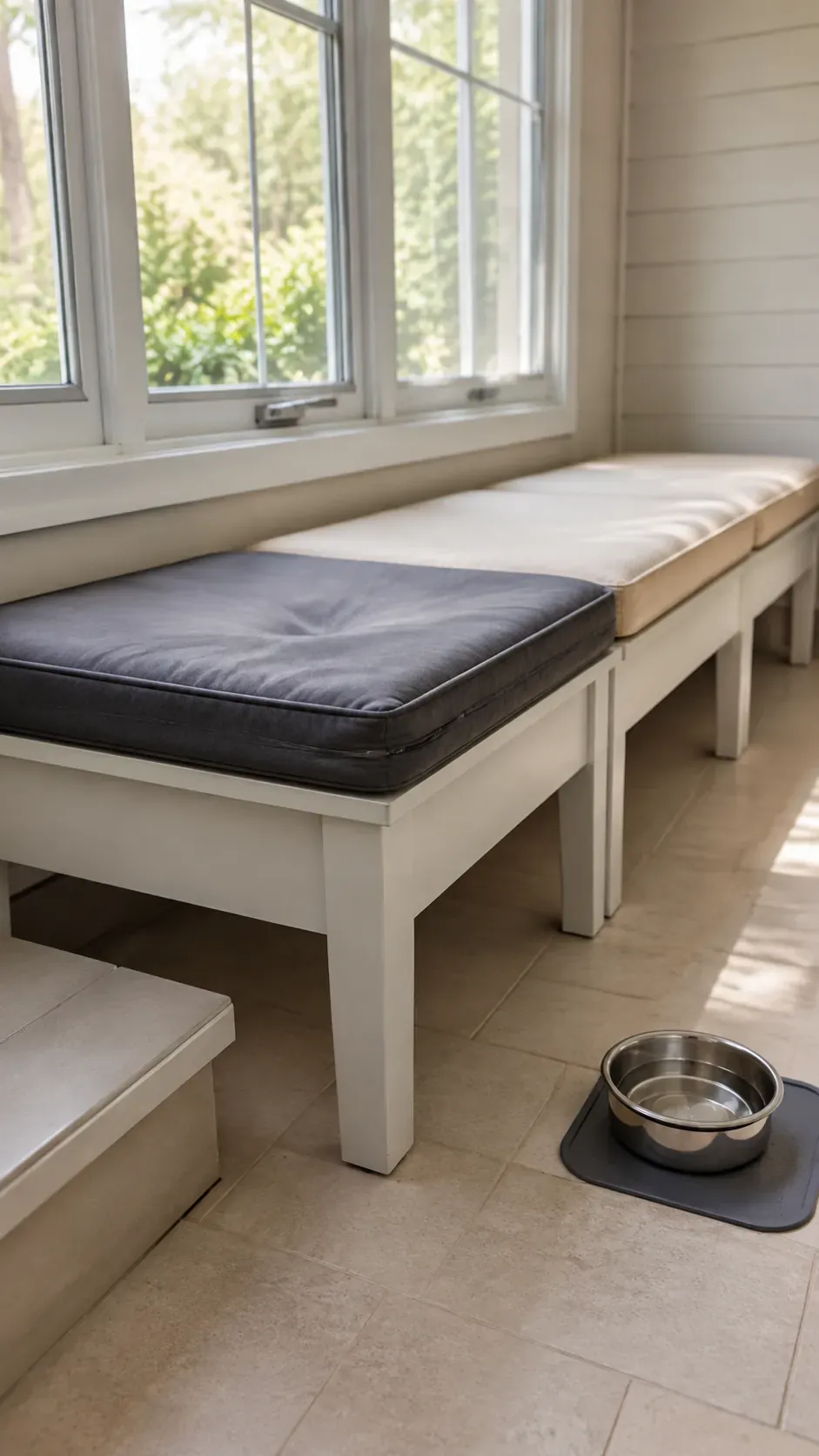
A compact breakfast perch for one
A short kitchen seat and a small table can create a breakfast spot without a full banquette. Try the table position with your knees beneath it before selecting a base. Keep the seat close enough for comfortable eating while allowing an easy sideways exit.
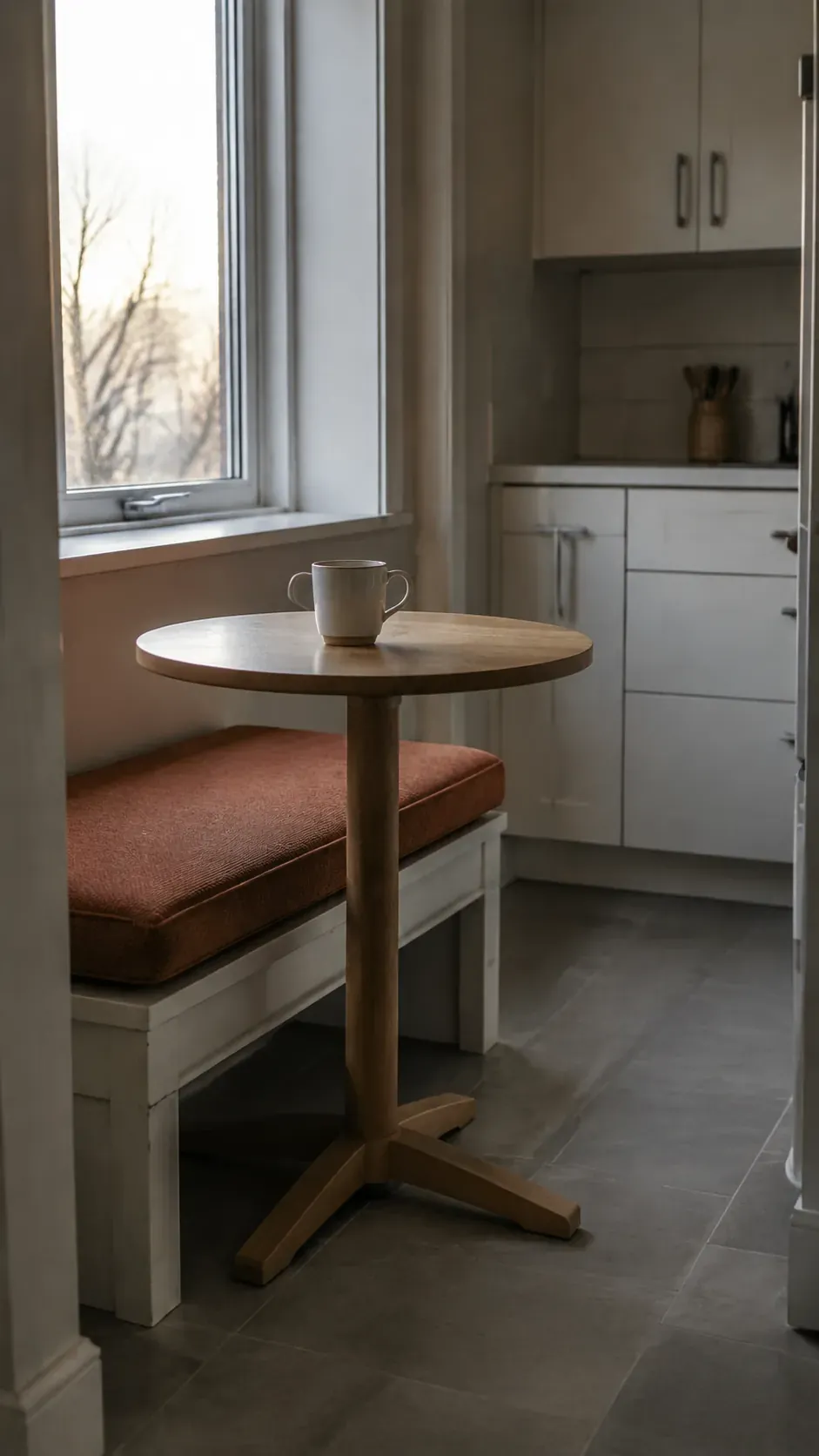
A bench paired with a movable footstool
A footstool adds lounging comfort without permanently increasing the bench depth. Pick a lightweight piece that can move out of the walkway when the room is busy. Match the height to a relaxed seated position rather than choosing it only for color.
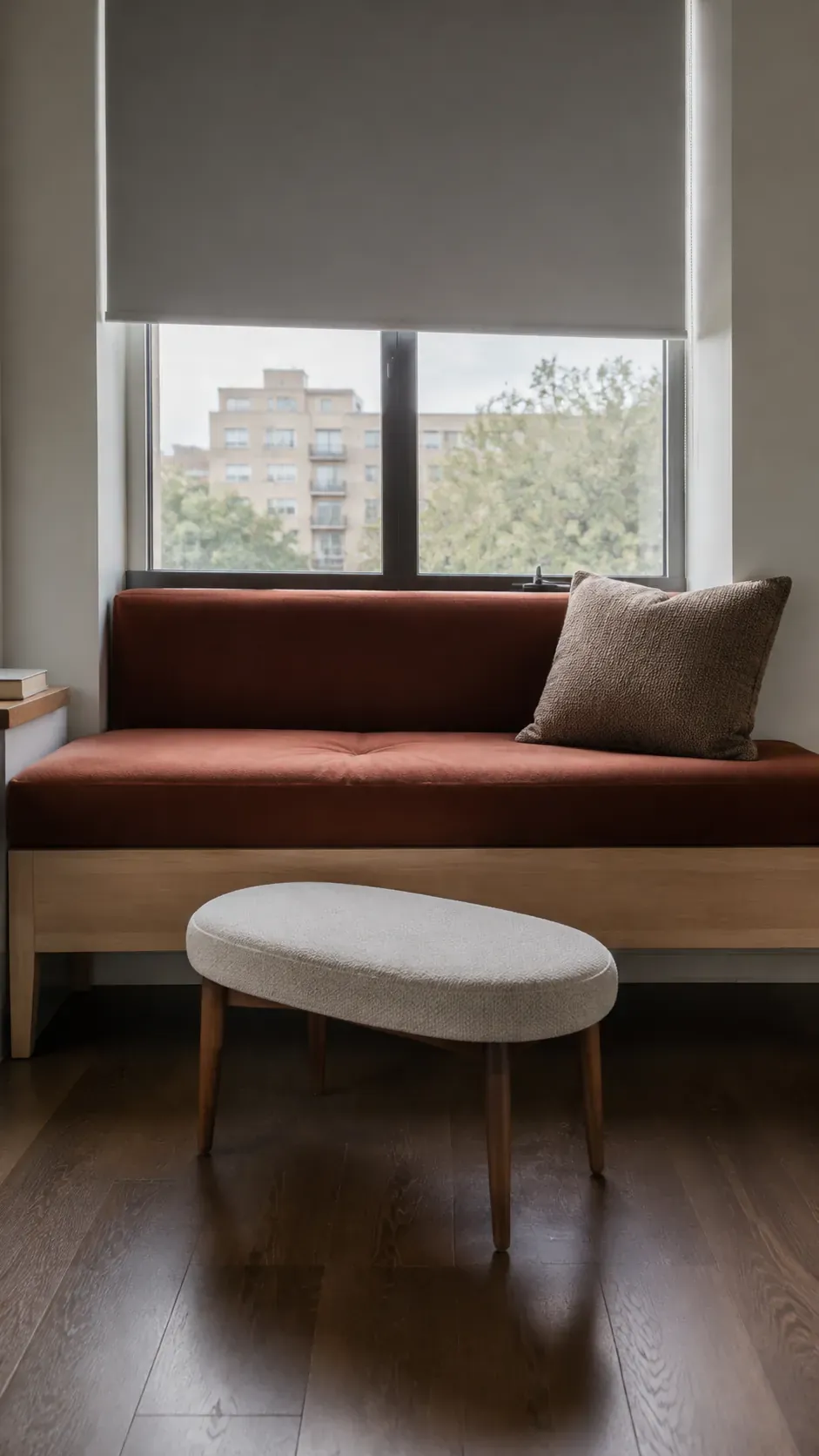
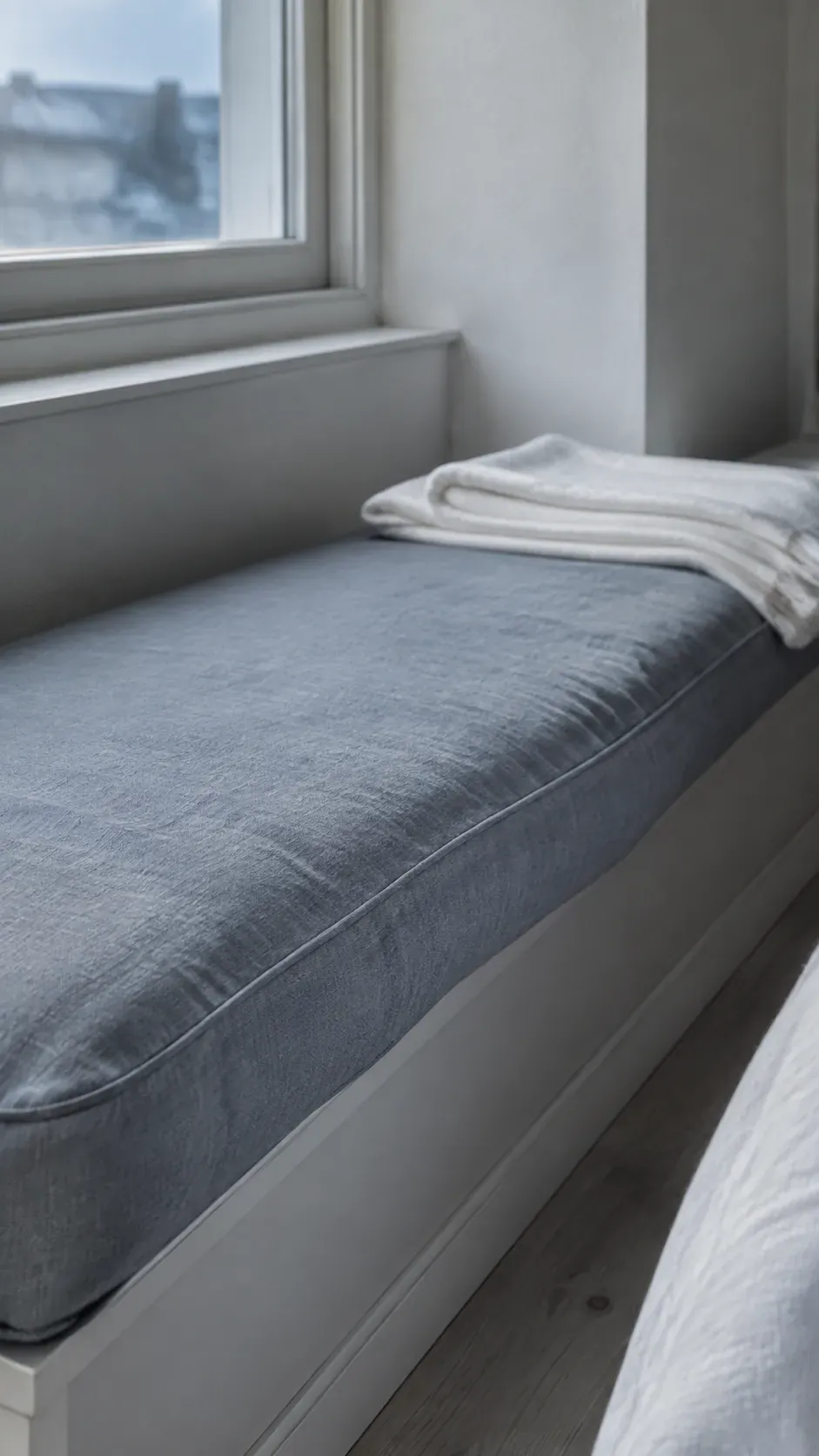
A linen covered seat in a cool palette
Blue gray linen can make a bright window corner feel calm without dimming the whole room. Consider how the weave feels against bare legs and how readily the cover wrinkles. A tightly tailored shape suits a crisp room, while a softer fit will show everyday use more openly.
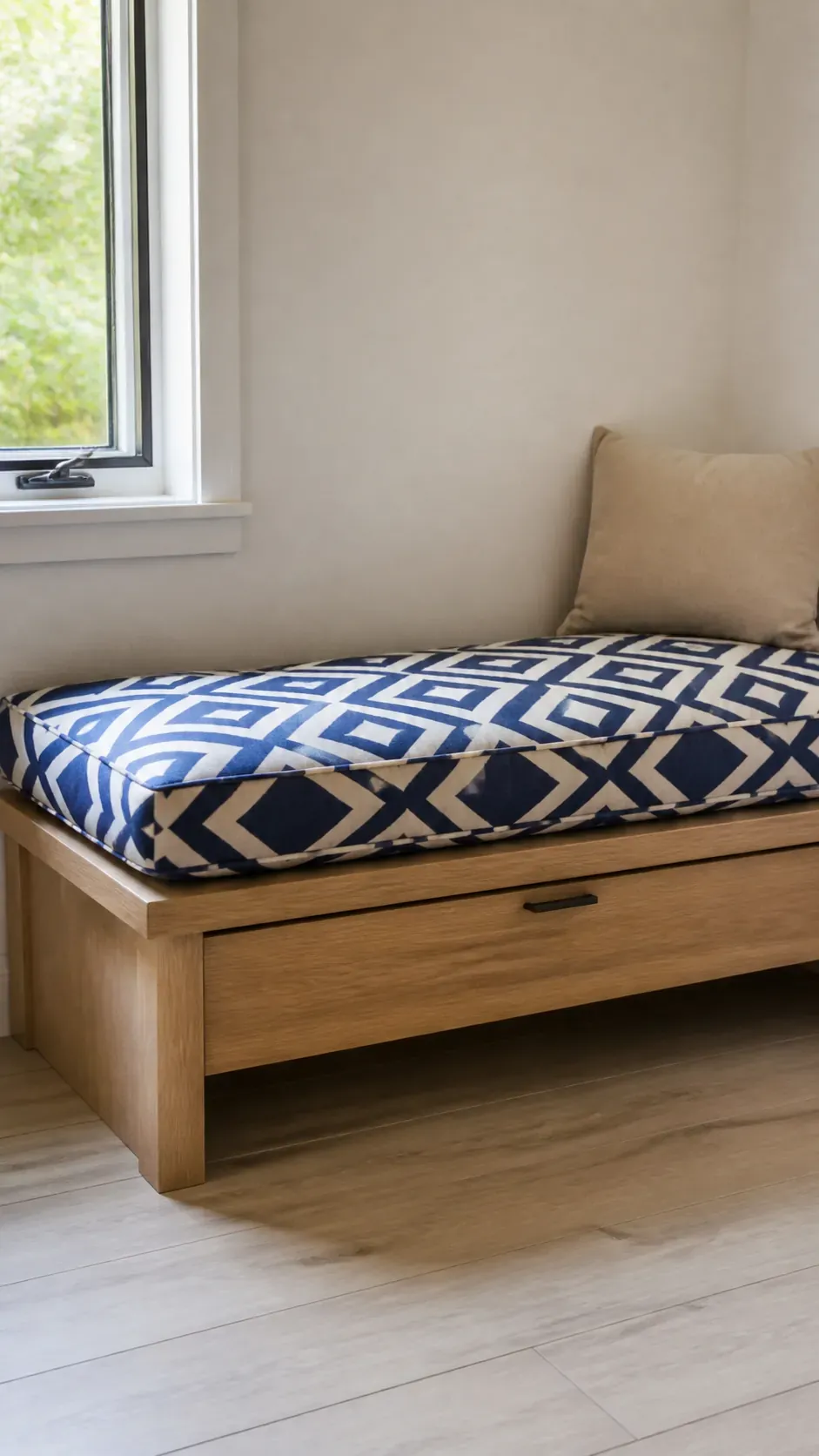
A patterned cushion on a plain base
Pattern on a single seat cushion brings character without committing the walls to a busy treatment. Ask to see a large fabric sample so the repeat makes sense across the full bench length. A motif that looks lively on a swatch can appear quite different when repeated across a long pad. Keep nearby pillows quiet enough that the main motif remains readable.
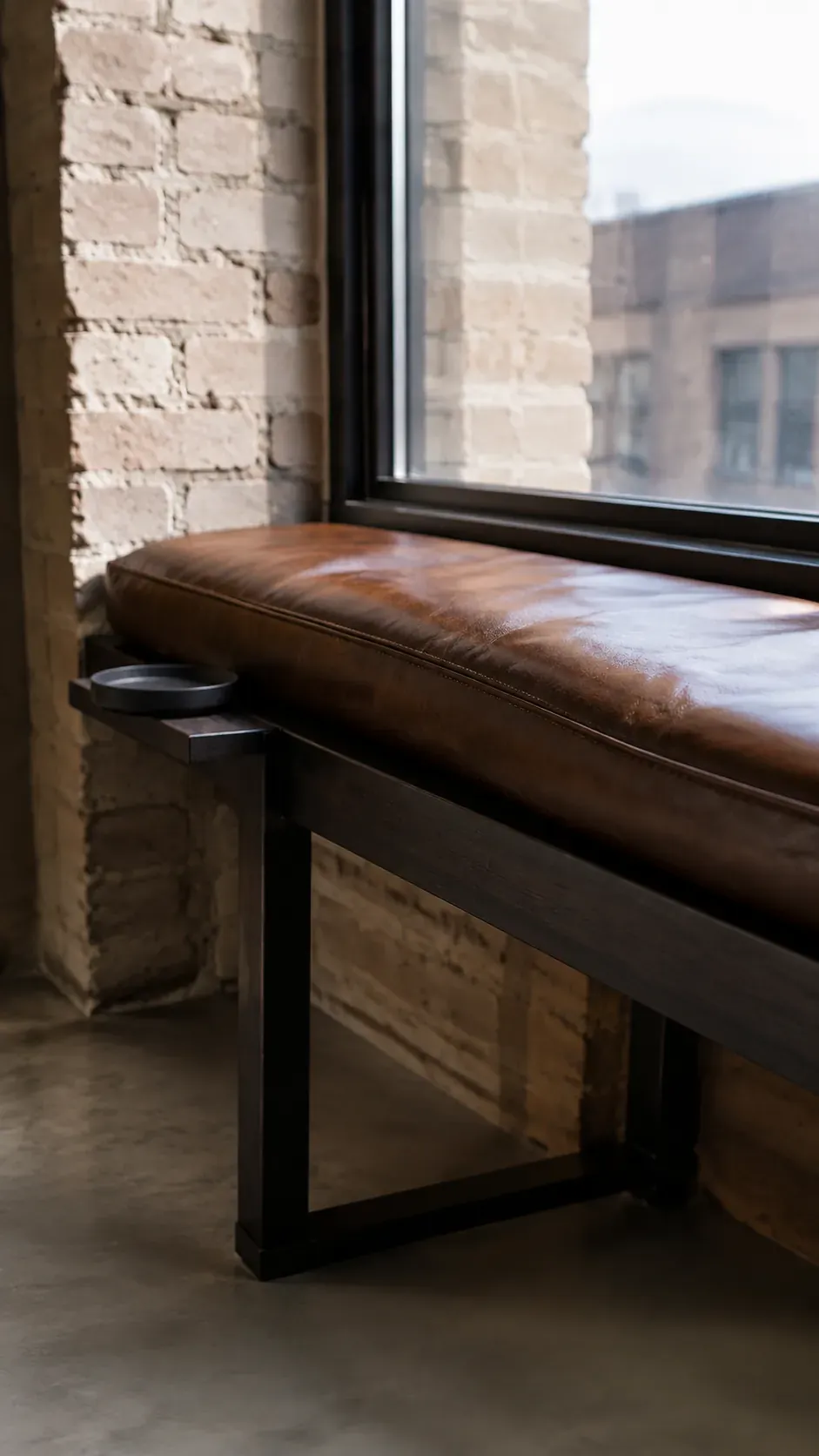
A leather cushion that can age visibly
Leather may suit a frequently used perch when you like its changing surface. Check the supplier’s guidance for direct sun and cleaning, since finishes vary substantially. Avoid choosing it solely for imagined durability if scratches or patina will bother you.
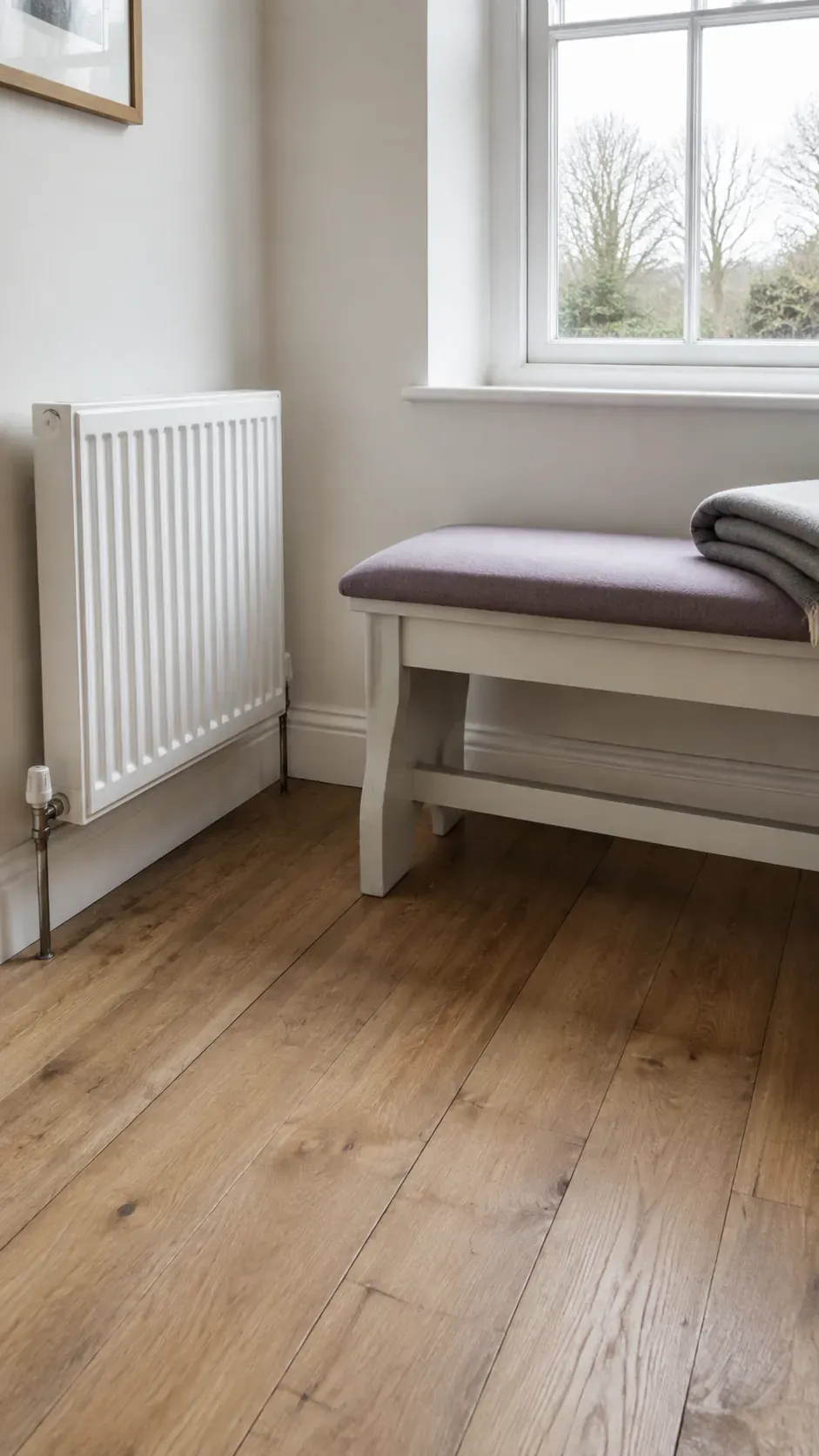
A window bench beside a radiator
A radiator near the intended seat changes the project before styling begins. Keep the heater’s required clearances and airflow paths open, and get advice for the specific heating system before enclosing anything. A separate bench placed beside the radiator may be more workable than building over it.
A moisture conscious window corner
Condensation deserves attention before cushions are pushed against cold glass. Keep the window and surrounding surfaces accessible for drying and investigate persistent damp instead of hiding it behind upholstery. Removable cushions and a cleanable gap make routine inspection easier.
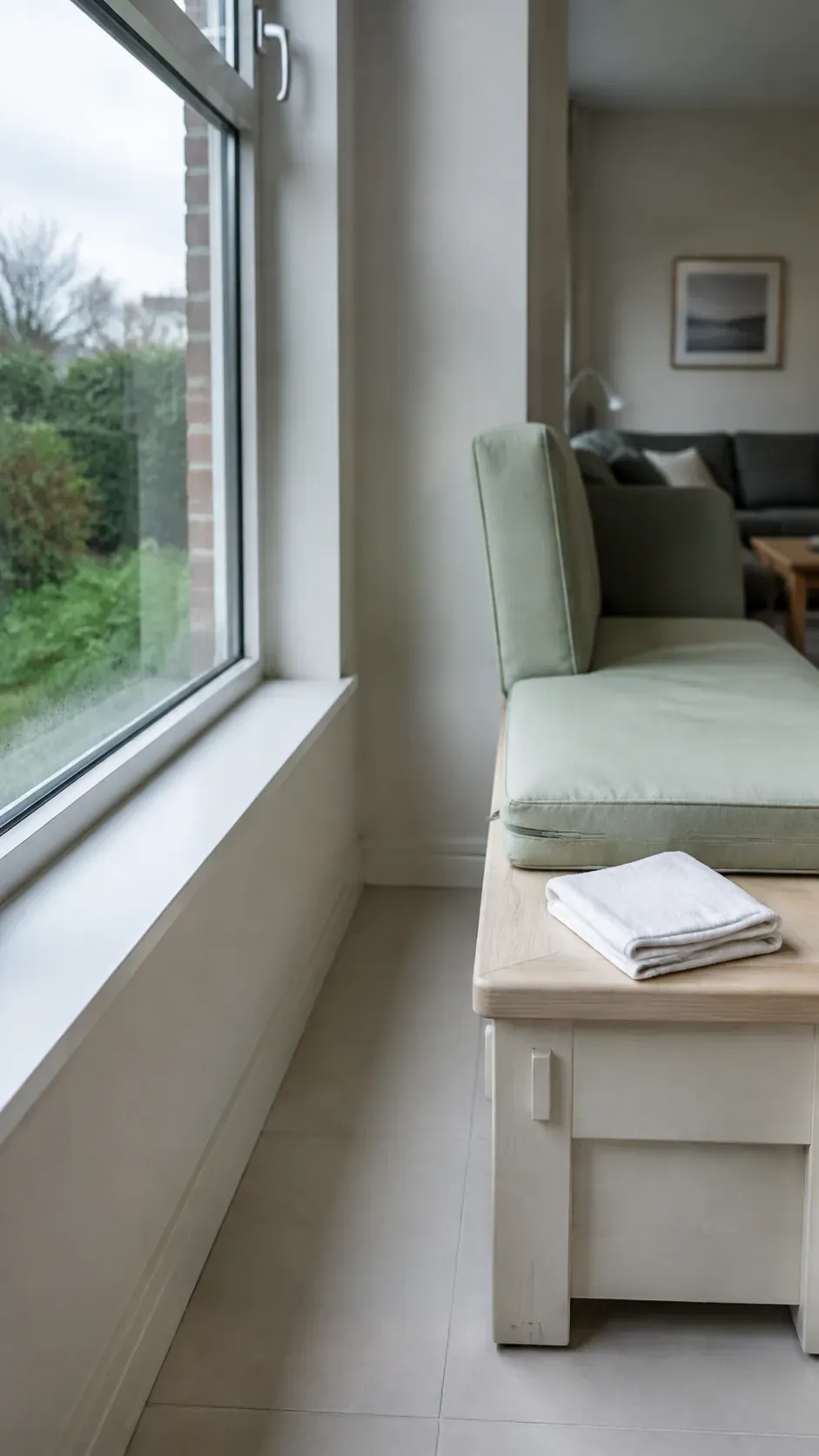
A bench designed around opening hardware
Handles, inward opening sashes, and locks all need their own working space. Open the window fully while the proposed seat footprint is marked out. Preserve any required emergency opening function, and do not assume an attractive fixed cushion will be easy to remove in a hurry.
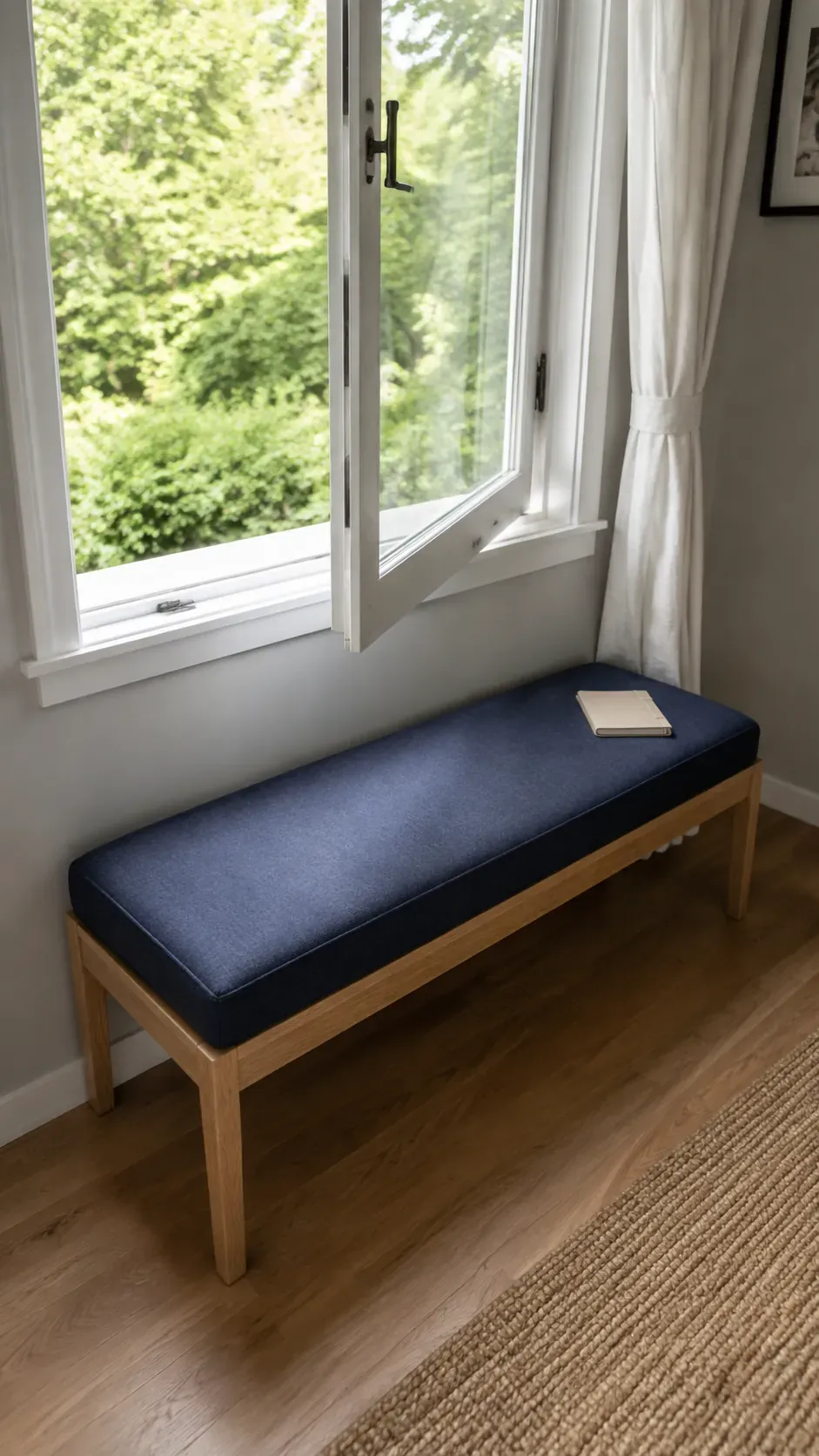
A seat with light for evening reading
A nearby reading light extends the usefulness of a window seat after daylight fades. Place the light so your head and shoulders do not cast a shadow across the page. Keep cables outside the seating area and have fixed electrical work handled by an appropriately qualified professional.
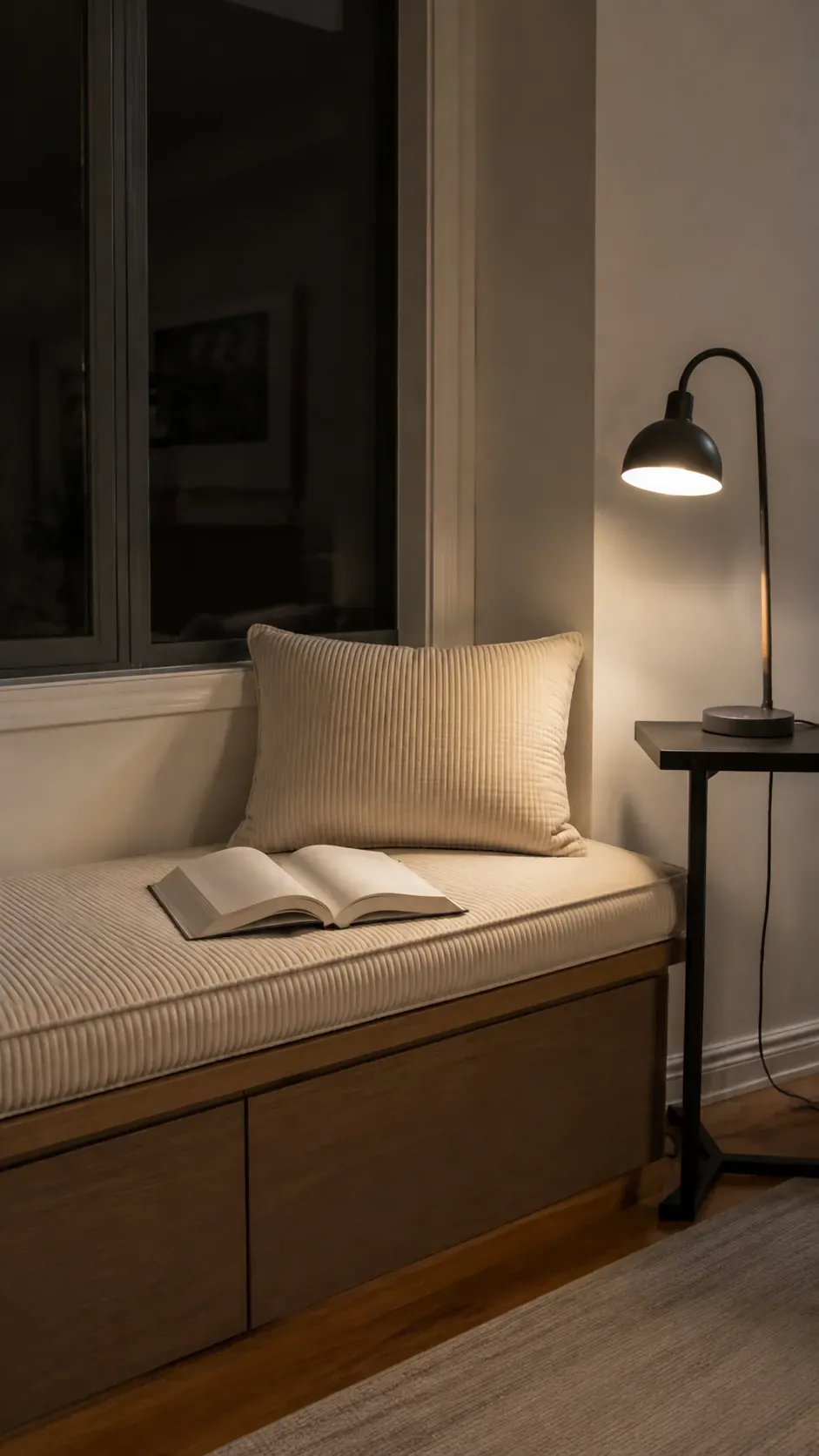
A trial arrangement before fitted joinery
Start with a stable bench and a comfortable pad if you are still unsure which window deserves permanent seating. Use it through ordinary mornings and evenings, noting glare, drafts, storage habits, and whether anyone chooses to sit there. The best window seat design is the one that earns its place before the expensive cabinetry arrives.