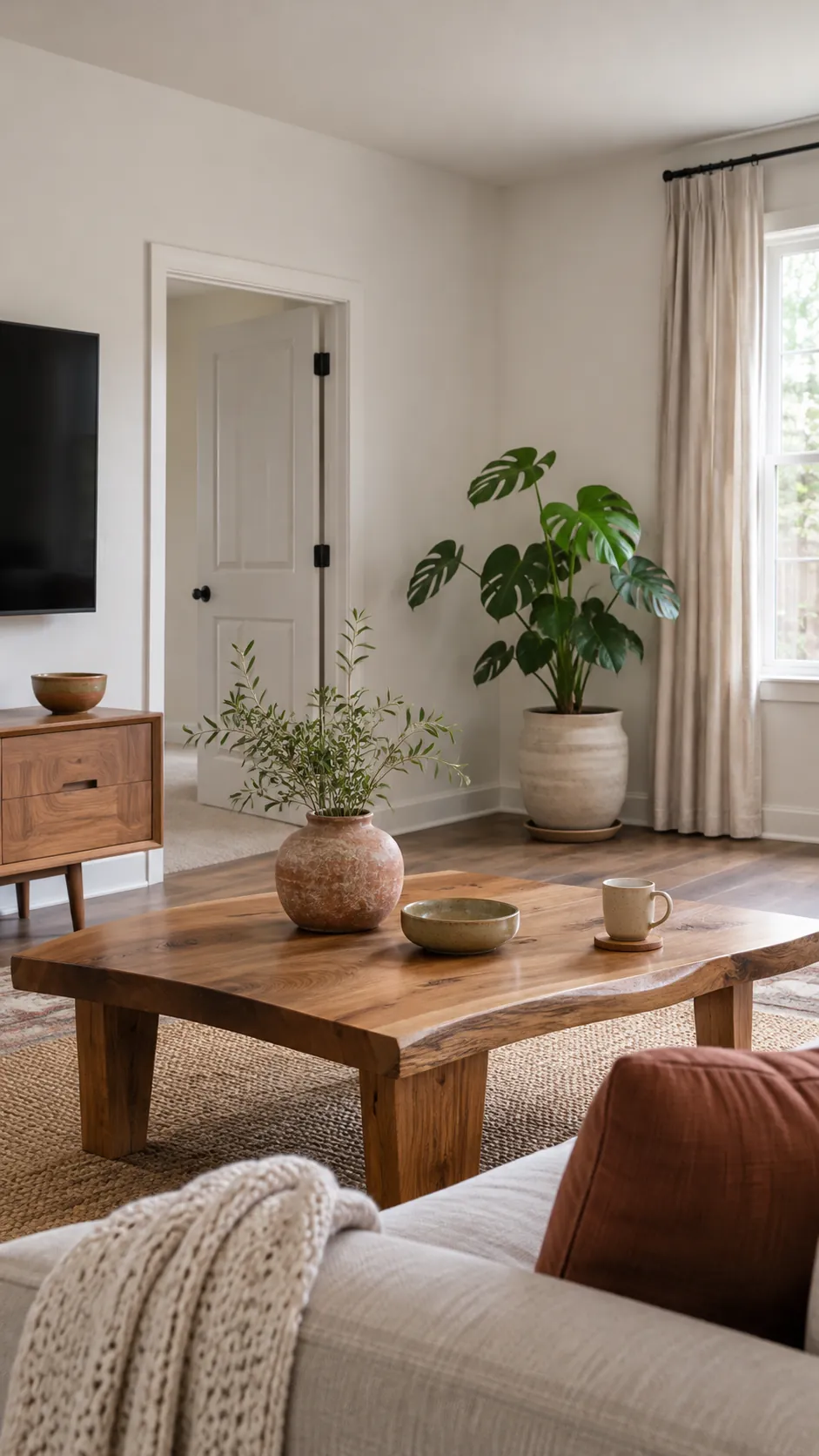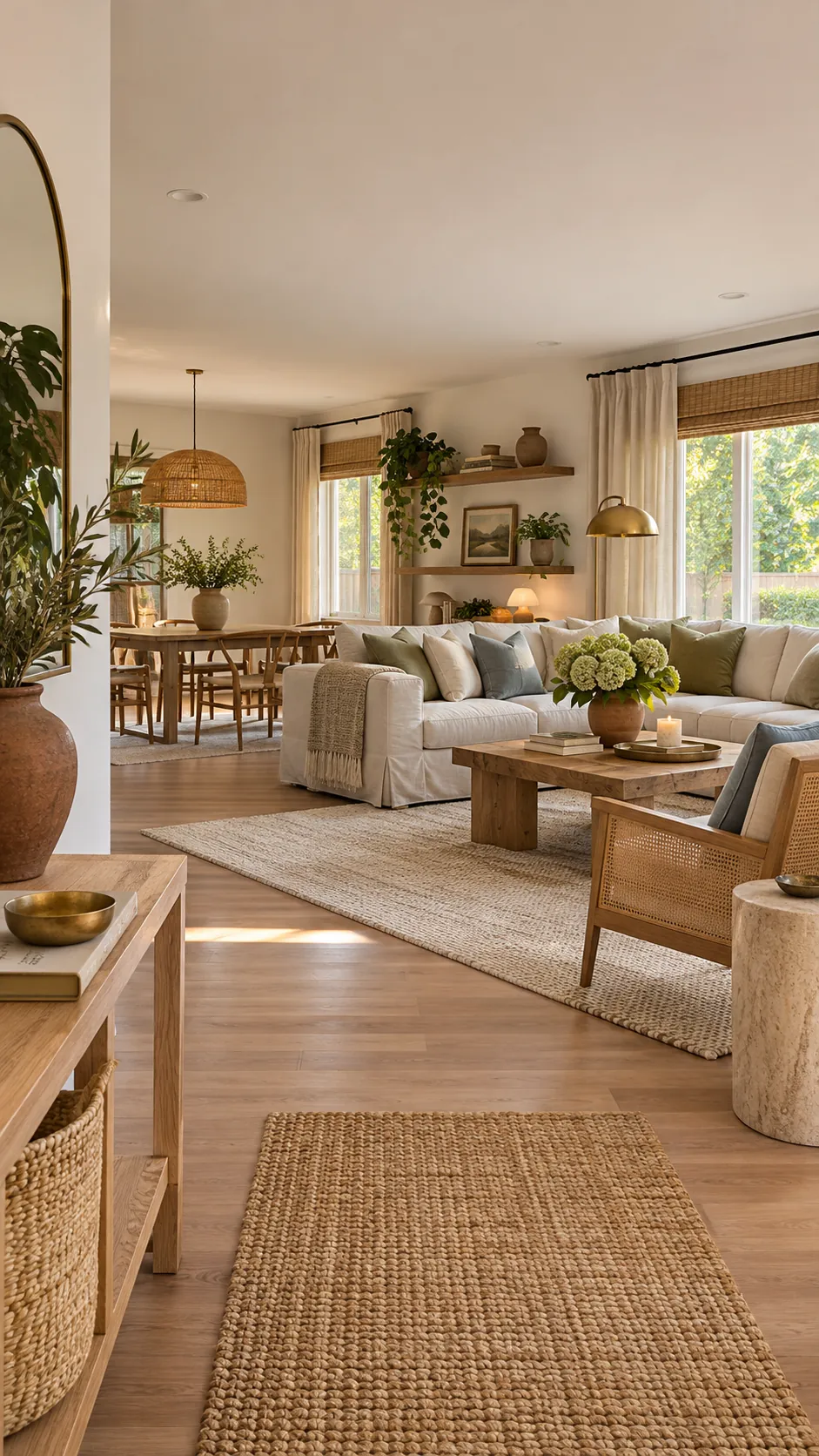
Smooth drywall, cool flooring, and matching fixtures can make a new house feel untouched even after the furniture arrives. Natural materials solve that problem best when they support daily life instead of becoming a theme. Start with one or two changes in the rooms you use most, then repeat the materials that make the house feel warmer.
Layer a Handwoven Wool Rug
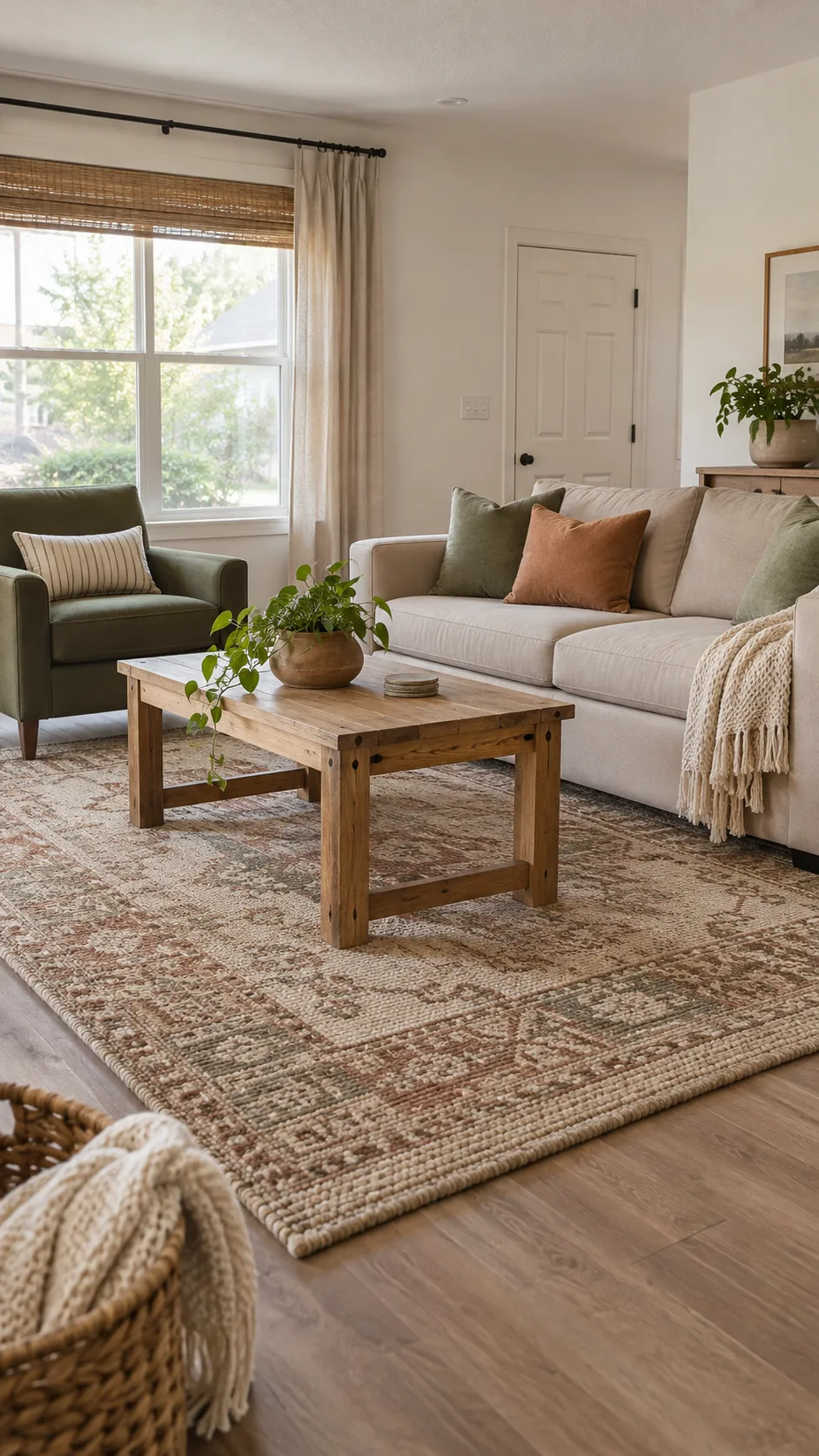
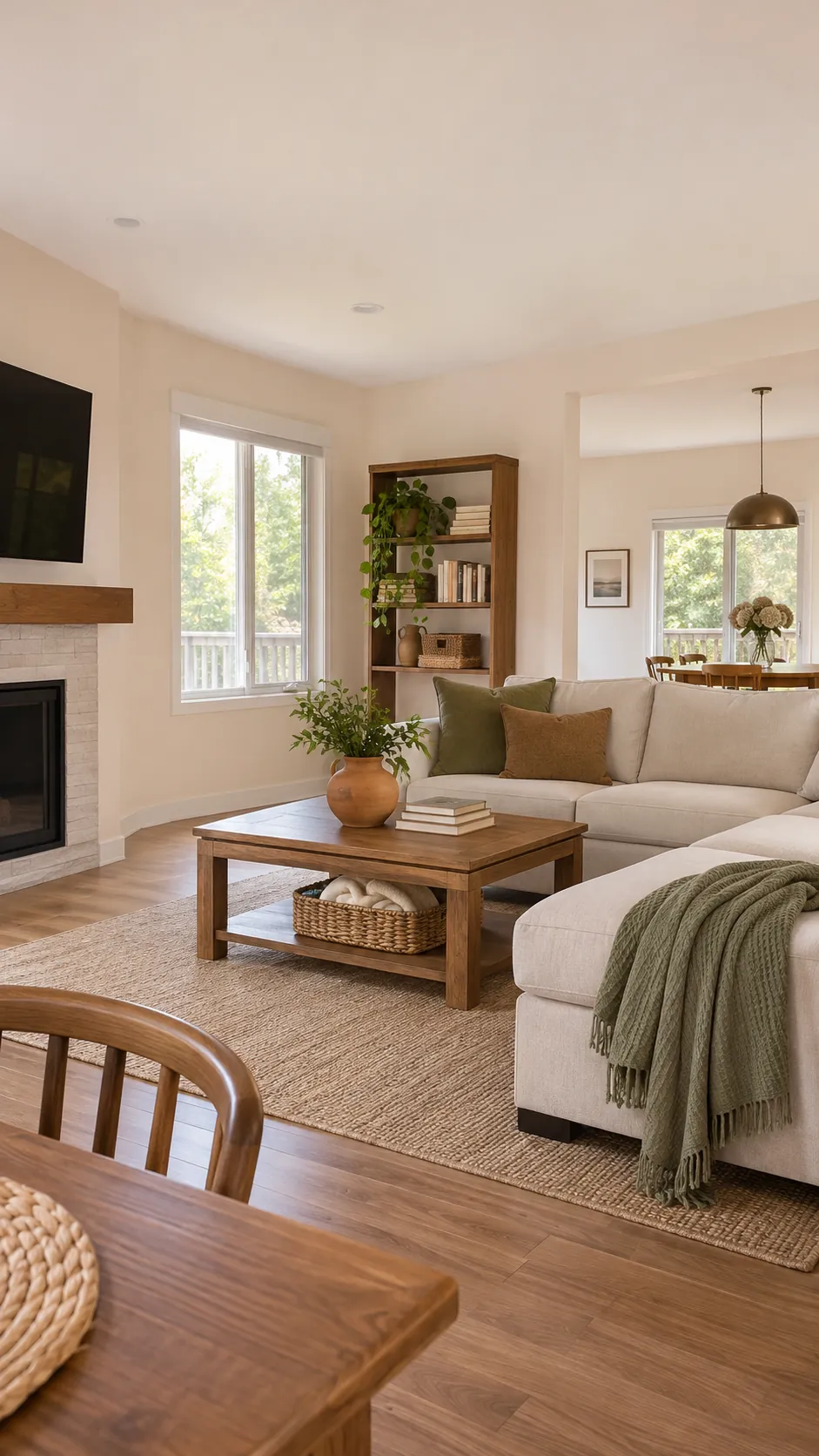
Lay a softly patterned wool rug beneath the main seating group, with the front legs of each seat resting on it. The visible weave adds warmth and gives builder-grade flooring a more grounded center. Choose a rug pad that prevents slipping and protects the flooring below.
Add Linen Curtains Above the Window Frame
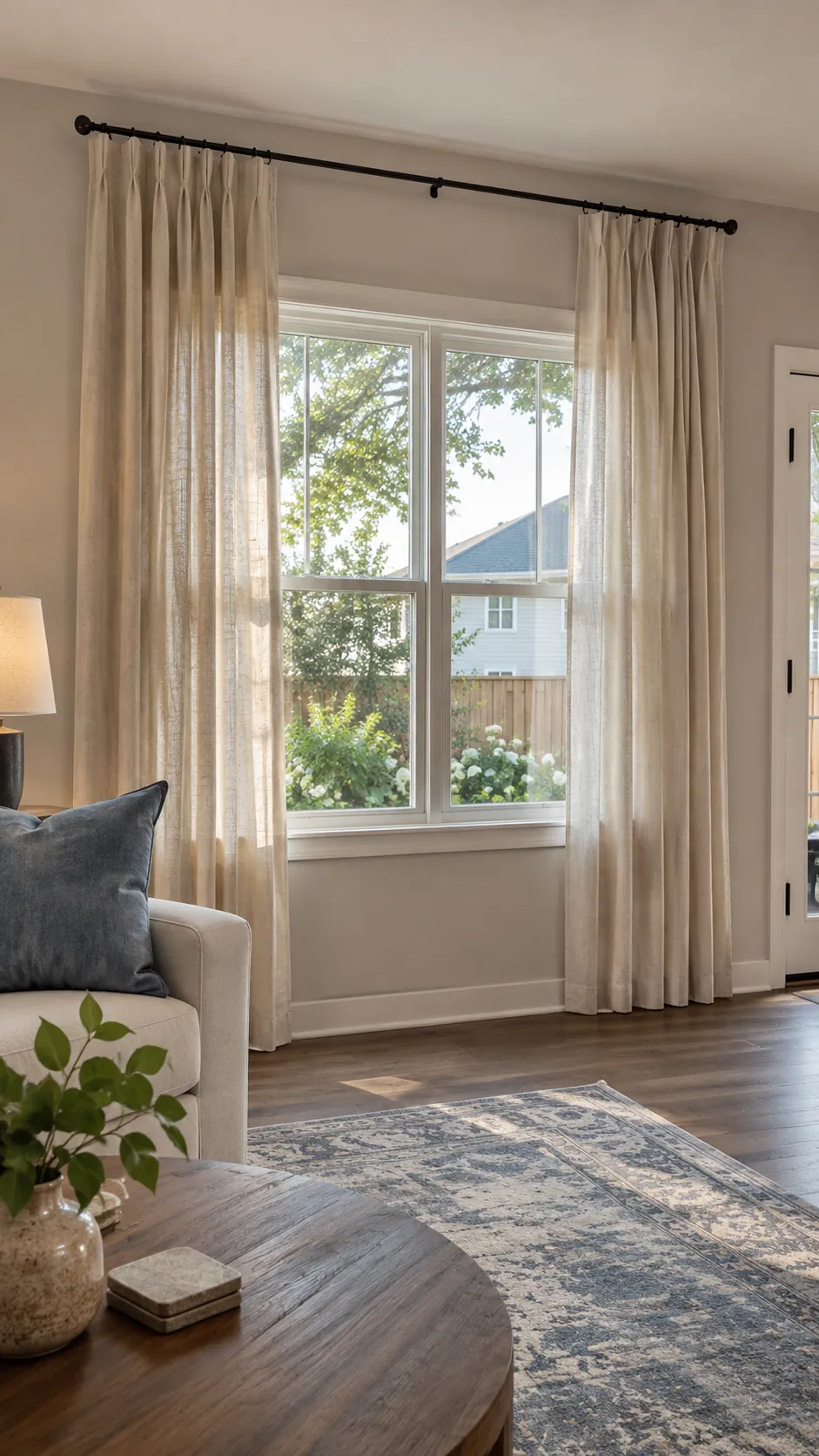
Mount full-length linen curtains several inches above the trim and let them finish just above the floor. The fabric softens hard window edges while making a standard ceiling feel taller. Steam the panels after hanging so the long folds settle naturally.
Replace a Flush Mount With a Woven Pendant
Choose a properly scaled rattan or bamboo pendant and hang it at a safe height above the table. Natural fiber breaks up a plain ceiling and makes the eating area feel deliberate. Use a dimmable bulb to keep the woven shade from casting harsh patterns.
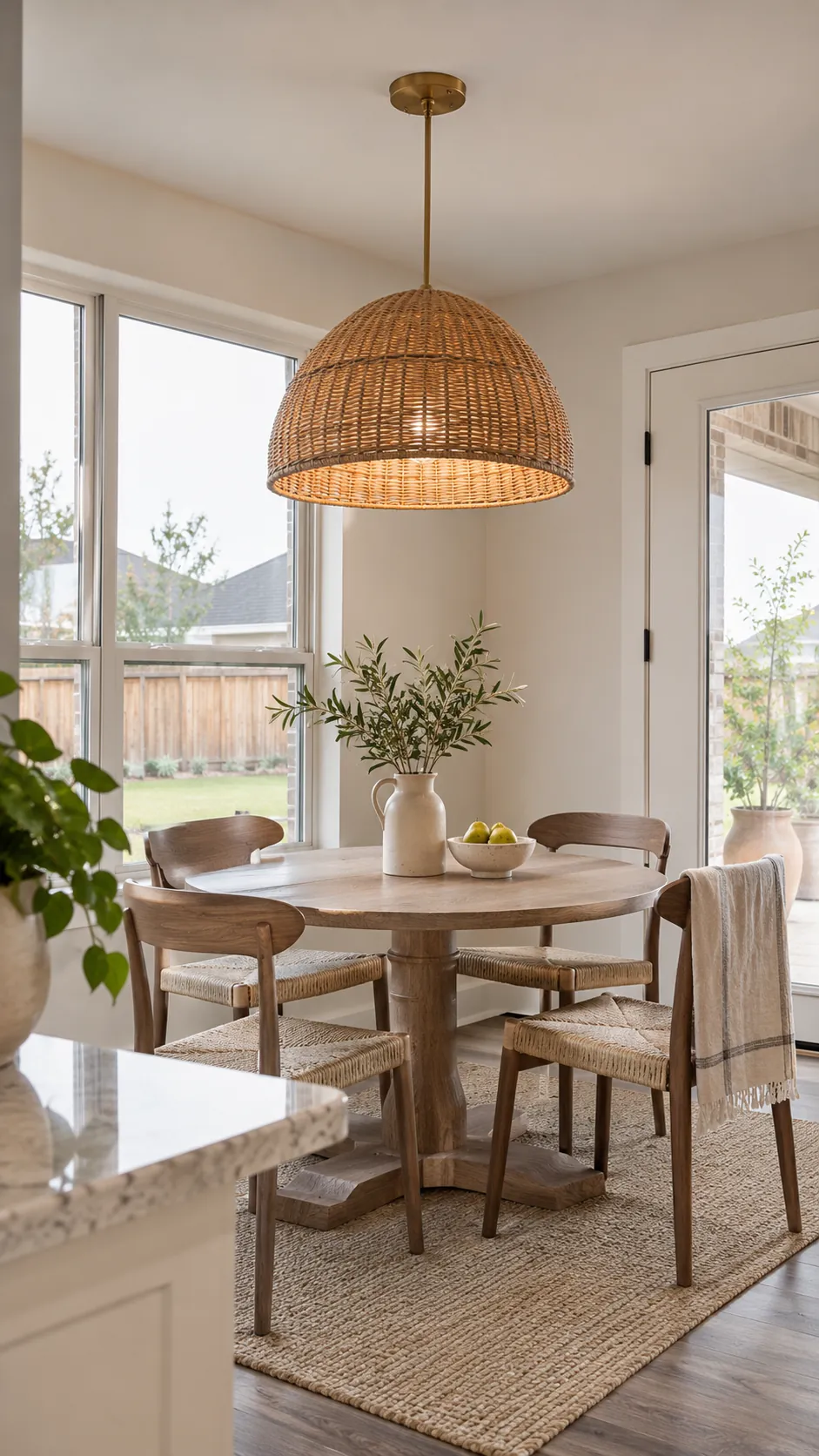
Bring In an Unfinished Wood Console
Use a narrow console with visible grain and enough clearance for the walking path. The irregular wood surface gives a smooth new-build entrance immediate character. Check the console depth with the nearest door fully open before buying.
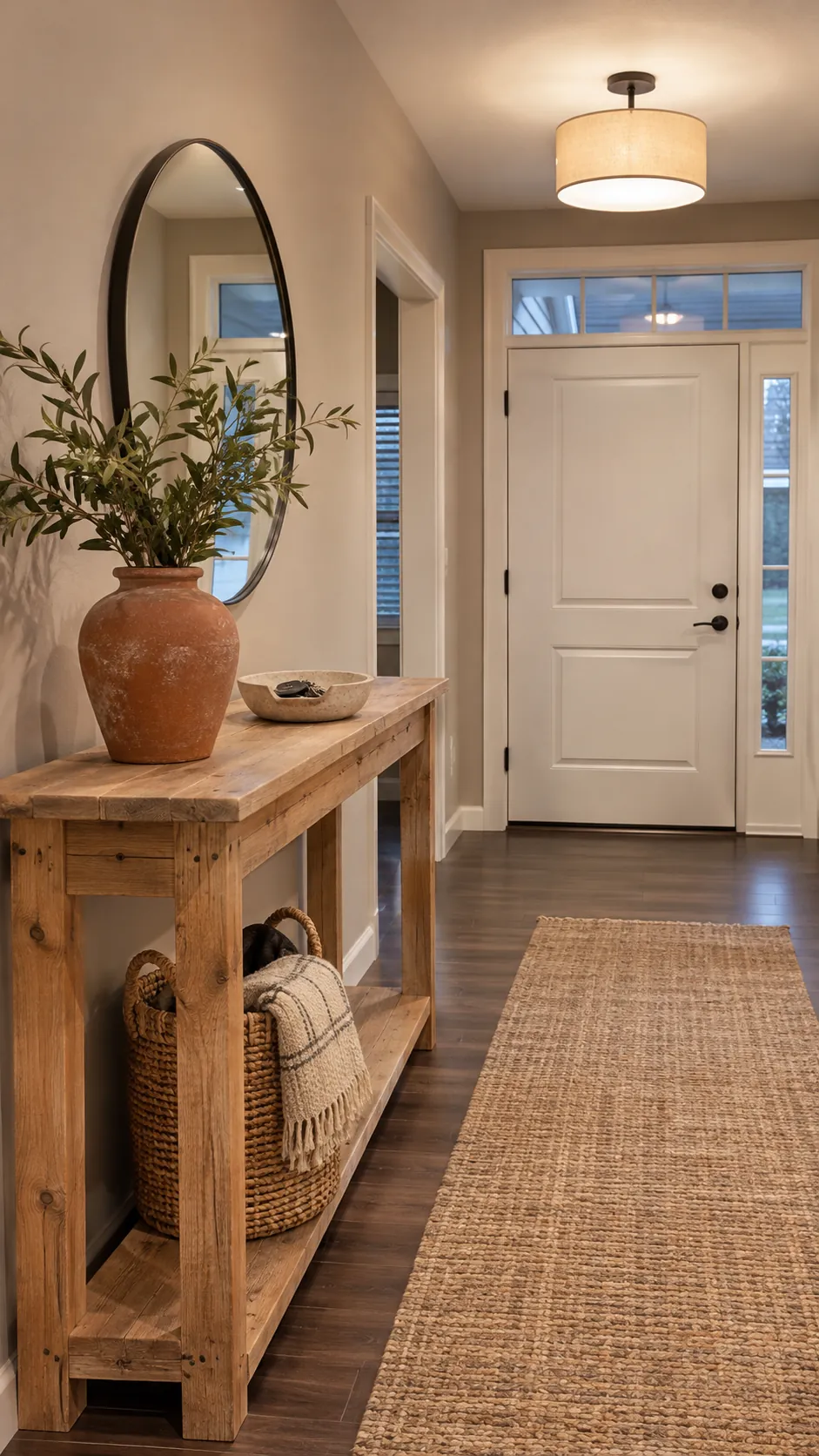
Group Terracotta Pots on a Deep Sill
Arrange three terracotta pots in different heights and leave breathing room between them. Clay brings earthy color and becomes more distinctive as it develops a natural patina. Turn each pot weekly so the plants grow evenly toward the glass.
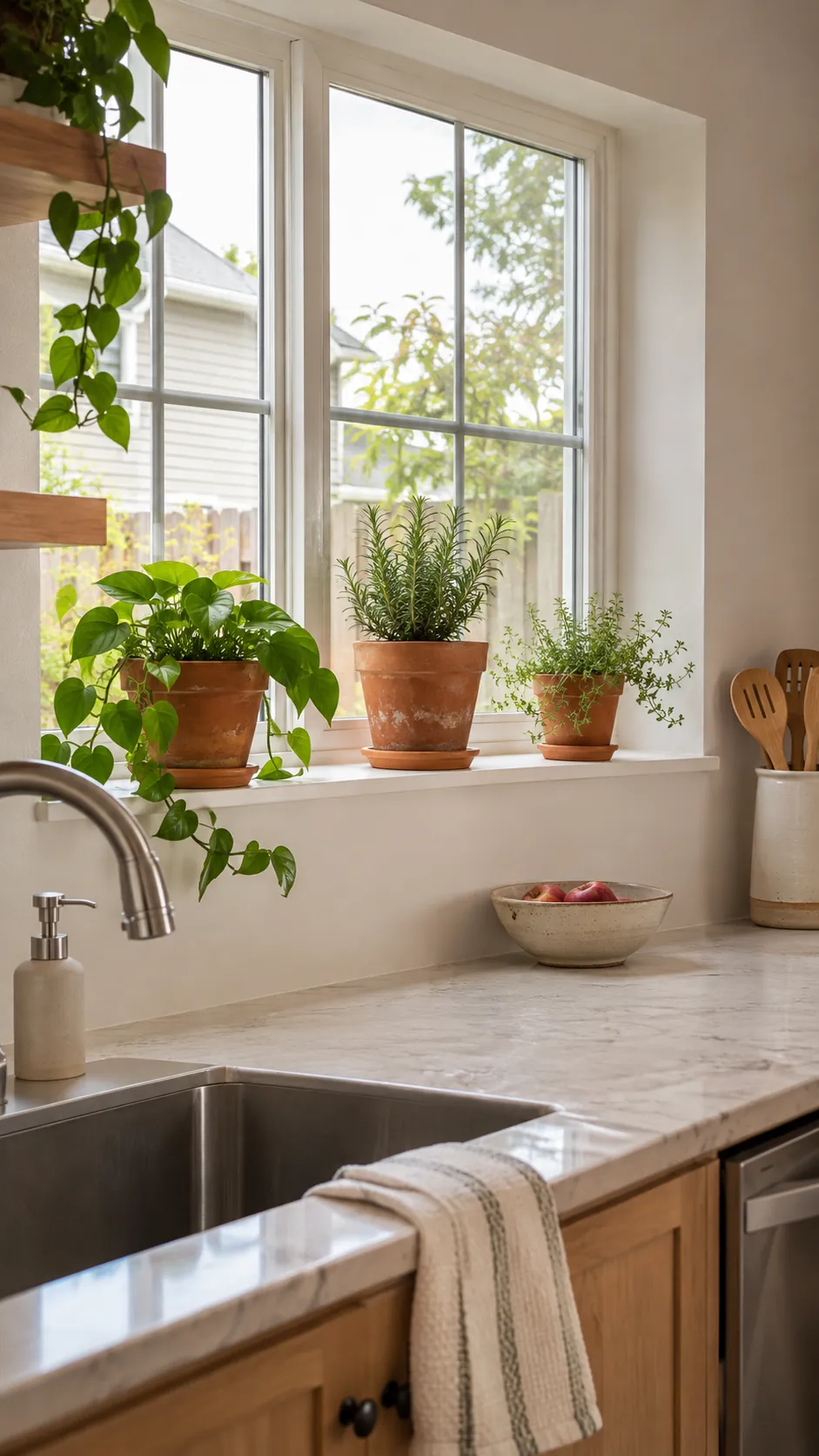
Display Branches in a Heavy Ceramic Vessel
Place a few locally gathered branches in a stable, watertight stoneware vessel. The tall organic silhouette fills empty vertical space without adding fussy decoration. Trim side twigs that interfere with chairs or nearby artwork.
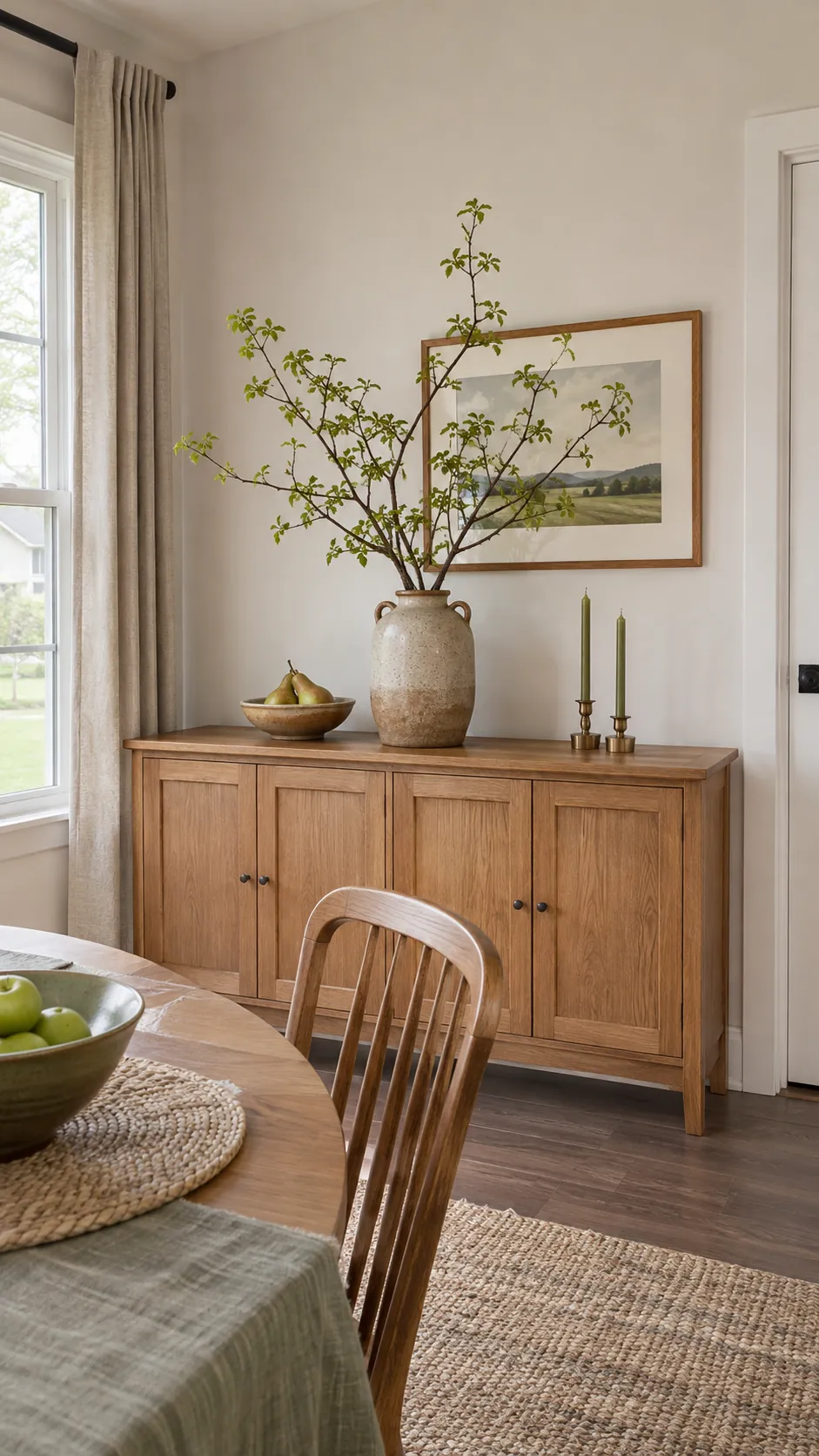
Swap Shiny Hardware for Aged Brass
Replace only the visible knobs and pulls, keeping hole spacing consistent to avoid extra drilling. A restrained brass finish warms flat cabinet fronts and will gain character through daily use. Order one sample pull first to confirm its projection feels comfortable.
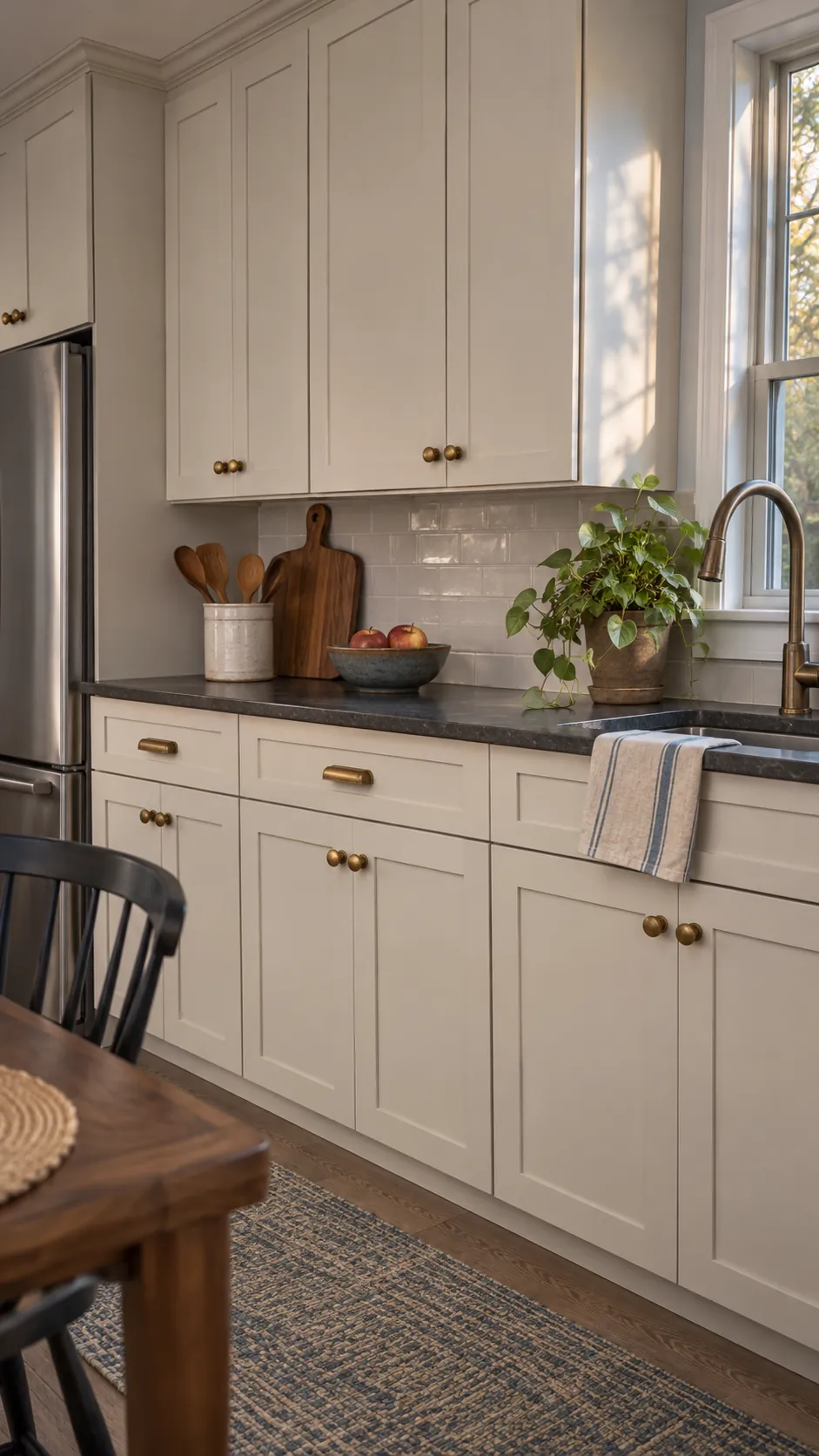
Use a Solid Wood Bench at the Entry
Set a compact wood bench outside the door swing and pair it with only one practical basket. The bench adds a natural surface while supporting shoes, bags, and everyday routines. Leave enough floor visible beneath the bench to keep the entry light.
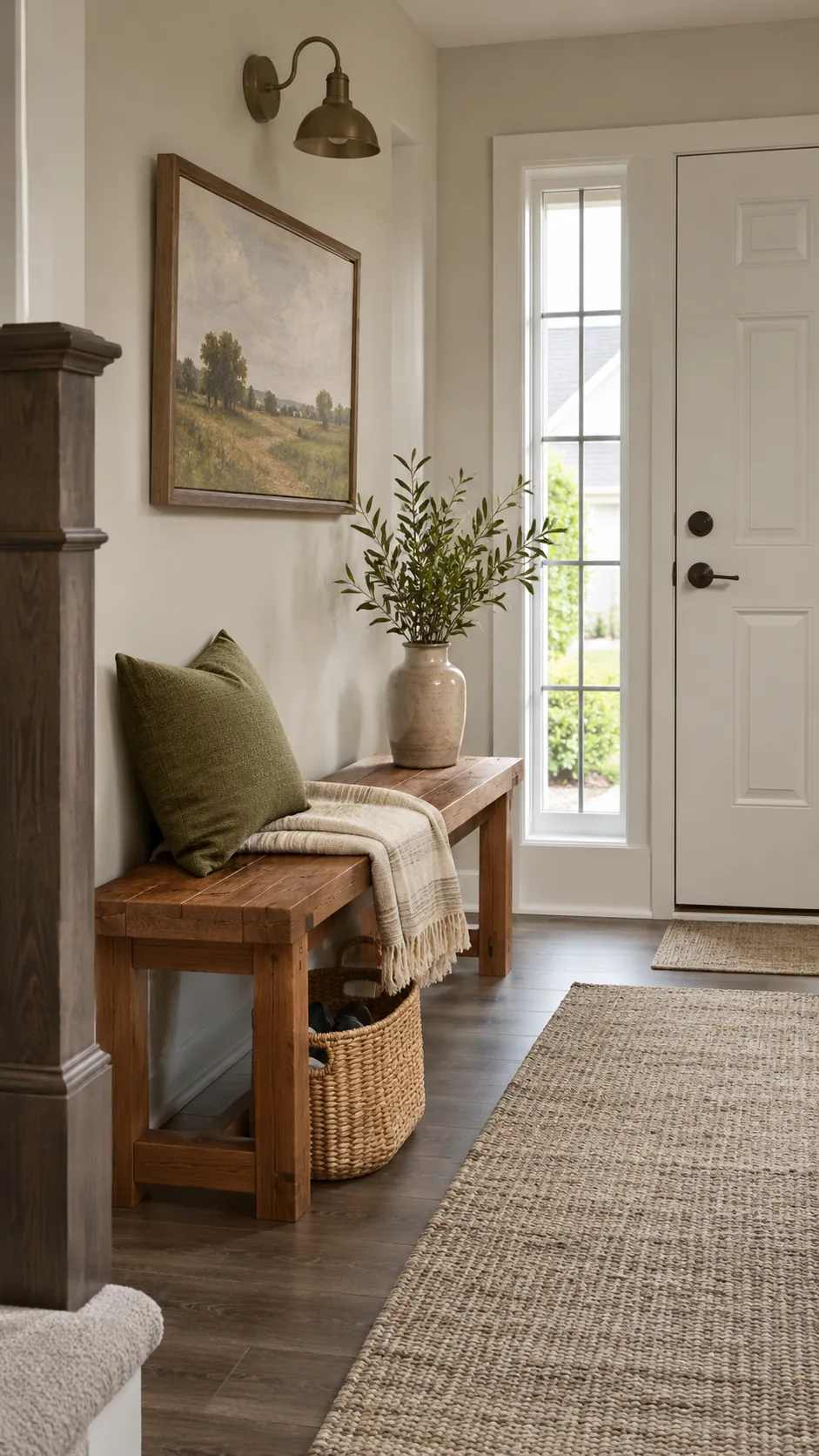
Hang a Large Round Wood Mirror
Choose a mirror with a simple oak or walnut frame and center it over a shallow surface. The curved frame interrupts boxy architecture and reflects useful daylight into the hall. Test the reflected view so the mirror does not double visible clutter.
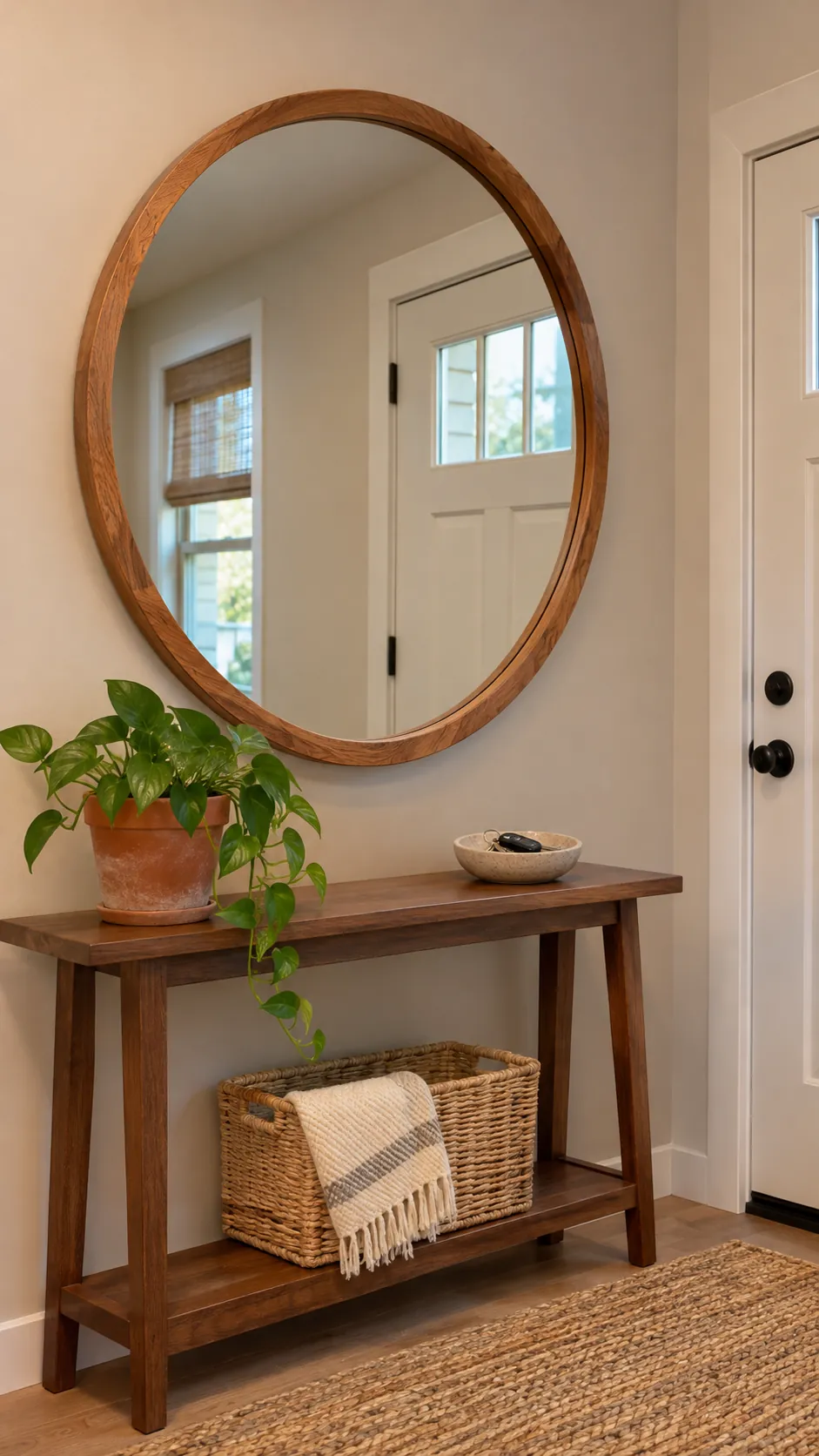
Build a Basket Drop Zone
Assign sturdy woven baskets to specific items and keep their tops easy to reach. The baskets conceal visual noise while their fiber texture softens plain white storage. Add small internal pouches if loose objects disappear inside deep baskets.
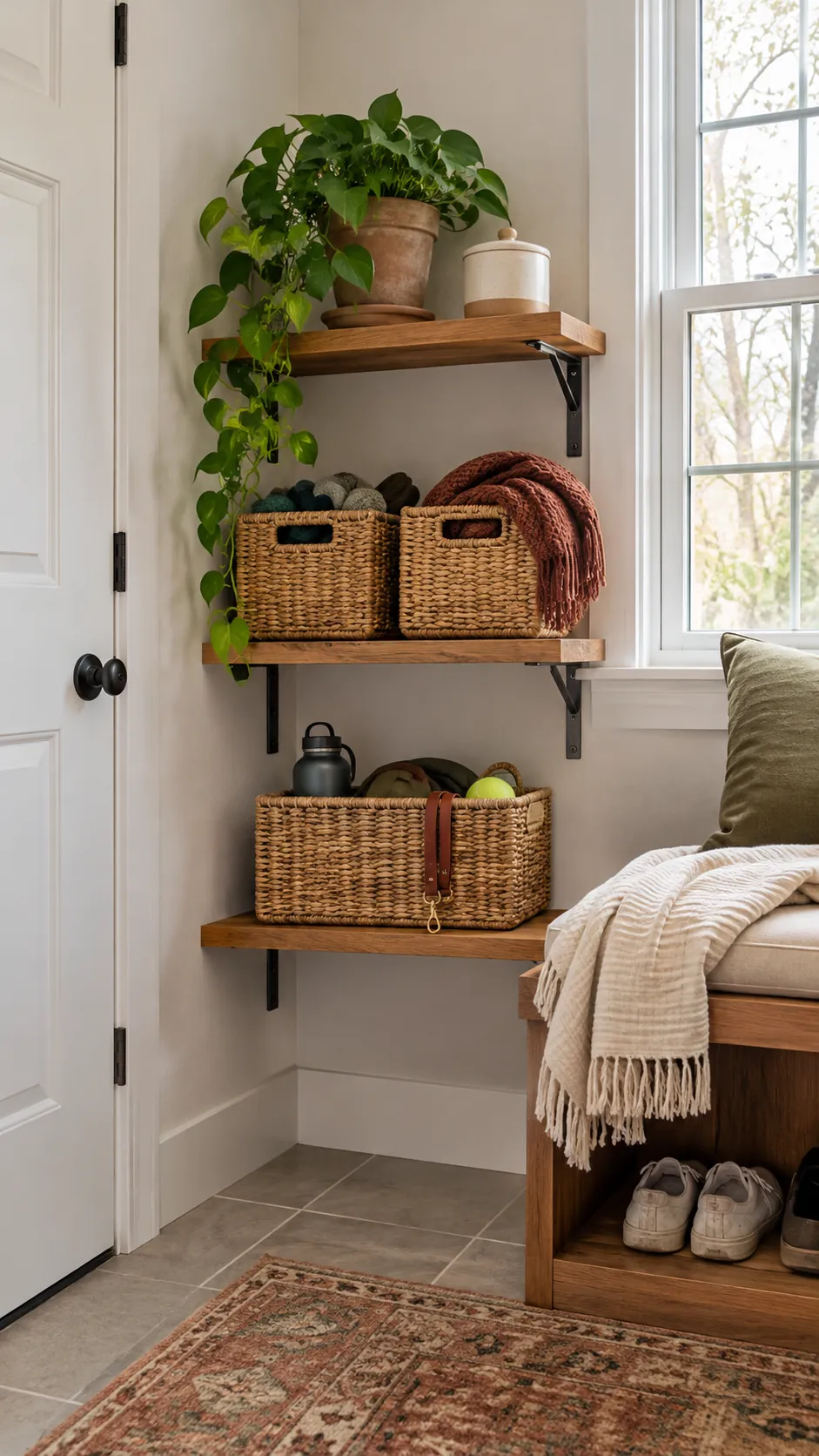
Mix Warm White Paint With Wood Tones
Use a creamy white on the largest walls and repeat medium wood in two or three visible pieces. The combination stays bright but avoids the blue-gray sterility common in unfinished new builds. Compare paint chips beside the flooring at morning and evening.
Choose a Stone Lamp Base
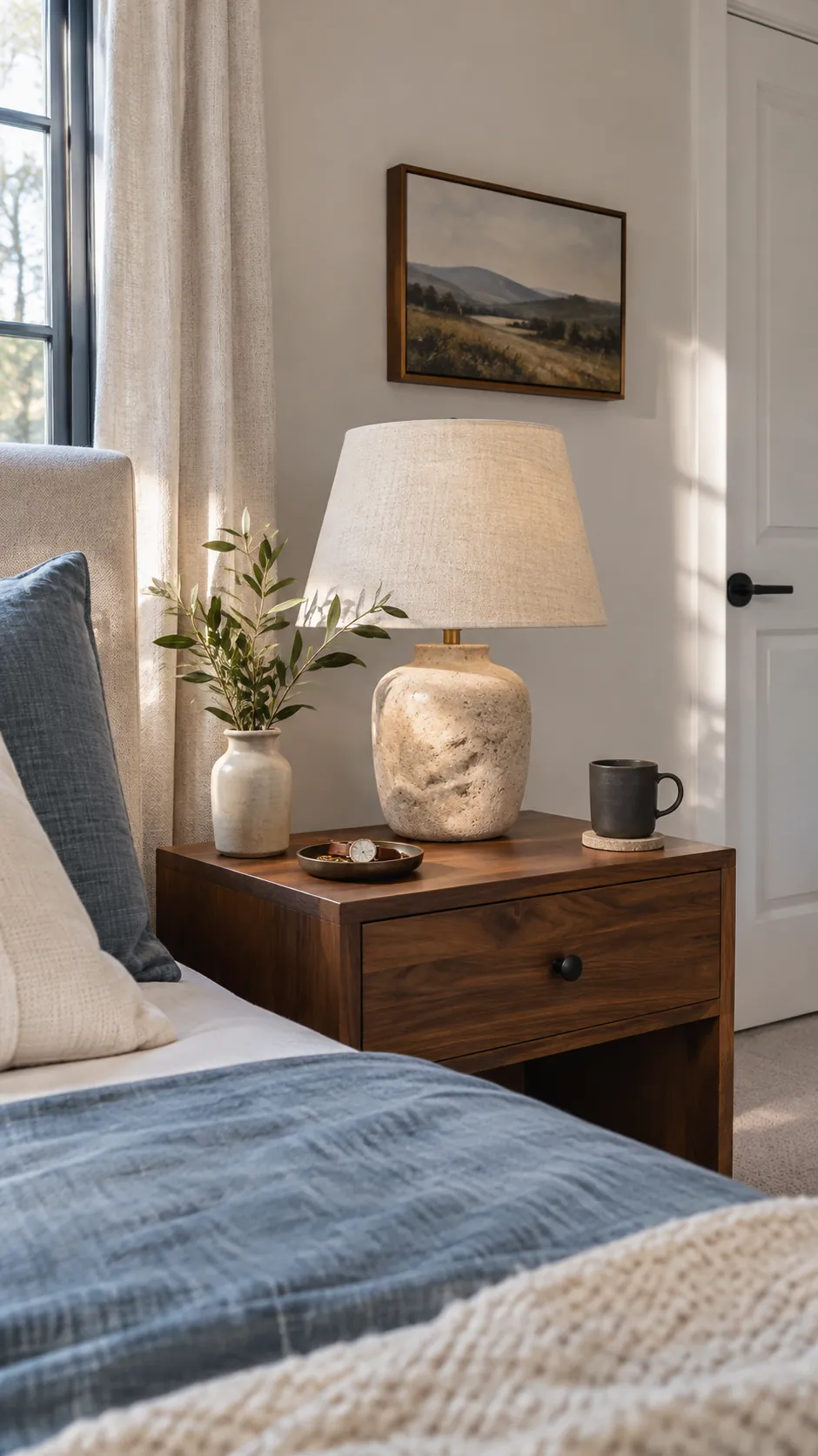
Use a compact lamp with a limestone, travertine, or rough ceramic base and a linen shade. The weight and texture make a basic nightstand arrangement feel settled rather than temporary. Fit a felt pad beneath the base to protect the nightstand surface.
Add a Cane-Front Cabinet
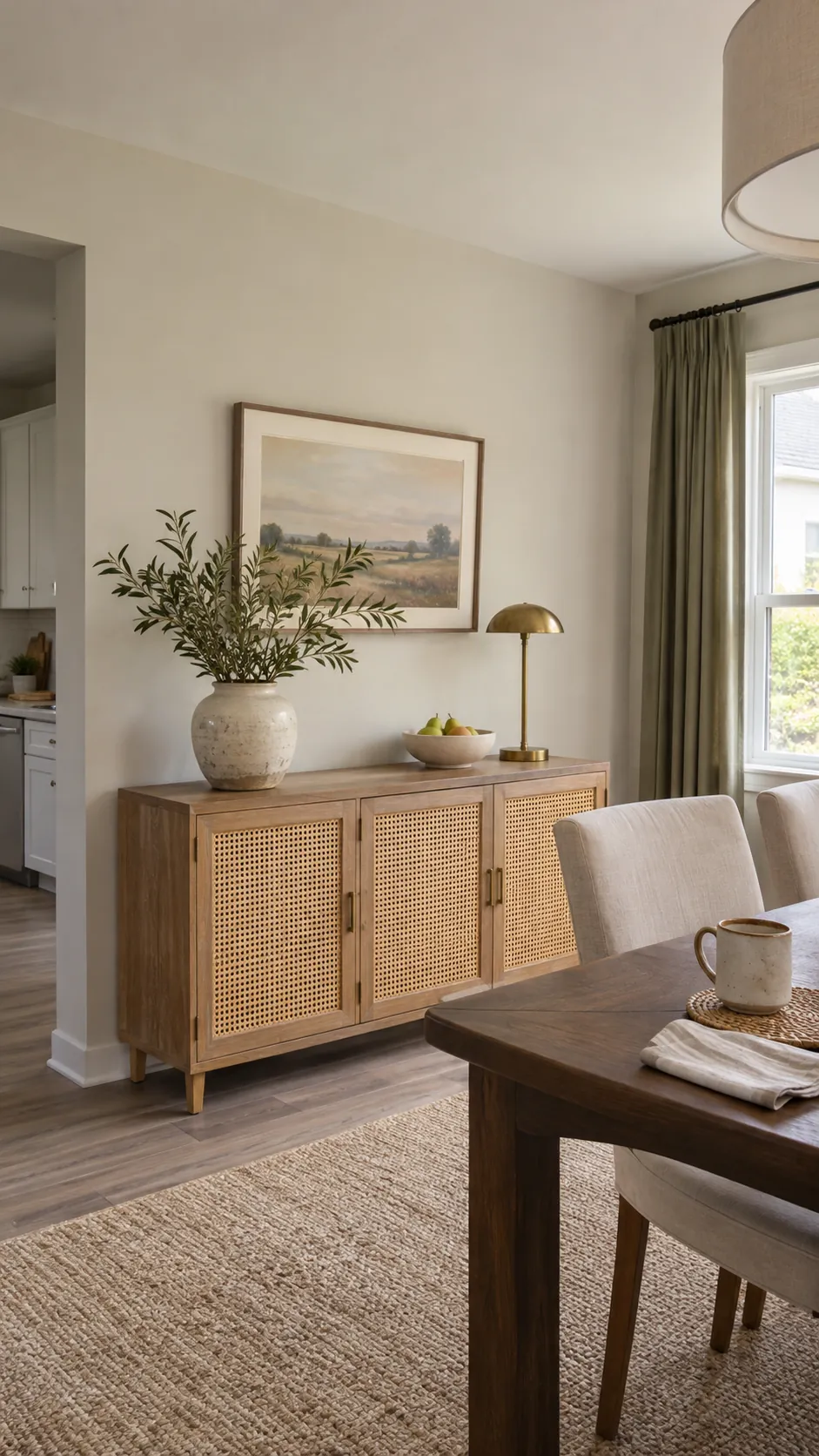
Place a low cane-front cabinet against an uninterrupted wall and preserve clear circulation. The woven panels hide storage while adding a light natural pattern to a flat room. Vacuum cane gently with a brush attachment instead of soaking the fibers.
Frame Botanical Studies in Oak
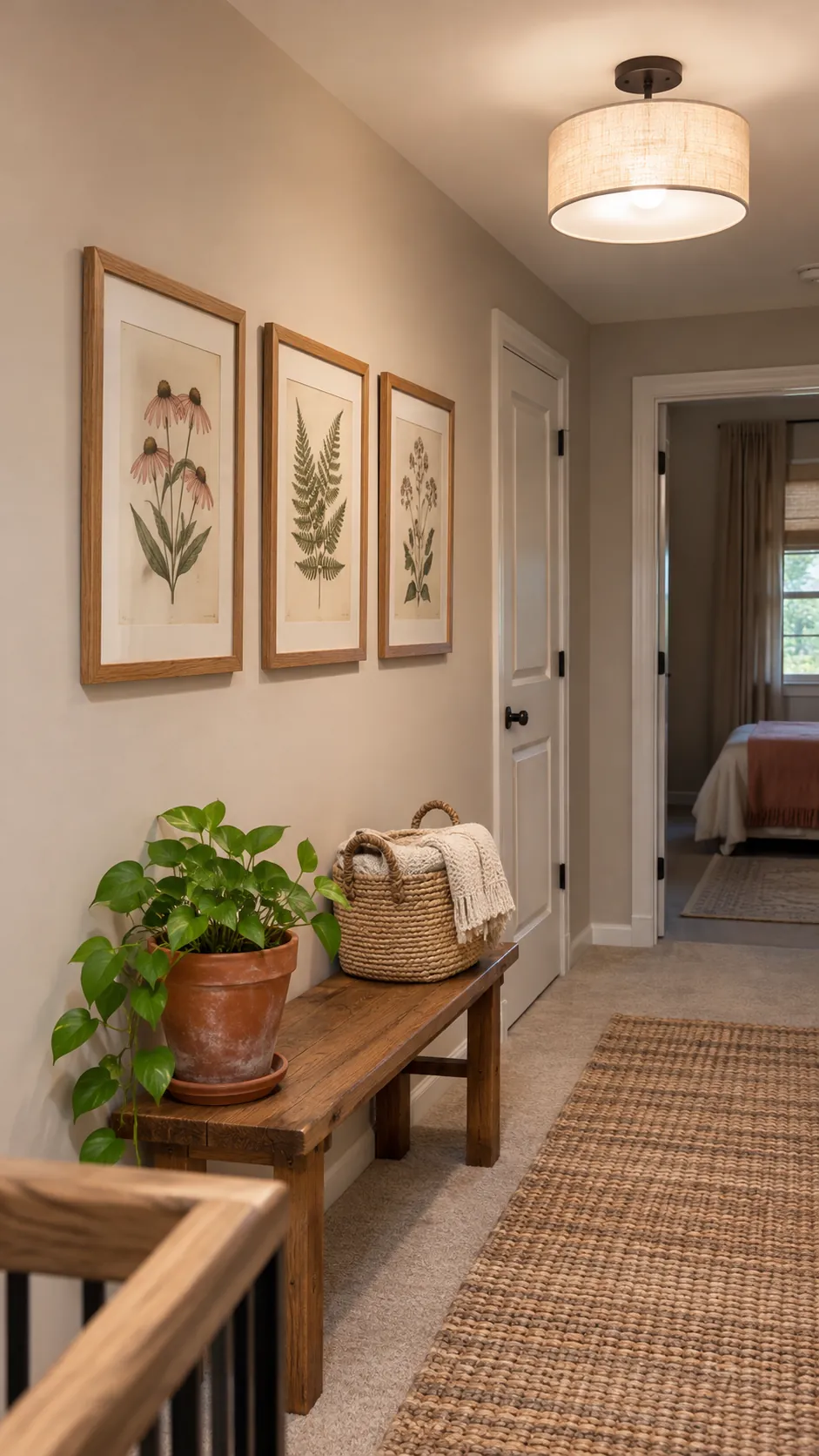
Hang a small series of botanical prints in matching oak frames with consistent gaps. The organic subjects and repeated wood bring rhythm to a blank builder-grade passage. Use acid-free mats so the paper stays clean against the warm frames.
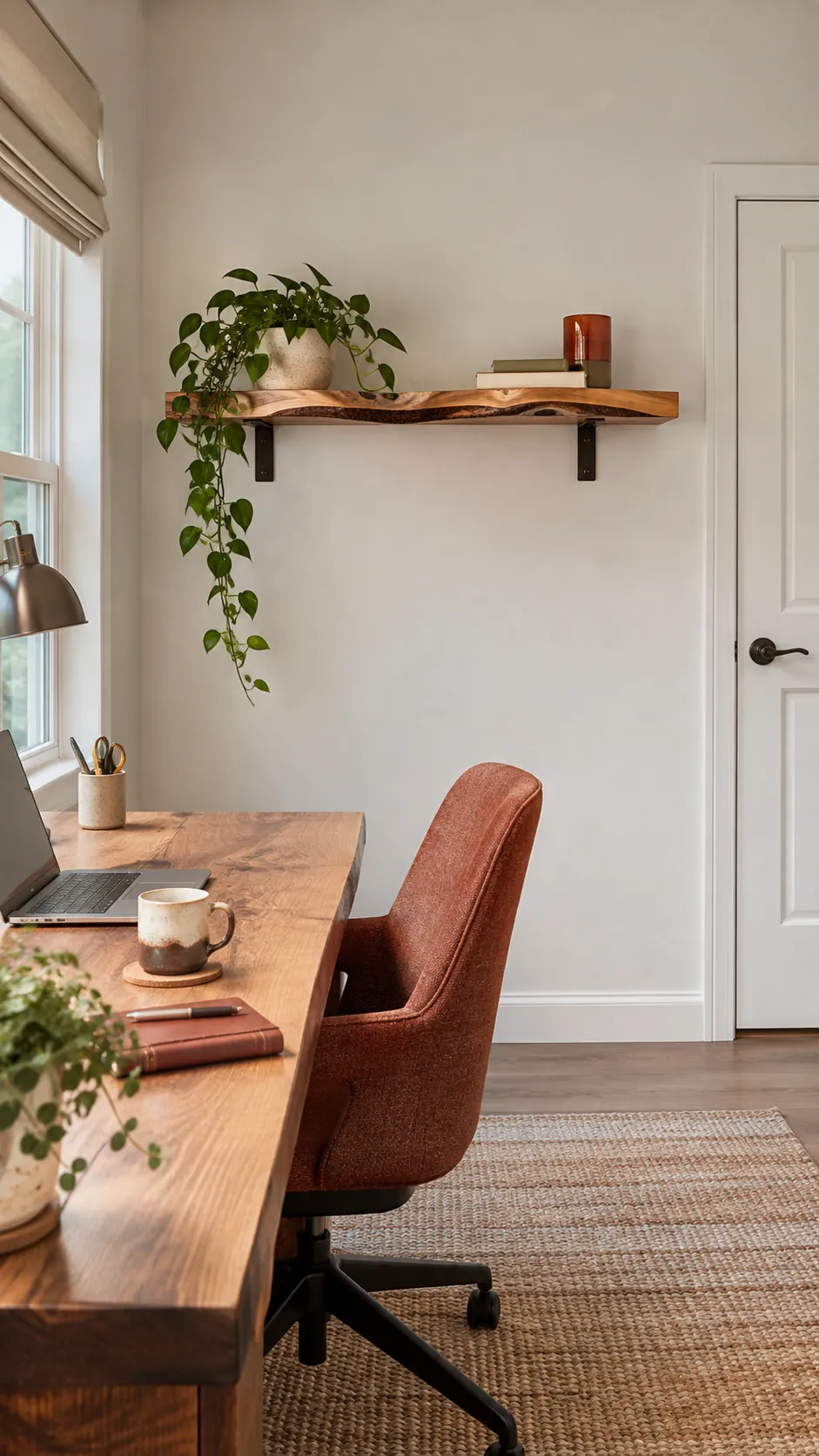
Use a Live-Edge Shelf Sparingly
Install one well-supported live-edge shelf and leave generous blank wall around it. A single irregular edge adds character without turning the room into a rustic theme. Keep the shelf load modest and anchor its brackets into solid framing.
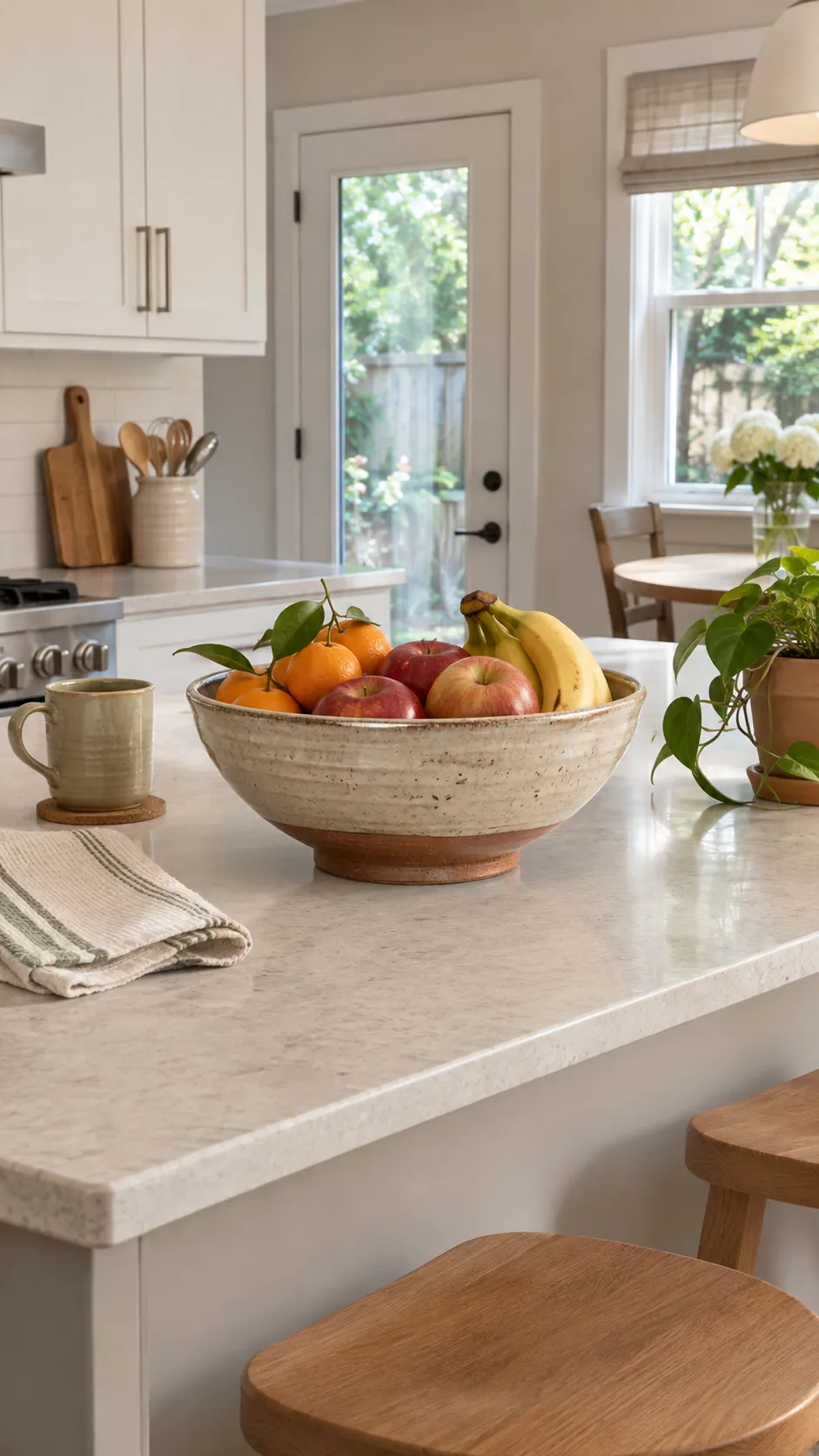
Set Out a Hand-Thrown Fruit Bowl
Choose a broad ceramic bowl with a stable foot and fill it with ordinary seasonal fruit. The handmade form gives a polished island one useful, changing focal point. Wash fruit before filling the bowl so moisture does not mark the glaze.
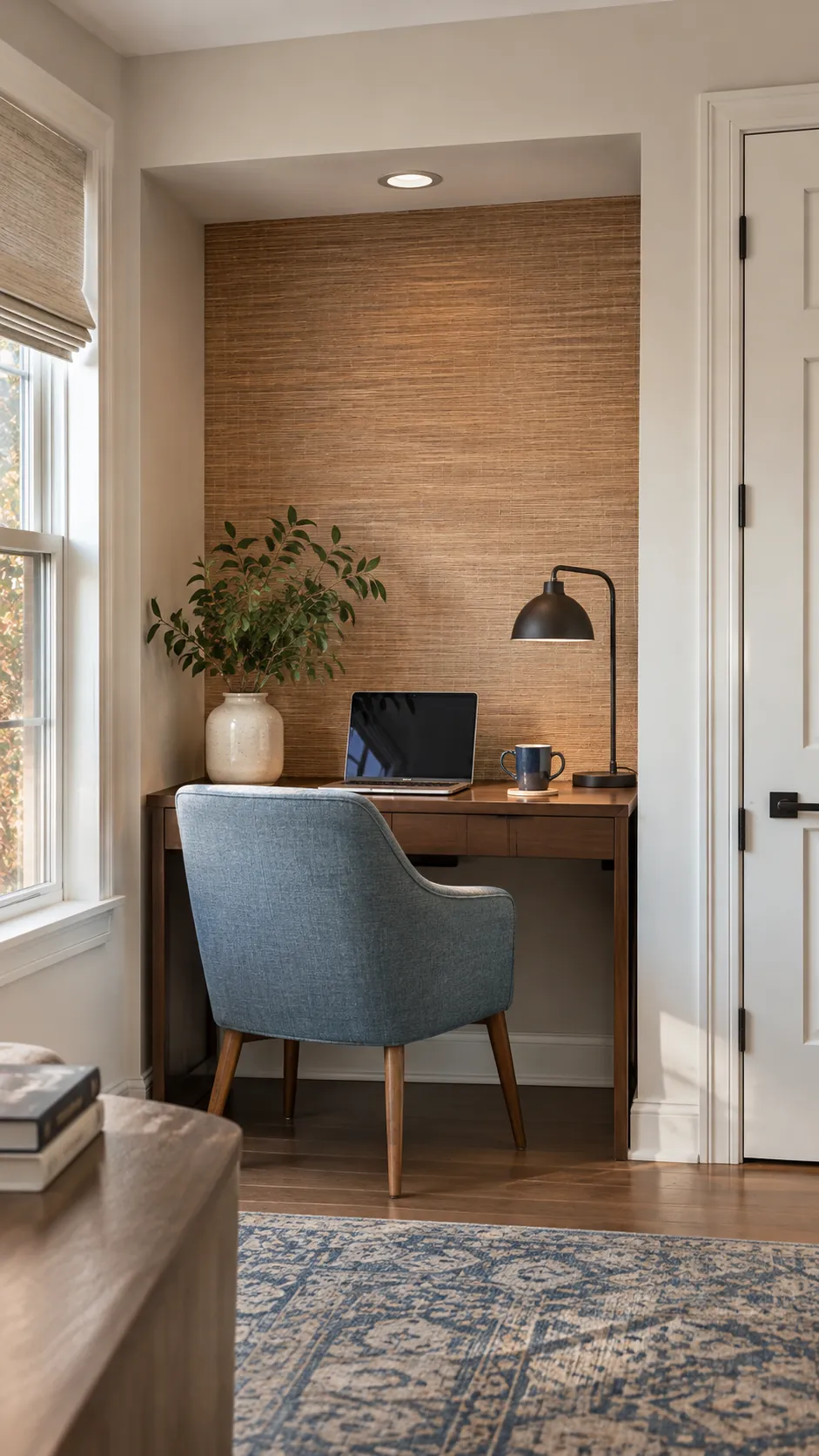
Add Cork or Grasscloth to One Niche
Cover a small recessed wall with natural cork or authentic grasscloth and finish the edges cleanly. Concentrating texture in one zone keeps the treatment affordable and visually controlled. Order a large sample because seams and light can change the texture.
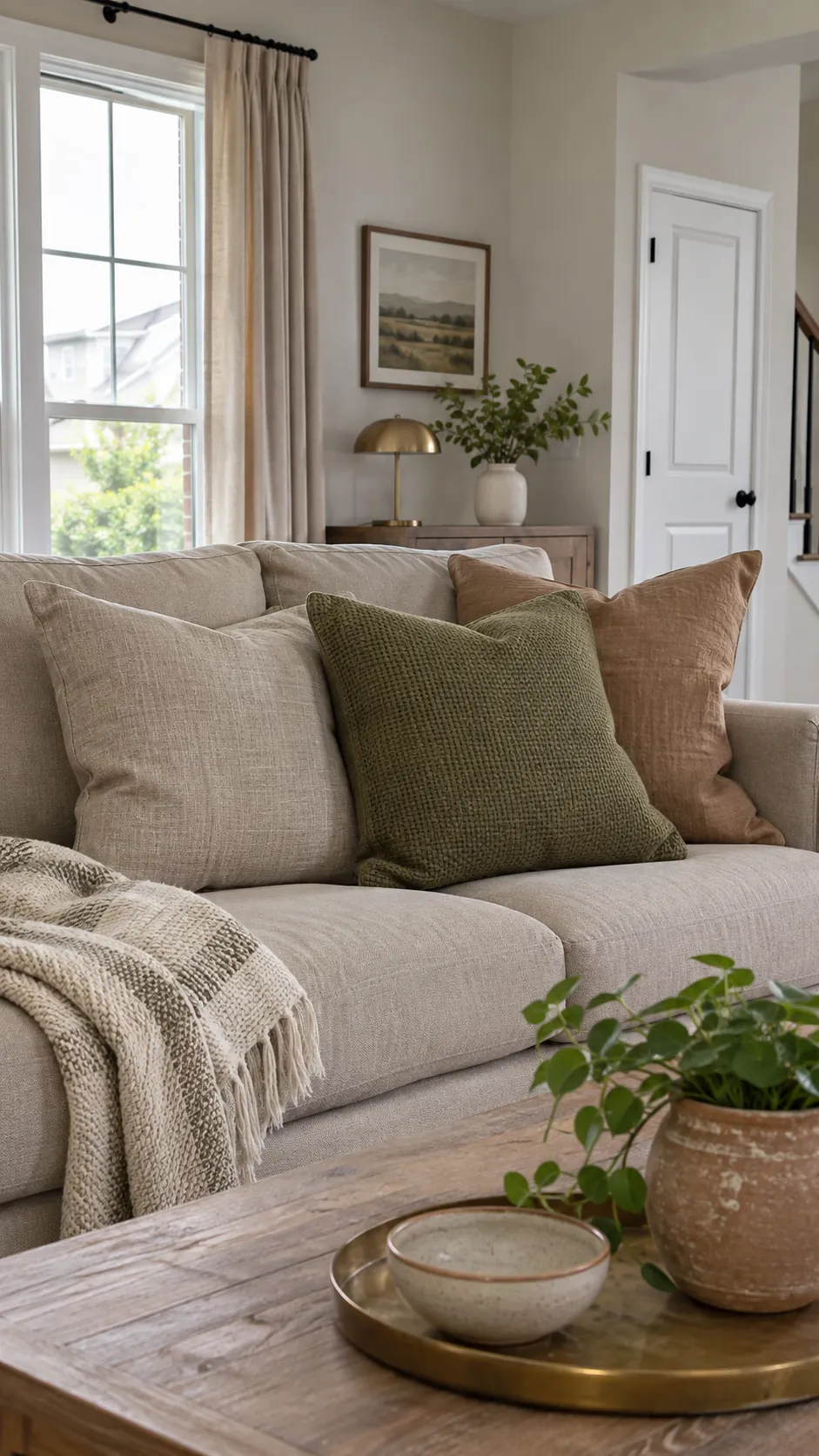
Layer Cotton and Linen Pillows
Mix two linen covers with one heavier cotton weave in related earthy colors. Subtle differences in weave make a plain sofa feel collected without relying on loud patterns. Vary pillow sizes slightly so the sofa looks relaxed but still usable.
Drape a Washed Wool Throw
Fold a washed wool throw loosely over the arm while keeping the seat usable. The soft irregular folds add warmth and signal comfort in an otherwise crisp room. Air wool outdoors periodically and remove pills with a proper comb.
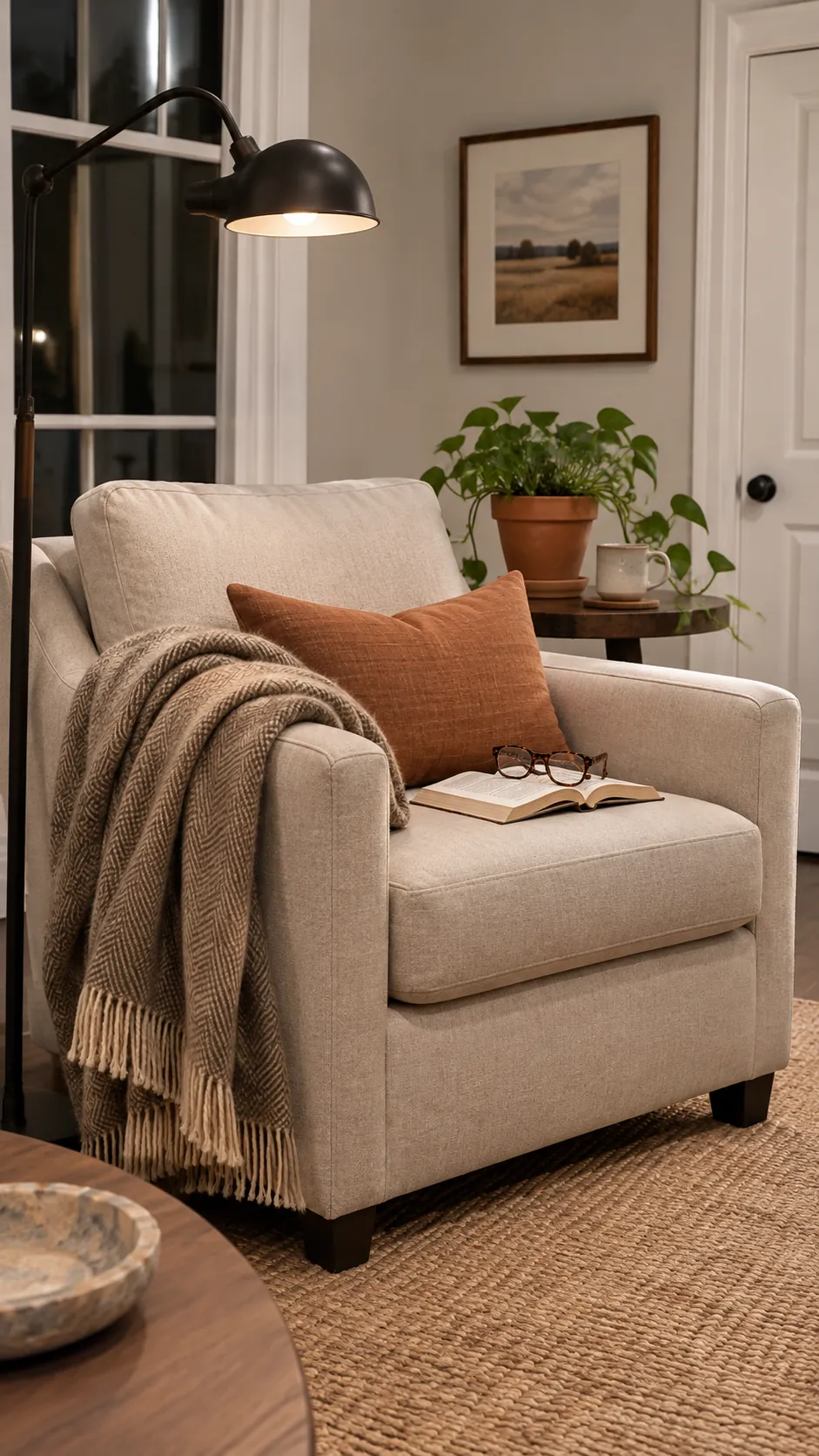
Place a Jute Runner in the Hall
Size a tightly woven jute runner to leave even flooring margins and clear every doorway. Its linear texture gives movement to a blank corridor while maintaining a quiet neutral palette. Use a nonslip layer beneath jute if the hallway floor is smooth.
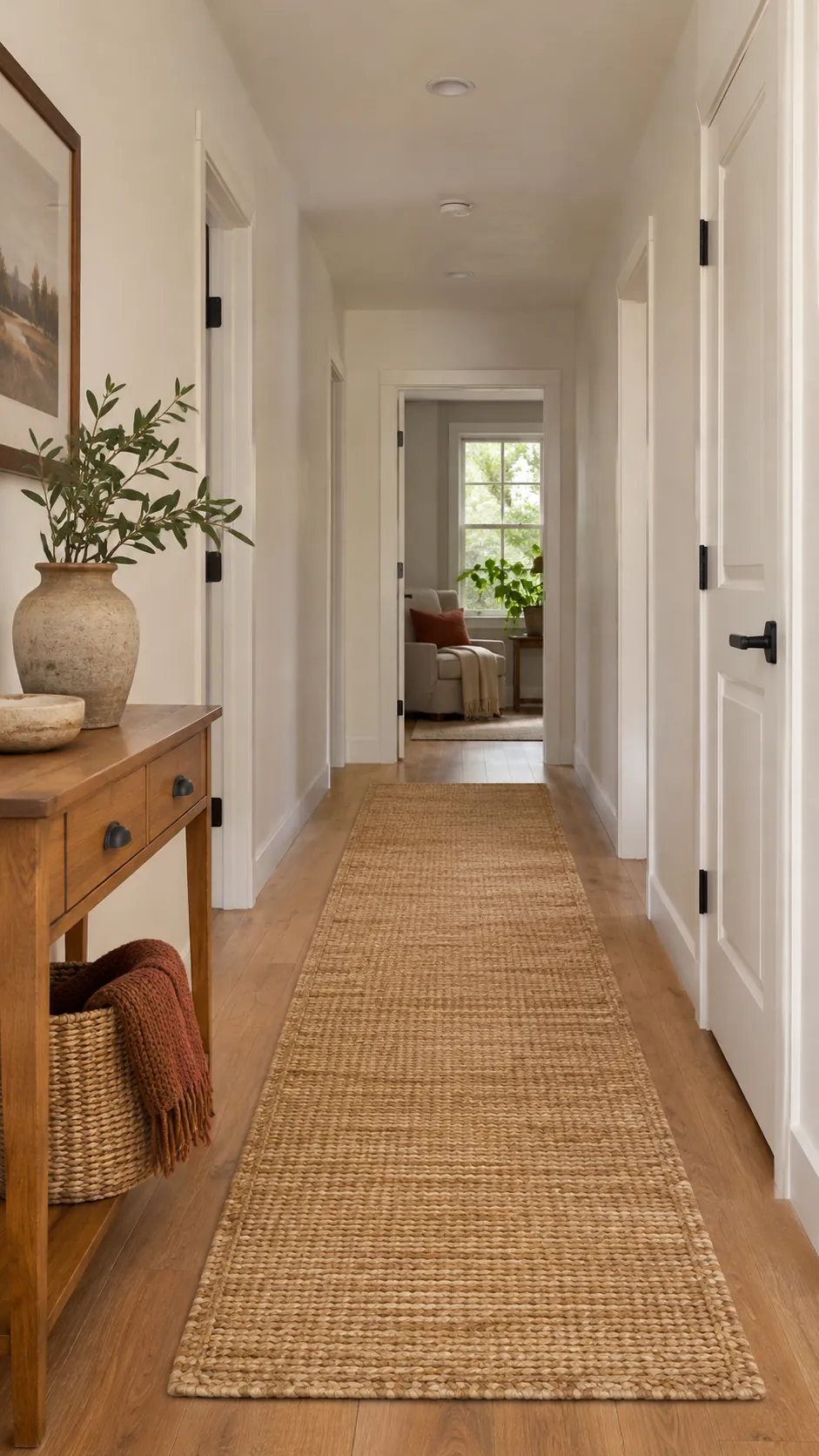
Use Seagrass Around a Planter
Set a healthy indoor tree in a waterproof liner inside a structured seagrass basket. The woven cover integrates the plant with the room and hides an ordinary nursery pot. Keep the waterproof liner above the basket base but below its rim.
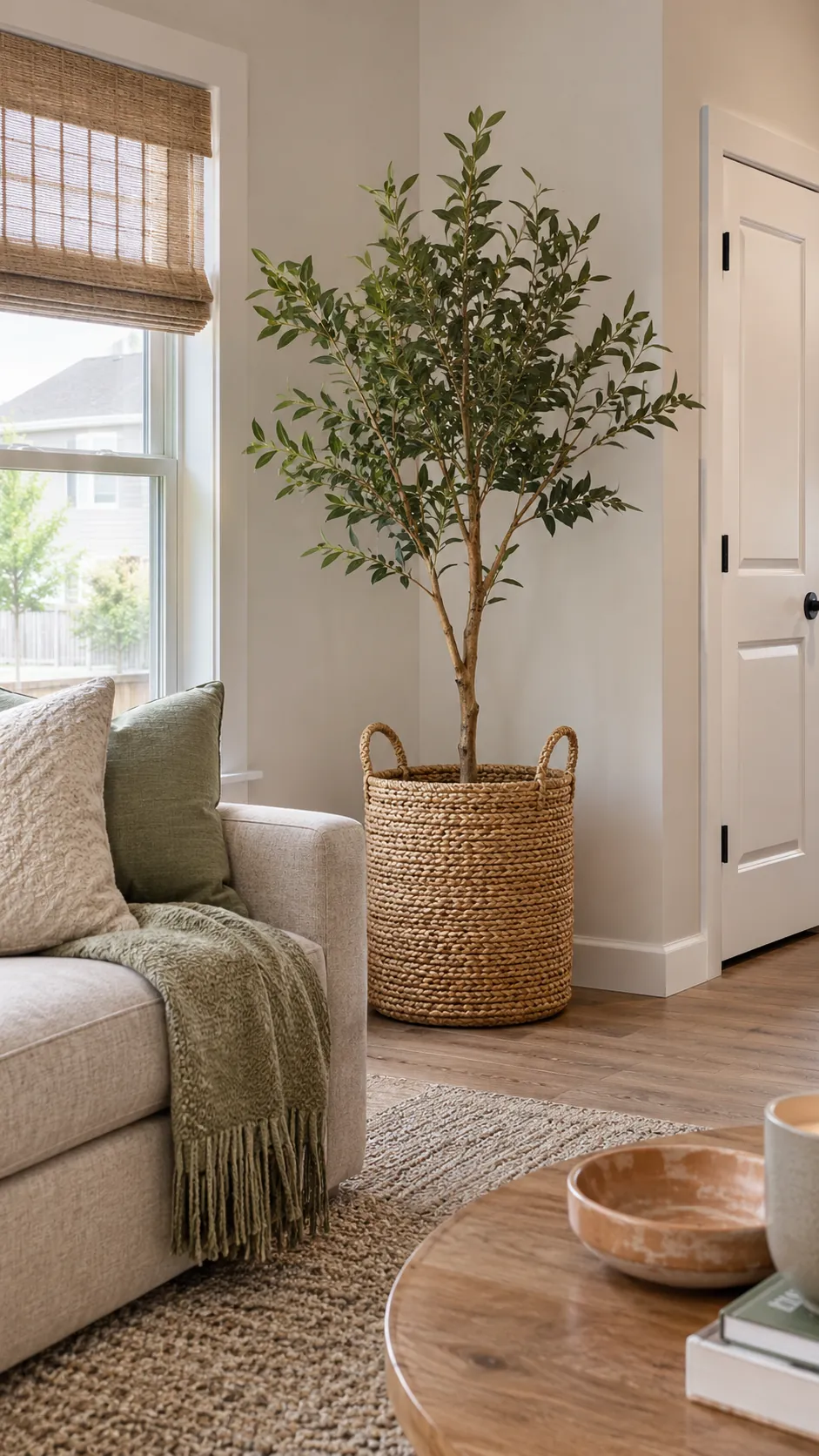
Add an Olive Tree Near Bright Glass
Place a correctly scaled olive tree near the brightest window without blocking the walking route. Its fine leaves introduce movement and a muted green that works with warm neutral rooms. Rotate the pot monthly and check the soil before adding more water.
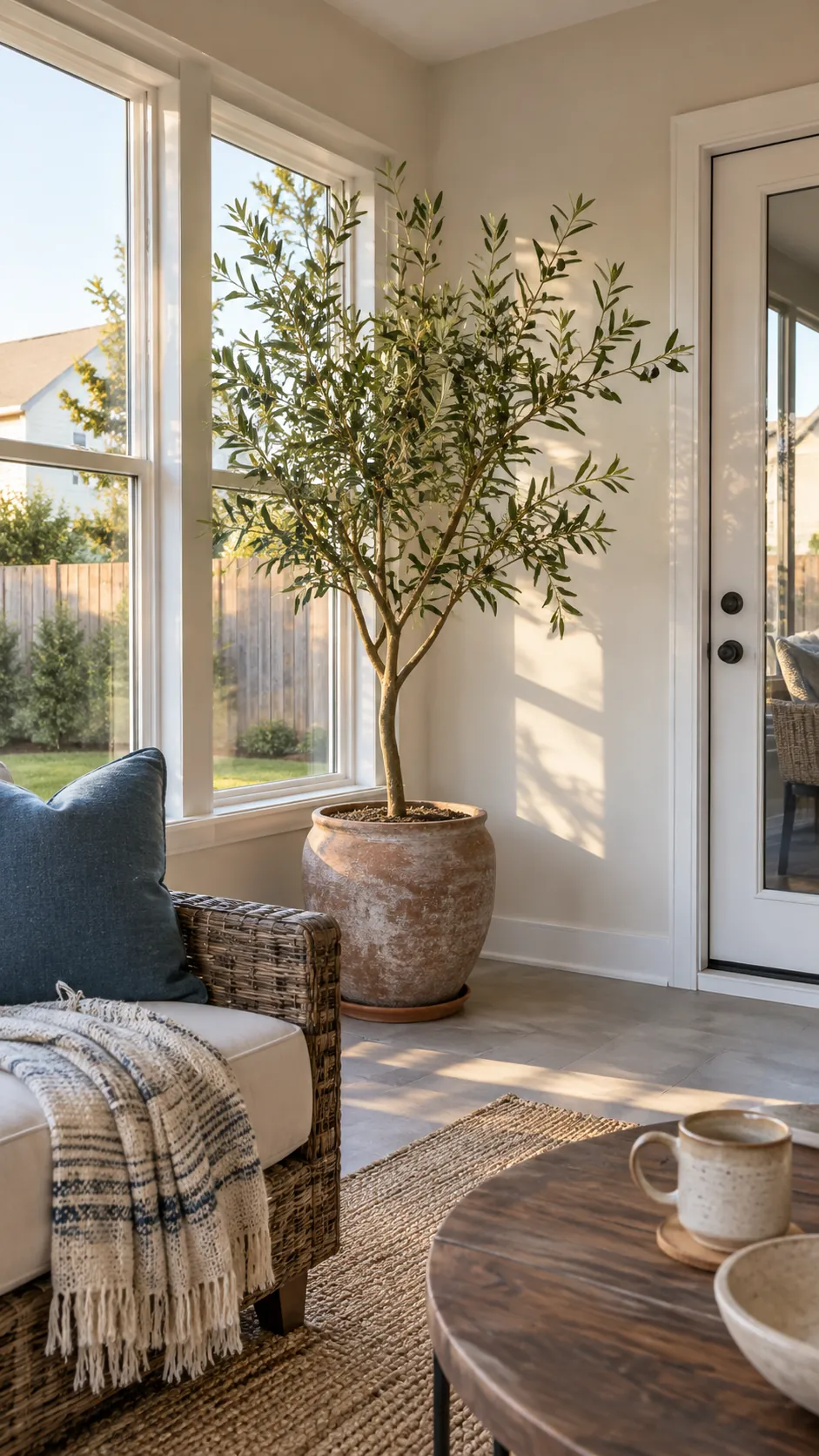
Create a Herb Rail by the Kitchen Window
Mount a simple rail securely and hang a few lightweight herb pots where they receive usable light. Fresh herbs add scent, color, and daily function instead of decorative clutter. Select herbs you actually cook with and remove any that decline.
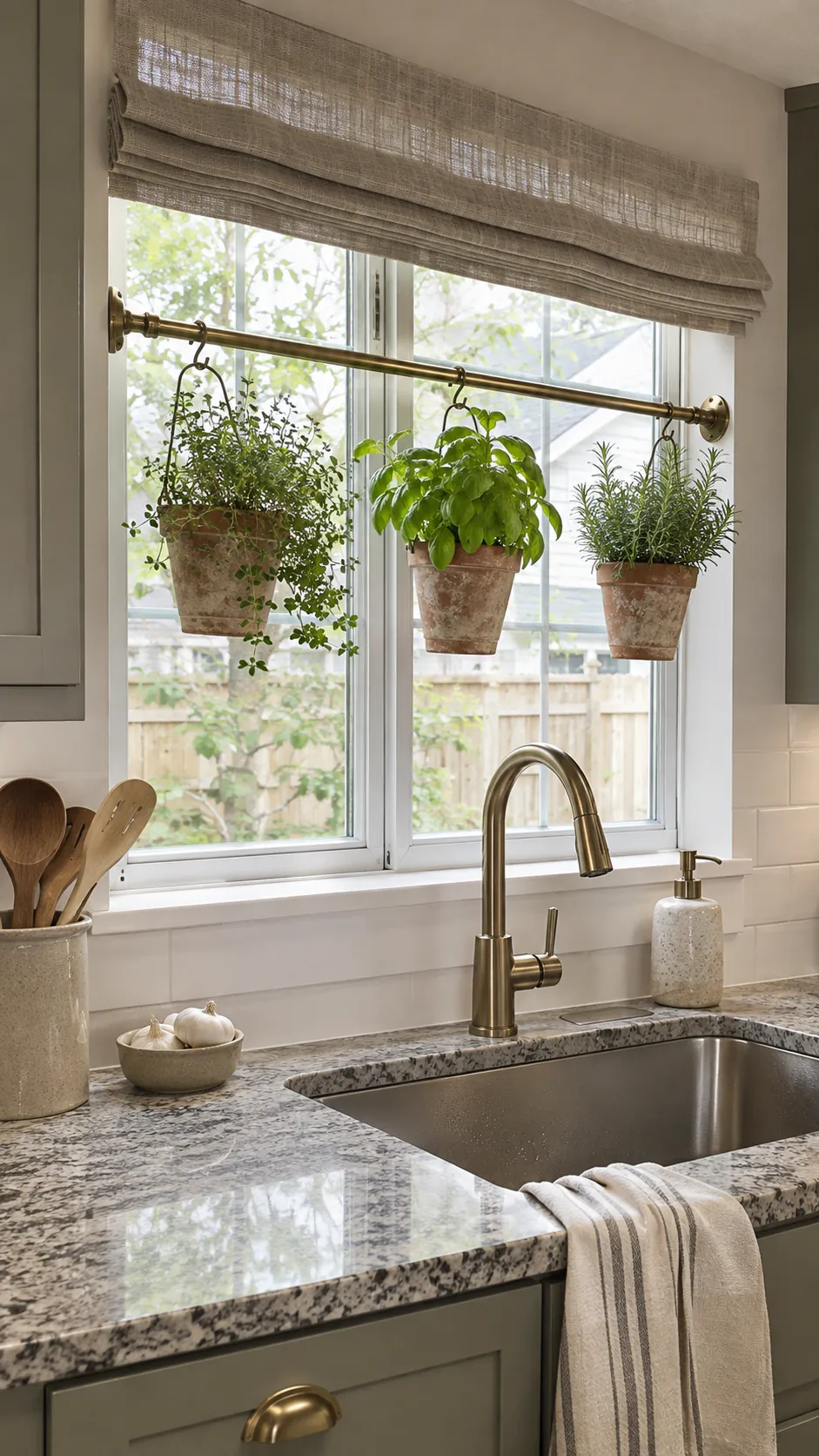
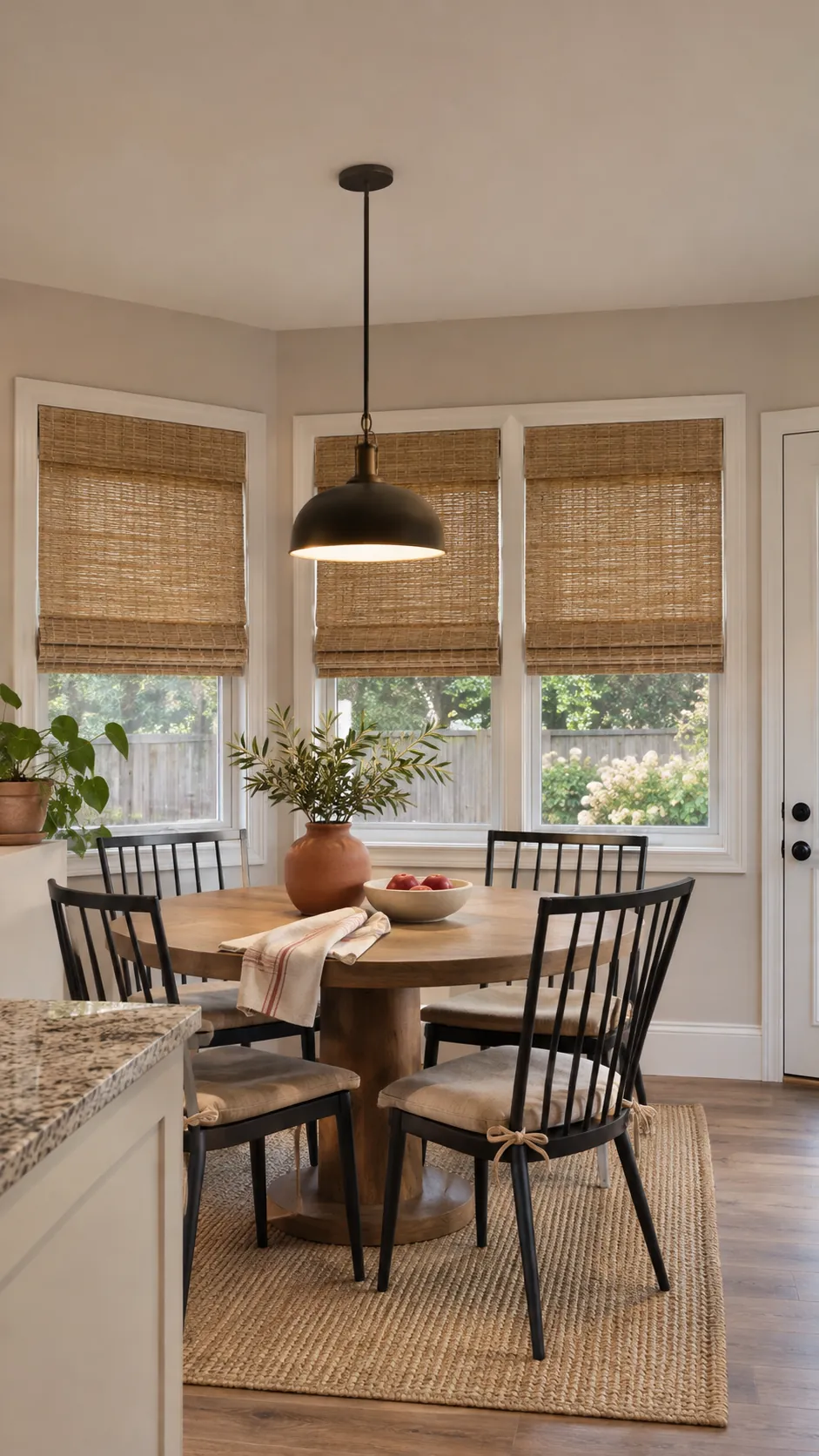
Use Natural Roman Shades
Fit lined woven shades inside each window frame and keep the folds level. The repeated fiber surface warms standard windows while preserving a tailored outline. Vacuum woven shades with low suction to prevent dust from settling.
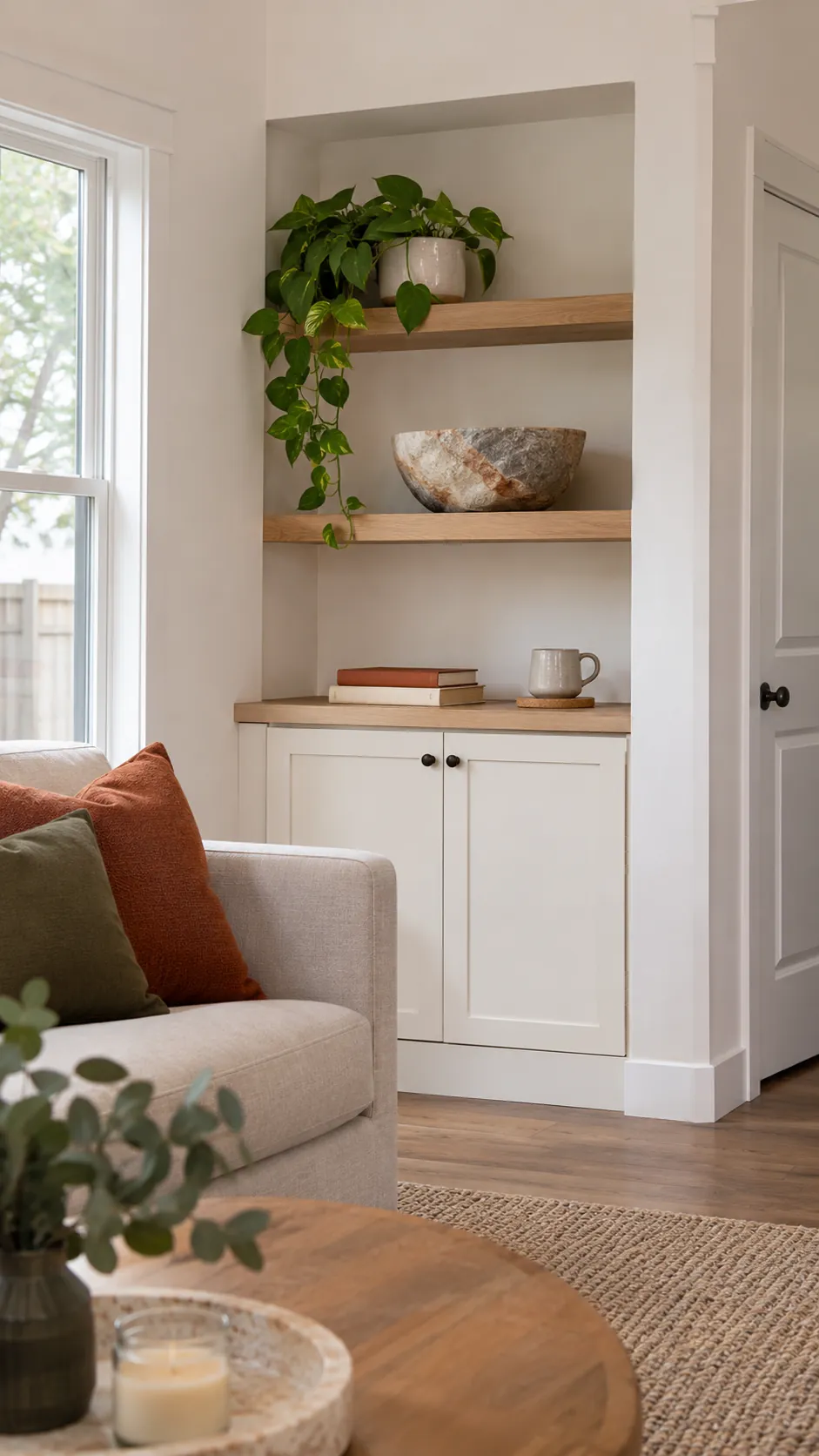
Replace Plastic-Looking Decor With Stone
Trade several glossy accessories for one or two pieces of real stone or unglazed ceramic. Fewer substantial objects make shallow shelves feel calmer and more permanent. Let the stone piece stand alone rather than surrounding it with duplicates.
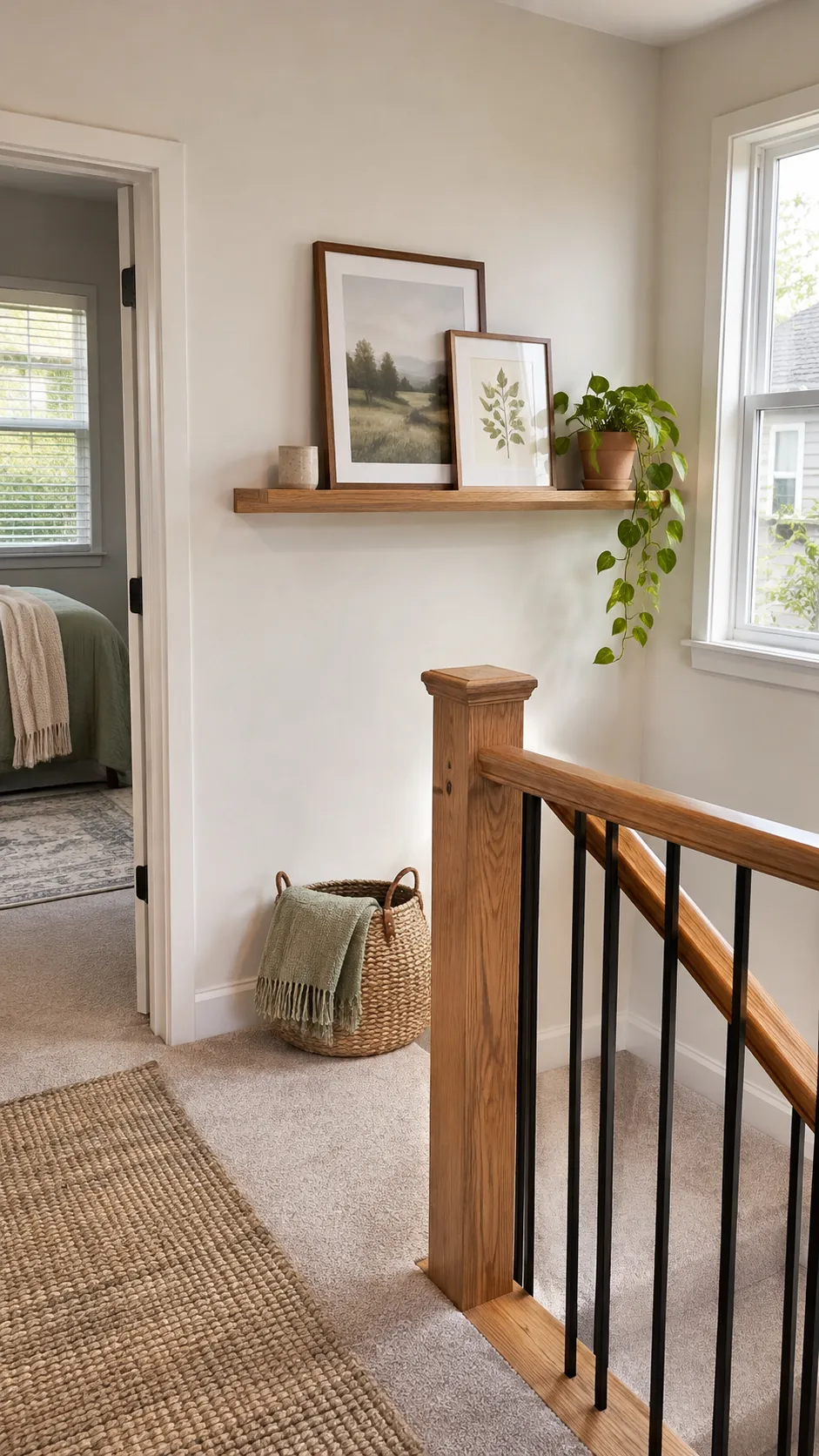
Choose an Oak Picture Ledge
Install a slim oak ledge into studs and overlap a few framed pieces without crowding it. The ledge adds a horizontal wood line and lets the display change without repeated wall holes. Use removable picture hooks on the ledge when the home must stay flexible.
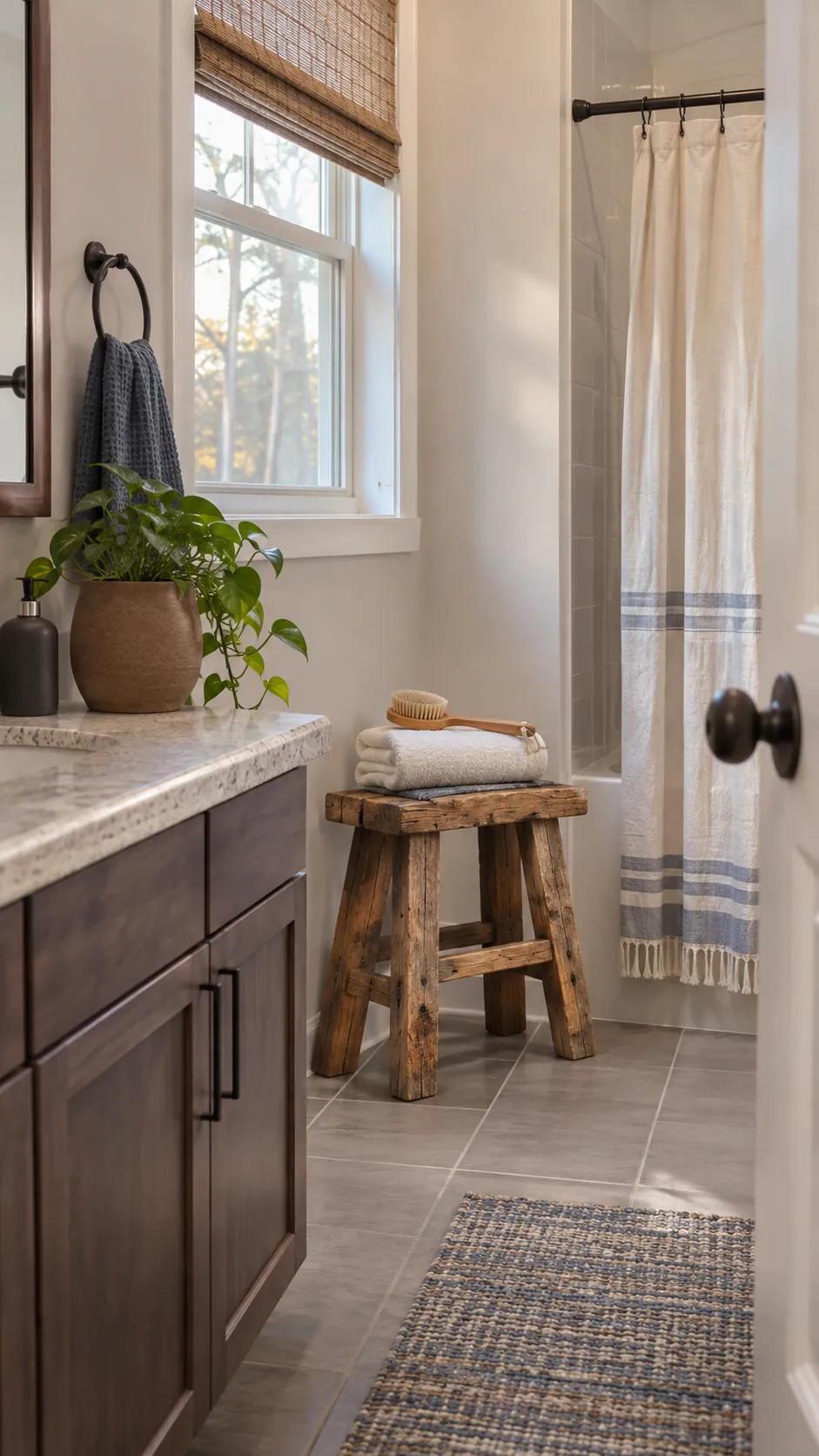
Bring in a Reclaimed Wood Stool
Use a sealed reclaimed-wood stool outside the splash zone for towels or a bath brush. Its worn grain gives a new bathroom contrast while remaining useful and easy to move. Dry the stool promptly after splashes to protect its sealed joints.
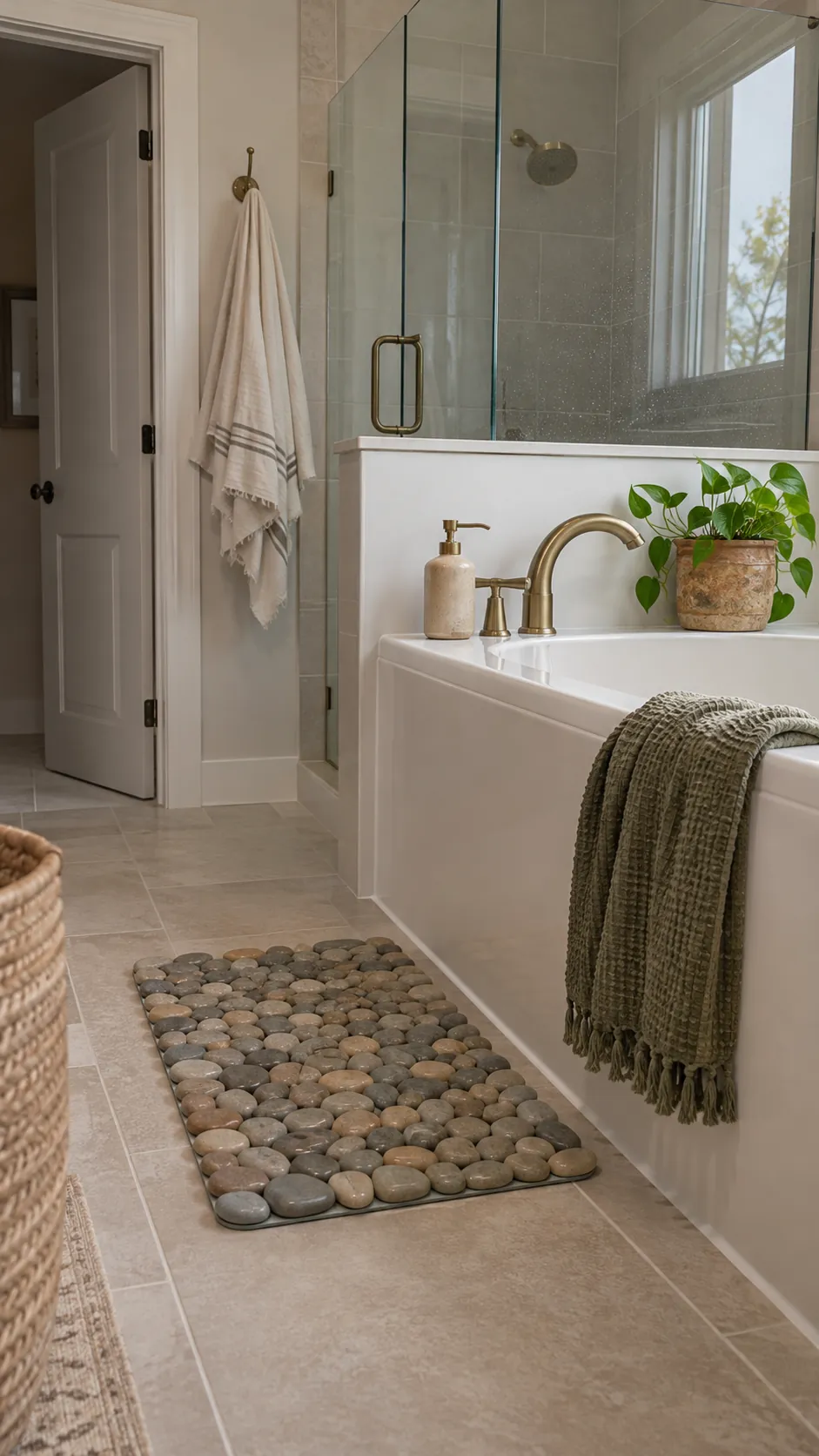
Add a Pebbled Stone Bath Mat
Place a smooth, stable stone mat beside the tub where it can drain and dry fully. Natural stone provides a tactile counterpoint to glossy tile without adding another pattern. Confirm that the mat lies flat and does not rock on uneven tile.
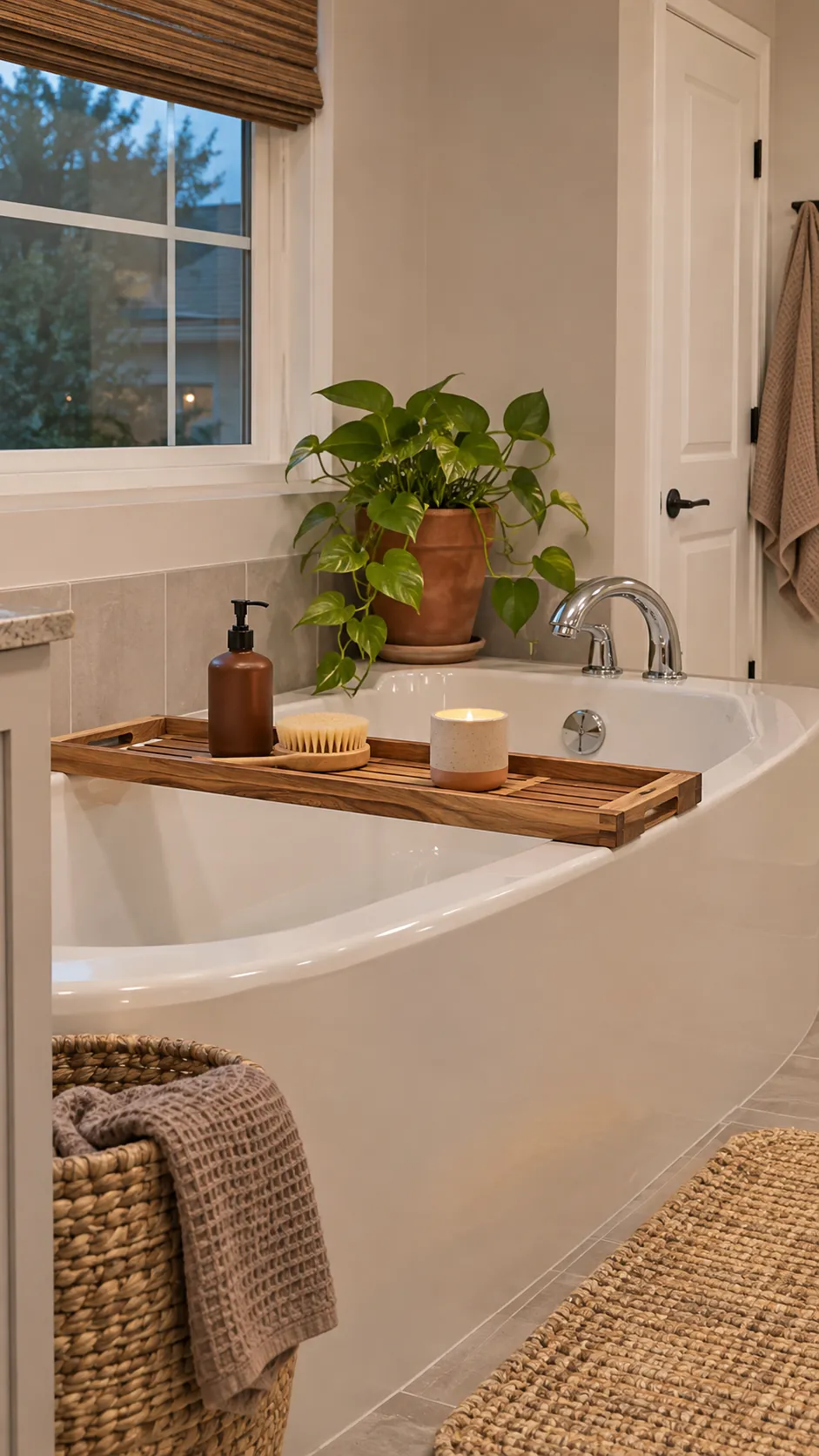
Use a Teak Tray at the Tub
Rest a well-fitted teak tray across the tub and keep only daily essentials on it. The warm wood breaks up a large white surface and prevents bottles from becoming scattered clutter. Allow the tray to dry upright between baths to limit mildew.
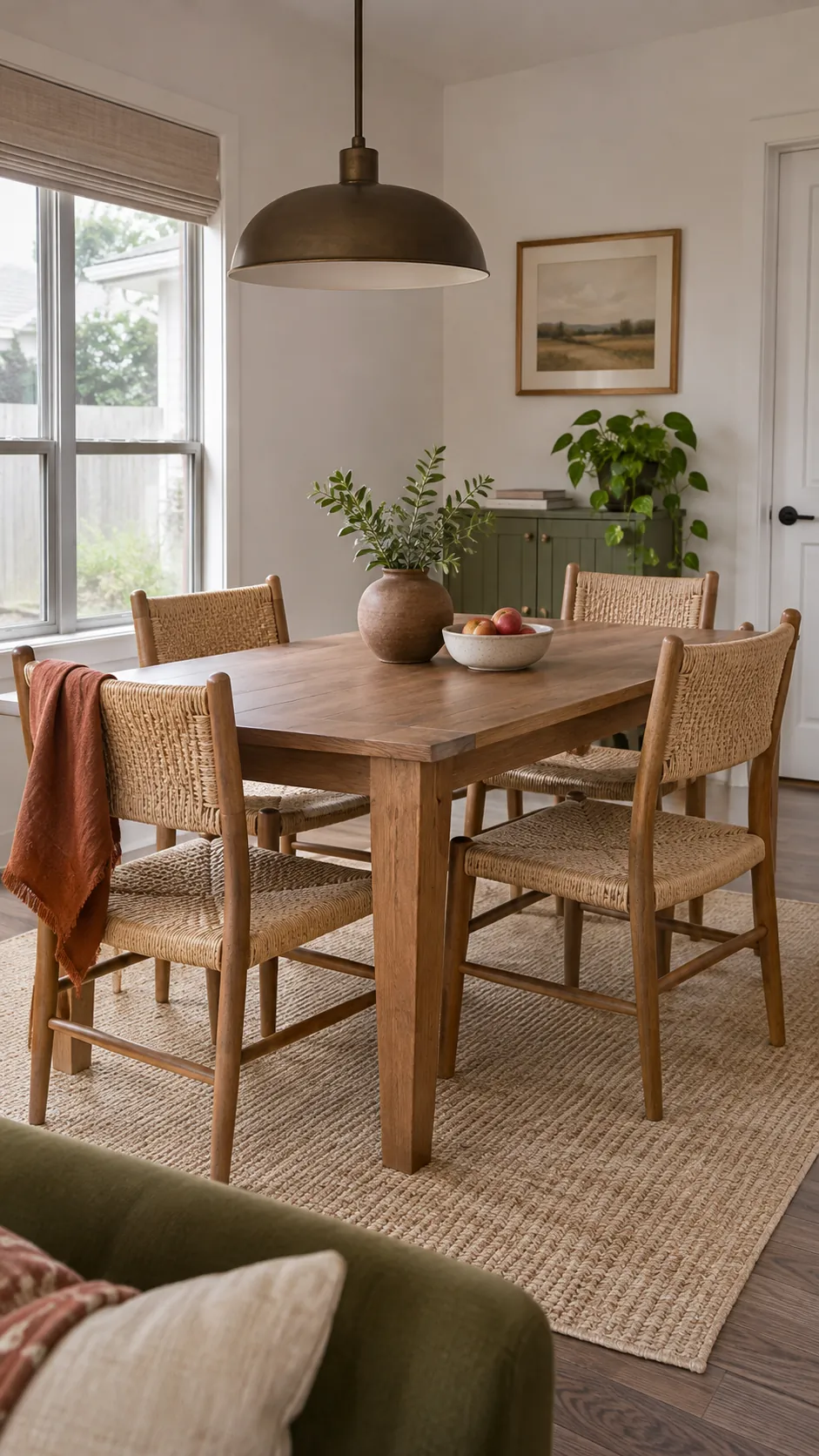
Choose Woven Dining Chairs
Pair a simple wood table with chairs that have cane or rush seats and supportive proportions. Their open weave adds detail while keeping the dining area visually light. Check seat height against the table before committing to a full set.
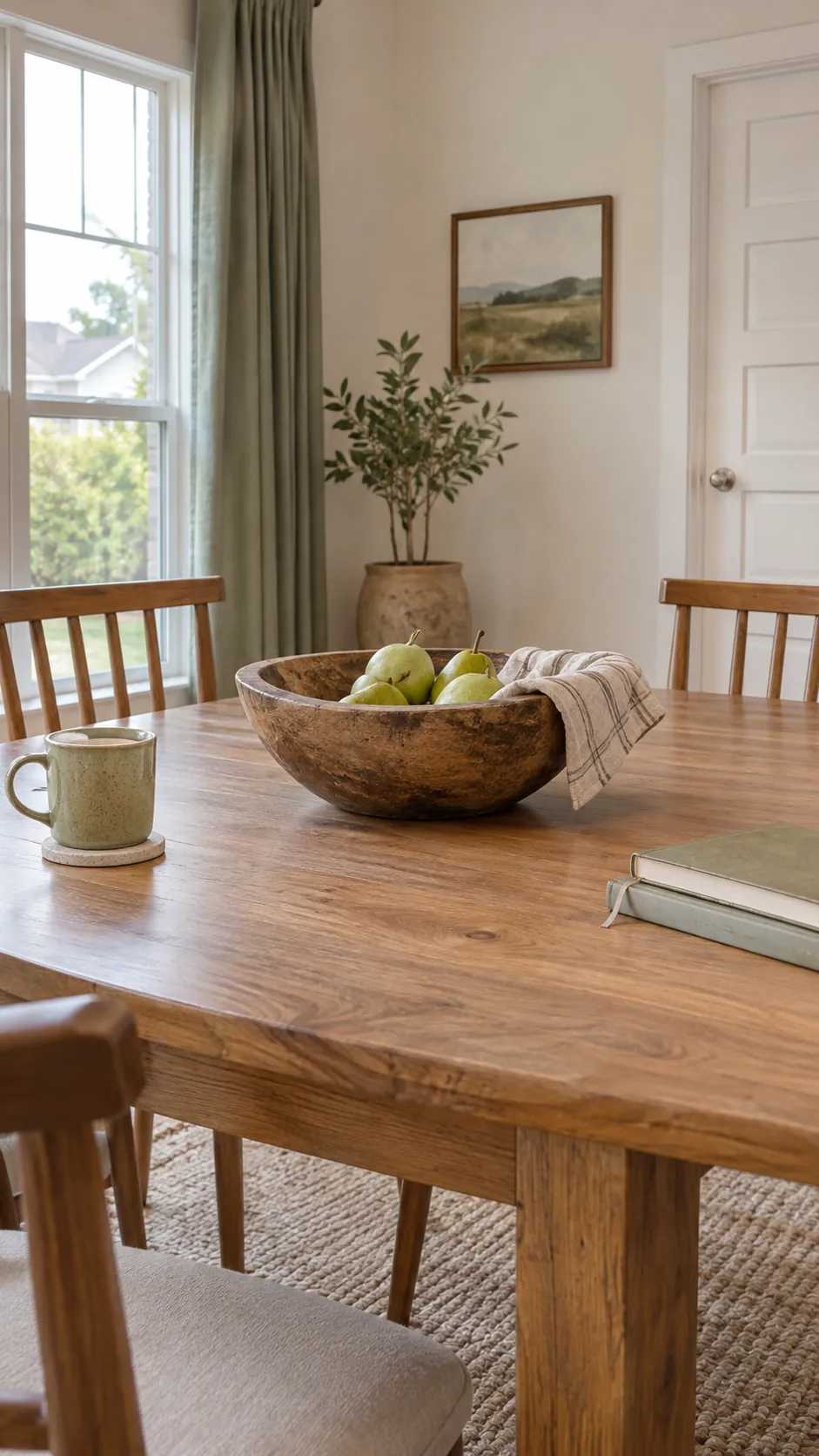
Center a Rustic Bowl on the Table
Use one low wood or clay bowl as the centerpiece so sightlines across the table remain open. A single natural object gives the table presence without creating a permanent tablescape. Change the bowl contents seasonally instead of adding more centerpieces.
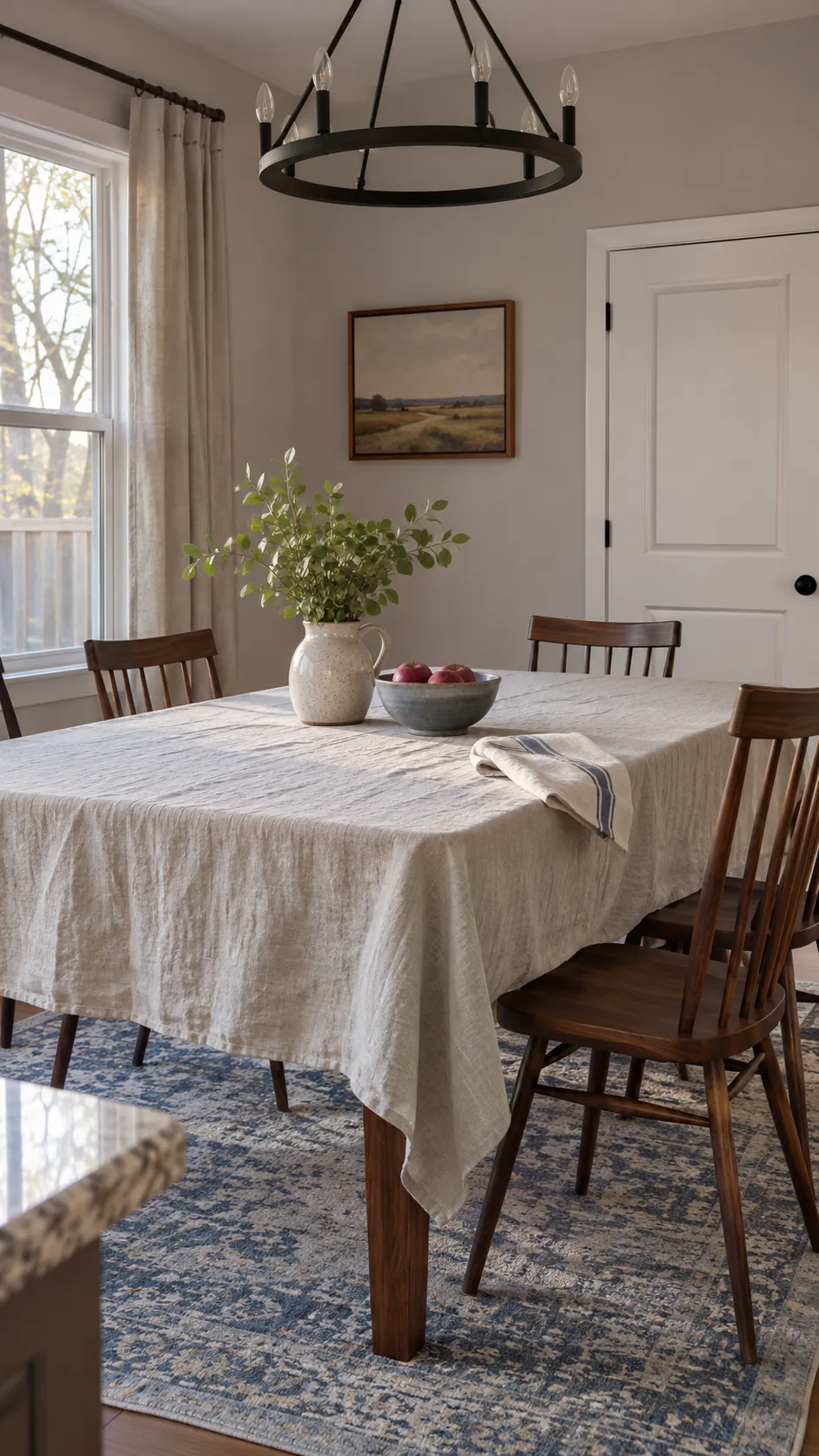
Use a Linen Tablecloth for Ordinary Meals
Let a washed linen cloth fall evenly with a practical drop and accept its relaxed creases. The fabric quiets a shiny tabletop and makes everyday meals feel less transactional. Wash linen cool and return it to the table slightly rumpled.
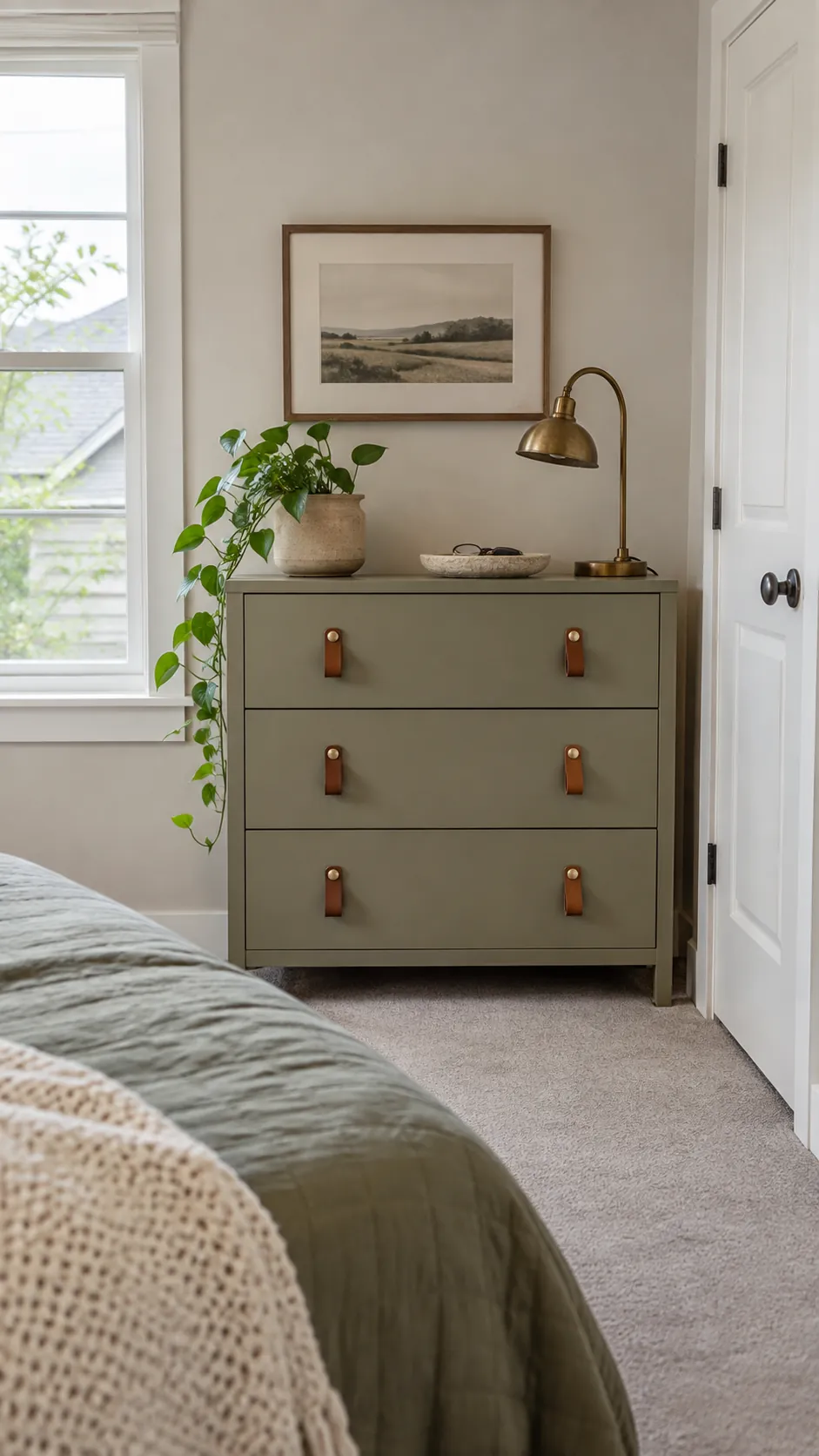
Add Leather Pulls to a Small Dresser
Install durable leather pulls on one modest dresser, using the existing screw holes when possible. The soft brown detail warms a generic painted piece without requiring full replacement. Condition the leather lightly when it begins to look dry.
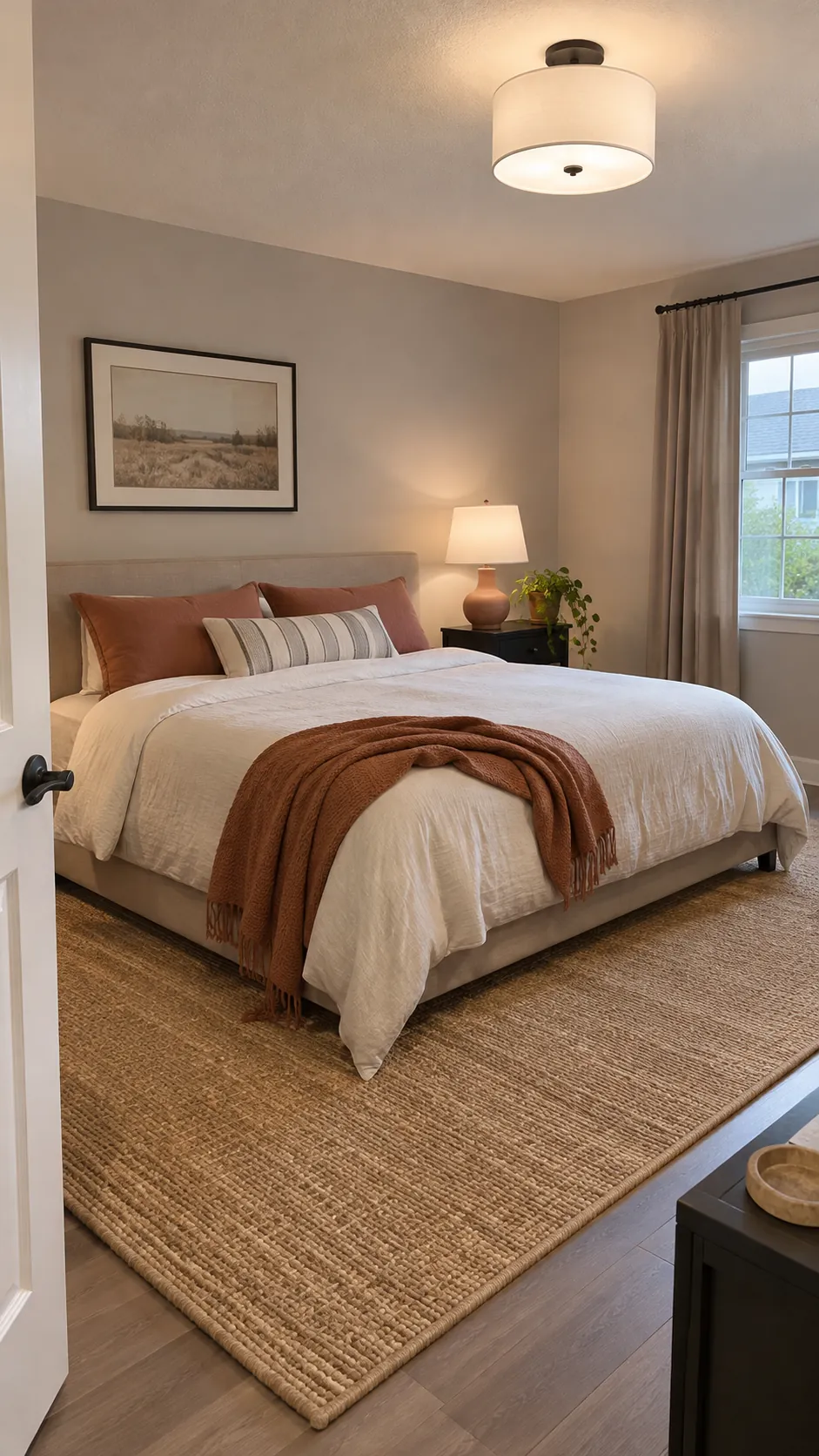
Layer a Sisal Rug Under the Bed
Choose a large sisal rug that extends beyond both sides and the foot of the bed. The broad natural texture anchors the room and reduces the floating look of builder-grade carpet. Vacuum sisal without a beater bar and address spills immediately.
Install a Simple Wood Headboard
Select a solid wood headboard with visible grain and a height that fits below nearby windows. Wood creates a strong focal plane behind plain bedding without needing decorative wall panels. Match the headboard width closely to the mattress for a settled outline.
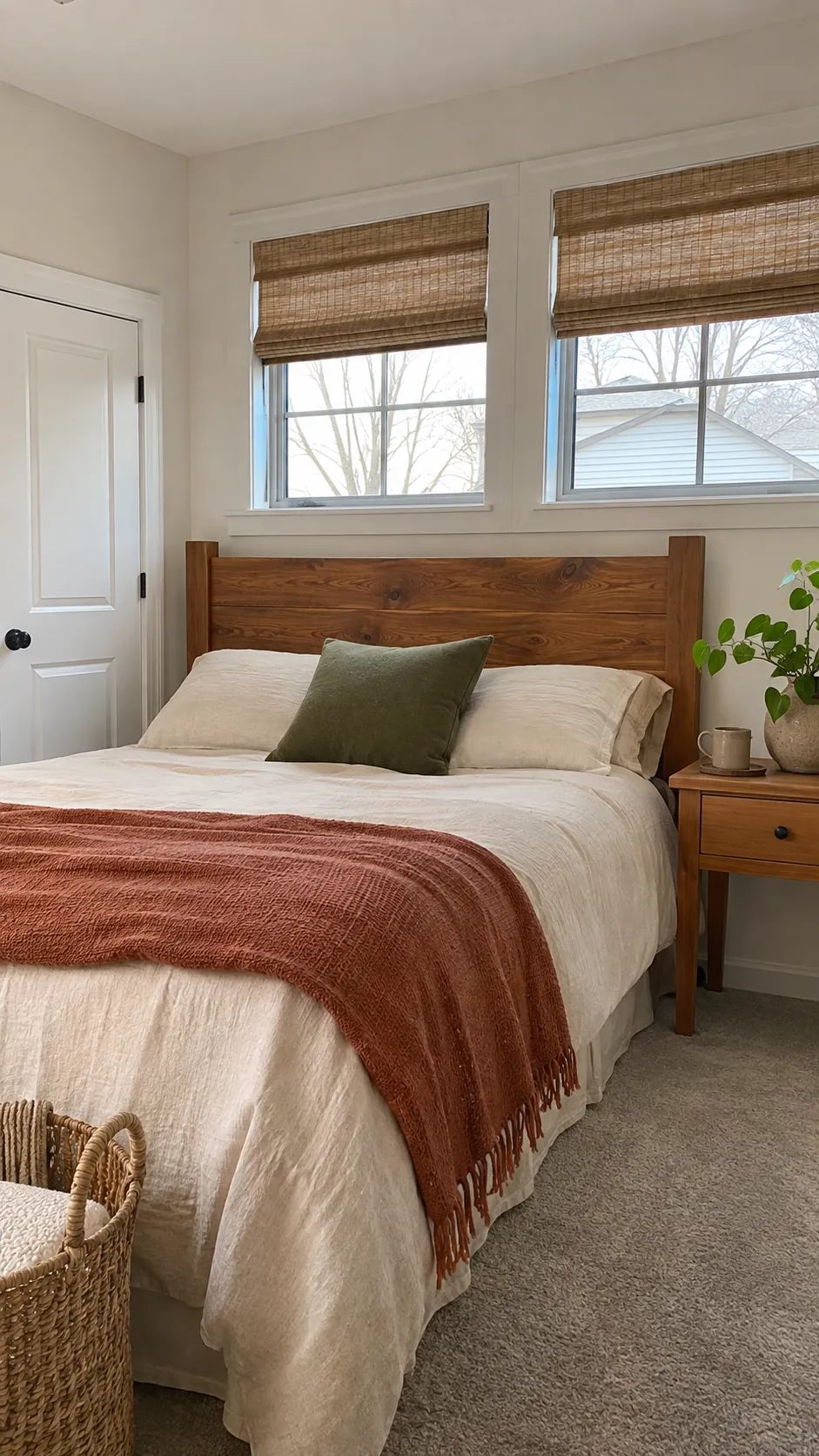
Use Unbleached Cotton Bedding
Layer unbleached cotton sheets and a quilt with a breathable linen coverlet. The subtle tonal variation feels warmer and more forgiving than a single bright-white bedding set. Keep the palette tonal so texture, not color contrast, does the work.
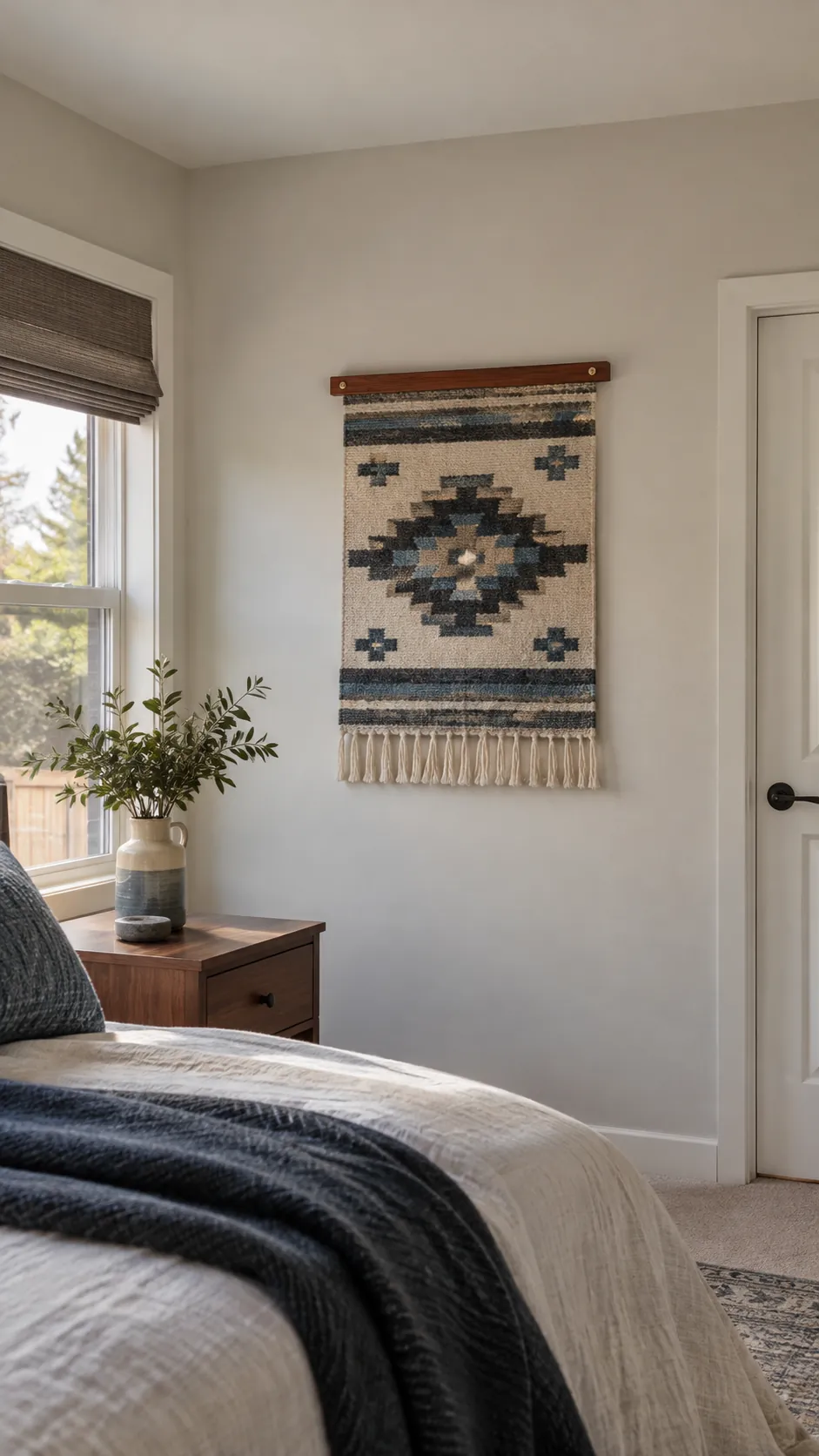
Add a Small Wool Tapestry
Hang one textile piece with a secure wood rail and leave open wall around its edges. Soft fiber absorbs some echo and introduces handwork without filling the room with objects. Mount the rail level because a soft textile still exposes crooked hardware.
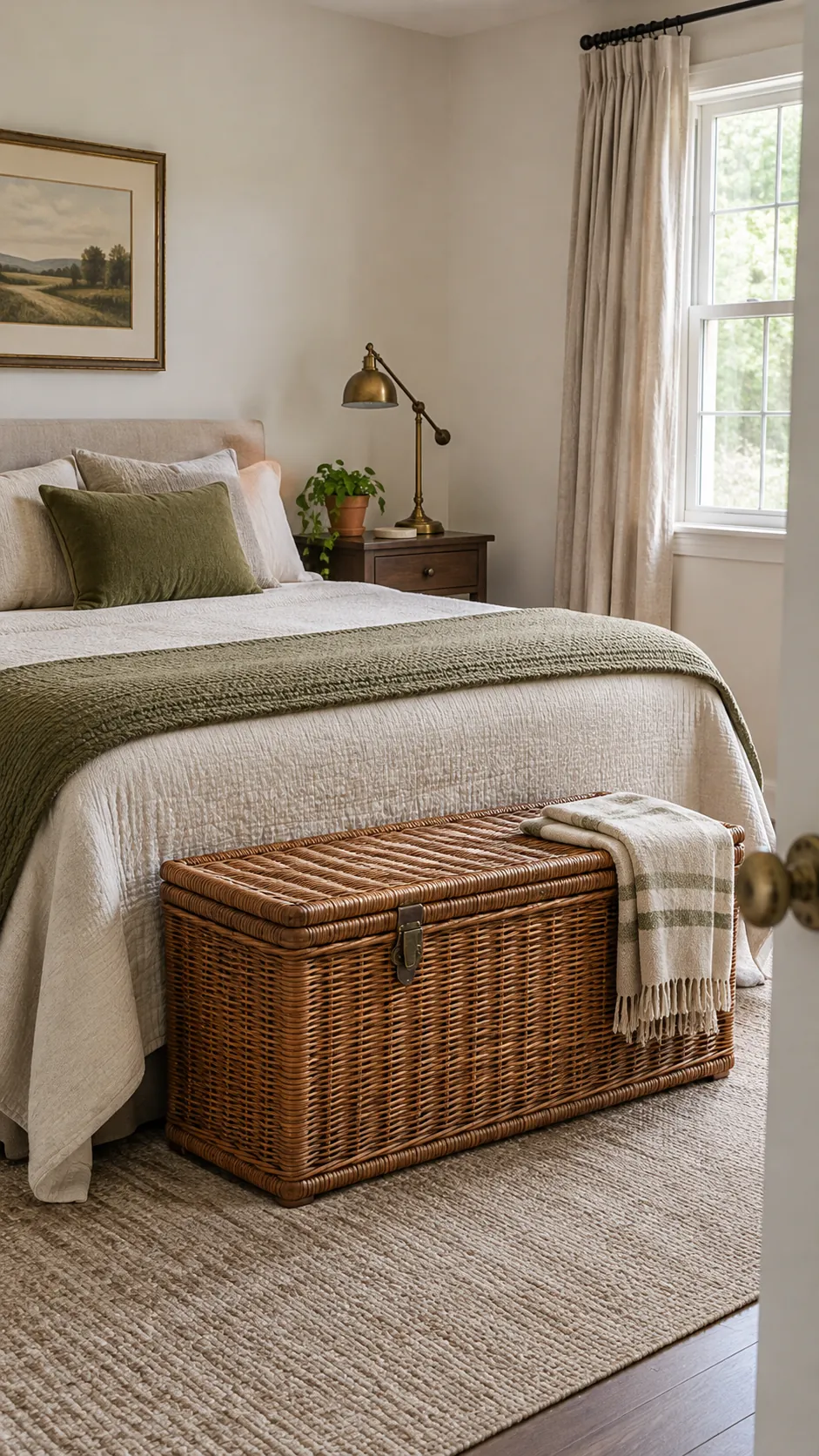
Place a Wicker Trunk at the Bed
Use a lidded wicker trunk with a stable base and enough space for the bedcover to fall freely. It provides concealed storage and gives a new room an older, useful layer. Measure the lid swing so it clears the mattress and nearby wall.
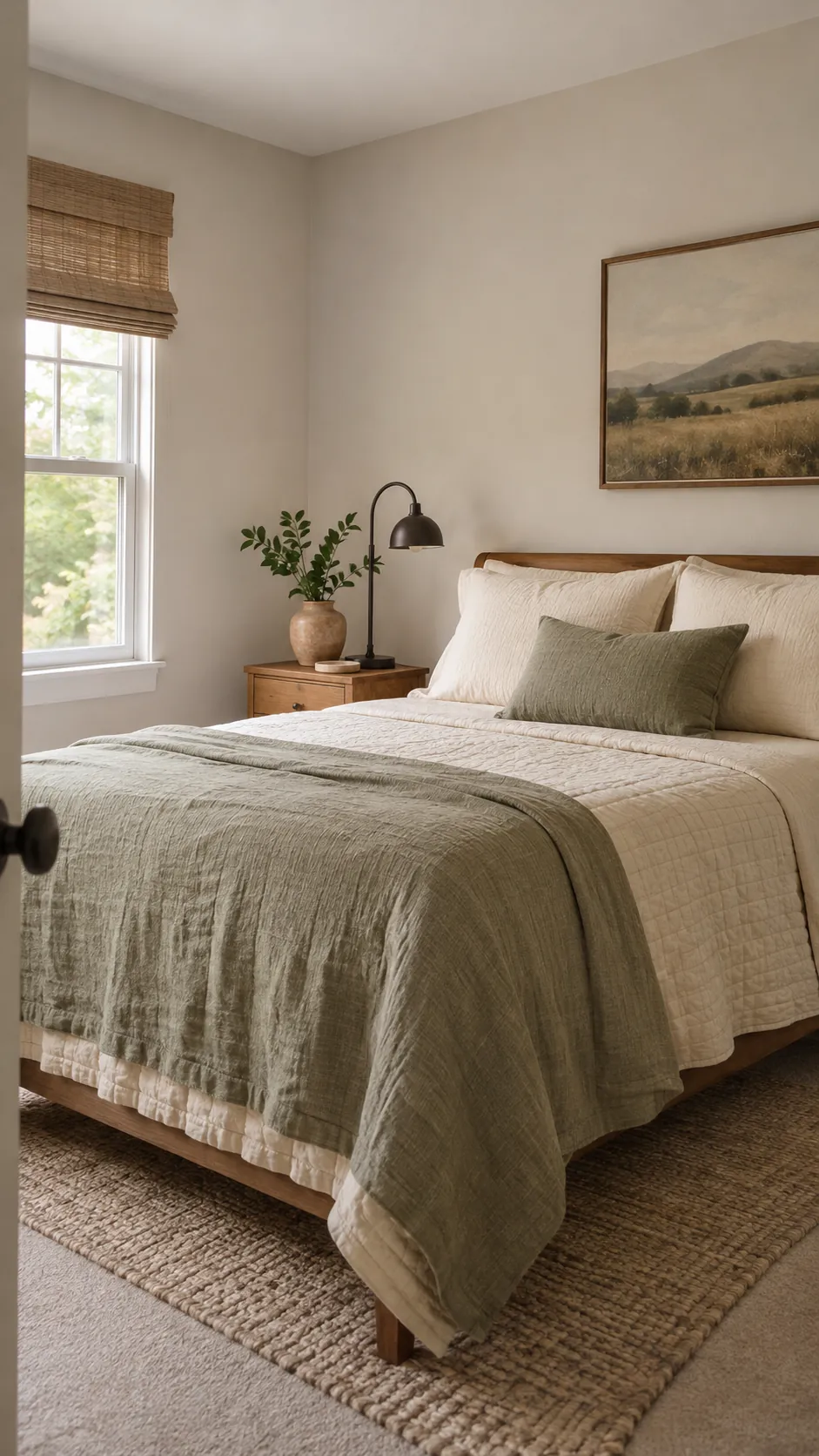
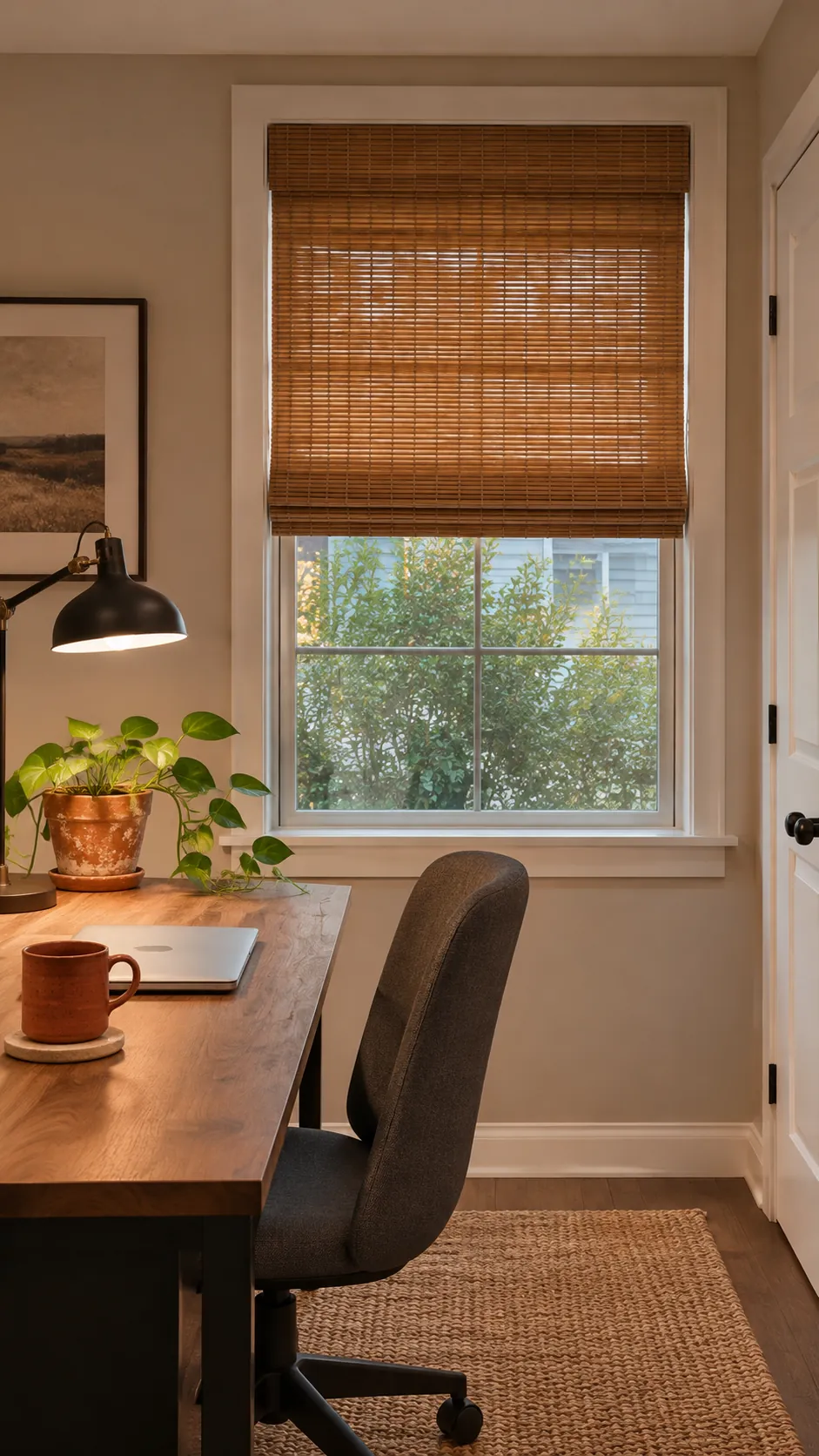
Bring a Bamboo Shade Into the Office
Fit a lined bamboo shade to control glare while keeping the desk surface well lit. Its repeating slats add natural rhythm to a room dominated by smooth drywall and technology. Lower the shade before screen work to test whether it truly controls glare.
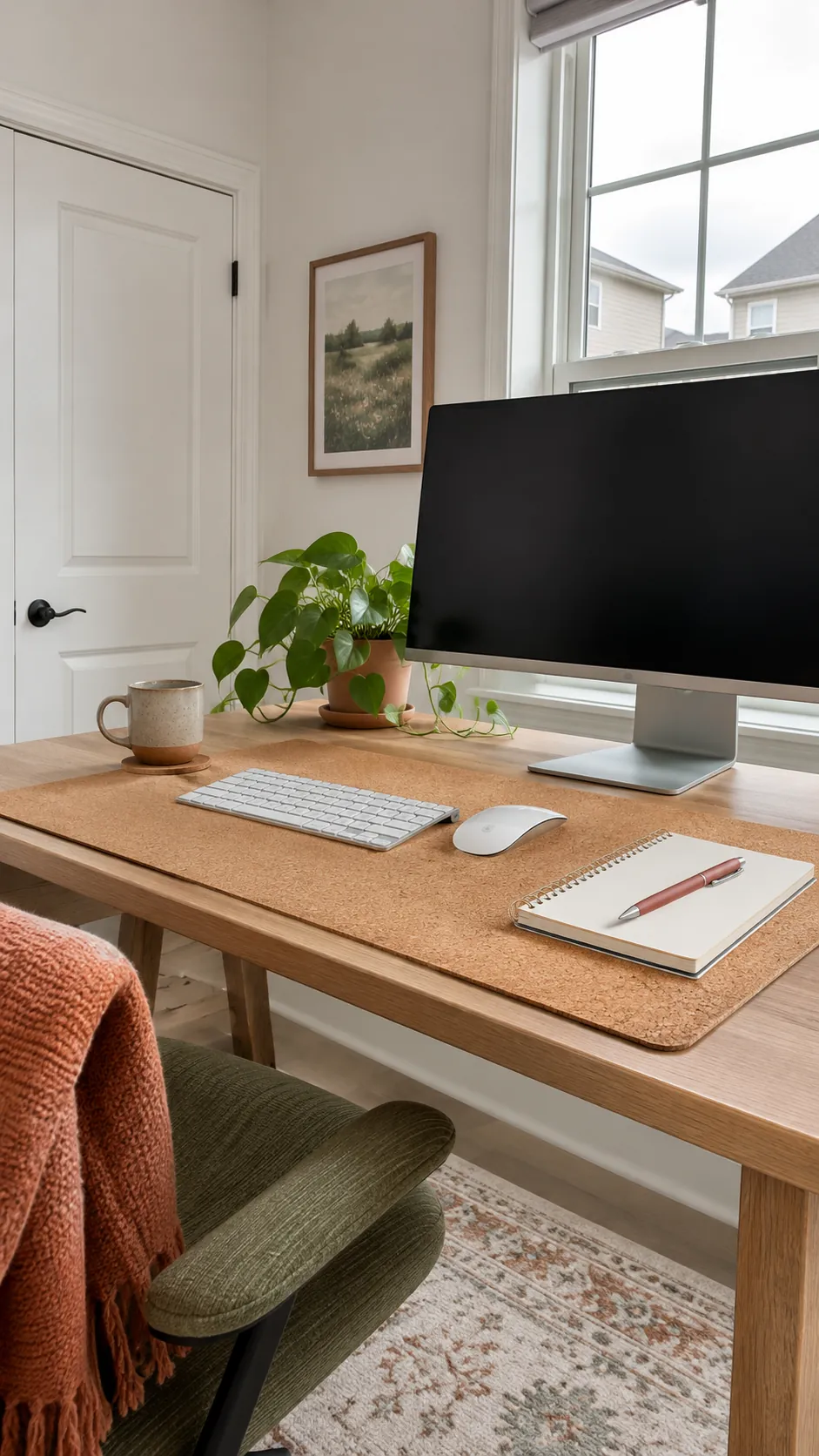
Use a Cork Desk Pad
Place a large cork pad beneath the keyboard and writing area with enough room for both tasks. The soft surface reduces visual glare and introduces warmth without occupying extra floor space. Brush crumbs away dry because wet cleaning can darken unsealed cork.
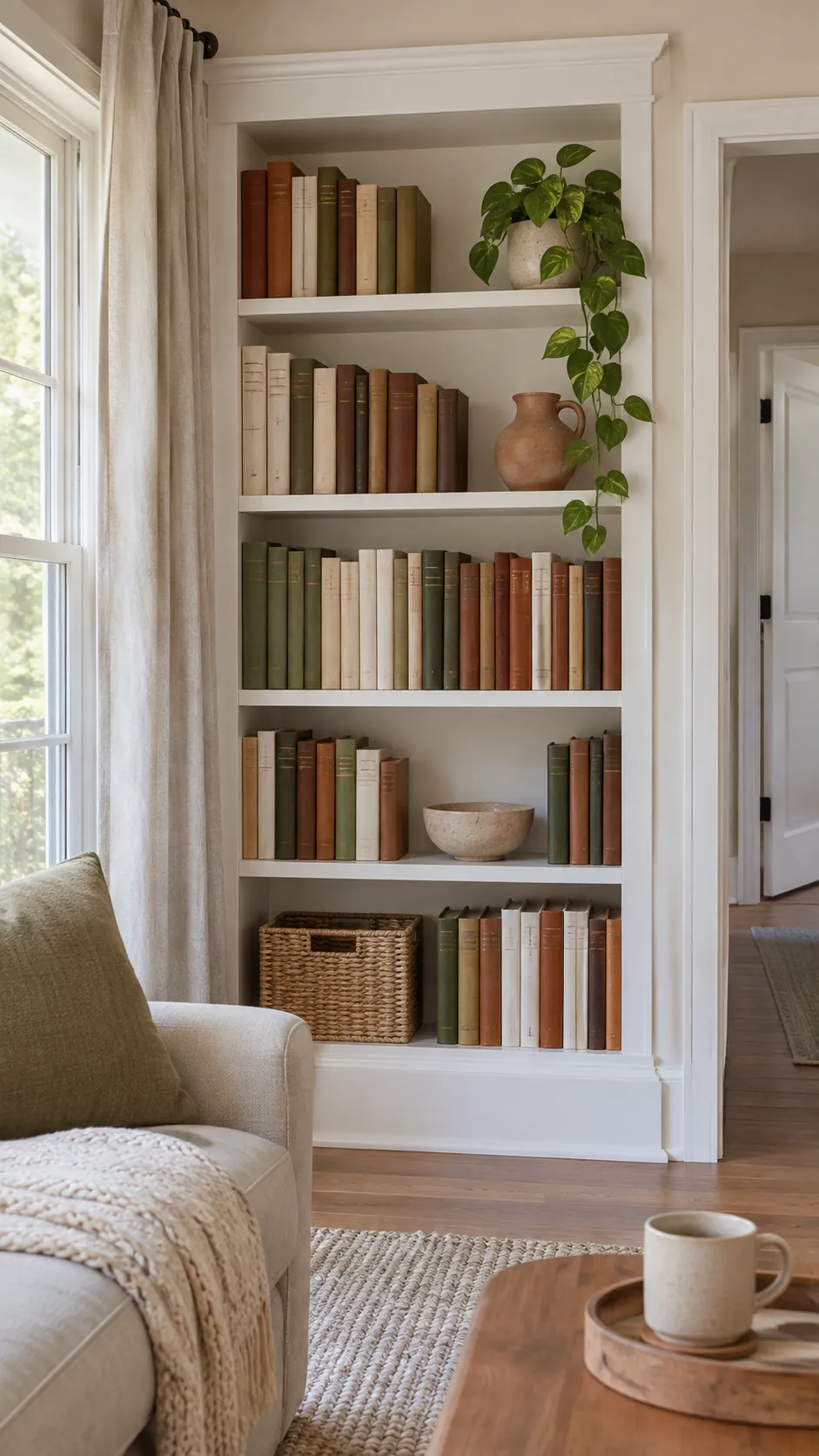
Display Books With Earth-Toned Spines
Group books by use first, then let muted clay, green, cream, and brown spines form a loose rhythm. Real books add depth and personal history that decorative objects cannot imitate. Leave some shelves partly open so the bookcase retains breathing room.
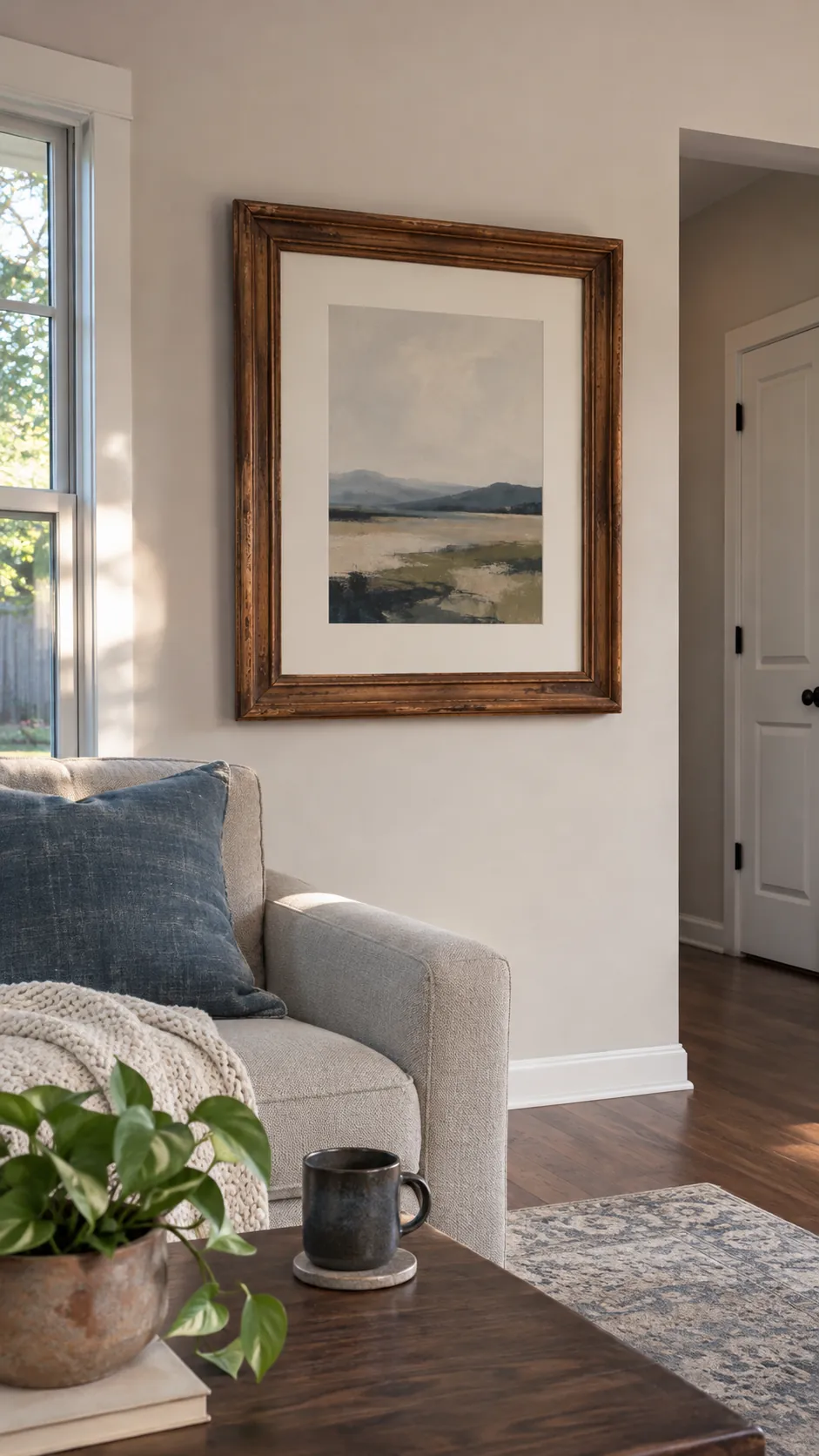
Add a Vintage Wood Frame to New Art
Set a contemporary print inside a correctly sized vintage wood frame with an archival mat. The contrast between new image and worn frame makes the display feel collected over time. Replace brittle backing and use archival tabs before rehanging the print.
Use Handmade Tiles Behind a Small Sink
Tile only the backsplash with subtly irregular handmade ceramic and finish edges neatly. A compact area of variation adds character without committing to a full-room renovation. Approve the grout color beside an actual tile sample under room lighting.
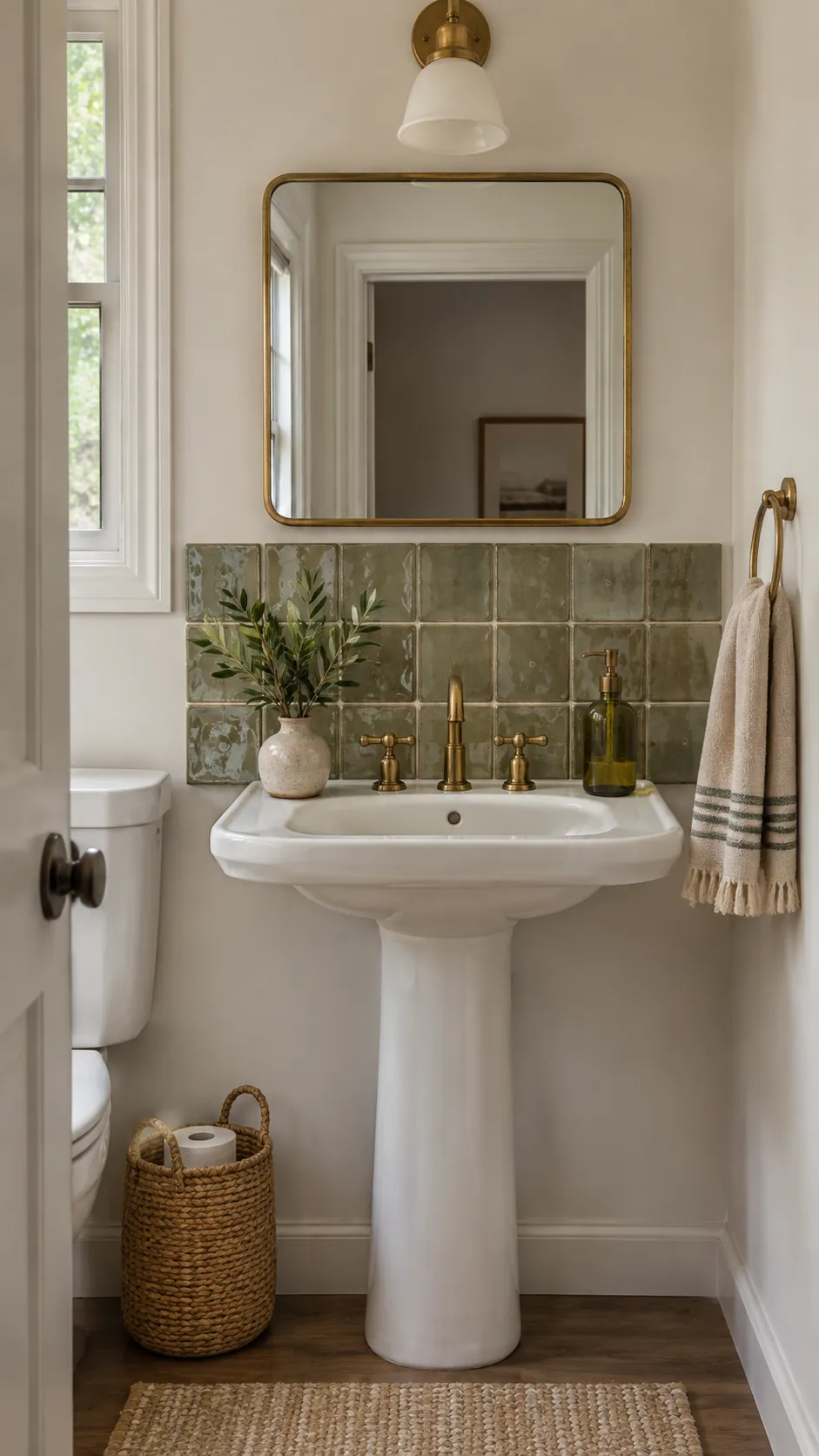
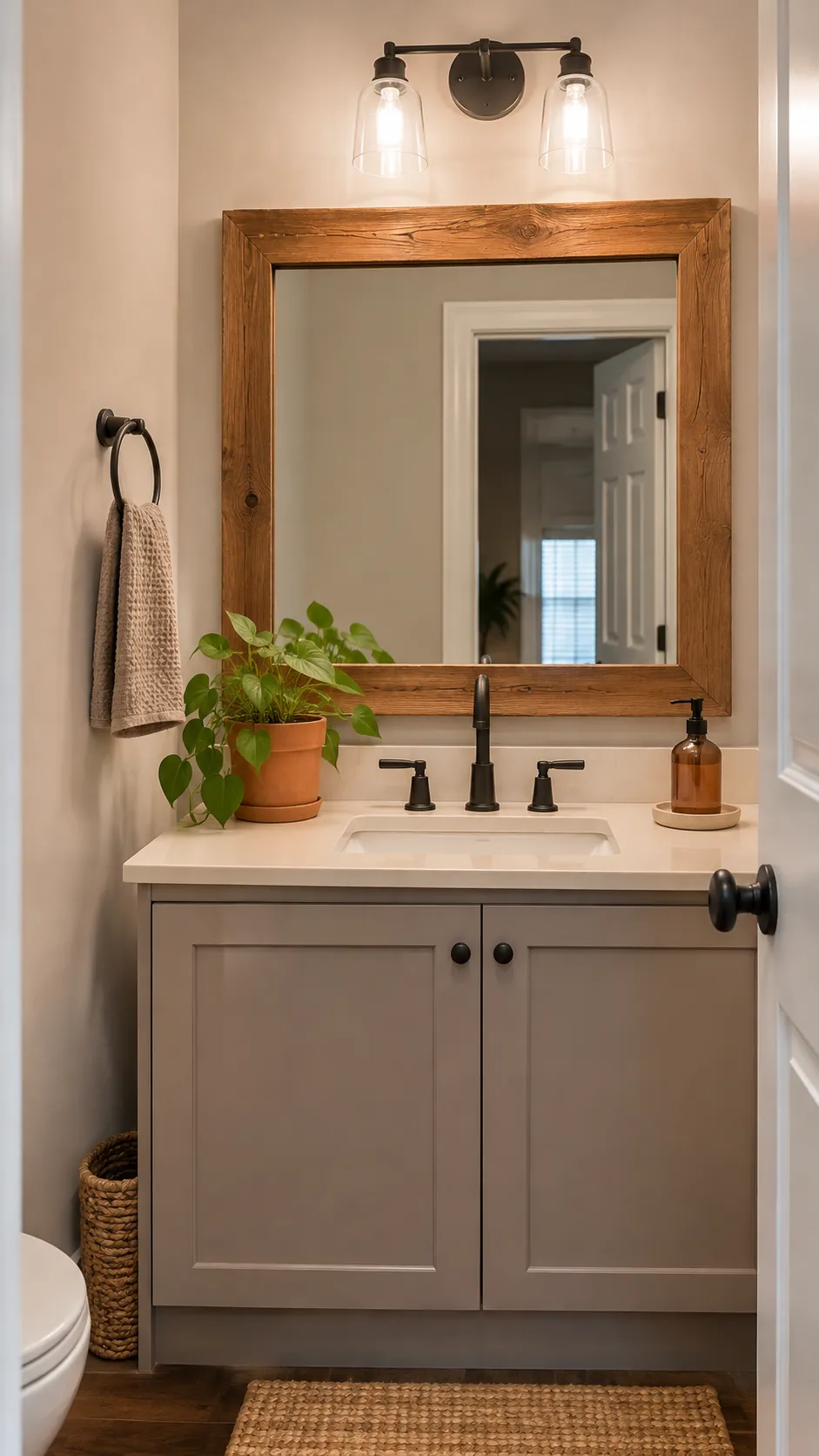
Replace a Basic Vanity Mirror With Wood
Hang a sealed wood-framed mirror sized to clear the faucet, light, and side walls. The natural frame changes the room’s main focal point while retaining the existing vanity. Seal all frame edges thoroughly when the room has regular humidity.
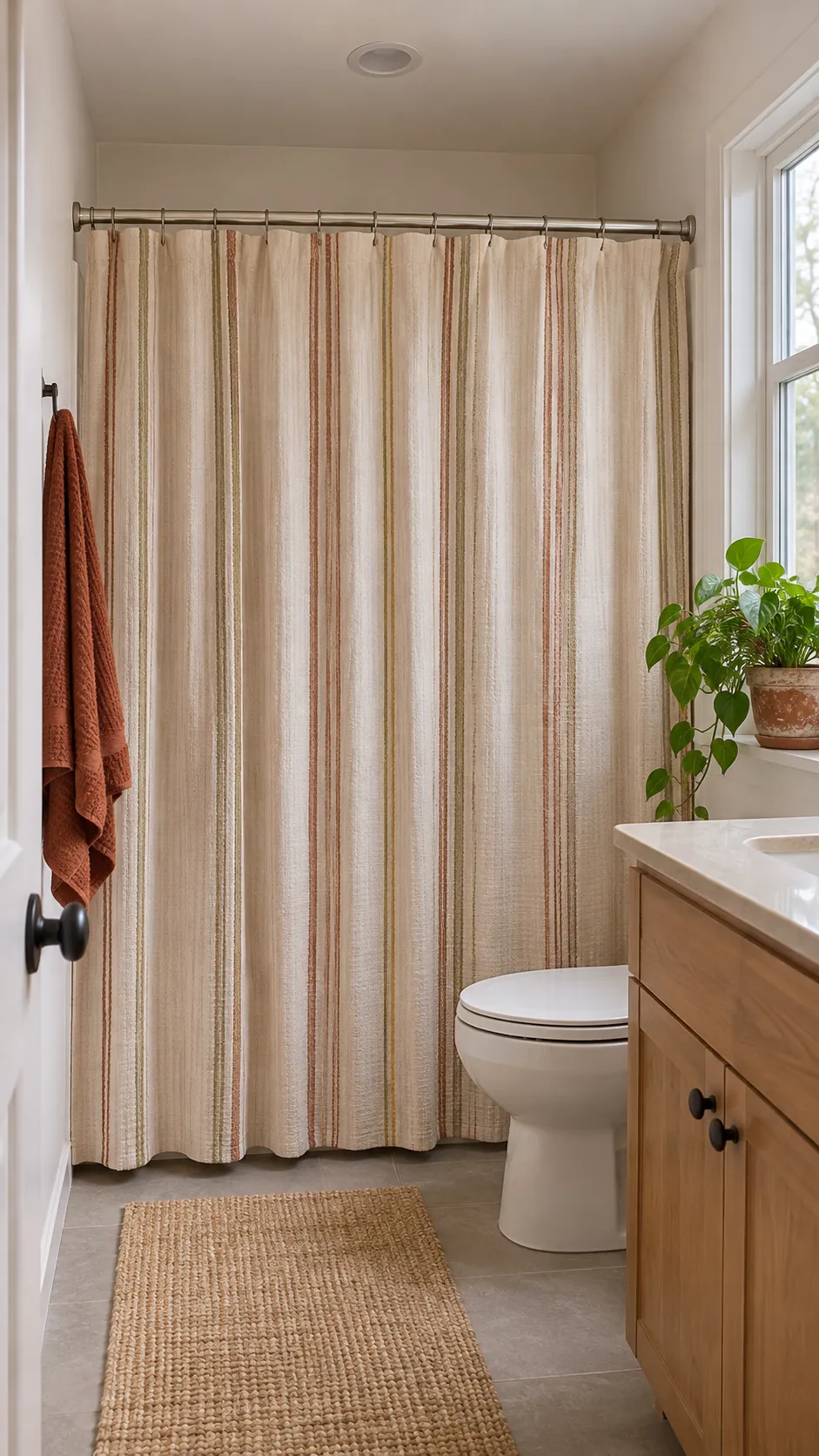
Add a Cotton Shower Curtain With Texture
Choose a washable cotton curtain with a subtle woven stripe and hang it at full length. The fabric softens tile and glass while remaining easy to clean and replace. Use a washable liner so the outer cotton layer stays fresher longer.
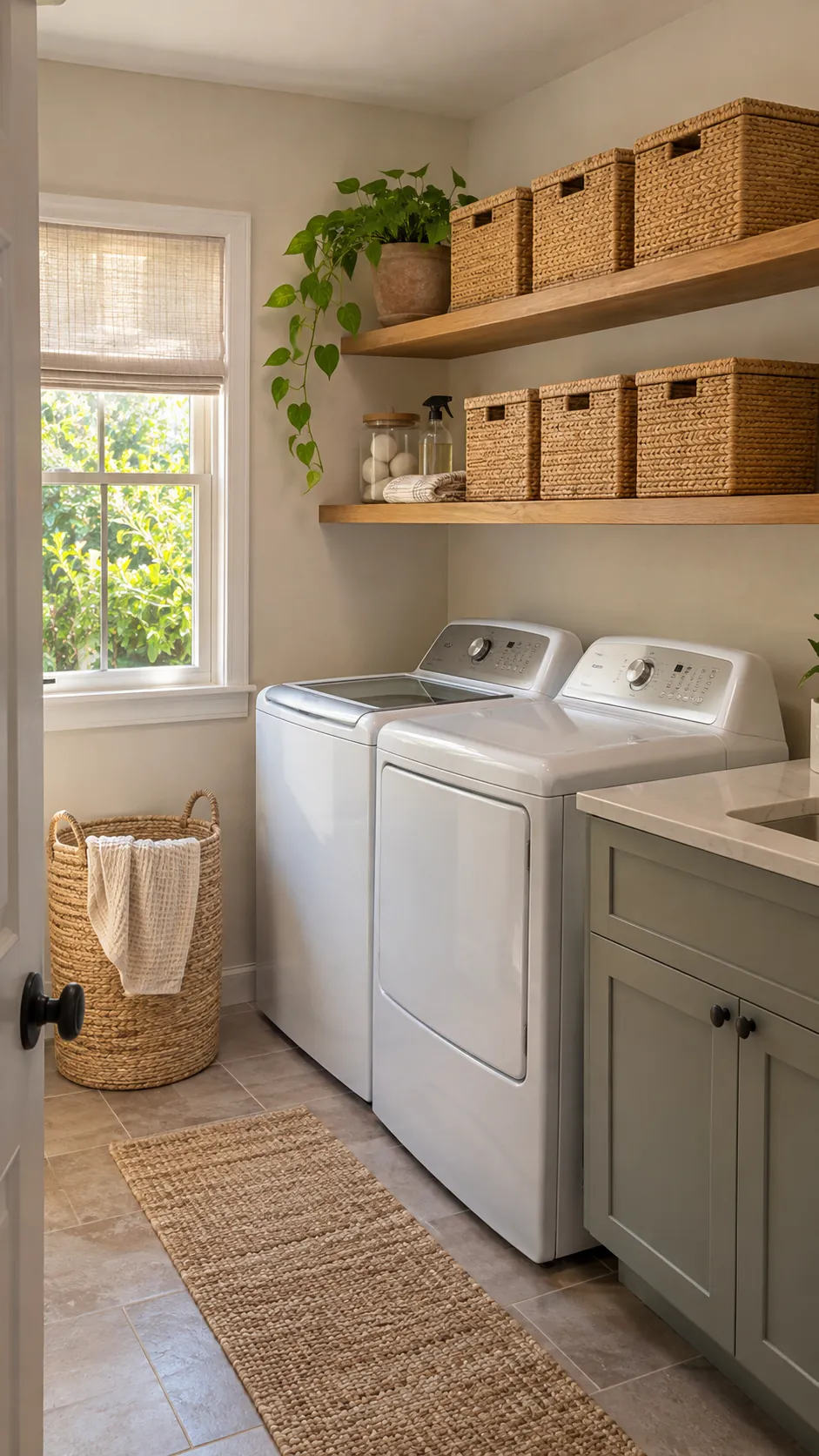
Line Open Shelves With Woven Boxes
Use matching woven boxes for rarely used supplies and clear labels on their hidden sides. Natural texture turns practical storage into a calmer backdrop without reducing function. Reserve one box for refills and avoid hiding frequently used detergents.
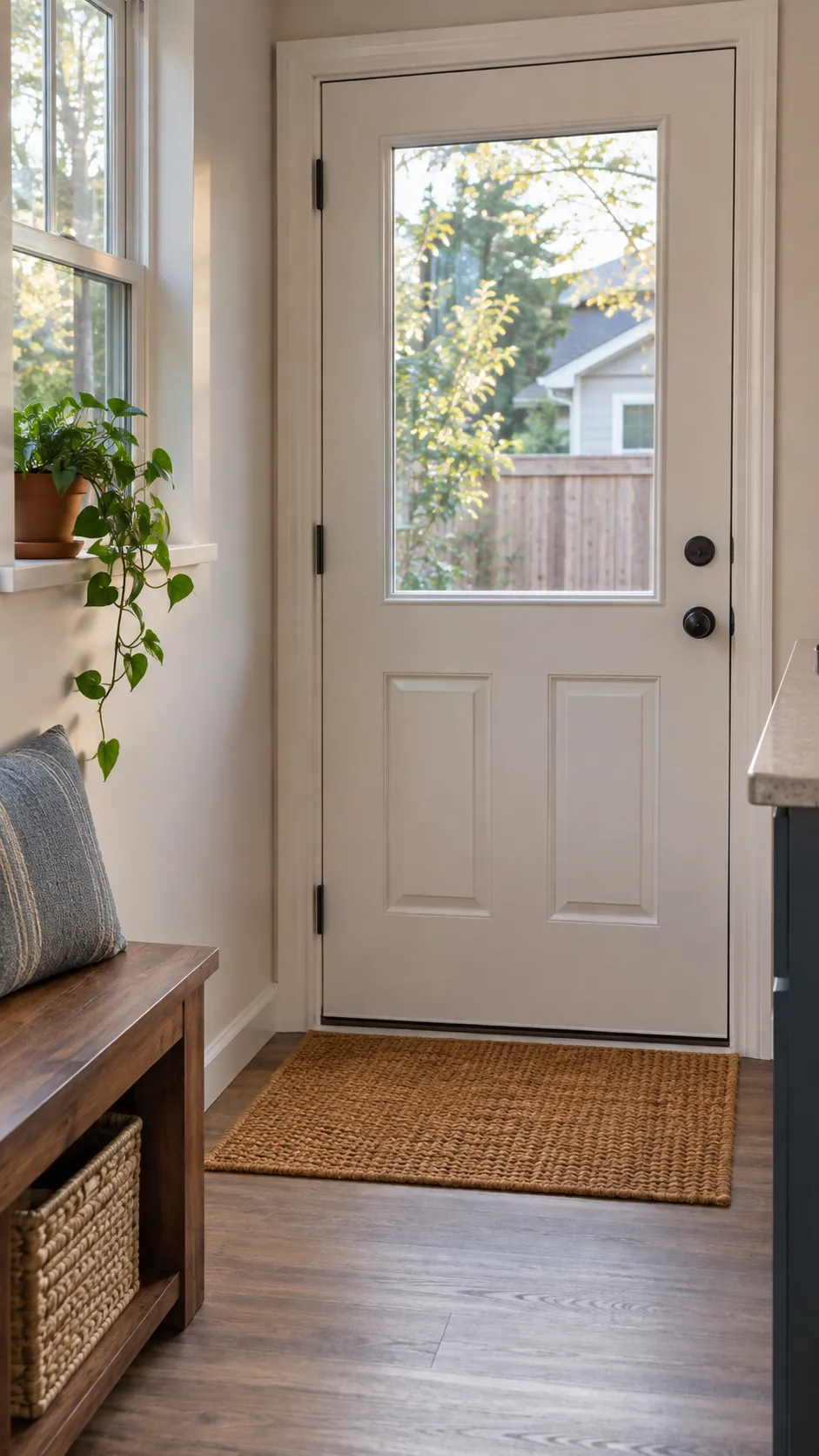
Set a Coir Mat Inside the Back Door
Choose a low-profile coir mat that fits the landing and does not catch the door. The rough fiber creates a useful threshold and keeps outdoor grit from spreading through the house. Shake the mat outside often and let it dry completely after rain.
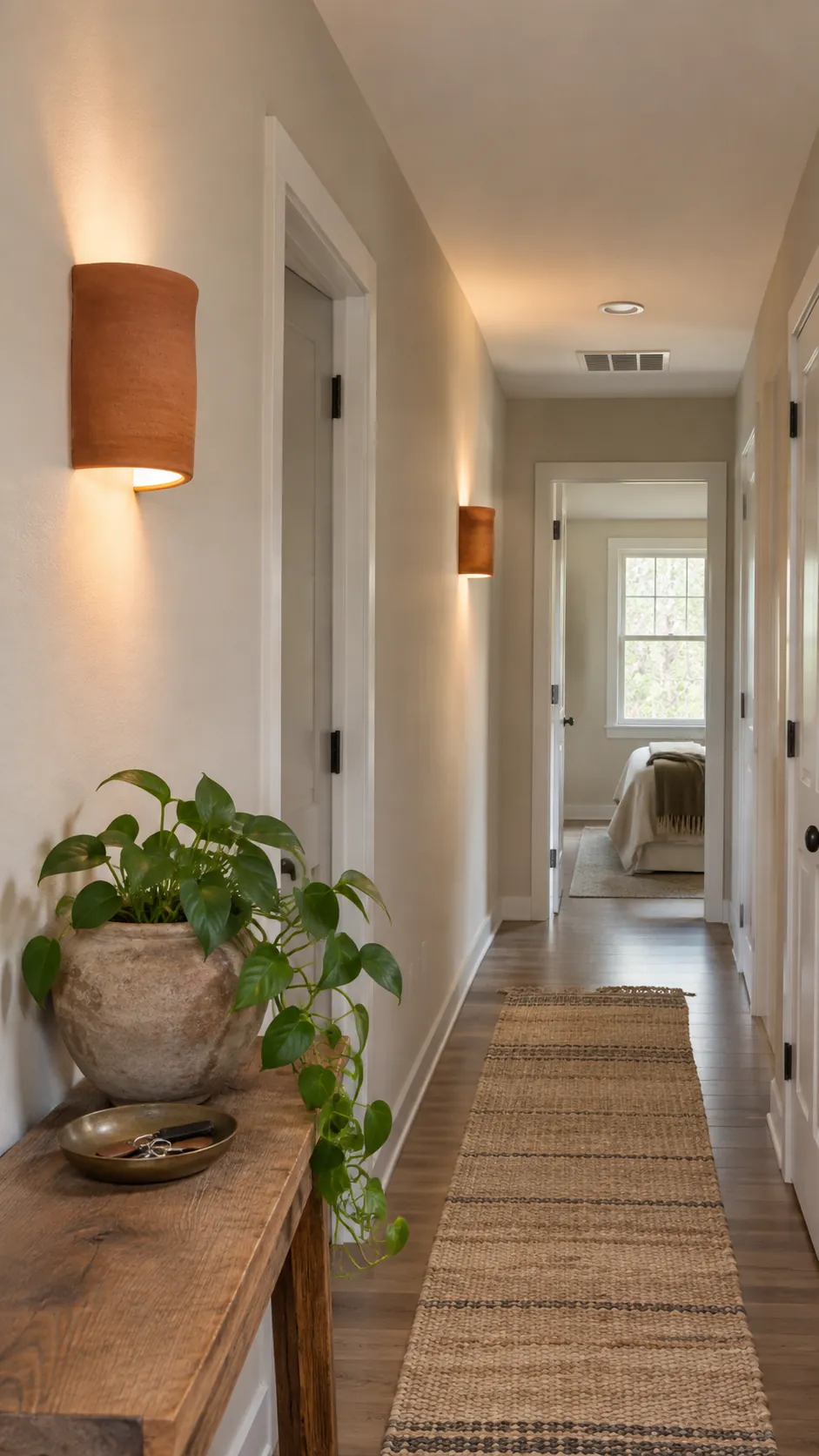
Use Clay Sconces in a Plain Hall
Install small ceramic sconces at consistent heights with warm-neutral bulbs and safe wiring. Their matte handmade surfaces give the corridor character even when the walls stay simple. Place the sconces high enough to avoid glare at normal eye level.
Repeat One Natural Material Across Rooms
Choose one material such as oak and repeat it in a tray, frame, stool, and lamp detail across sightlines. The repetition connects separate zones without buying matching furniture collections. Keep the repeated material’s finish related but not perfectly identical.
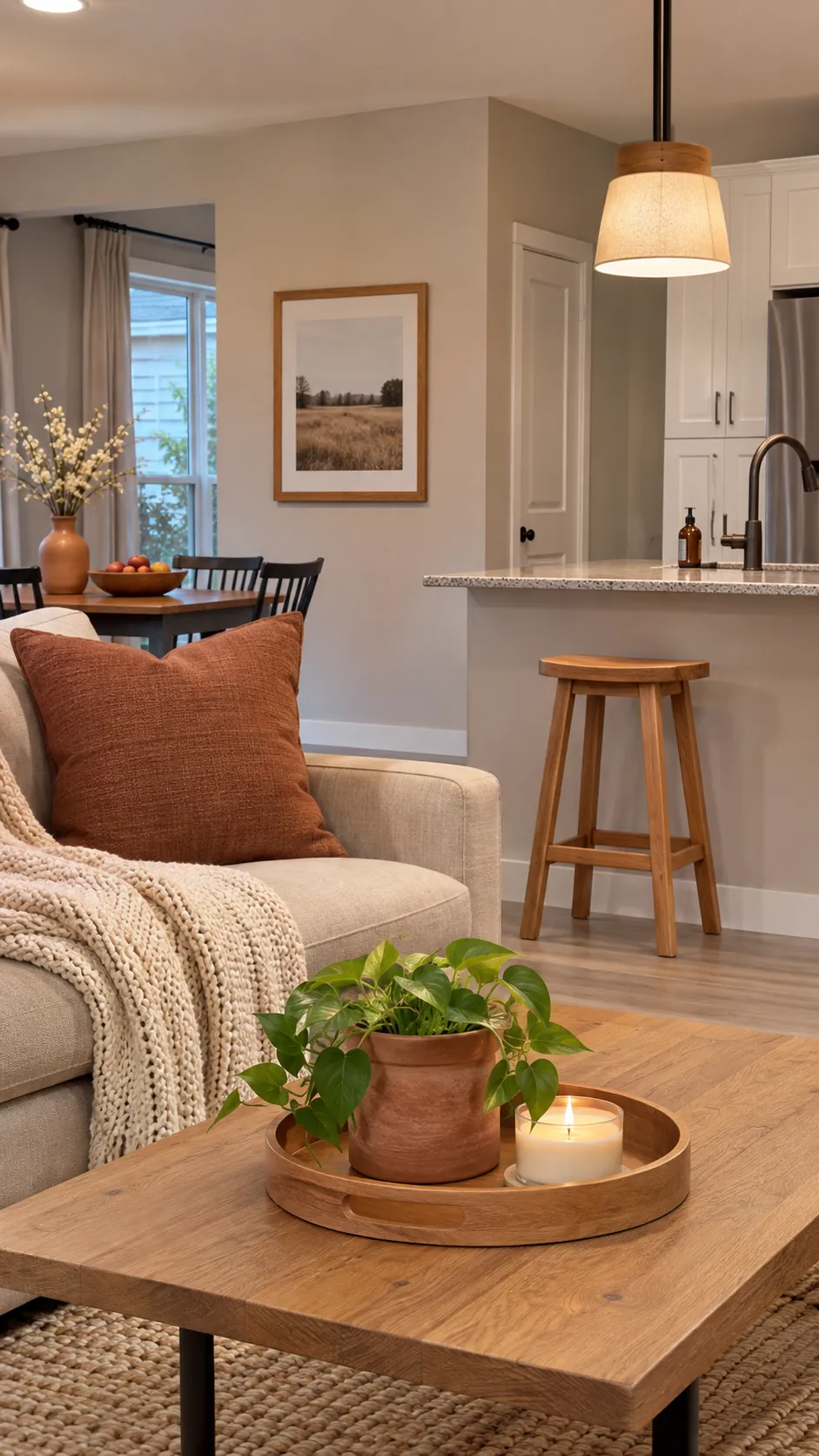
Leave Space Around Natural Objects
Edit the surfaces so each plant, vessel, or wood piece has visible space around it. Natural materials feel more substantial when the room is not crowded with competing accessories. Photograph the edited room before deciding whether any gap needs filling.