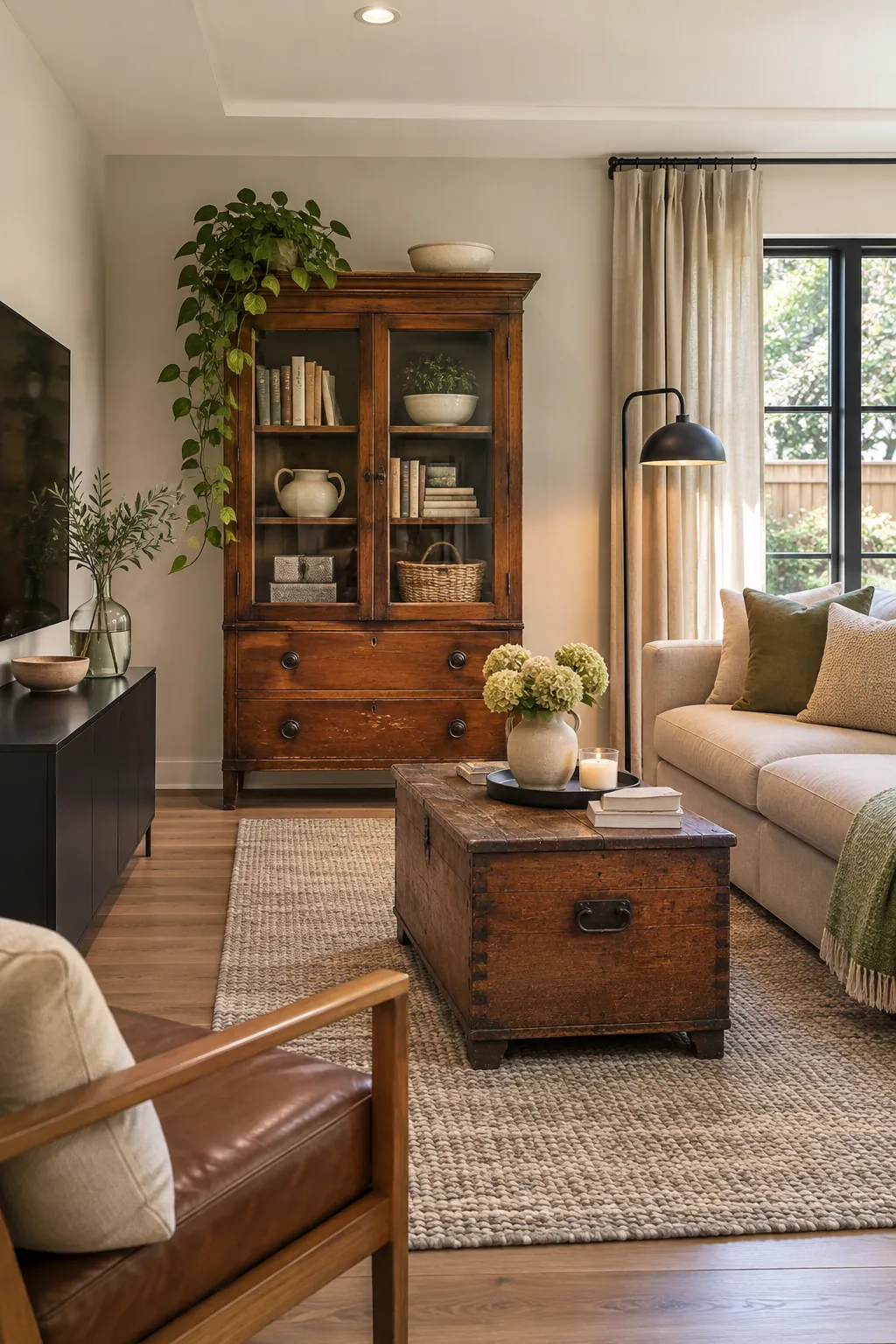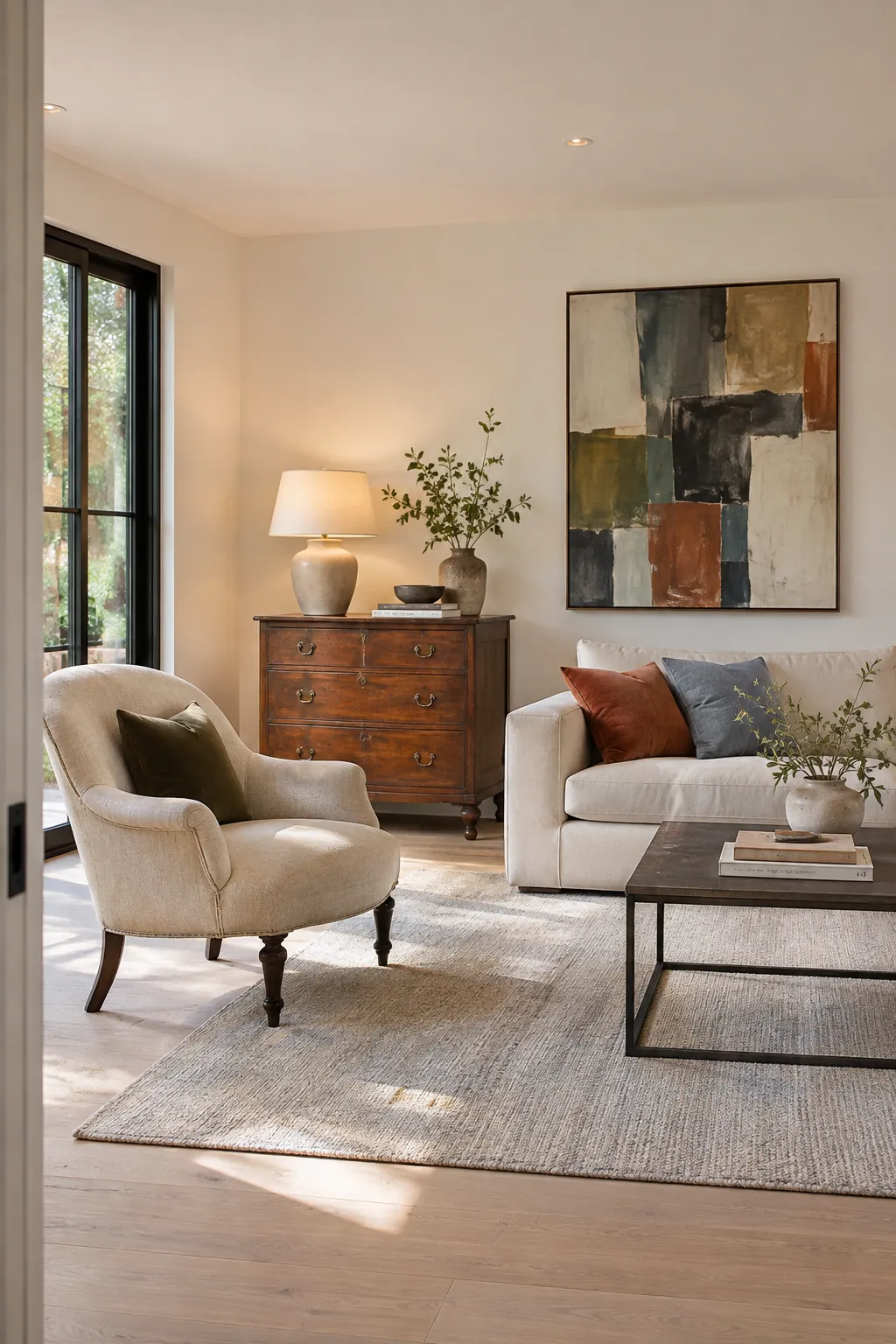
A room can feel awkward when every surface is new but the furniture with history seems too formal, dark, or delicate. The solution is not to disguise the age of a good piece. It is to control the contrast around it, preserve clear function, and leave enough modern space for the room to feel alive now.
Start With One Anchor Piece
Choose the vintage item with the strongest useful presence, such as a dining table, chest, or lounge chair. Give it enough space to be noticed before adding smaller old pieces. One confident anchor looks intentional, while many unrelated antiques can make a new room feel staged.
Balance Old Silhouettes With Clean Upholstery
Place a carved table or curved wood chair beside a sofa with simple lines and durable plain fabric. The contrast lets each period remain visible without forcing either one to dominate. Repeat one color across the upholstery and older wood to settle the pairing.
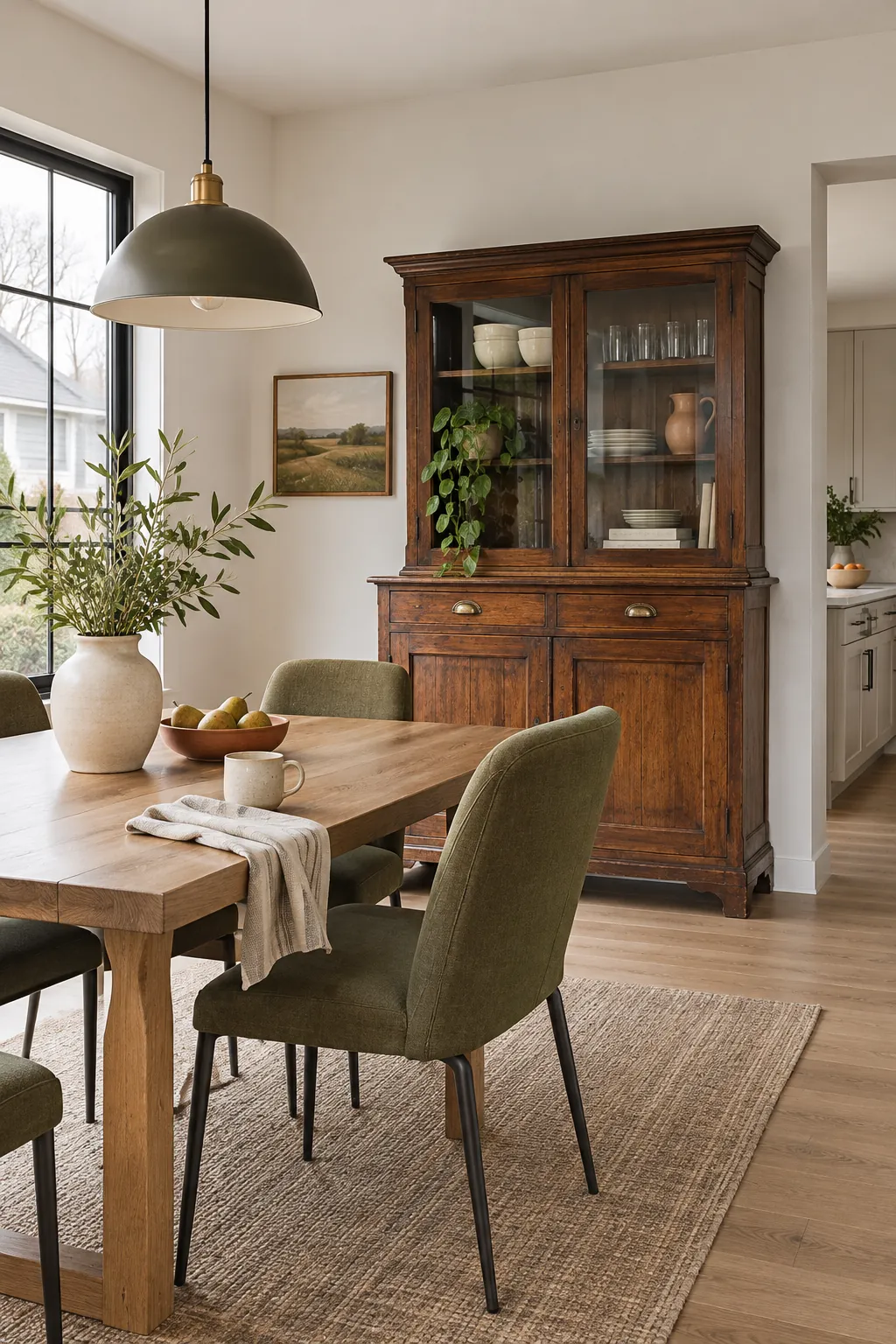
Repeat Materials Instead of Matching Eras
Connect the vintage piece to the room through wood tone, metal finish, or textile color. A walnut frame, brass lamp, or rust-colored cushion can echo a detail already present on the old furniture. This approach creates continuity without shopping for a period-correct set.
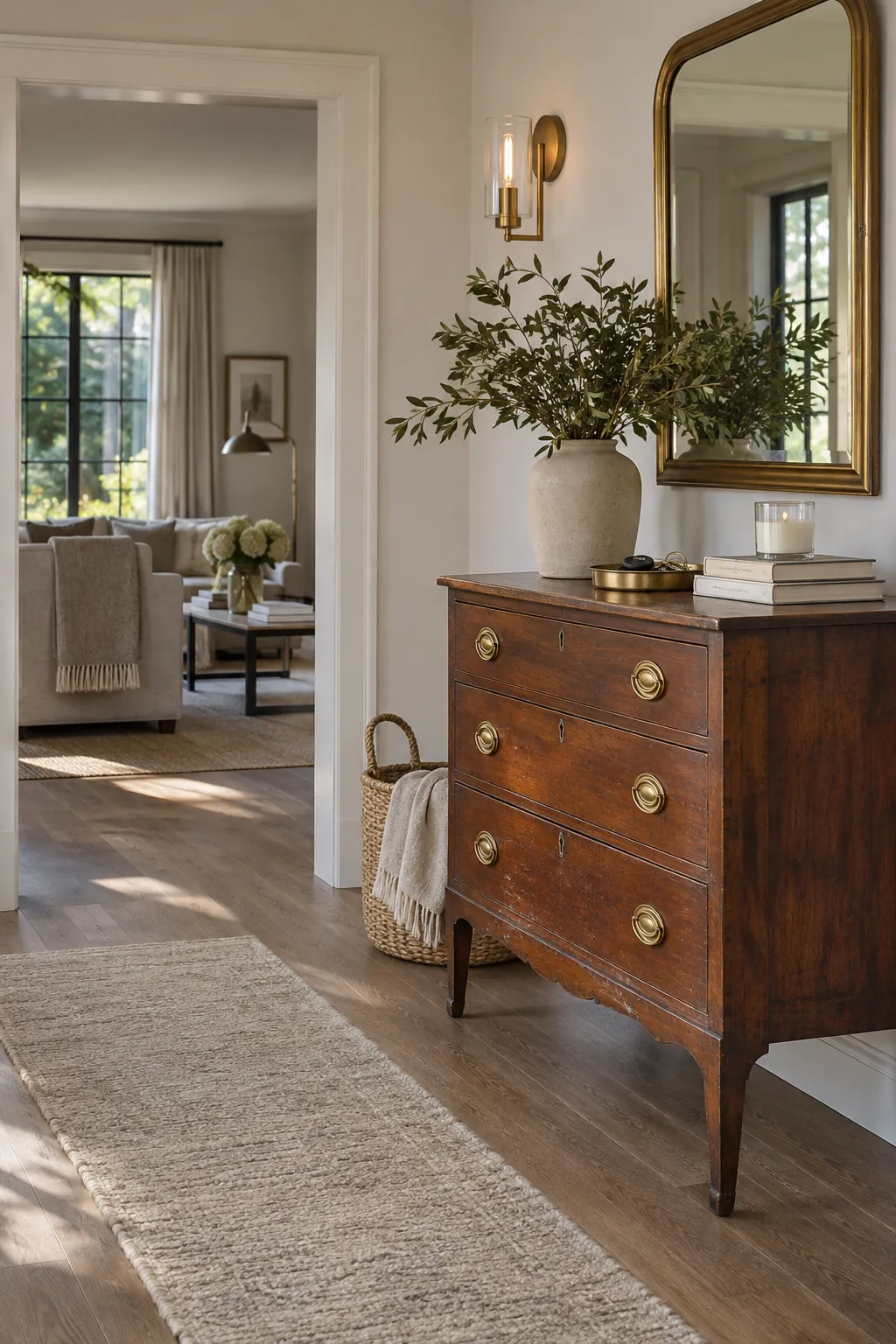
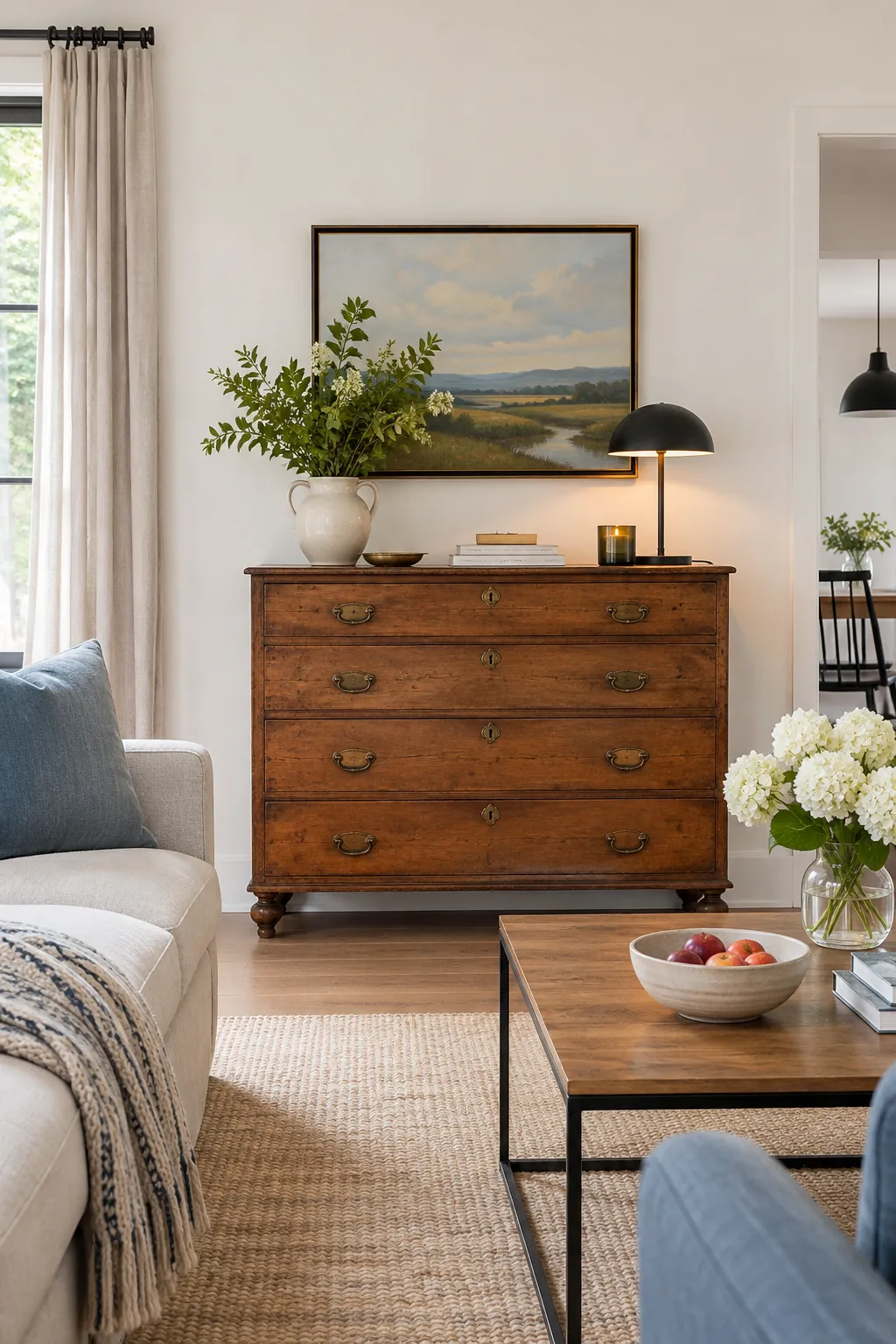
Use Contemporary Art Above Vintage Furniture
Hang clean contemporary artwork over an inherited dresser or antique console. Keep the scale generous and the frame simple so the arrangement reads as current. The old surface gains relevance while the art avoids looking like a themed historical display.
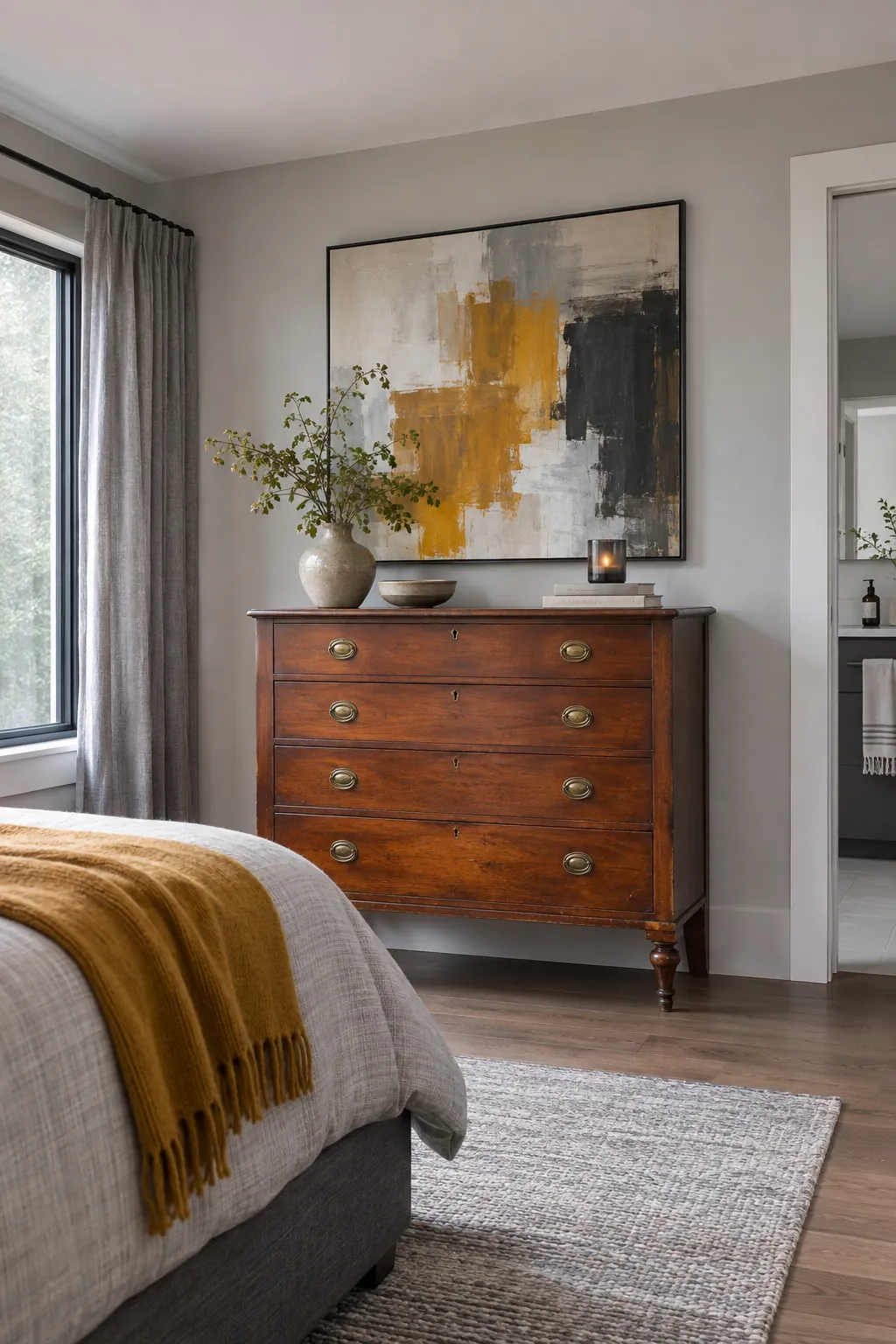
Update Fabric Without Erasing the Frame
Reupholster a sound vintage chair in a quiet linen, wool, or textured cotton. Preserve good woodwork and proportions instead of sanding away every mark of age. Fresh fabric makes the piece comfortable for daily life while keeping its history visible.
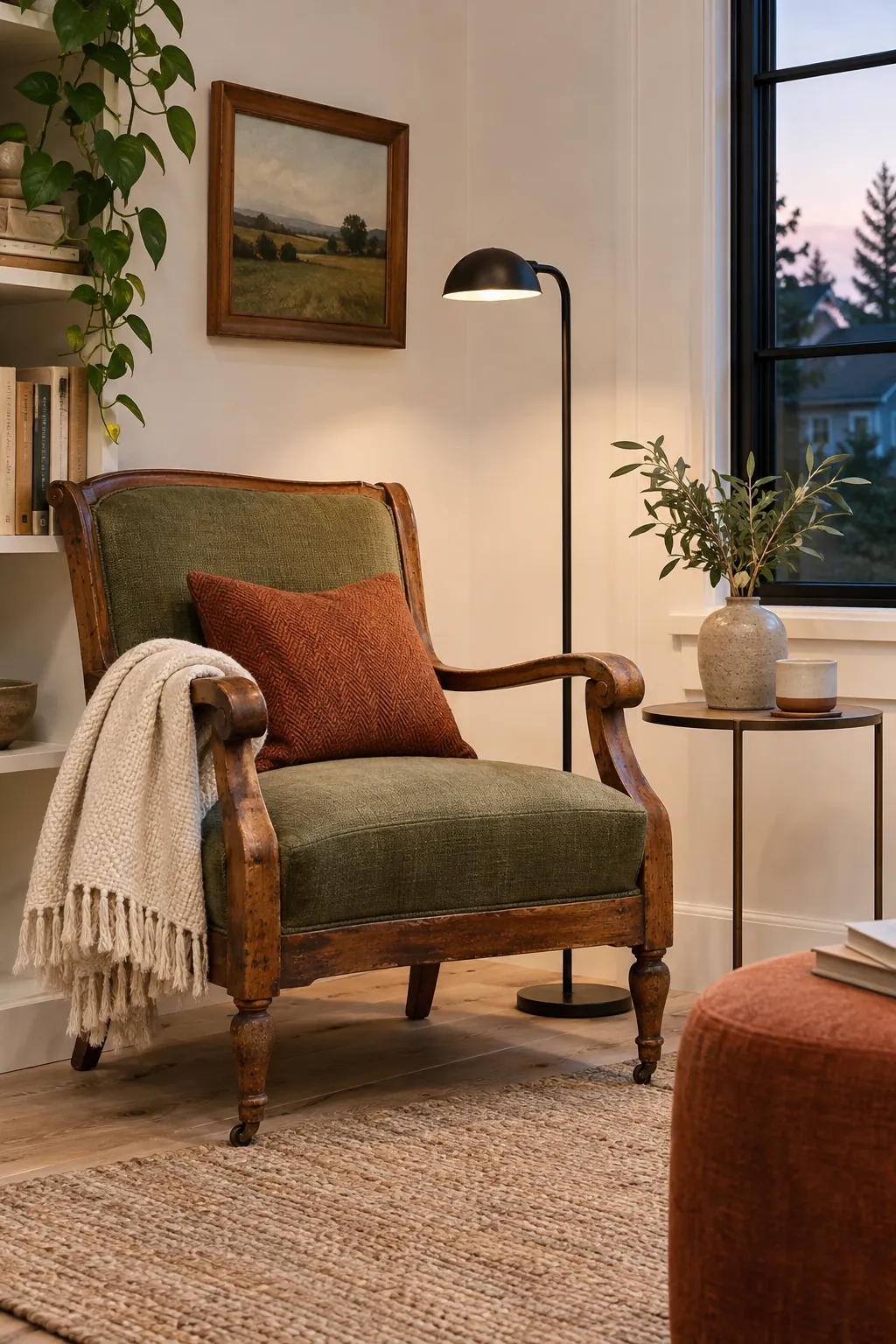
Keep the Architecture Quiet Around Ornate Pieces
Let detailed furniture sit against calm walls and straightforward trim. Avoid adding decorative molding, patterned wallpaper, and several elaborate pieces in the same view unless the room can support them. Empty wall space gives carving and patina room to breathe.
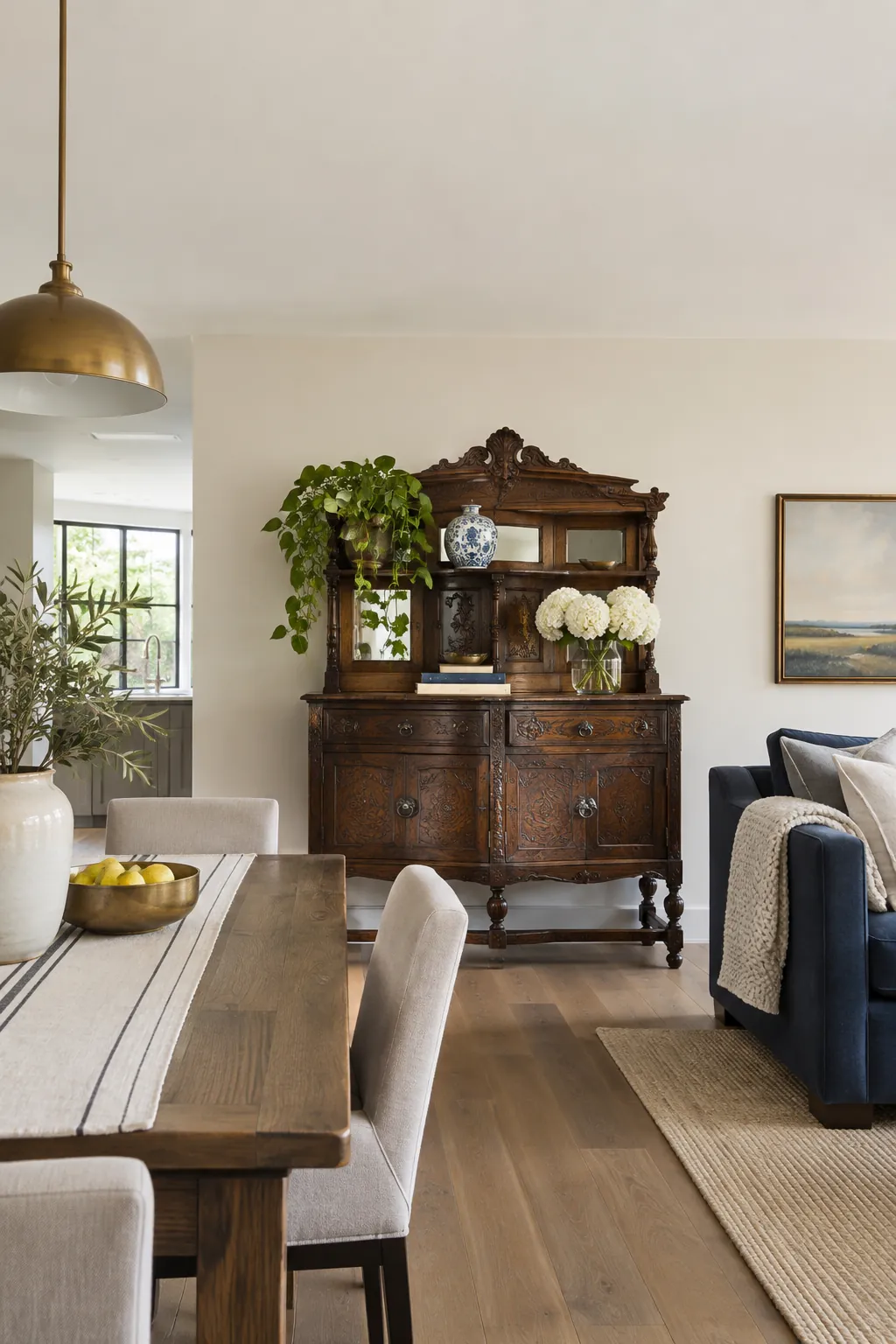
Edit Until Every Old Piece Has a Job
Keep vintage furniture that supports a real routine, holds necessary objects, or solves a layout problem. Move pieces that block doors, crowd seating, or exist only to prove the room is collected. A useful mix of ages feels personal and current rather than like a preserved time capsule.