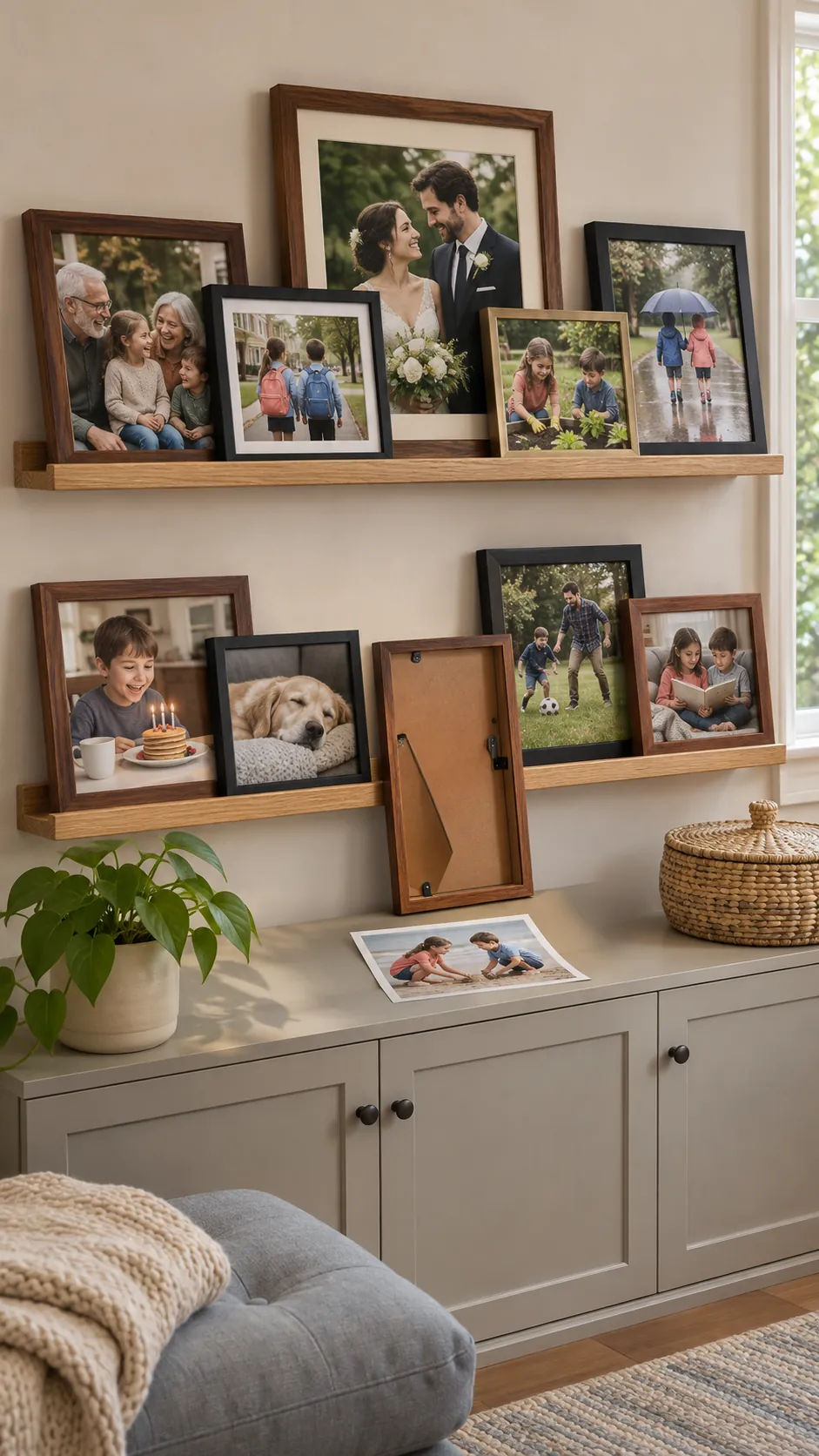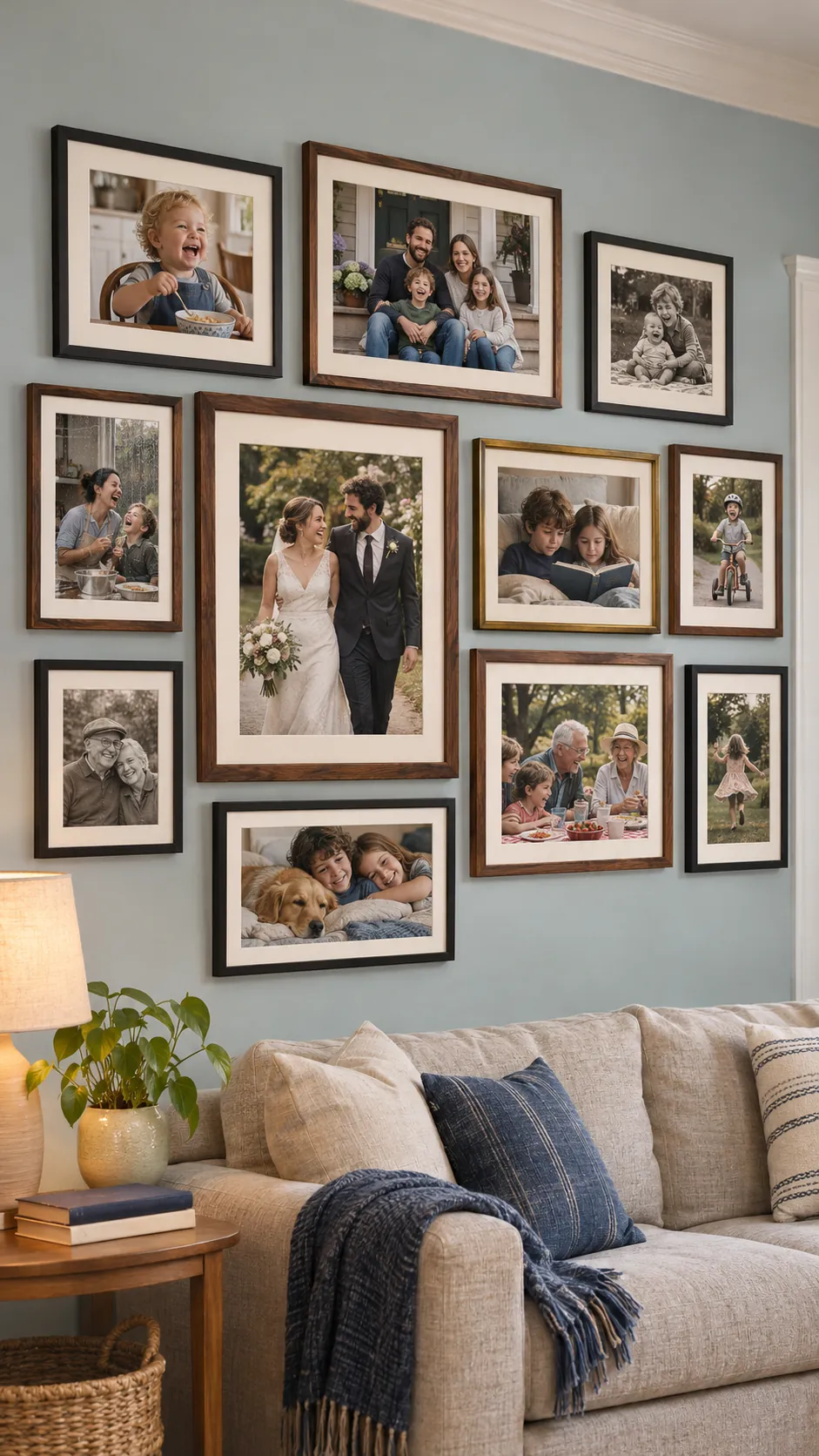
Wedding pictures can look strangely separate from the rest of family life. They are often larger, more formal, and more carefully colored than the photographs made at breakfast, on holidays, or during an ordinary afternoon. When every formal image stays together, the display can feel like a record of one day rather than a portrait of a continuing family.
The useful shift is to connect moments by story, gesture, color, or scale. A wedding photograph does not lose importance when it shares a wall with daily life. It gains context, because the pictures around it show what the promises became.
Pair the Formal Portrait With a Relaxed Picture From Today
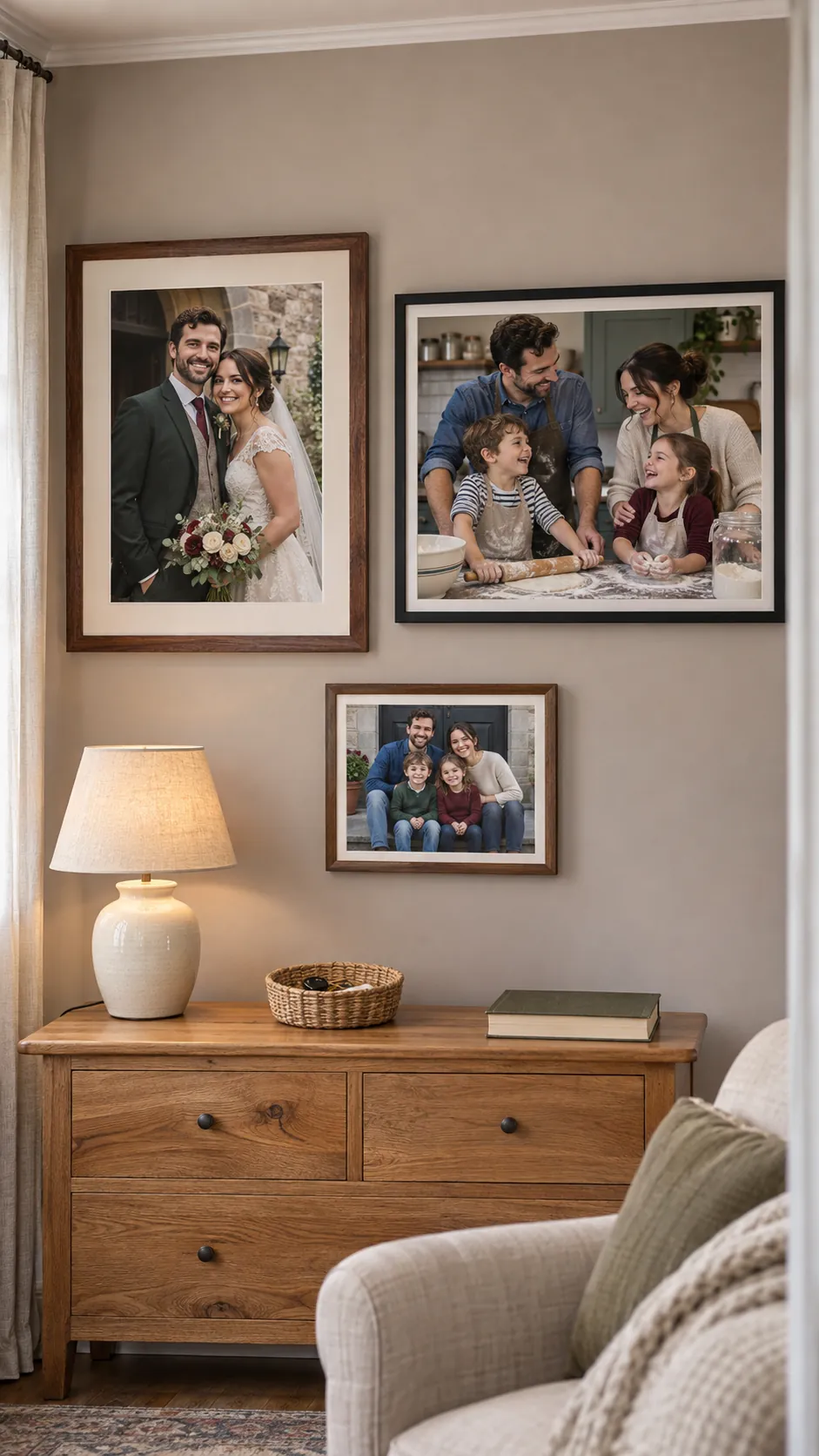
A polished wedding portrait becomes more personal when a relaxed current photograph sits nearby. Choose an everyday image with an obvious connection, such as the same couple cooking with their children or laughing on the front steps. The contrast shows what followed the ceremony instead of treating the wedding as an isolated event. Keep the two prints close enough to read as a pair, but give each its own frame and breathing room.
Repeat a Gesture Instead of Matching the Occasion
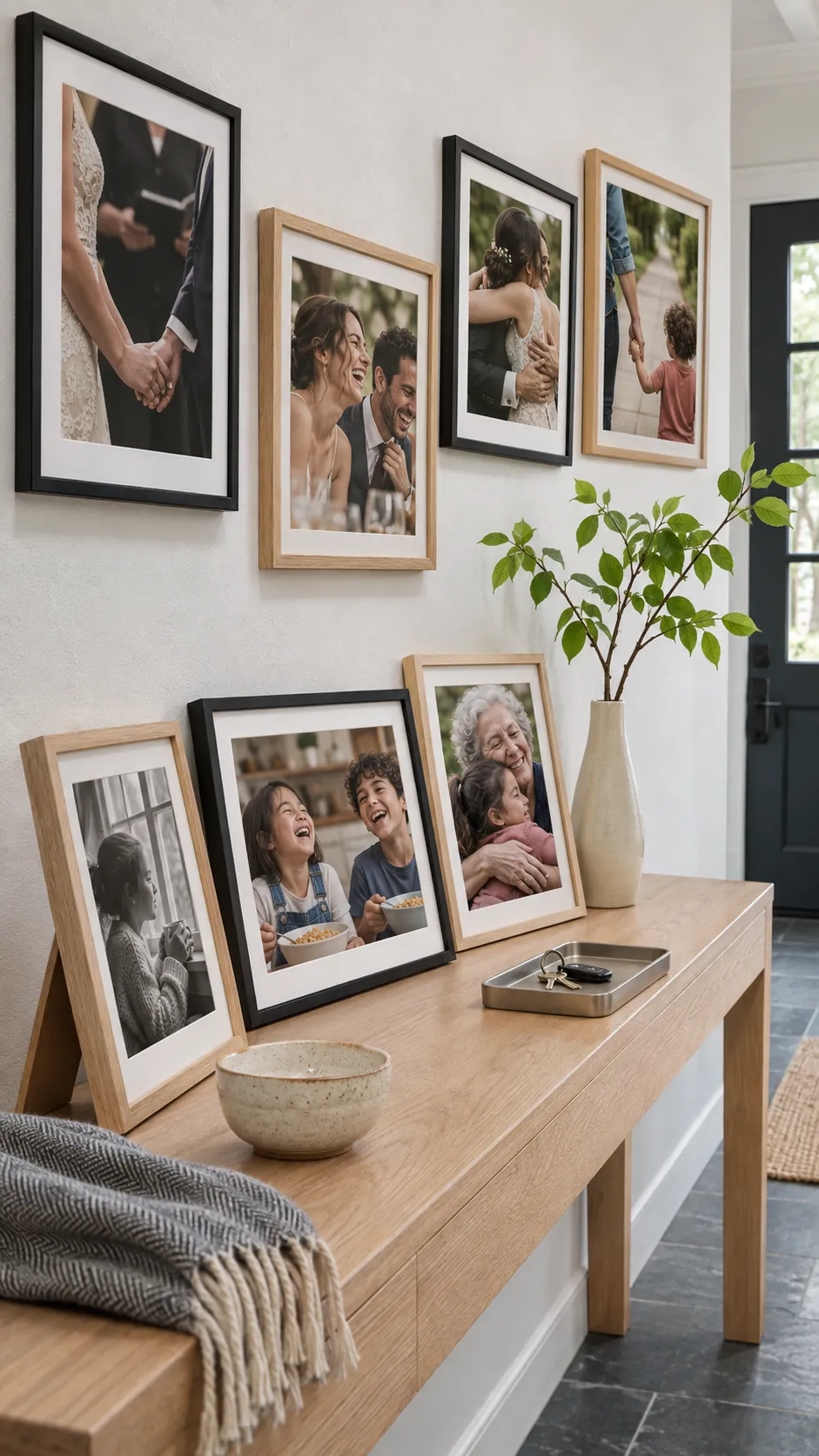
Look for repeated gestures across the years. A wedding photograph of joined hands can sit beside a child holding a parent’s hand, while a laughing reception picture can echo a candid breakfast scene. This kind of photo storytelling connects formal and ordinary moments without requiring similar clothes, settings, or colors. The emotional rhythm is strong enough to make mixed family portraits feel related.
Let One Wedding Image Anchor the Arrangement
Choose one wedding print to carry the most visual weight rather than enlarging every favorite. A strong couple portrait, wide ceremony scene, or quiet candid can serve as the anchor for a family picture wall. Place smaller daily life images around it so the display moves from milestone to continuing story. One clear anchor also prevents formal photographs from overpowering the room.
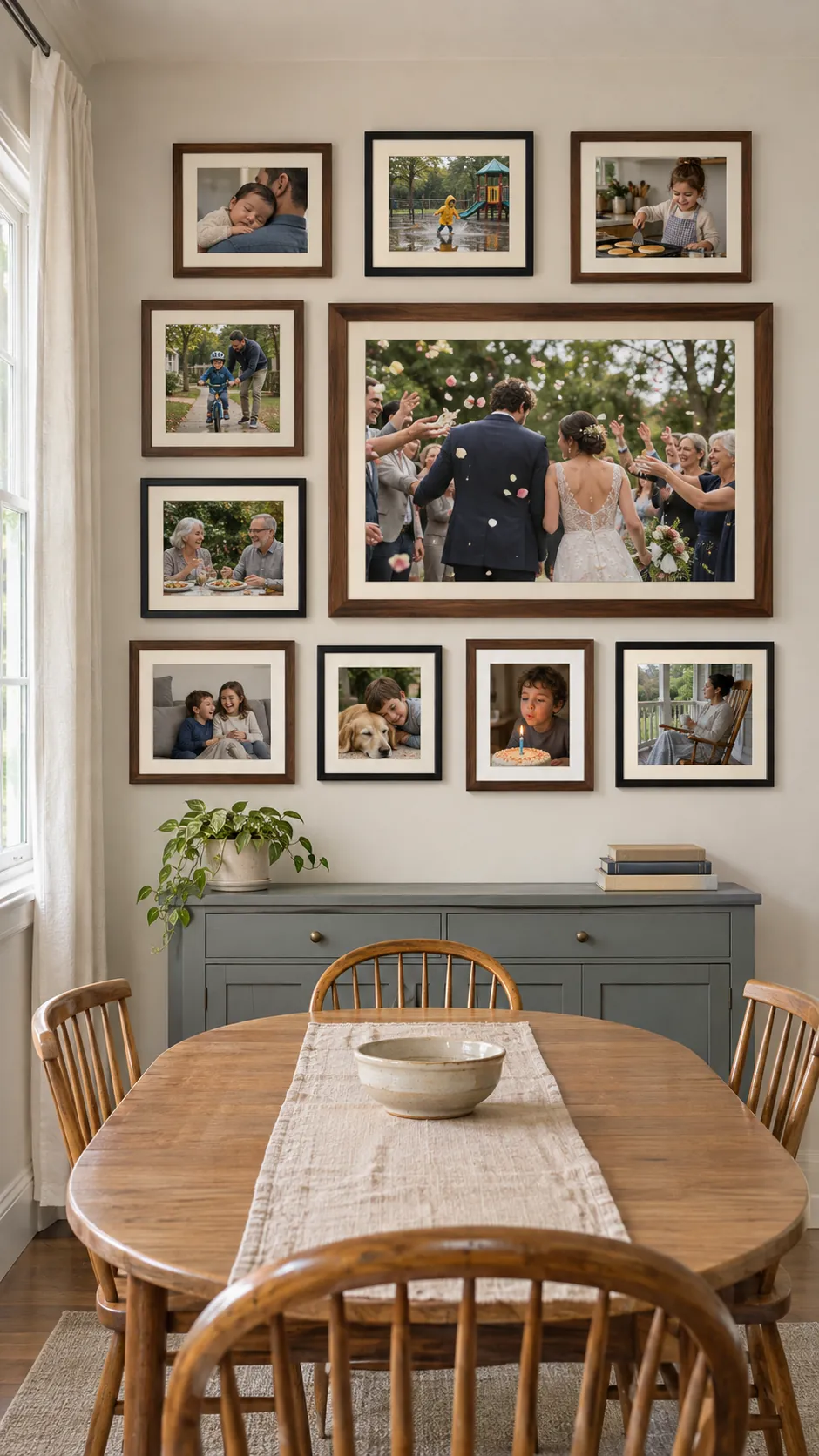
Vary the Print Sizes According to the Moment
Scale should reflect the photograph, not its prestige. A wide wedding group may need room for faces, while a close candid can remain small and intimate. Mix horizontal and vertical formats, then use mats to bring unusual crops into useful frame sizes. This approach gives a family photo arrangement movement without making everyday pictures look secondary.
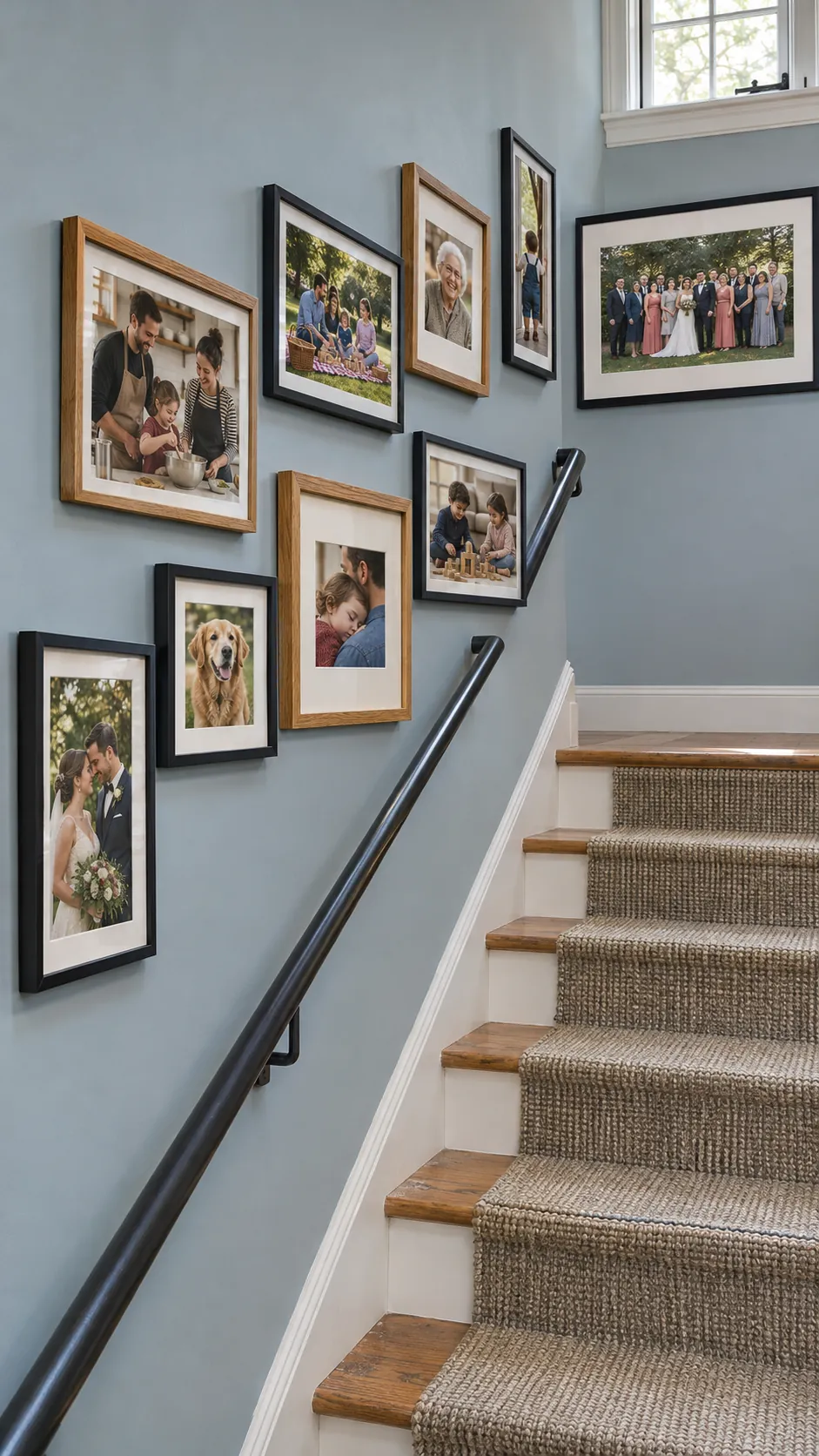
Use Mats and Frame Finishes as the Common Thread
The pictures can come from different years when the framing repeats a few quiet choices. Warm white mats can bridge a bright digital wedding print, a faded childhood snapshot, and a recent phone photograph. Limit the main frame finishes to two, then repeat each across the arrangement. Cohesion comes from the outer structure, so the photographs do not need identical editing.
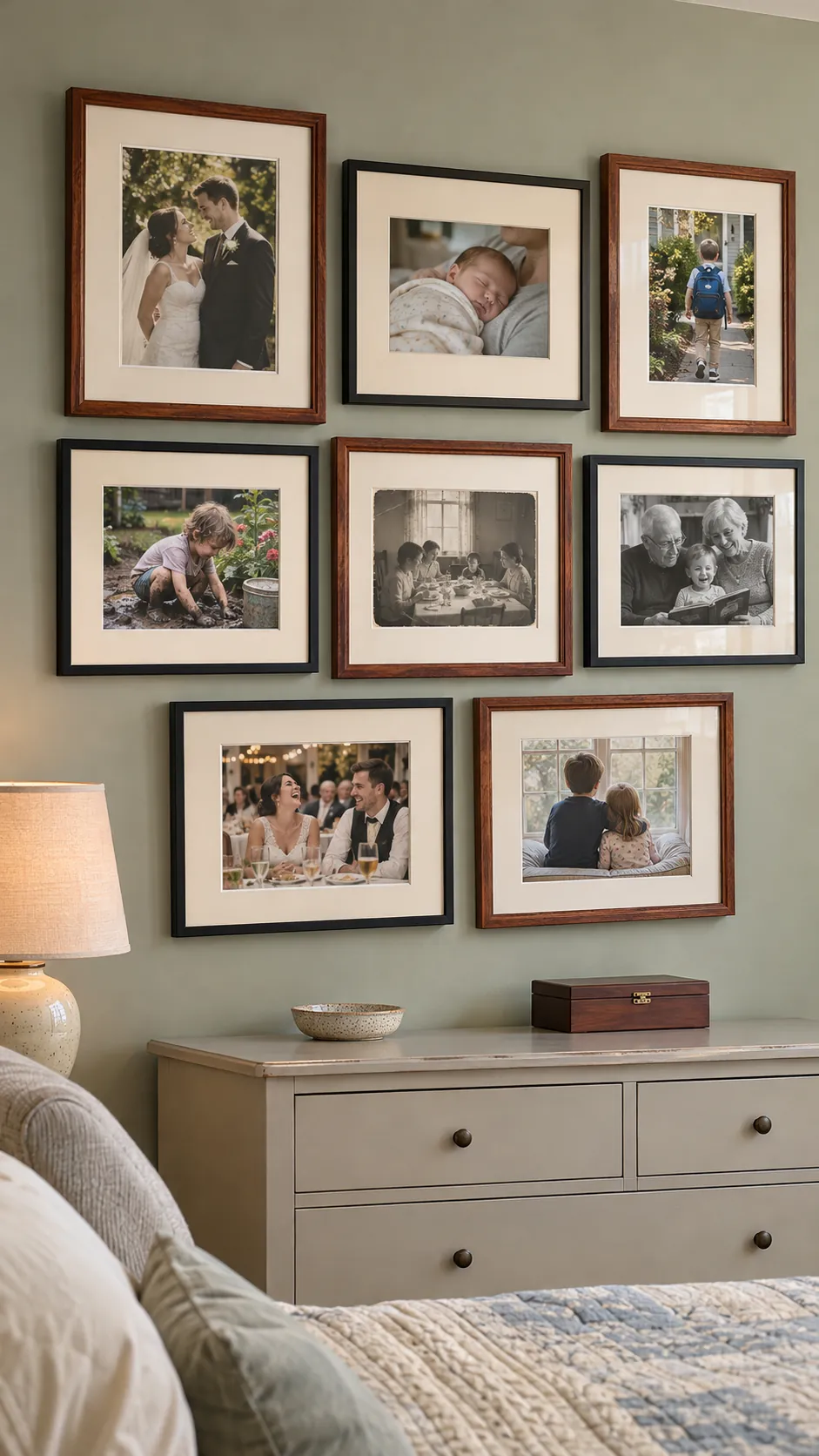
Balance Formal Color With Everyday Color
Wedding photography often has a controlled palette, while everyday family photography contains stronger and less predictable color. Distribute bright clothing, dark suits, pale backgrounds, and green outdoor scenes across the wall instead of clustering them by event. Black and white can calm one unusually dominant image, but it should not become an automatic fix for every mismatch. Review the full group from across the room before changing any file.
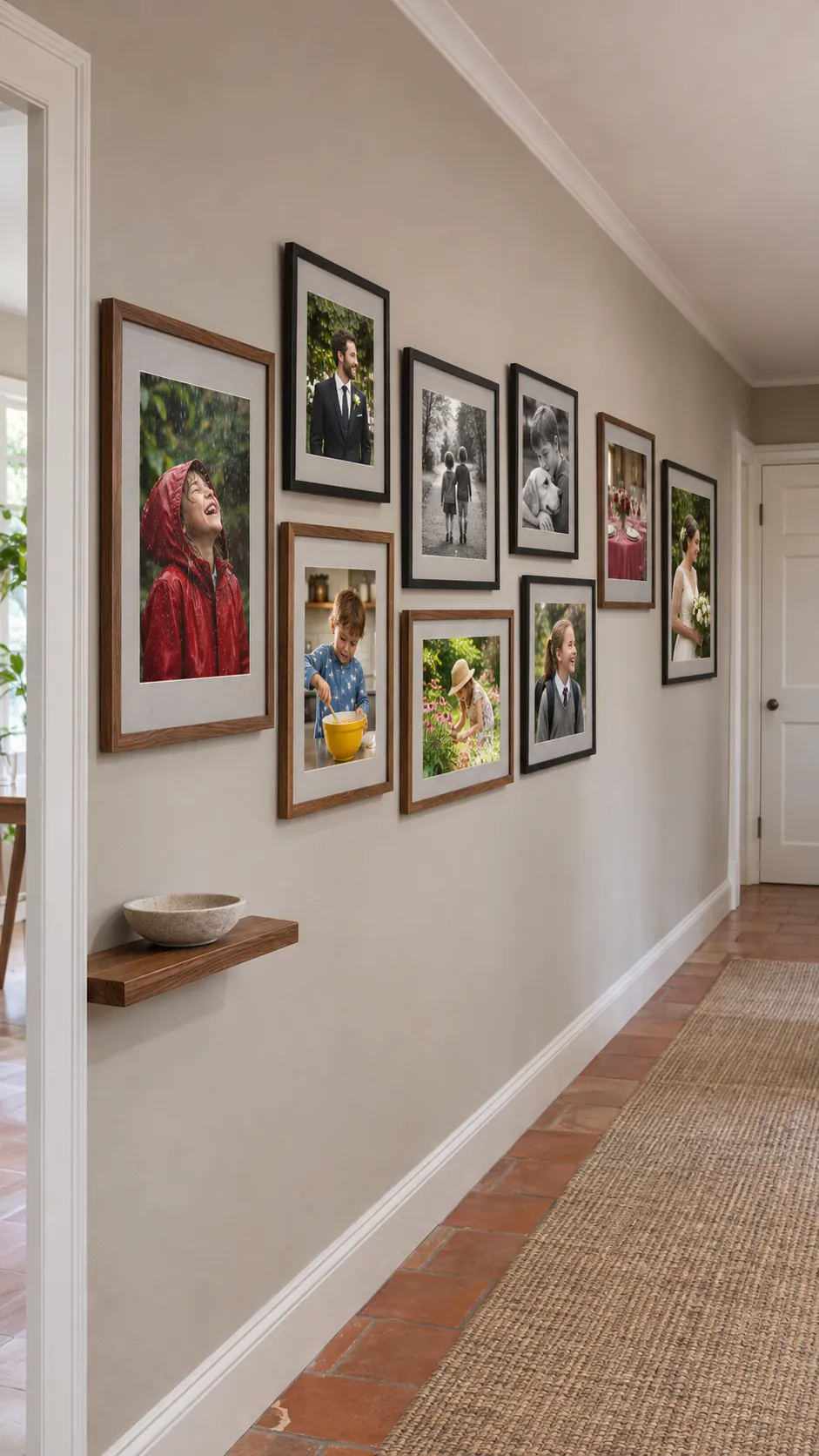
Include Another Generation’s Wedding Story
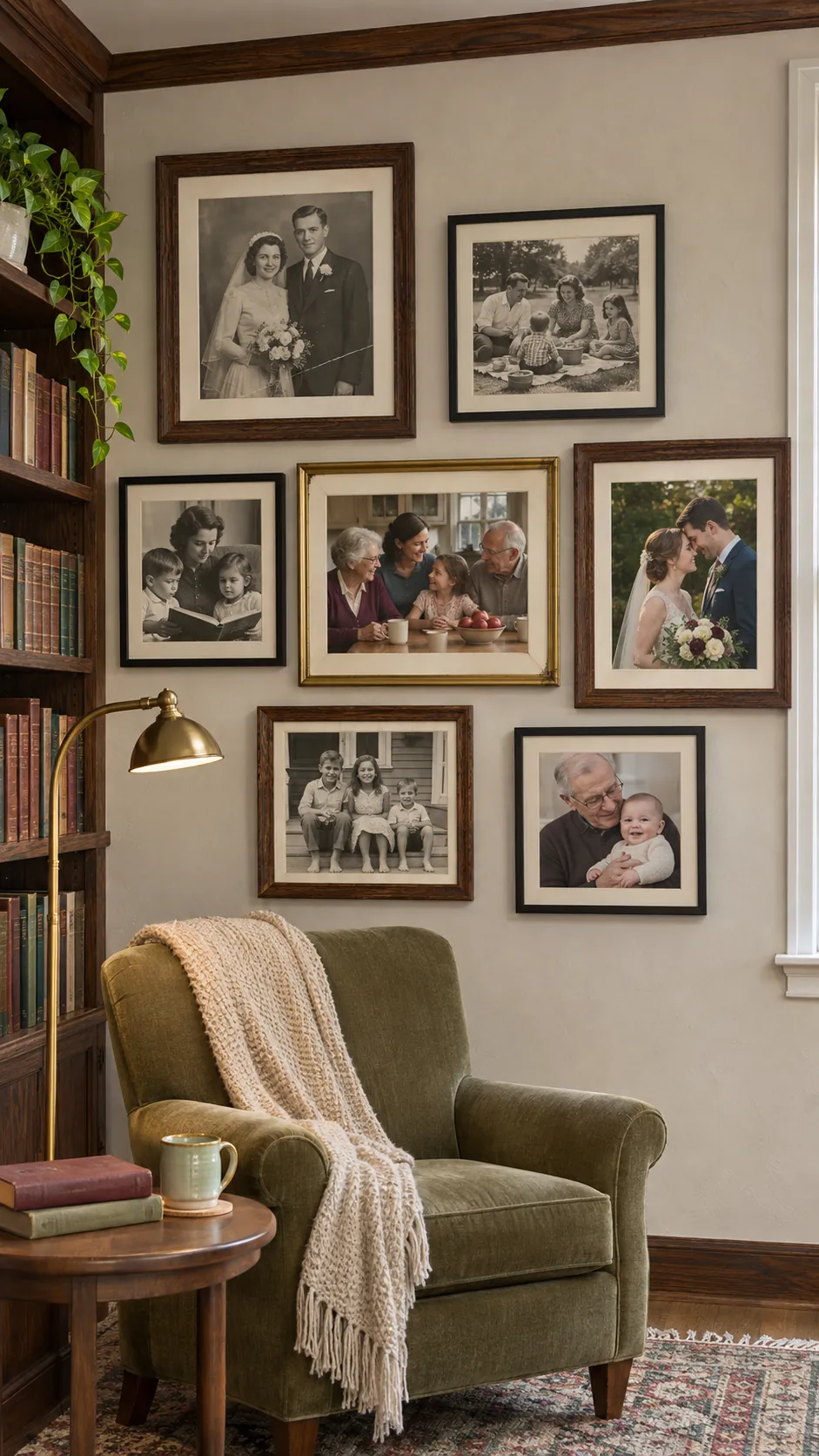
A parent’s or grandparent’s wedding picture can turn a couple centered display into a broader family history. Place the older photograph near a current wedding image, then add one ordinary family scene from the years between them. Scanning the original lets you correct damage gently and print a safer copy. The result gives the wedding photo display depth without asking fragile originals to remain in light.
Leave One Place for the Story to Keep Moving
A personal gallery wall should be able to change after birthdays, trips, and quiet afternoons produce new favorites. Use one easy open frame, a short picture ledge, or a clear expansion edge where a photograph can rotate. Keep the wedding anchor stable while the everyday pictures change around it. That balance preserves the milestone and makes room for the life that continues beyond it.