
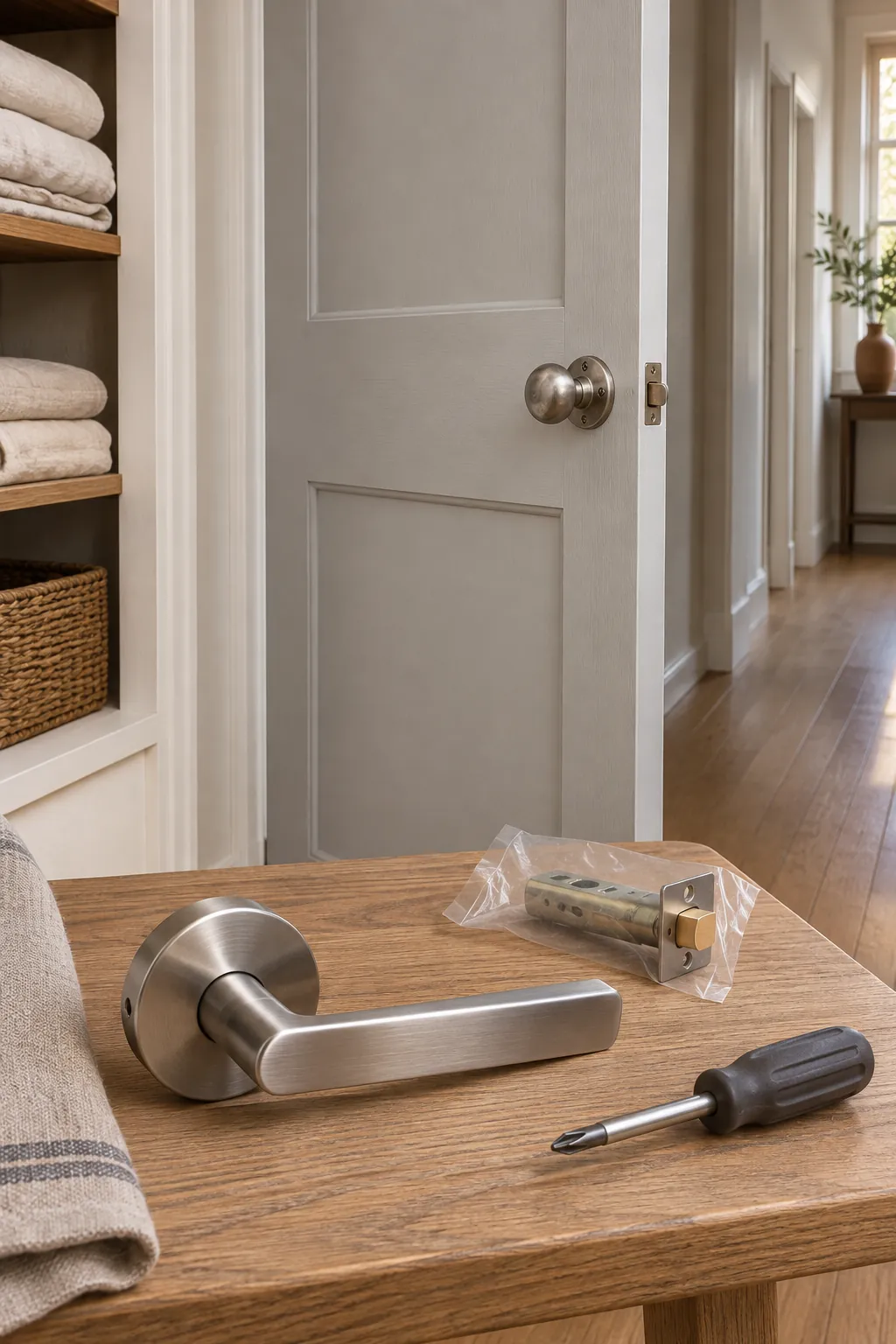
A new handle can cover the marks left by the old one and still fail to latch. Remove the existing set and inspect the holes, the door edge and the jamb before you order. The measurements that matter are usually the ones you cannot see with the handle in place.
Measuring from the wrong point
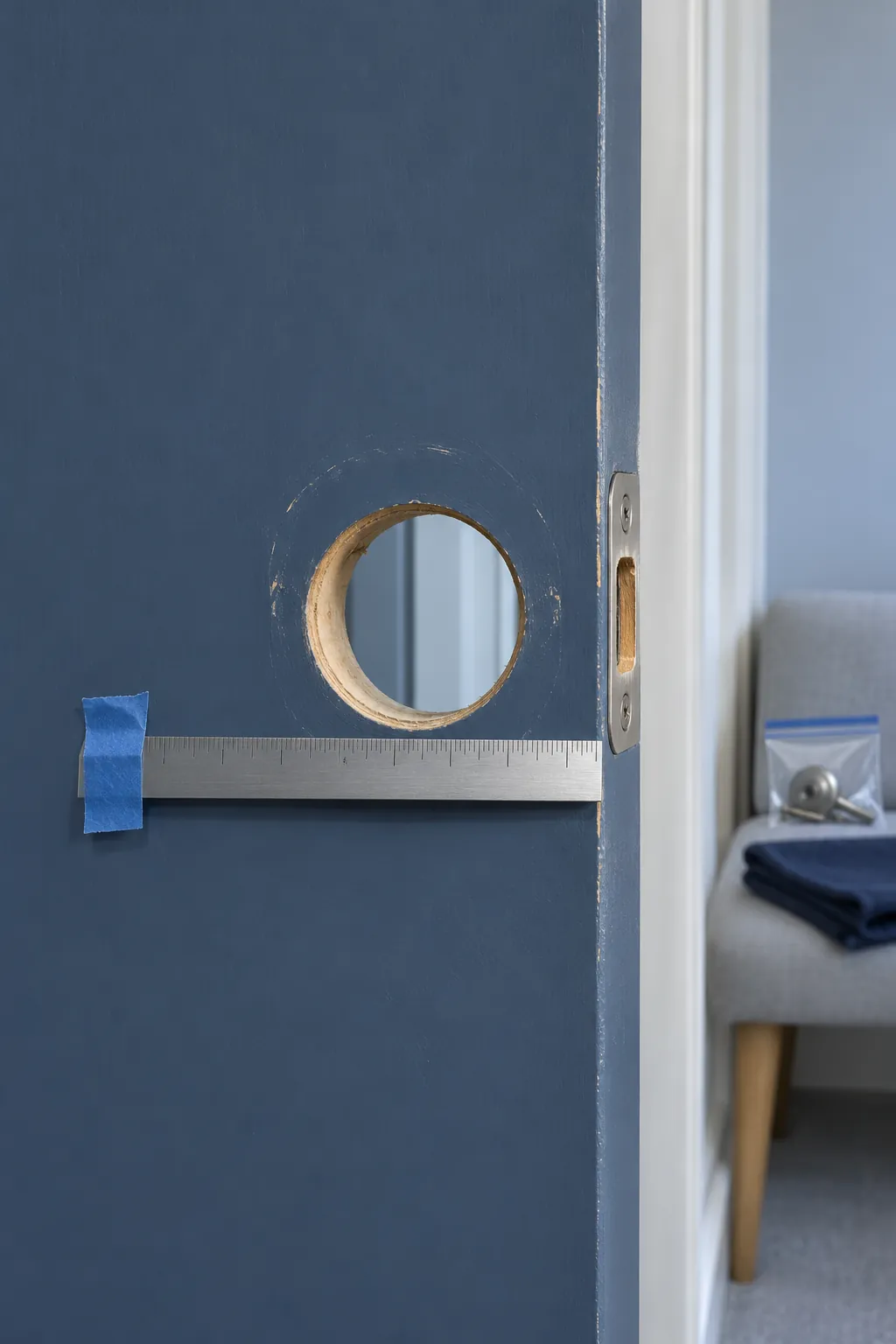
Backset is the distance from the latch edge of the door to the center of the handle bore. Measure to the center rather than to the rim of the hole. Two common US backsets are 2⅜ and 2¾ inches, but measure your door even if the package says the latch is adjustable. Check the instructions so you know how to set the latch before you install it.
Assuming the old bore is standard
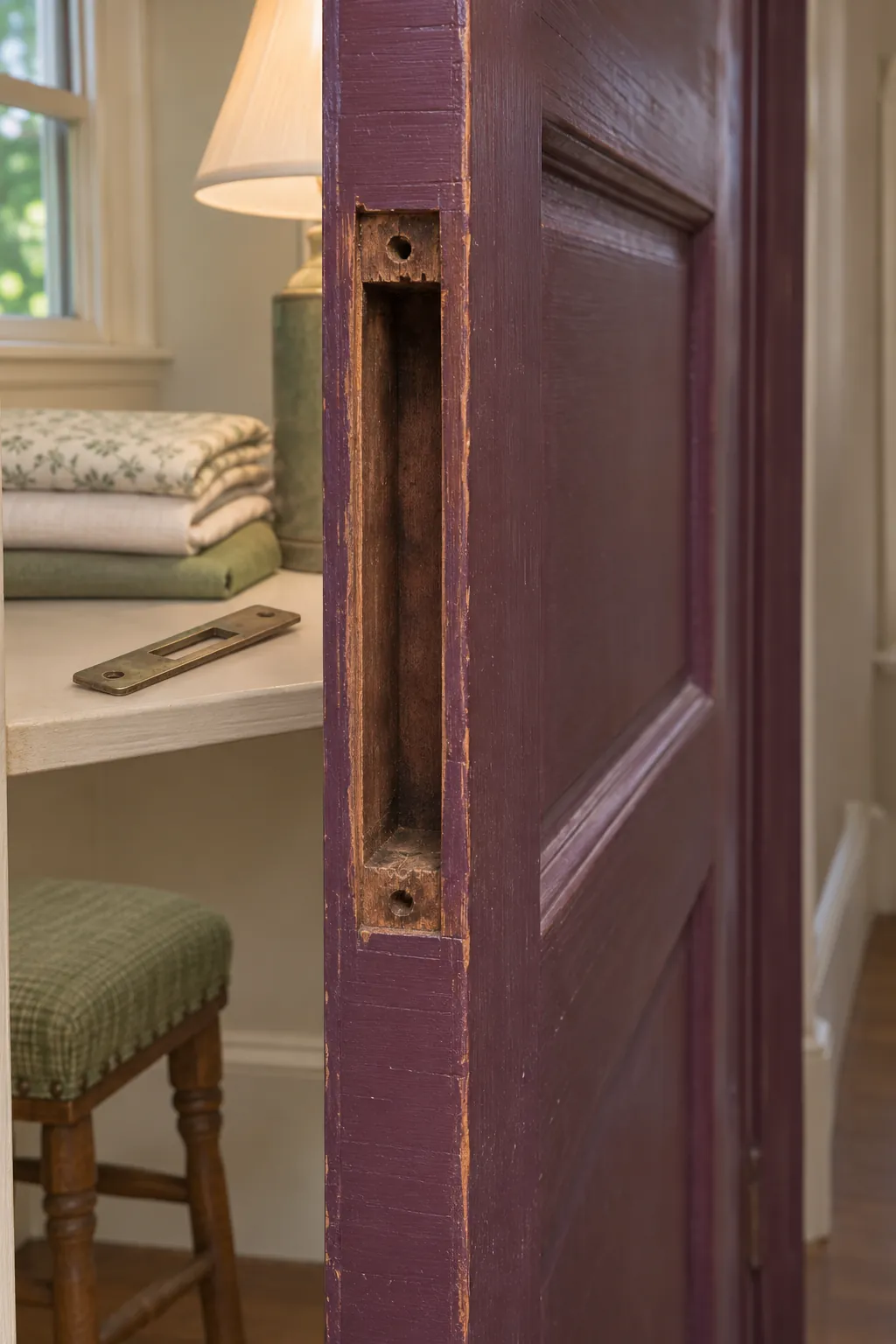
Measure the diameter of the large hole through the door face and the smaller hole through the door edge. Compare both with the installation drawing. Old doors can have smaller holes or a deep rectangular pocket for a mortise lock. Check for a compatible replacement before trying to enlarge the opening, especially if the door has a narrow stile.
Overlooking slab thickness
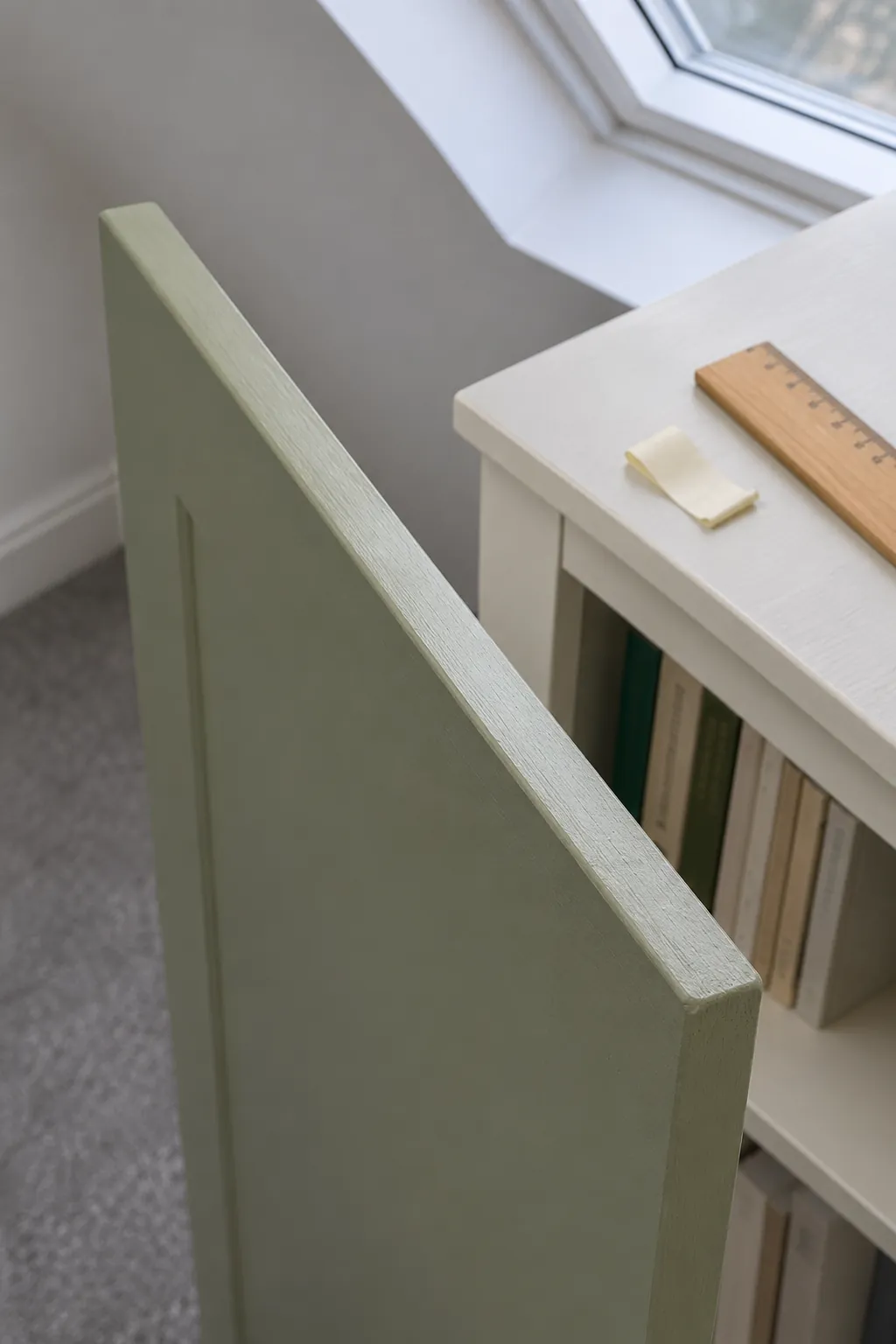
Measure across the door itself at the latch edge, away from projecting trim. Compare that number with the supported thickness range for the new set. If the slab is too thick, the spindle or mounting screws may fail to reach. If it is too thin, the plates may stay loose even with the screws fully seated.
Choosing the wrong handle function
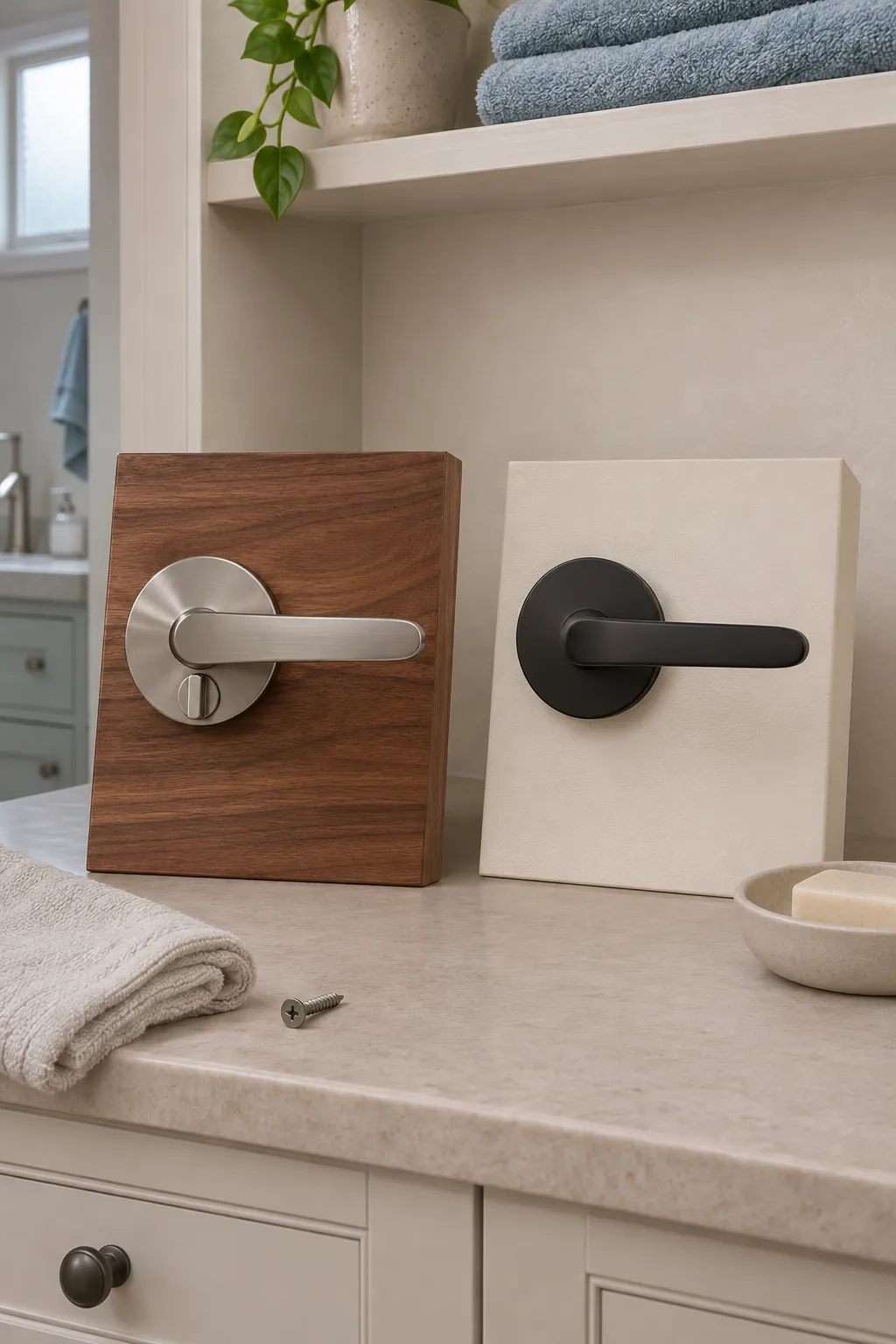
A passage set latches without locking and suits an ordinary connecting door. A privacy set gives a bedroom or bathroom an inside lock and usually provides an emergency release on the outside. A dummy is a fixed pull and works only where separate hardware holds the door closed. Check which function you need on each door before buying matching sets.
Guessing which way a lever should face
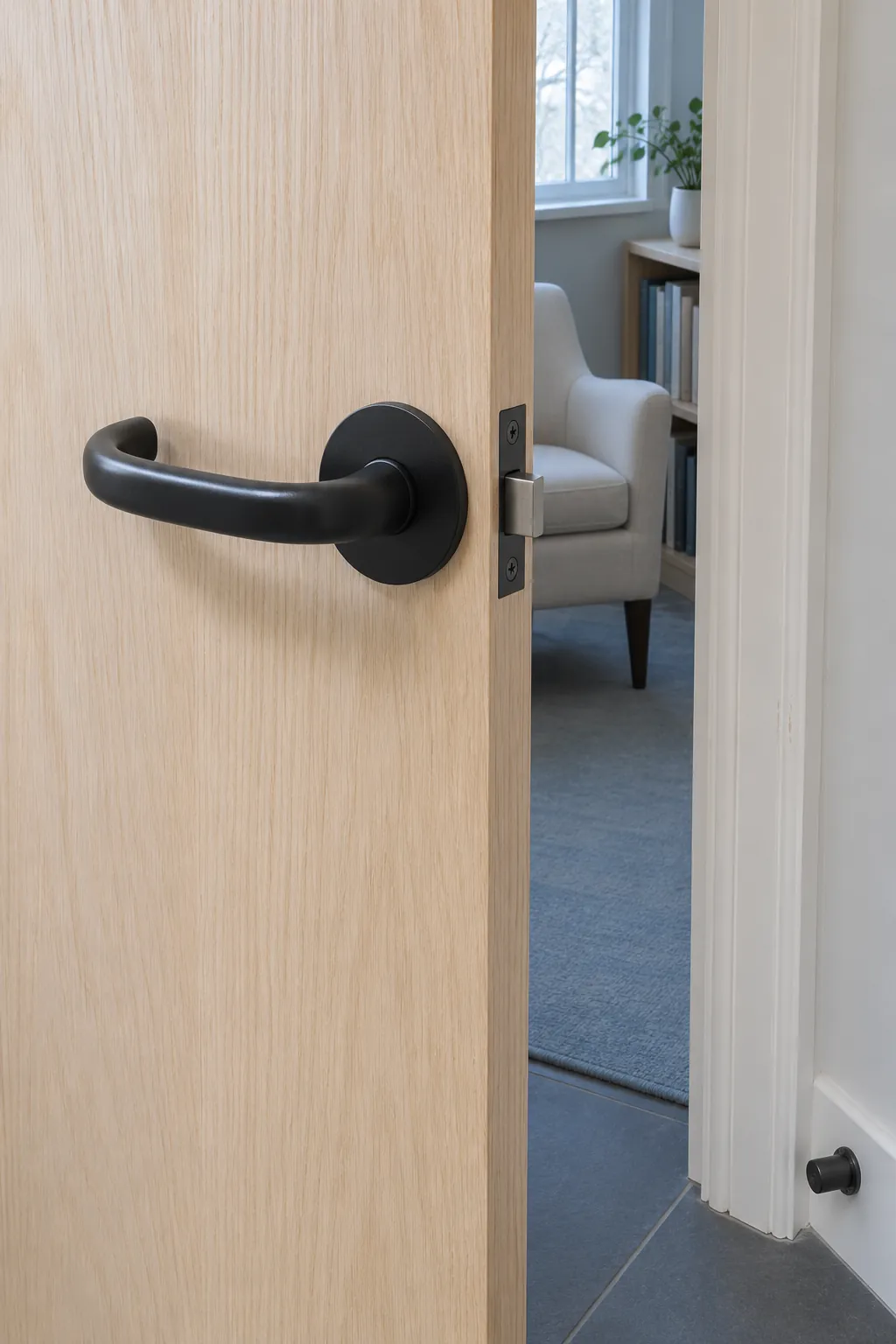
Record which side the hinges are on and which way the door swings. Give the supplier both facts, because the wording in handing charts varies by product. Some levers can be reversed, while some decorative shapes need a specific hand. Check whether the tip clears the casing on the inside and outside.
Ignoring the latch faceplate
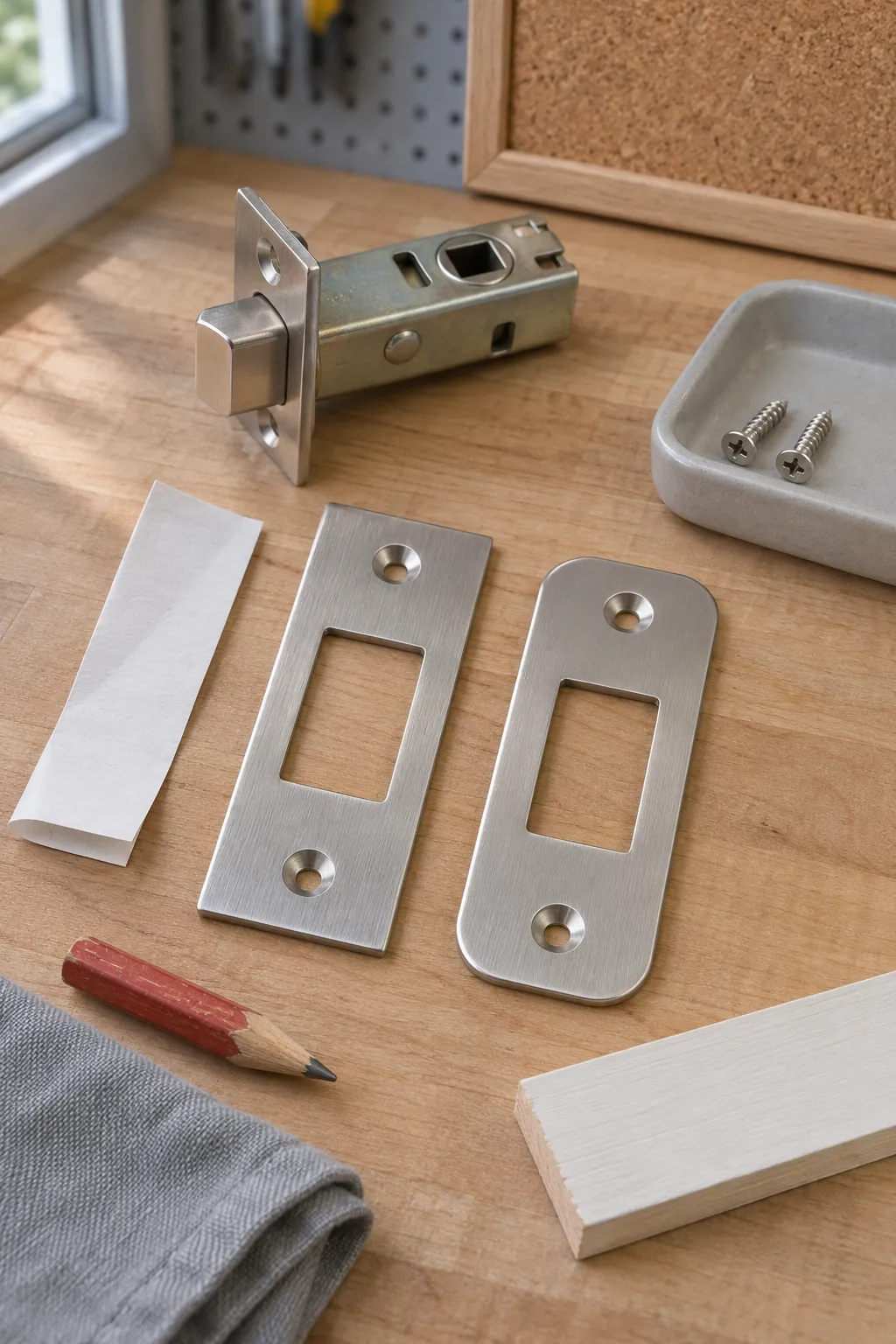
Inspect the plate on the door edge before you buy. A rectangular faceplate with square corners may not fit a recess with rounded corners, and a drive in collar is a different mounting style. Choose a latch and plate combination that matches the existing preparation or follow the instructions for a supported conversion. Set the bevel of the spring latch so the strike pushes it in as the door closes.
Leaving an incompatible strike in place
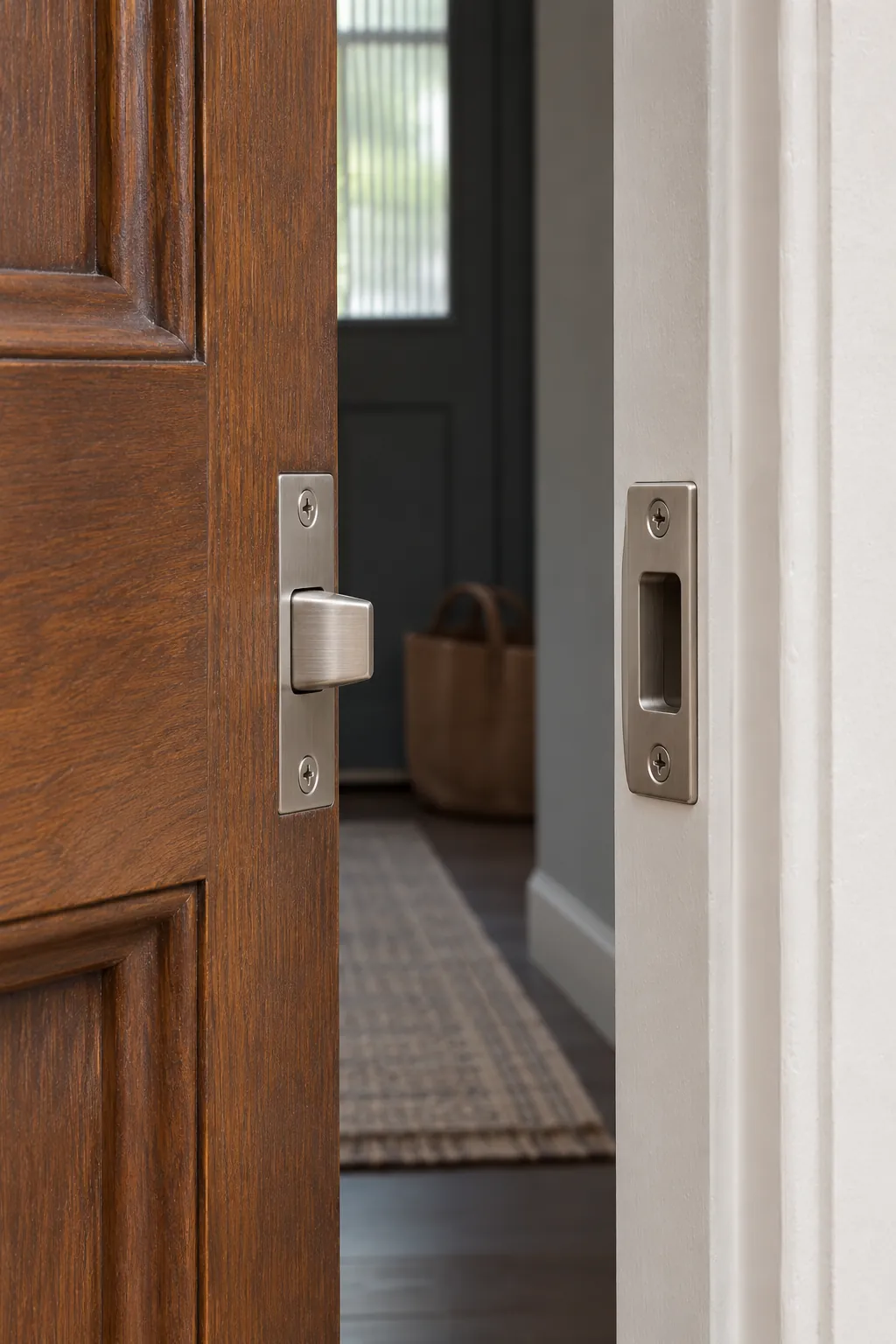
Close the door gently and check where the new latch meets the strike. The latch must enter the pocket without lifting or forcing the door. If the slab has dropped, correct loose hinges or sag before moving the strike. If you fit a new strike, confirm the latch can extend fully into the pocket and the door has little play when closed.
Forgetting the marks under the old hardware
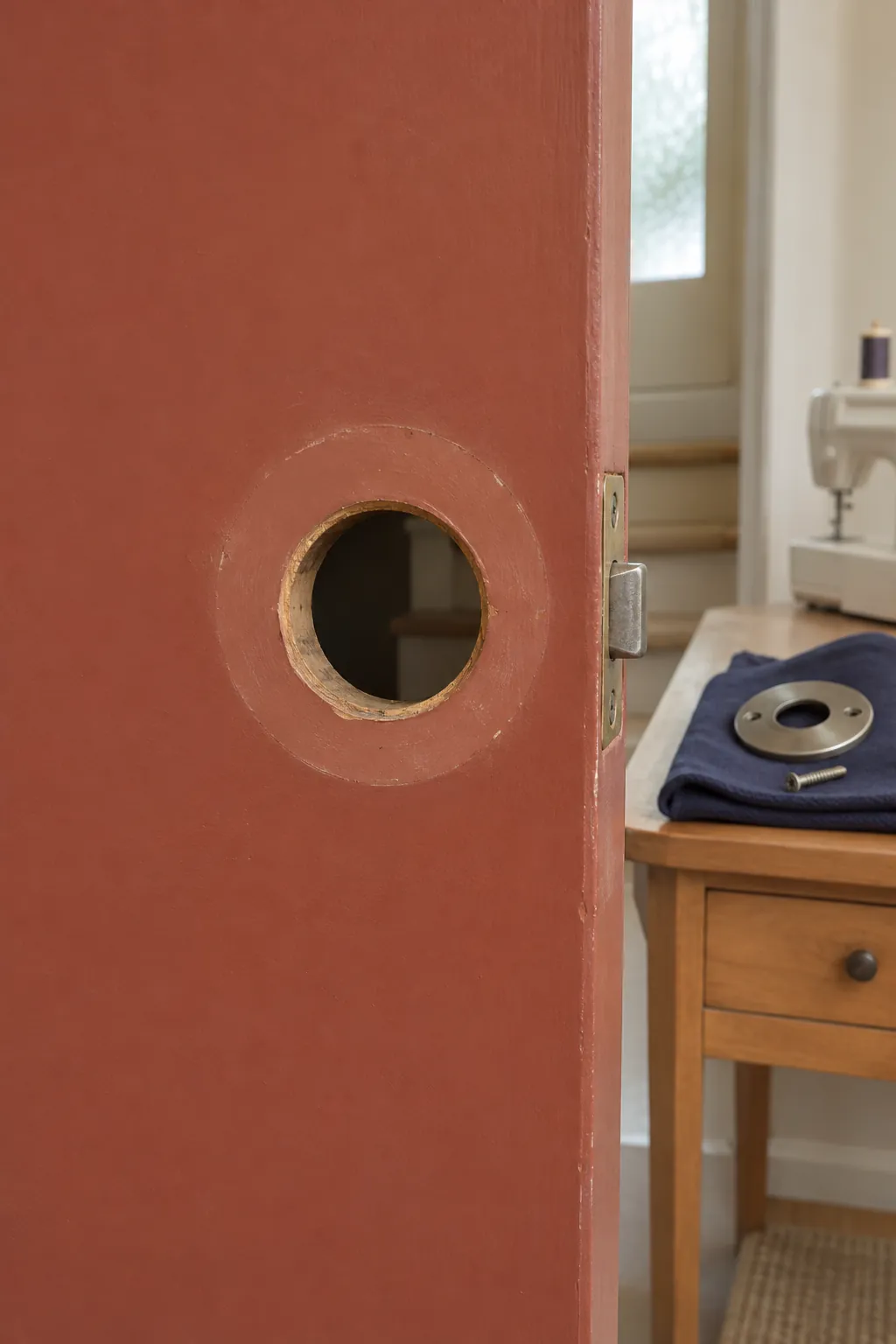
Measure the old rose or backplate before choosing a smaller one. Rings in the paint, empty screw holes and dents can become visible around the new plate. A compatible wider rose may cover the marks, or you can patch and repaint before installation. Compare both faces of the slab, since the existing plates may have different footprints.
Closing the door before testing the handle
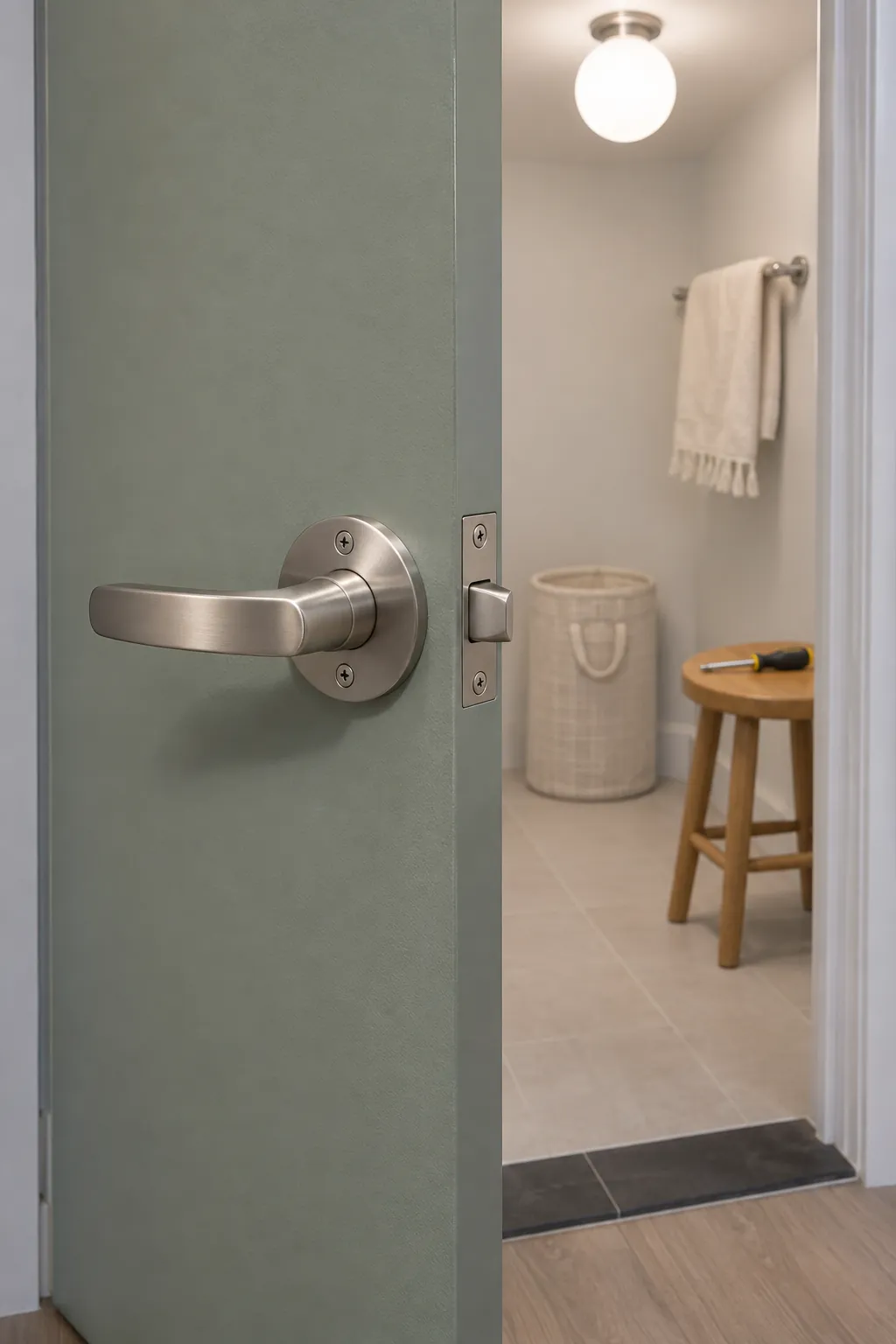
With the door open, work the handle from both sides and watch the latch retract and return. Test the lock and emergency release on a privacy set while you can still reach both faces. If the lever binds, check the spindle alignment and mounting screws without forcing anything. Once the mechanism moves freely, close the door gently and repeat the test.