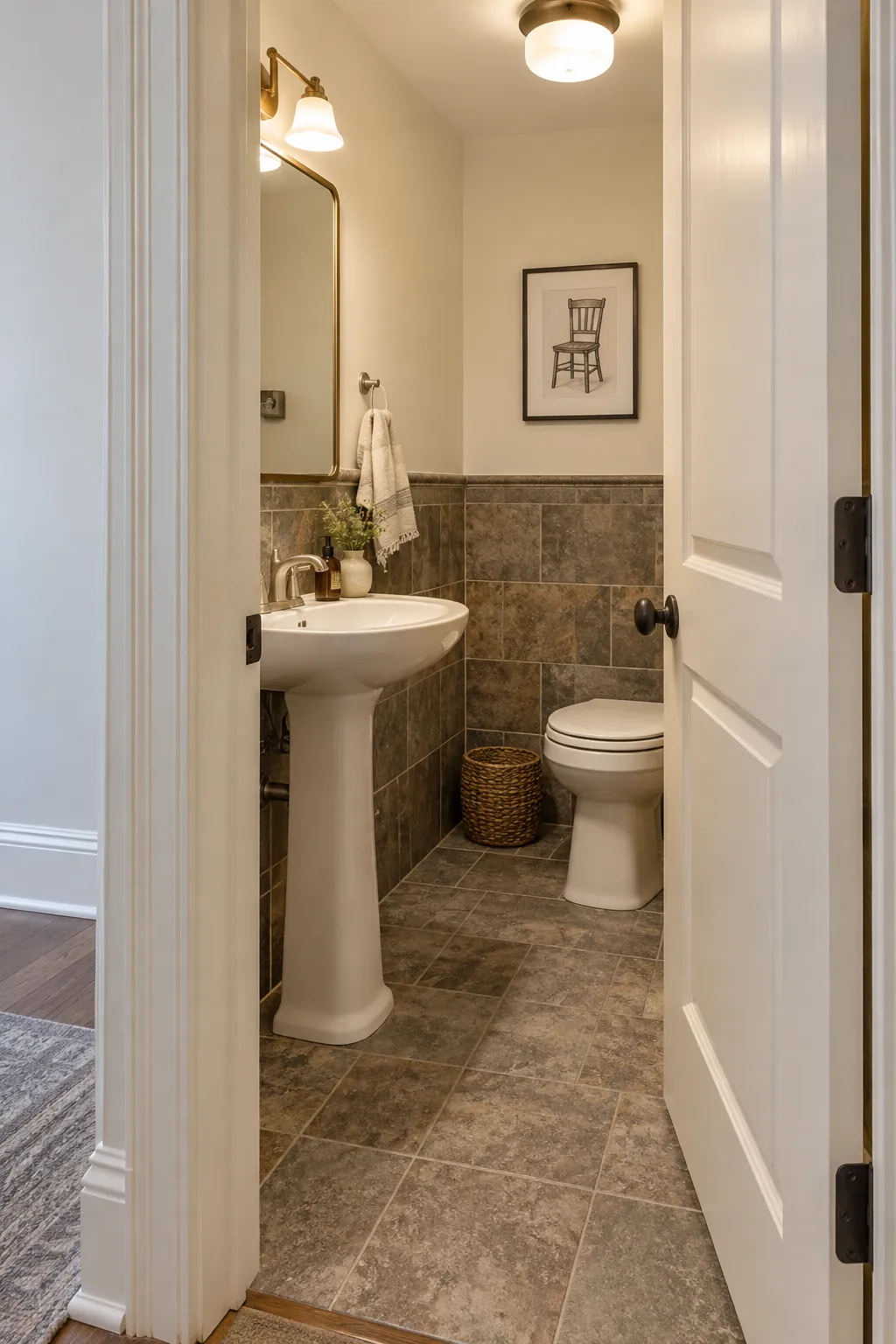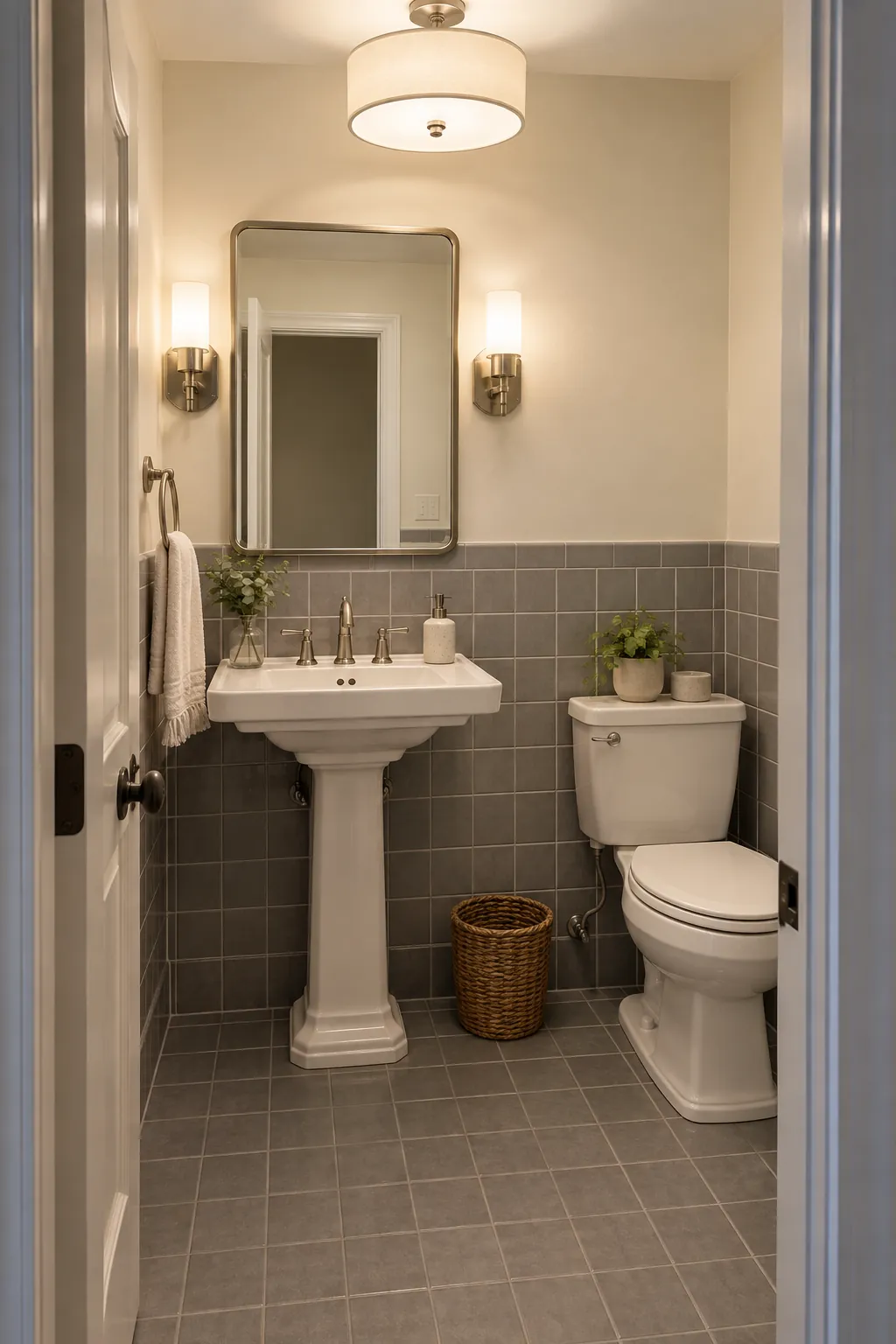
A dark powder room can make perfectly serviceable tile look heavier than it really is. Before pricing a renovation, stand in front of the sink with the current light on and notice where your face, the corners, and the floor fall into shadow. The fix is often a better distribution of light and a few lighter surfaces at eye level.
Start with changes you can reverse, then decide whether a fixture or paint project is worth the trouble. Keep a sample of the existing tile in view when choosing bulbs, paint, and textiles, because a windowless room has no daylight to correct an awkward color cast. These changes address both usable brightness and the room's visual weight.
Choose a Bulb That Makes the Whole Room Clear
Start by checking the fixture label for its permitted bulb type and wattage before changing anything. A brighter compatible bulb with a neutral or warm white color temperature can reveal the true tone of the tile without making skin look blue. Compare the room with the door open and closed, since hallway light can disguise a dim ceiling fixture. If one bare bulb produces harsh shadows, the next improvement should be a better light position rather than still more output.
Put Useful Light Beside the Mirror
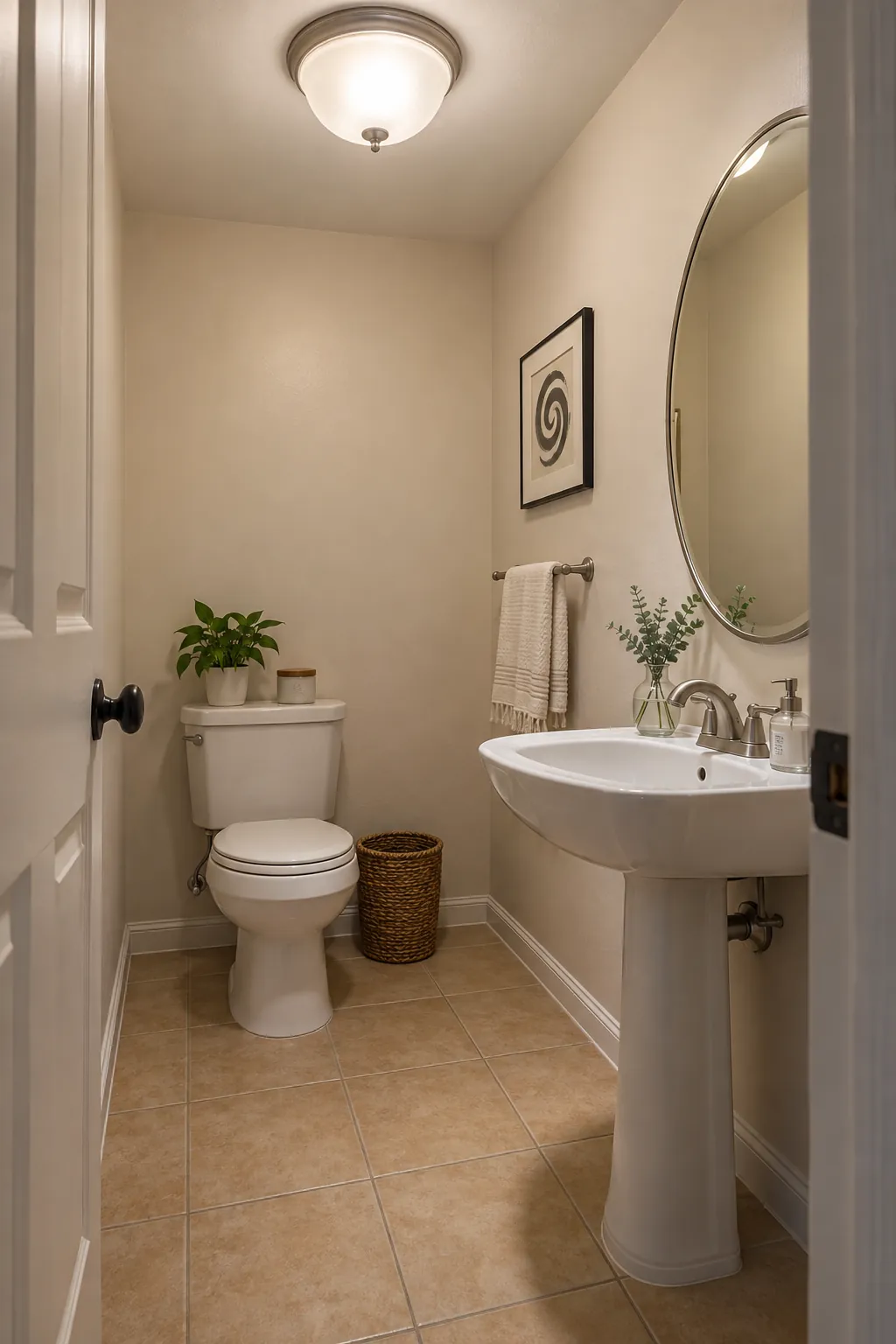
A ceiling light behind you can leave your face in shadow even when the floor looks bright. Two small sconces beside the mirror spread light more evenly across the sink area and make the room feel less cave like. When hardwiring is not possible, a compatible plug in fixture may work if the cord can be routed safely away from water and the outlet is appropriate for the bathroom. Match the new fixture to the room's actual scale so it does not crowd the mirror.
Use a Mirror That Catches the Lit Wall
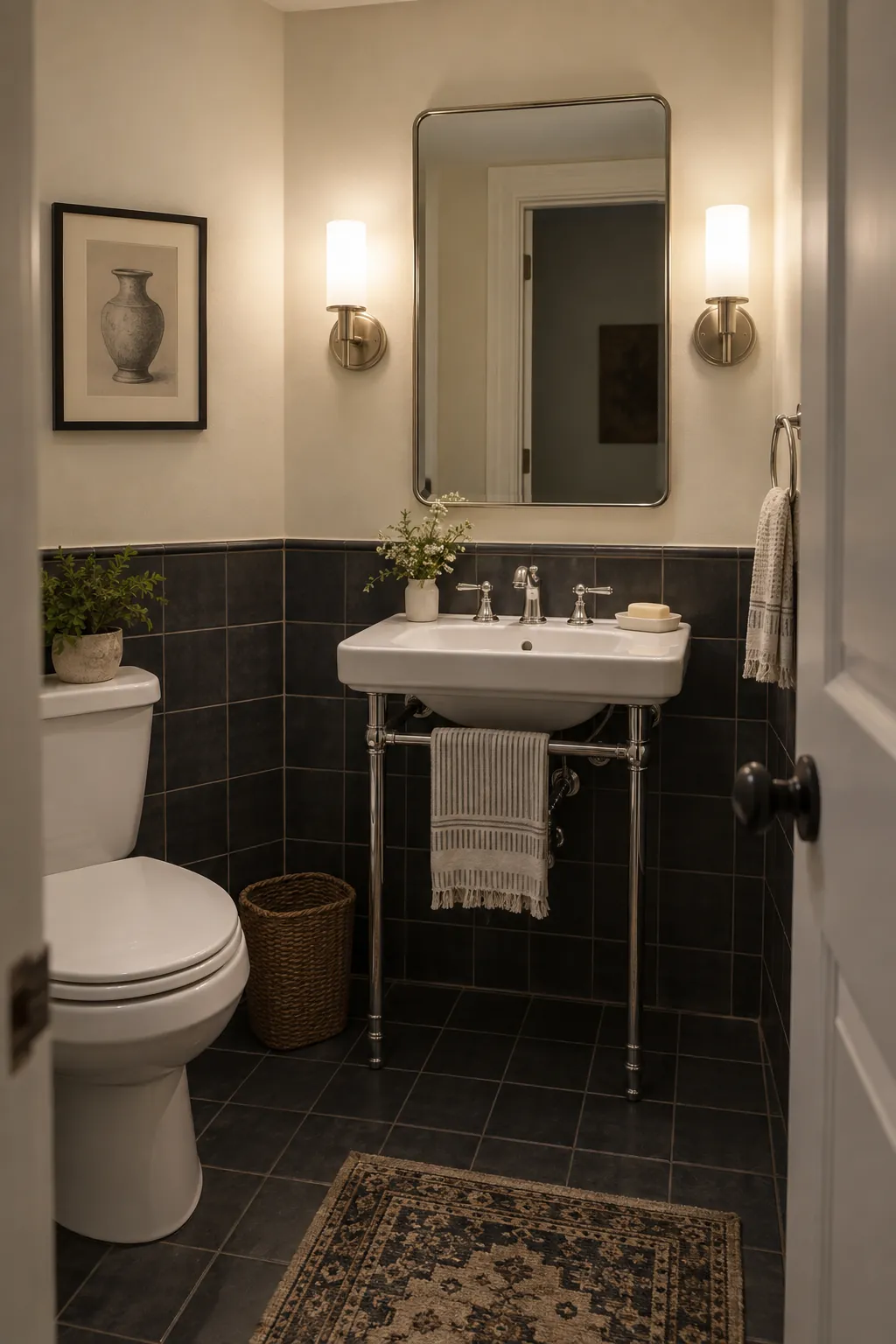
A larger mirror reflects more of the room, but its direction matters more than its size alone. Position it to catch a pale wall or a useful light source instead of a dark corner or a doorway full of visual clutter. A thin frame preserves the reflective area, while a broad frame can make a small sink wall feel heavier. Check what the mirror shows from normal standing height before drilling new holes.
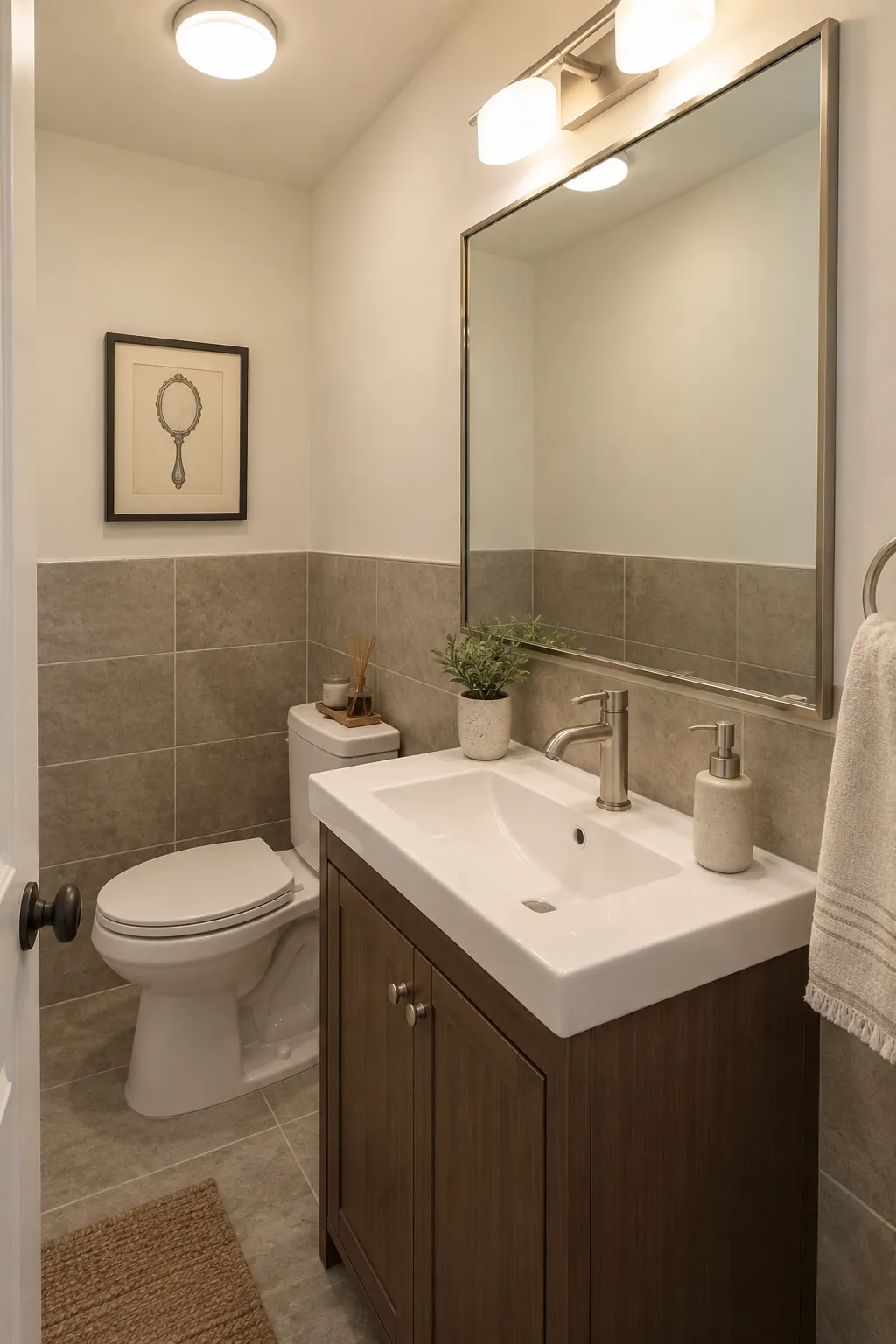
Give the Walls and Ceiling a Lighter Finish
Painting the walls a light warm white or a pale neutral can lift the eye above dark tile without changing the floor. Test samples under the exact bulbs you plan to keep, because windowless bathroom paint colors are seen almost entirely under artificial light. A clean, light ceiling helps distribute that light, especially when the walls are deeper in color. Choose a finish appropriate for bathroom moisture and prepare the surface properly so a bright color does not highlight peeling paint.
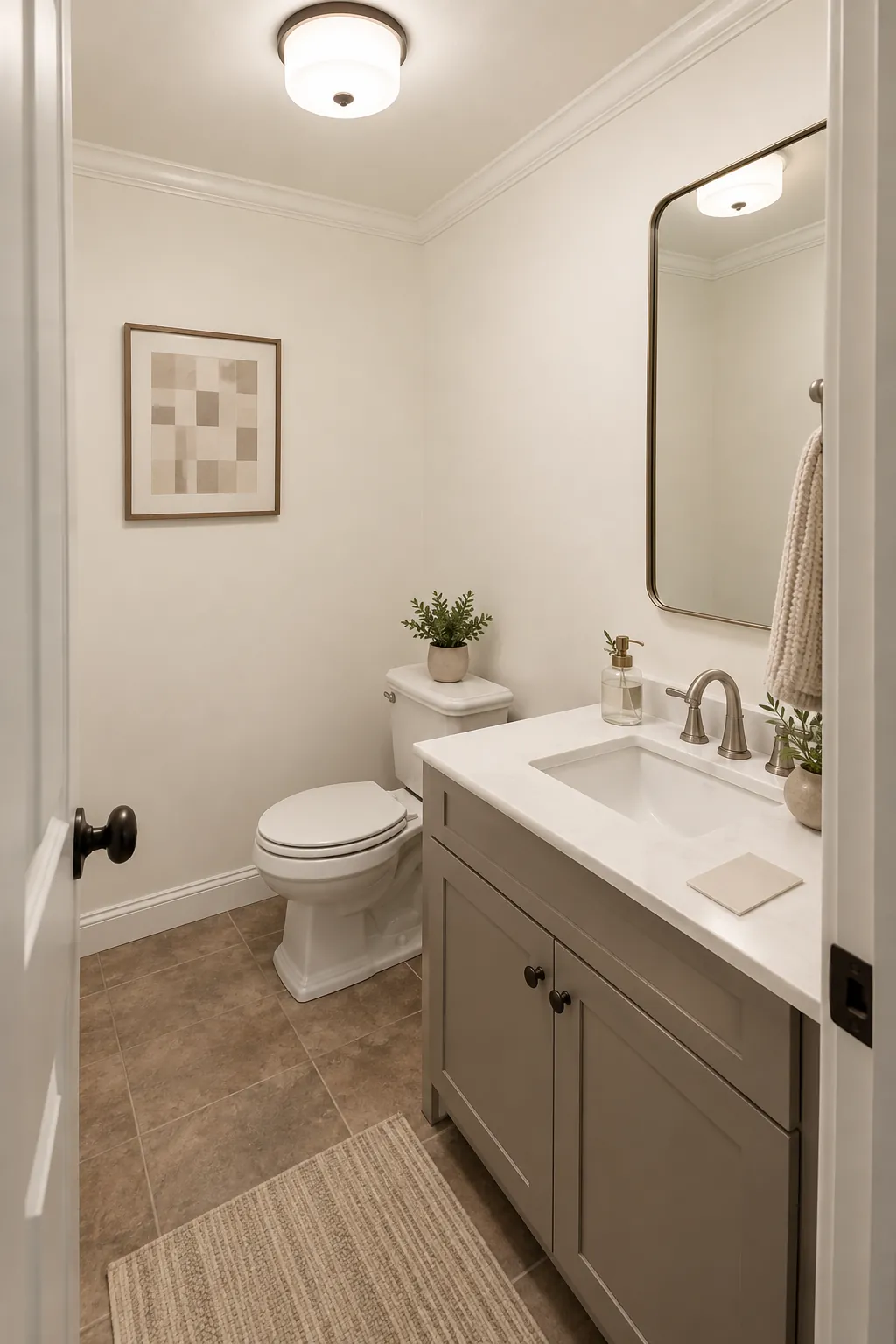
Lighten the Vanity Instead of the Tile
A dark vanity can make the bottom half of the room feel like one heavy block with the floor. Painting or replacing only the vanity front in a lighter tone creates separation while the tile stays put. A compact console sink or open shelf can also expose more floor if storage needs allow it. Keep plumbing access and splash resistance in mind before removing a cabinet that is doing useful work.
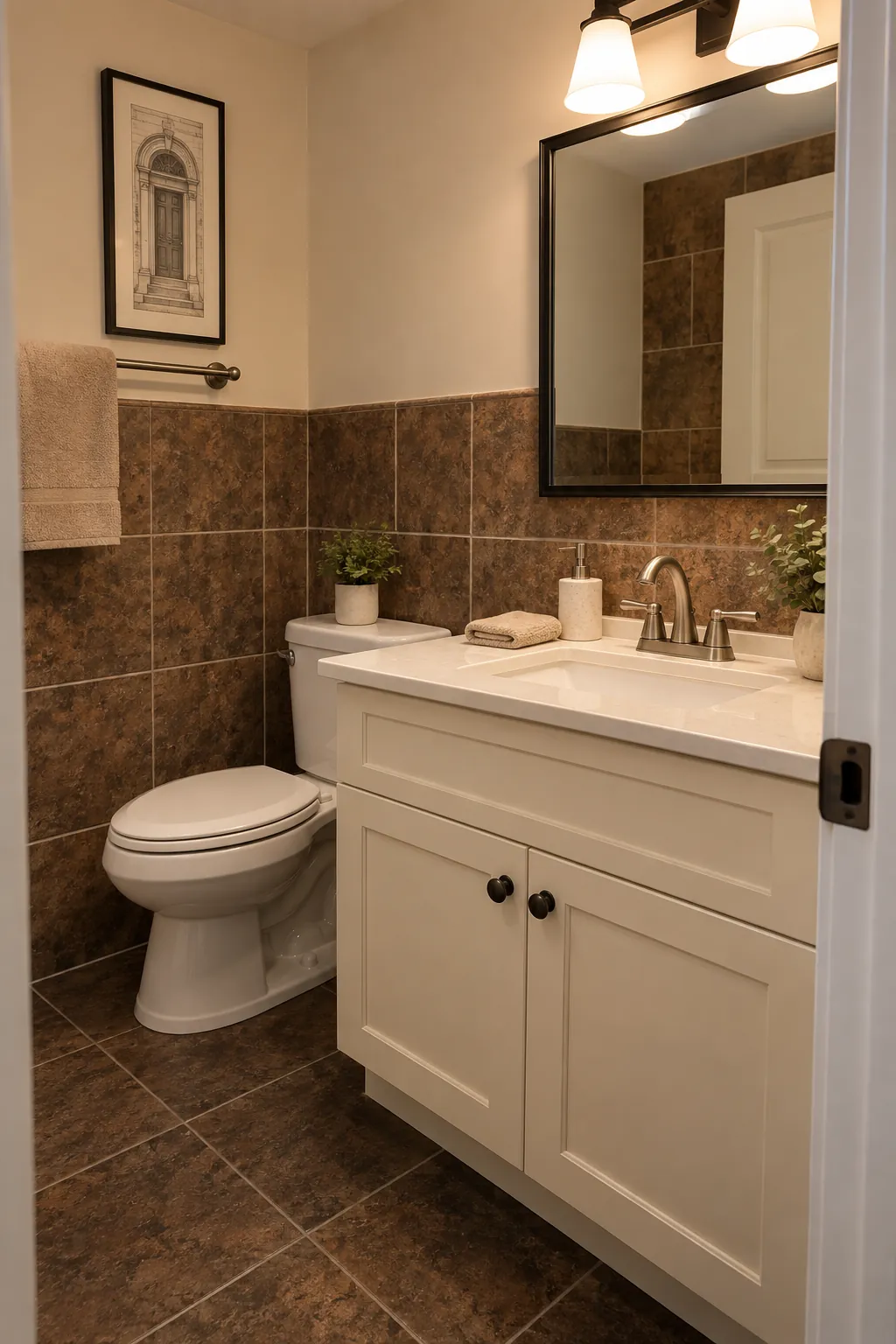
Clean the Tile and Grout Before Judging Its Color
Soap film, dust, and discolored grout absorb light and make tile seem darker than its installed color. Use a cleaner suited to the actual tile and grout material, then dry a small test patch and compare it with an untouched area. Avoid harsh products on natural stone or damaged grout, since a bright room is not worth surface damage. Freshly cleaned joints can make the existing pattern read with more definition even though no tile has been replaced.
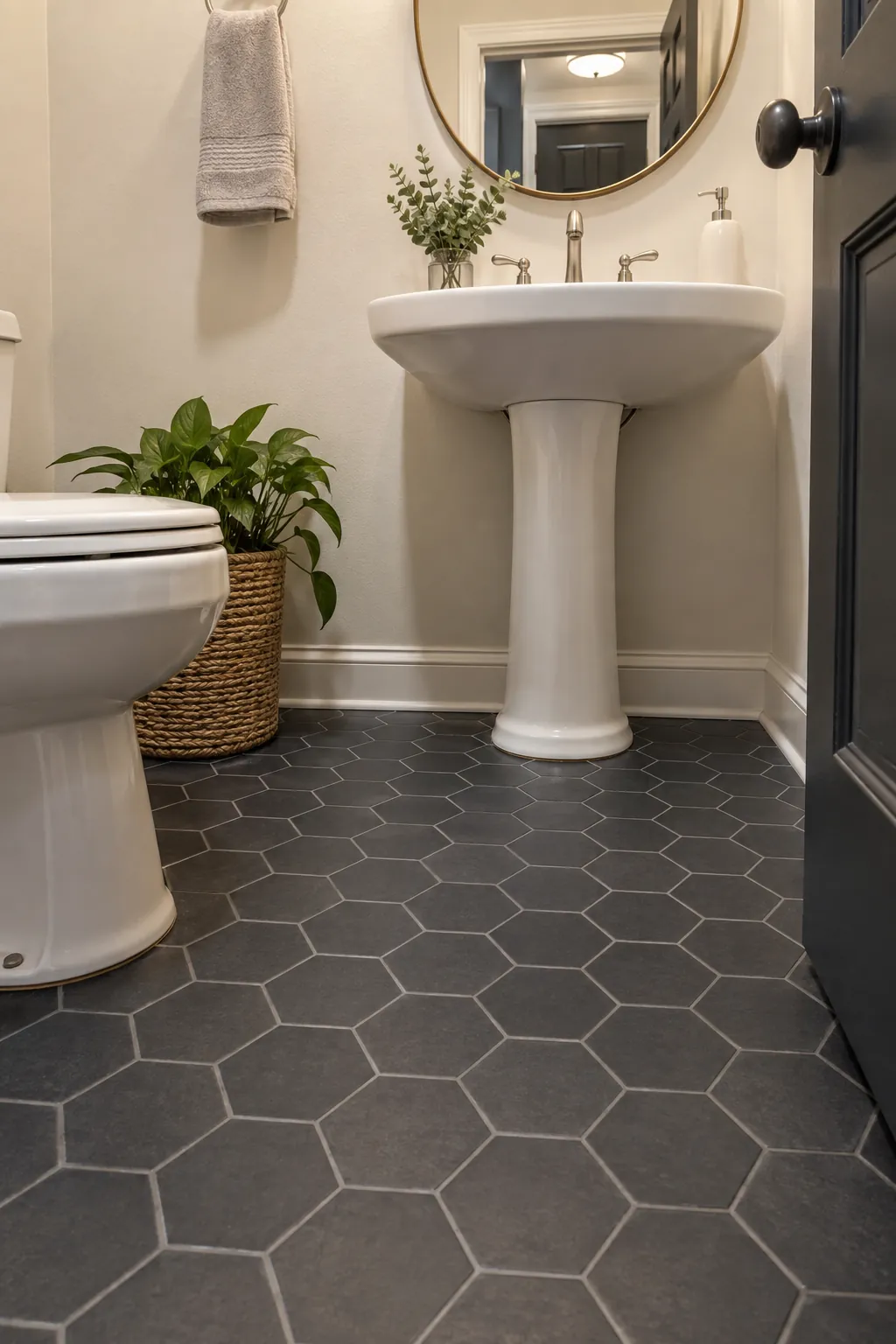
Bring Pale Fabric Close to the Sink
A hand towel sits in the part of the room guests see and use first. White, cream, or another light fabric can break up a dark wall and soften a heavy tile palette without a permanent change. Choose a towel with enough texture to look intentional under artificial light, then hang it where it can dry fully. A small light mat may help on a dry floor, but it should not cover the tile so completely that the room loses its visual continuity.
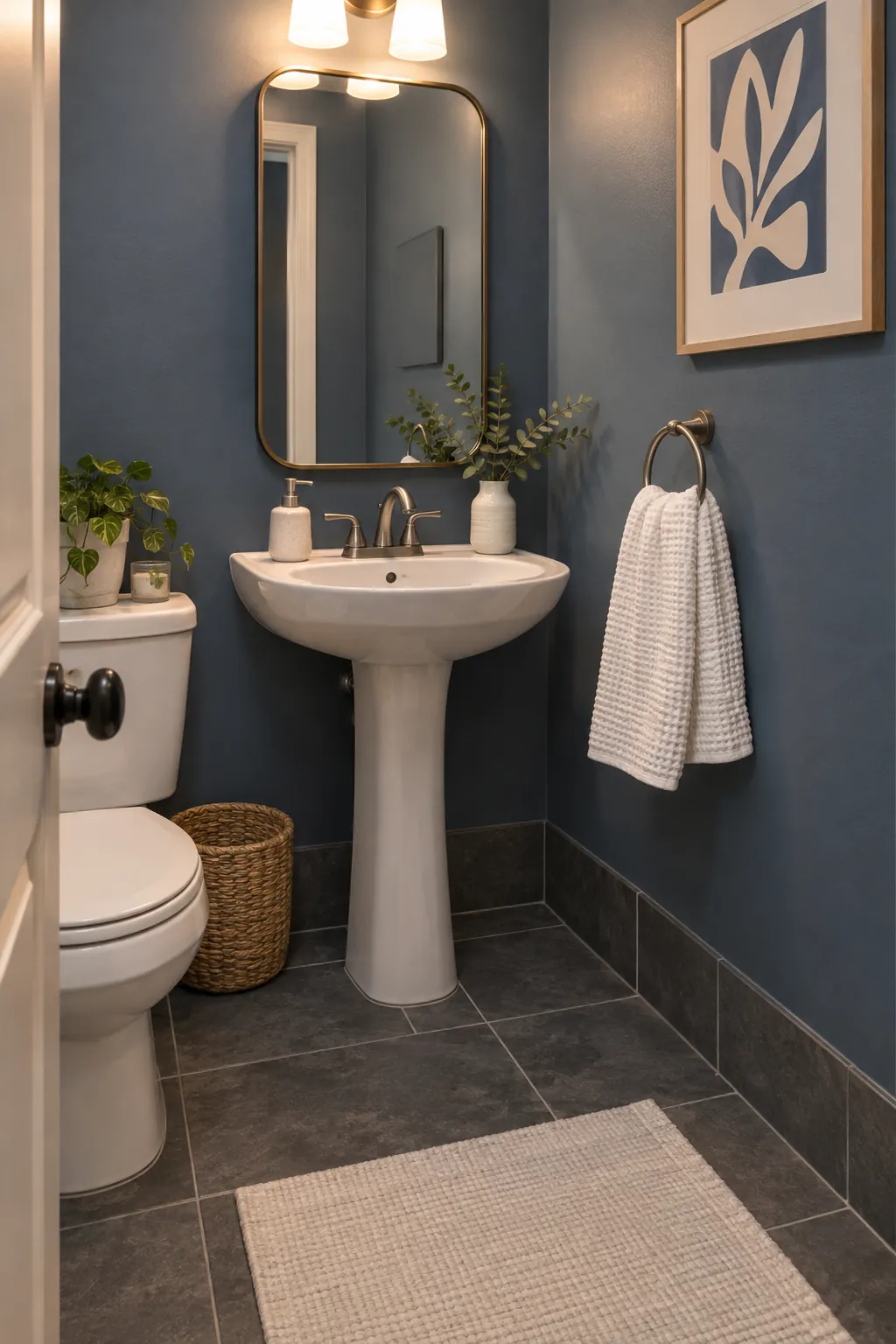
Use Reflective Accents With Restraint
Glass, polished metal, and glazed ceramic can catch light and give the sink area a clearer edge. A chrome faucet or a glossy soap dish works best when the surrounding counter is not crowded with many competing objects. Reflective pieces do not create light on their own, so pair them with adequate overhead or mirror lighting. If the tile already has a glossy pattern, choose just one or two accents rather than filling every surface with shine.
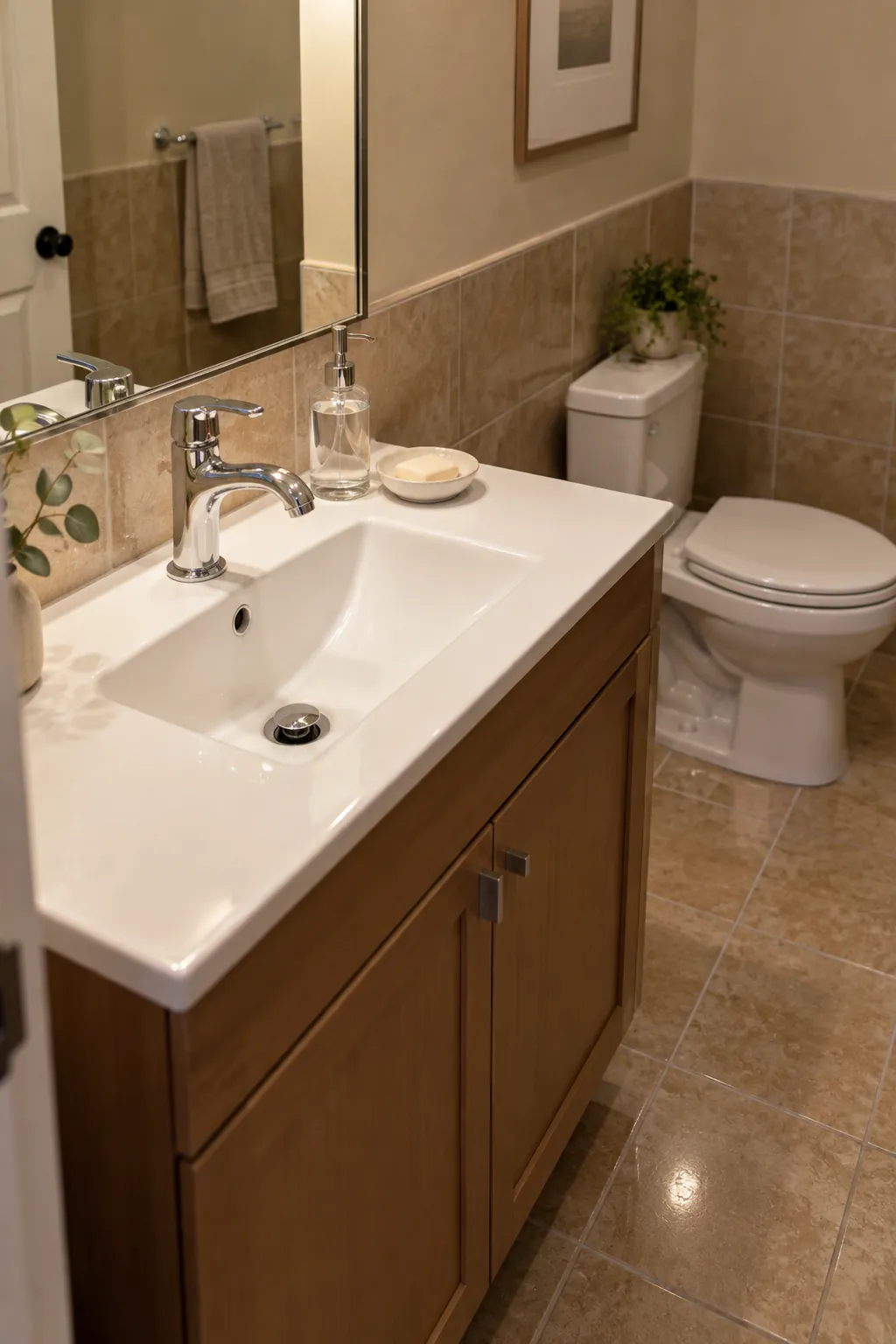
Make the Doorway and Trim Work for You
The entry is often the only route by which outside light reaches a windowless powder room. A lighter door and clean trim can bounce some hallway light inward when the door is open, while a simple hook or narrow storage keeps the opening clear. If a glazed door is under consideration, privacy and the layout of the hall matter as much as brightness. Even without changing the door, clearing the swing and painting the frame can make the room feel less enclosed.