
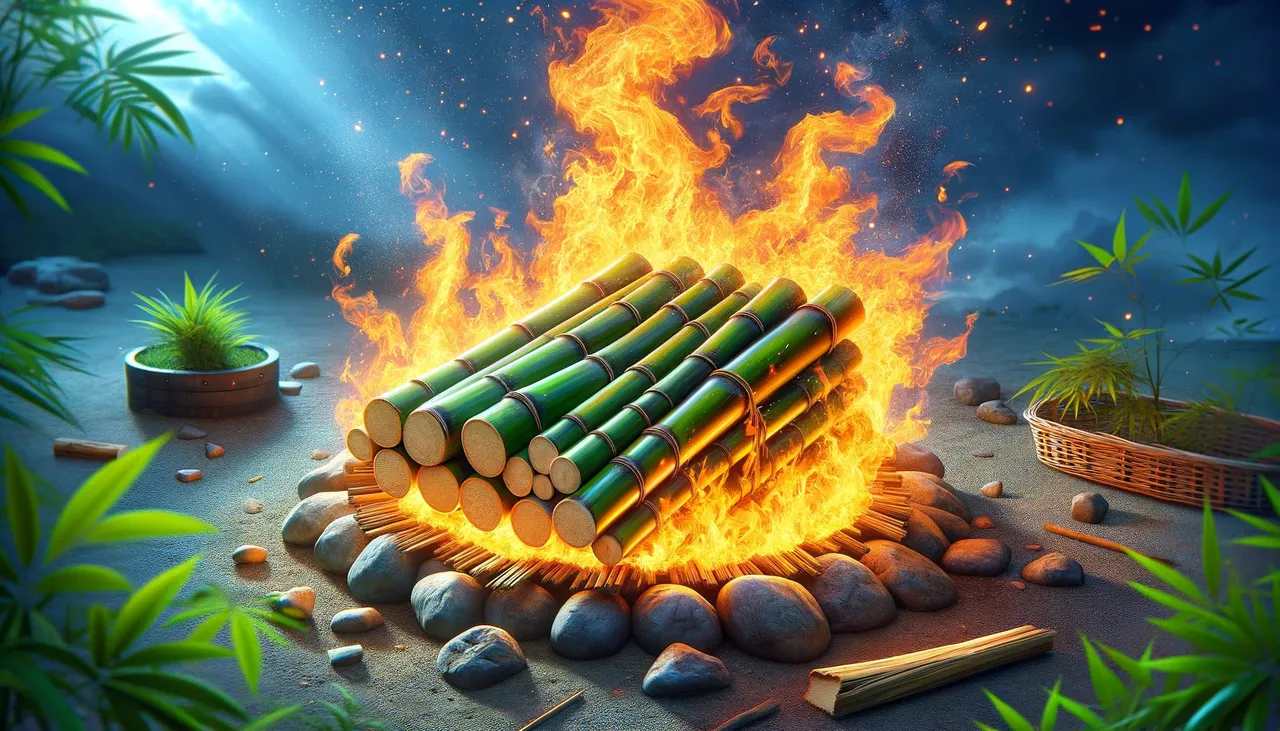
Bamboo’s uses and benefits are seemingly endless. The living plants are ideal for landscaping, the fibers produce strong textiles and biocomposites, they form part of traditional cuisine, and the timber is widely used in construction. But is bamboo good firewood?
Bamboo is a suitable firewood for certain applications. I.e. in some situations, bamboo is useful, while in others, “real wood” is better. Bamboo burns quickly and at high temperatures, producing a lot of heat over a short time. However, the downside is it does not produce long-lasting coals.
Like most wood, bamboo burns when dry and exposed to an ignition source. However, how well does it burn? Under what situations does it perform best/worst? What are the pros and cons of using bamboo as firewood? And what are the other applications as a fuel source?
Things You Need To Know About Using Bamboo As Firewood
Bamboo is a group of plants belonging to the Bambusoideae subfamily of Poaceae (grass). More than 1400 species are distributed globally in tropical, subtropical, and mild temperate regions.
Most of these species (and biomass) are in Asia (east and southeast) and the surrounding areas.
Humans have used these plants for food, shelter, fabric, and fuel for thousands of years. Thanks to its rapid growth and hard, woody stems (culms) in mature plants, these grasses are a versatile and renewable resource (when sustainably harvested).
We use firewood for a plethora of reasons, but most are related to:
- Cooking
- Heat
- Power production
Bamboo’s suitability as a firewood depends on what the intended outcome is.
How Well Does Bamboo Burn?
Like other plant material, these grasses burn when they reach a sufficient temperature. Although they have a lignified (hard and woody) culm, they are considered flammable, igniting at roughly 400°F.
Wood from Pine trees (in comparison) ignites at 426.2°F and oak at 482°F (these values are for auto-ignition when the wood starts burning without a flame/fire source).
The environmental conditions, age of the wood, and its moisture content play a significant role in how well it burns. Timber, which is cut and dried, produces suitable firewood.
Once alight, these plants burn quickly and at high temperatures.
Which Bamboo Is The Best Source Of Firewood?
The best bamboo for firewood is the readily available one. The specific species, plant age, and growing conditions influence firewood quality.
Older plants are often harder and larger, producing better firewood, while younger saplings burn through quicker (when dry).
Moso Bamboo (Phyllostachys edulis) is frequently used to manufacture charcoal (however, it is not the only species used). Culms (stems) from mature plants (around 5 years) are cut and placed in ovens, where they “cook” at temperatures between 1112°F and 2192°F.
Alternatively, the “waste” products (dust, chips, and other small fragments) are compressed into briquette shapes and placed in the ovens.
Charcoal derived from these tall grasses is popular for its air purification and as a cooking medium.
Other species commonly used for firewood include:
- Bambusa balcooa
- Bambusa bambos
- Dendrocalamus brandisii
- Dendrocalamus stocksii
- Dendrocalamus strictus
The Benefits And Drawbacks Of Using Bamboo As Firewood
To better understand these grasses’ practicality as firewood, we’ll explore the things in their favor and the things working against them.
The Benefits Of Using Bamboo As Firewood
- It is a sustainable/renewable resource – thanks to its widespread distribution and incredible growth rates, they are a fantastic resource. Some of these plants grow as quickly as 1 foot a day! This accelerated growth means that your firewood stock is quickly replenished.
- Easy to work with – chopping and splitting these plants is significantly easier than hardwoods, making it a user-friendly resource.
- A relatively low ignition temperature starts a fire quicker, and mixing bamboo with other wood is a beneficial practice to speed up the burning process.
- The wood gets hot quickly. This firewood is one of the best options if you need a lot of heat quickly.
- Generally cheaper than hardwood firewood. Thanks to its impressive growth rates, it is feasible to grow these distinguished grasses for firewood production.
- Bamboo is light, so carrying and storing it is relatively easy (particularly if you’re camping and need wood).
The Drawbacks Of Using Bamboo As Firewood
- The firewood burns quickly, so you must continue adding pieces to sustain it or produce enough usable coals for cooking.
- These plants take more time to dry (an essential criterion for firewood) than other comparably dense woods. Due to their highly absorbent nature, they extract moisture from the air and may contain up to 60%.
- Unsplit bamboo is potentially dangerous in a fireplace (particularly indoors). Unsplit culms house air pockets, which heat up and expand quickly, frequently causing a mini-explosion in your fireplace.
- This firewood combusts almost completely, producing less ash; however, continuously adding “logs” to the fire causes ash to accumulate. If you’re a neat freak, this ash in your house is less than ideal.
Bamboo Firewood Is Situationally “Good”
Thanks to the abundance of these grasses, communities living close to forests frequently use these plants for food, shelter, and fuel. However, there are some situations where they work well and others where it is a less-than-ideal fuel.
Where It Works As Firewood
- Bamboo is the best option in rural communities – when few other trees are available.
- When you need fast-burning, hot materials – The lower ignition means that the wood takes quicker and helps to set fire to other wood/items that require higher ignition temperatures (acting as kindling or a fire starter).
- When coals are not important – occasionally, coals are not the reason for a fire. If you want to cook food quickly over flames or heat a room and you have enough “wood,” then it’ll work as a fuel.
- When mixed with other woods as a pellet – when mixed with pine, they produce a longer burning charcoal.
- Great for camping/hiking. The wood is light and easy to transport, making it fantastic if you don’t need to slow-cook a meal for a long time.
Where It Doesn’t Work As Firewood
Bamboo’s weakest performance as firewood is in producing long-lasting coals.
For example, when cooking food, you often require longer-lasting coals that release heat slowly. The wood’s hot and quick-burning nature may scorch the outside of food while leaving the inside uncooked.
You must continuously add logs or mix the wood with hardwood when sustained cooking is desired.
Bamboo As An Alternative Fuel/Green Energy
These plants shine as a fuel source in the alternative and green energy sectors.
While coal and gas are fossil fuels, bamboo is a renewable source of biofuels. Recycling waste products produce useful charcoal and biochar (a charcoal-like substance). The Giant Bamboo (Dendrocalamus giganteus) is the best candidate for producing biochar (80% yield).
These grasses are a fantastic alternative in replacing traditional woody fuel sources thanks to their high carbon and nitrogen composition. They are a useful source of biofuels, biogas, and charcoal.
For example, as biogas, these plants produce roughly 60 million liters of ethanol annually in Assam alone.
Bamboo is also a source of livestock feed, and thanks to this versatility, it is a superior resource.
Conclusion
Bamboo is an essential source of food, fabric, shelter, and fuel to many communities. As a fuel, it burns quickly at high temperatures. These characteristics make these plants fantastic kindling and provide immense benefits when mixed with slower-burning hardwoods. Bamboo alone doesn’t produce lasting coals, but it is an essential biofuel thanks to its versatility and sustainability.