
Walking into a cramped, dim entry can make your whole home feel smaller than it actually is. Many homeowners struggle with a narrow hallway design that feels more like a tunnel than an inviting transition space. The right paint choices can change how you feel when you step through the front door, making the area feel wider and much lighter.
This list provides practical hallway inspiration narrow enough for any layout. You will find specific hallway and stairs ideas paint colors that work together to create a cohesive look. Whether you are dealing with a windowless corridor or a tall stairwell, these paint strategies will help you create a stylish and functional entrance.
Soft Off-White Walls with Satin Woodwork
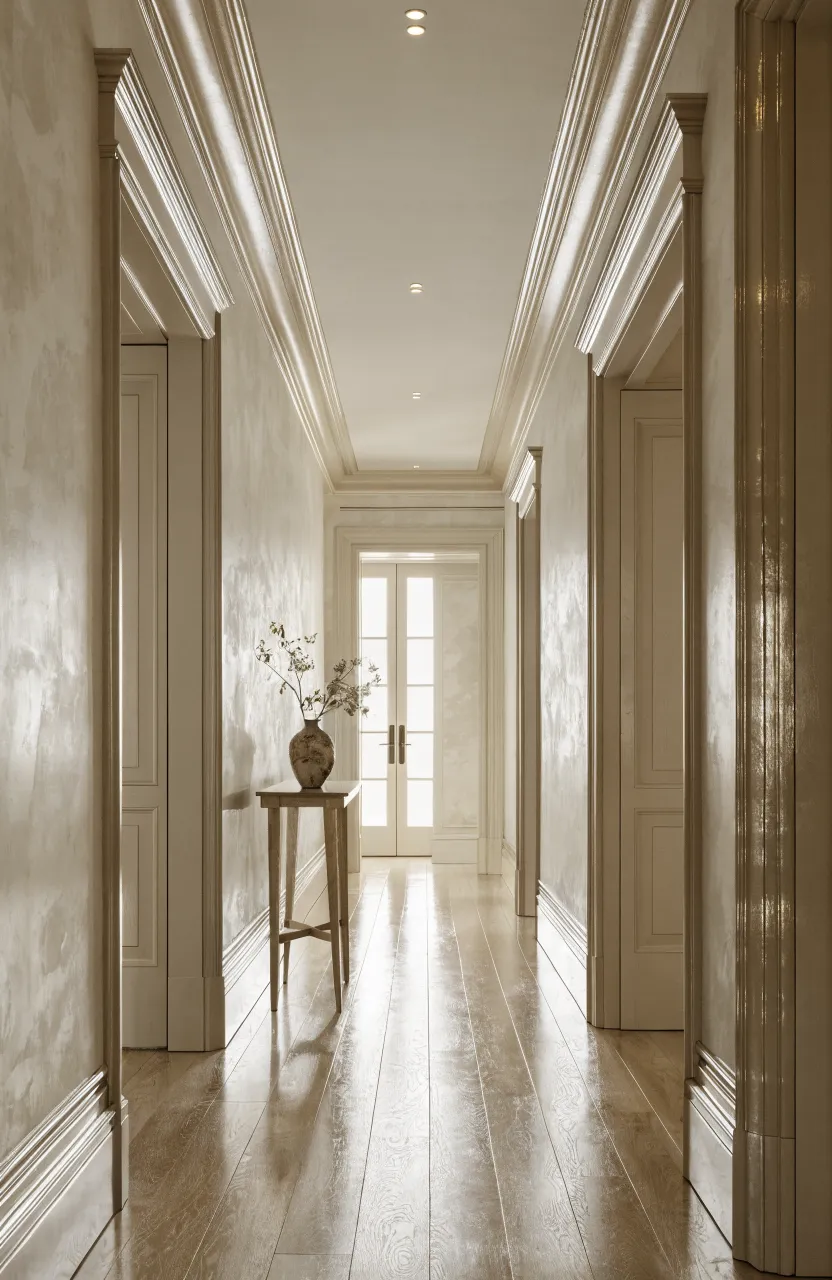
Pure white can sometimes look clinical or grey in a space without much natural light. Choosing a soft off-white with a hint of cream or stone adds warmth while keeping the area bright. Pair these walls with woodwork in a satin finish rather than a flat matte. The slight sheen on the baseboards and door frames catches the light and makes the hallway feel more polished.
This combination is one of the most reliable small hallway paint colors for a clean look. The satin finish is also easier to wipe down in high-traffic areas where shoes and bags often scuff the walls. It creates a subtle contrast that defines the space without making it feel closed in.
Two Tone Walls with Darker Base and Light Top
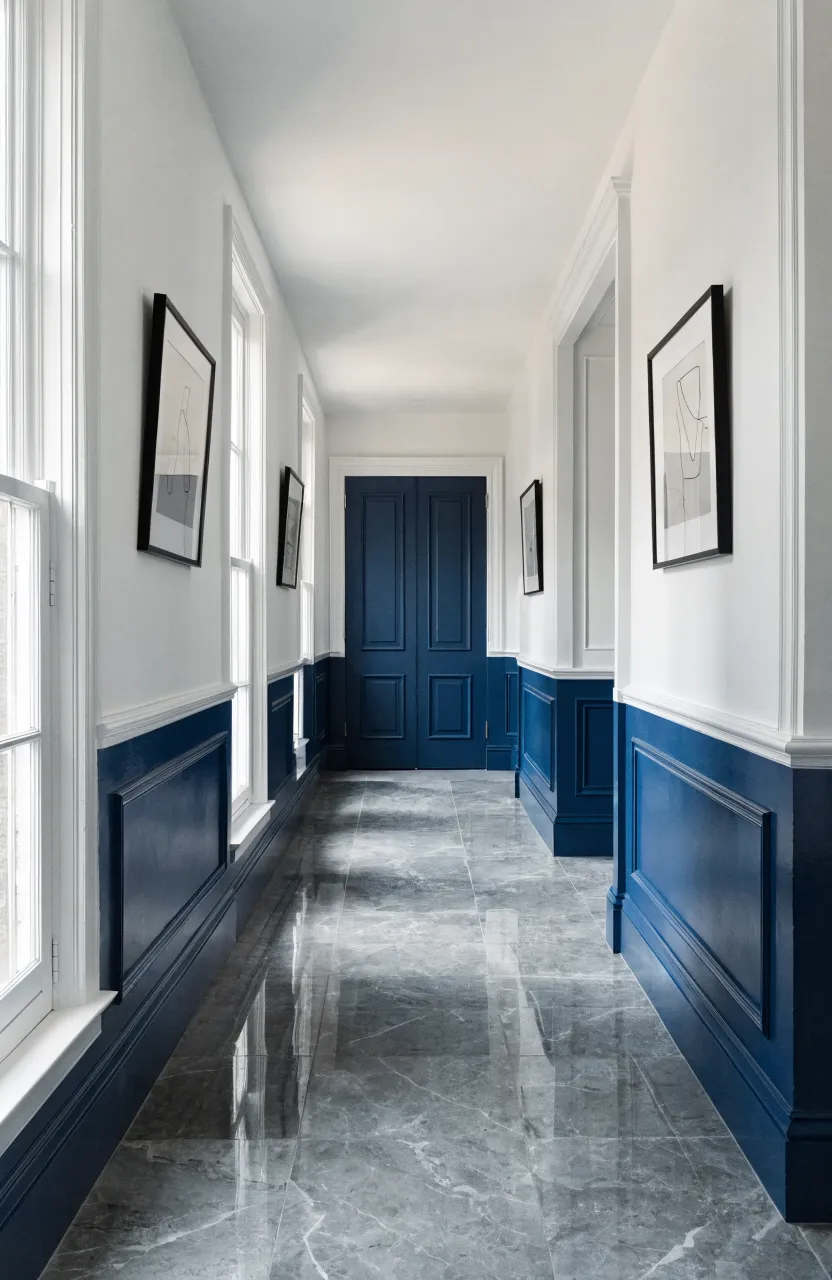
A two tone hallway is a smart way to add visual interest without overwhelming a tight space. Paint the bottom third of the wall in a medium or dark shade and use a much lighter color on top. This draws the eye upward and makes the ceiling feel higher. It also provides a practical benefit because the darker paint hides the fingerprints and scuffs that naturally happen in a narrow passage.
Use a painter’s tape to get a crisp horizontal line or add a simple chair rail molding to separate the colors. This technique works well with many hallway colour schemes, such as a deep navy on the bottom and a crisp white on top. It breaks up the vertical expanse of the wall and adds a sense of structure to the entrance.
Horizontal Striped Accent Wall to Add Width
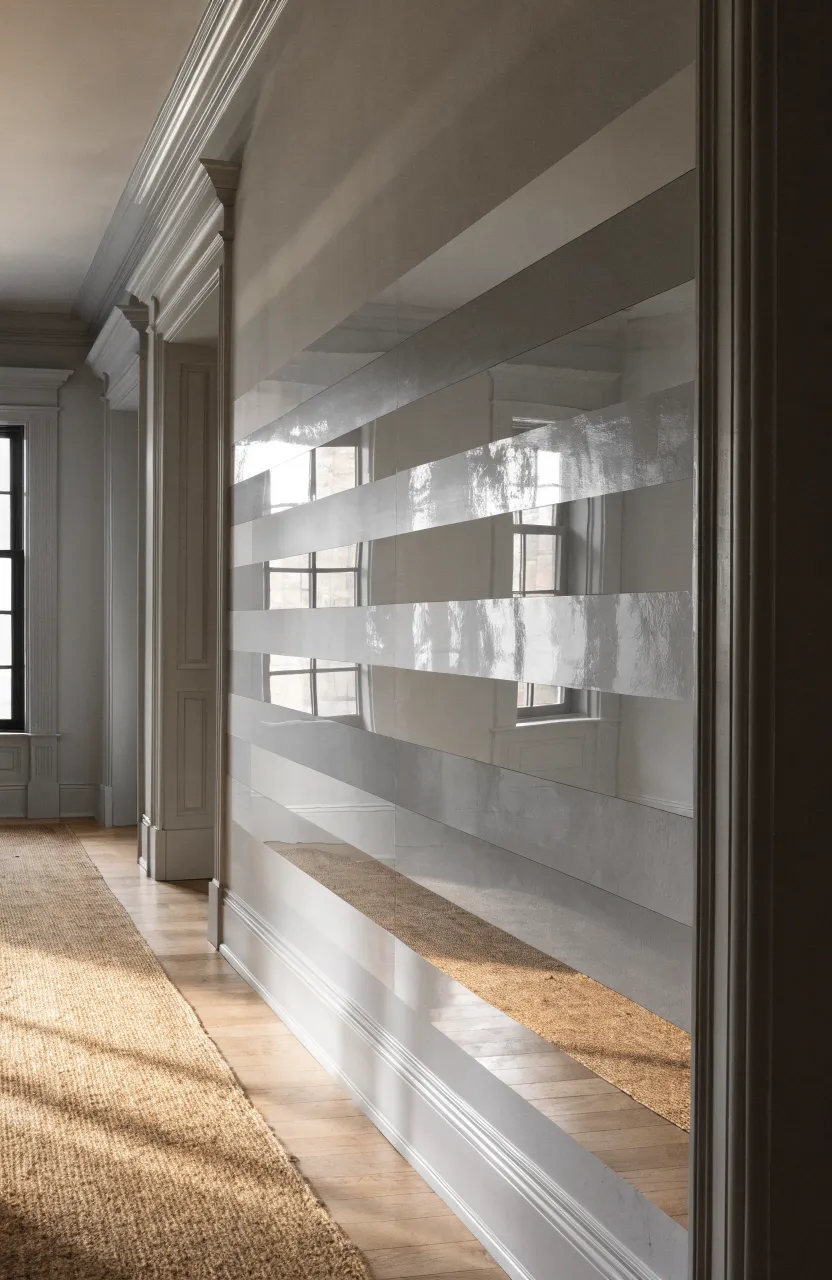
If your hallway feels too long and thin, horizontal stripes can trick the eye into seeing more width. You don’t need to do the whole space; just one accent wall or a small section can make a difference. Use two similar shades, like a matte and a gloss version of the same light grey, to keep the look sophisticated rather than busy.
Wide stripes usually look better than thin ones in a narrow hallway design. Aim for stripes that are at least ten inches tall. This approach pushes the walls out visually and gives the corridor a more custom, architectural feel. It is an effective way to handle narrow hallway decorating entrance areas that otherwise feel plain.
Light Grey Palette for Hall Stairs and Landing
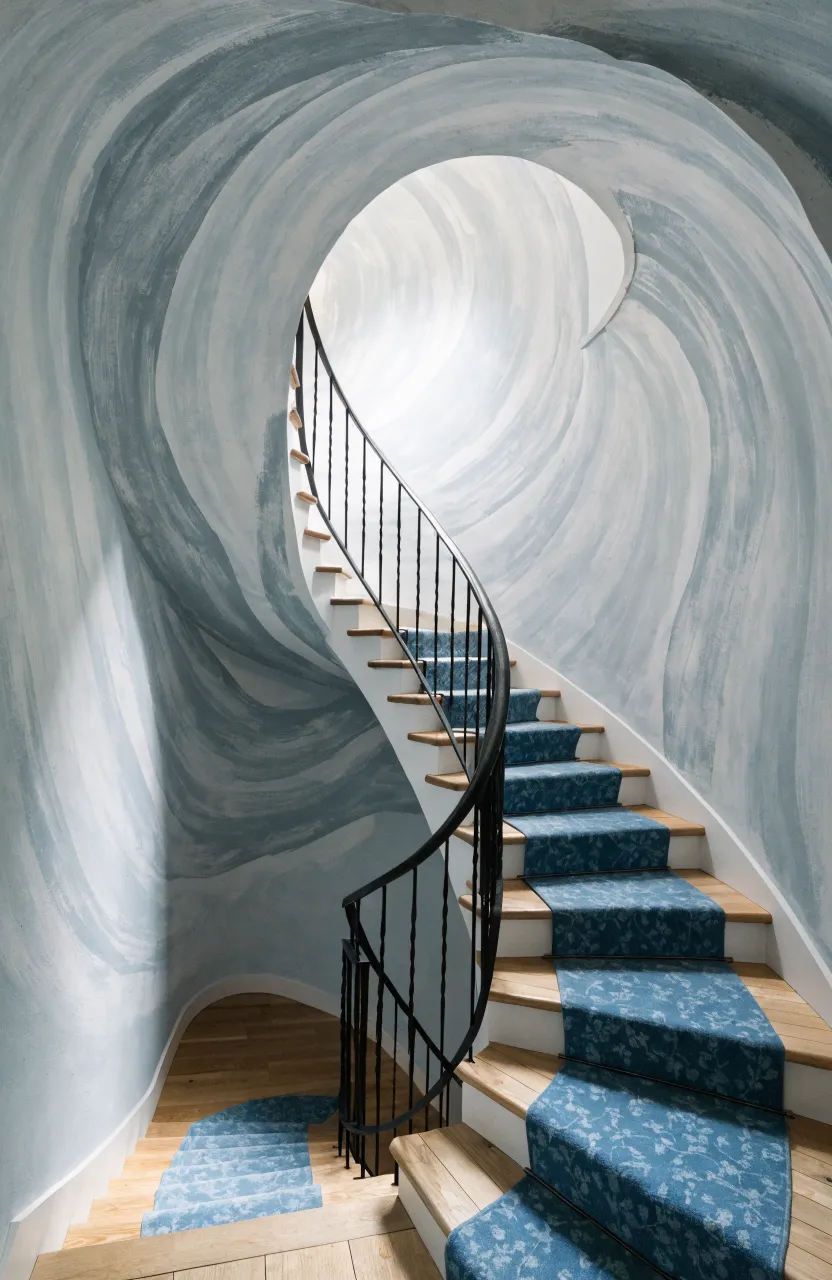
Using a consistent light grey throughout your hall stairs and landing decor paint colors creates a seamless flow. A pale grey with cool undertones can make walls recede, which helps a cramped landing feel more open. It acts as a neutral backdrop that lets your artwork or runners stand out without competing for attention.
When you use the same color on multiple levels, it connects the different floors of your home. This prevents the space from feeling choppy. Look for a grey that changes nicely with the light as you move from the front door up to the sunnier upper floors. It is a modern choice that stays looking fresh for years.
High Gloss Finish to Reflect Natural Light
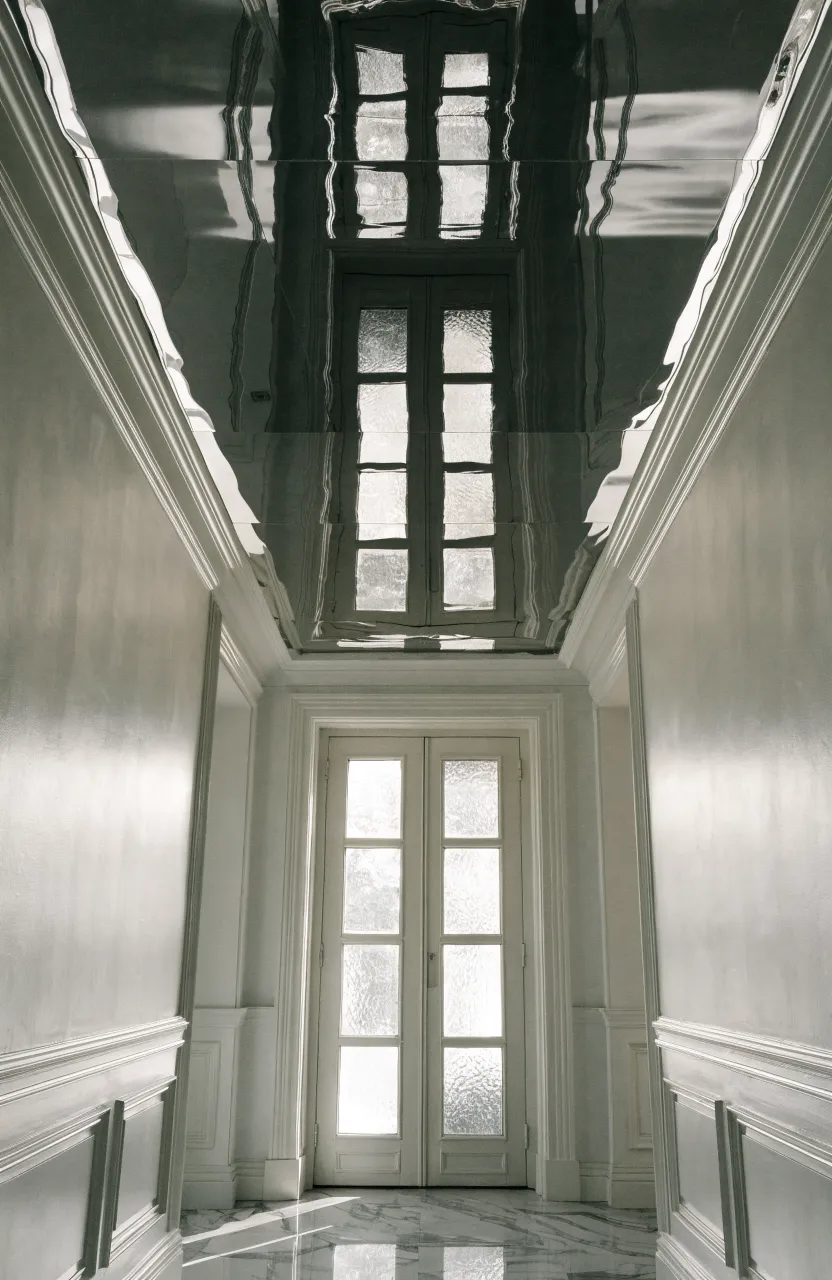
Dark hallway ideas brighten best when you use reflective surfaces. While most people choose matte for walls, a high gloss or semi-gloss finish can work wonders in a dim corridor. The paint acts like a mirror, bouncing whatever light is available from room to room. This is especially helpful if you have a window at the end of the hall or a glass panel in your front door.
To make this work, your walls need to be very smooth, as gloss shows every bump. If your walls aren’t perfect, try using the gloss finish just on the ceiling or the doors. This still provides the light-reflecting benefits while hiding imperfections on the main wall surfaces.
Dark Navy Feature Wall at the Far End
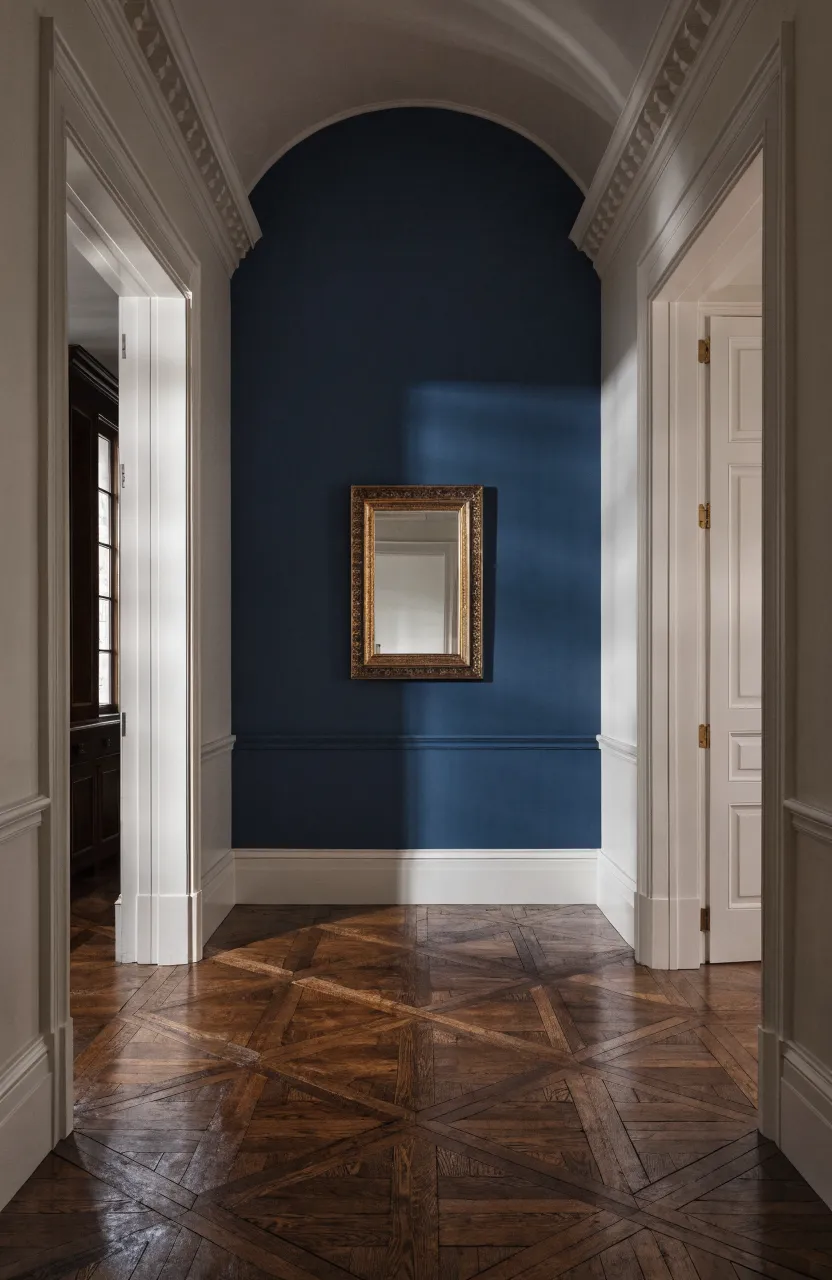
It might seem counterintuitive to use dark colors in a small space, but a dark navy on the very back wall can add depth. This creates a focal point that draws the eye through the hallway, making the distance feel intentional rather than cramped. It provides a sense of drama and sophistication right at the end of the walk.
Keep the side walls light to maintain the brightness of the passage. The contrast between the light sides and the dark end wall makes the space feel more expansive. This is a great way to incorporate bold hallway and stairs ideas paint colors without making the entire house feel dark.
Pale Sage Green for a Natural Entrance
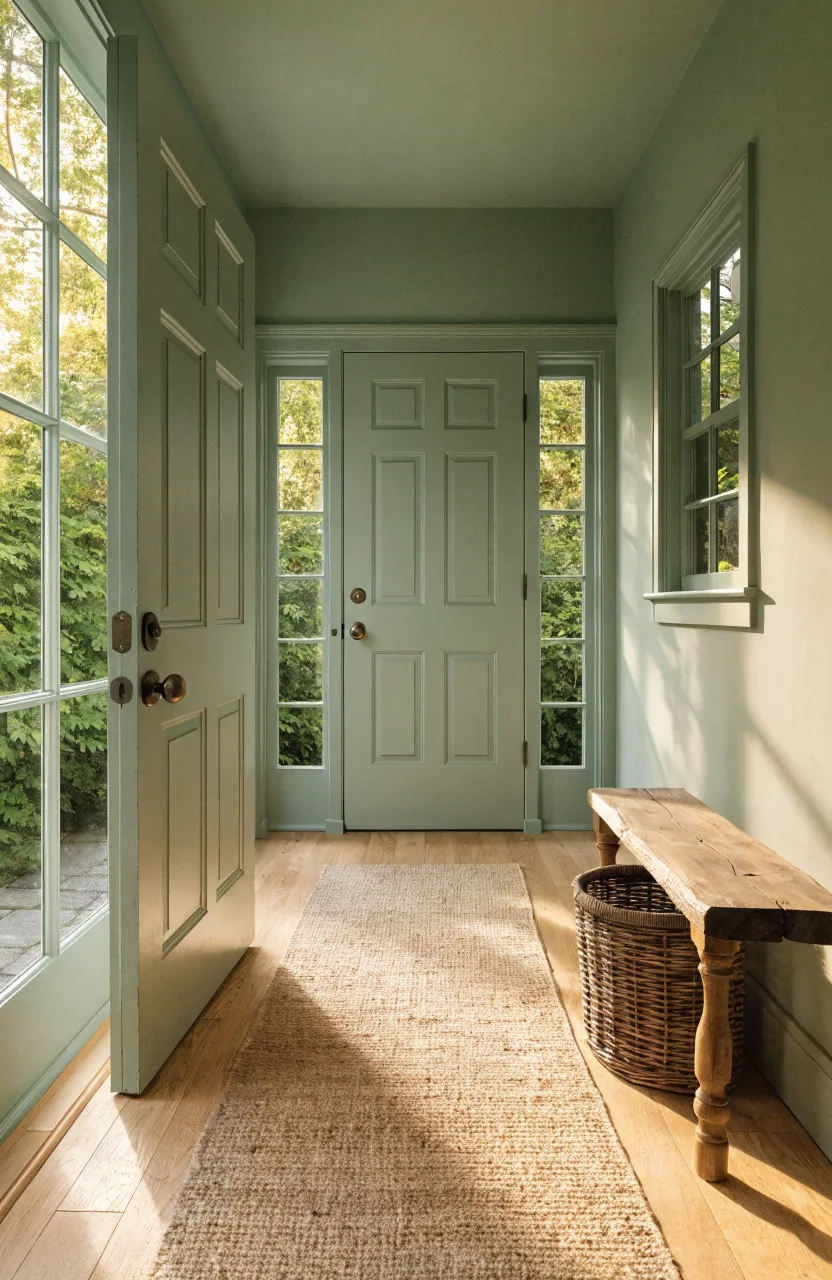
Sage green is a calming color that brings a bit of the outdoors inside. It is one of those bright hallway ideas that feels energetic but not overwhelming. Because it is a soft, earthy tone, it works well with wooden floors and natural rugs. It makes a narrow entrance feel less like a corridor and more like a welcoming room.
This color works particularly well in homes with traditional architecture. It hides dust well and provides a soft transition into other rooms. Use a slightly darker version of the same green for the front door to create a layered, professional look.
Warm Terracotta Lower Half with Cream Upper
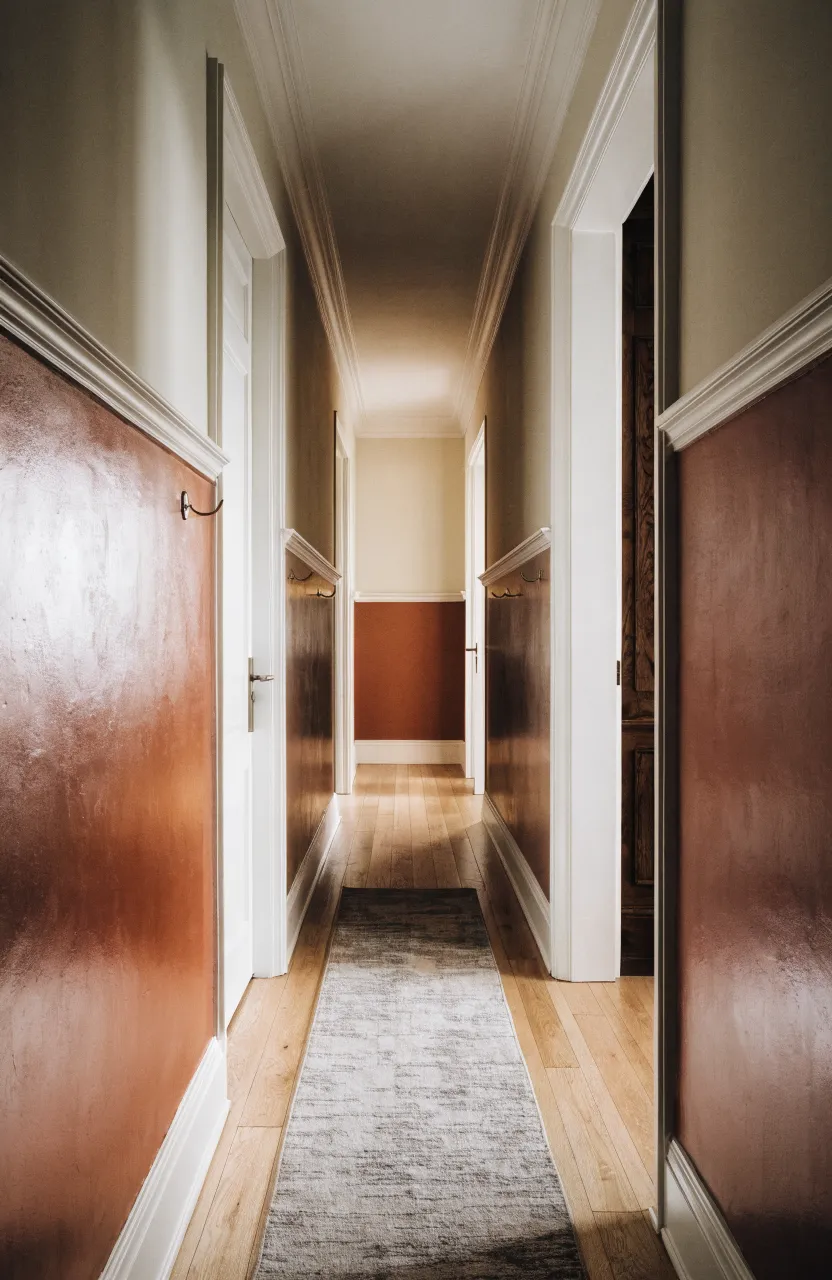
For a cozy and grounded feeling, try a warm terracotta on the lower half of the walls. This earthy red-orange tone adds a lot of personality to a narrow hallway design. By pairing it with a cream or off-white on the top half, you keep the space from feeling heavy or cave-like. It’s a classic color combination that feels both historic and modern.
This setup is excellent for high-traffic homes because terracotta is very forgiving with dirt. The warmth of the color also makes a windowless hallway feel less cold. It is a bold choice that works best when you keep the ceiling and trim simple and light.
Sky Blue Ceiling to Create Airy Height
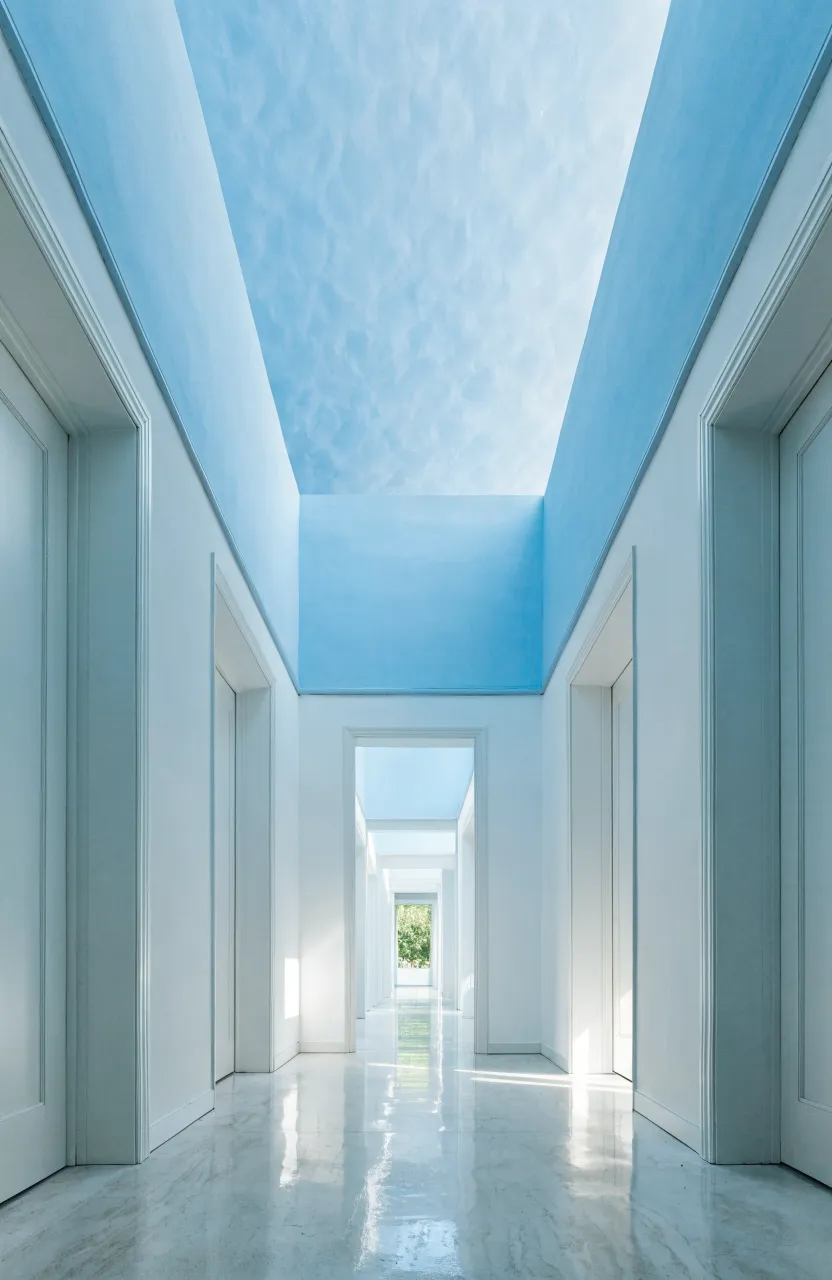
If your hallway has low ceilings, painting them a very pale sky blue can make them feel much higher. This is an old design trick that mimics the look of the open sky. It draws the eye upward and breaks the boxy feeling of a narrow corridor. When the ceiling feels distant, the whole hallway feels more breathable.
Keep the walls a neutral white or very light grey to let the blue ceiling be the star. This is one of those subtle bright hallway ideas that people might not notice immediately, but they will feel the difference in the atmosphere. It makes the transition between rooms feel much more open.
Muted Beige with Matching Built-in Storage
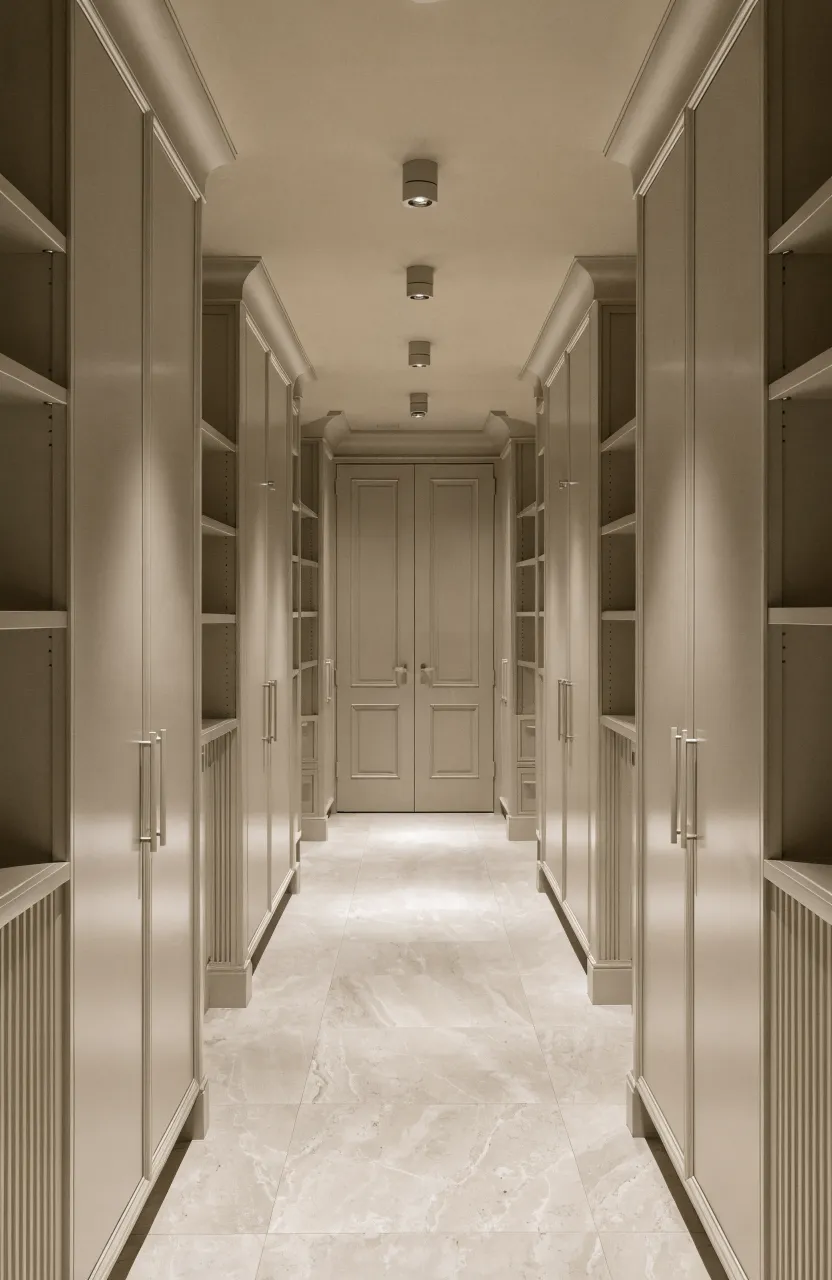
In a narrow hallway, bulky furniture can be a problem. If you have built-in cabinets or shelves, paint them the exact same color as the walls. A muted beige or mushroom tone works perfectly for this. When the storage blends into the wall, it disappears visually, making the hallway feel wider and less cluttered.
This monochromatic approach is a staple of smart hallway inspiration narrow layouts. It creates a clean, streamlined look that feels organized. Using a beige with warm undertones prevents the space from feeling flat and adds a layer of comfort to the entrance of your home.
Contrast Door Frames in Charcoal or Black
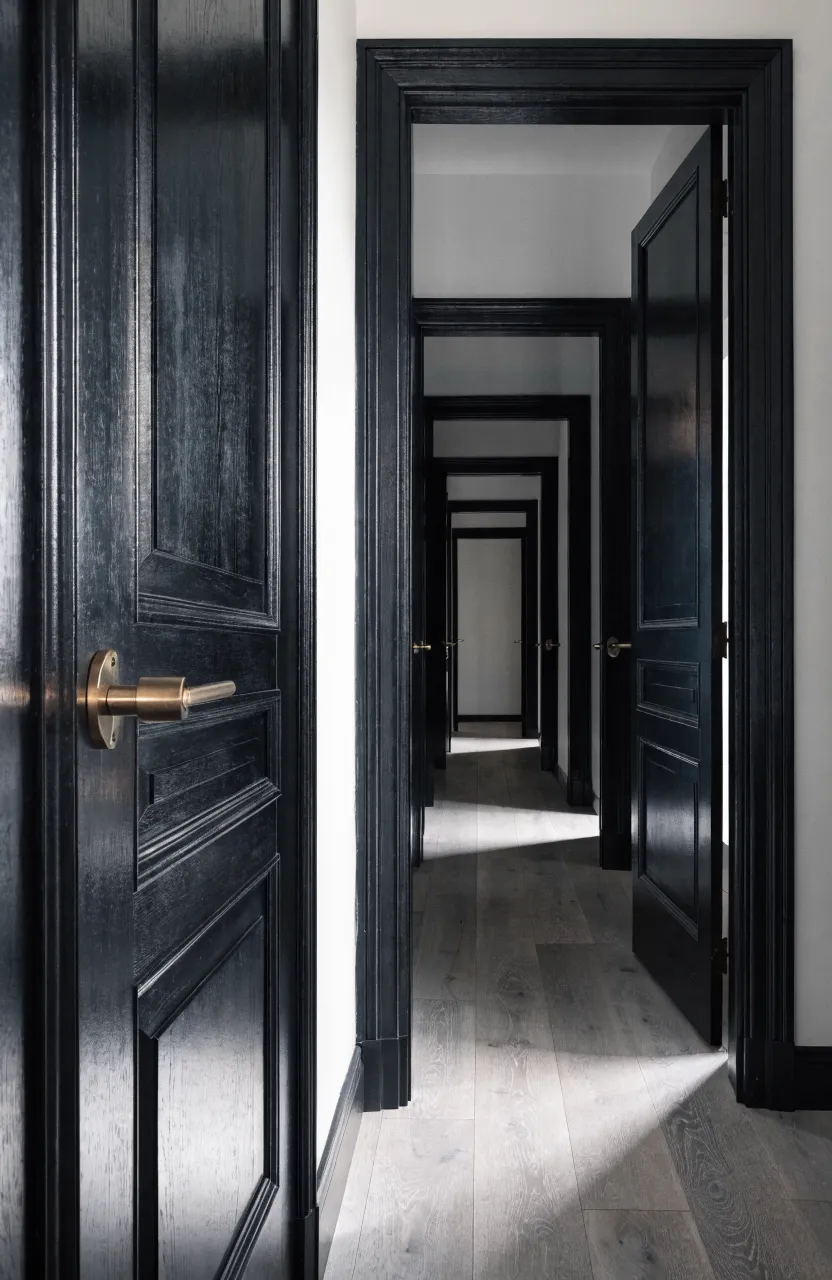
If you prefer white walls but want more style, try painting your door frames and doors in a dark charcoal or black. This creates a series of frames along the hallway that add rhythm and interest. It makes the narrowness feel like a deliberate design choice rather than a limitation. The dark lines provide a sharp, modern contrast against light hallway colour schemes.
This technique also helps to hide the wear and tear that doors usually suffer. It works best in hallways with several doors leading off them, as it creates a gallery-like feel. Keep the walls a very light, flat color to make the dark woodwork really pop.
Soft Yellow Tones for Windowless Corridors
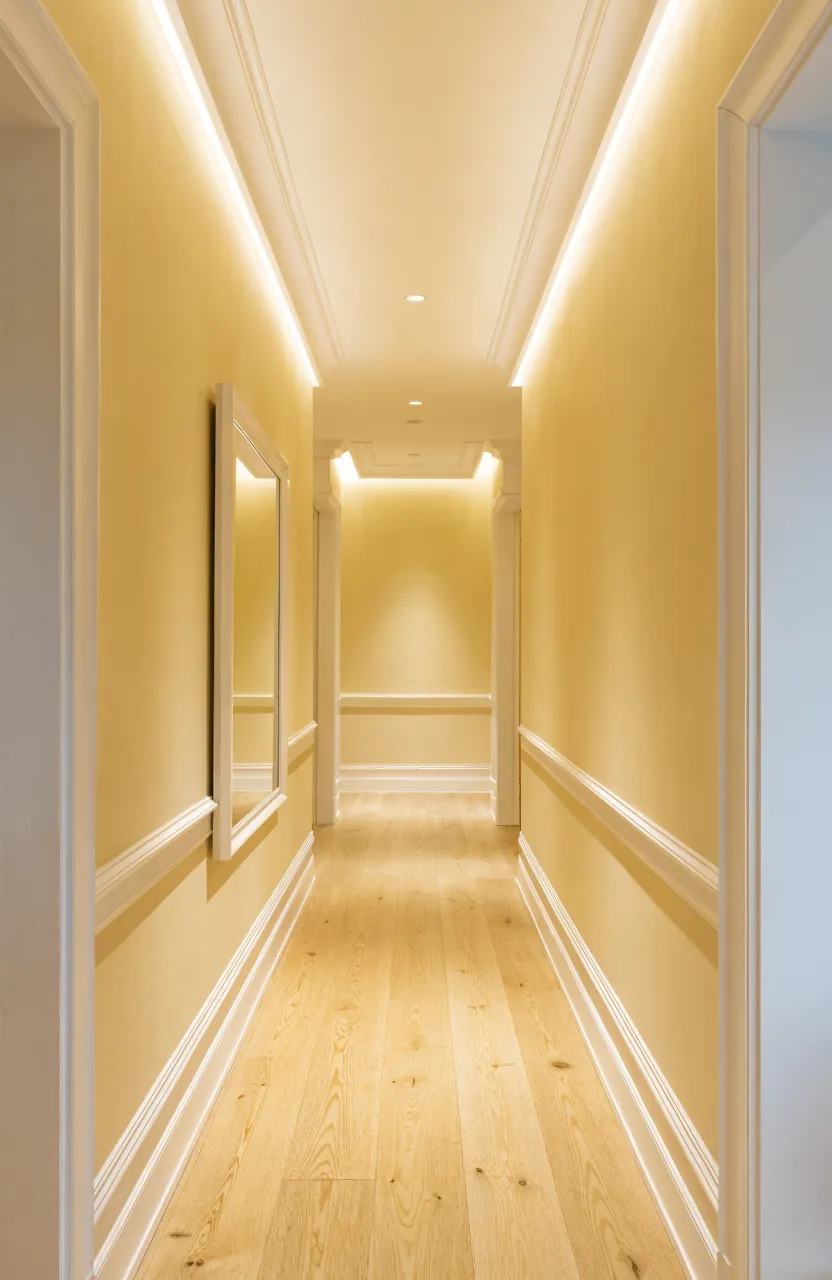
Windowless hallways can often feel gloomy, but soft yellow tones can bring in a sense of artificial sunshine. Avoid bright neon yellows and instead look for buttery, pale shades. These colors reflect light well and make the space feel cheerful even without a single window. It is a classic choice for dark hallway ideas brighten efforts.
Yellow works well with white trim and light wood flooring. It creates a glow that makes the hallway feel wider and more inviting. If the color feels too intense for all the walls, try using it on just the ceiling or as a thin stripe to add a bit of warmth to the space.